Puglia trip 2024 — Alberobello
Third of nine posts. One day trip by bus from Monopoli to the town of the trulli: cone roofs in their hundreds, symbols painted on the stone, lanes of gingerbread white, a furnished trullo opened up, a basilica, pastries, a calico cat — and blue hour back home over the harbour.
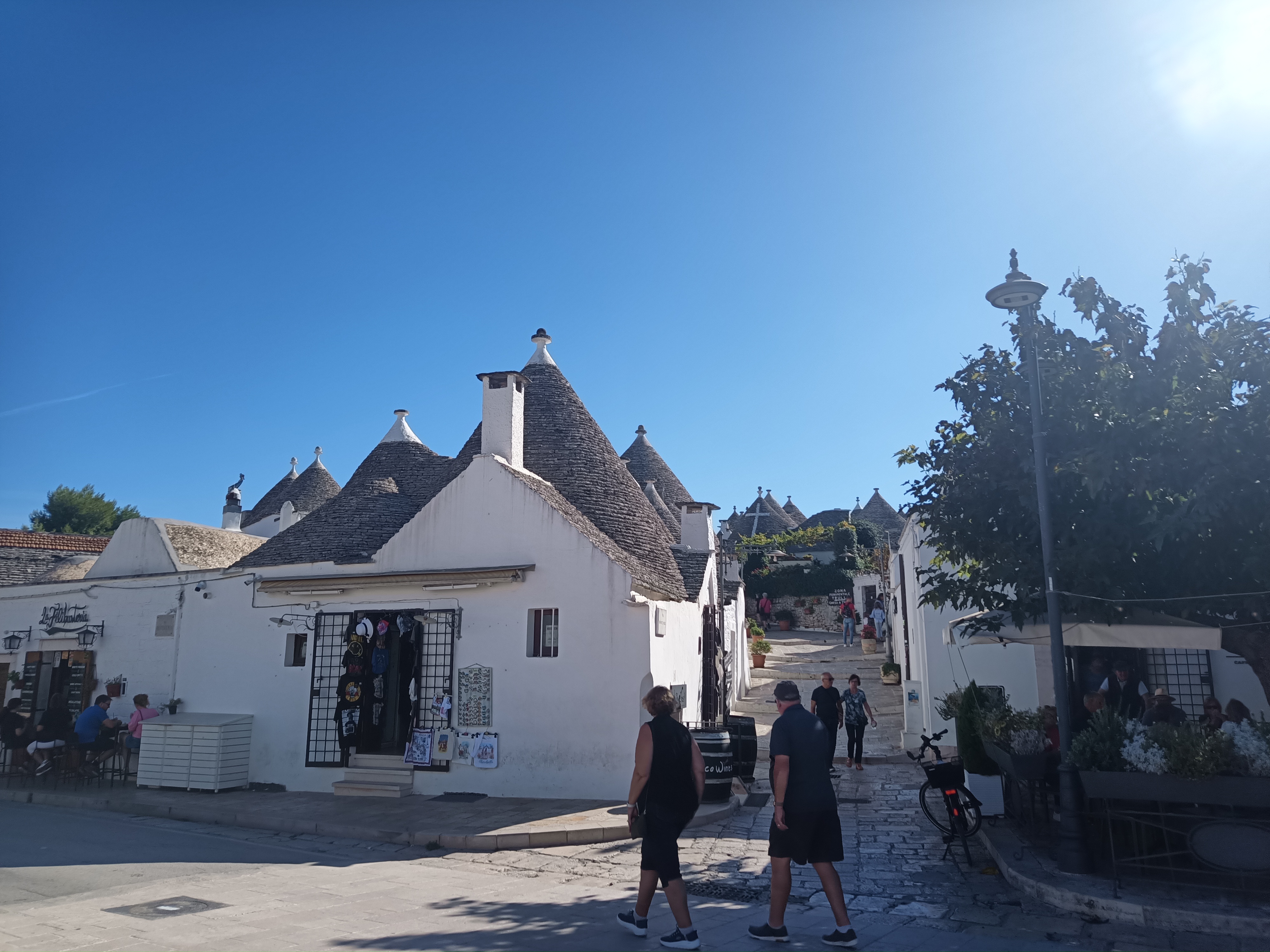
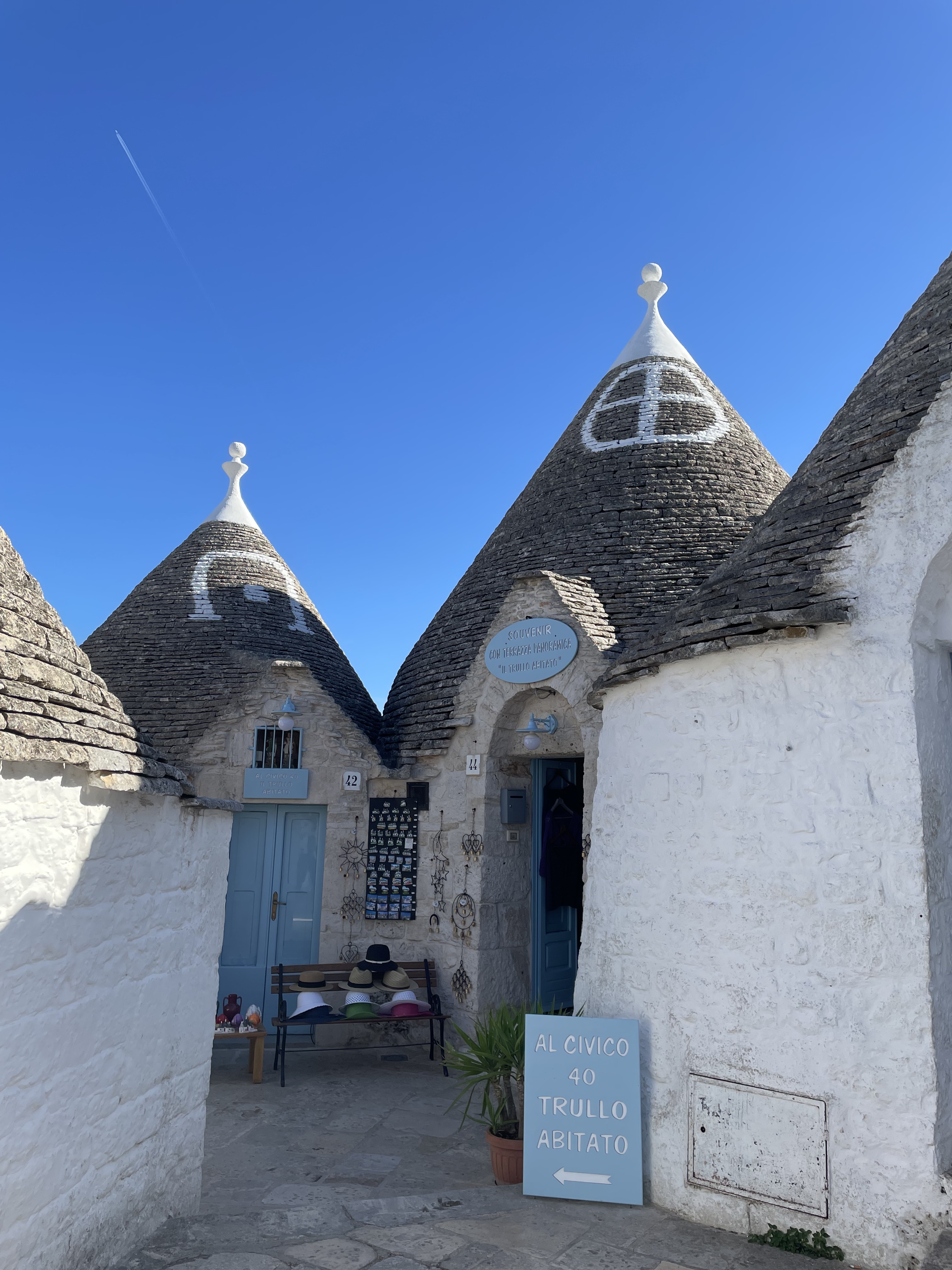
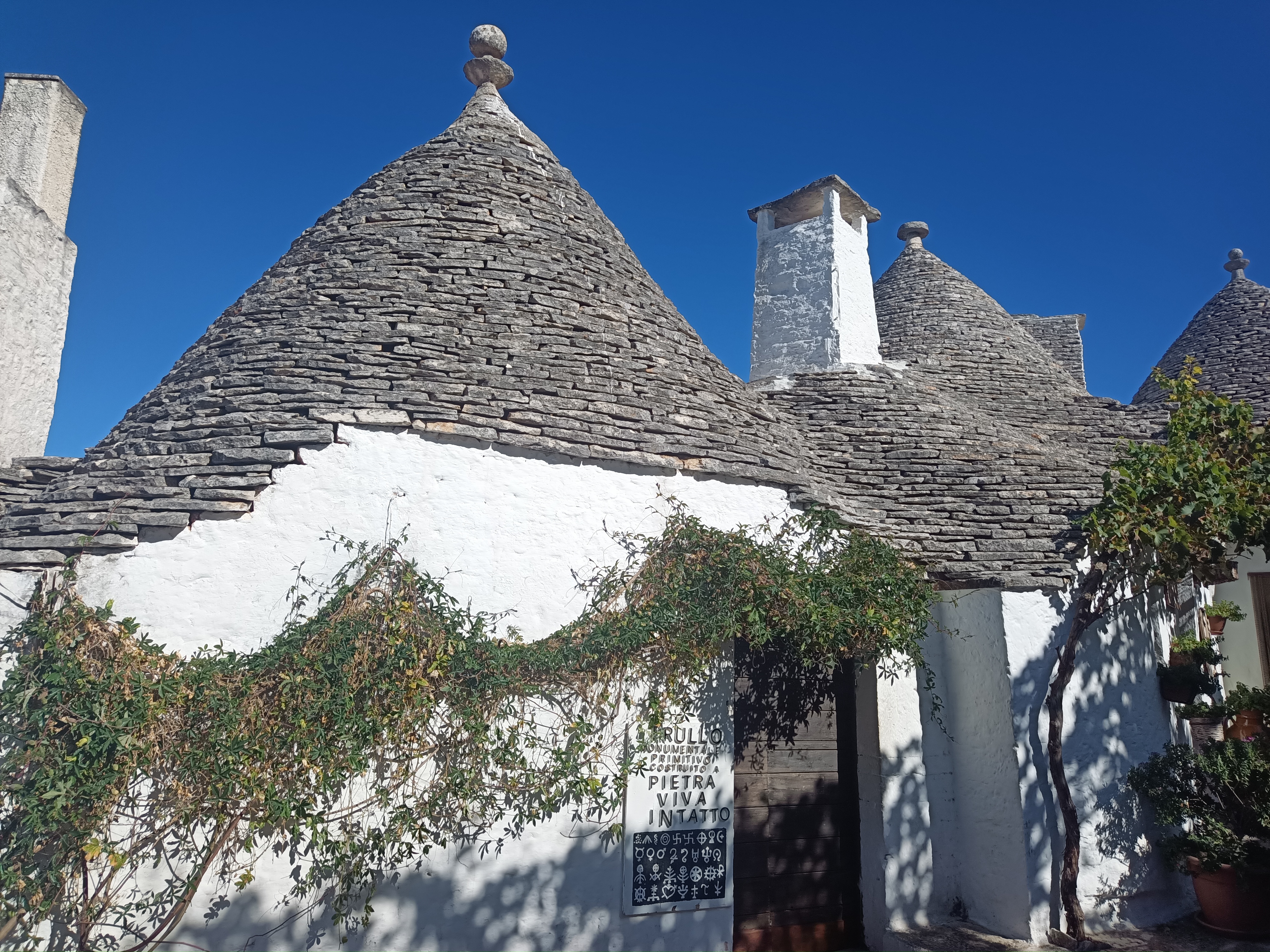
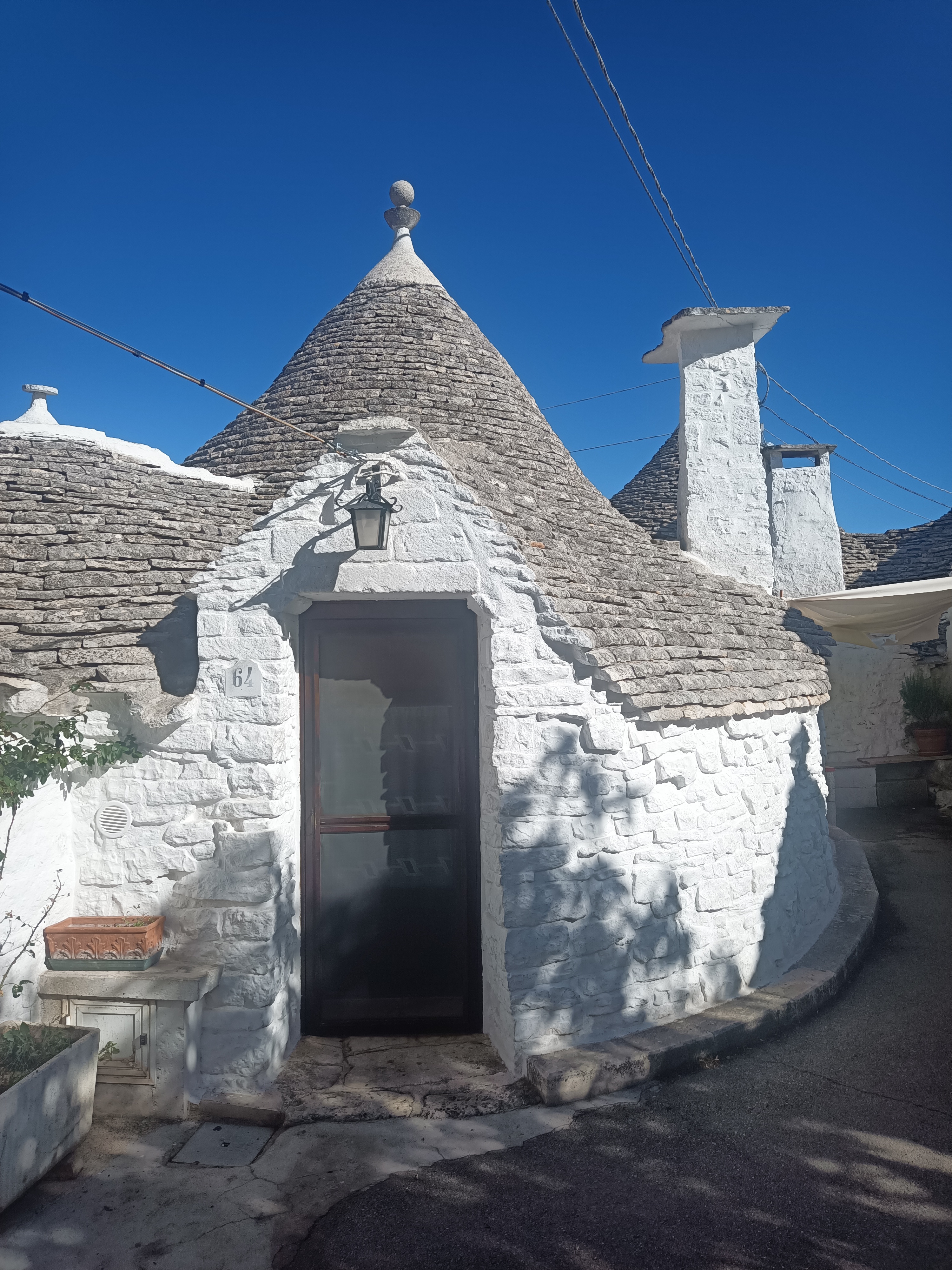
The bus from Monopoli took us inland, and Alberobello did the rest: a whole district of dry-stone houses capped with cones of grey flat stones — the trulli, built without a drop of mortar. Legend has it as a tax trick: when the collector rode in, a trullo could be unstacked faster than the tax could be collected. UNESCO took the whole effect under its wing in 1996. We walked in, wondered if it could possibly be that cute all the way, and it was.
The bus and the palm
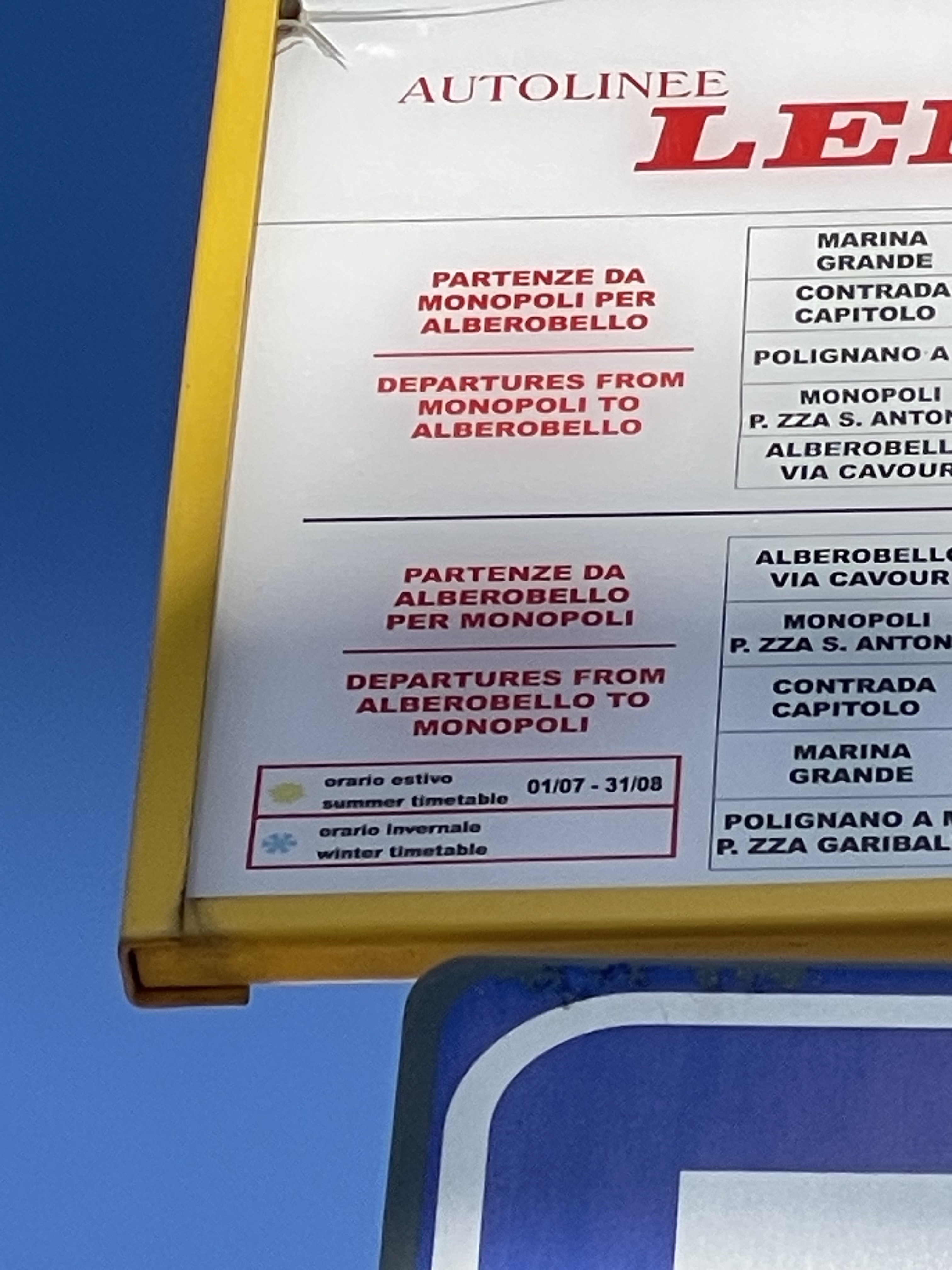
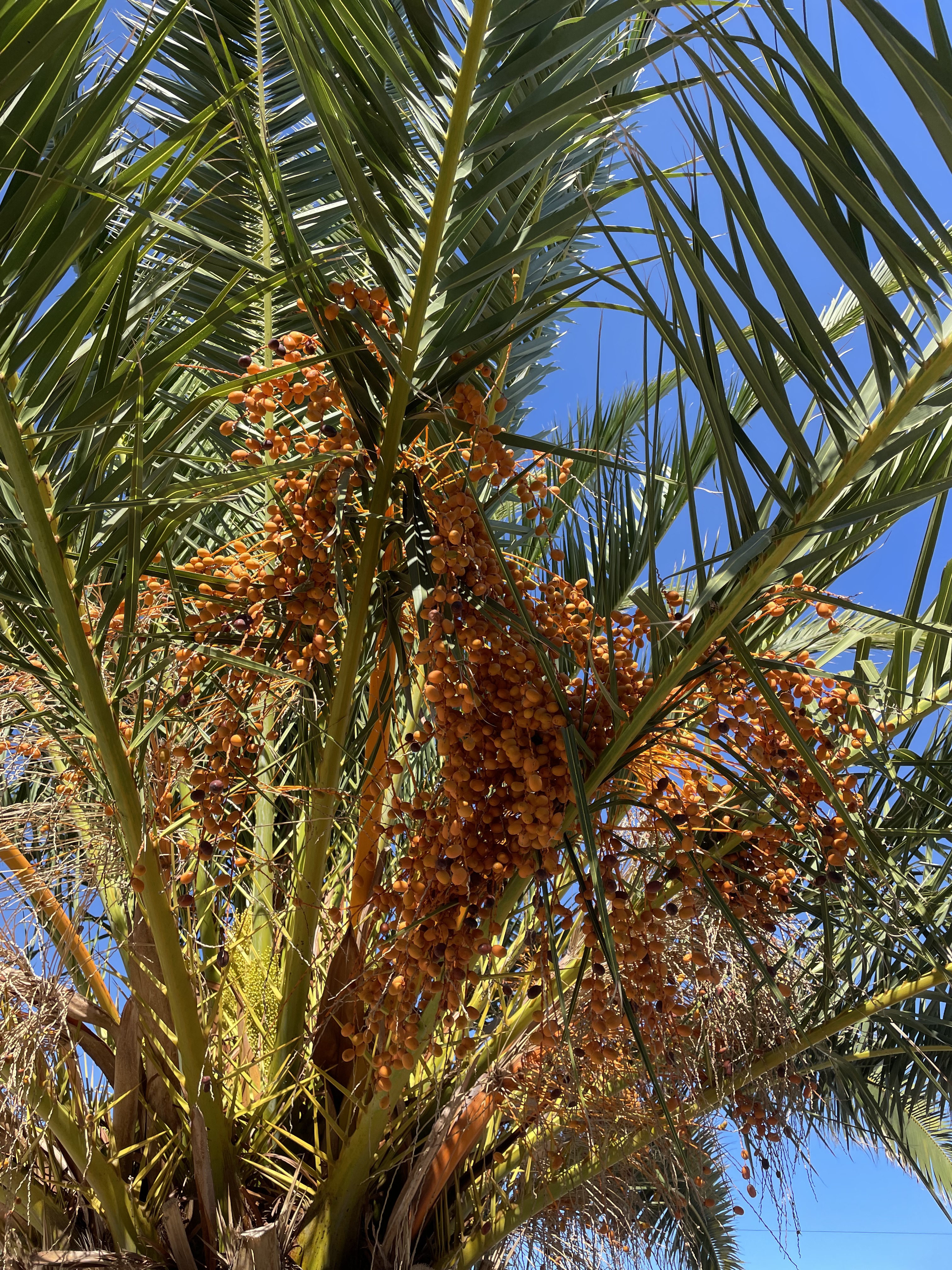
The day started at the bus stop: studying the timetable, buying tickets, waiting under a palm tree heavy with orange dates.
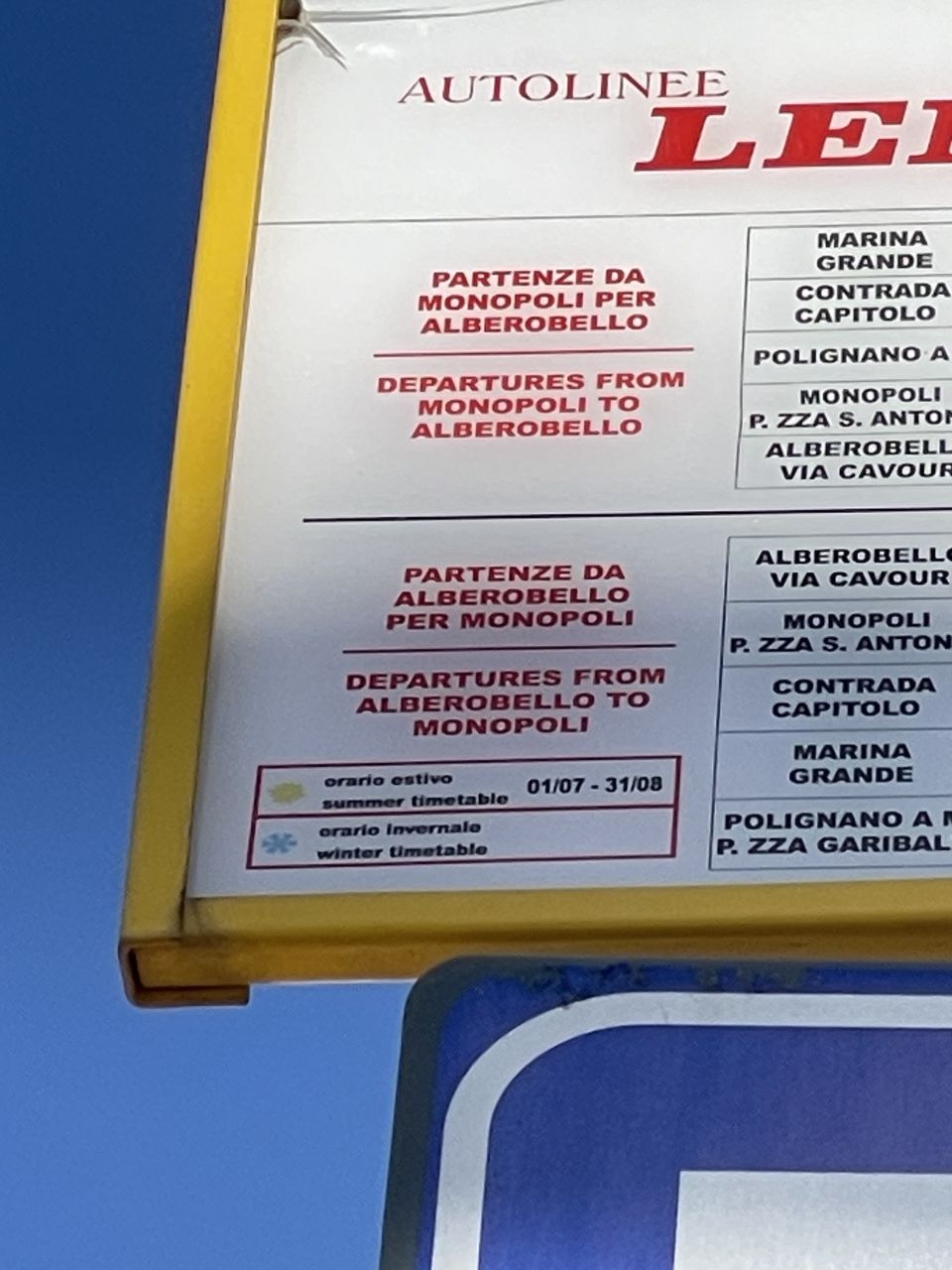
The timetable, in full 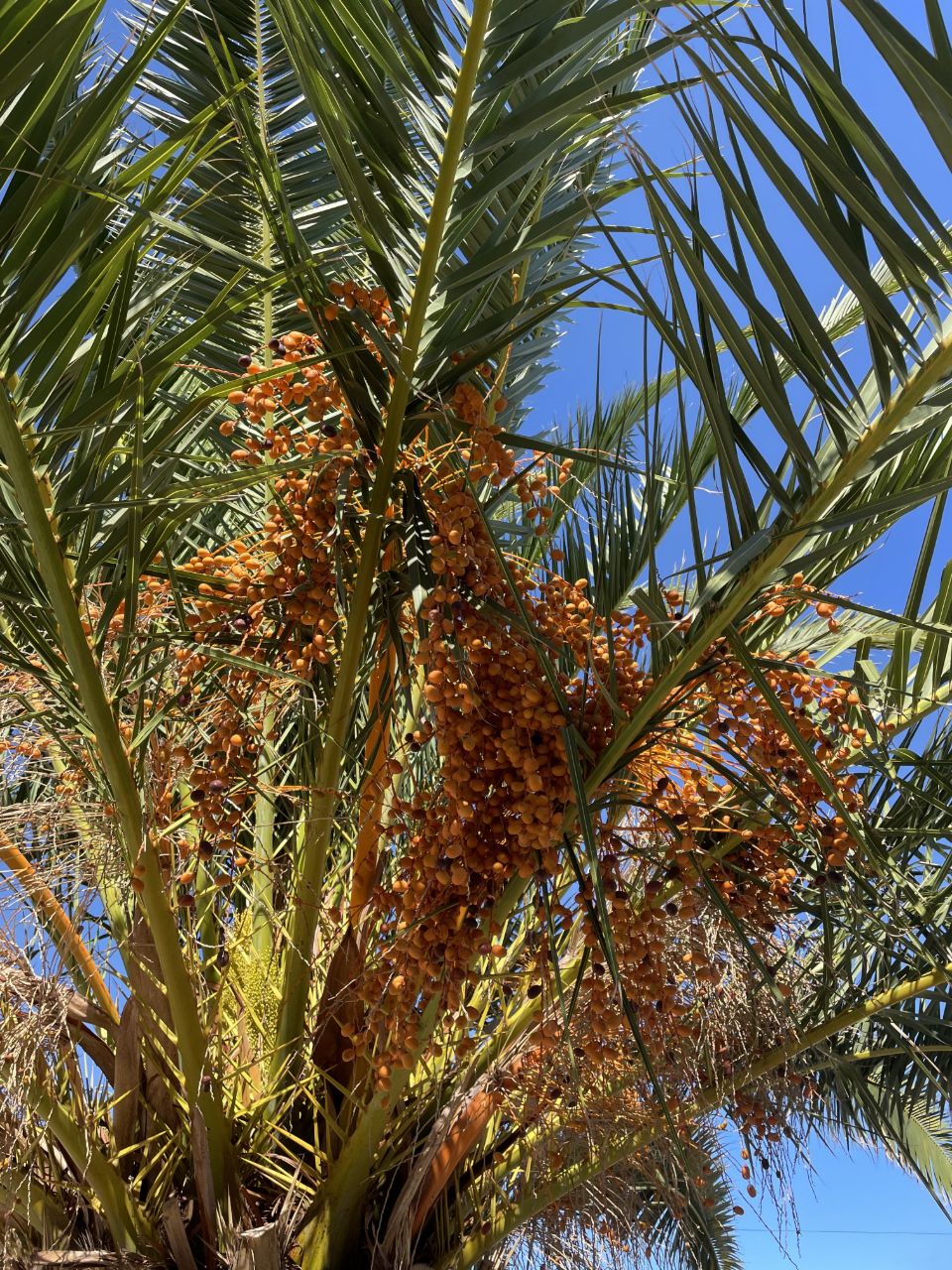
The palm with its dates
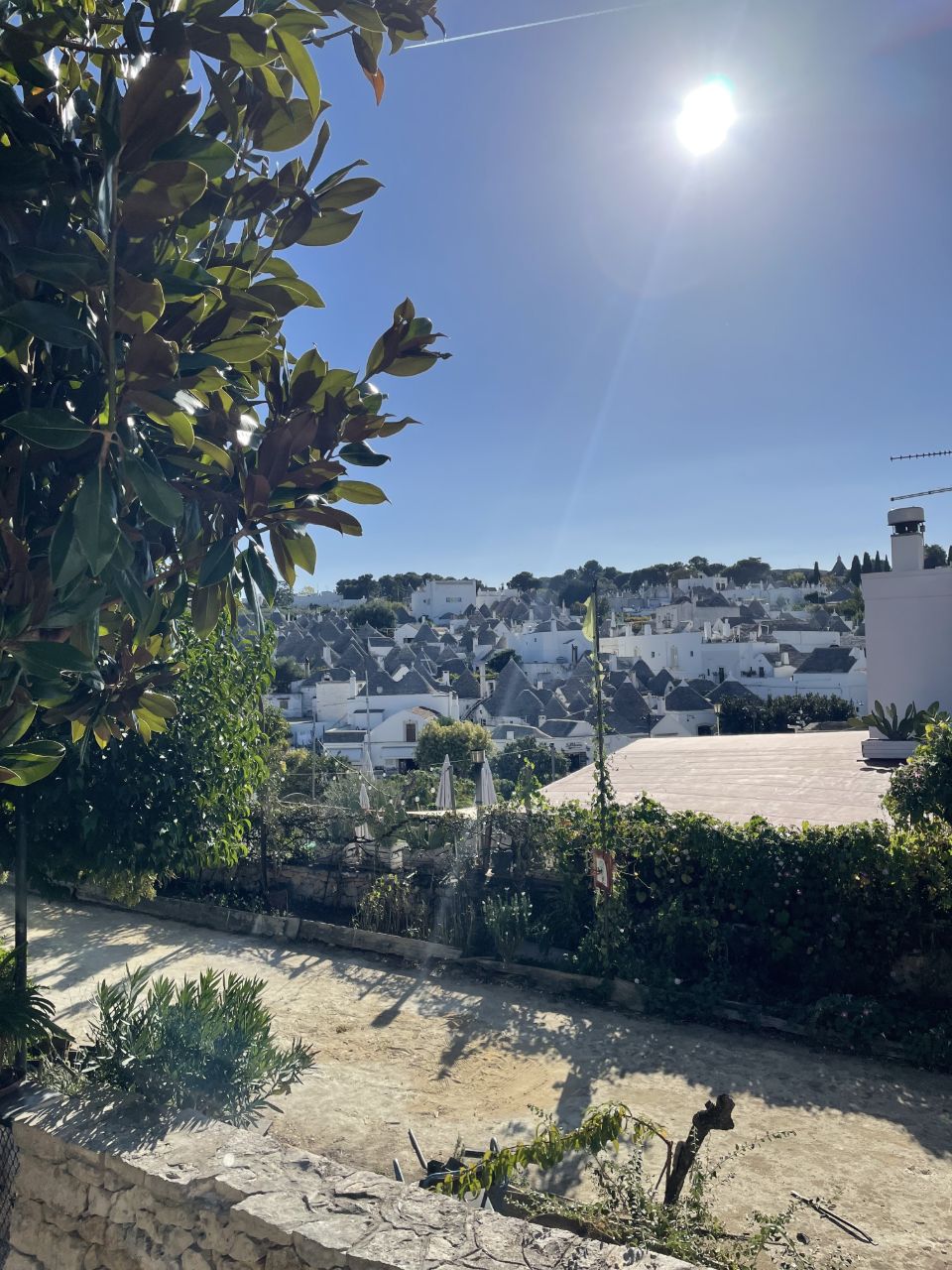
The sea of cones
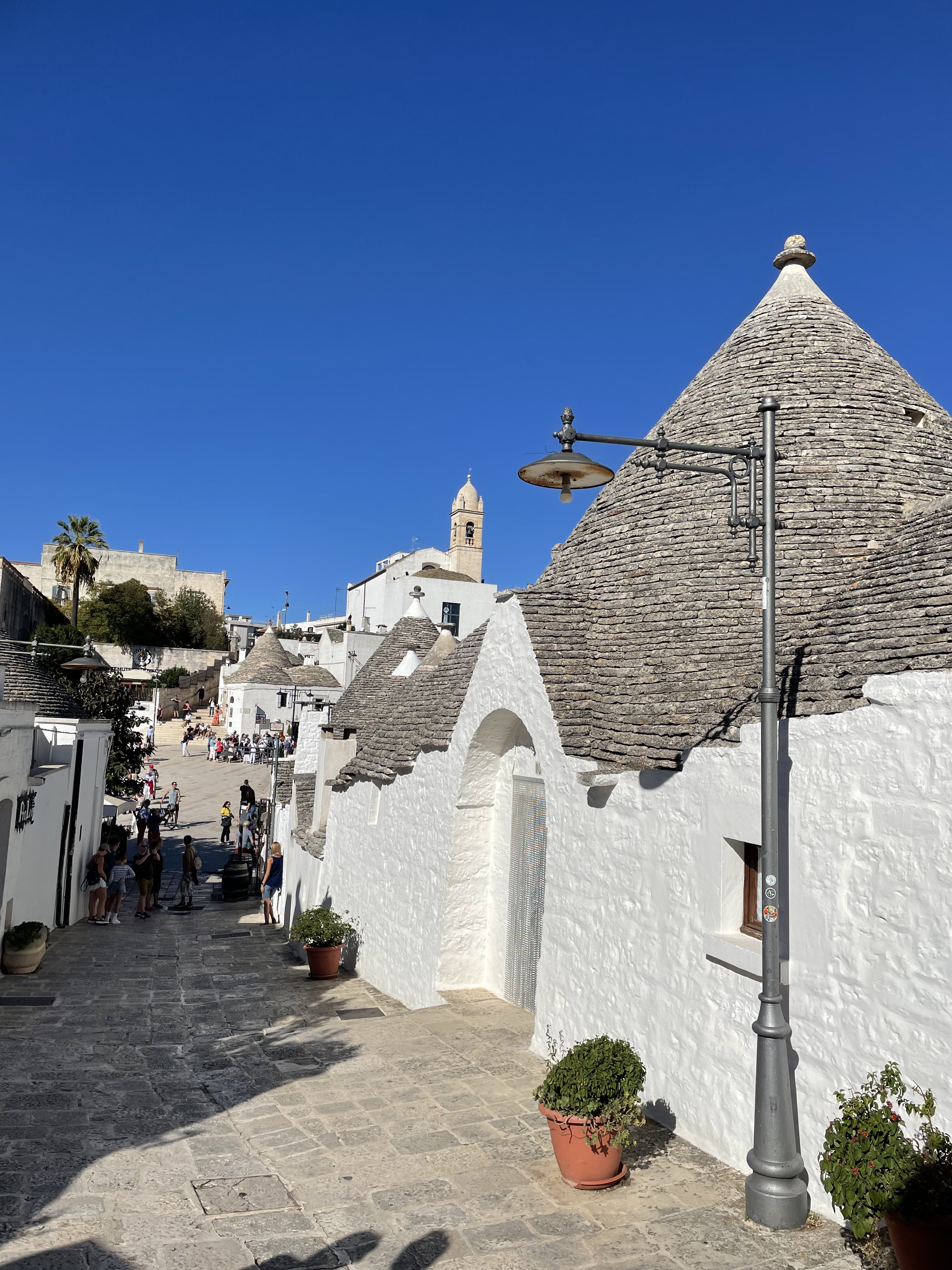
First view from the belvedere: cones, cones, everywhere. Whitewashed cylinders topped with grey stone hats, chimneys and pinnacles sticking out at the angles, terracotta jars set on the terraces, the modern town below like a different century. The word itself is ancient — Latin trullus, a dome — and Alberobello is the one place in the world where the trullo is not a farmhouse curiosity but an entire town: the thousand-odd cones of its Rione Monti are exactly what got the UNESCO listing. It never stopped being funny to look at — a village where every house wears the same hat.
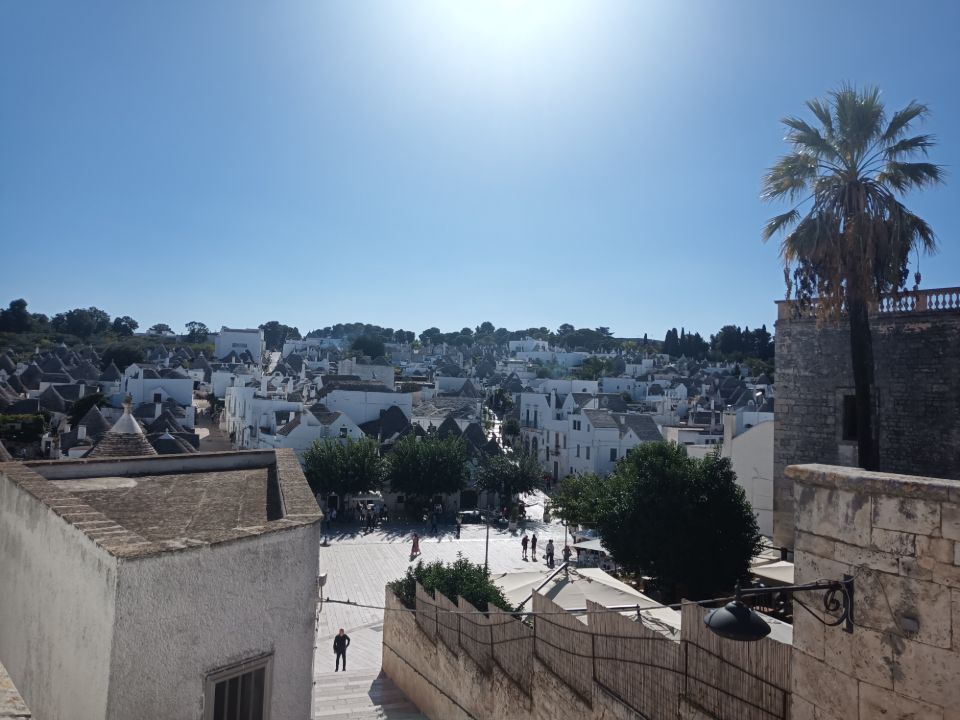
First sight of it all 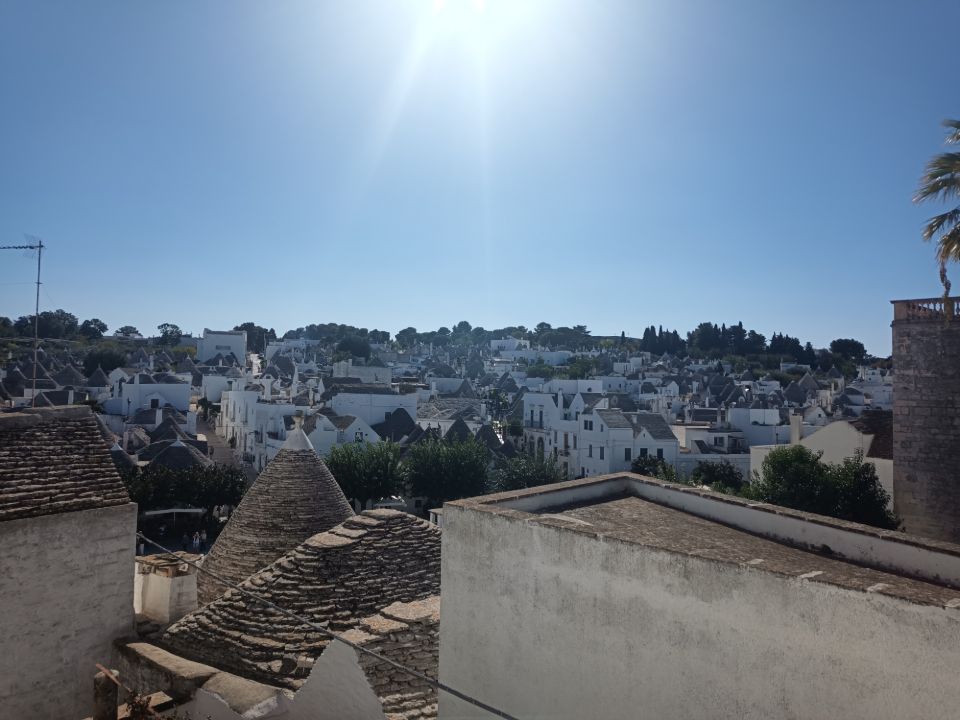
From the elevated view 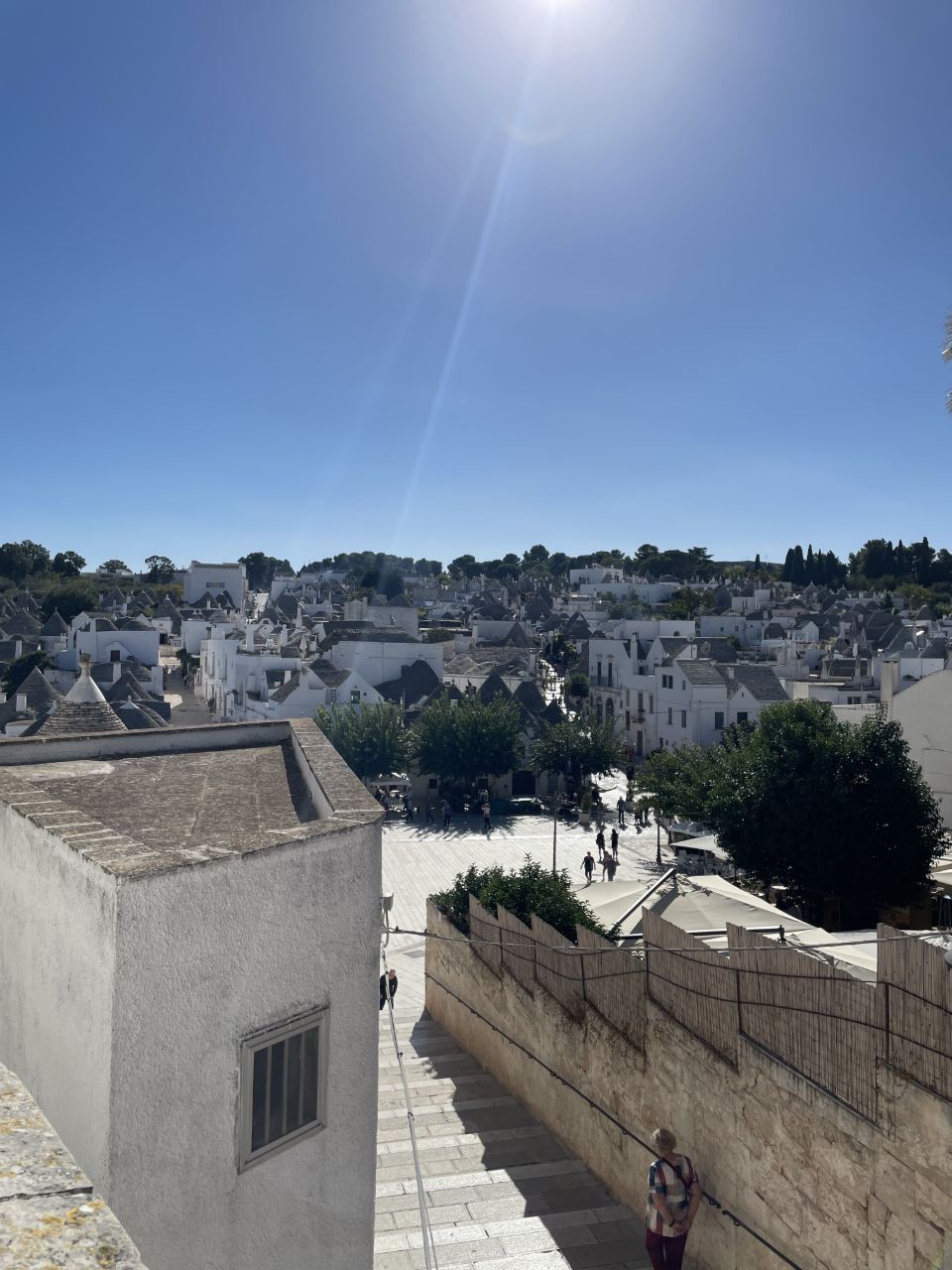
Down the stepped lane 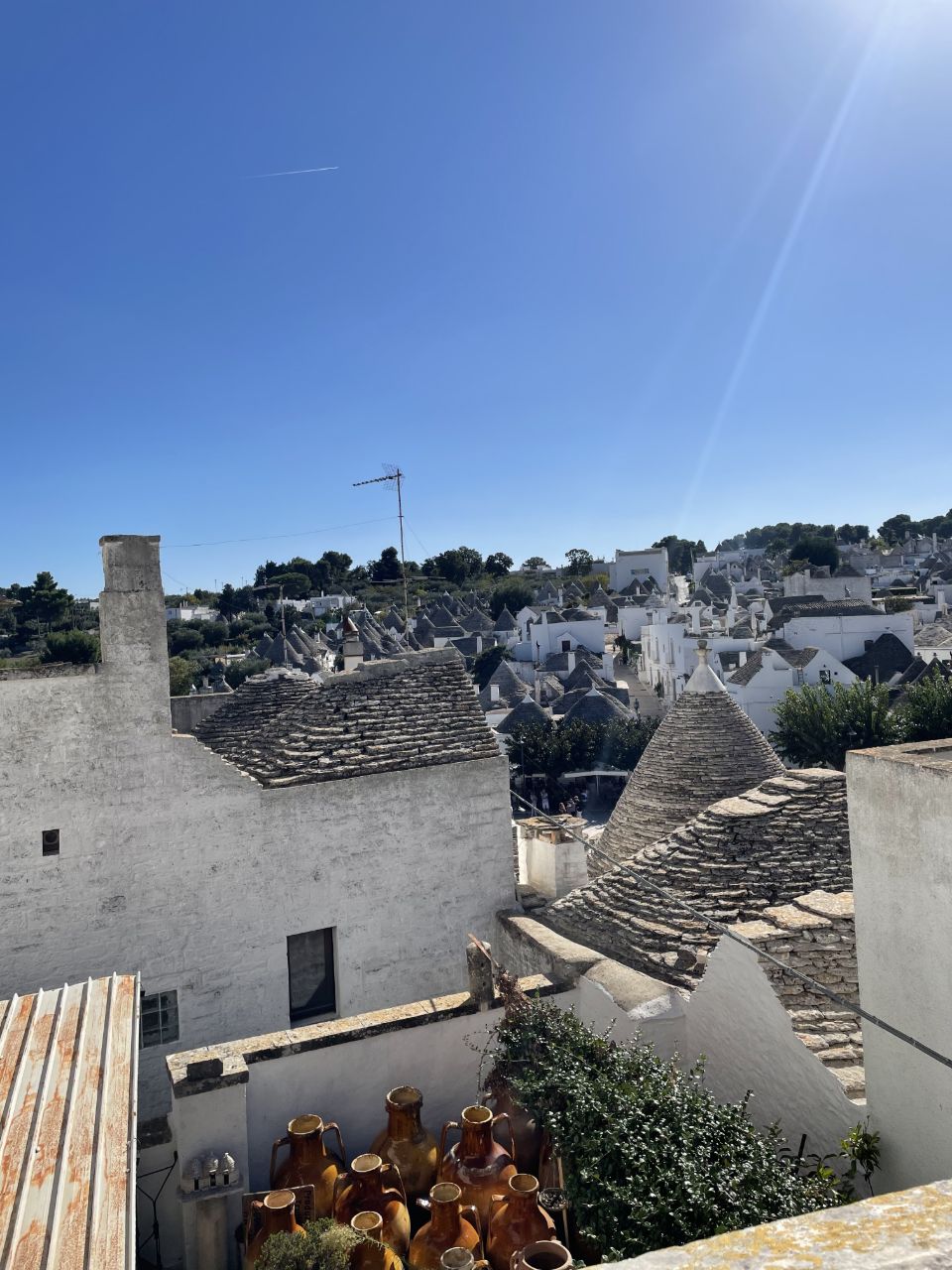
Jars on the terraces 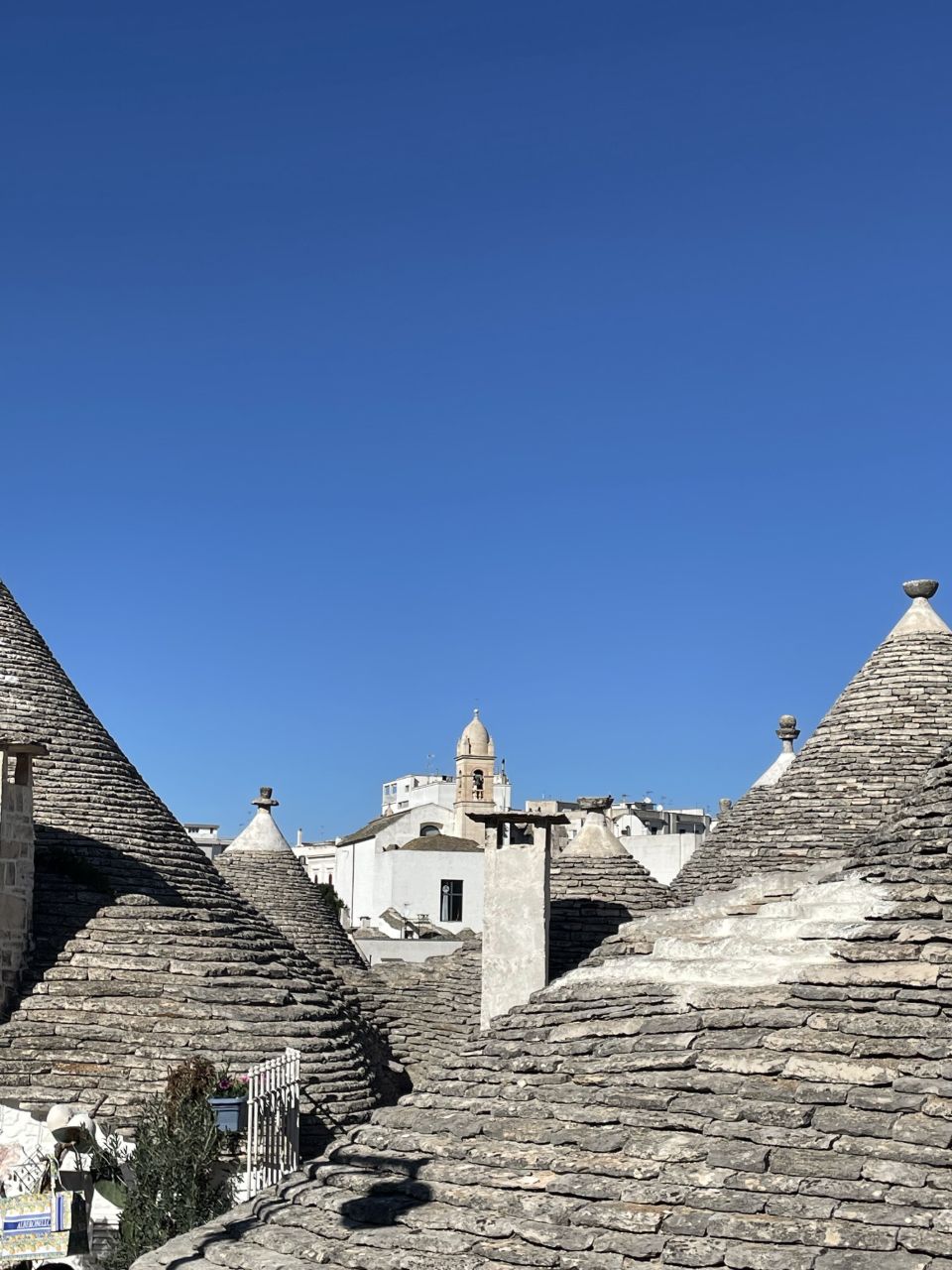
A mass of grey hats 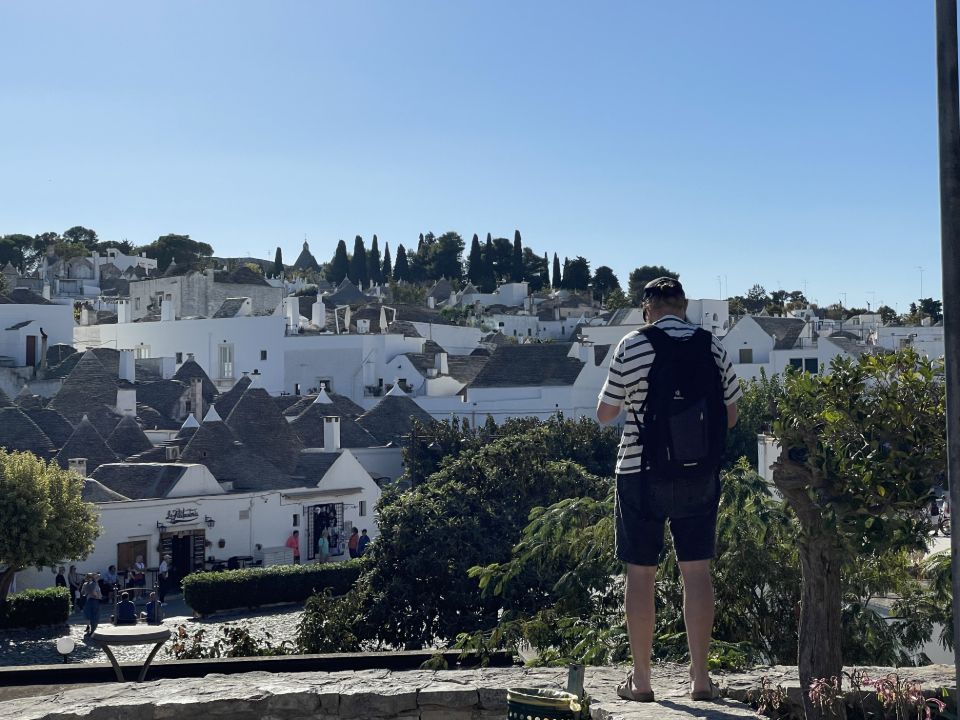
Oleg, taking it in The panorama, sun high
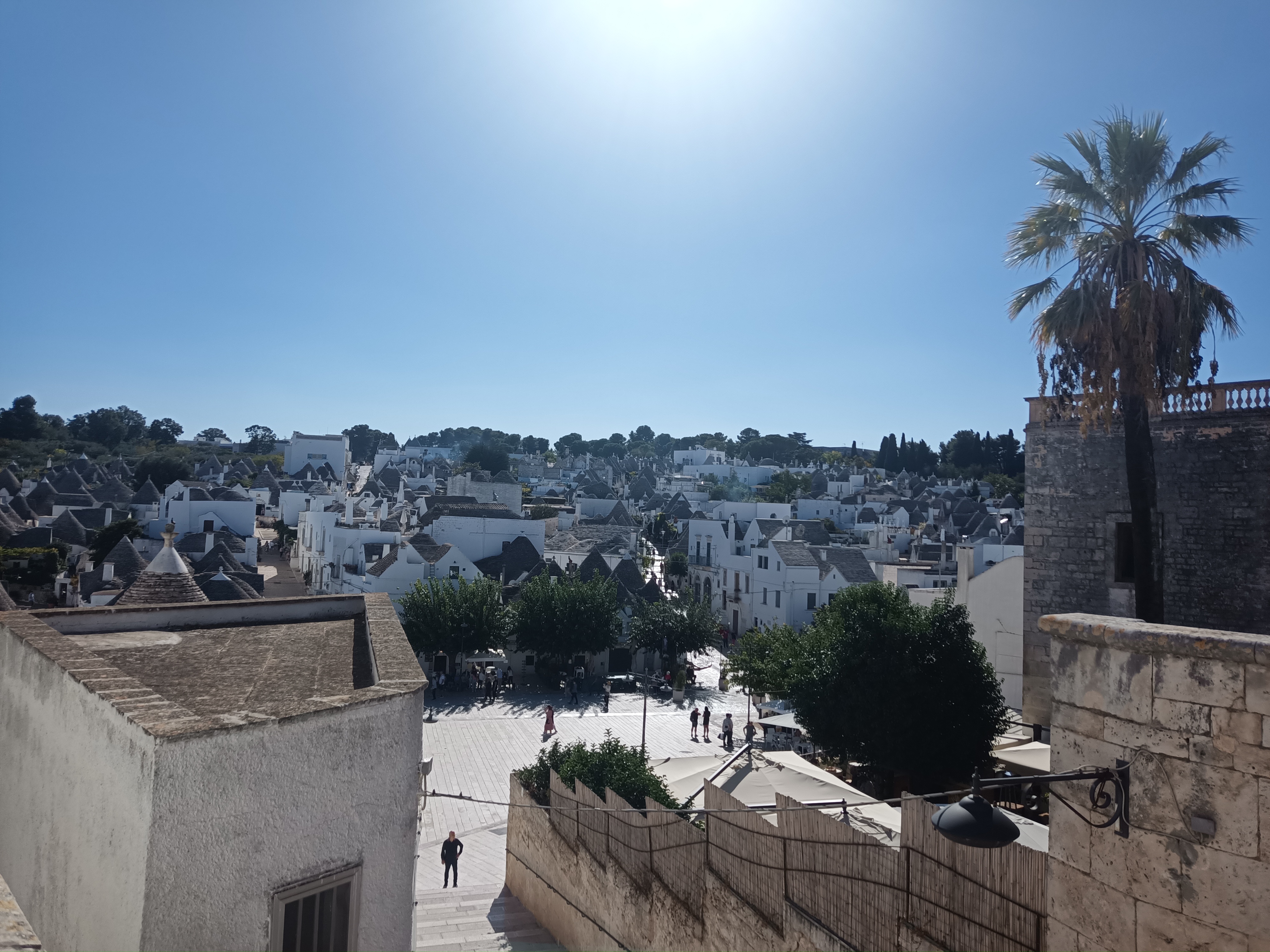
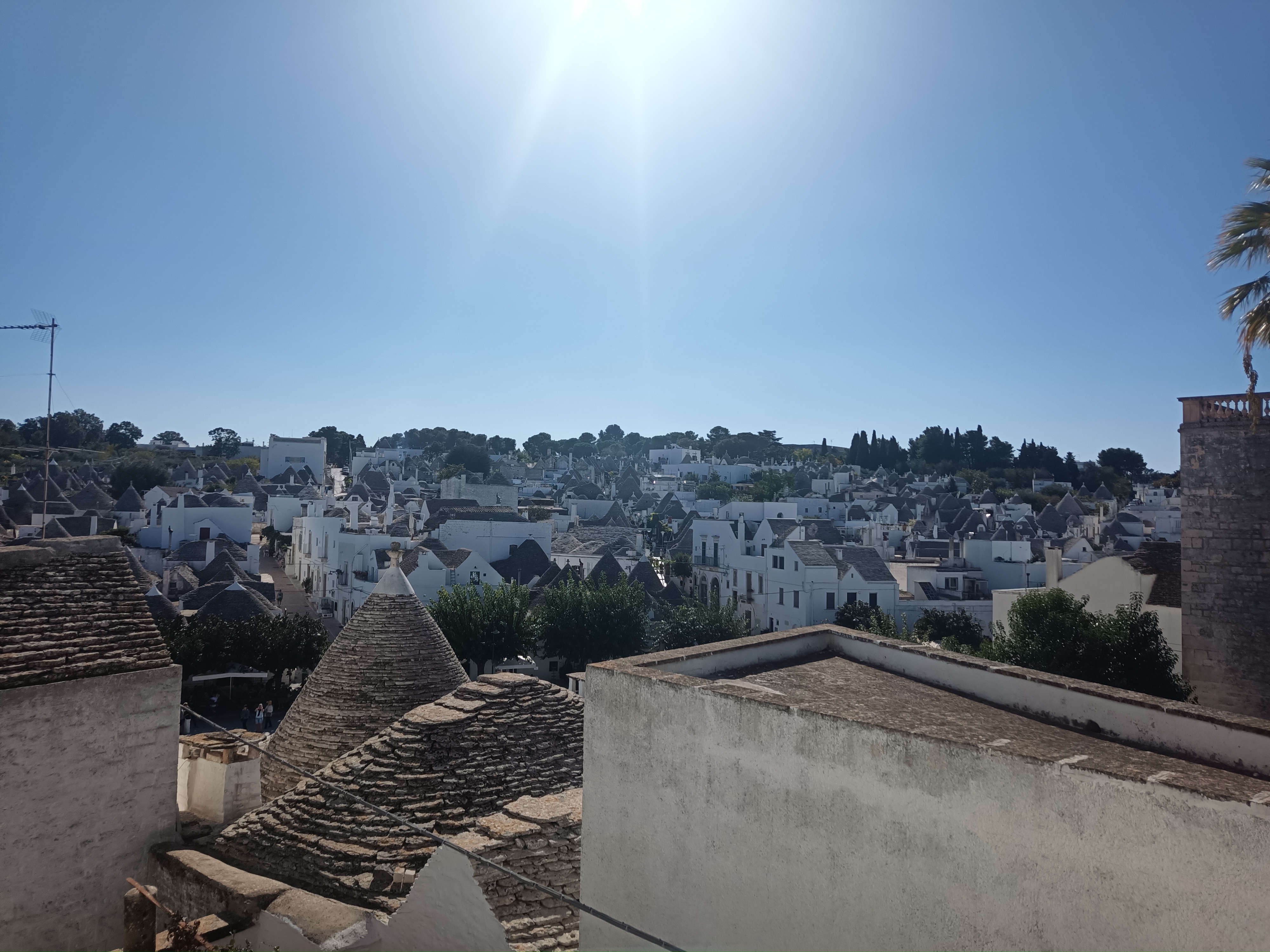
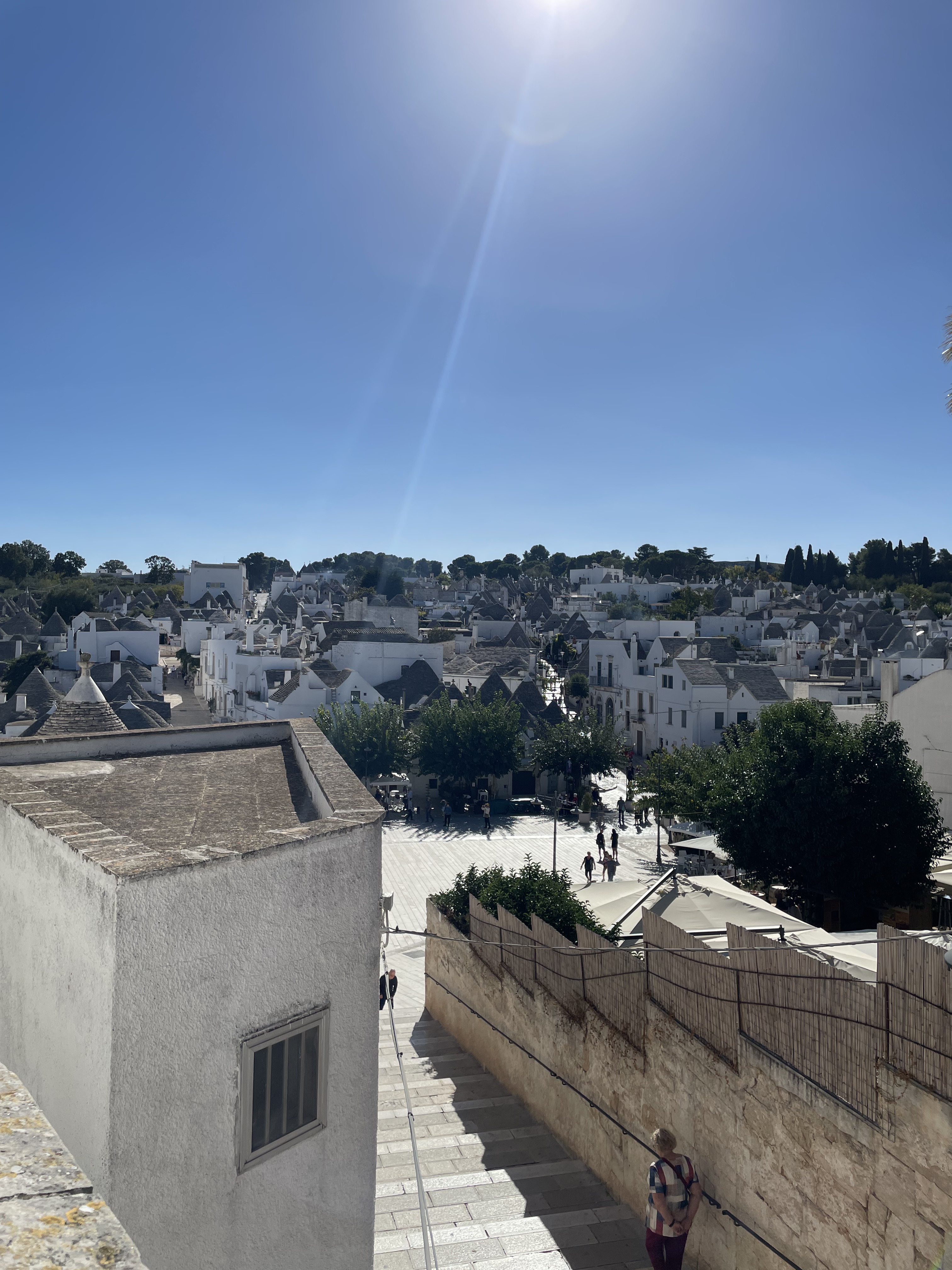
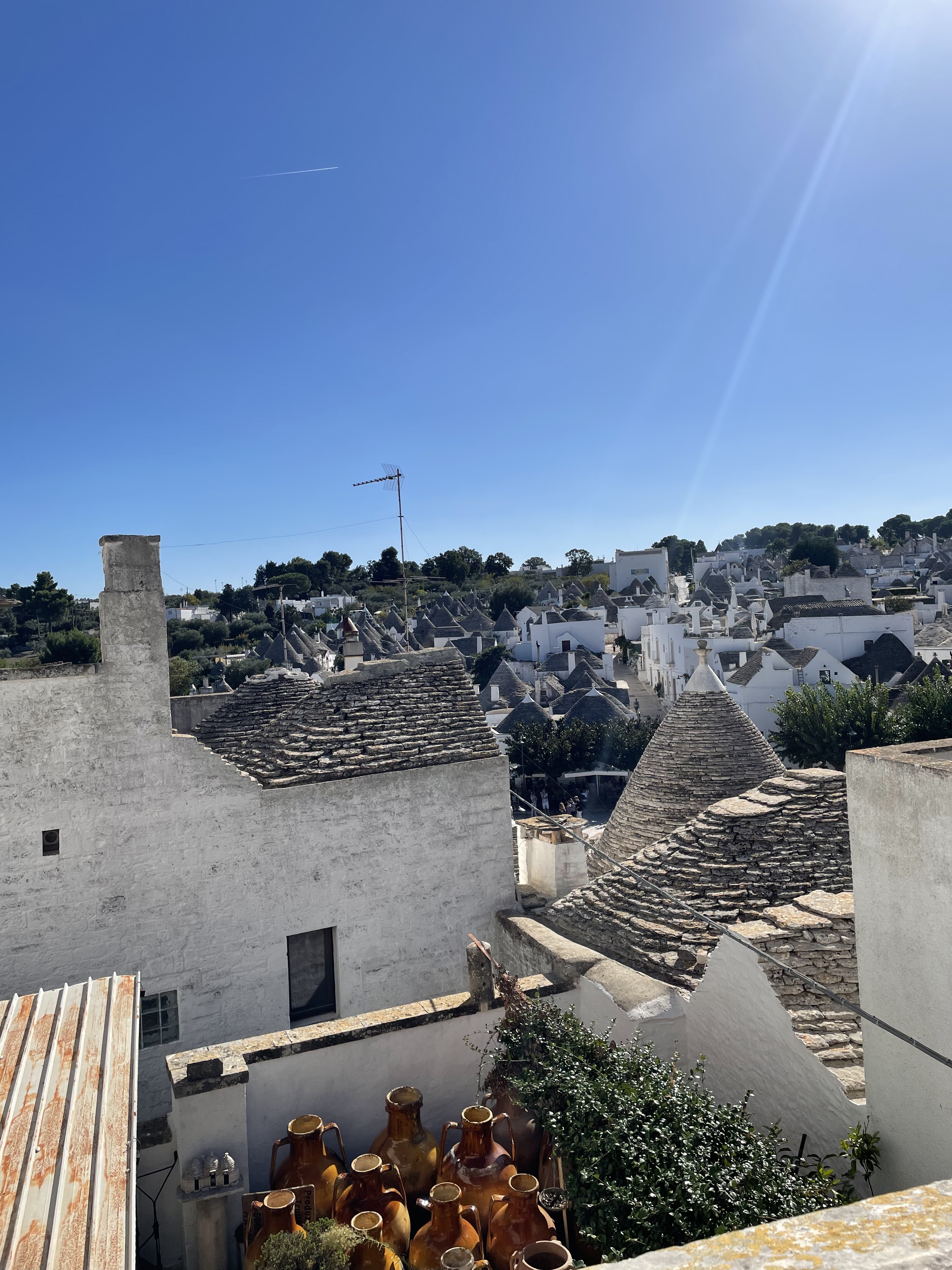
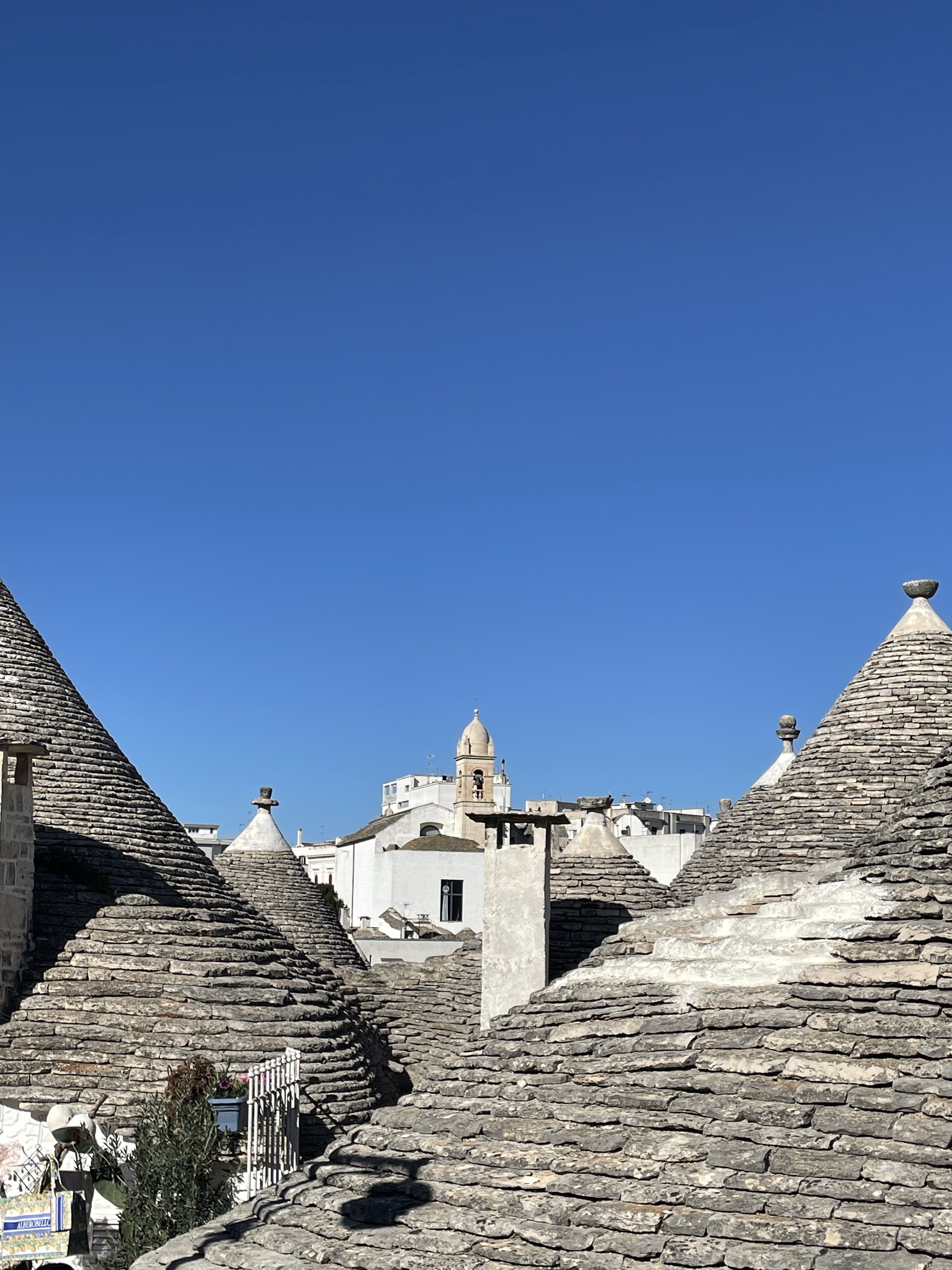
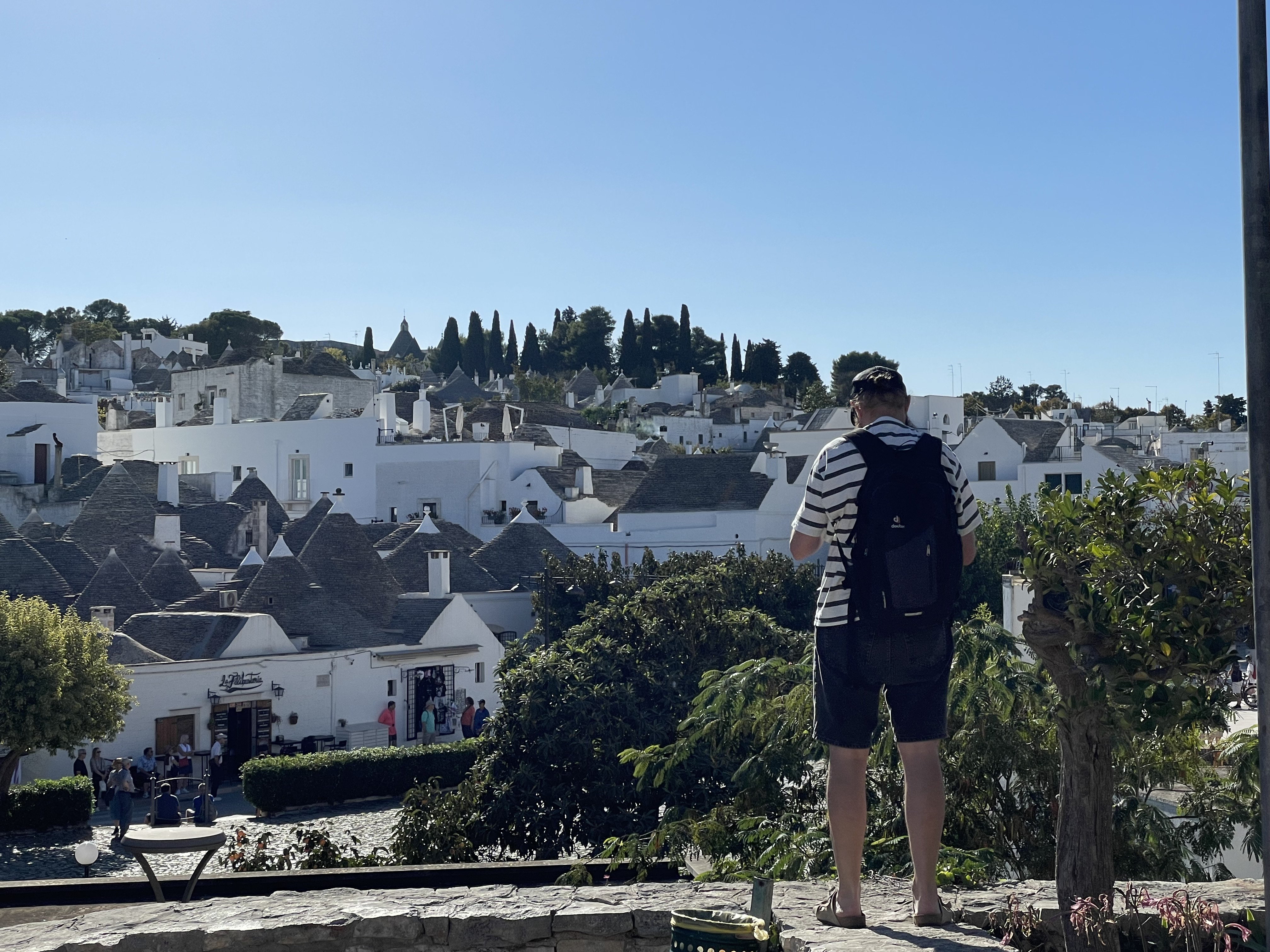
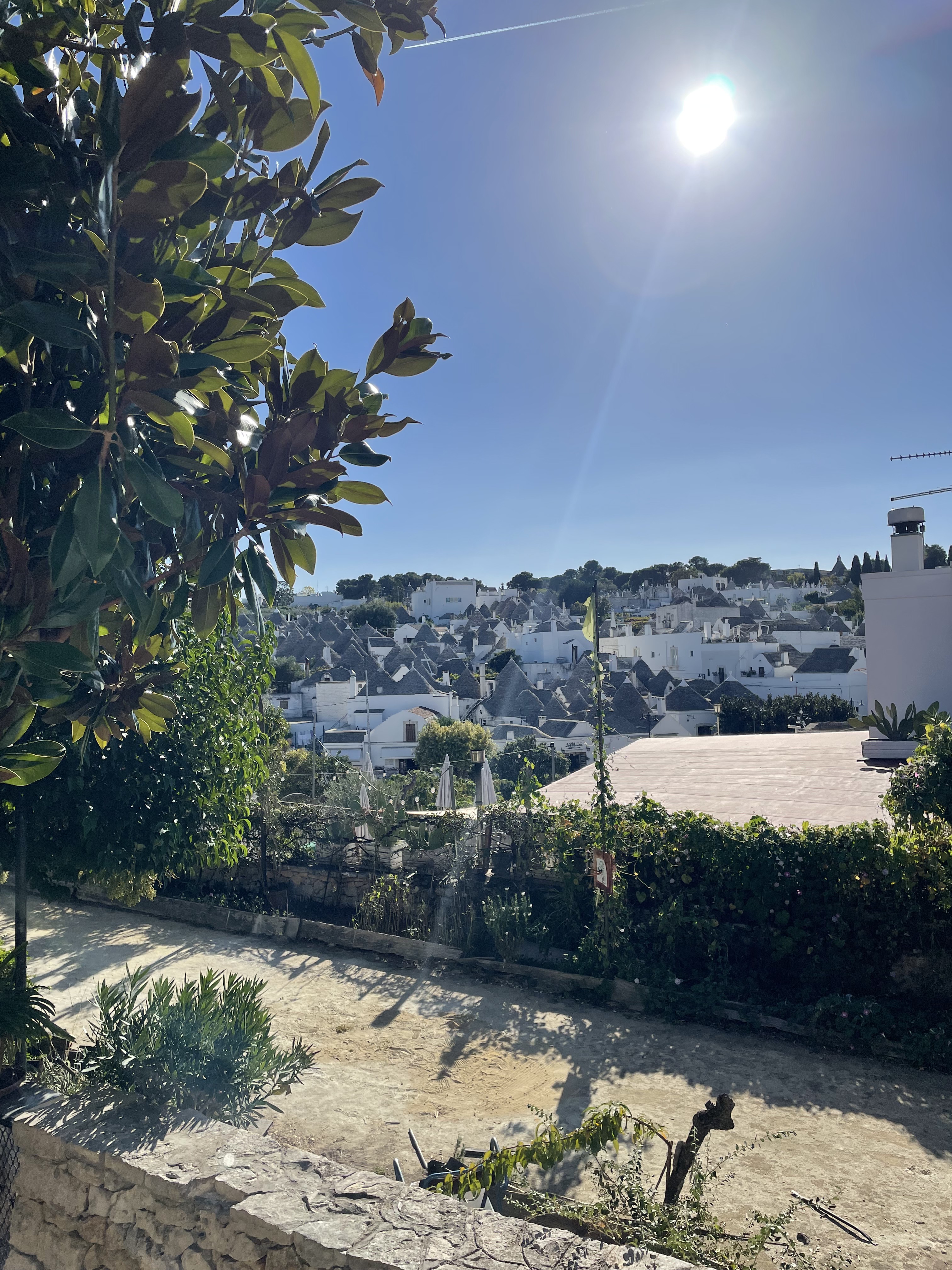
Symbols on the cones
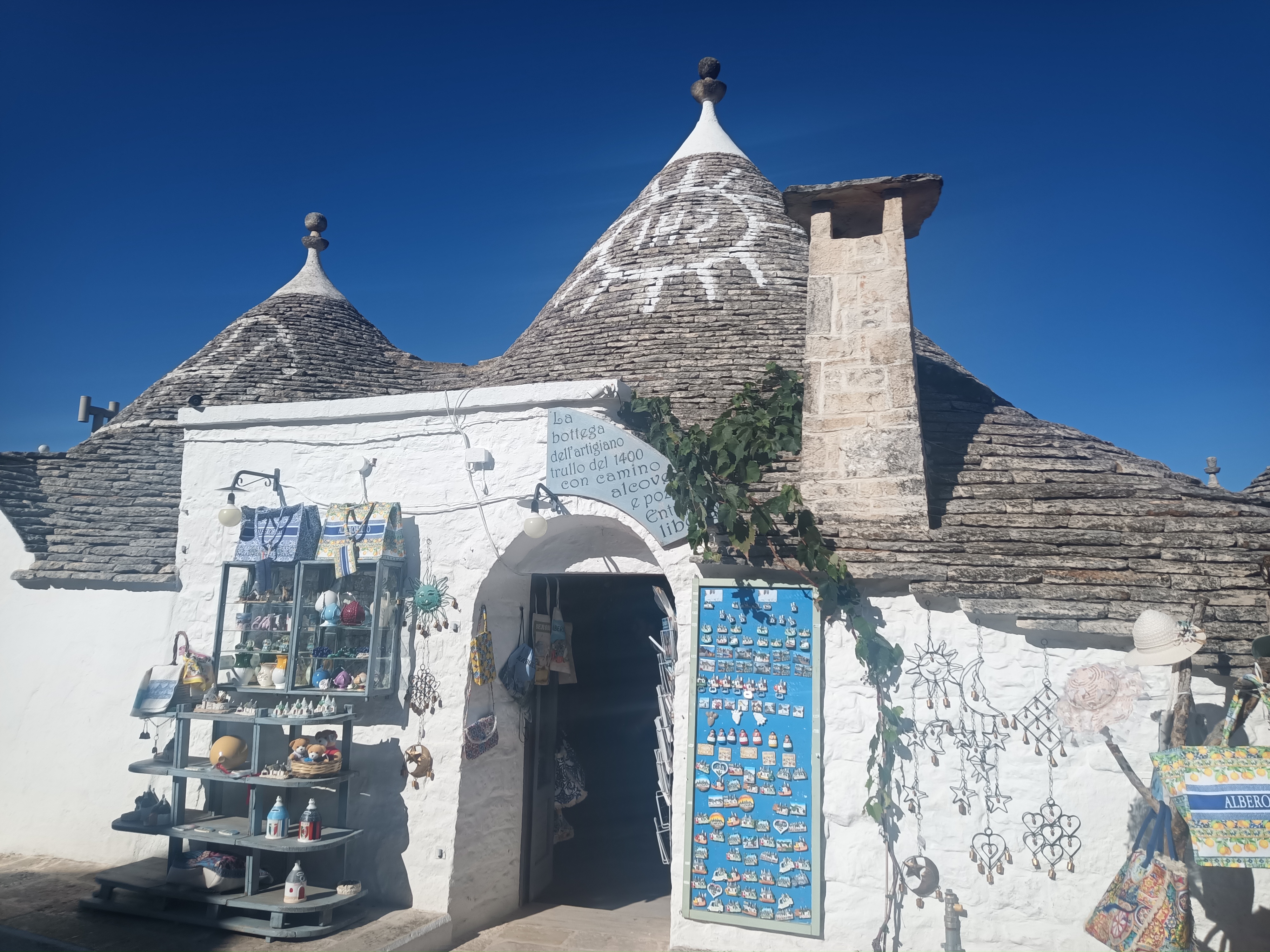
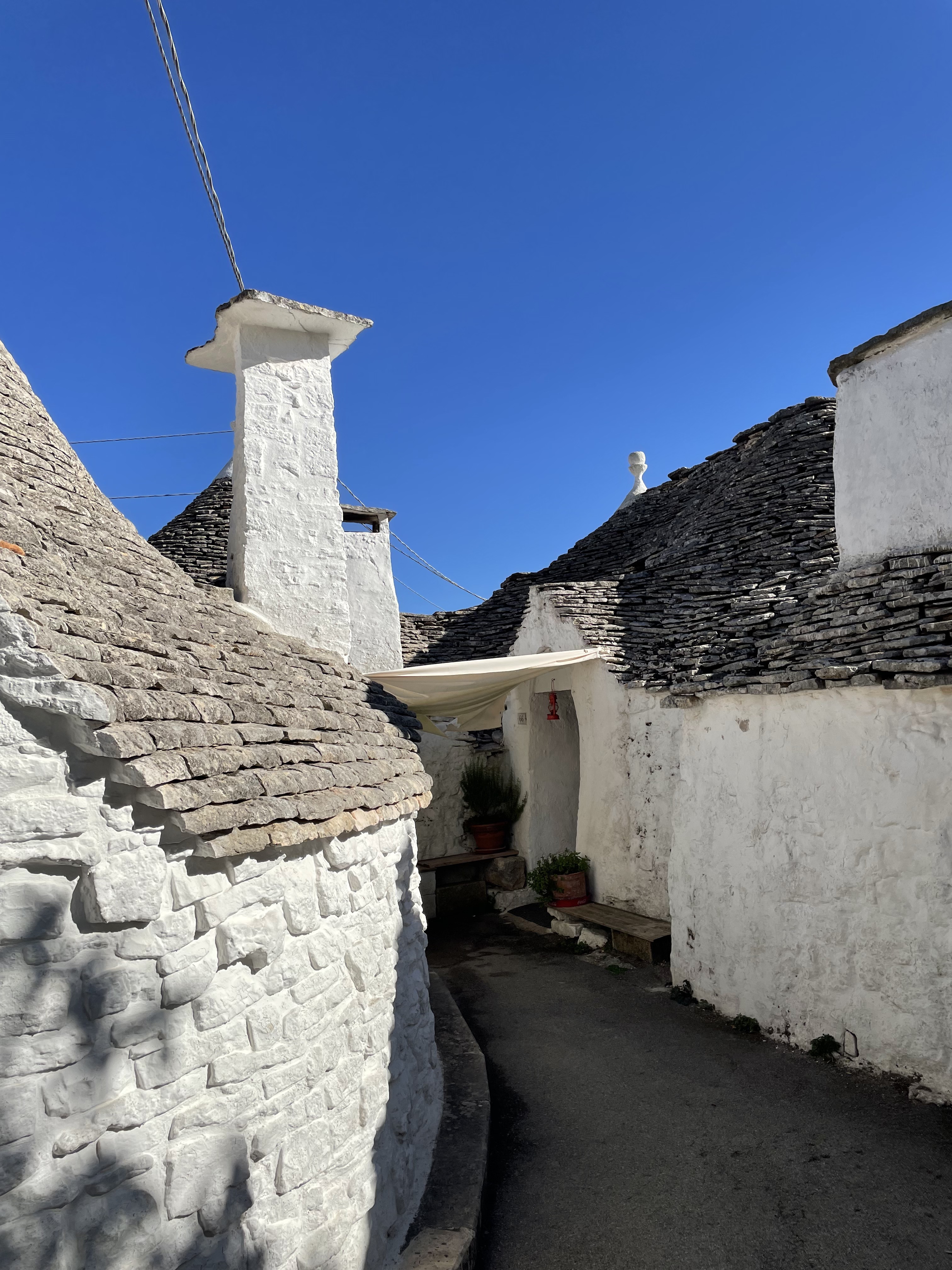
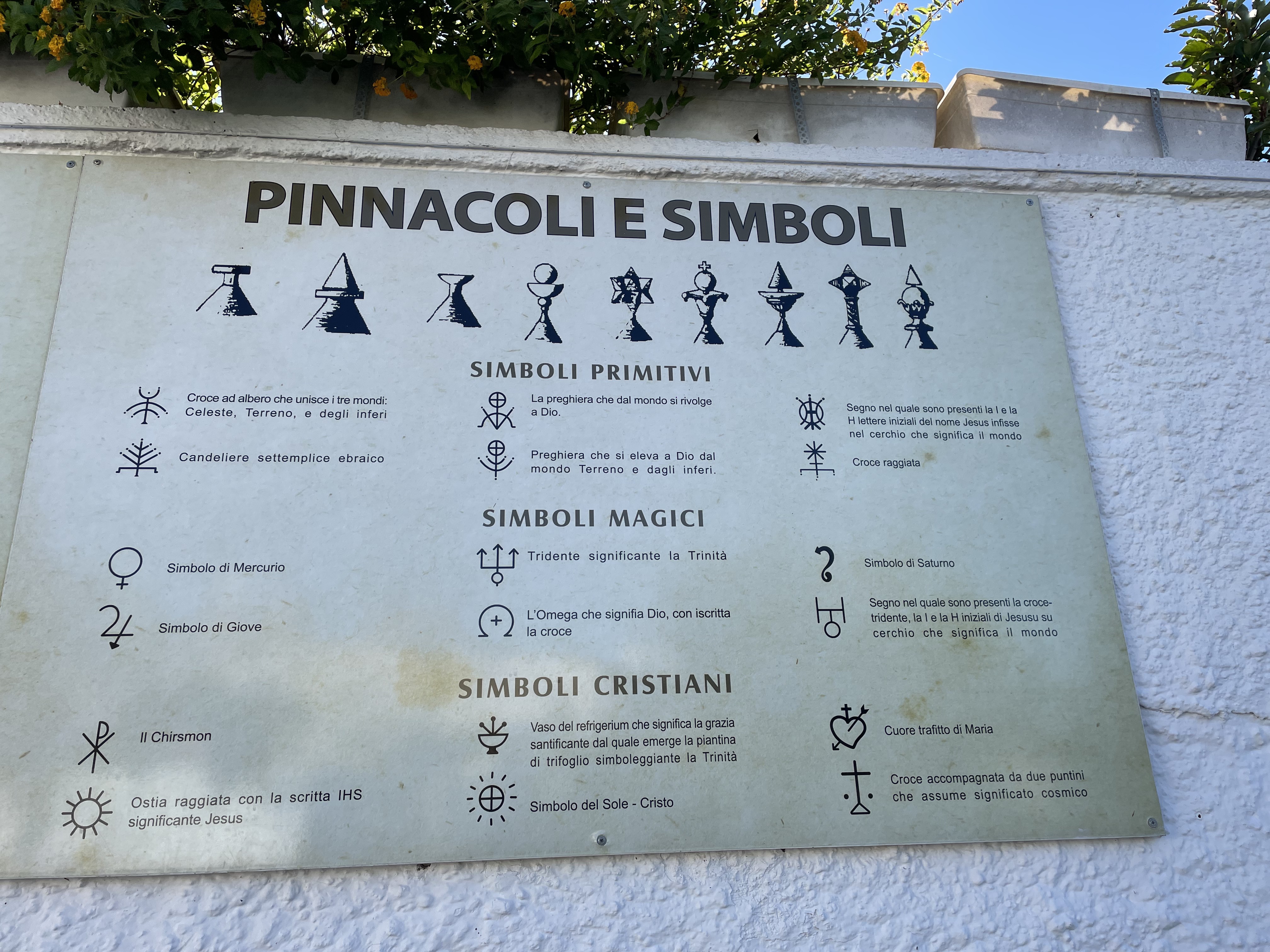
The roofs carry chalk-white marks — initials, patterns, ancient symbols, one bookshop sign explained them all under the heading Pinnacoli e Simboli. The lanes between the houses are tourist-street one way and completely empty the next: souvenir trulli, then a derelict old one, then a lane so quiet you only hear your own steps.
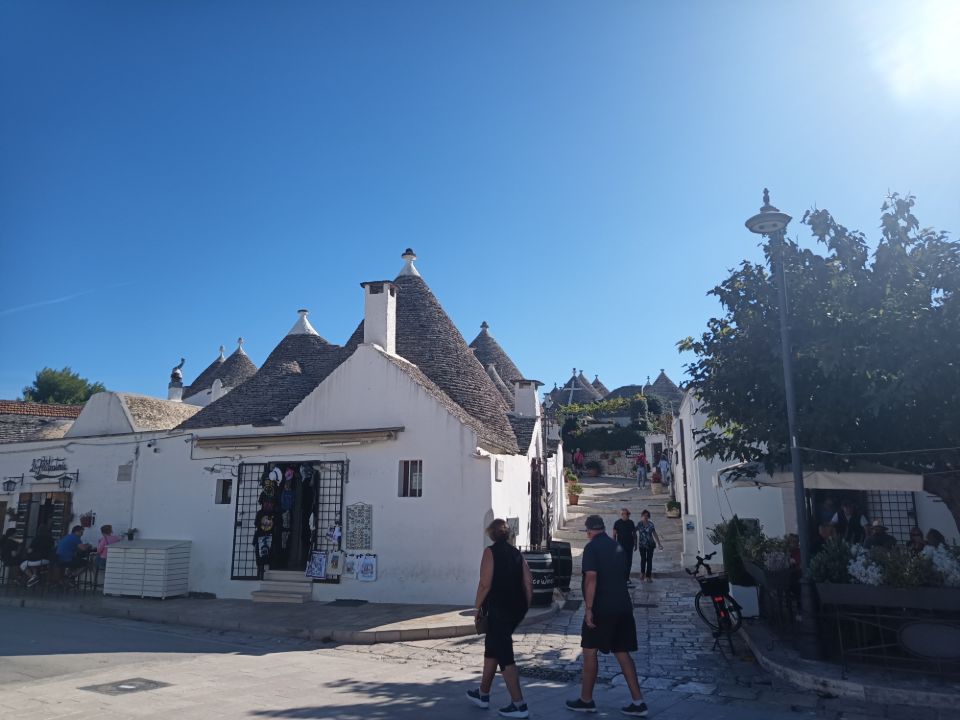
The main street, sunny 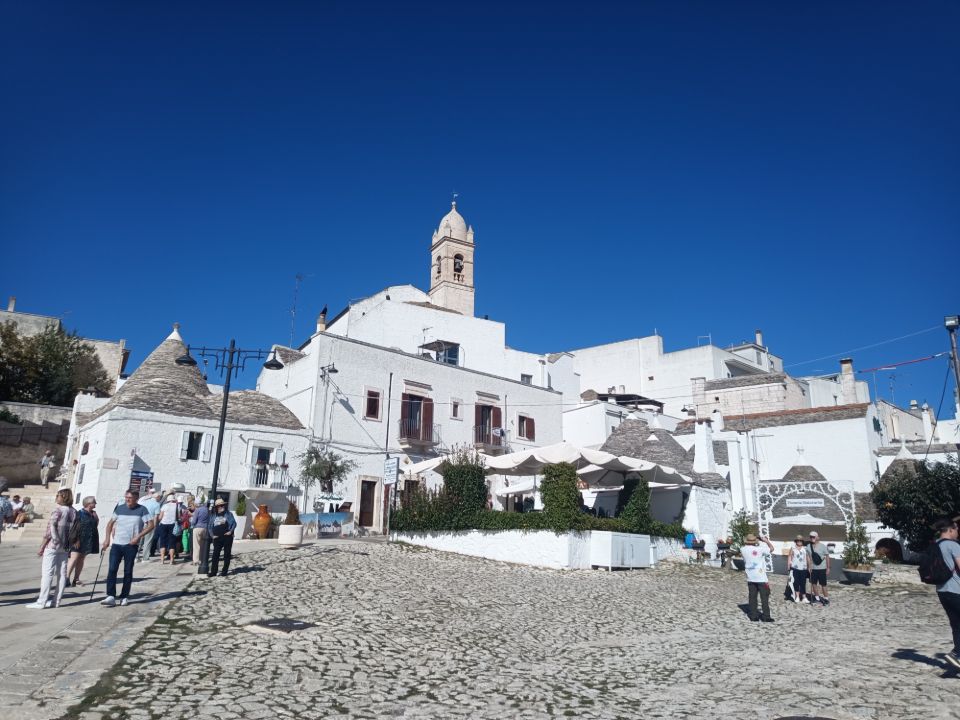
The square and the church spire 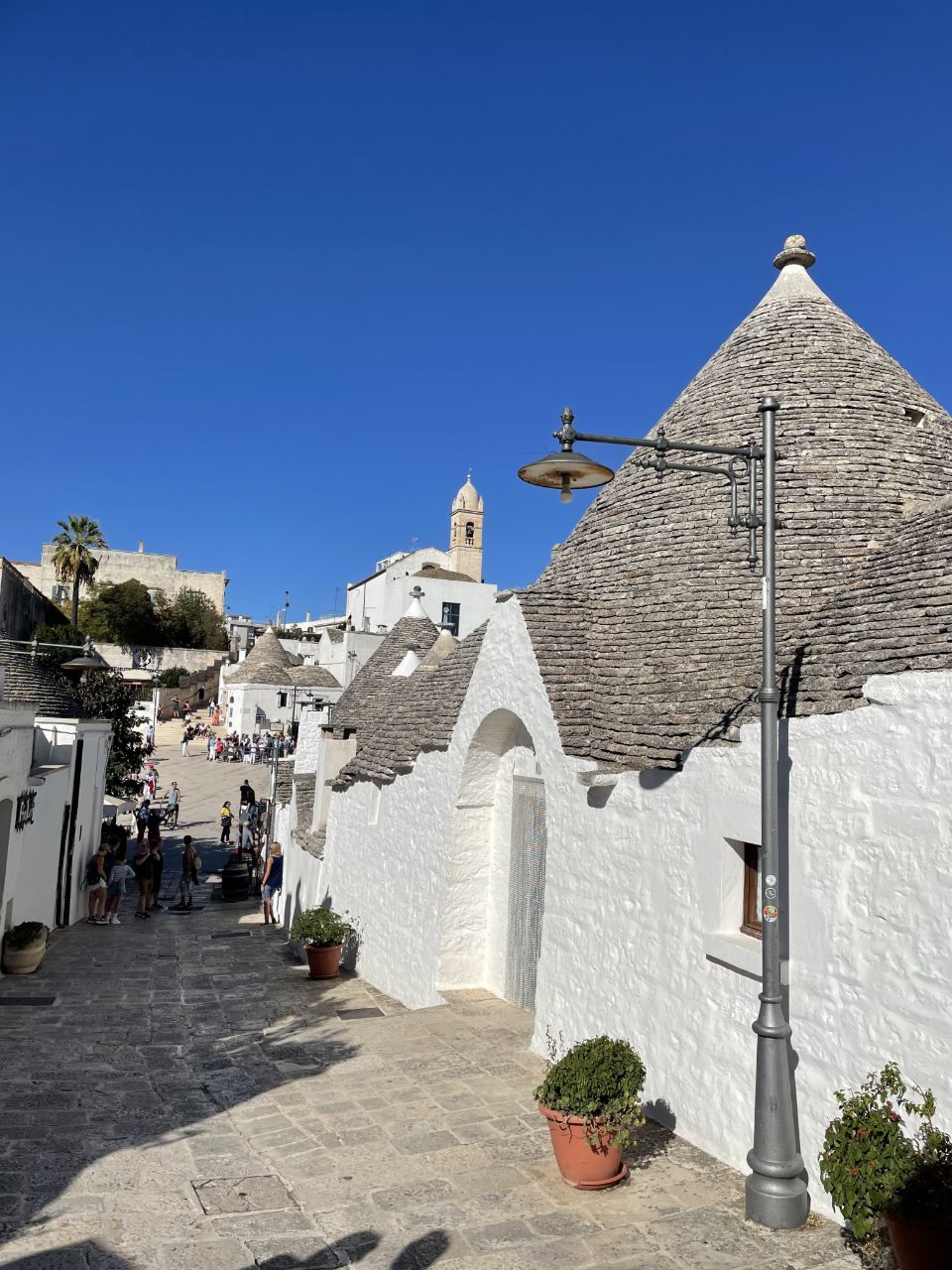
A narrow lane, pots out 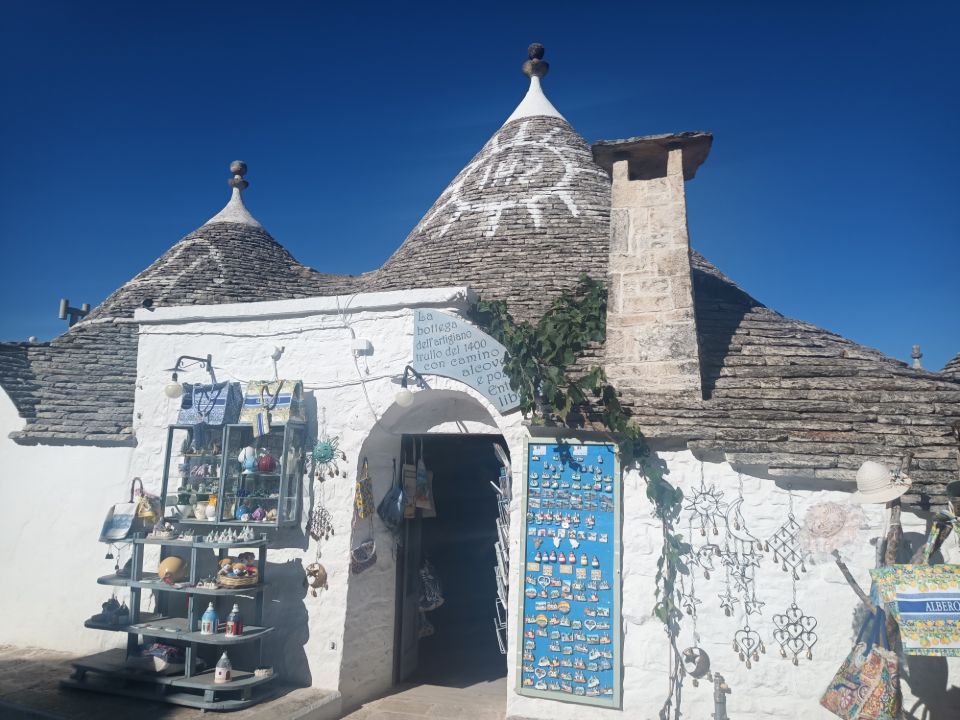
Symbols, up close 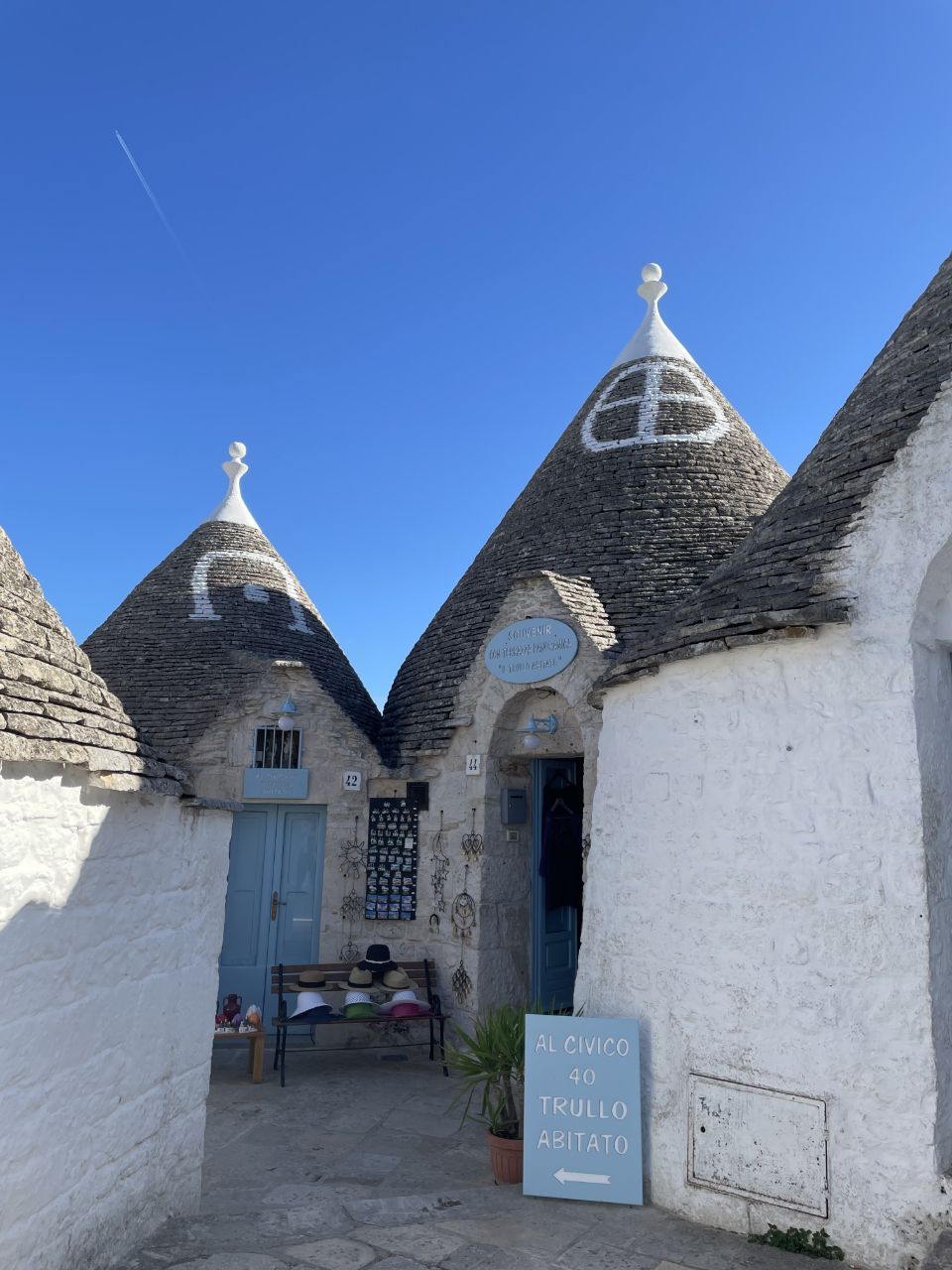
A pair under the blue 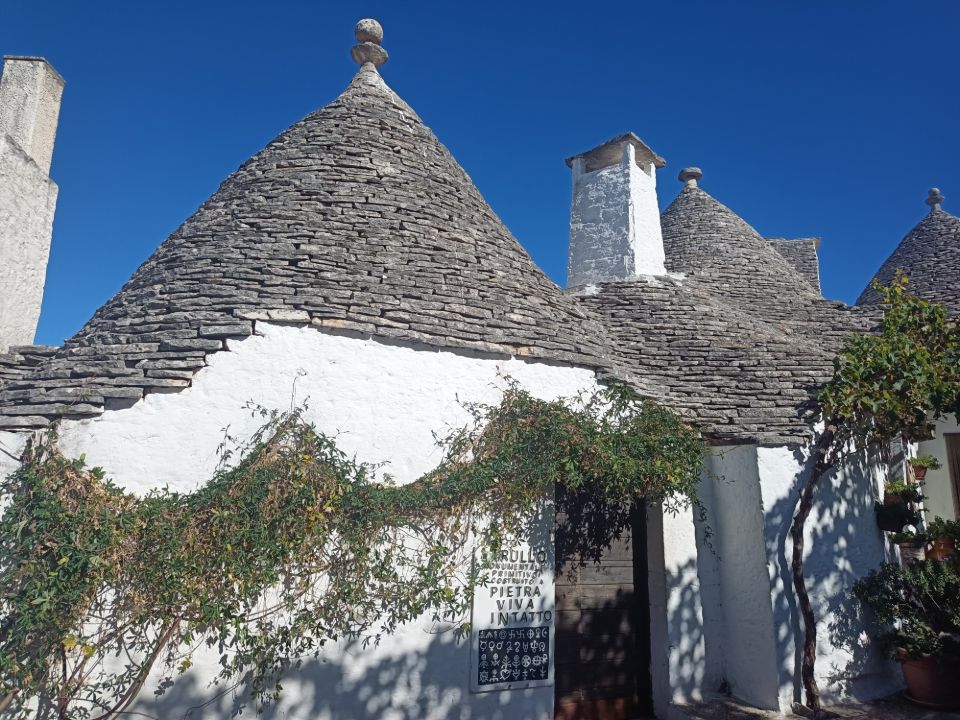
Ivy over the cone 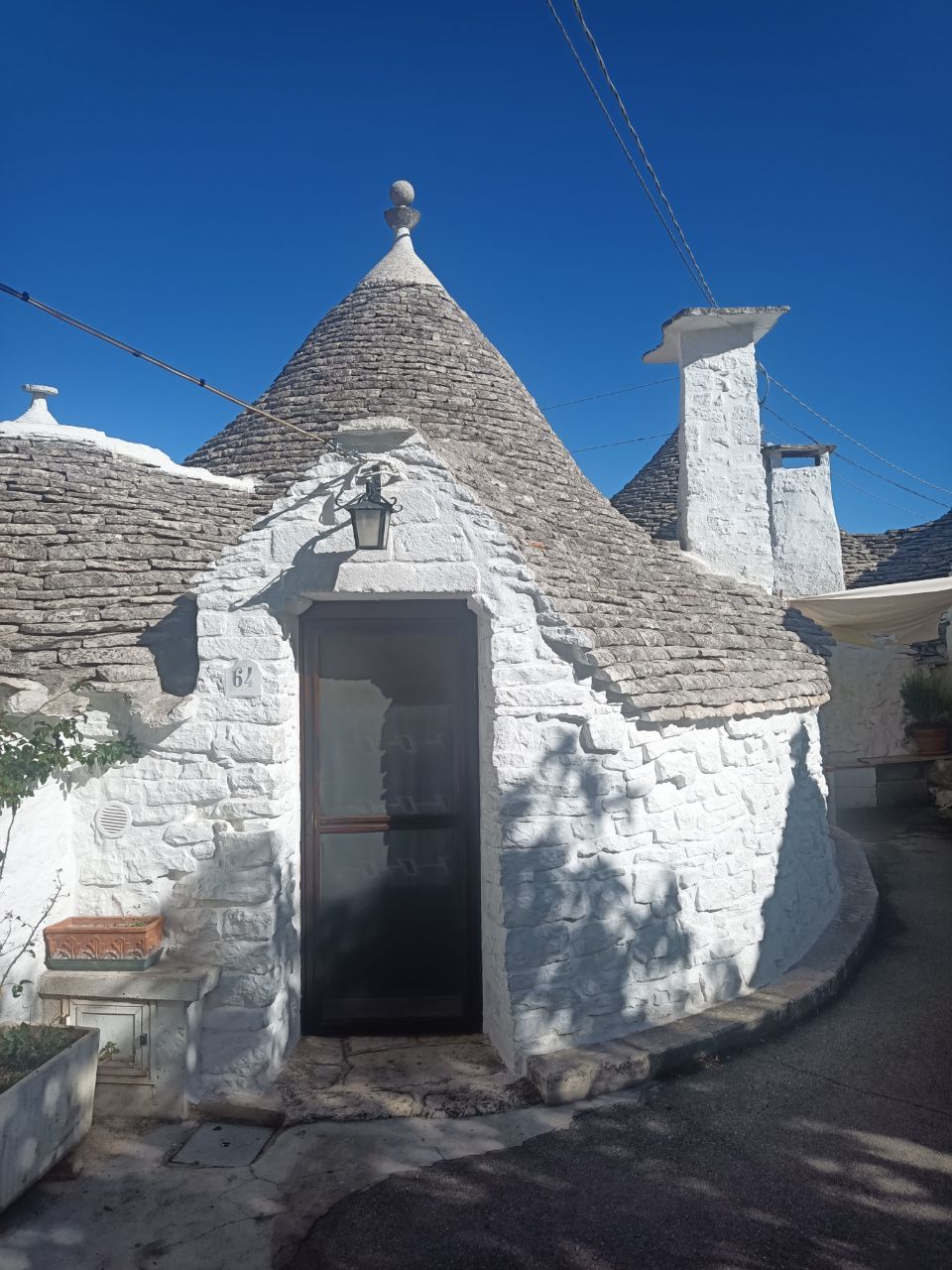
The odd chimney 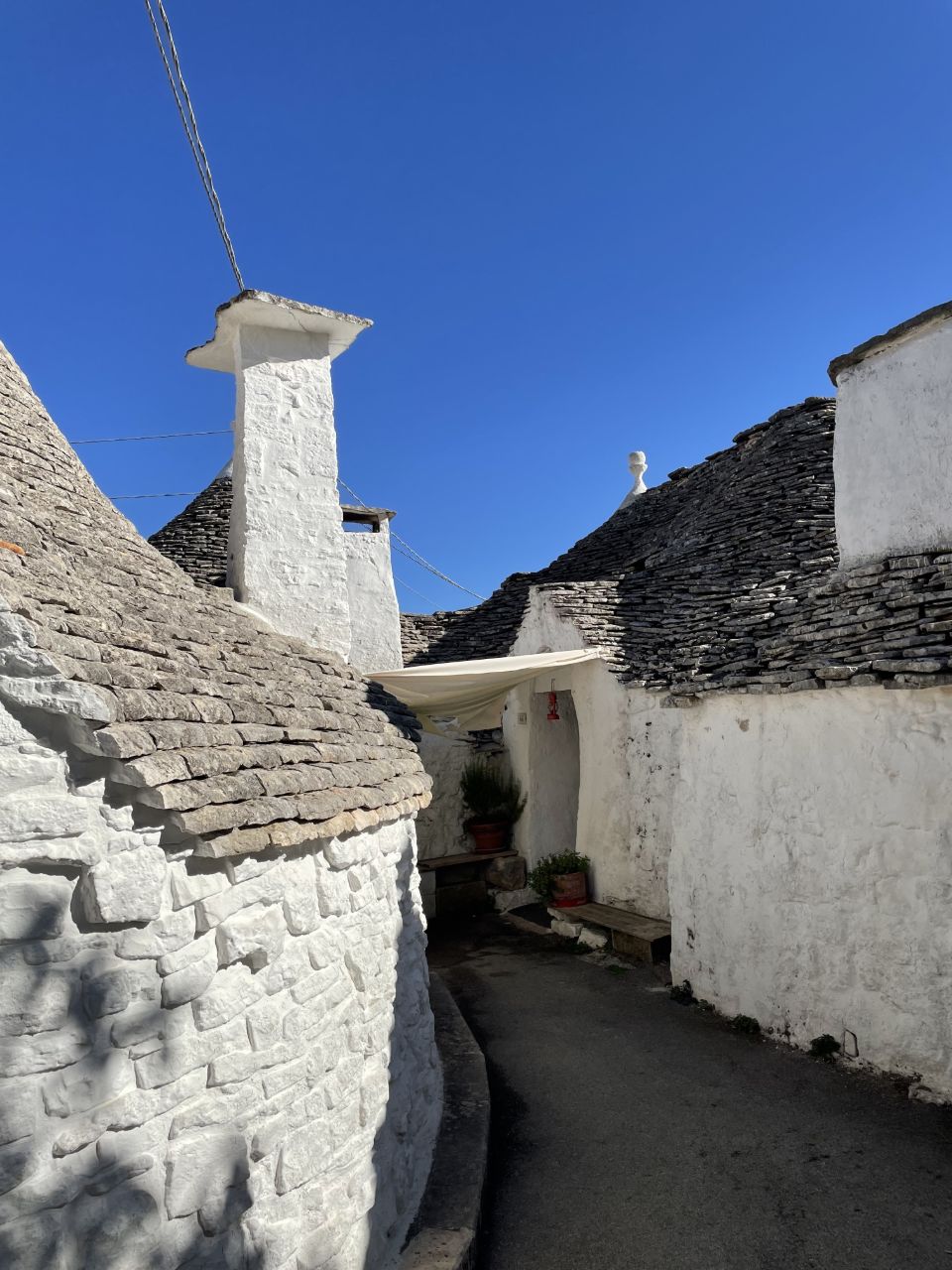
Doors and facades 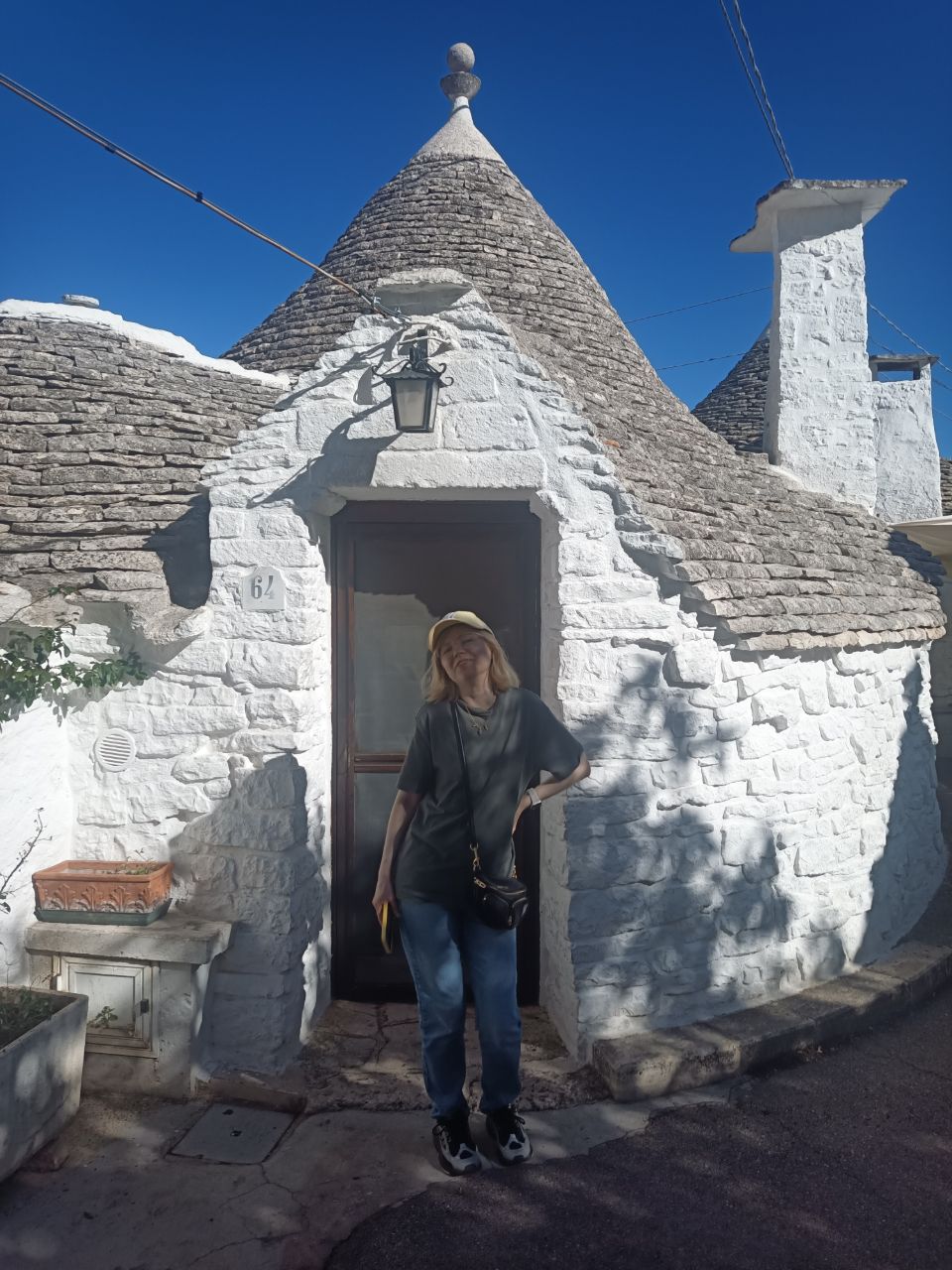
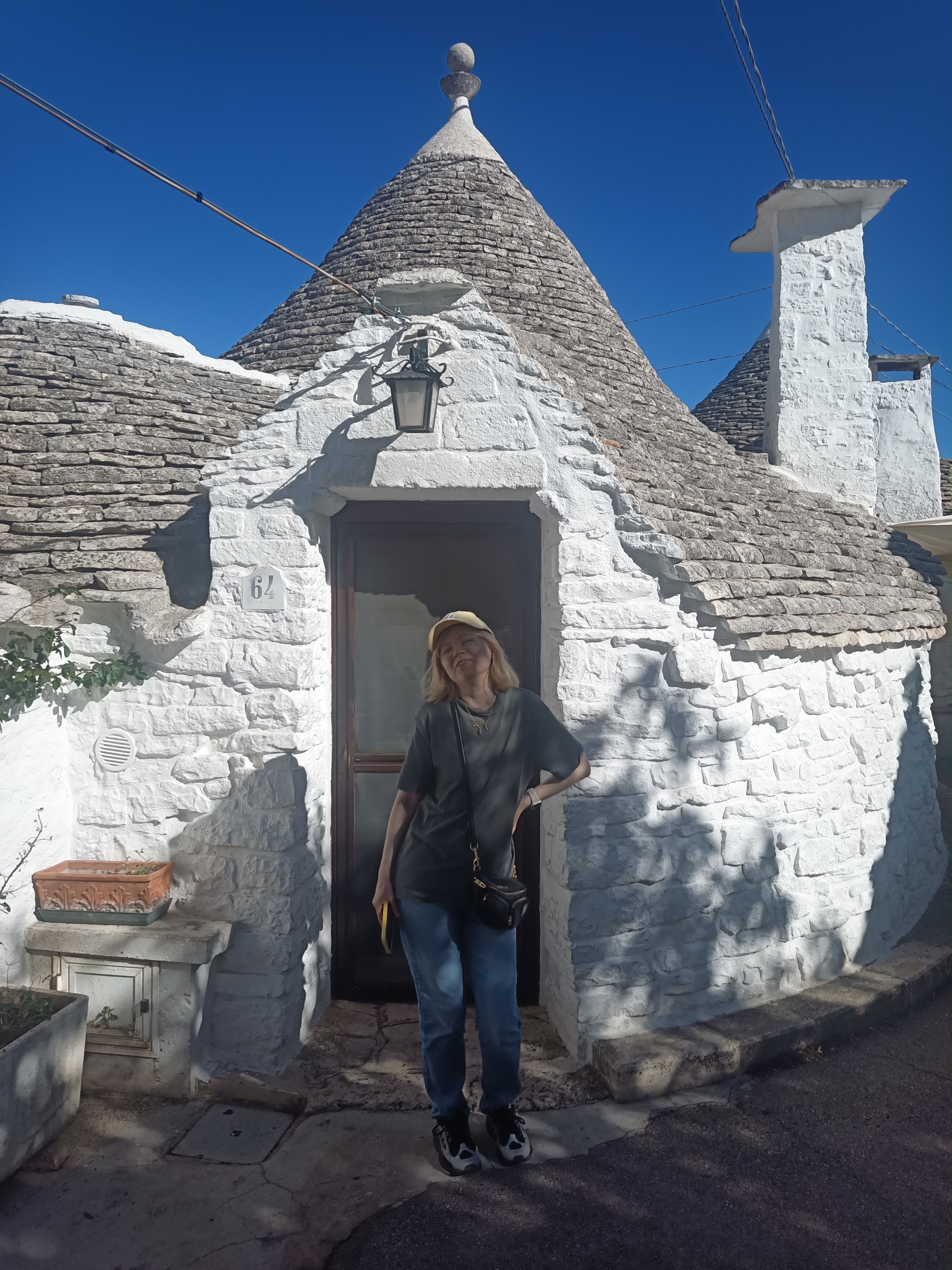
Anna, at the doorstep 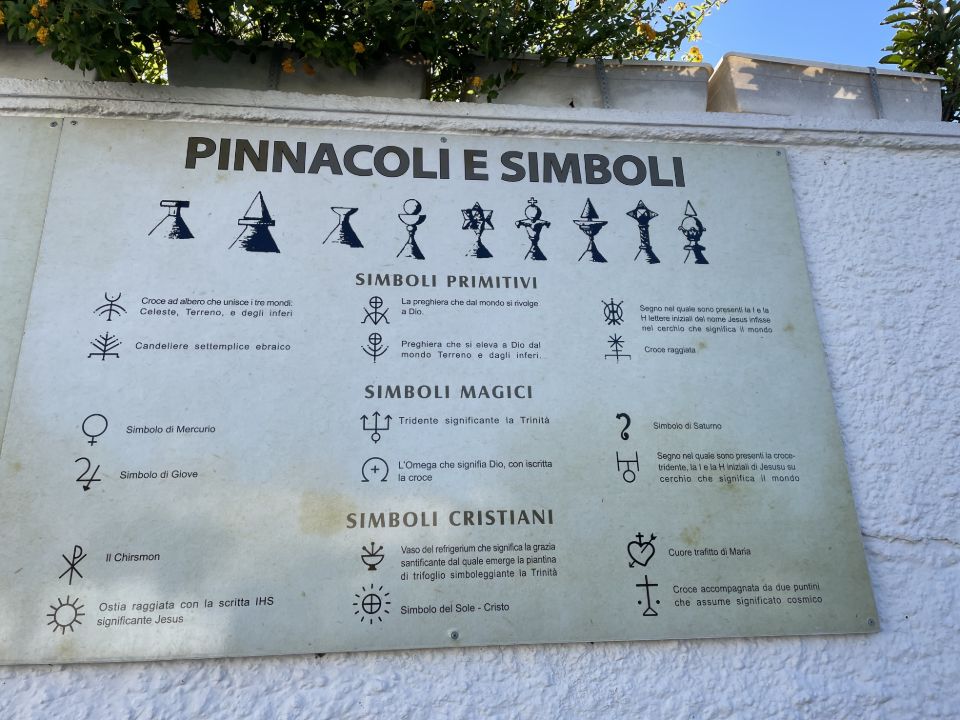
Pinnacoli e Simboli, the chart
The locals
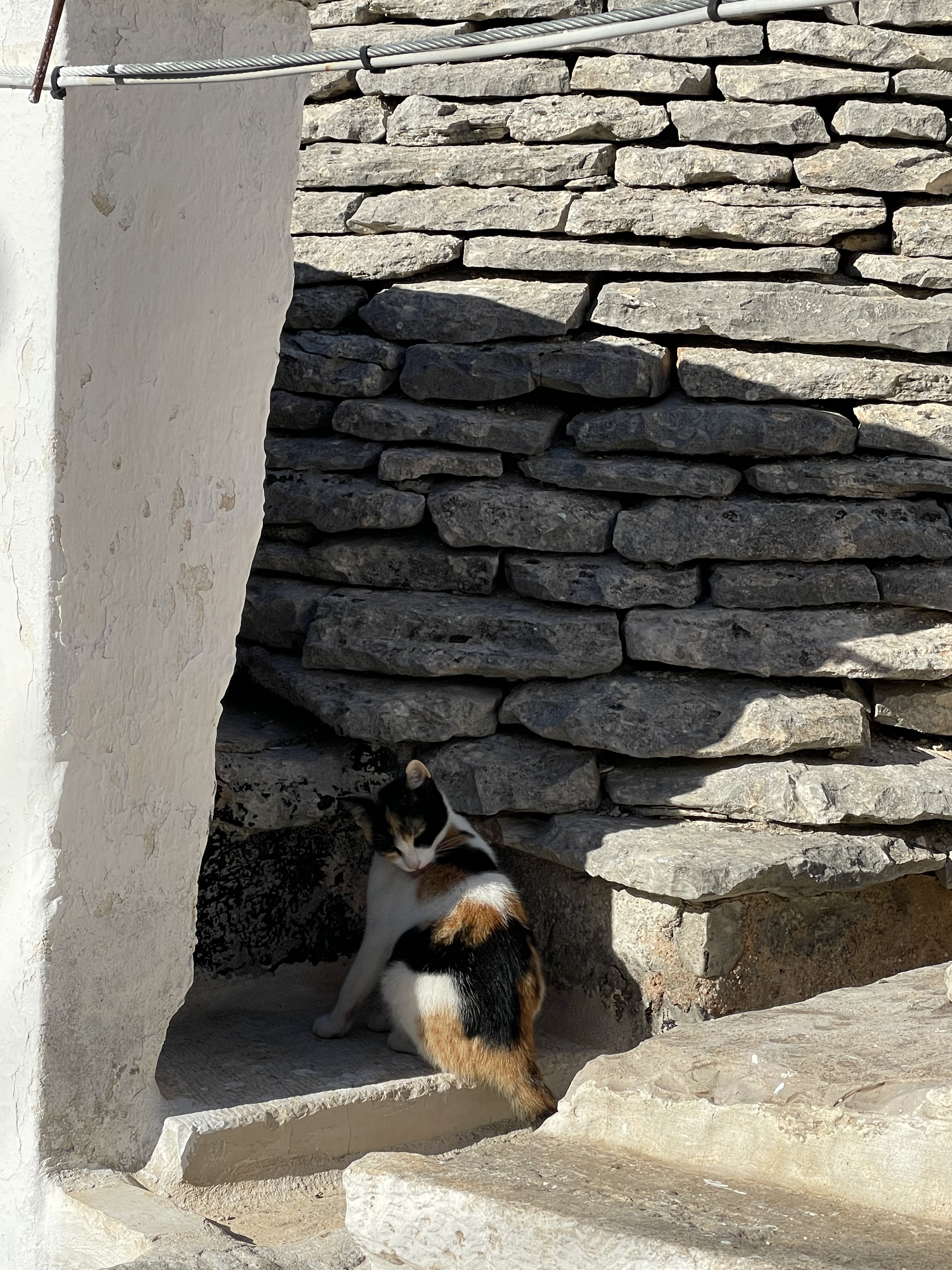
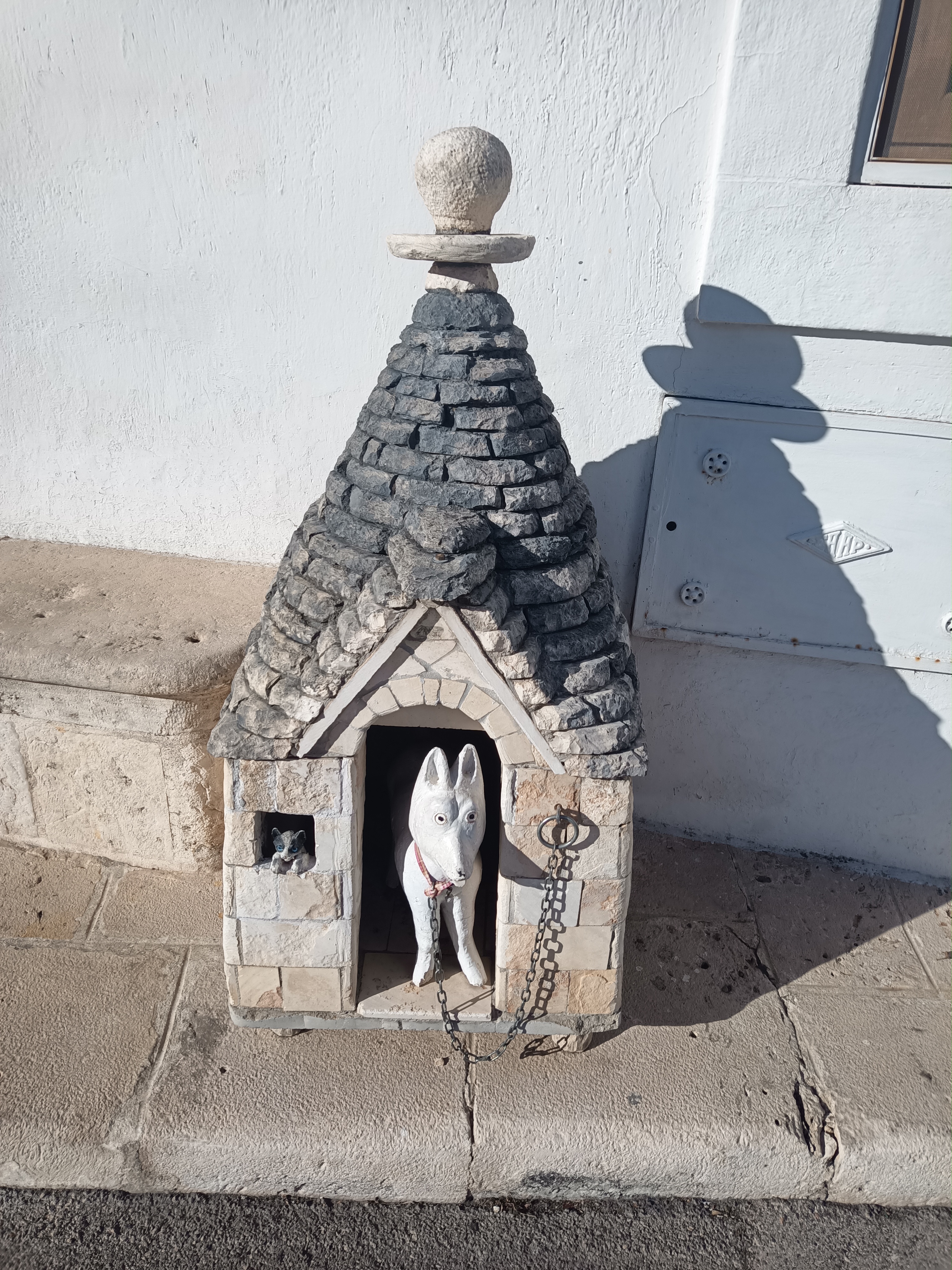
A calico cat was busy grooming itself in the shade of a whitewashed wall. Further on, the trullo theme reached its logical conclusion: a votive shrine on a corner, a decorated facade with a tiny trullo-shaped birdhouse, and finally — yes — a miniature trullo built for a dog, with a ceramic white dog on a chain to prove the point. There is a version of Italy where the architecture accommodates everyone, and we found it.
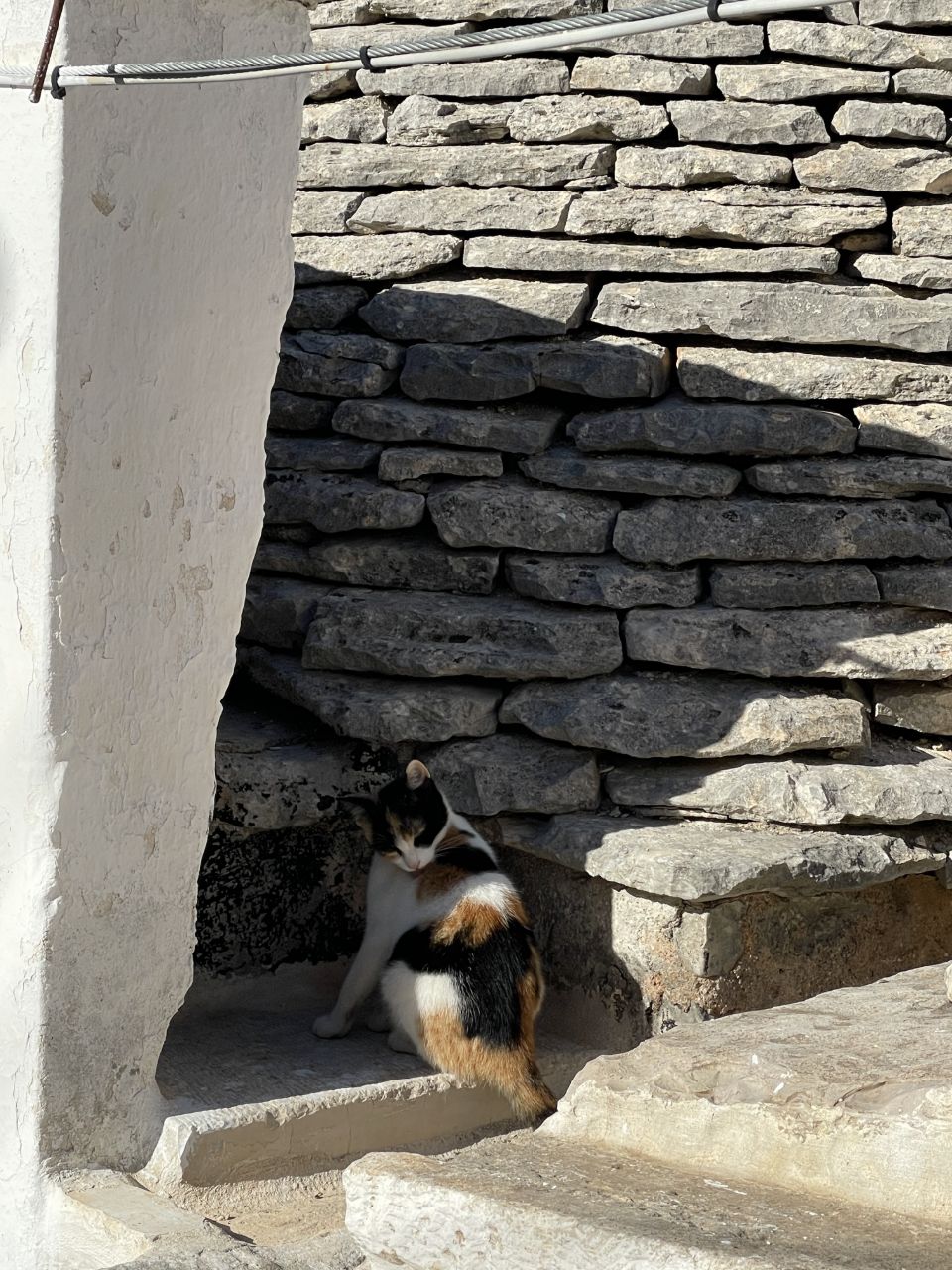
The calico, grooming in the shade 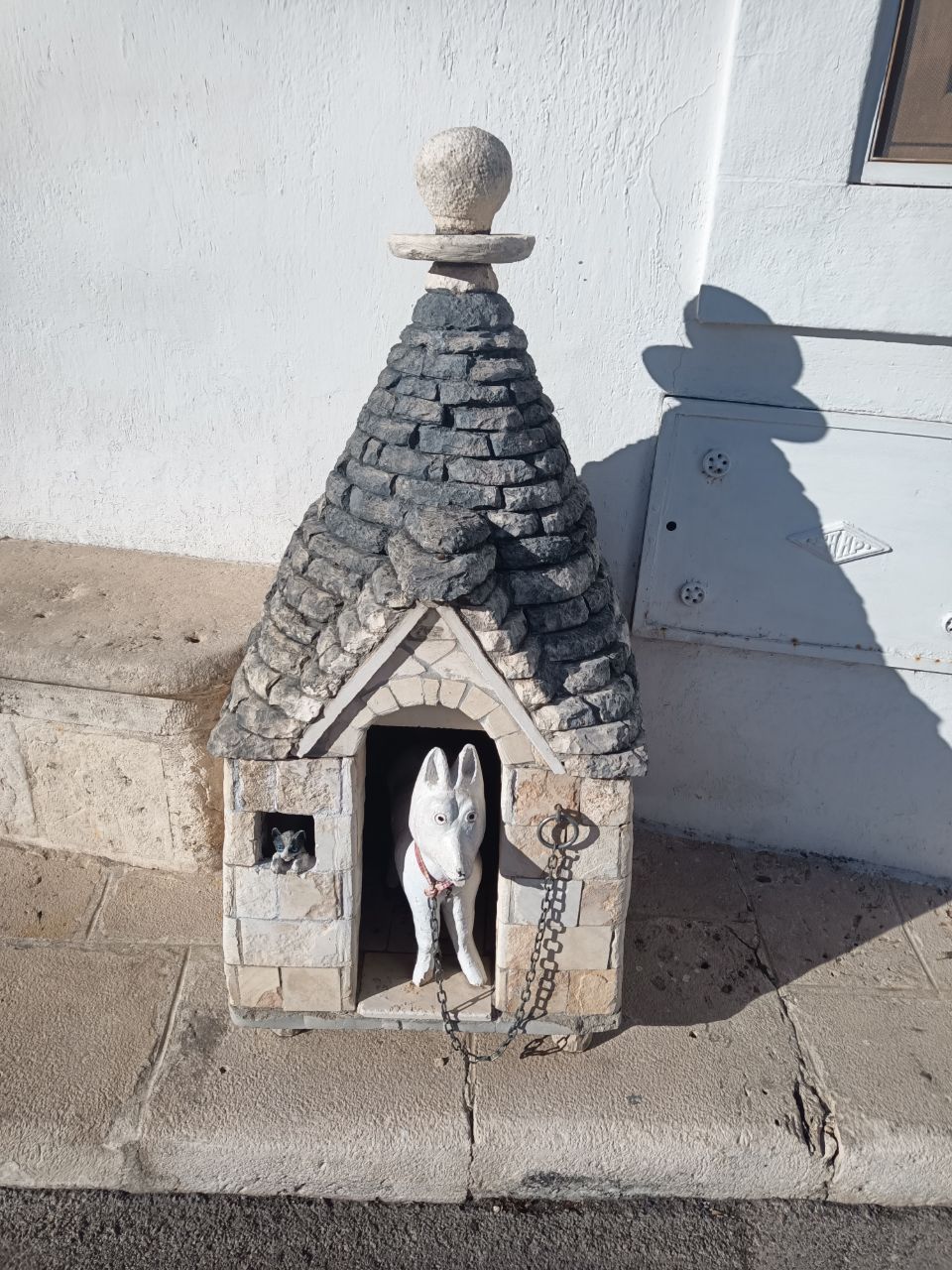
The doghouse, in trullo style 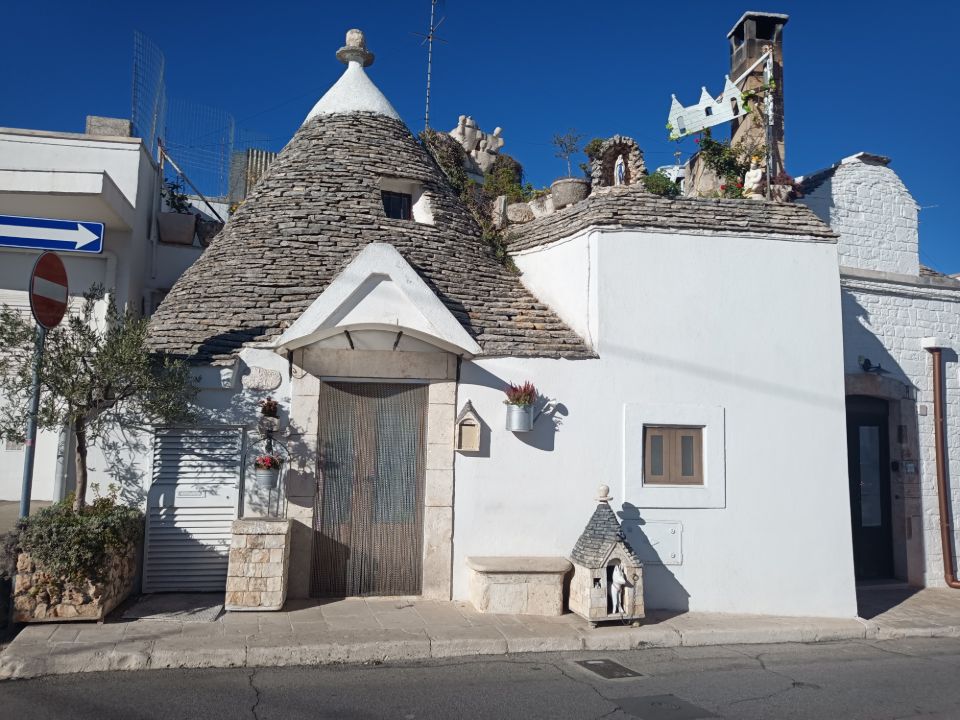
Birdhouse, also a trullo 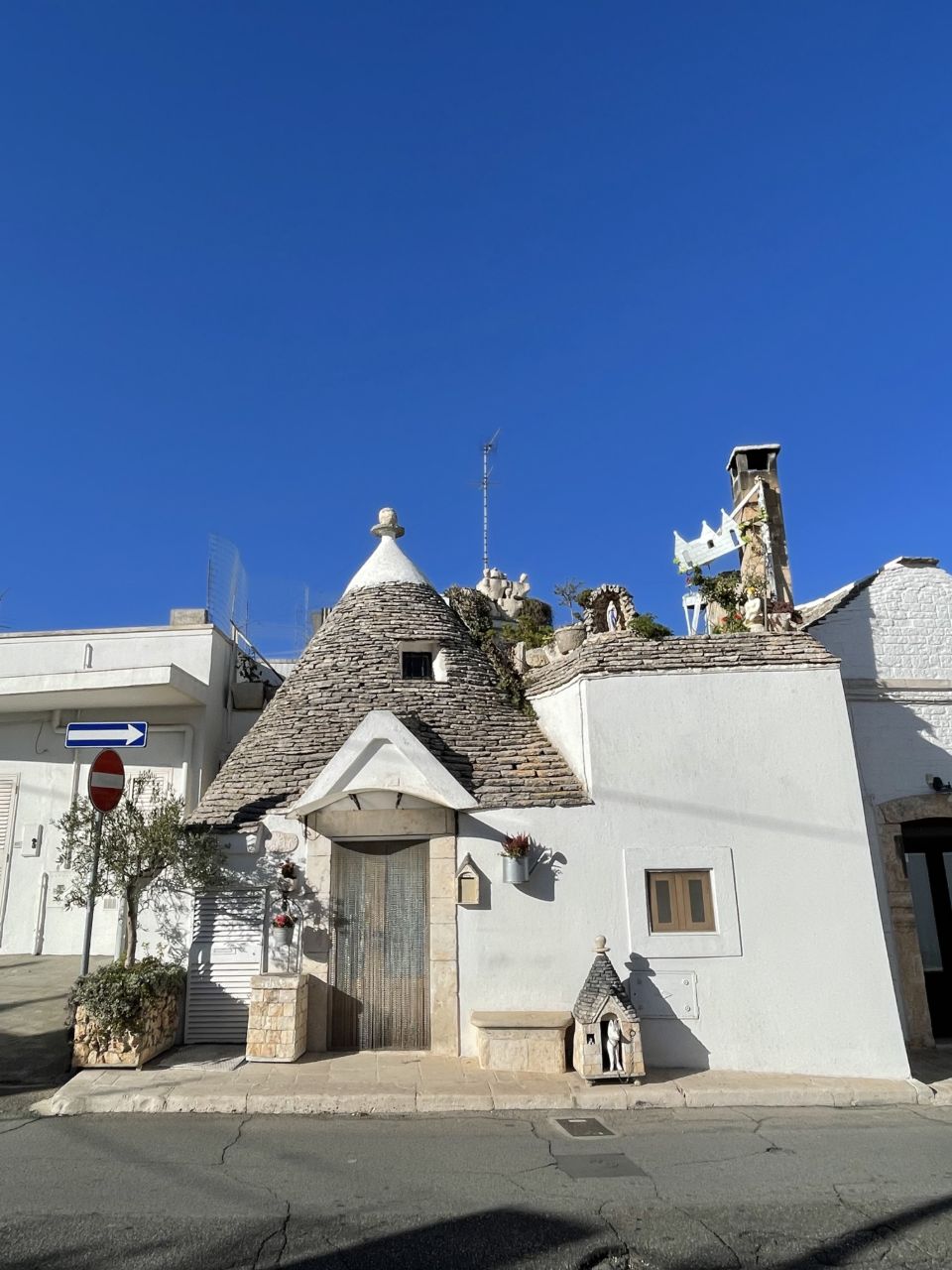
The corner shrine
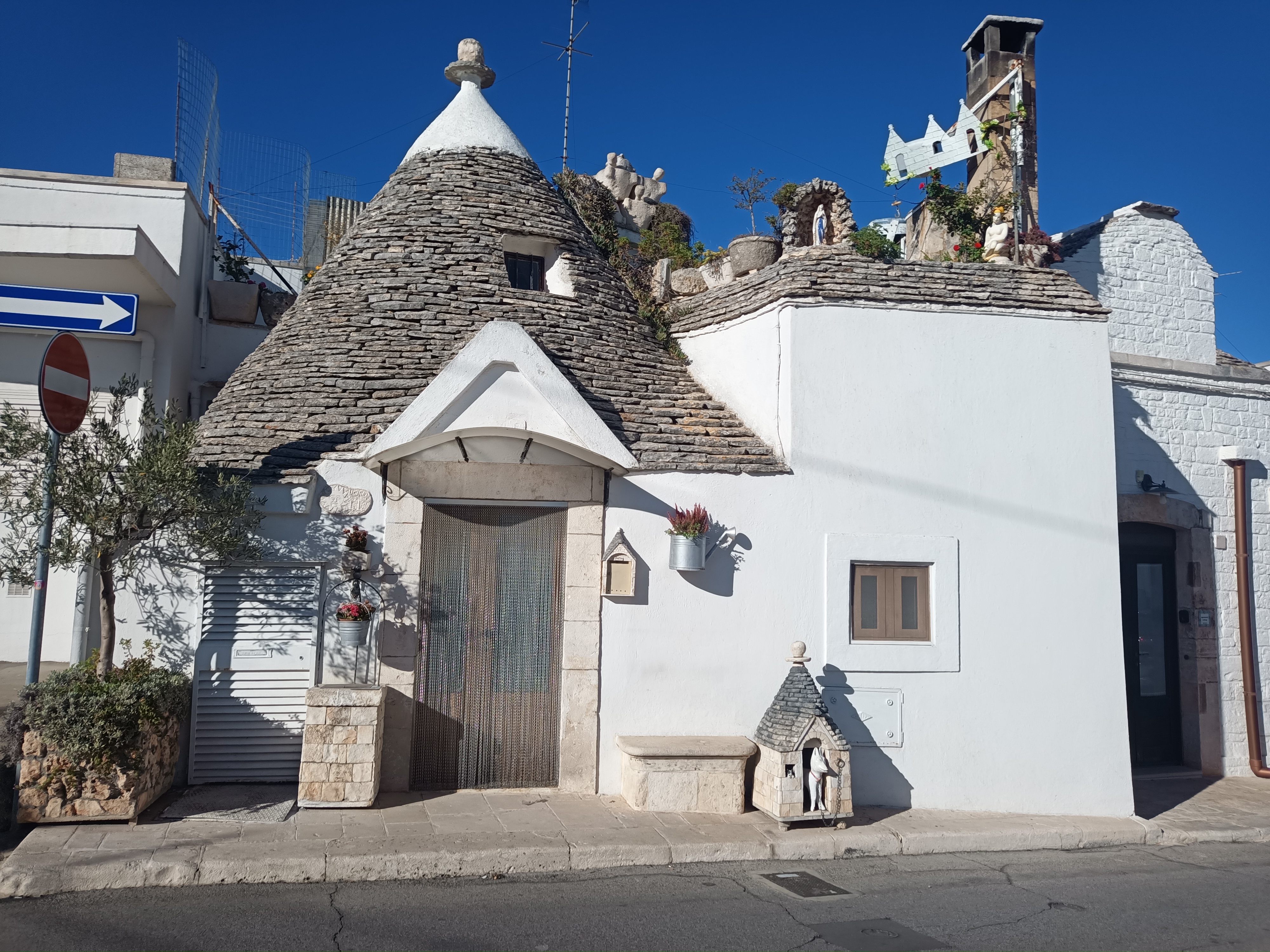
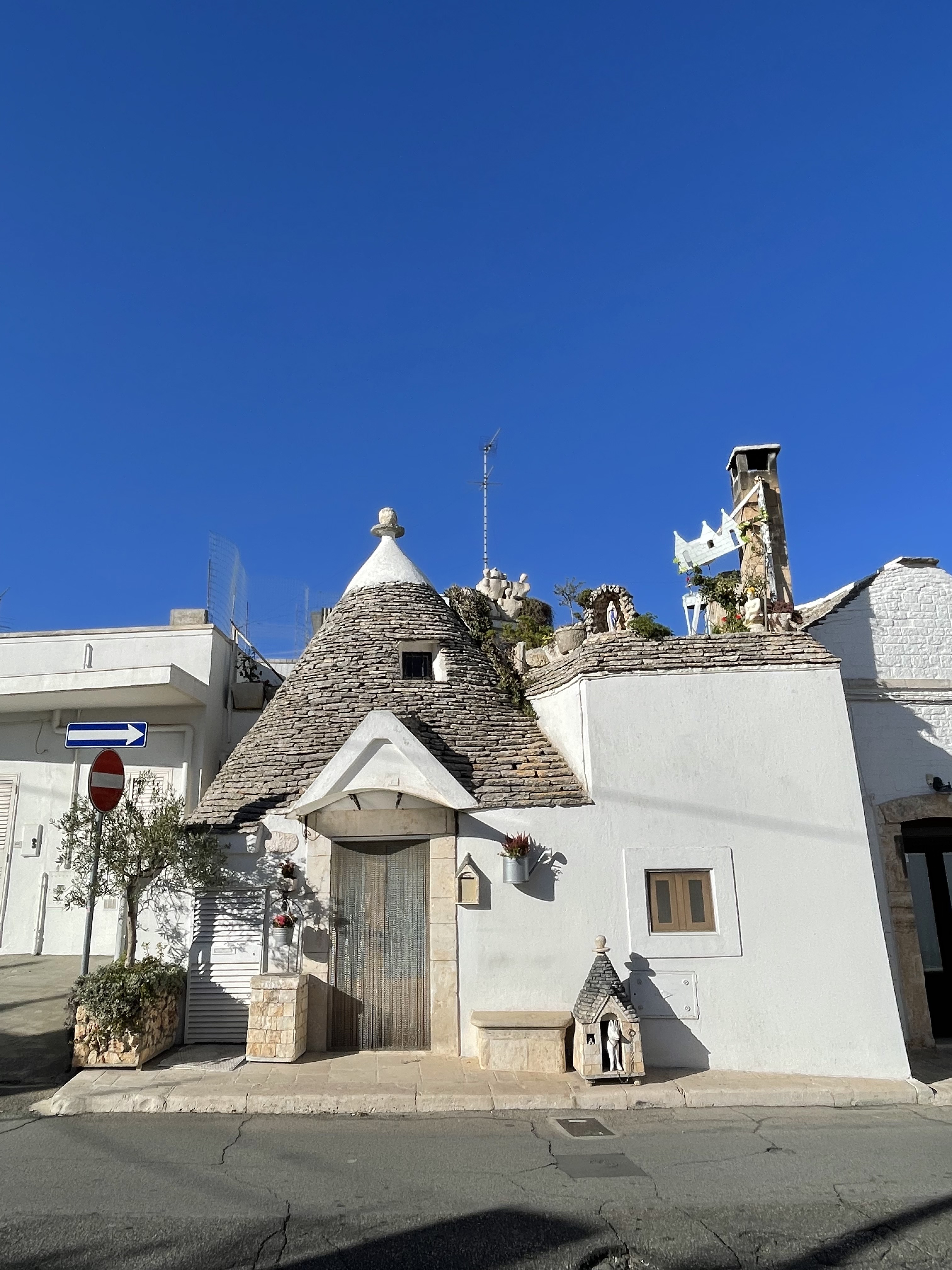
Portraits in the lanes
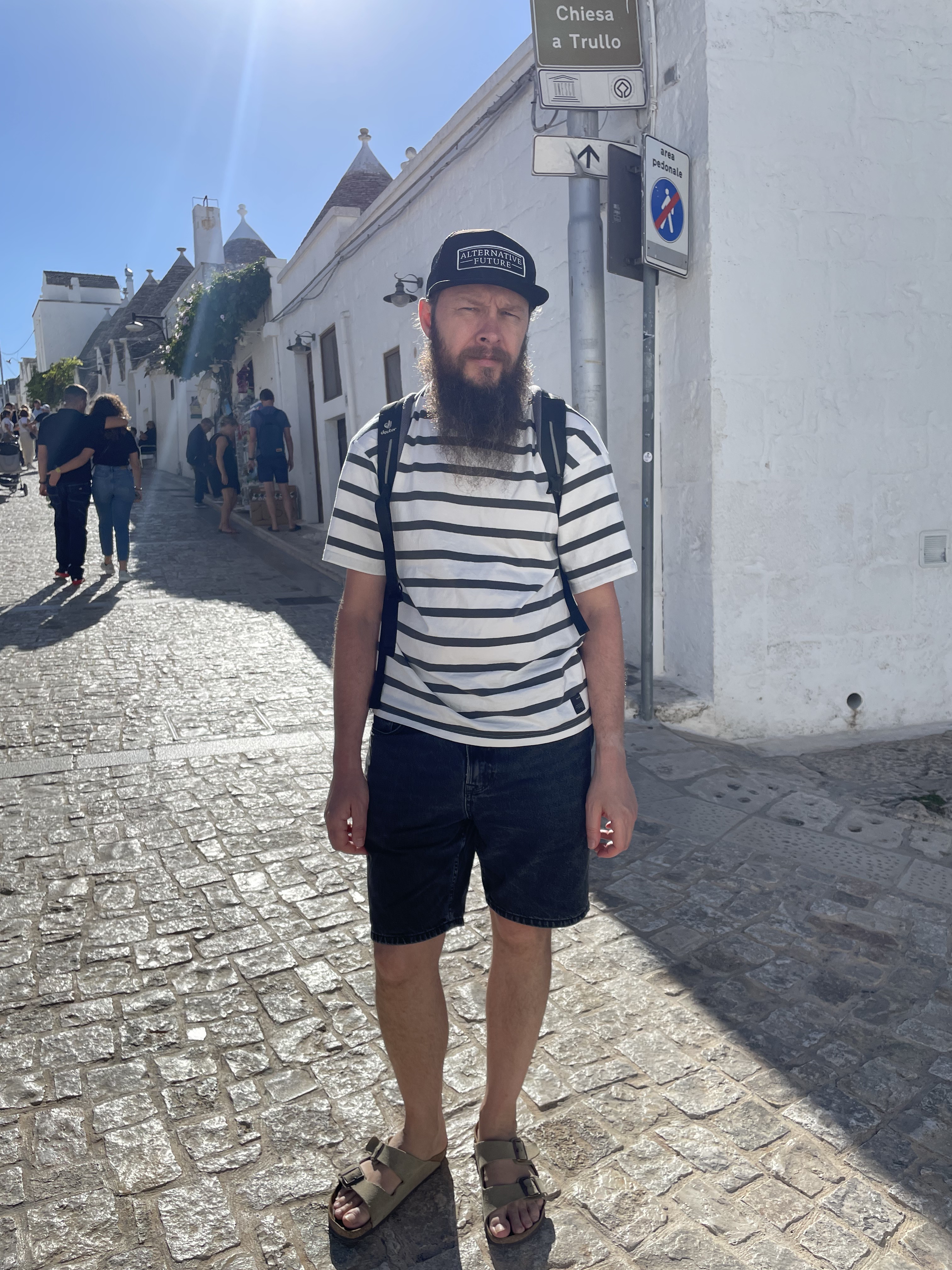
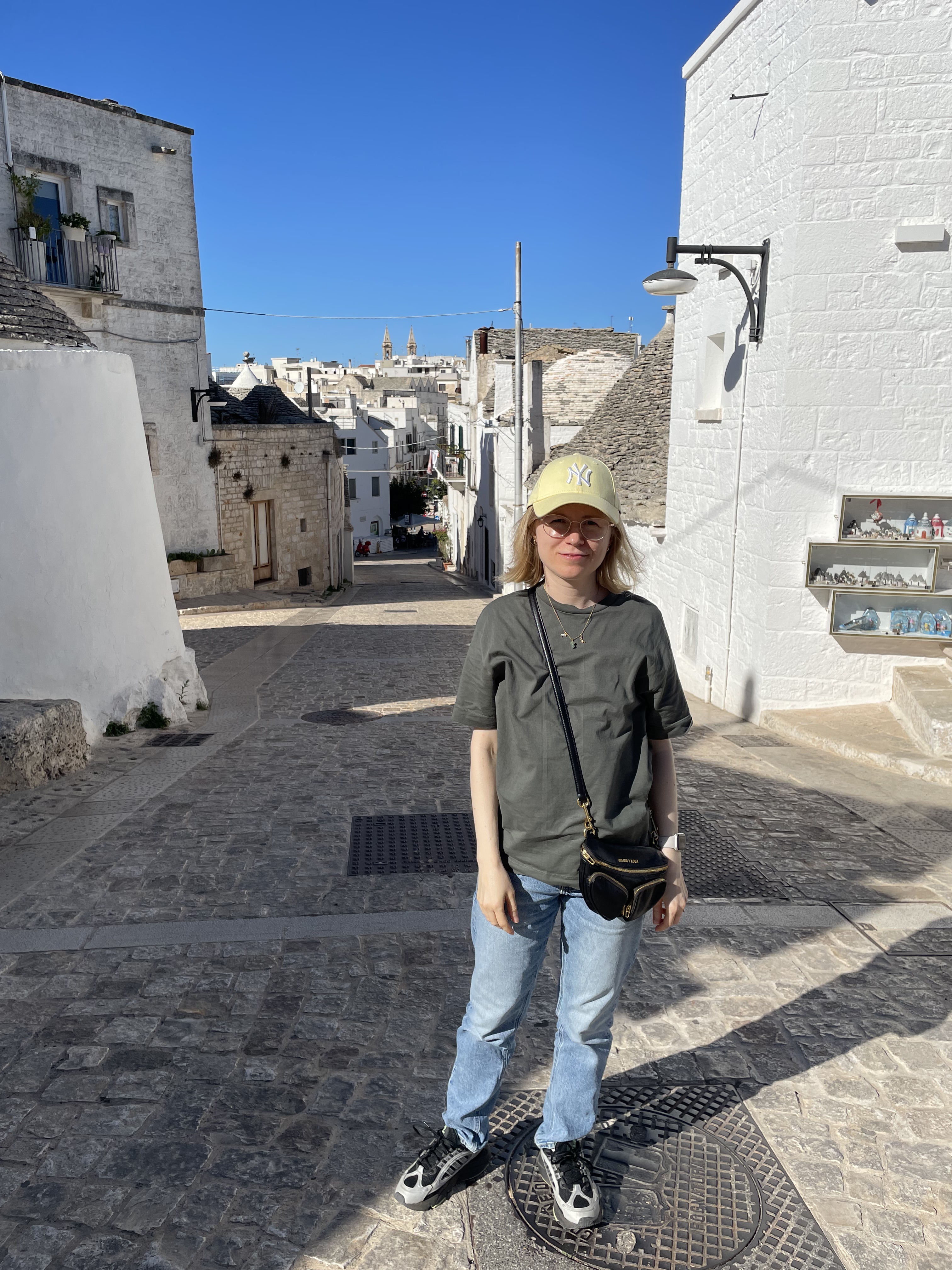
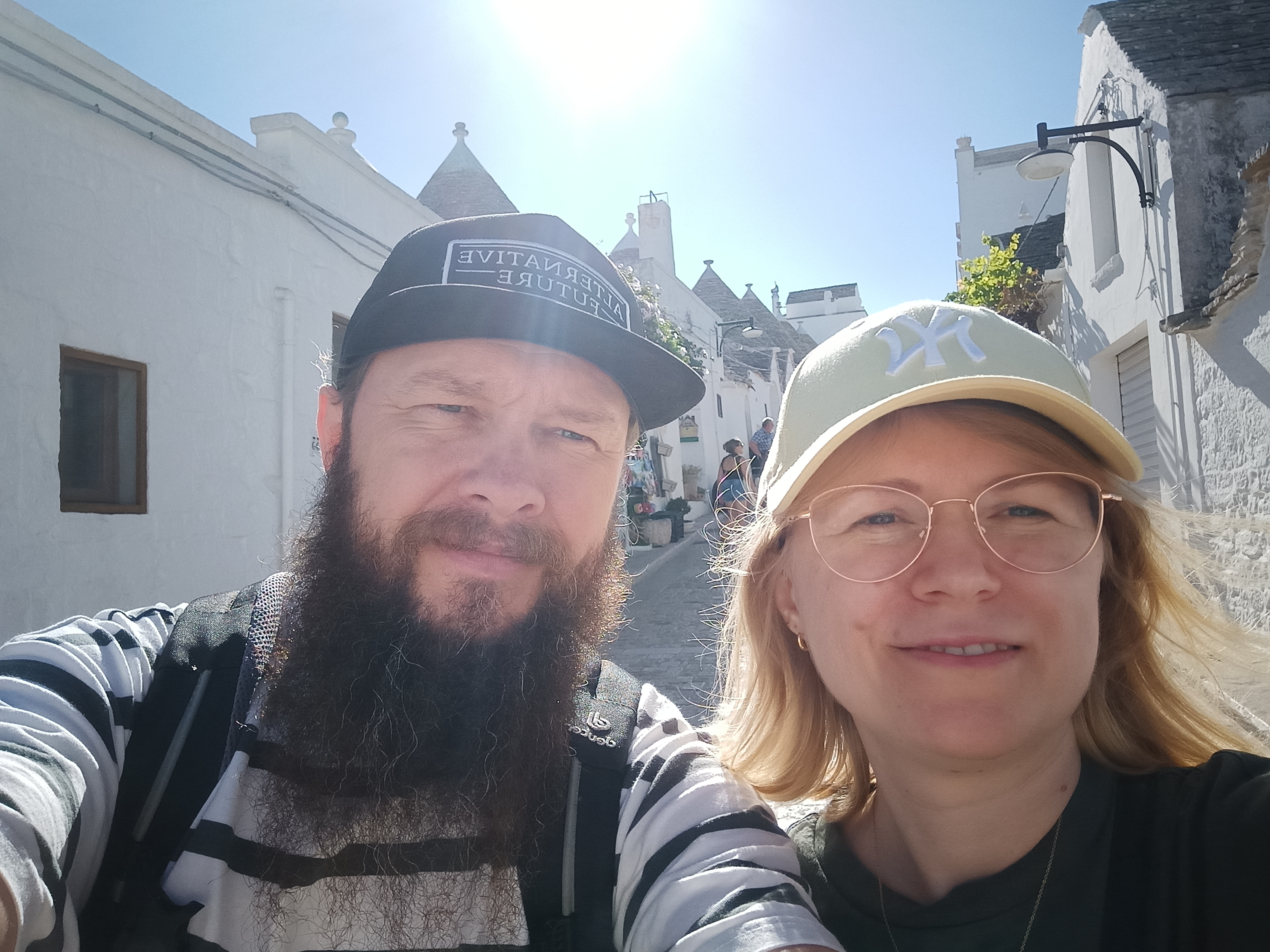
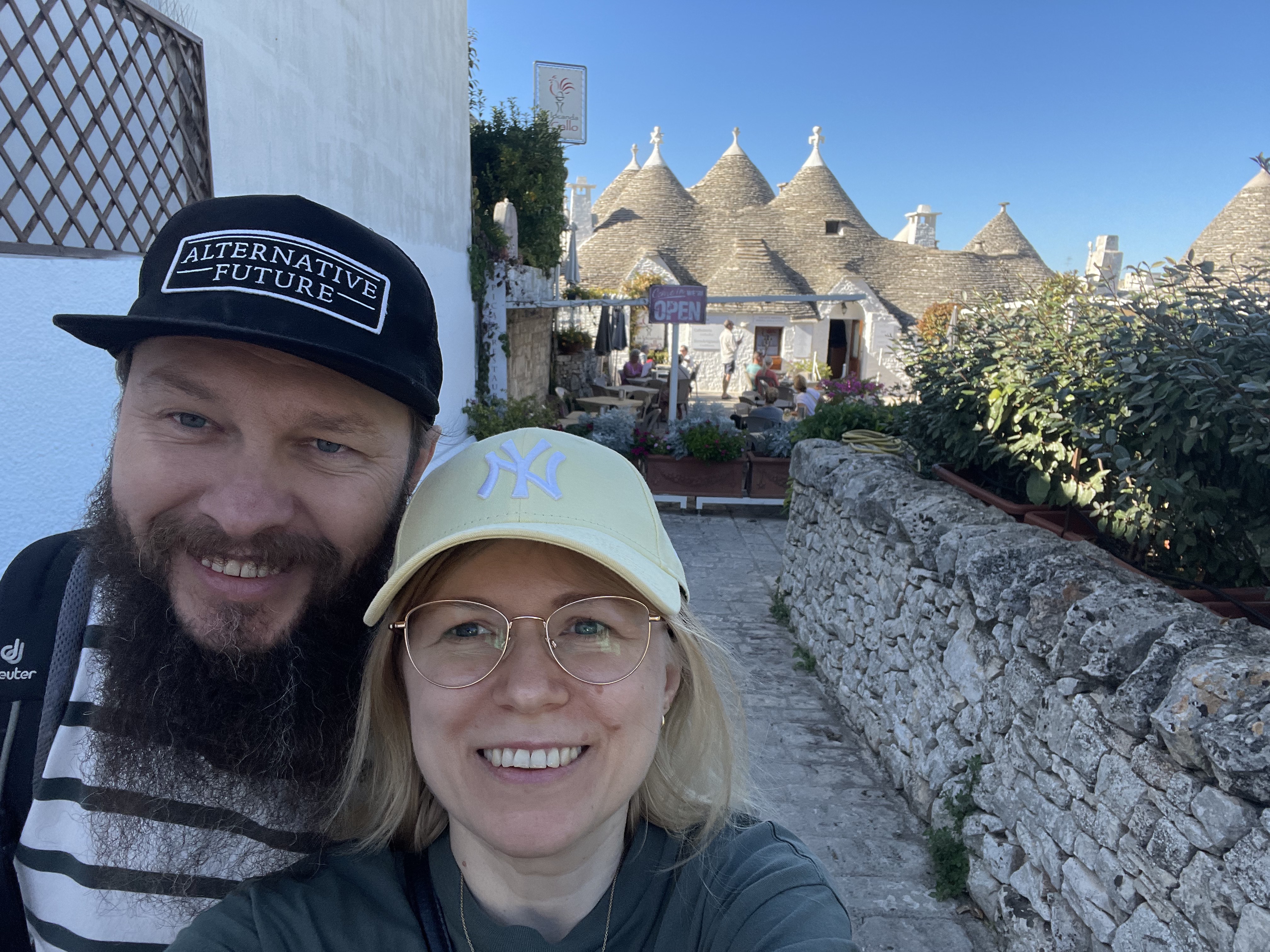
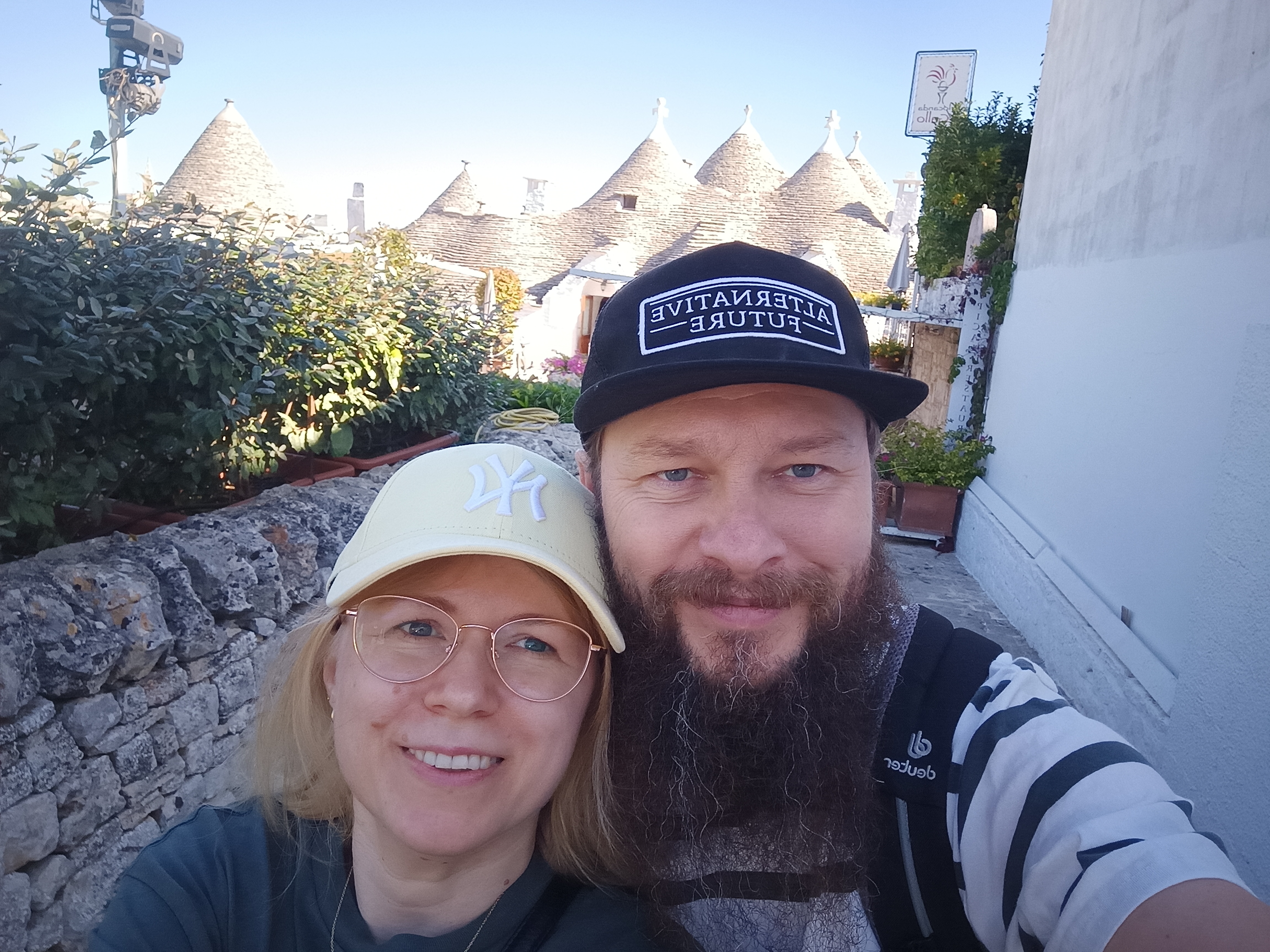
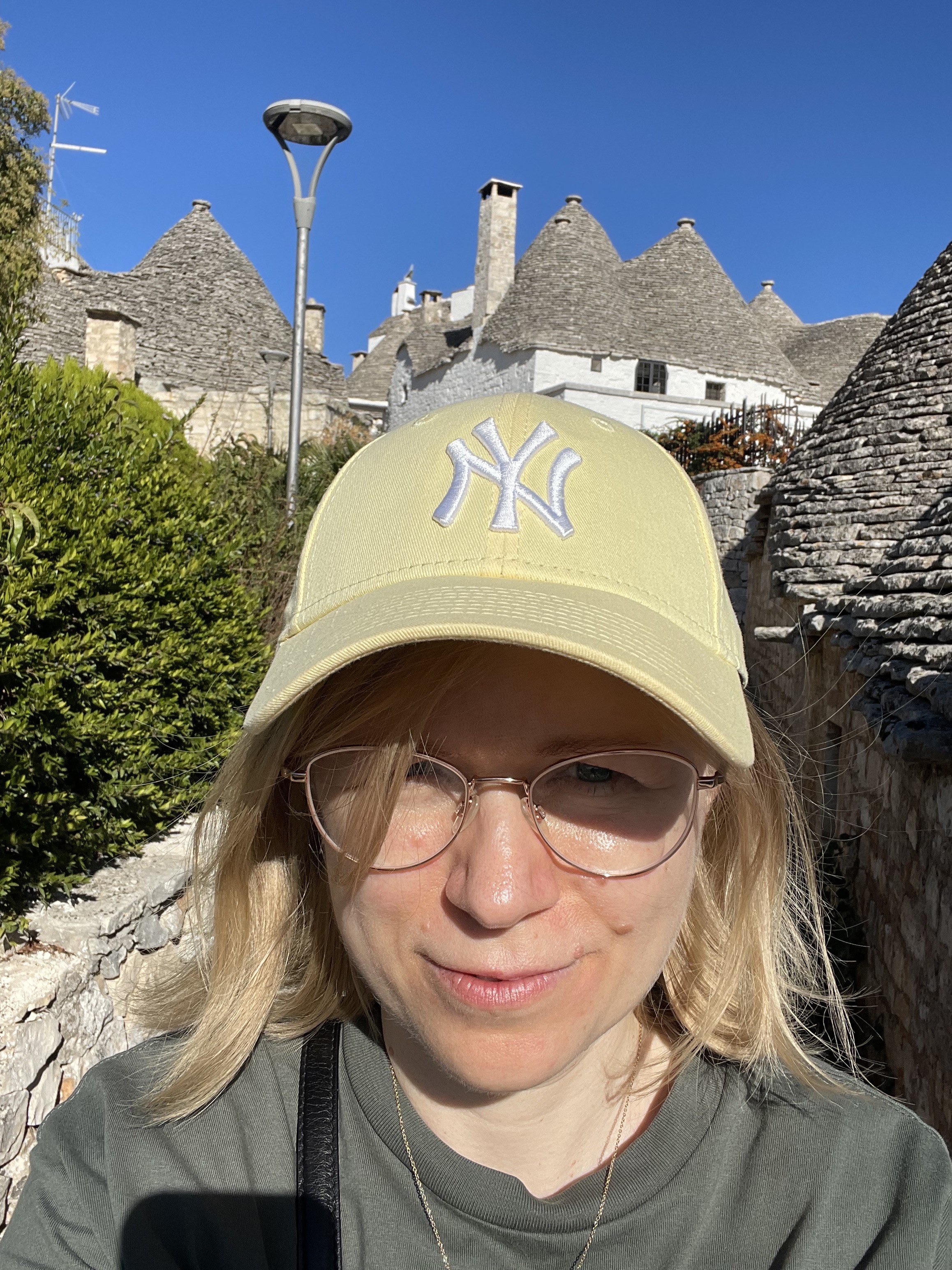
Alberobello is a portrait studio. Oleg vs the big trullo (a recurring duel, see also: every other post), Anna and the low stone wall, both of us on the terrace path with a wall of cones behind, heads together, laughing. The light did about half the work; the town did the rest.
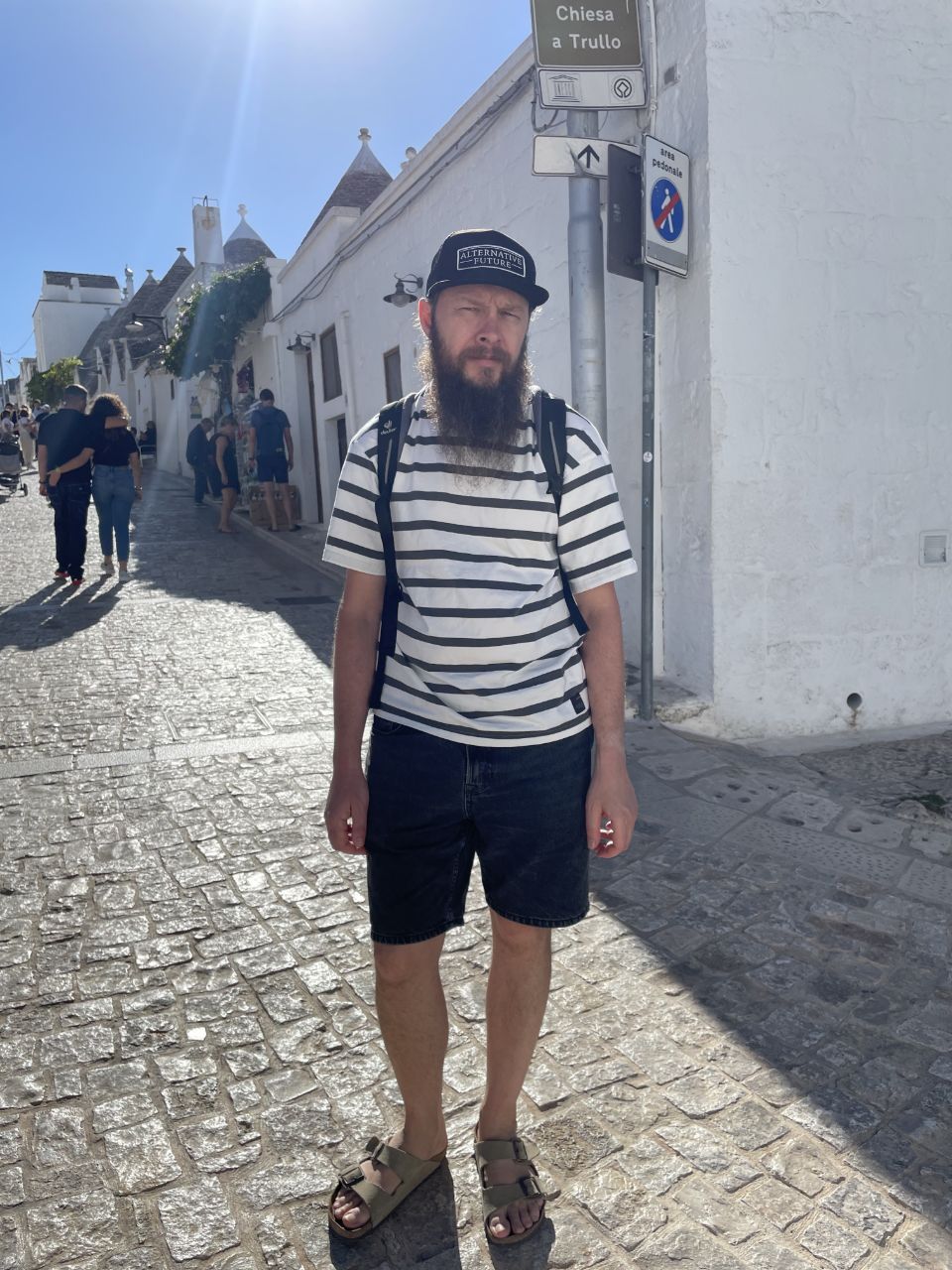
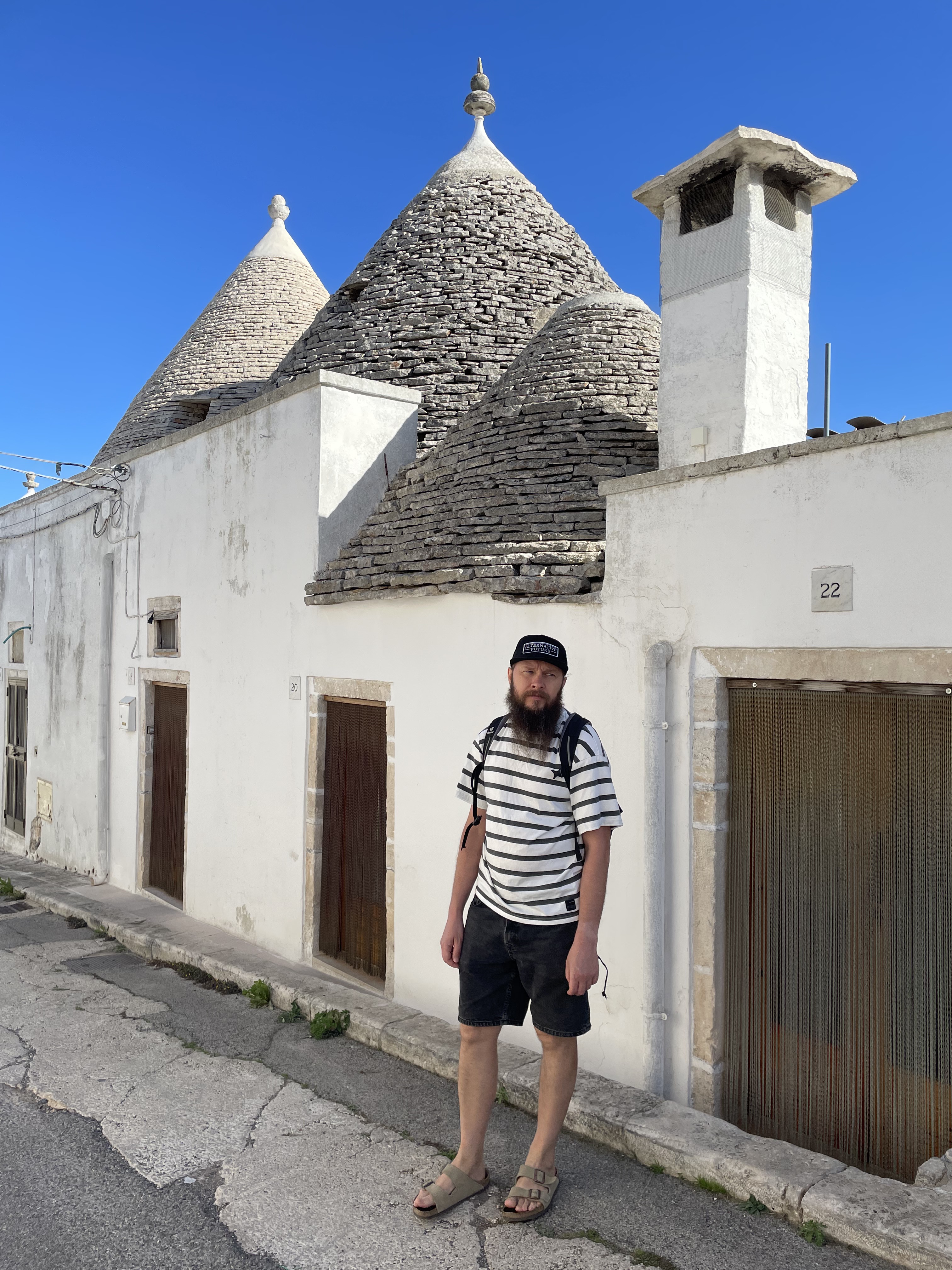
Oleg, striped shirt, cone above 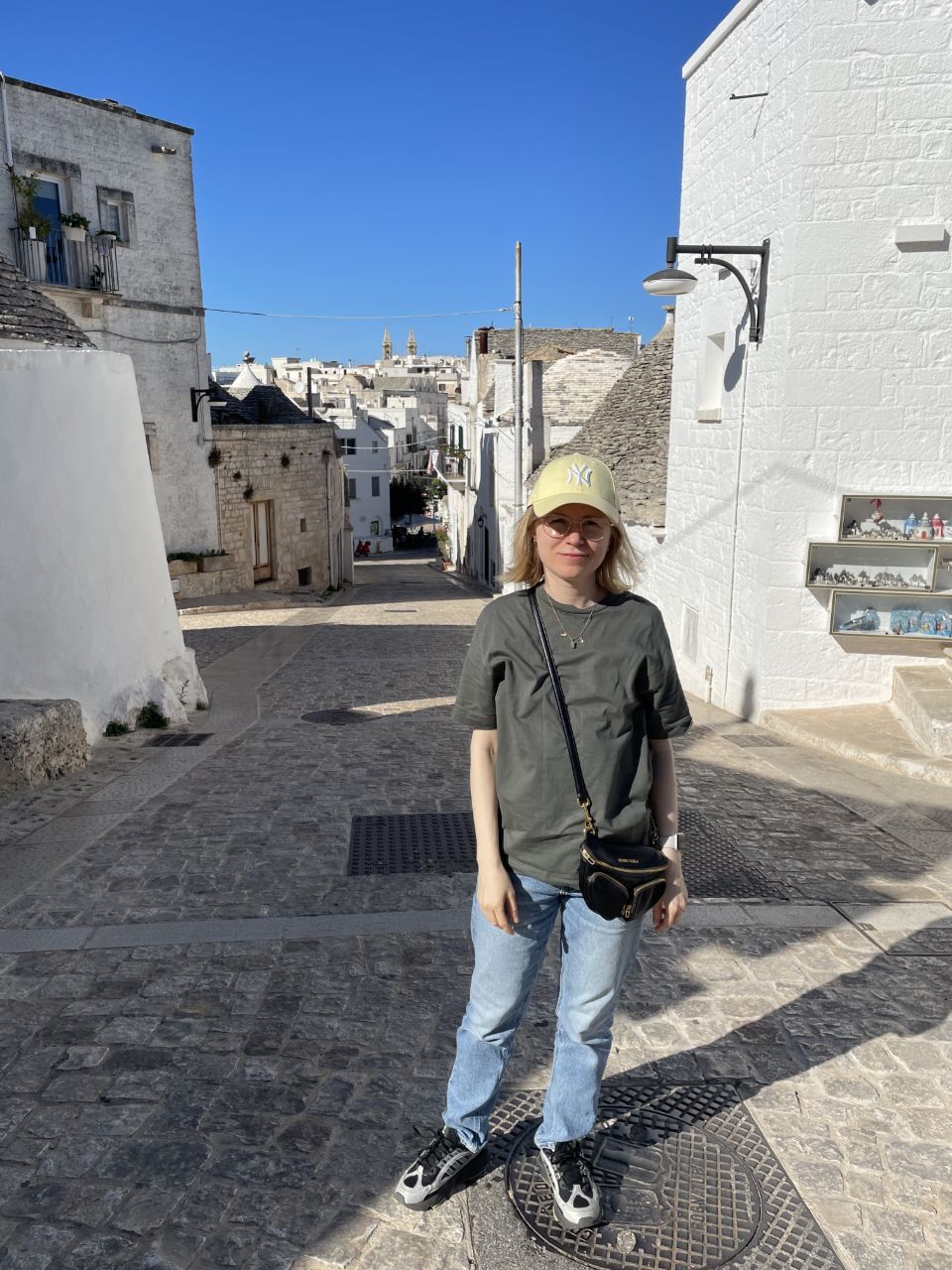
Anna, yellow cap 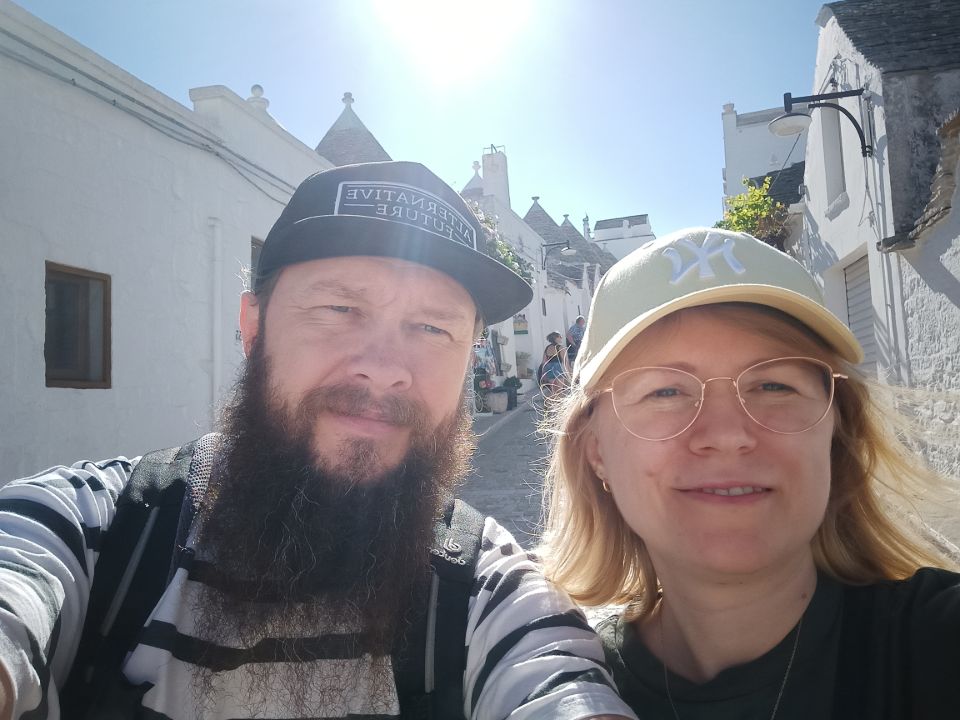
Both of us, in the lane 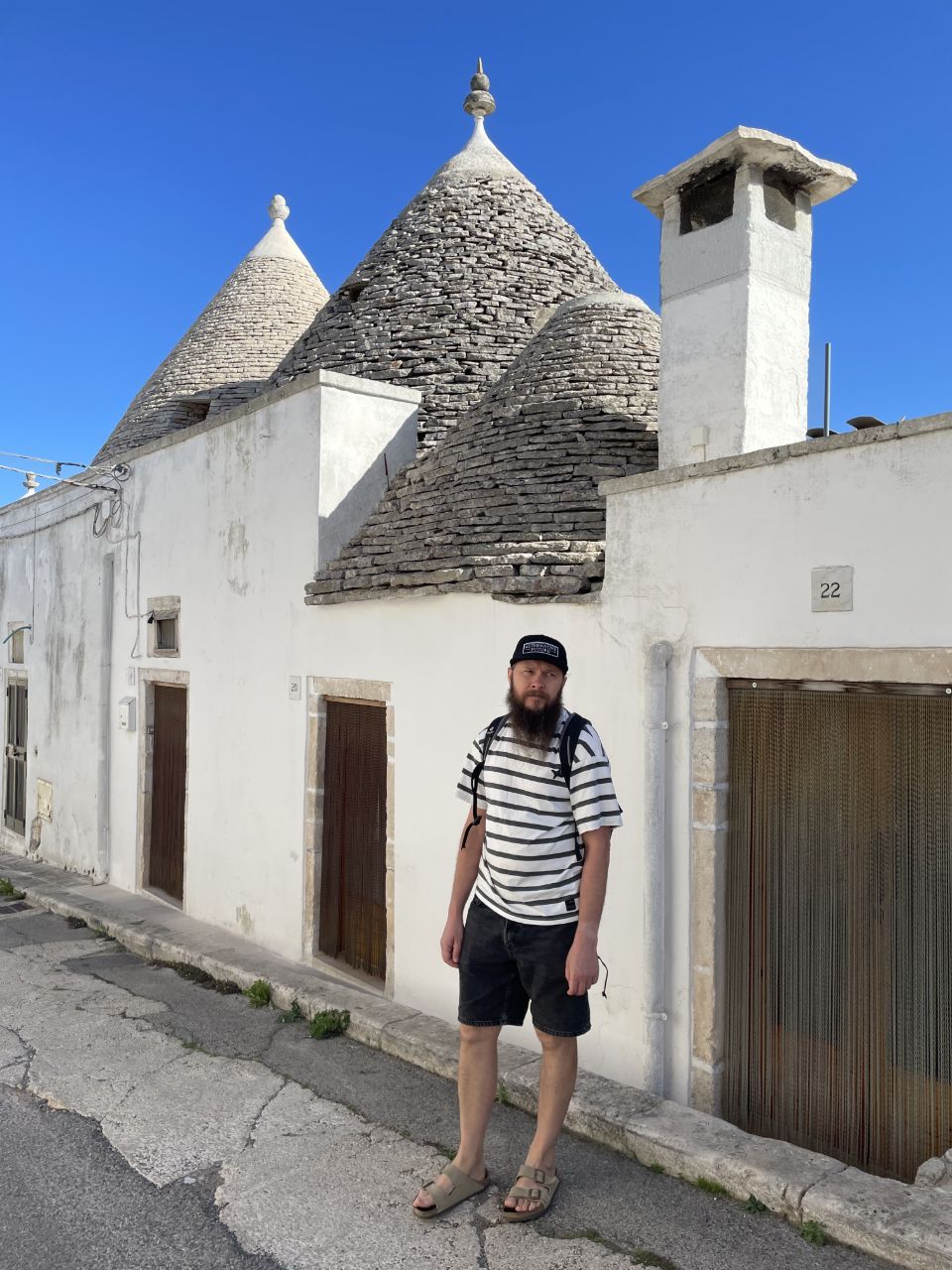
Oleg vs the big trullo 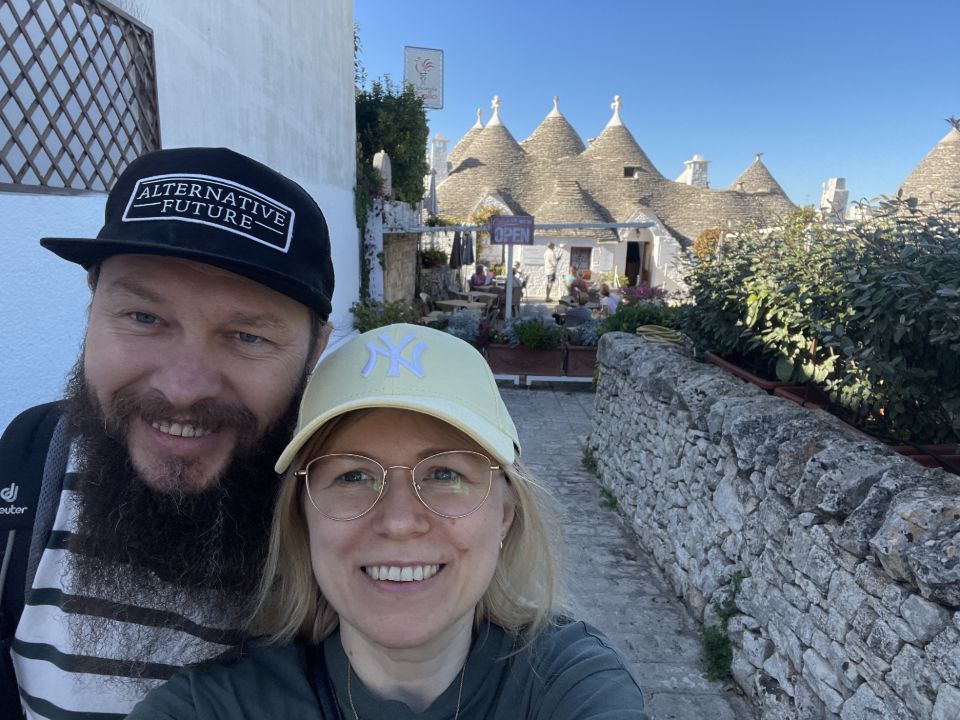
Wall of cones, laughing 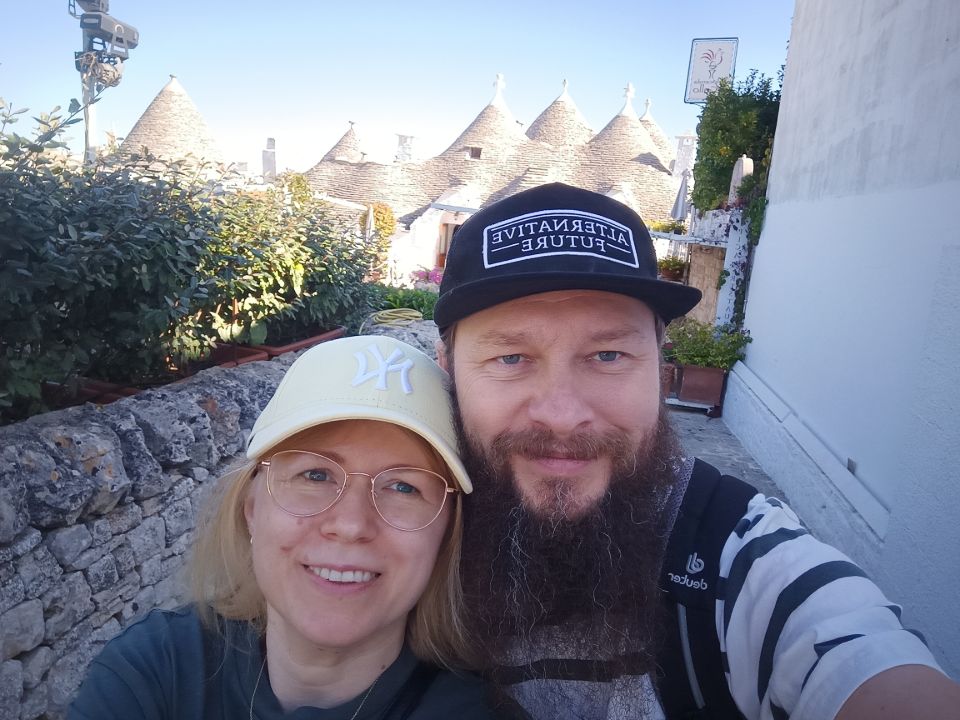
Heads together, roofs behind 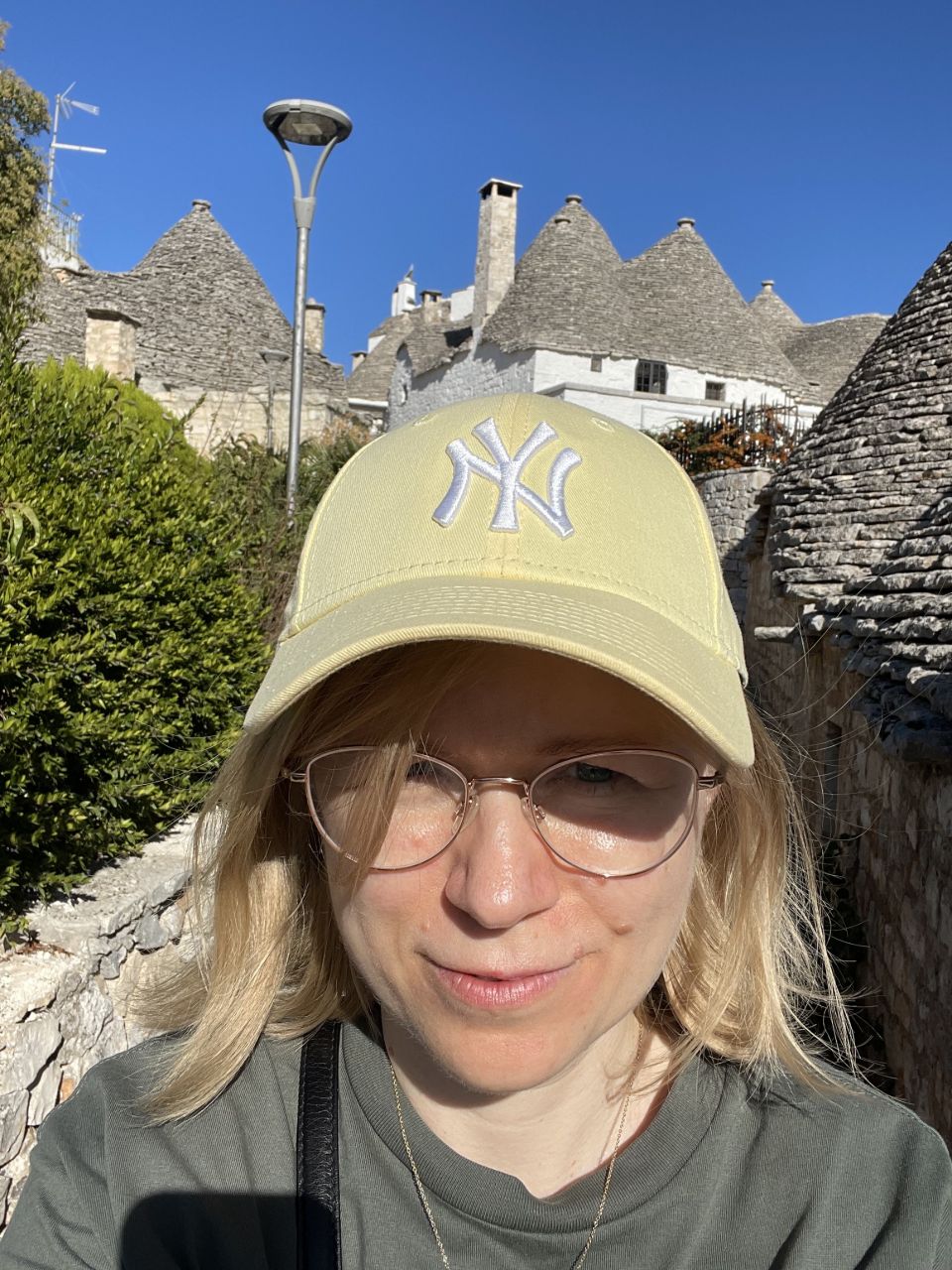
Anna, soft close-up
Inside the cones
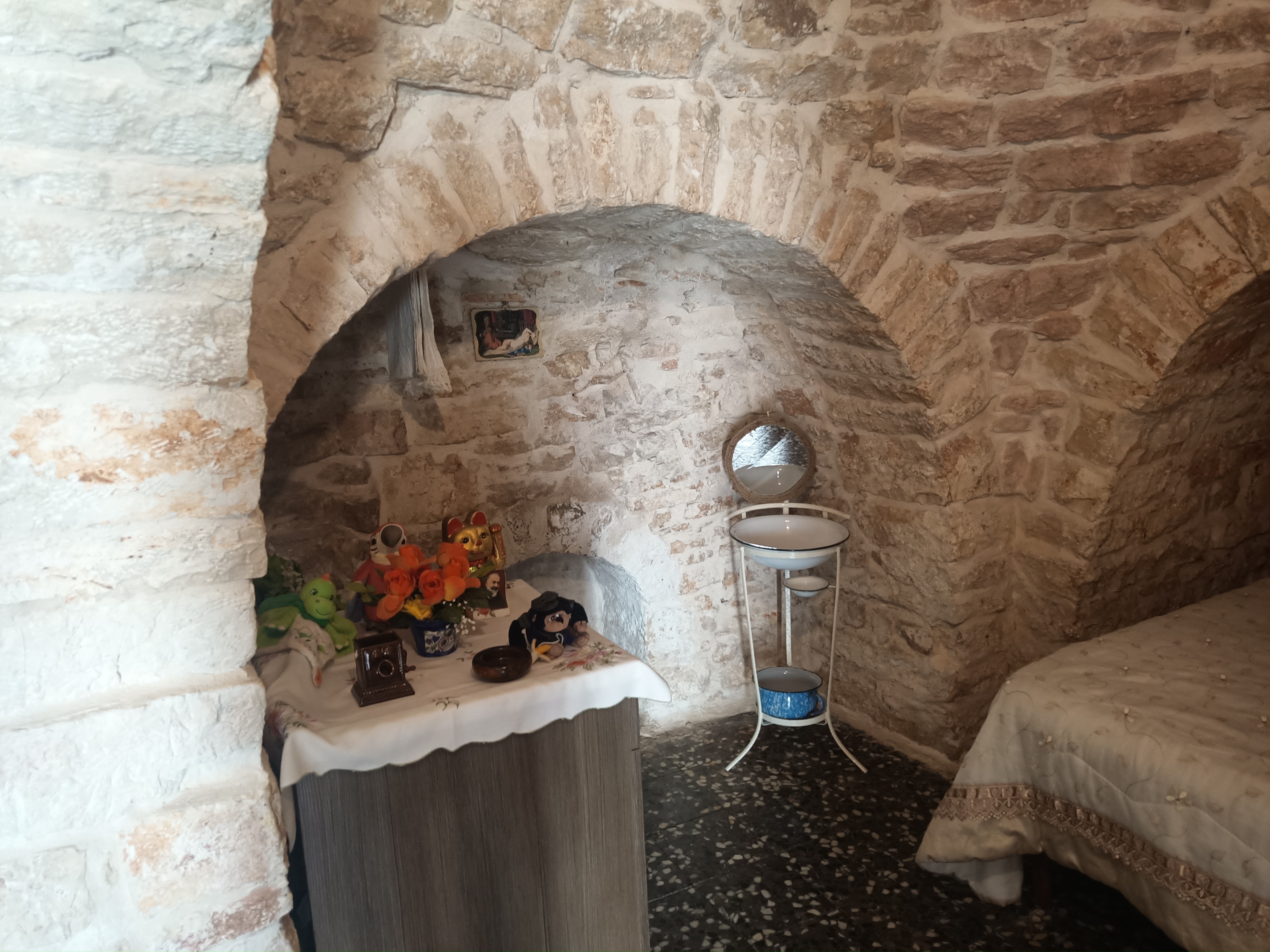
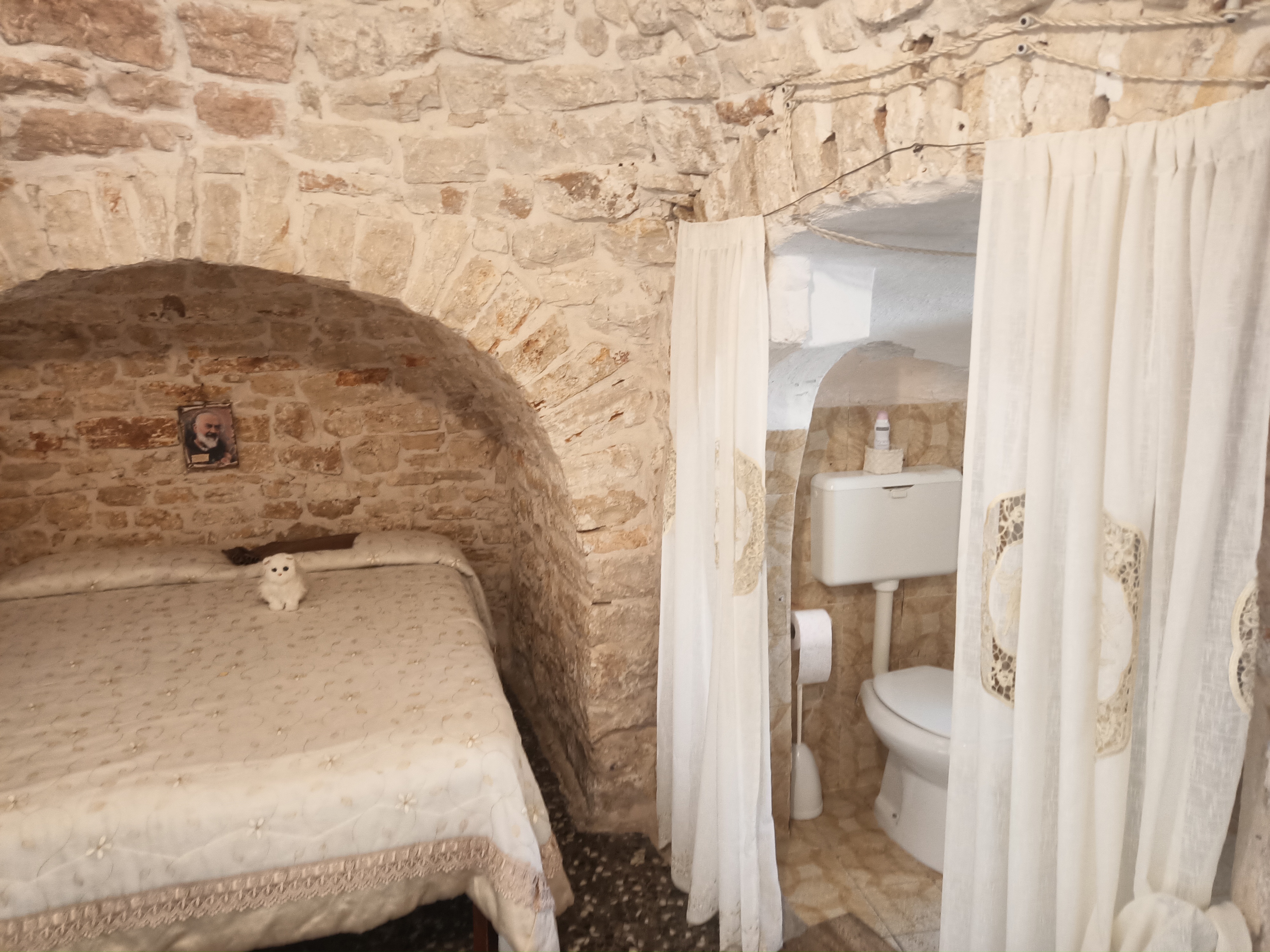
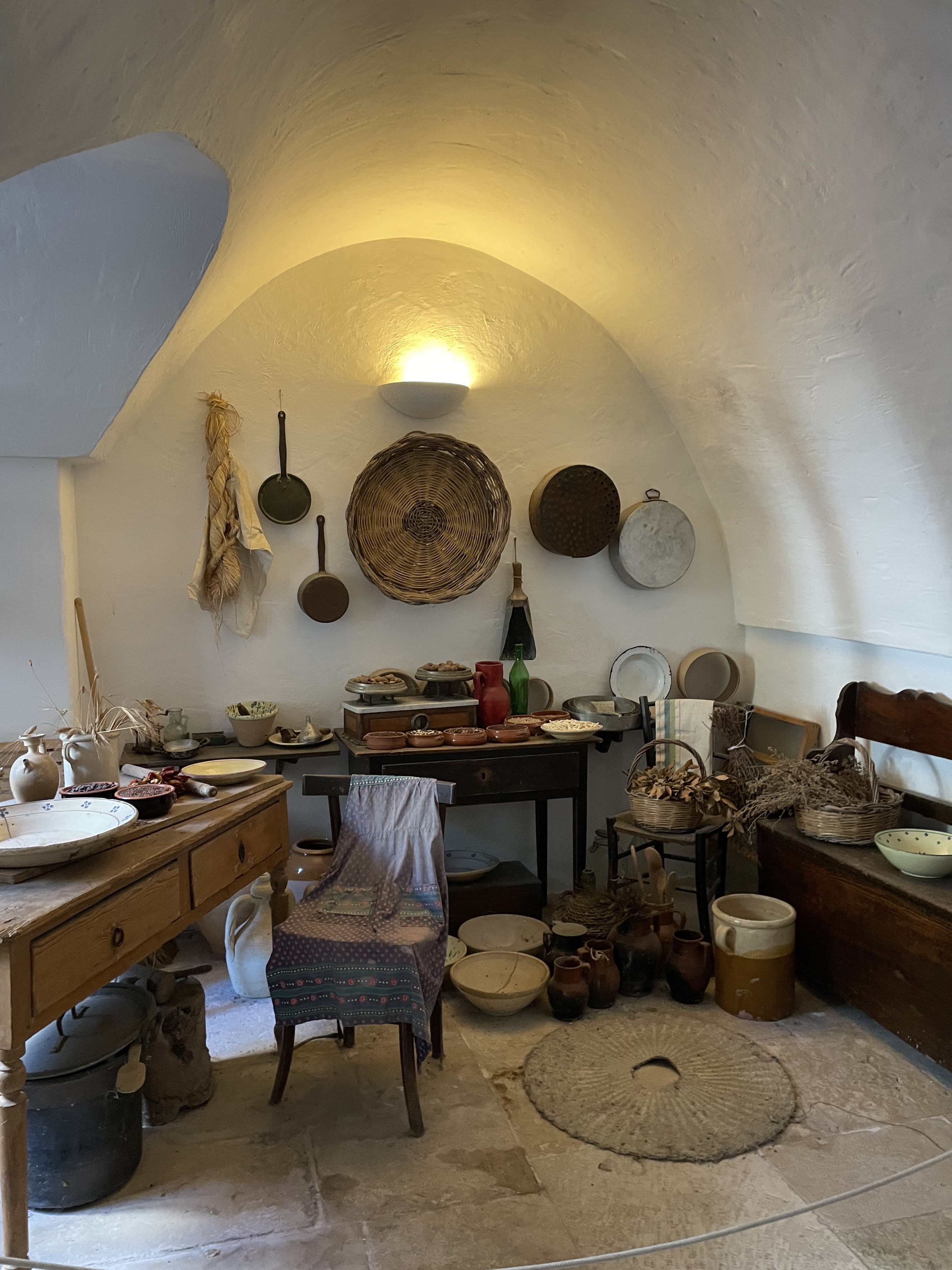
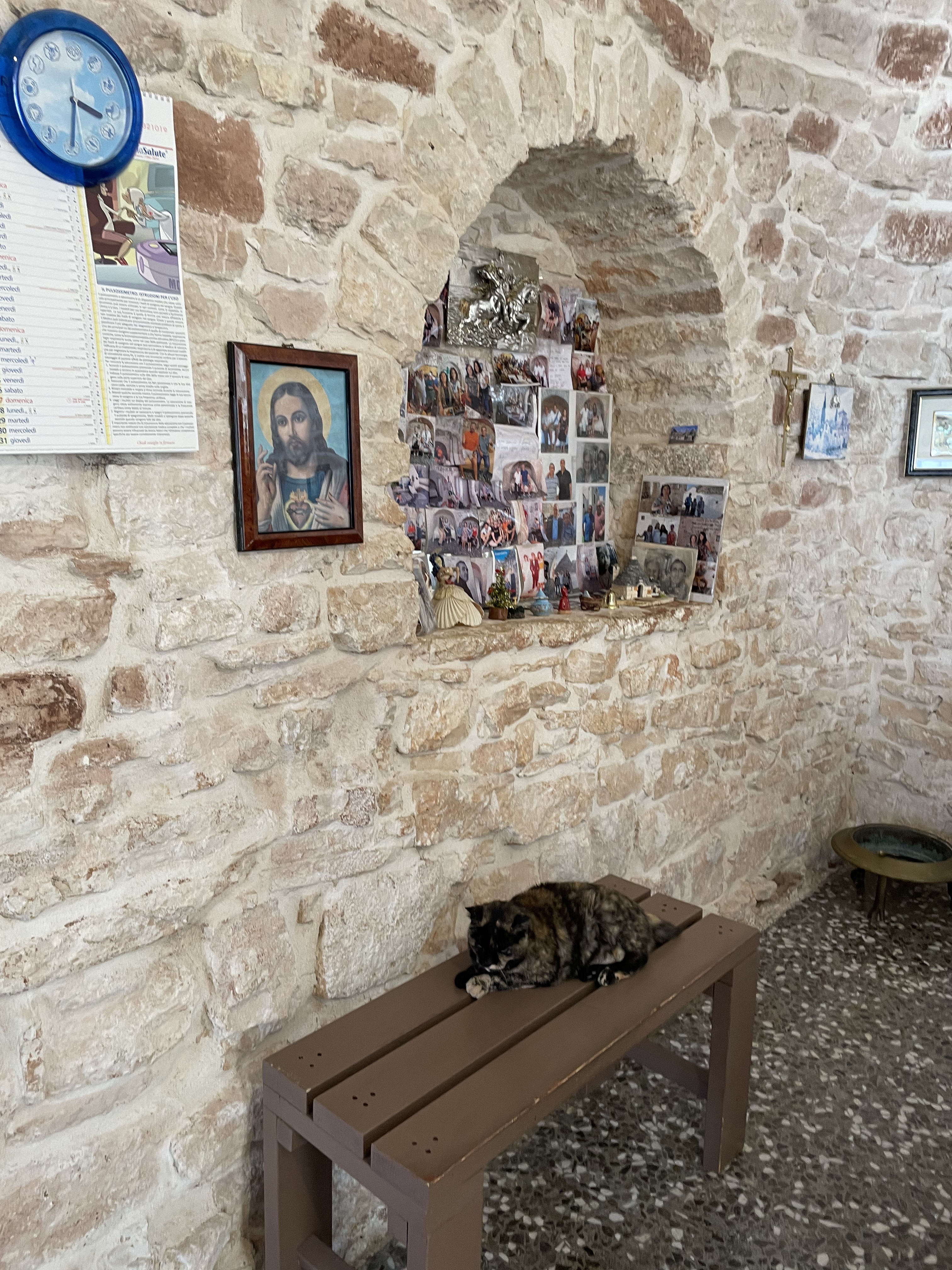
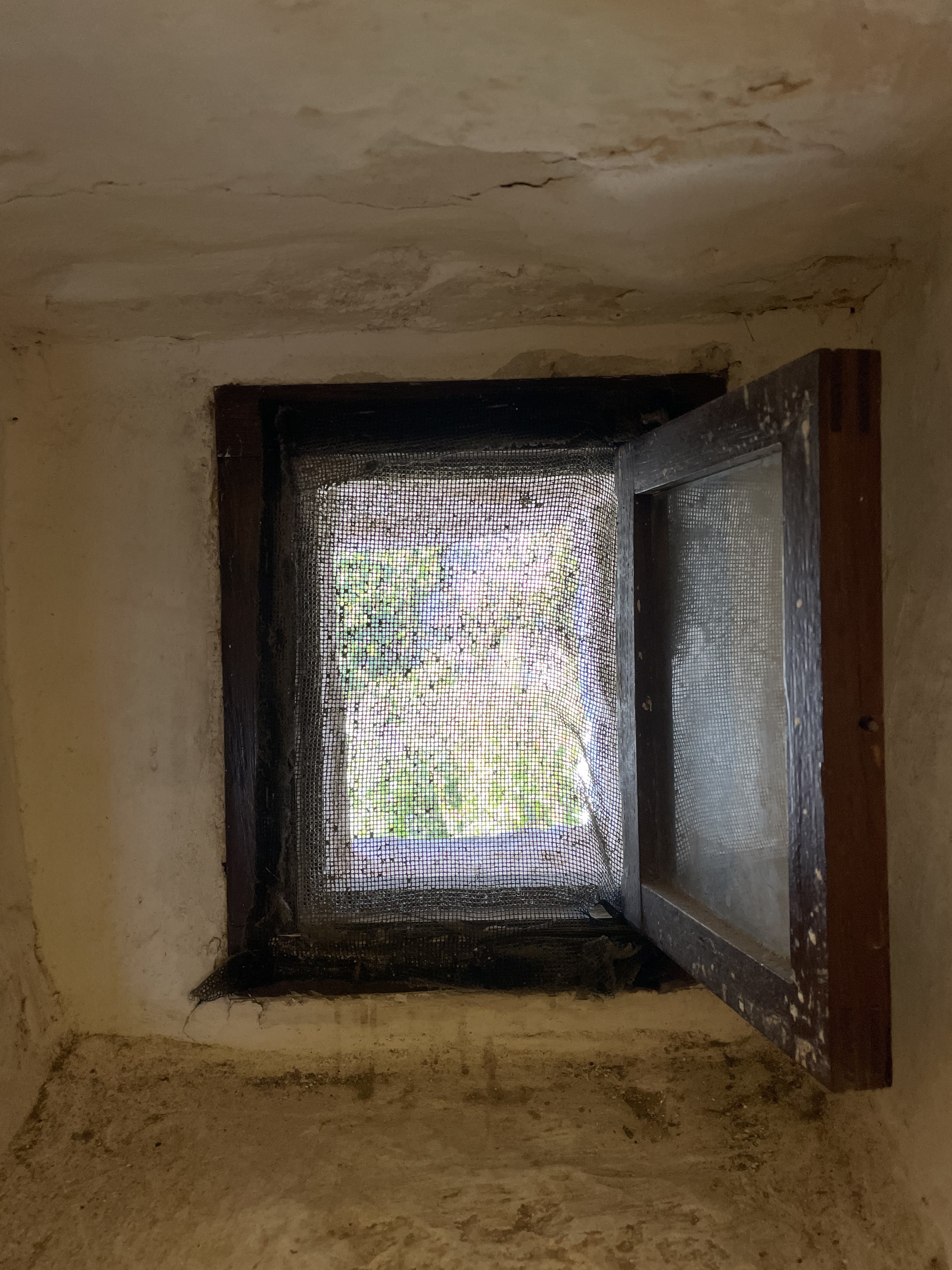
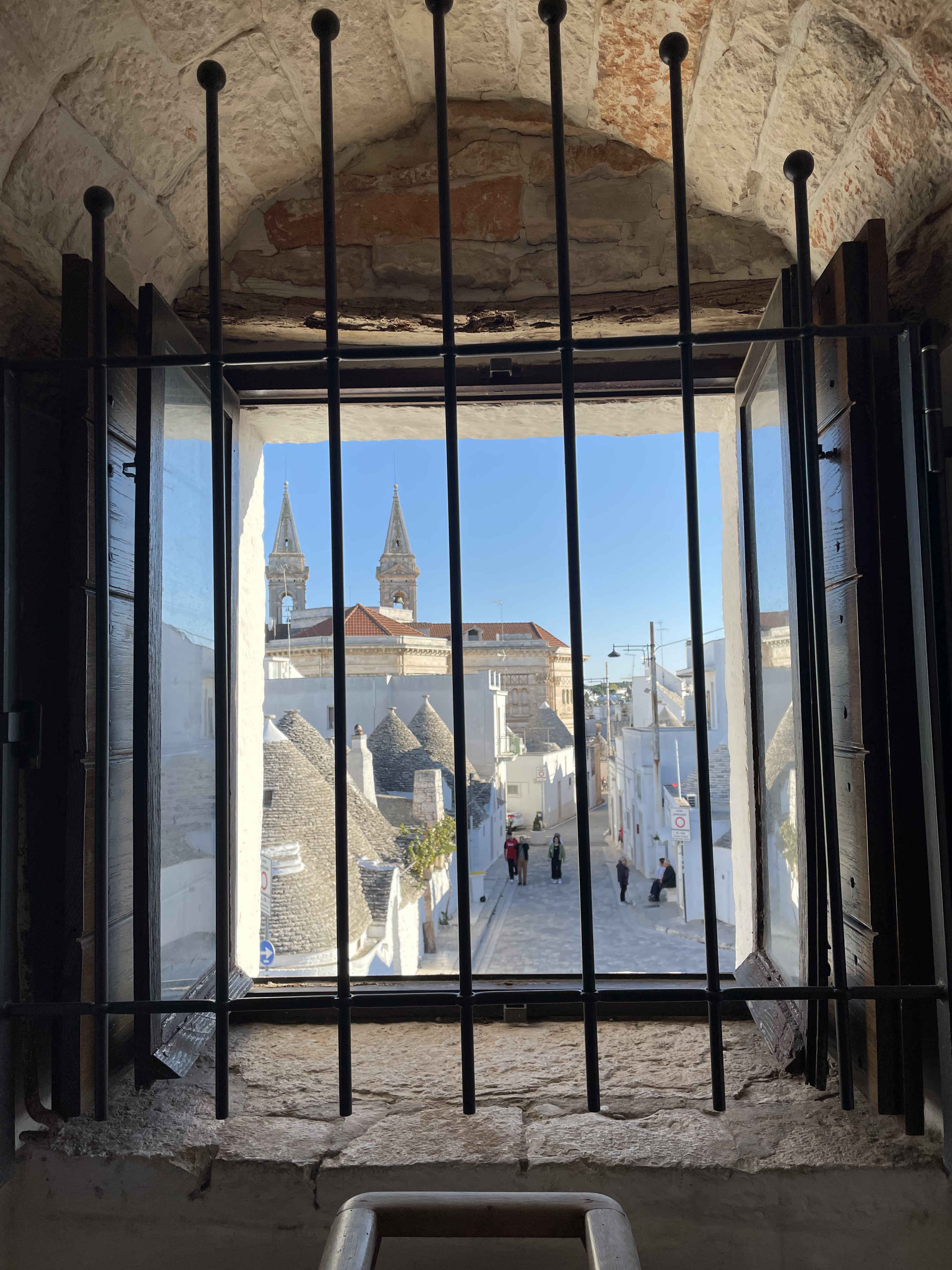
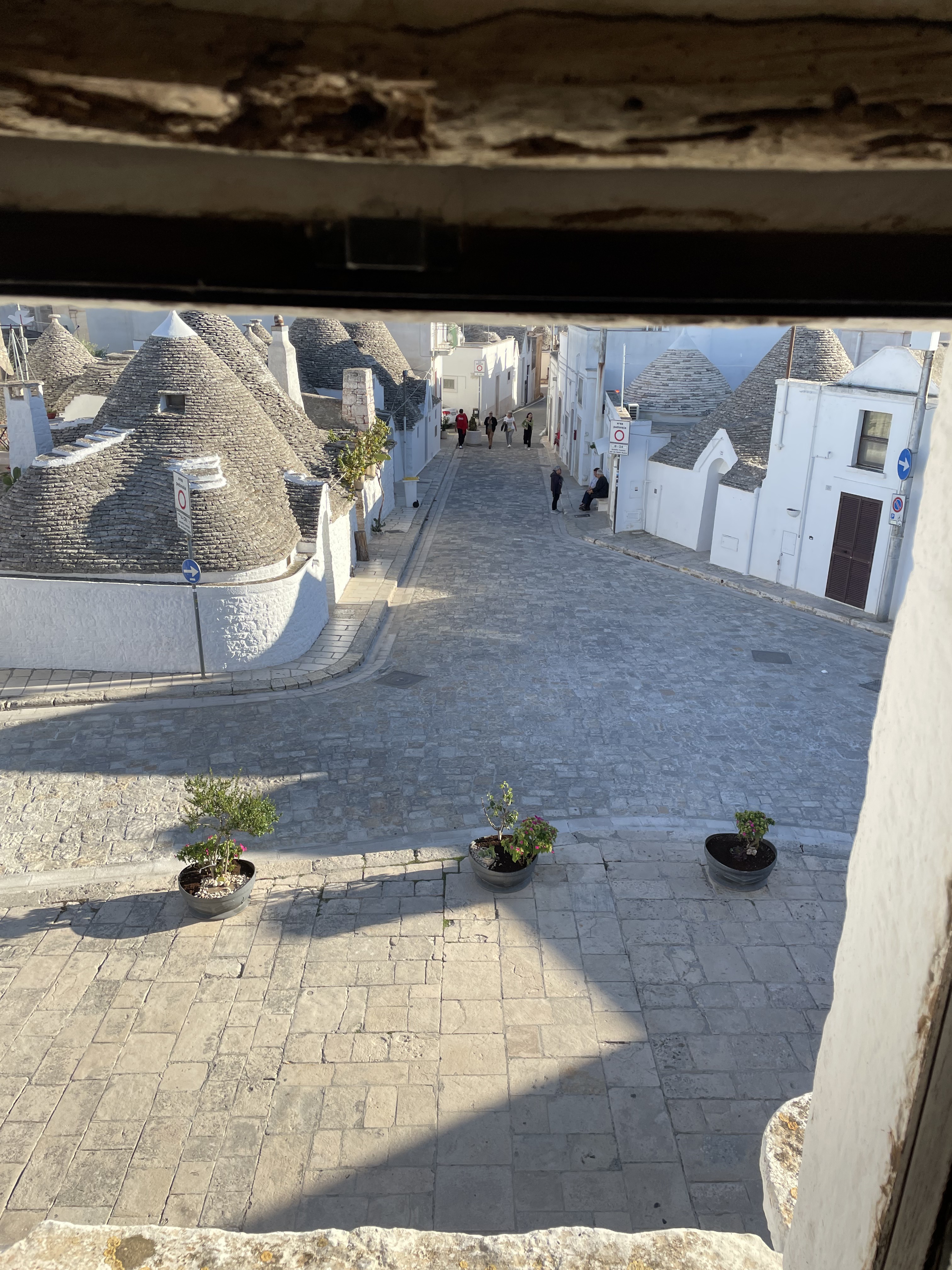
Alberobello keeps a few trulli open as museums, furniture and all: the round whitewashed room wrapping the bed, the alcove, the blackened fireplace, a corner niche crowded with shrine figures. Even the windows are different — small, wood-framed, shuttered; from one of them a view down over the grey hats with iron bars for a window frame. It’s tight, dim, perfect. People still live like this today.
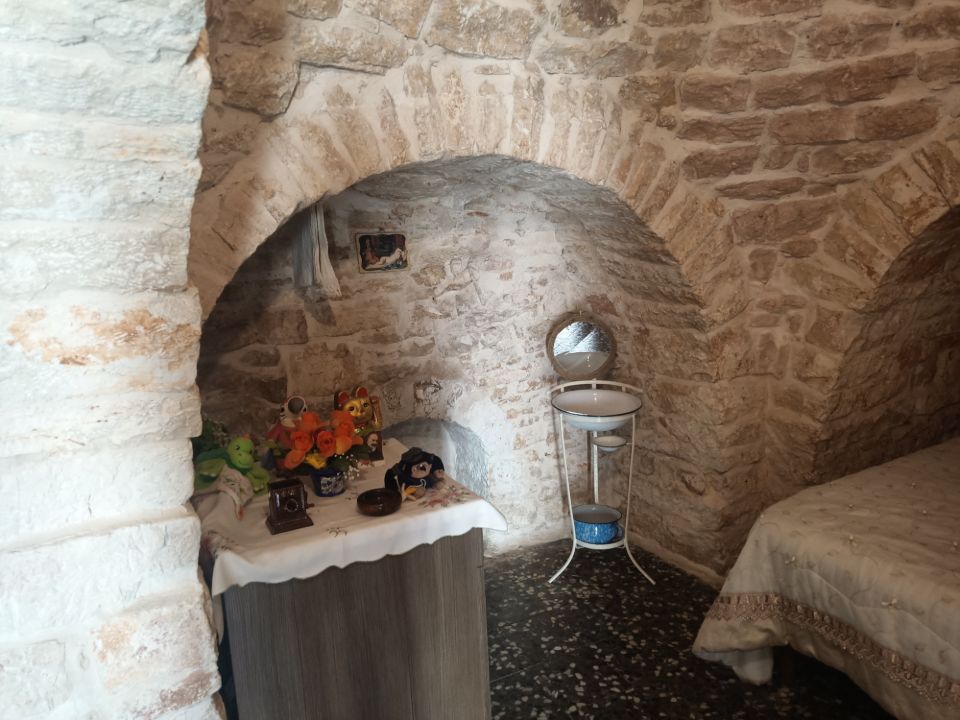
Bedroom, wrapped in stone 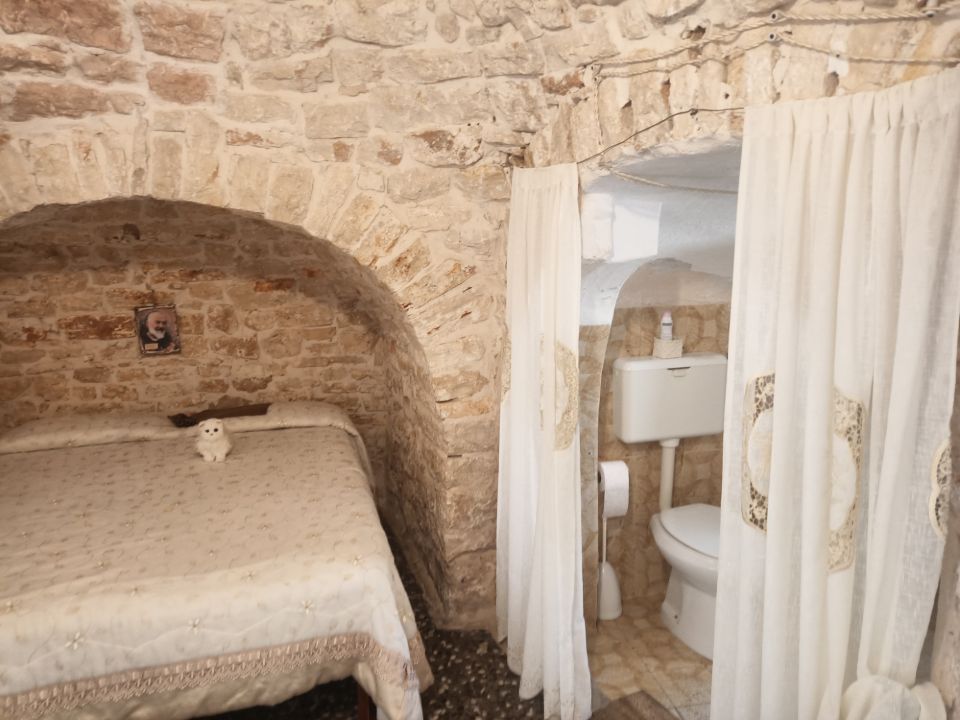
The alcove 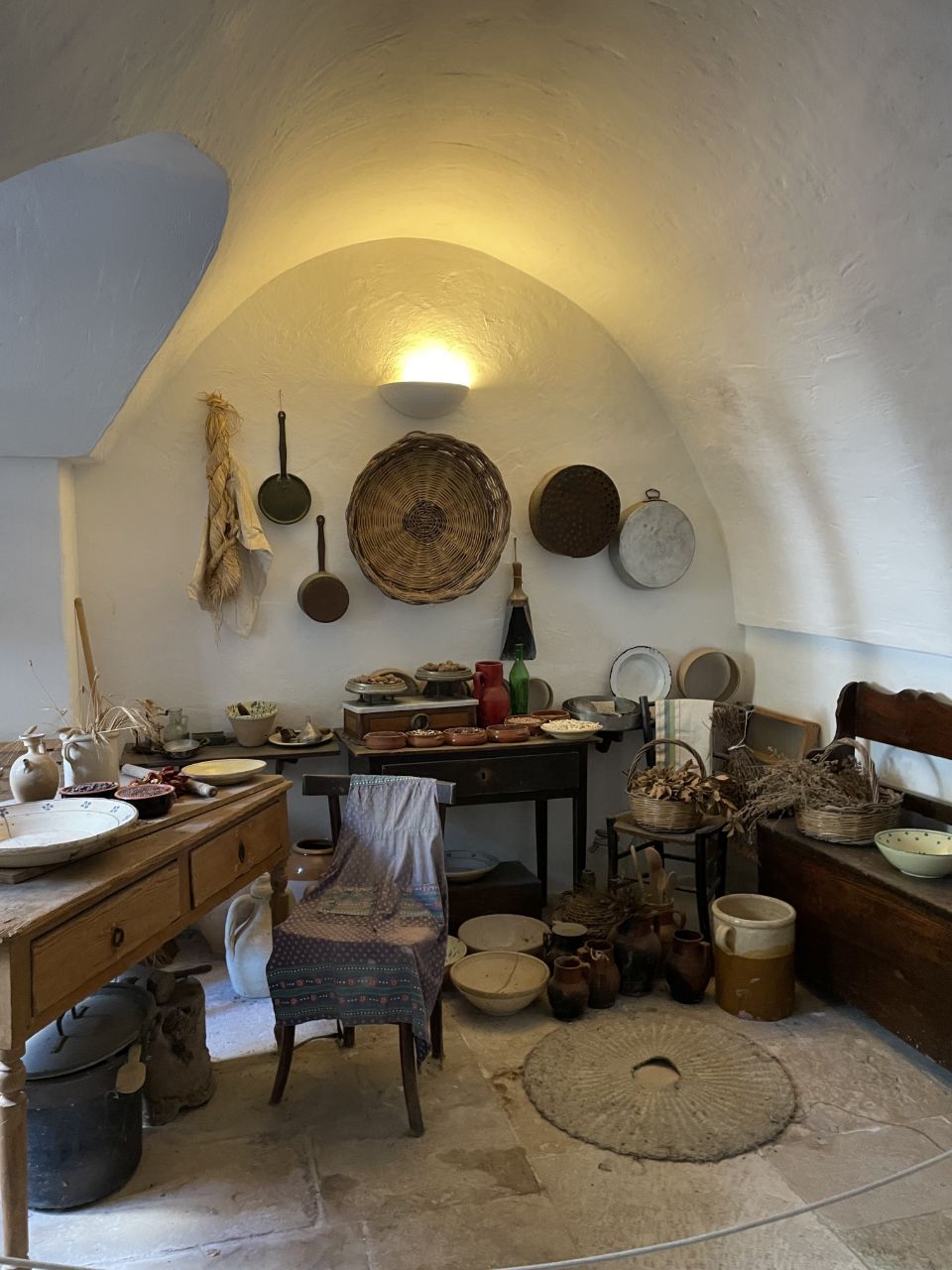
Household, museum edition 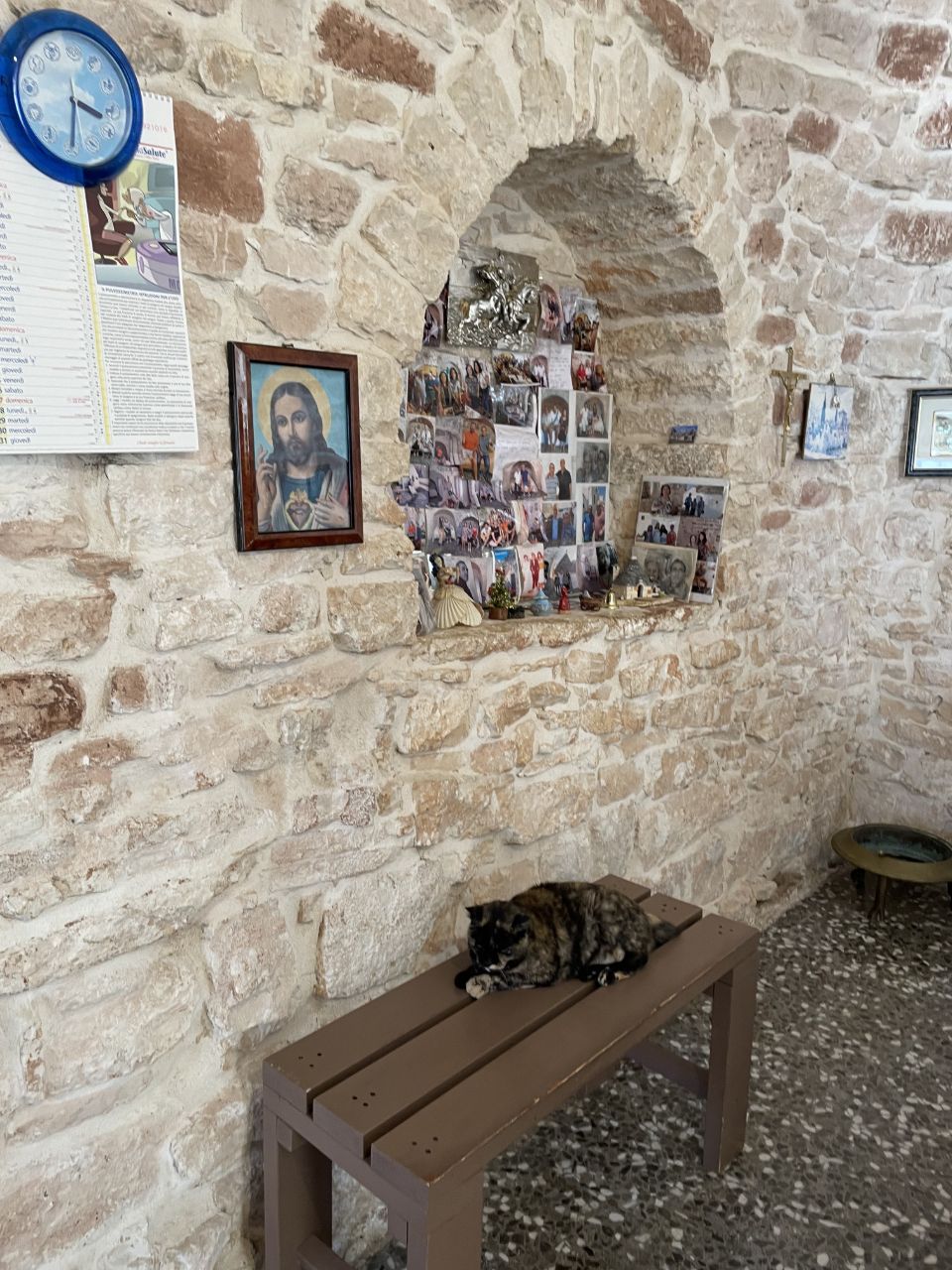
The shrine niche 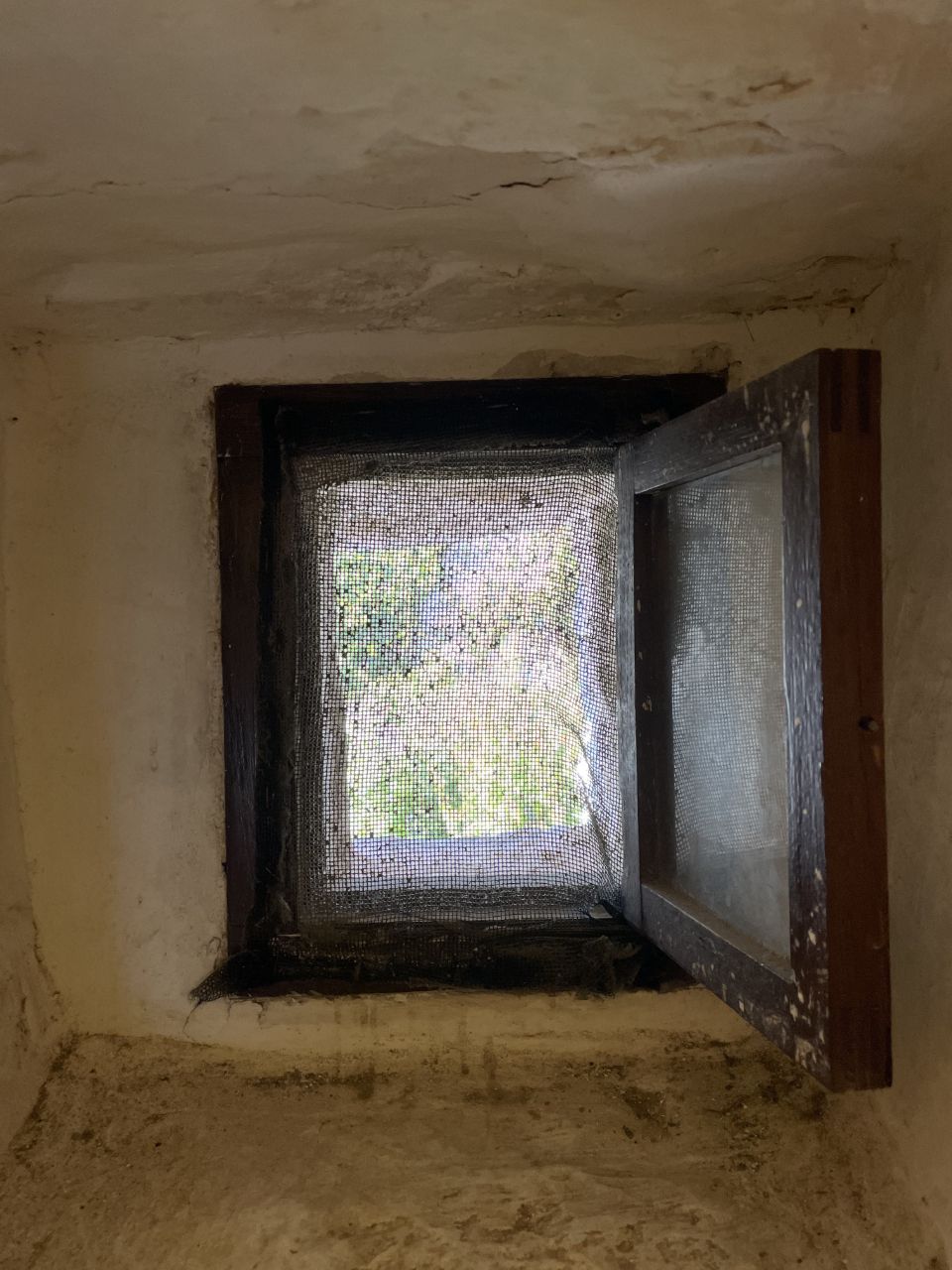
Shuttered window 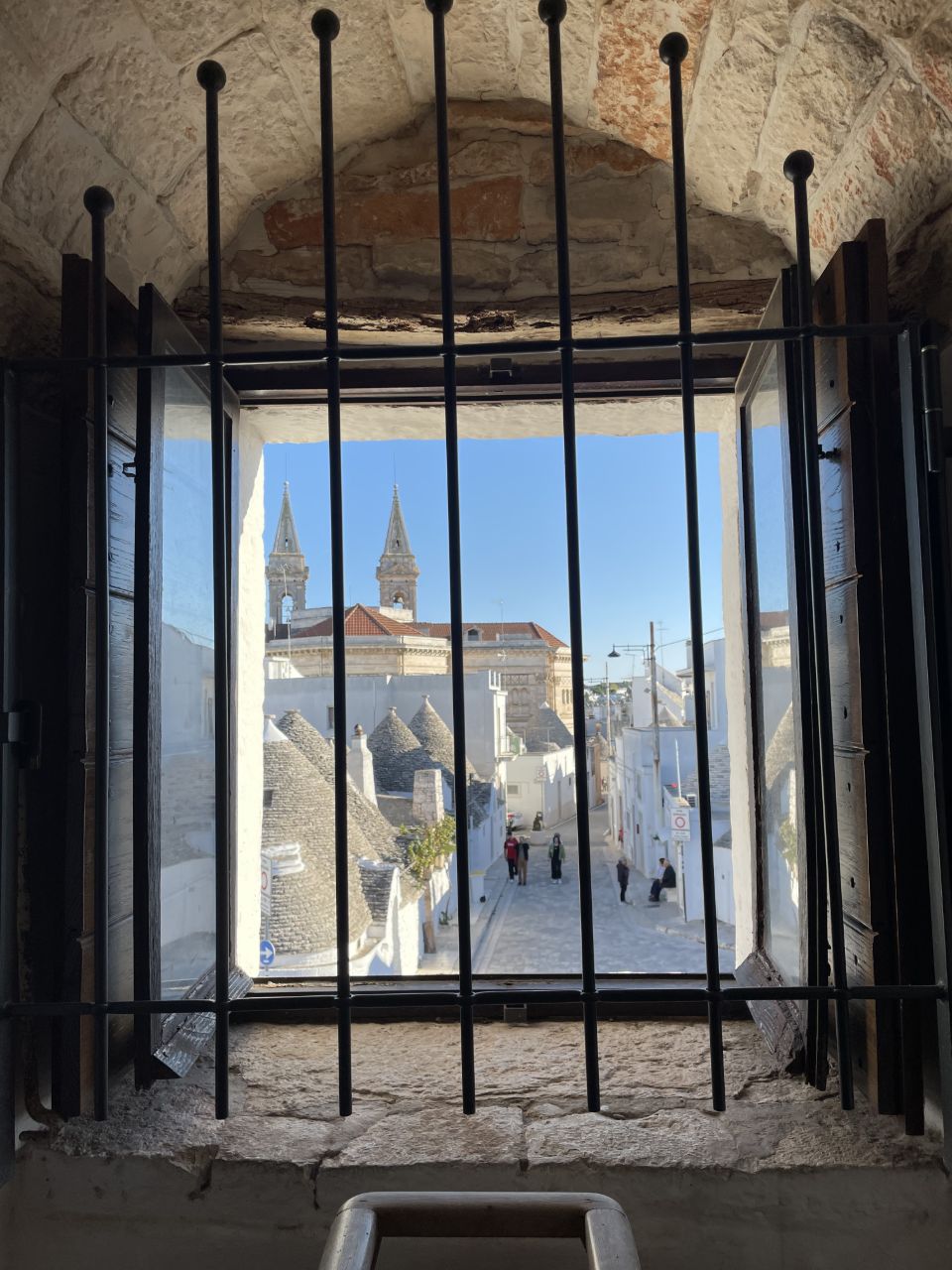
The view through the bars 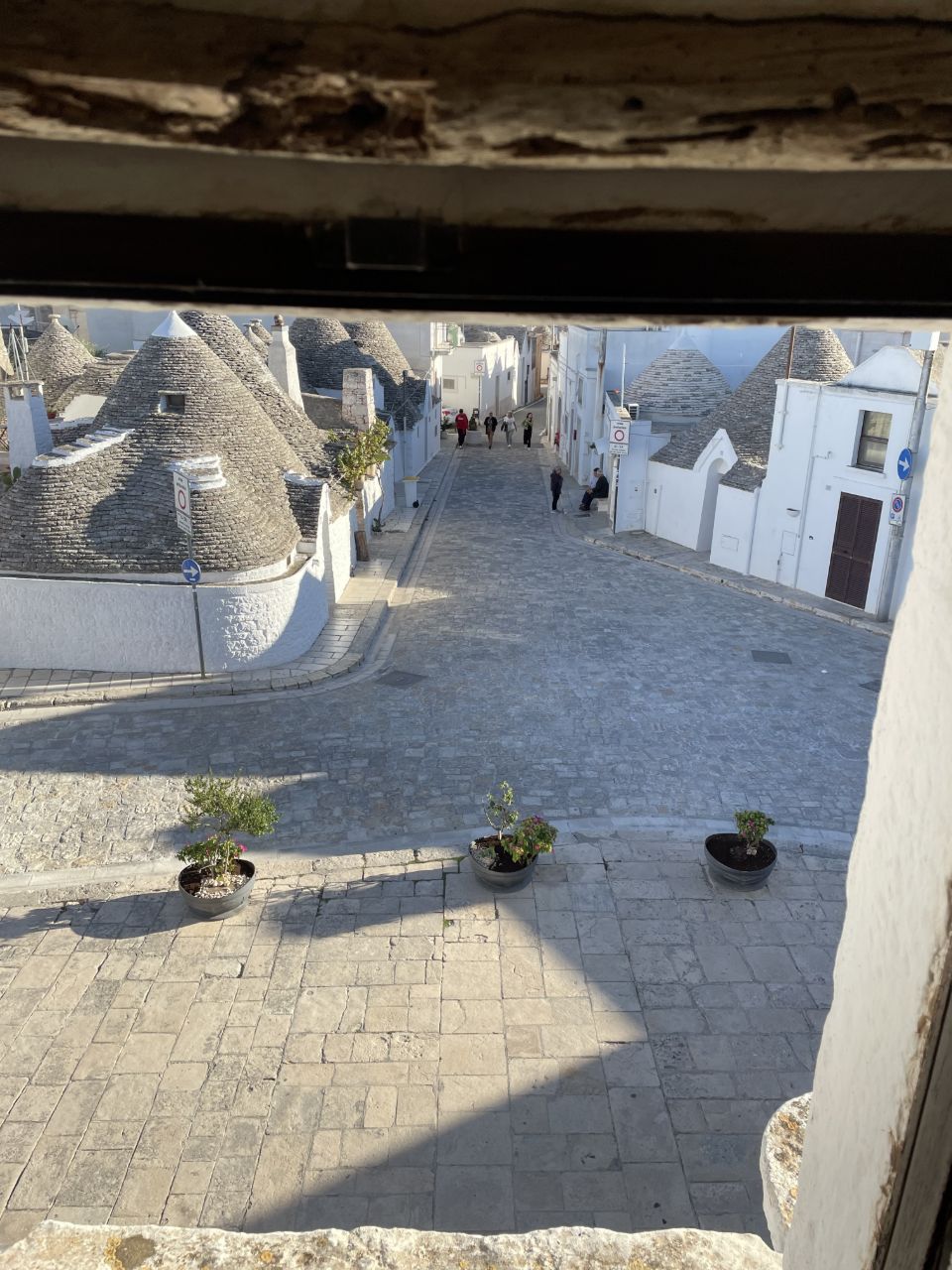
Rooftops, from a dark opening
The basilica and the sweets
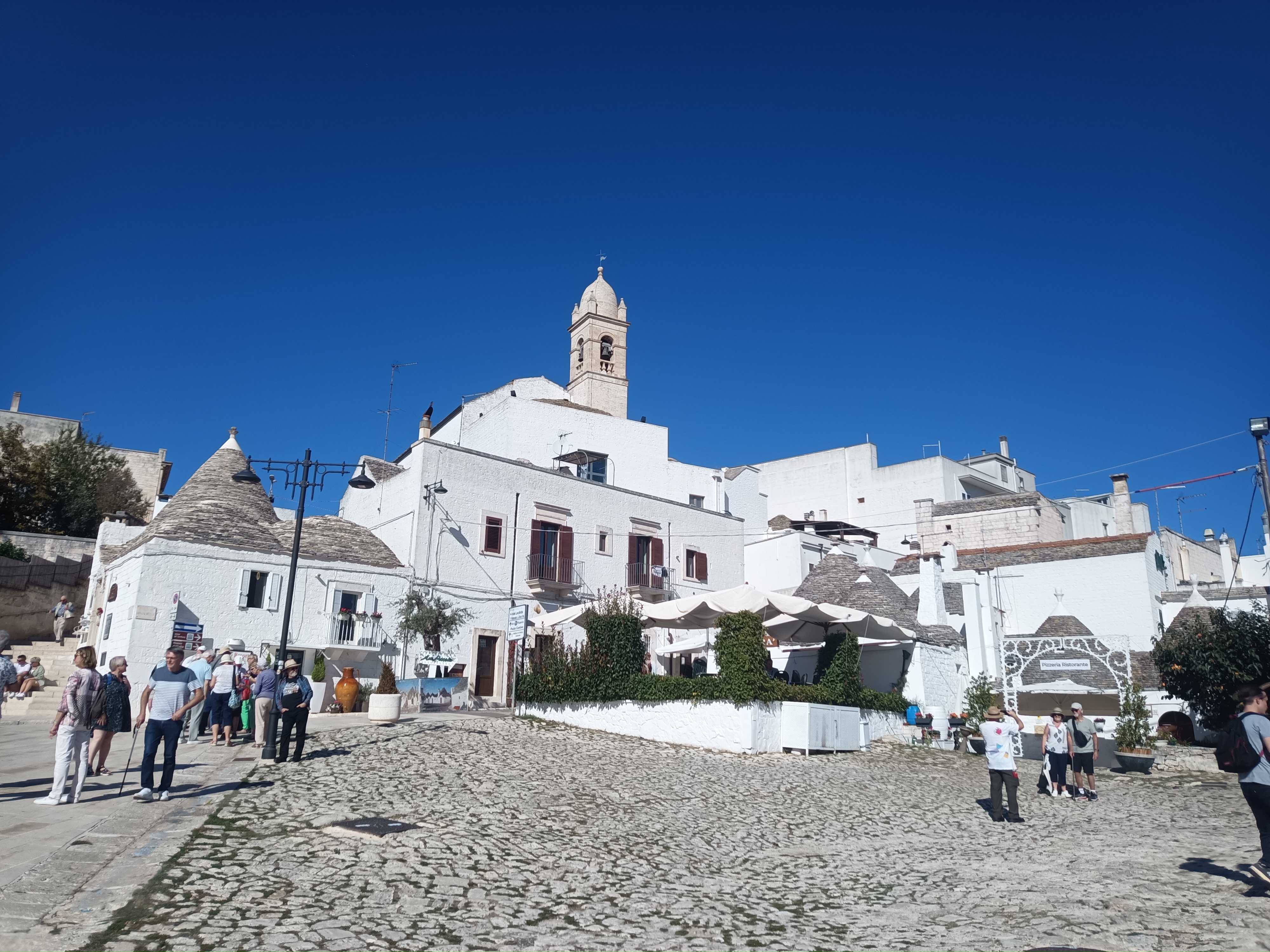
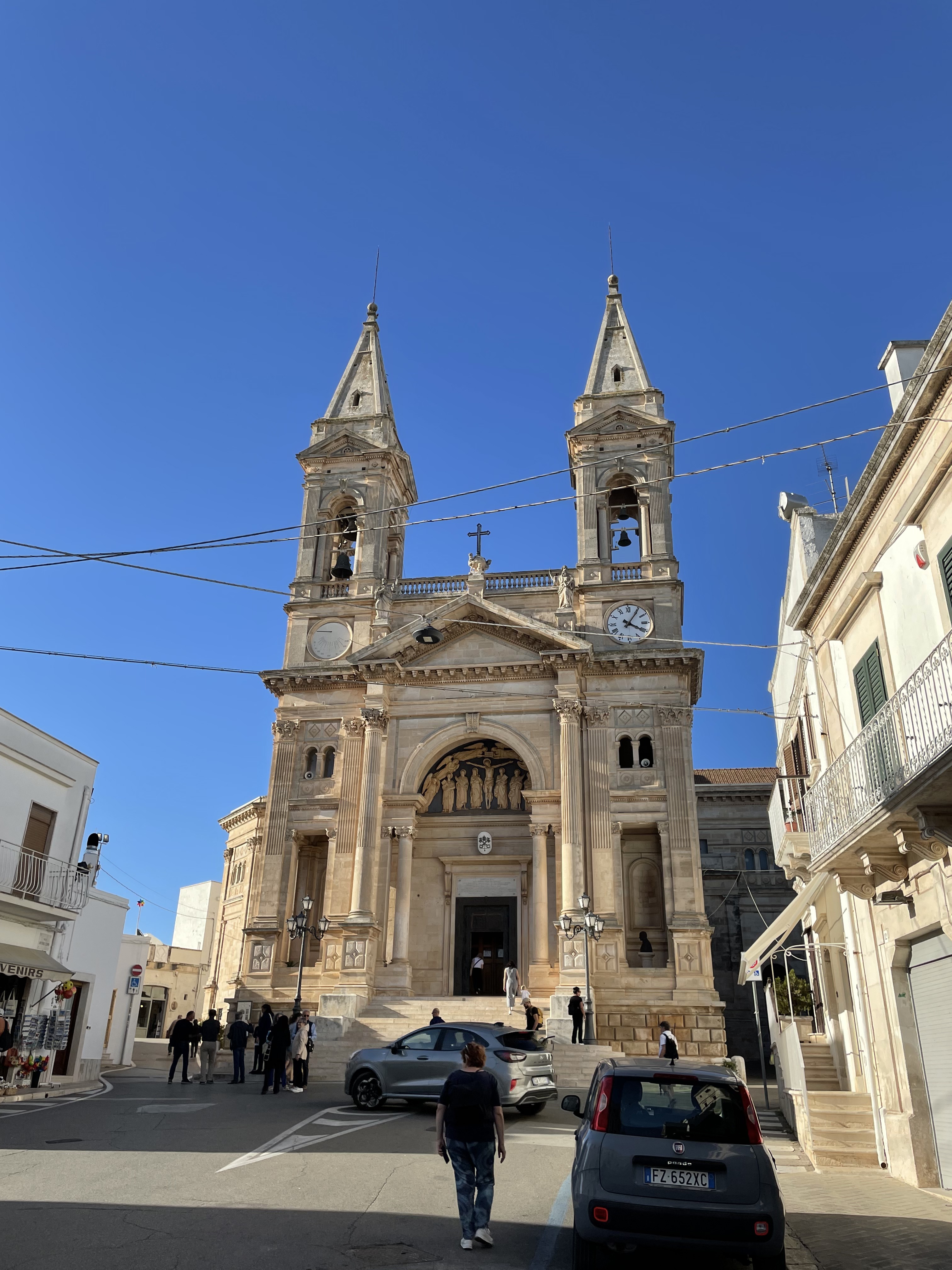
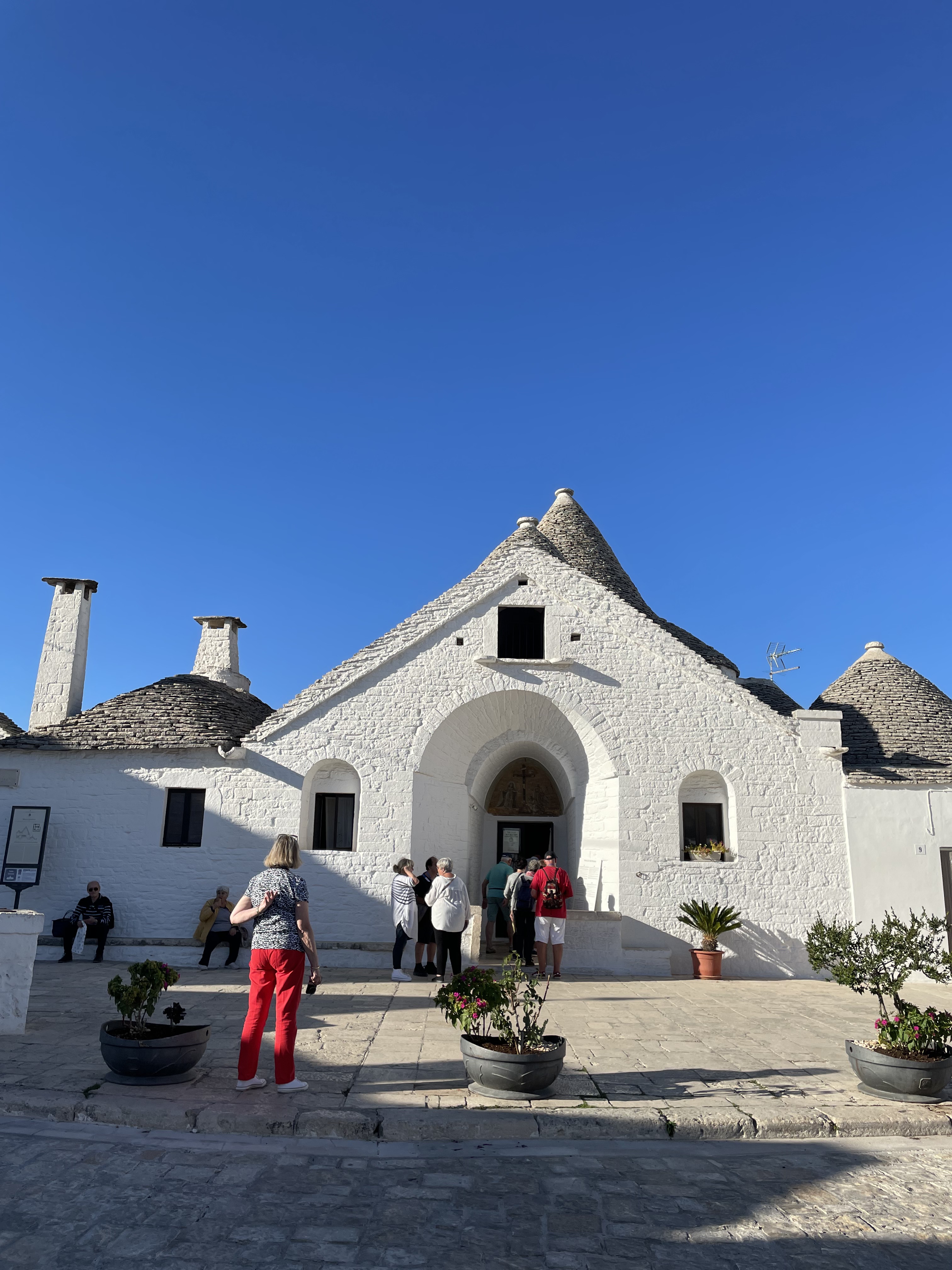
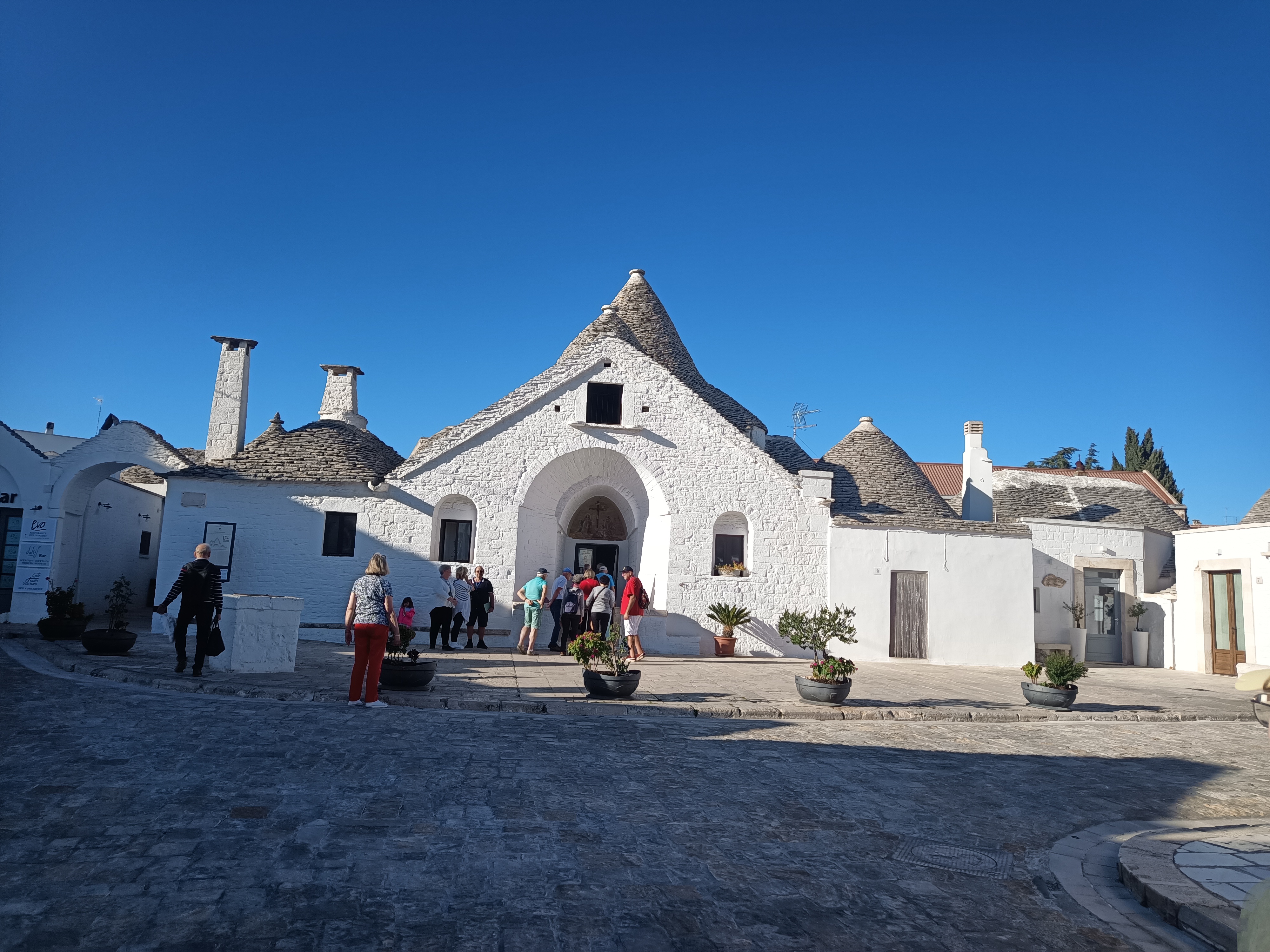
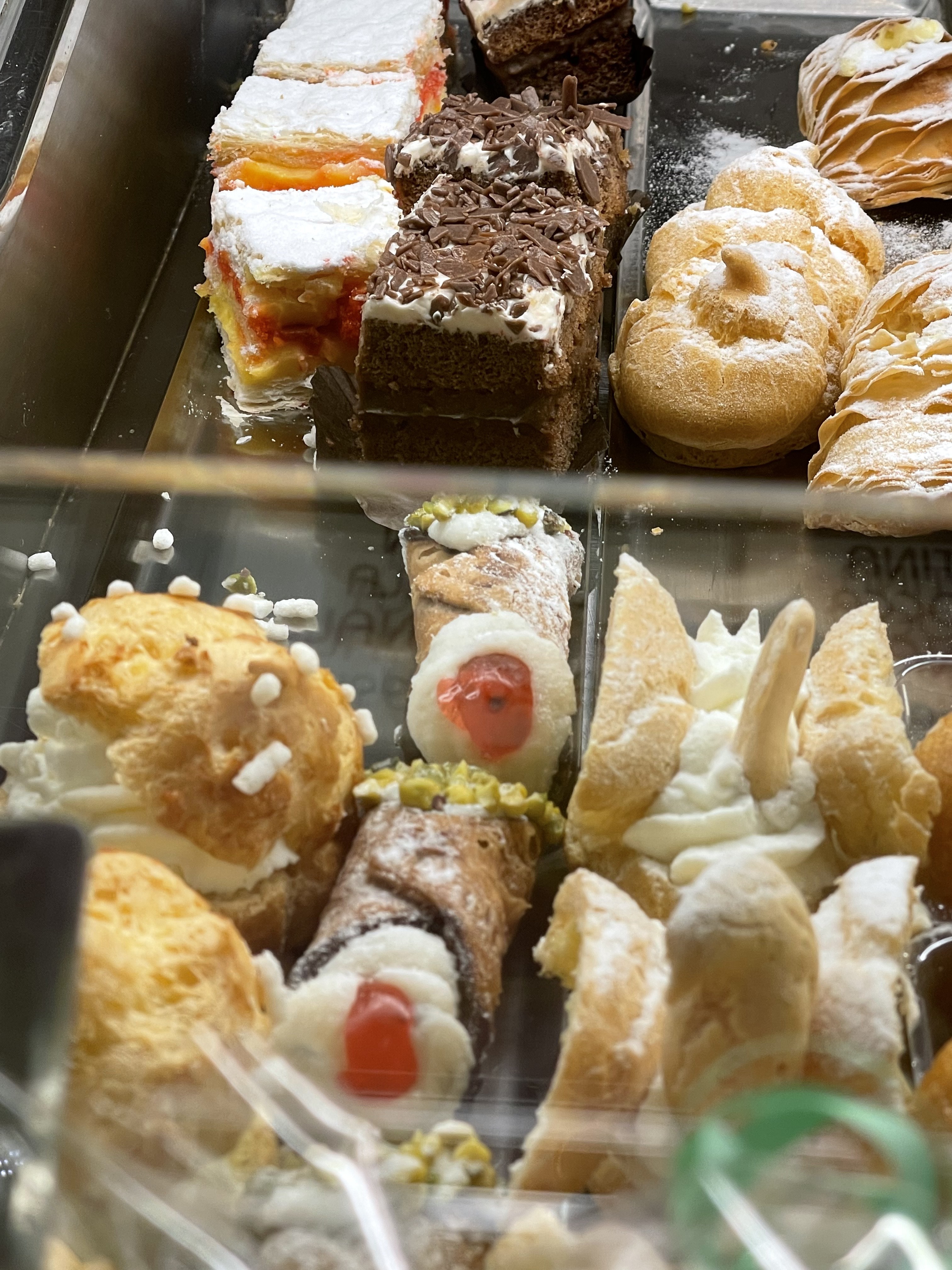
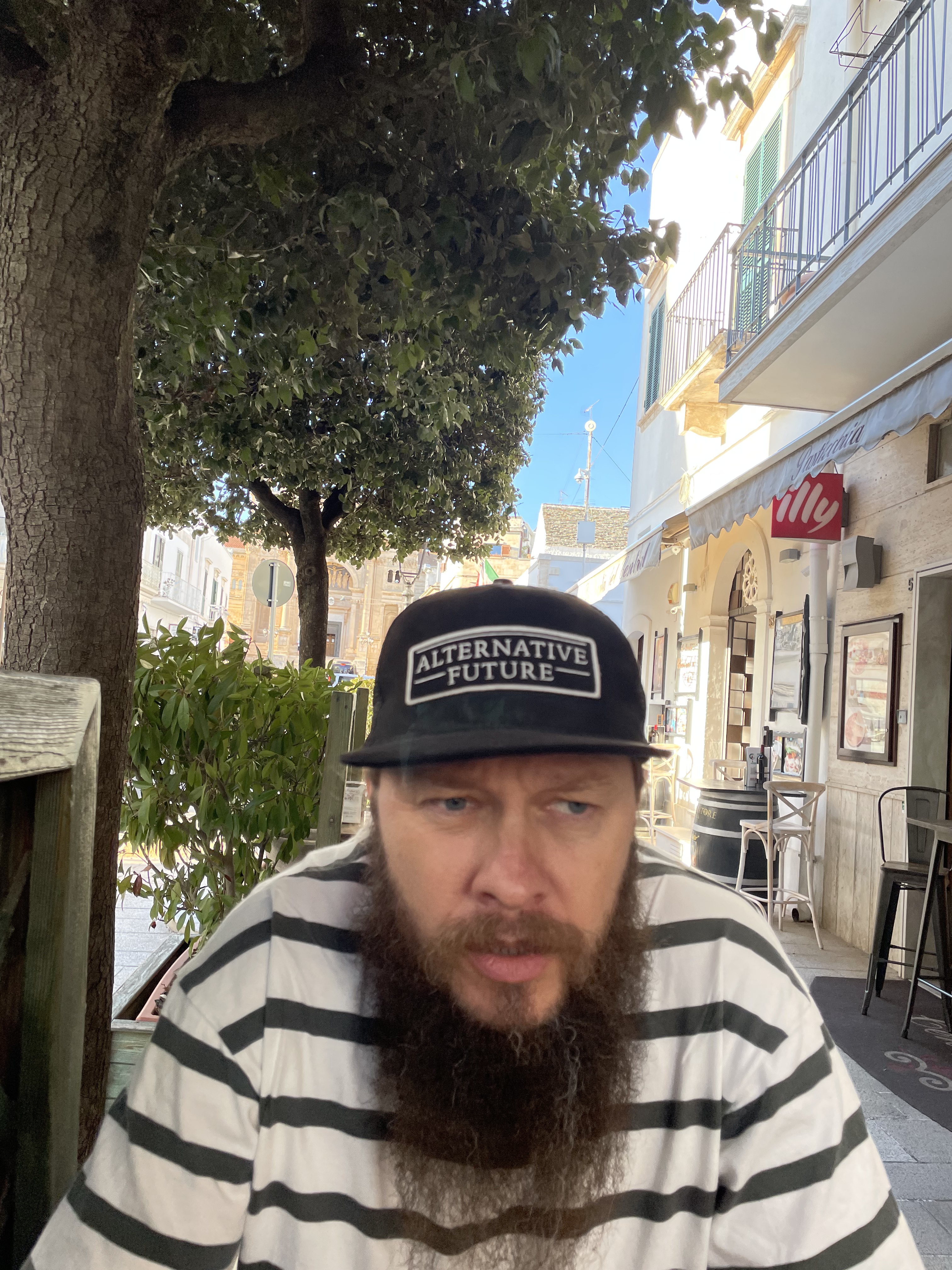
Up from the old district: the twin-spired Basilica dei Santi Medici in a square of normal rectangles and one very special cone — Trullo Sovrano, the big two-storey one, with tourists orbiting it like satellites. Around the corner, a pastry case stuffed with cannoli and other local sins, and Oleg in a striped shirt looking into the lens like a portrait for a newspaper.
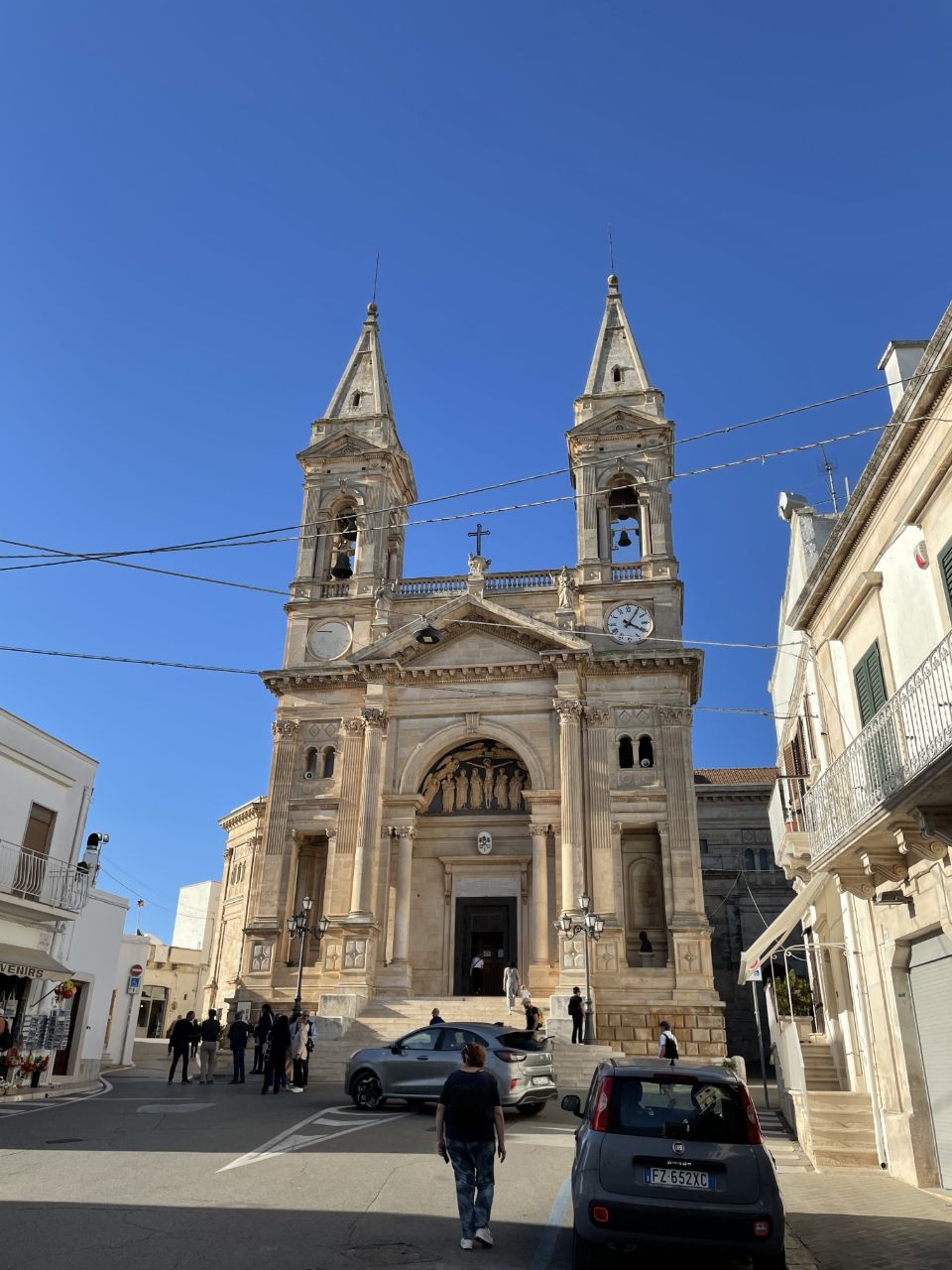
The basilica, twin-spired 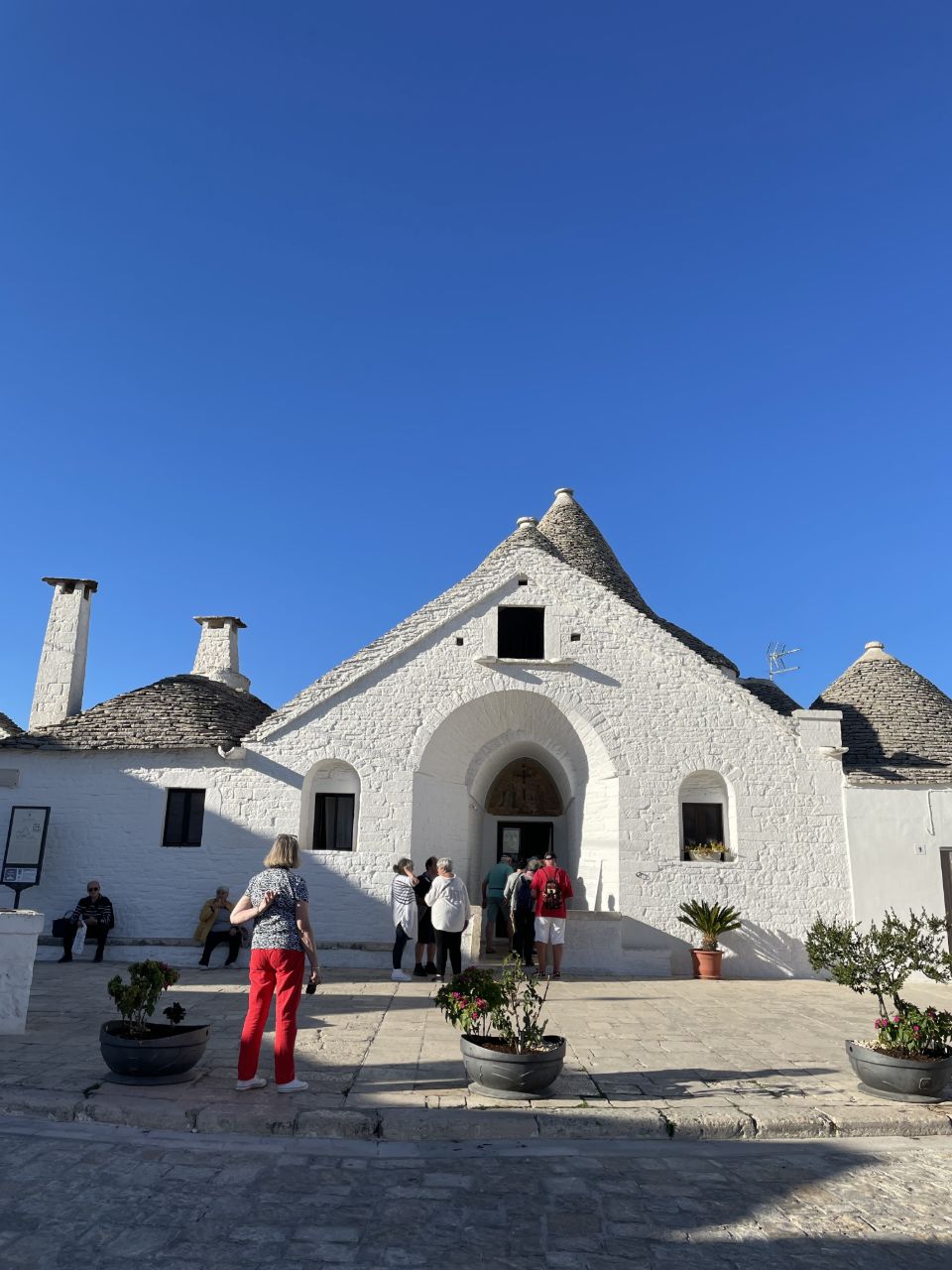
Trullo church, visitors on deck 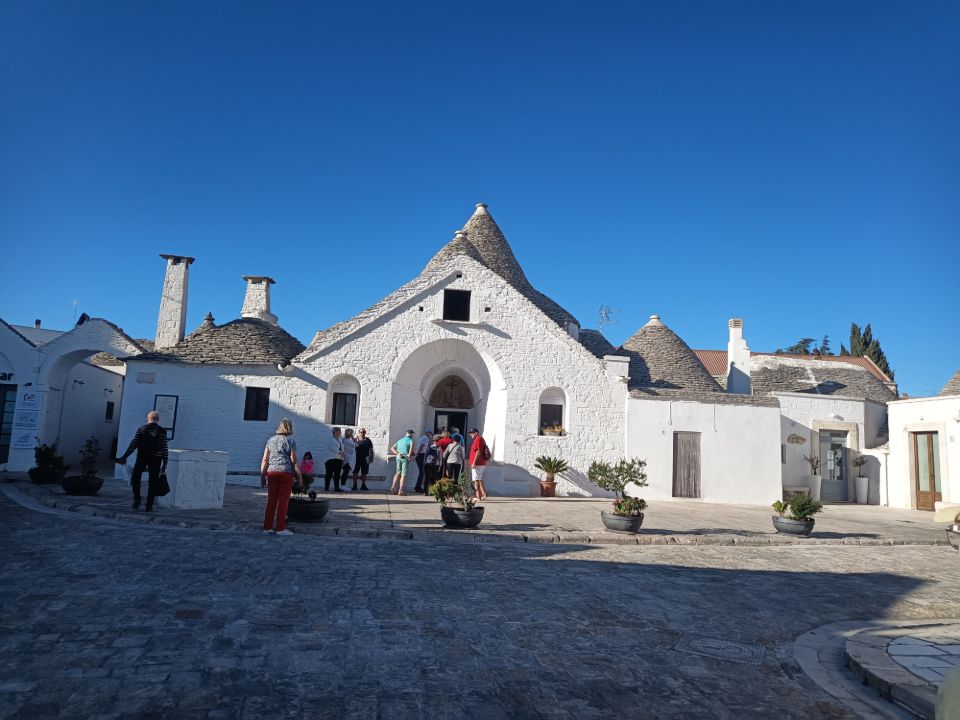
Trullo Sovrano, two-storey 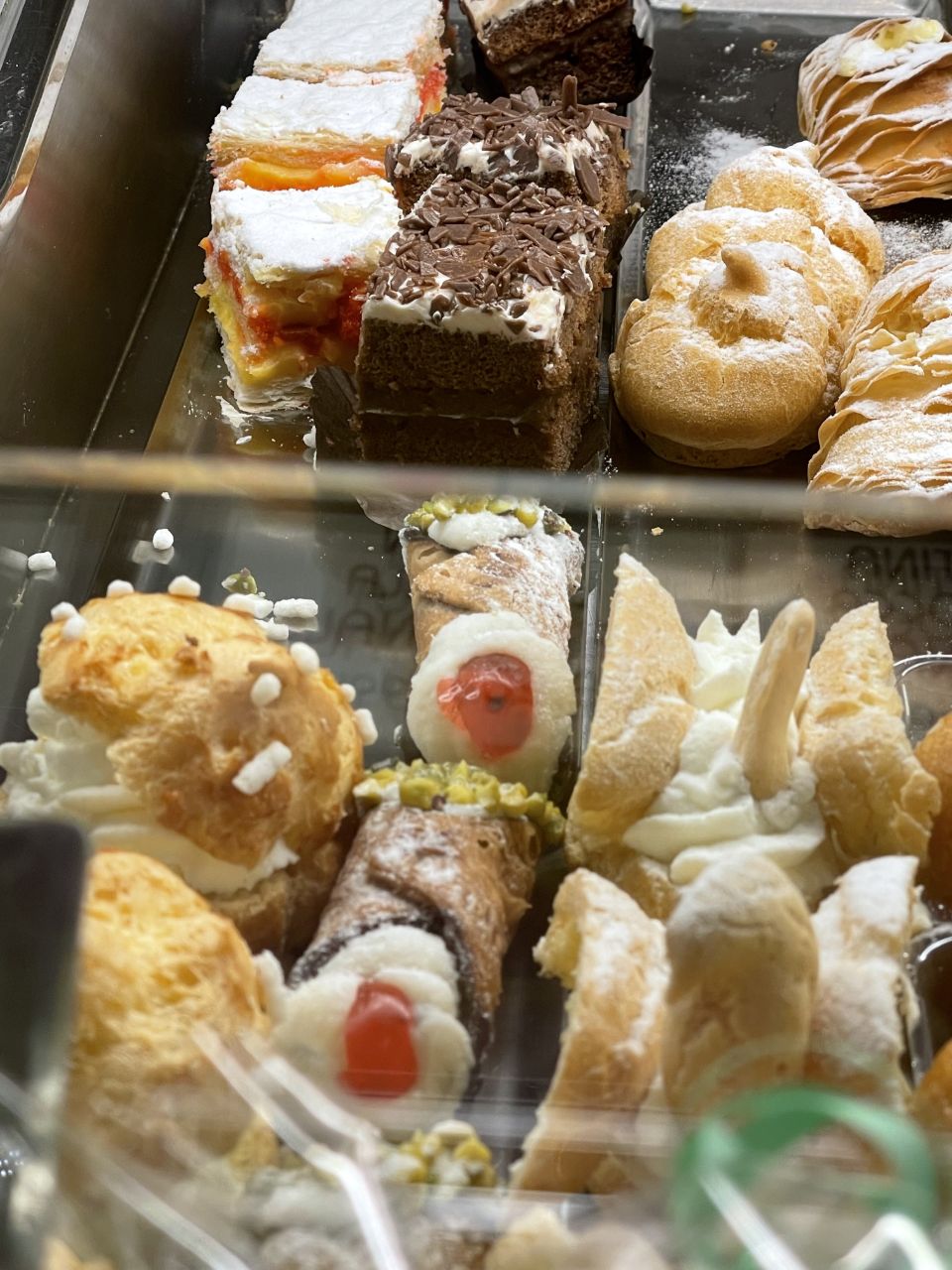
The pastry case, loaded 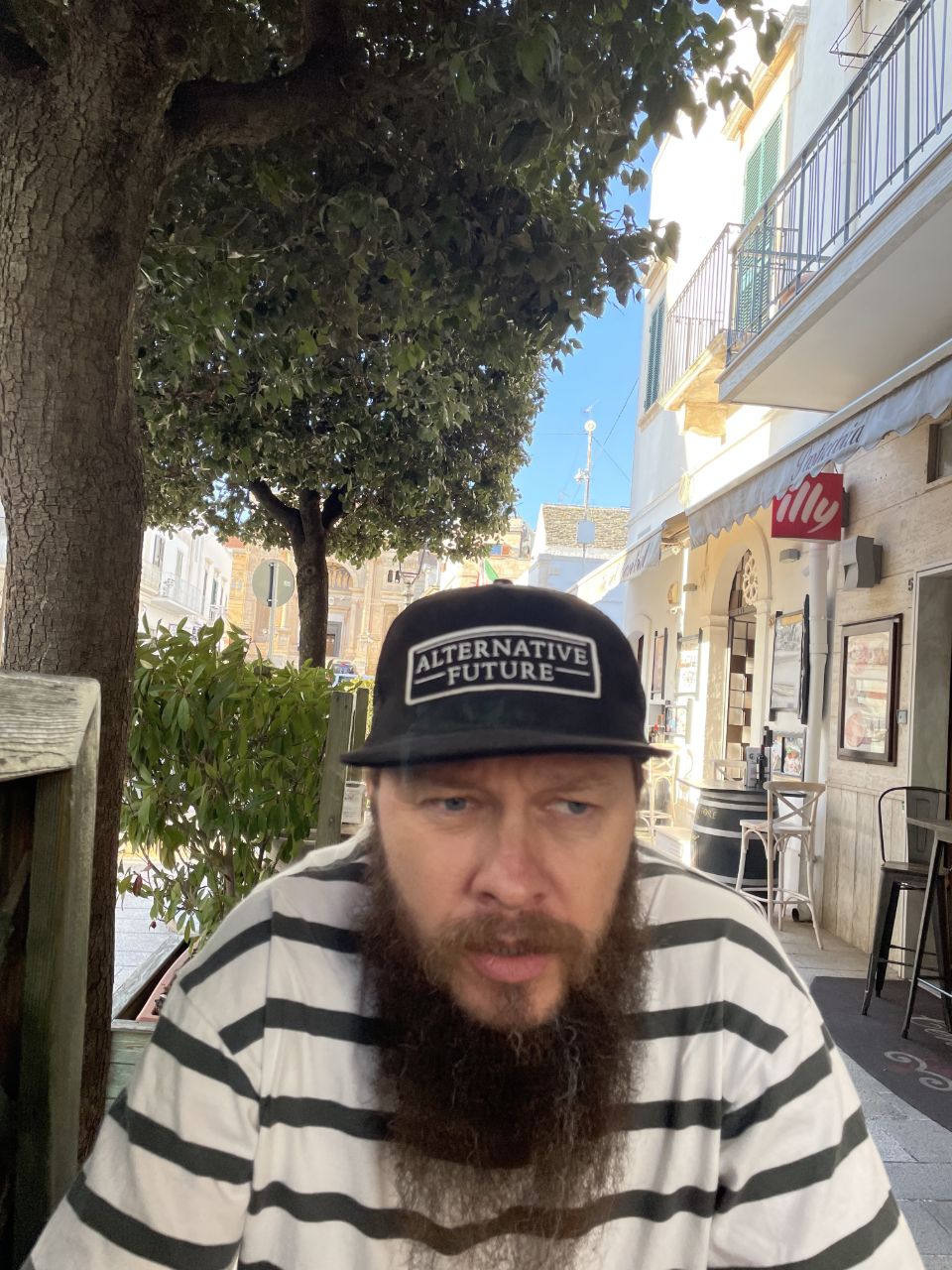
Oleg, street portrait
Blue hour, back home
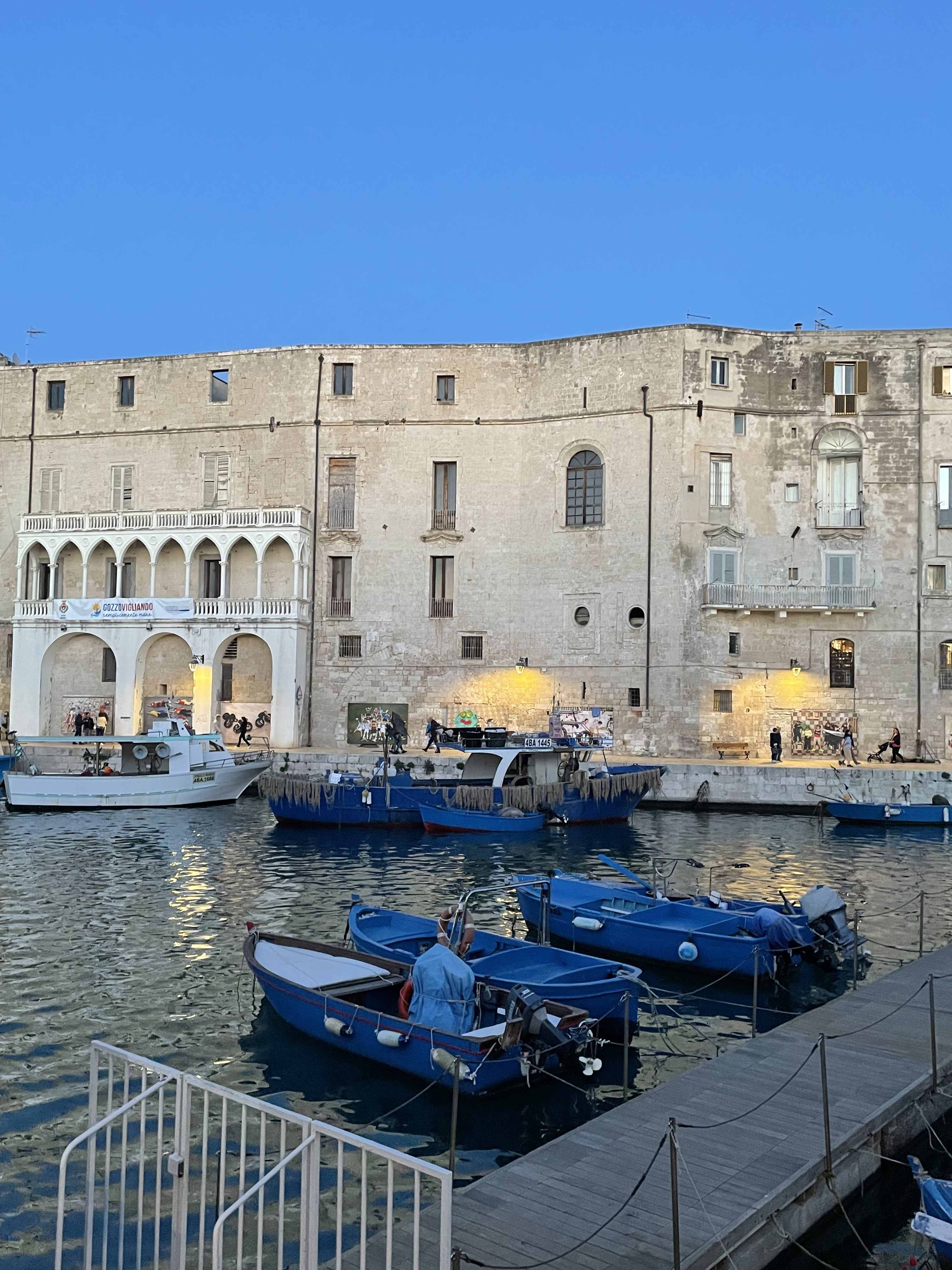
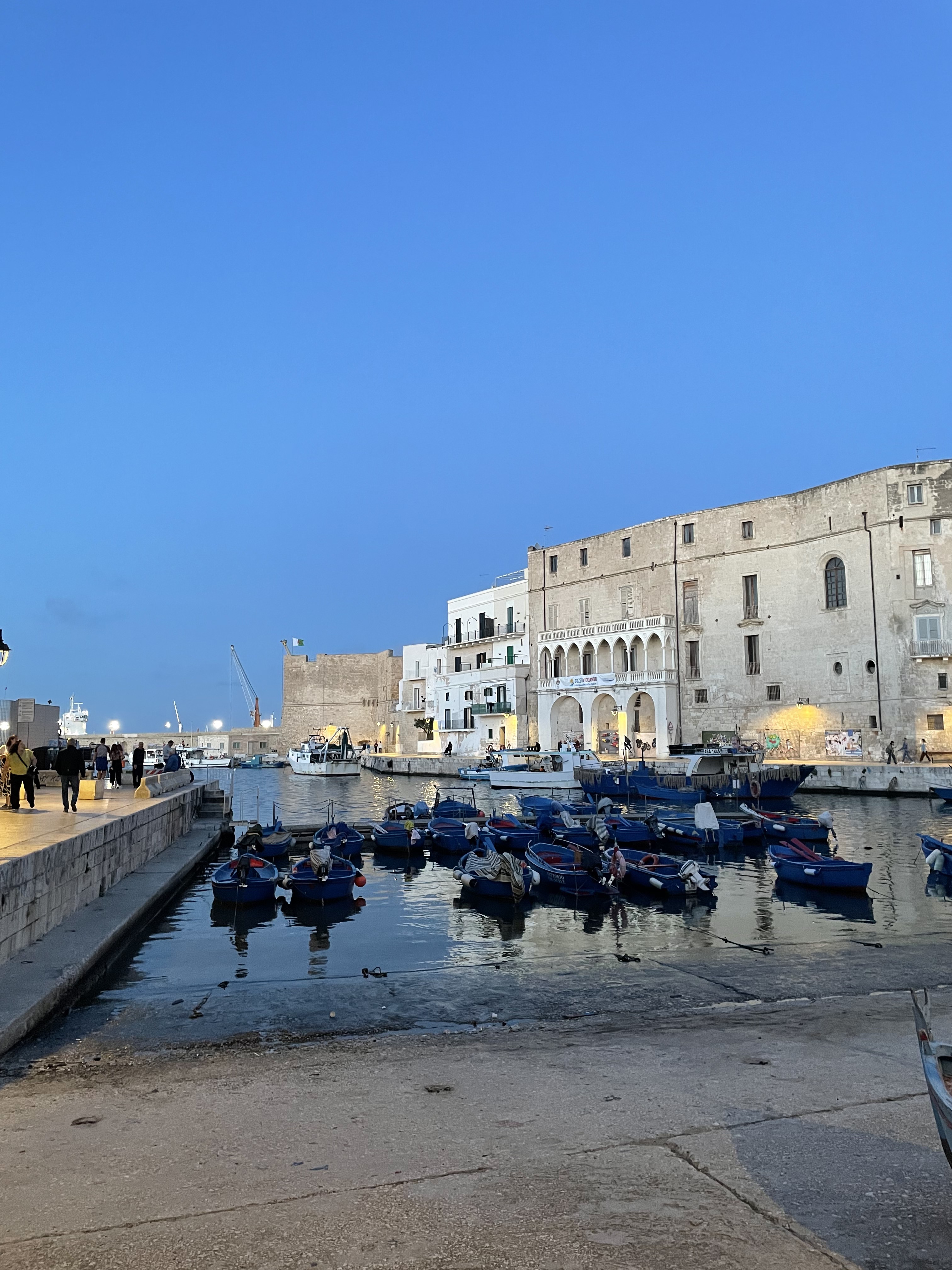
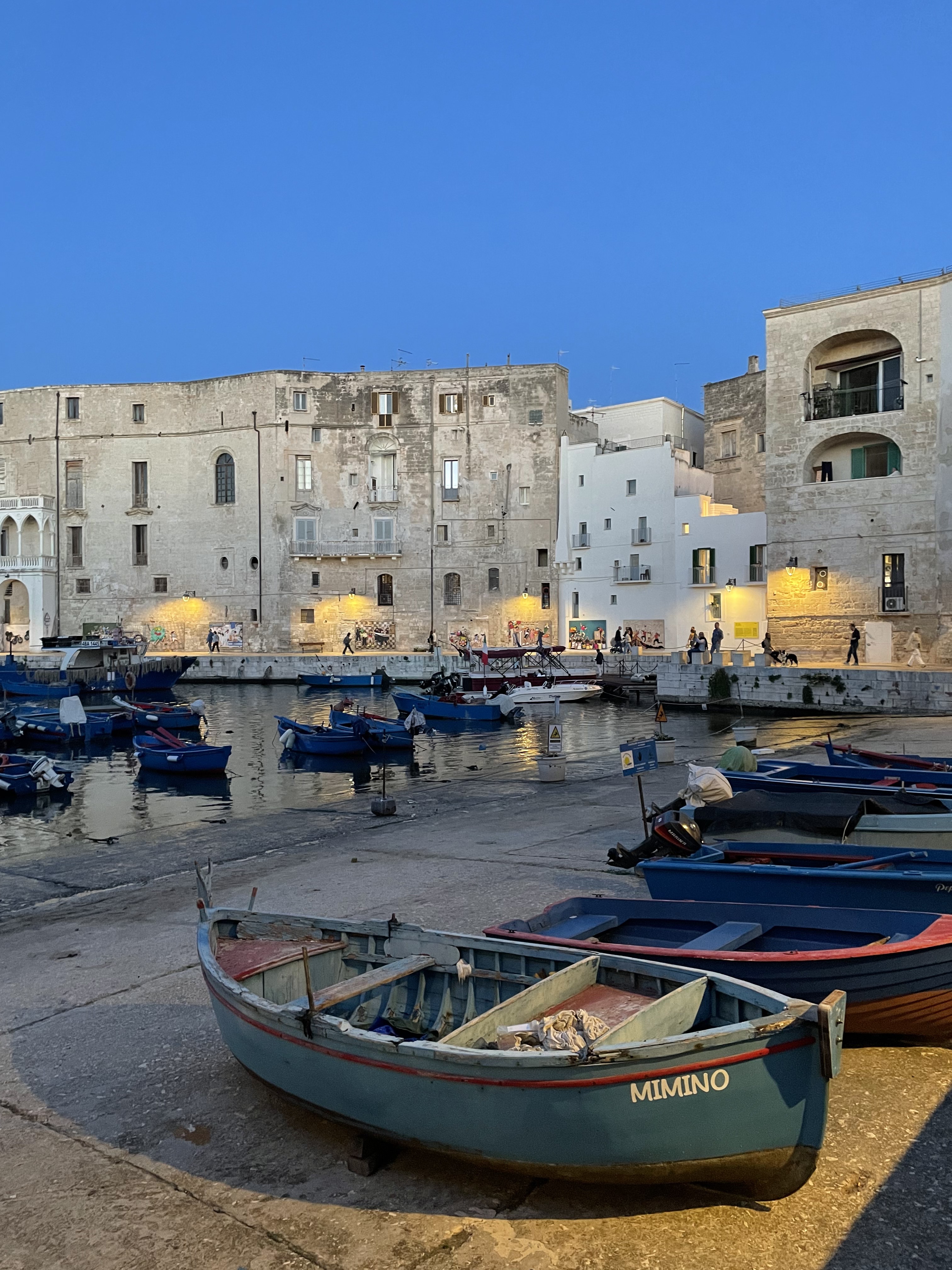
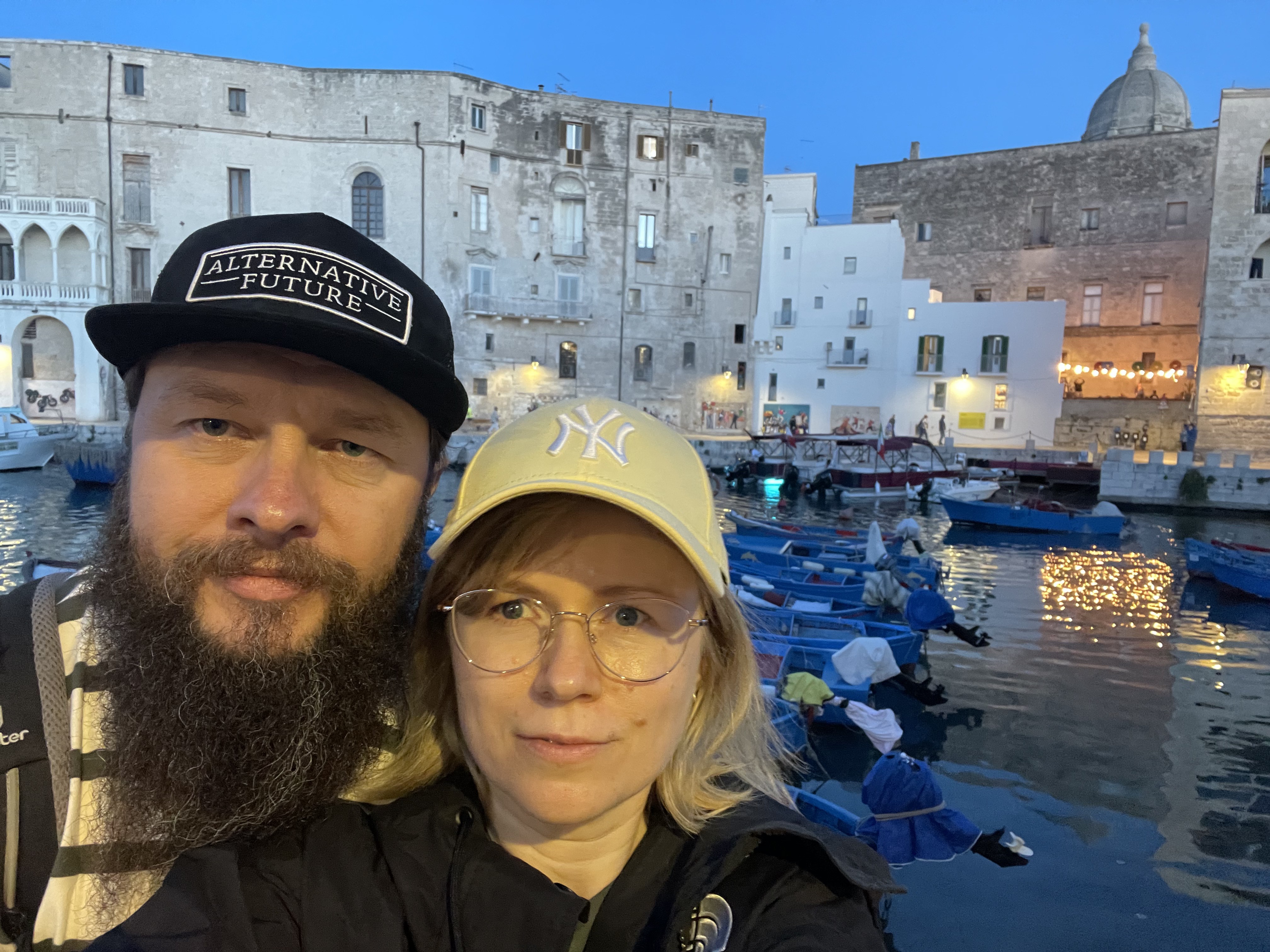
The bus brought us back to Monopoli by evening, and the harbour had its blue hour ready: palazzi in ochre and white, a weathered rowboat named Mimino beached at the water’s edge, lamps along the quay.
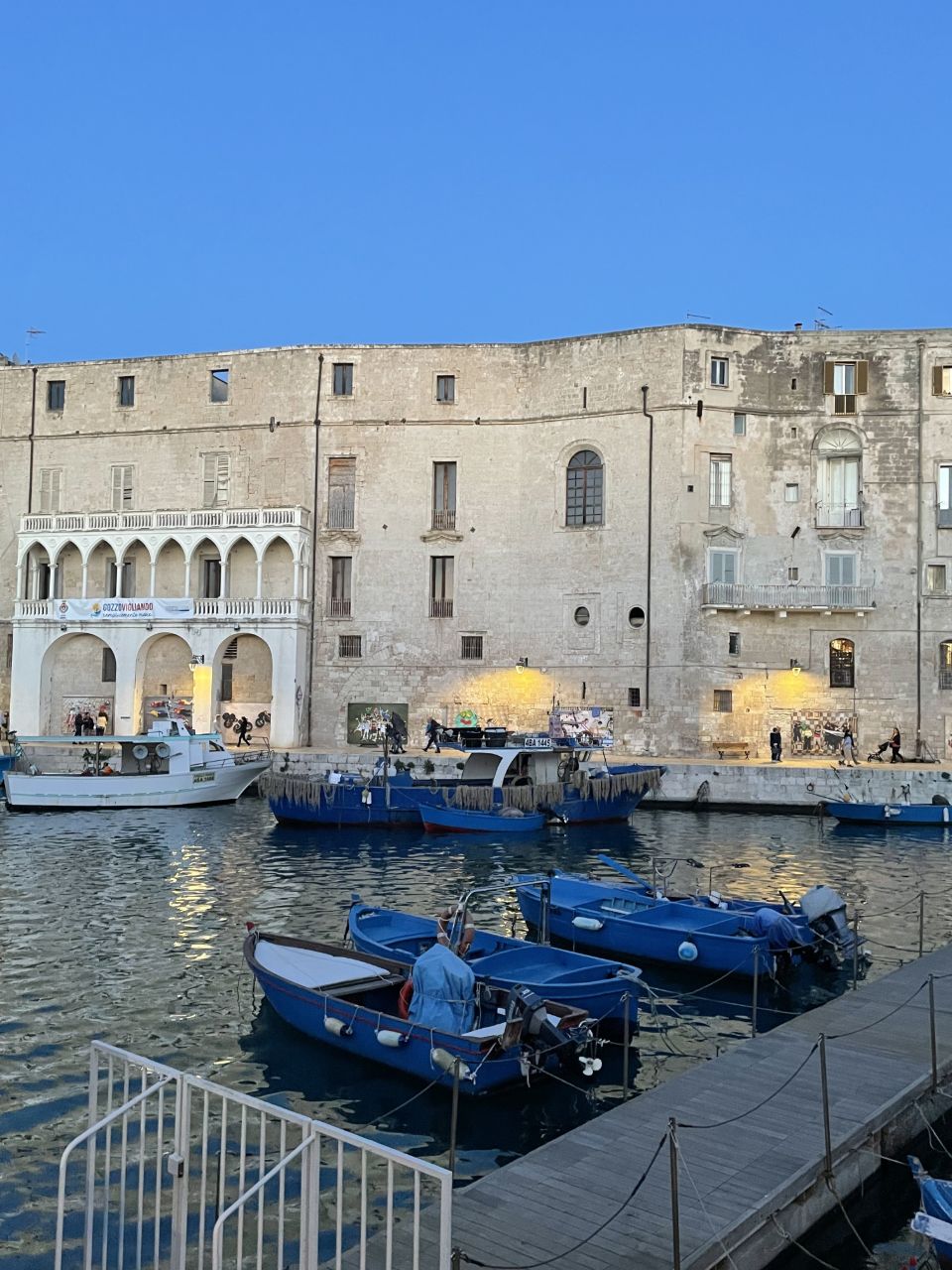
Palazzi at blue hour 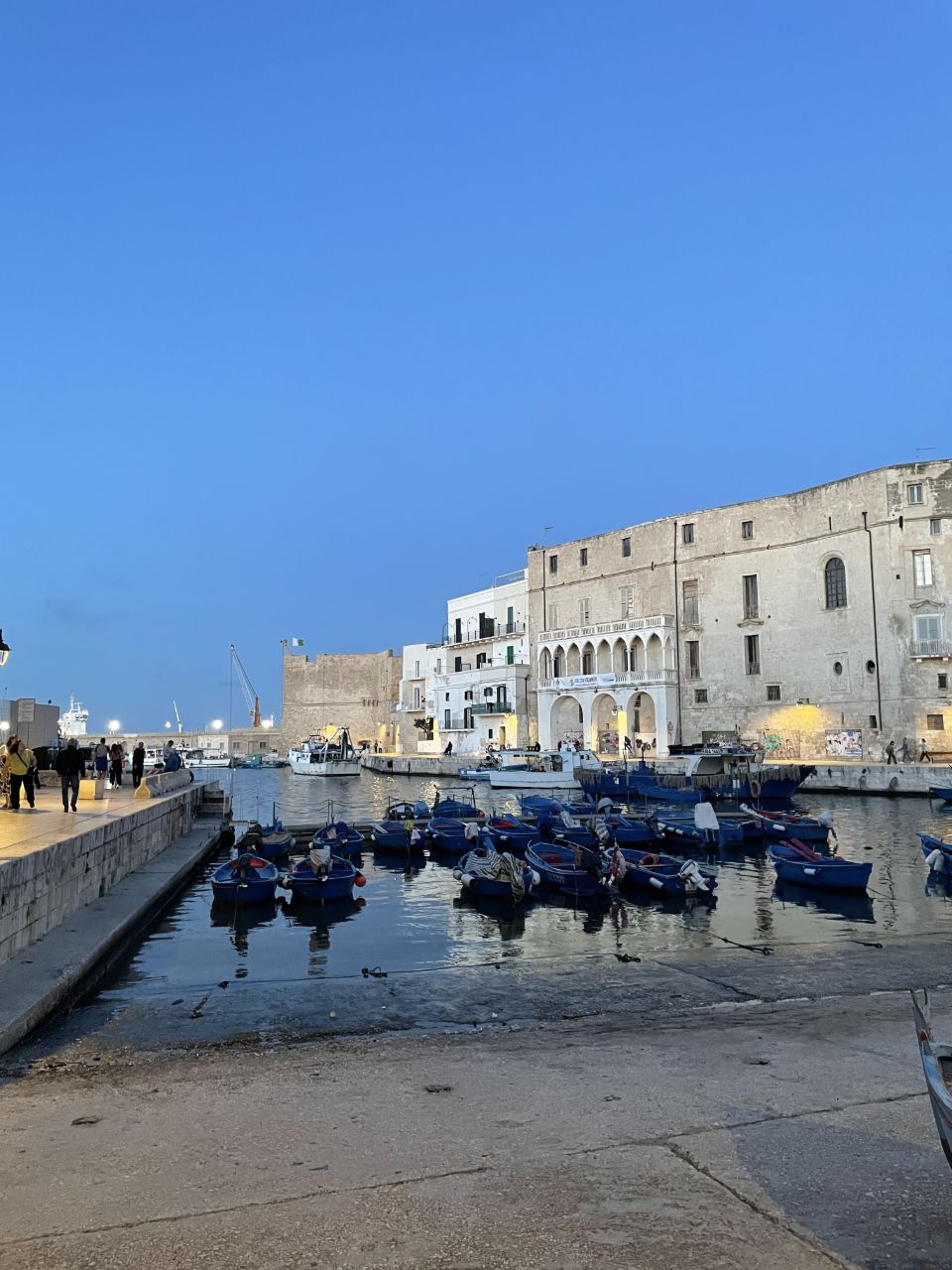
The whole quay, calm 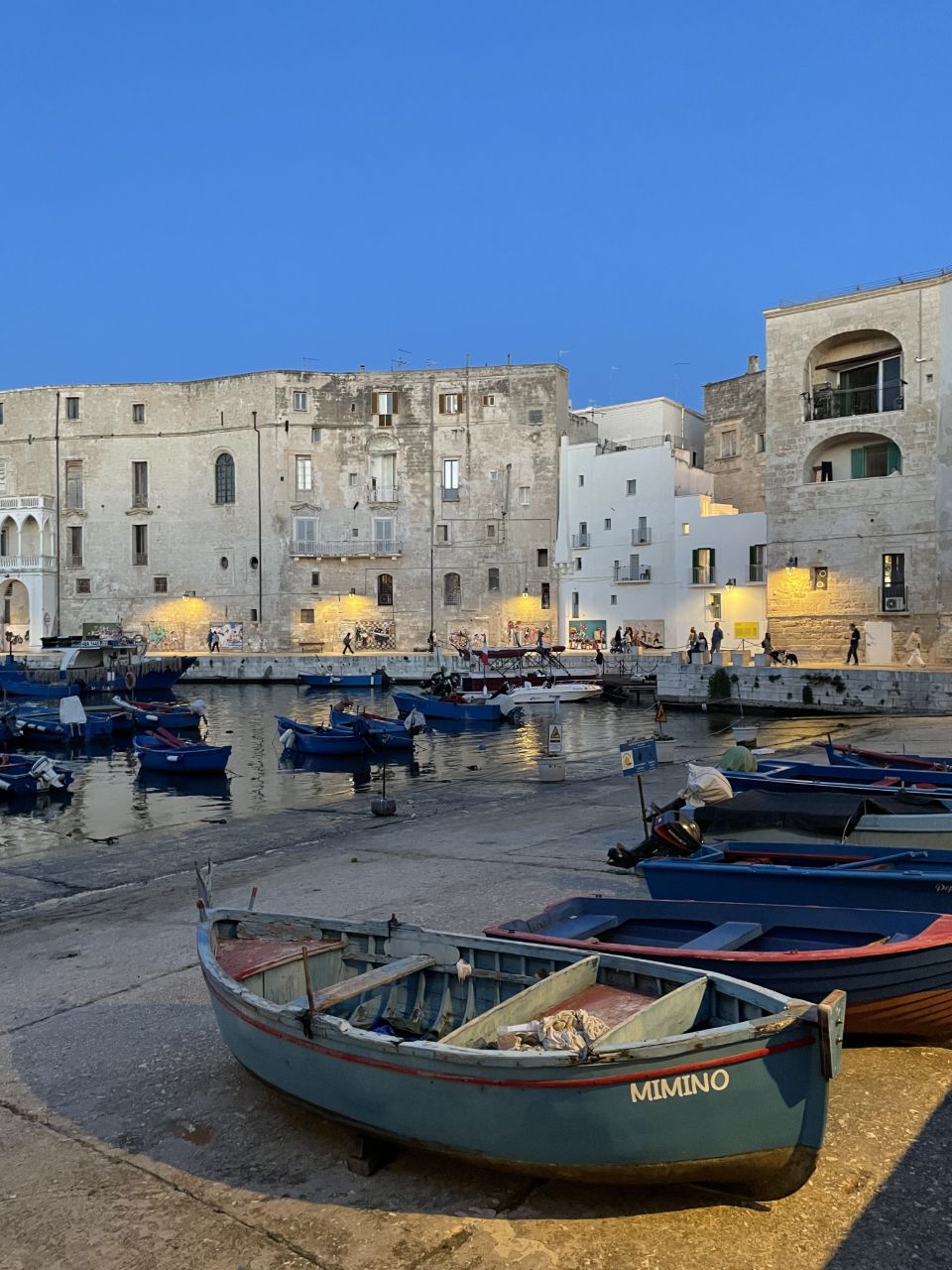
MIMINO, beached at the edge 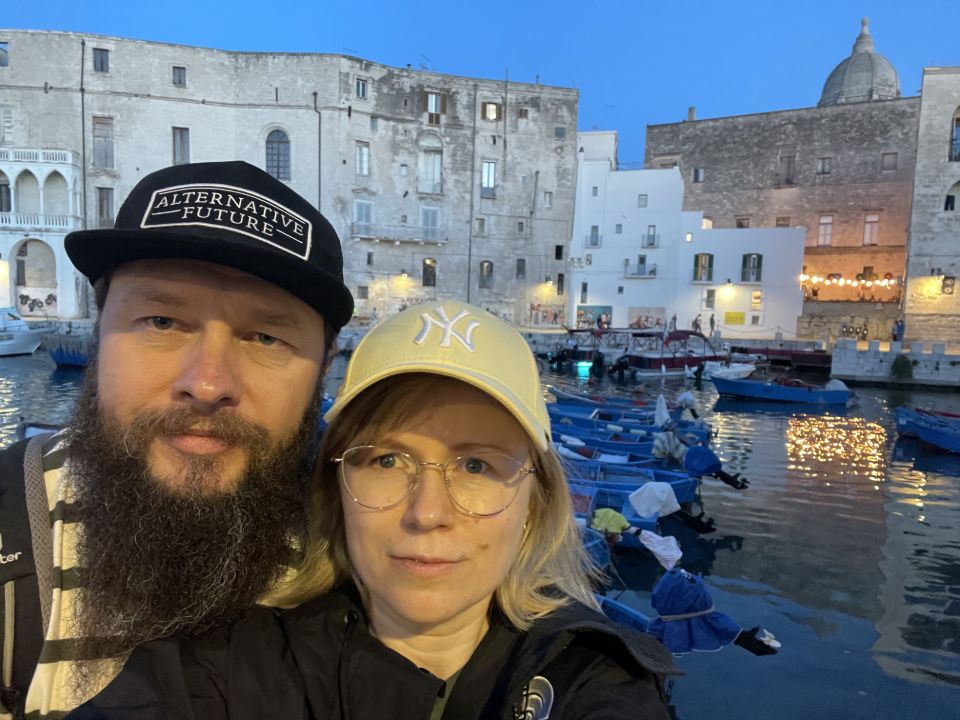
Both of us, at the blue hour
One day, one town, done properly. Tomorrow we’d go on wheels of our own — the bike ride from Monopoli to Savelletri is next.