Puglia trip 2024 — Bari
Eighth of nine posts — the finale. Brindisi was our quiet home base; Bari was the big city that closed the trip: a pink opera house by the harbour, Saint Nicholas asleep under Romanesque stone, a Norman castle, three evenings of golden-lit alleys, a free day with sea and pasta, and a last morning among luxury windows and trains.
Brindisi was our quiet port; Bari, an hour and a half up the coast, was the big-city finale. Bari in three names: the opera house that burned to the frame and came back, the saint in the basilica, and the orecchiette in the streets — Bari Vecchia’s grandmothers shaping the ear-shaped pasta at outdoor tables, as they still do in the old town today.
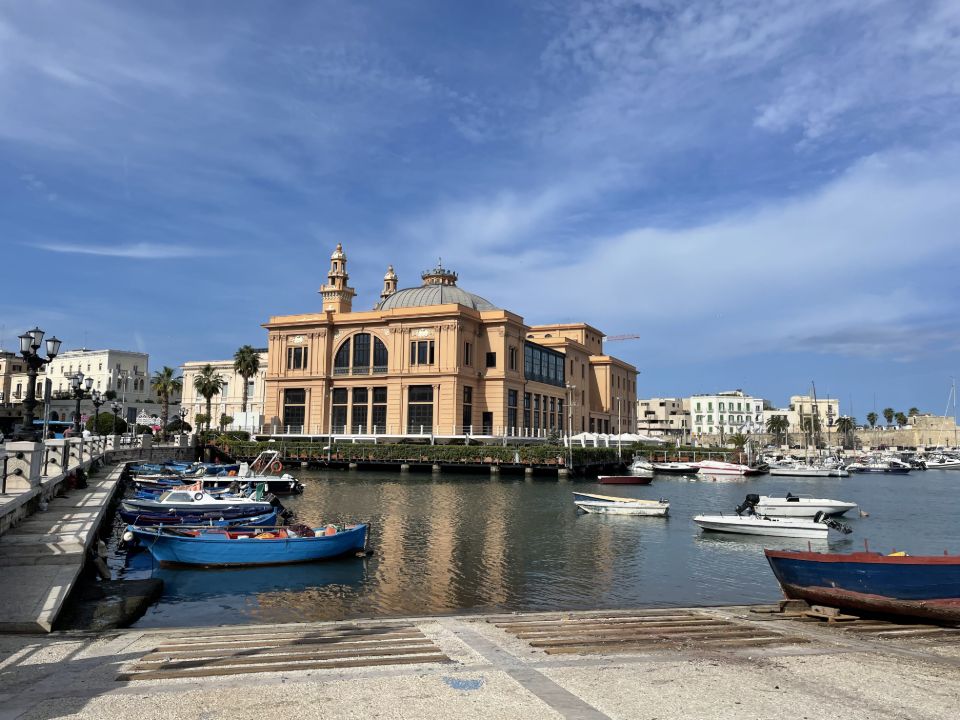
Arrival at the opera house
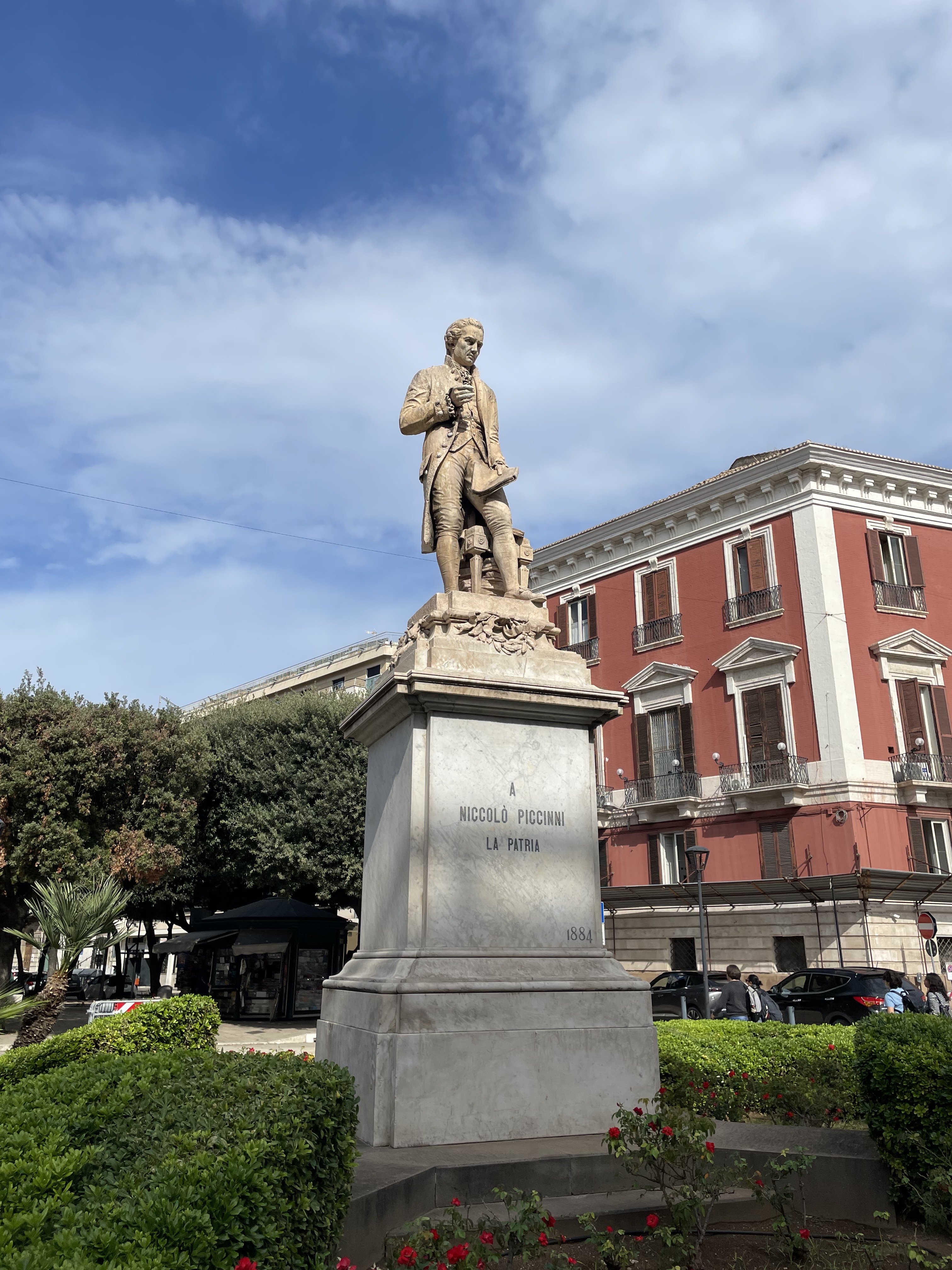
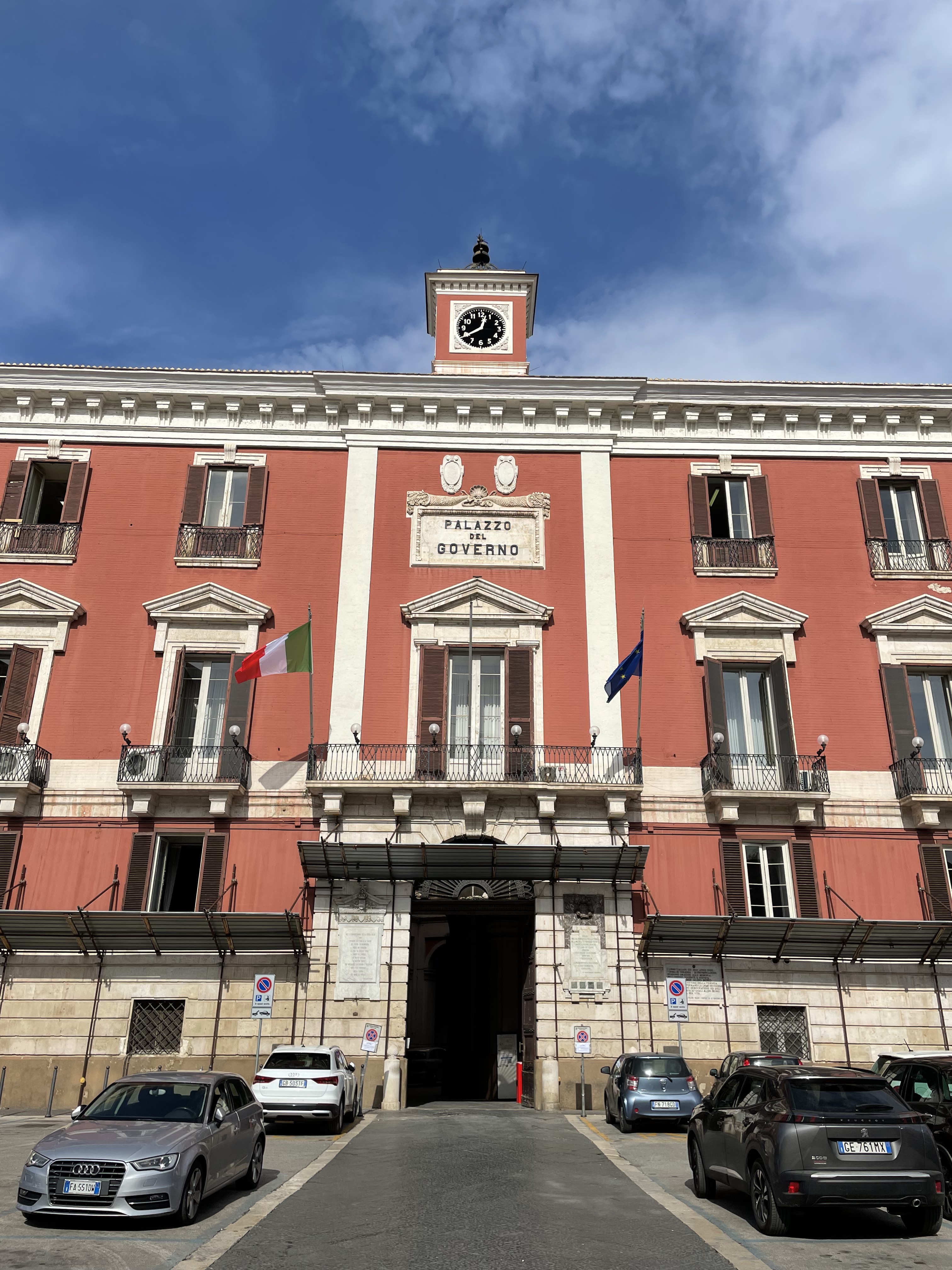
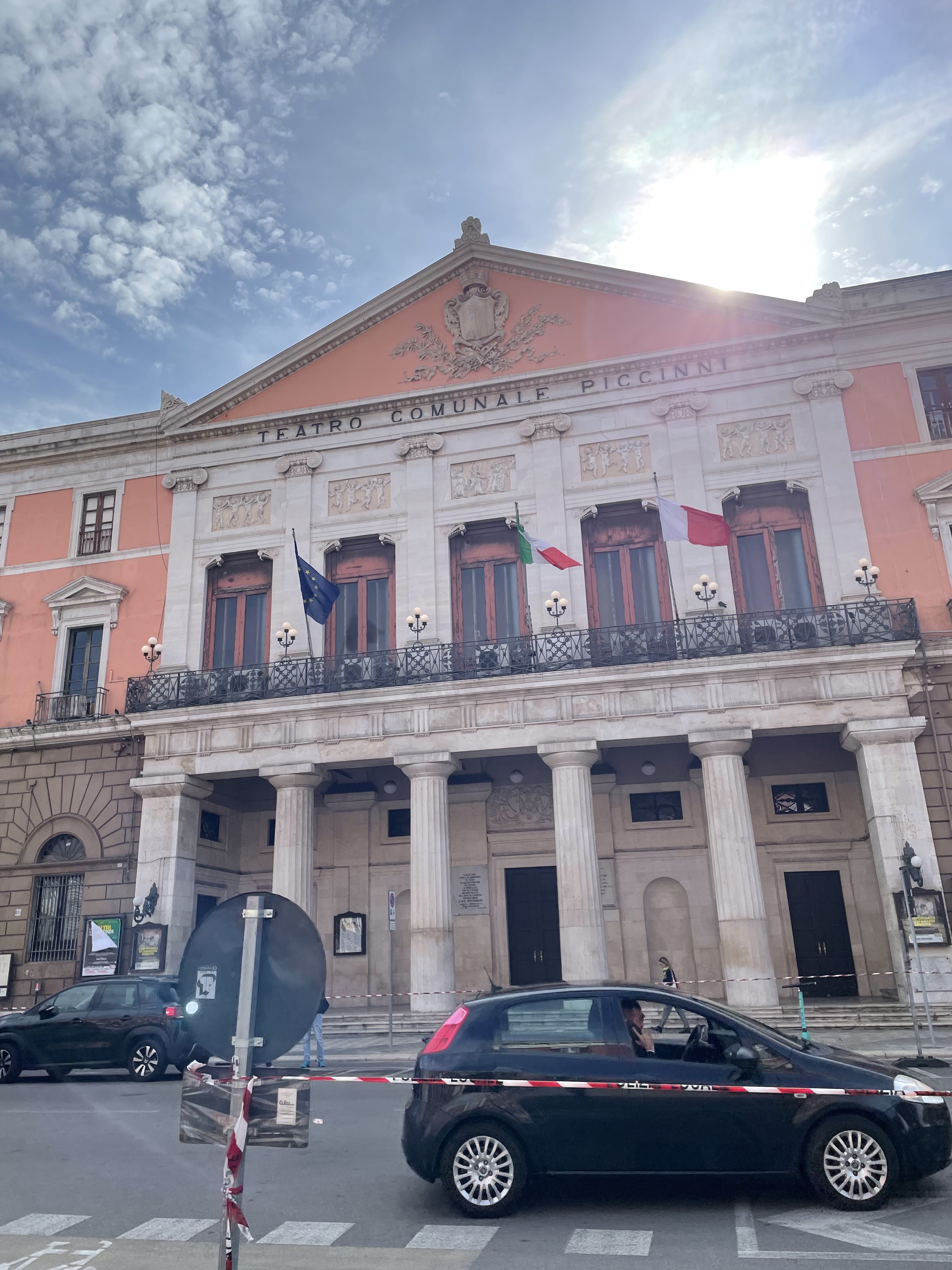
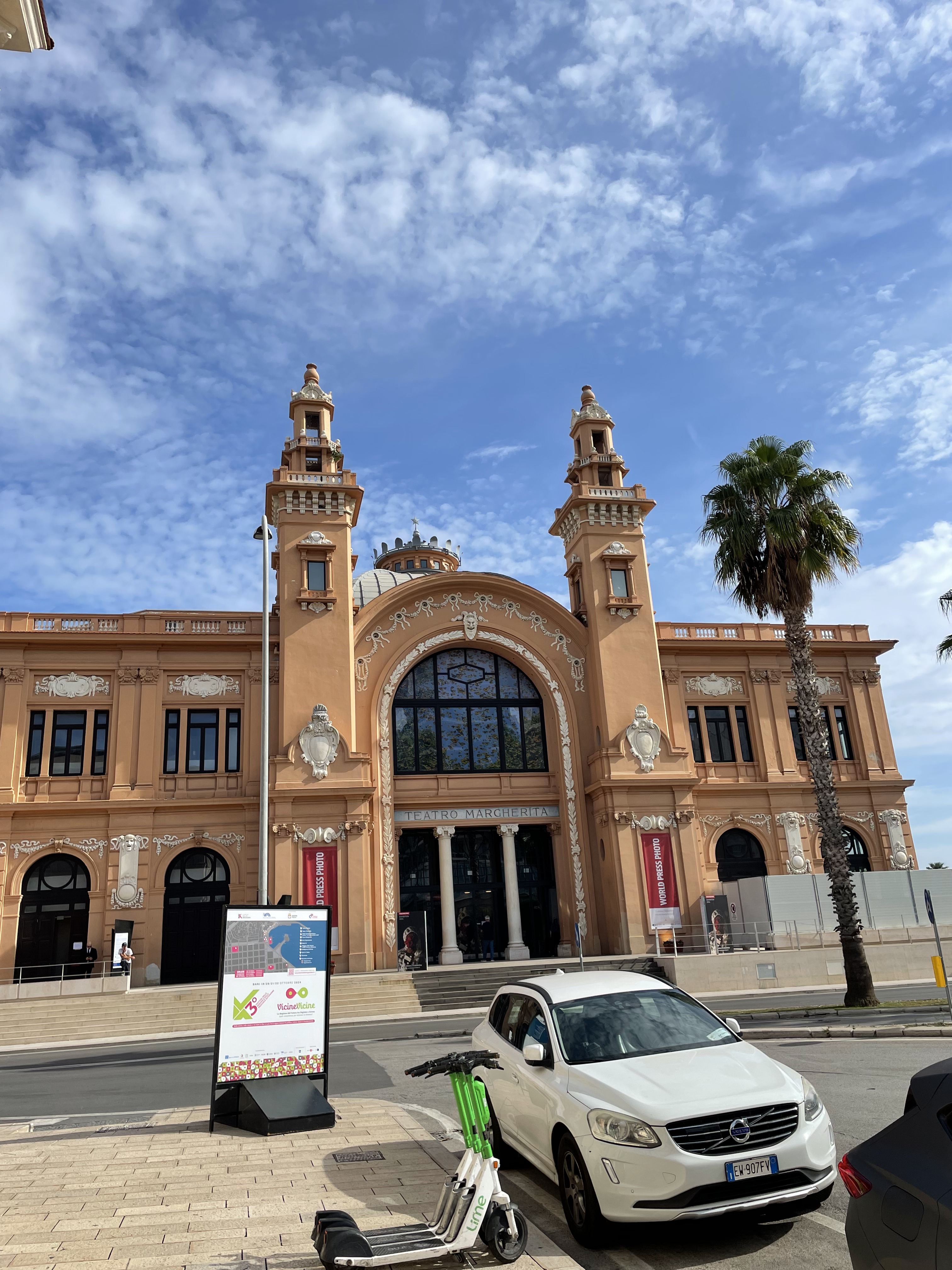
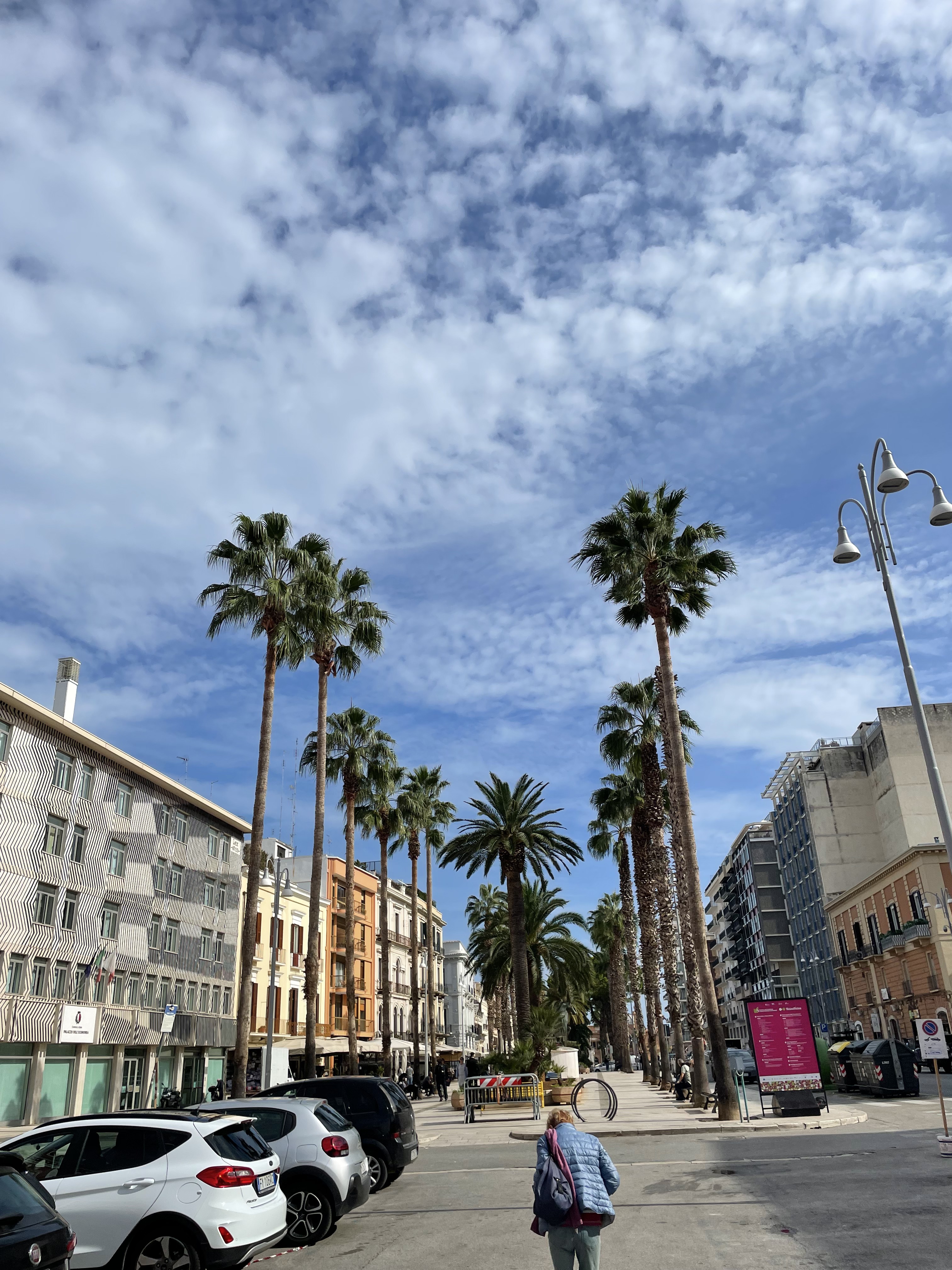
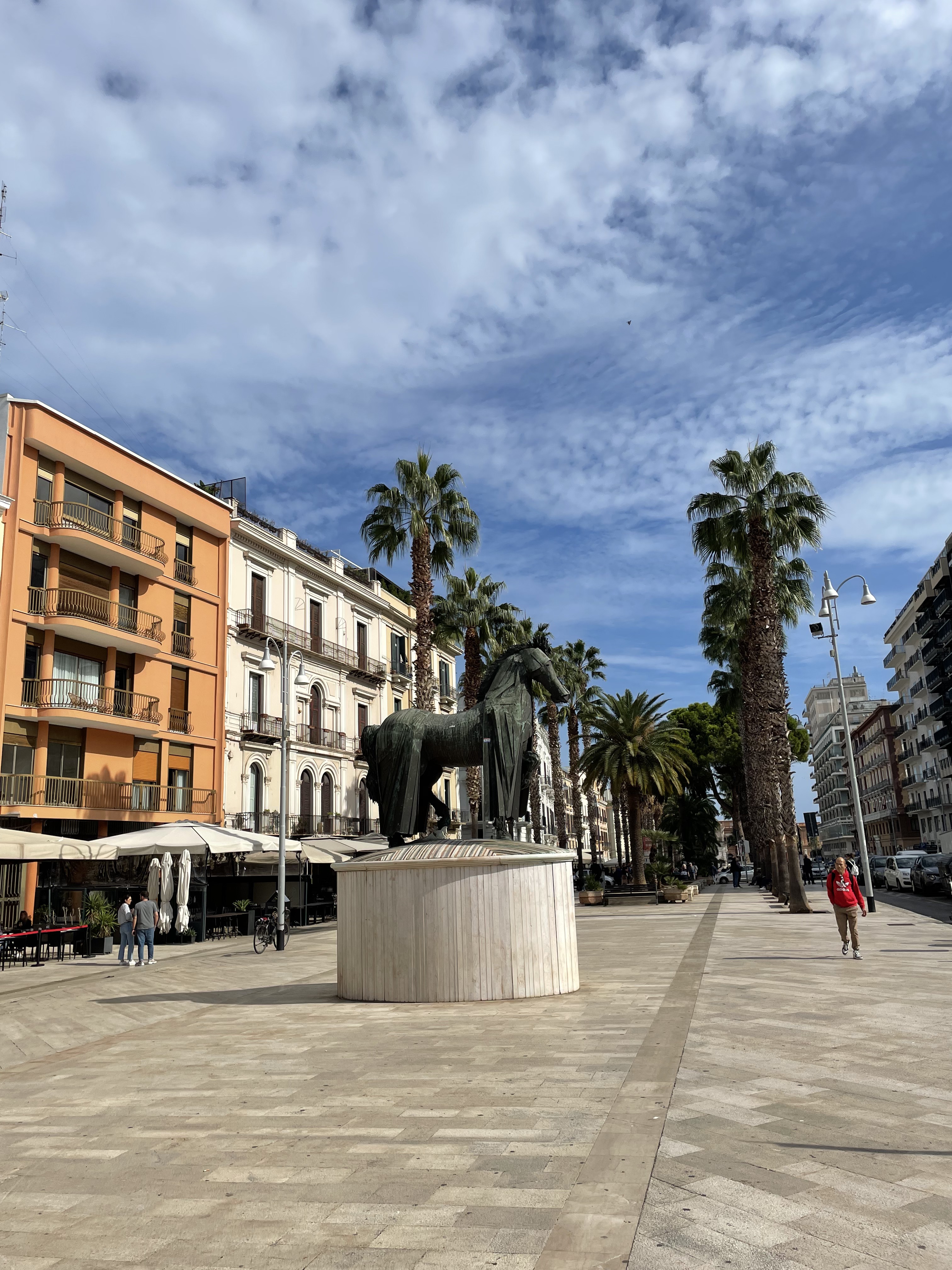
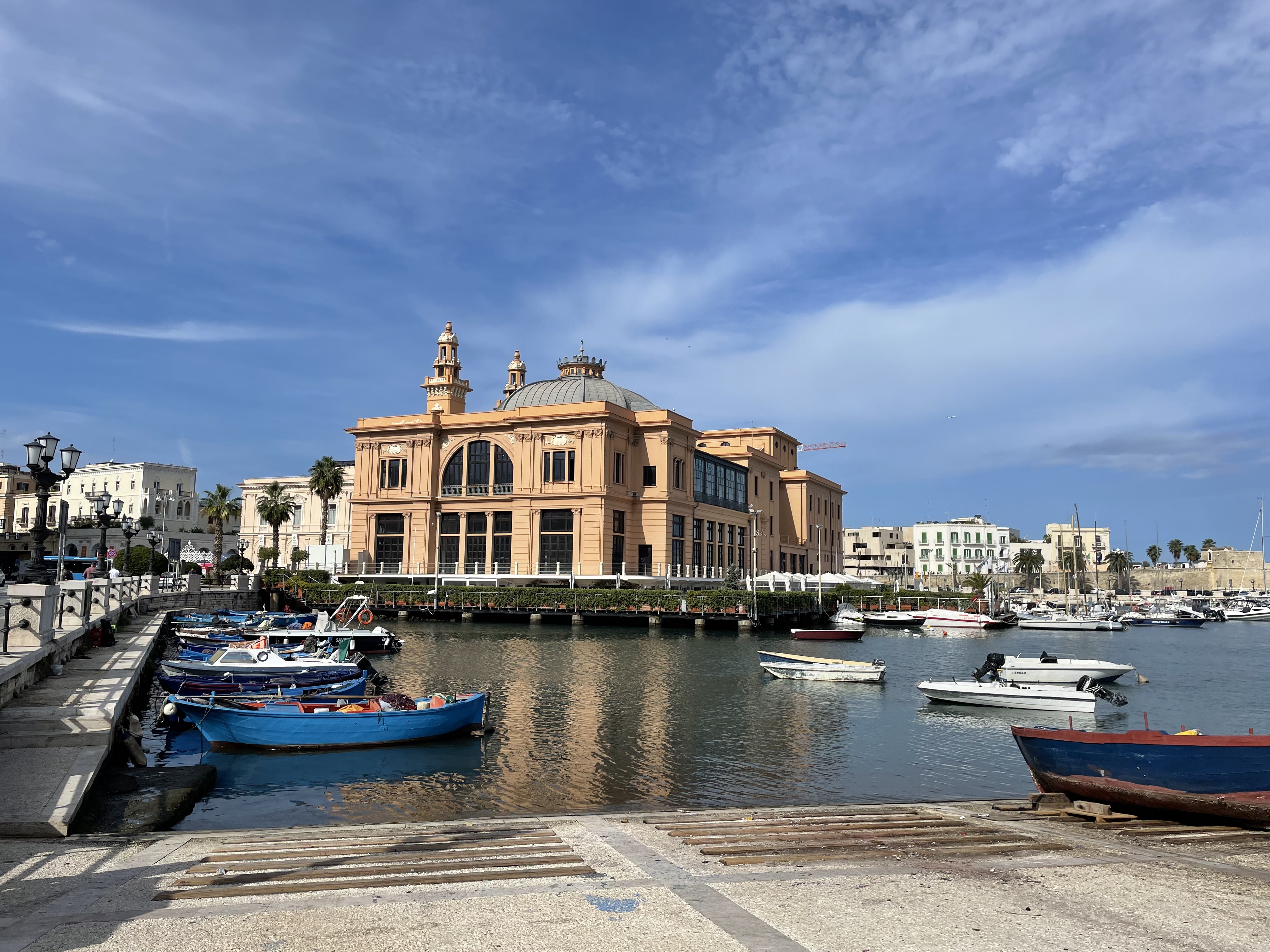
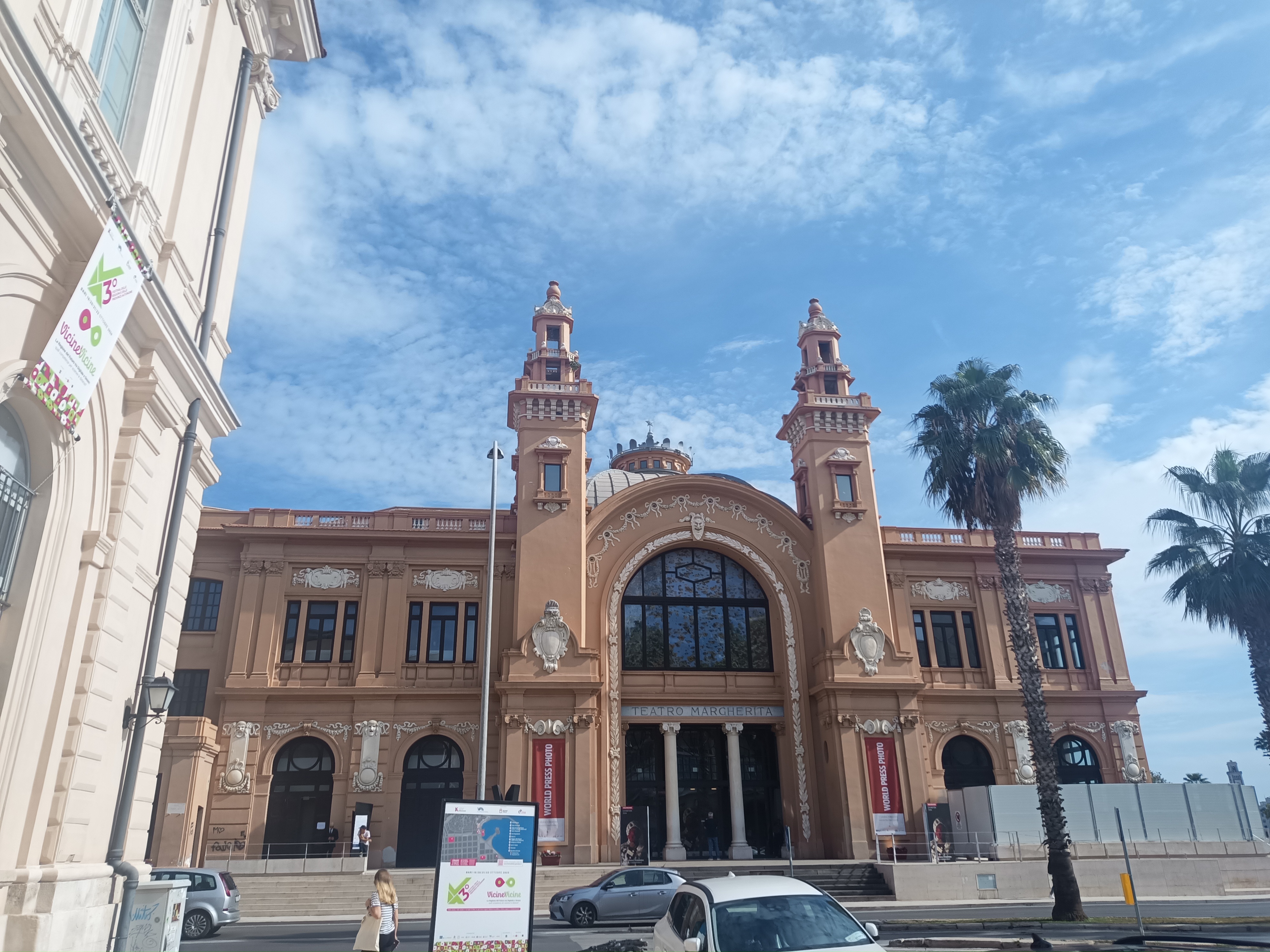
A short train ride from Brindisi, and within the hour we were standing between two theatres: a marble statue of the composer Piccinni on his little garden square, the salmon-red Palazzo del Governo flying both flags, and the great pink bulk of the Teatro Petruzzelli — once the fourth-largest theatre in Italy, burned to the frame in 1991 and rebuilt; the fishermen’s boats sat moored in its shadow. The seafront boulevard runs palm-lined past a dark bronze horse caught mid-gallop.
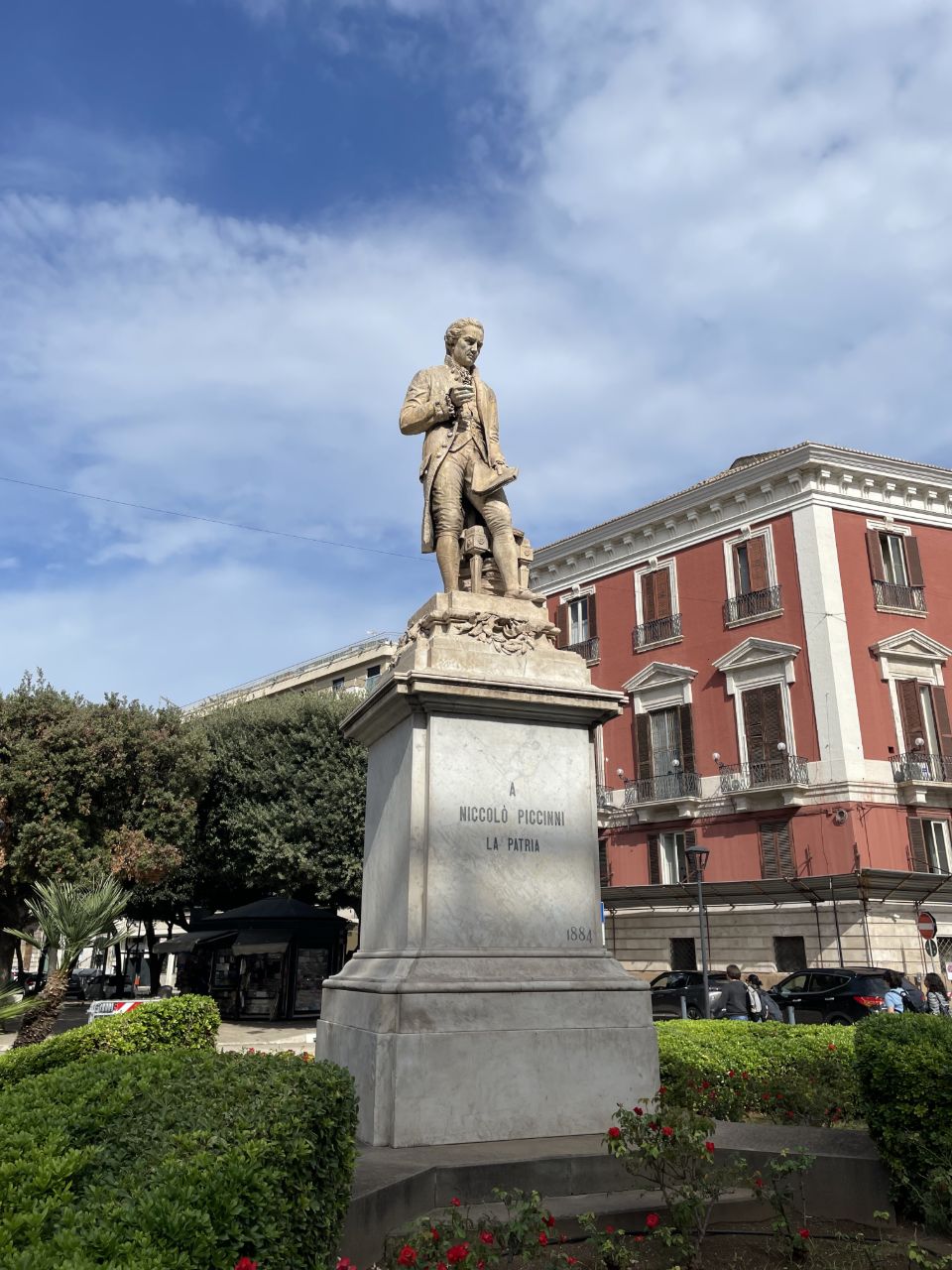
Piccinni on his square 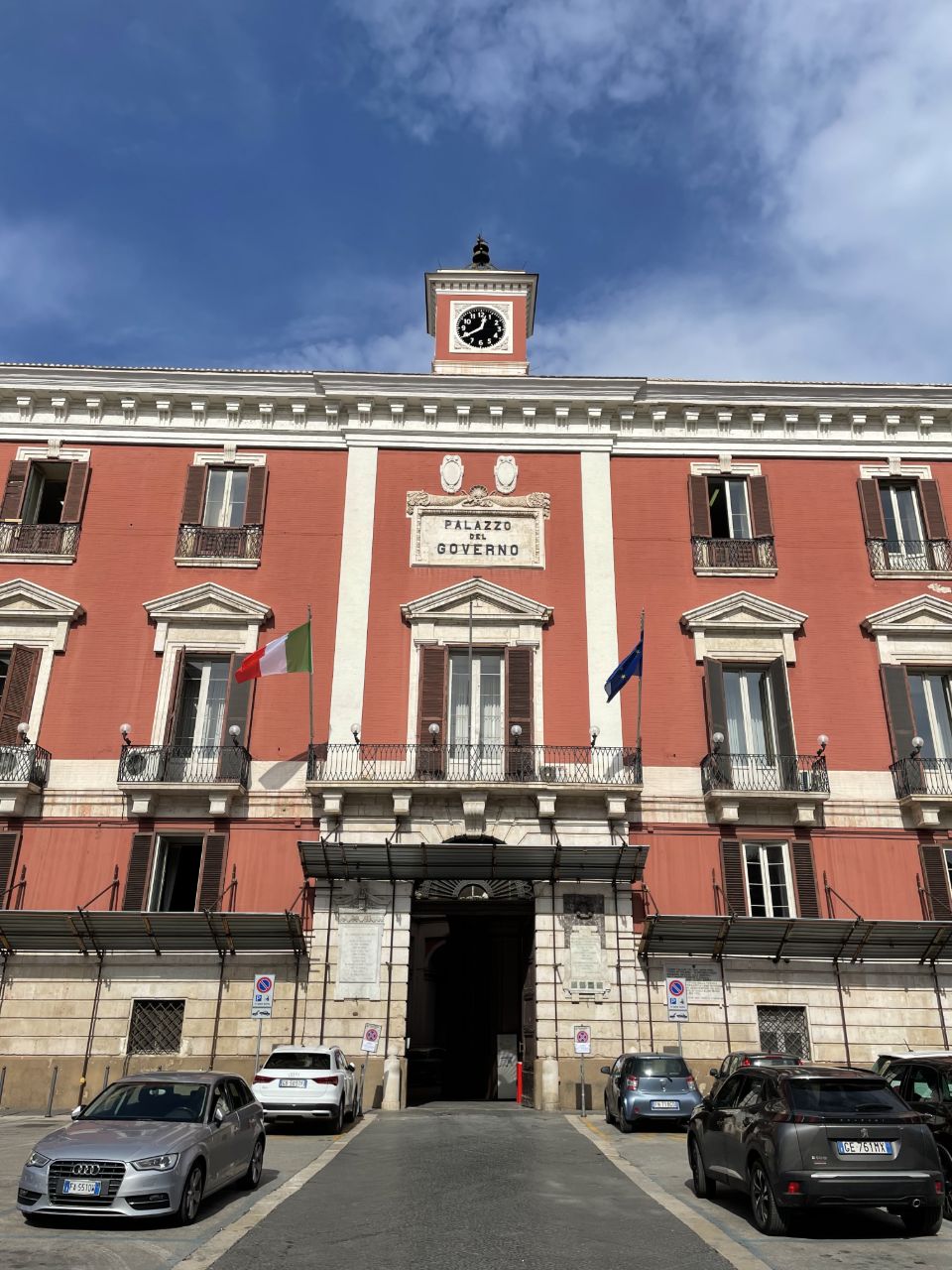
The red government palace 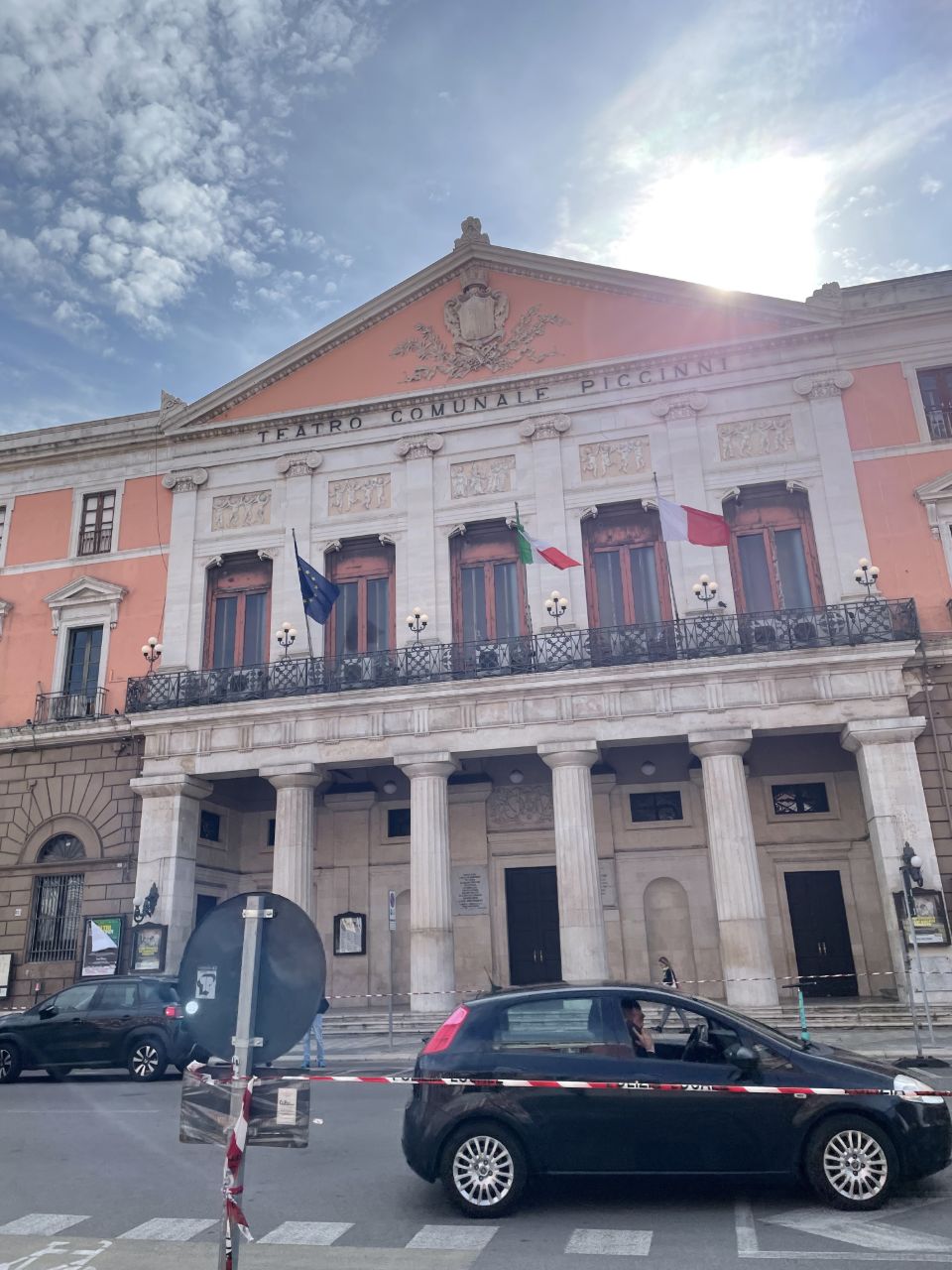
Teatro Petruzzelli, first sight 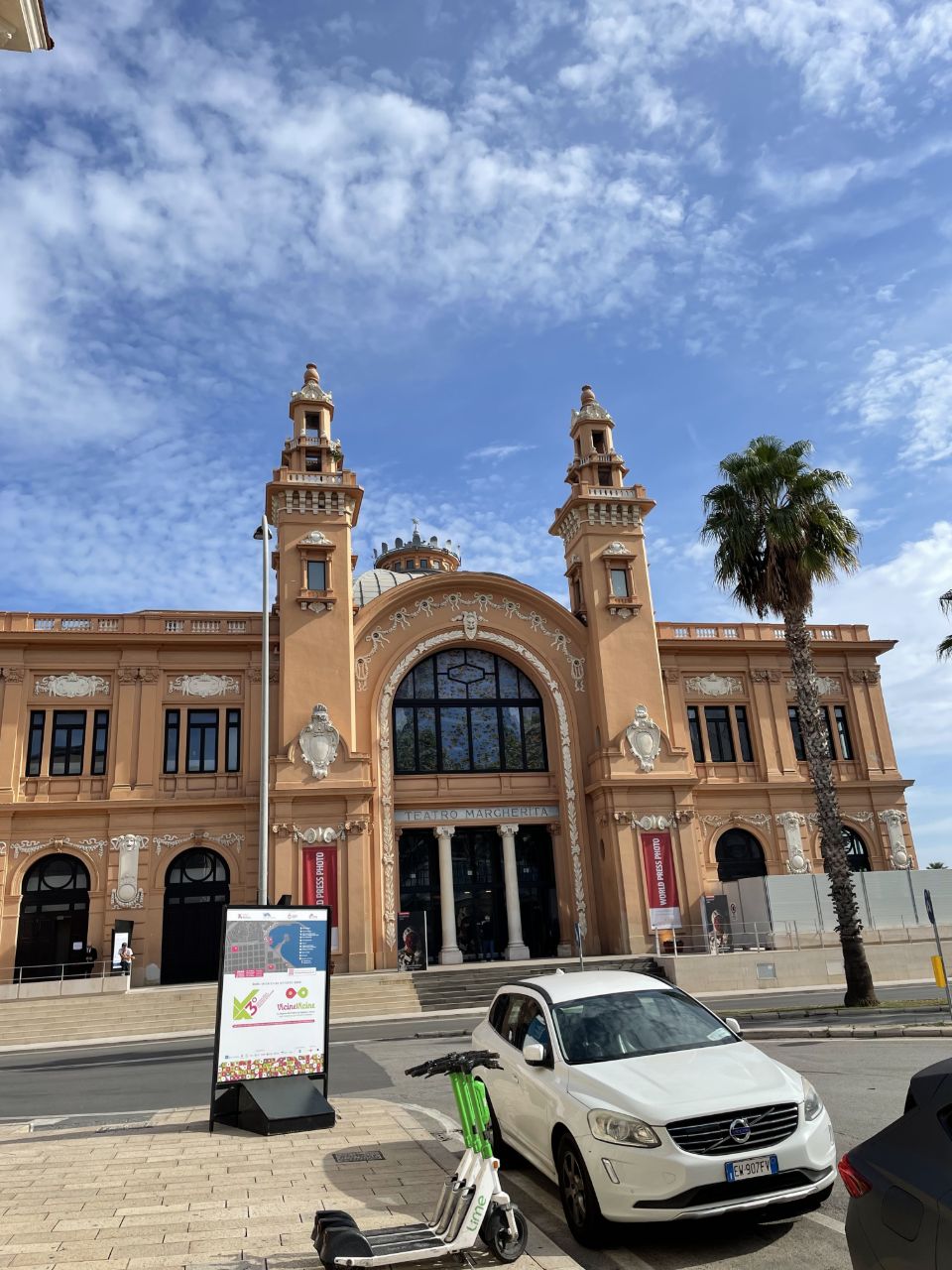
Pink and ornate 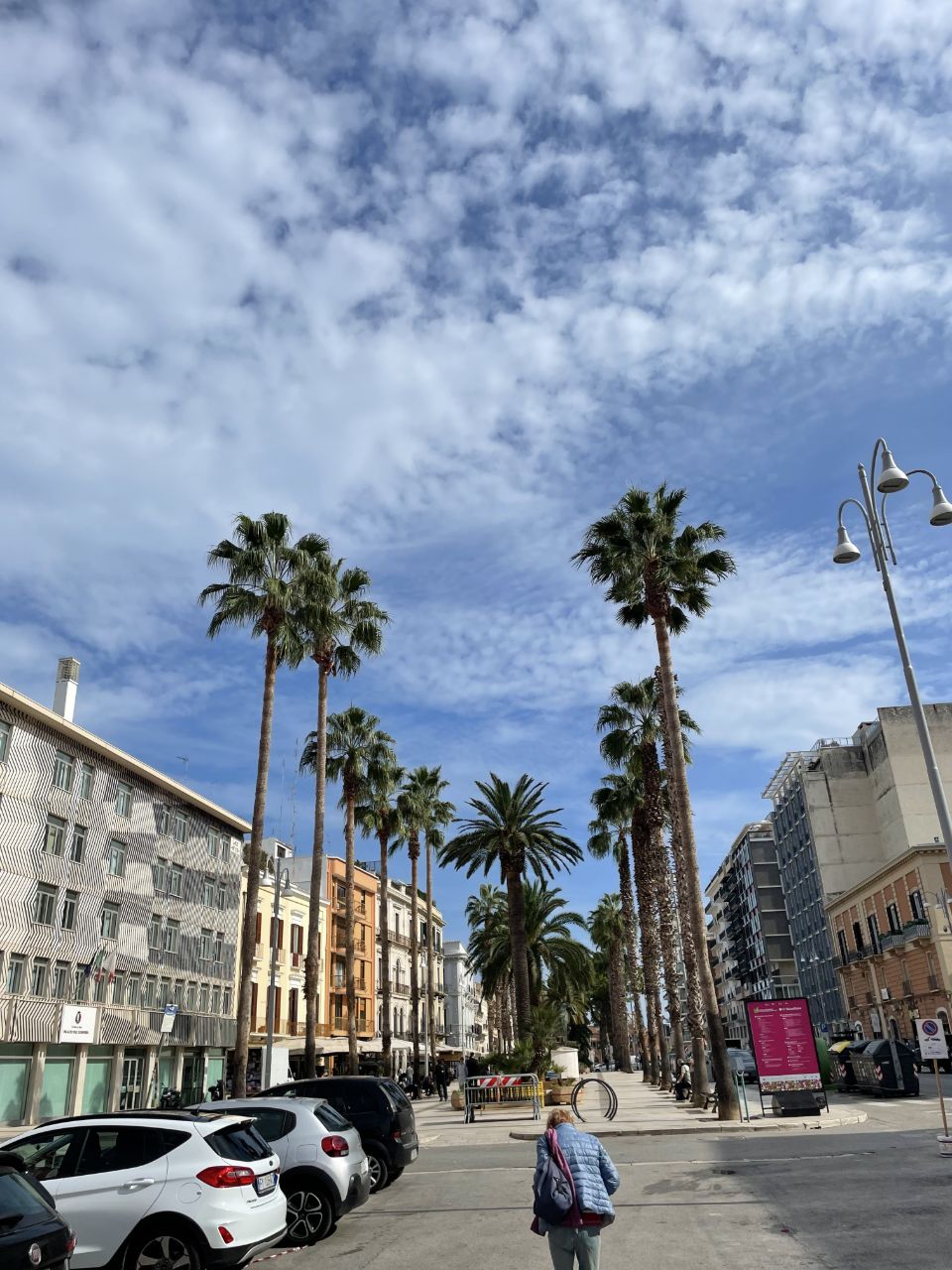
Palm-lined boulevard 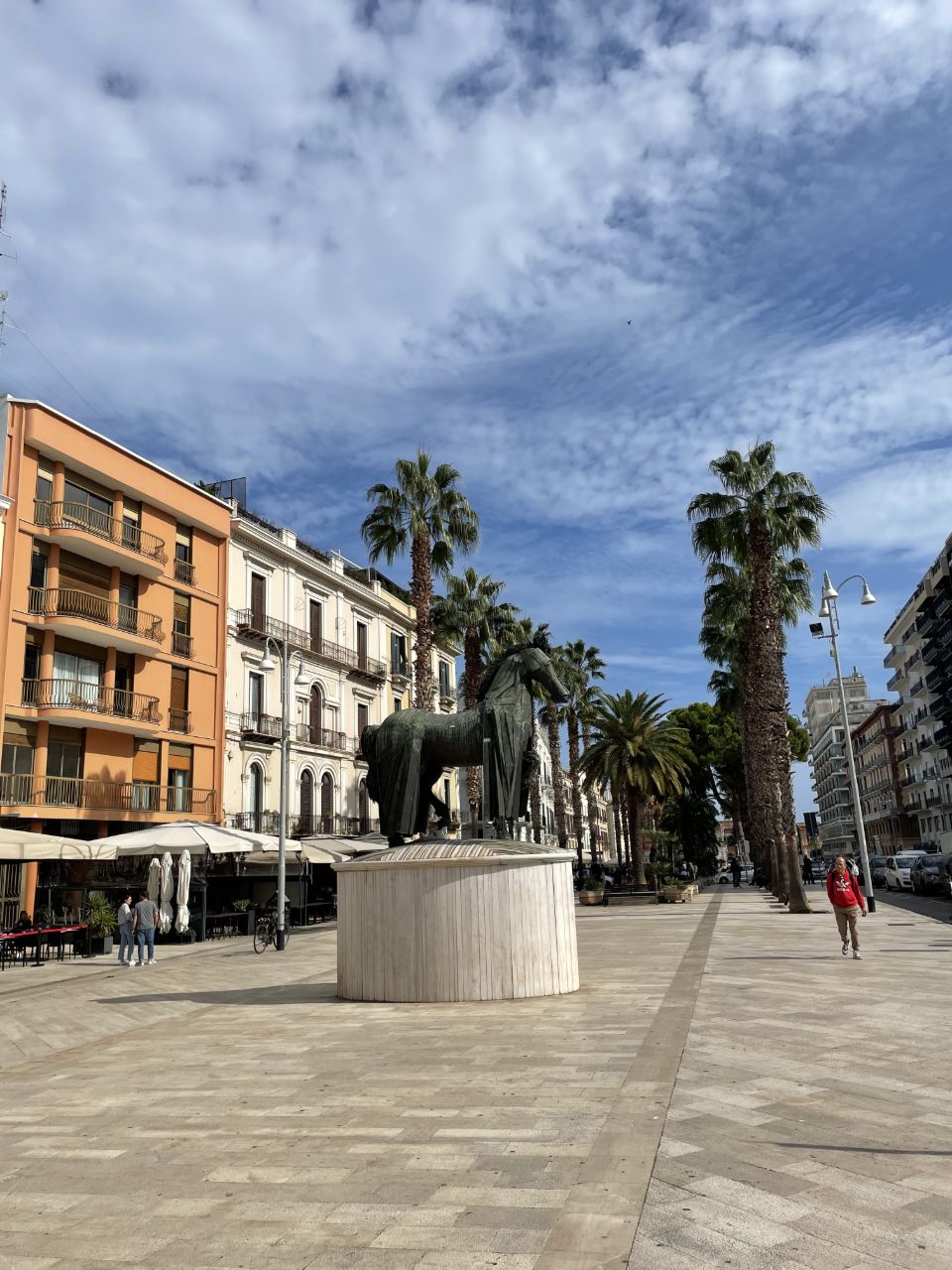
The bronze horse
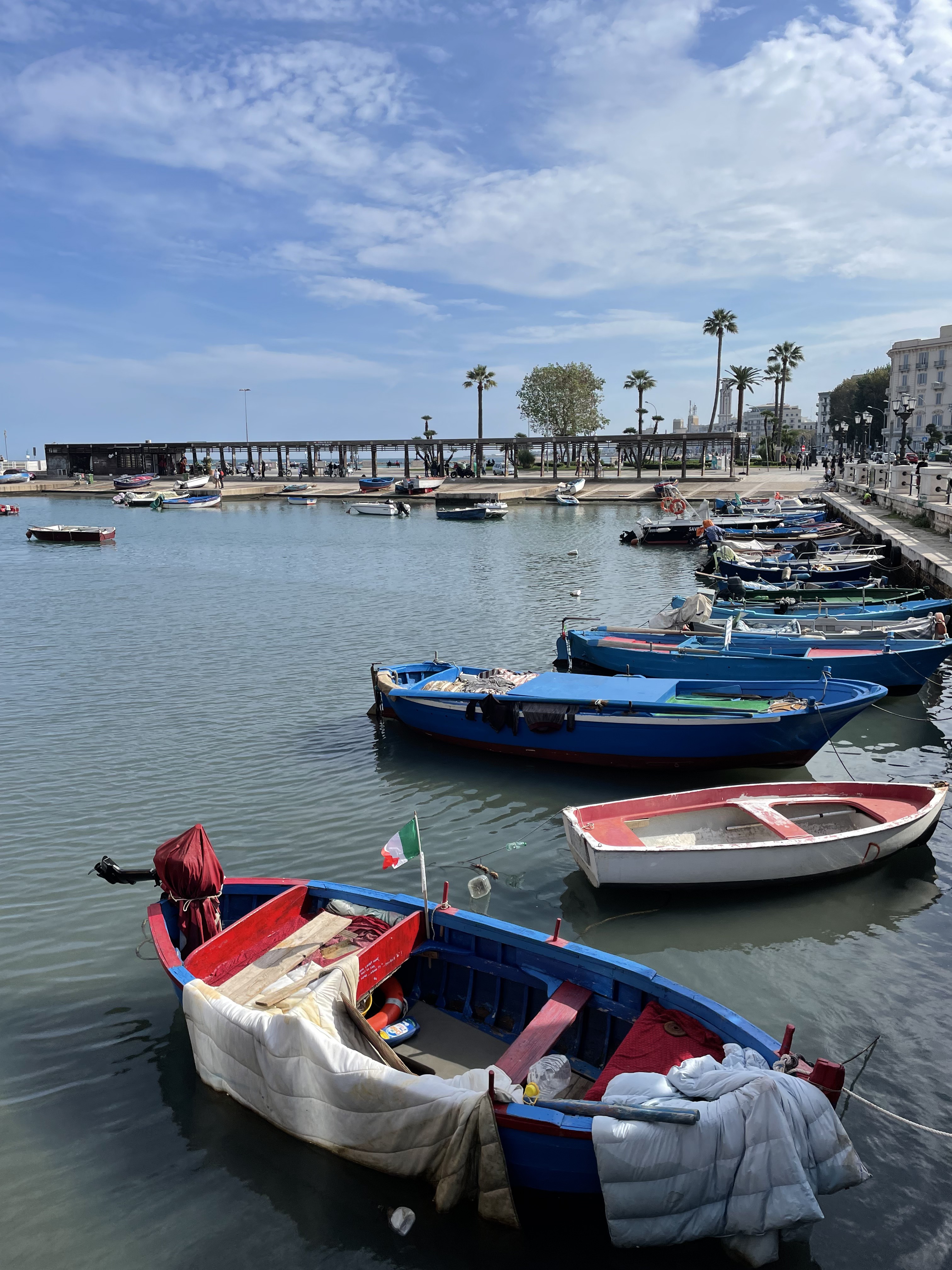
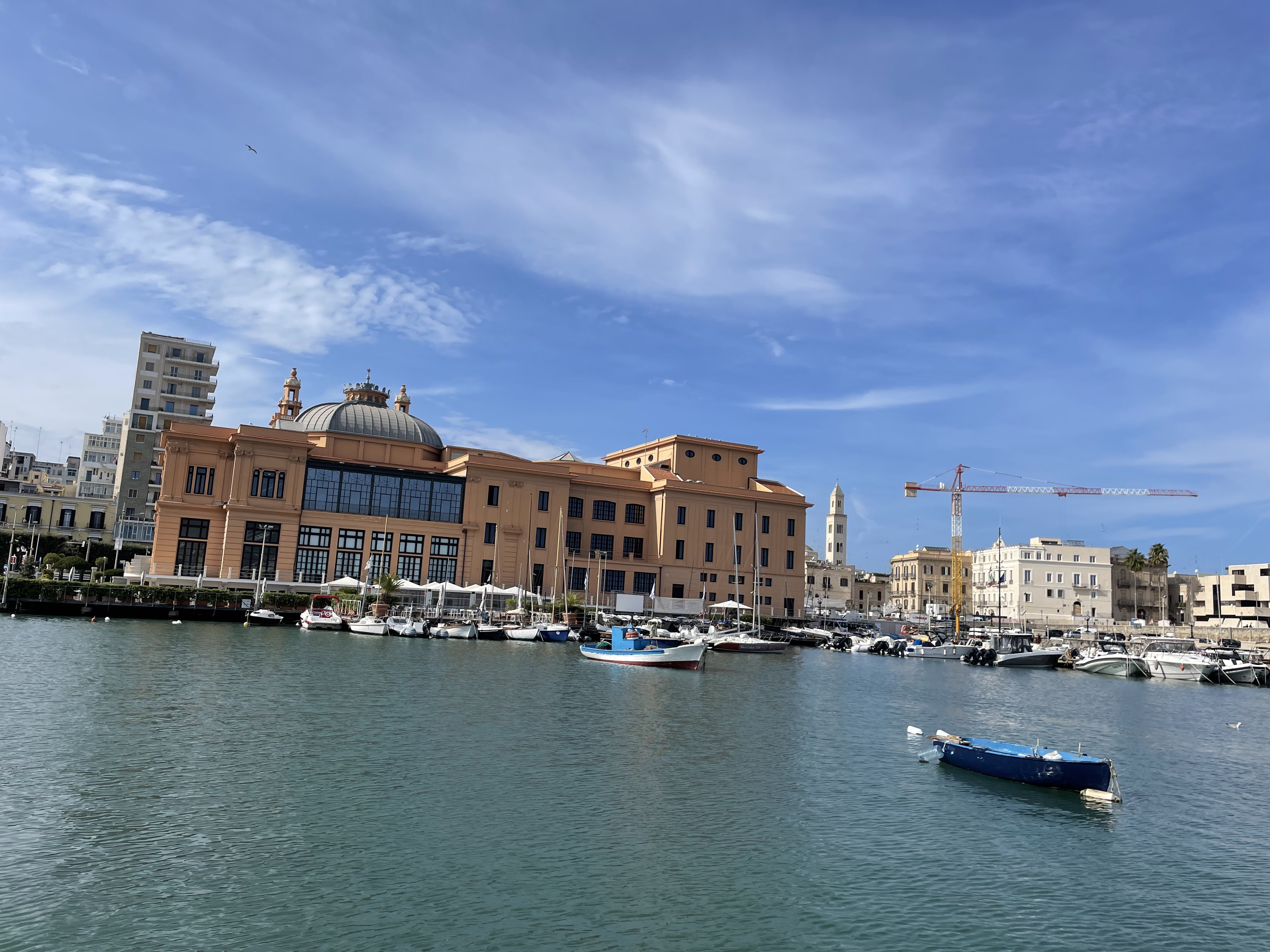
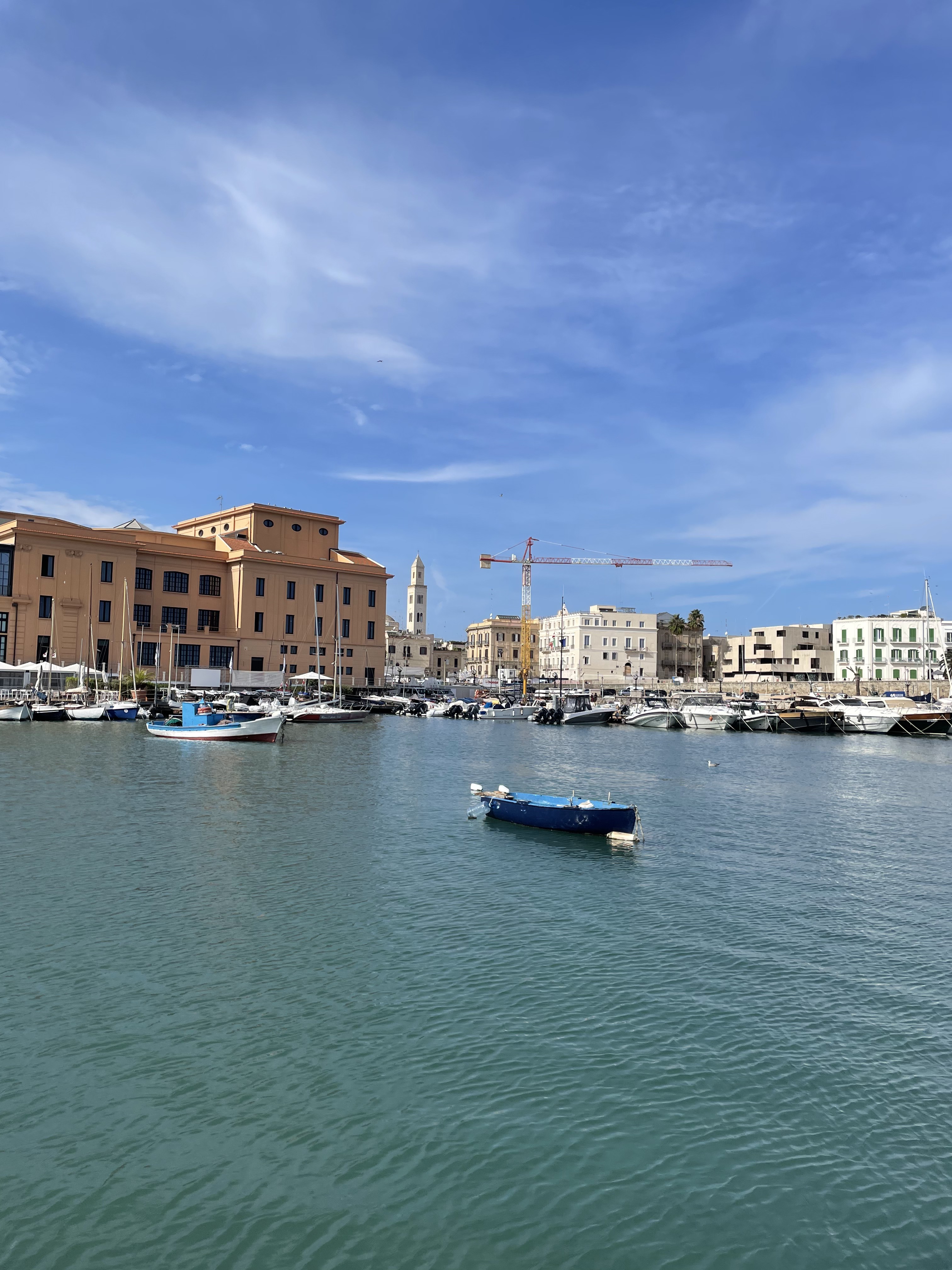
The old port
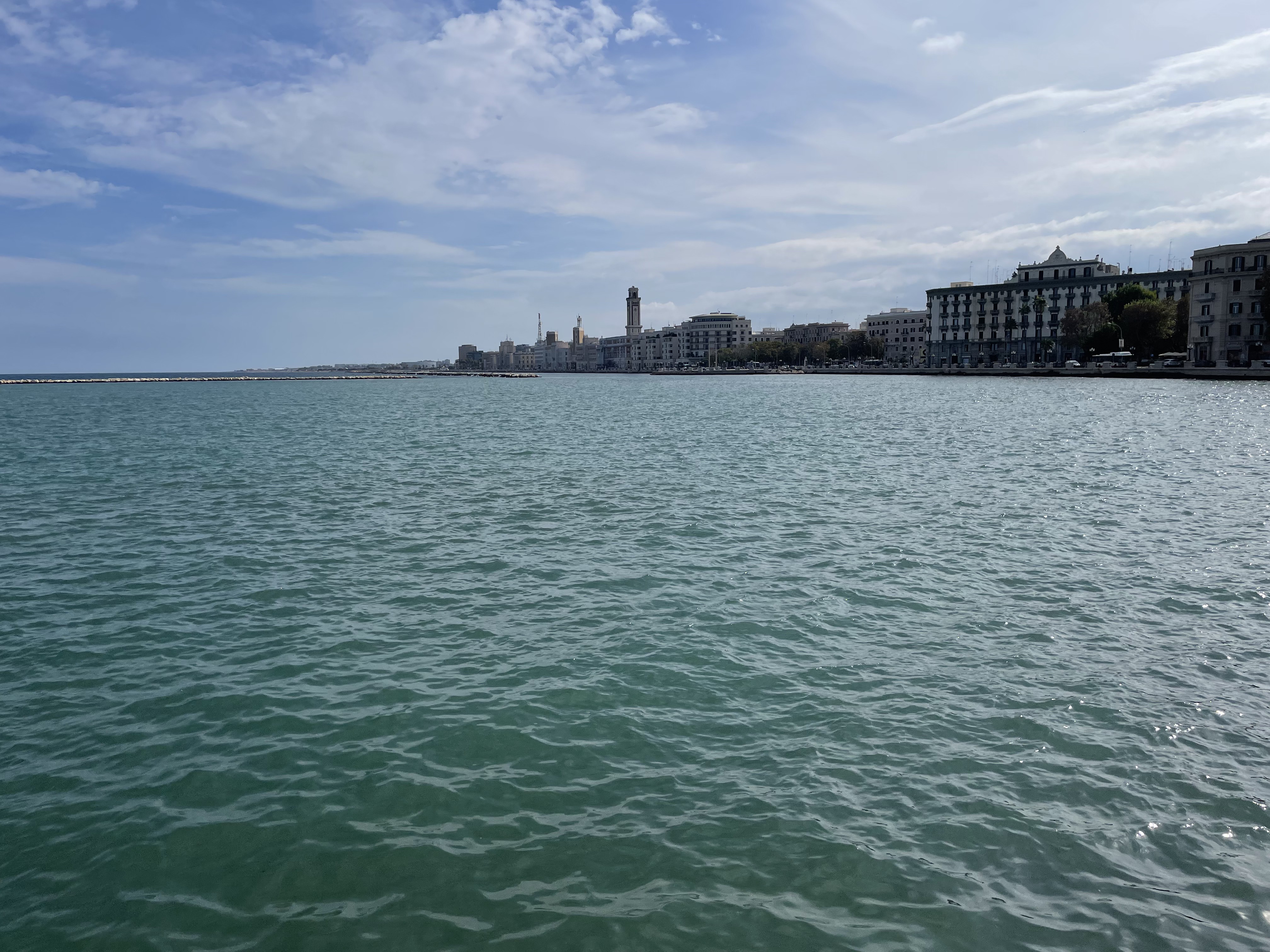
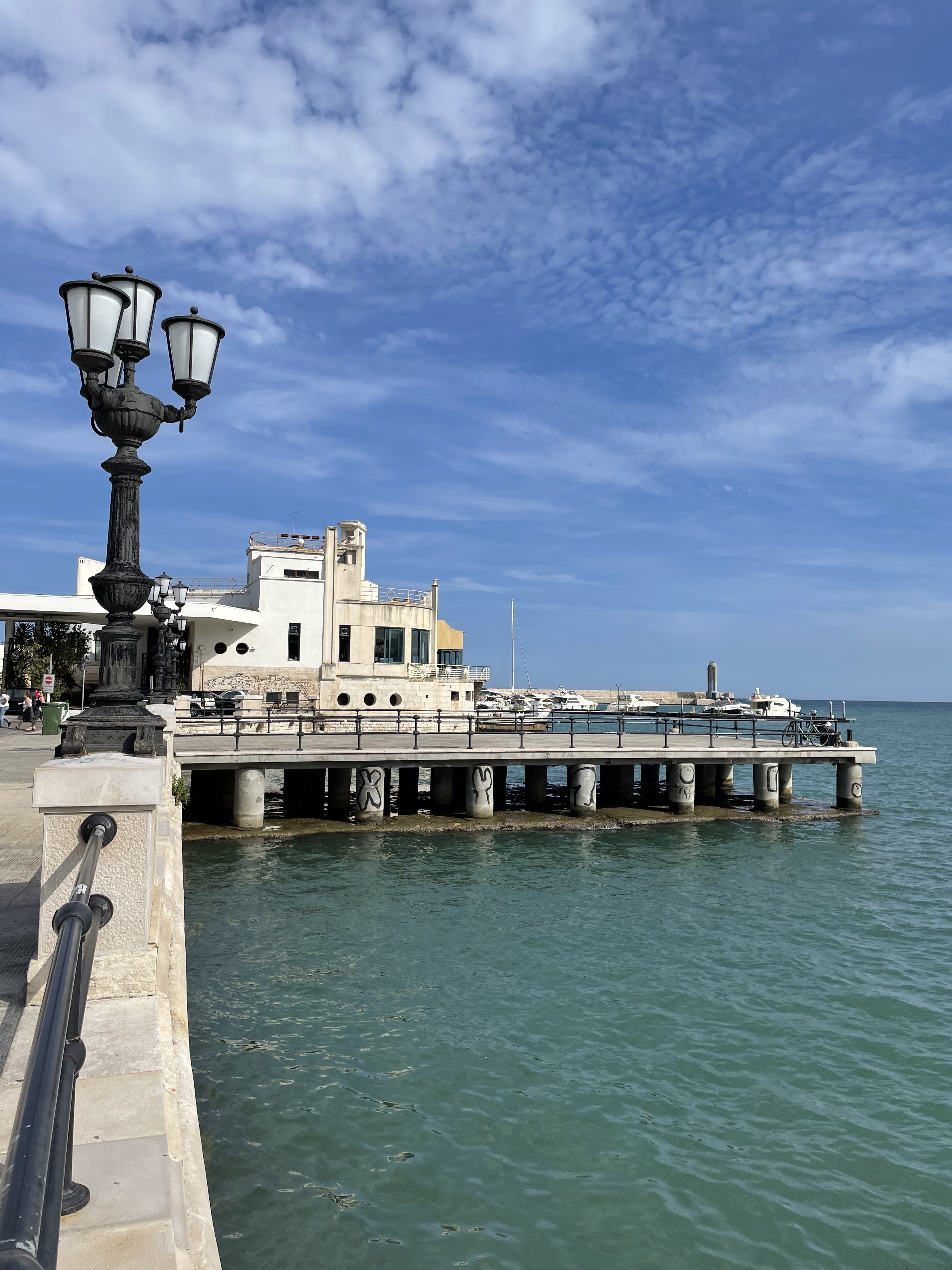
The old port: a canal of small boats in serious blue fishing paint, the pink theatre across the water, a clock-towered palazzo with an open loggia, and the open sea beyond the breakwater. We walked the piers photographing the moored boats.
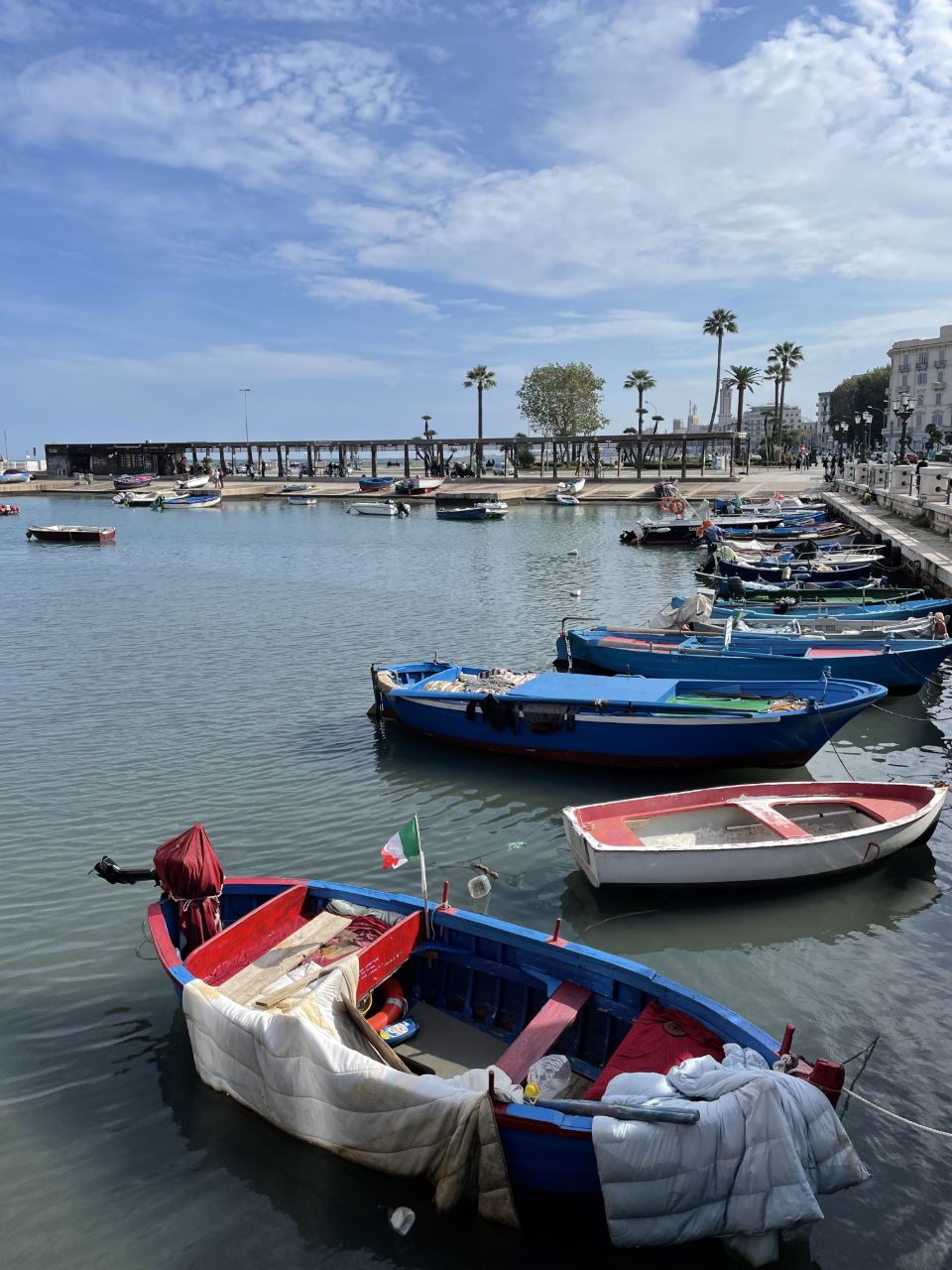
Fishing boats and a flag Port, theatre, sea 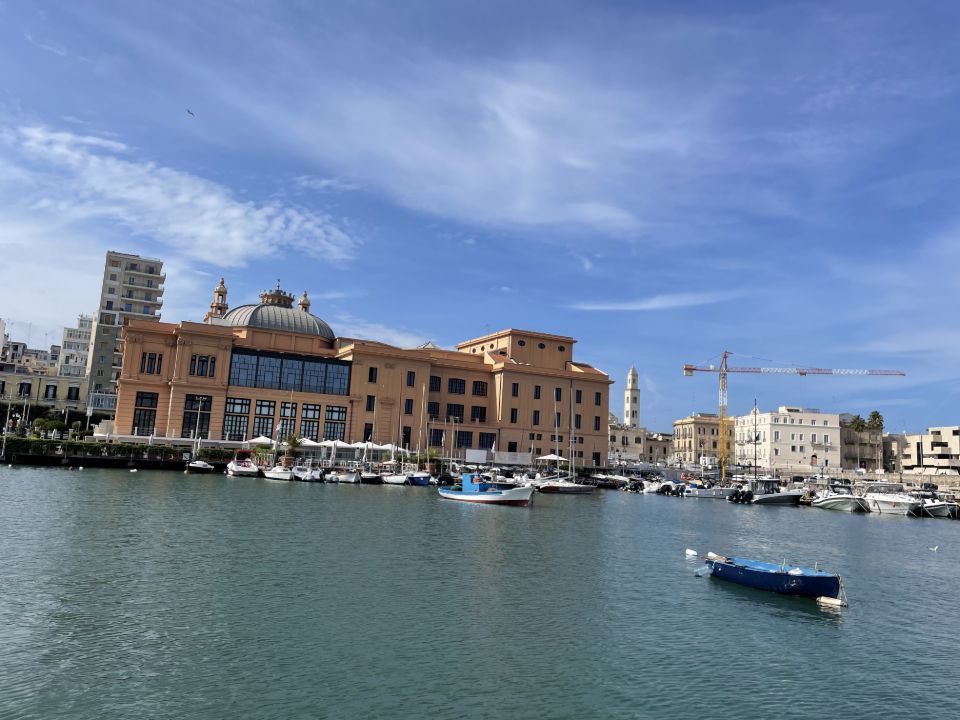
Panorama over the piers 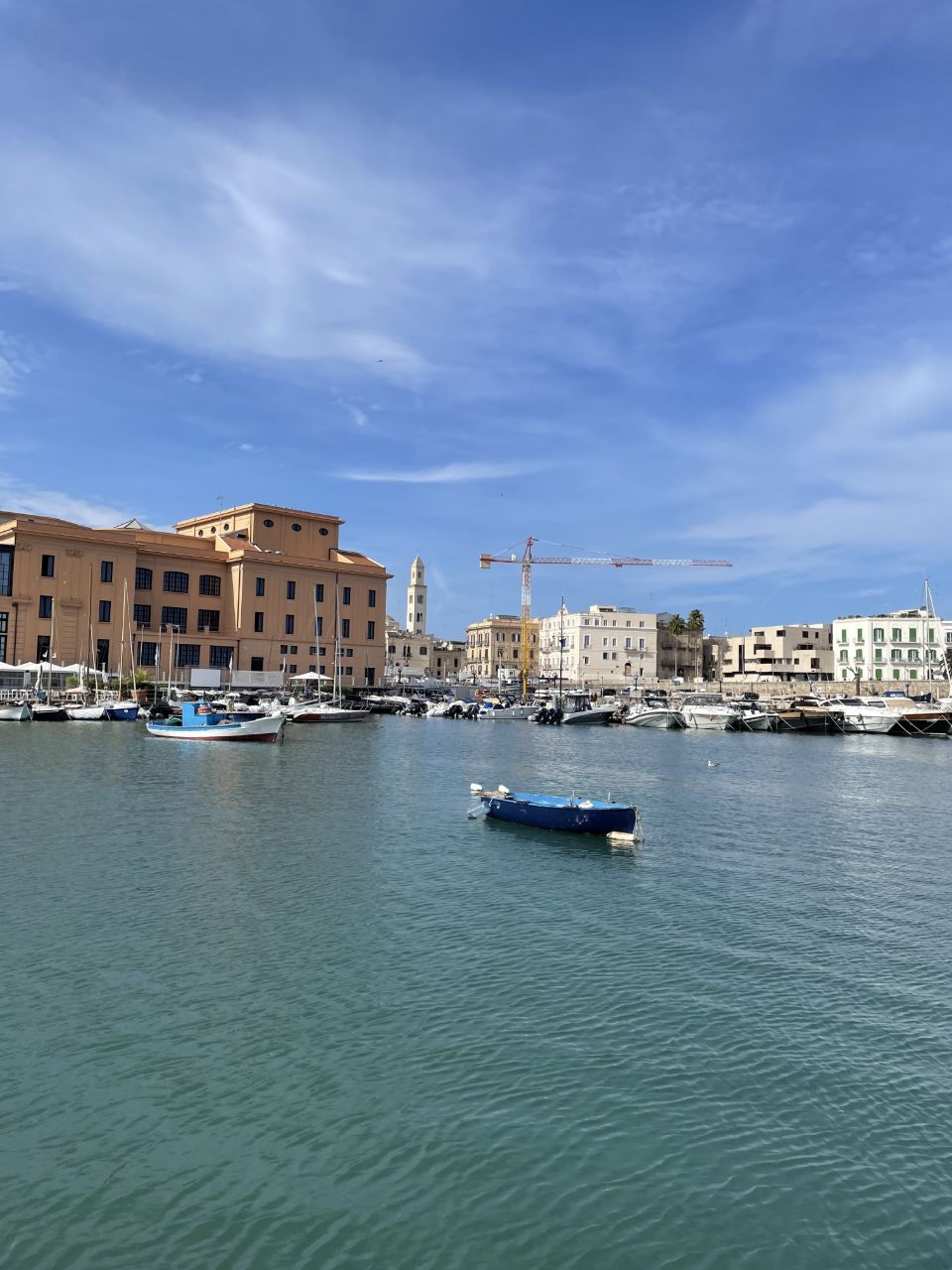
Boats at rest 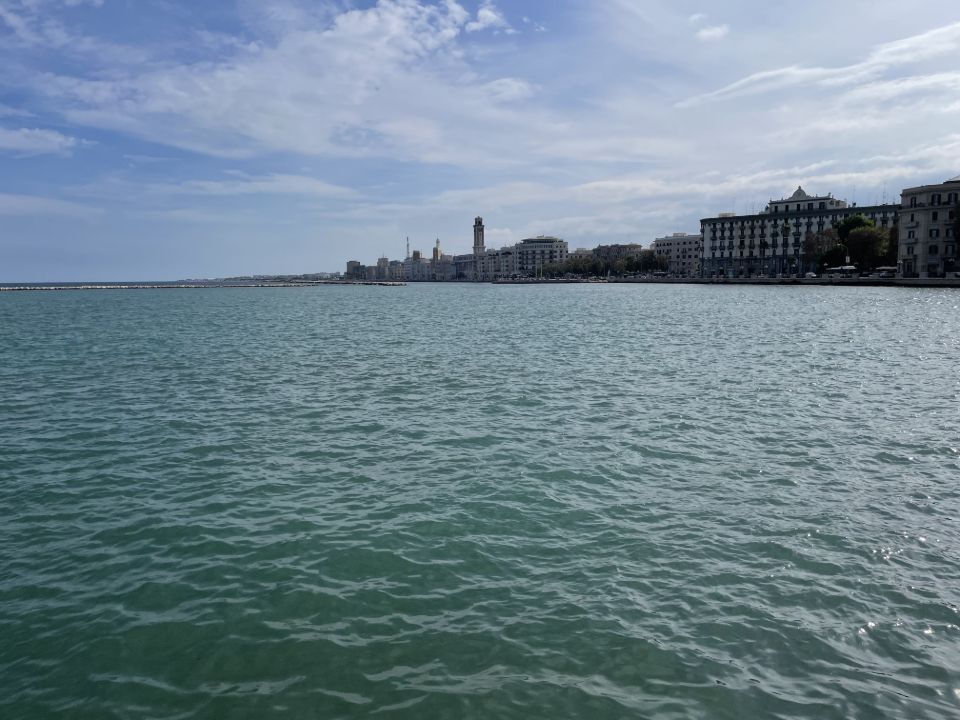
Skyline from the pier 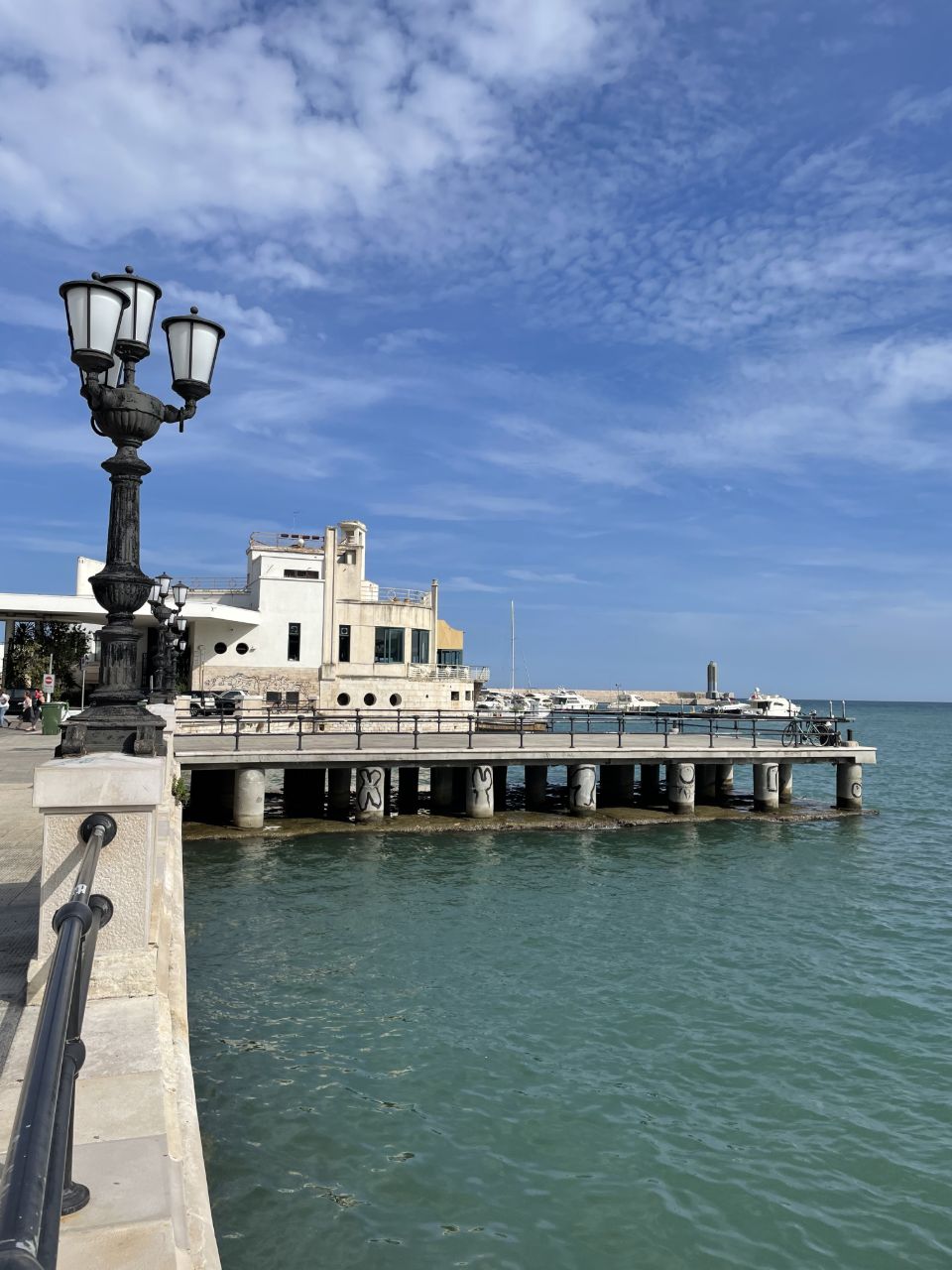
Ornate lamppost, big sky 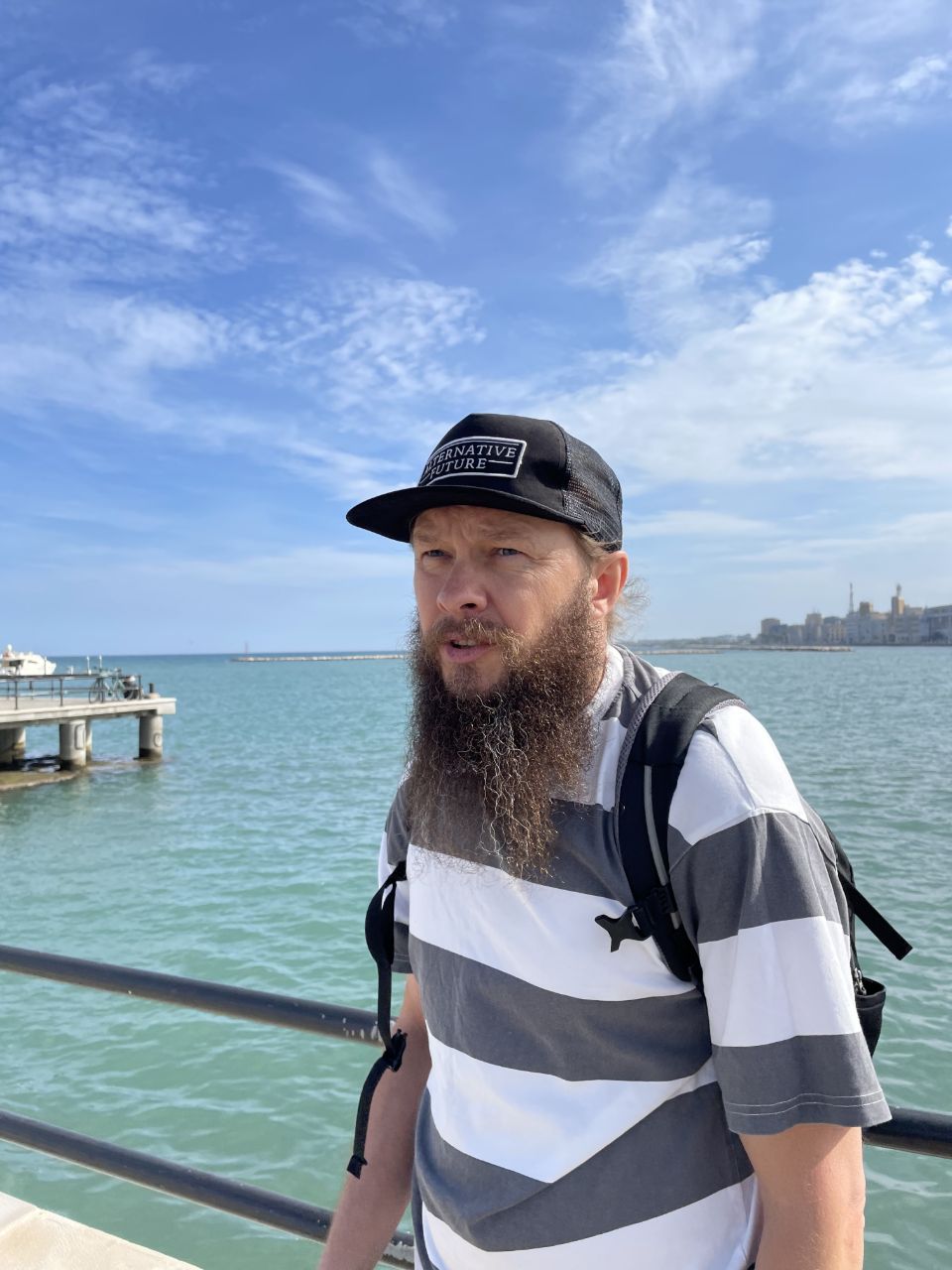
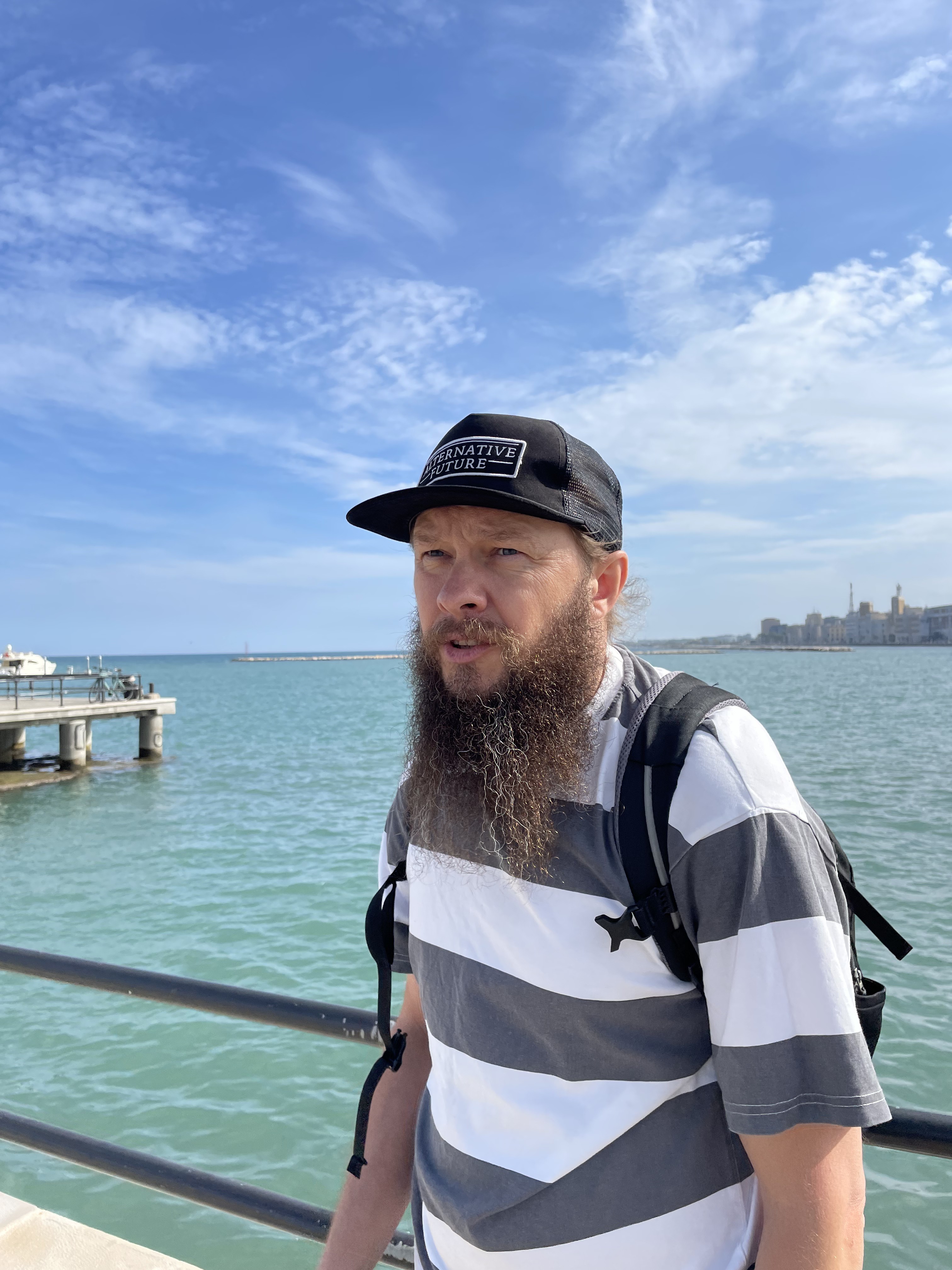
Oleg, cap and stripes 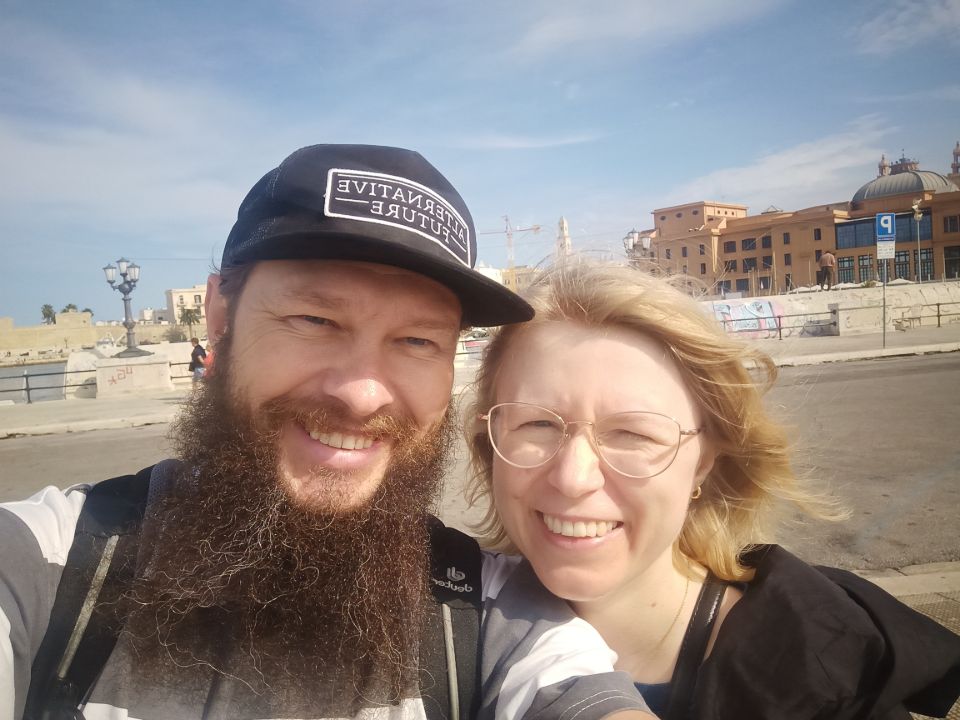
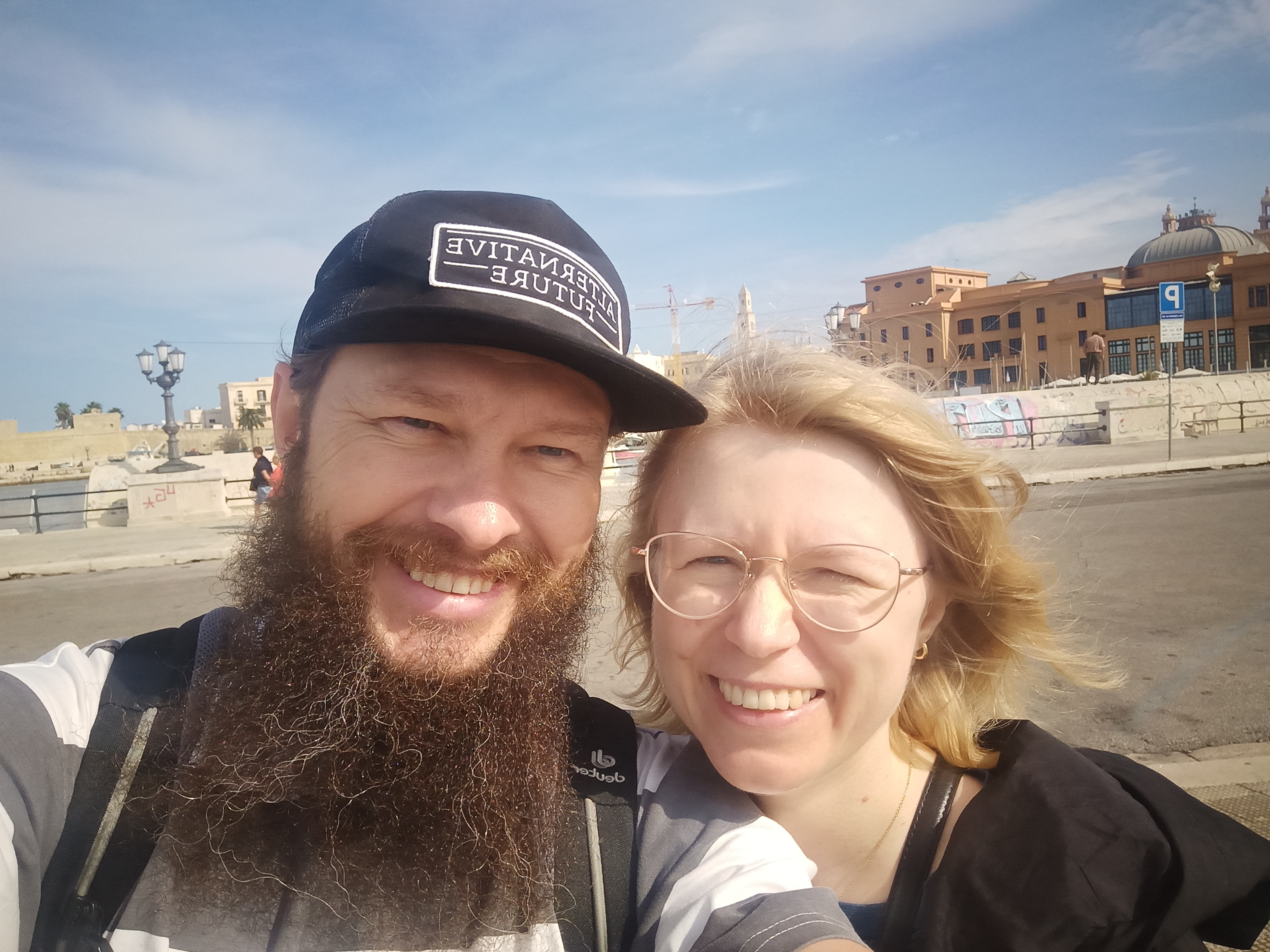
Us and the boats
Bari Vecchia, first pass
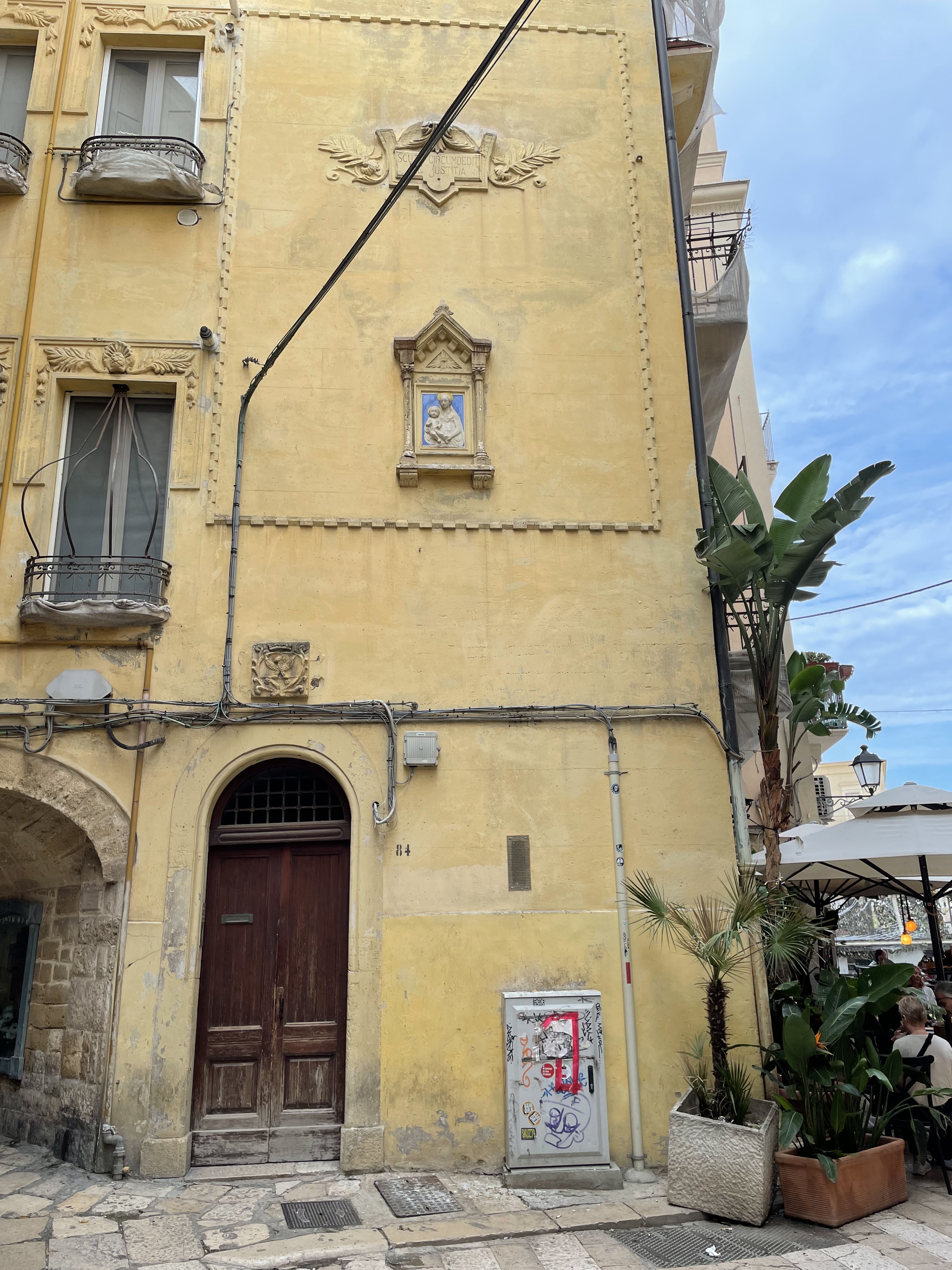
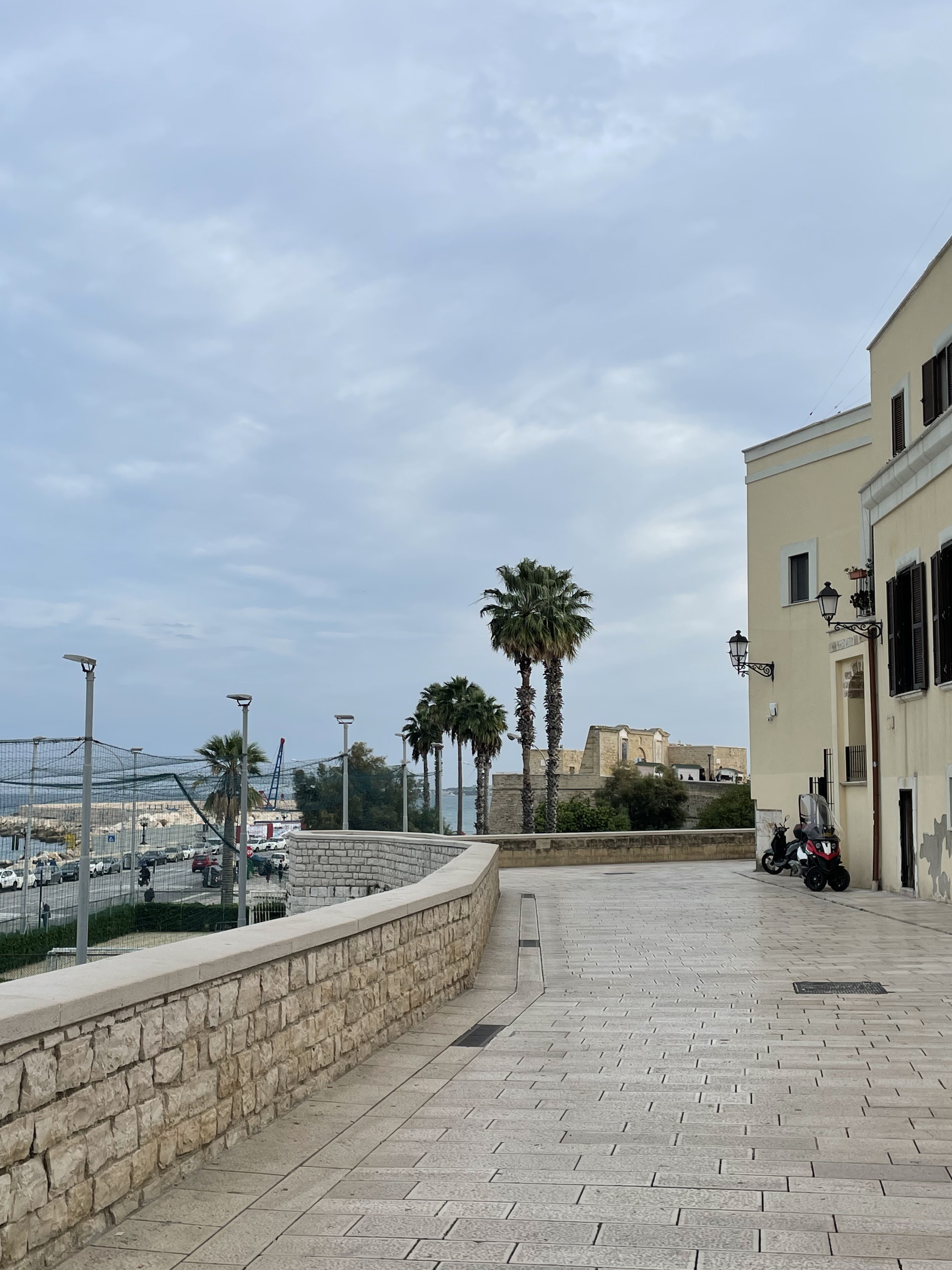
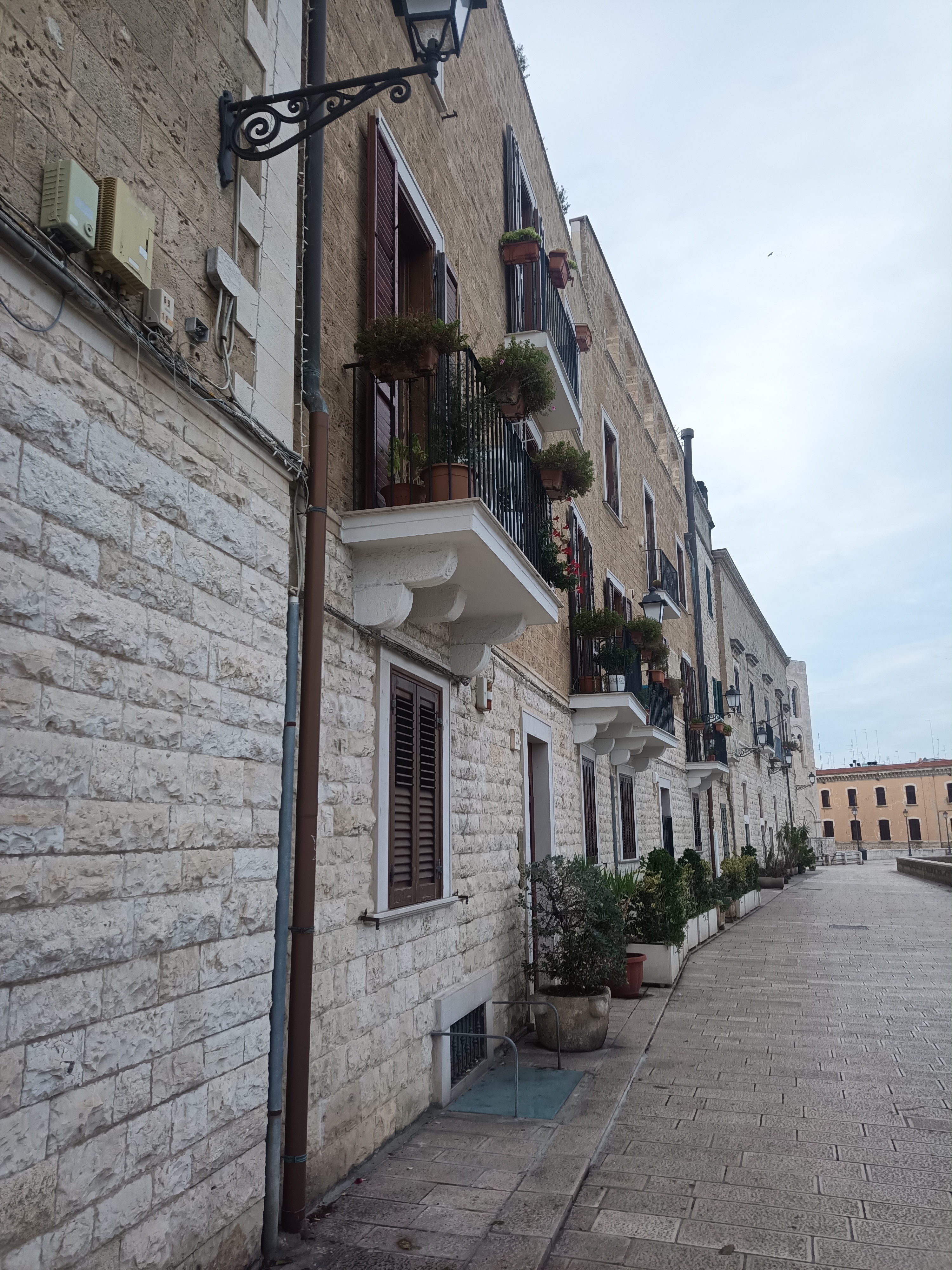
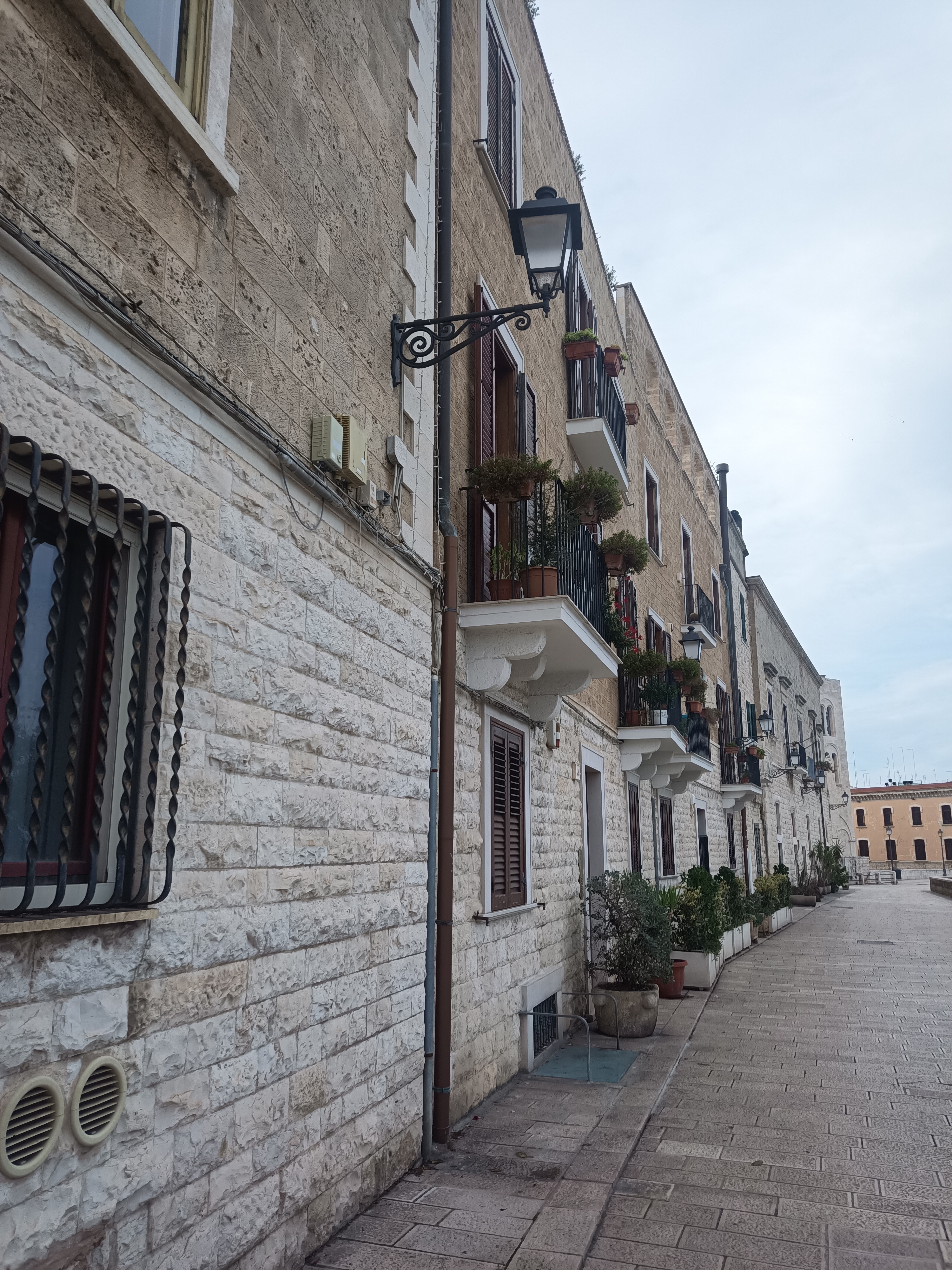
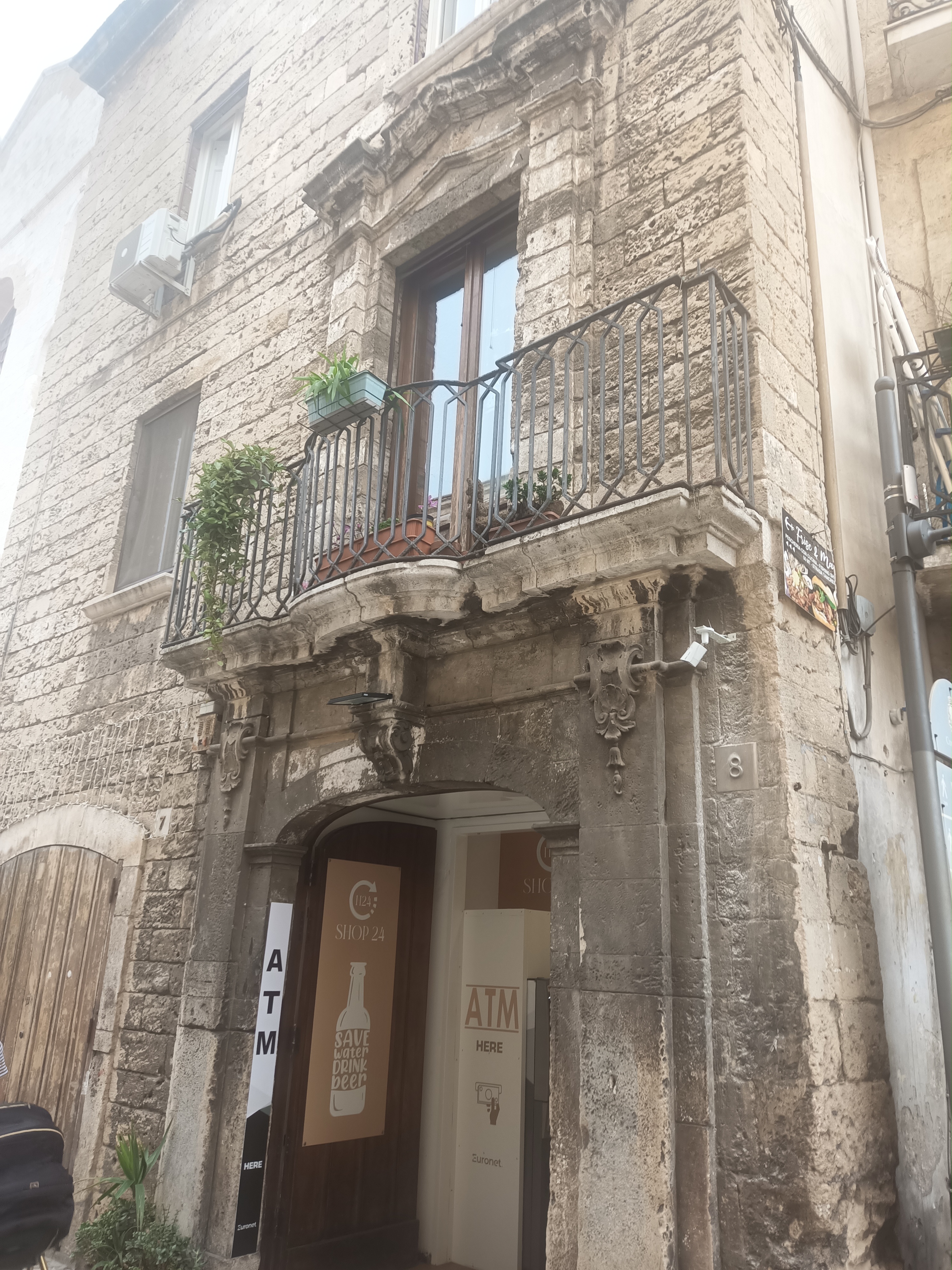
The old town afternoon went by in limestone: narrow alleys lit from above by narrow strips of sky, white stone churches with blind arches, carved medieval reliefs worn soft by traffic, terraced walkways above the sea edge, and long quiet streets with only the sea wind for company.
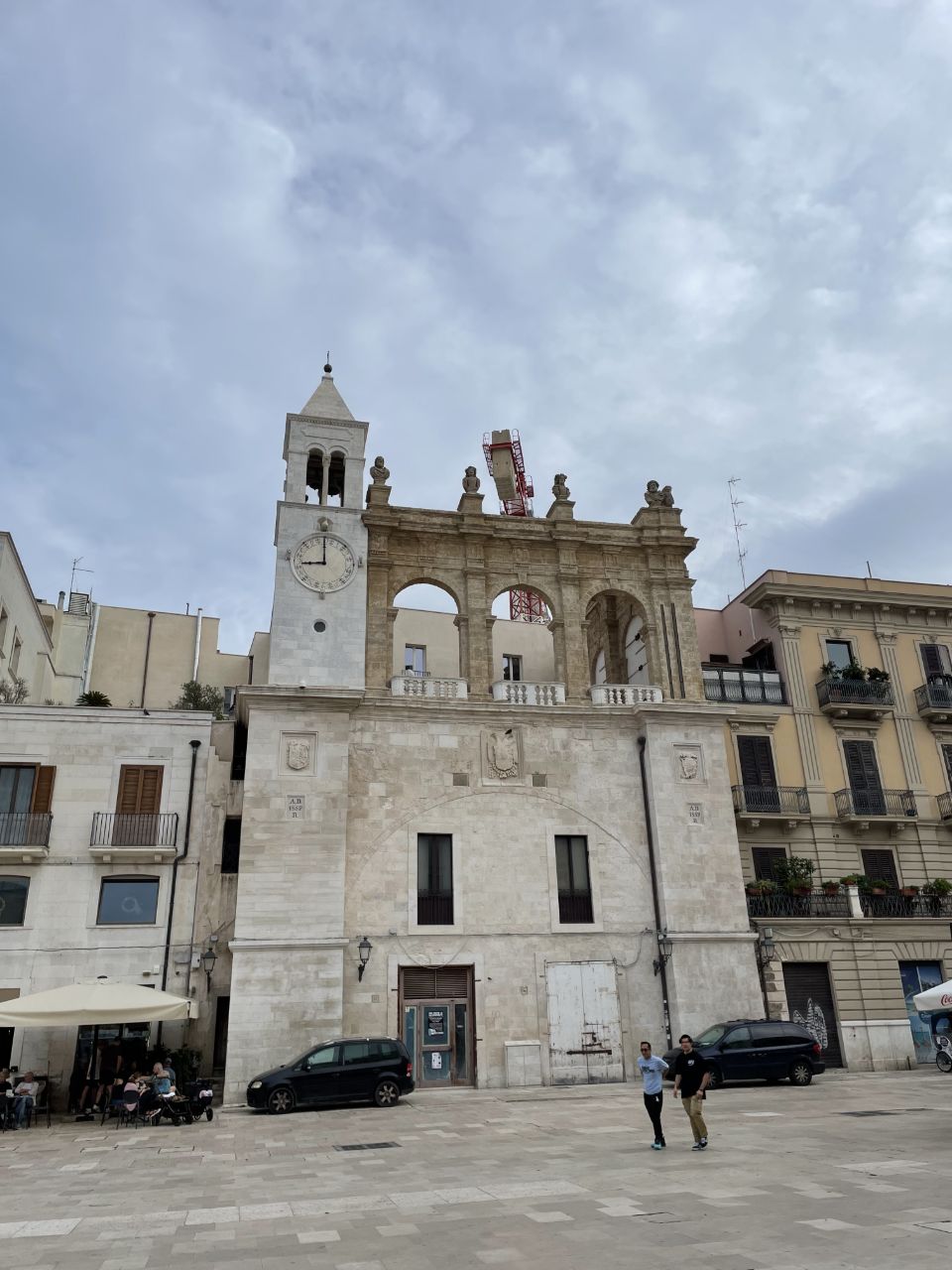
Palazzo with an open loggia 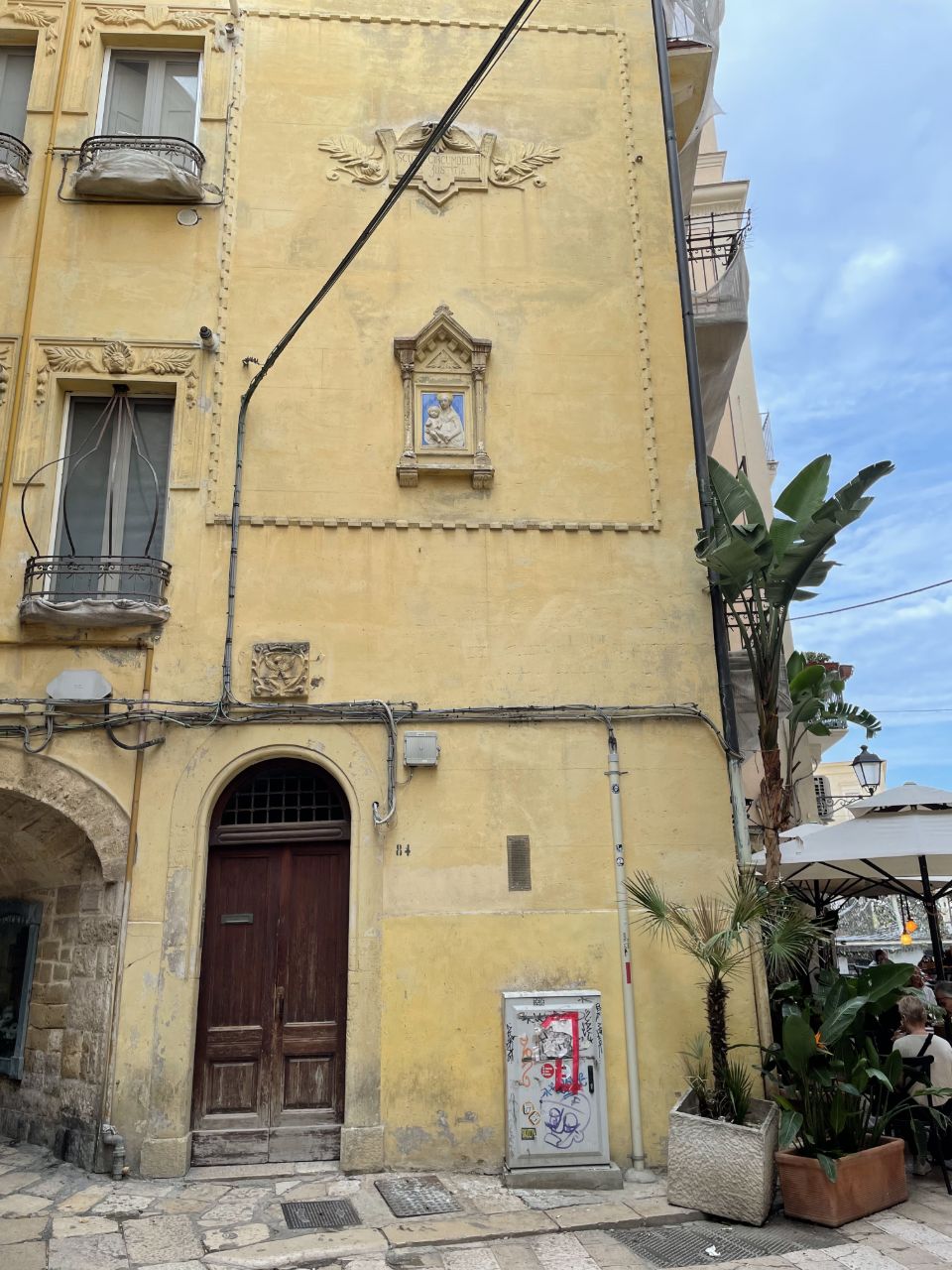
Ochre corner, iron balcony 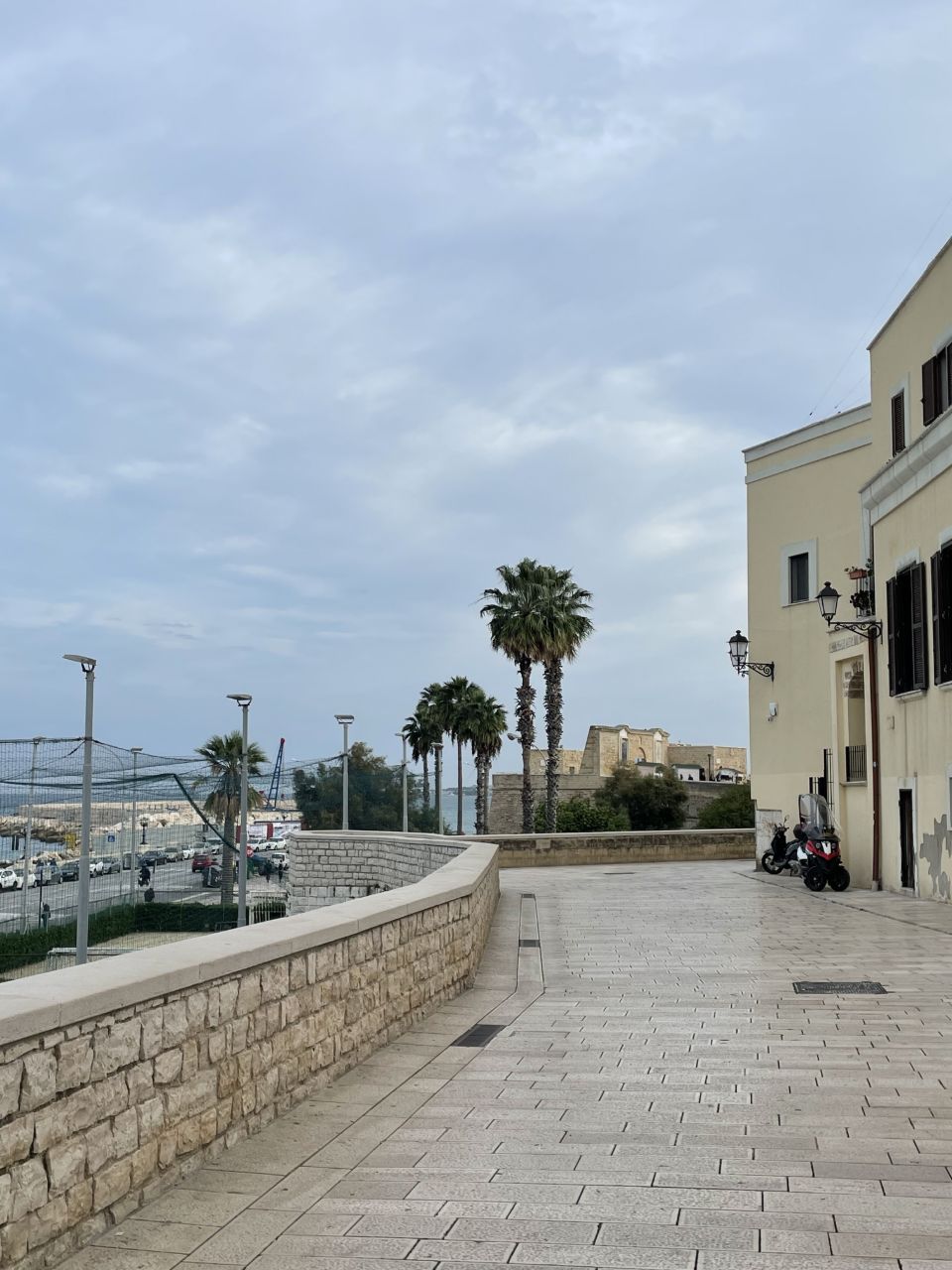
The terraced walkway 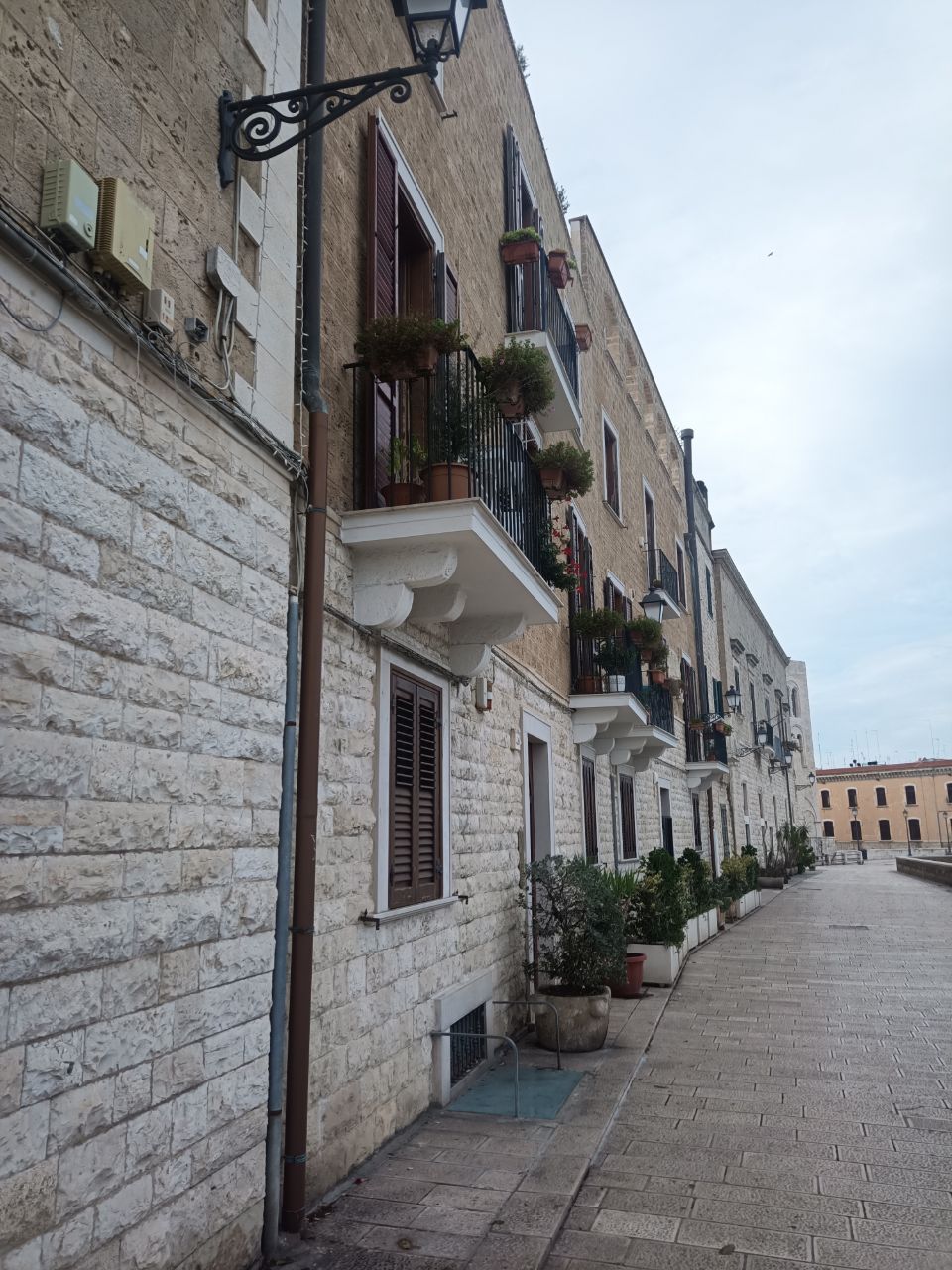
Potted balconies 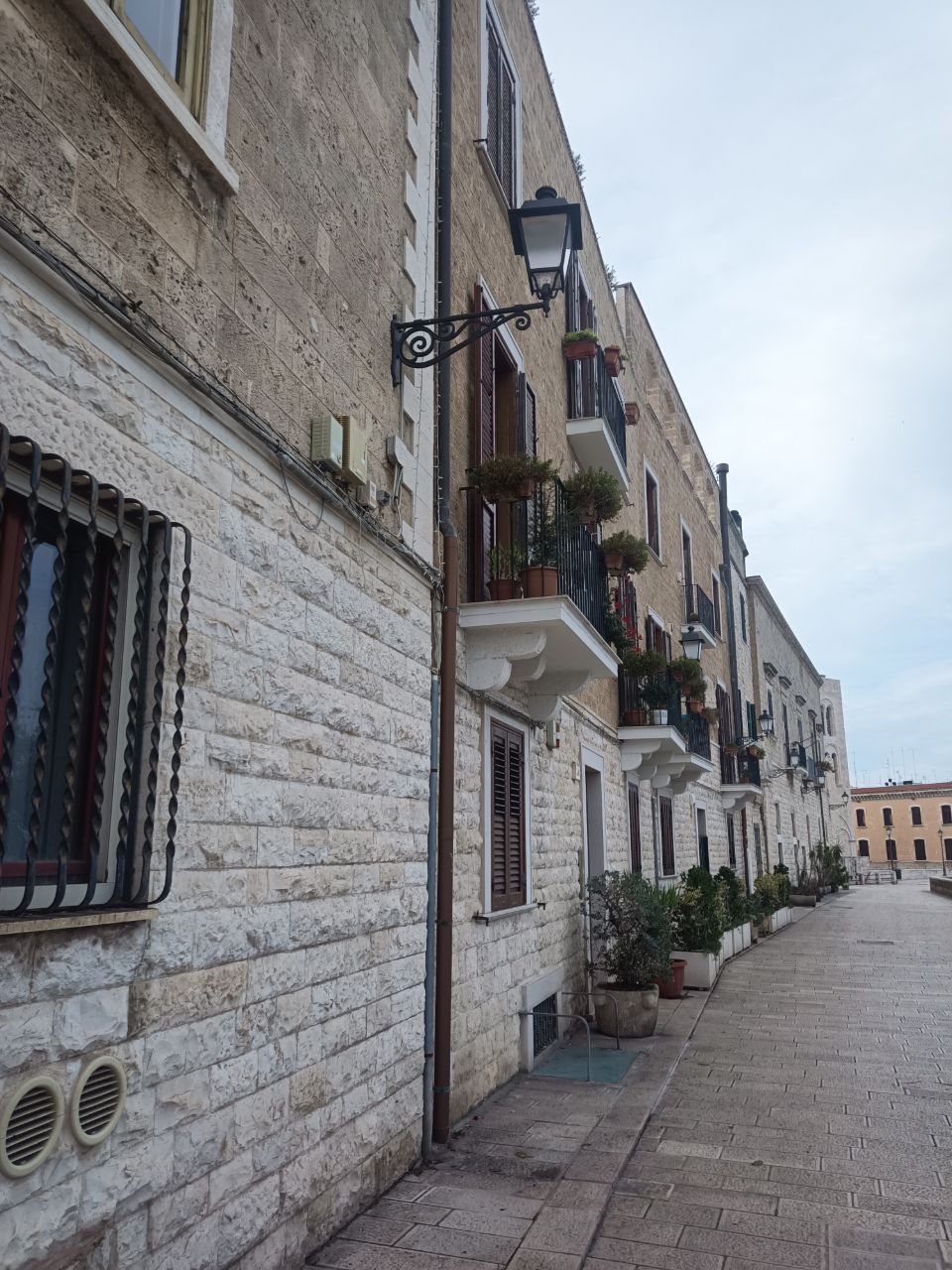
Seaside street 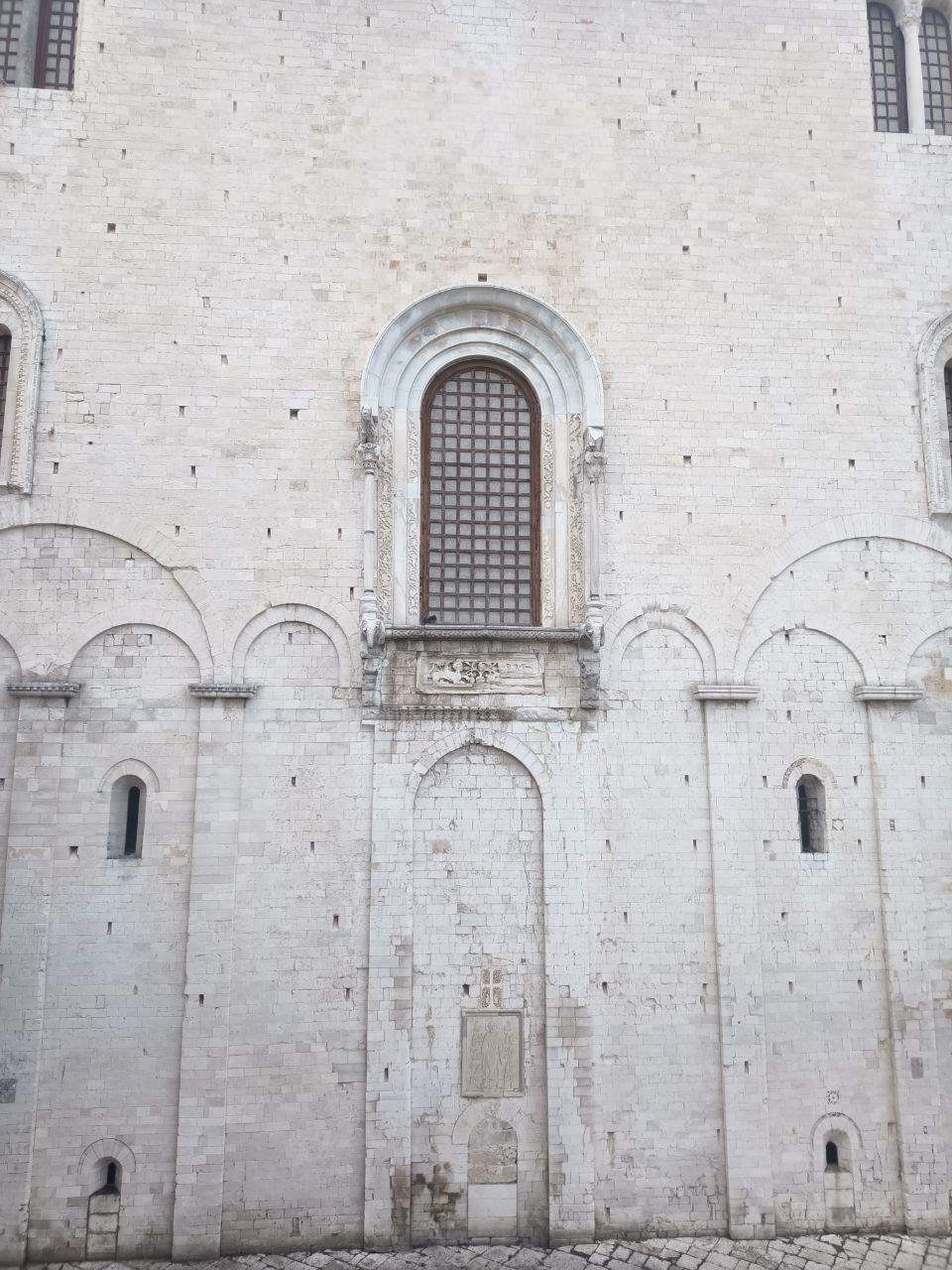
Austere limestone 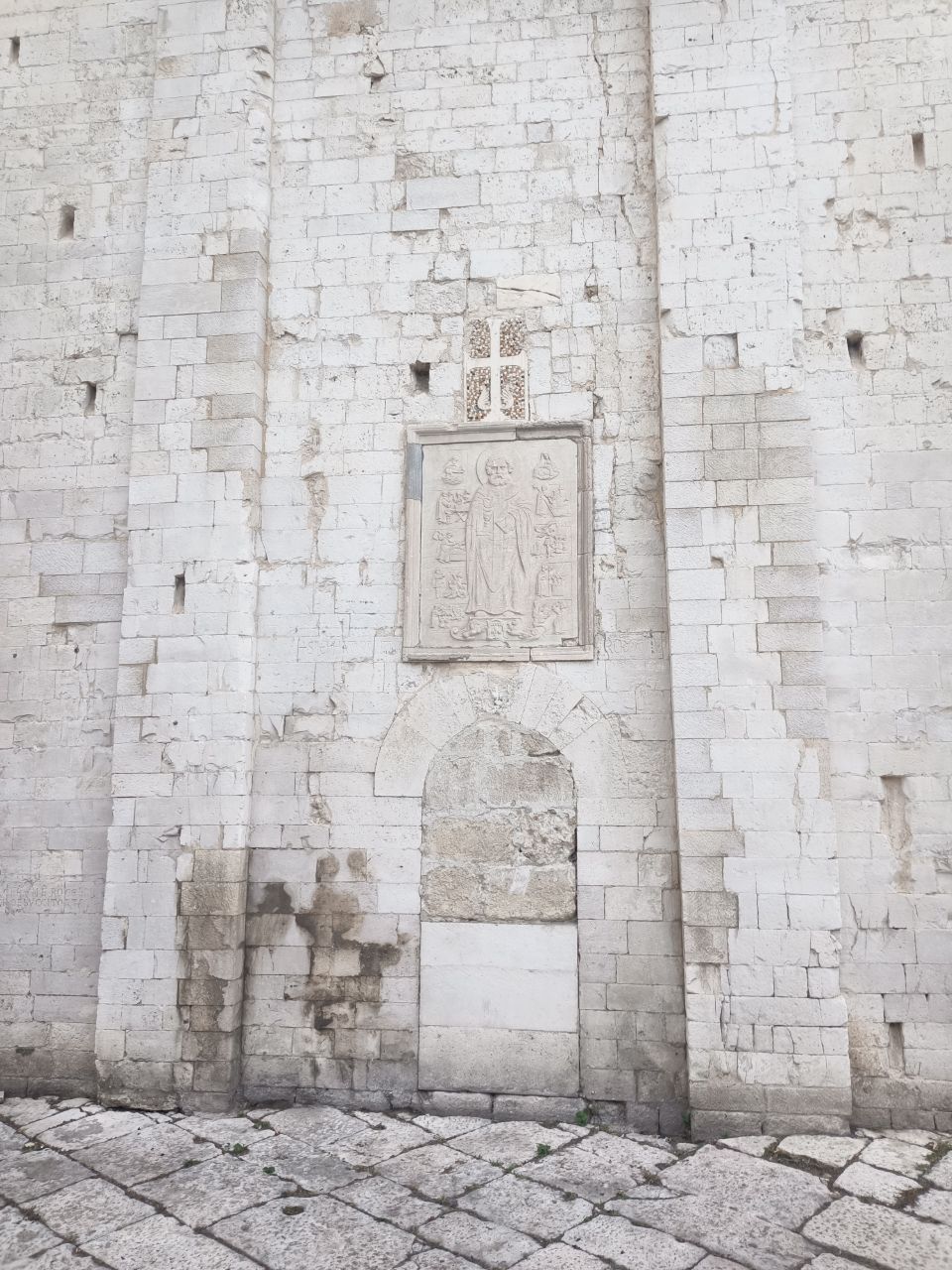
Worn reliefs
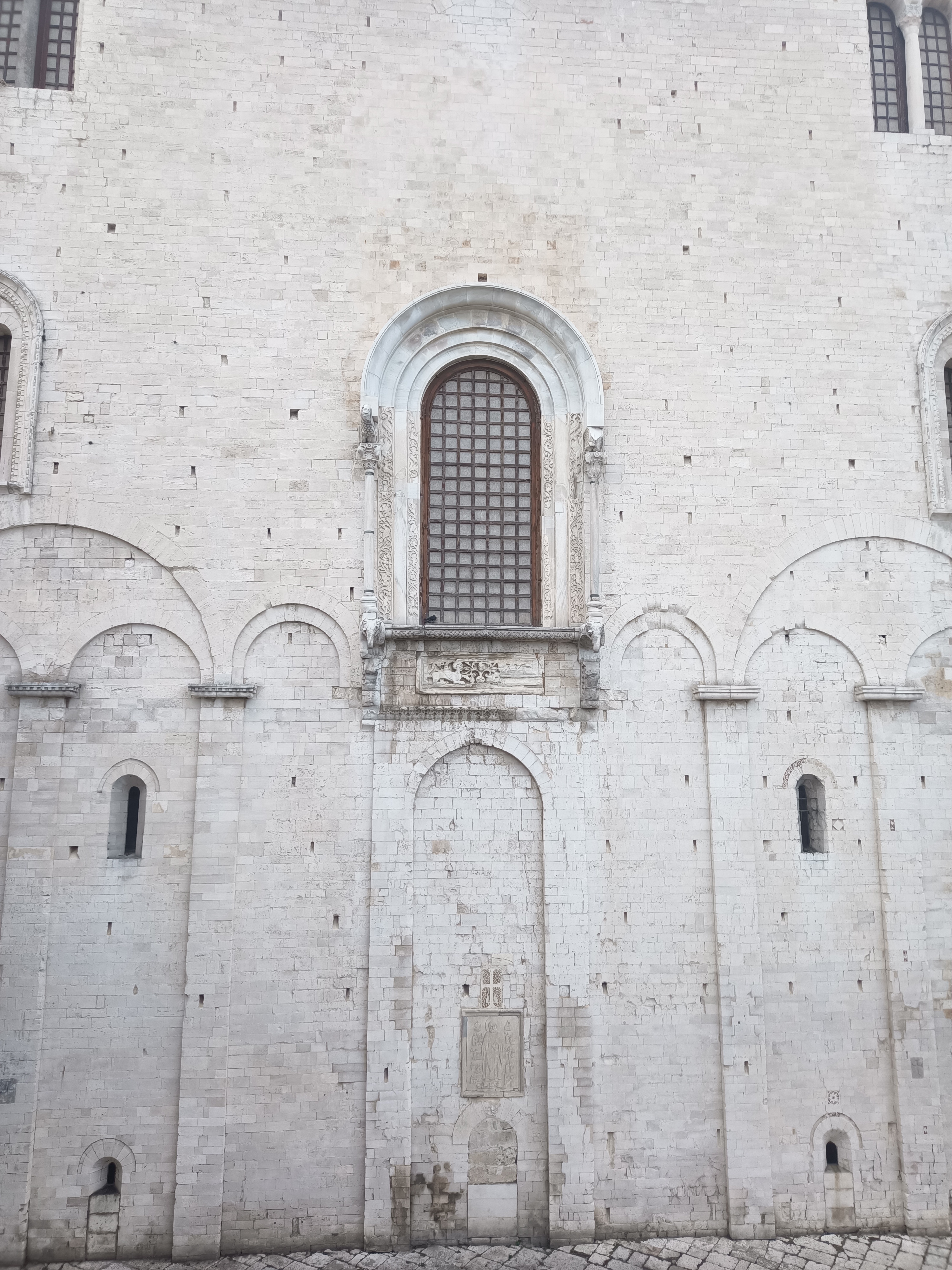
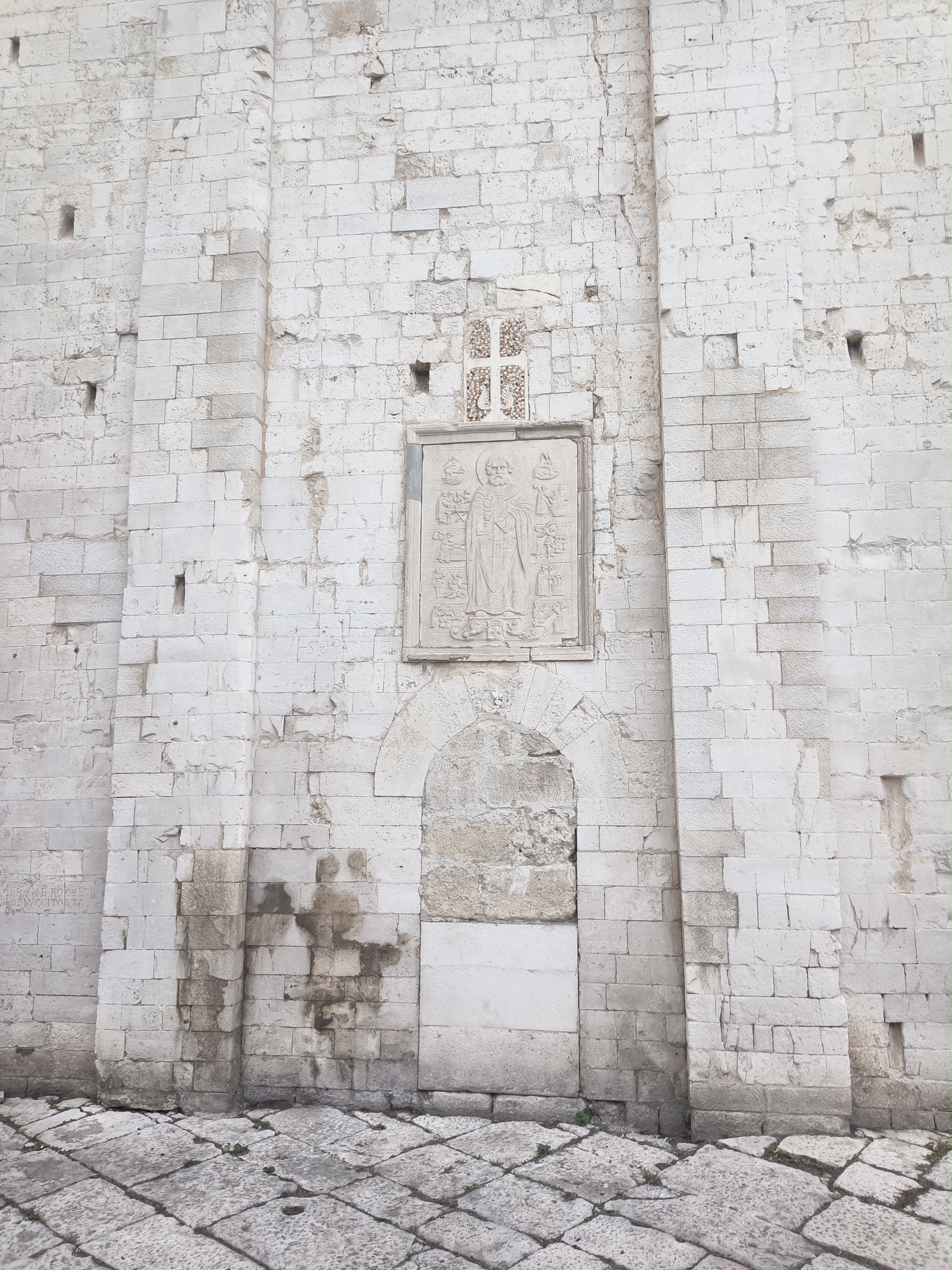
Saint Nicolas of Bari
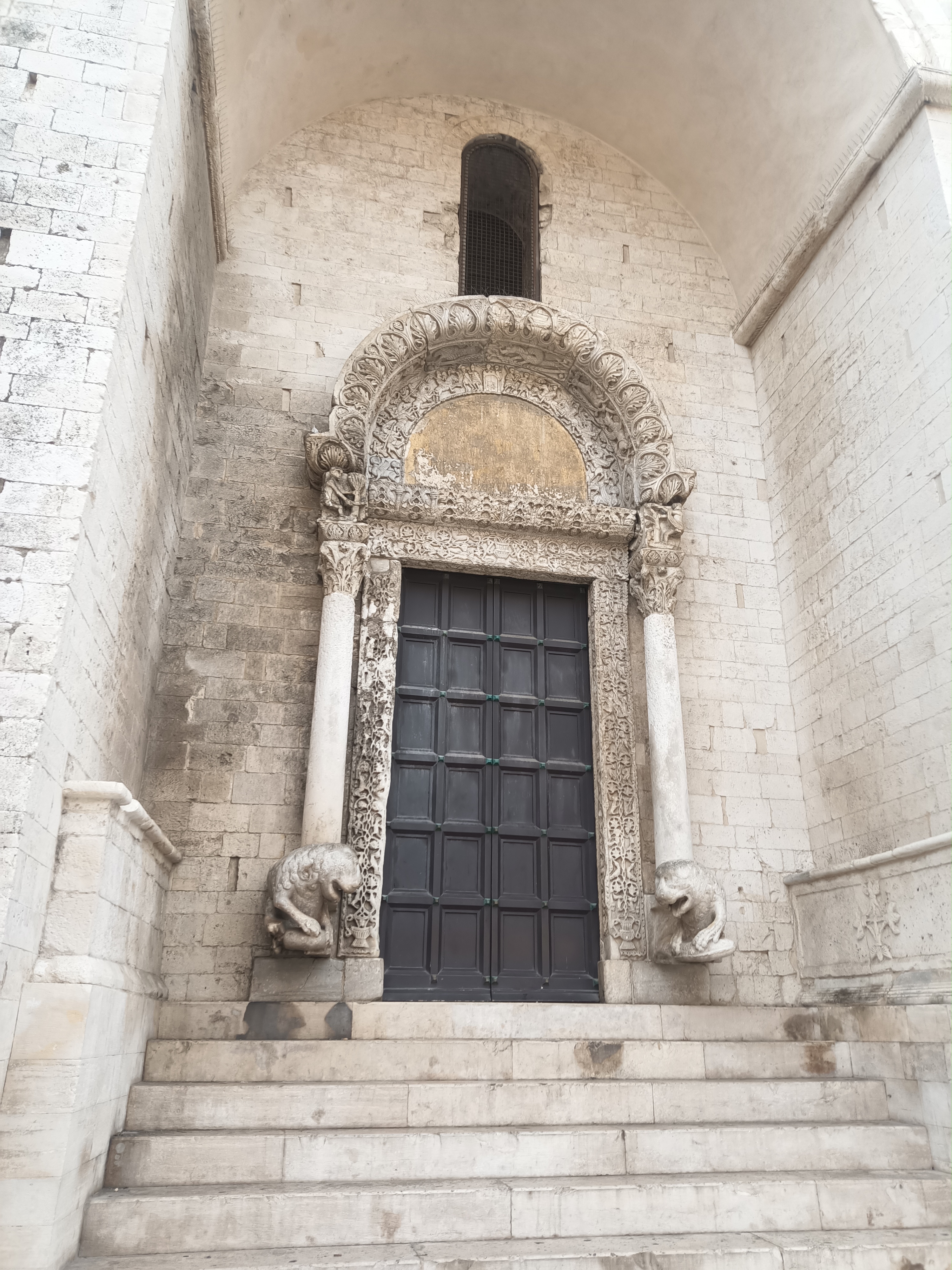
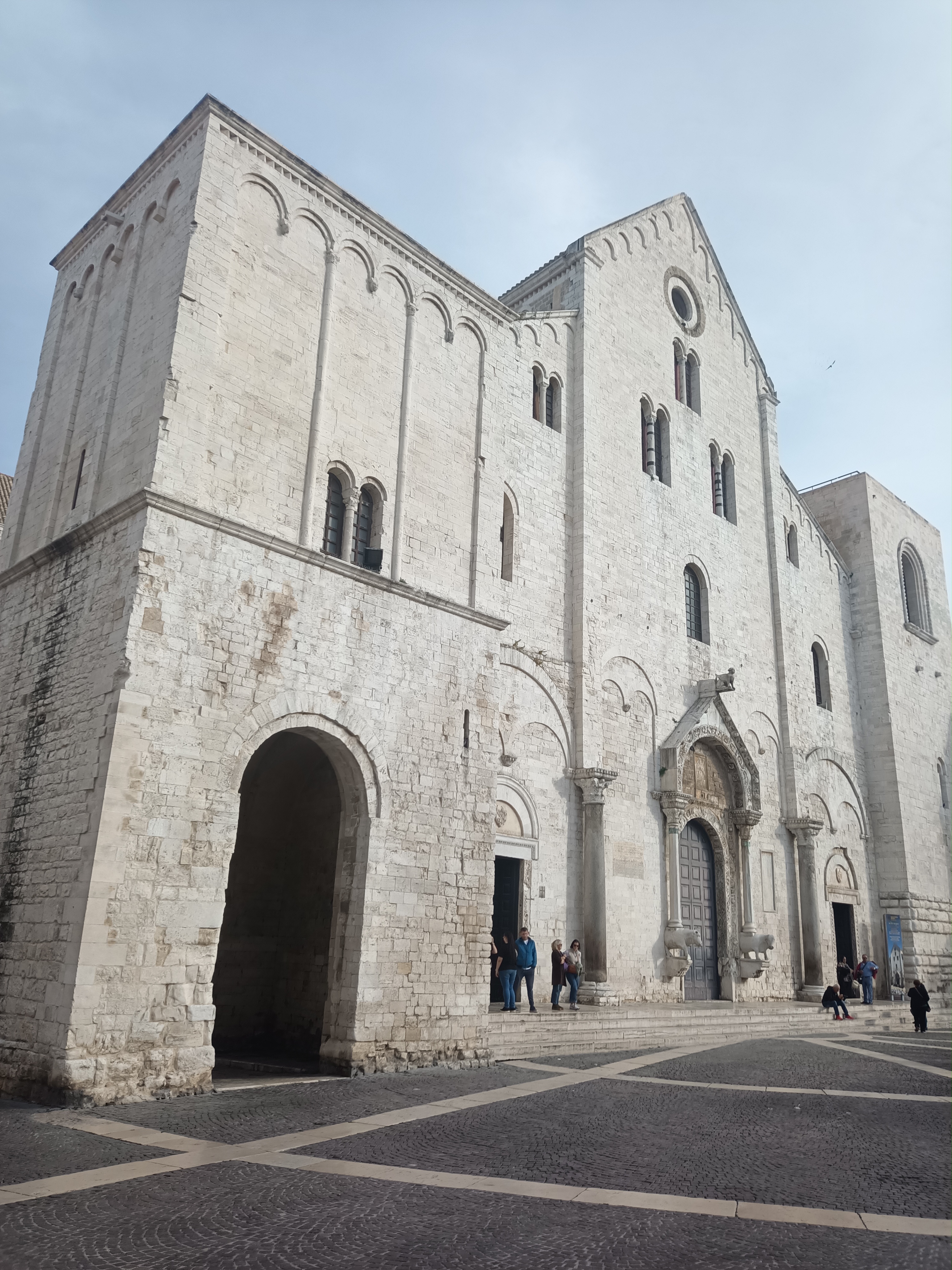
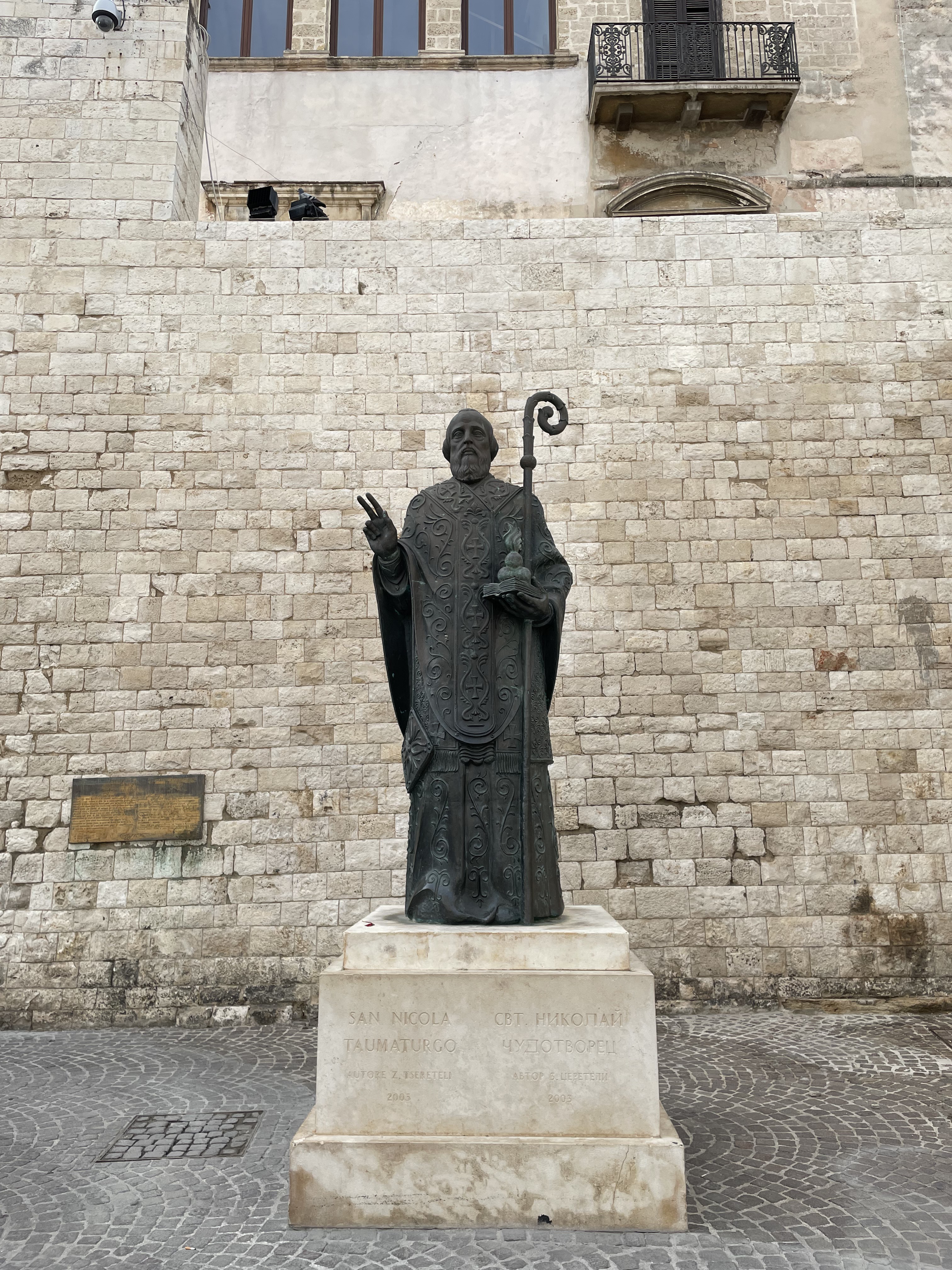
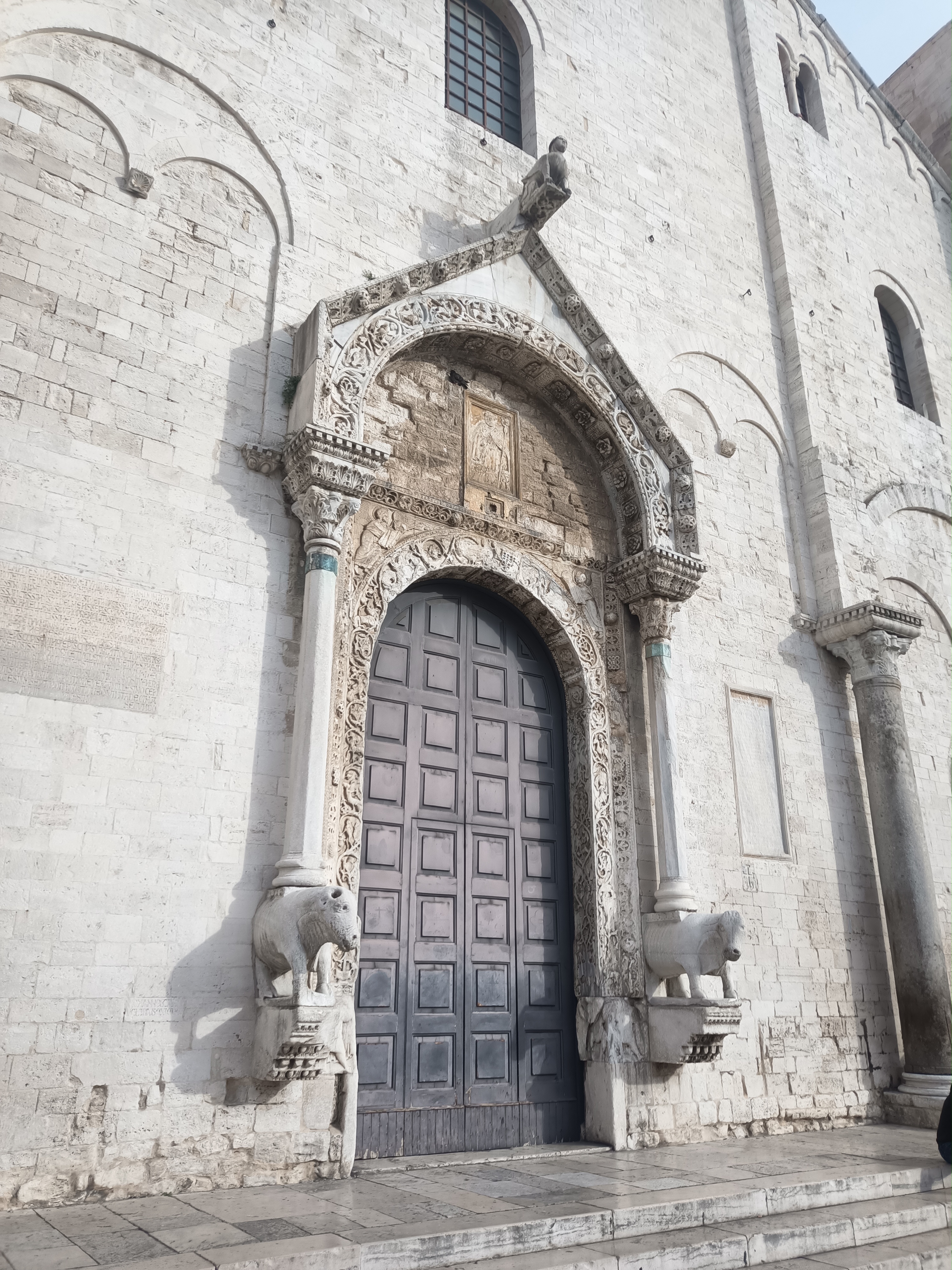
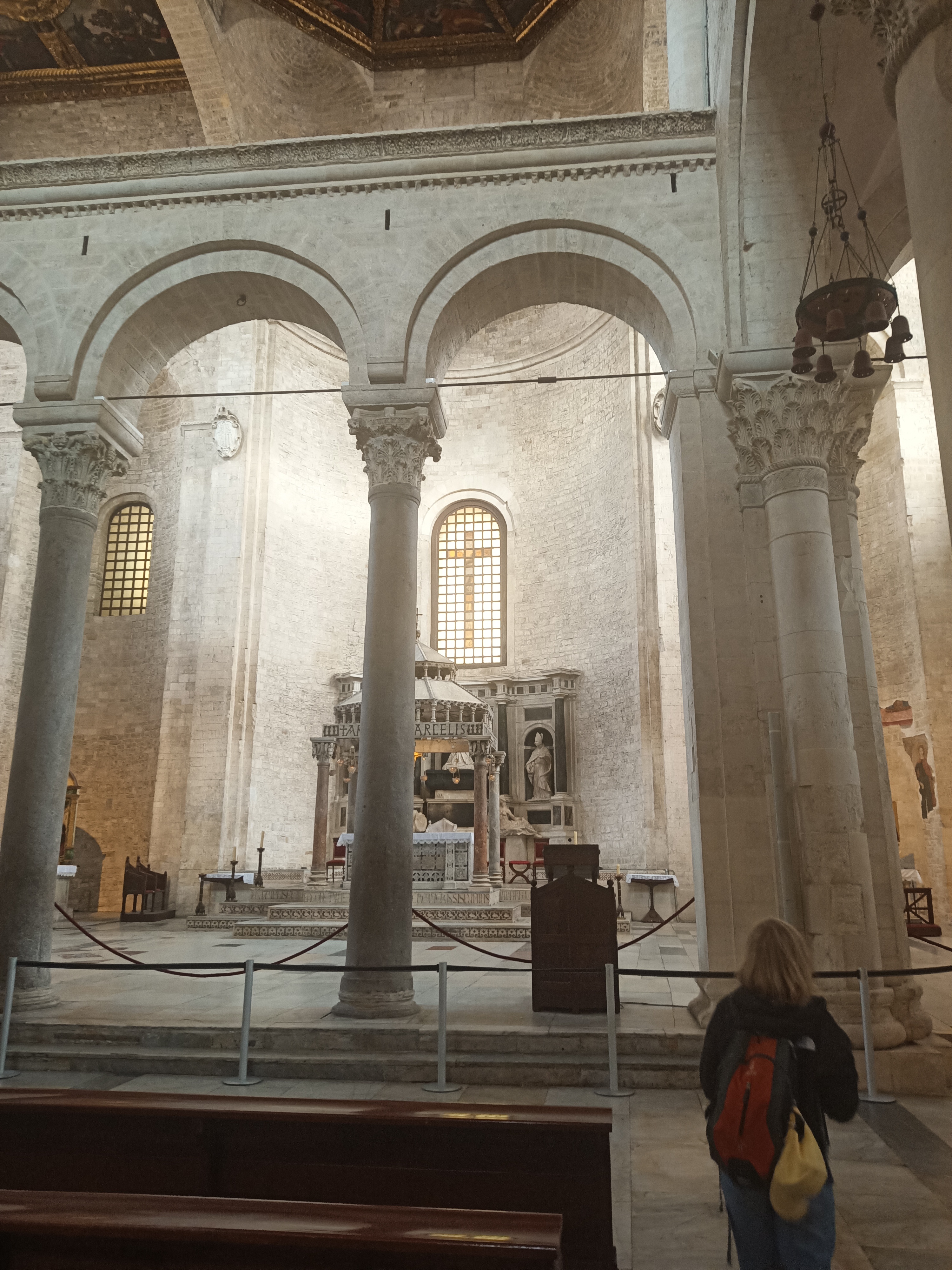
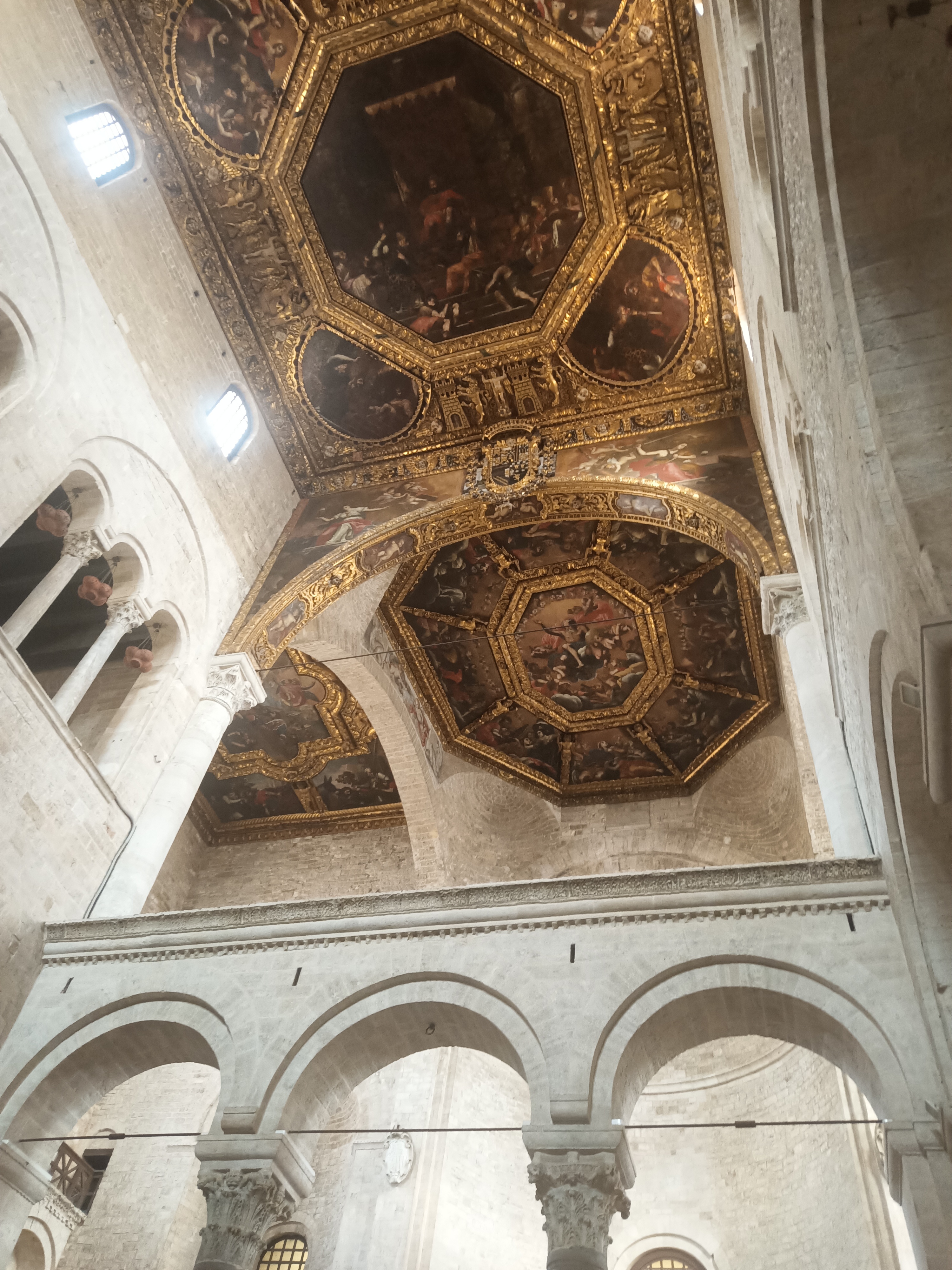
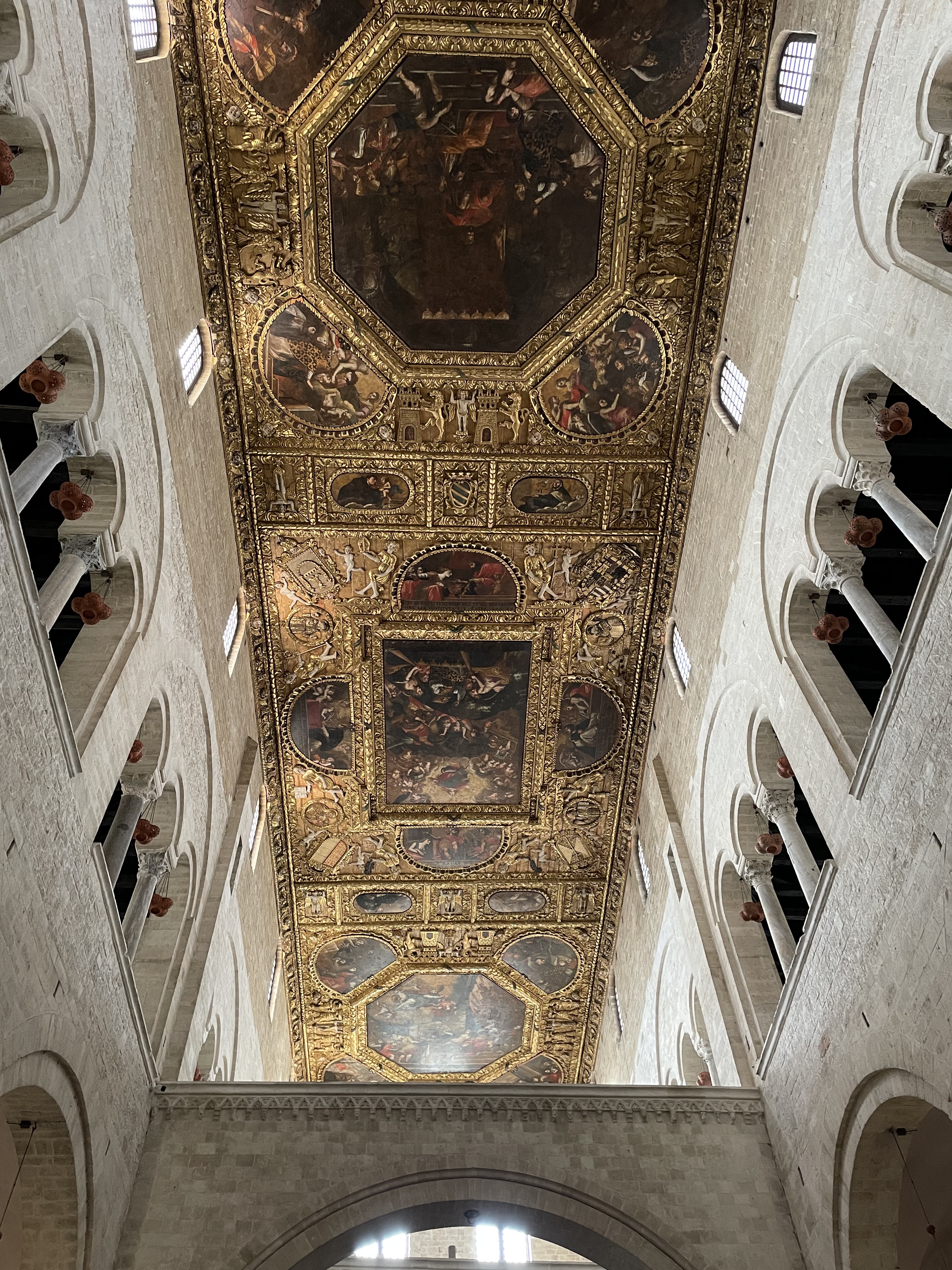
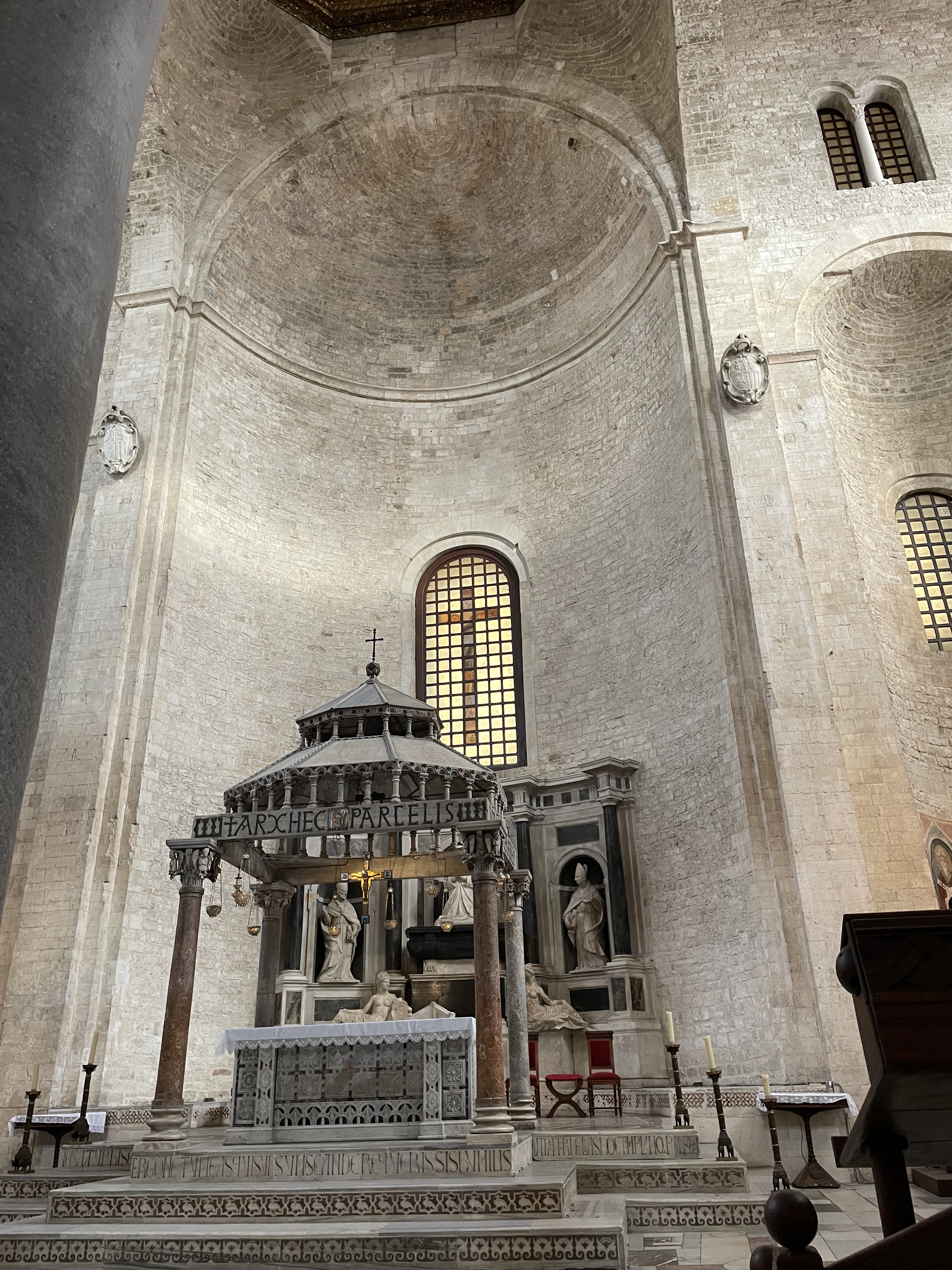
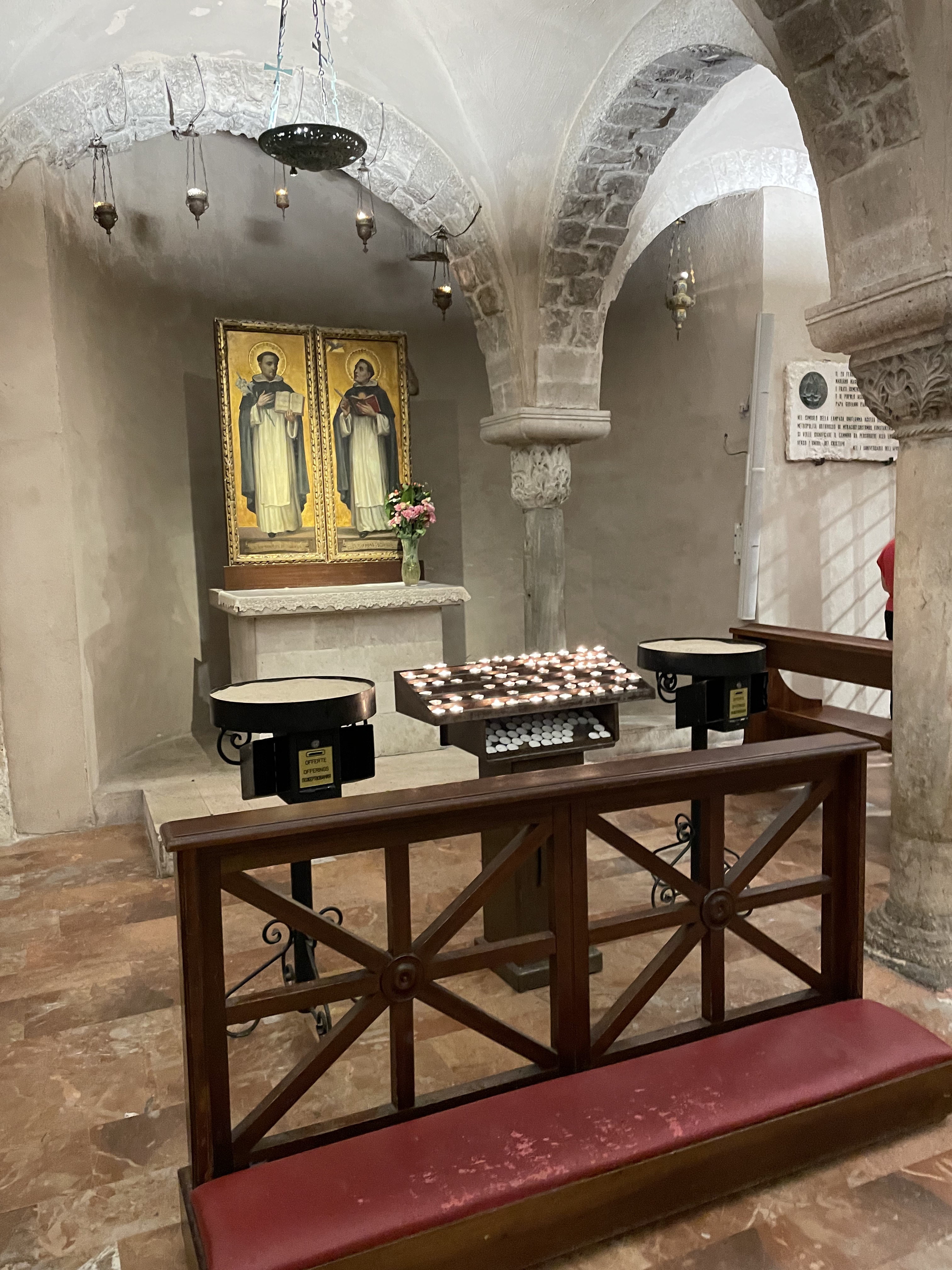
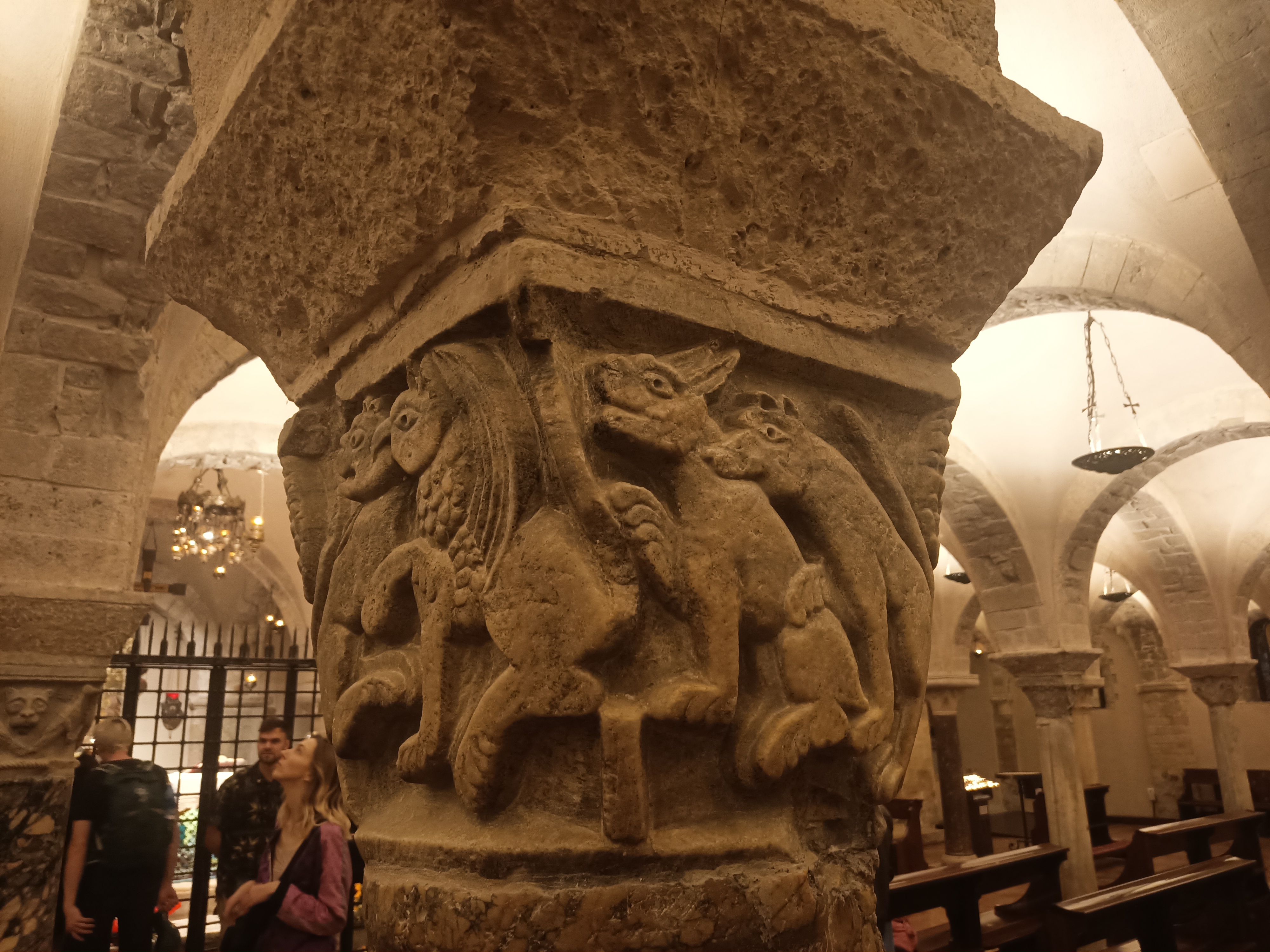
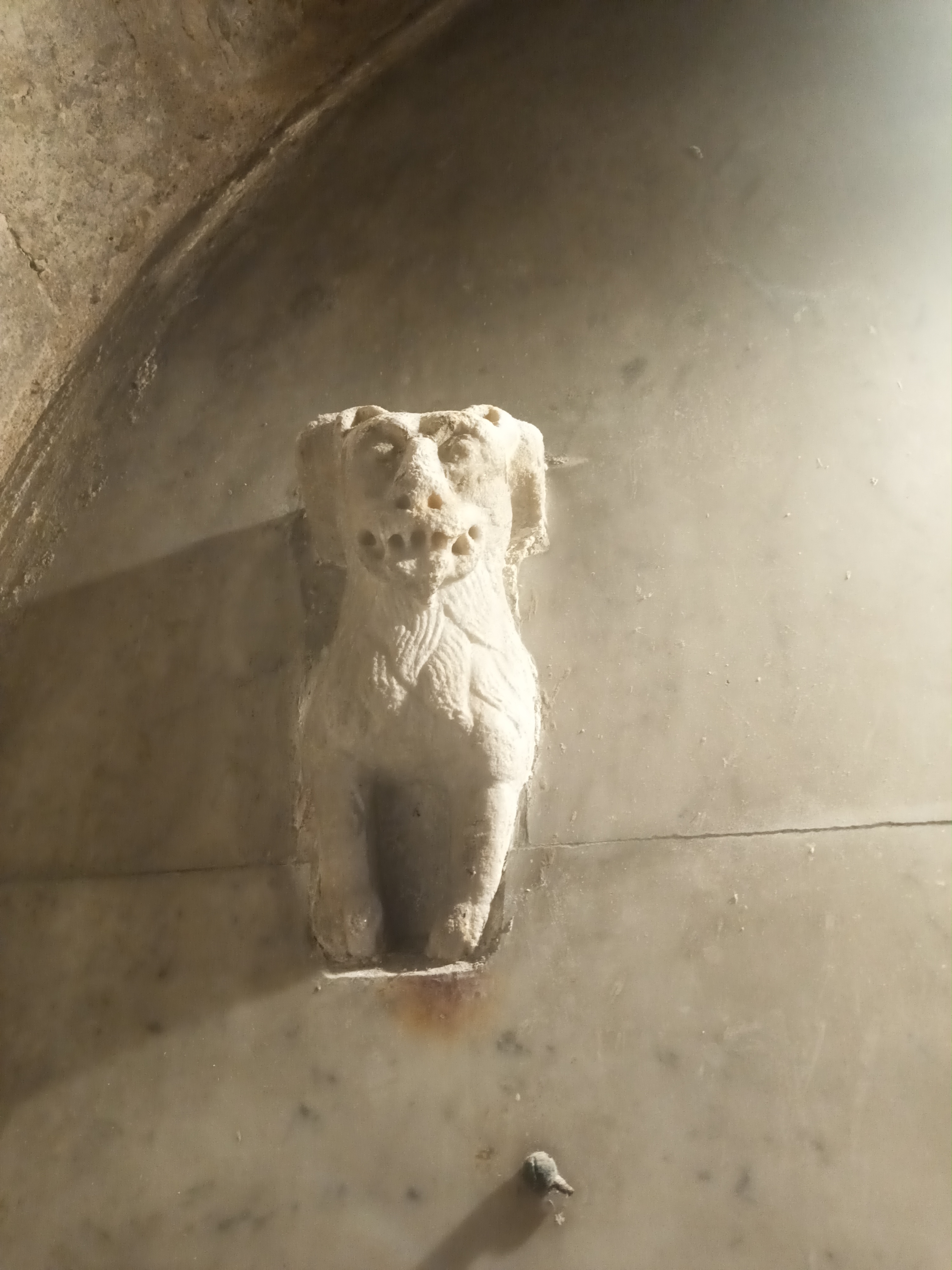
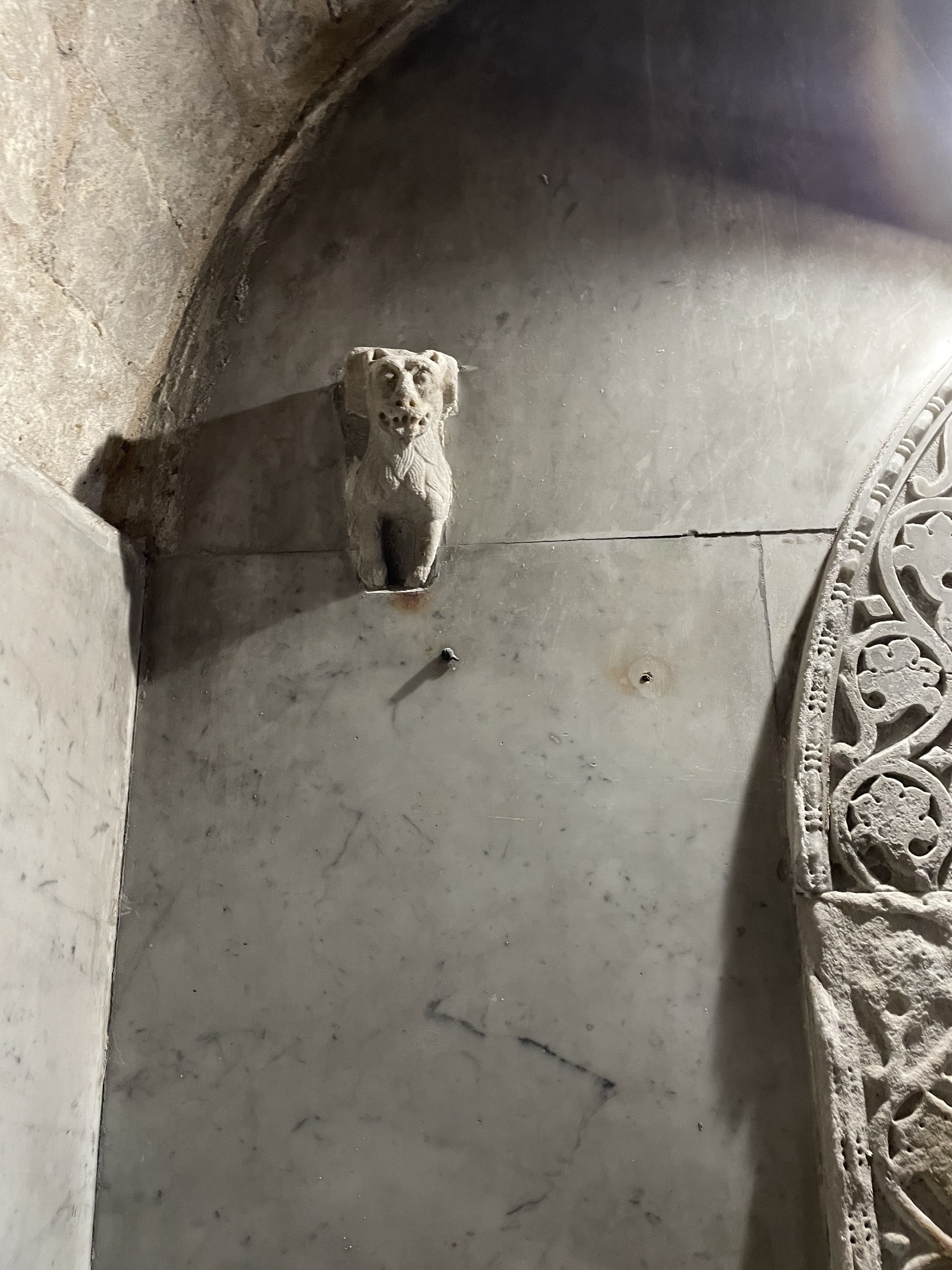
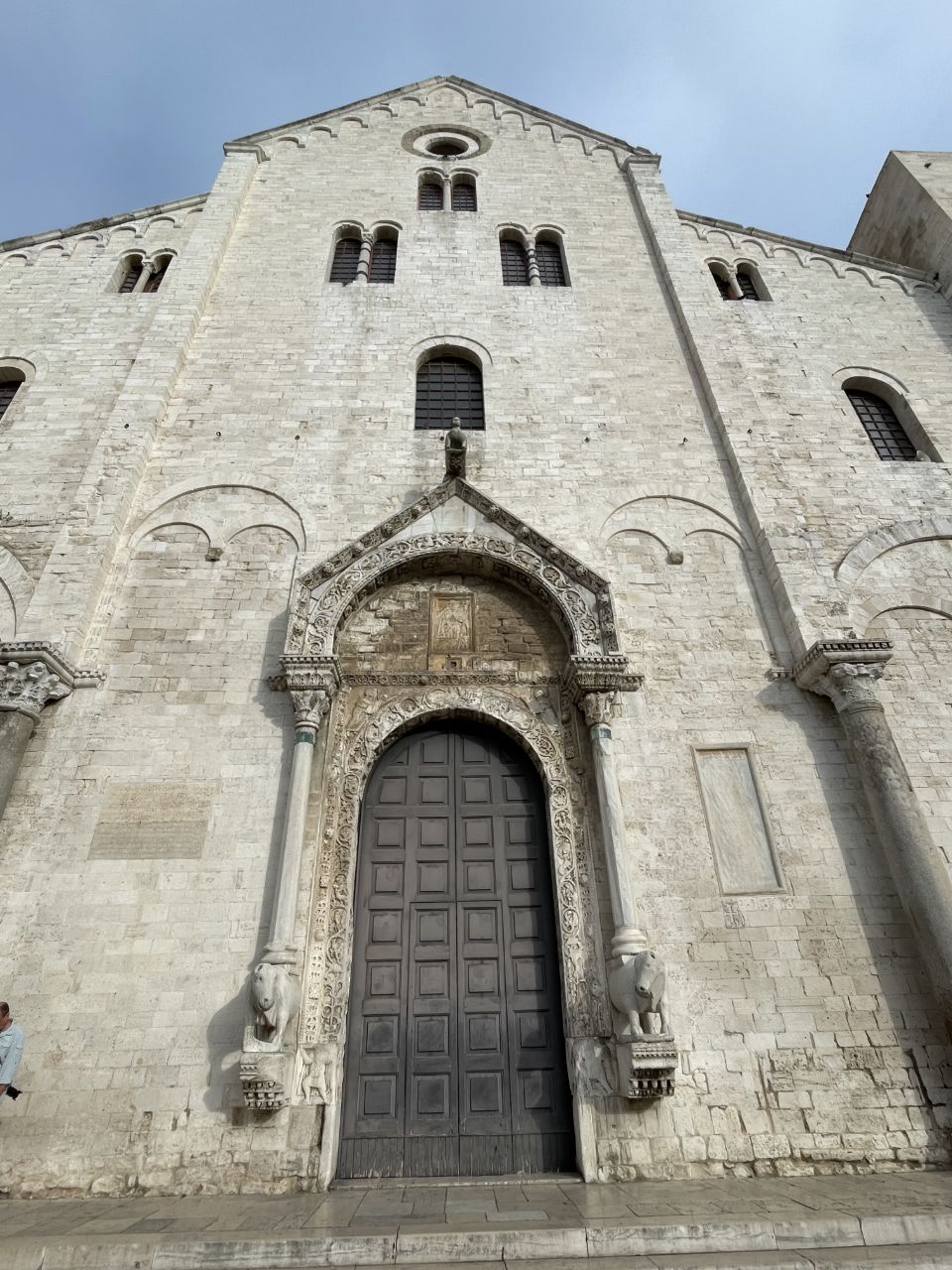
Then the big one: the Basilica of Saint Nicholas, the church that made Bari a destination for a thousand years. The story is nearly a heist: sixty-two sailors carried the relics off from Myra on 9 May 1087, and the basilica was built to hold them. Massive Romanesque portals, a bronze bishop holding his crozier, a carved lion on the corbels, a snarling dog carved on the wall. Inside, a silver reliquary bust above the altar, a gilded painted wooden ceiling, and down in the candle-lit crypt, capitals carved with animals that the light turns to lace.
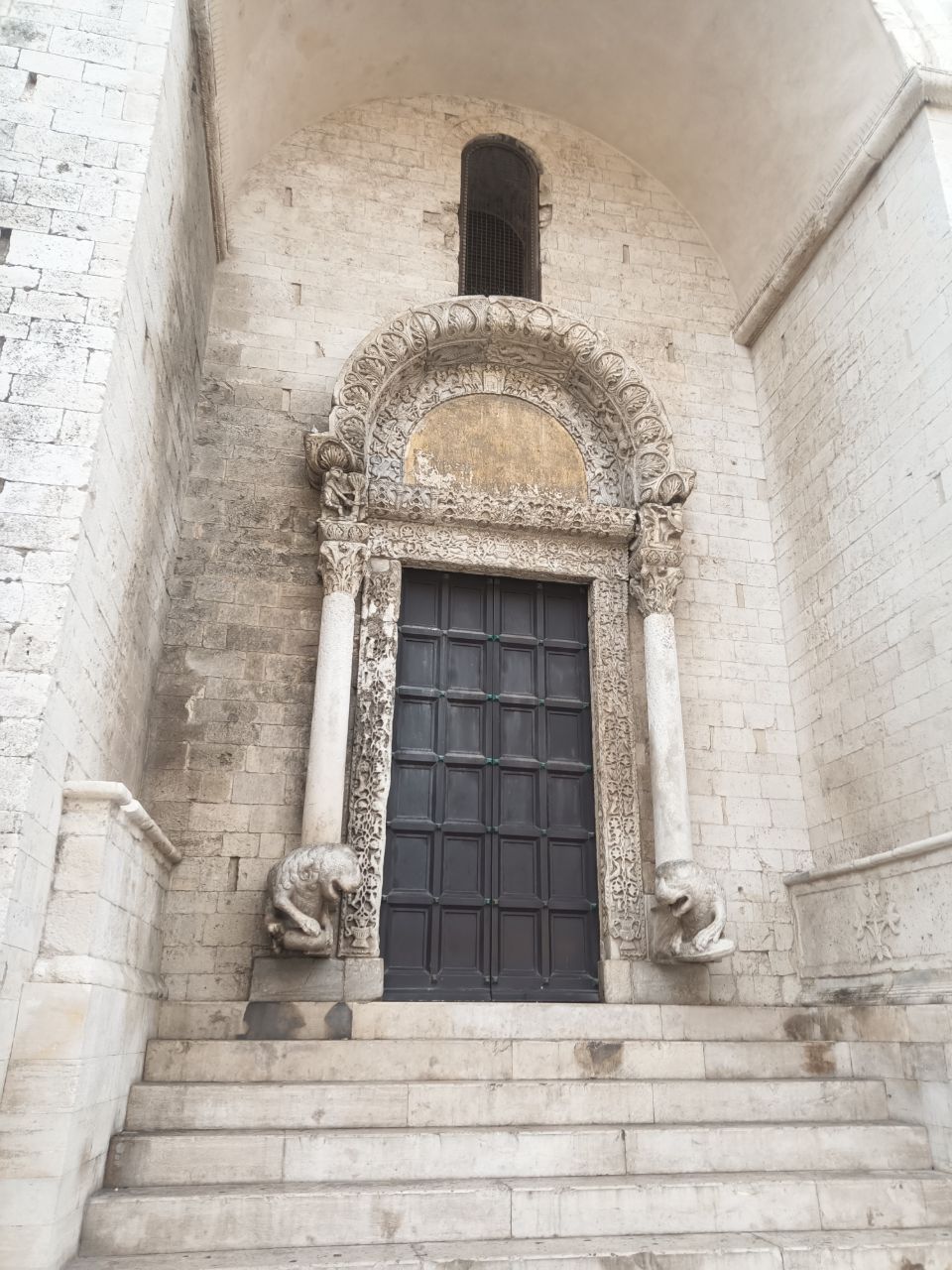
Romanesque portals 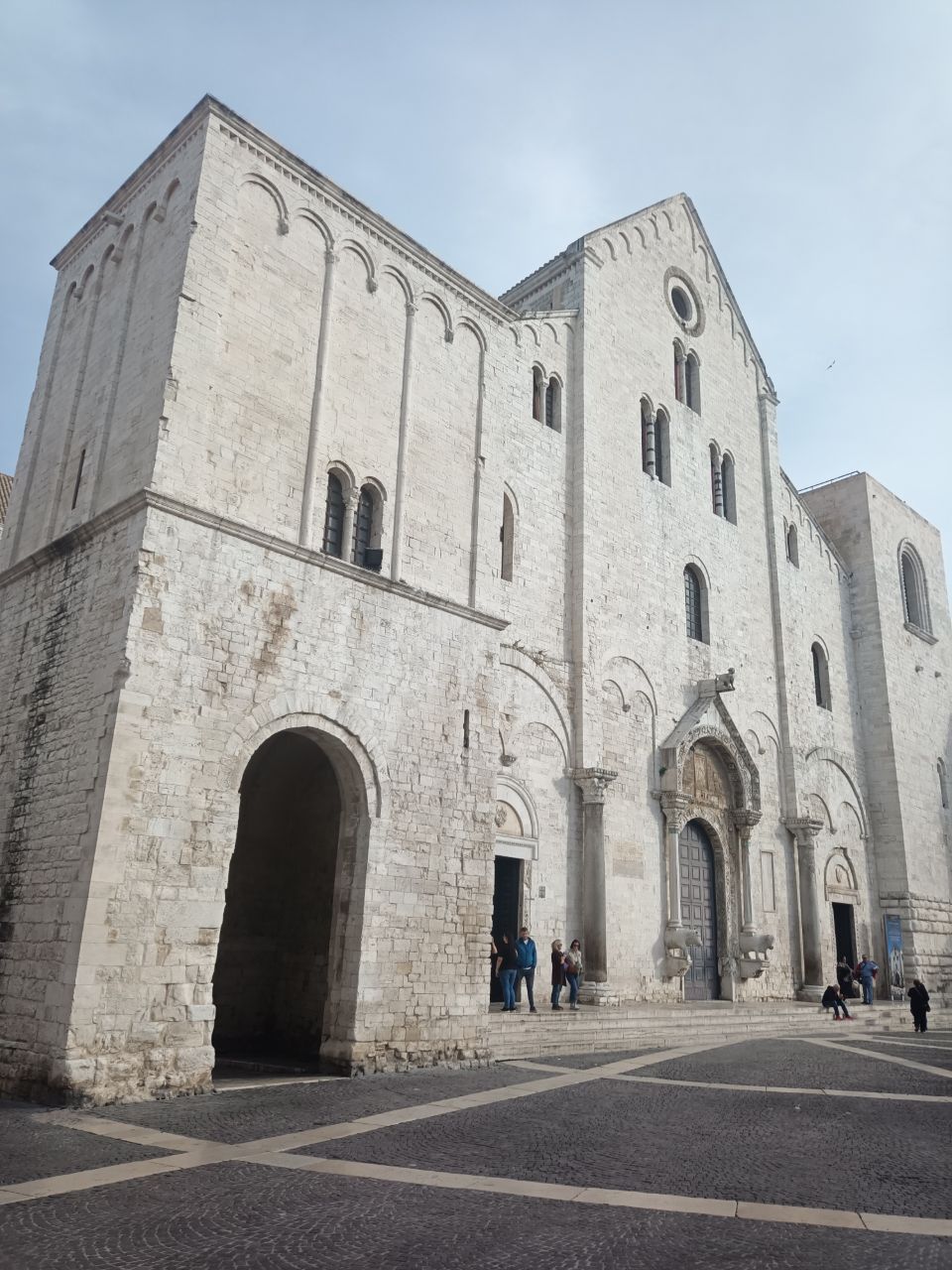
The basilica, angled 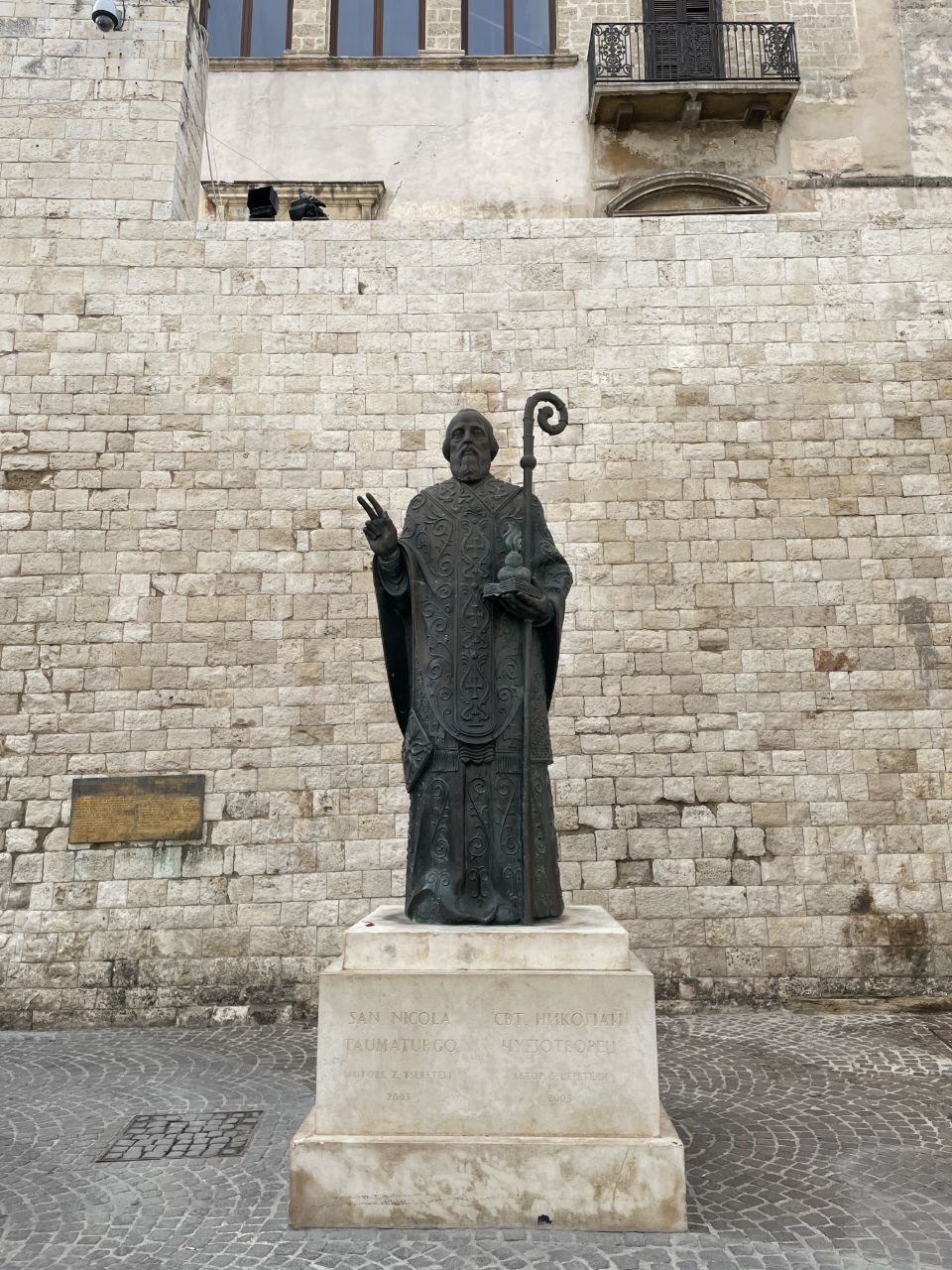
The bronze bishop 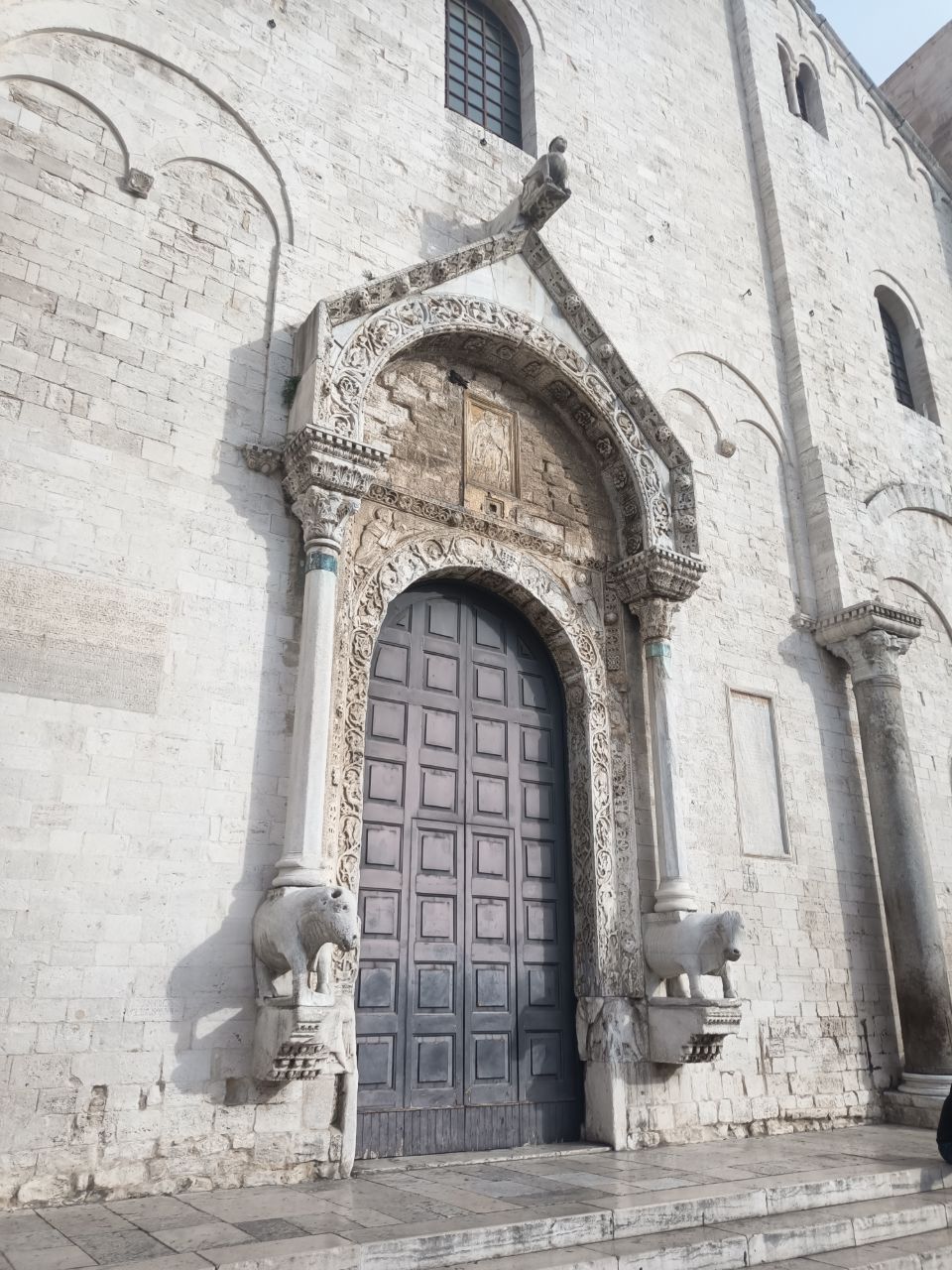
The studded portal 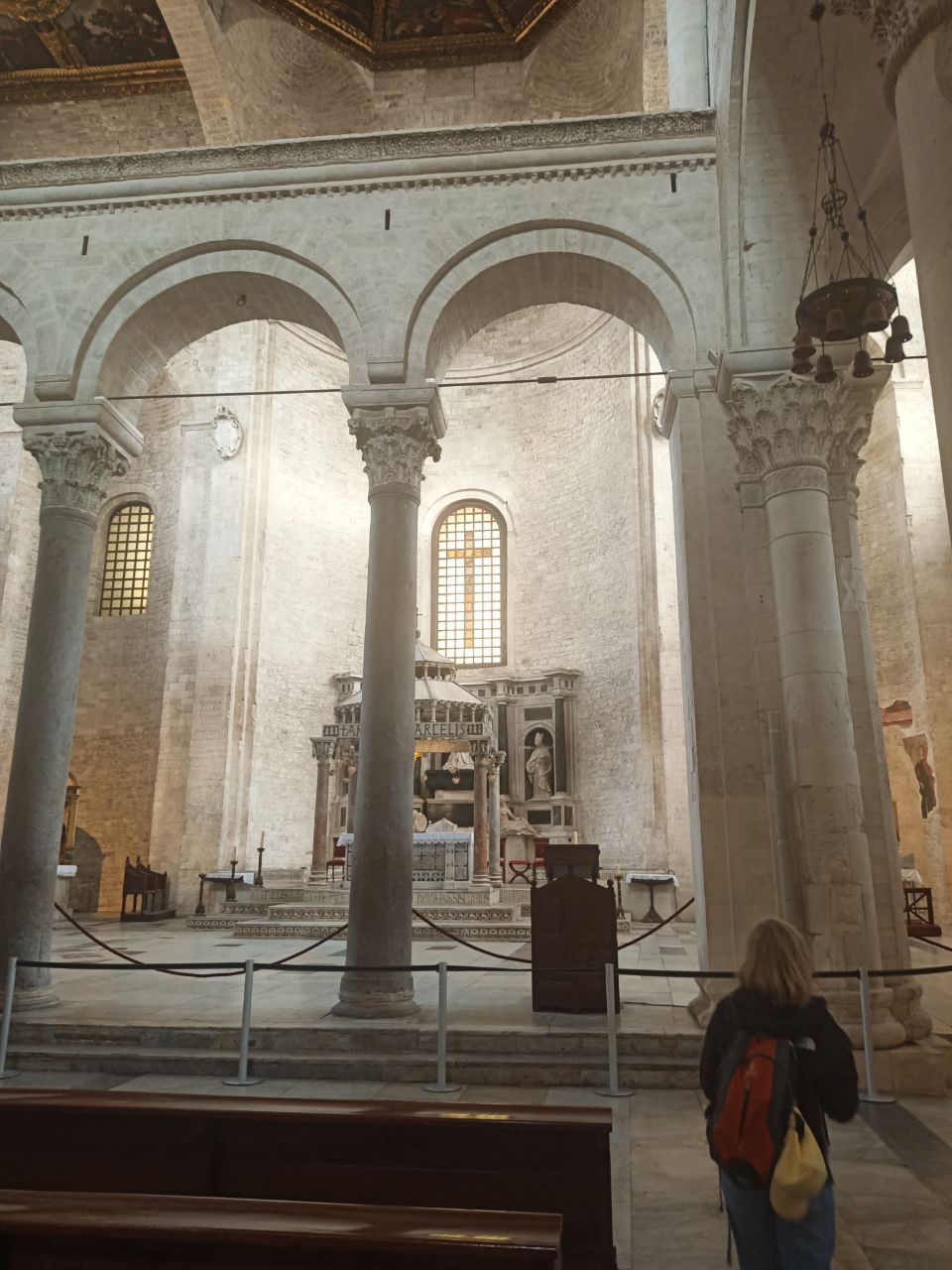
The long nave 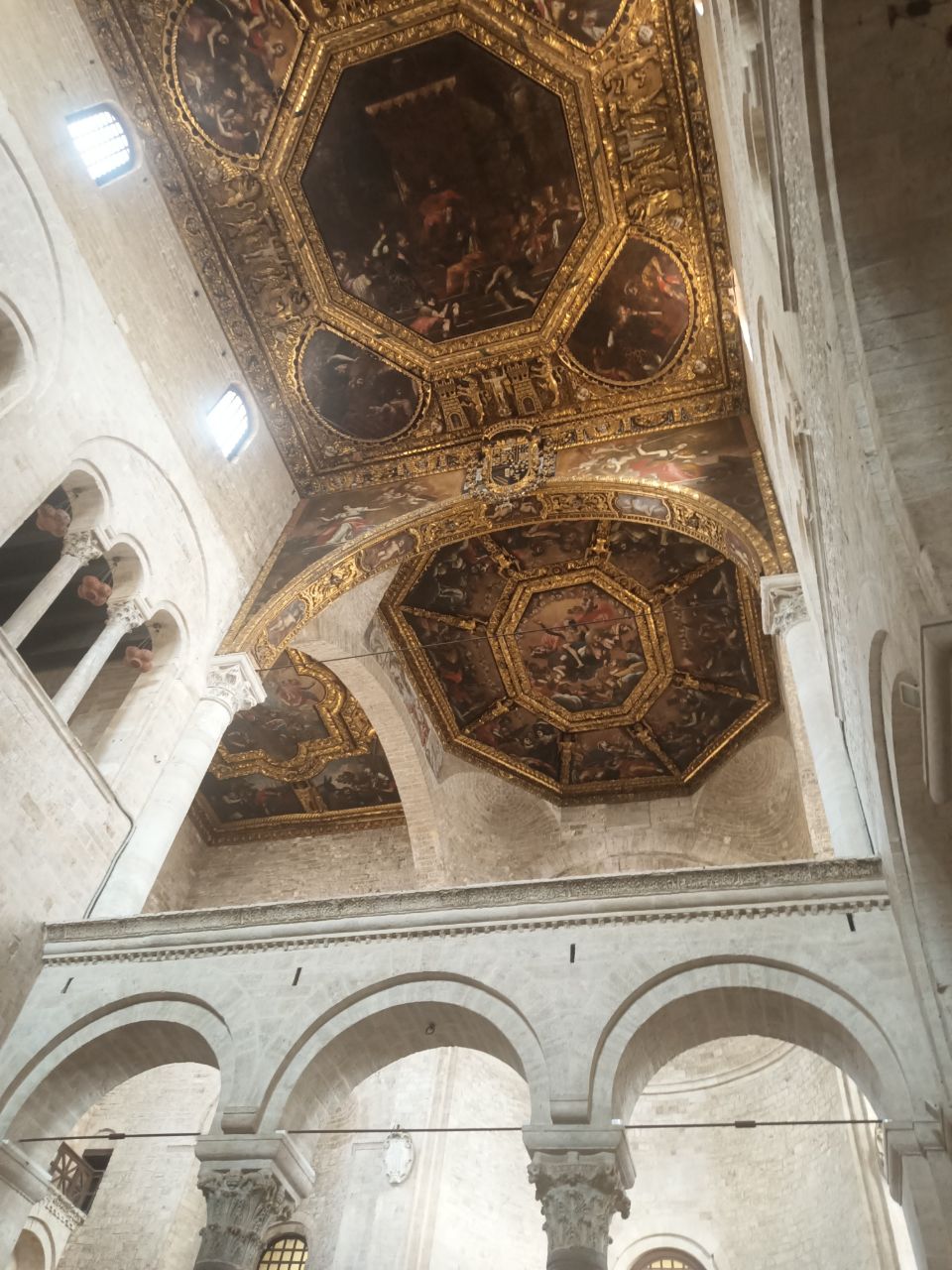
Gilded ceiling, painted beams 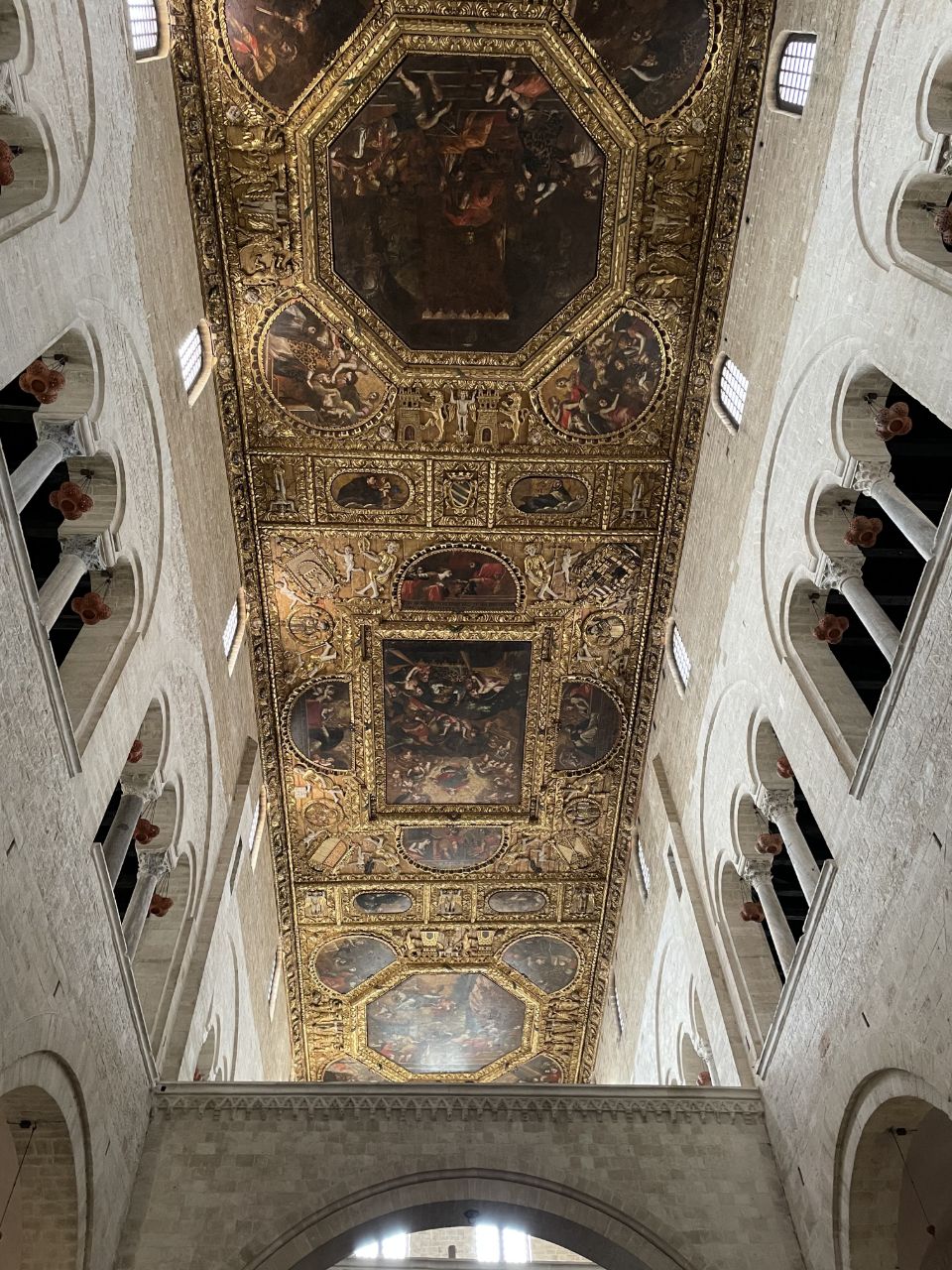
All the way up 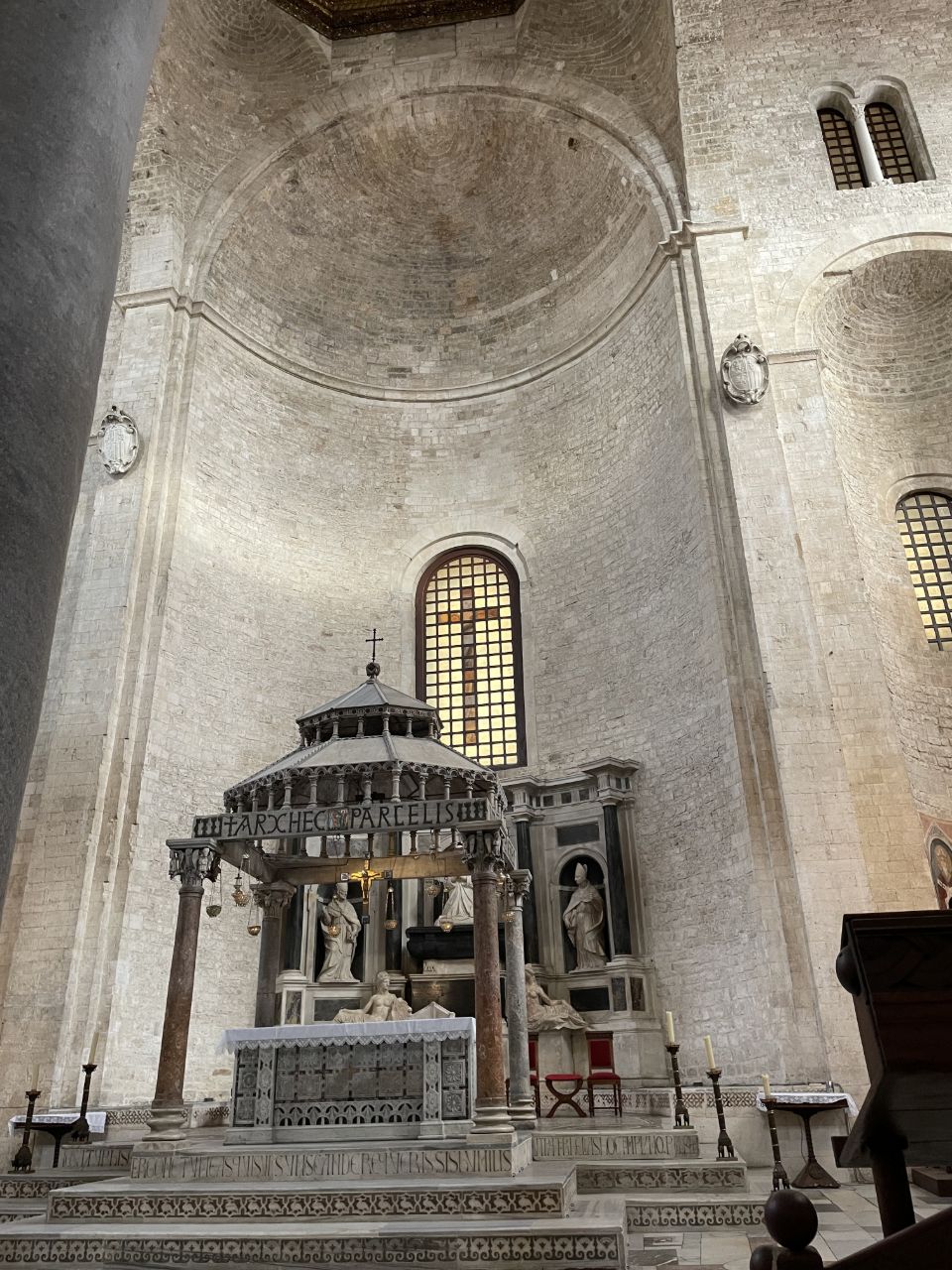
Above the altar 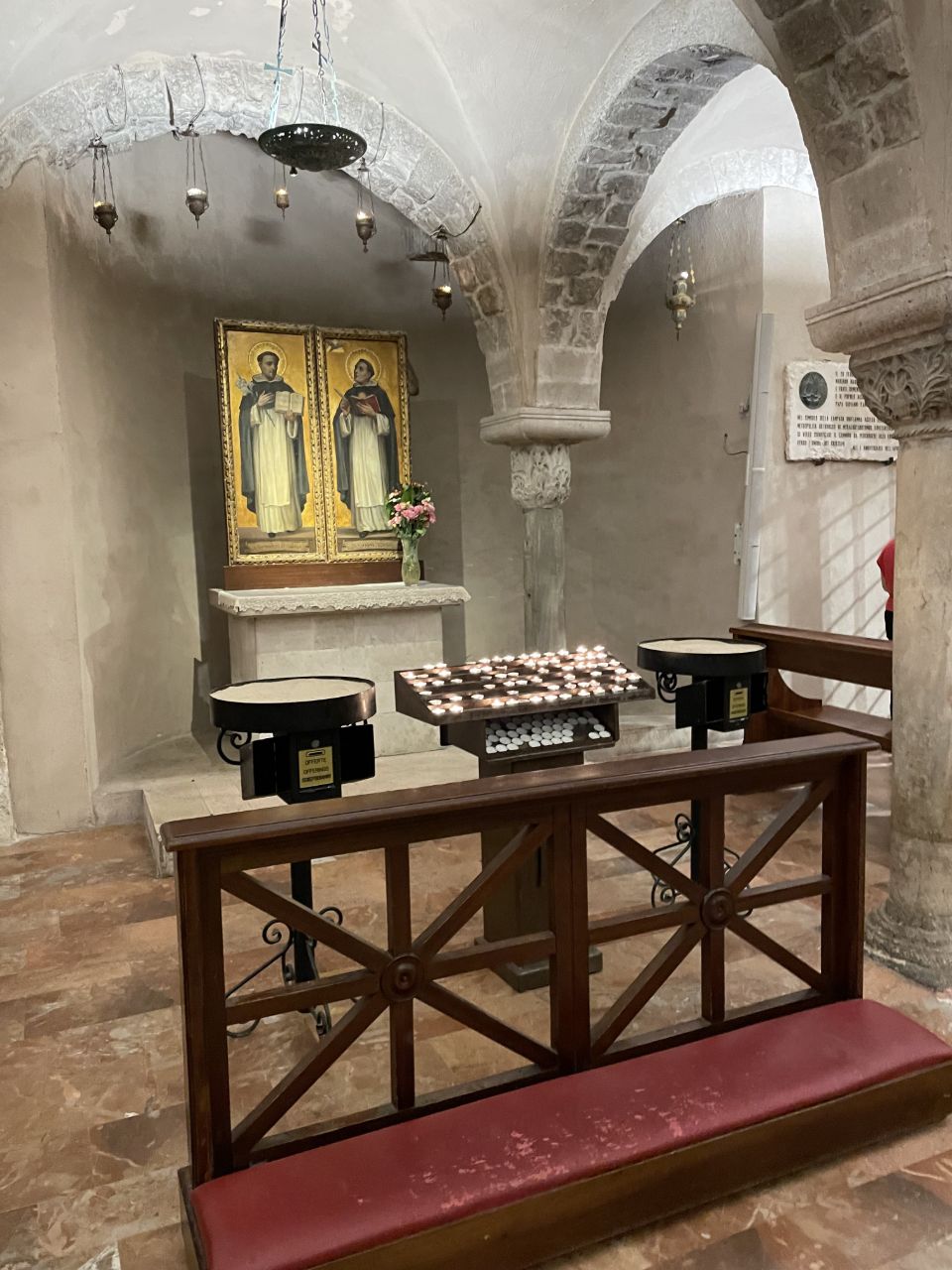
The candle-lit crypt 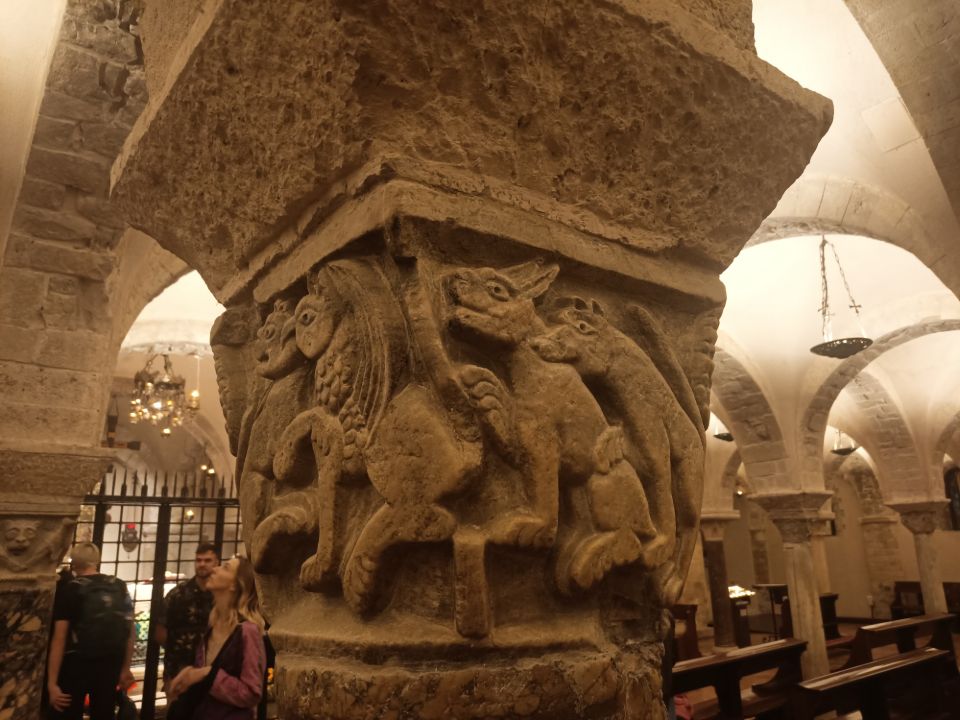
Animals on the capital 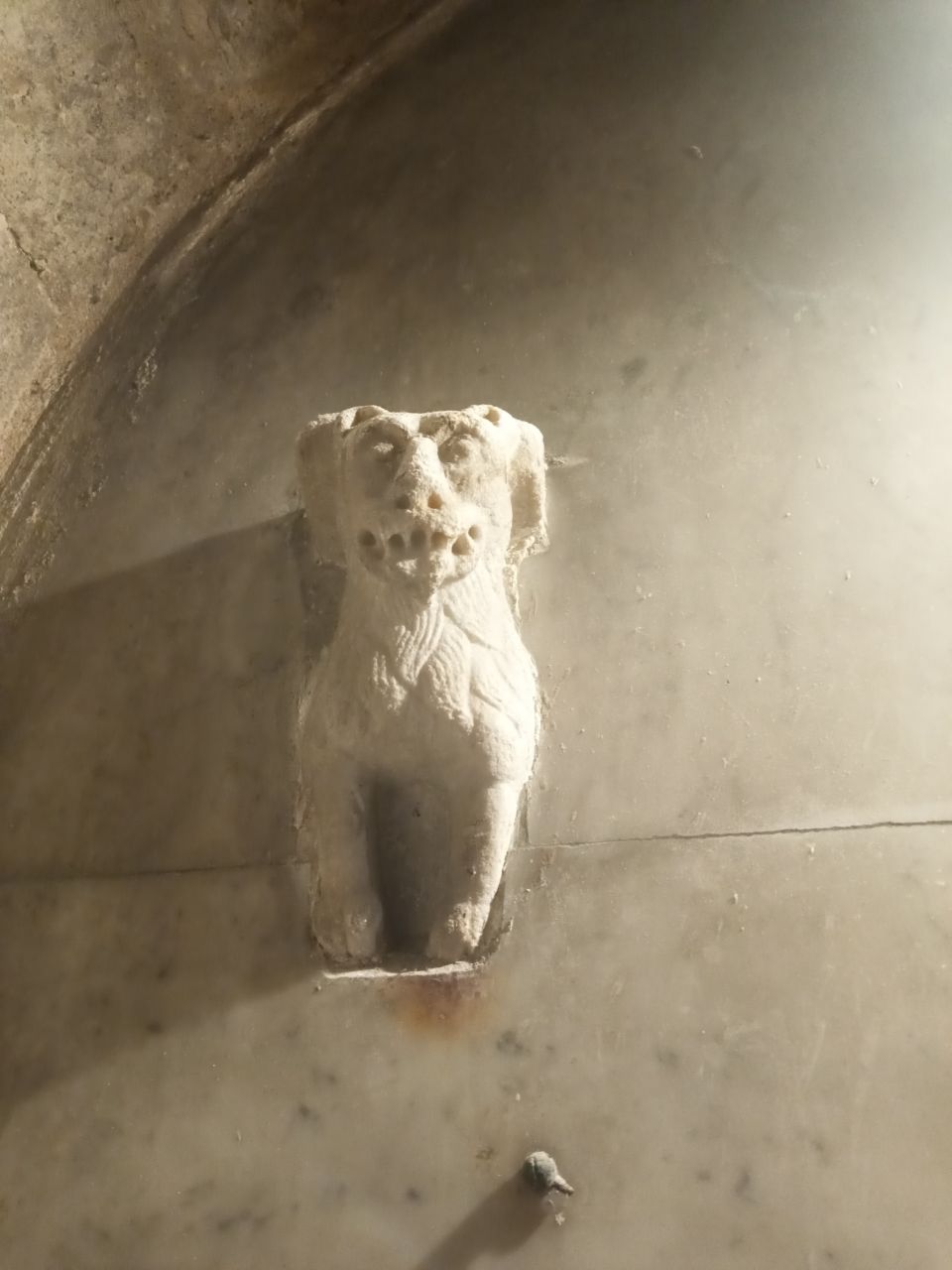
A snarling dog on the wall 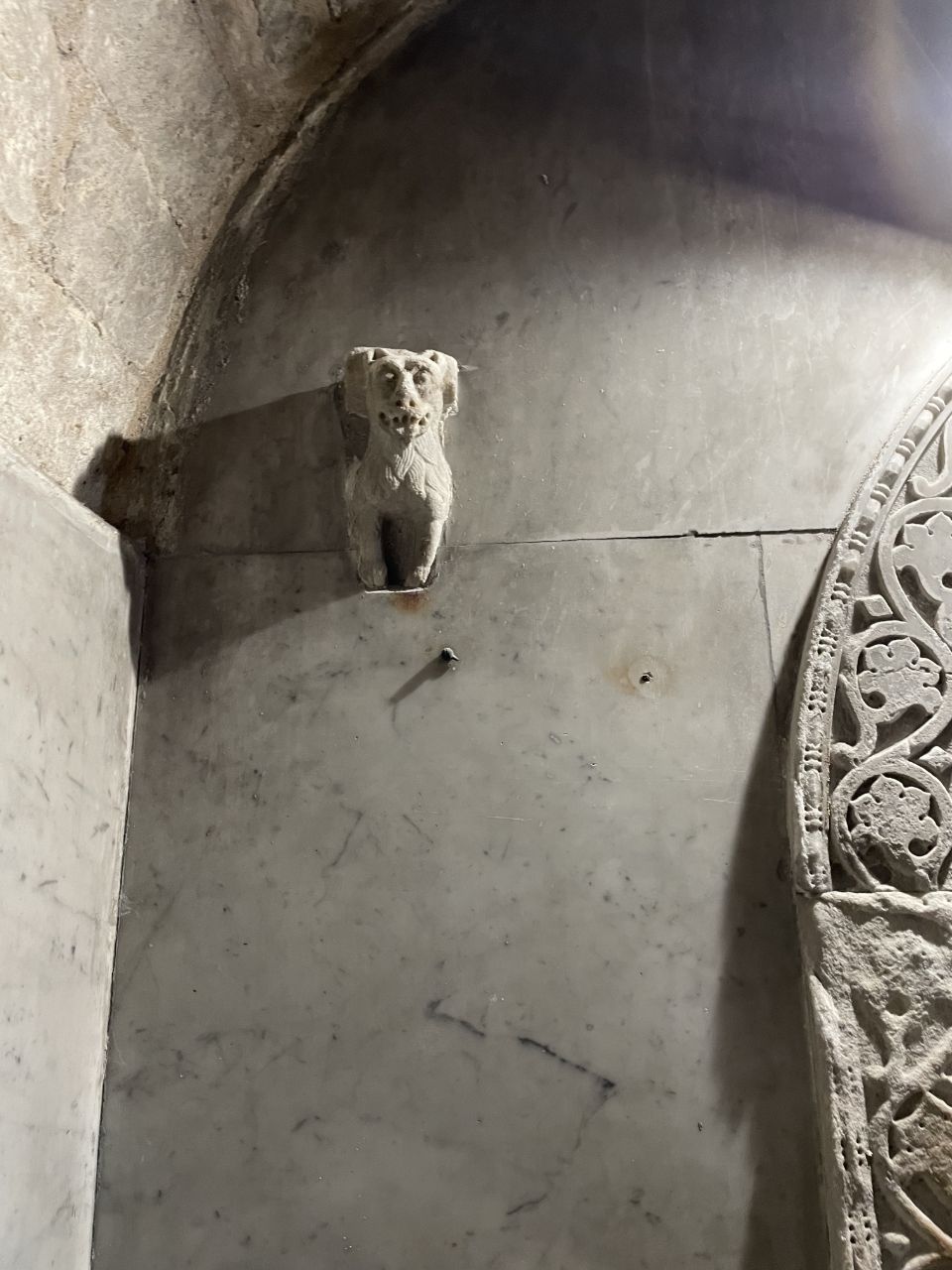
Lion corbels, retired
The cathedral and the castle moat
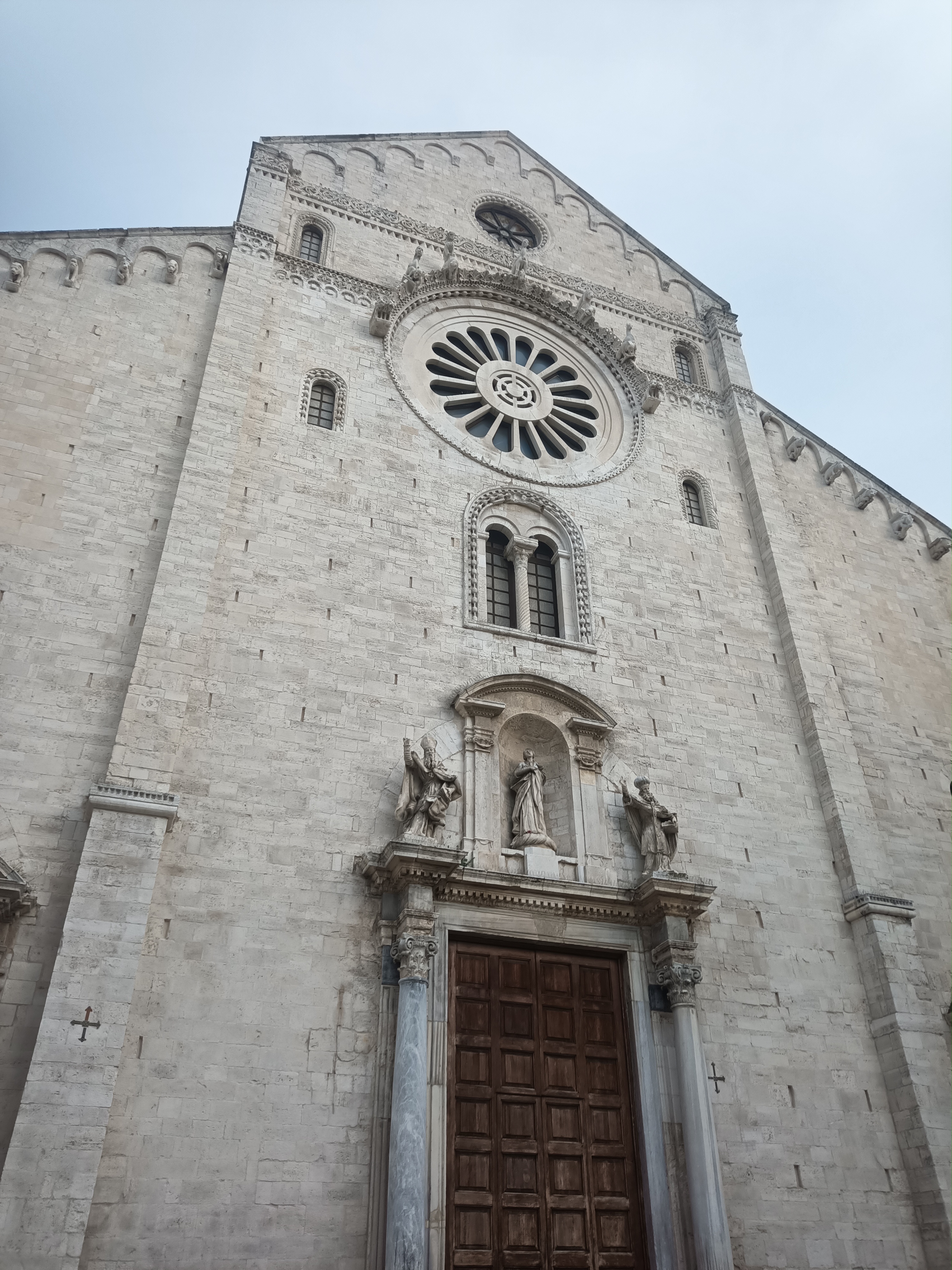
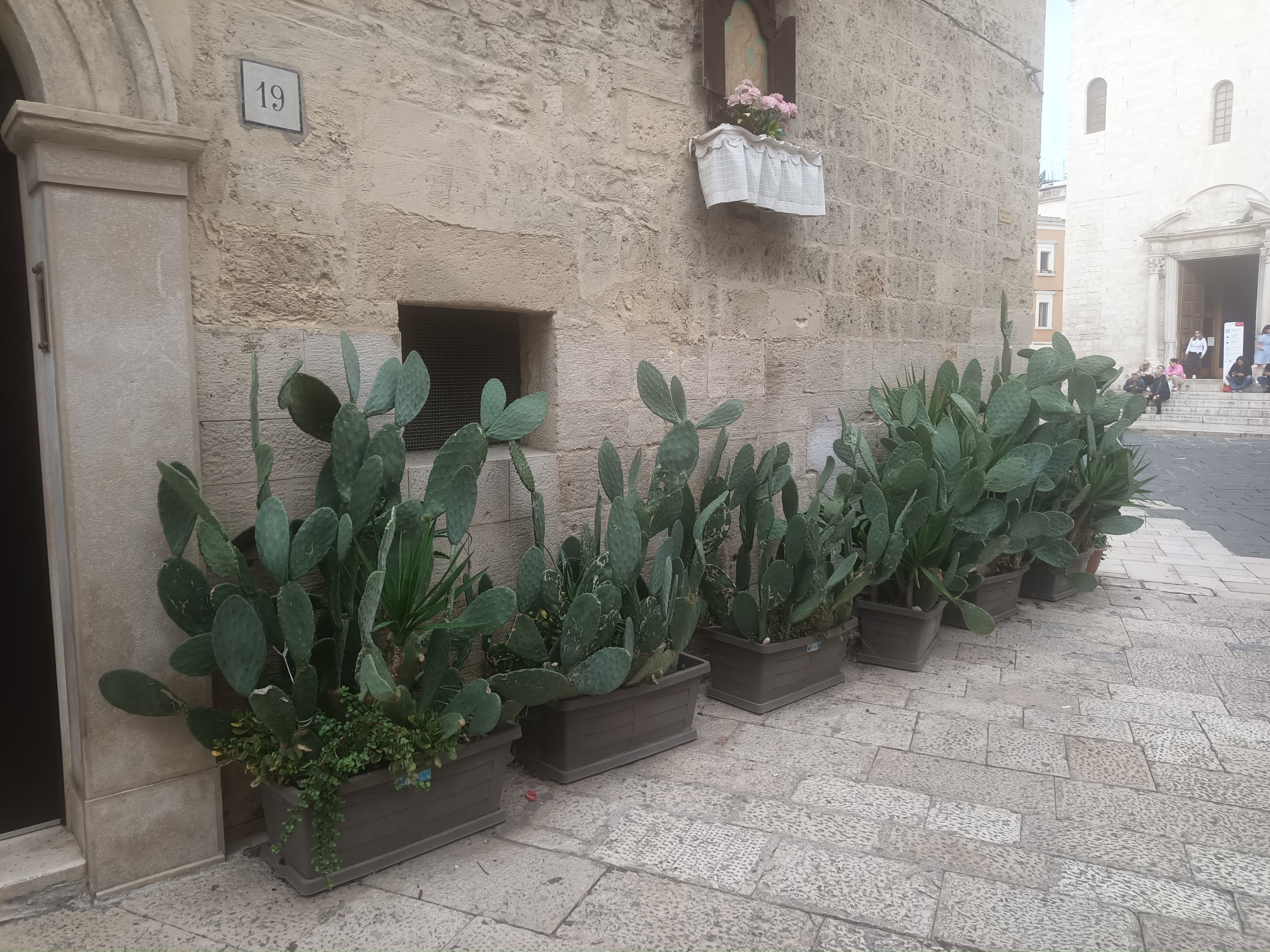
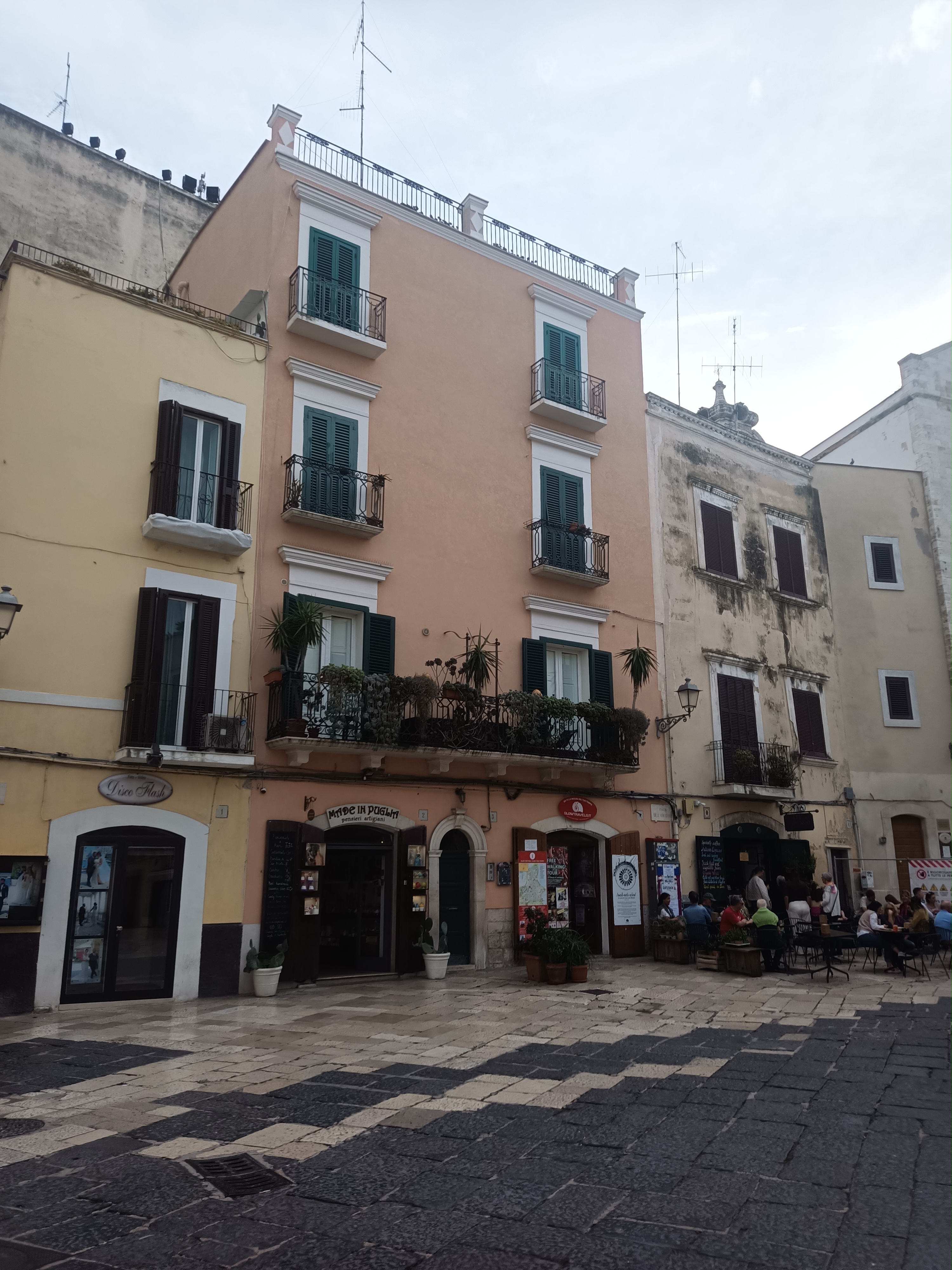
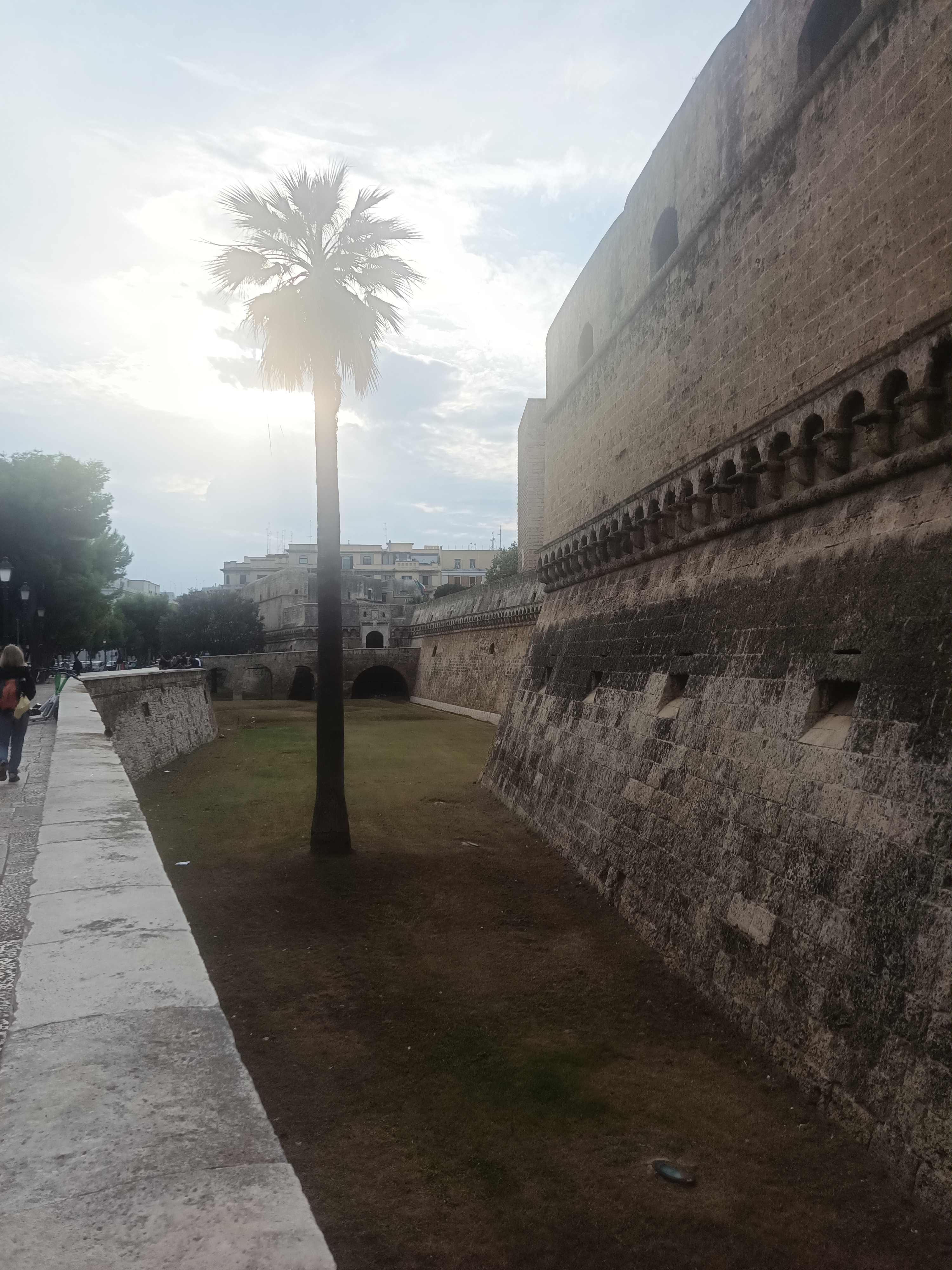
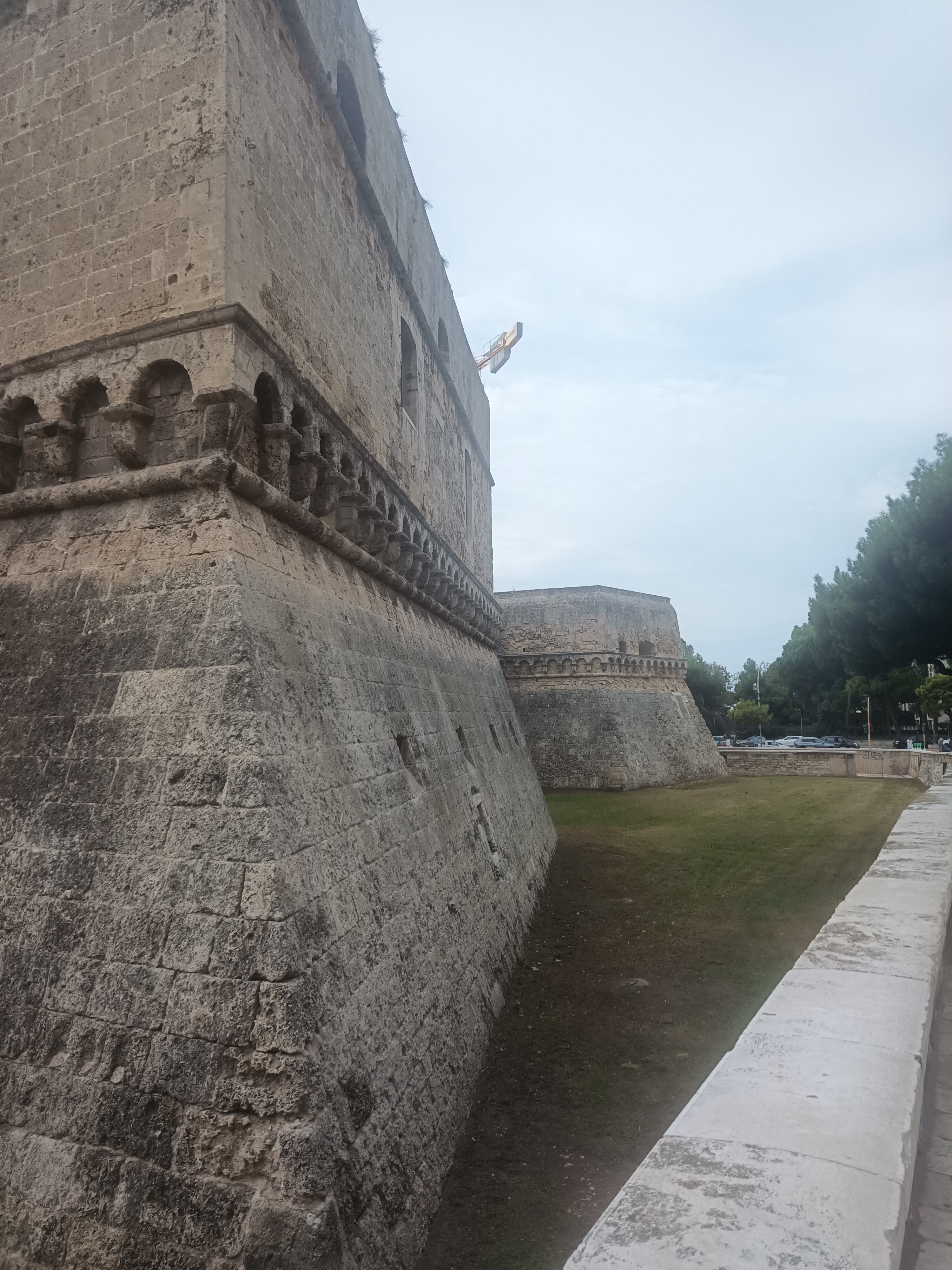
A few lanes away stands Bari Cathedral — grey stone, rose window, a quiet square in front — and beyond it the Norman castle, with its moat gone green and dry and a lone palm in it. In the alleys around them: potted prickly pears in a row, peach-coloured houses, a barred balcony with geraniums surviving October.
Church and portal 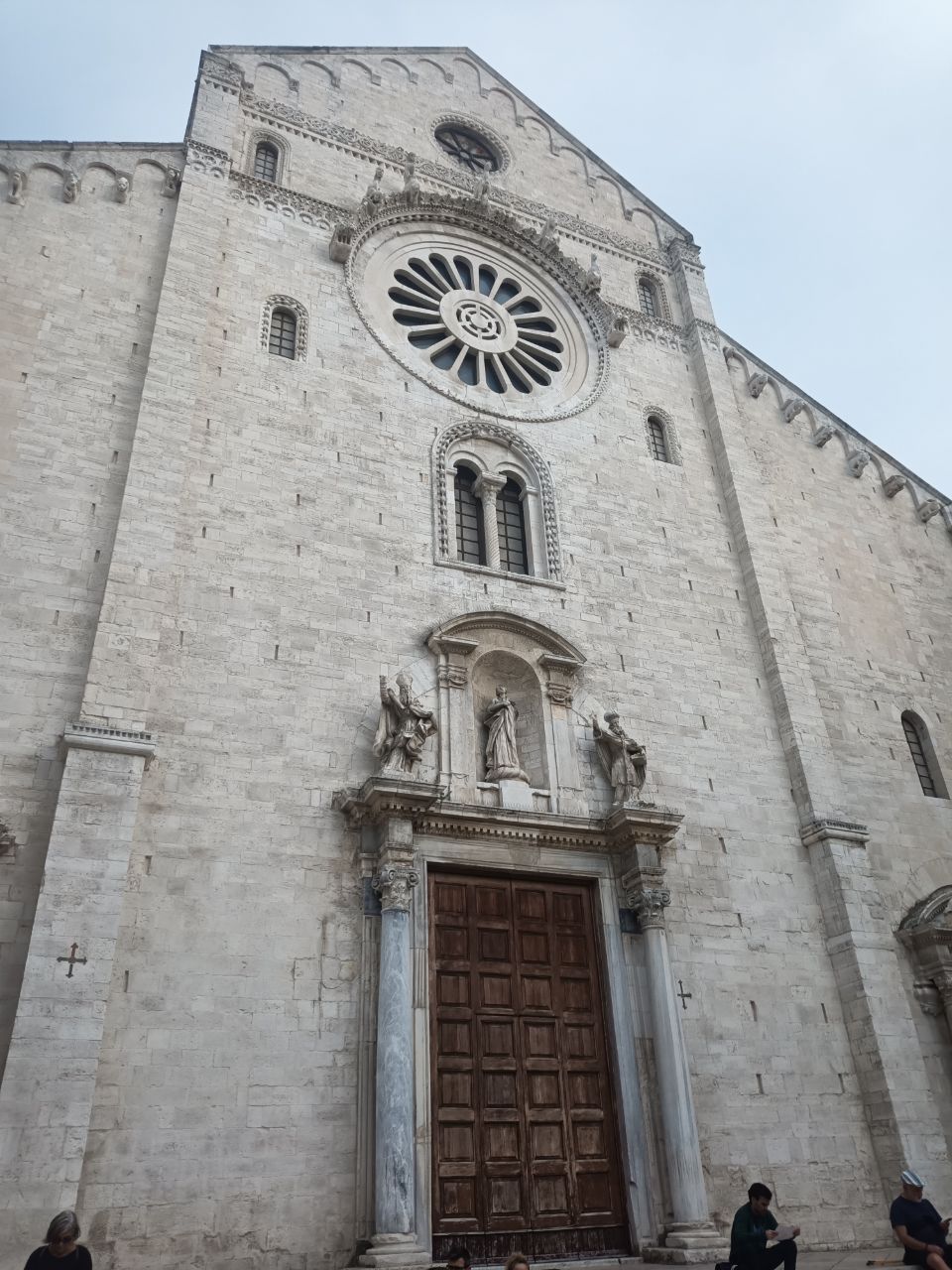
The rose window 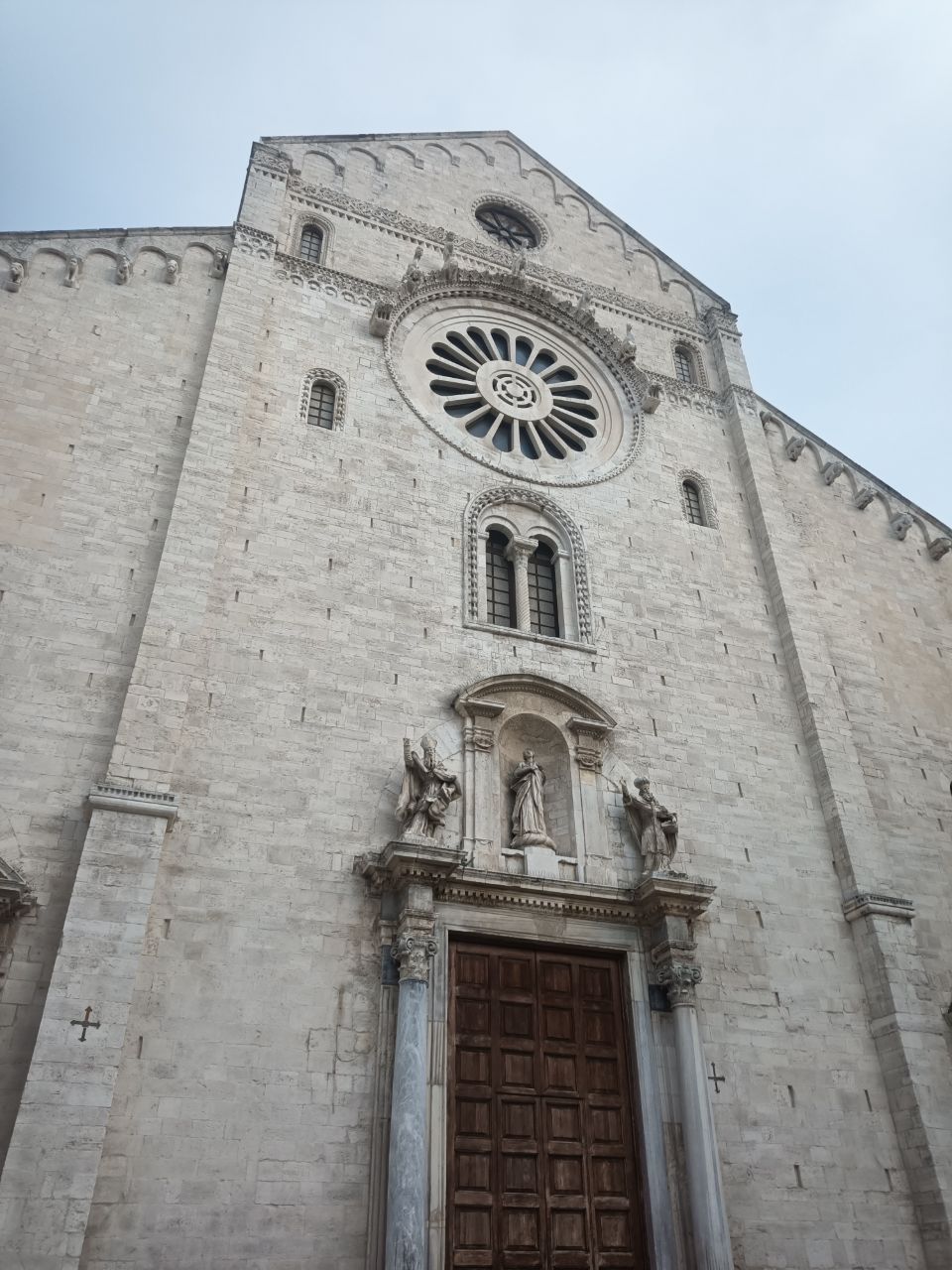
Cathedral under clouds 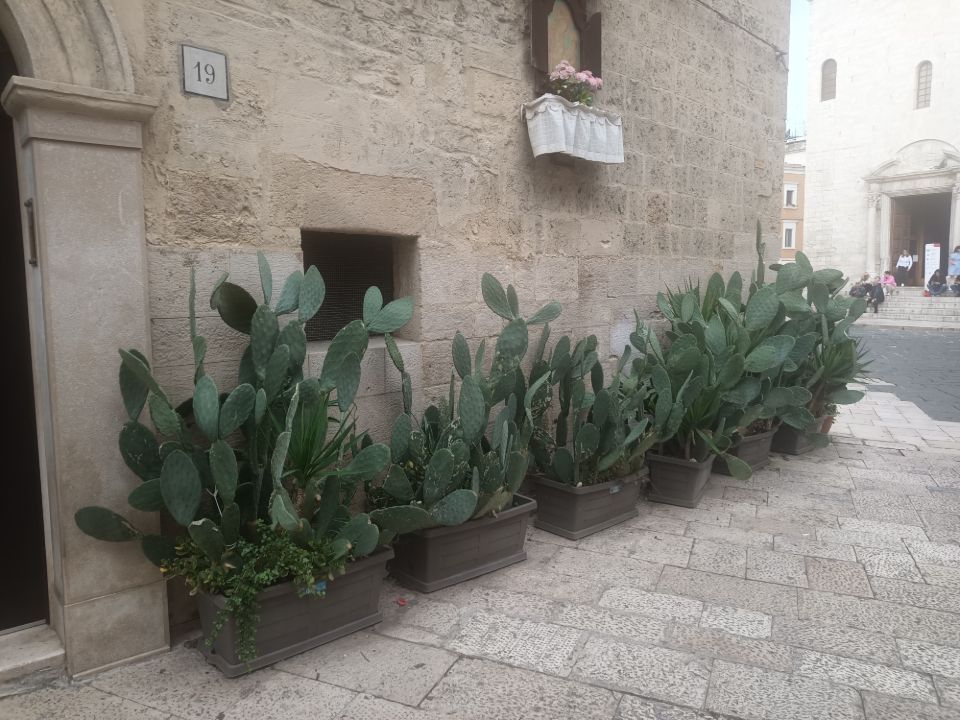
Prickly pears in a row 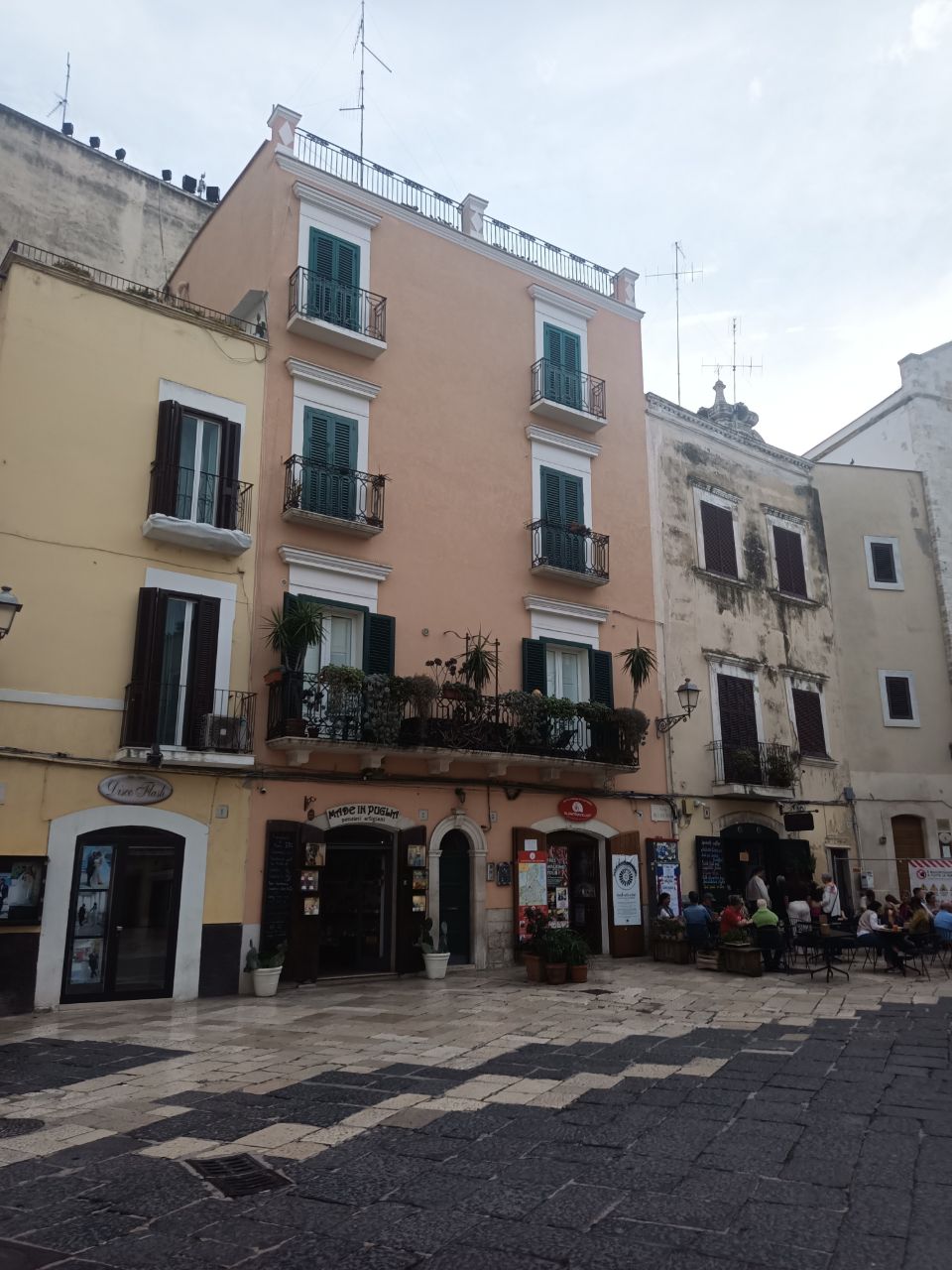
A small quiet square 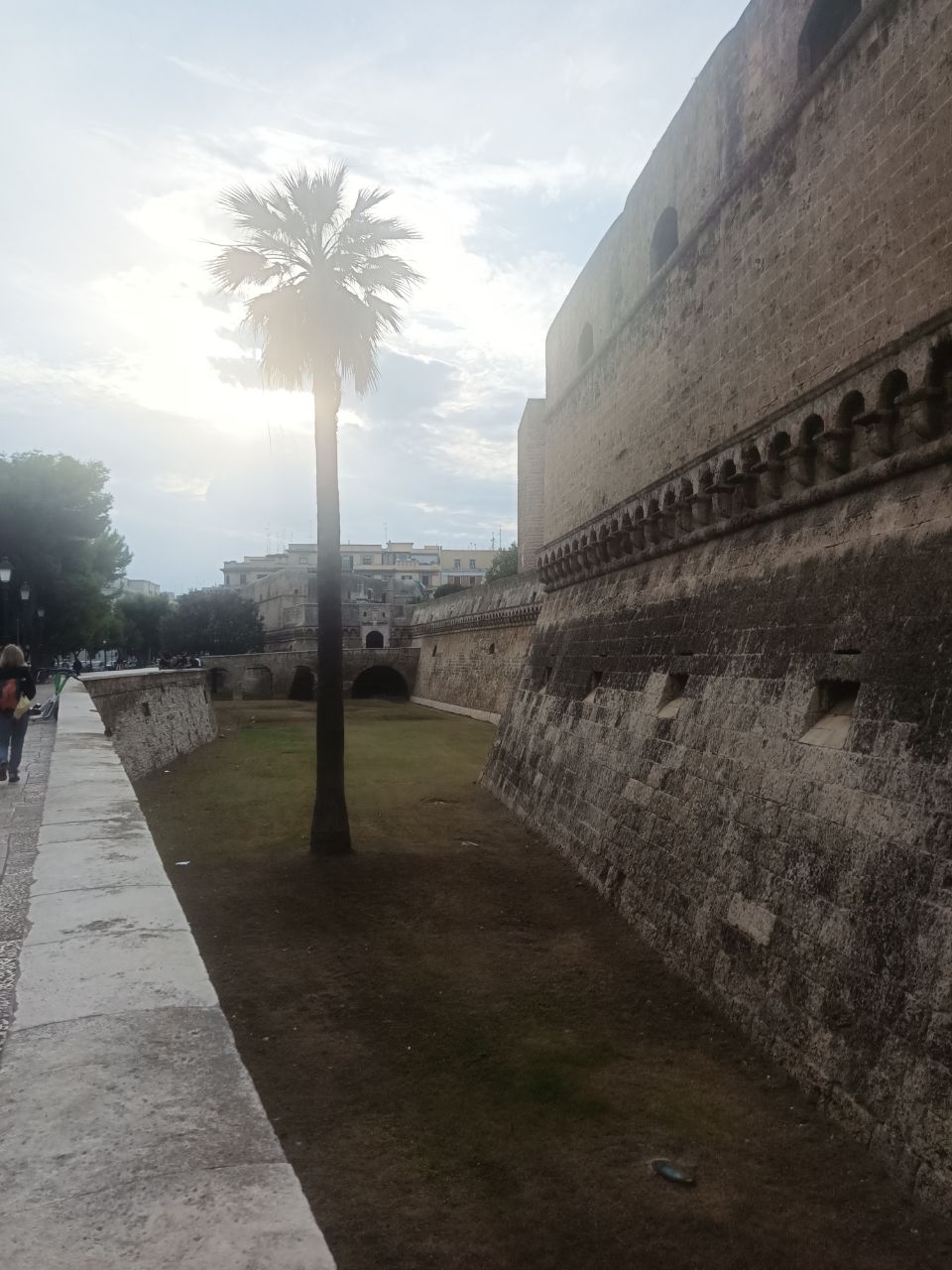
The palm in the moat 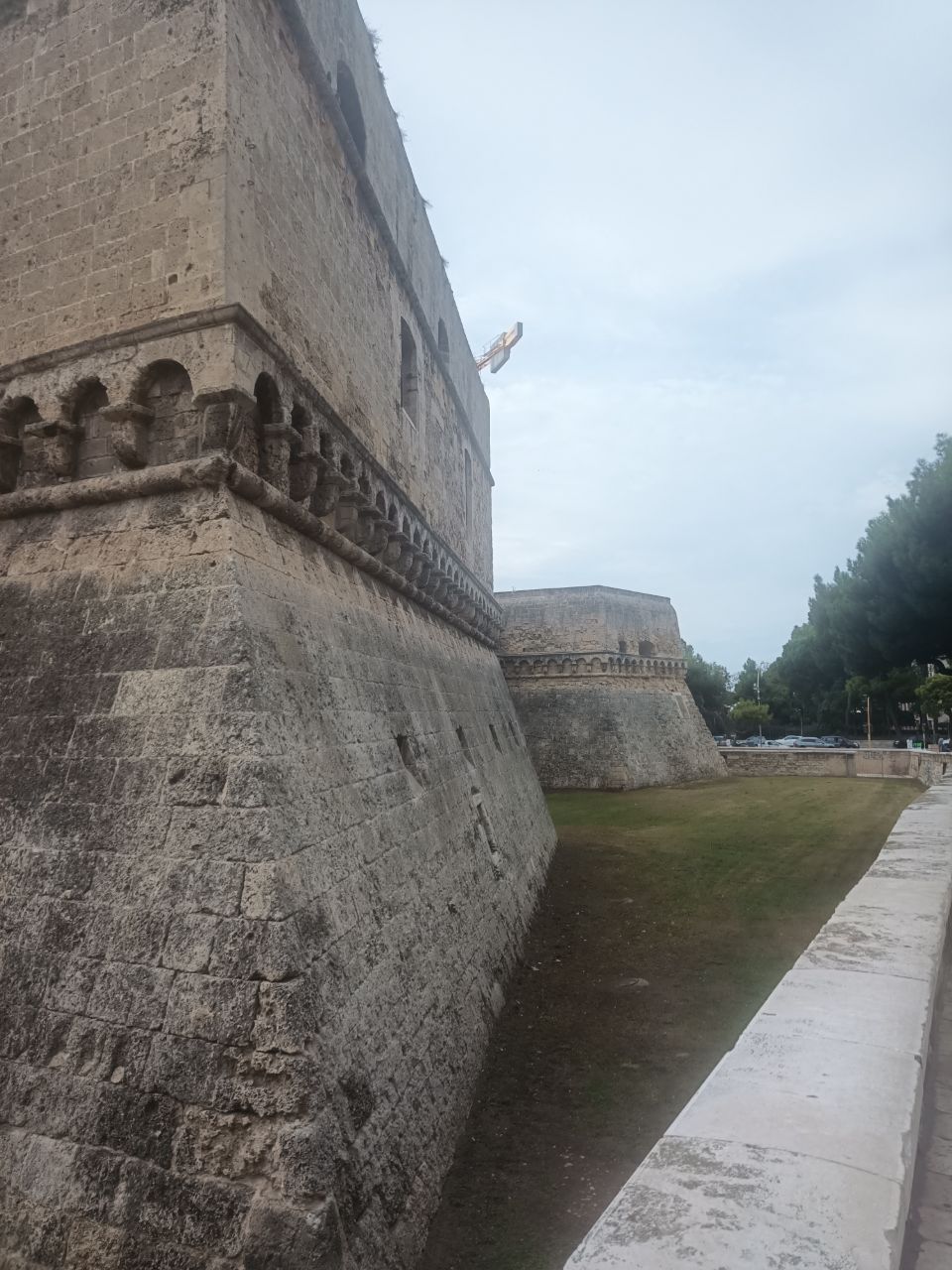
Castle walls, going soft 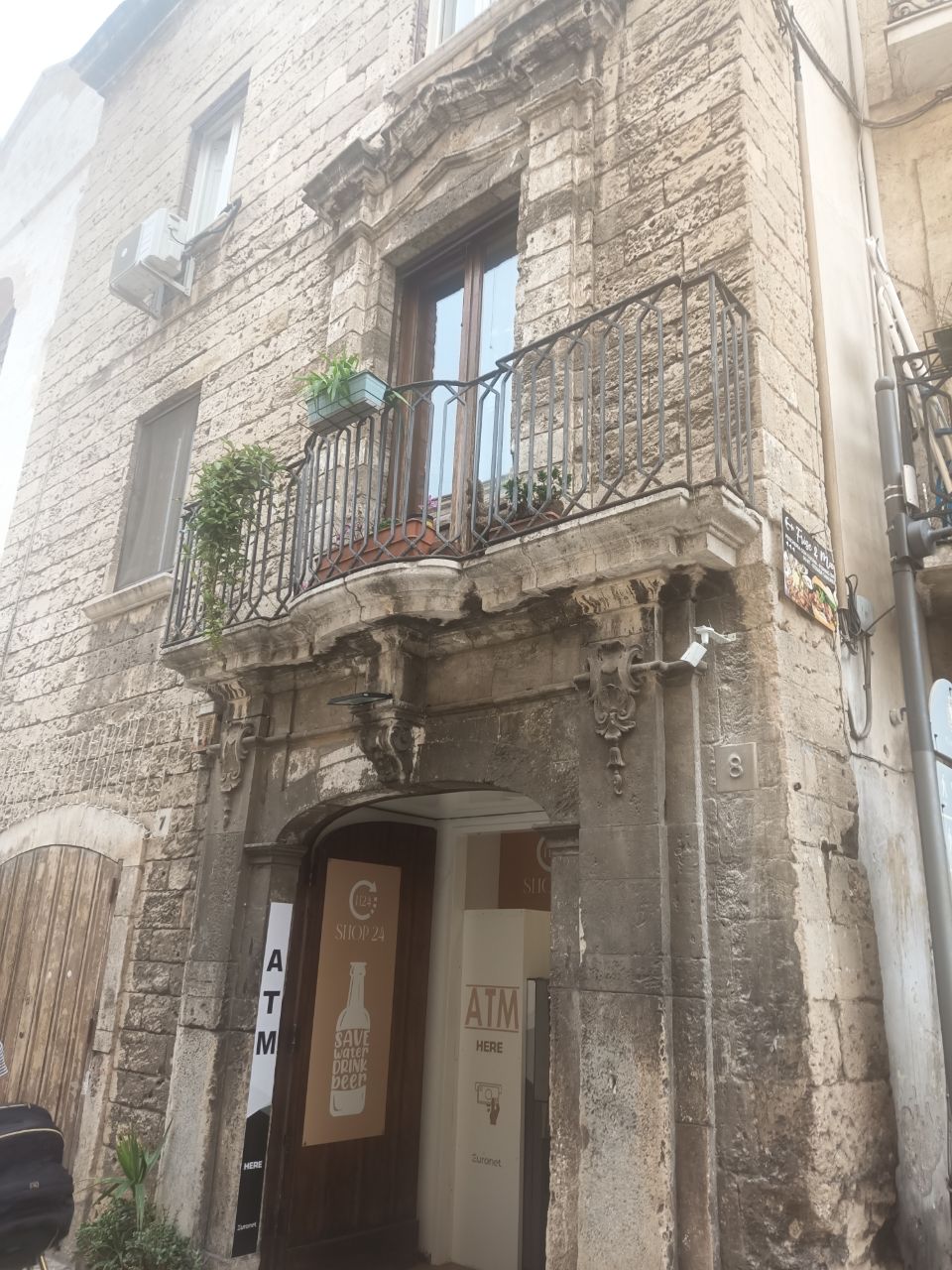
Green plants survive the weather
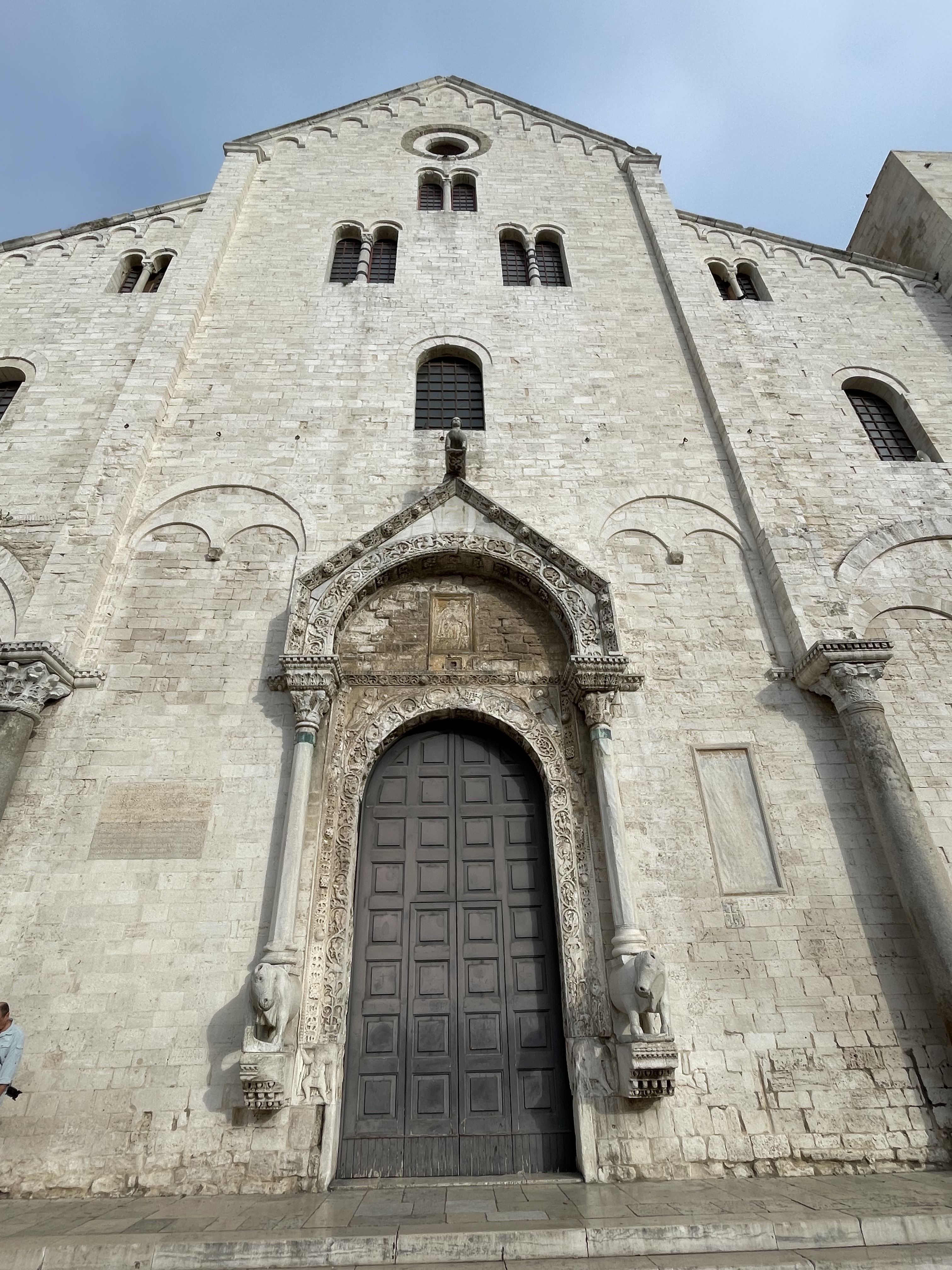
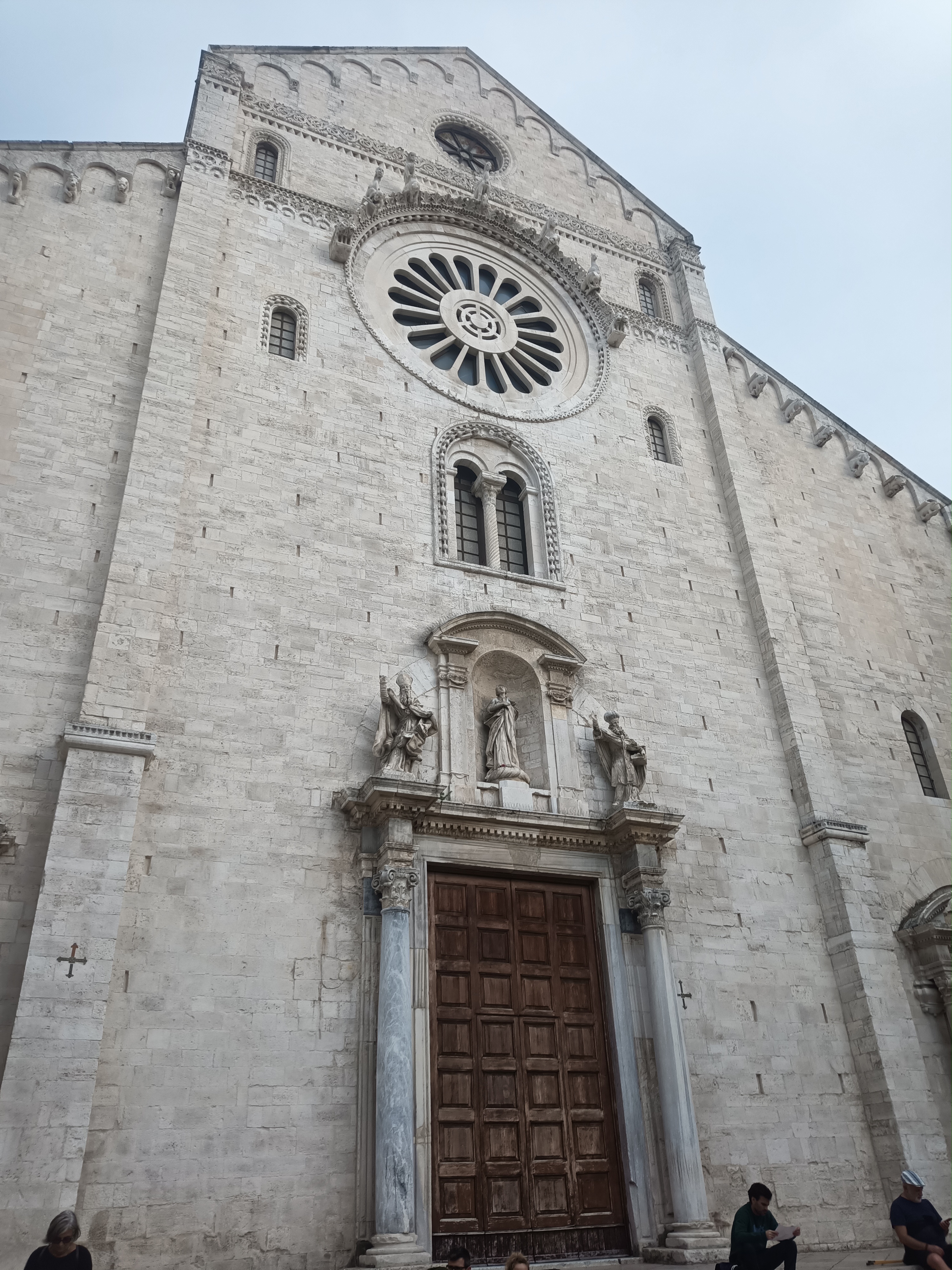
Golden hour, golden alleys
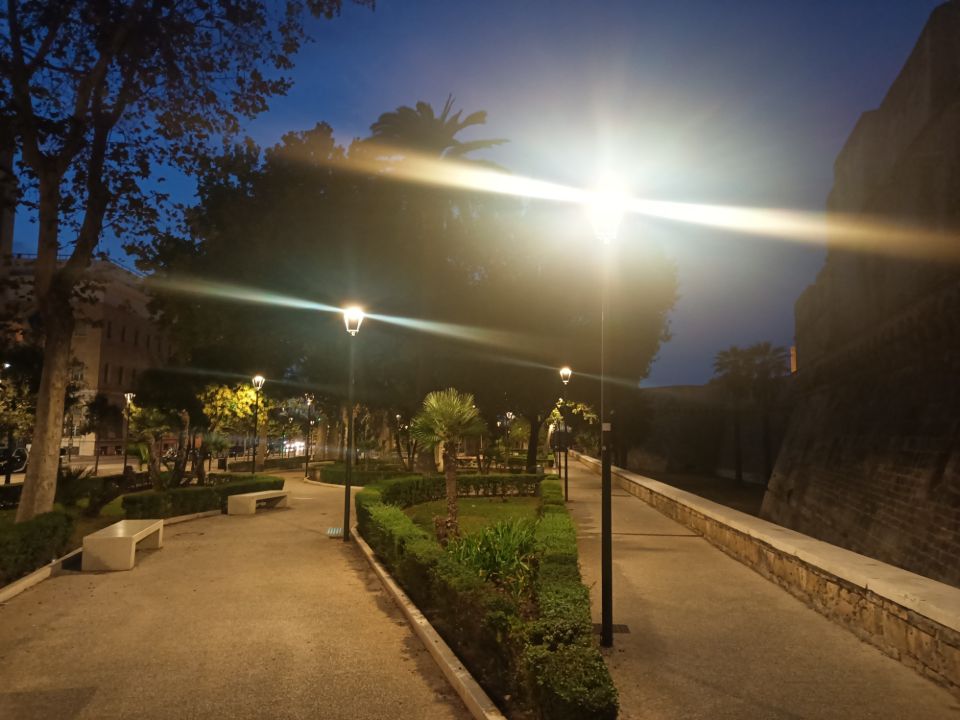
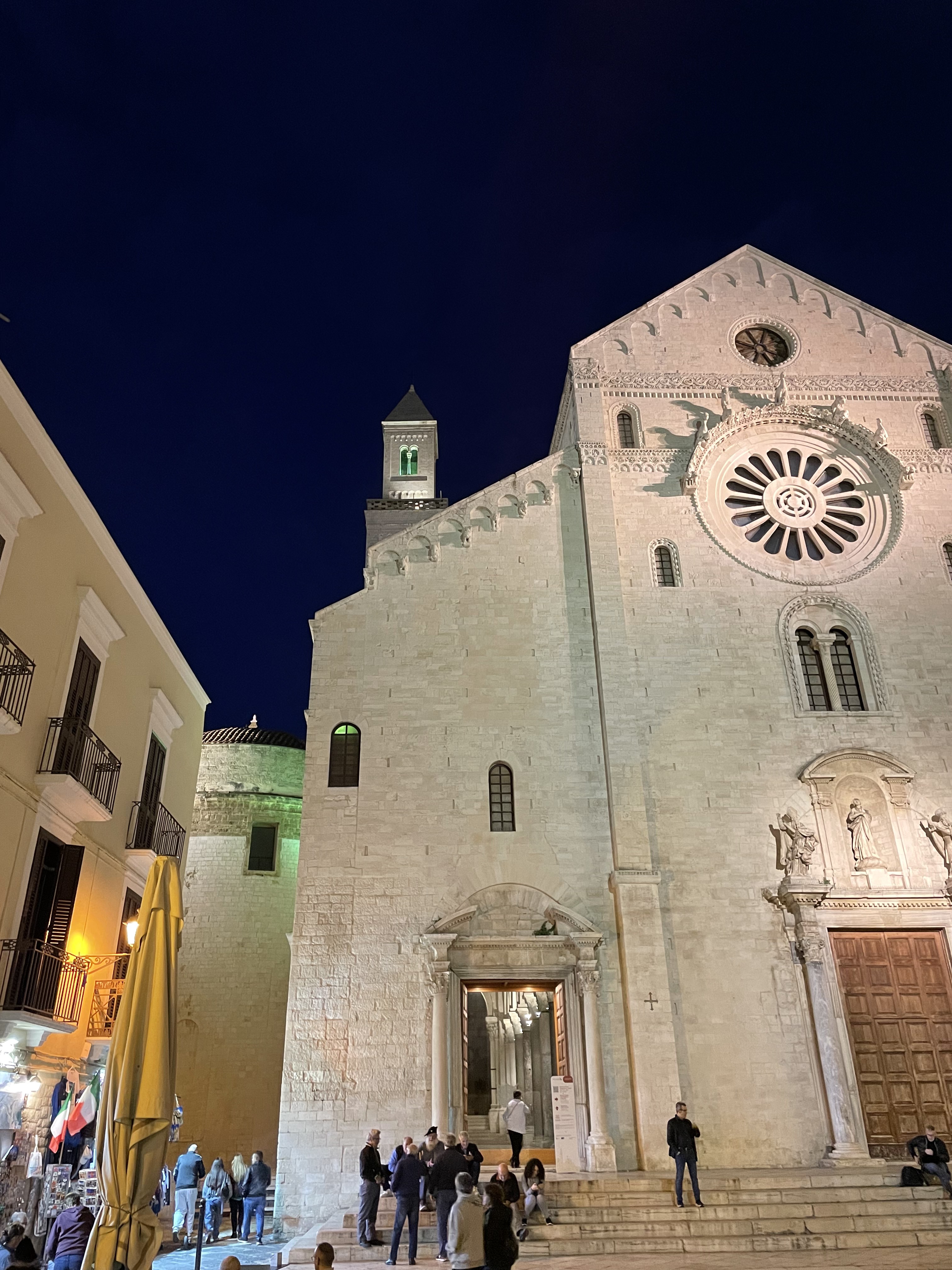
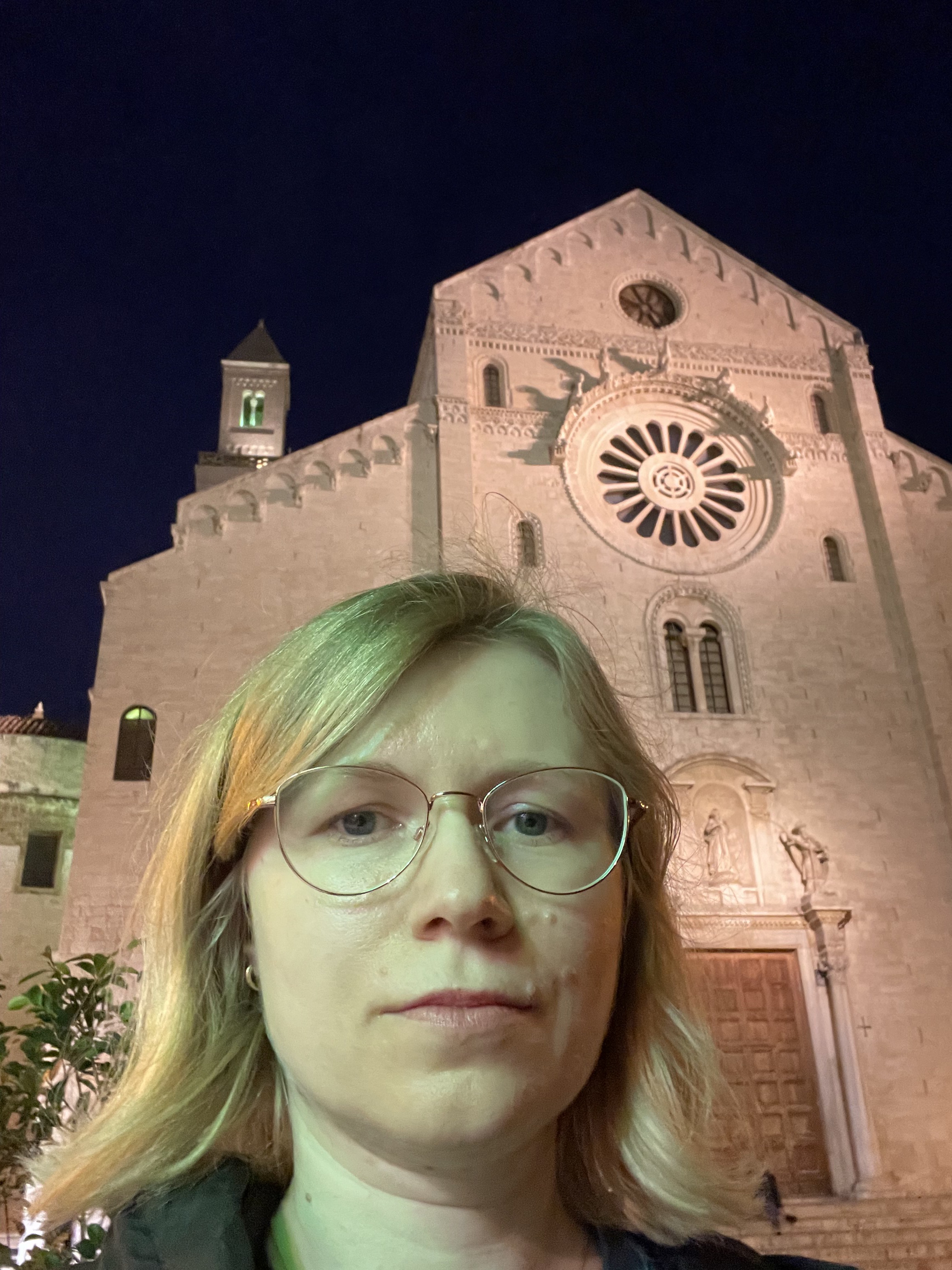
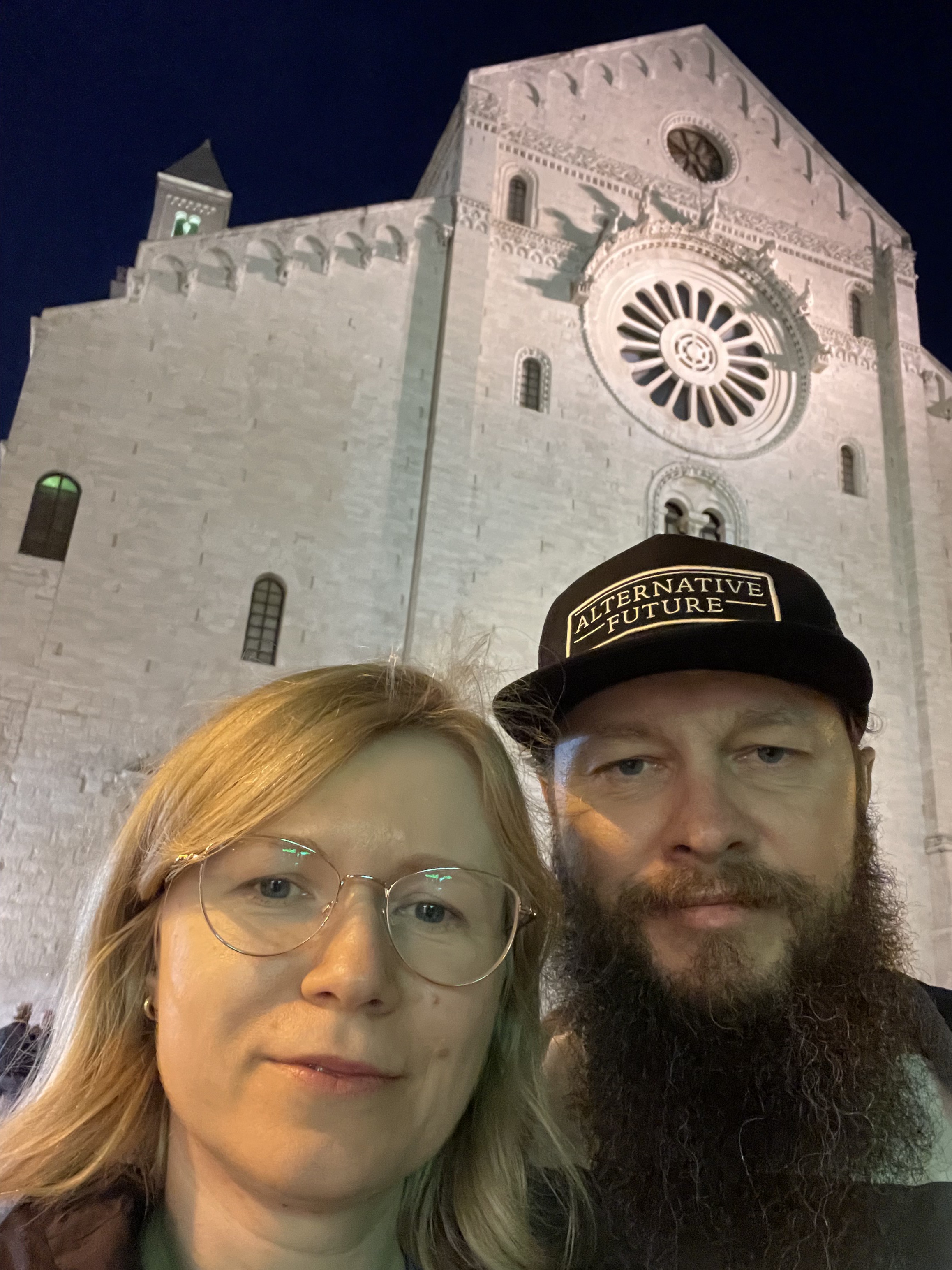
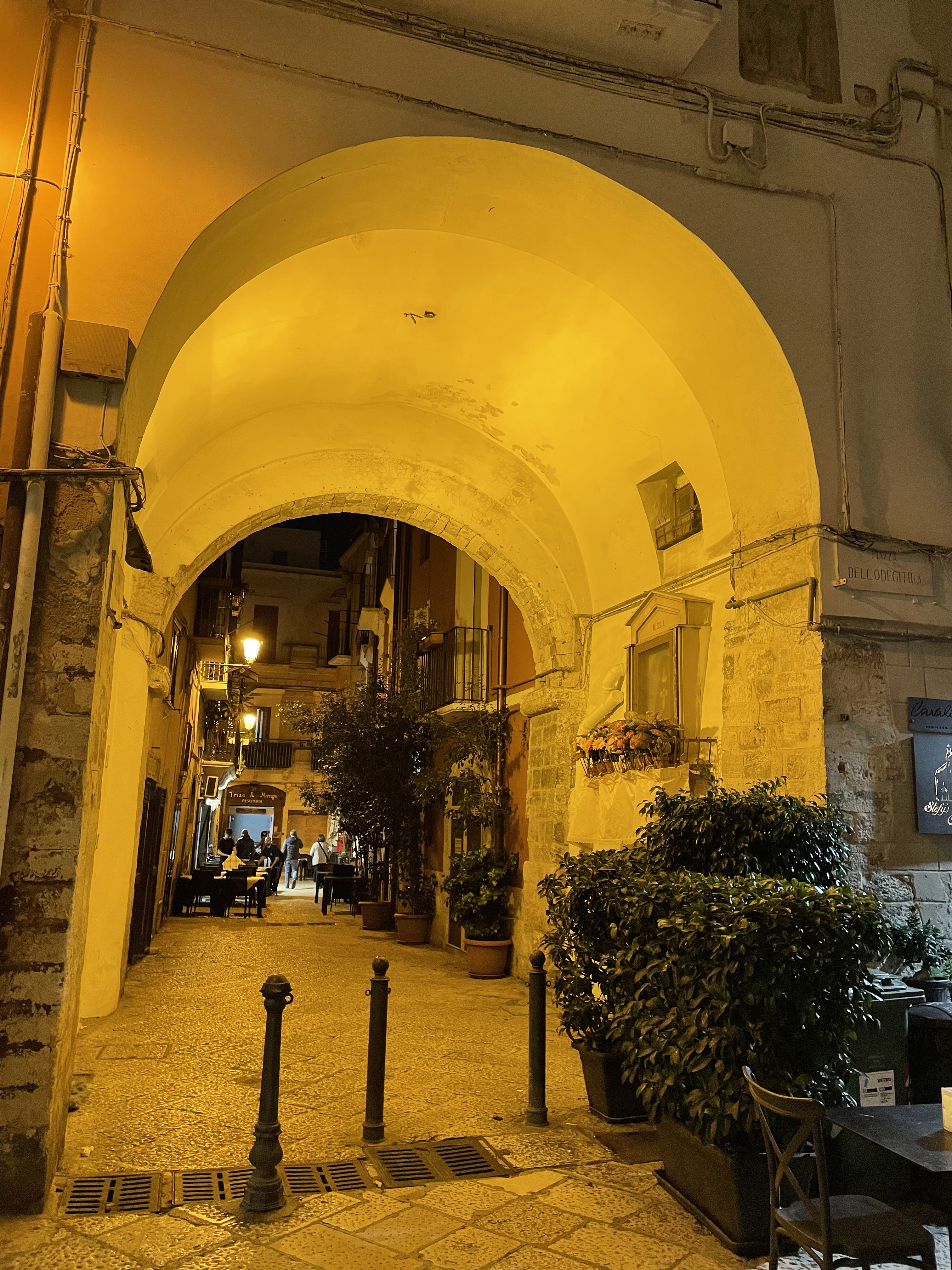
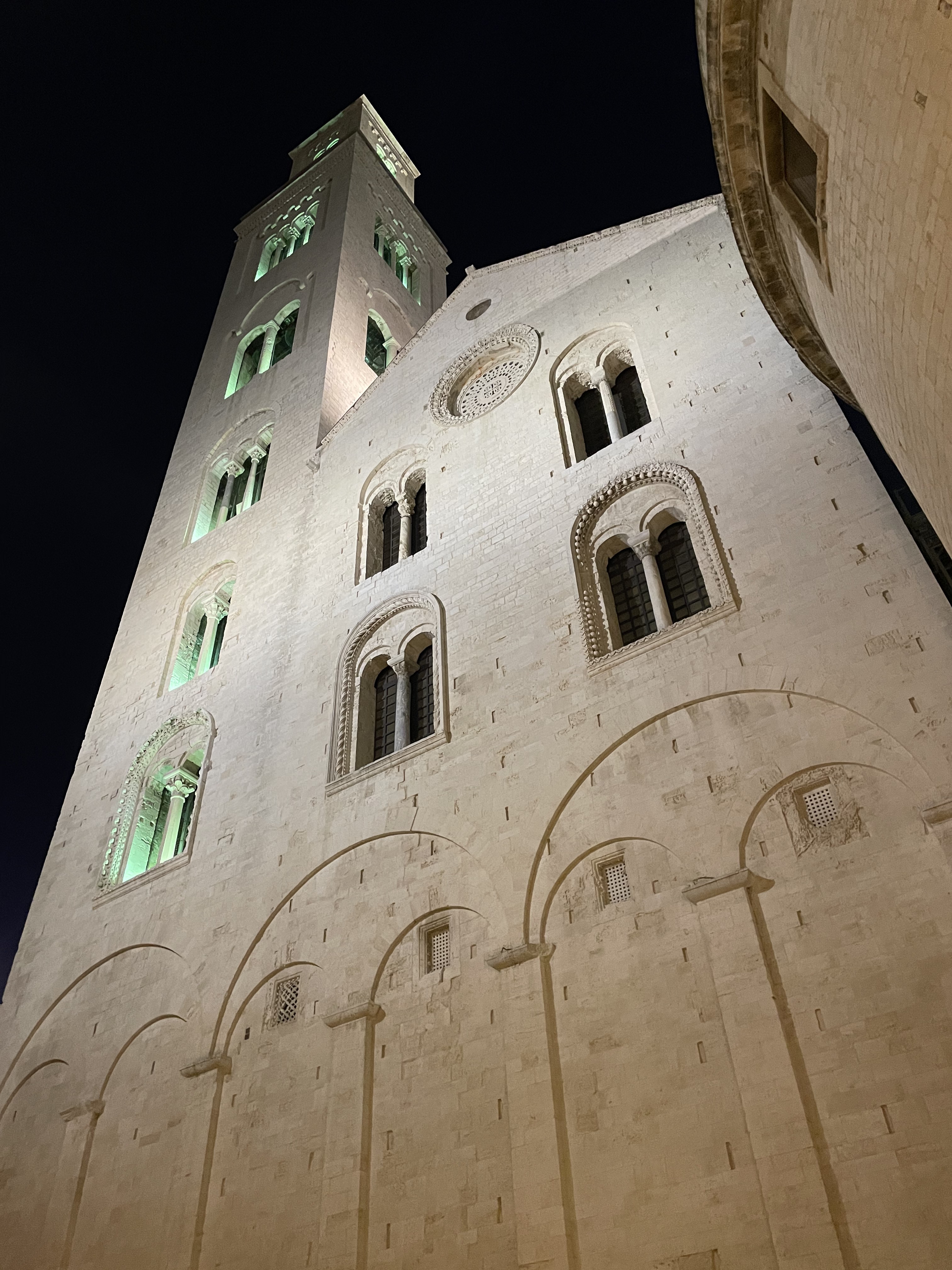
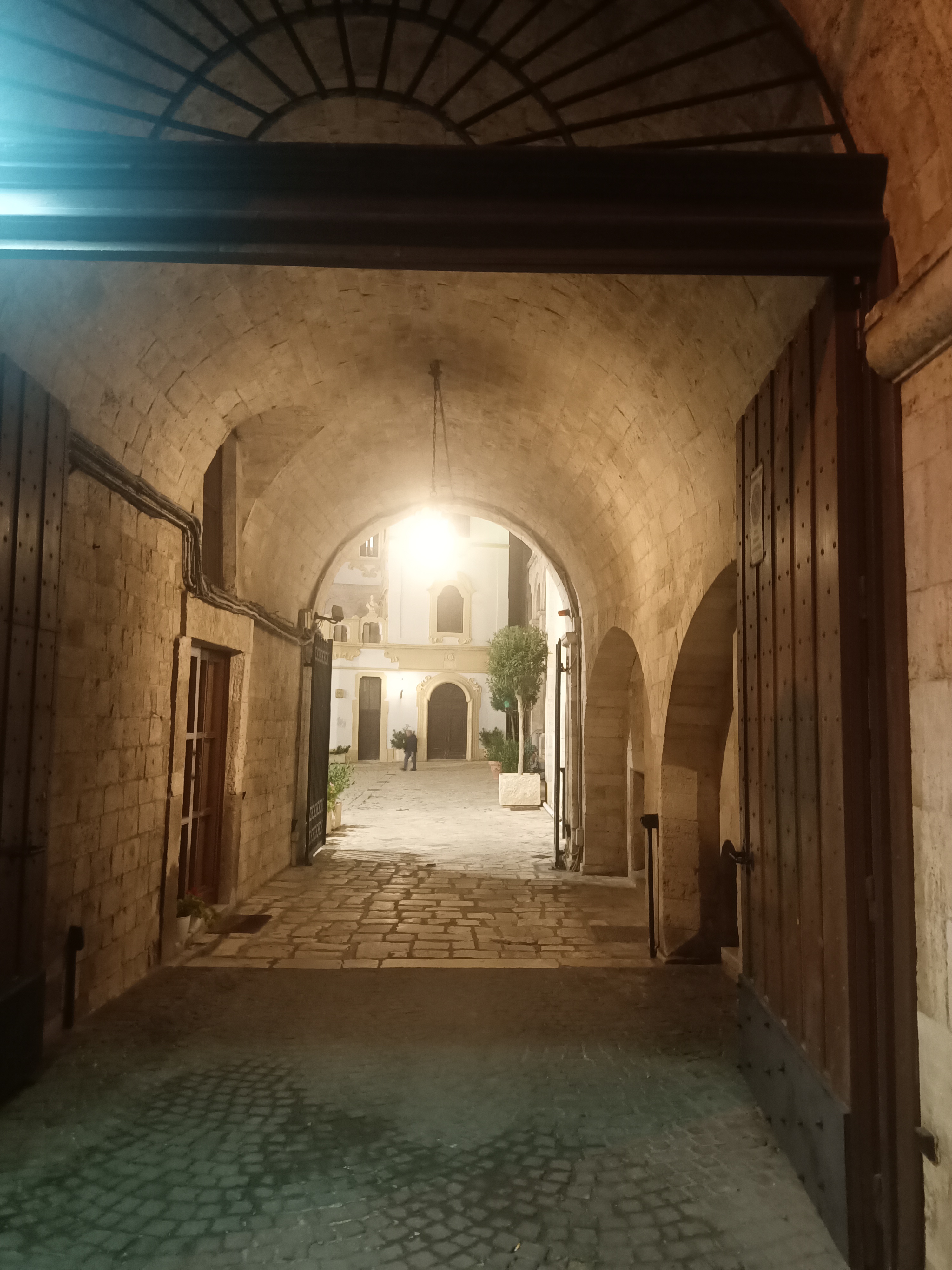
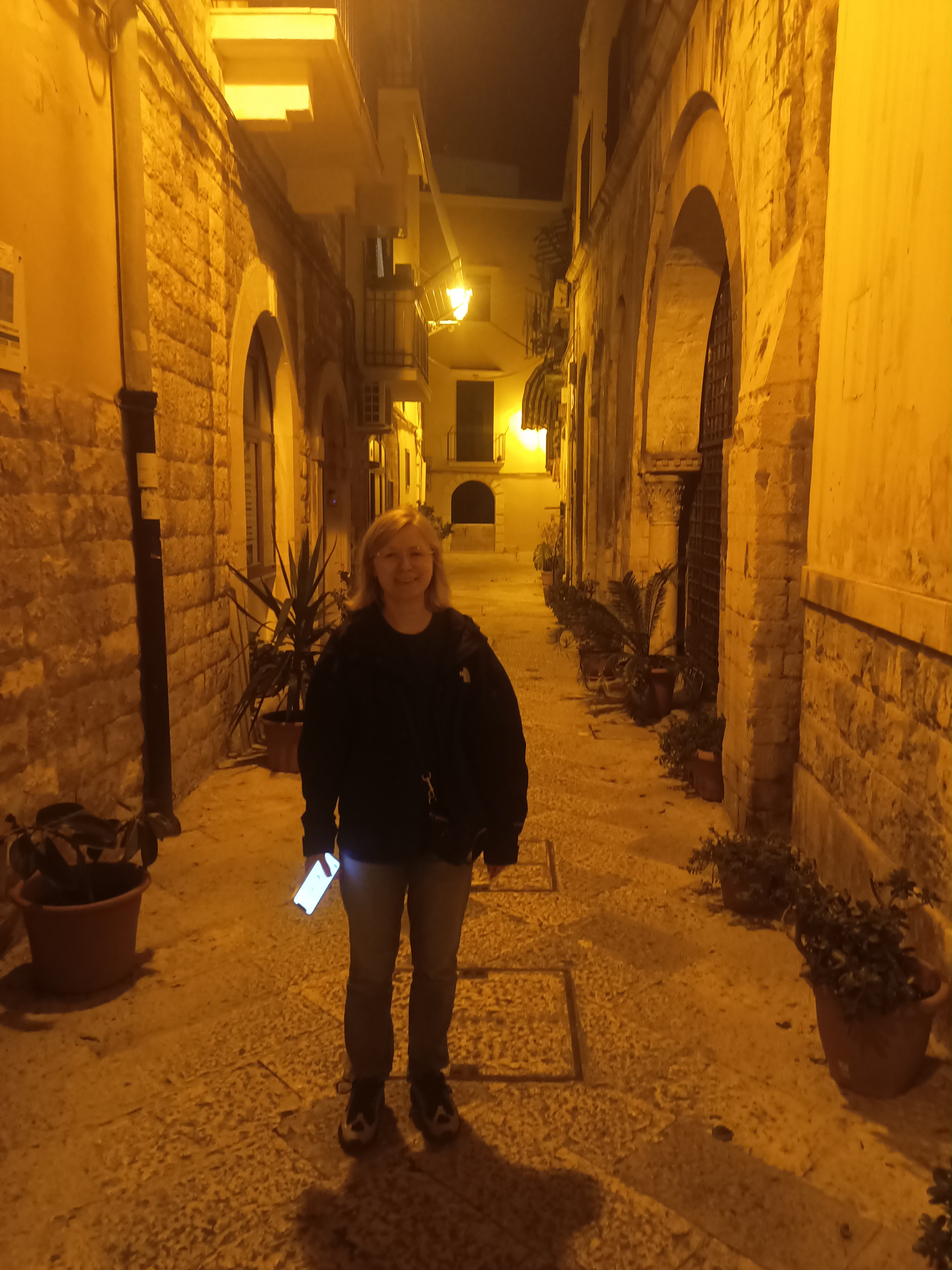
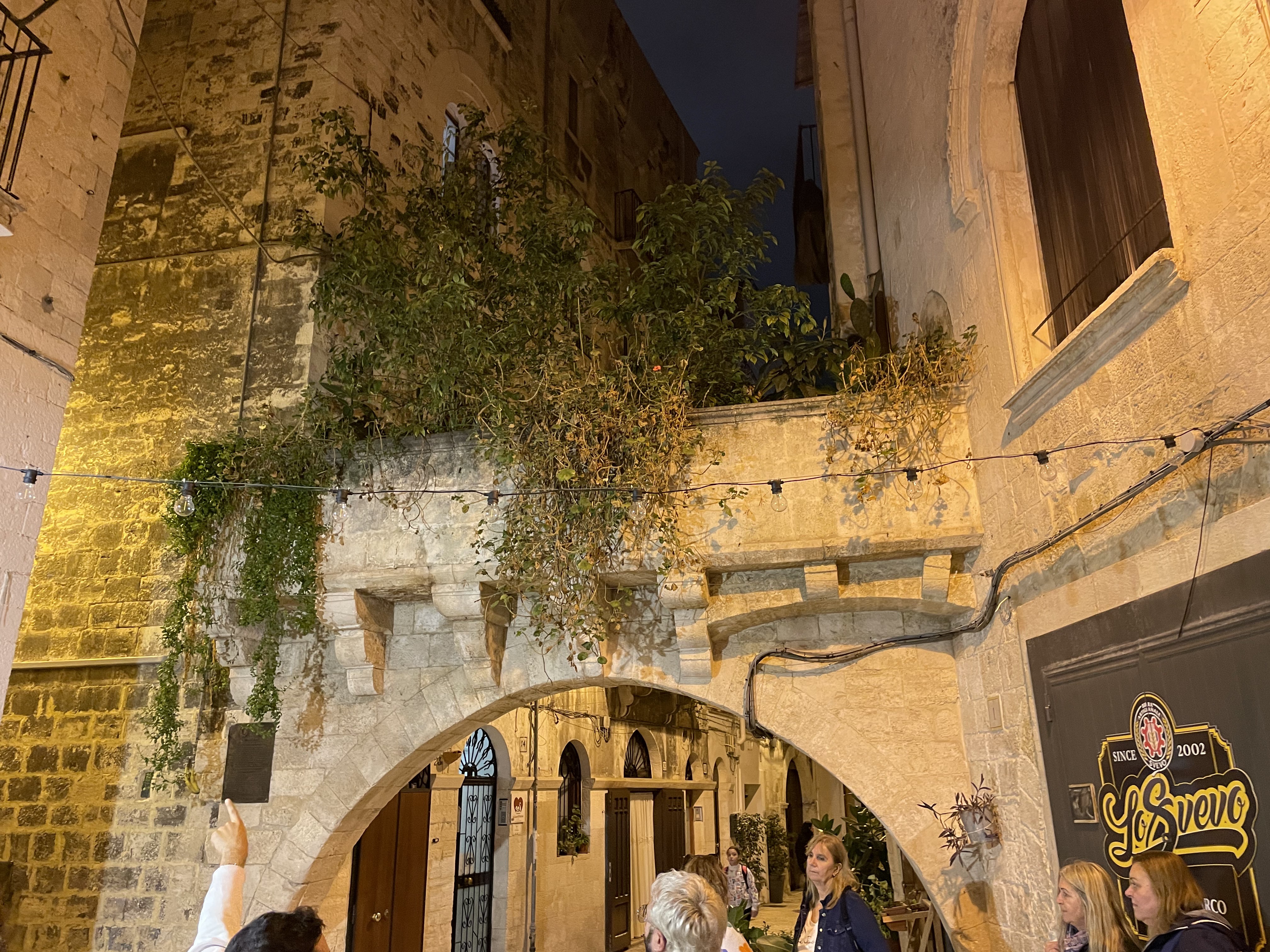
By nightfall the old town’s lamps came on. The cathedral facade glowed cream against blue; Anna posed in front of the floodlit stone; courtyards opened through vaulted gateways; and the narrow alleys turned into corridors of warm lamplight with arched stone portals going up and up.
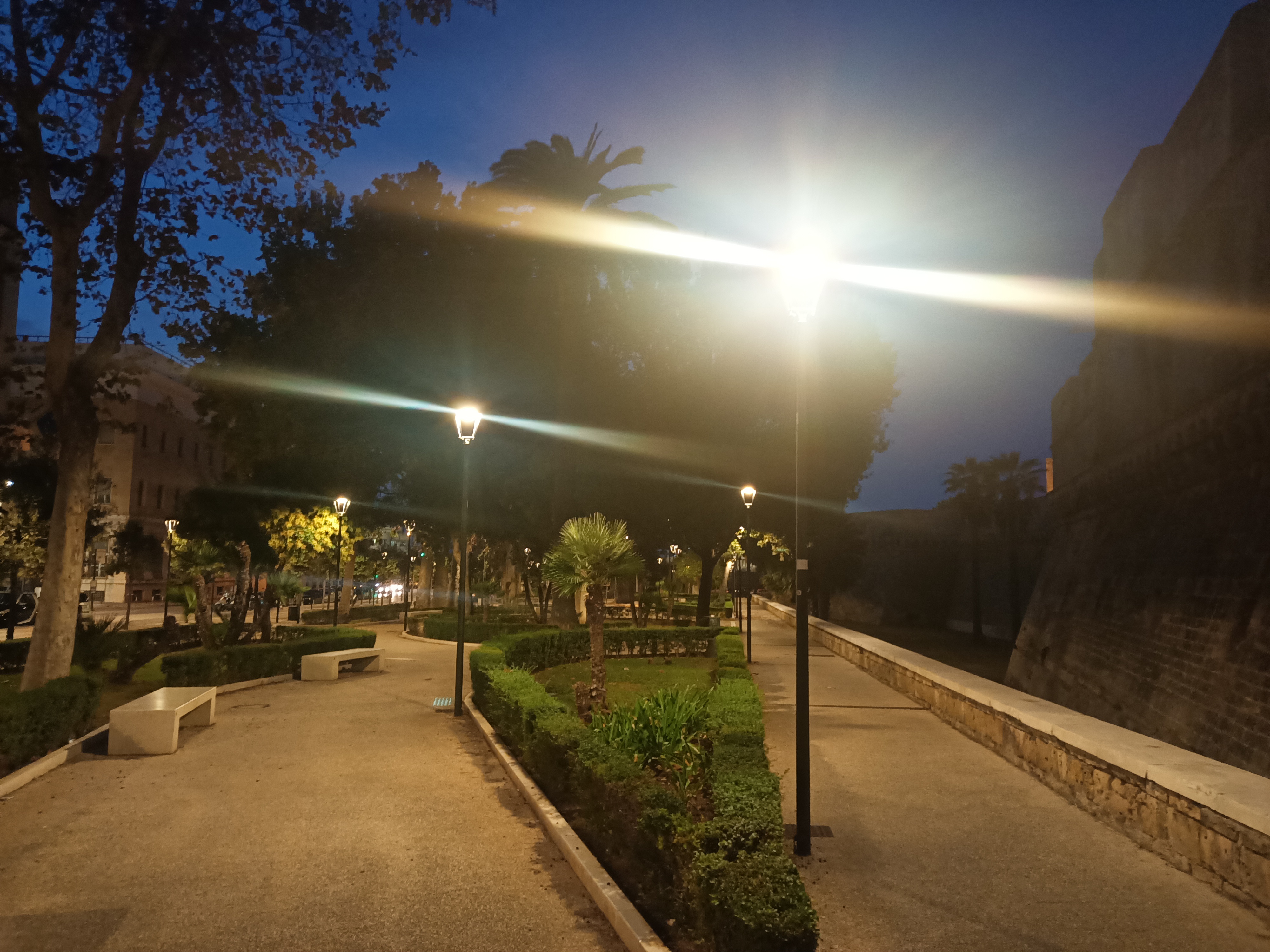
Park path first 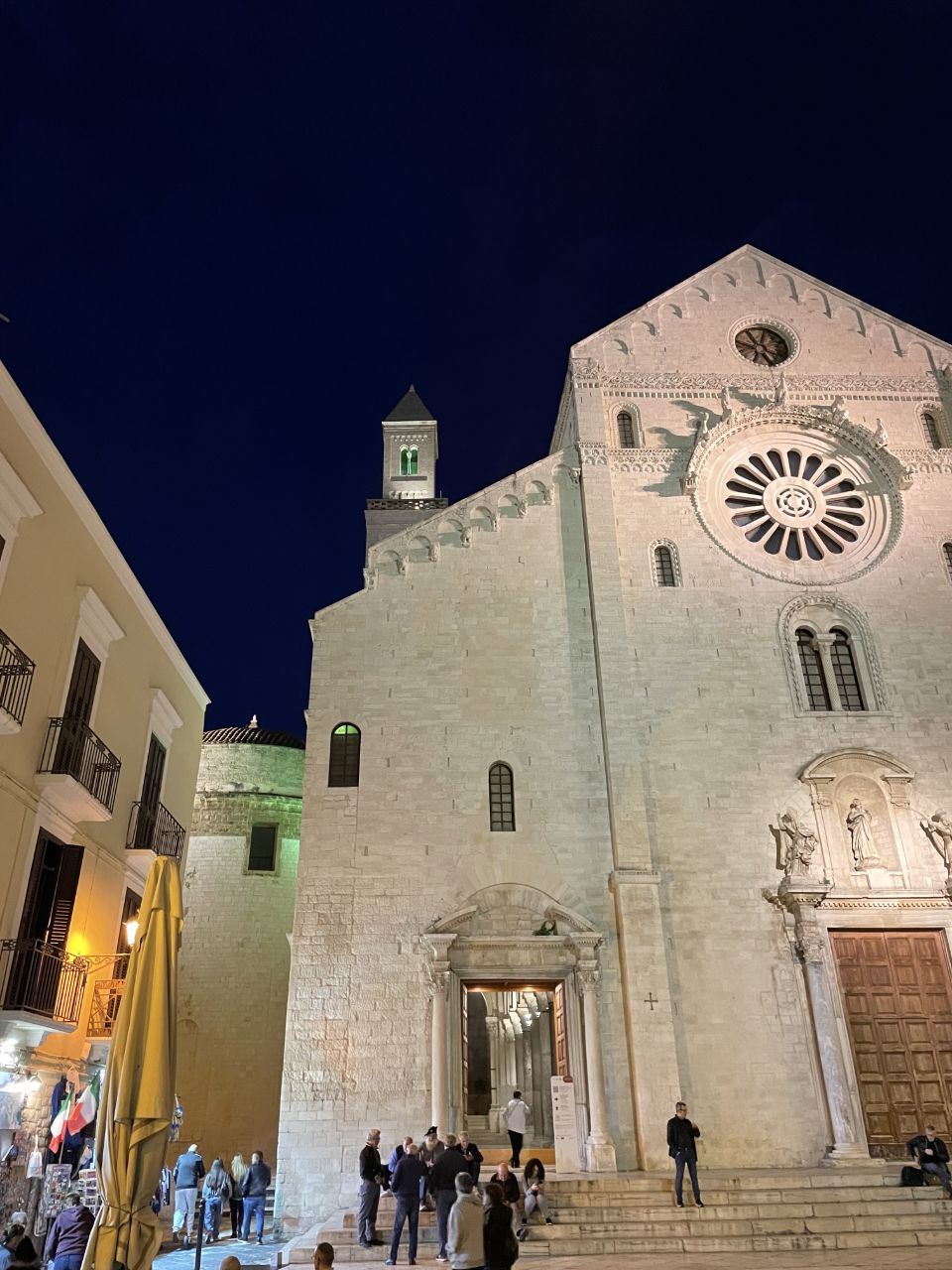
Cathedral in cream and blue 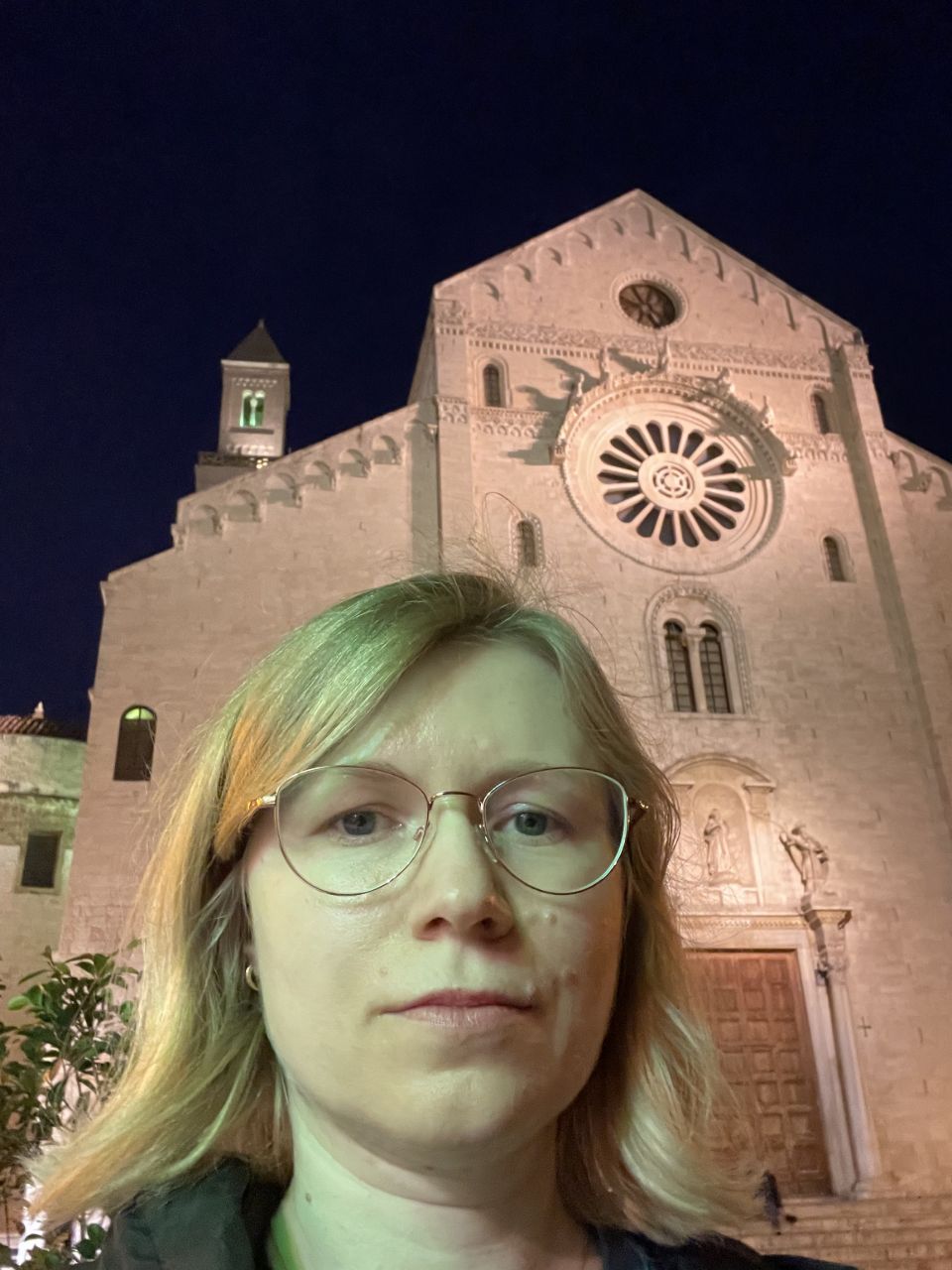
Anna and the floodlit stone 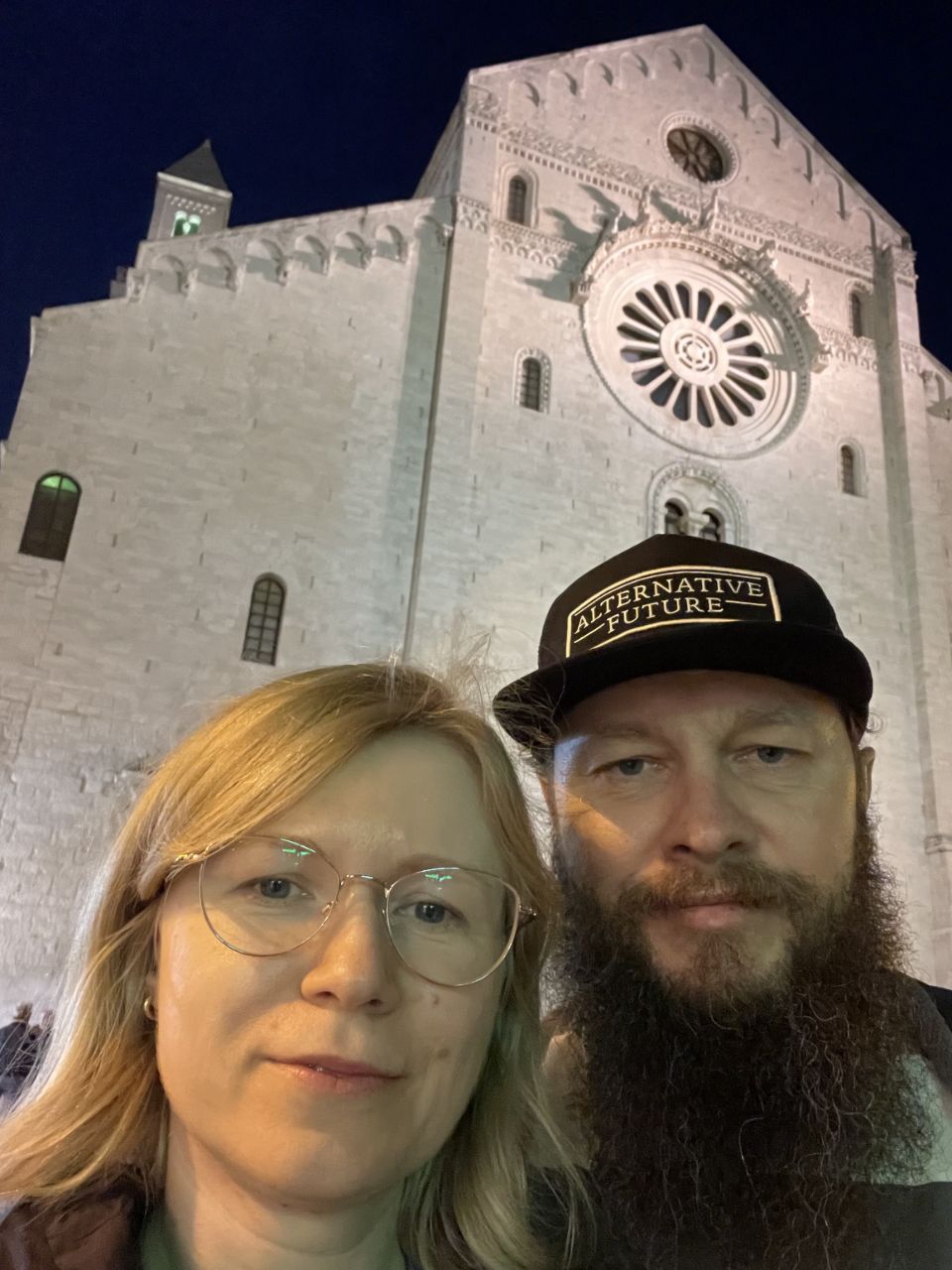
Us, cathedral edition 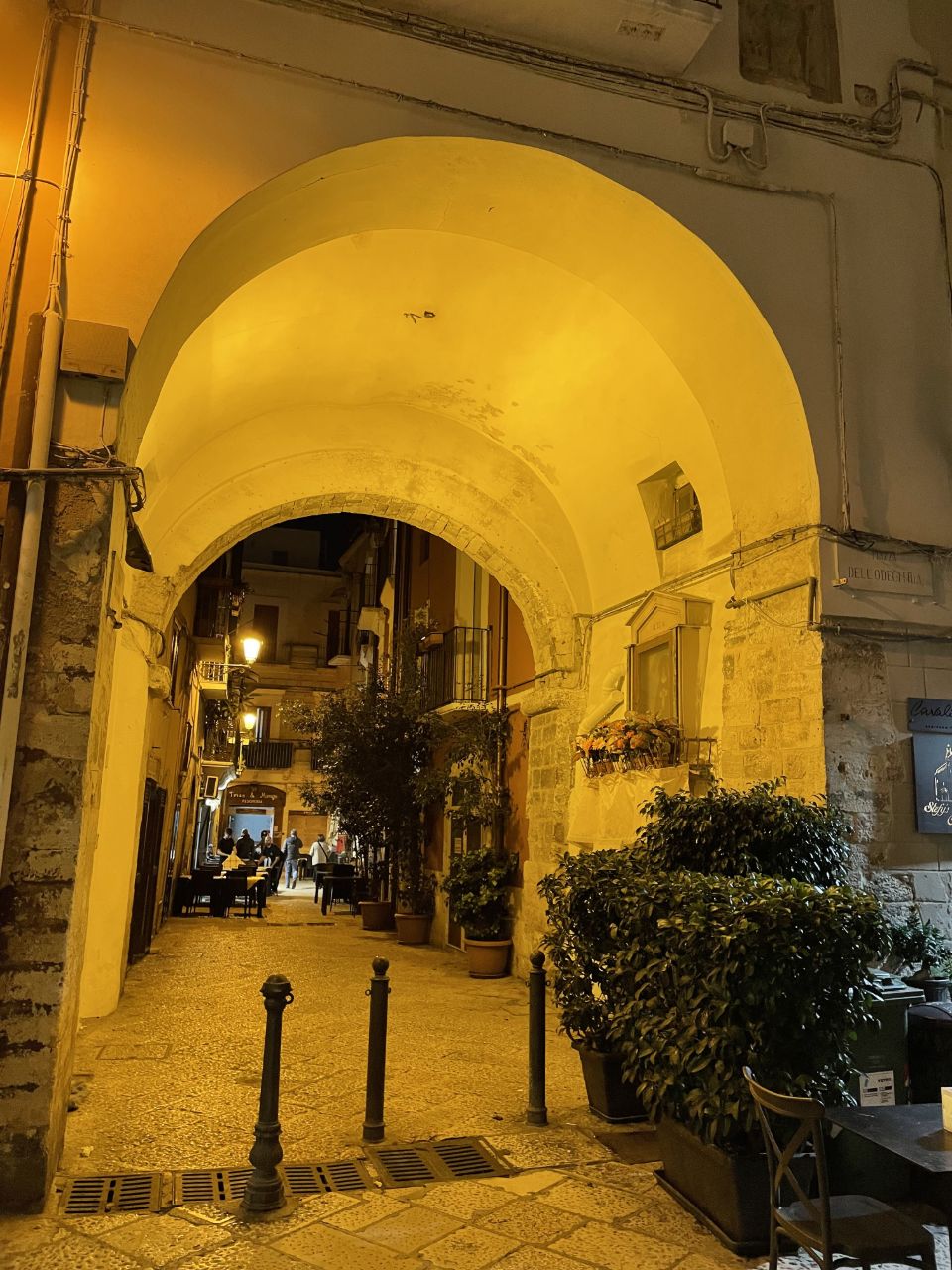
The golden archway 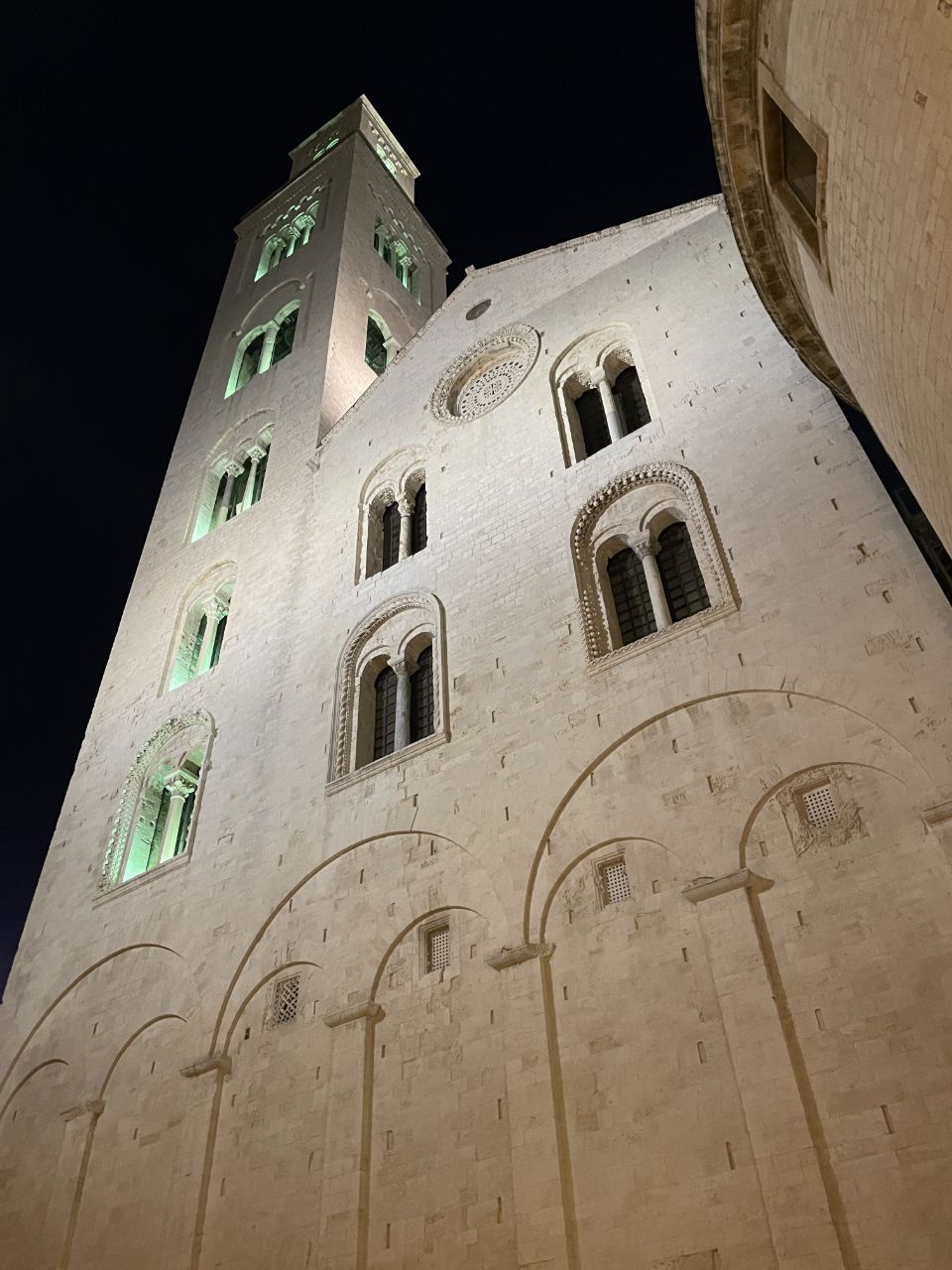
Up the lit facade 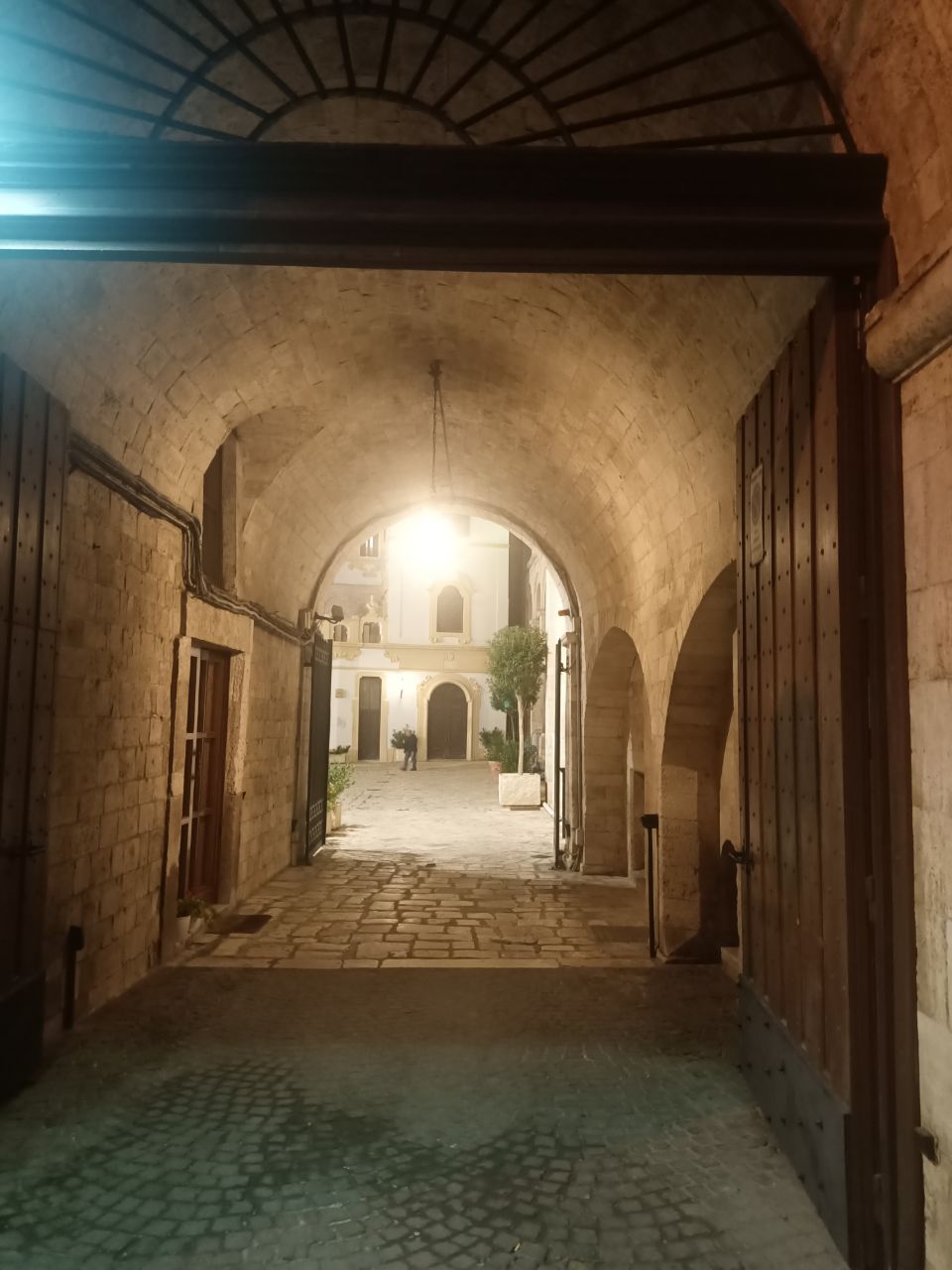
Through the gateway 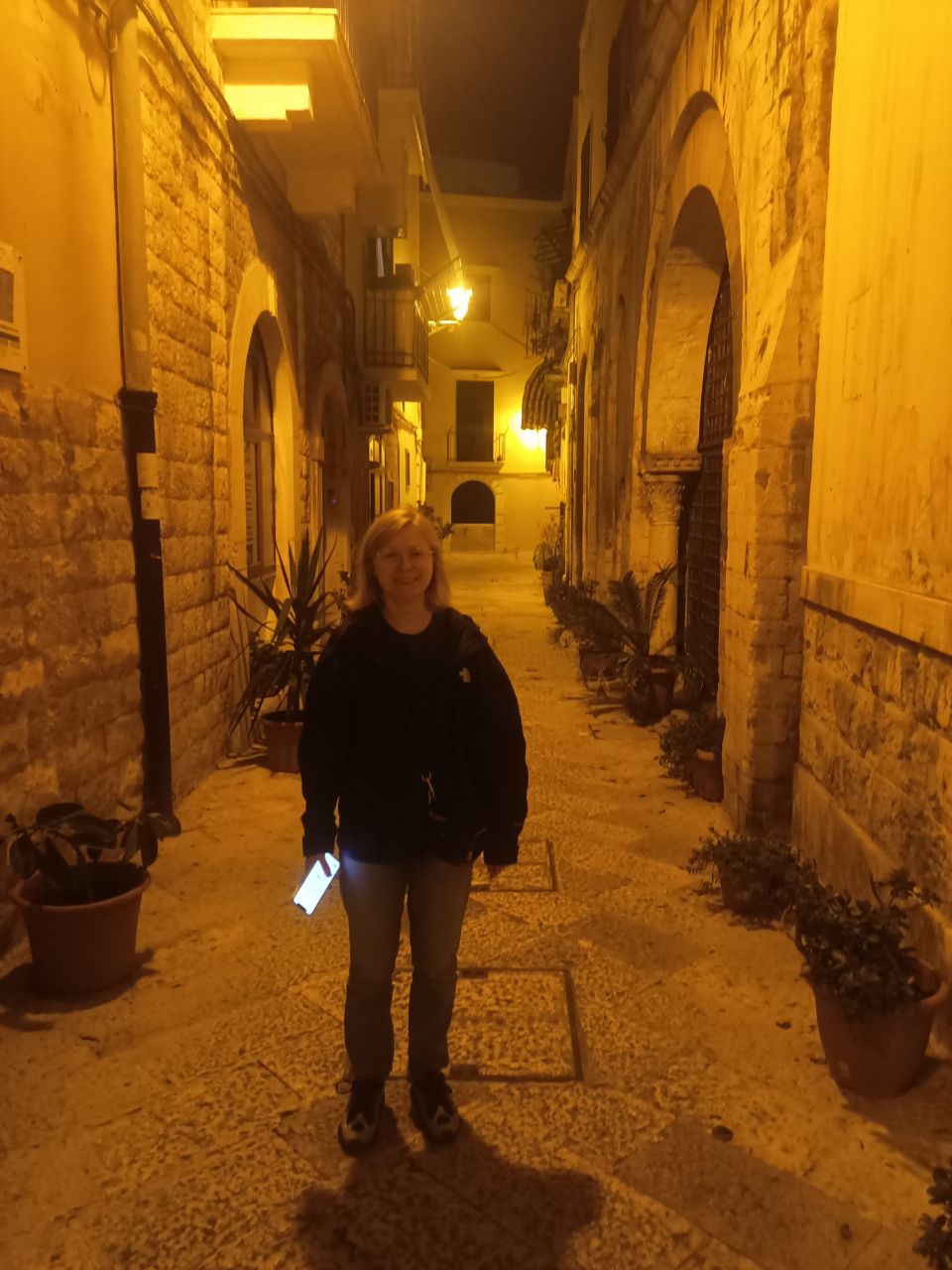
Anna in the yellow alley 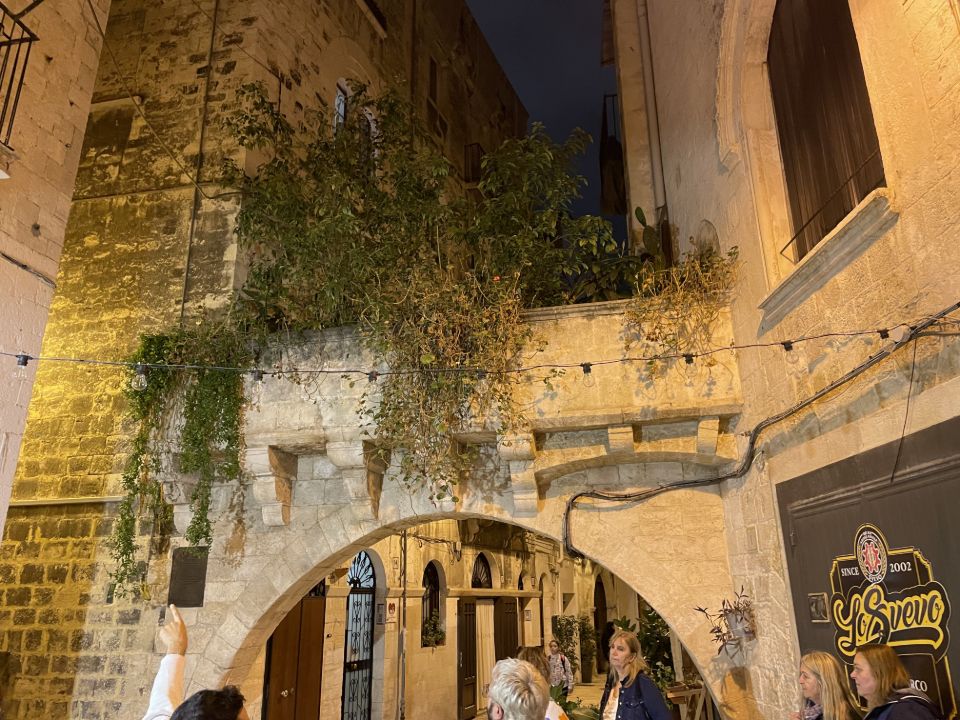
Ivy, lights, an arch
Dinners and festoon light
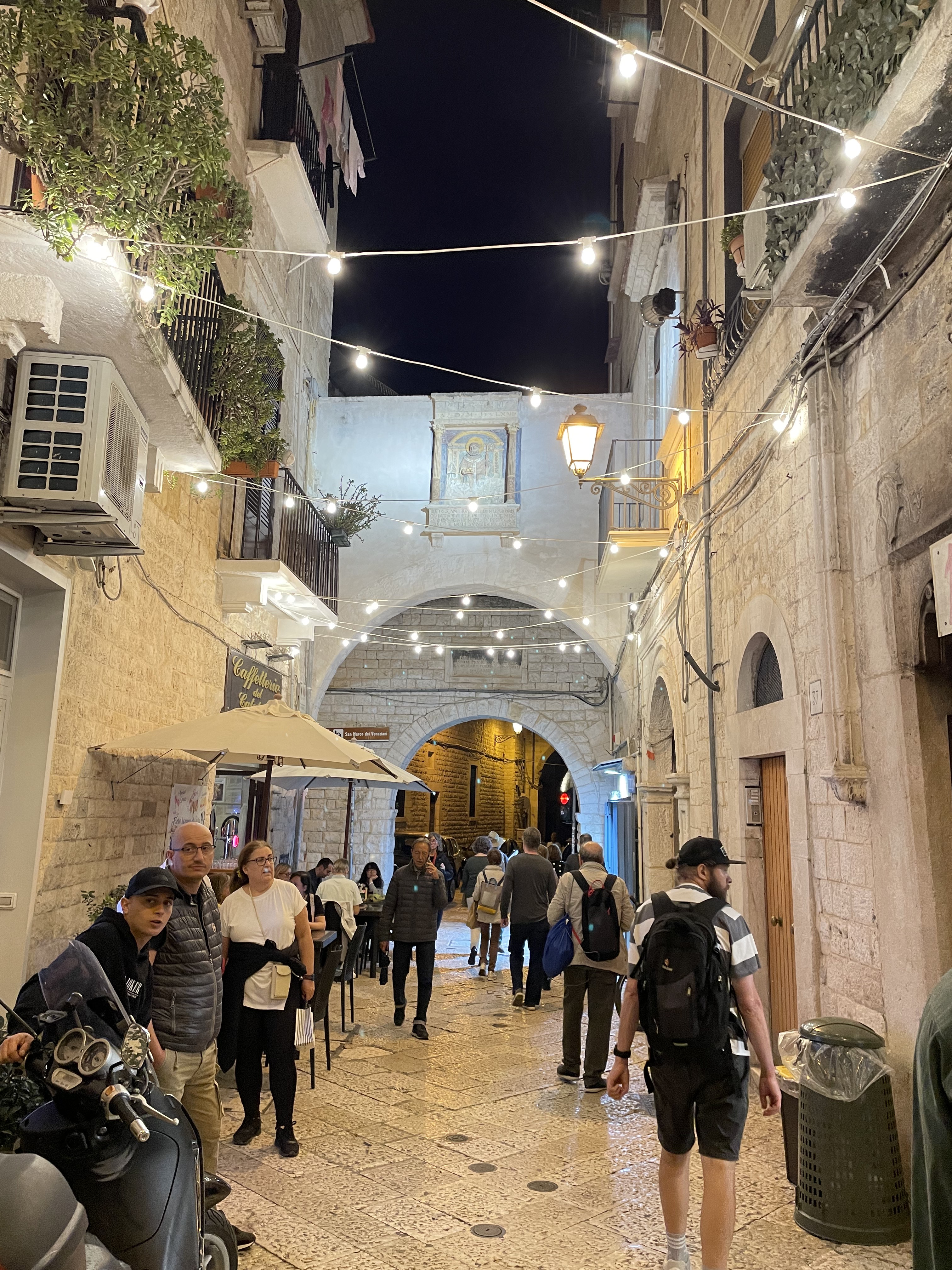
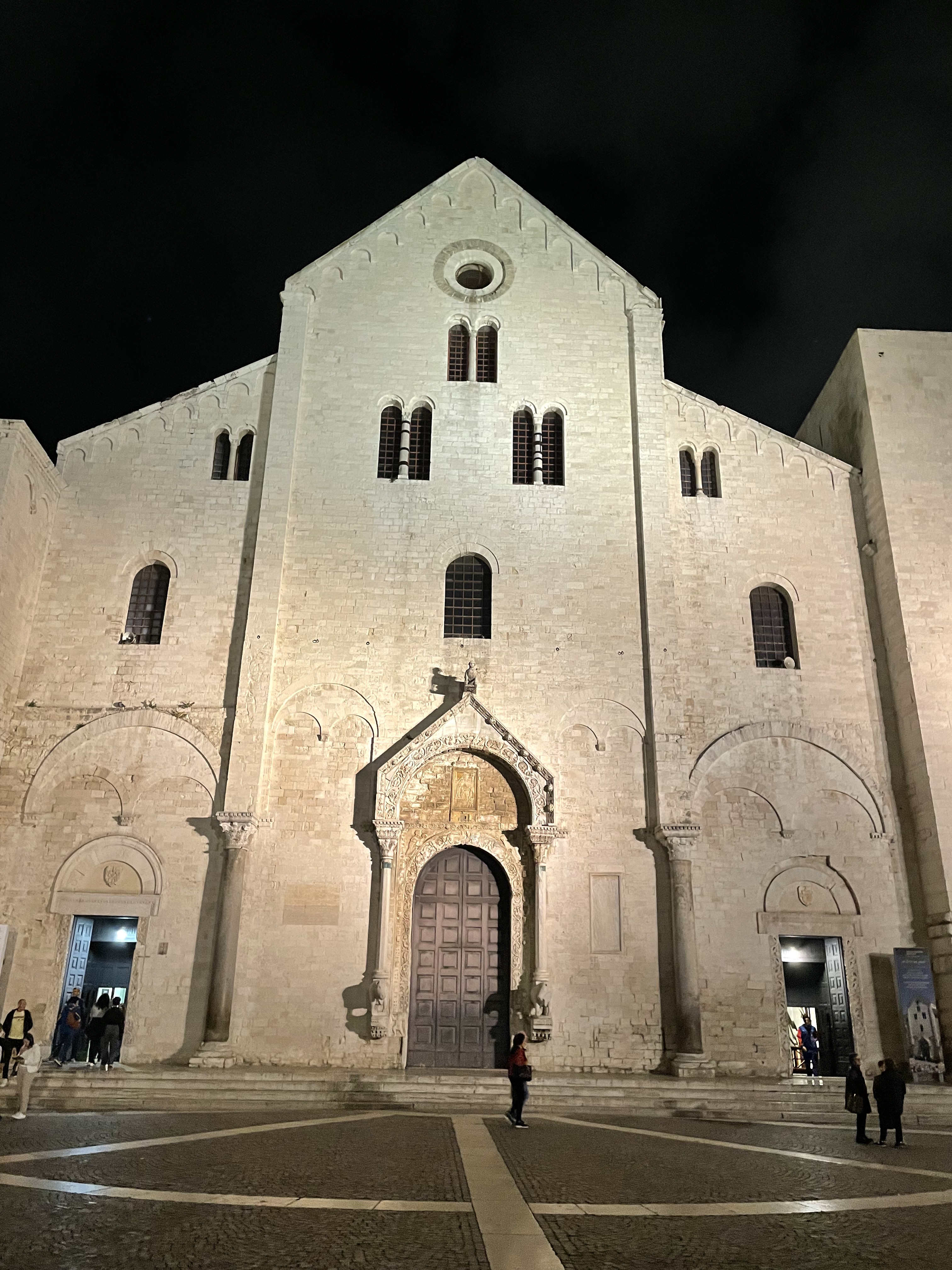
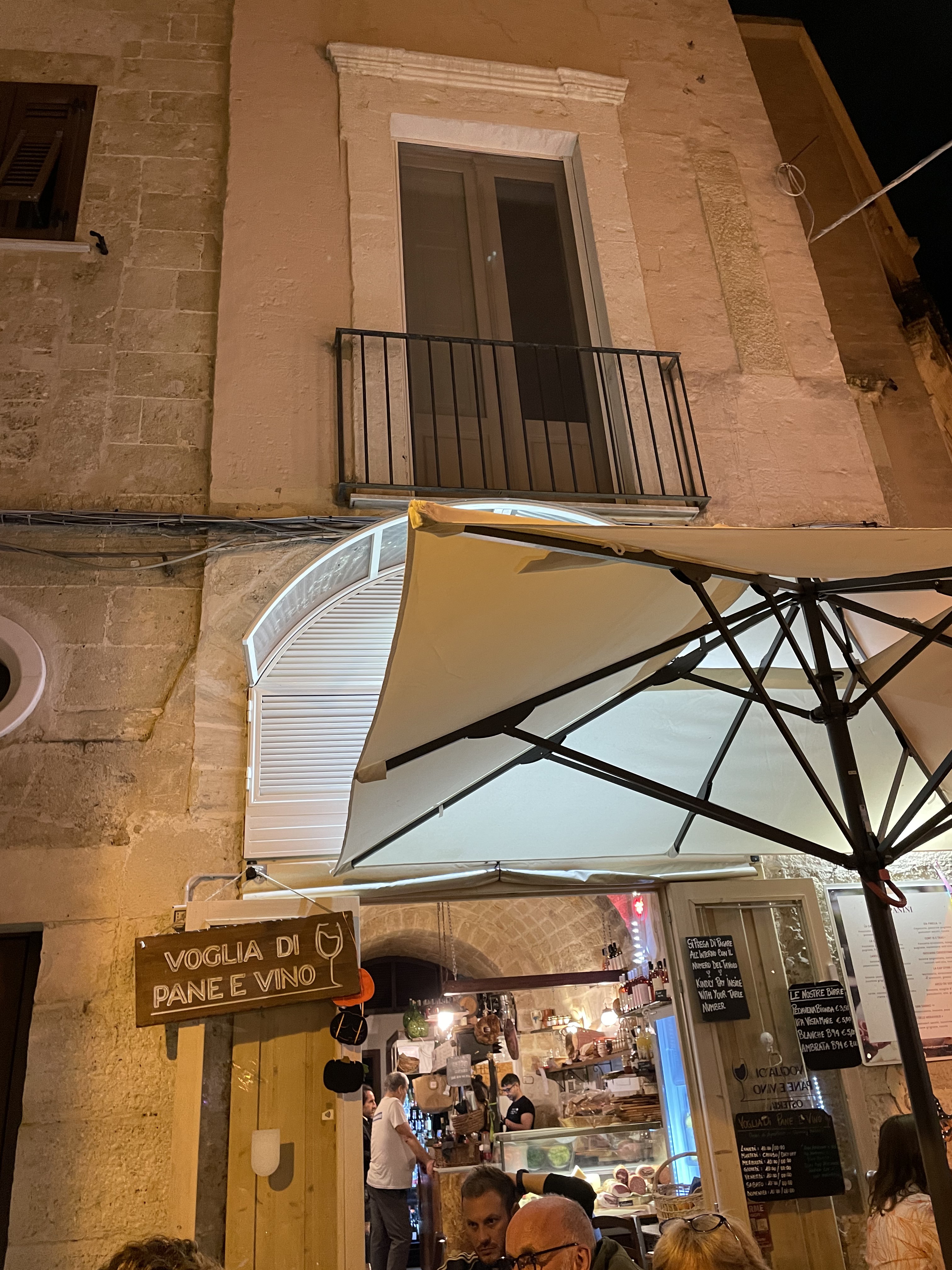
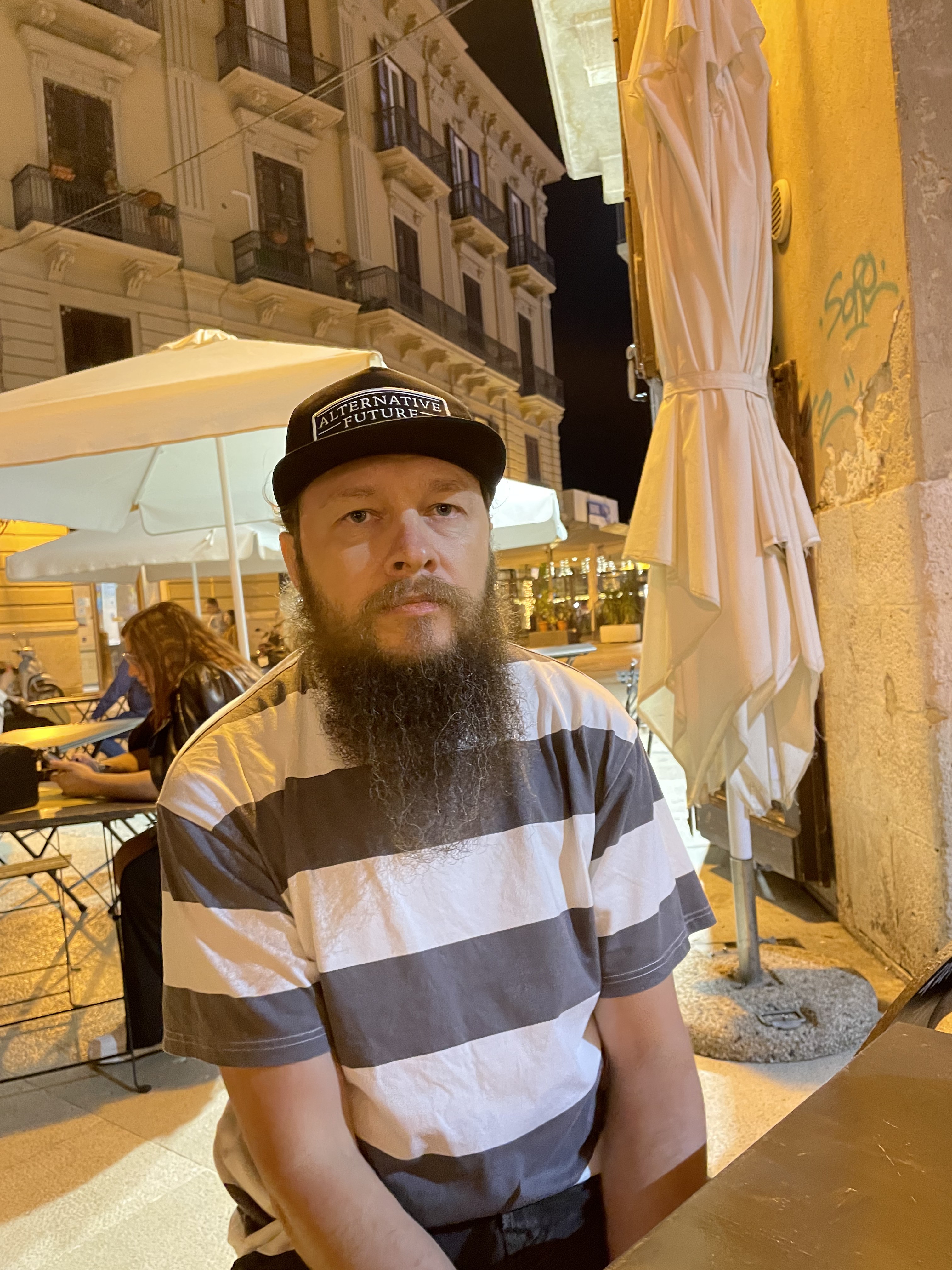
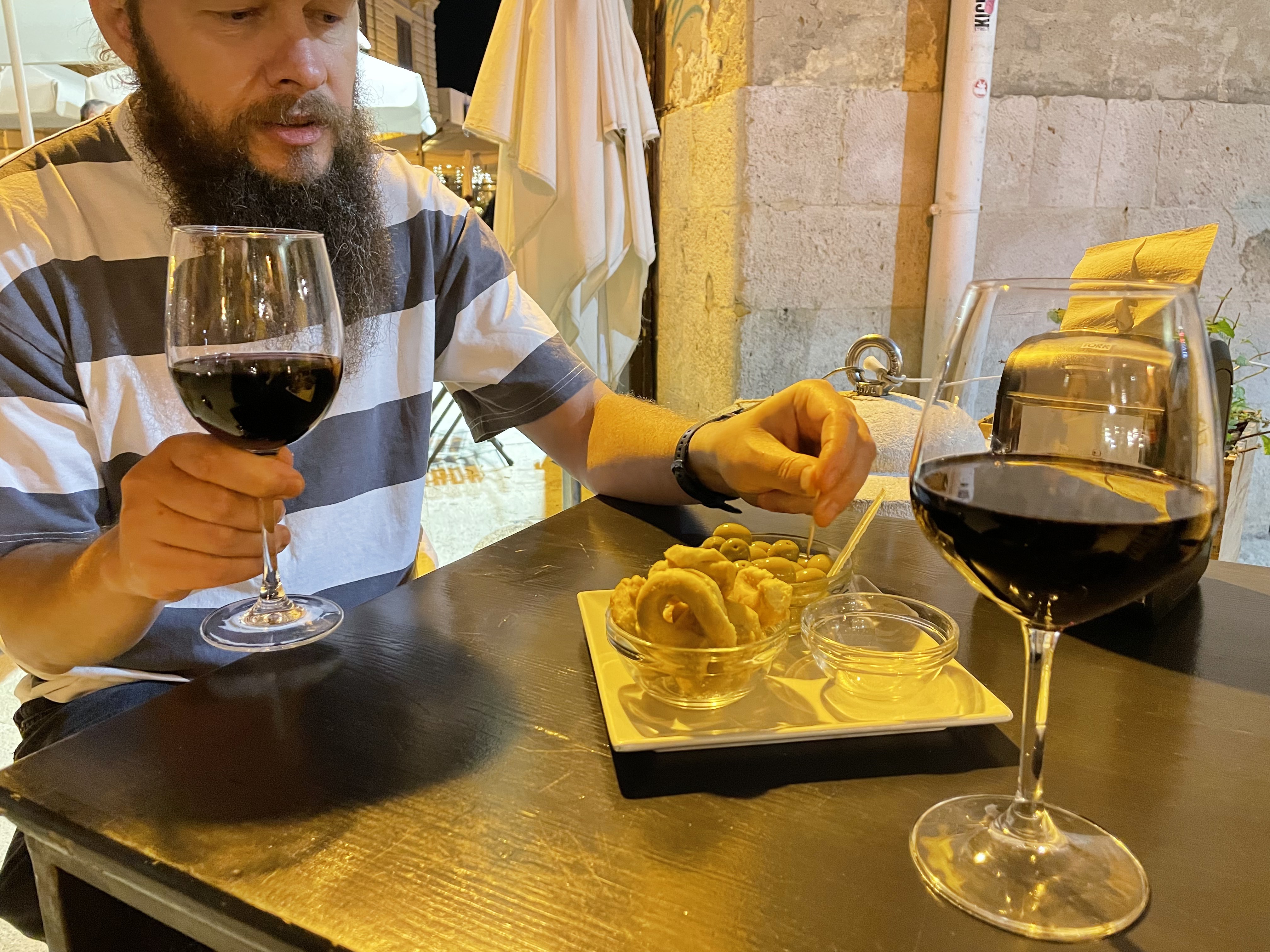
The evenings ended well. Festoon bulbs strung across a lane, people strolling with coats on; the basilica floodlit from the square; a café stall with its umbrella folded; and a plate of the local snails in front of Oleg.
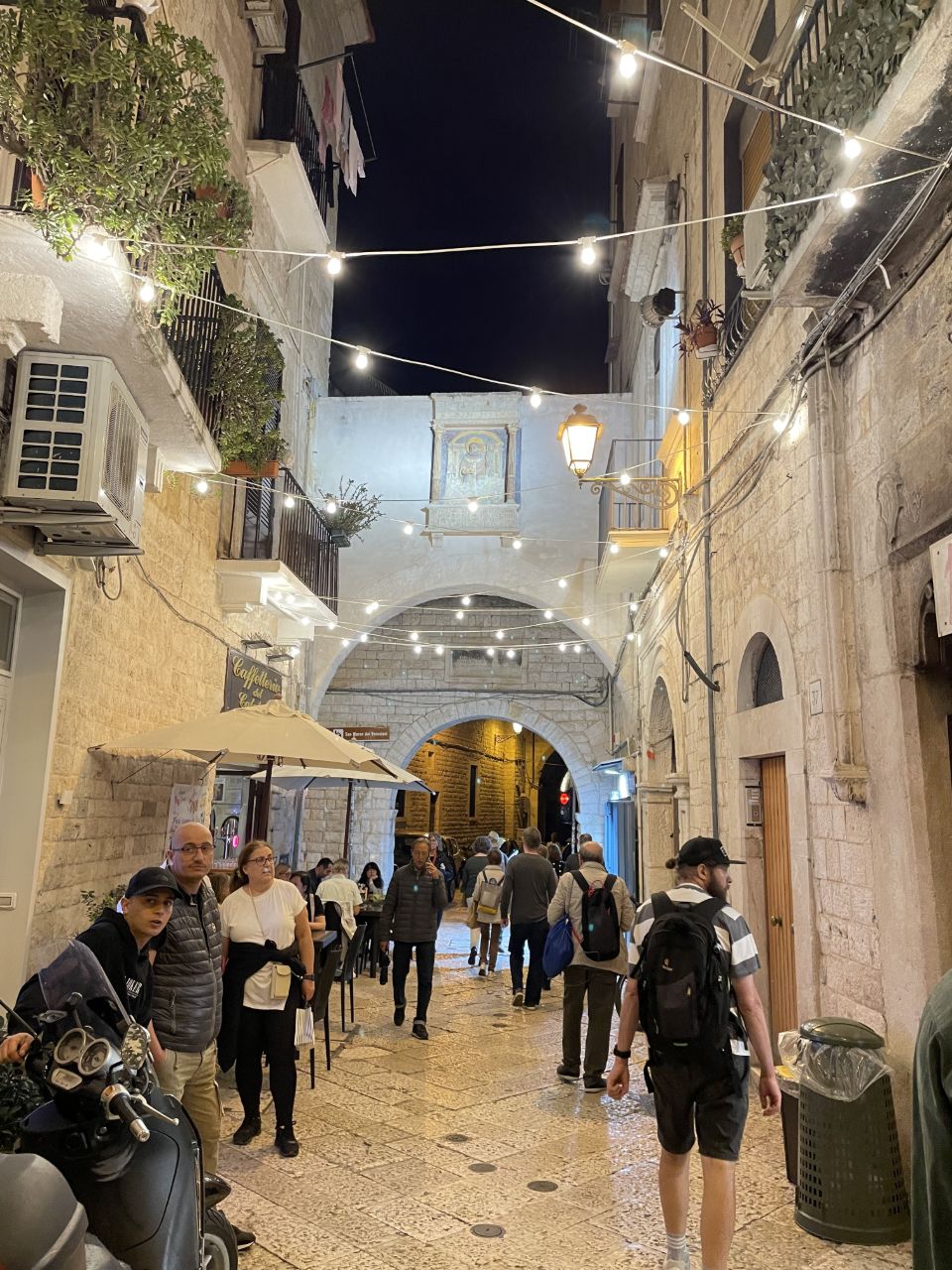
Festoon lane 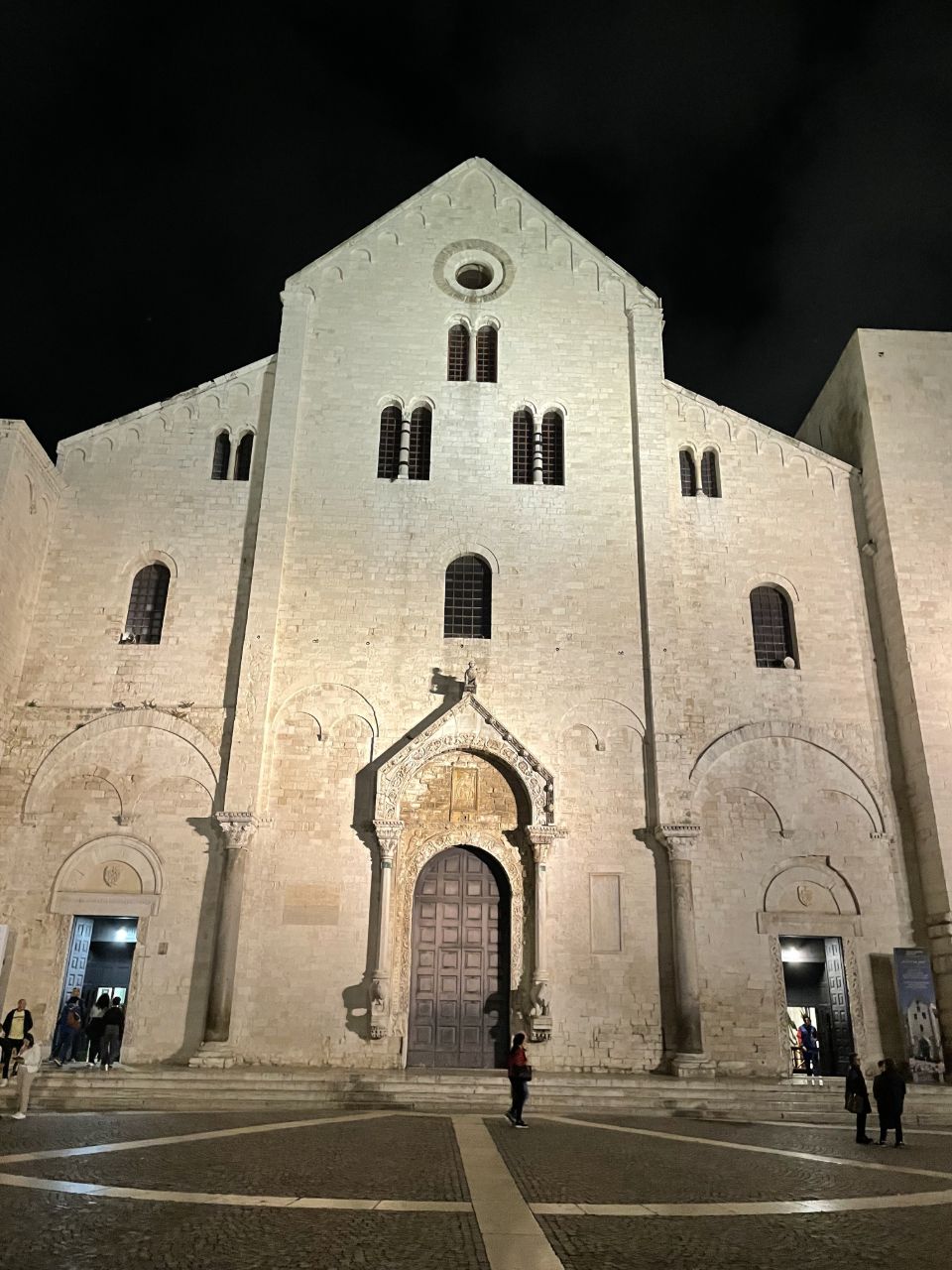
The basilica, floodlit 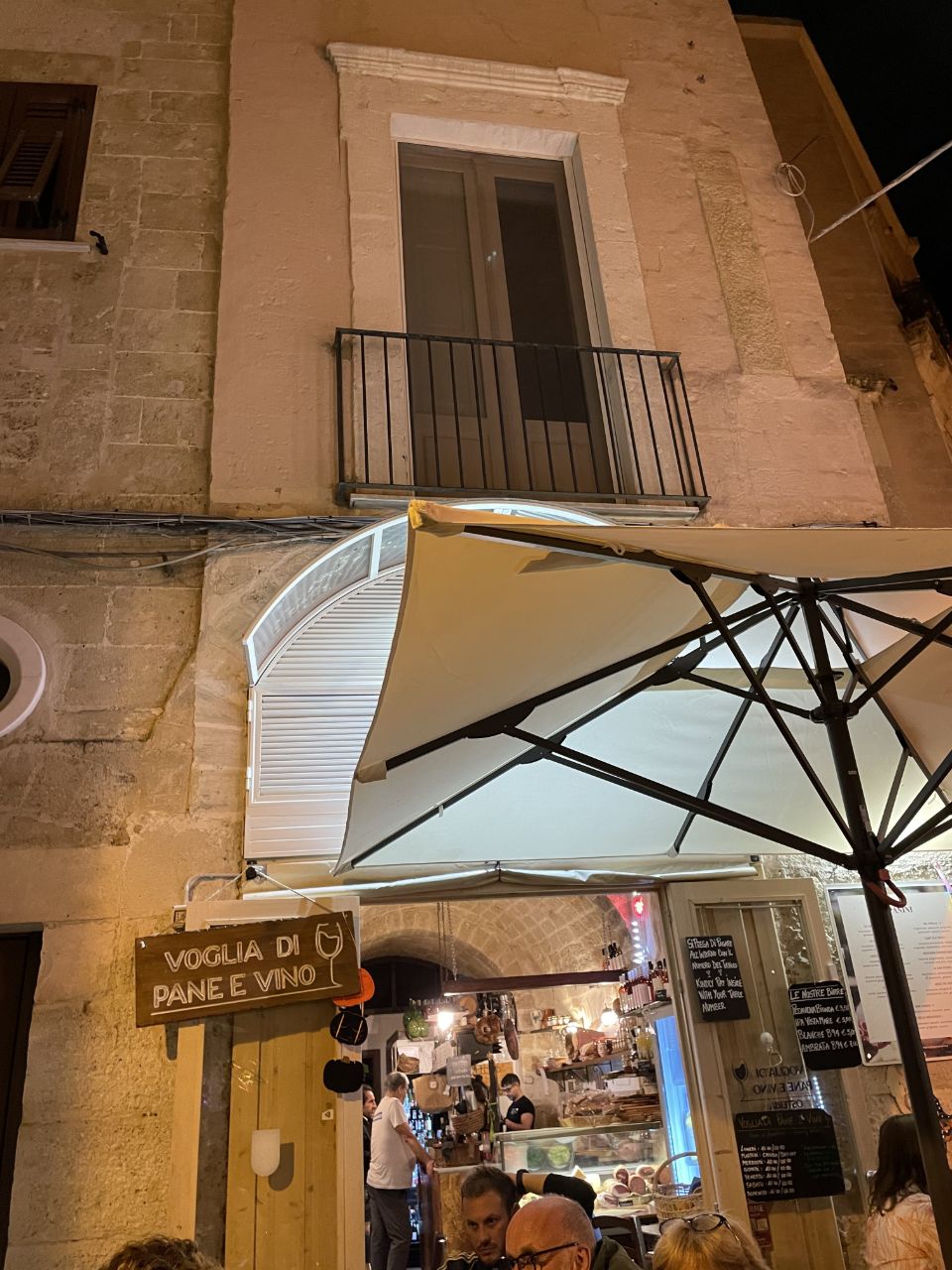
Café stall, late walk 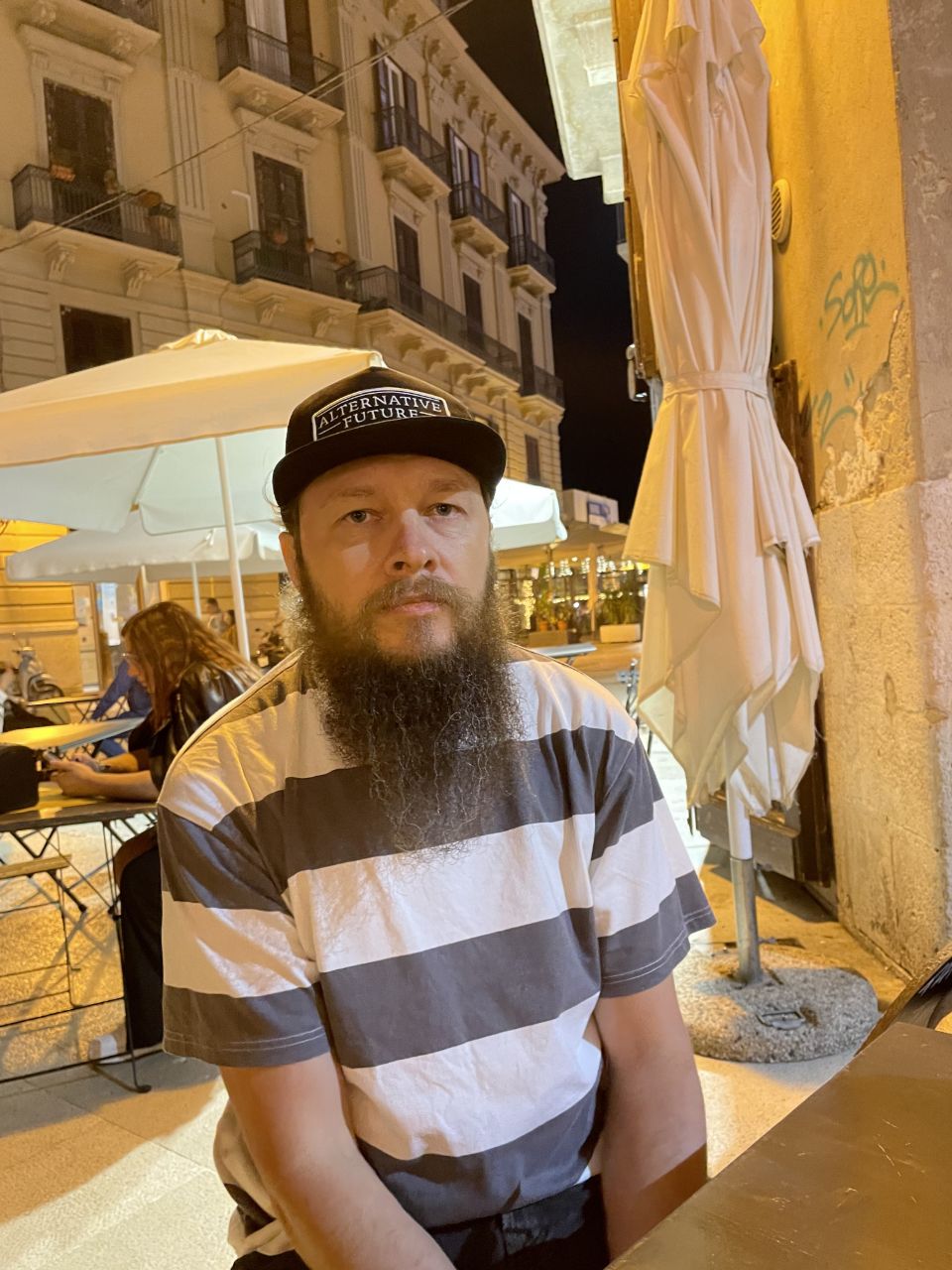
Snails and wine 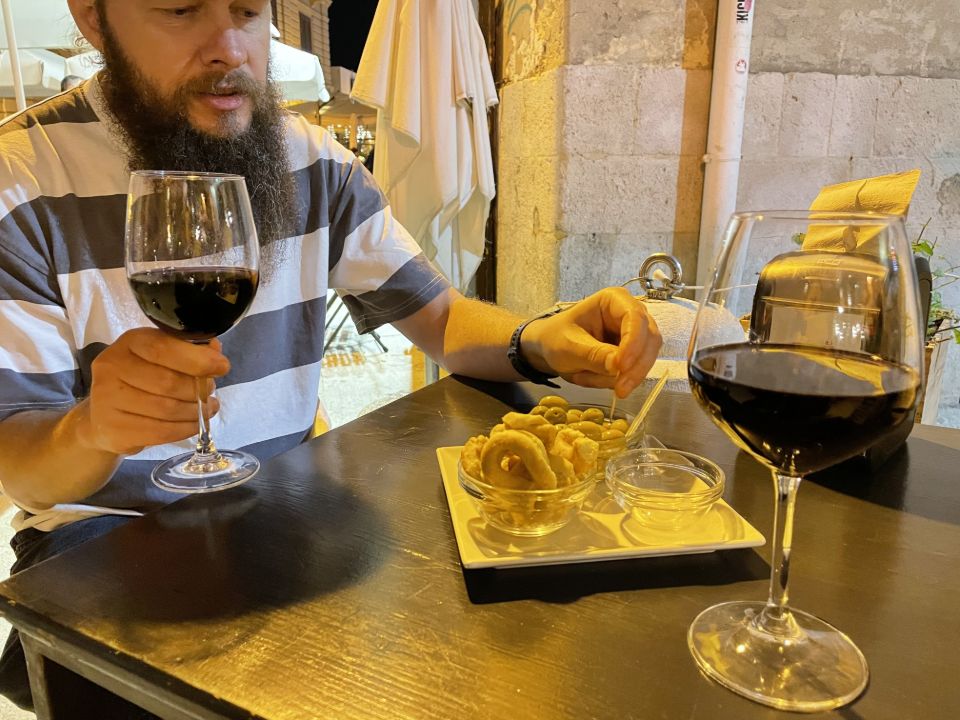
After the snails
A free day: sea, beach, pasta, art
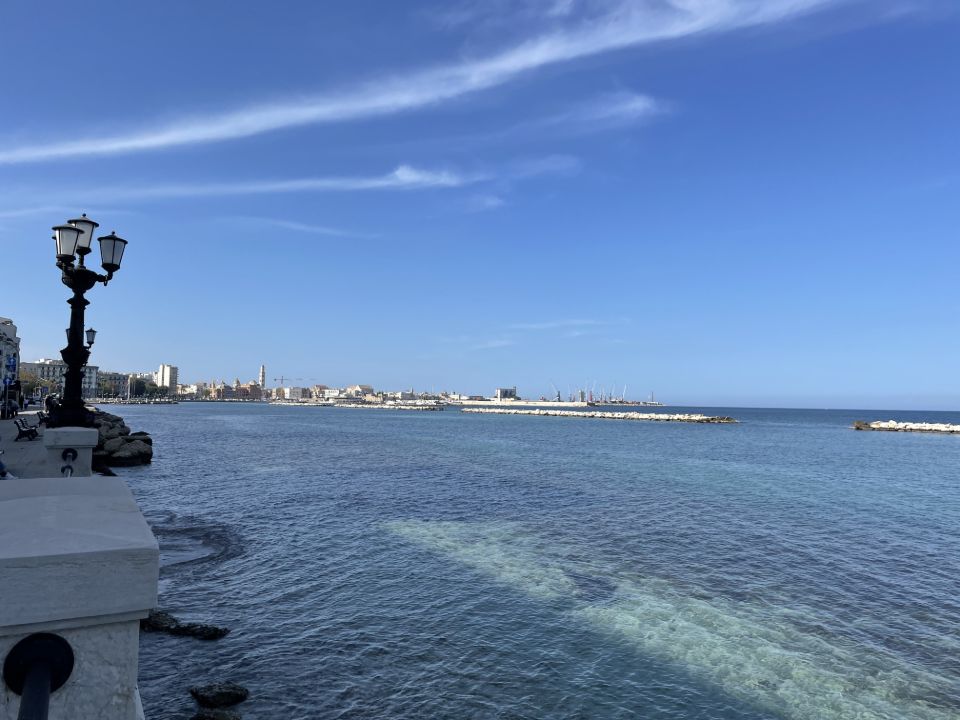
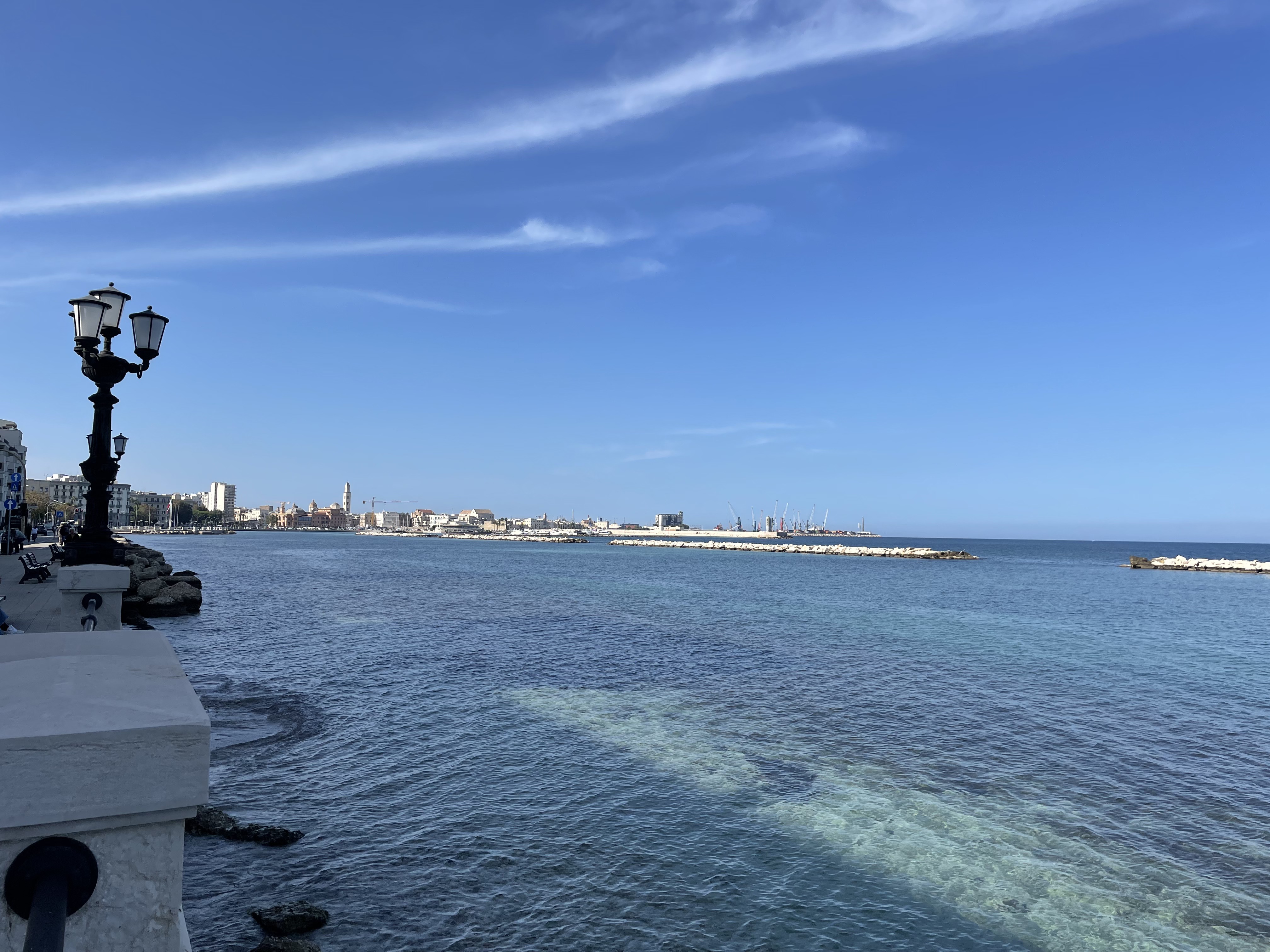
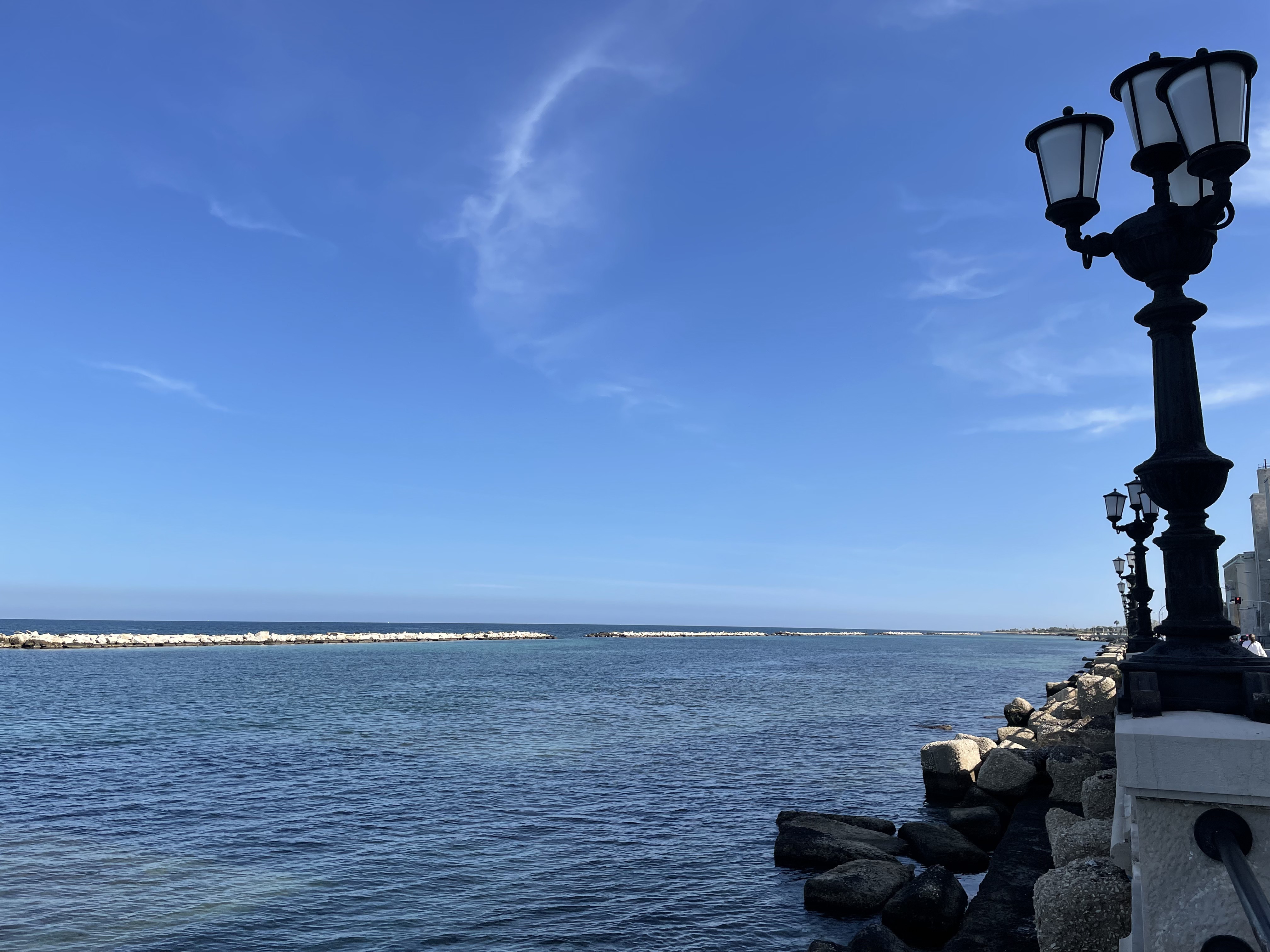
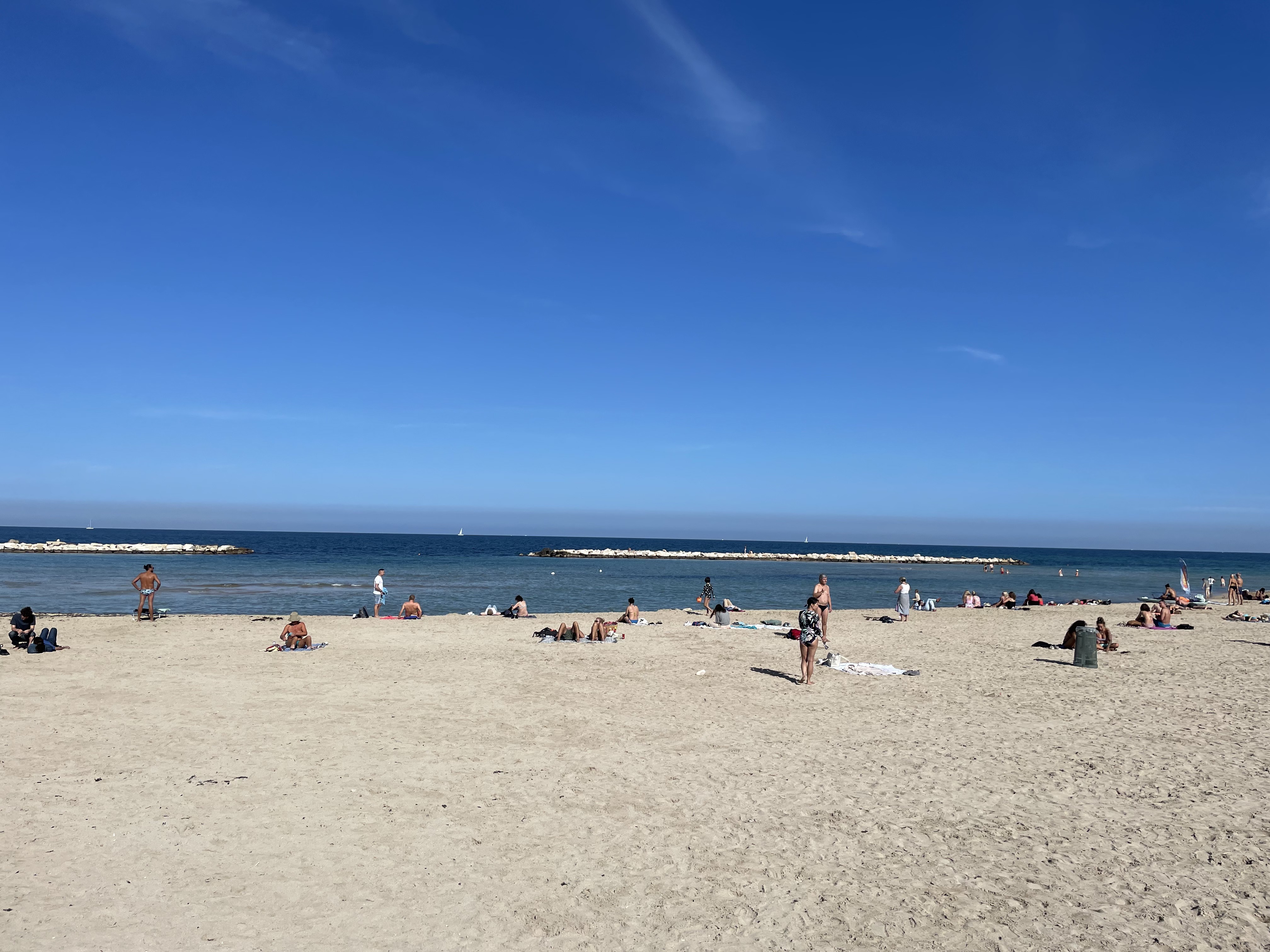
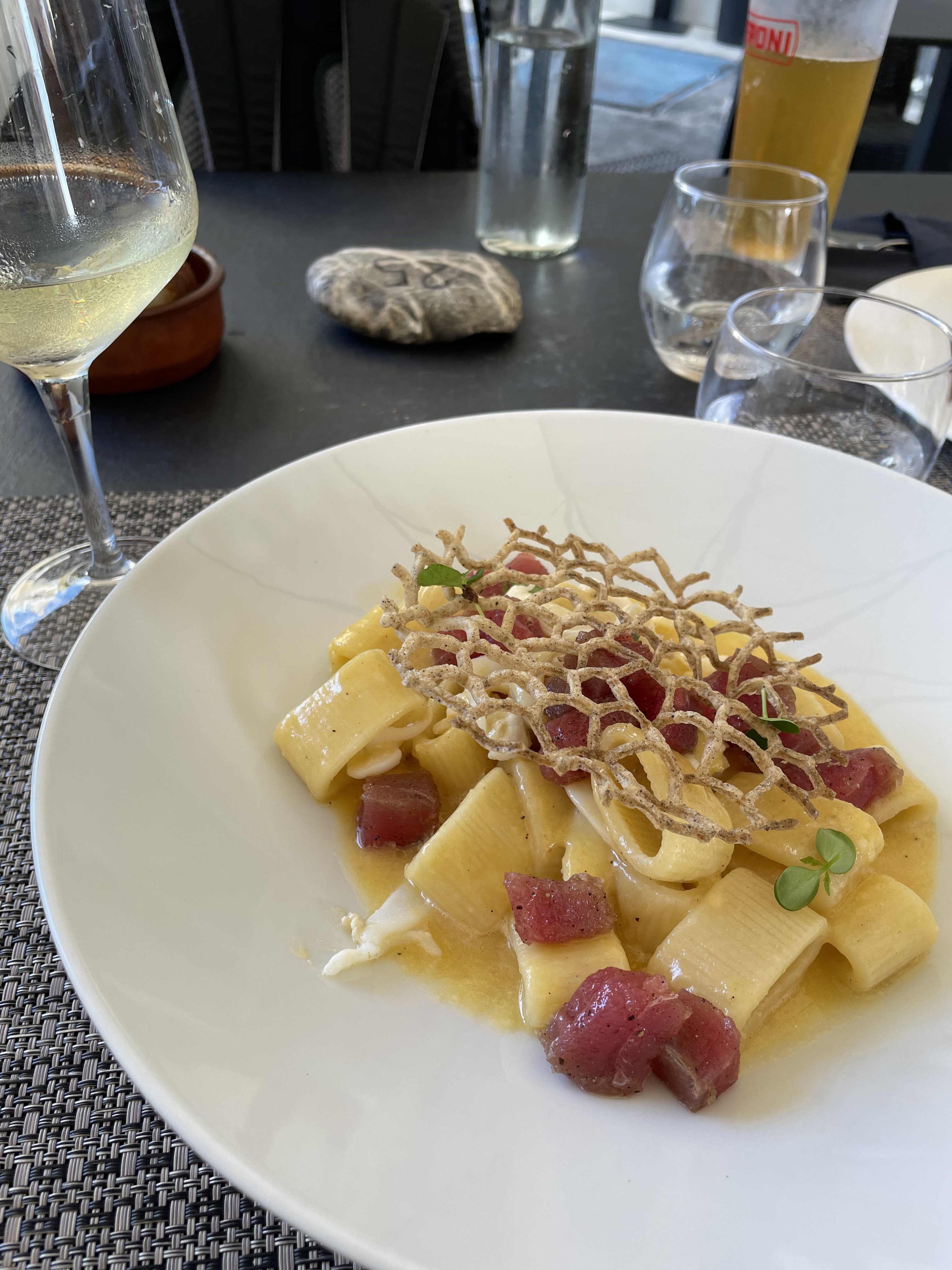
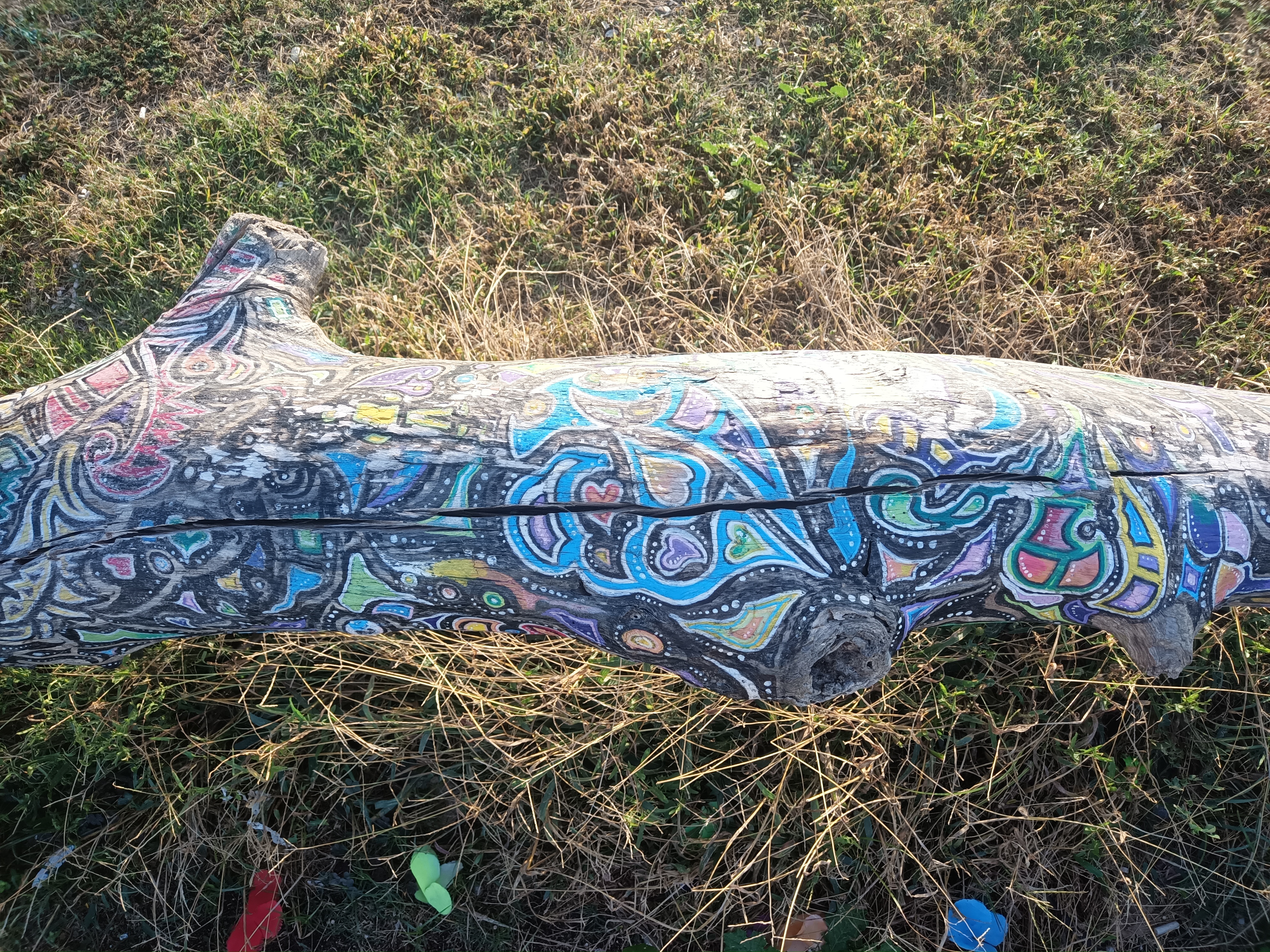
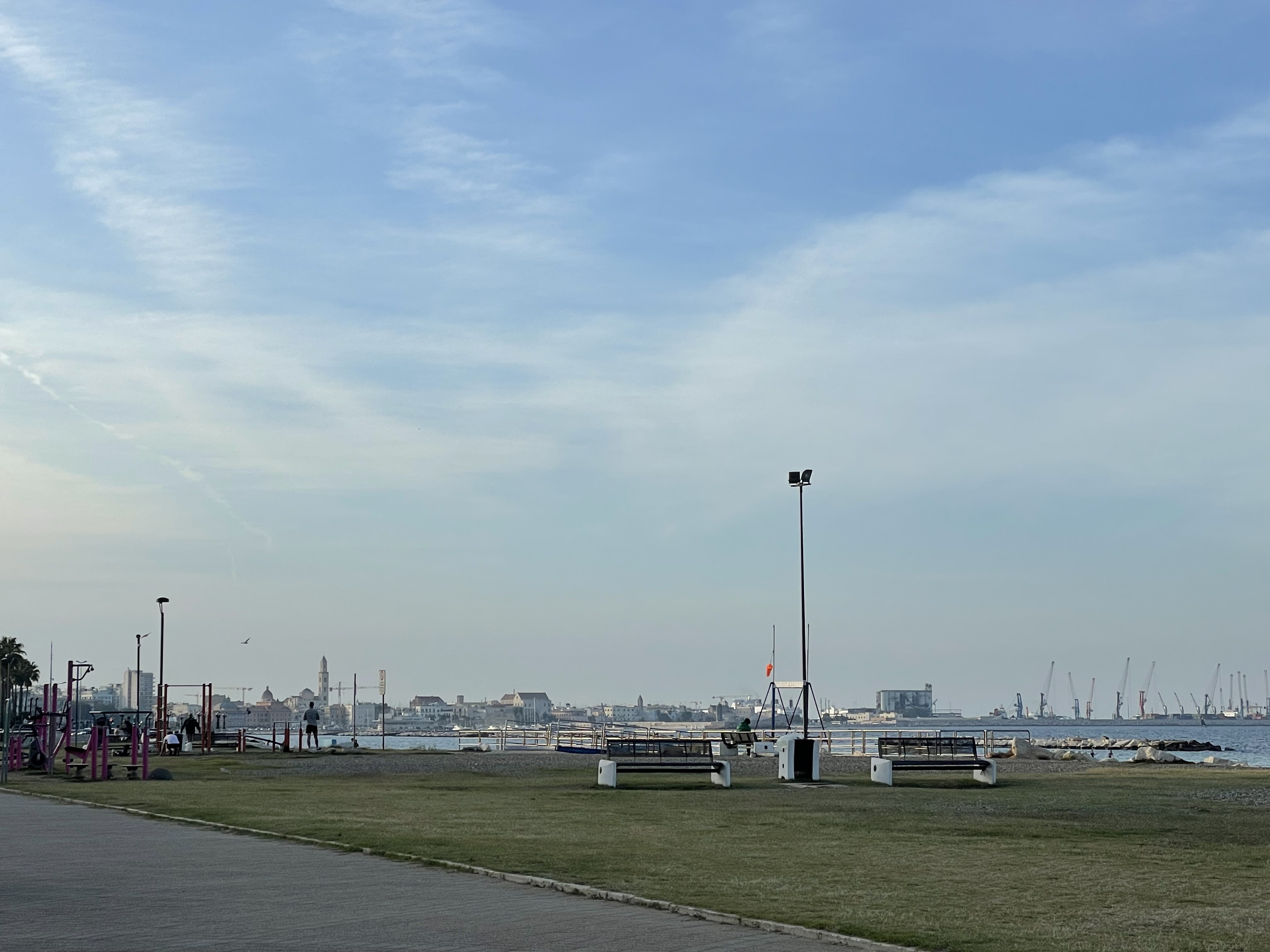
Day two had no agenda — Bari in full sun. The Lungomare promenade in turquoise, the sandy city beach with only a few hardy sunbathers, an outdoor lunch of pasta ribbons with raw tuna under a honeycomb crisp, a flowering bush in a park, and a fallen log painted top to bottom with street art.
Turquoise over the parapet 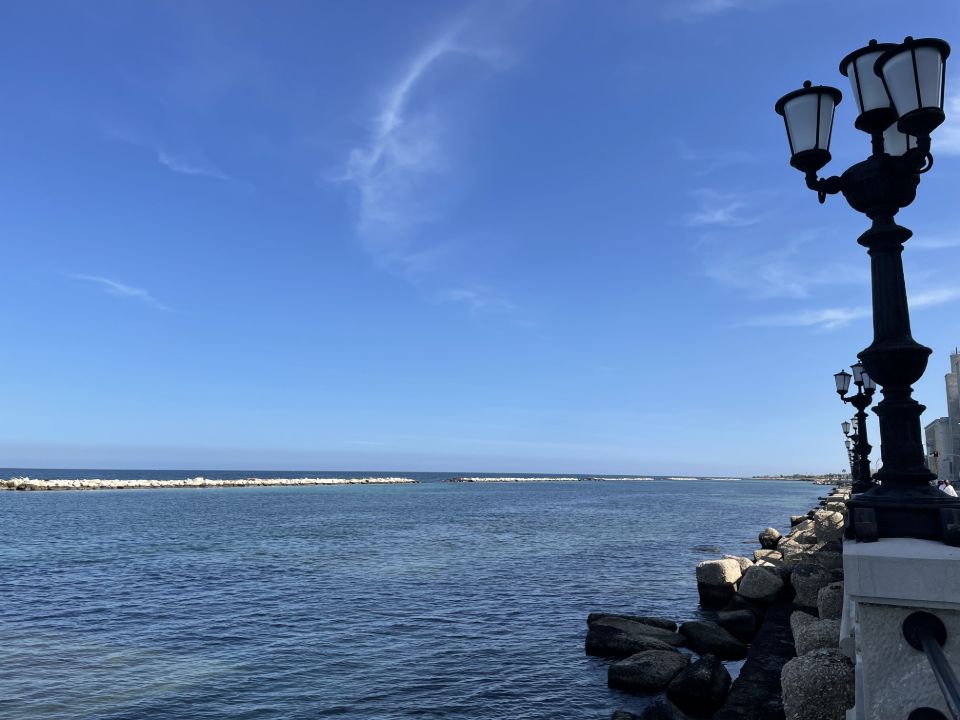
Seafront lamp post 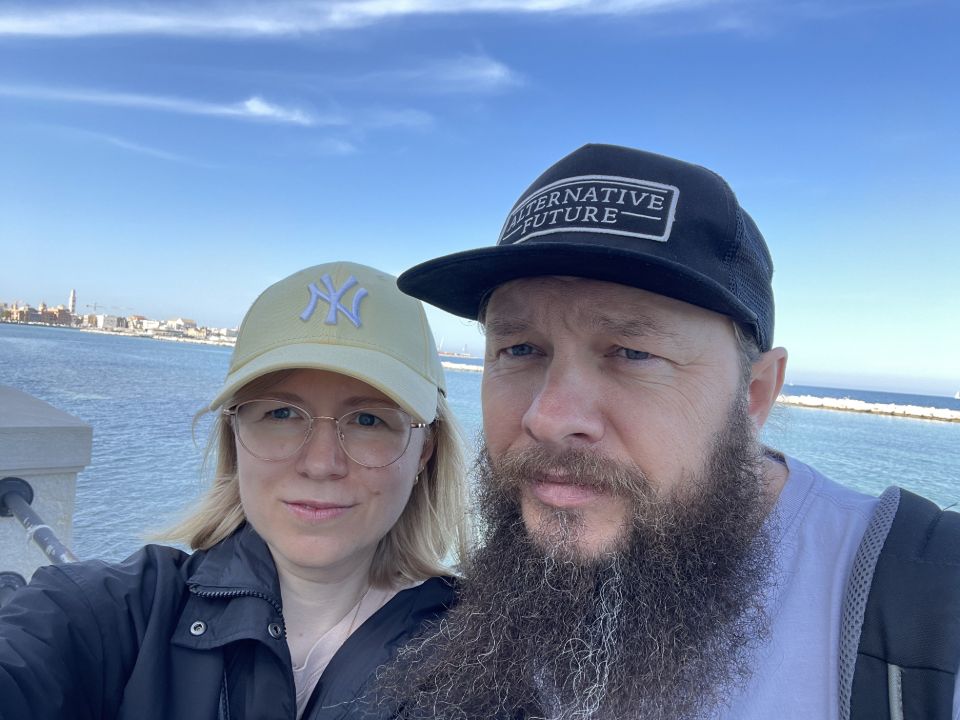
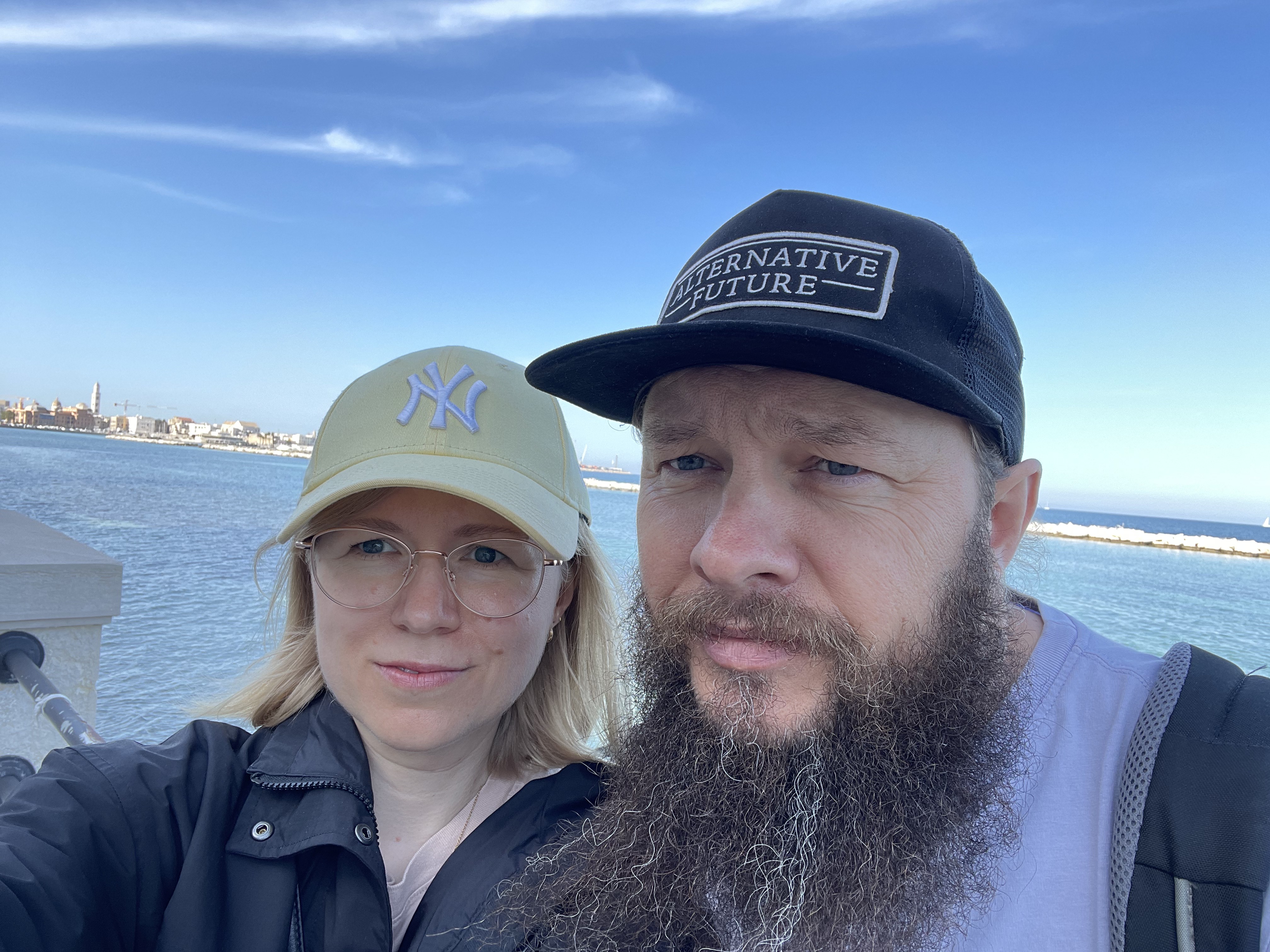
Us by the sea 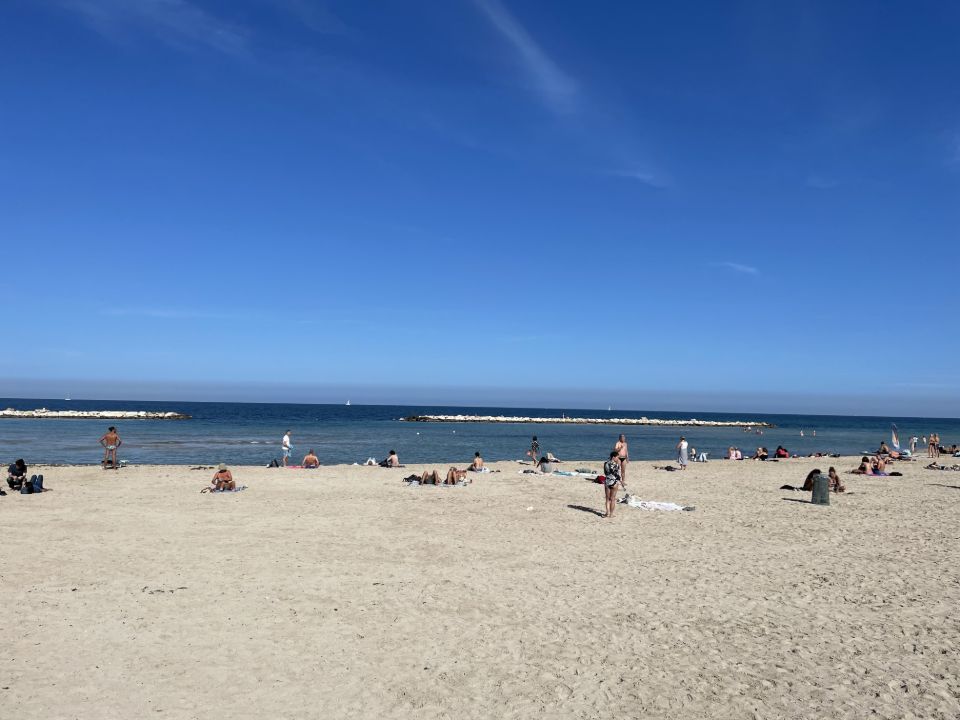
The October beach 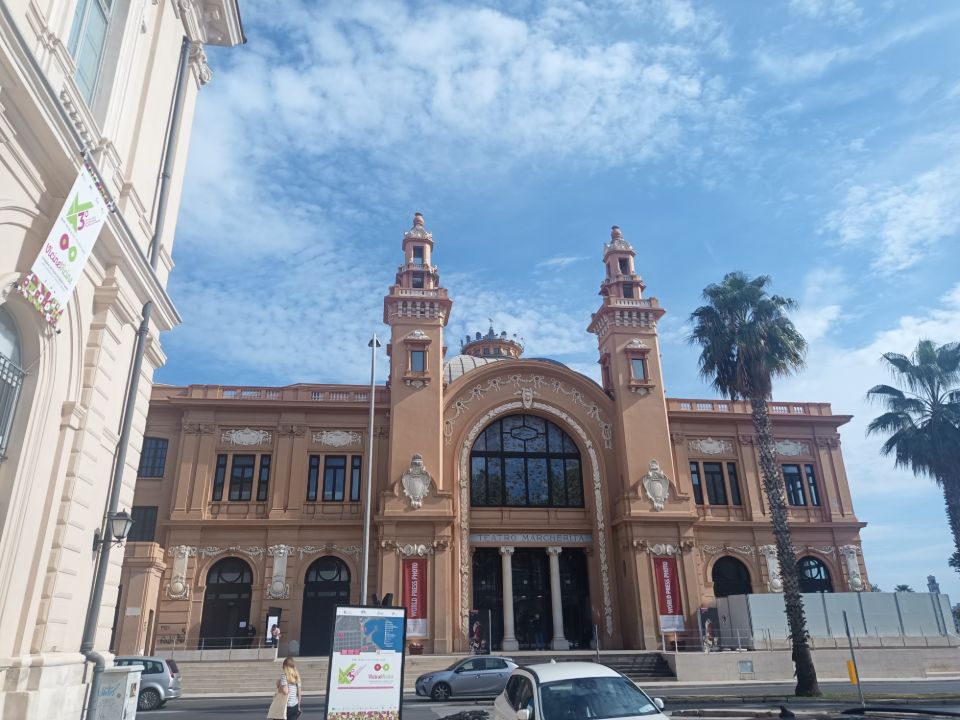
Pasta with a honeycomb top 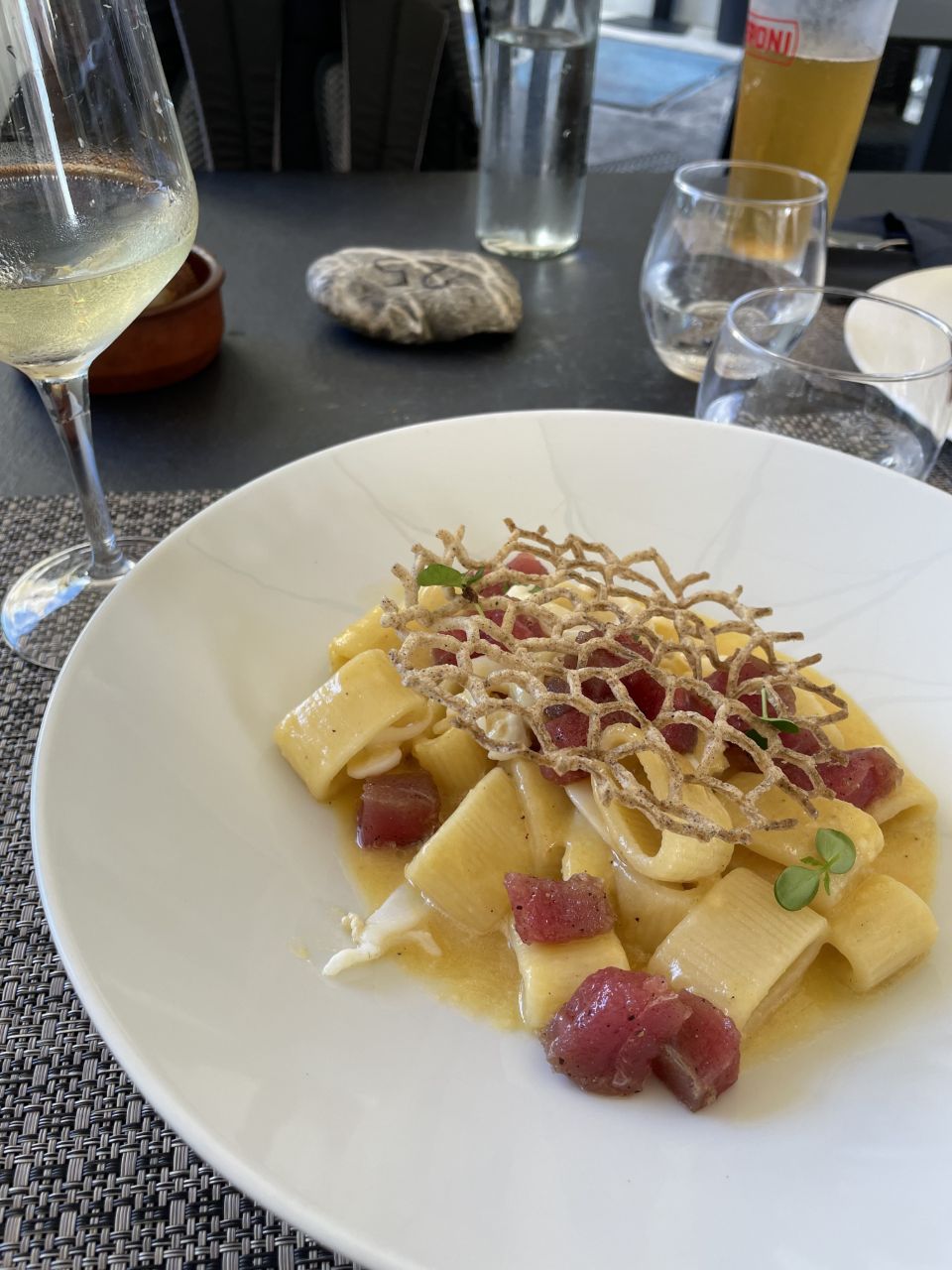
Wide ribbons and raw tuna 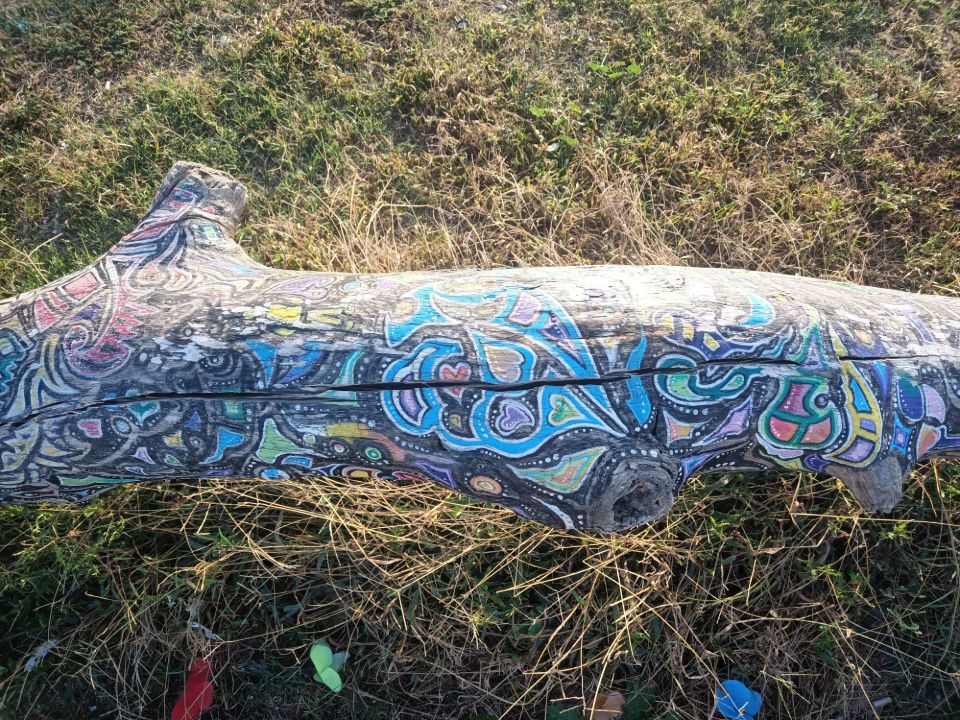
The painted log 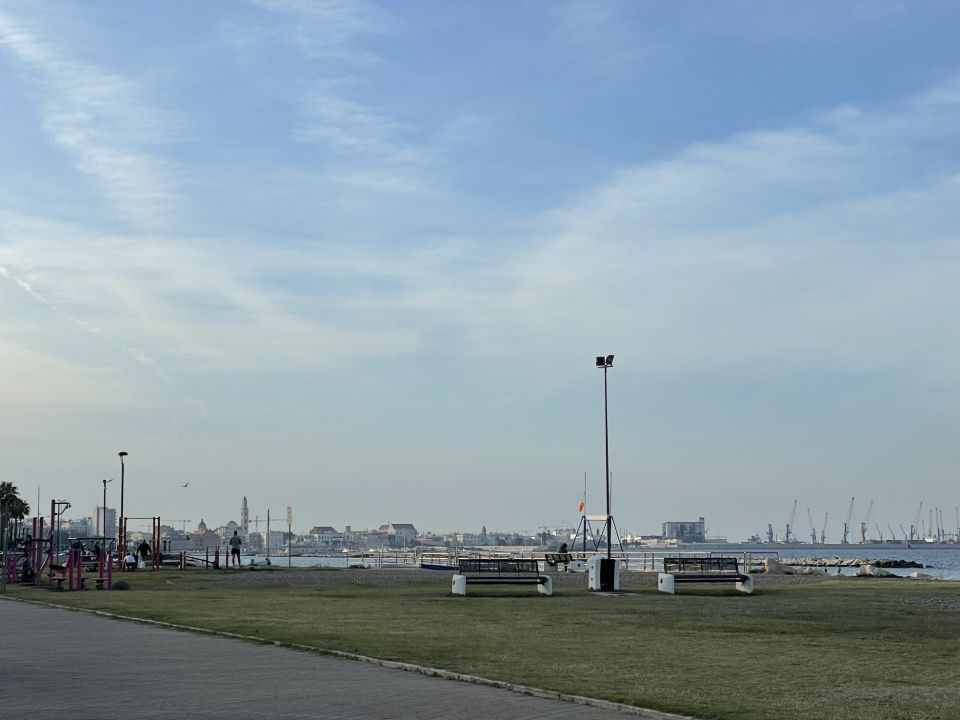
Waterfront park with a view
Small streets, last evening
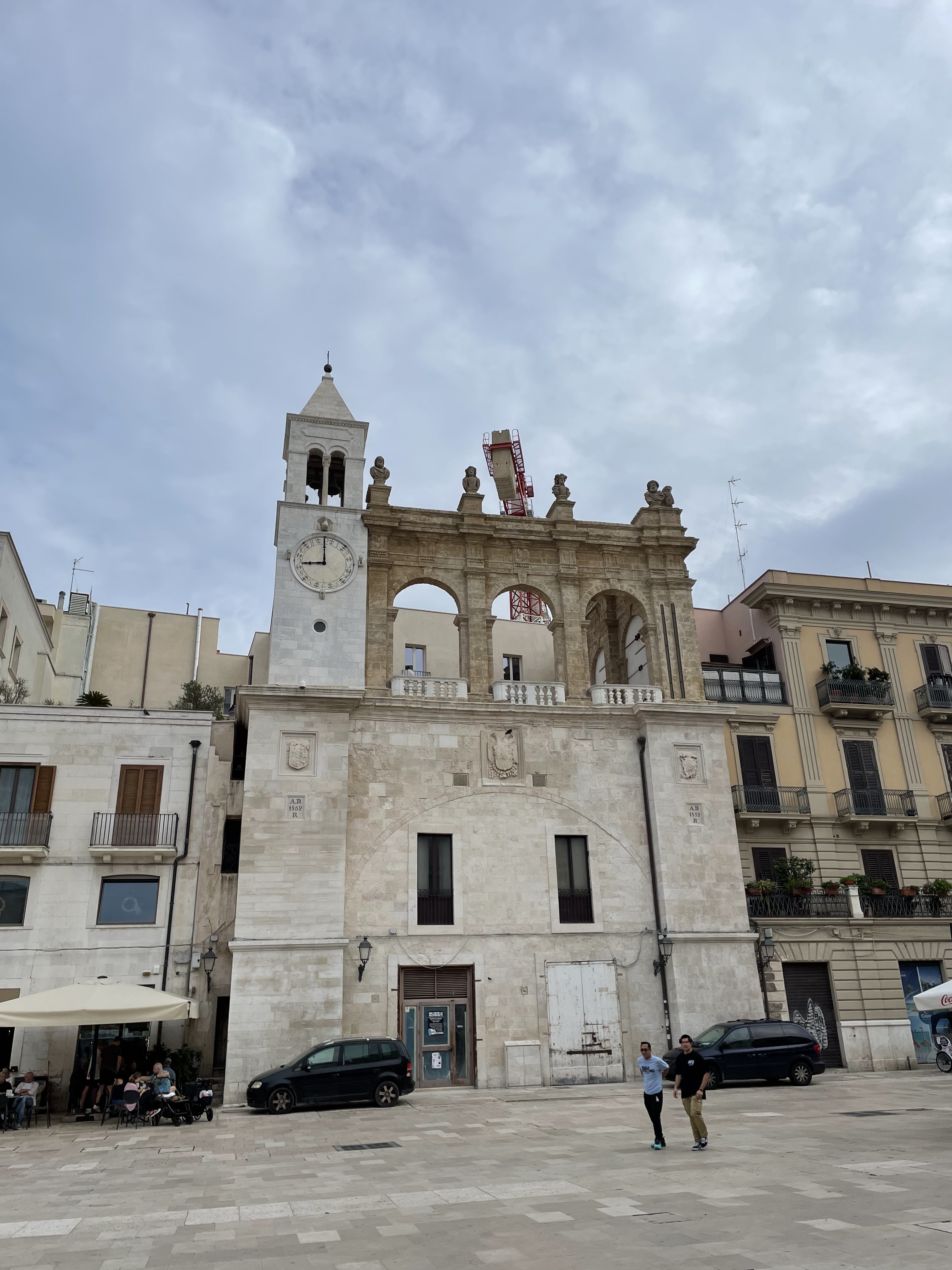
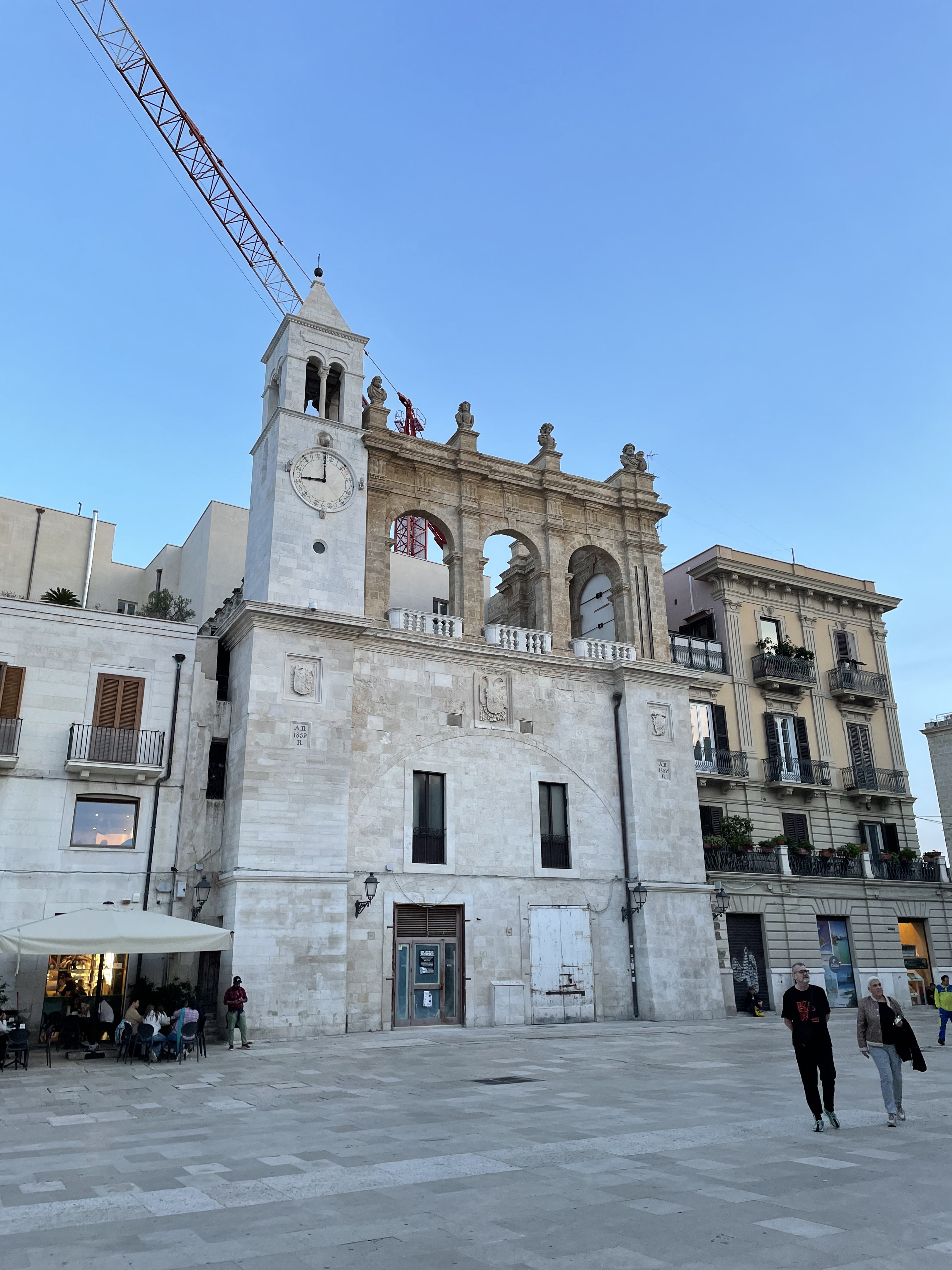
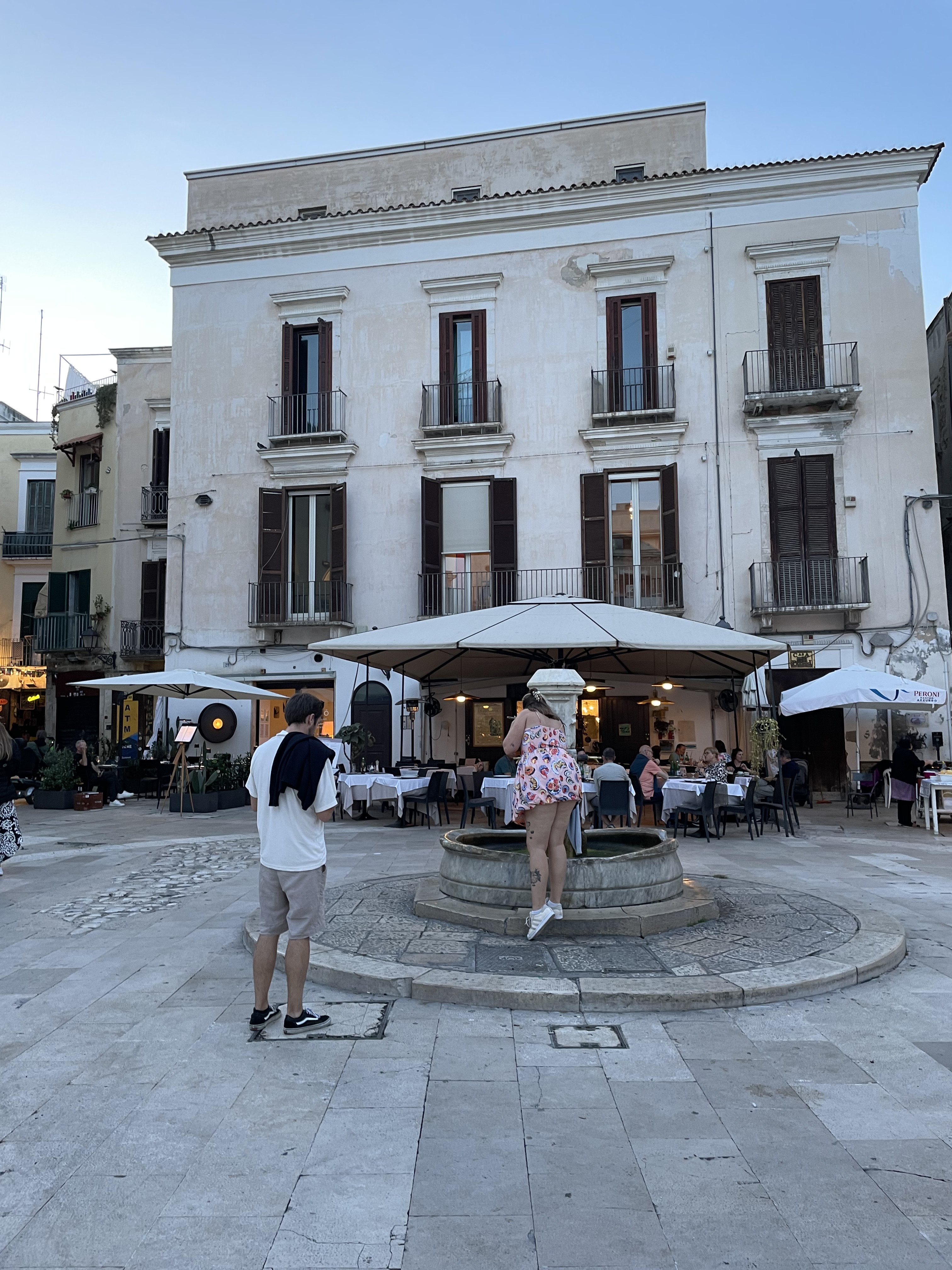
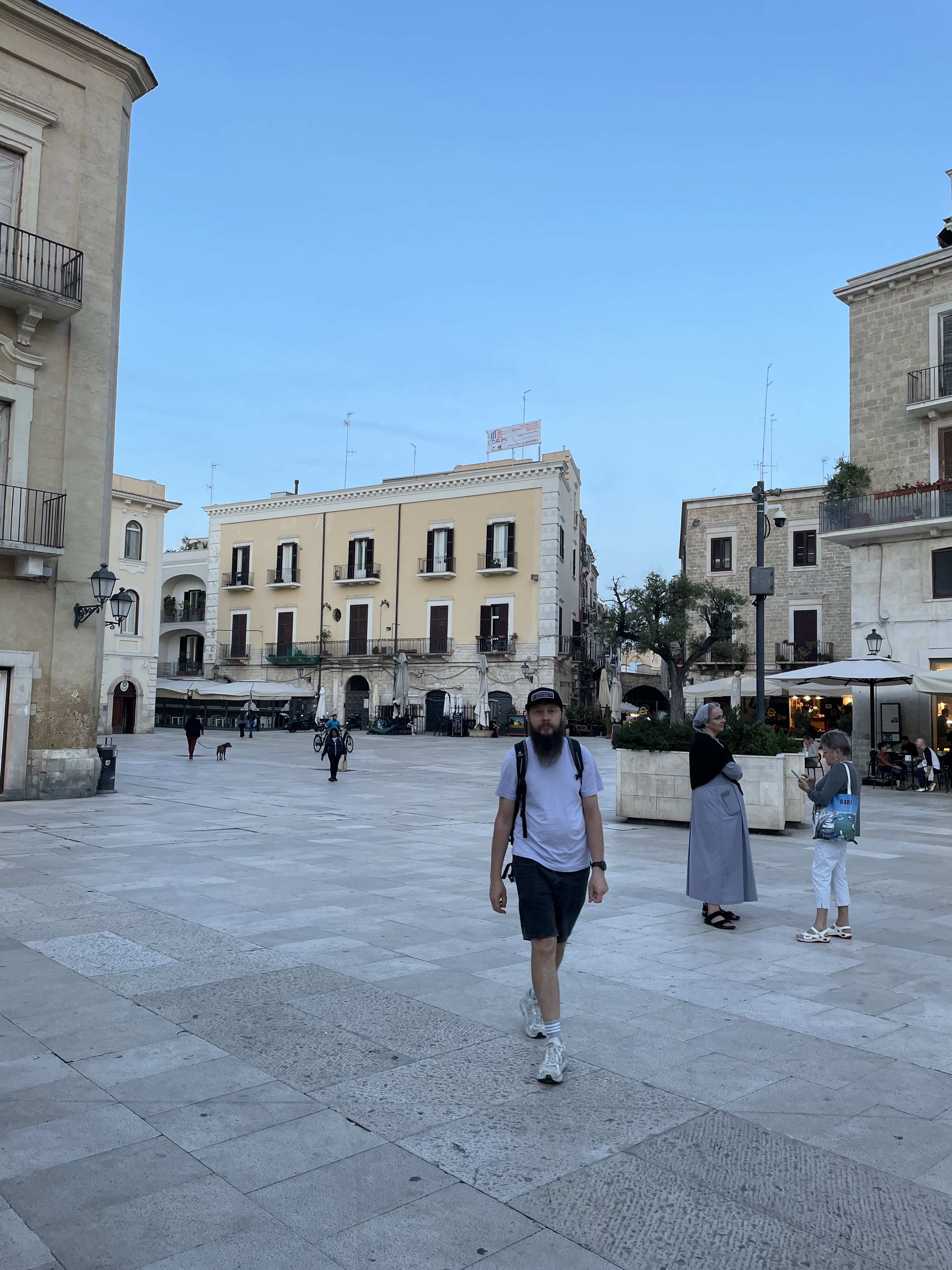
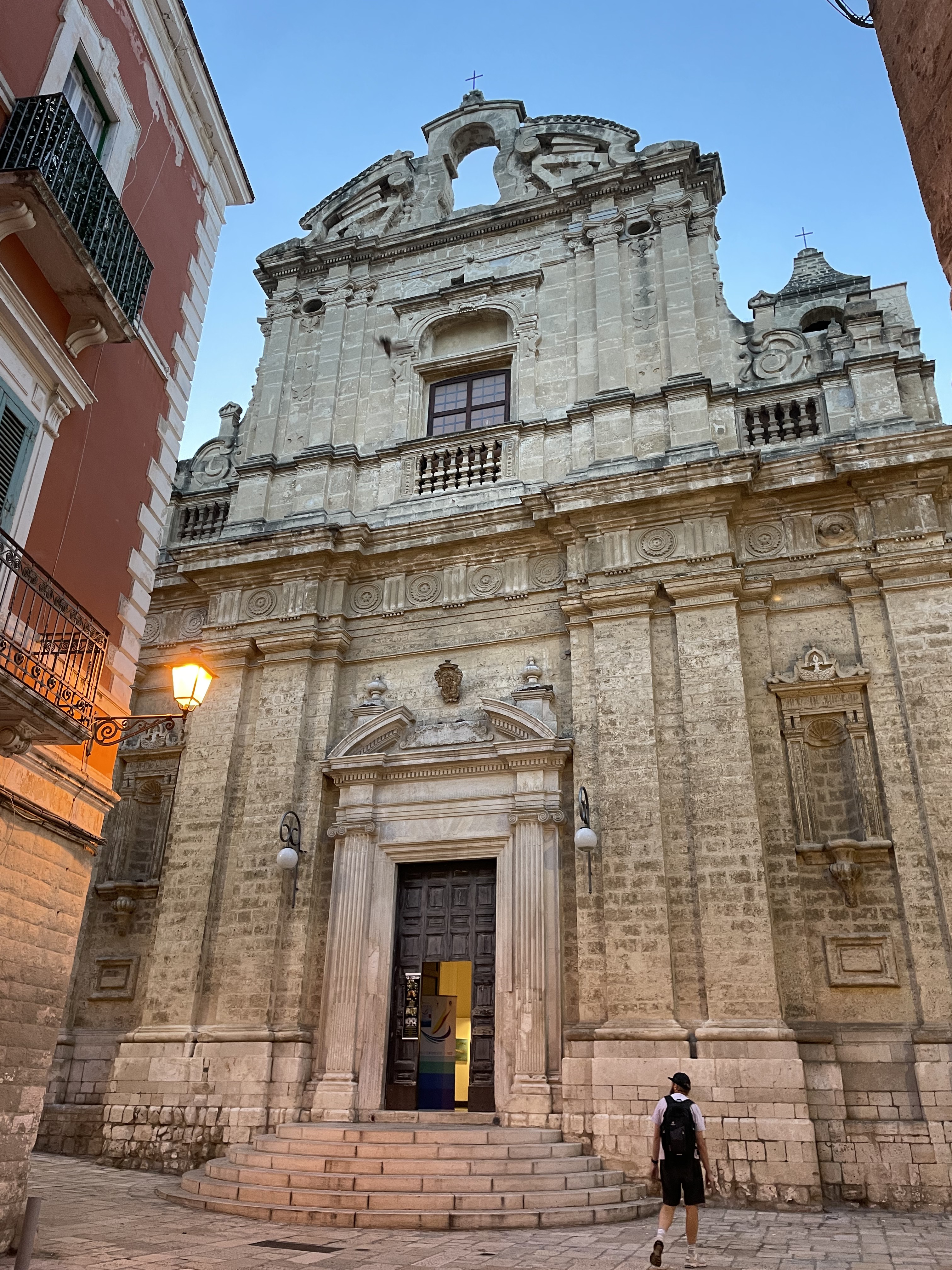
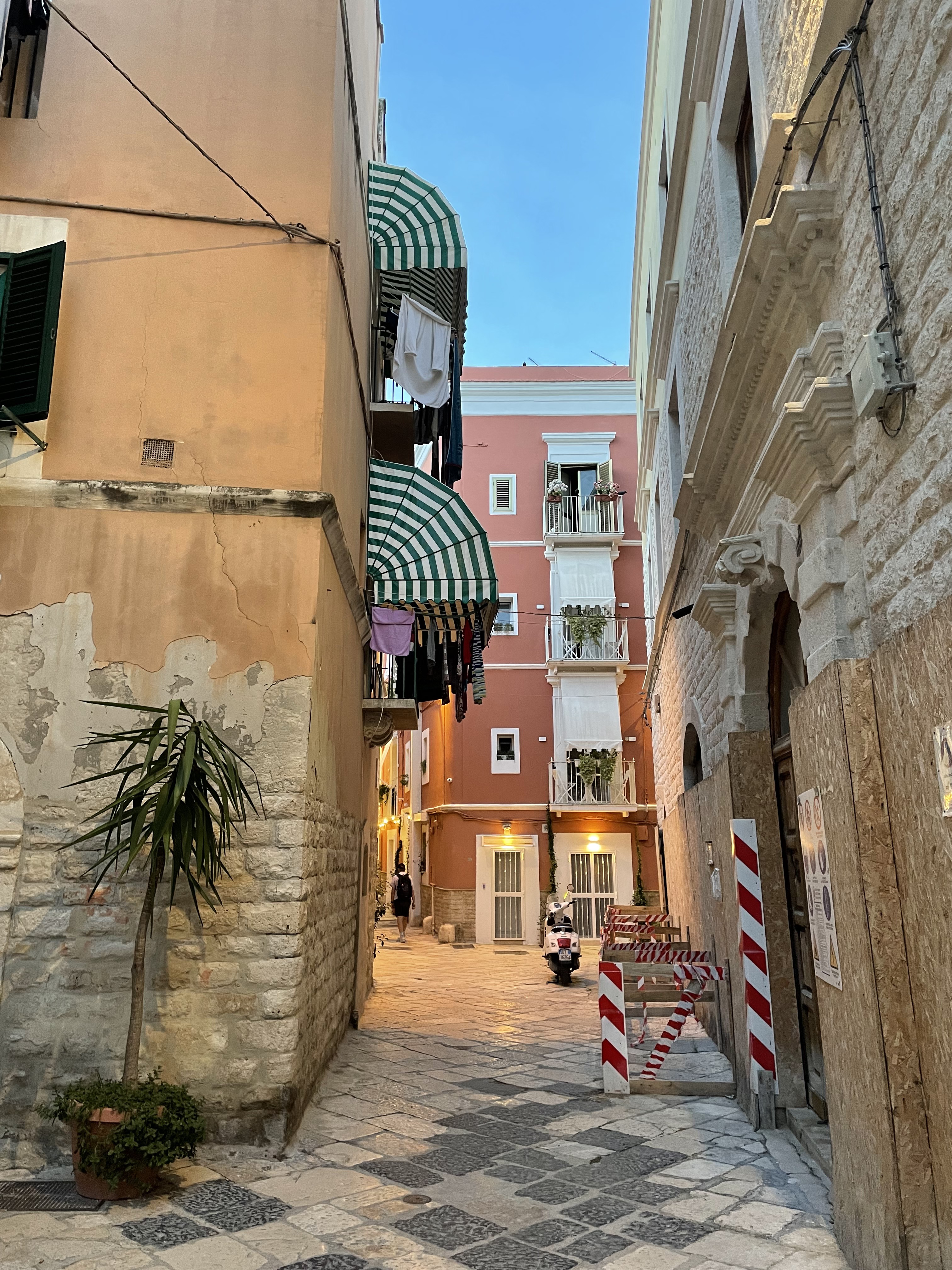
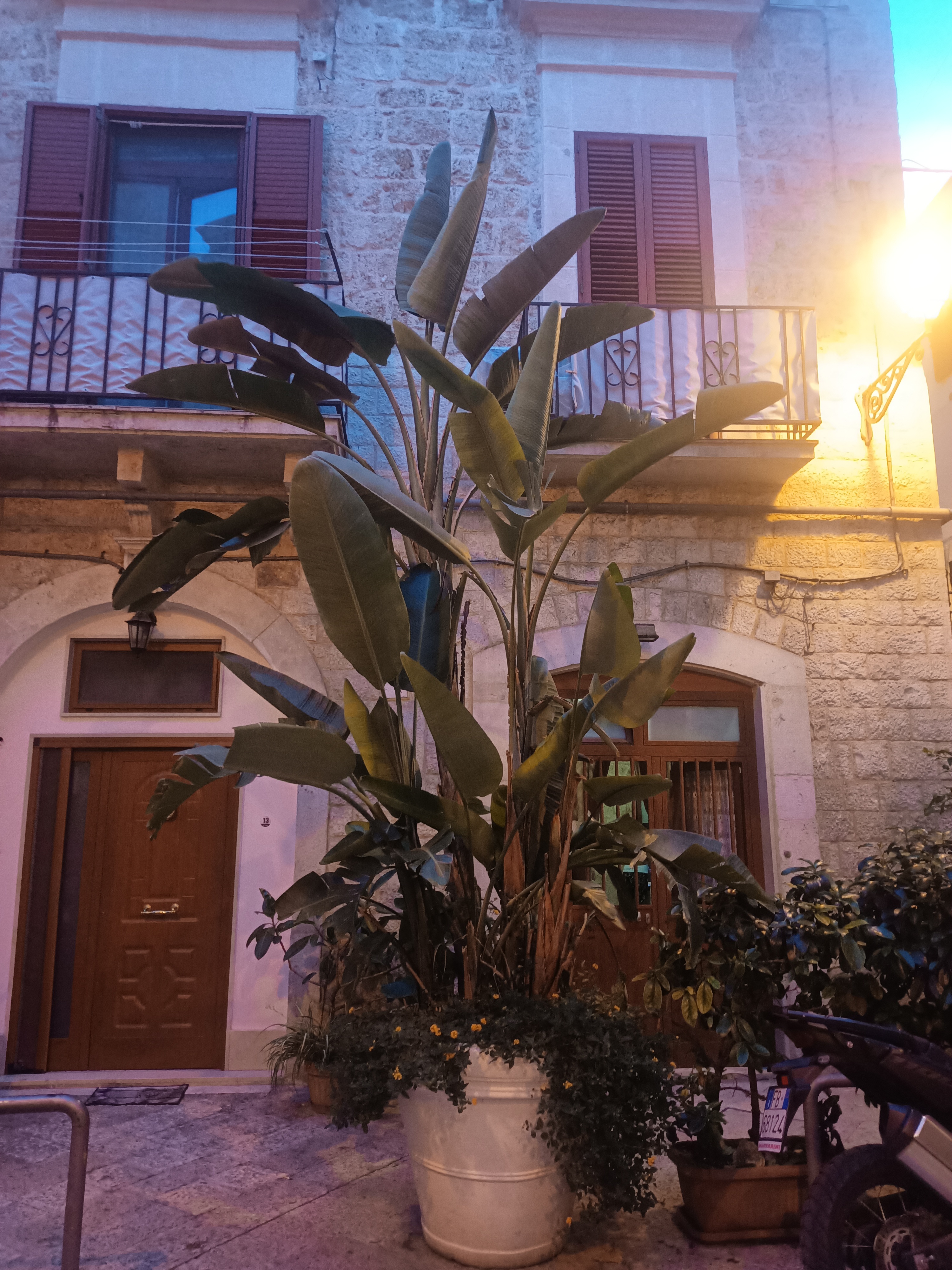
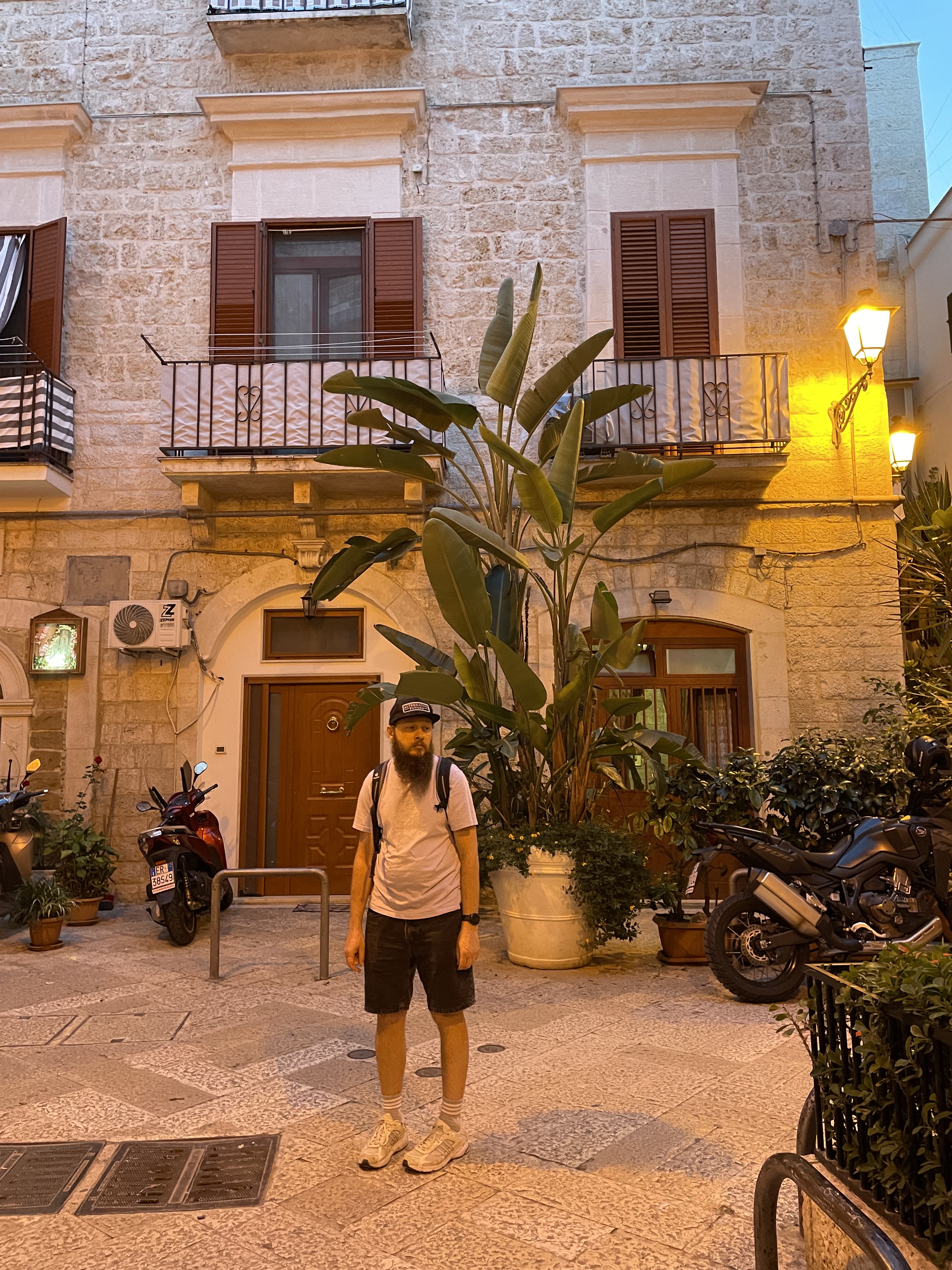
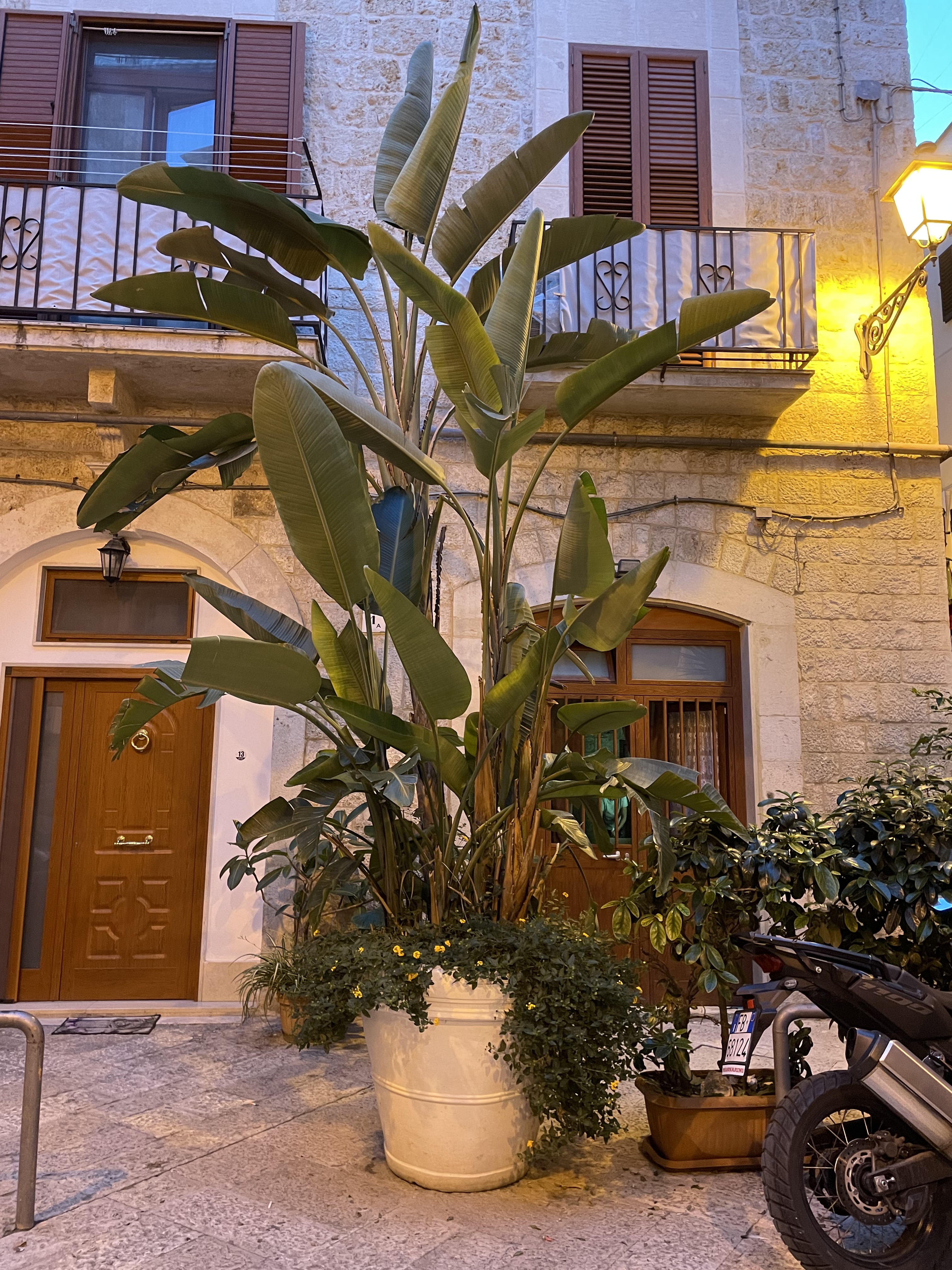
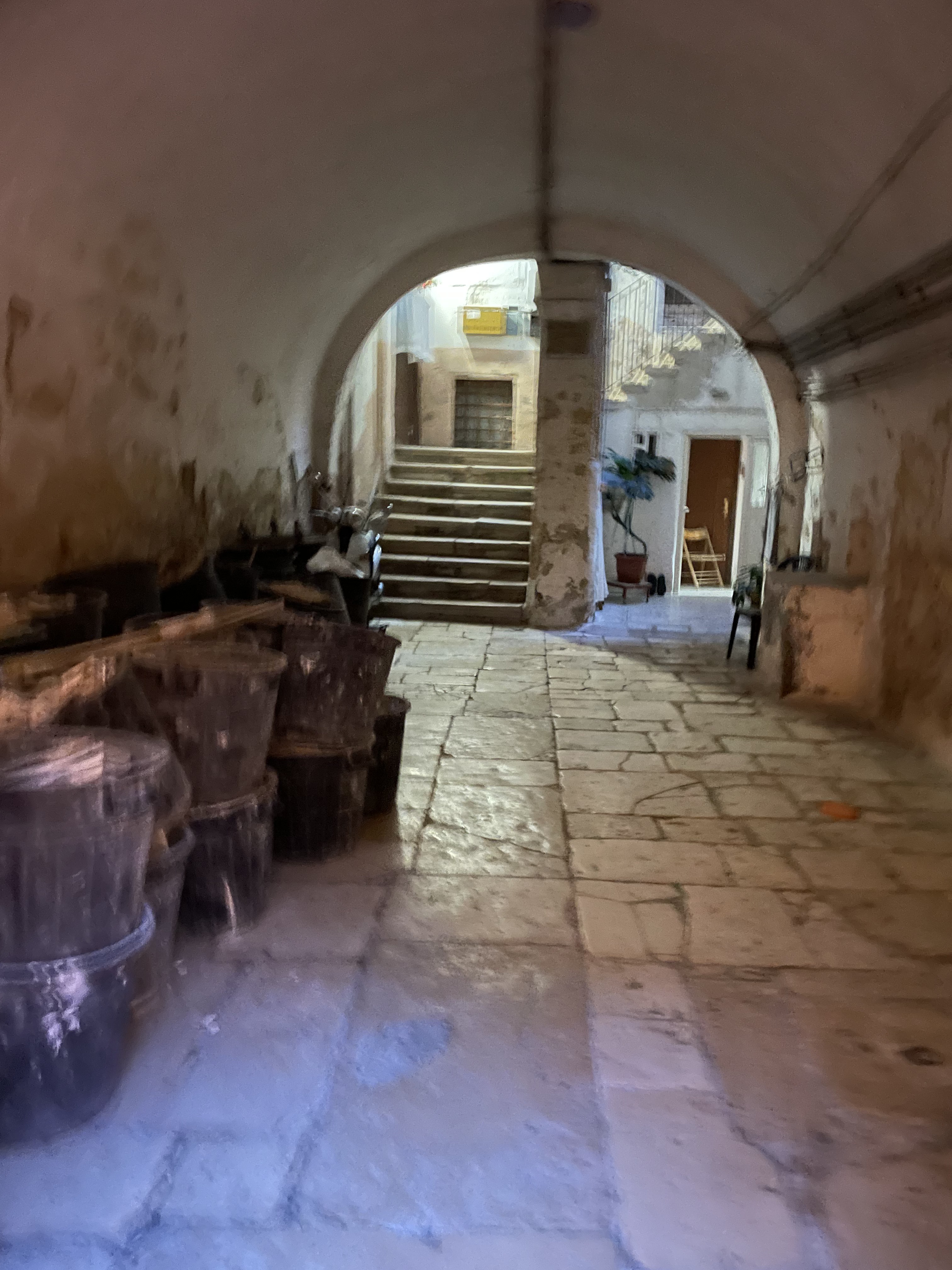
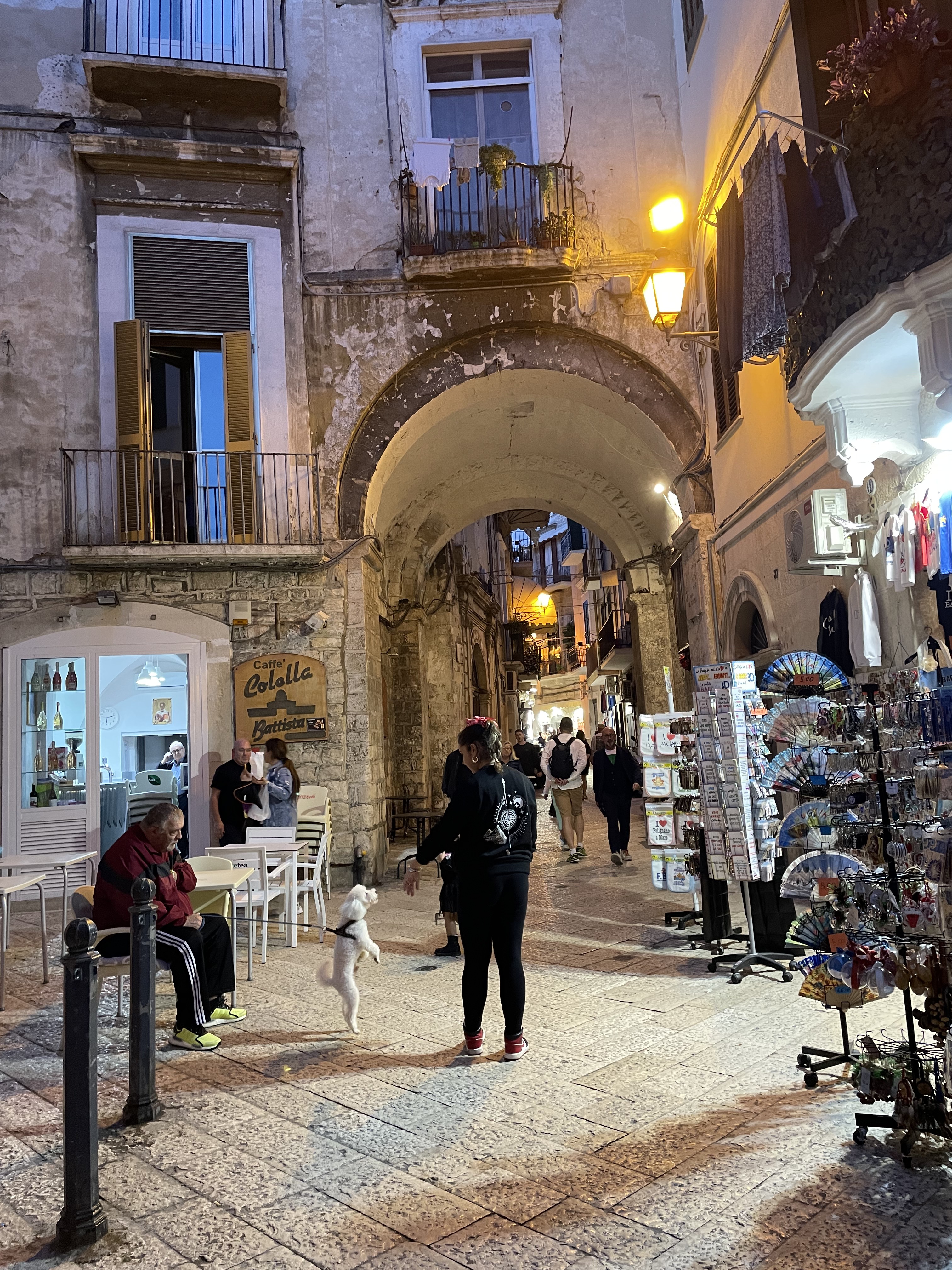
The last evening before departure was spent doing what Bari does best: small streets. A palazzo with a clock tower watching an empty piazza, a fountain ringed by restaurant umbrellas, a baroque facade in lamplight, striped awnings with laundry, a banana plant glowing in a doorway, Oleg crossing a deserted square, a scooter parked in a courtyard of stone houses, a vaulted passage with stairs inside, and a small white dog standing under an arch.
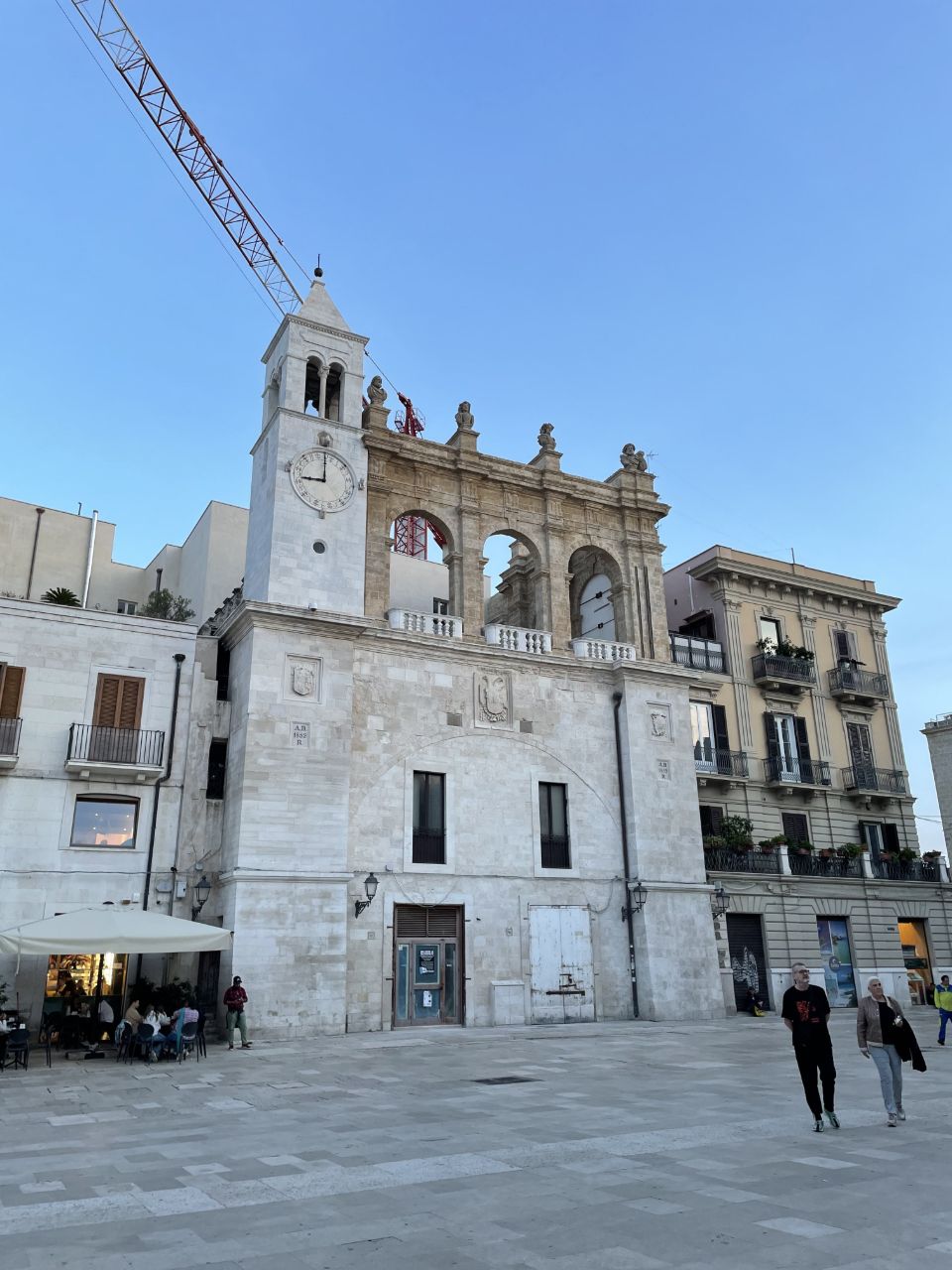
Palazzo and clock tower 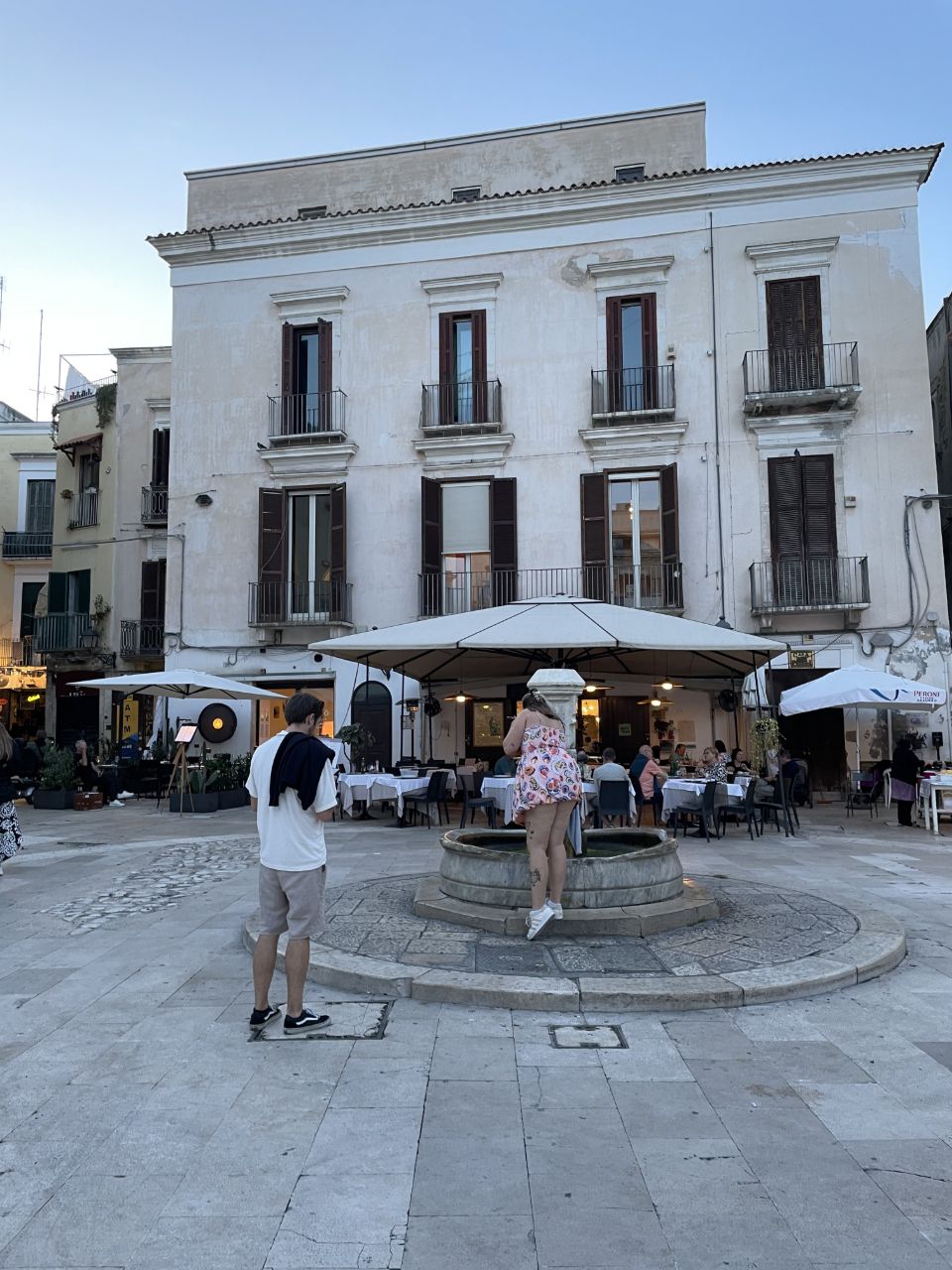
Fountain and umbrellas 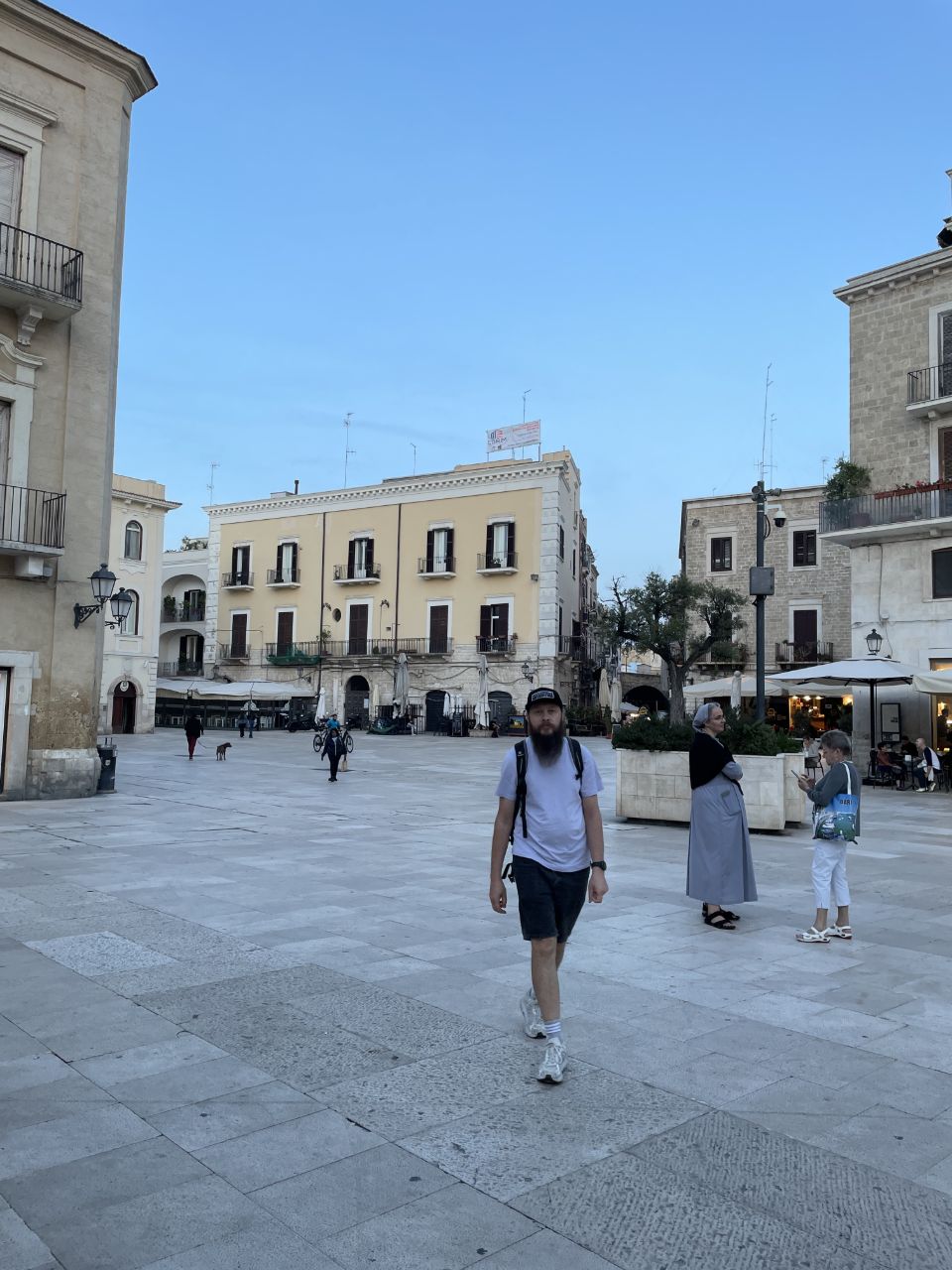
Crossing the piazza 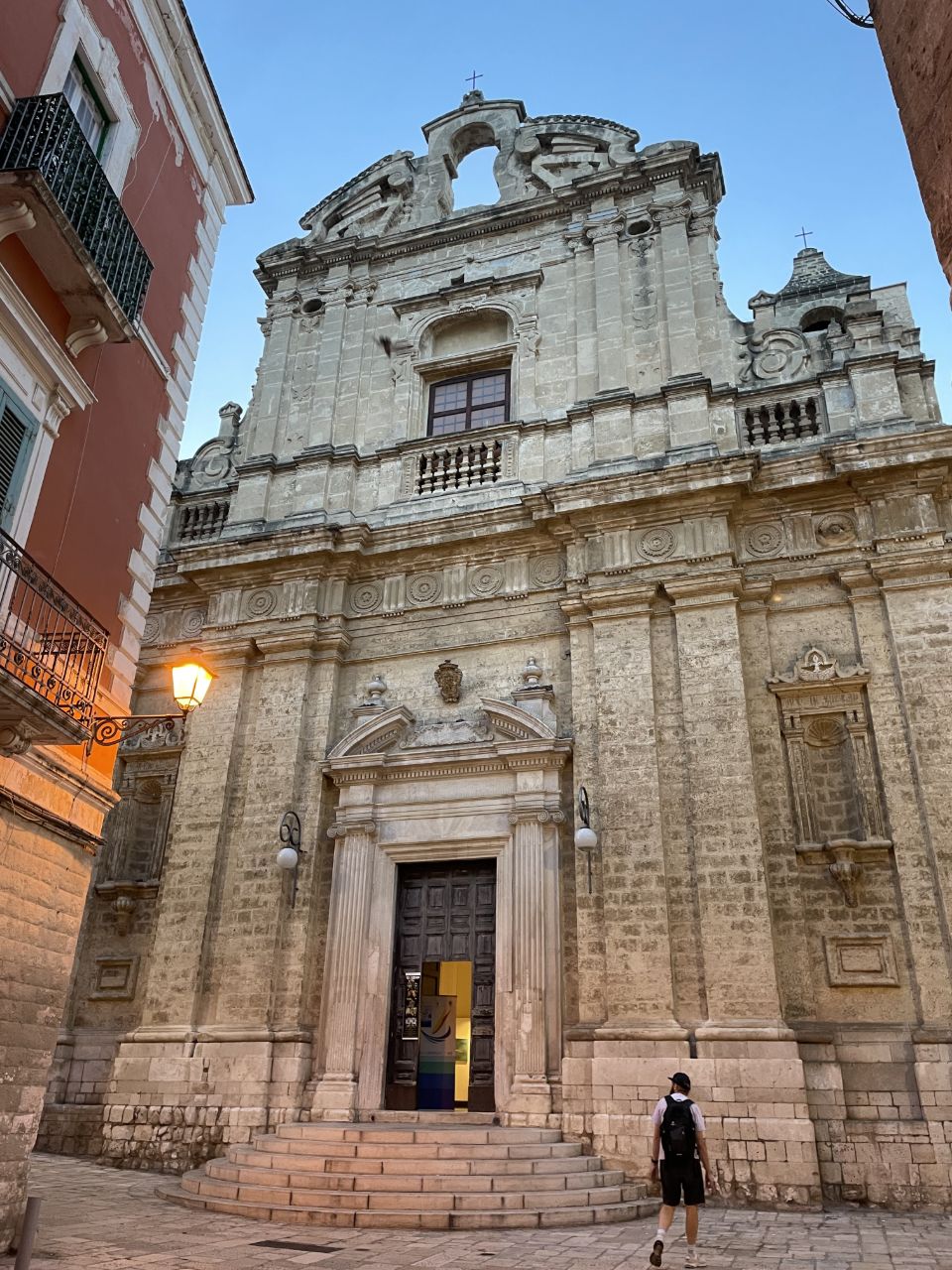
Baroque in lamplight 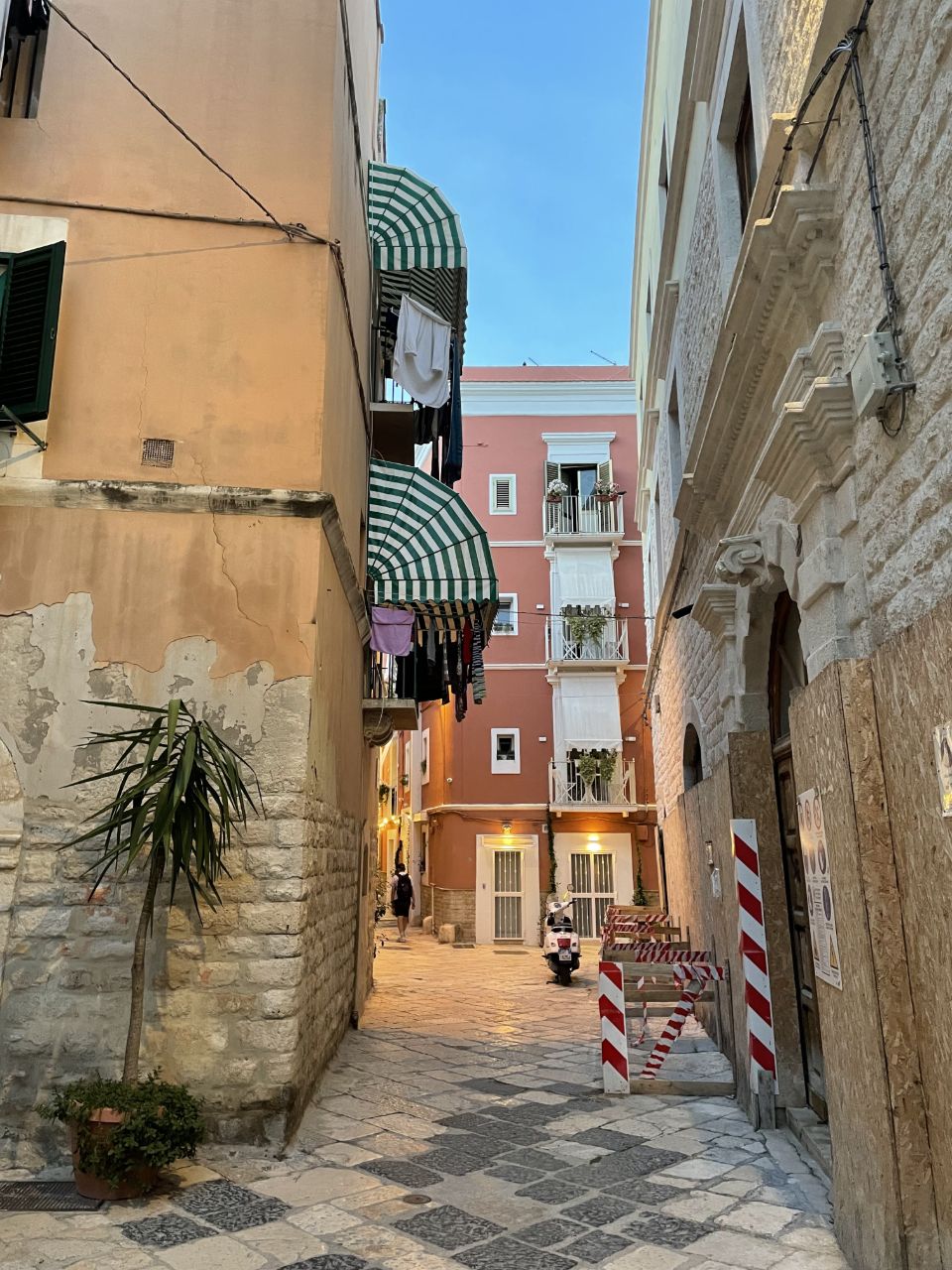
Awnings and laundry 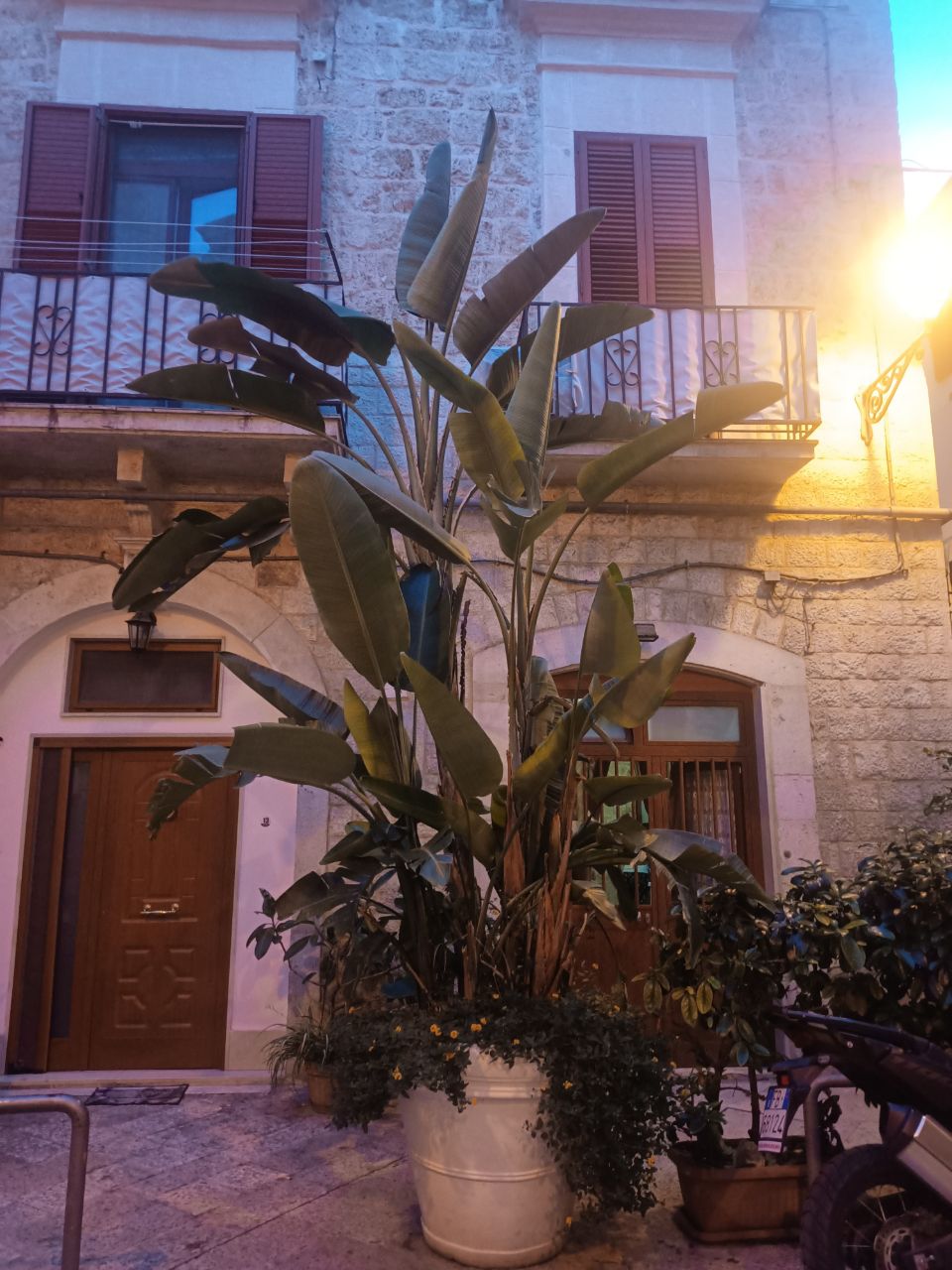
Banana plant, doorway light 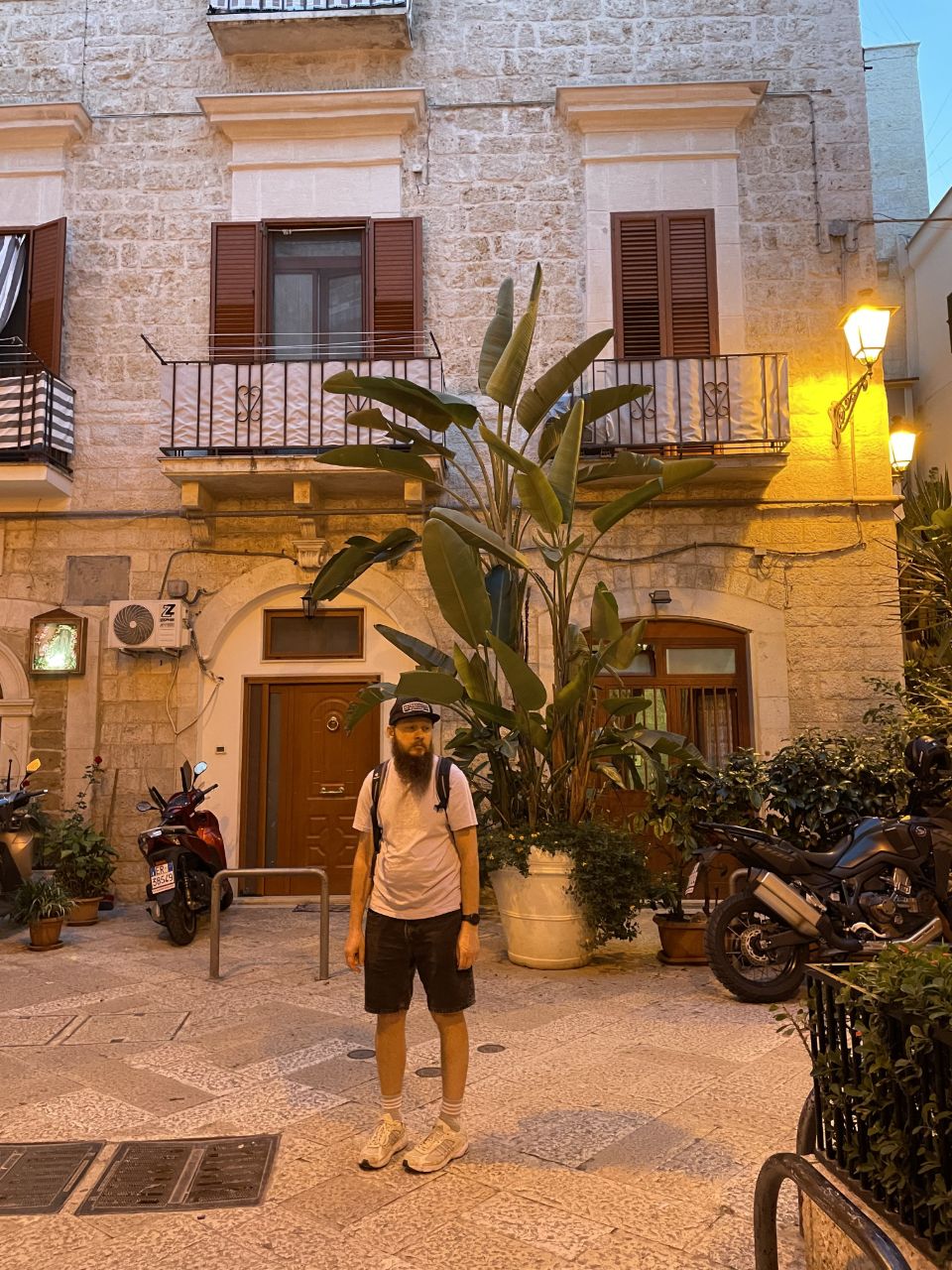
Oleg in a small piazza 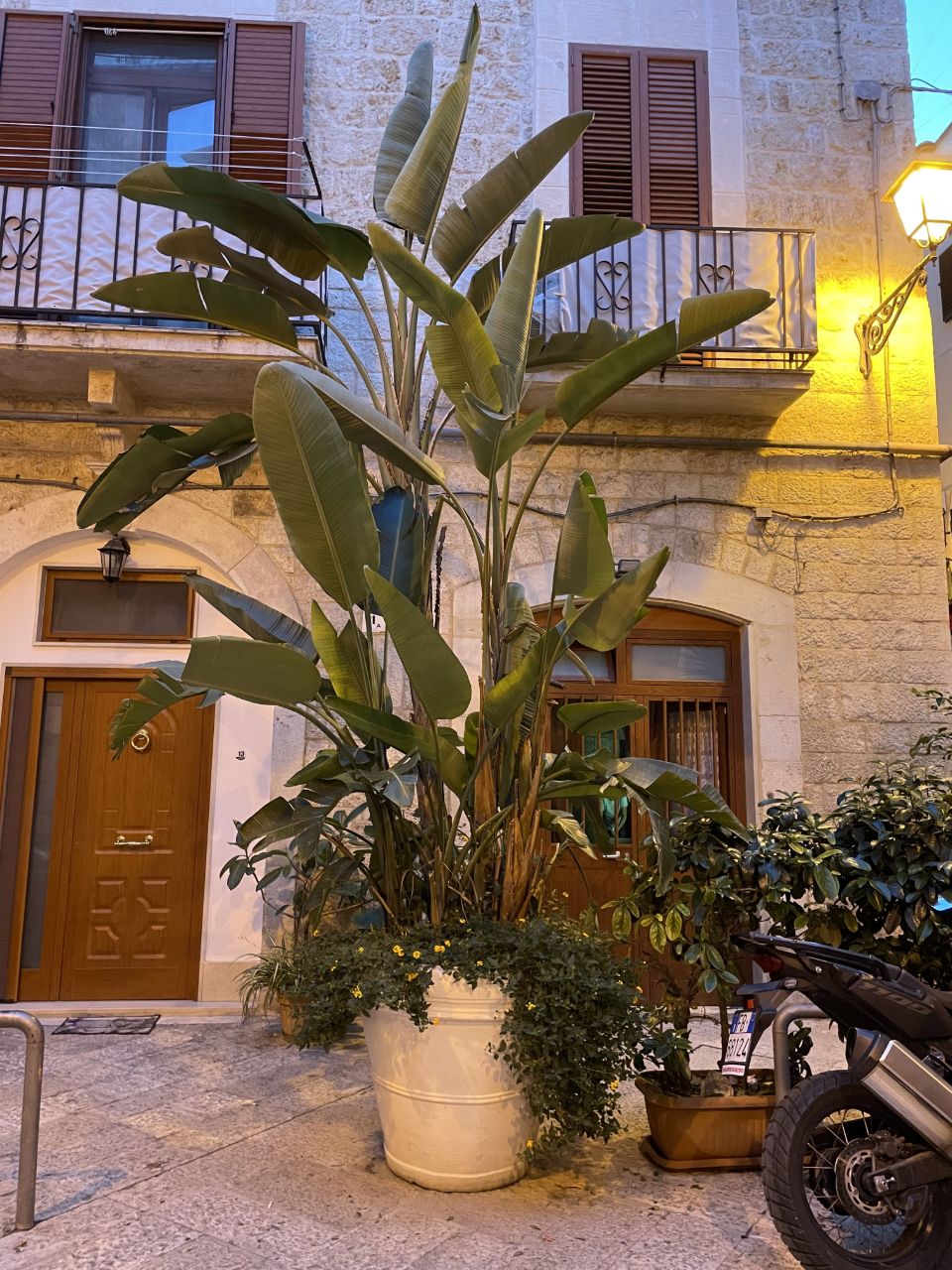
Scooter, stone houses 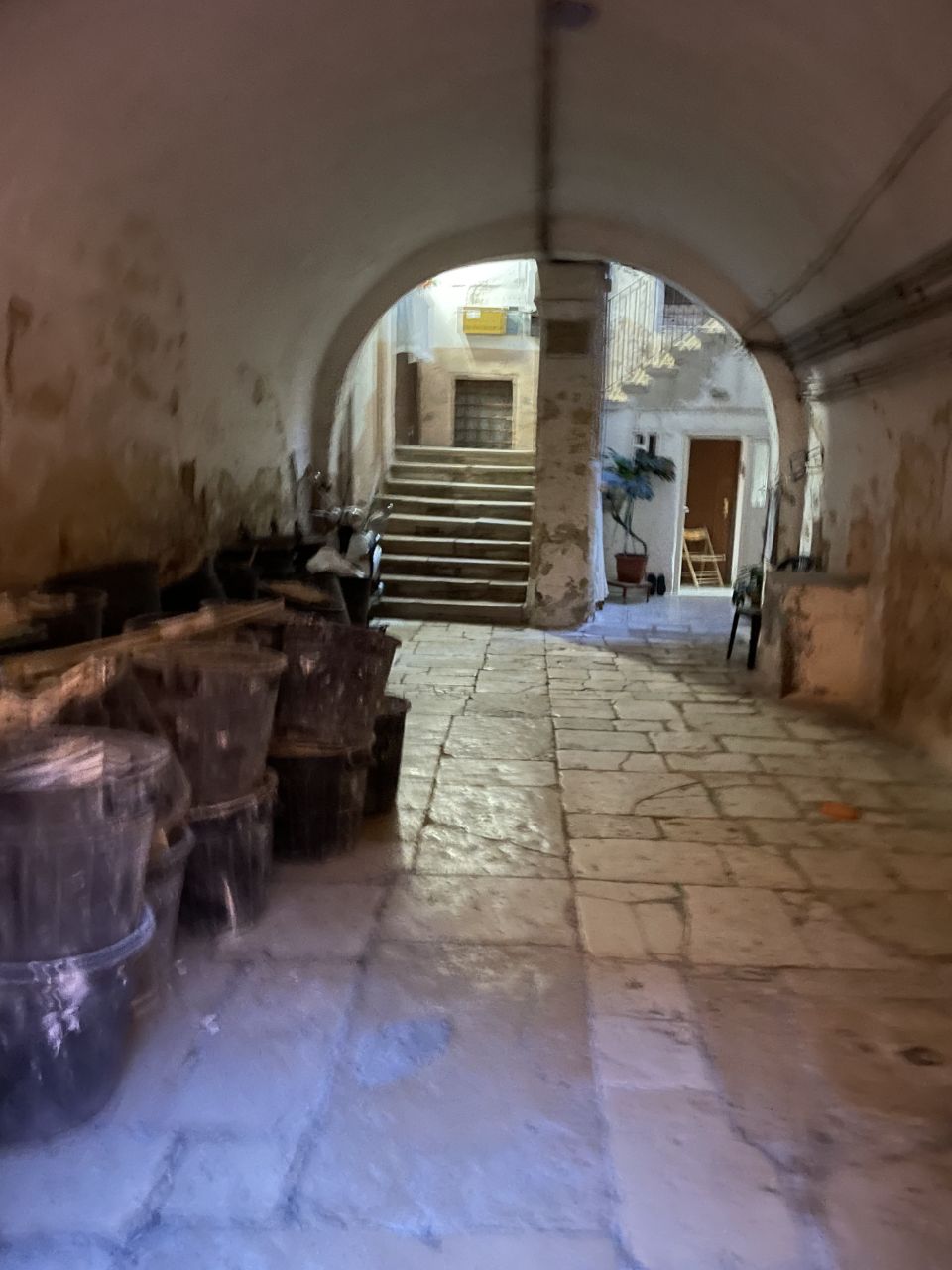
The vaulted passage stairs 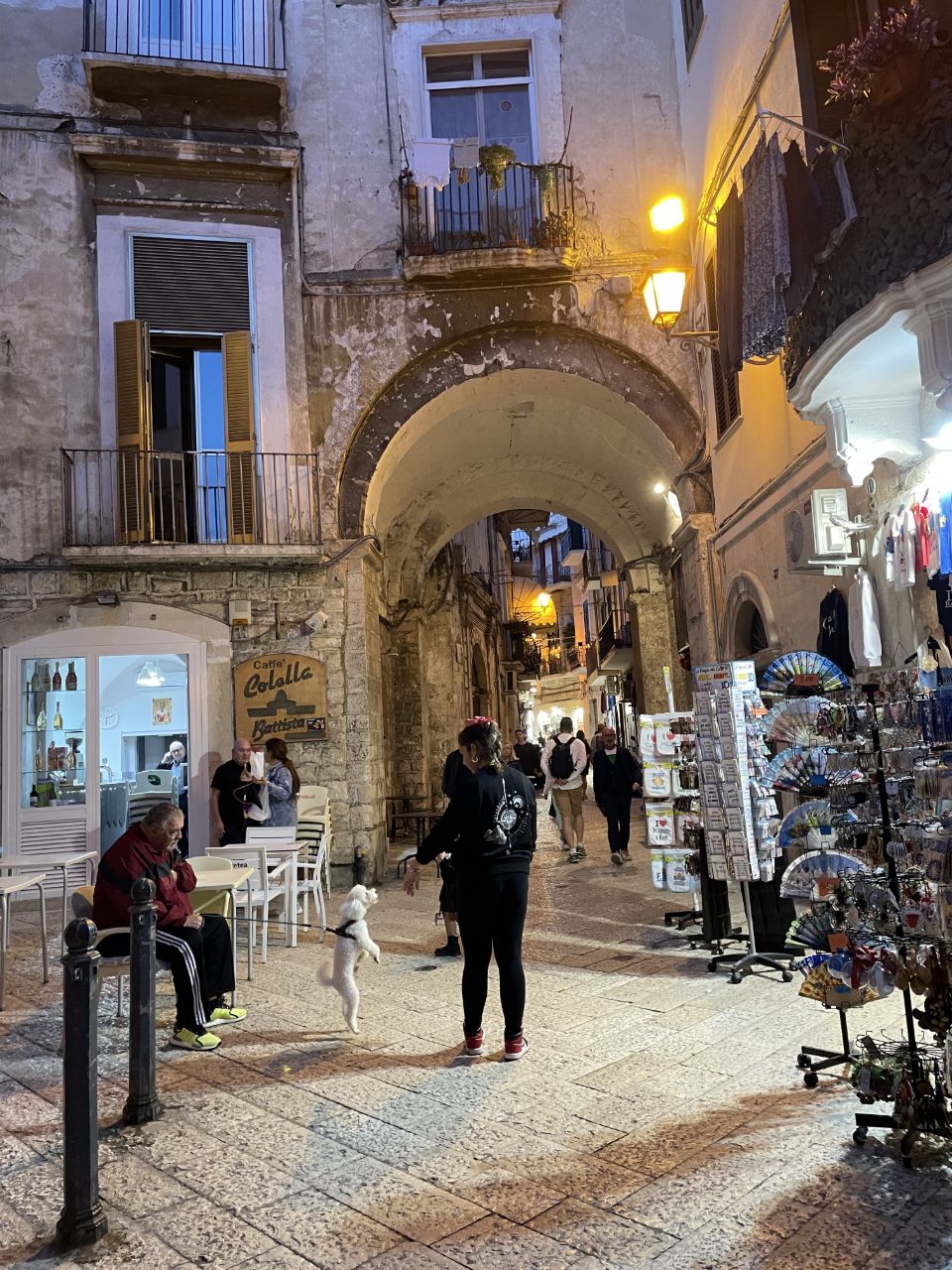
The white dog under the arch
One last night walk, then the lights go out
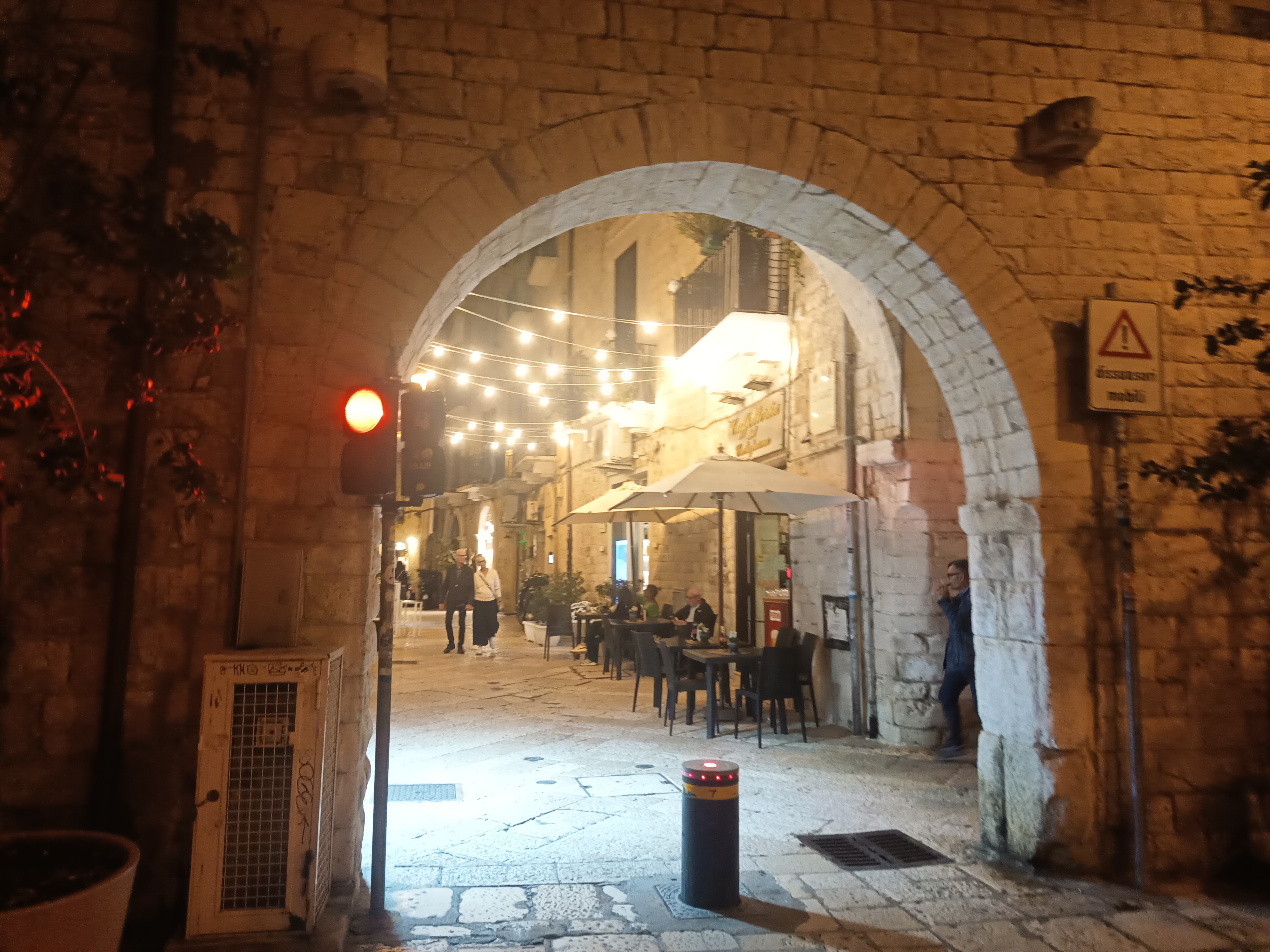
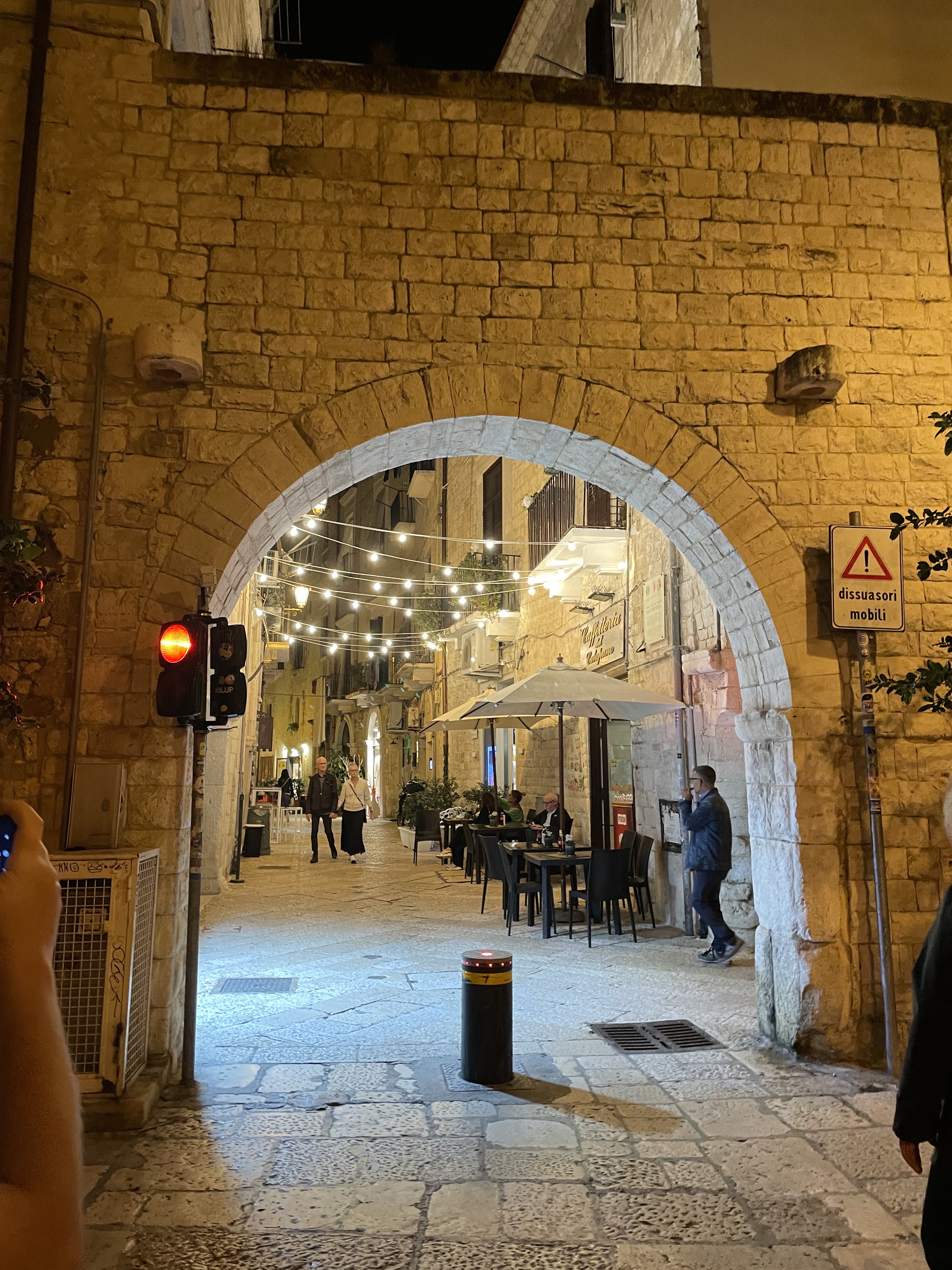
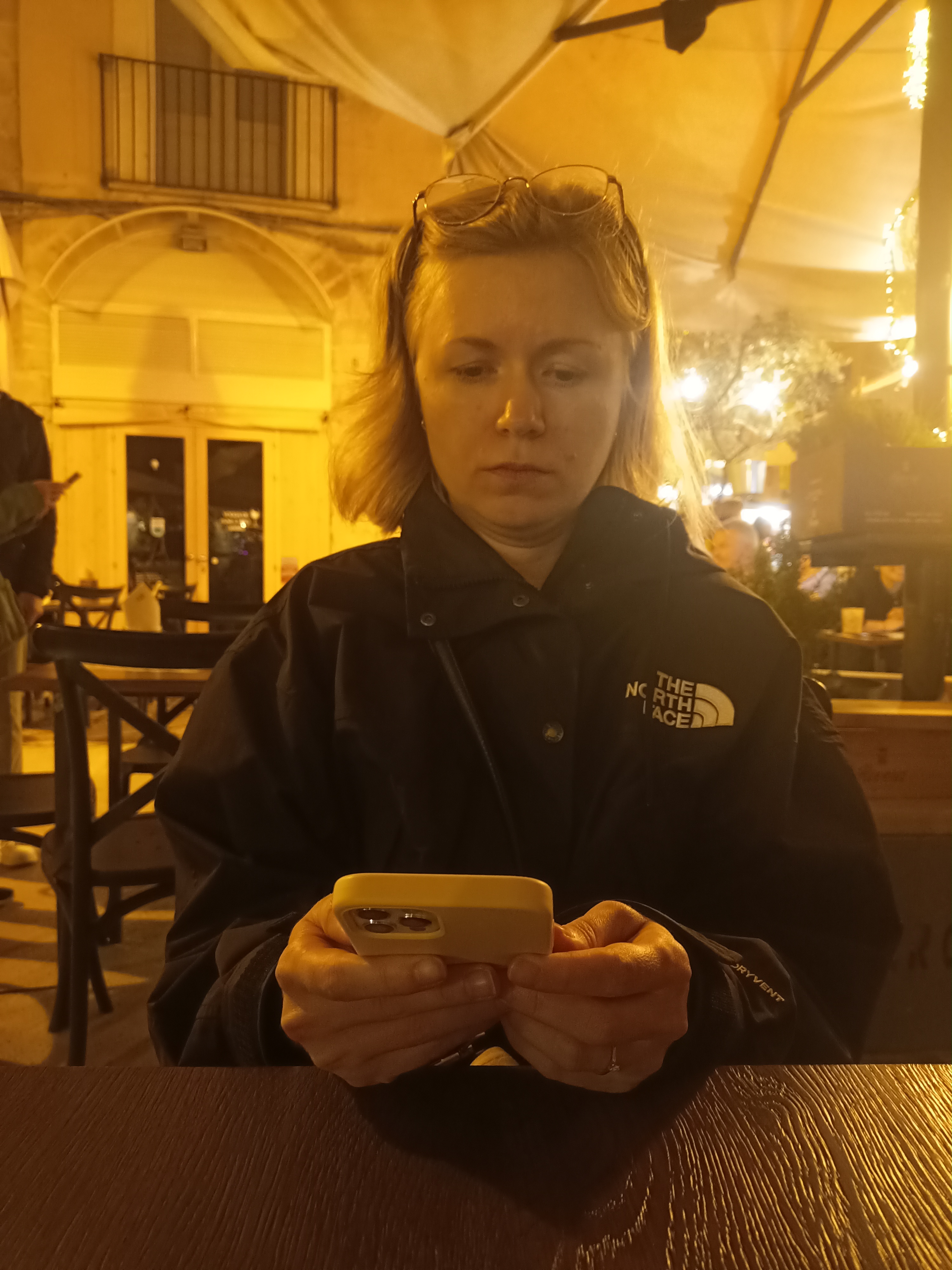
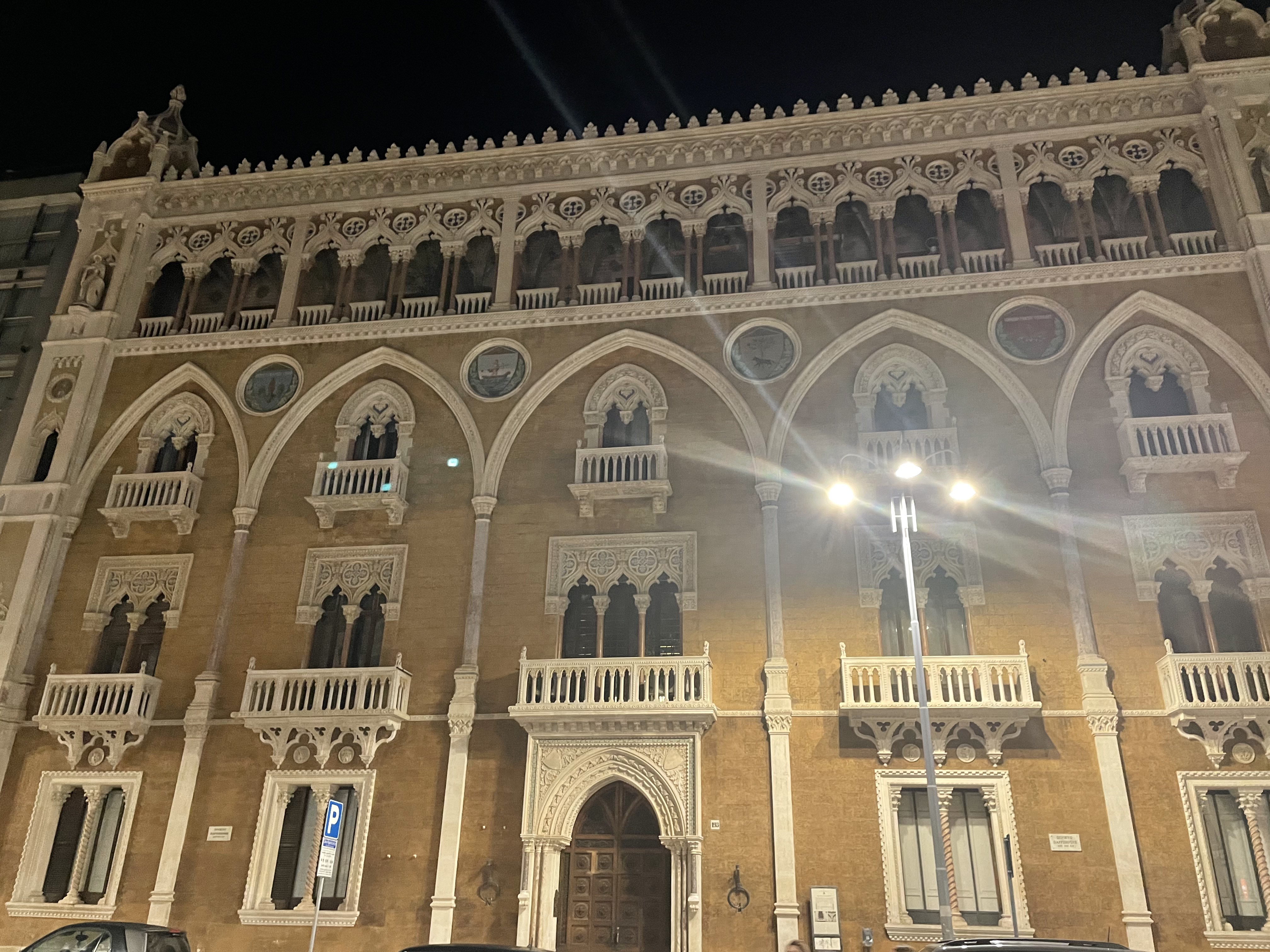
The city gate strung with lights, an arch framing a lane, Anna at a late café table under a lamp with the town going quiet around her, and one Venetian-Gothic palace holding its carved balconies up against the dark. Then home — our last walk in Puglia.
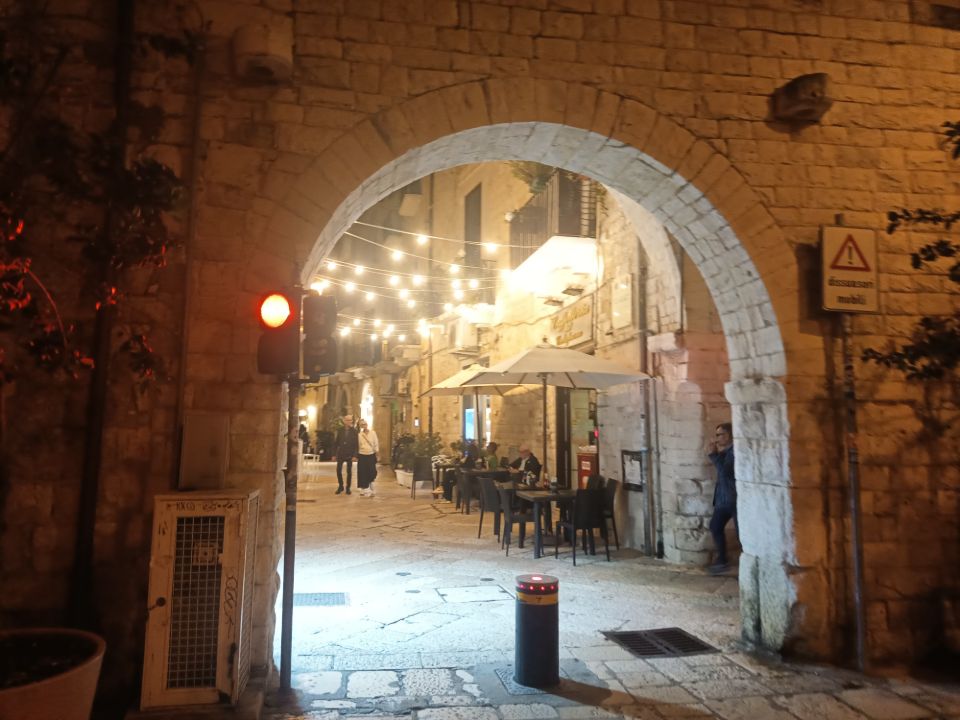
Arch, lane, lights 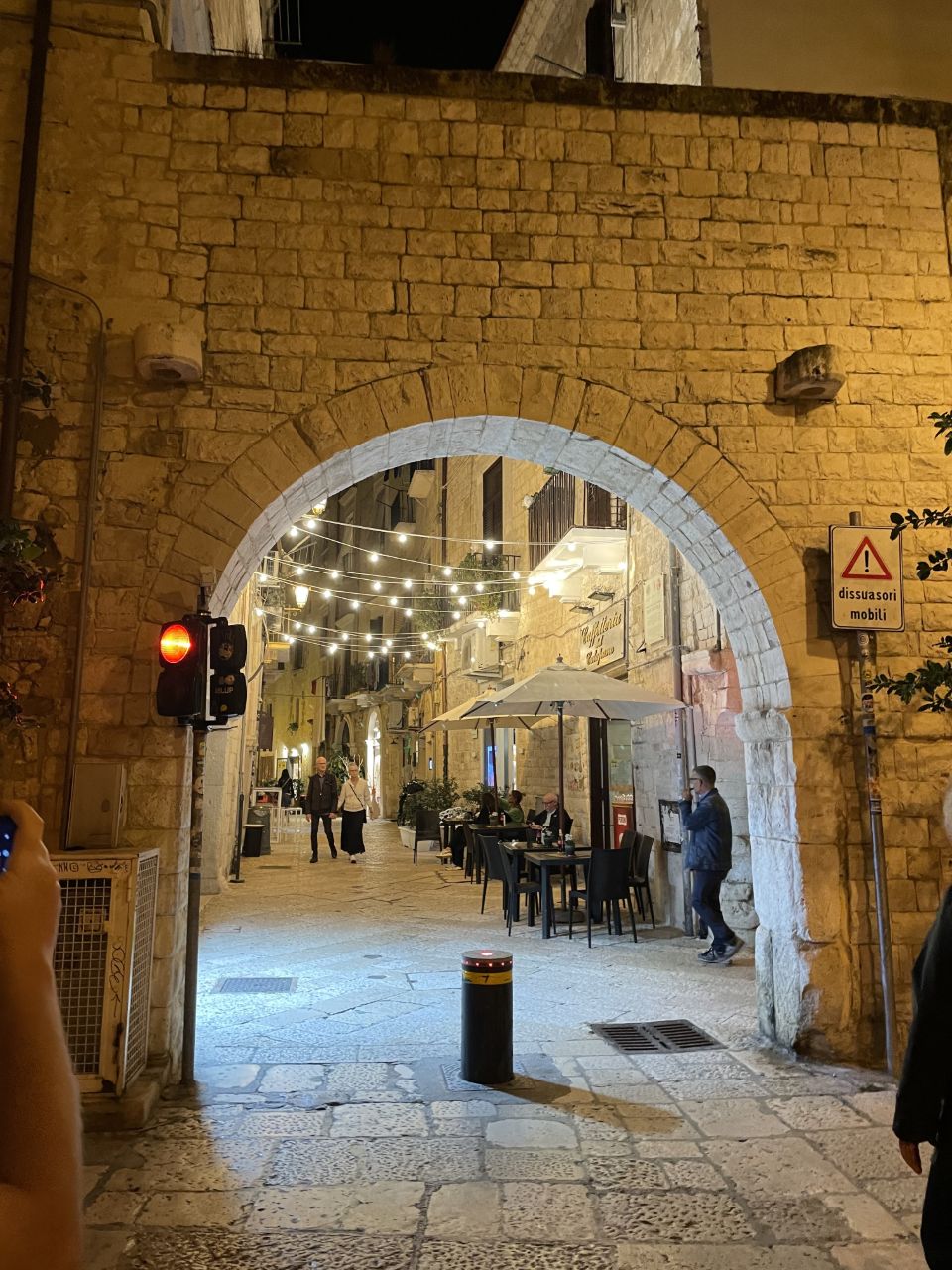
The old city gate 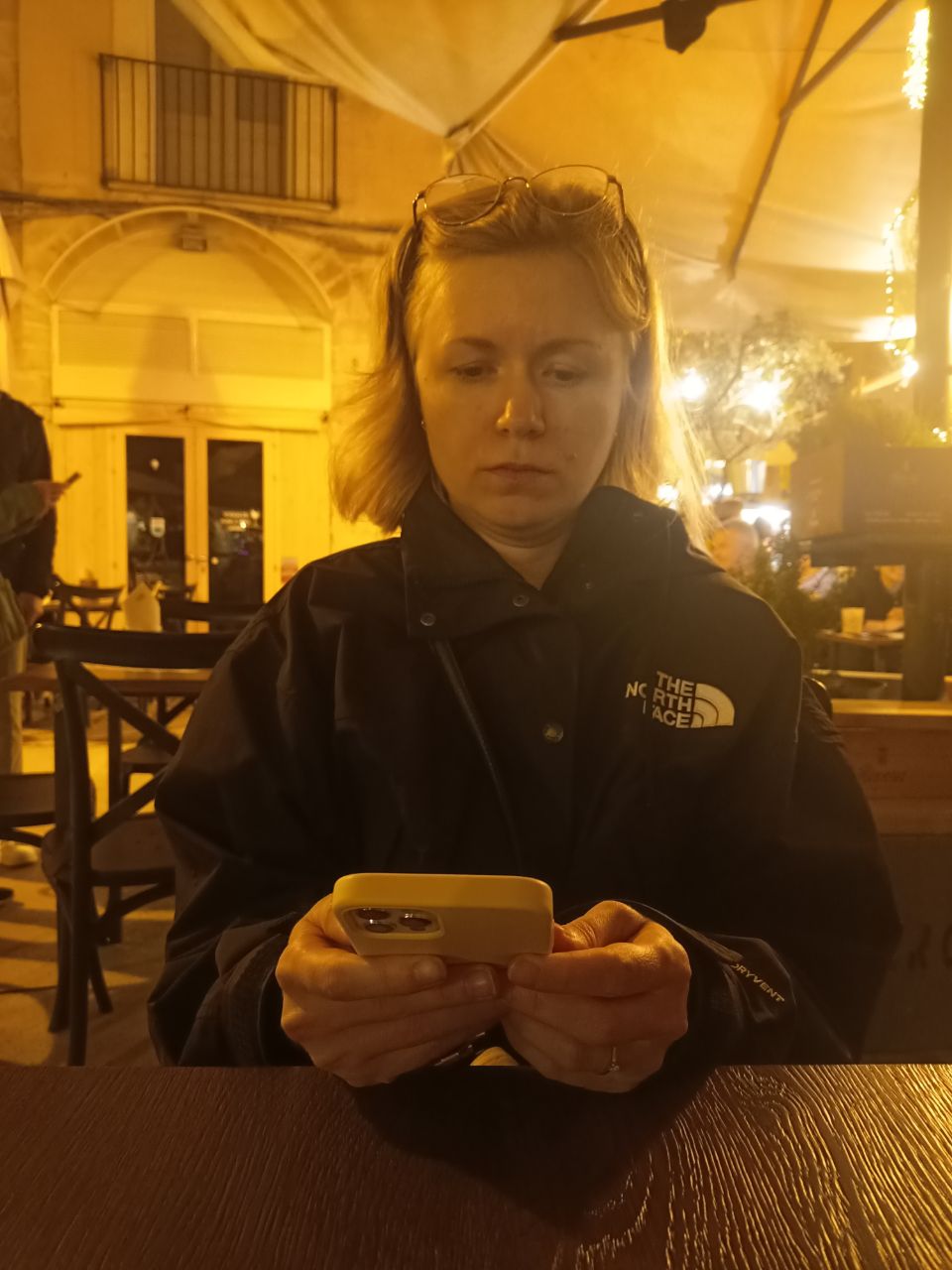
Last café of the night 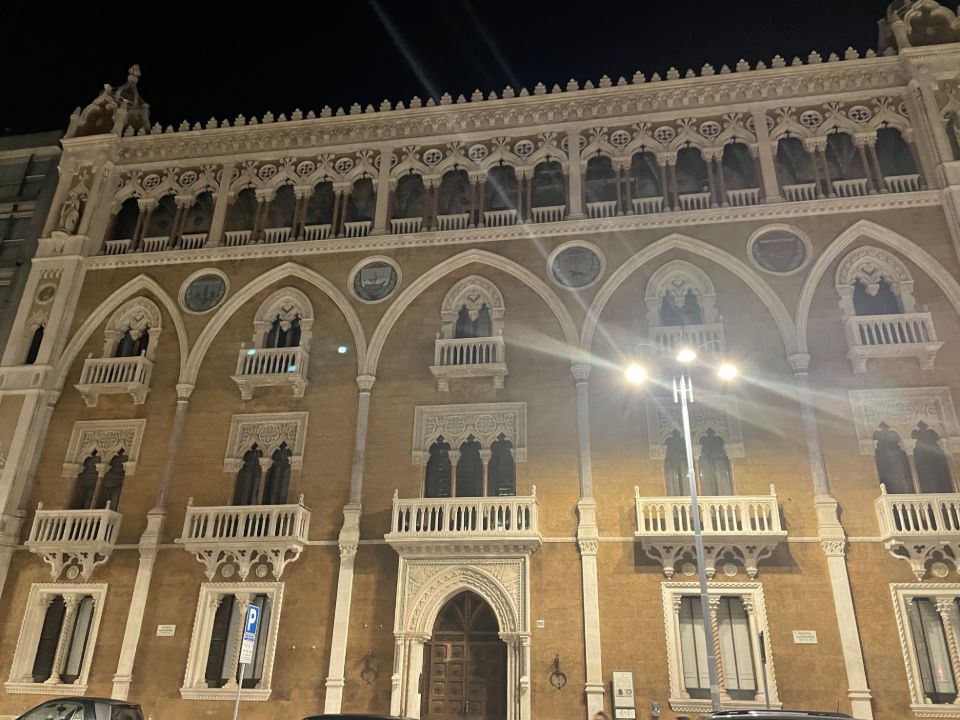
The Gothic palace, night
The day of leaving
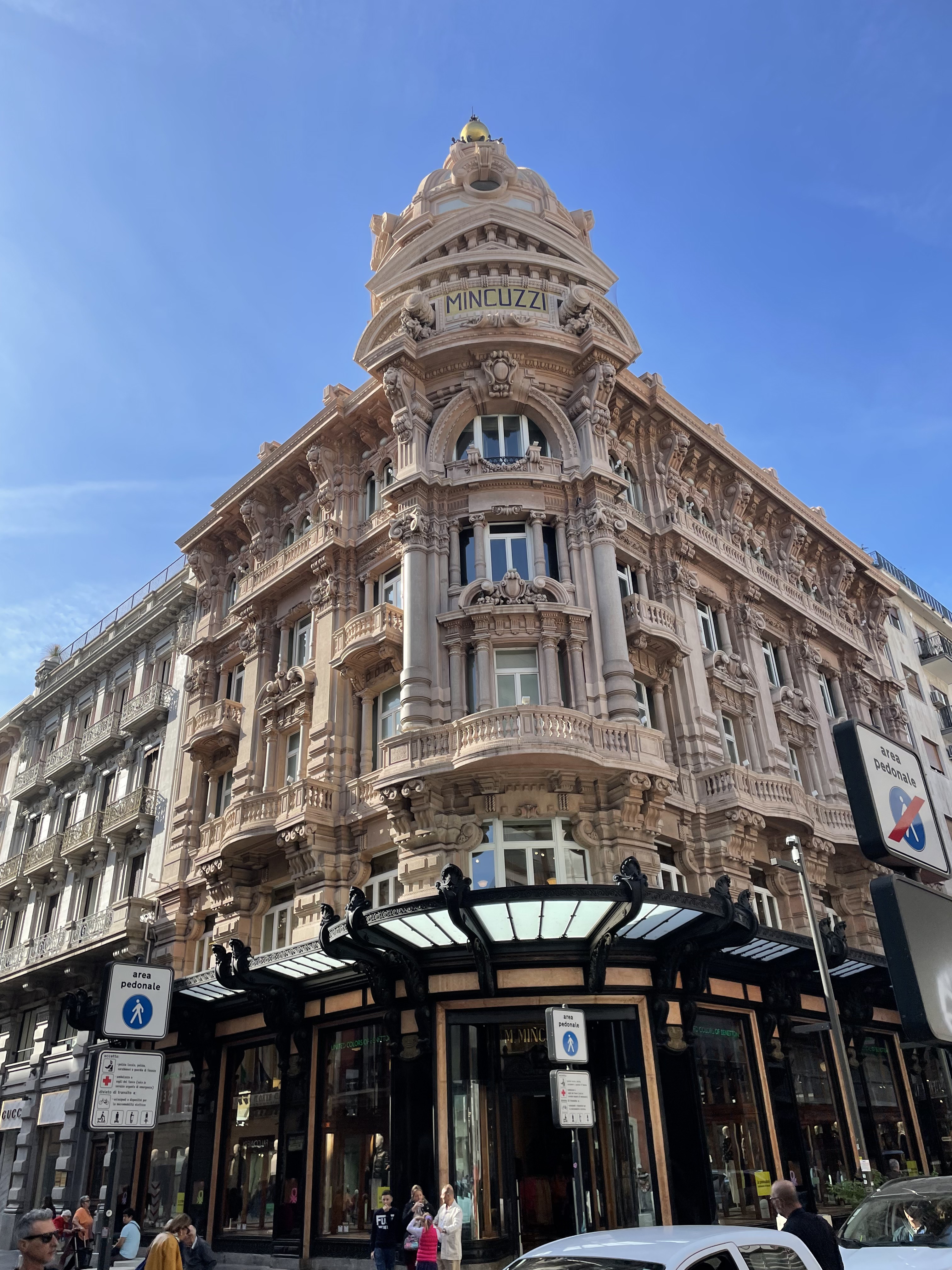
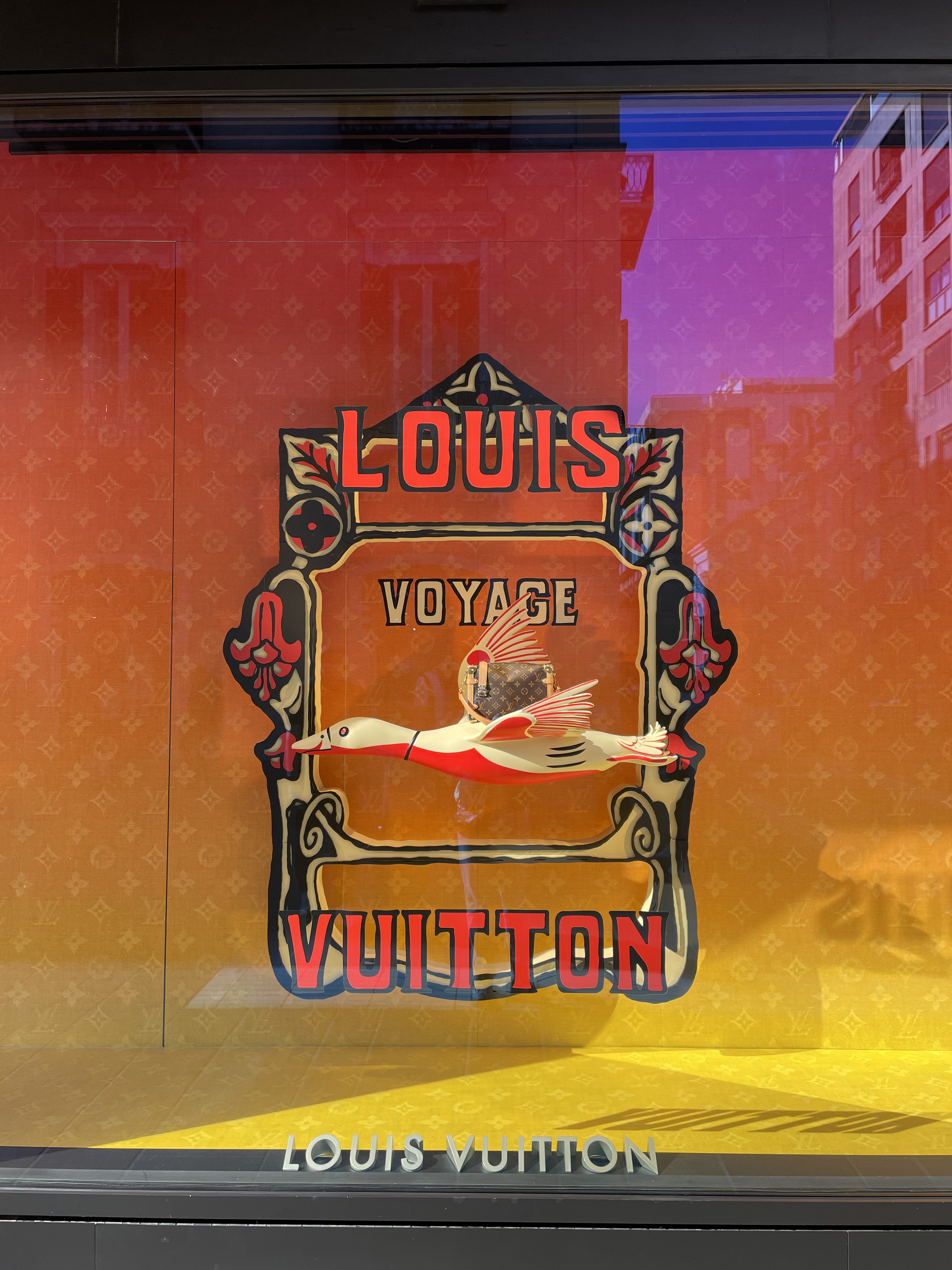
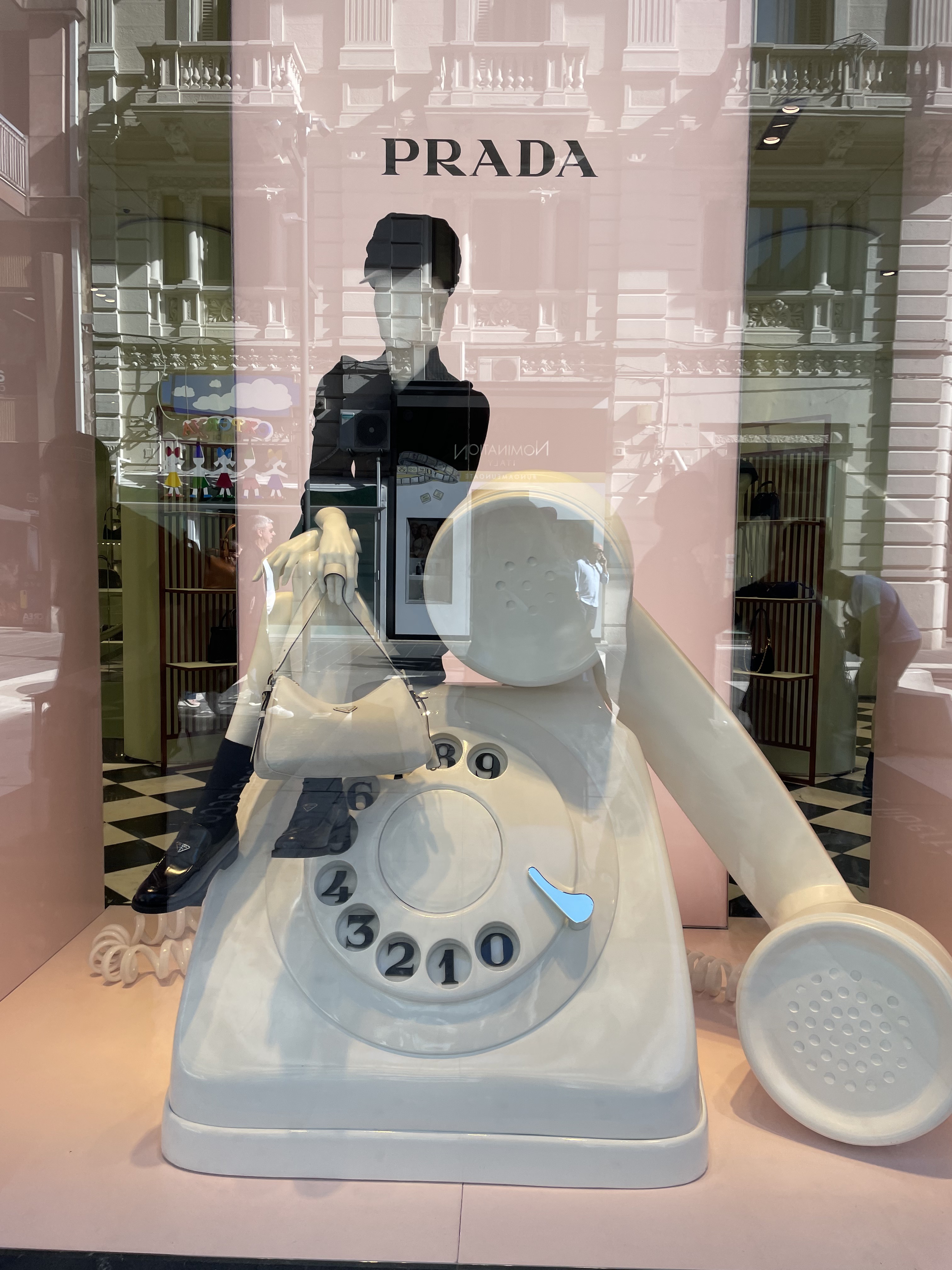
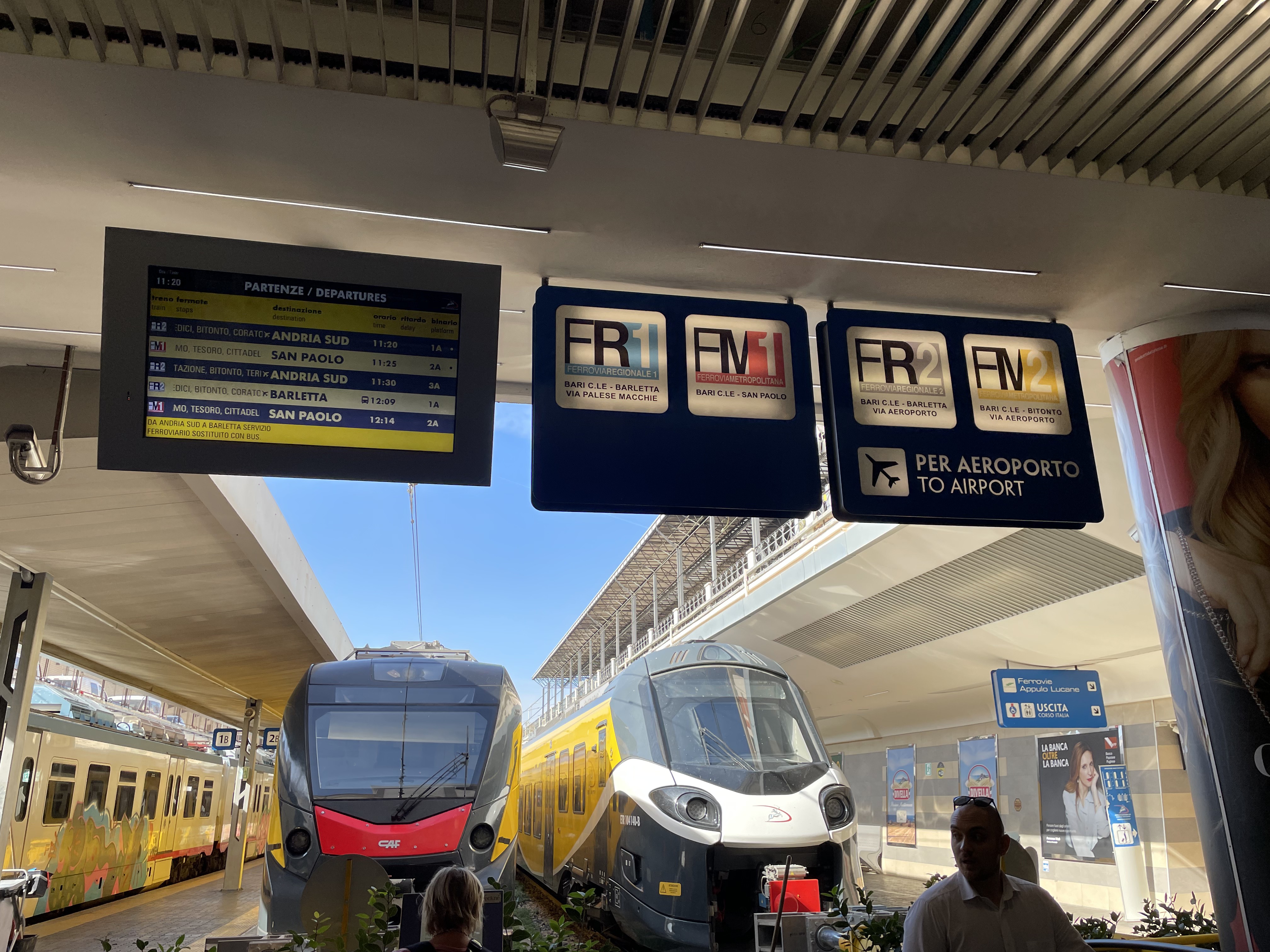
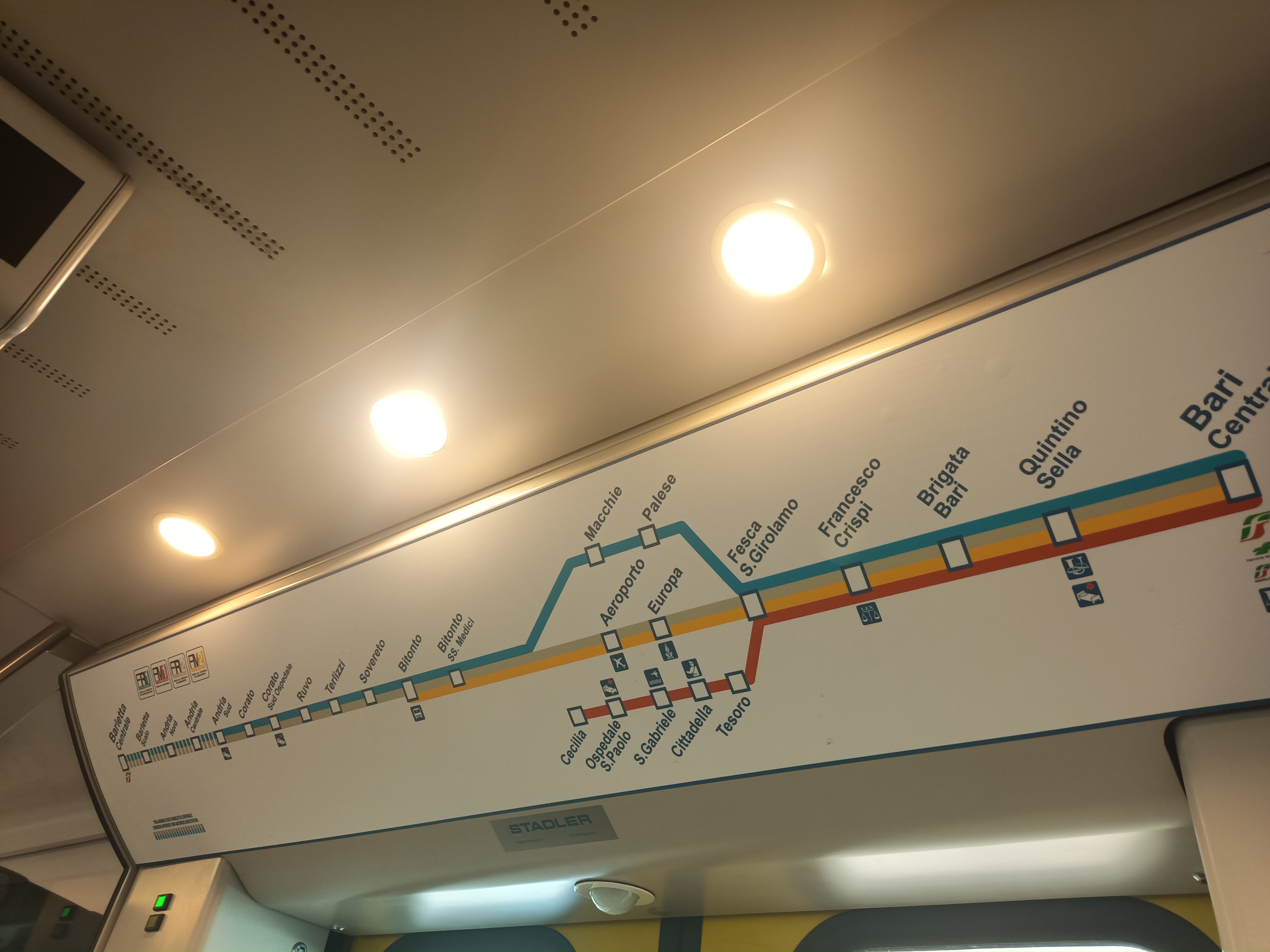
Leaving day had its own soft epilogue: the ornate corner Palazzo Mincuzzi in the morning light, a window of Louis Vuitton purses and a pink Prada mannequin, the trains waiting at the station, a metro line map photographed on the train out — and a flight from Bari back up to Berlin, closing the trip.
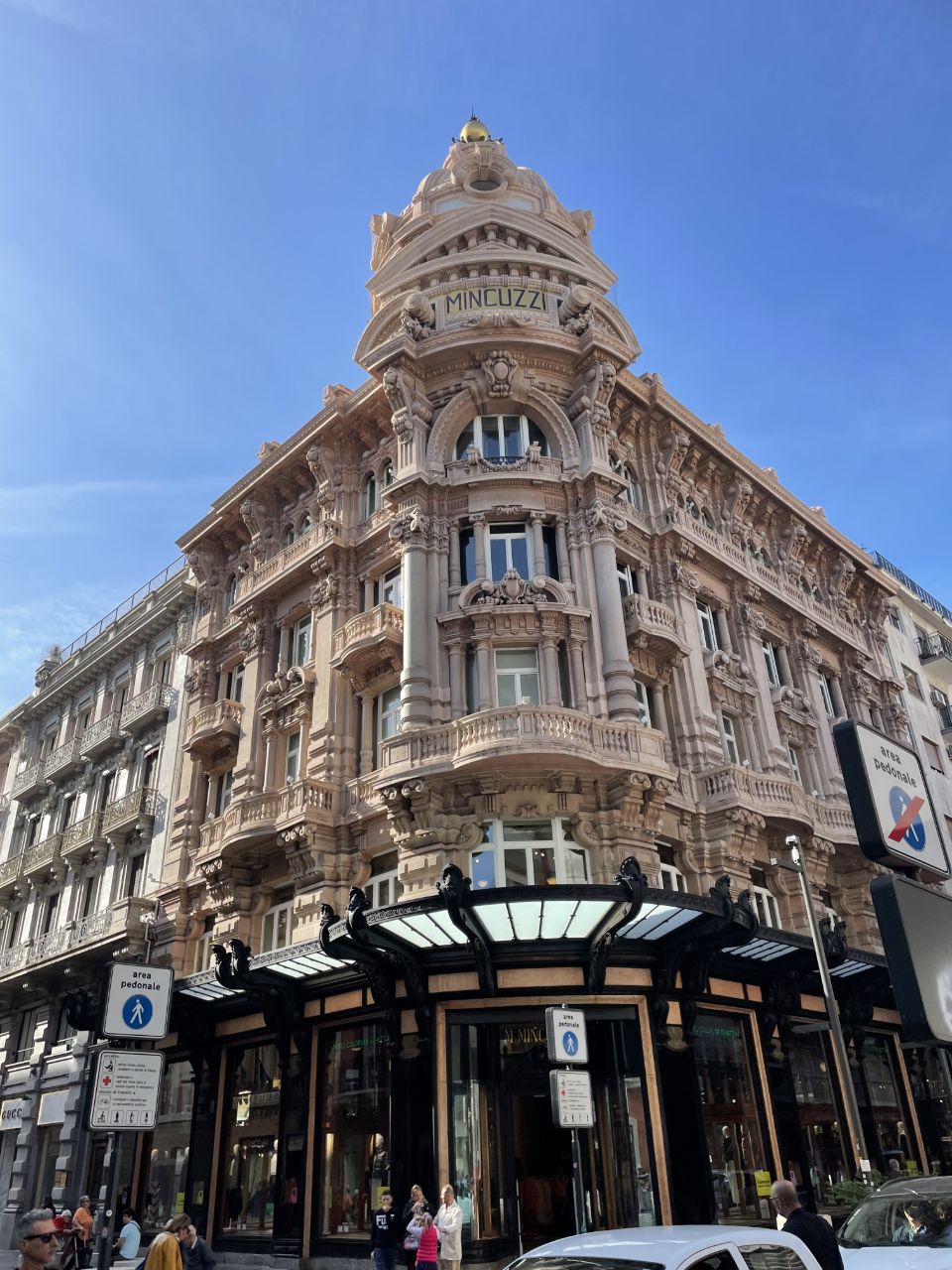
Palazzo Mincuzzi, morning 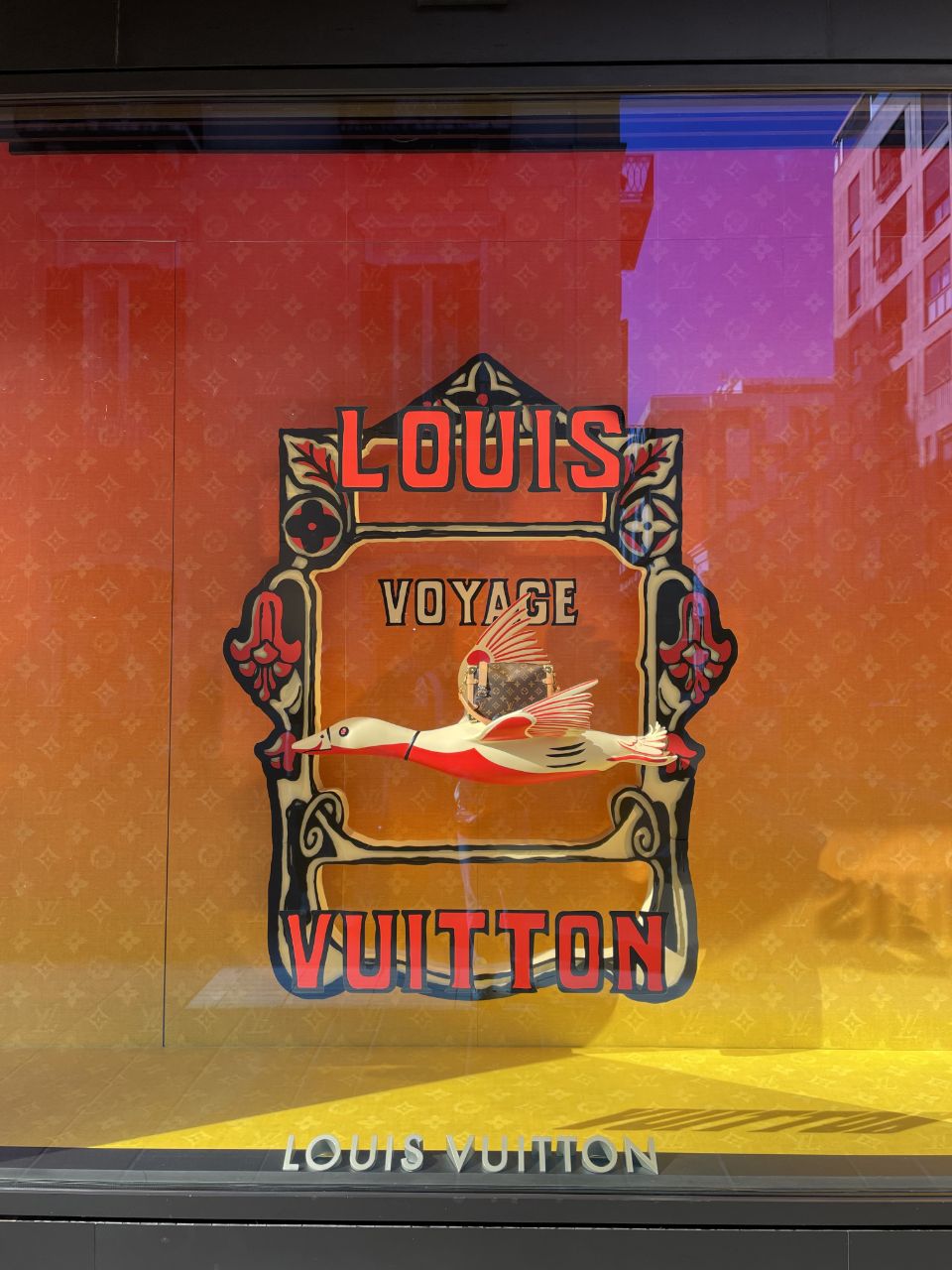
LV window, morning ritual 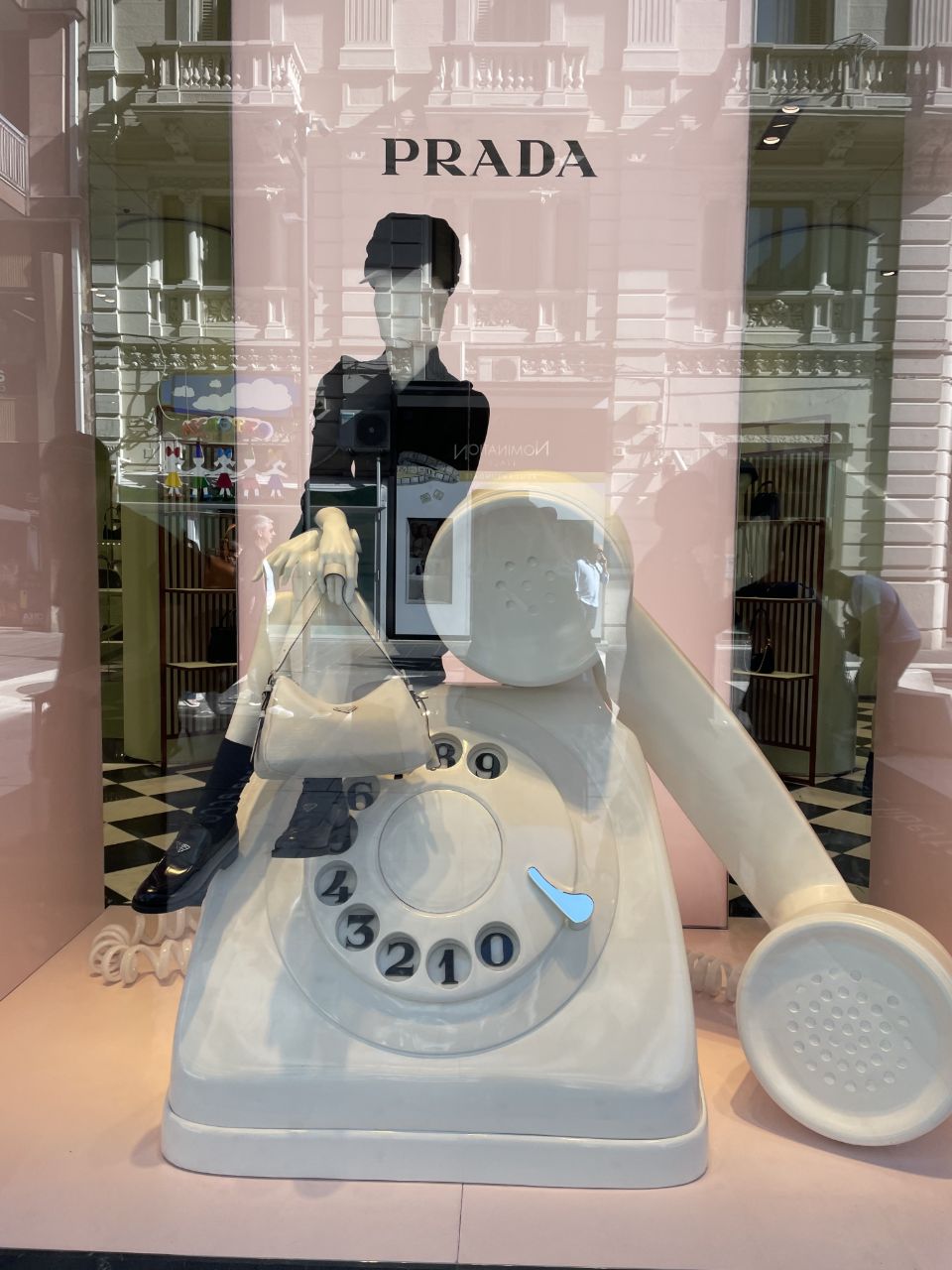
Prada goes pink 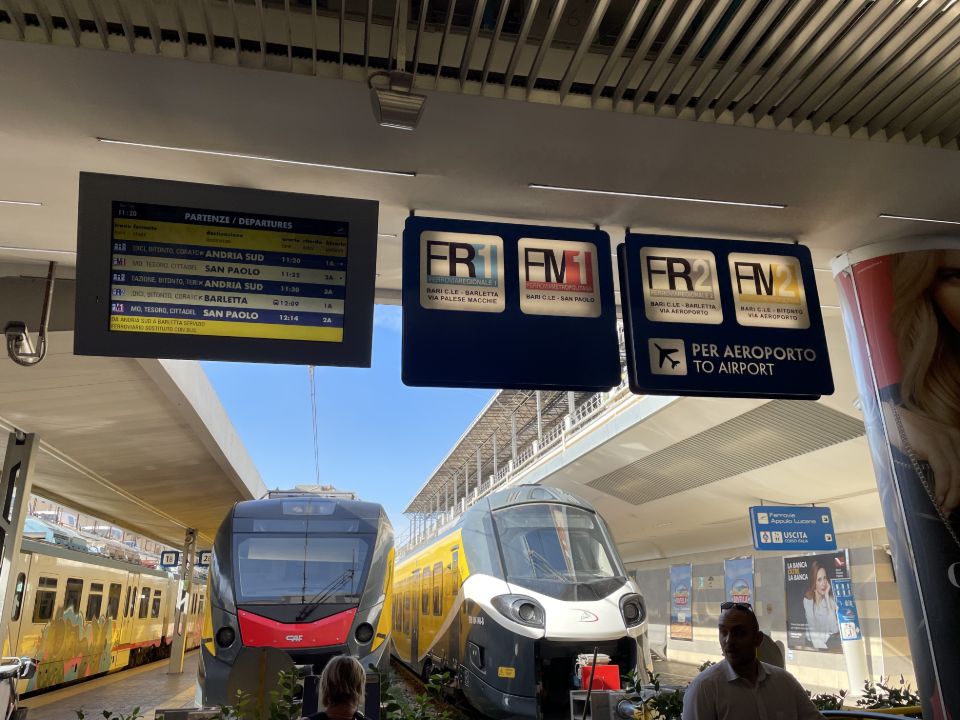
The trains wait 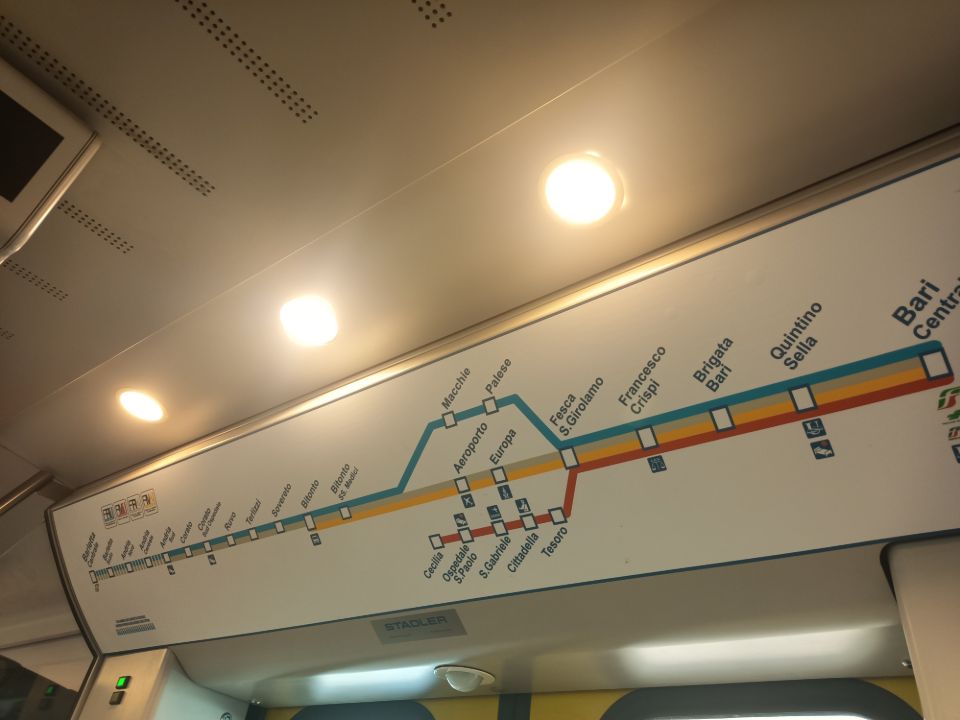
The metro map on the train out
And with that, Puglia was behind us — fifteen days, four base cities, one swing bridge, two cats’ worth of old towns, and a folder that would take us months to sort properly. The trip summary is next.