Puglia trip 2024 — Brindisi & Lecce
Fifth of nine posts. Two ports of call at the end of the heel: working, Roman-port Brindisi with its column pointing to the East, then Lecce — the gold city of baroque — with a chandelier of a facade, a Roman amphitheatre sunk between palazzi, aperitivo under church towers, and one rooftop sunrise just before the journey home.
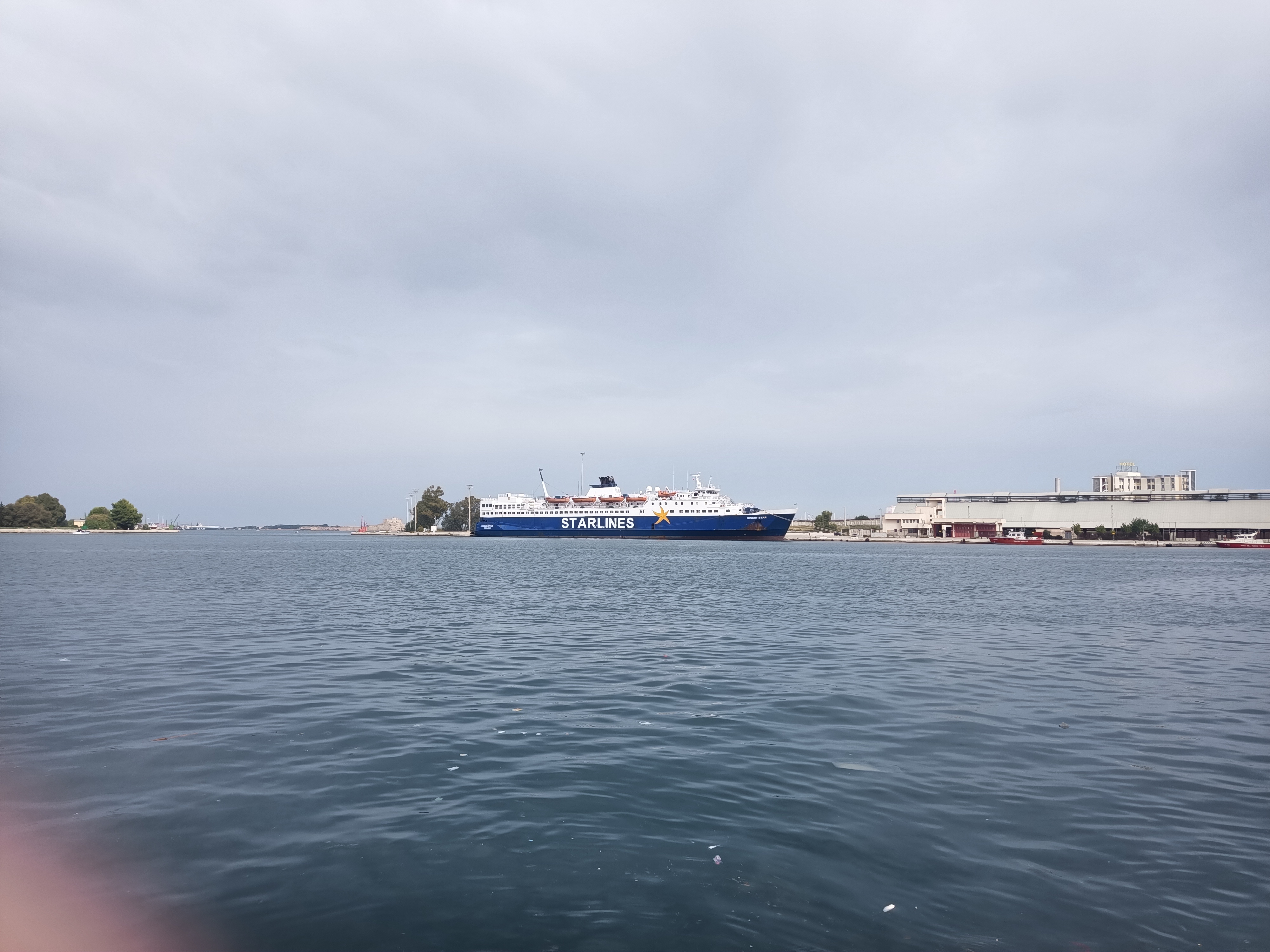
Brindisi is what a working ferry port looks like when it has also been the end of the Appian Way: palms and ferries, ship horns and roman columns, a lighthouse on one shore and yellow palazzi on the other. We arrived on a Thursday afternoon, walked the whole waterfront, and let Lecce — a short hop inland — do the baroque the next day.
The ferry port
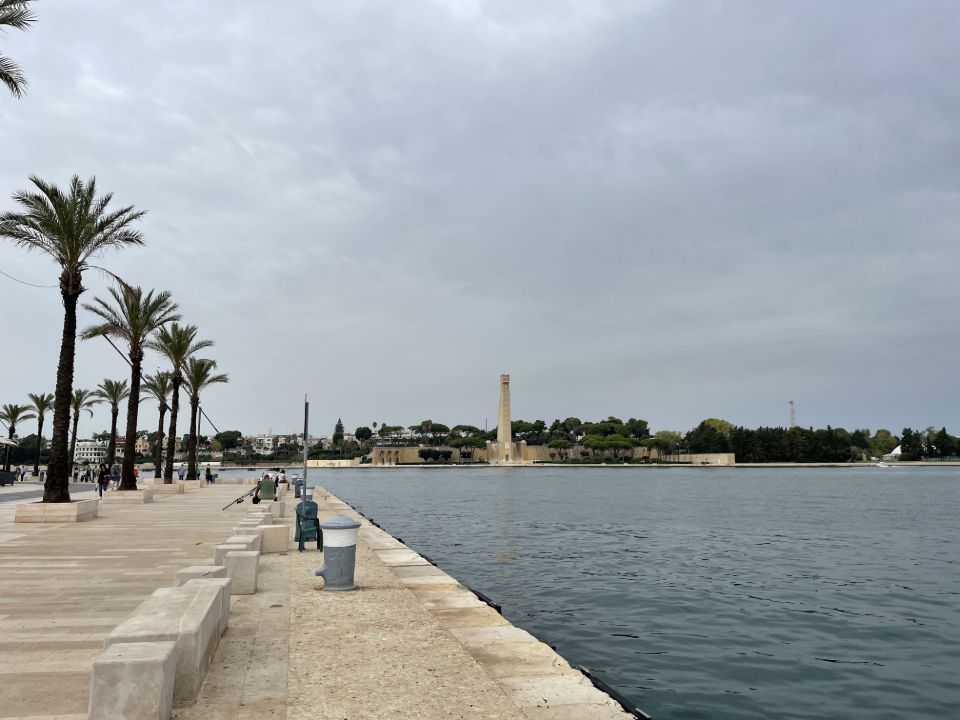
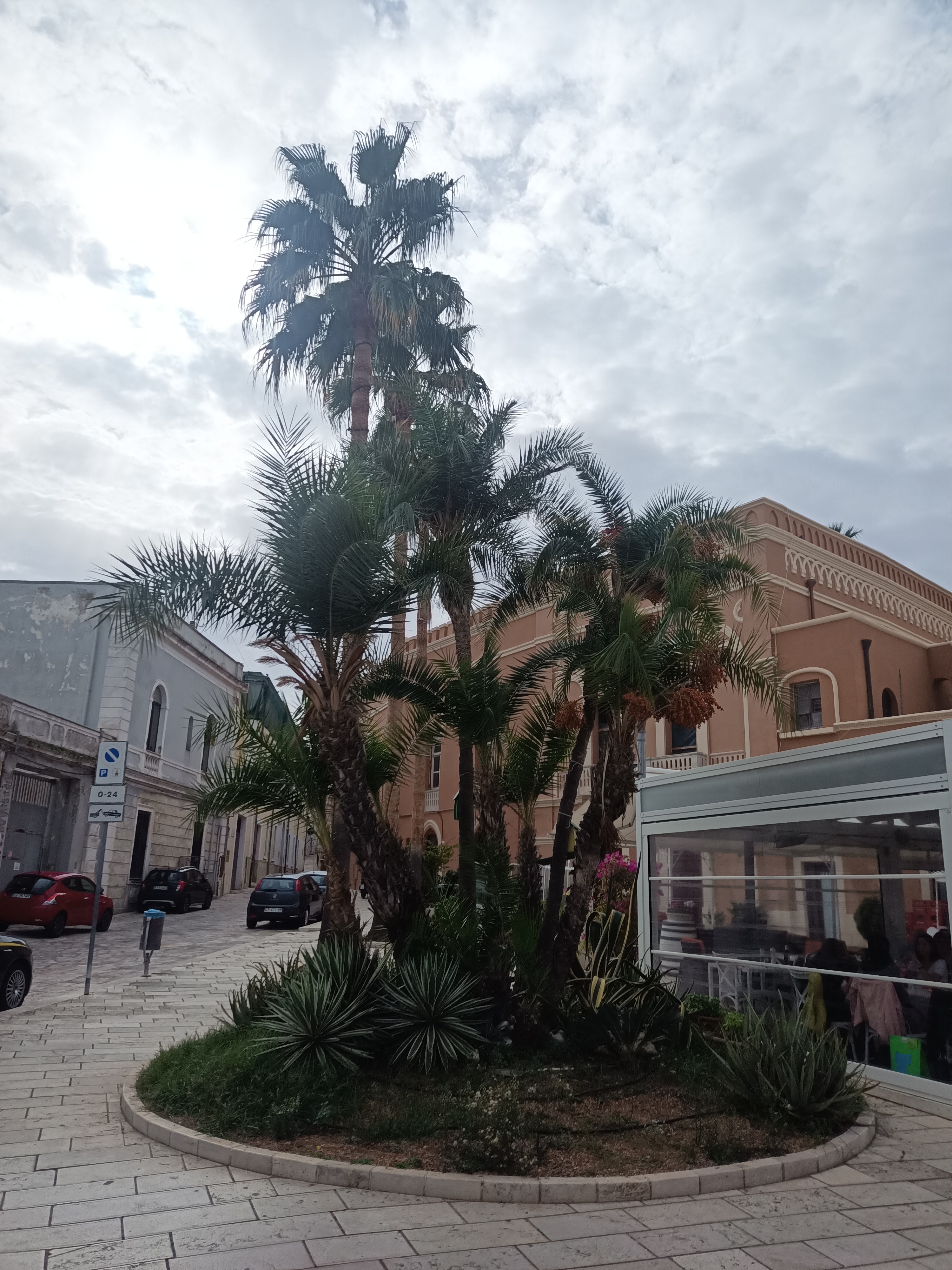
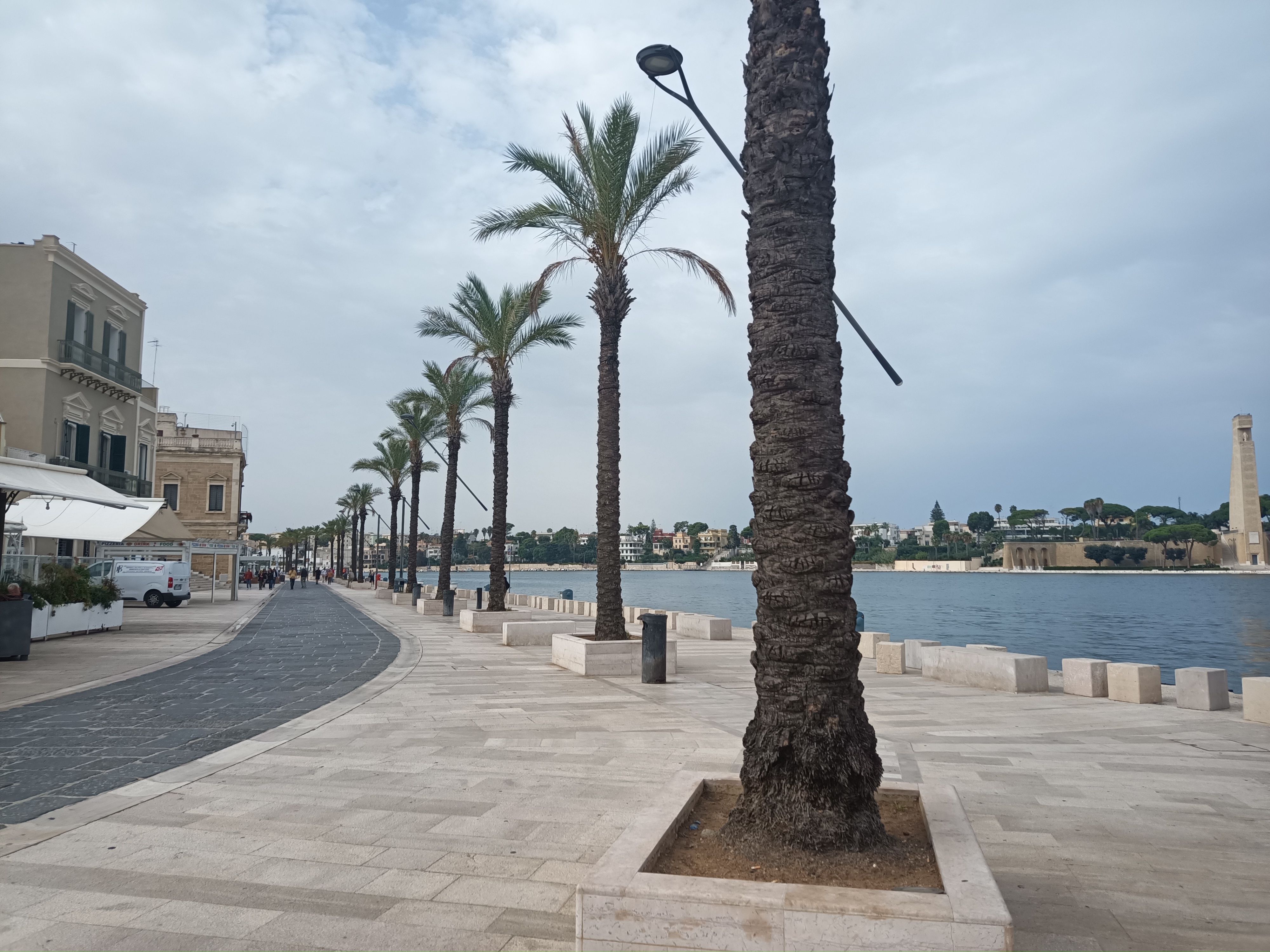
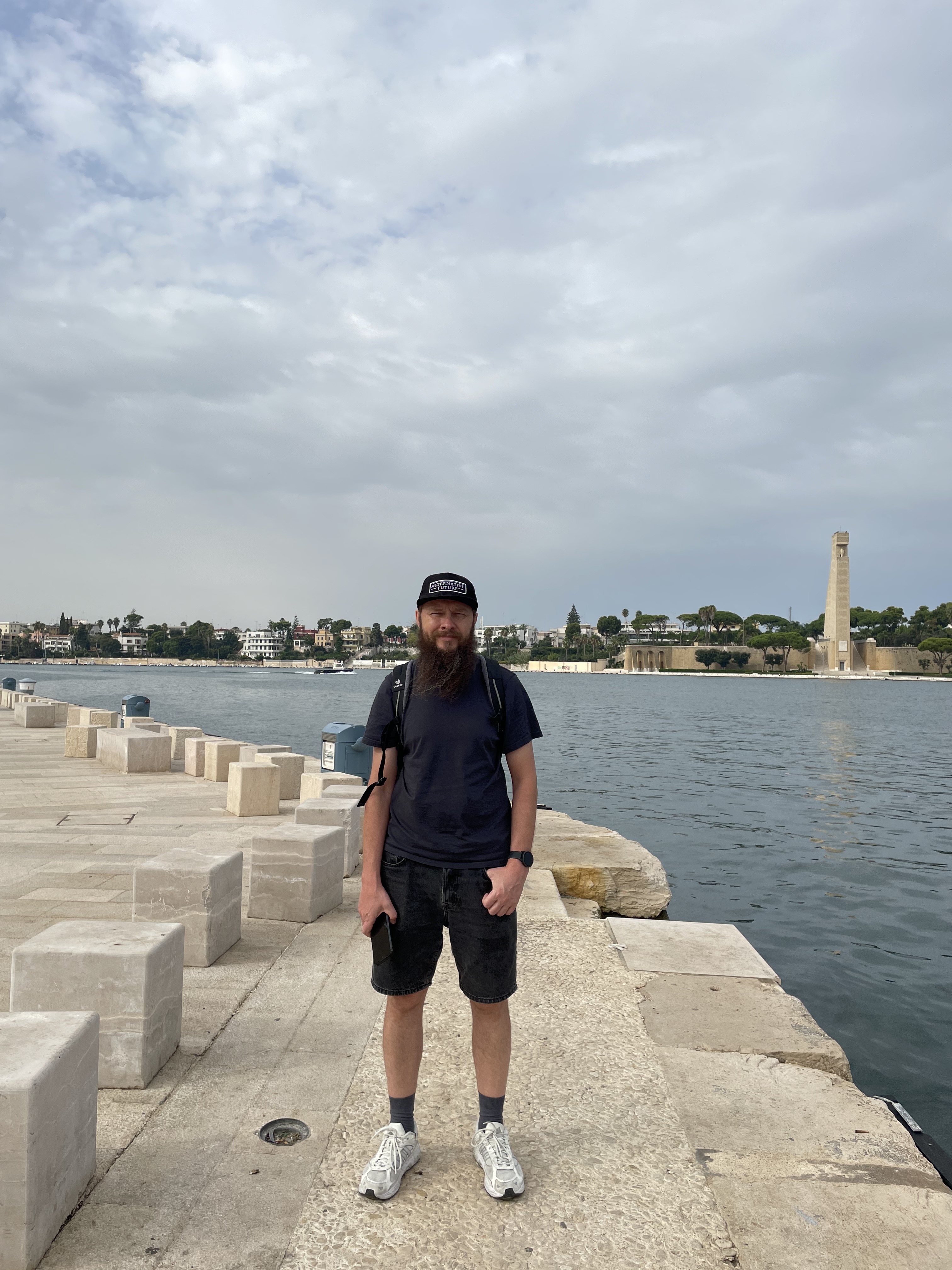
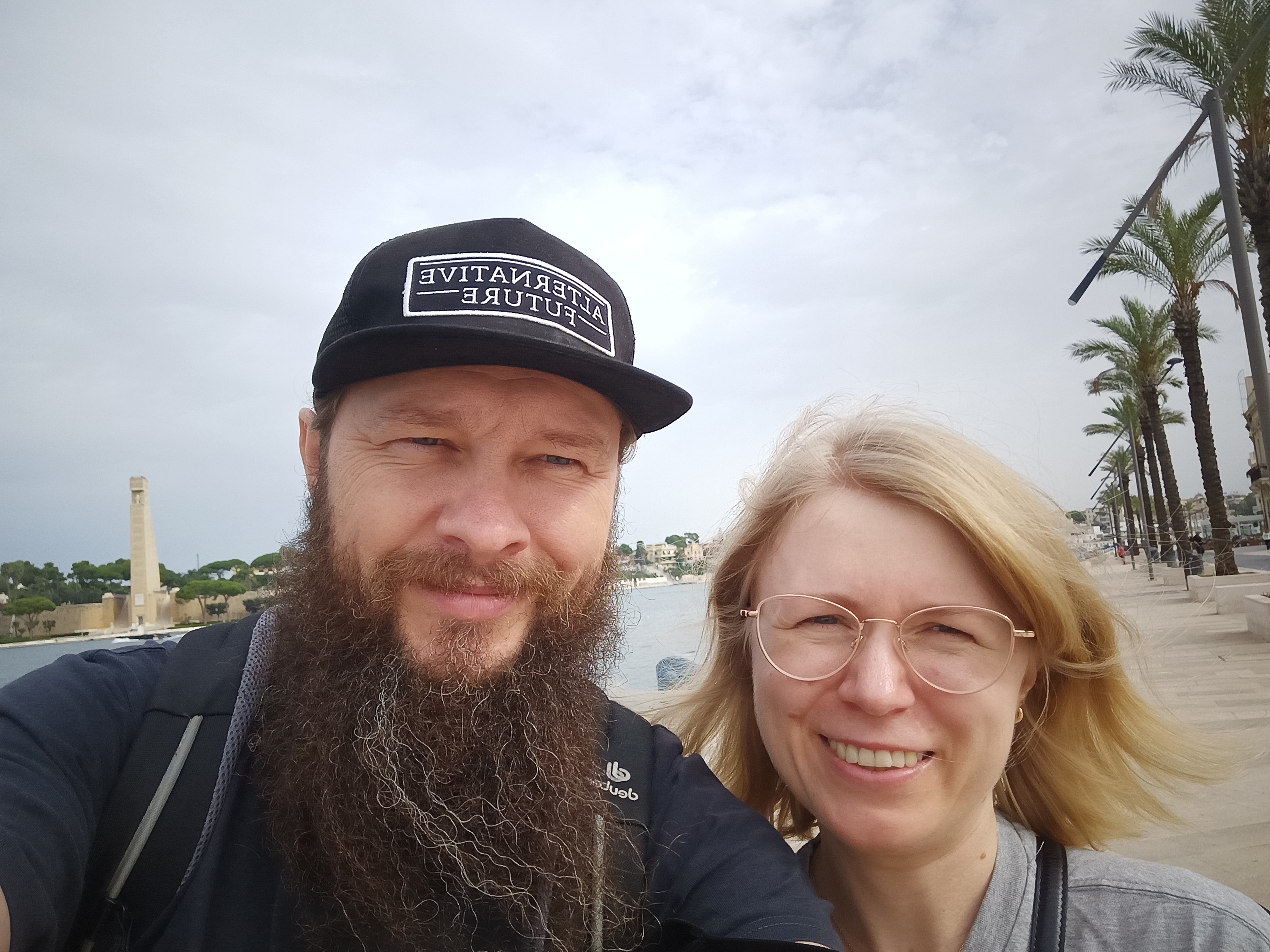
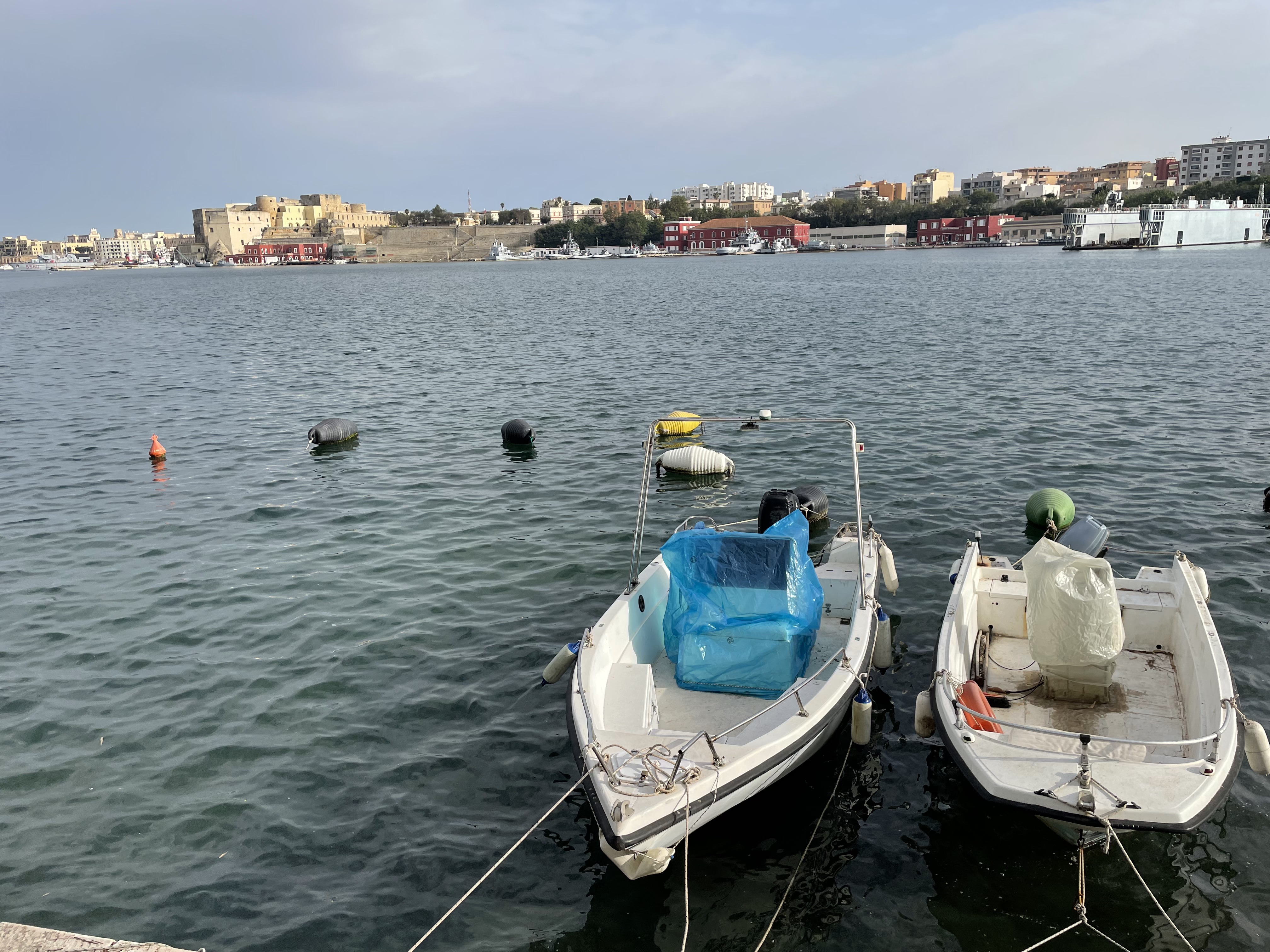
The promenade runs straight at the water: palms, white bollards, cafés with awnings, and ferries idling across the grey-blue channel. Brindisi still calls itself the gateway to the East, and the ferries across the Adriatic to Greece and Albania keep the ancient job description current. We did the full loop — monument, marina, the stone pier where Oleg posed, and a selfie with the palms before the ferries drowned out everything.
Promenade, palms, monument 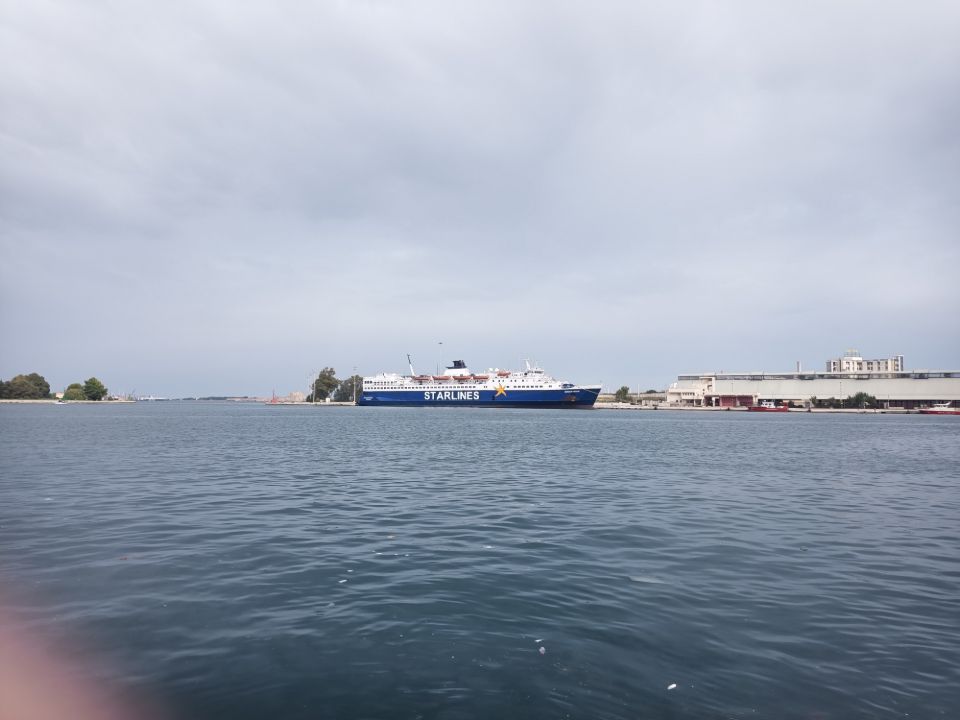
Superba across the channel 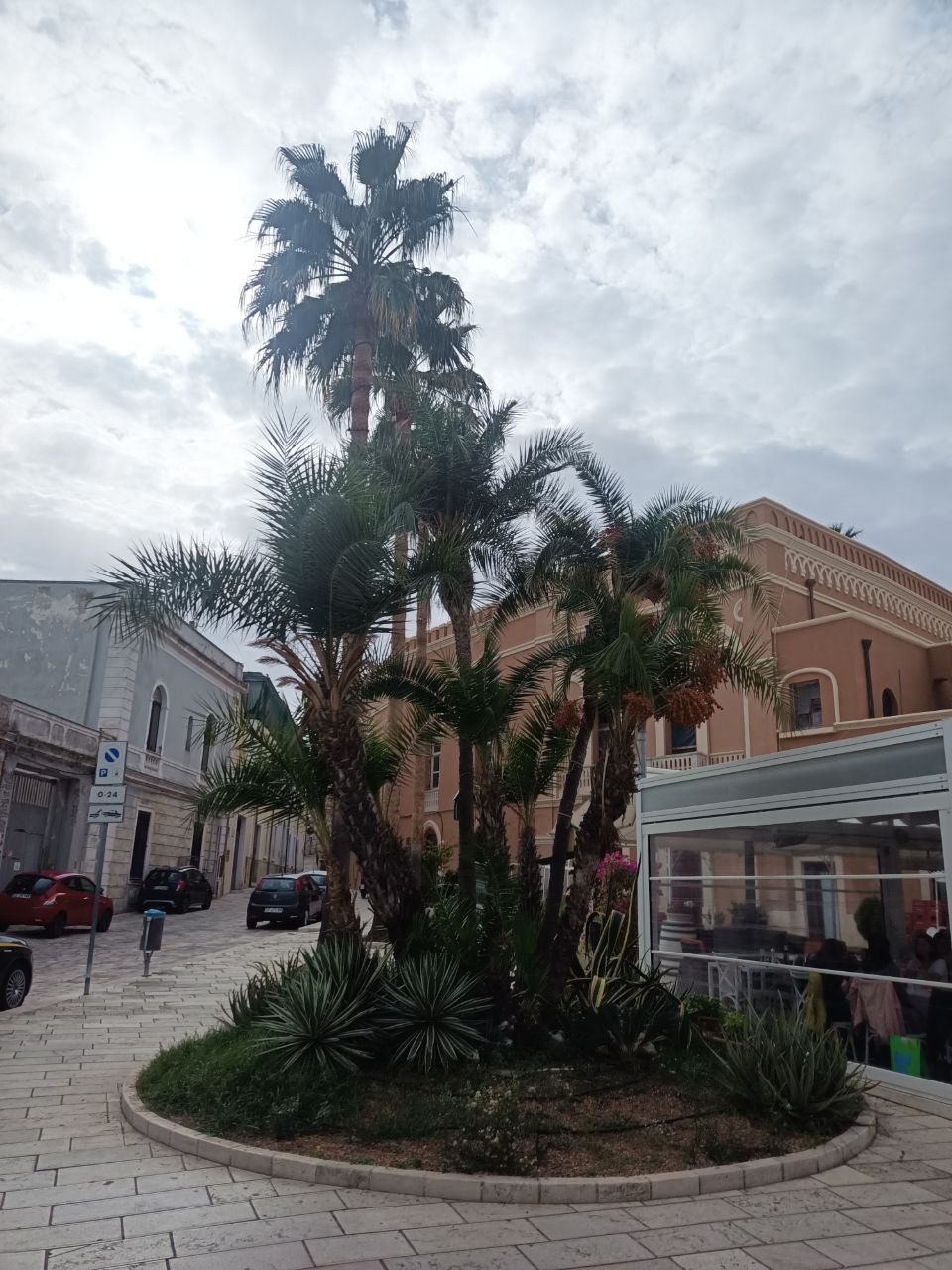
Palm garden on the quay 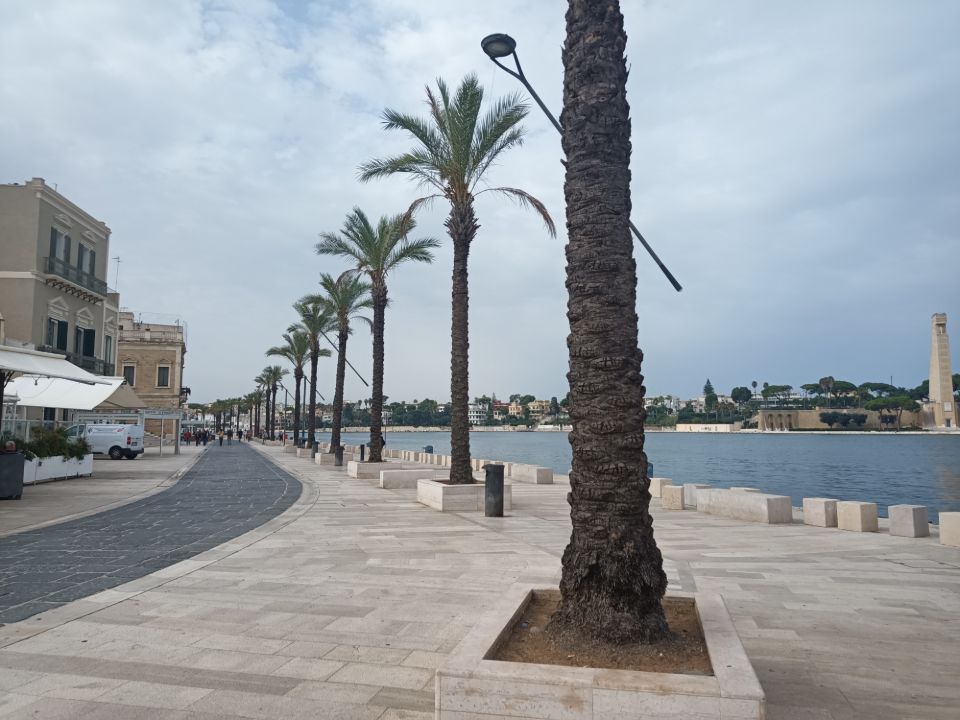
Cafés with awnings 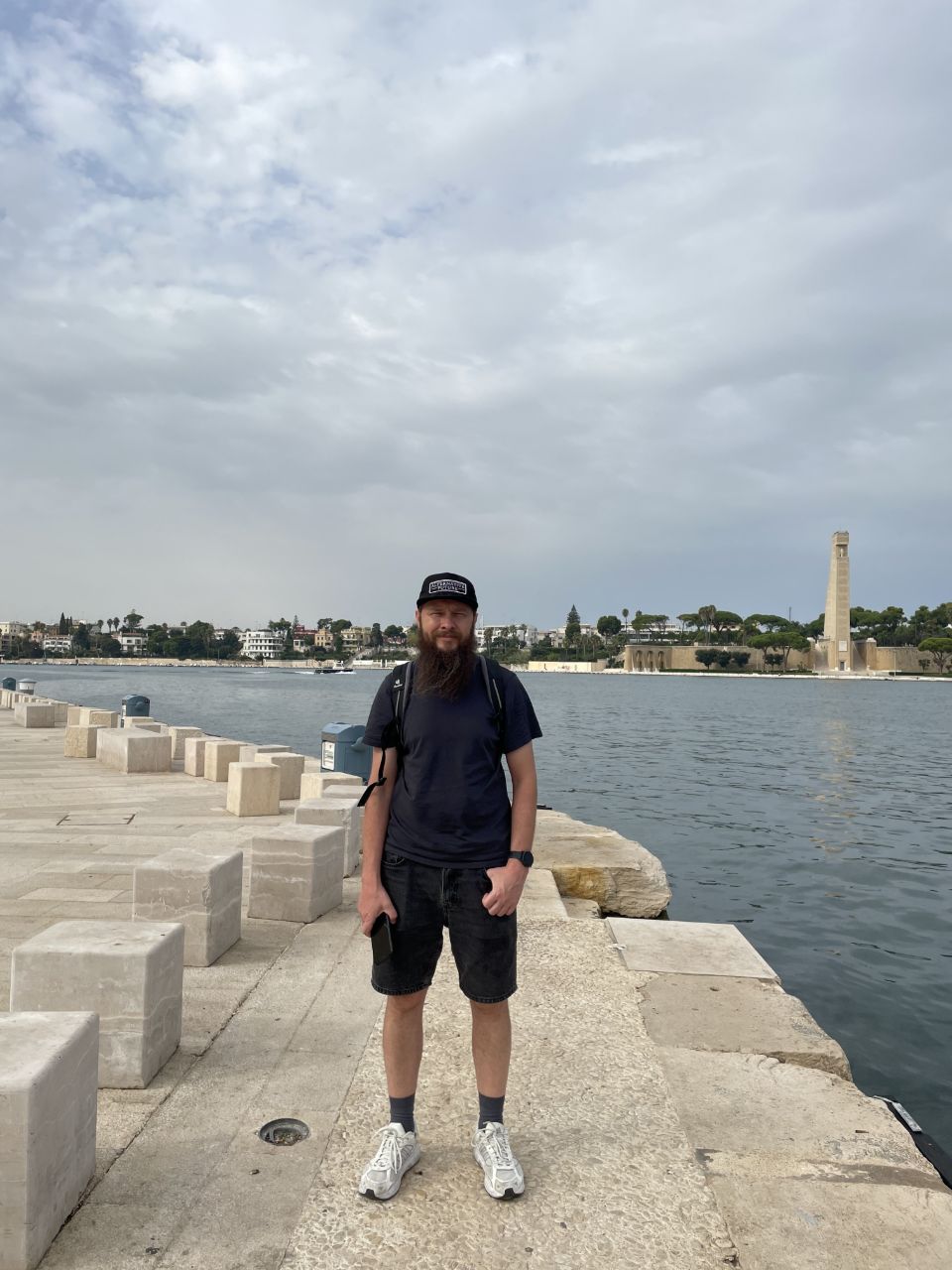
Oleg on the stone pier 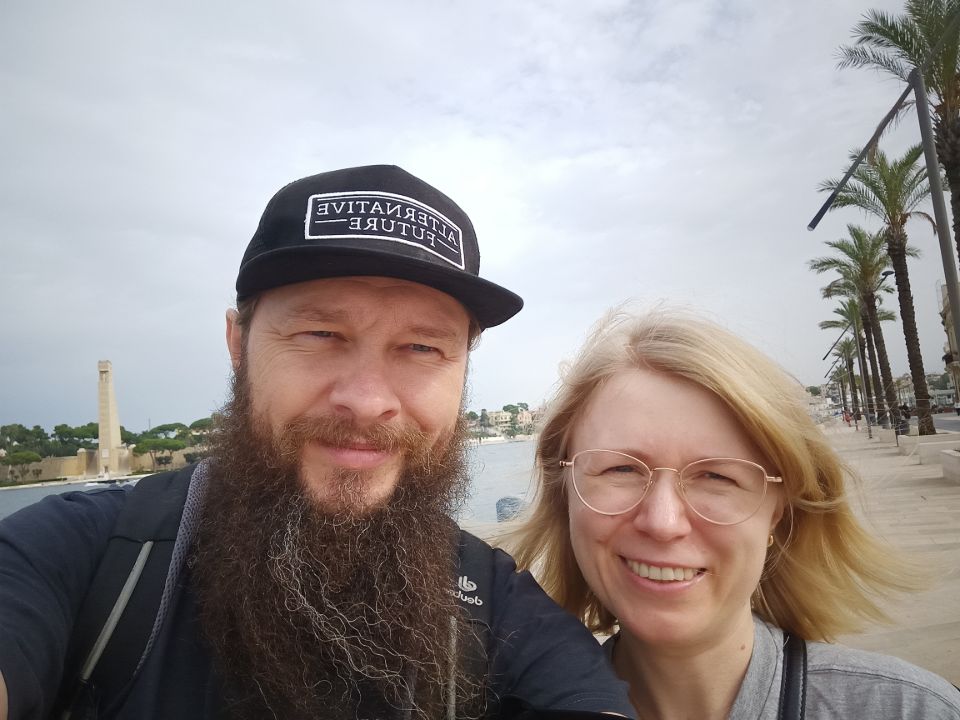
Both of us, palms behind
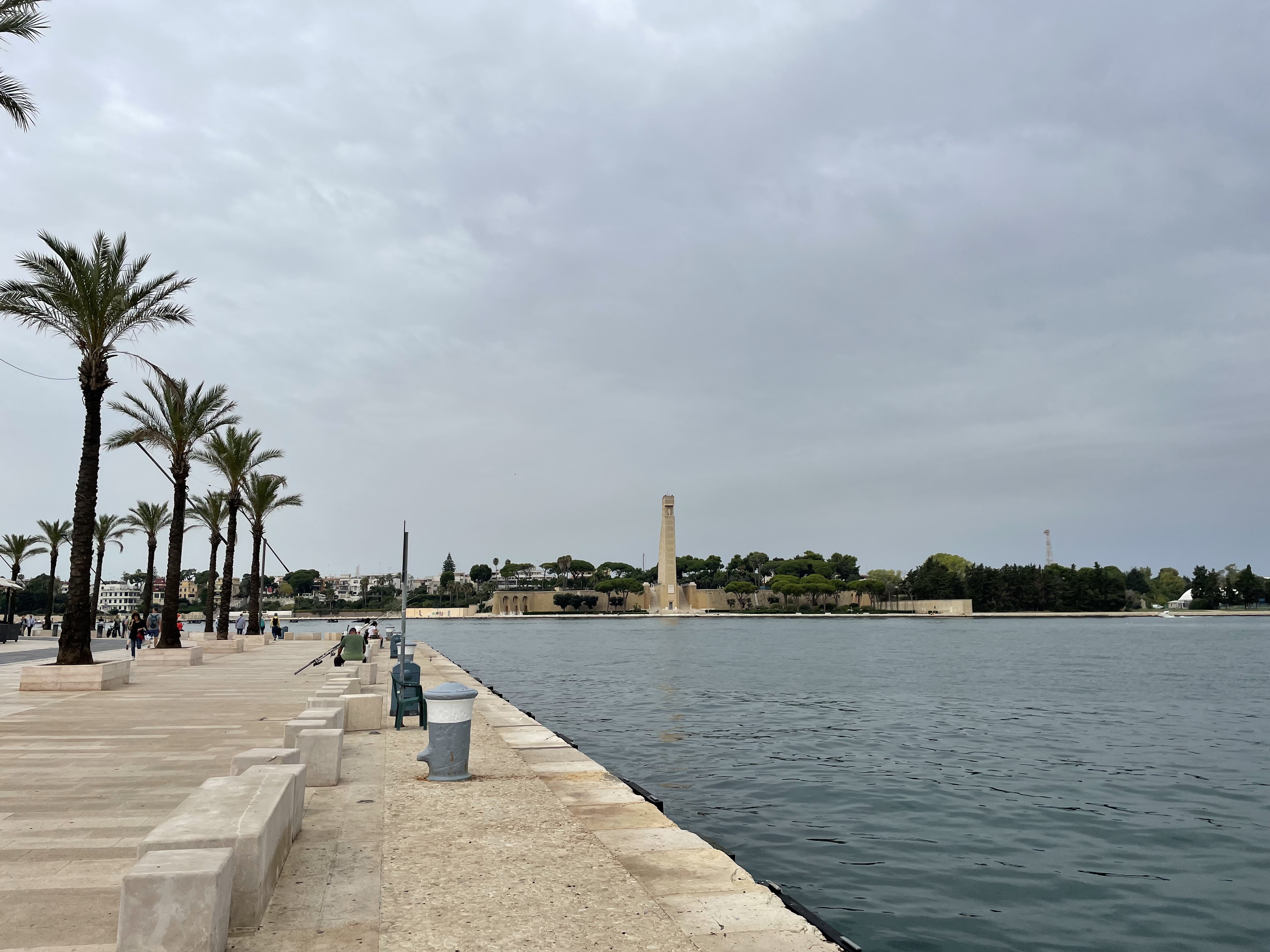
The column and the working harbour
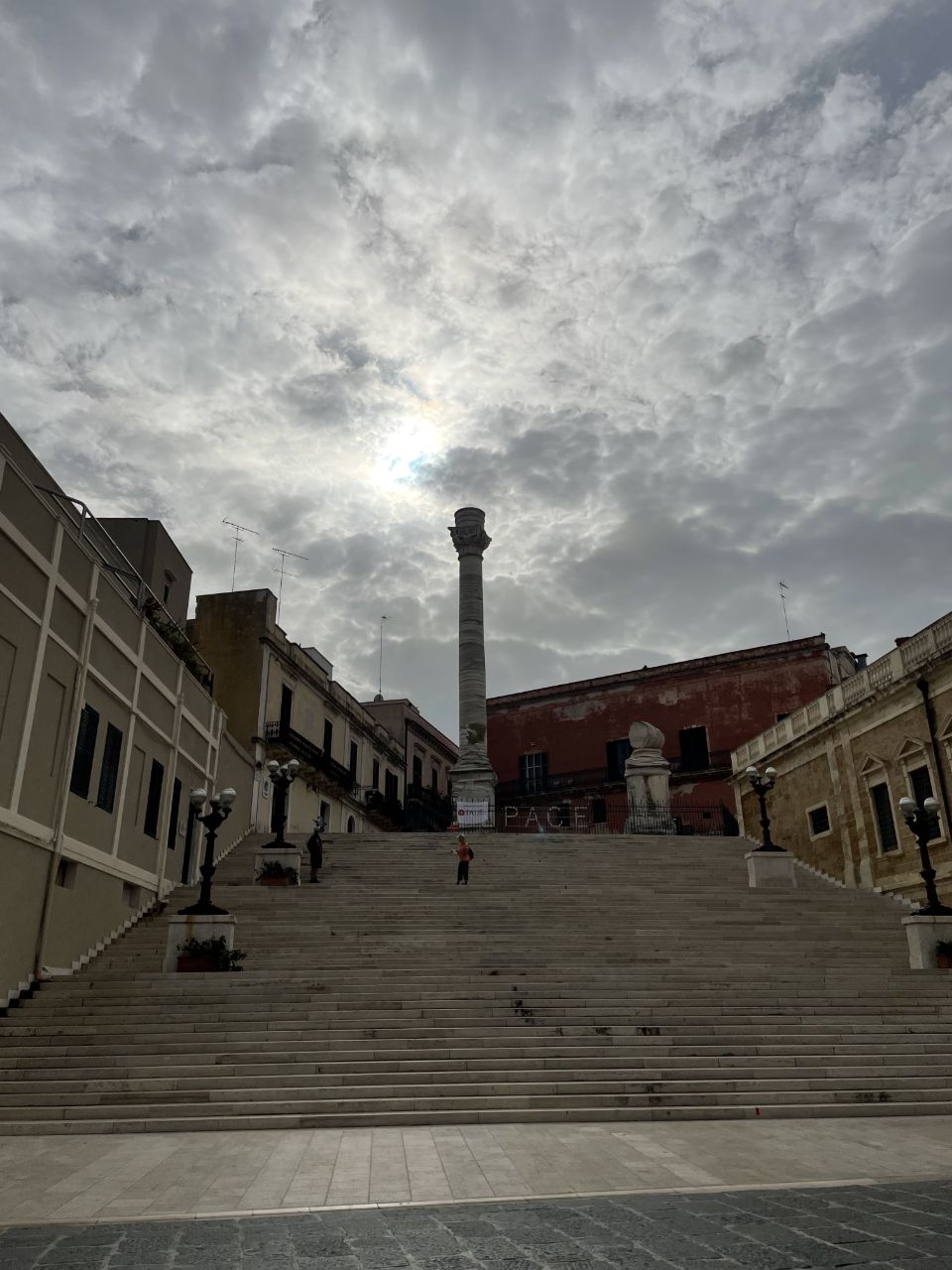
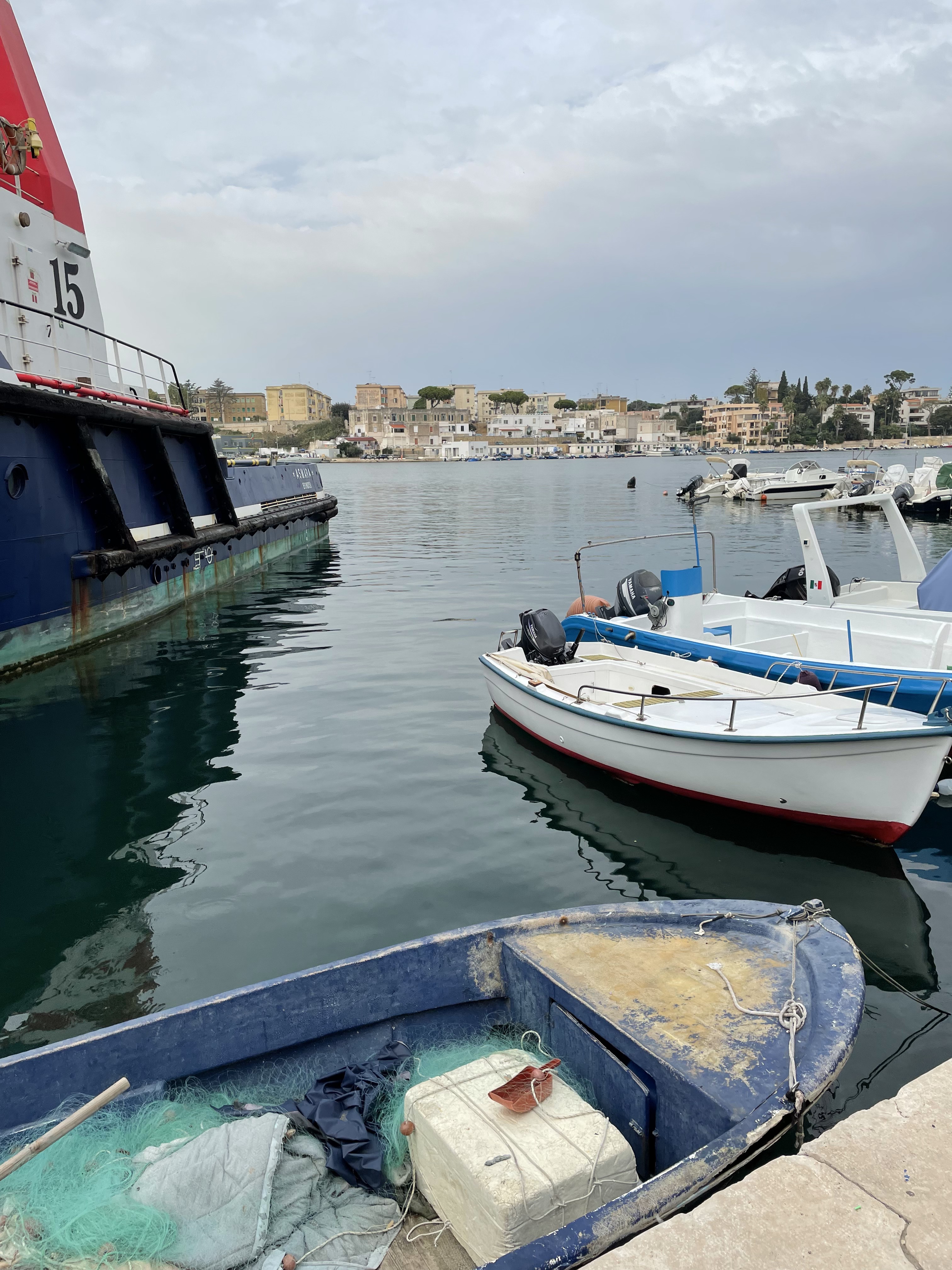
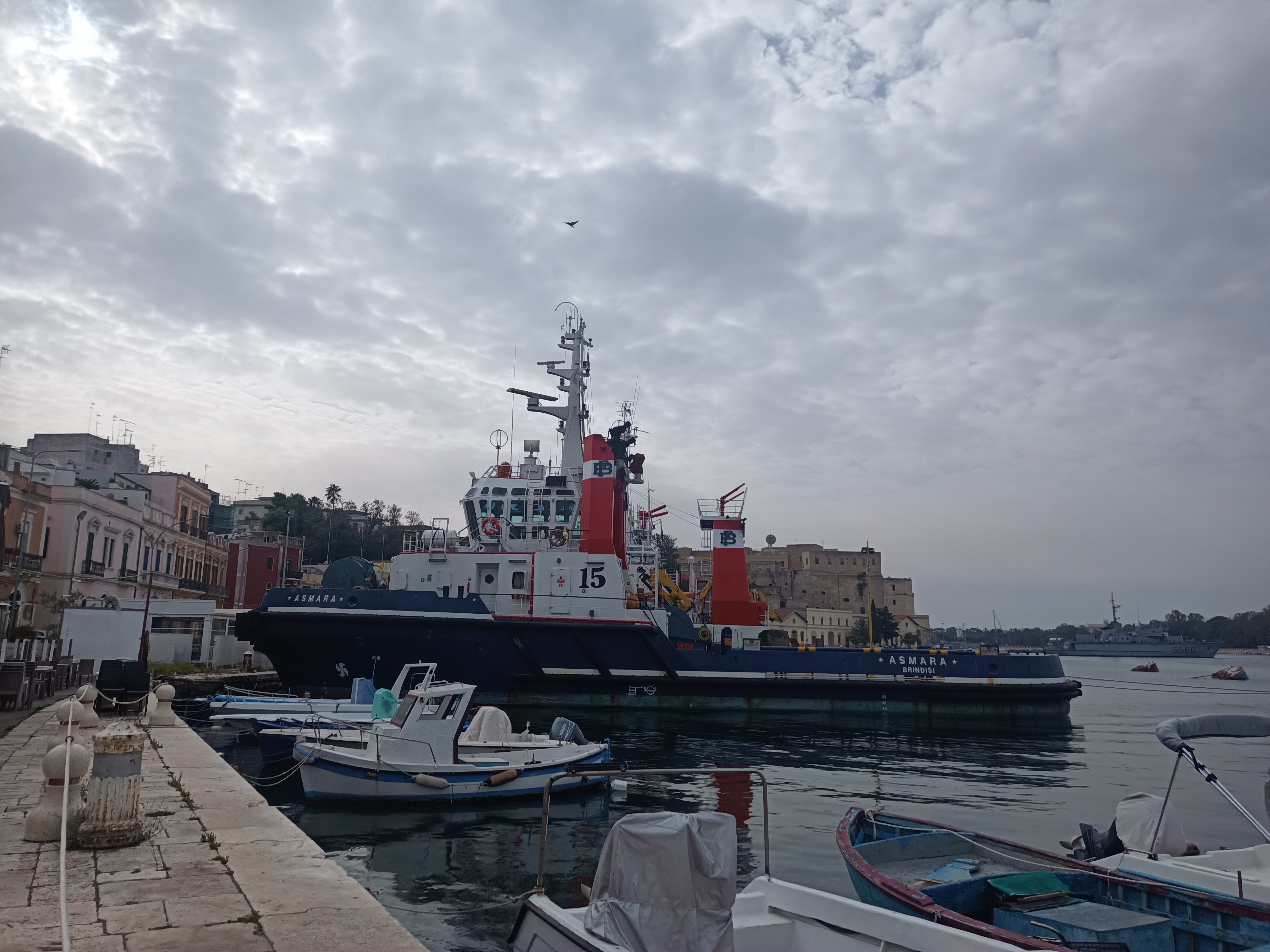
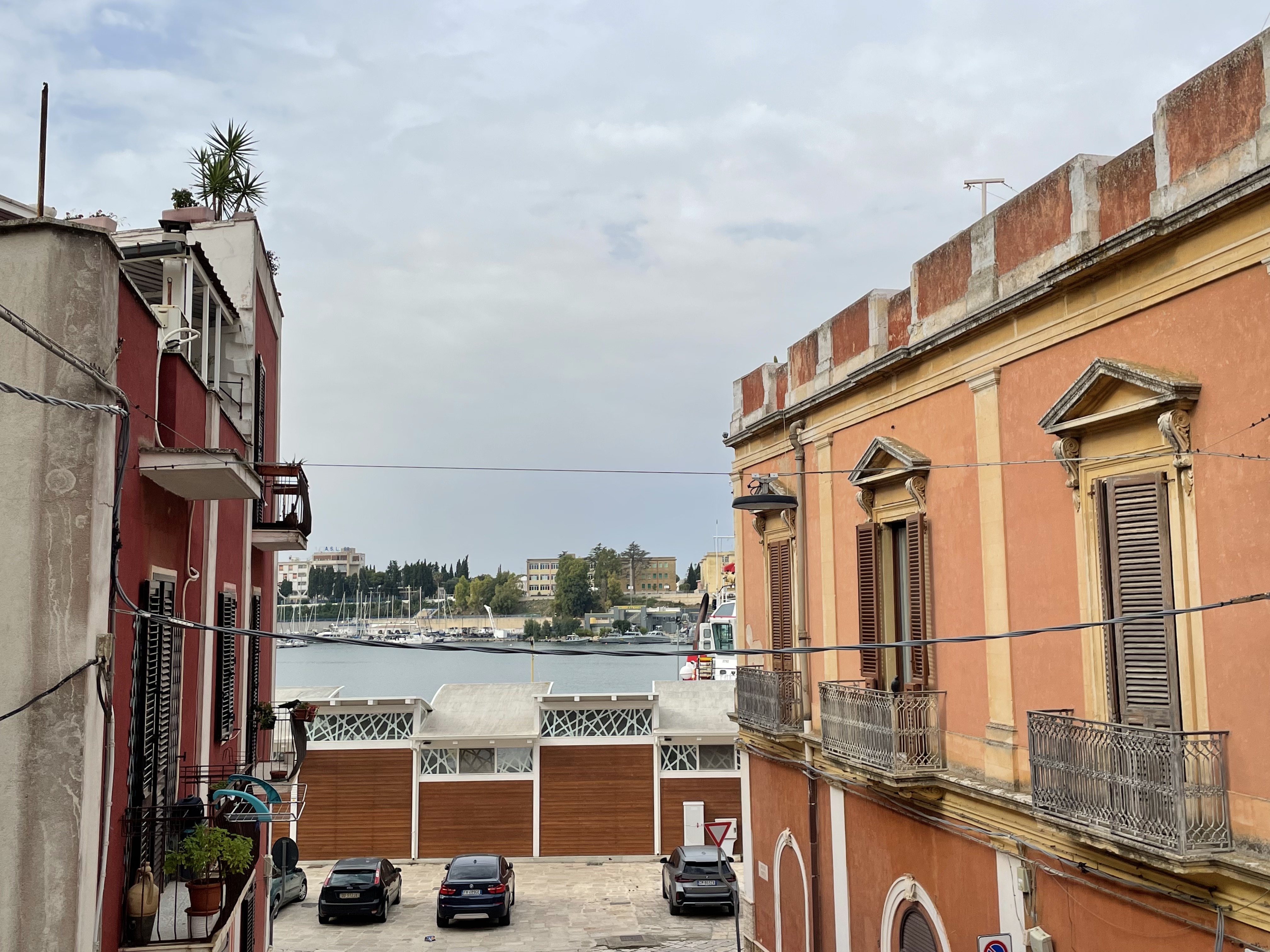
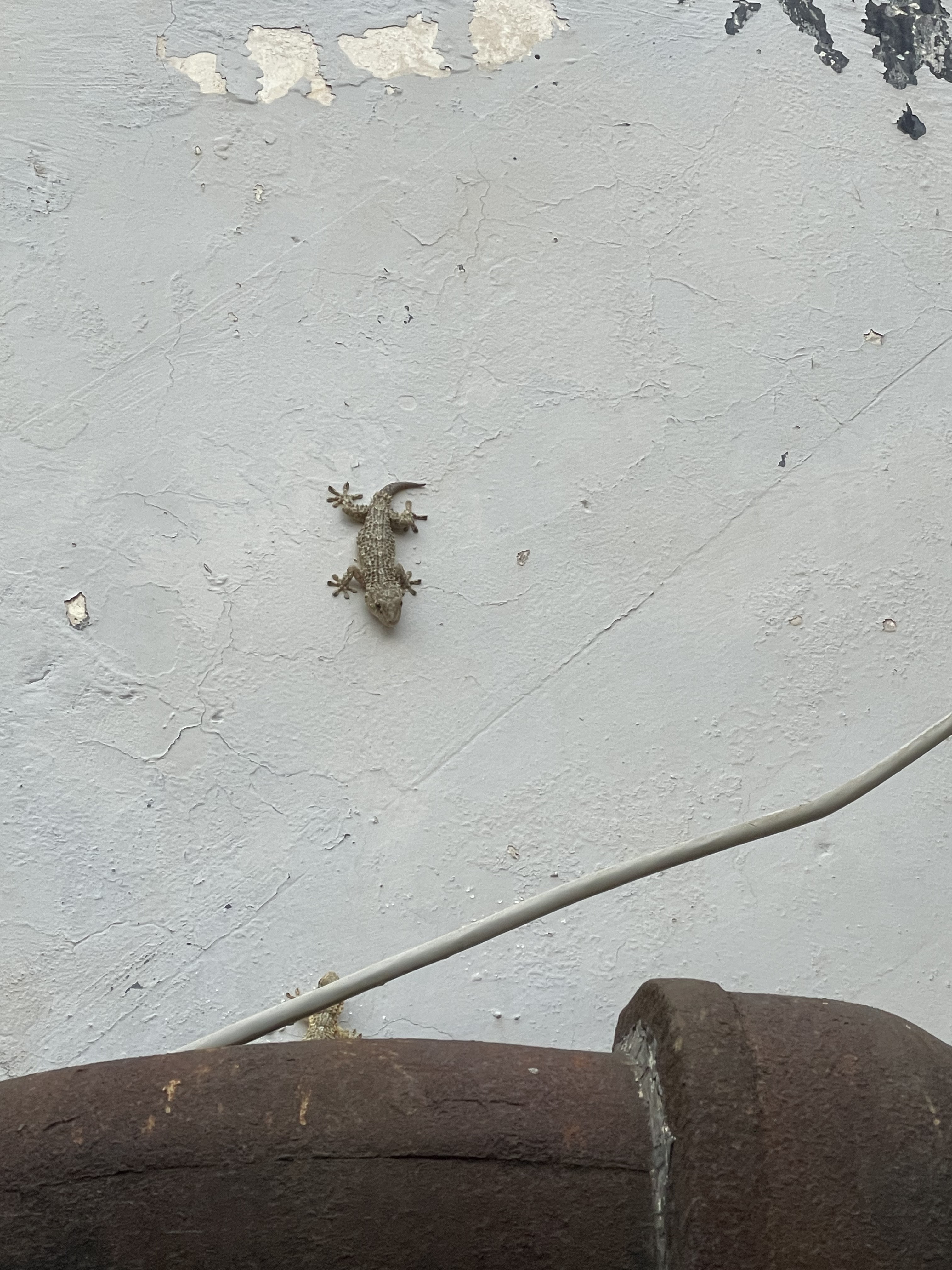
The town’s other face leans over the water behind the promenade: tugboats and fishing boats, a seafront of ochre houses, and — up a long stairway — one of the two Roman columns held by tradition to mark the end of the Appian Way, the road from Rome to this harbour — the second was carted off to Naples centuries ago, so this one holds the finish line alone. A gecko clung to a whitewashed wall nearby.
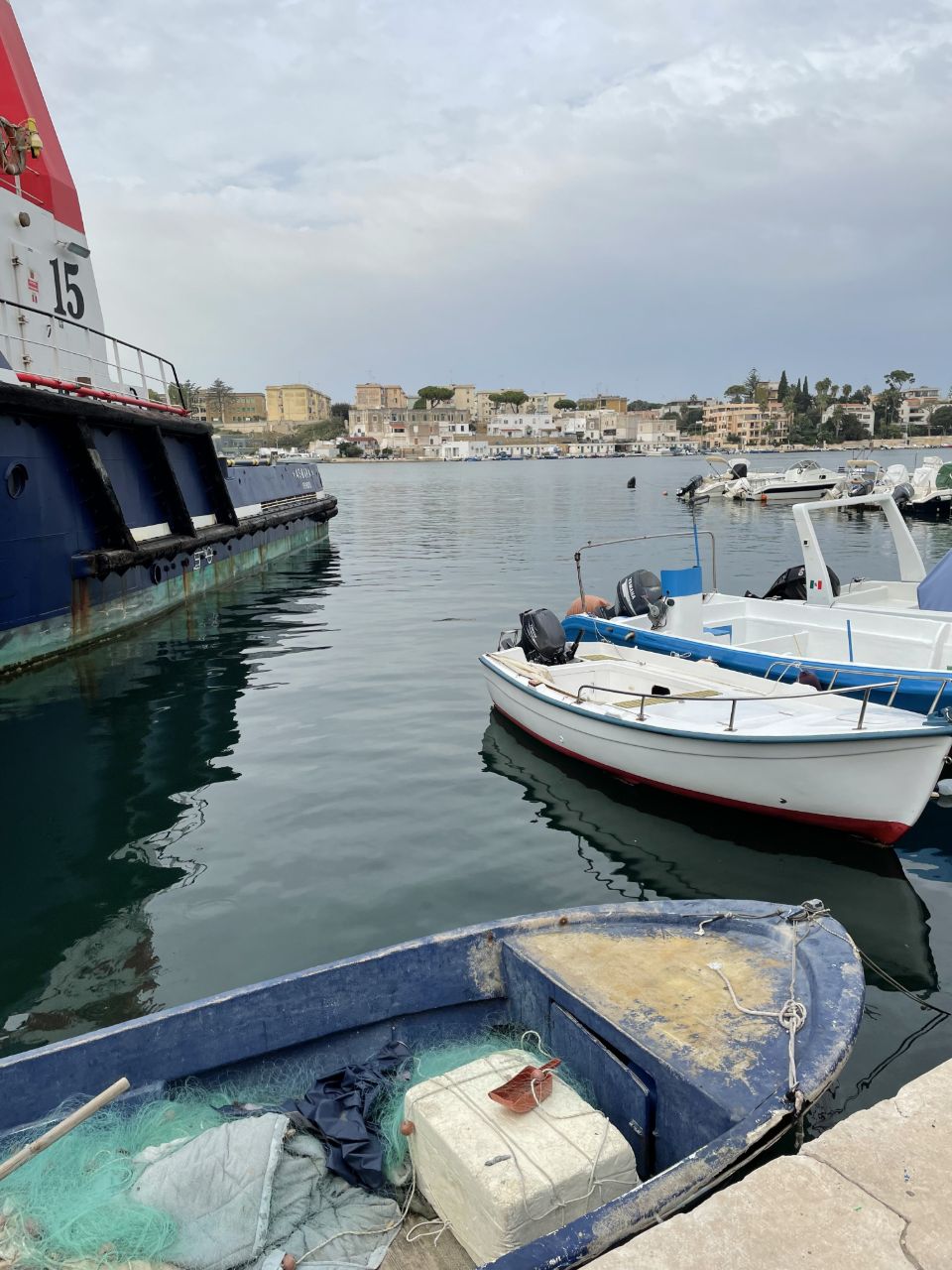
Where the working part starts 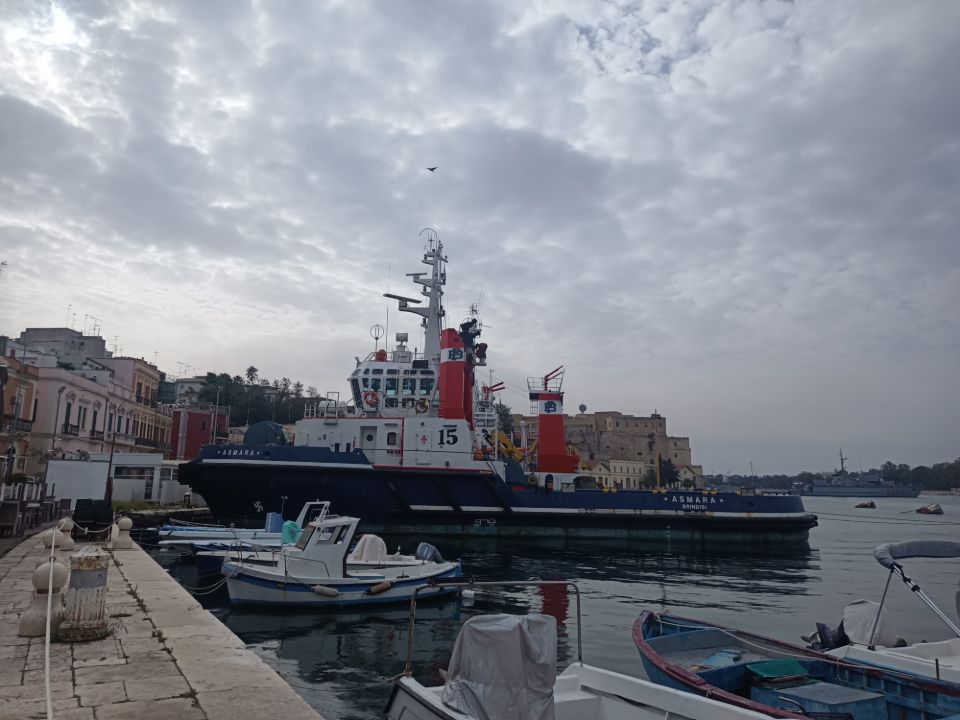
Tugboat among the fishing boats 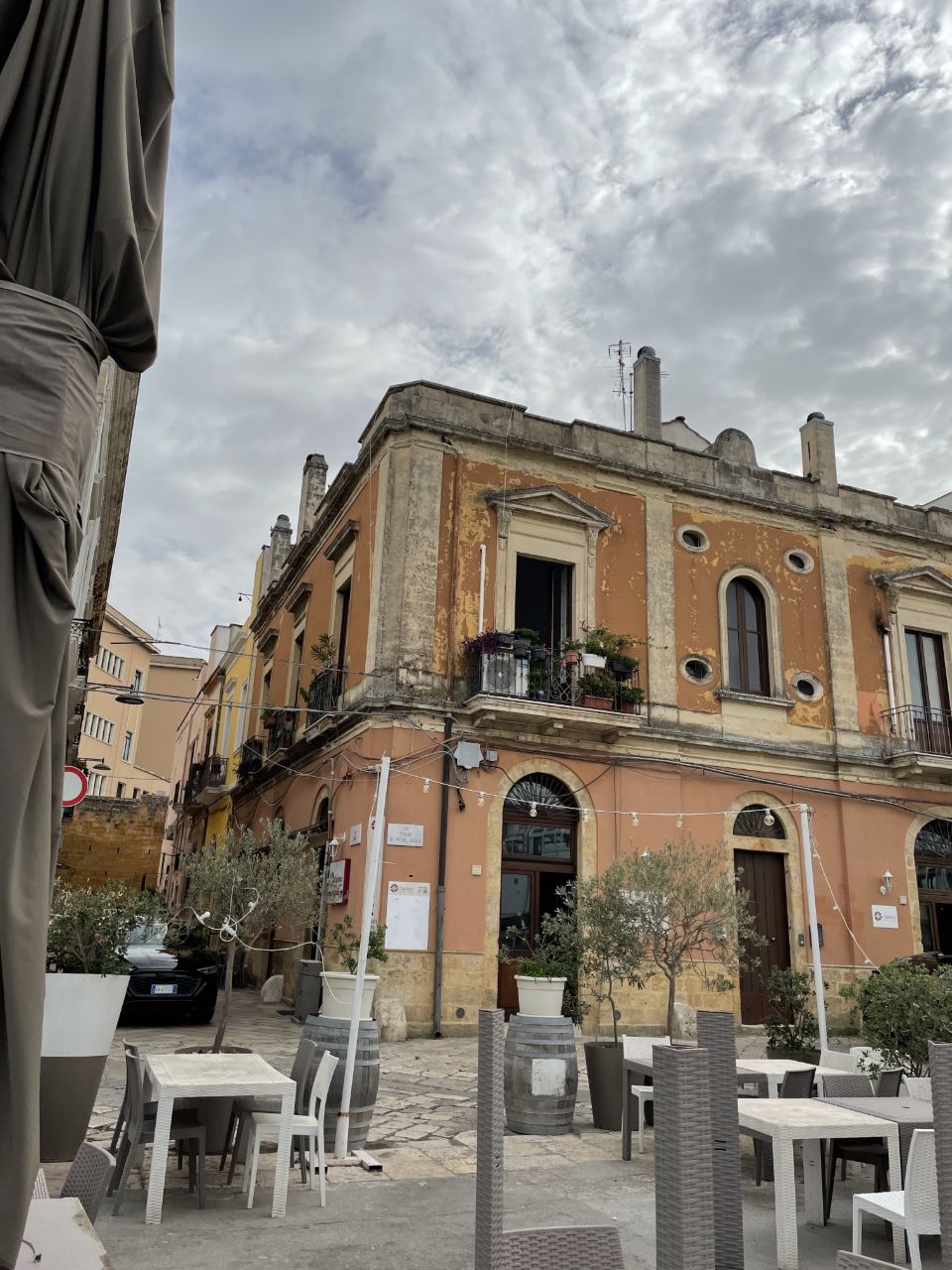
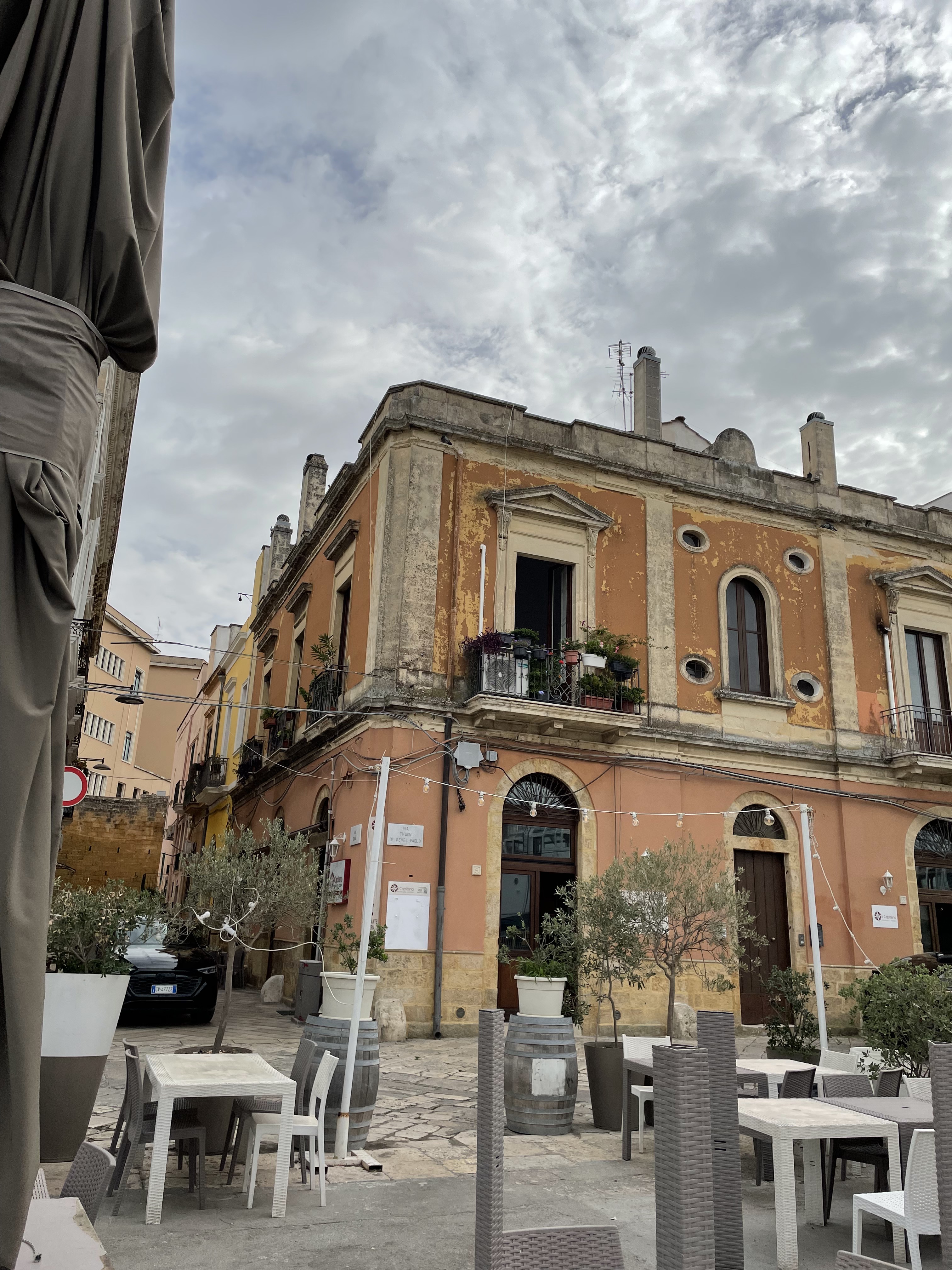
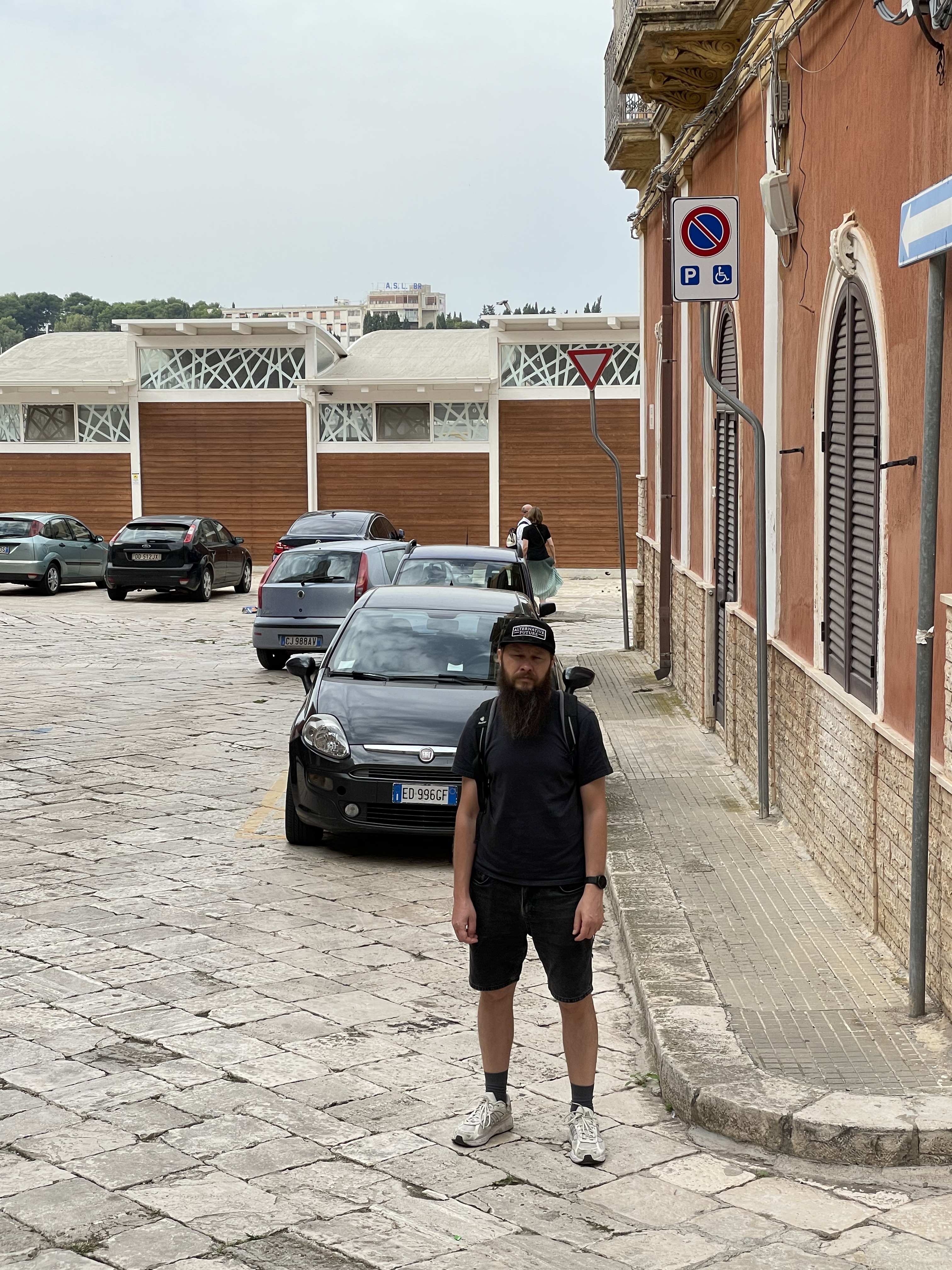
Oleg, pink corner palazzo 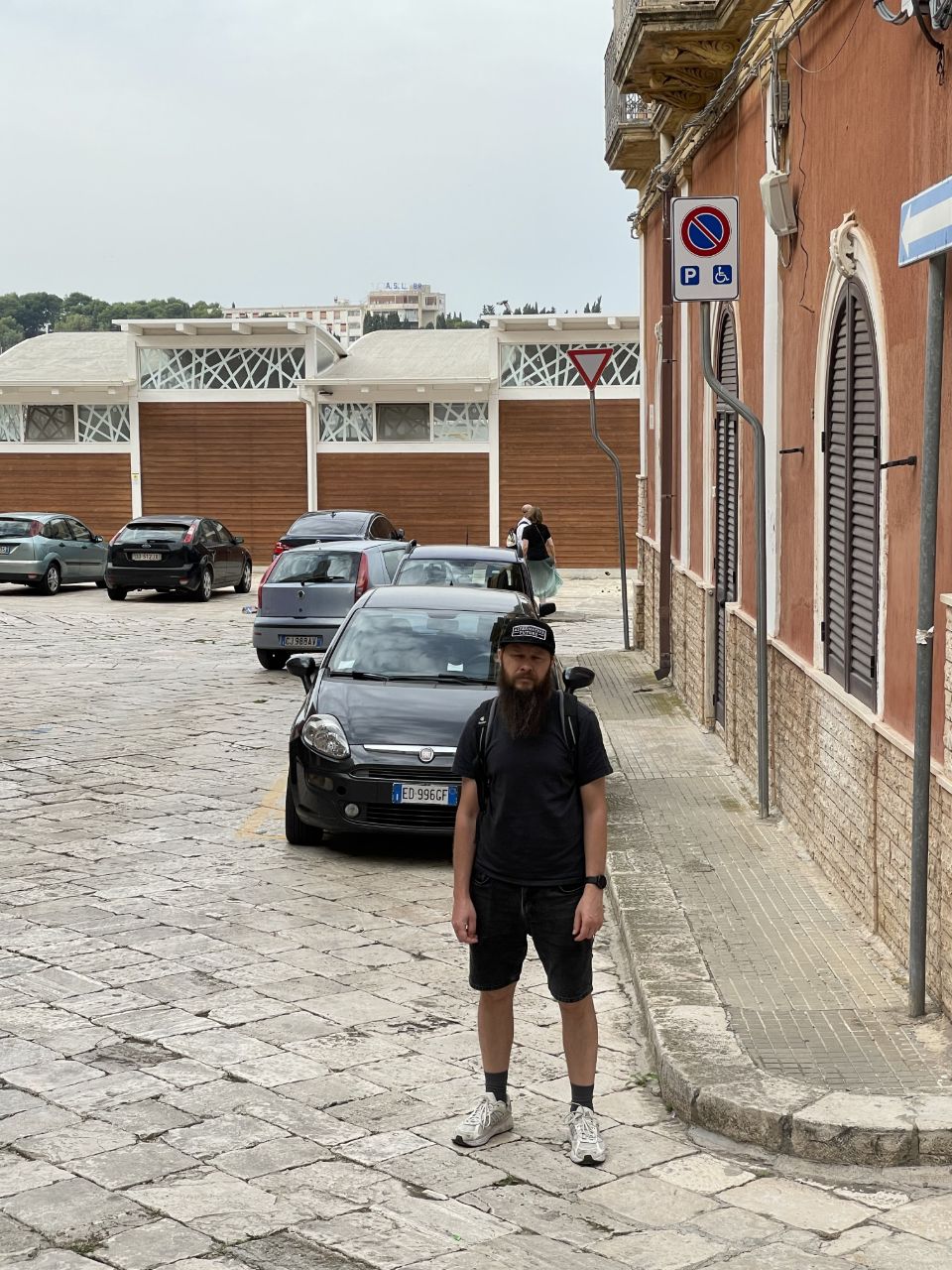
Up a cobbled lane 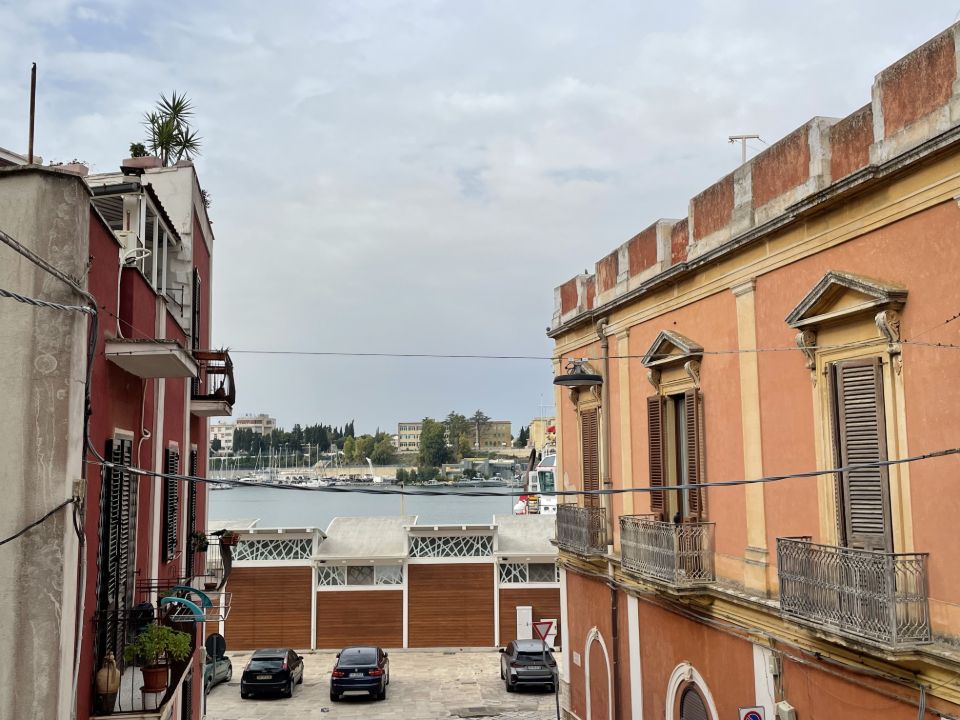
Ochre and red 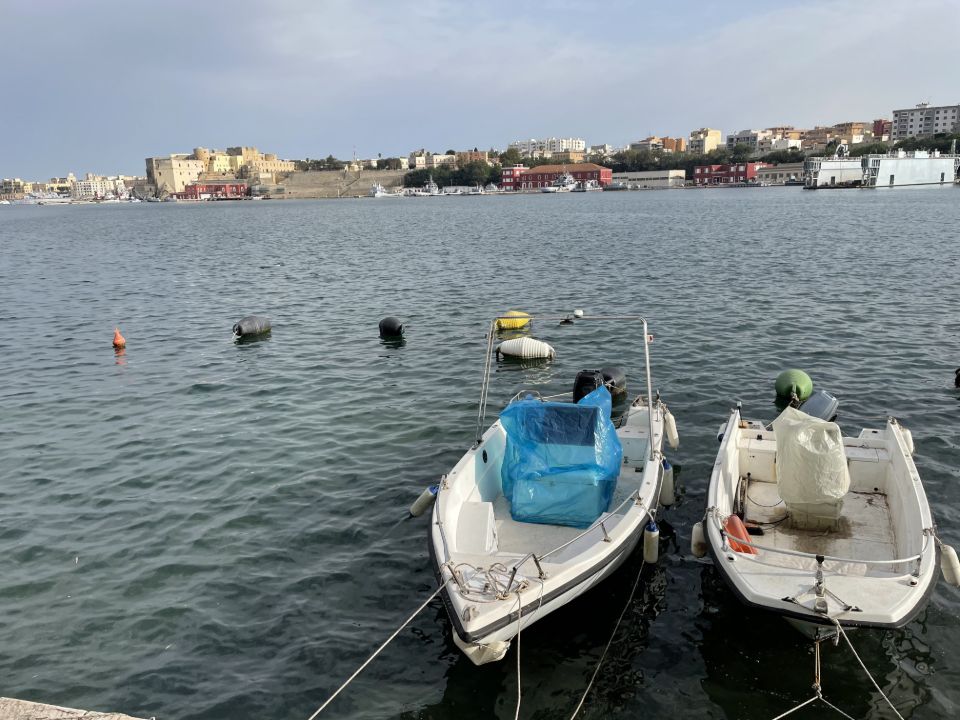
Motorboats at the stones 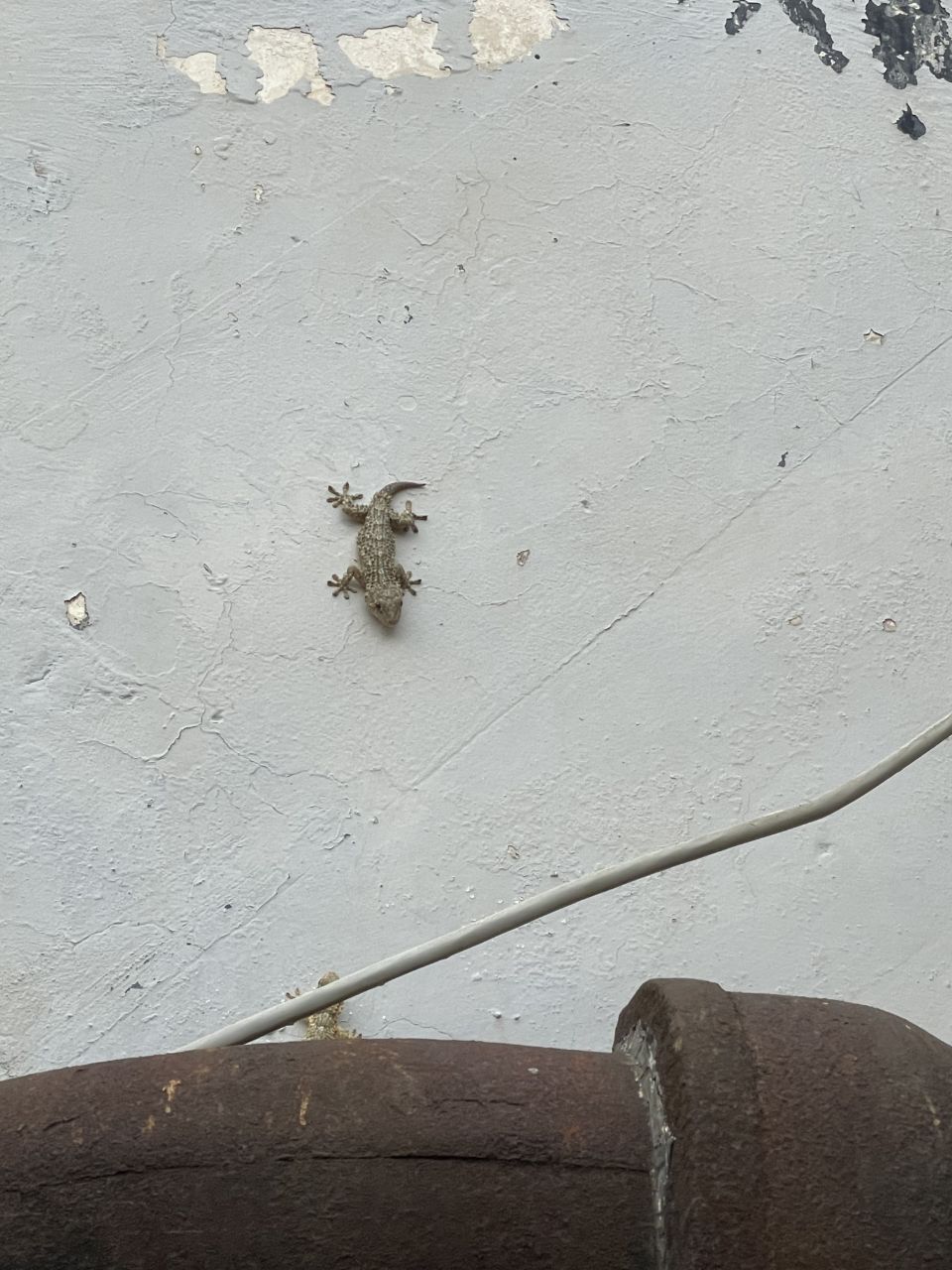
A gecko on a whitewashed wall
Sunset over the water
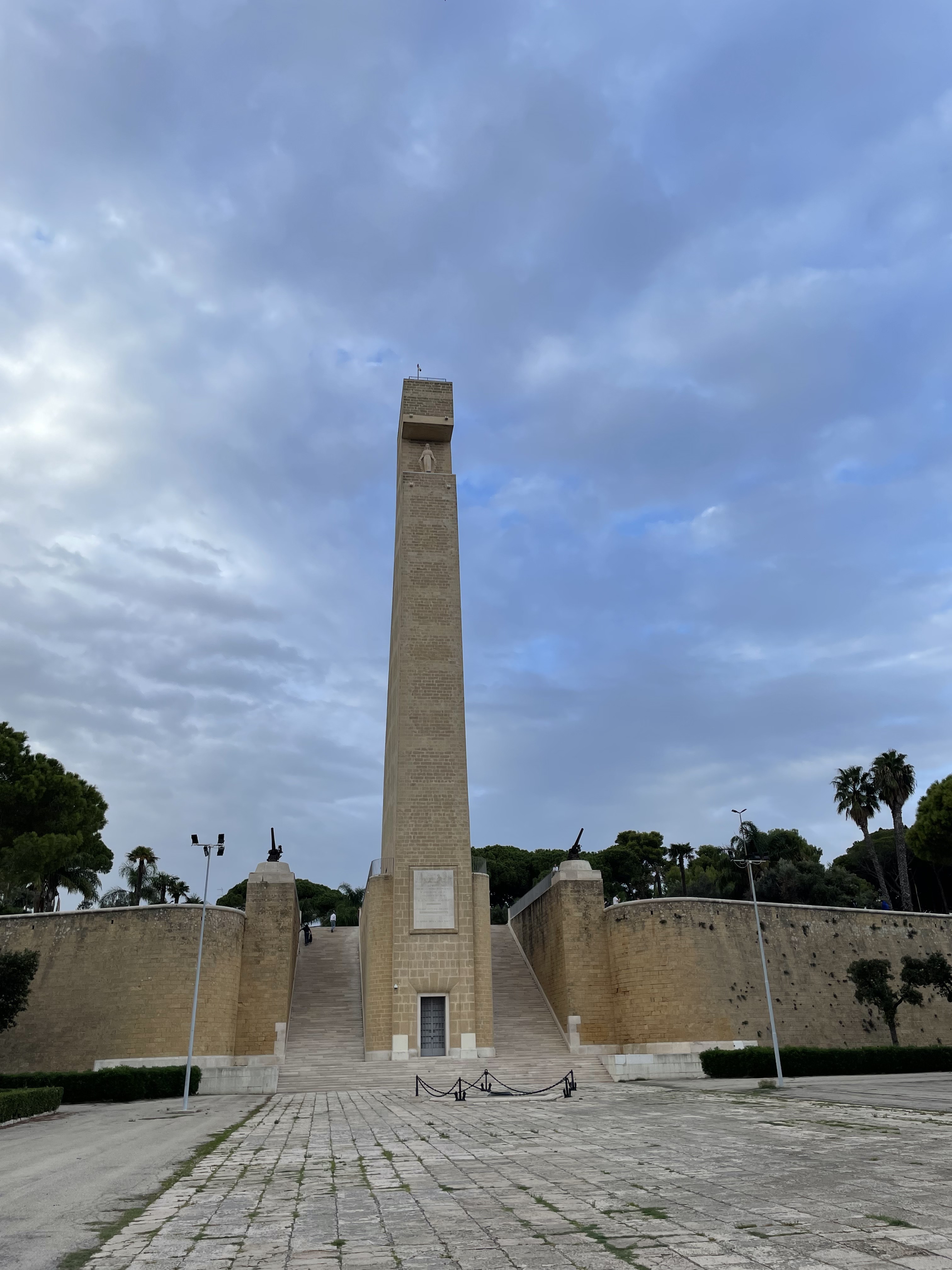
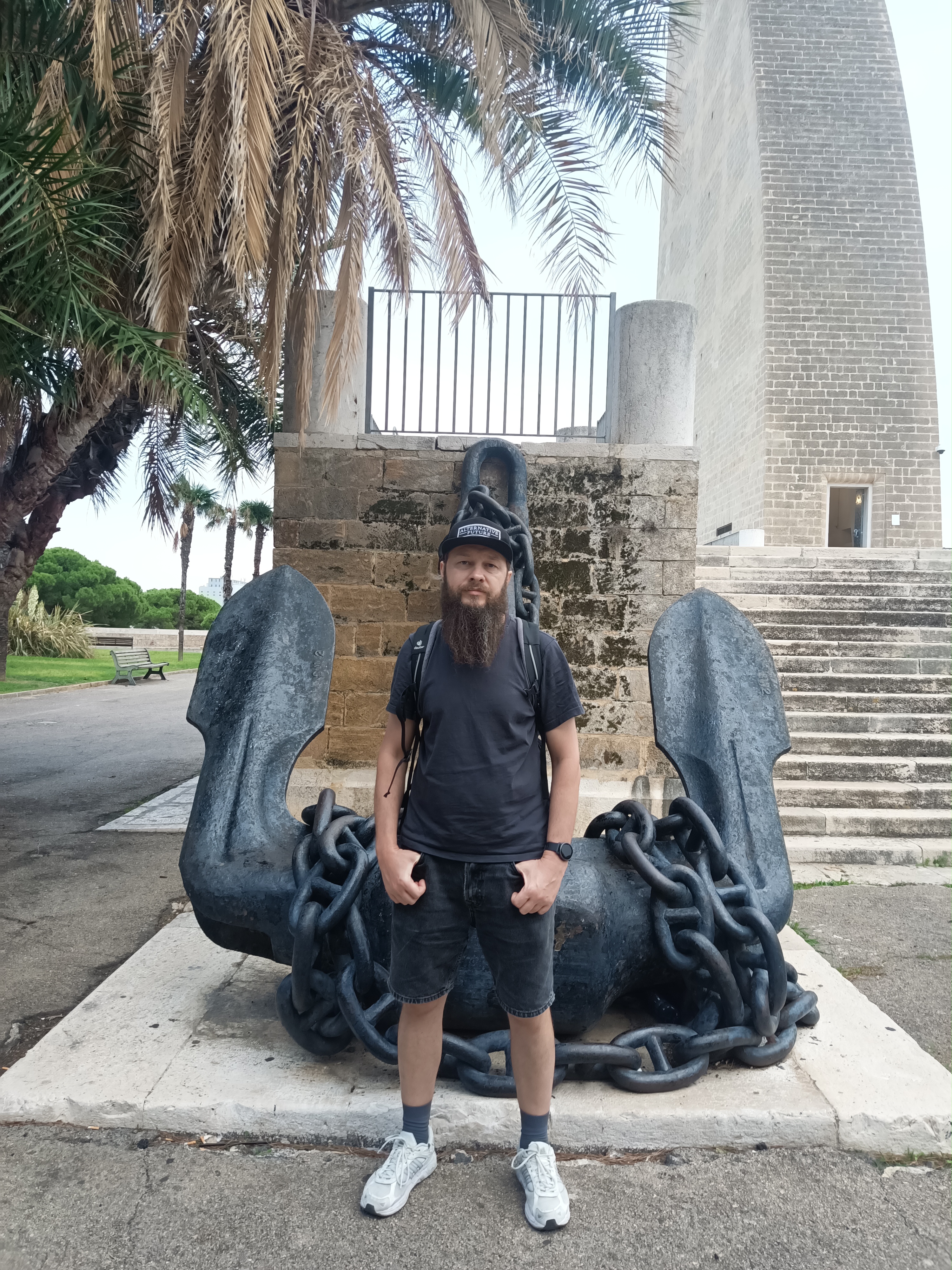
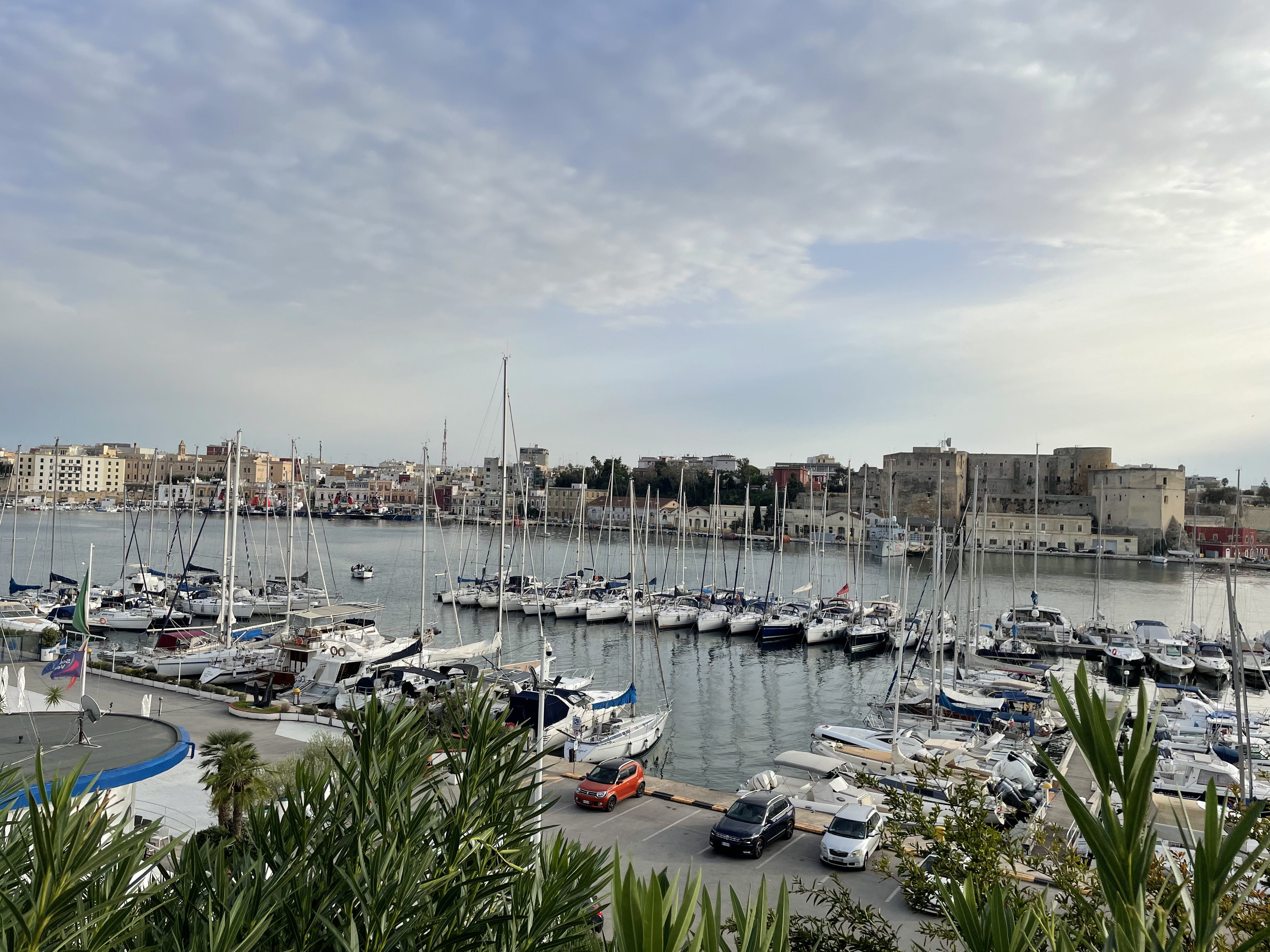
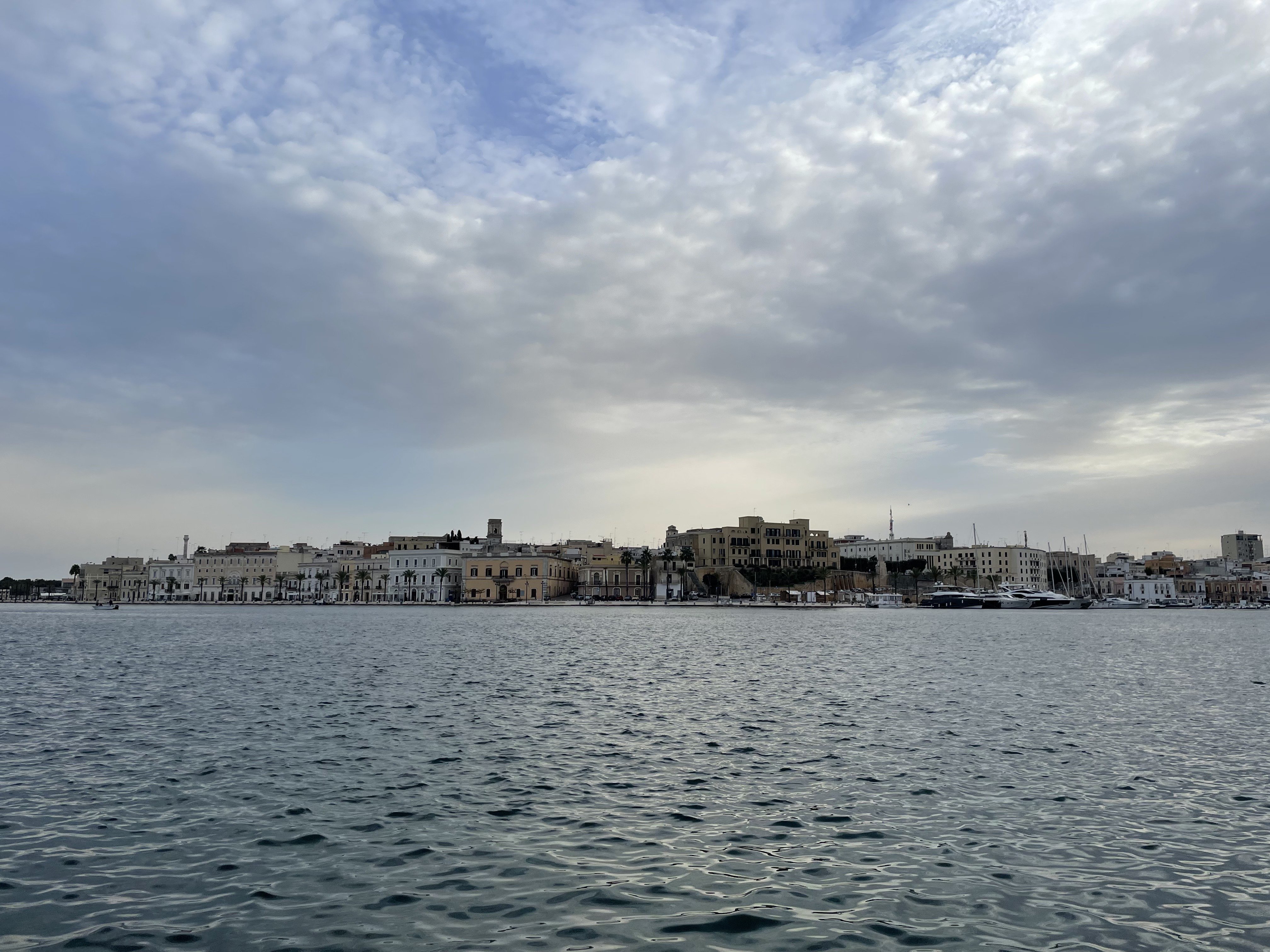
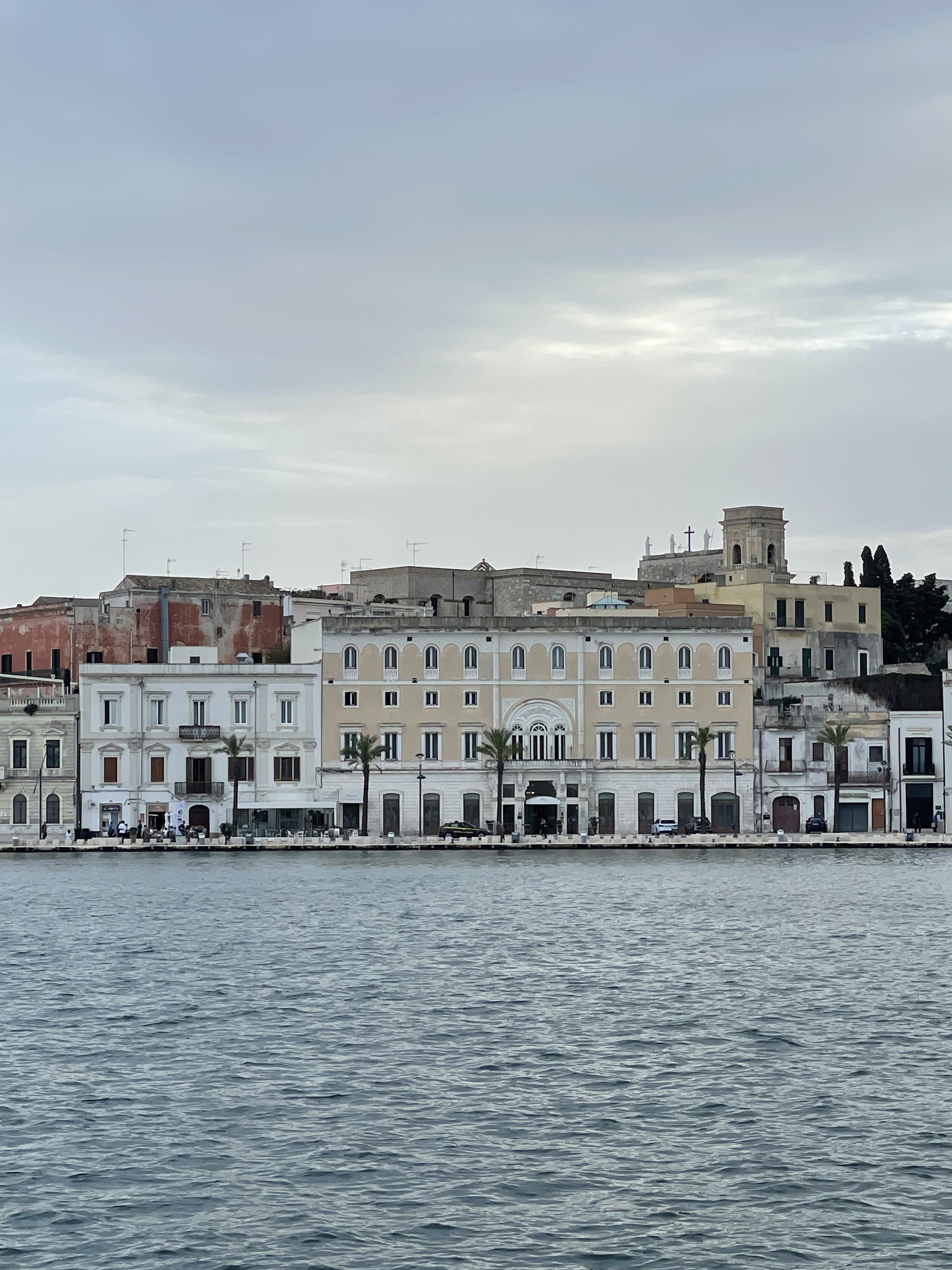
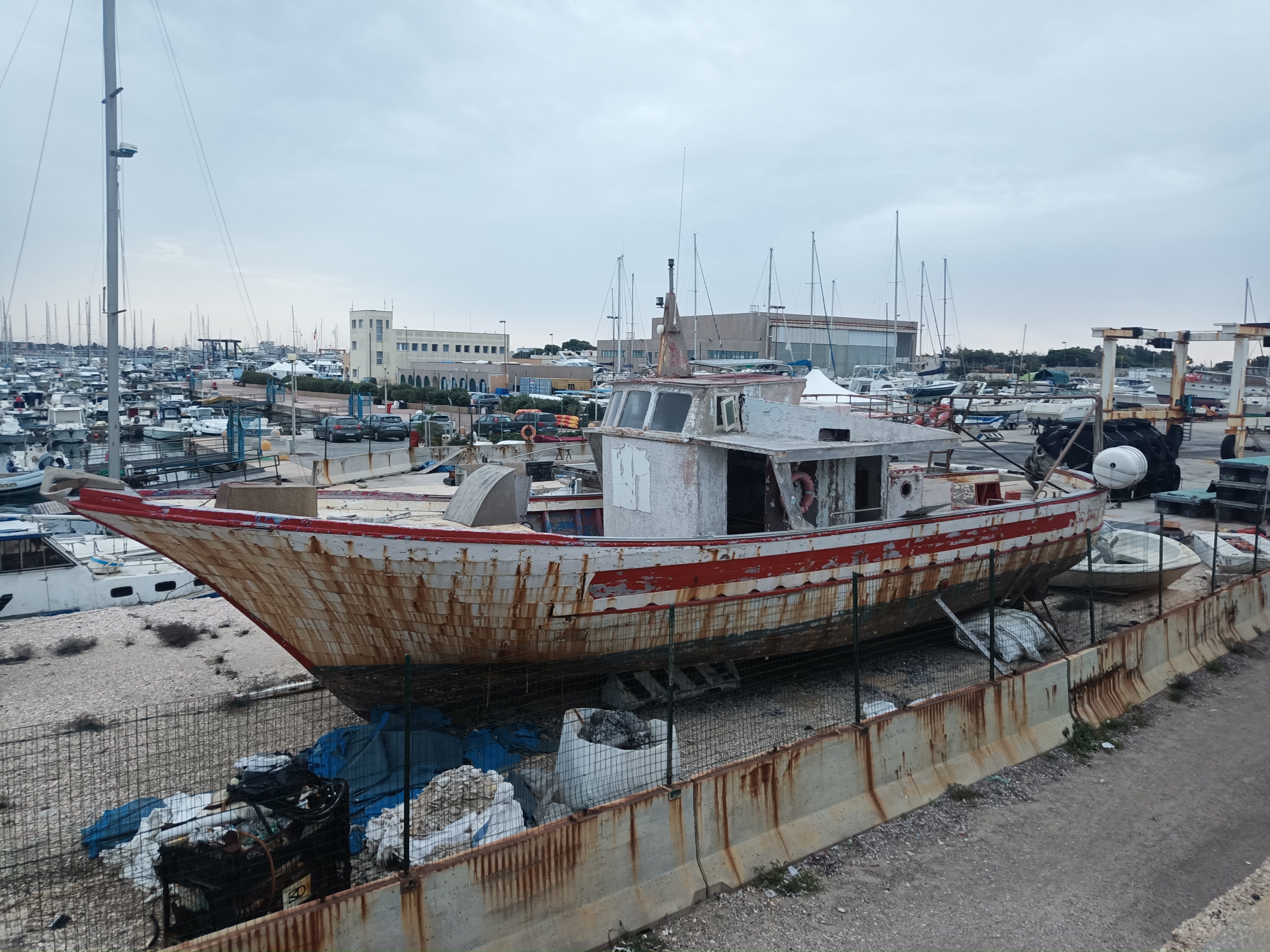
As the afternoon turned grey-gold, the harbour turned theatrical: the Sailors’ Monument against the clouds, a marina packed with masts, the fortress and lighthouse across the bay, and a very tired-looking fishing boat hauled out beside its rusty fence. The two panorama videos below are what it actually felt like — wind, water, ferries in the distance.
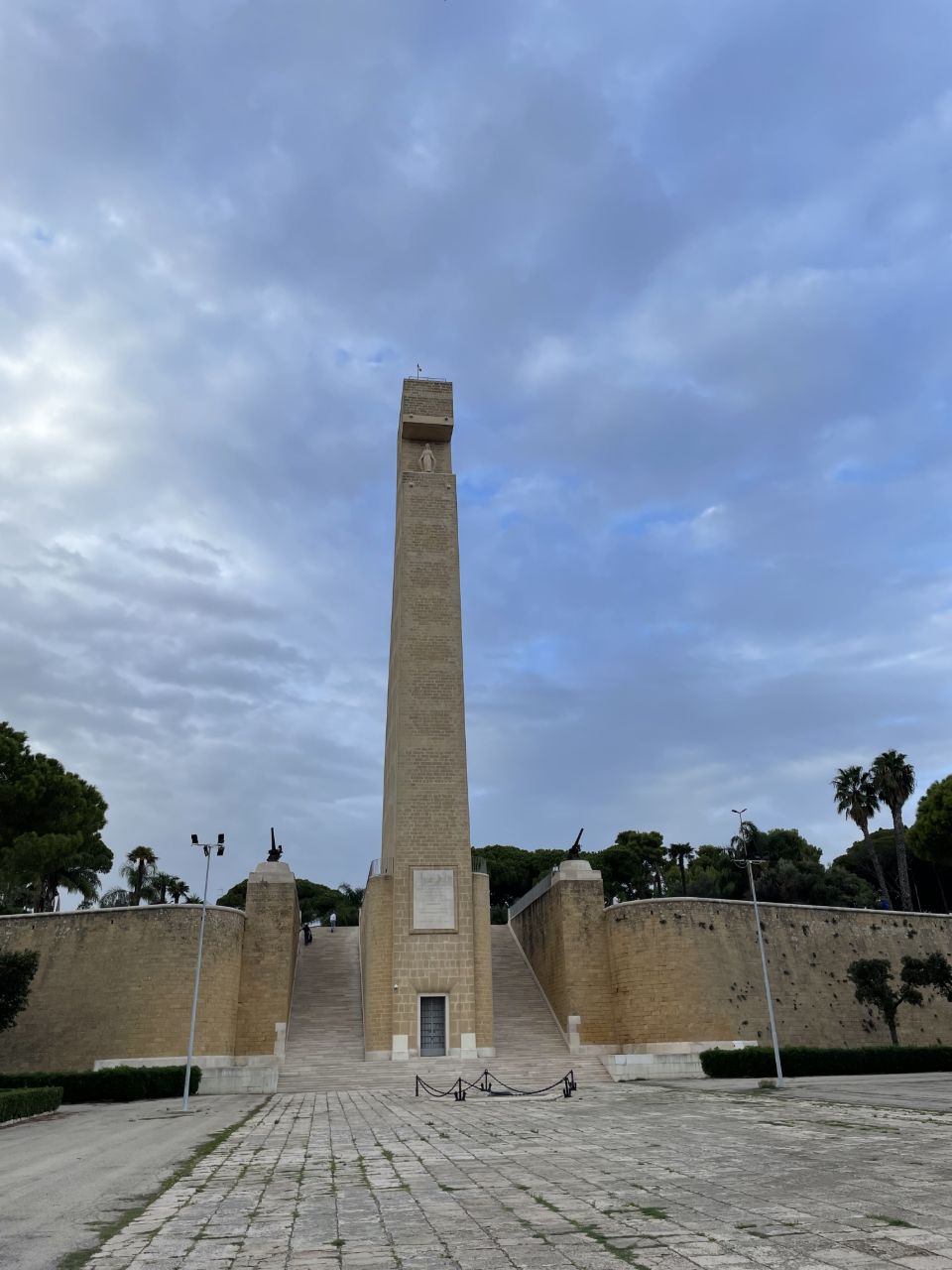
The Sailors' Monument 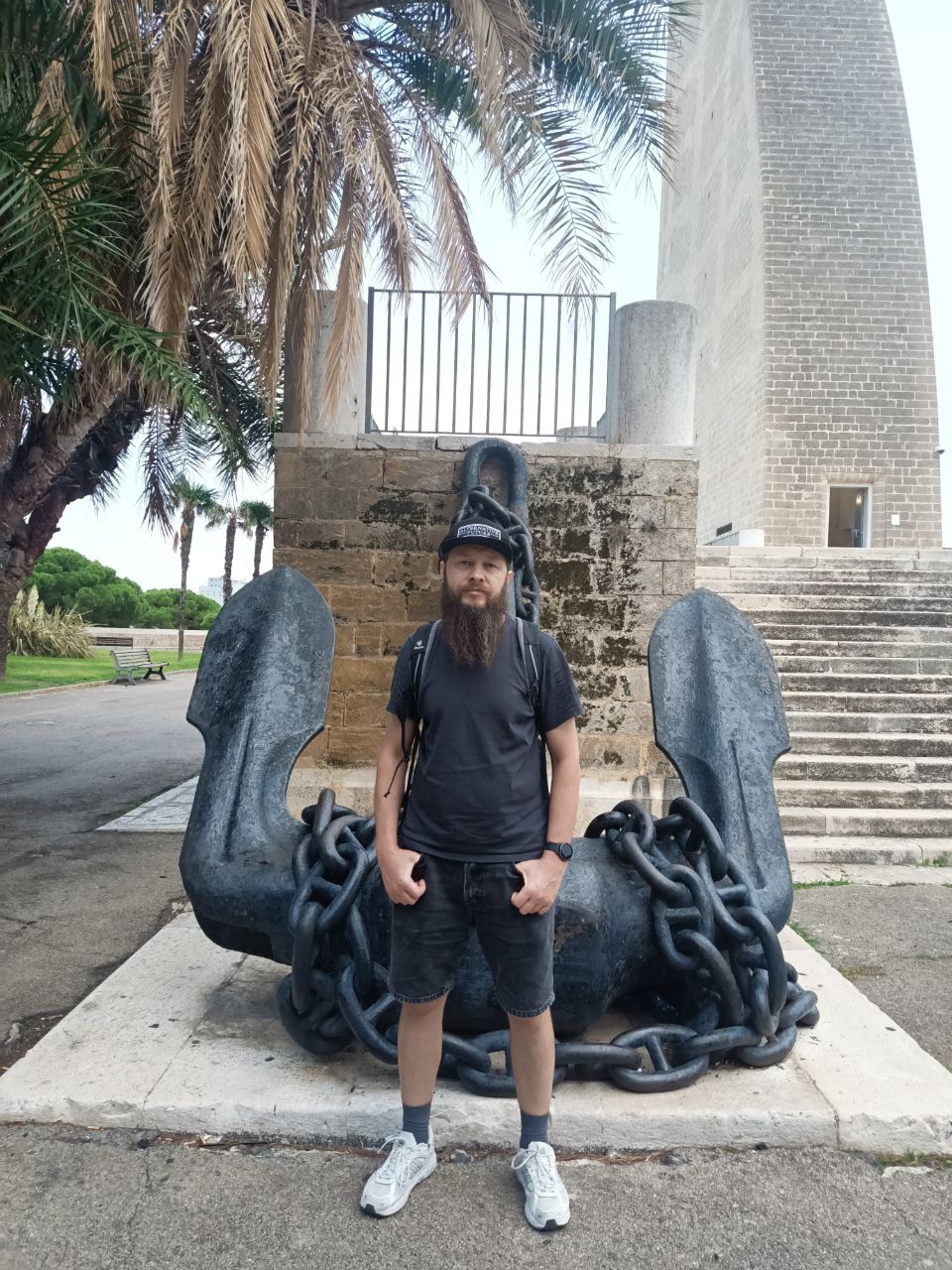
Oleg and the giant anchor 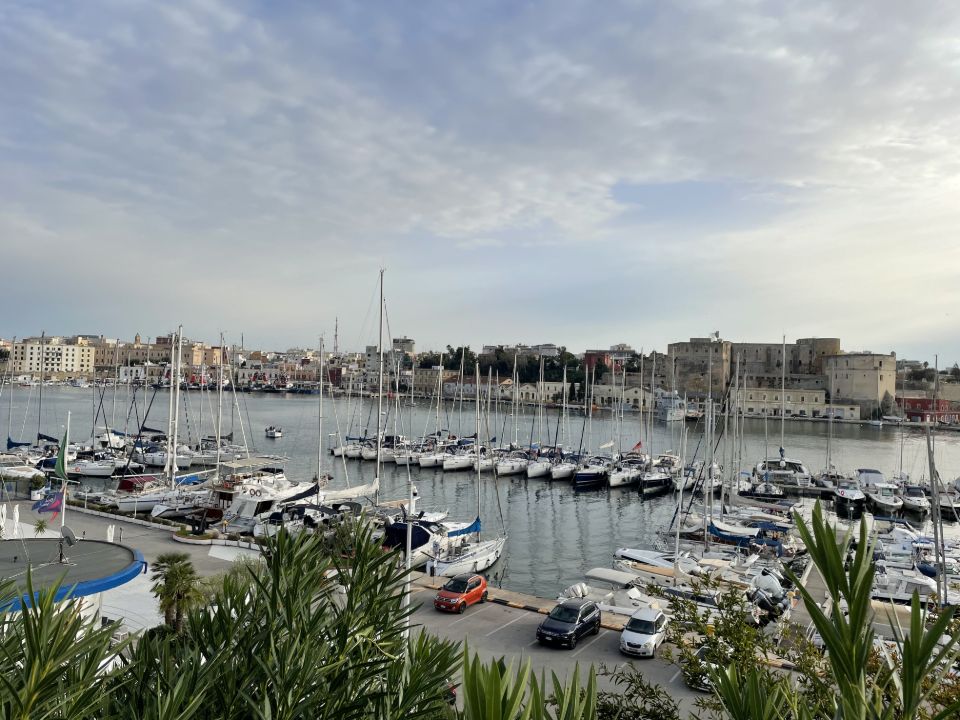
The marina, packed 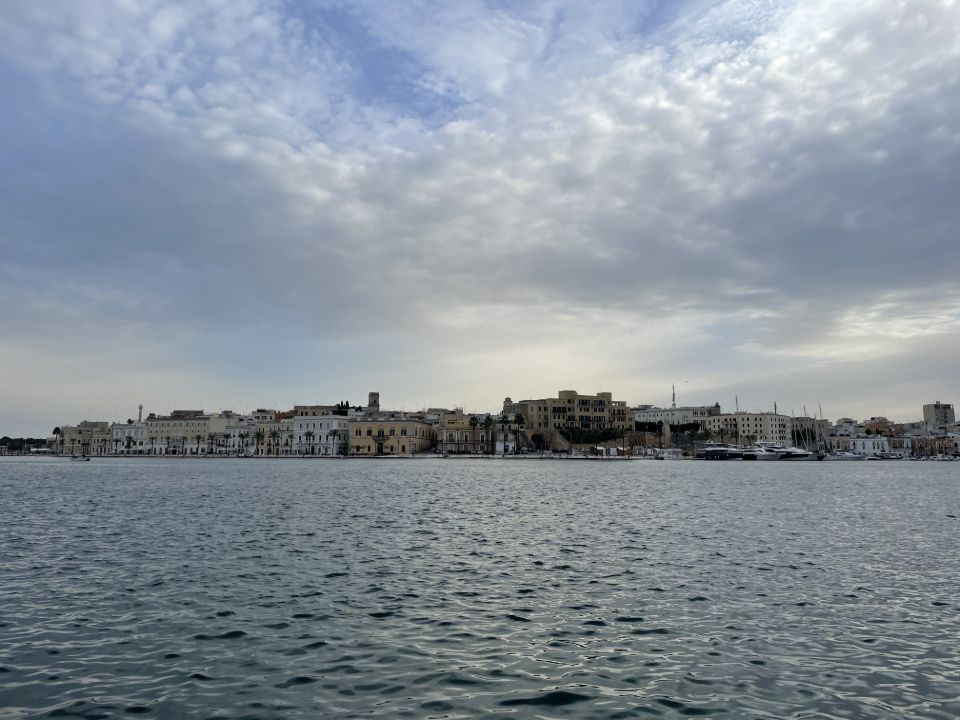
Seafront to the channel 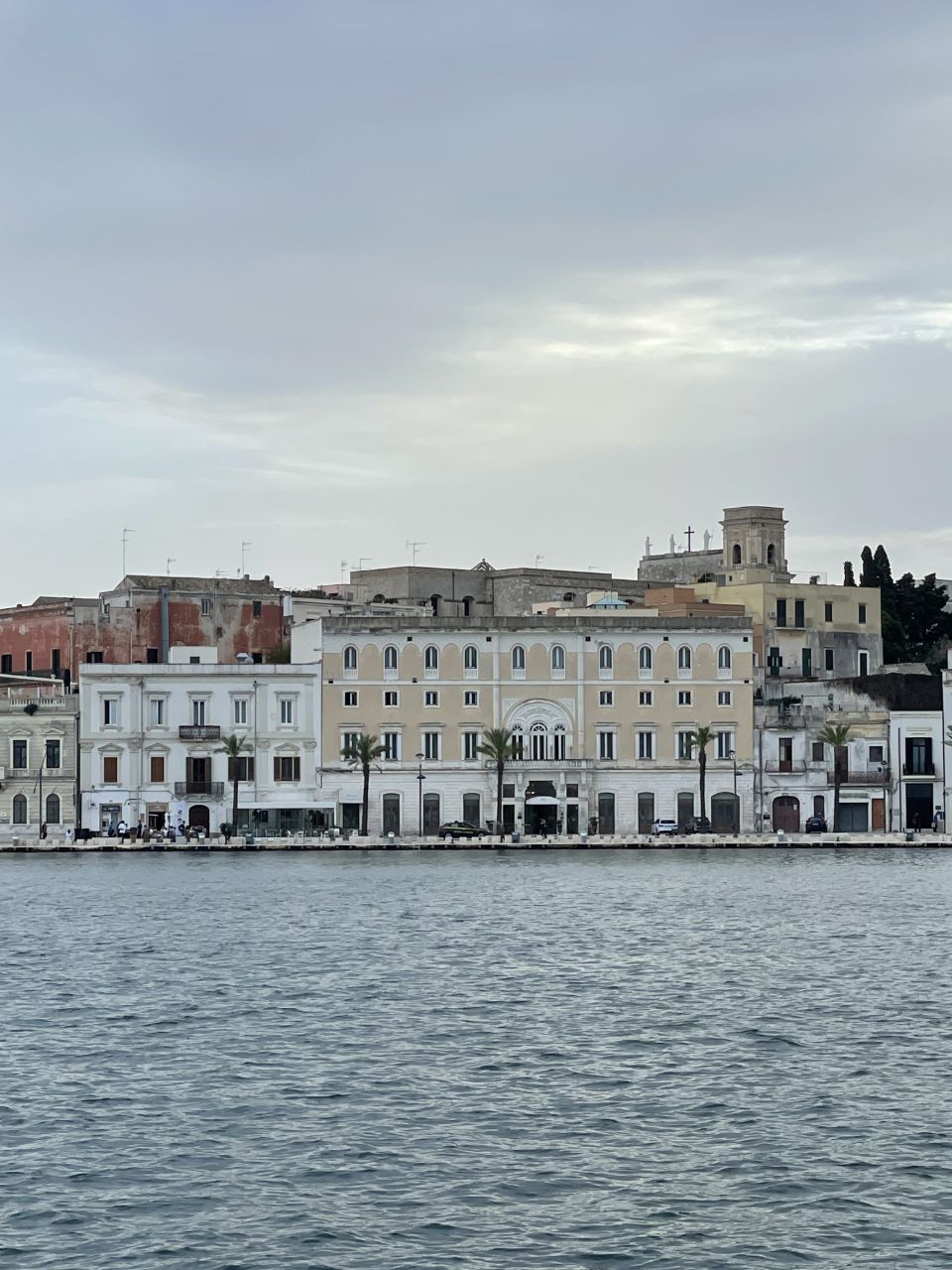
White and ochre, palms between 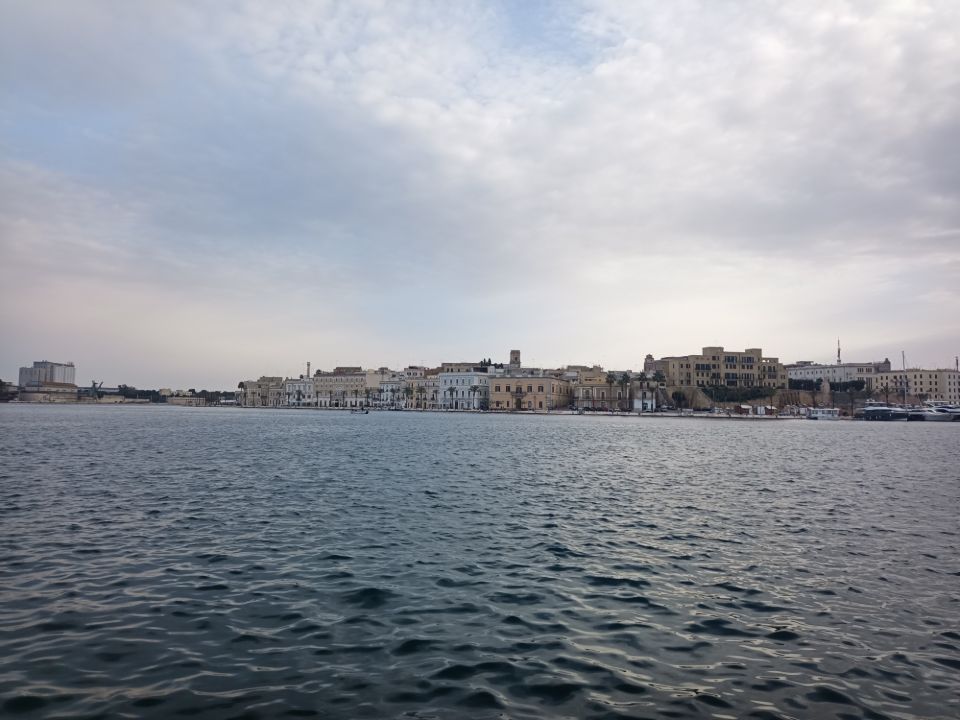
Town across the water, dusk 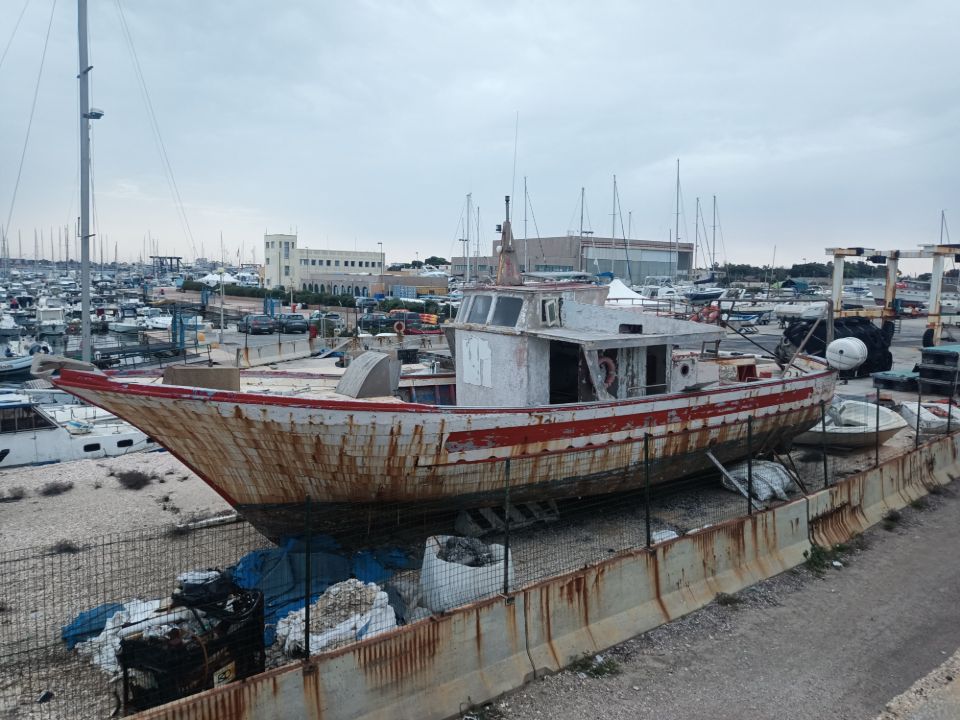
Retired, on dry land 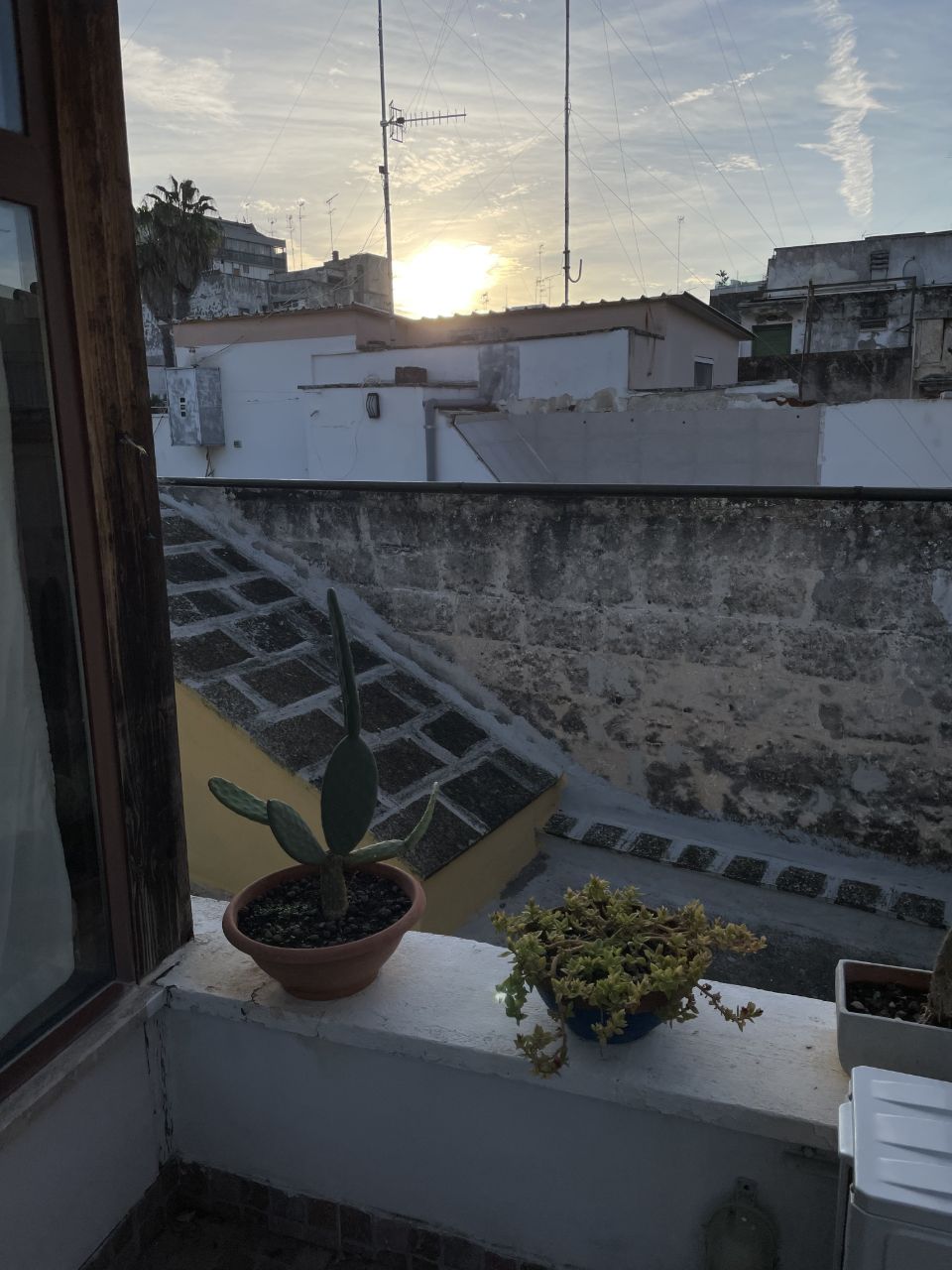
Fortress and lighthouse, evening
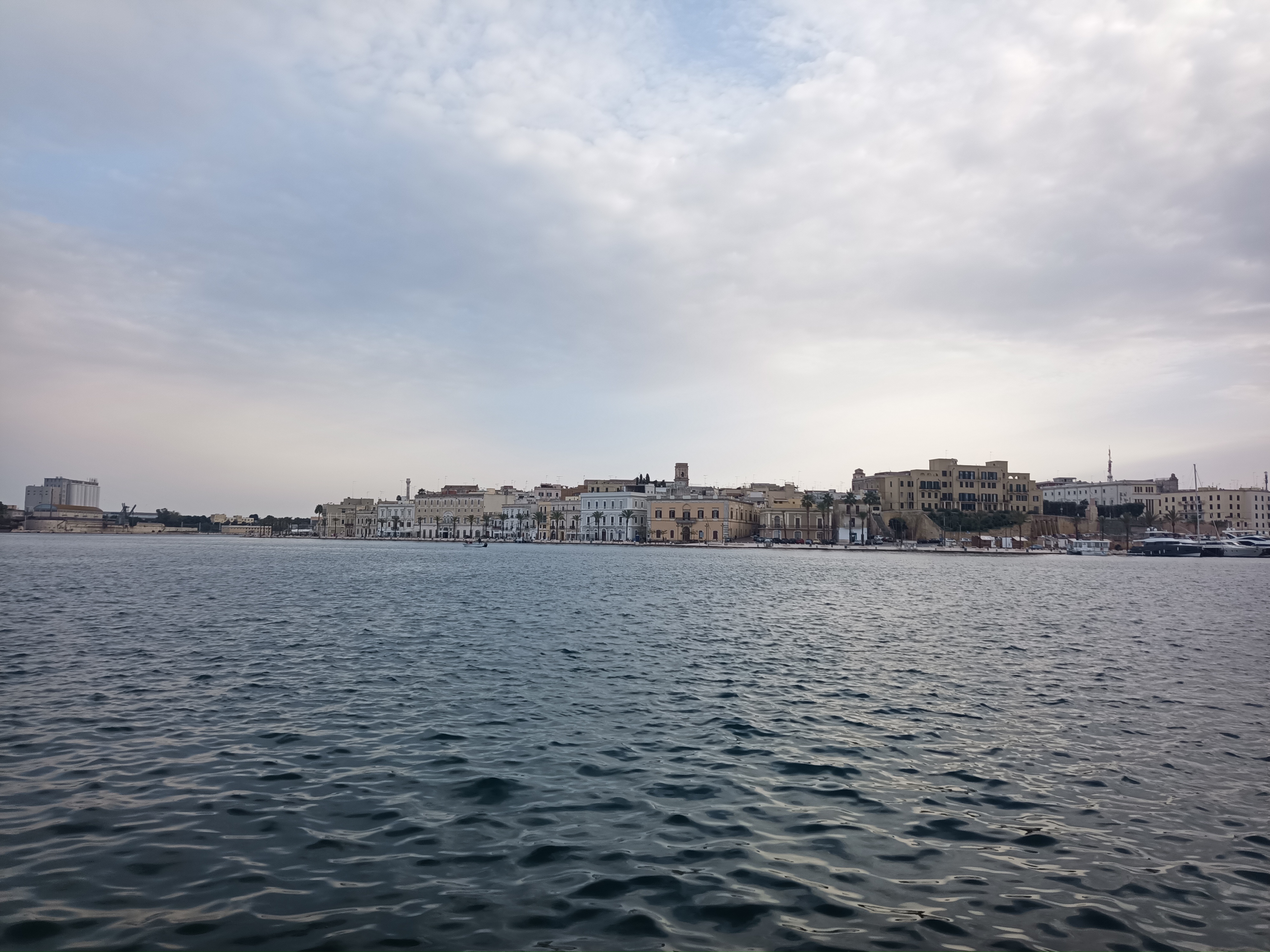
Panning across Brindisi’s dusk harbour — ferries left, masts right, twenty-two seconds.
Forty seconds more: the panorama runs on to the castle side.
Lecce, in gold
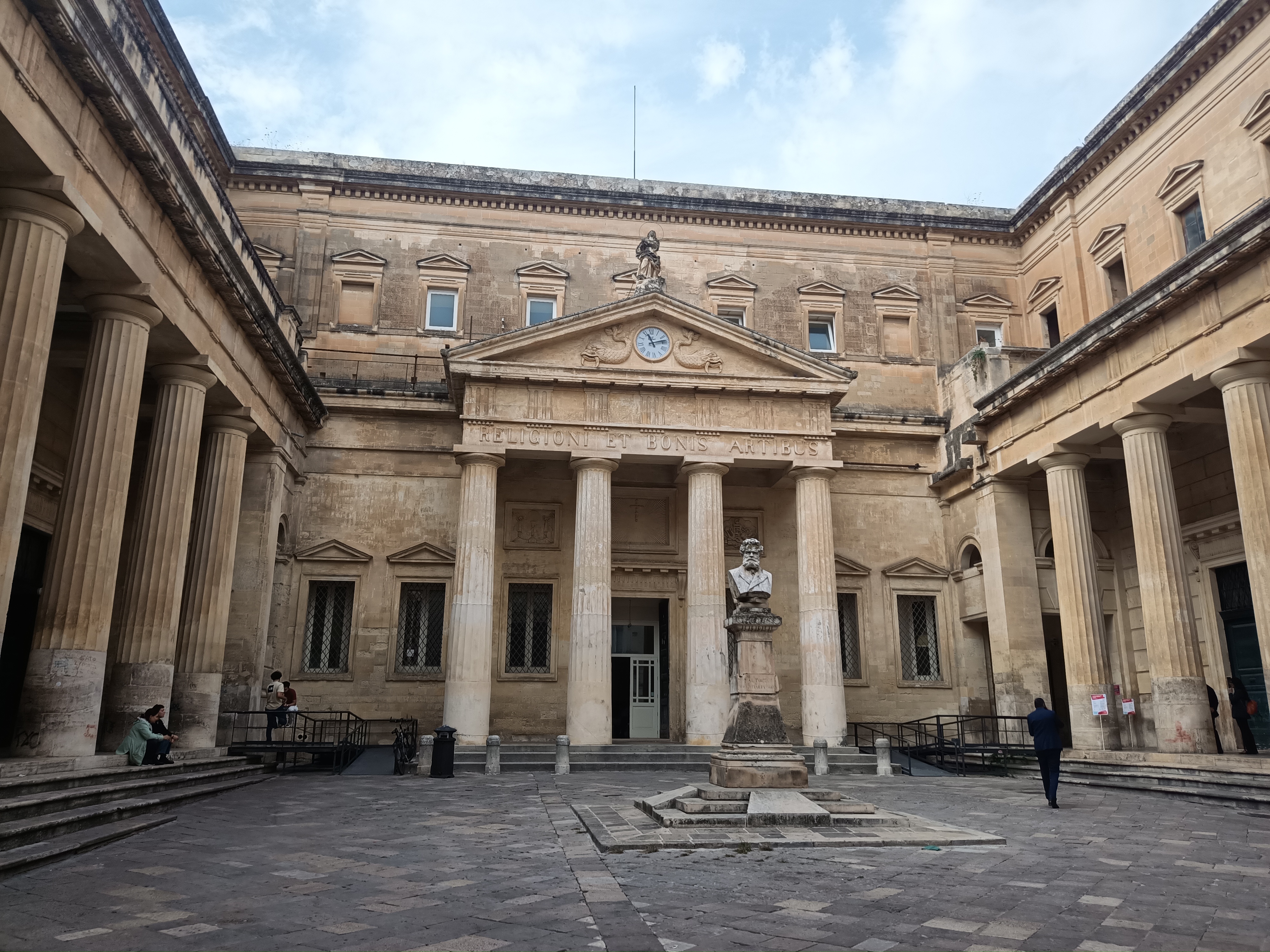
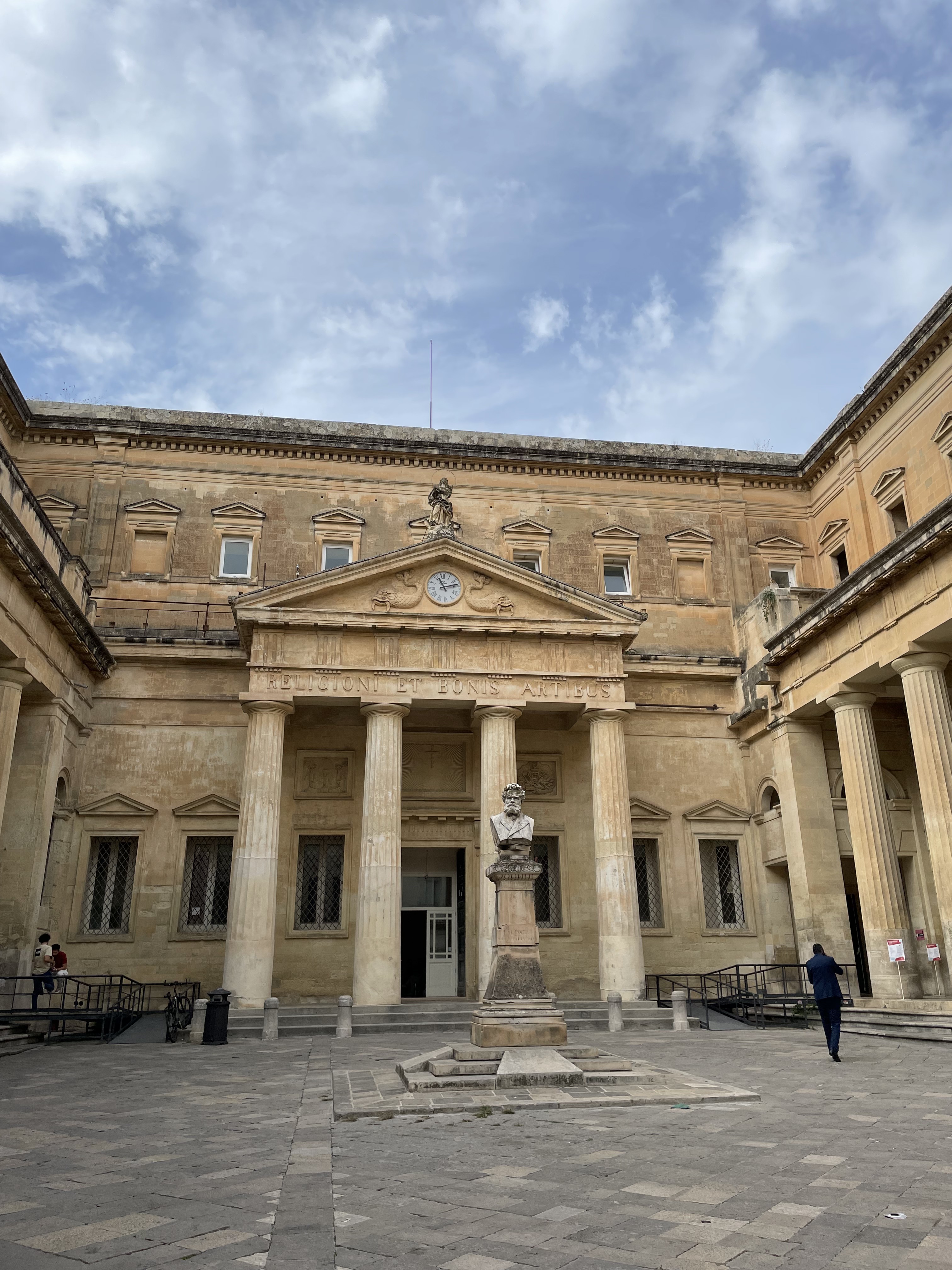
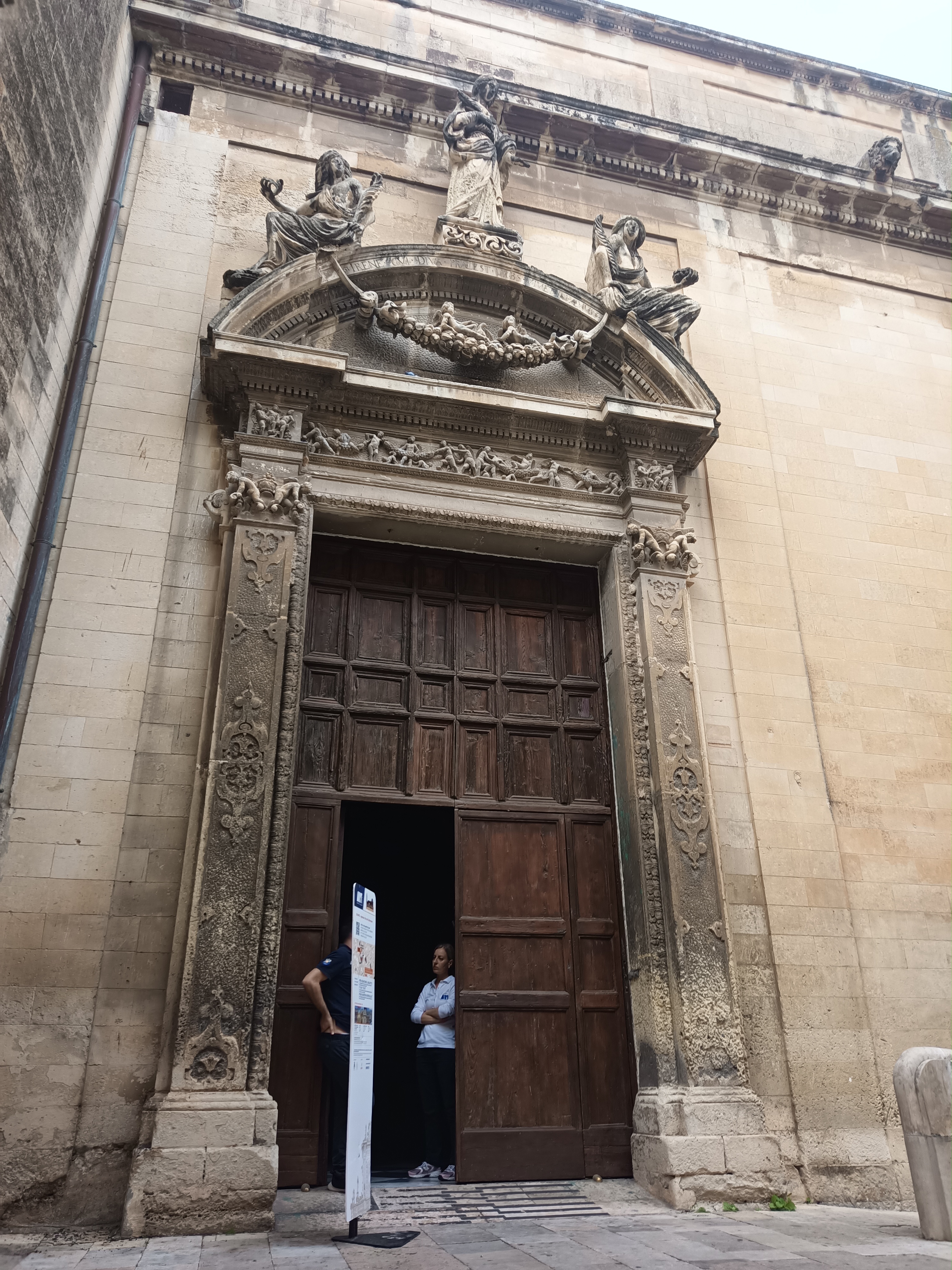
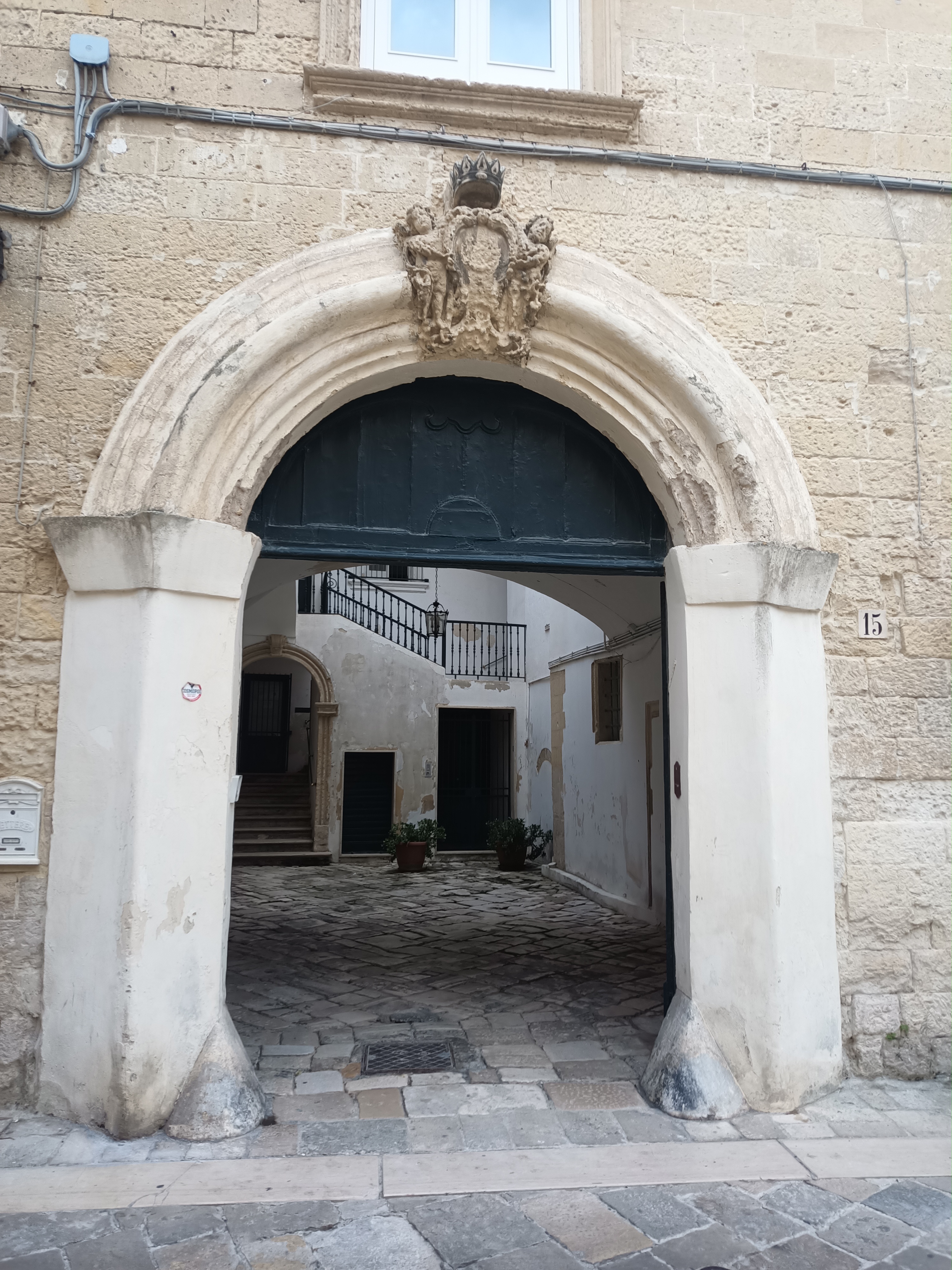
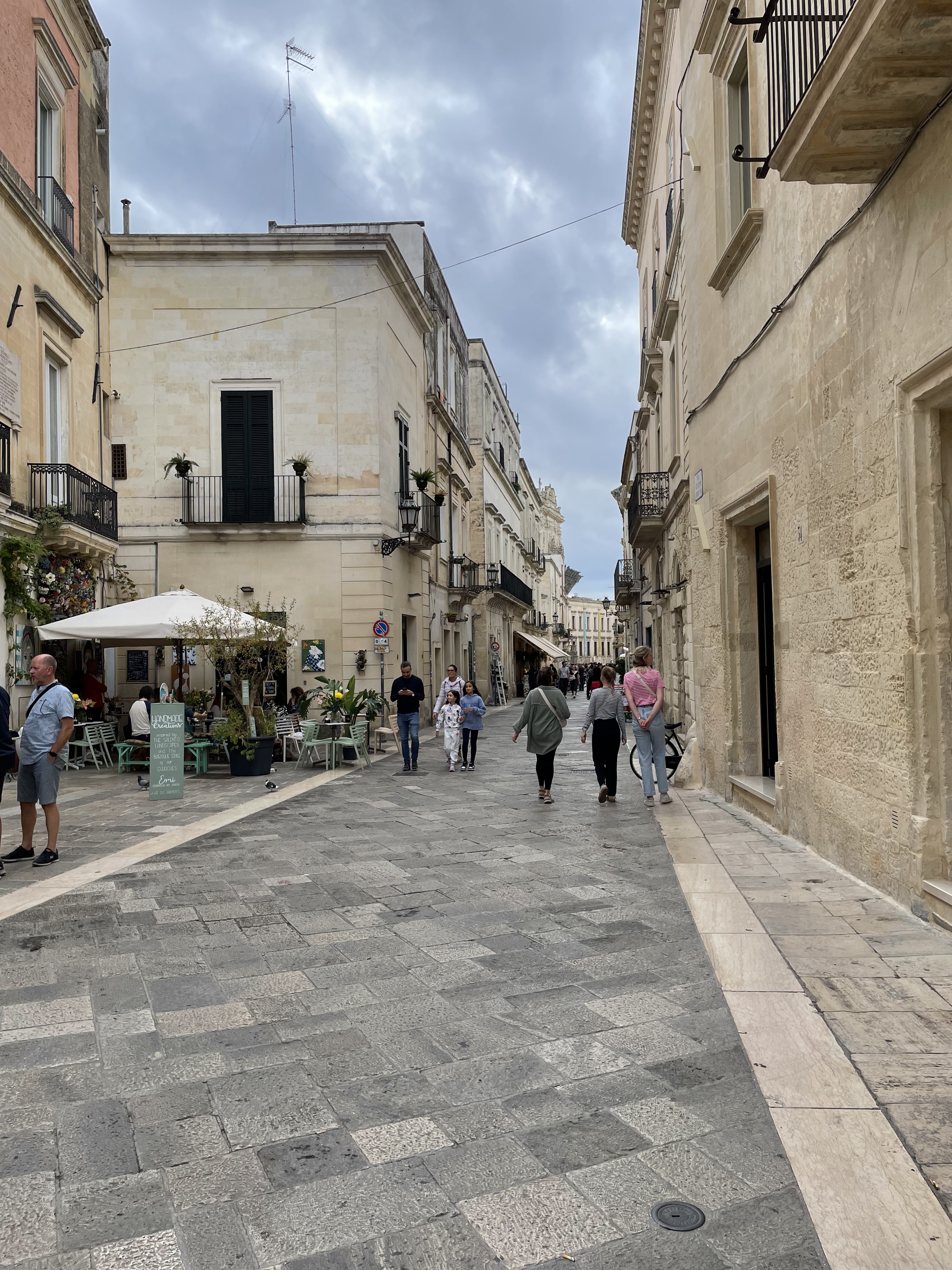
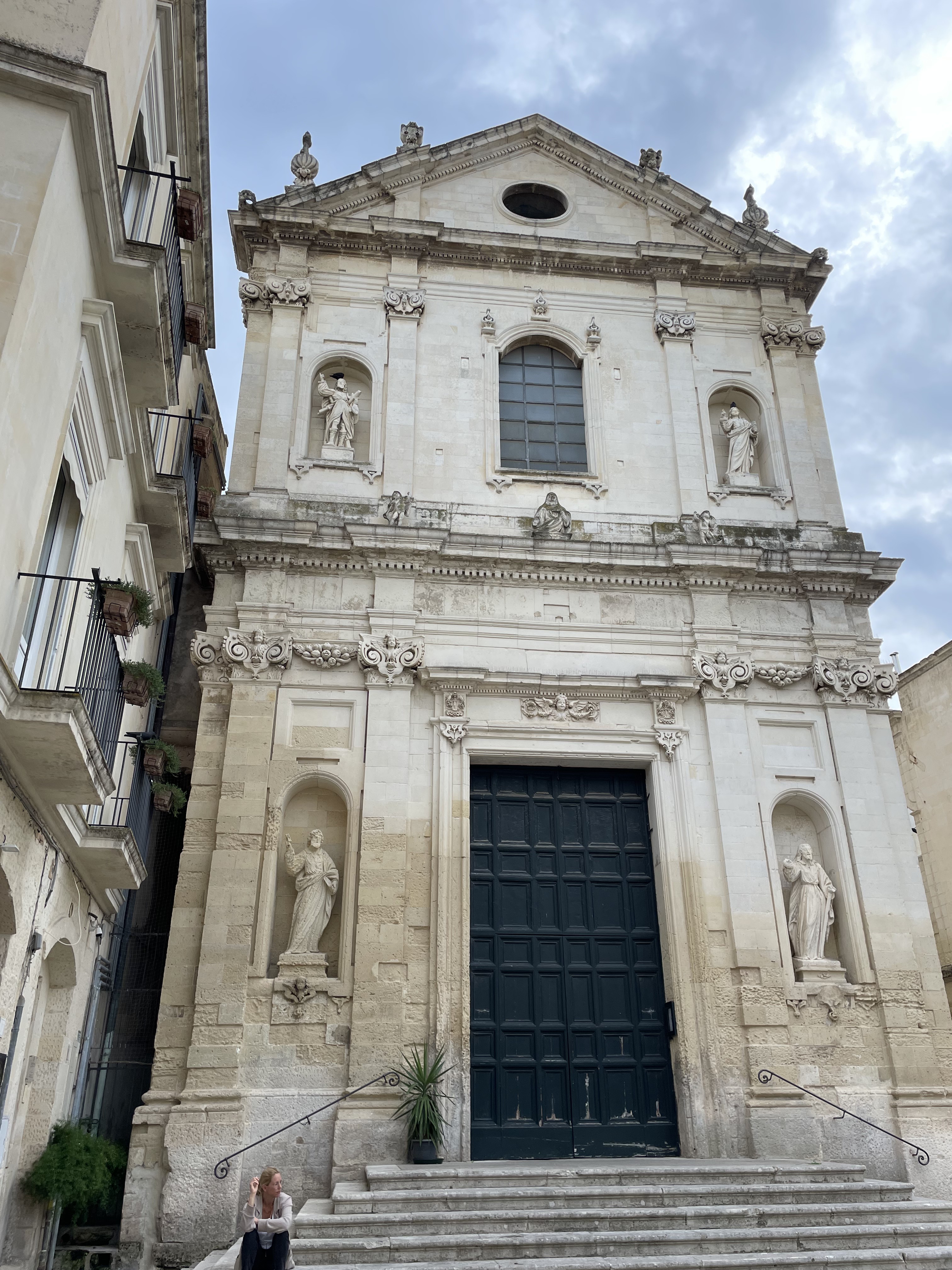
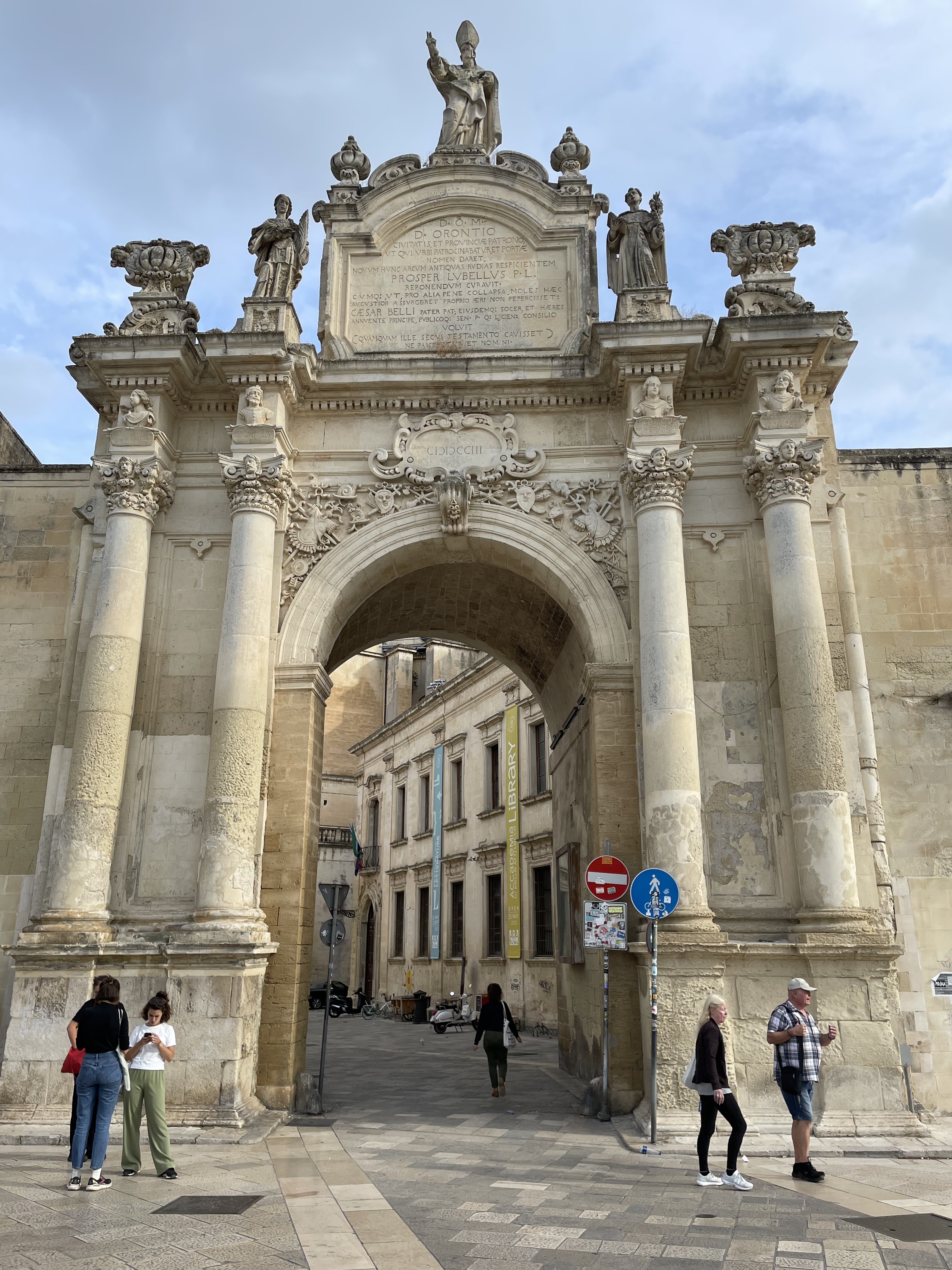
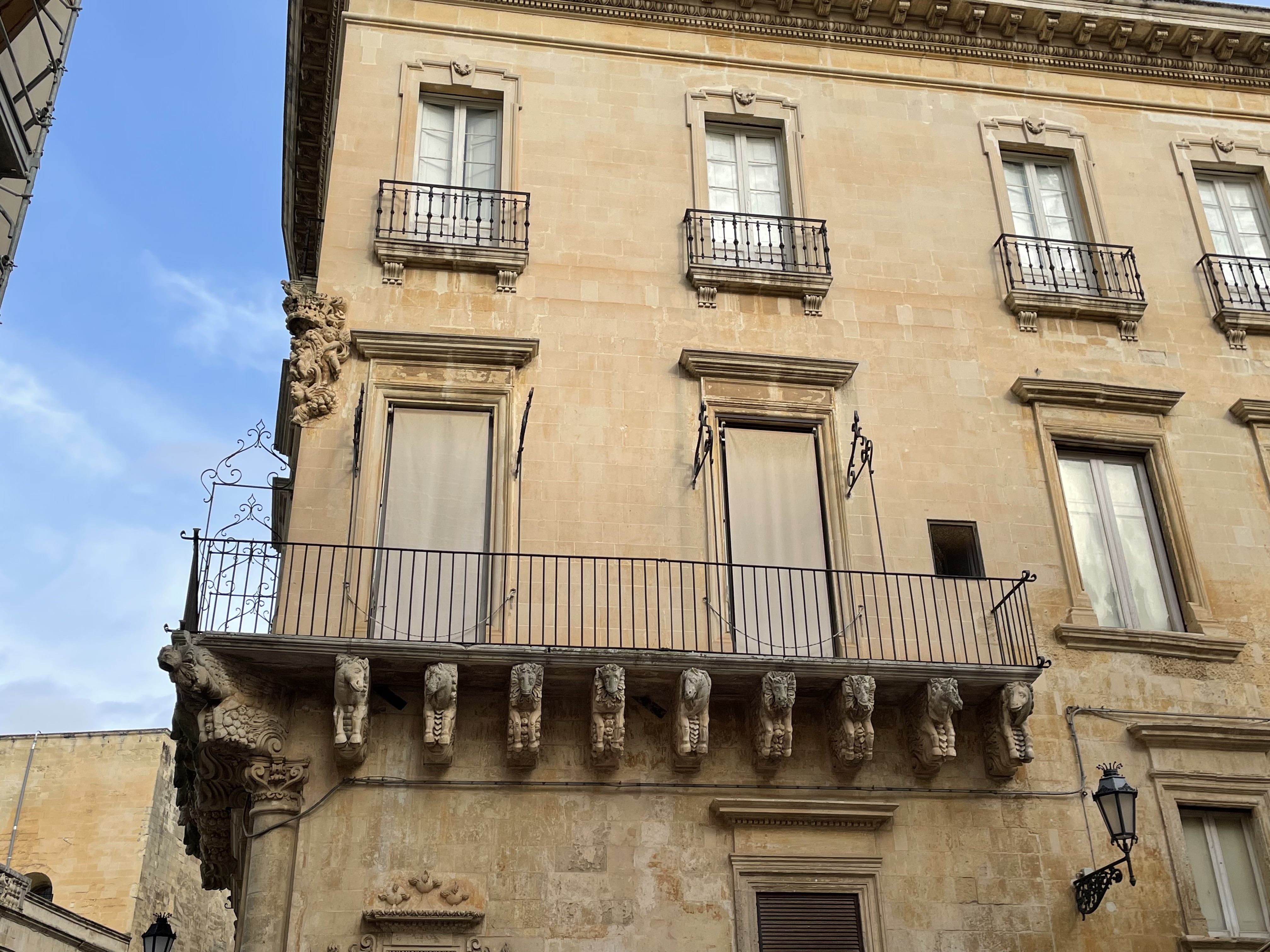
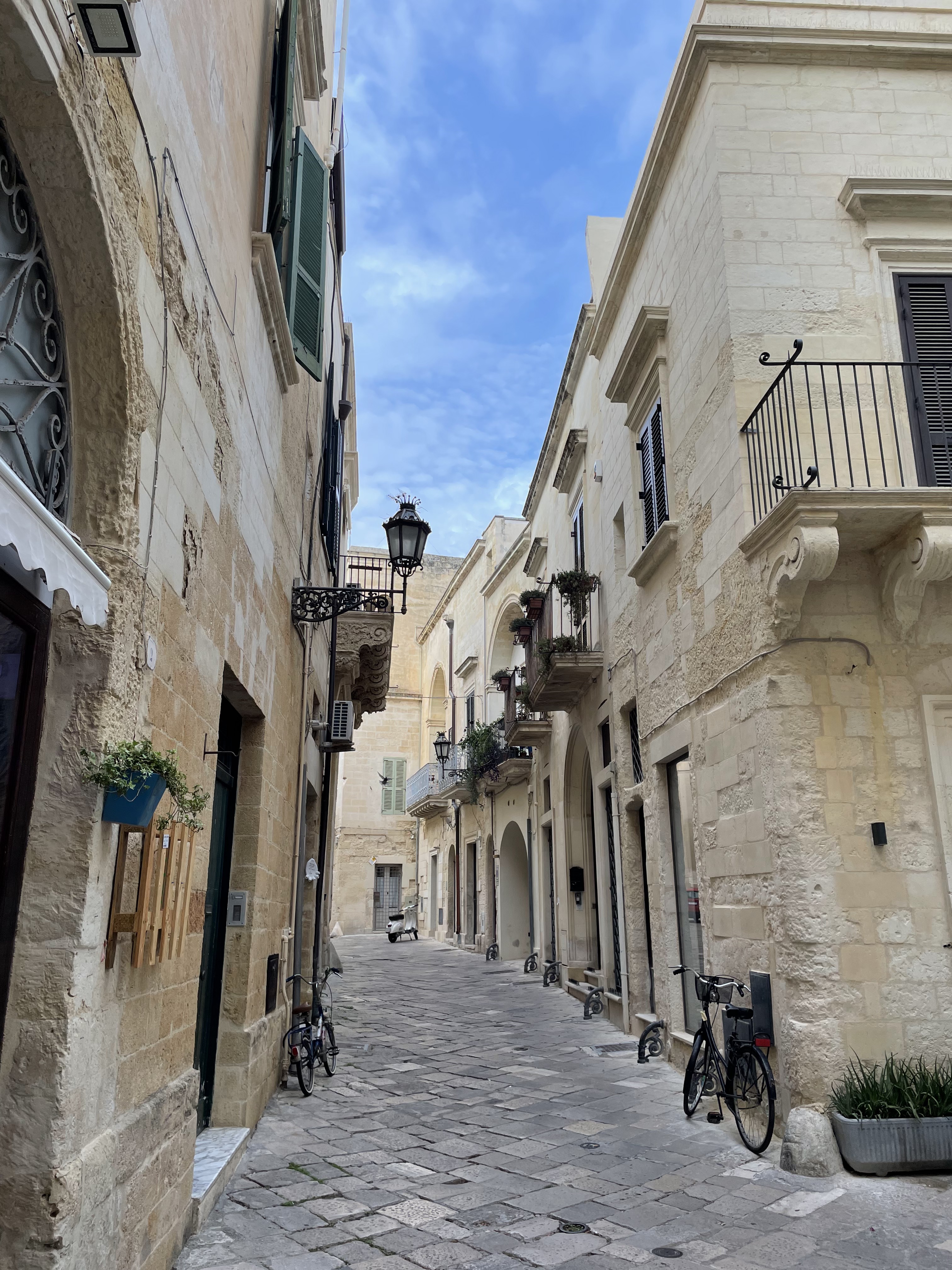
Friday: one stop on the regional train, and Lecce. Two things people know it for: a nickname — the Florence of the South — and the stone it is built of, pietra leccese, a soft golden limestone that cuts like soap and glows like honey, so that an entire city of baroque looks lit from inside. Every doorway wears carved saints, every palazzo a balcony with sculpted corbels. We came in from Porta Napoli and just walked: Celestini courtyards, arches, carved balconies.
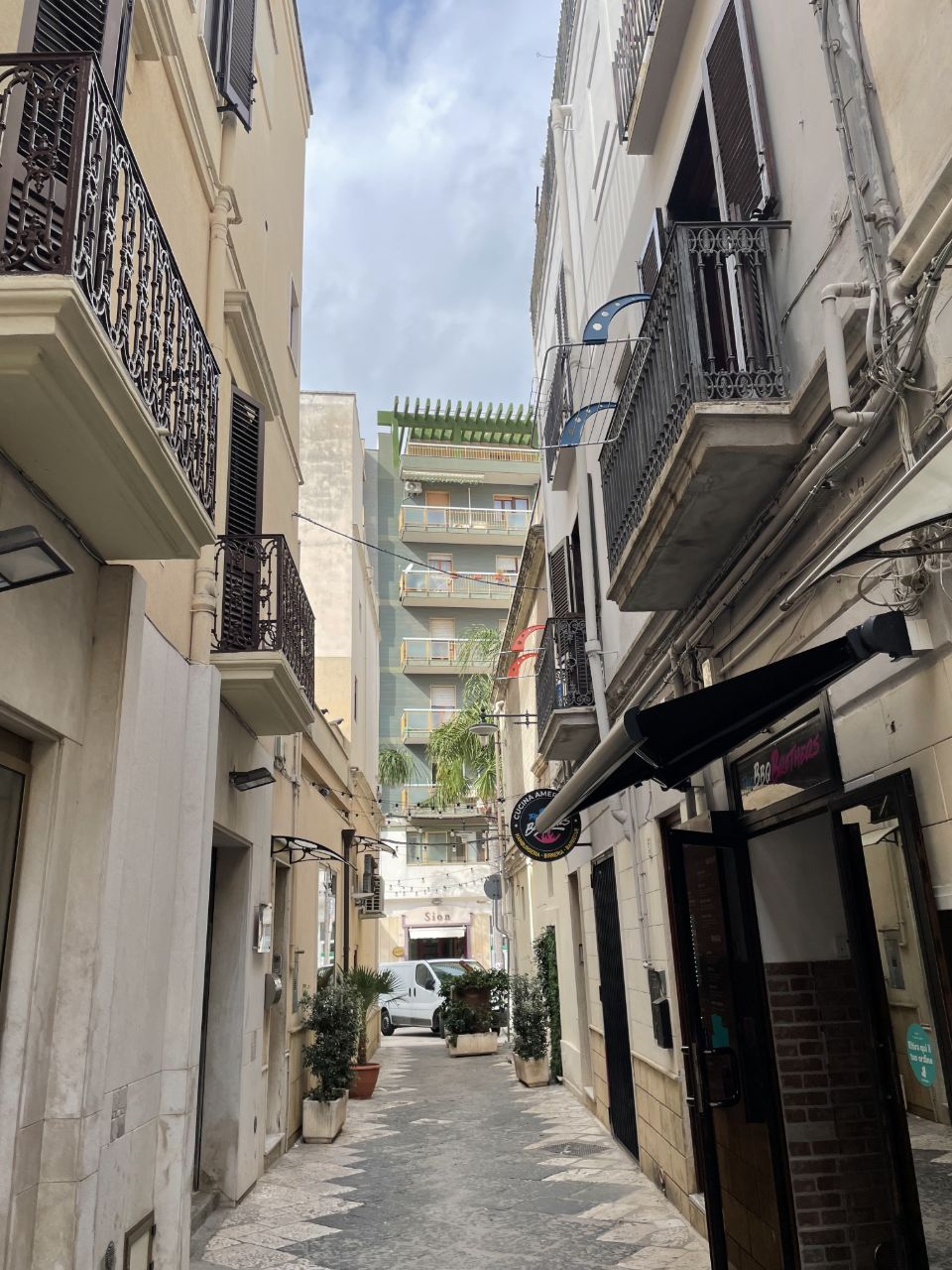
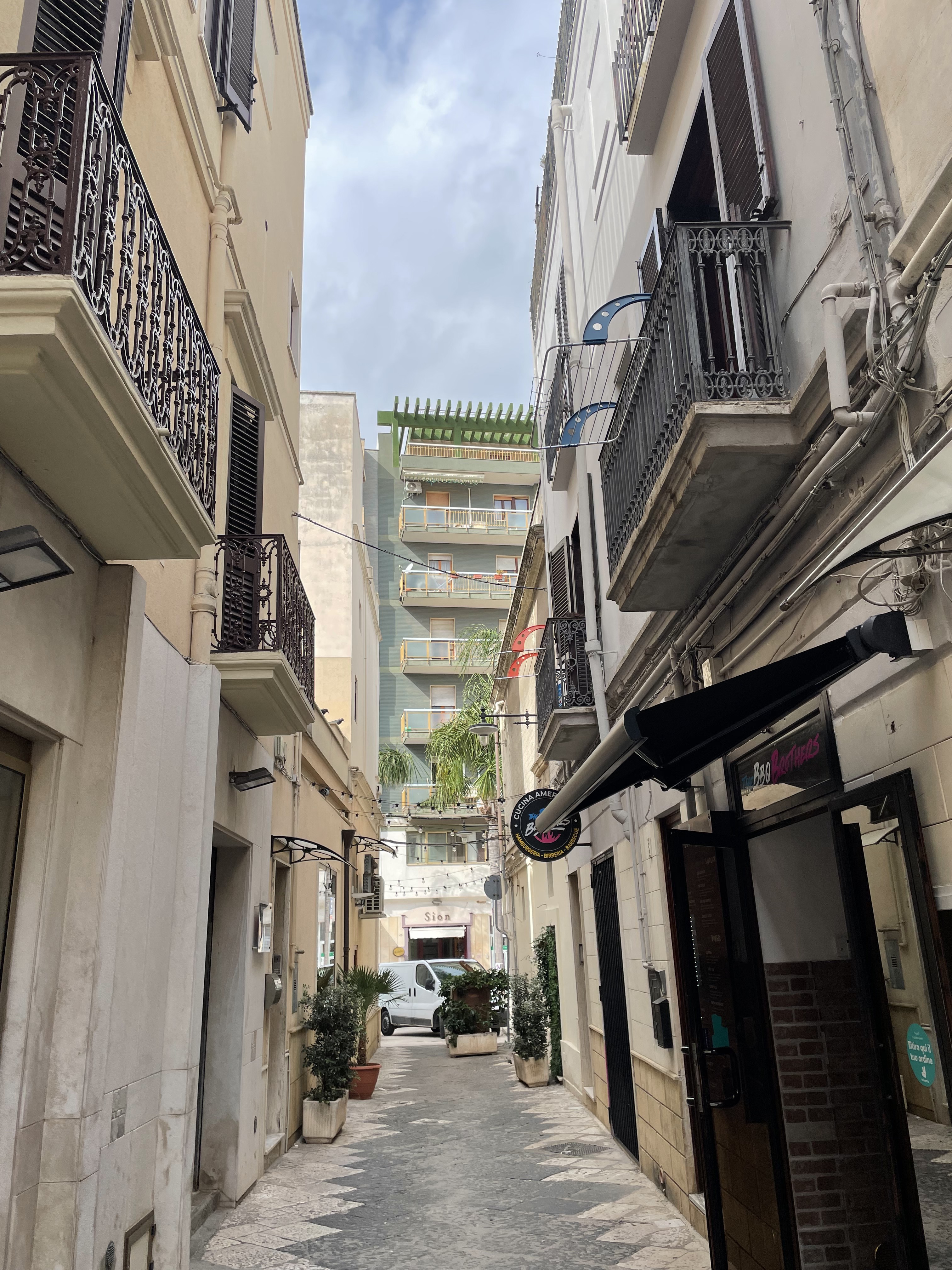
A first Brindisi lane, before the train 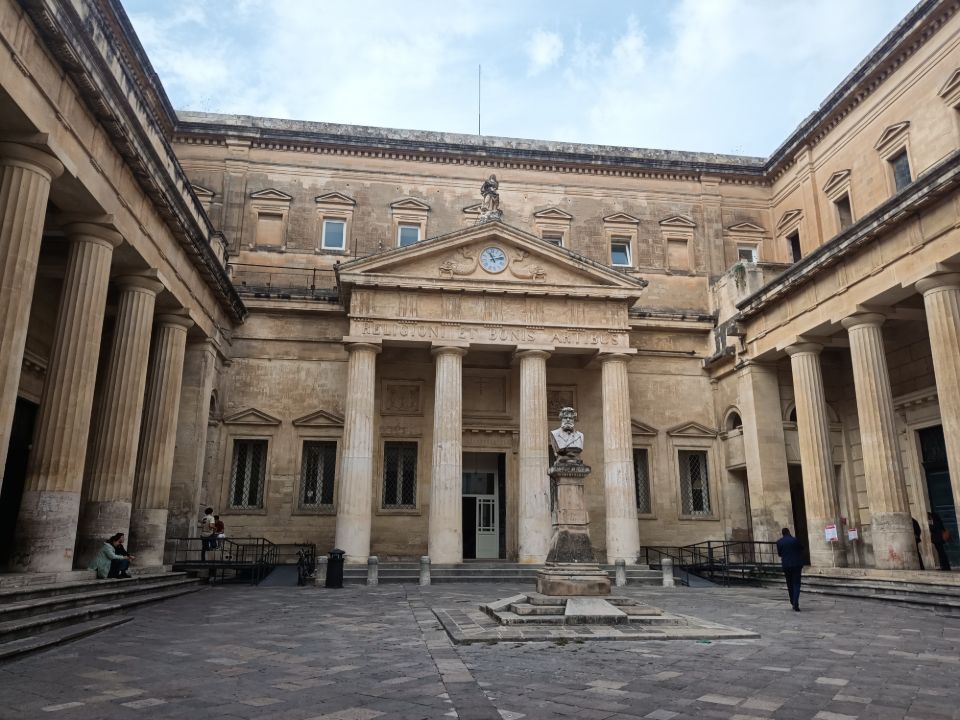
Palazzo Celestini courtyard 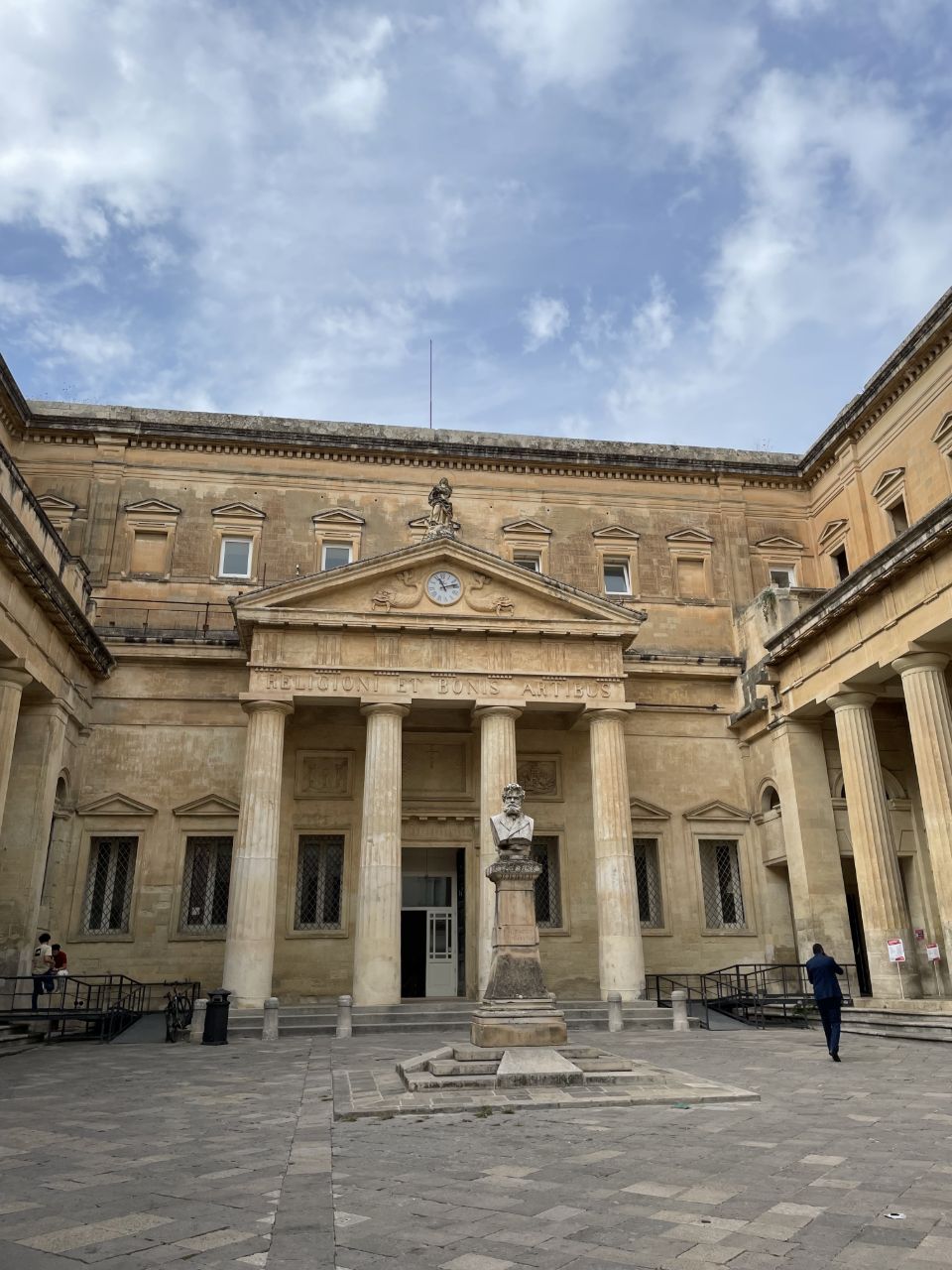
Statue and columns 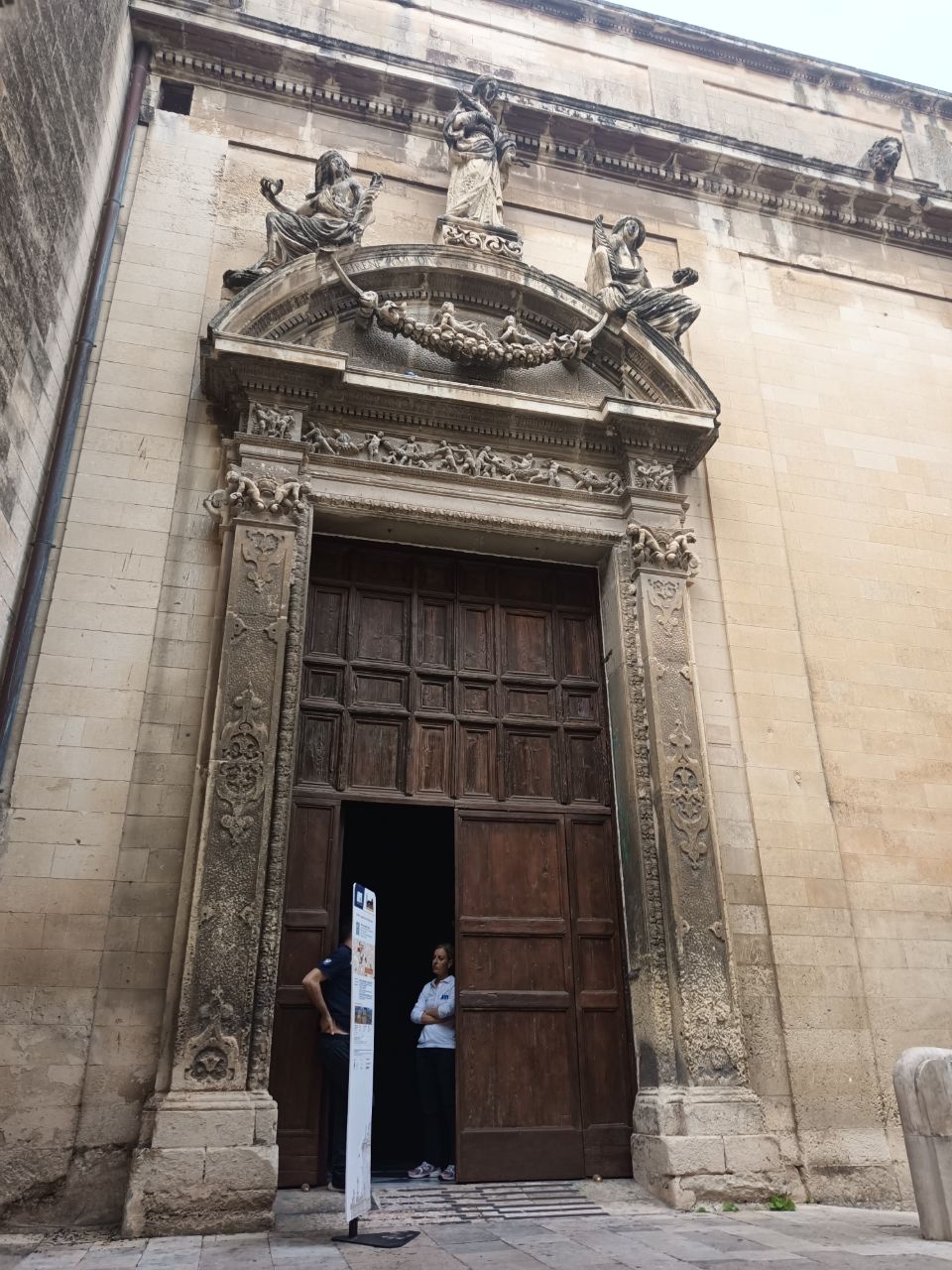
A carved wooden door 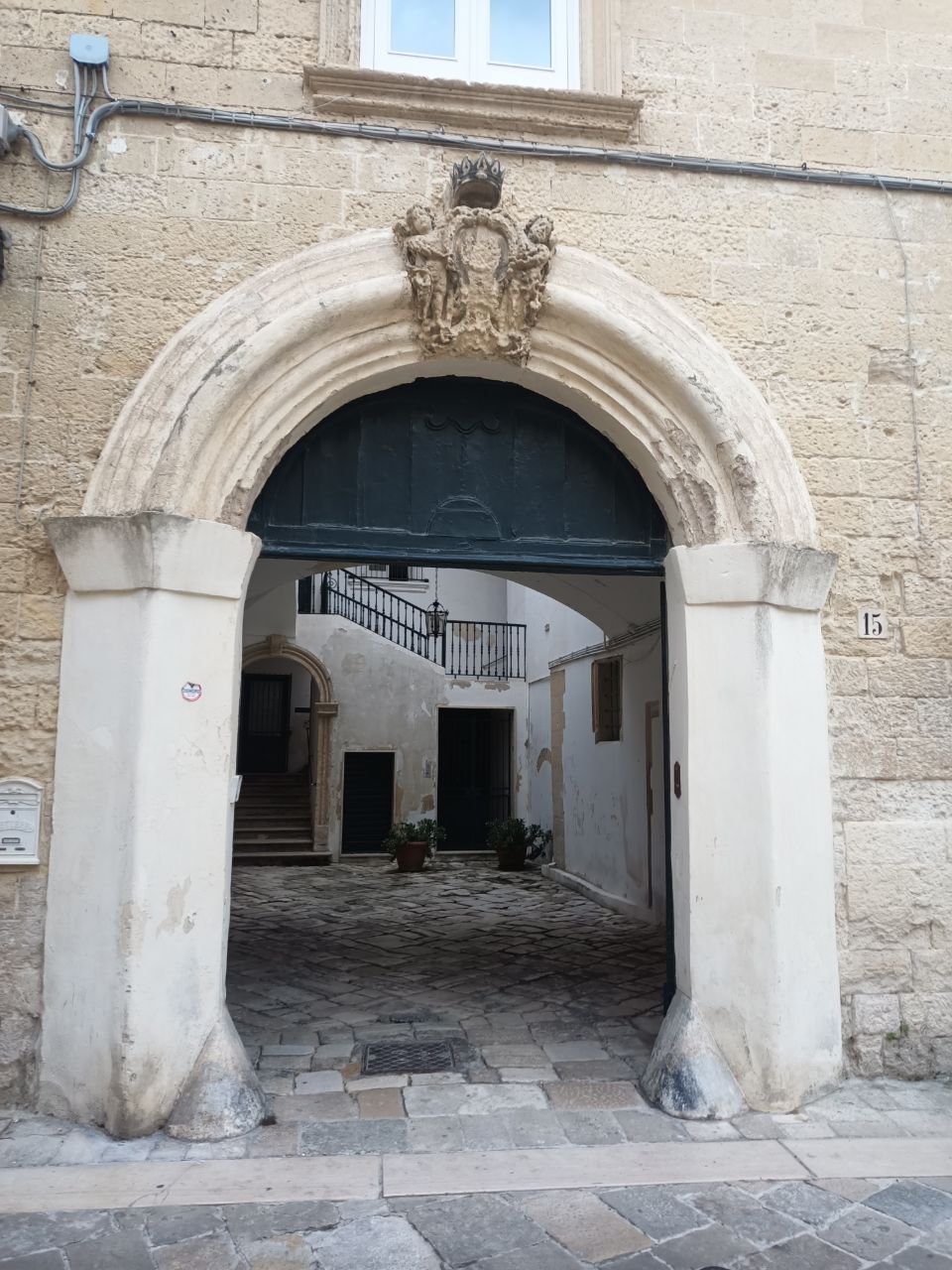
Archway into the courtyard 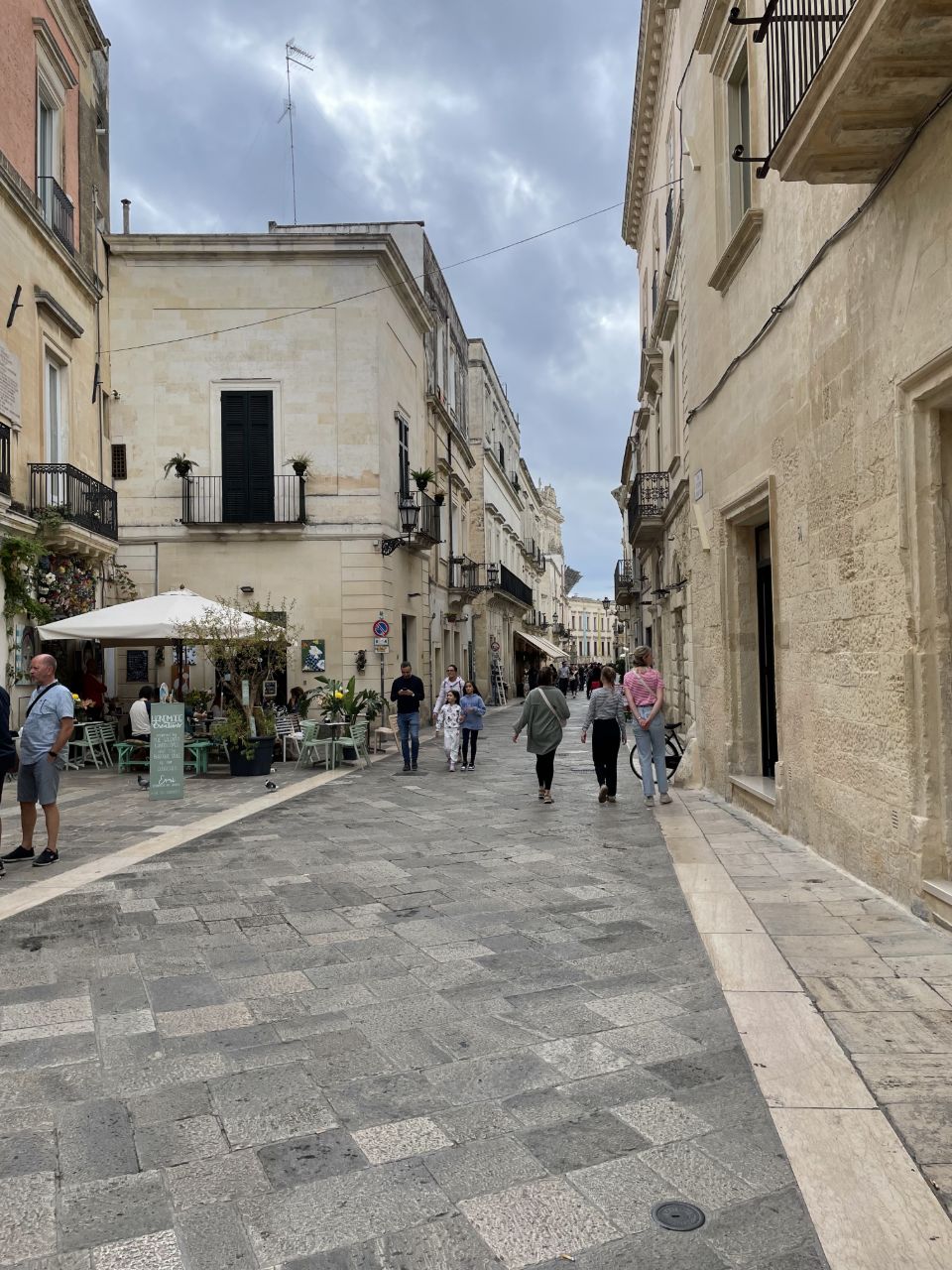
Stone-paved streets 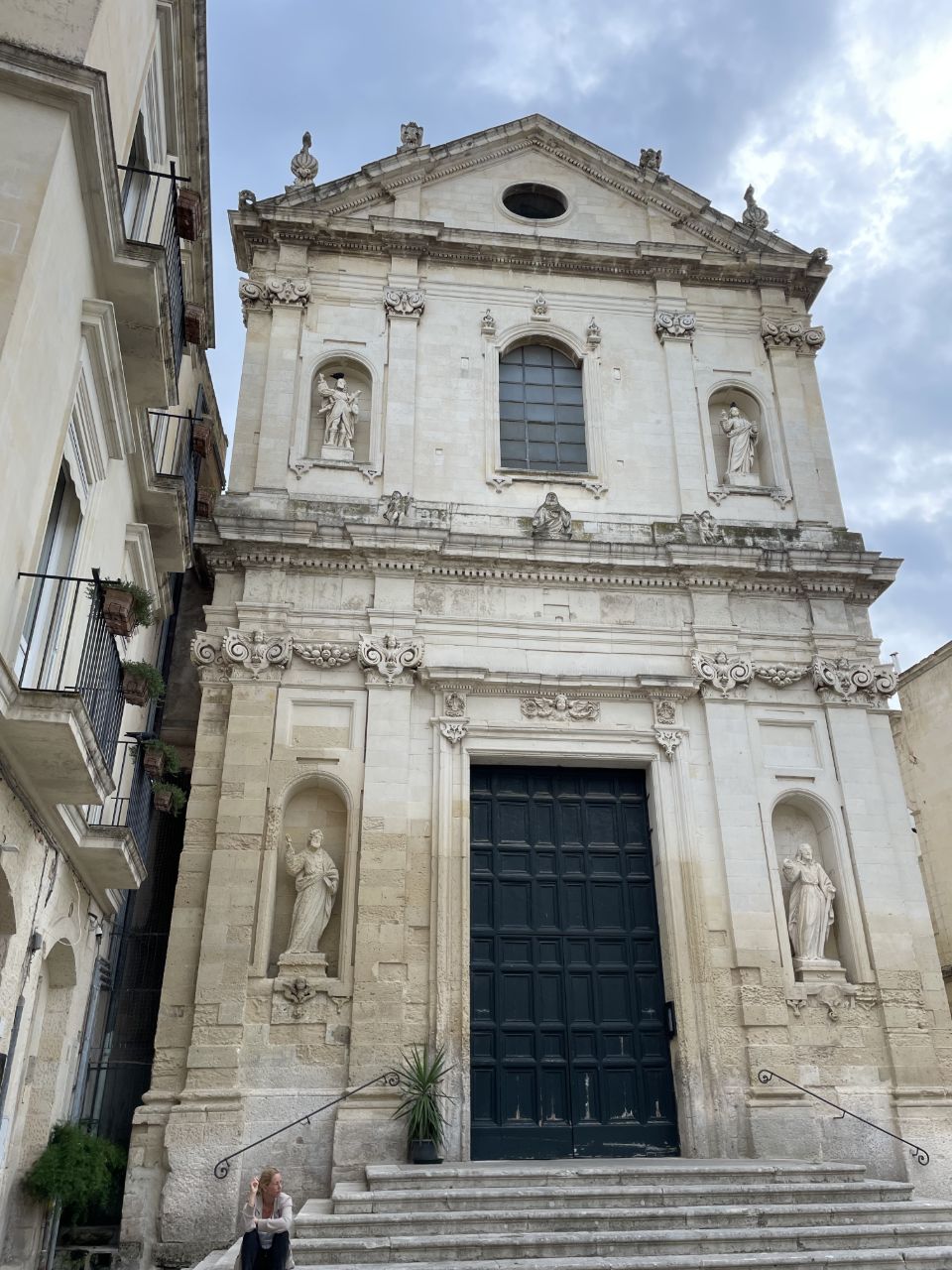
Saints in niches 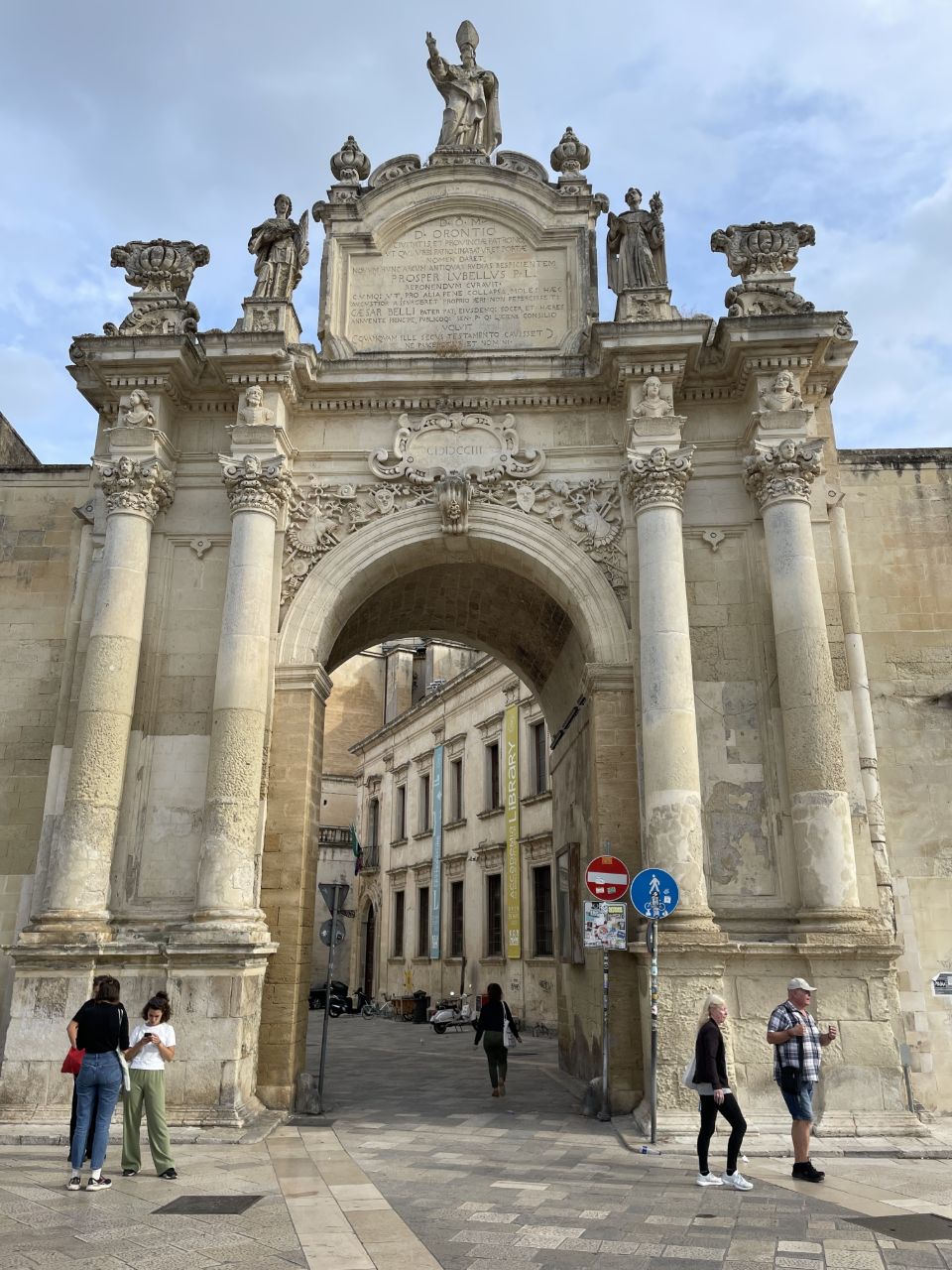
Porta Napoli
The Duomo and the bell tower
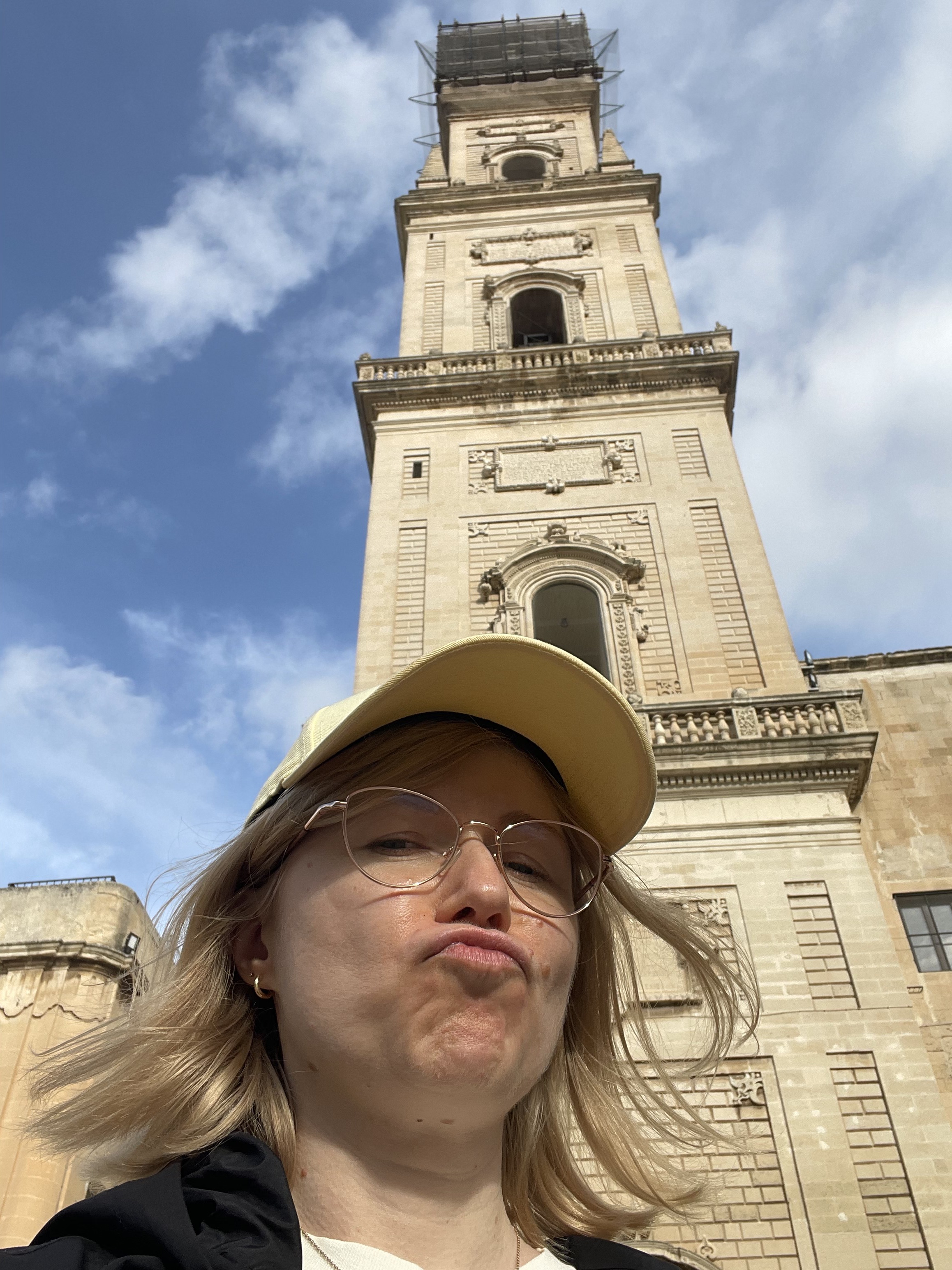
Piazza del Duomo is Lecce’s golden bowl — cathedral facade, twin-spired bell tower, the seminary’s arched loggia, palazzi all around, tourist groups milling around. We walked the whole square and took our selfie under the bell tower. The panorama videos and a certain photobomb below.
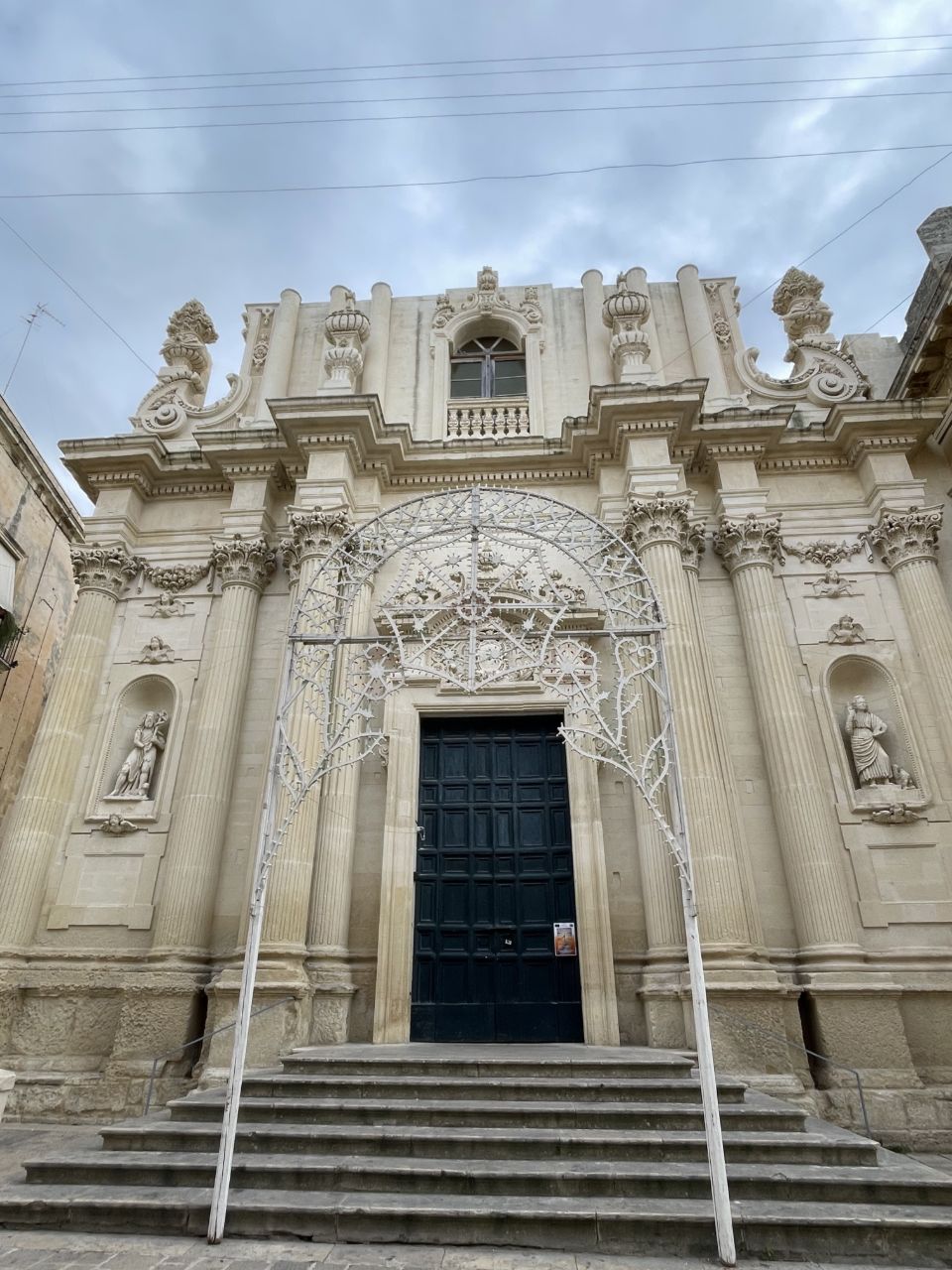
A wedding arch before dinner 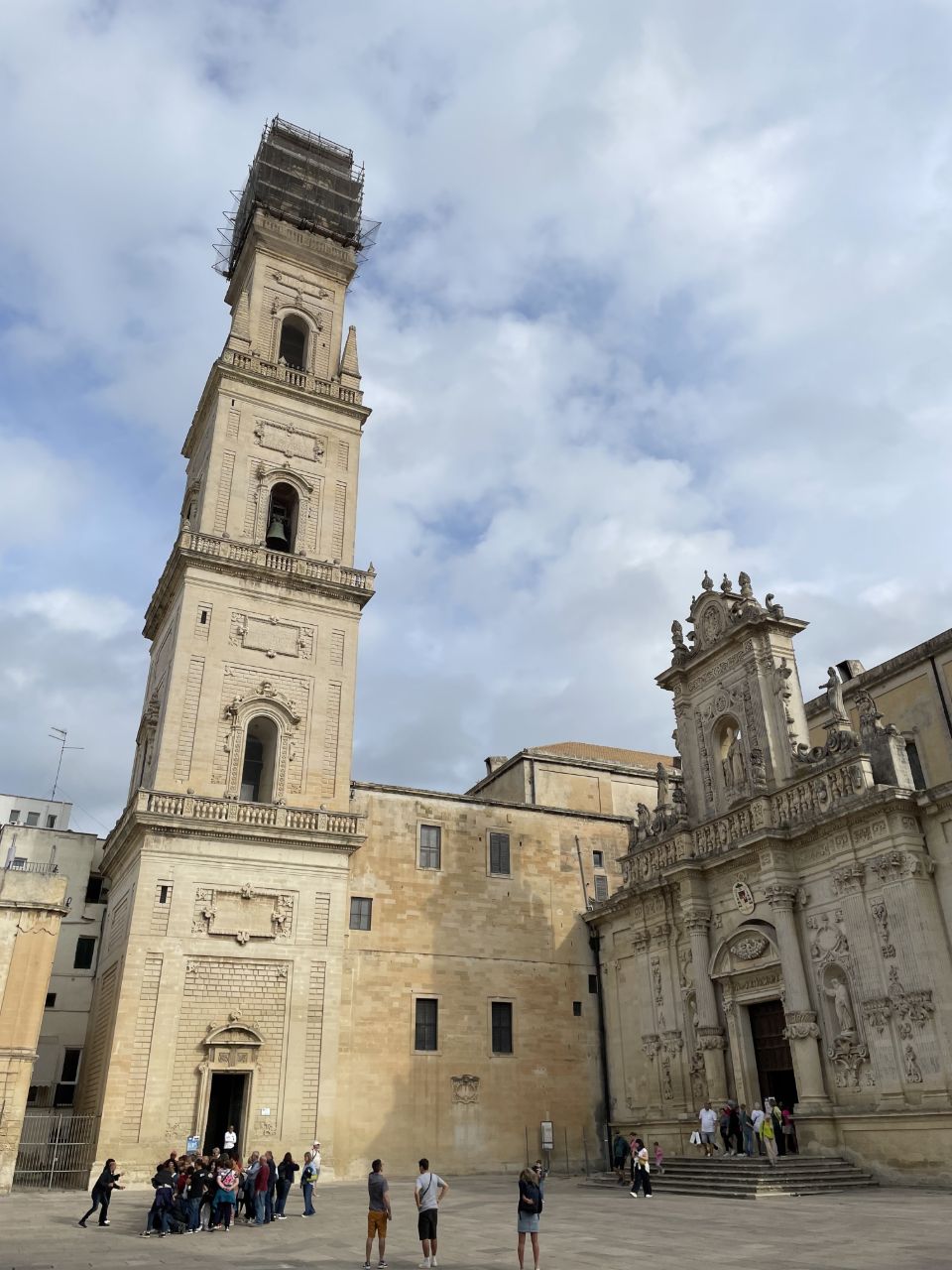
The Duomo's facade from below 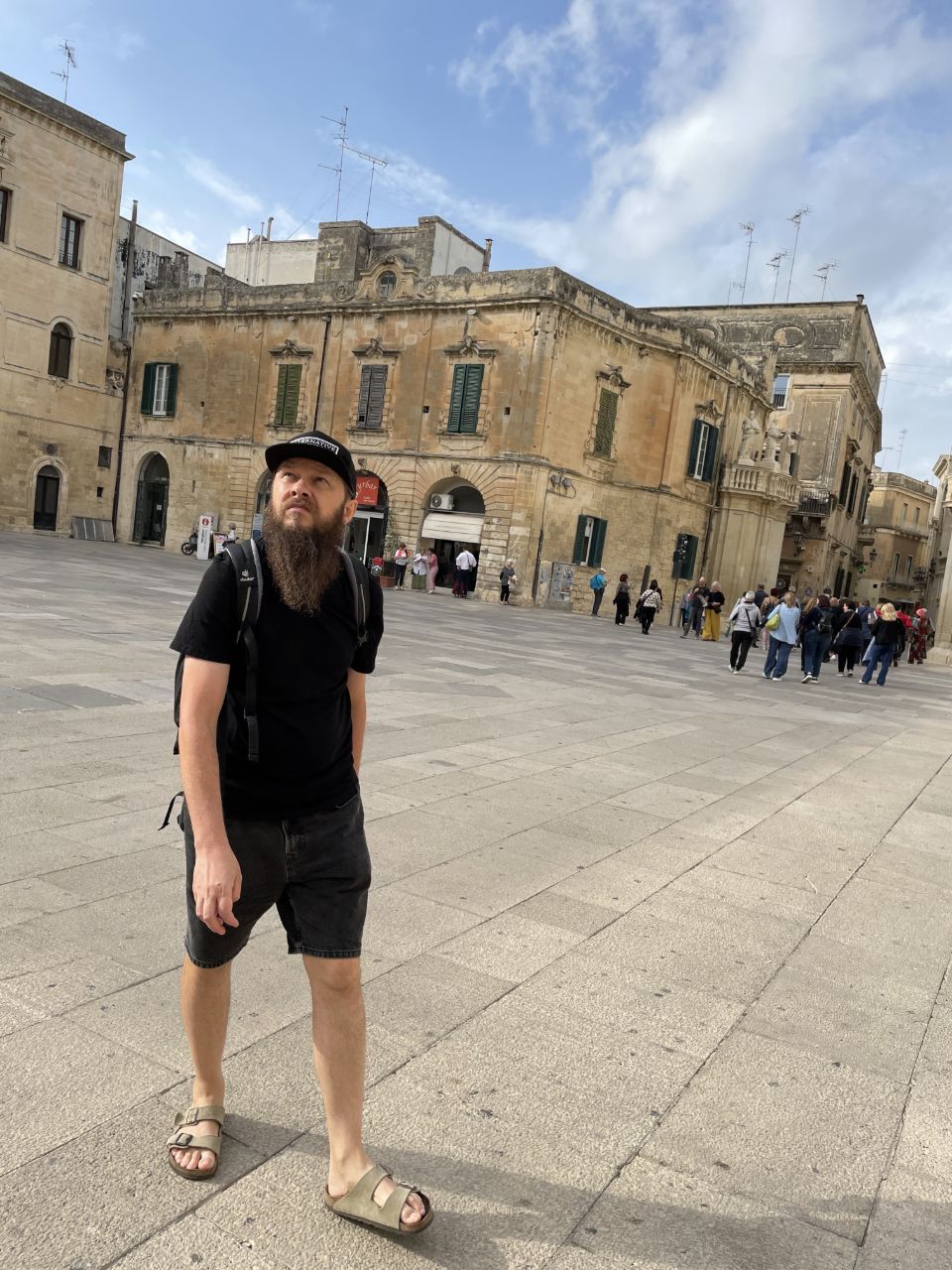
Oleg in the square 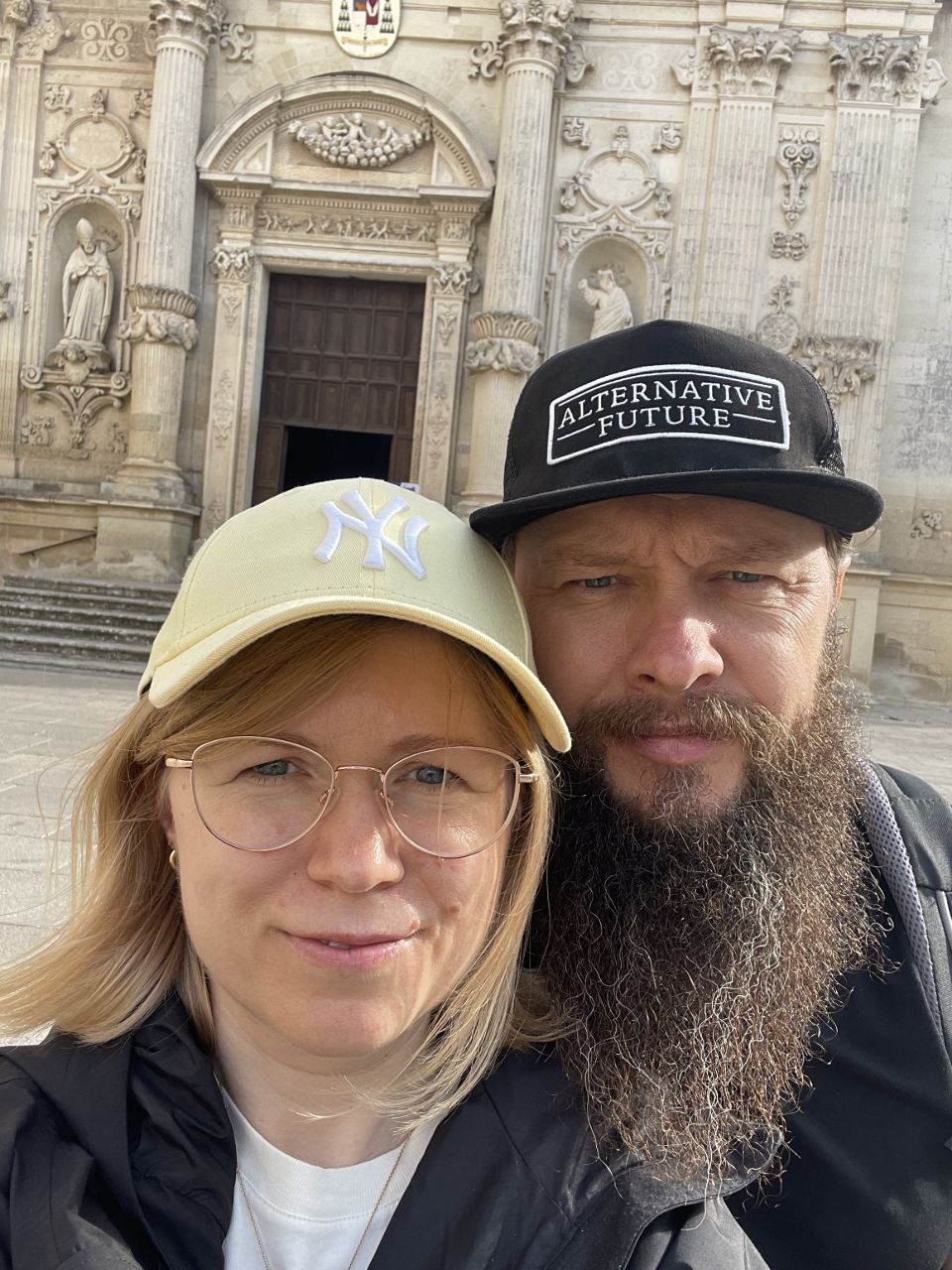
Both of us, saints above 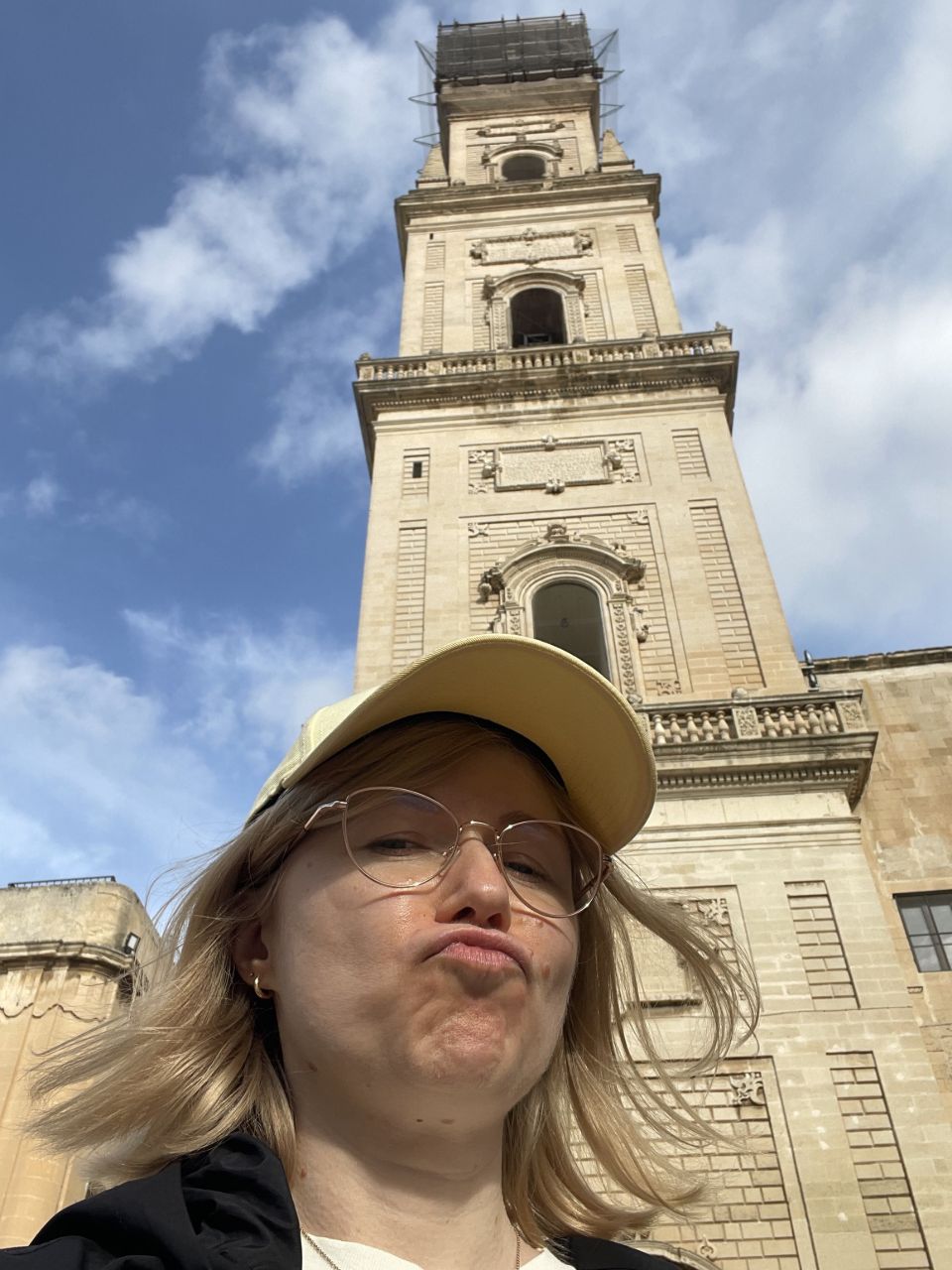
Under the bell tower 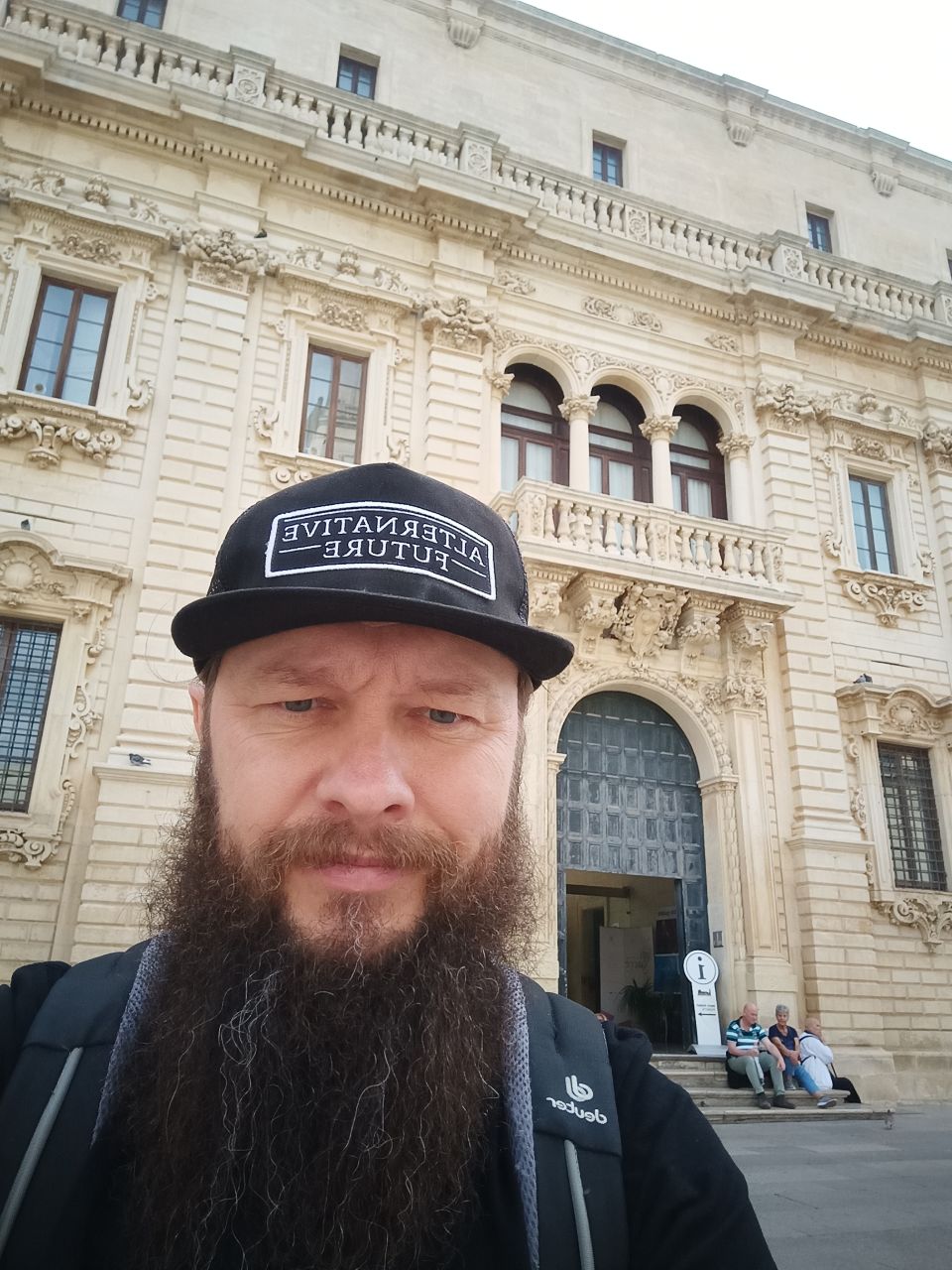
Palazzo Adorno, gold on gold 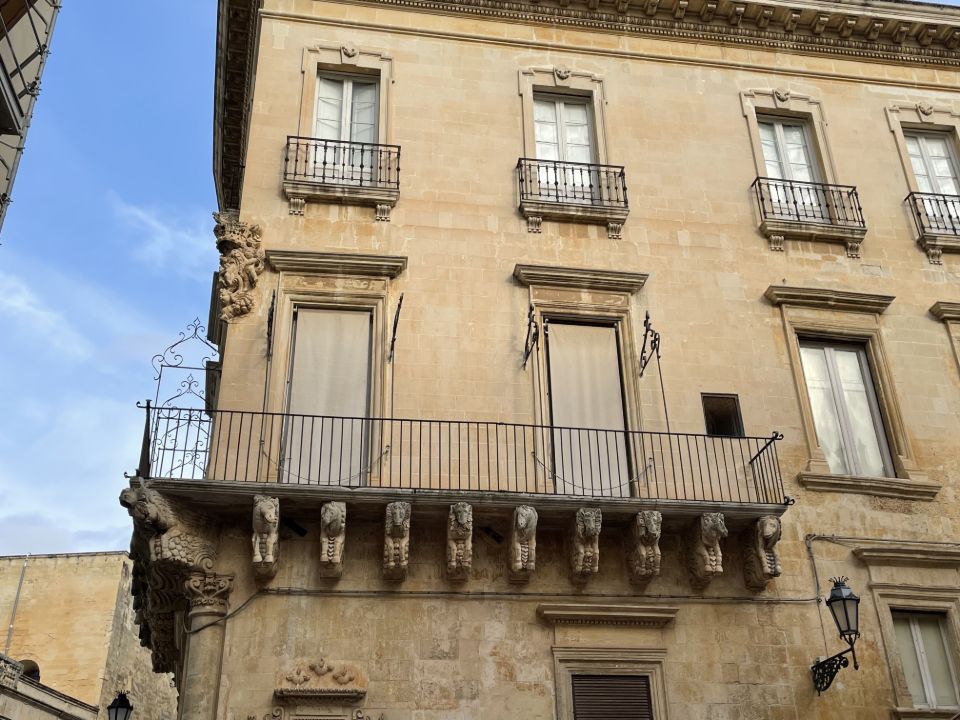
Honey-coloured balconies
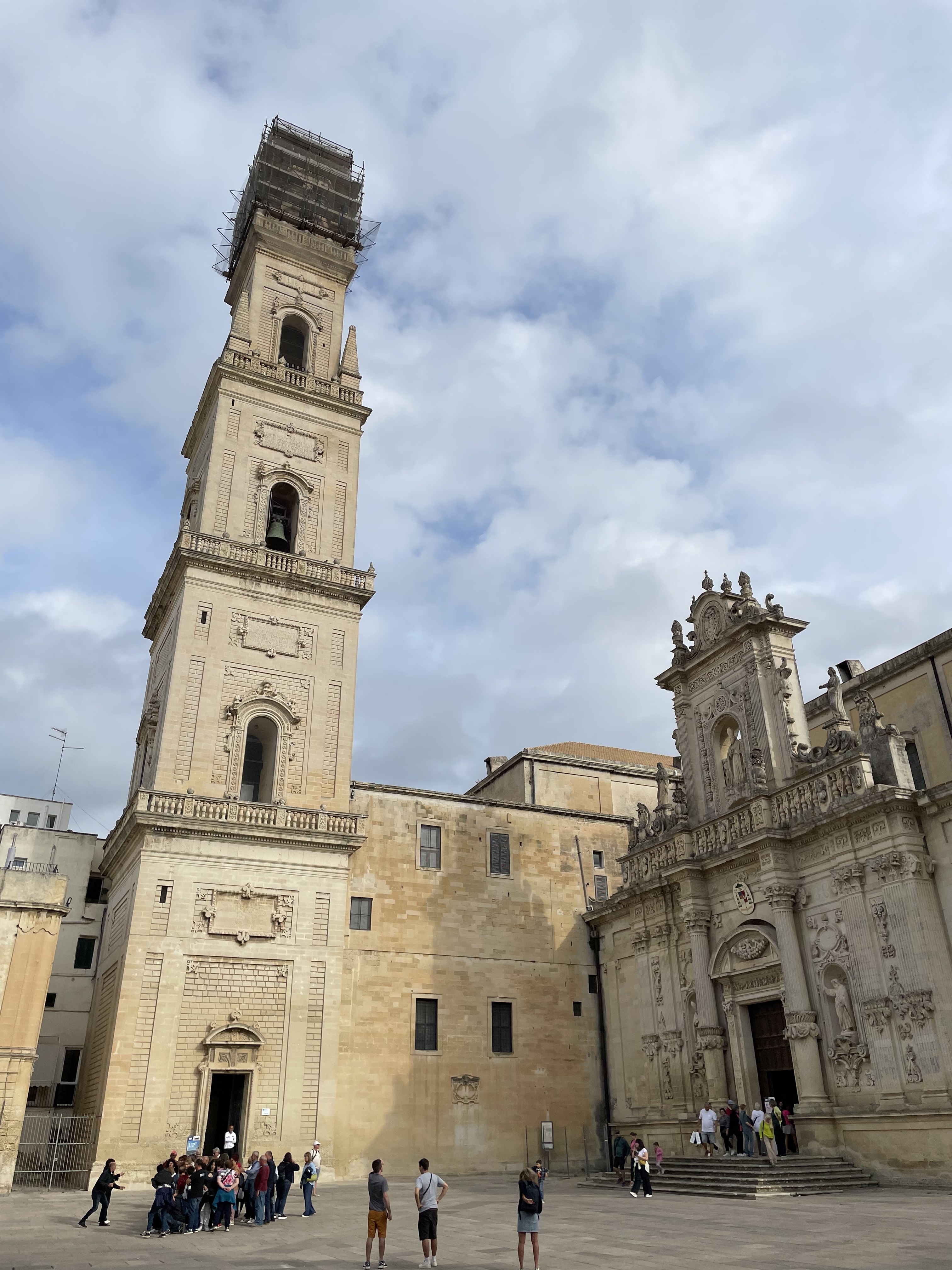
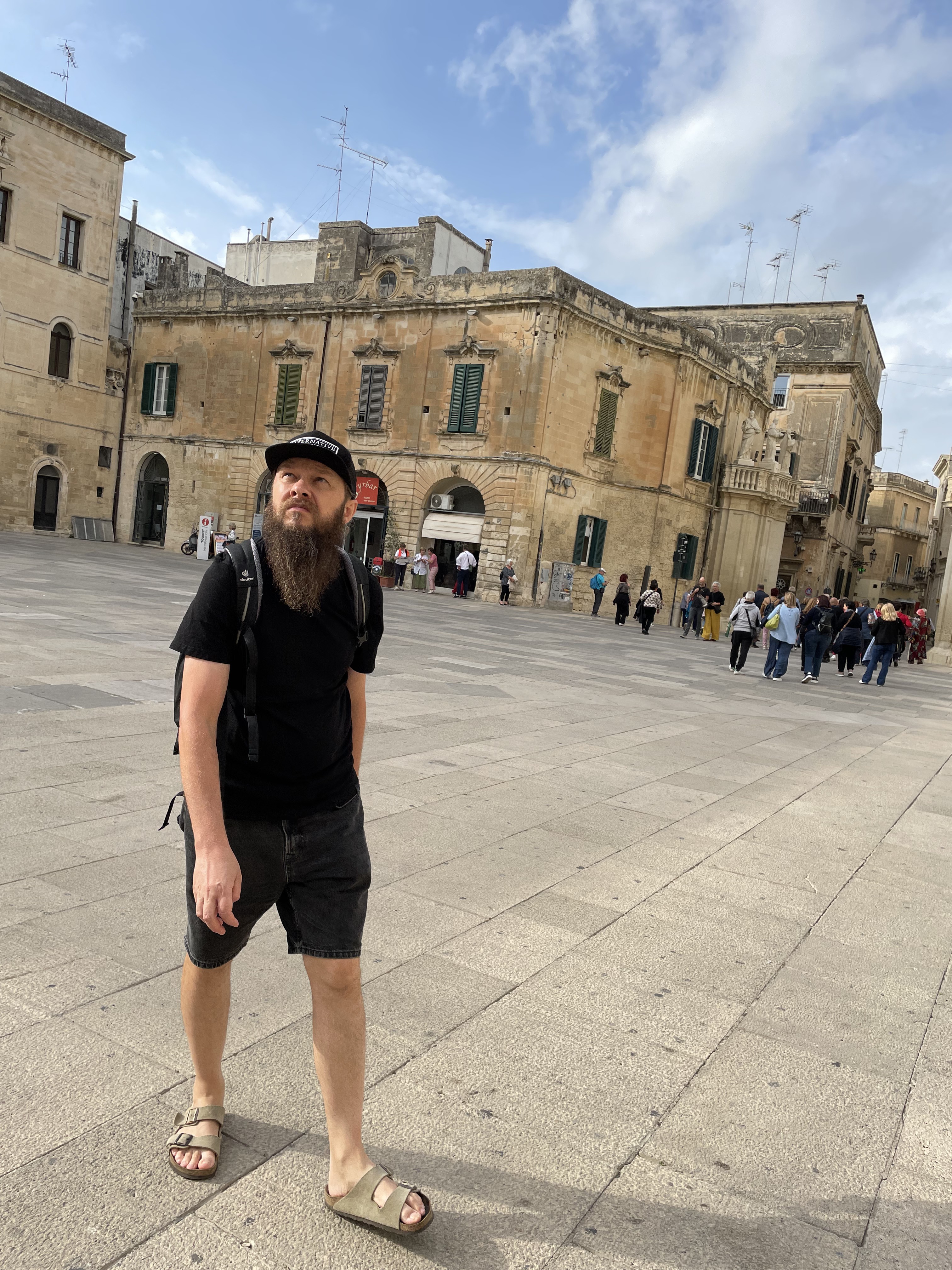
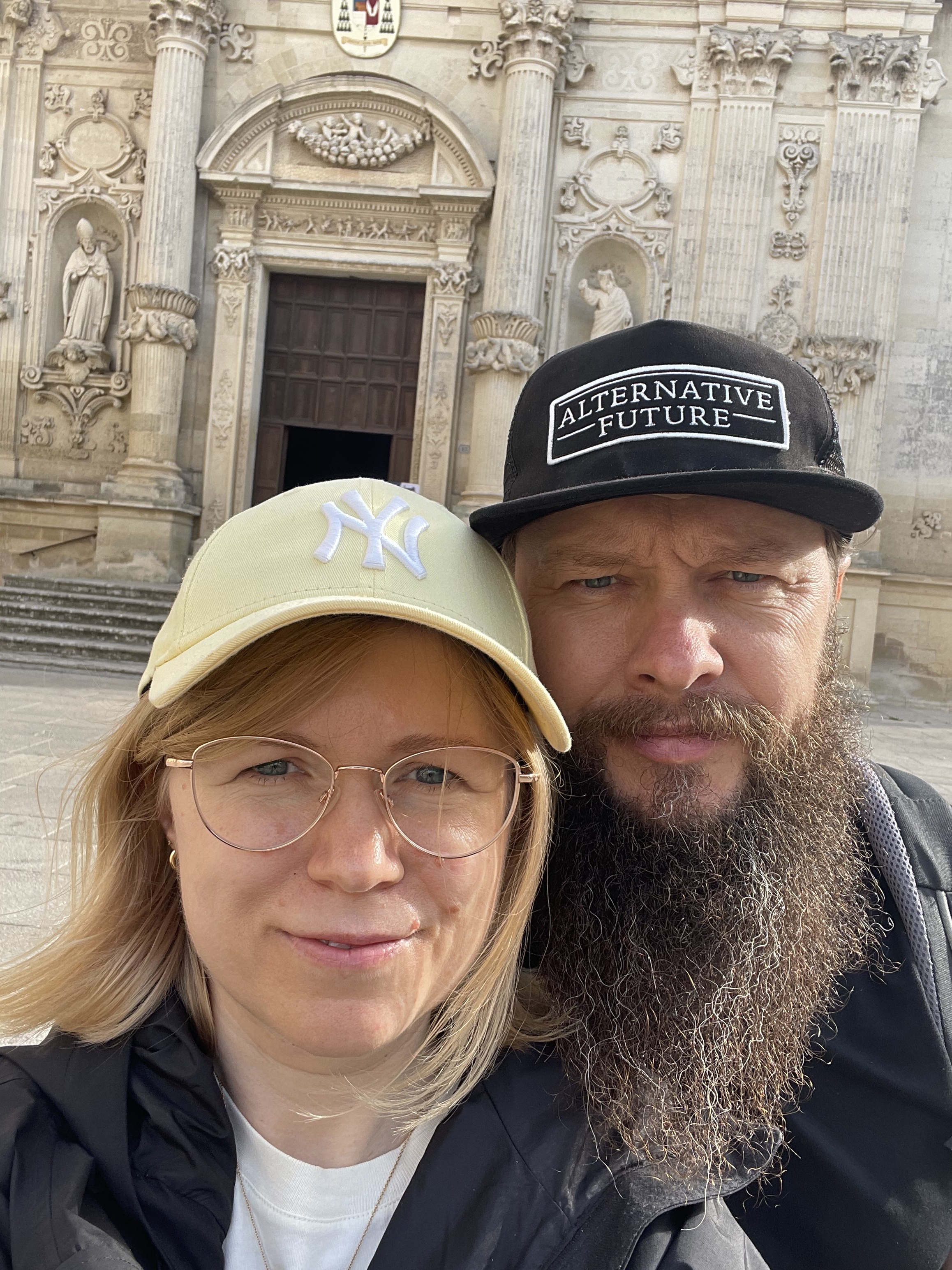
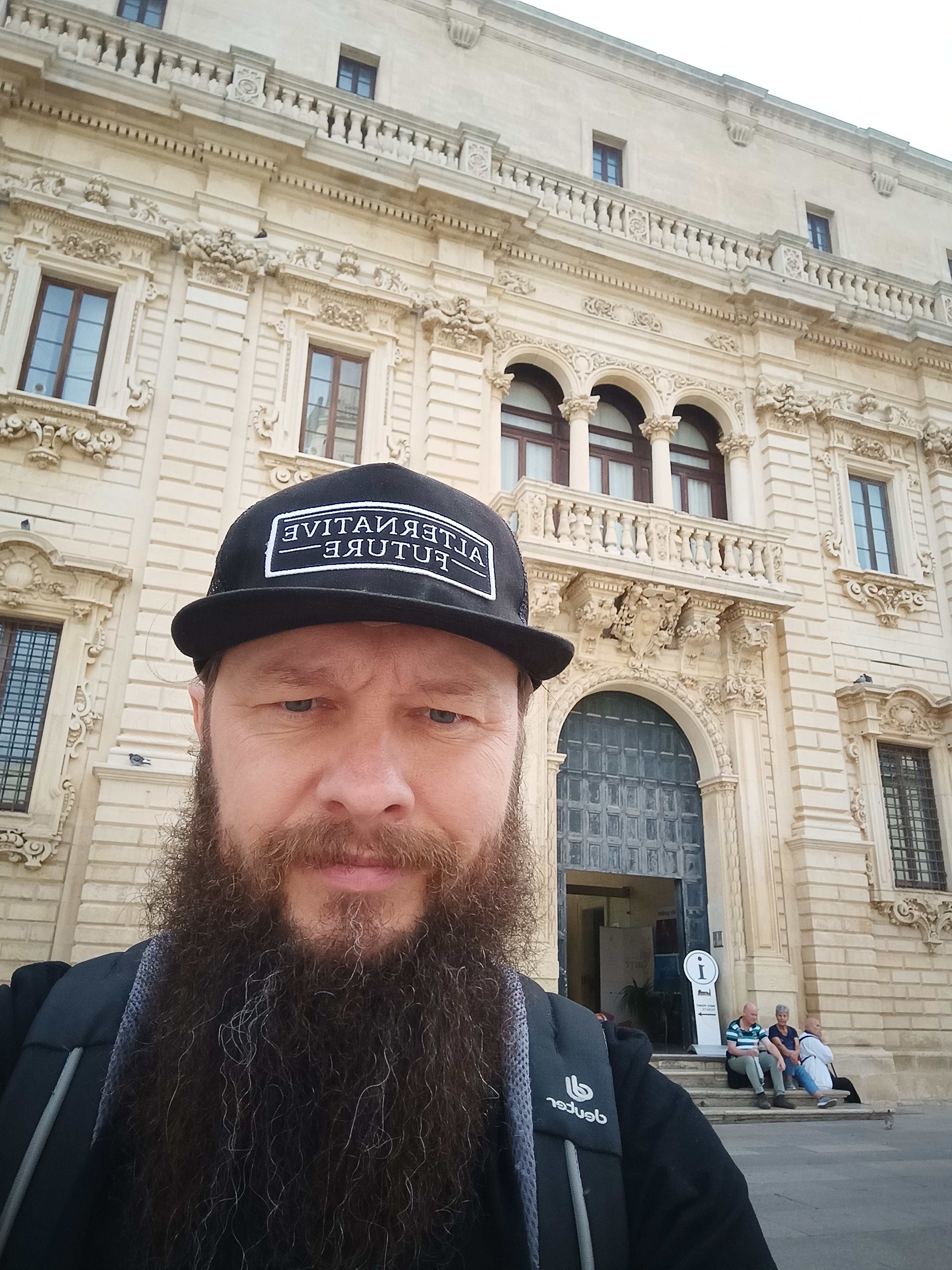
Forty-five seconds of Piazza del Duomo, from palazzo to seminary to the sun over the facade.
Anna’s video-cam selfie under the bell tower — with a bearded man photobombing the final frames.
Santa Croce and the amphitheatre
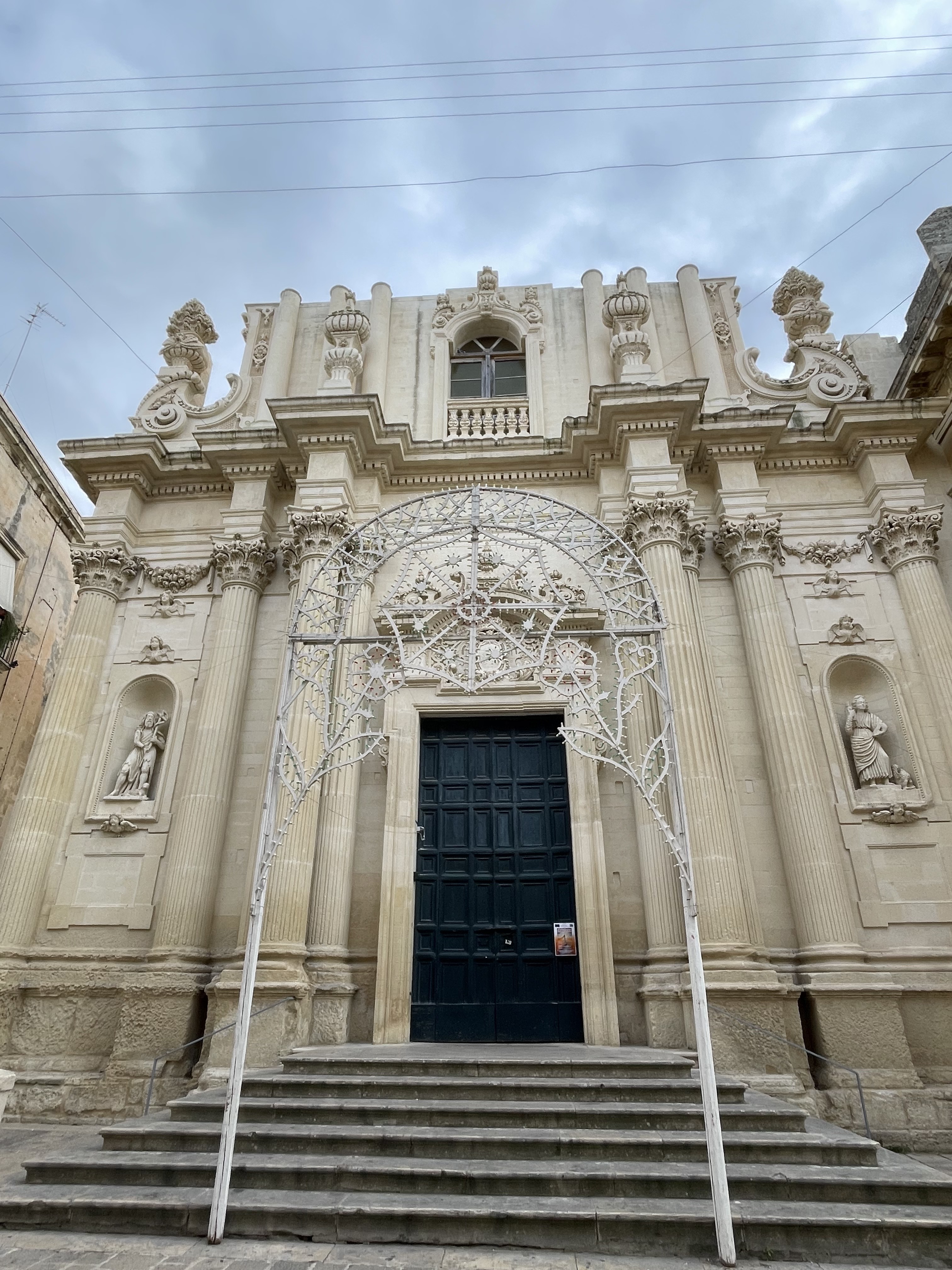
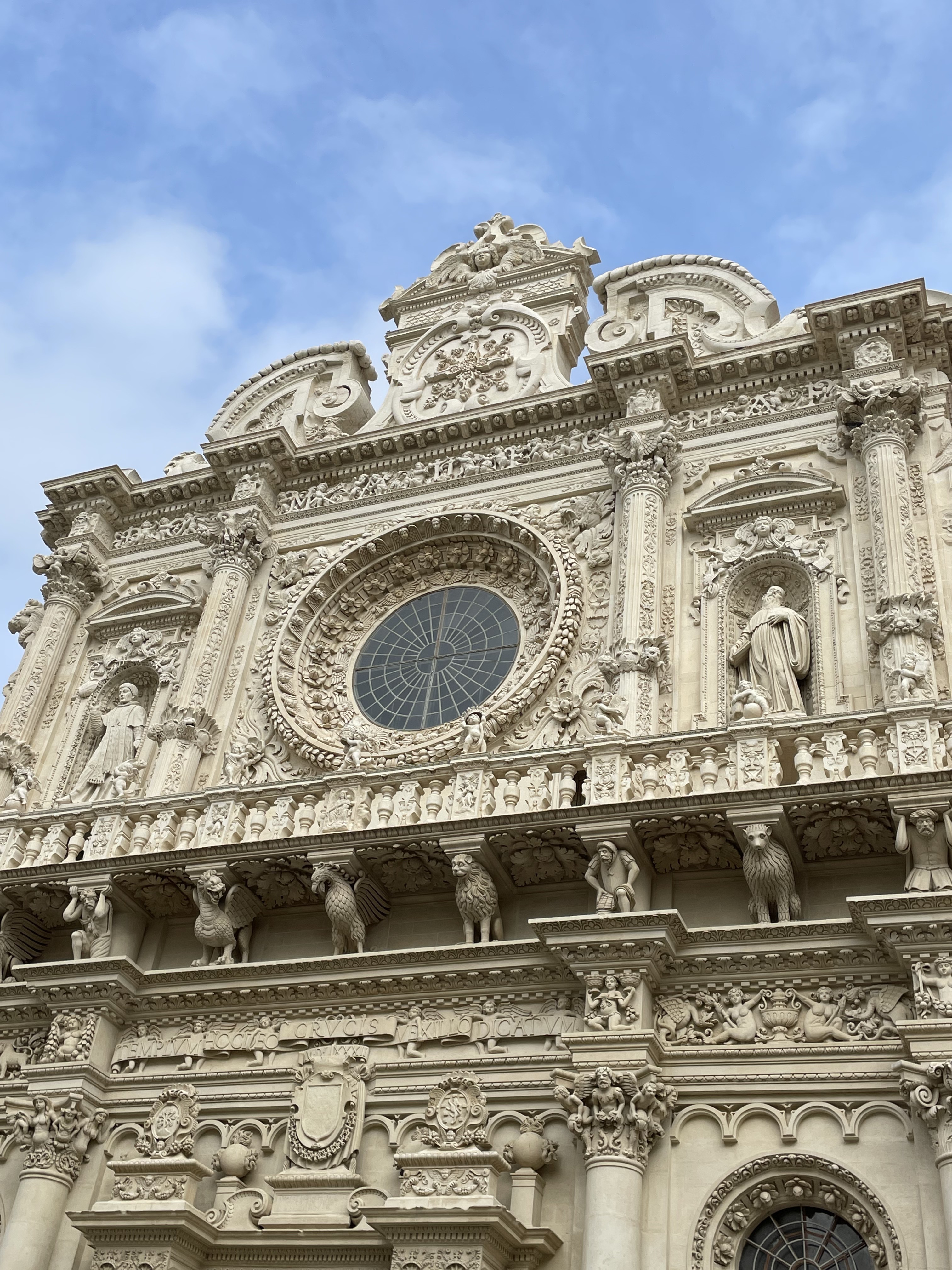
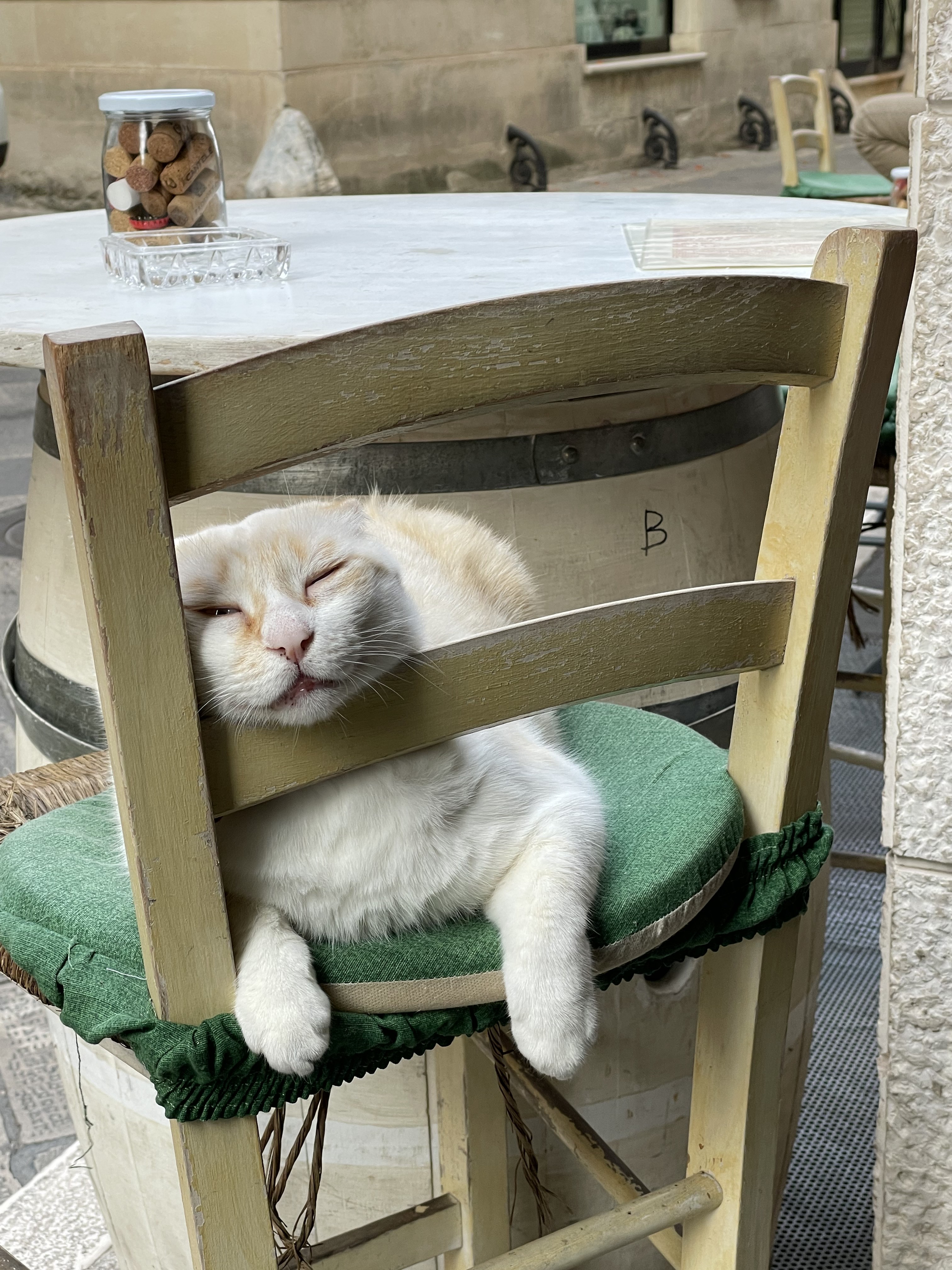
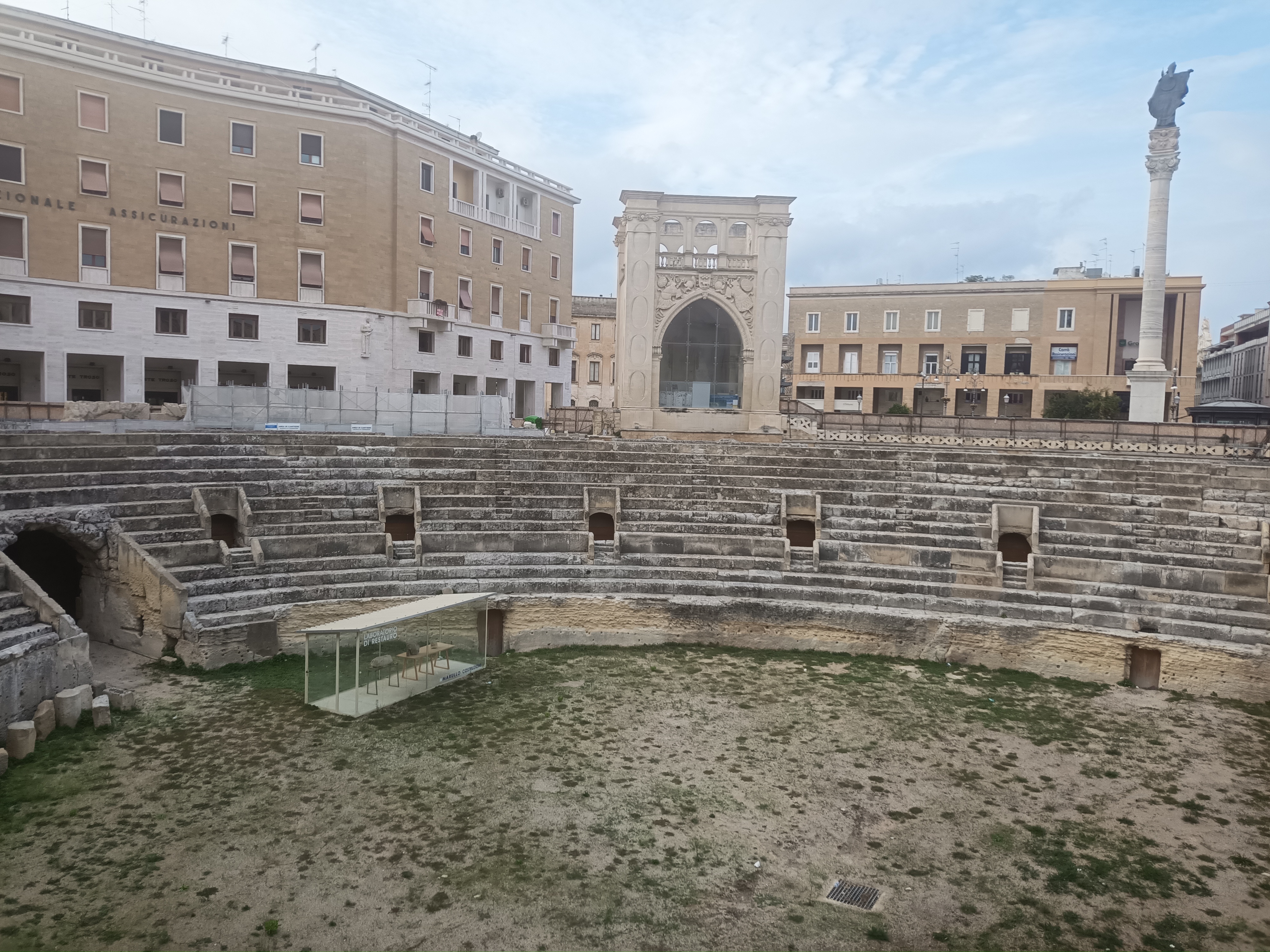
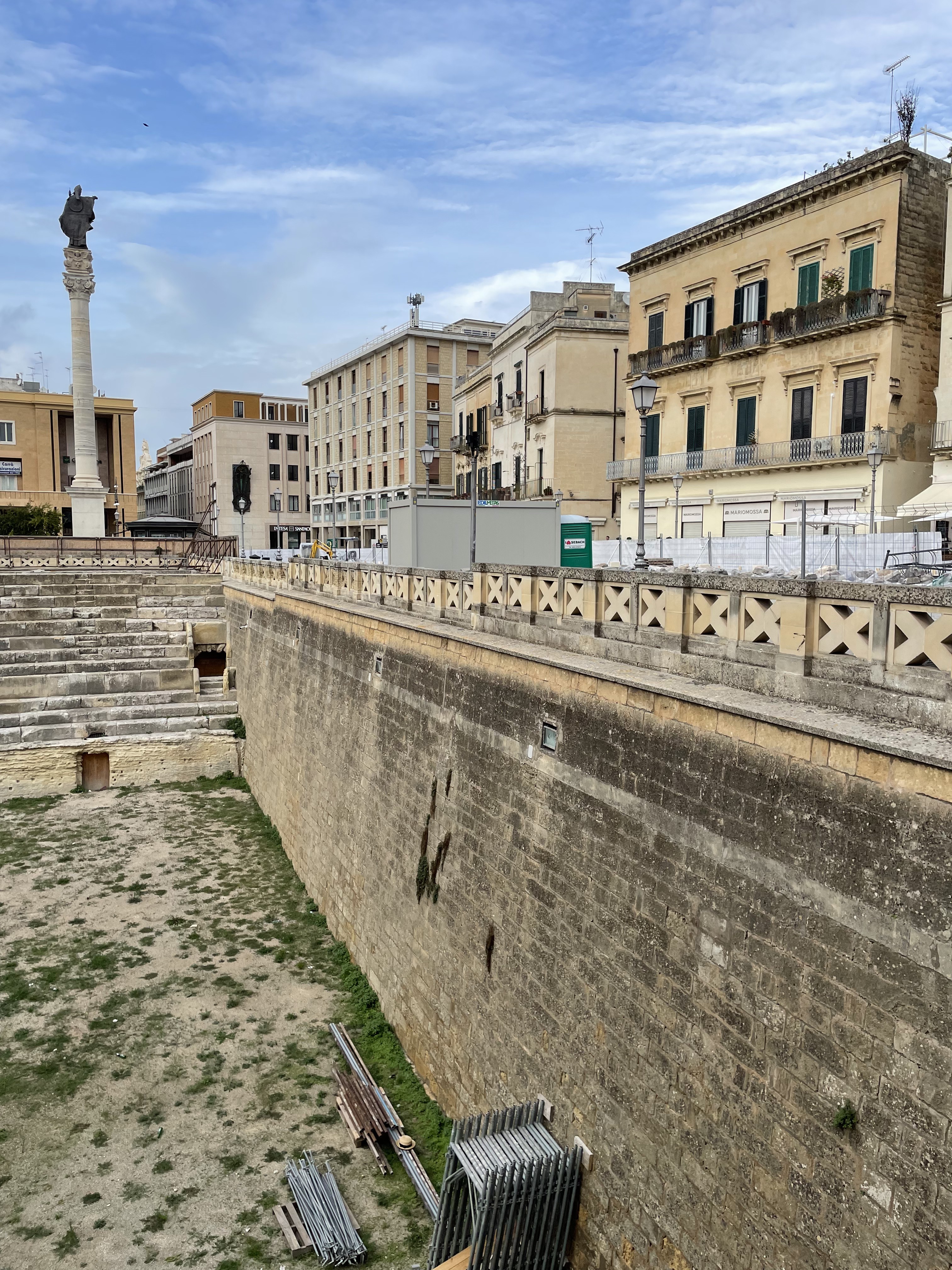
Lecce saves its best for last: Santa Croce’s facade — chandeliers and beasts and apostles carved in one sheet of stone, a job that took its stonemasons well over a century — then a few streets on, the Roman amphitheatre parked right in the middle of Piazza Sant’Oronzo, half under the square, tier after tier. Also: a white cat asleep on a café chair.
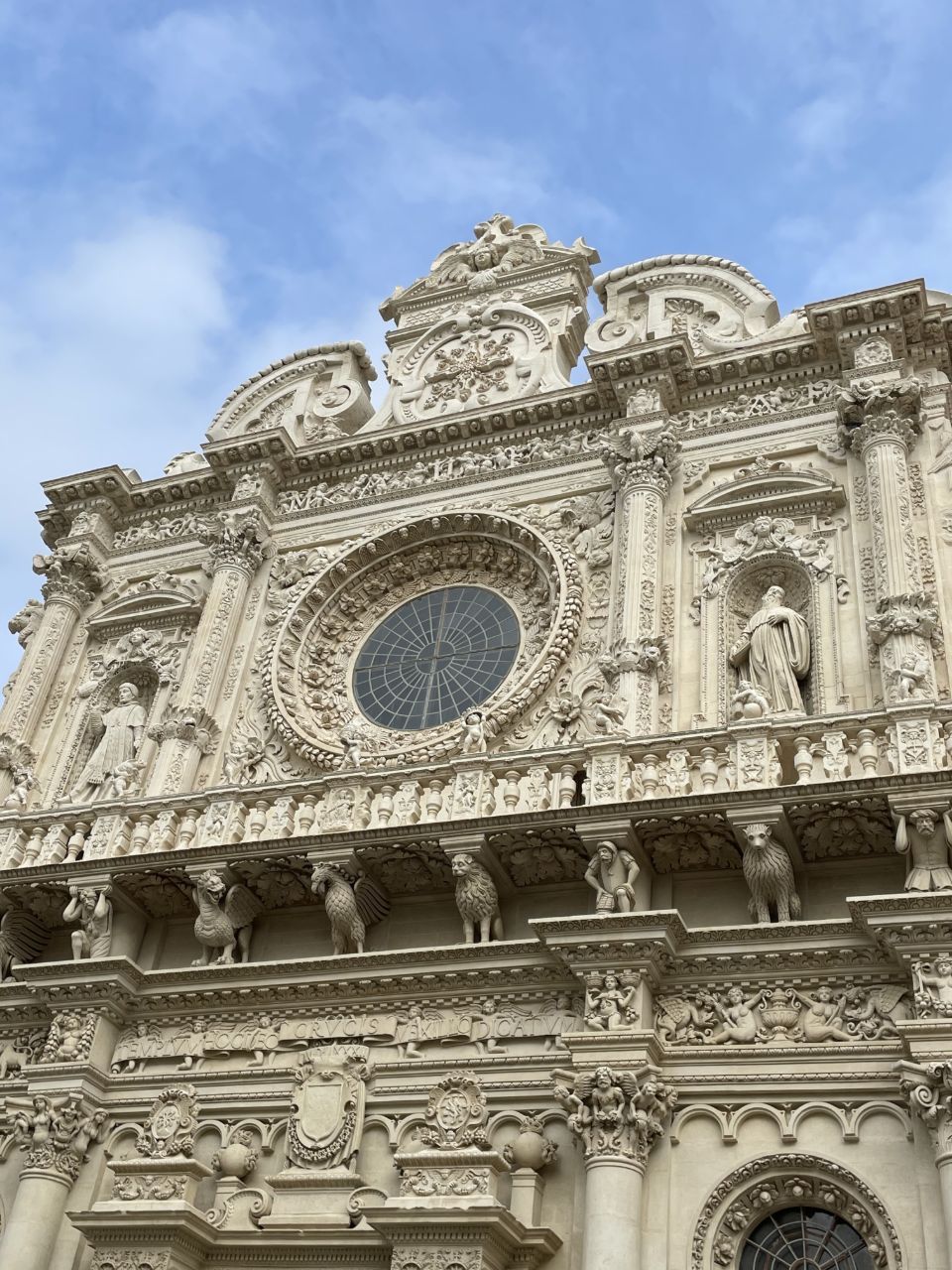
Santa Croce, from below 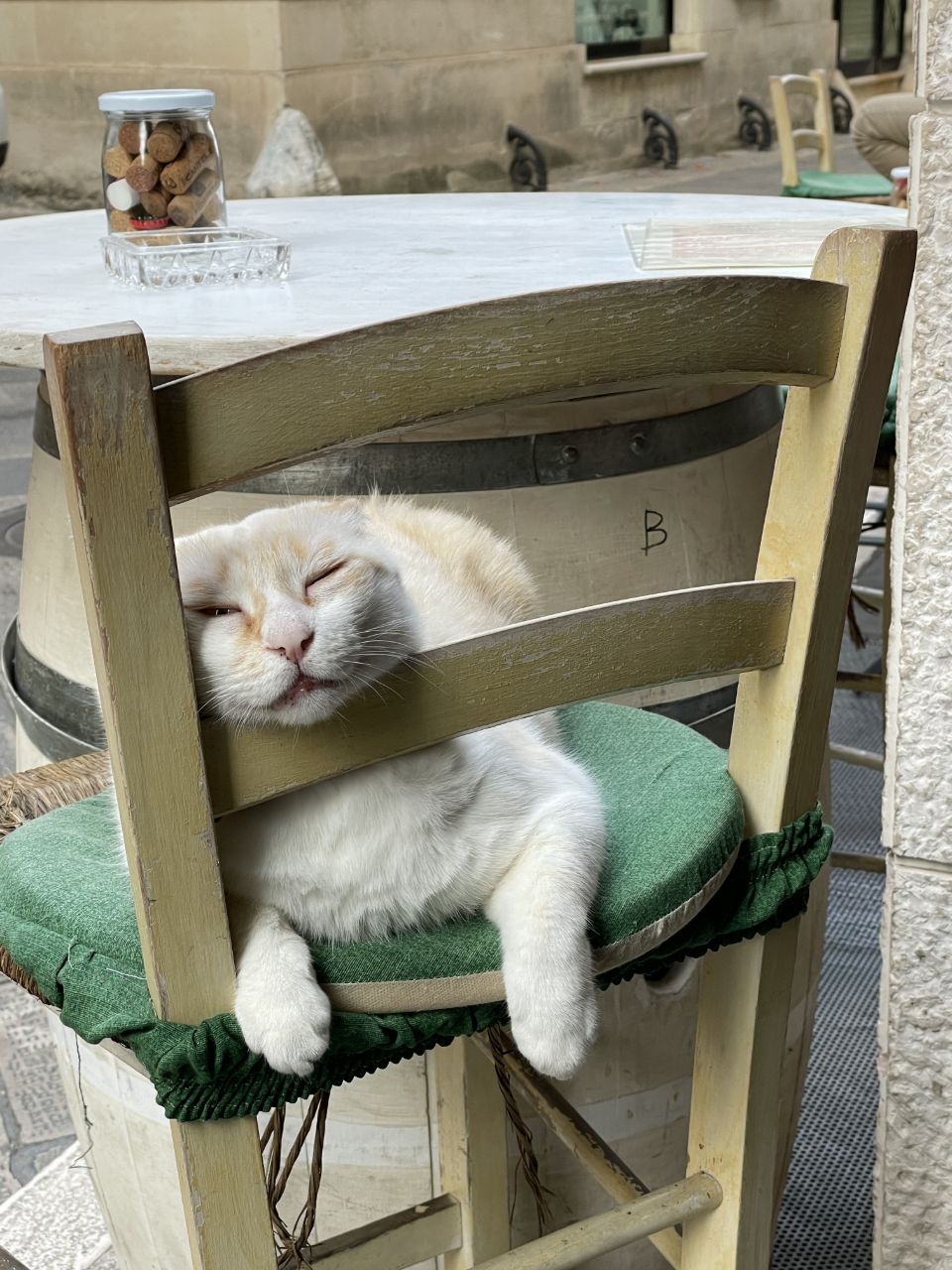
The café cat 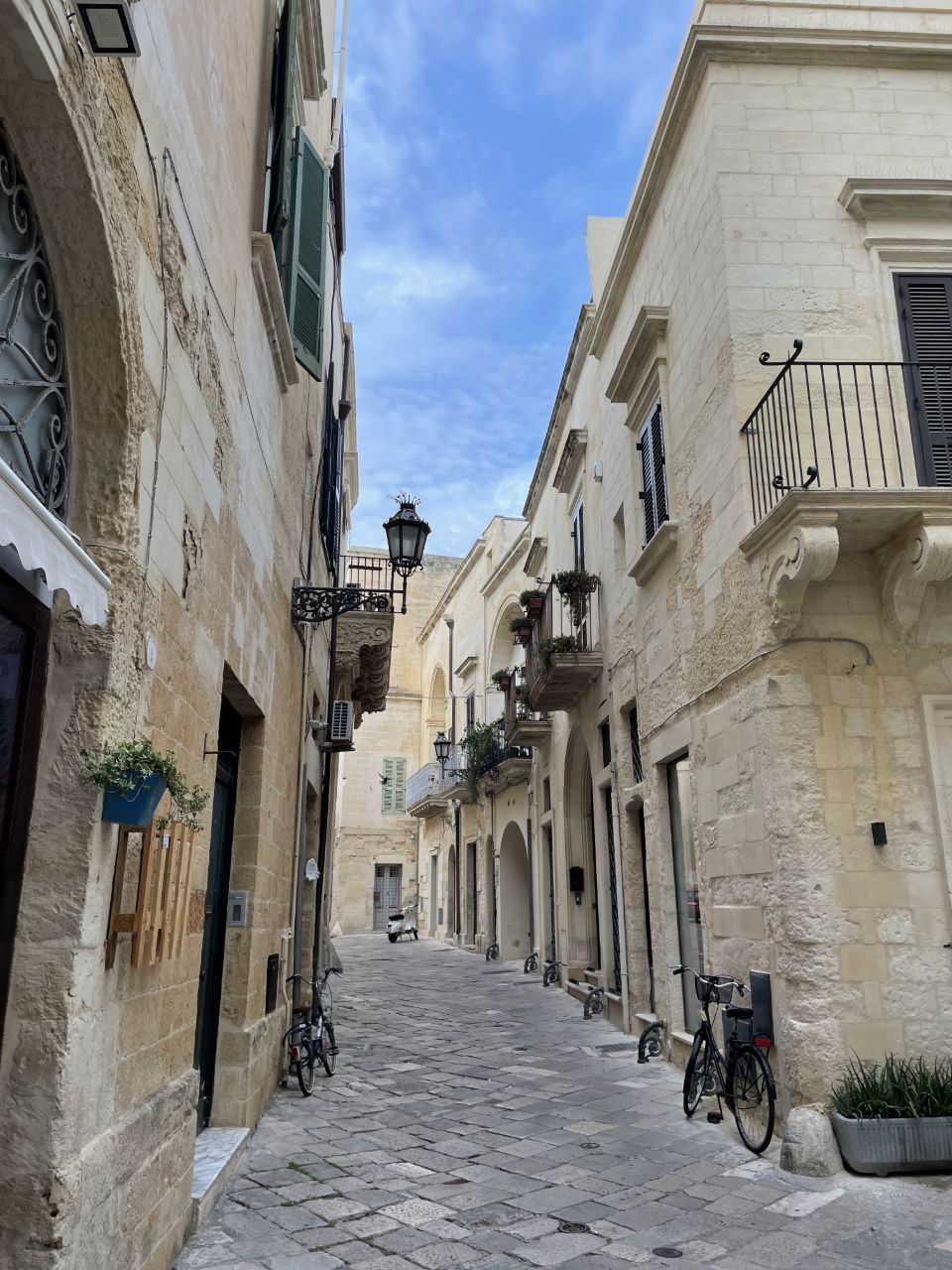
Sunlit stone, green shutters 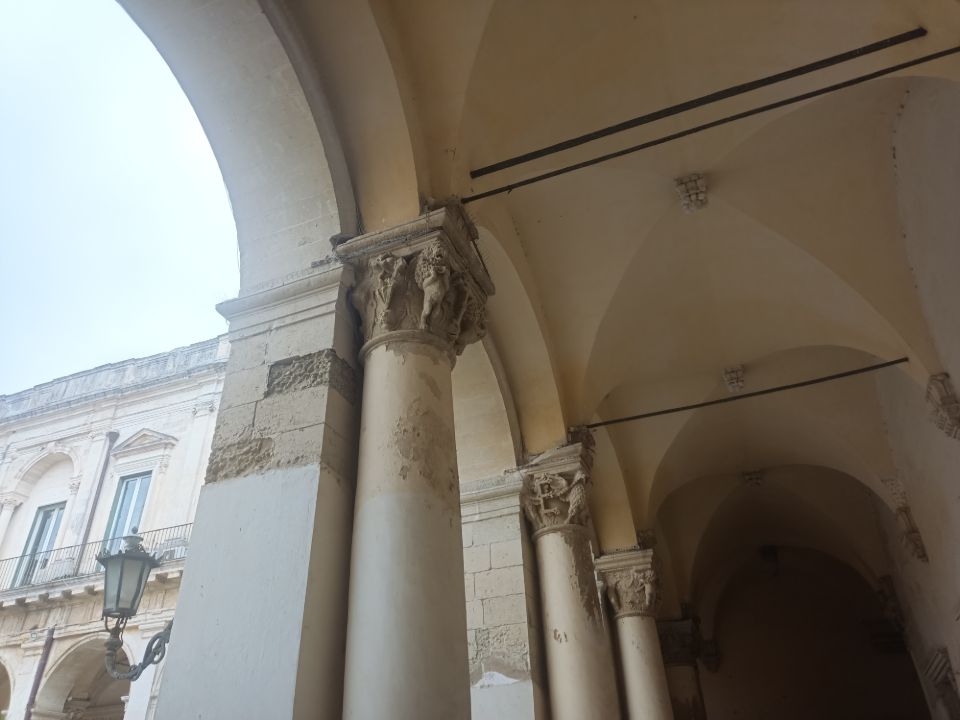
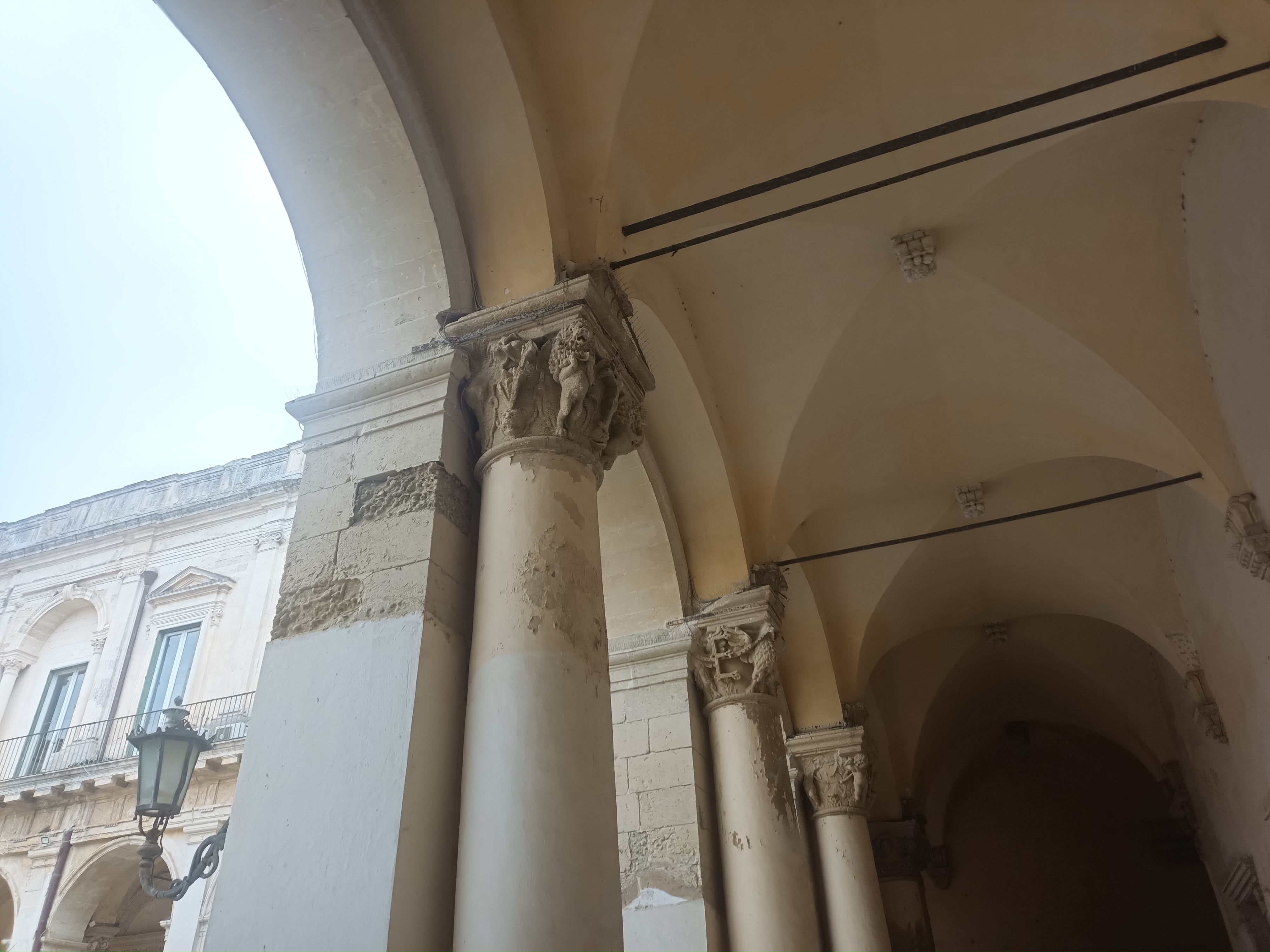
The colonnaded arcade 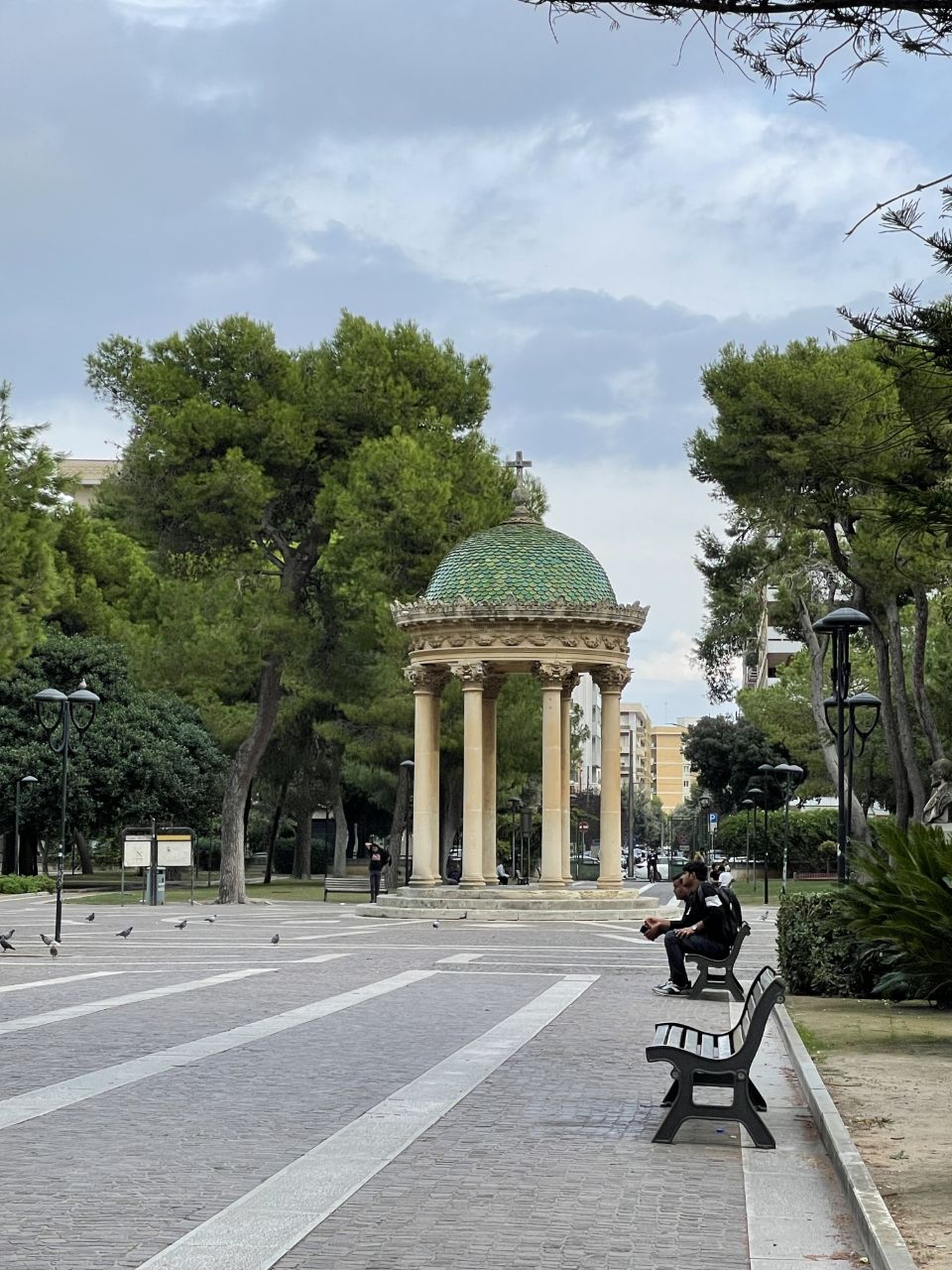
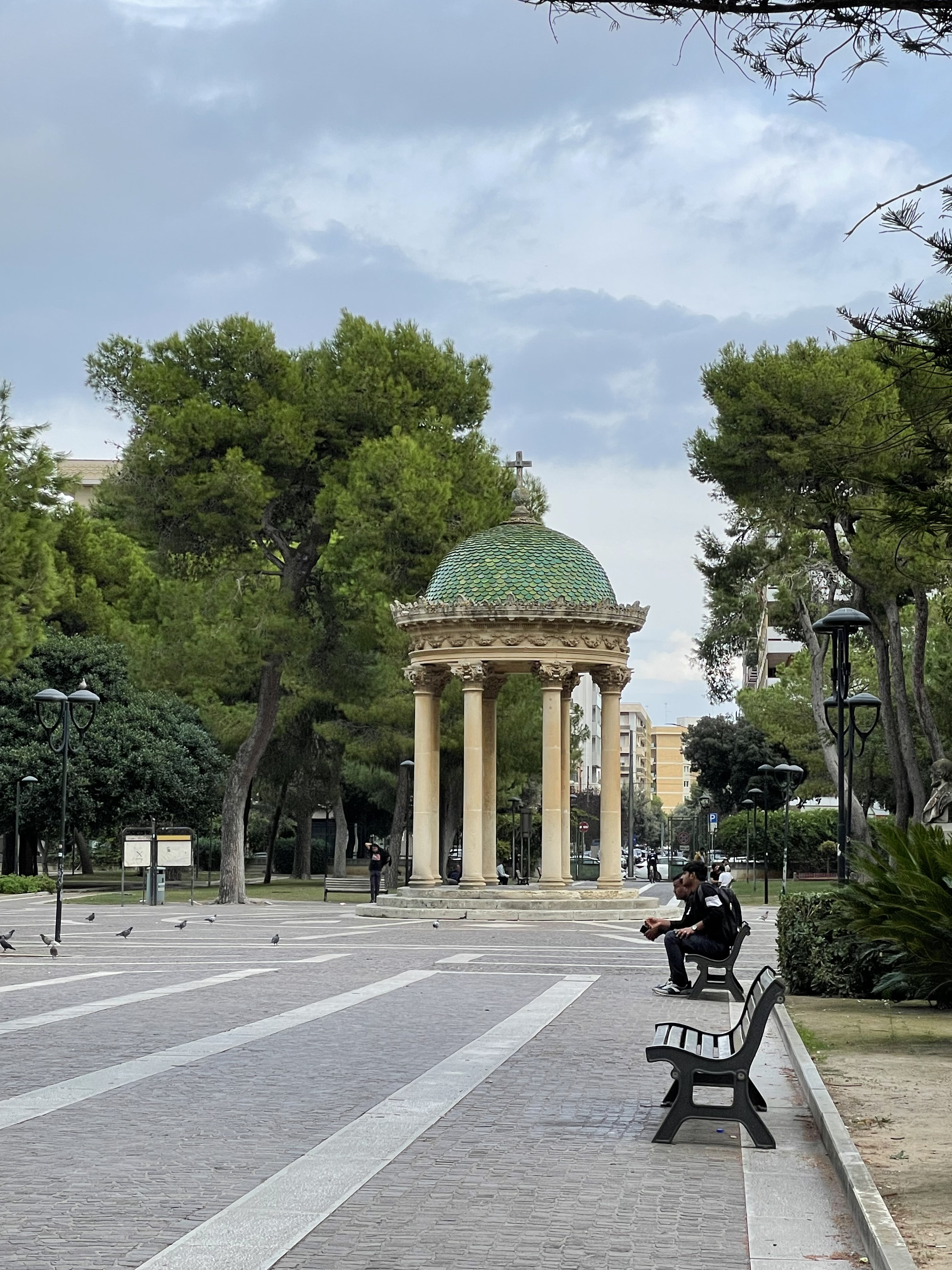
The domed rotunda 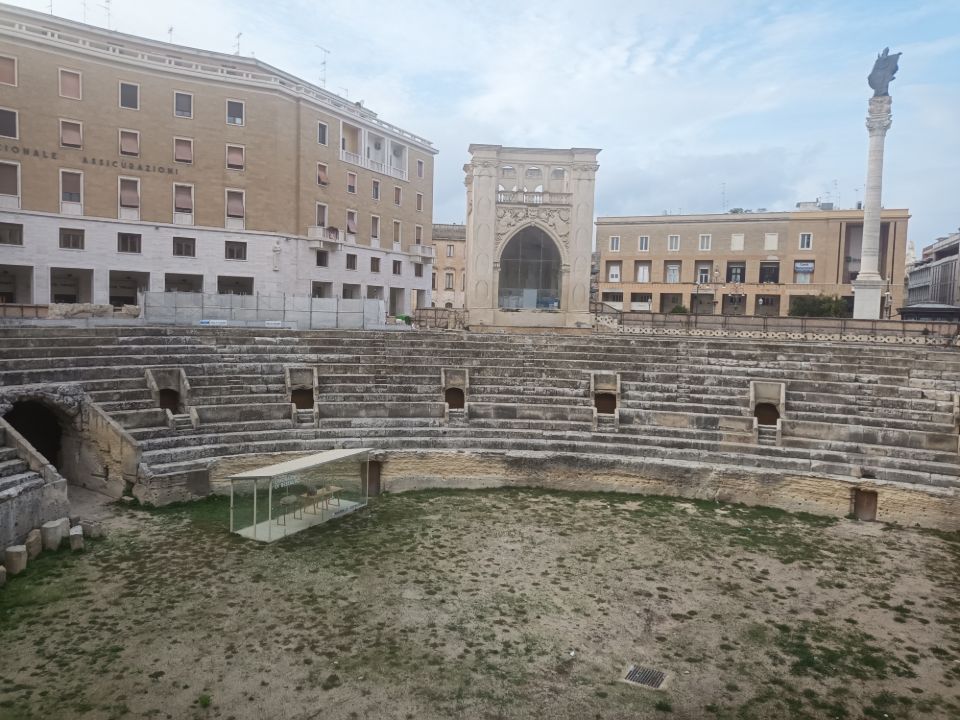
The amphitheatre, from above 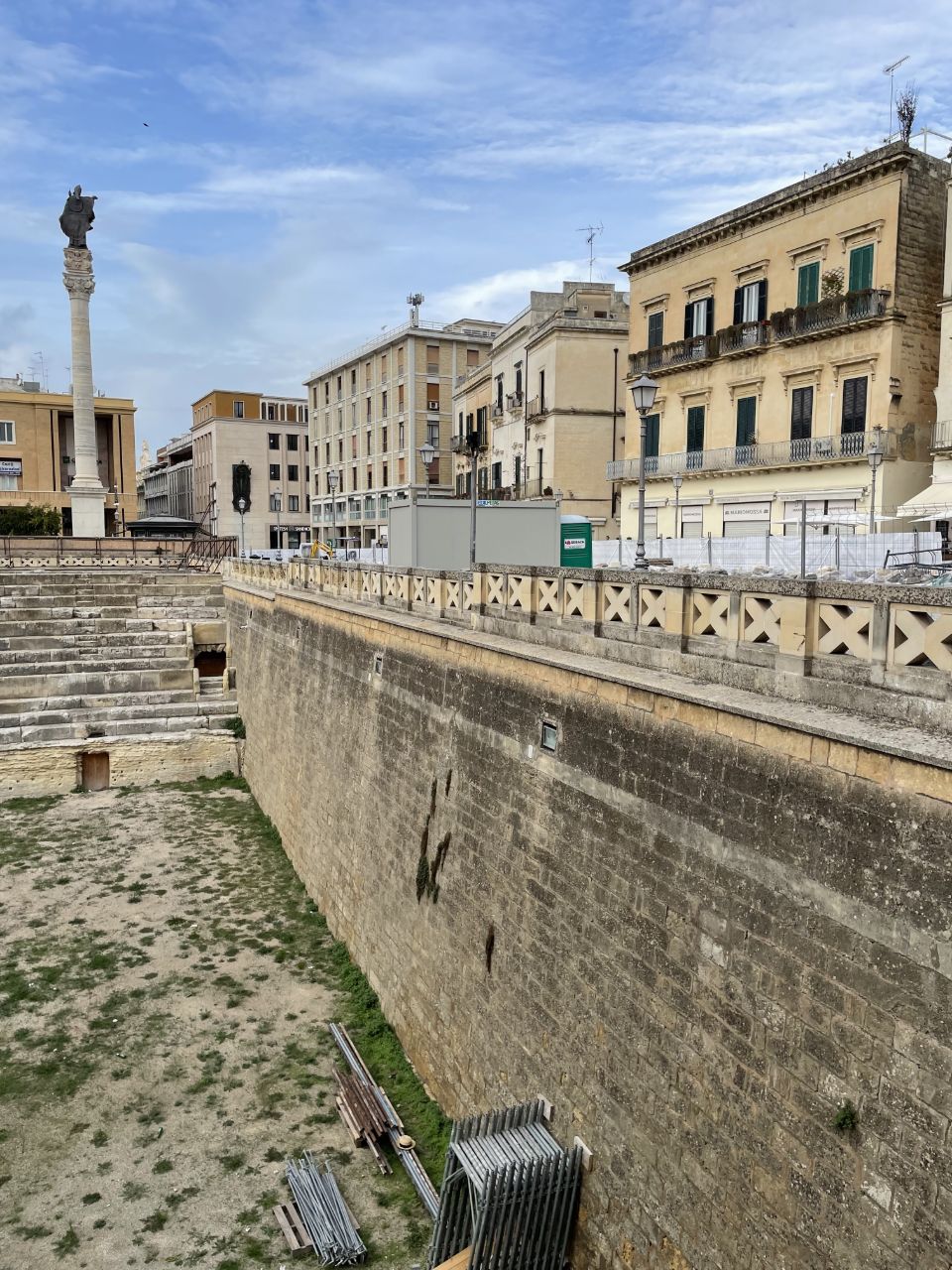
Rings of old stone 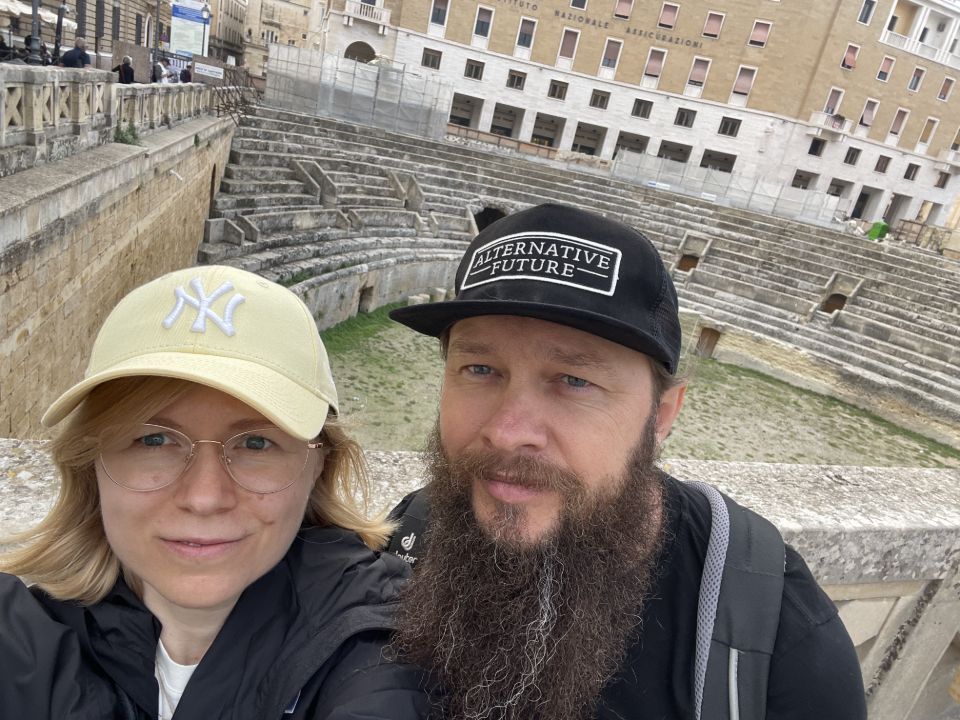
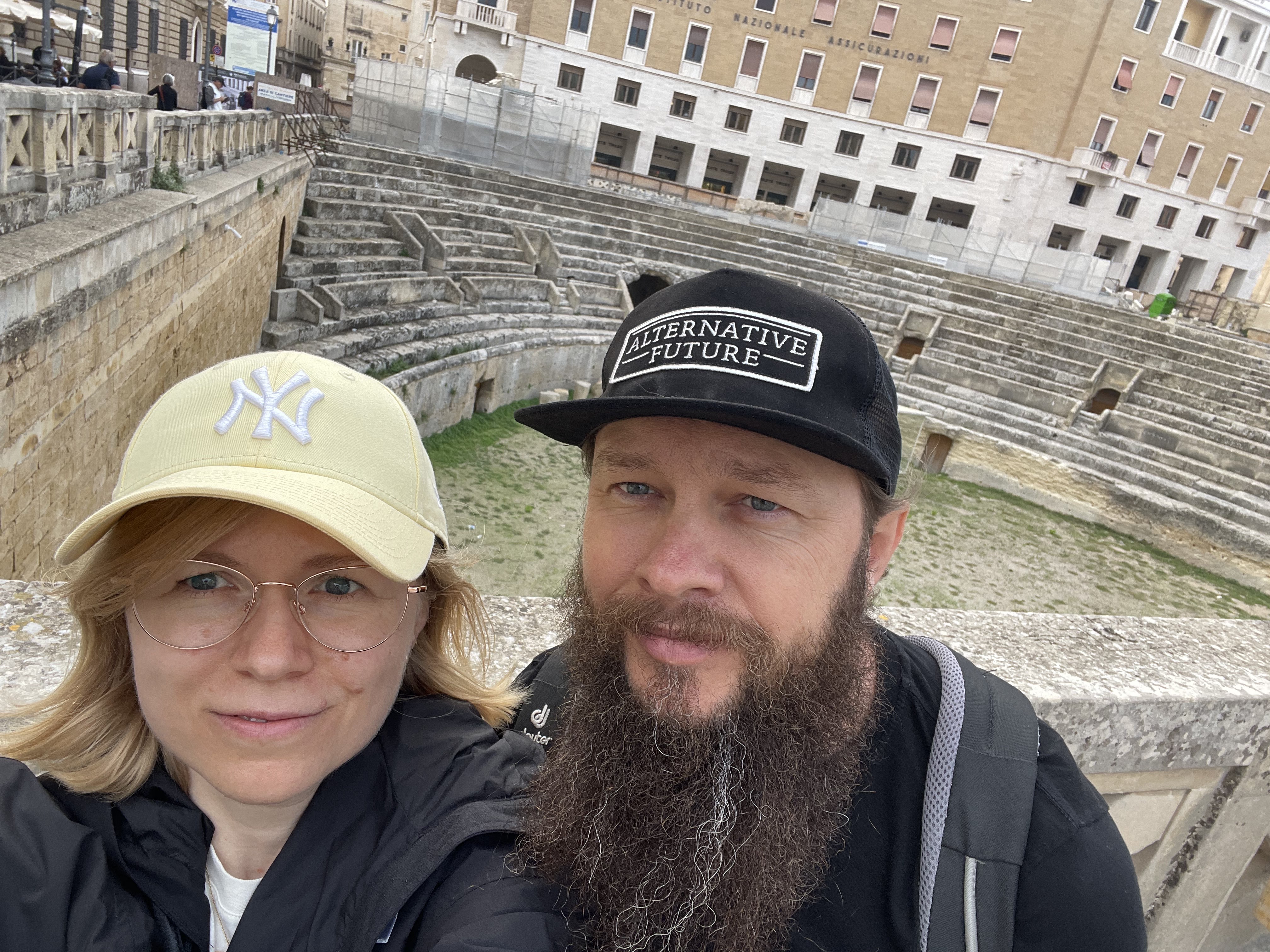
Both of us, arena behind 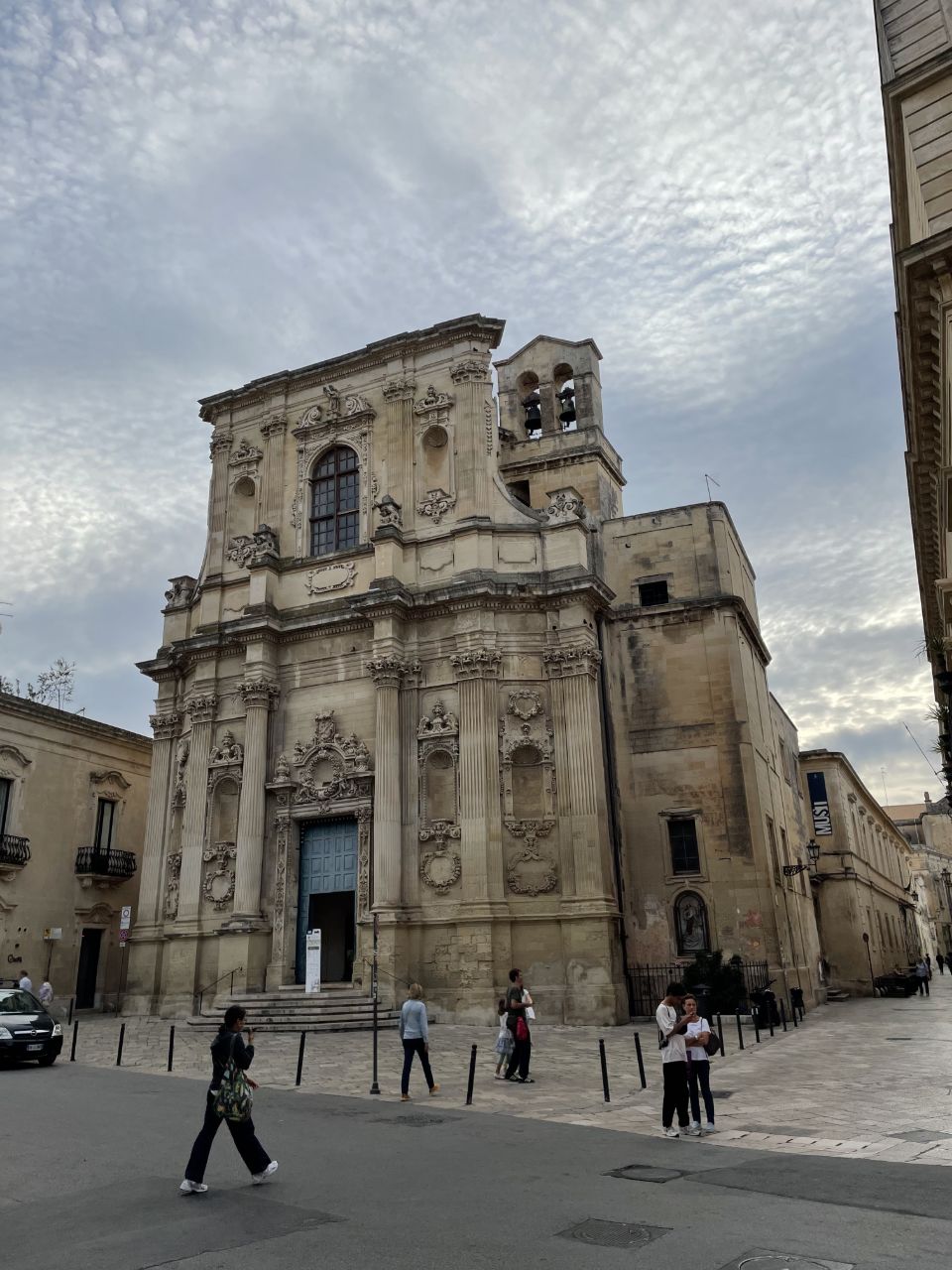
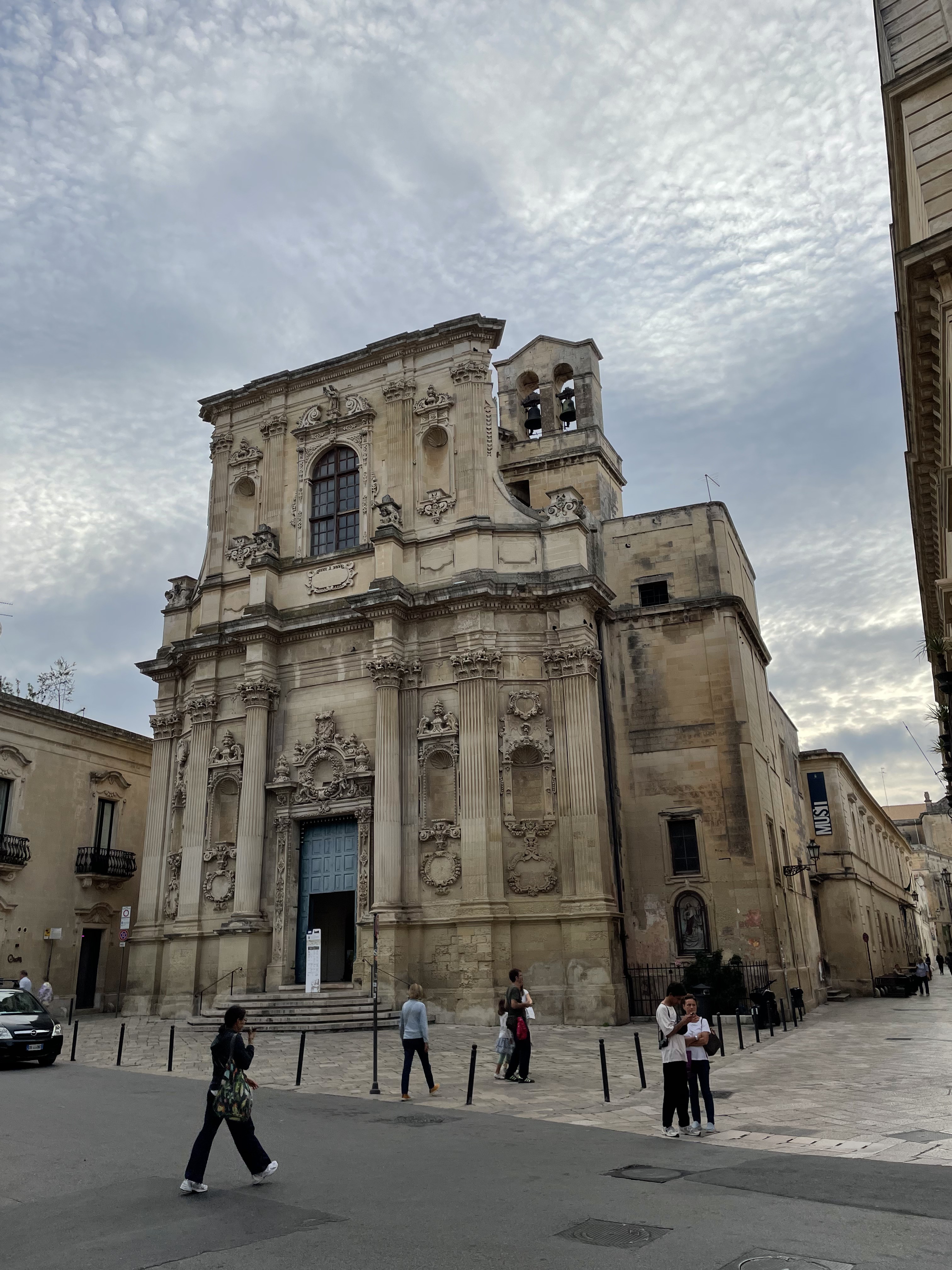
Baroque, against the sky 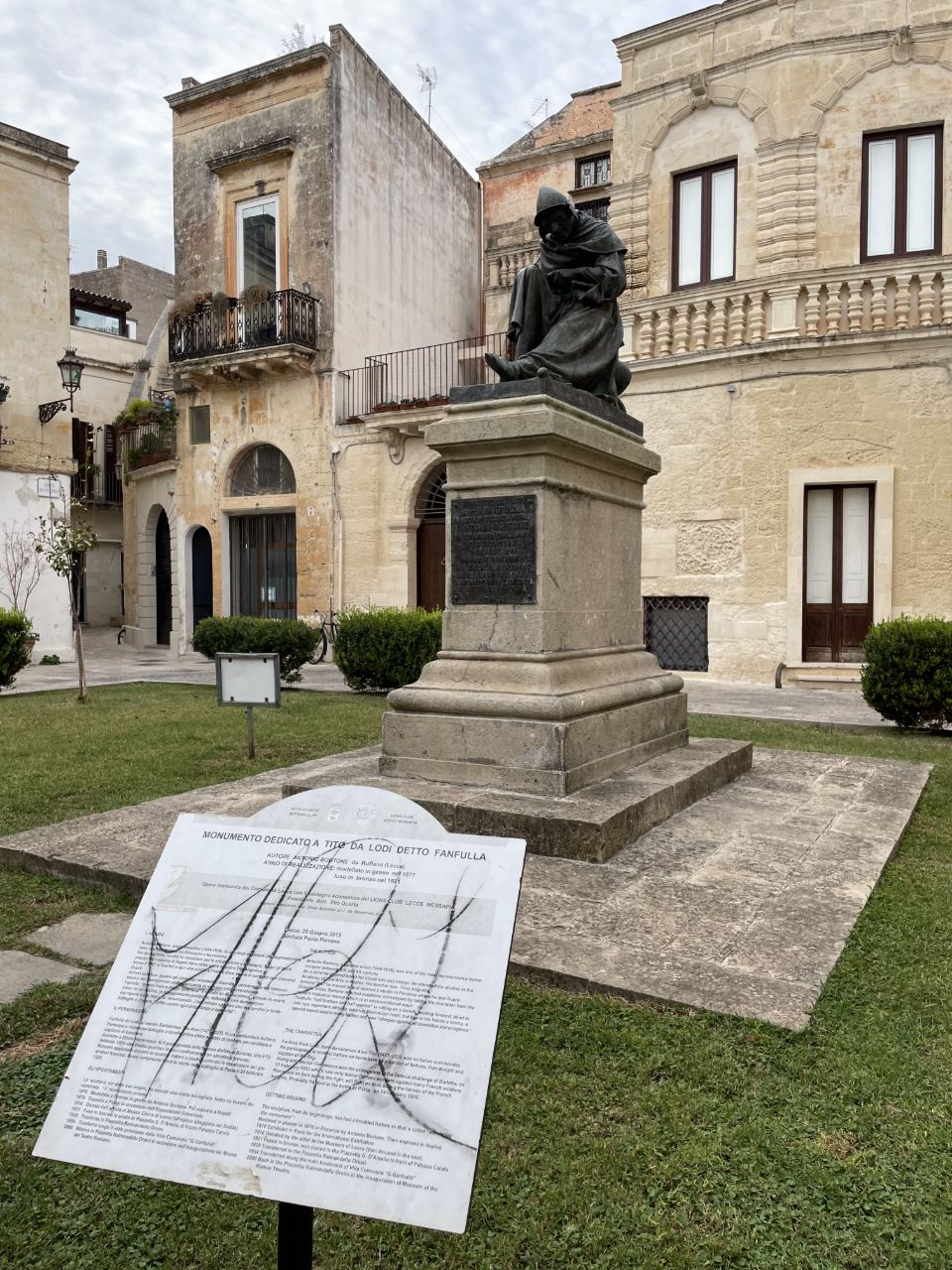
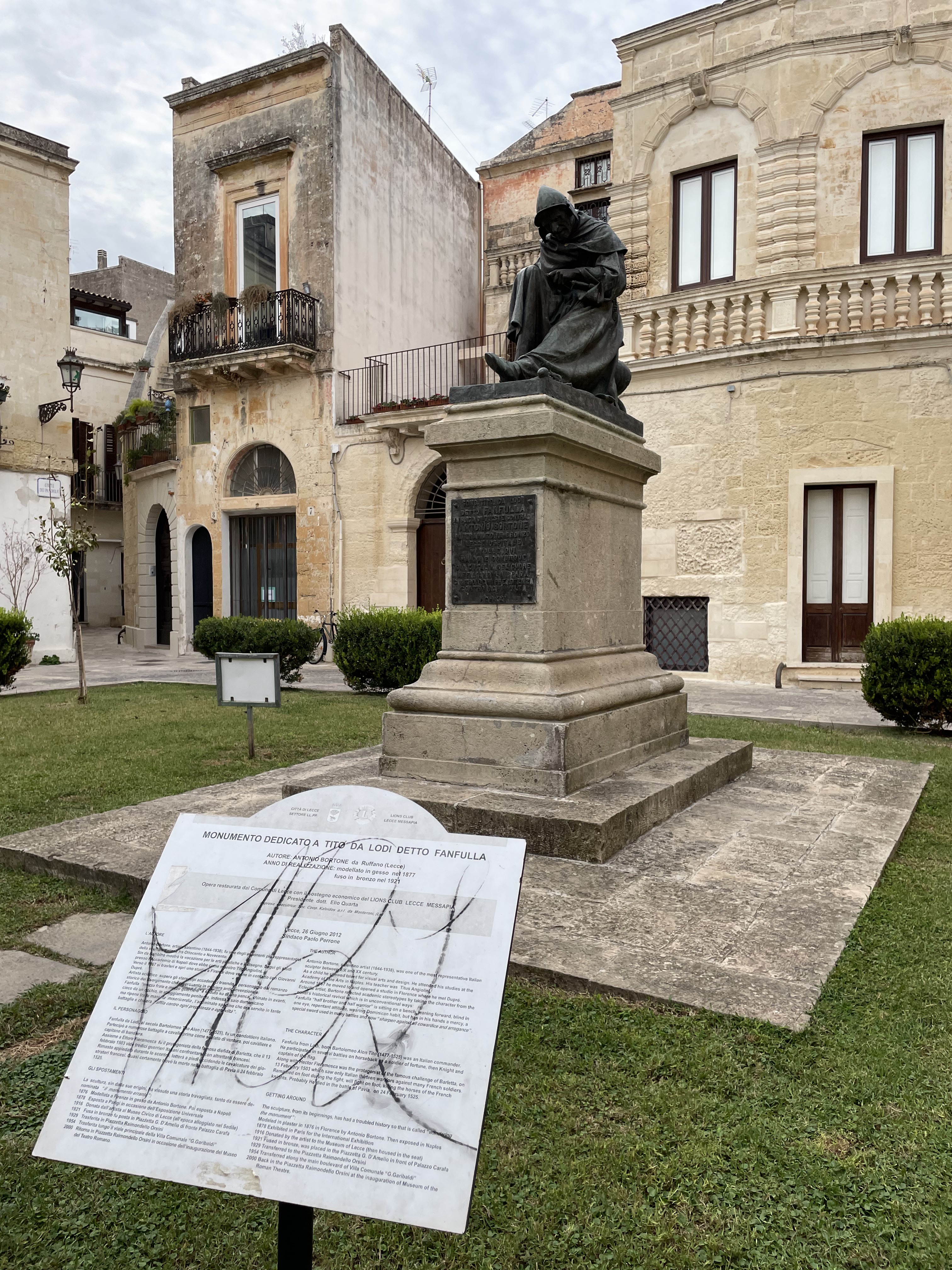
Hooded bronzes in a pines park
Aperitivo and dusk
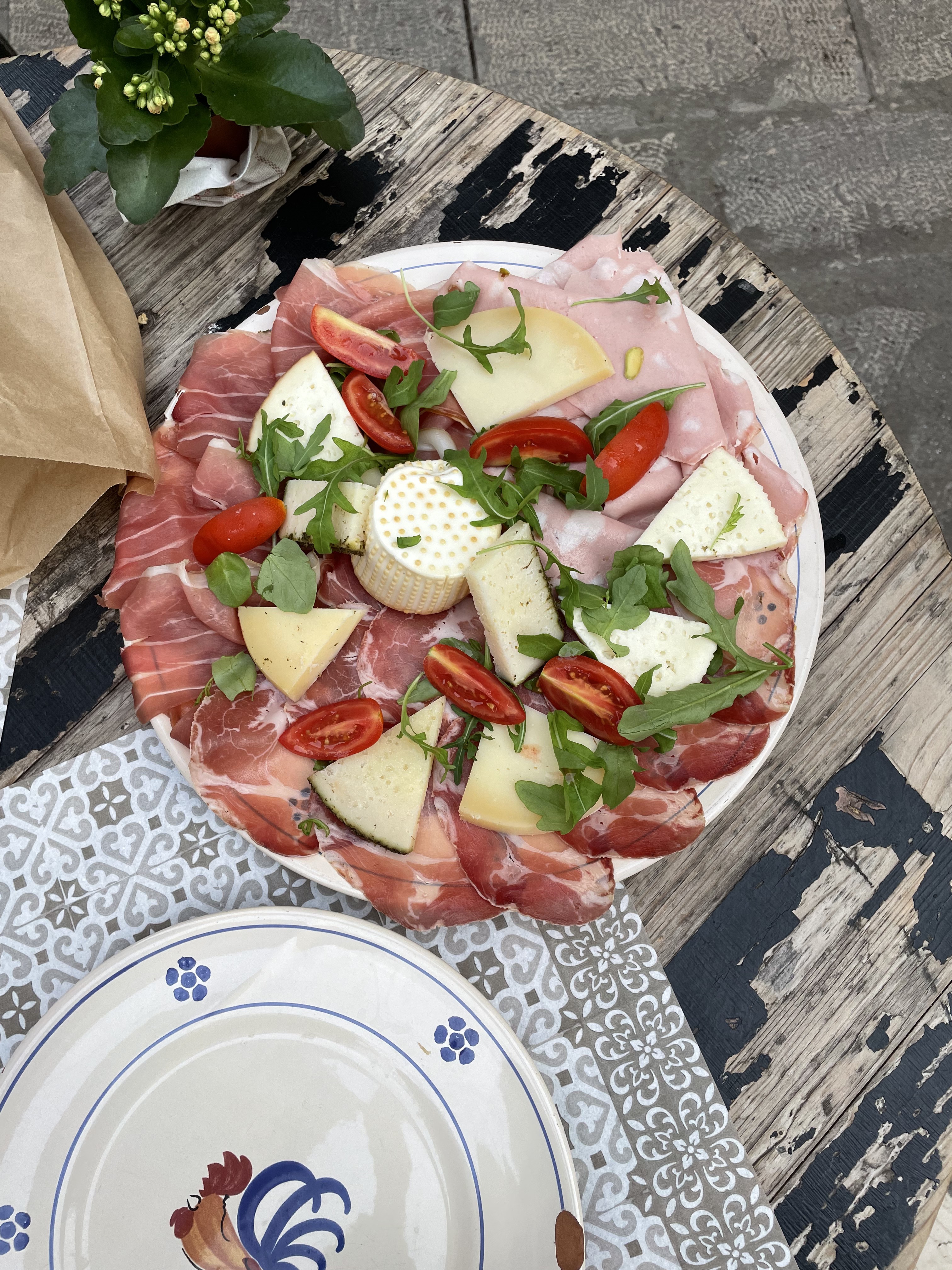
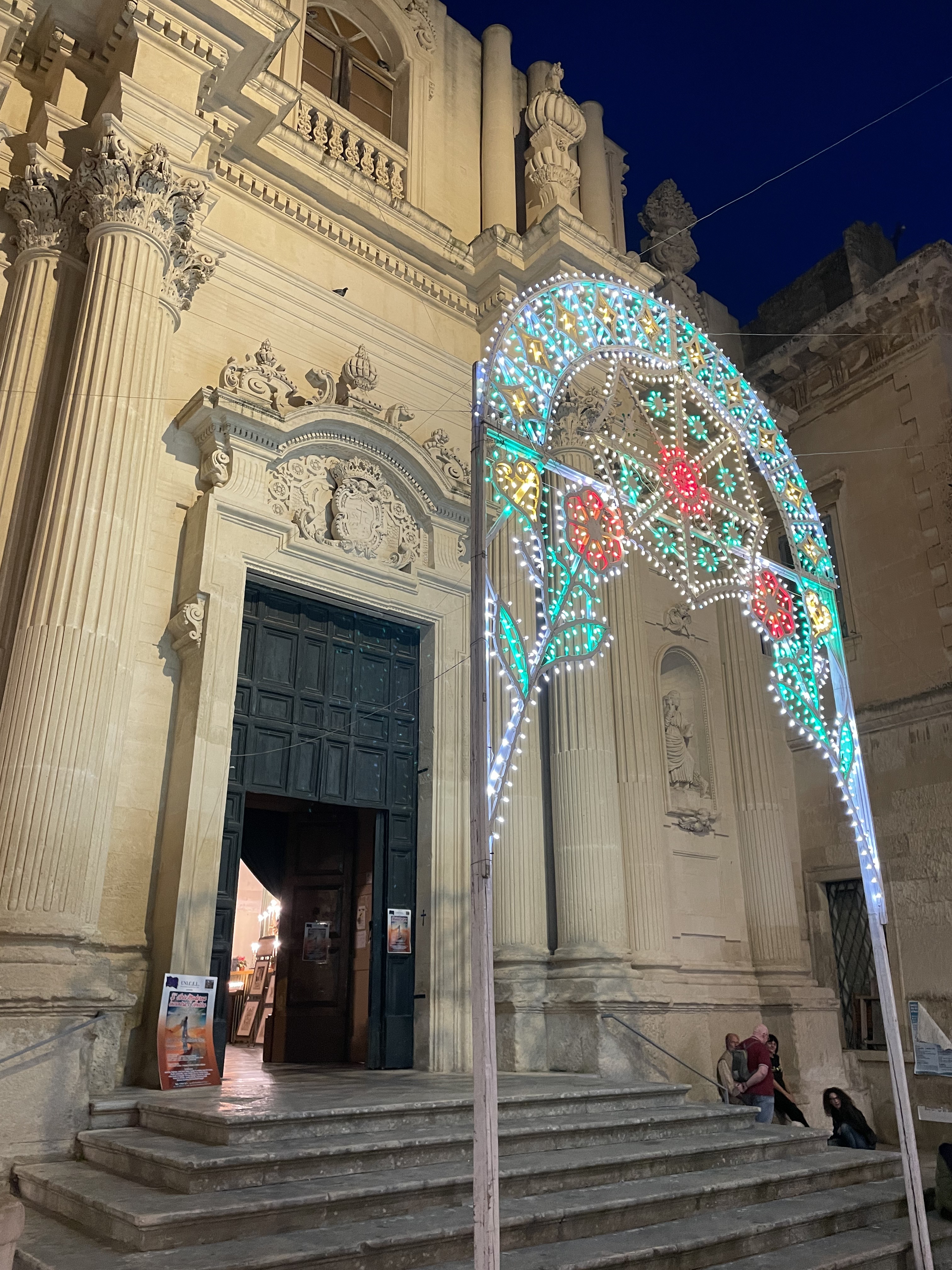
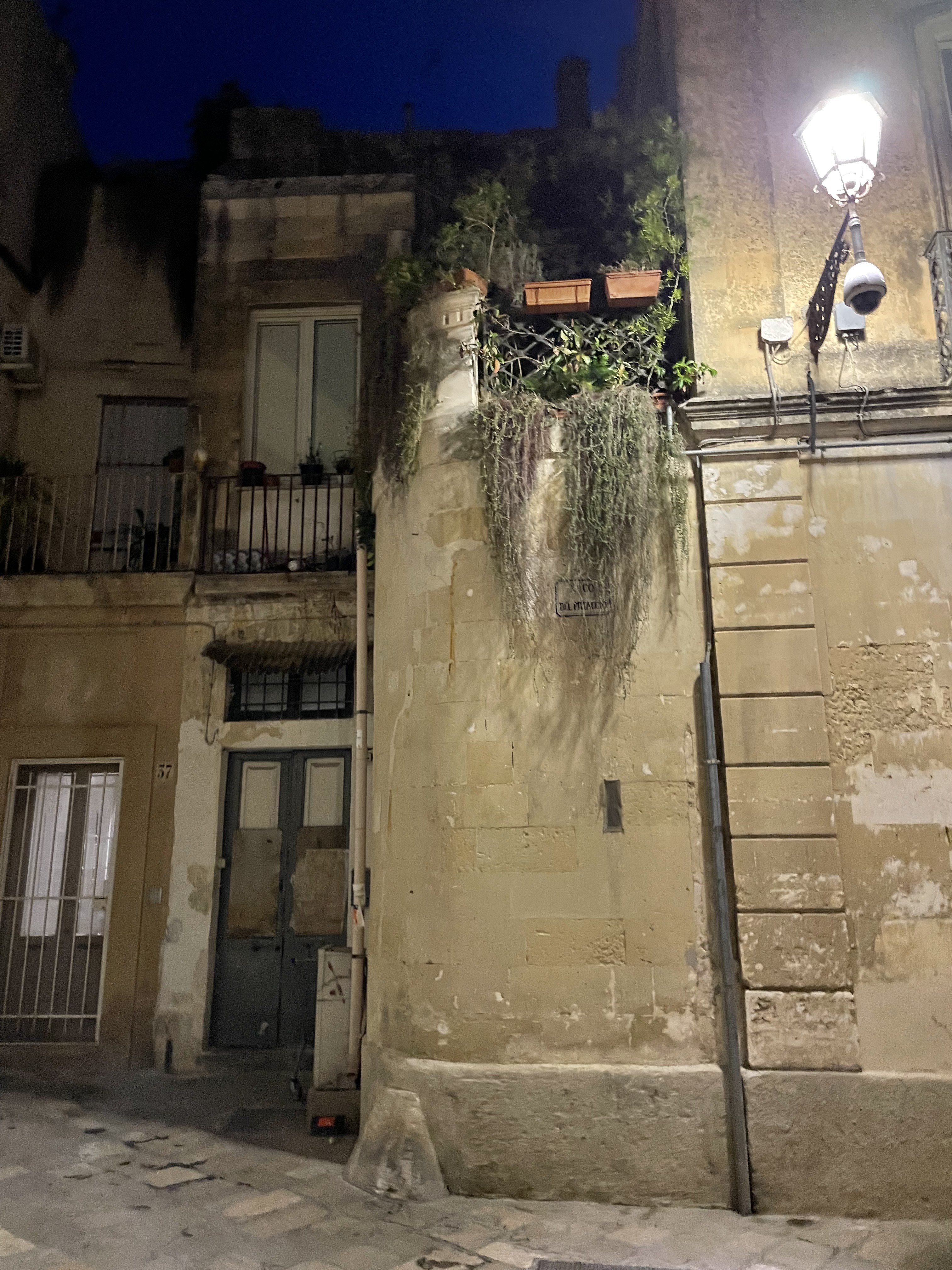
Dinner was a generous charcuterie board at an outdoor table under the towers as the lights came on: dusk church facades, lamp-lit alleys, gold stone turning amber. Baroque is best at blue hour; we stayed until the tables emptied.
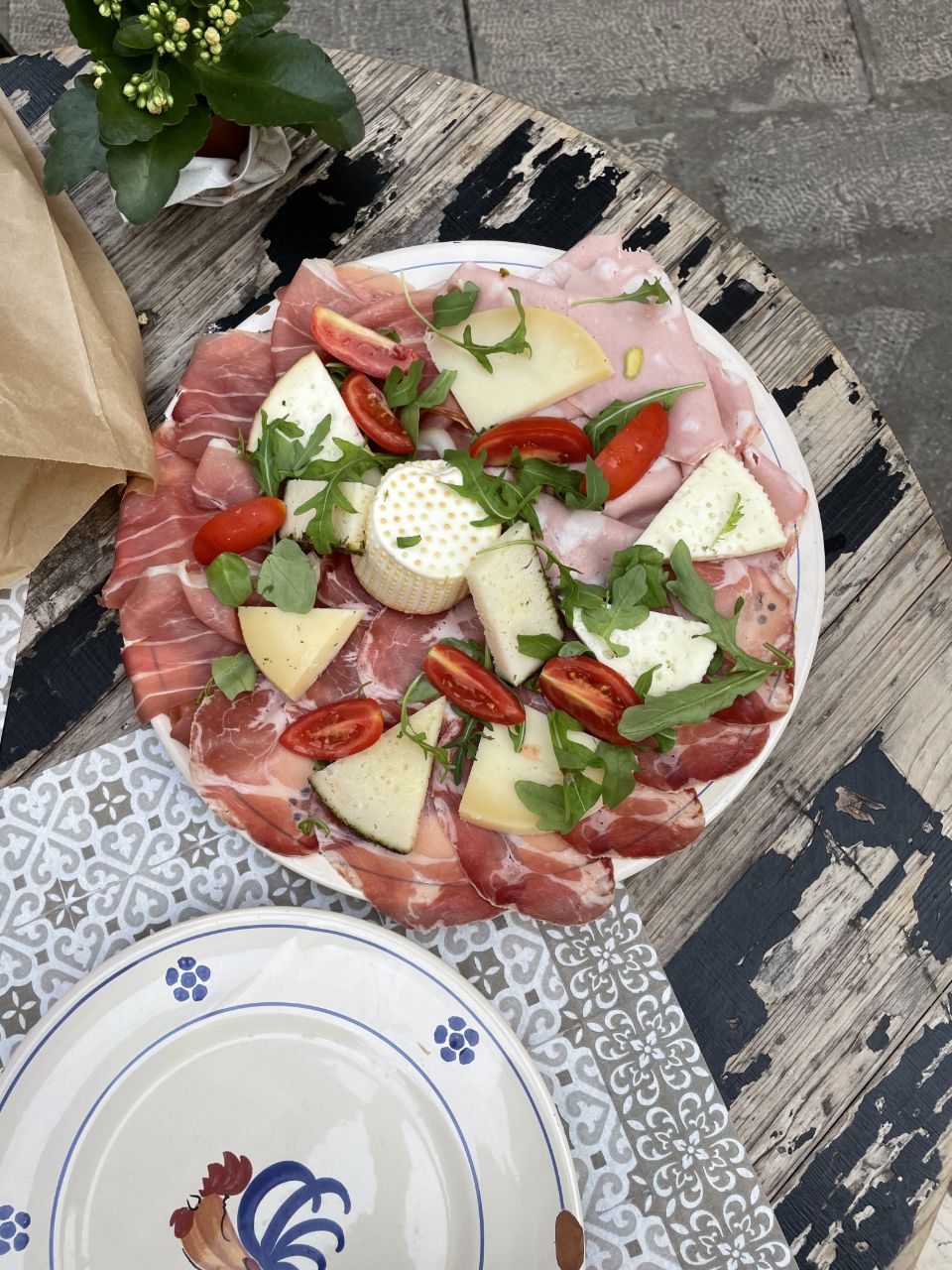
The board, as ordered 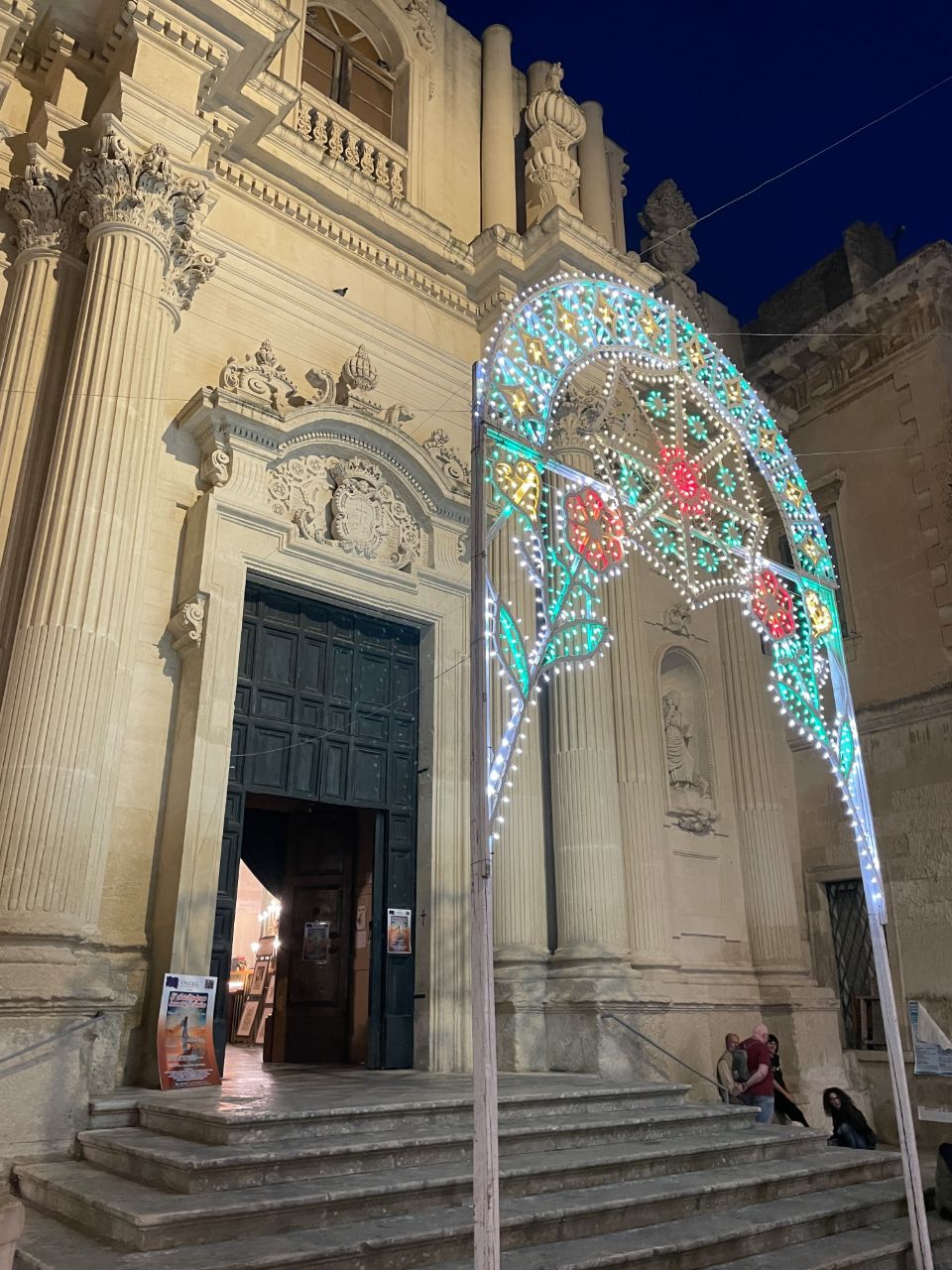
Facade at dusk 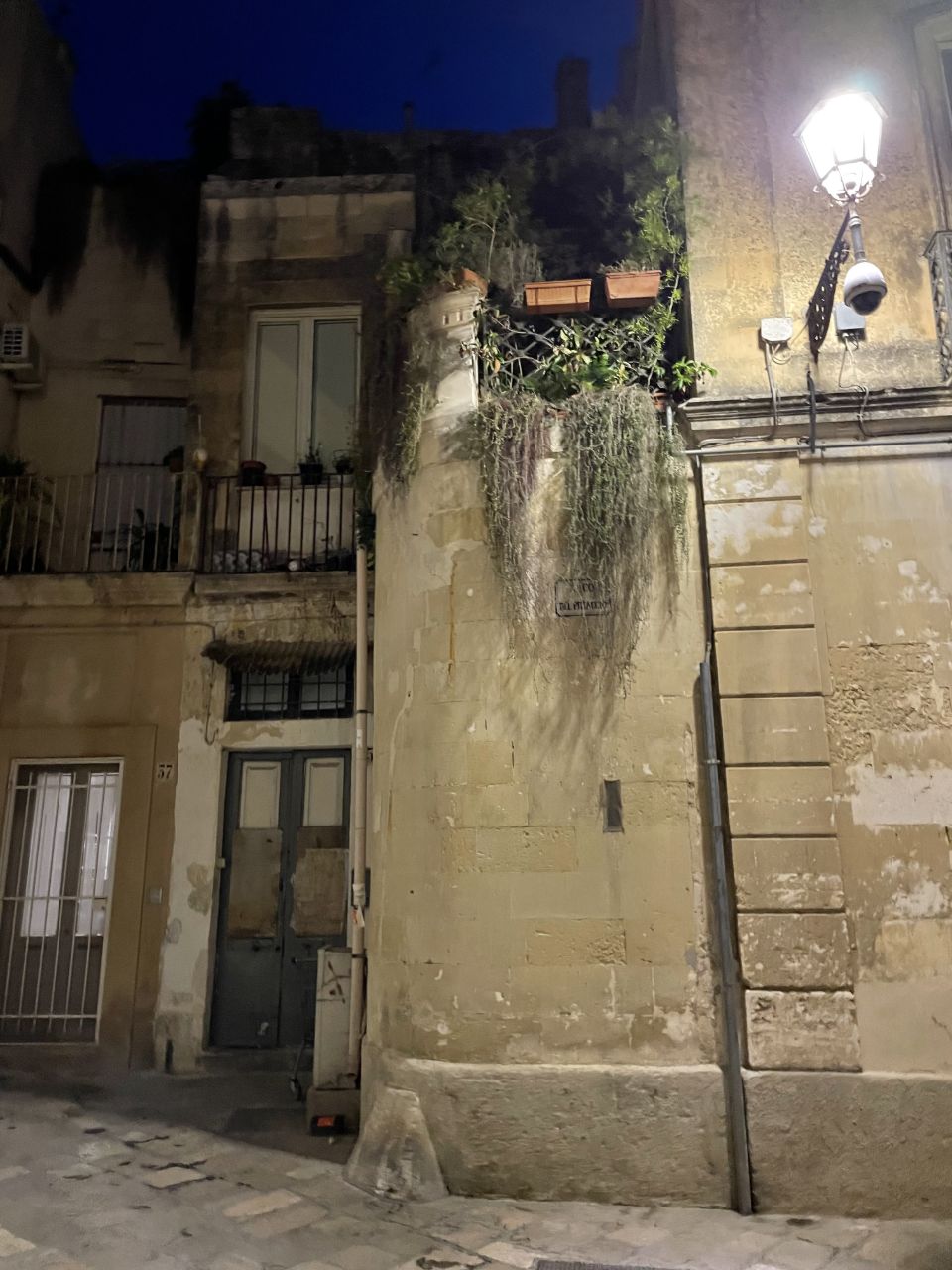
Lamp-lit, going home
The night ferry home
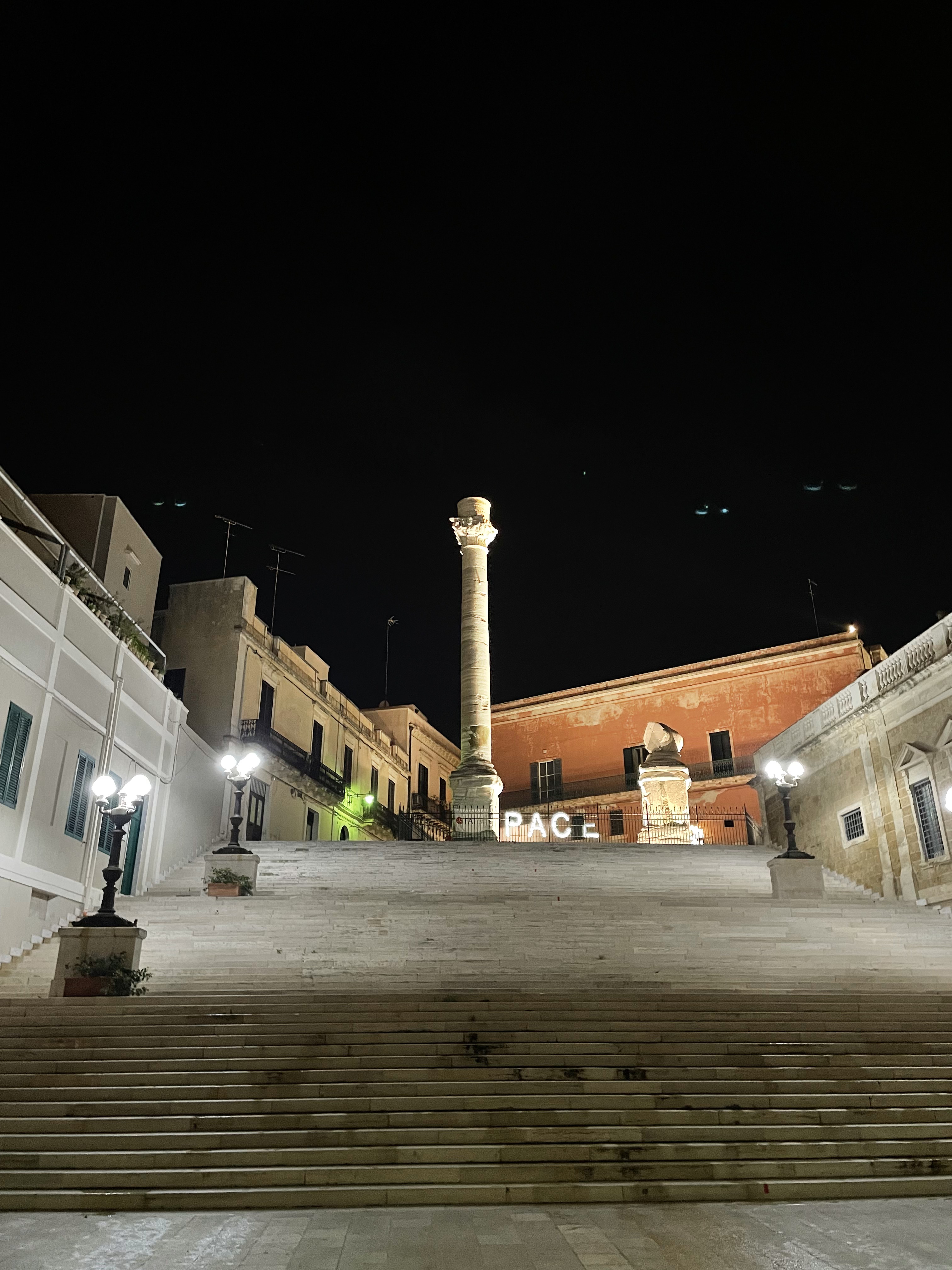
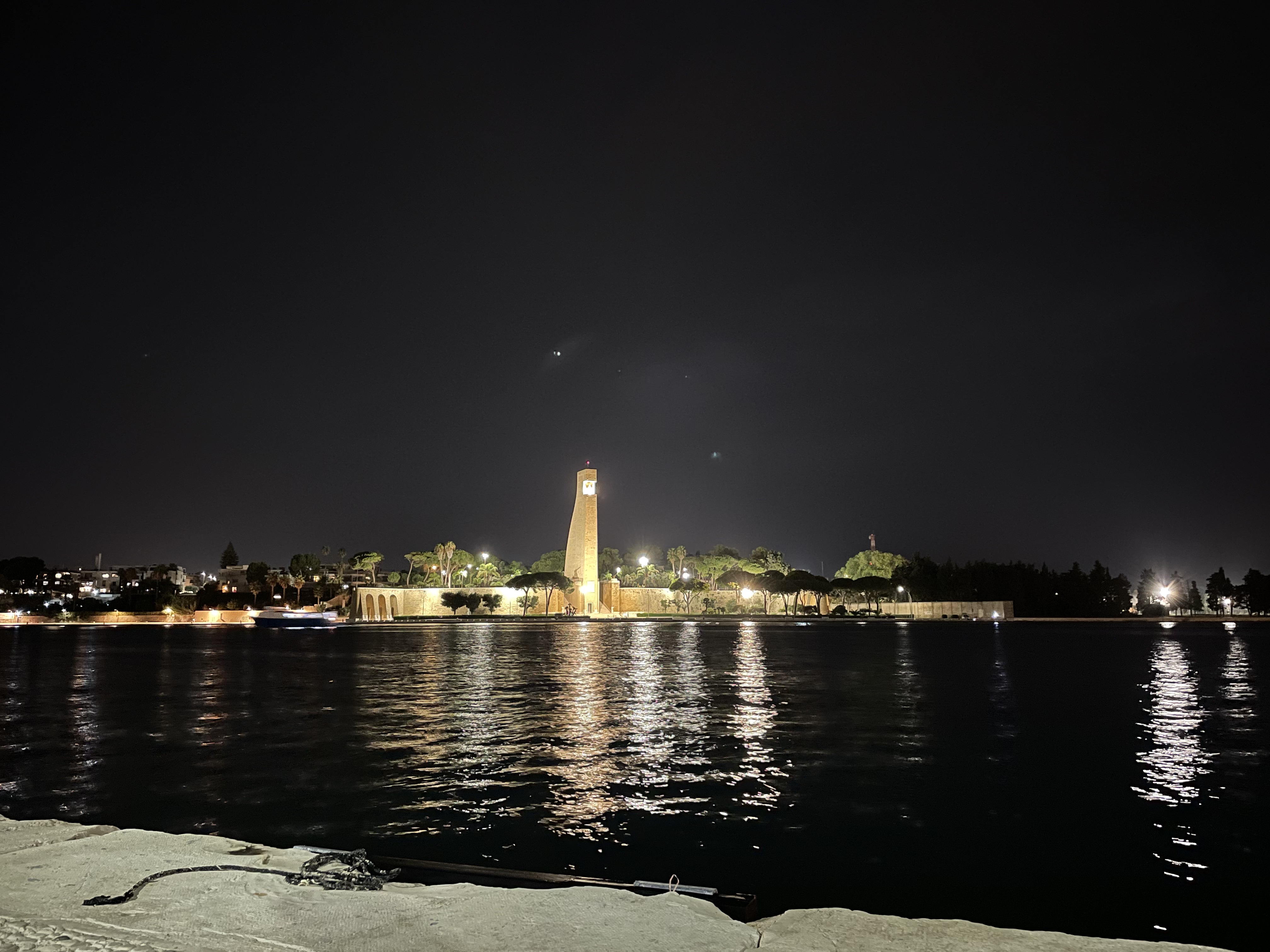
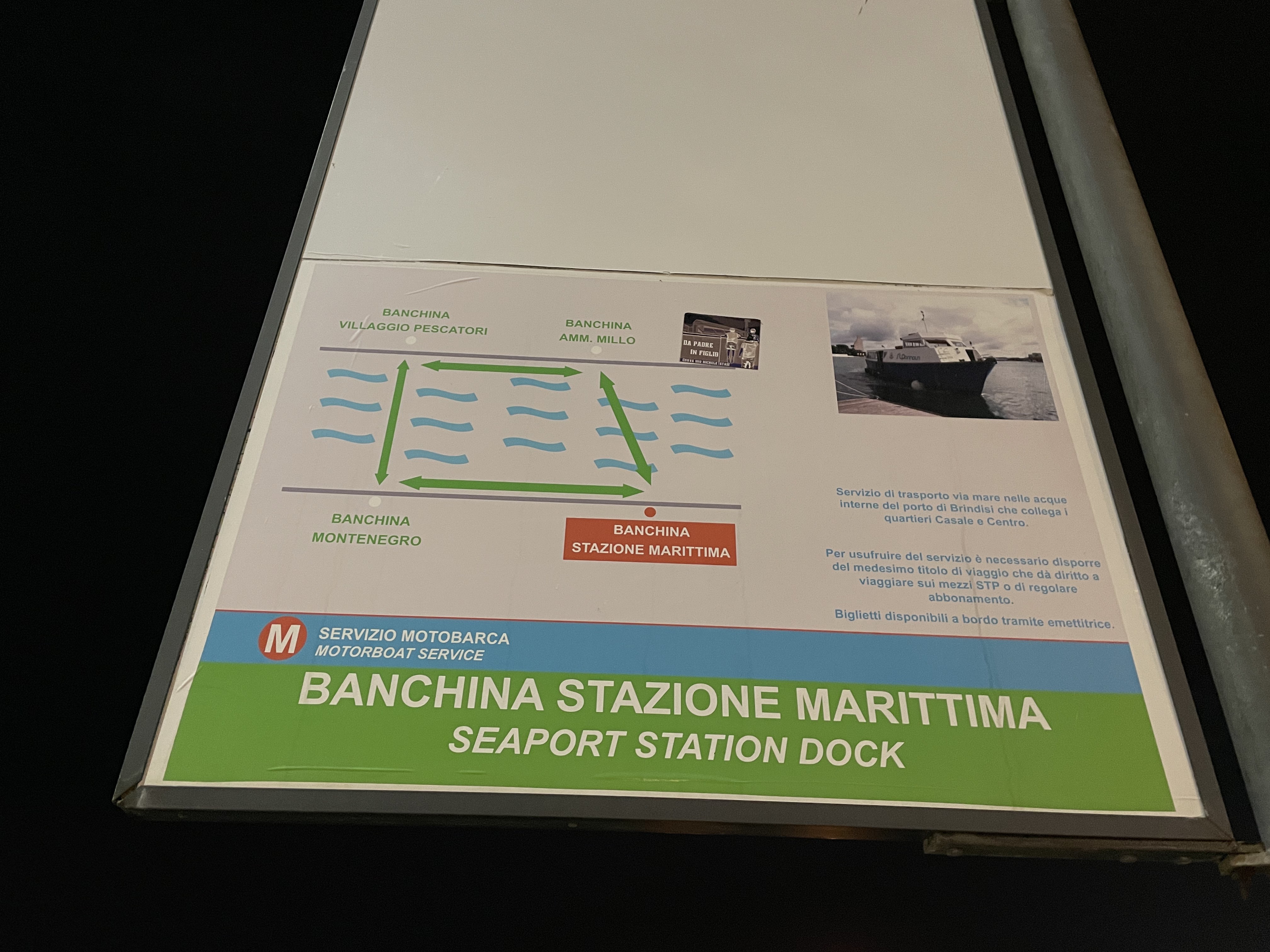
Back in Brindisi after dark — the Roman column floodlit at the top of its stairs, the lighthouse throwing its beam across the water, and the ferry timetables photographed for the plan home.
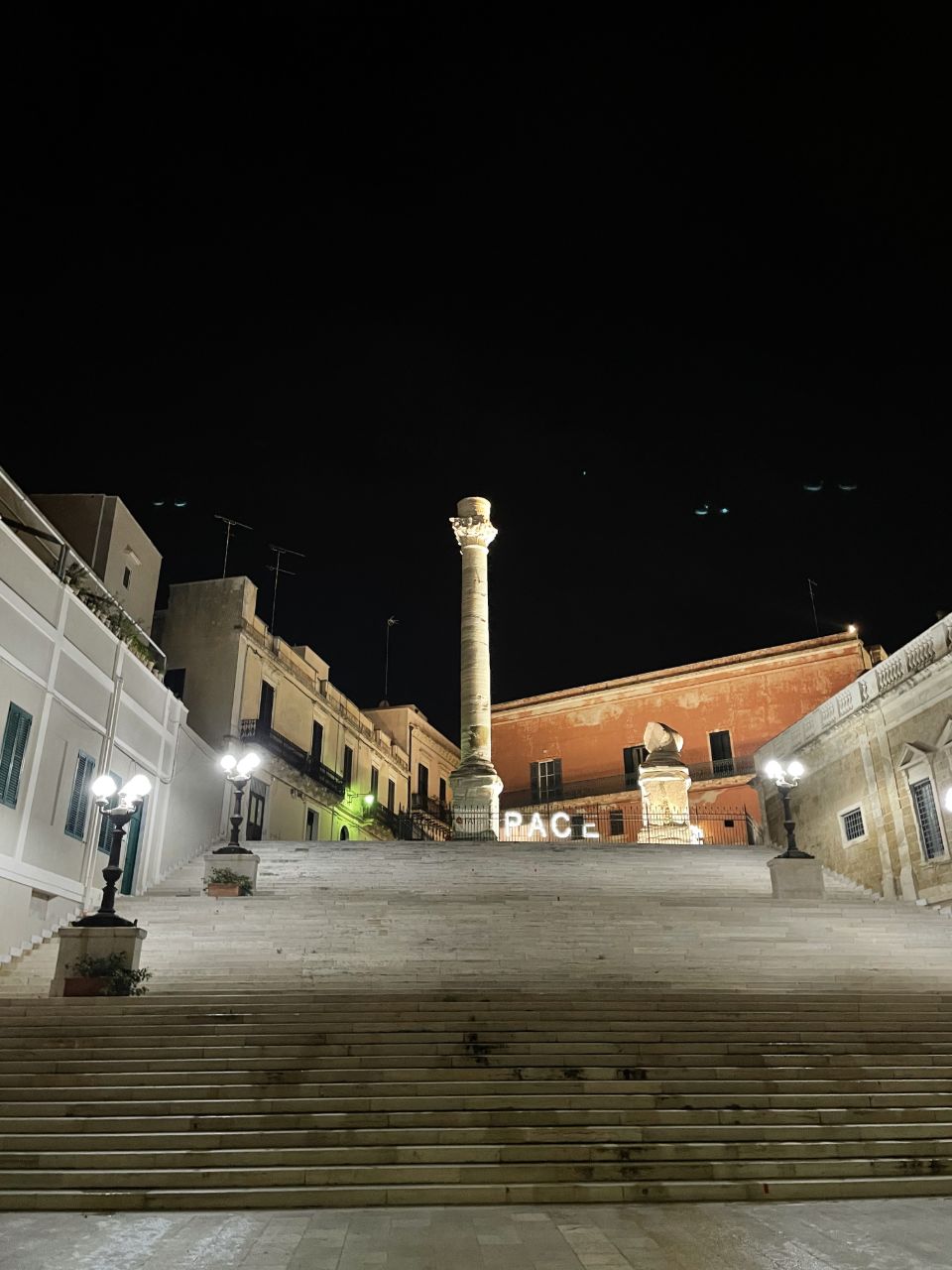
The column, floodlit 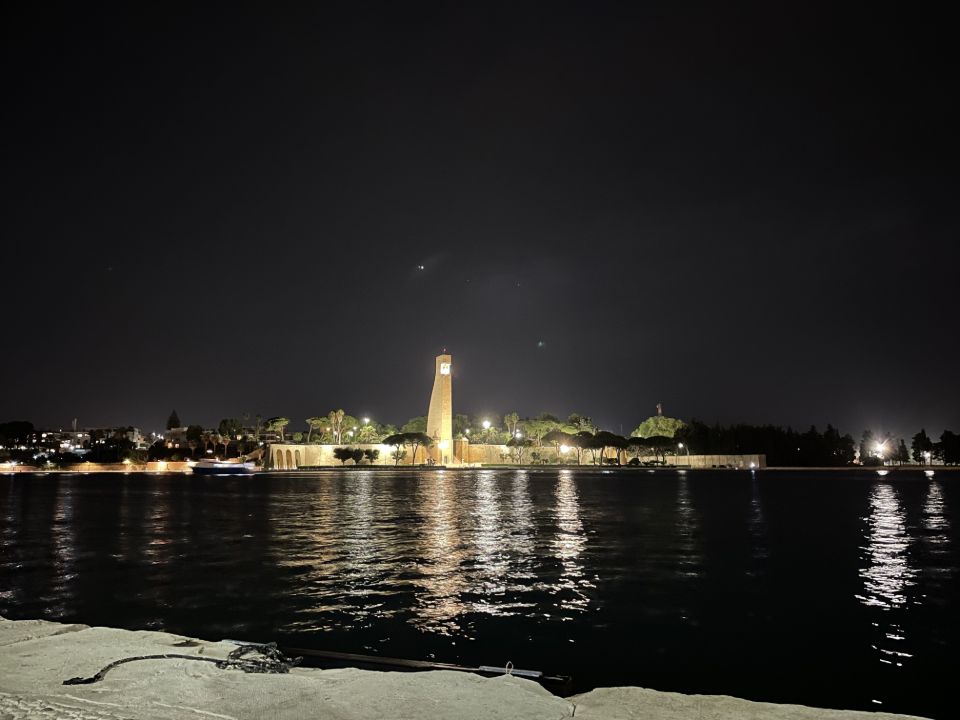
Lighthouse across the water 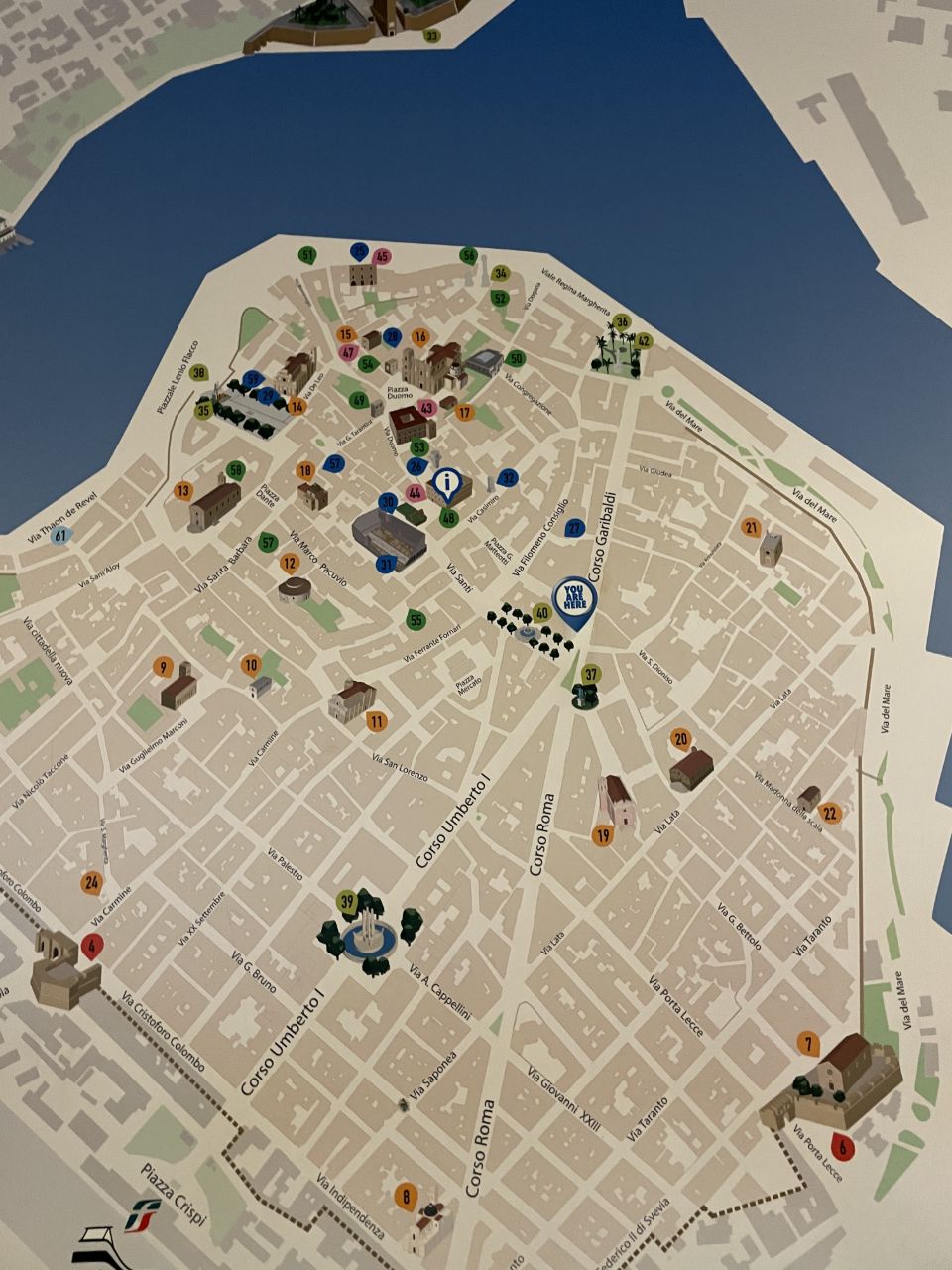
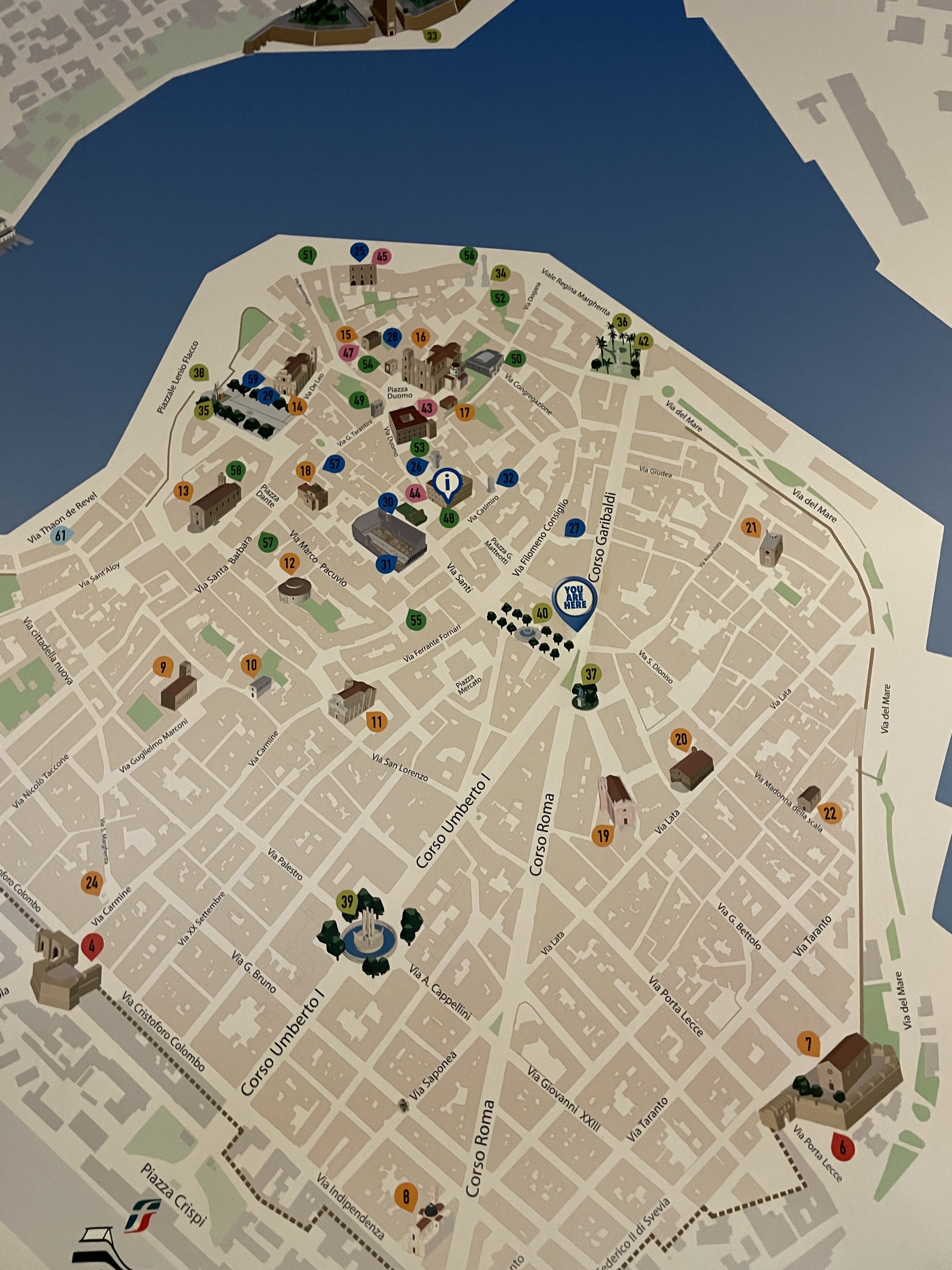
The paper map, veteran of the whole weekend 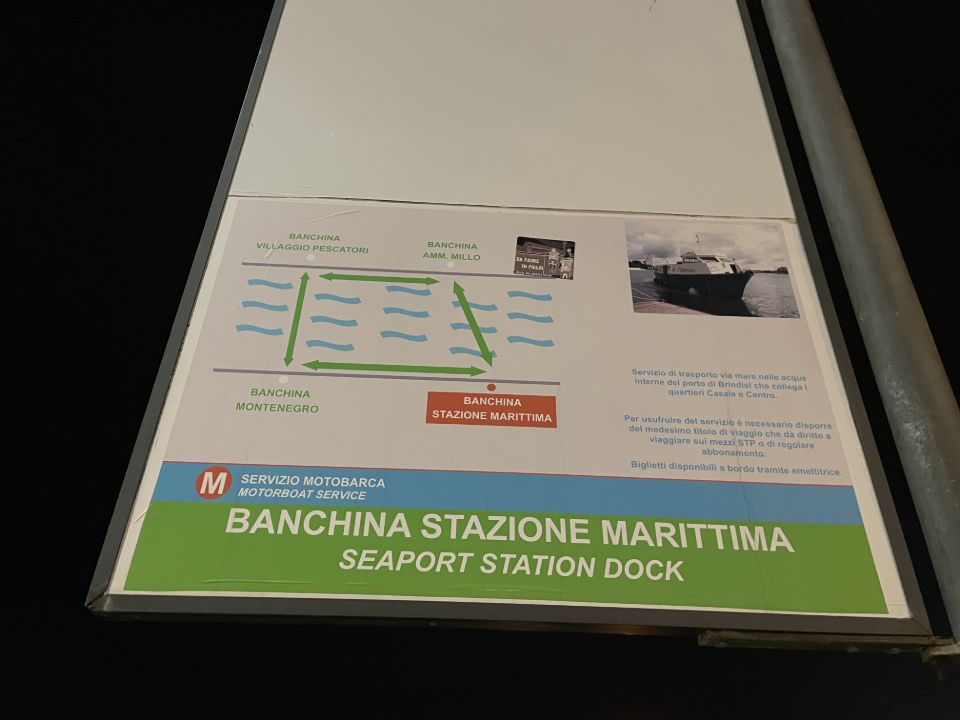
Timetables for the way out
One rooftop sunrise, four days later
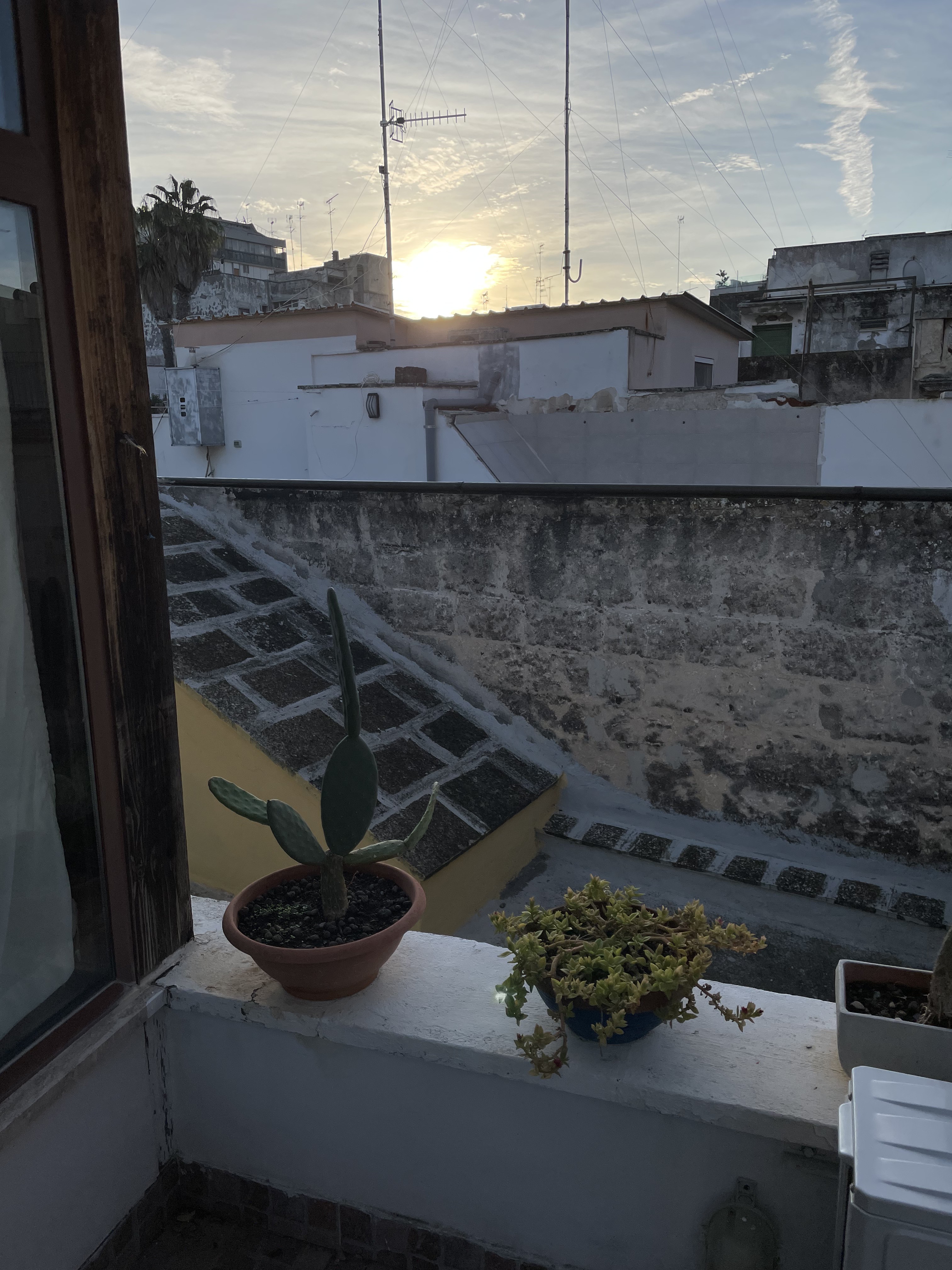
Days later, on the 21st, the trip’s last morning started on our Brindisi rooftop — the sun climbing over the same rooftops we’d walked, potted cactus on the ledge, coffee still ahead of us. The heel’s best goodbye.
The last morning
With that, the heel was behind us. Next: Ostuni, the white city — and the olive plain below it.