French Riviera trip day 8, Sainte-Marguerite
Day eight — Sainte-Marguerite
Leaving Cannes
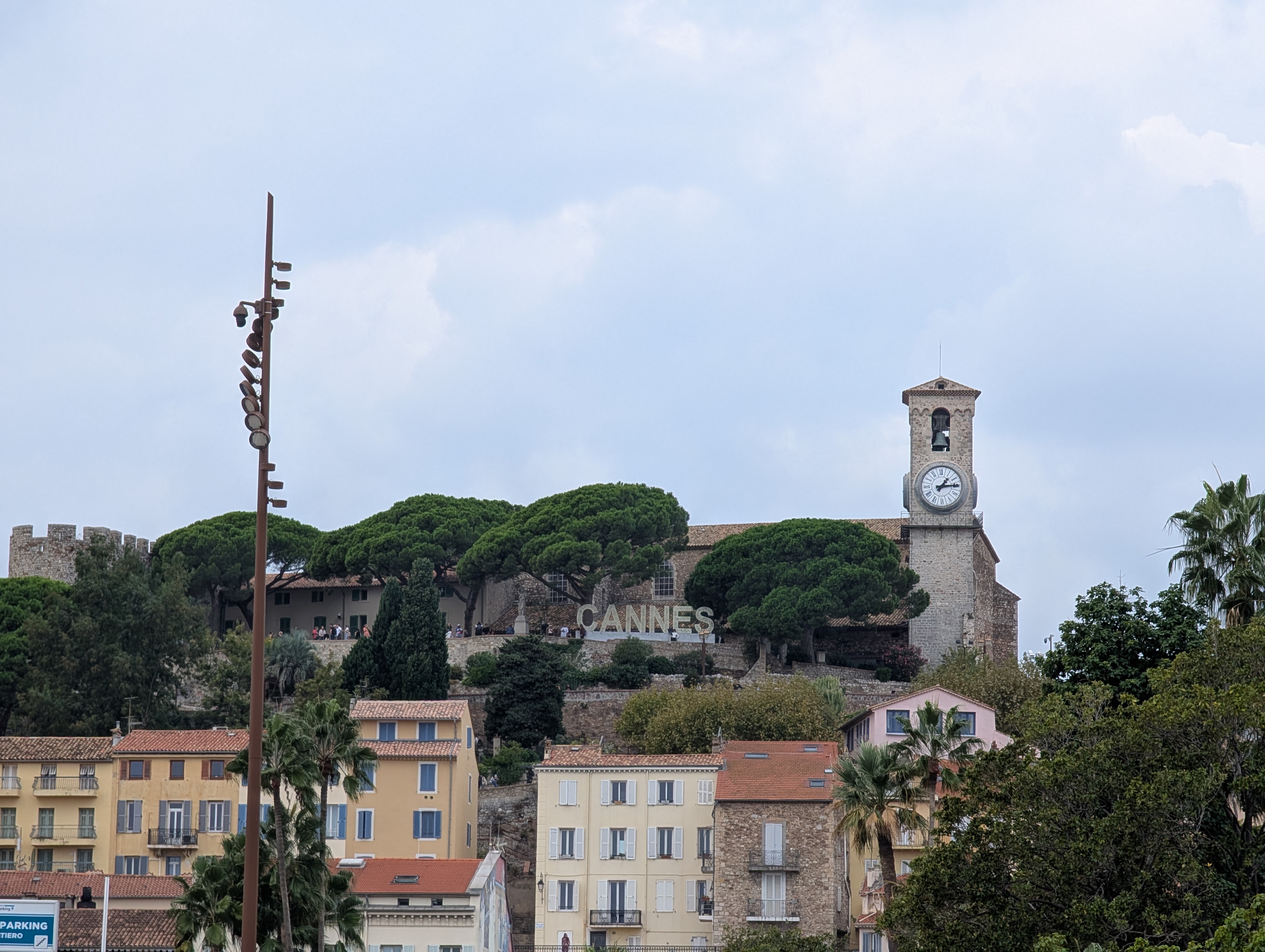
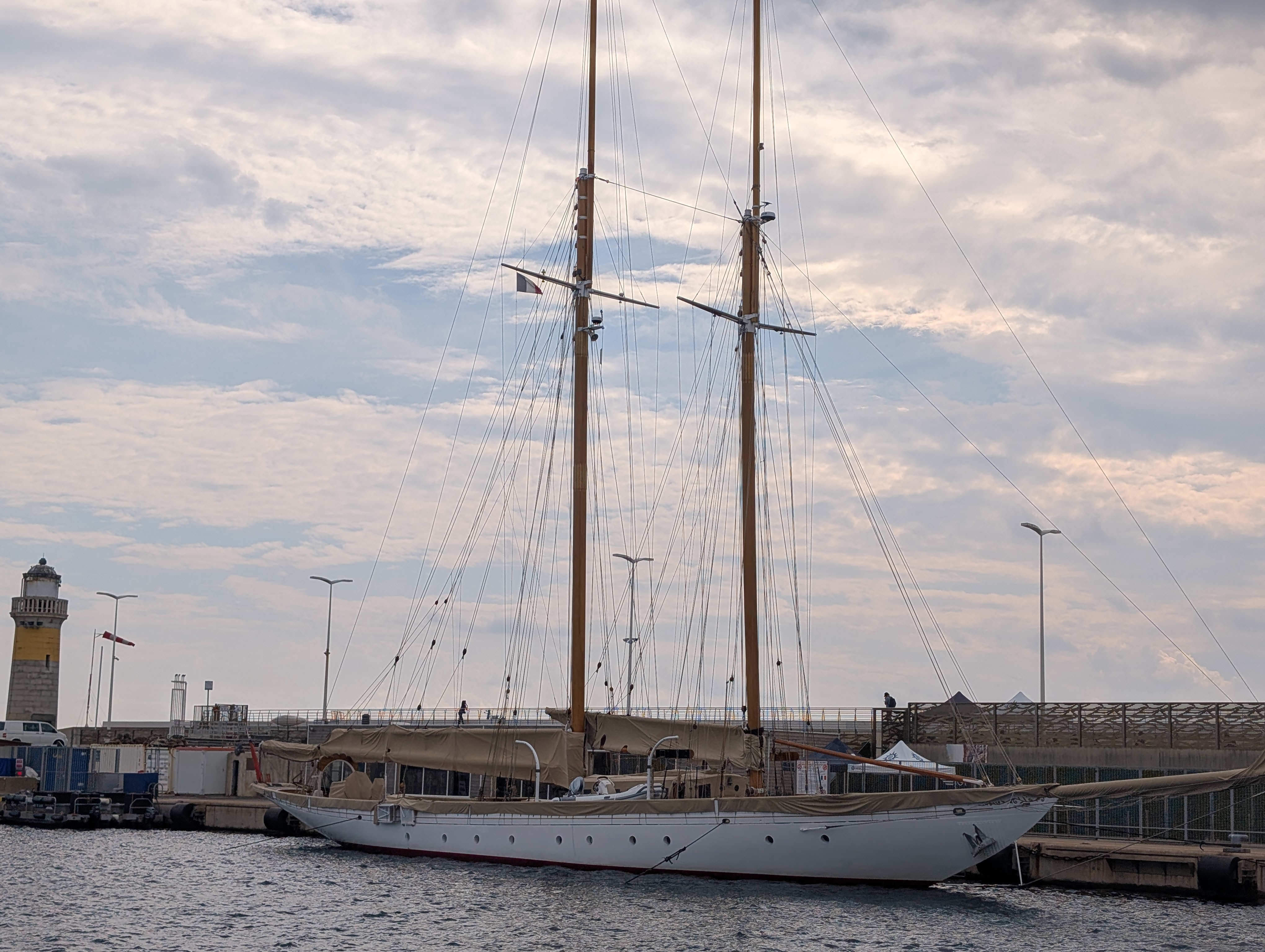
Sainte-Marguerite needed a Sunday, and the old port was ready for one. At a quarter past one its Sunday manner was already in place: the Suquet's church clock telling the time over the roofs, the striped lighthouse keeping an eye on the jetty's end, and a great two-masted schooner at its mooring that could have been photographed in any decade of the last century. By four past two the ferry was pulling out, Cannes lying along its bay as if on display for anyone still looking.
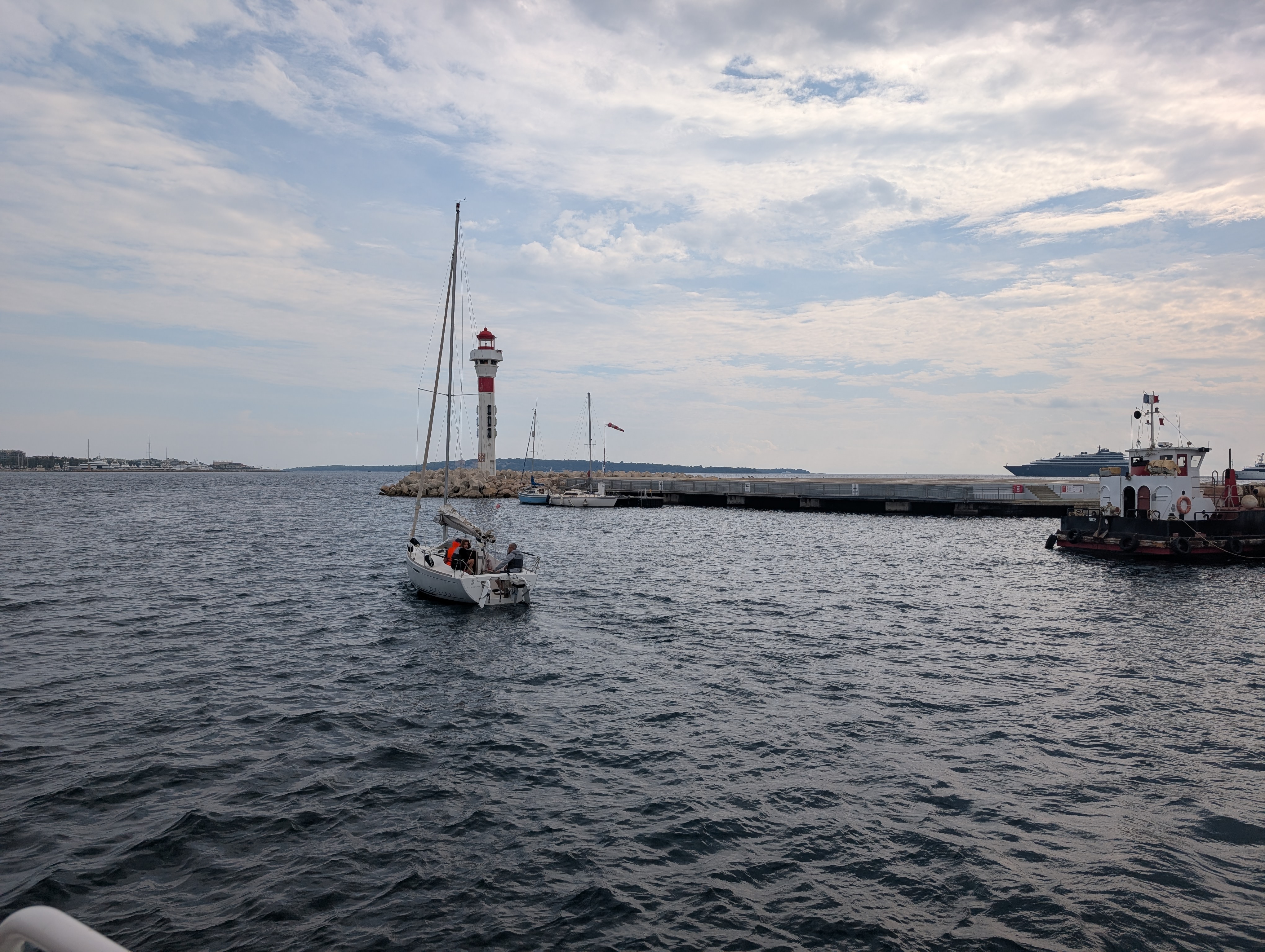
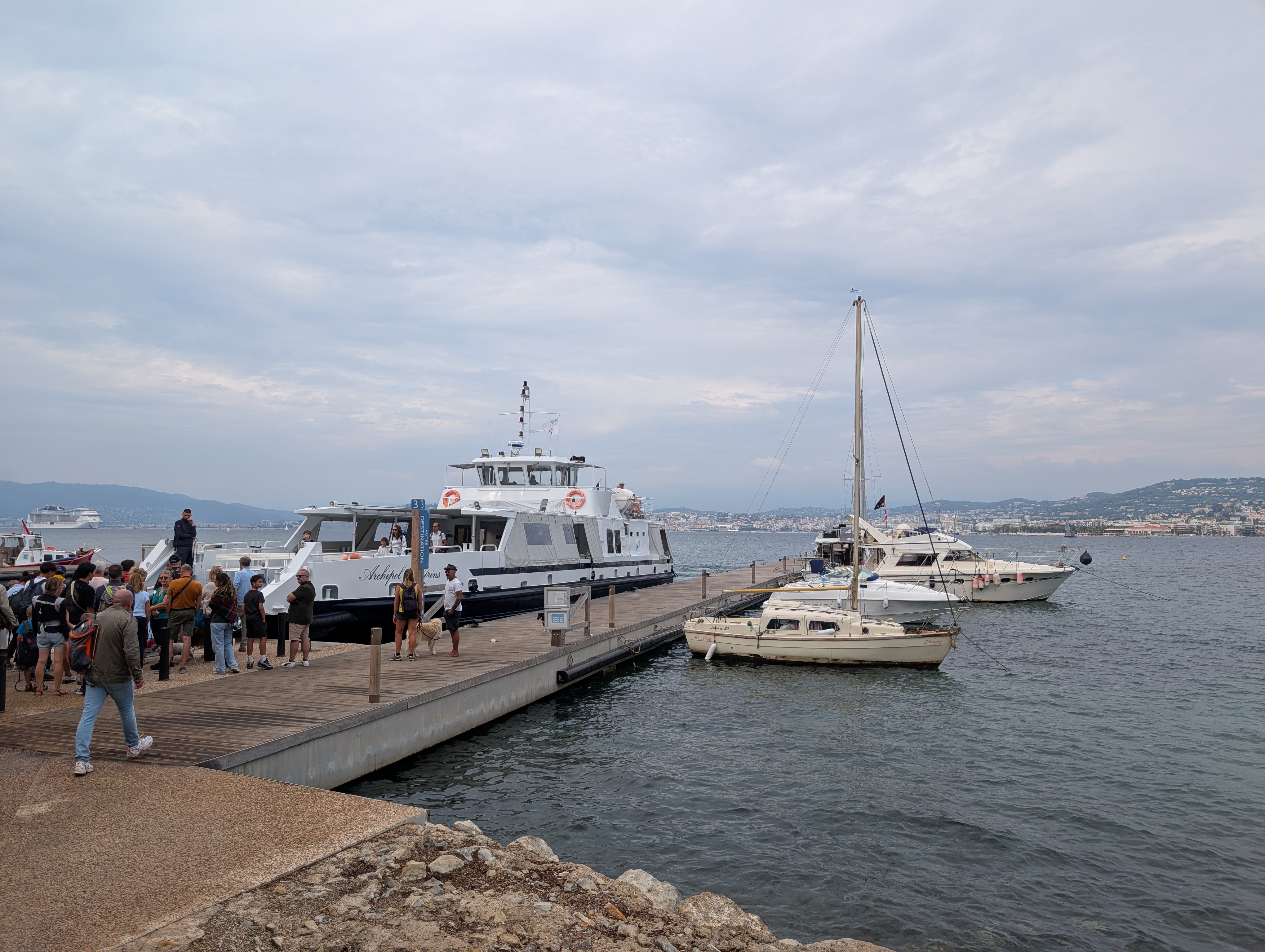
The crossing is the shortest of the trip. The lighthouse went by, a small sloop crossed under full sail, and the island grew from a green line into actual trees. Sainte-Marguerite is the largest of the Lérins, standing a little north of its quieter sibling Saint-Honorat, whose monastery shows from anywhere with height. At seventeen past two the jetty took the queue and gave it back to the island in groups.
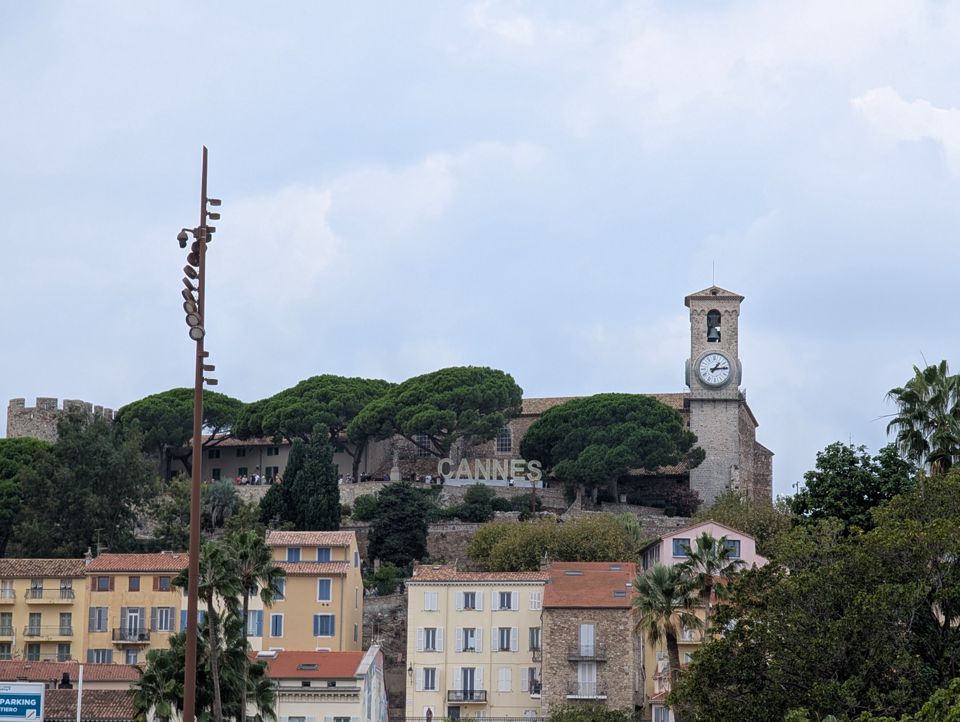
The Suquet and its church clock, from the old port 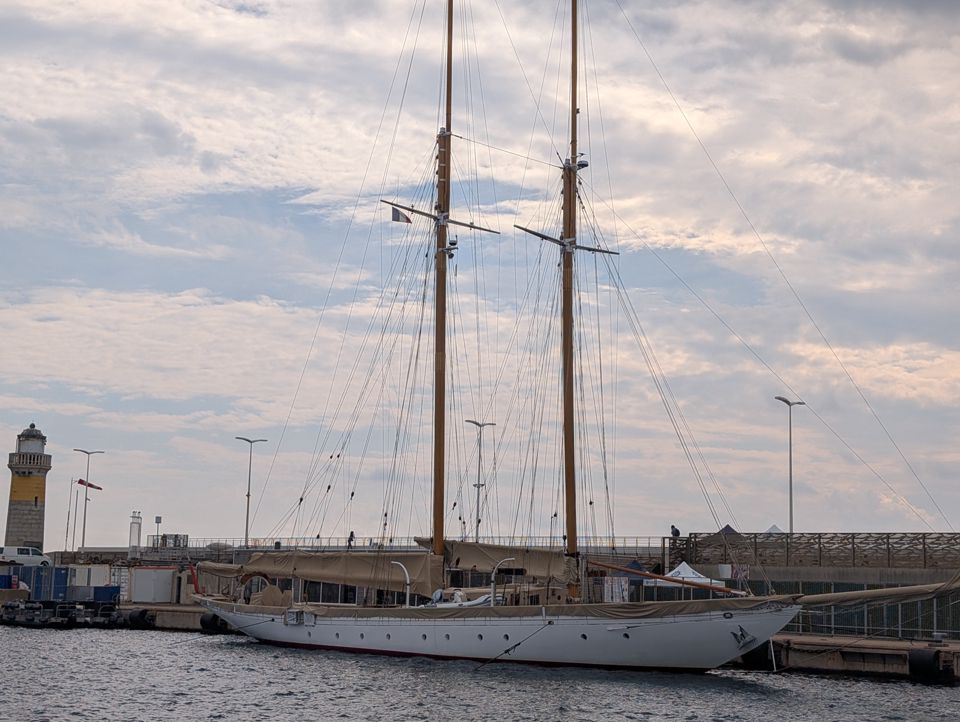
The schooner, the striped lighthouse 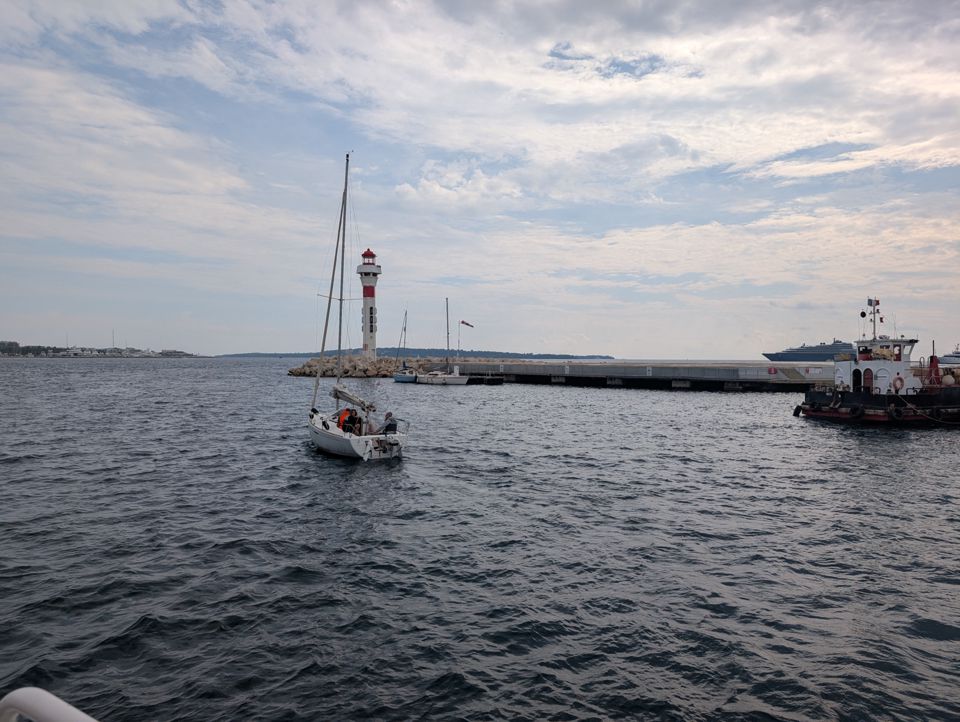
The lighthouse going past, a sloop under sail
Arrival and the shore
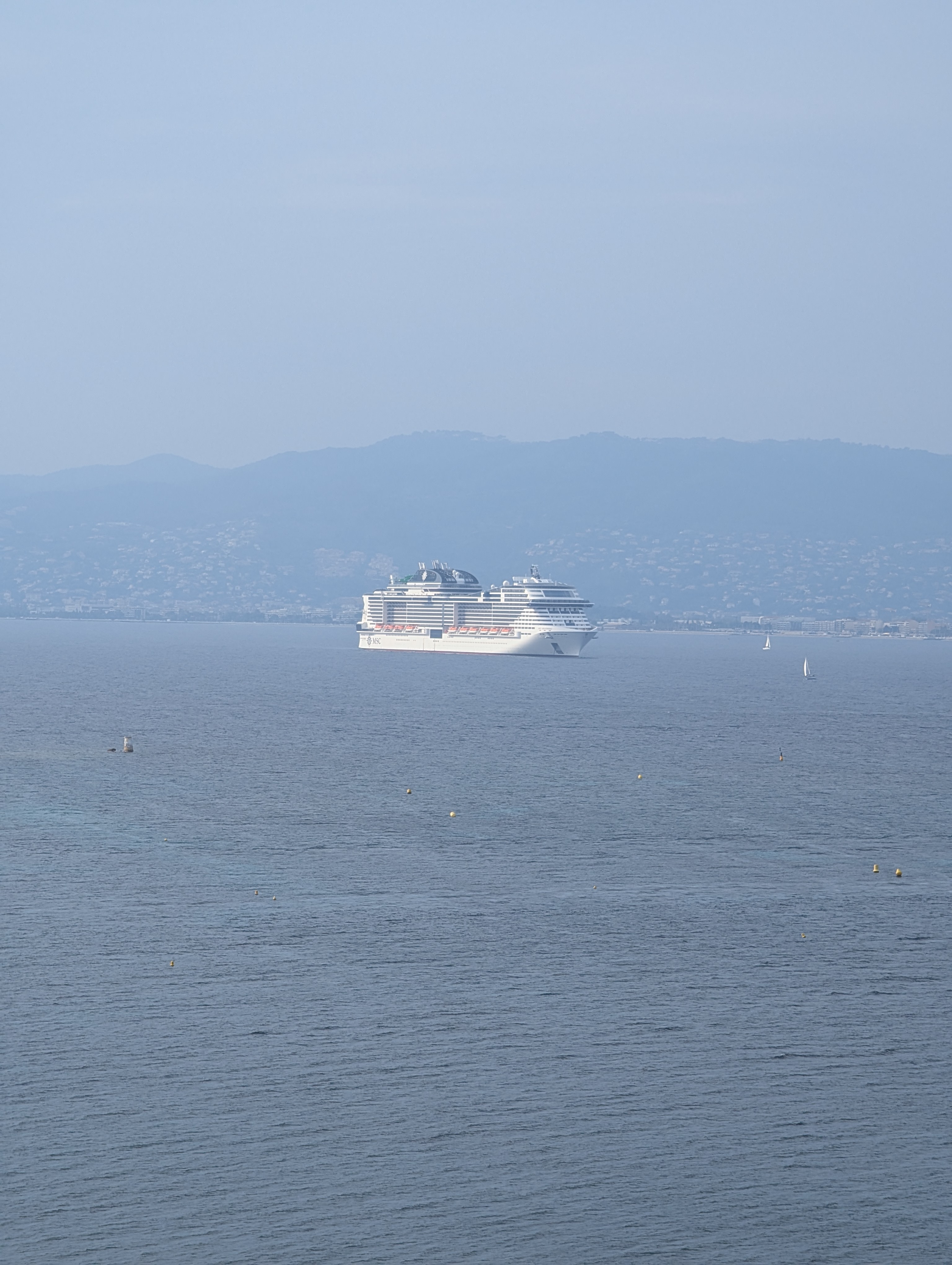
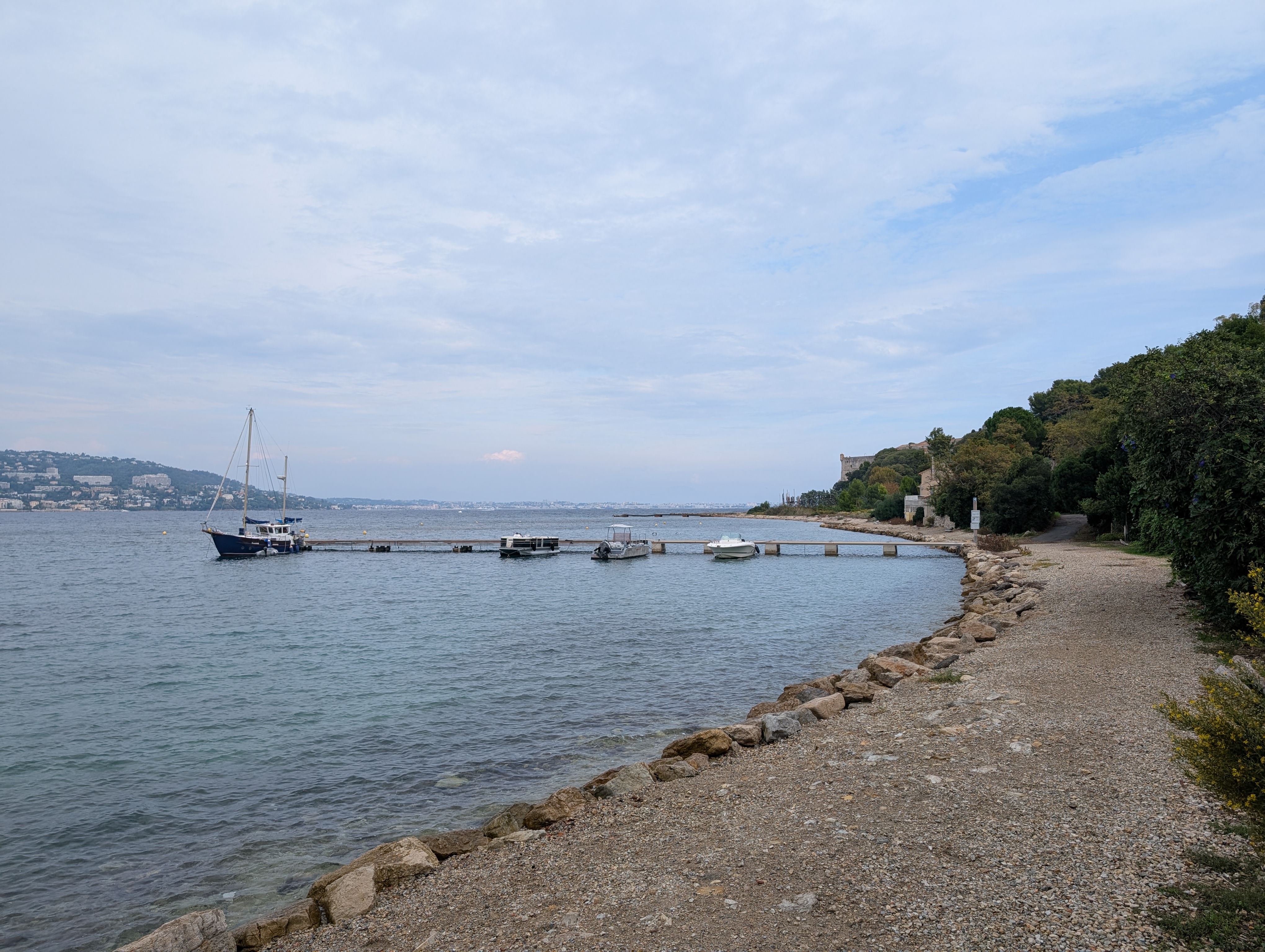
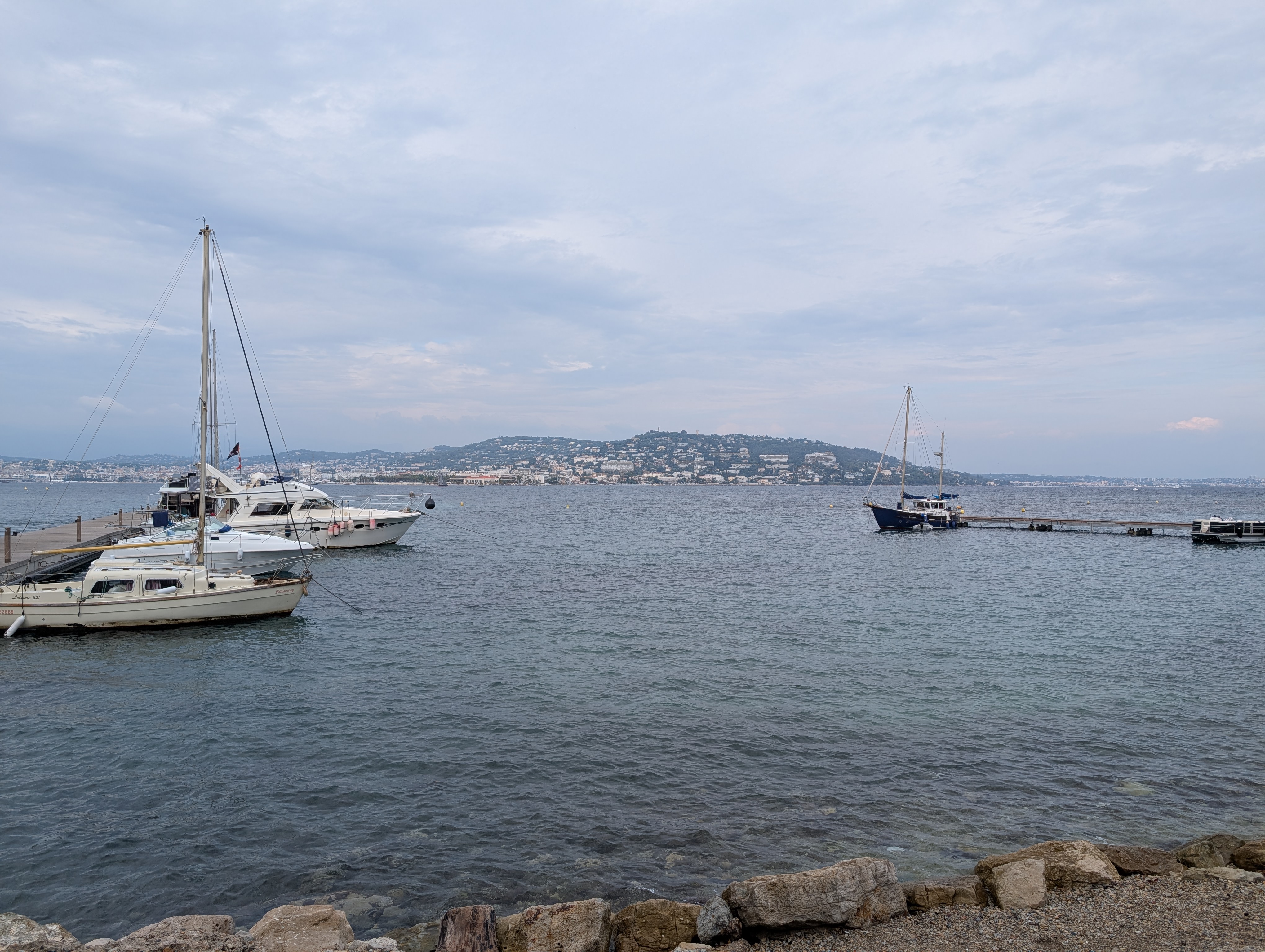
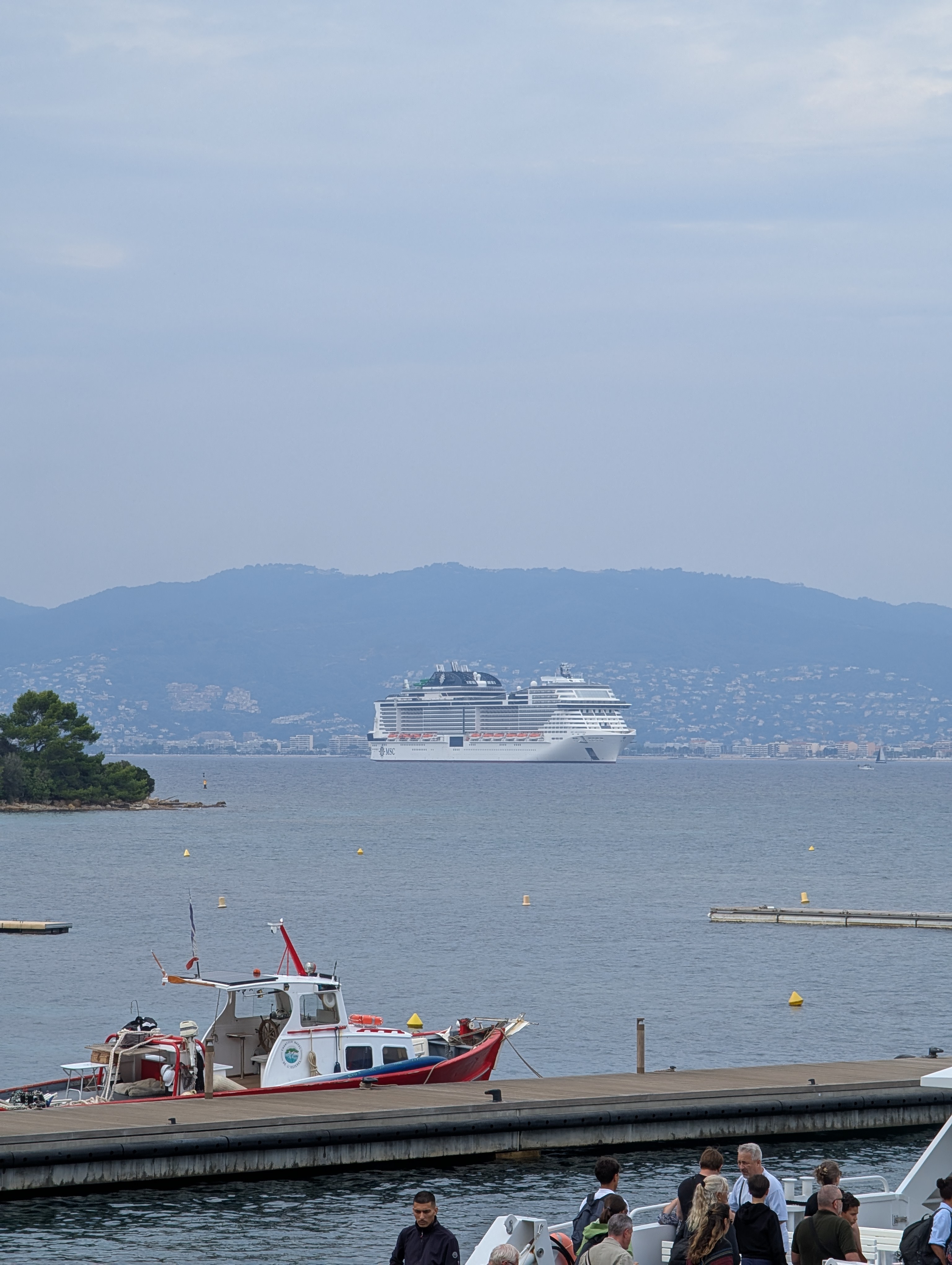
Under the pines the paths were cool. The shore ran north on boulders the size of kitchen chairs; the island's small marina held its boats on a line; and on the other side of the water everything the bay owns made its Sunday formation. A cruise ship had anchored far out, and even far off it looked like what it was — a city that had come to call.
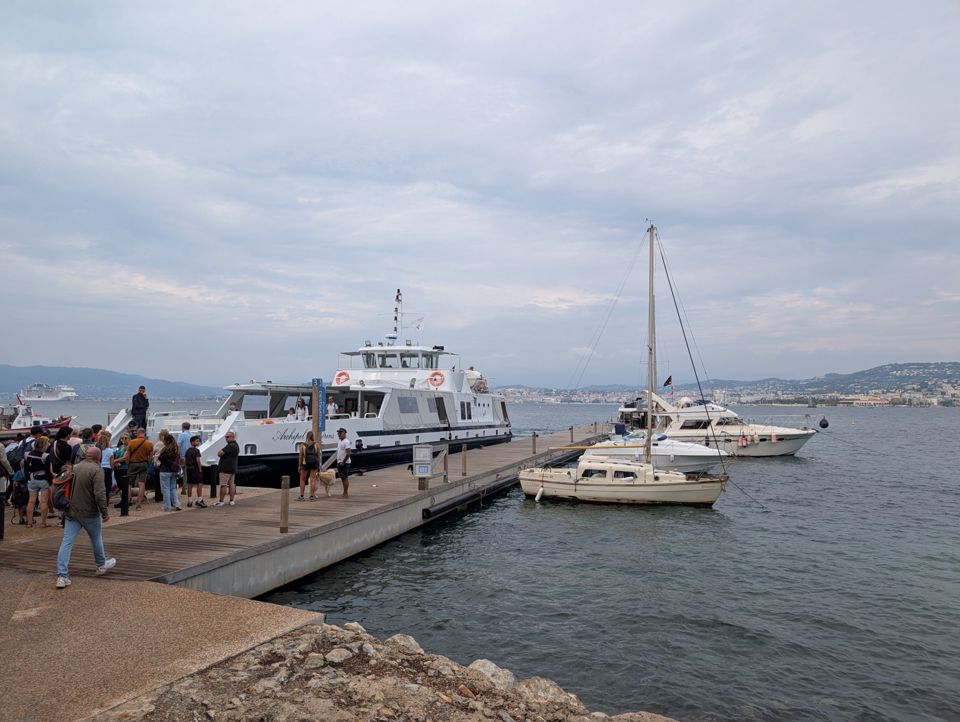
The ferry at the jetty, the queue getting itself ashore 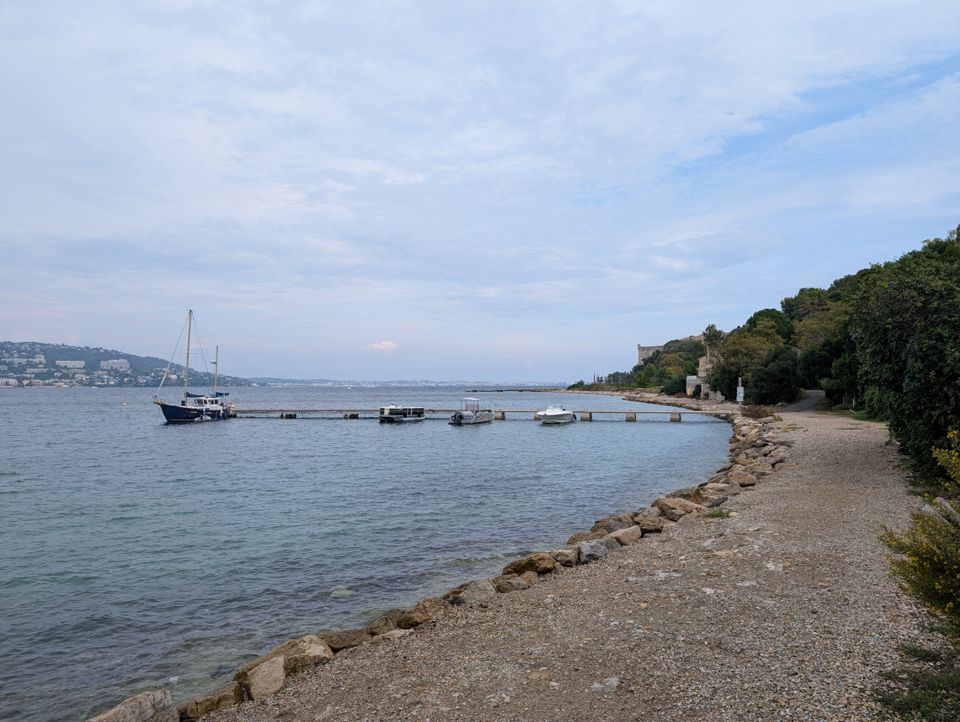
The shore path, boulders for a walkway 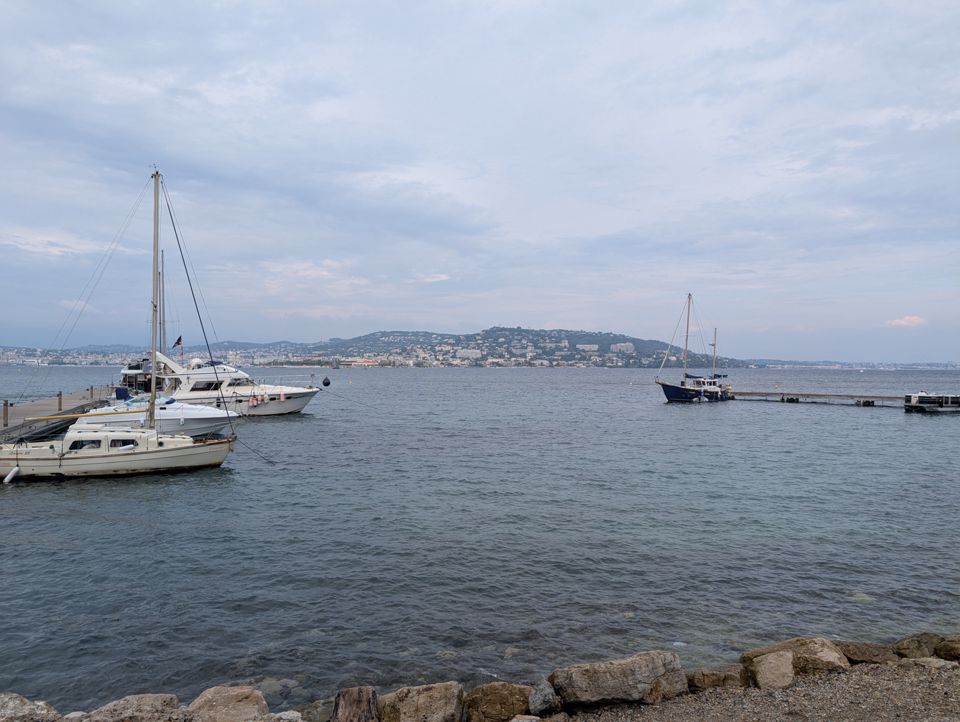
The island's small marina 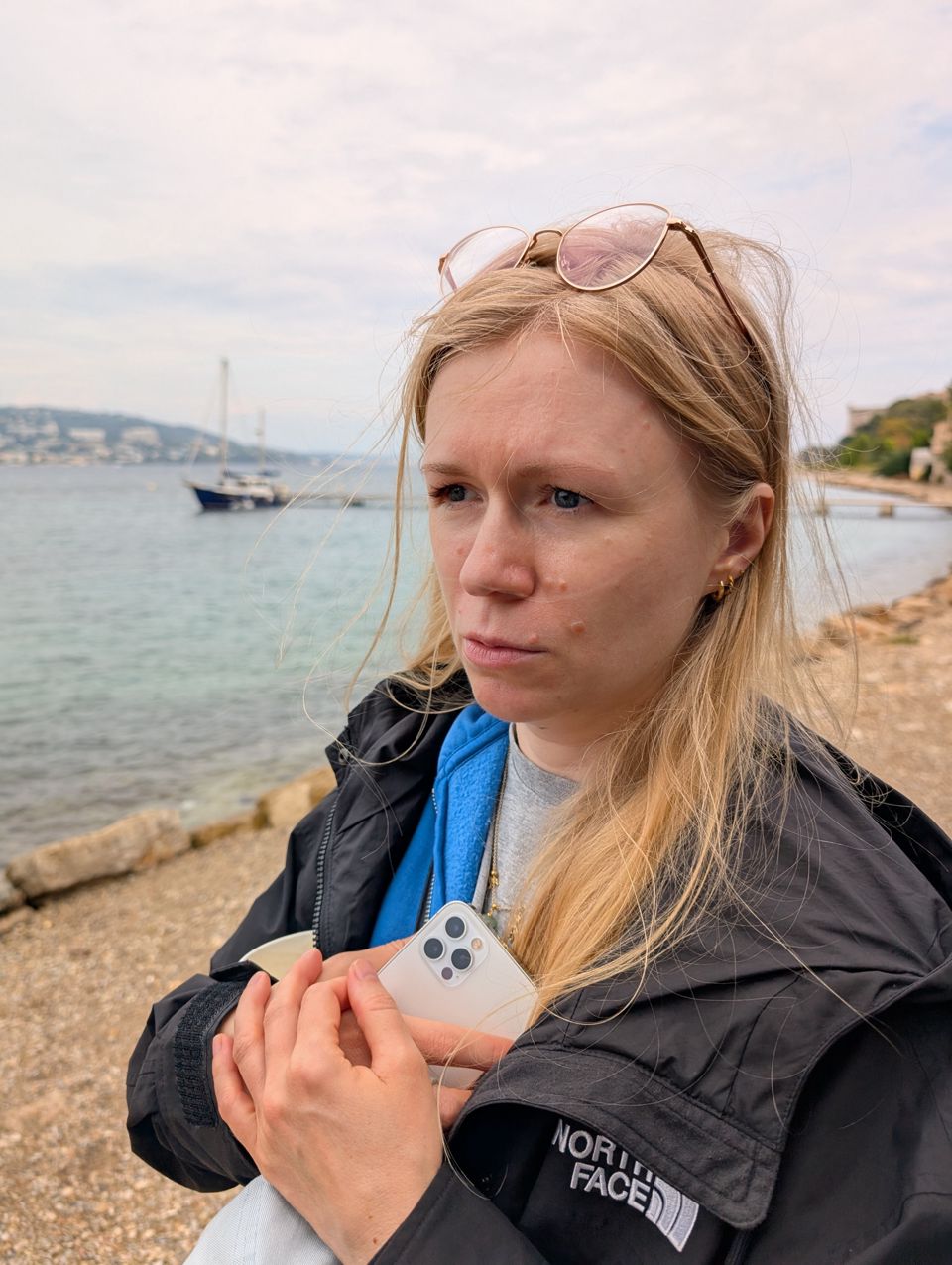
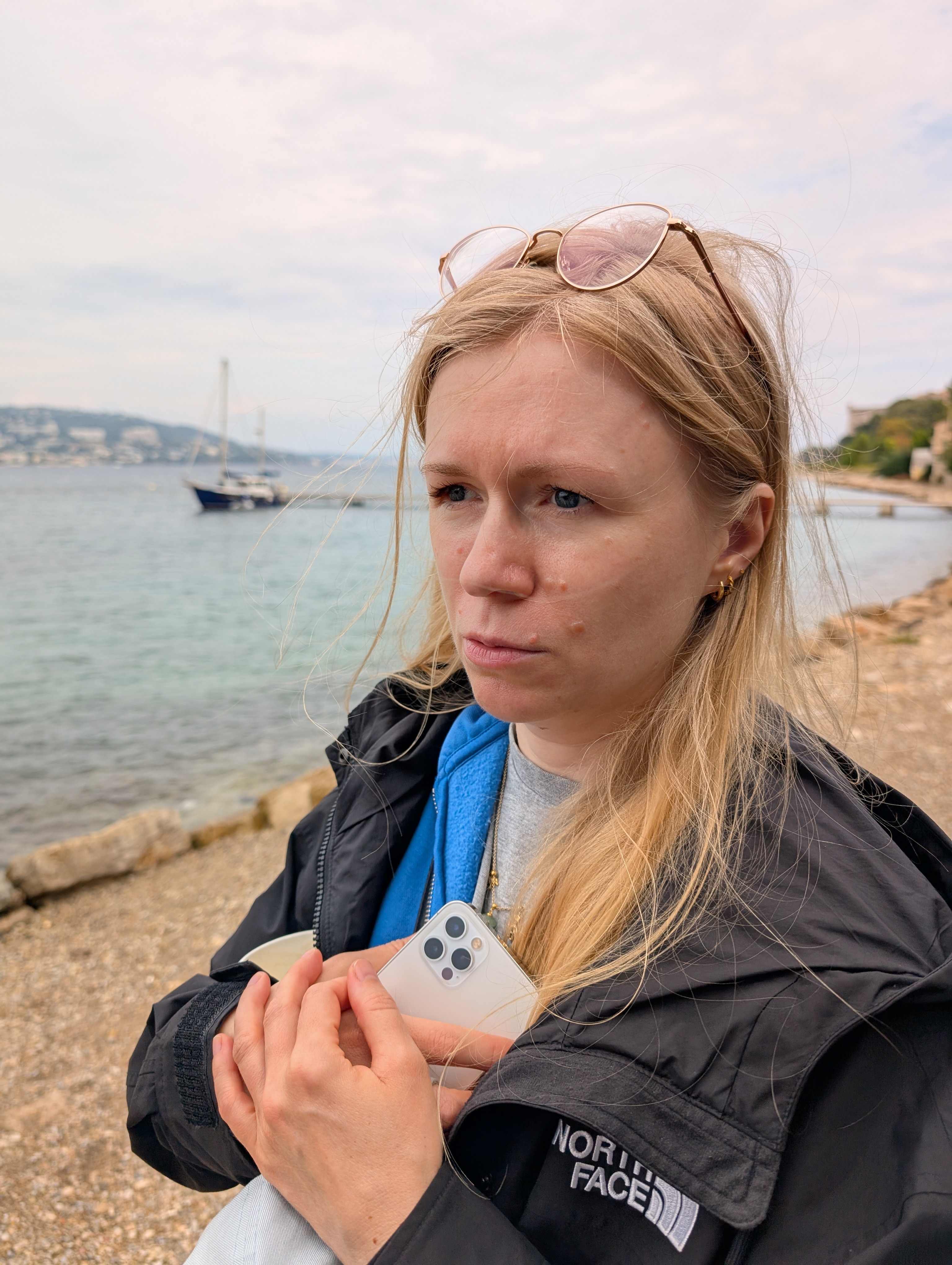
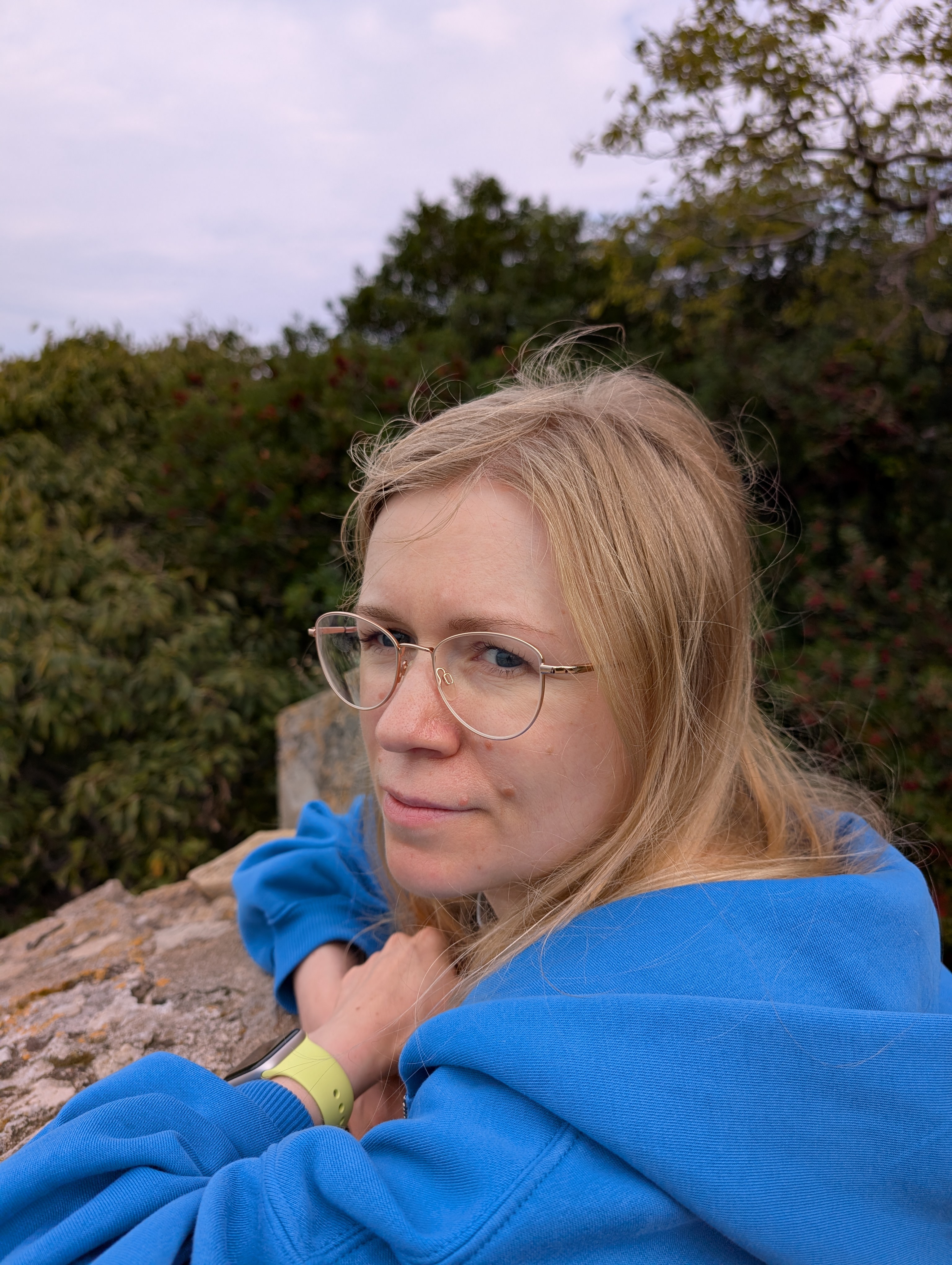
Anna, the bay keeping its boats behind her 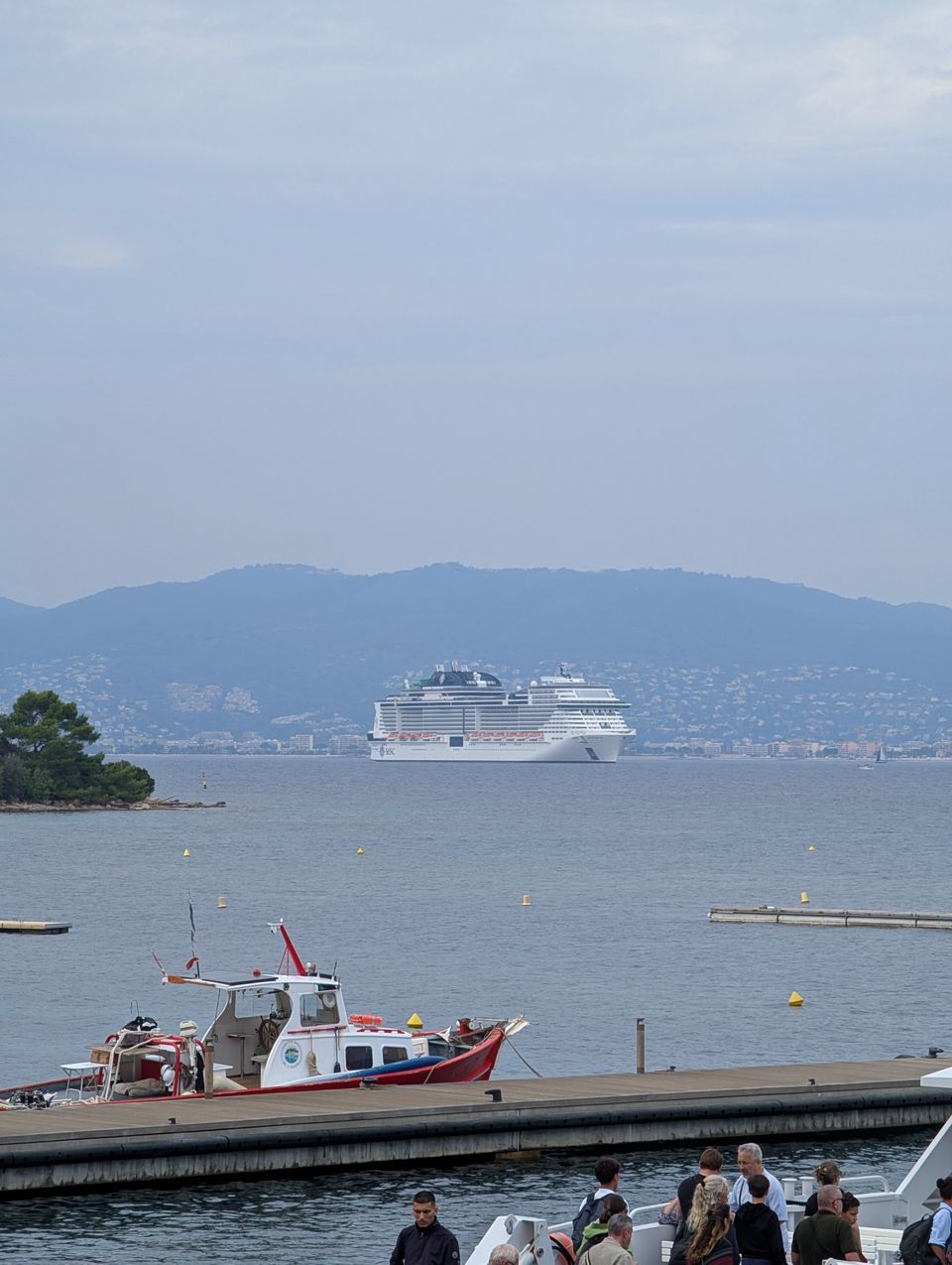
The cruise ship, anchored far off, still enormous
The Fort Royal
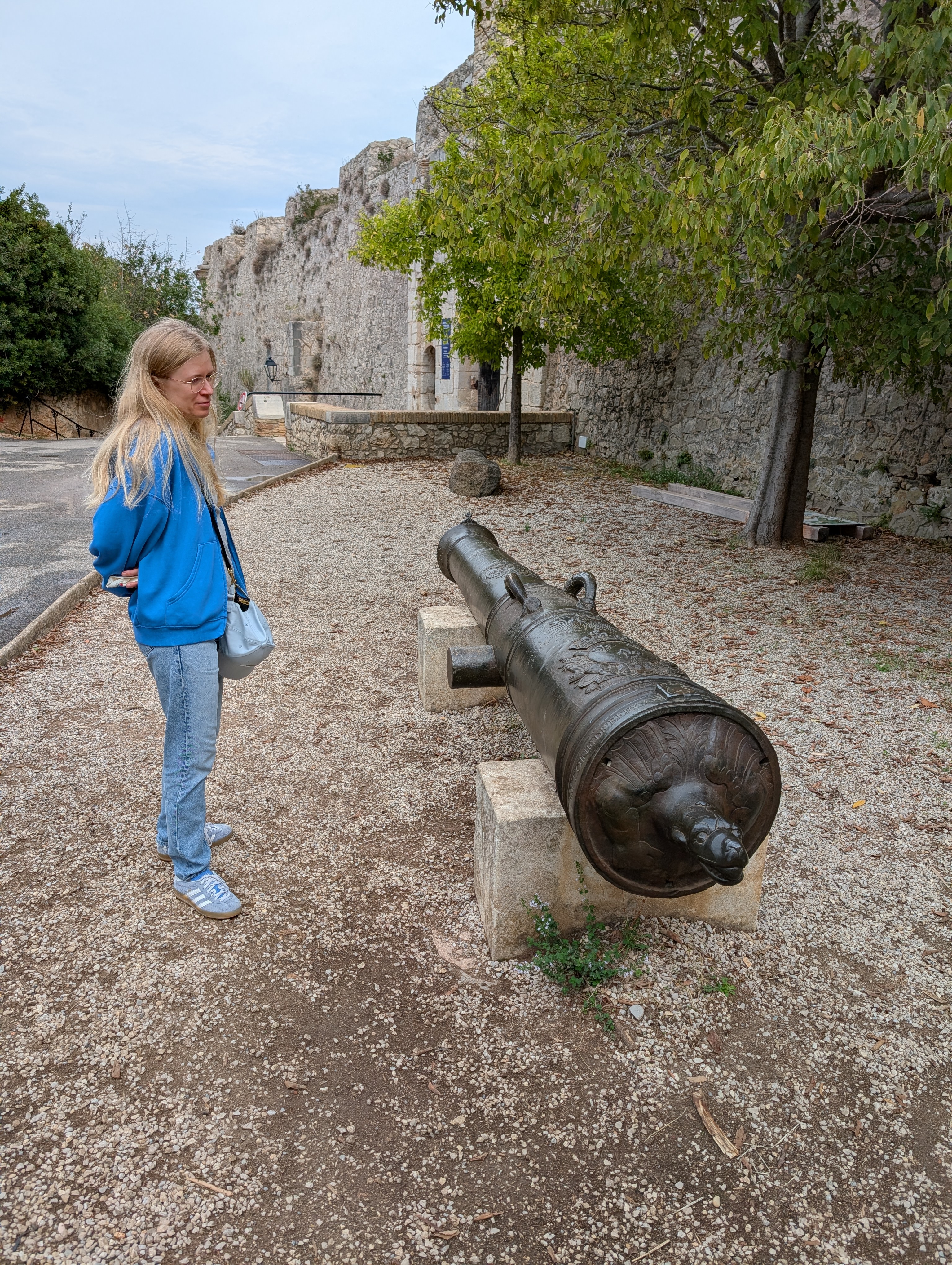
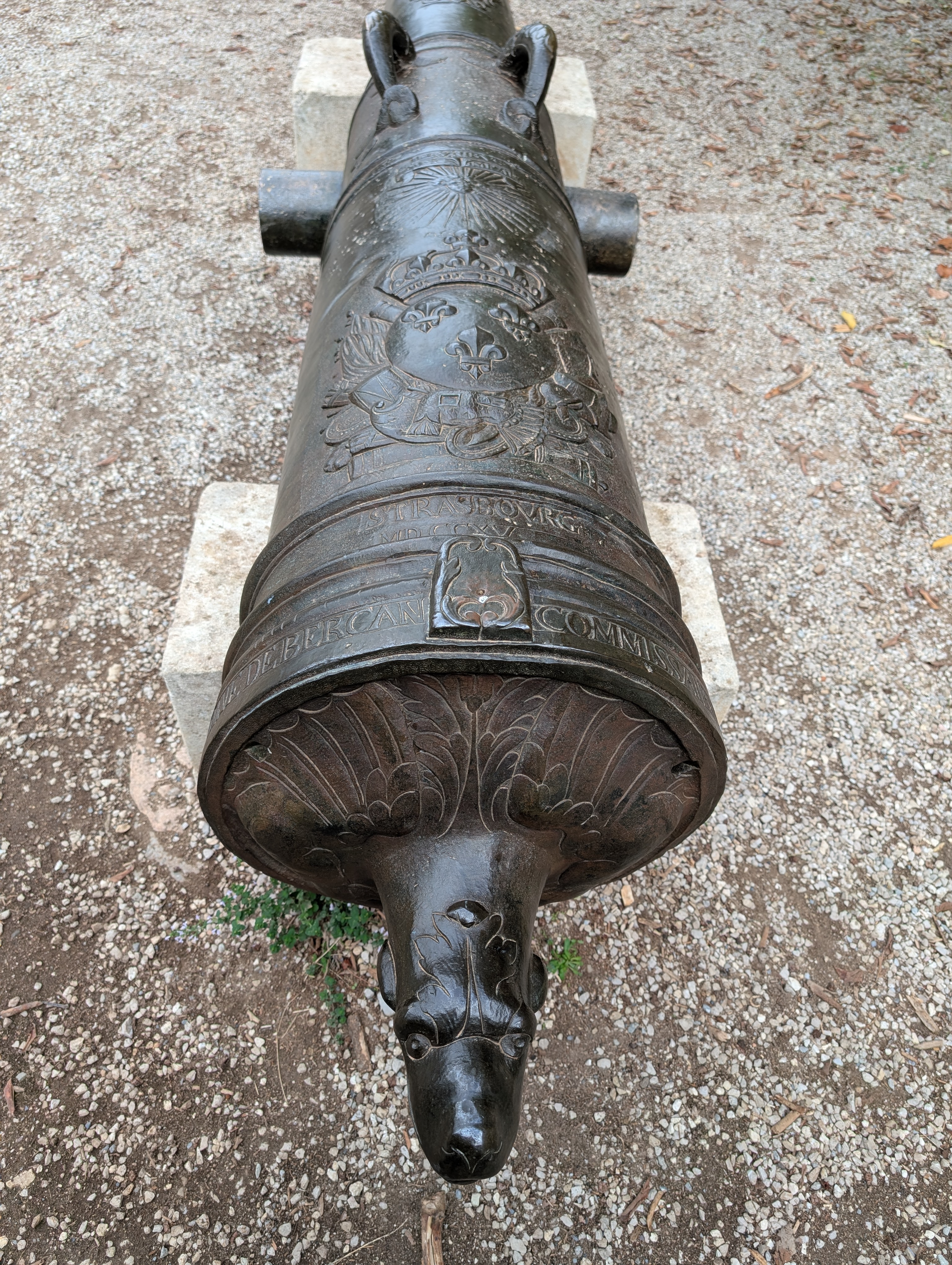
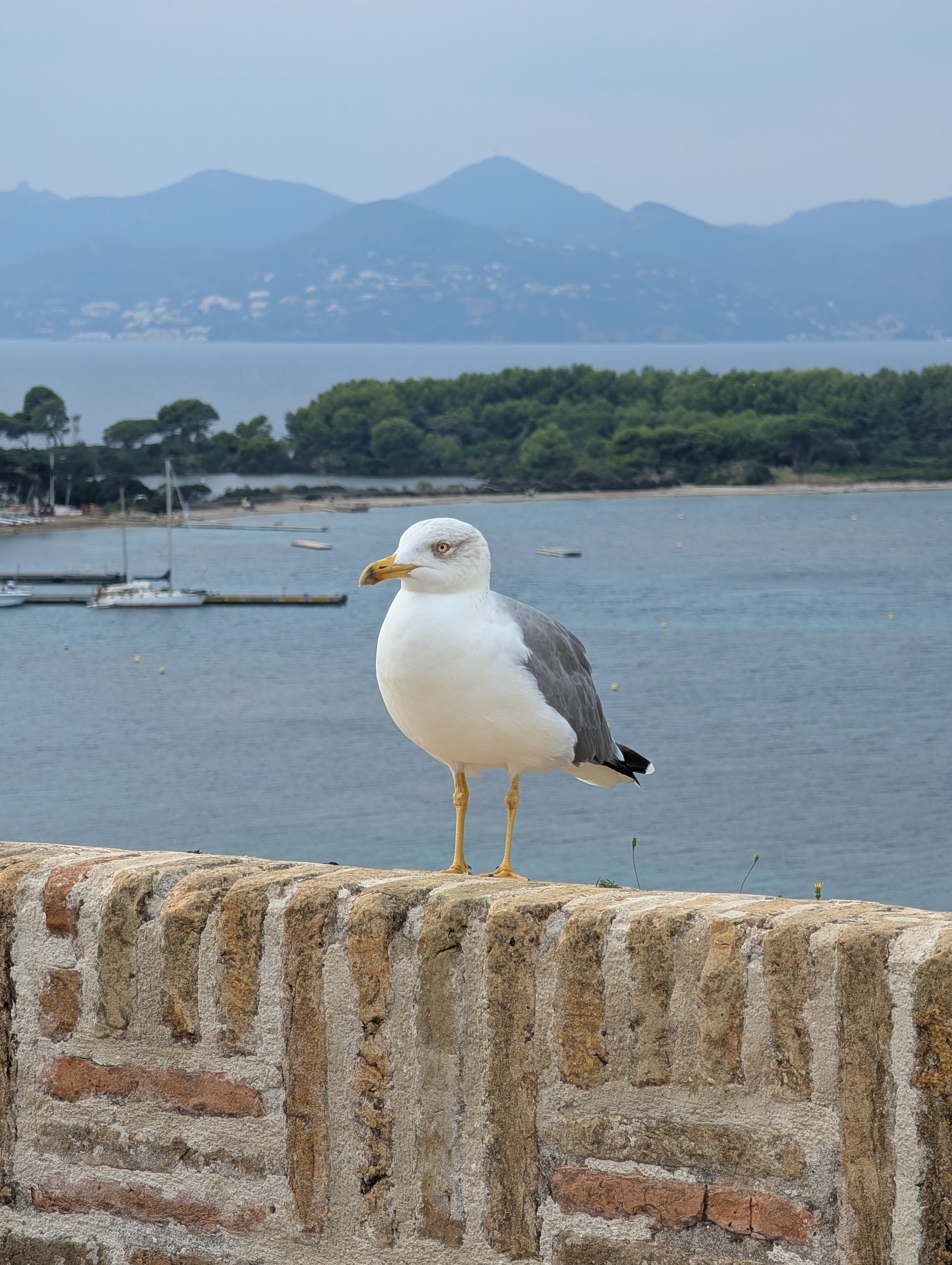
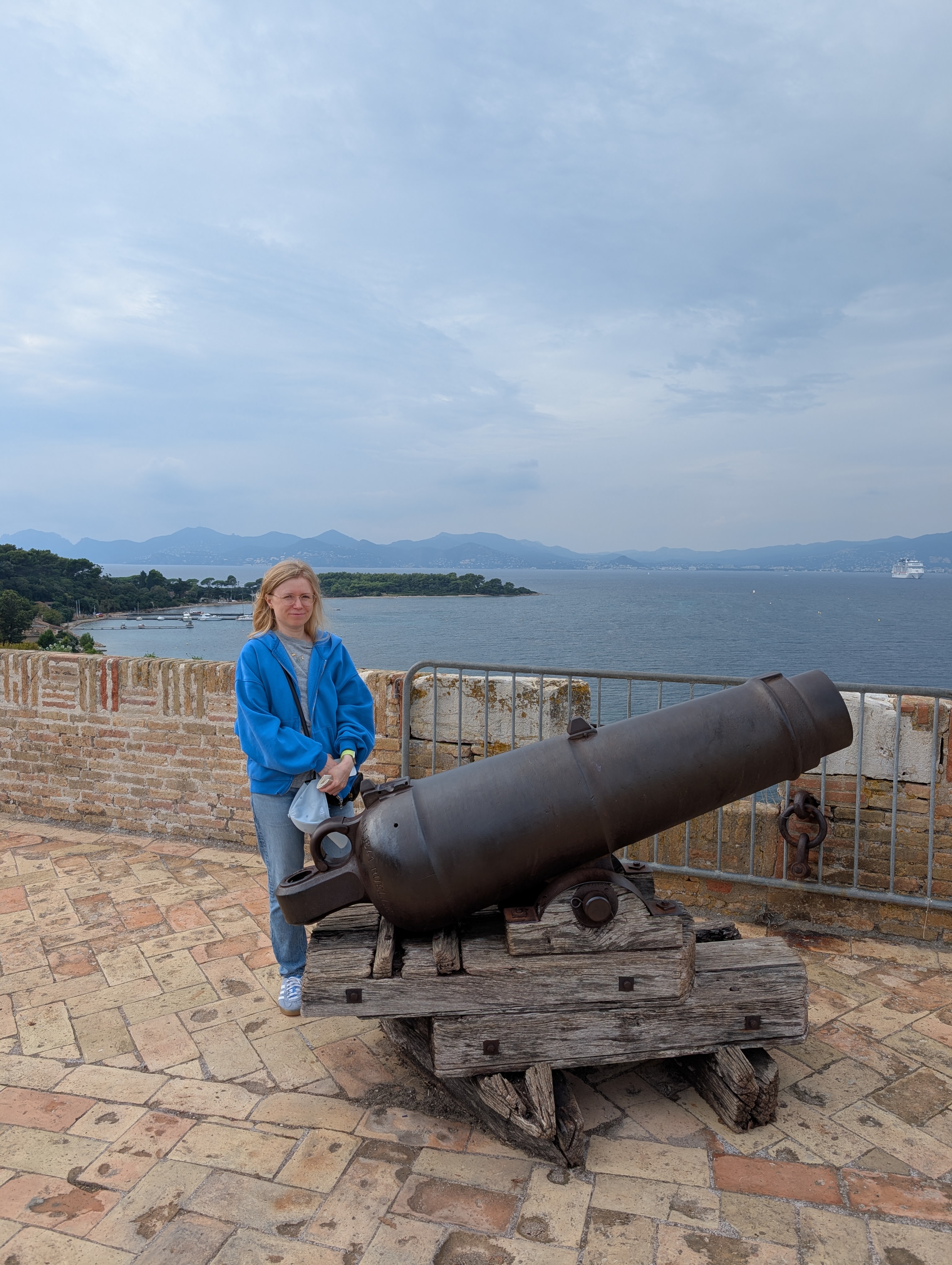
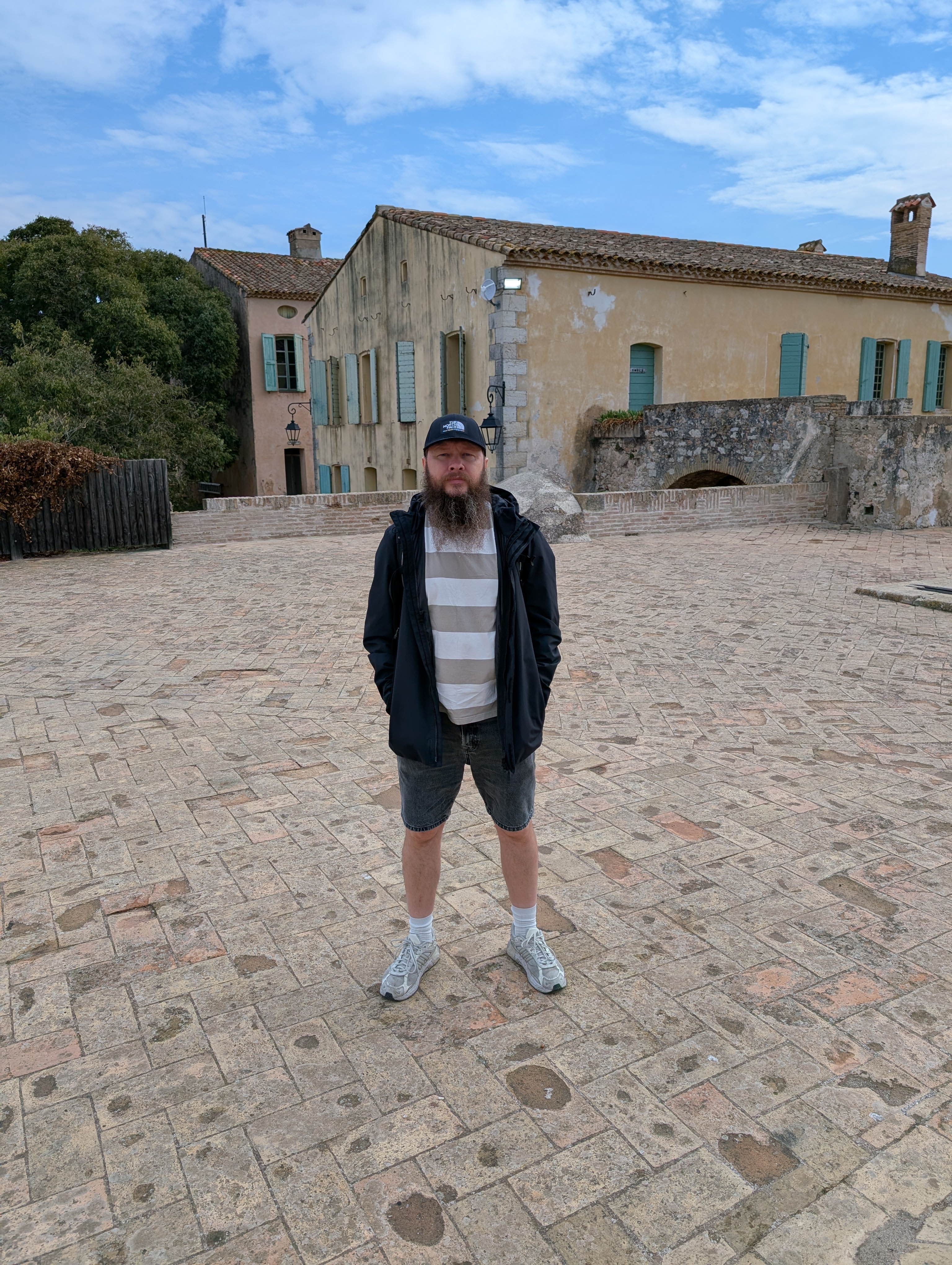
The fort took the afternoon's first half. Fort Royal was built in the first years of the seventeenth century to keep an enemy from anchoring off Cannes, and it stands on foundations the Romans left — the cisterns are still down there, doing nothing. The rampart walk runs the circuit of its walls: cannon sit in place with the king's arms cast into the bronze, the sentry boxes watch the sea watch them back, and a gull keeps the parapet as its own patch, Saint-Honorat laid out behind for company. From the corner the bay opened flat. Anna stood with the cannon; on the Place d'Armes, in front of the fort's long barracks, the light was doing its best.
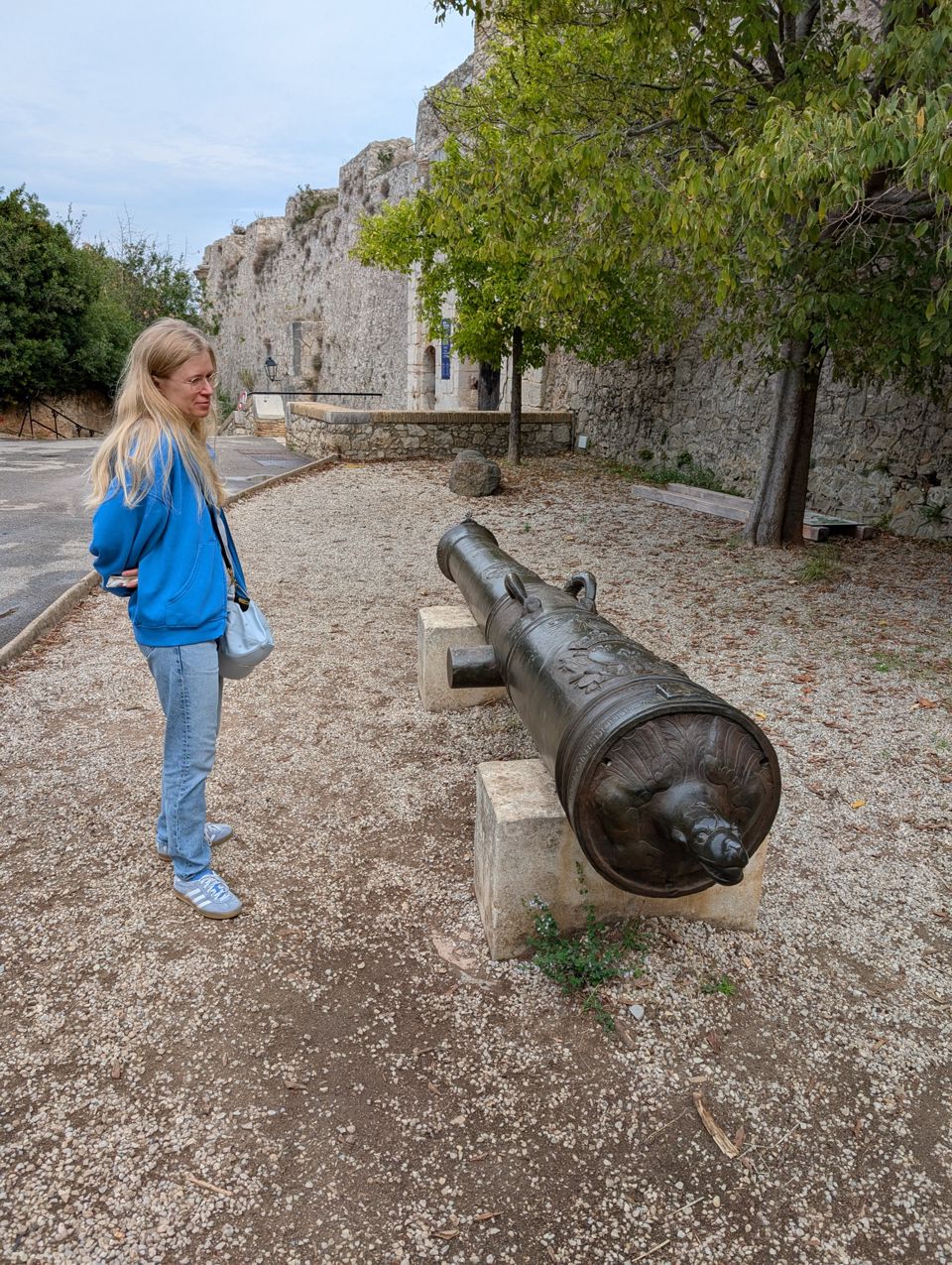
Anna and the bronze cannon 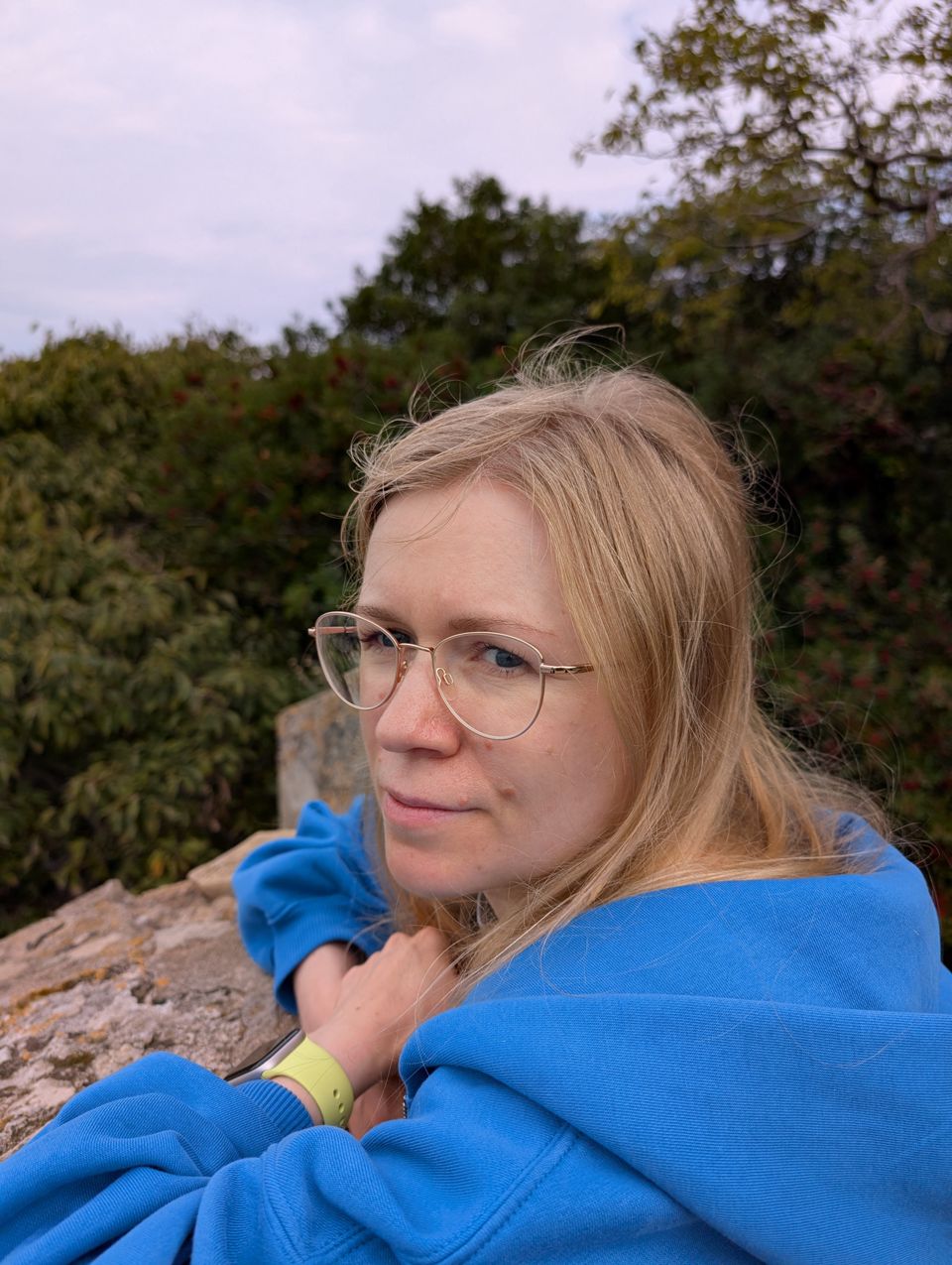
Anna on the rampart walk 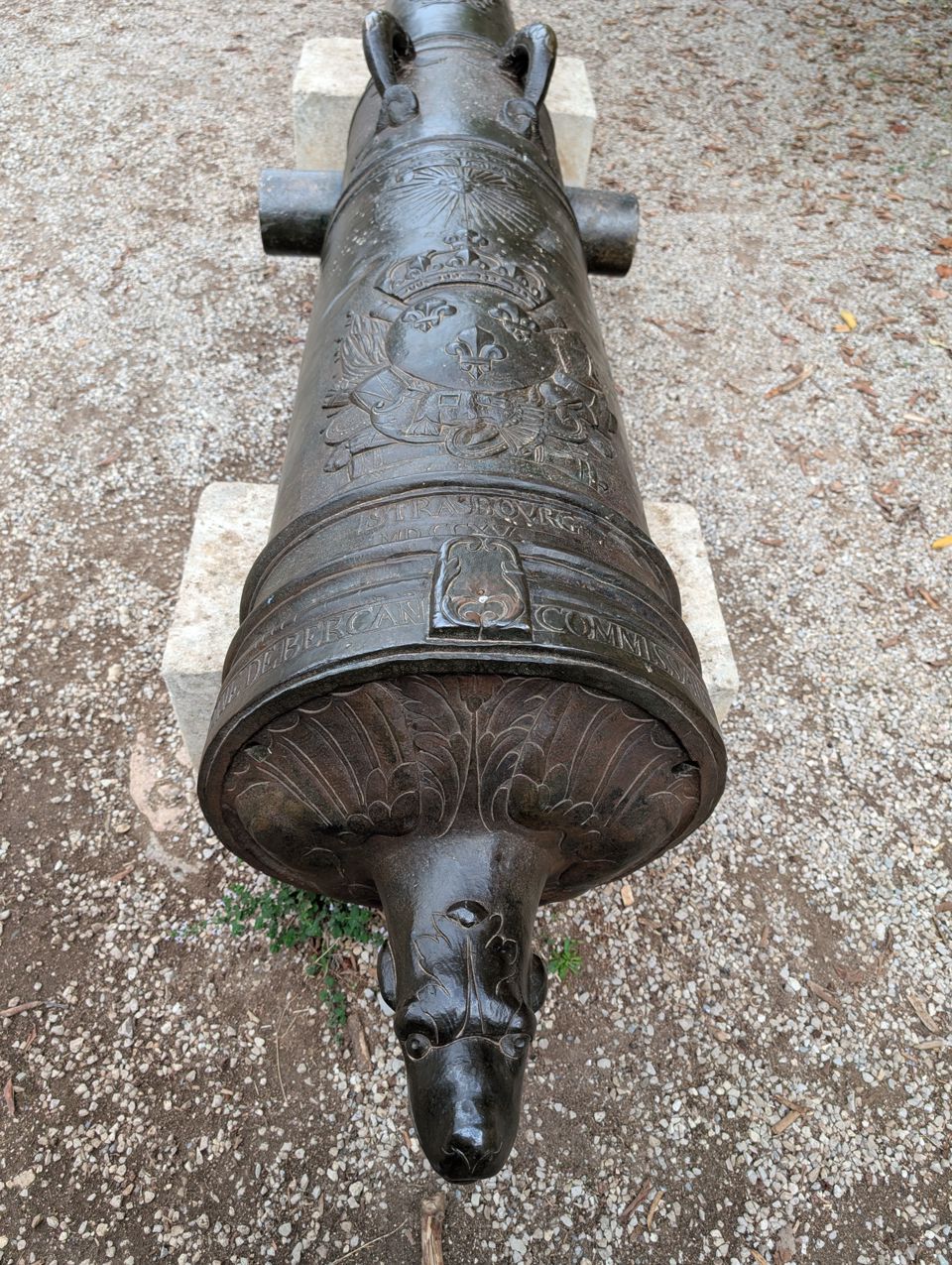
The cannon's royal arms 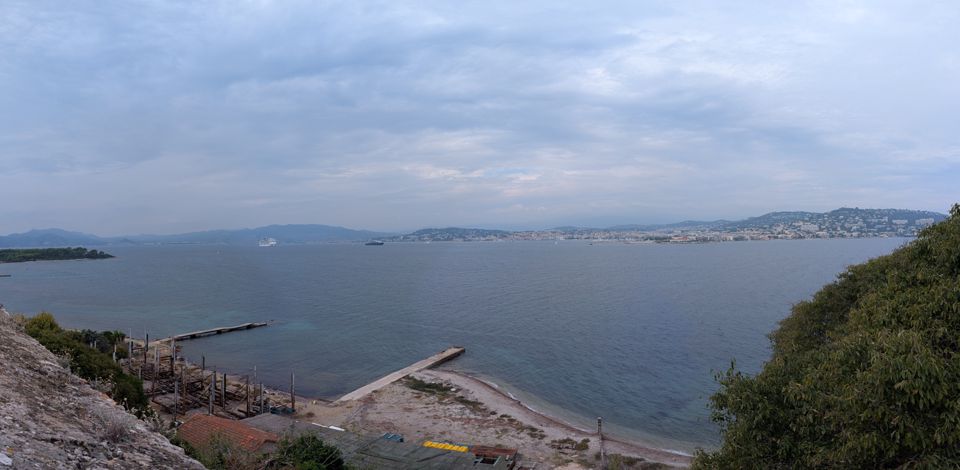
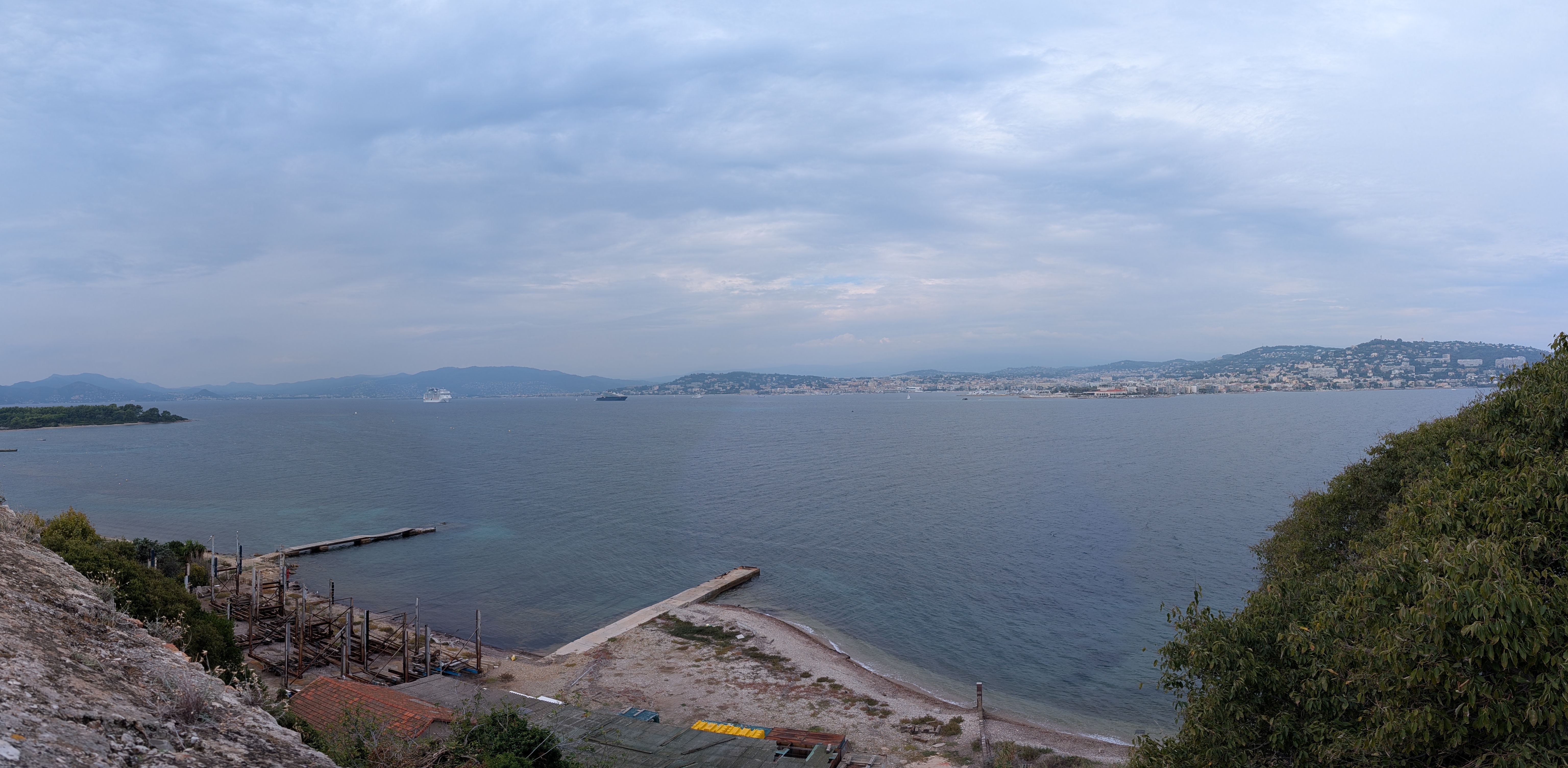
The whole bay, from the walls 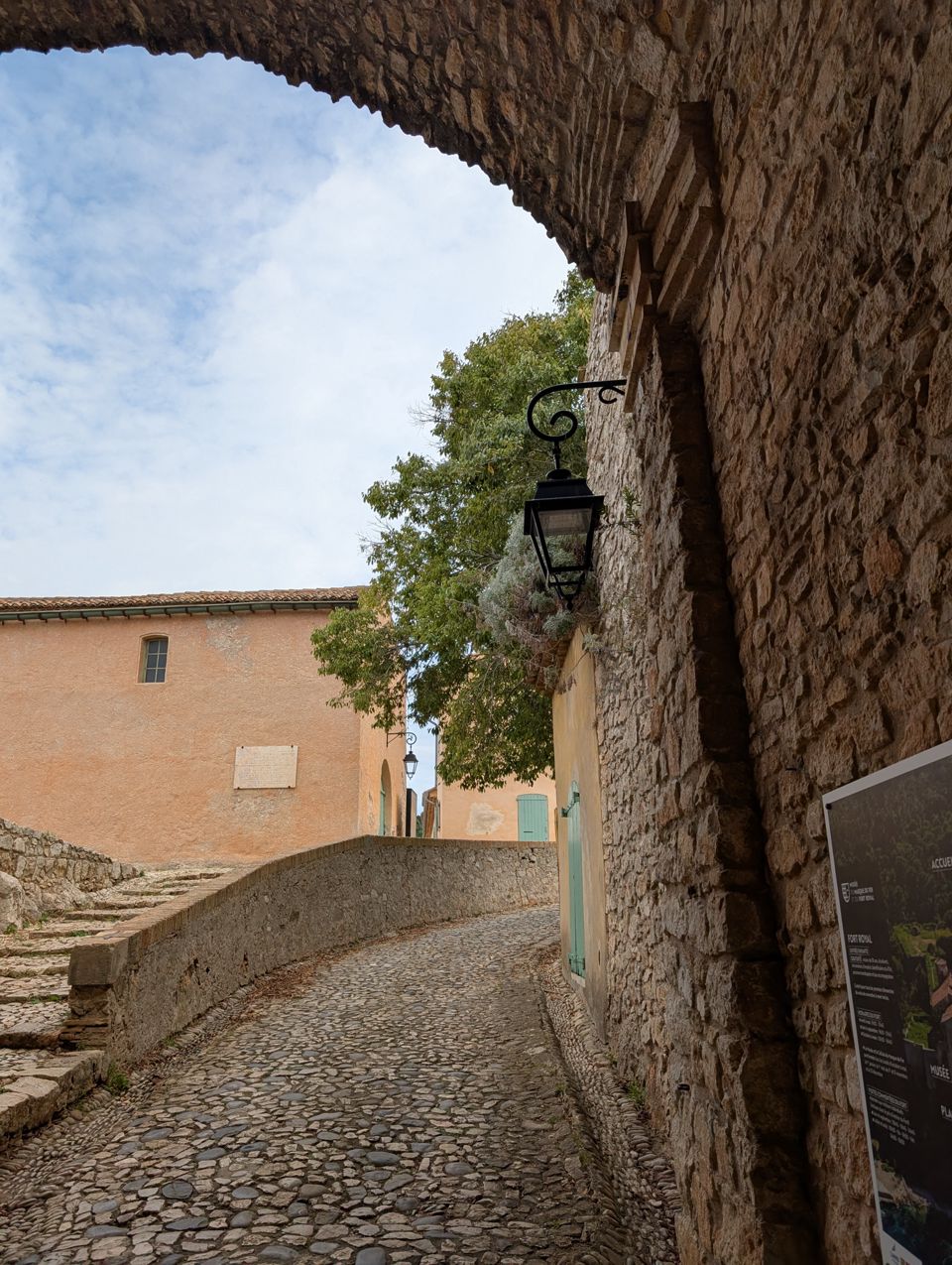
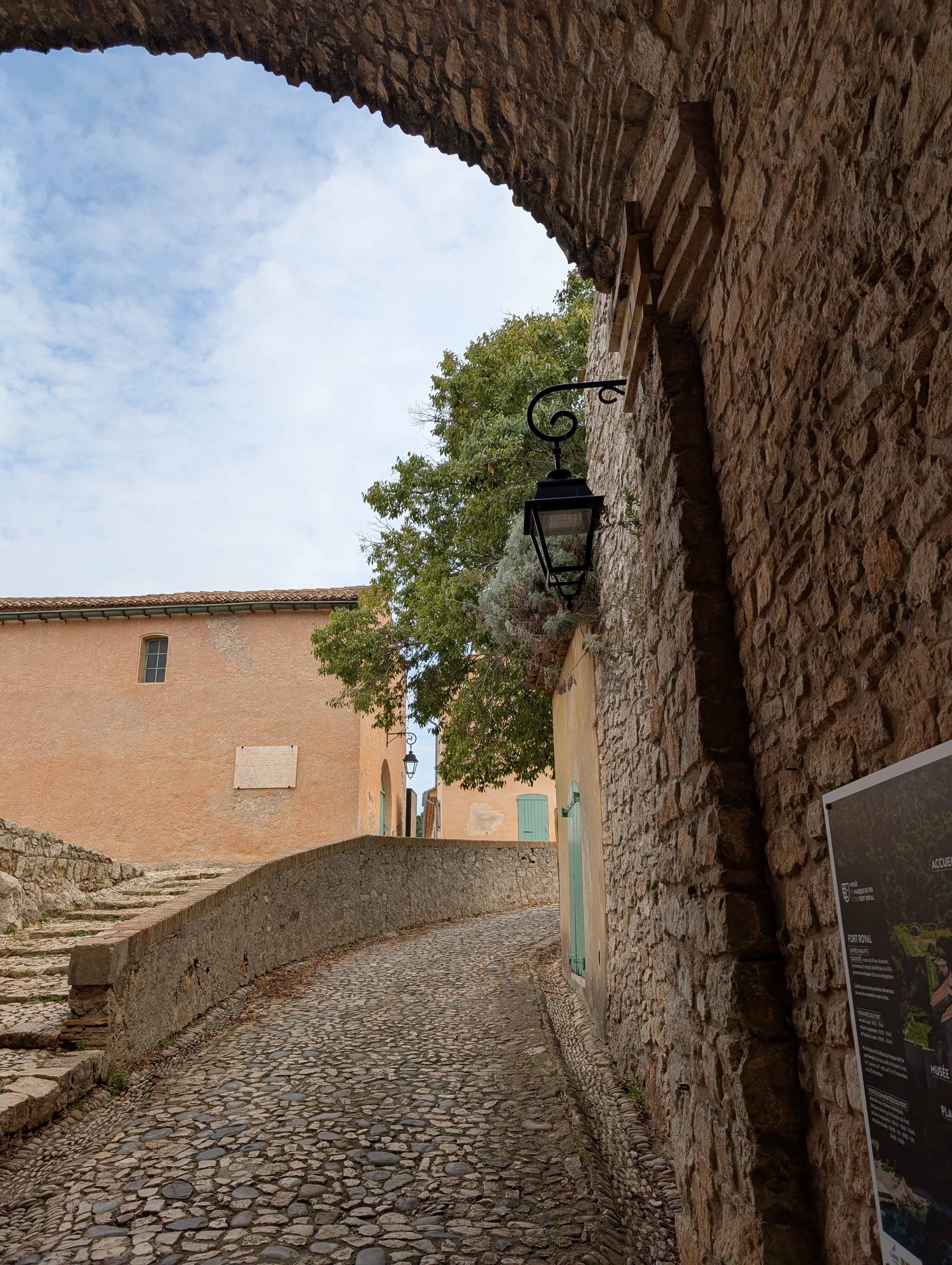
The gate into the fort's oldest yard 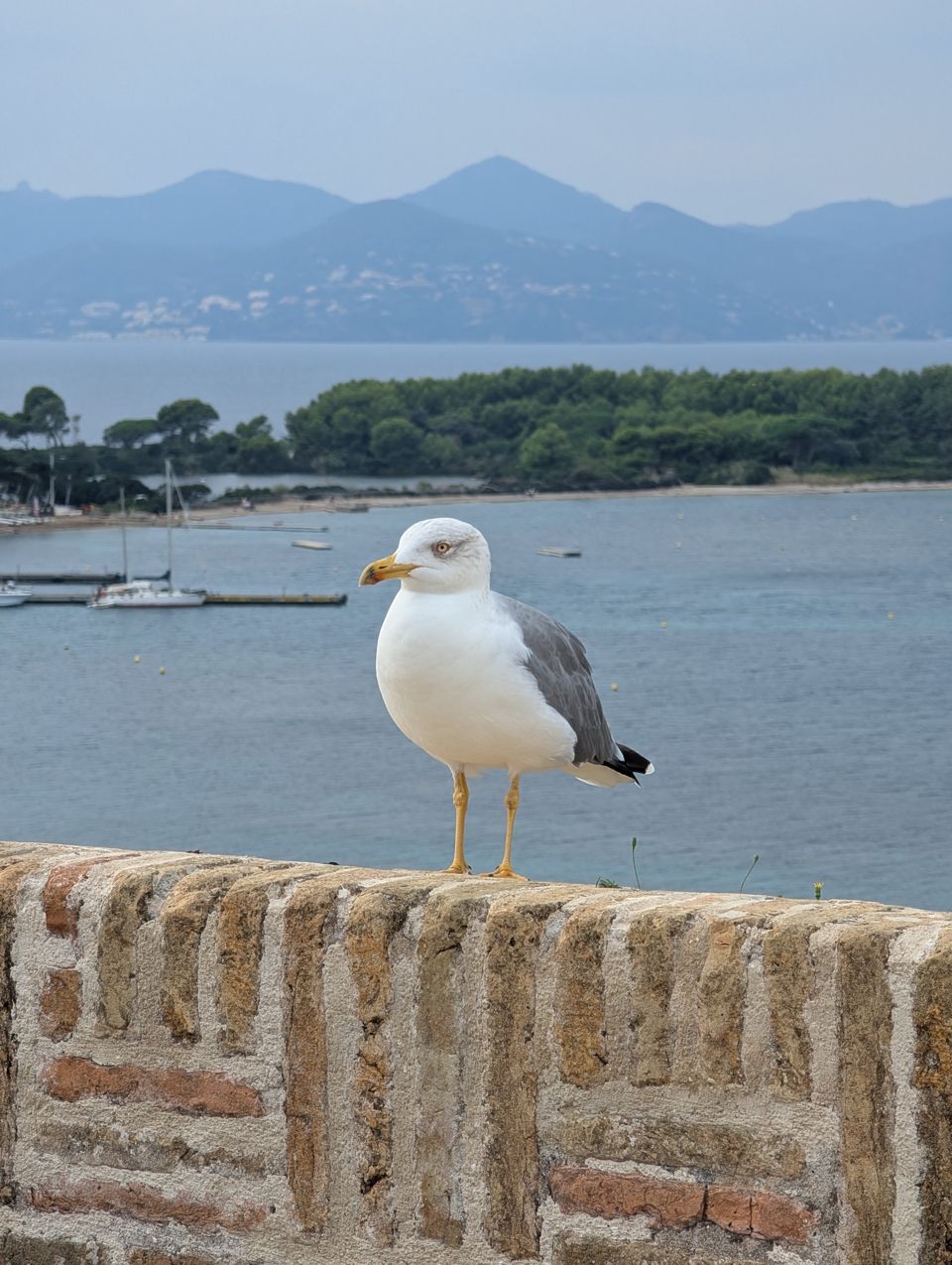
The resident gull, Saint-Honorat behind 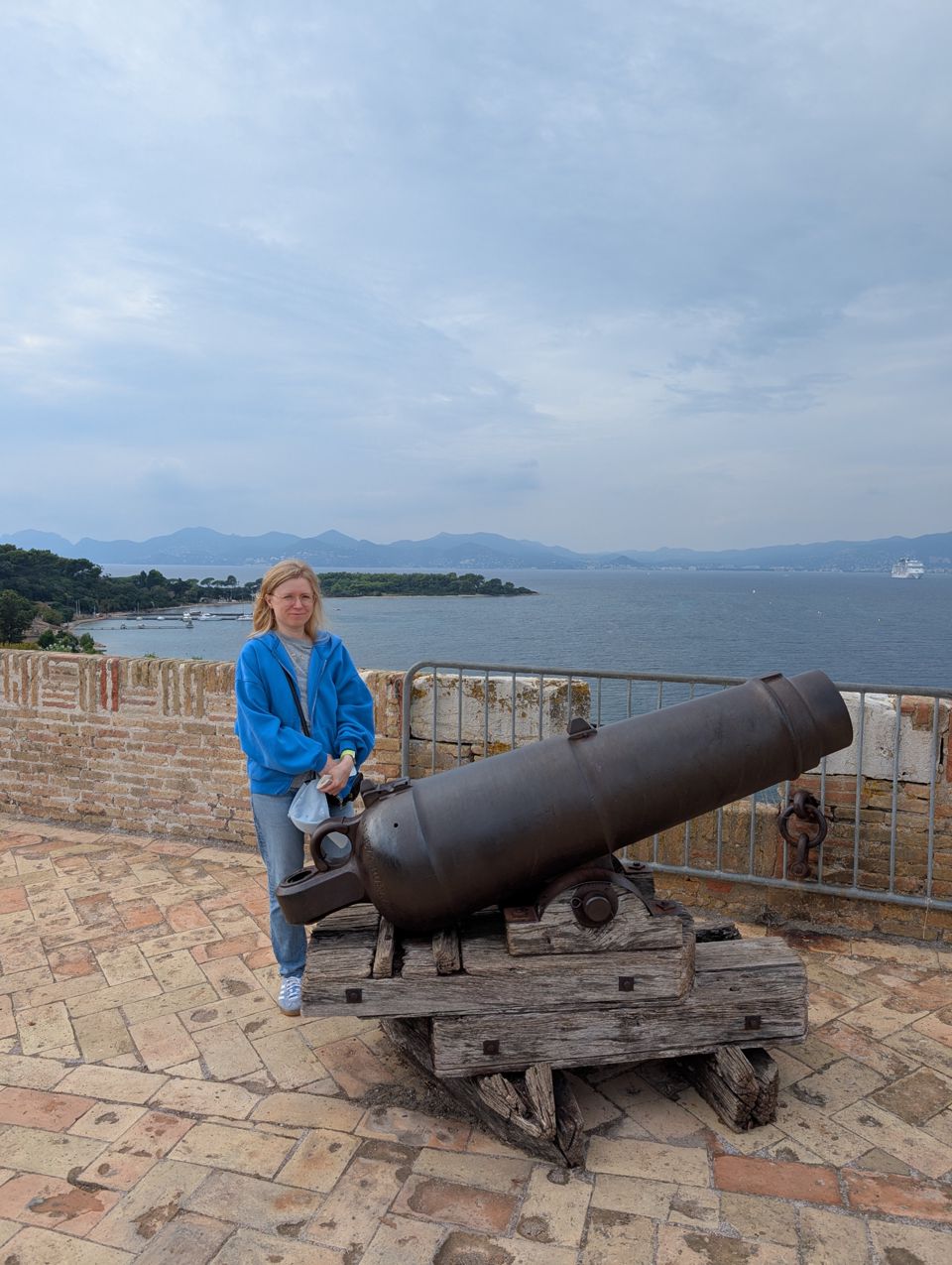
Anna on the sea-side terrace 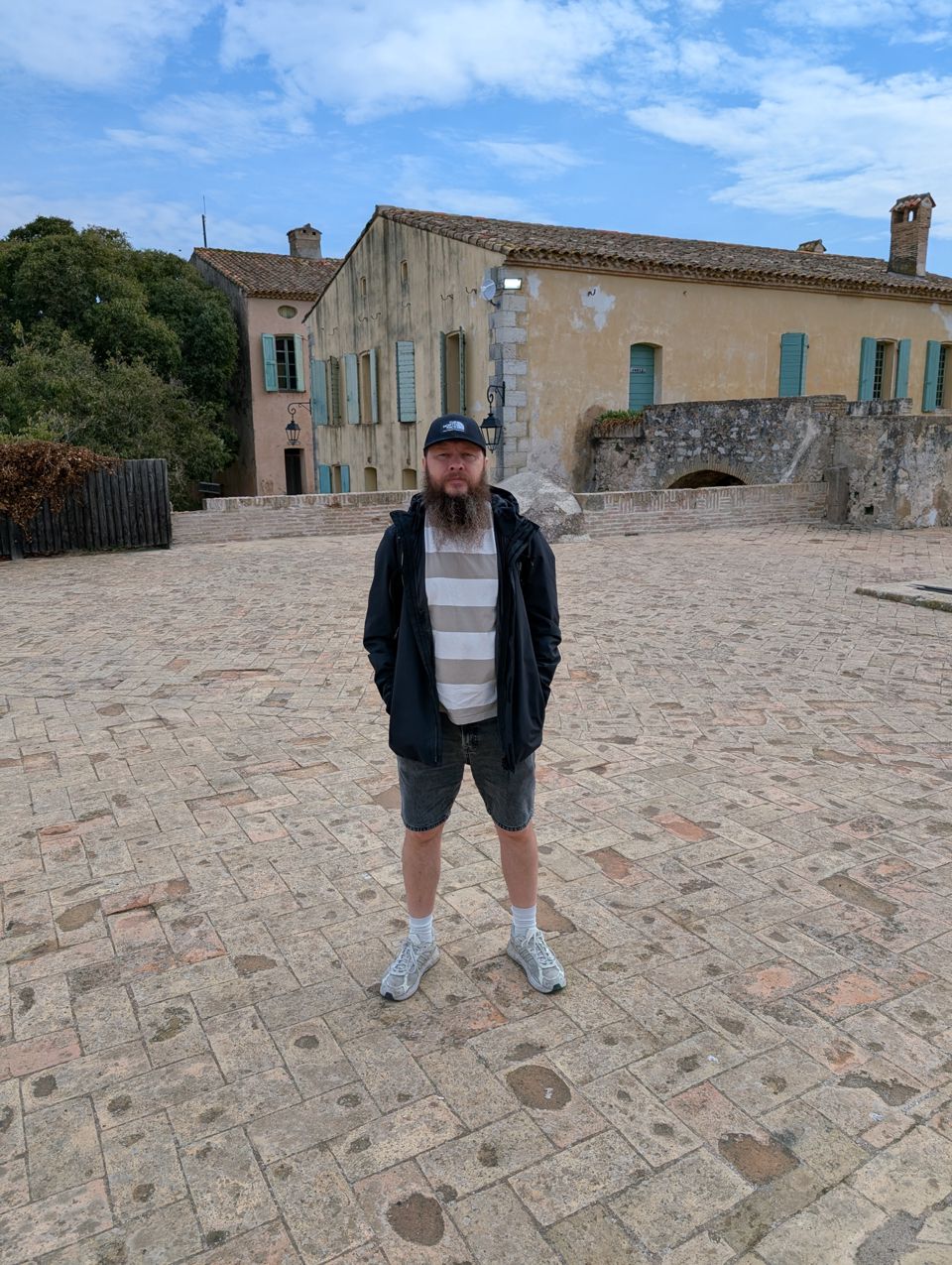
Oleg on the Place d'Armes
What the sea came back with
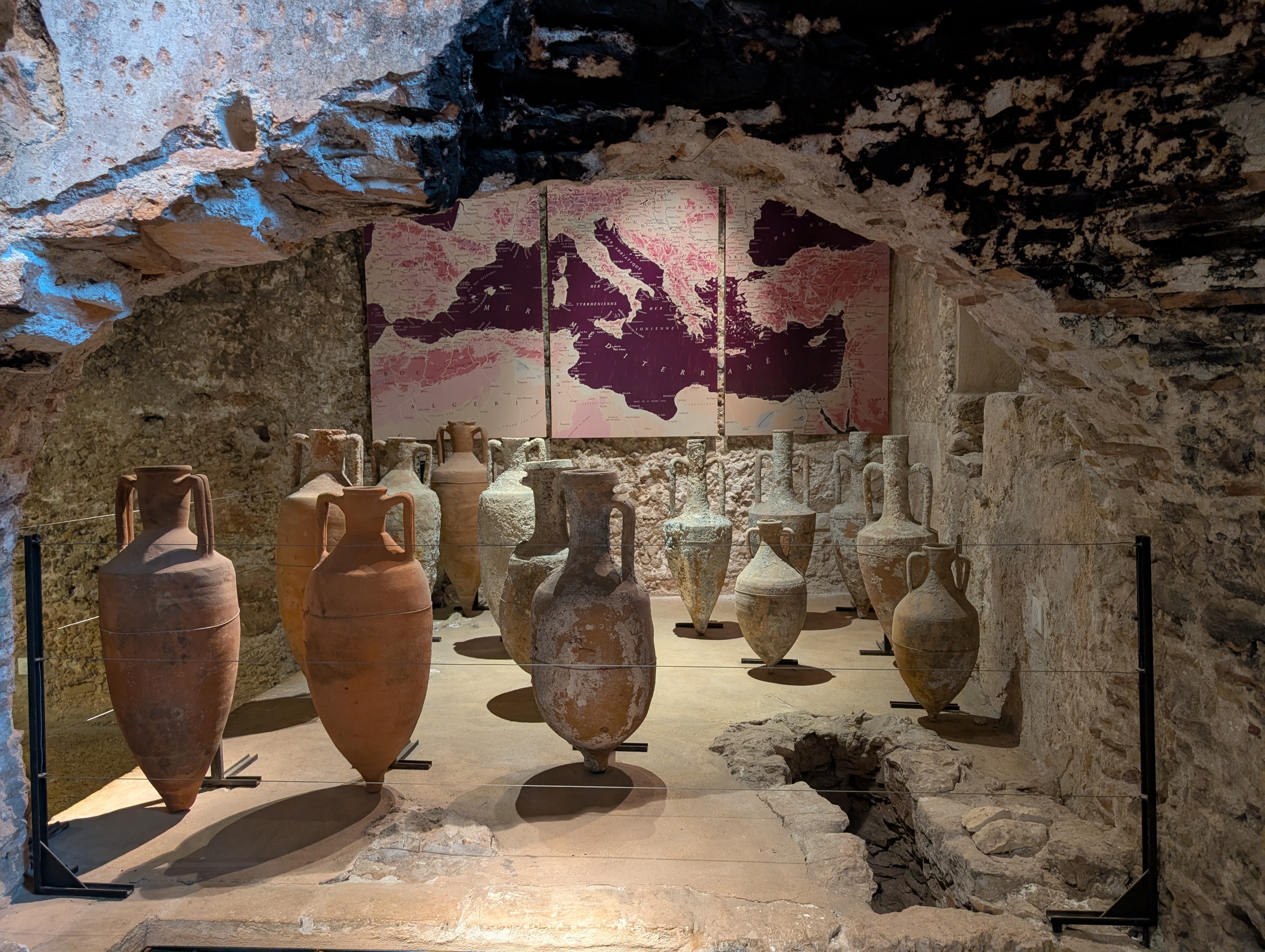
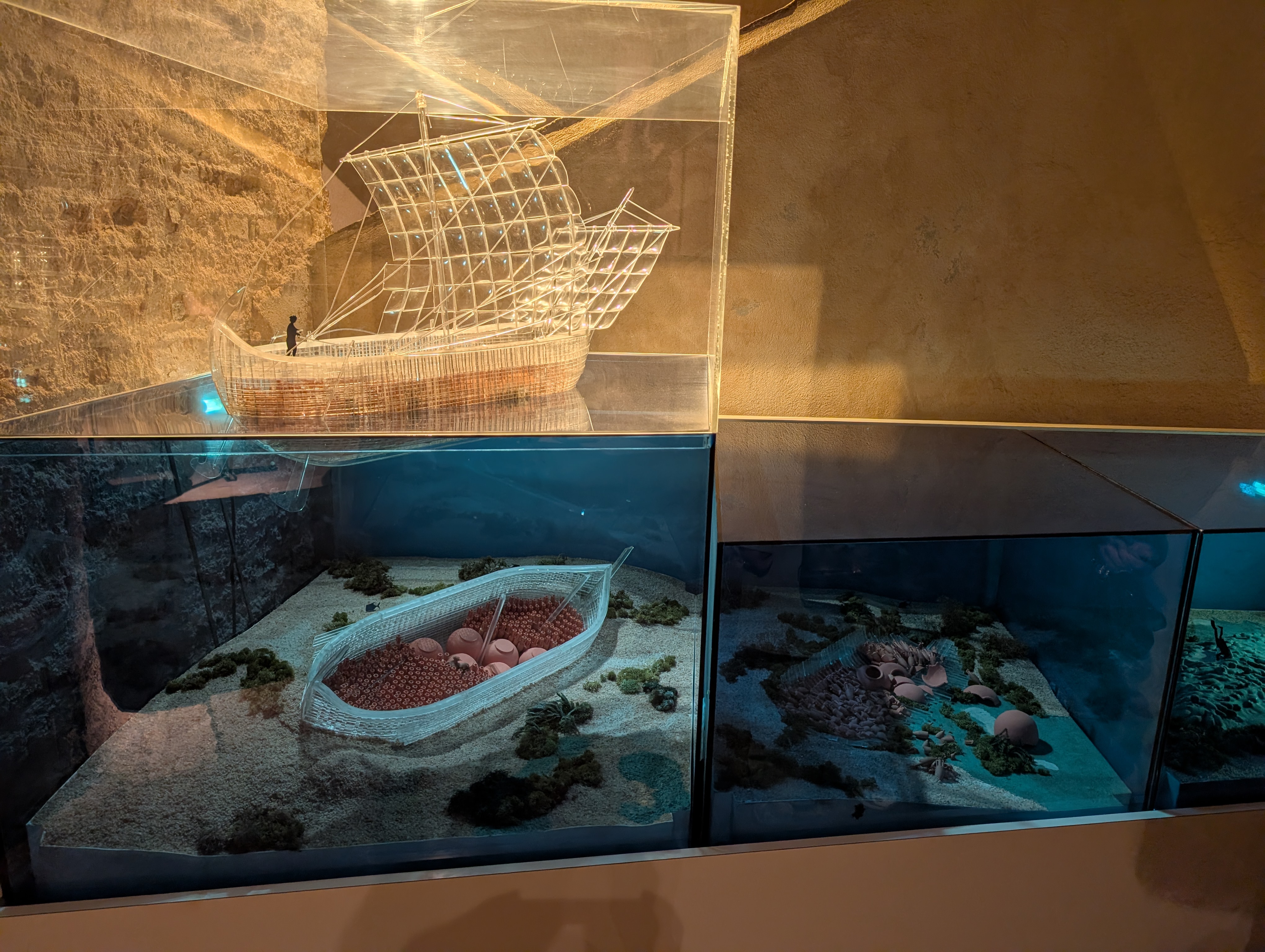
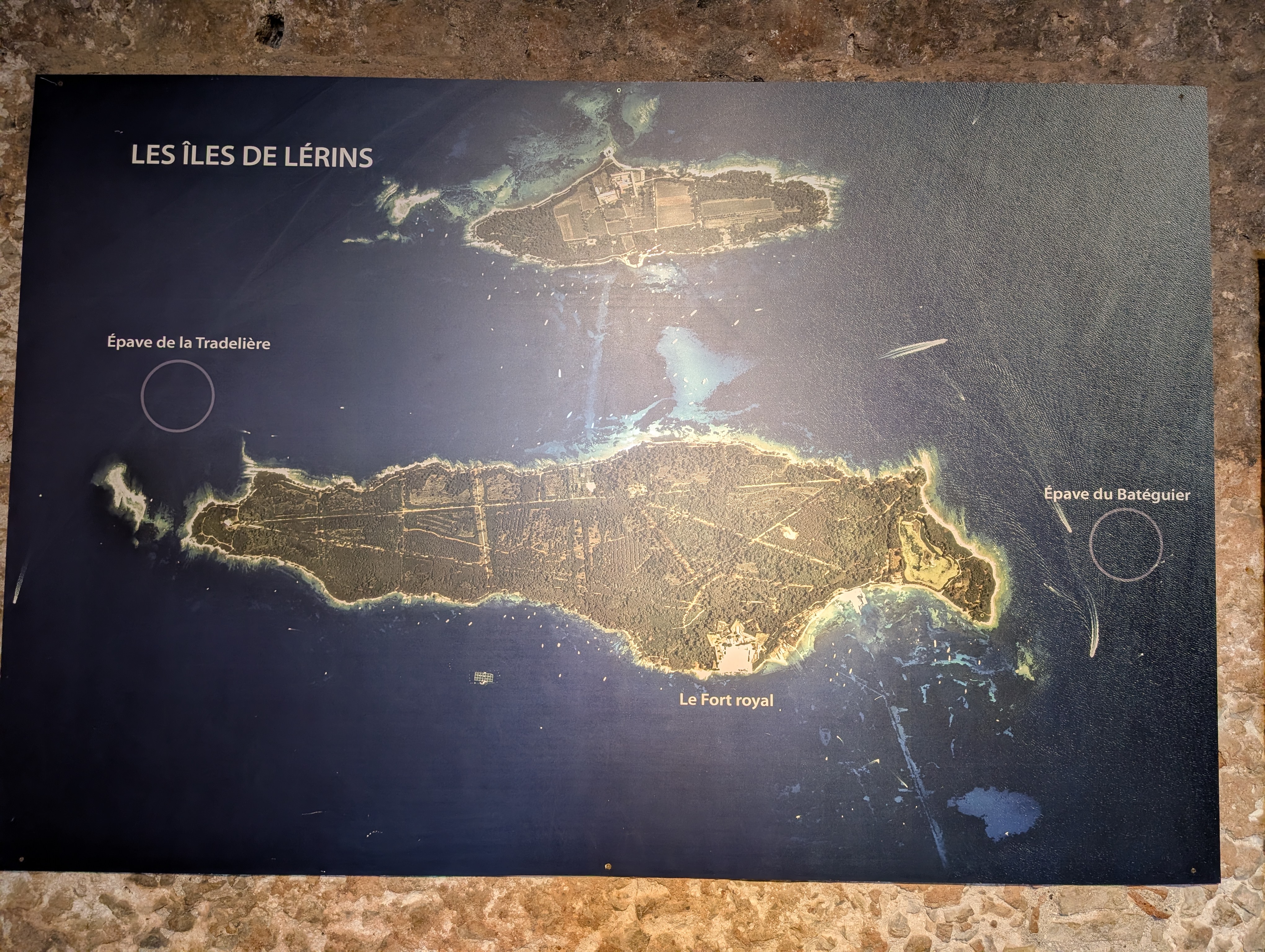
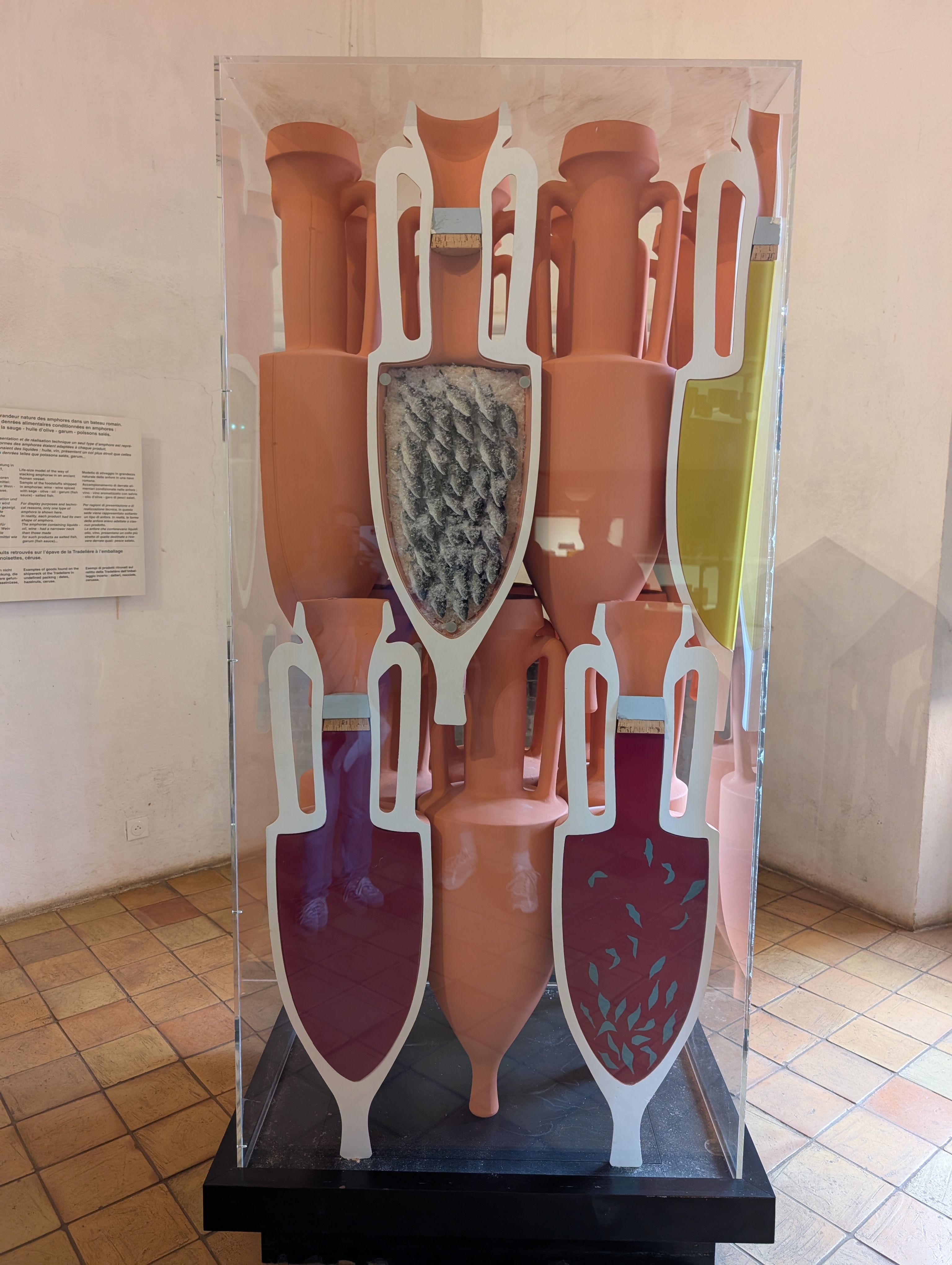
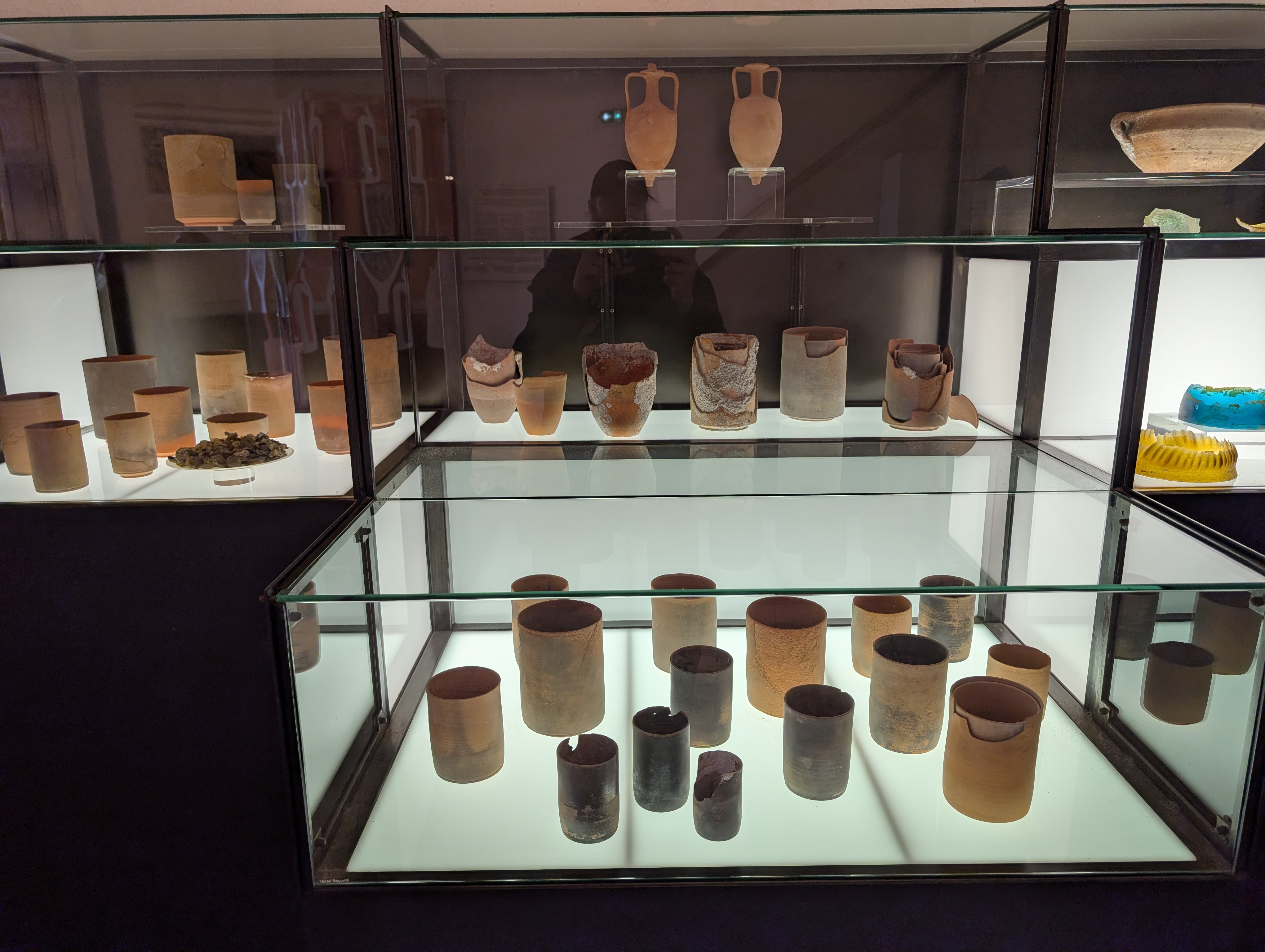
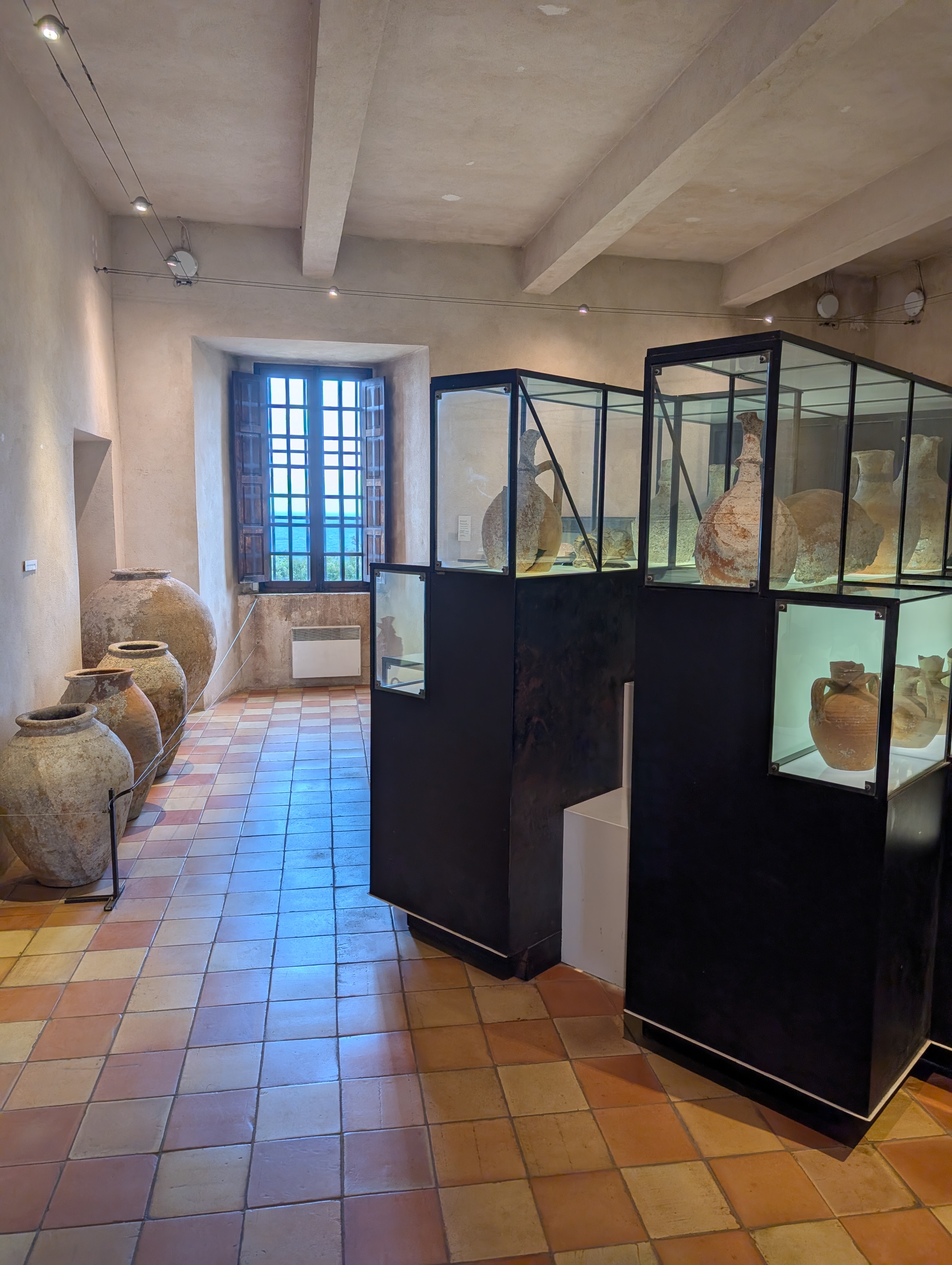
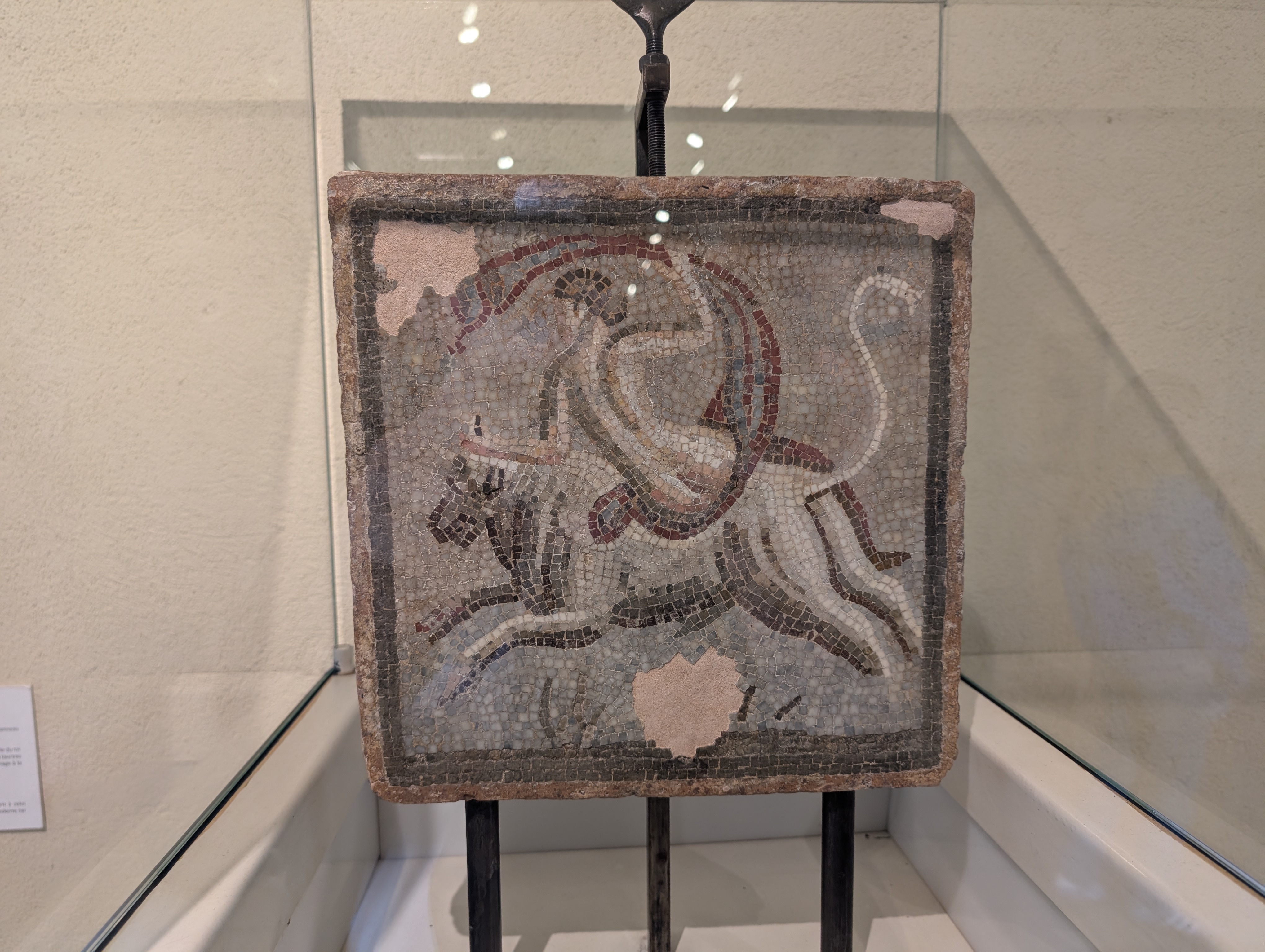
The museum sits in the fort's oldest rooms and is, in effect, a museum of what the sea came back with. Two wrecks off the island — la Tradelière and le Batéguier, gone down with their cargo — gave the collection its shape: amphorae stacked in a rock-hewn cellar with Roman wall-paintings keeping them company; a tank with a wreck rebuilt for study; the everyday things — cups, pots, glass — laid out row on row in cases and shelves. In one room the amphorae stand at a shuttered window, the sea lighting them from the side. And in one case, face up, lies a Roman mosaic: Europe carried off by the bull, a piece of the Mediterranean lifted out of the water off this island in 1961, and telling its story plainly ever since.
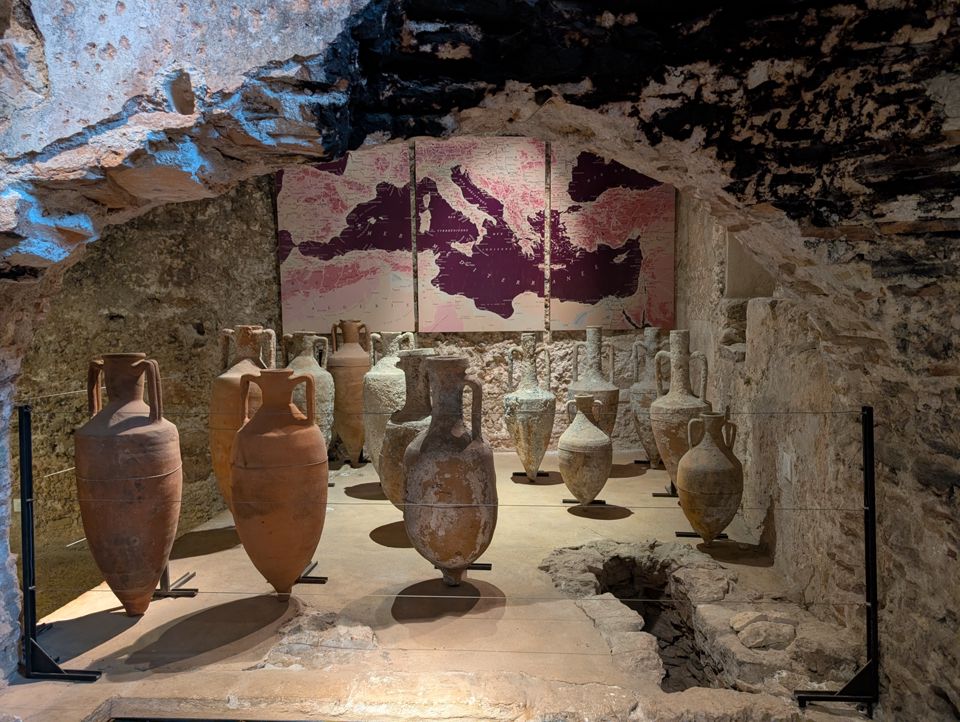
The amphorae in their rock-hewn room 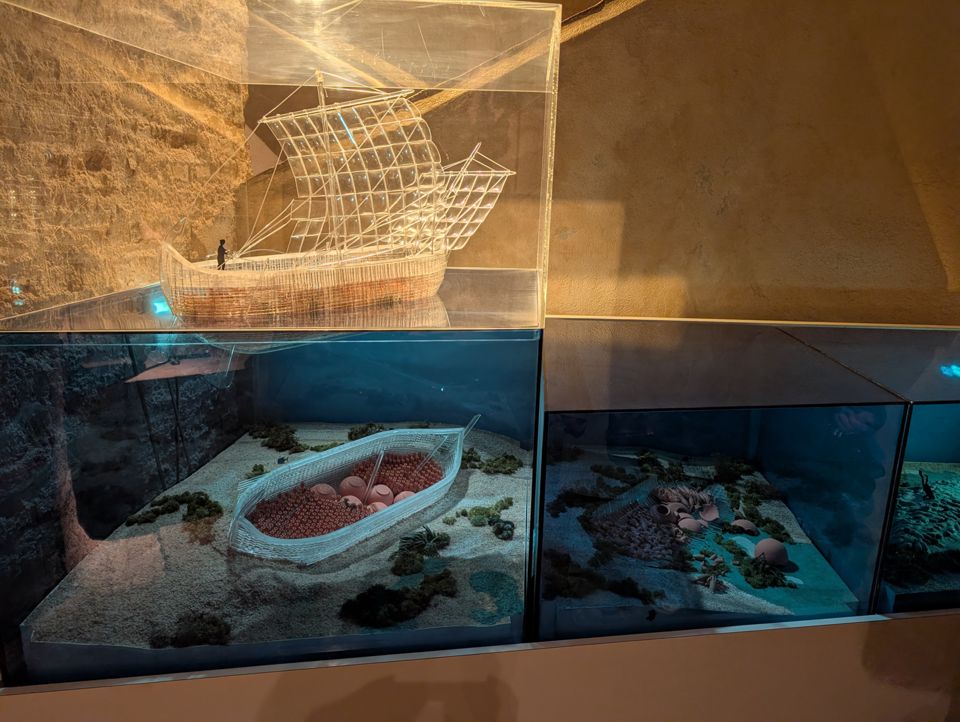
A wreck rebuilt in a tank, for study 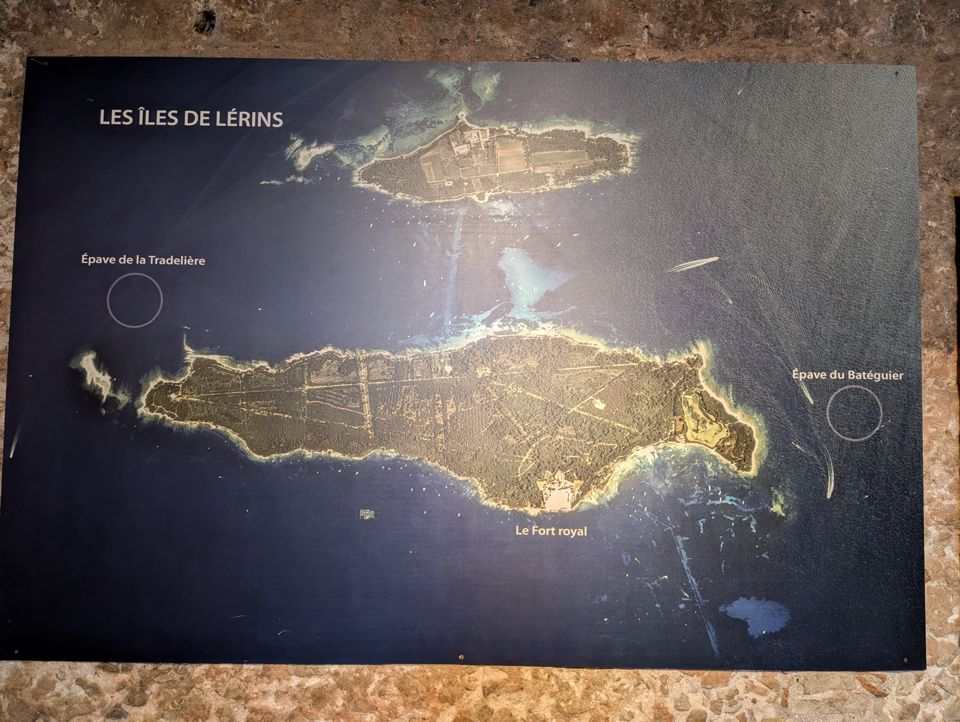
The islands and their two wrecks, on the wall 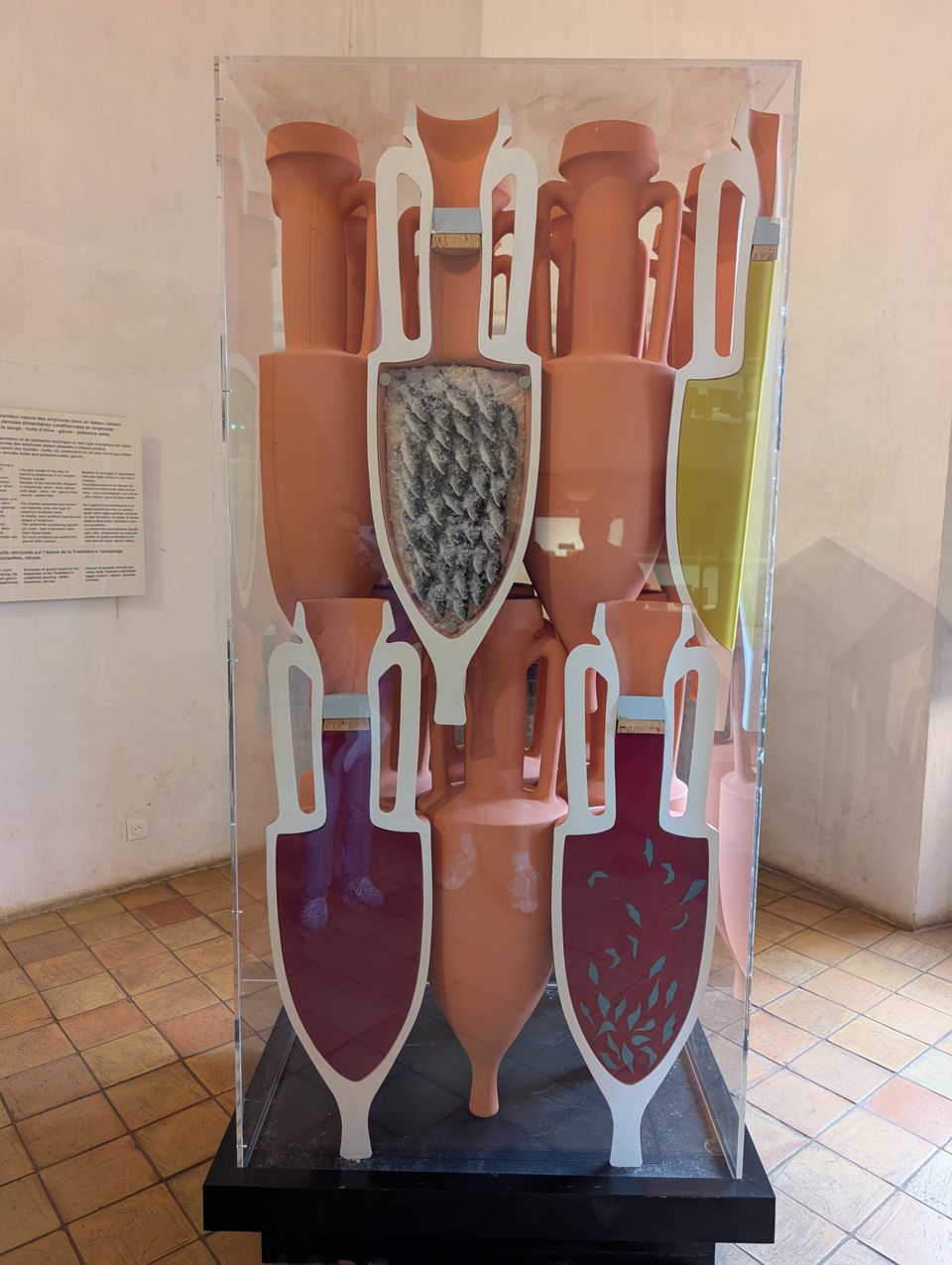
Cargo, reboxed in slices 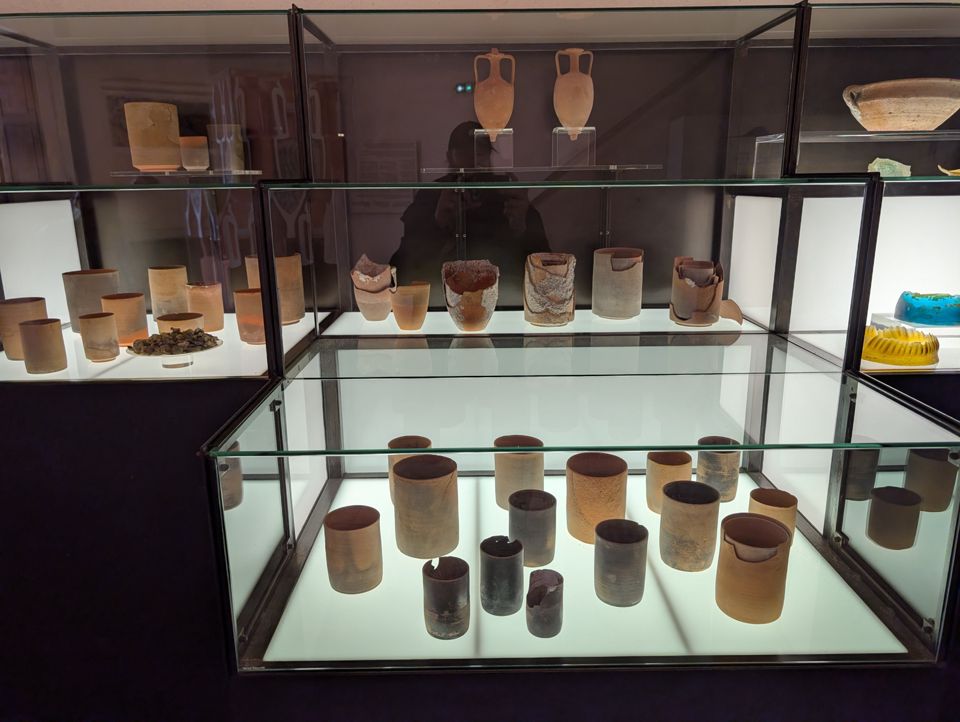
Ceramics in cases, a reflection keeping watch 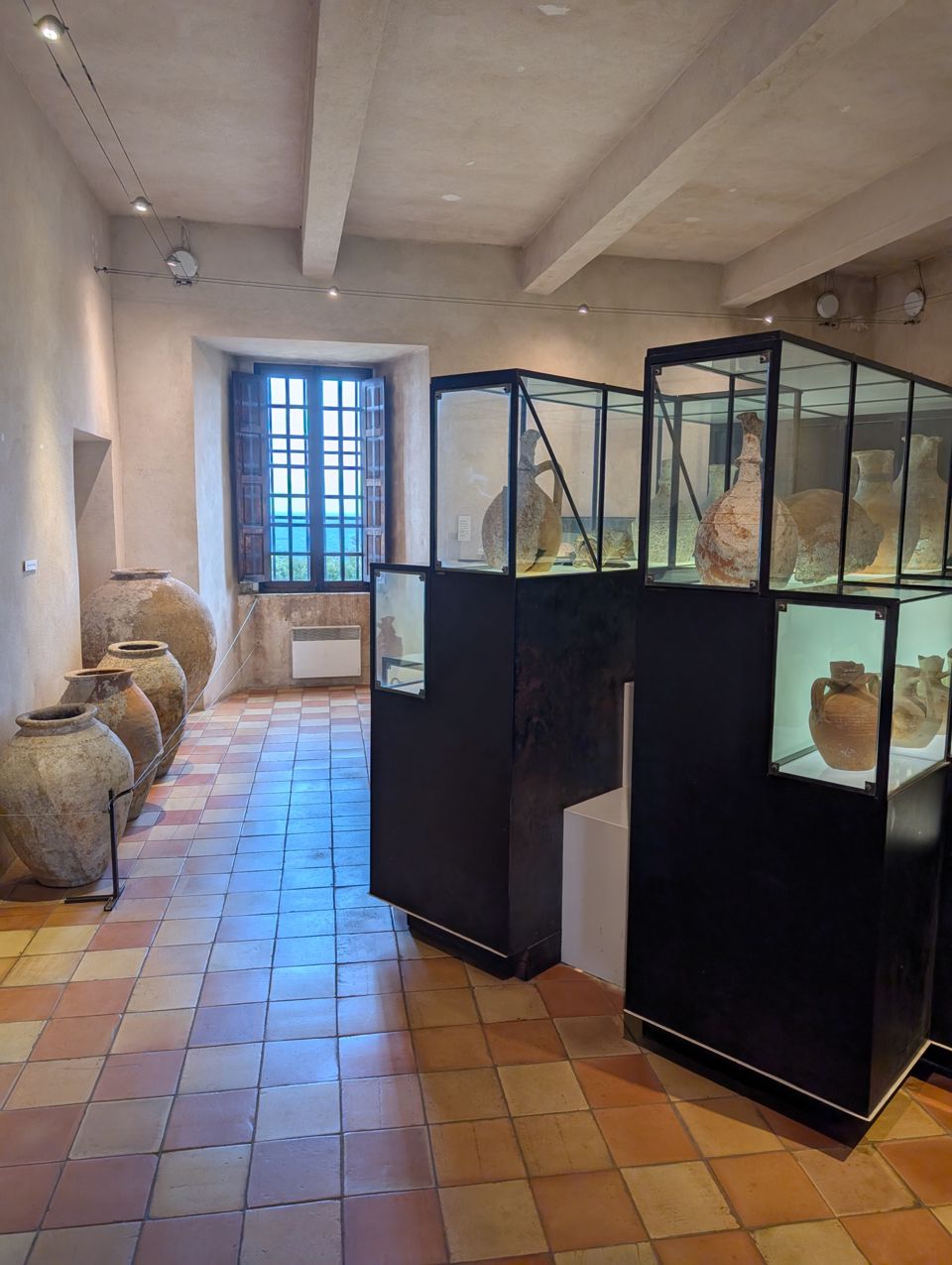
Amphorae by the window, lit from the sea side 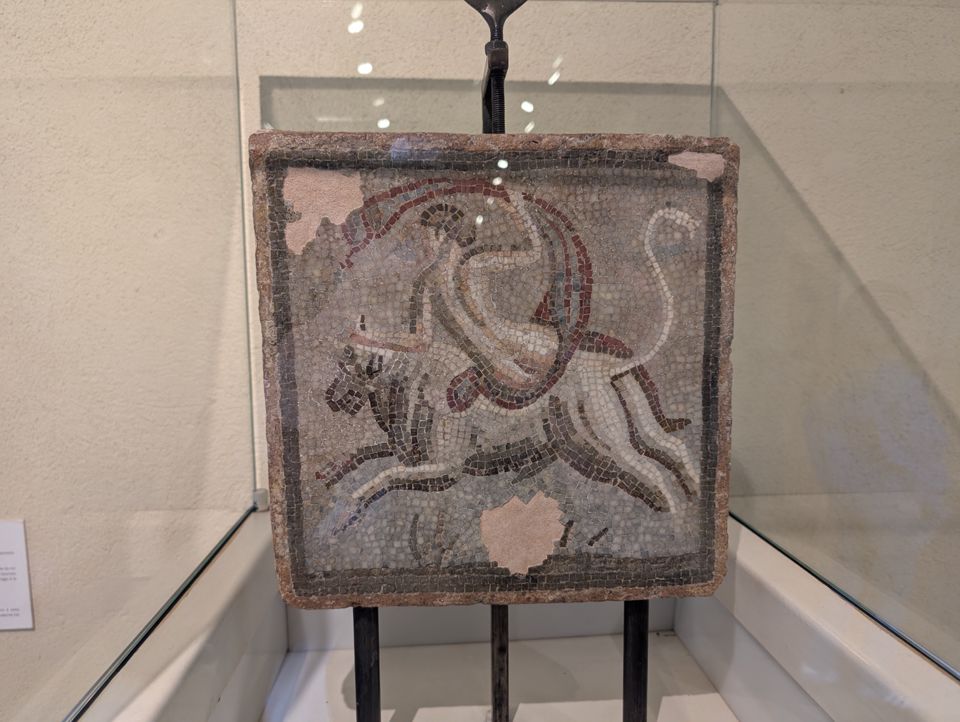
Europe and the bull — mosaic, raised from the sea in 1961
The cell
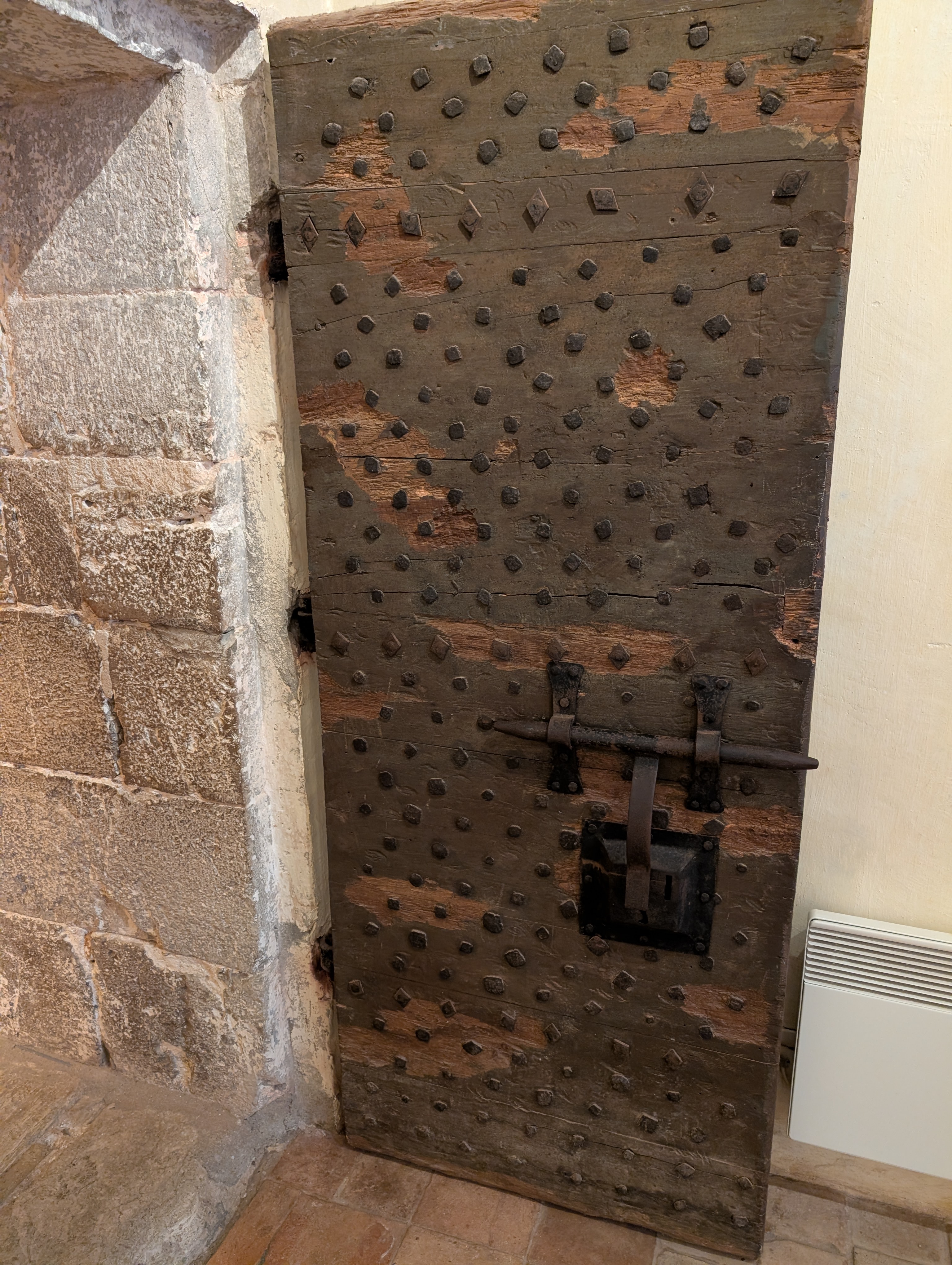
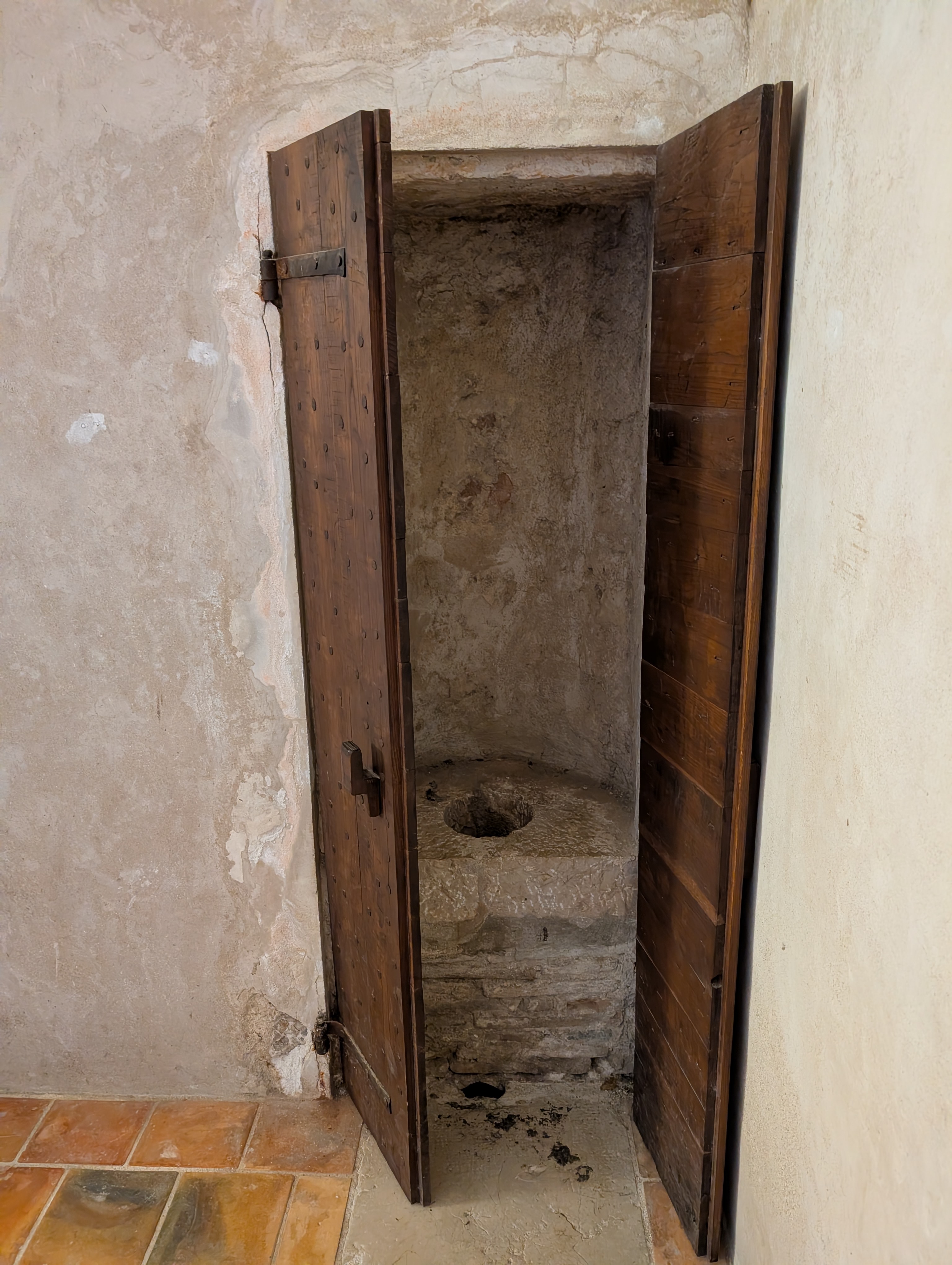
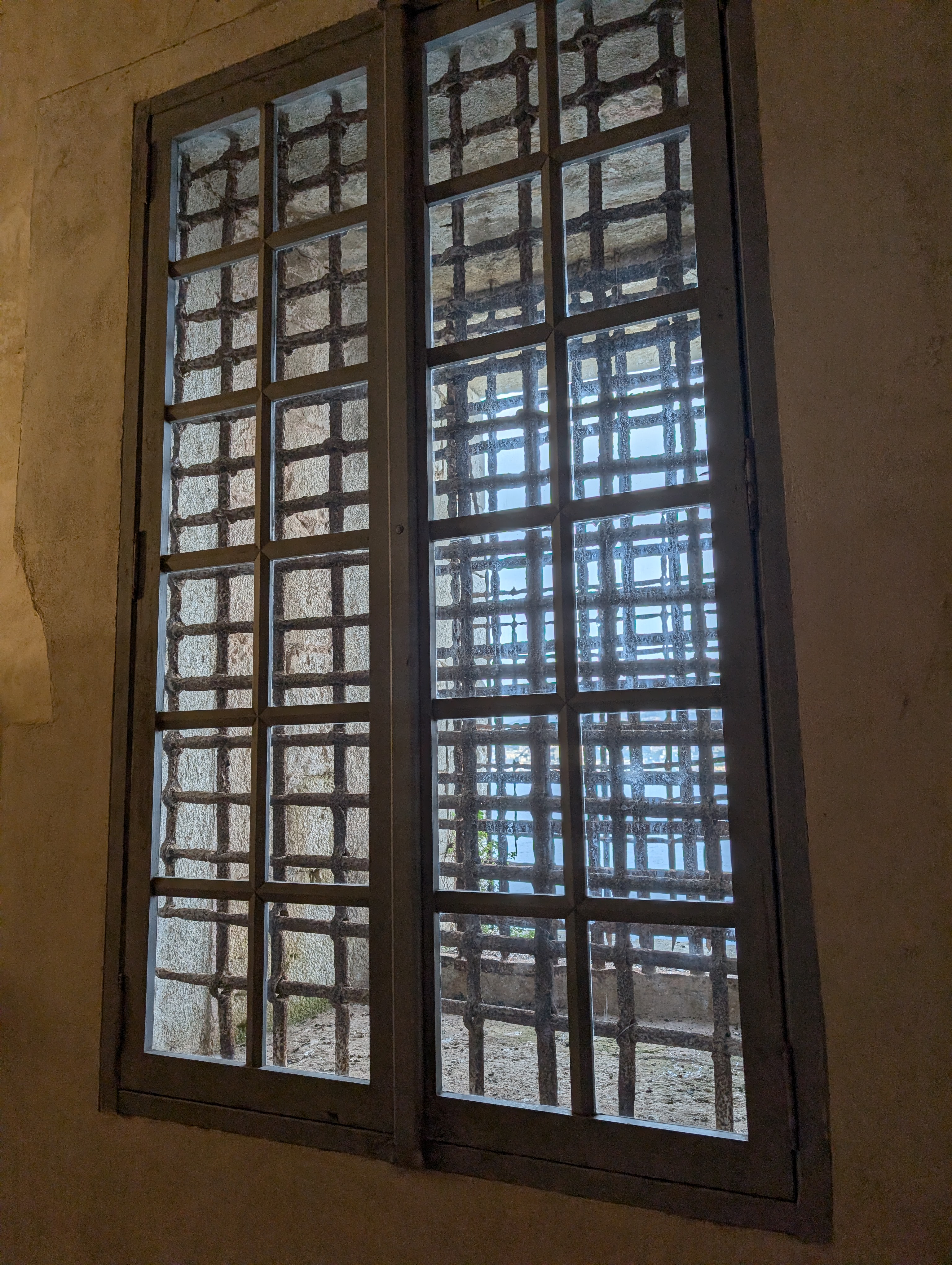
The cell is the reason the boat was almost full. The Man in the Iron Mask — name never settled, face never shown — was kept on the island eleven years, from 1687, and the room they show is his. The door carries its iron studs; the walls are bare; the latrine niche is worn smooth by use; and the window sits high and barred, three hand-spans deep, holding the whole of the bay. He had the best view on the island and eleven years of it, which is where the punishment stops explaining itself. The print by the entrance shows him as the legend kept him — a man in a velvet mask — and the rest of the exhibit lets the door say what it says.
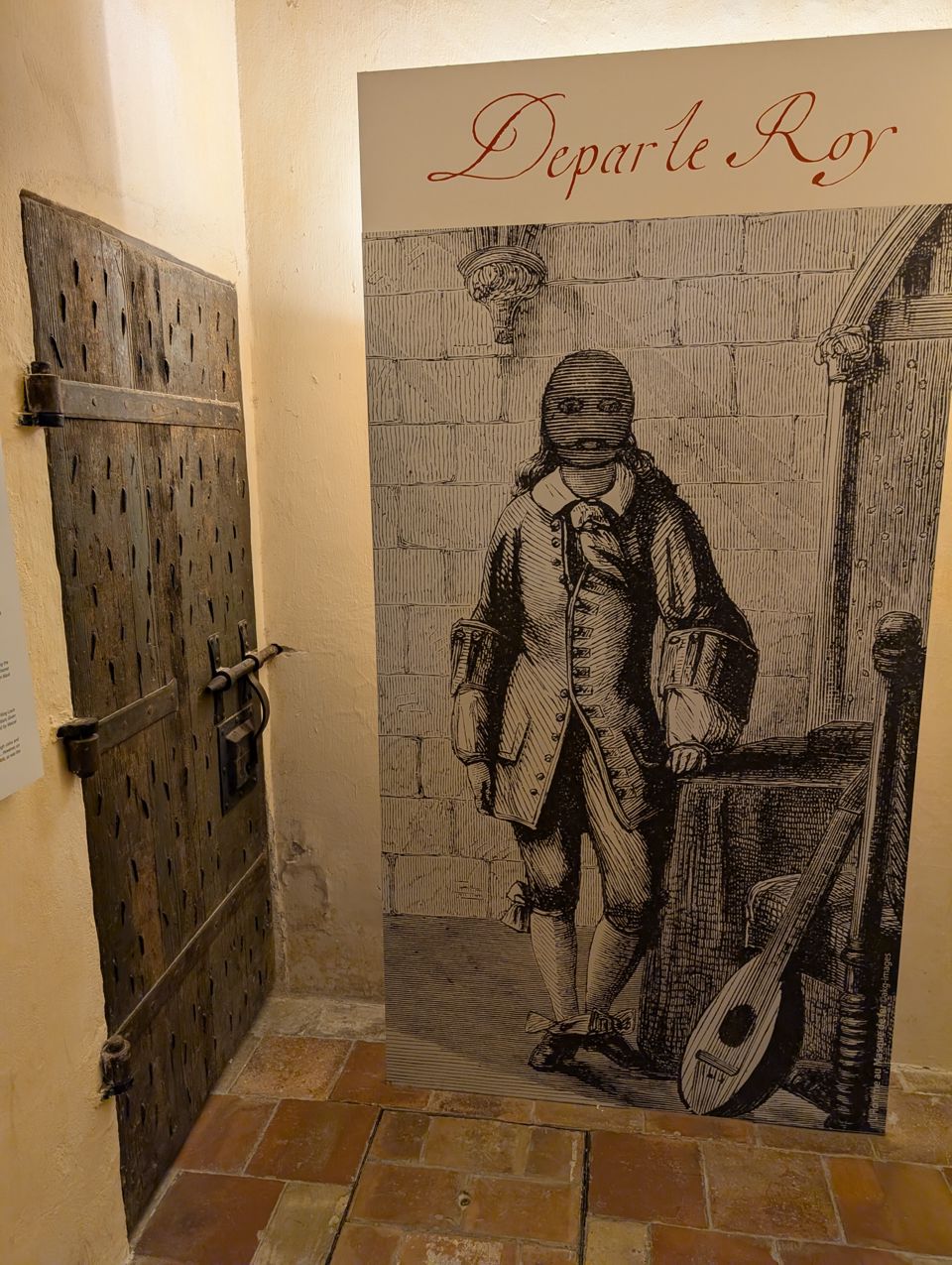
De par le Roy — the mask, as print 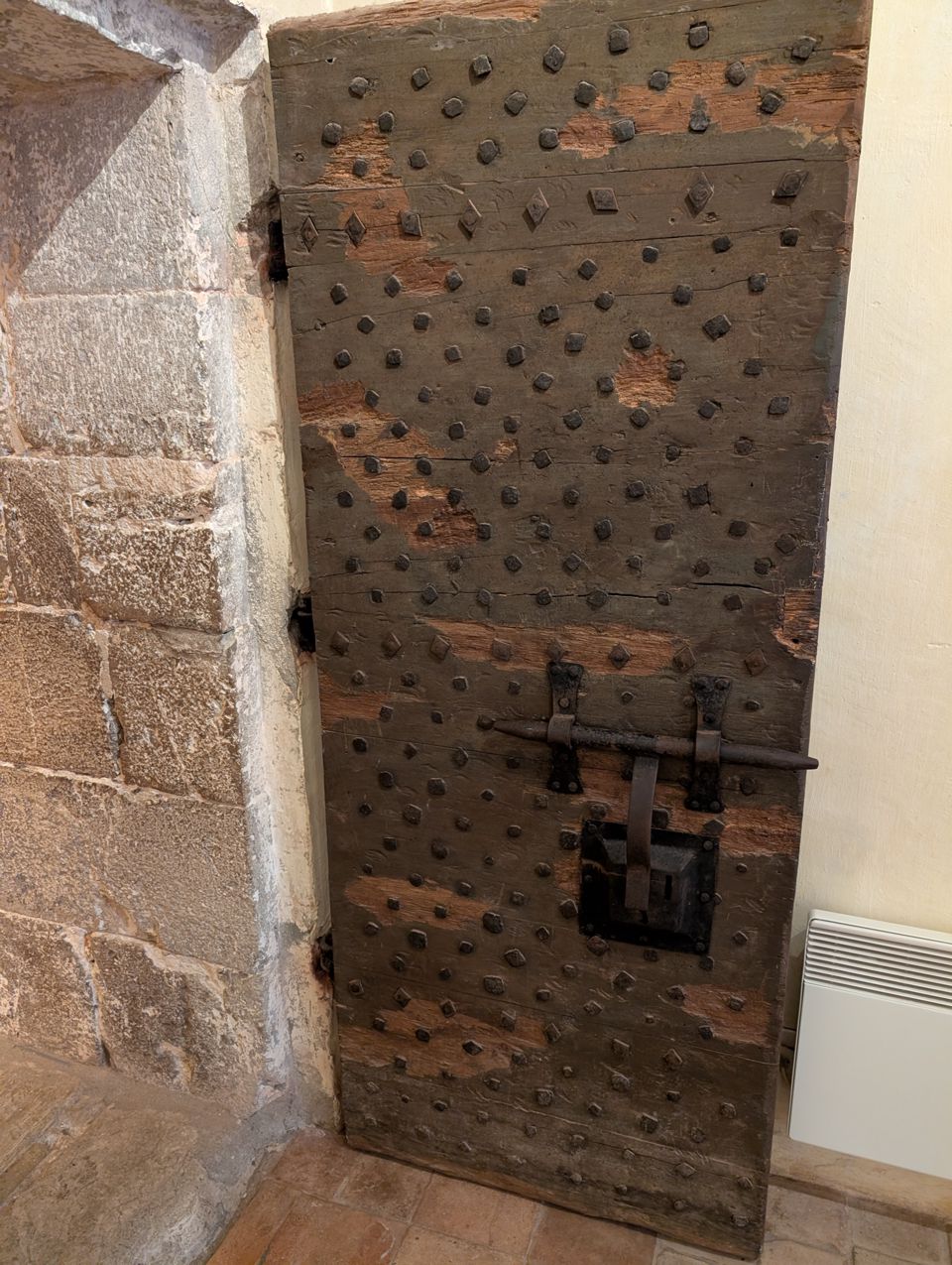
The studded door 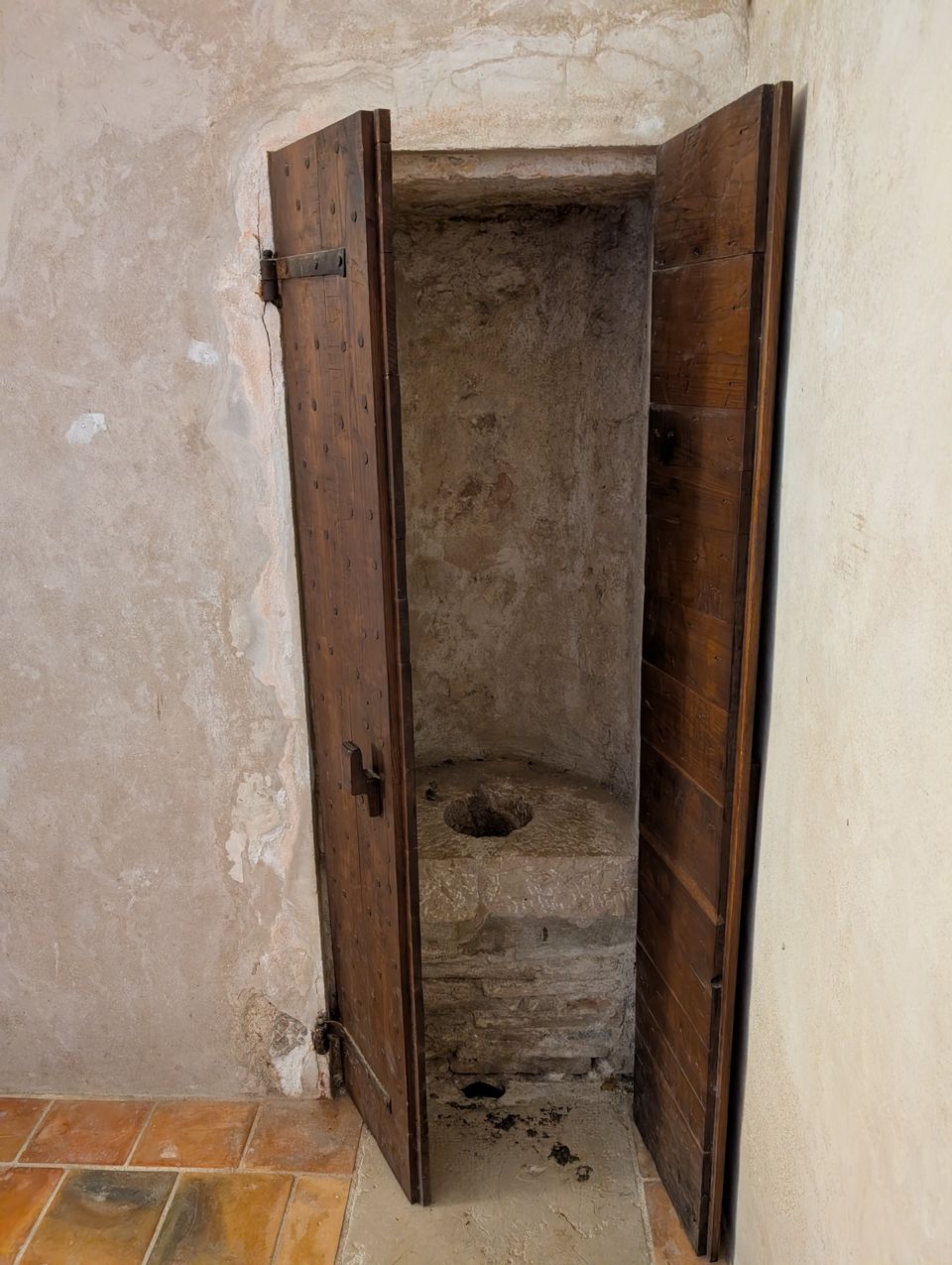
The latrine niche, worn smooth 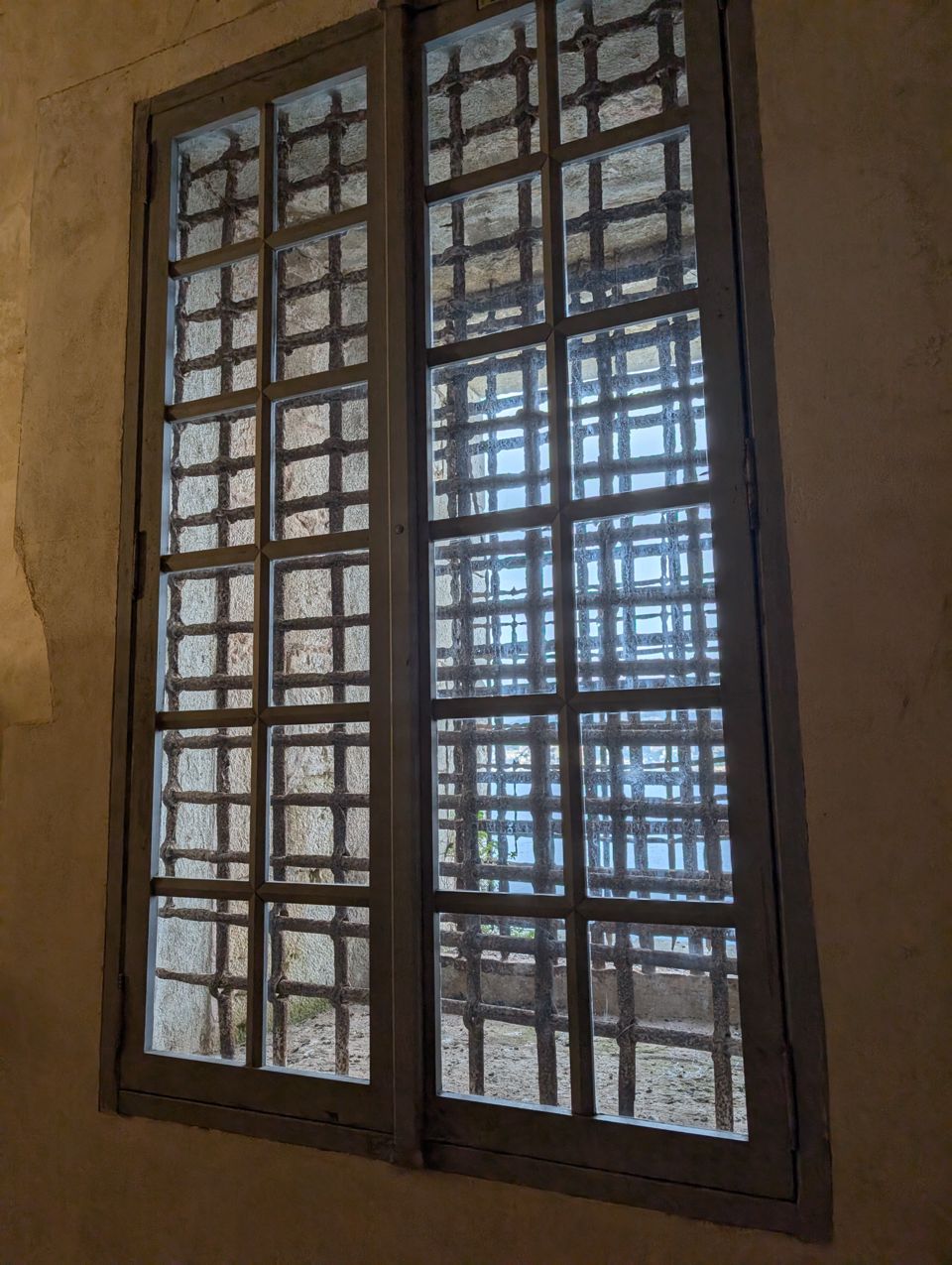
The barred window, the sea through it 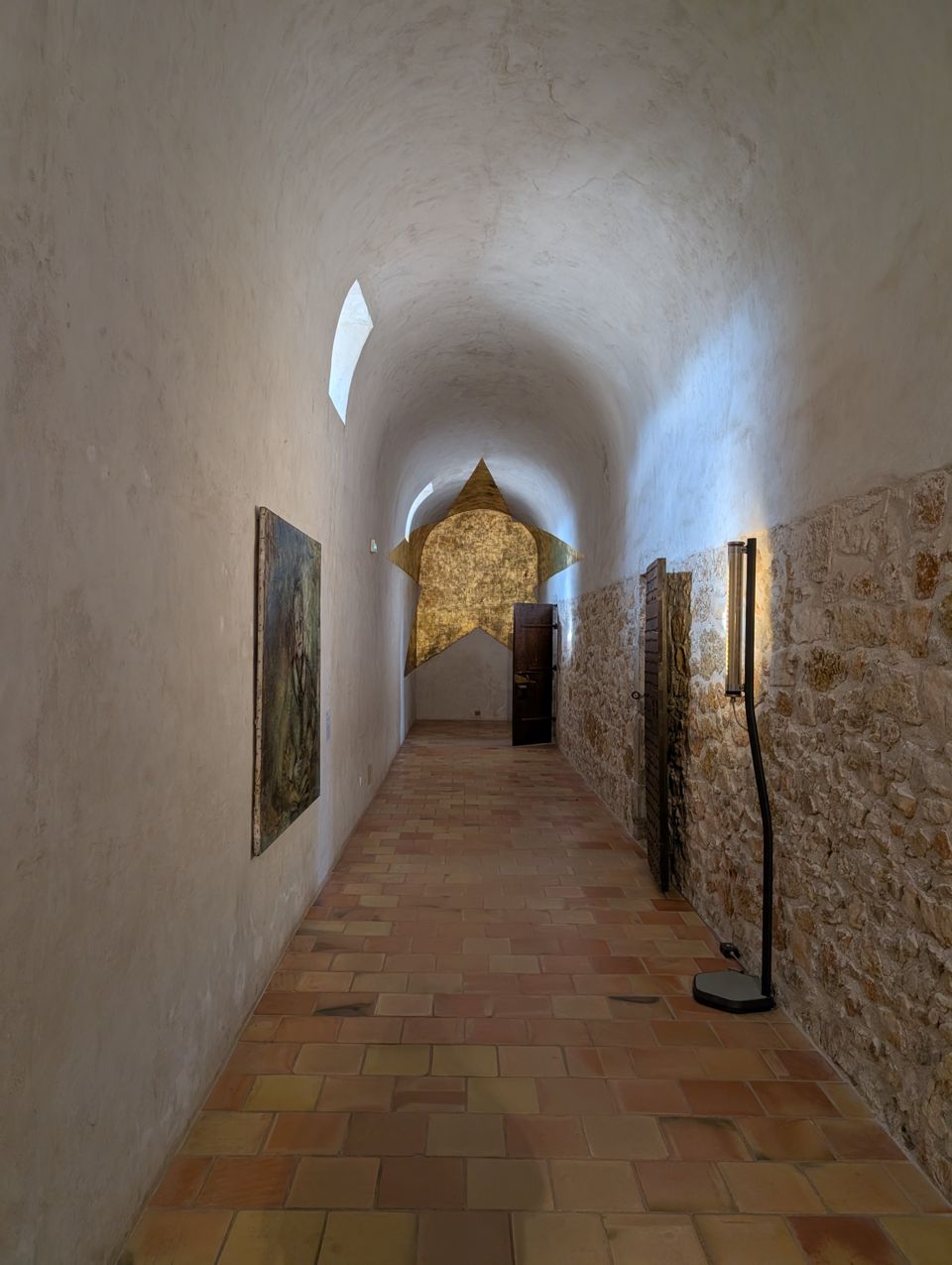
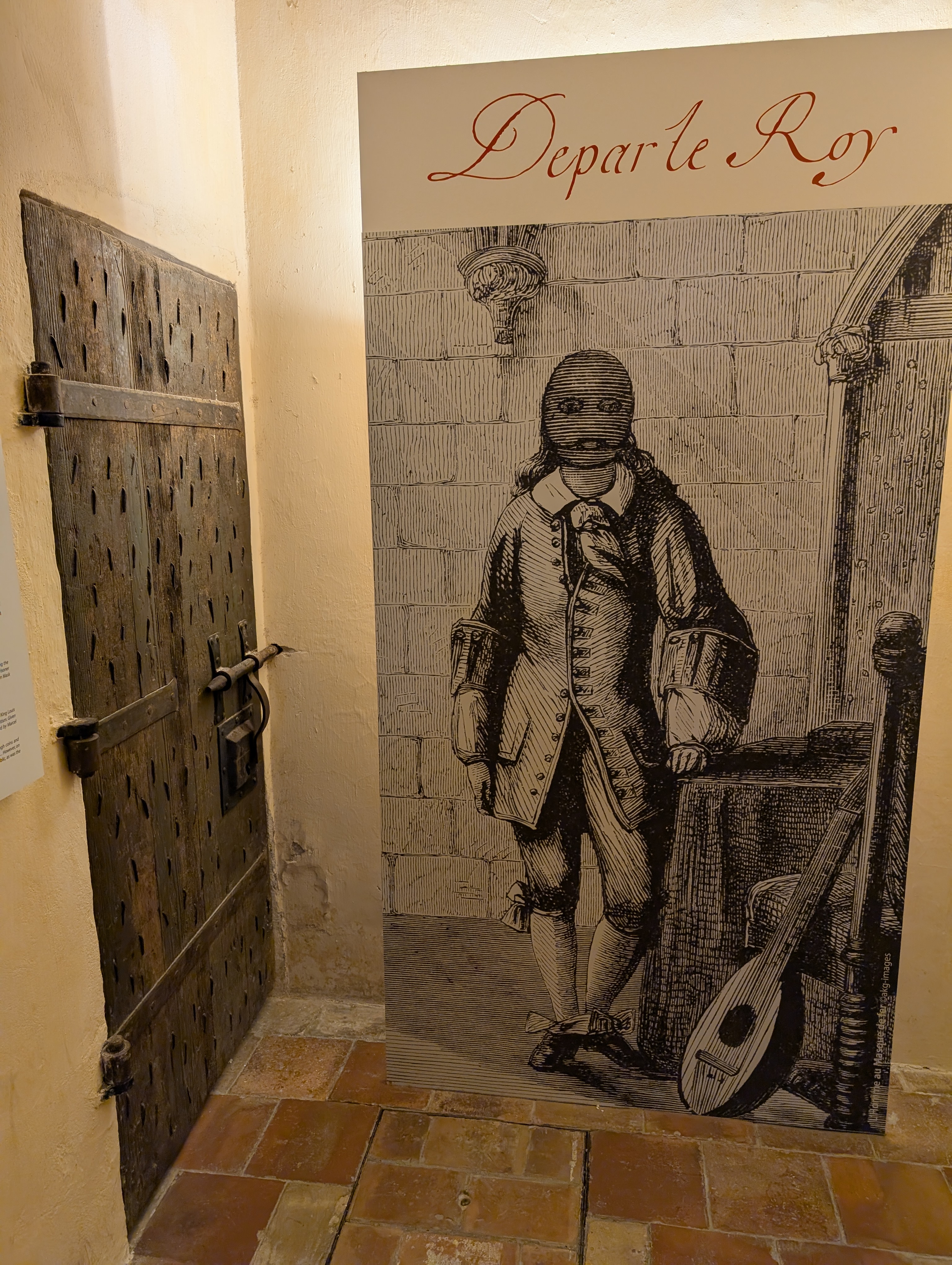
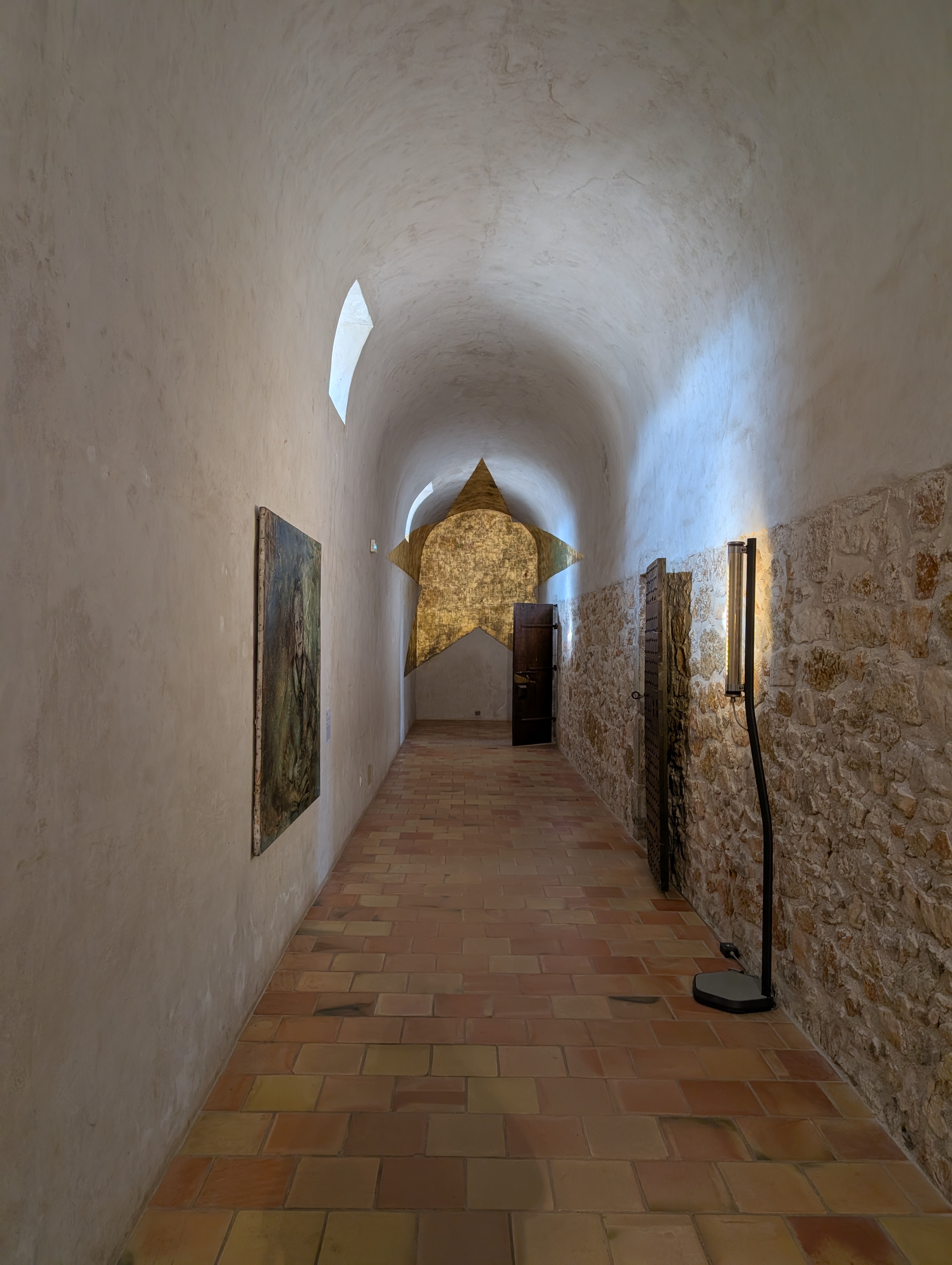
Upstairs, a vaulted hall with a piece of its own
Paths, a pond, a pebble beach
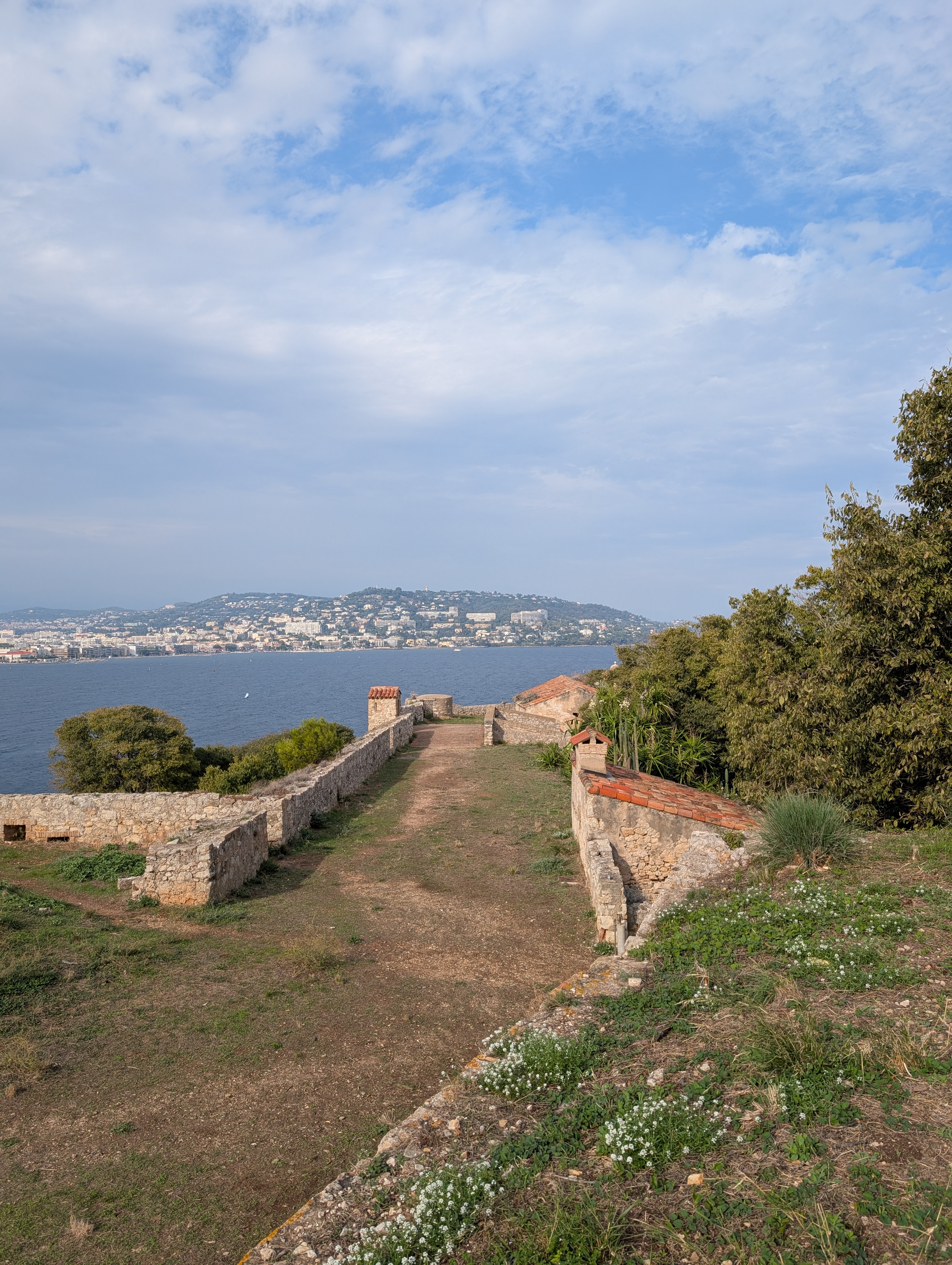
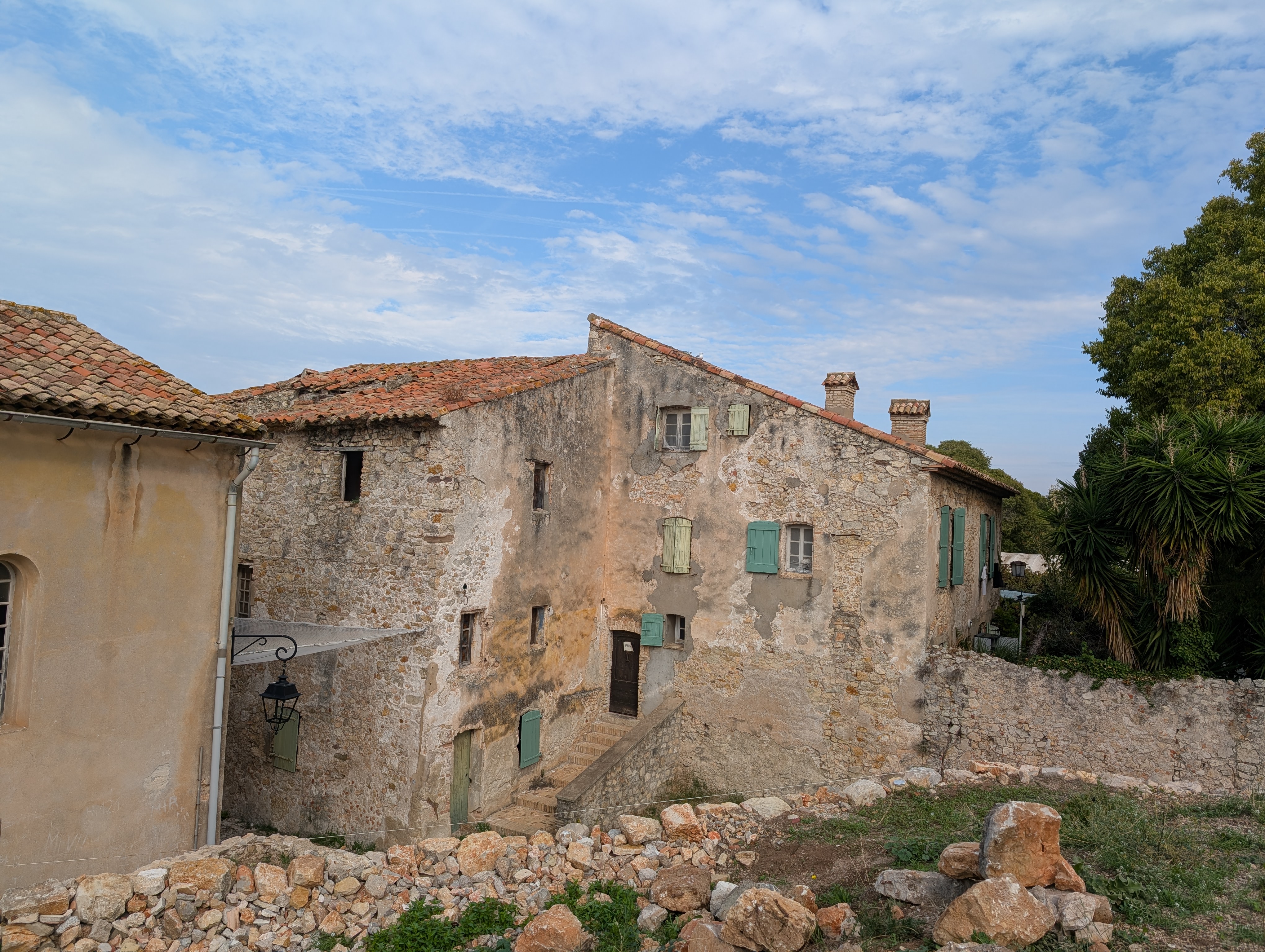
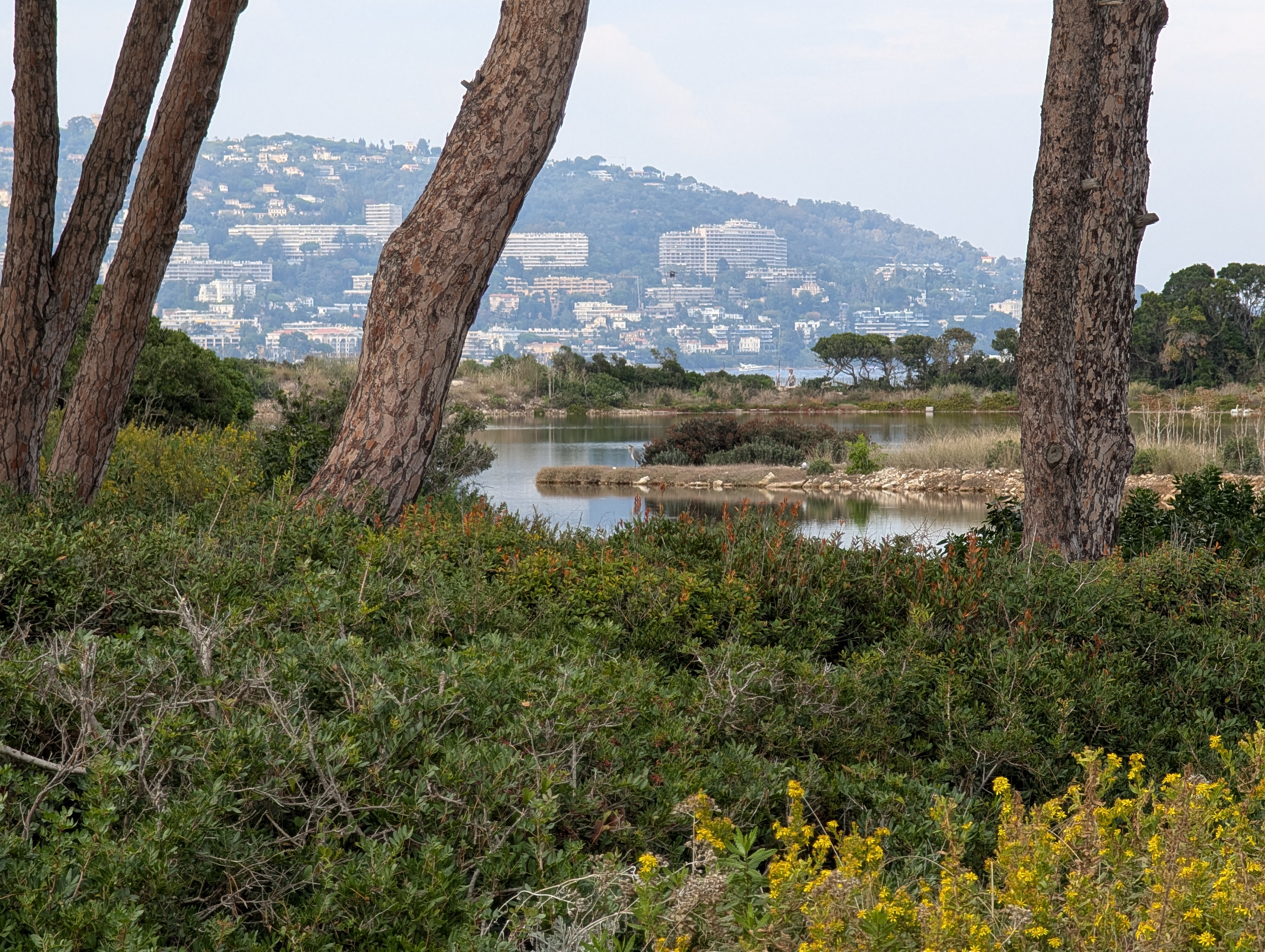
After the museum the island changed jobs. Paths of pine root and gravel ran between parasol pines into the interior; the fort's outer wall stood over its own meadow with flowers in the grass; on the low cliff a small watchtower kept one arch for a window and its sailboats already in view below. A hamlet of stone houses keeps to itself, shutters at half-mast. And in the middle of the pines came the pond: reeds in front, a still surface in the middle, and the towers of Cannes standing over it as if the mainland had been filed down to its highest points.
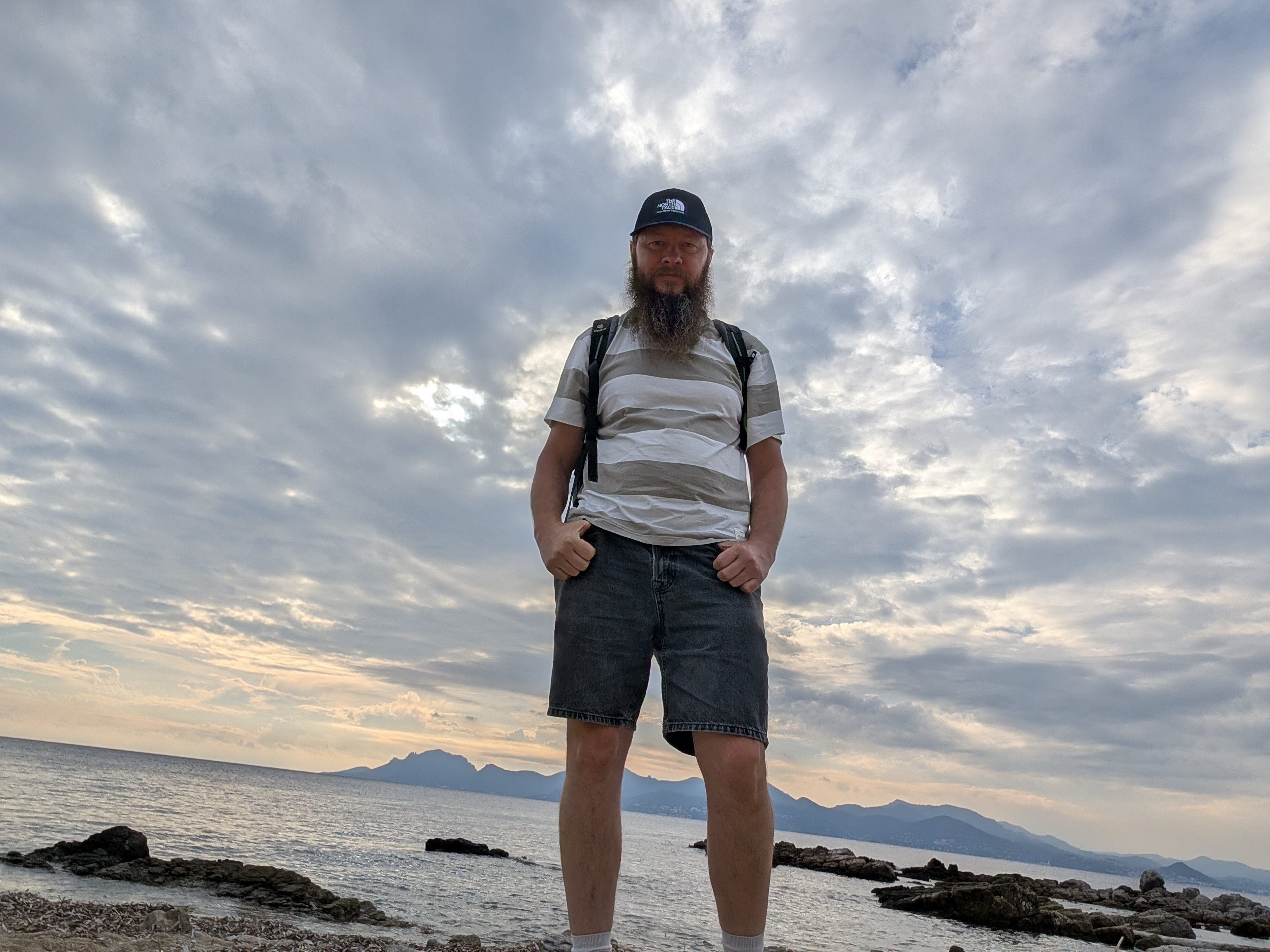
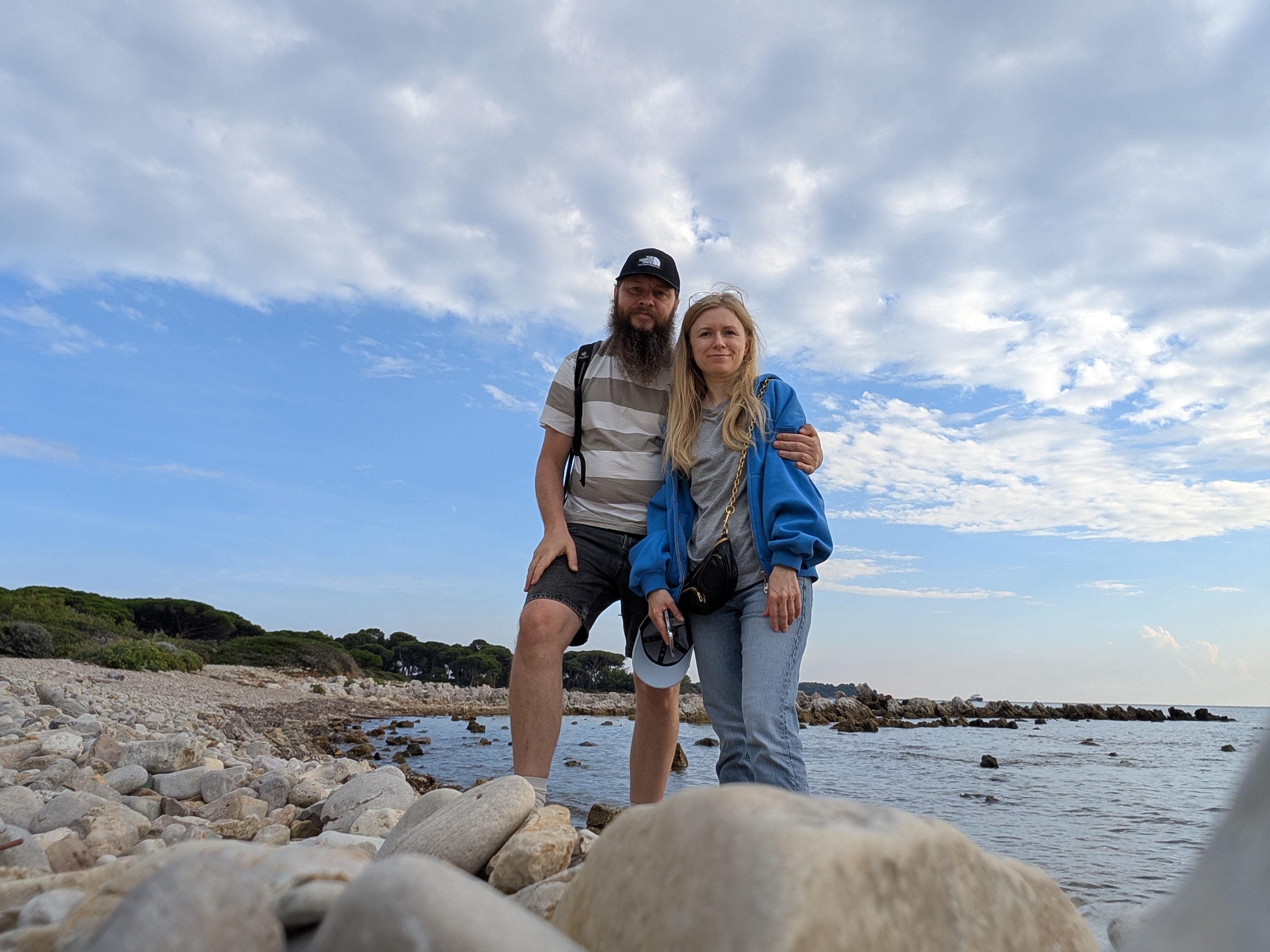
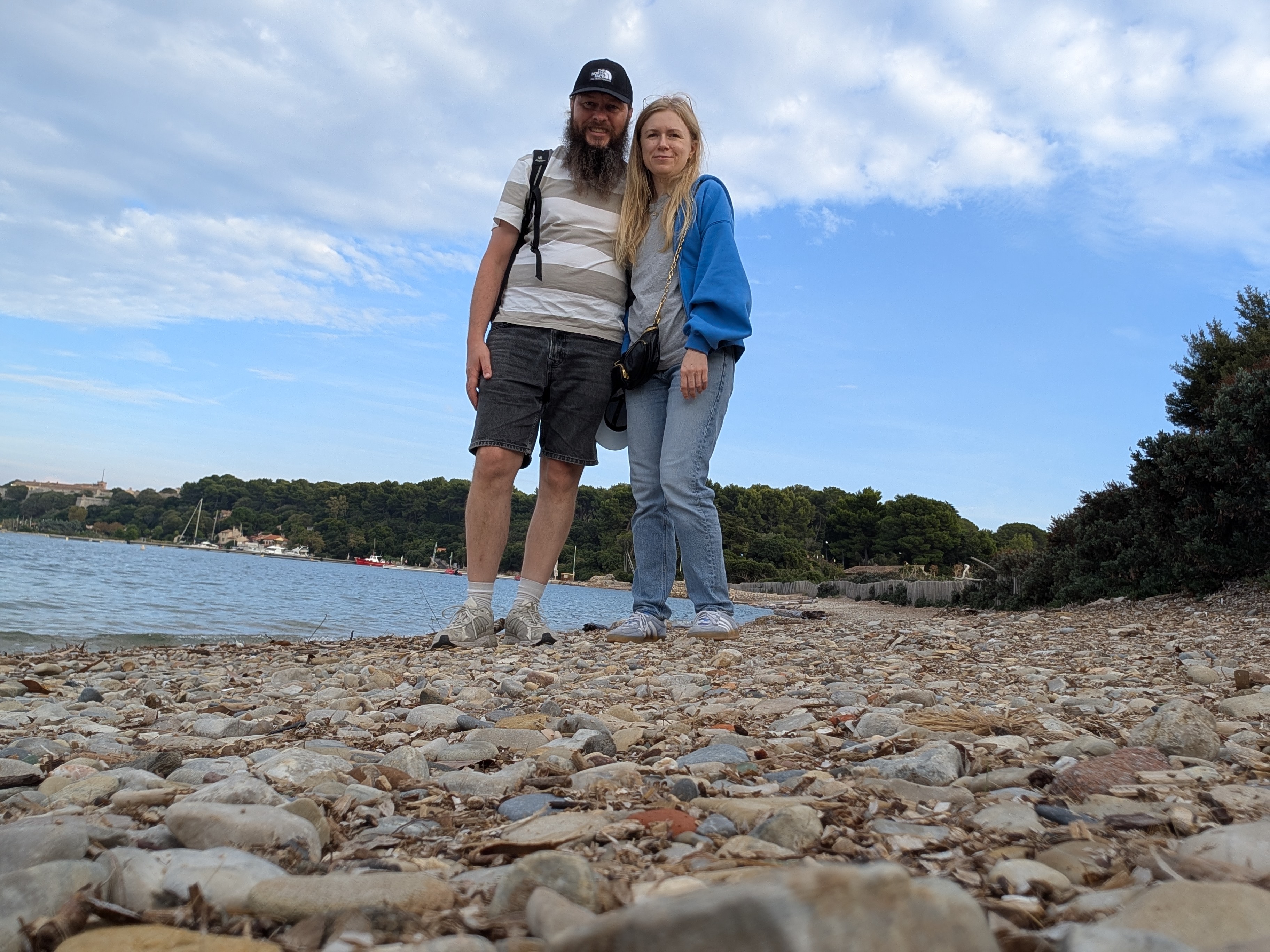
The last hour belonged to the south shore and the pebbles. The path stepped down to a cove where two parasol pines leaned out over the water; a clearing by the grove had its picnic table waiting; and at the beach we took our turn in the day's frame, bare round boulders in the foreground and the sky opening behind them — gold running under the cloud, the sea getting its colour back, Saint-Honorat in the distance doing its quietest impression of a stage set. The boat home gave the morning's crossing back in mirror image: Cannes, the breakwater, the lighthouse, the bay. A Sunday well spent on an island that measures time in centuries and lets everyone else have the afternoon.
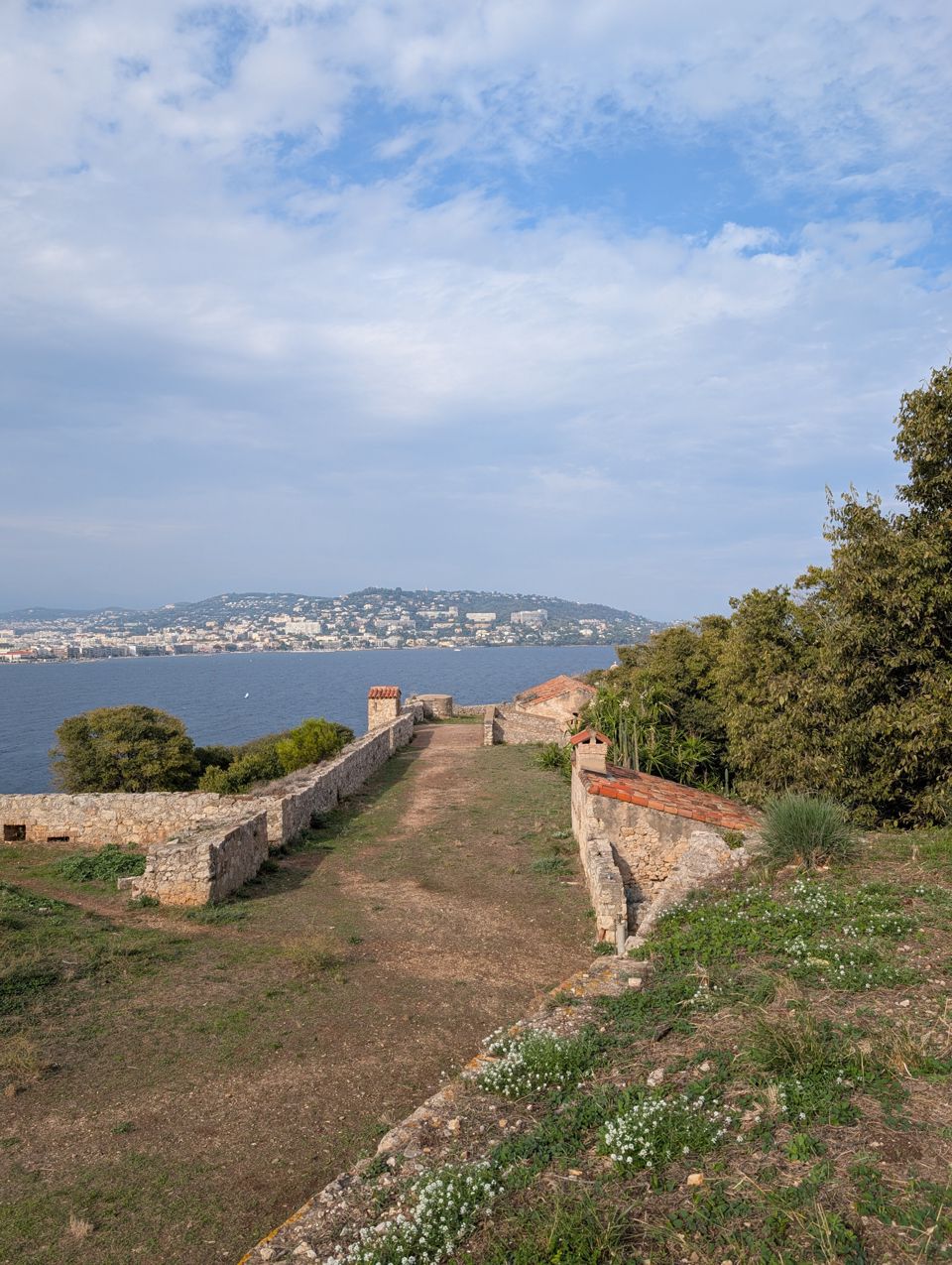
The outer wall over the meadow, Cannes beyond 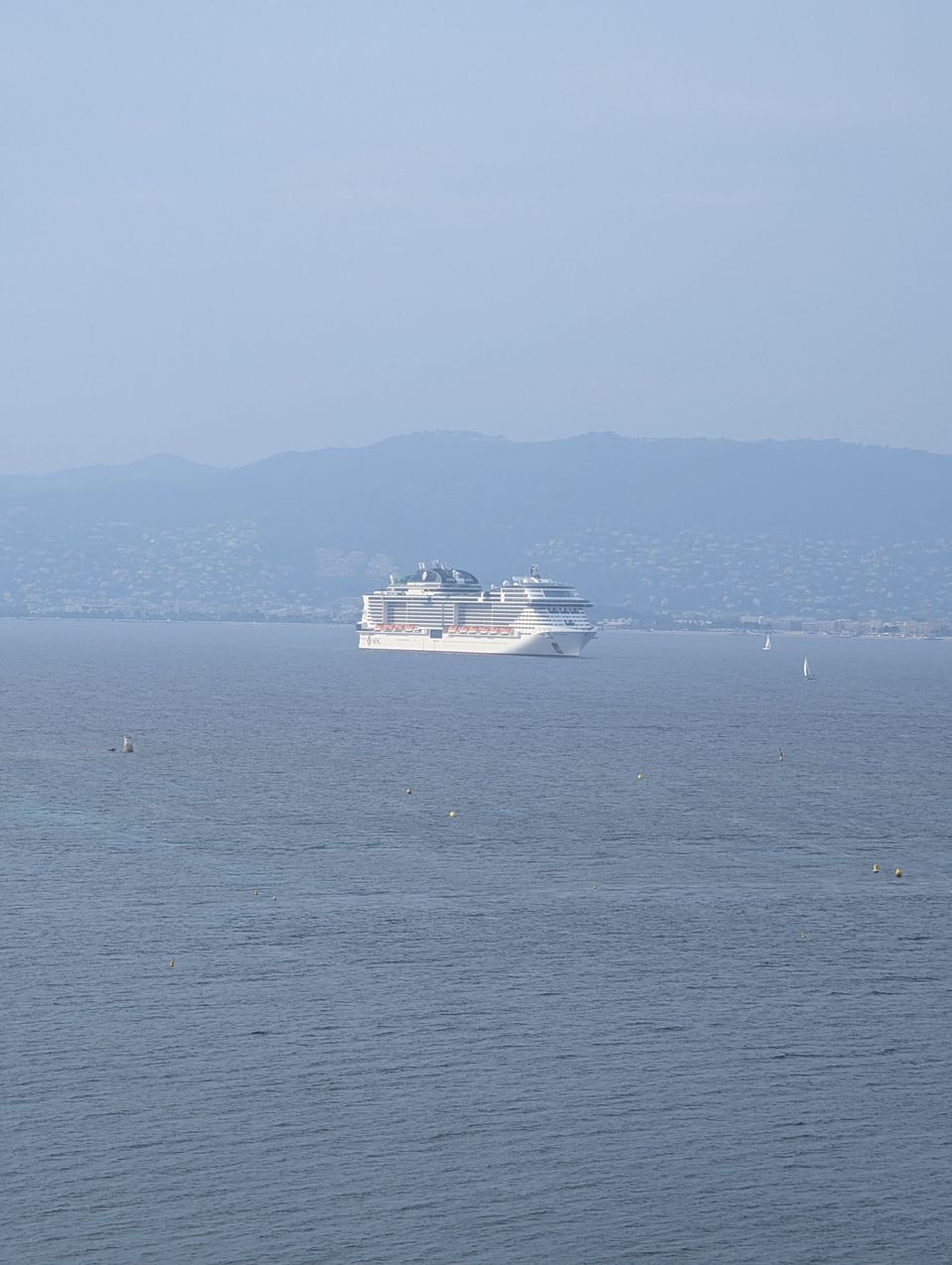
The watchtower, sailboats under its window 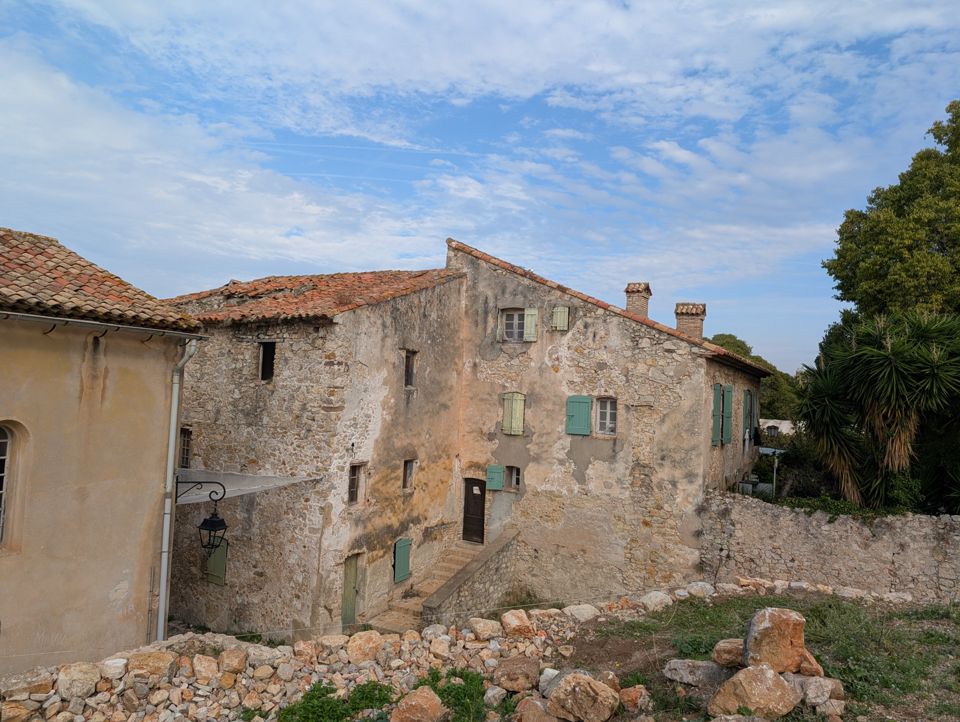
The hamlet's shutters, half-mast 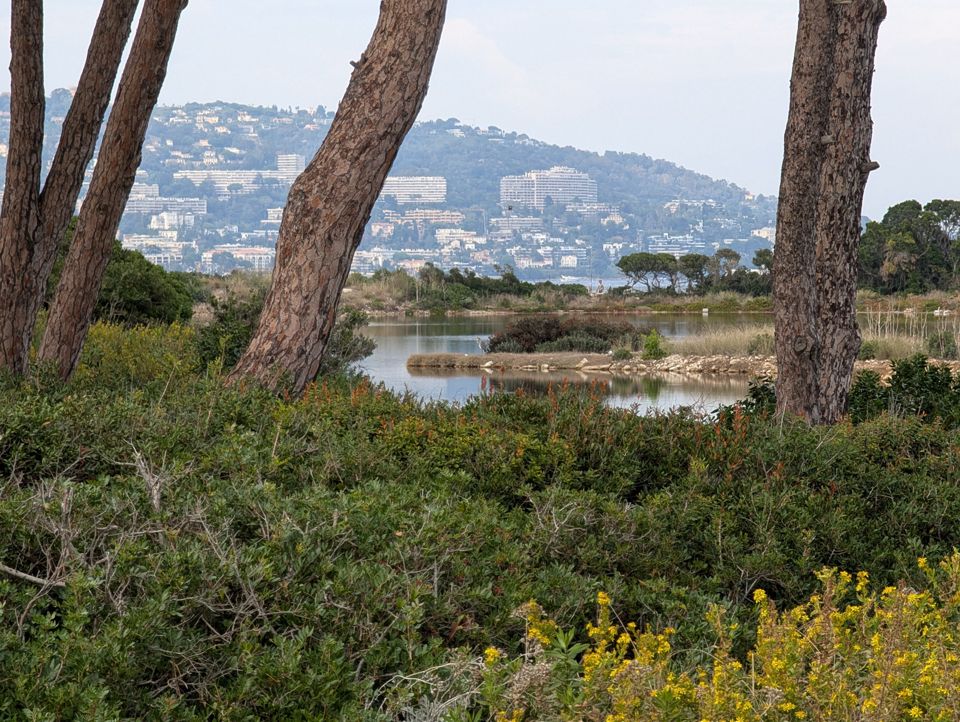
The pond, and the mainland filed down to towers 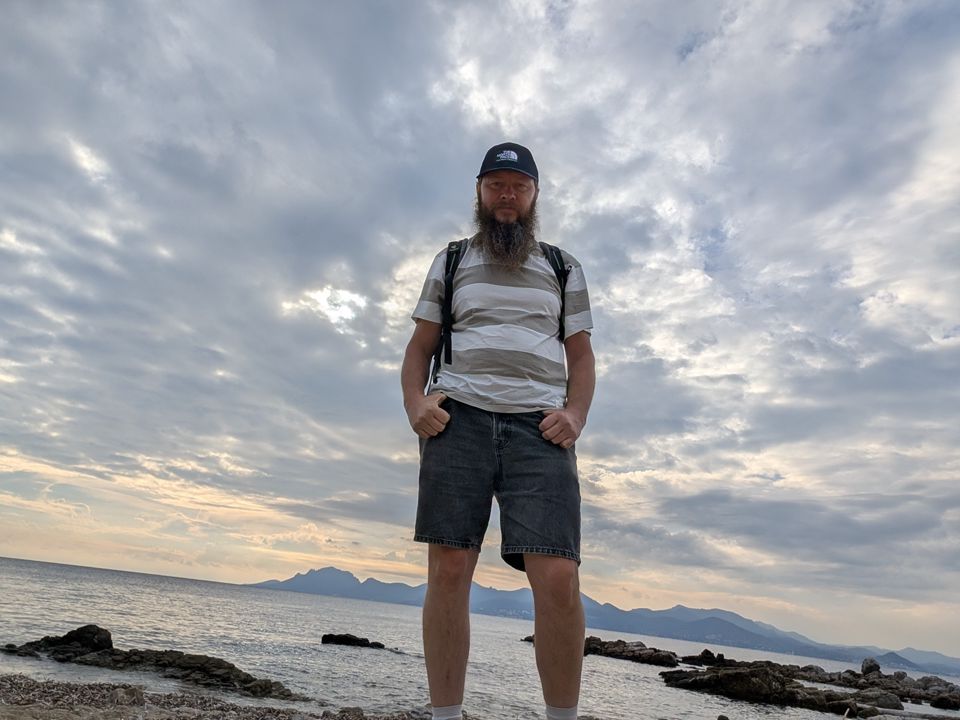
Oleg on the pebbles, the sky opening 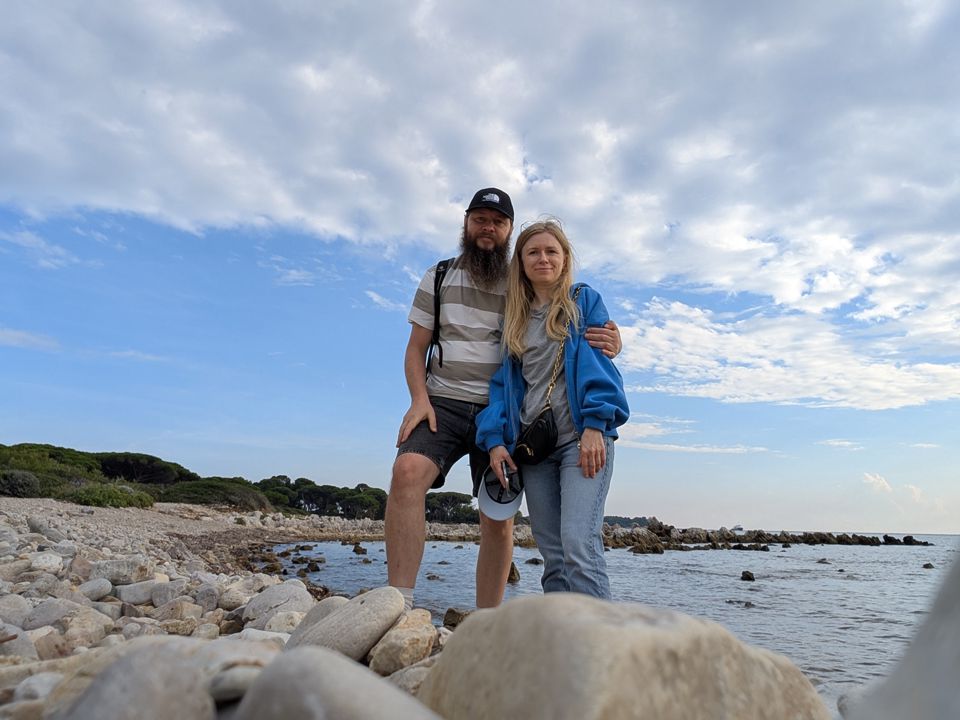
The two of us under the pines 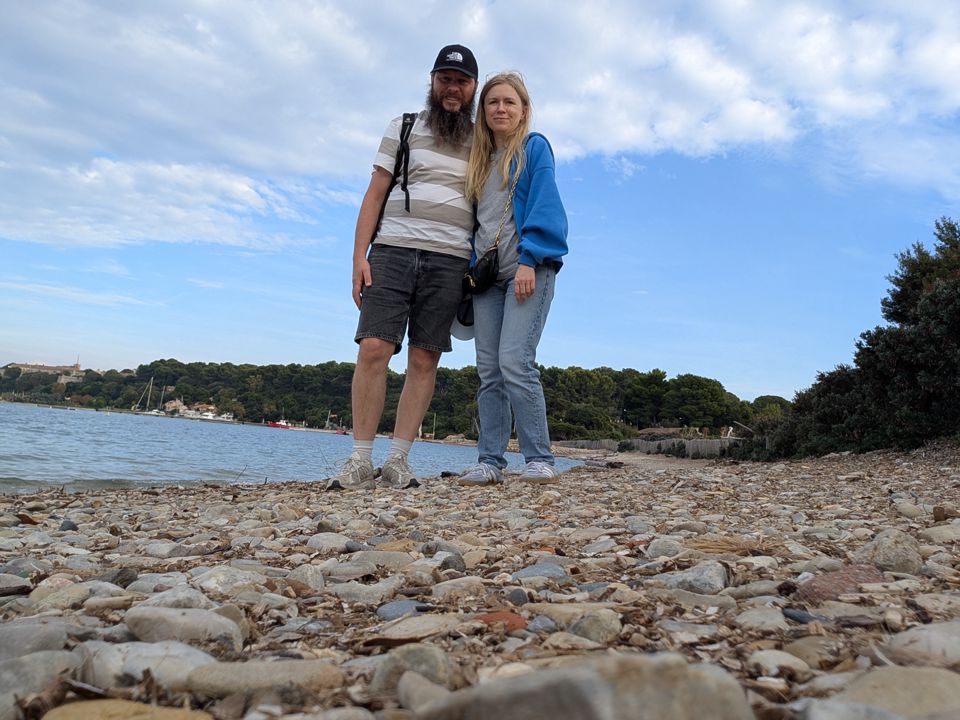
The two of us, boulders first