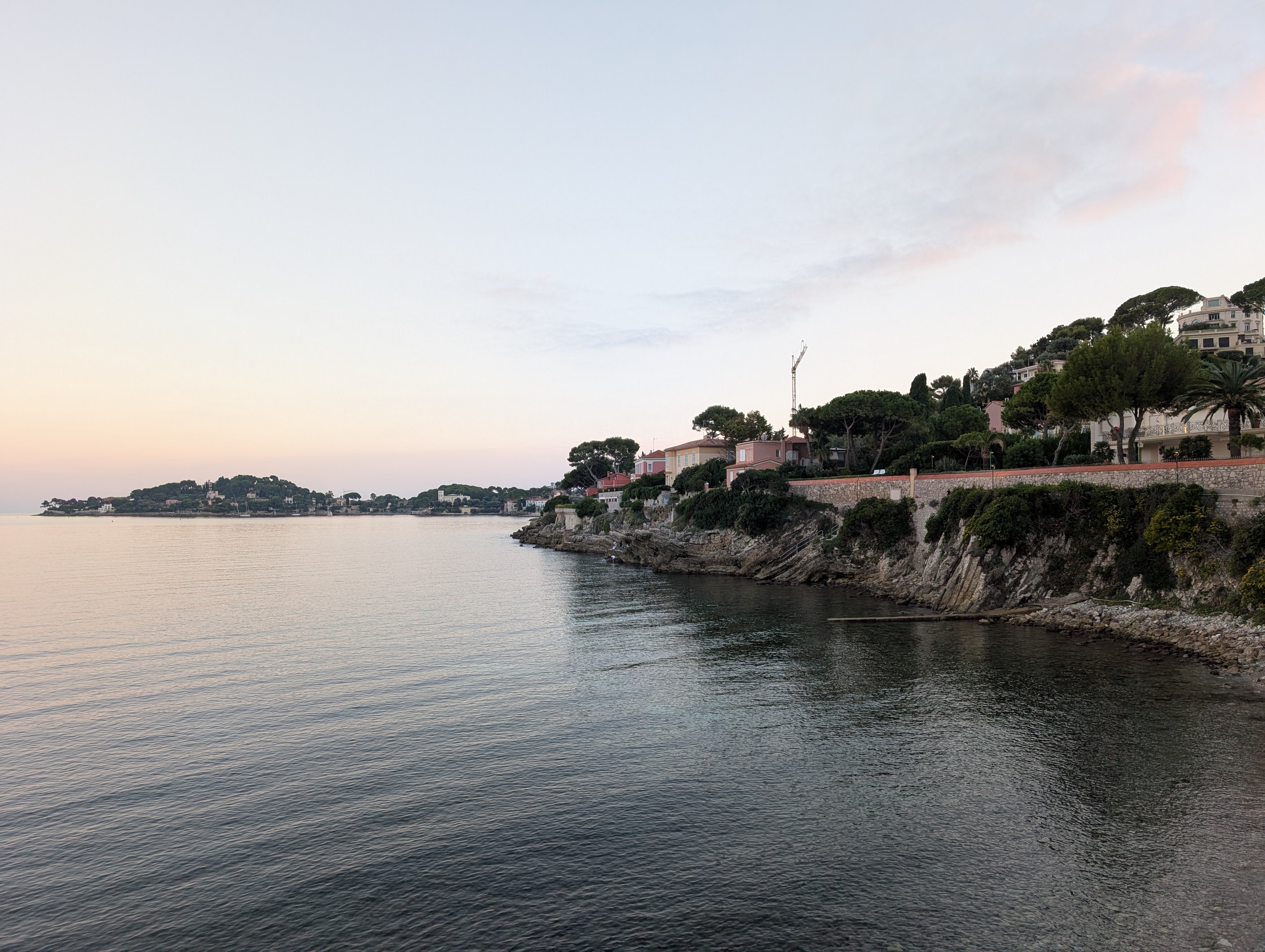
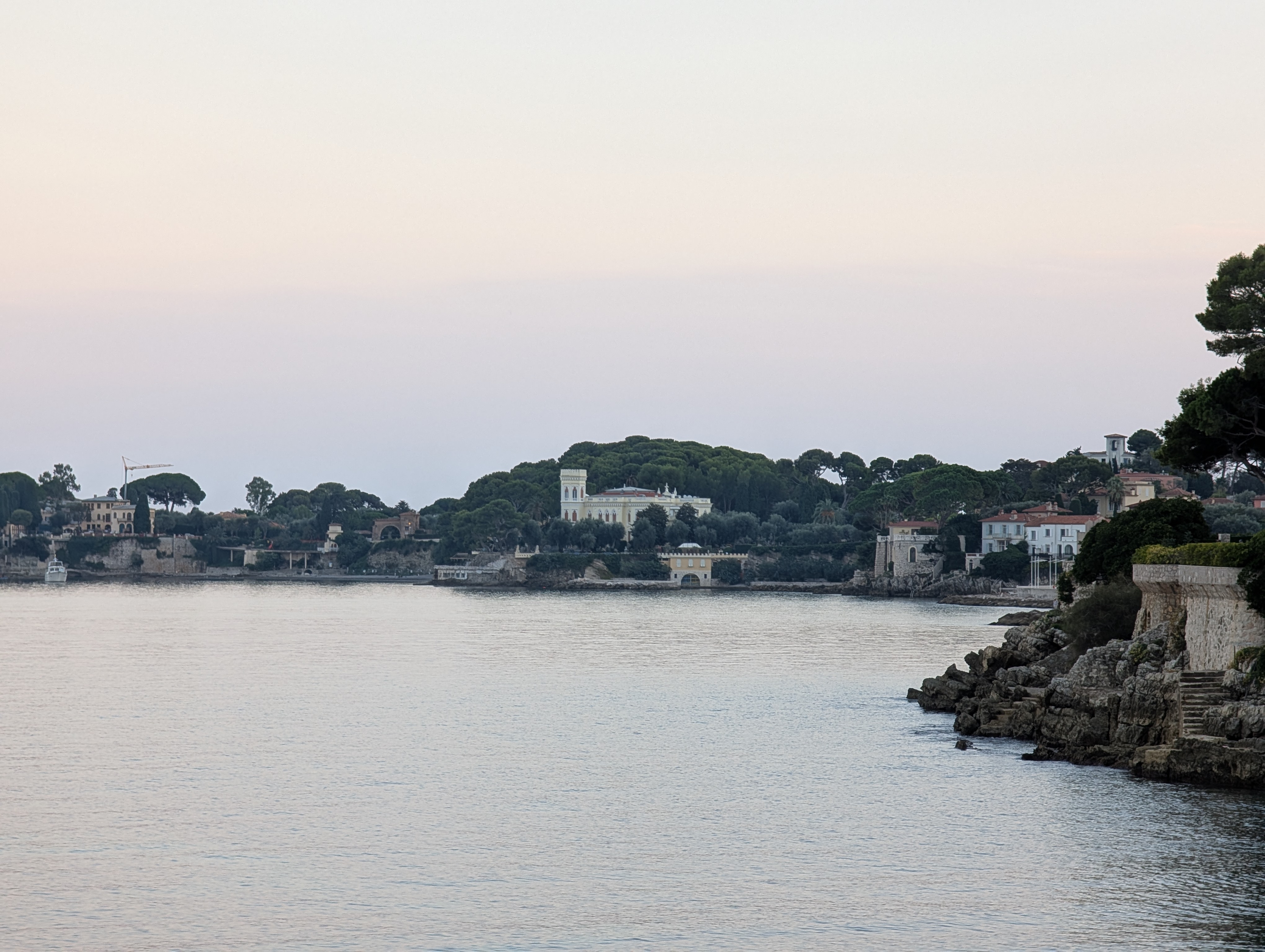
French Riviera trip day 4, Èze
Day four, 14 October 2026: one slow round through the Belle Époque quarter before the train east, then the appointment — Èze on its rock, the garden at the top of the coast, and the Chemin de Nietzsche down to a marina that does golden hour by the book.
Day four — Èze
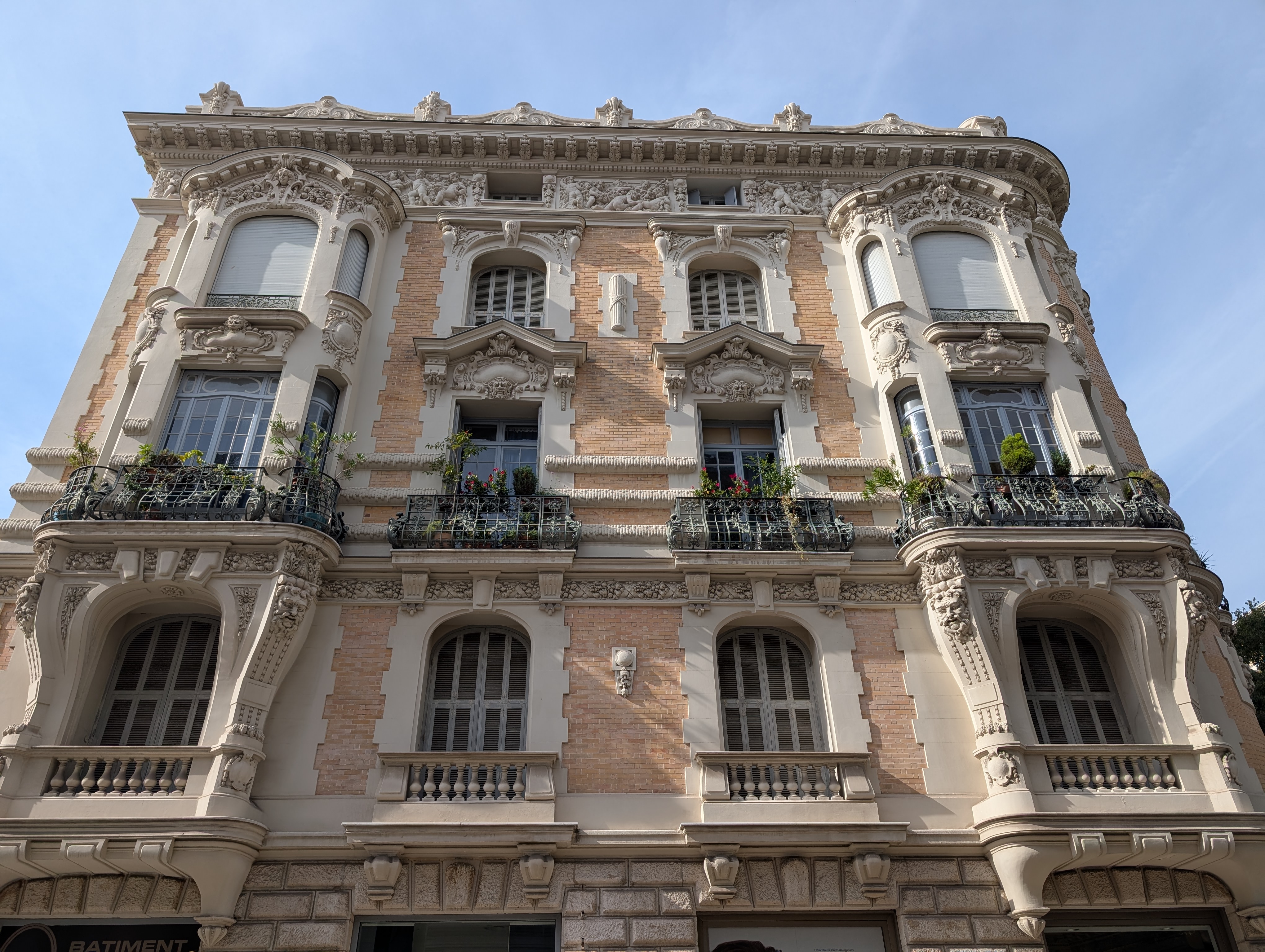
Day four kept one appointment: Èze, the village that sits on its rock high above the sea, with a station called Èze-sur-Mer at sea level and a famous path between the two. The morning, though, belonged to Nice — one slow round through the Belle Époque quarter before the train east: turrets, carved corners, iron balconies the colour of rust. Then the day’s appointment, and the village proper.
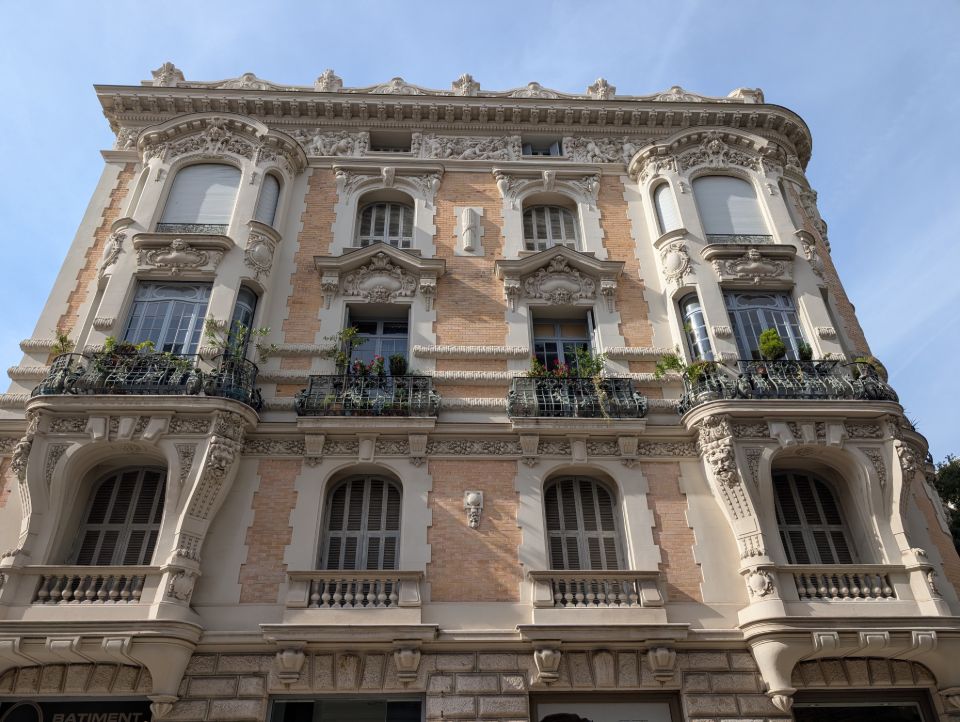
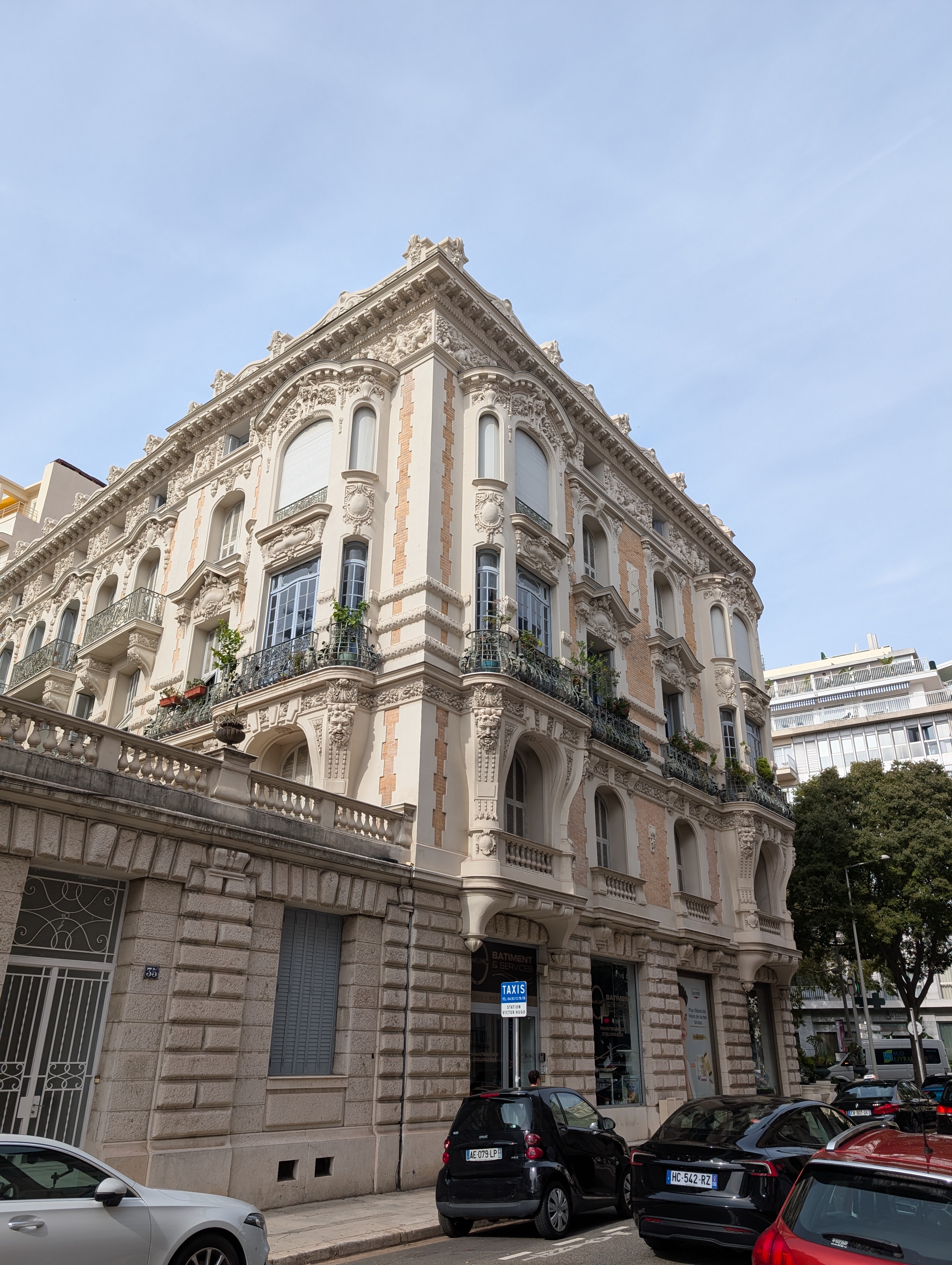
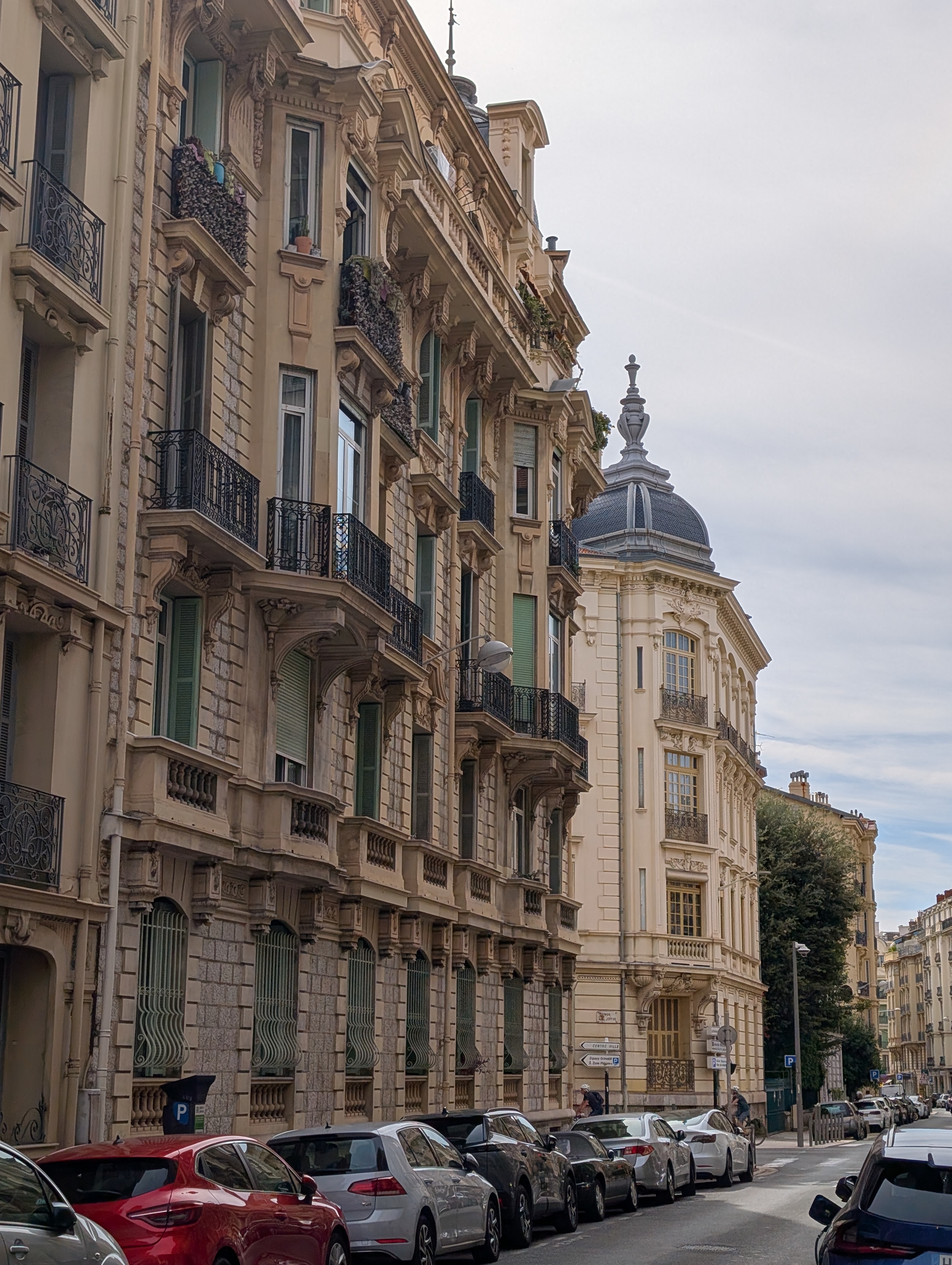
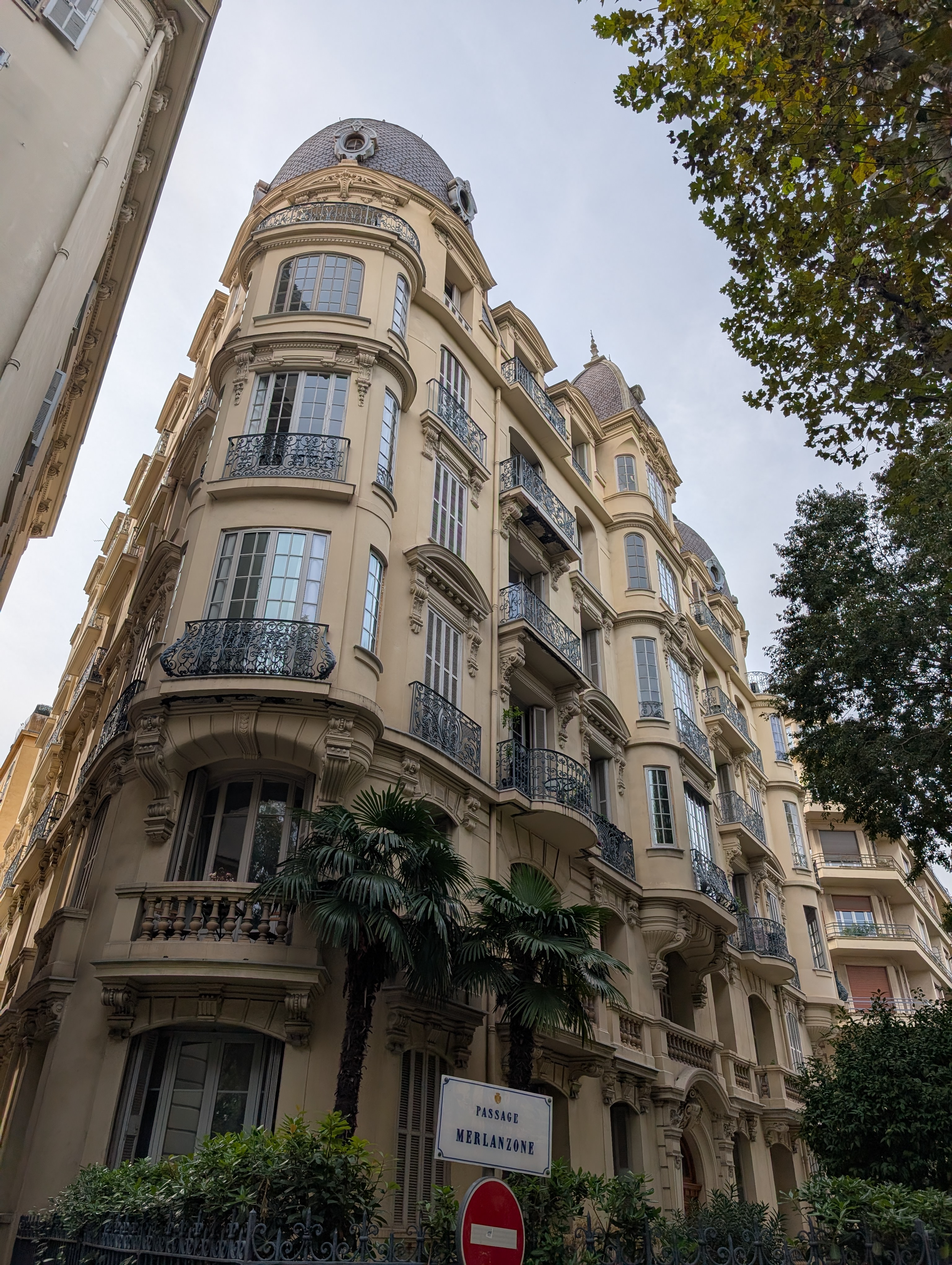
The Belle Époque quarter, morning edition 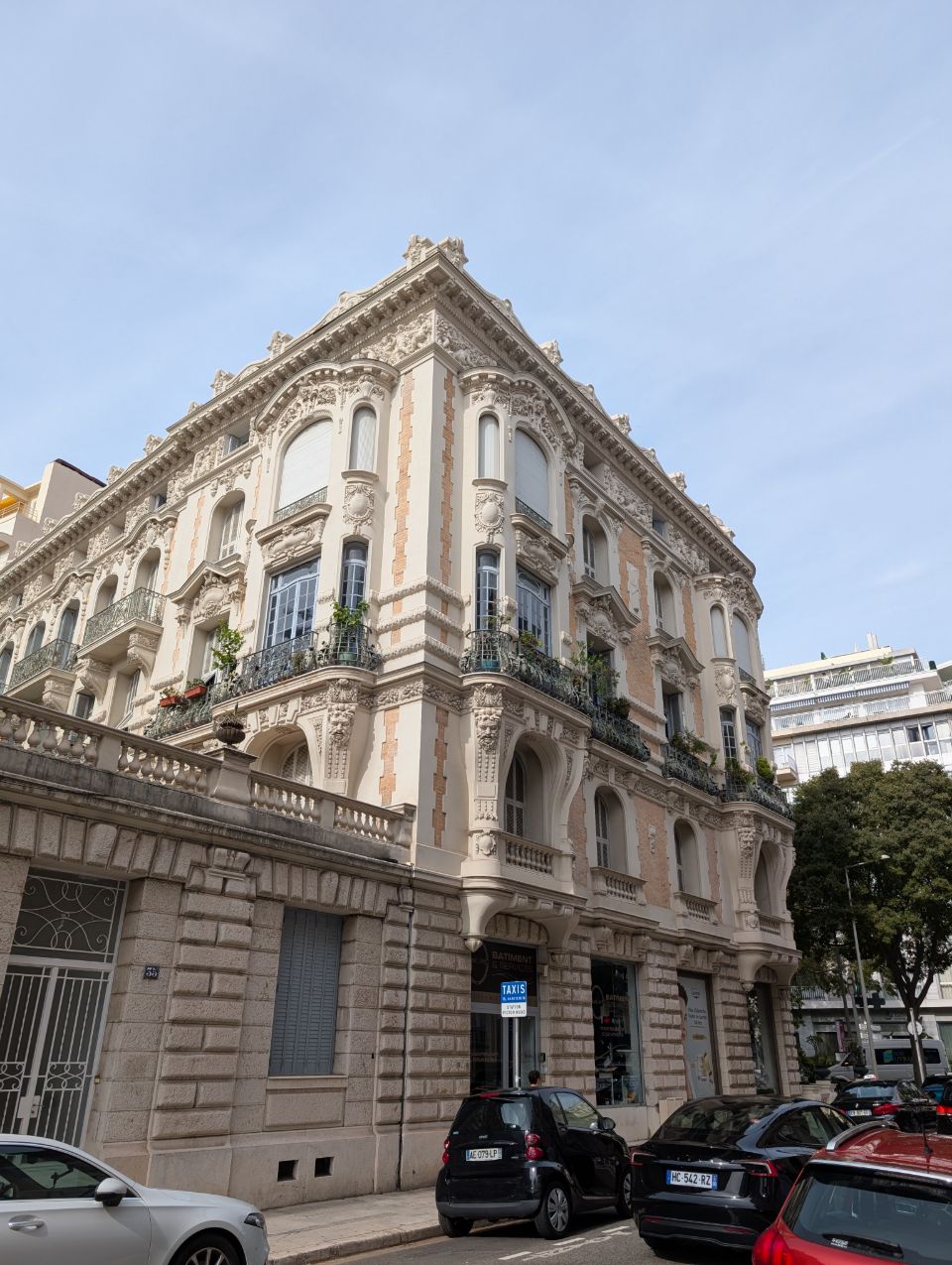
Corner houses keep their standards 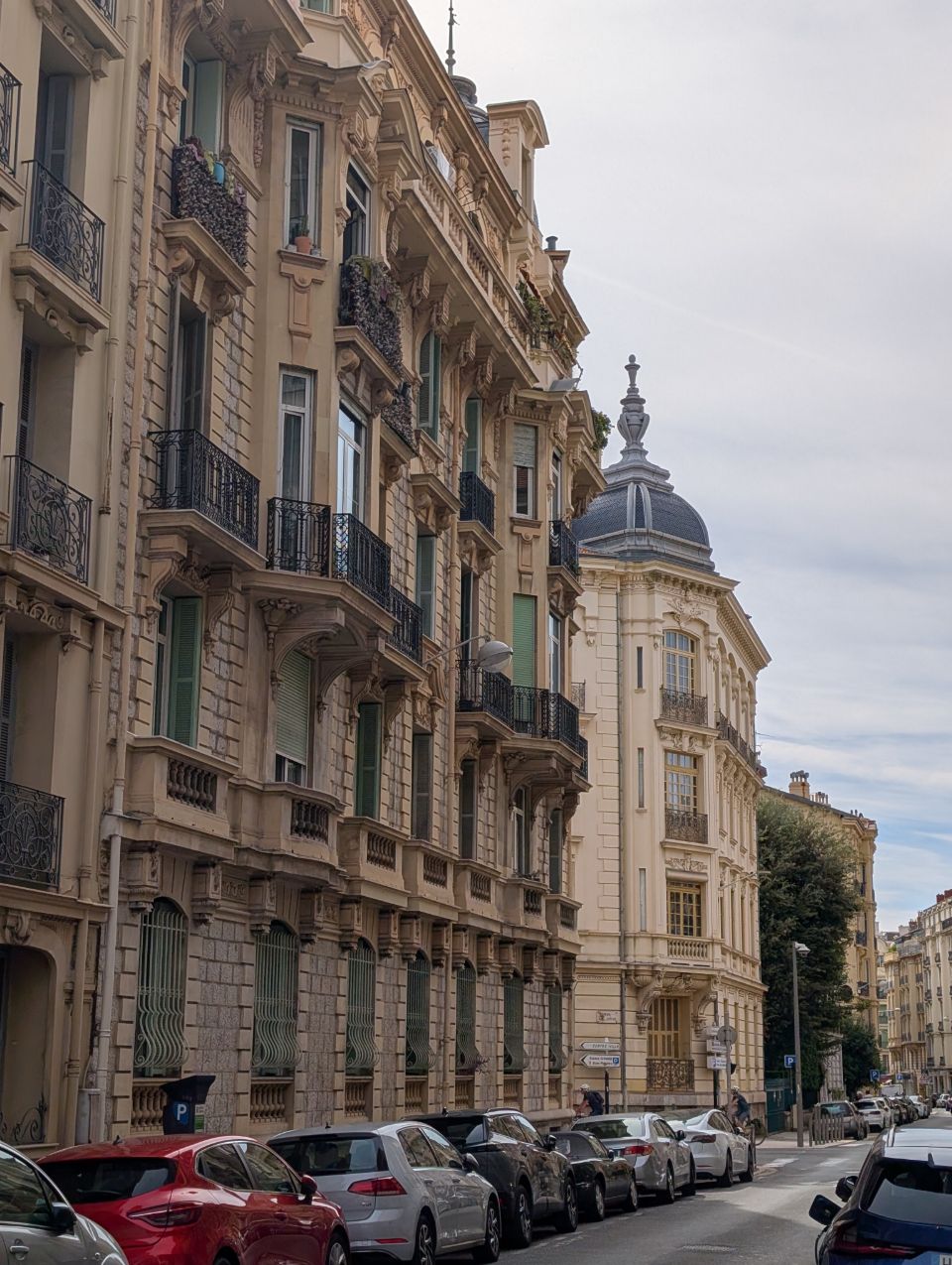
Side street, same standards 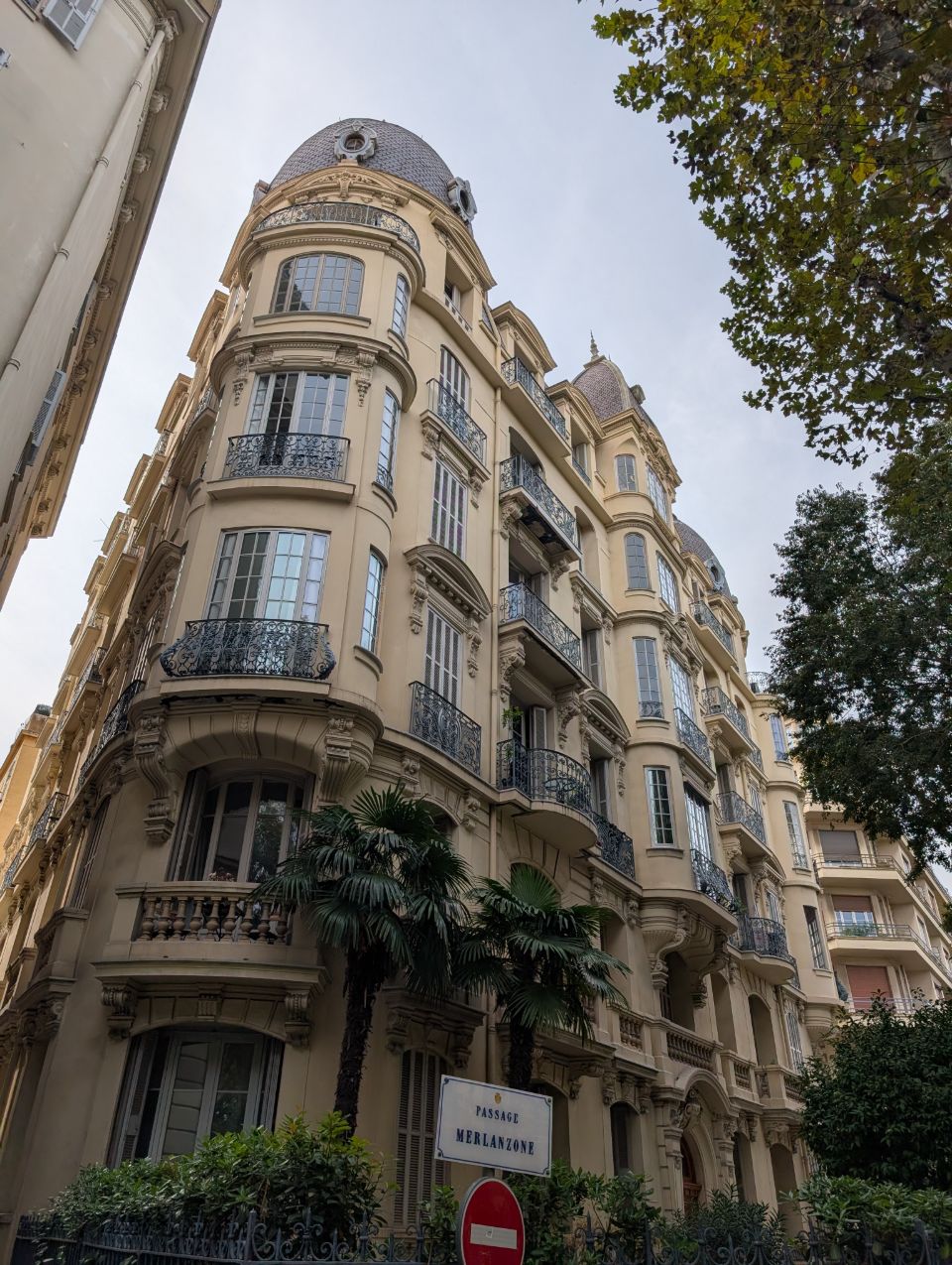
The villa, pretending to be an embassy
The village
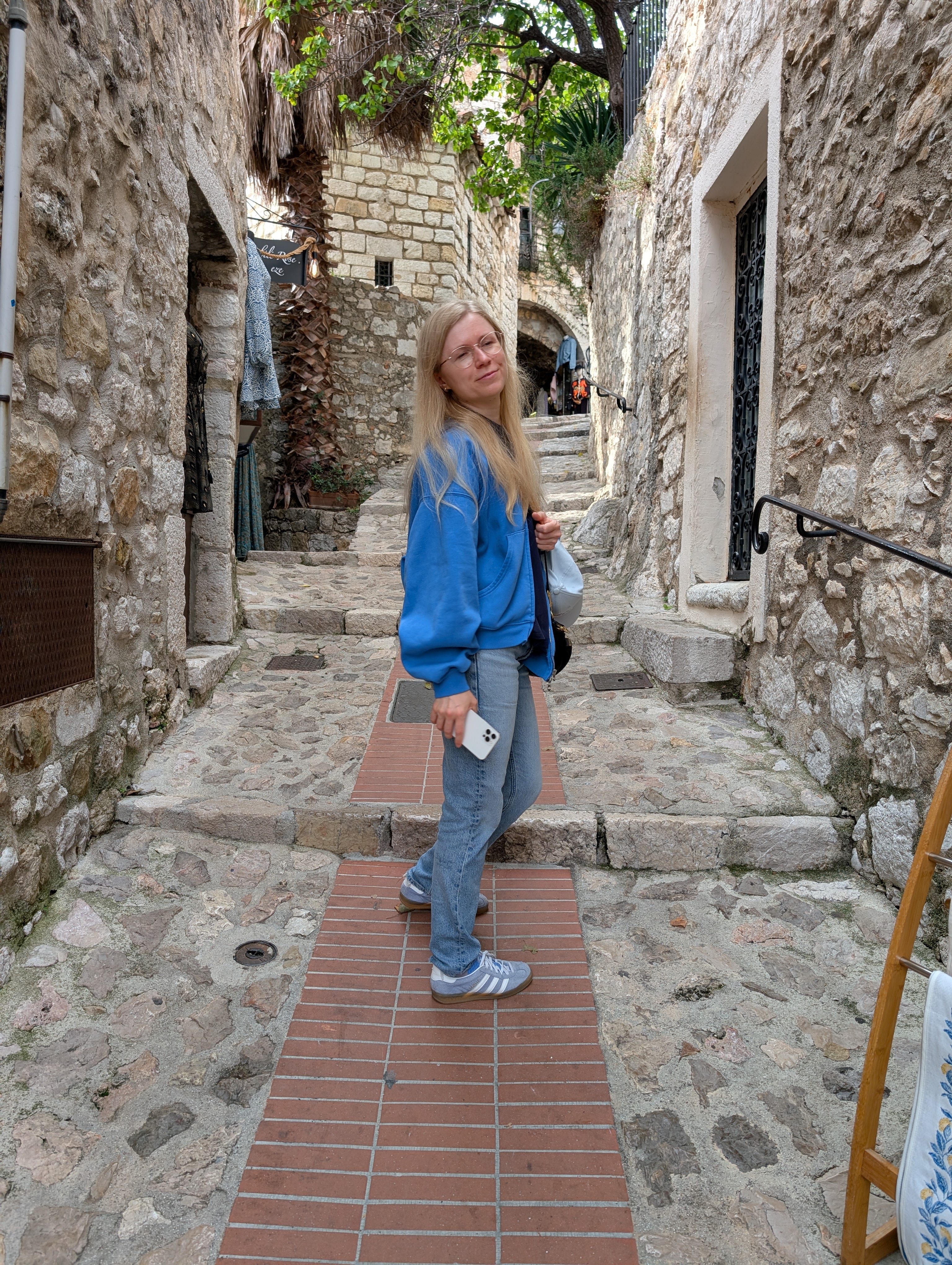
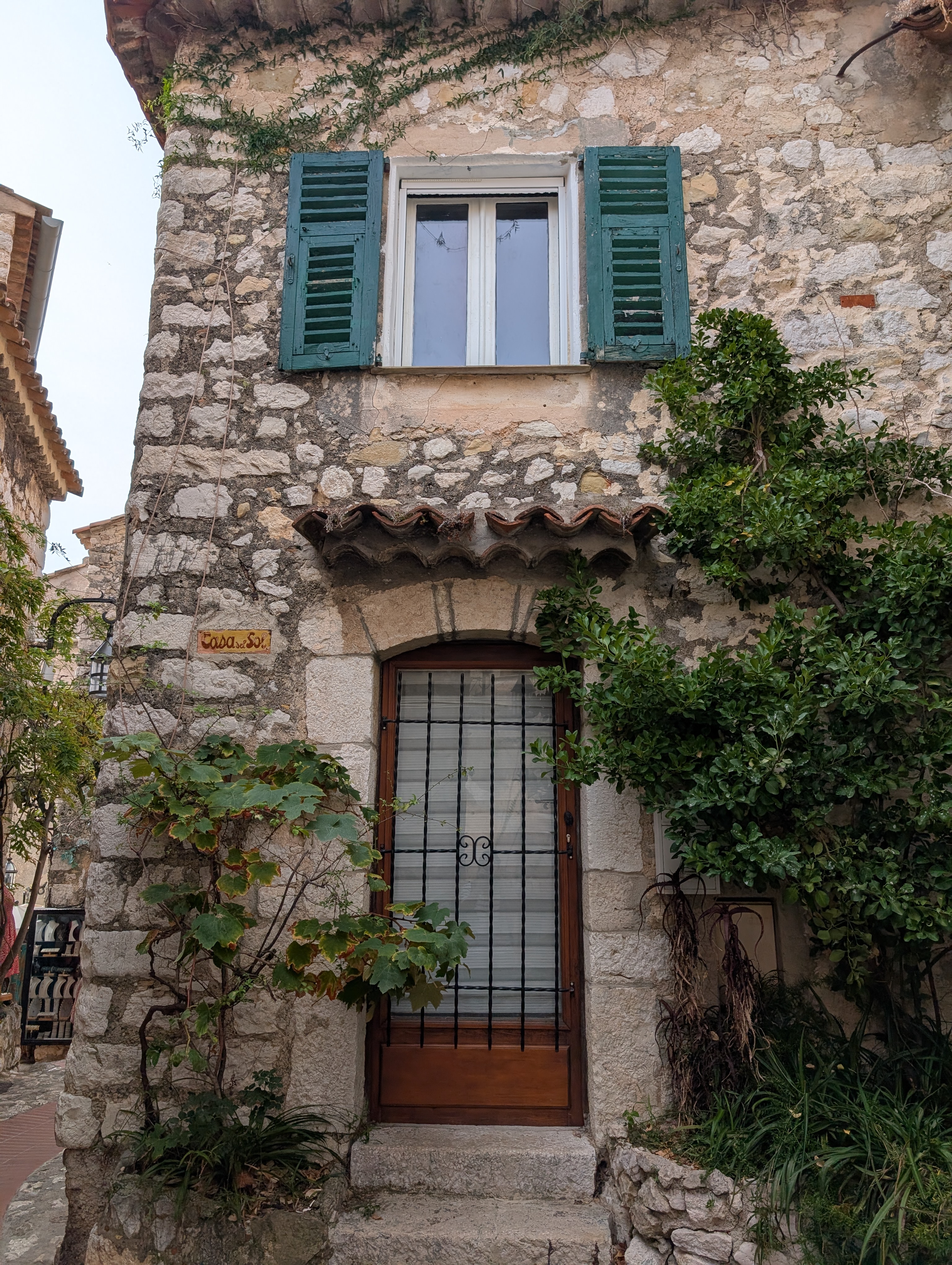
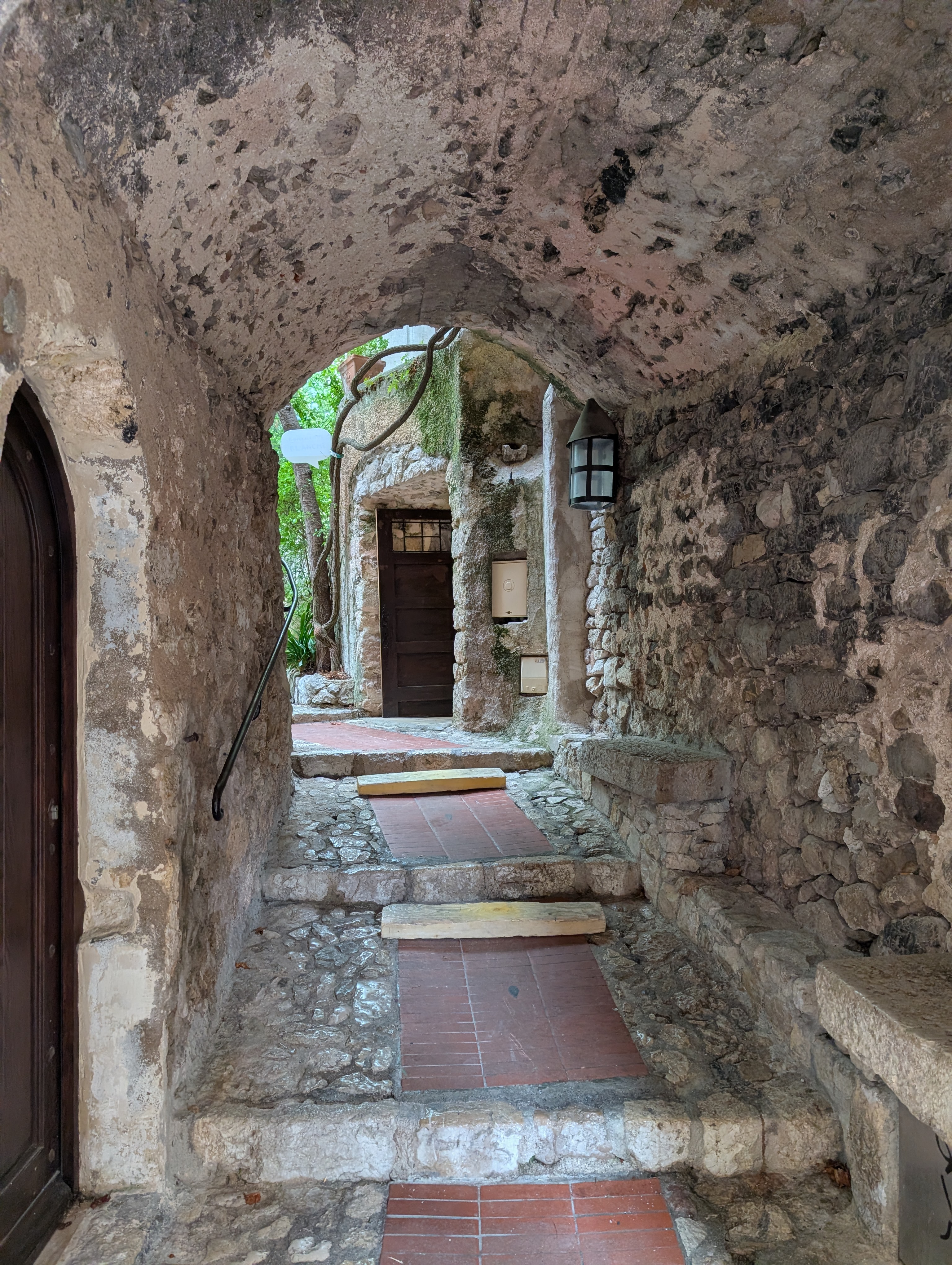
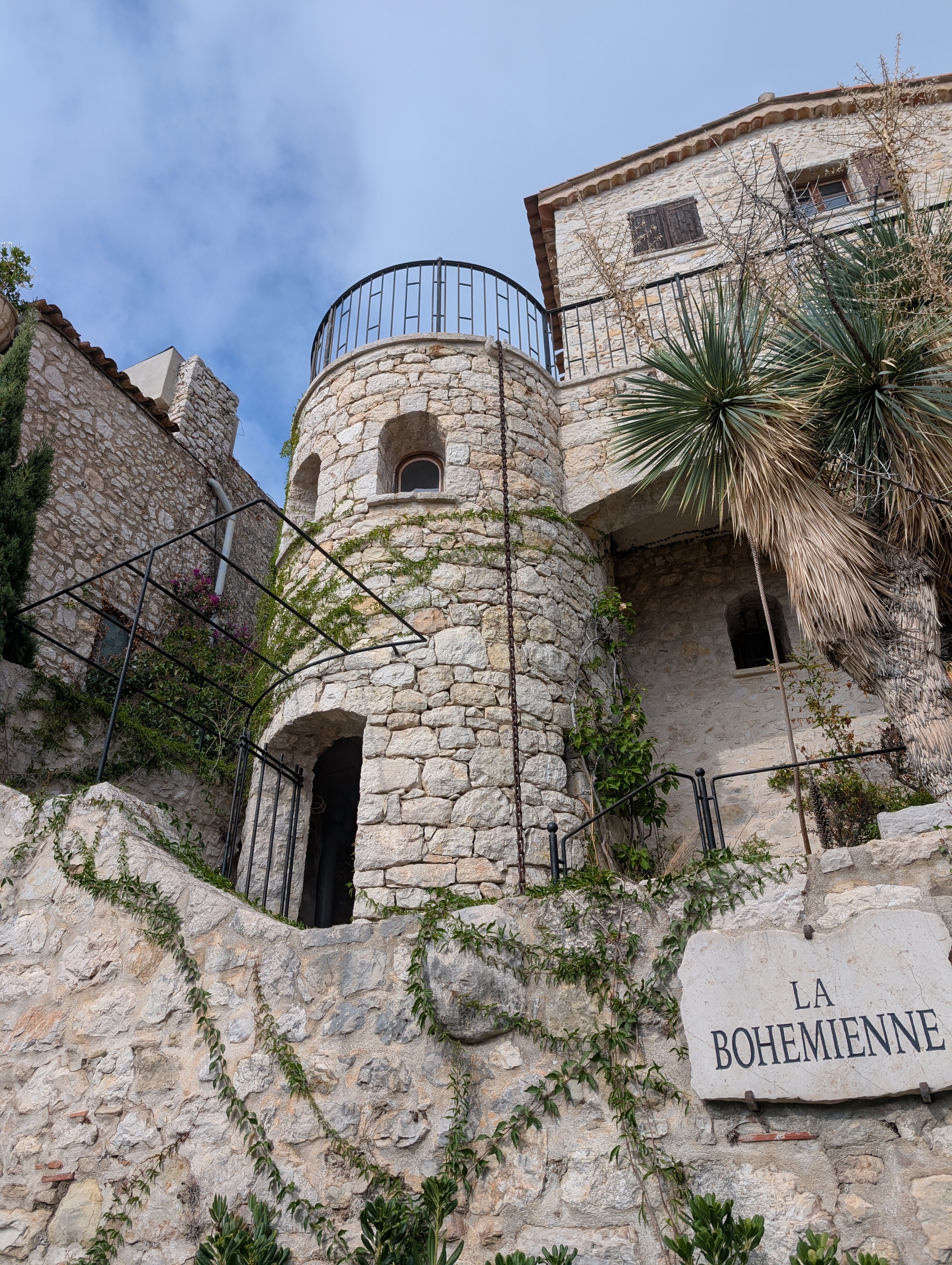
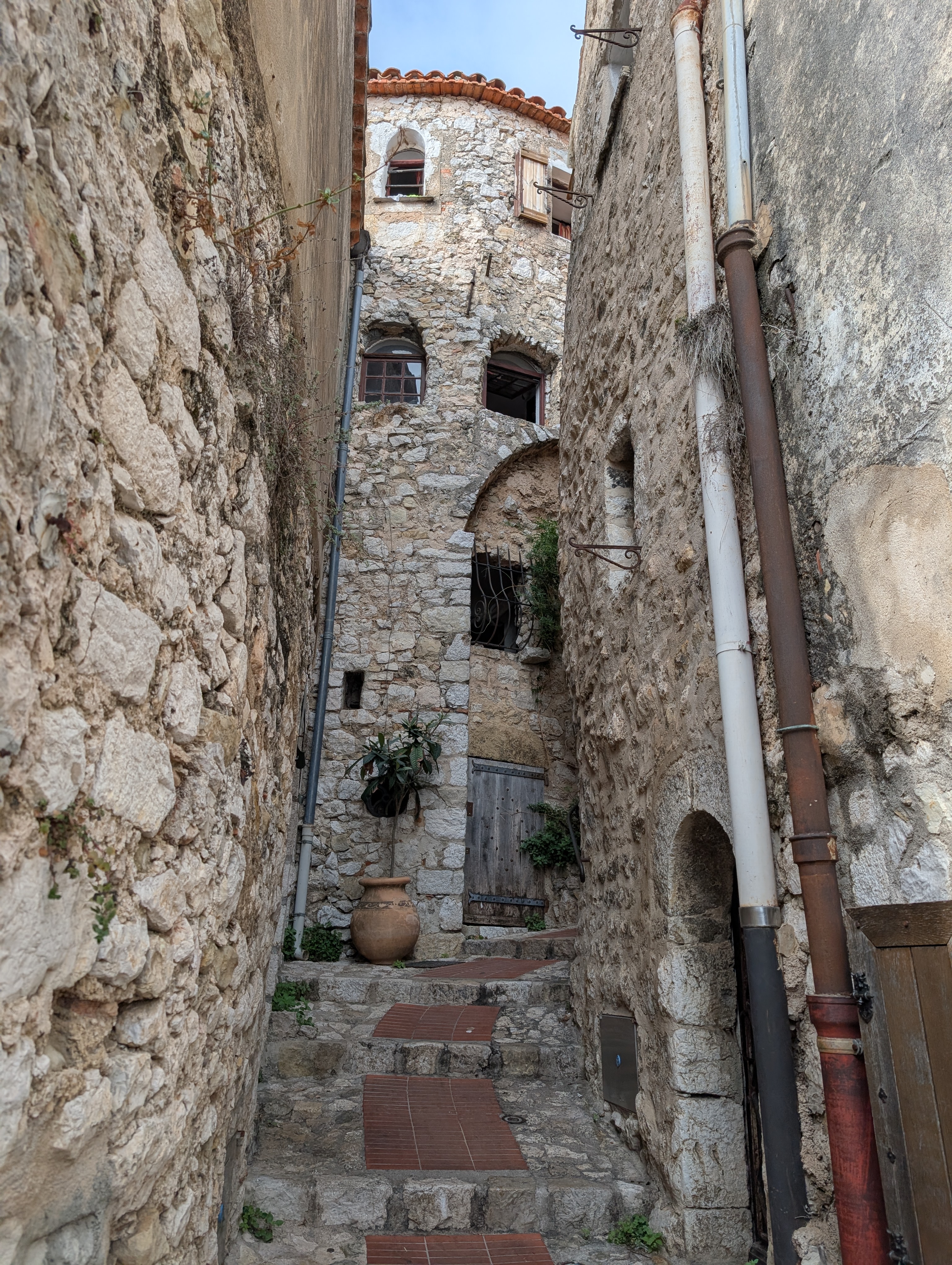
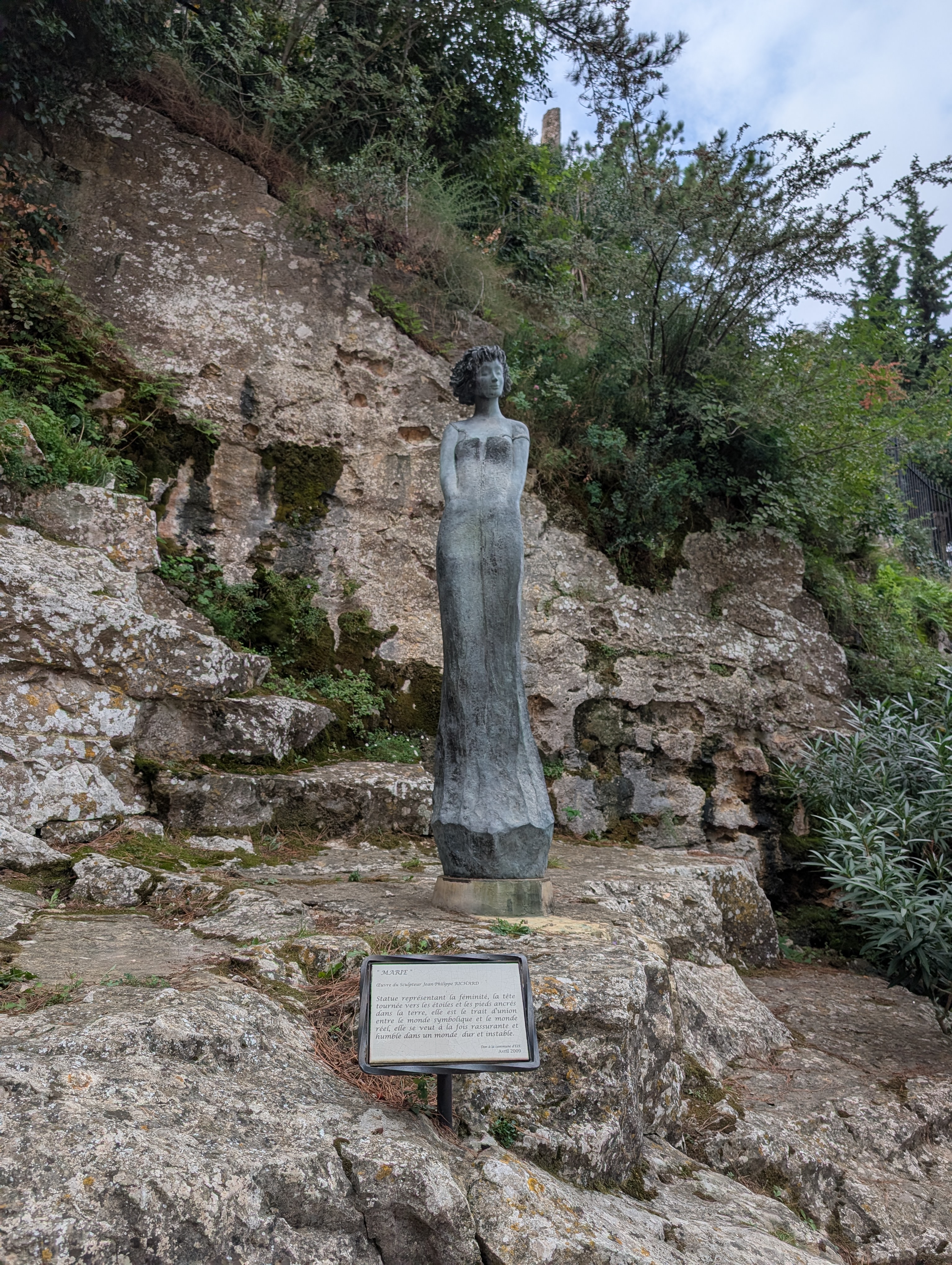
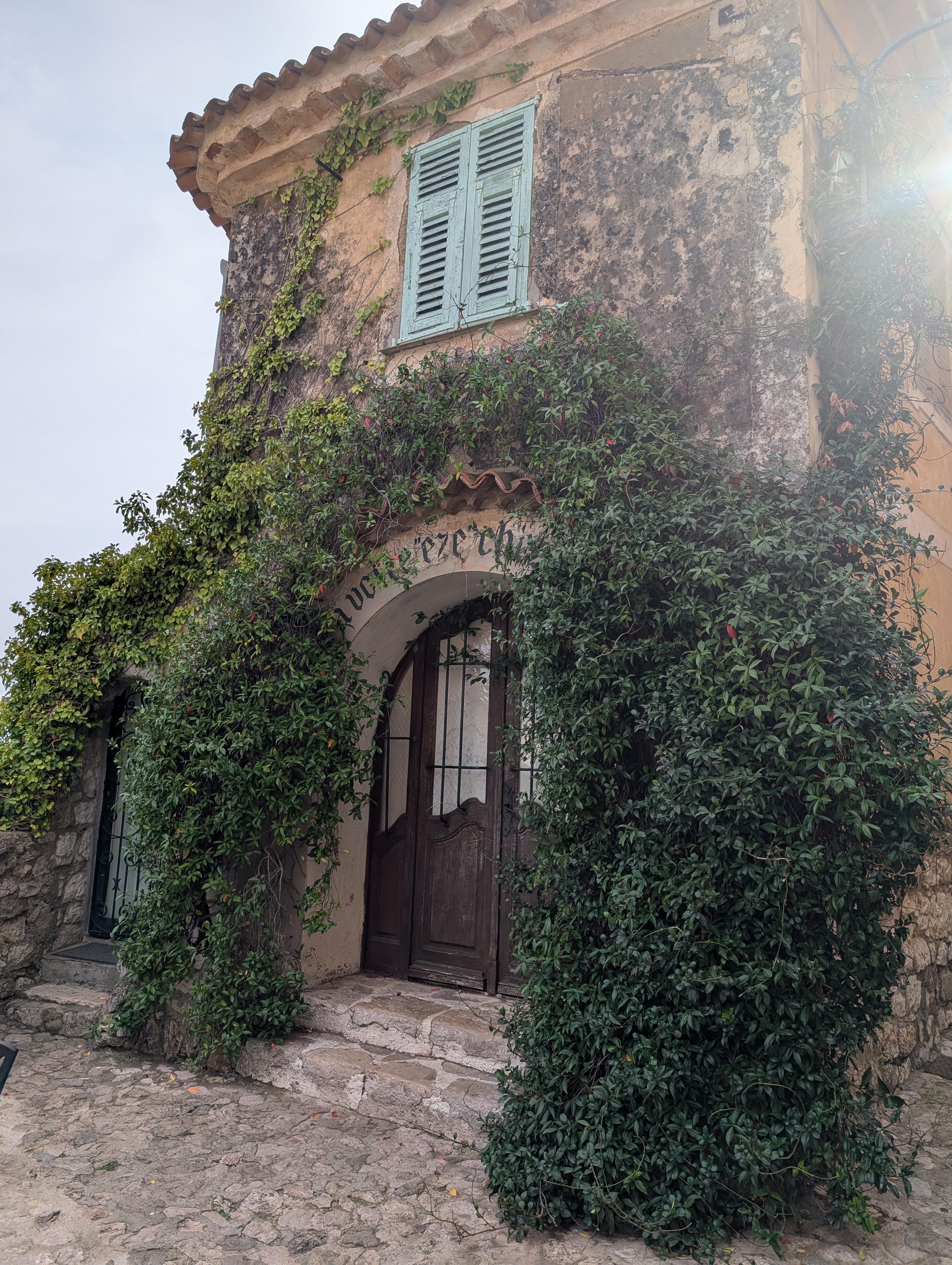
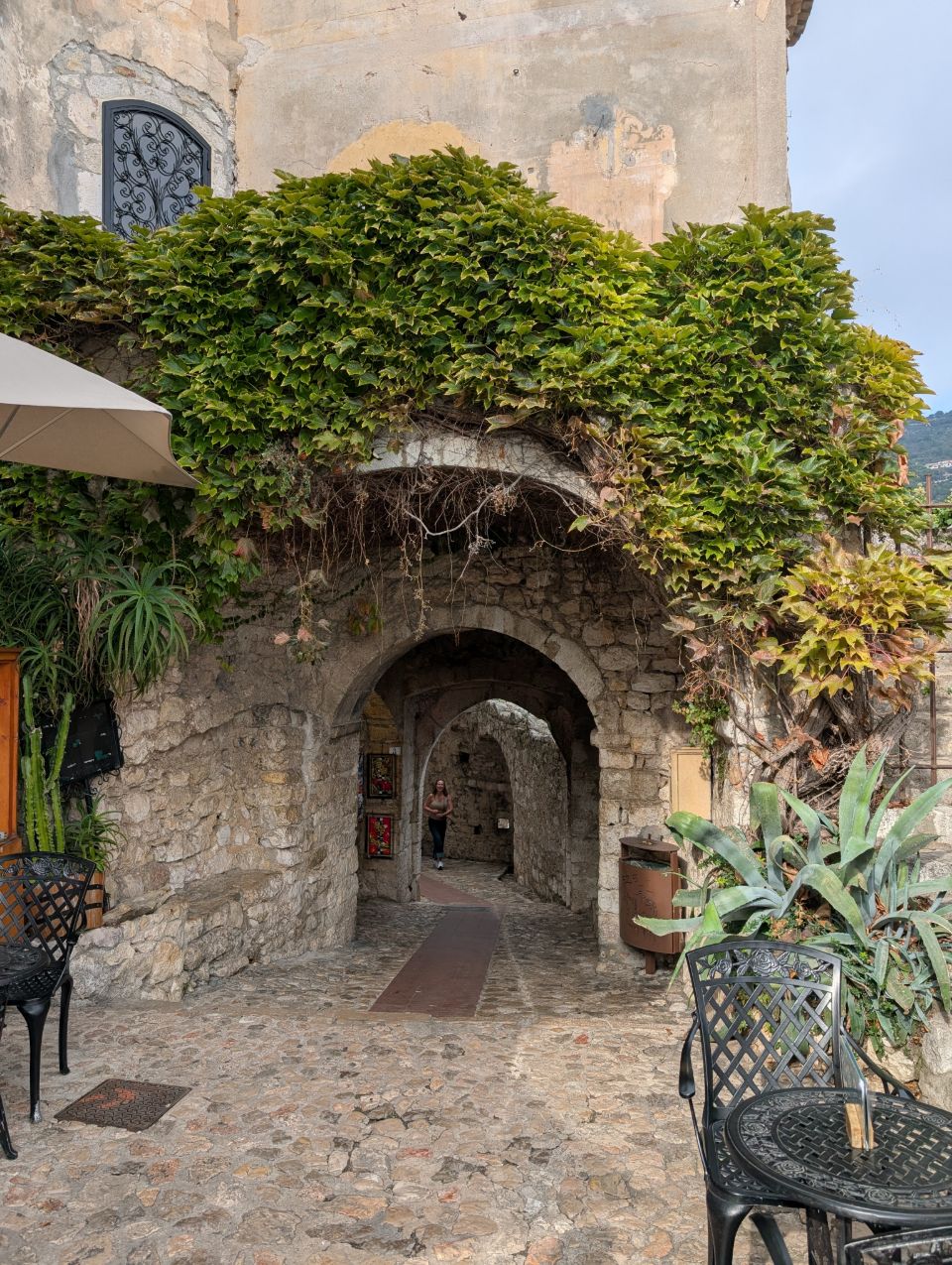
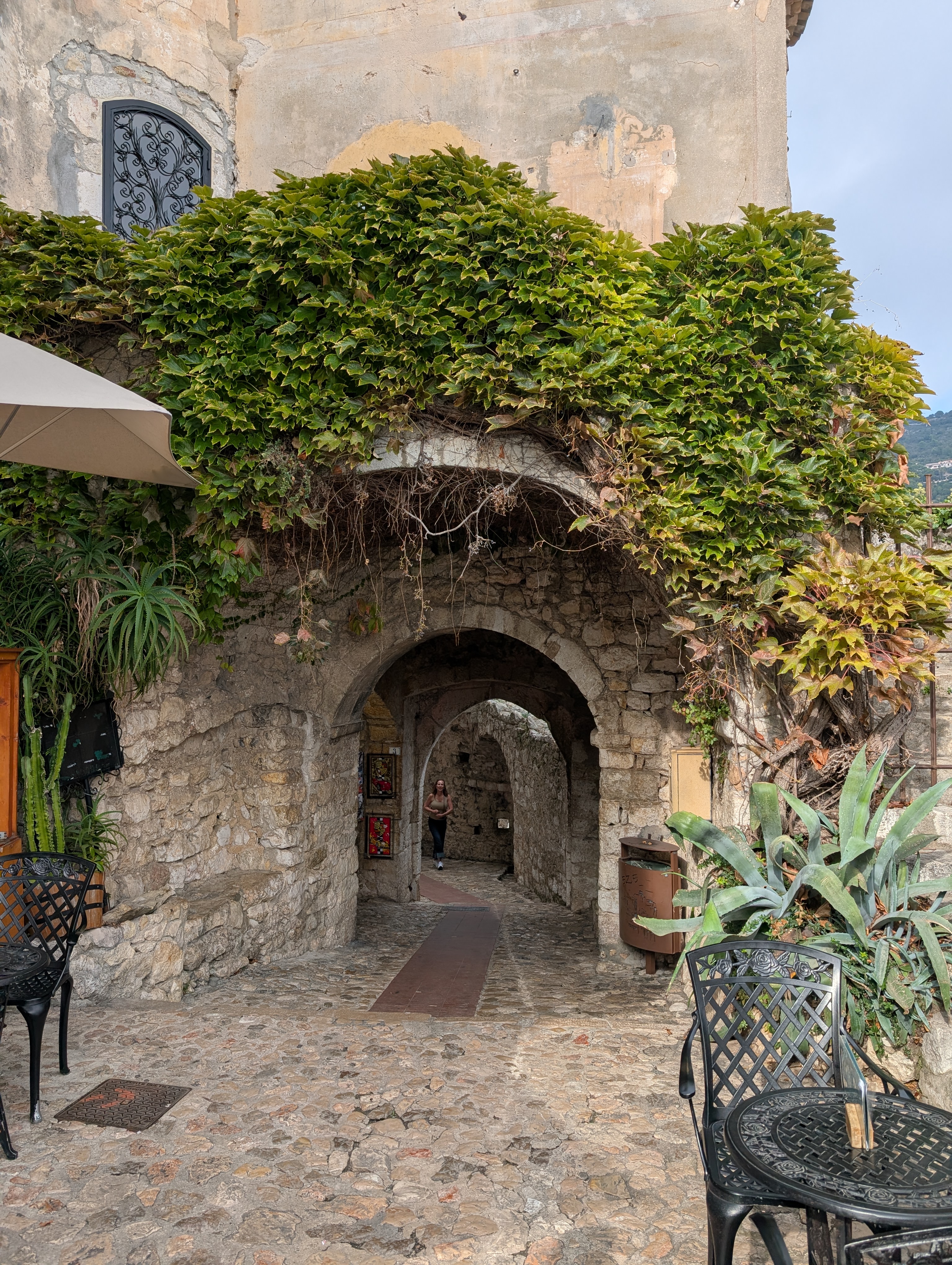
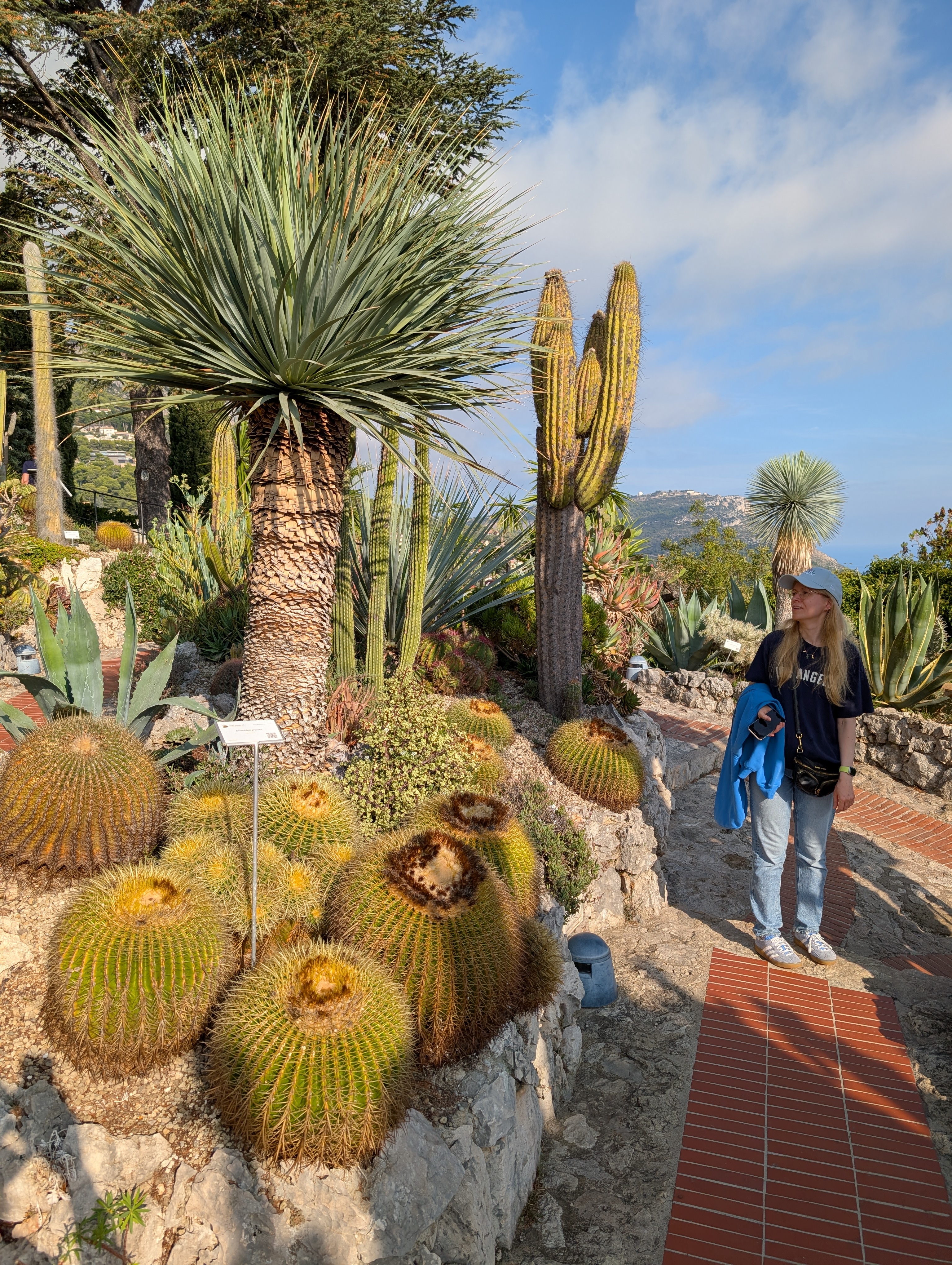
Èze builds itself out of stone and keeps at it: arches over the lanes, vaulted passages to retreat into whenever the view gets too serious, stairs that go up even where the map insists otherwise. La Bohémienne holds her corner with a round tower and balcony; a bronze with its own plaque occupies the lanes like staff; the village’s favourite architectural feature is the arch — and honestly, it is not wrong.
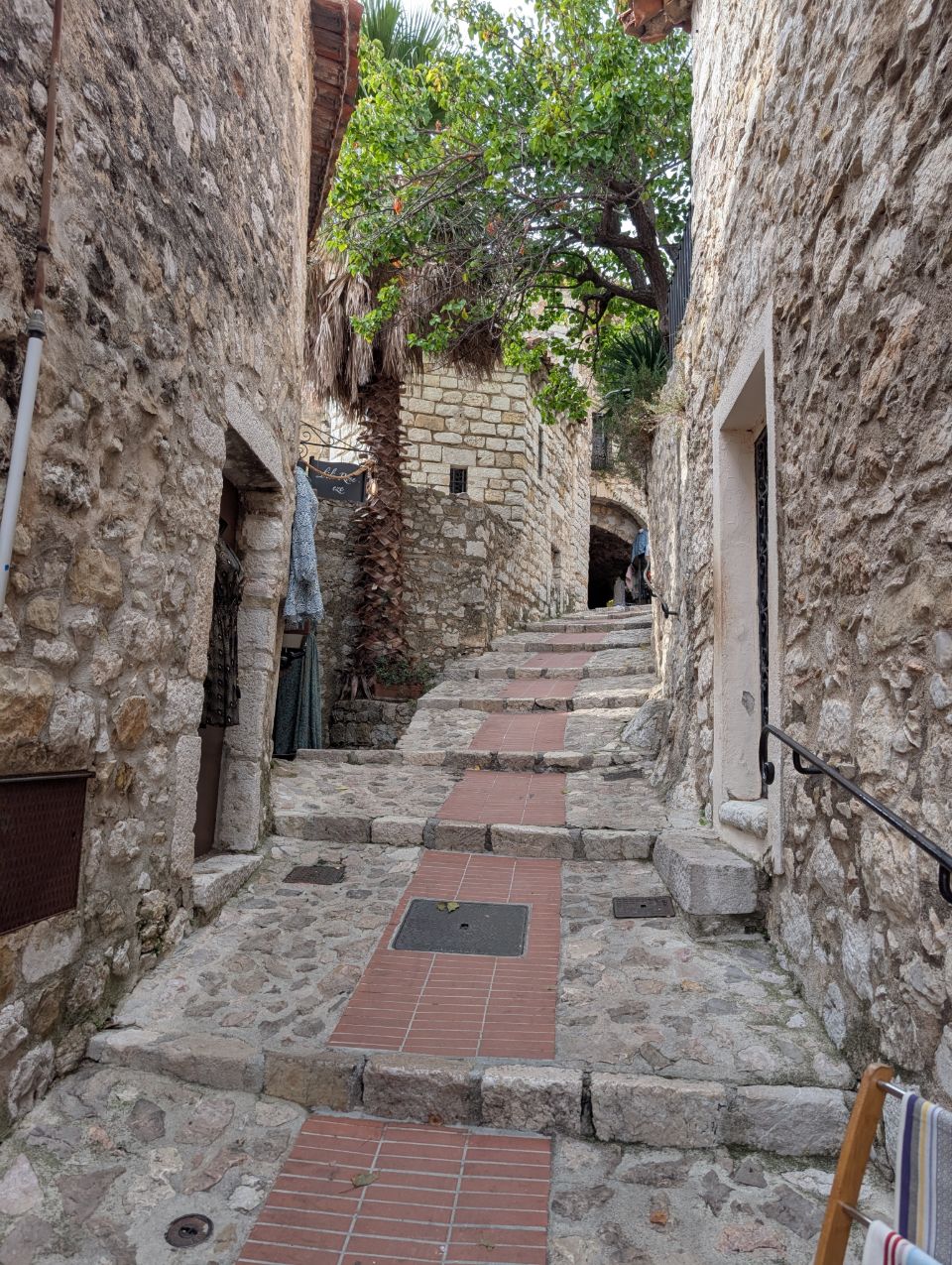
Èze, first contact 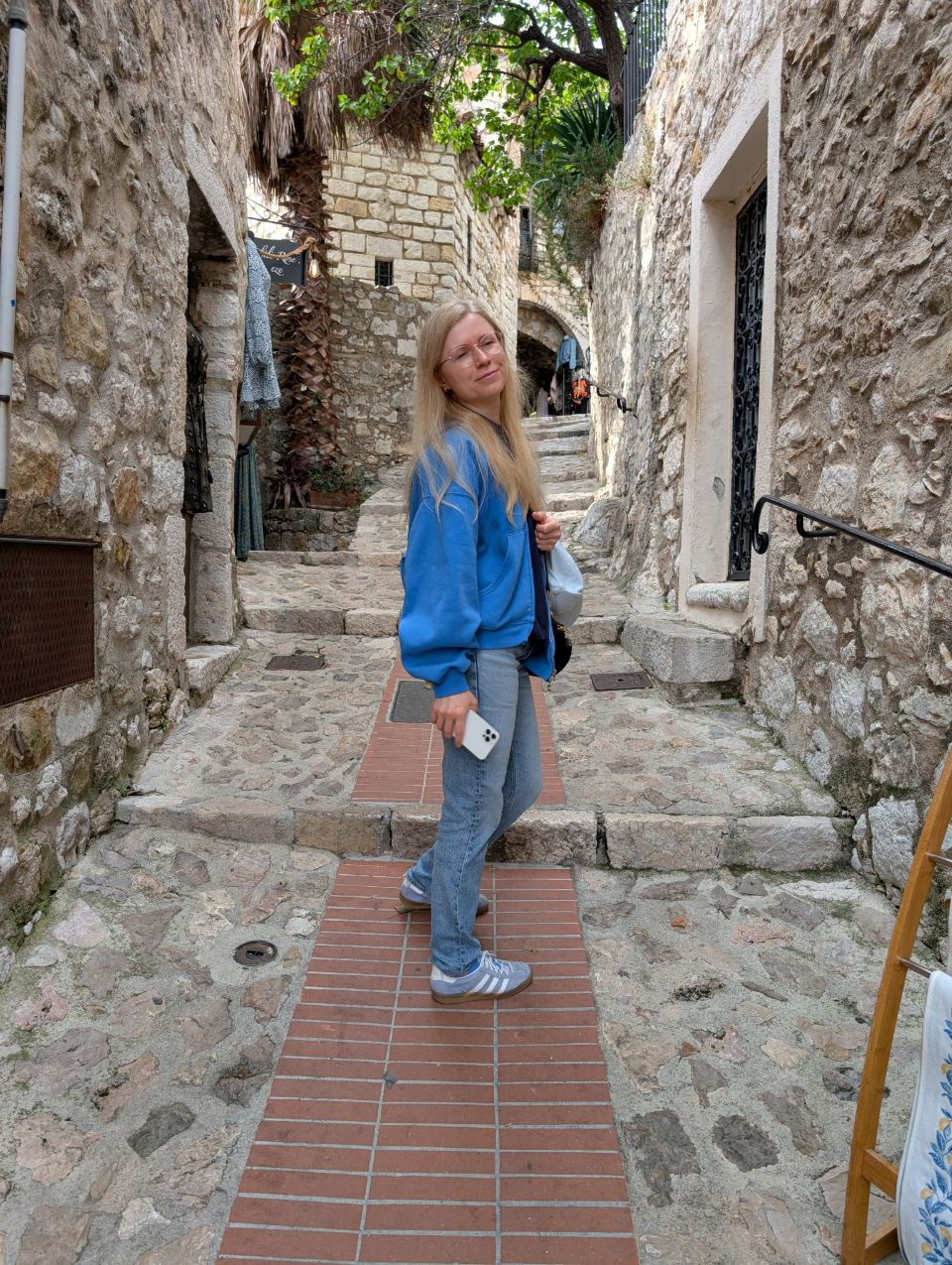
Under the arch, and up 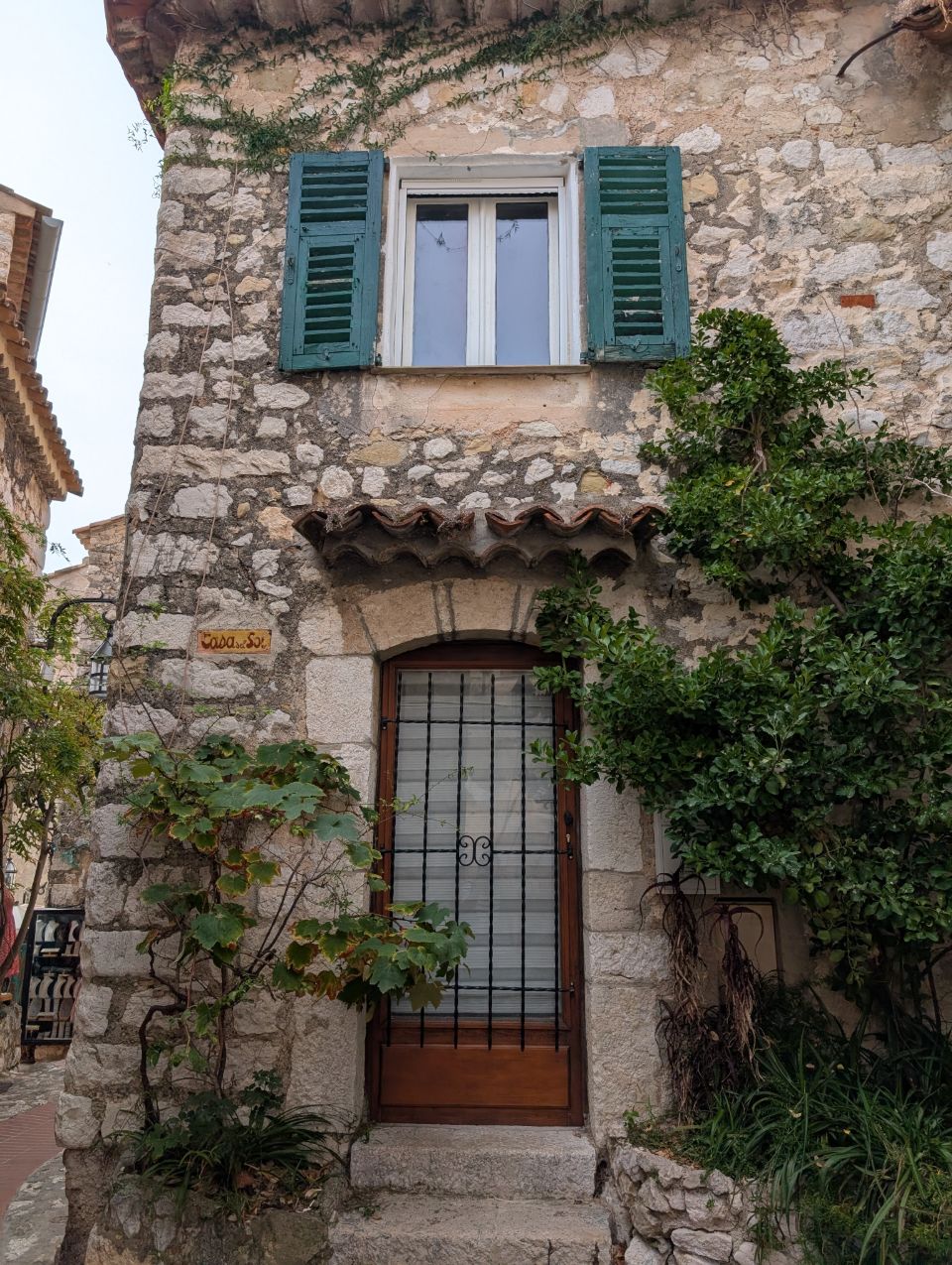
Lanes: one stone stacked on another 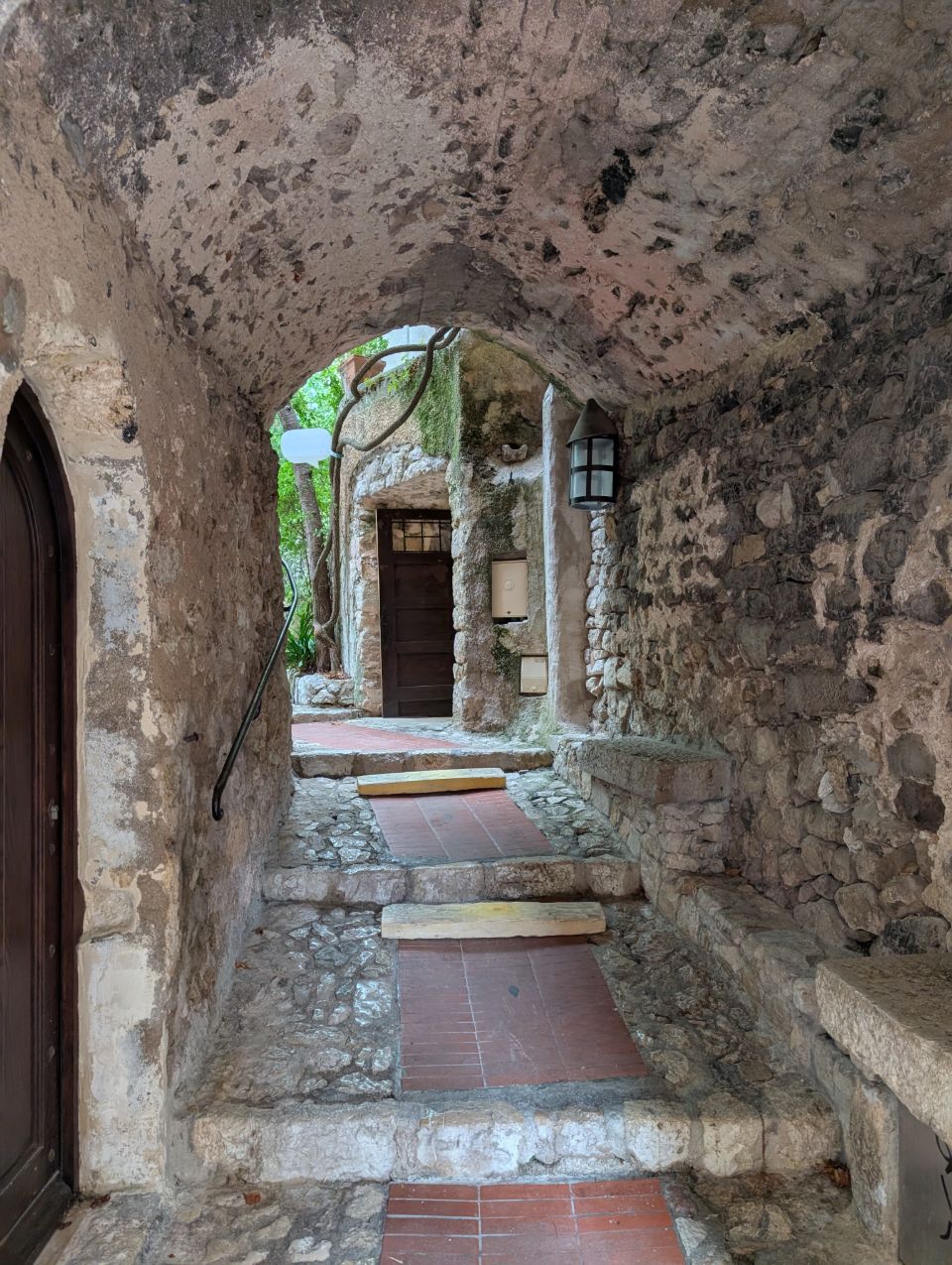
More stairs, more arch 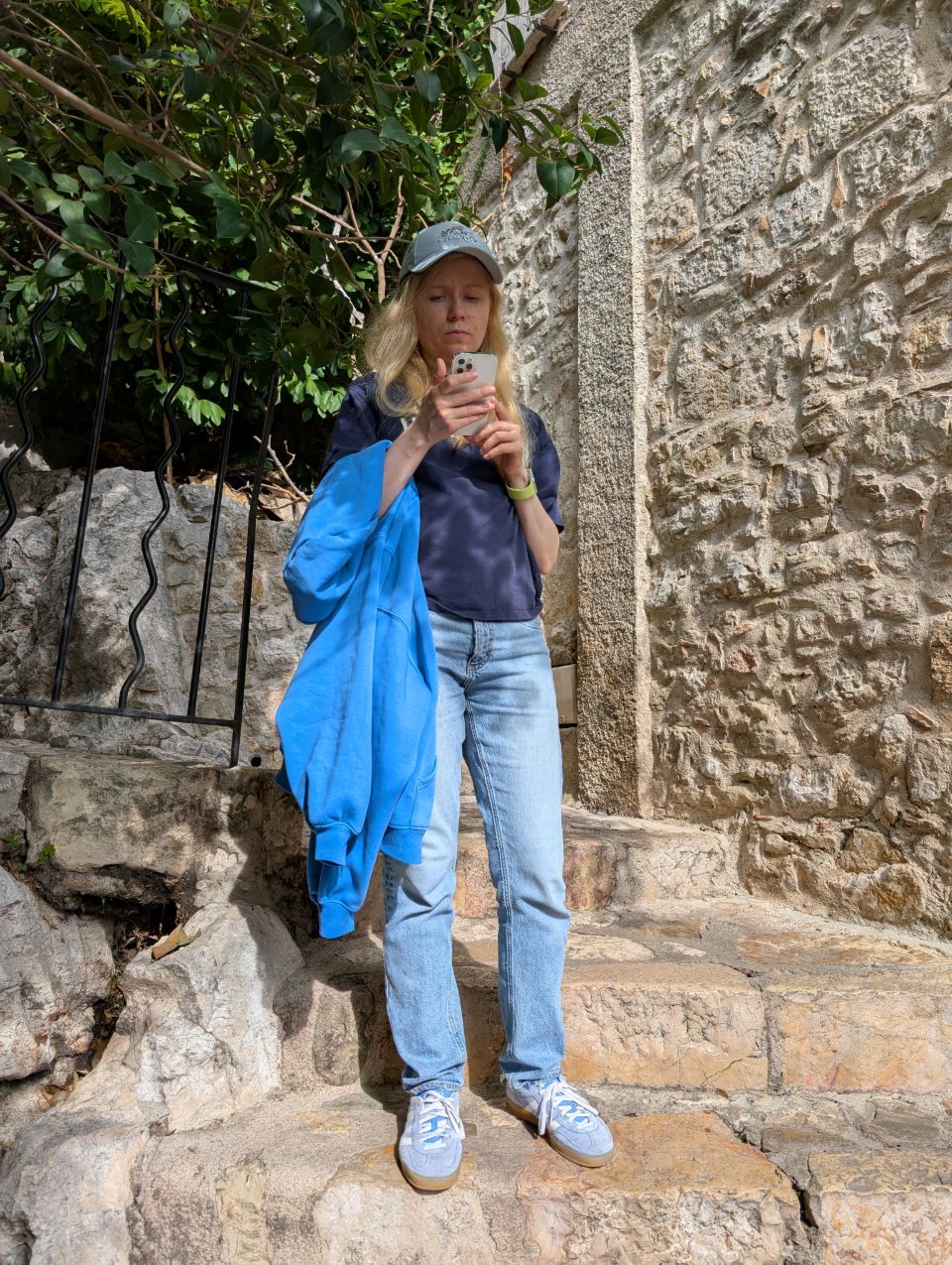
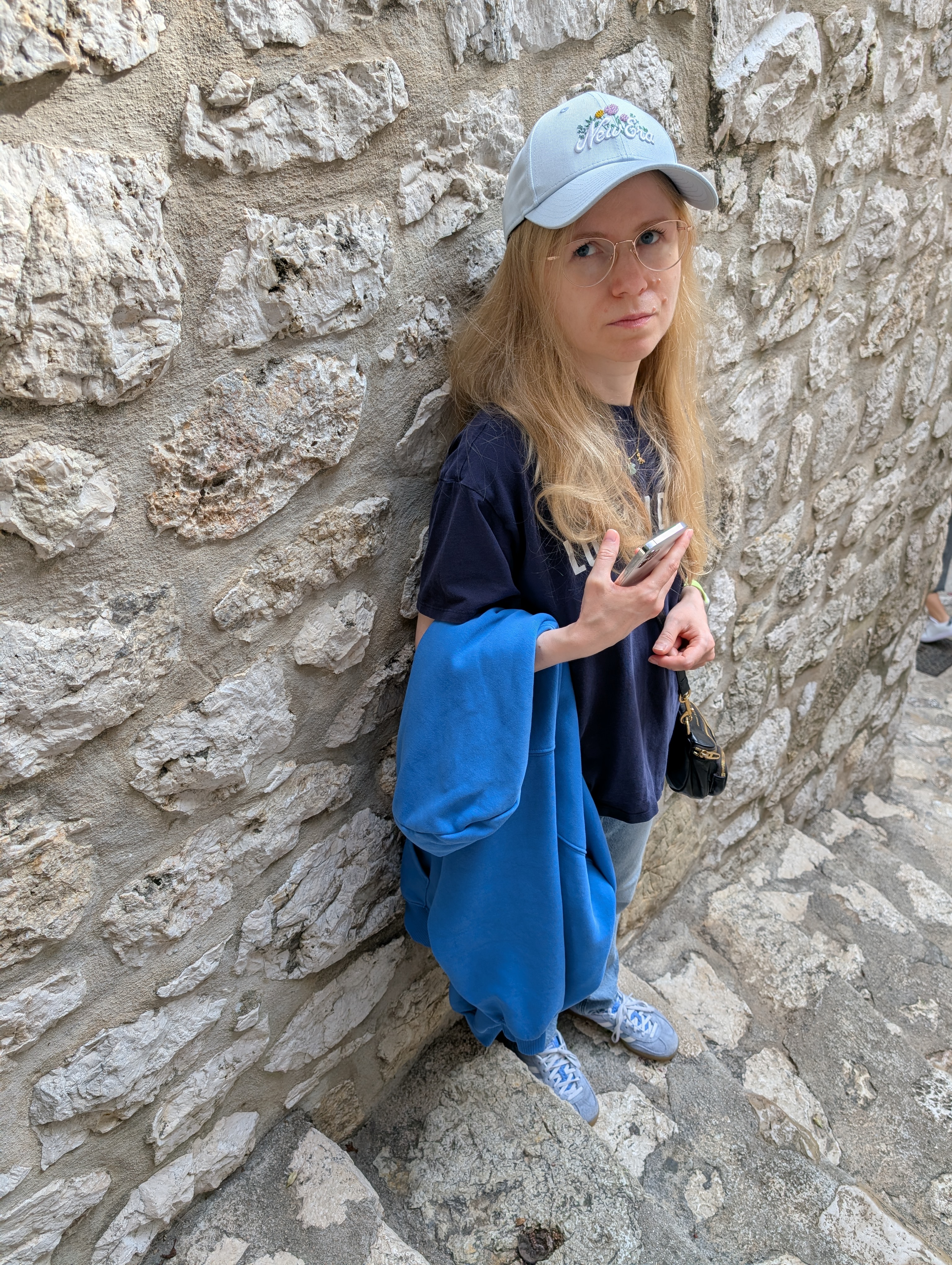
Anna, at Èze's altitude 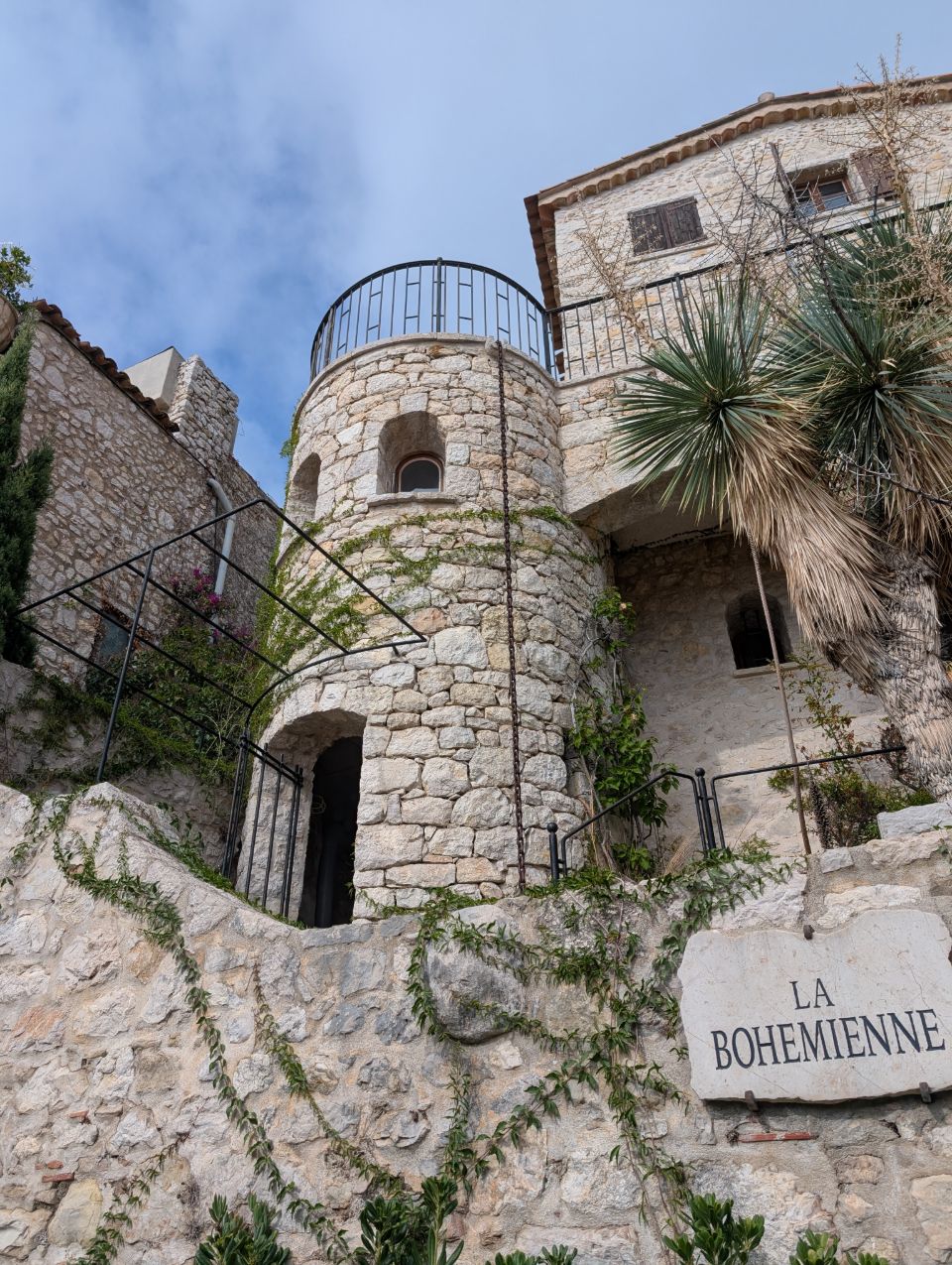
La Bohémienne, balcony and all 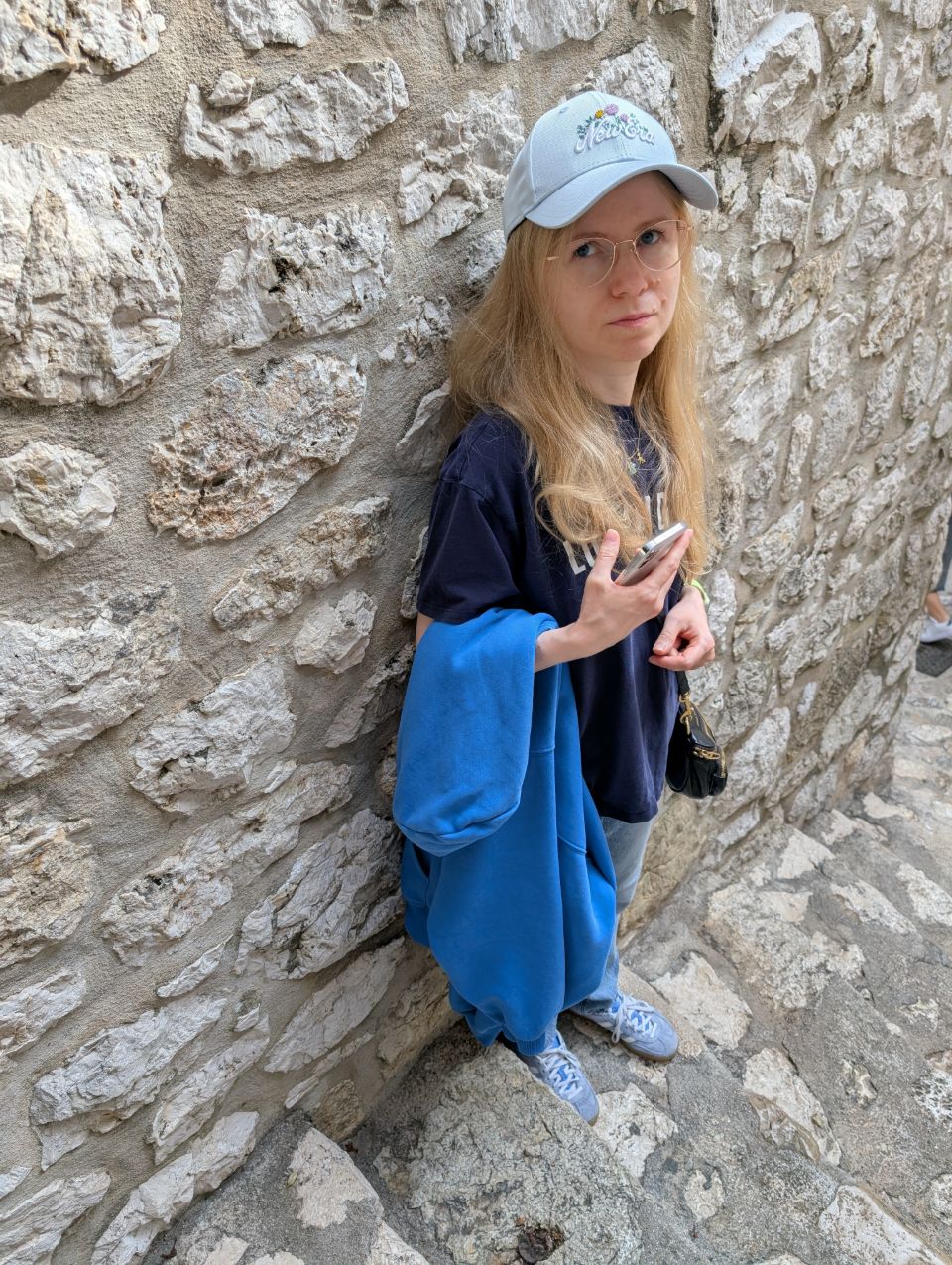
Portrait against the stone 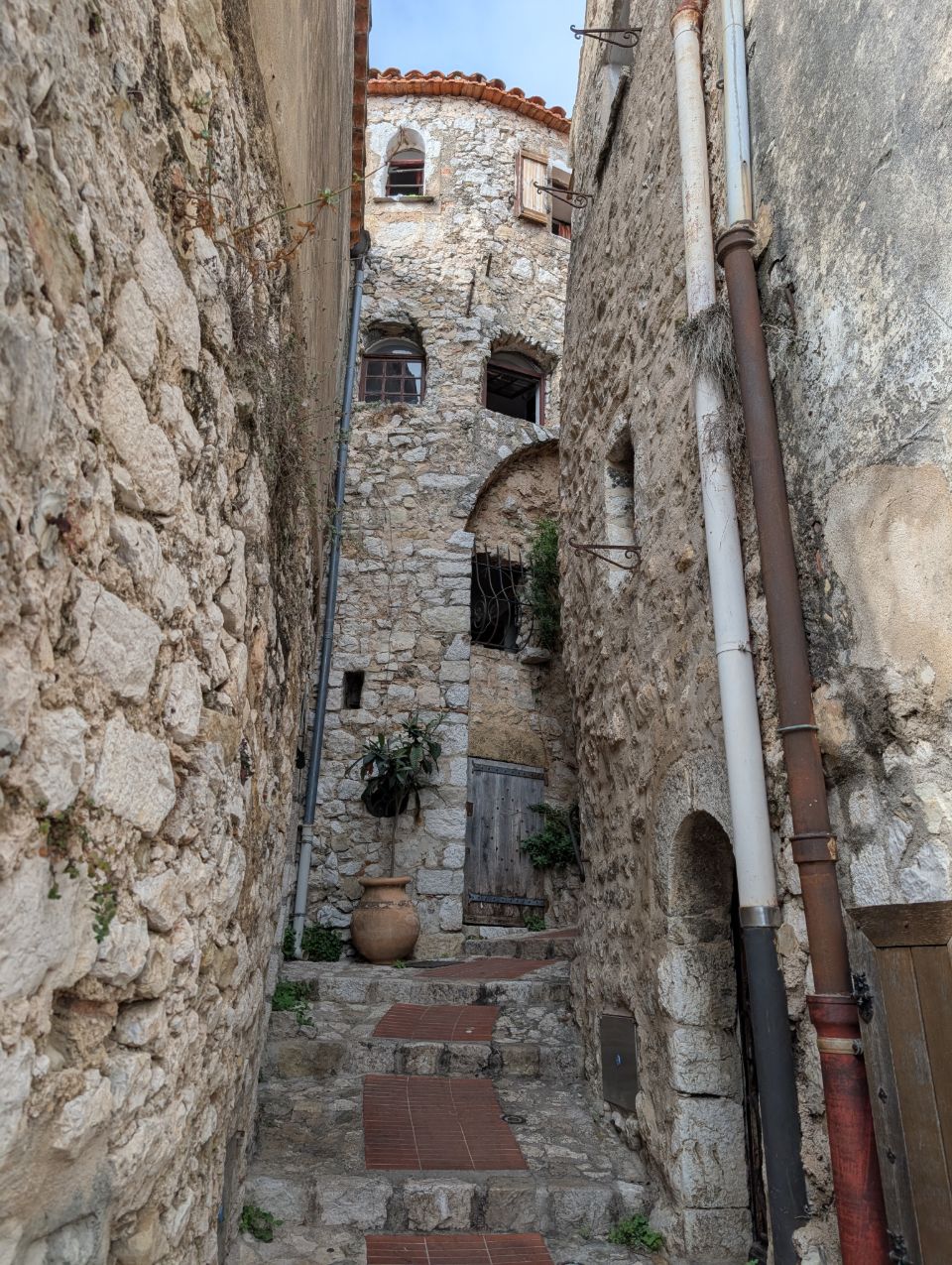
The lanes' recurring theme: arch 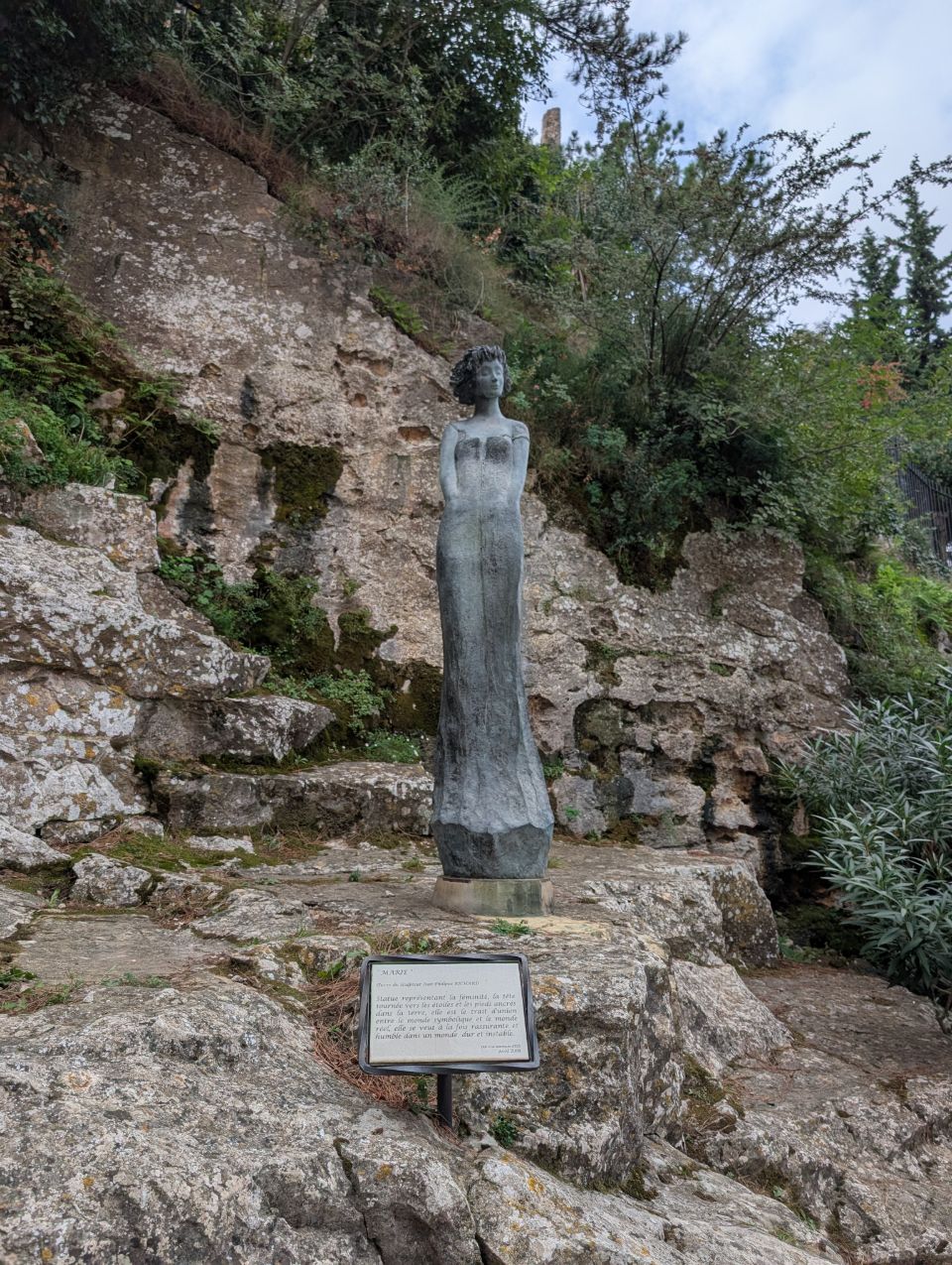
The lanes keep their own museum 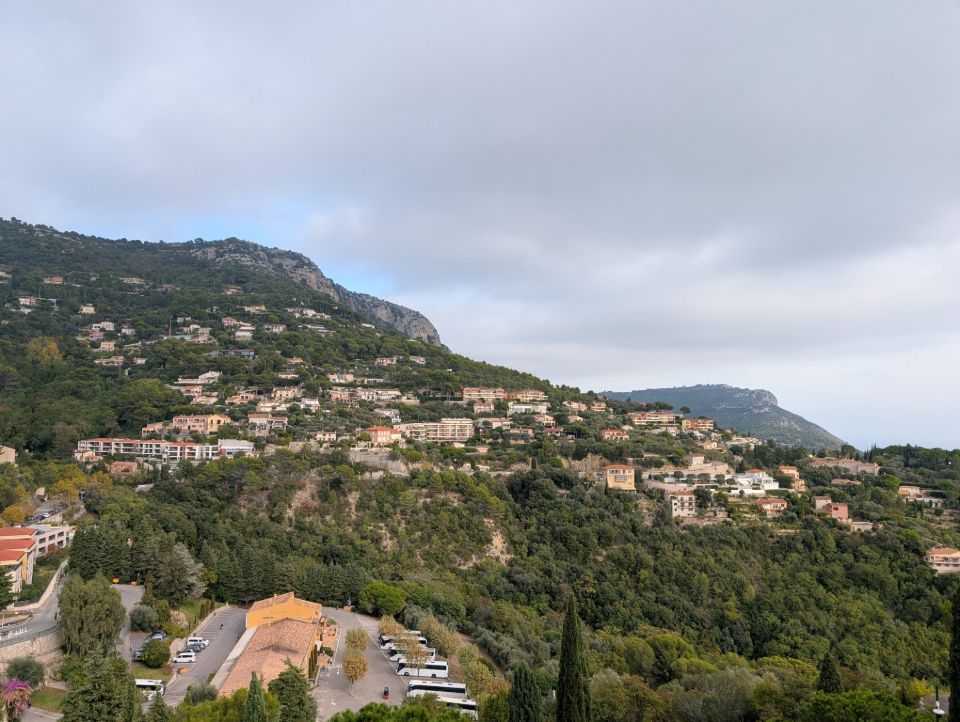
The hills take over from here 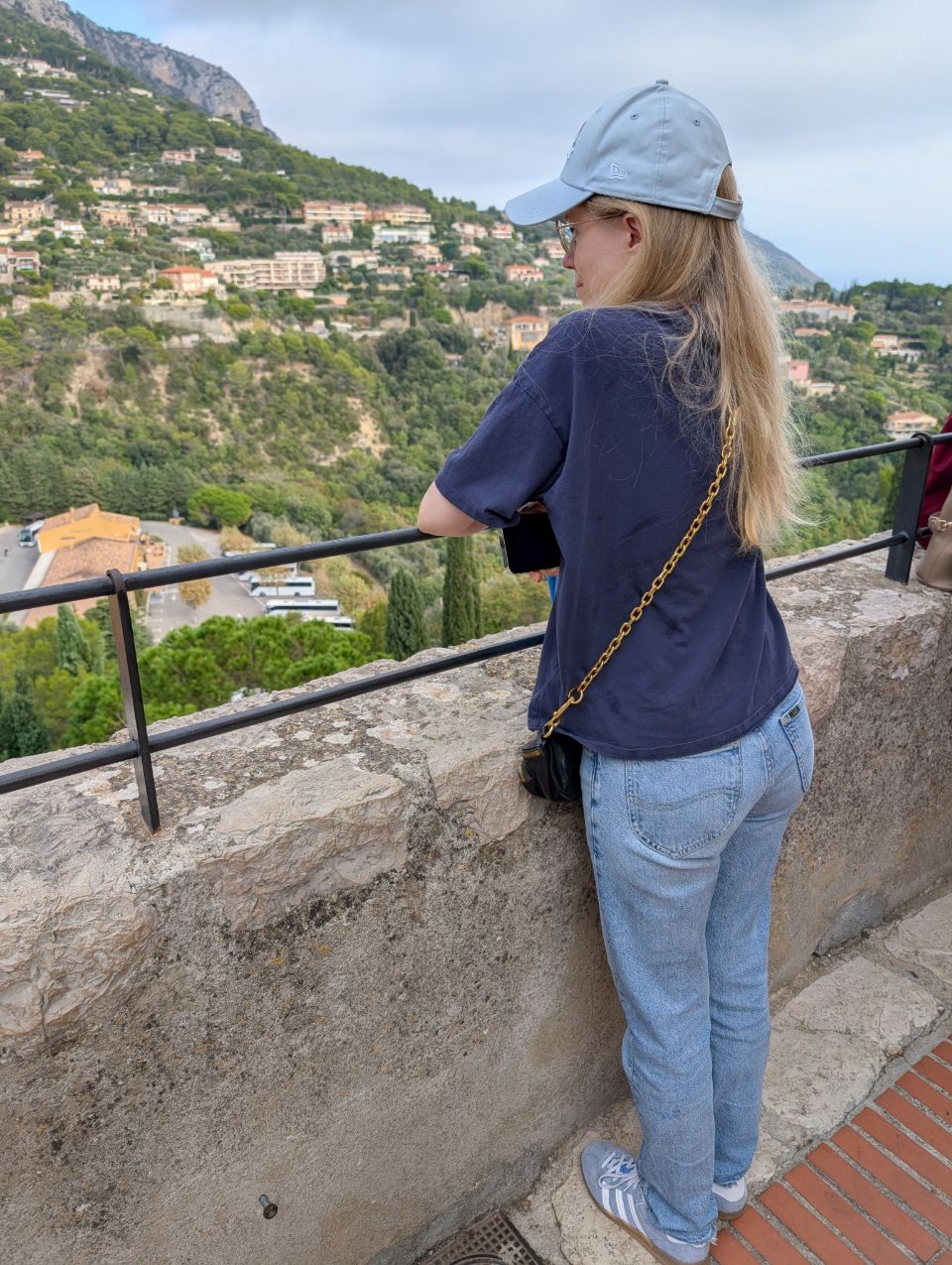
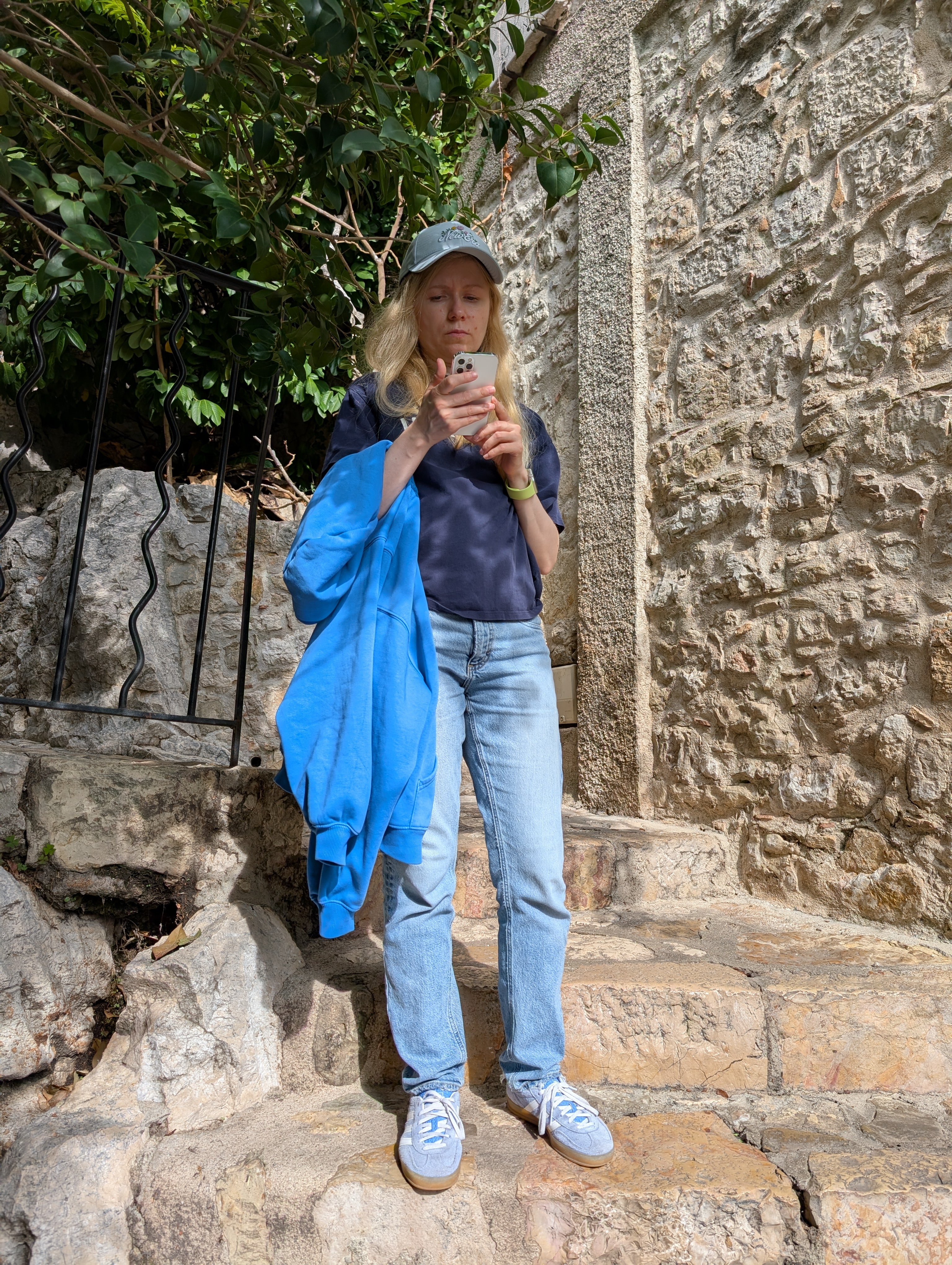
Anna, reading the hillside 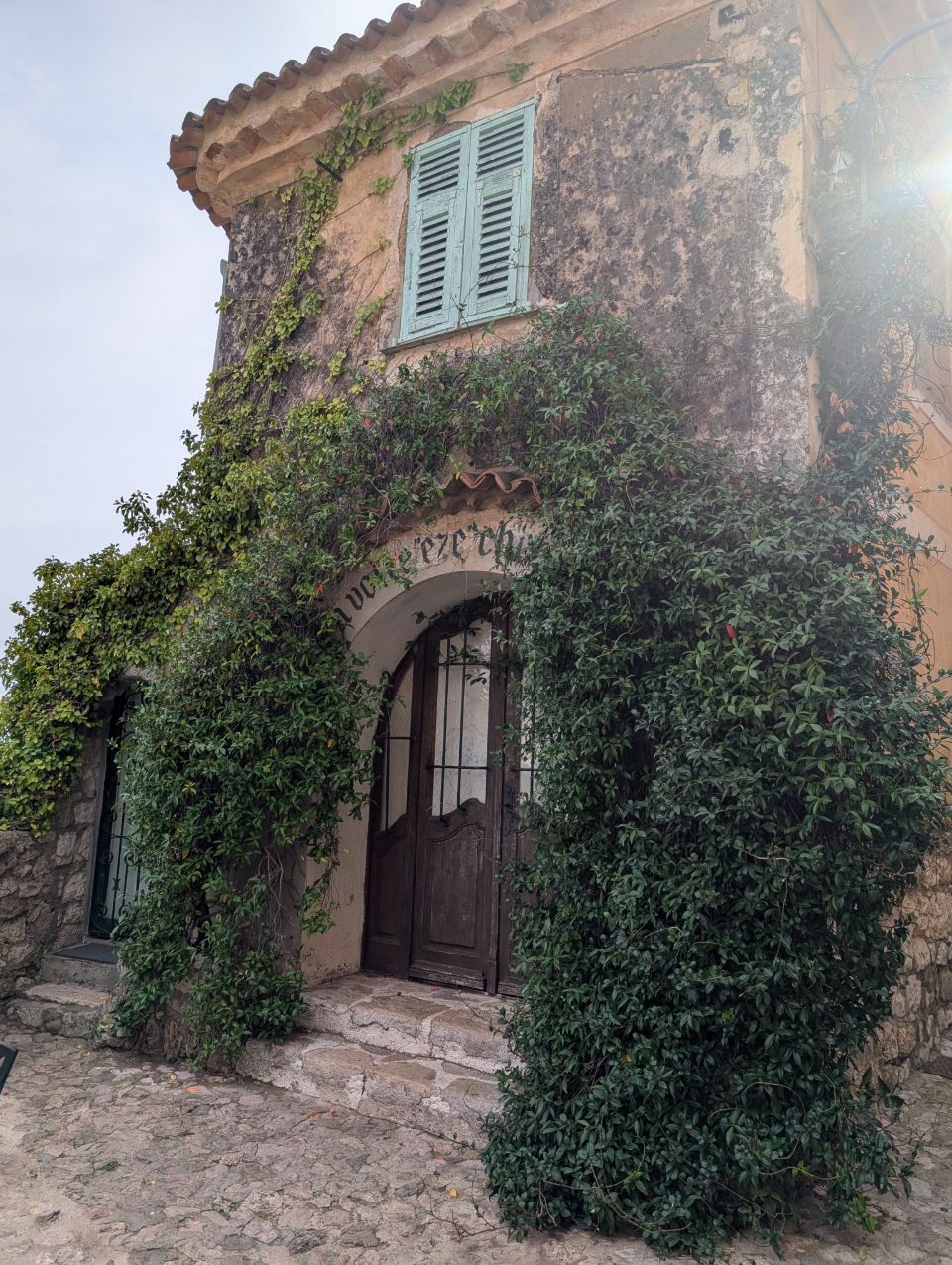
One of the rock's grand old houses
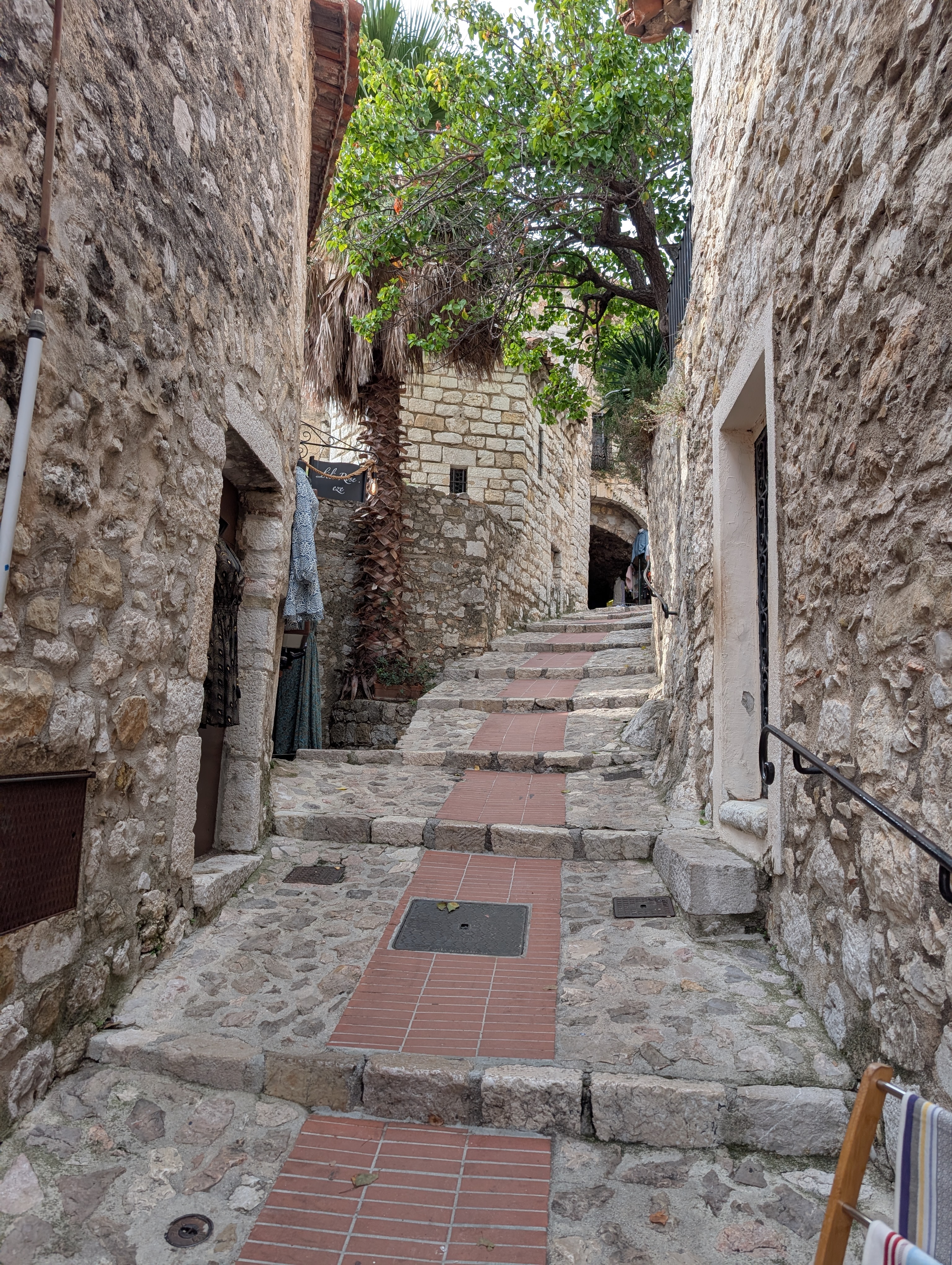
The garden above the sea
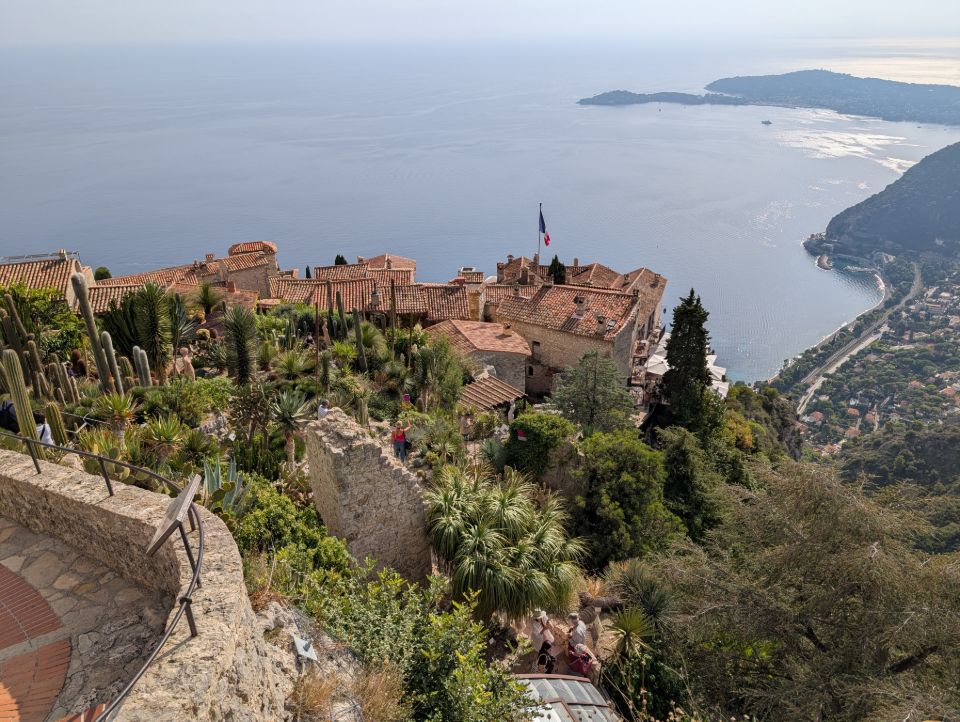
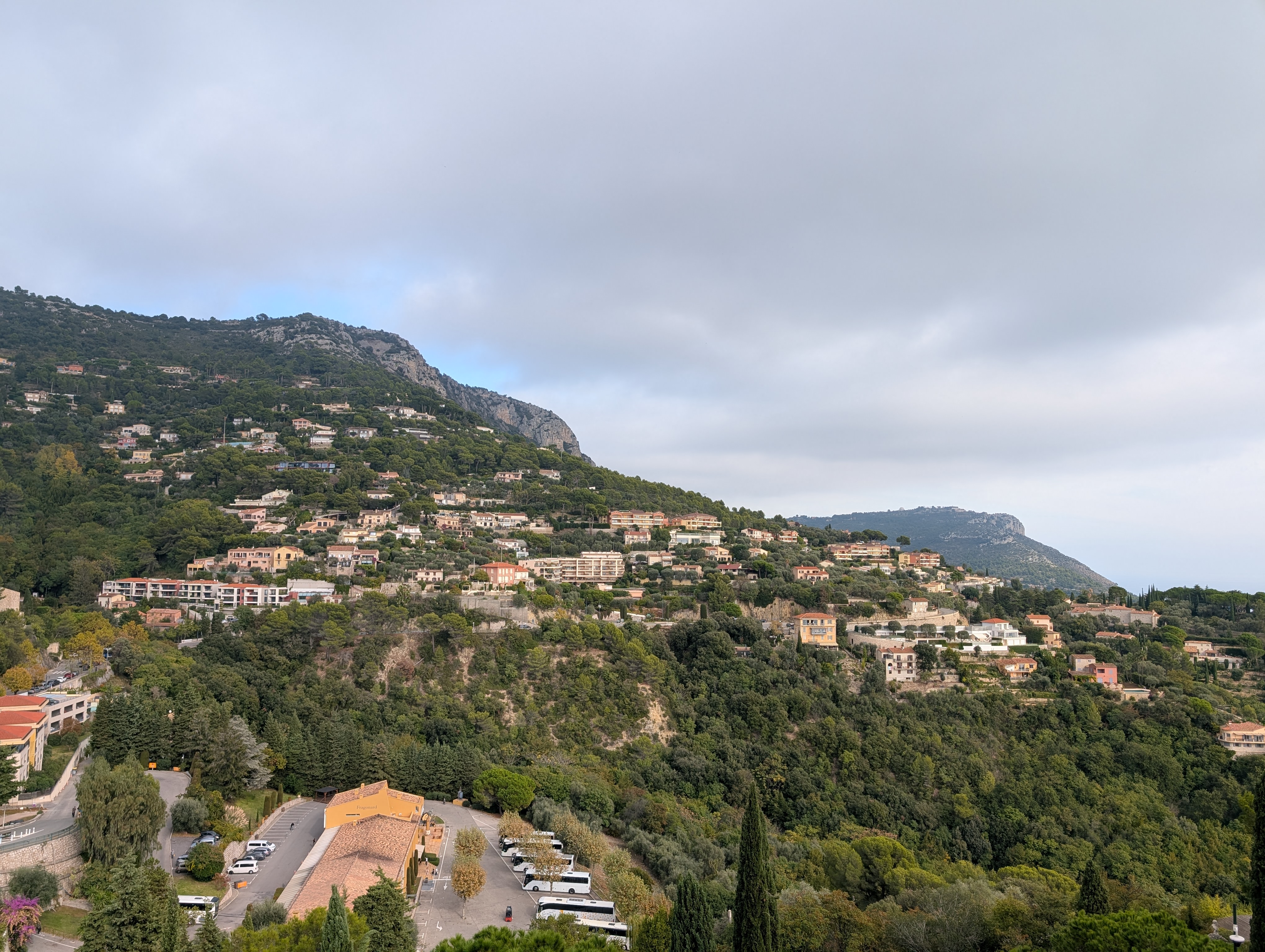
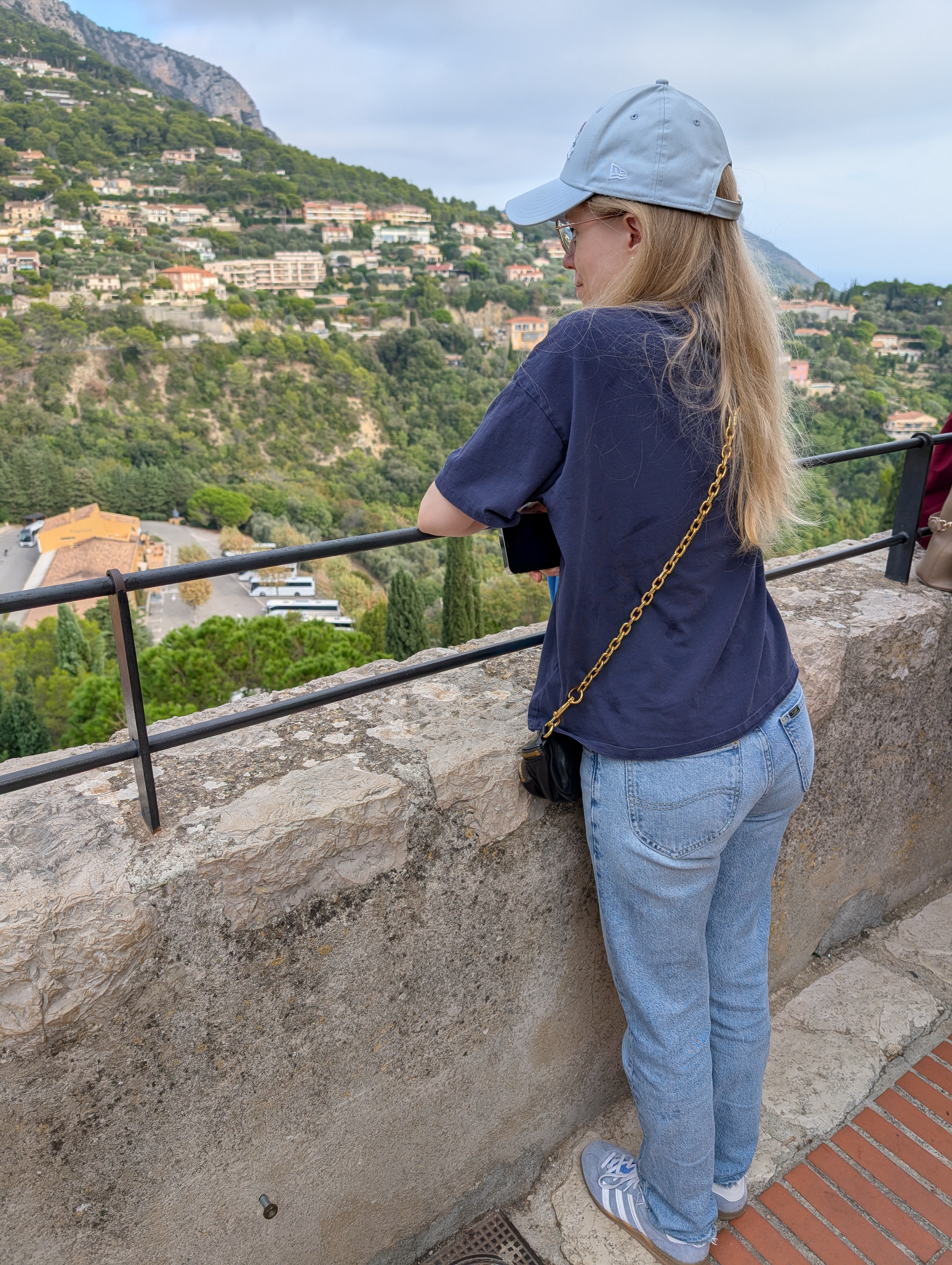
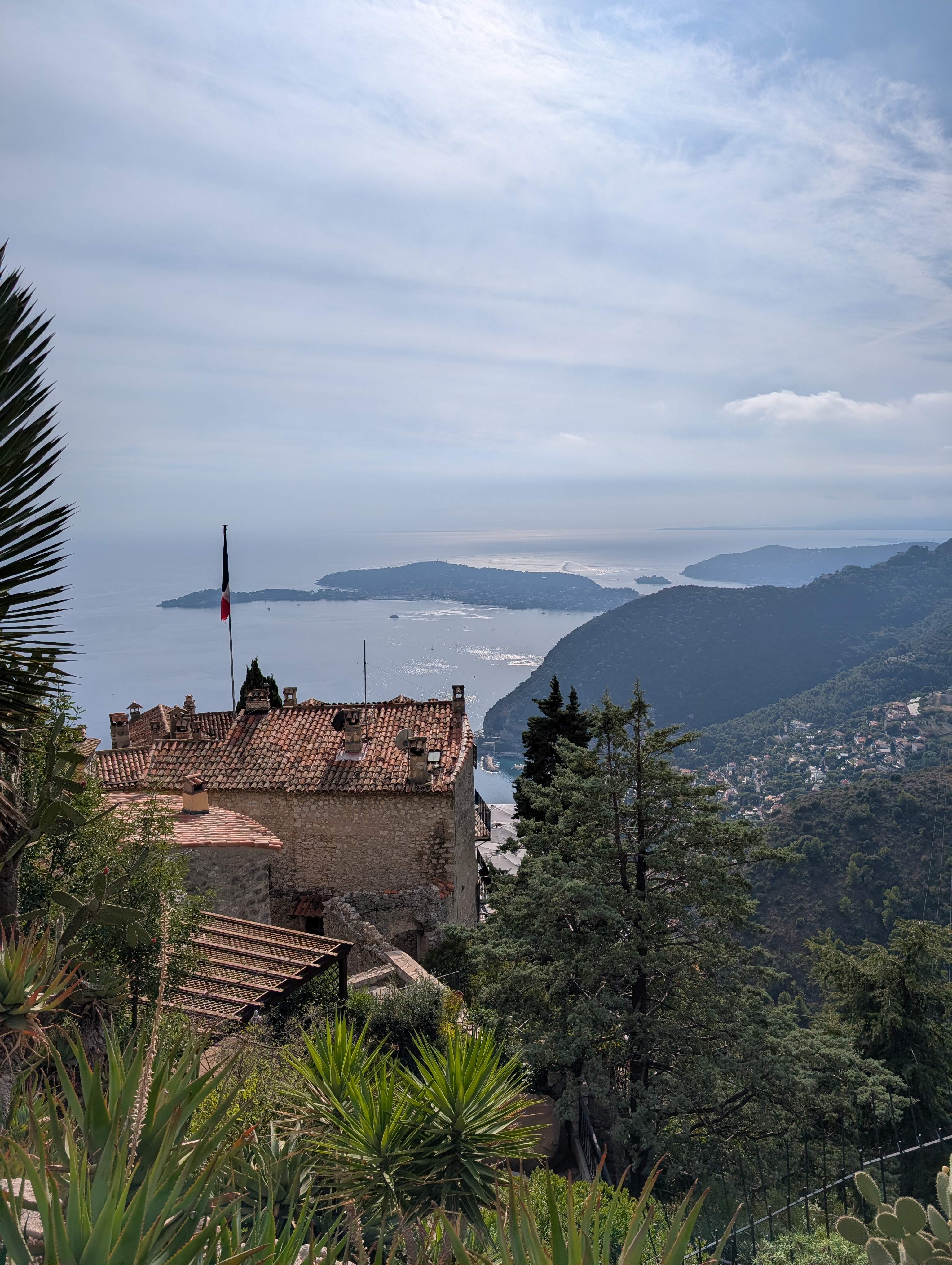
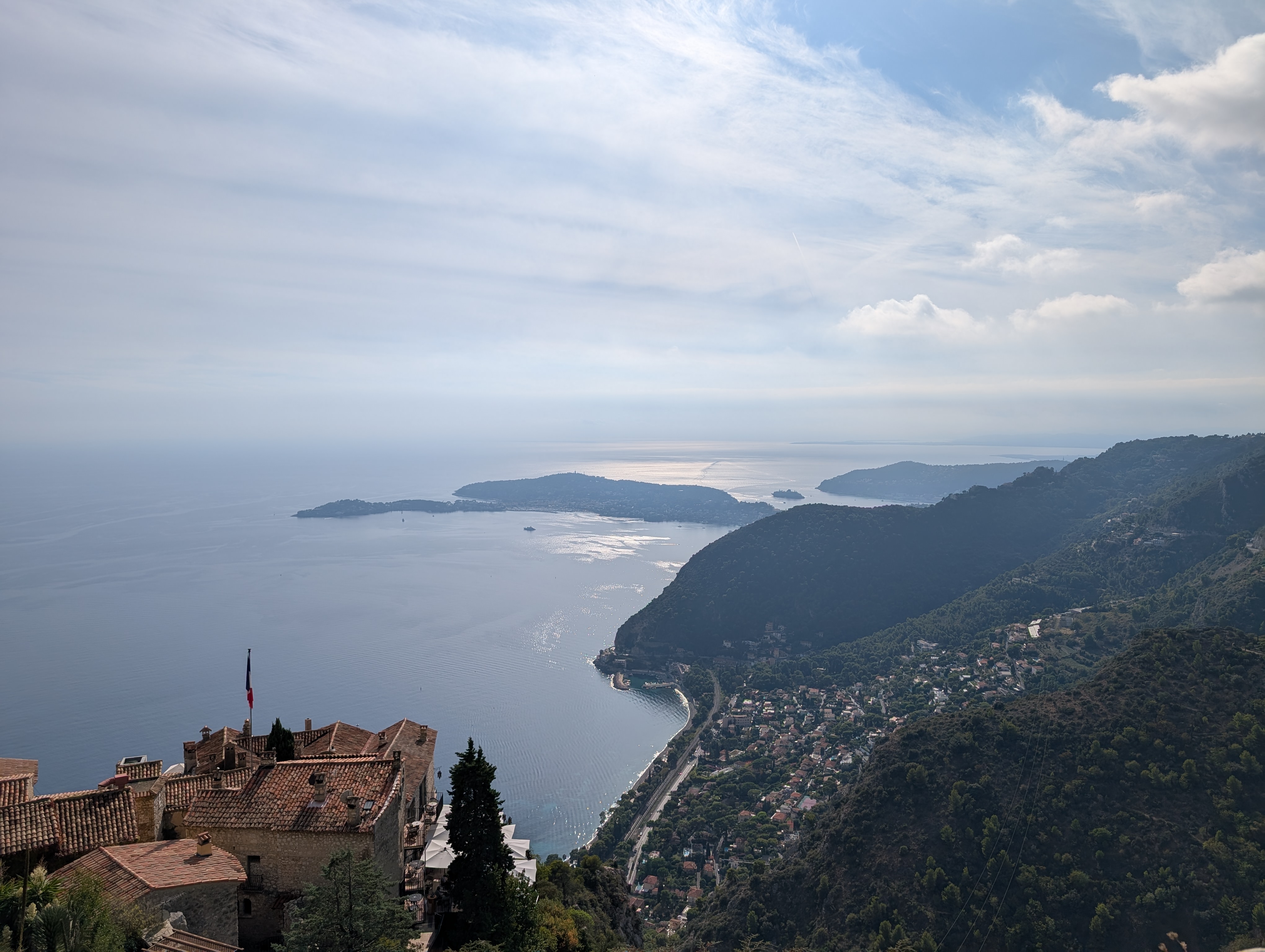
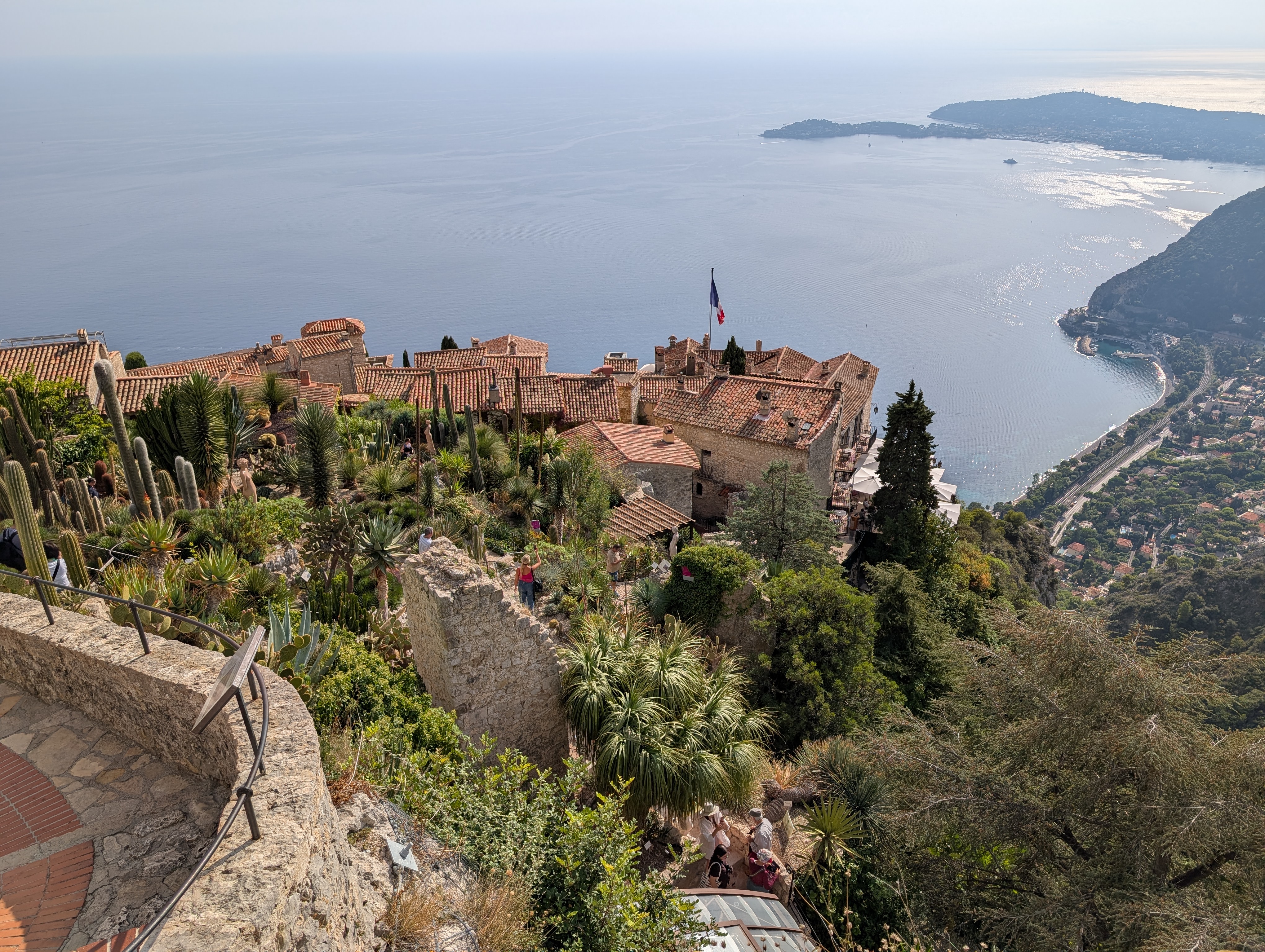
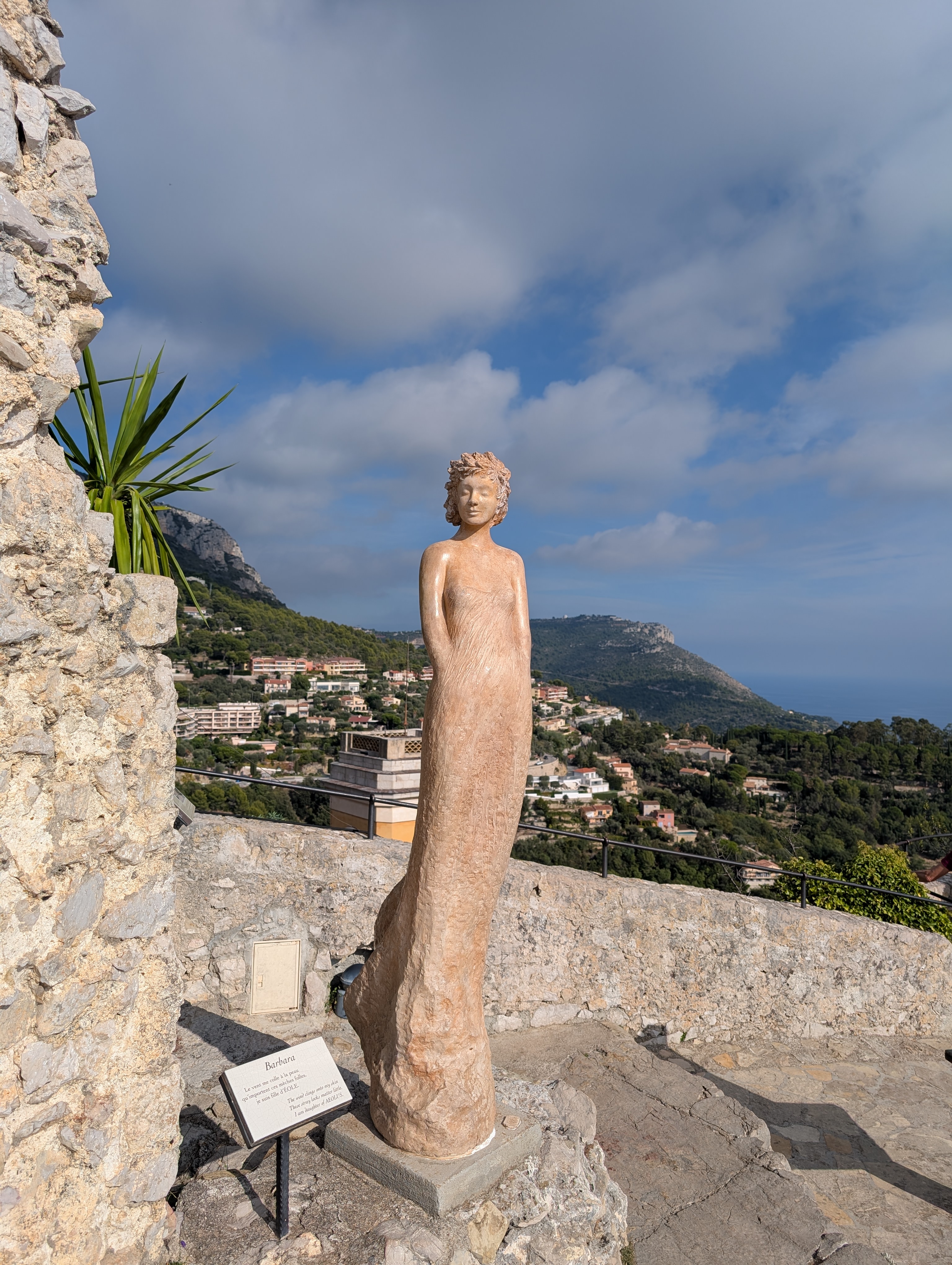
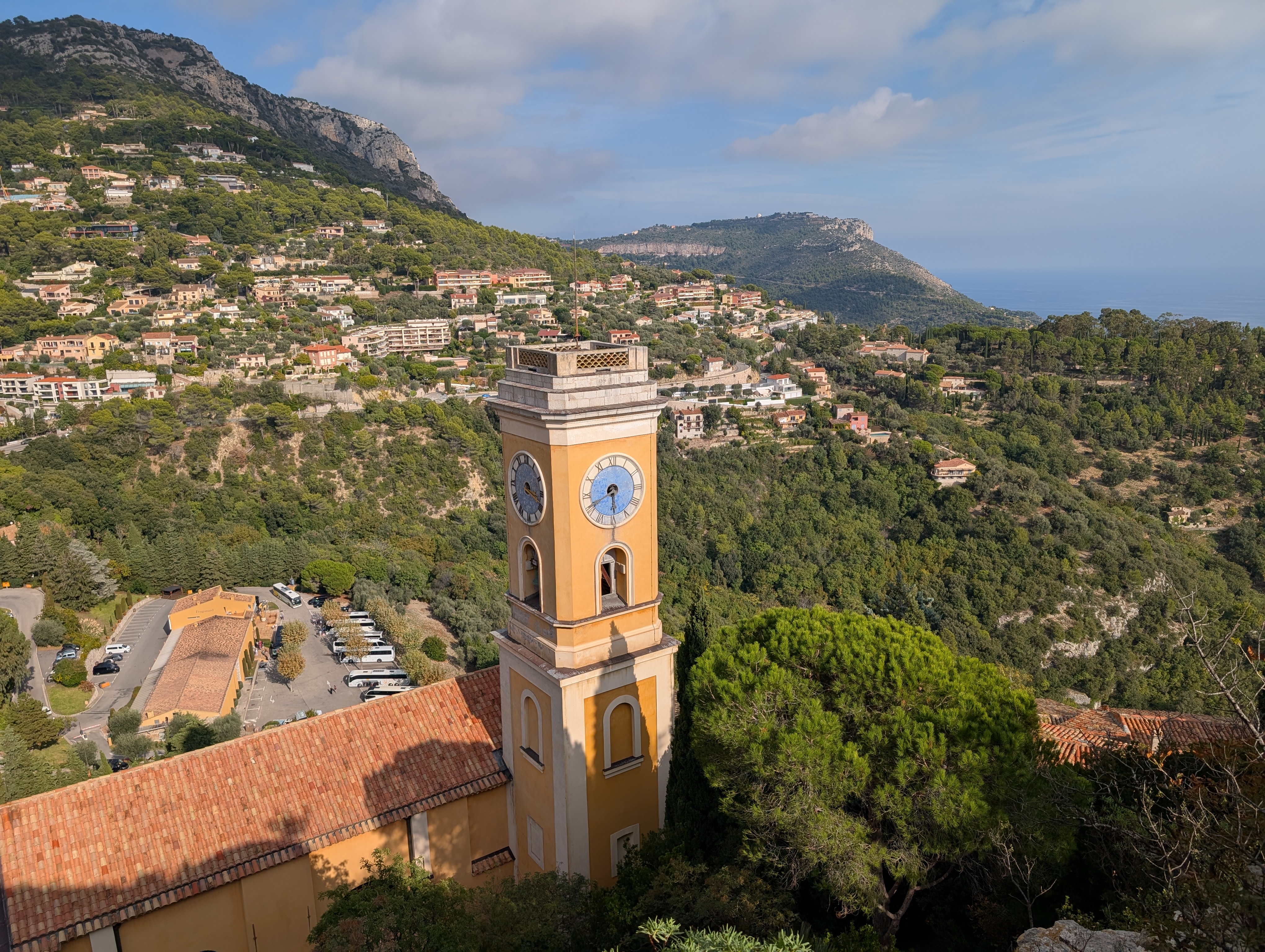
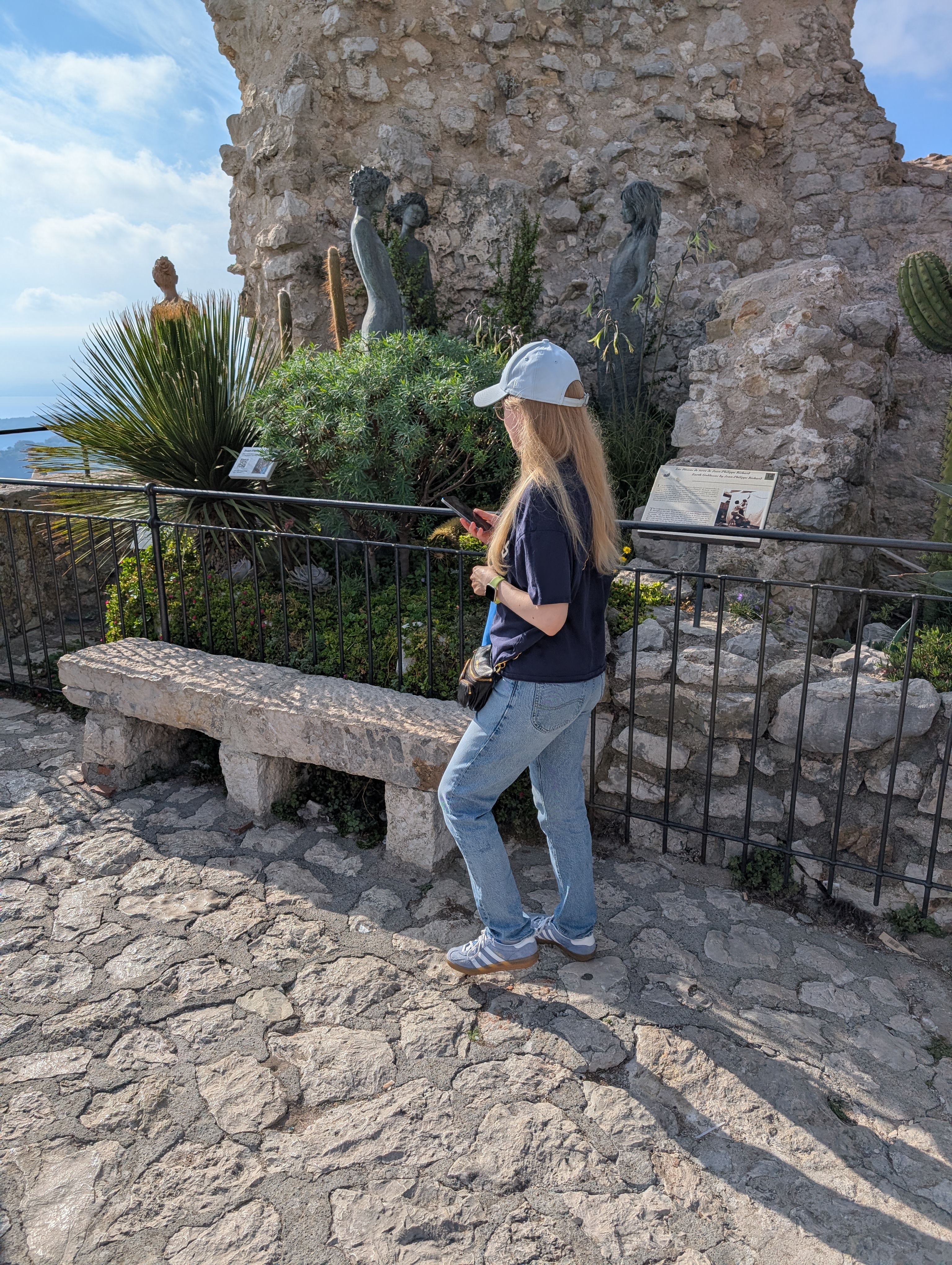
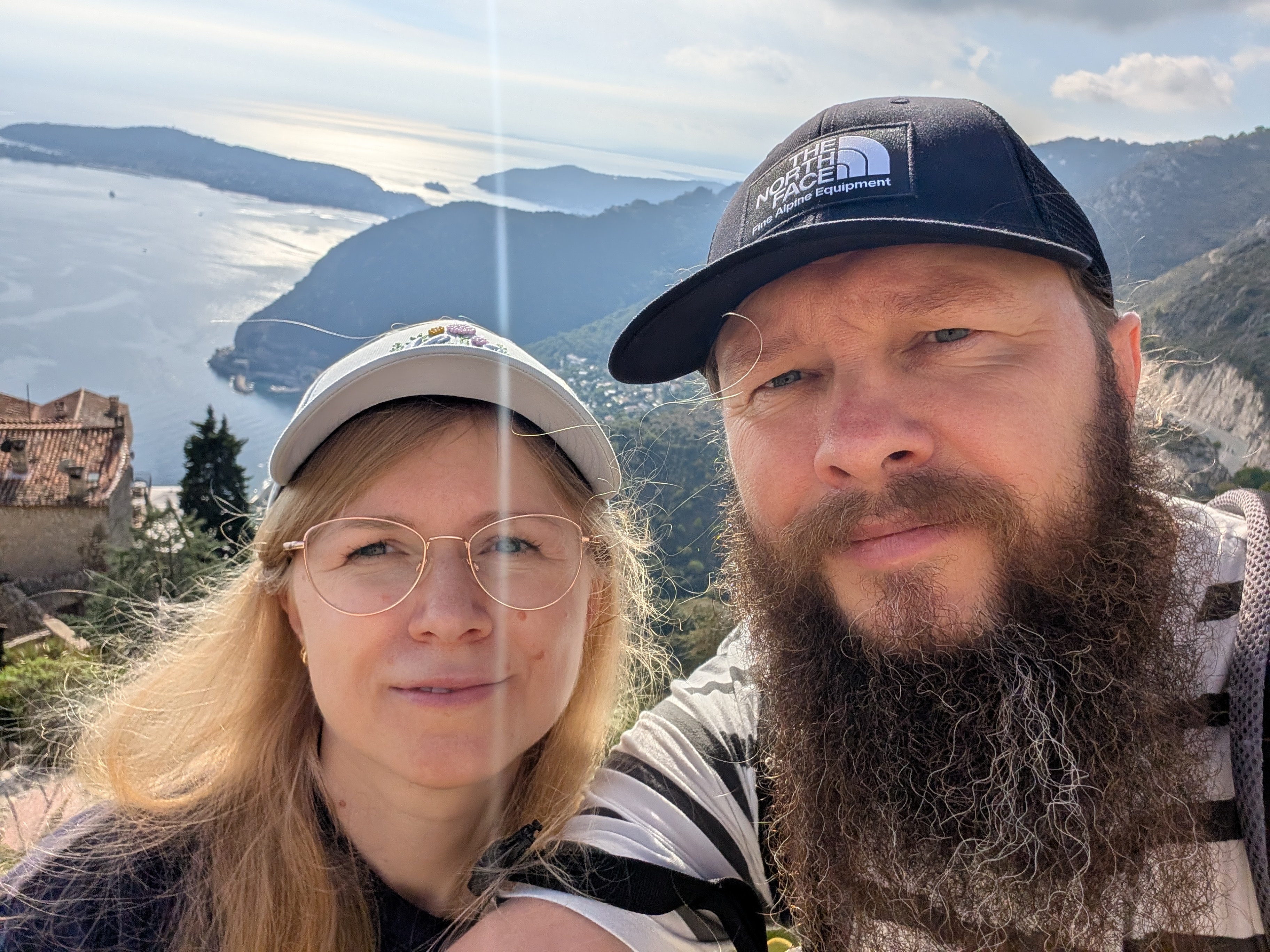
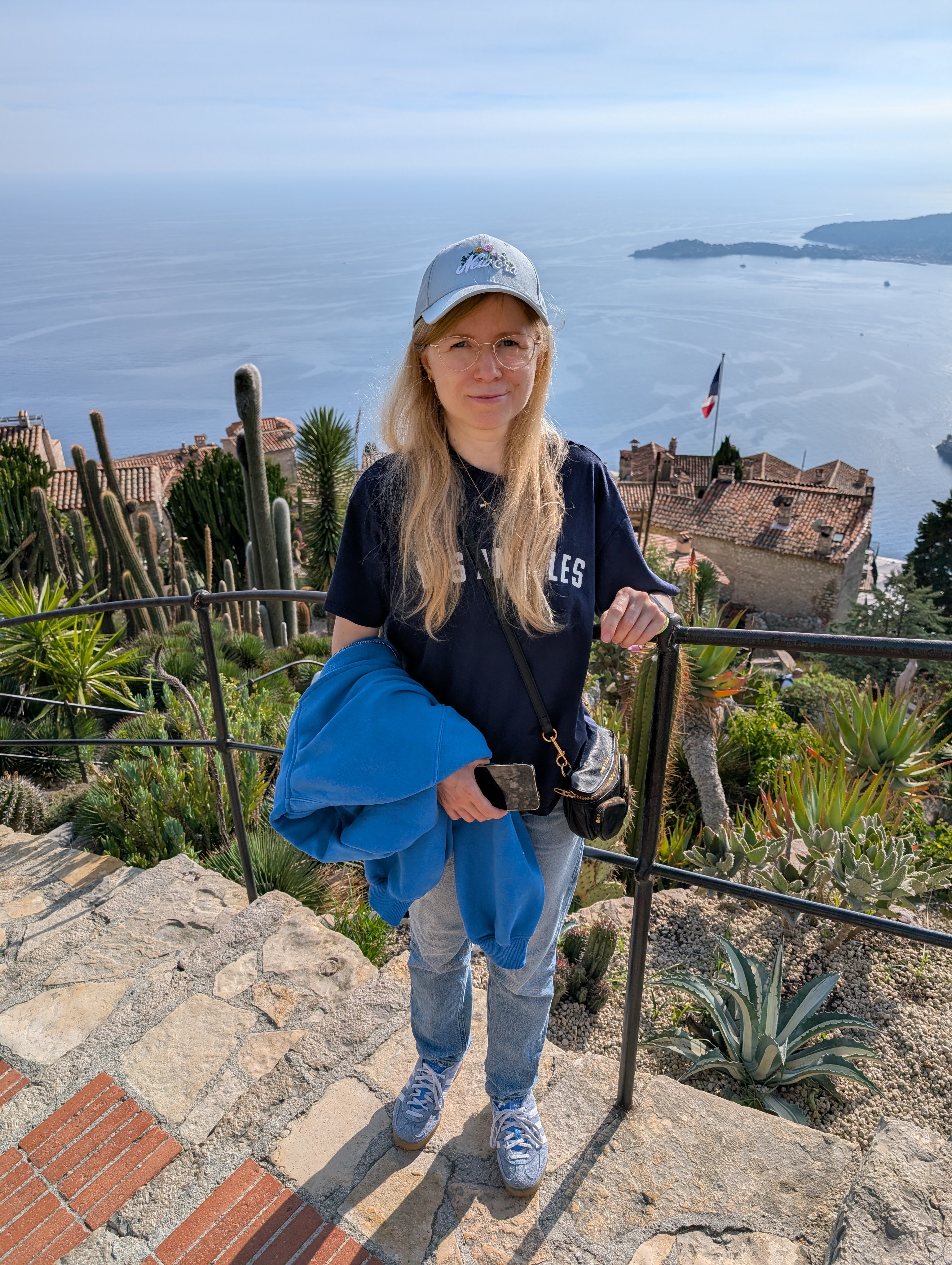
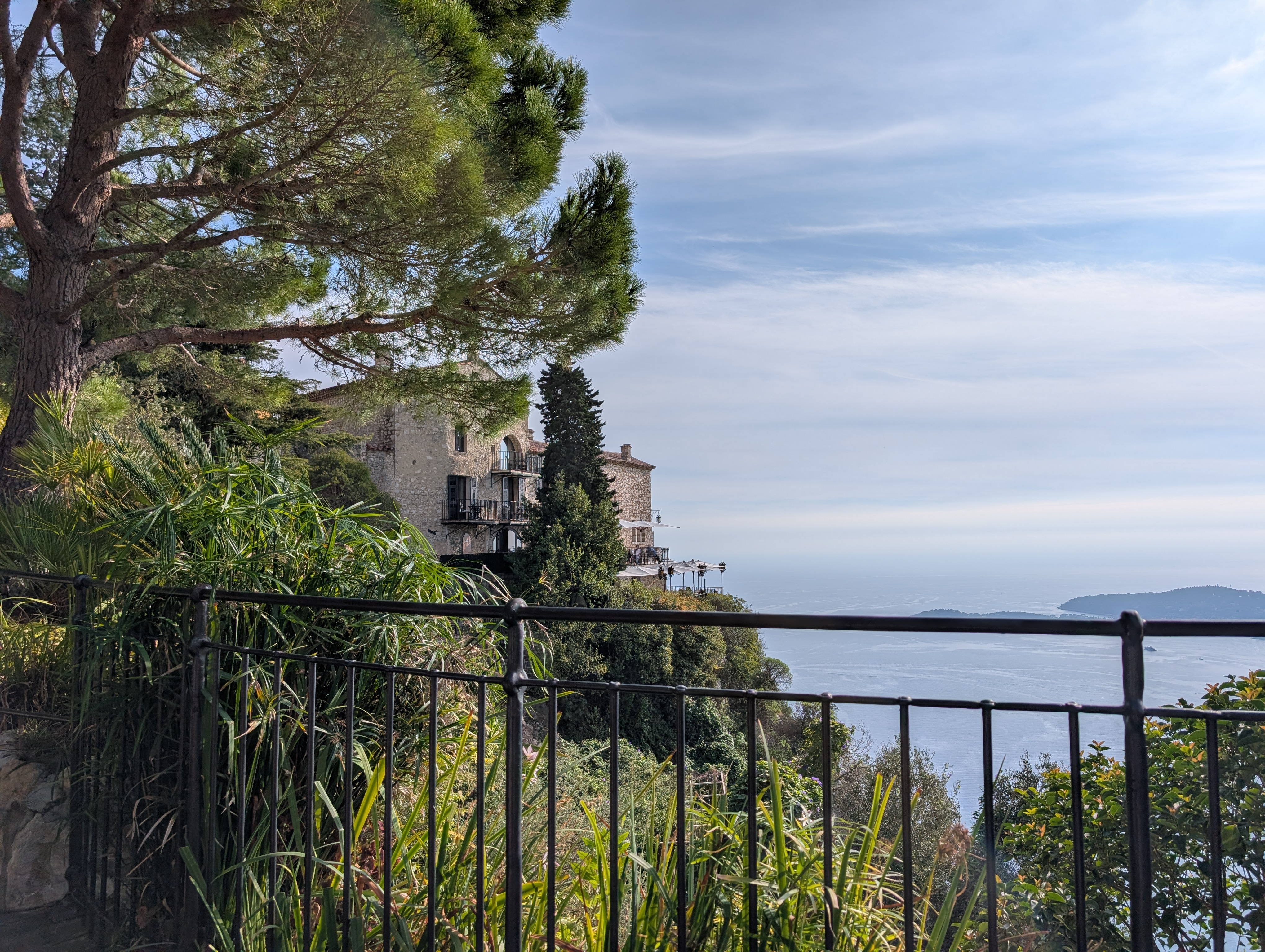
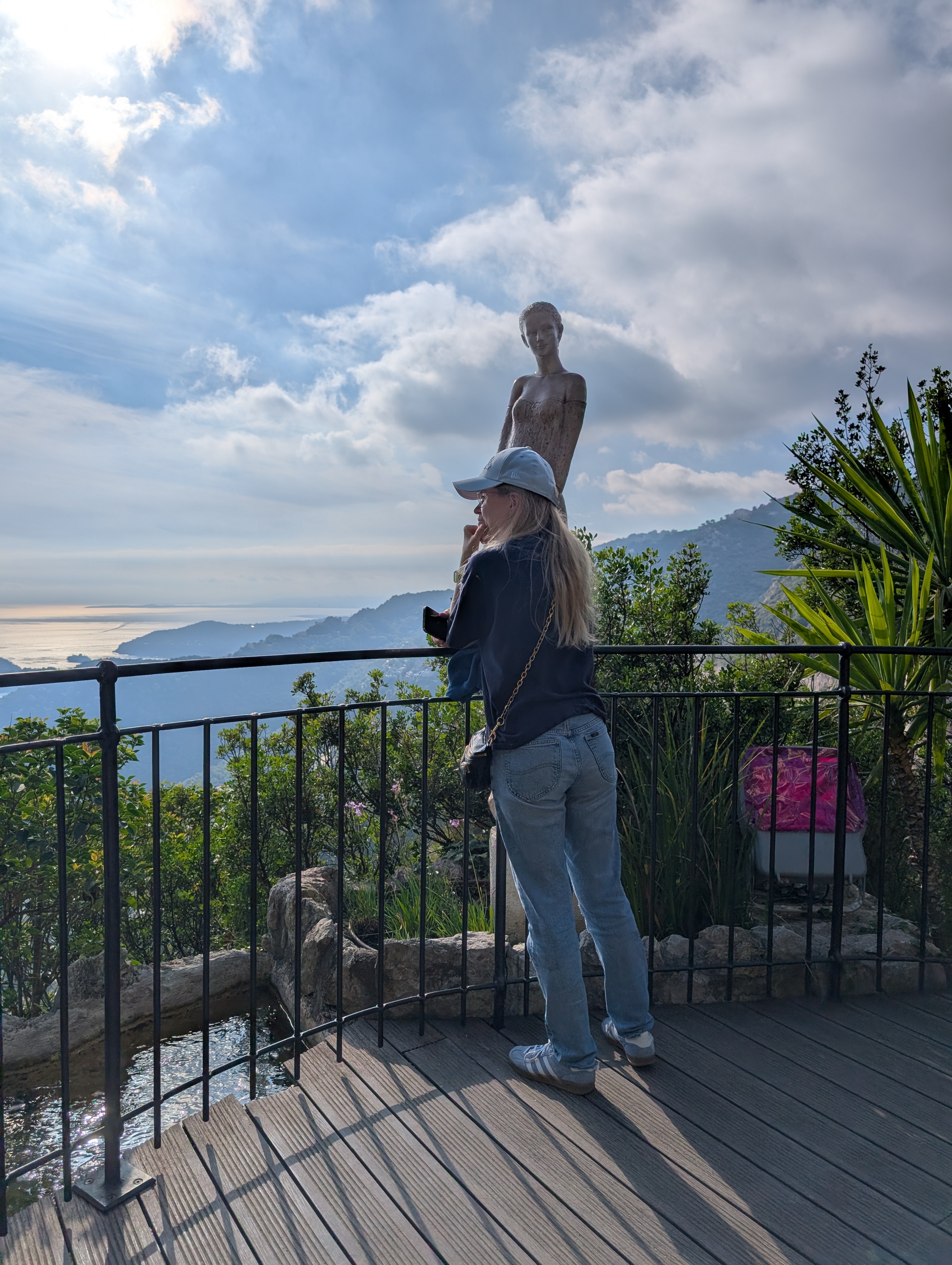
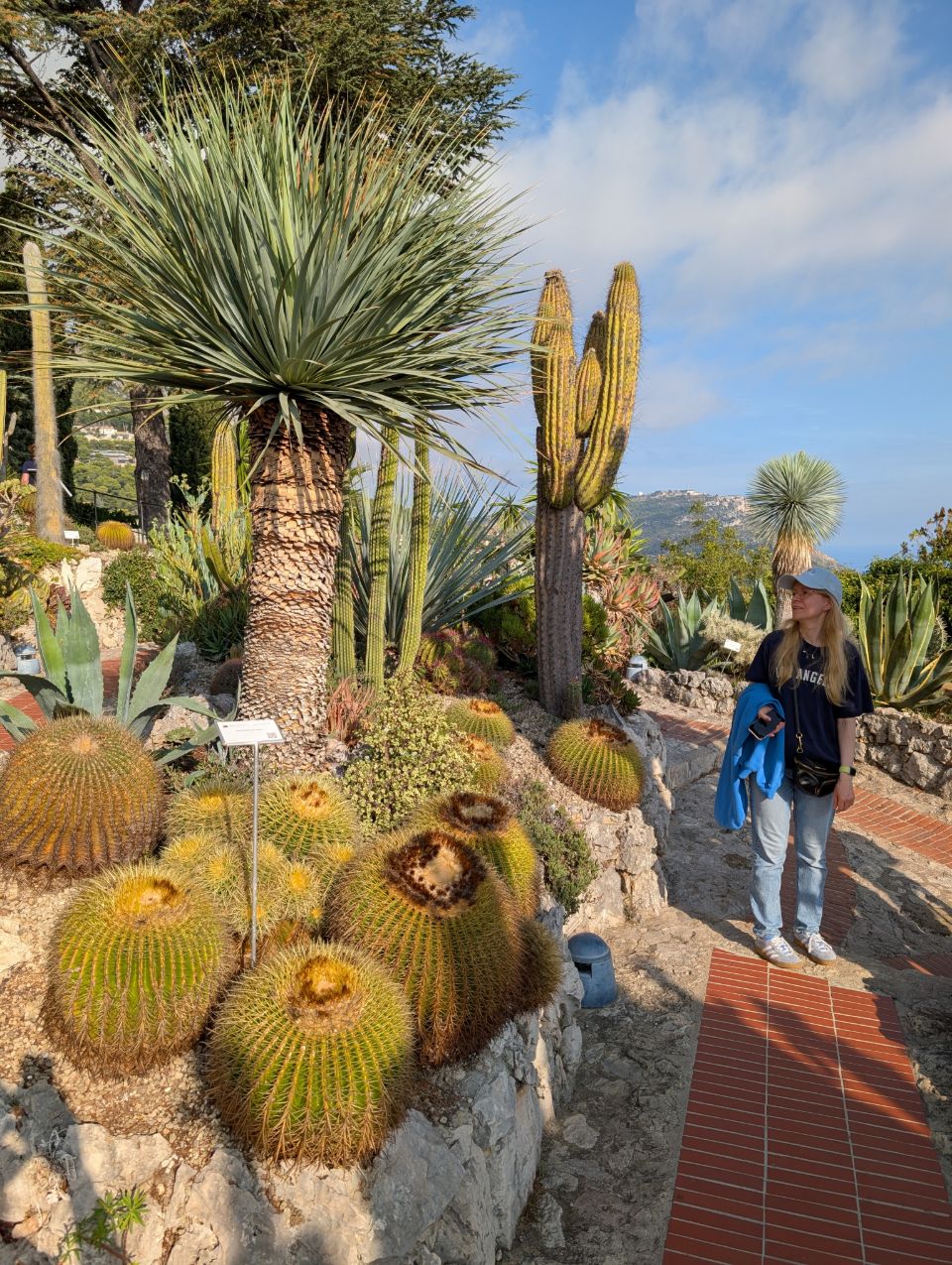
At the top, the Jardin Exotique: cacti on the castle terrace at the highest point of the coast between Nice and Menton — the village’s own claim — with the views doing all the explaining. Cap Ferrat curves round as if it were drawn from this exact angle, Monaco floats in the haze to the east, and Èze-sur-Mer sits 429 metres straight down, tiny, already waiting for our afternoon. Bronze figures have been placed around the garden to do the official looking, and the village church tower has rarely been photographed from a better angle than from above.
The way up goes past somebody's terrace 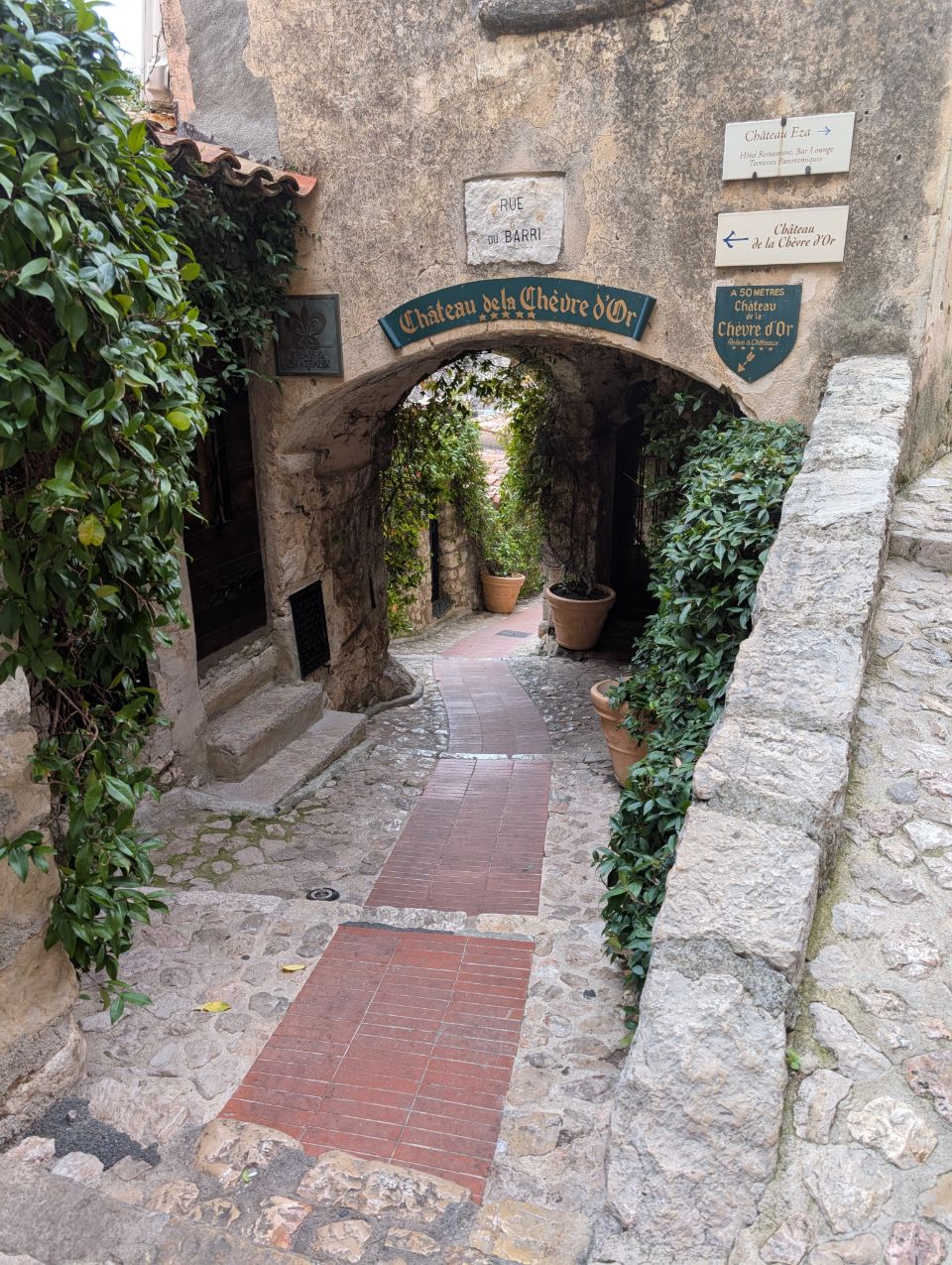
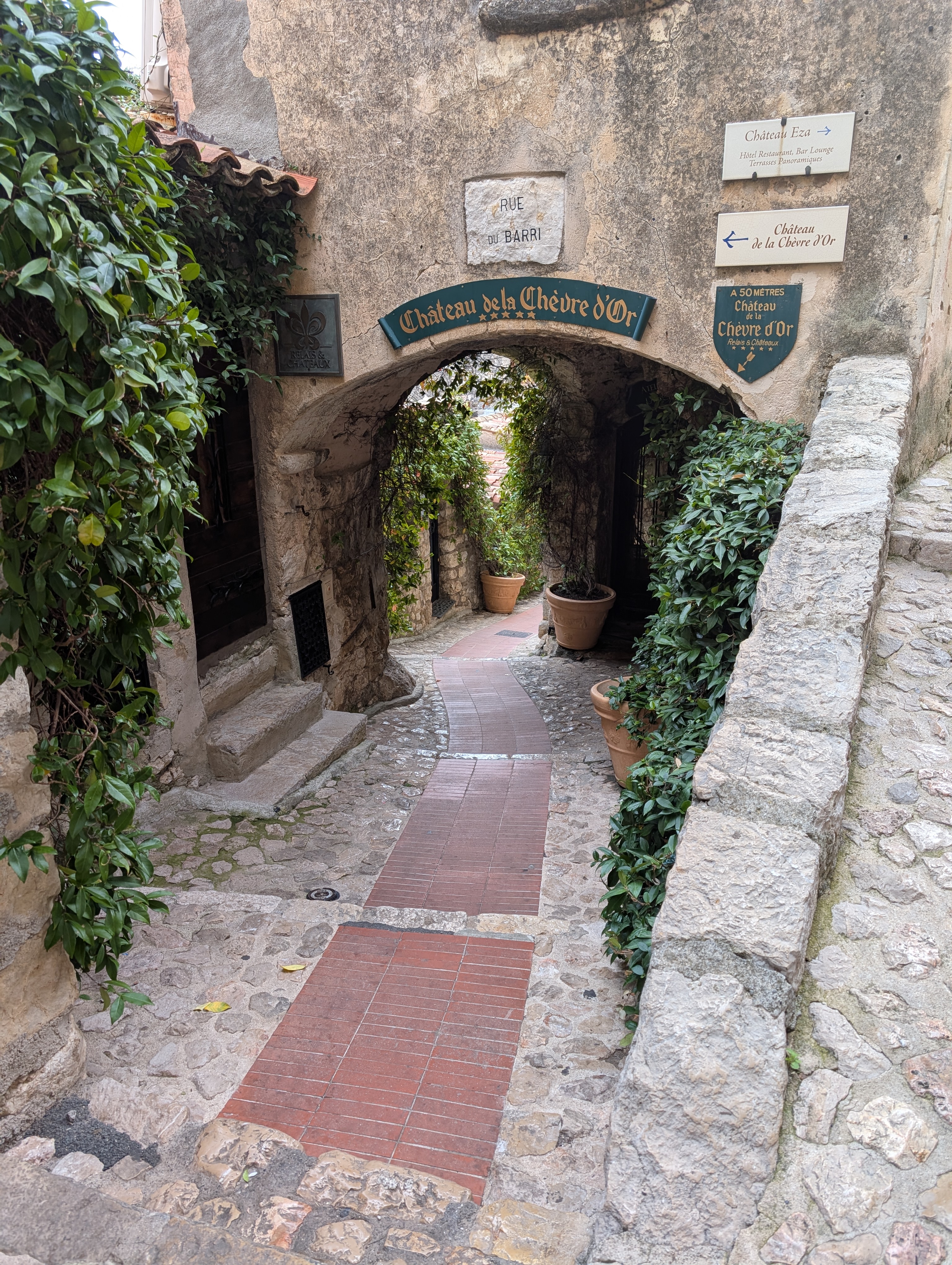
Chèvre d'Or country from here up 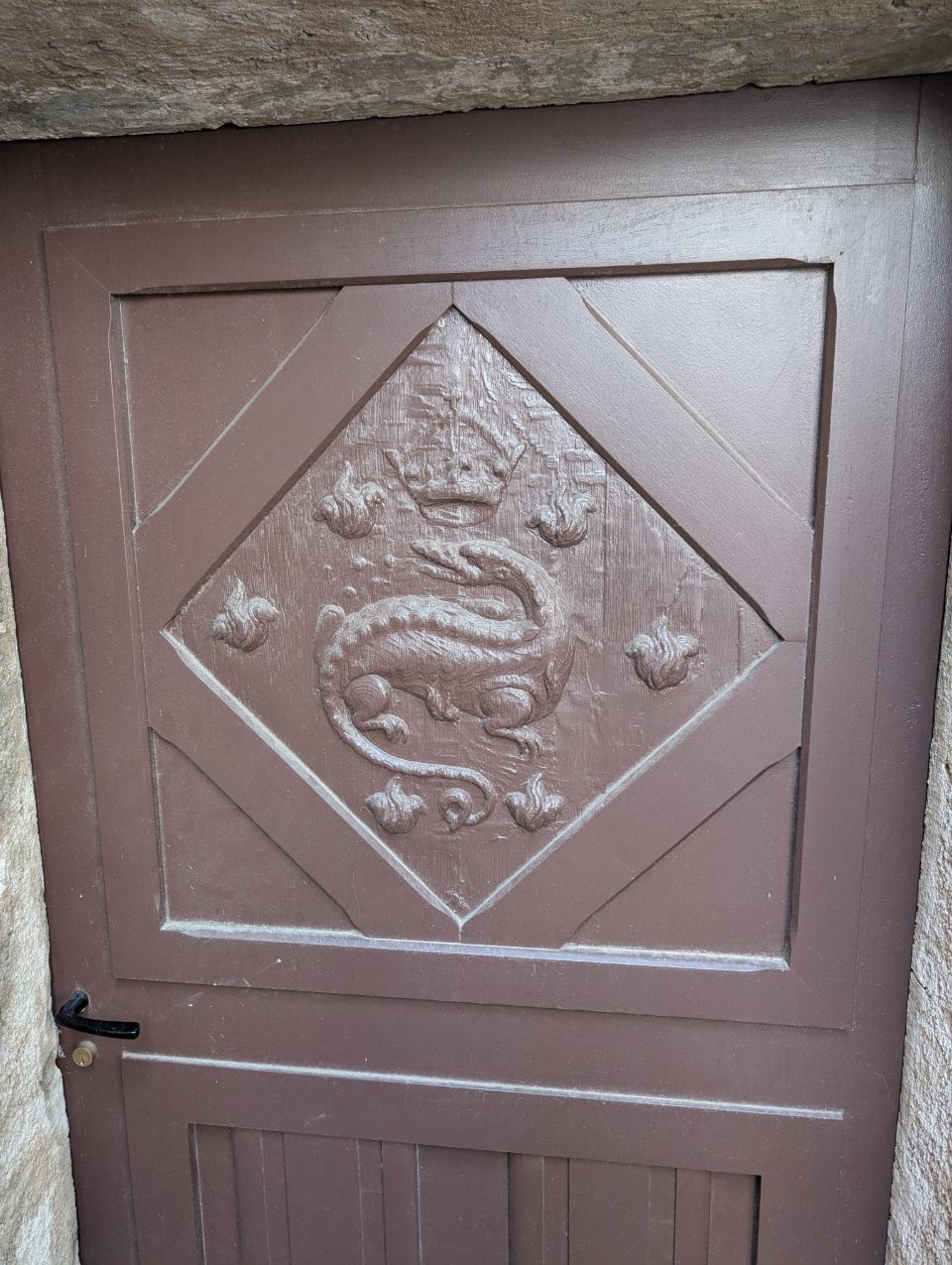
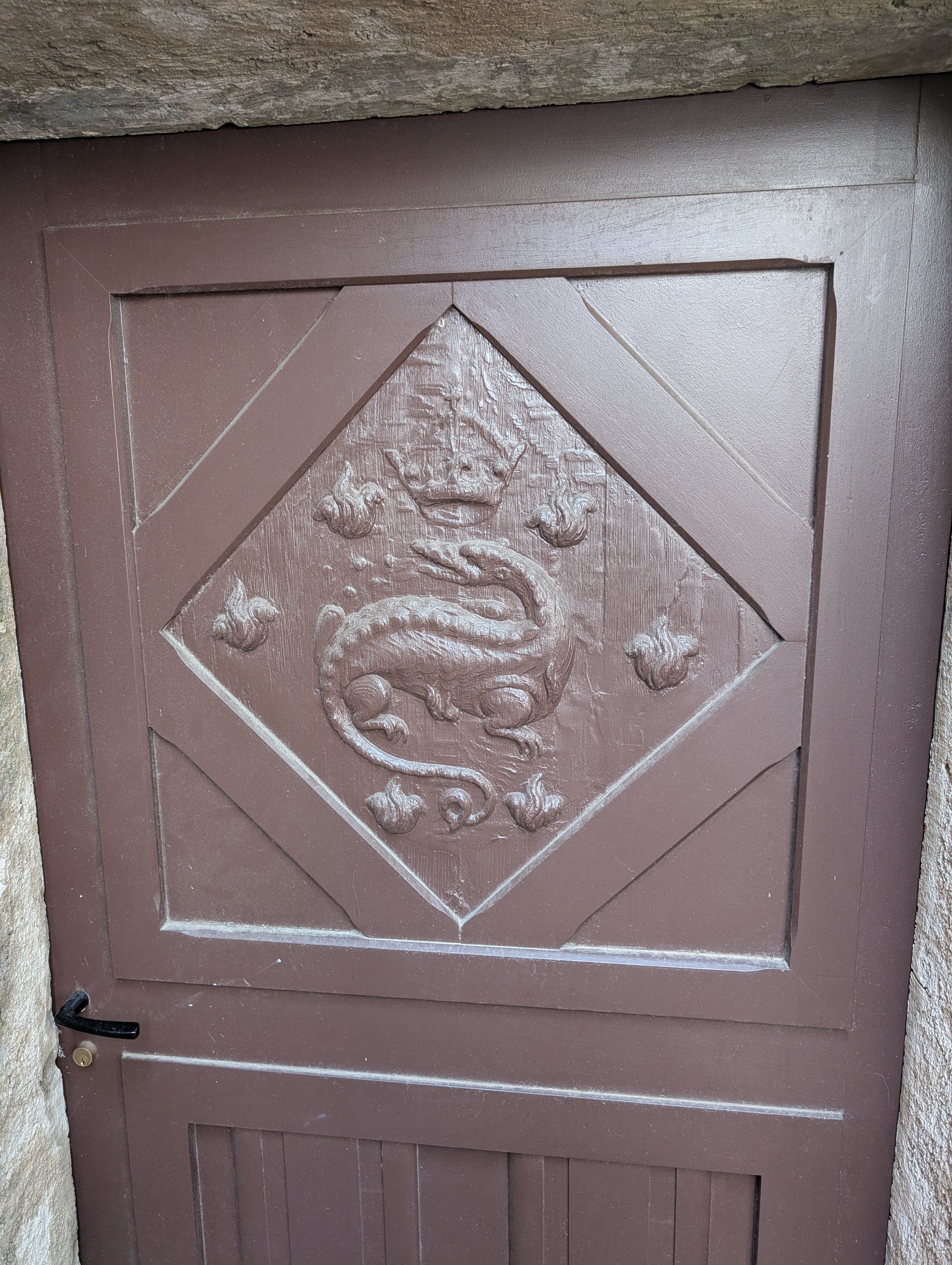
A door with its own small dragon 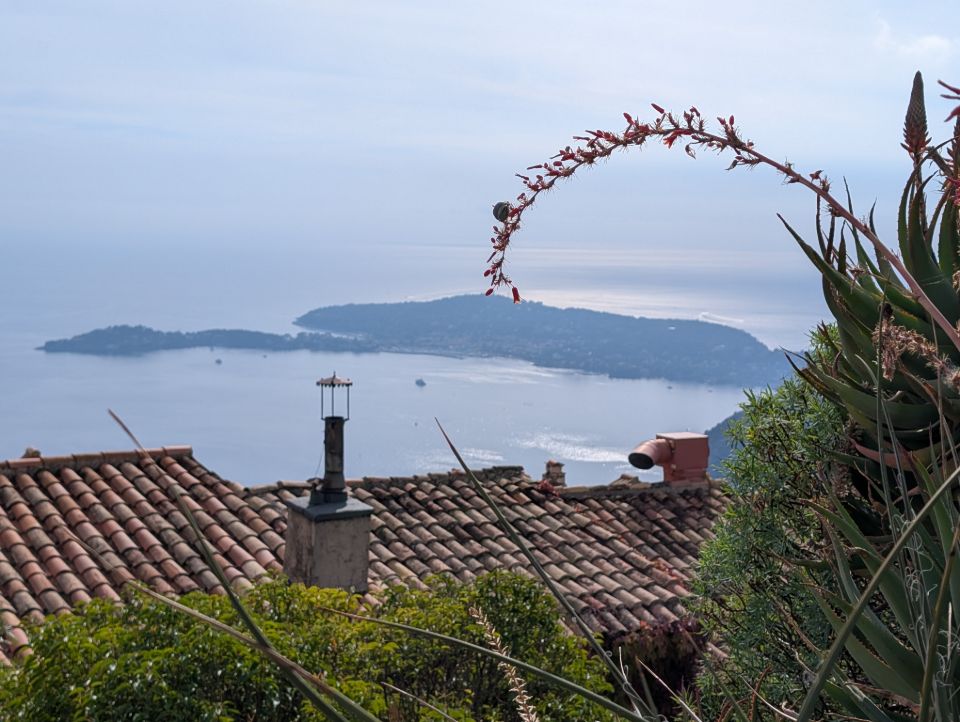
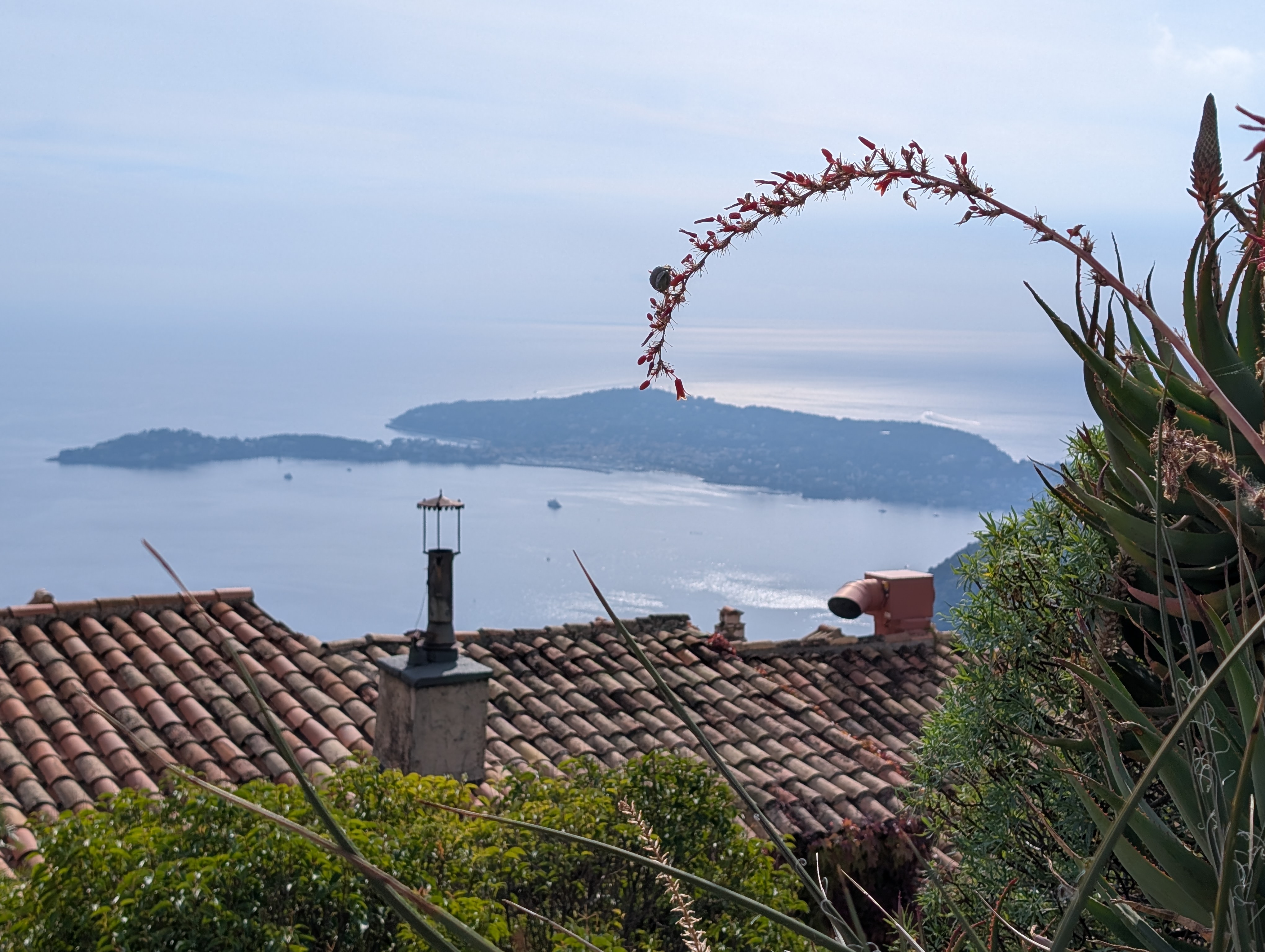
Cap Ferrat, through the aloes 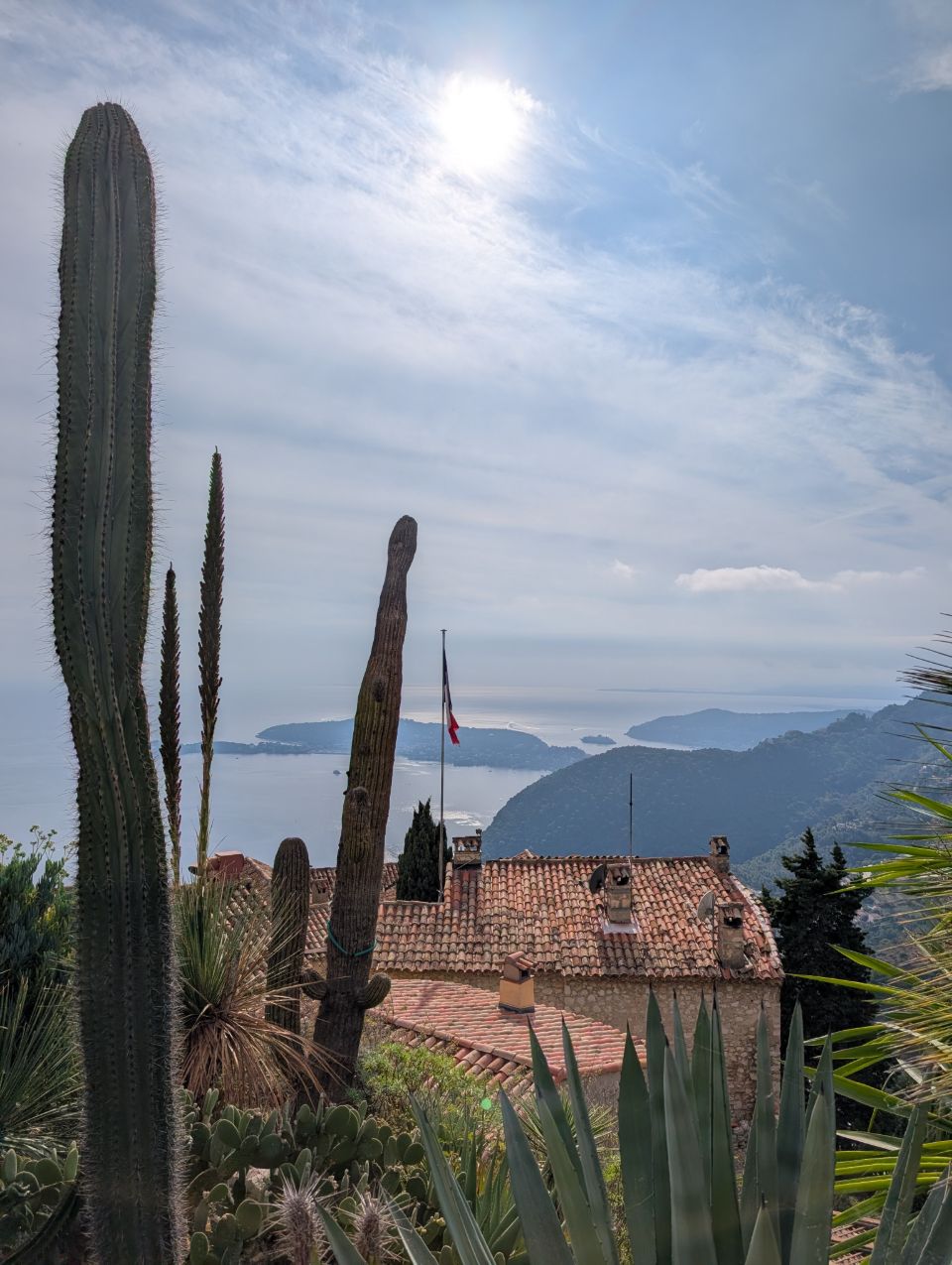
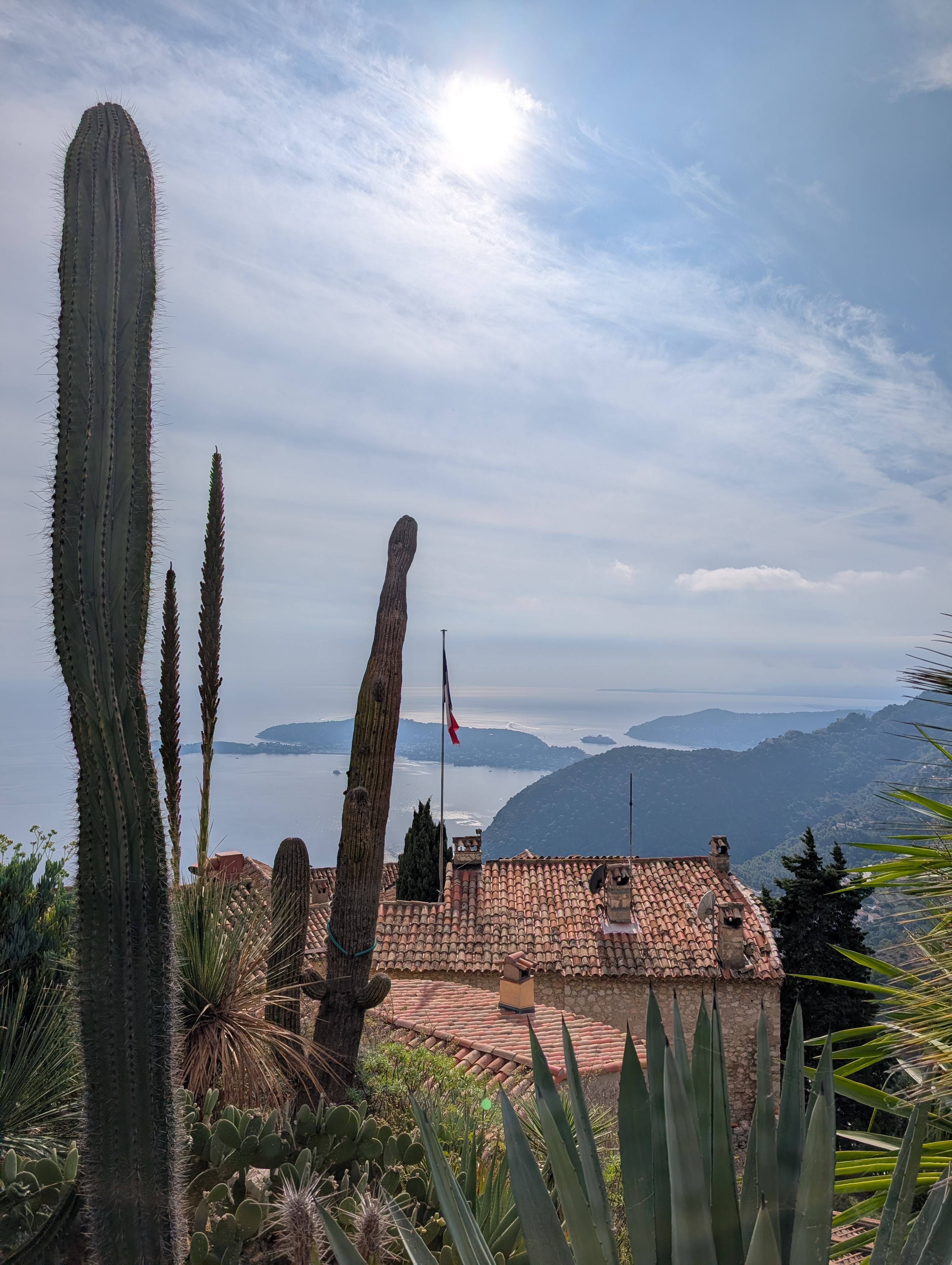
The garden's cacti, and the French flag 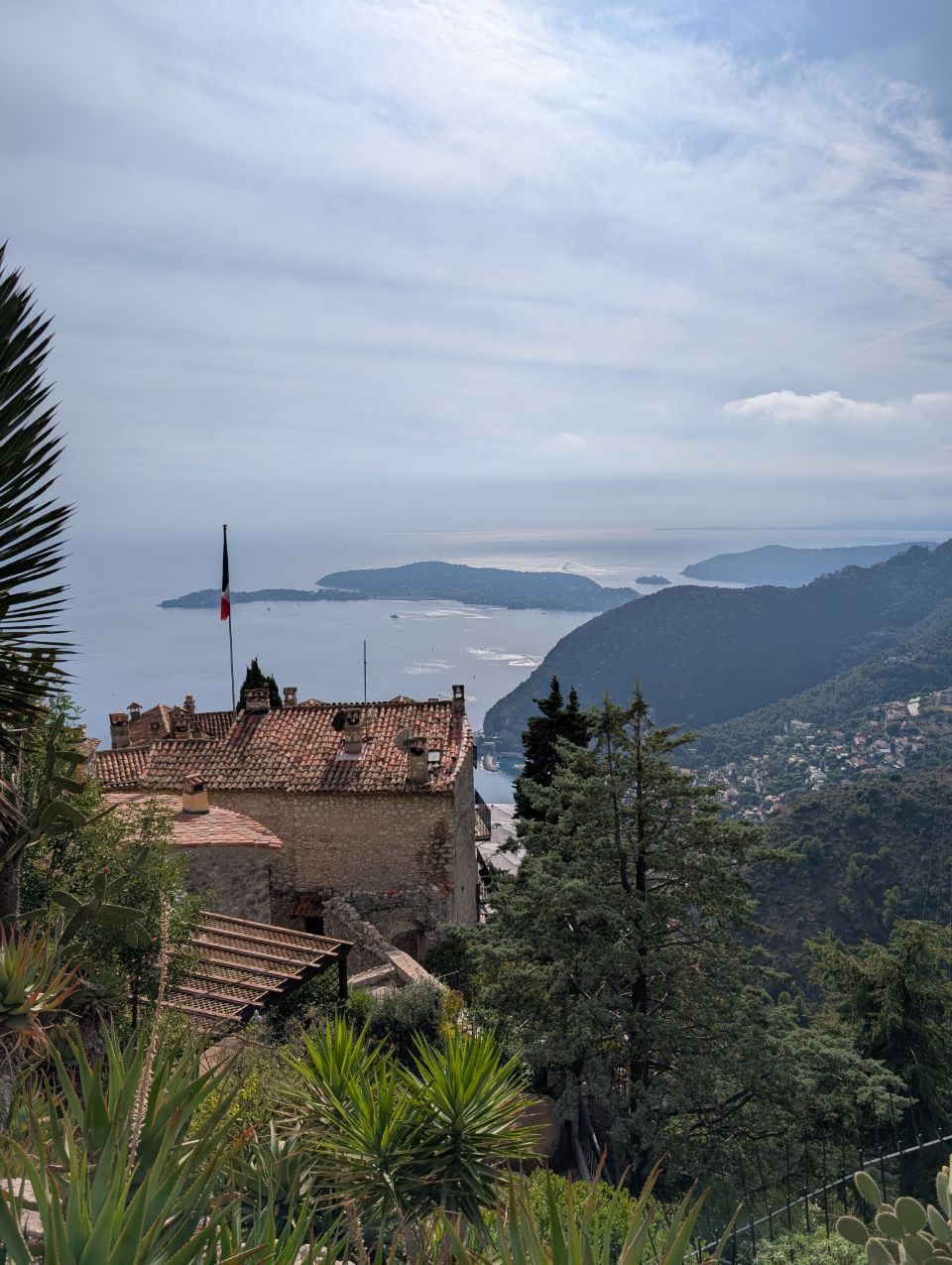
Cap Ferrat does the curve 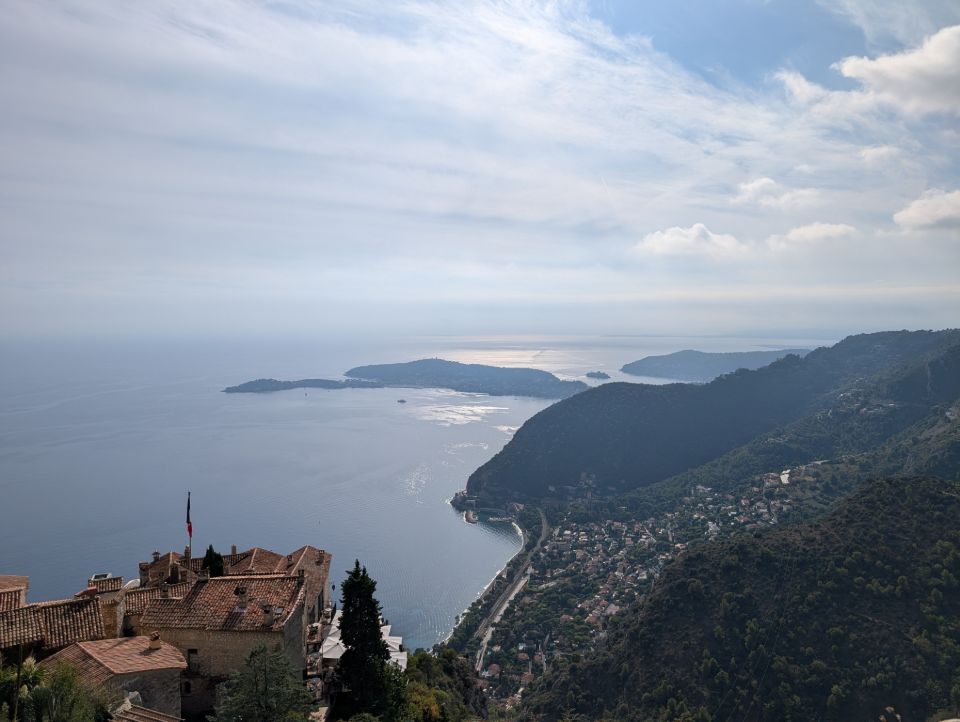
Our afternoon, from 429 metres up Roofs, and the whole cape behind 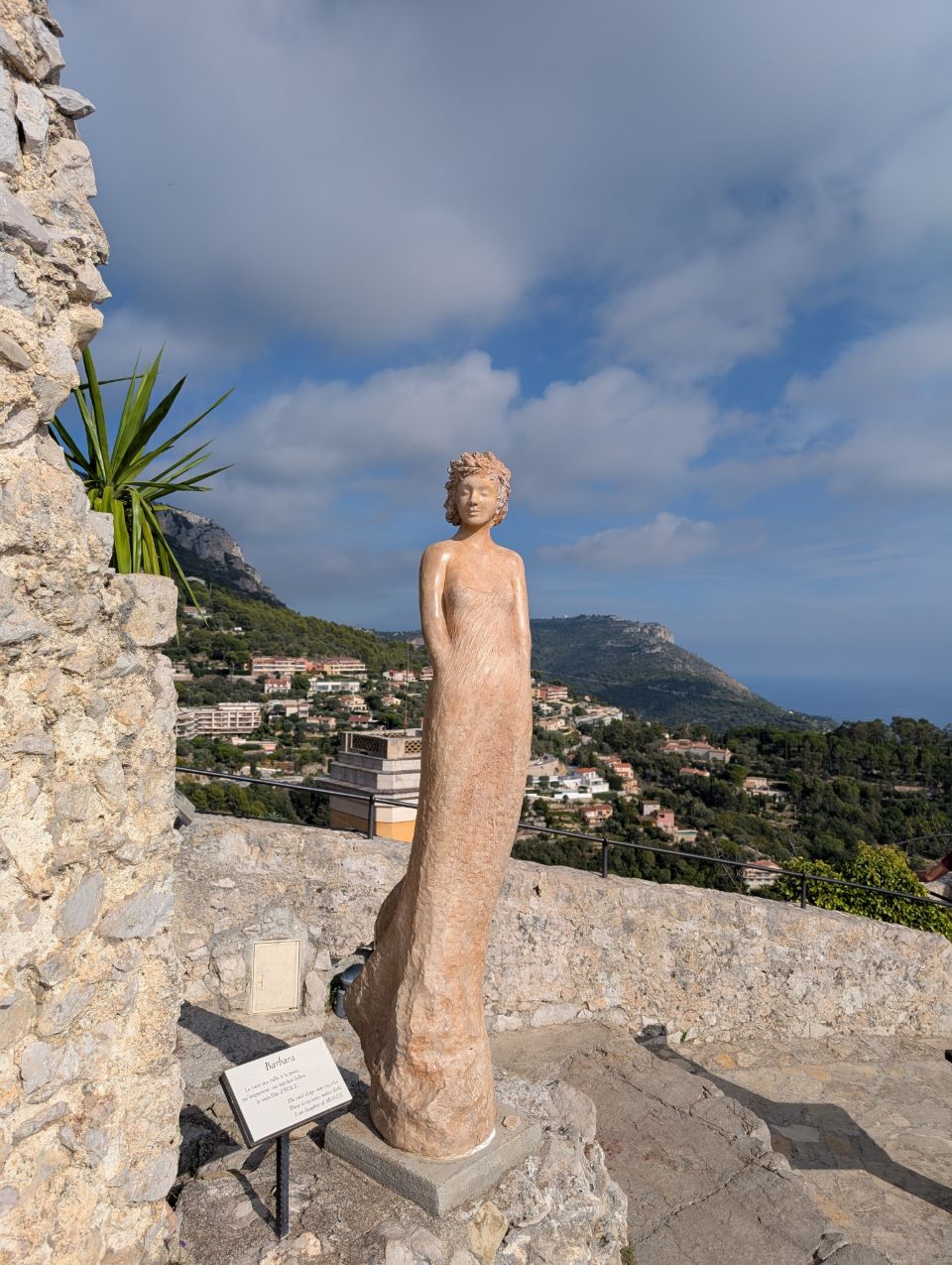
A bronze keeping an eye on the hills 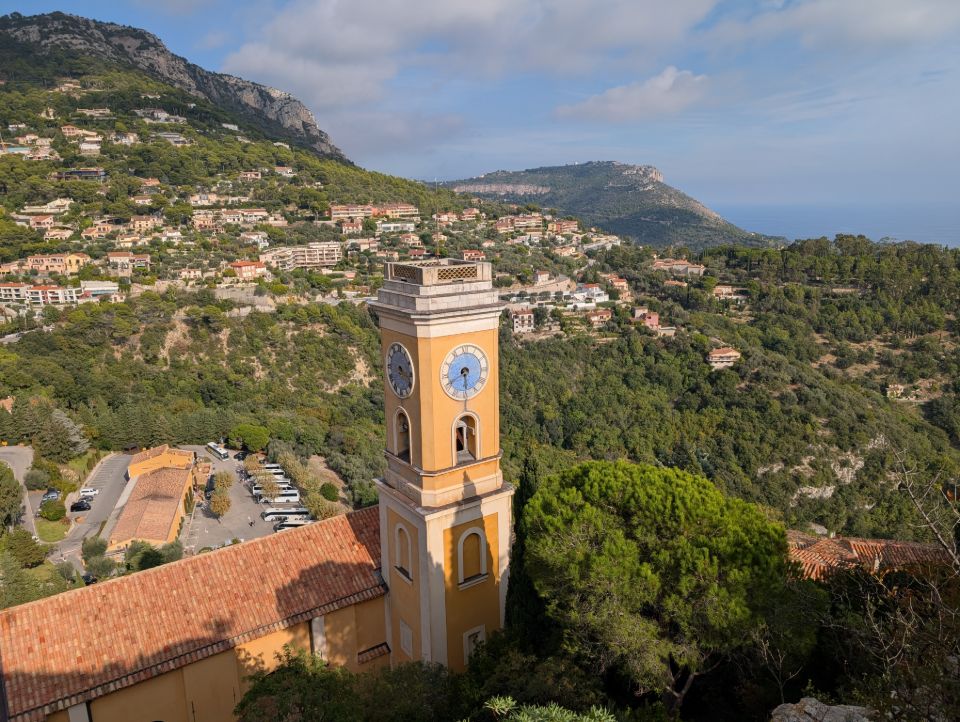
The church tower, from higher than the church 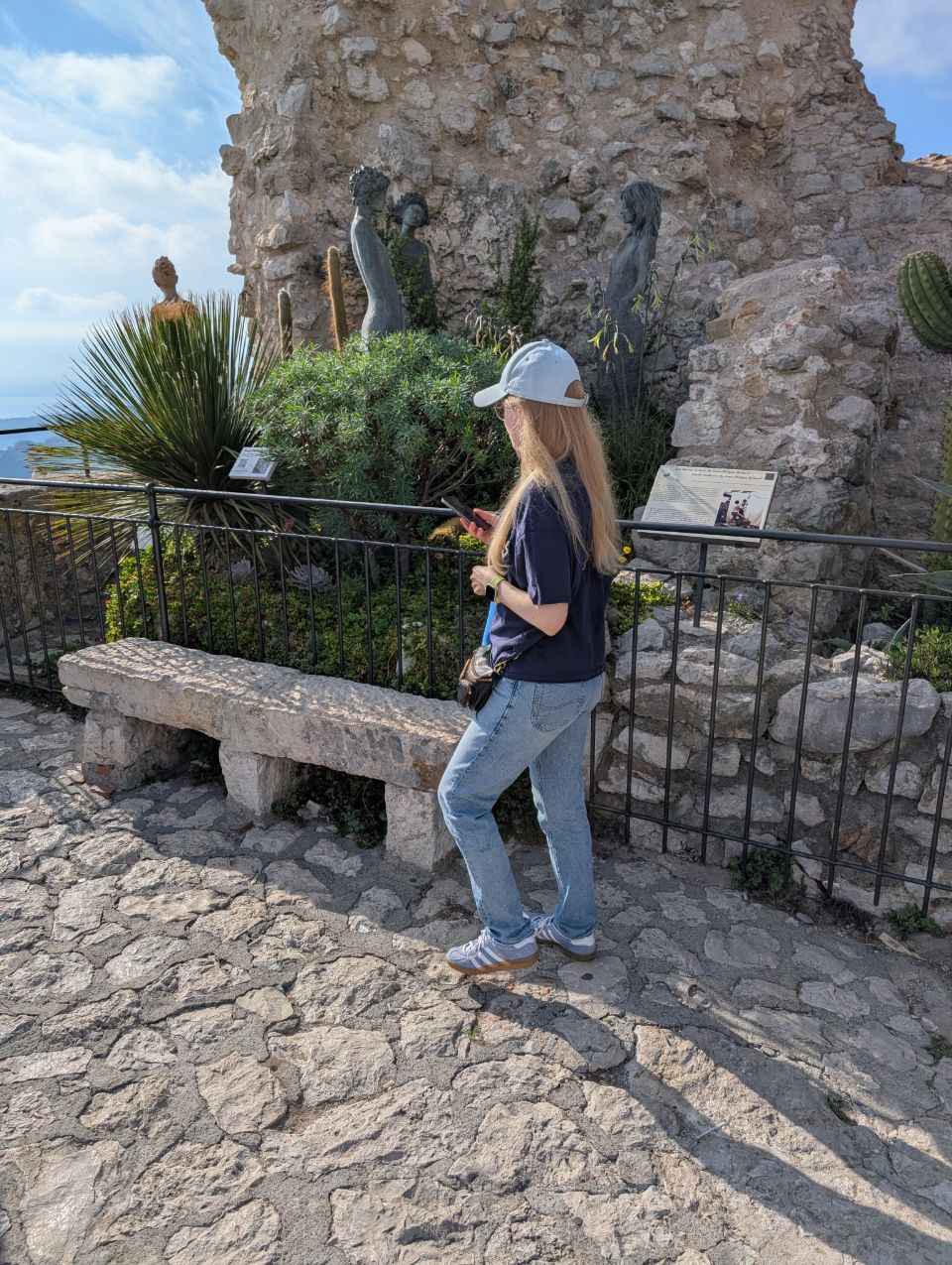
Anna, at the top rail 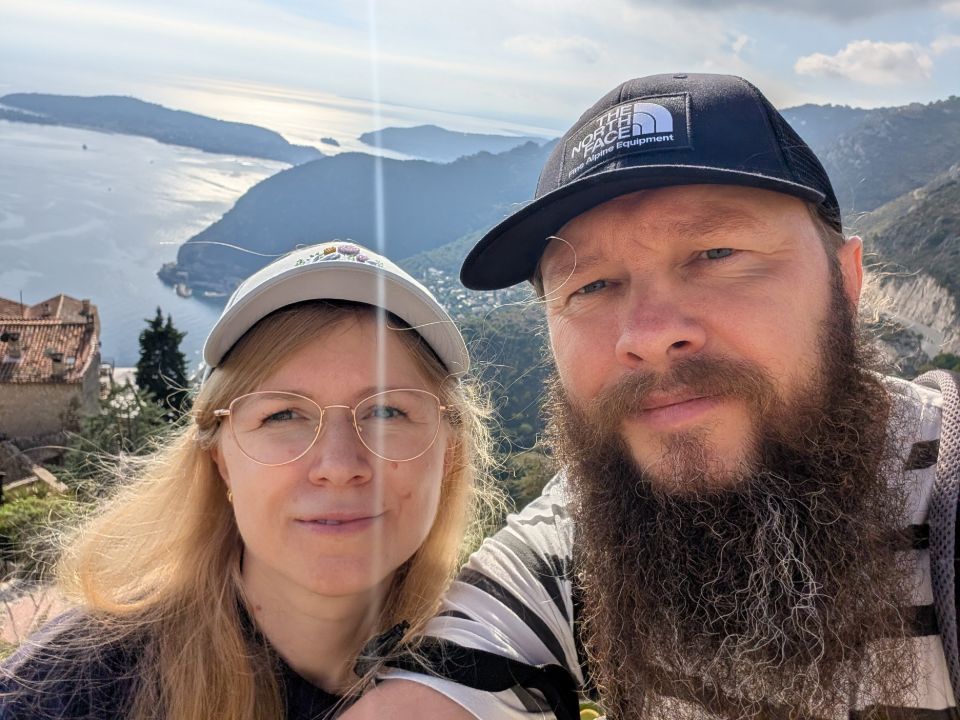
Both of us, garden edition 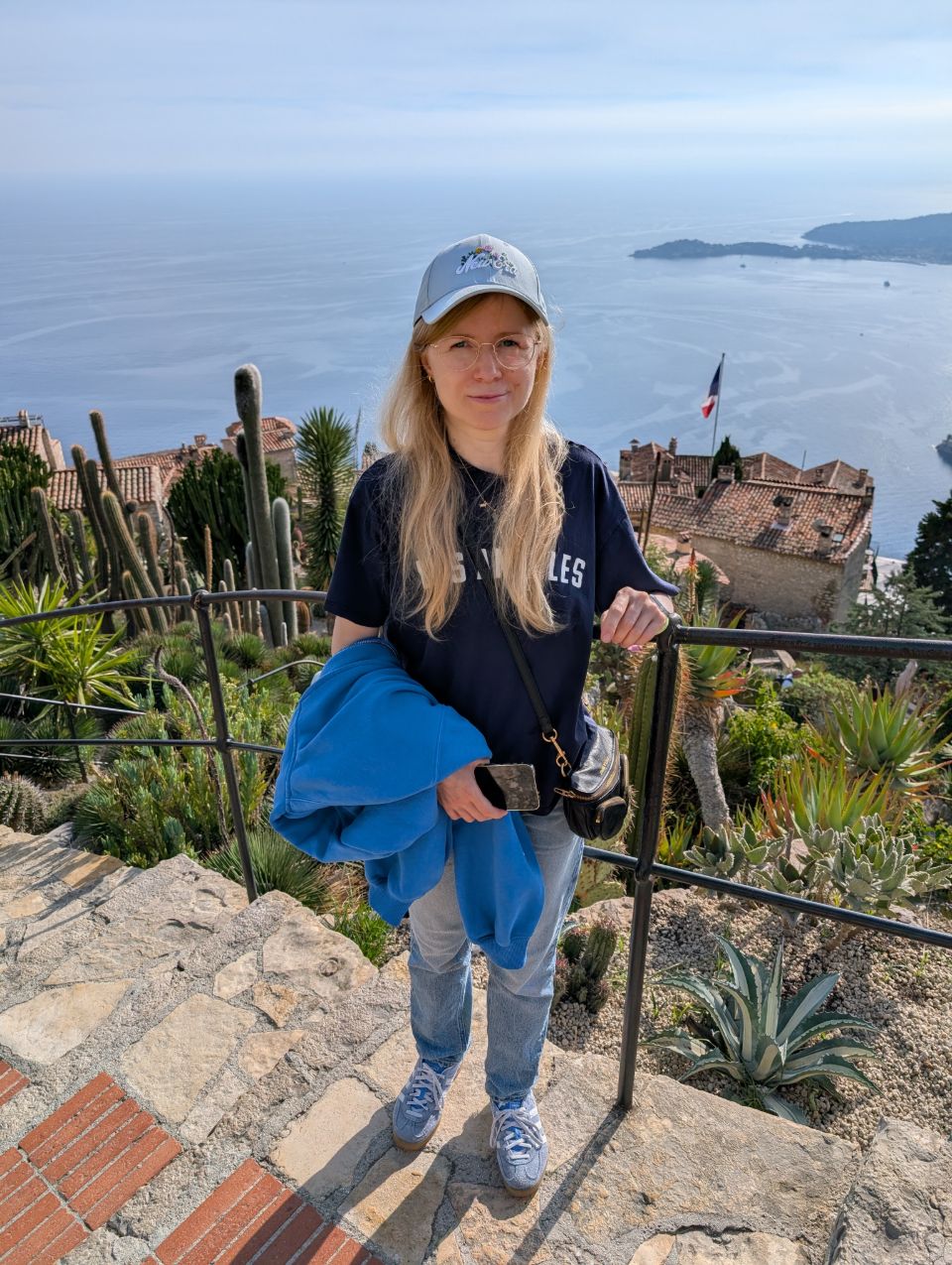
Anna, against the whole horizon 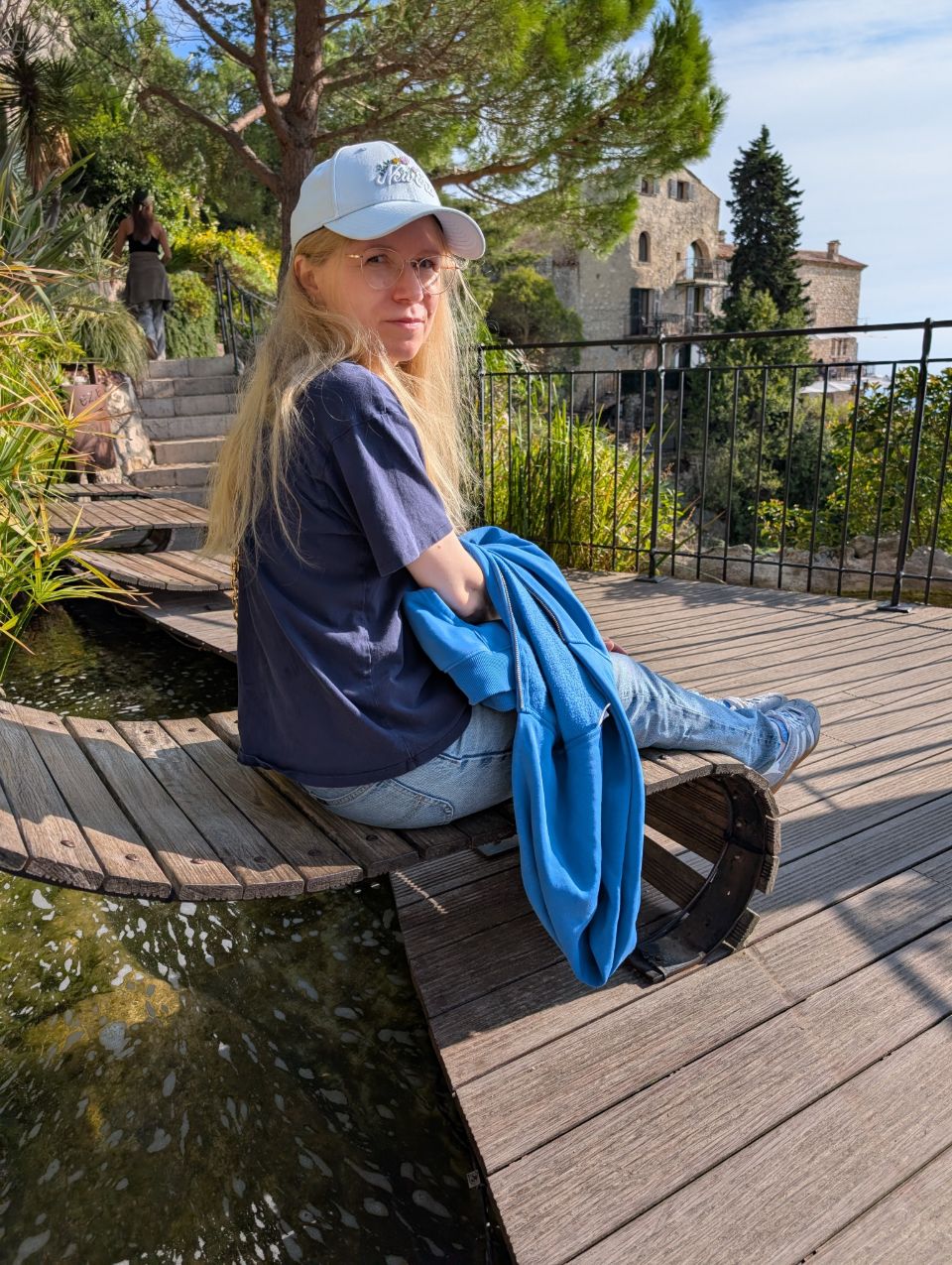
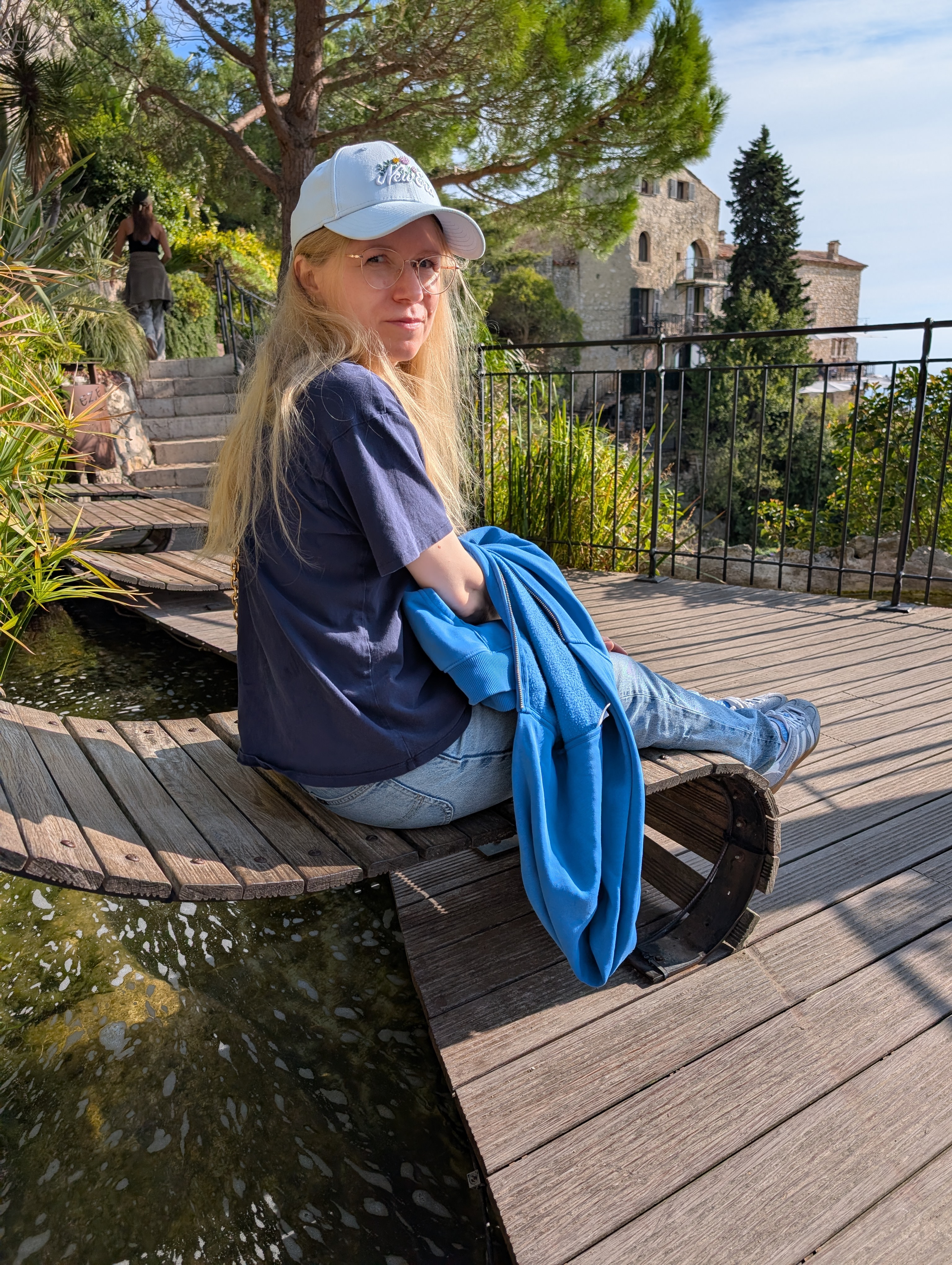
The garden's pond, and its visitor 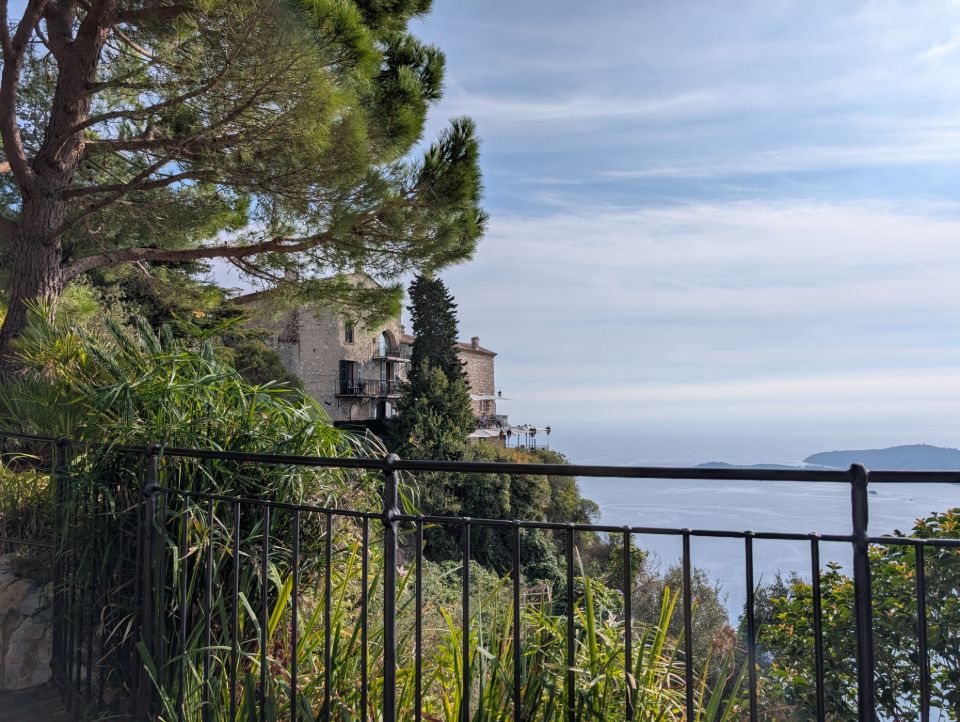
The pines get the same view for free 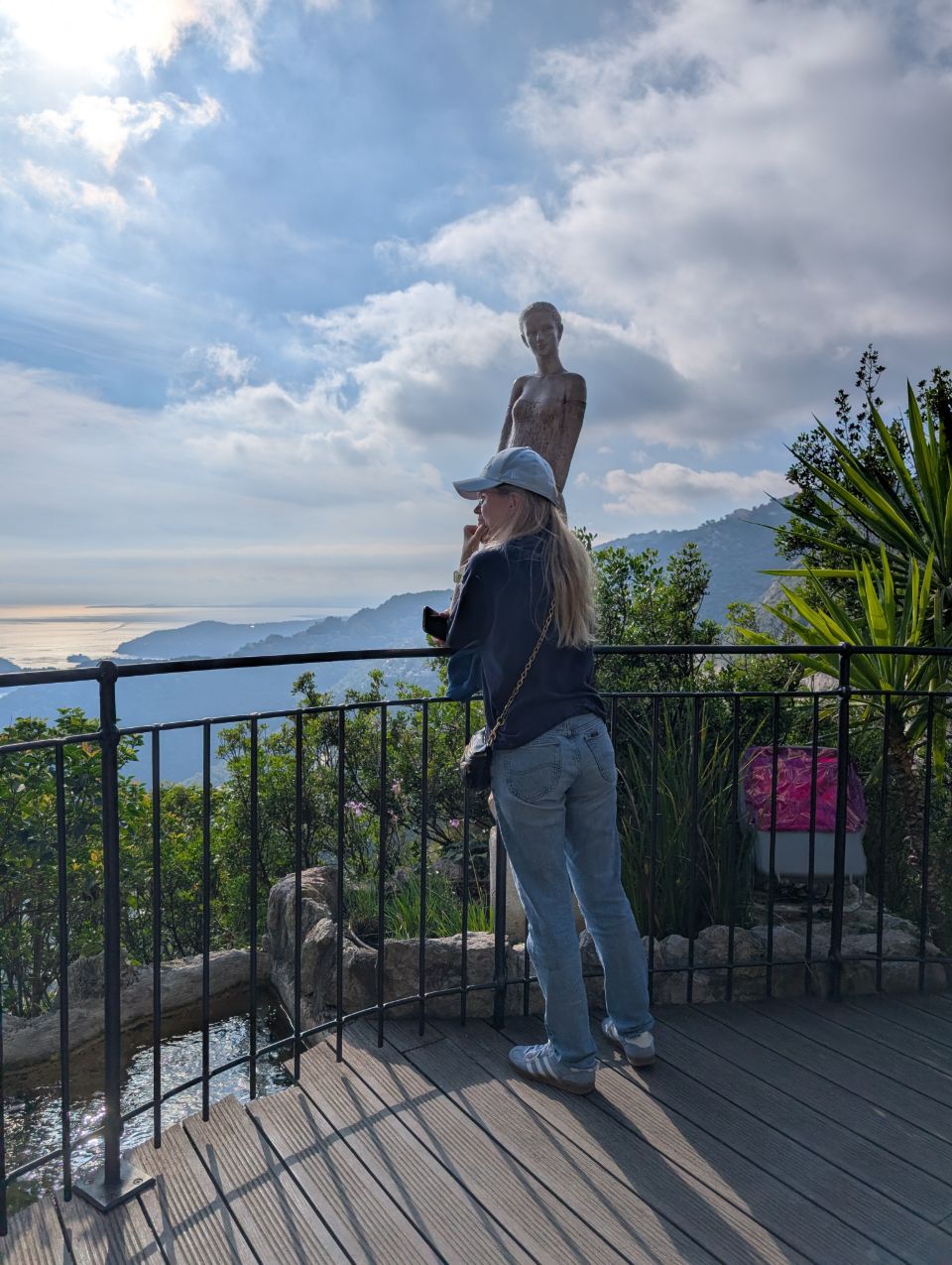
Anna, upstaged by a bronze
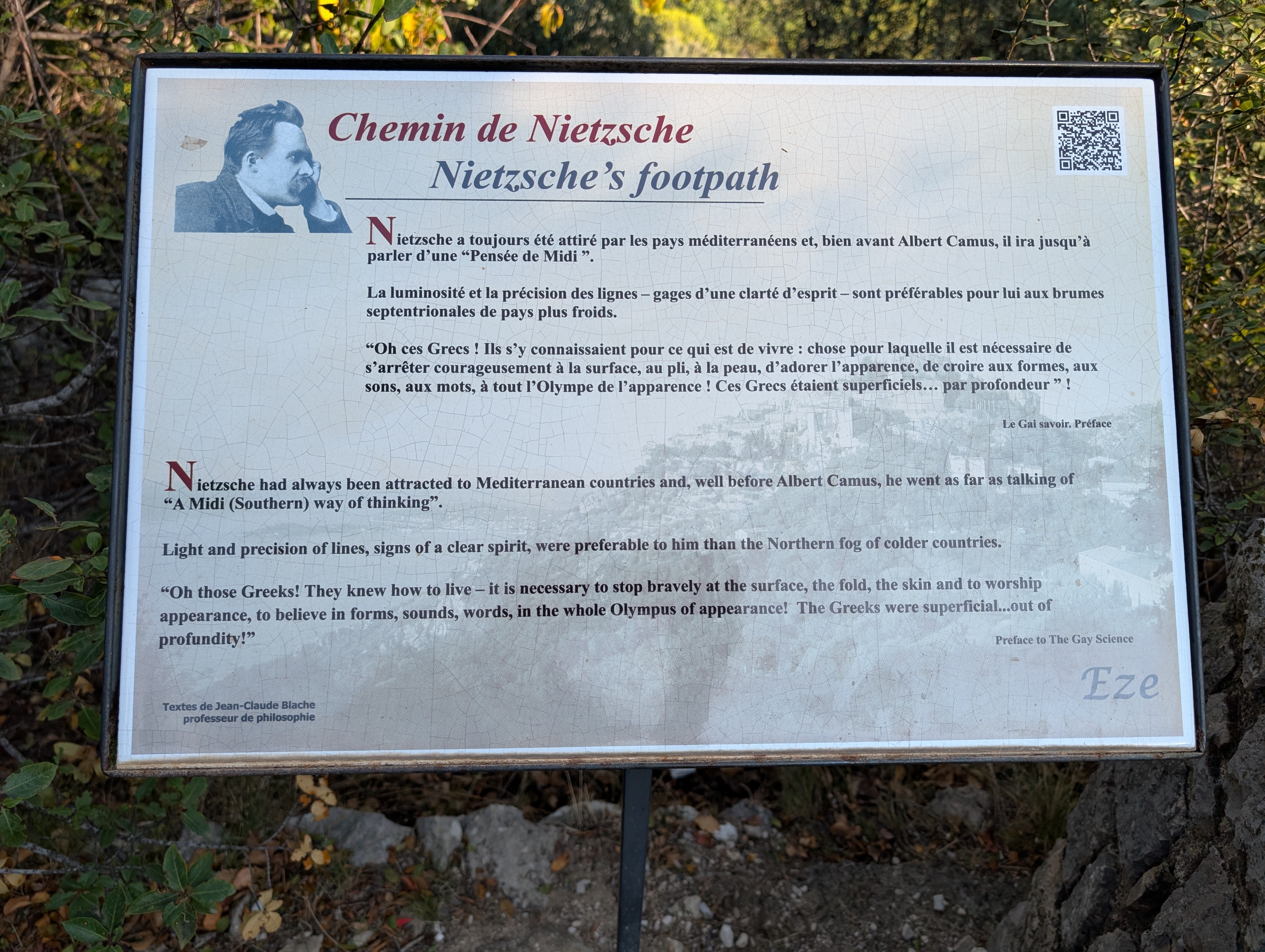
The Chemin de Nietzsche
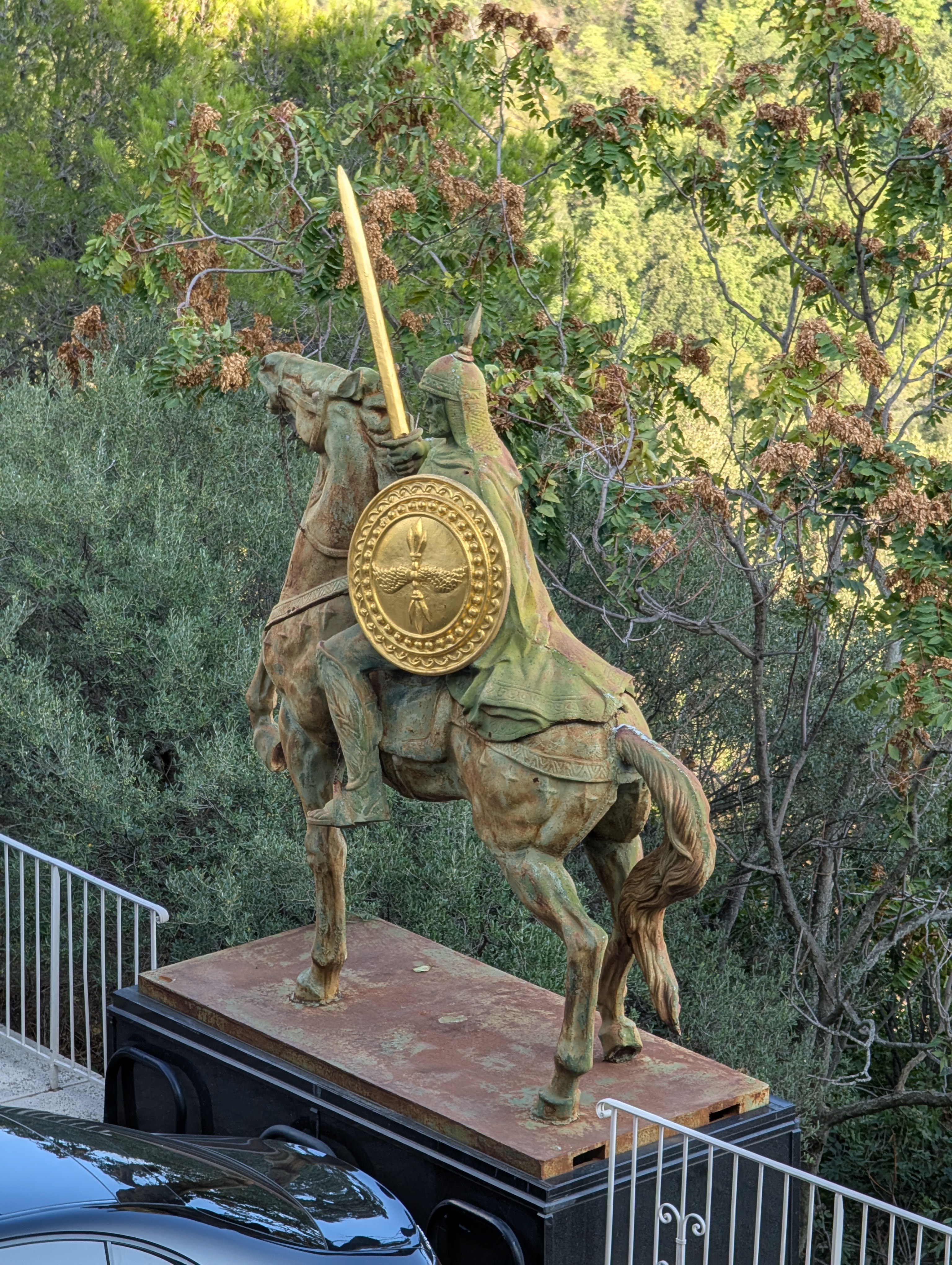
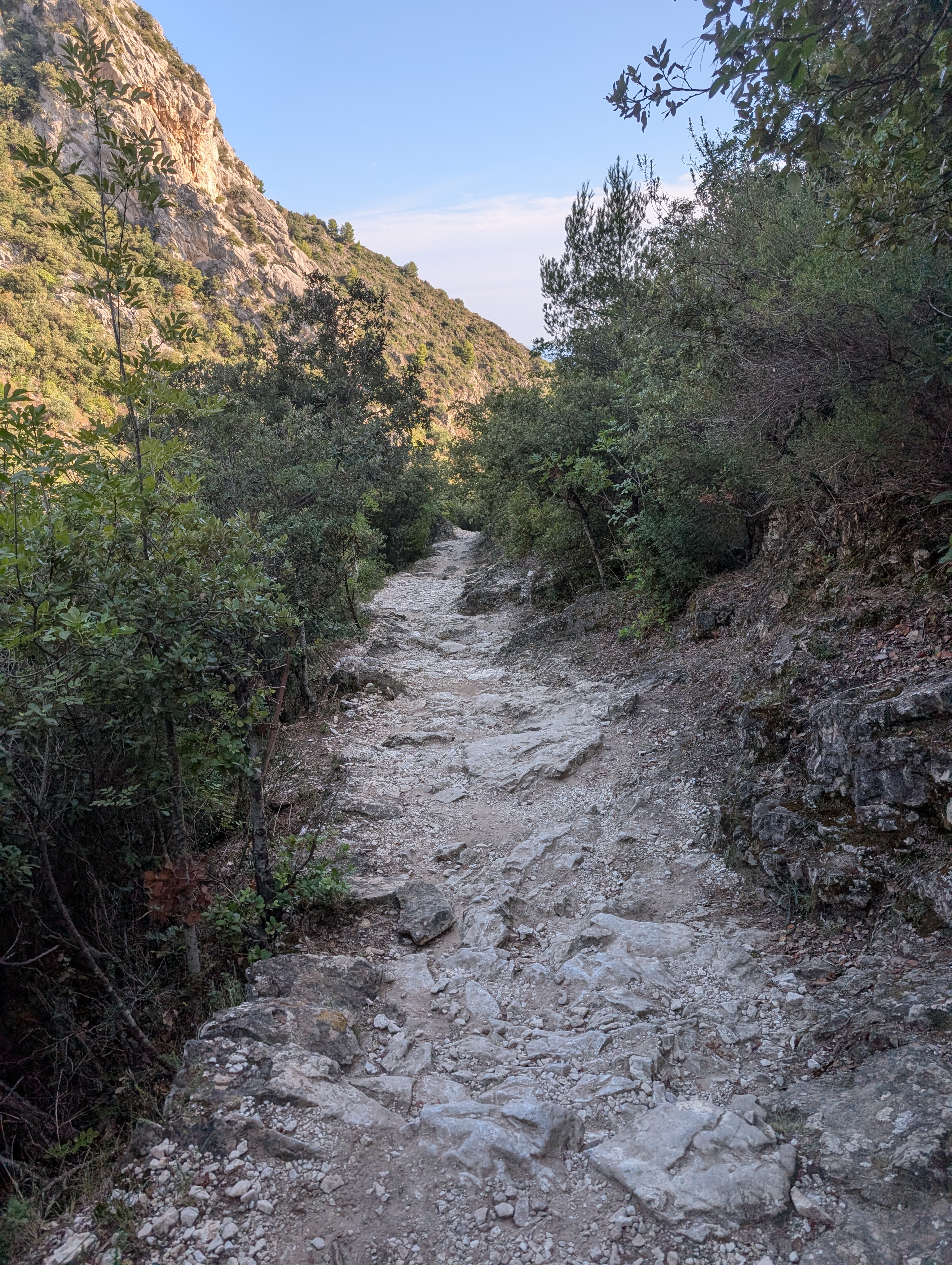
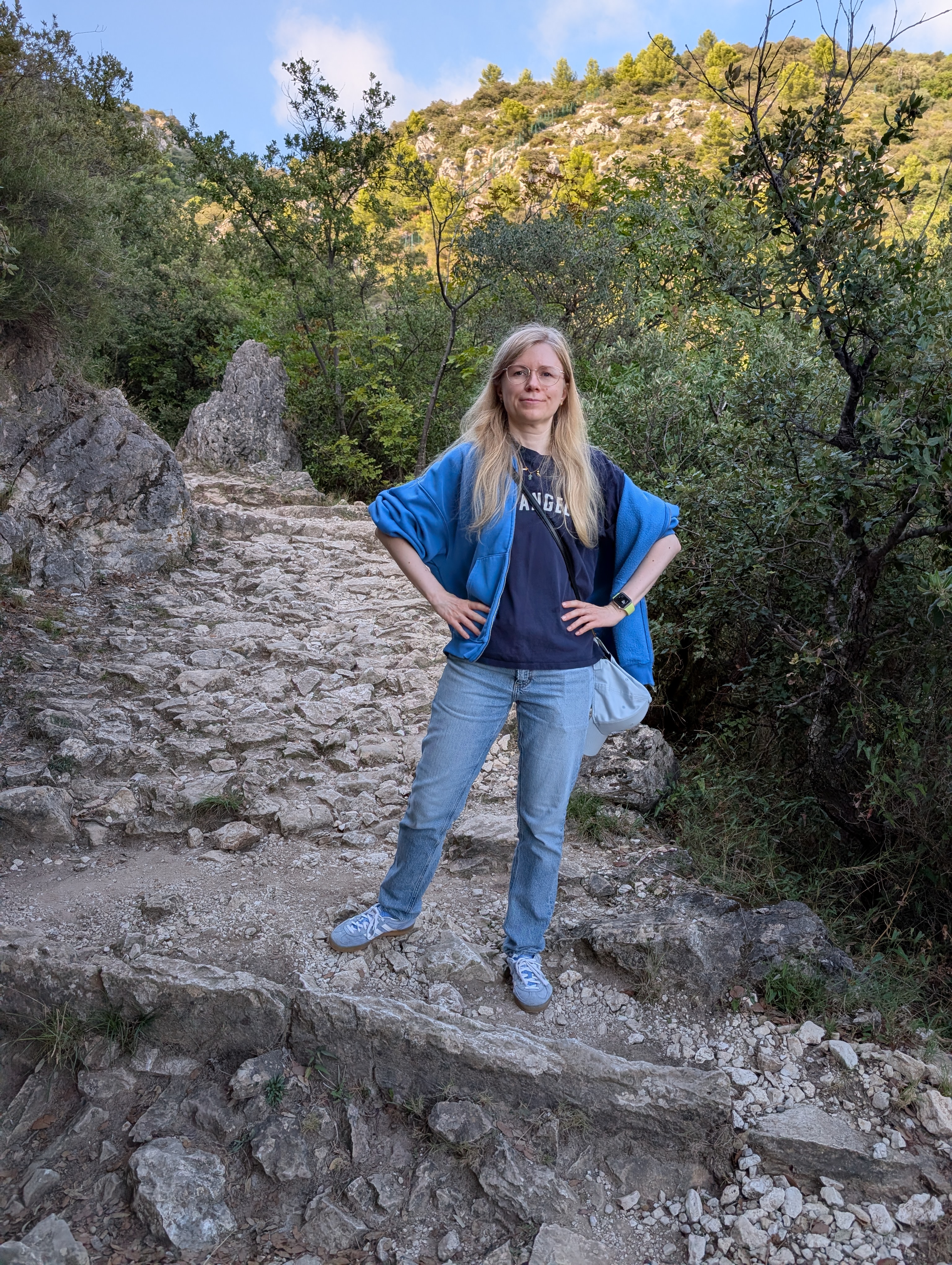
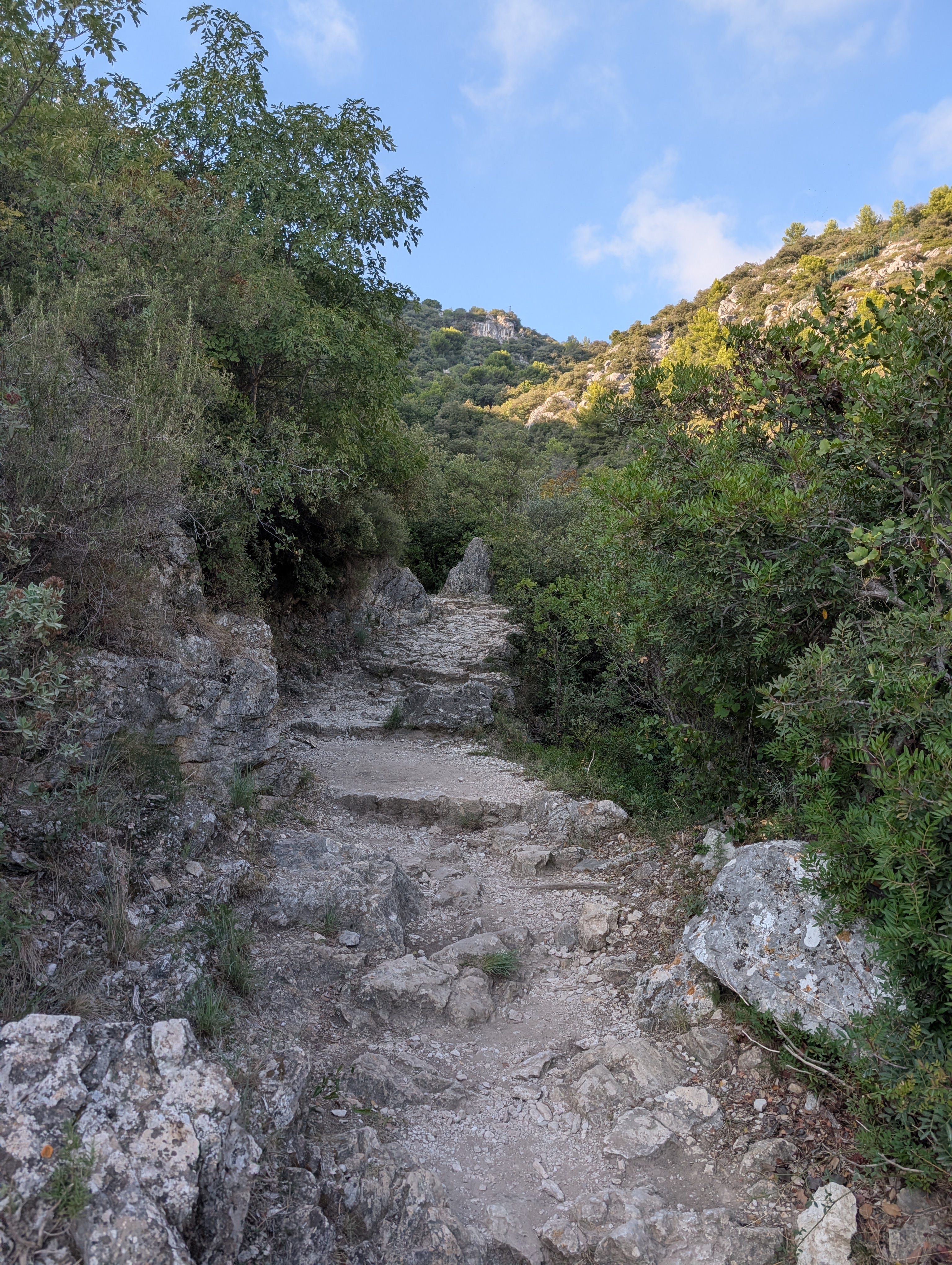
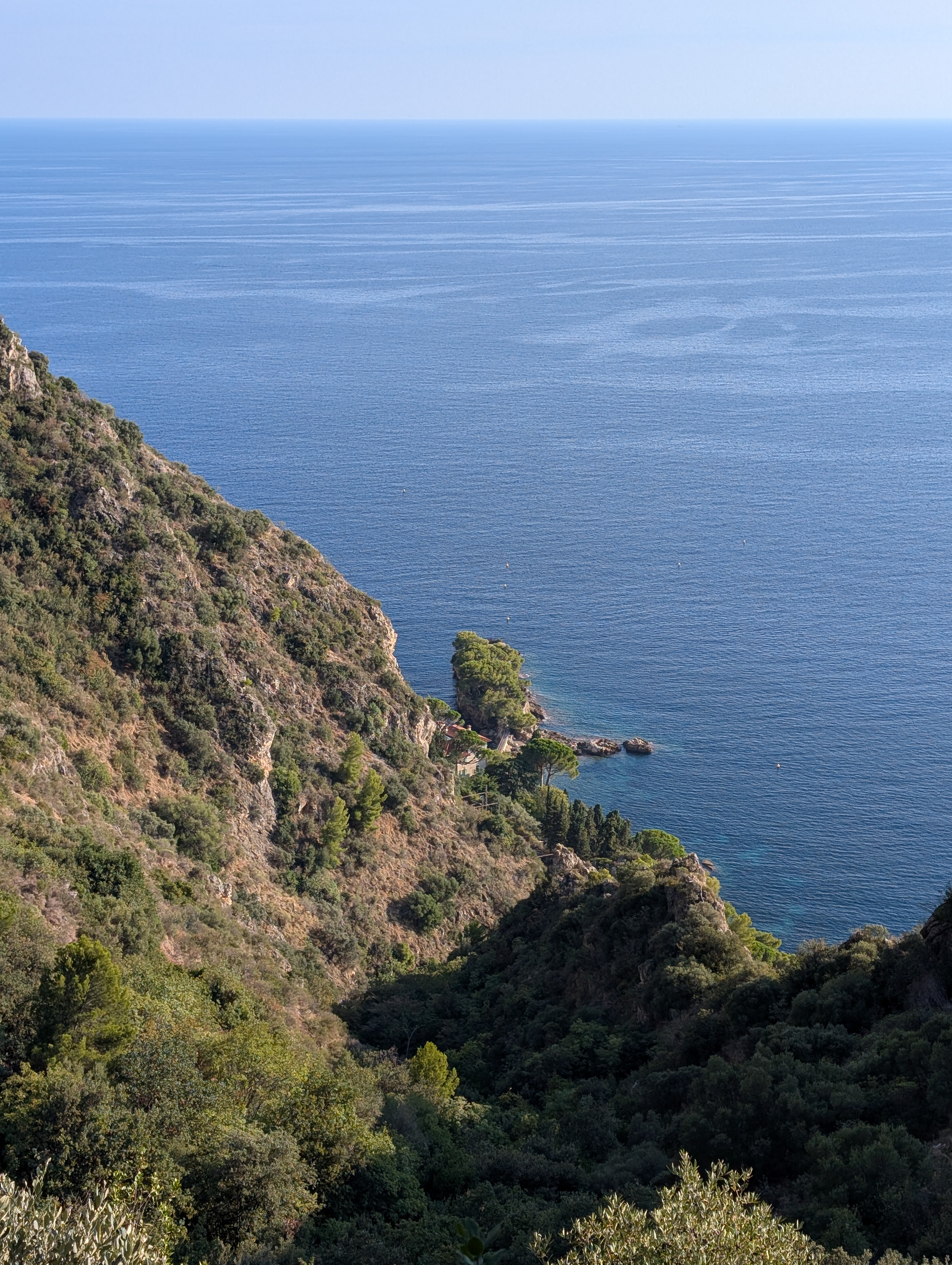
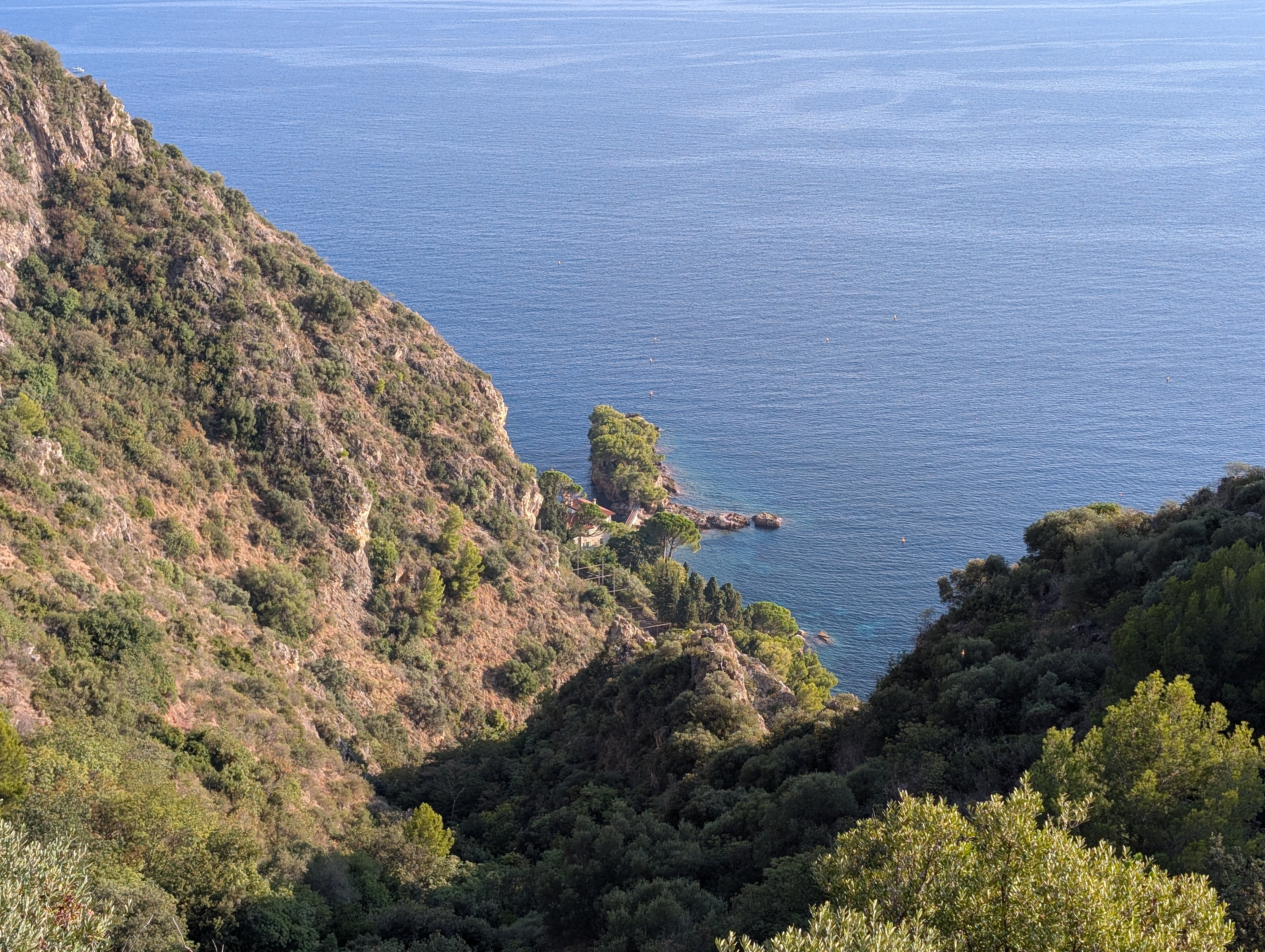
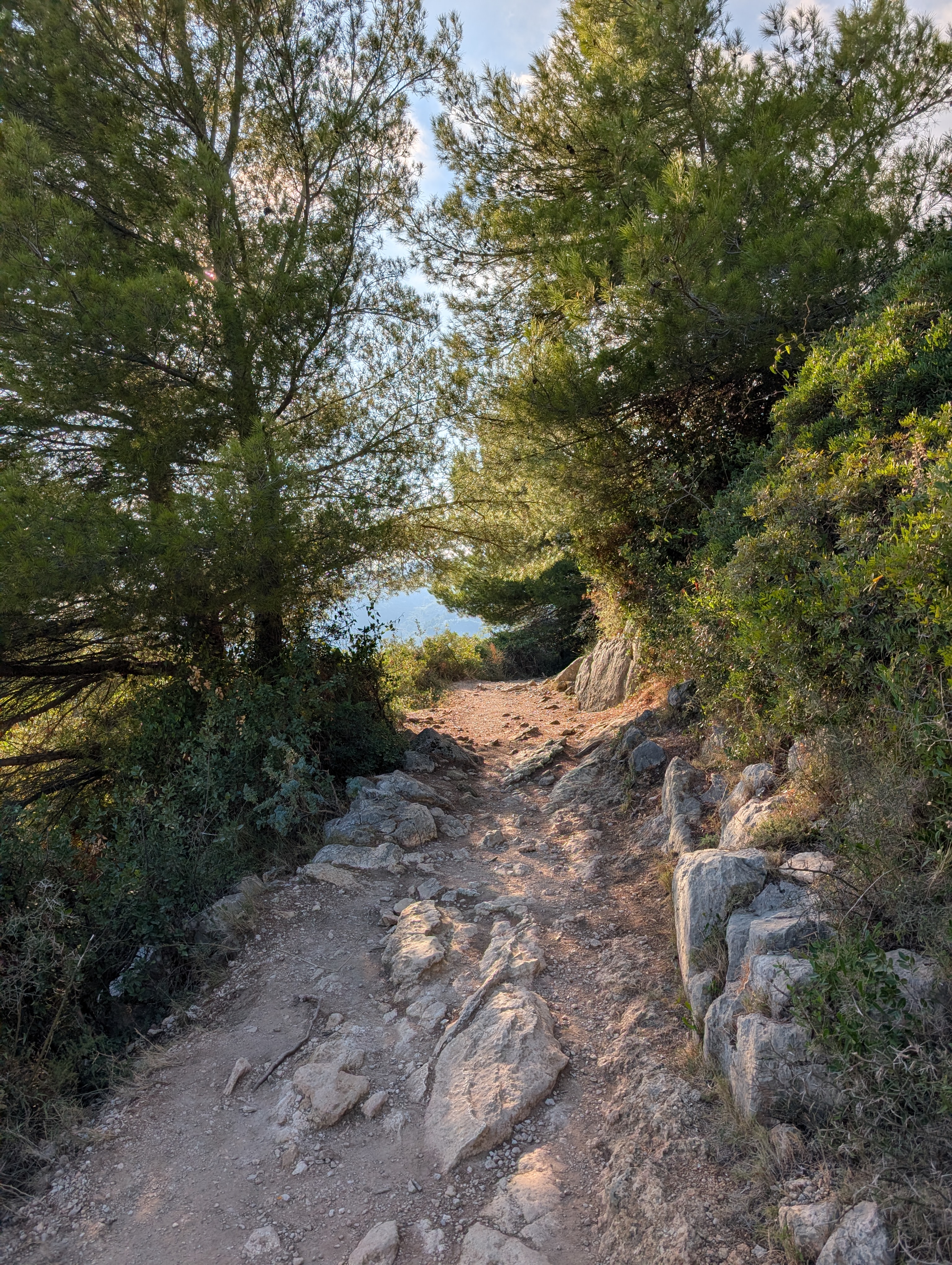
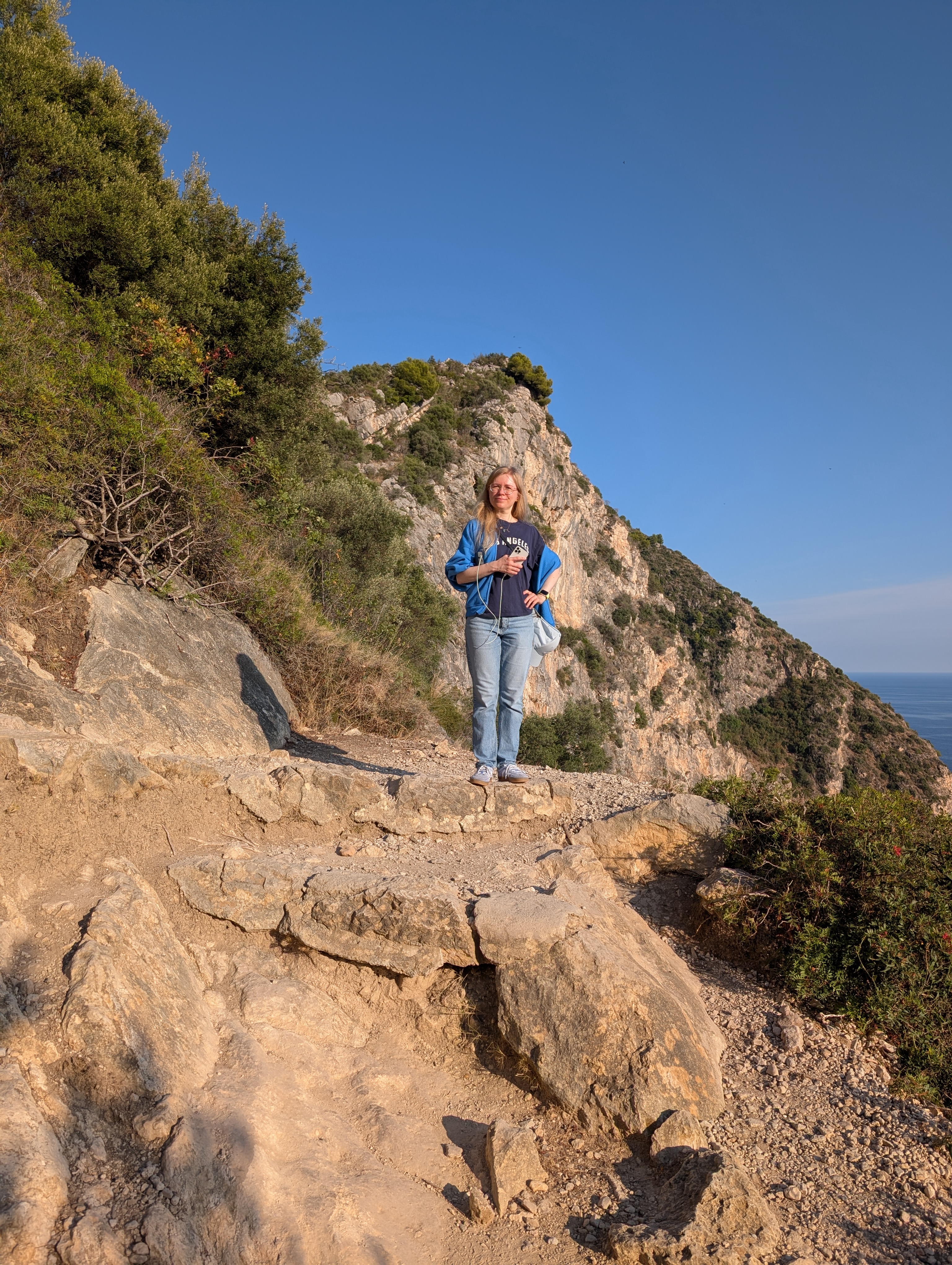
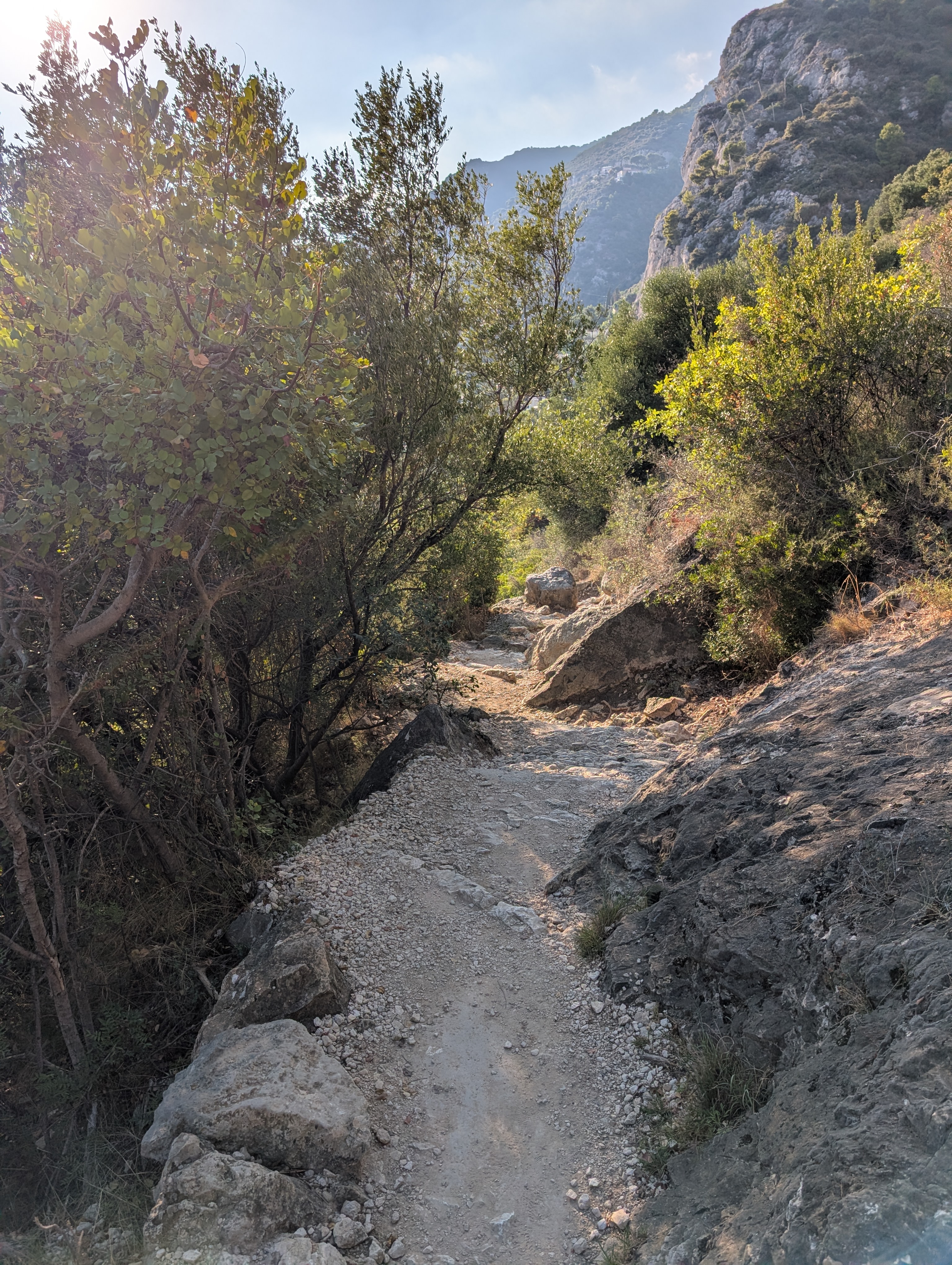
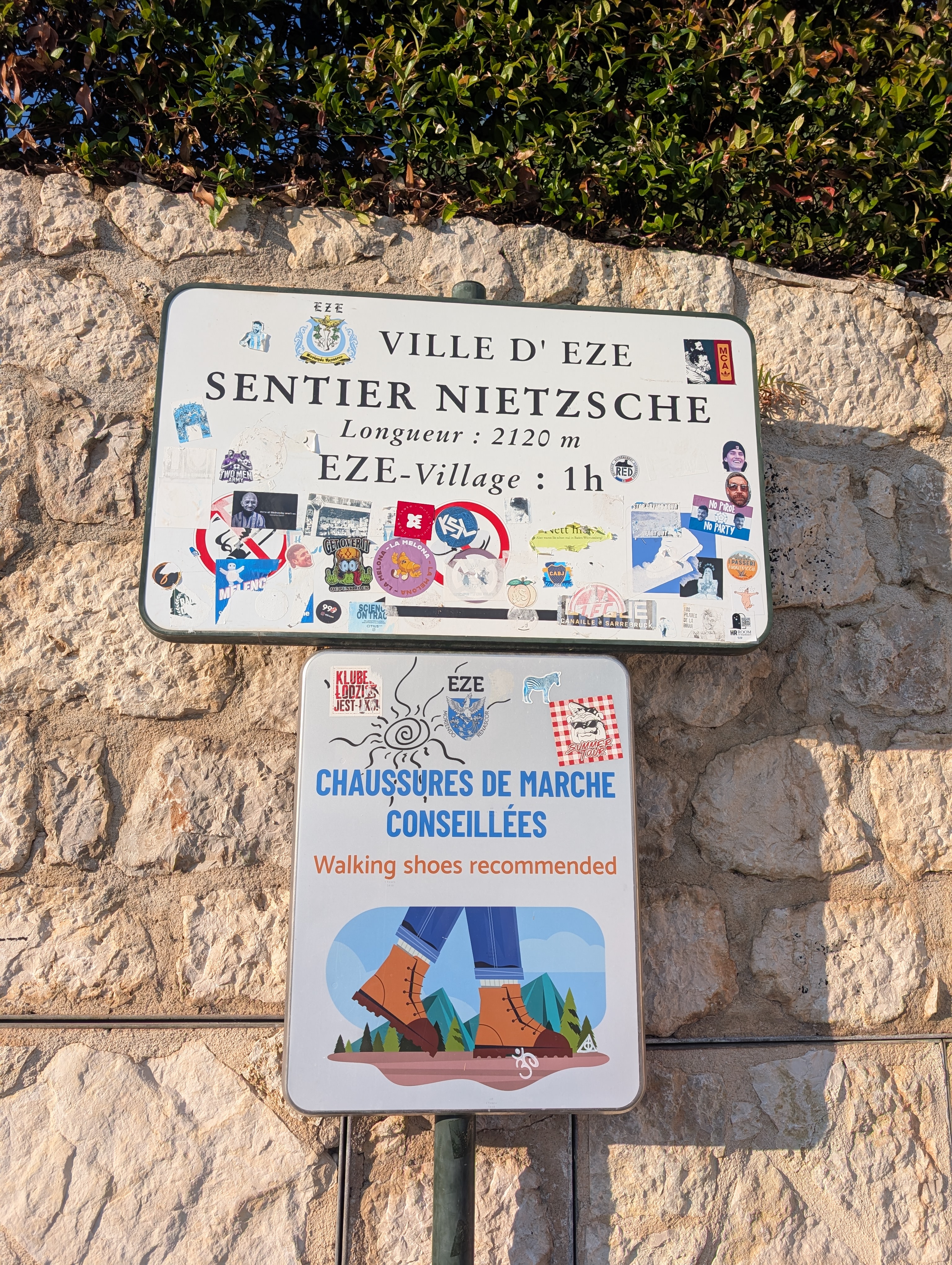
Then, down. The path that goes by the name of the man who walked it in the 1880s, stayed in the hotel at the top of the village and reportedly produced philosophy instead of just enjoying himself. There is a warrior in bronze posted at the way down, sword and shield, as if descent were a matter of honour; the official sign recommends footwear in two languages and promises an hour. The trail delivers exactly what it shows on the tin: stone cut into steps, boulders, cobbles gone their own way, and a gorge that closes in whenever the camera gets interested. The sea makes its first appearance about halfway, and after that it is all one longer downhill to the kind of bay that makes a philosopher glad he stayed.
The path, at its opinionated best 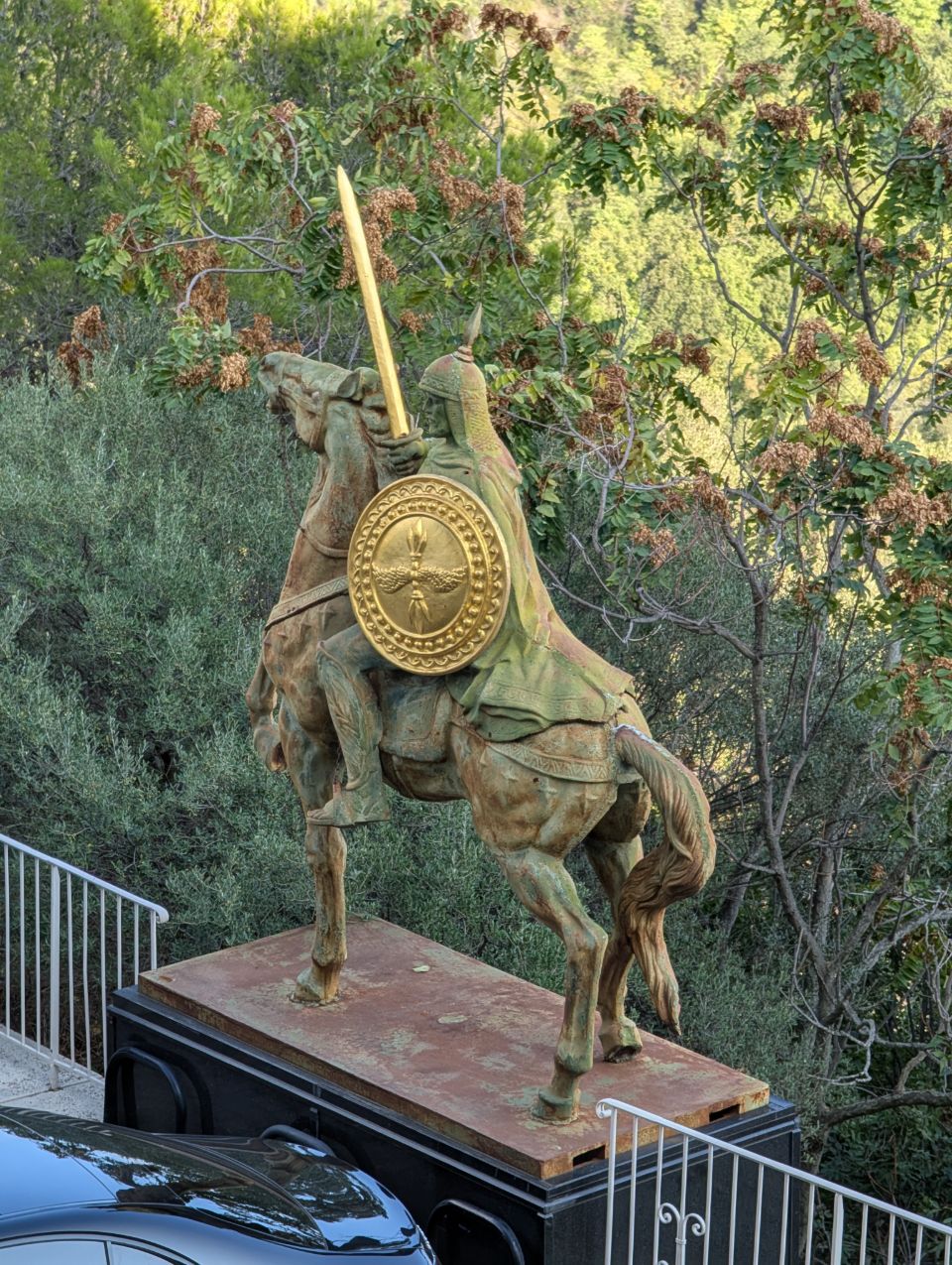
A warrior, posted at the way down 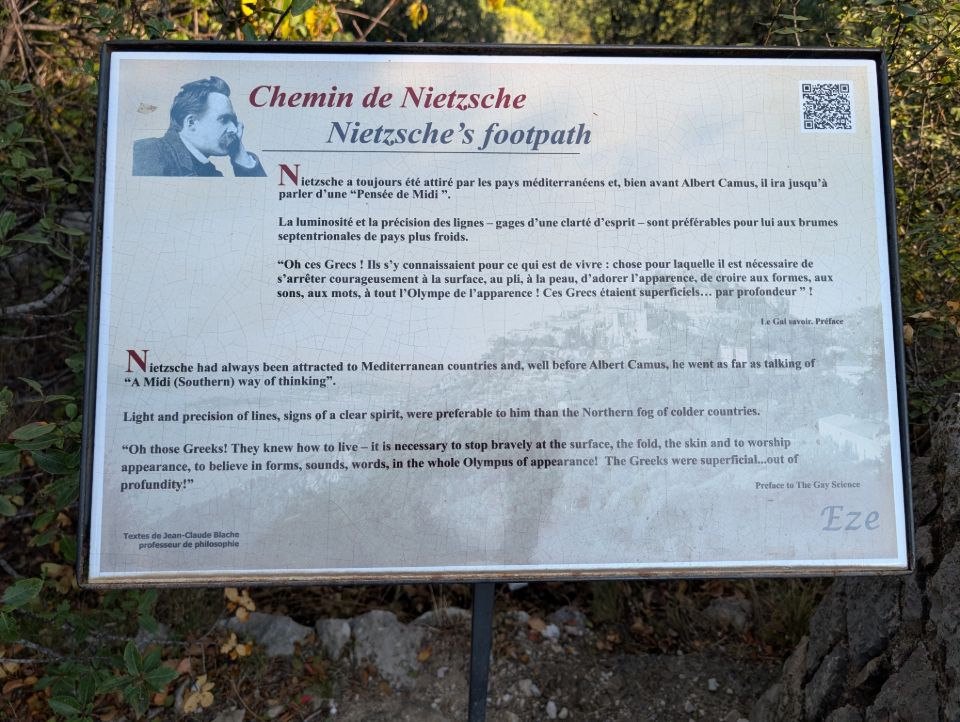
The path introduces itself 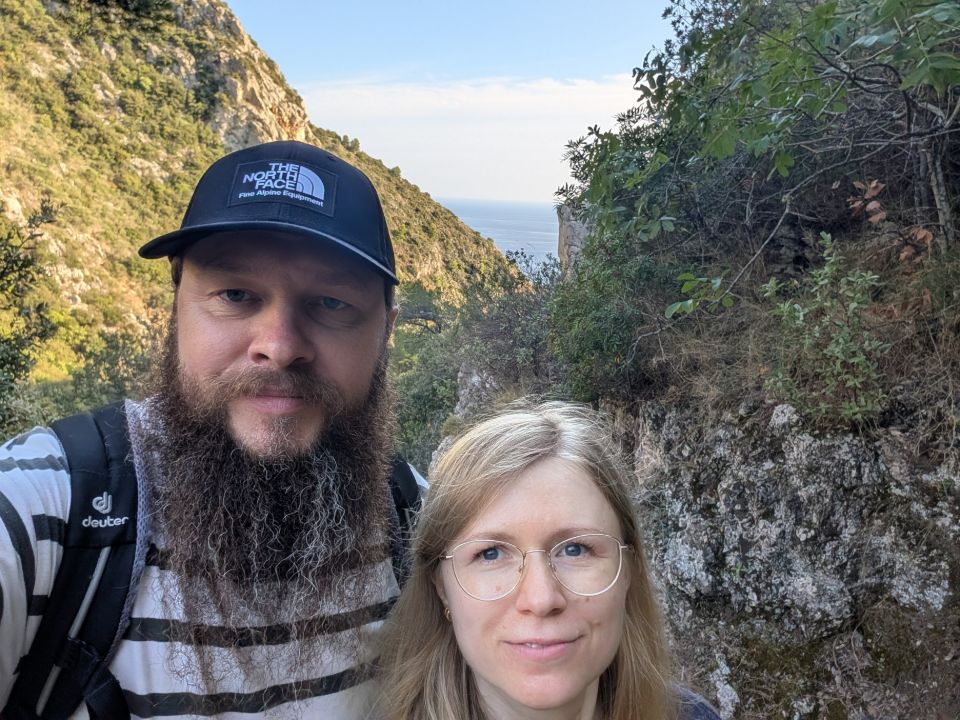
The trail, negotiating stones 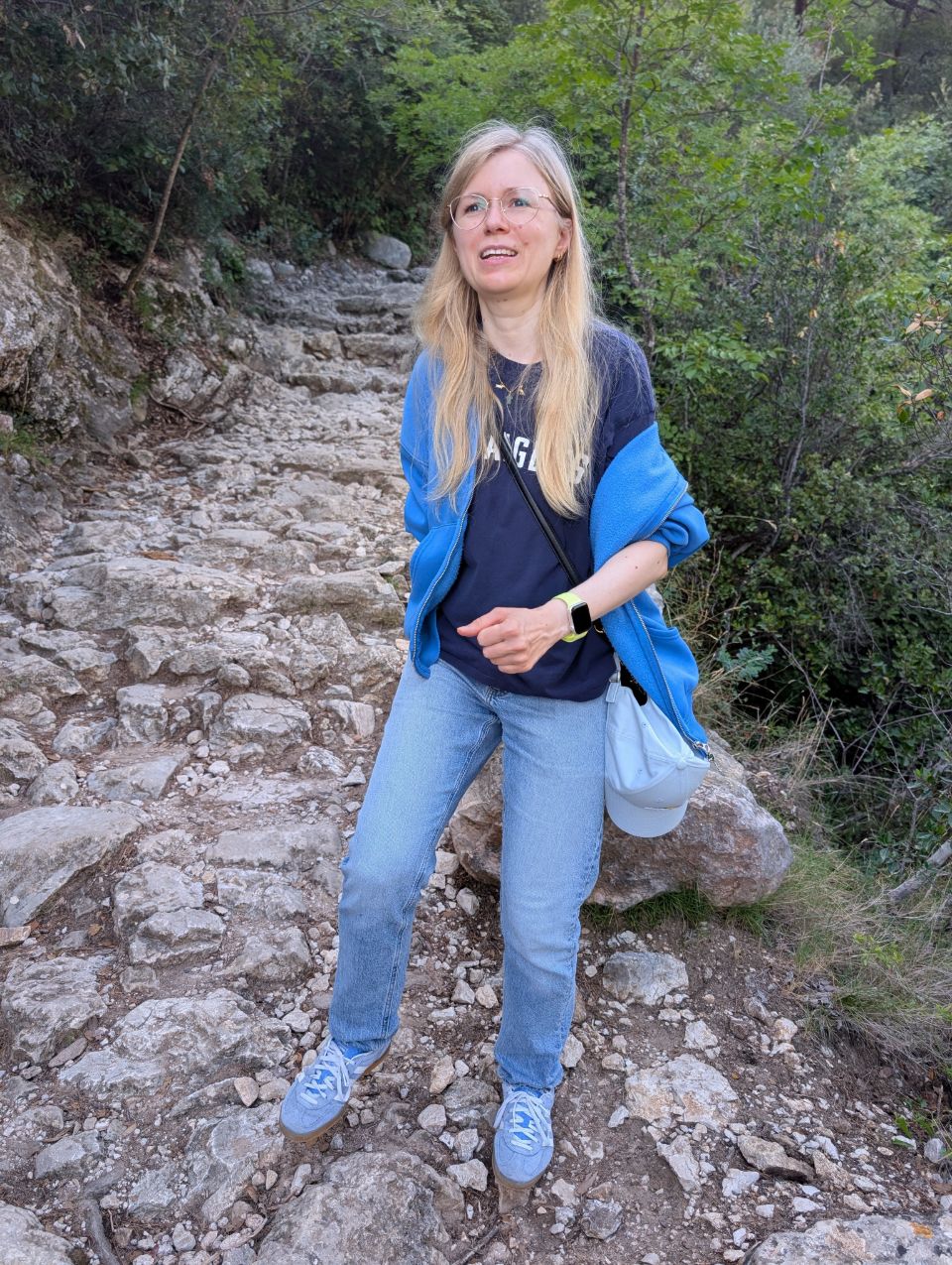
Anna, doing the negotiating 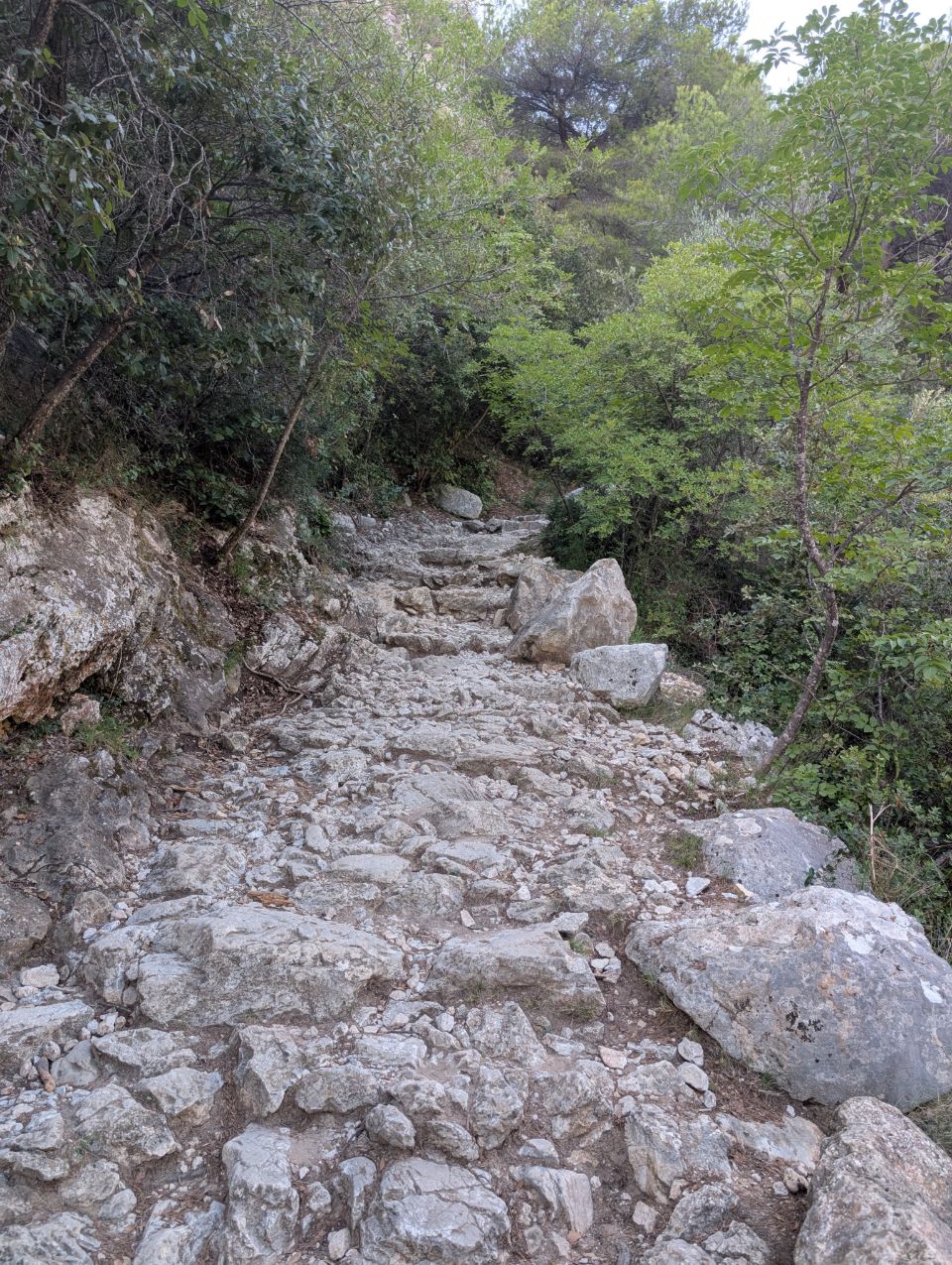
Steps, cut into the mountain 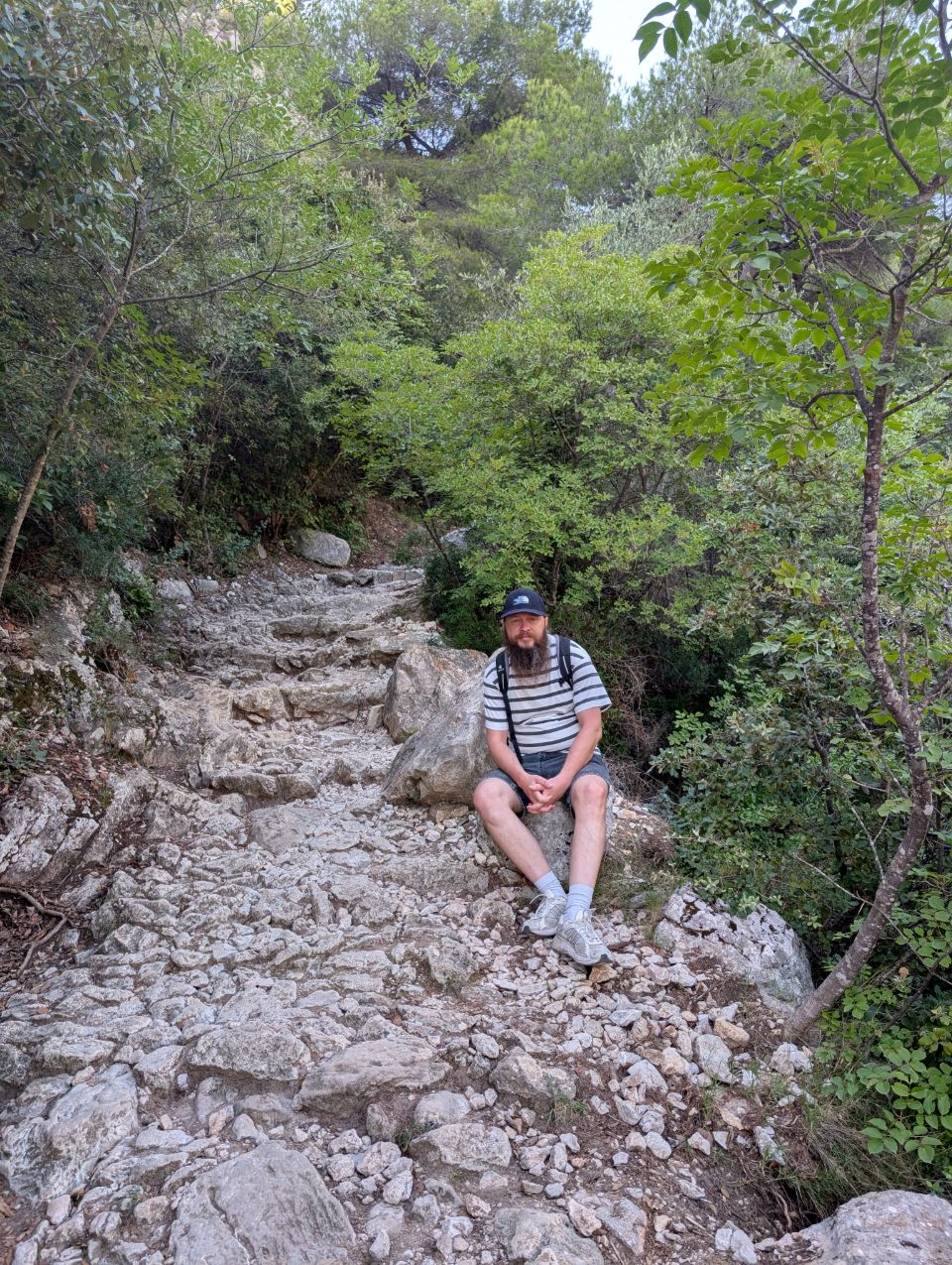
The gorge closes in, photogenically
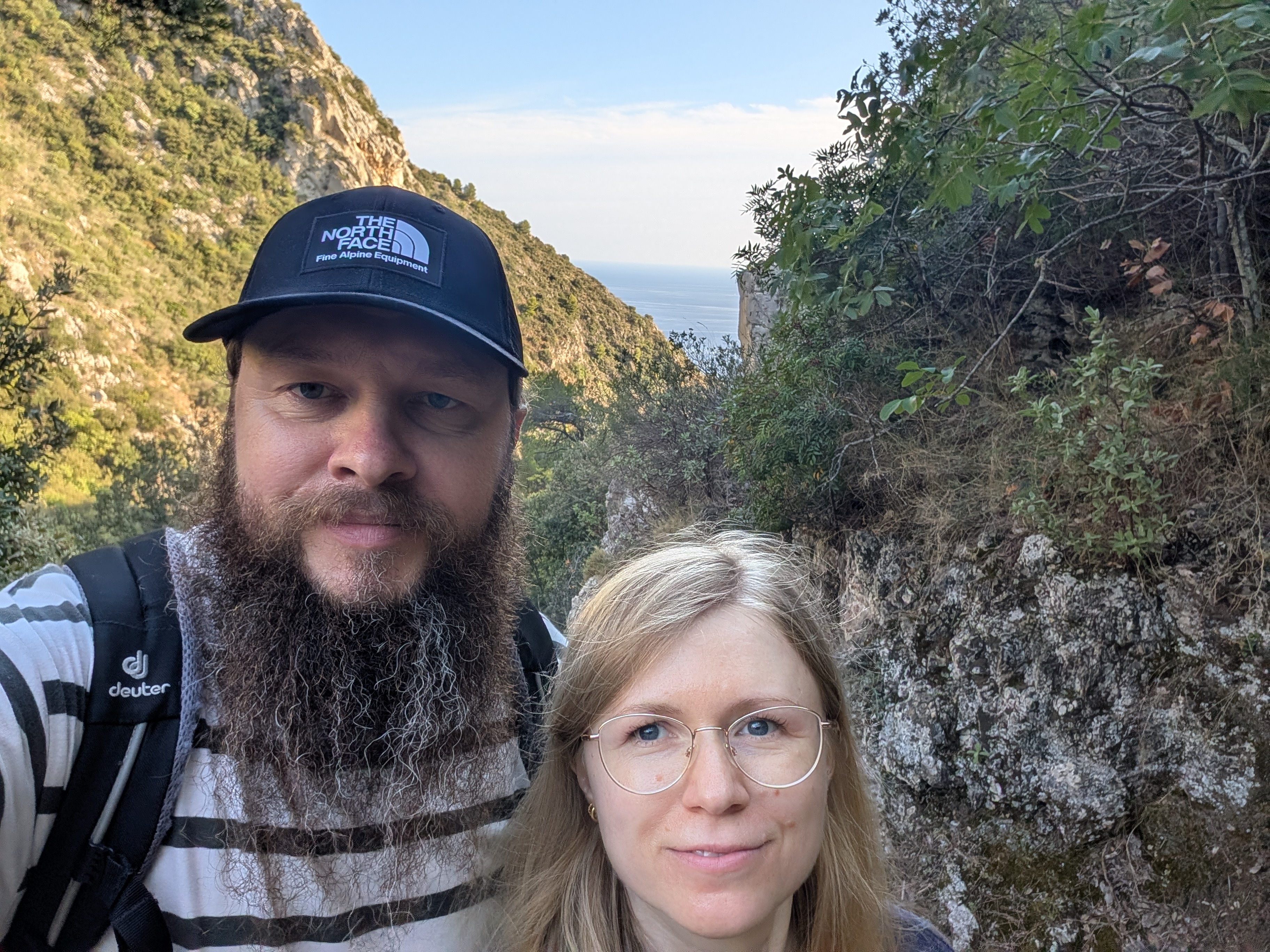
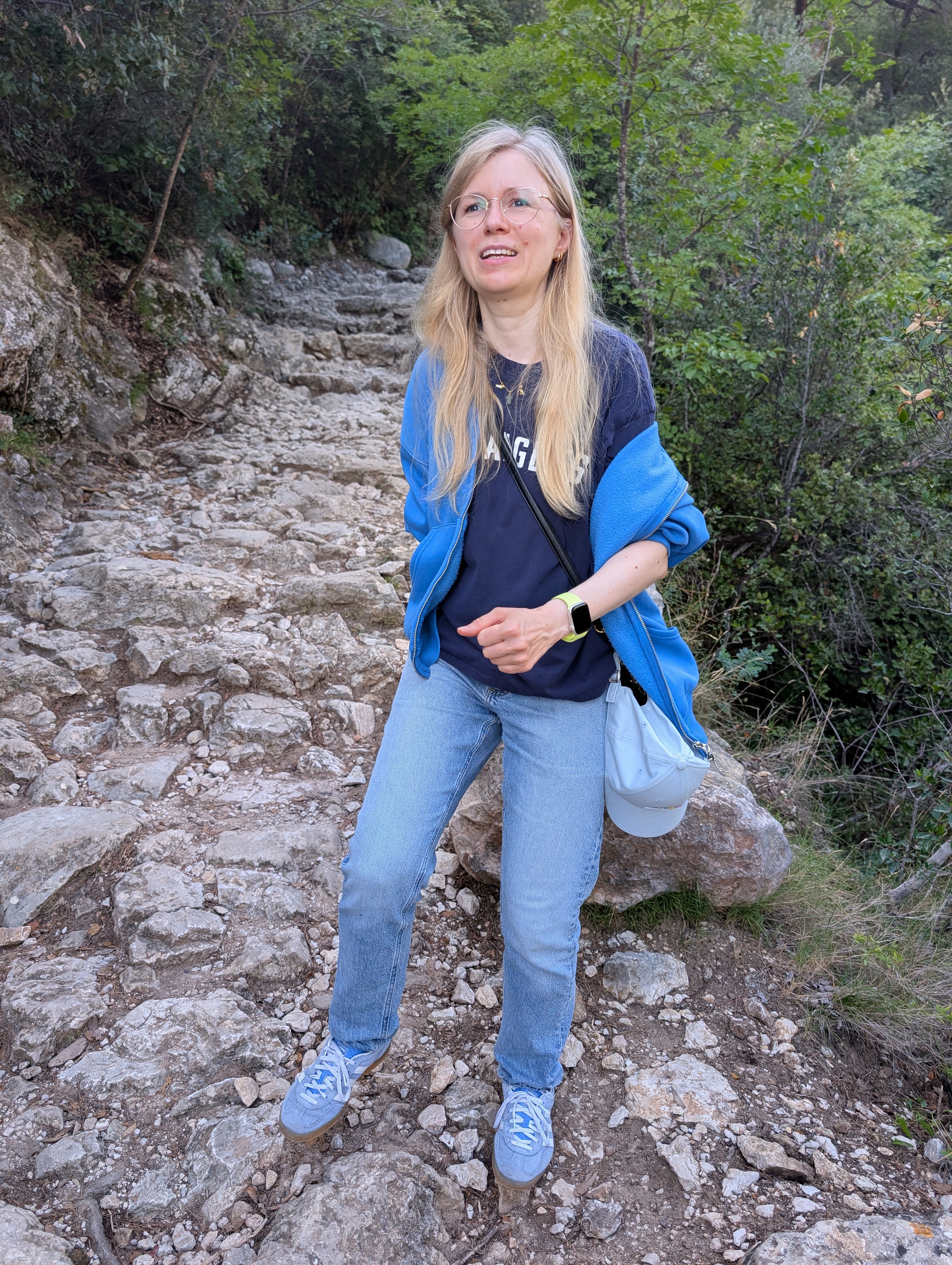
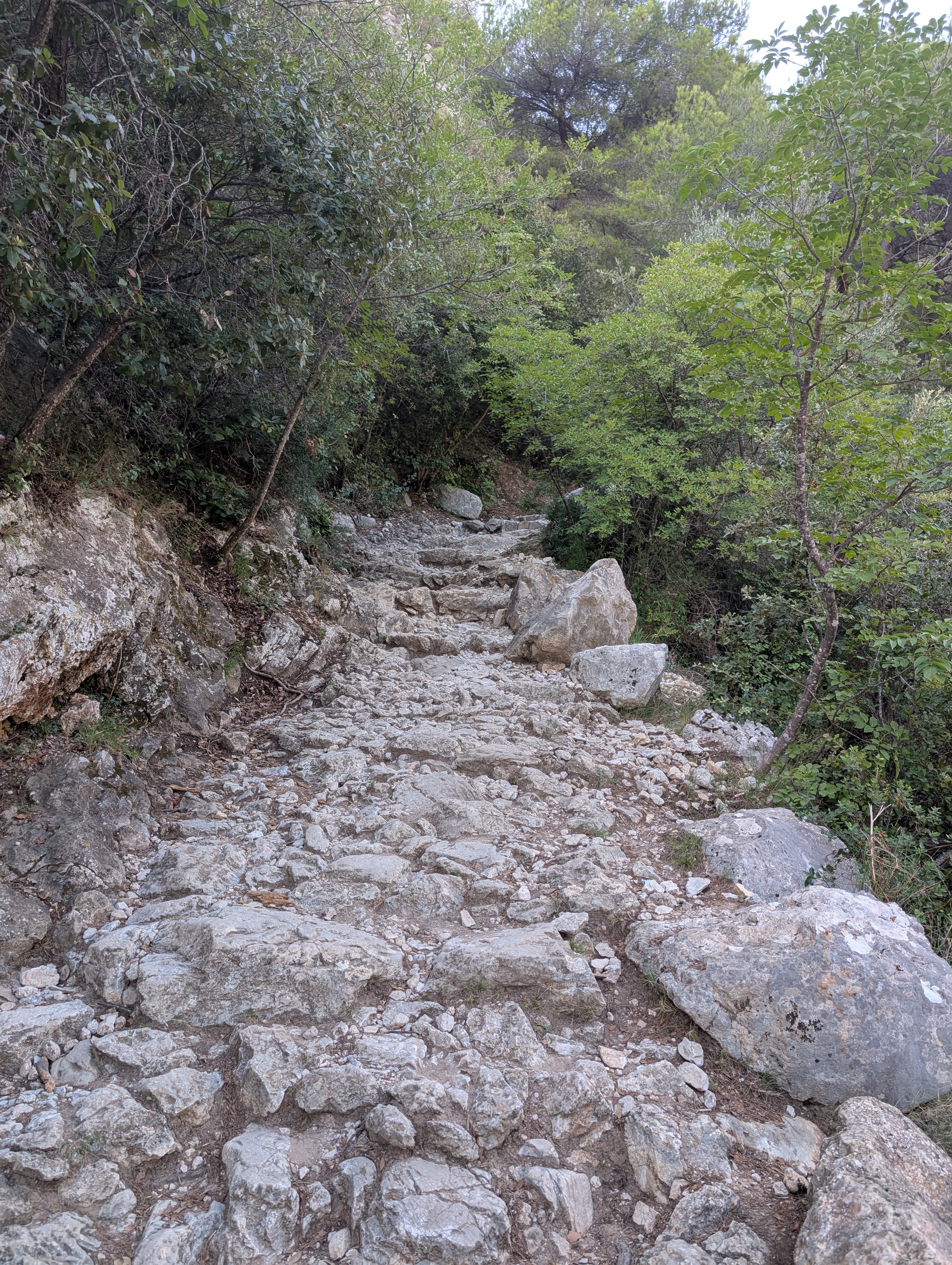
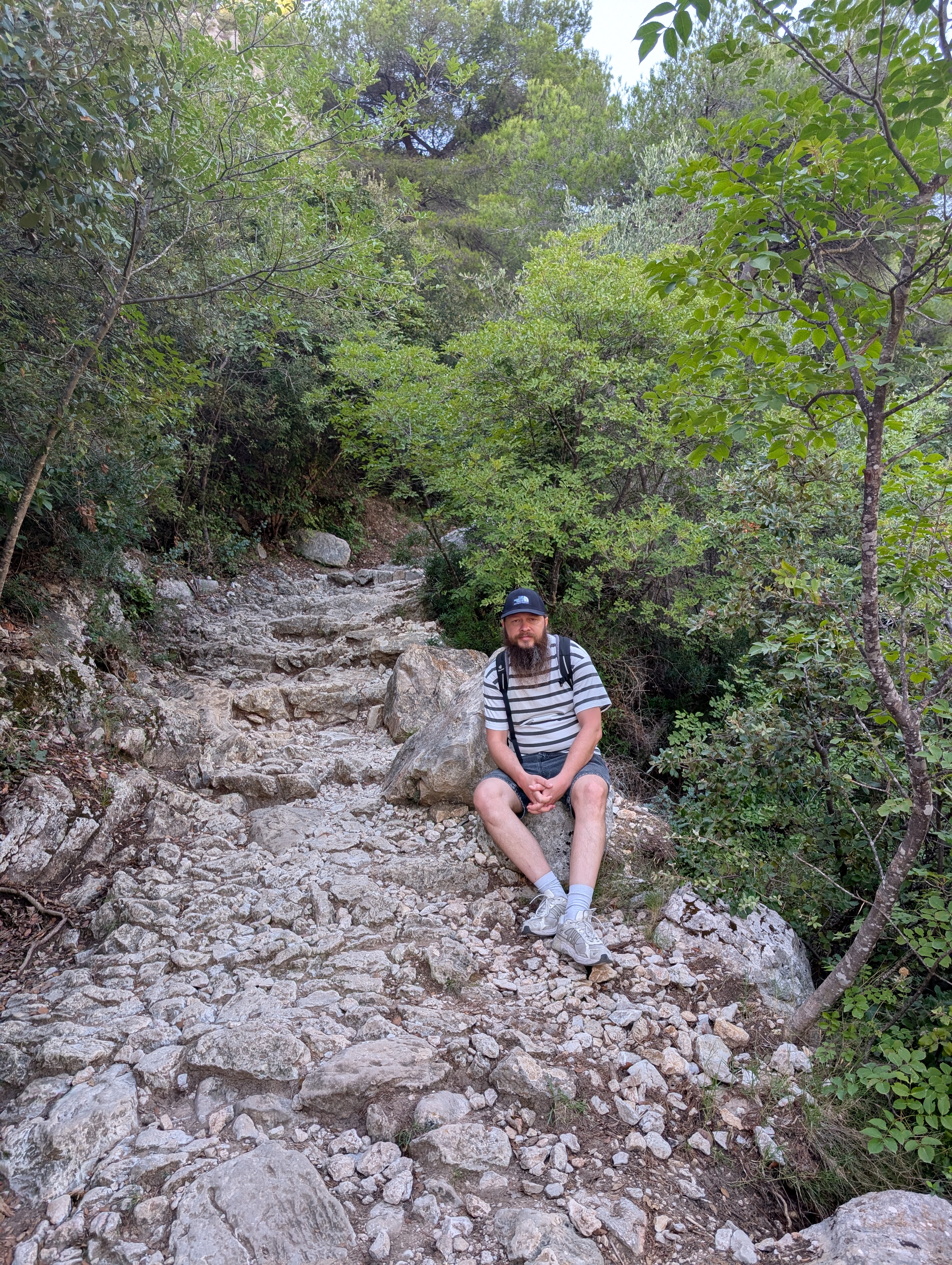
Anna vs. the trail: one minute, mostly downhill.
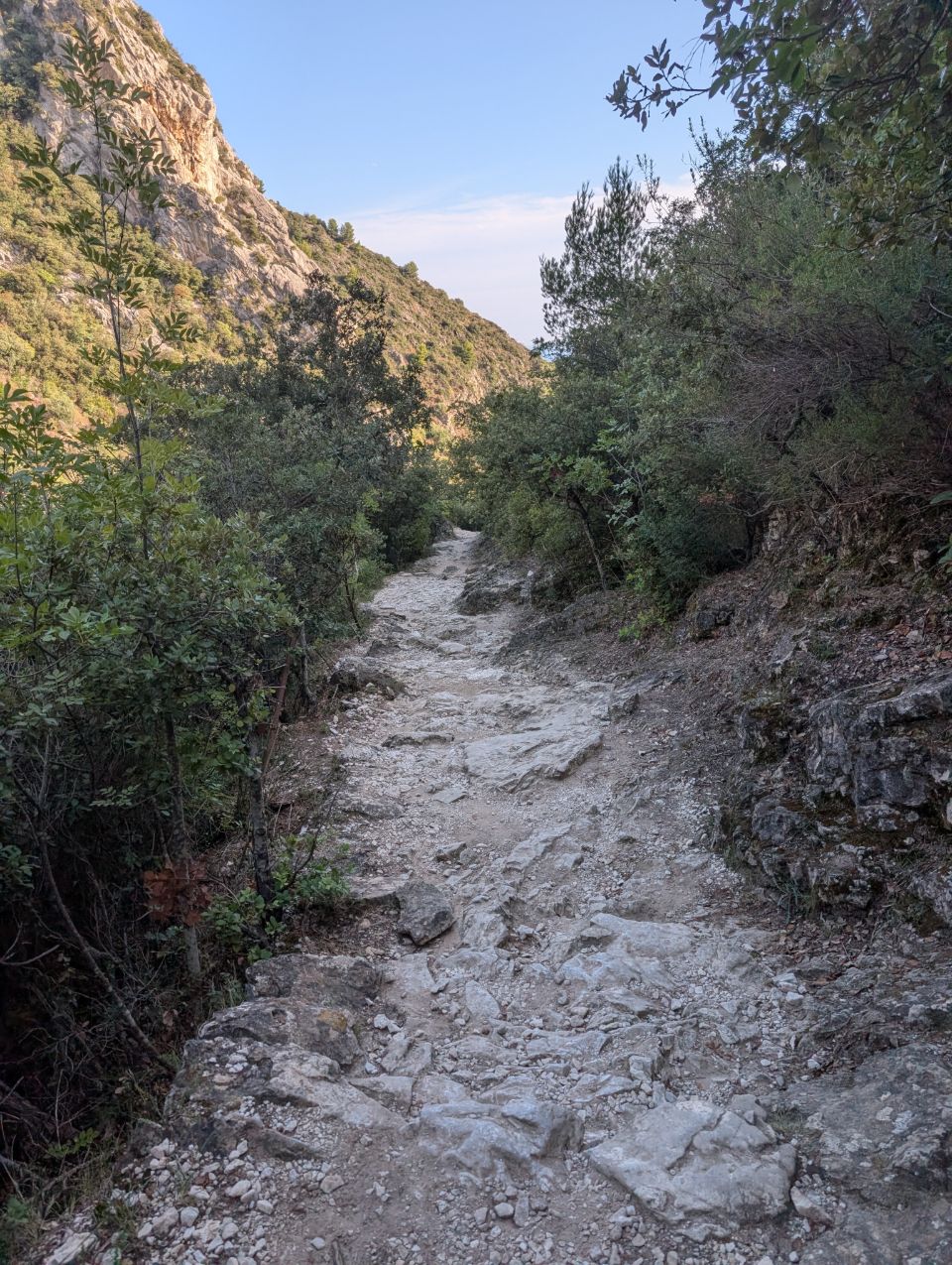
Down is a full-time job 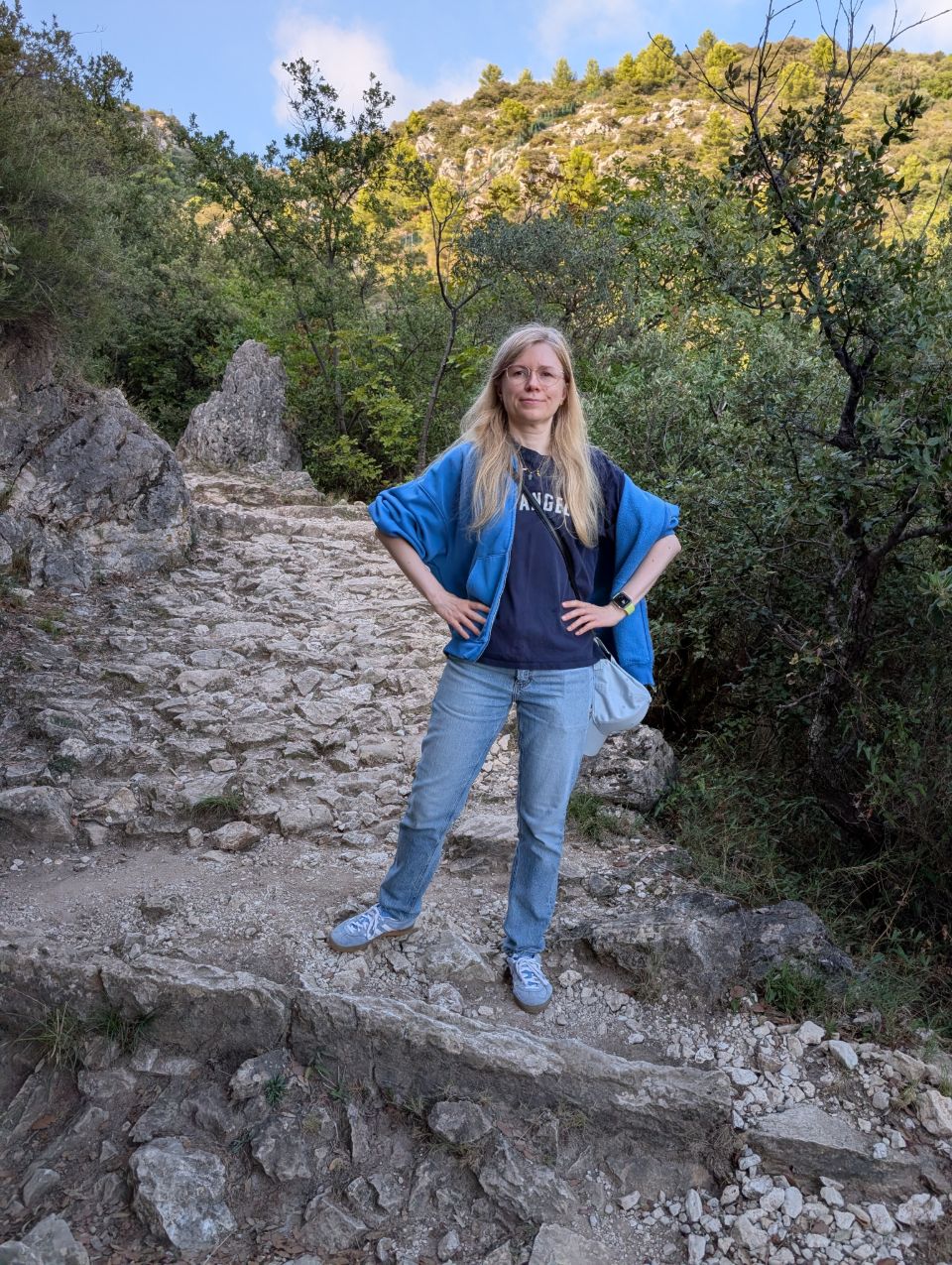
Anna, head down and going 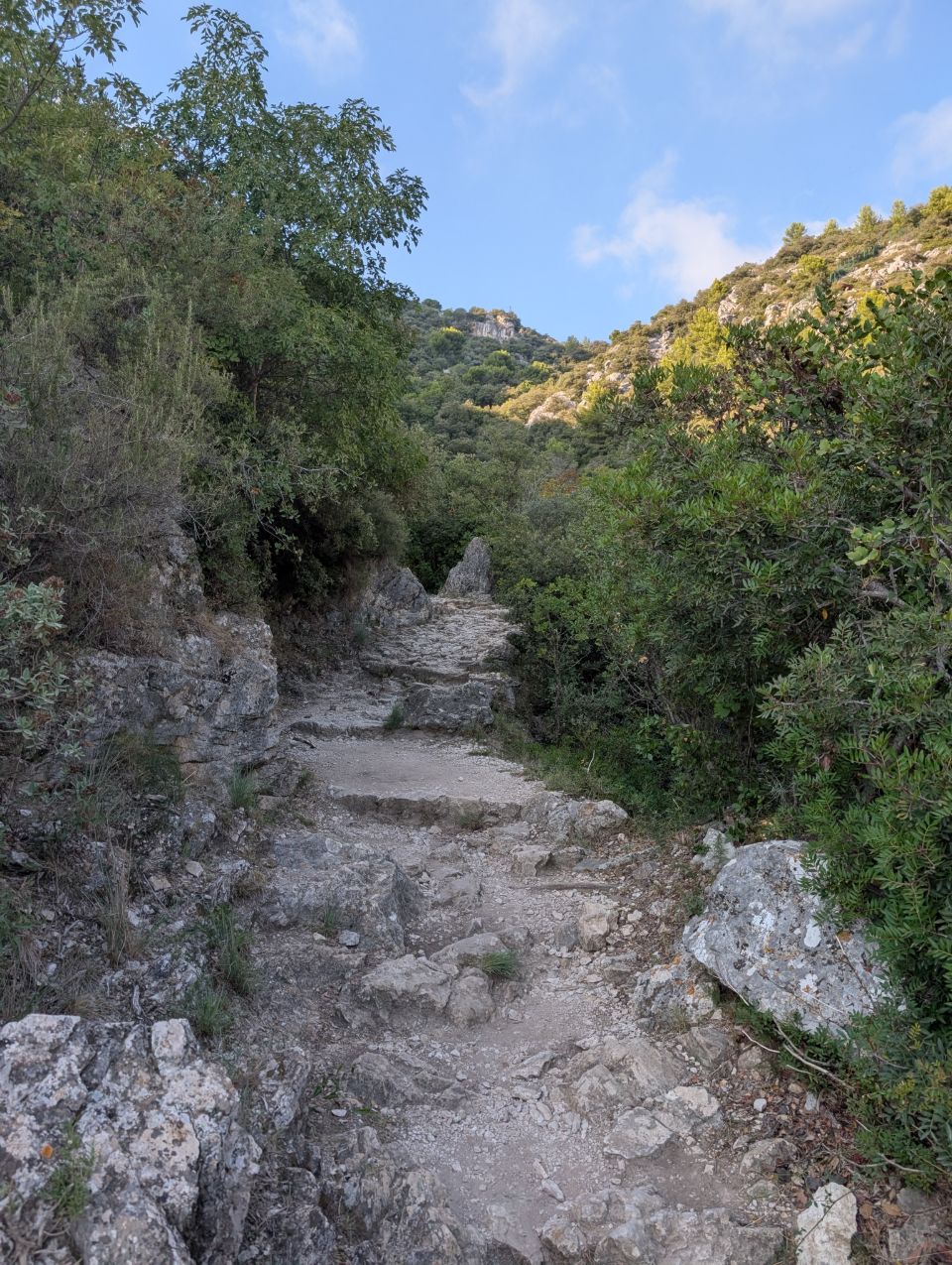
The trail's favourite angle: down 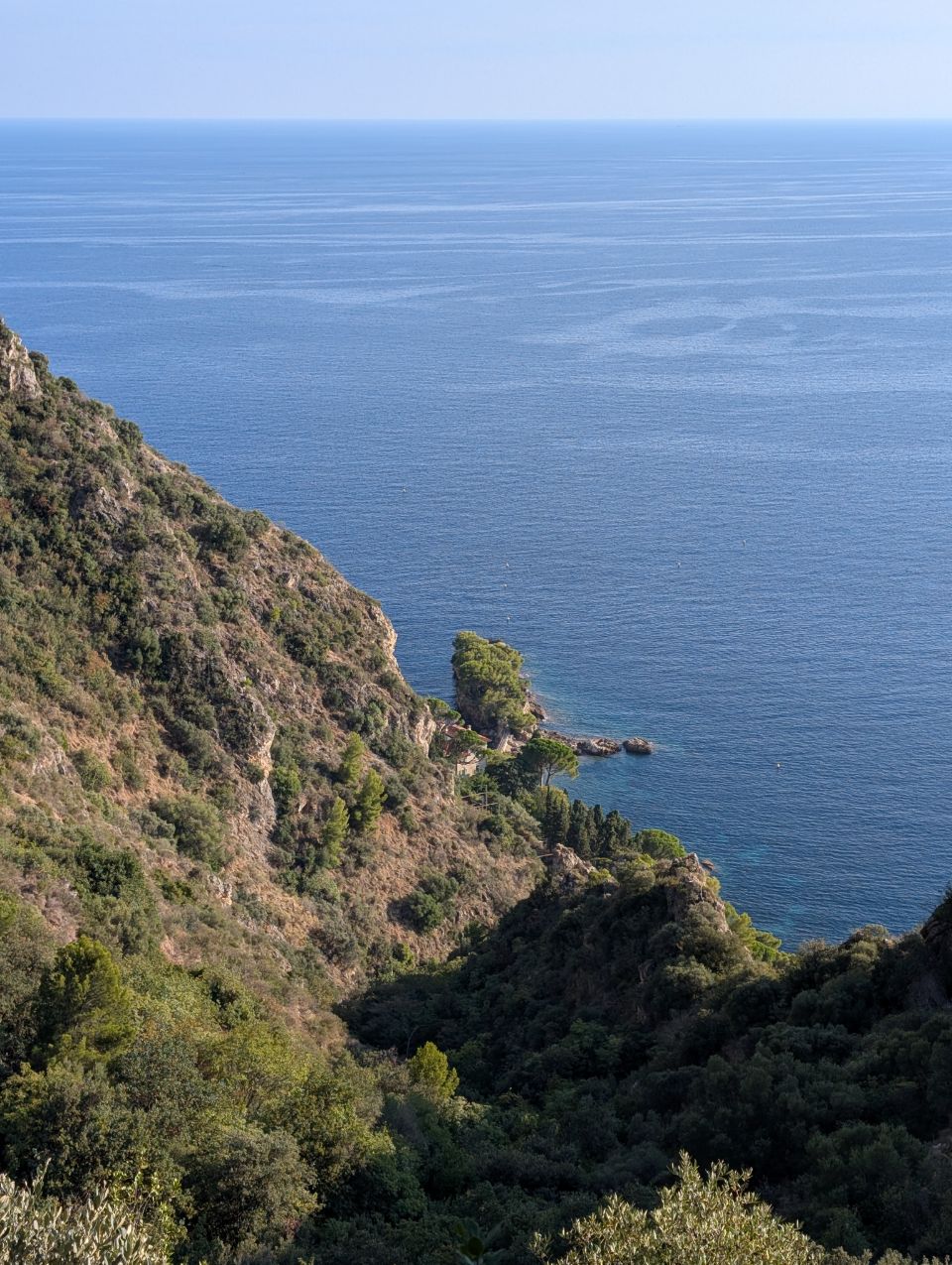
The sea makes its first appearance 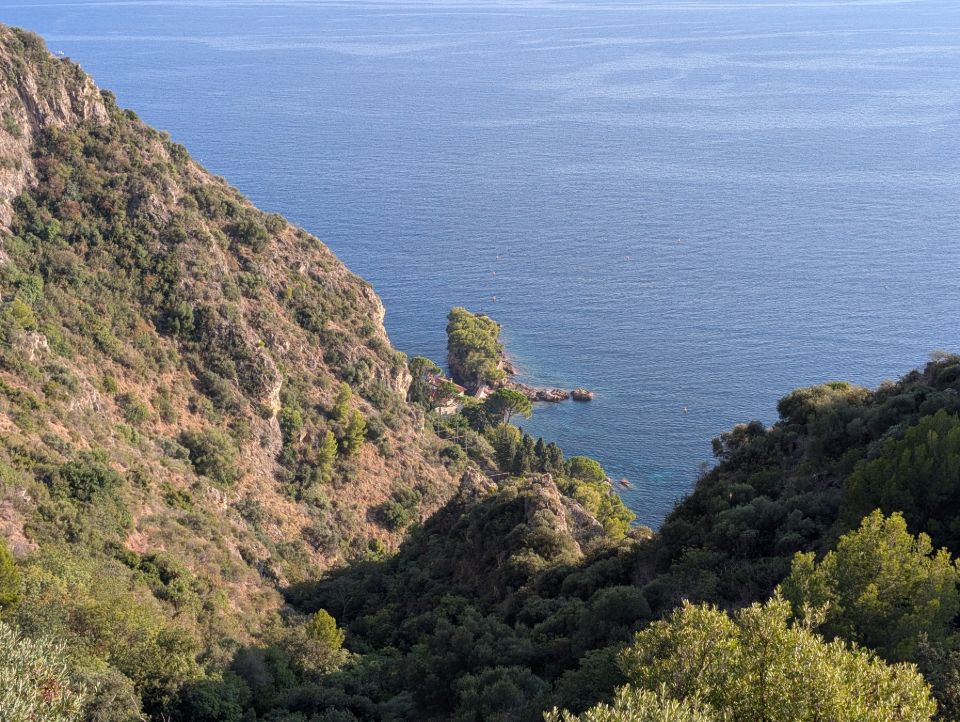
The bay stops being theoretical 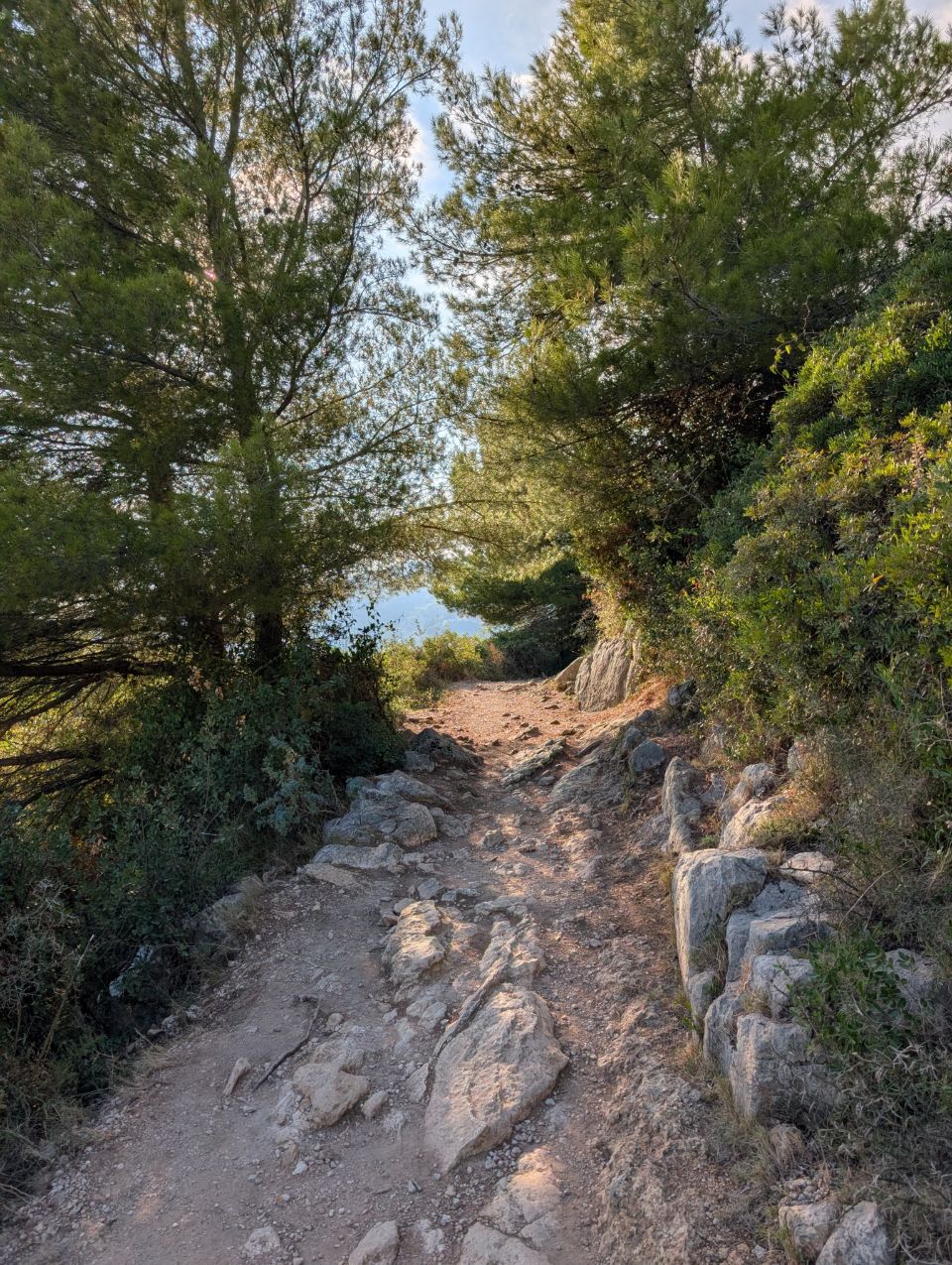
The cobbles, going their own way 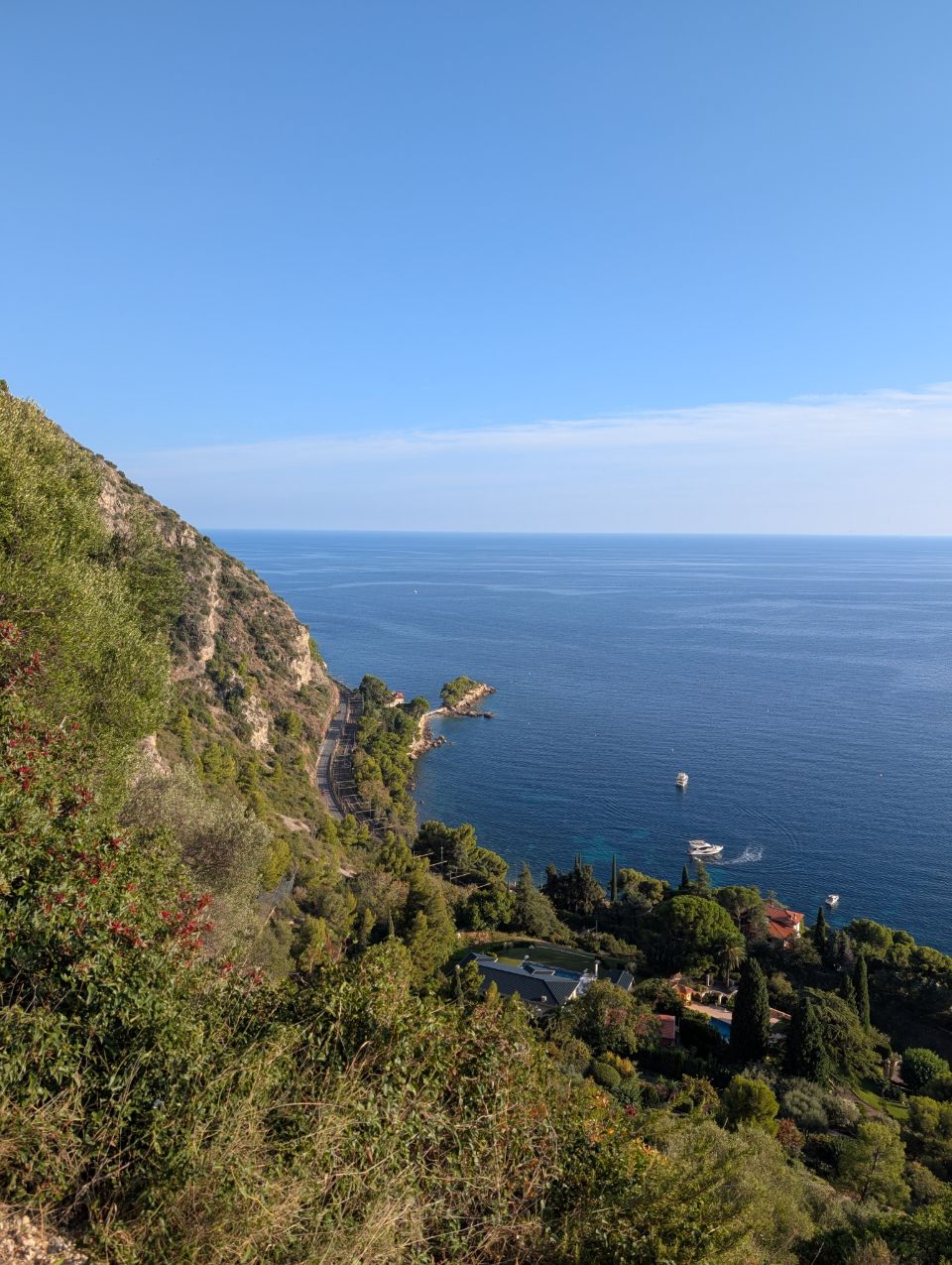
The bottom, starting to show 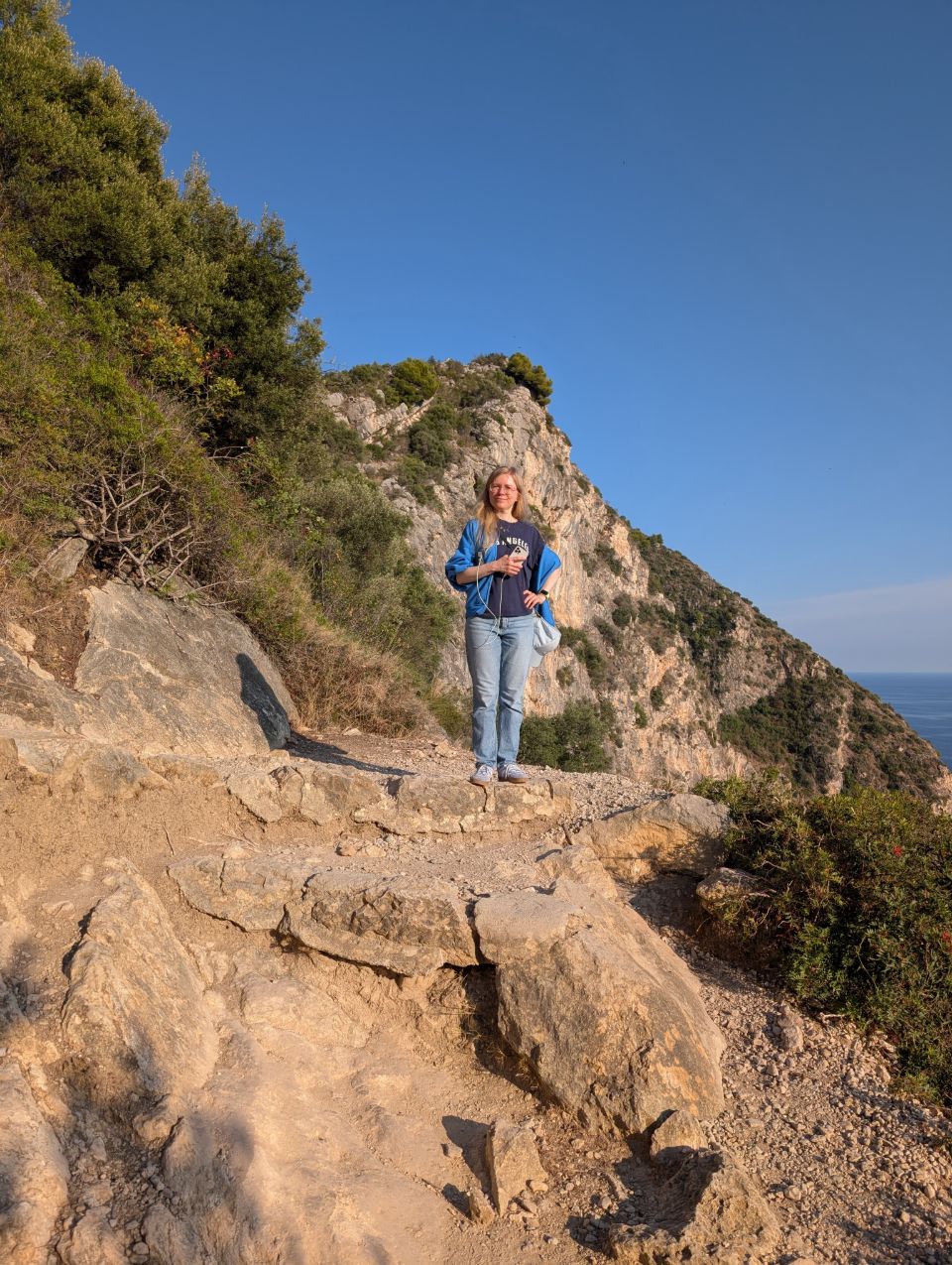
A wooden detour, downhill edition 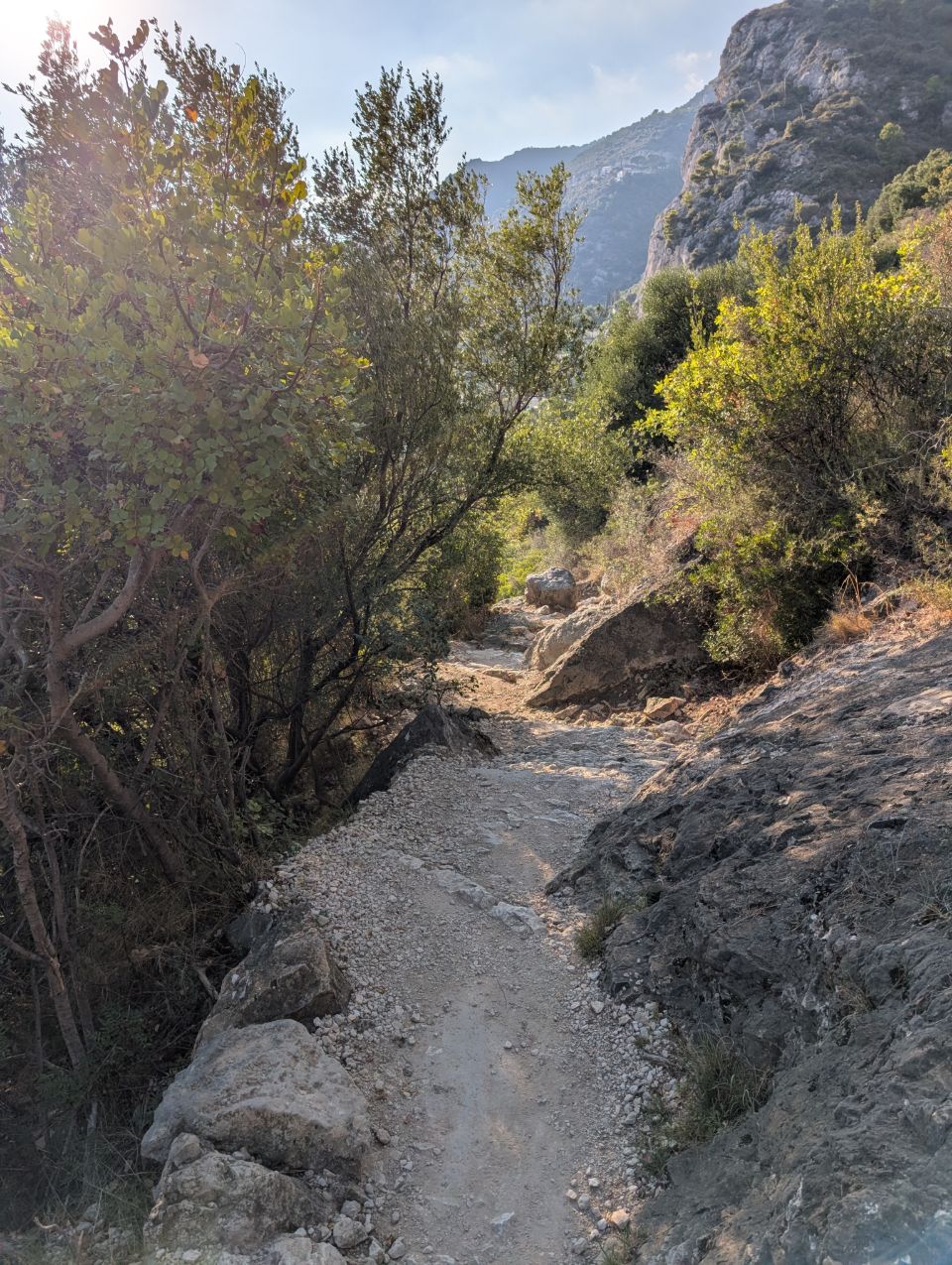
One more bend, and the path ends
The sea level
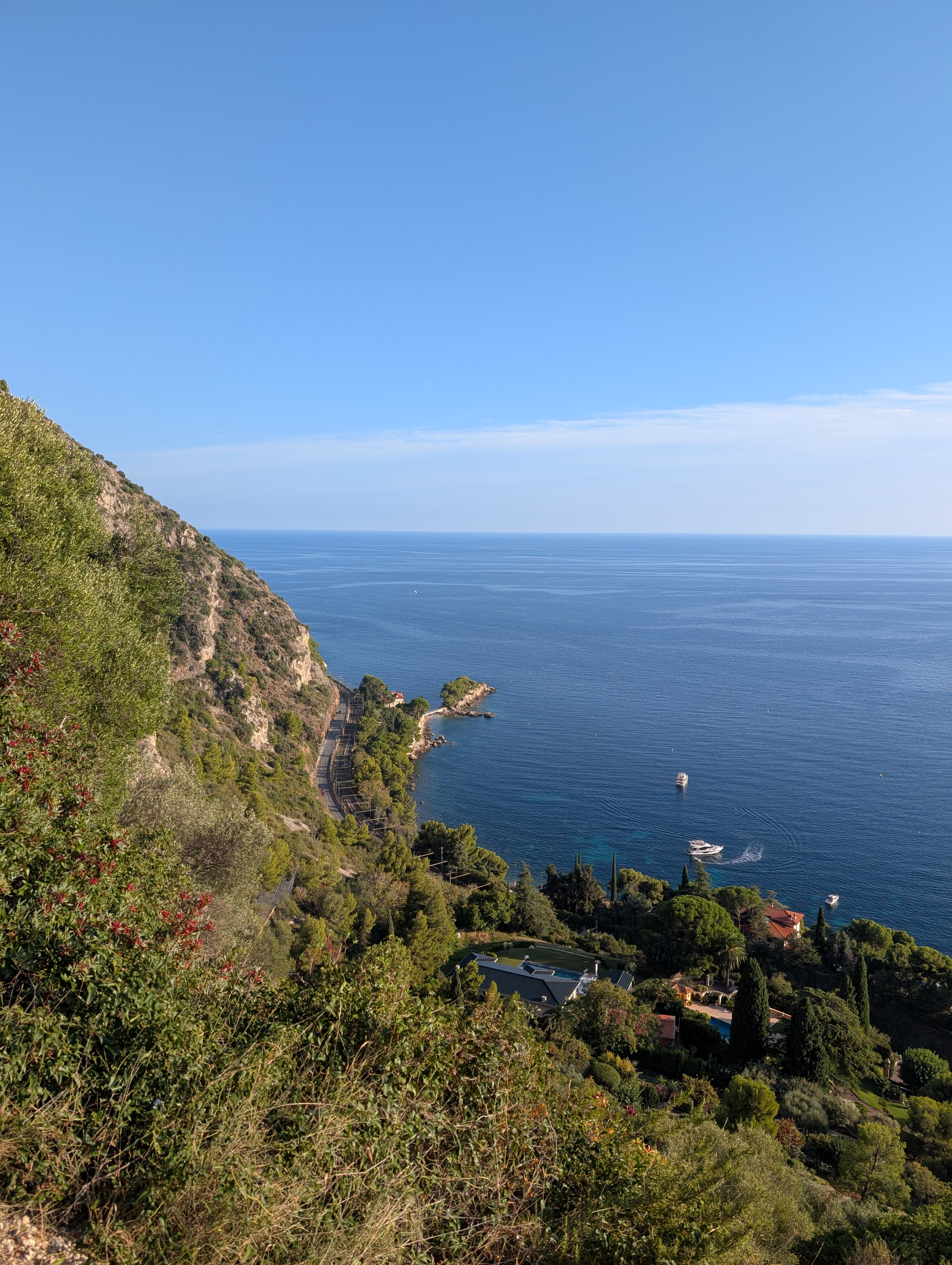
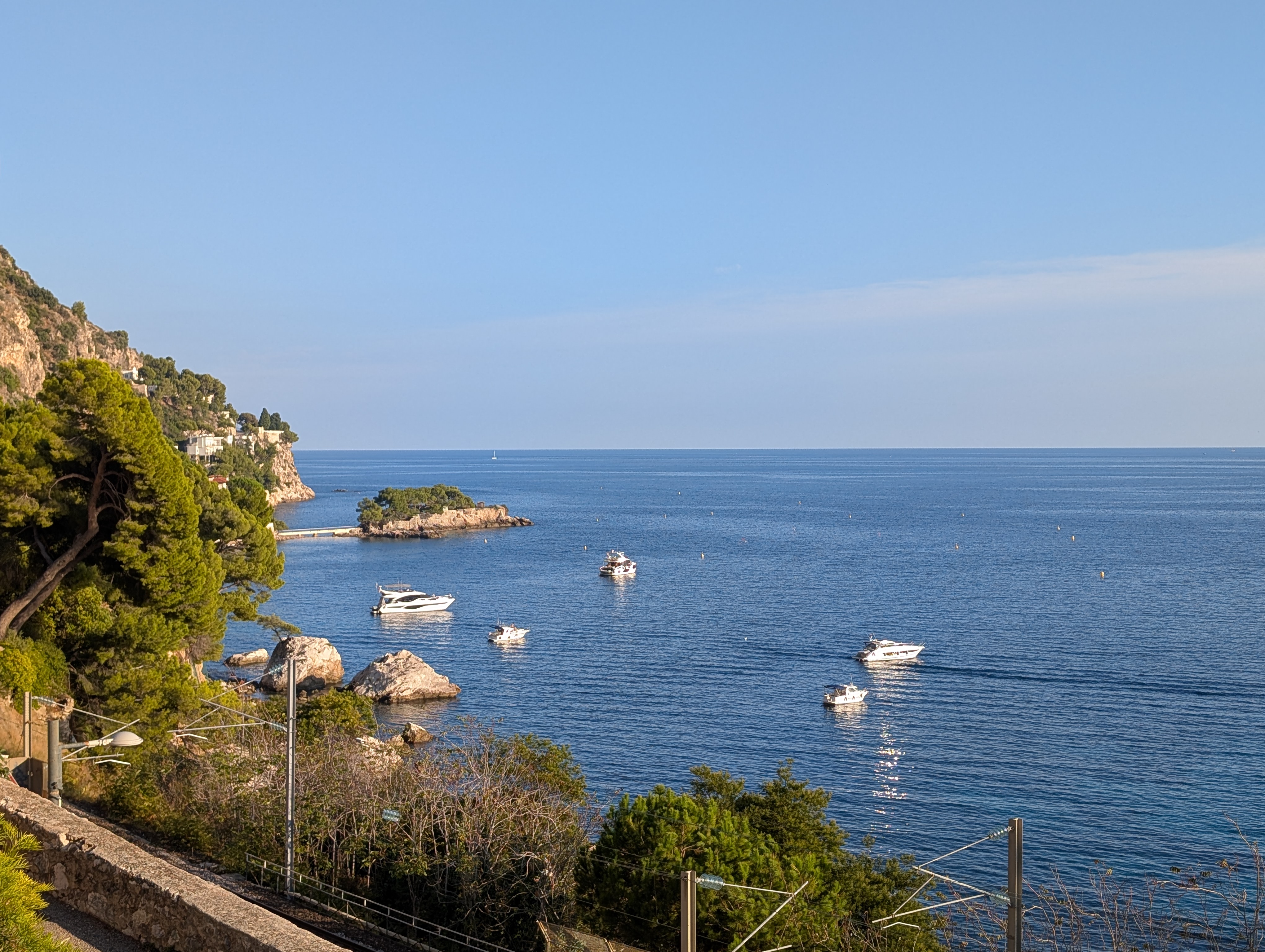
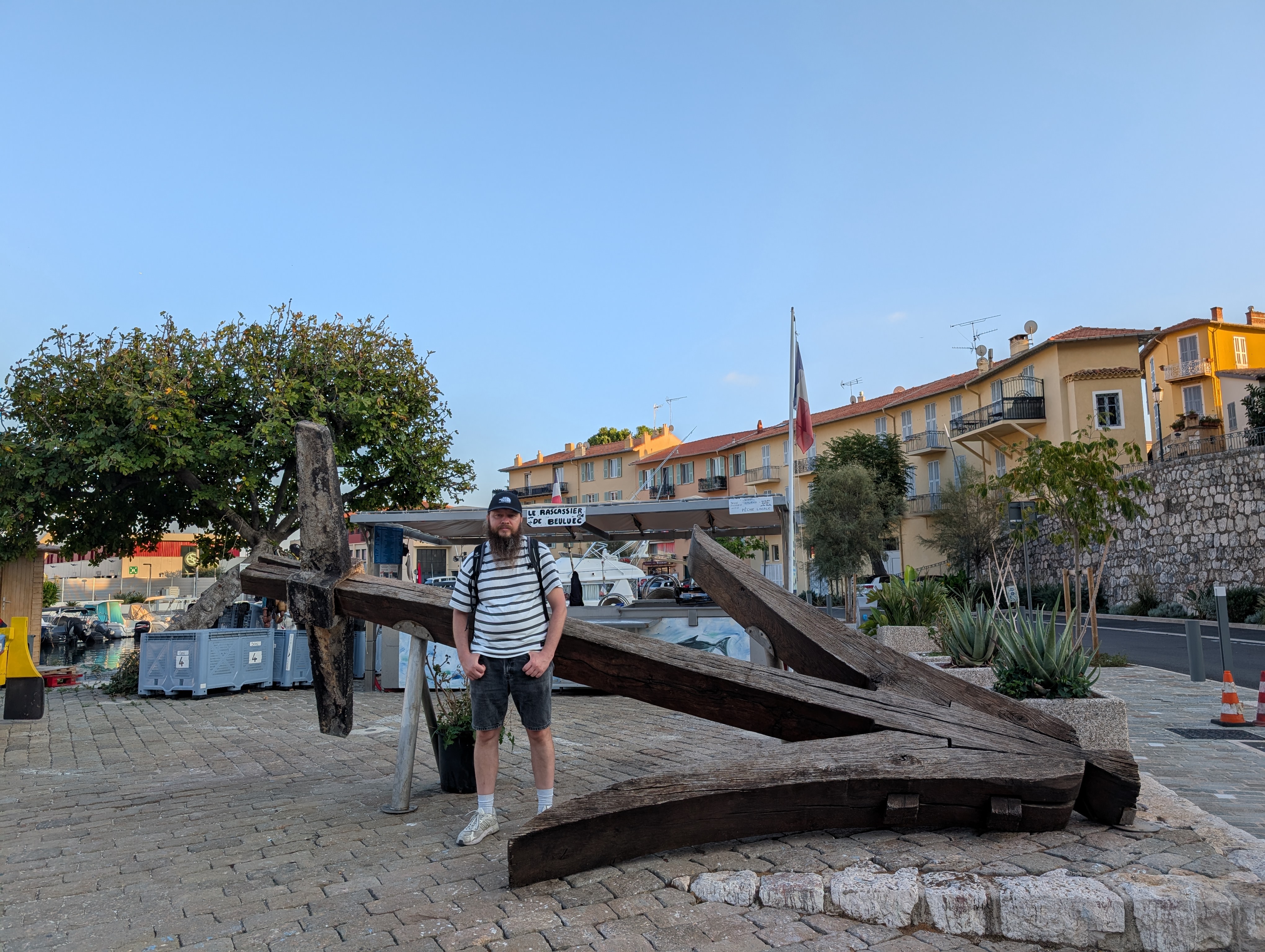
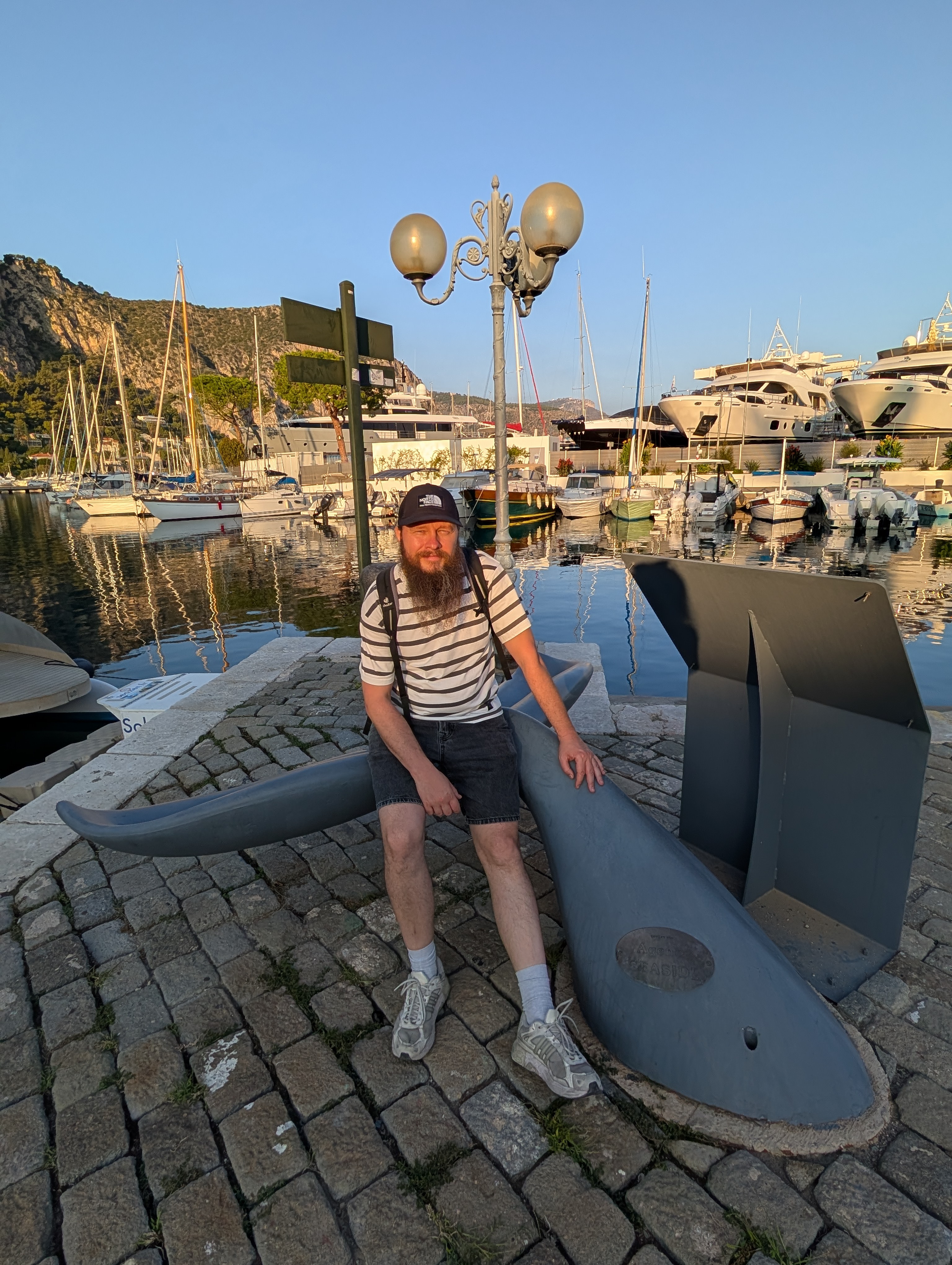
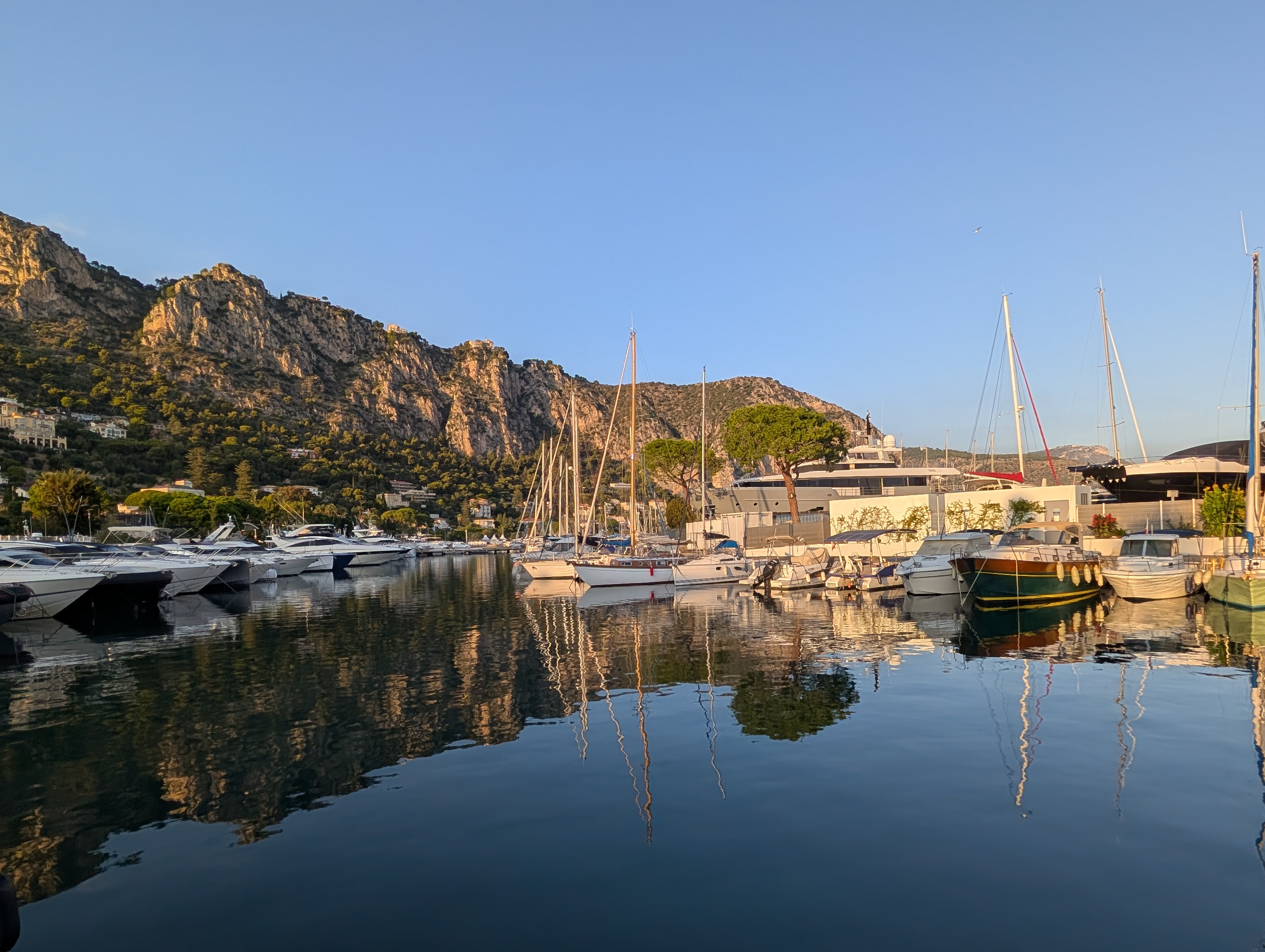
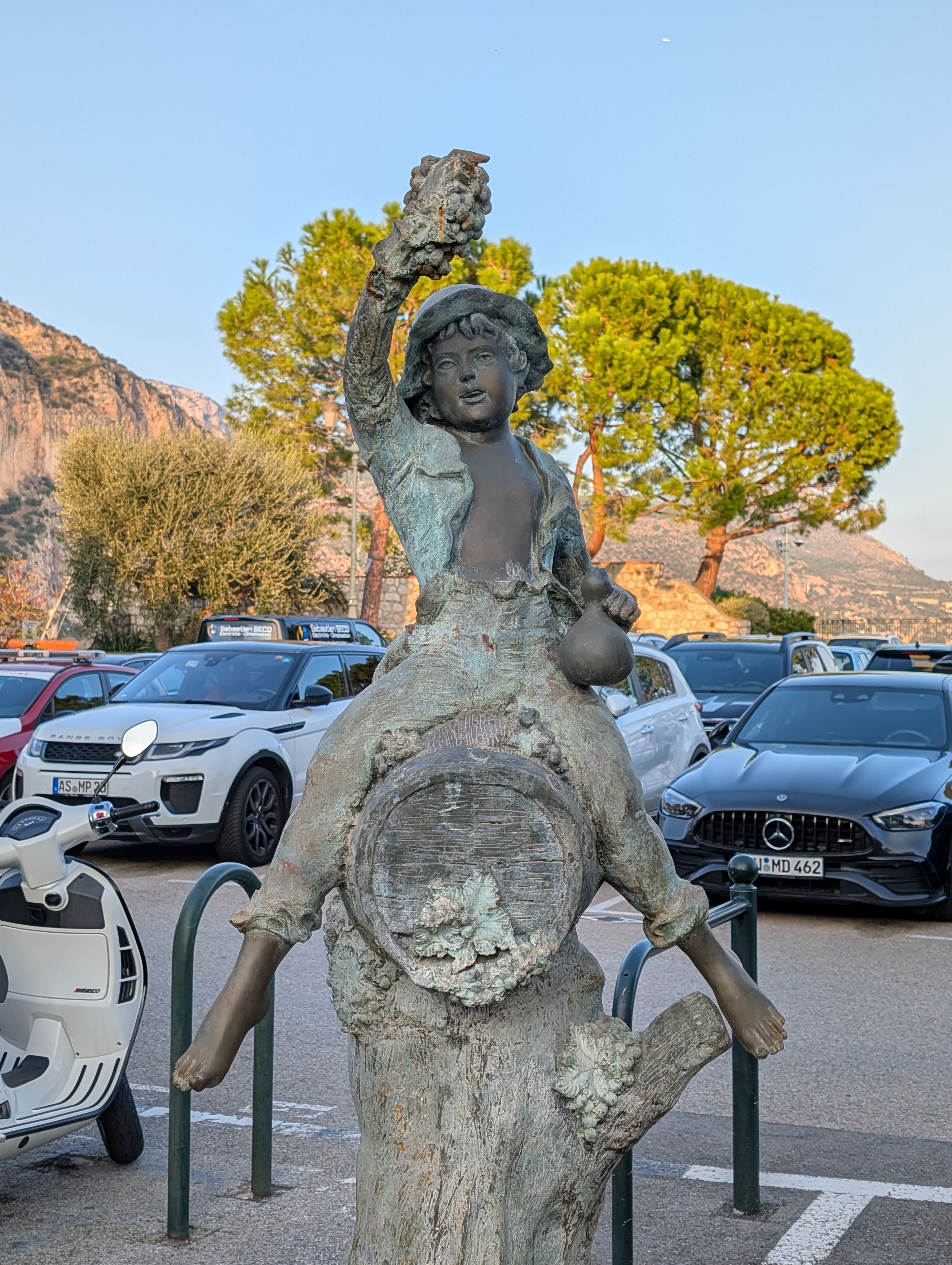
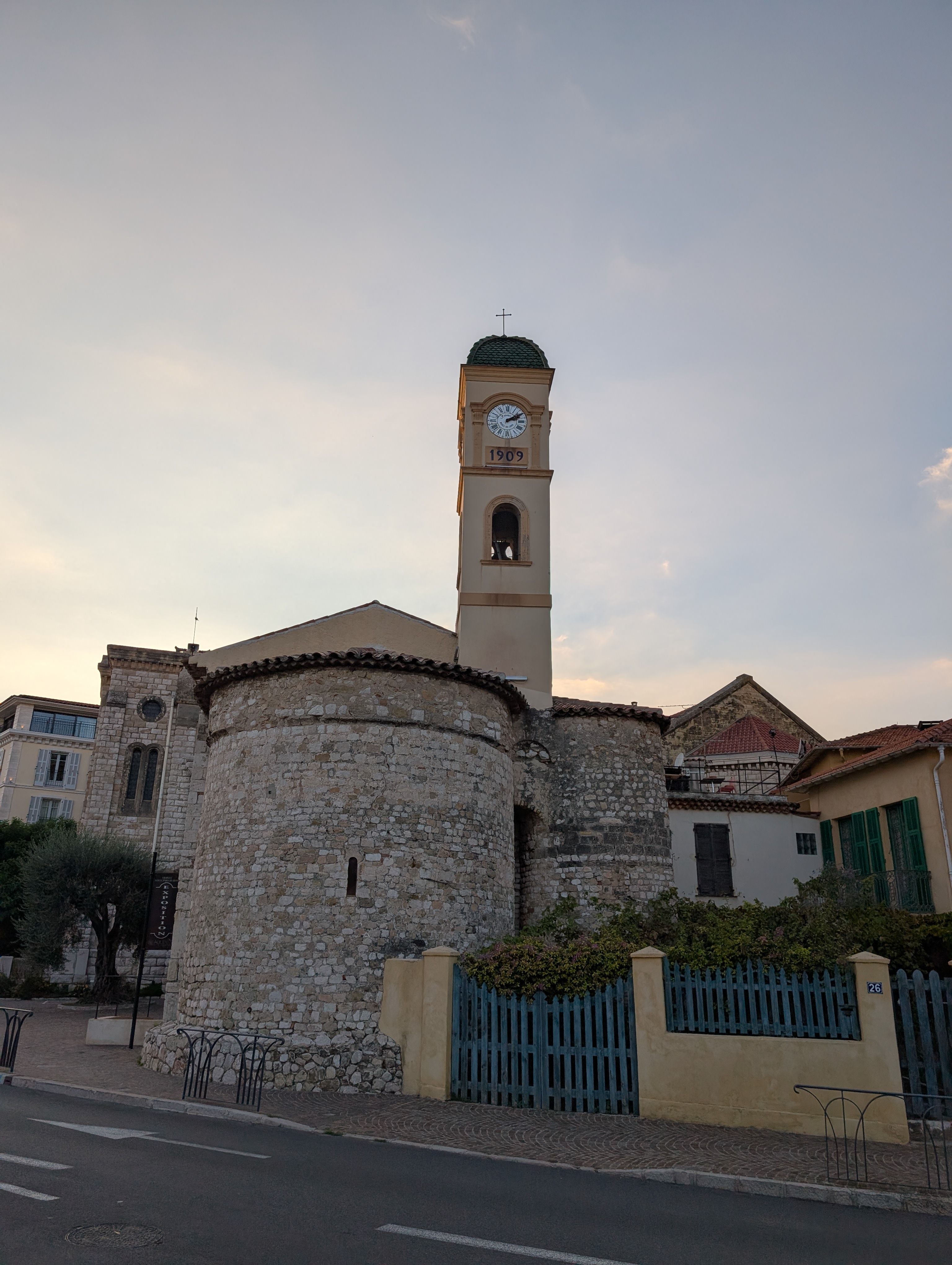
The bottom of the path is Èze-sur-Mer, and it earns the walk: a bay with small moorings, a marina that does golden hour by the book, a giant driftwood anchor that gave up its boat a long time ago and now just leans by the coast road. A bronze boy sits on a barrel, permanently pleased; a round stone church with a square clock tower marked 1889 stands where round churches usually don’t; and the sign at this end repays a closer look — 2,120 metres, one hour, footwear firmly recommended.
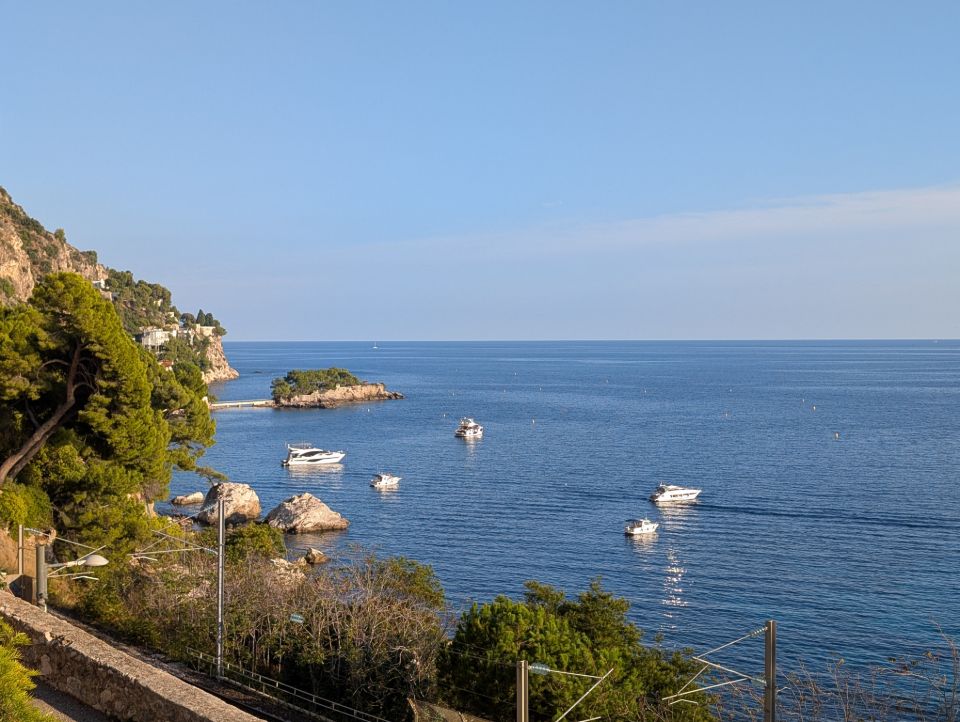
The bay that pays for the descent 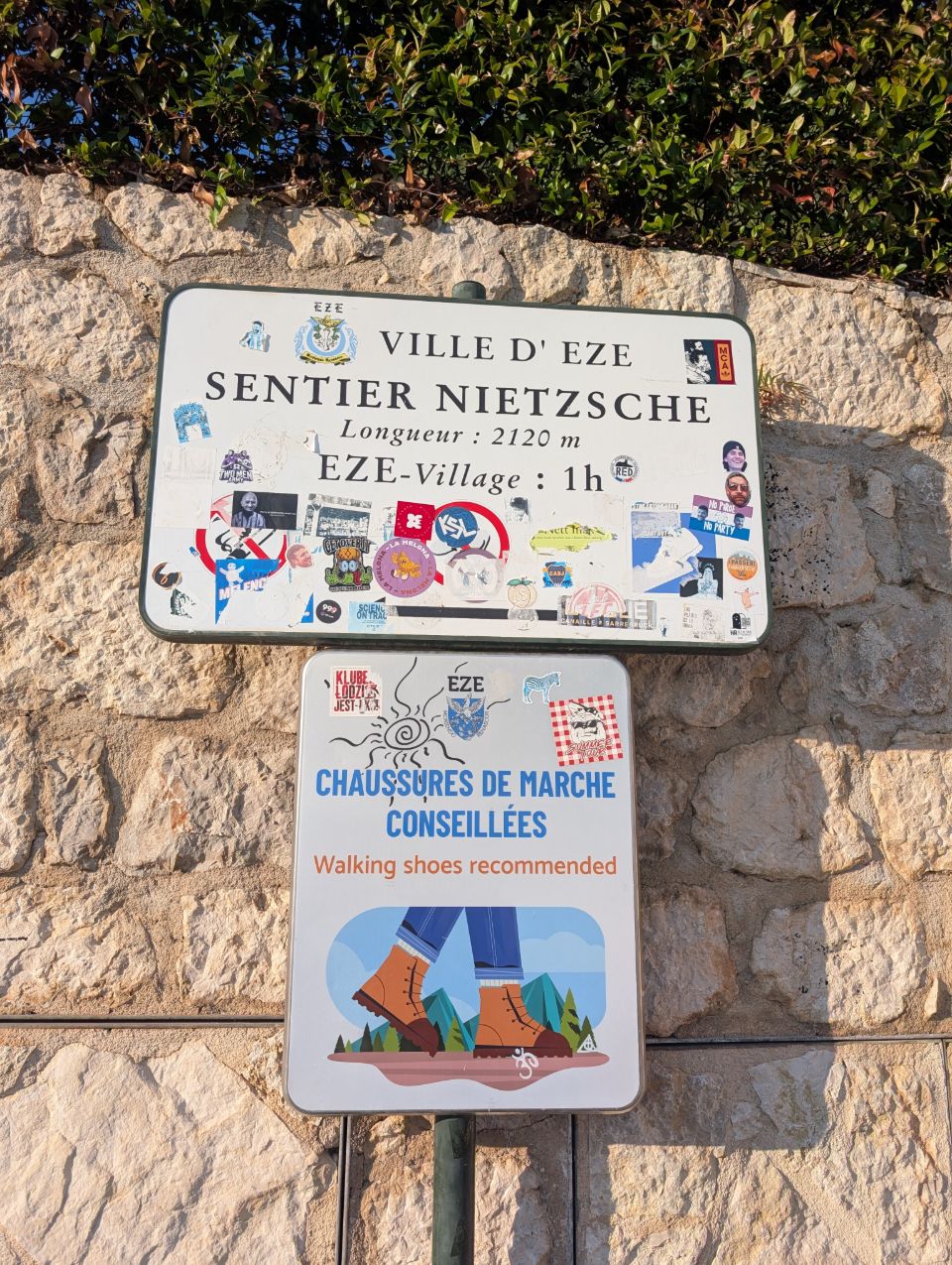
The sign, from the other end 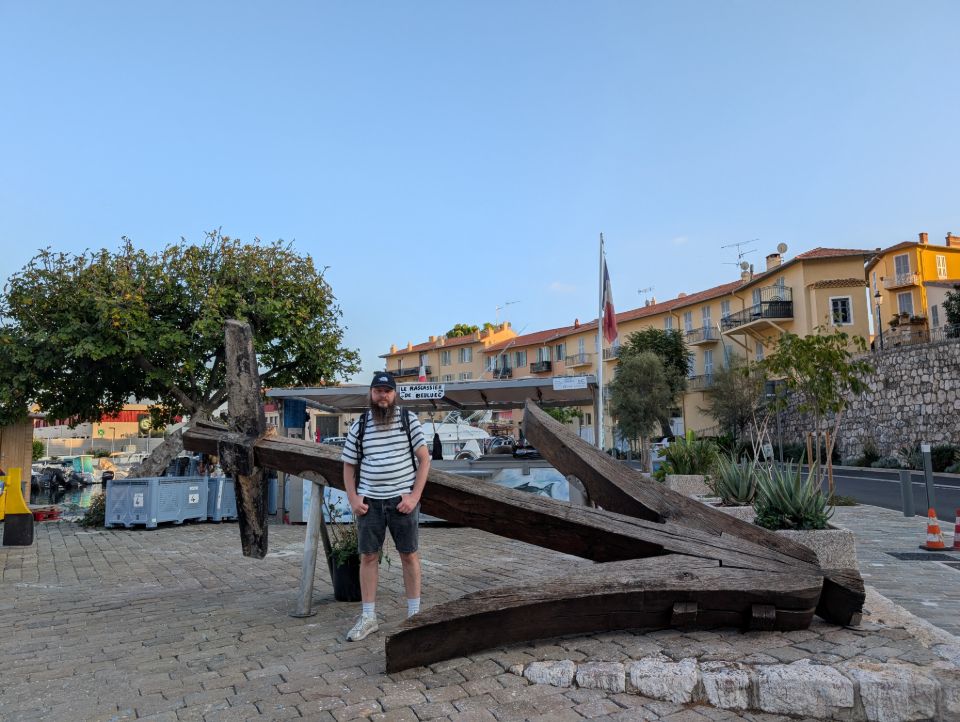
Oleg, and the anchor that outgrew its boat 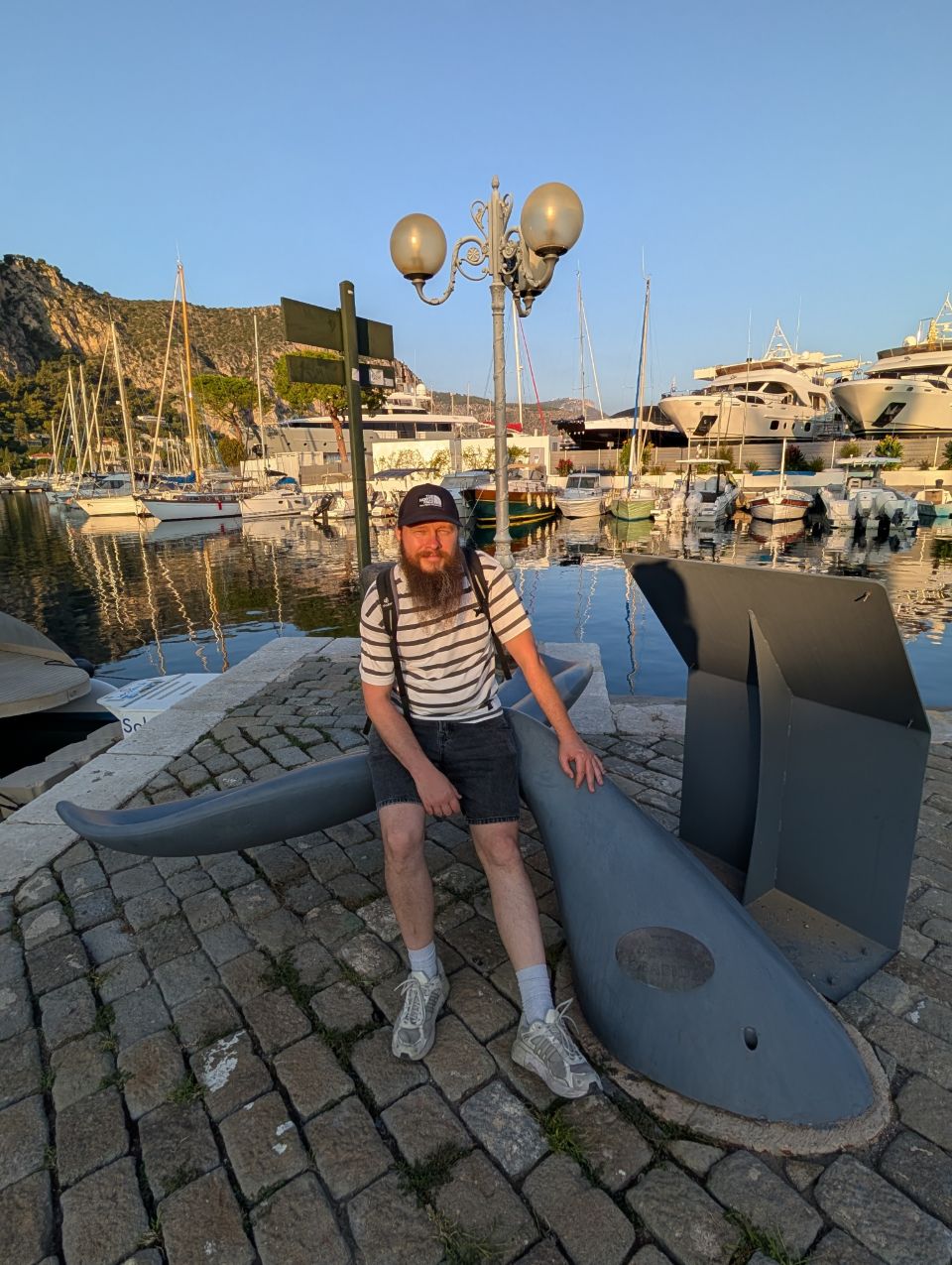
Oleg, adopted by the marina's fish 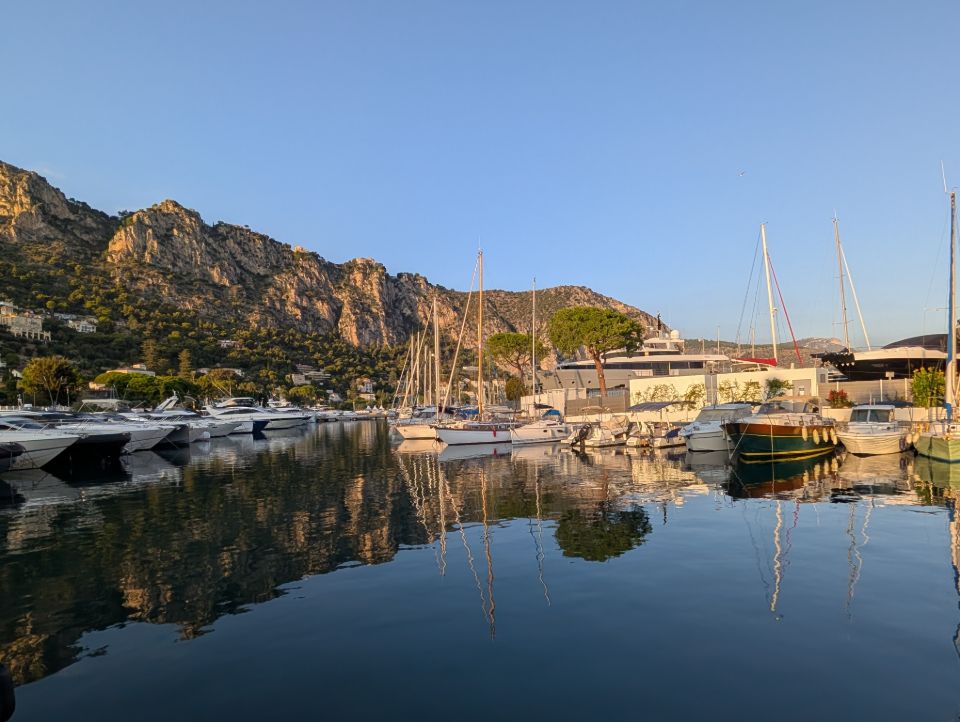
The marina, golden hour 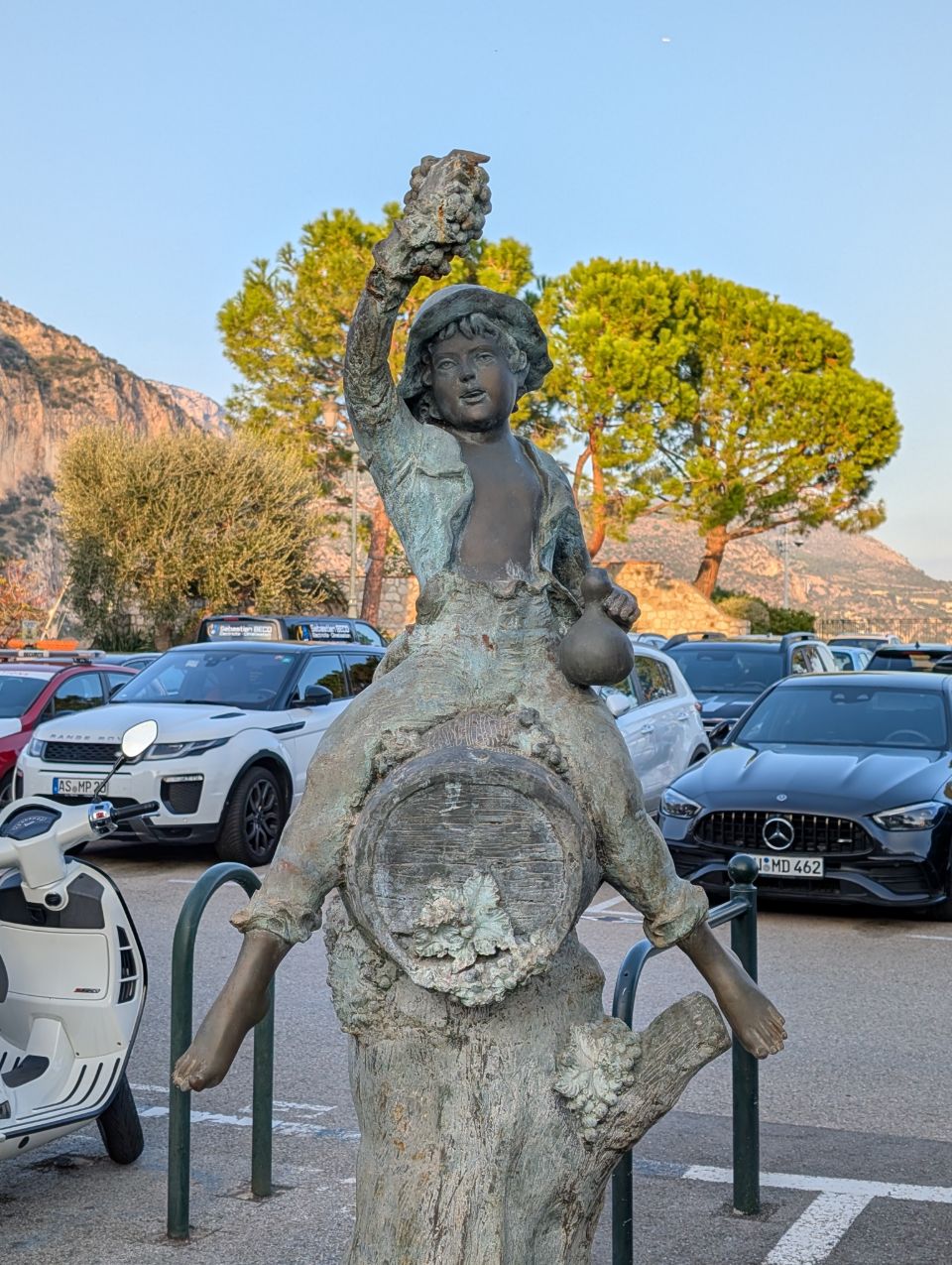
A boy on a barrel, bronze, permanently cheerful 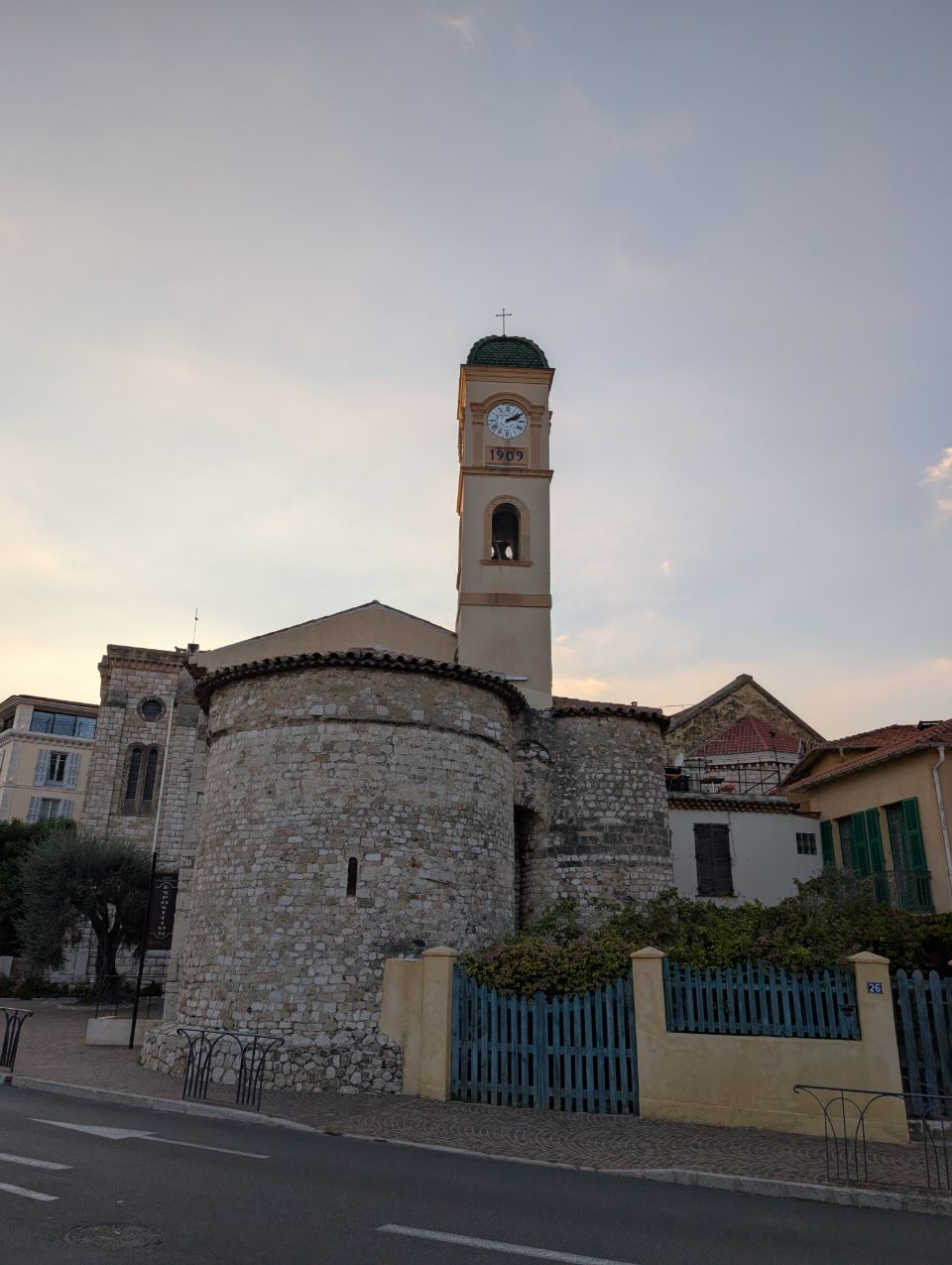
The 1889 church, round where churches aren't 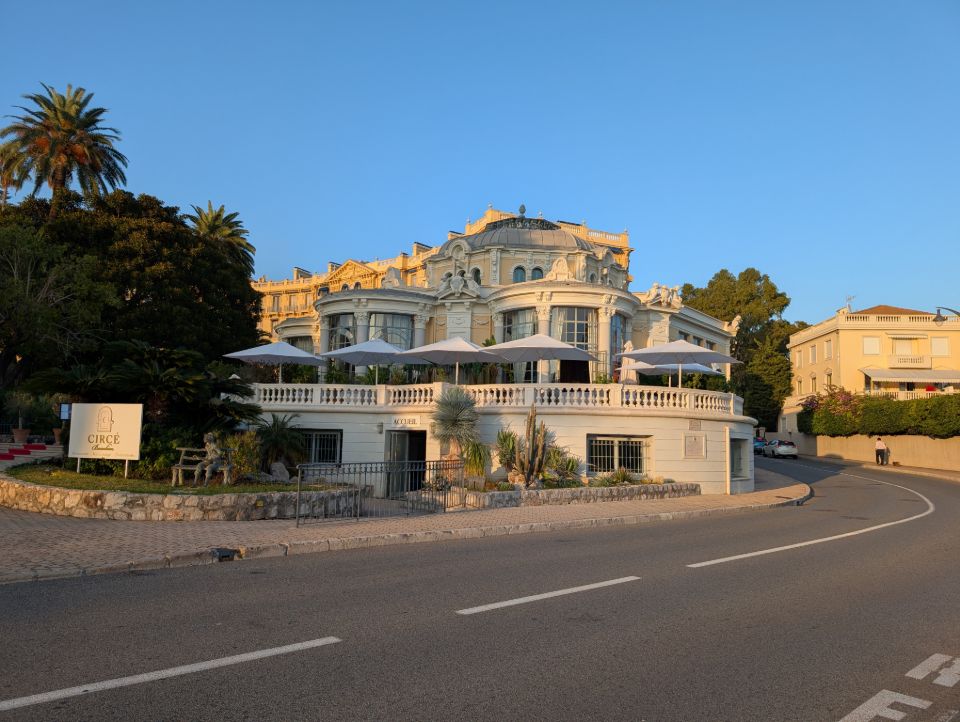
The water, going soft
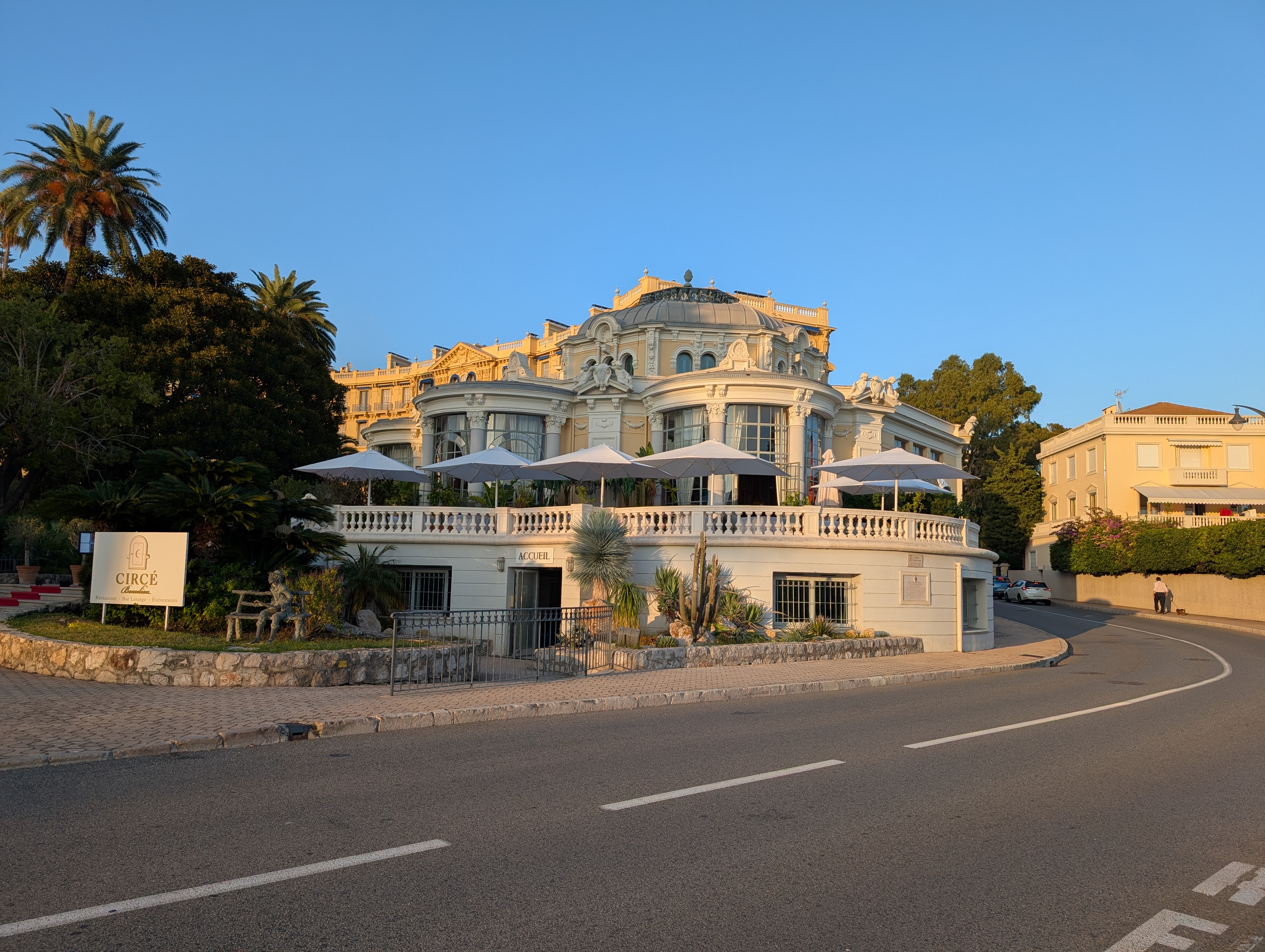
Dusk on the shore
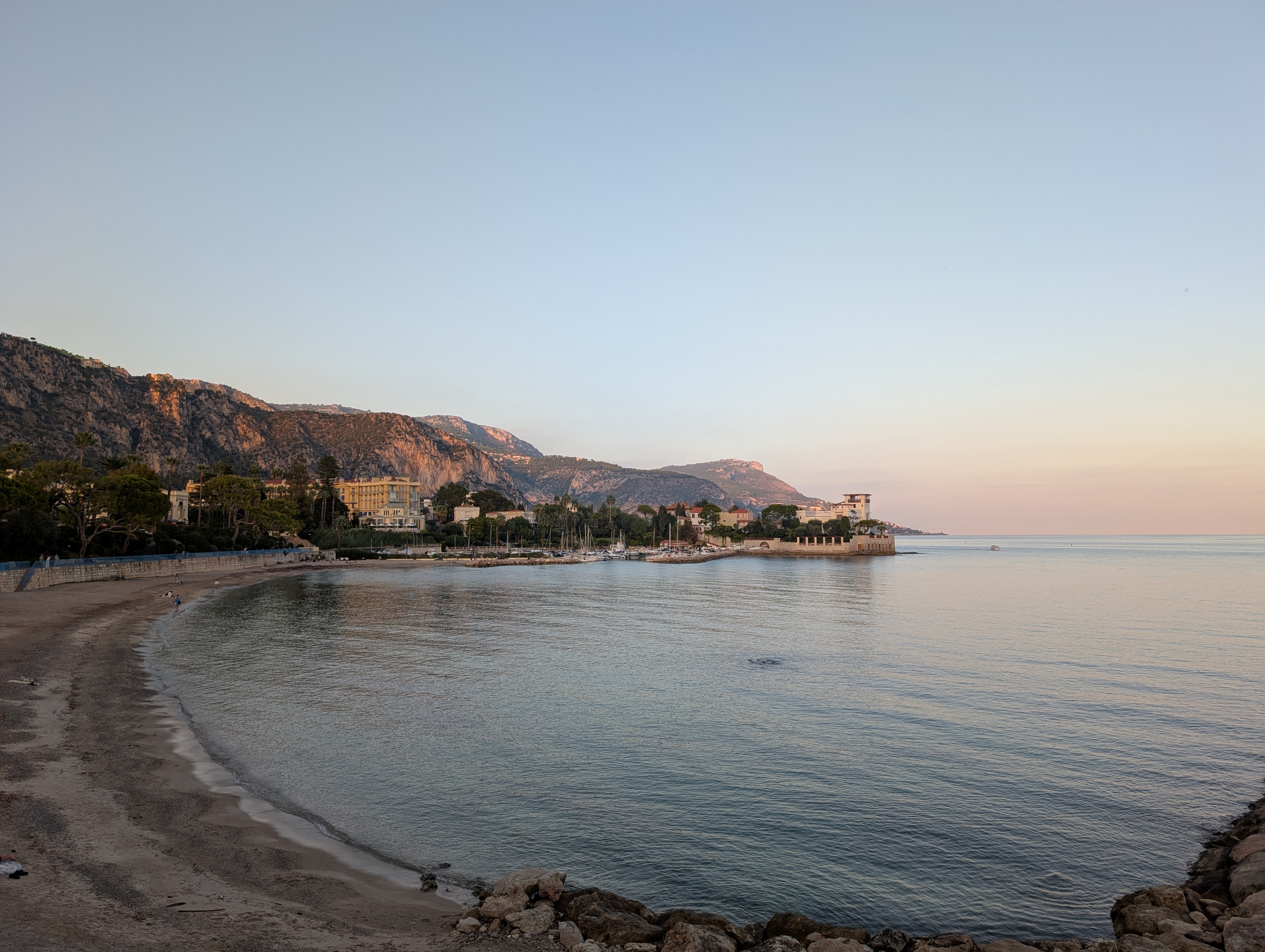
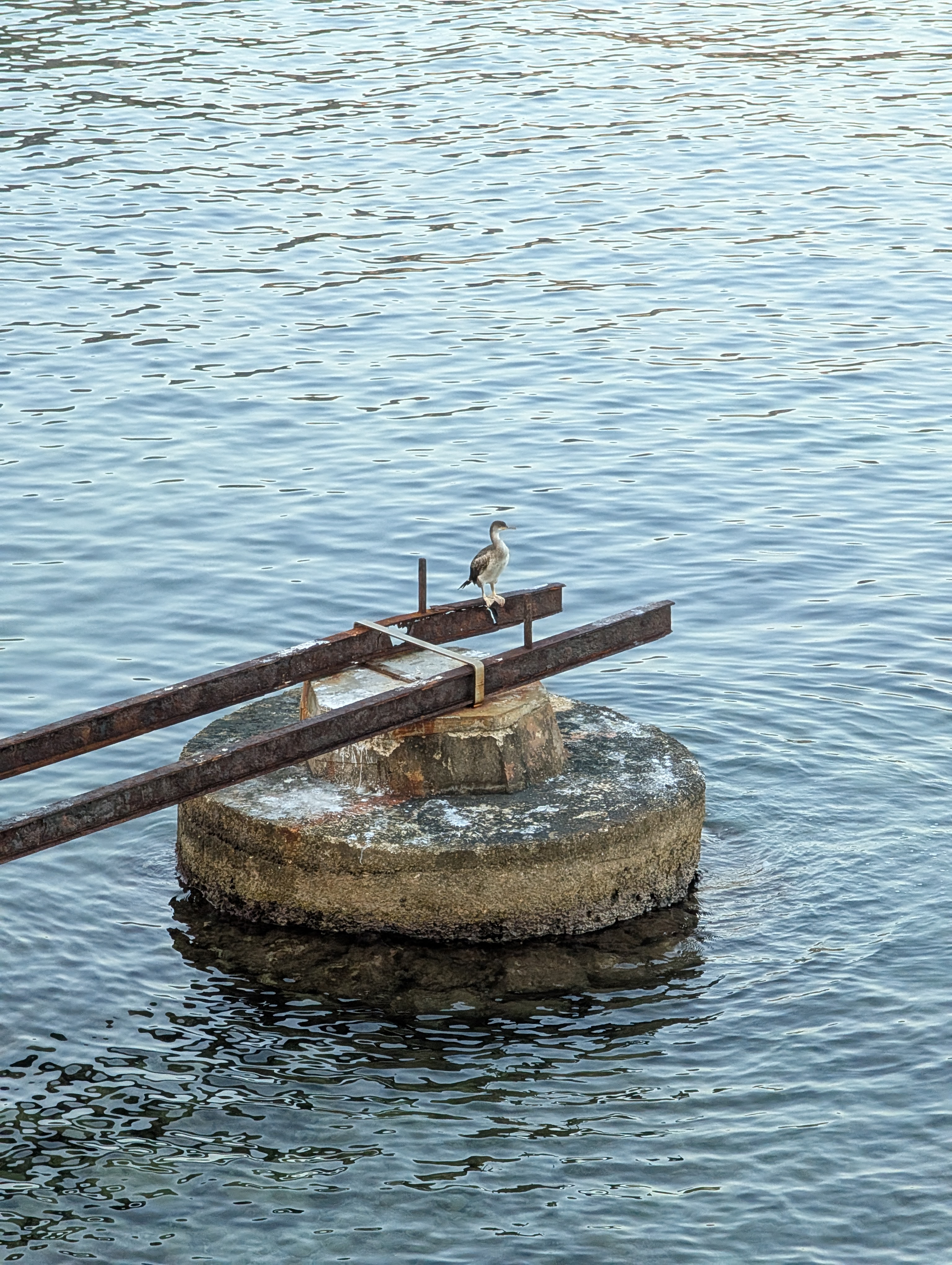
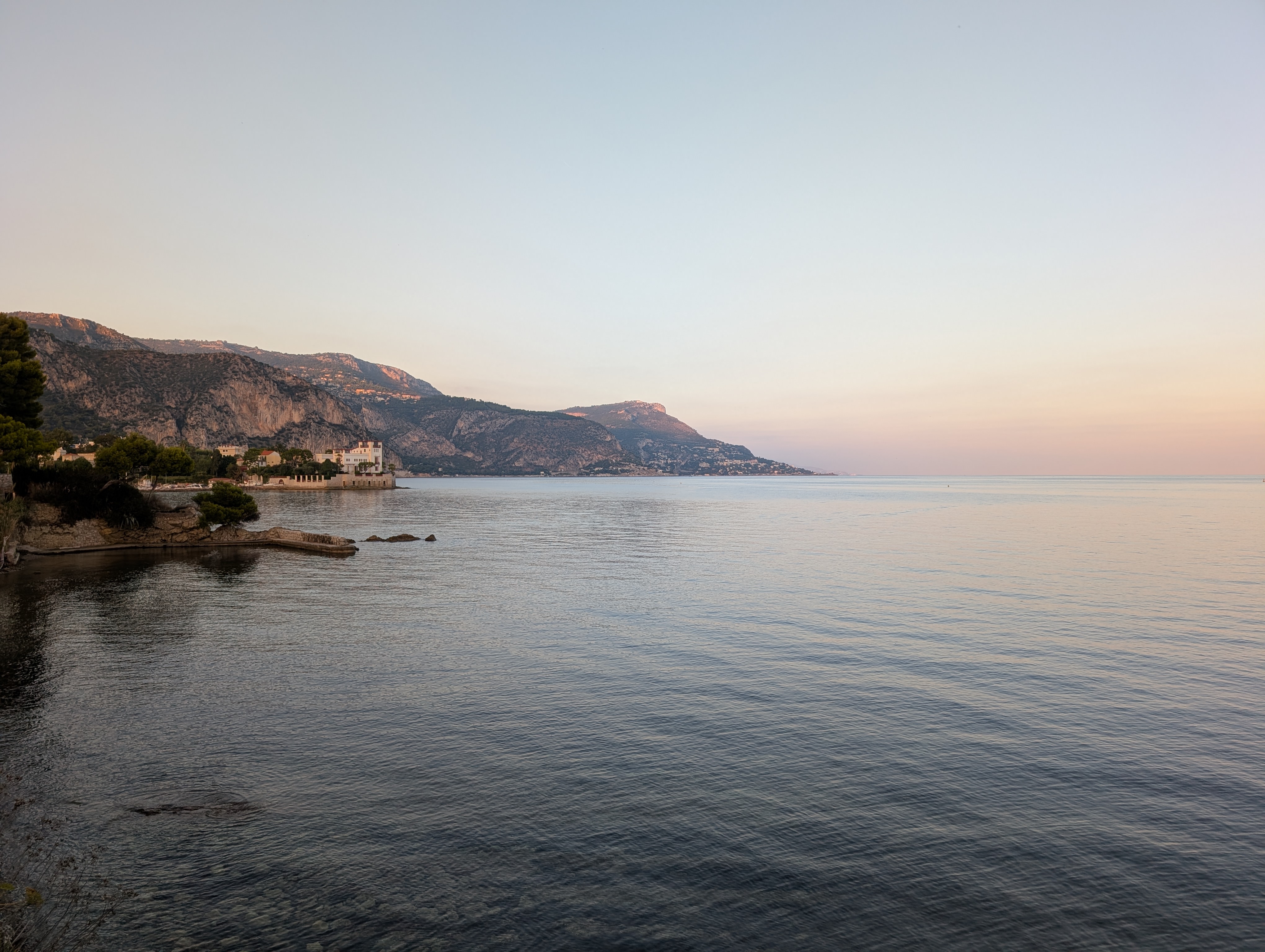
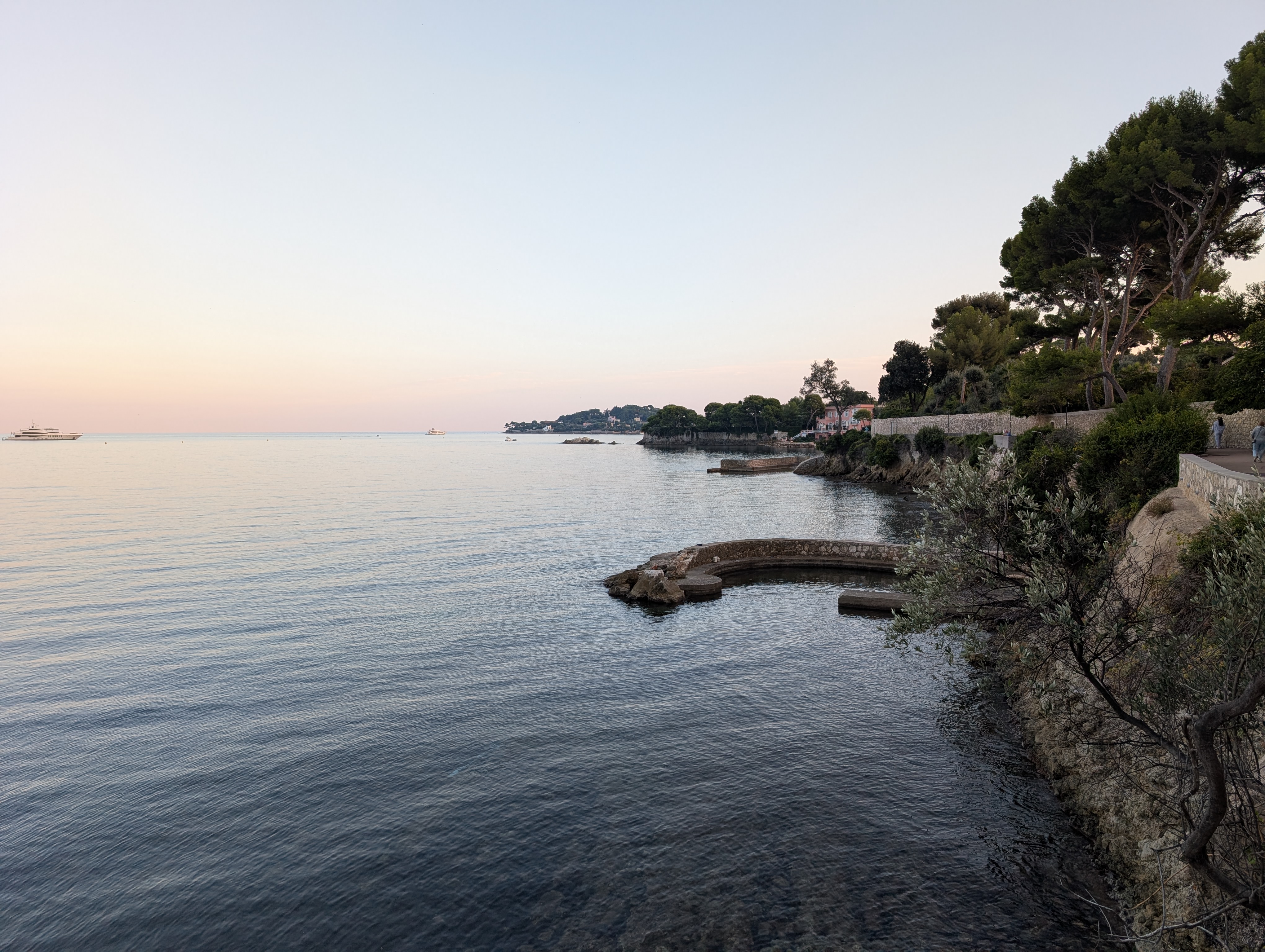
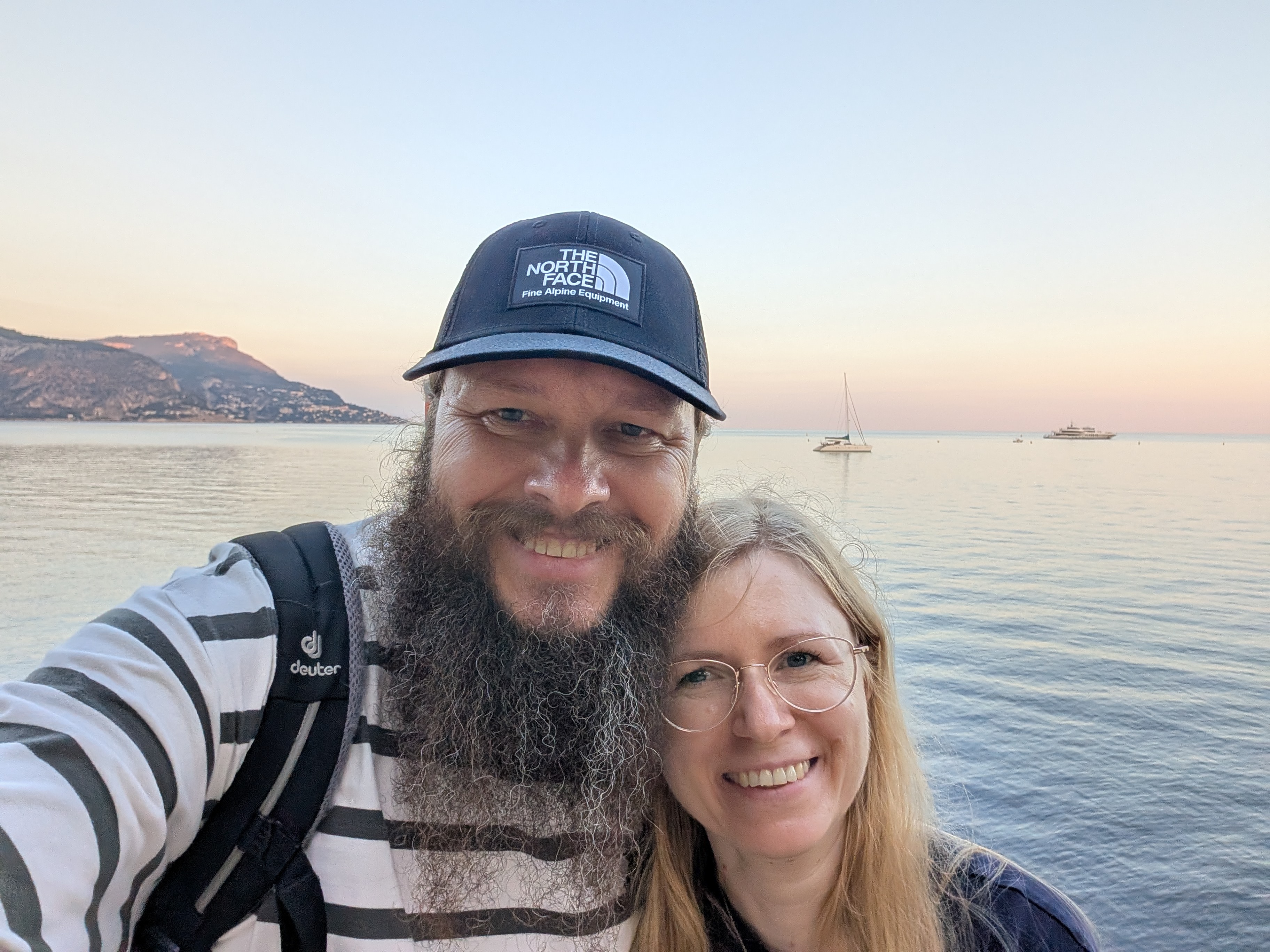
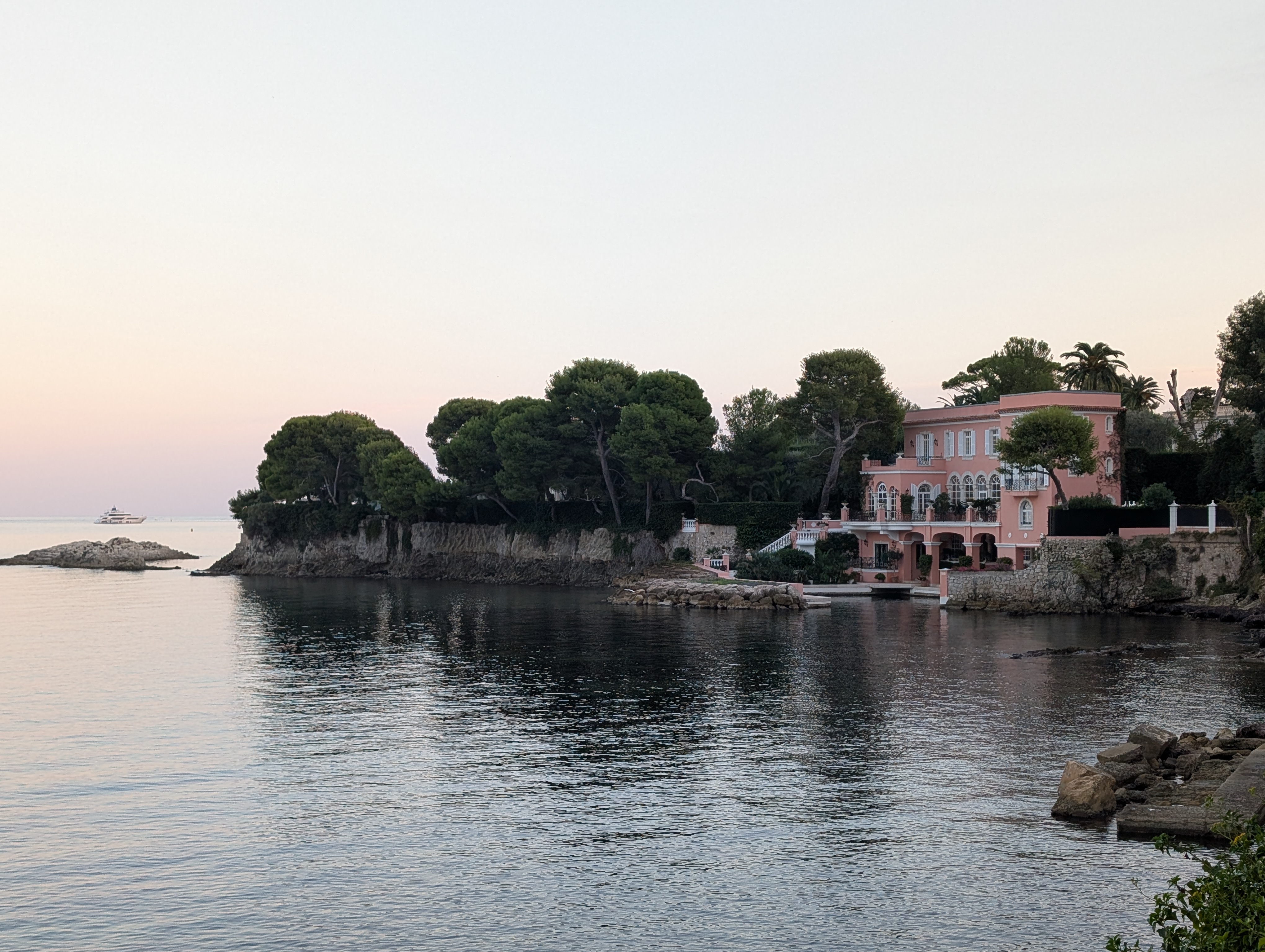
By then the light had started its evening act, so we stayed walking along the shore: the bay flat as glass, the sky pink on schedule, a cormorant holding the end of an old pier as if it had an appointment there, and a villa on the rocks going pink at exactly the moment a villa should. The both-of-us frame against a sea like polished tin might be the day’s keeper. The last coves had their names on the water — the walk did too.
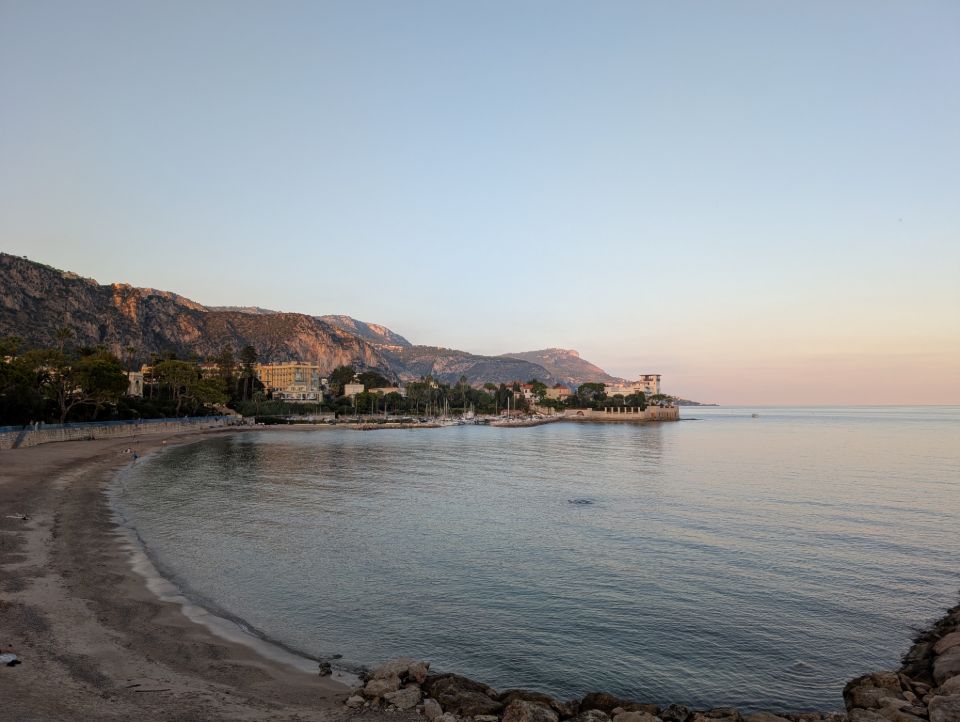
The dusk panorama, wide 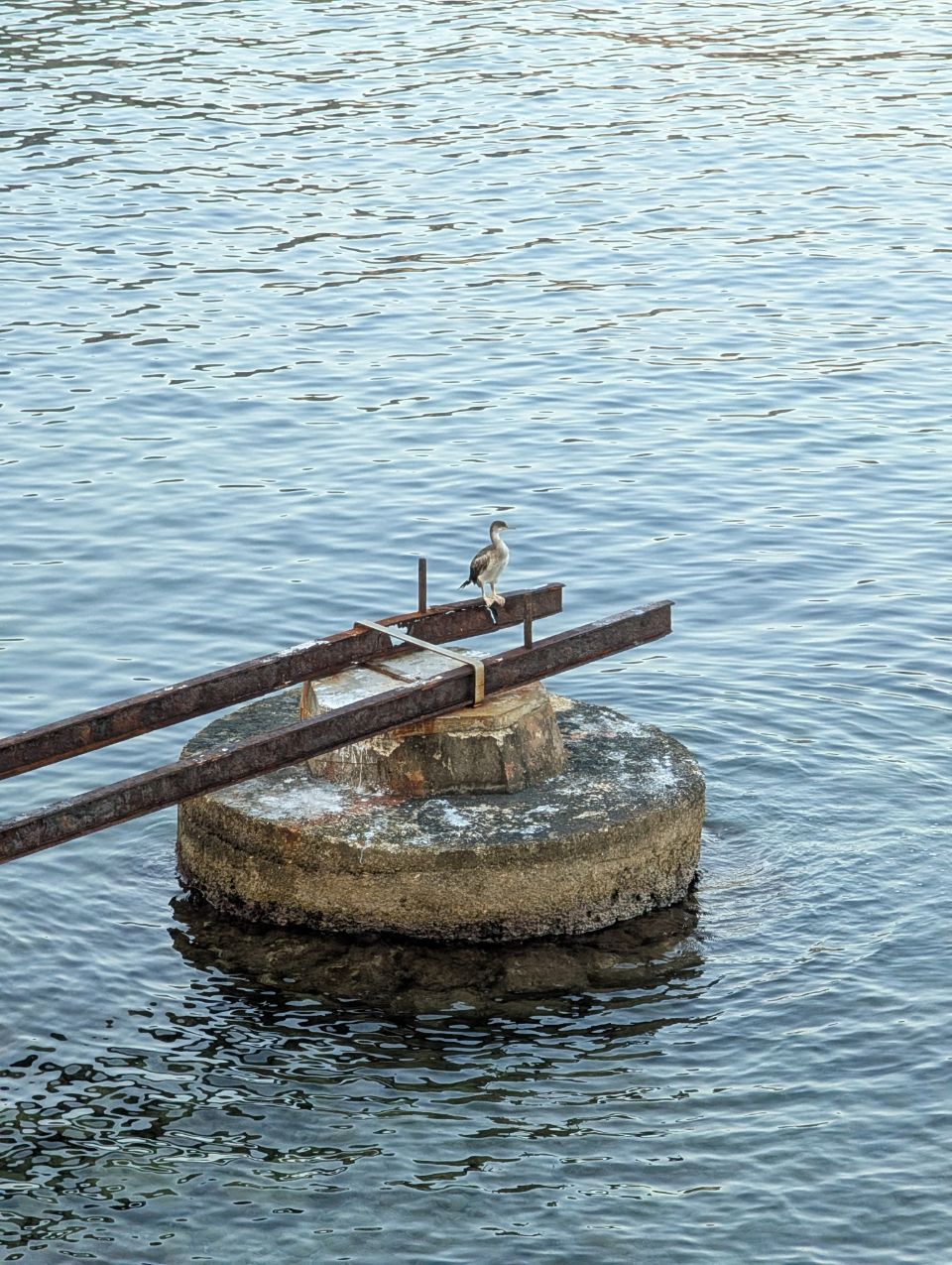
A cormorant, holding the end of a pier 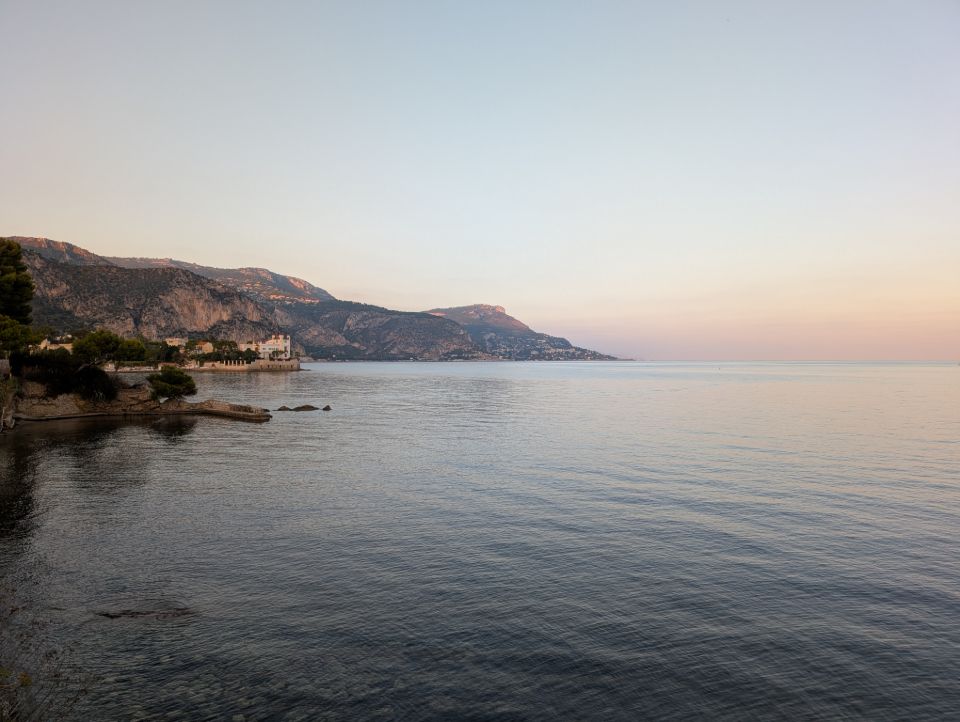
The coast, pink edition 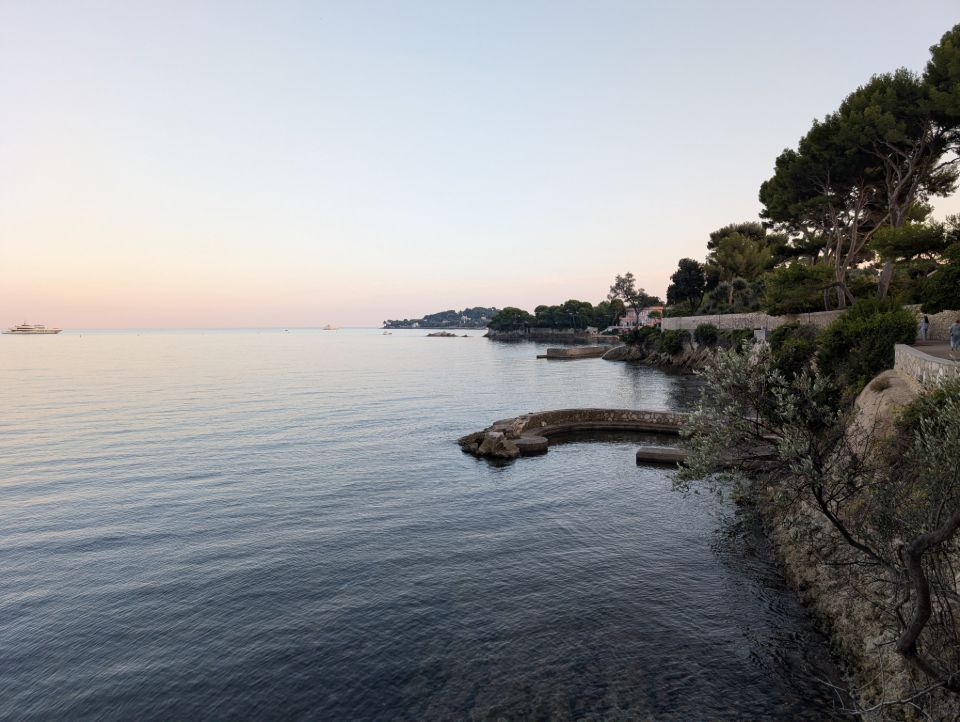
Rocks and coves, the evening shift 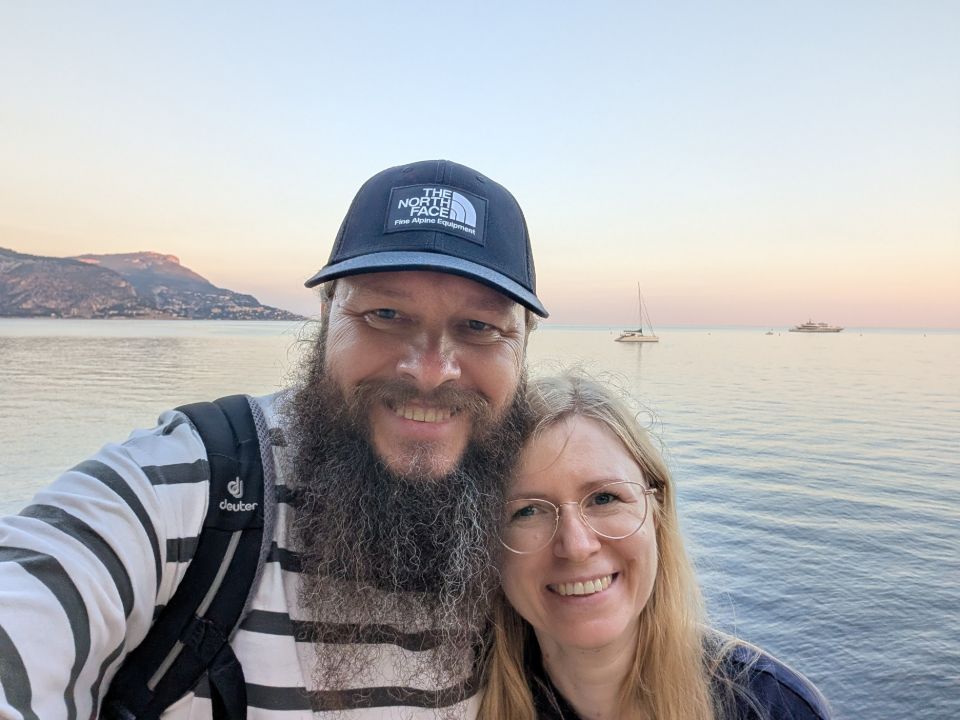
Both of us, dusk edition 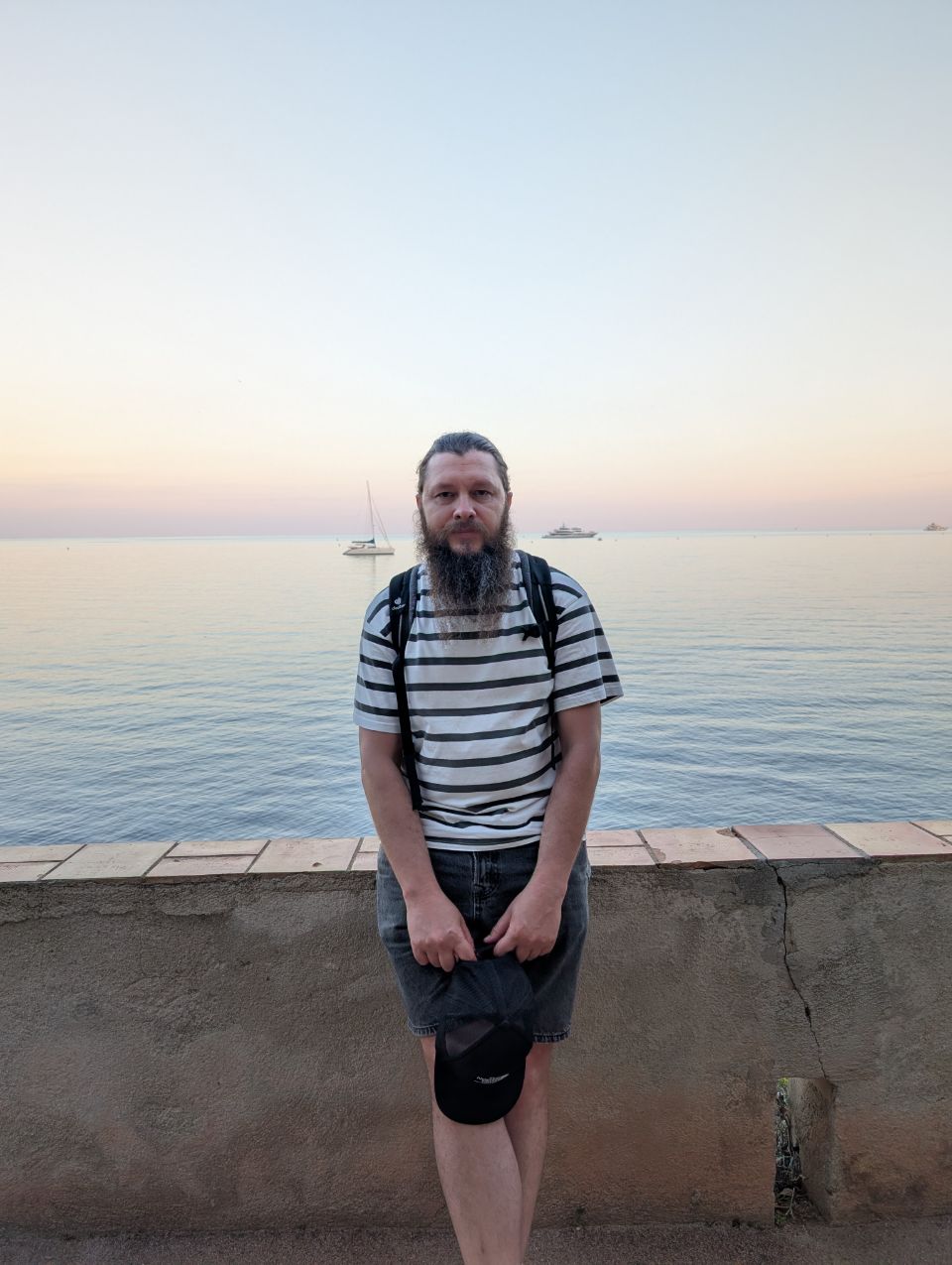
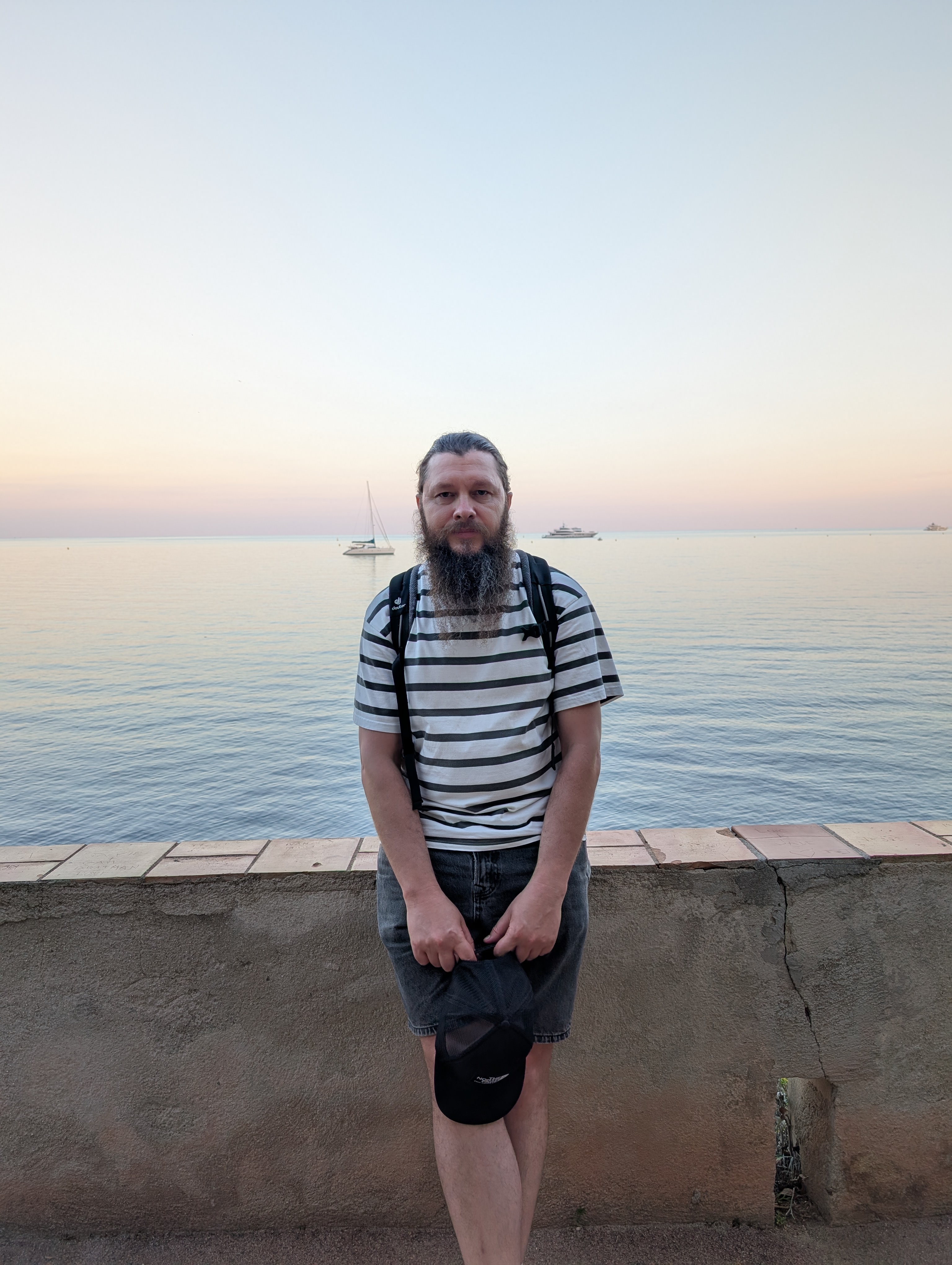
Oleg, dusk portrait 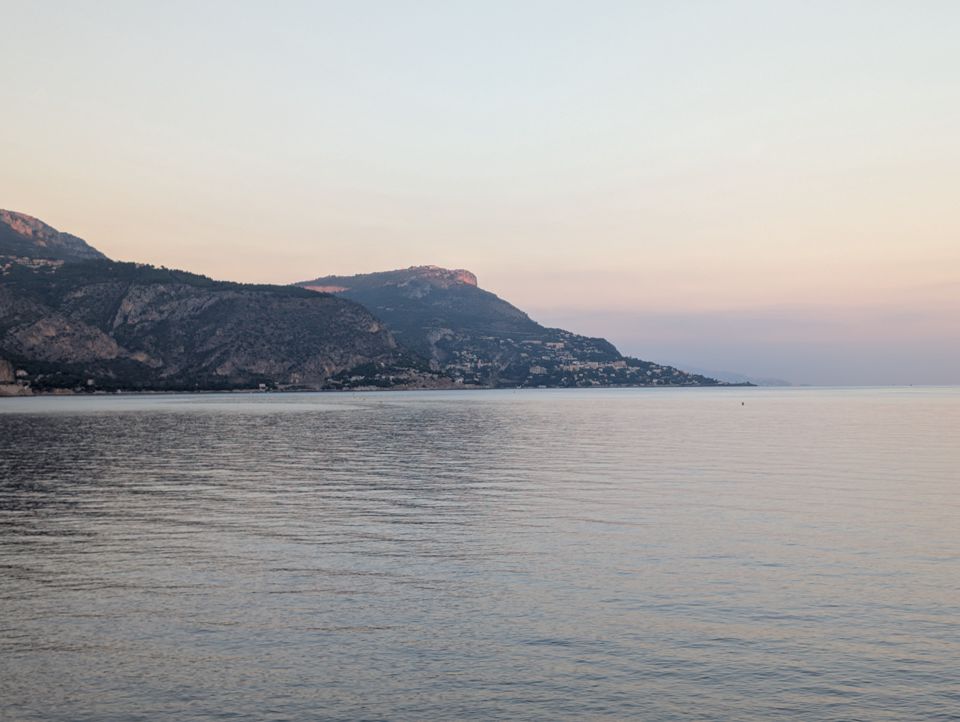
Bay, marina, mountains — the whole dusk 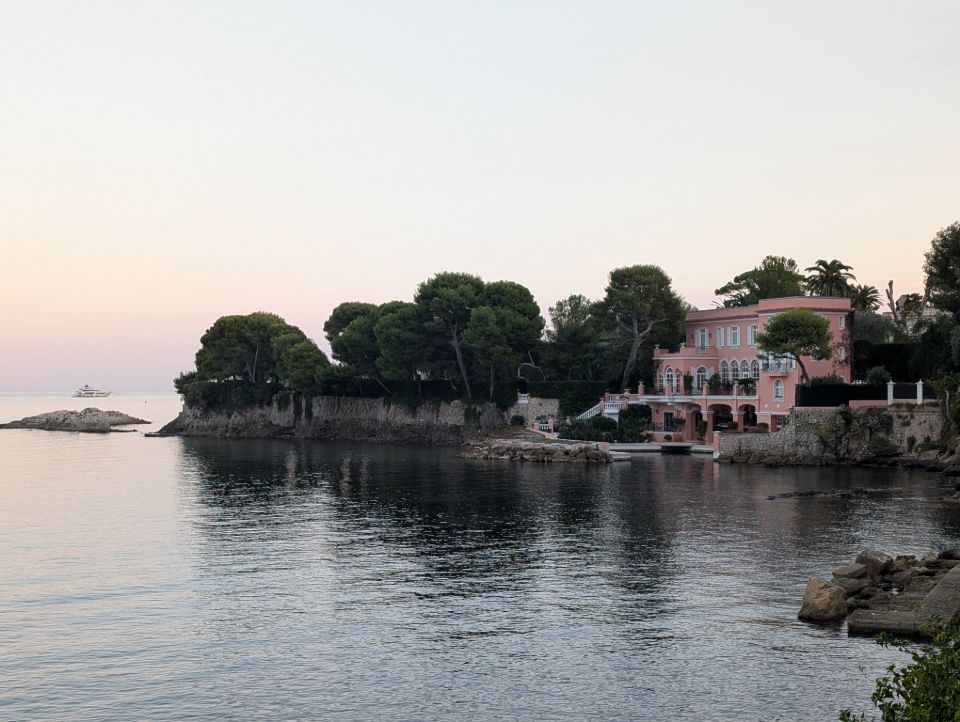
A villa, pink exactly on schedule 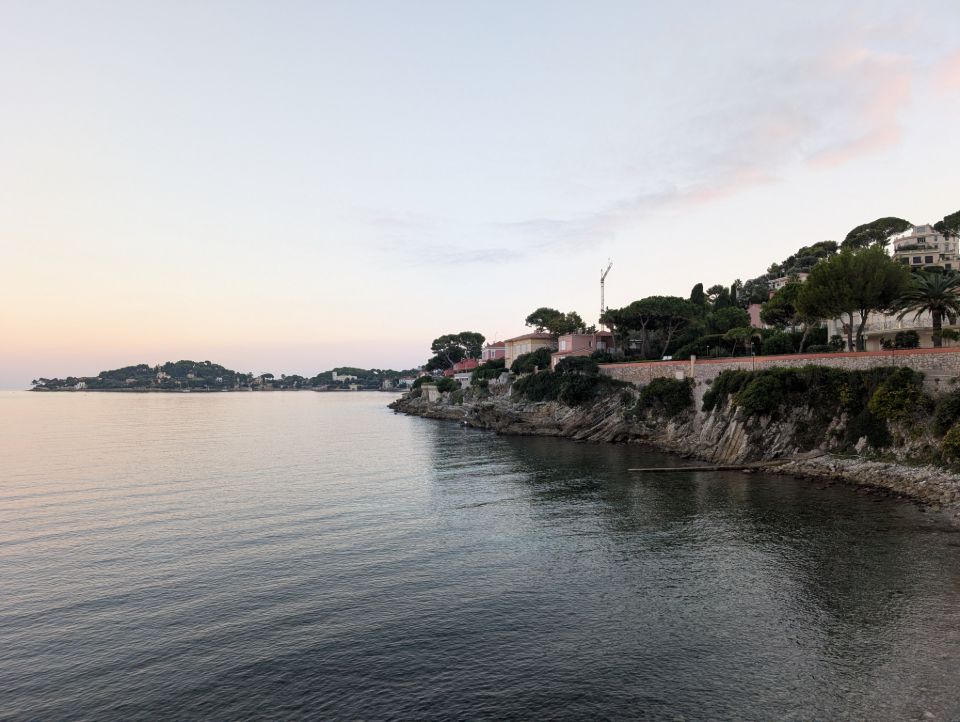
The walk stays on past sunset 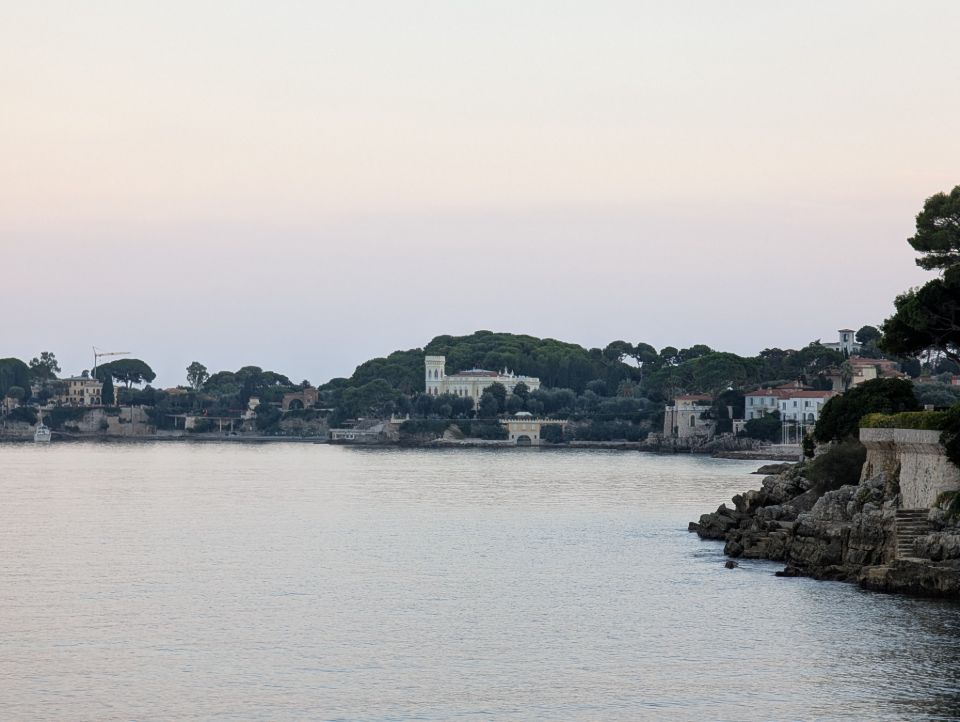
A white villa, busy collecting light