French Riviera trip day 6, Cannes
Day six — the move
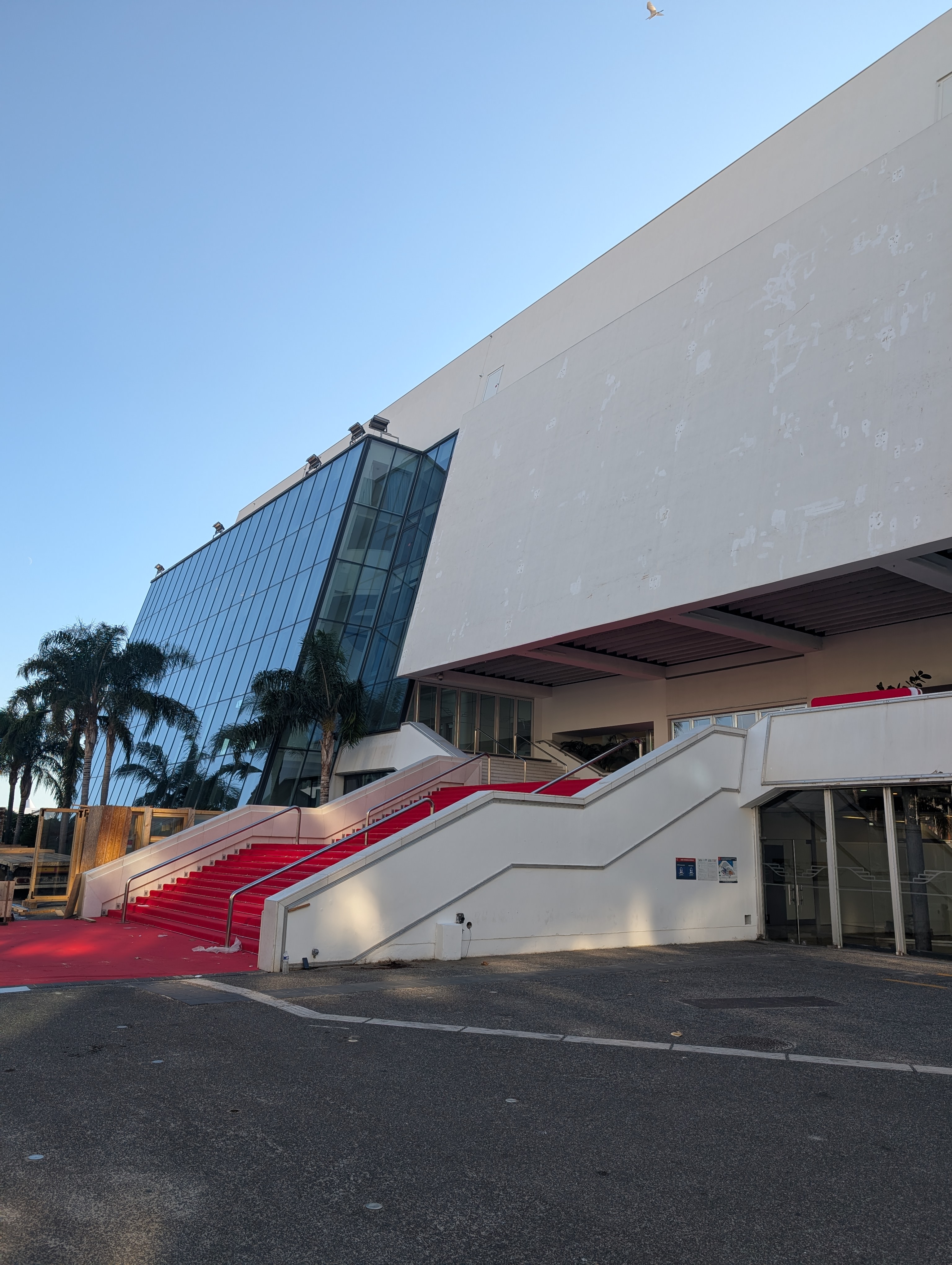
One train along the coast, keys by mid-afternoon, and the flat was ours for the second half of the trip. Cannes received us mid-preparation: the Palais des Festivals with its red carpet already rolled out, turnstiles and barricades standing around it in workmanlike circles, and a few stray pieces of rubbish riding the red itself. The festival had not arrived yet — only the scaffolding, and enough of it to guess at the size when it does.
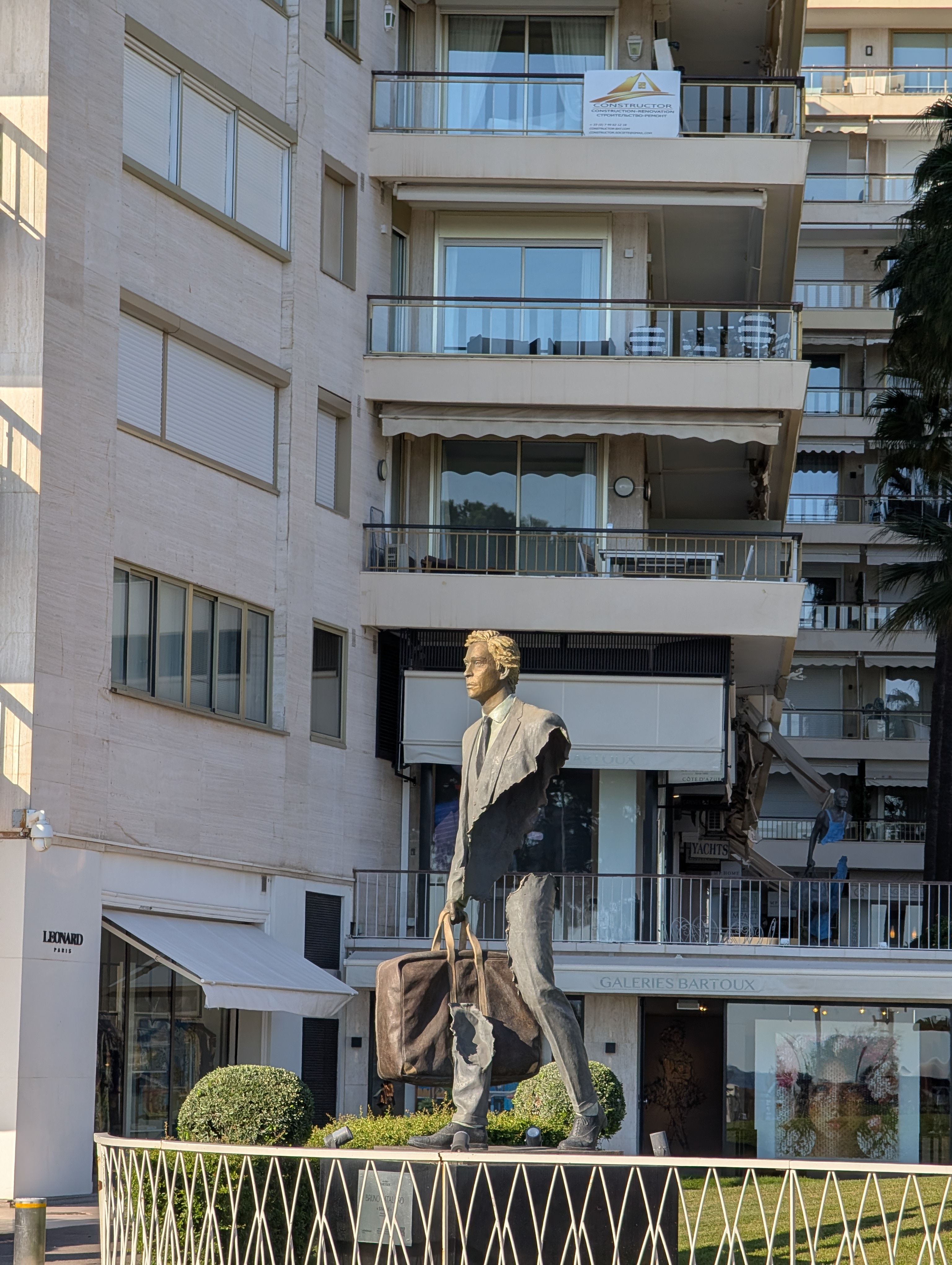
Out on the pavement a bronze man hurries past in a suit with his scarf flying, suitcase lifted, forever mid-stride. Meant as glamour in a hurry, most likely — though he reads just as easily as a man who hasn't rested in far too long, which at the start of ten days off is a reminder we were glad to take.
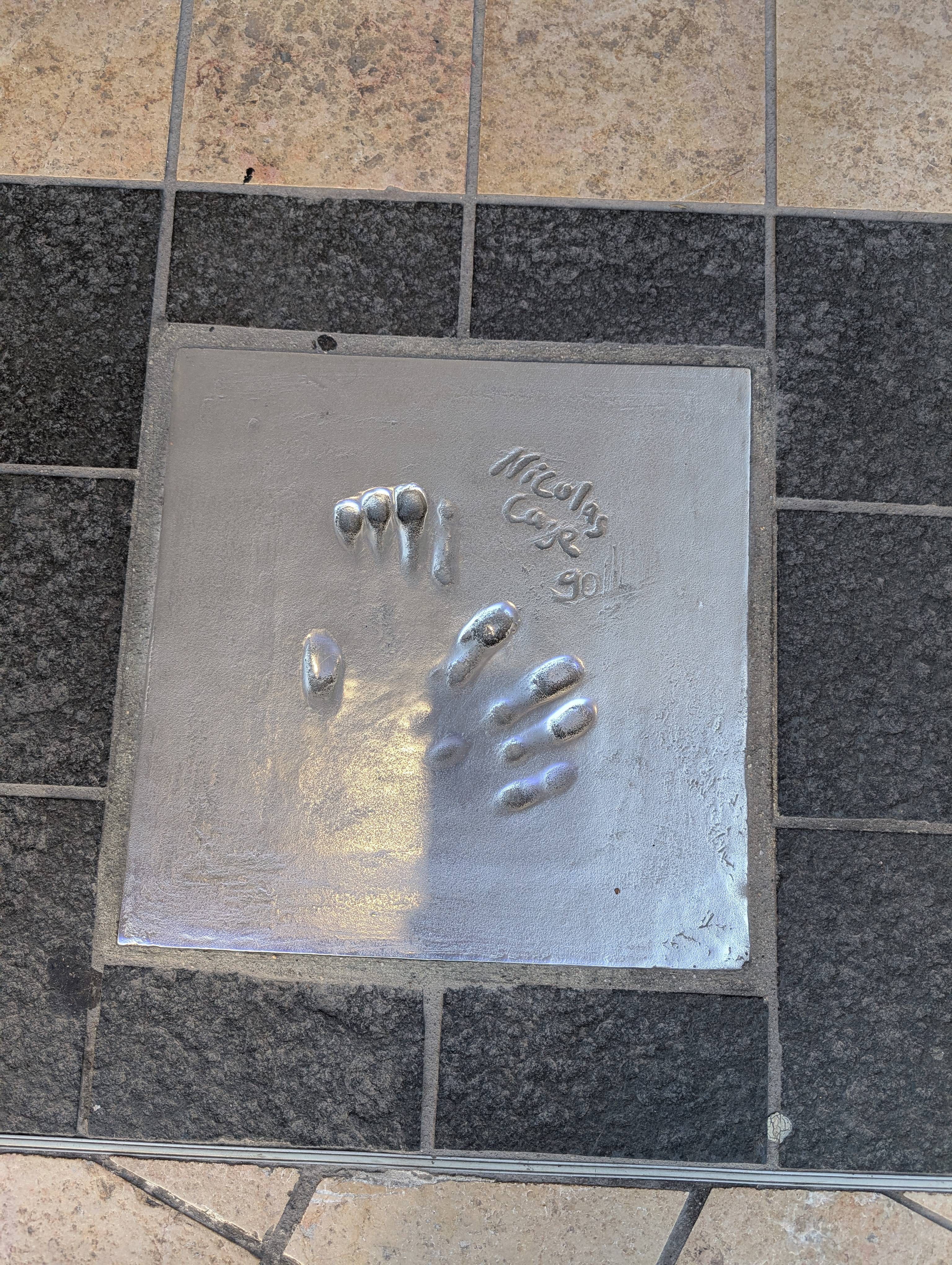
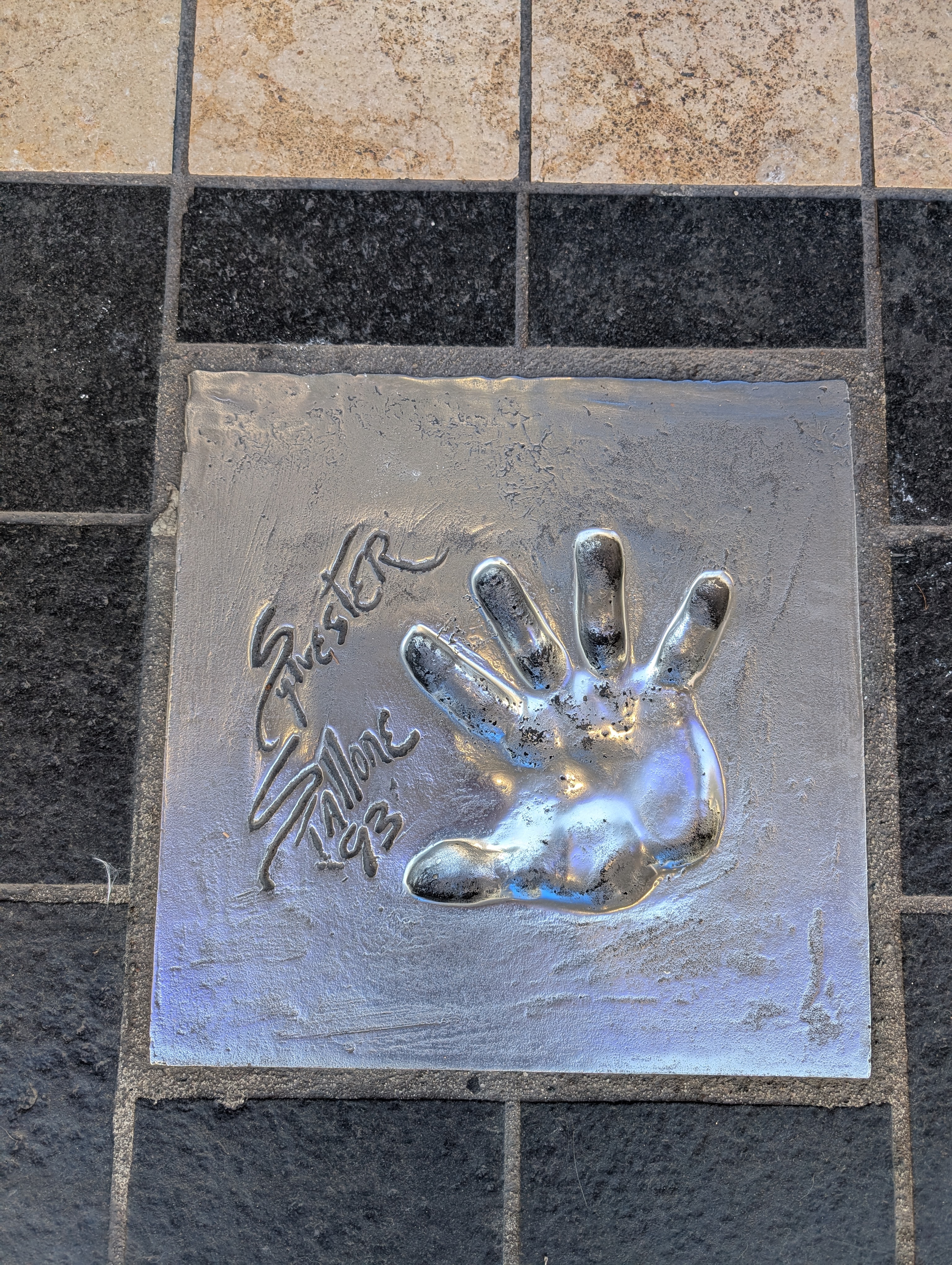
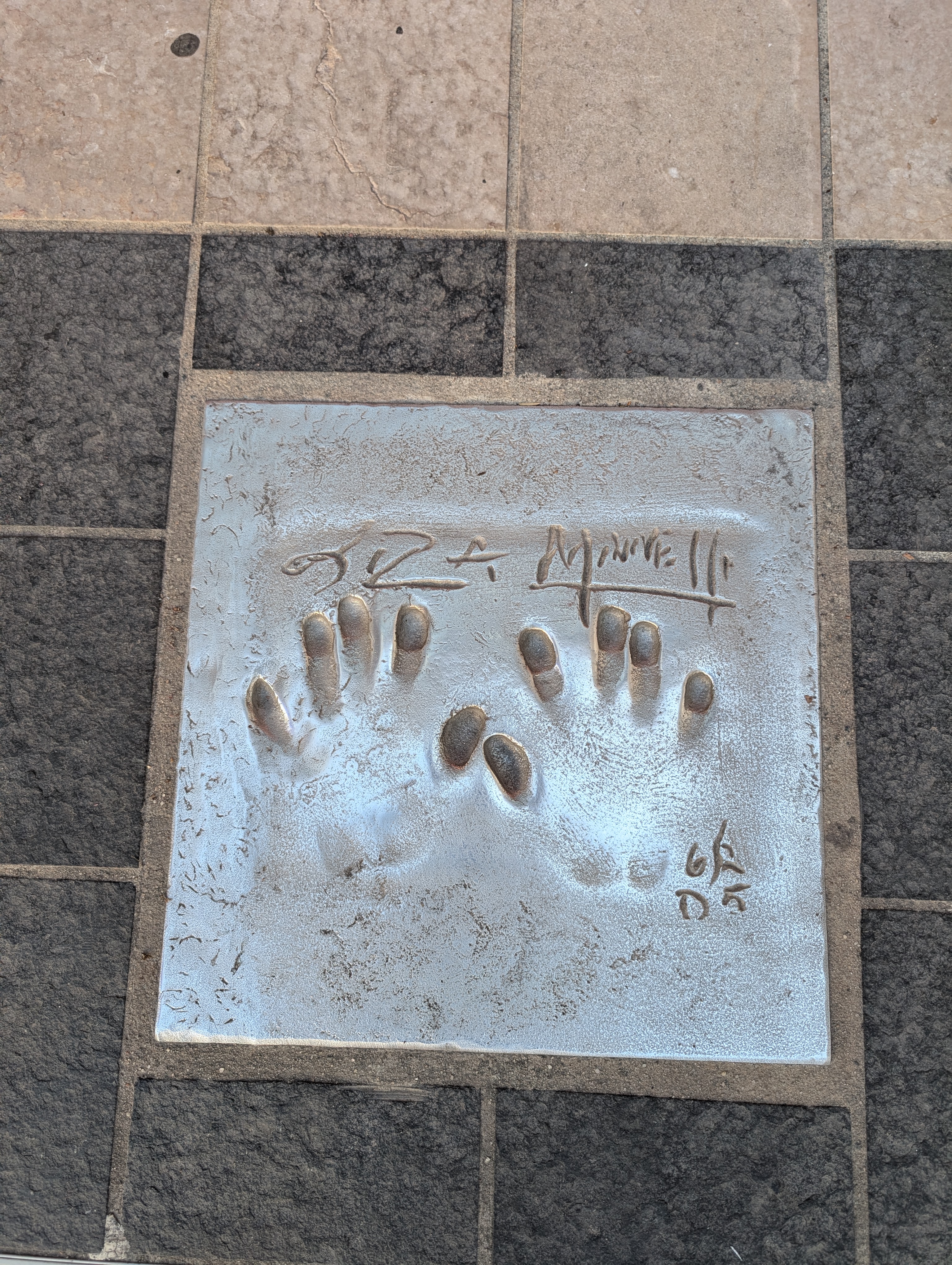
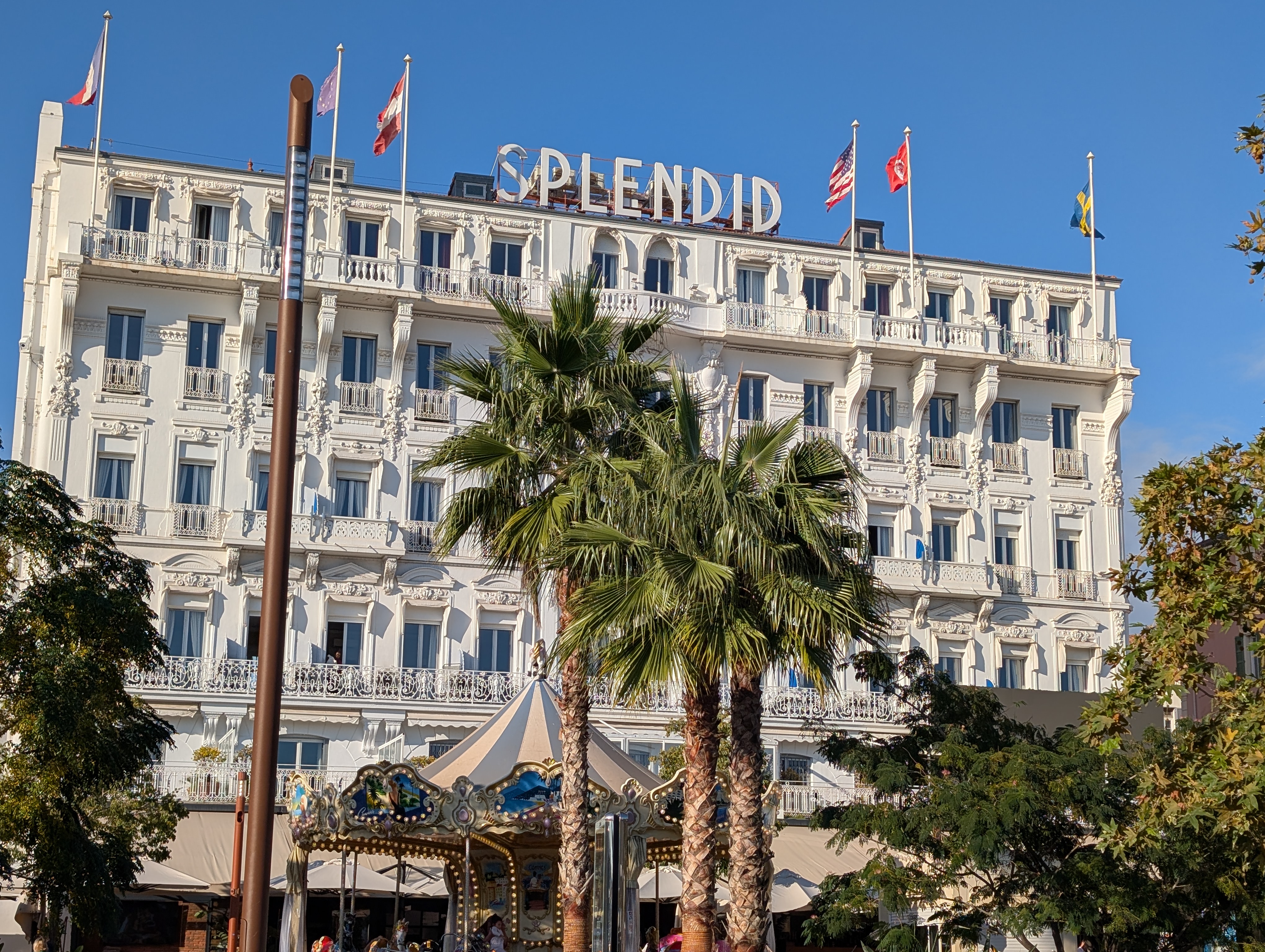
Then the small things, which are the true ones. The esplanade around the Palais is set with handprint tiles — dozens of them — and most of the signatures are written small or worn smooth enough to pass unread at a walk. The ones we caught are the ones we knew on sight: Nicolas Cage's plate, Sylvester Stallone's, and one with two pairs of hands sharing a single plate, signed in tall looping strokes that read, as clearly as polished brass will allow, as Liza Minnelli. Plenty of other names are almost certainly down there that we walked over without seeing — their secret to keep until someone stops and crouches. And the Hotel Splendid with a carousel spinning in front of its flags. Cannes is many cities layered into one, and it wears all of them at once: festival, resort, working town, marina.
The Palais and the Croisette
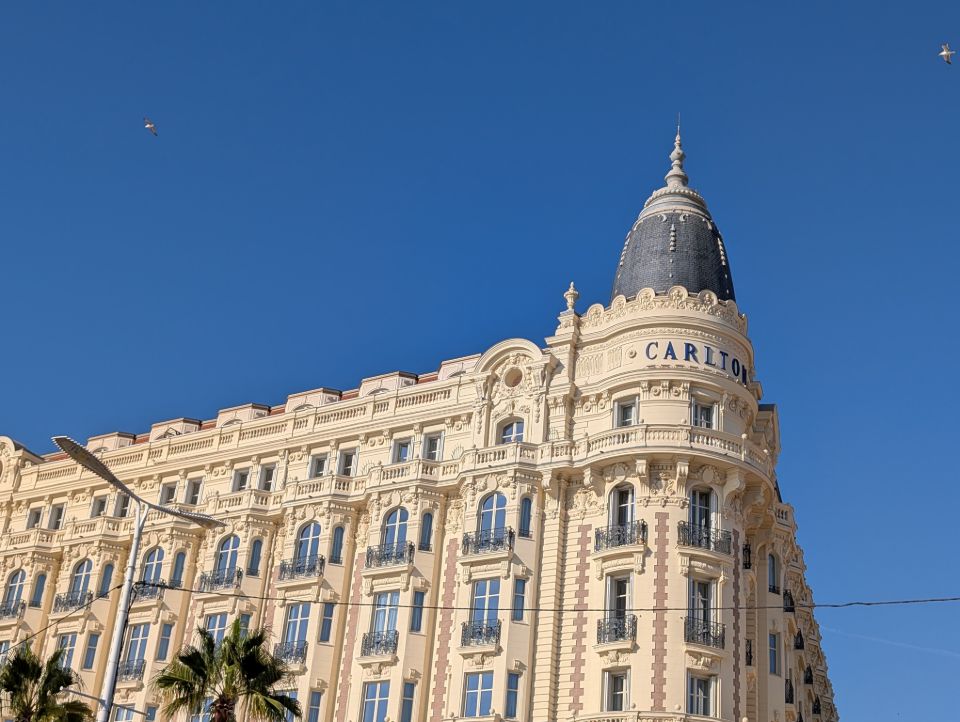
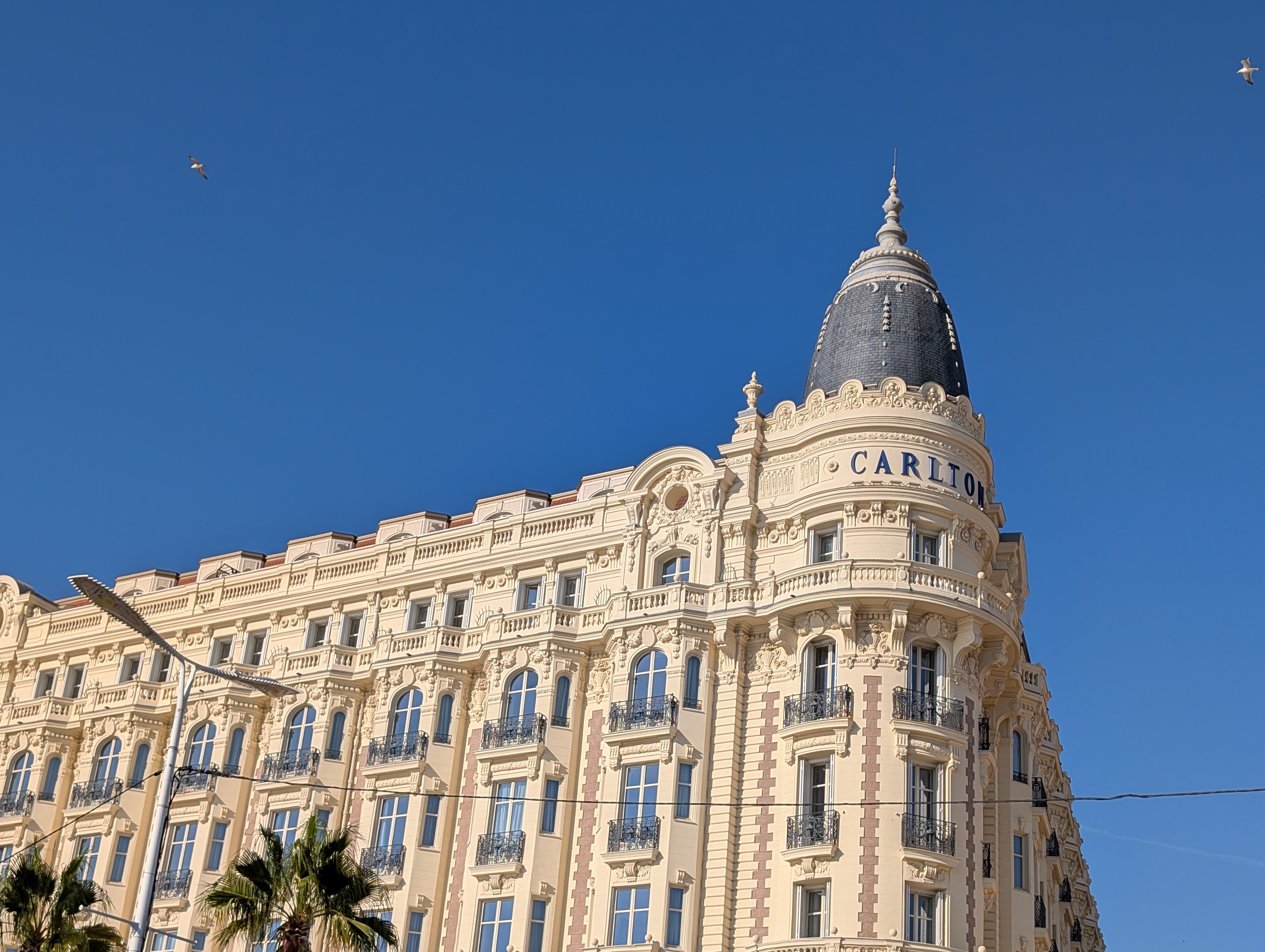
The Carlton: cream facade, dark dome, eternal post 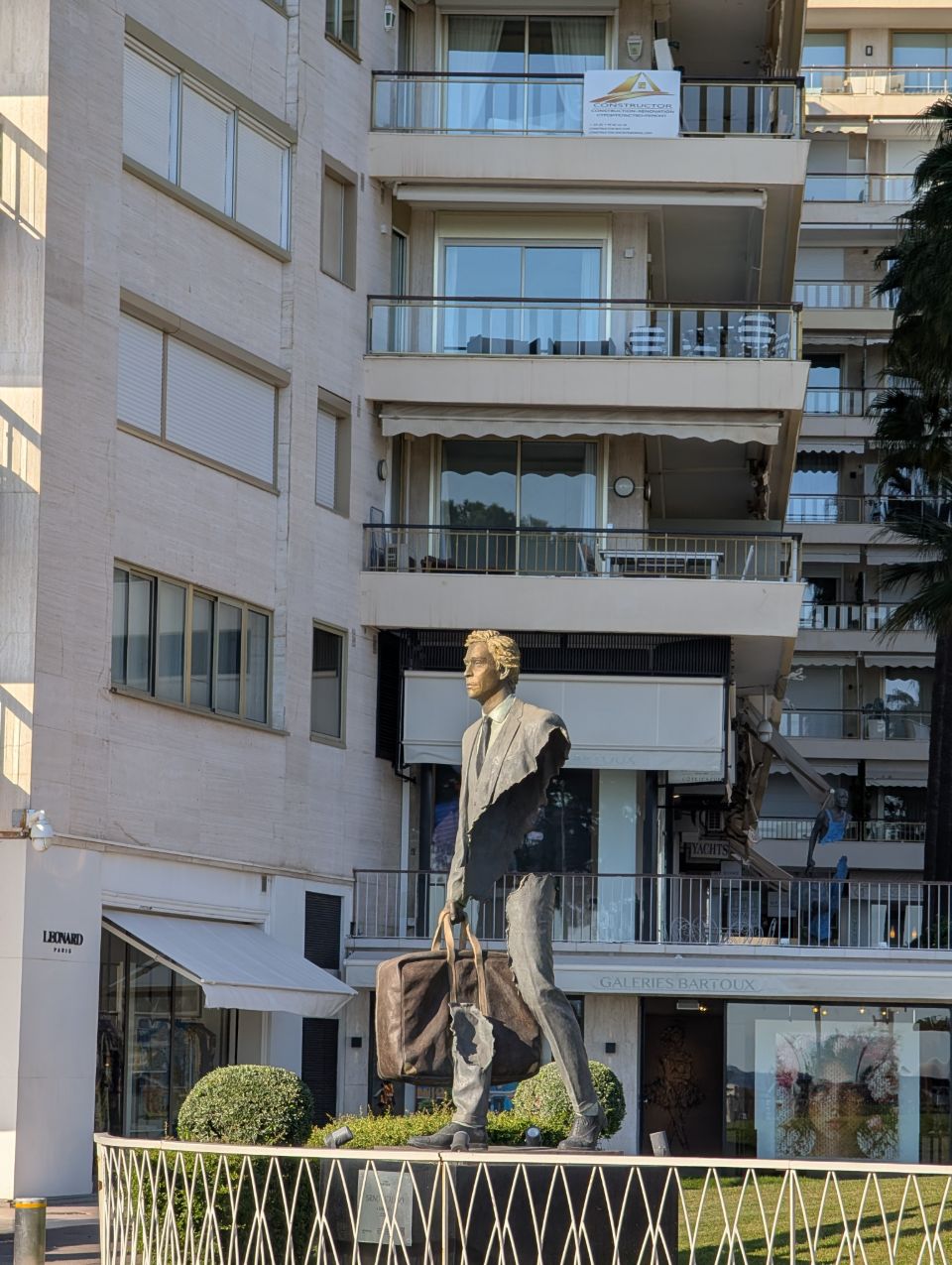
The bronze walker, suitcase up — overdue a rest, by one reading 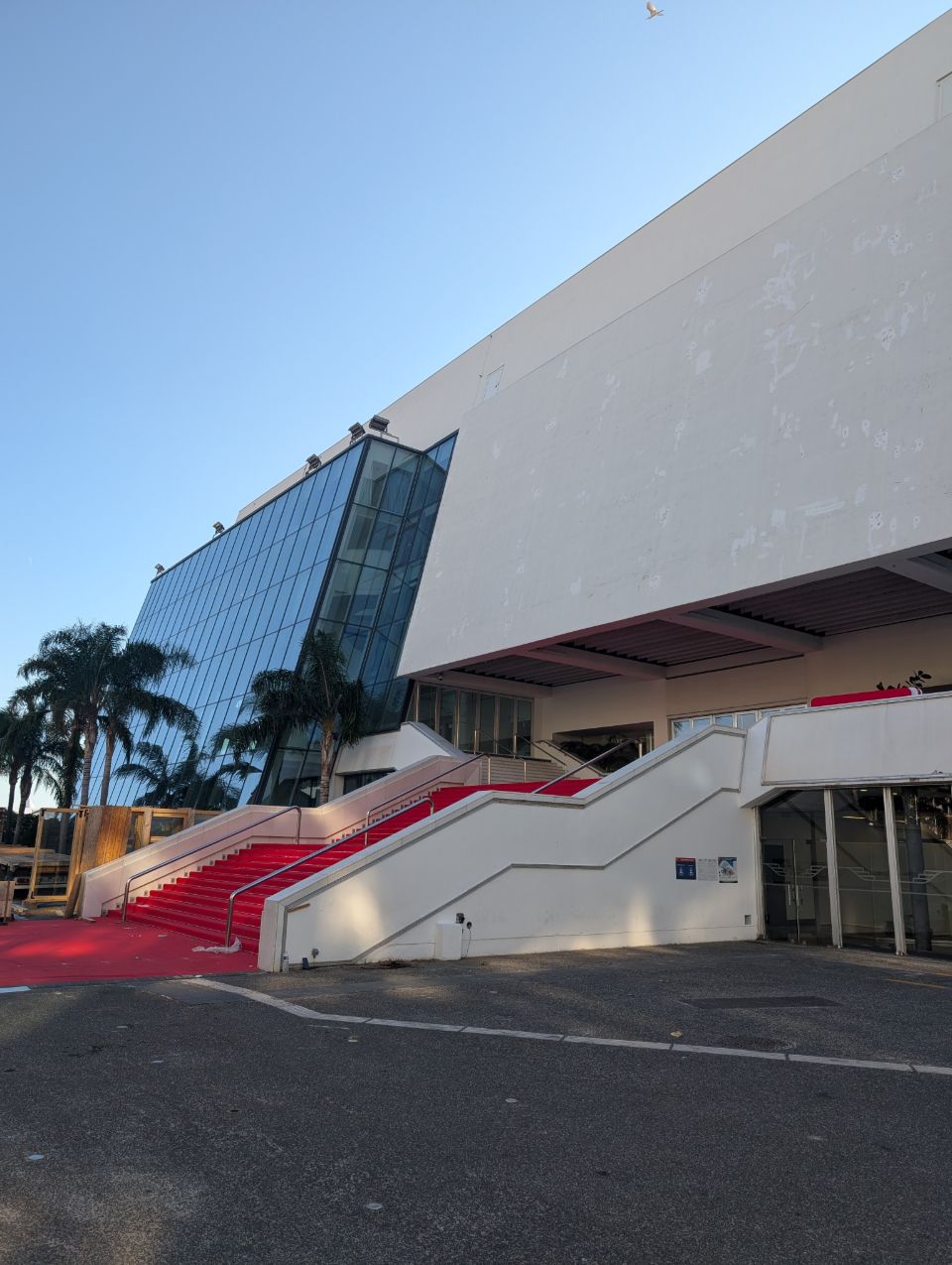
The Palais, carpet out, barricades and litter and all 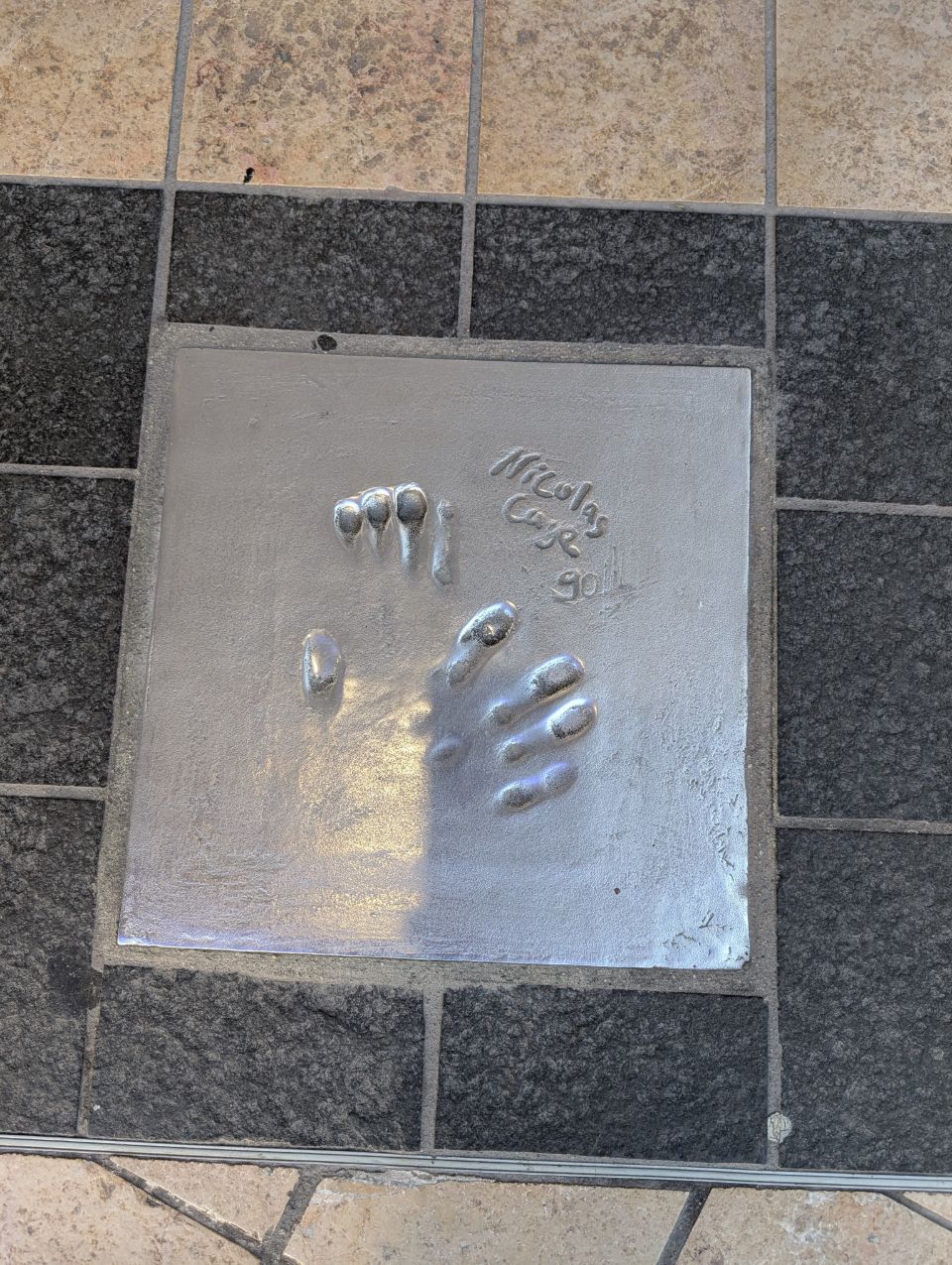
Nicolas Cage, in the pavement 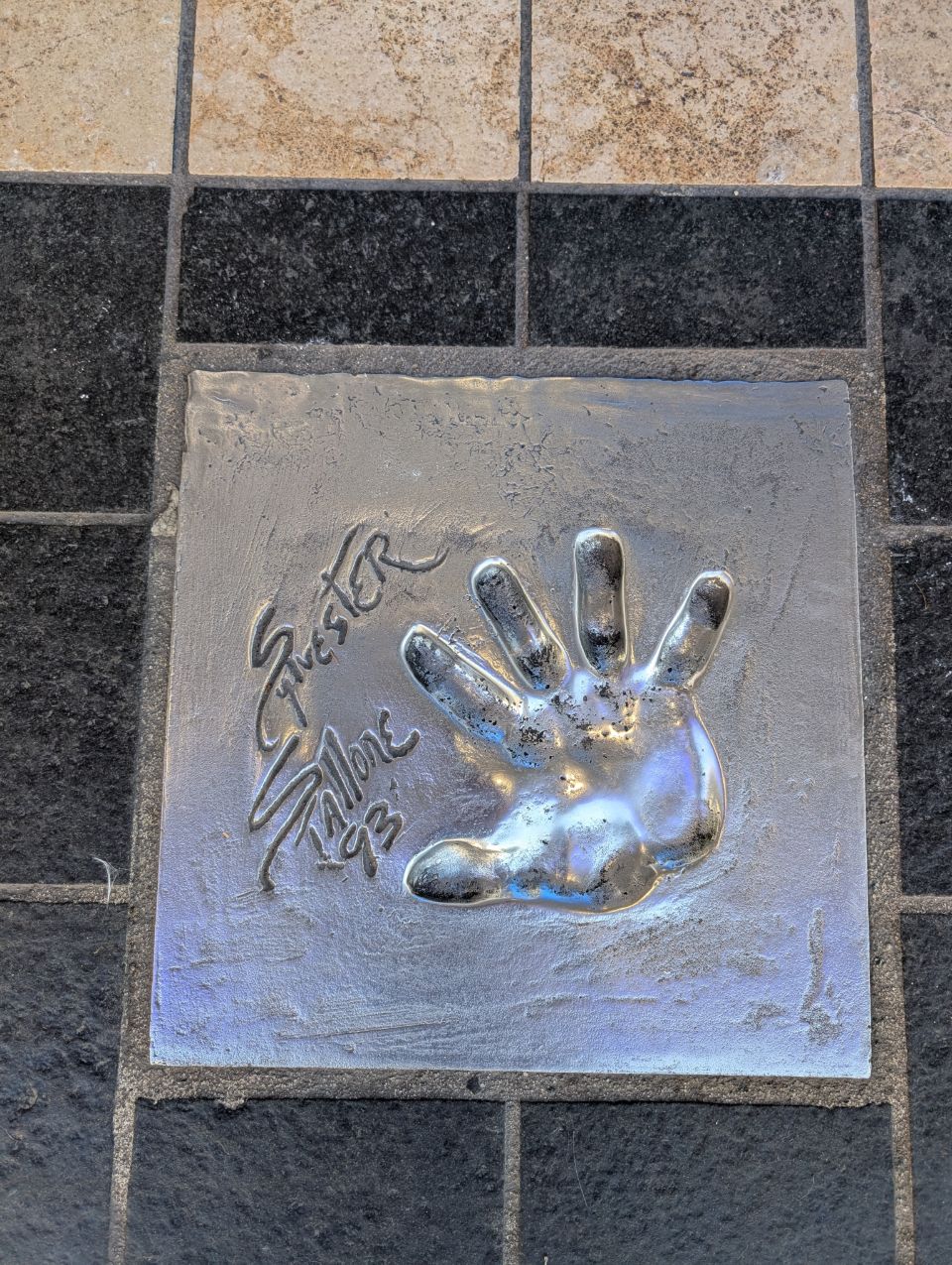
Sylvester Stallone, in the same pavement 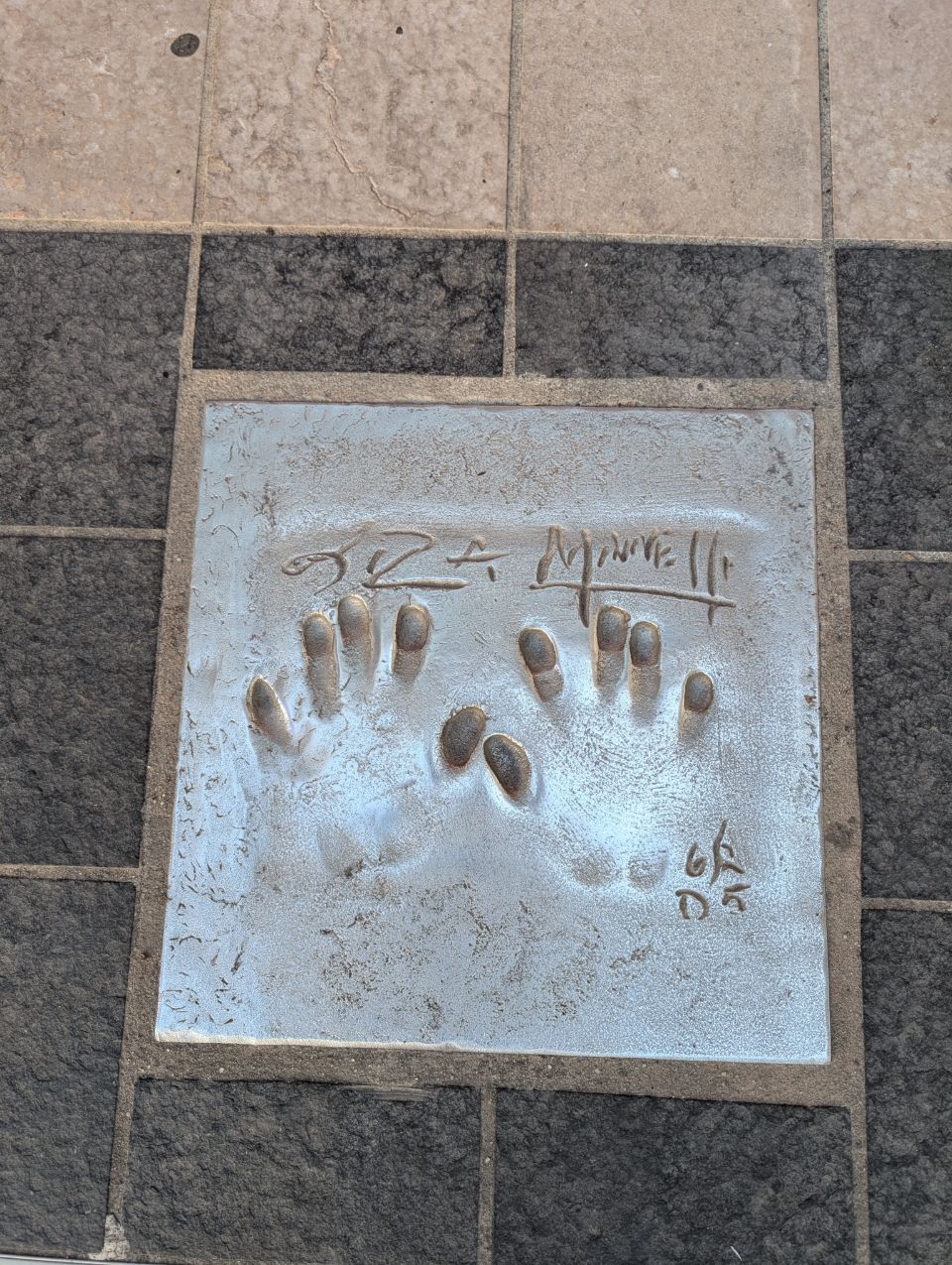
Two pairs of hands, one signature: Liza Minnelli 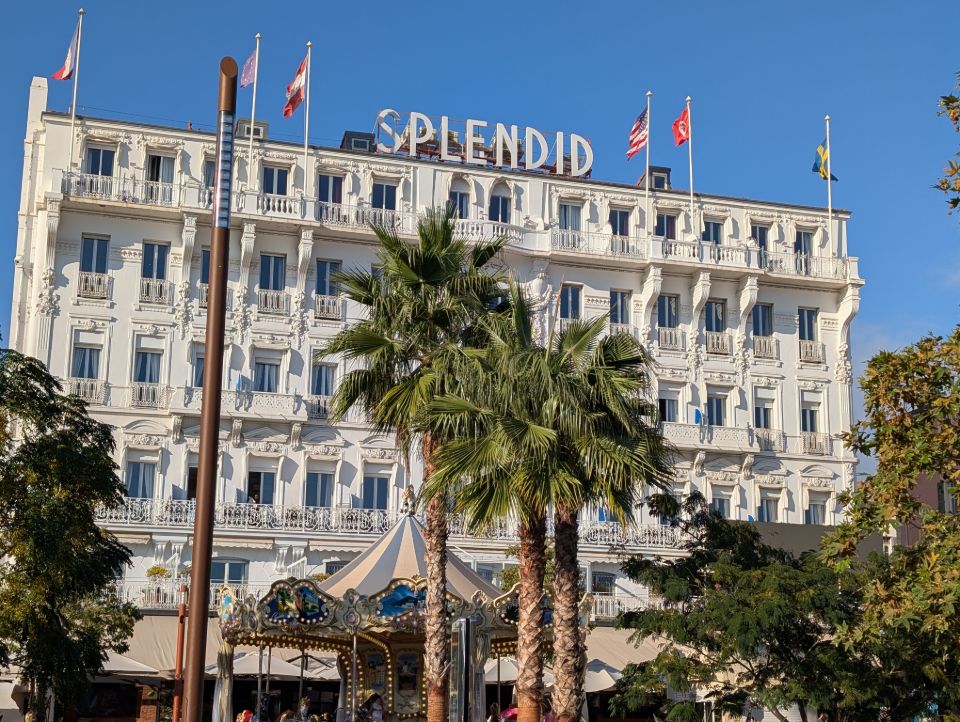
The Splendid, and the carousel in front 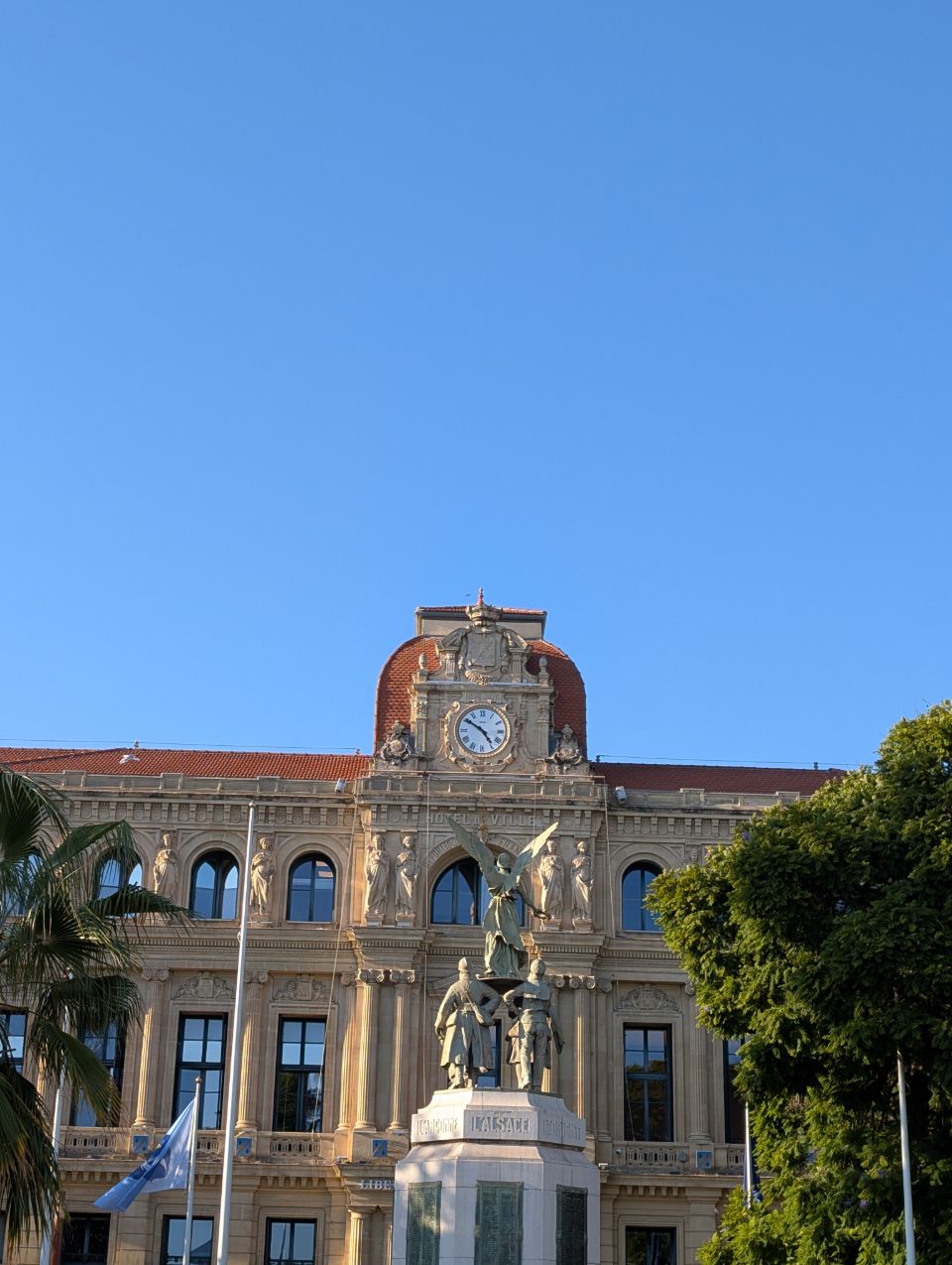
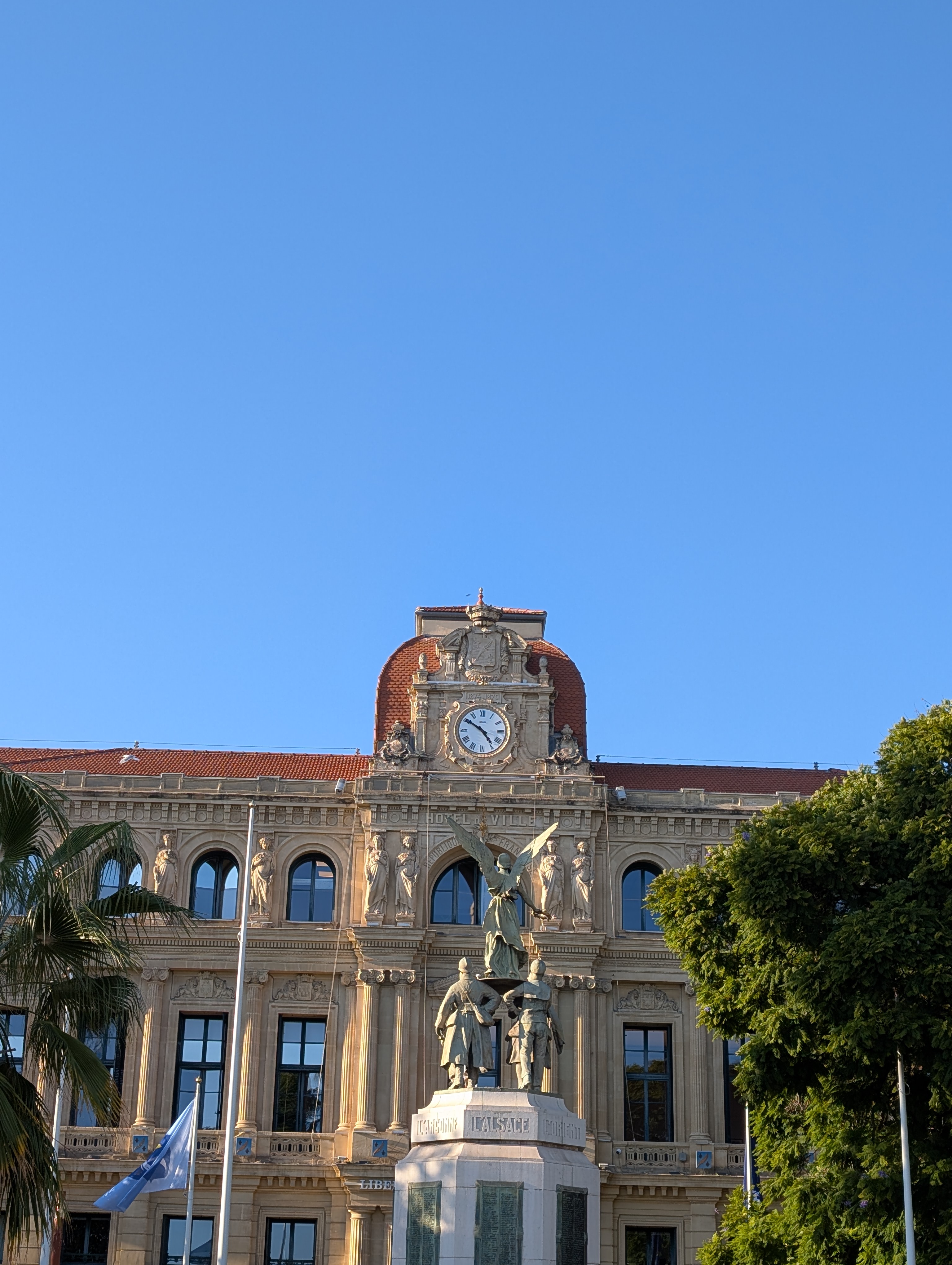
The town hall, and its memorial
The marina, and Jeanne d'Arc
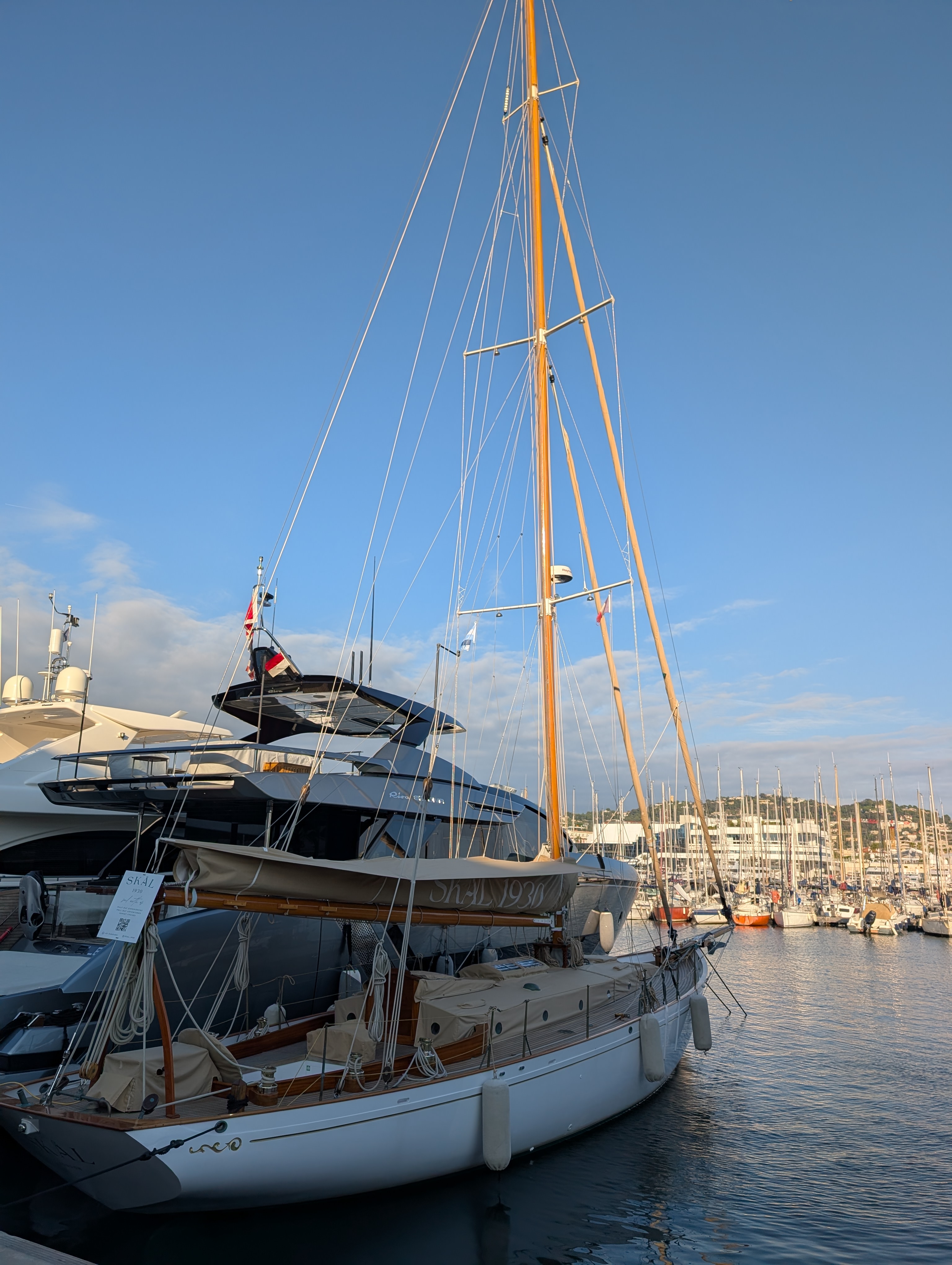
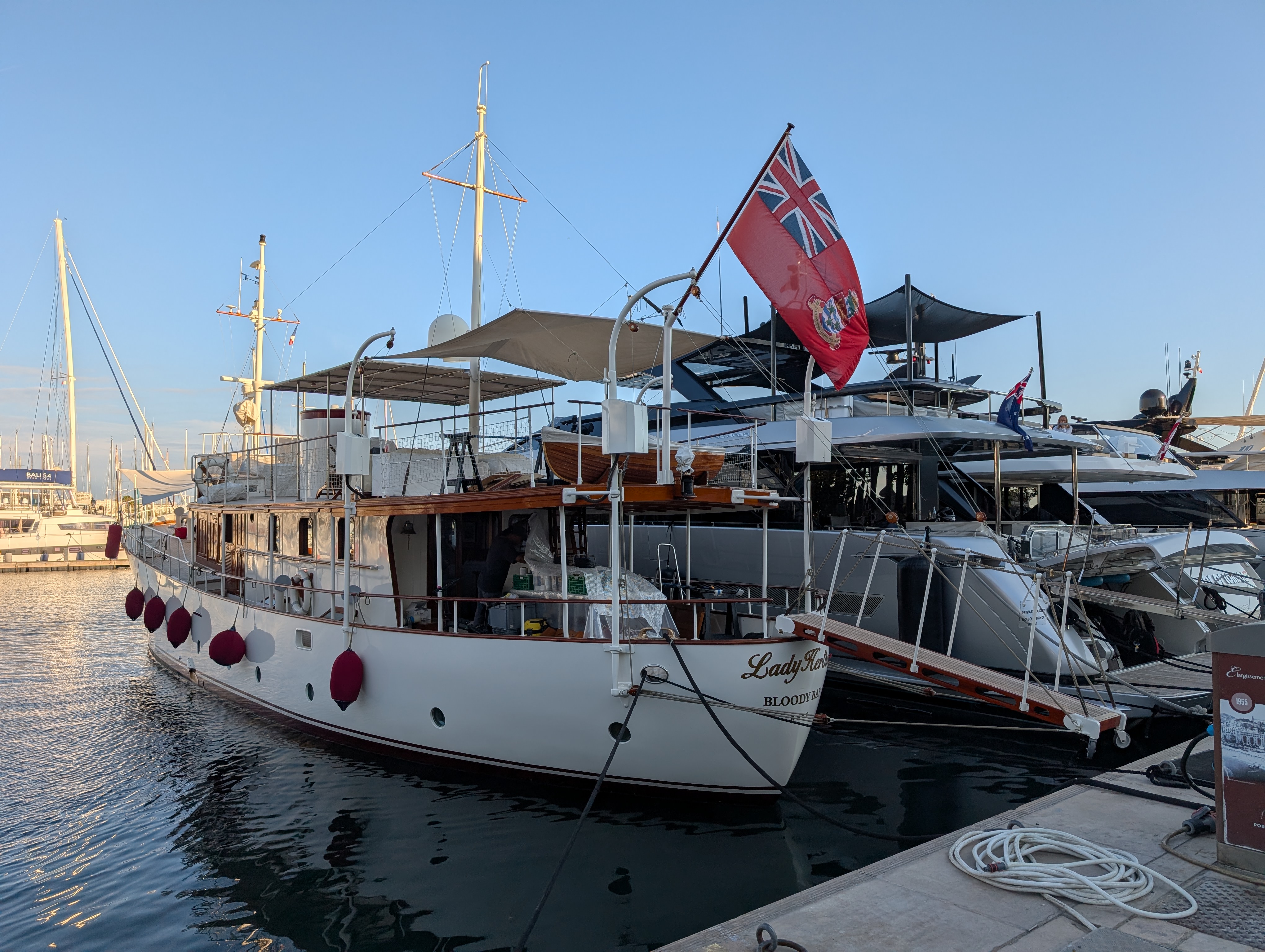
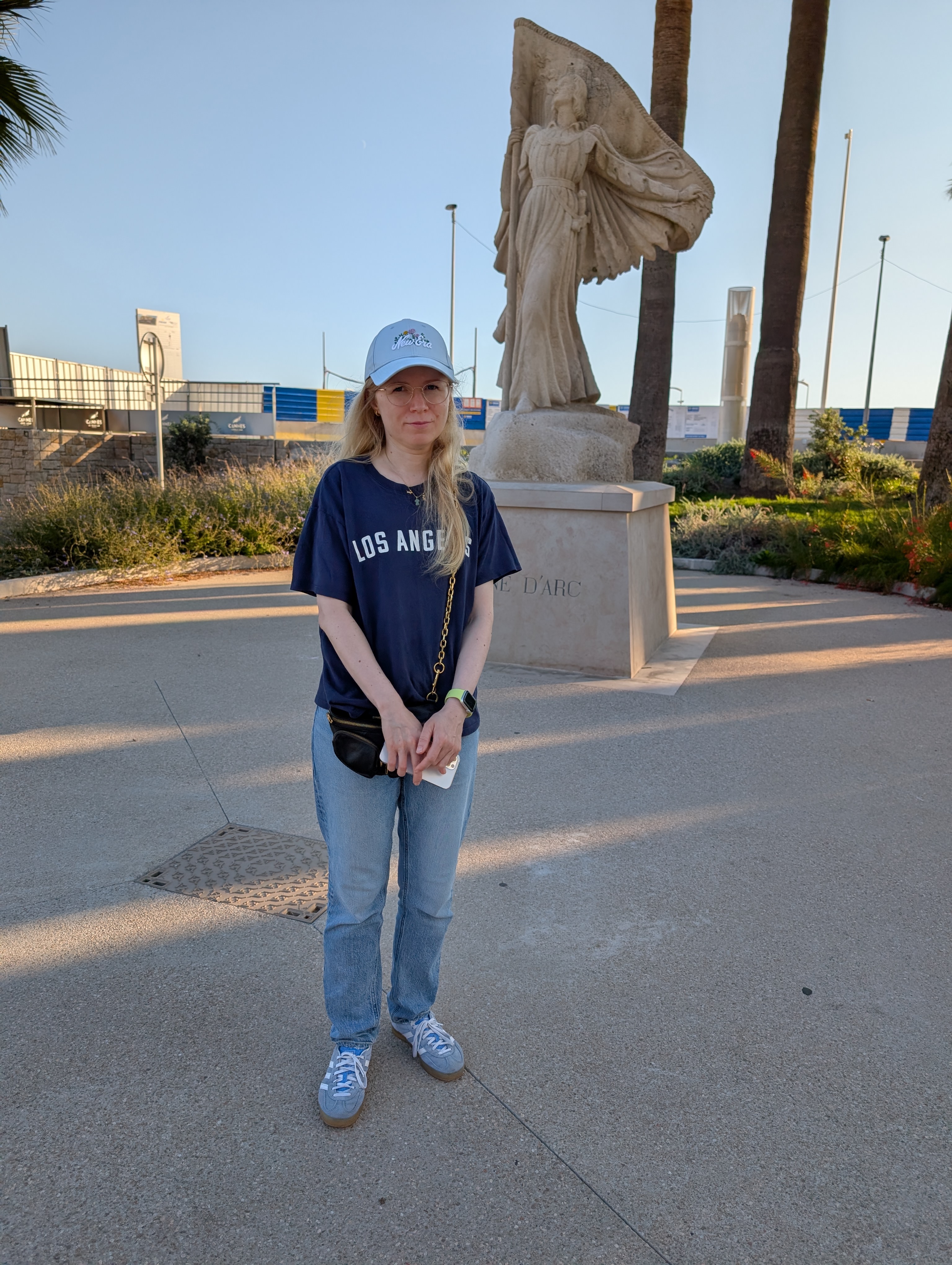
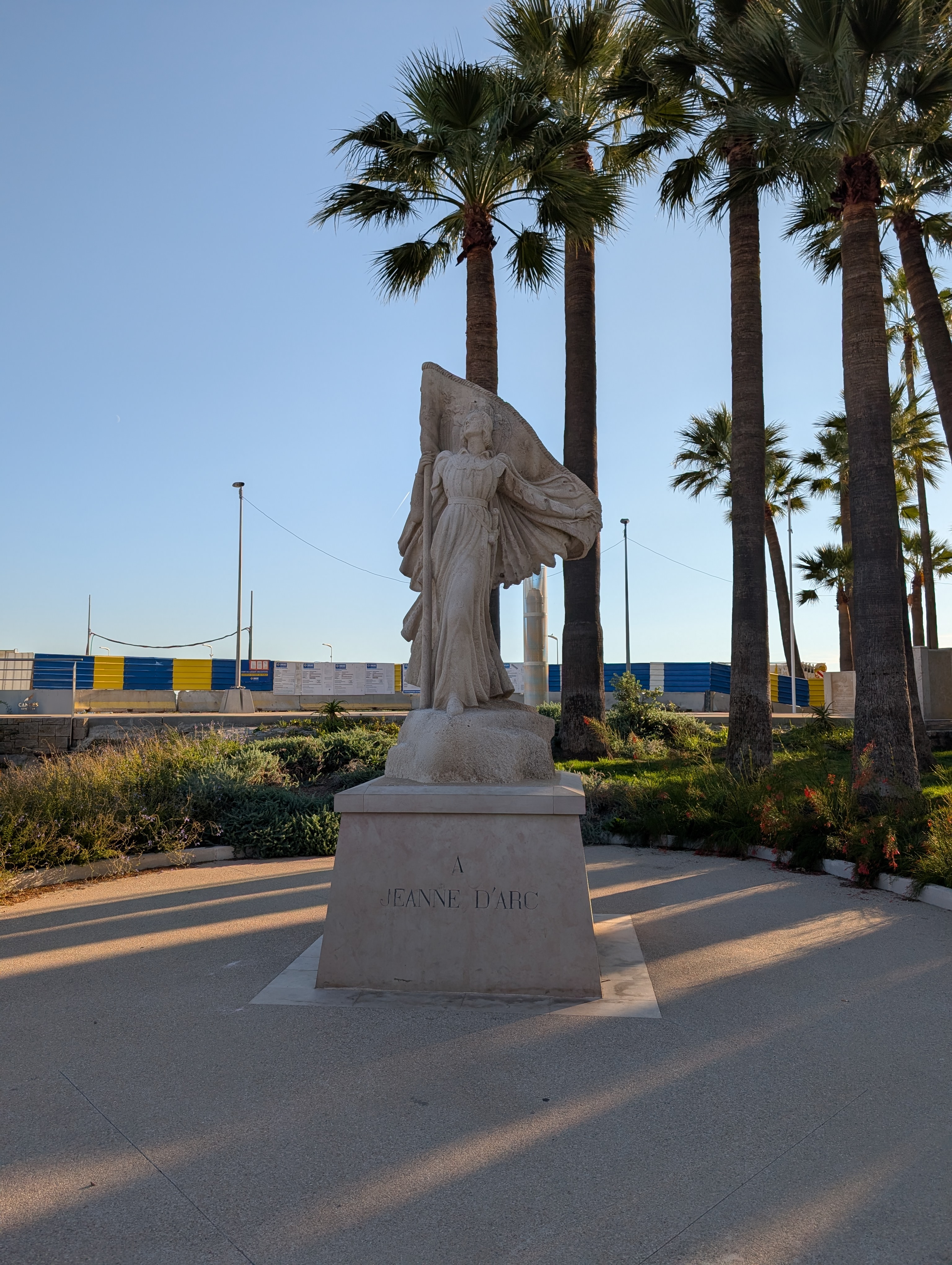
By the water the tone drops. Older boats line the quay — a gaff-rigged sailing yacht called Halland with her full rigging, like a piece of furniture from another century, and a classic motor yacht, Lady C., flying the red ensign as if an empire still owed her something. At the end of the Croisette stands a stone Jeanne d'Arc, wing at her shoulder, palm in hand. The lane goes up from there.
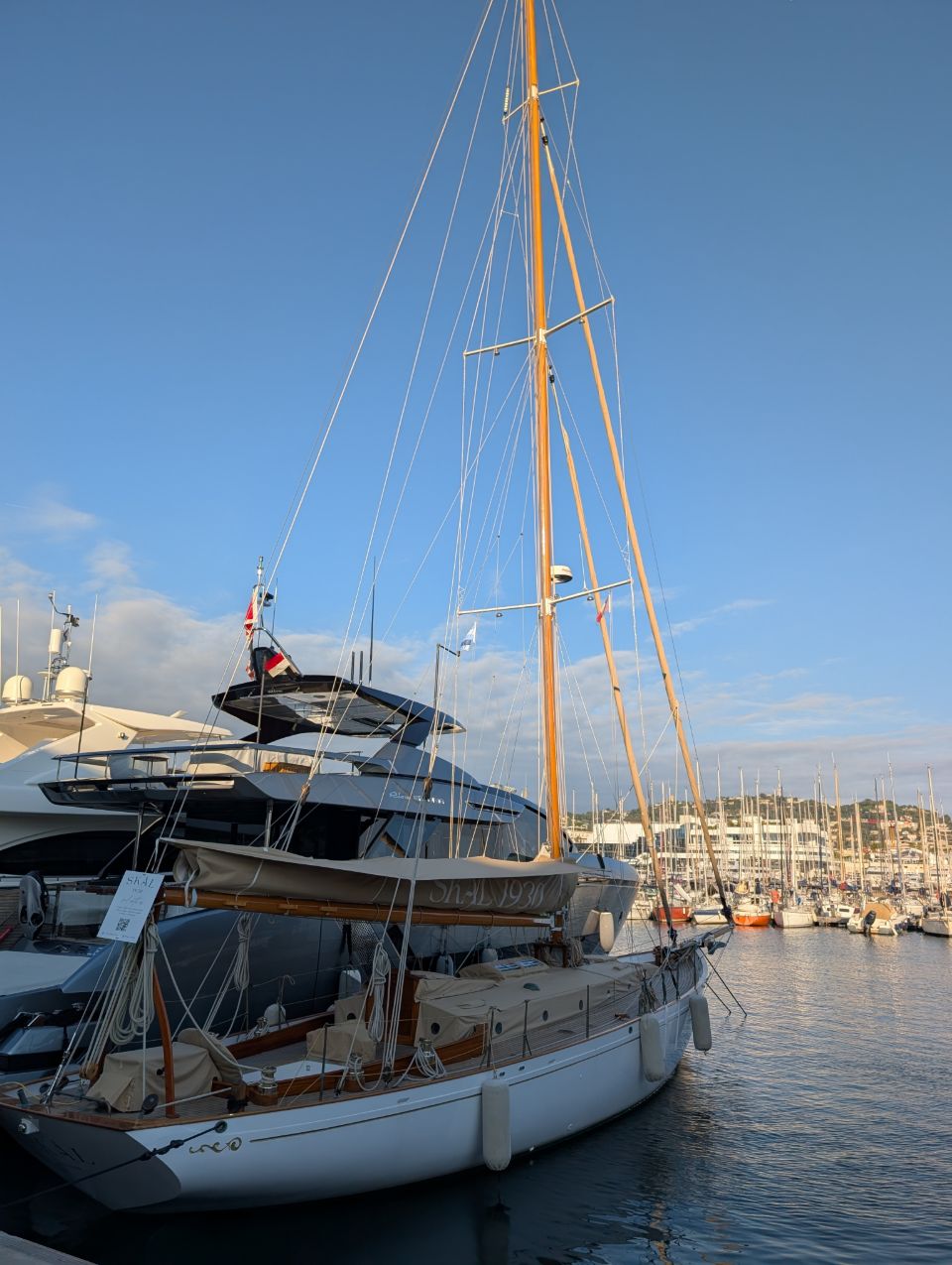
The Halland, full of rigging and patience 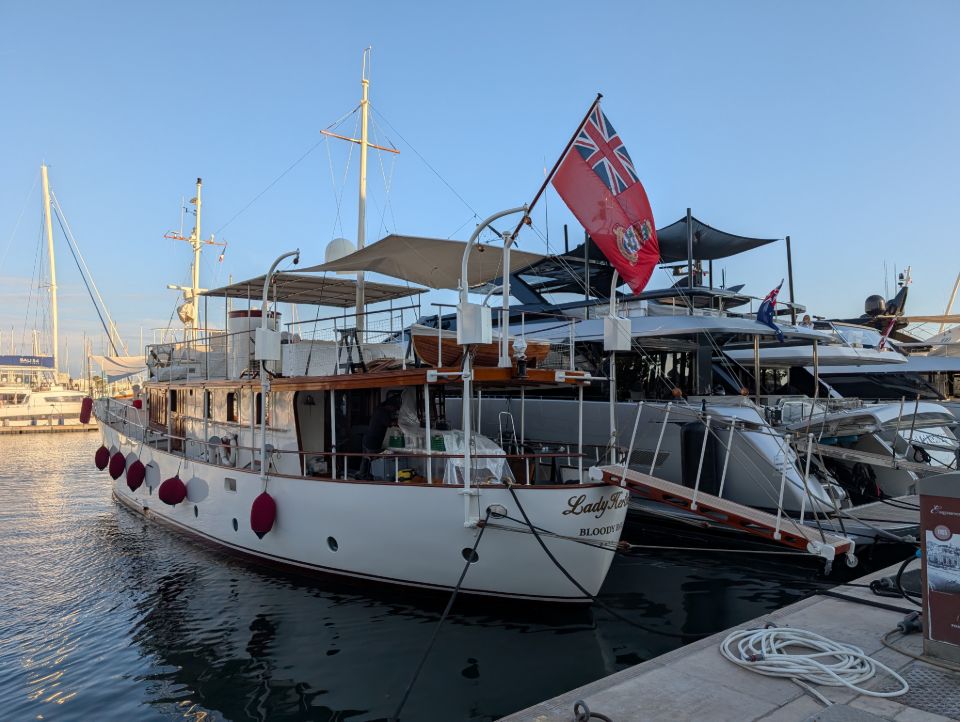
The Lady C., ensign flying, empire optional 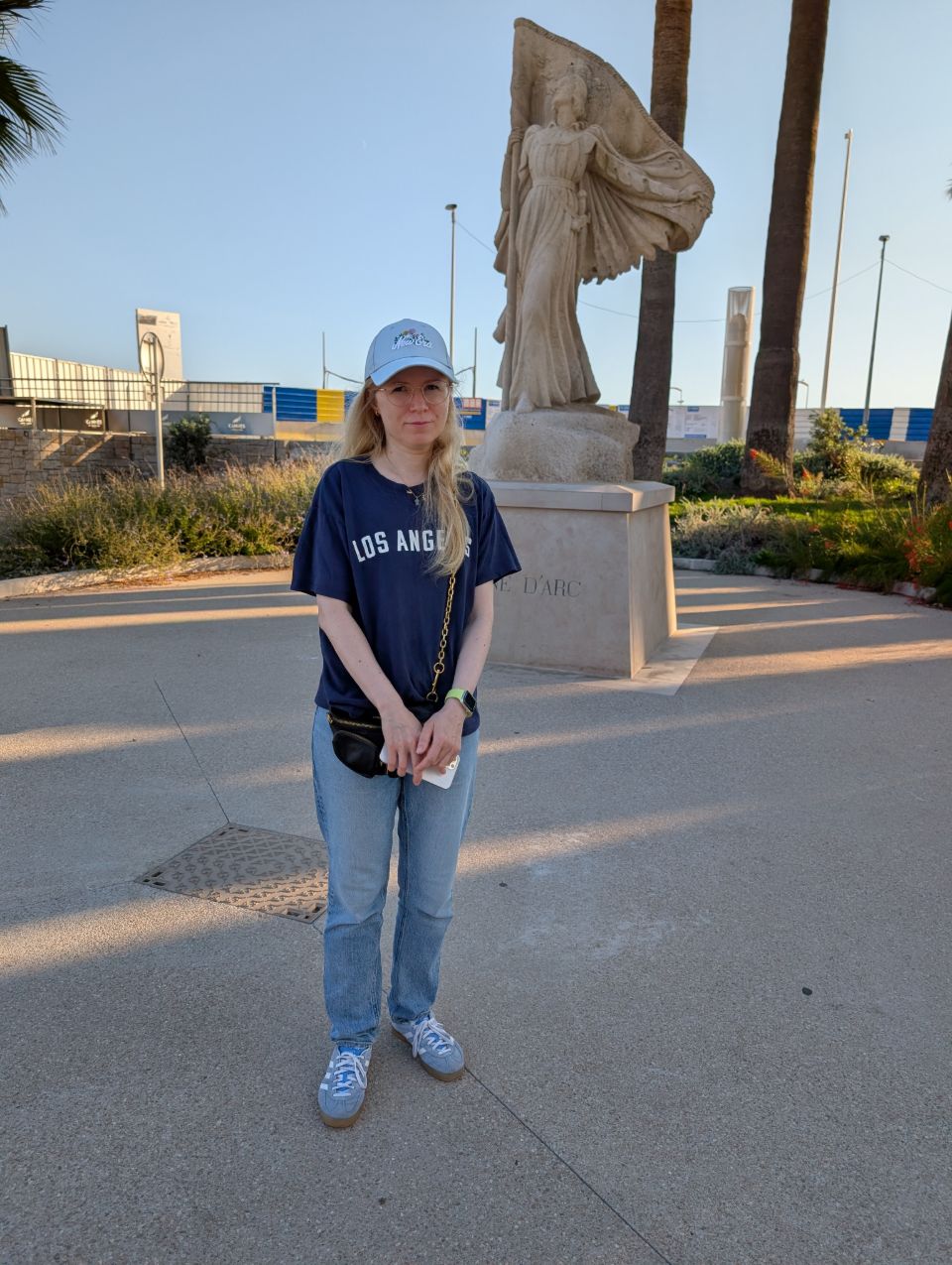
Anna, working out what Jeanne holds 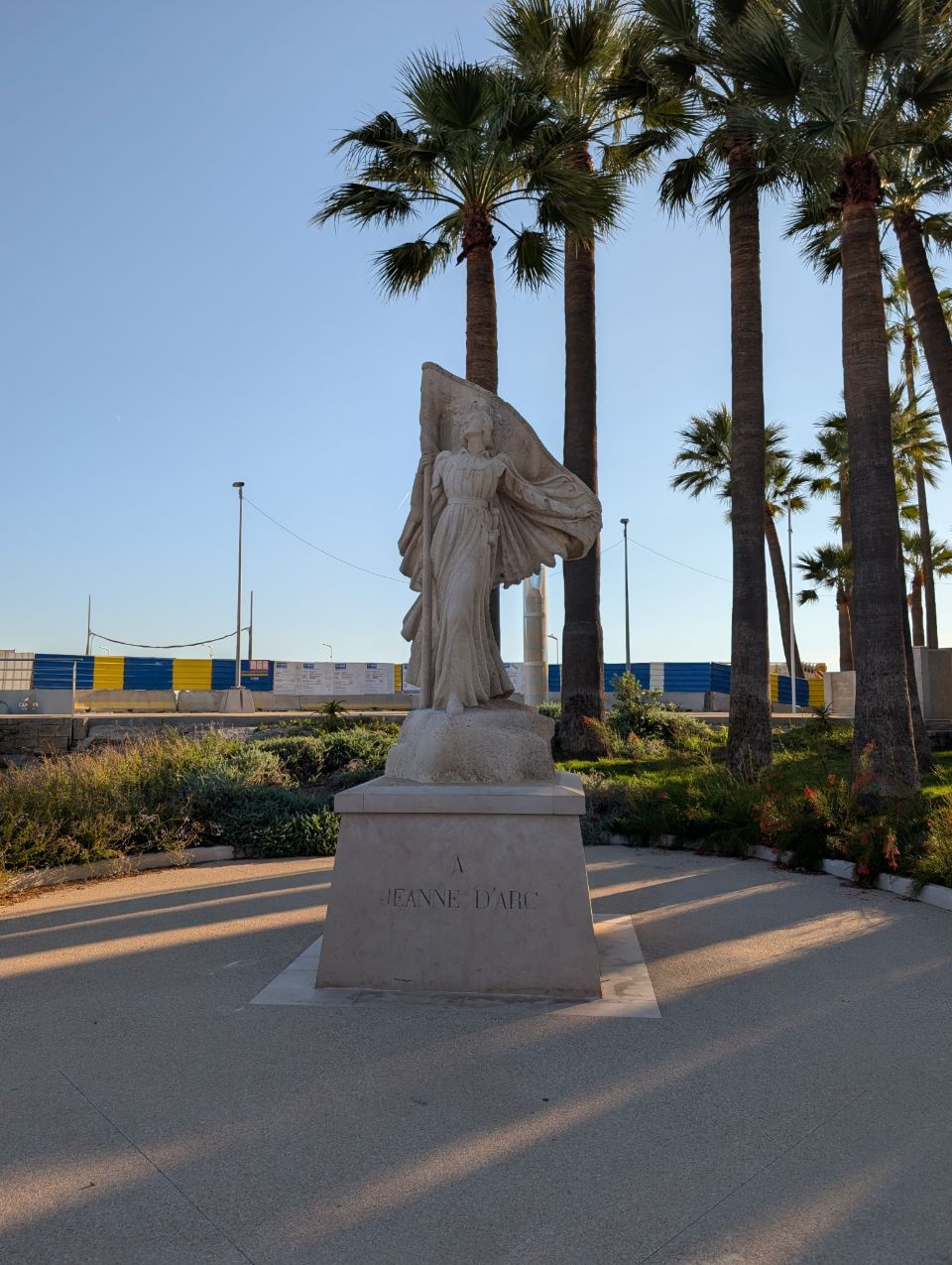
Jeanne d'Arc, wing and palm 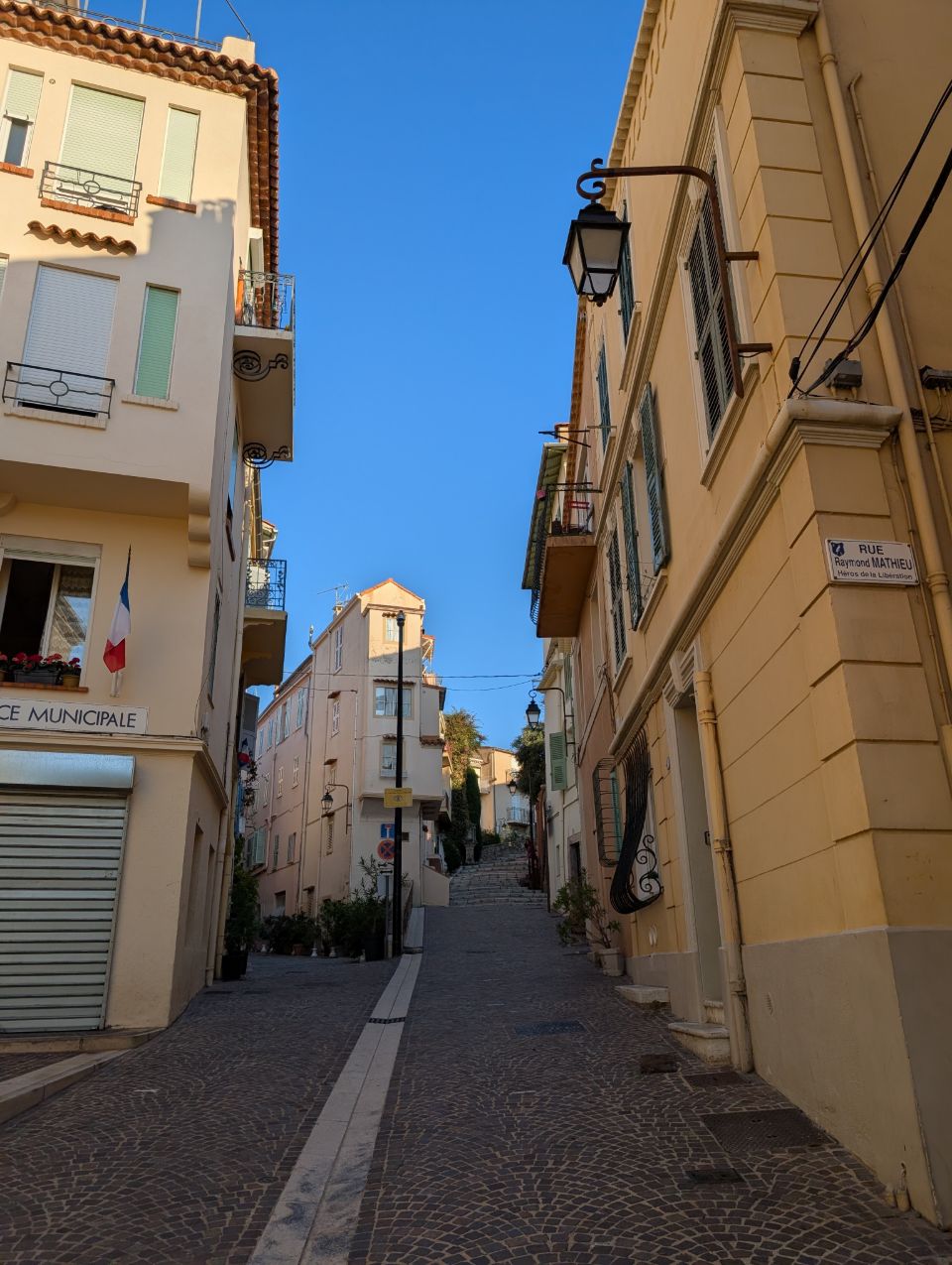
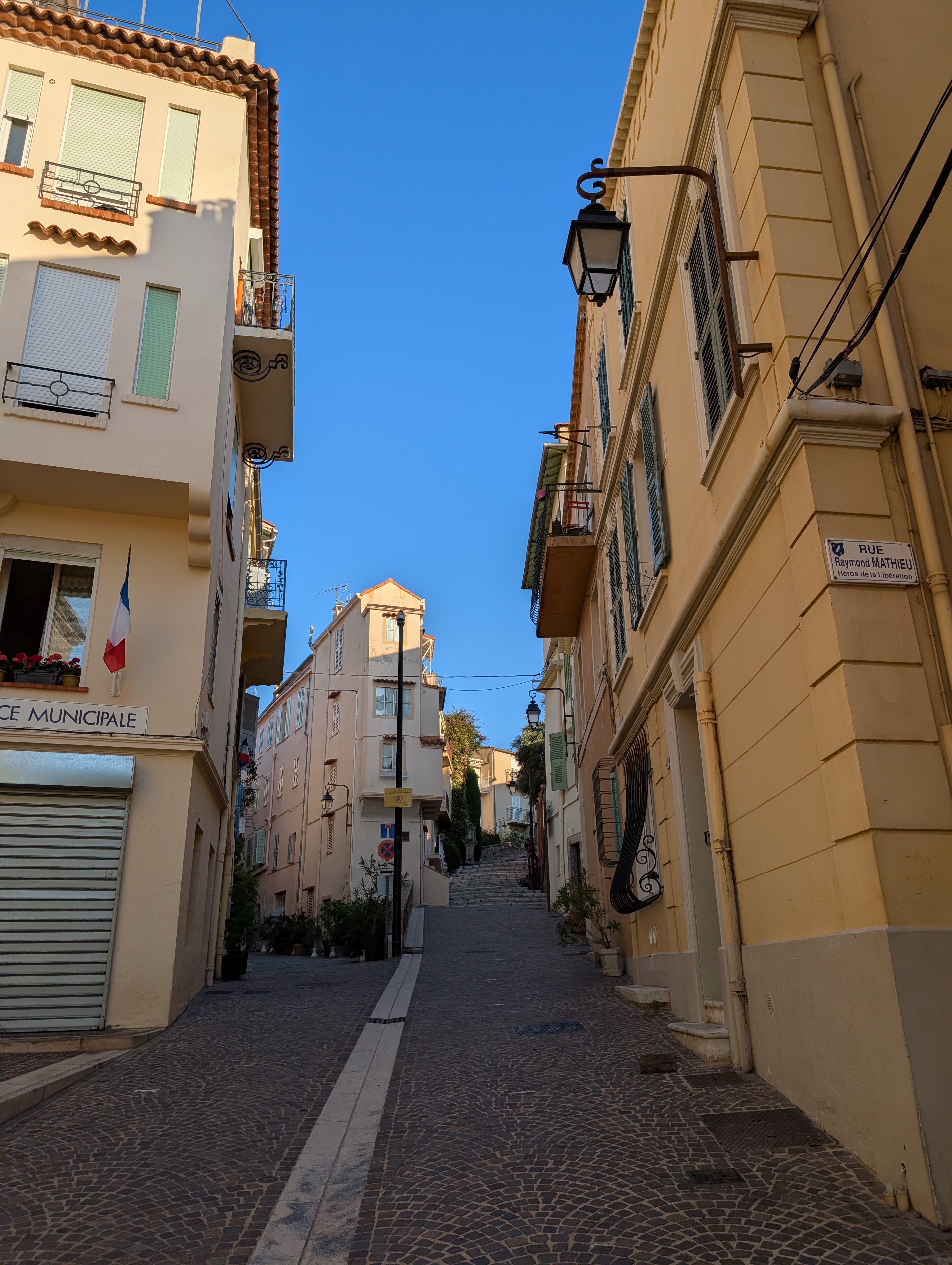
The mairie's annex, flag out, lane climbing
Le Suquet
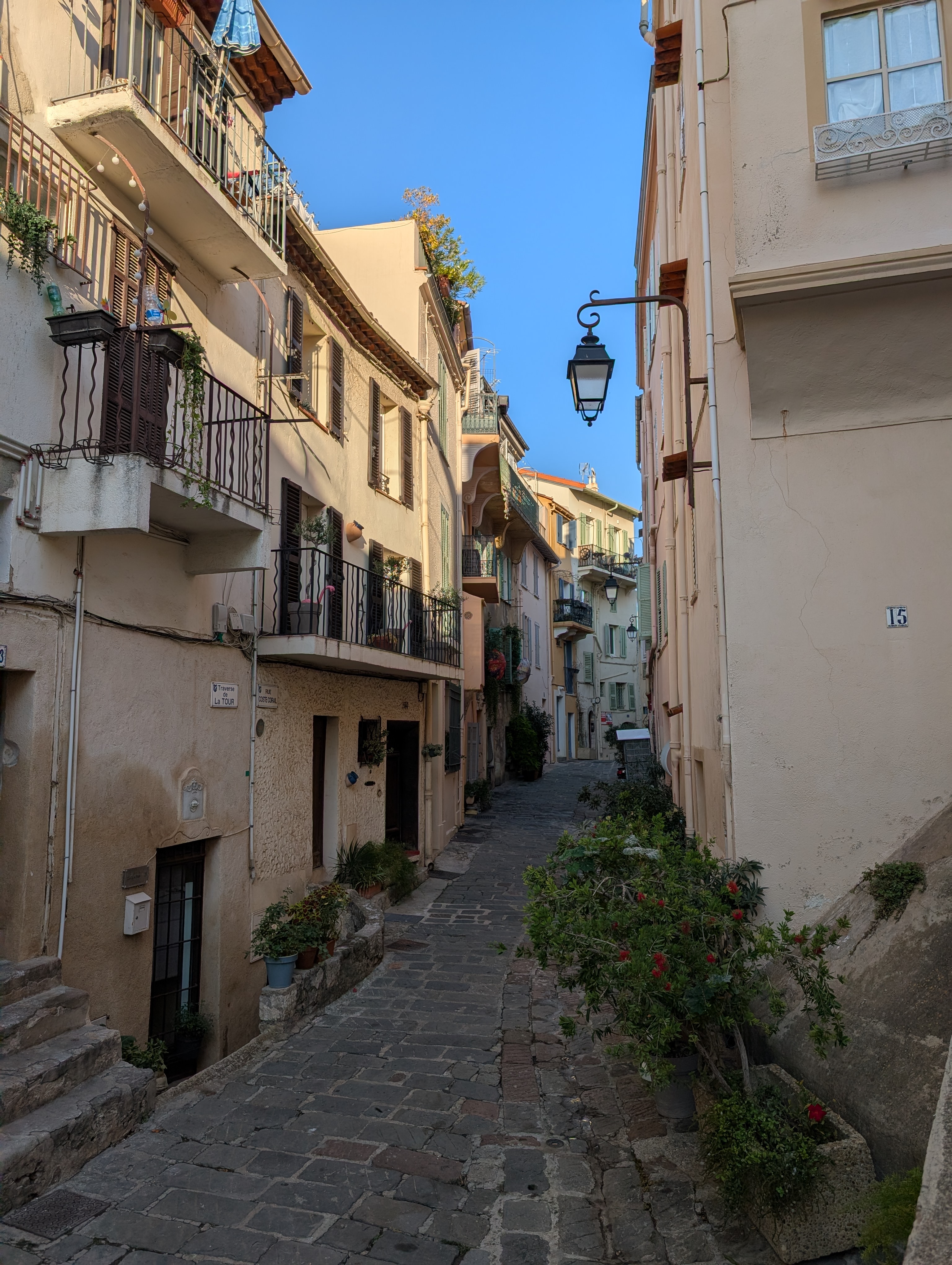
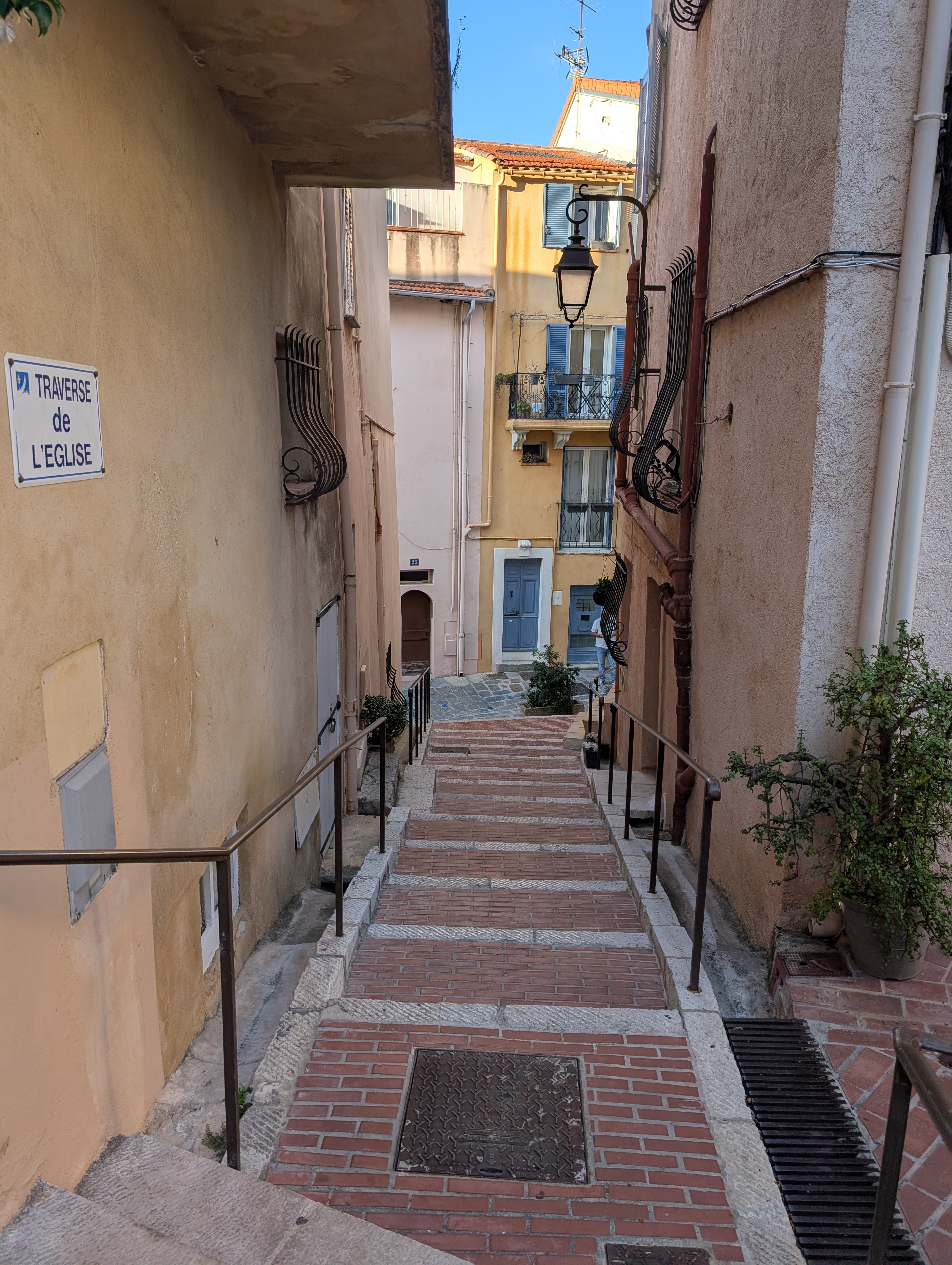
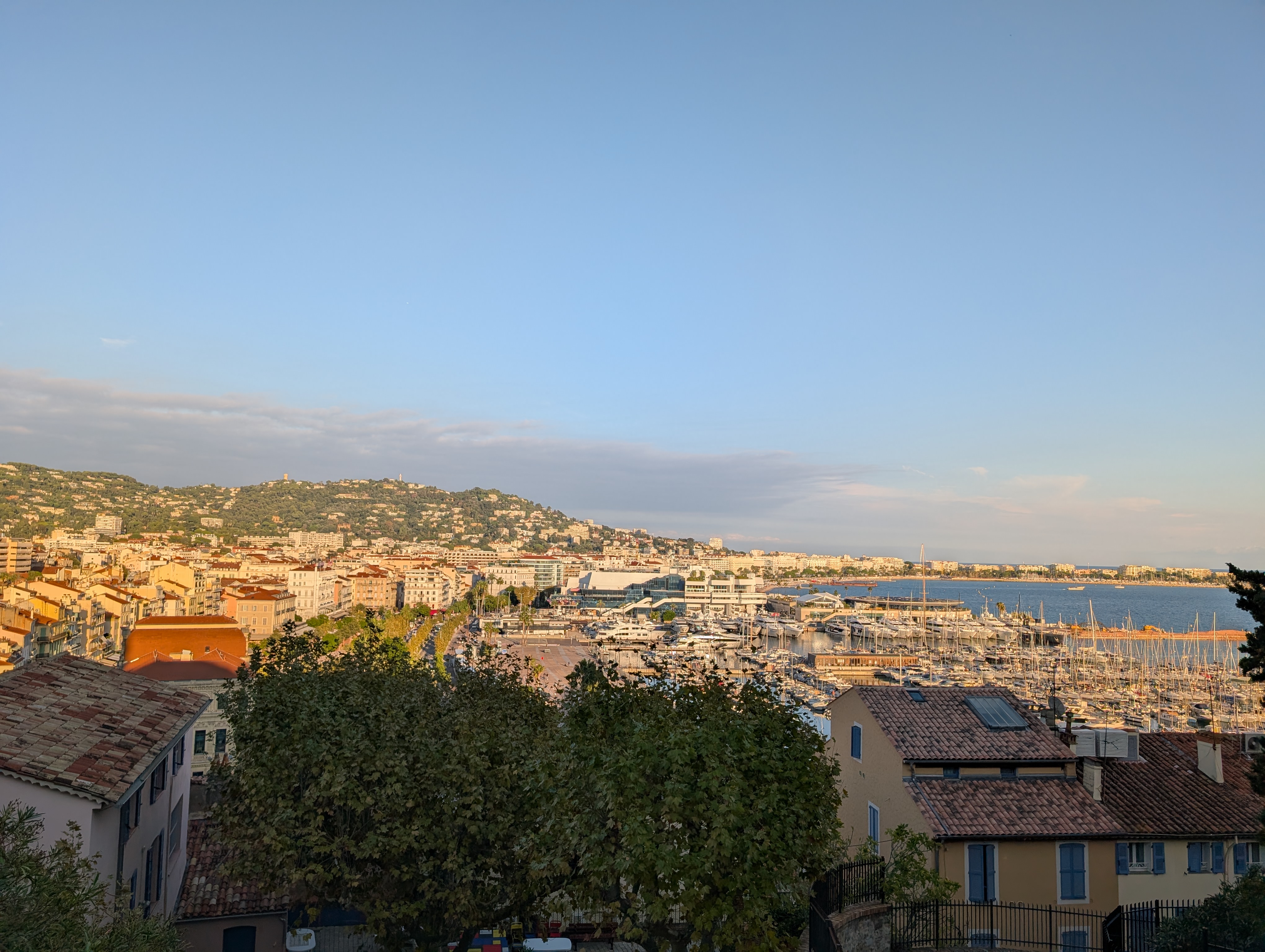
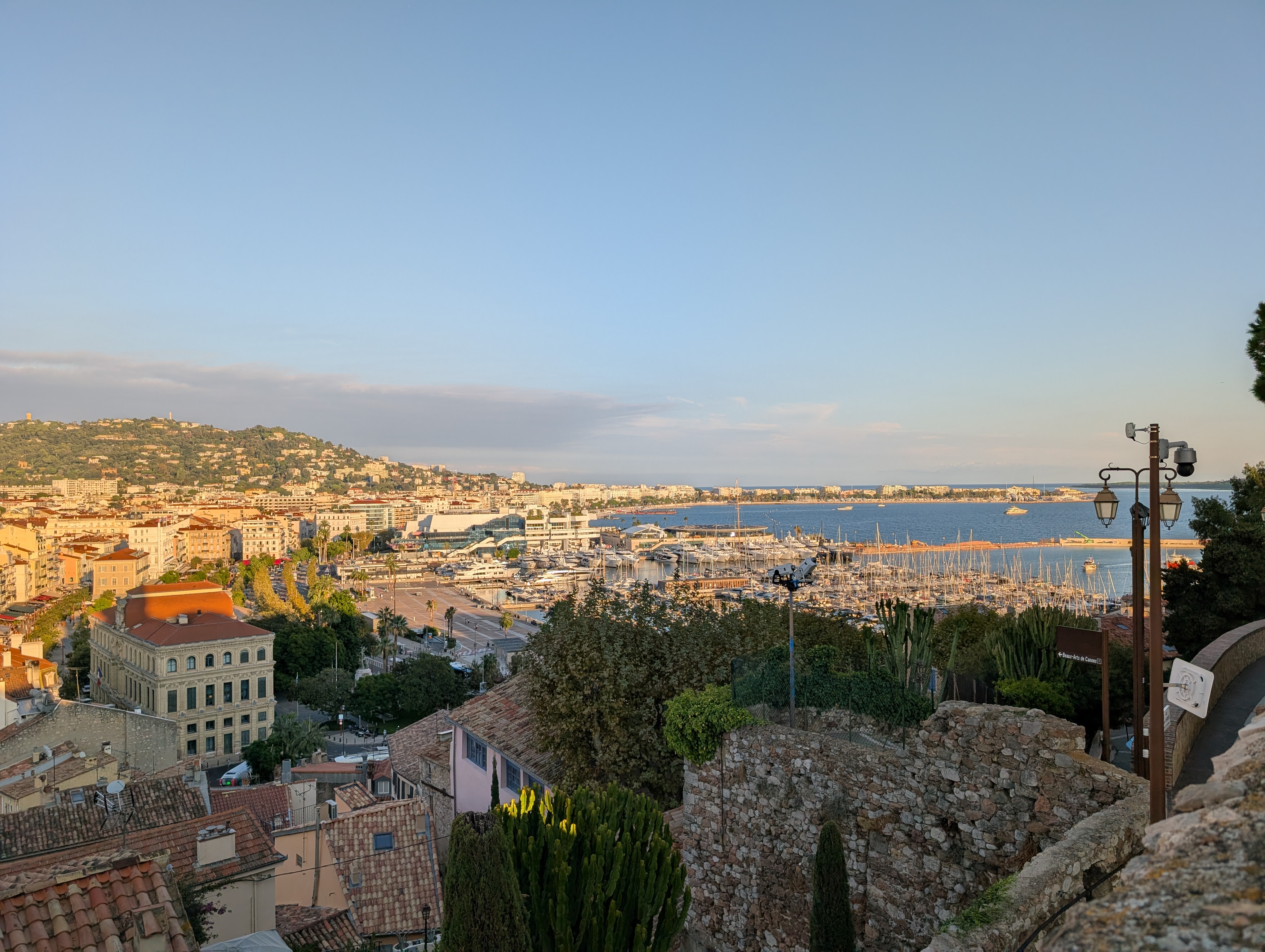
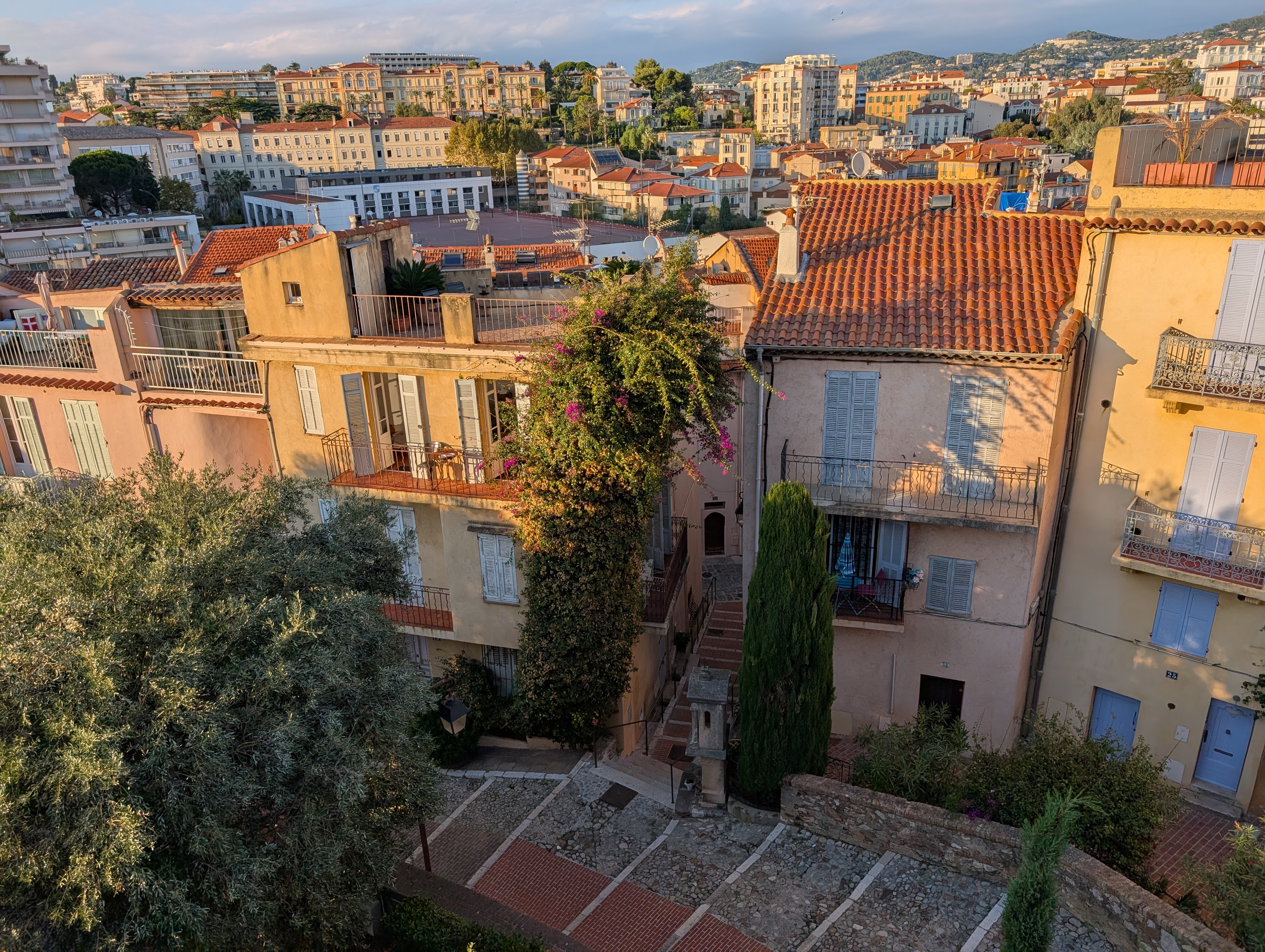
The town's old heart climbs a hill, and the climb is the point. Lanes of ochre and cream with their shutters blue; balconies of iron with plants that have stopped caring; brick steps that call themselves a Traverse; a mairie annex flying the flag at the corner. The city below got smaller and better-lit with every landing, until the view was the port itself — a bowl of masts, the hills going rose-gold, the whole Bay of Cannes laid out flat and warm under the afternoon's last hour.
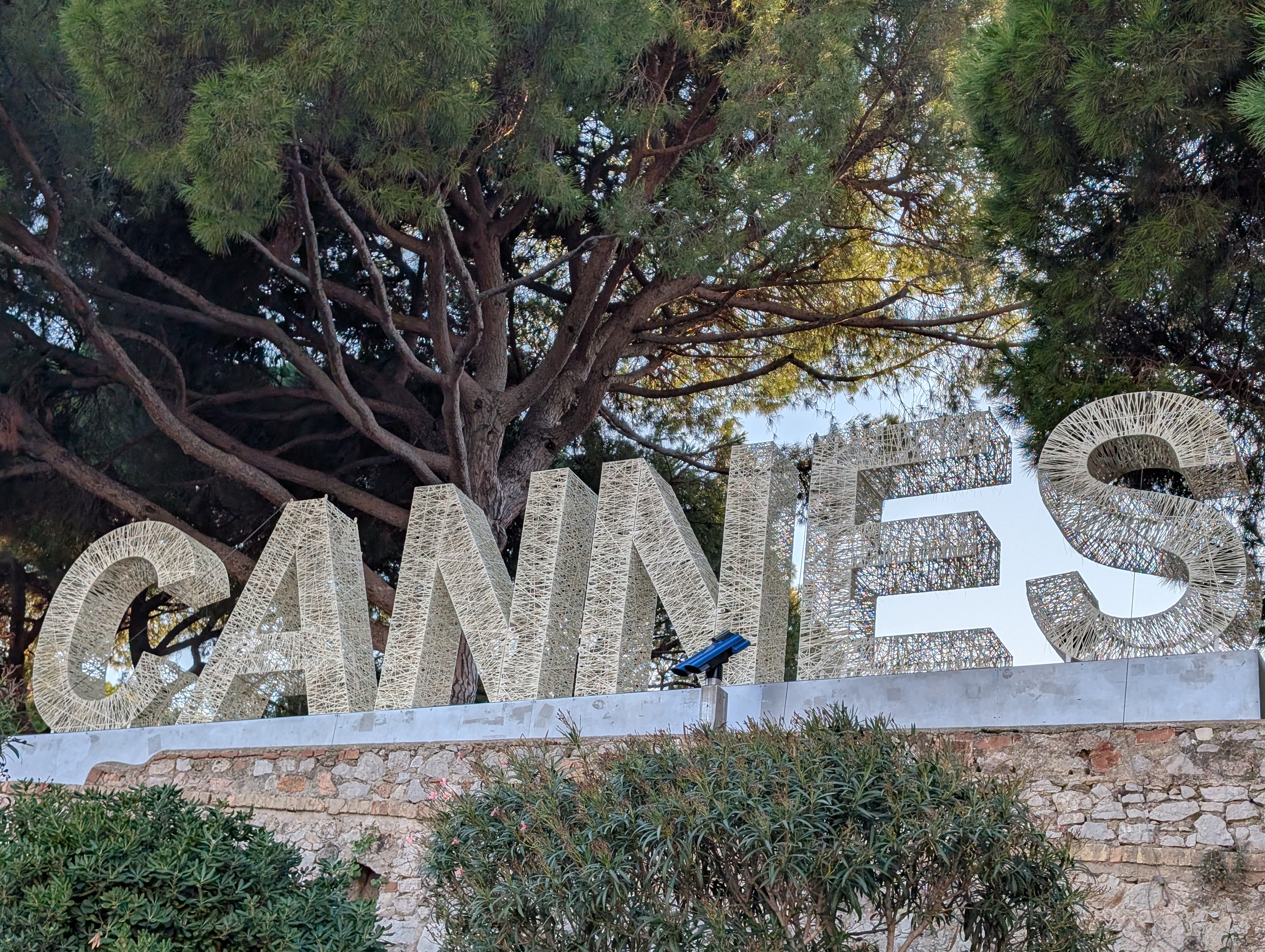
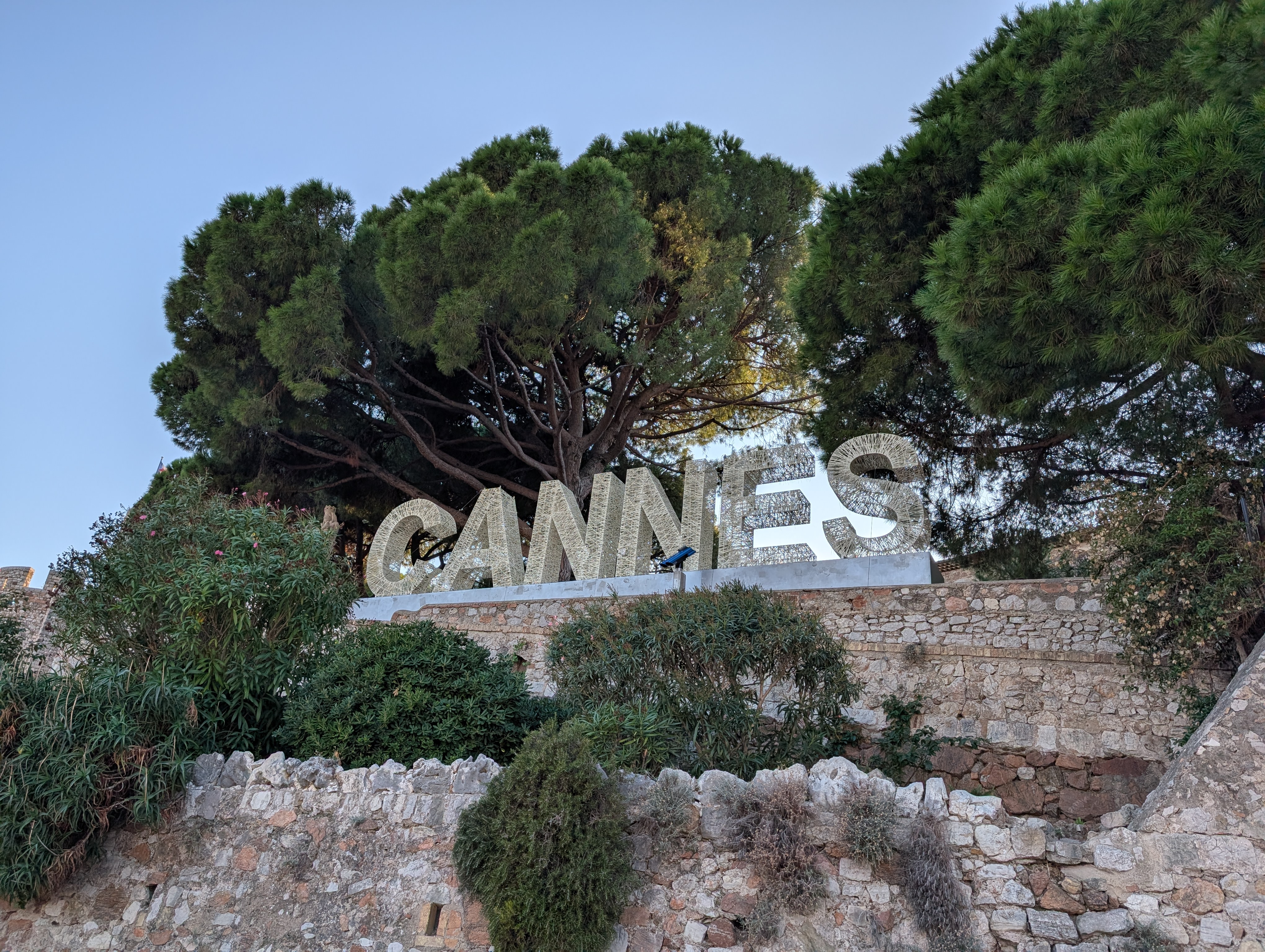
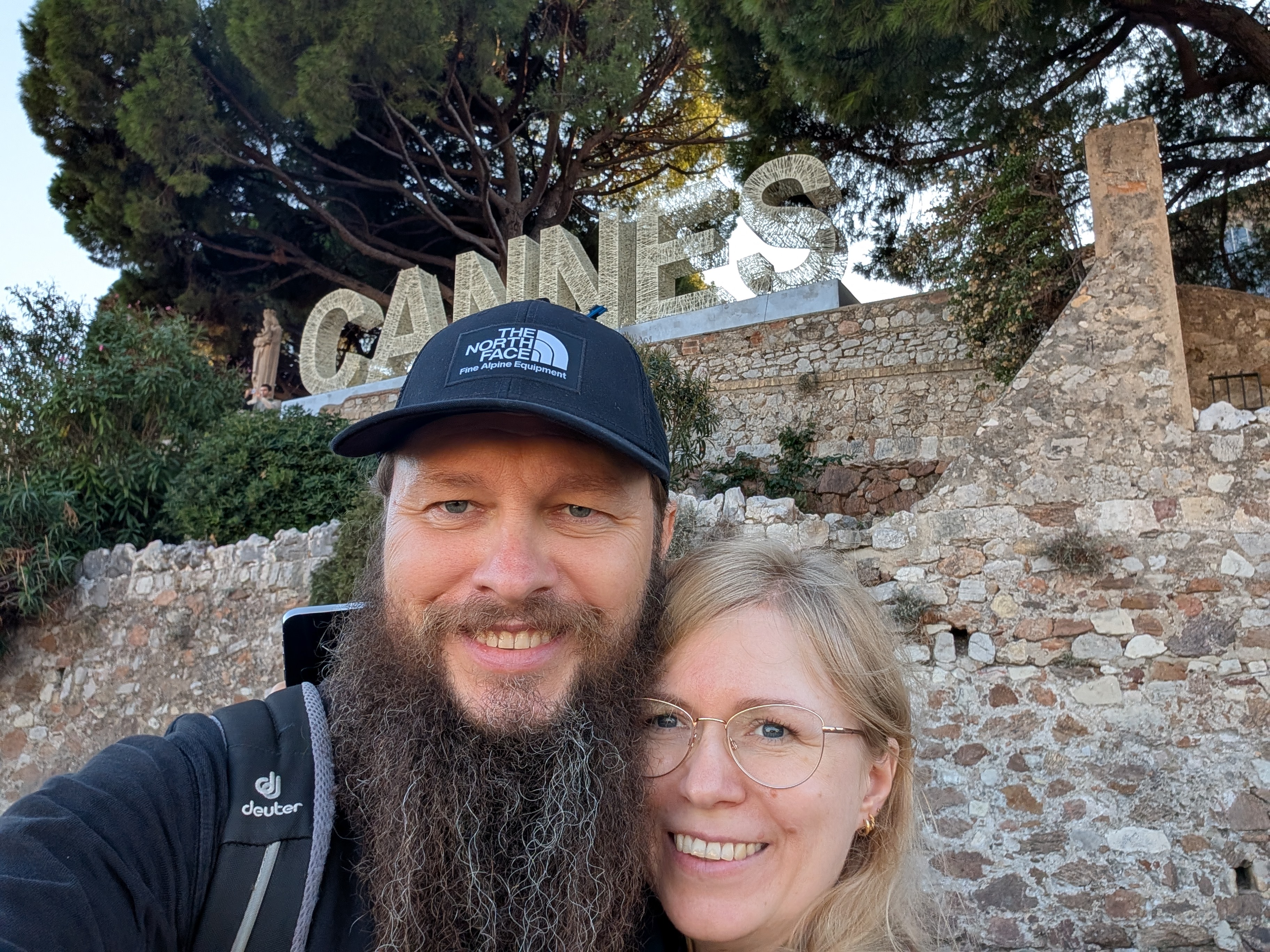
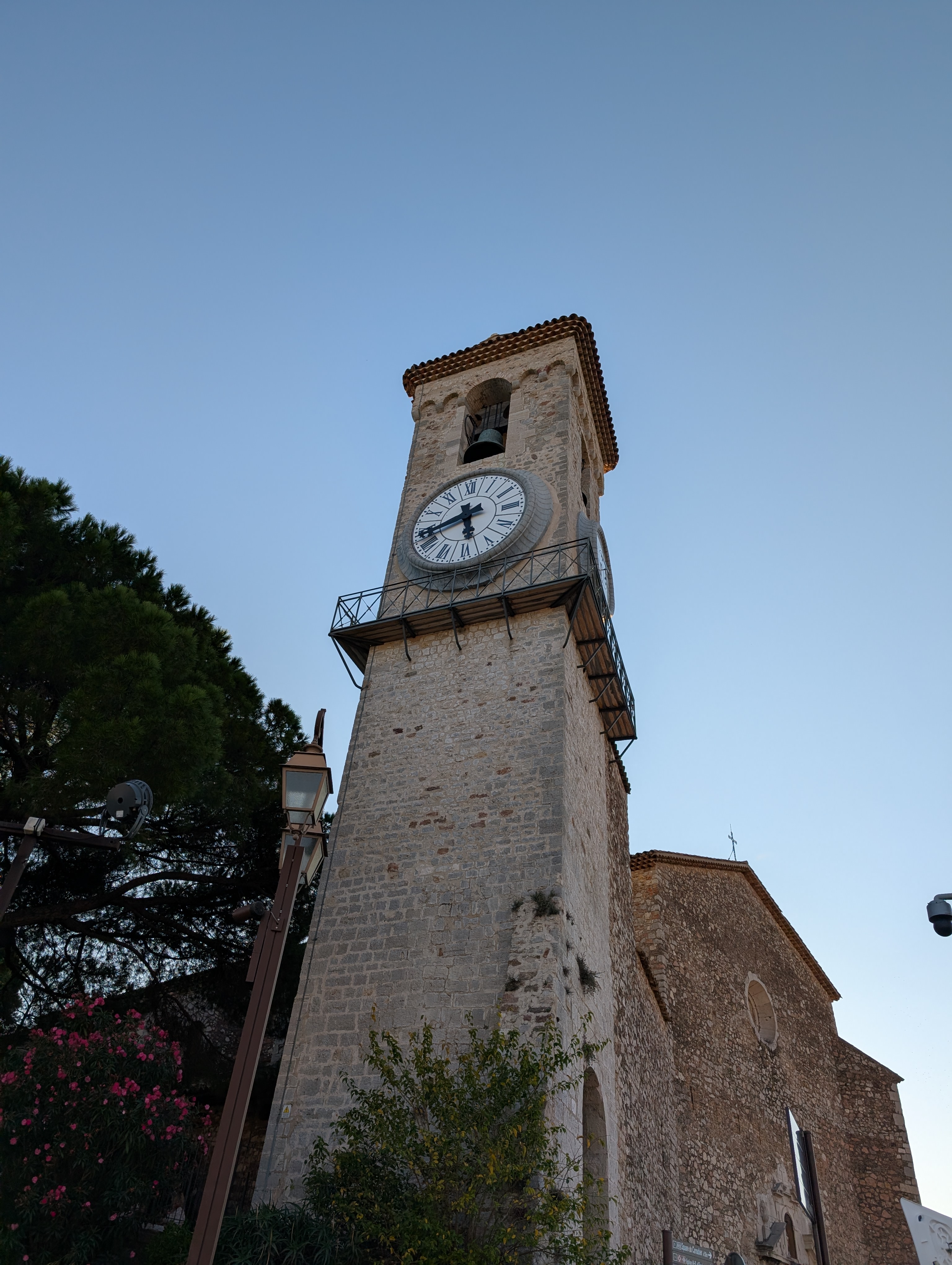
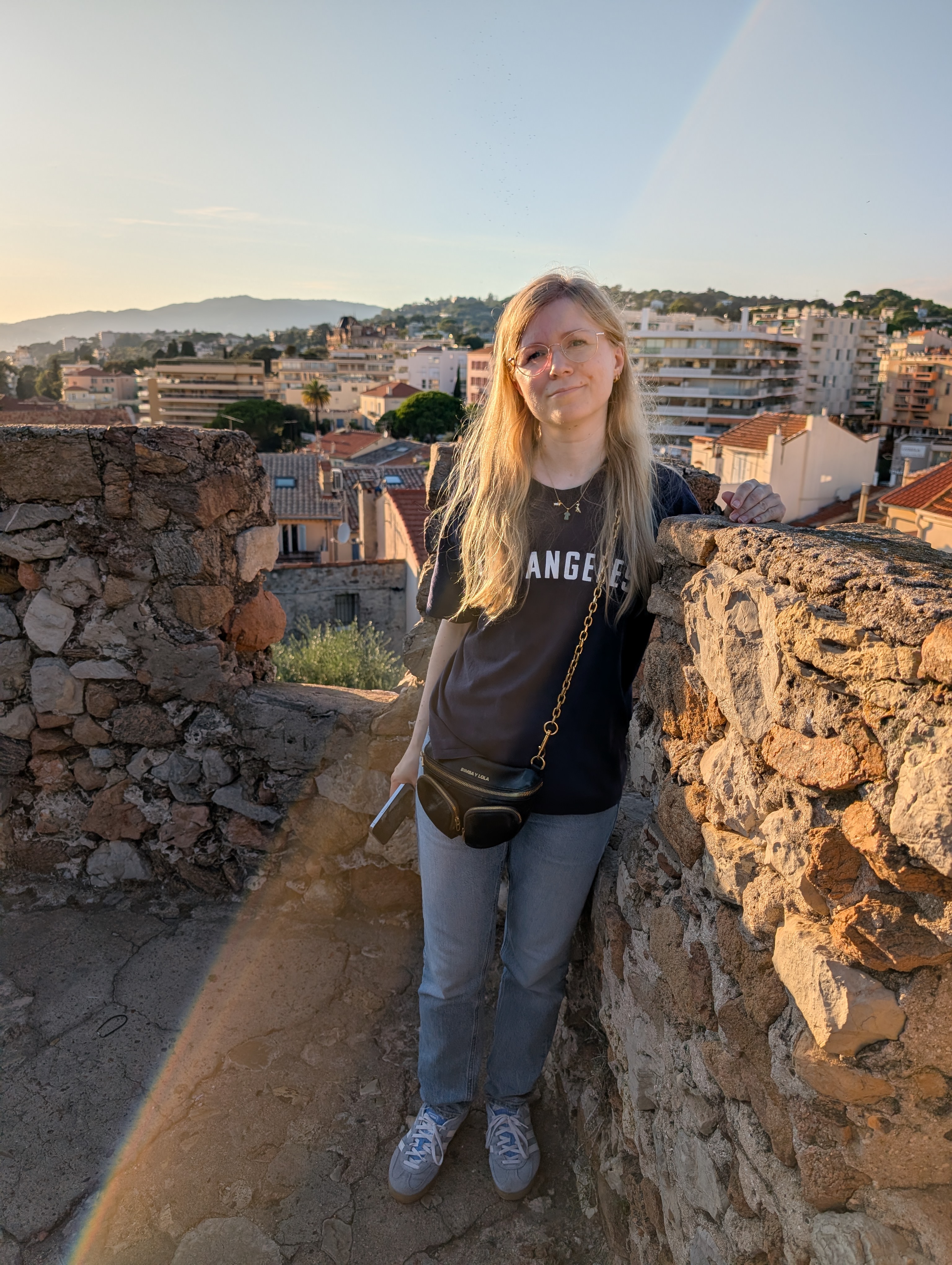
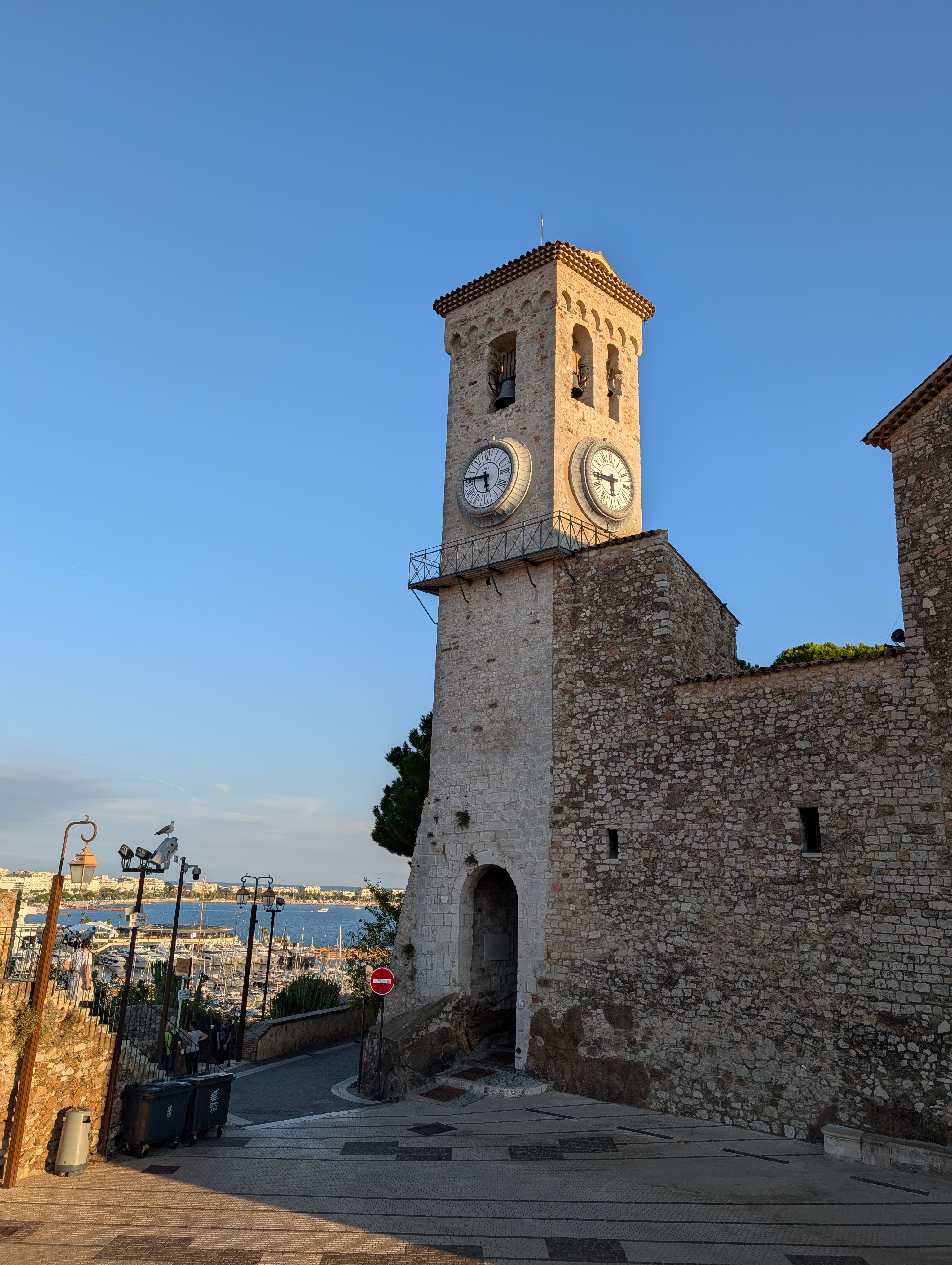
At the top: the letters. Big ones, stone-set, spelling the city's name in the same confident voice the posters use — except these are on a hill above it all. Both took a pose in front, then posed together as the sun went amber; the clock tower next door kept the proper old time the whole while.
The lane, the letters, the tower
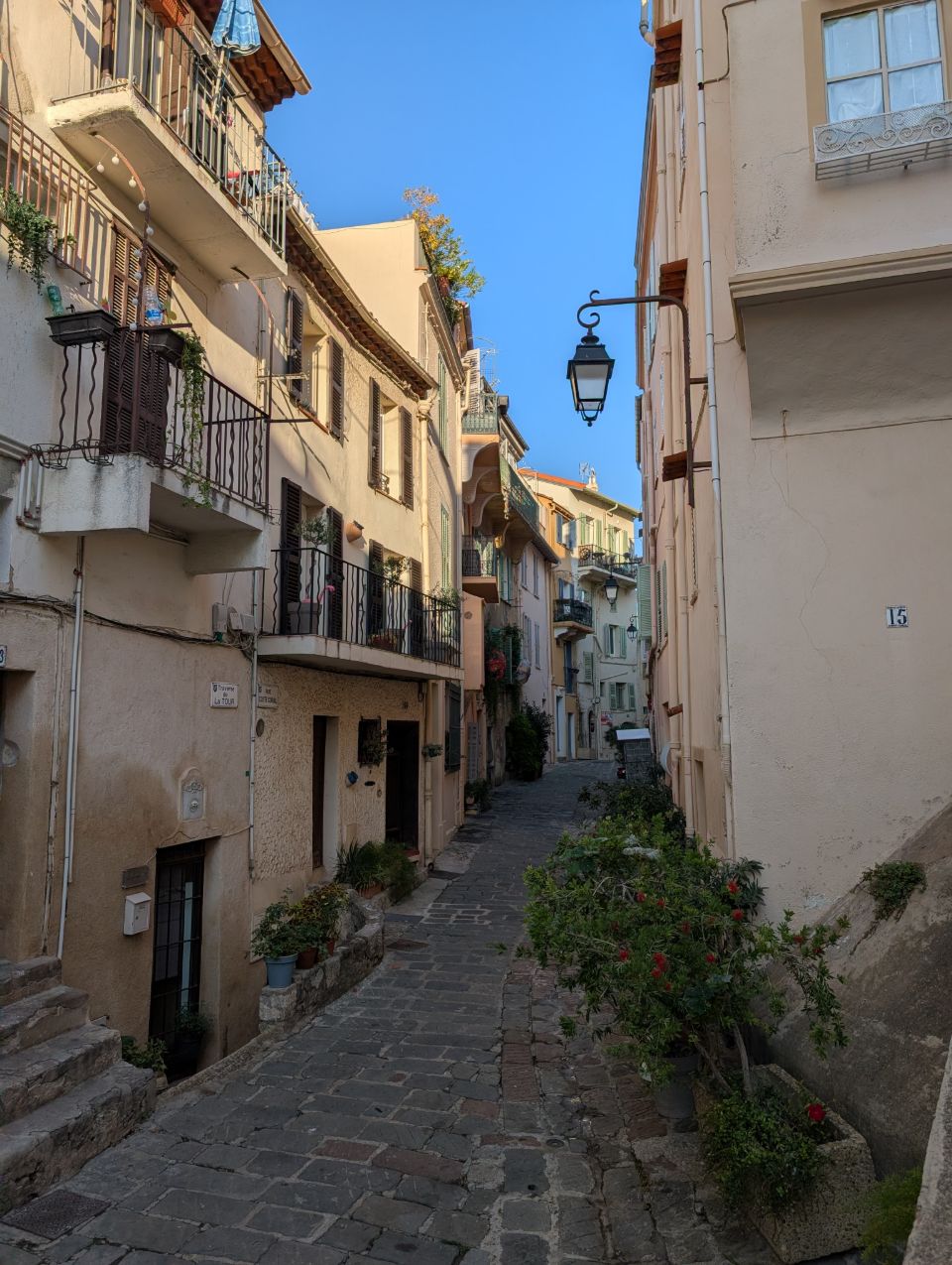
Balconies, lanterns, plants gone feral 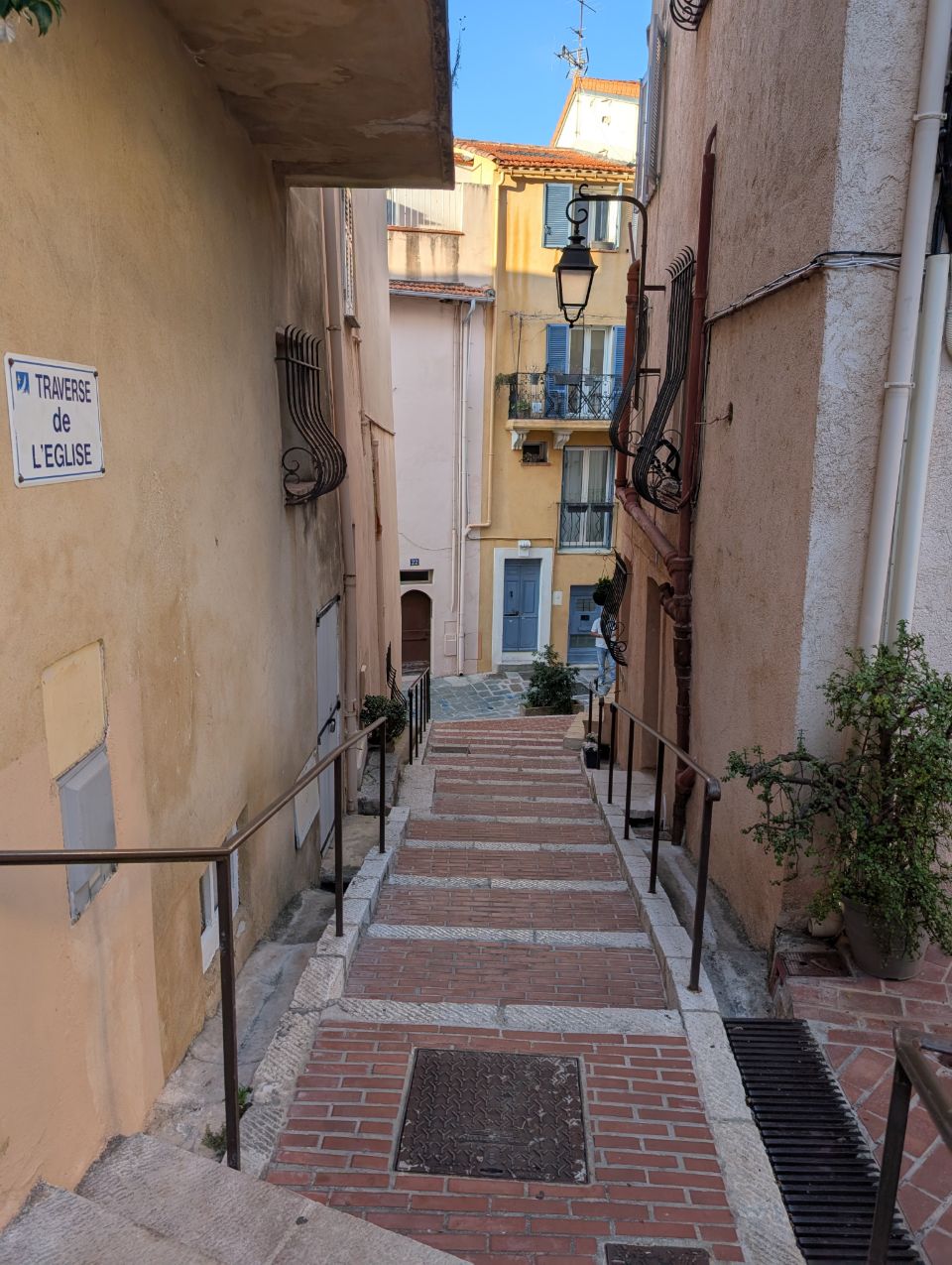
The brick steps of the Traverse 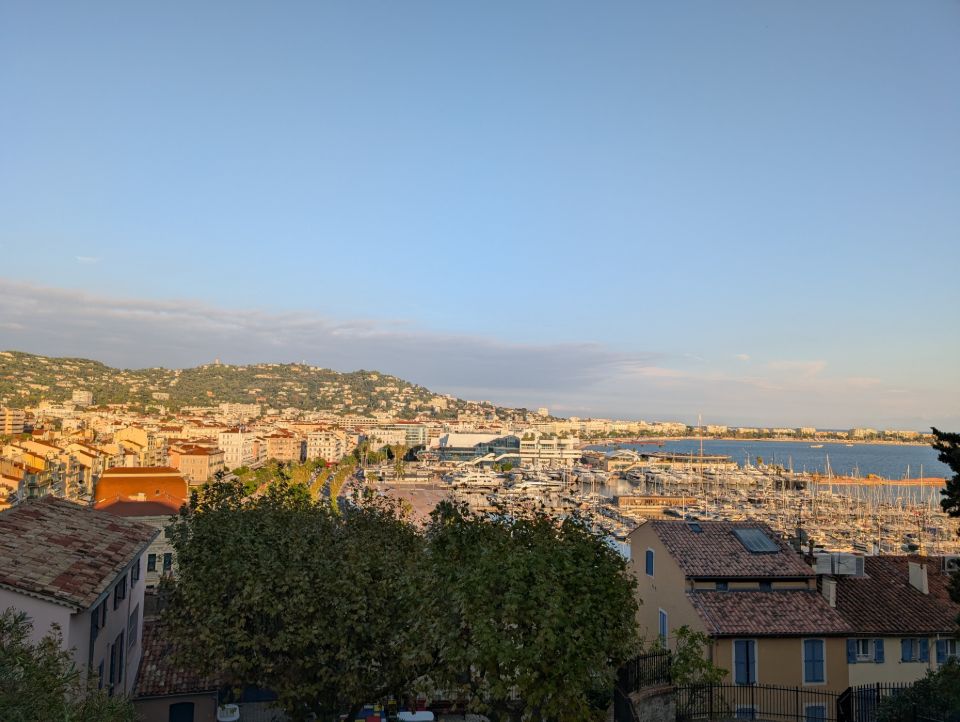
The port, from the first overlook 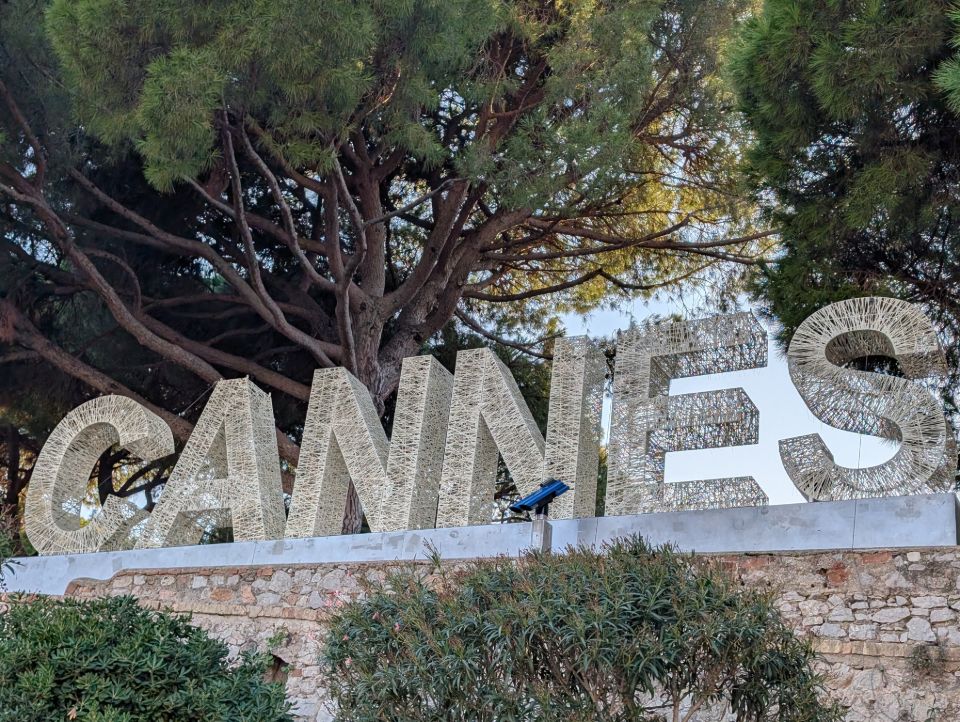
The letters, close 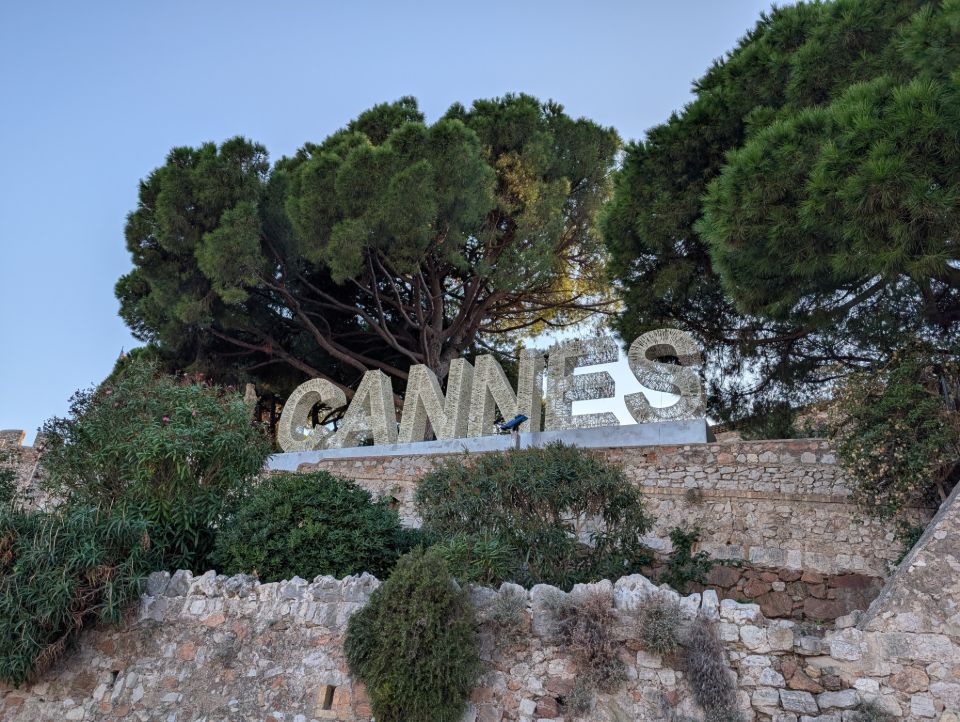
The letters, the town behind 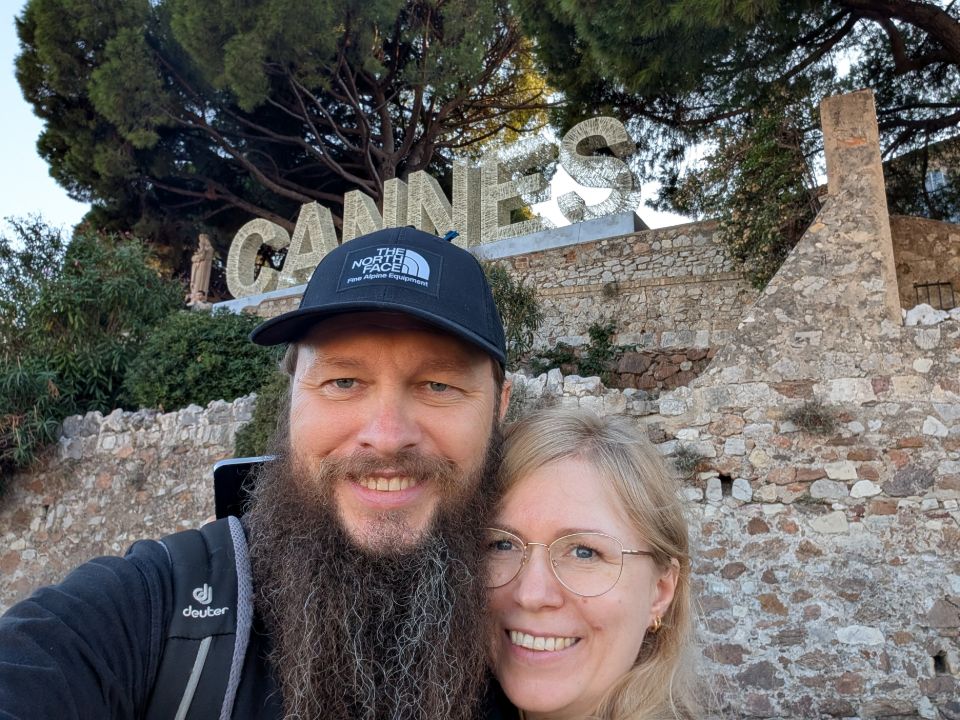
Both of us, spelling the city 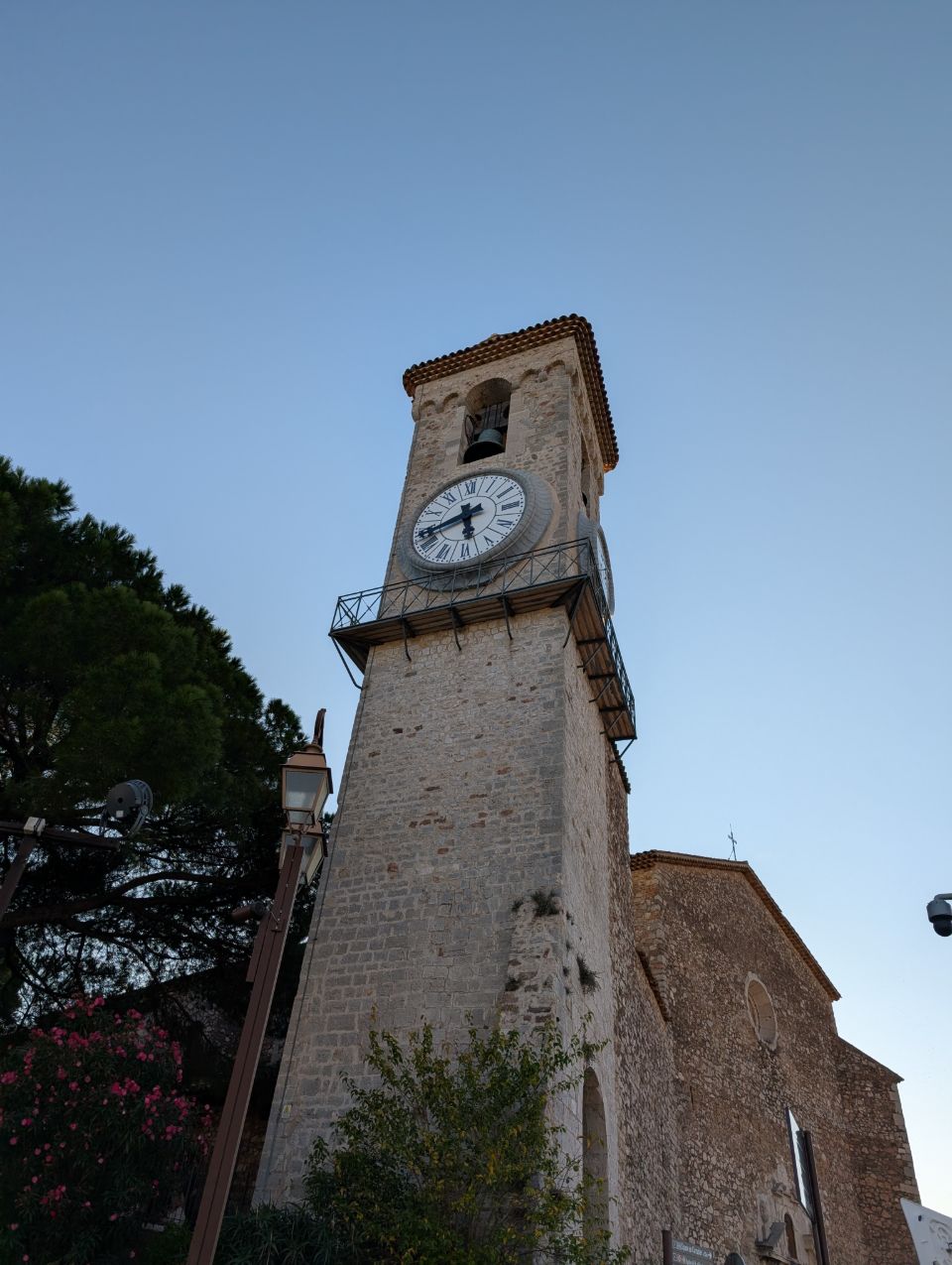
The Suquet tower, its hour starting 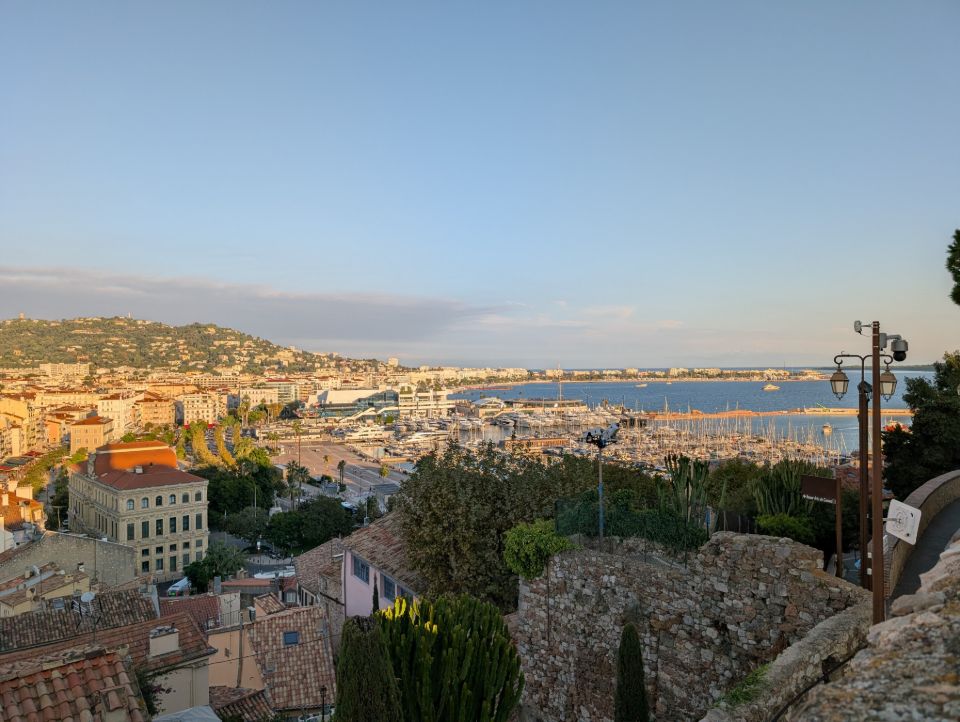
The bay, rose-gold above the marina 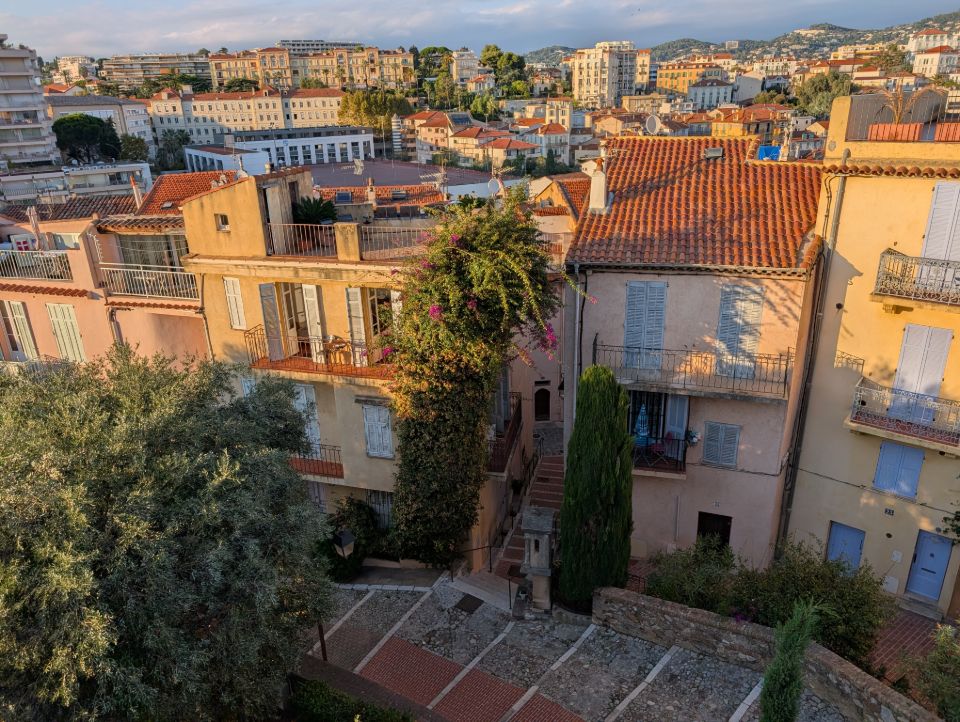
Rooftops, the olive tree's view 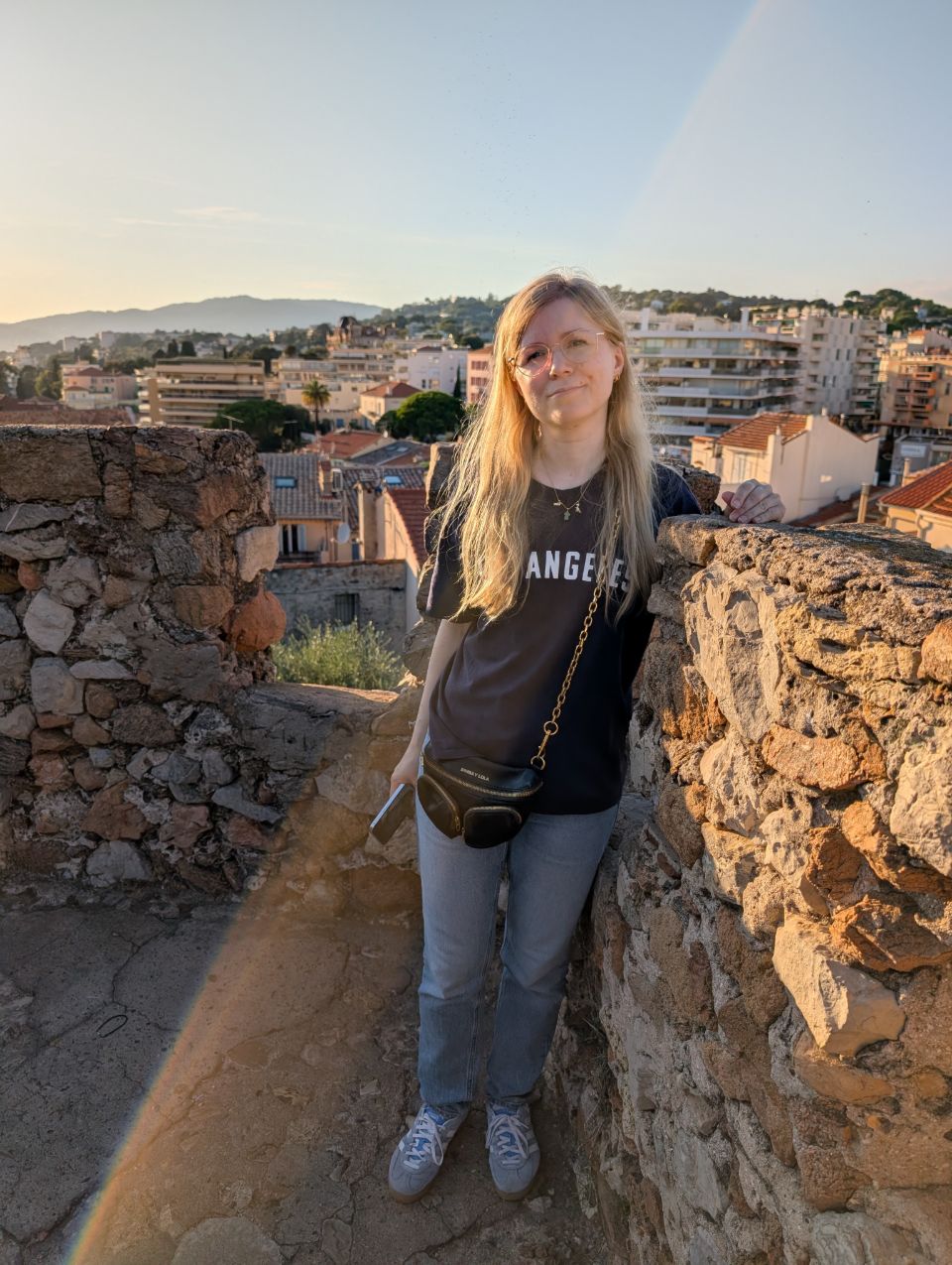
Anna, the rampart, the flare 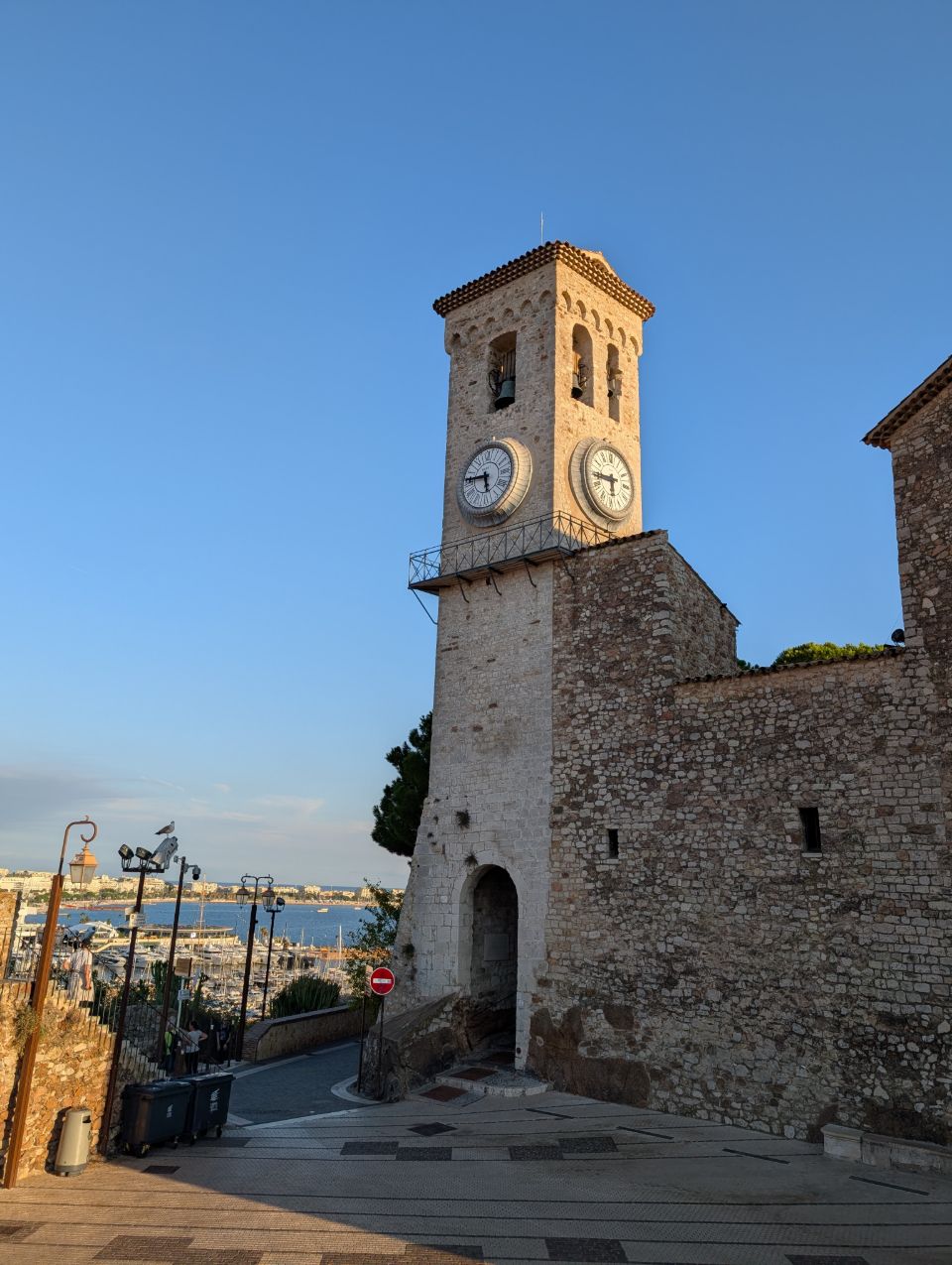
The tower's second clock, the port between
The going down
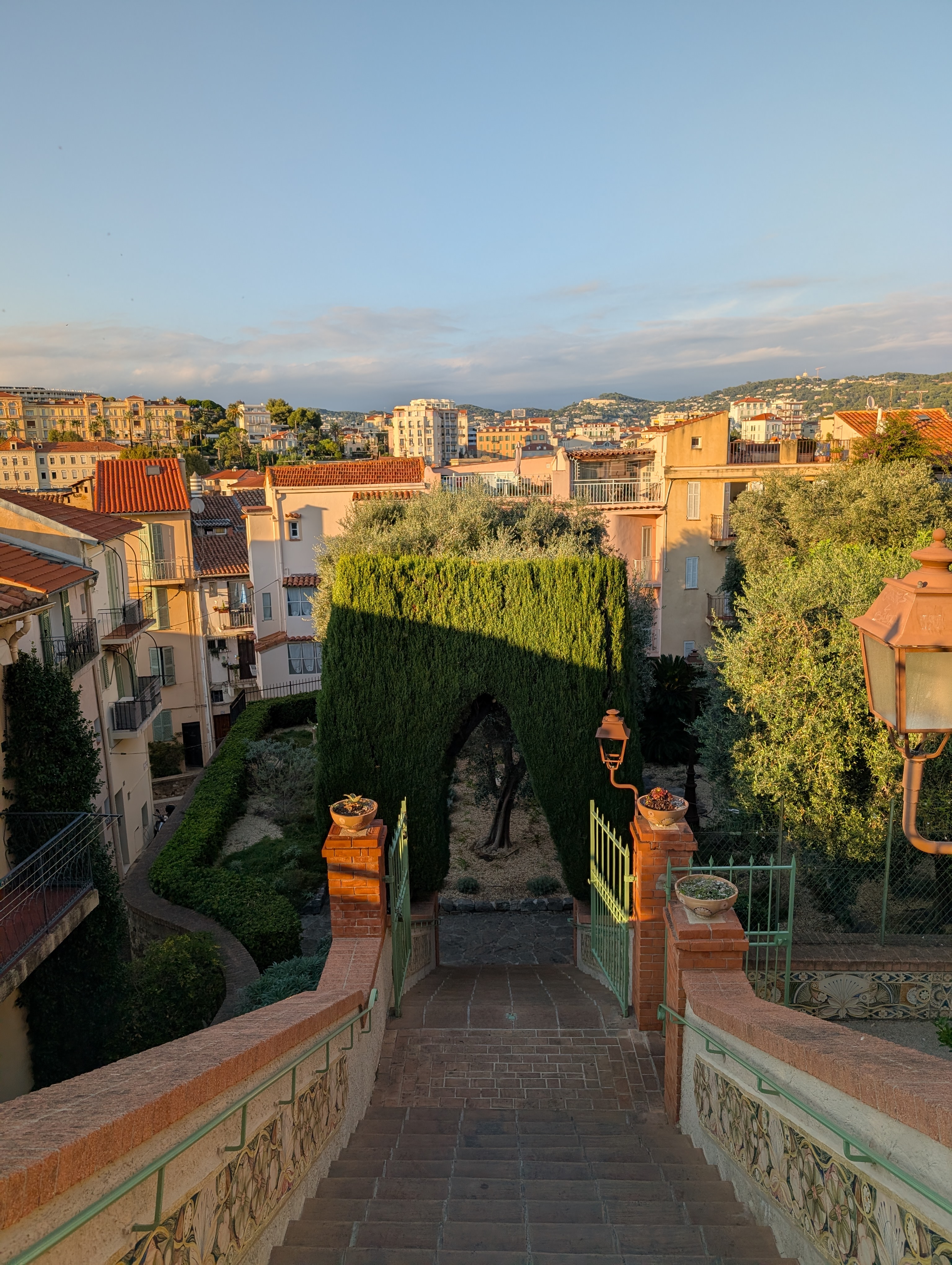
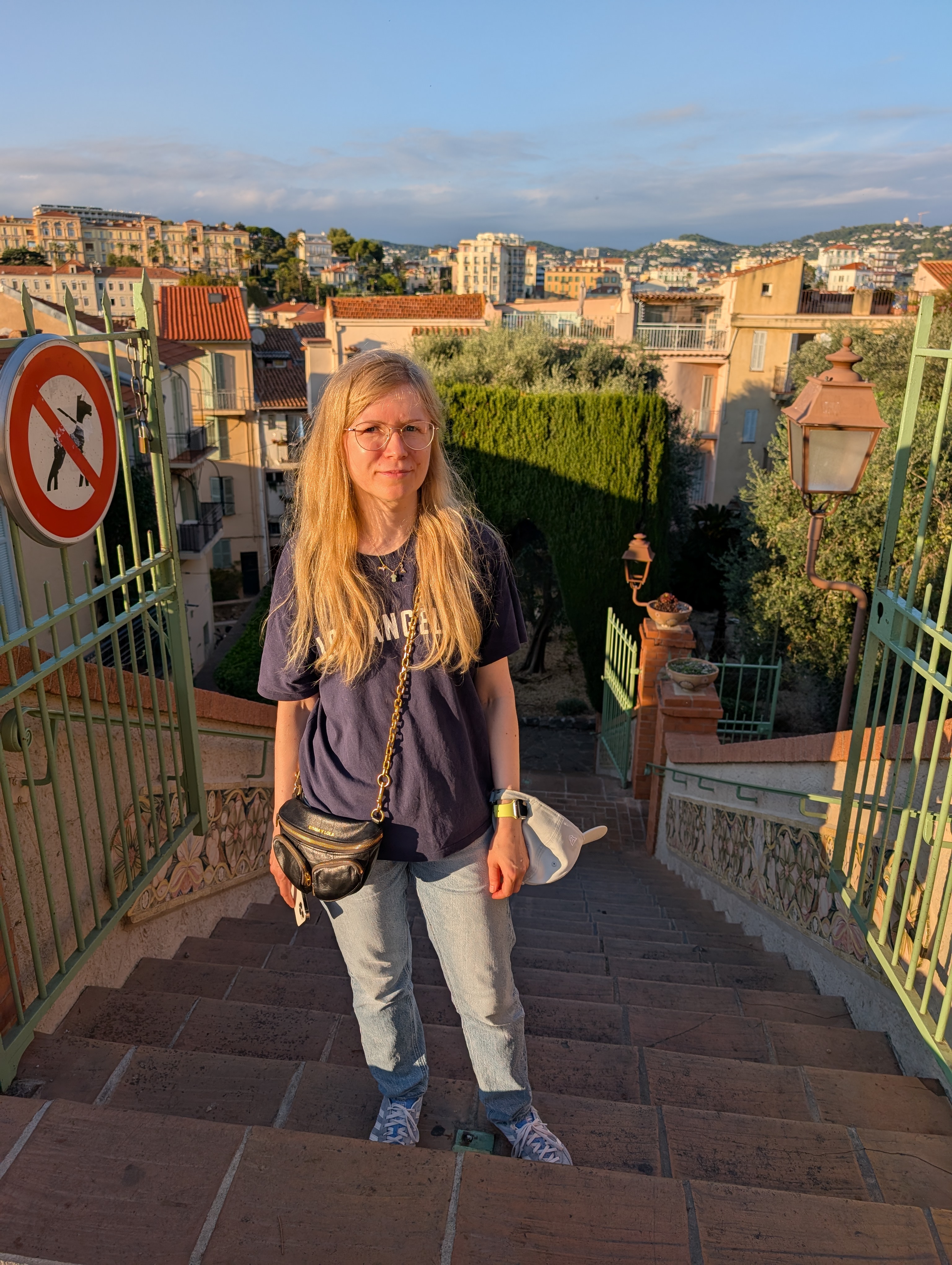
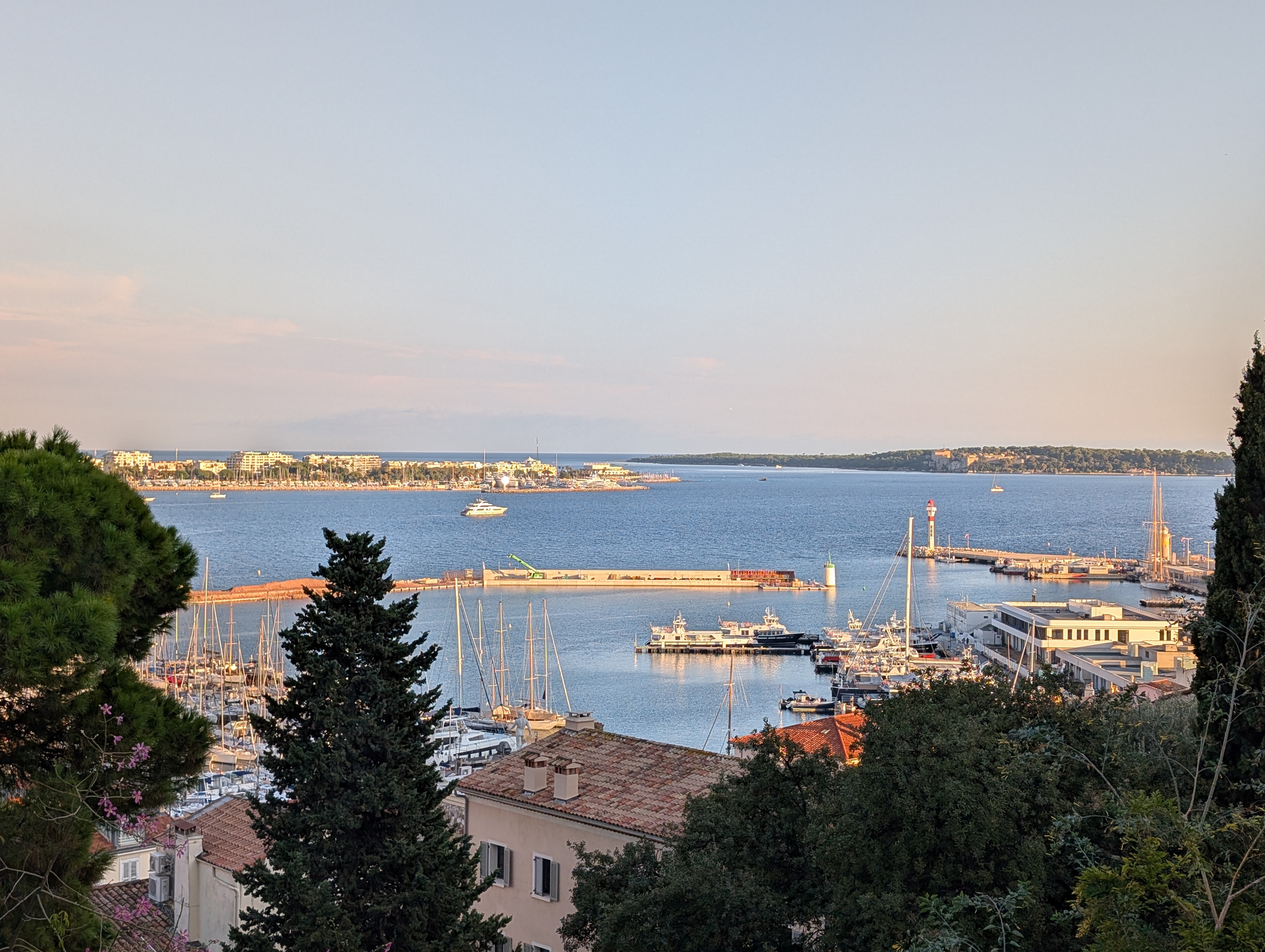
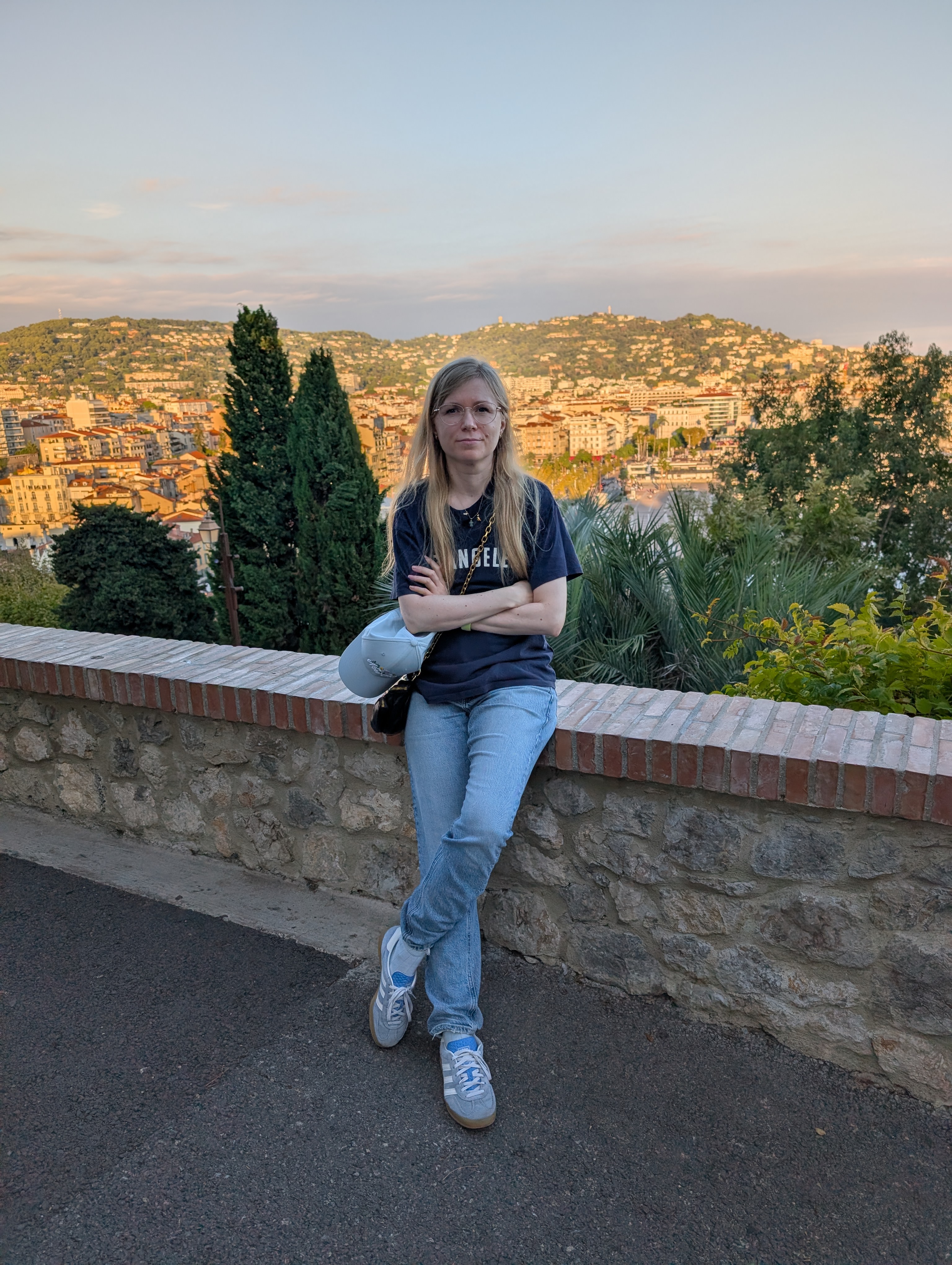
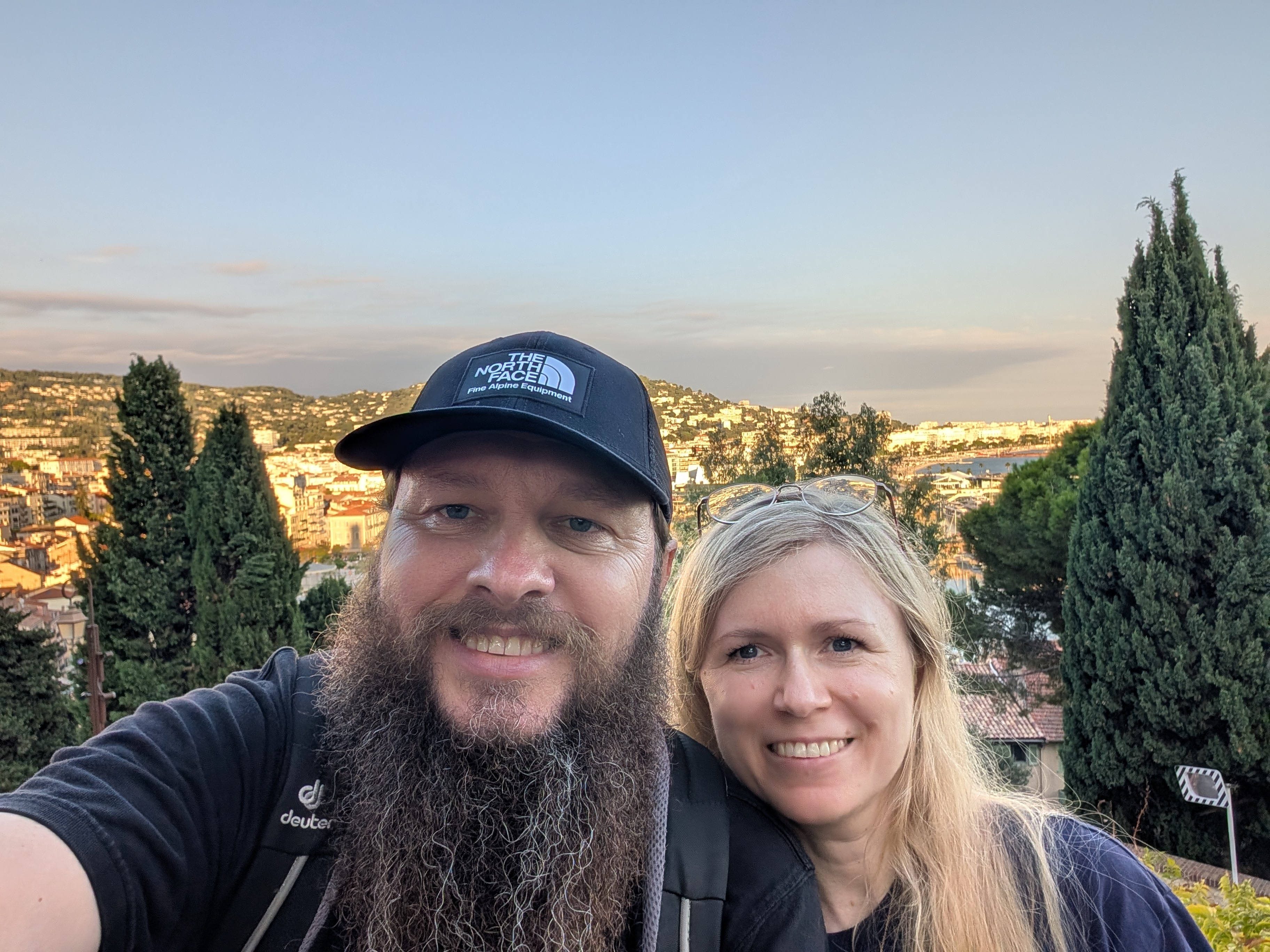
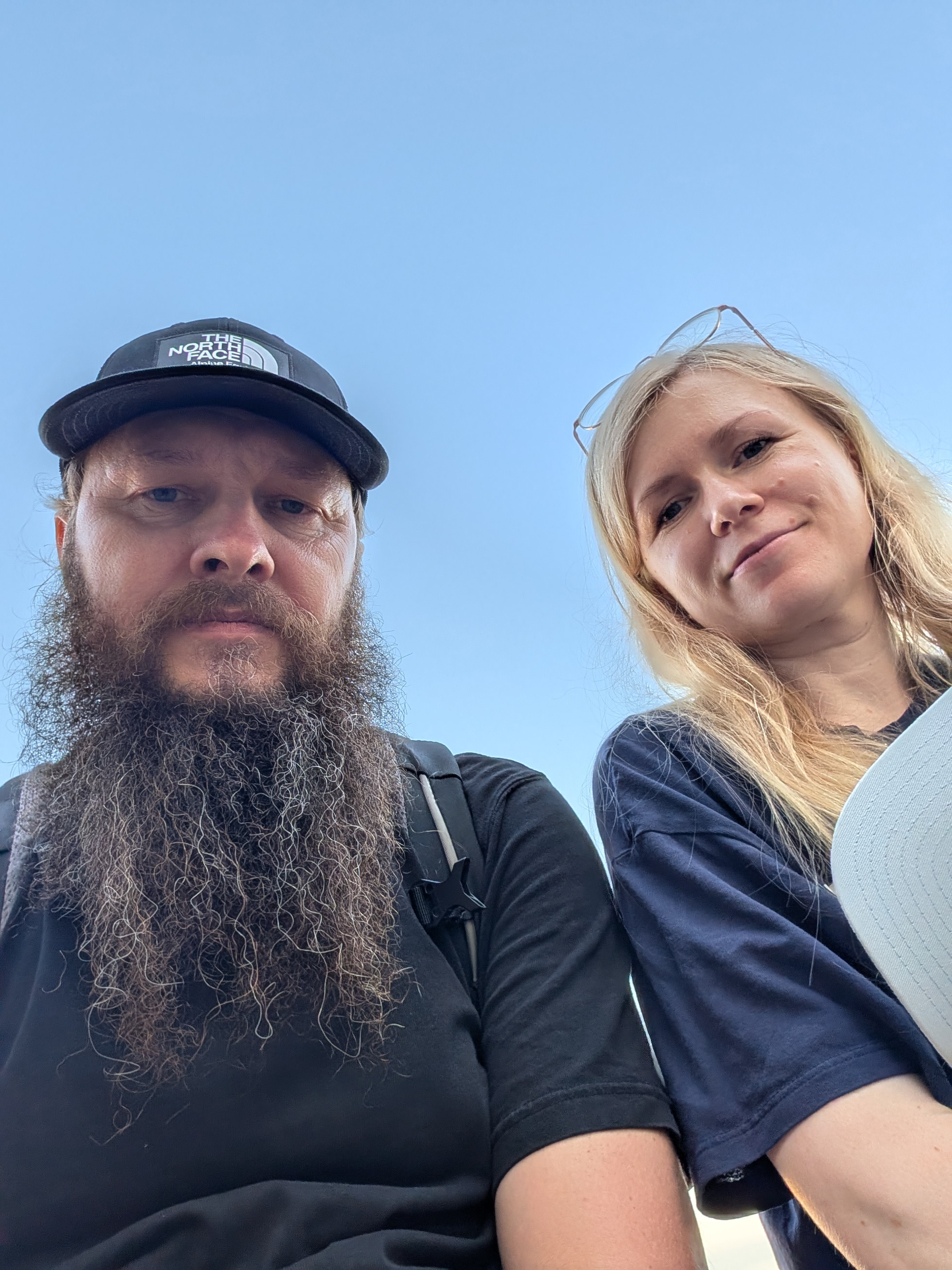
Everything that goes up gets its staircase down. Ours was tiled, with green railings and terracotta urns, a clipped cypress standing like a sentry at the gate. The high garden gave one more view: the marina now fully turned to gold, a ferry working the far water. Then the two of us photographed each other under the trees, and one against the sky, because some days want proof of faces.
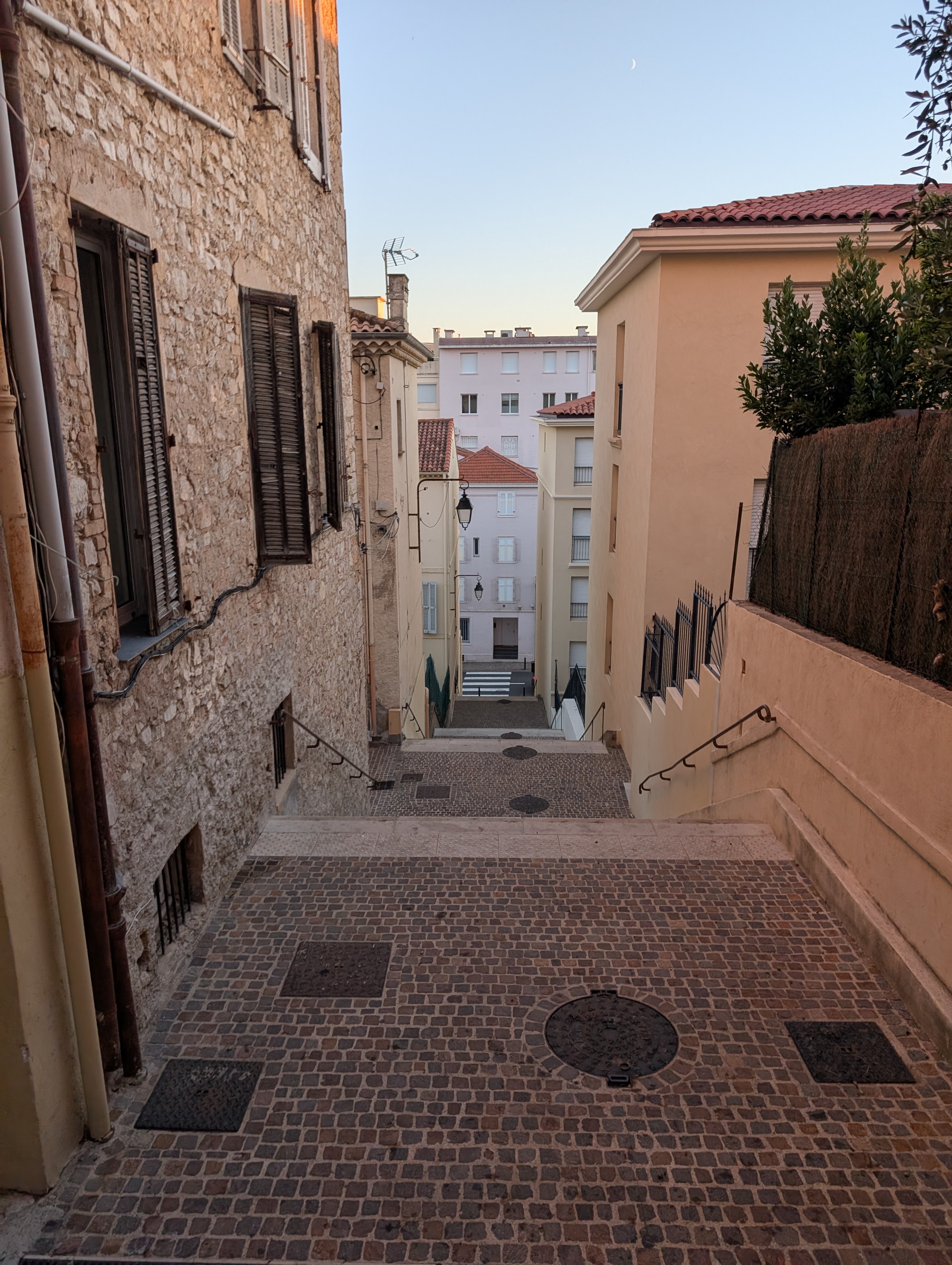
By the last long lane of cobbles the street lamps had come on and the shutters were all closed. Cannes went quiet in the way big cities do — not empty, just breathing lower. A good flat. A good town. The carpet stays out; five days to decide whether to walk it.
The staircase, the garden, the last lane
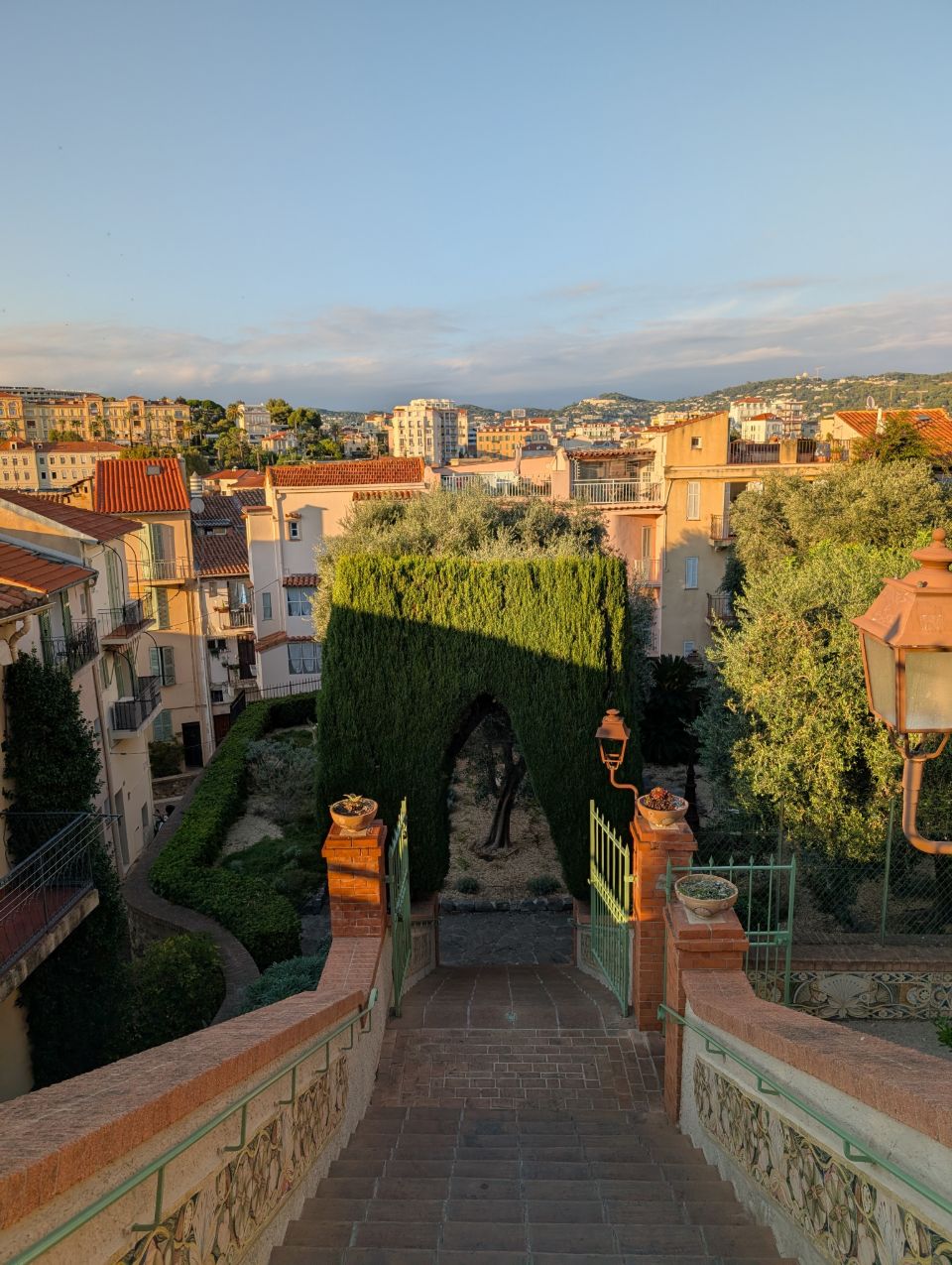
The tiled staircase, cypress on duty 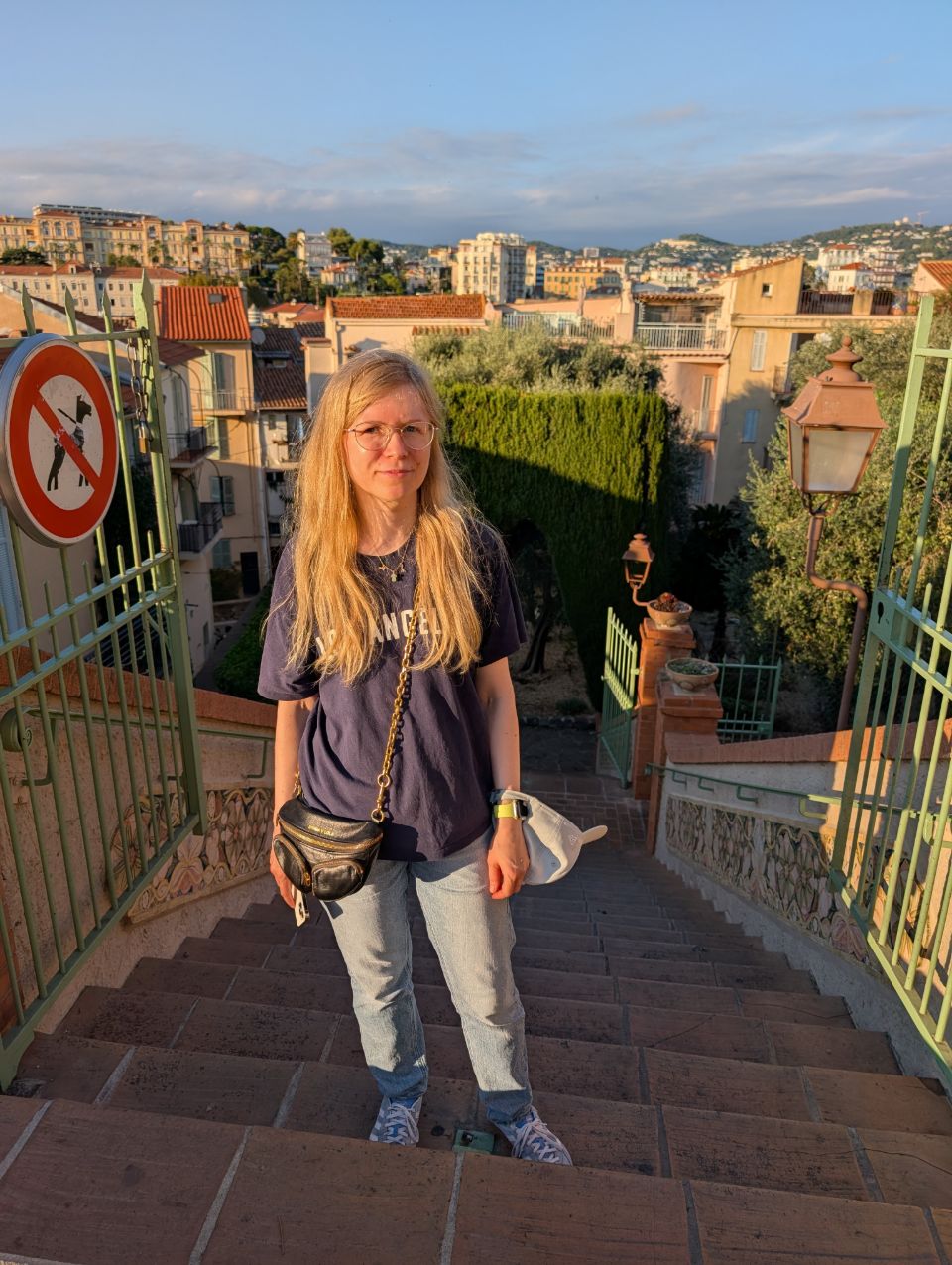
Anna, down the tiled stairs 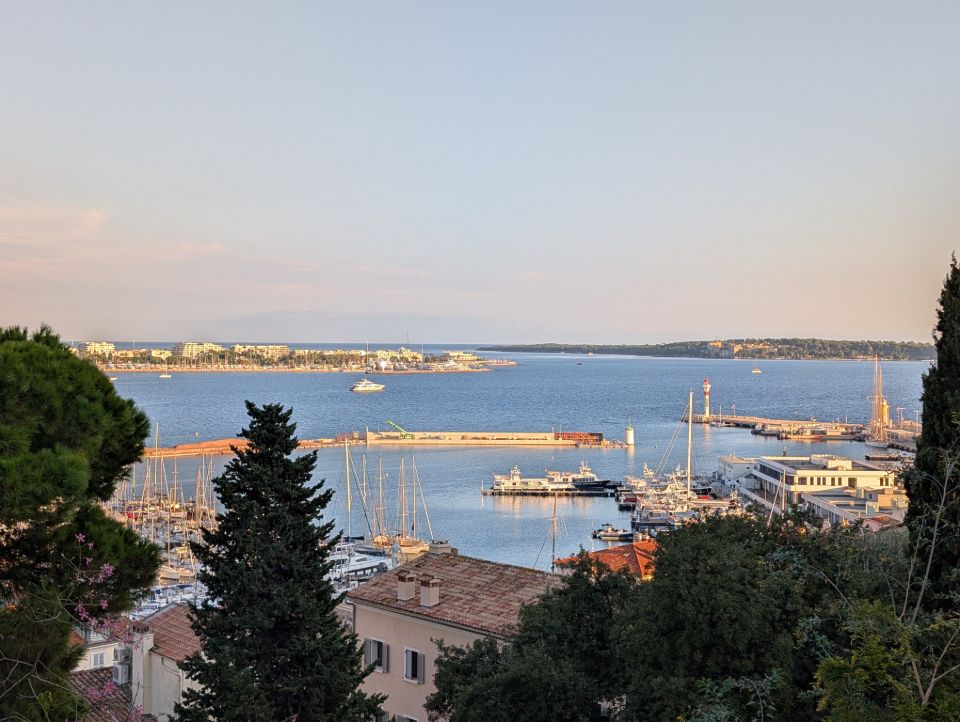
The marina, gold, ferry working 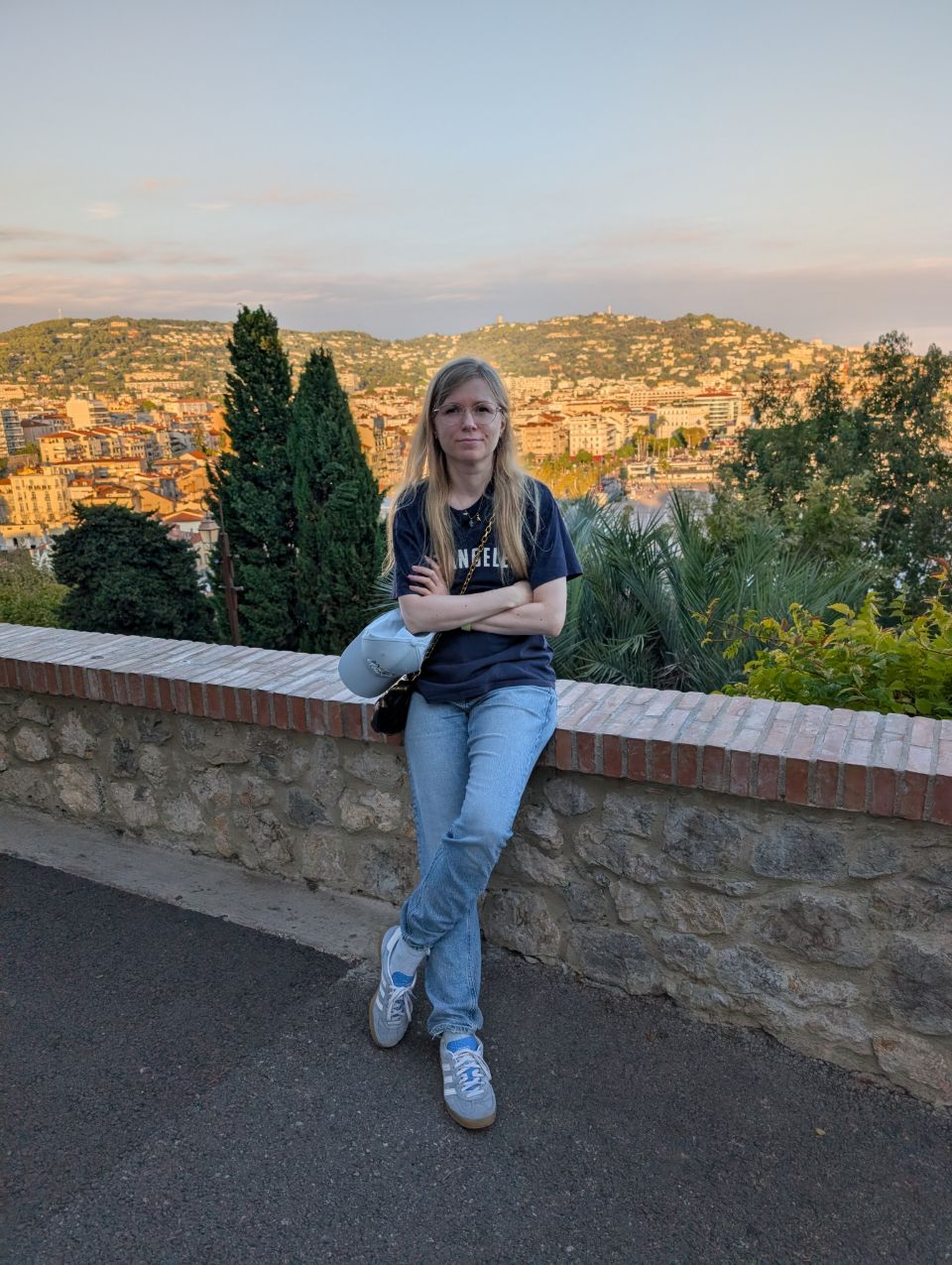
Anna, the wall above the port 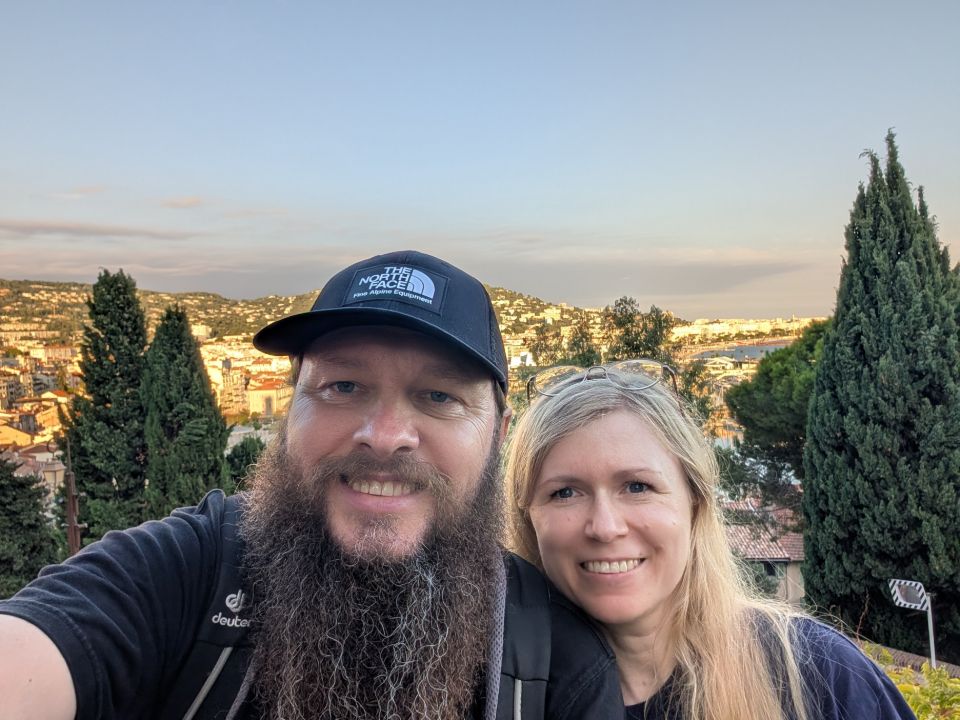
Under the trees, the evening coming 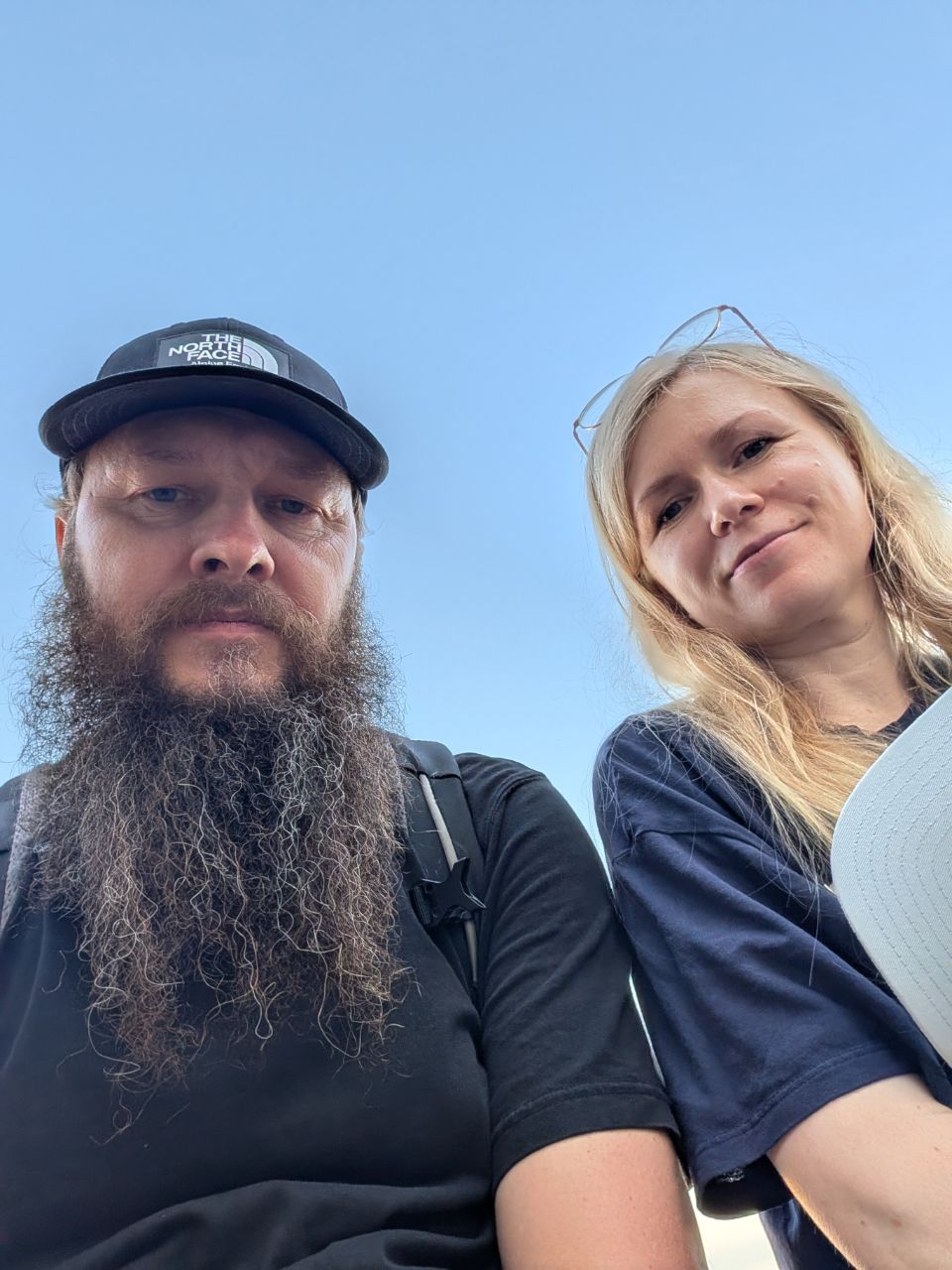
A portrait against the sky 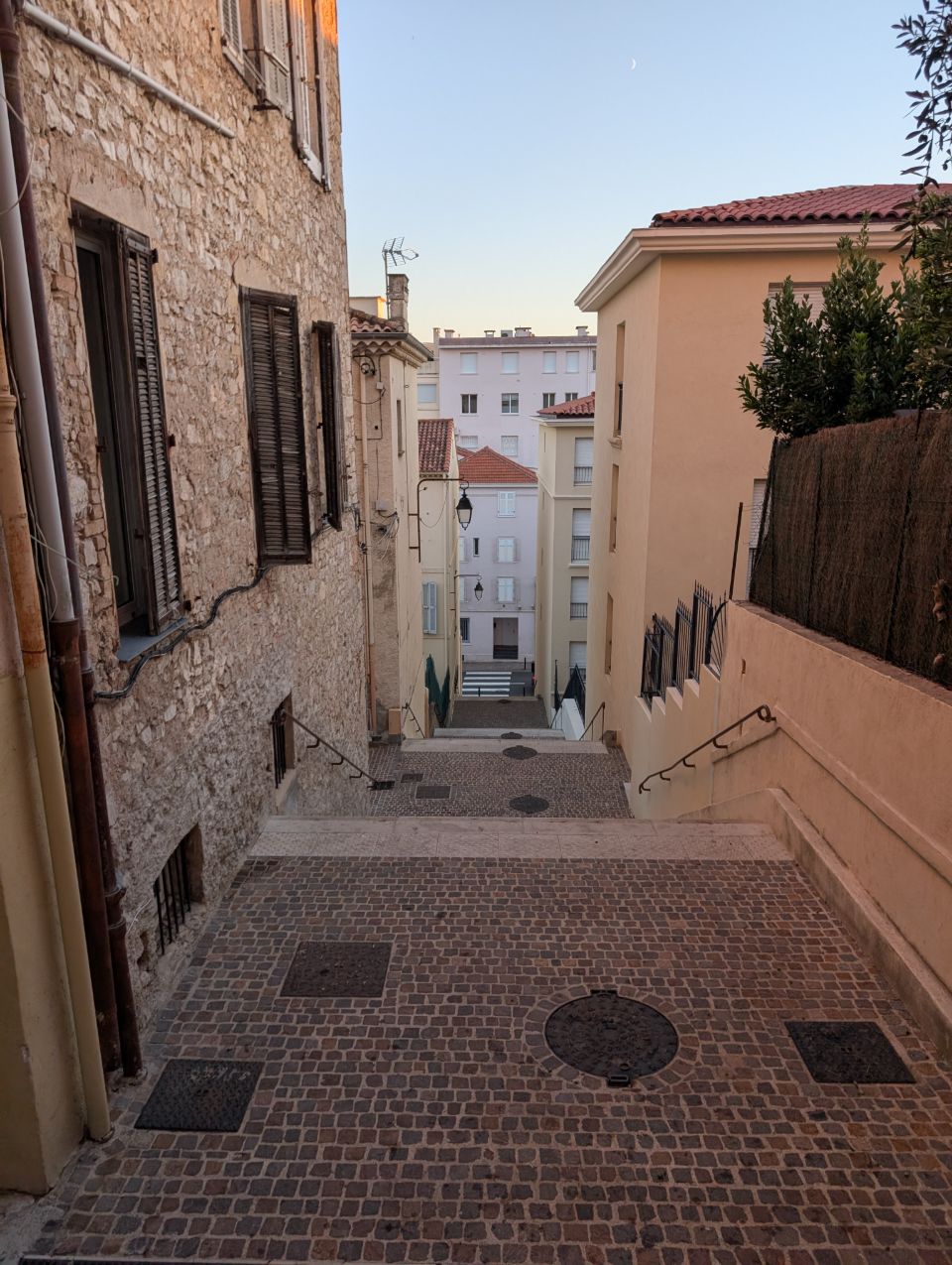
The long lane down, lamps on, shutters closed