Andalusia trip 2024 — Granada and the Alhambra
Granada and the long climb
The cathedral, and the silk market
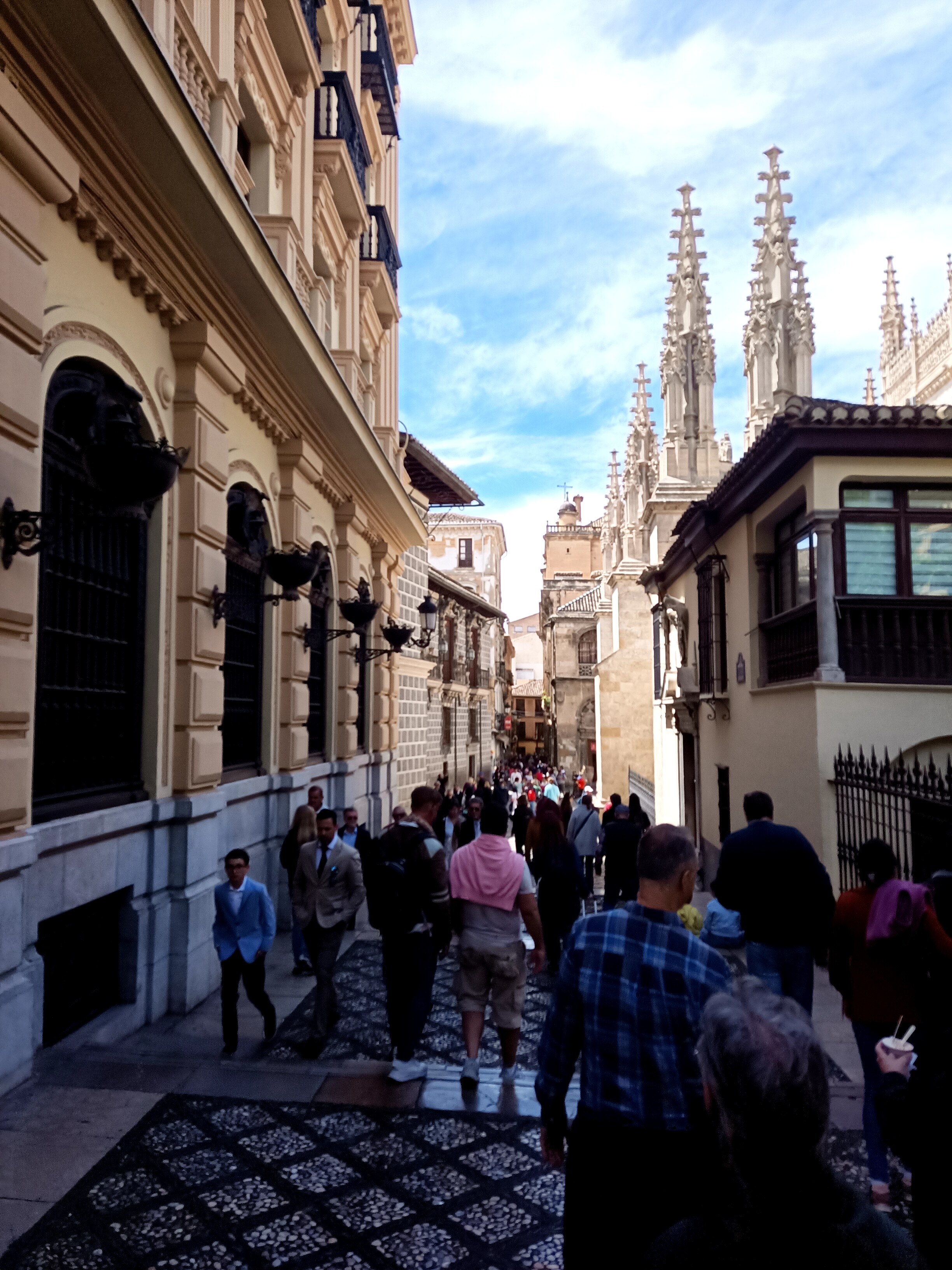
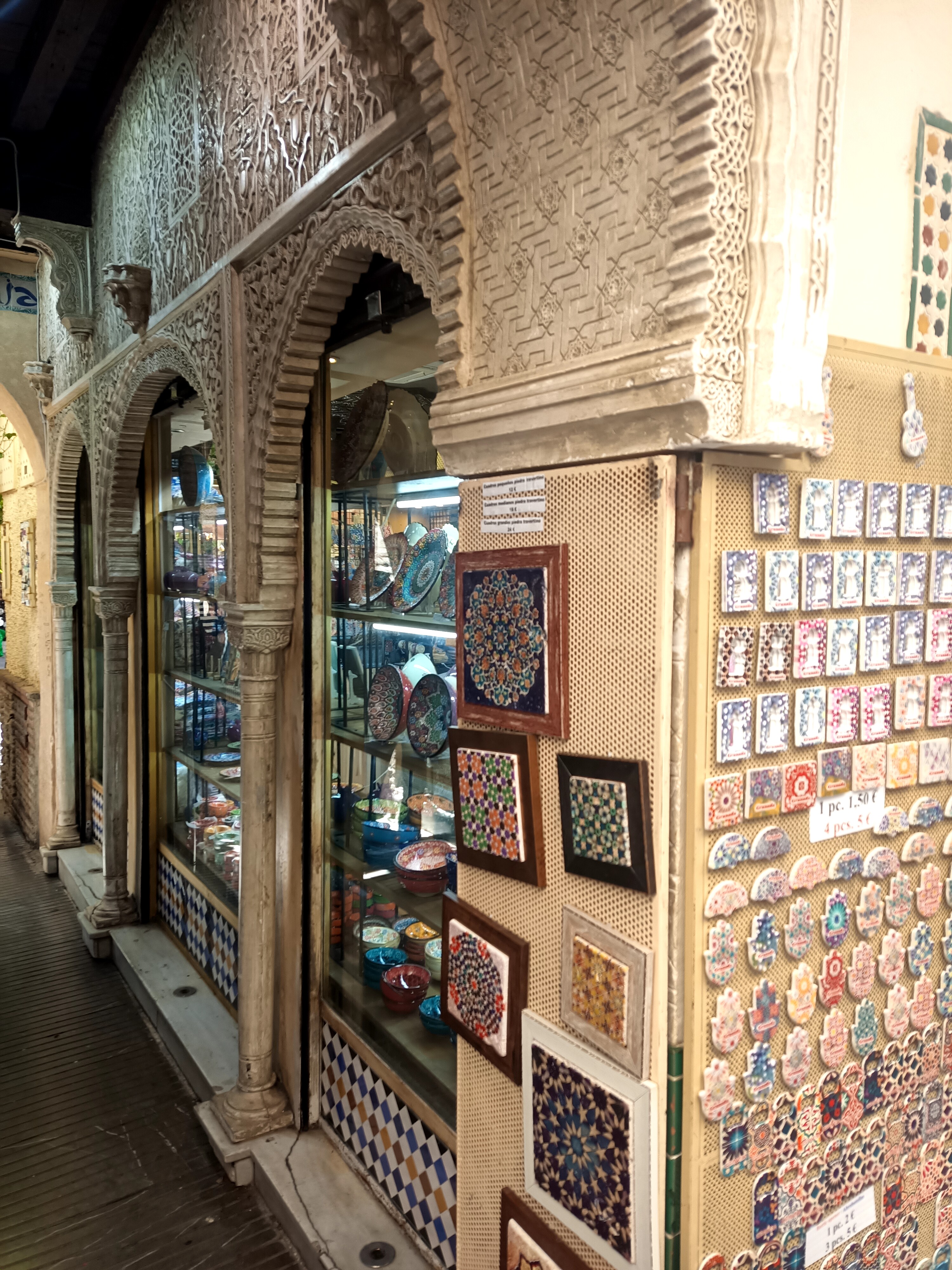
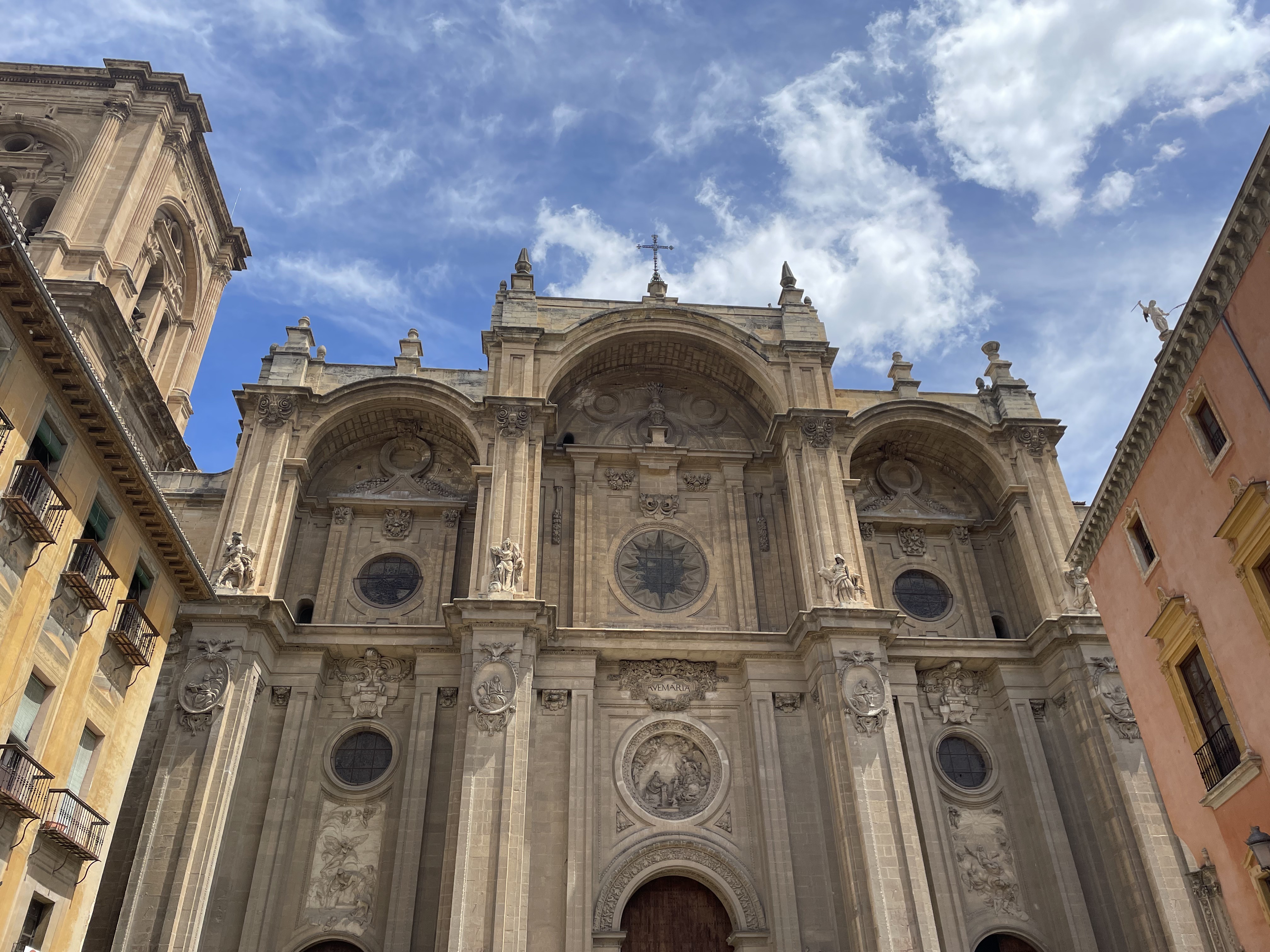
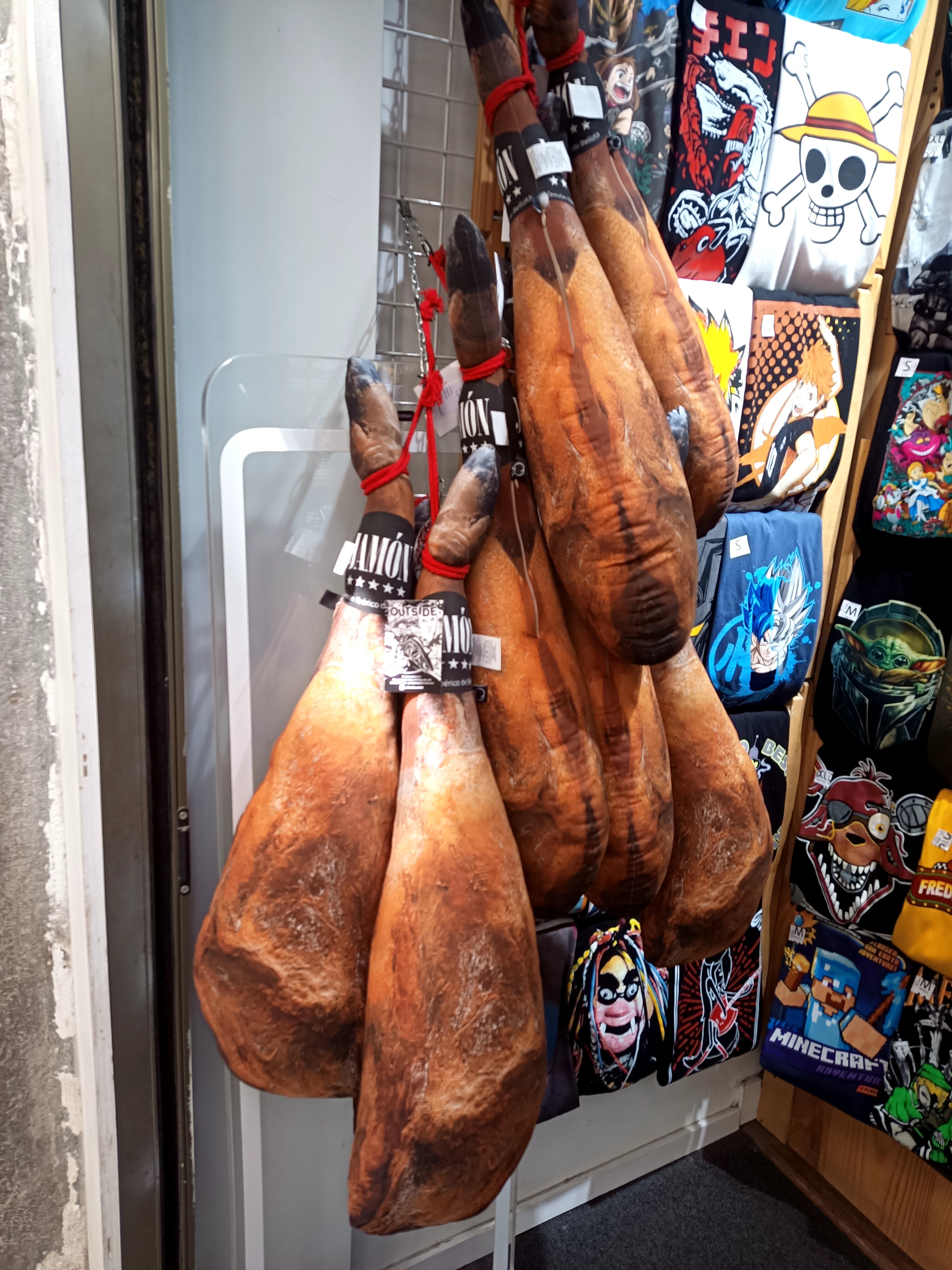
Granada announces itself downhill, along patterned-paved streets filled with everyone at once, spires ahead. The cathedral's giant Renaissance facade turns out to be wedged between ordinary buildings — the city built up around it and never apologised. In the Alcaicería, once the city's silk bazaar and now a single alley of carved arches and souvenir tiles, commerce explained itself in the clearest possible terms: a shop hung jamón legs on a red rack beside T-shirts with cartoon designs, and no one was confused.
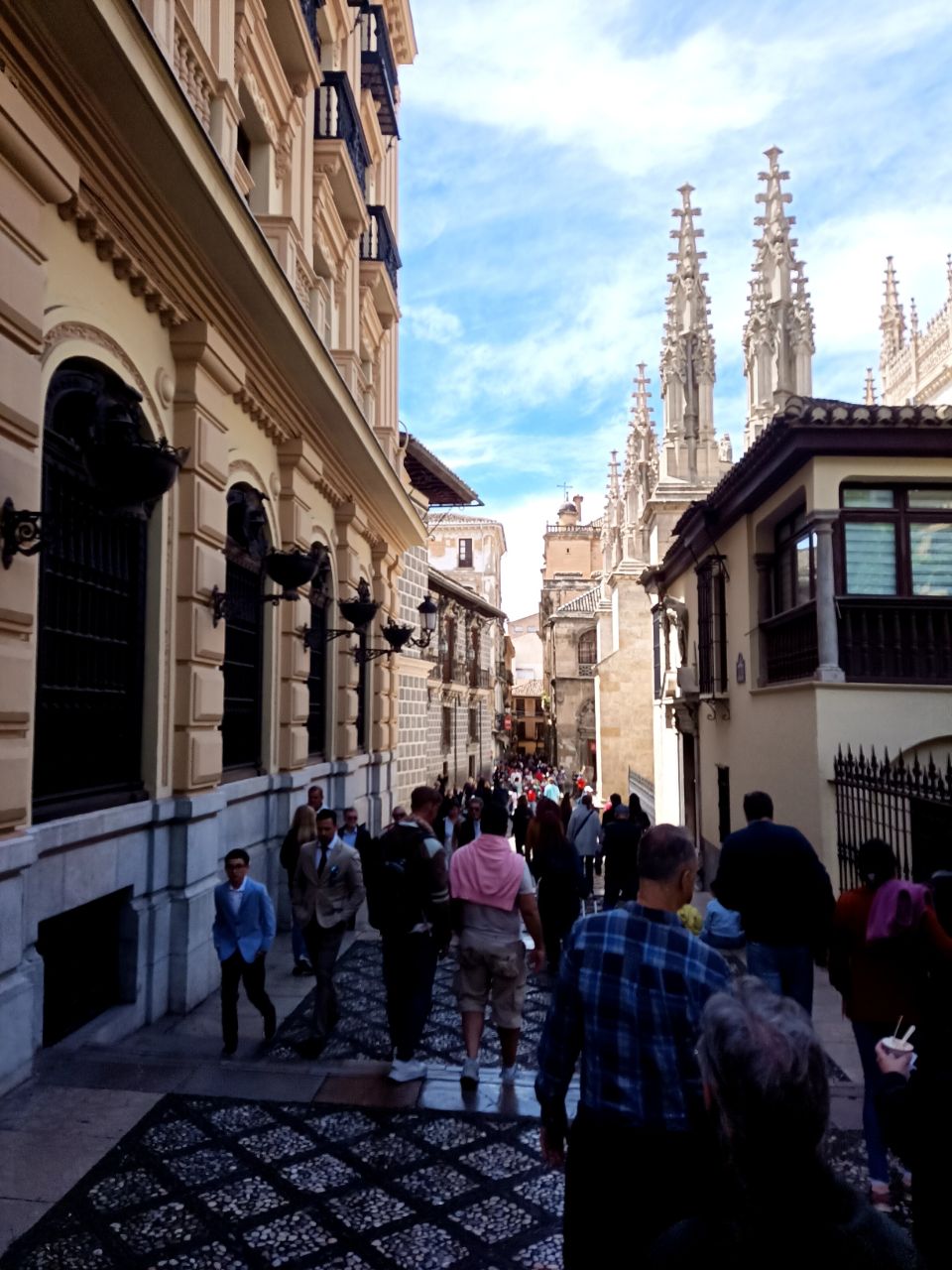
Into the city, spires ahead 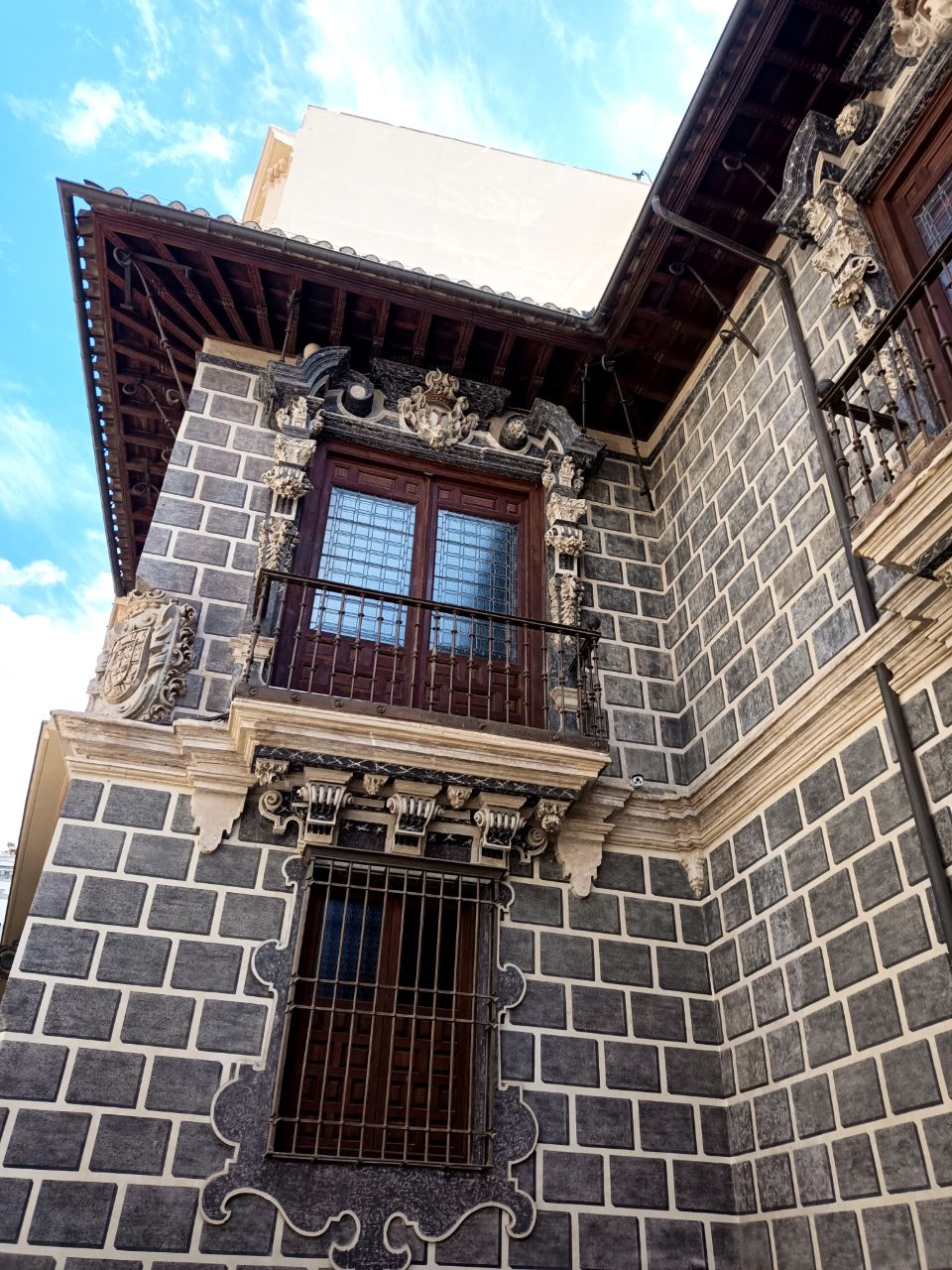
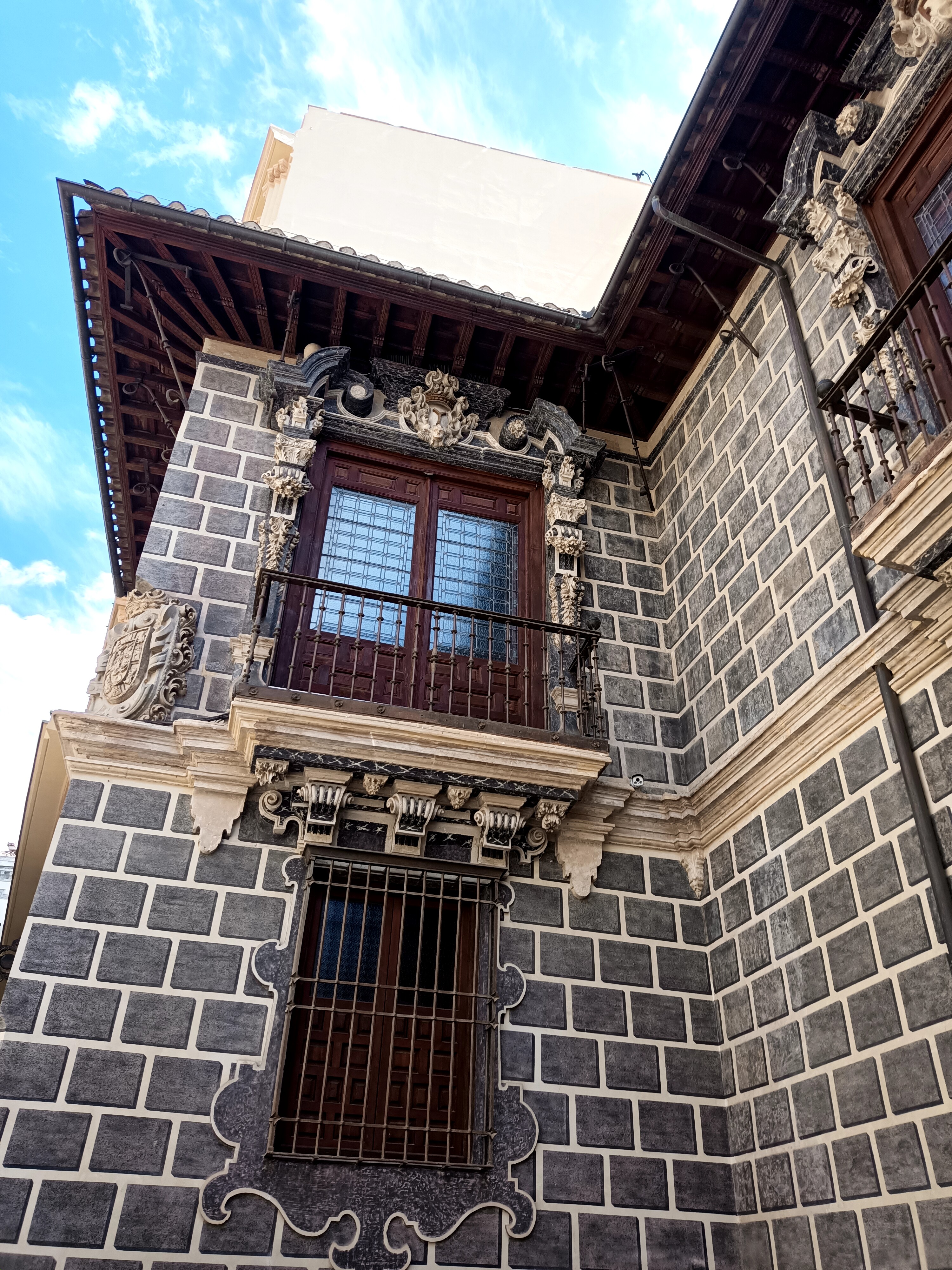
A carved corner of the old town 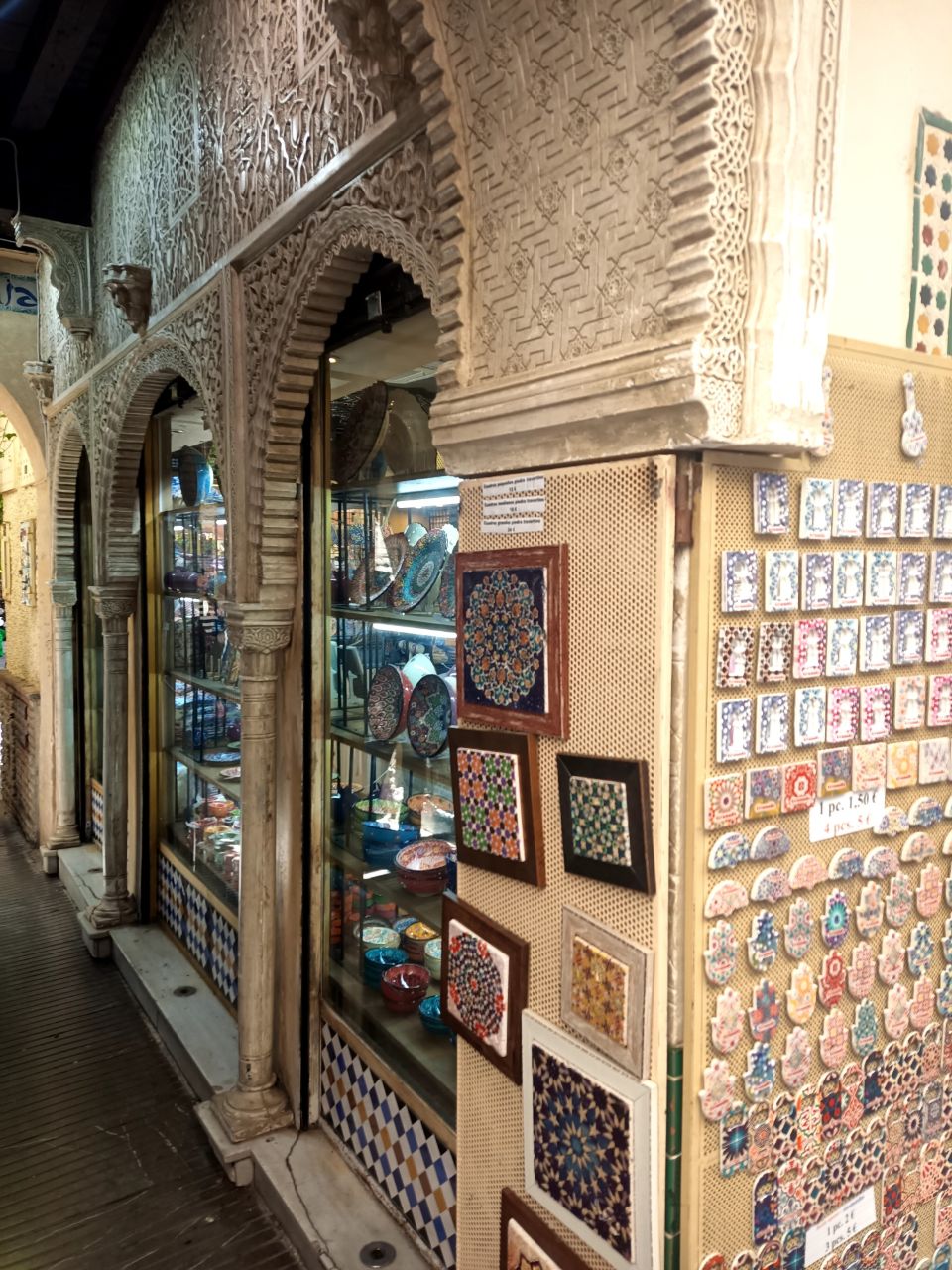
The silk market's last alley 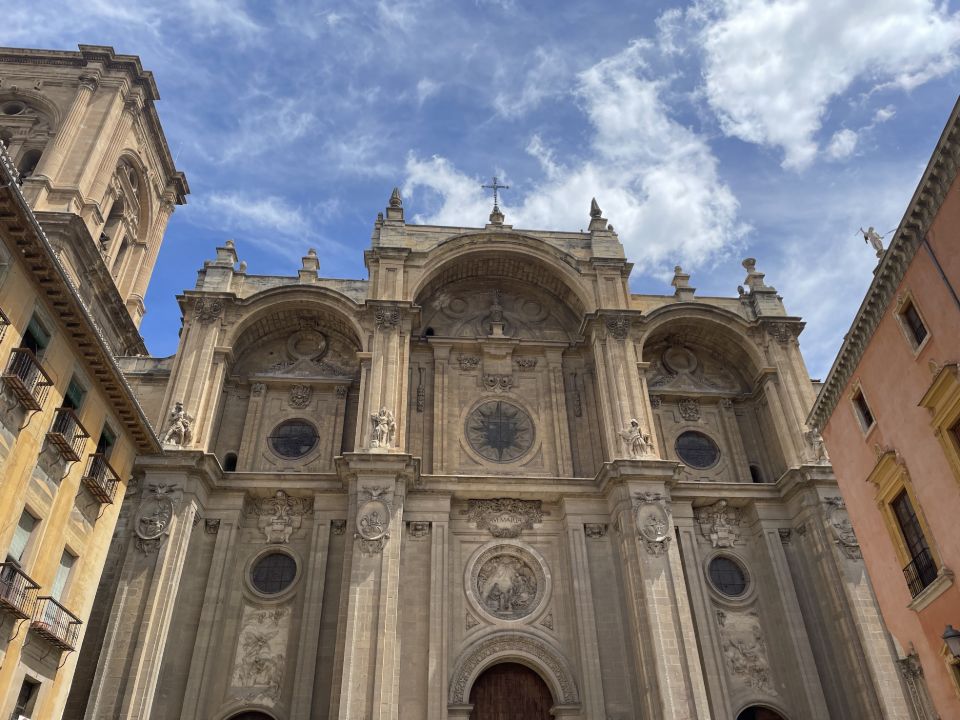
The cathedral's facade 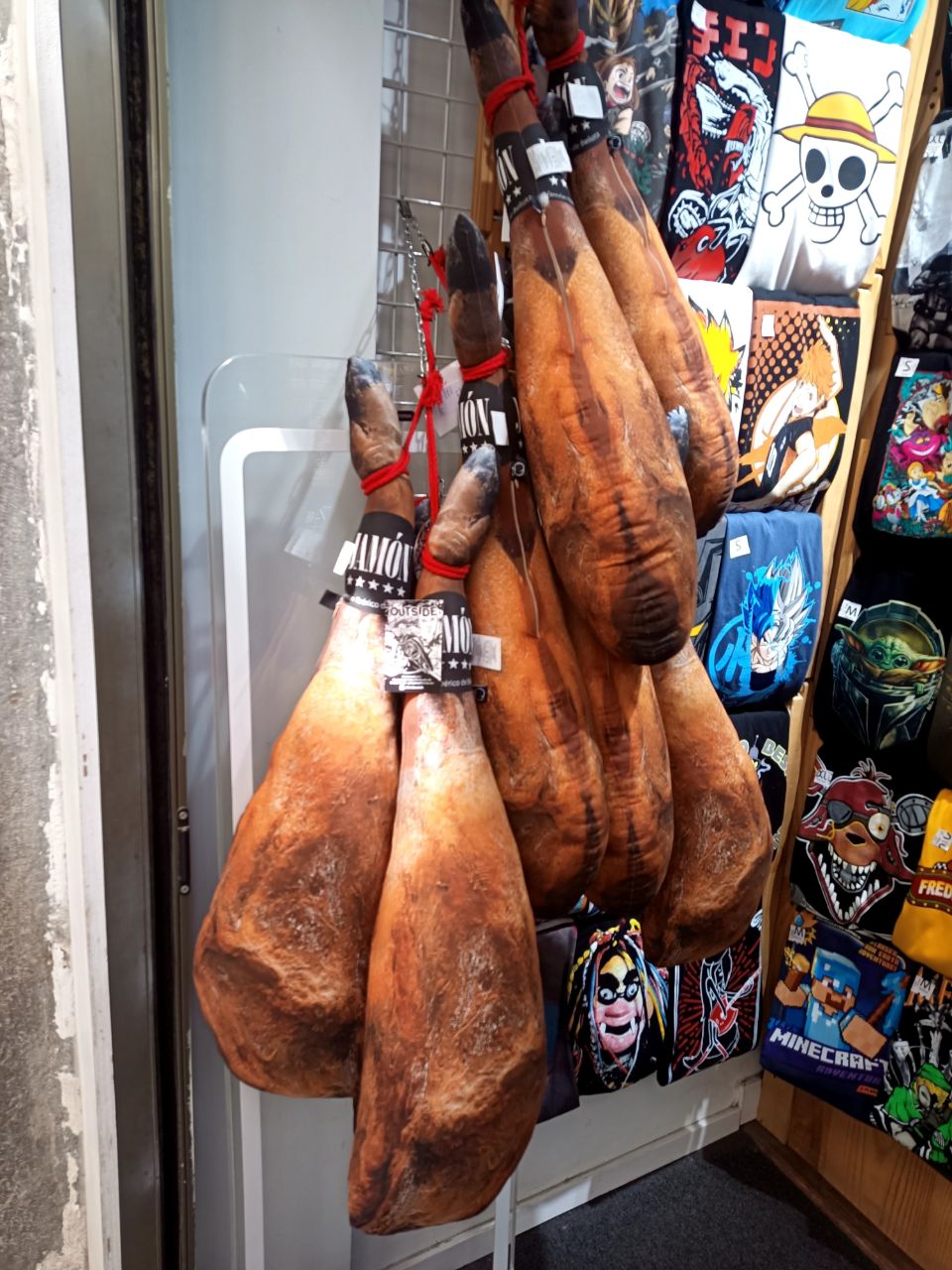
Jamón legs beside cartoon tees
Up the Darro
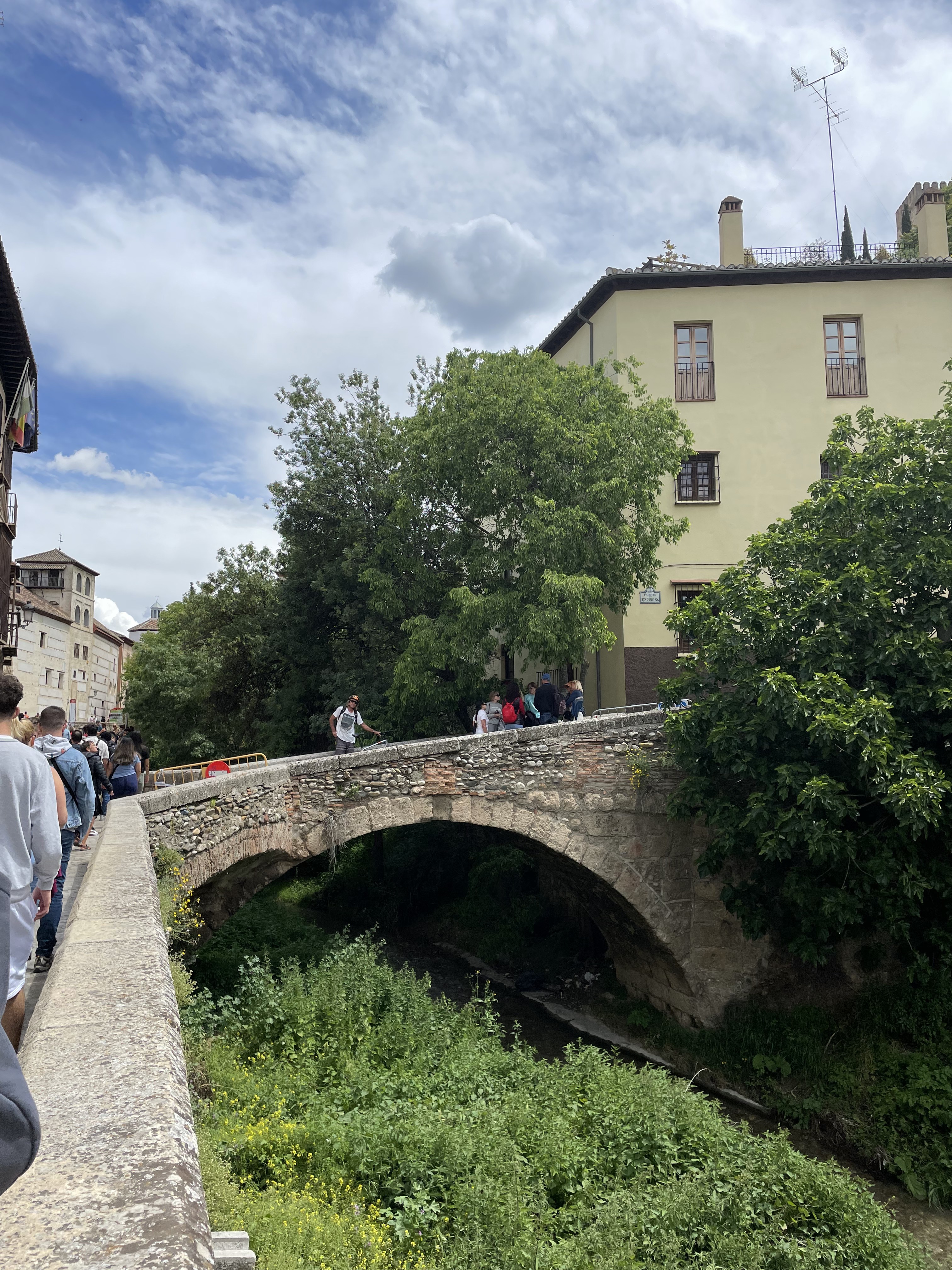
Past the cathedral the city begins going up. The Darro runs below the lanes in a green, overgrown channel, and an old stone bridge lets you cross it and agree you have seen the river. Through San Pedro the way climbs gently by whitewashed houses, and from a bend in the walk the first sight arrives: the Alhambra's red fortress towers rising from trees on the hill across the valley, with the ruins of an old aqueduct trailing down the slope in the foreground, as if it had walked down to greet us and run out of steps.
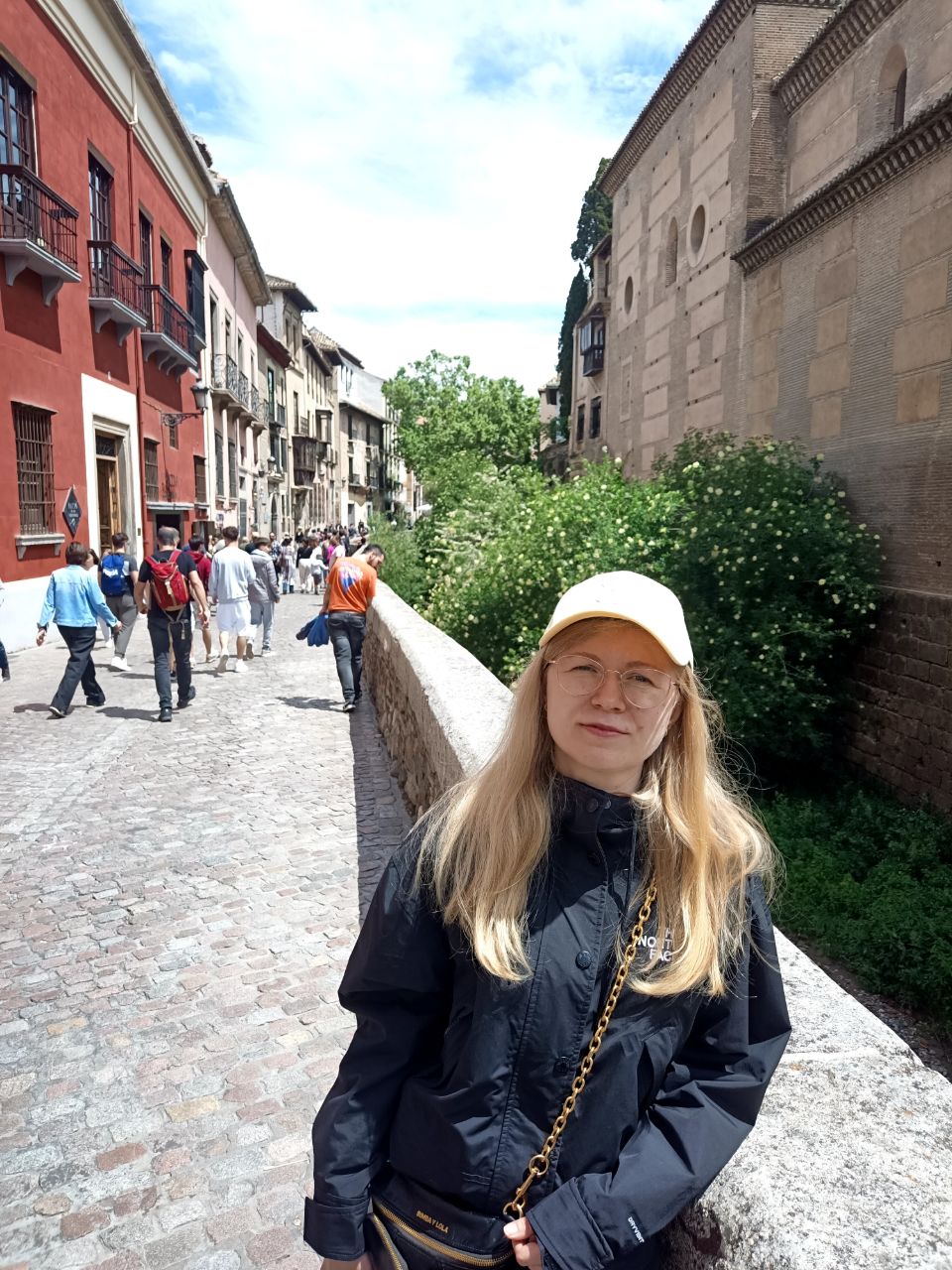
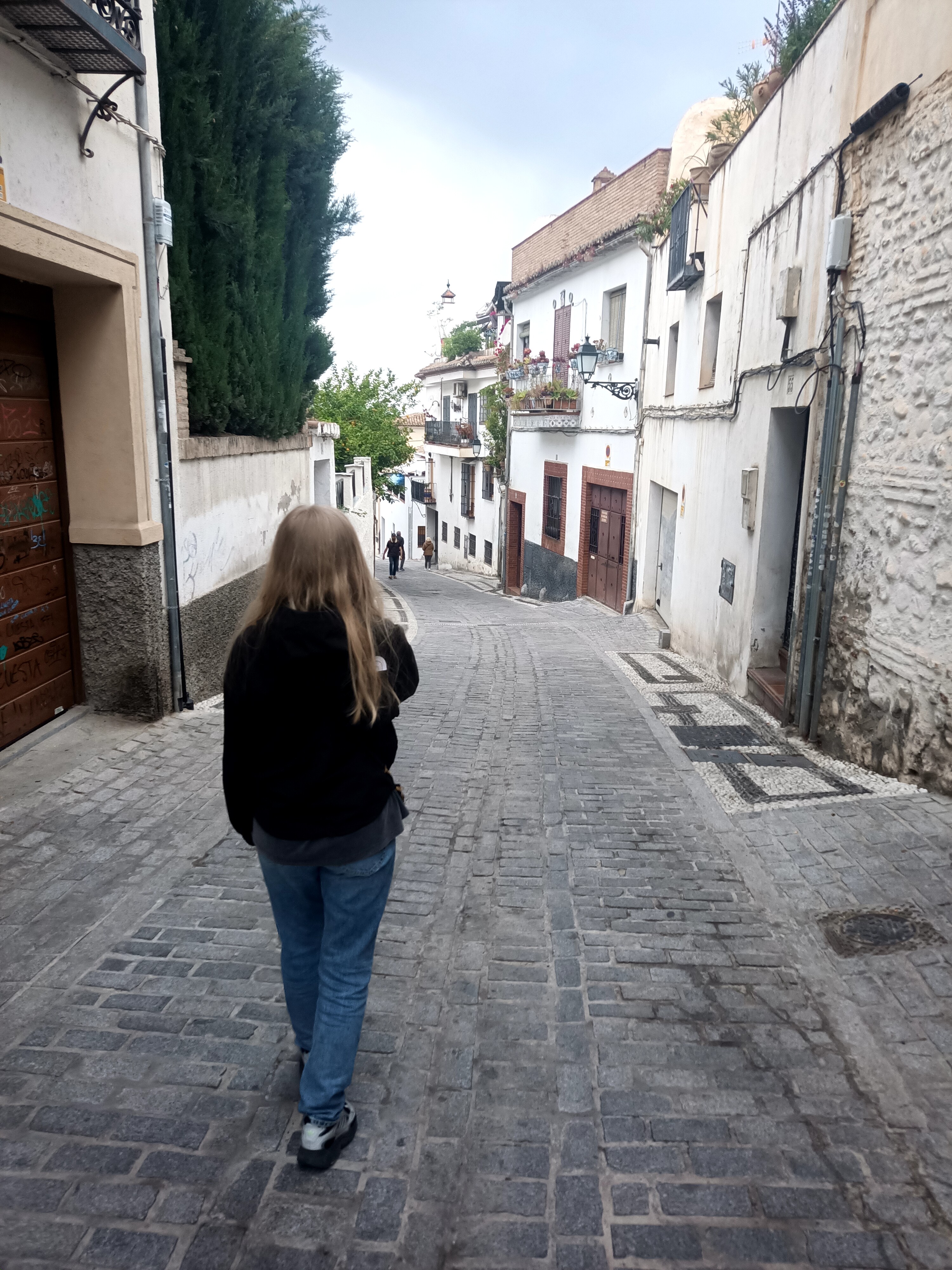
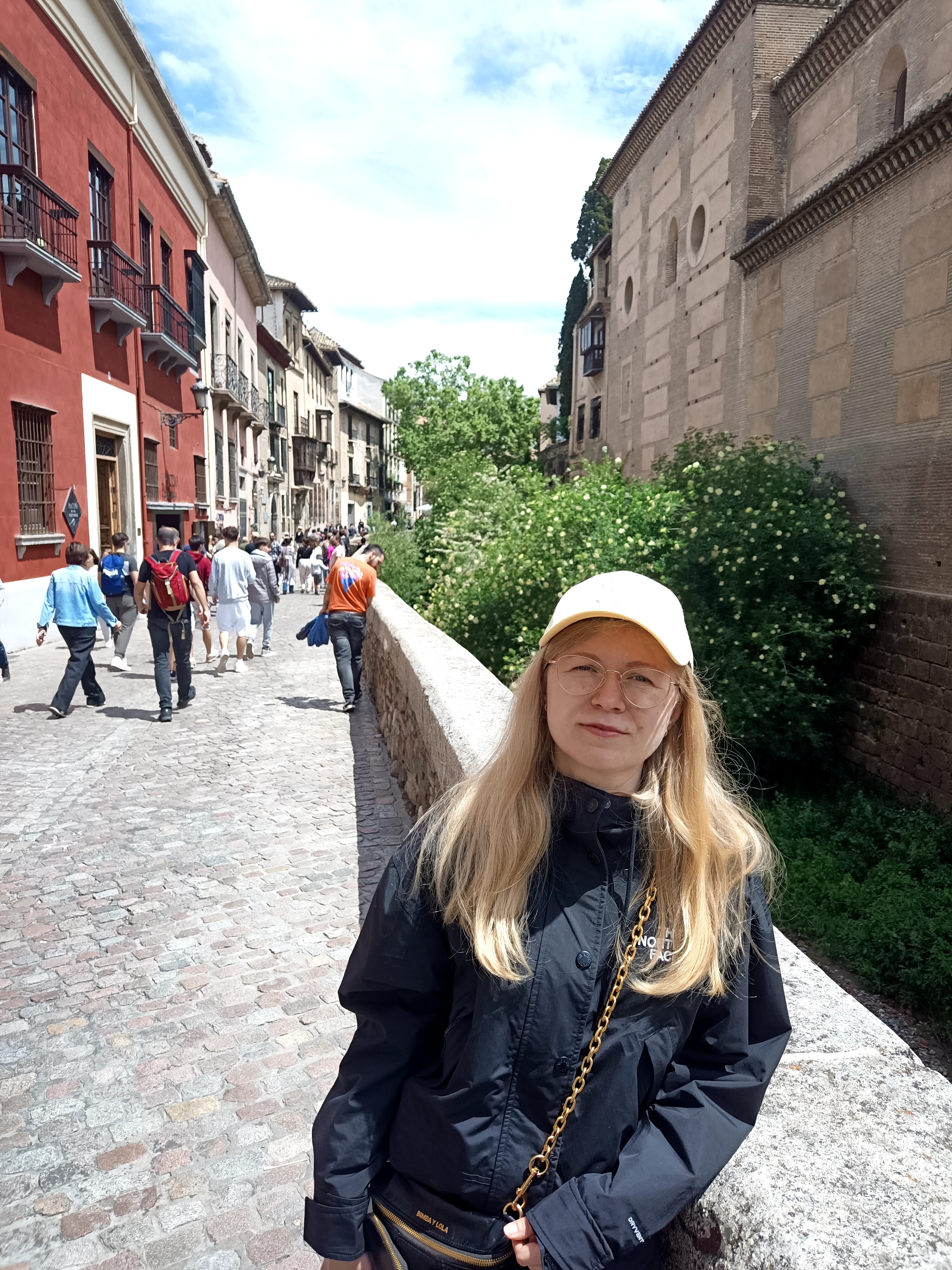
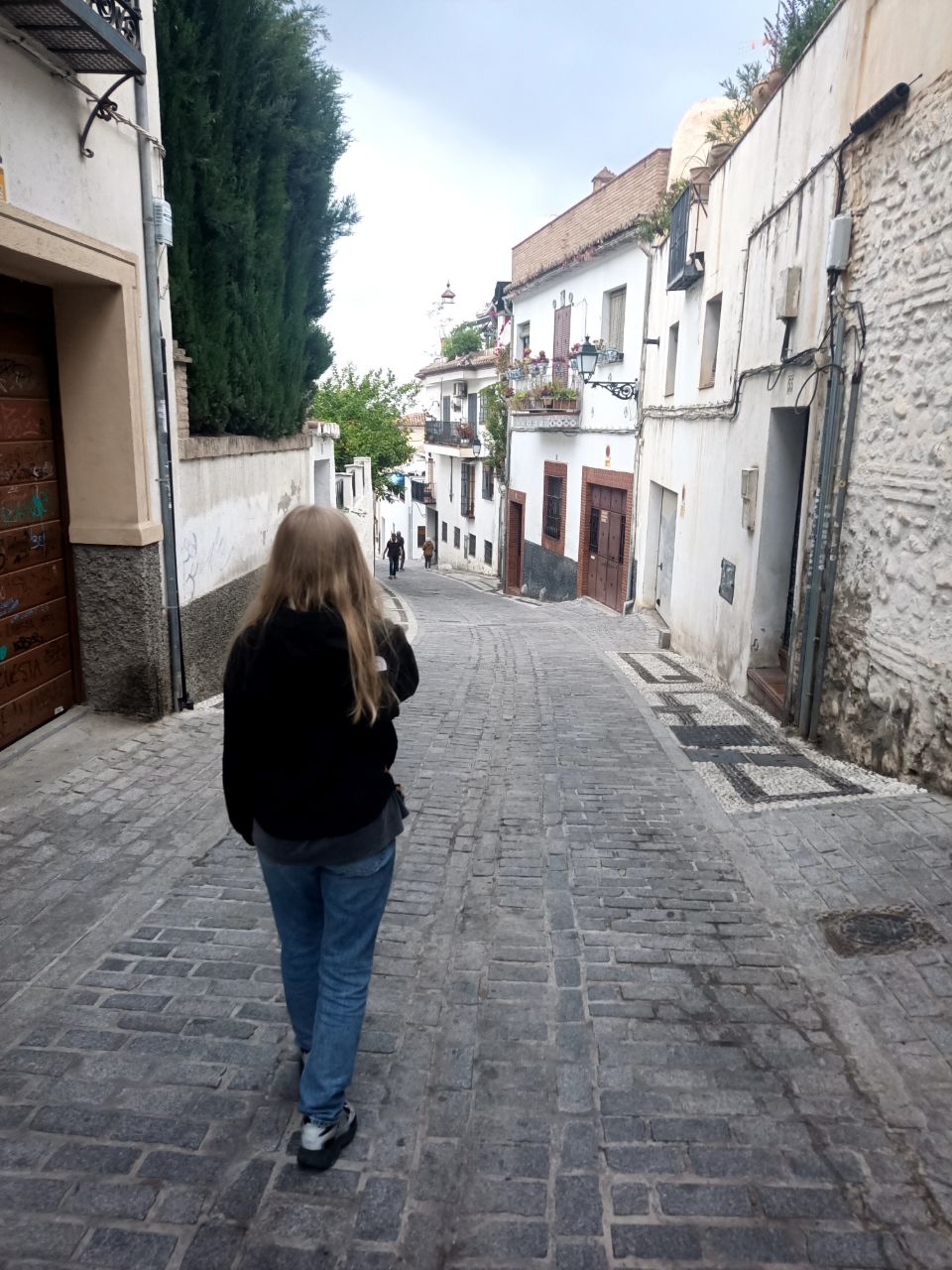
Anna on the cobbles of the old quarter 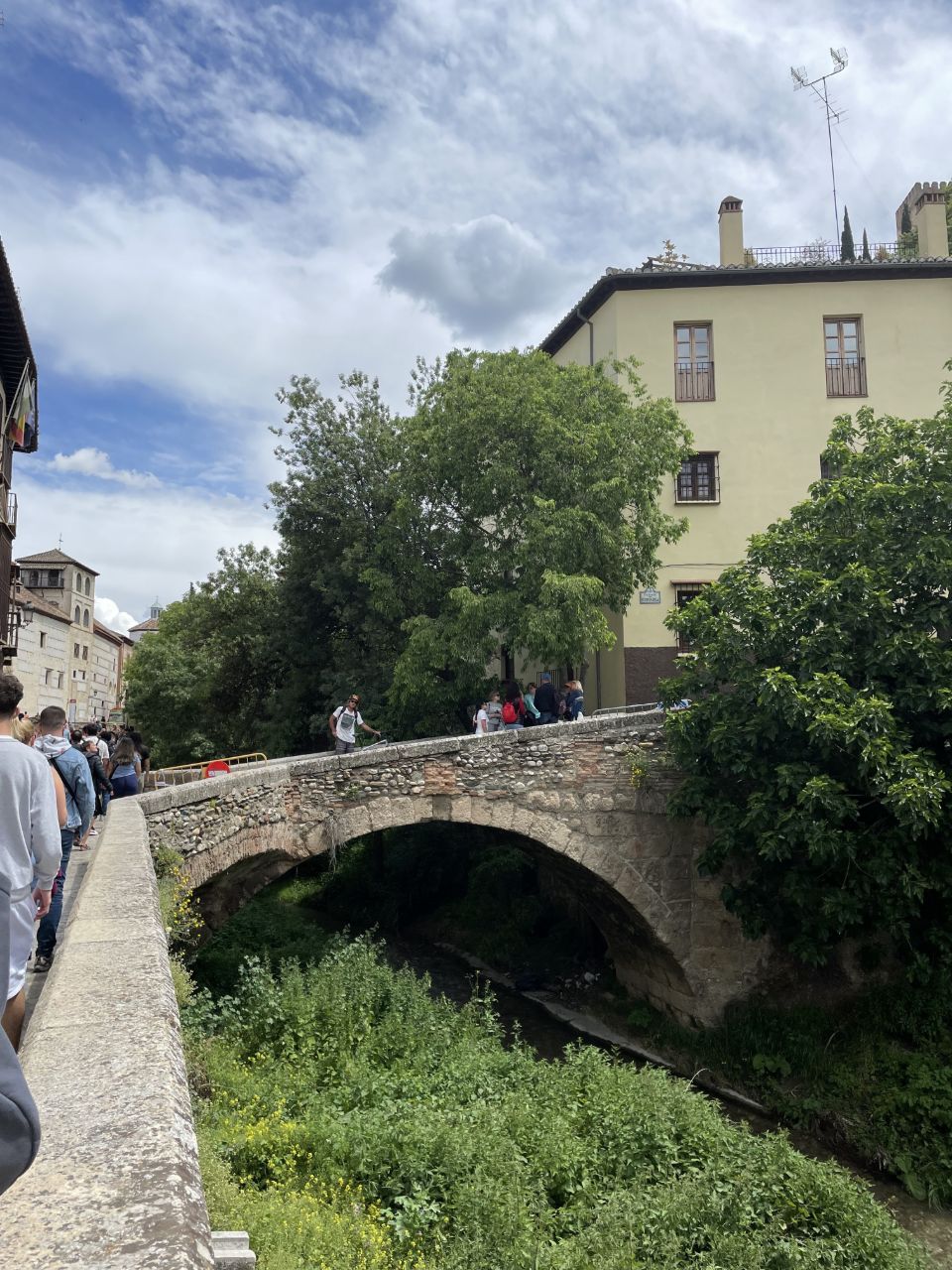
The bridge over the Darro 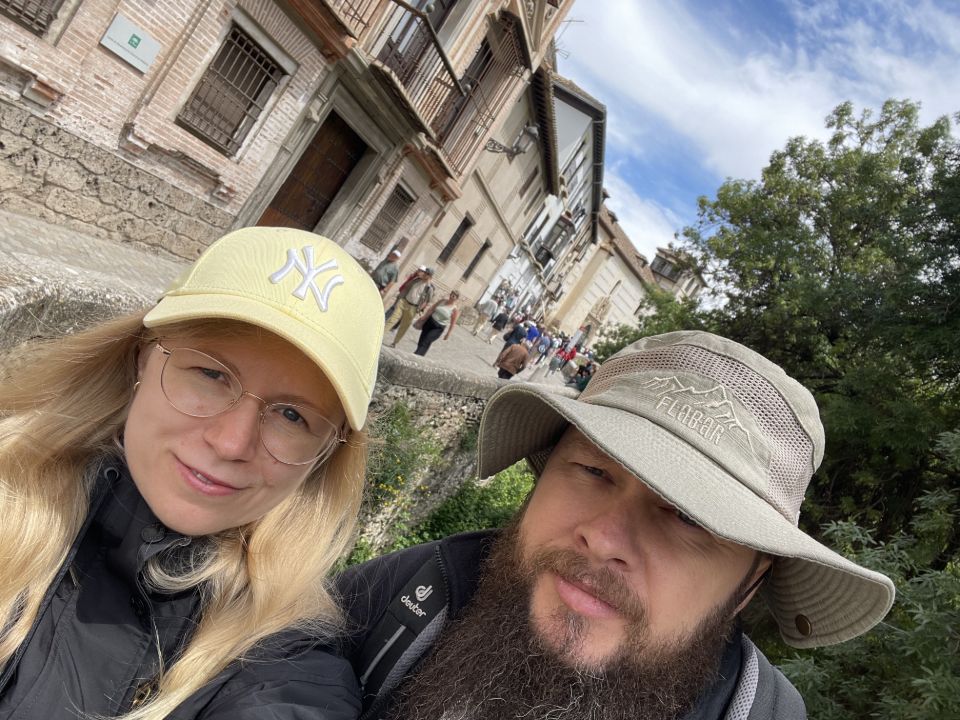
Walking up through San Pedro 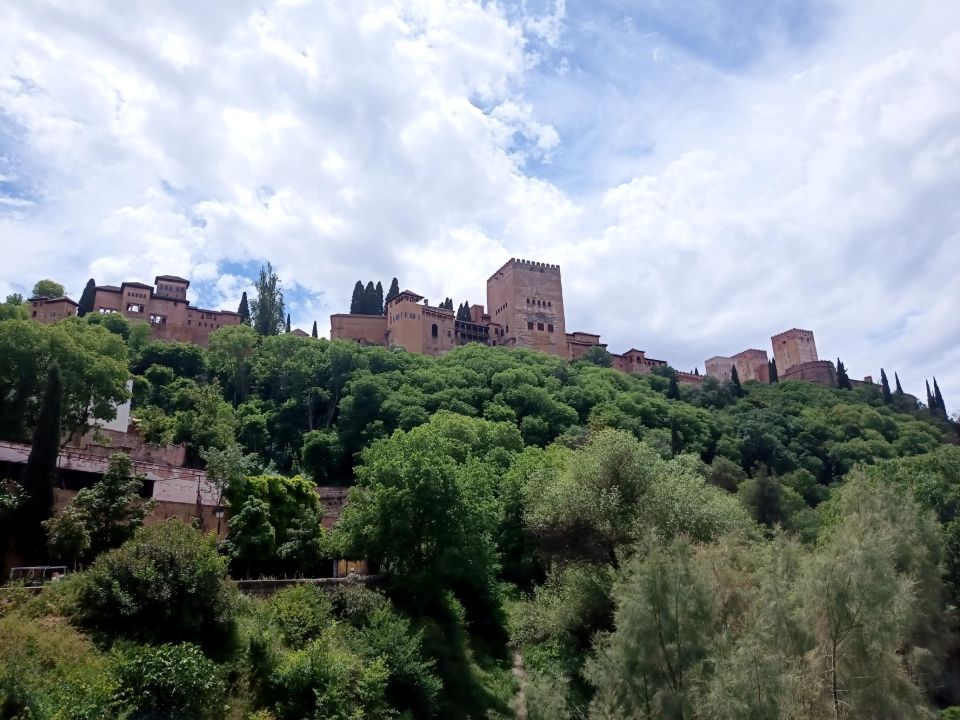
First sight of the red fortress 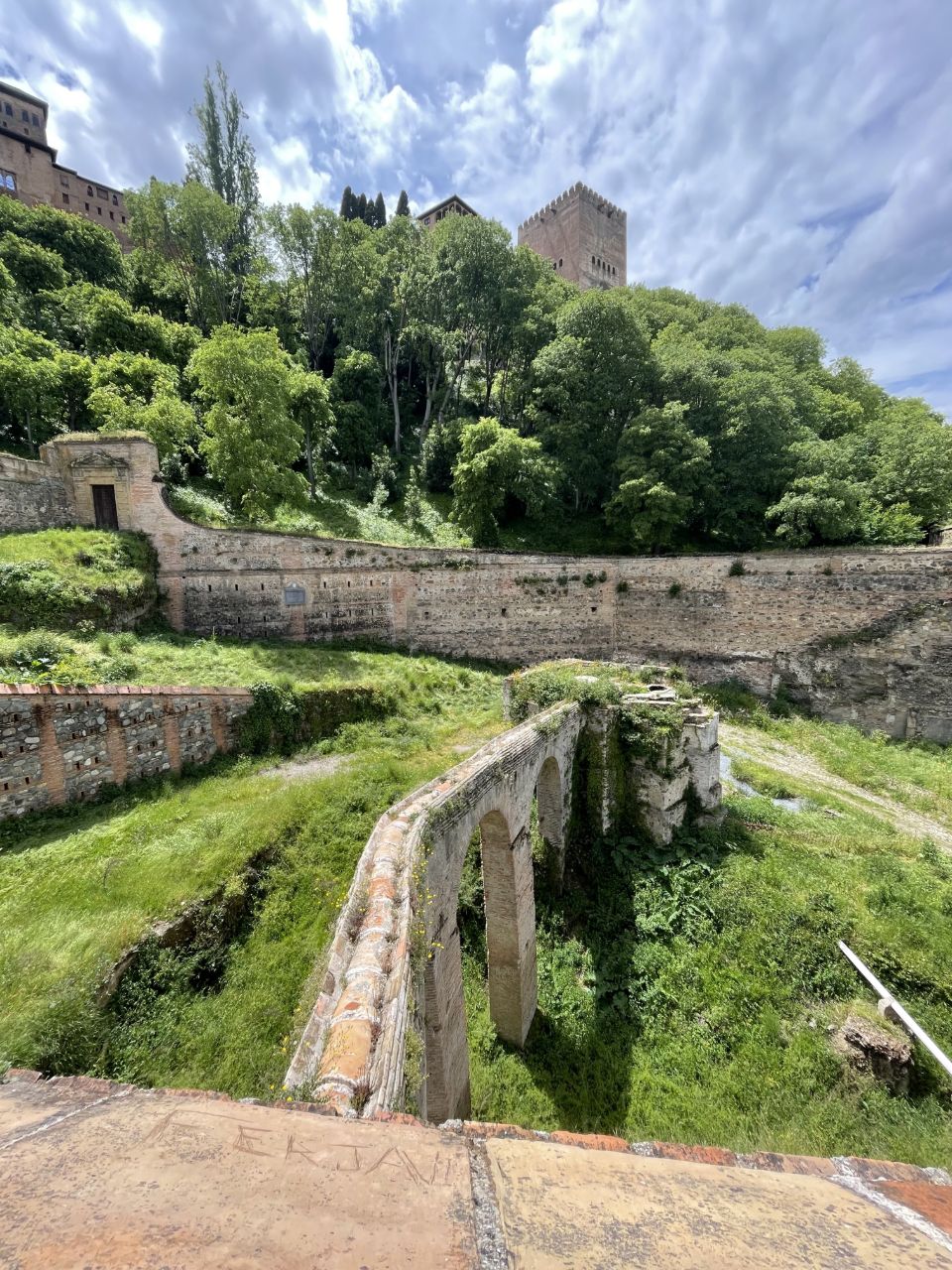
Aqueduct ruins below the Alhambra
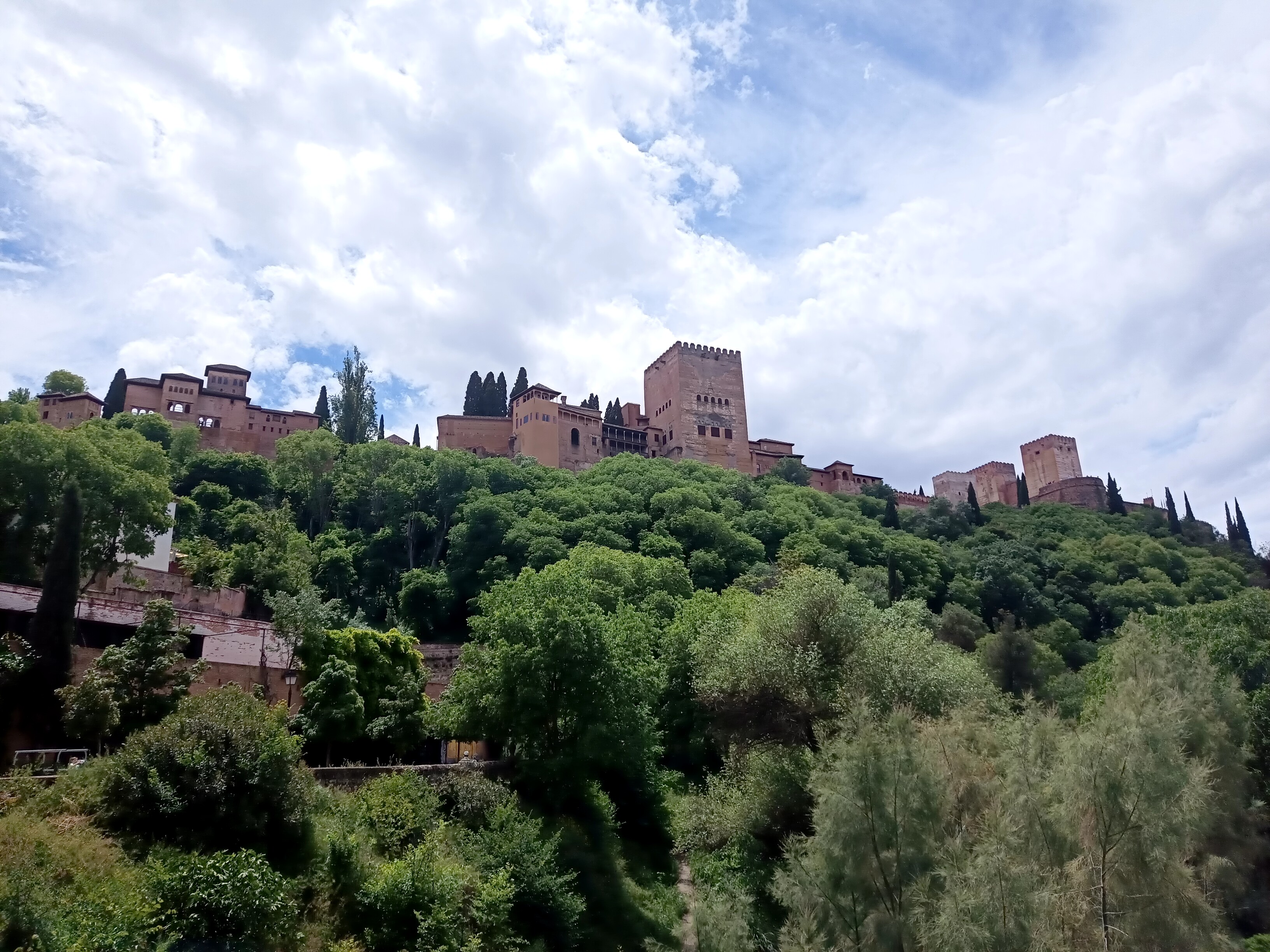
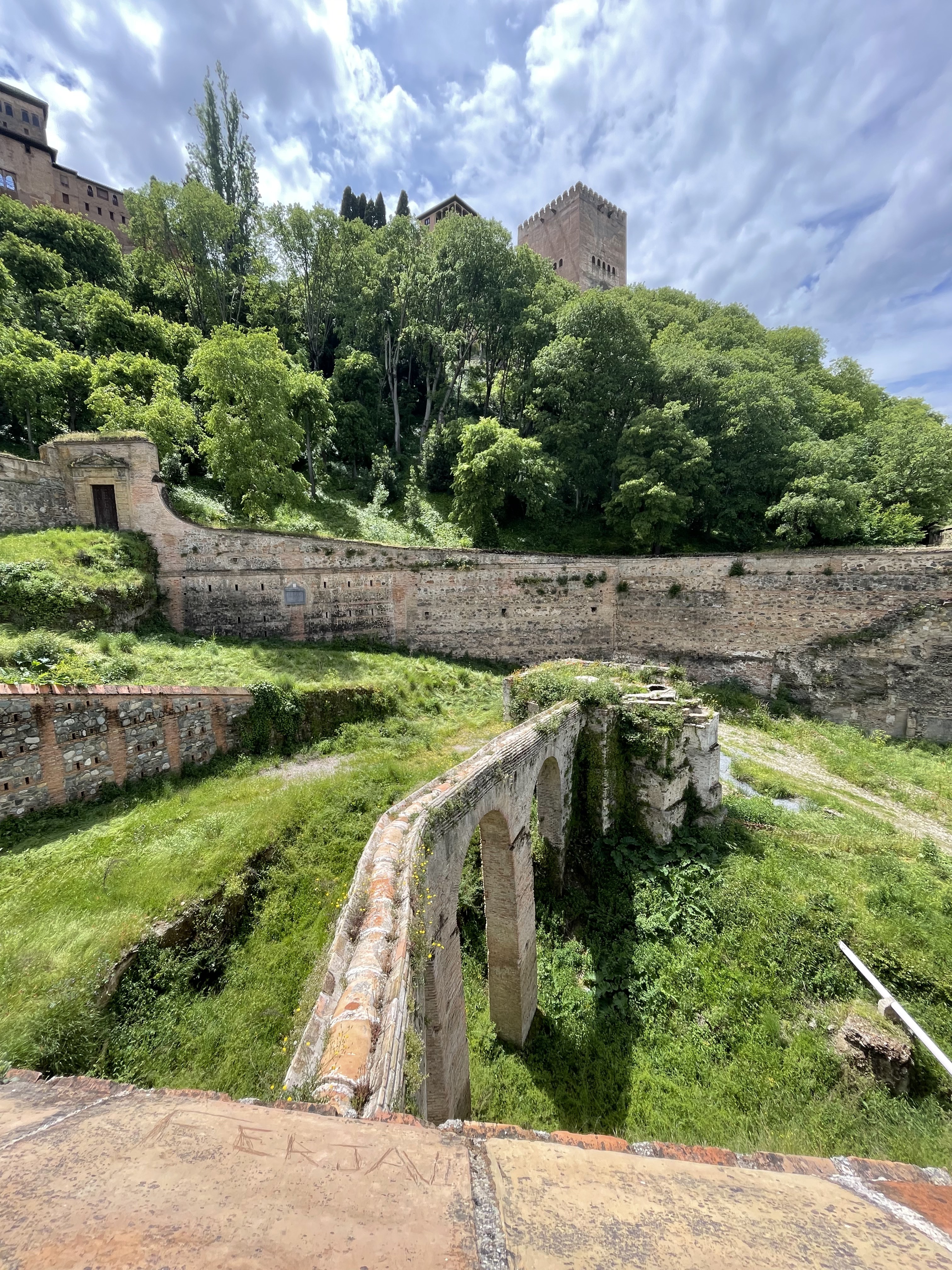
From the bend the Alhambra kept growing anyway — red towers, terraces, the rampart walk, the formal gardens below the walls. Sooner or later you have to stop photographing a view like that and go up: we crossed the valley and gave the fortress the afternoon it wanted.
The Alhambra, and the afternoon it took
The approach
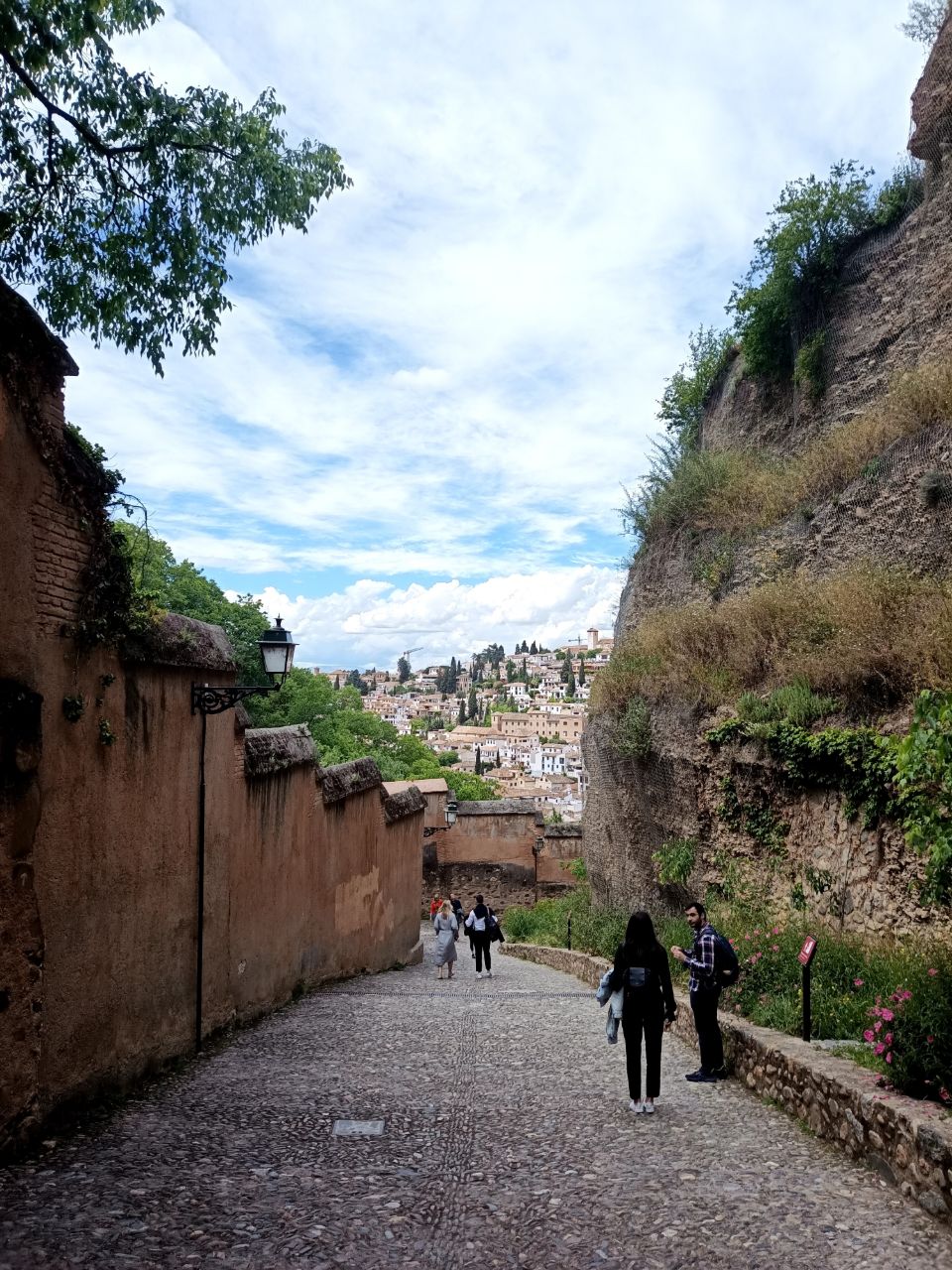
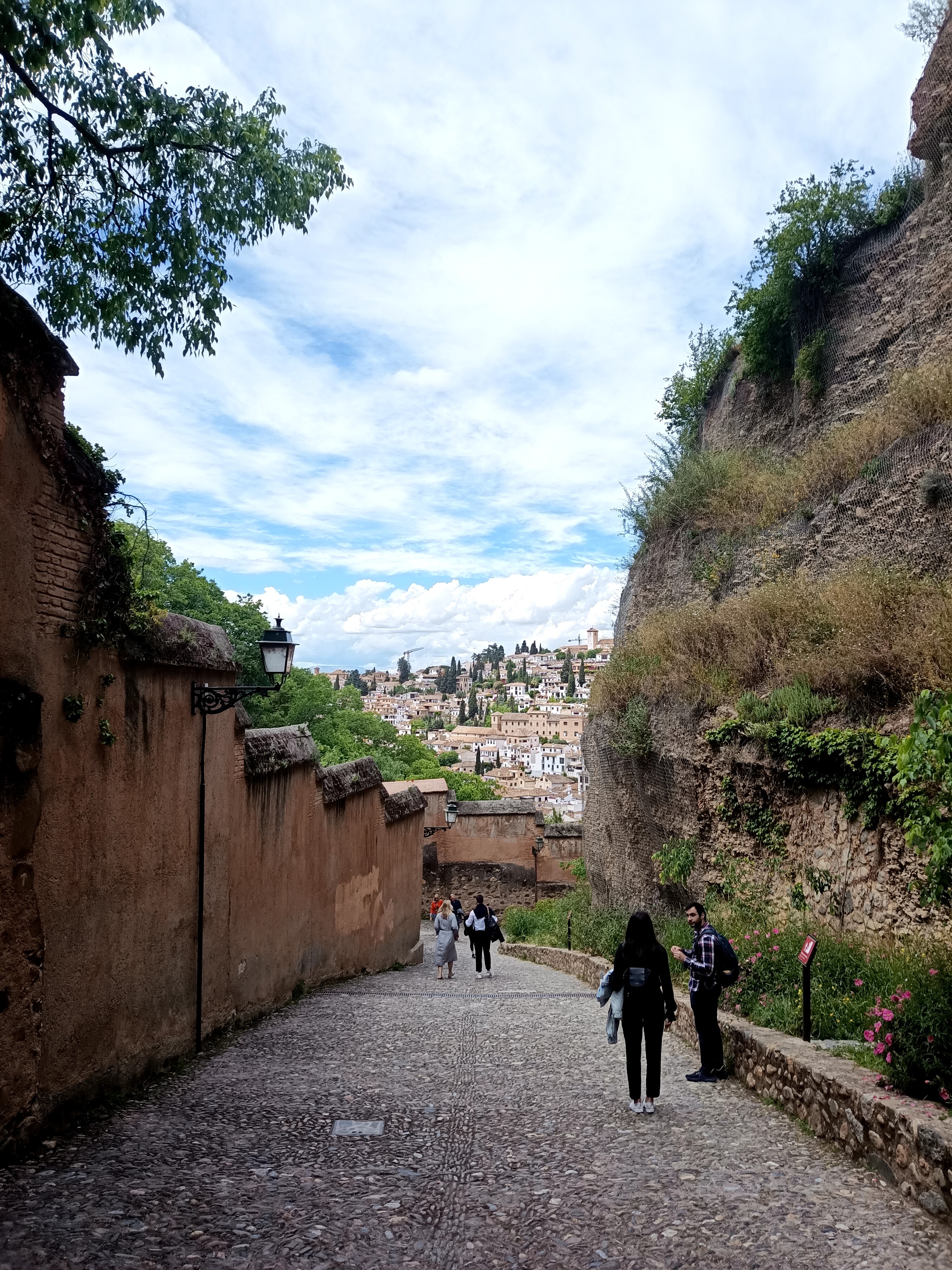
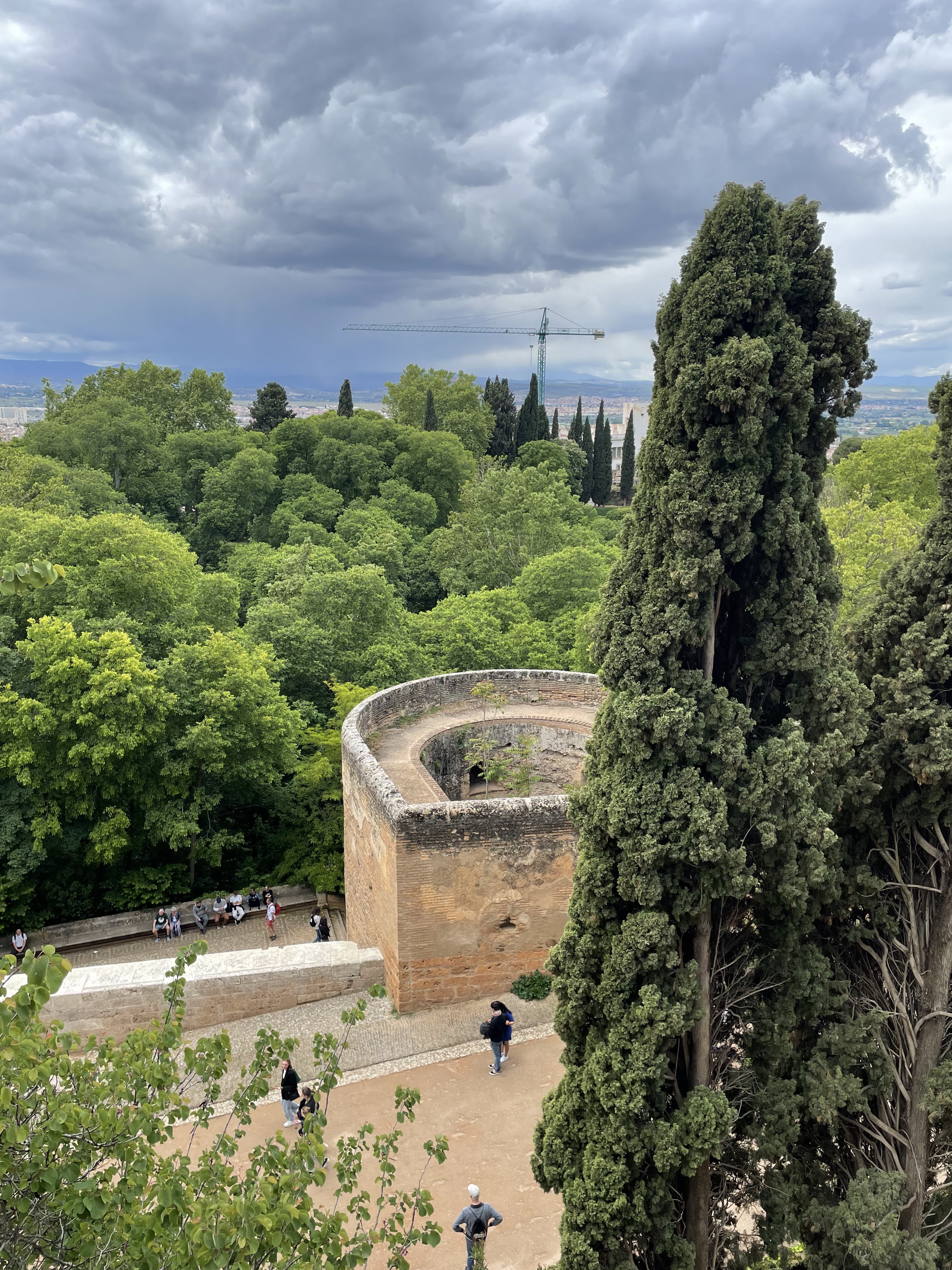
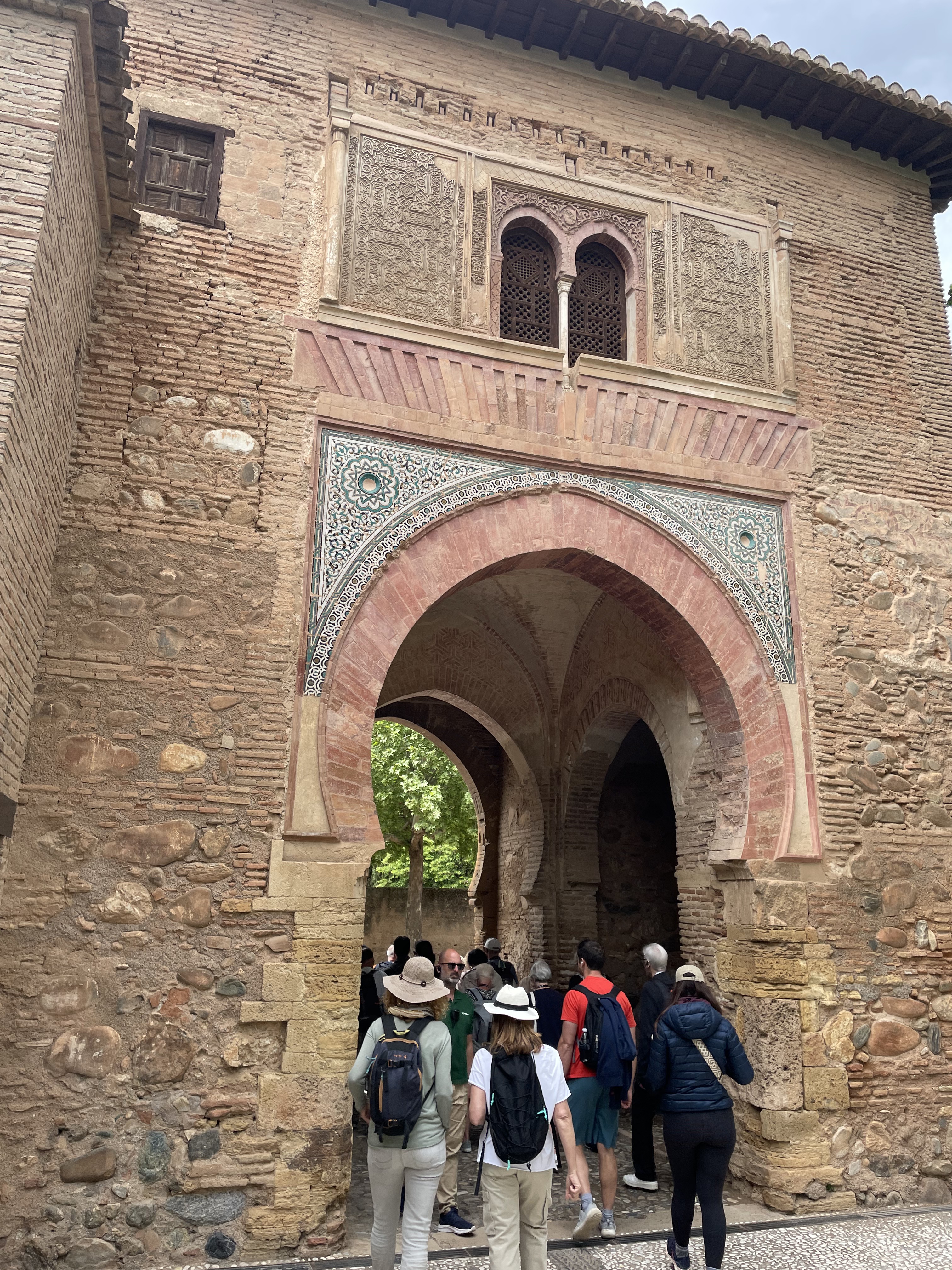
The approach makes its point gently. A paved path climbs the last stretch of the hill with the red cliff on one side and the town falling away below, and the first walls arrive as just more red — the whole hill is the same stone, and the fortress grew out of it instead of being placed on it. Then the path turns a corner into the ditch that keeps the two apart, and everything becomes ruin again: a dry ravine, a crenellated tower keeping watch over nothing in particular, a dark culvert breathing mossy cool over a thread of stream. Which is exactly the welcome a fortress should give, before it lowers its voice and turns out to be a palace.
We had known, in theory, that the Nasrid Palaces at the heart of the Alhambra are booked one to two months ahead; we learned it in practice, at the ticket desk, on the day. The grounds take everyone on shorter notice and filled our afternoon generously — the famous rooms filled nothing, because we did not have them. Consider this a written promise to come back and be right about the booking.
The last lane before the fortress 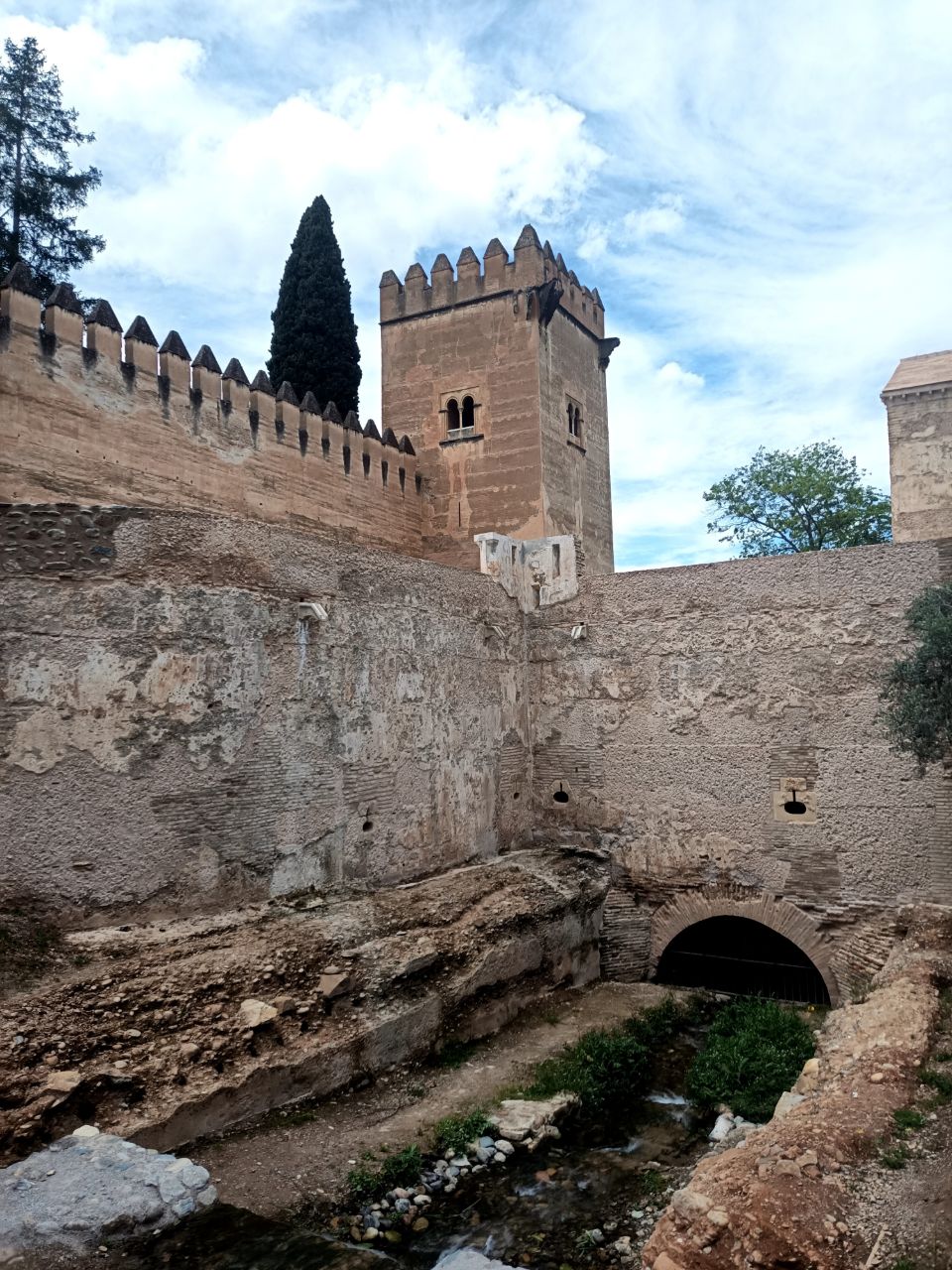
Ramparts over the dry ditch 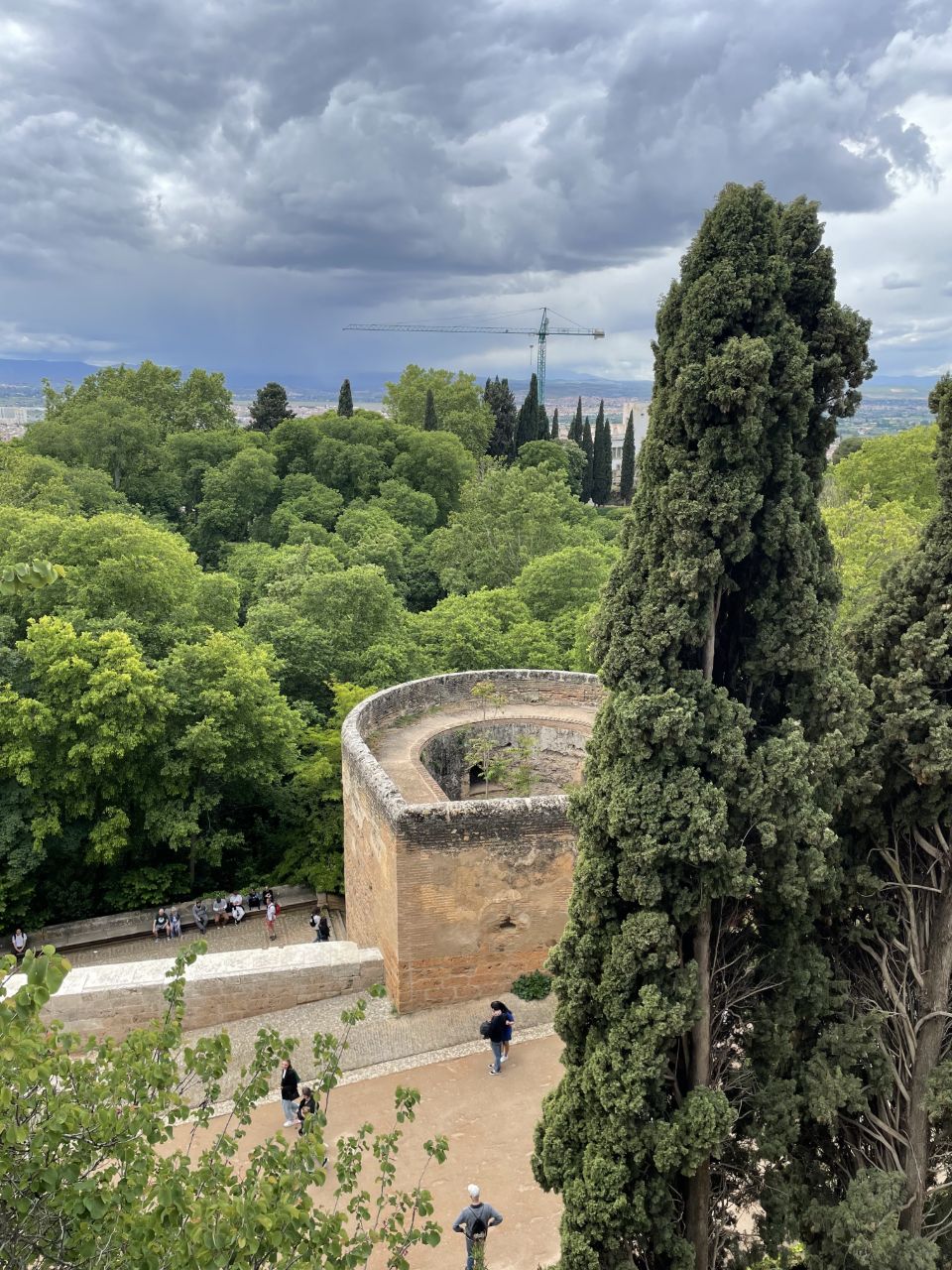
A round ruin in the woods 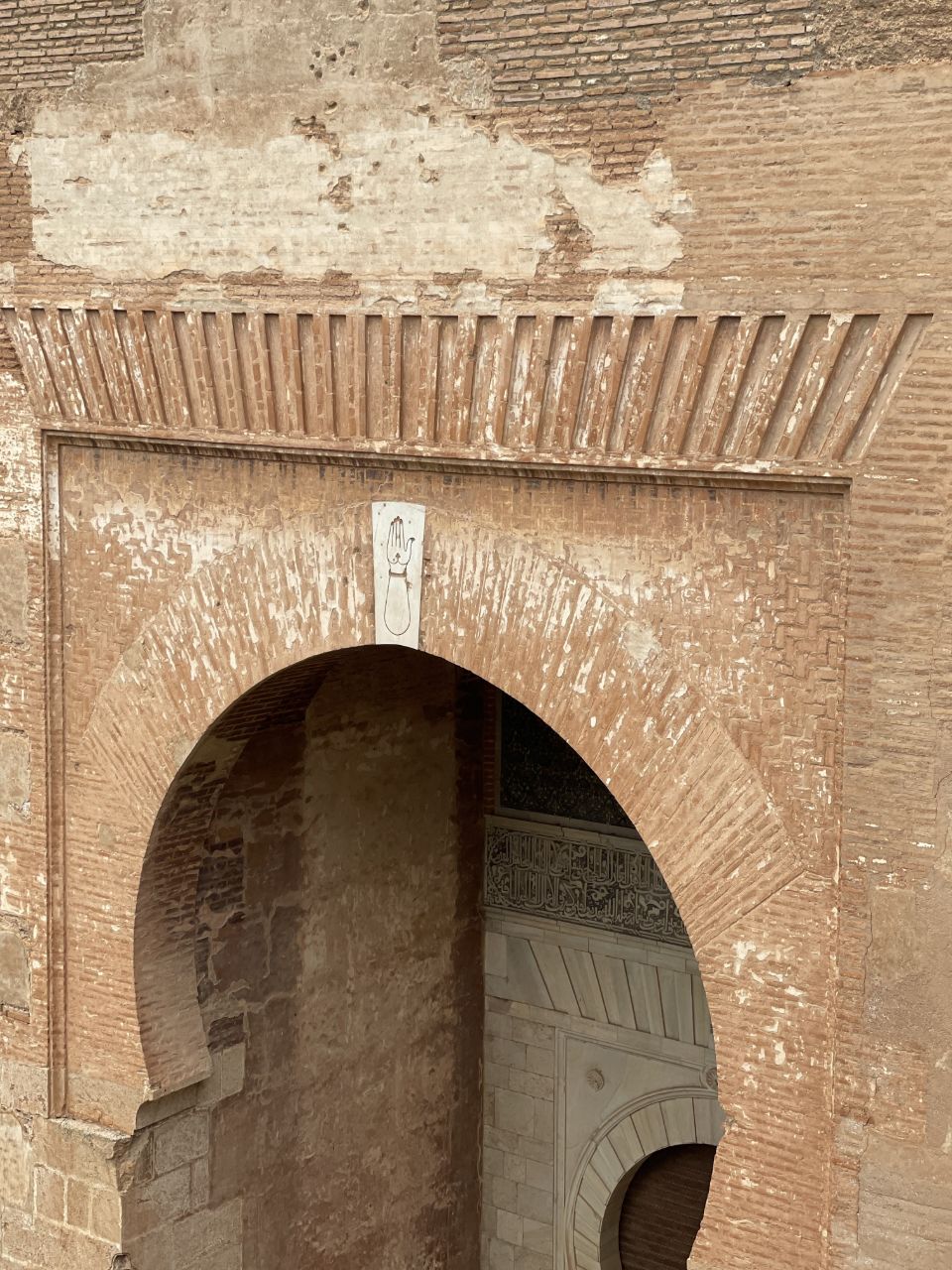
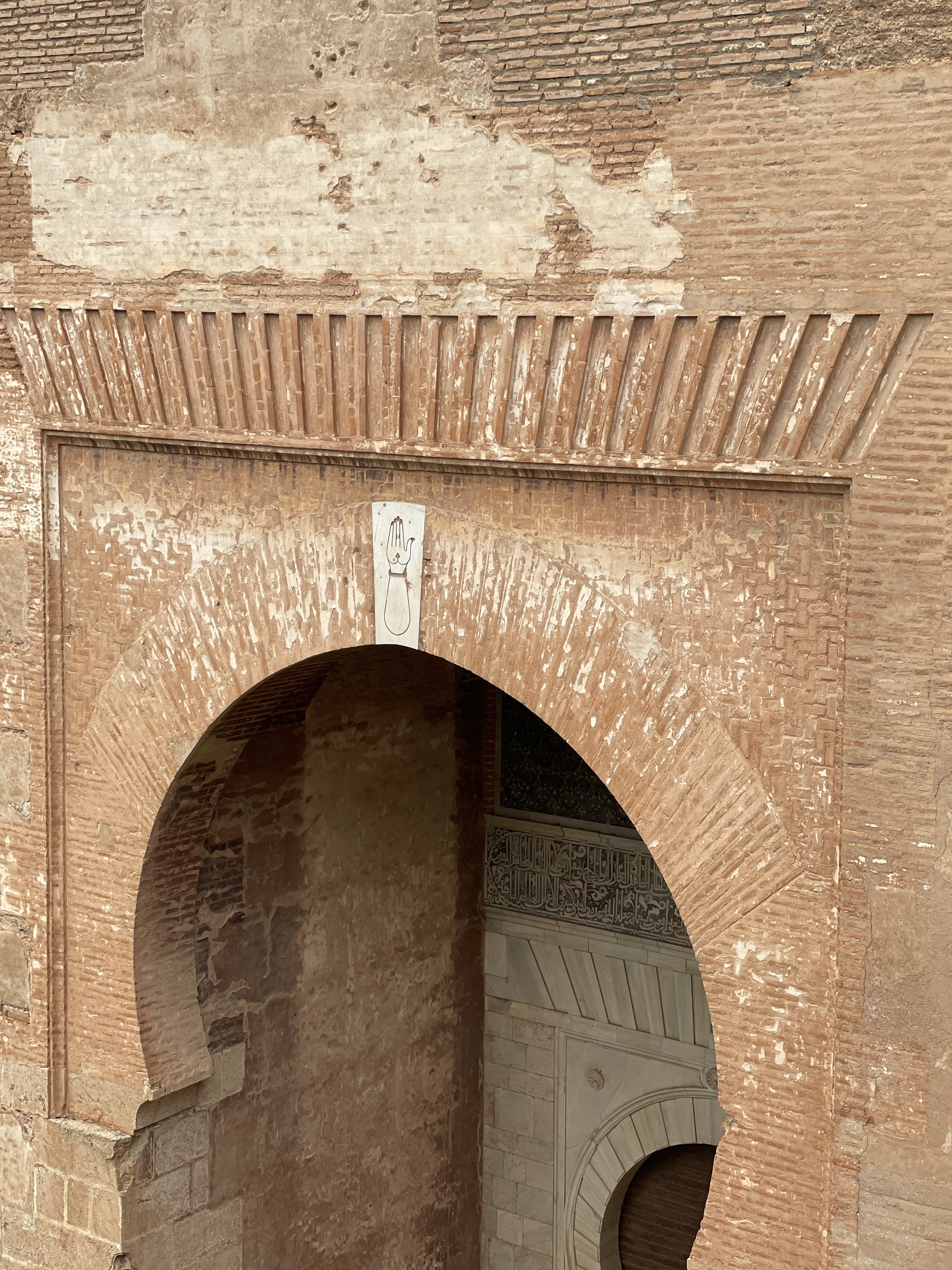
A flaking horseshoe doorway
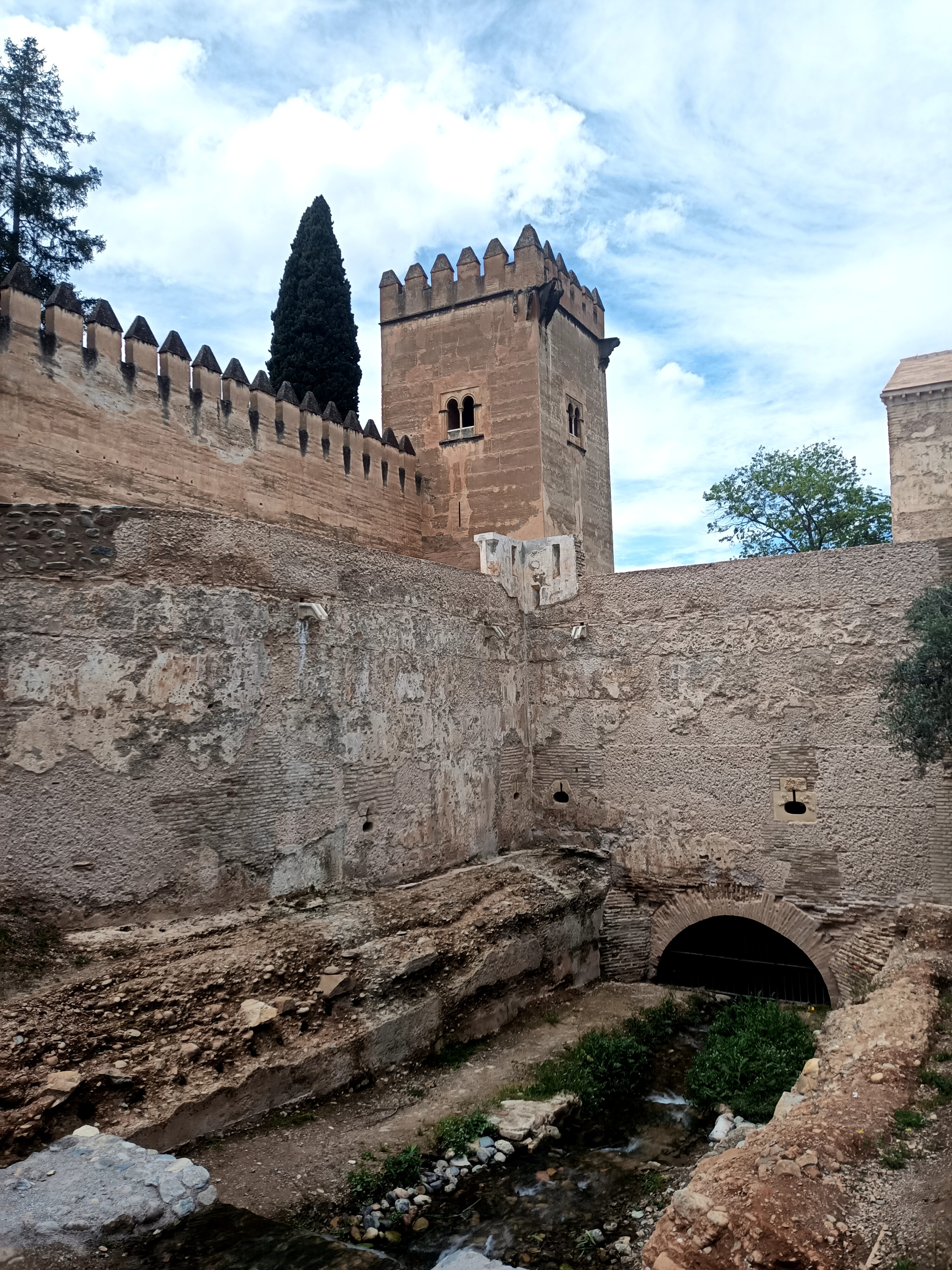
Brick gates and watchtowers
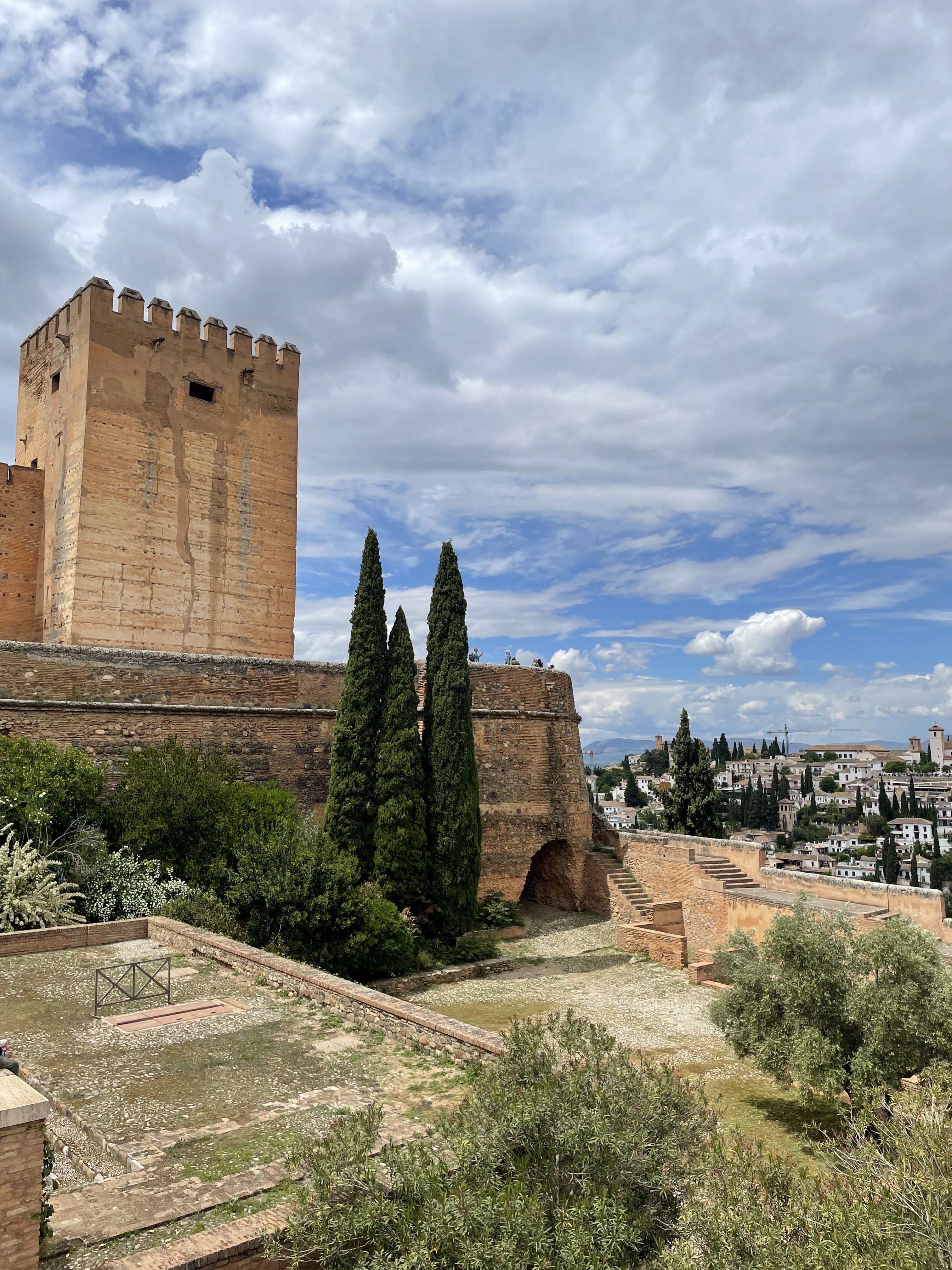
The credentials are settled in brick, tile and patience. Inside the walls the road narrows between battlements built to discourage precisely everyone, then opens onto terraces where watchtowers stack up like arguments for staying inside the century they were built in. One gate wears, high above its arch, a very small carved hand. Nobody anywhere volunteered an explanation, and we have been reading it, in the fullest sense, all week.
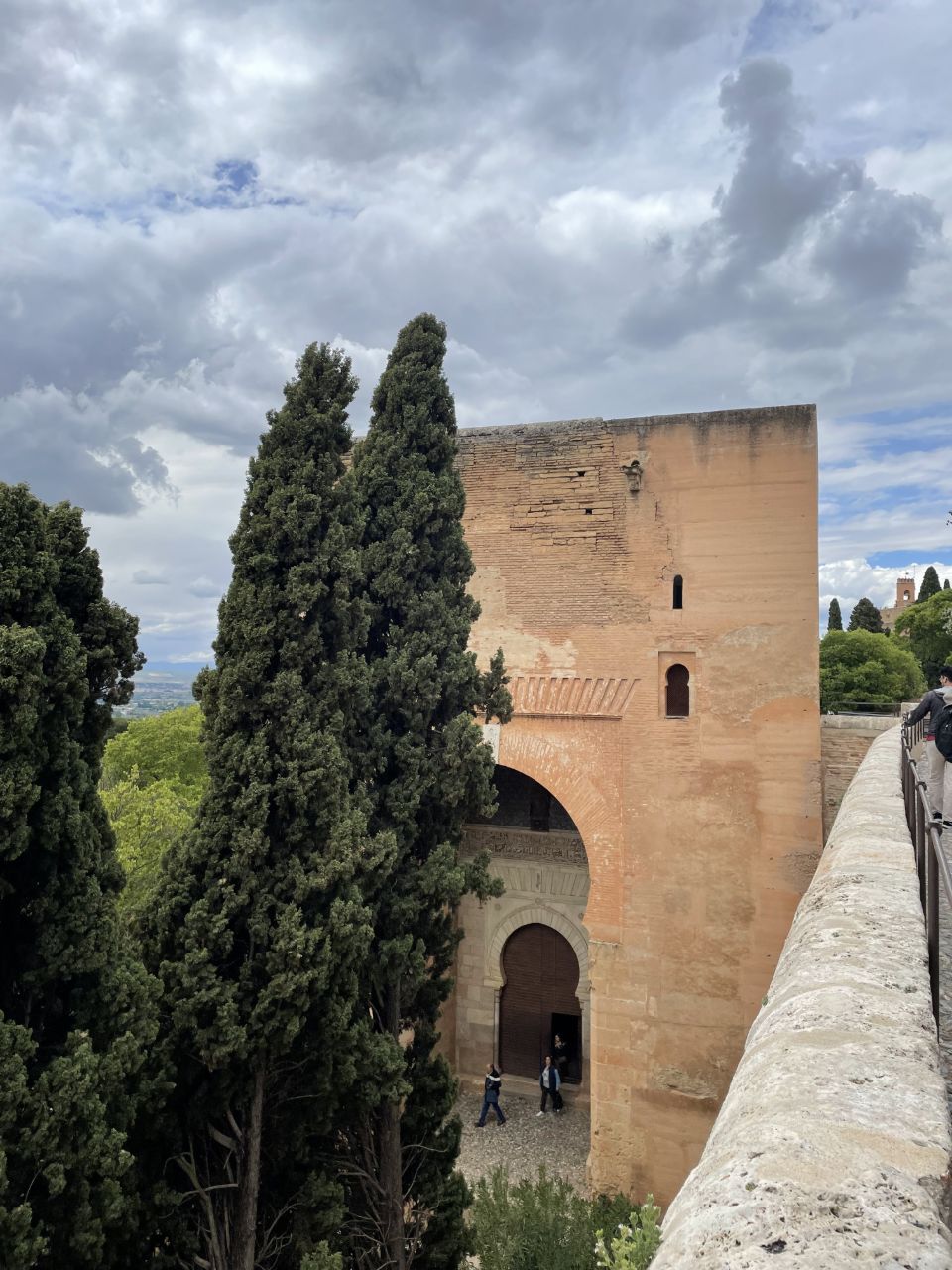
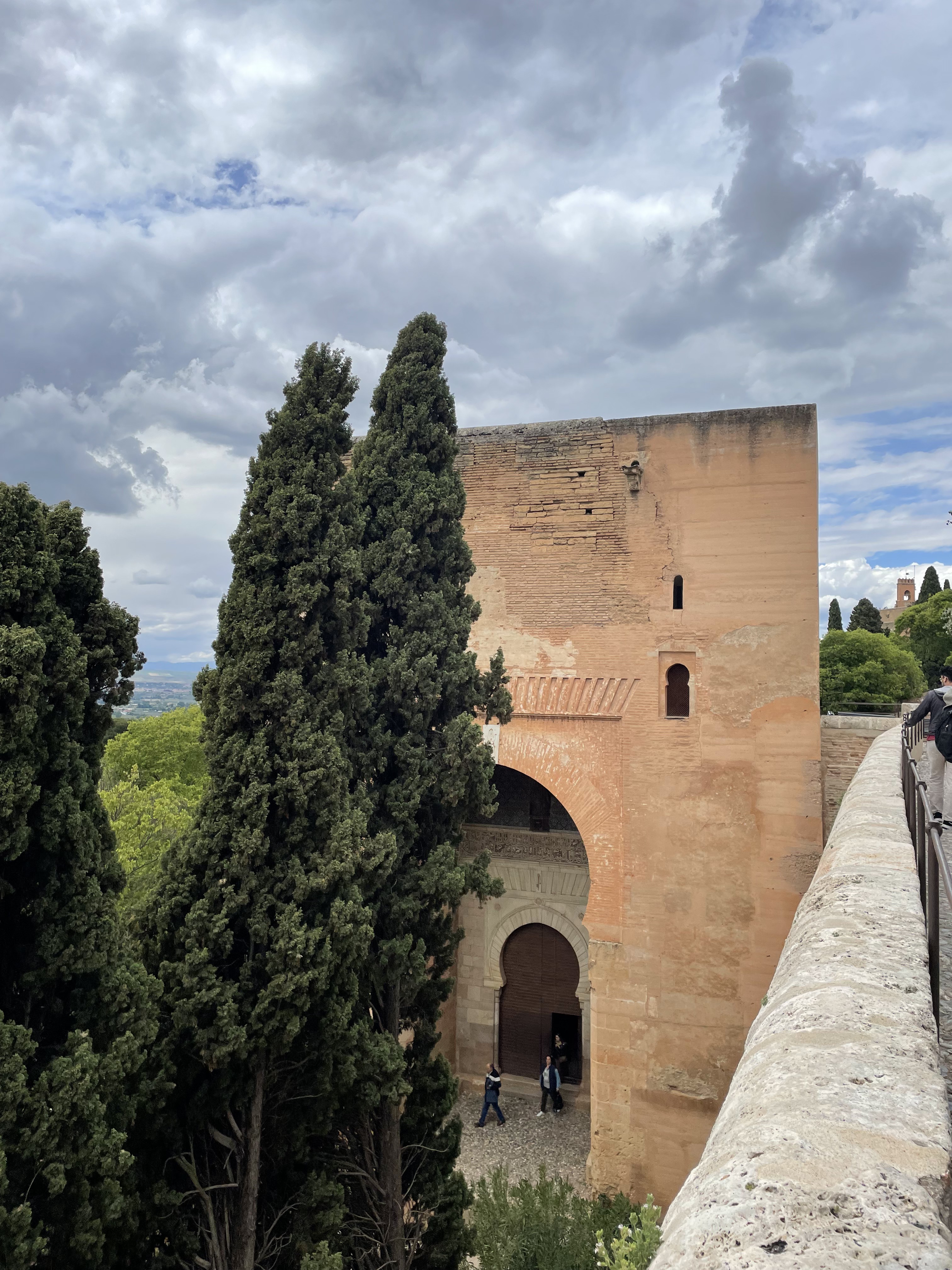
The gate among cypresses 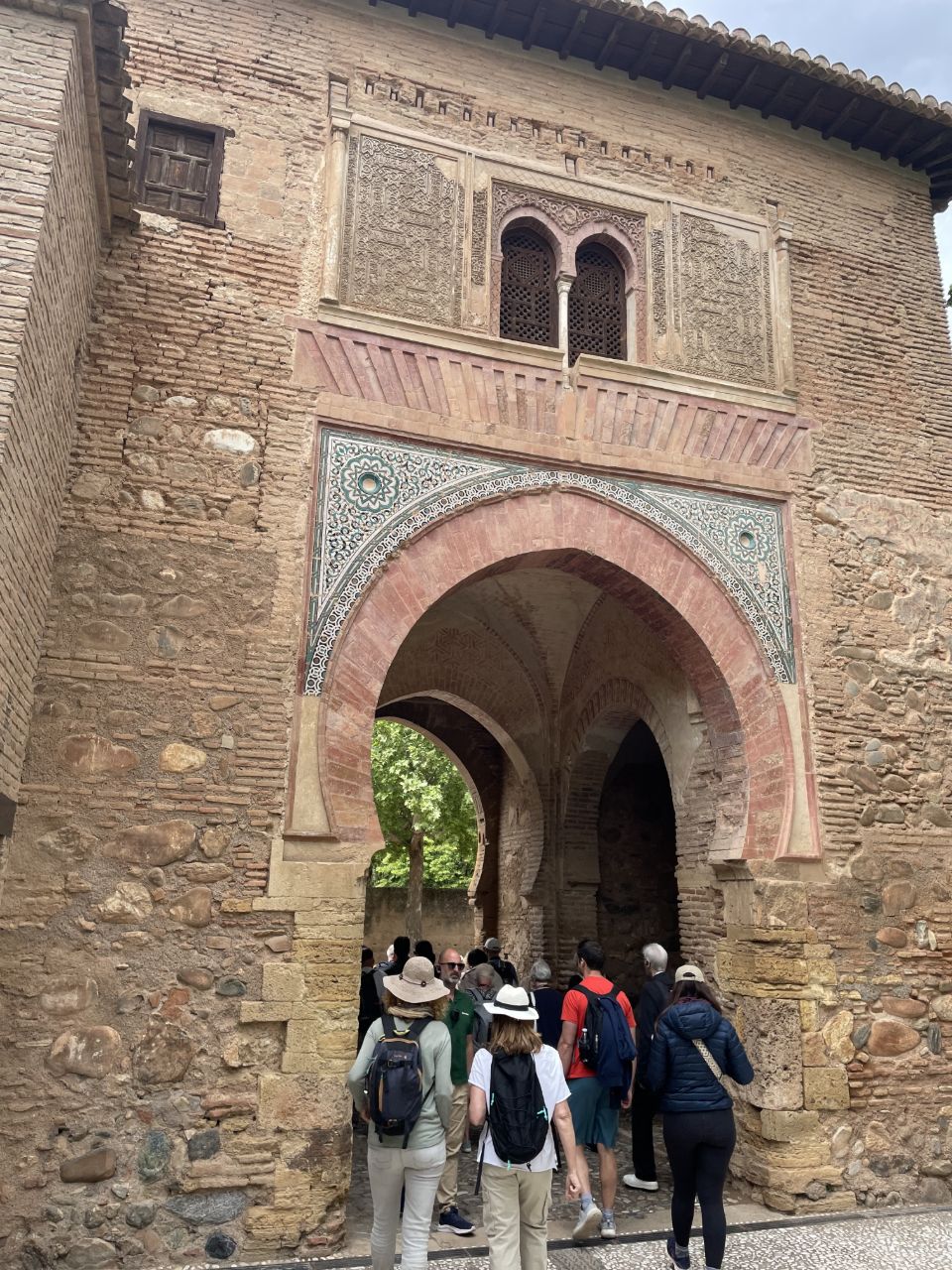
Under the busy gate 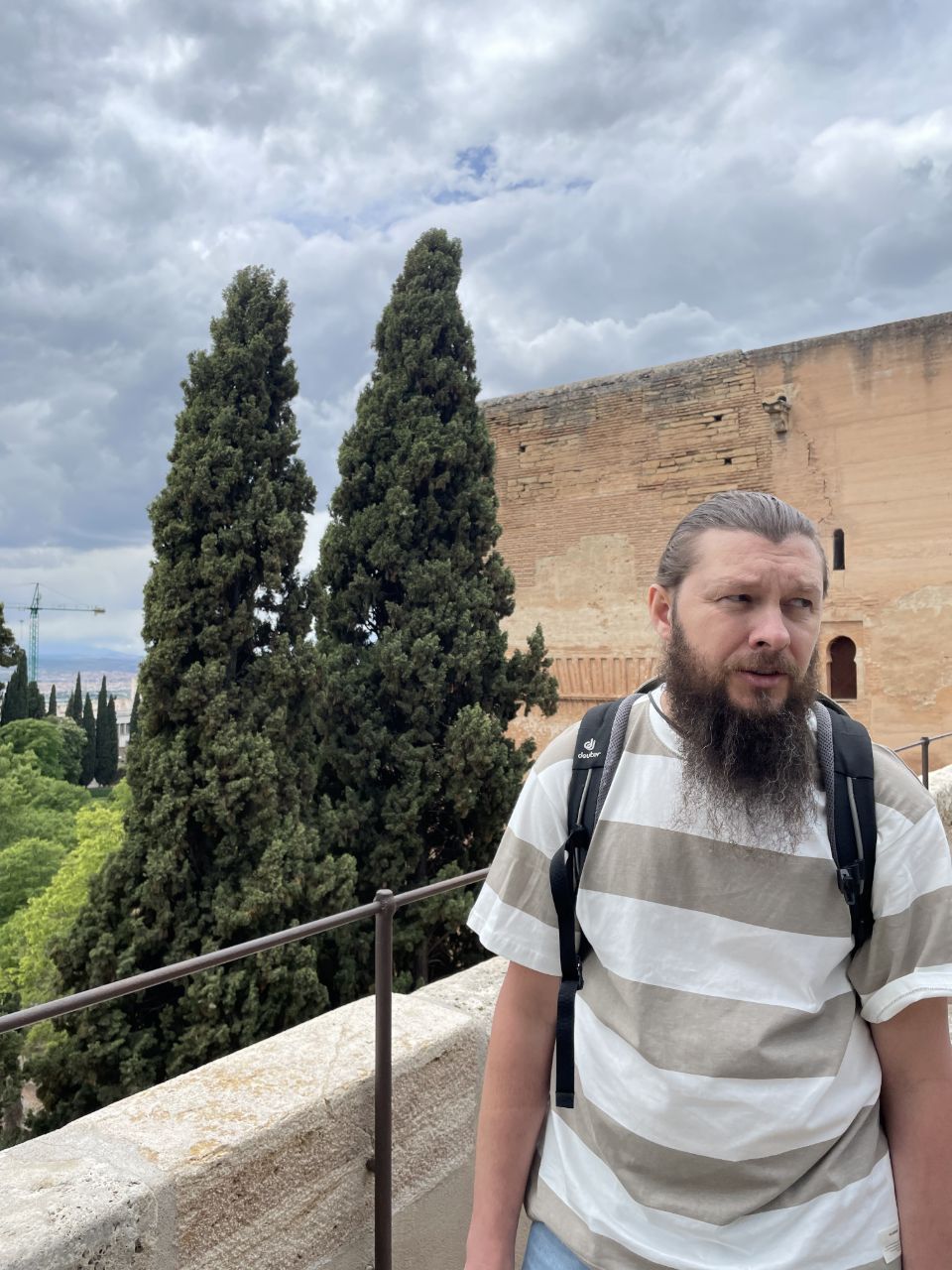
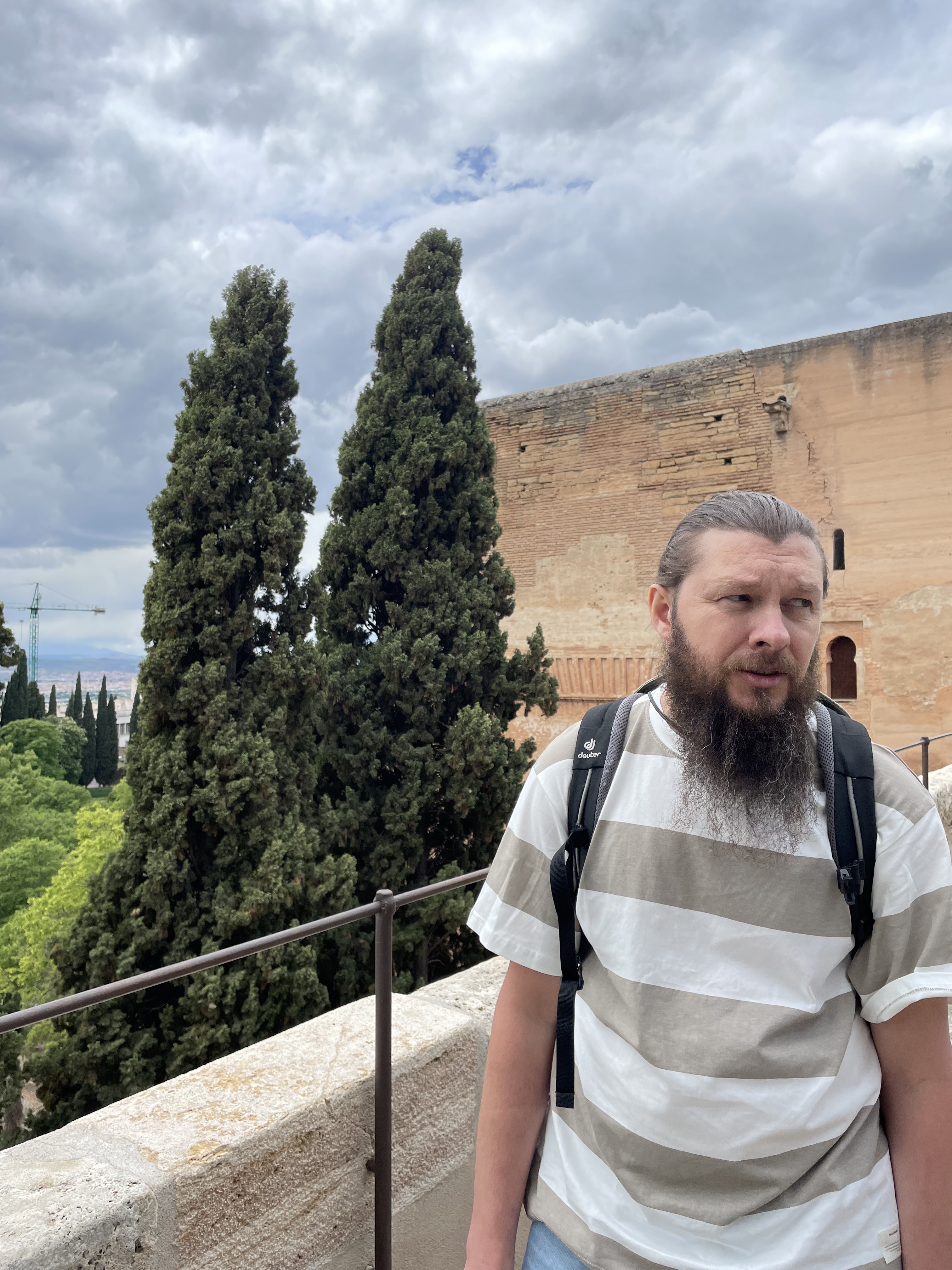
Oleg on the rampart walk 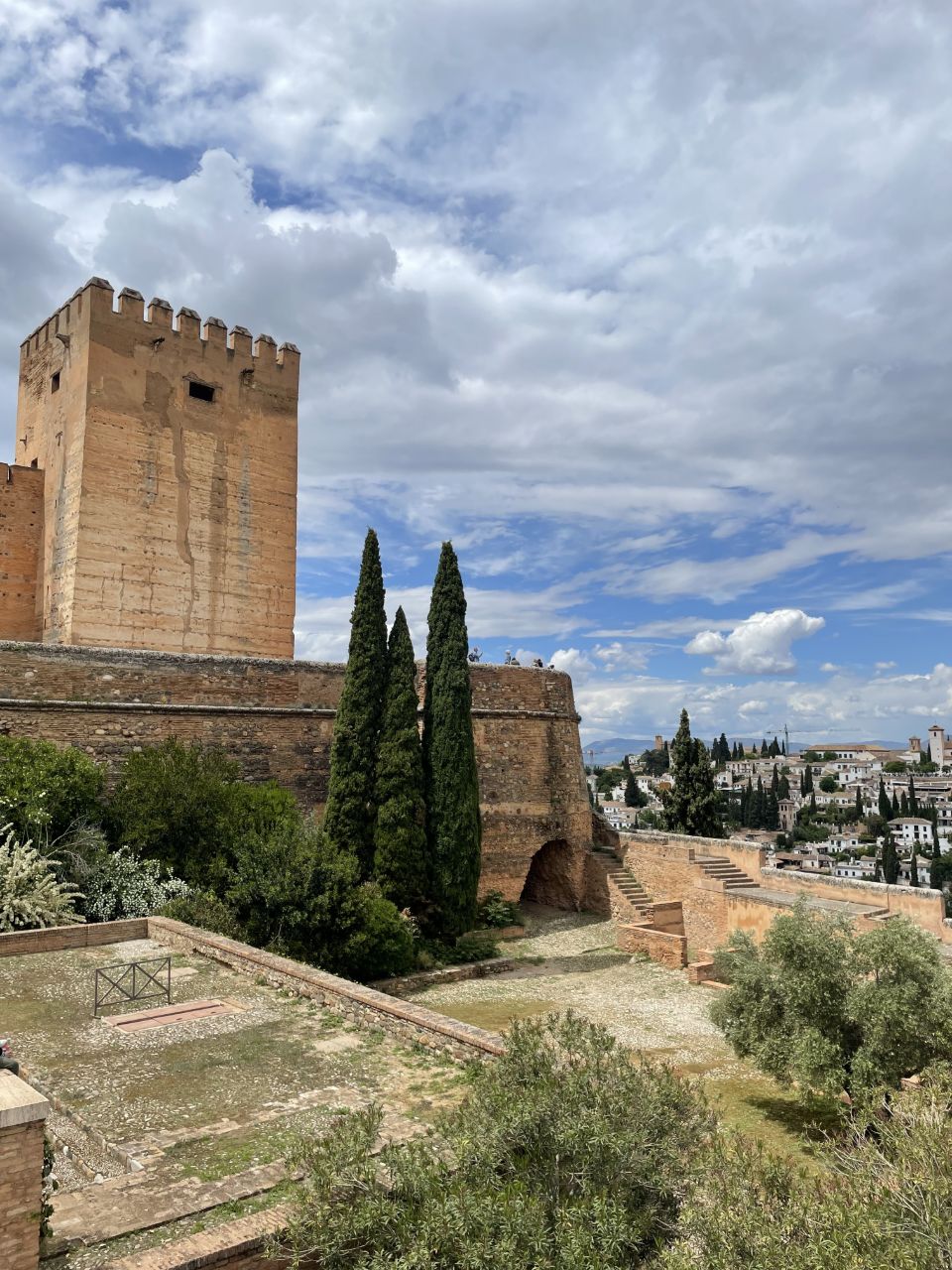
A watchtower and the town beyond 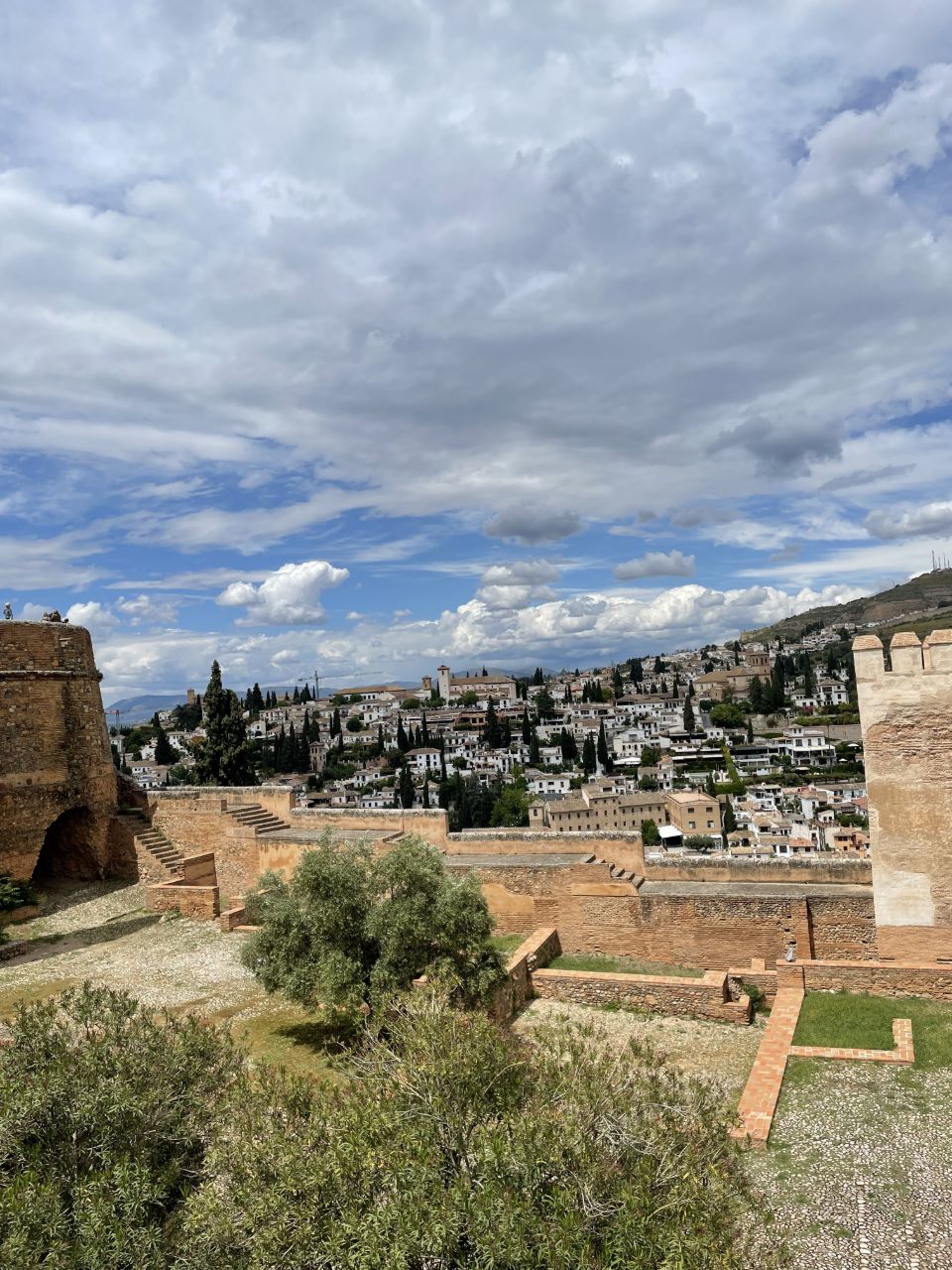
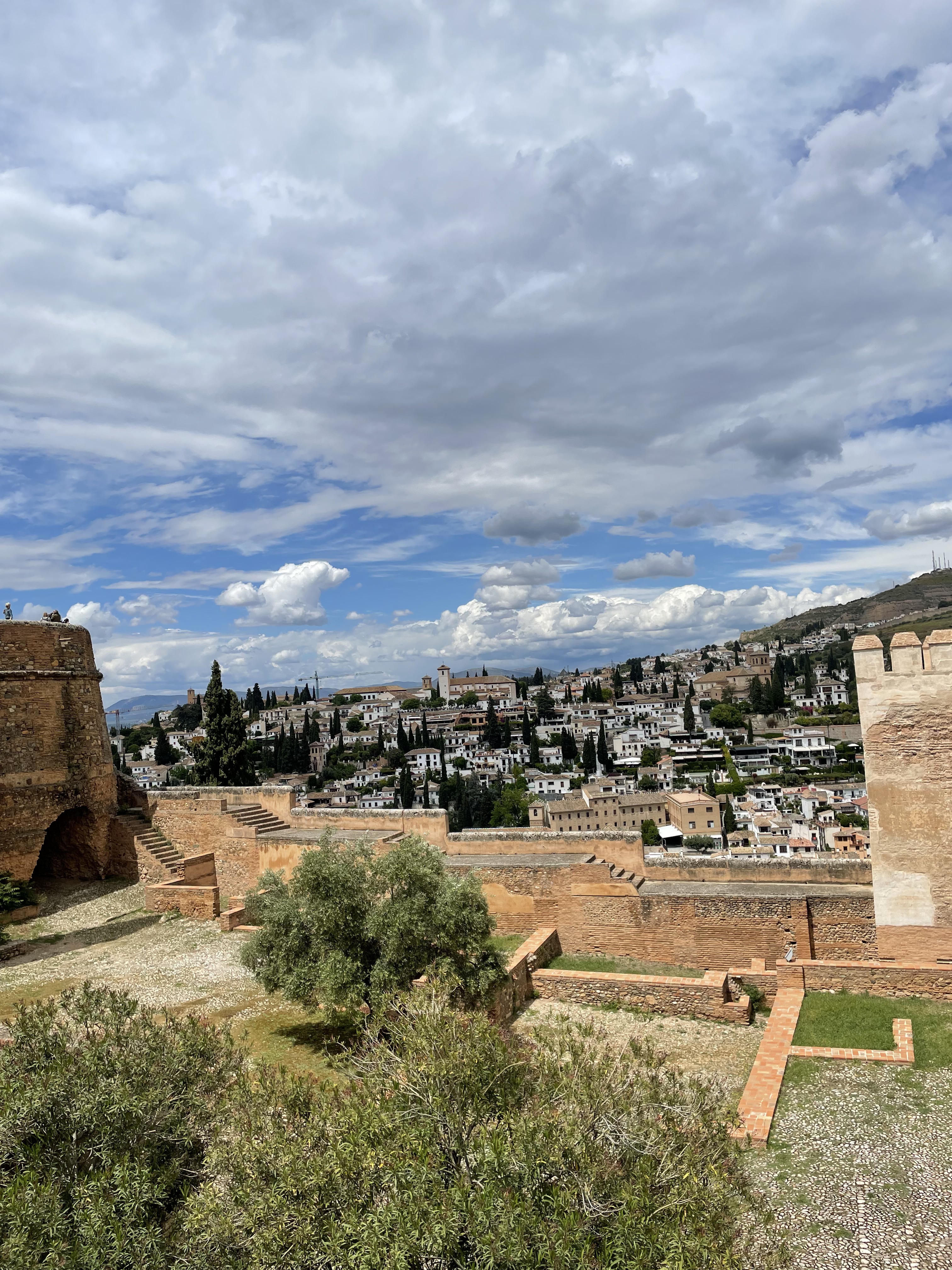
White hillsides from the ramparts
The Palace of Charles V
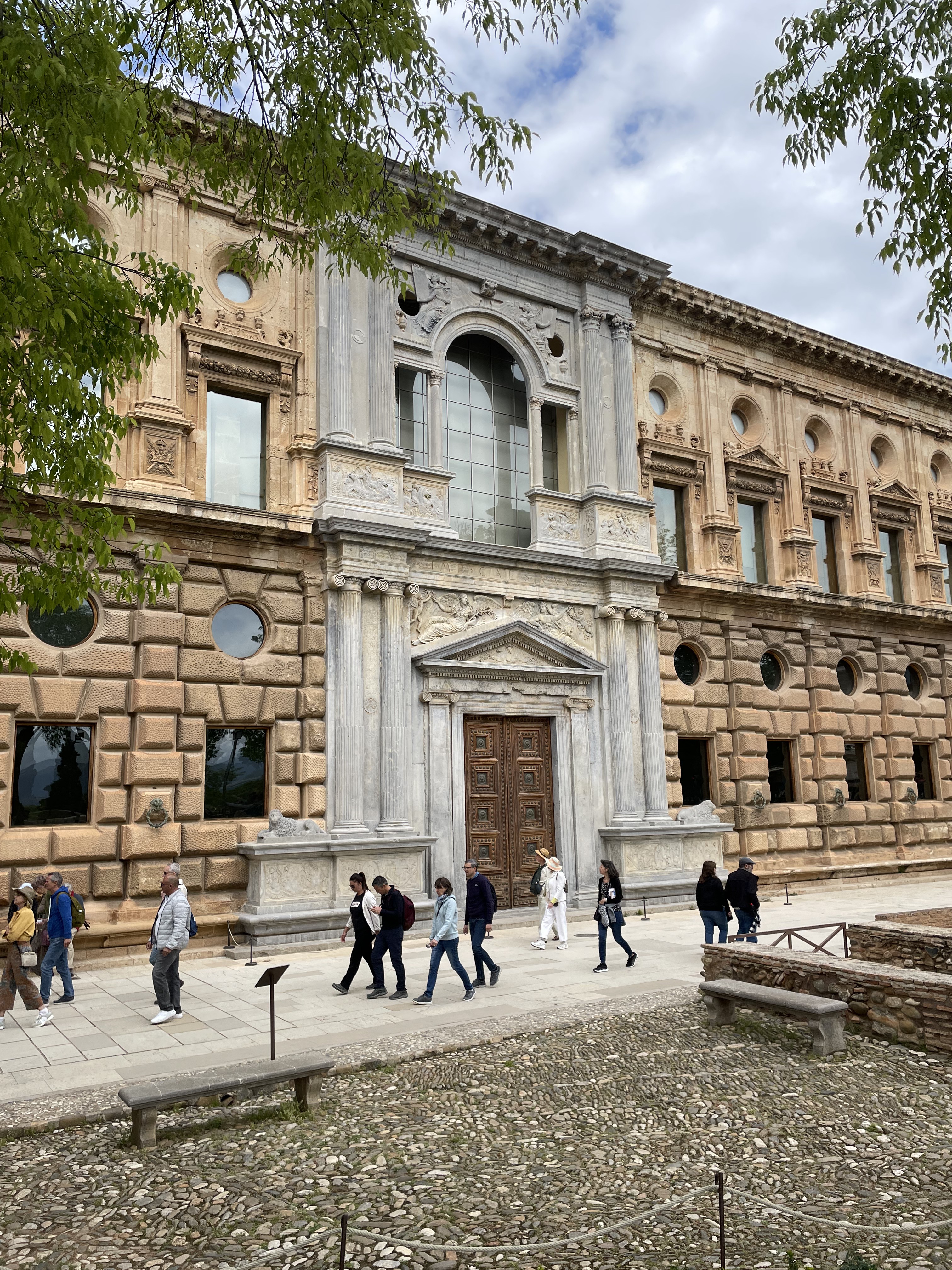
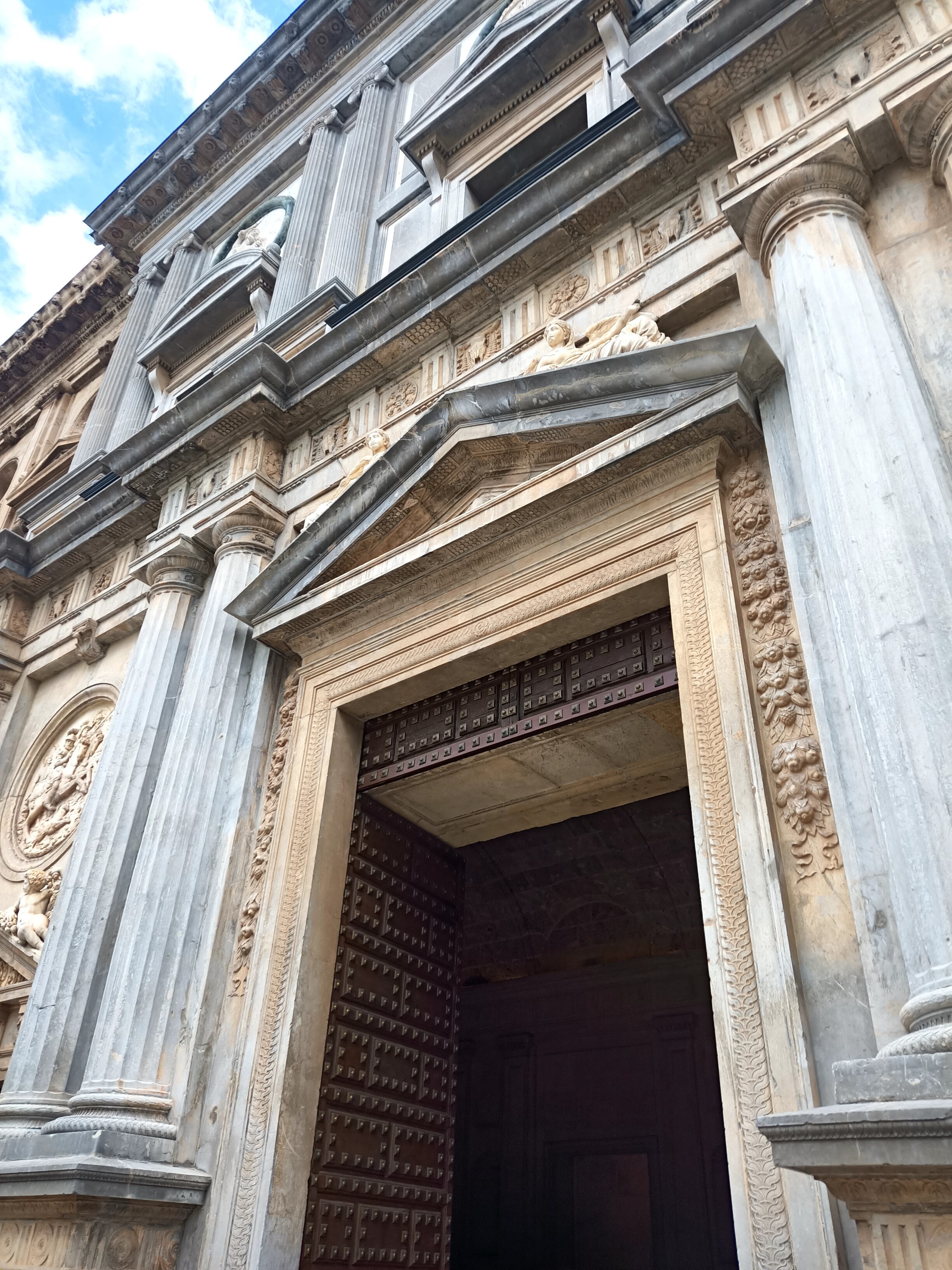
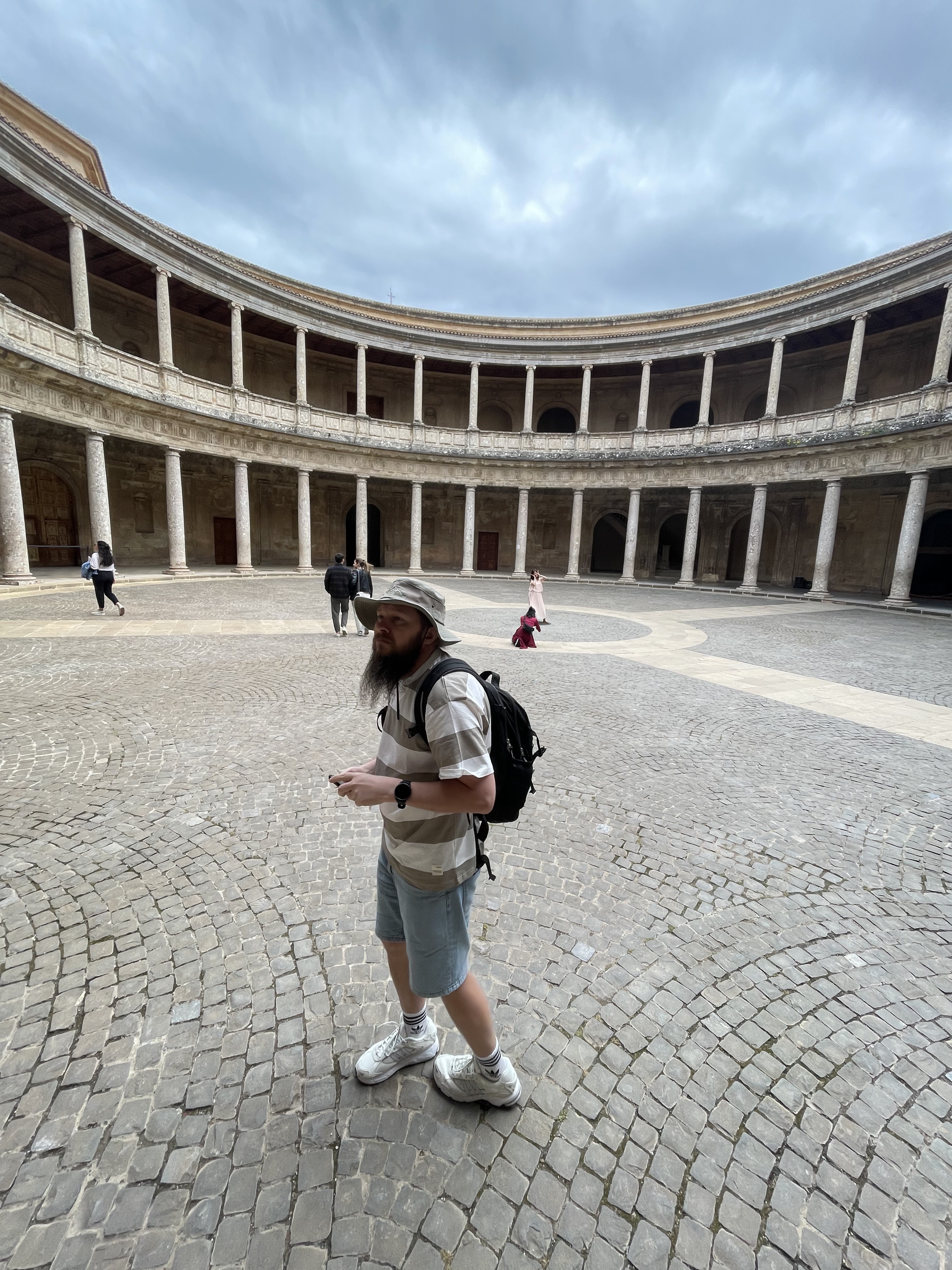
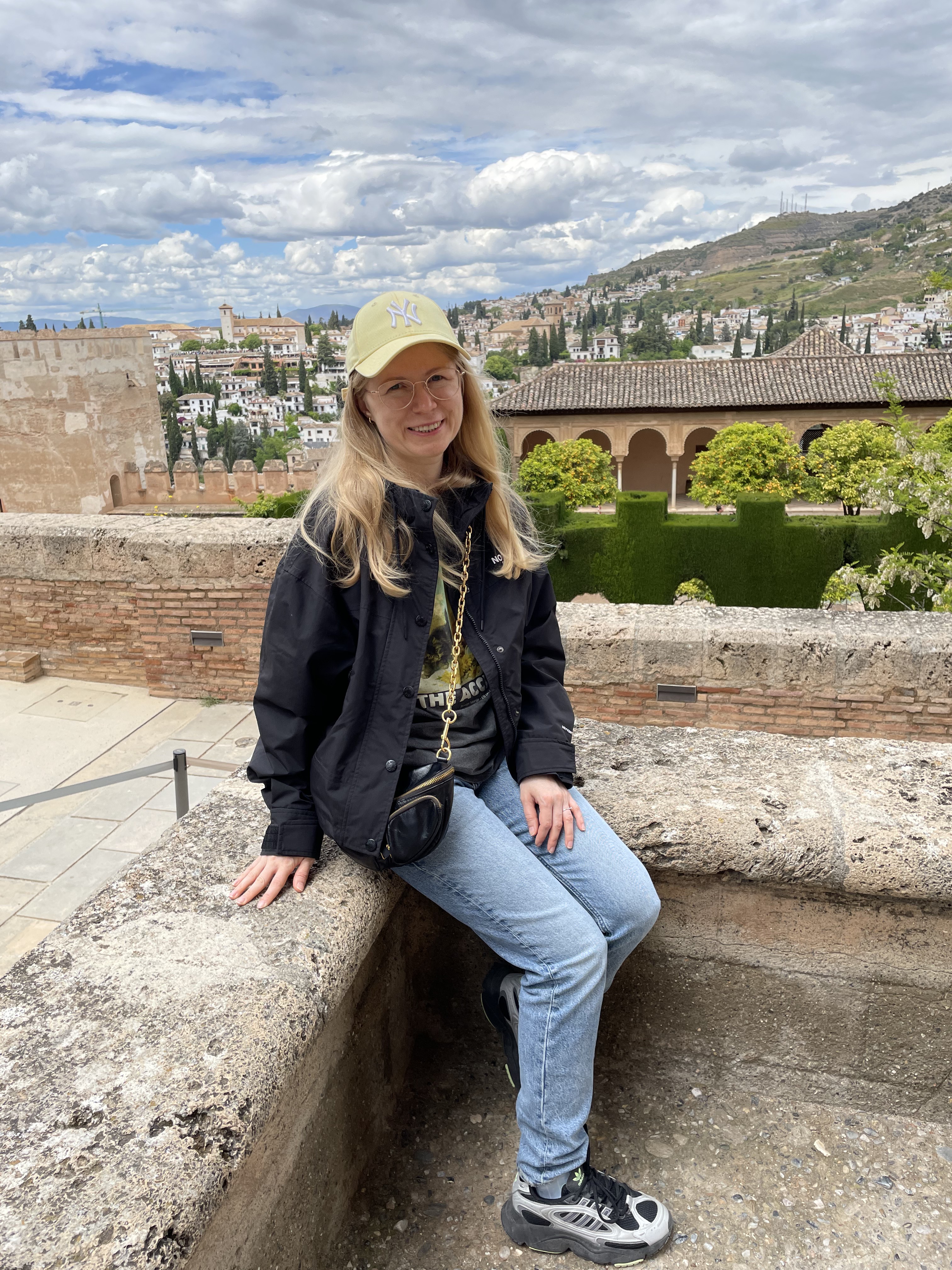
And then, without any preamble, the Palace of Charles V: an enormous Renaissance square with a perfectly circular two-storey courtyard inside, which is the sort of architectural decision you make once and then live with, extremely well, for five hundred years. Its grand doorway stands flush in the same red wall like a marble stranger let into a good family portrait. Anna sat on a weathered ledge to consider the gardens; Oleg crossed the circular courtyard once in each direction, on official business nobody could produce paperwork for.
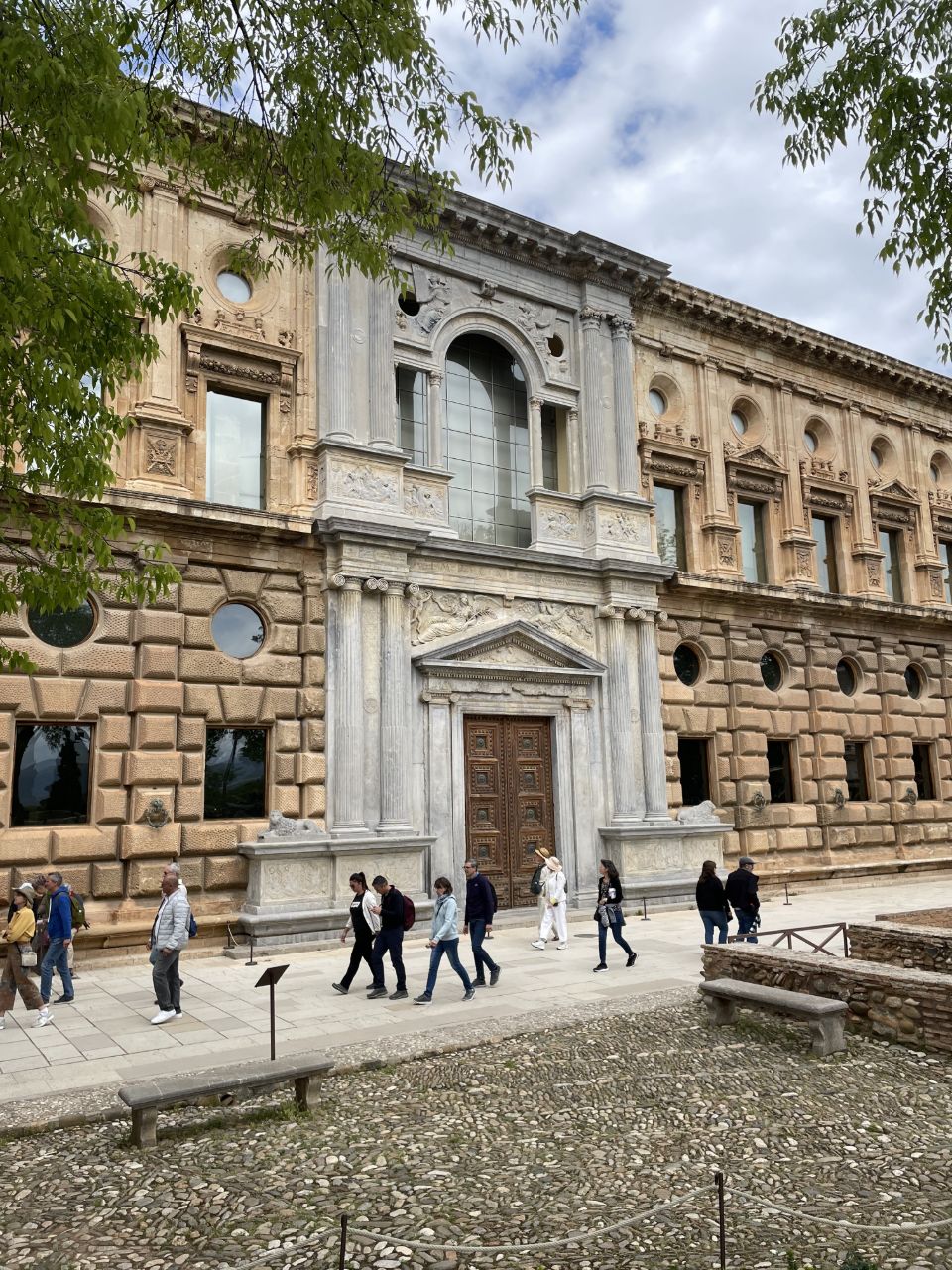
The Palace of Charles V 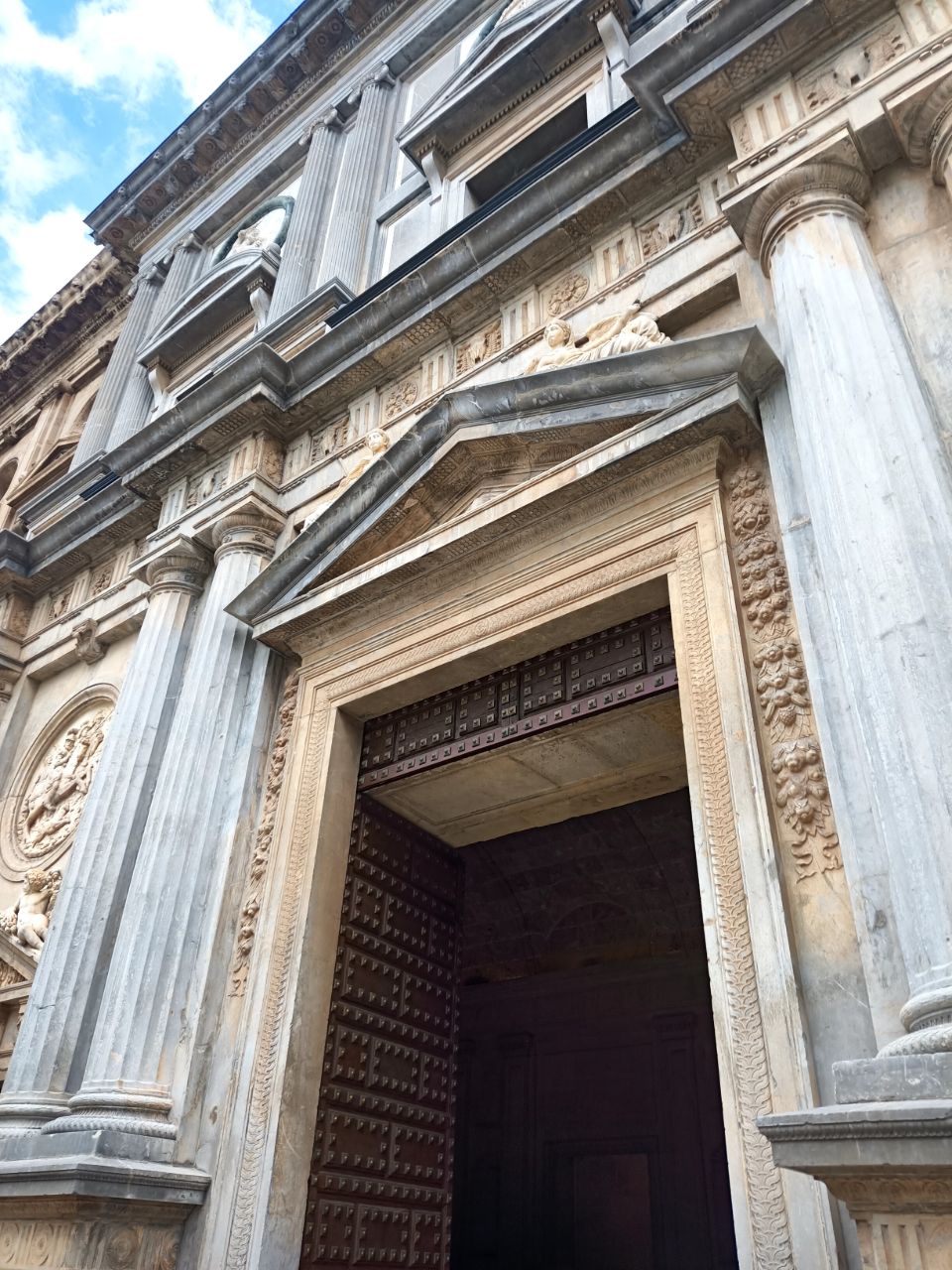
The other empire's doorway 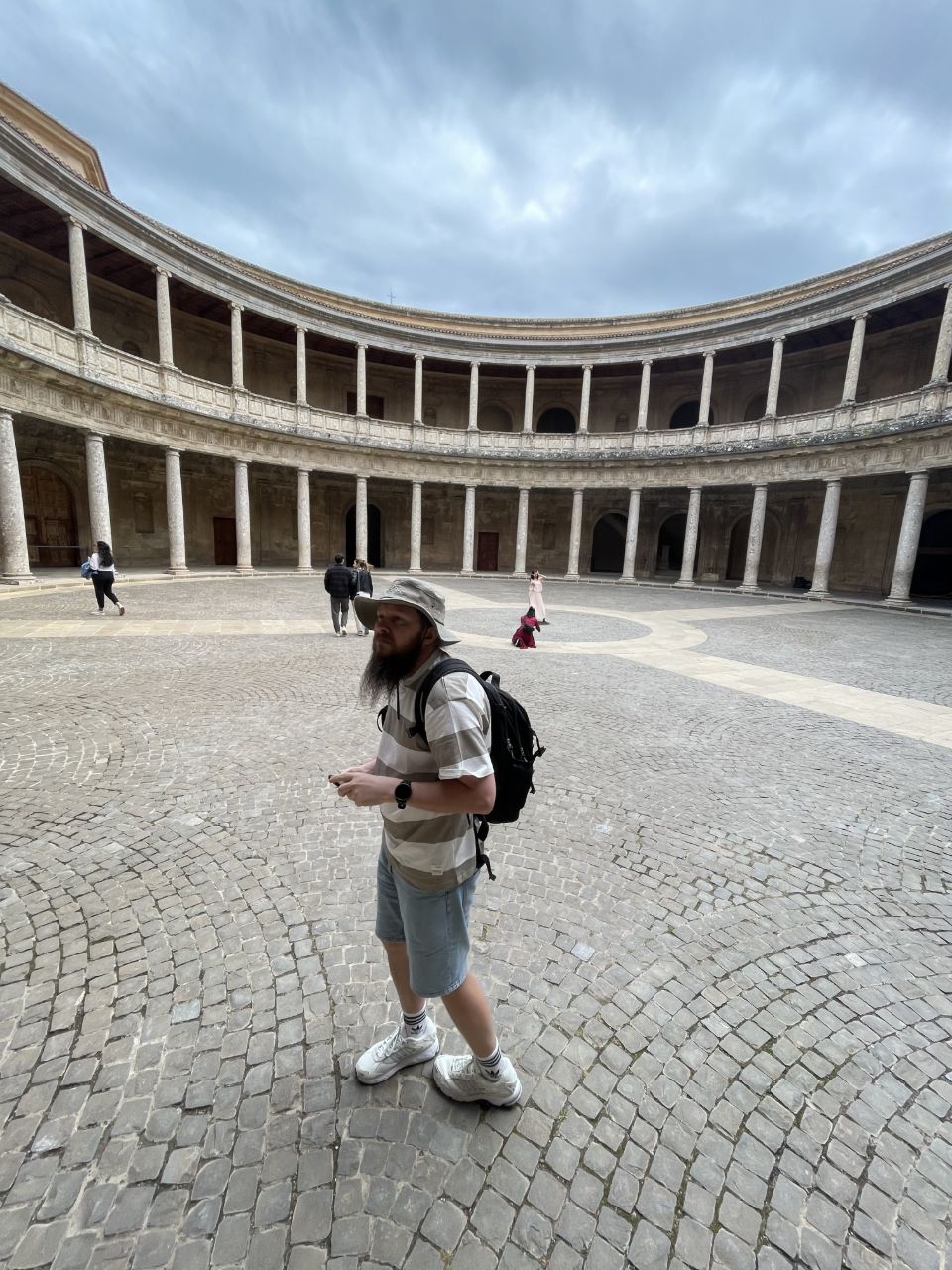
Inside the circular courtyard 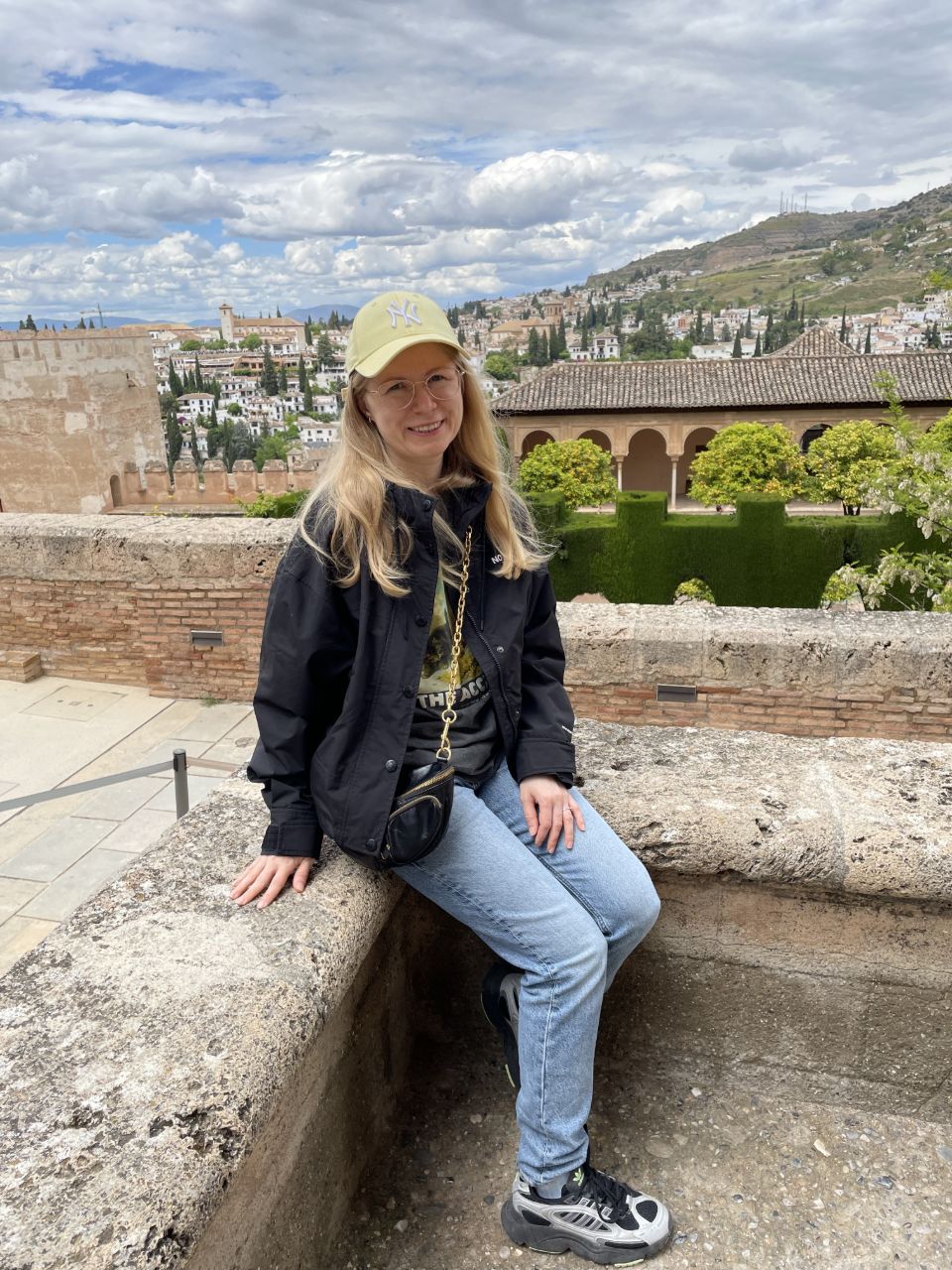
Anna and the gardens
Honeycomb weather
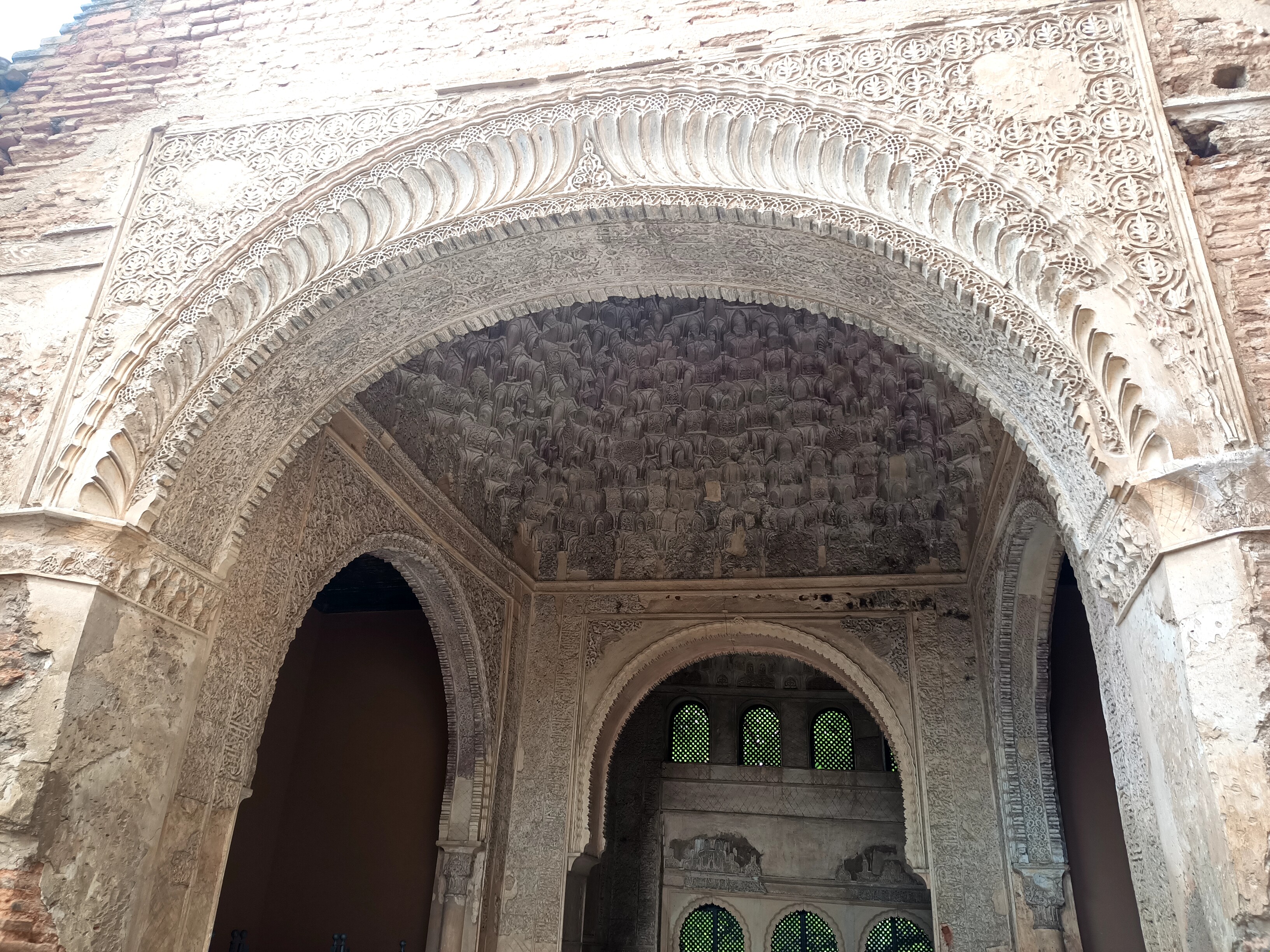
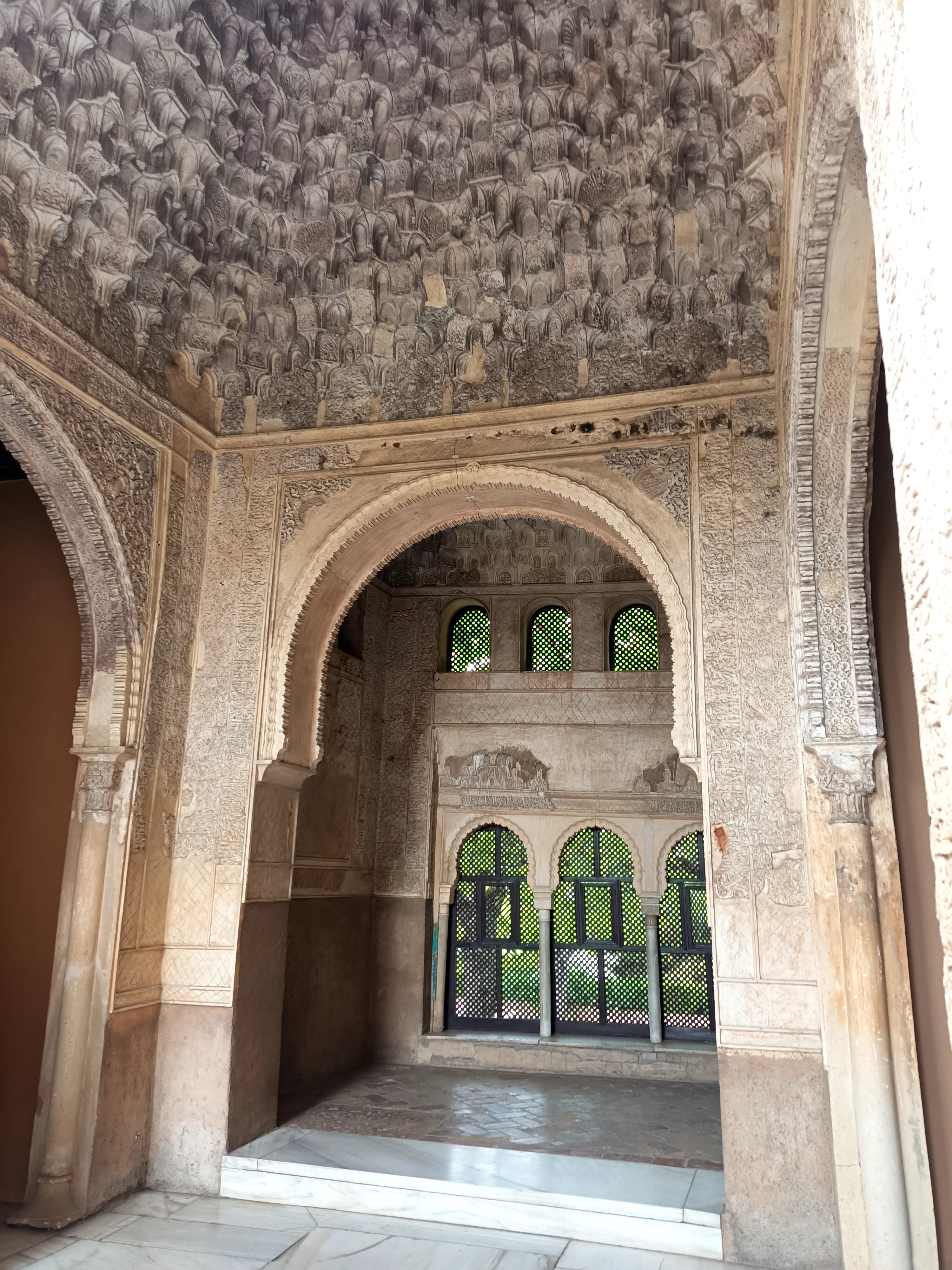
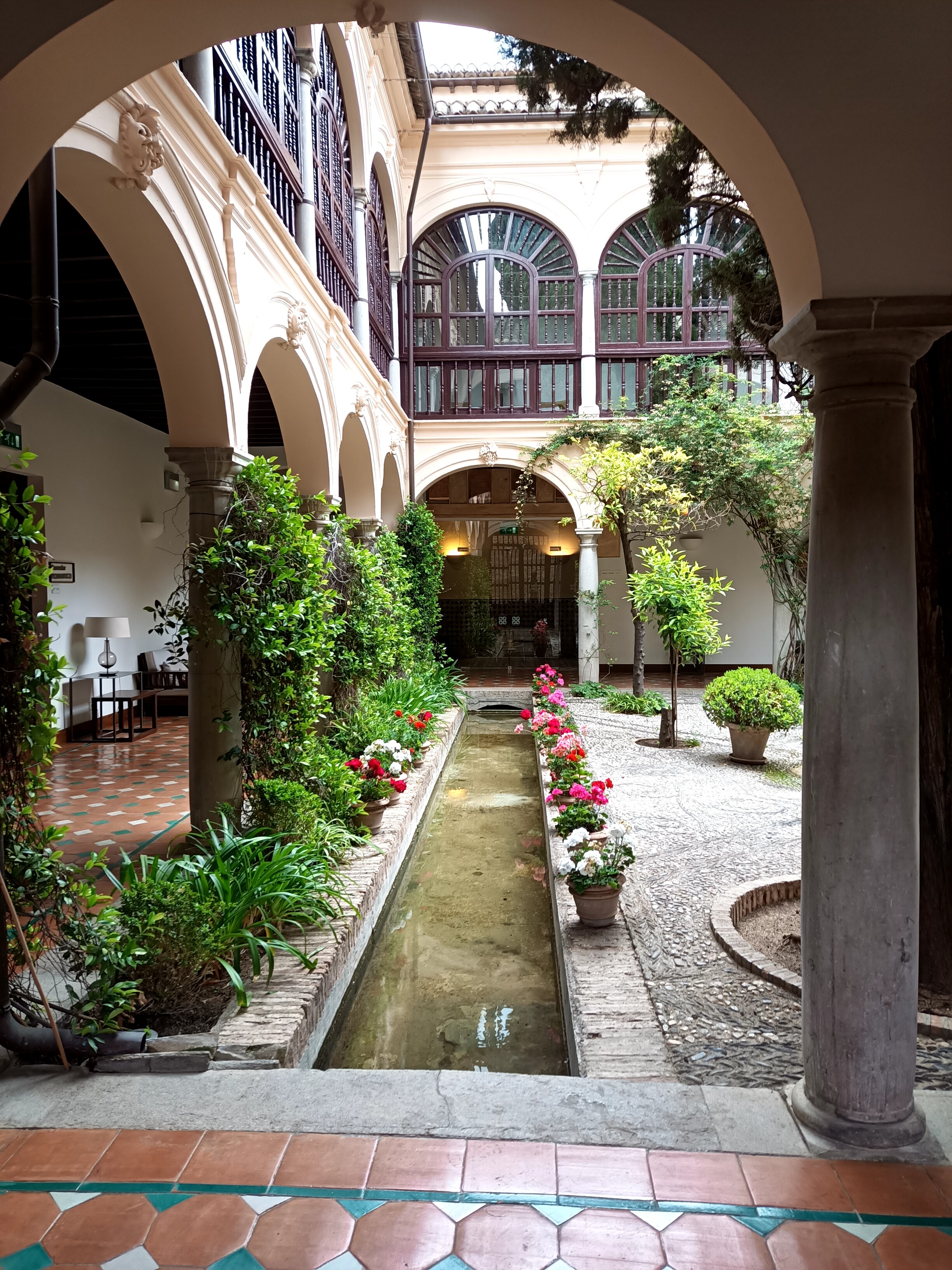
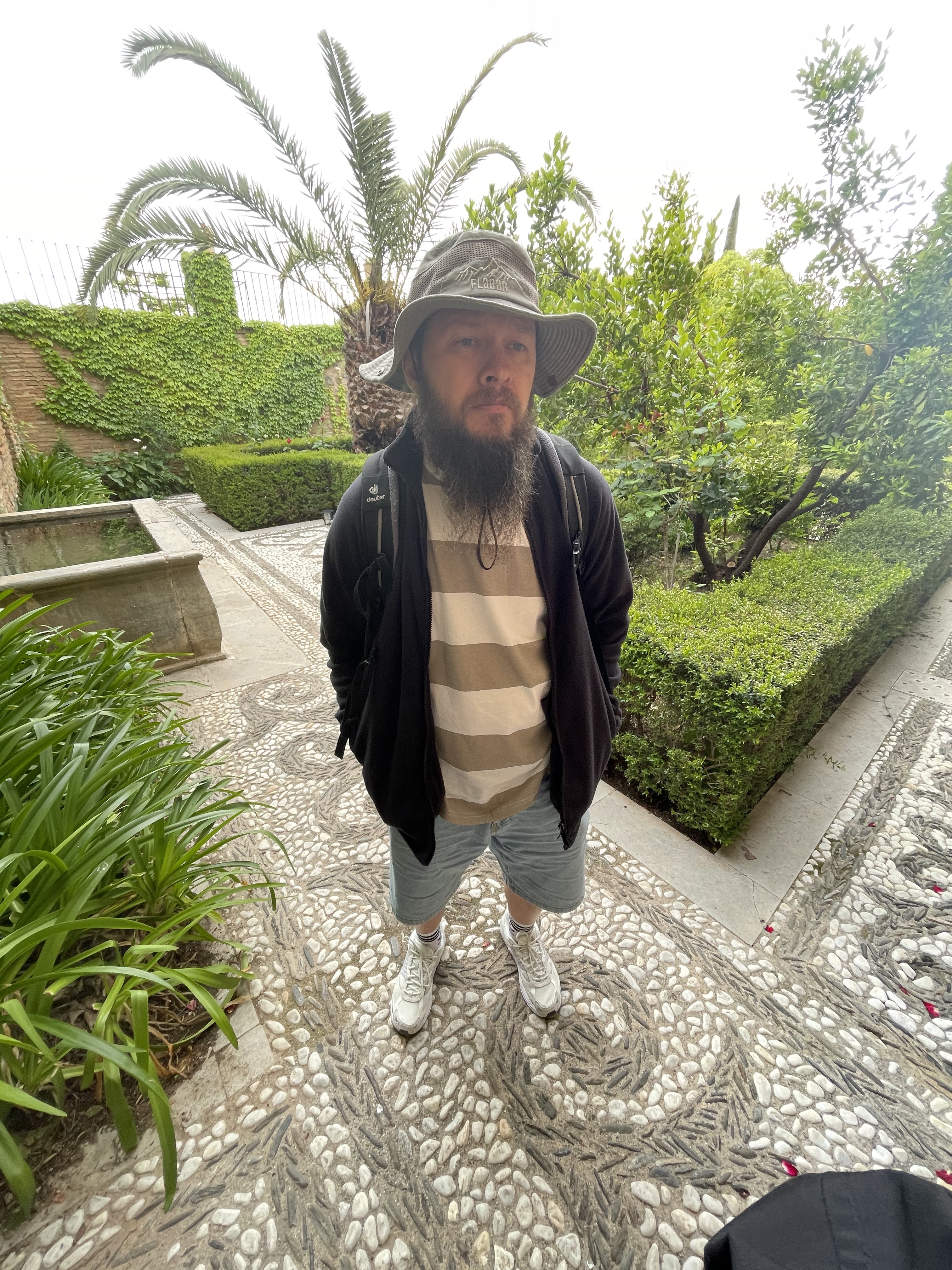
Under the old arches the ceilings do the talking. Honeycomb closes overhead like very beautiful weather; move three steps and every niche rewrites its script, and then a wide arch frames the whole system at once, just to be sure you understood. Outside it continues in calmer materials: a courtyard with its own long pond and pots of red and white flowers, and a pebble-mosaic garden path — every stone set by somebody's patient Tuesday — which carried Oleg to its far end and back.
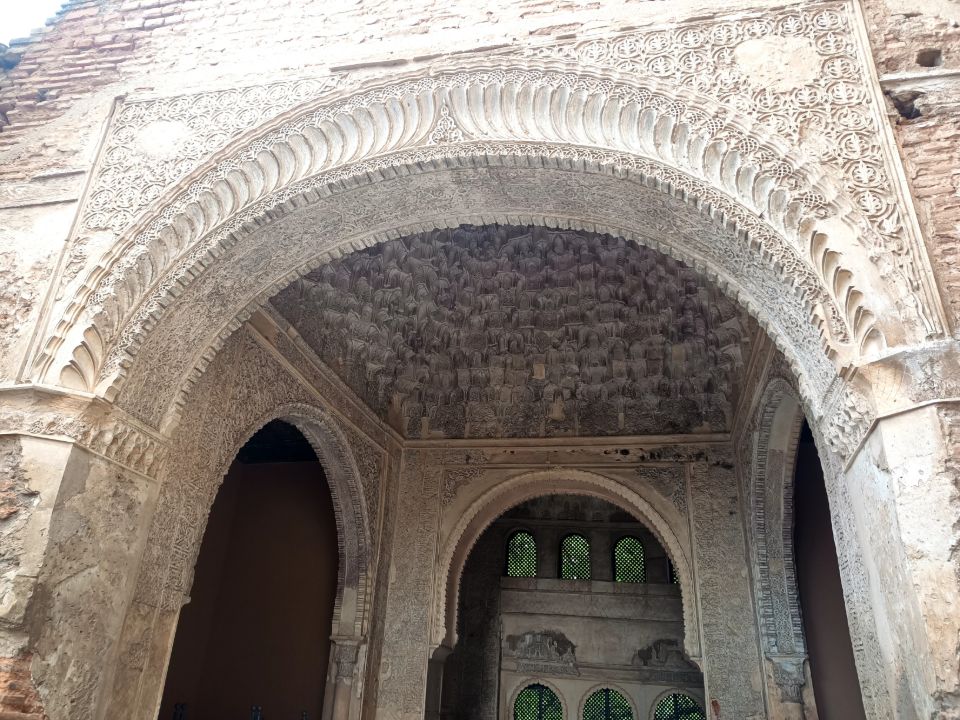
Honeycomb, up close 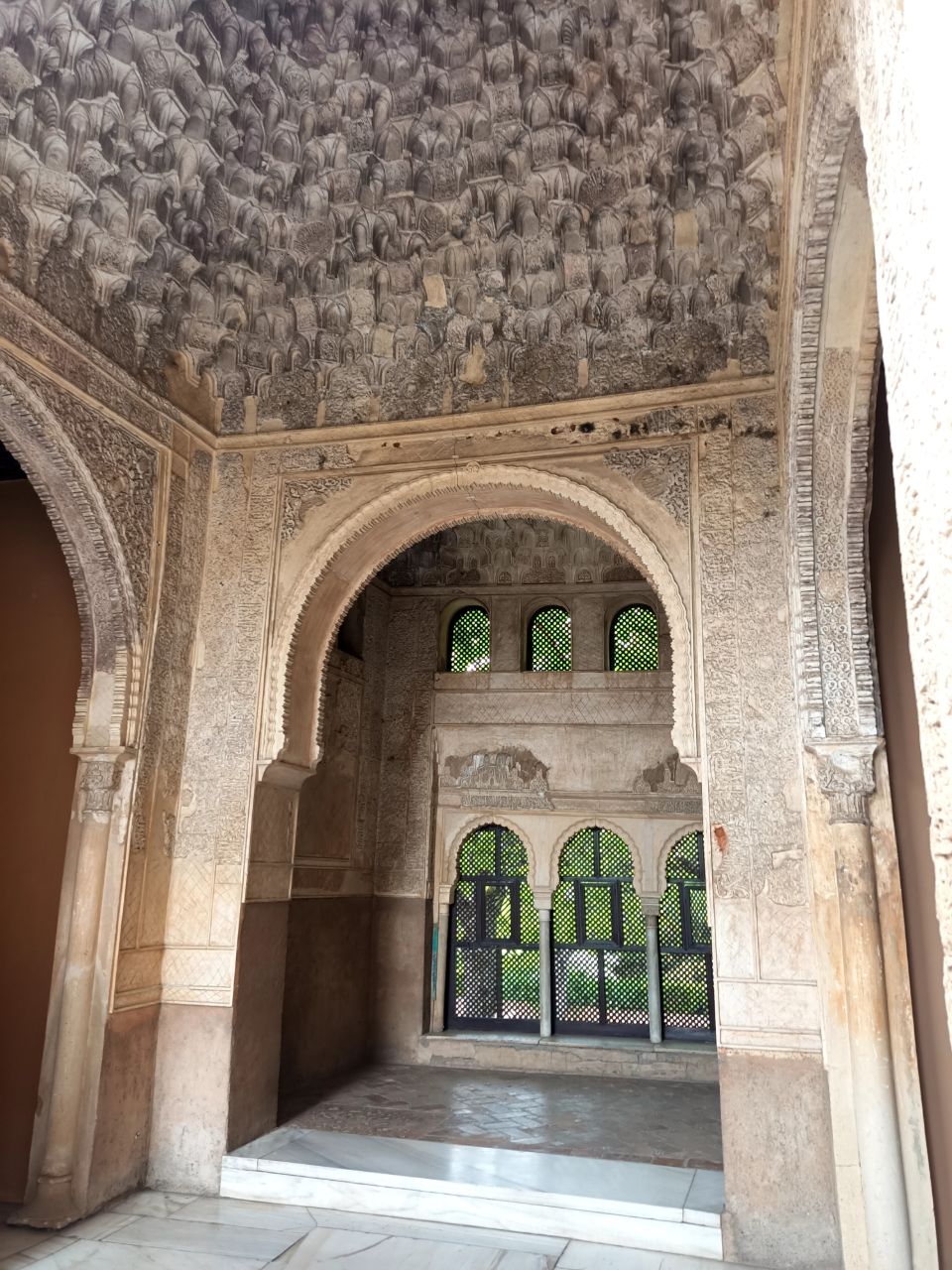
Honeycomb overhead 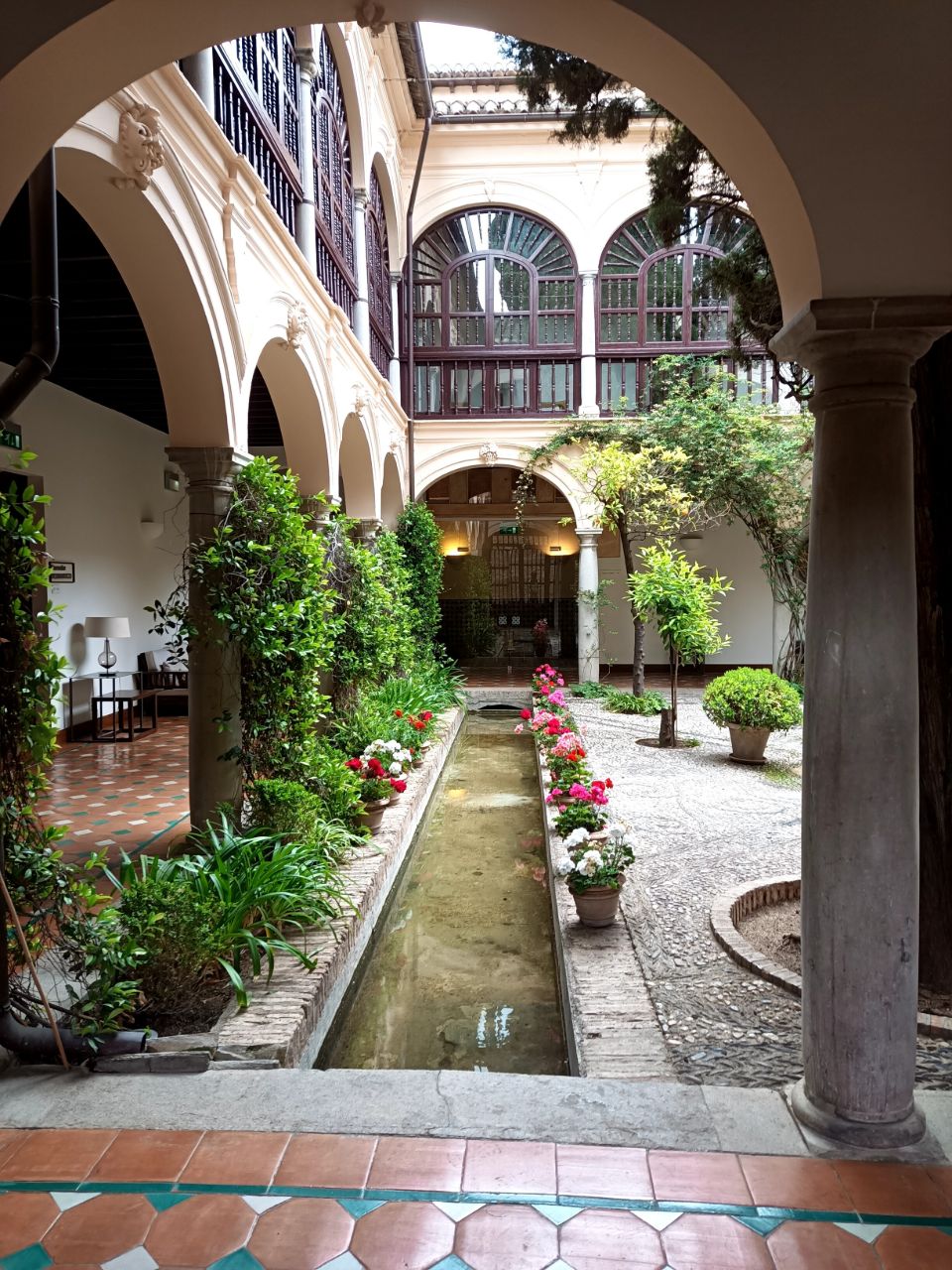
A courtyard with its own pond 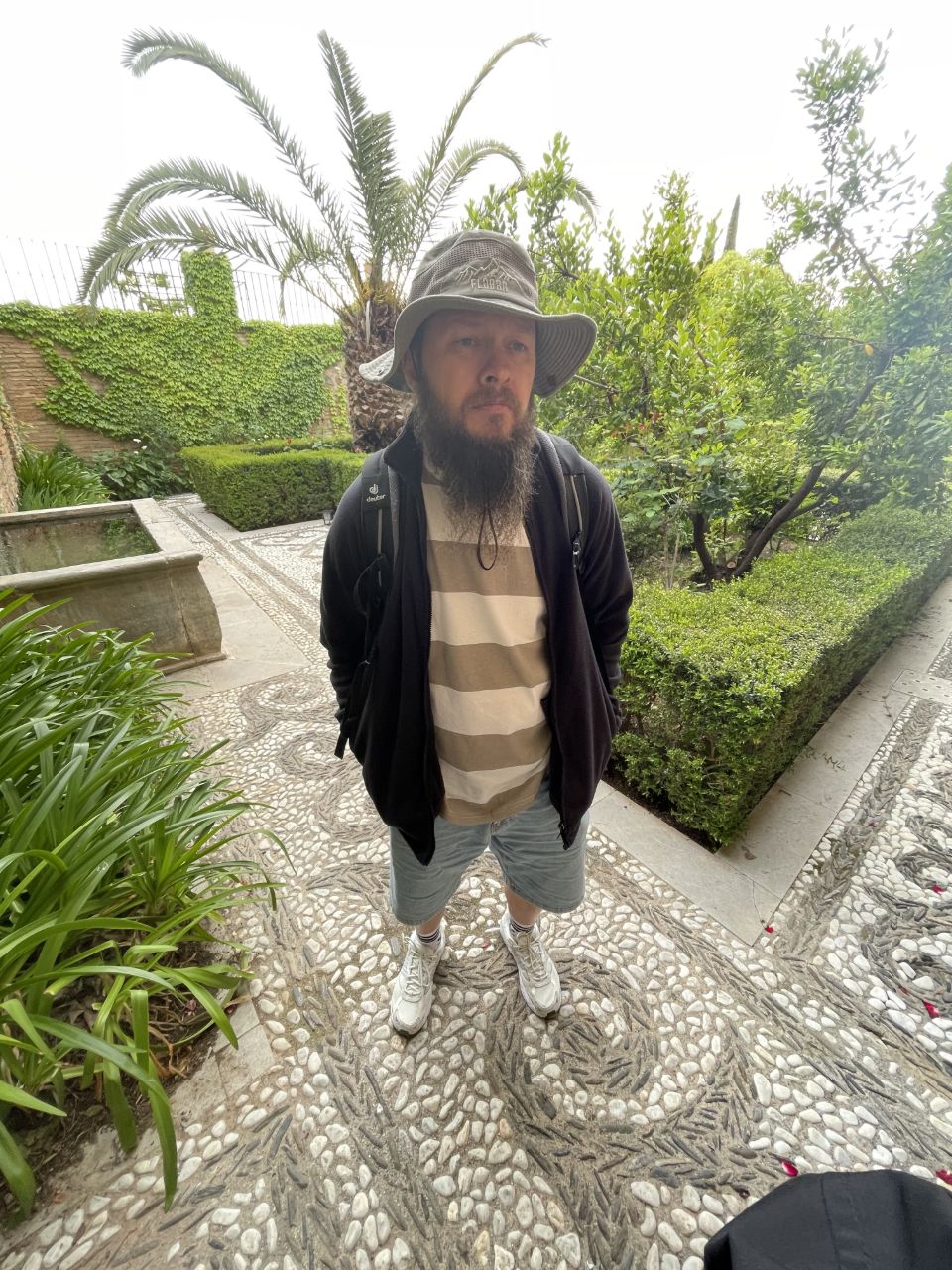
The pebble-mosaic garden path
Granada underneath
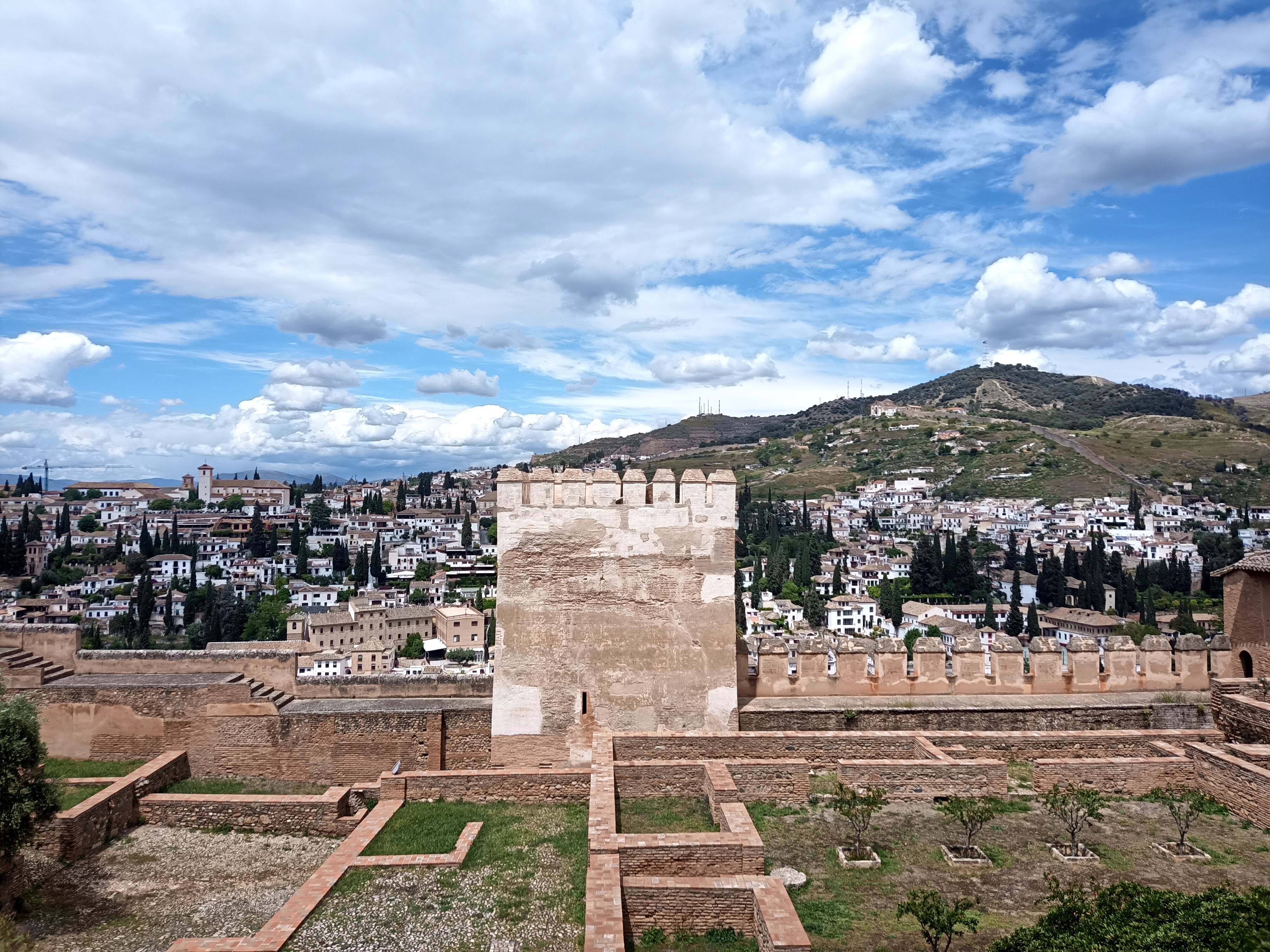
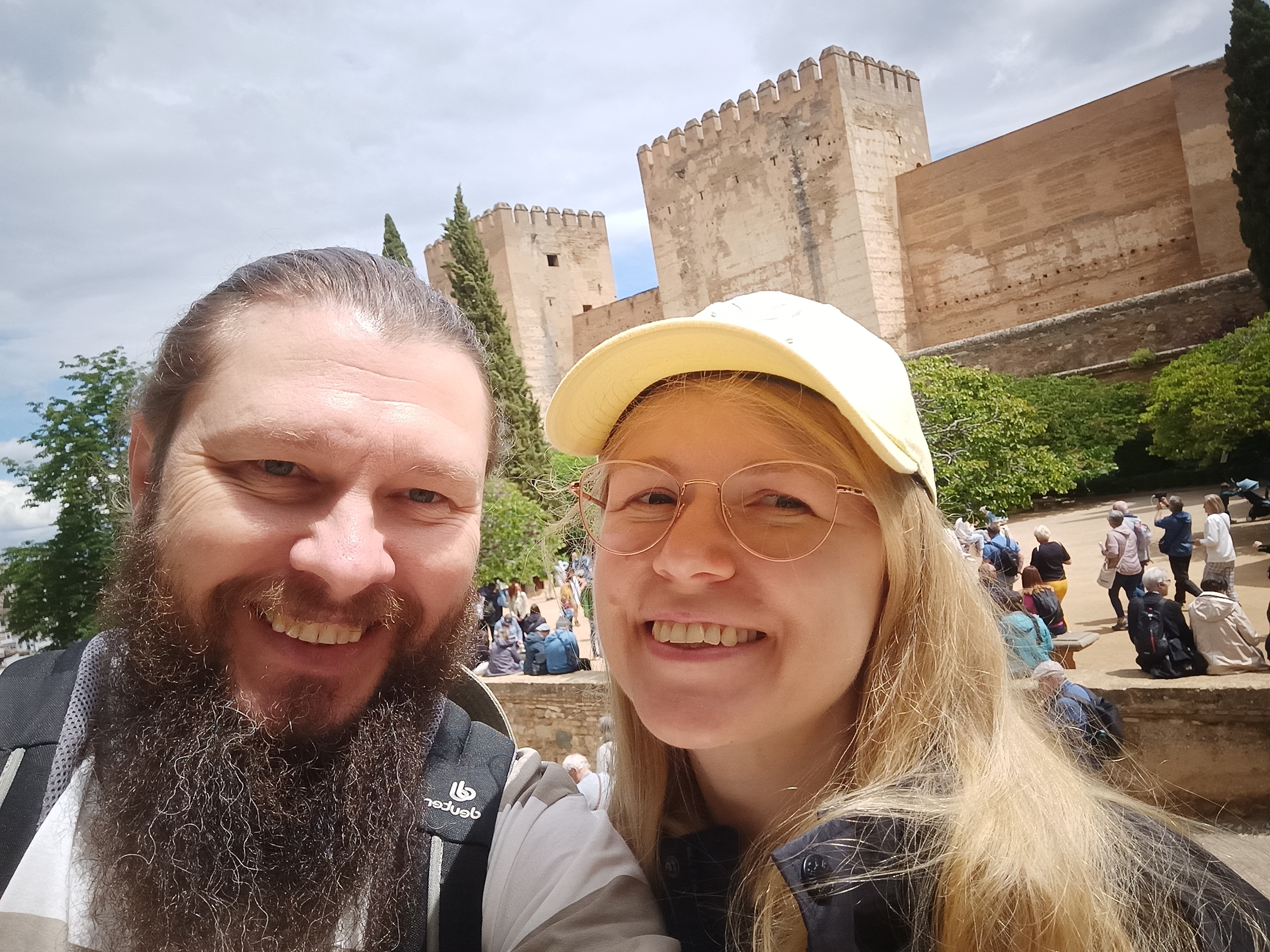
From the ramparts the fortress finally relaxed. Formal gardens lie out below the walls like an explanation of what all that defence was for, and the city spreads beyond — white hillside houses, cypress columns, everything the evening view had been promising from the other side of the valley, now read from its own end of the sentence. We spent a long while up there doing nothing, which we consider the correct use of a paid ticket. We came down from the fortress as the light began to lean — Granada proper took over the rest: downhill, and after dark.
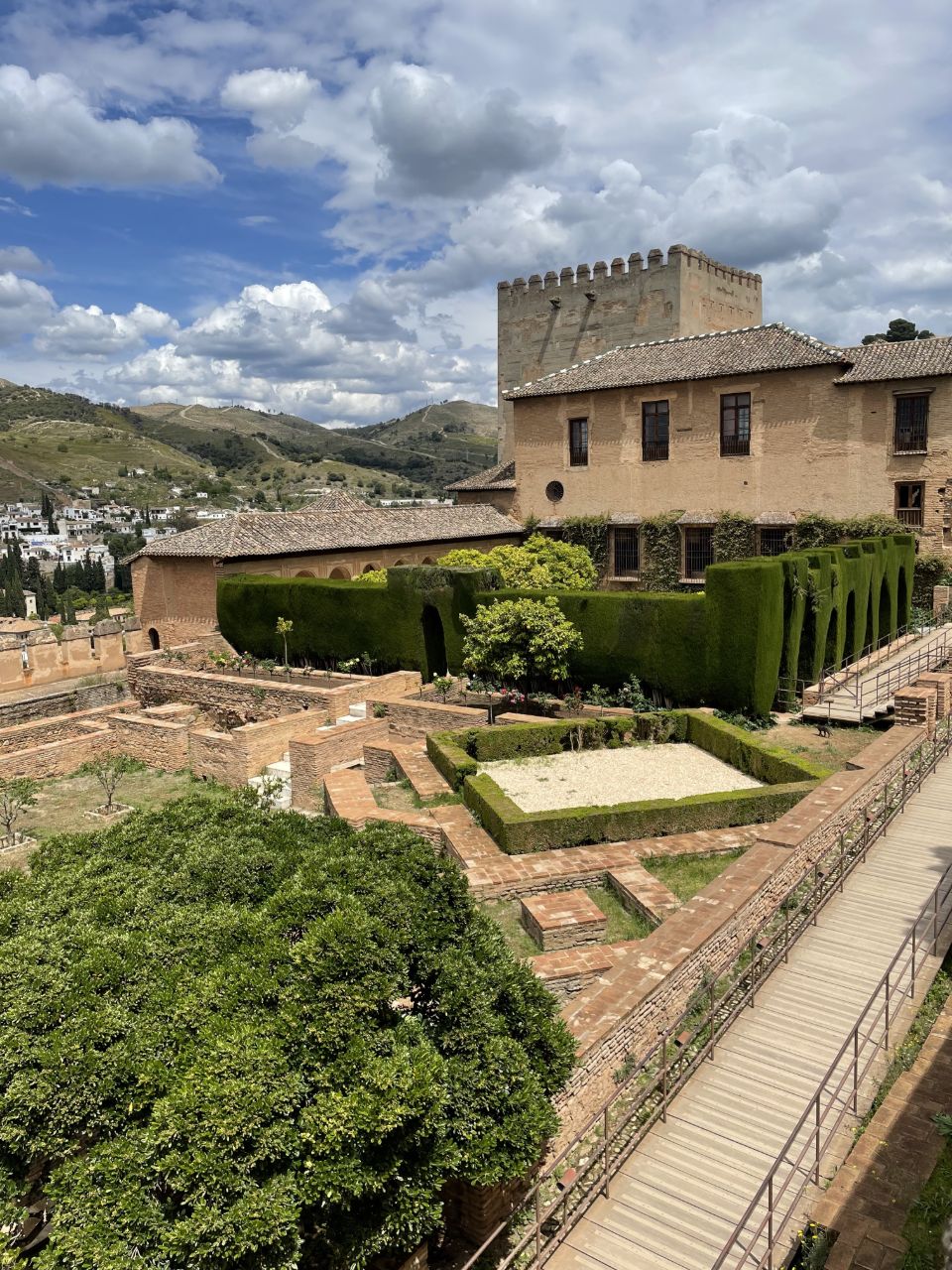
The garden from the wall 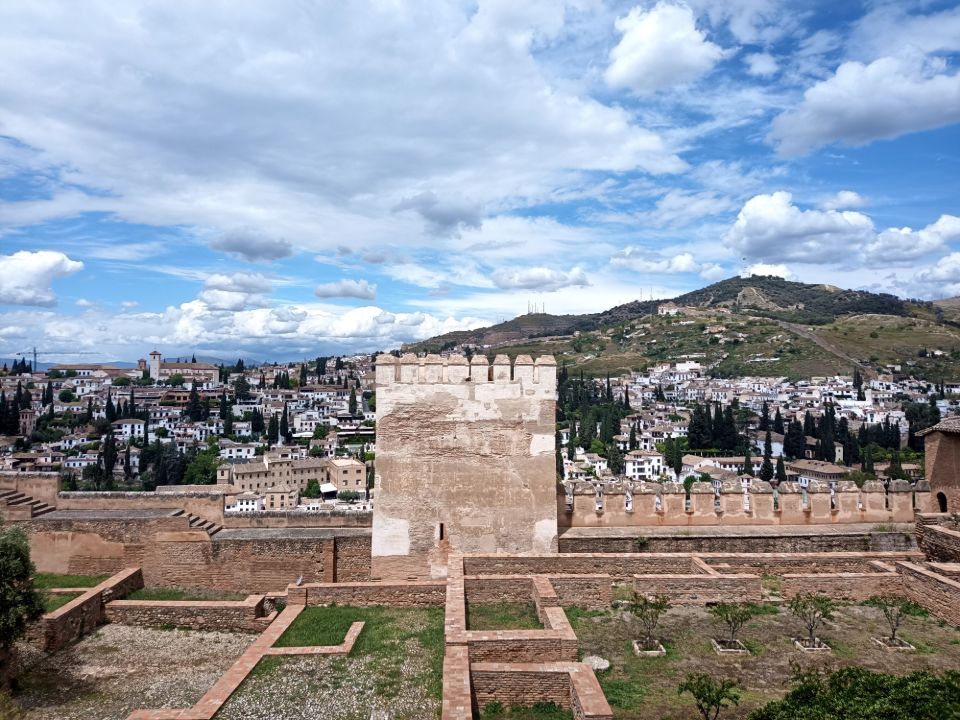
From the walls, the white city beyond 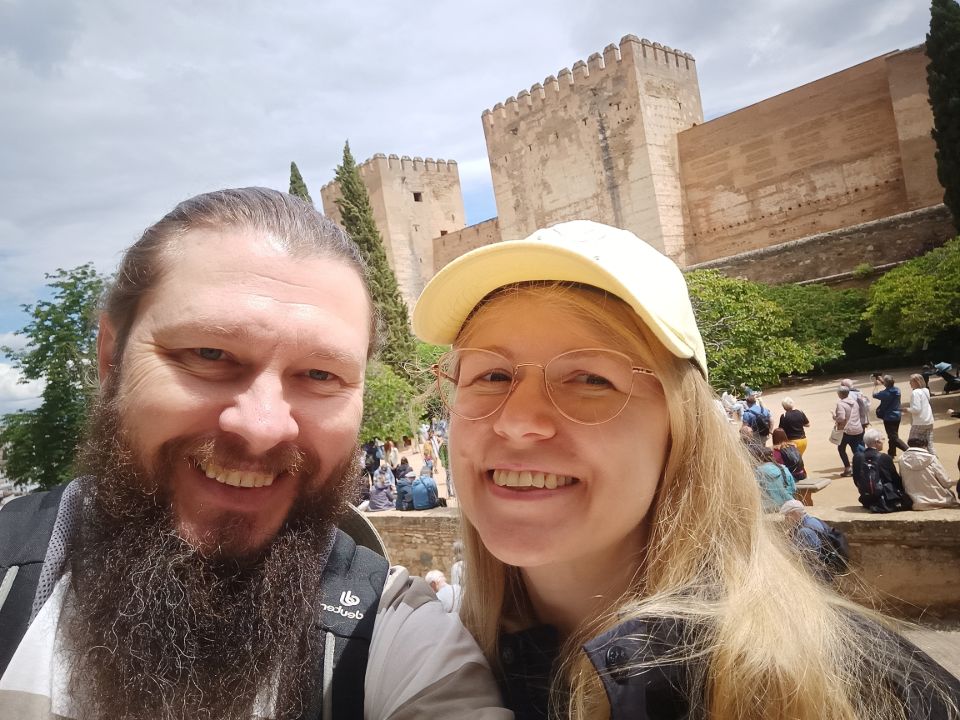
Selfie under the red walls
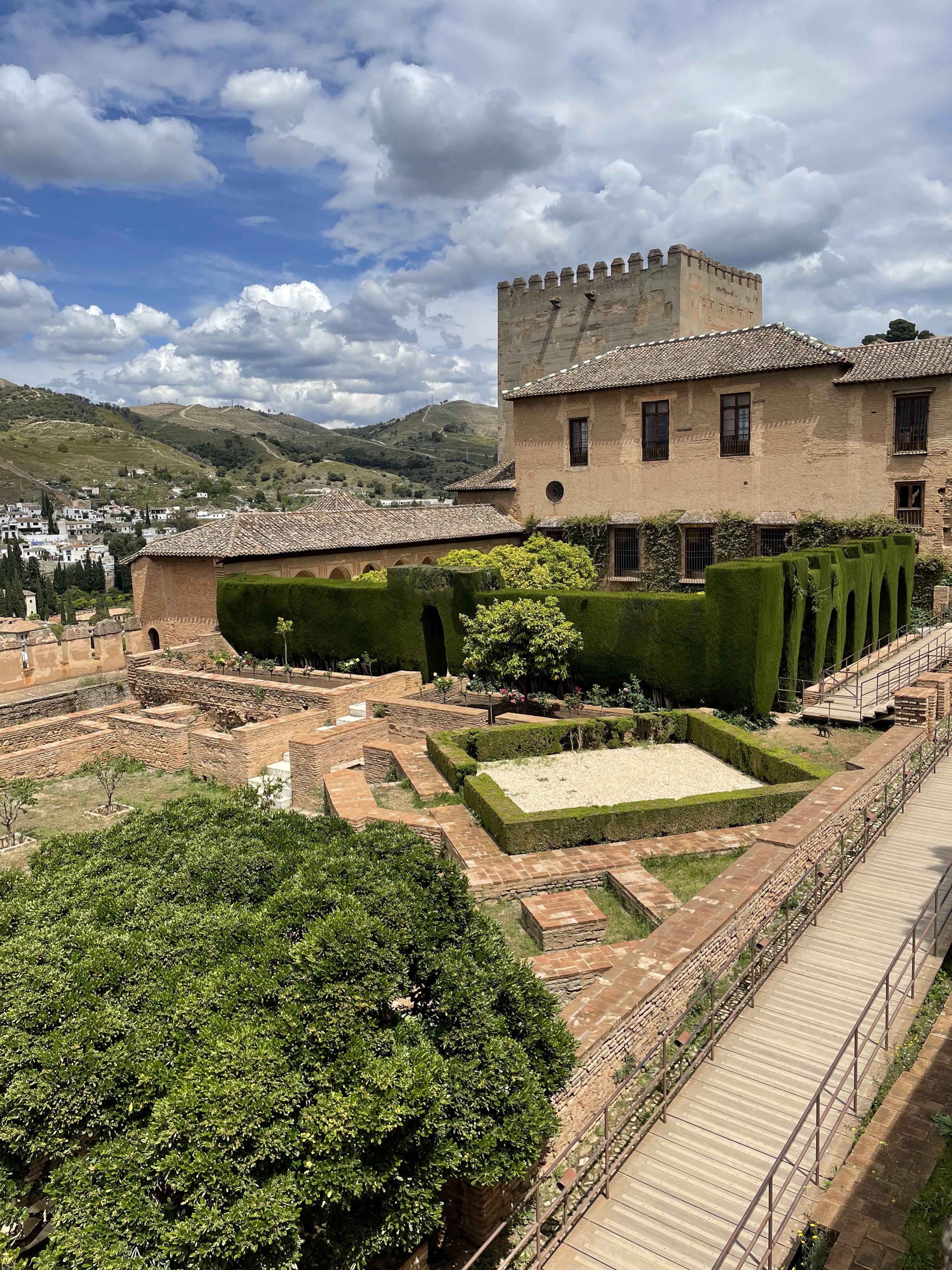
Downhill, and into the tavern
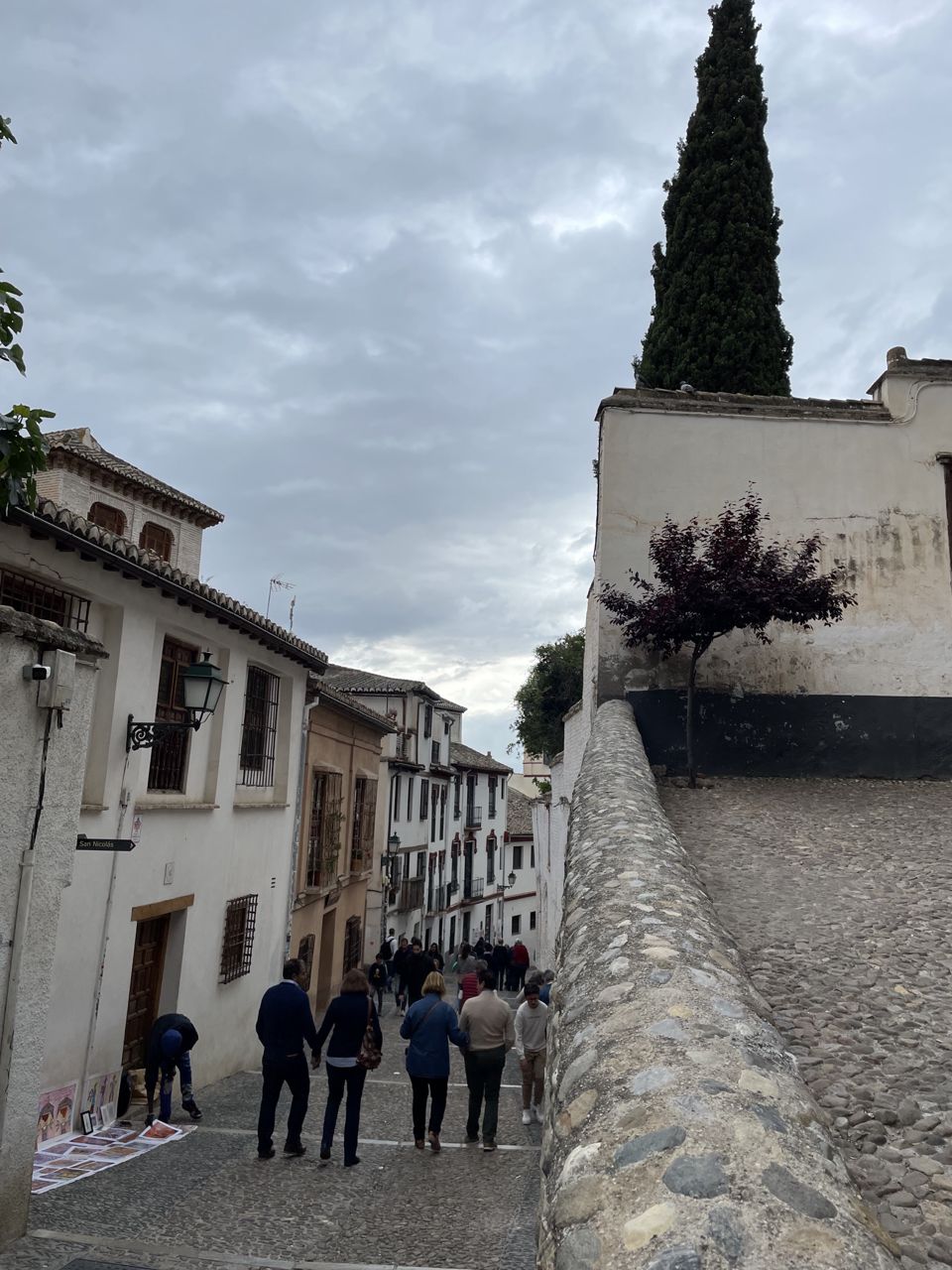
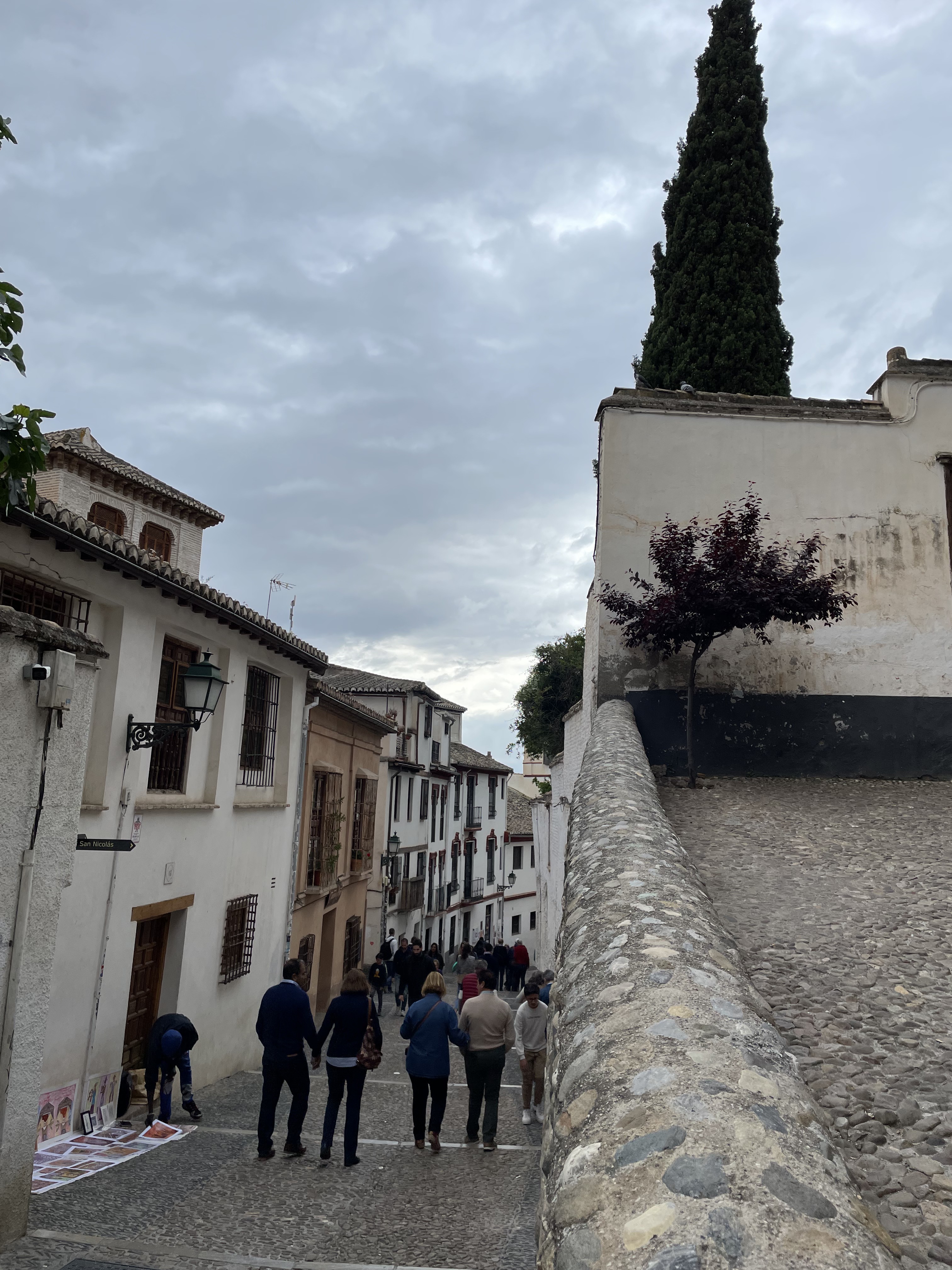
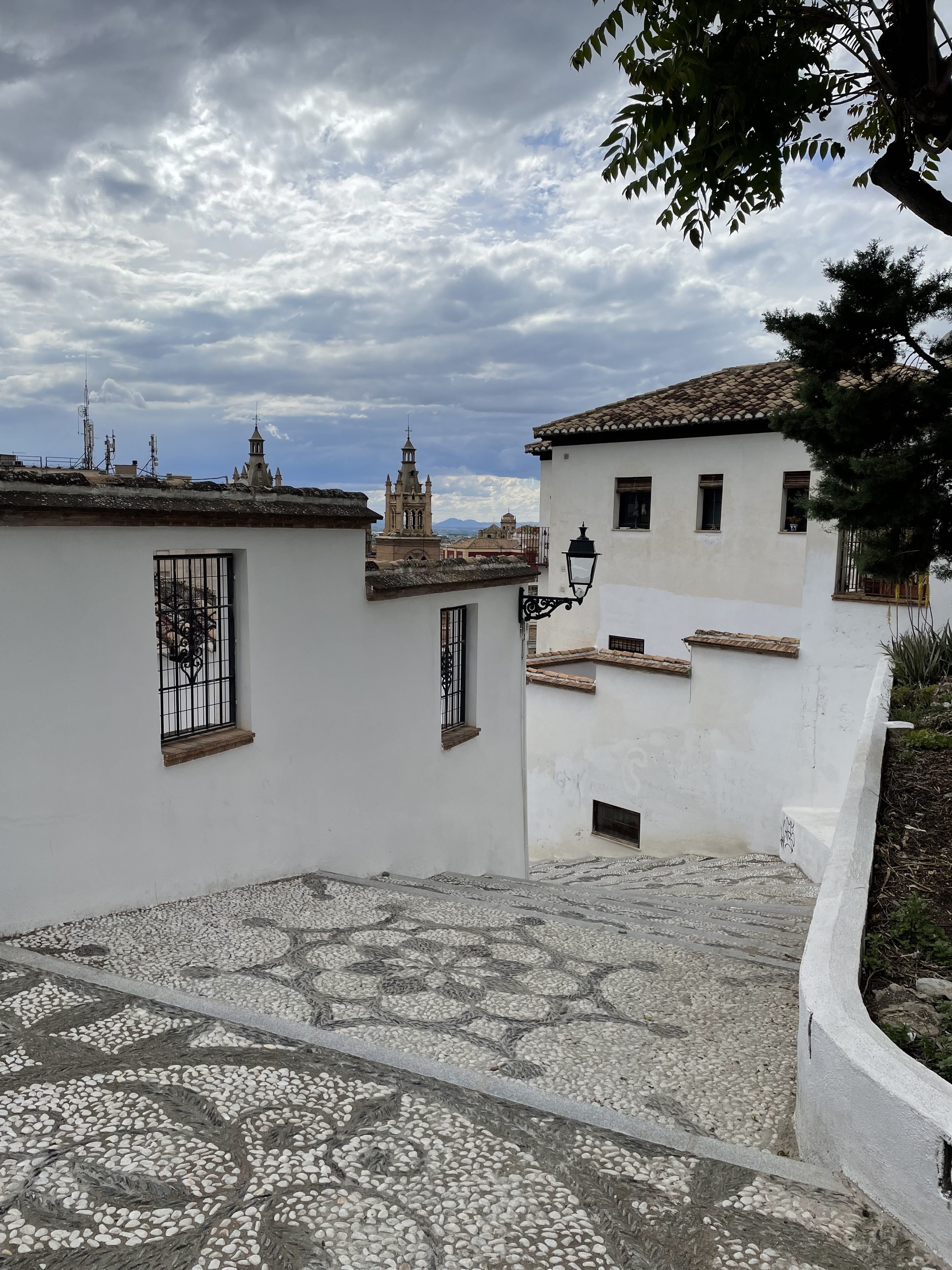
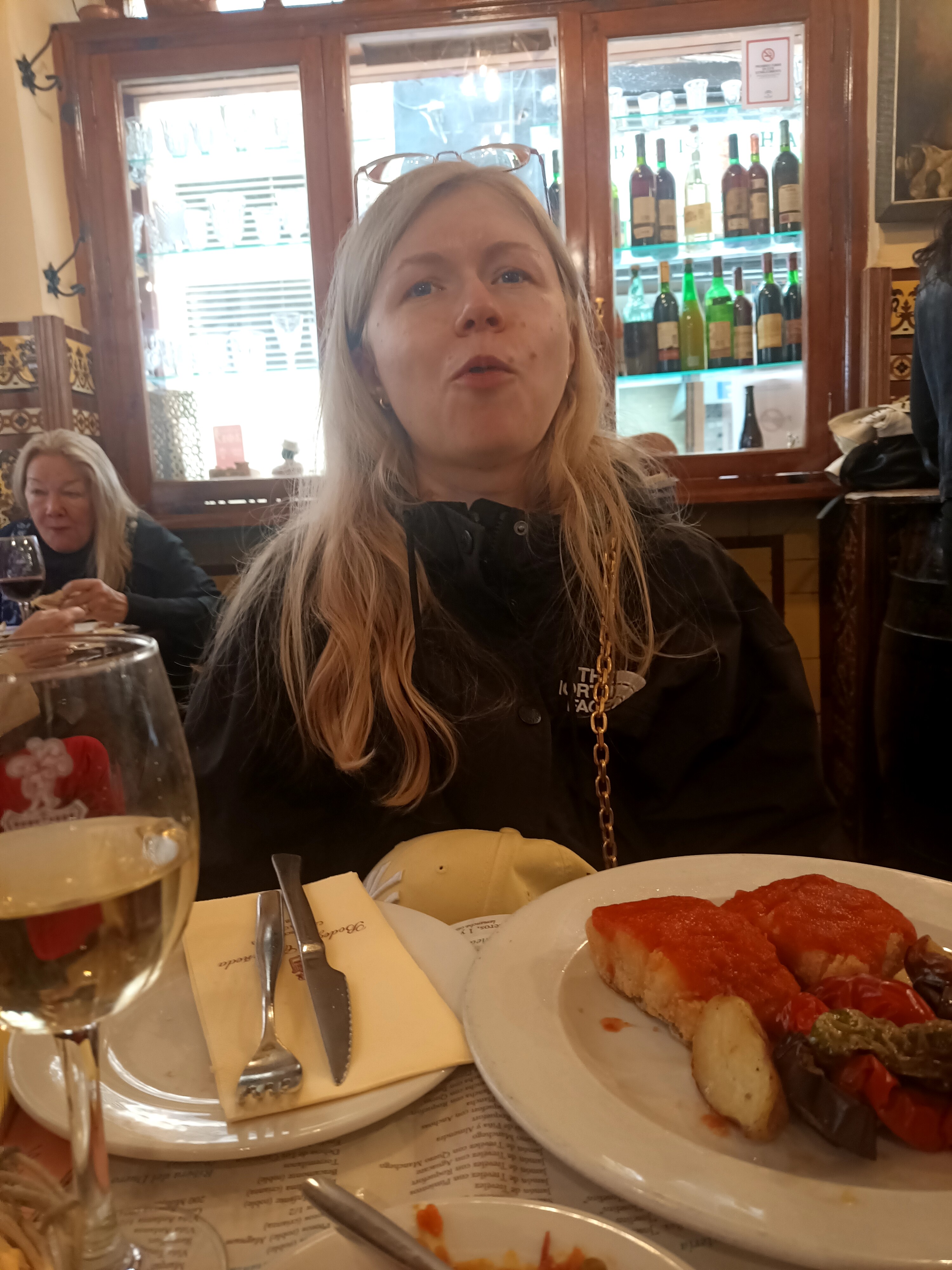
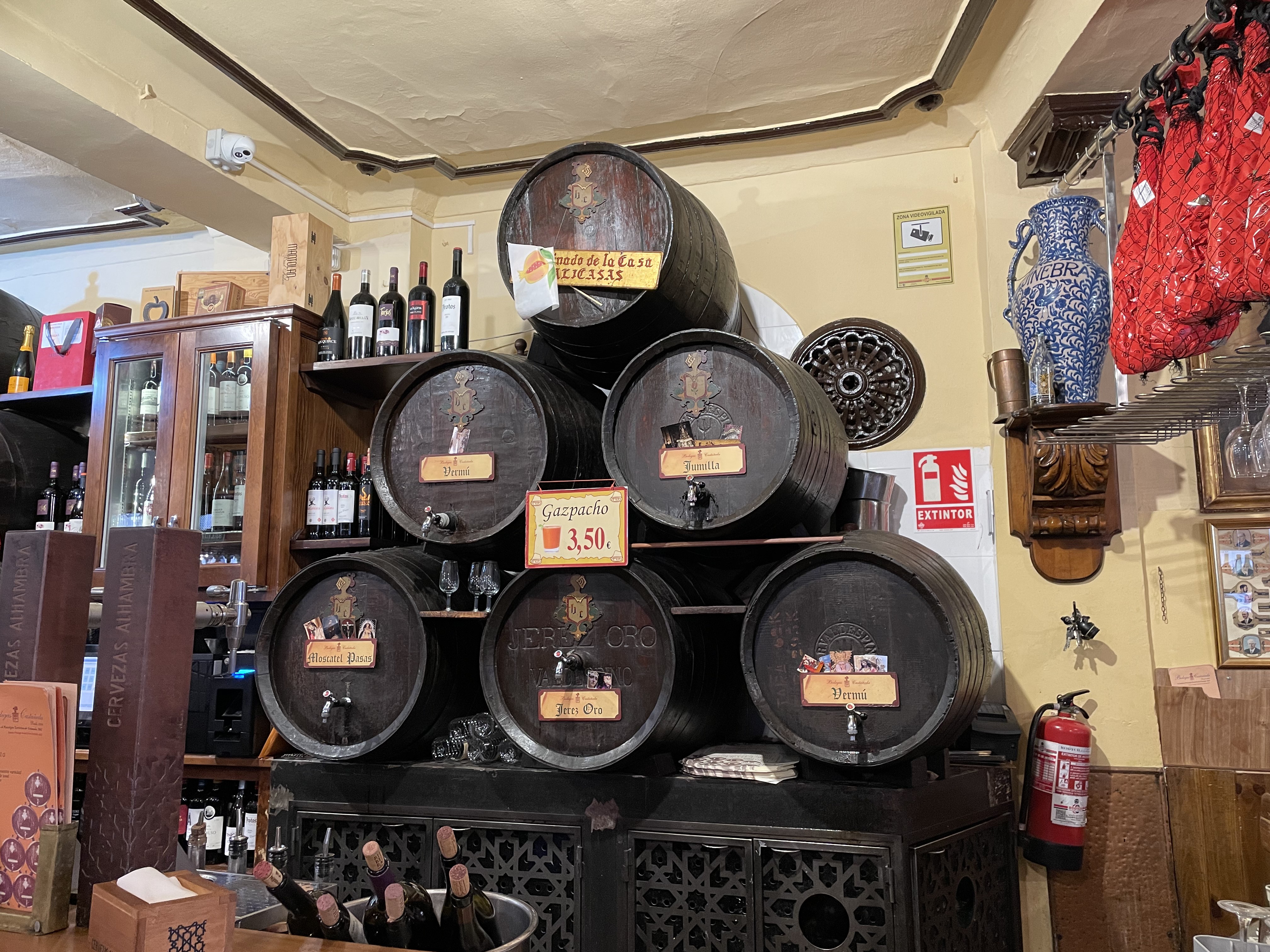
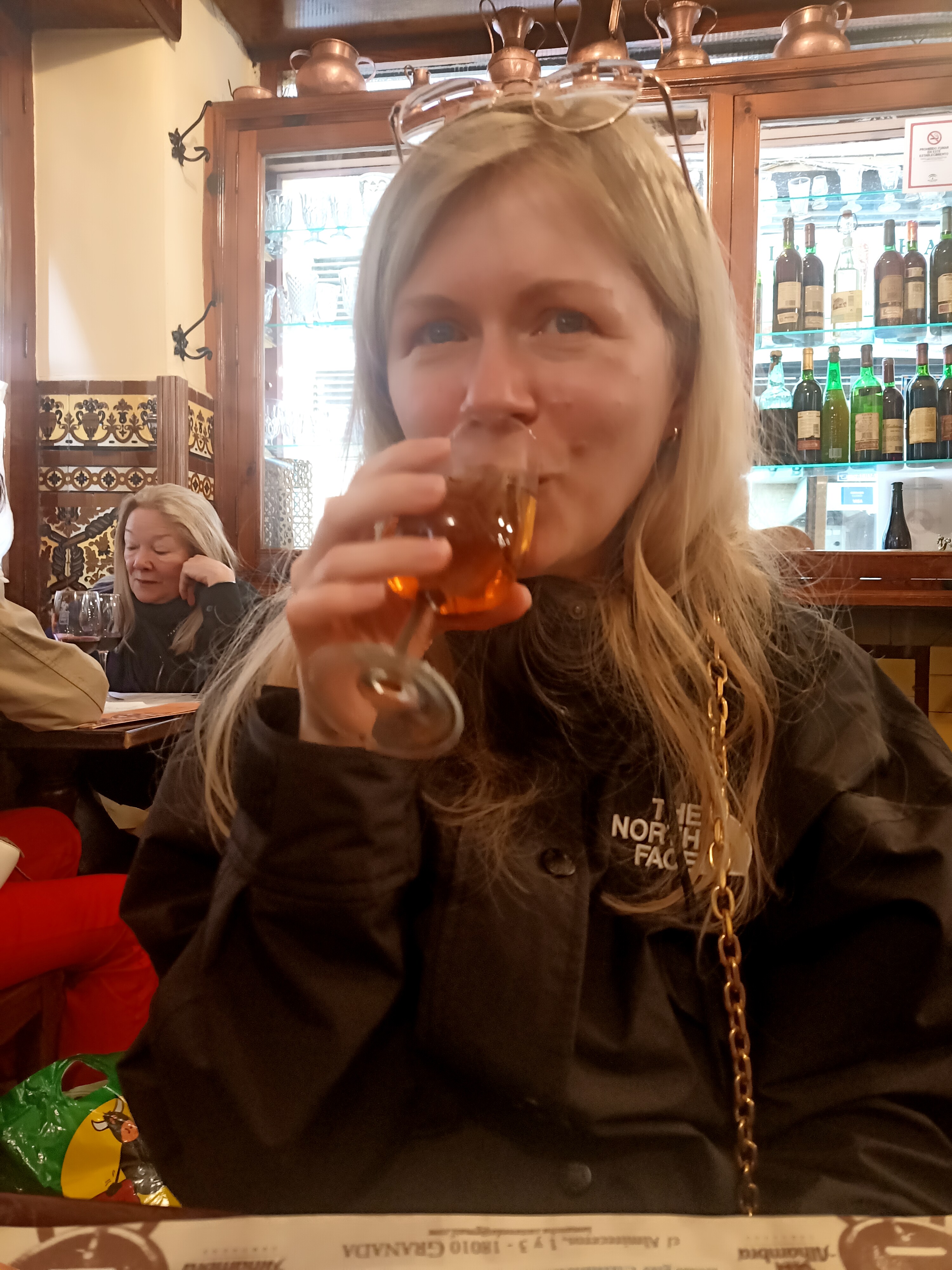
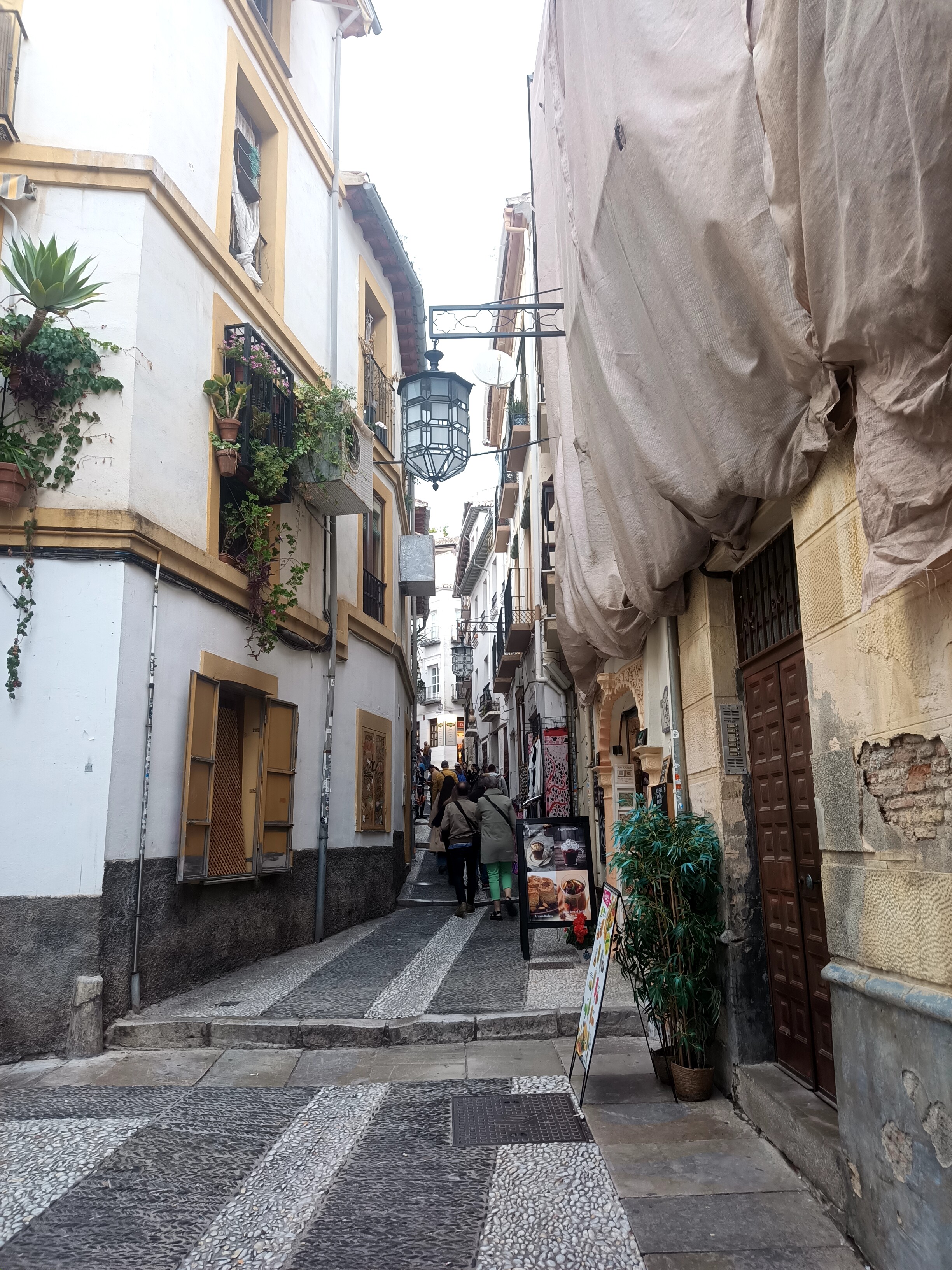
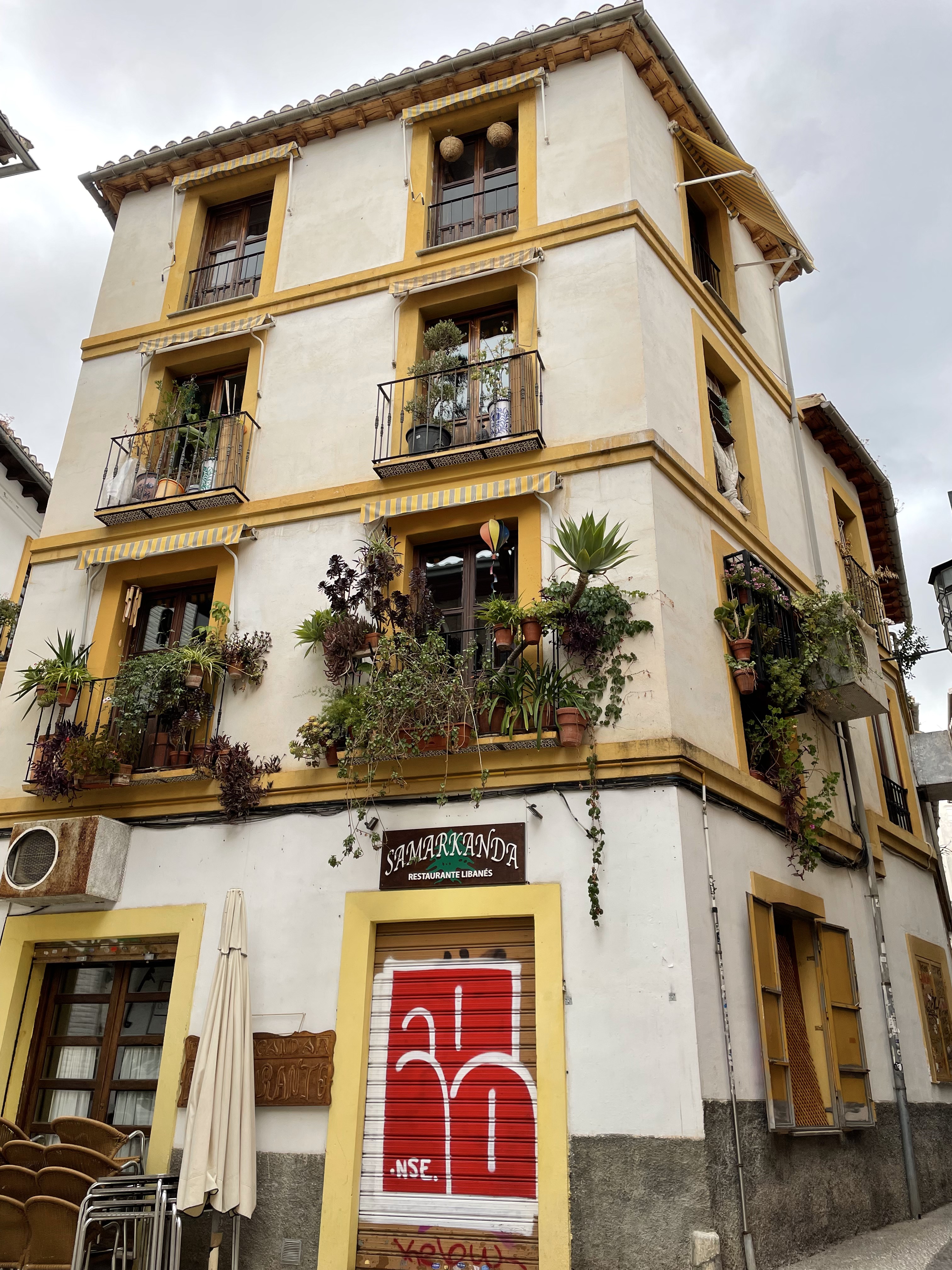
The Albaicín takes its revenge slowly, downhill, on steep cobbled lanes with artworks laid out on the ground and pebble-mosaic stairways that must have been somebody's life's work. From there the evening proceeded in the correct order: supper in a tavern of the old kind, with Anna mid-argument about something and a baked dish between the parties; then Bodegas Castañeda, a wood-panelled temple of wine with barrels stacked in a pyramid behind the counter and sausages hung like lamps, where a small glass of amber vermouth arrived and made its case; then the lanes again, sloping off into dark under a hanging lantern, past balconies that overflow with potted plants in a way that seems show-offy and is probably just maintenance.
Downhill through the Albaicín 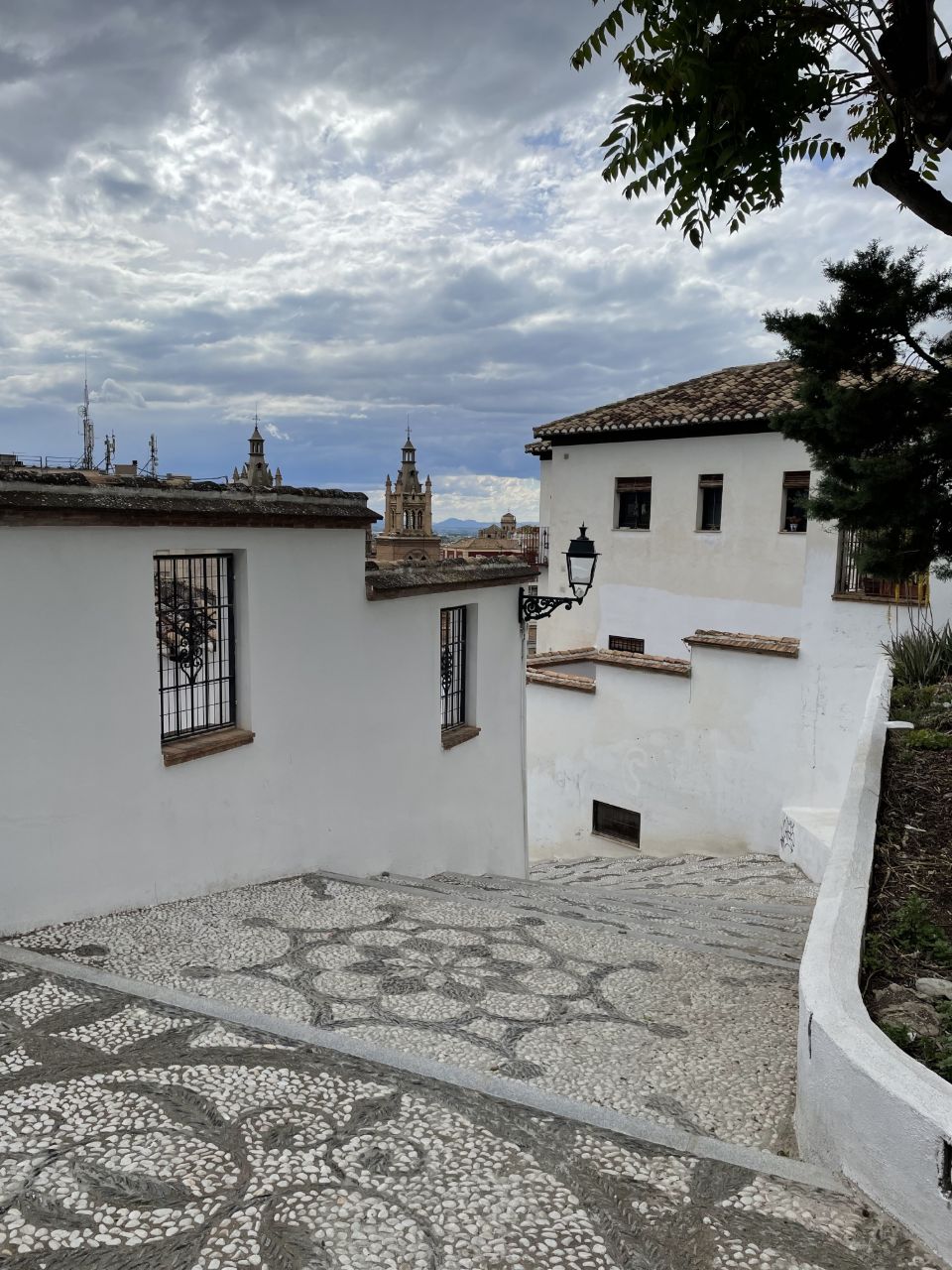
A stairway of pebble mosaics 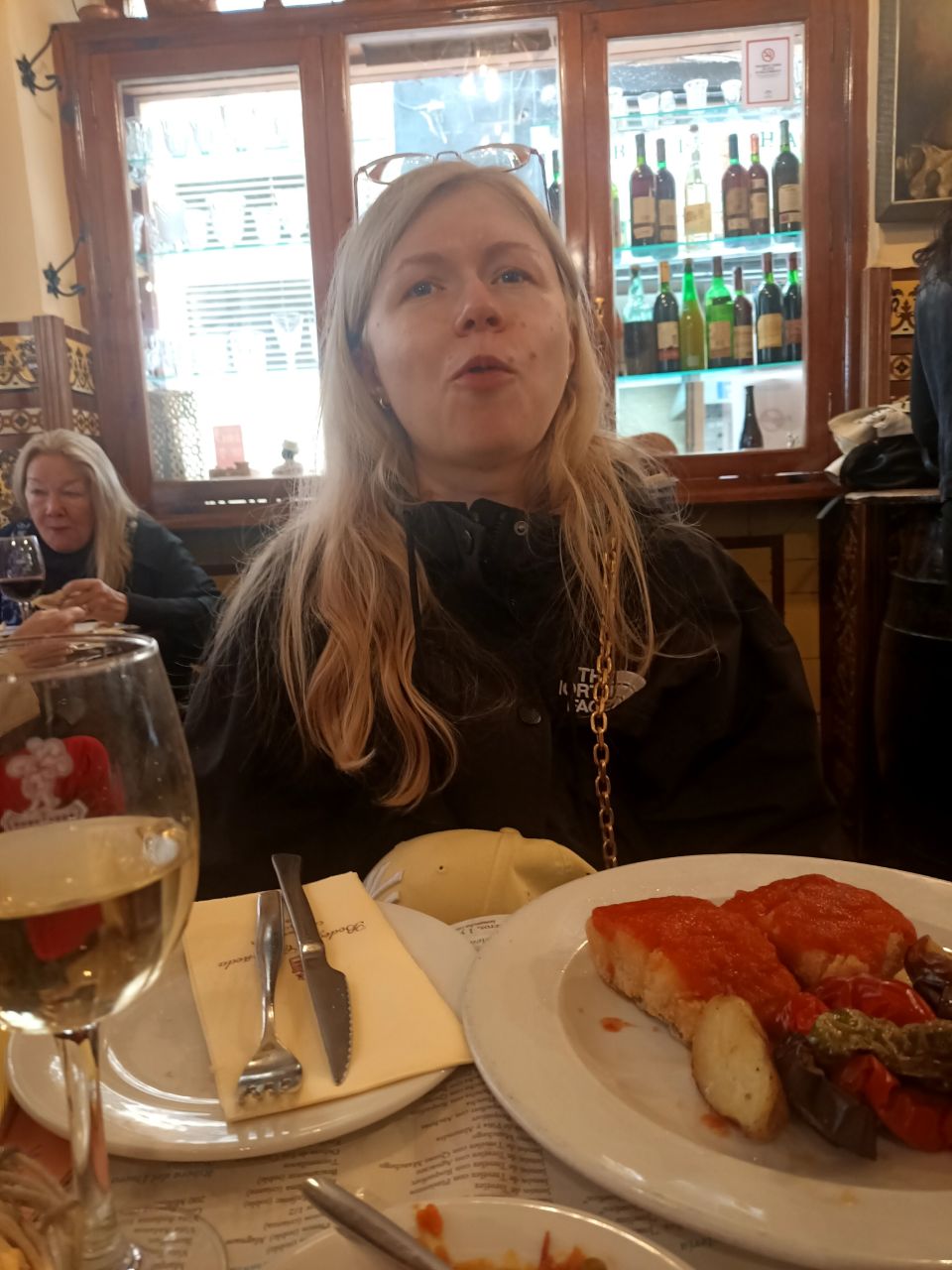
Supper at the taverna 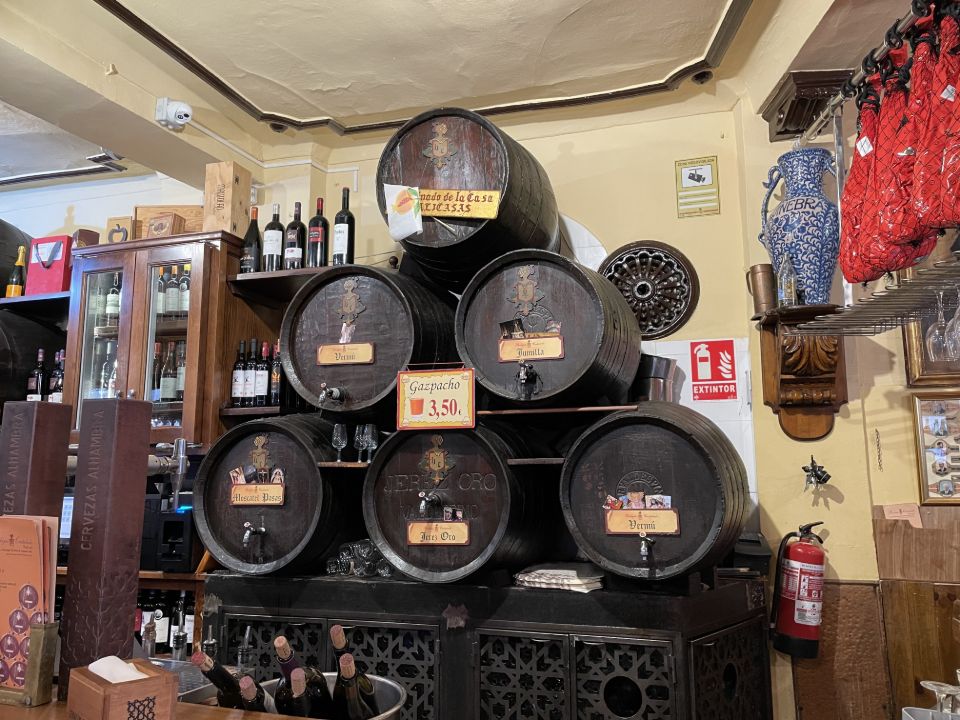
Bodegas Castañeda, a temple of wine 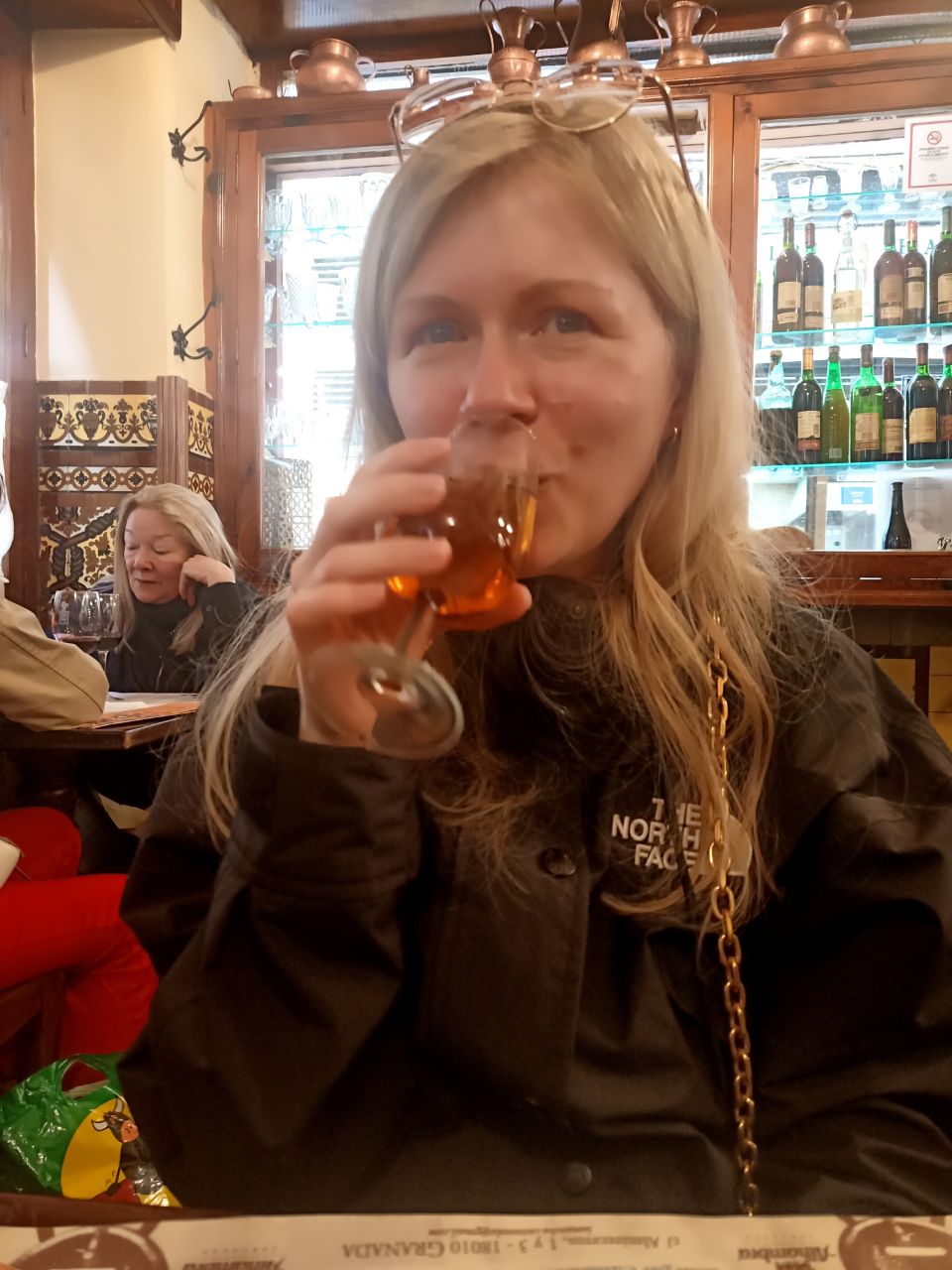
Vermouth in the wood-panelled tavern 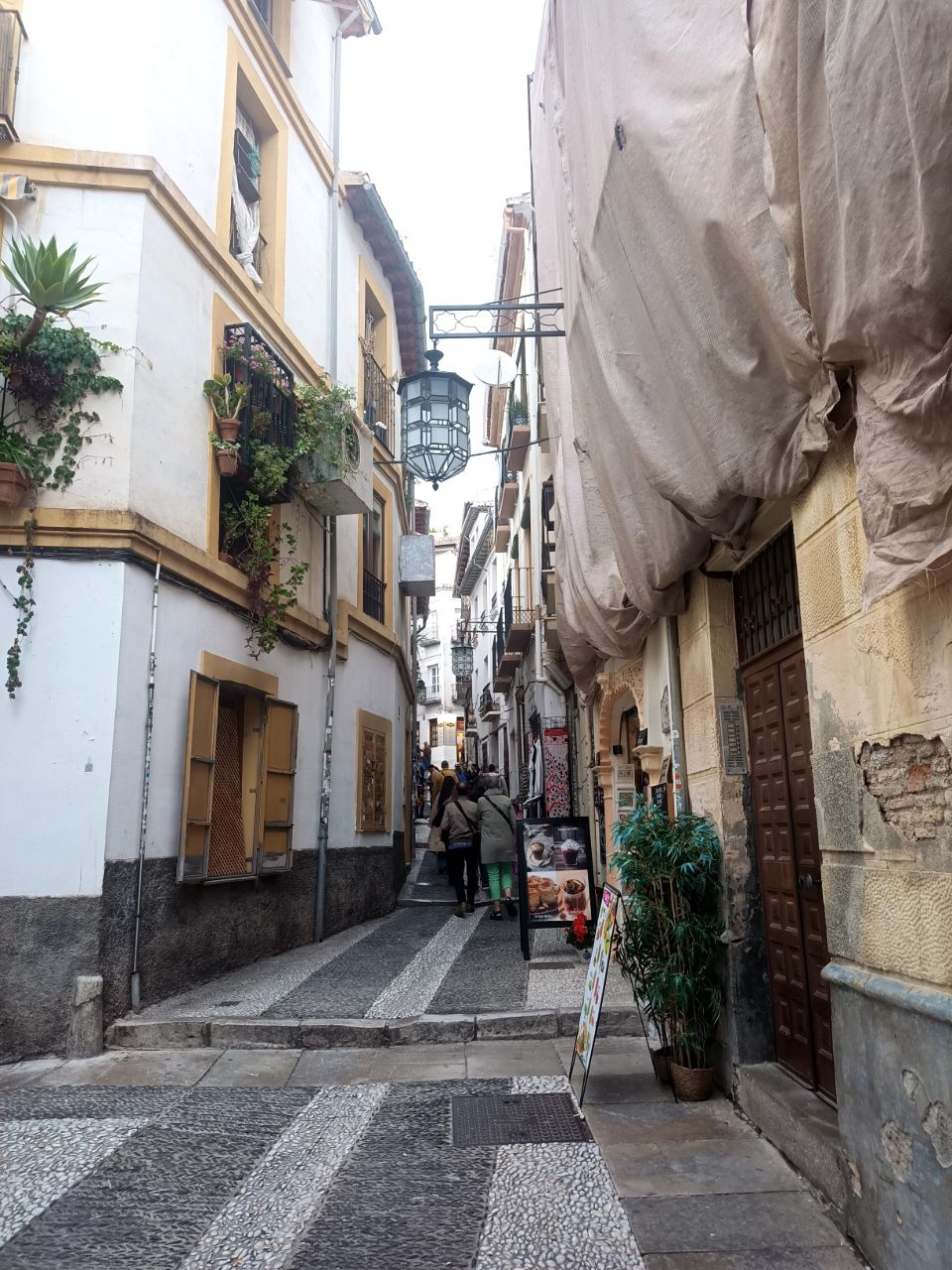
Lantern over a sloping lane 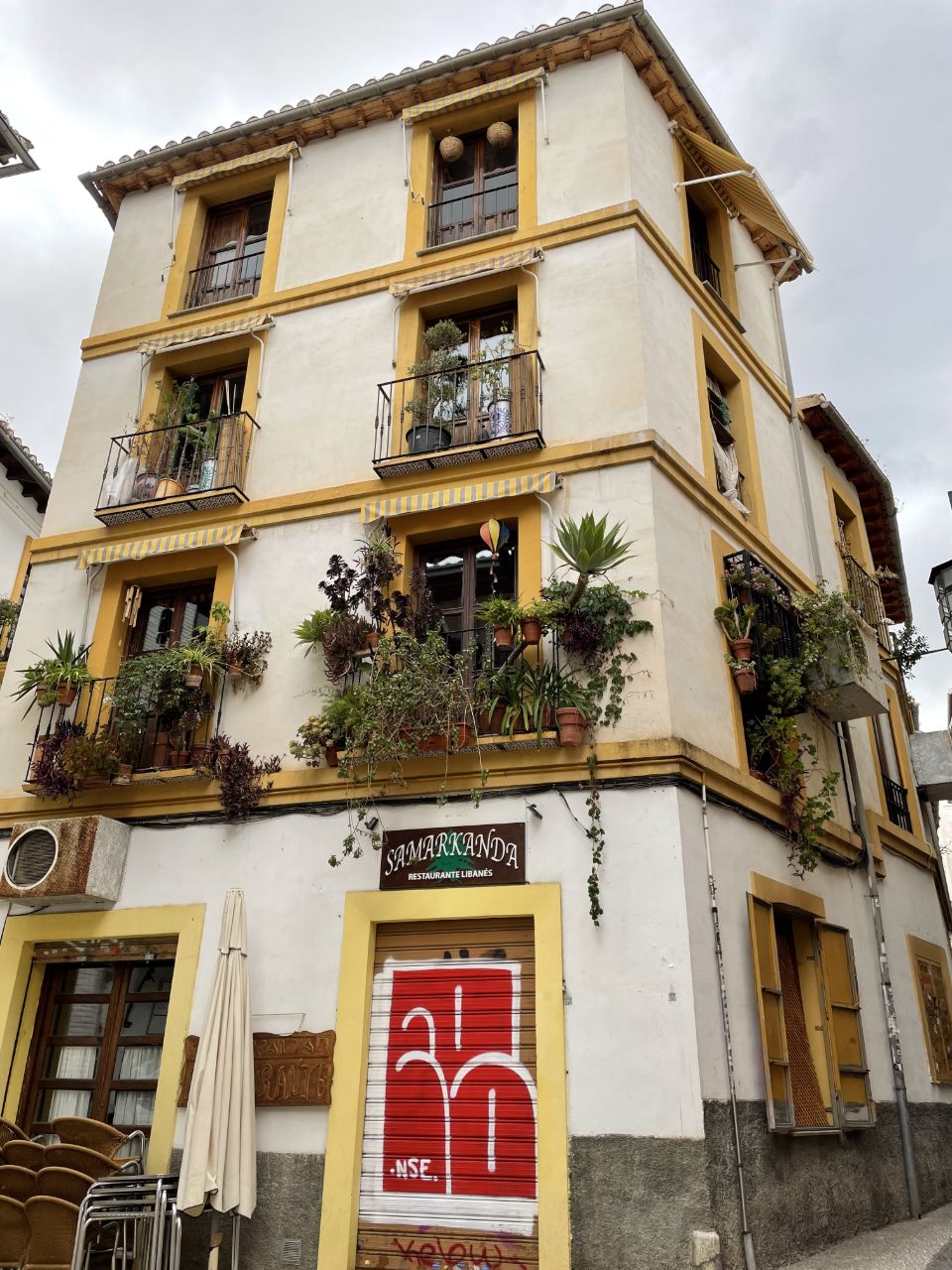
Balconies of the Albaicín
The mirador, and the weather
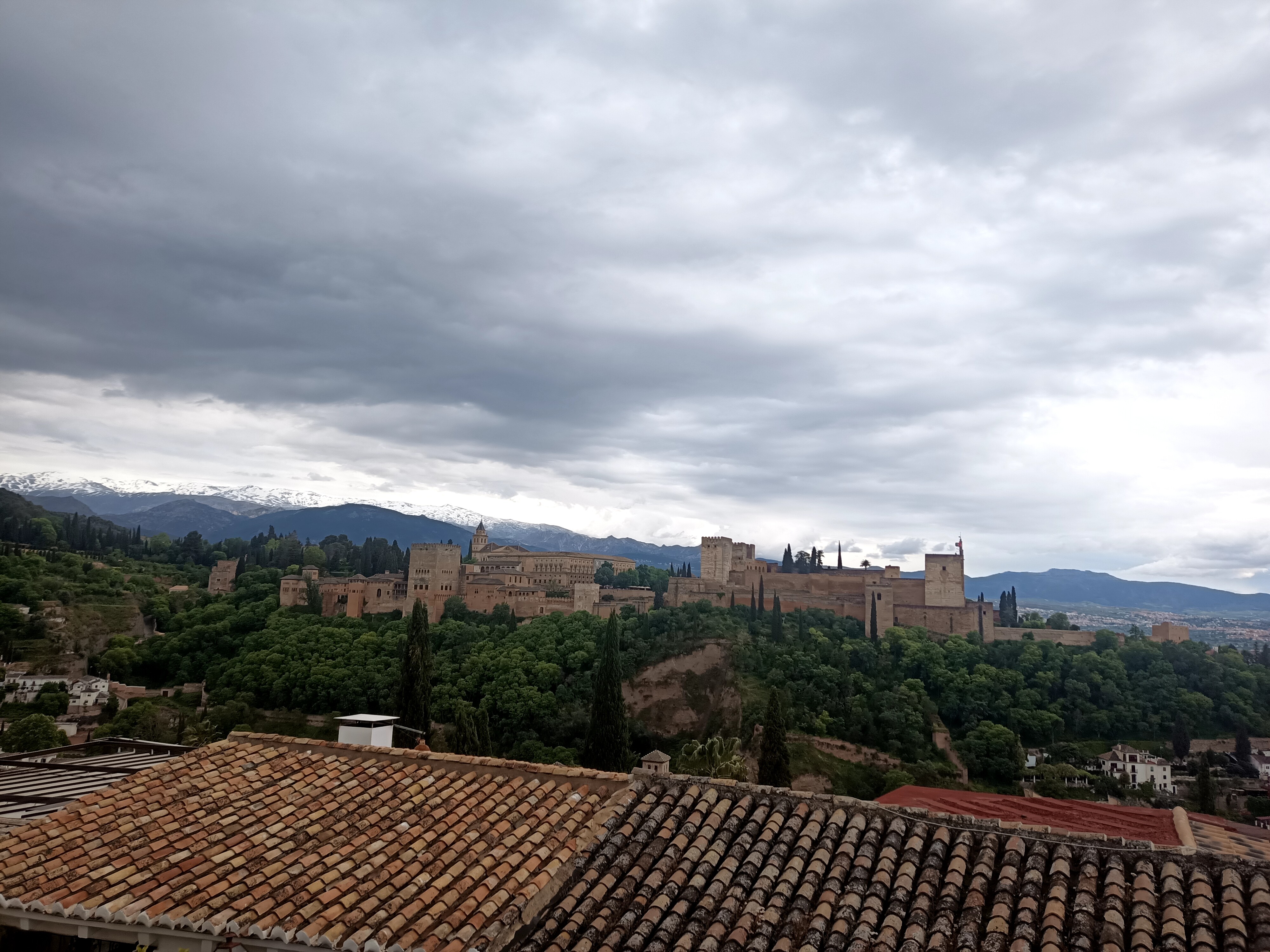
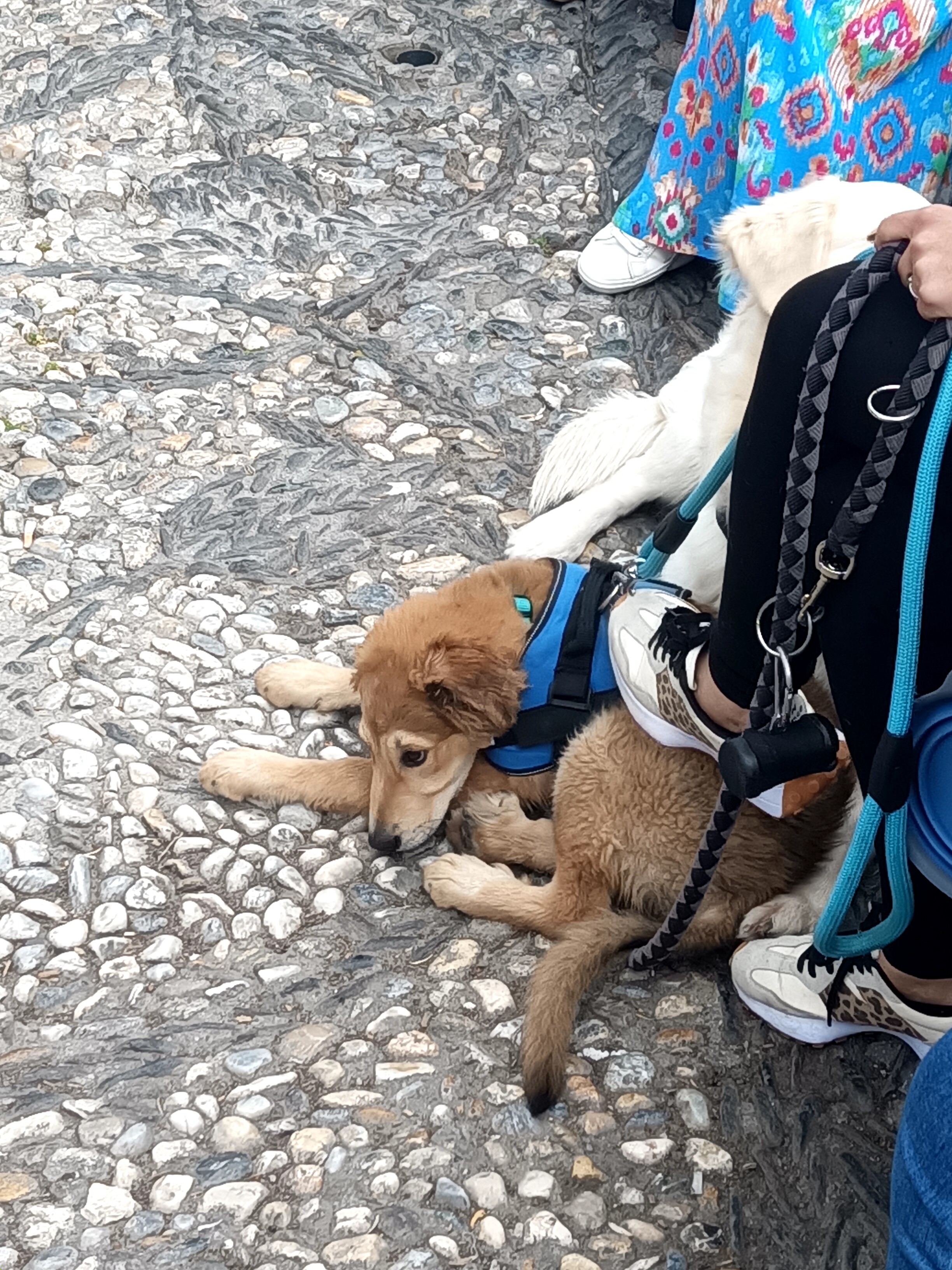
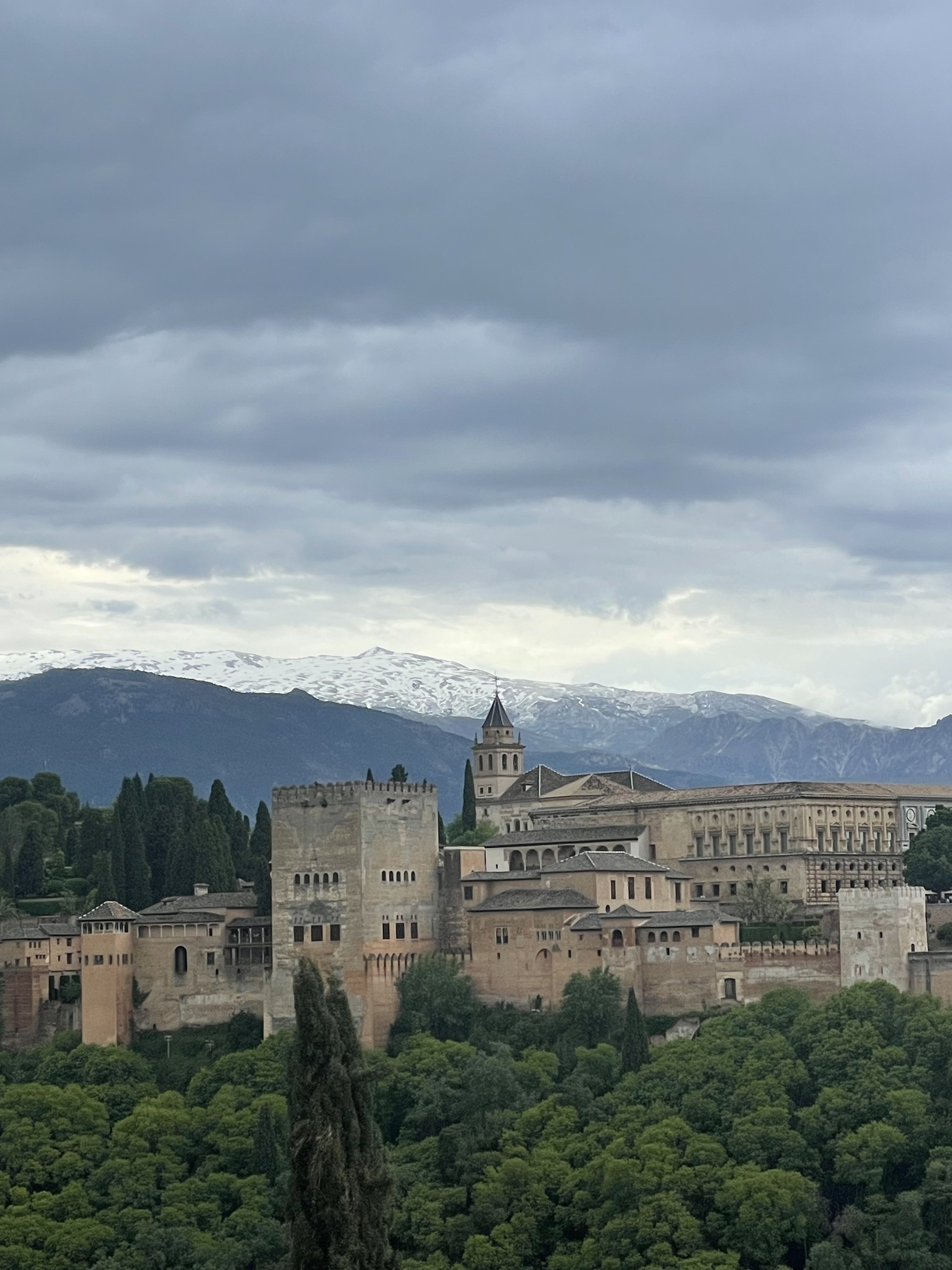
The sky spent the whole afternoon assembling something and, by the mirador, had the machinery out: heavy grey storm clouds stacked over the Sierra Nevada, which stood above all of it in snow, entirely unbothered by either the weather or the century. The Alhambra showed itself again from the other side, terracotta rooftops between, and the light put in a strong last performance before the clouds closed it down. At our feet the day's most senior critique lay collapsed on the ornate paving stones: a tan puppy in a blue harness, fully asleep beside a very large white dog, having walked — one assumed on its own initiative — the entire Albaicín.
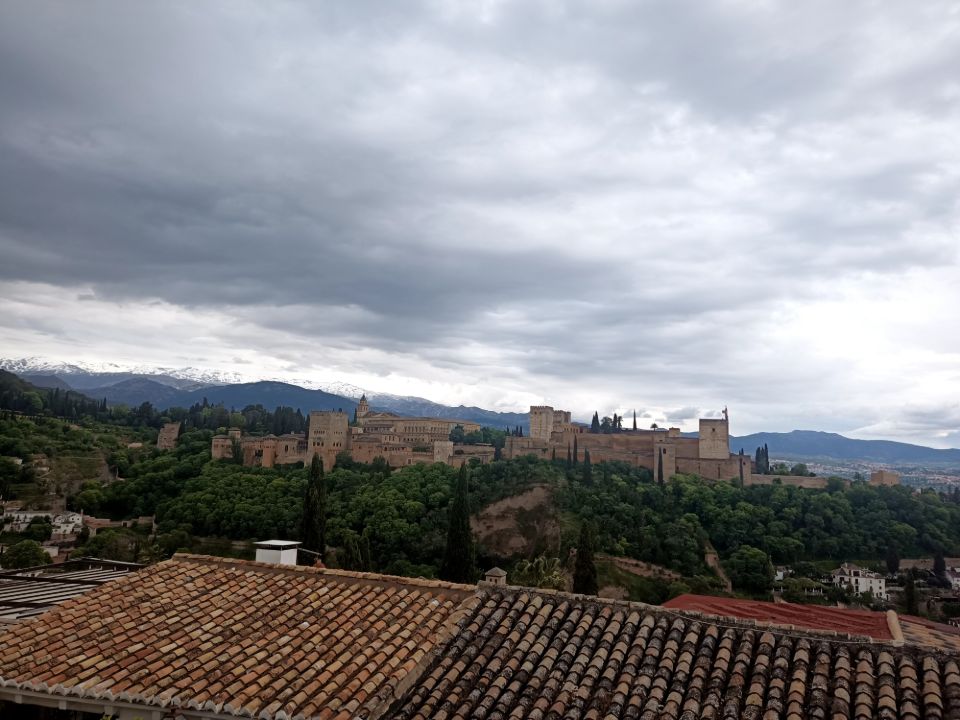
The Alhambra and the snowy Sierra 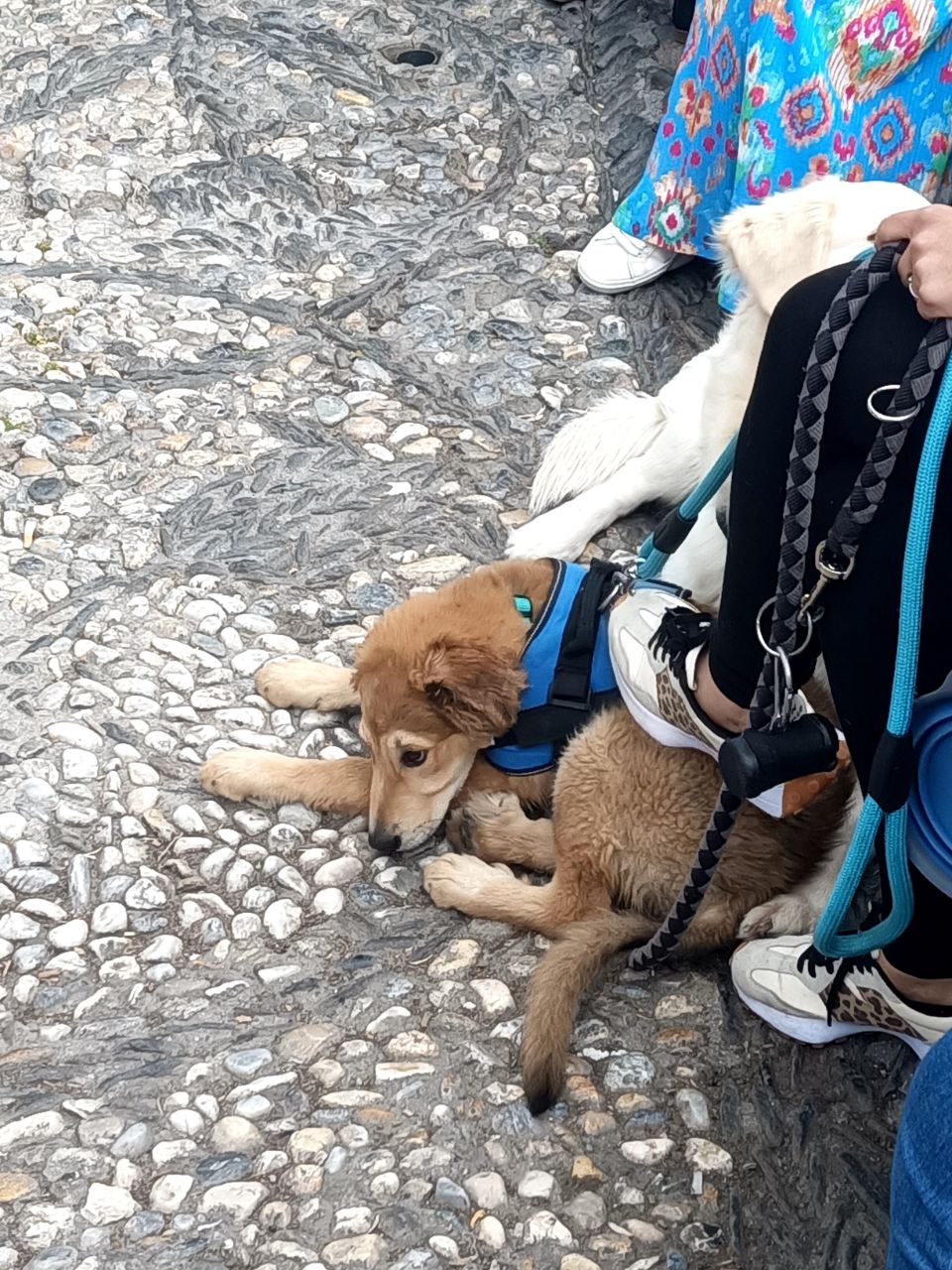
A very tired puppy on the stones 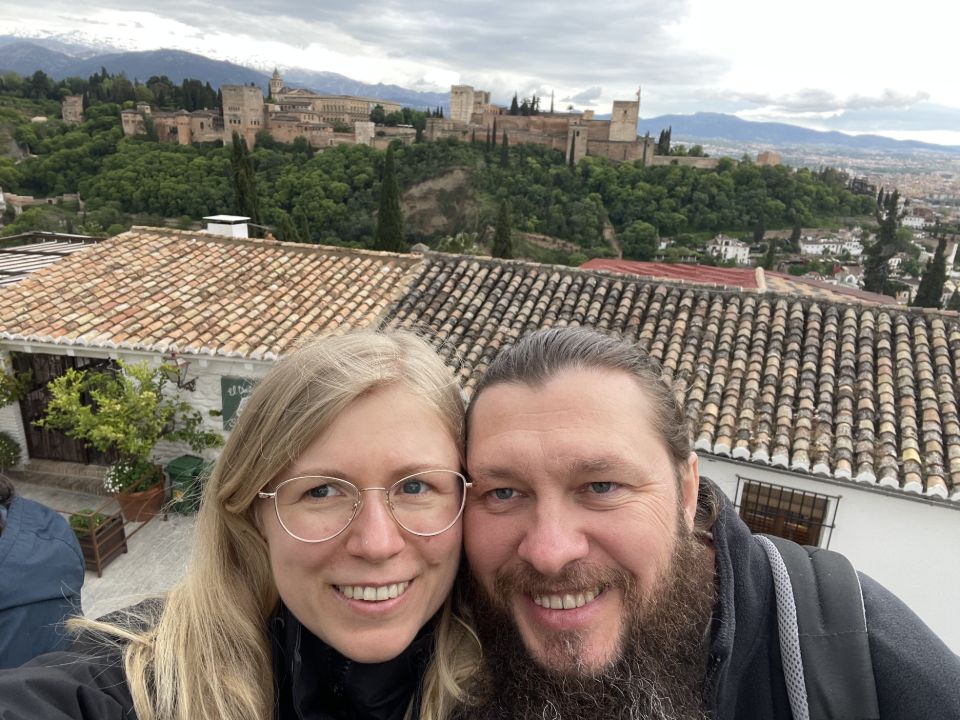
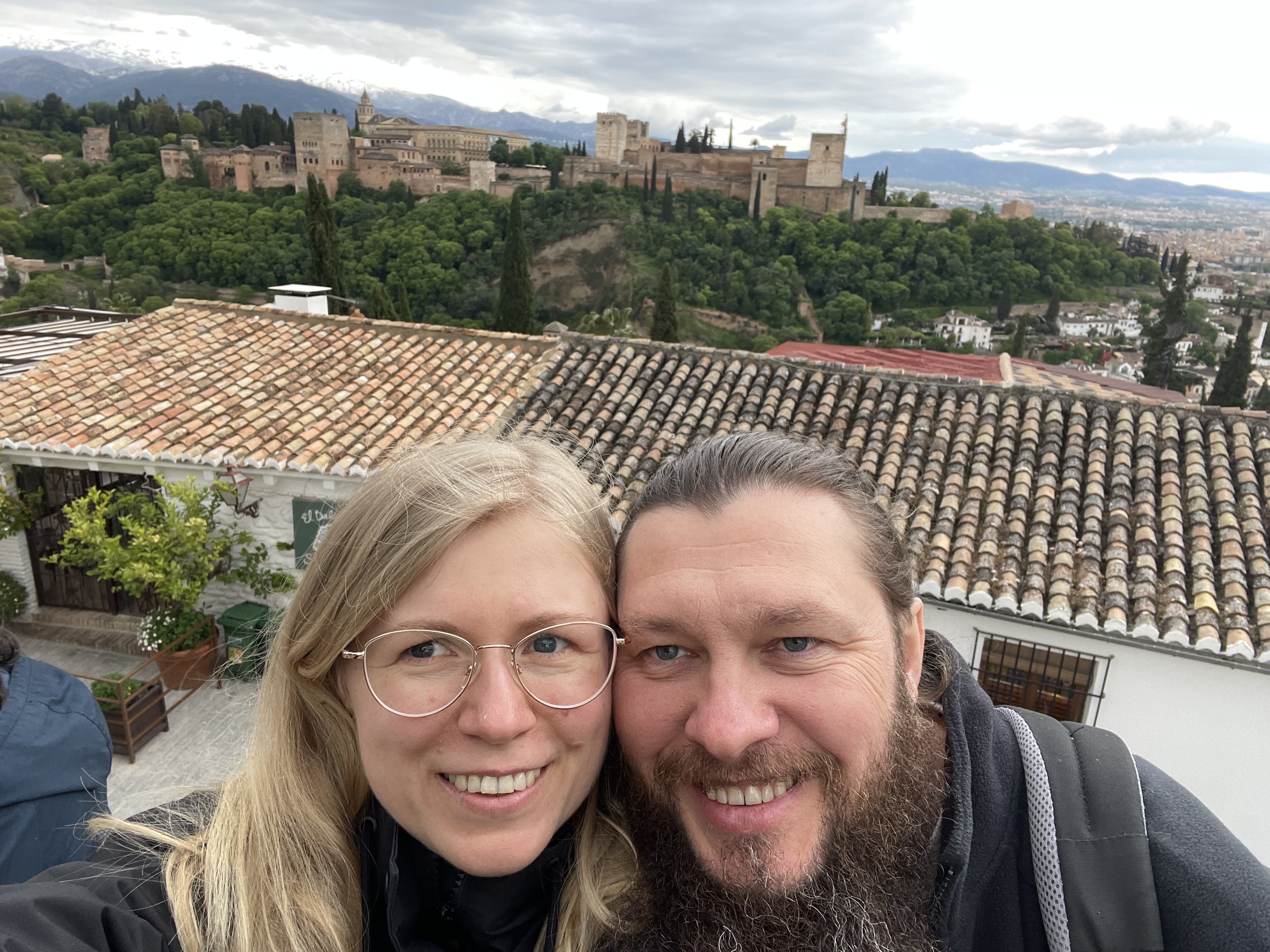
The mirador selfie 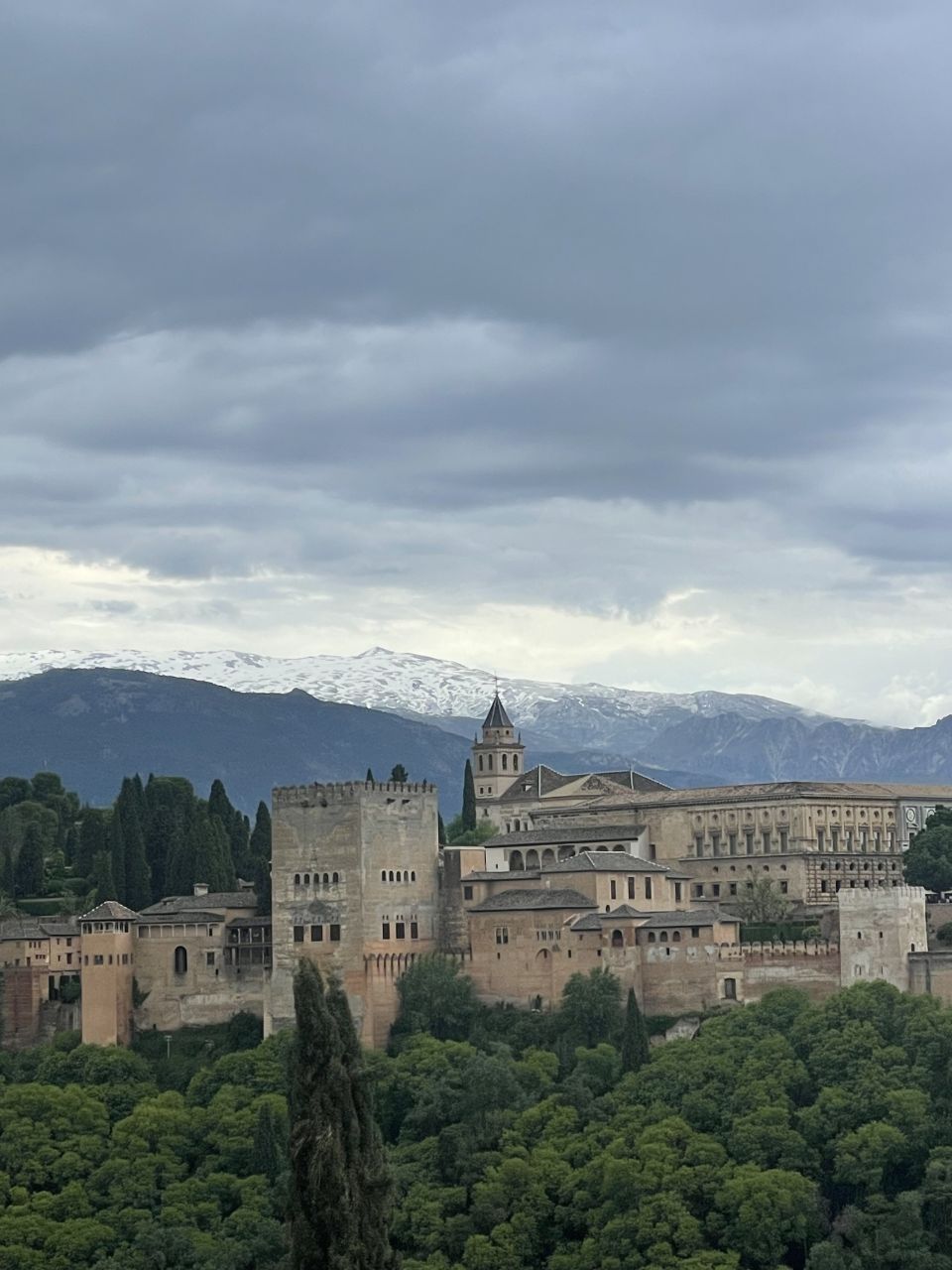
The Alhambra under storm clouds
Down into the evening
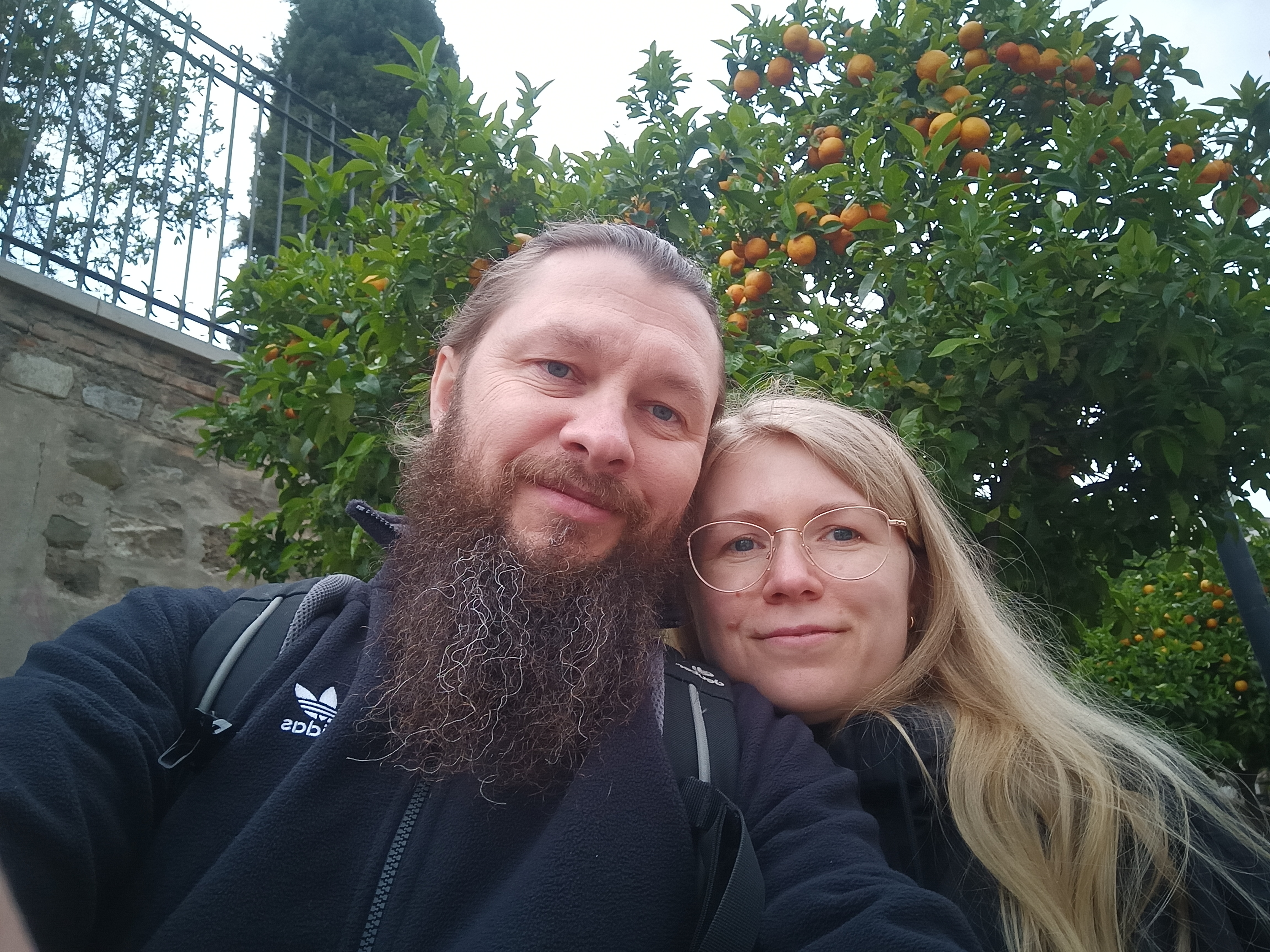
The way back down went through lanes gone quiet, Anna's outline shrinking ahead into the dusk. And then the day, which had offered fortresses, weather, wine and a puppy, closed on the plainest possible note: an orange tree at the top of a lane, carrying considerably more fruit than it strictly needed, with the two of us beneath it looking, we'll admit, exactly as pleased as we were.
Down through the lanes 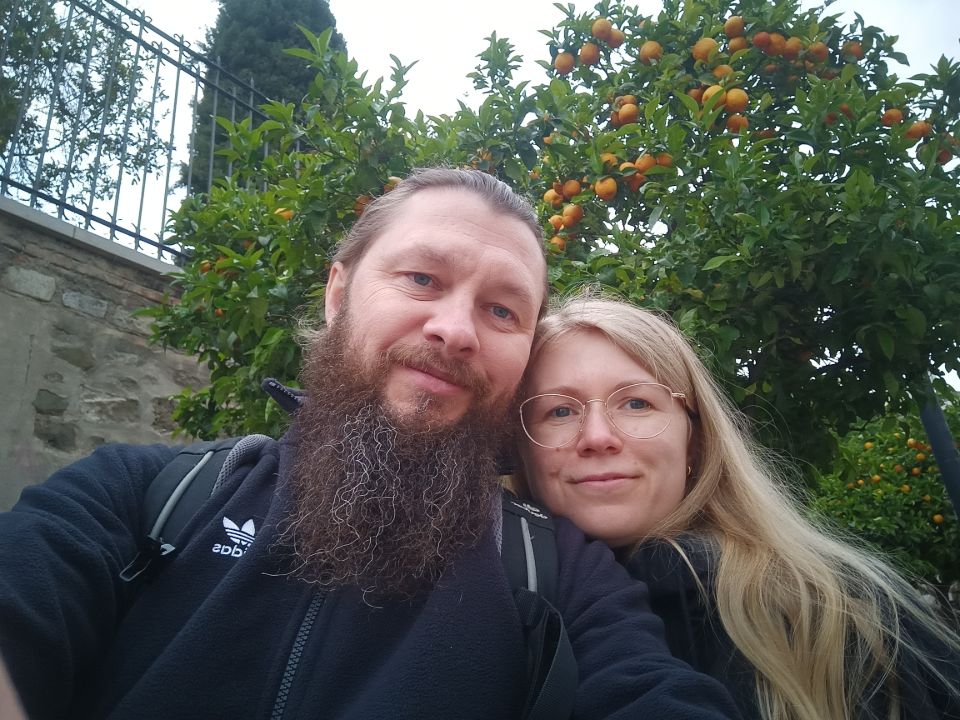
Under the orange tree