Italy trip 2023 — Cinque Terre: four villages, two good walks
Manarola
After two grey days on the Riviera, Liguria switched the lights on. We bought the day train ticket and rode east along the coast into the national park, where the stations are cut into rock and the villages hang over the sea.
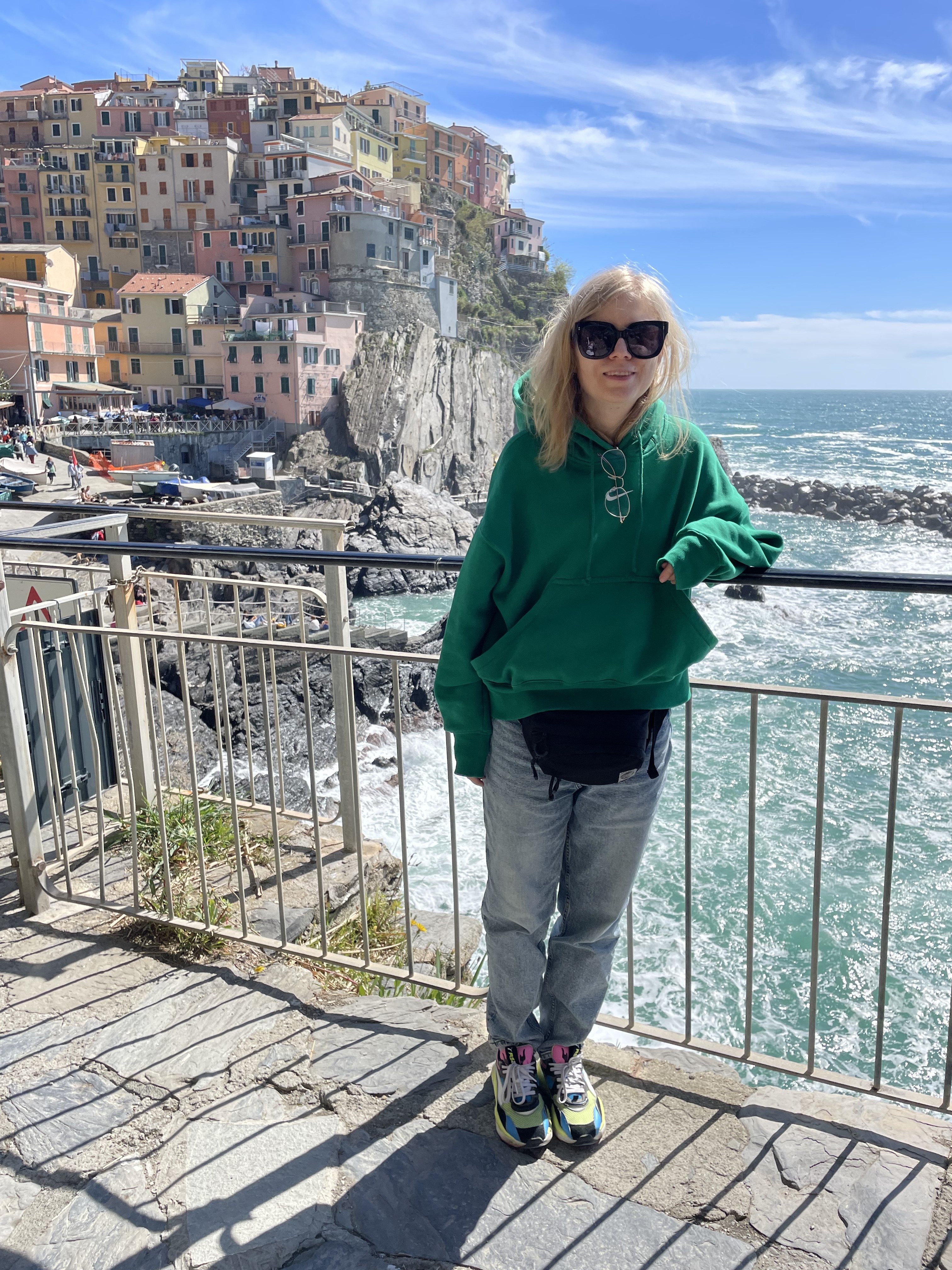
Manarola comes at you sideways: pink and cream houses stacked into the ravine, a breakwater, a harbour the colour of a swimming-pool brochure. We took the standard act at the railing, sat on the rocks at Lo Scalo among the locals — this was the first day the sun had been announced, and everyone was treating it as a press conference — and watched the breakers do their choreography on the dark rocks. The videos tell it better than we can.
Breakers on the rocks at Lo Scalo.
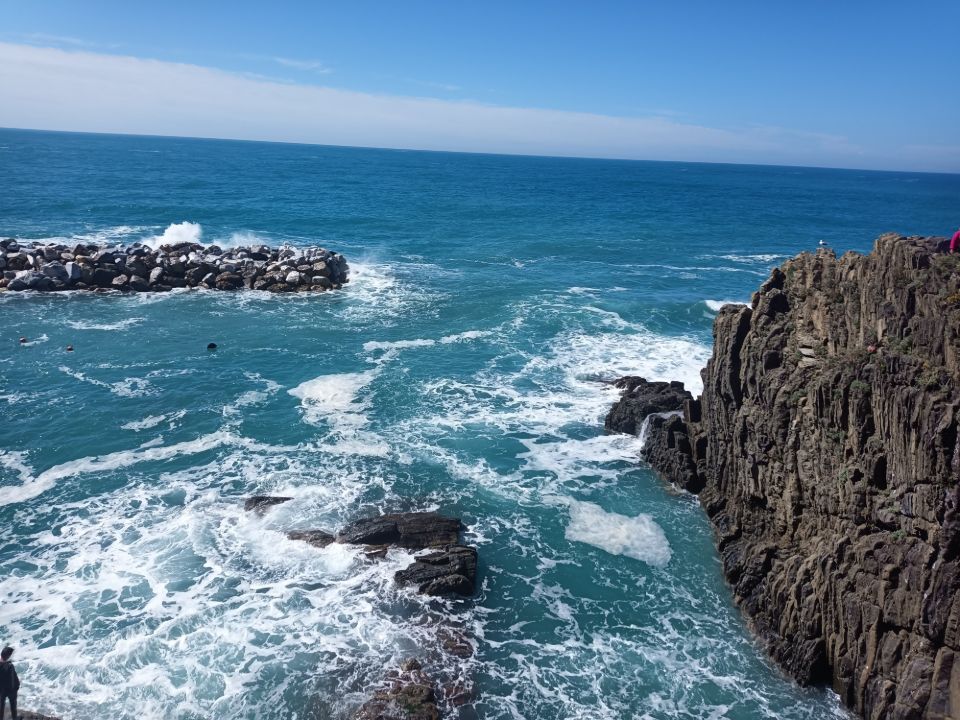
Turquoise against dark rock, Lo Scalo 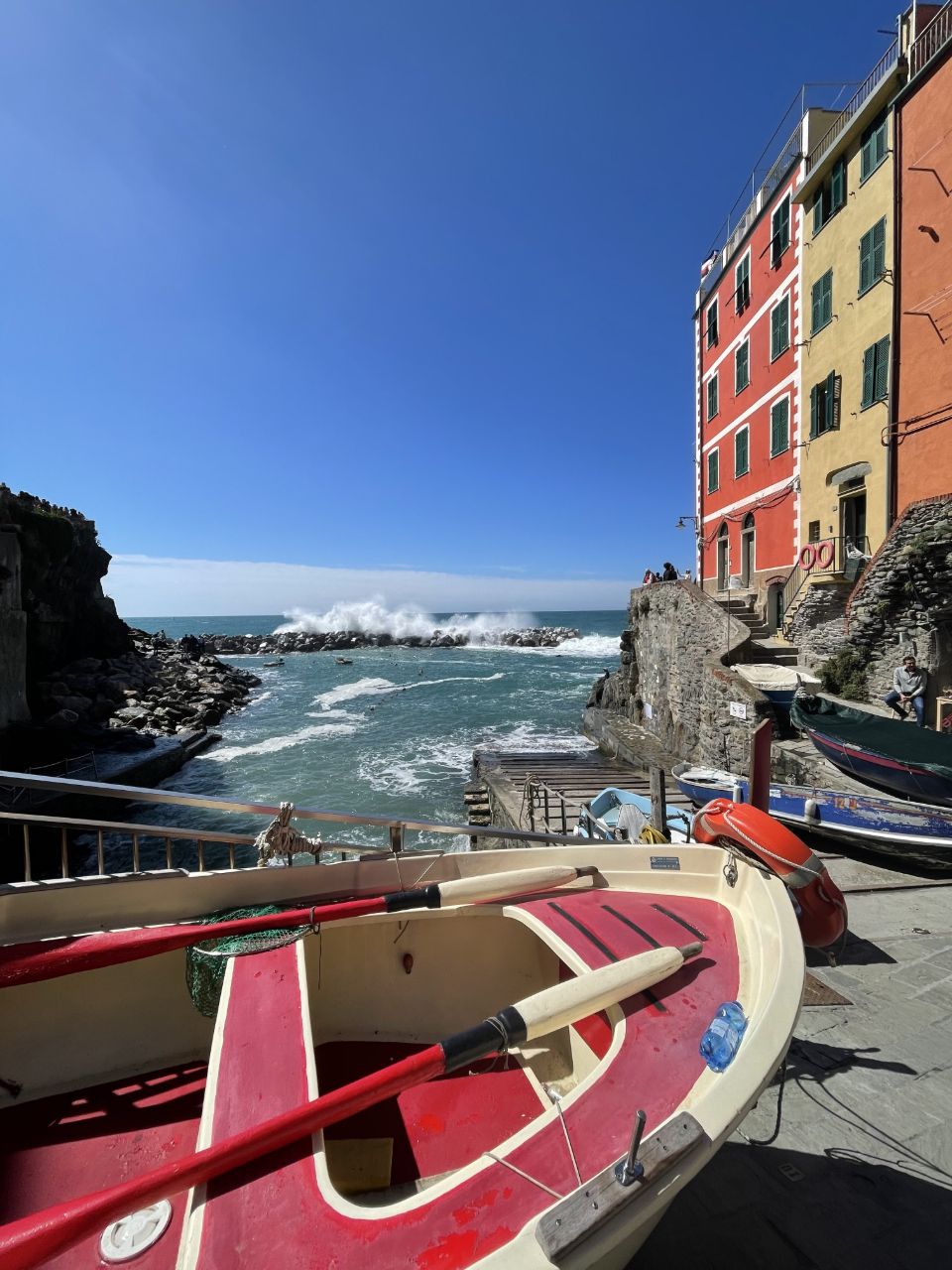
Lo Scalo choreography, from a rowing boat's point of view 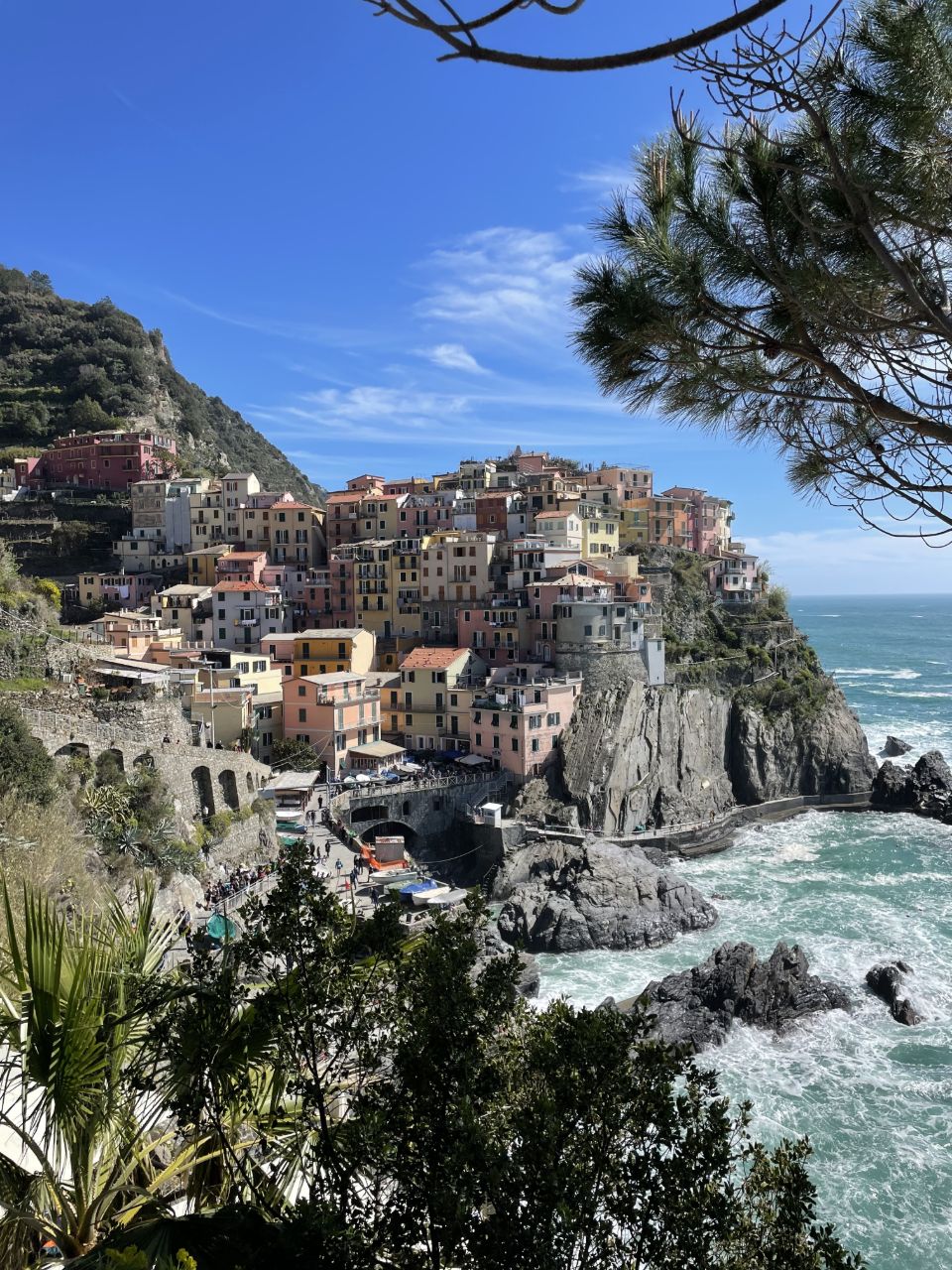
The postcard, in person 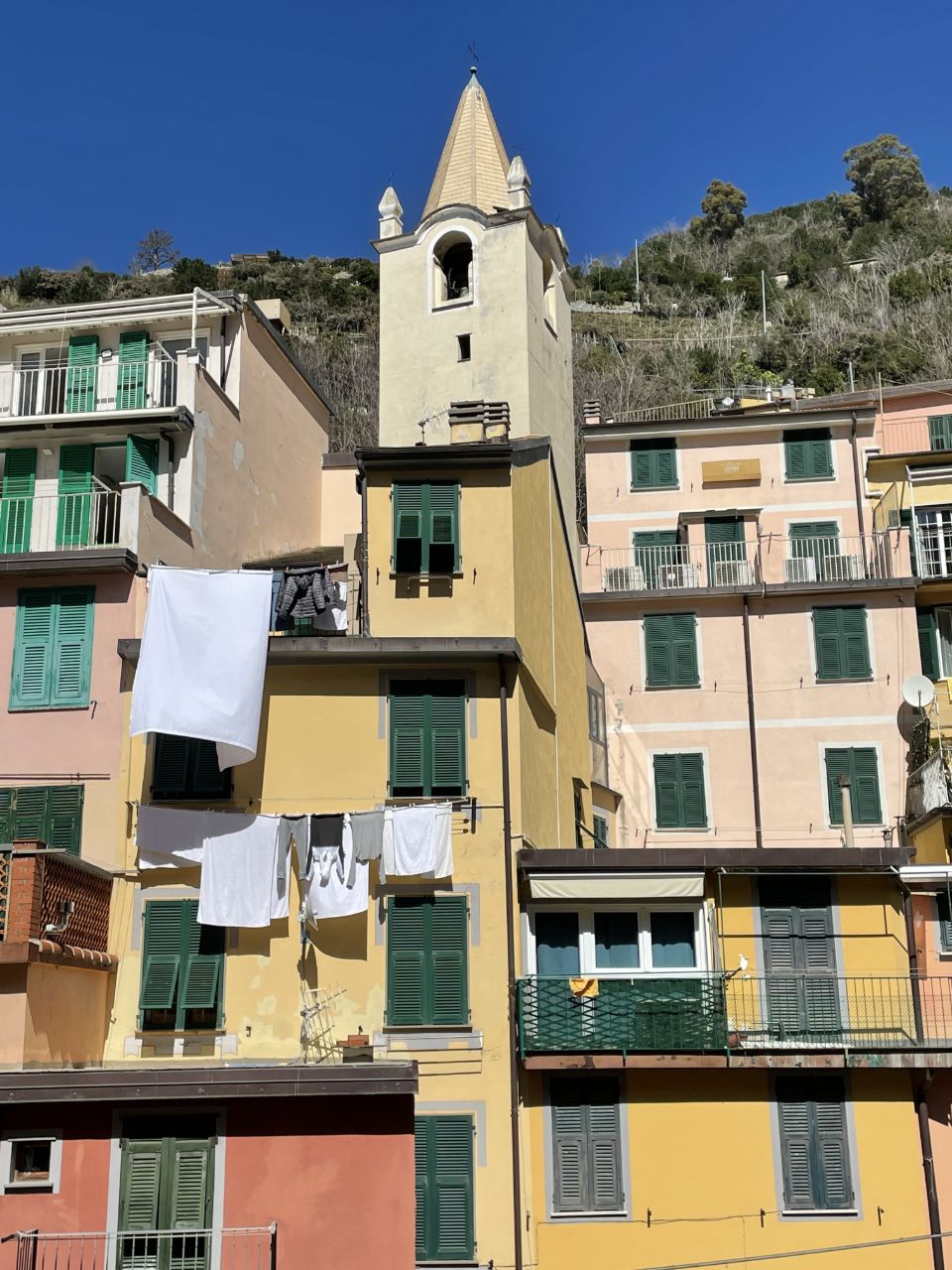
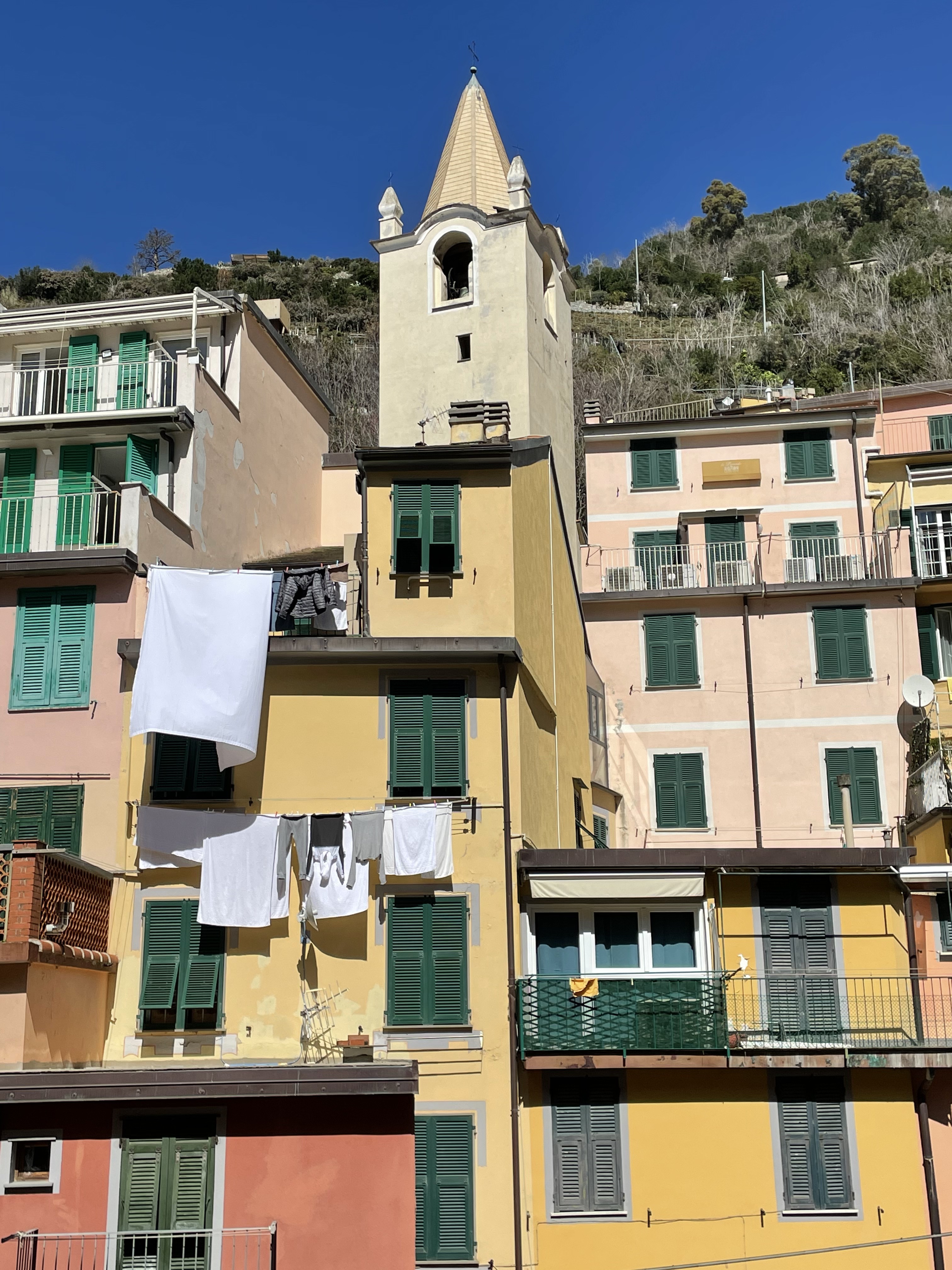
Laundry day under the bell tower 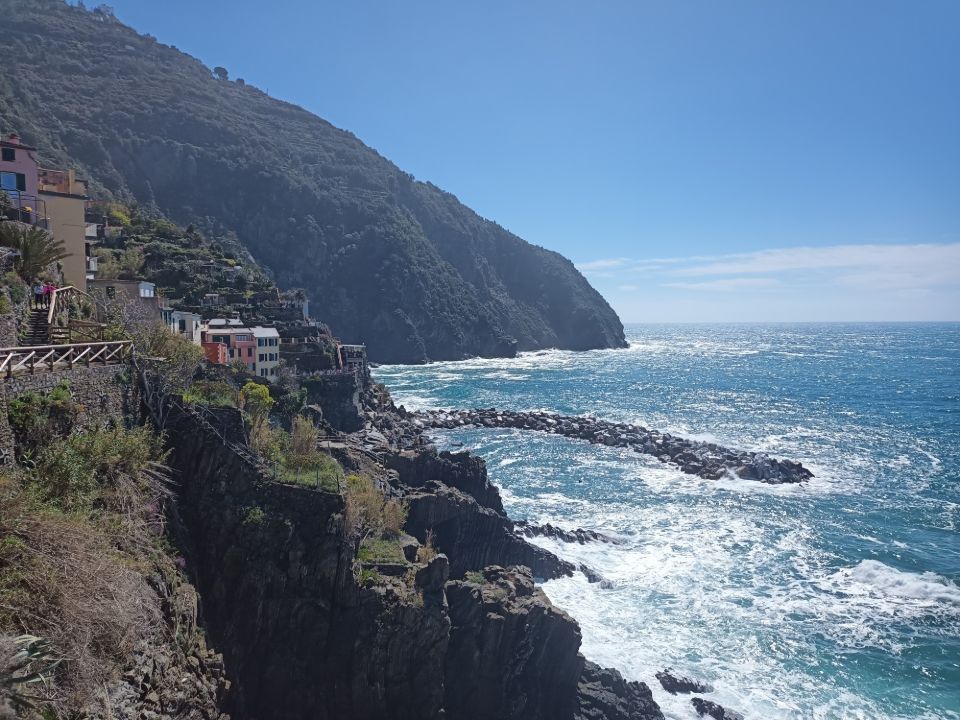
The village above its breakwater 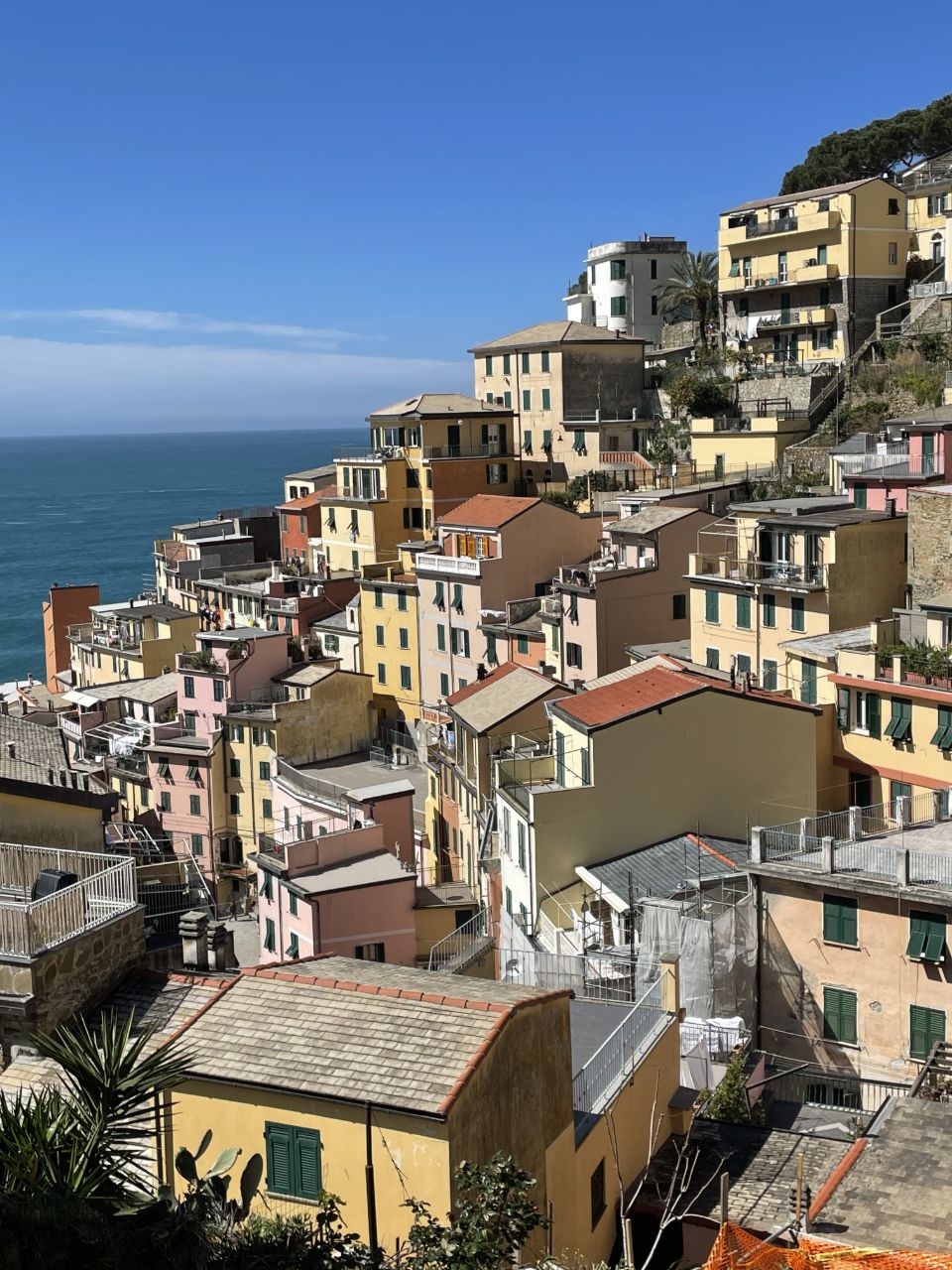
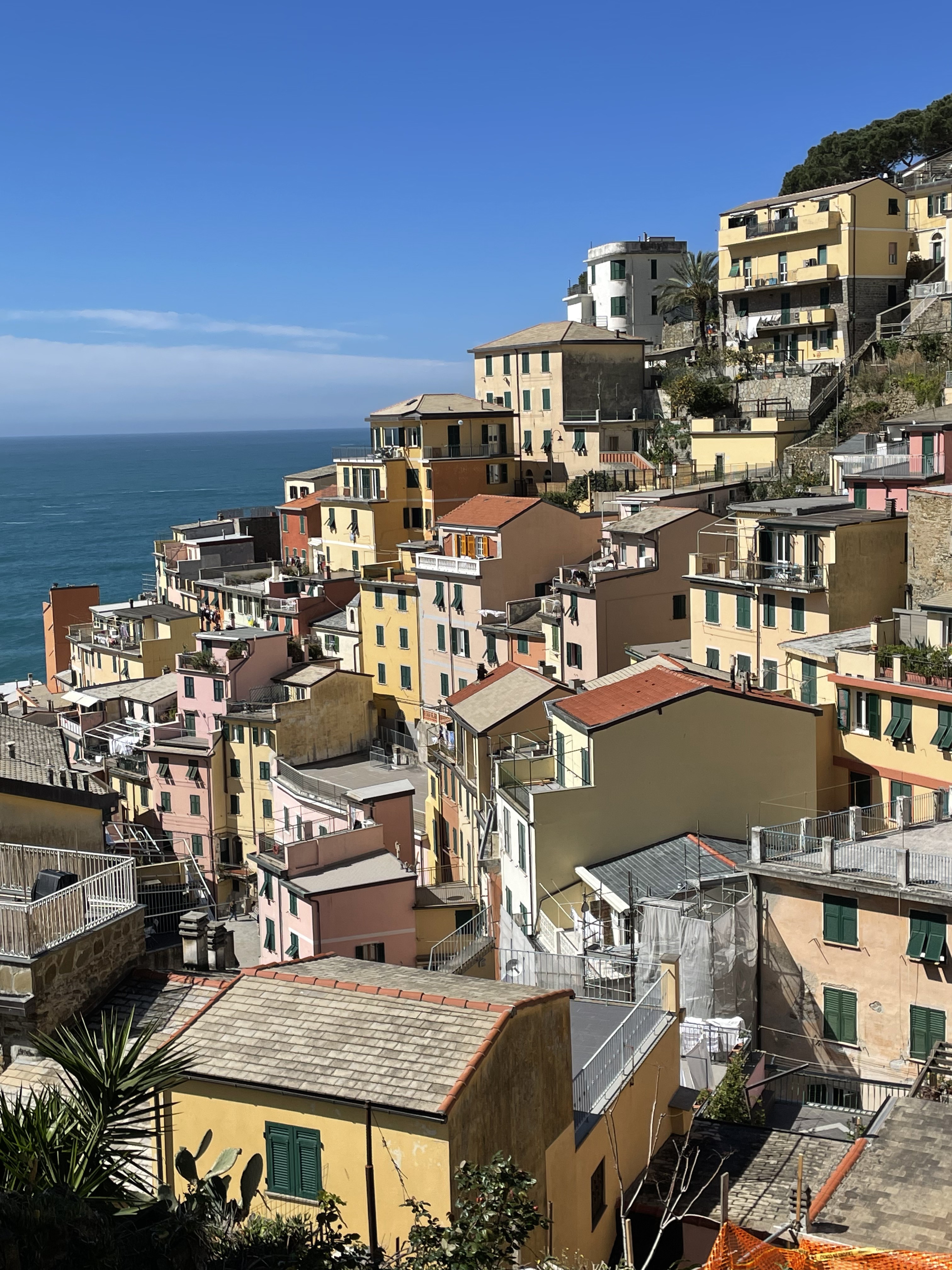
Yellow houses, shutters, sea behind 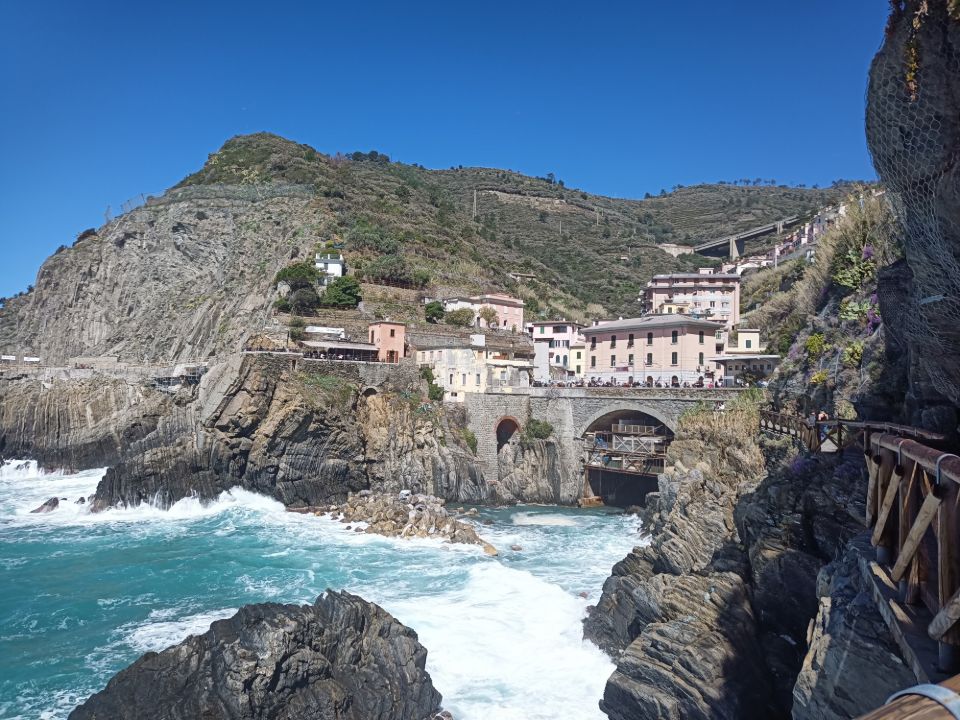
The cove and its bridge, from the south 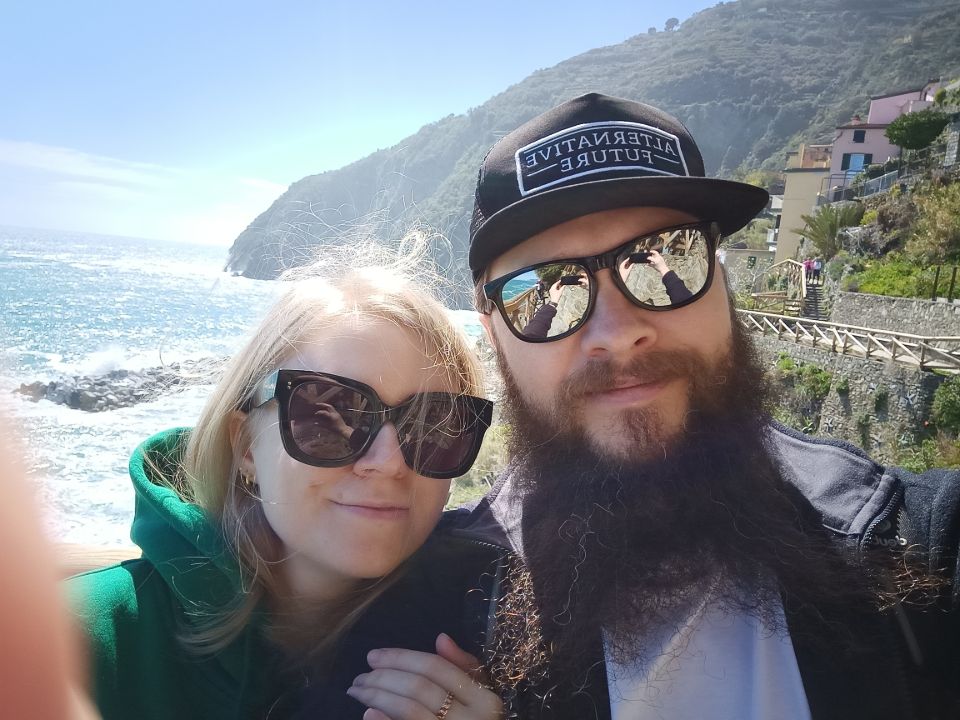
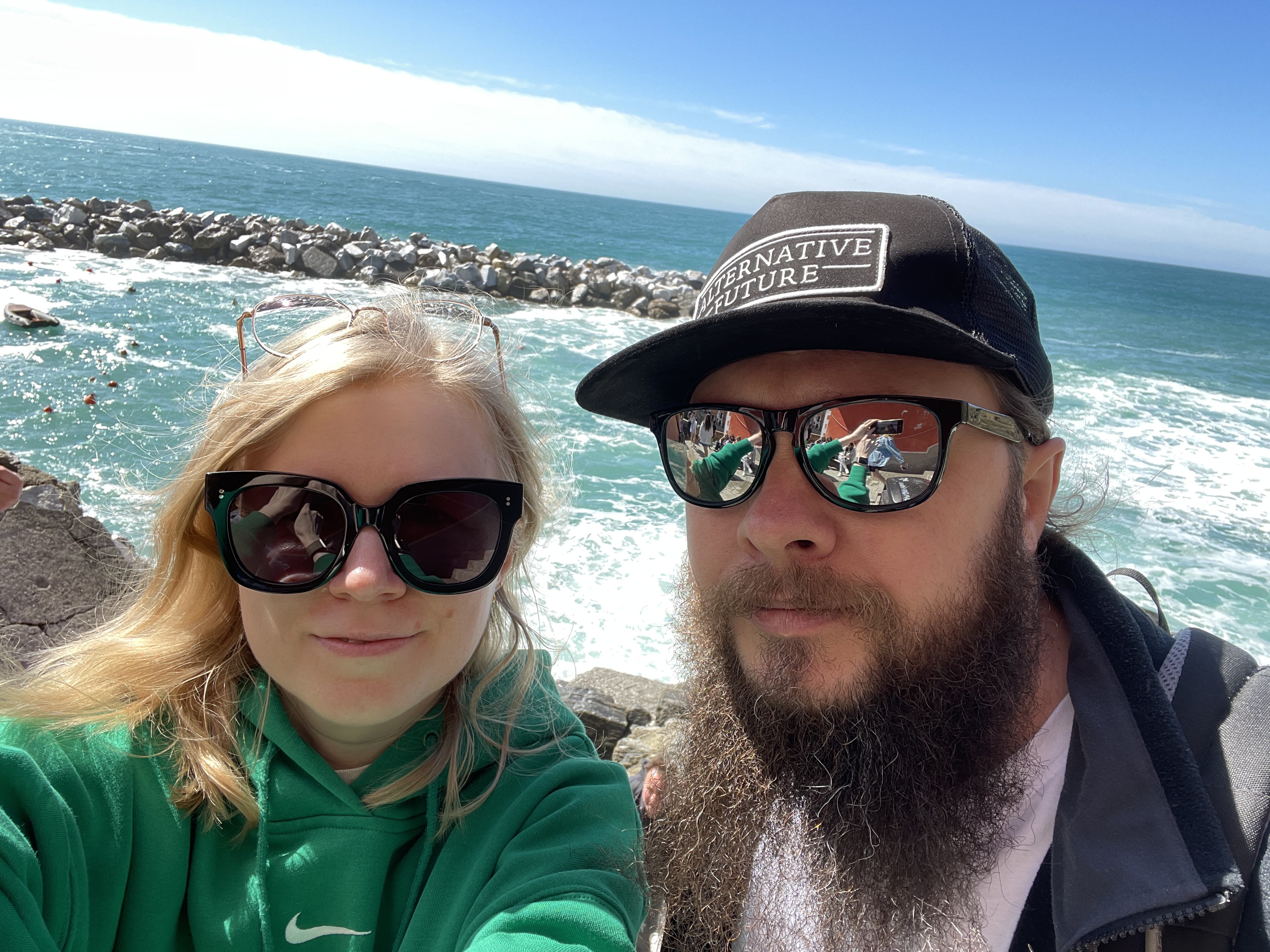
Standard act, sea behind 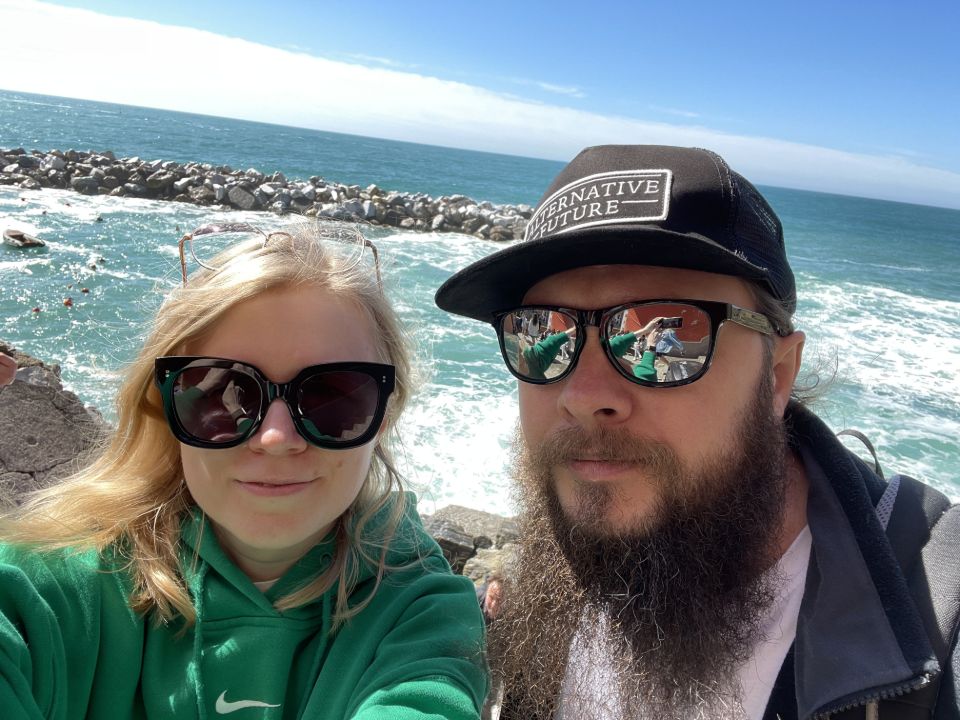
Squinting into the first proper sun 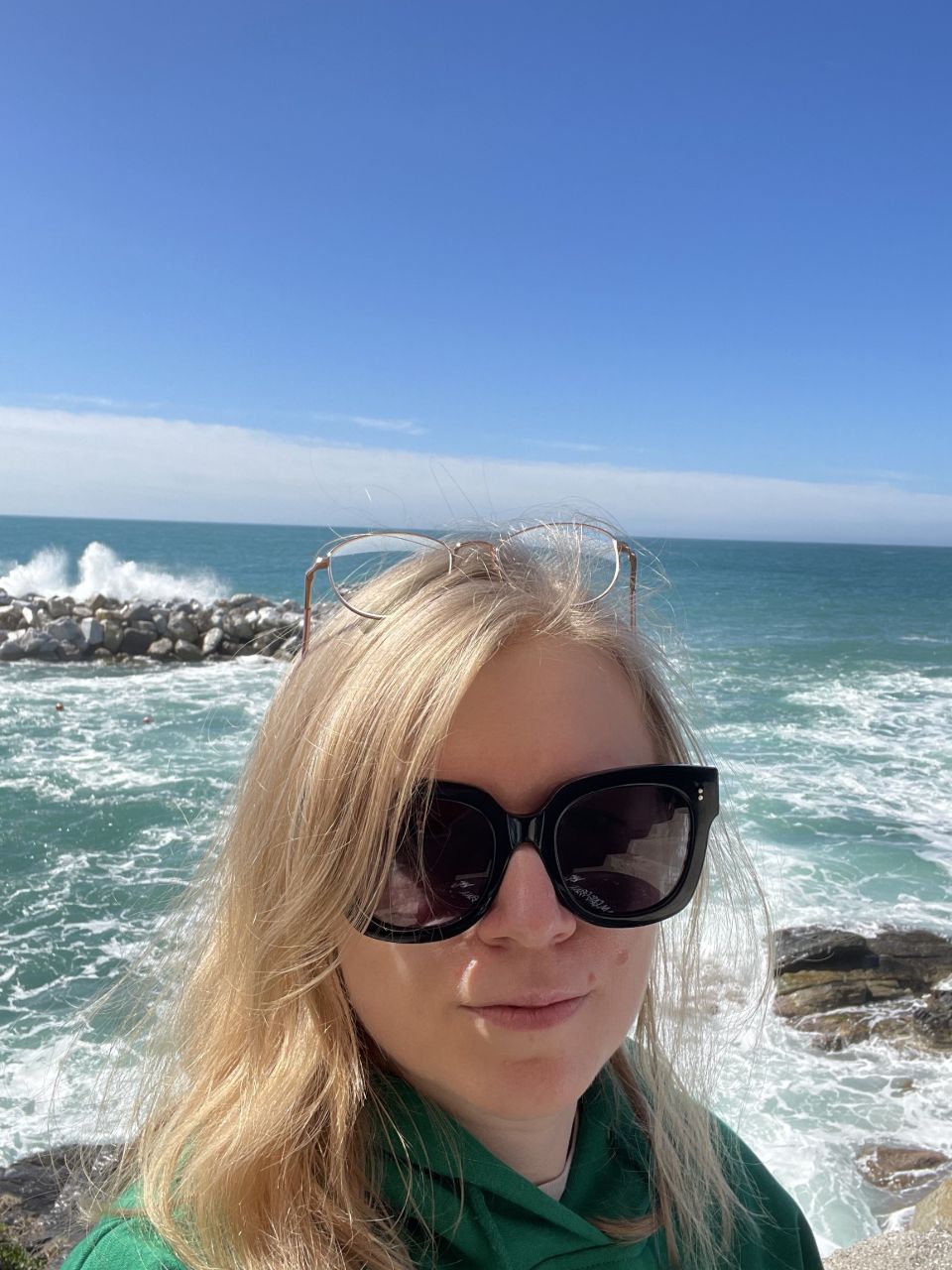
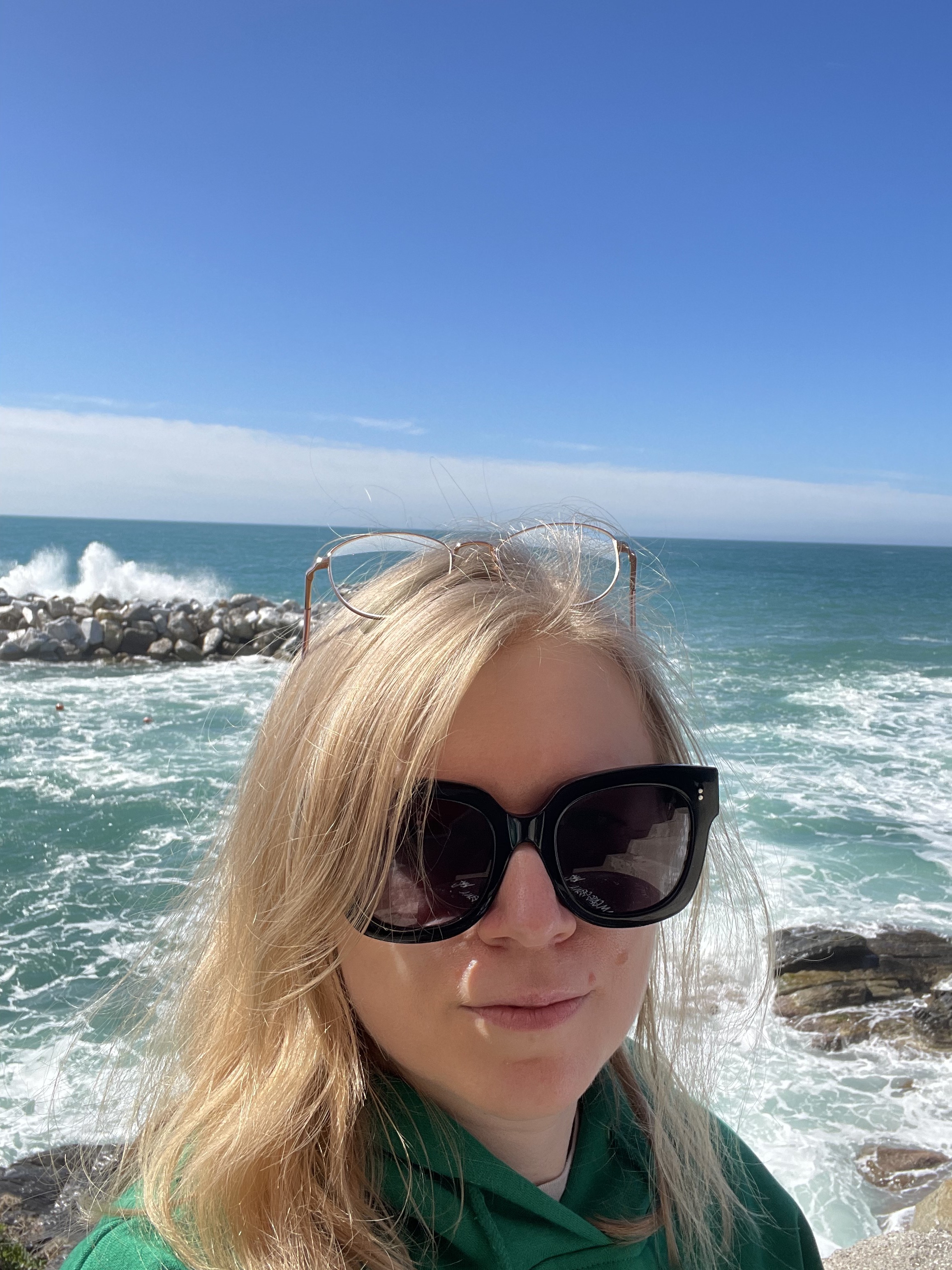
Anna, sunglasses parked, waves behind 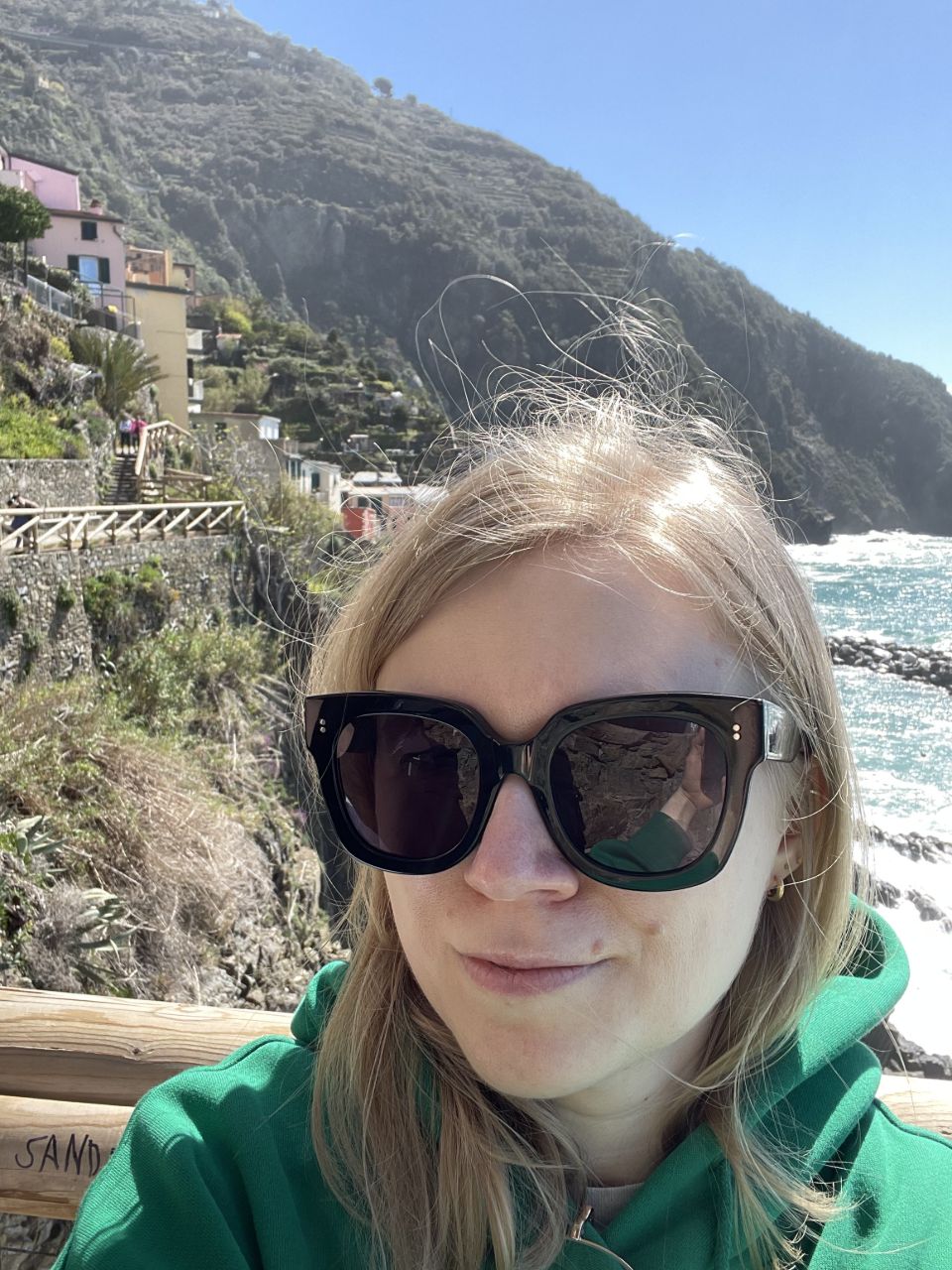
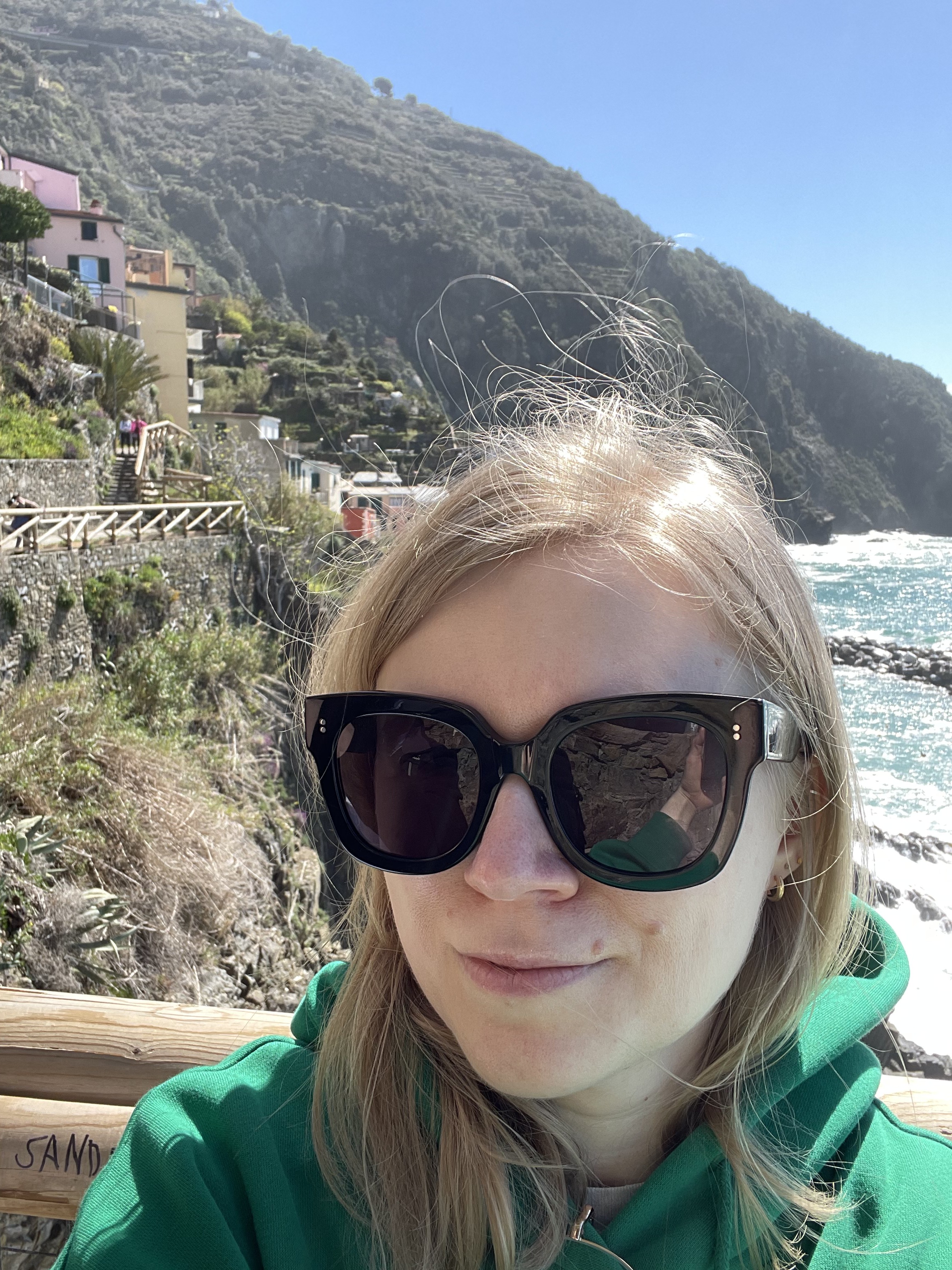
Anna on the seafront path, wind-approved 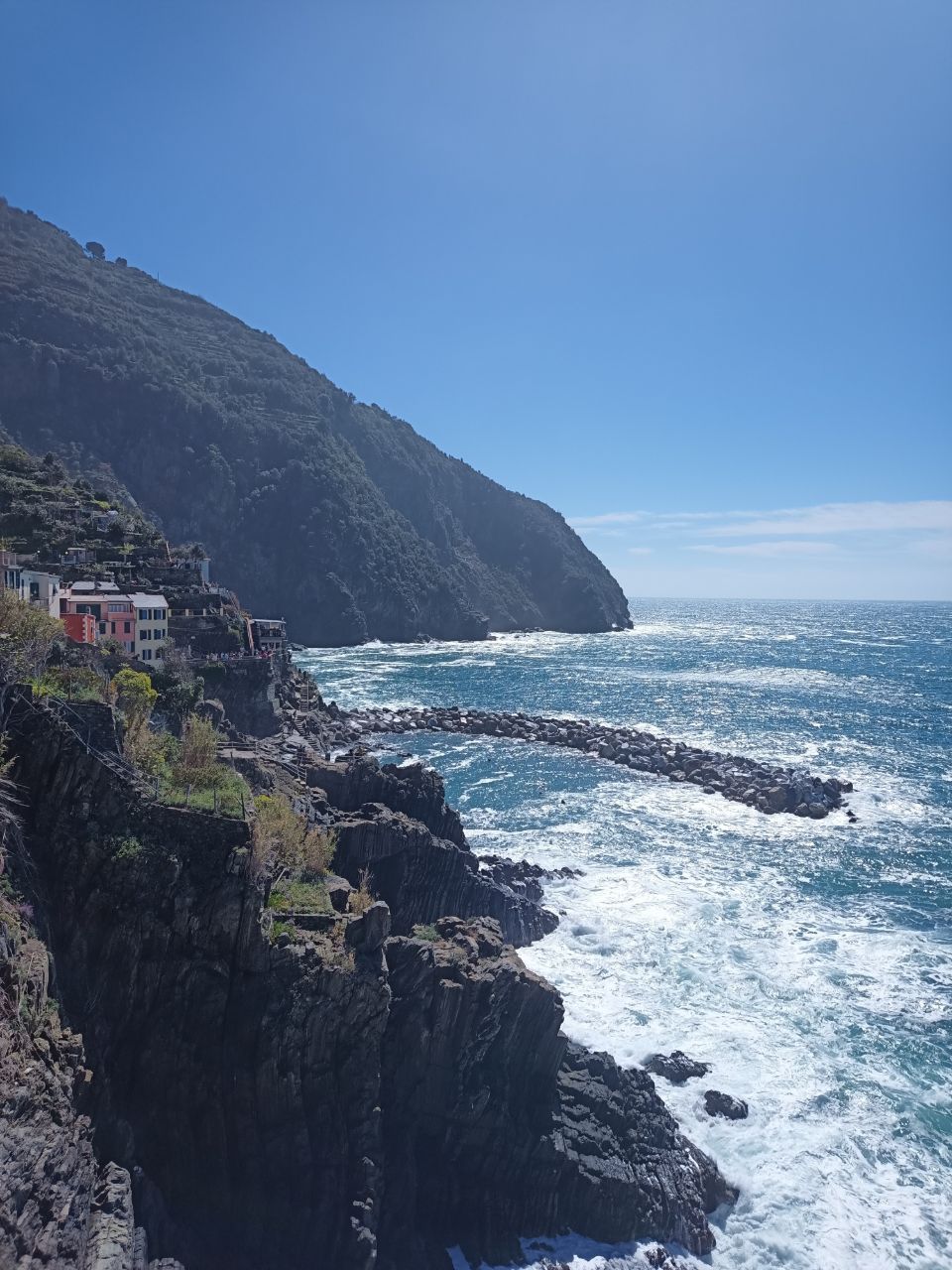
Along the headland, the whole coast in one line
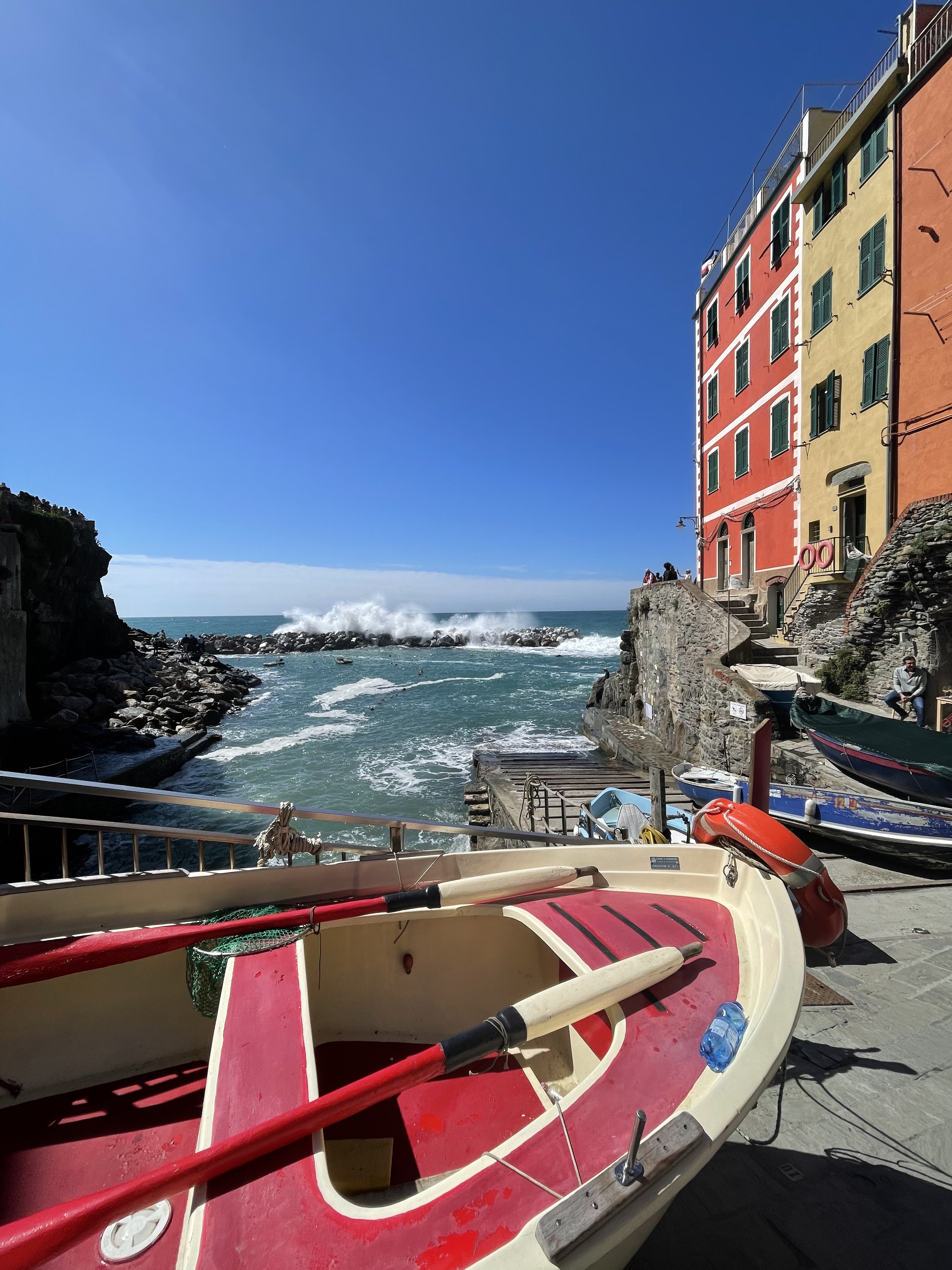
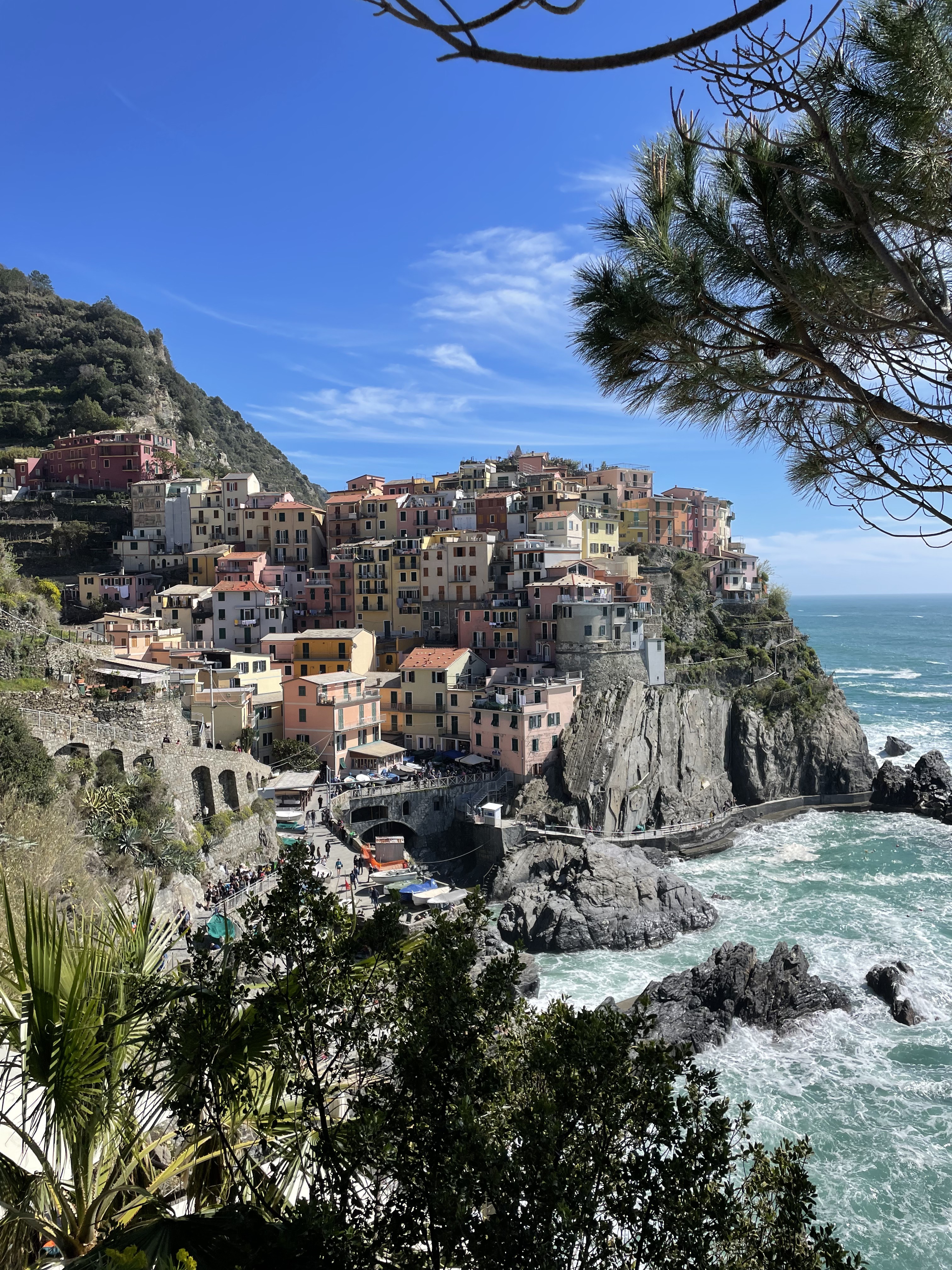
Up the hill
The main street is famous, and deservedly, and therefore — even off-season, on the first of April — busier than the whole of Portofino was the day before. We did our turns in it like everyone else, photographed the boats parked in the lane like trolleys in a supermarket aisle, read a plaque in the pavement, and then took the escape option: the path up.
The rocks and the road below, from the cliff path.
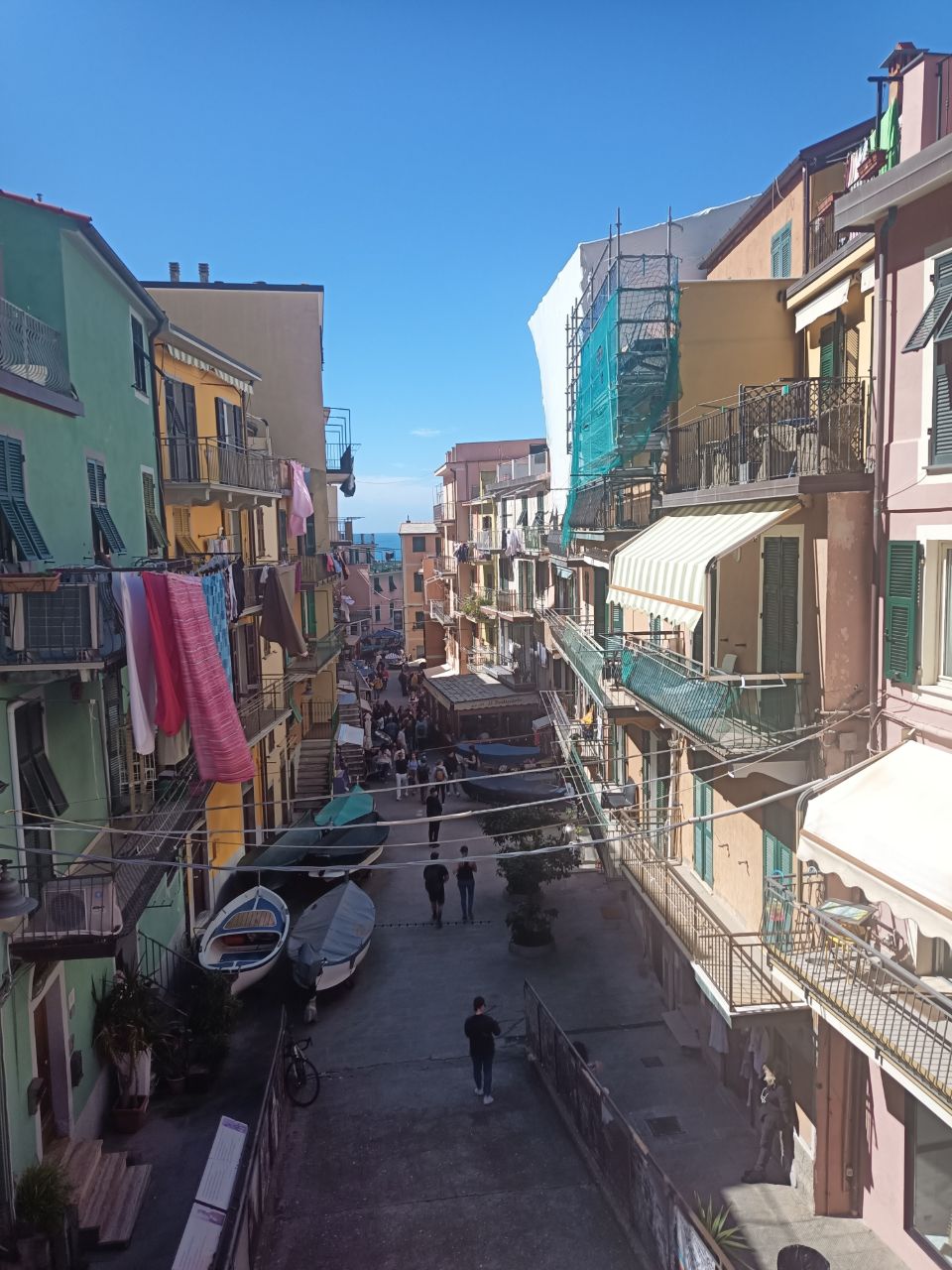
Boats parked in the lane 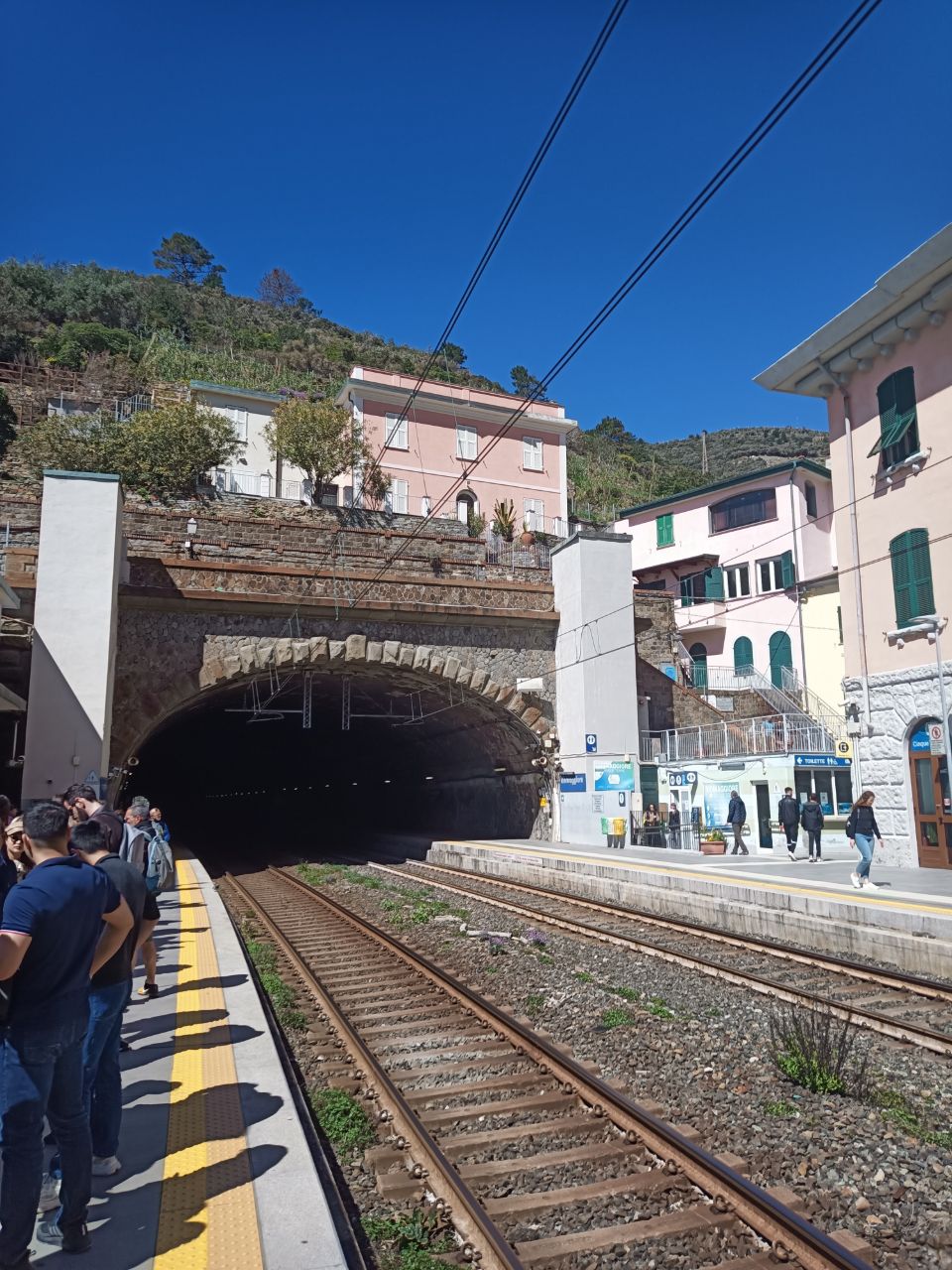
Where the trains keep the villages 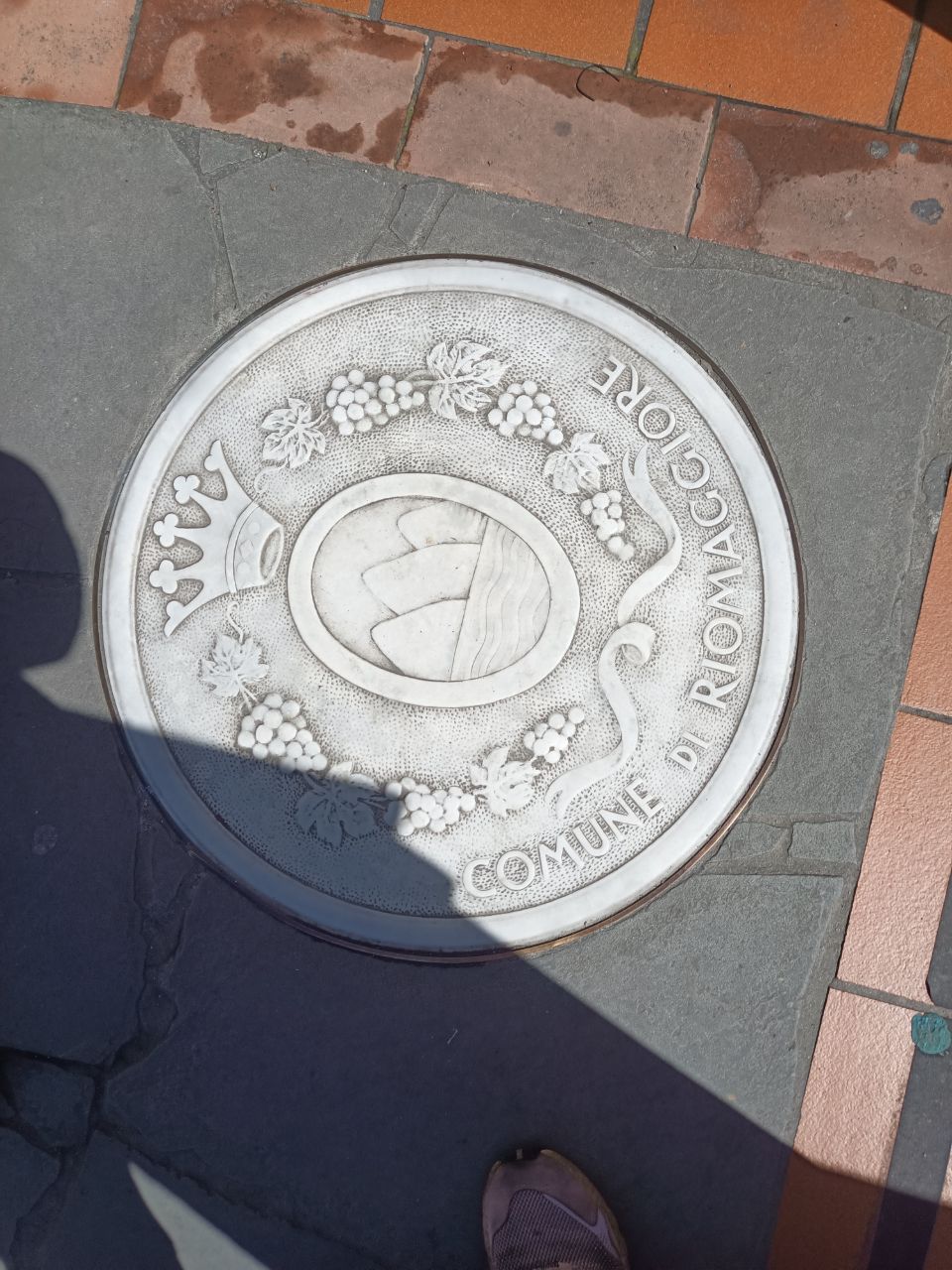
The plaque in the pavement, as promised 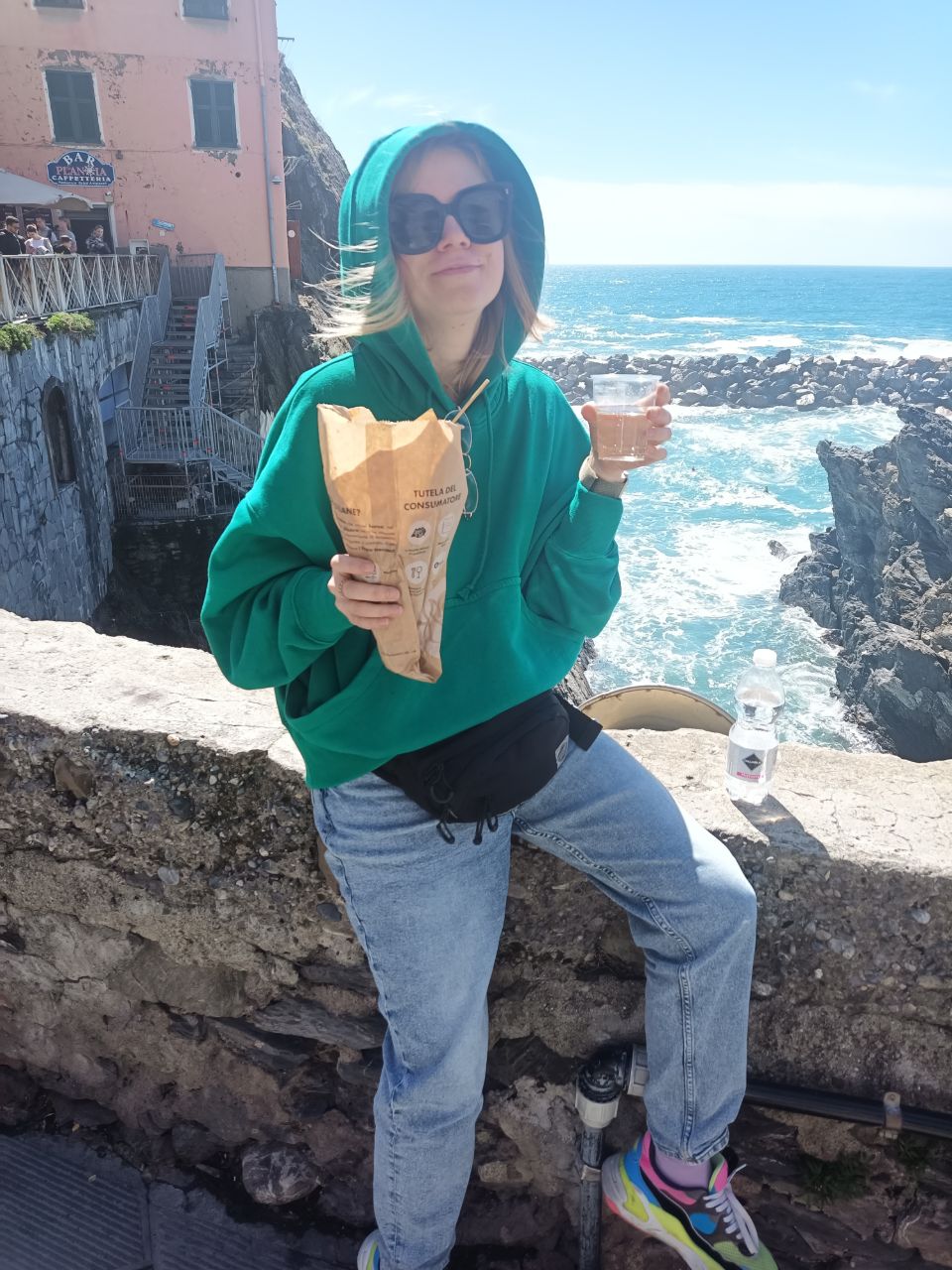
Fried fish and a spritz, Volastra
The path out of Manarola
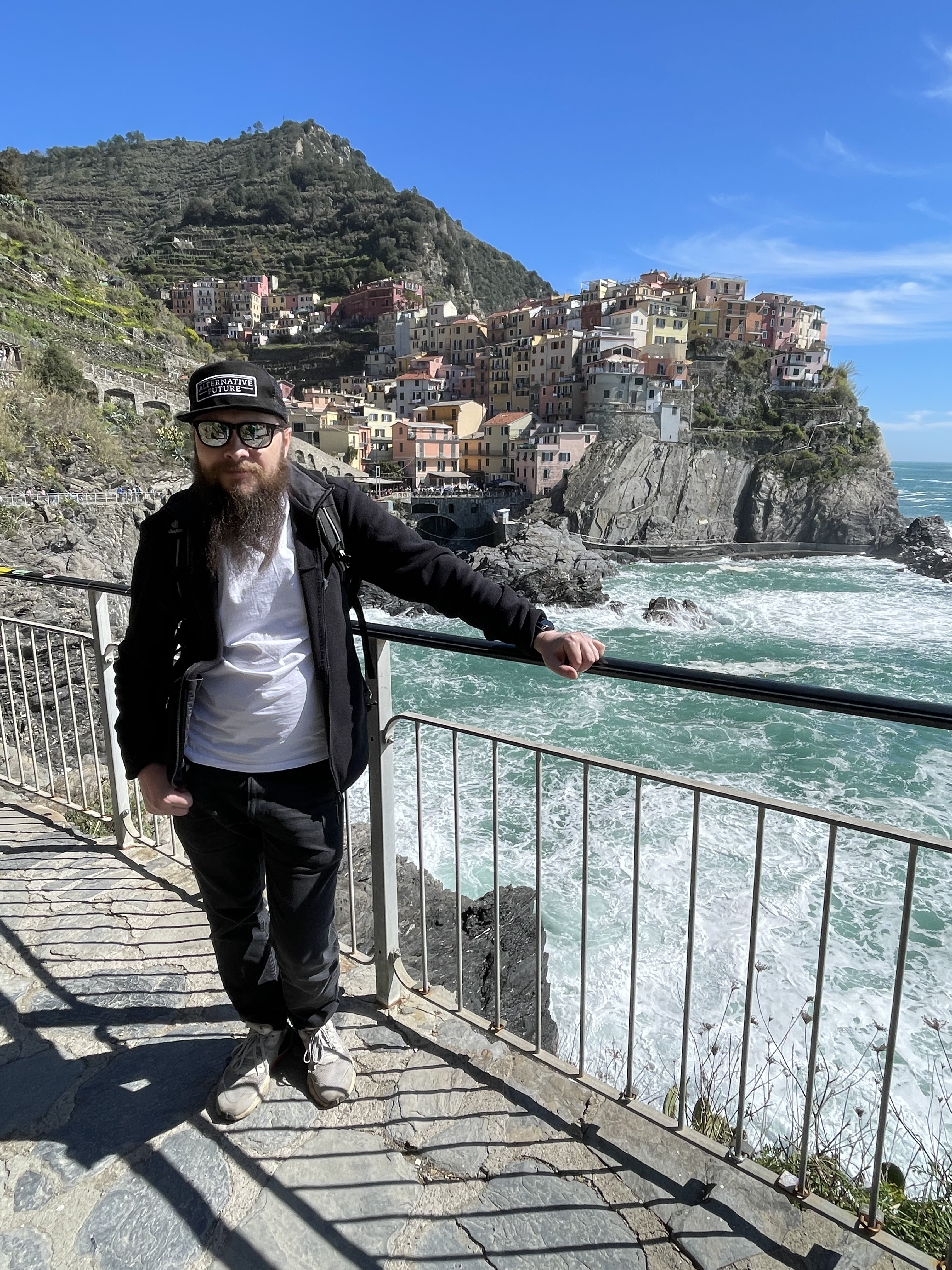
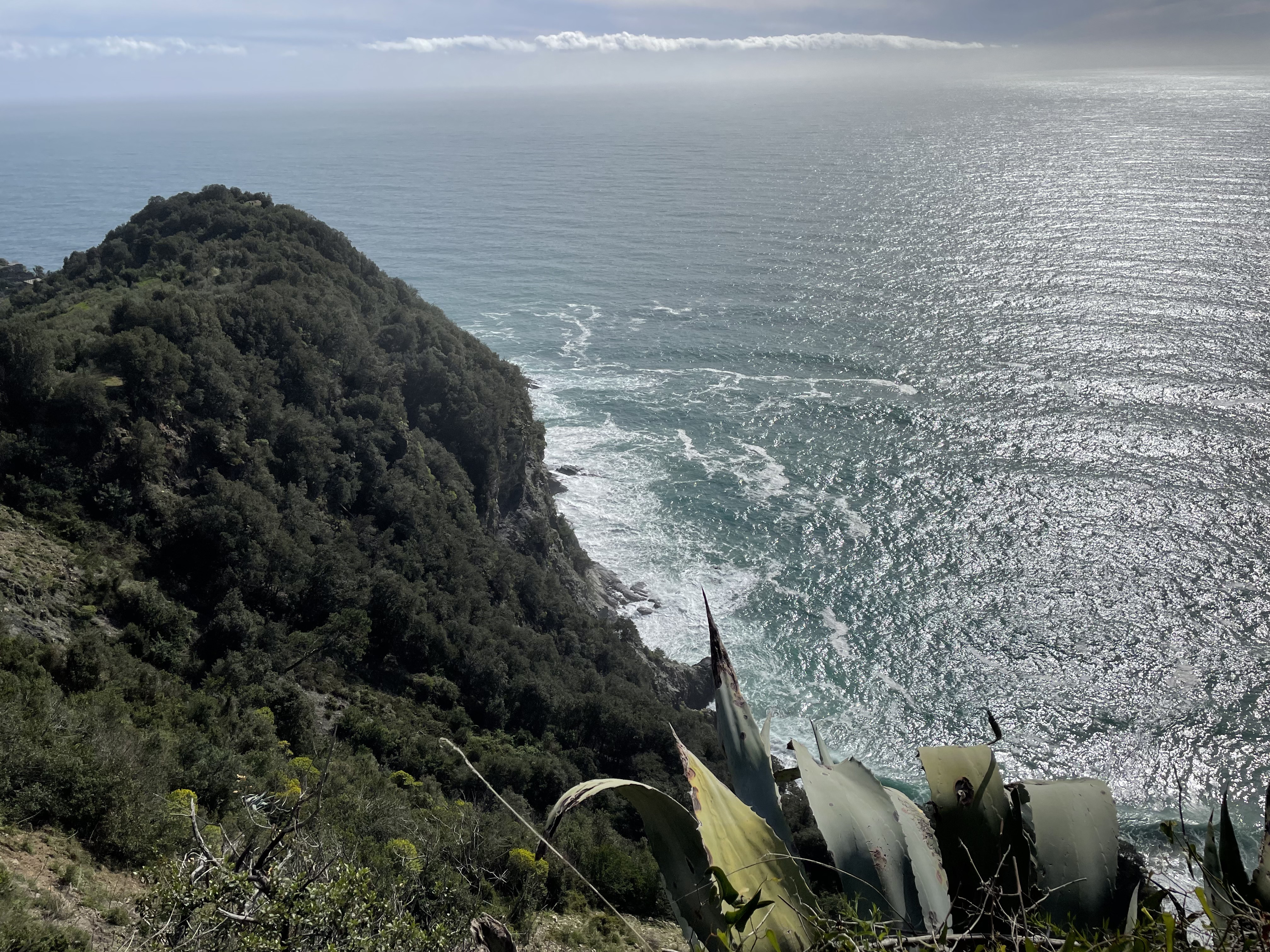
Between the famous streets and the famous streets lies the part we came for: the path. Ours went up out of Manarola through vineyards and agave walls, along a ledge with the sea performing below, up past terraces held together by dry stone walls and stubbornness. Anna handled the railing poses; I handled the walking, mostly uphill and mostly grateful for the stops to look back — Manarola shrinking behind us, the whole coast unrolling ahead.
The trail is the Cinque Terre at its best: same villages, none of the queue.
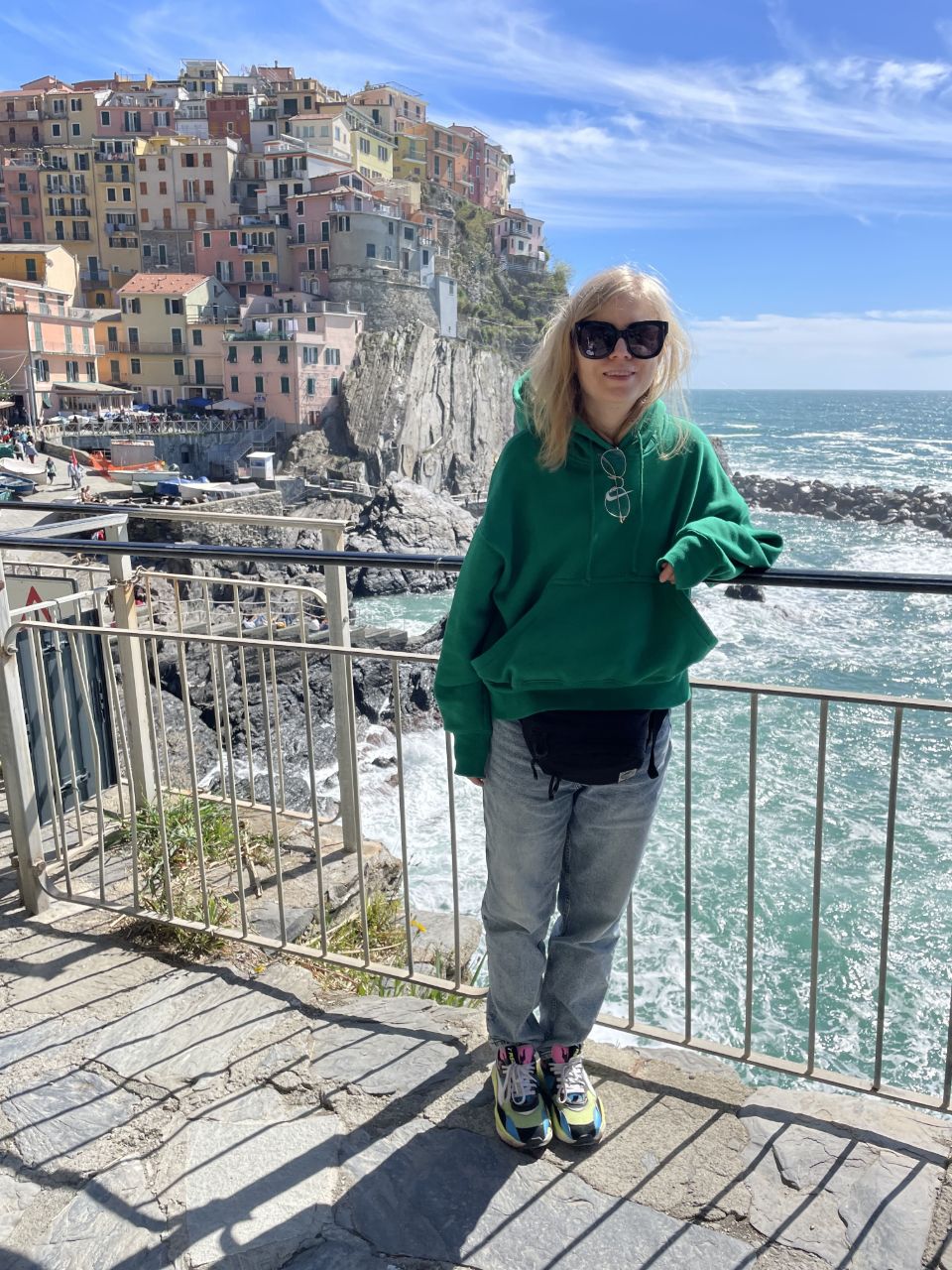
Anna at the railing, coast below 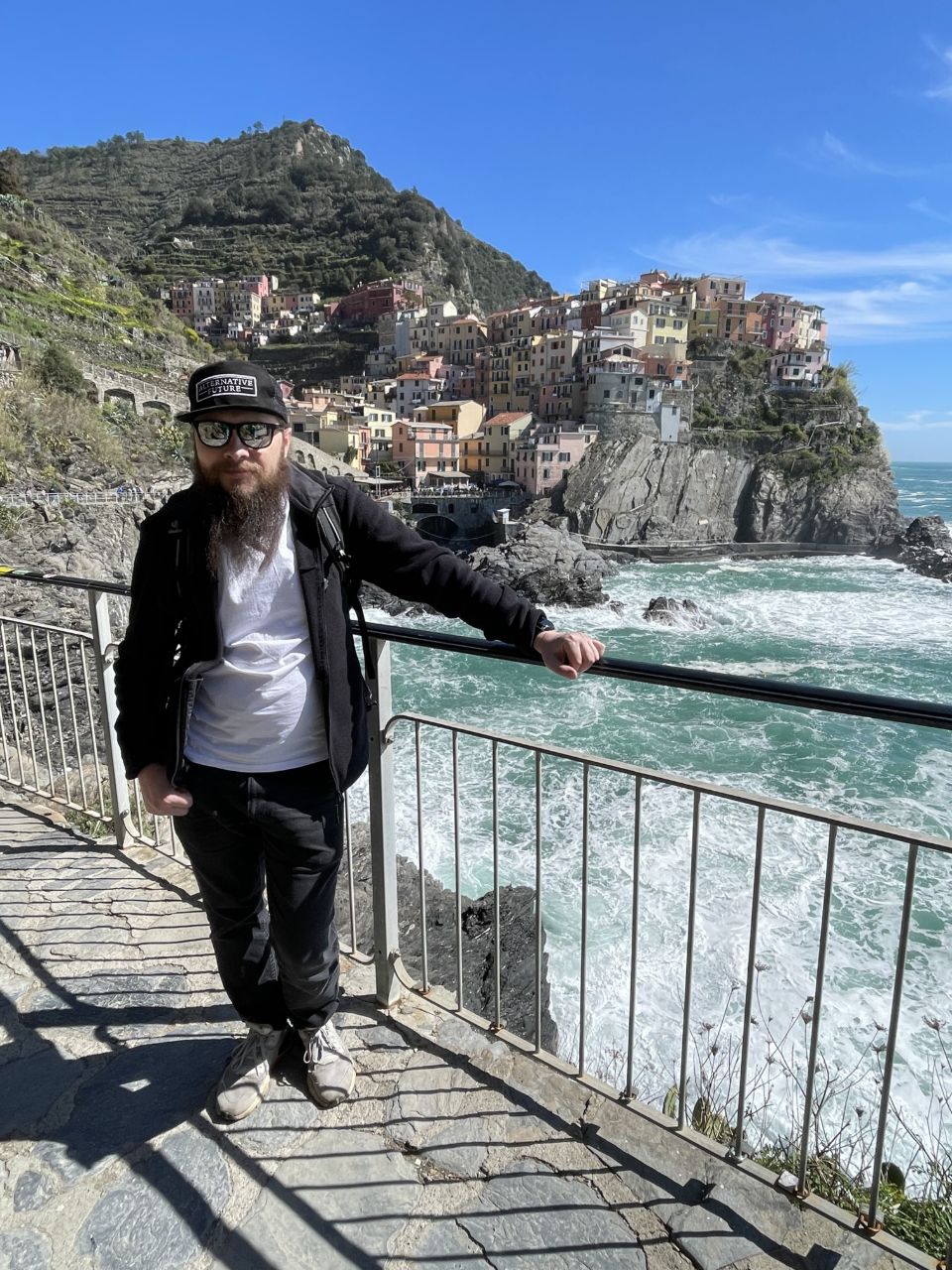
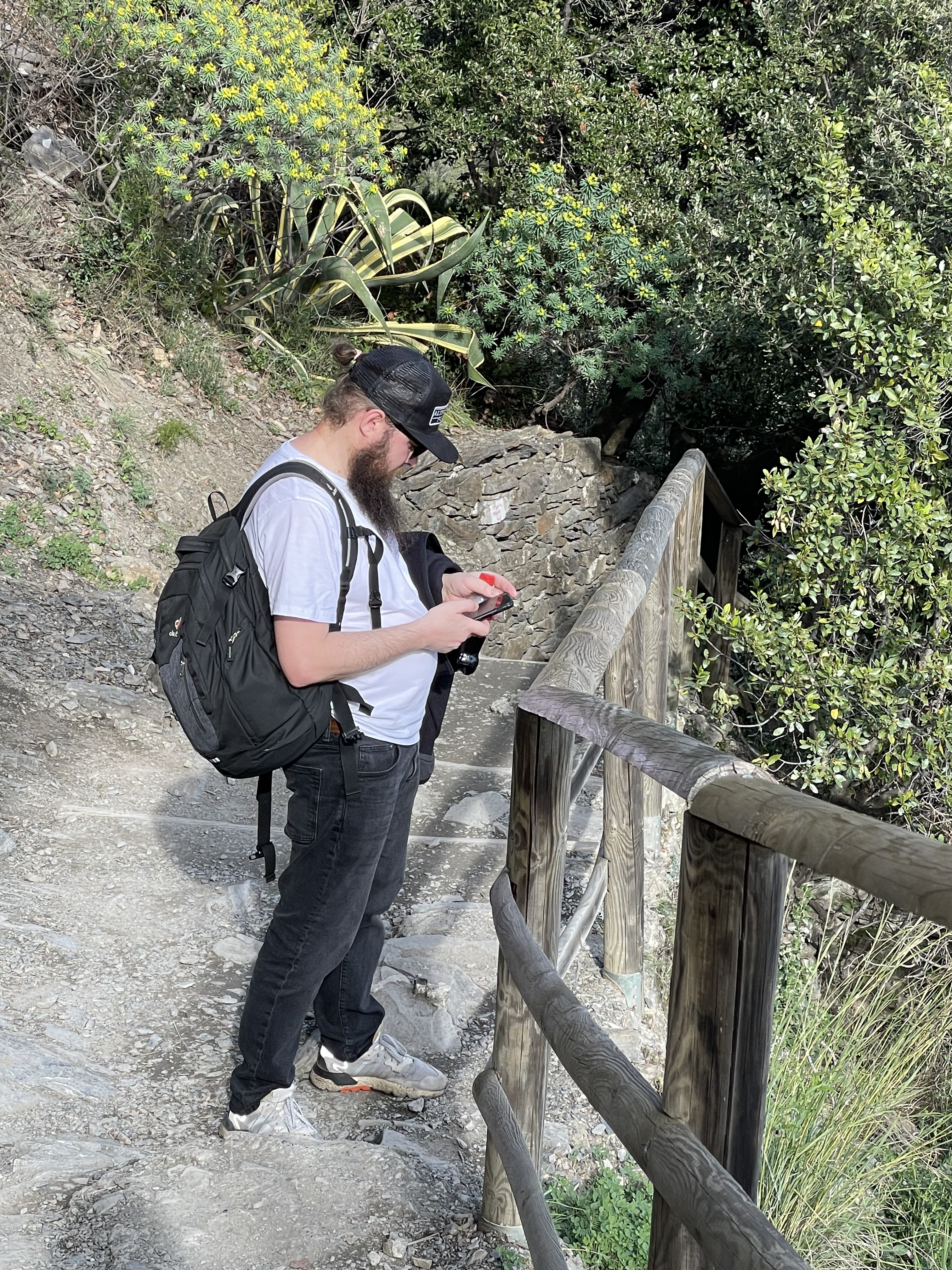
The walker, caught mid-leg 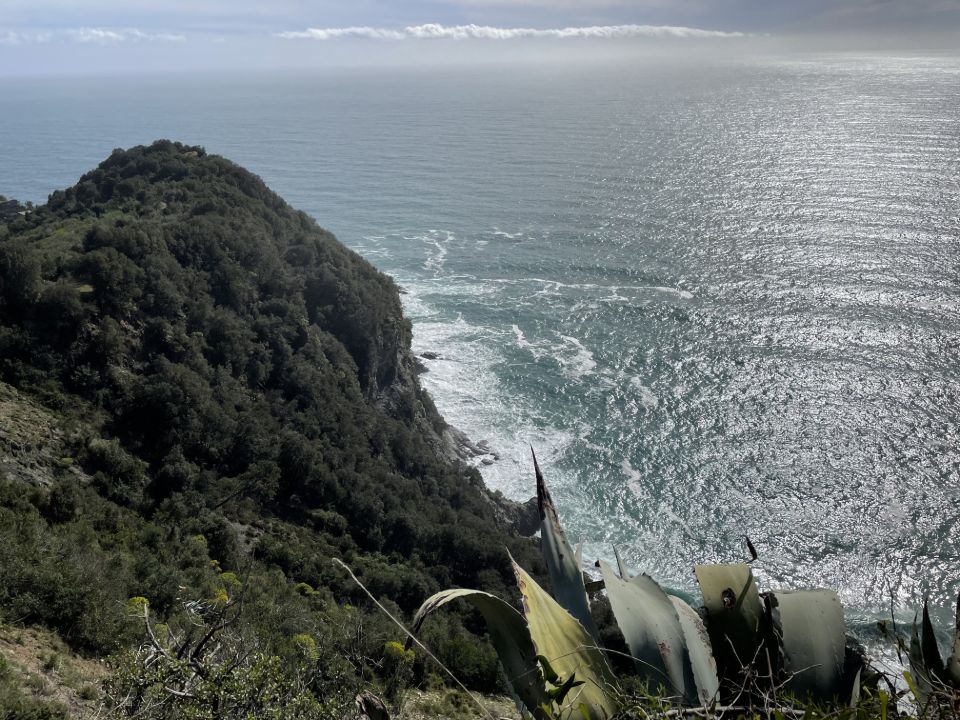
Agave over the drop 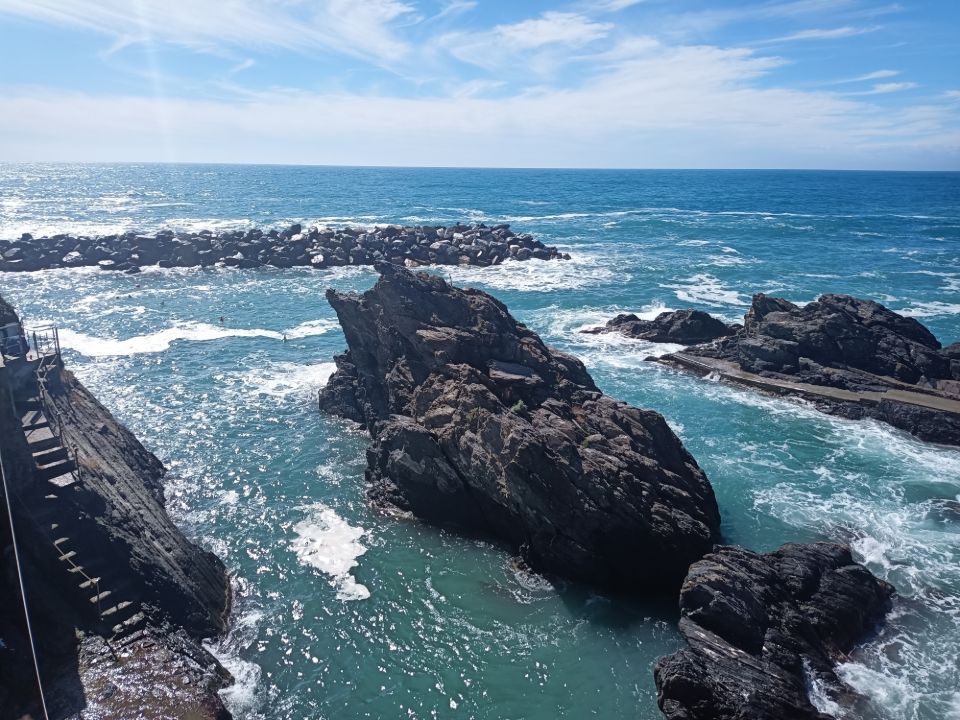
A quiet cove, for once without us in it 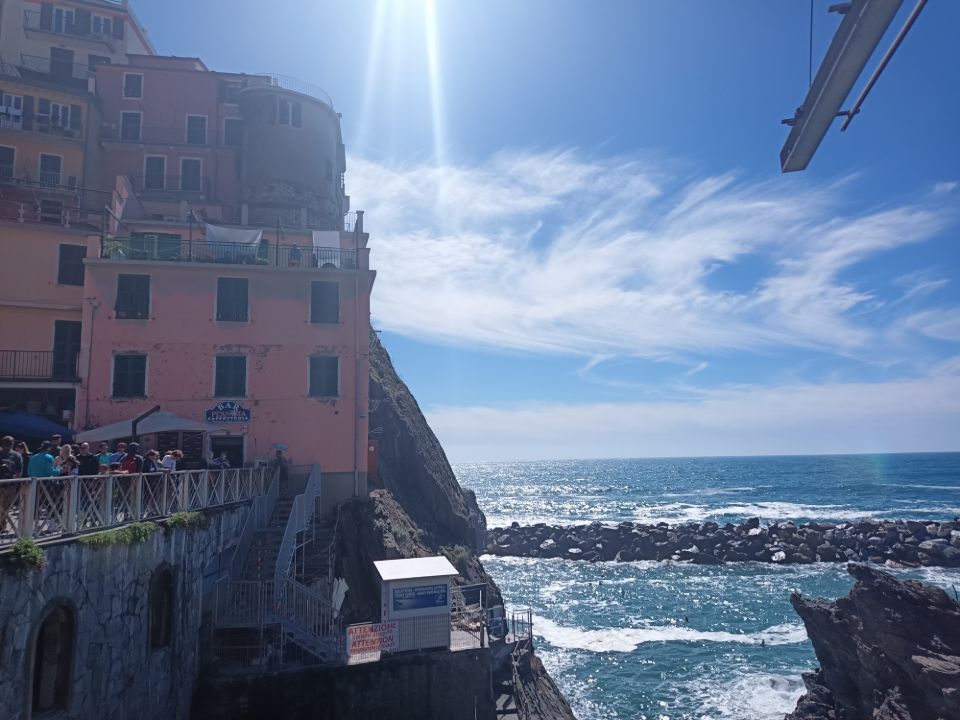
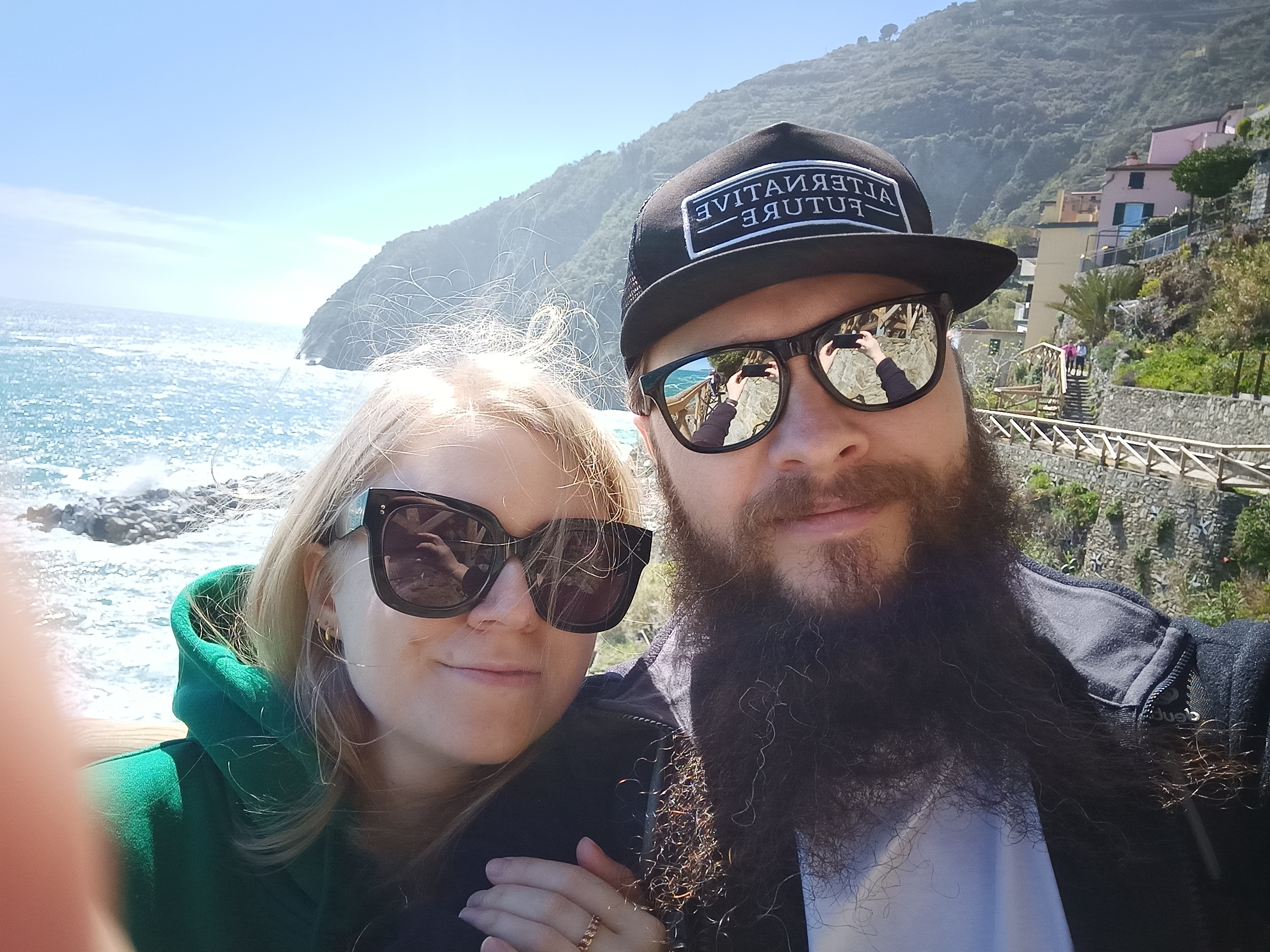
The village, the bridge, the blue behind 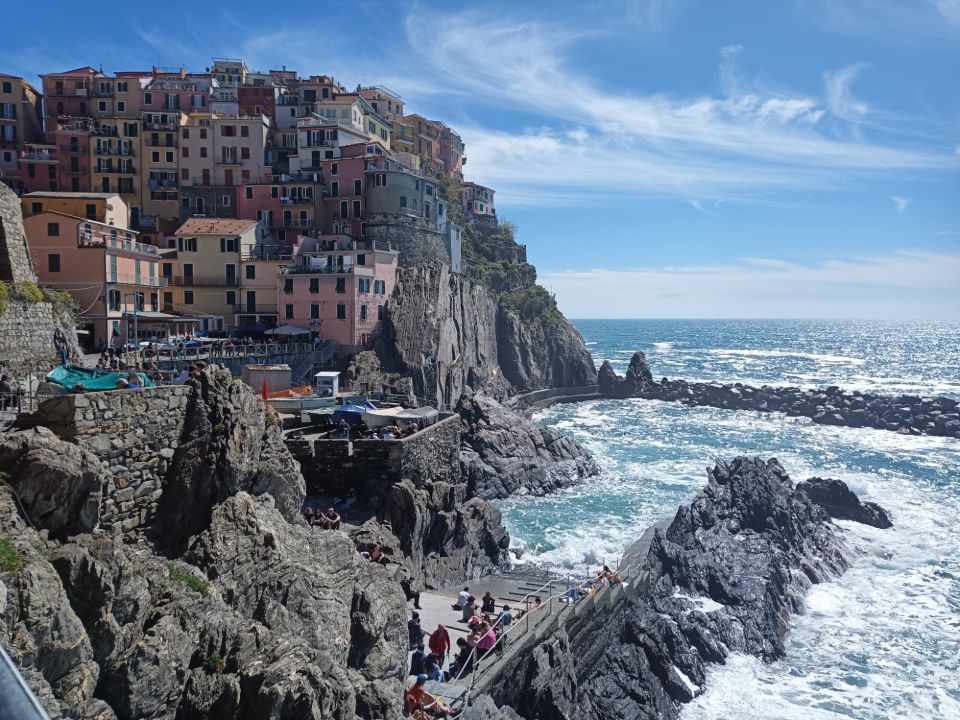
Manarola perched above its shell 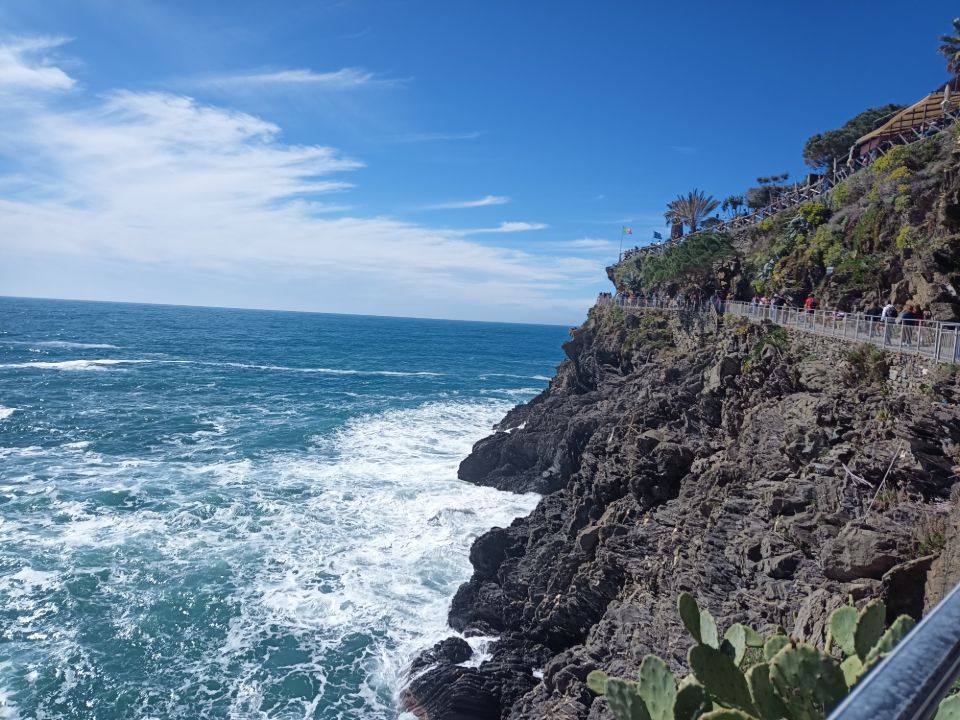
The ledge ahead, busy with tiny silhouettes 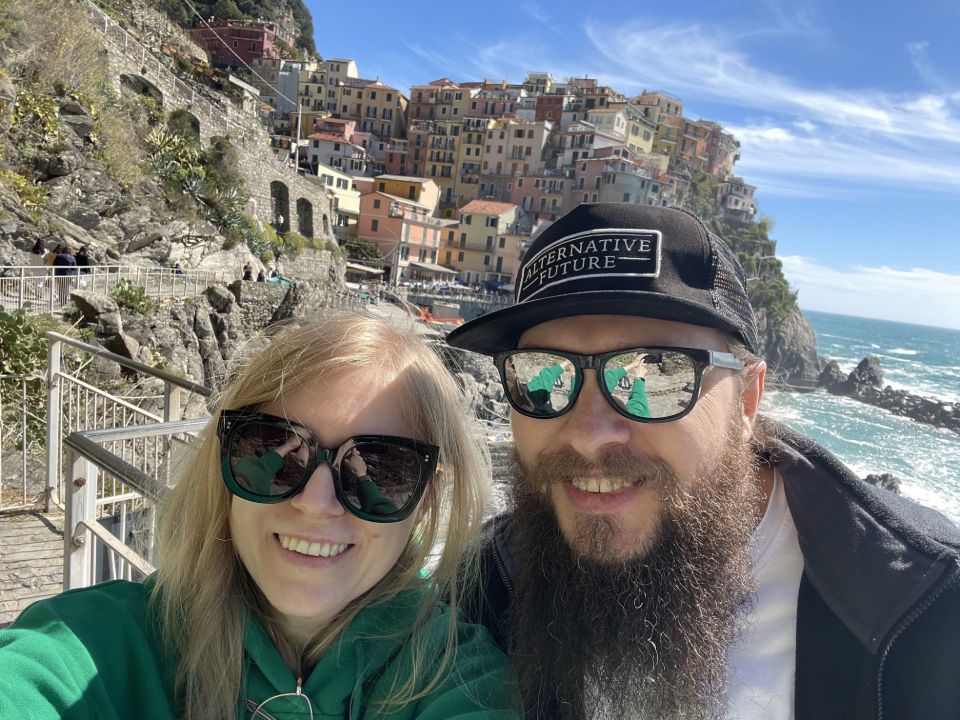
Both of us, Manarola stacked behind 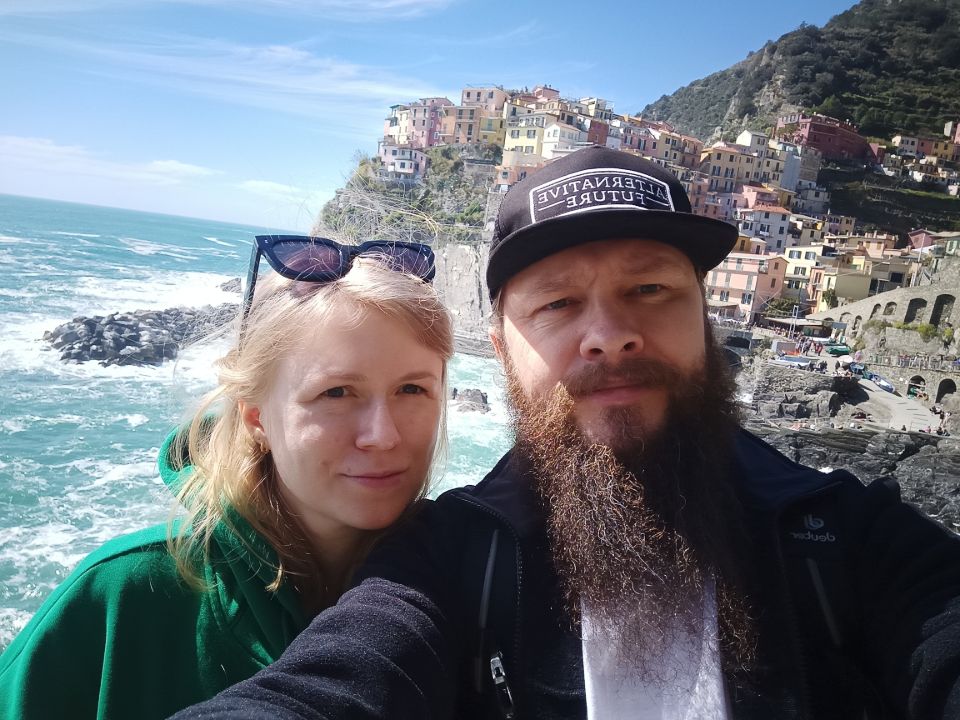
The overlook selfie, both of us this time 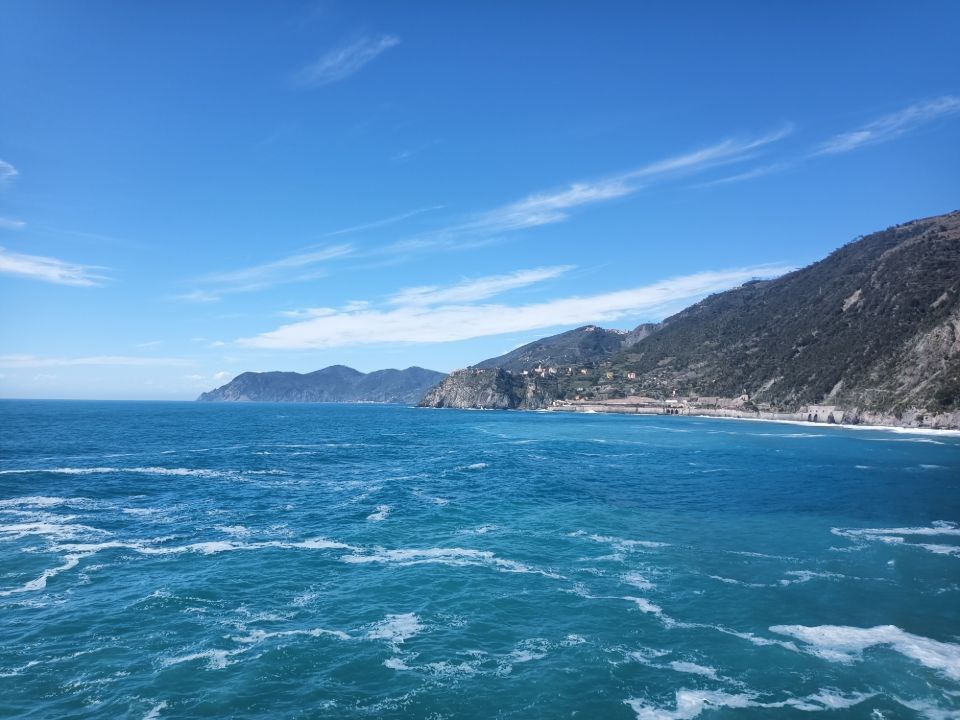
The coast unrolling, blue and more blue 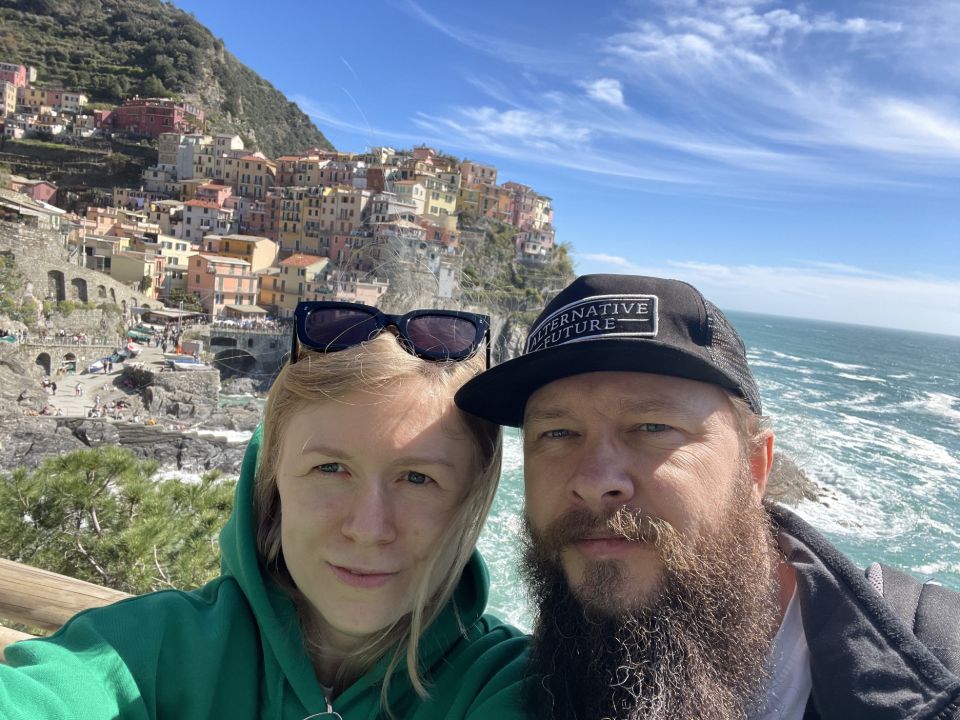
Closer in, same wind, same view 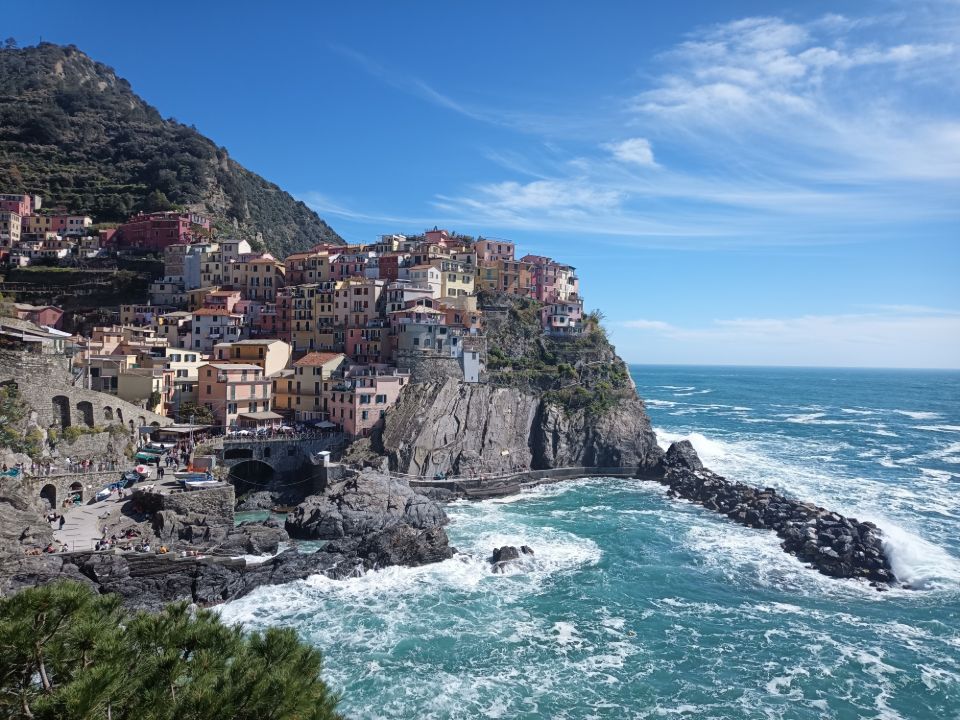
The town below, the light moving on it
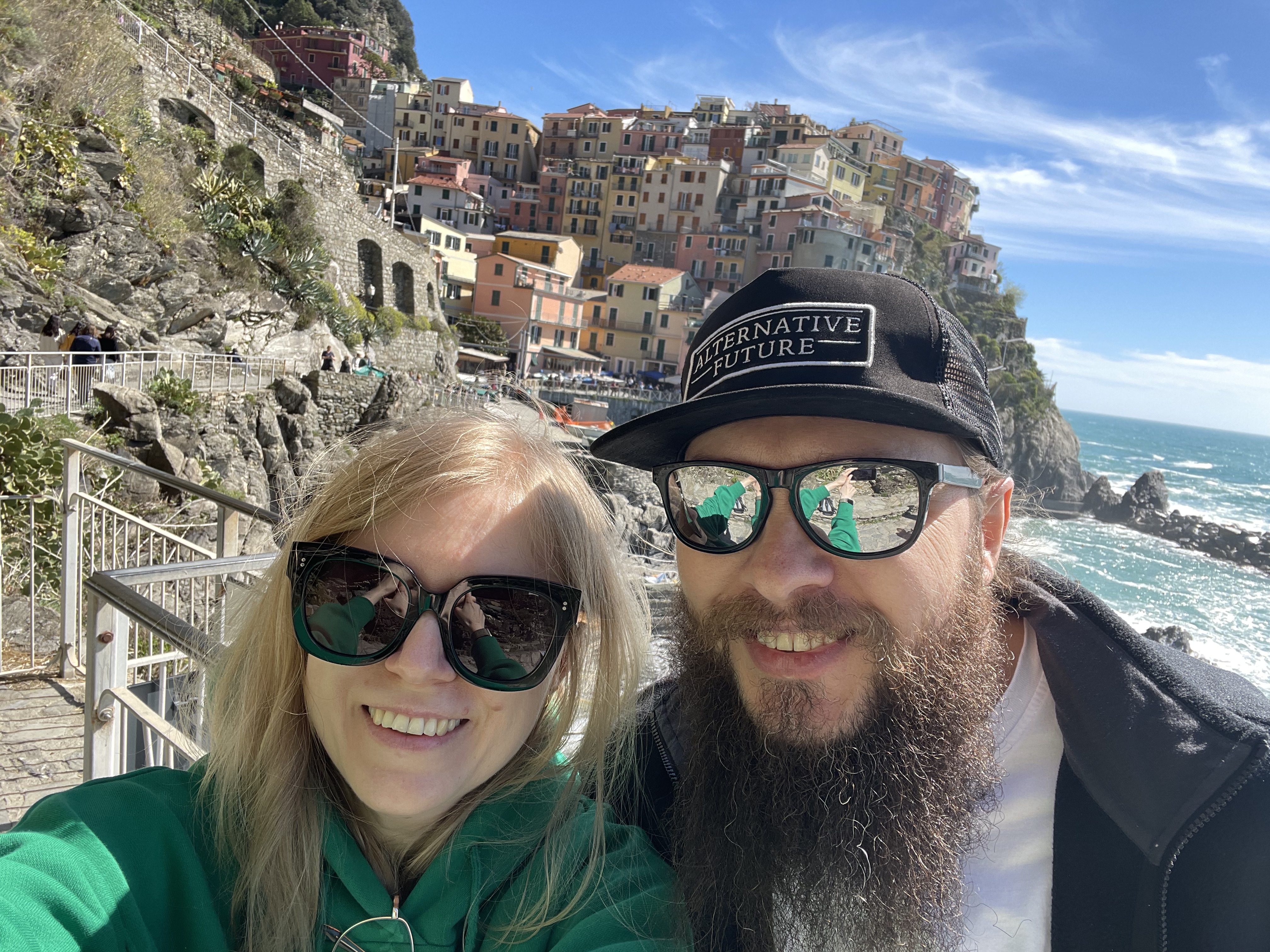
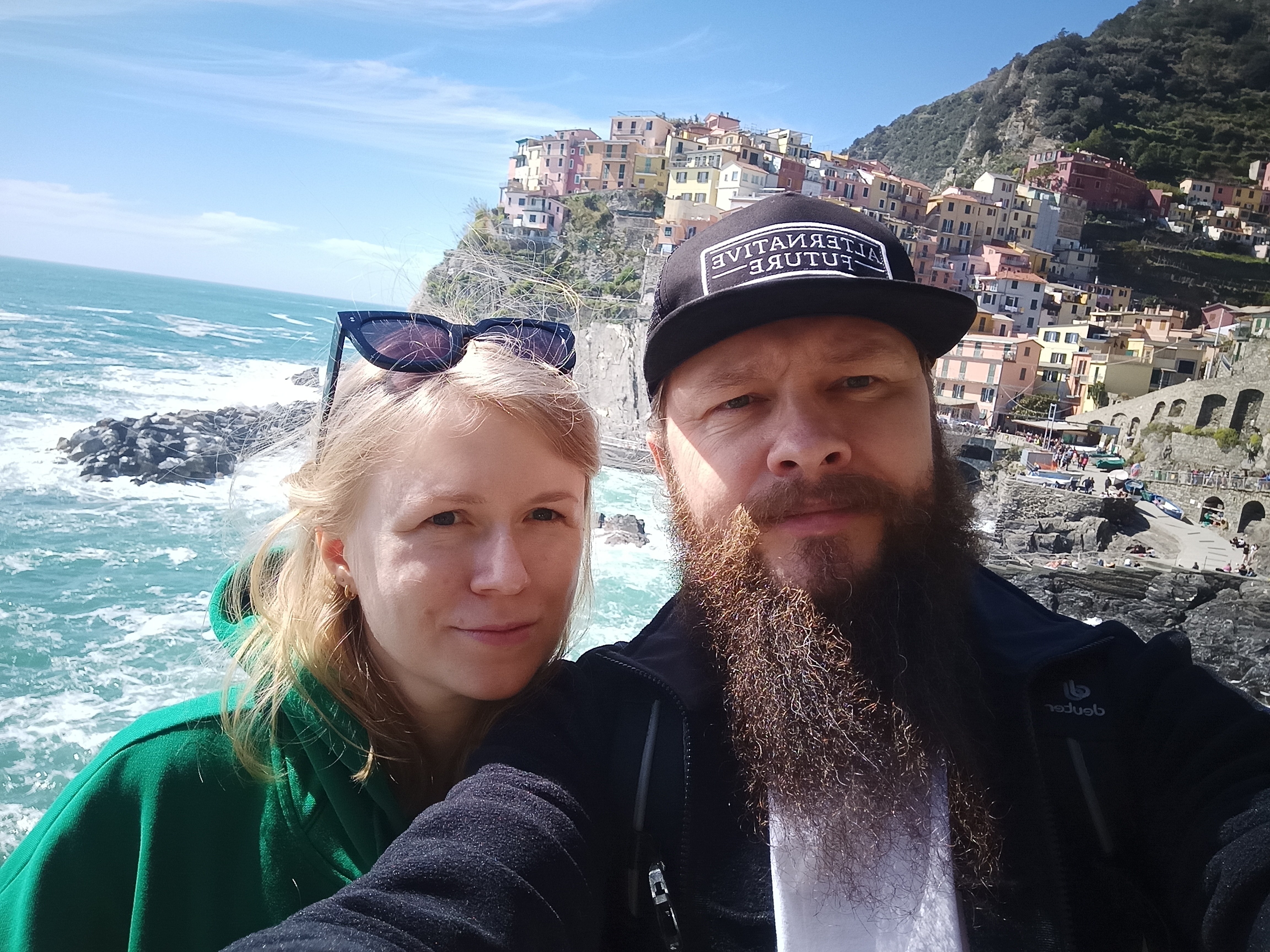
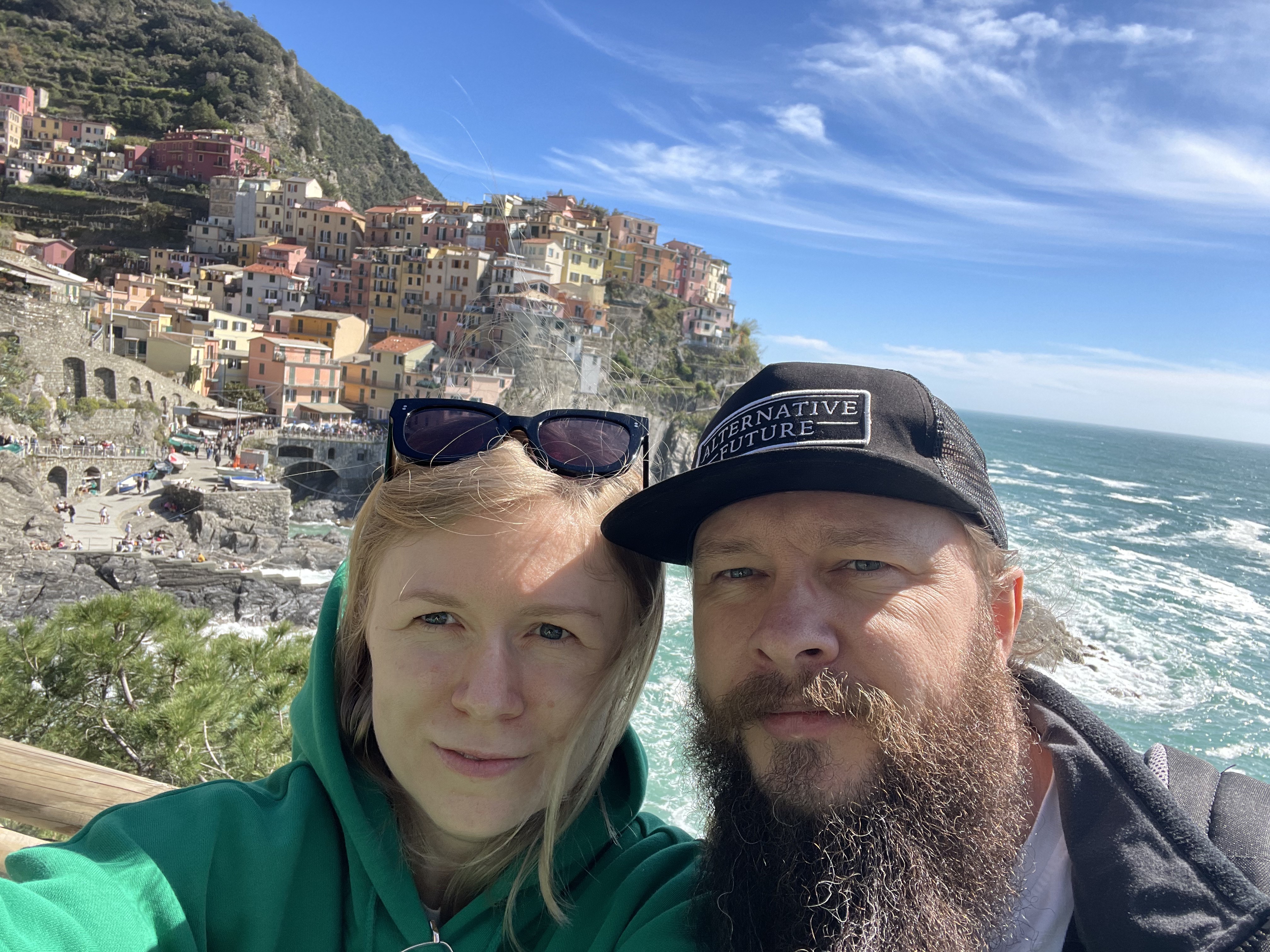
Corniglia and the road to Vernazza
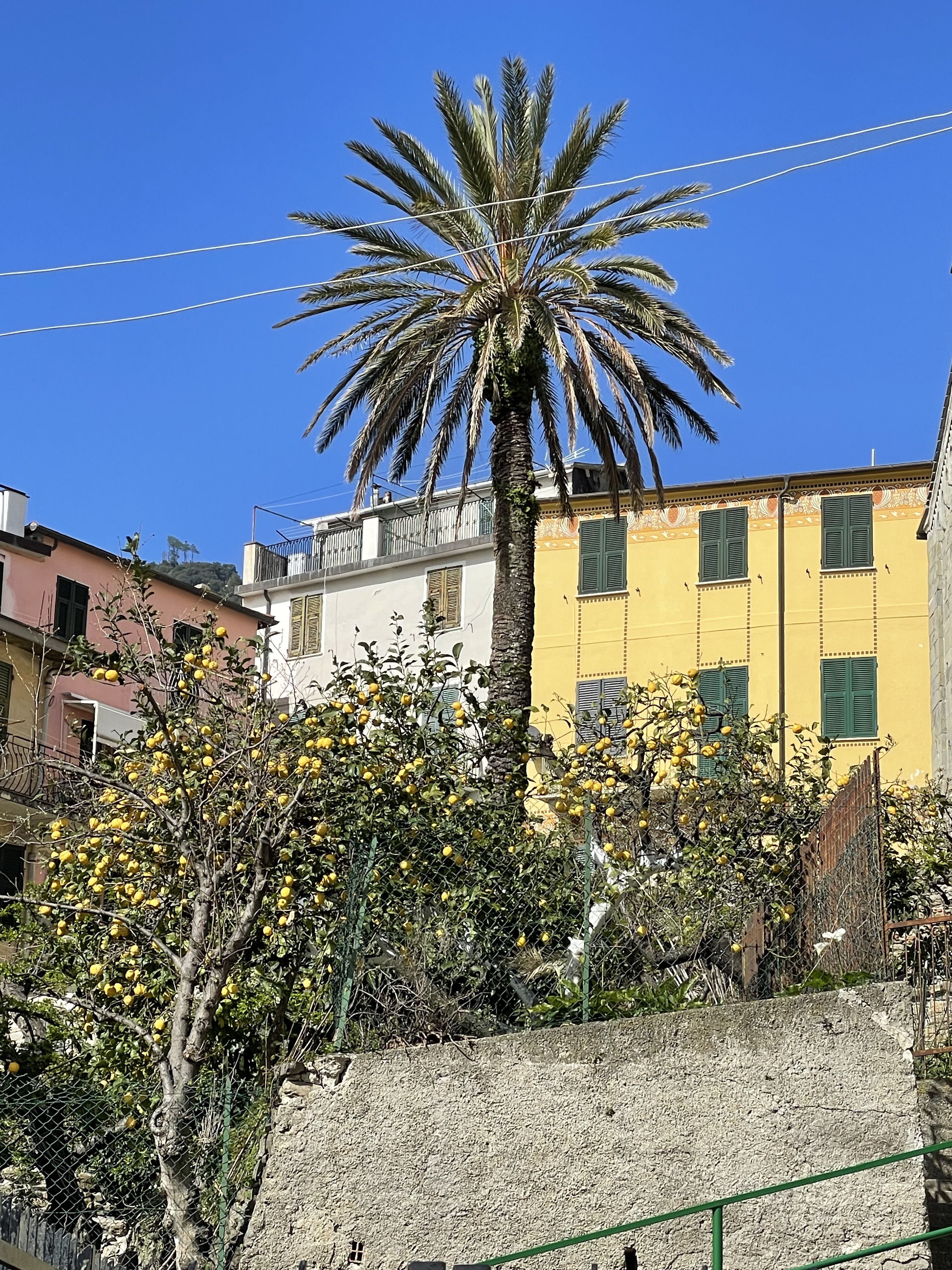
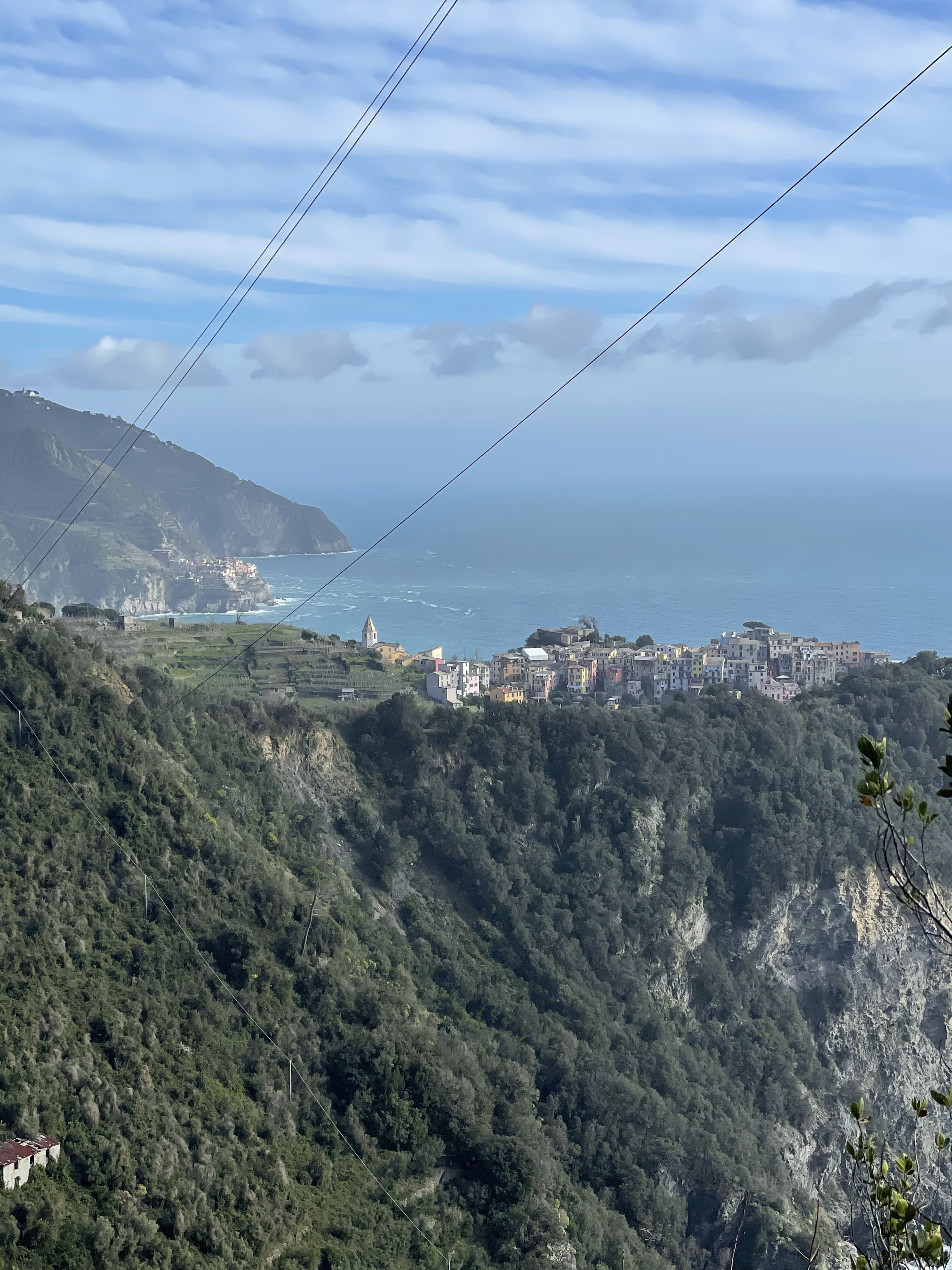
Corniglia is the one village without a harbour — it sits on its clifftop like a hat some giant forgot, and you enter its affairs by bus or by 300-odd steps. We came in on the path from above, which is the correct entrance: the stone square, the palm, the lemon trees holding their cargo.
The leg after lunch was longer: up over San Bernardino, where the park sign finally confirmed what our legs suspected, along the high trail with Corniglia’s rooftops receding below, the sea on one side and terraced hillsides on the other, until Vernazza appeared ahead on its blunt promontory — tower, harbour, the whole toy-town of it — and we dropped down the stone stairs into golden hour.
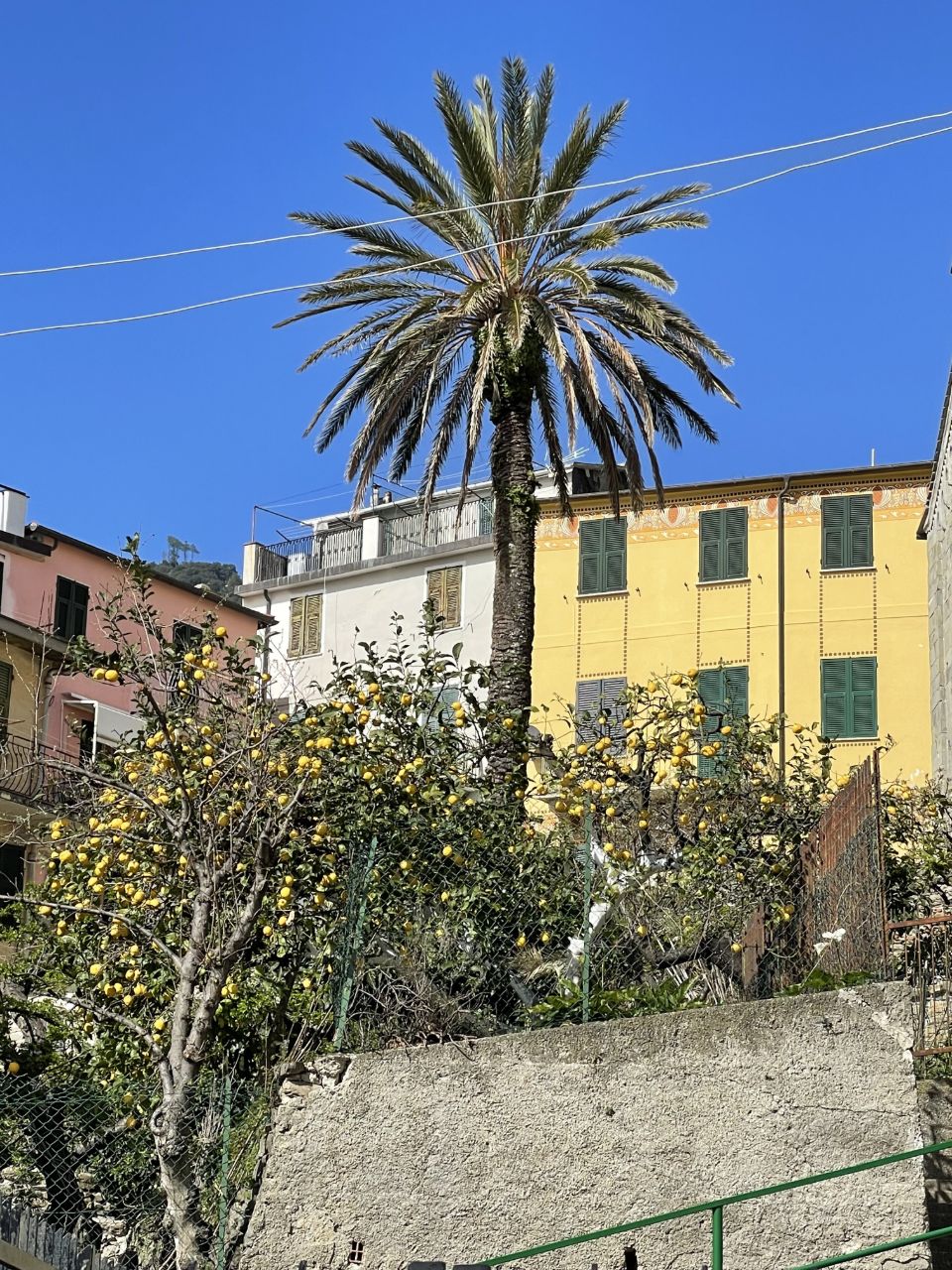
Lemons and house fronts 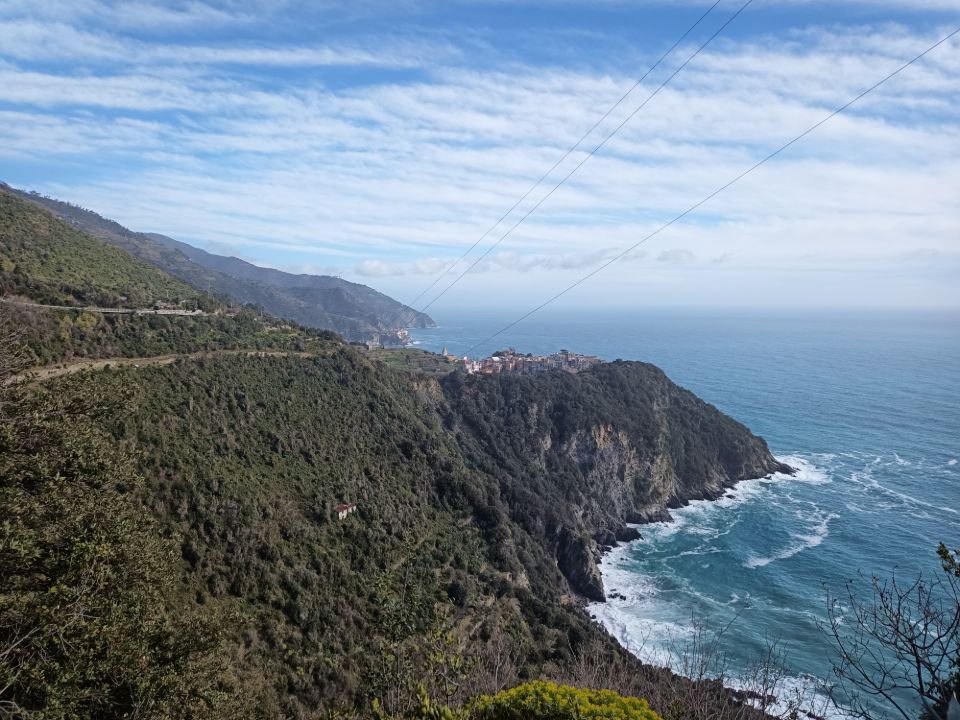
The coast from the San Bernardino trail 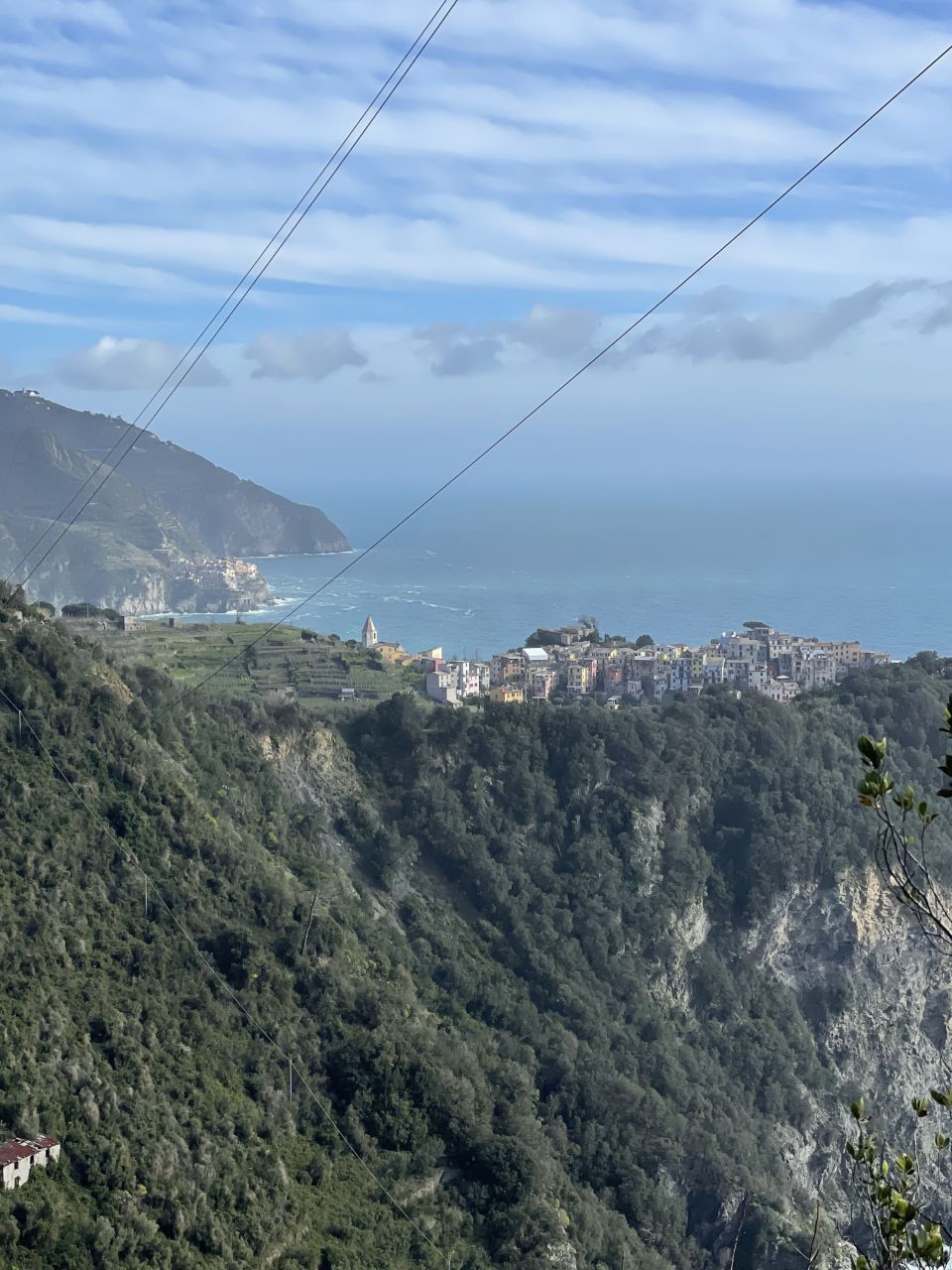
Corniglia from above, going away 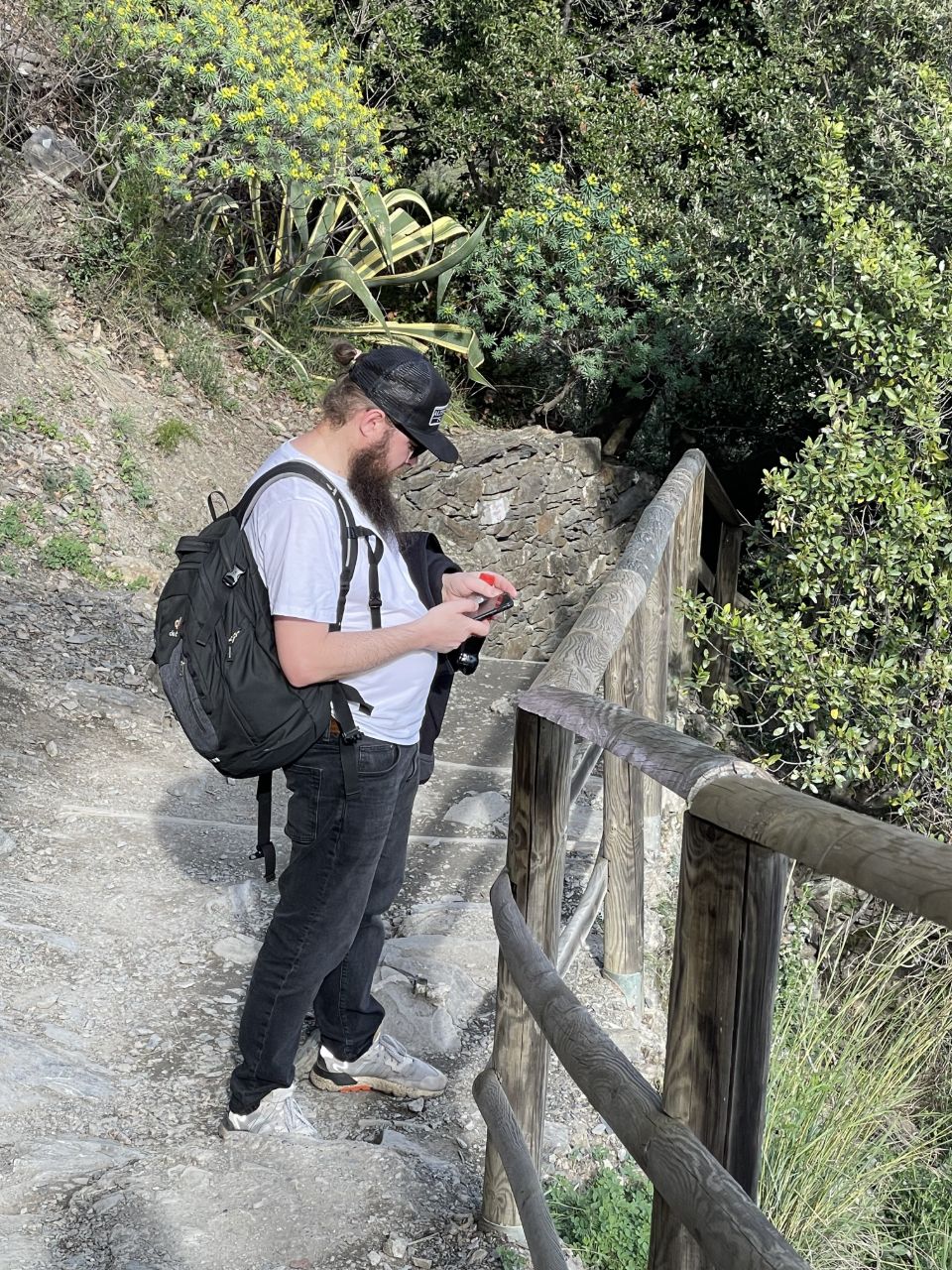
Mid-trail, well and truly walked 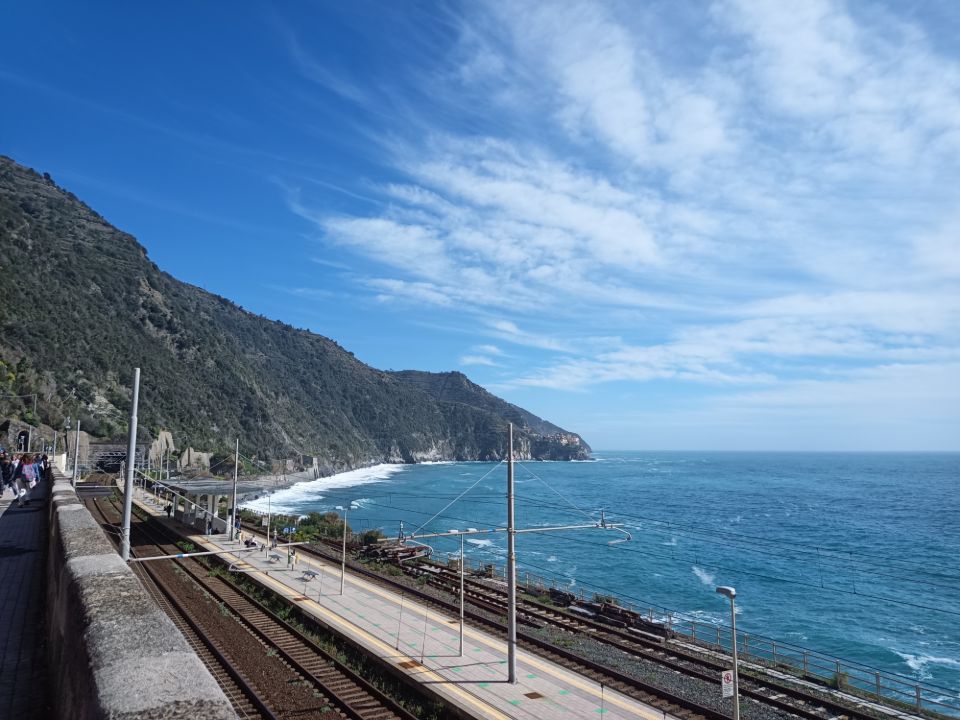
One hop by rail, the line hugging the shore 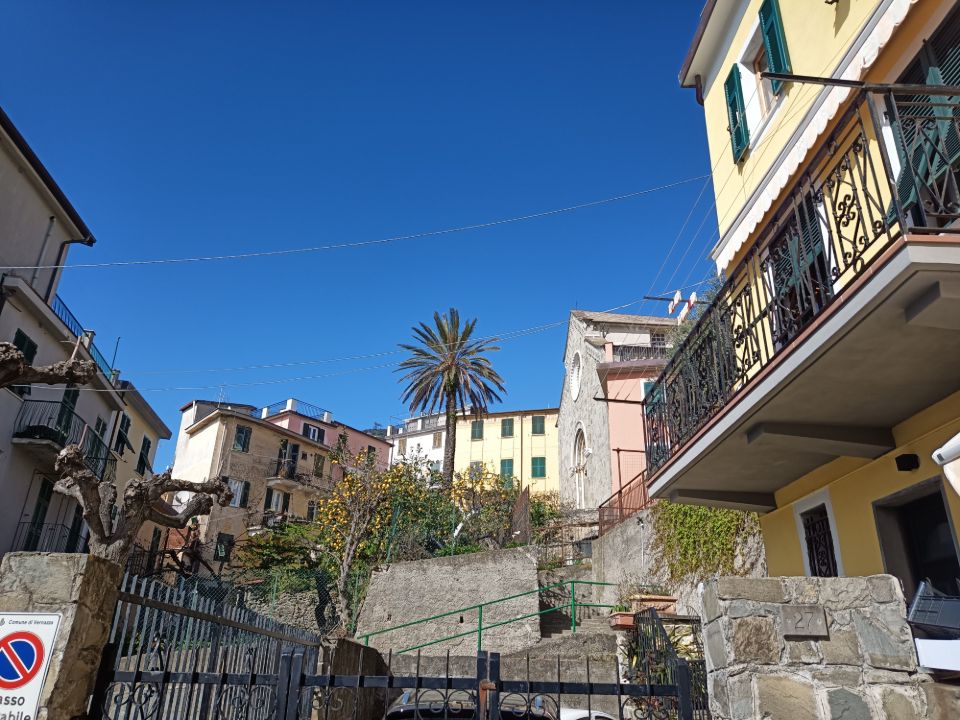
A quiet street of pastel and shutters 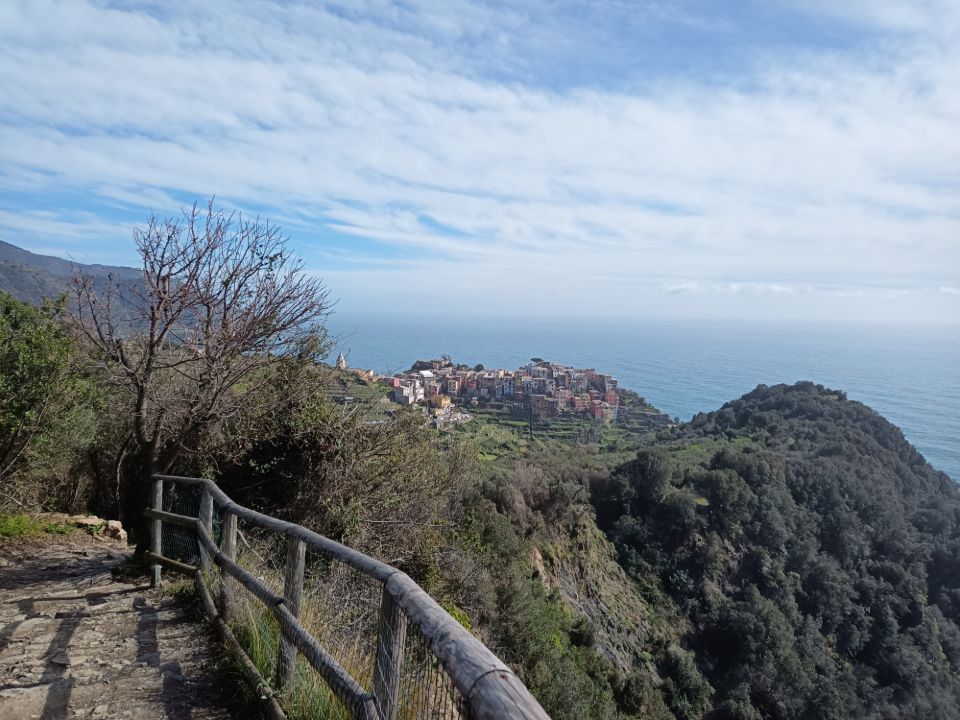
Onward trail, Corniglia behind 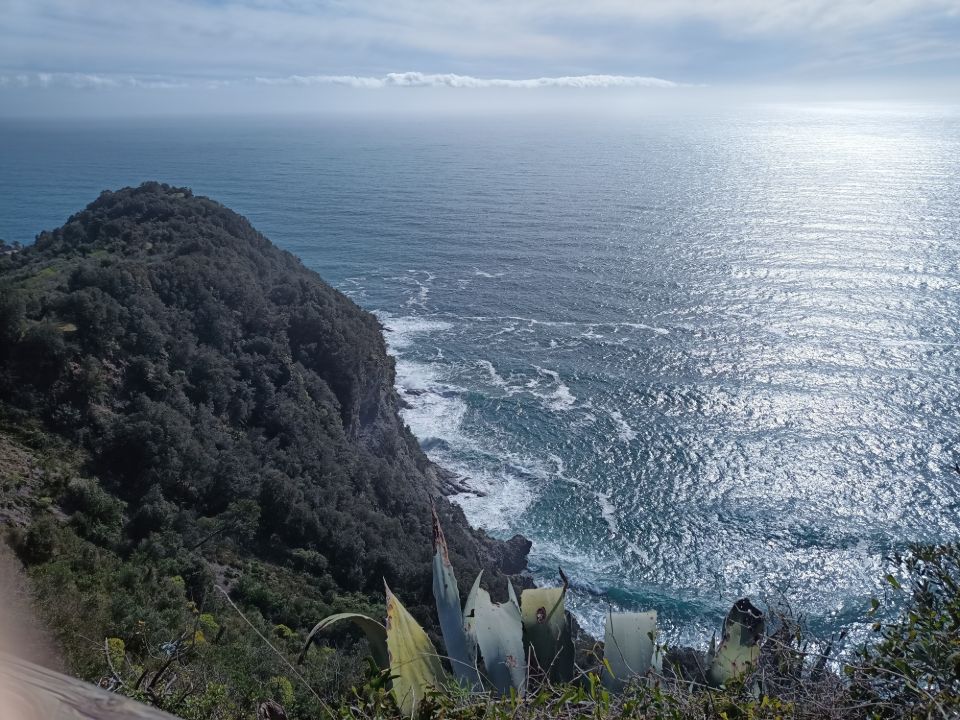
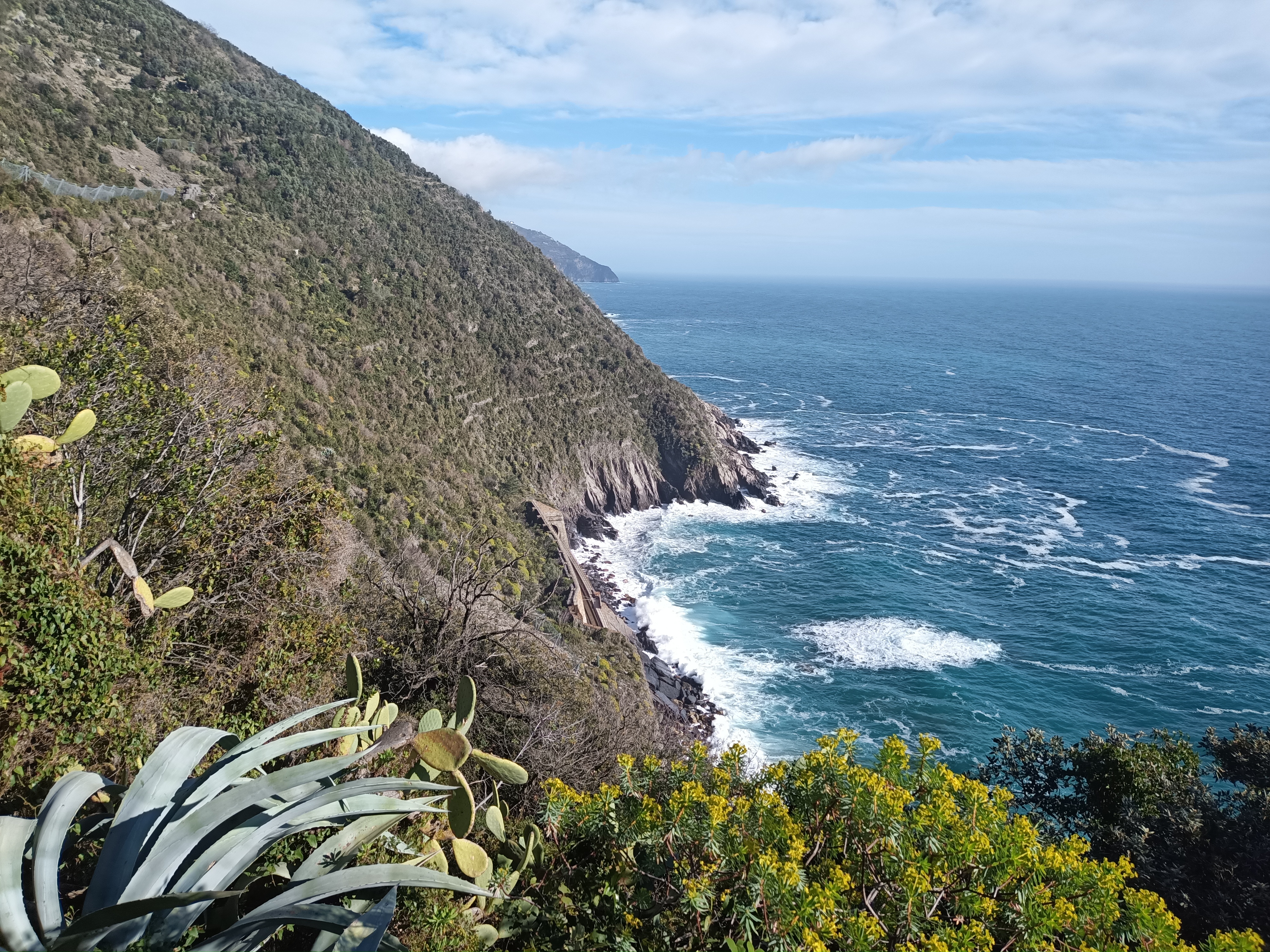
Green cliff, white water 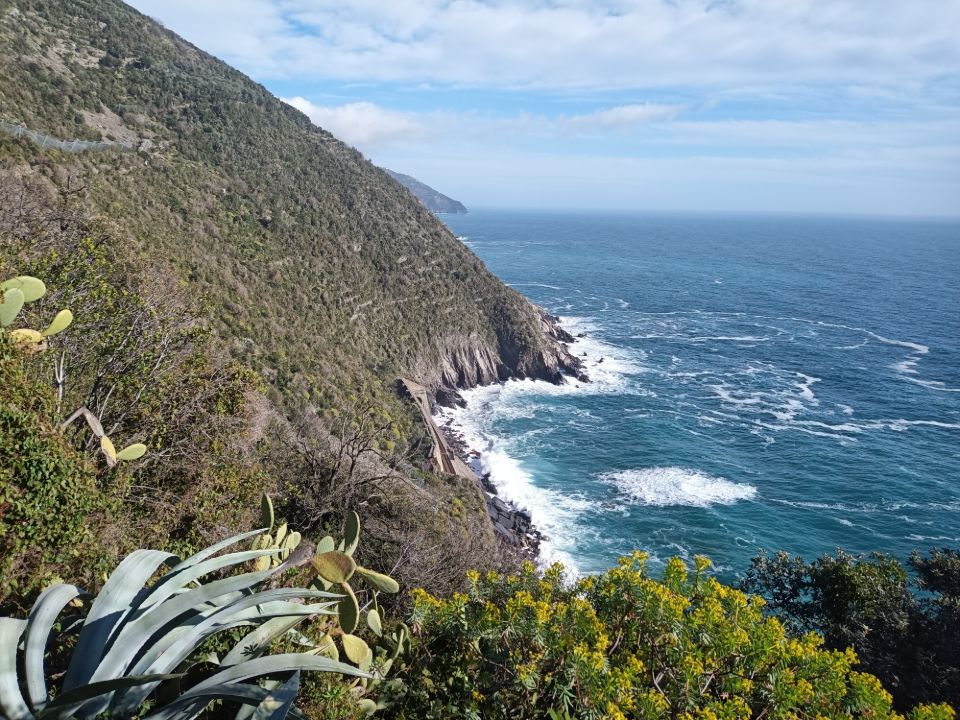
Prickly pear over the drop, the descent begun 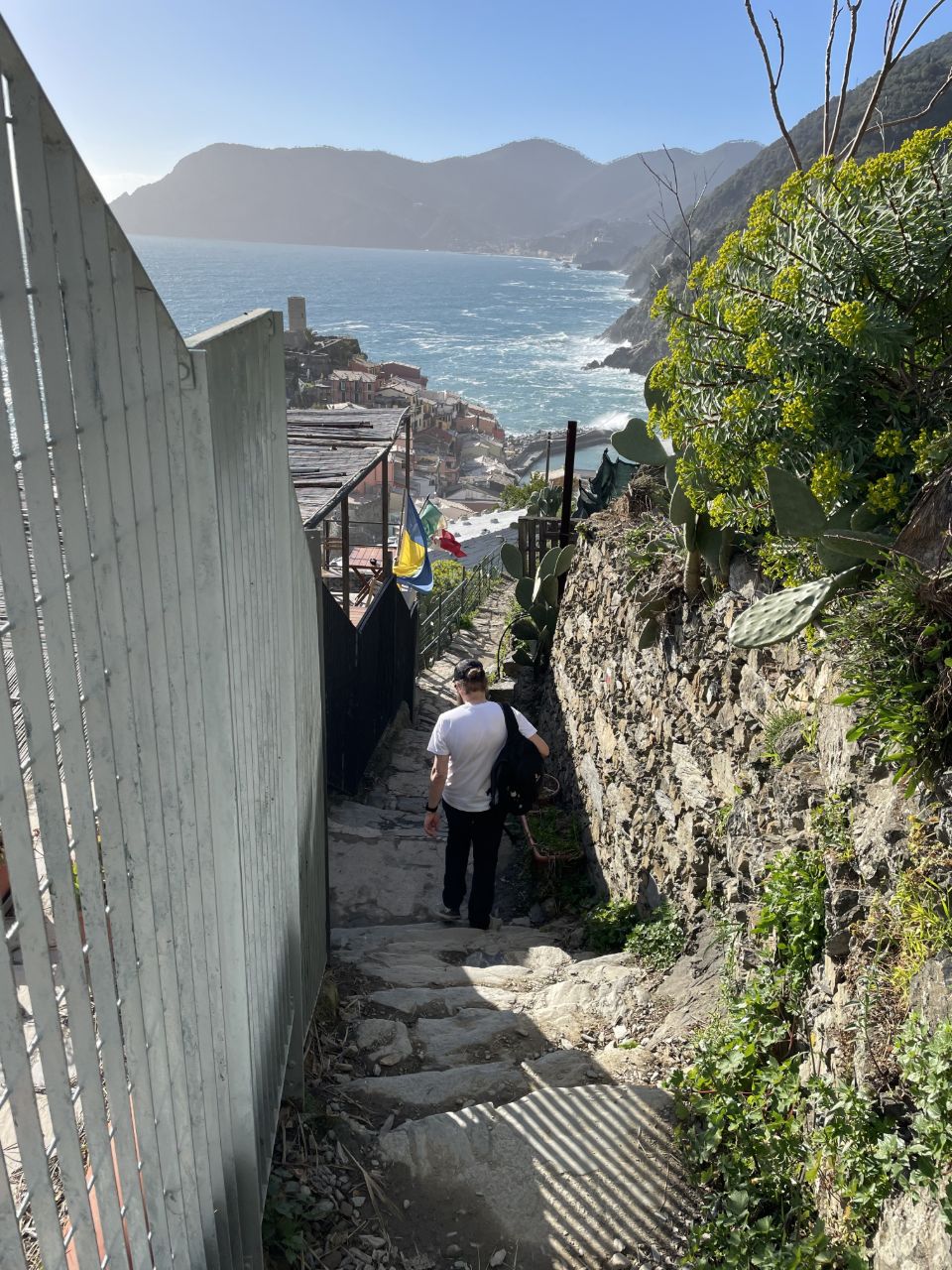
The stairs down, Vernazza assembling below
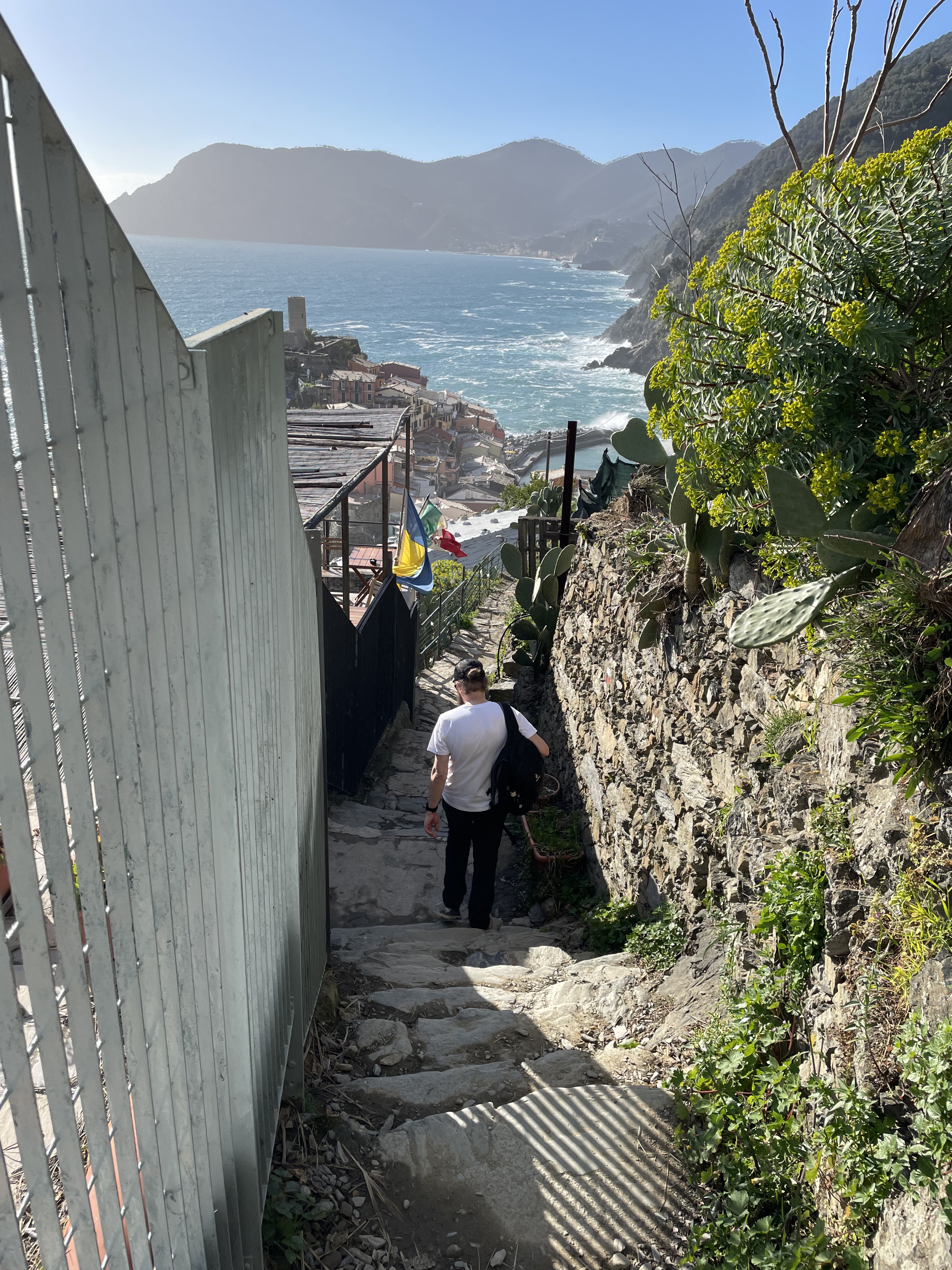
Golden hour in Vernazza
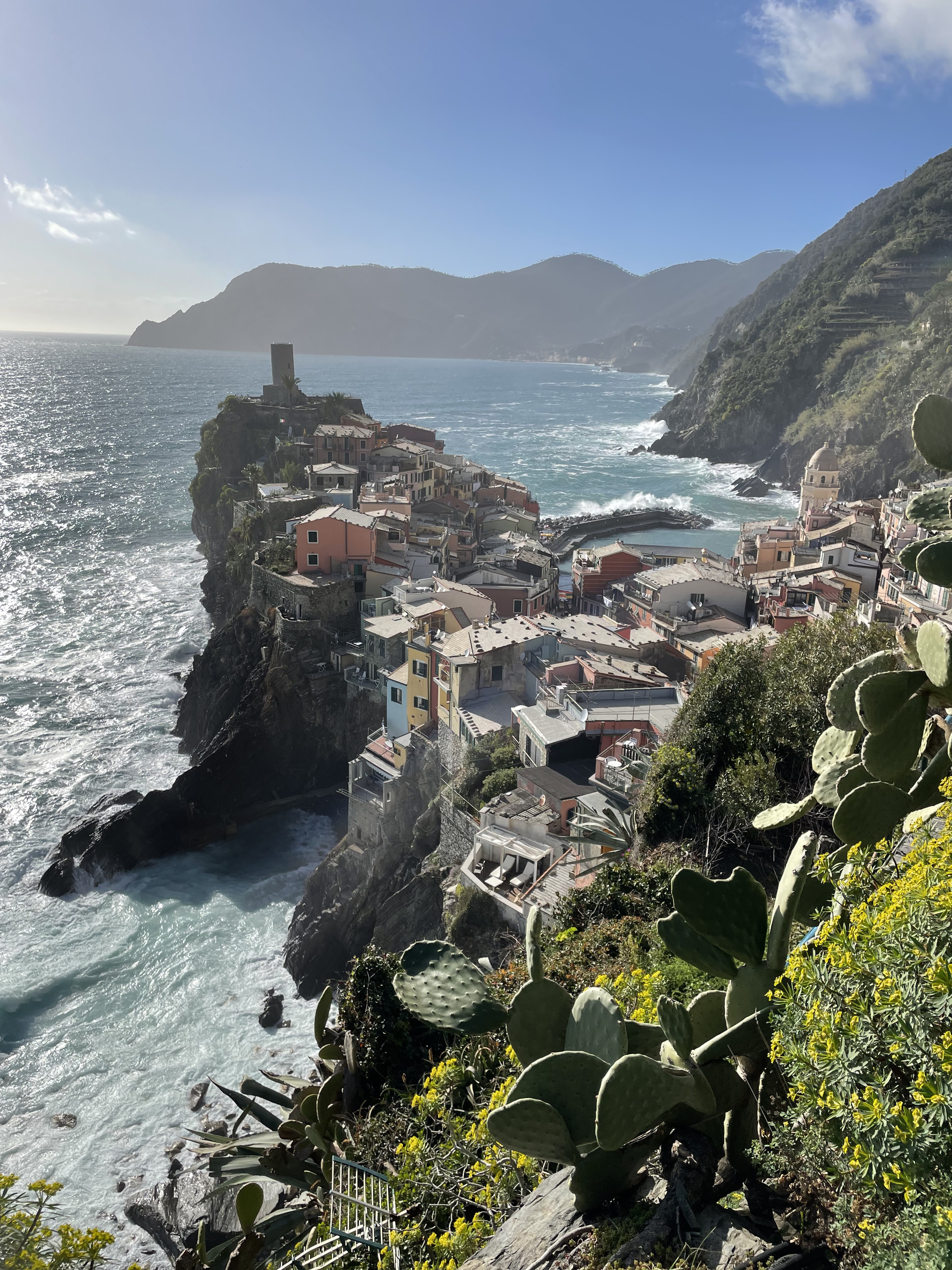
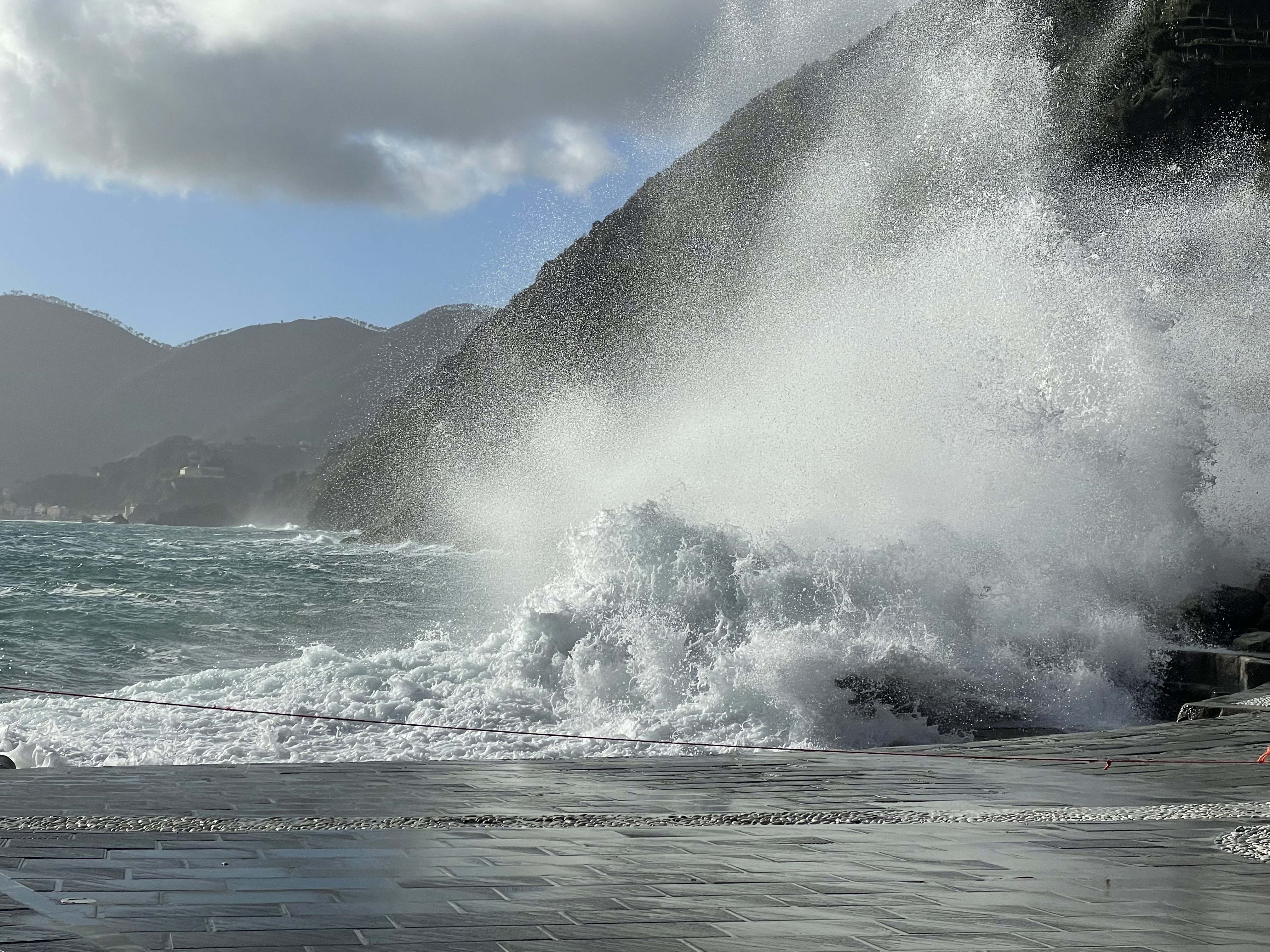
We came down into Vernazza with the sun beginning to do its best work. From the upper viewpoint the whole town lay in one piece: pastel houses, the stone tower, the little harbour with its boats, the breakwater kids were loafing on. Below, the seafront did its impression of a film set, and the swell kept detonating on the sea wall for anyone who waited. The town gets praised to death in brochures, and the thing about that is that in person — this hour, this light — it turns out to deserve it.
Vernazza from the castle path, the light going gold.
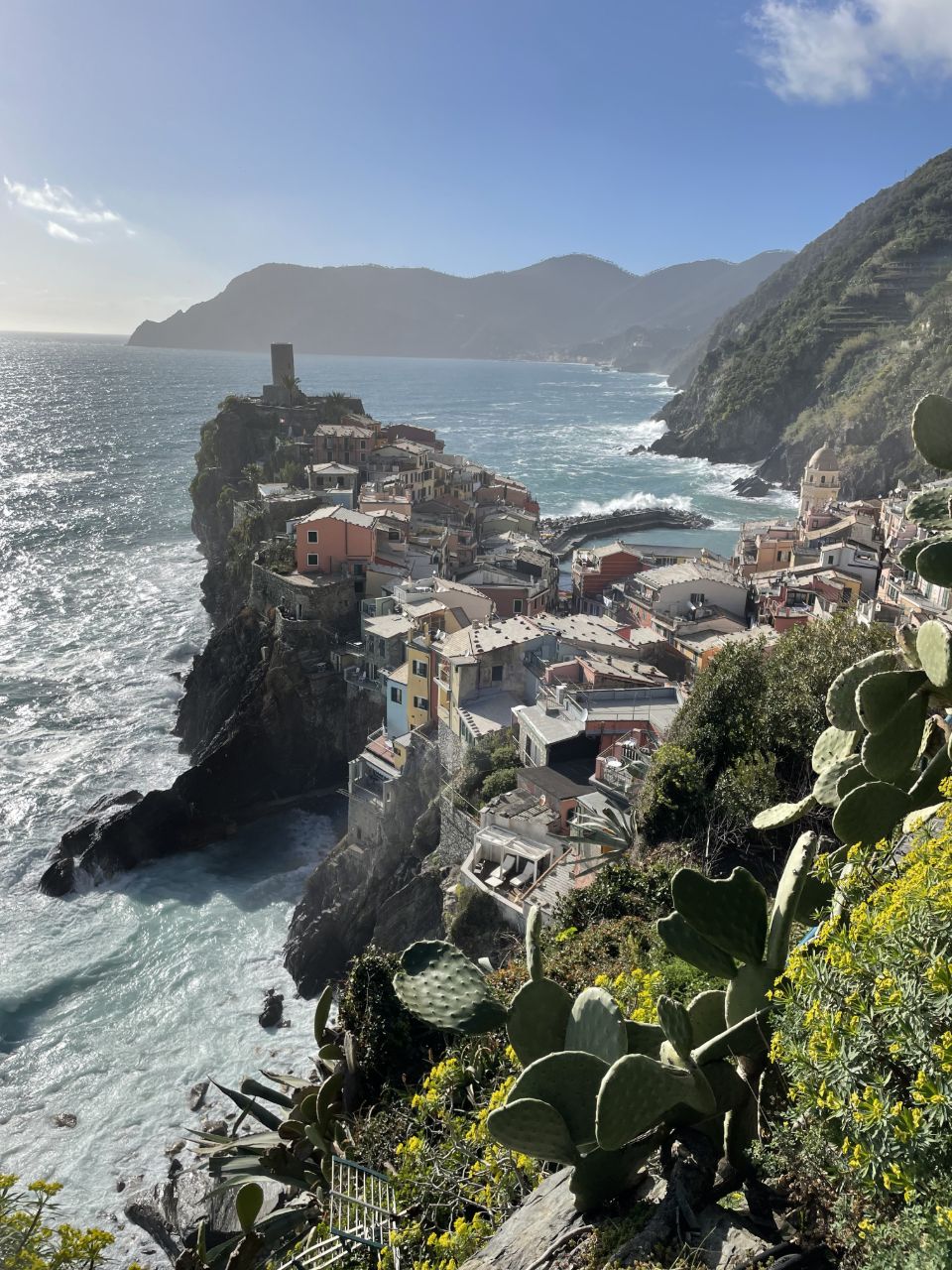
The town in one piece, golden hour from the top of the stairs 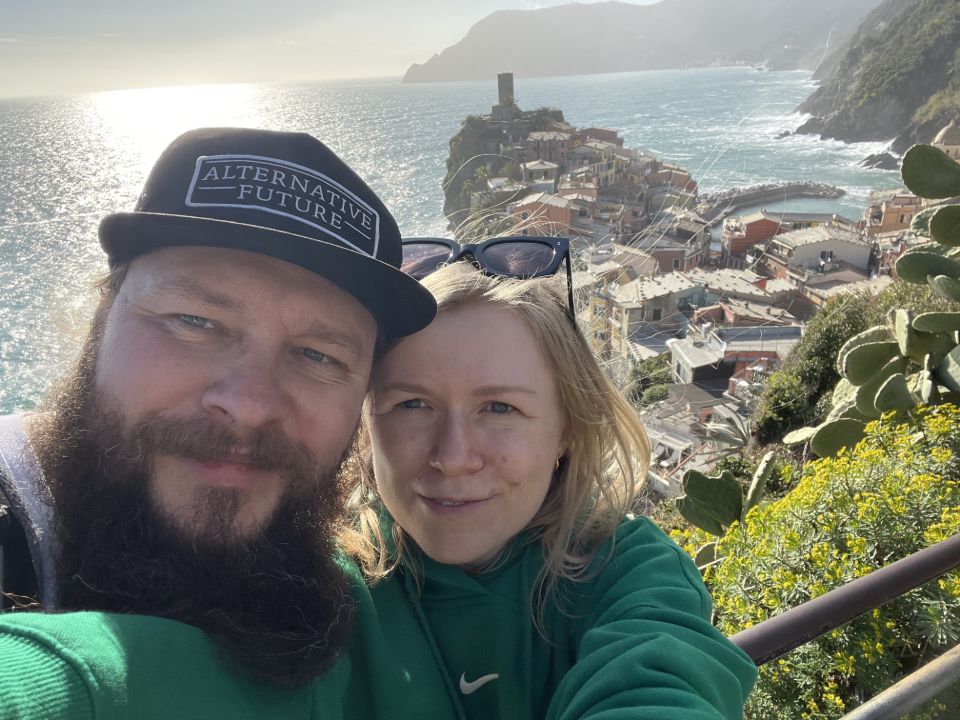
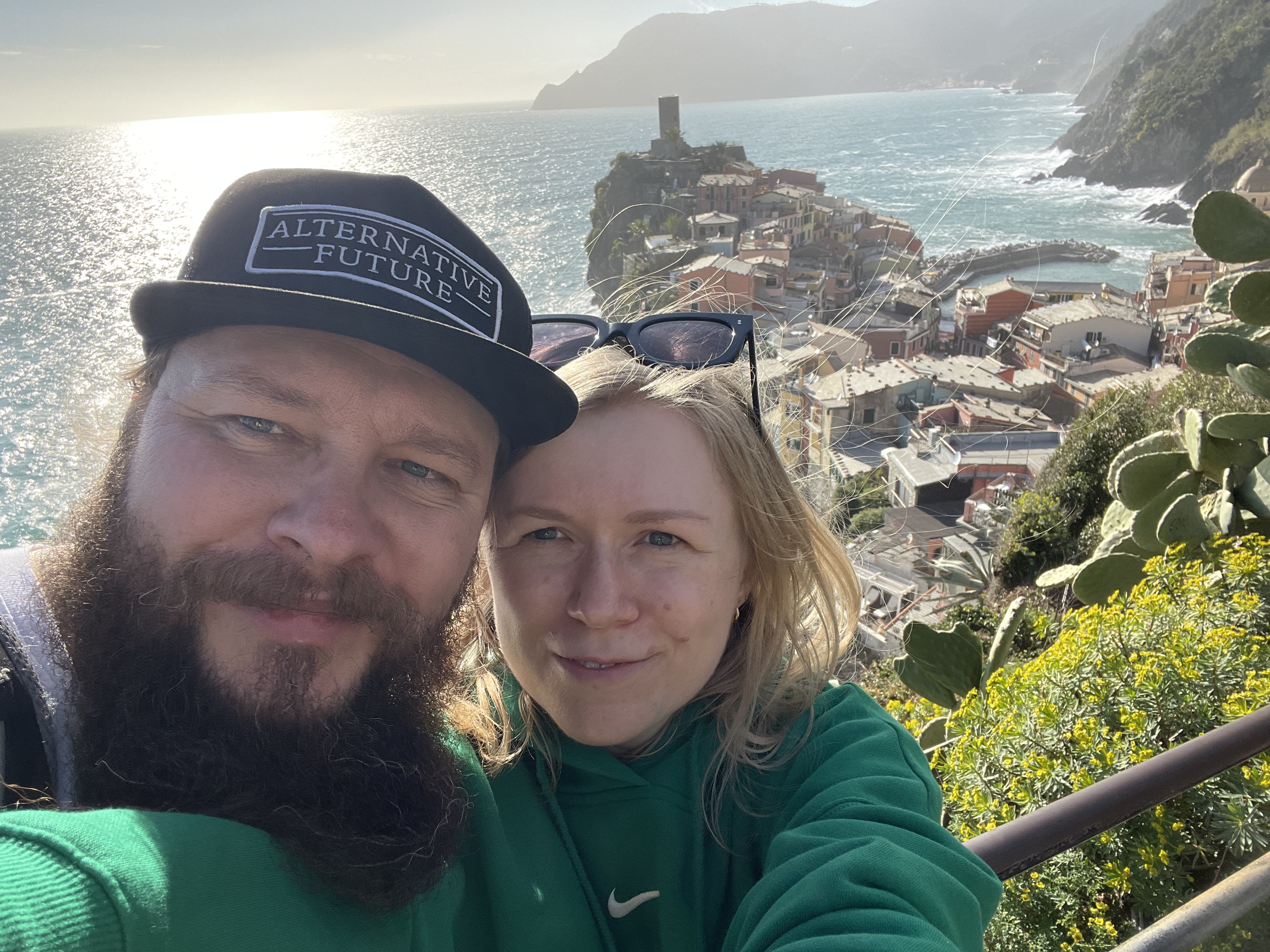
Golden hour, both of us, Vernazza behind 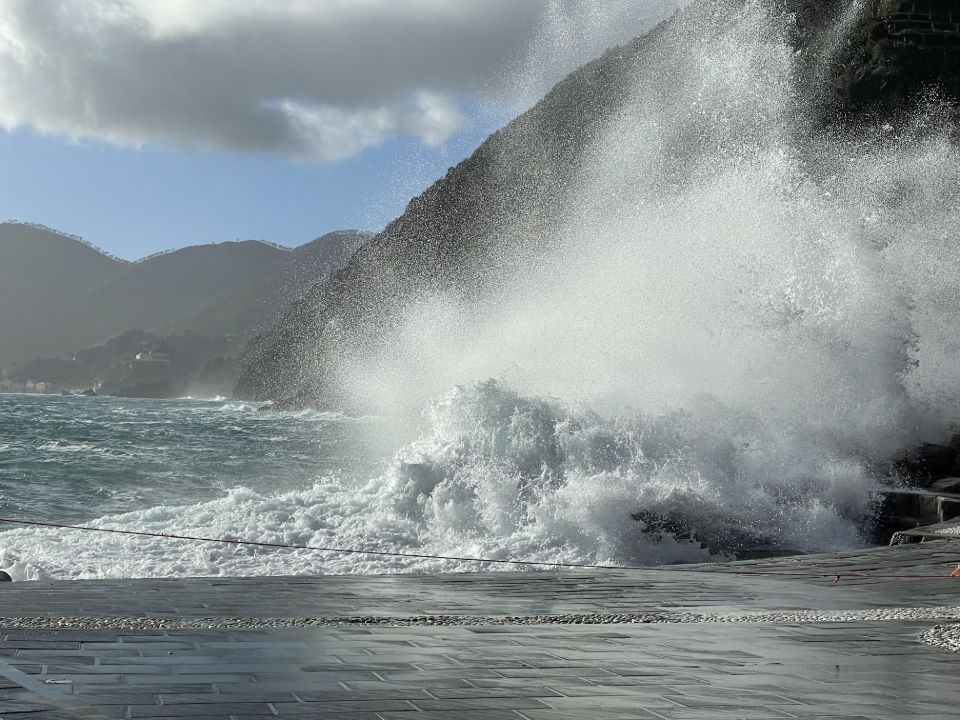
The sea wall, detonating in golden light
Monterosso to finish
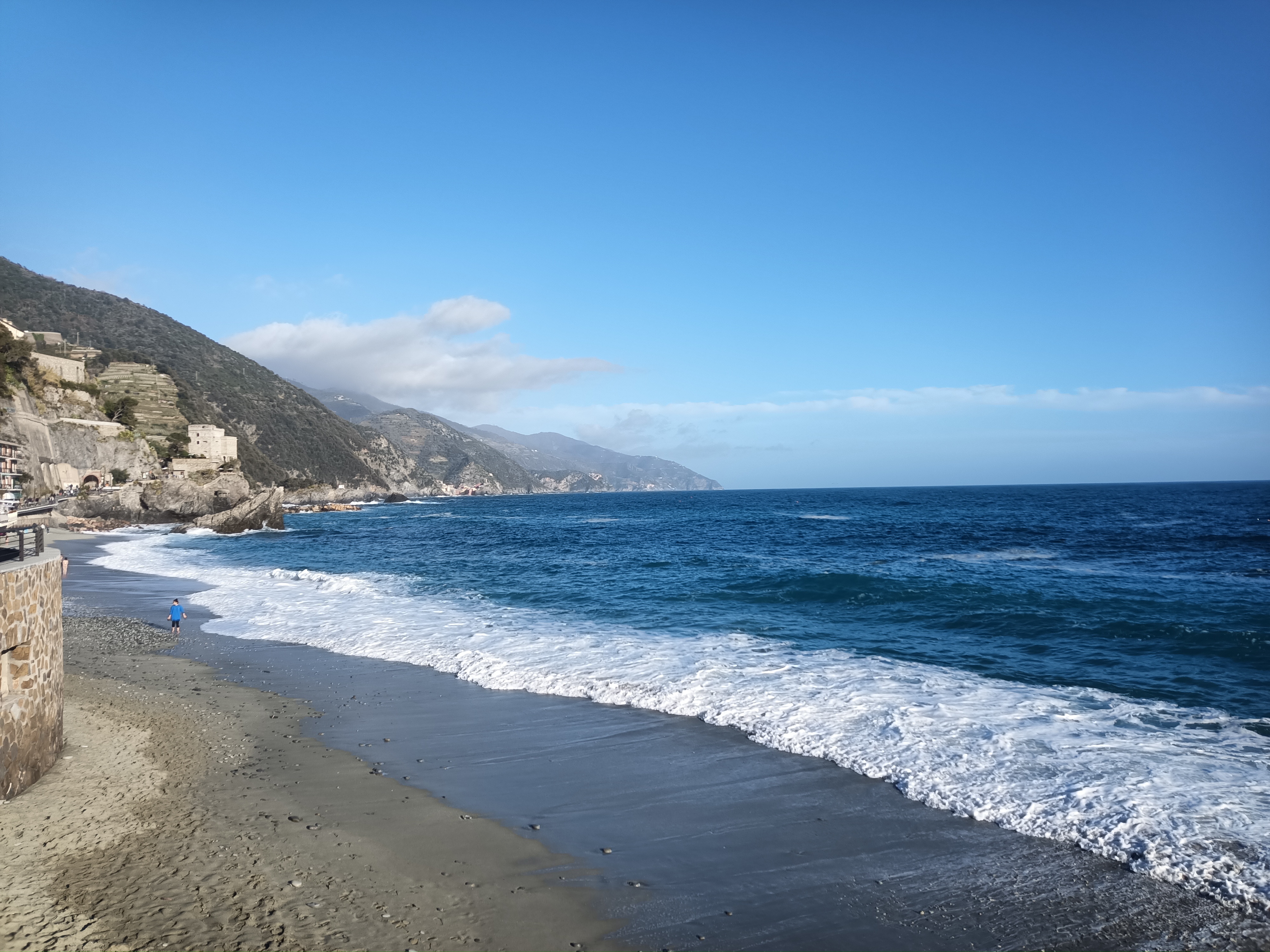
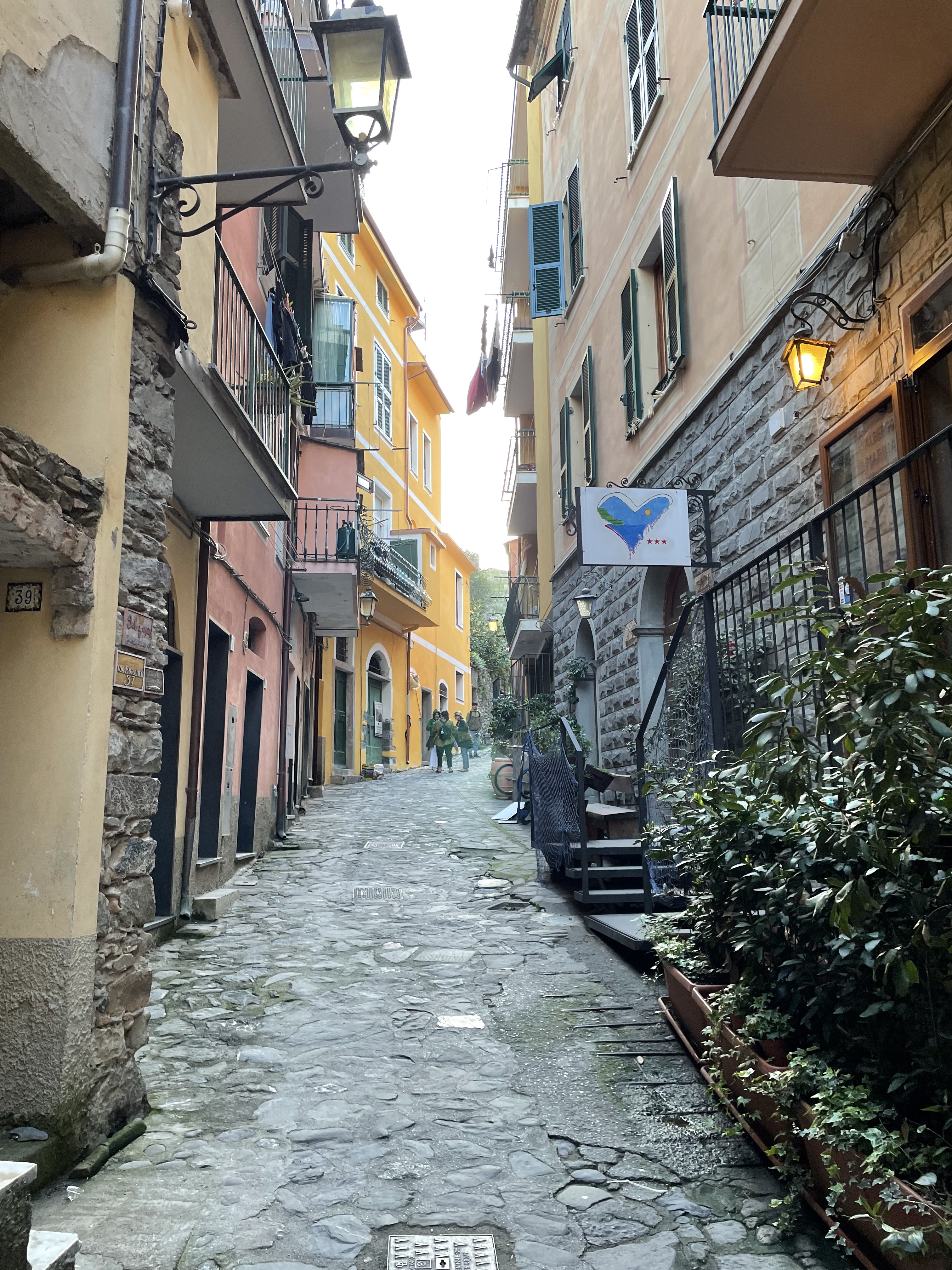
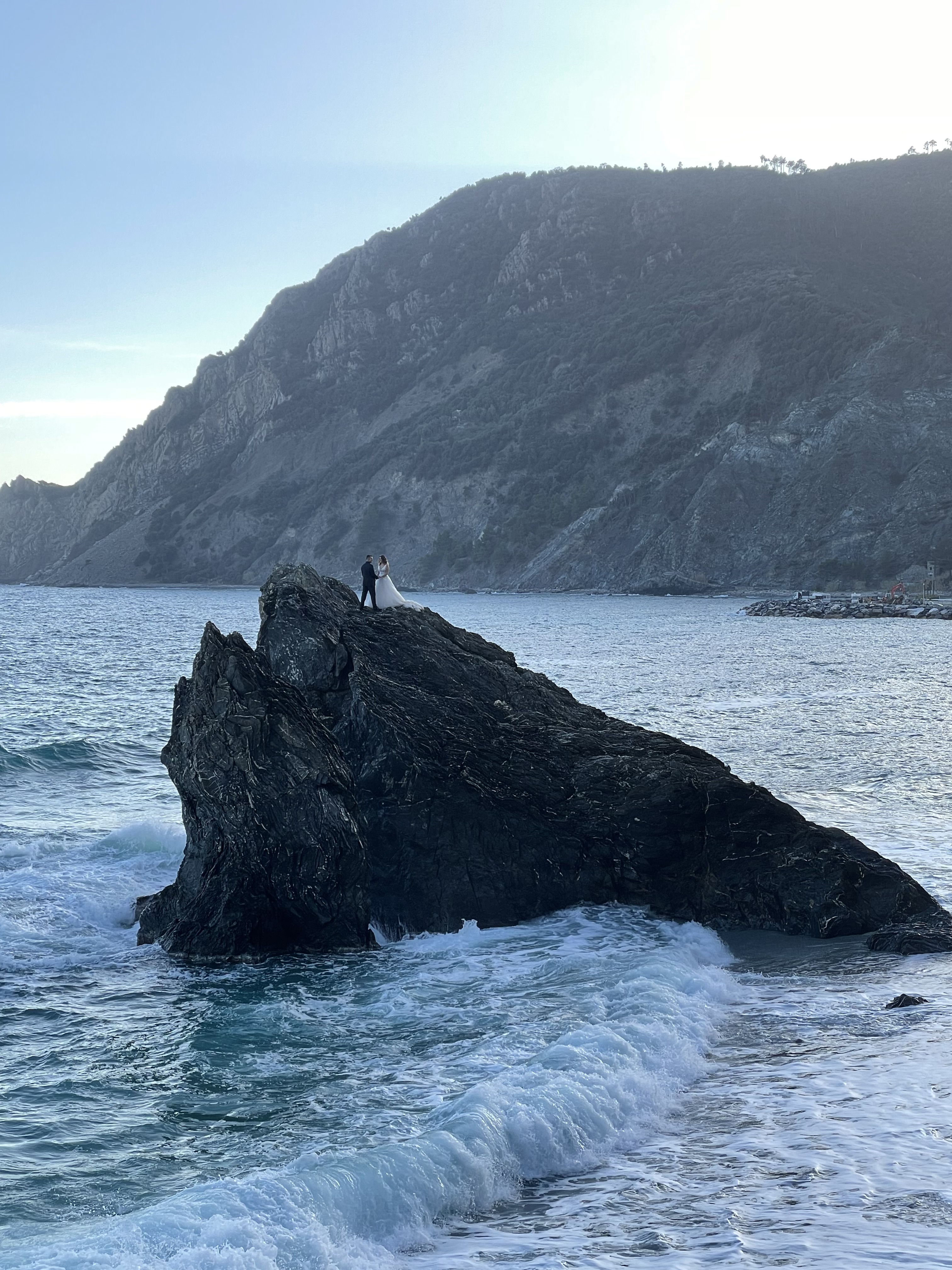
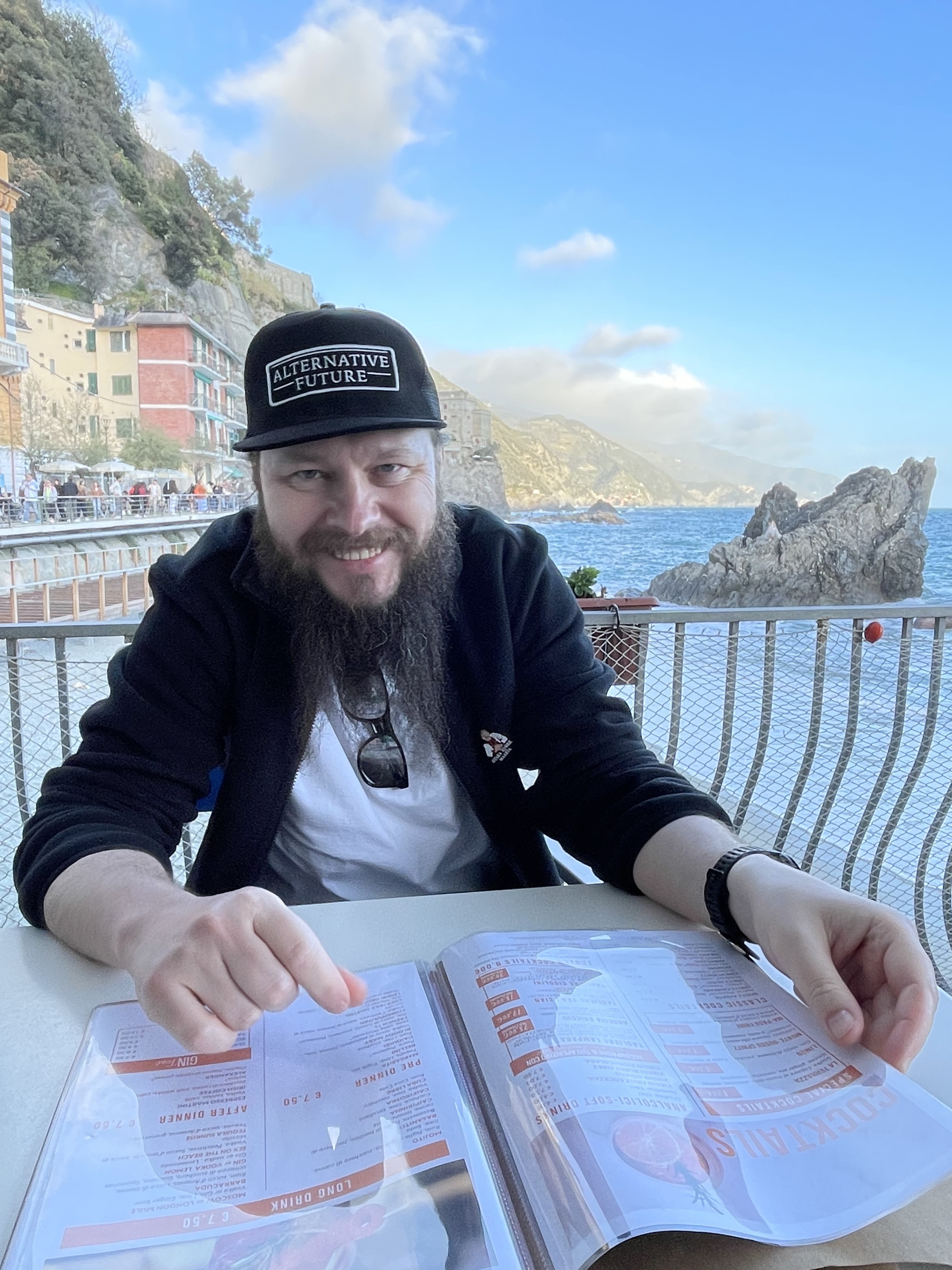
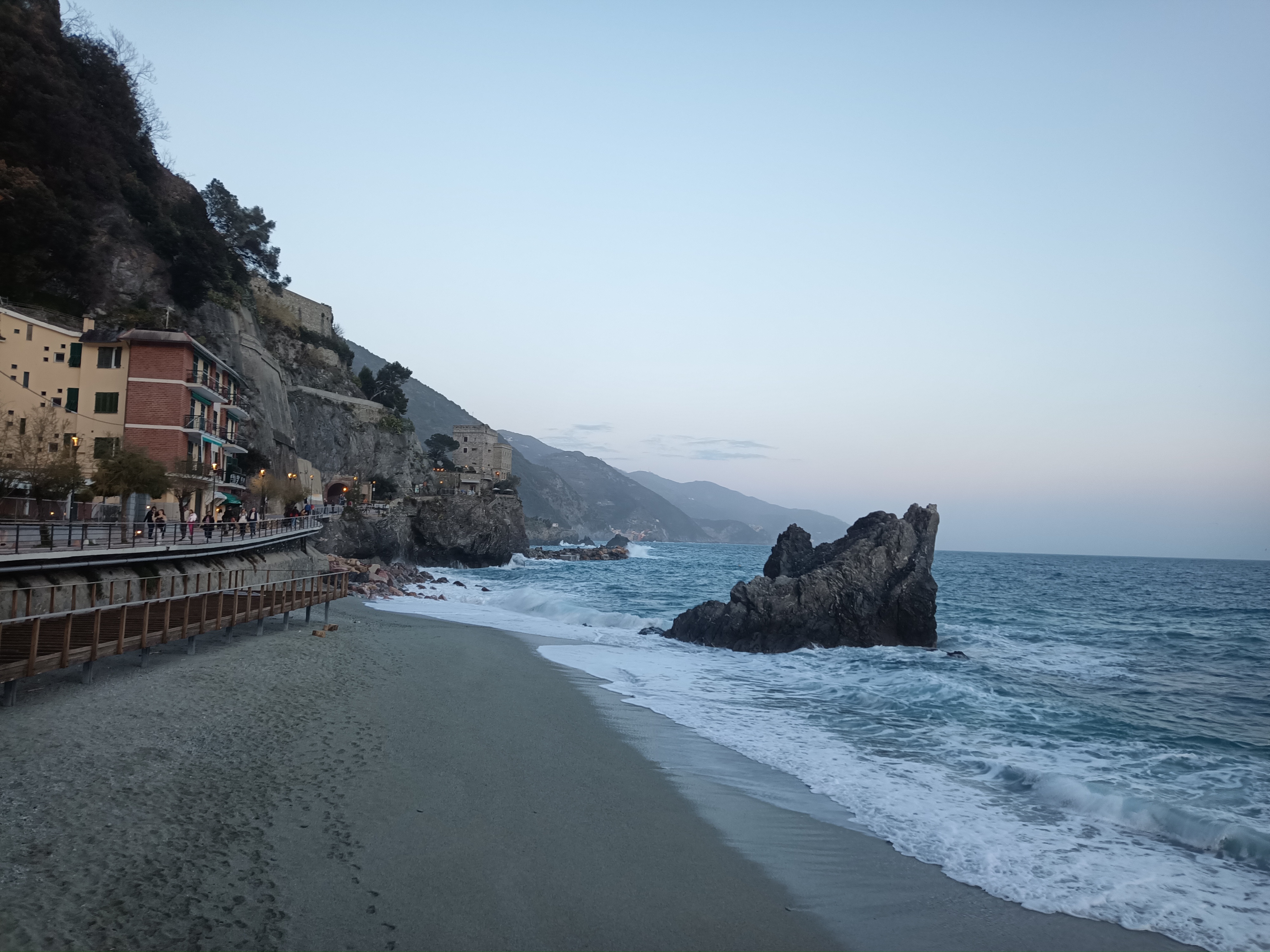
The train to Monterosso is nine minutes and comes with the only beach in the five: broad sand and the seafront promenade, where the umbrellas were still stacked for the season and the surf had the beach to itself. We stayed for dinner — frittura mista at Bagni Eden, by the sea wall, a matter of some seriousness — the menu deliberations were long and the frittura verdict unanimous. A wedding, meanwhile, had been booked onto the dark rock at the end of the beach, the couple out on the rocks for the photographs. And we caught the place at dusk on the way out, lamps coming on, the day’s last surf working the sand.
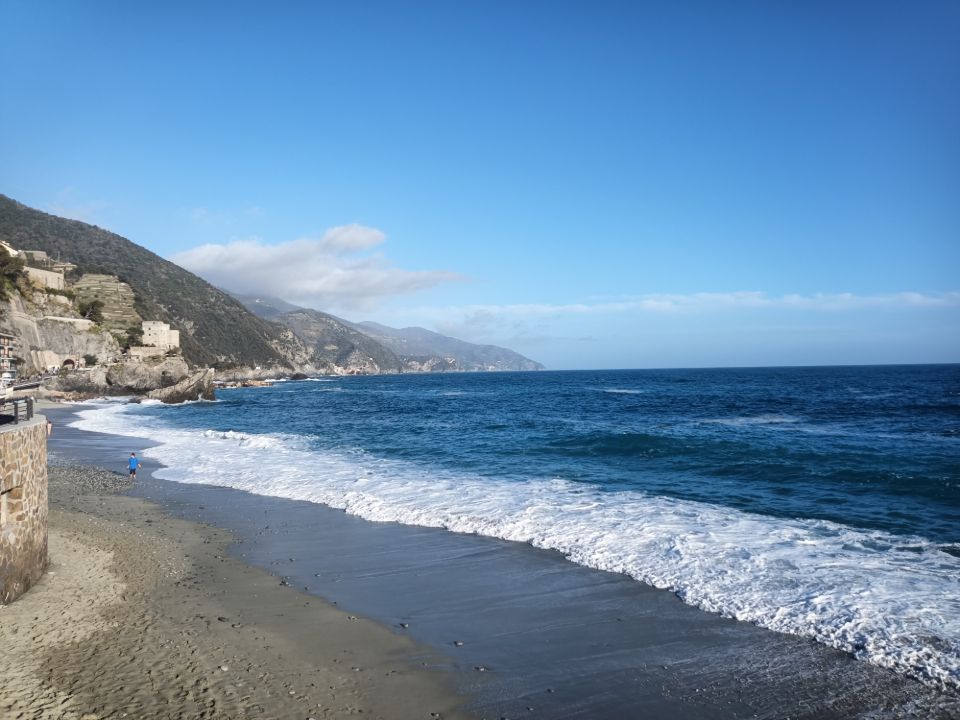
The beach, out of season 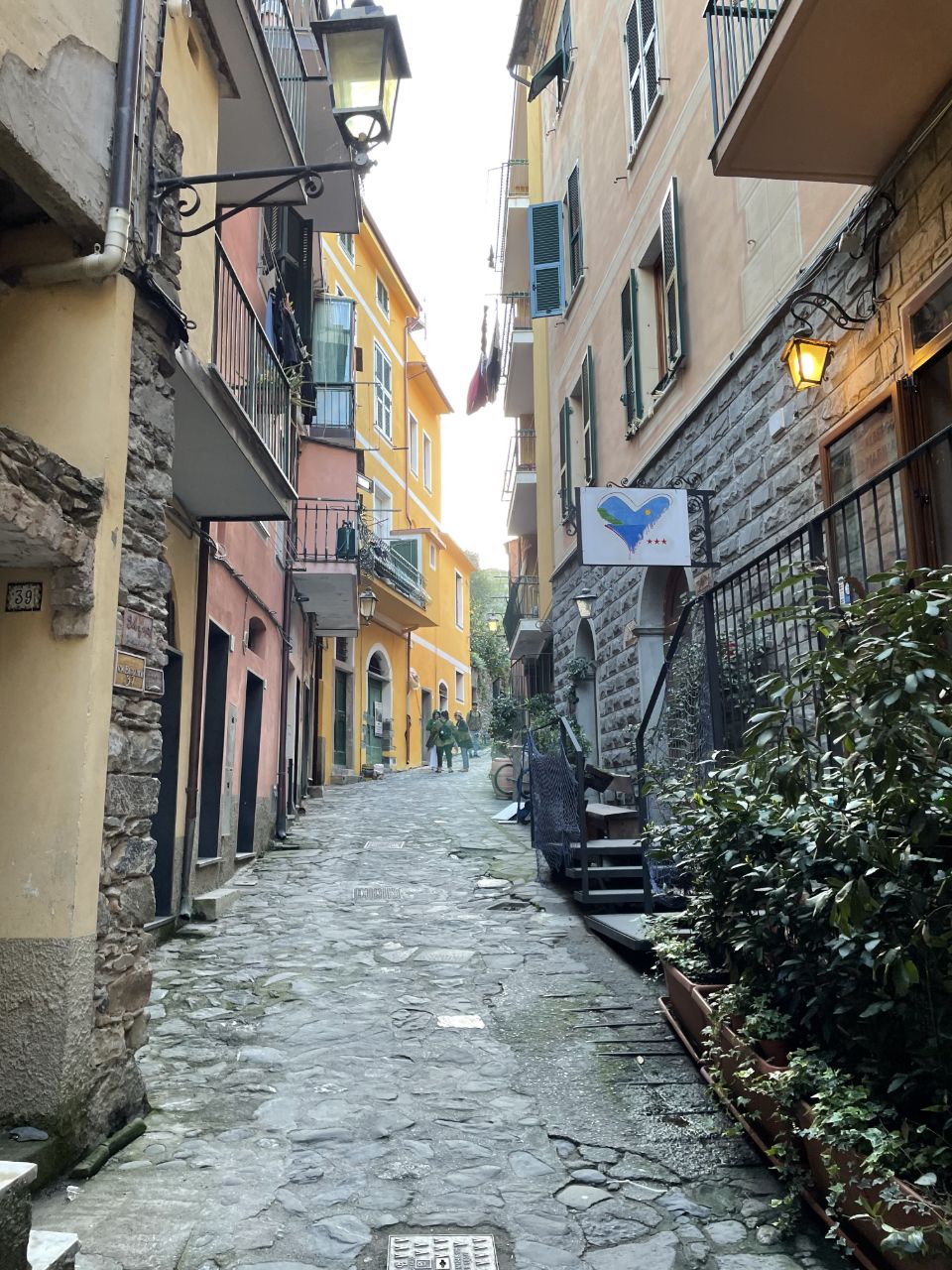
The lane uphill, lamps already on 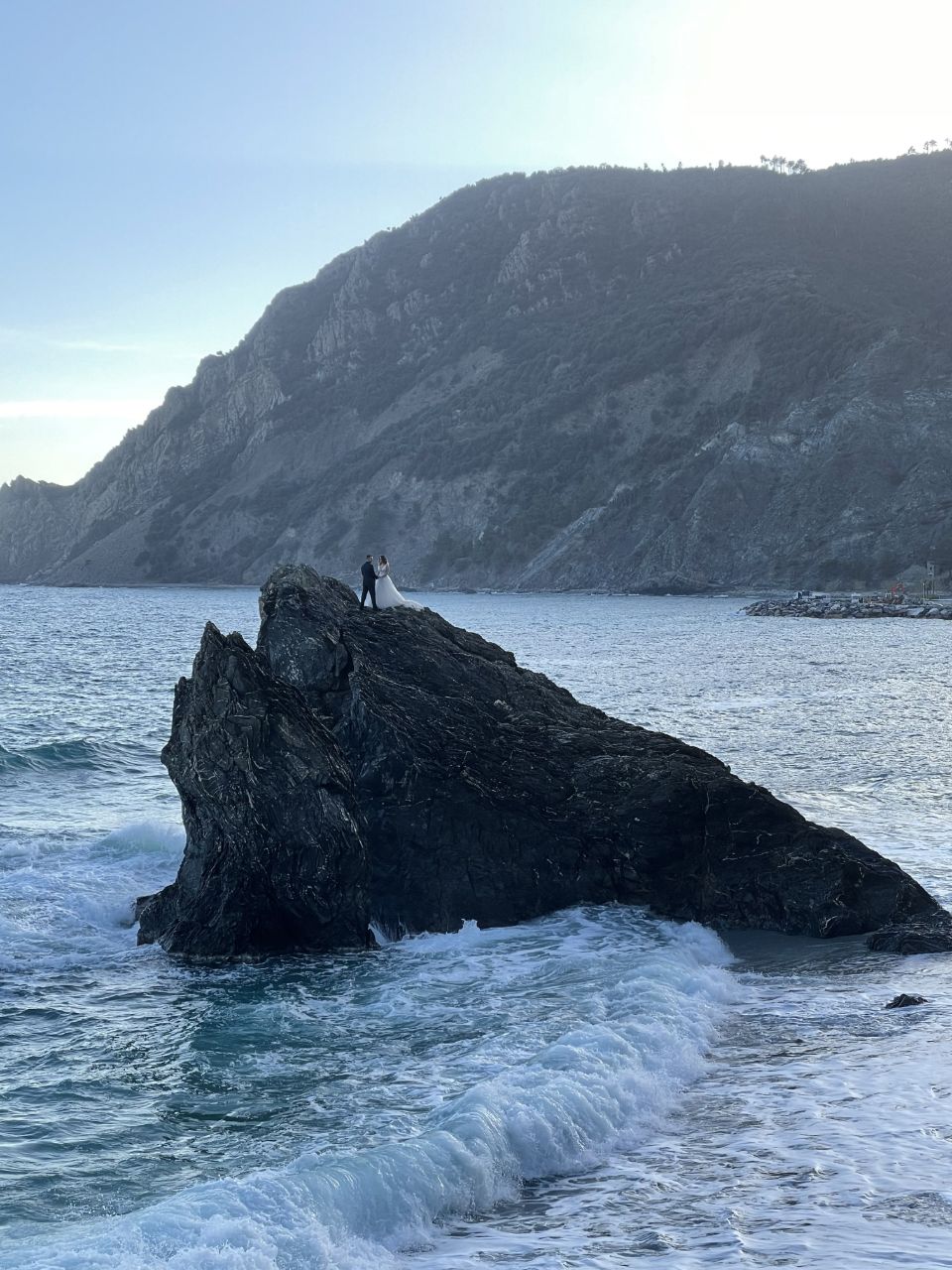
A wedding, booked onto the dark rock 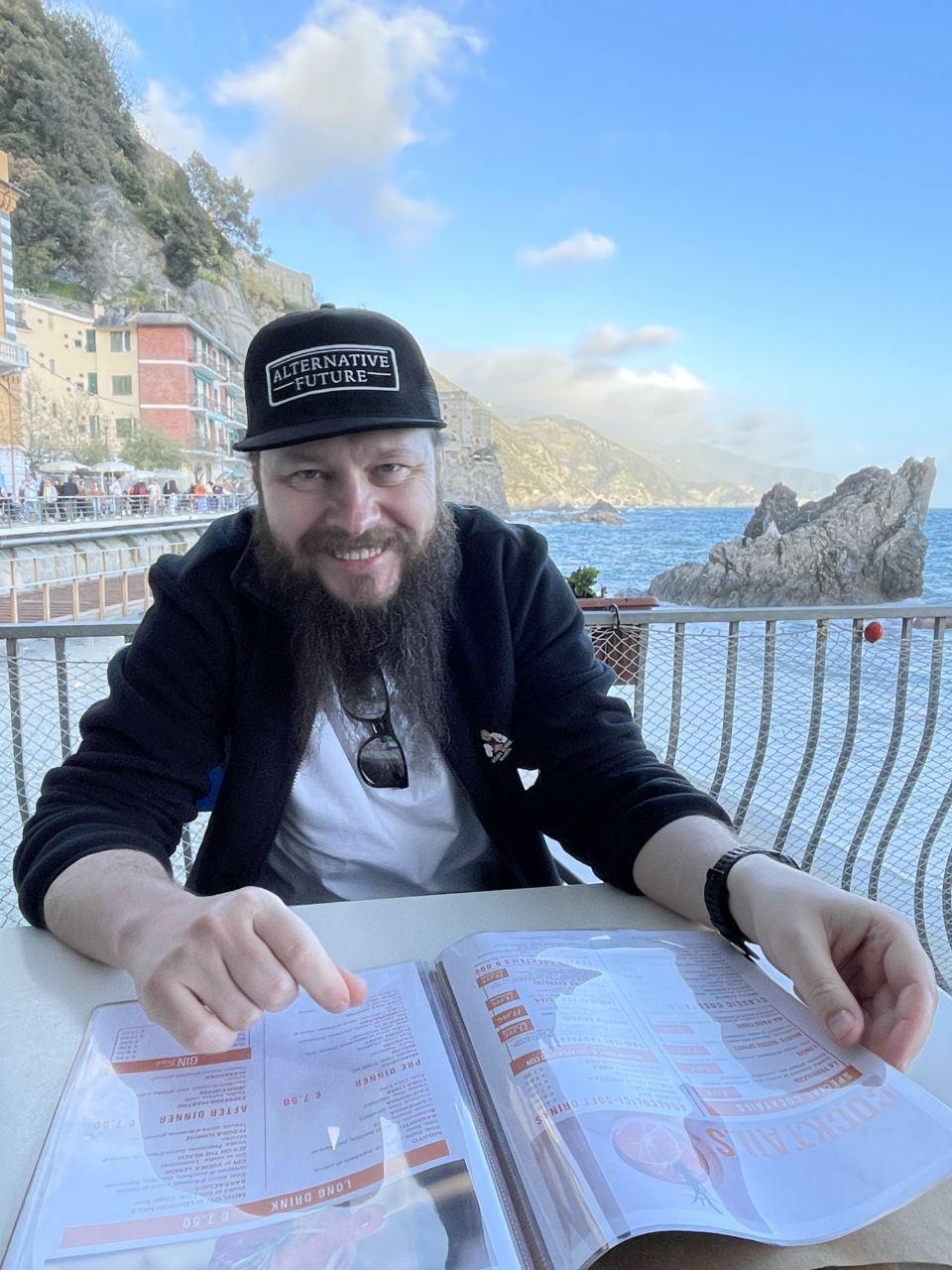
The frittura mista deliberations, deep in progress 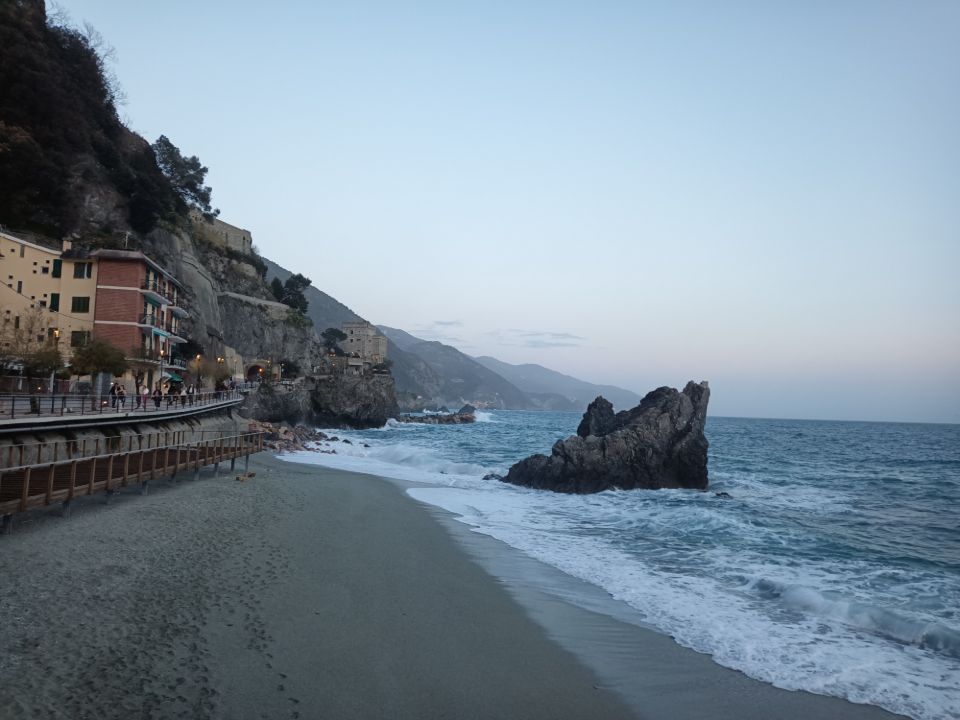
Dusk surf and the dark rock off Monterosso