Italy trip 2023 — Genova
Genova
We came in over the Alps on the last Wednesday of March. The wing hung over a string of lakes held in green foothills, one after another, and then the sea appeared at the end of the descent like a rumour the mountains had started. By nine in the evening we were on a train pushing south through the dark fields past Voghera, and at eleven Genova Principe put us down under an arch of sodium light. The old town met us at 23:05 with its lit shop windows in the alleys and a smell of salt and cooking that said, more politely than the hour did, that we should be asleep.
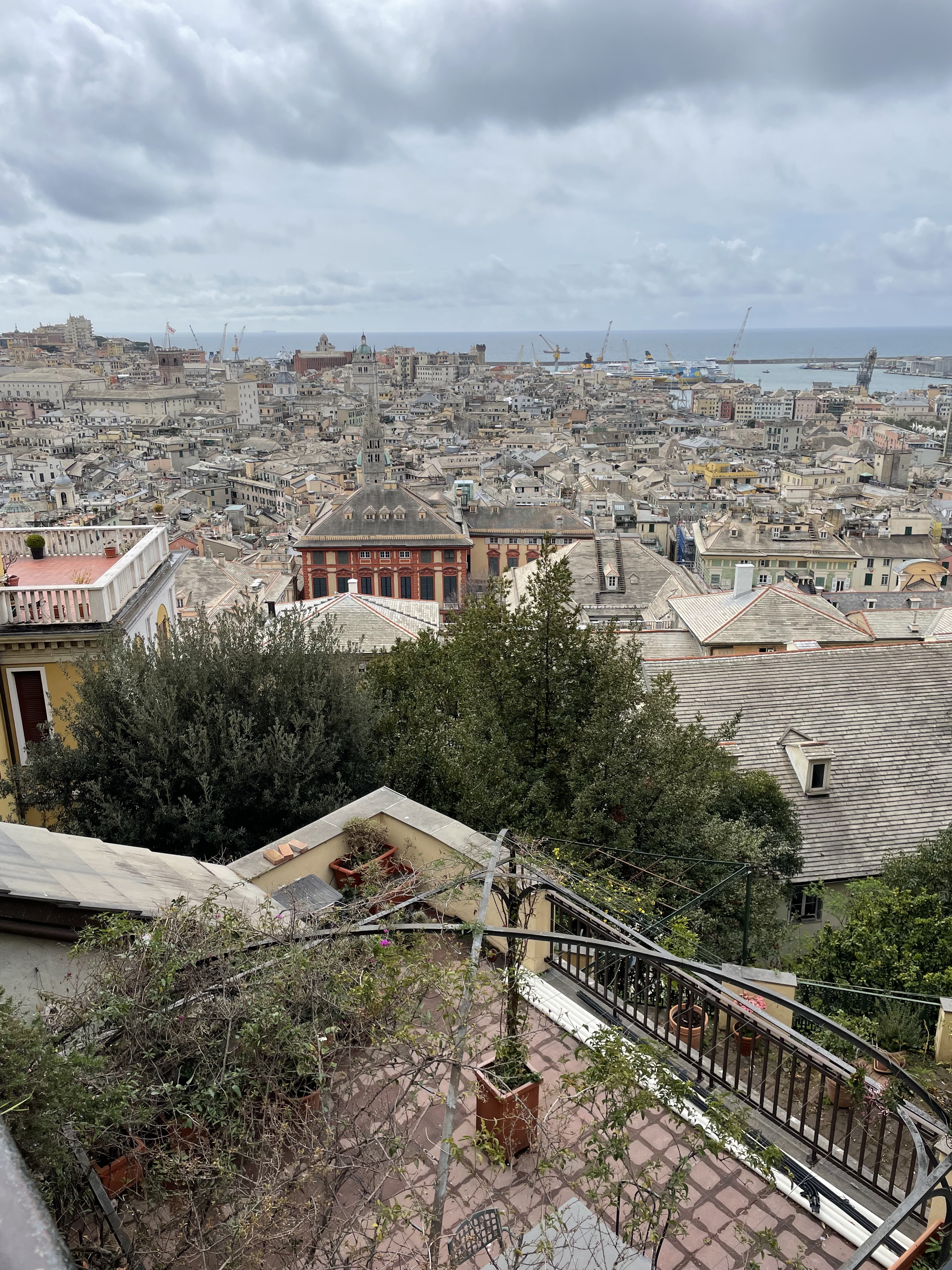
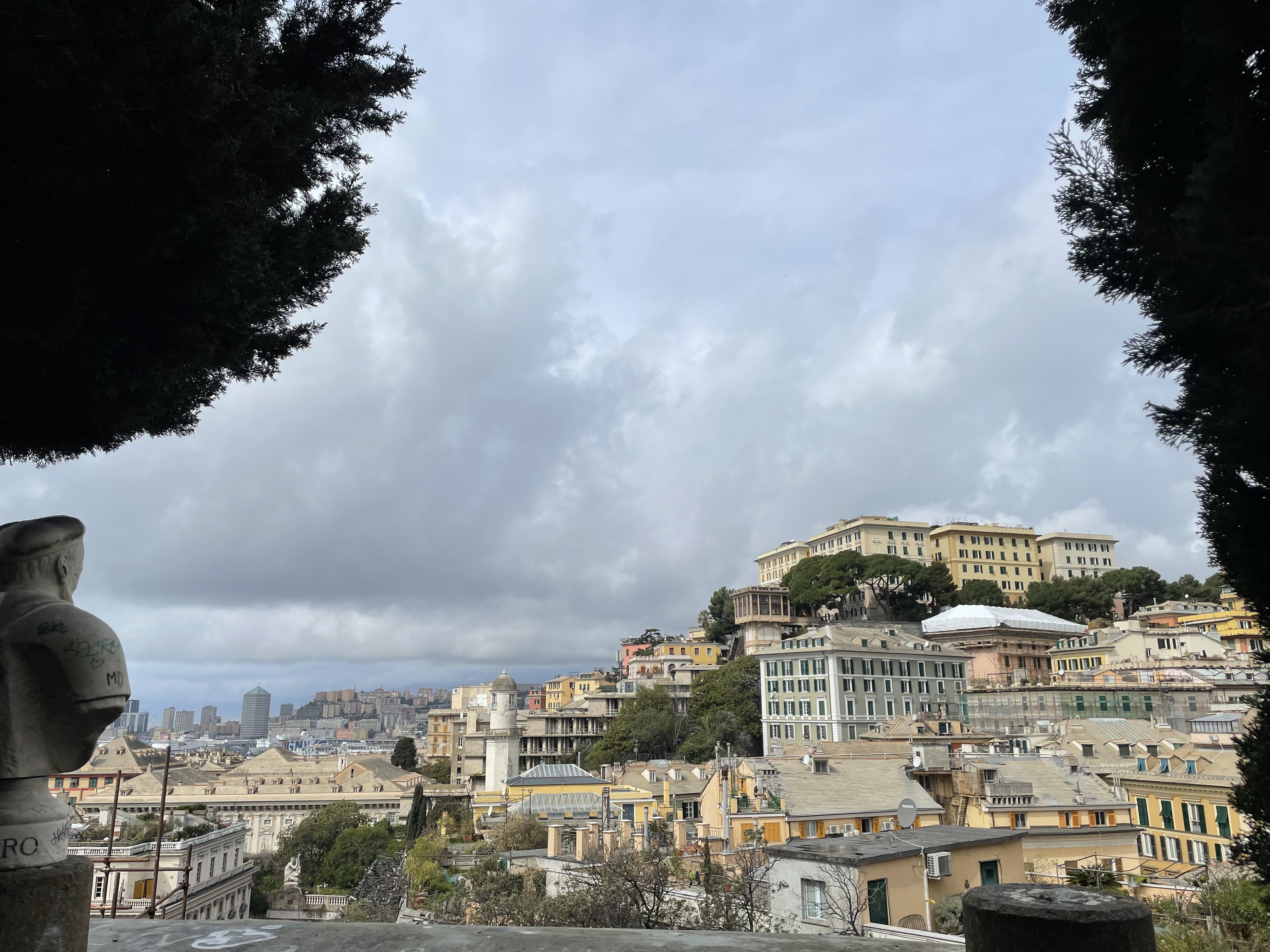
The house was in Castelletto, behind a marble staircase with wrought-iron railings the height of a person. In the morning, orange trees stood over the row of parked cars at the end of the street, actually in fruit, as if the Mediterranean had been left running overnight. The oranges we bought the same morning turned out to be Spanish — it seems the locals don’t fancy their own. Above it, Villetta di Negro’s terrace gardens held the whole bowl of Genova: the roofline, the cathedral towers, the port at the bottom of it all. Higher up the eastern hill, a villa terrace gave us the same city with the sea past it, a potted lemon by the rail.
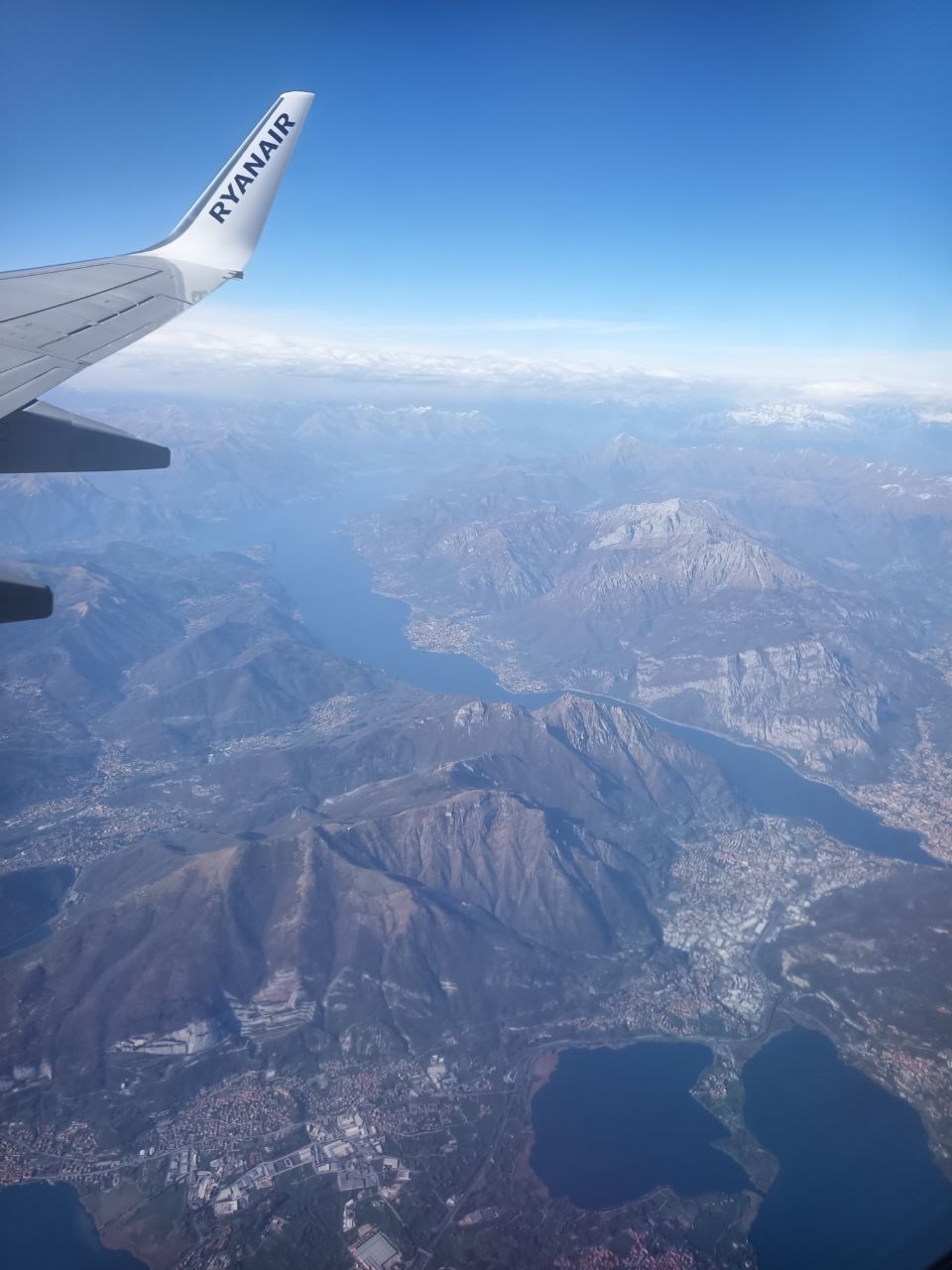
Over the Alps, lakes stitched in below 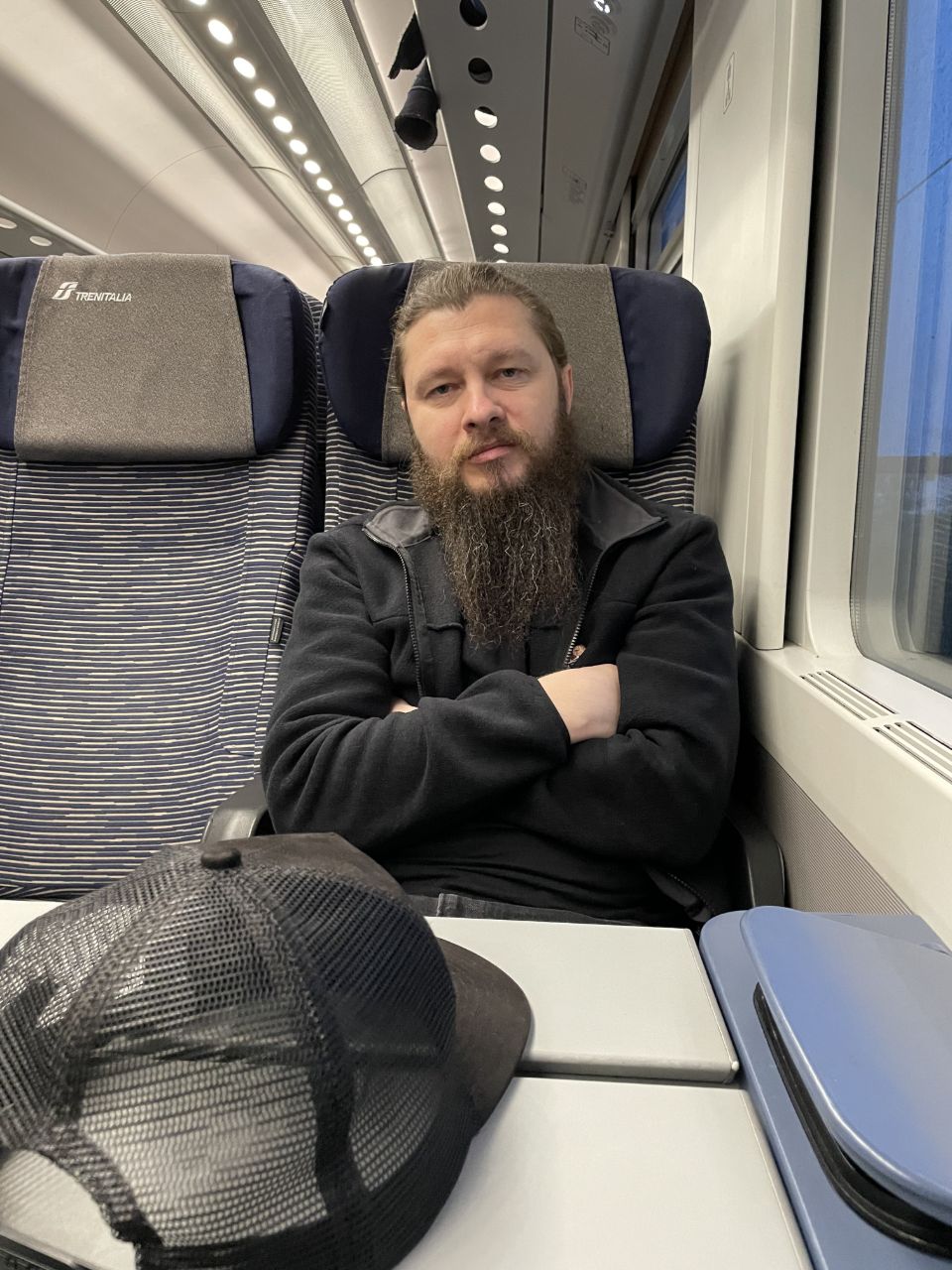
Evening train south, somewhere past Voghera 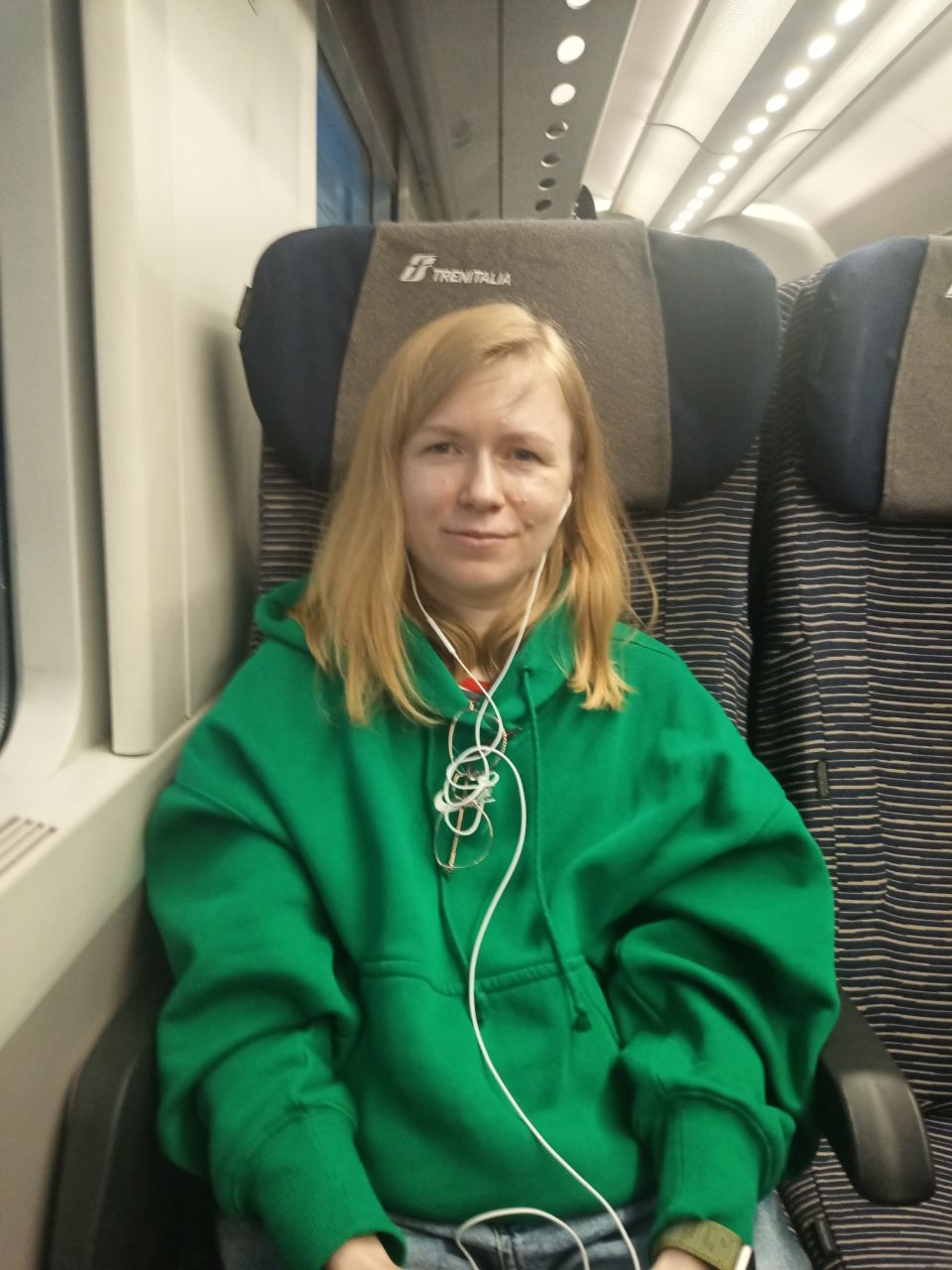
The same train, an hour further south 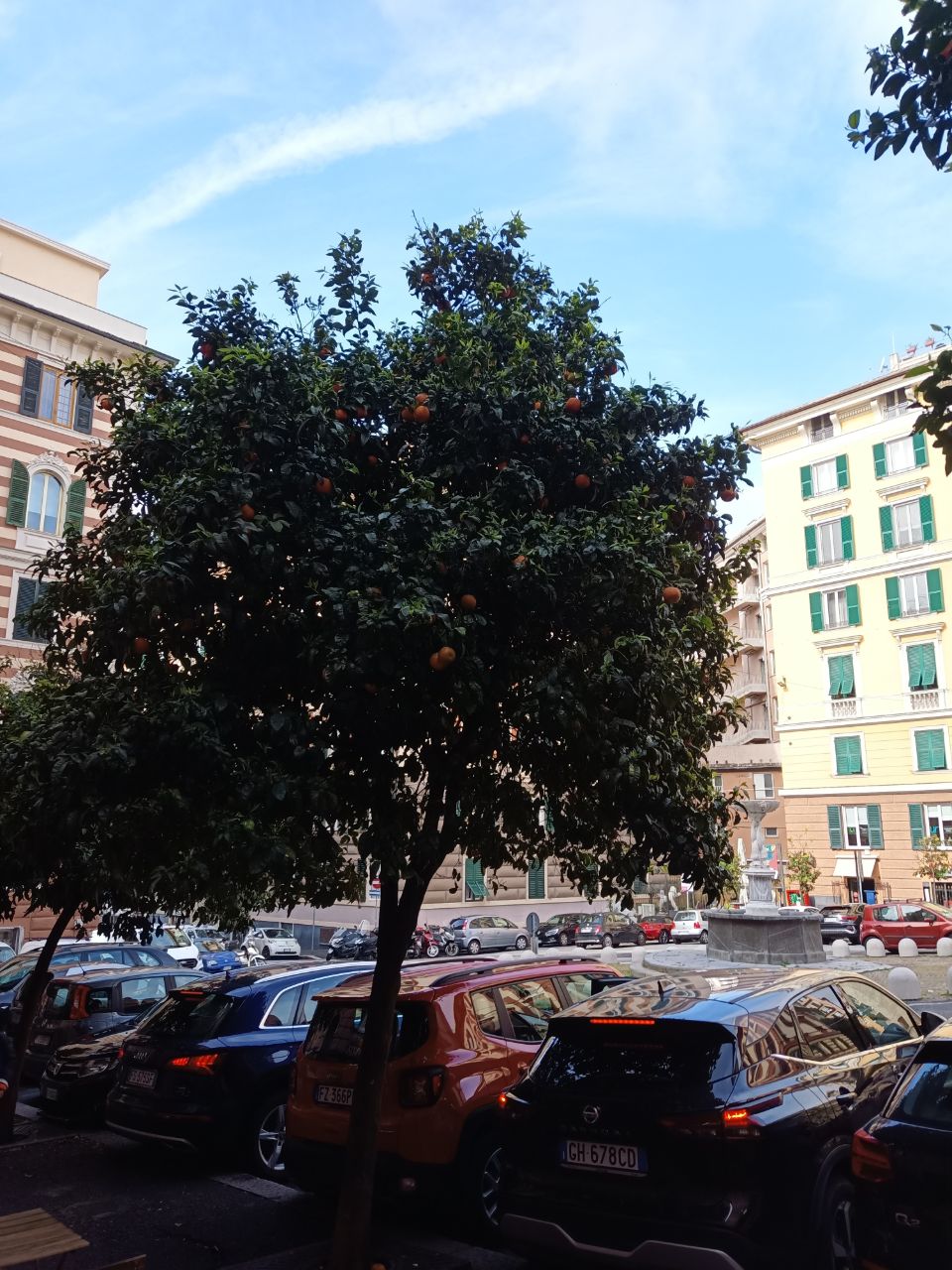
Morning in Castelletto: orange trees over the parked cars 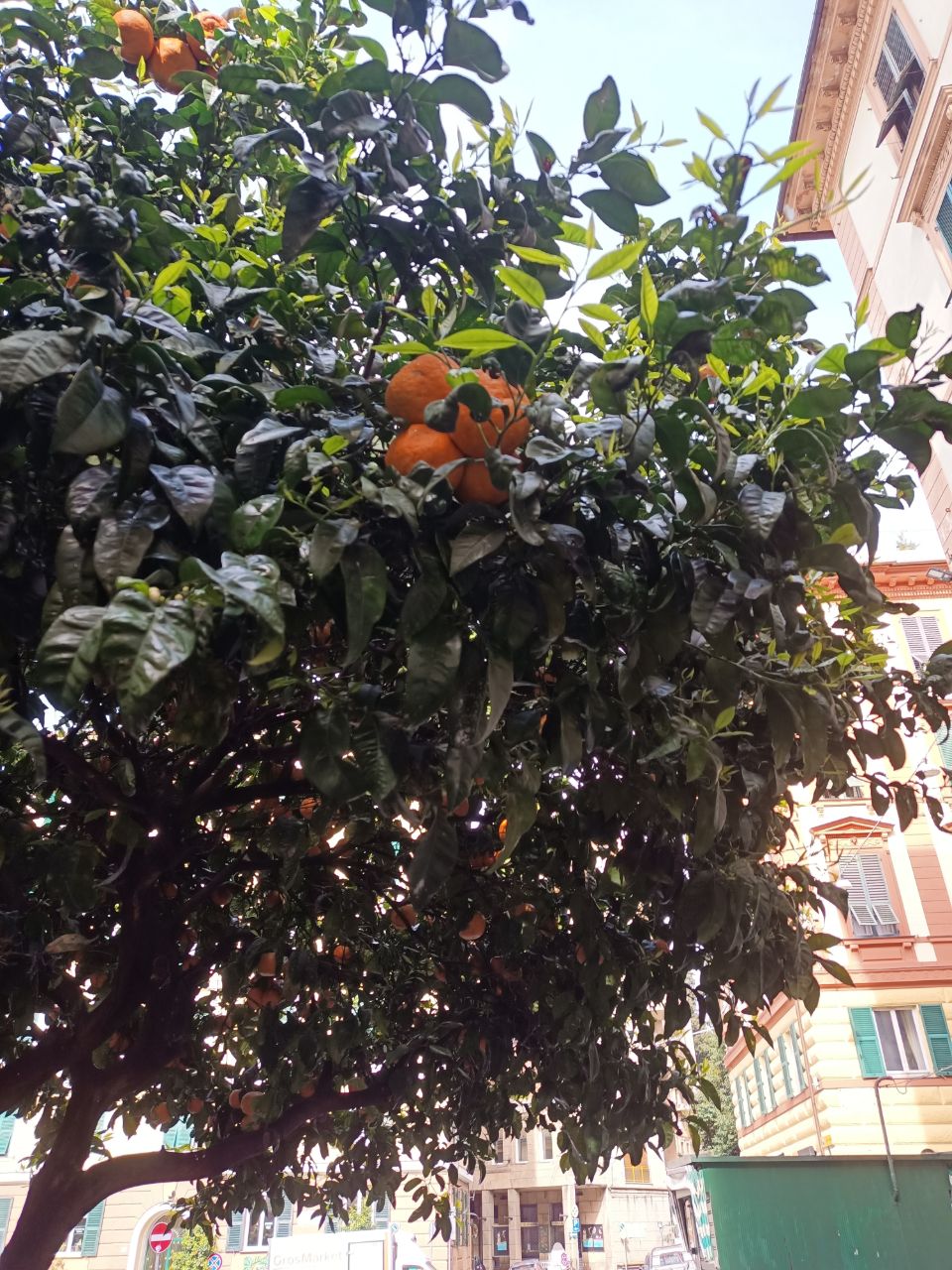
The orange tree, actually in fruit 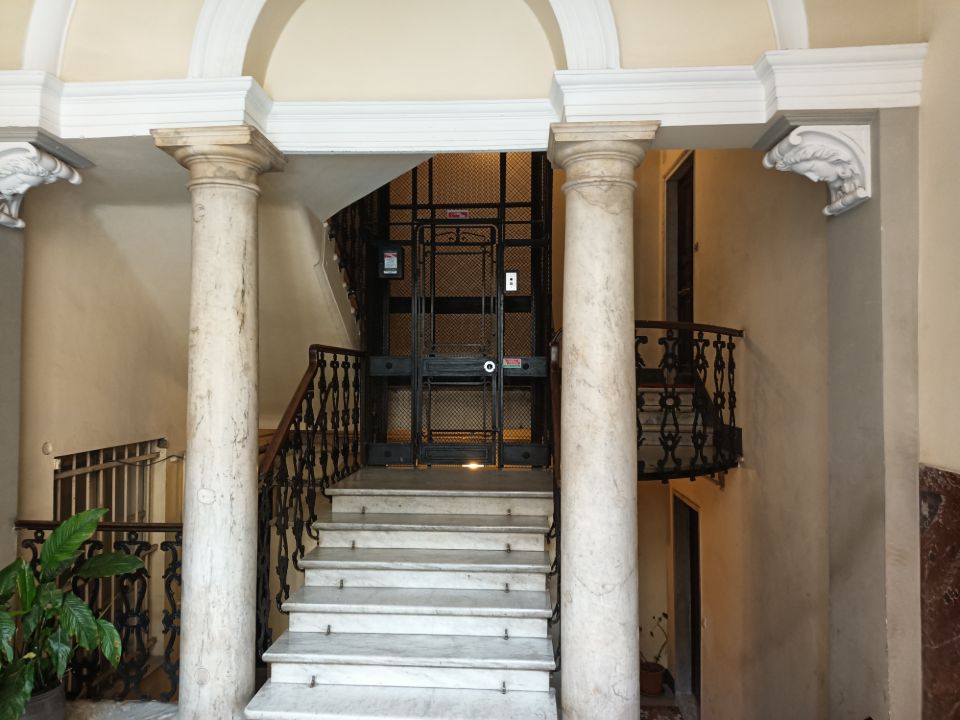
The marble staircase, railings the height of a person 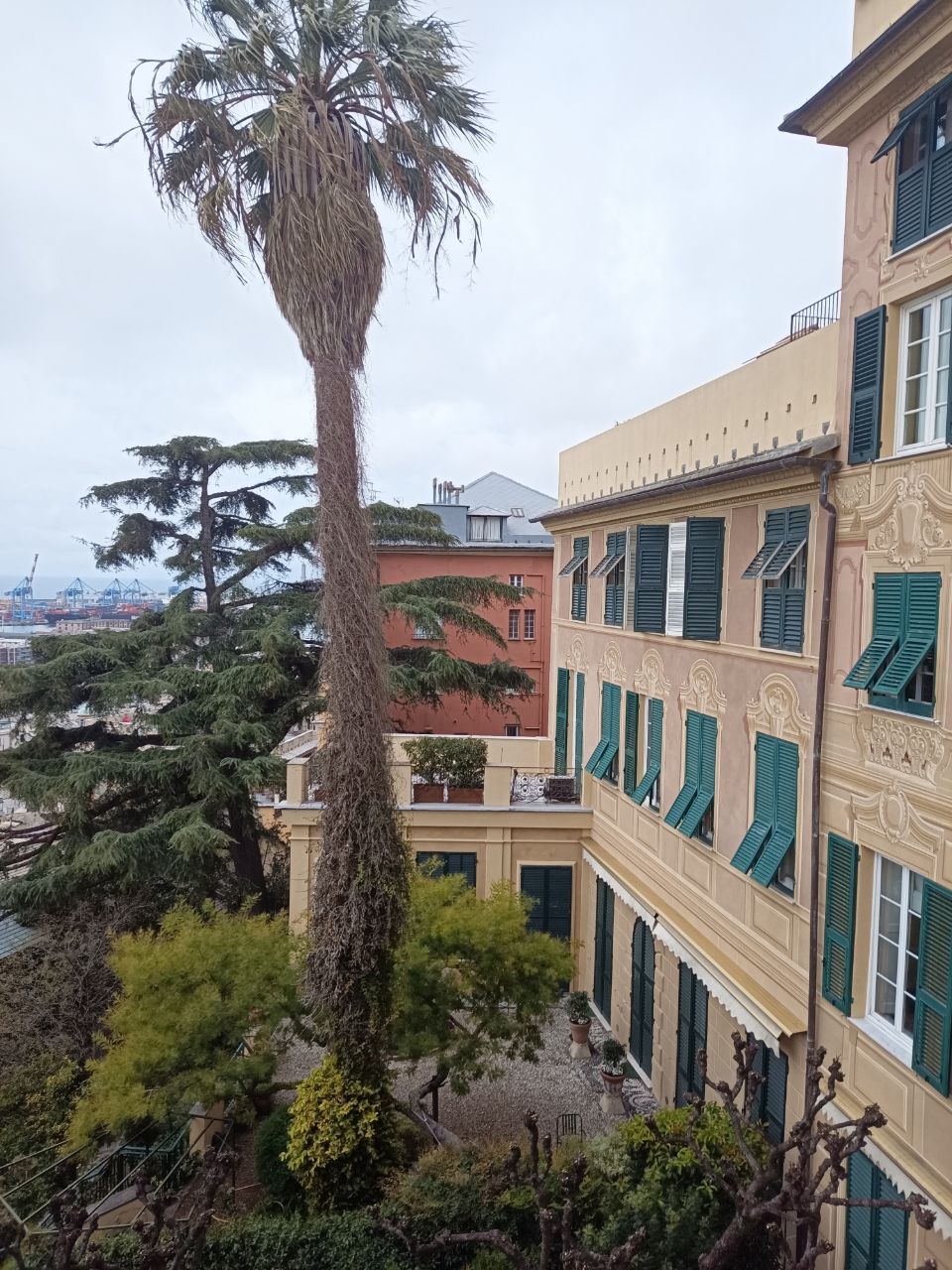
A palm over an ochre villa in Castelletto 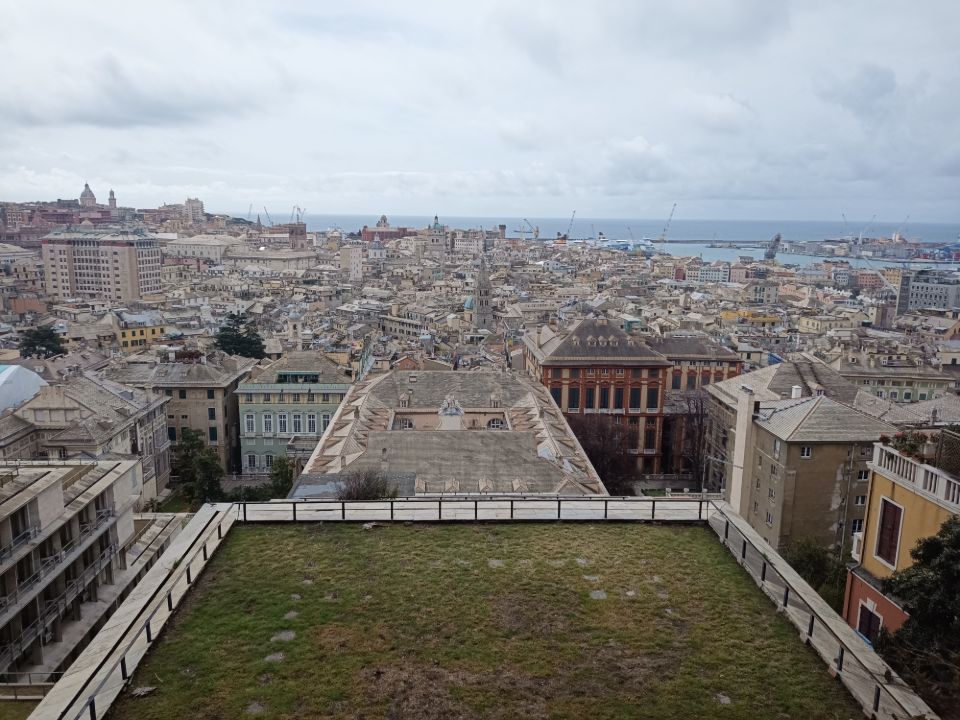
Villetta di Negro: the whole bowl of the city 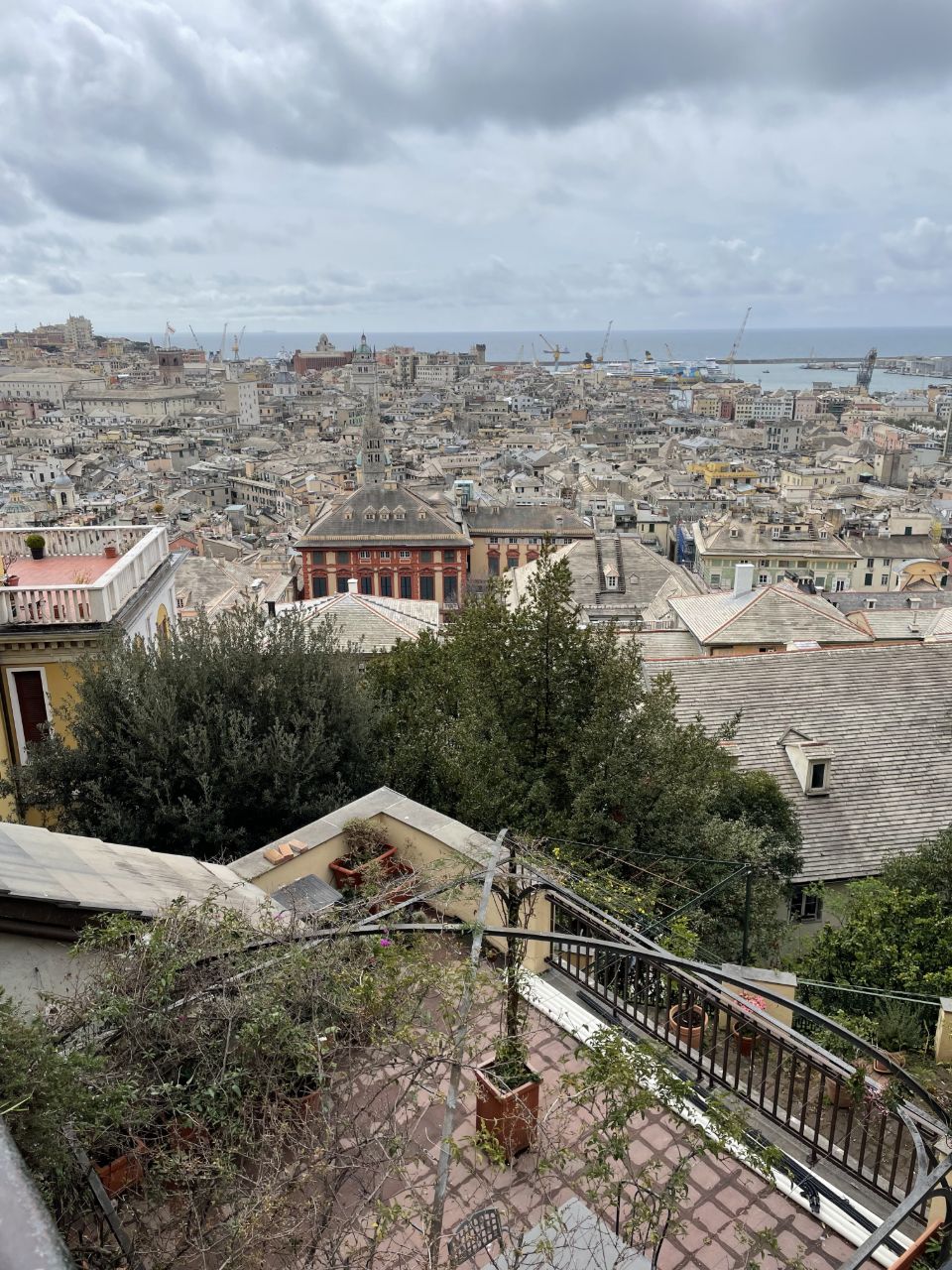
A terrace over the rooftops, the sea past the city 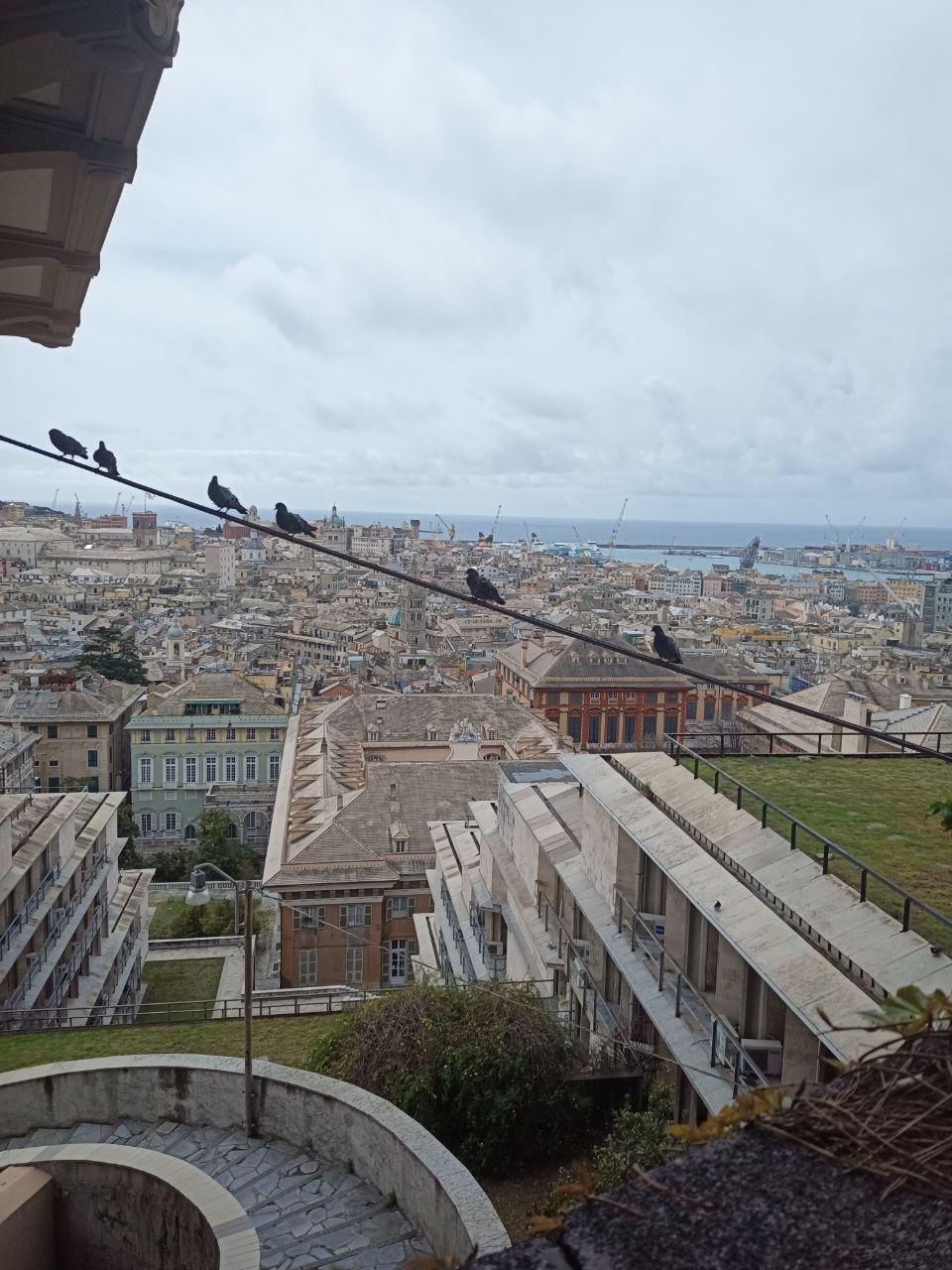
Pigeons on a wire over the city 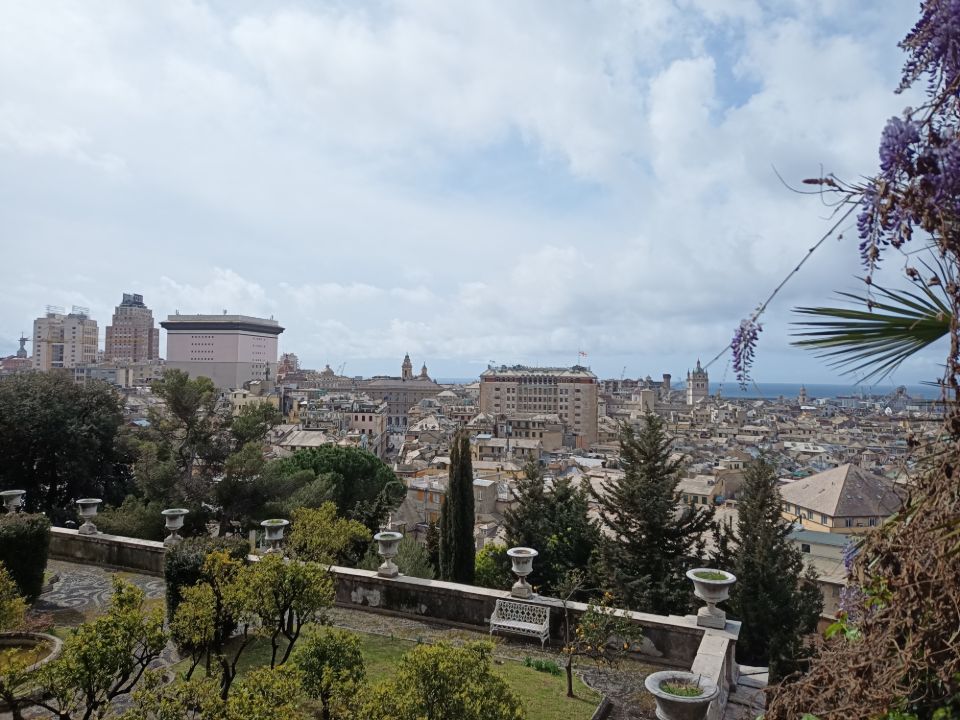
Villetta di Negro: garden terrace, urns and cypresses 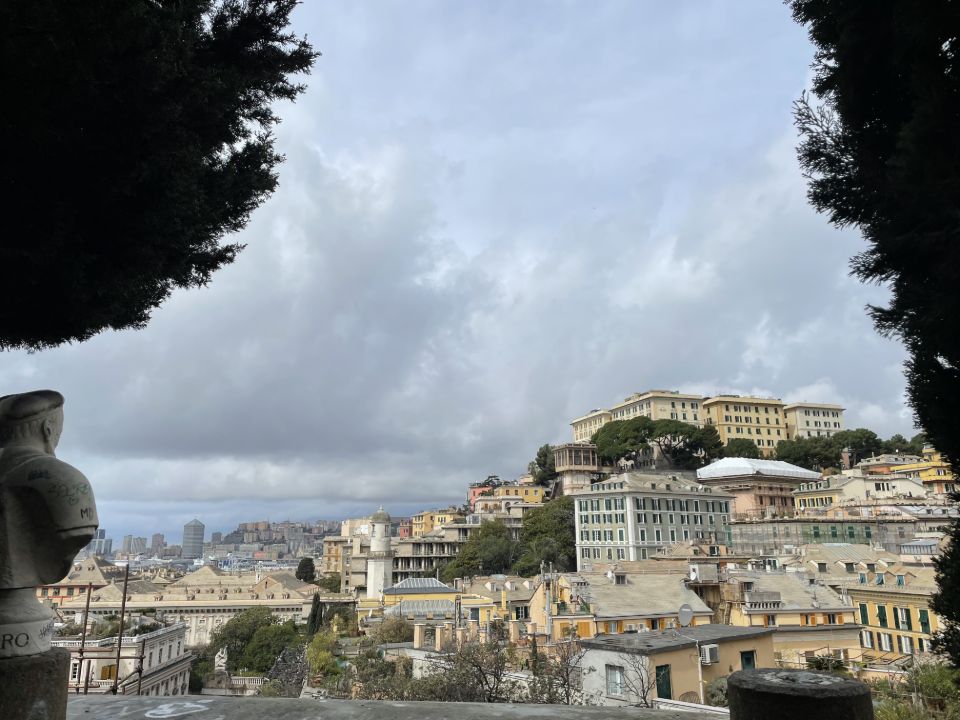
A stone bust on the balustrade, hills climbing behind 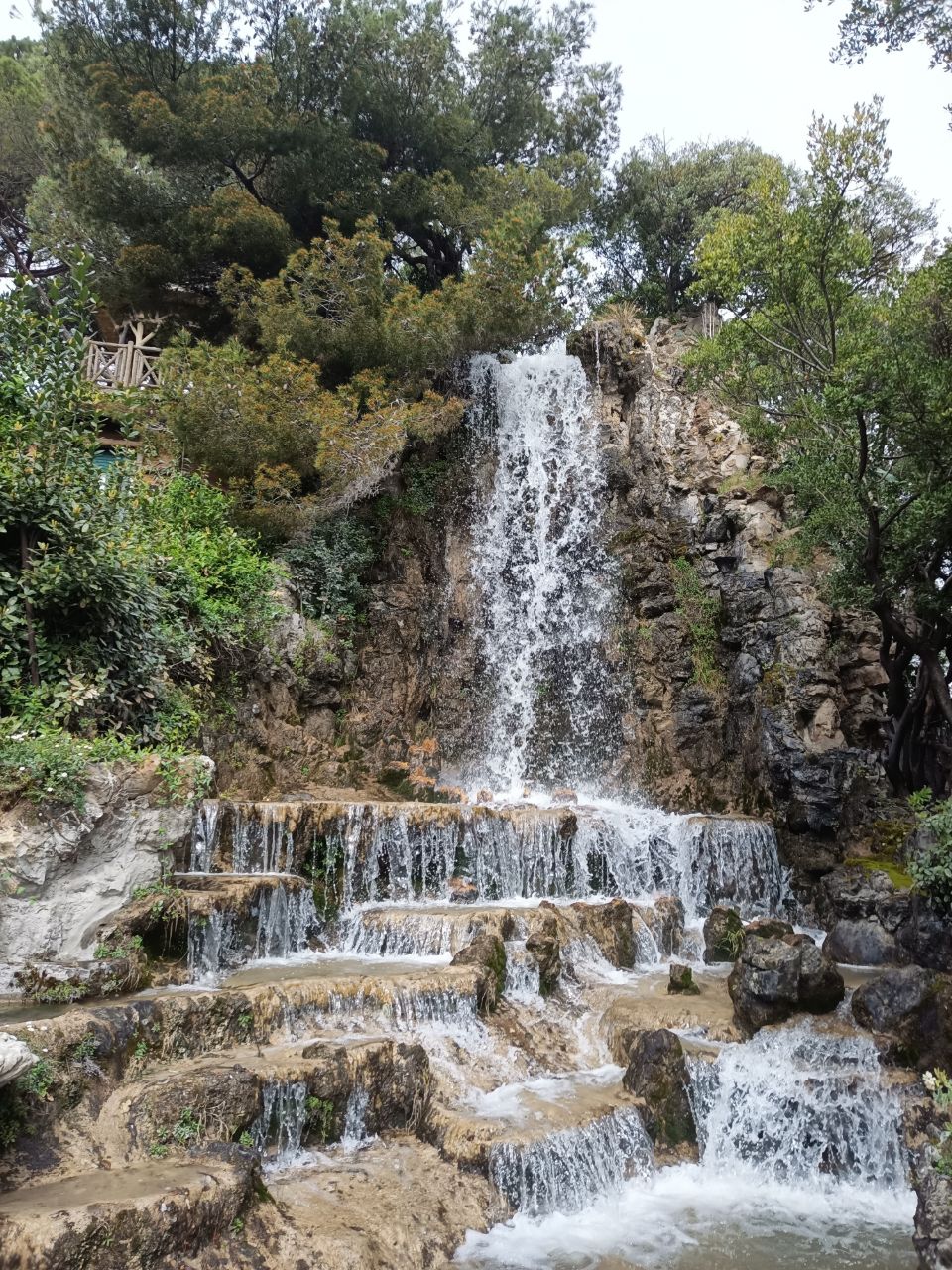
The stepped waterfall in Villetta di Negro
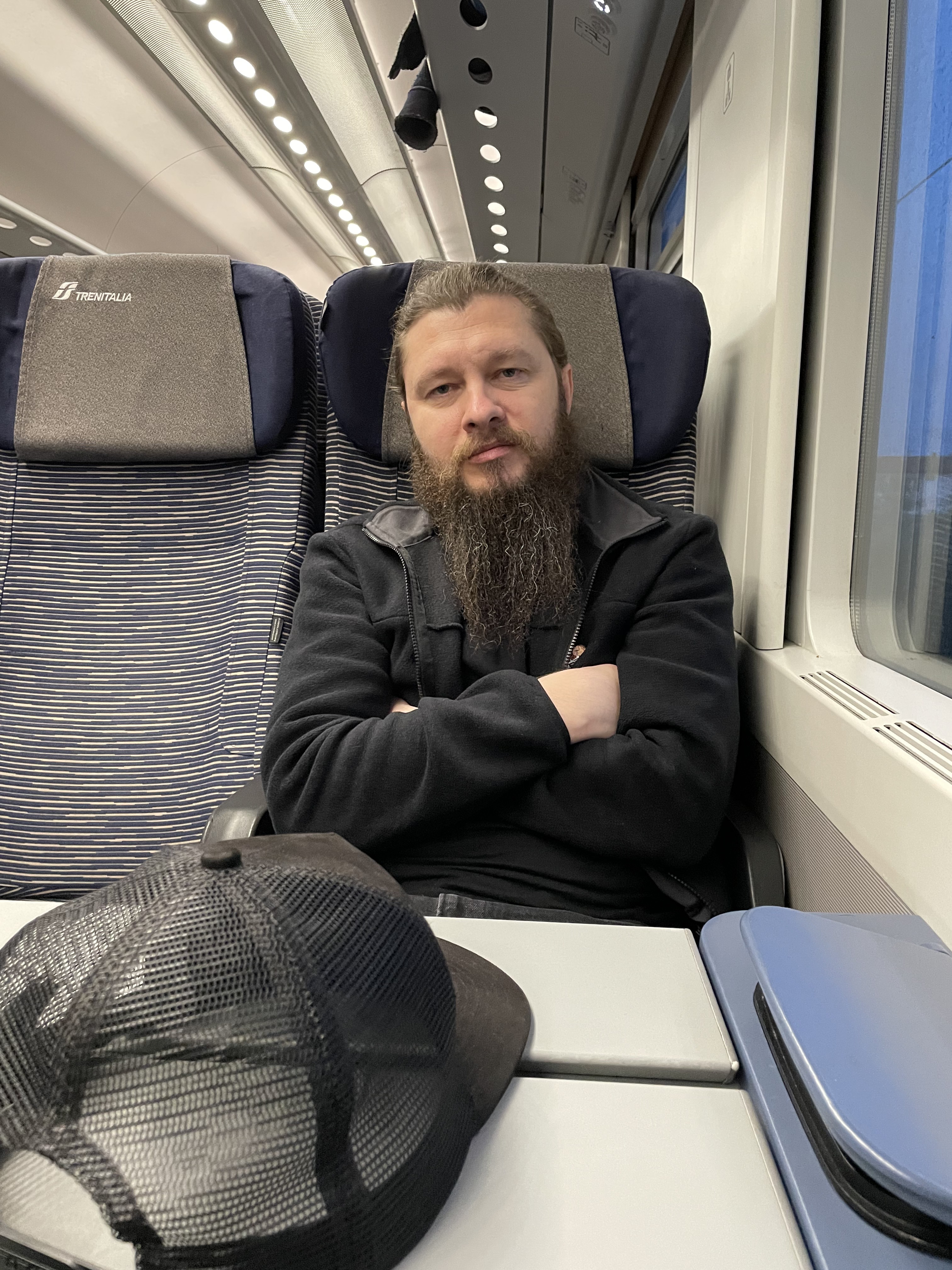
Il centro storico
Genova’s old town is the largest medieval quarter in Europe, and it spends that reputation on alleys that smell of fish and laundry rather than on facades. We dropped into it through streets where motorbikes idle under balconies, past an antique shop whose window held a vintage anatomical chart of a moustached man, chest open like a map drawer. Behind a grand arcaded palazzo flew Italian and EU flags; at the Municipio, sculpted atlantes held up the marble entrance as if the building were too heavy for the twentieth century. A palace staircase rose to a bright window, a hall carried a painted battle scene over our heads.
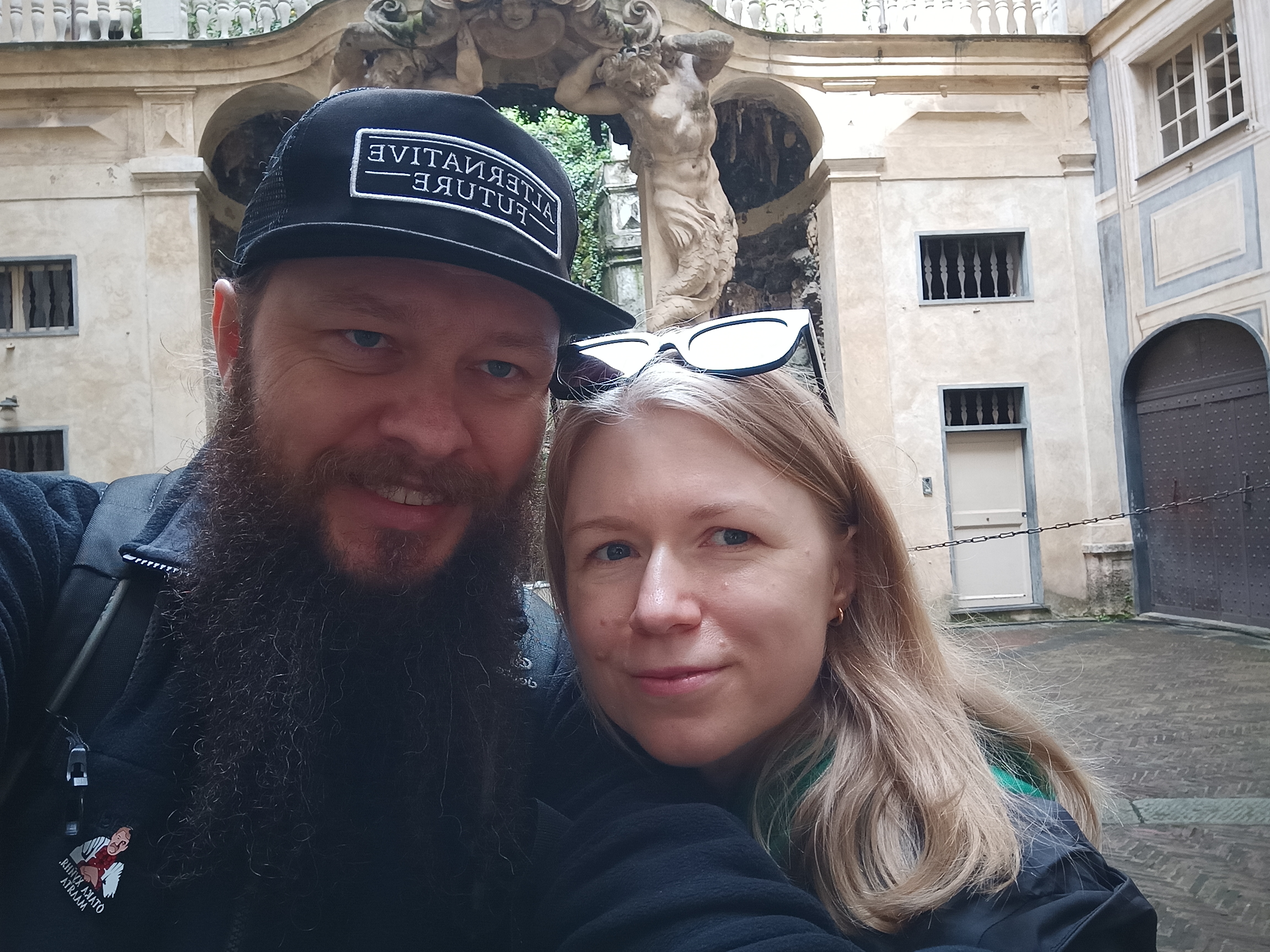
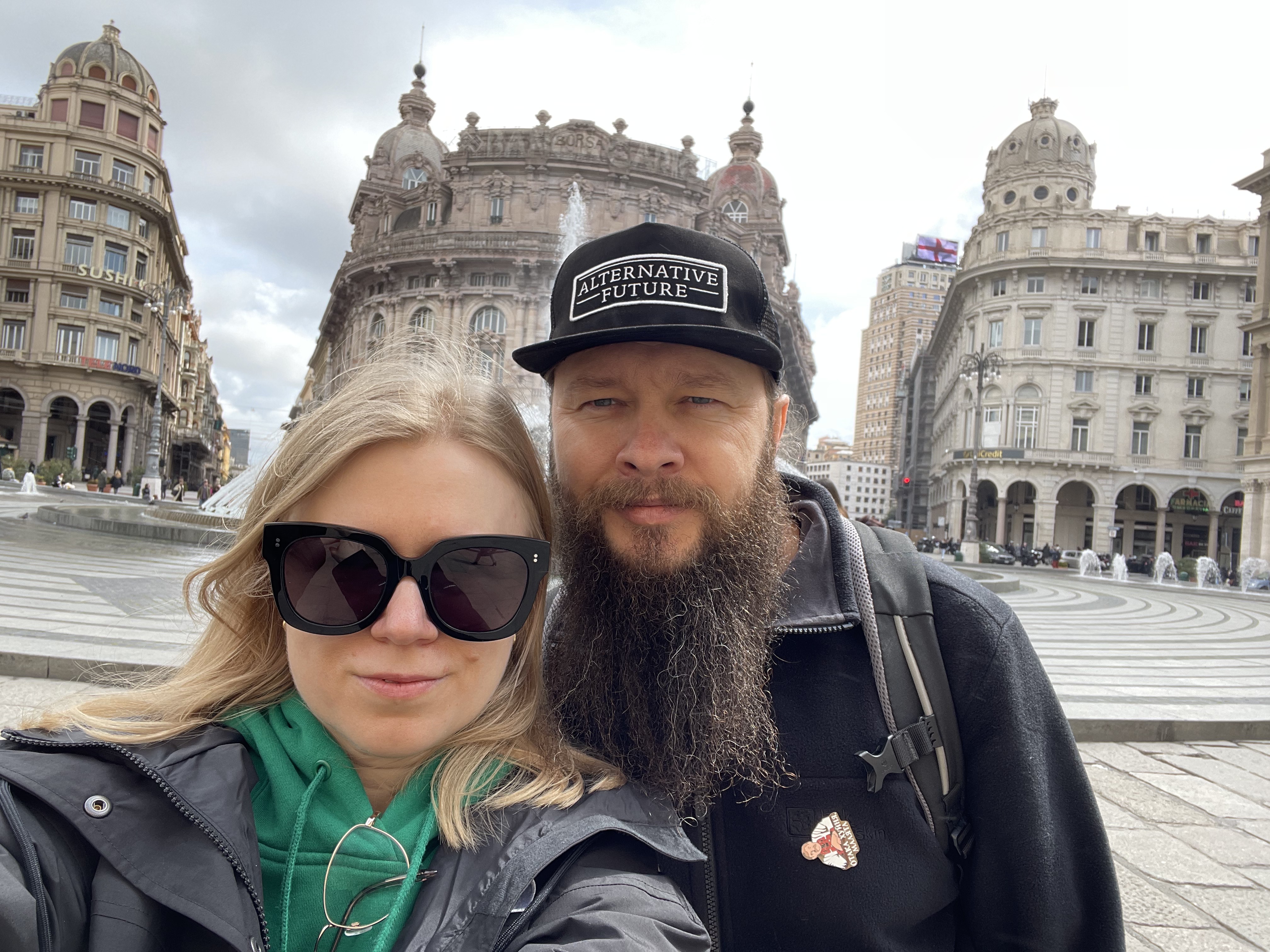
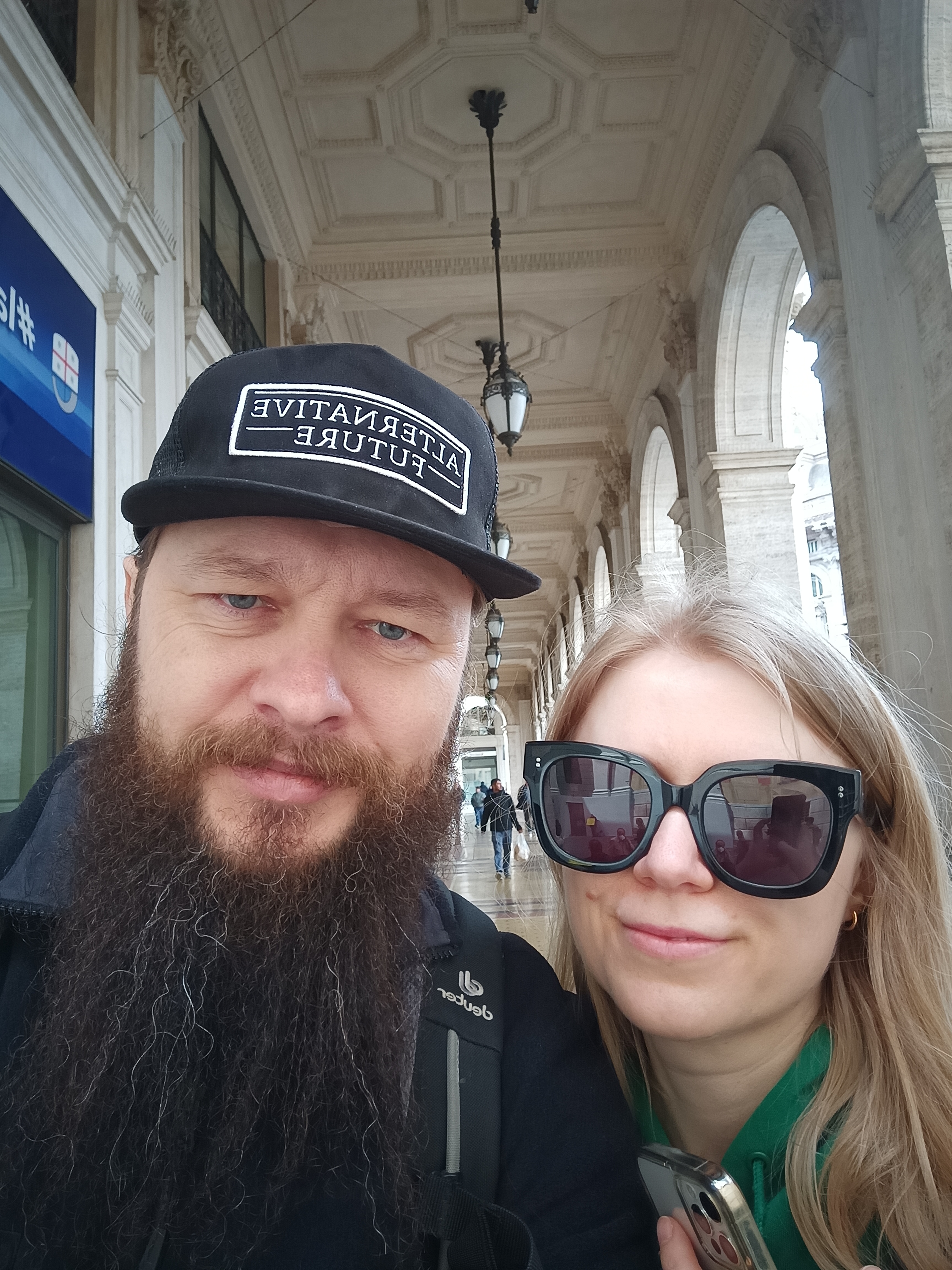
Then the city opened. The arcaded fountain at Piazza de Ferrari threw its arc against palaces and the opera house; we did the couple-selfie under a stone arcade there, the standard act — and repeated it by the fountain a minute later, out of a sense of duty. Porta Soprana stands a little further on, two crenellated towers and a great arch guarding the lane where Columbus is said to have been born.
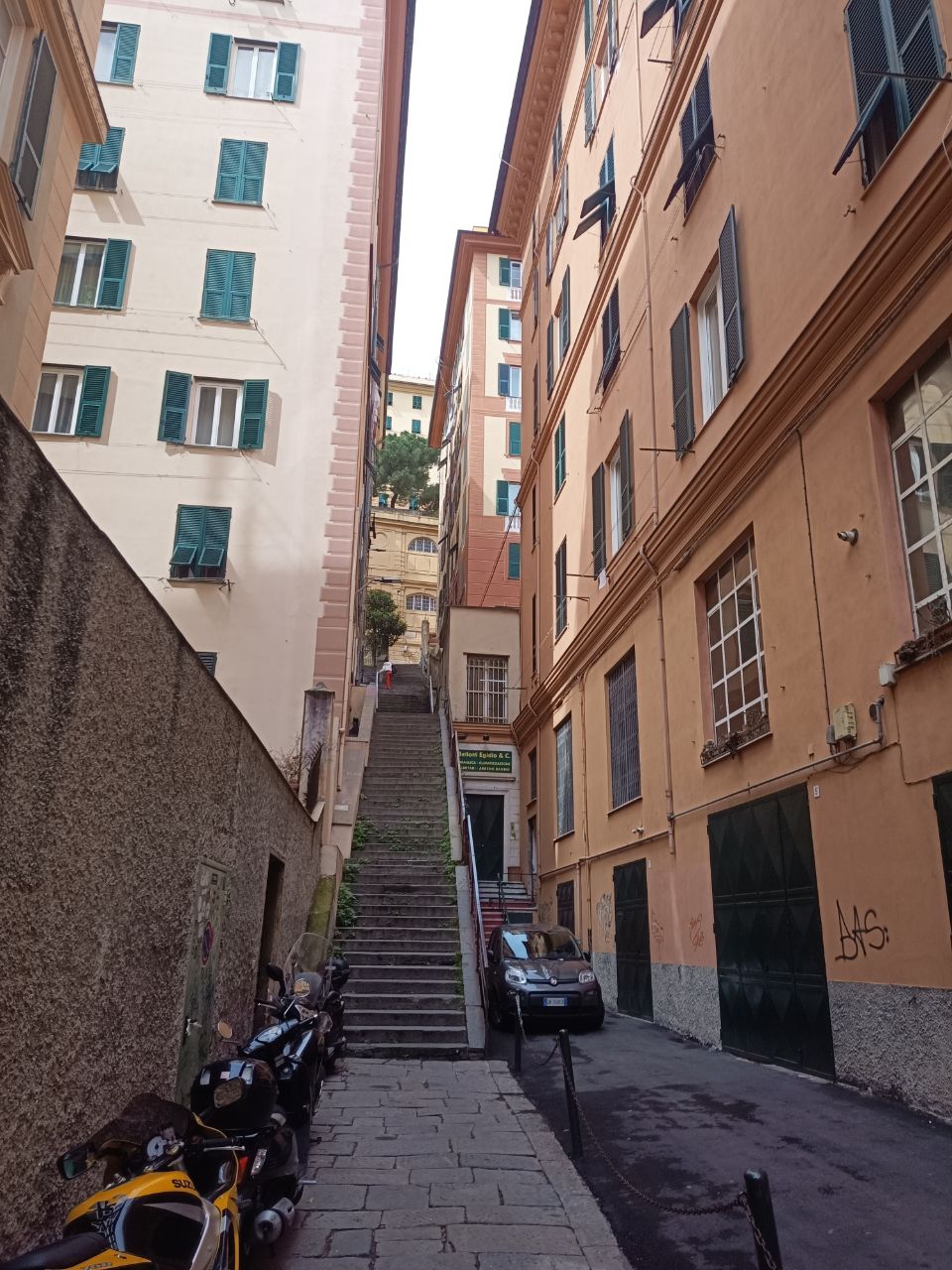
Streets where motorbikes idle under balconies 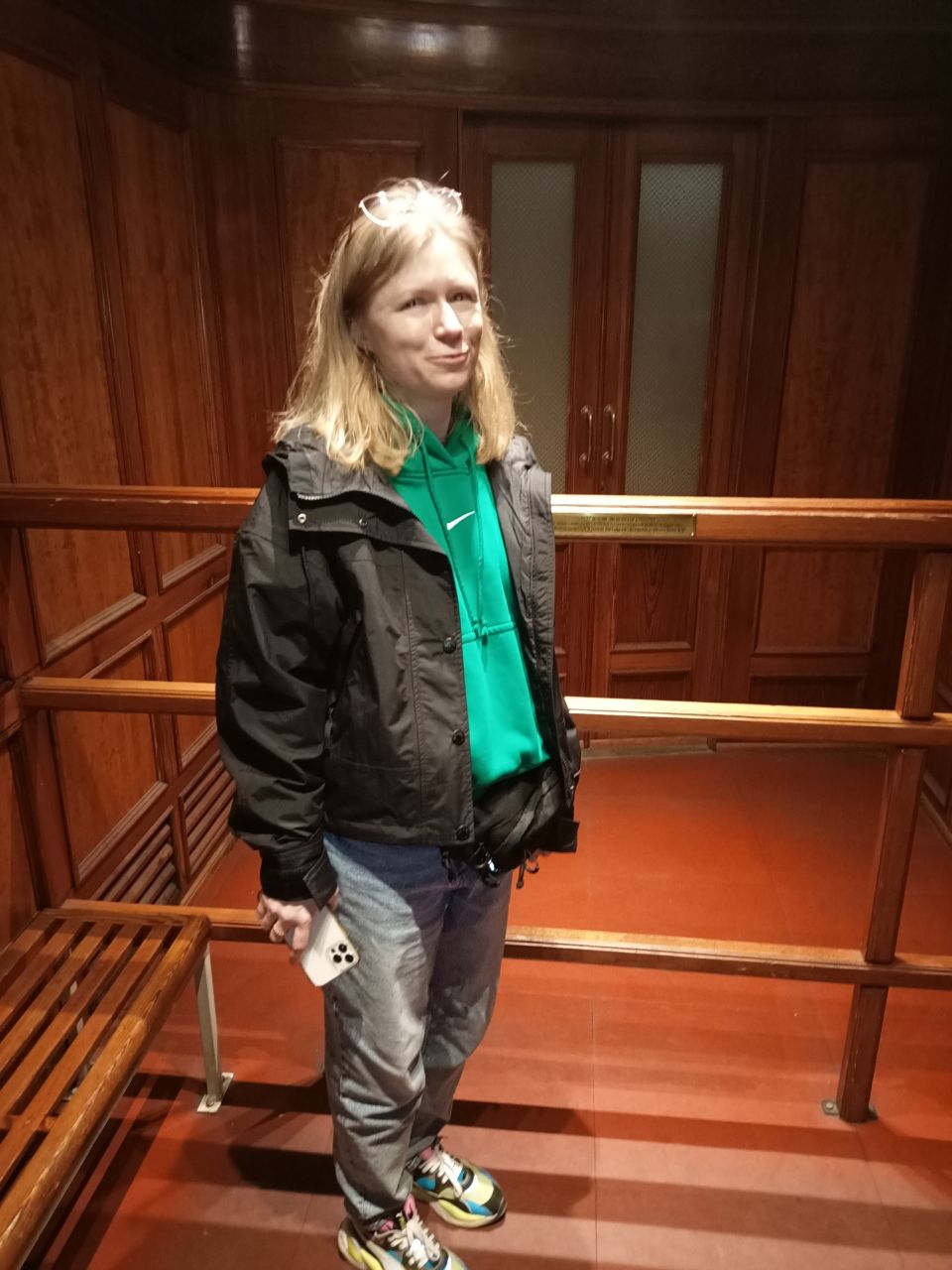
Anna in a street of ochre and cream 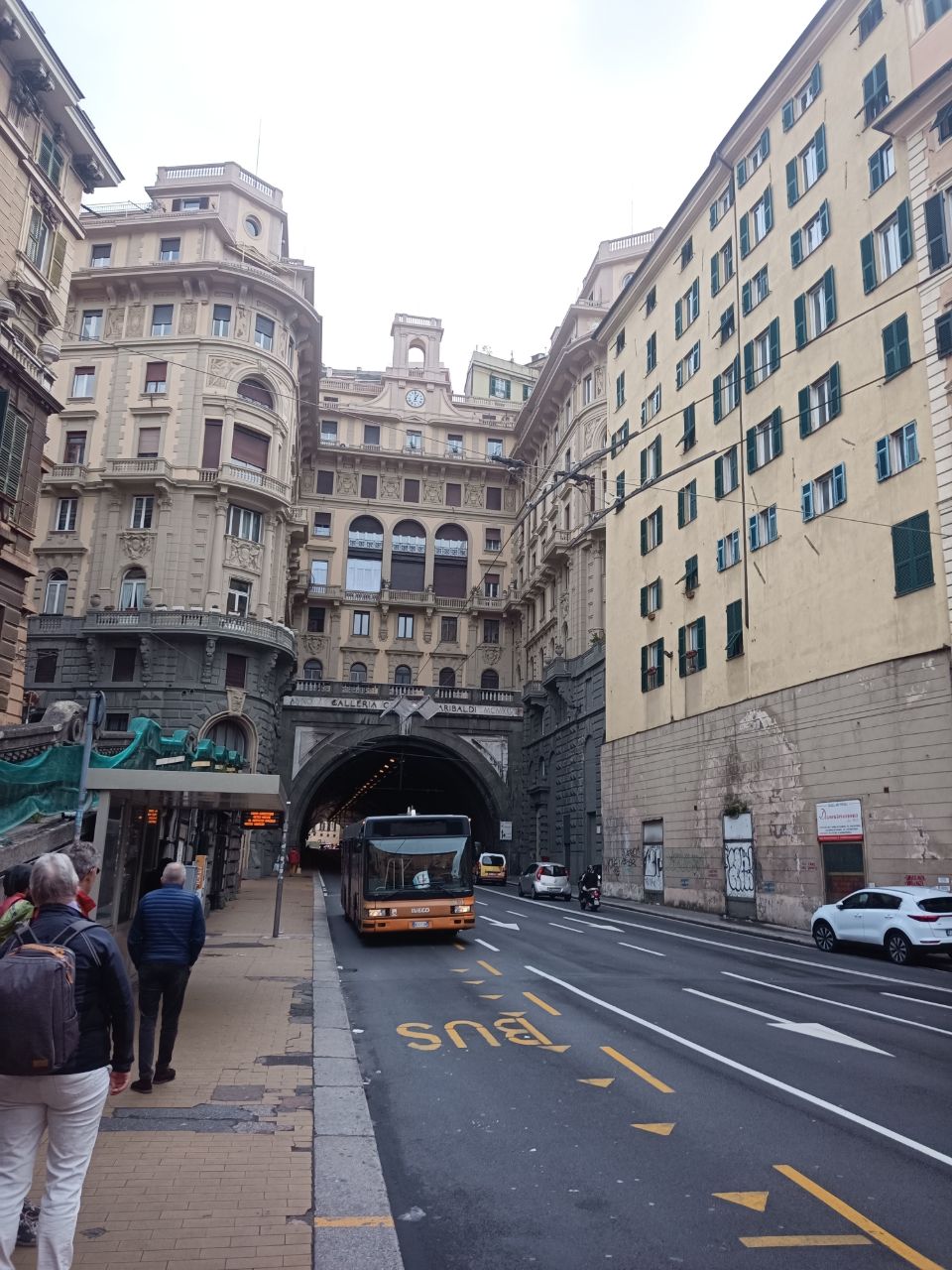
Via Pila and the metro tunnel 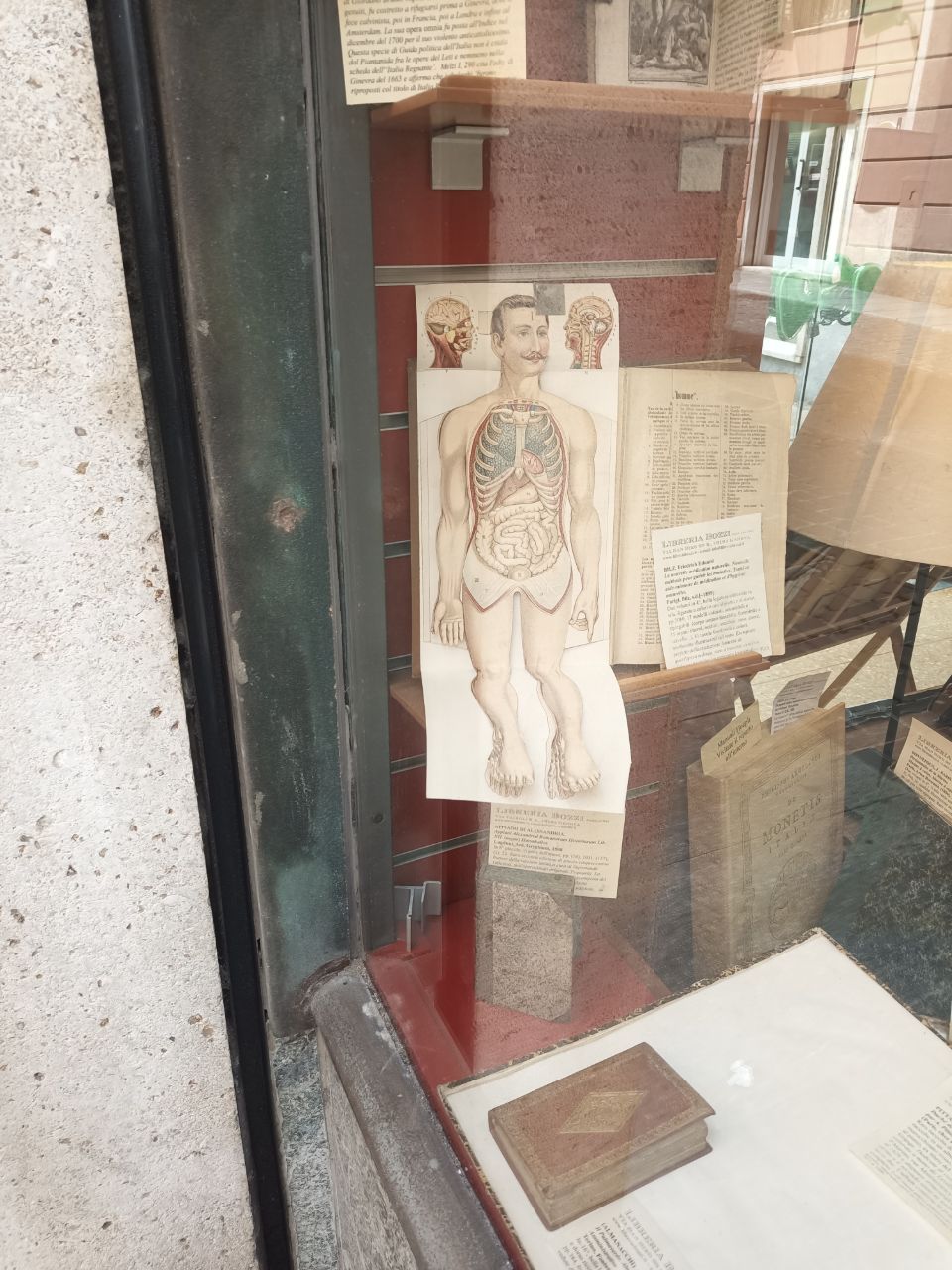
An anatomical chart, offered between the antique chests 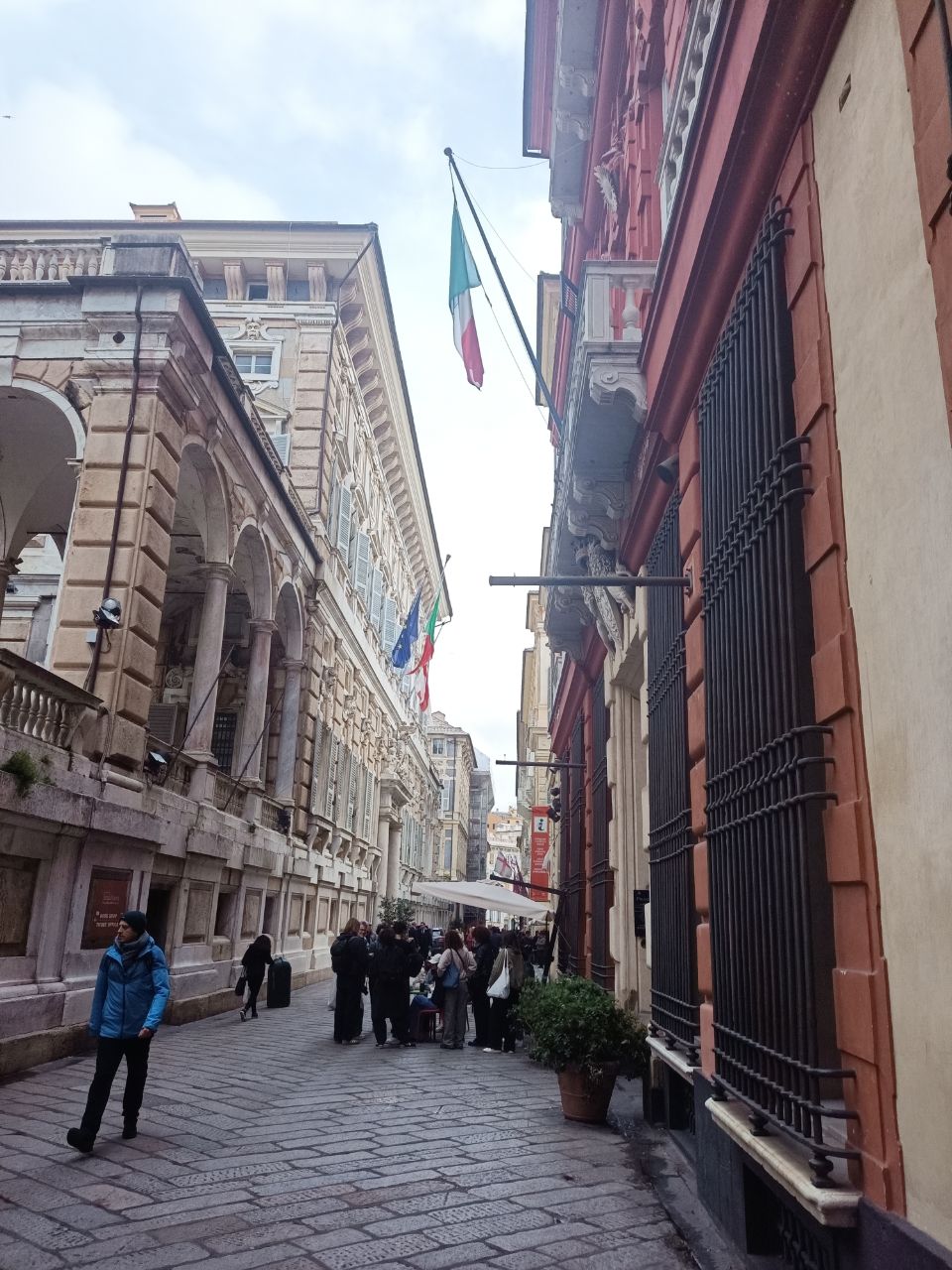
Arcaded palazzo with Italian and EU flags 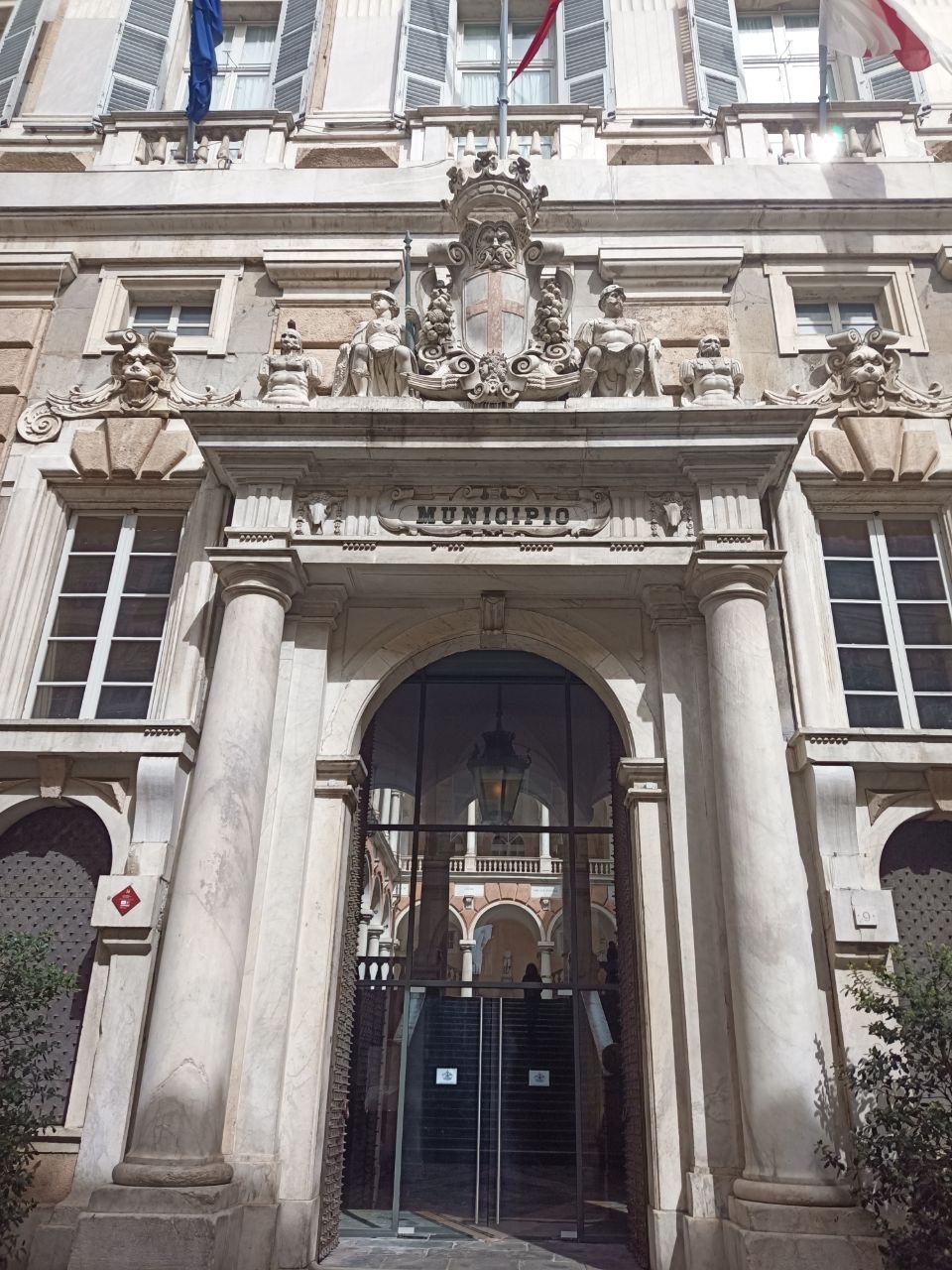
The Municipio's sculpted atlantes 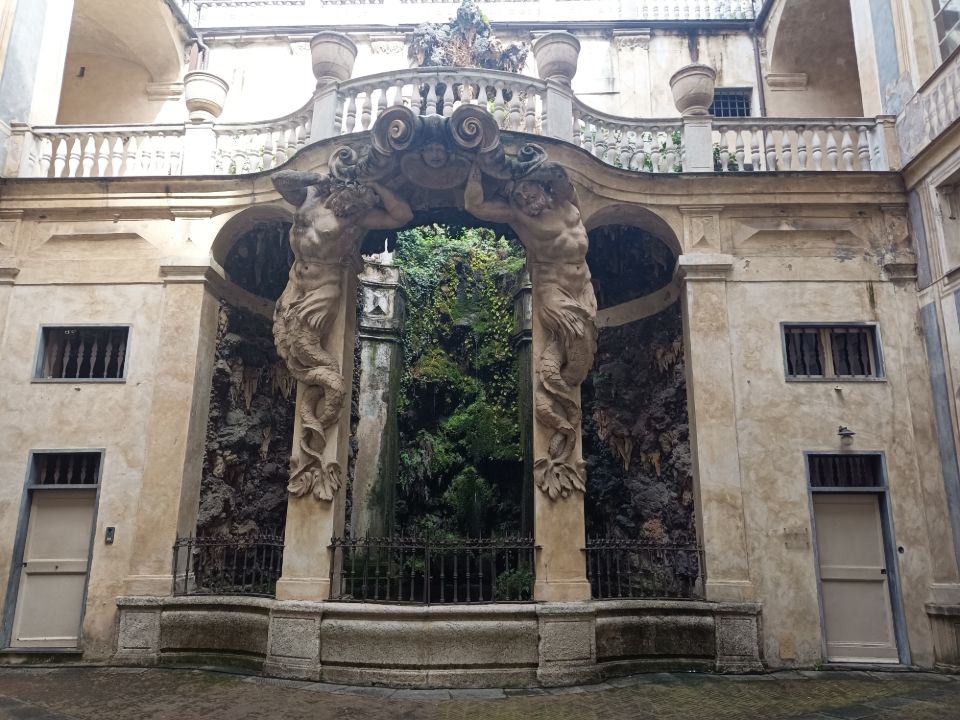
A palace courtyard, framed in stucco 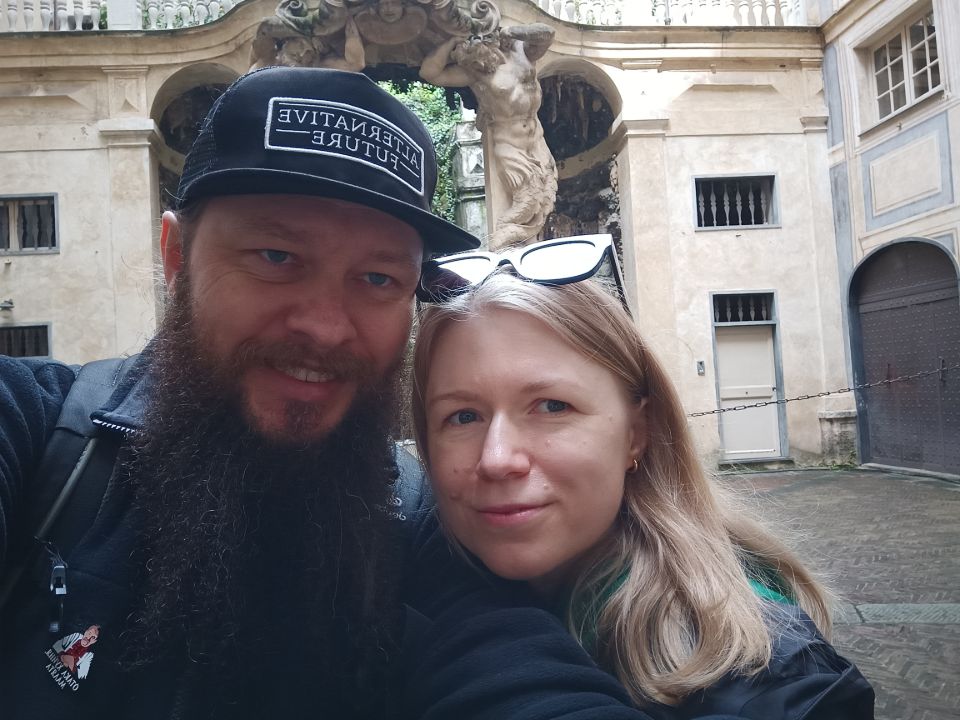
The palace's sculpted grotto courtyard 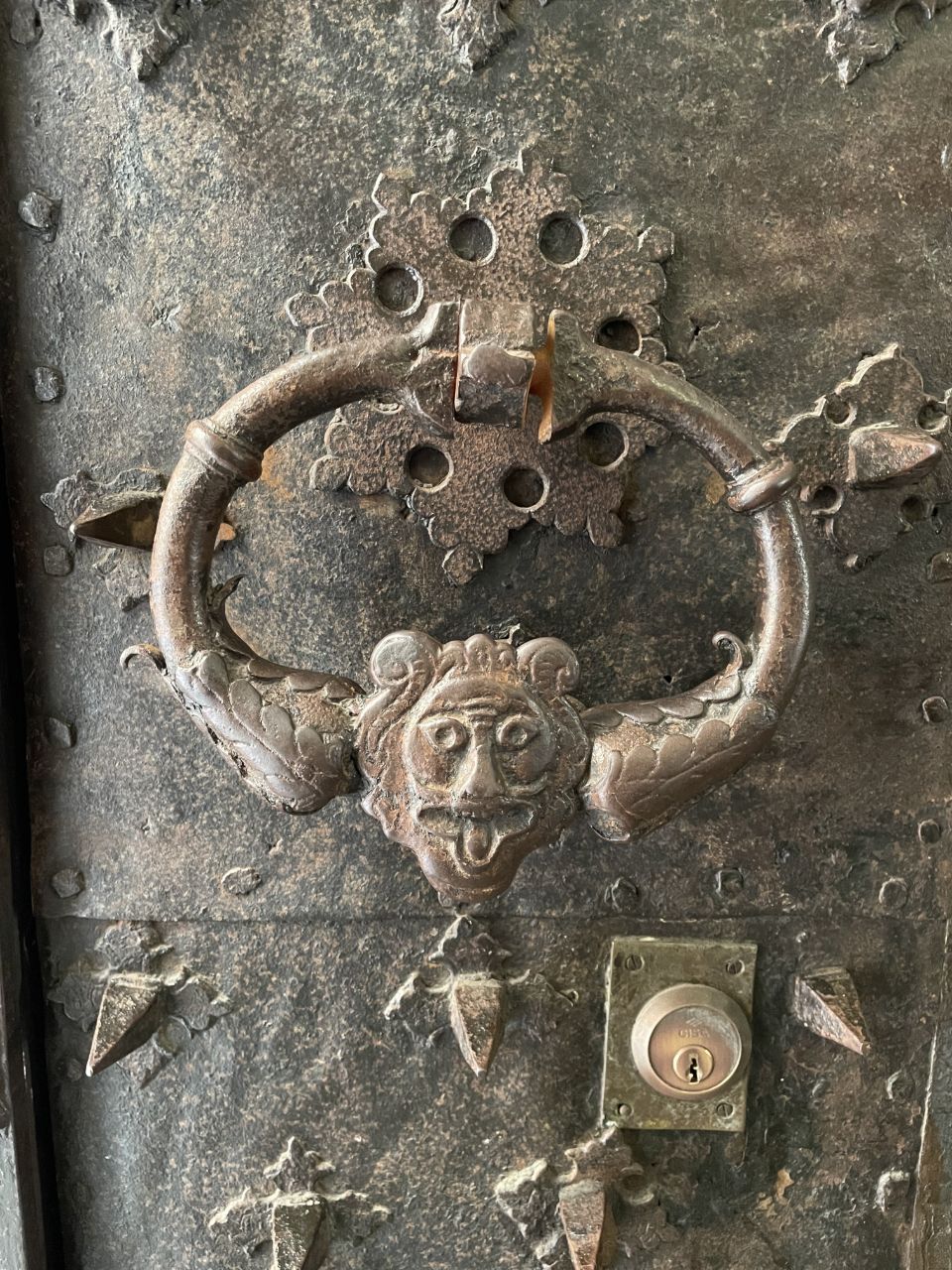
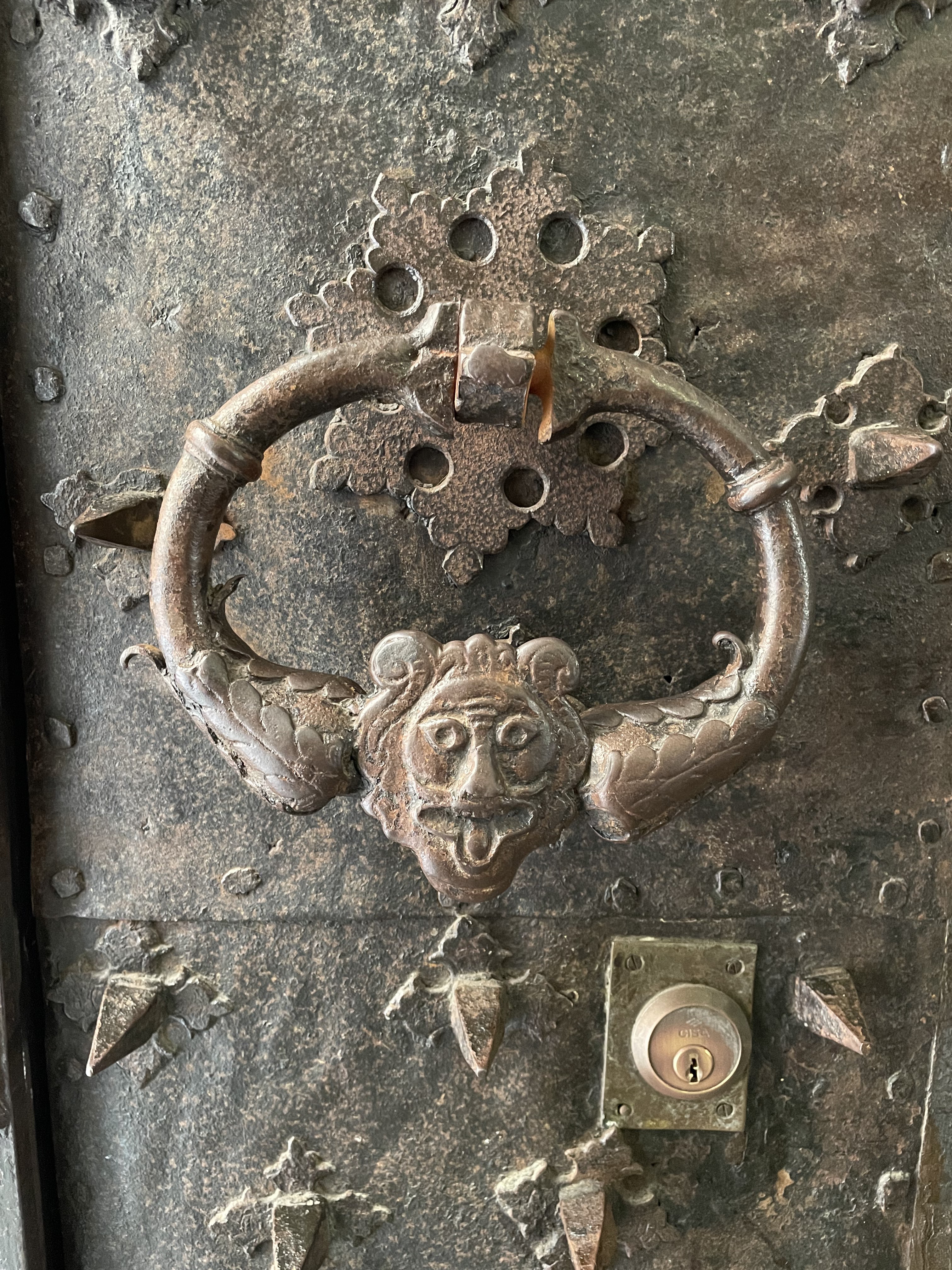
The spiked door and its grimacing ring knocker 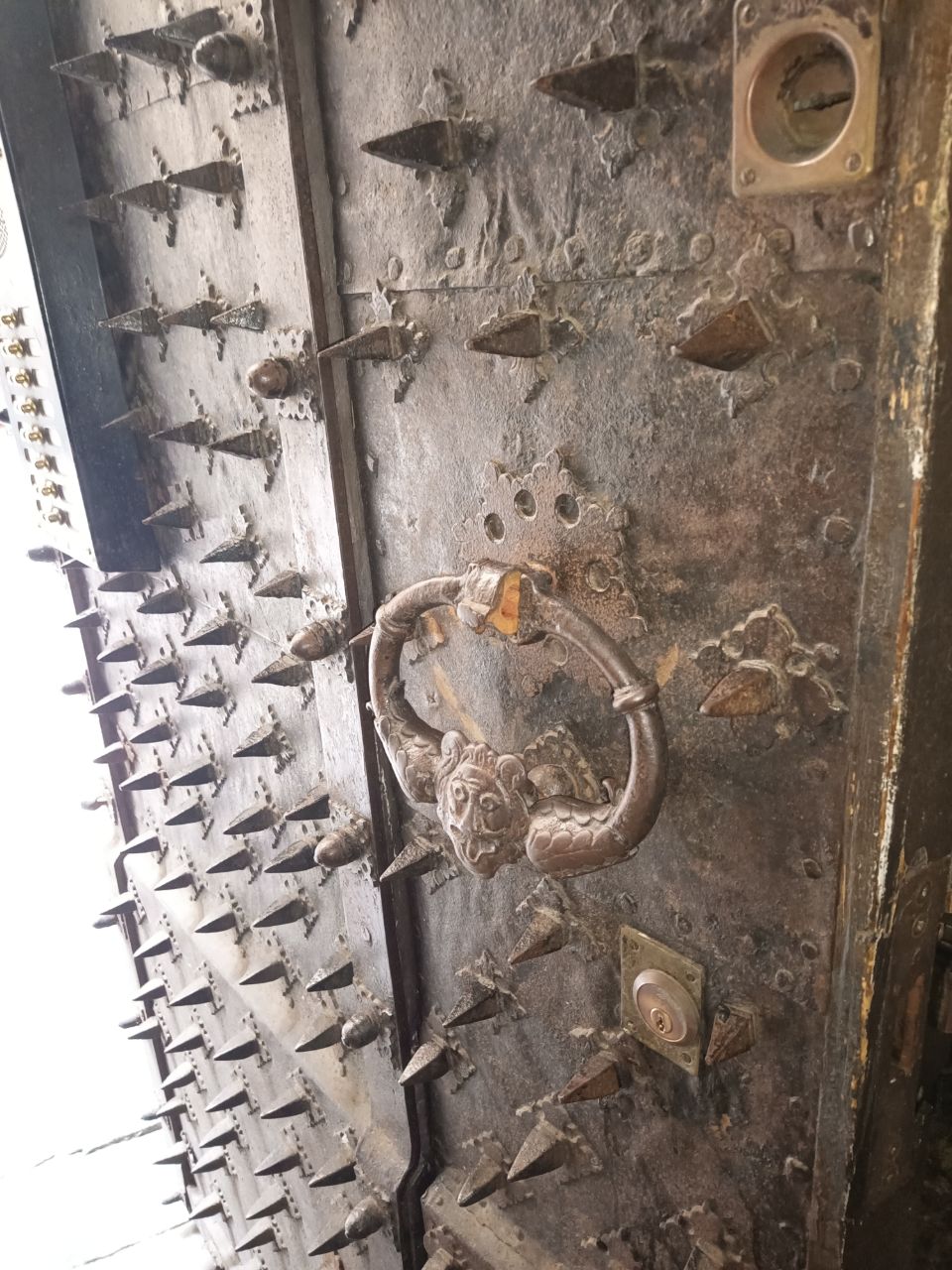
A spiked door knocker, palace-sized 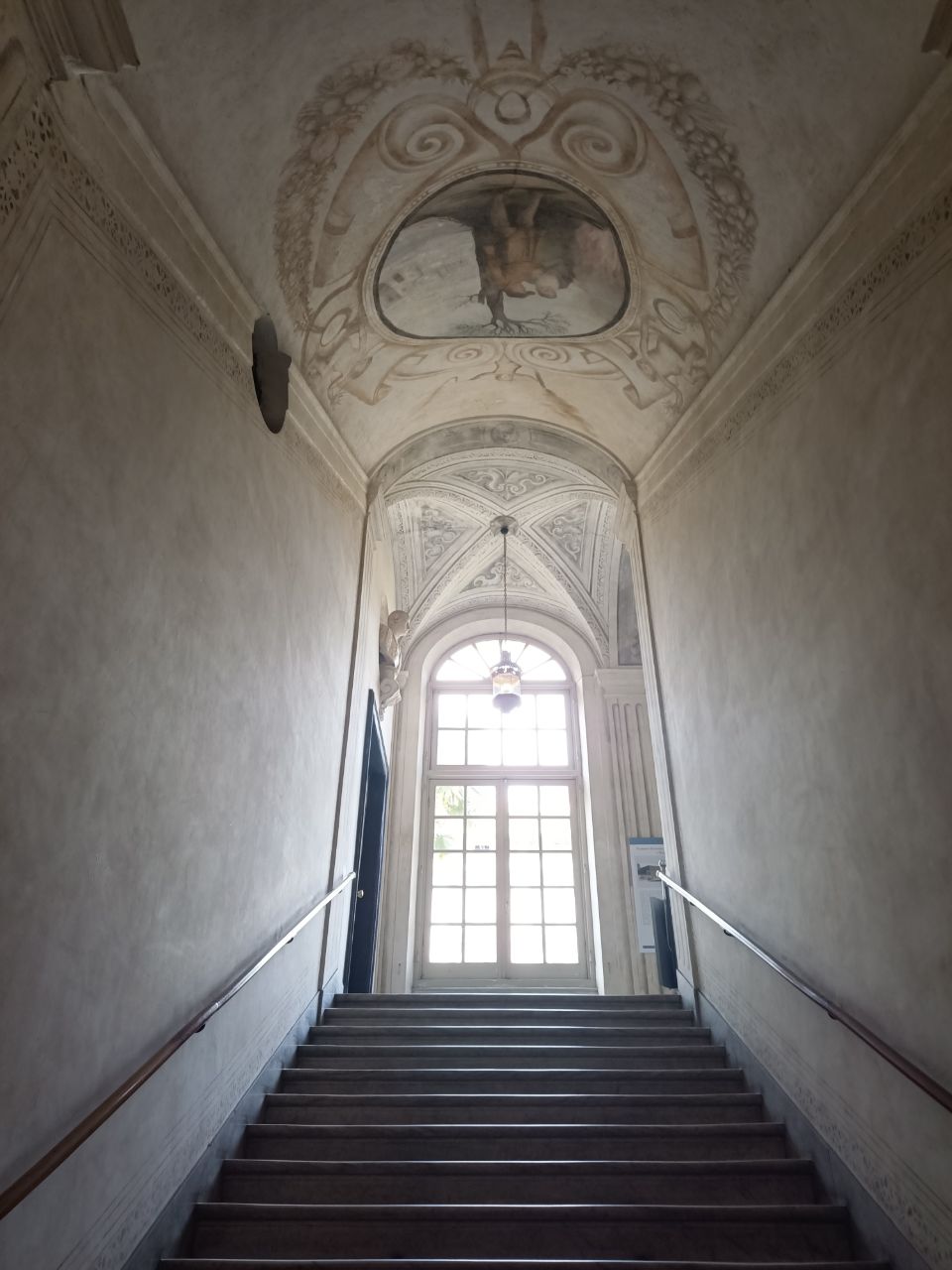
Palace staircase towards a bright window 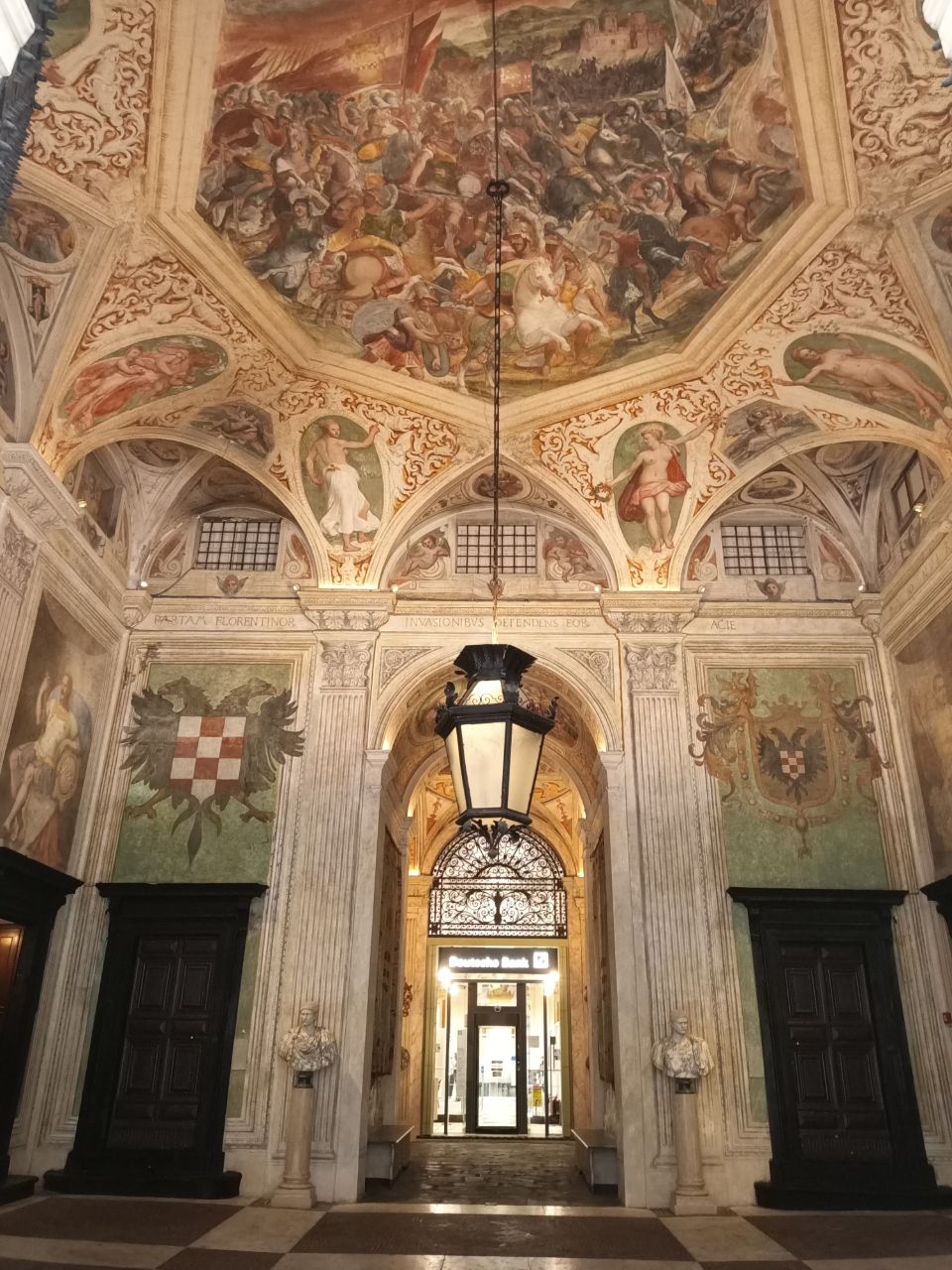
A painted battle scene over the entrance hall 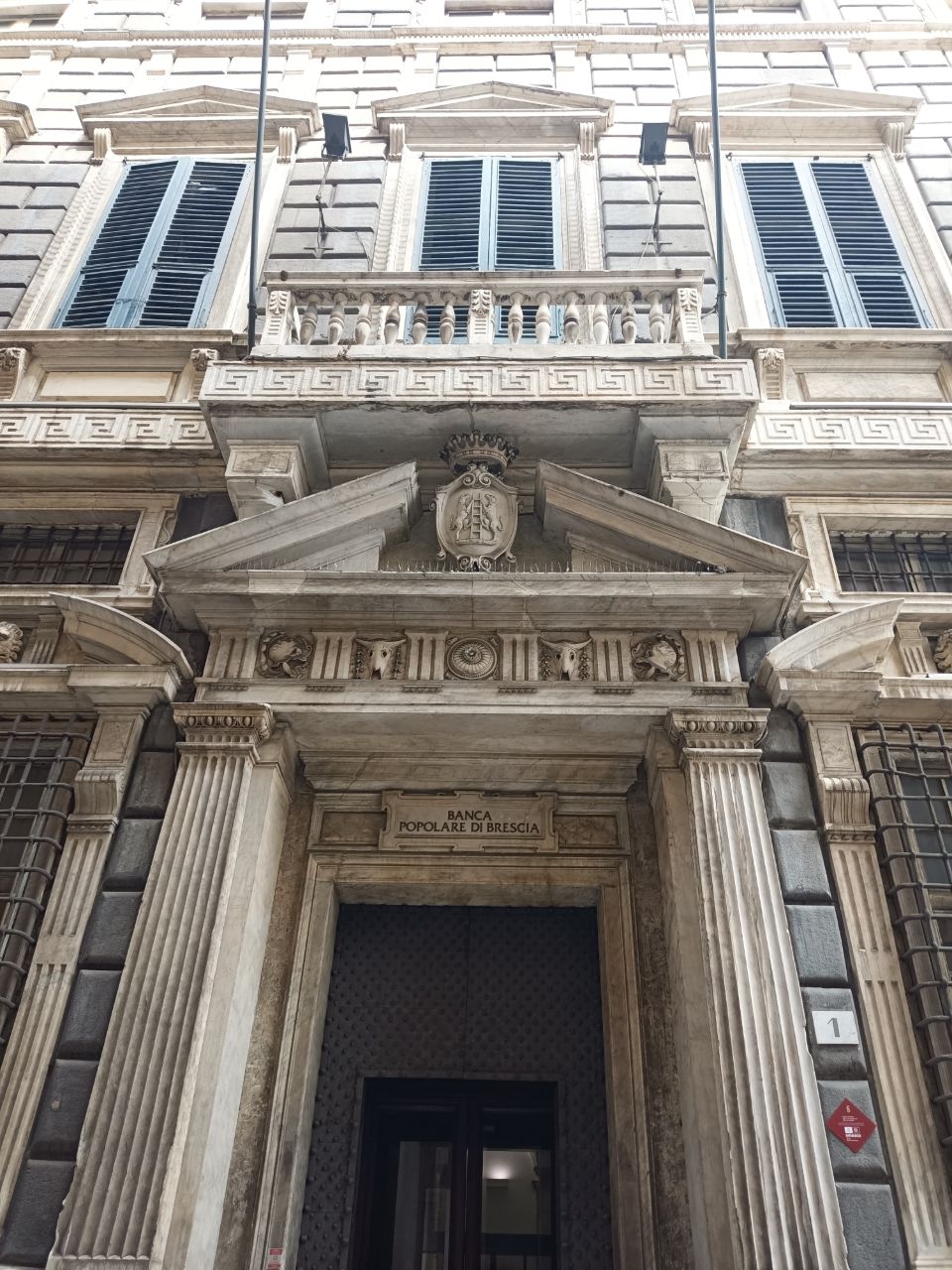
A carved bank portal on the street 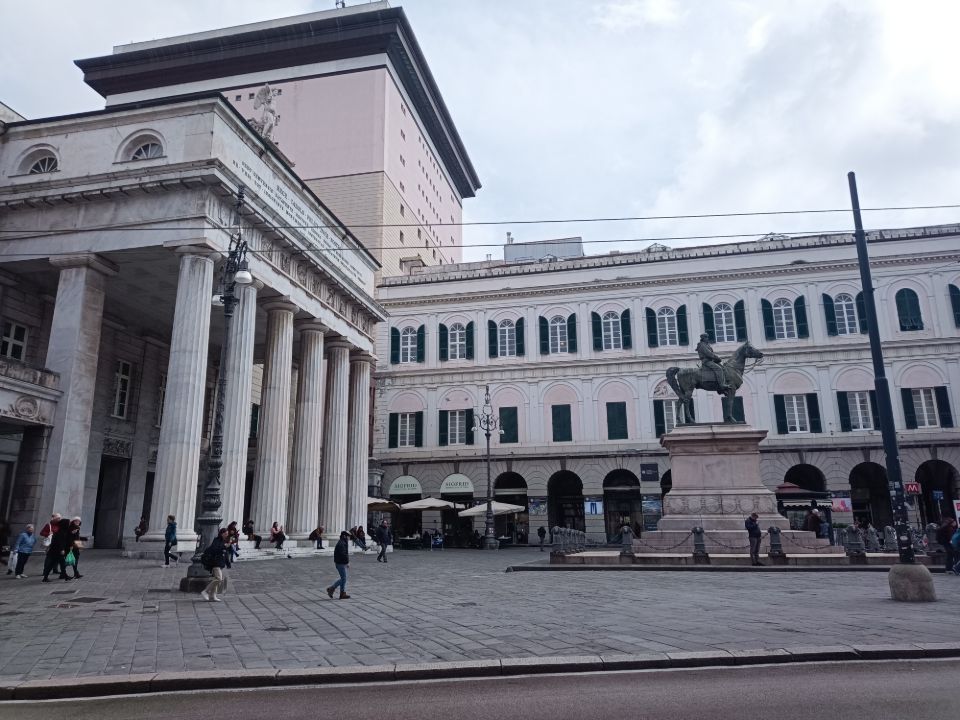
The square's rider on his pedestal 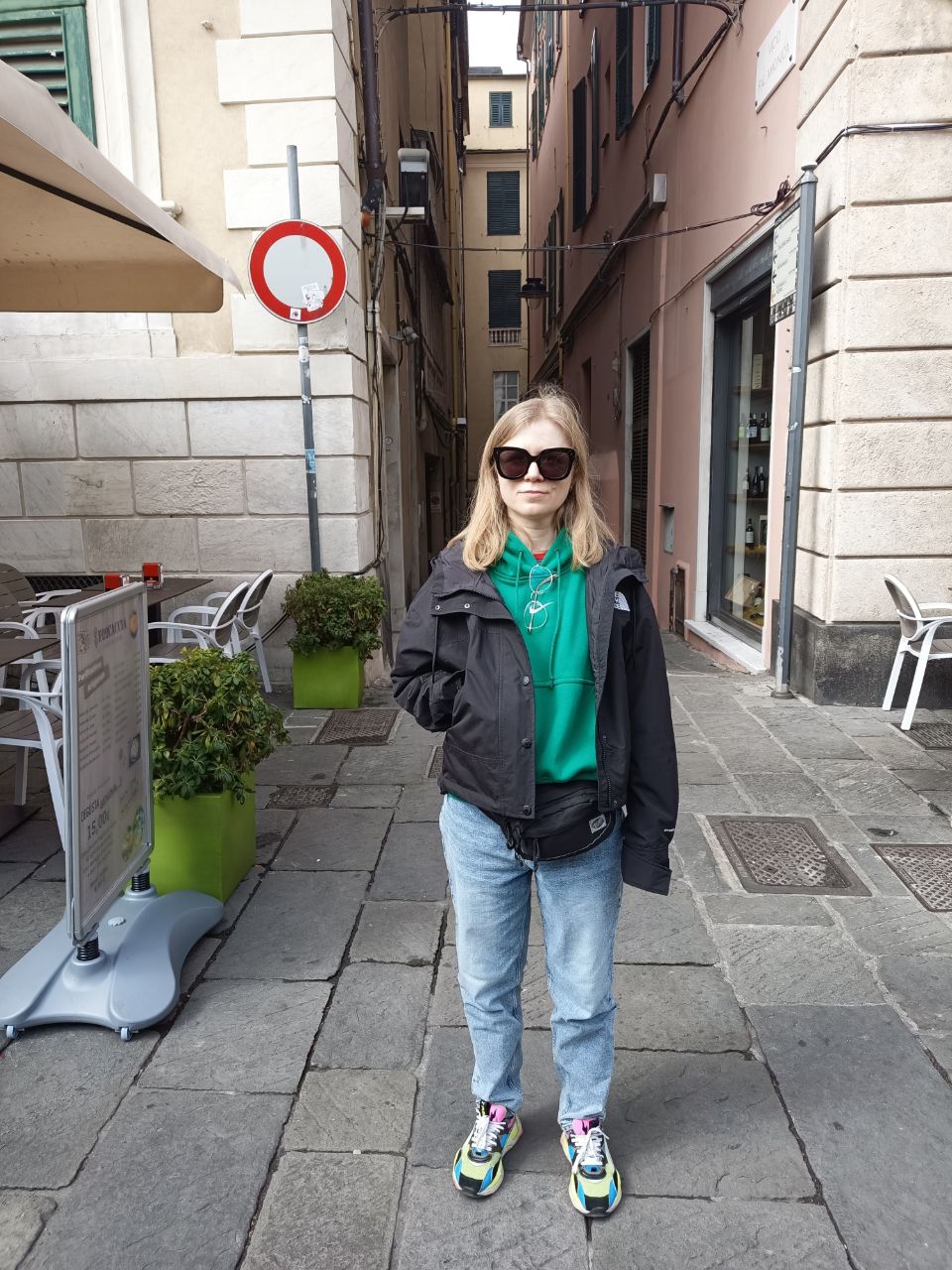
Anna posing between the statues 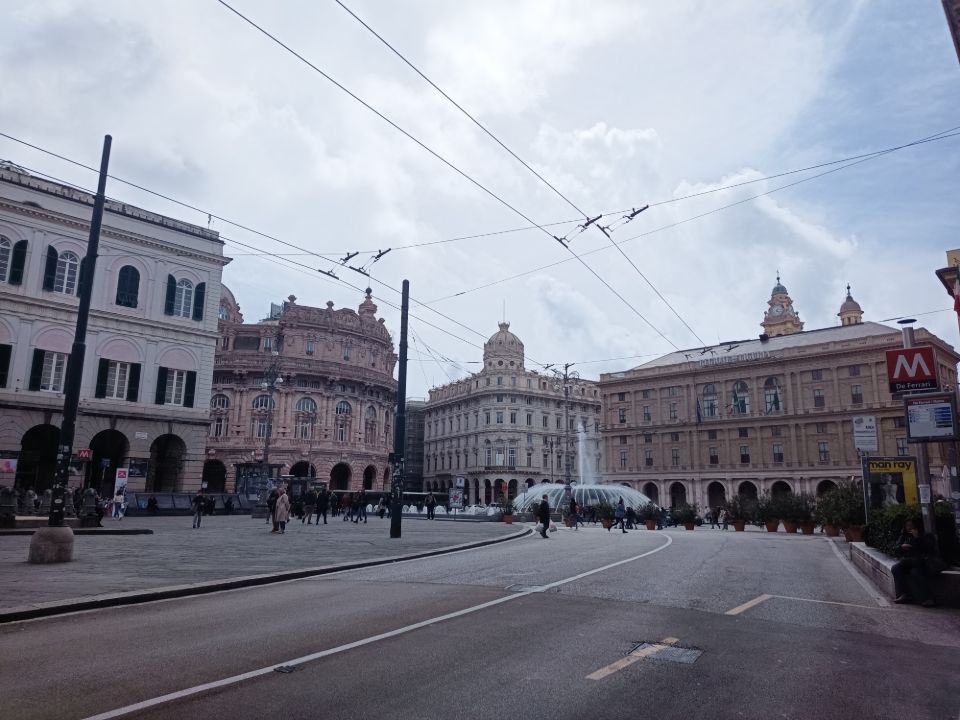
The Carlo Felice, columned and grand 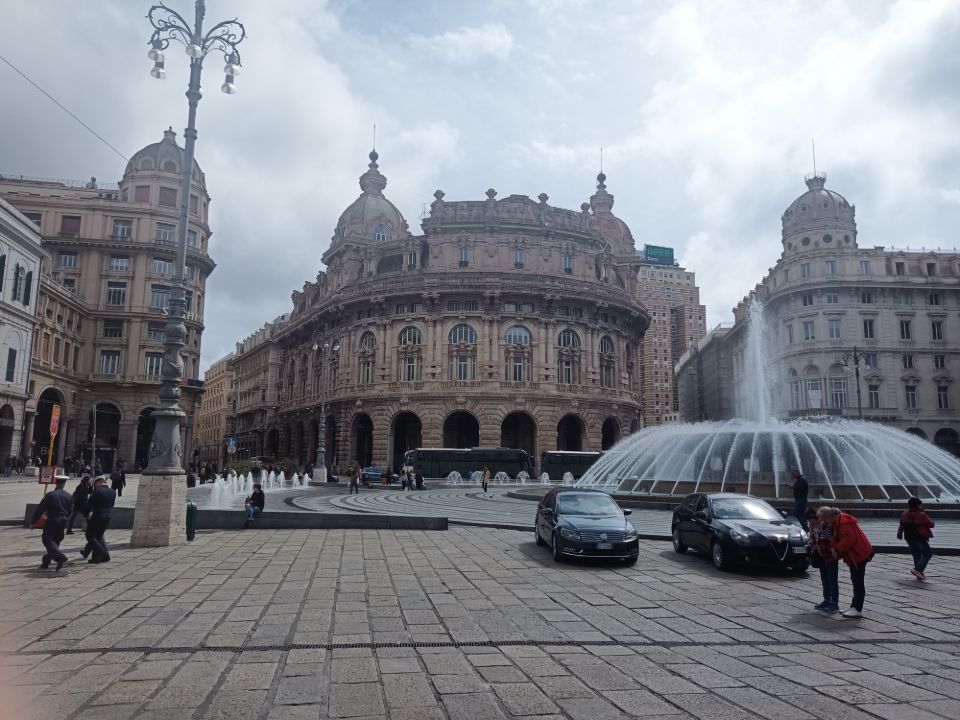
Piazza de Ferrari and its arcing fountain 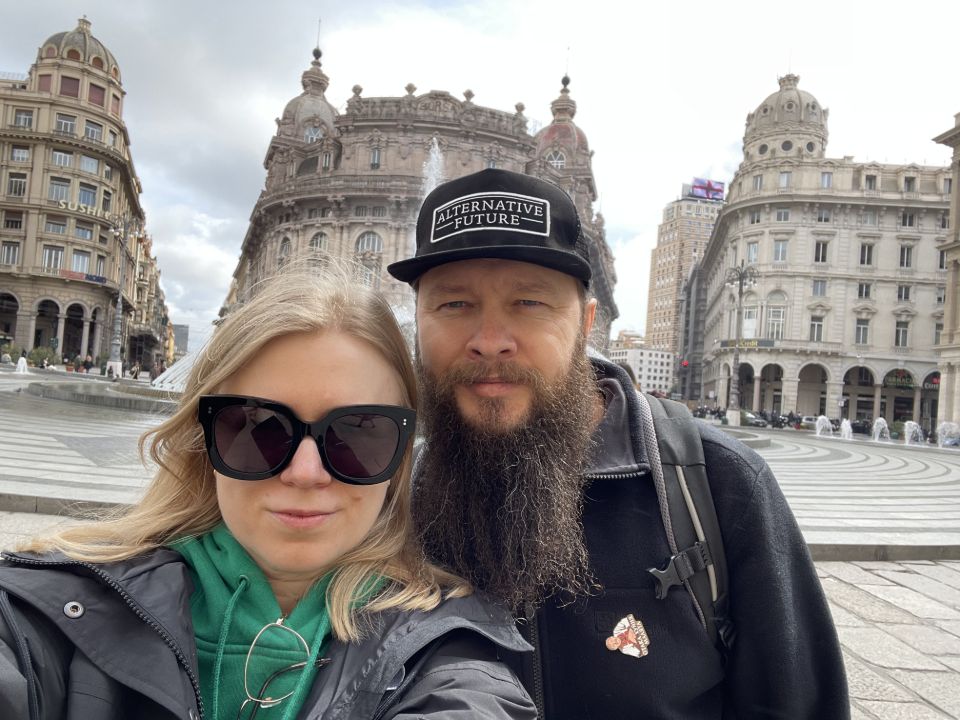
Anna and Oleg at Piazza de Ferrari 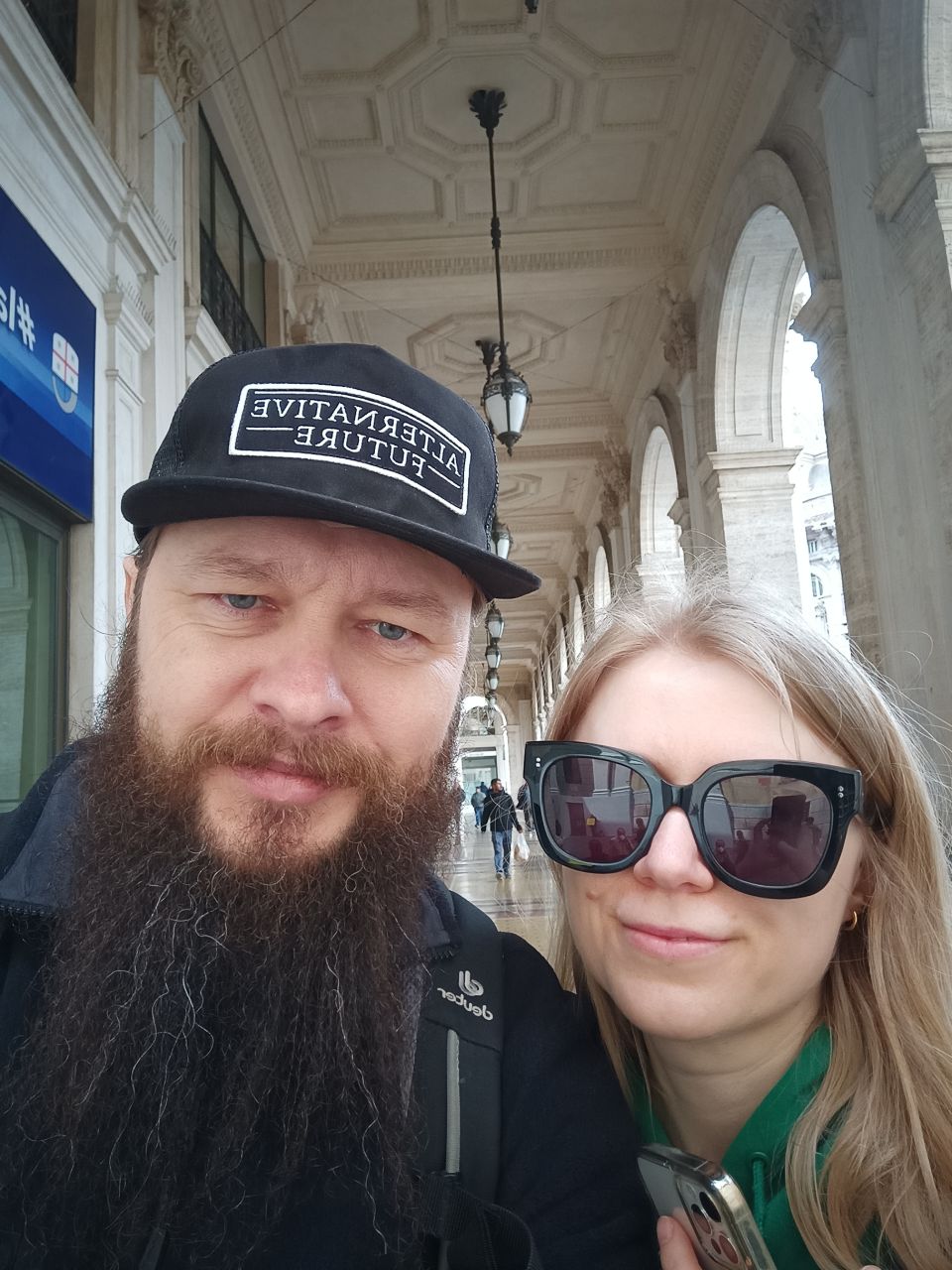
The selfie by the opera house 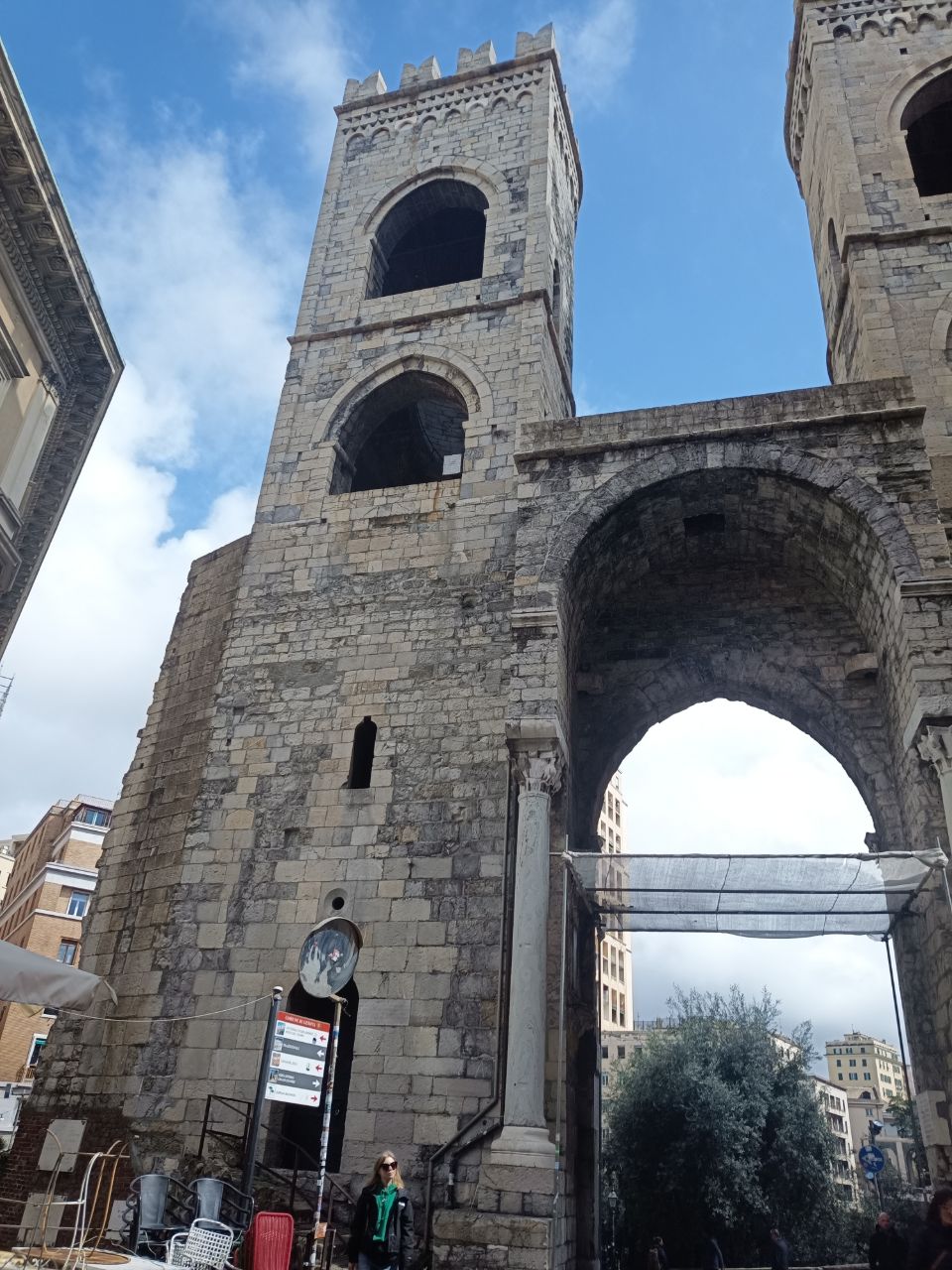
Porta Soprana, two towers and a great arch
East along the sea
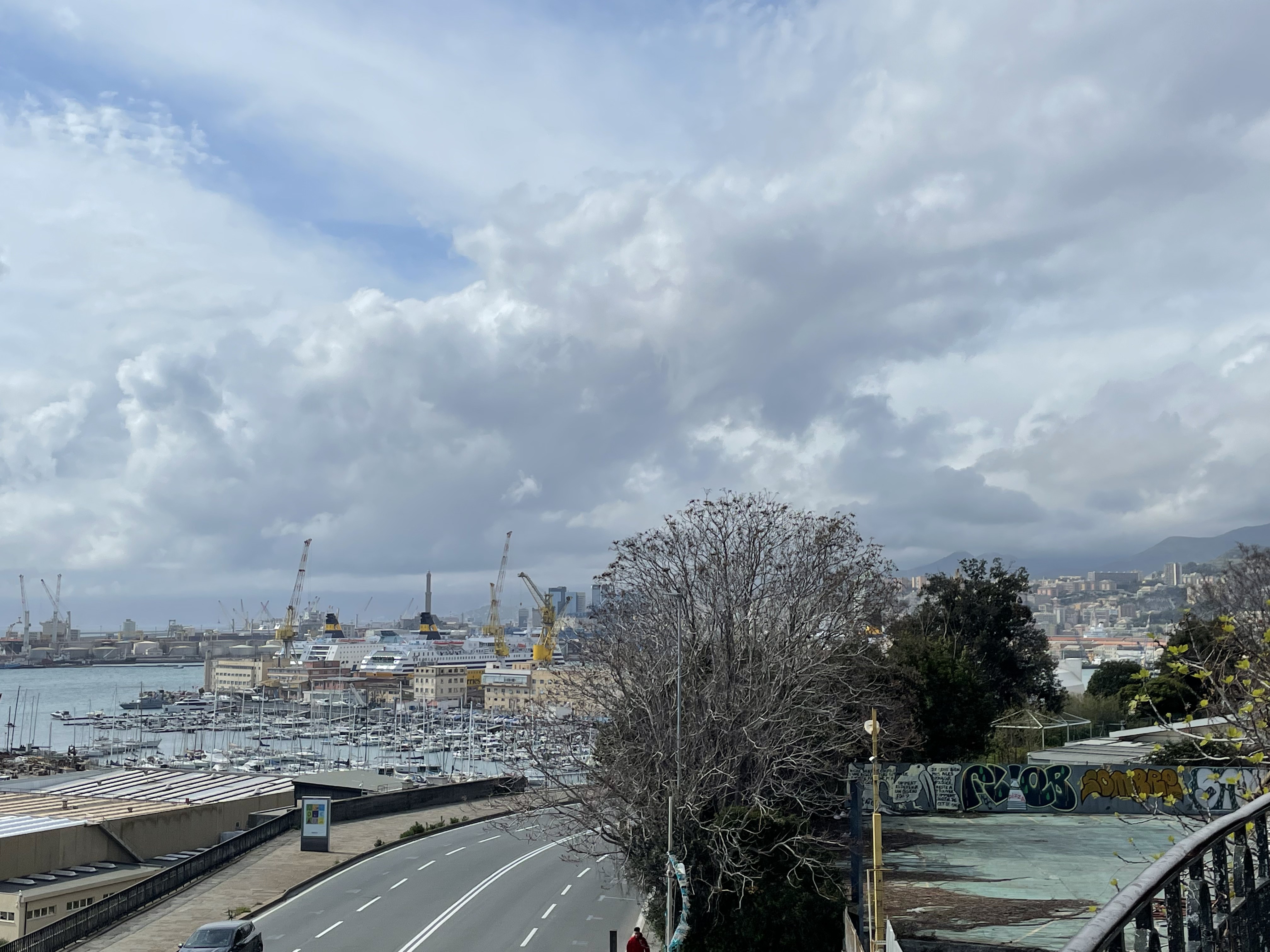
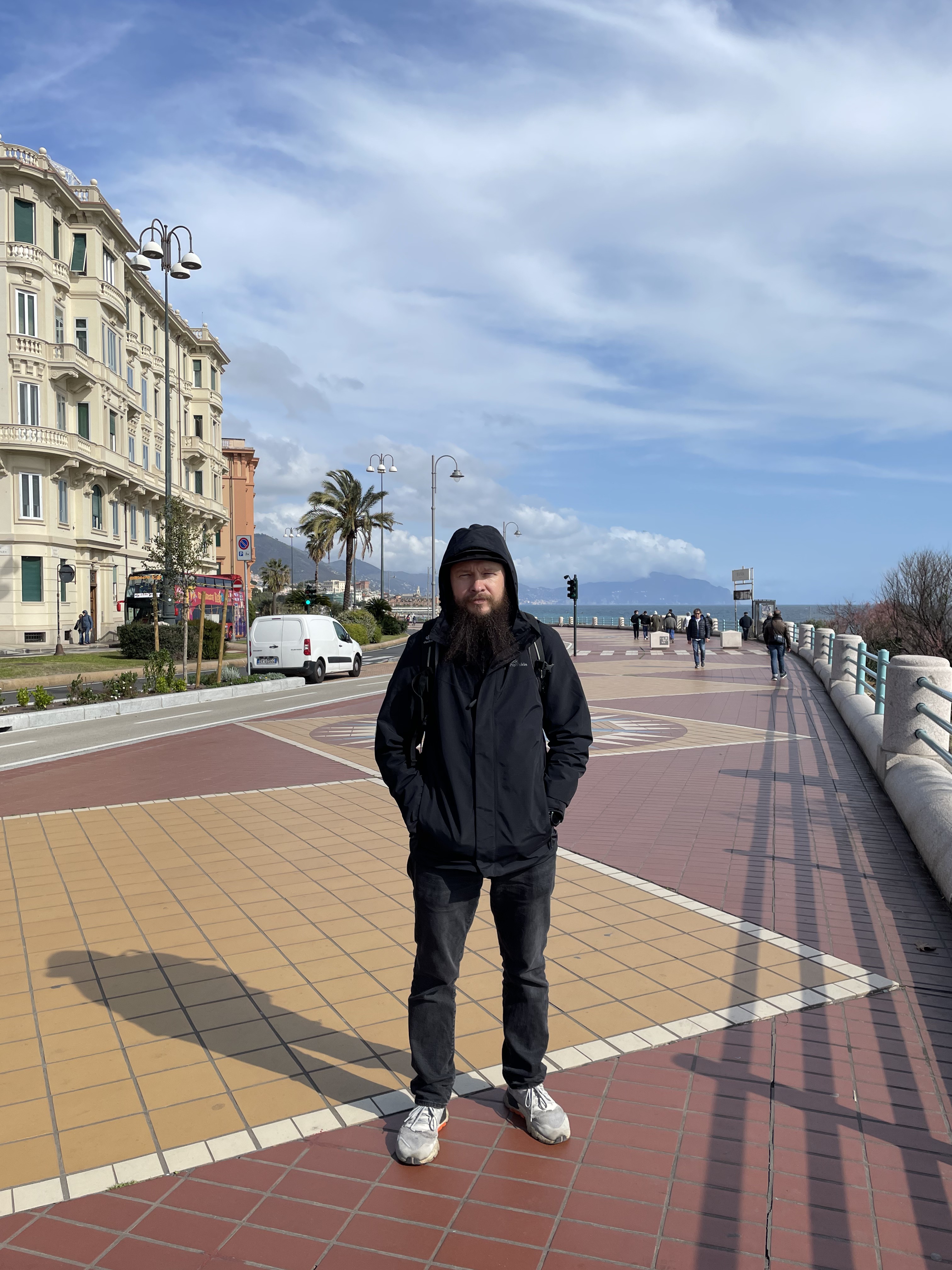
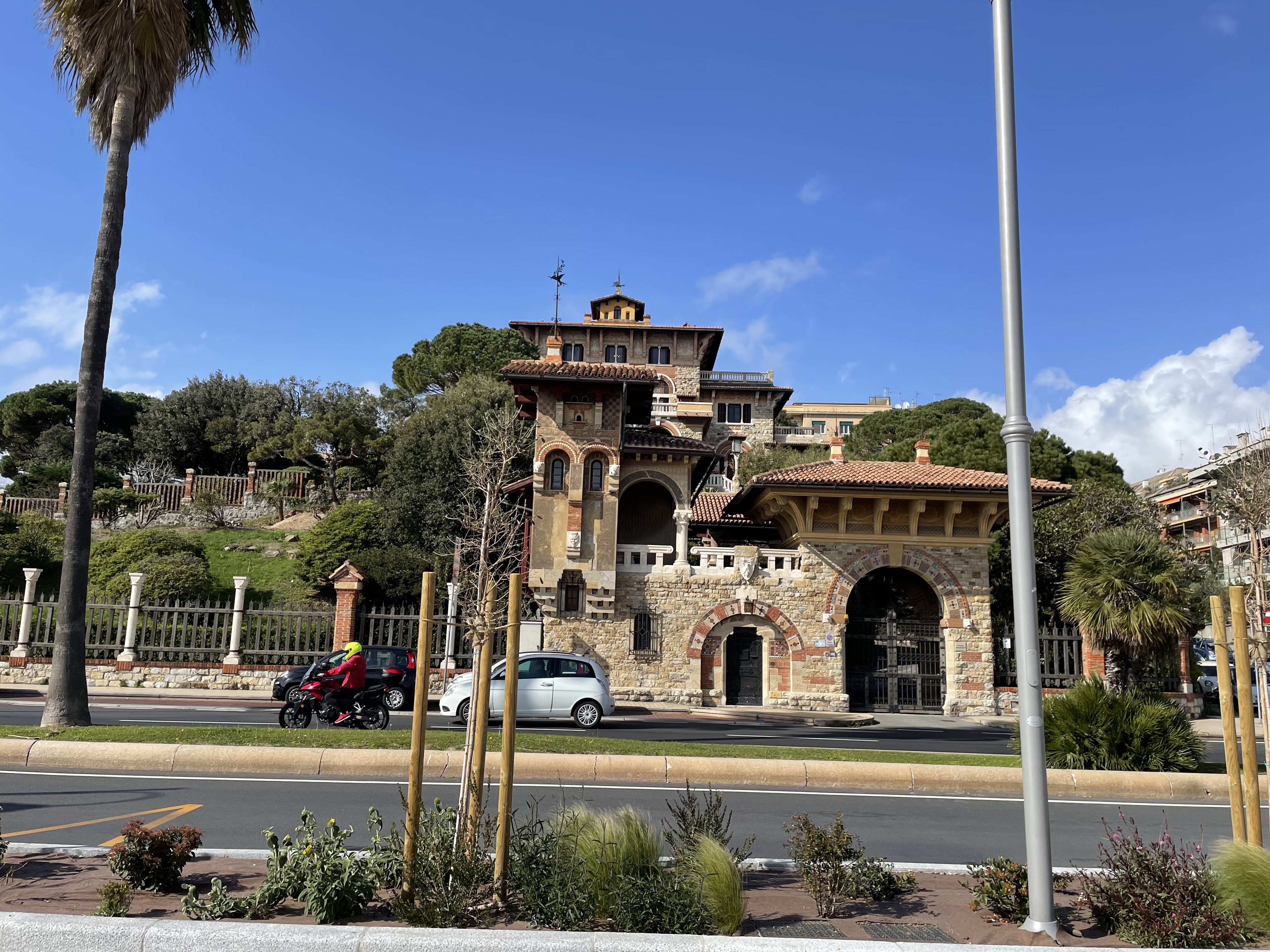
In the afternoon we came down from Castelletto to look across the port, Anna at the railing in her green hood while gulls worked the air below. Then we walked east along the seafront, past the pink-and-white church of Carignano, past a peach-coloured corner building and a marina packed with white boats, past a red-brick castle on the old wall and villas with palm trees on the hillside above the road.
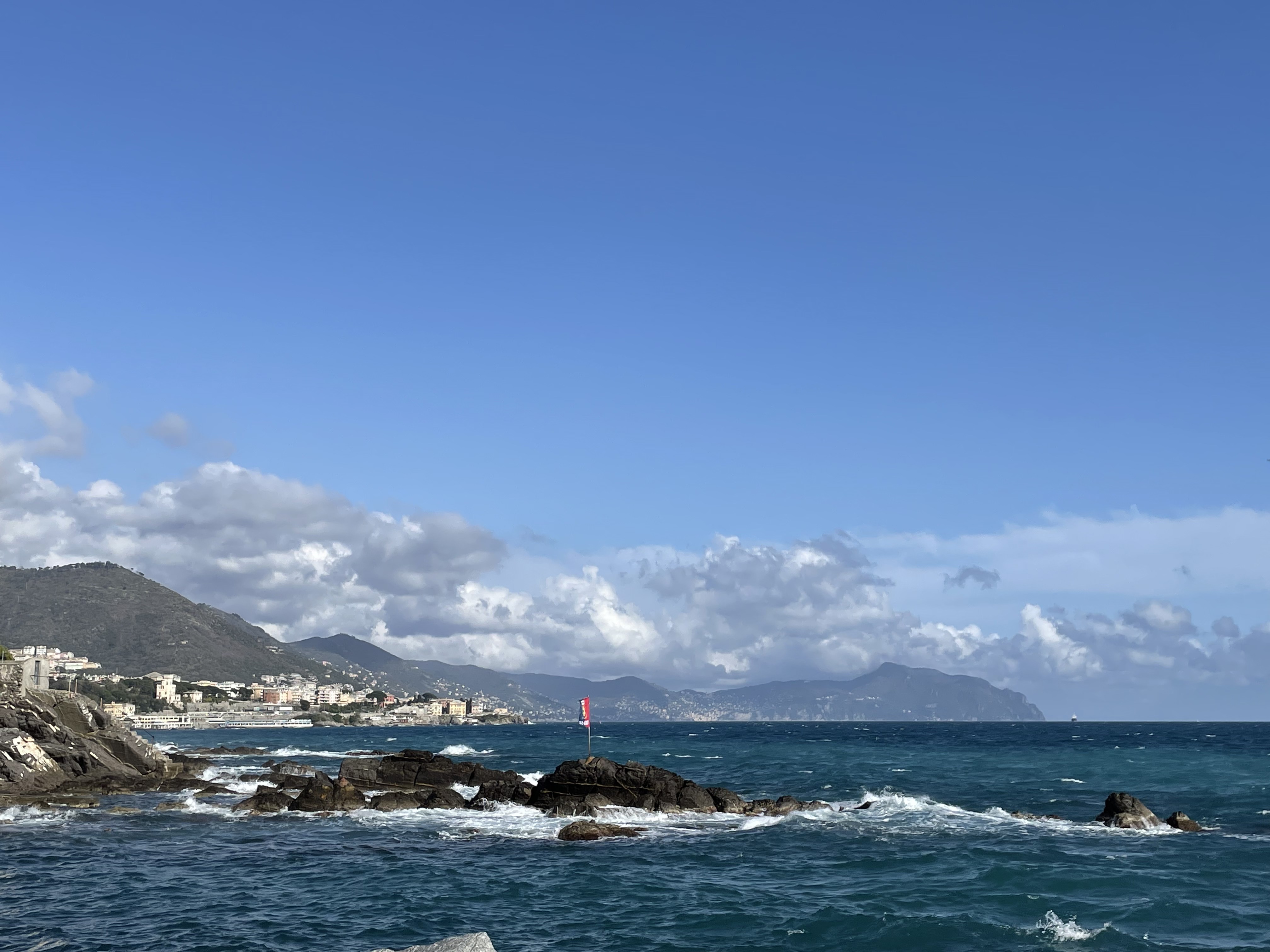
And then the storm arrived. It didn’t build up; it simply started. The sea stood up on the breakwaters and came over the rocks in sheets, and the promenade became a place to walk fast with your hood cinched. From the coast road the waves exploded white against dark rocks, a small red beacon taking them on the chin, gulls turning over the spray. The video is better than any sentence we could write about it.
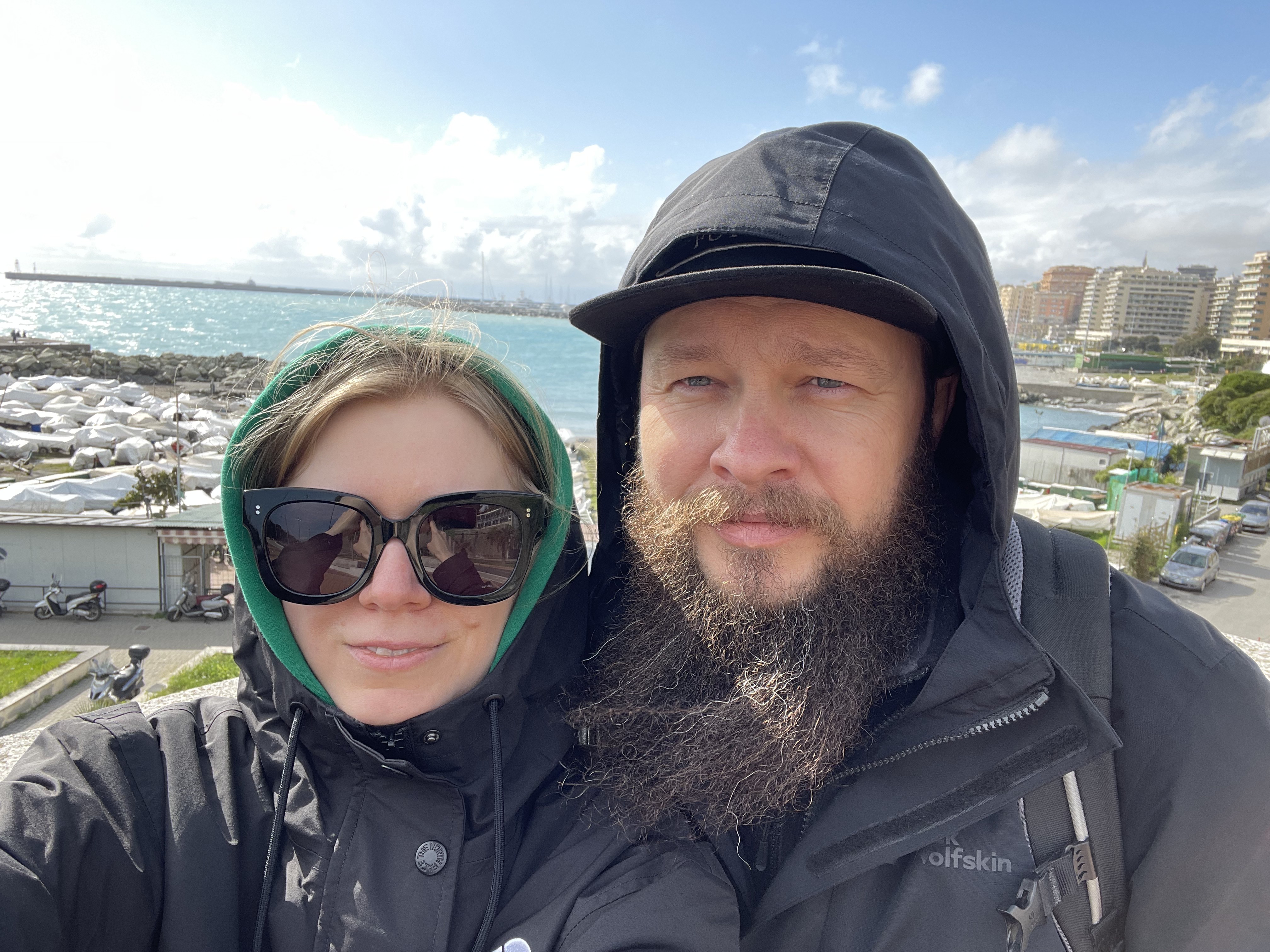
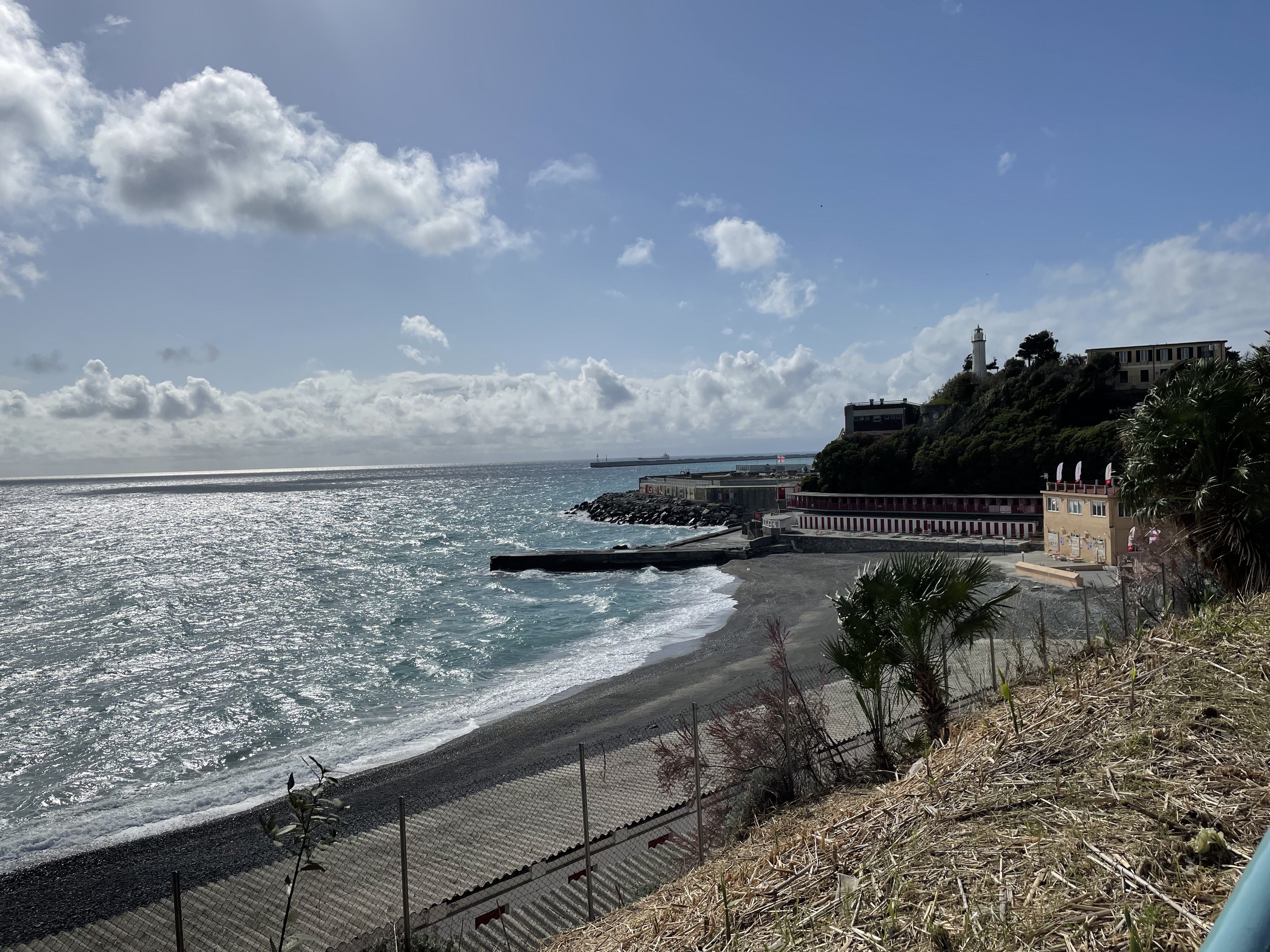
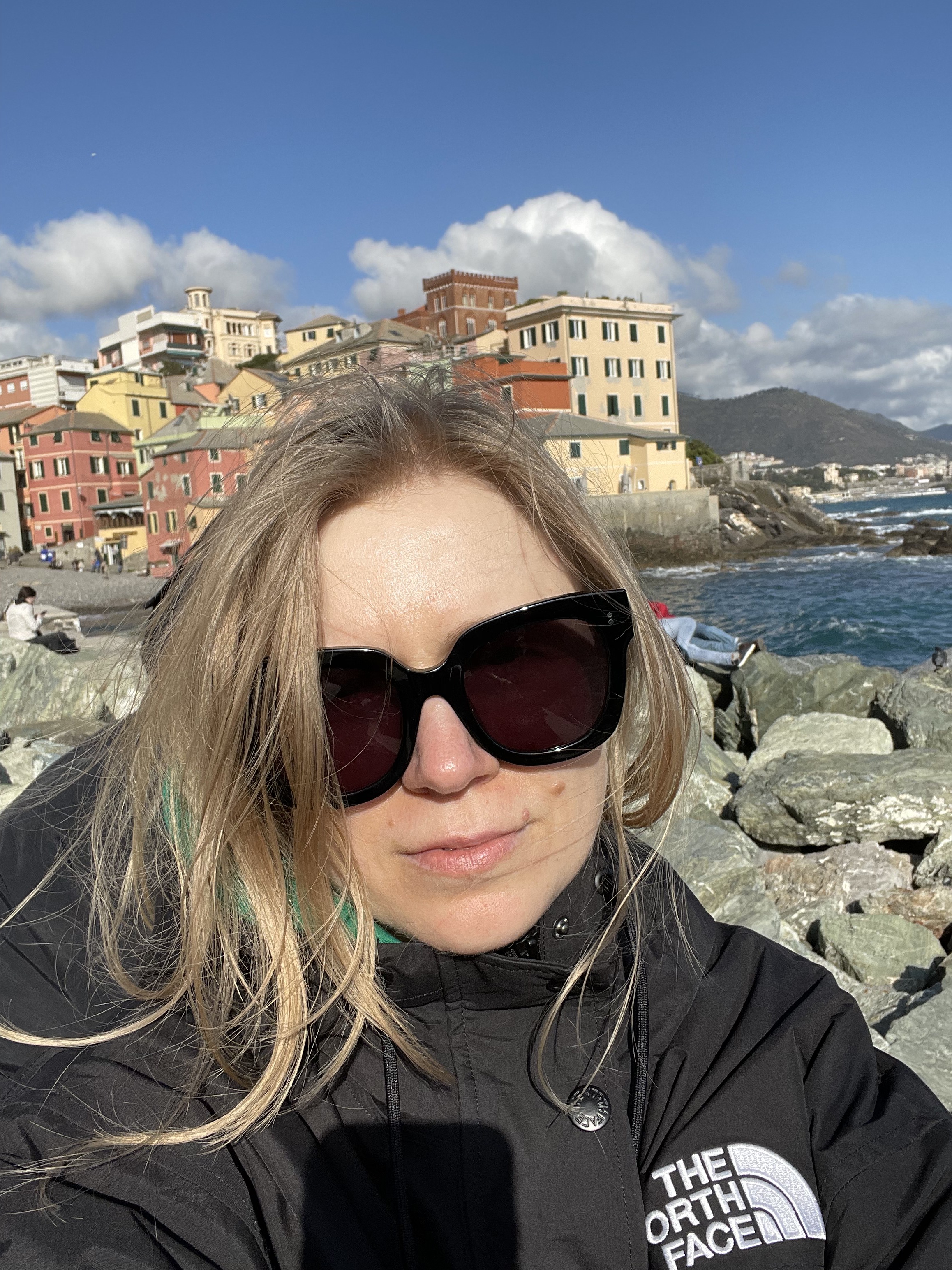
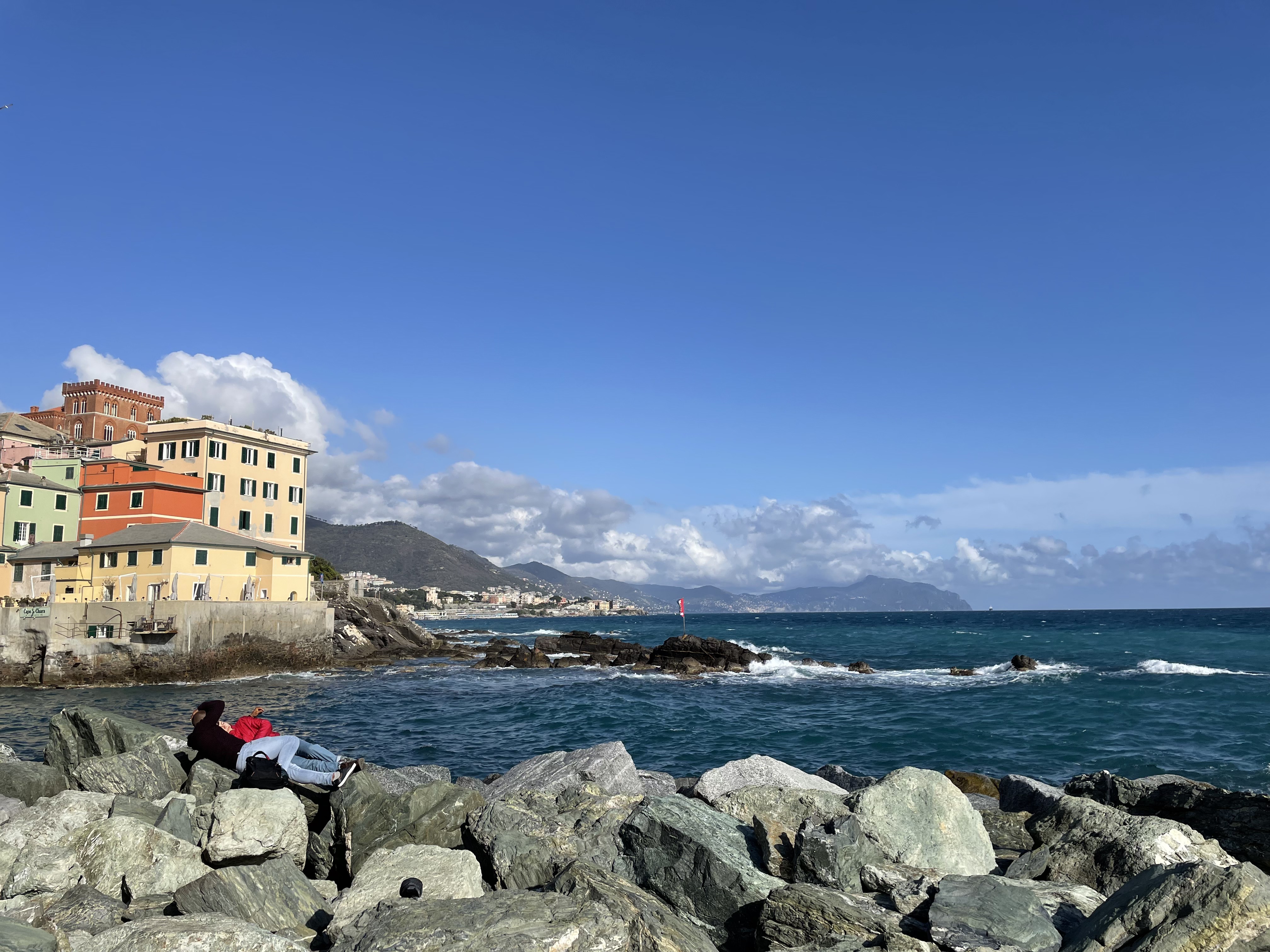
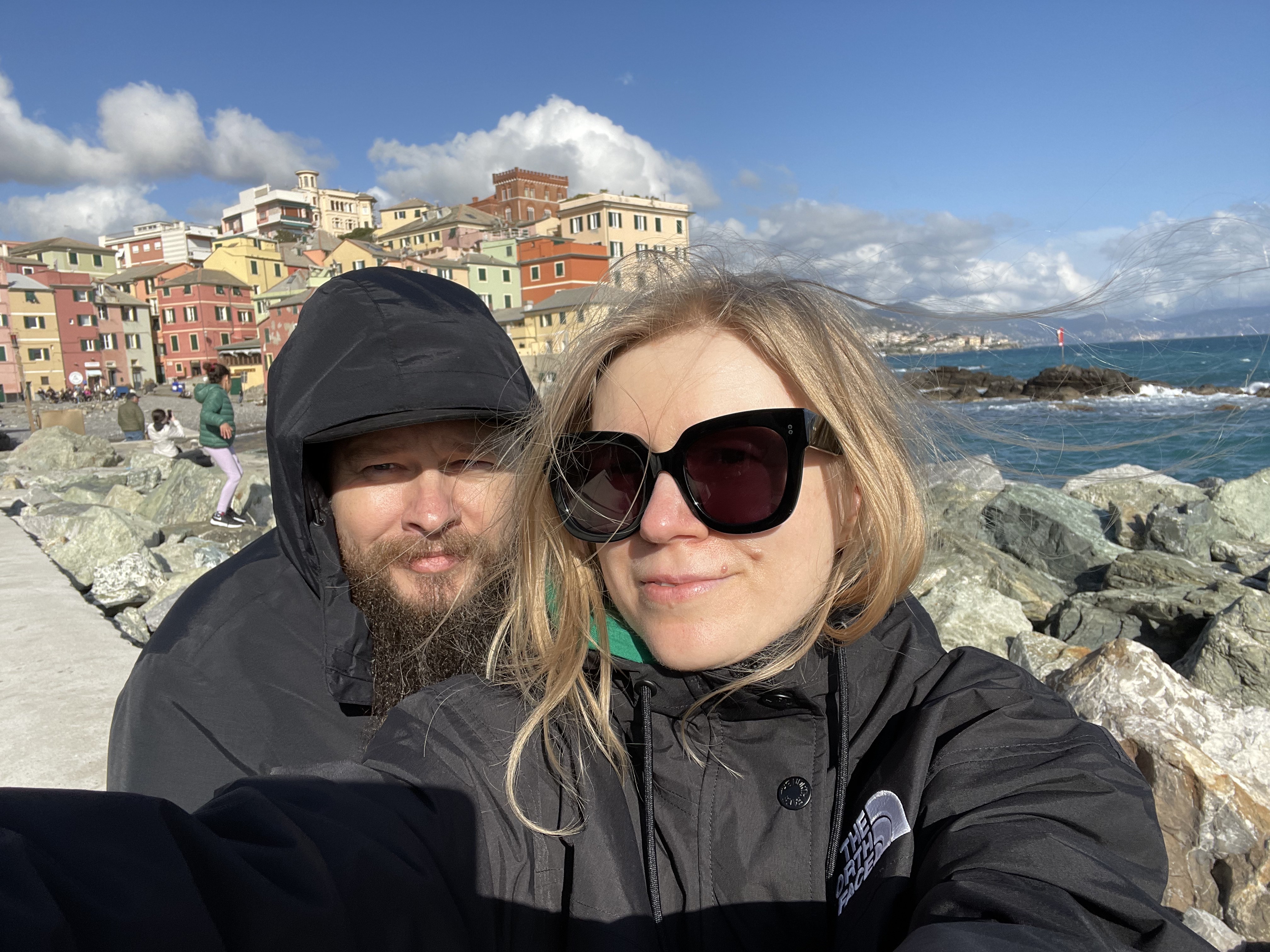
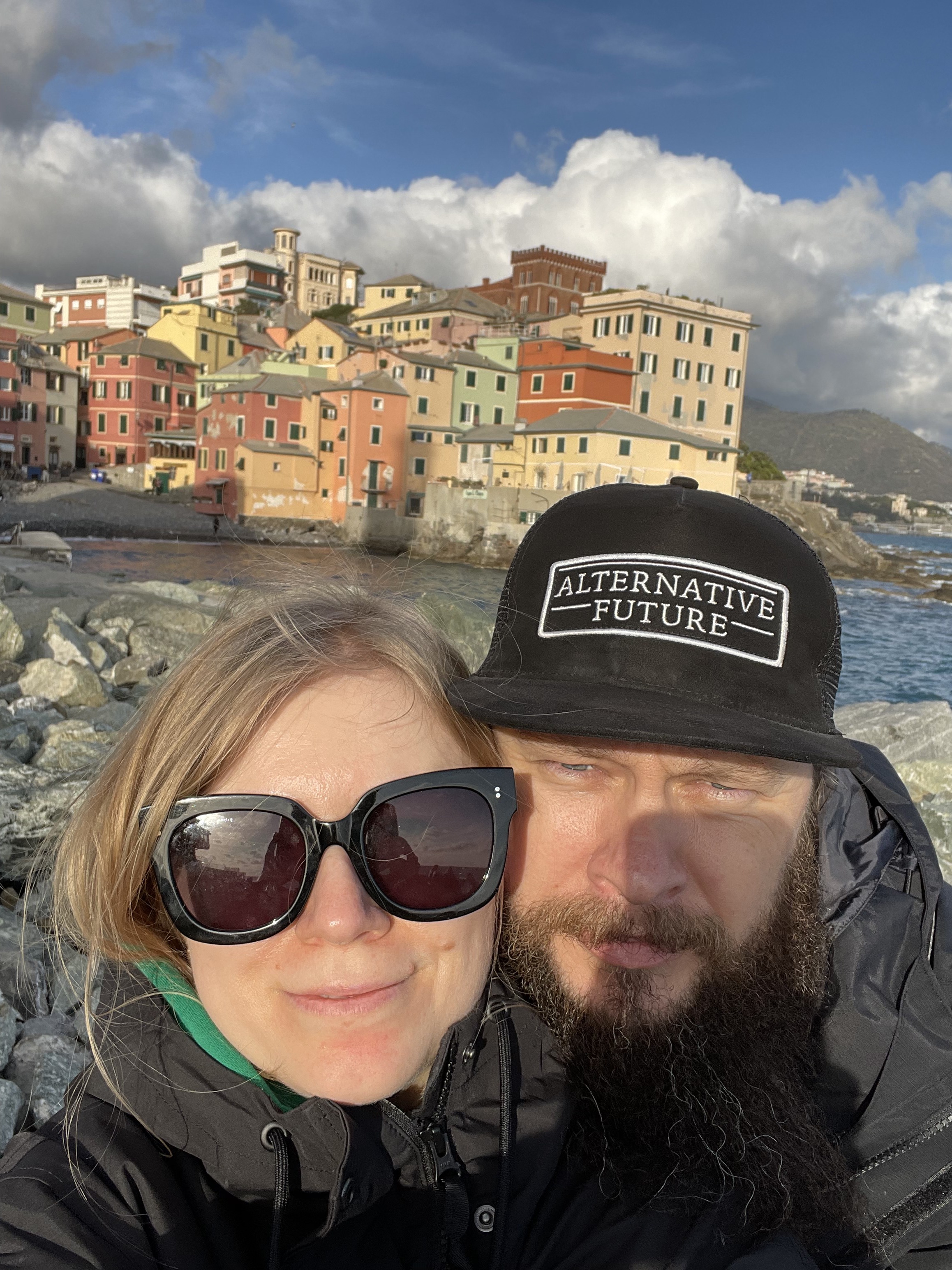
At the end of it we reached Boccadasse, the pocket cove where a circle of fishermen’s houses, painted in gelato colours, leans on the beach. A pebbly bay curved away below a lighthouse, waves rolling in long and white; colourful old houses and a stone building crowded down to the shingle. From the overlook above, the village and its harbour of blue-painted boats sat in a bowl of sea and sky. The couple took the standard act at the railing: one photo before the wind got serious, one after.
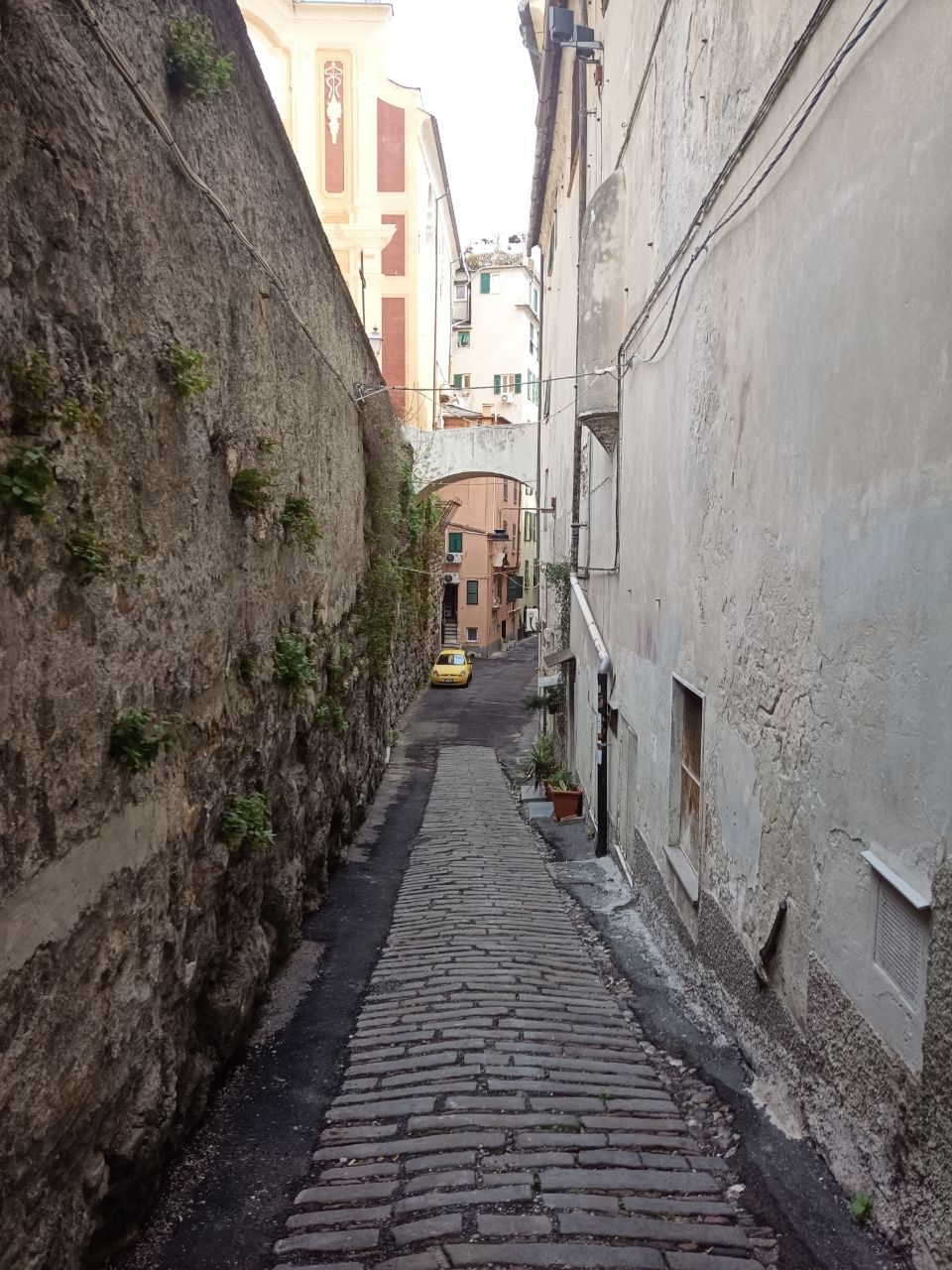
The lane down from Castelletto, plants on the walls 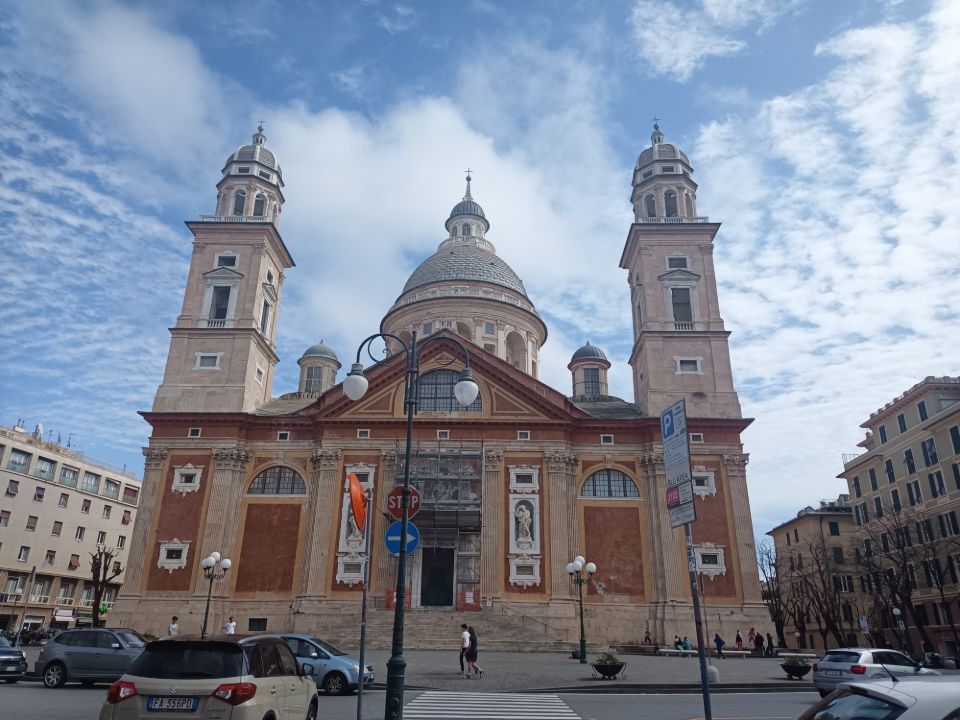
The church of Carignano, pink and white 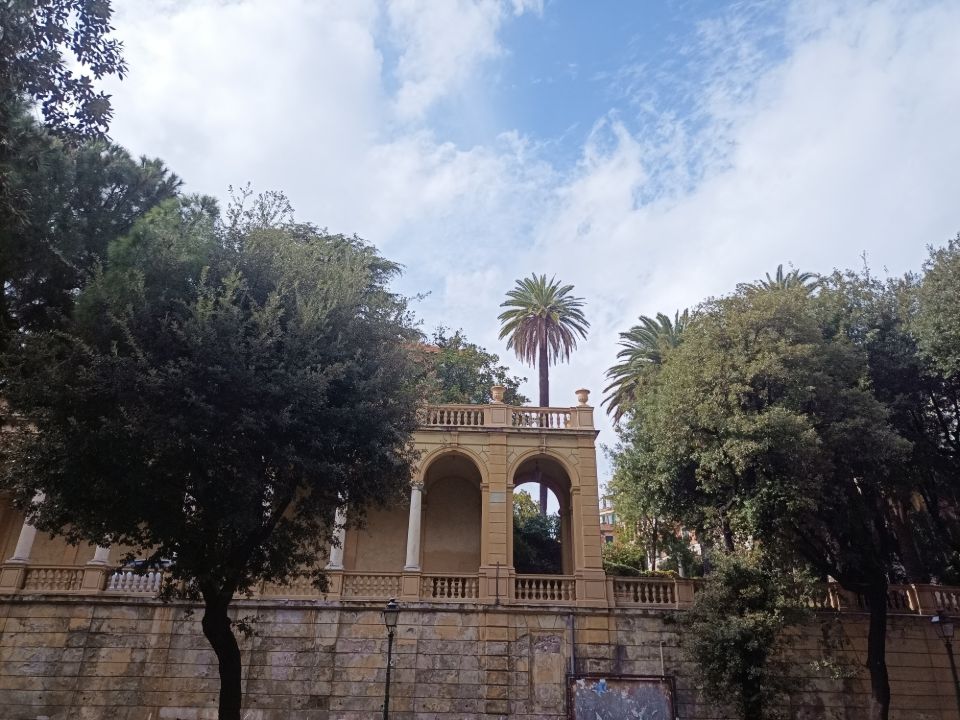
Arches and balustrades over an ochre terrace 
A green copper dome over Carignano 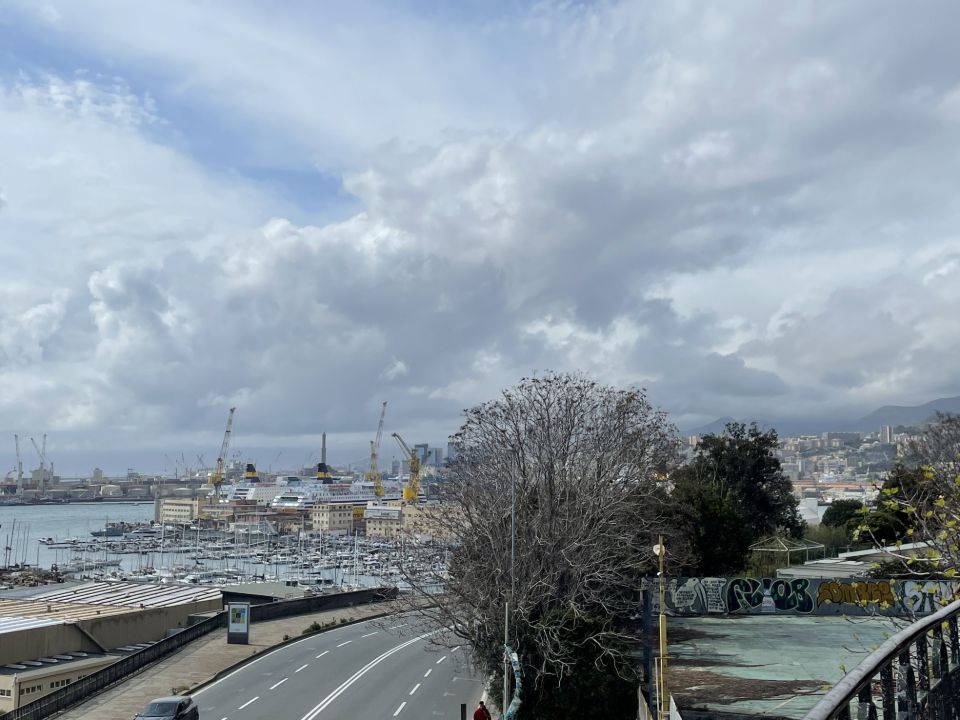
First full look down at the working port 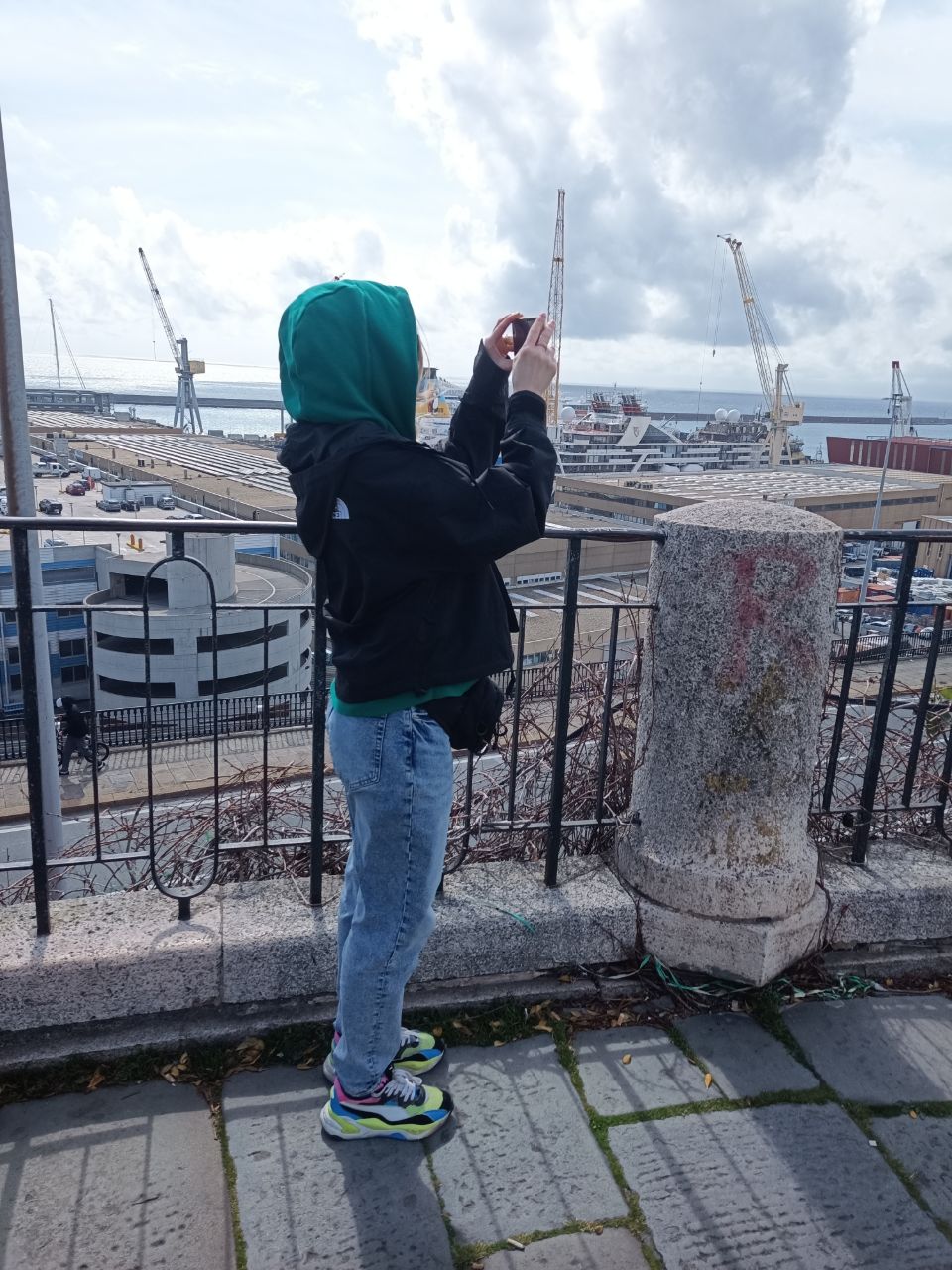
Anna in the green hood, gulls below 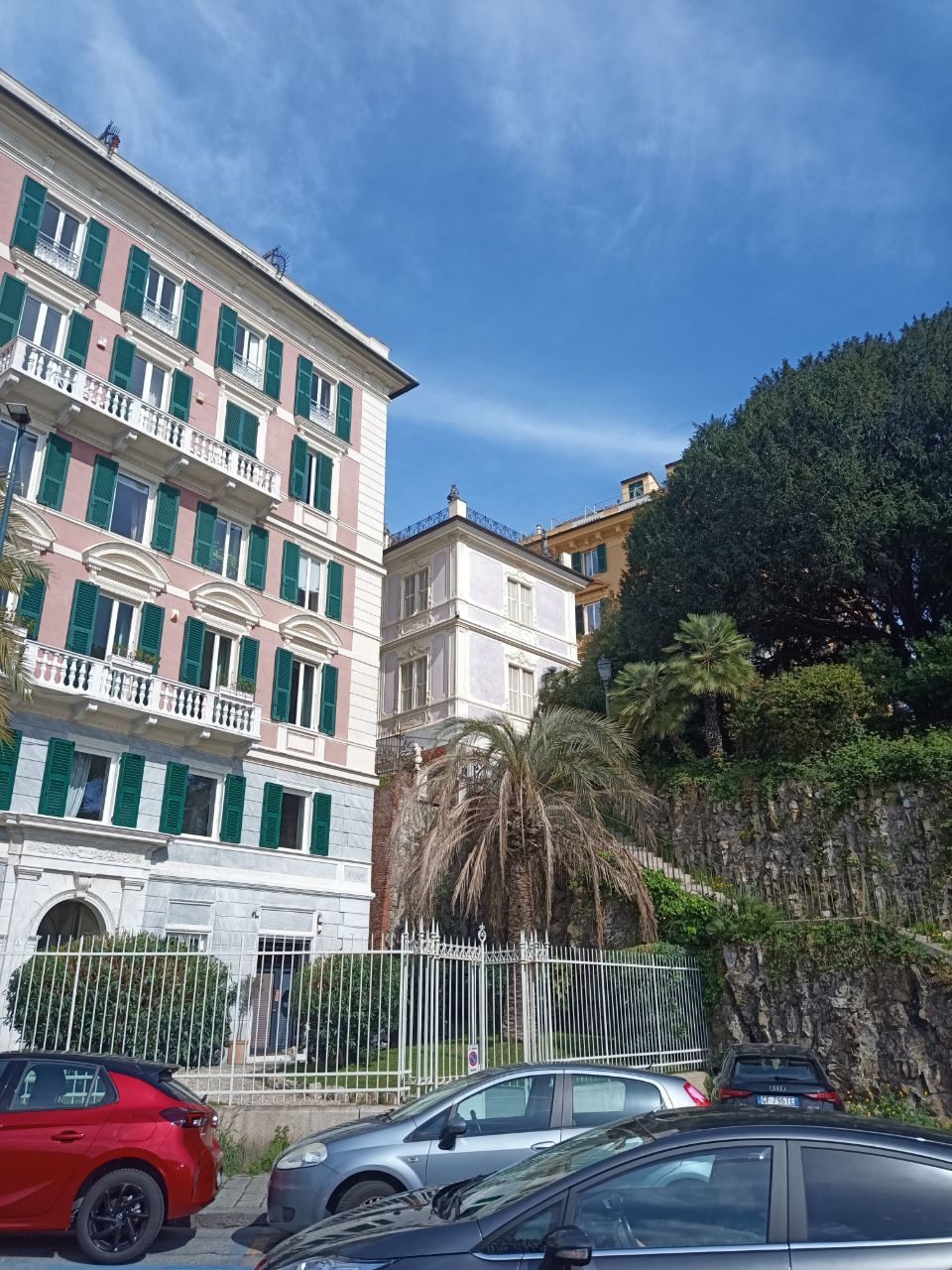
Pink and white, shutters and palms 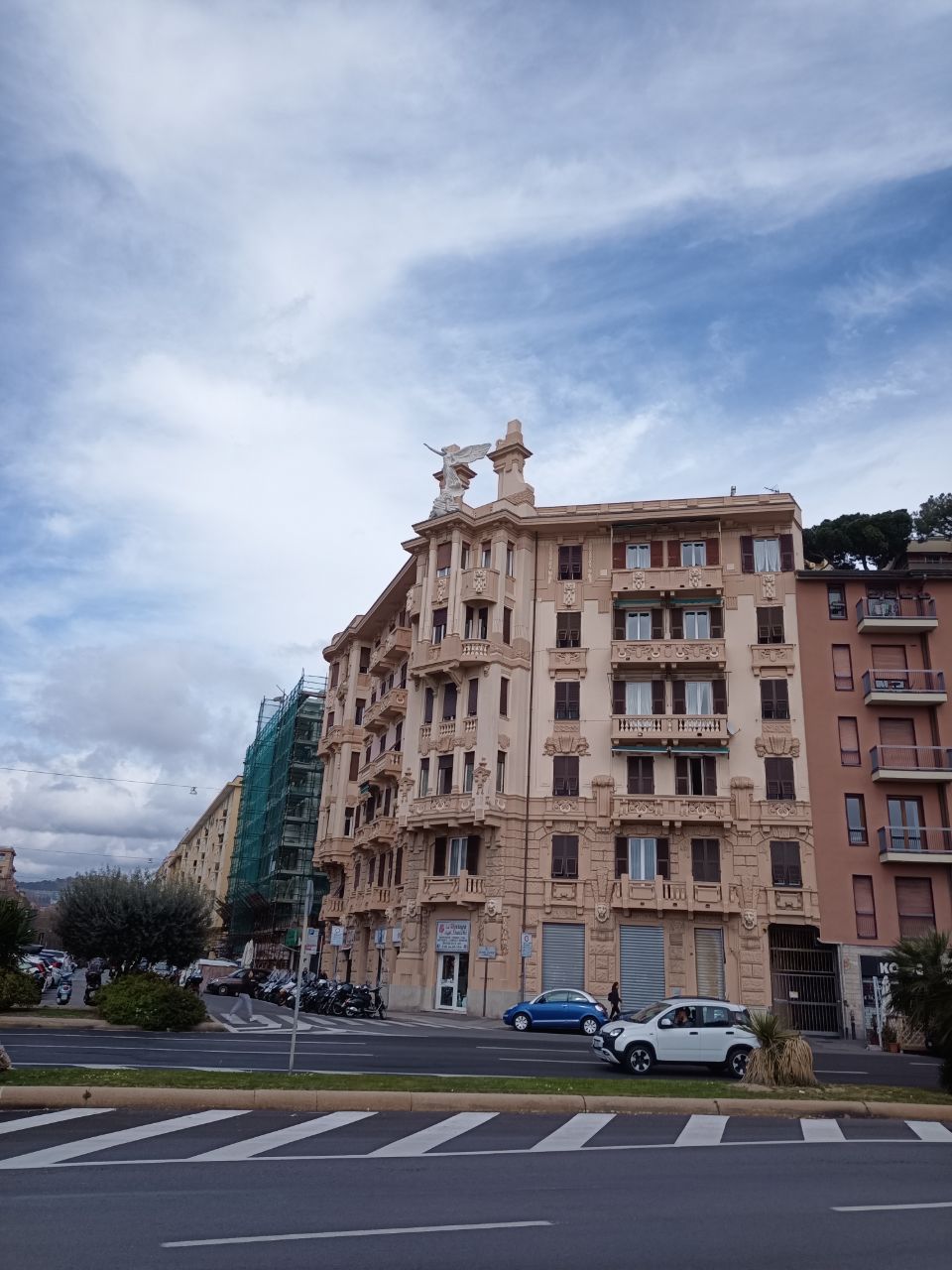
Peach-coloured corner, statue on top 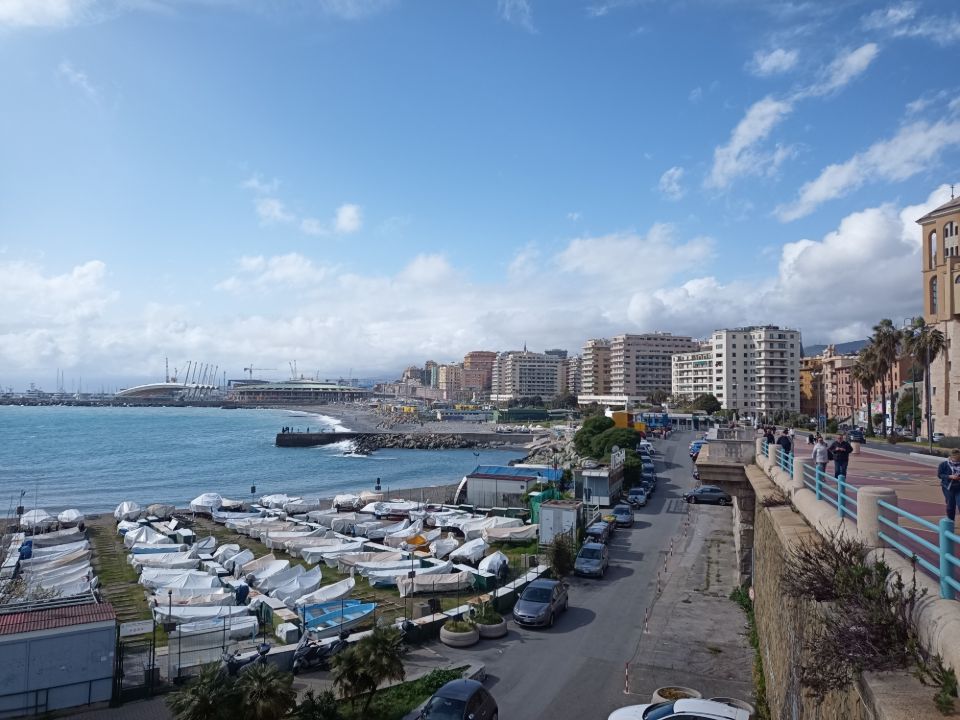
The marina under the seaside road 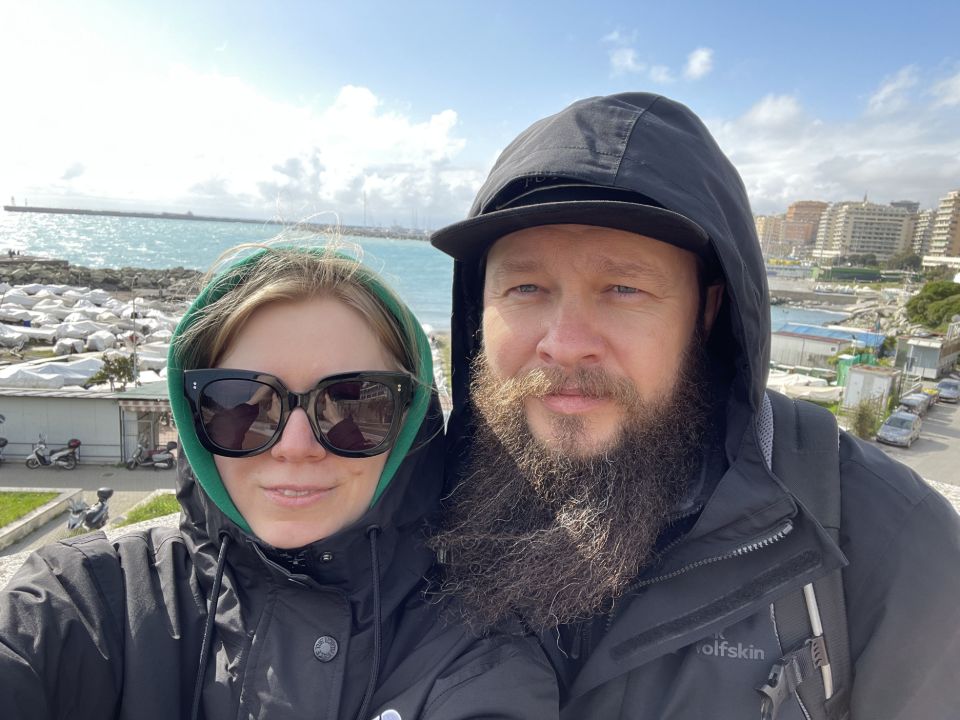
Hoods up on the Corso Italia 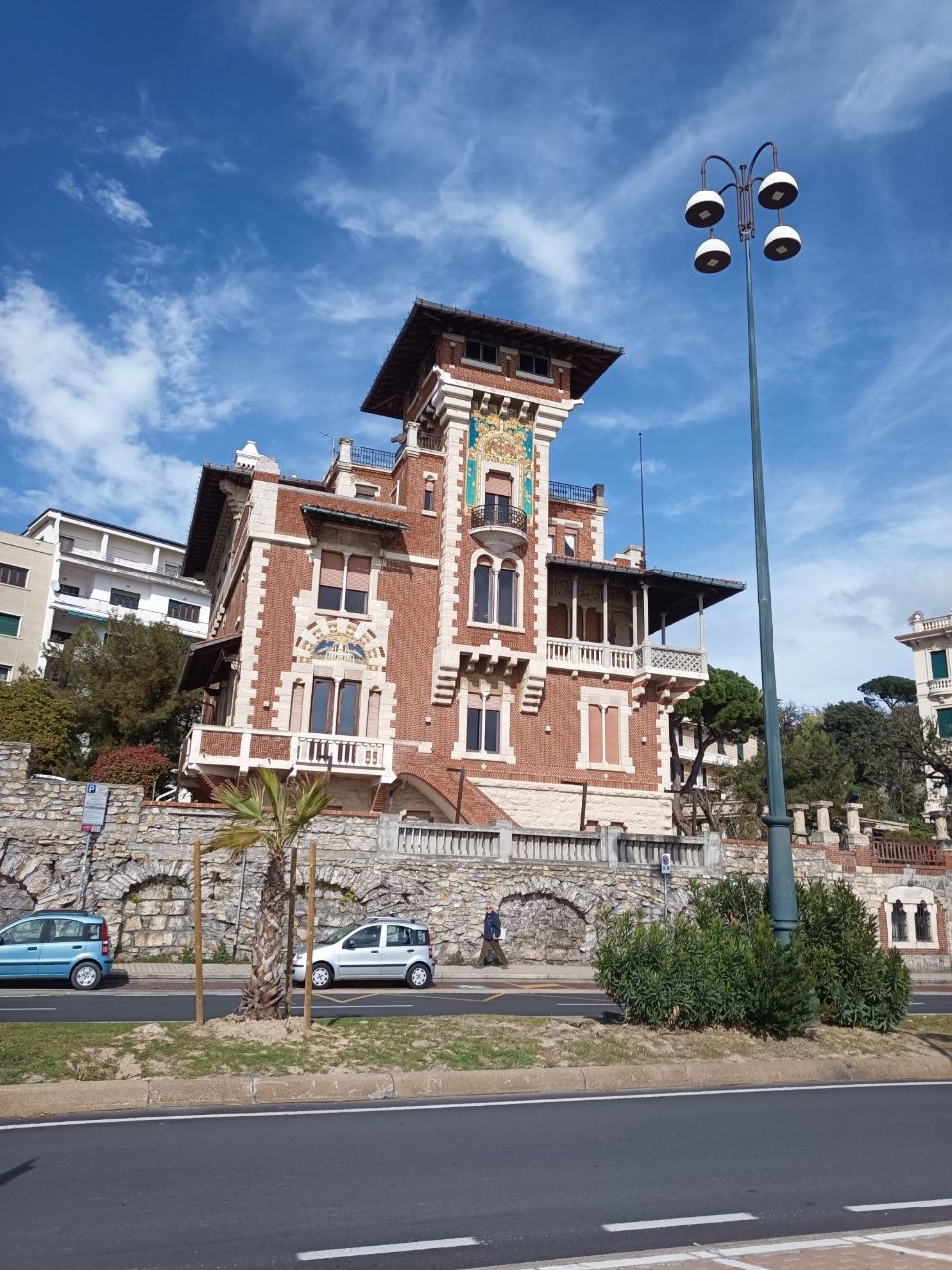
A Castelletto villa in patterned tile, pink and white 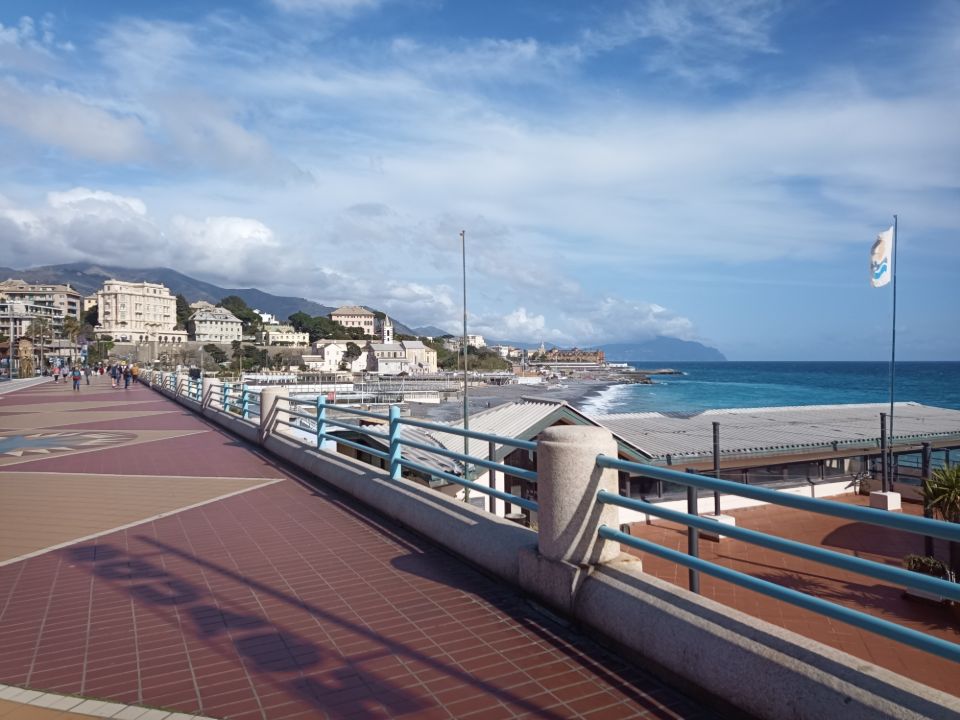
The tiled promenade, pale blue railings, sea beyond 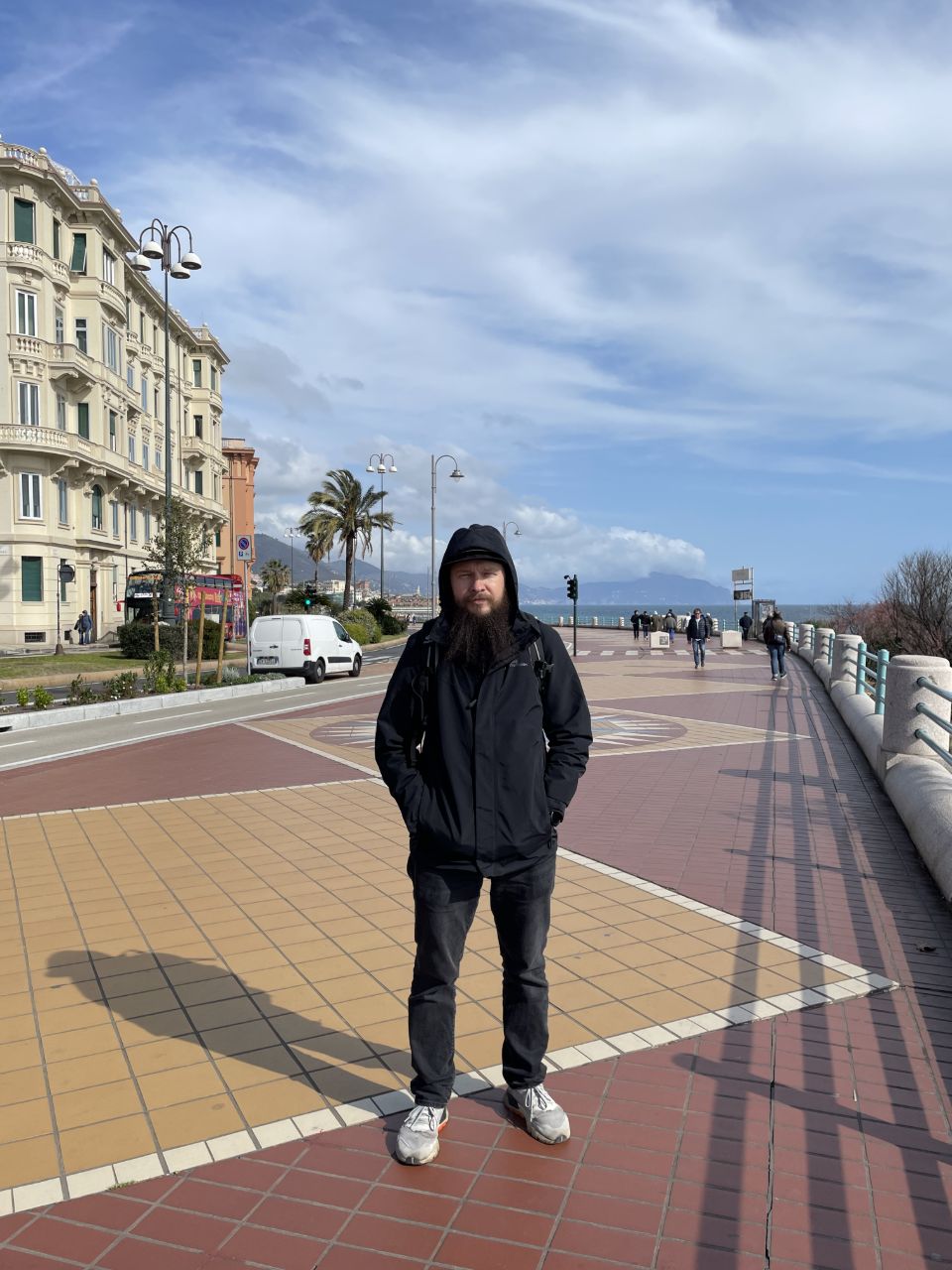
A pause on the Corso Italia, before the storm arrived 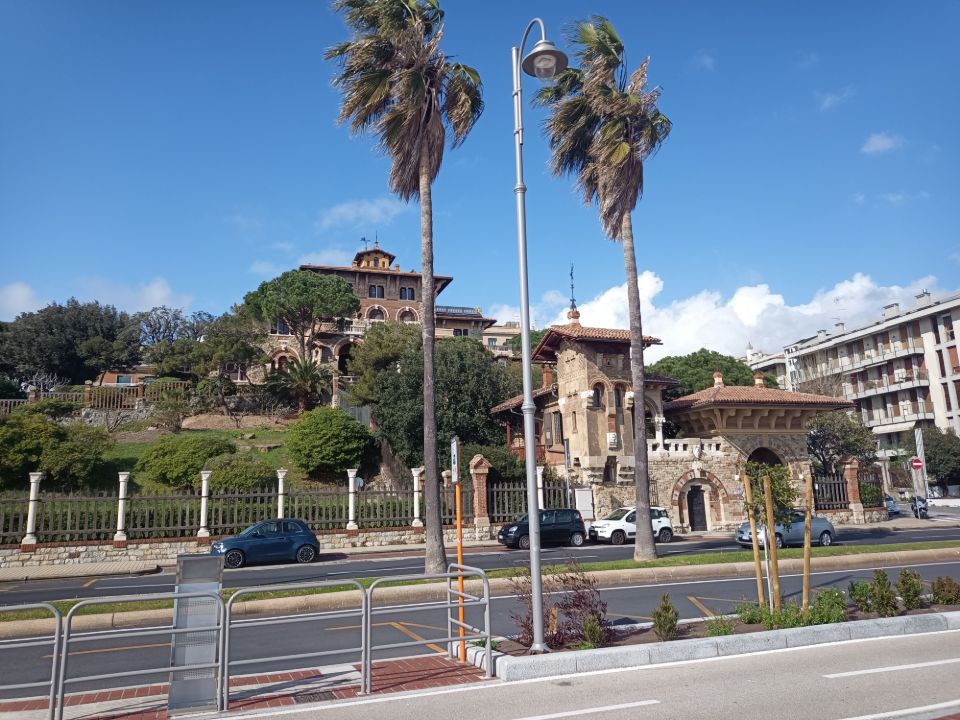
Palms and a villa above the coast road 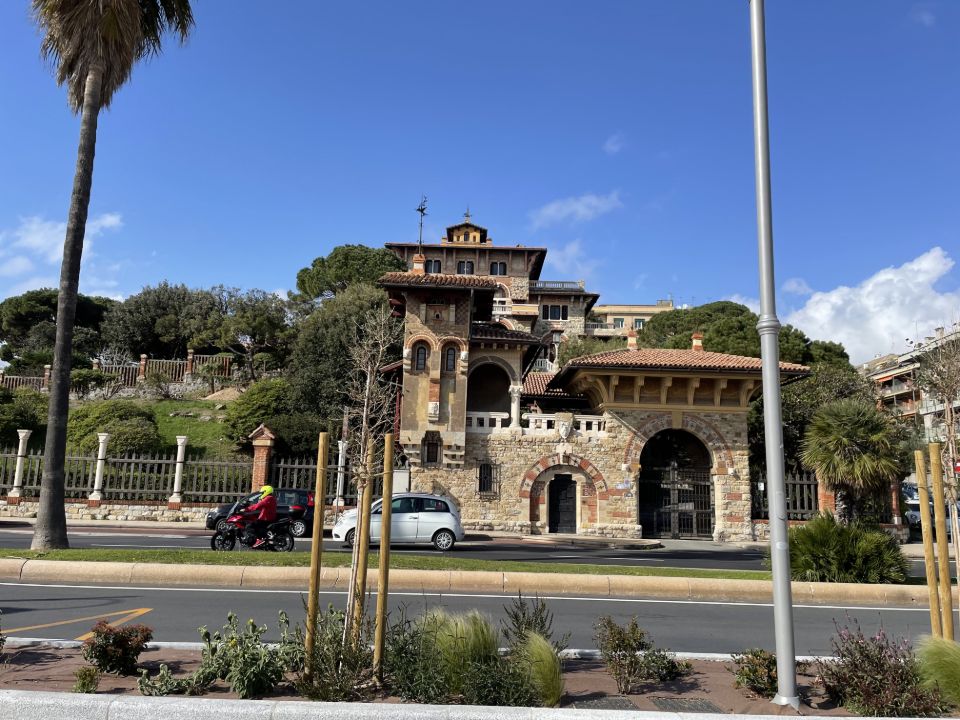
A stone villa on the coast road 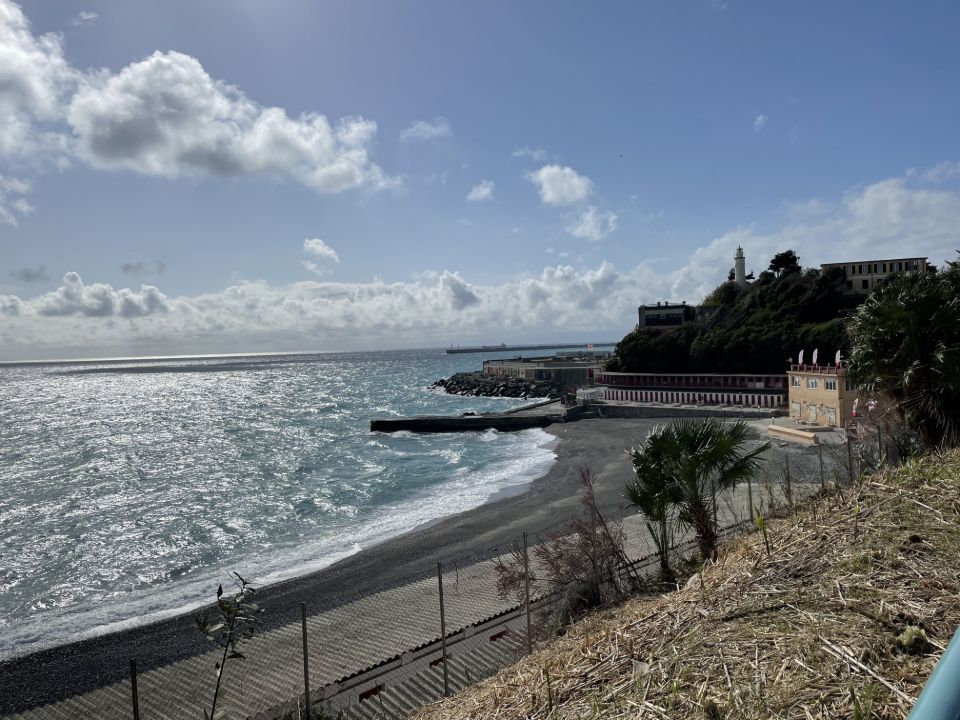
A pebbly bay below the lighthouse, waves rolling in 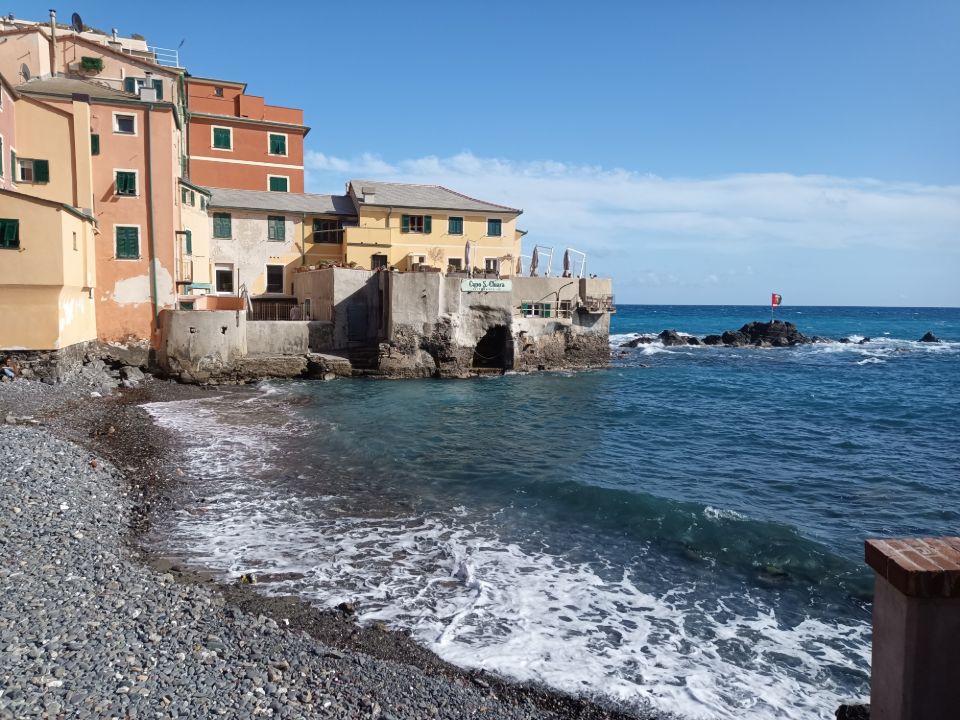
Colourful houses and a stone building at the cove 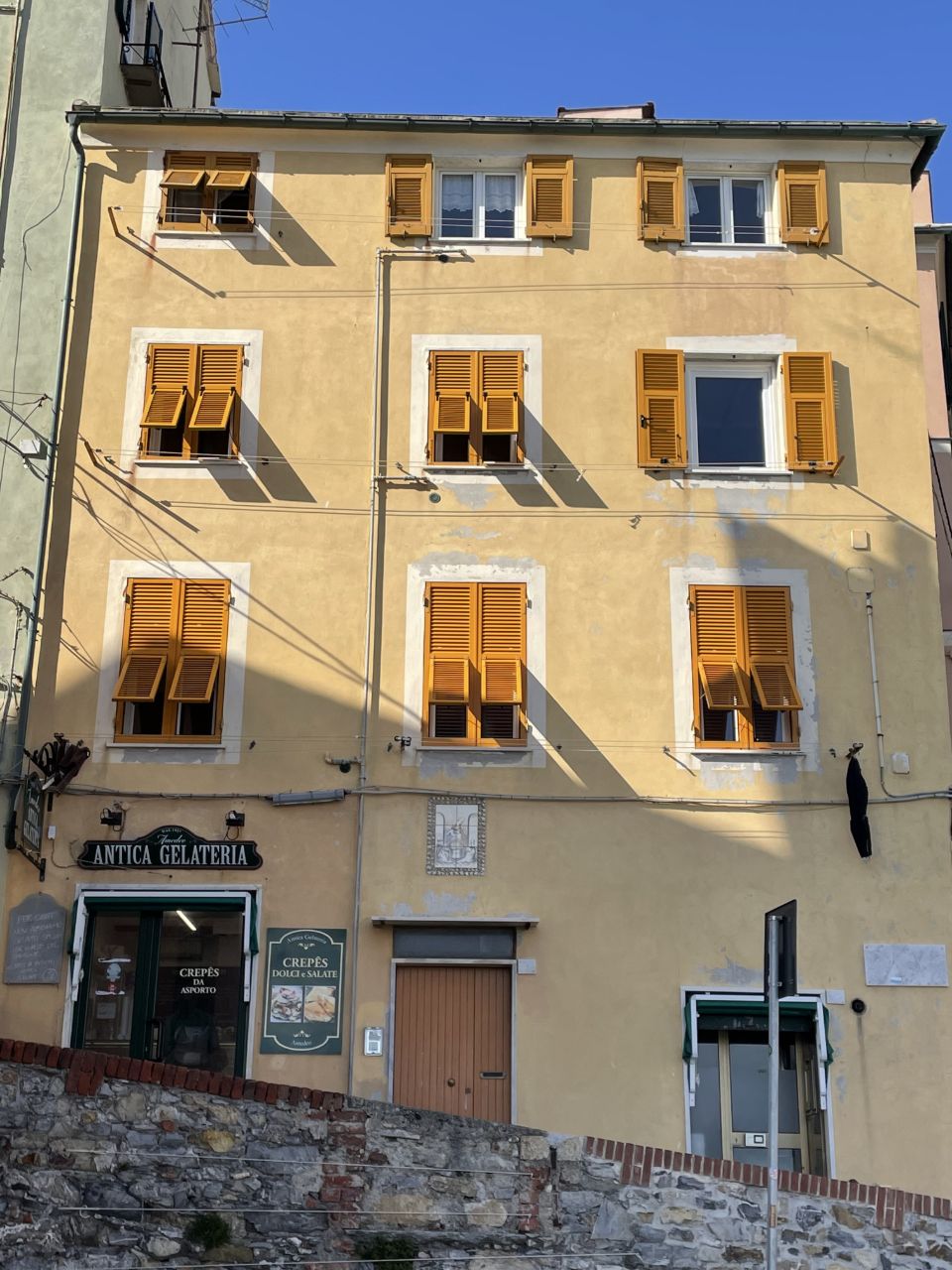
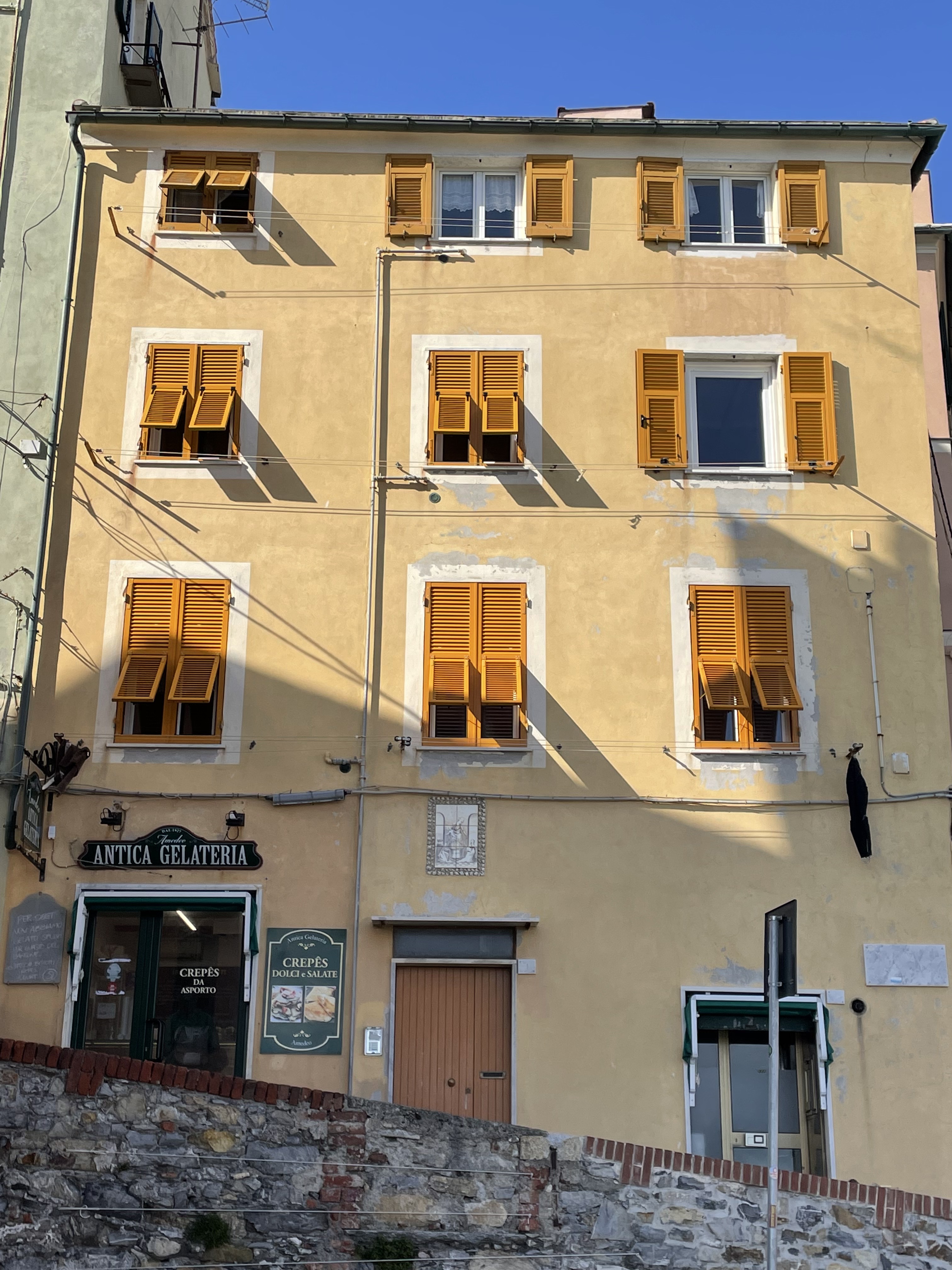
The Antica Gelateria on the climb to Boccadasse 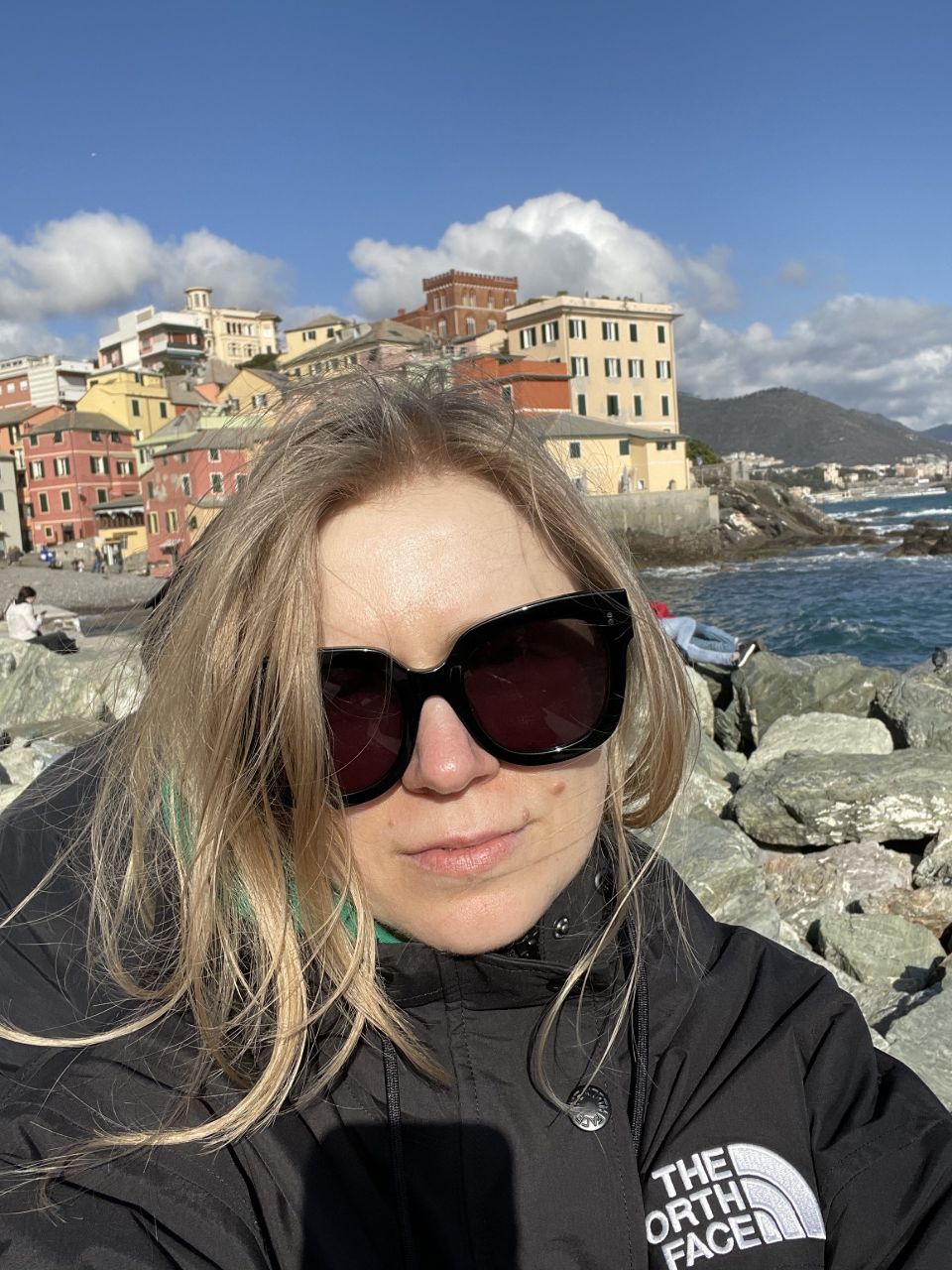
Anna at the gelateria counter 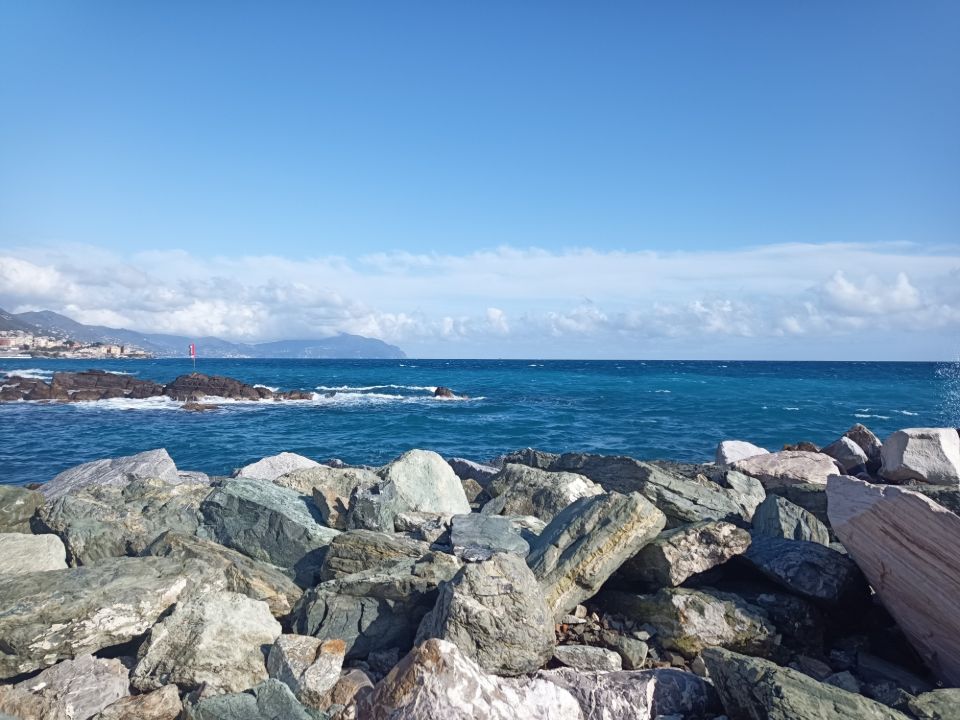
Breakwater rocks, turquoise water, a misty coast beyond 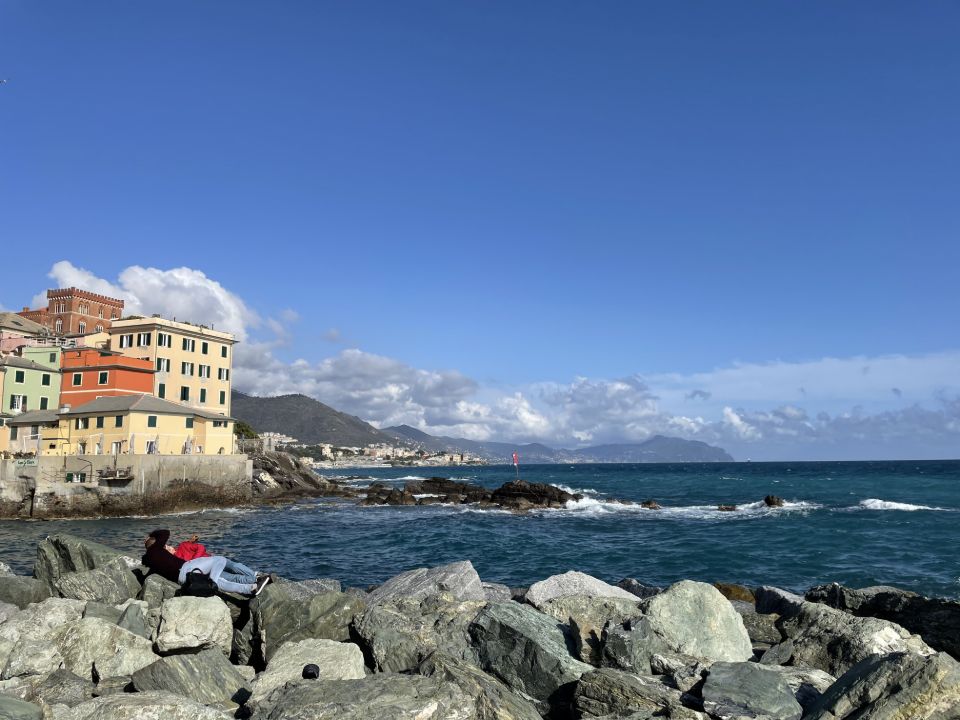
Colourful houses over the rocks, the blue coming back 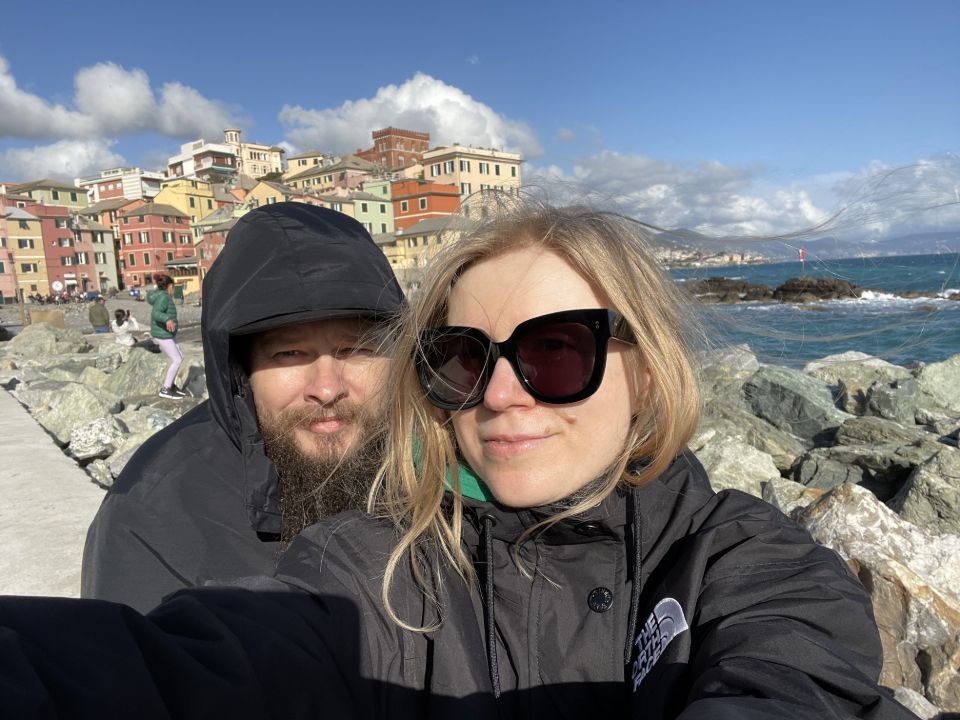
The couple at the cove, the sun back out 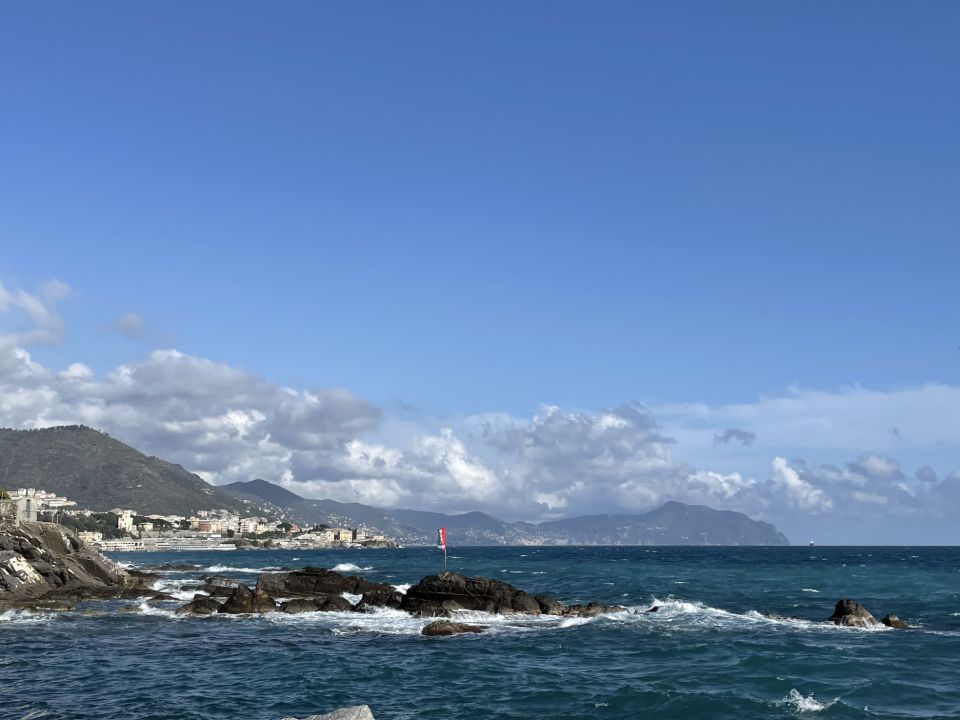
Waves breaking over dark rocks, a red beacon taking them on the chin 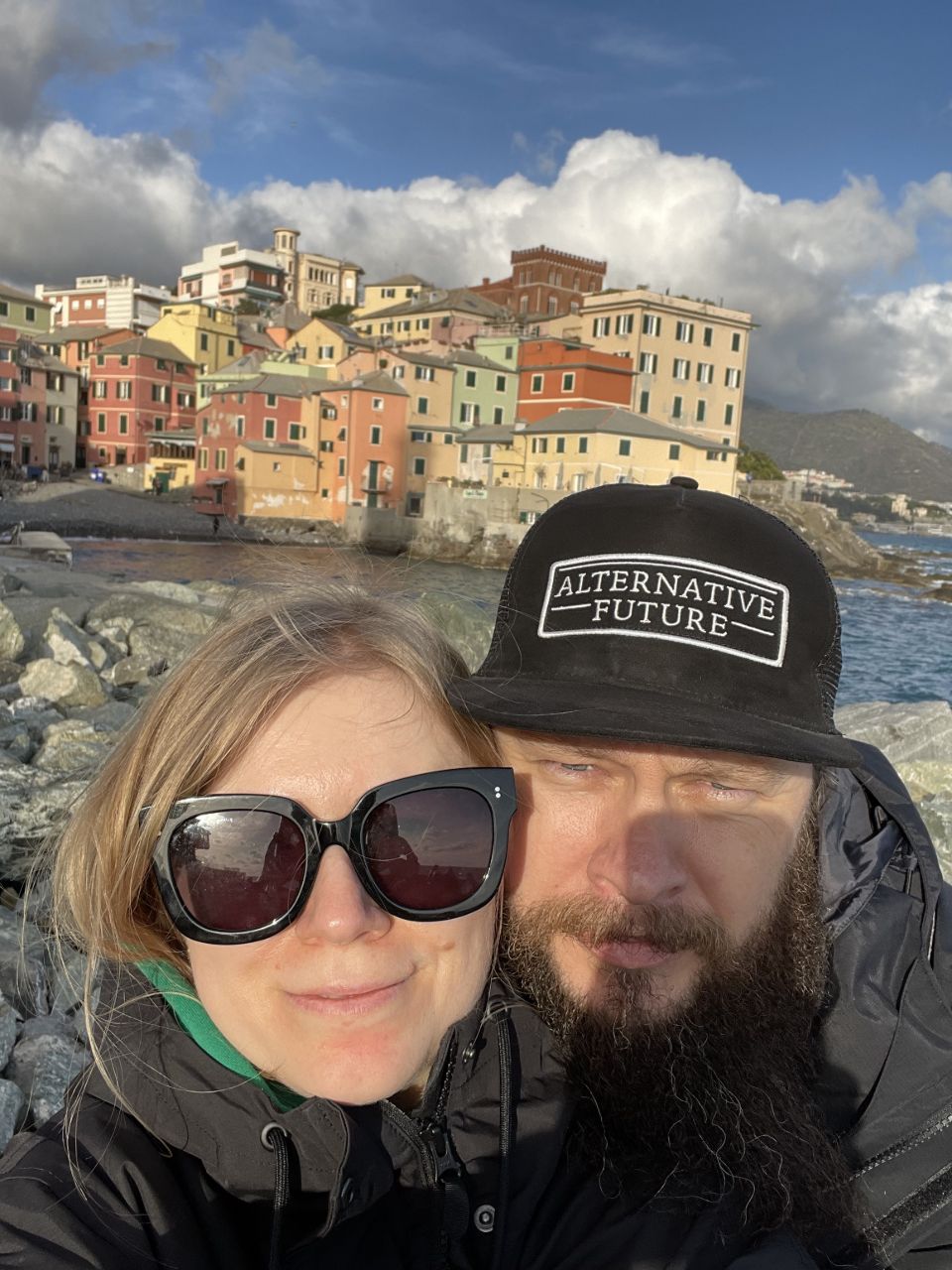
The standard act, Boccadasse edition 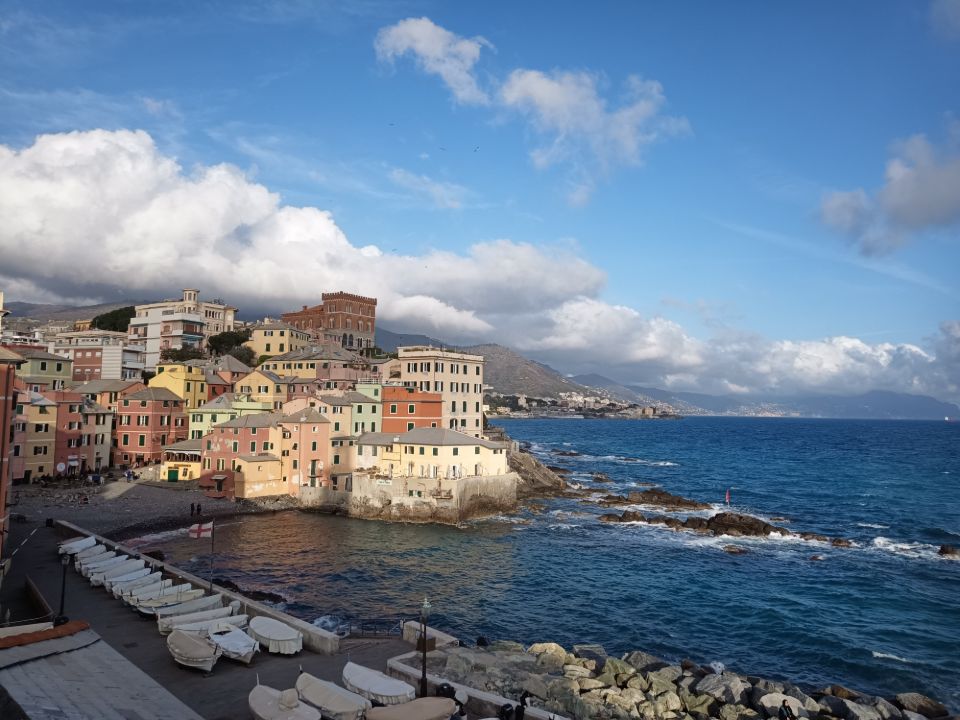
Boccadasse from the overlook
The Old Port, after dark
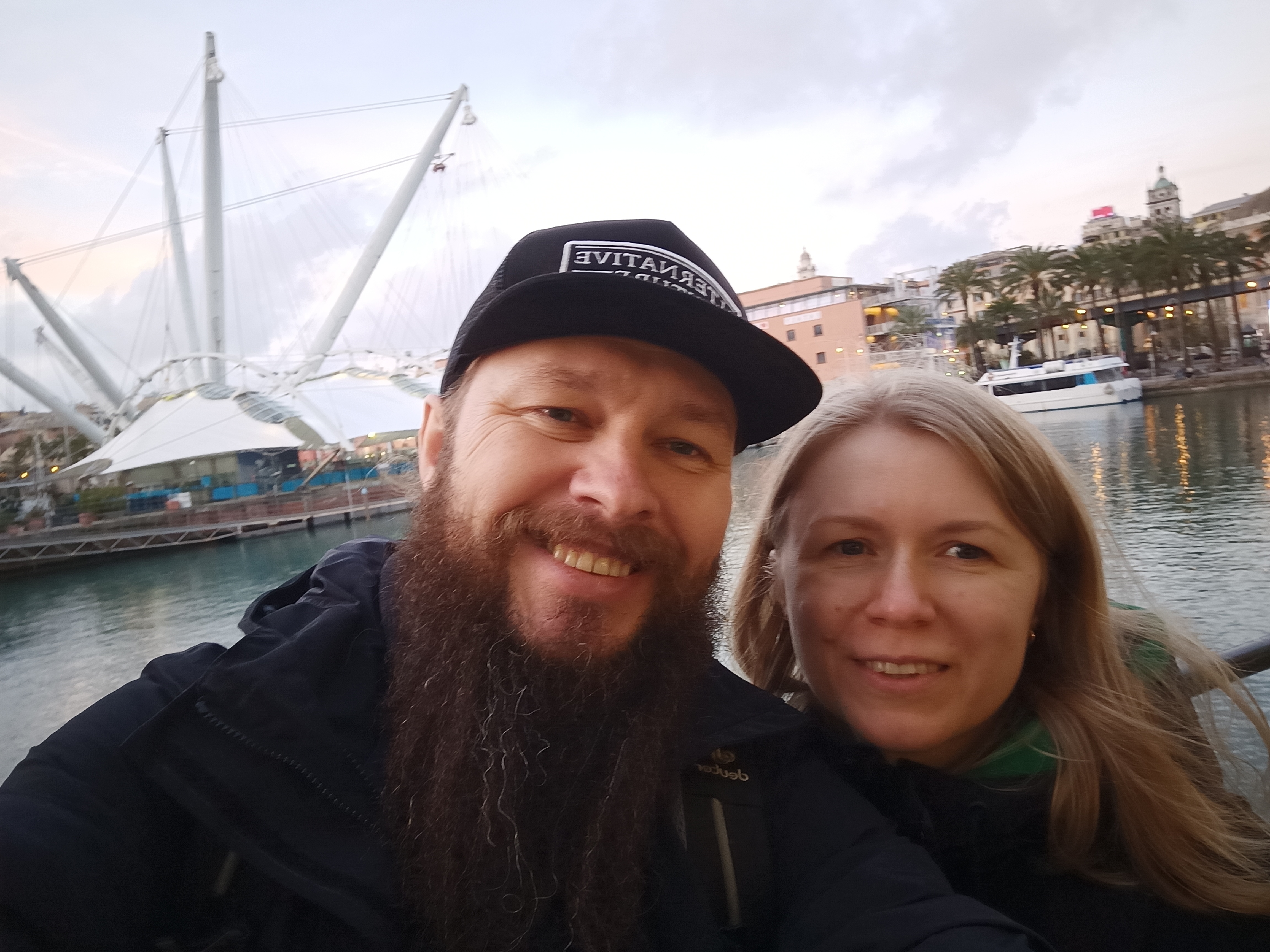
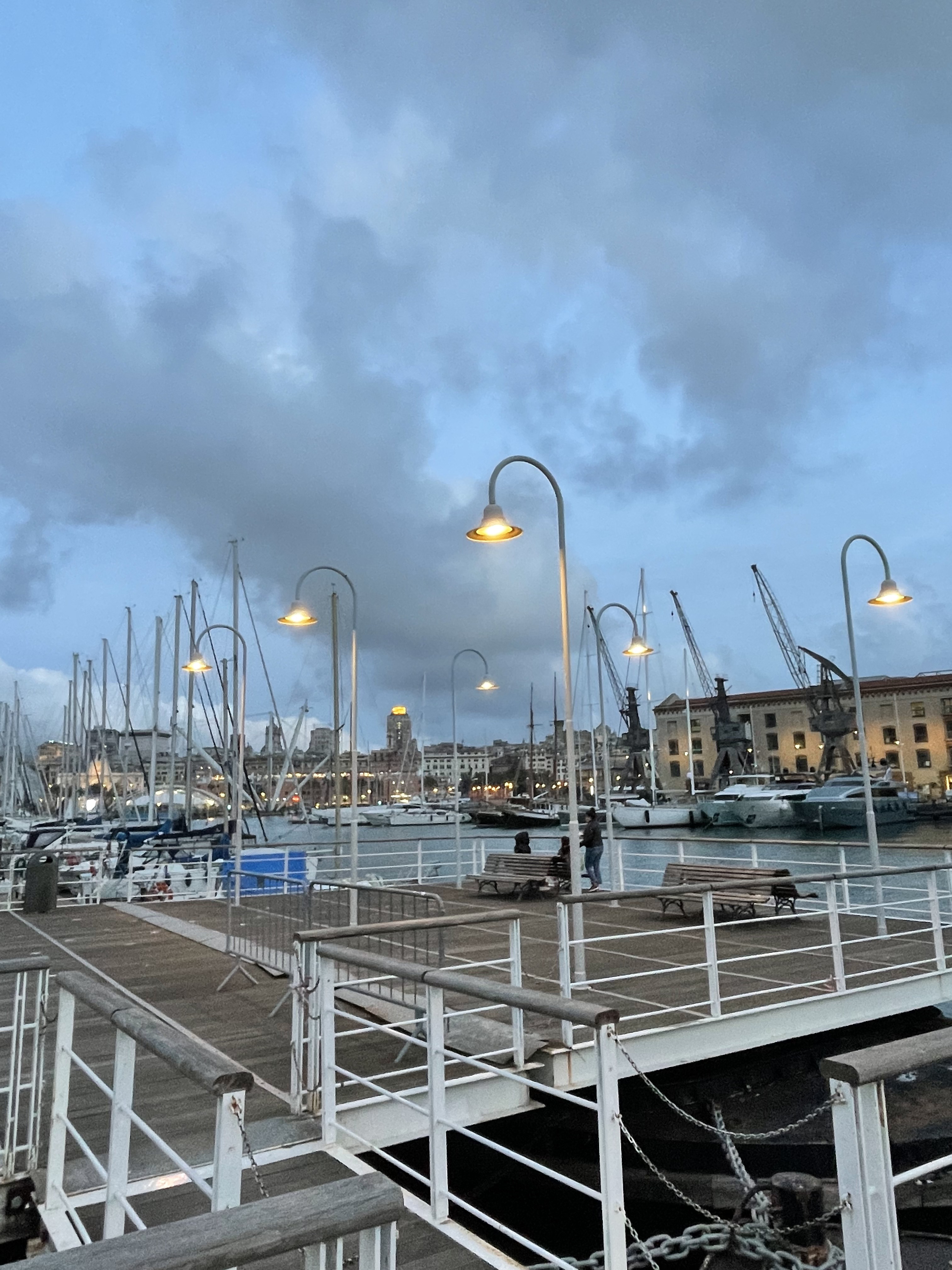
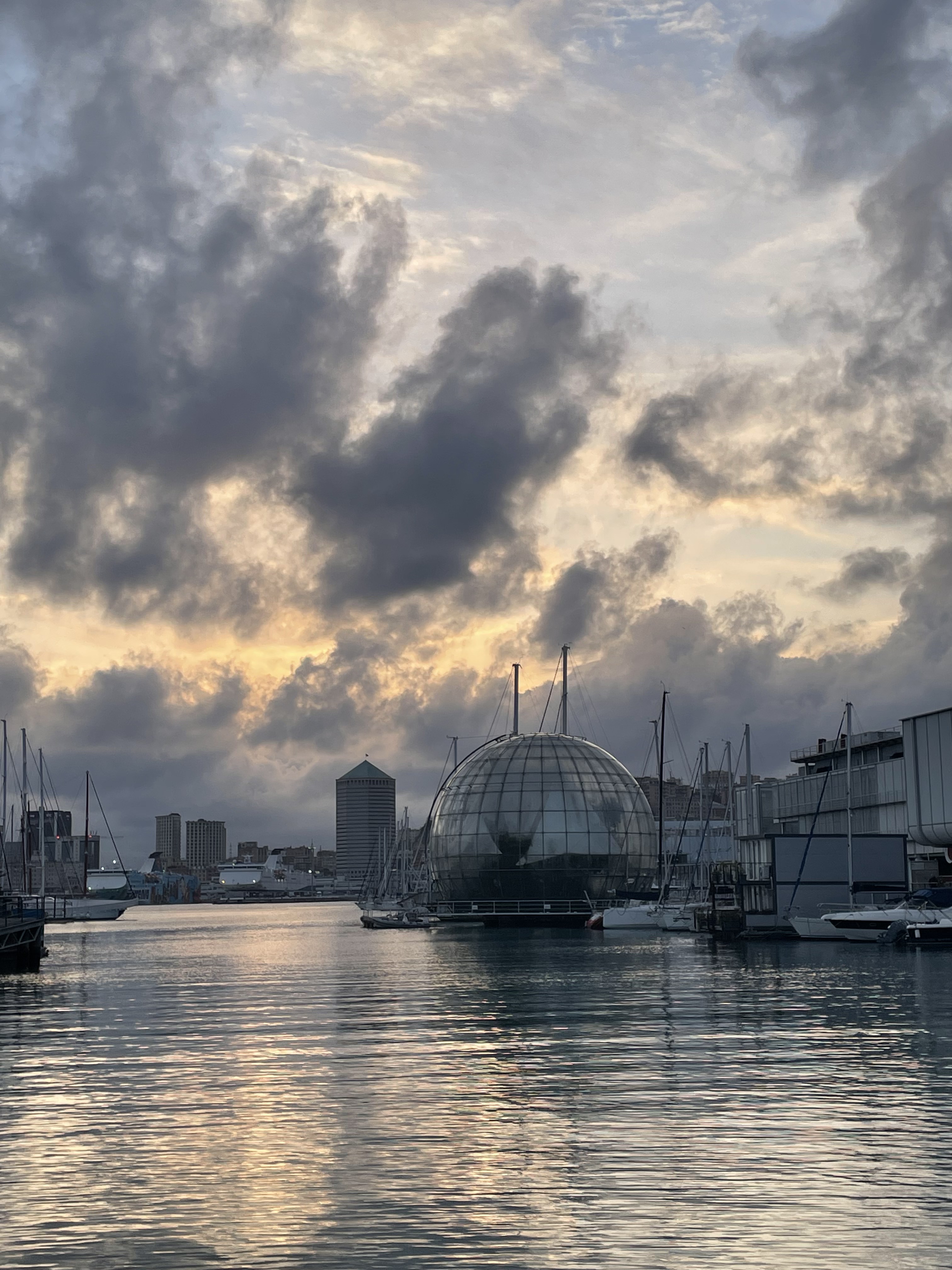
Back in the city, we gave the evening to the waterline. Genova keeps its modern face at the old port — the Porto Antico — where Renzo Piano, hometown architect, spent a decade turning a working harbour into a public one. His white sail-cane, the Bigo, stands over the marina; a glass-and-steel biosphere sits among the pines; tensile canopies run the length of the promenade. The couple-selfies at the railing came out in the last of the light, moored yachts going dark behind us. A man passed with three shibas on a single lead, which may have been the most Genovese sight of the day.
The old port, going dark.
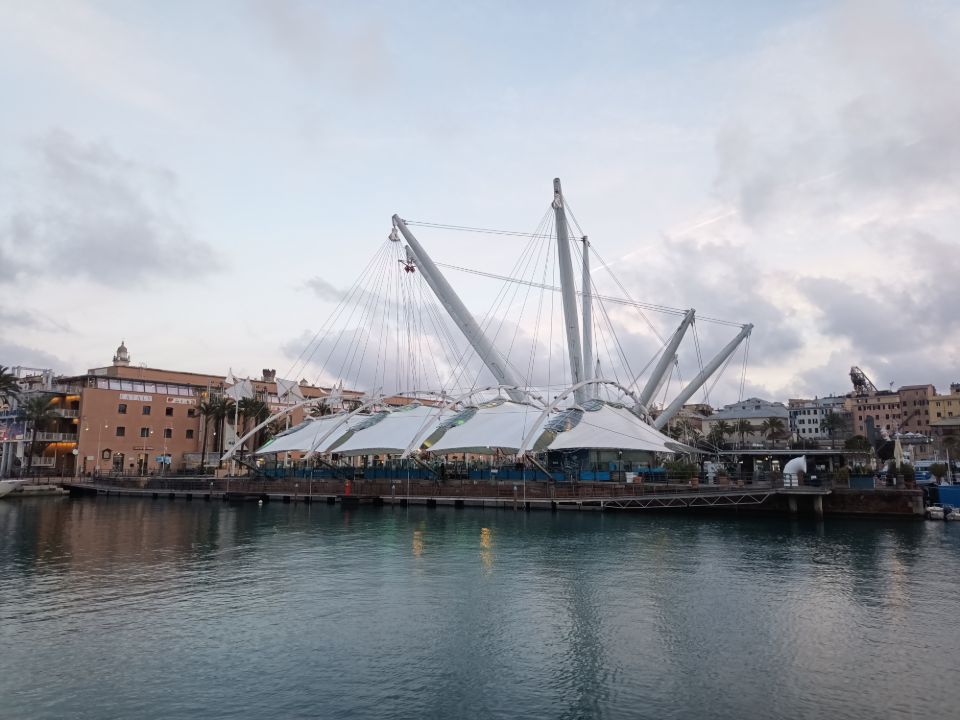
The Bigo, Piano's sail-cane over the marina 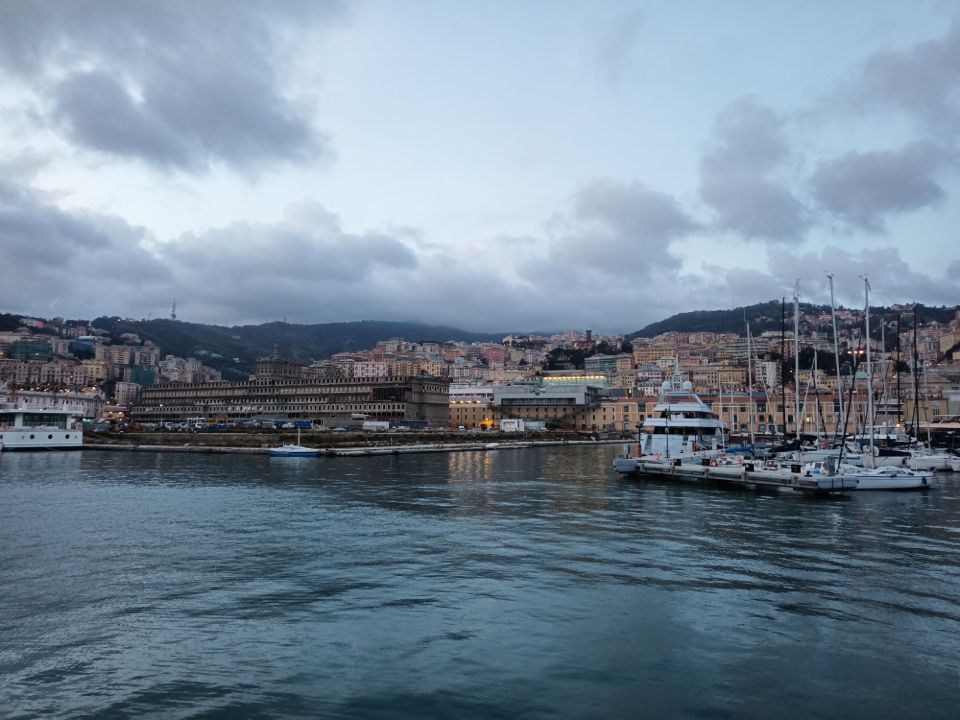
The harbour going dark, yacht by yacht 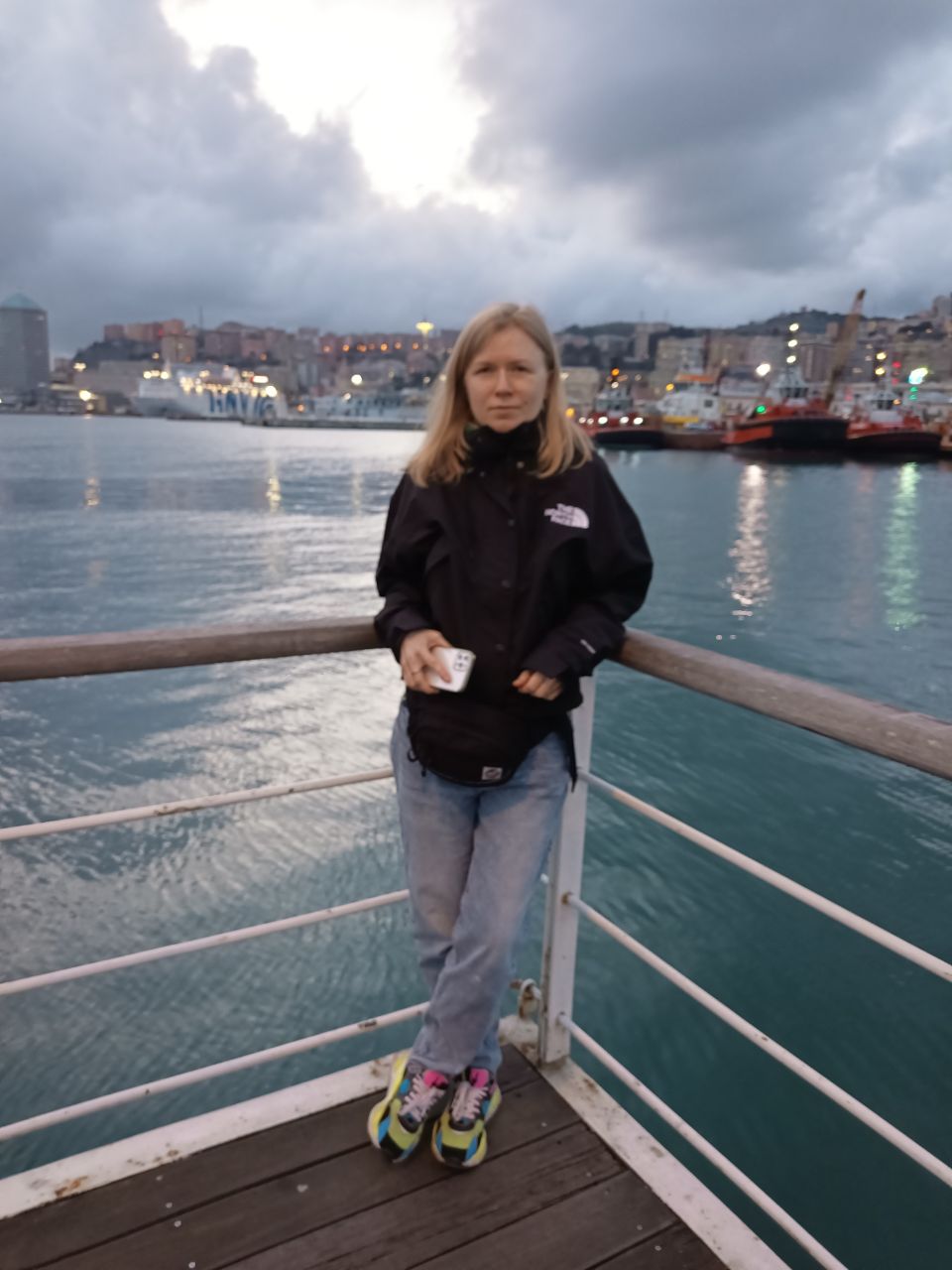
Anna on the pier, full length, the city dark behind 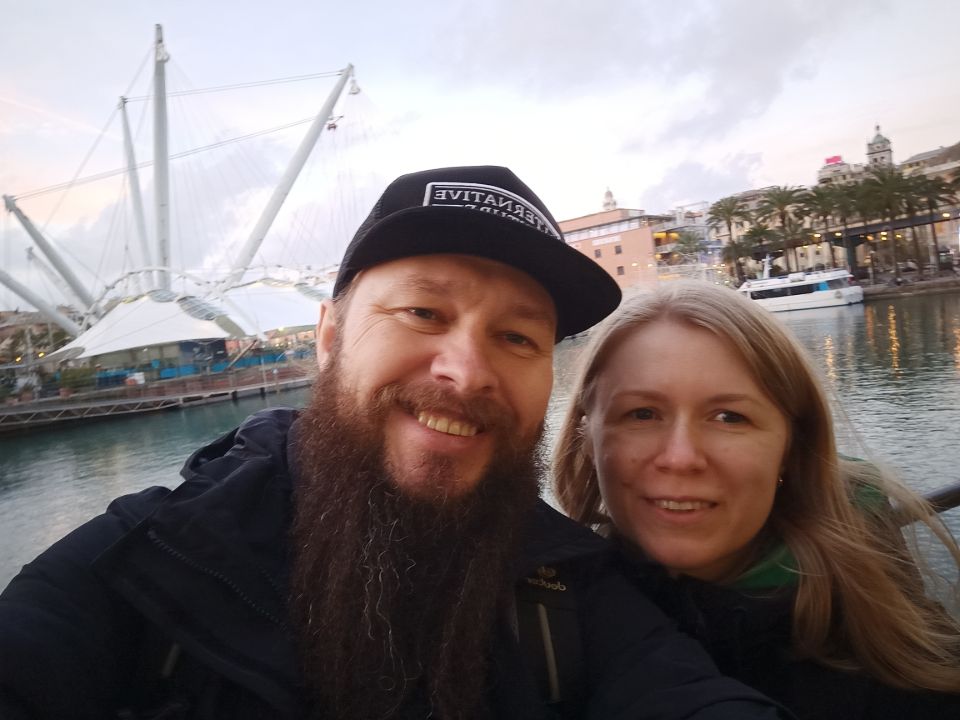
The couple by the harbour, he grinning wide 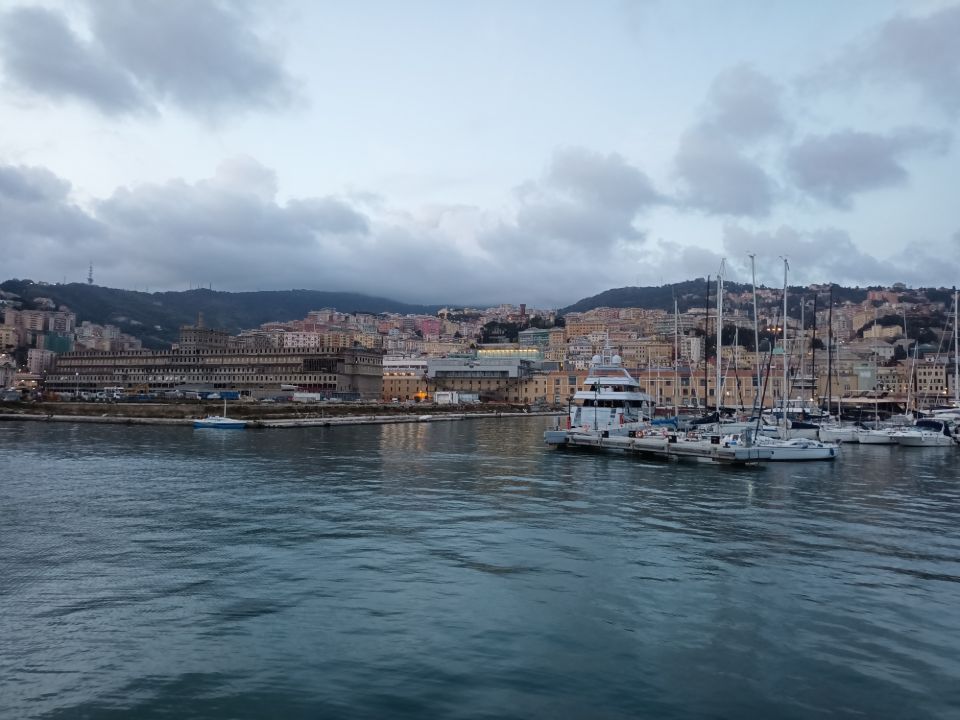
The marina panorama under dark clouds 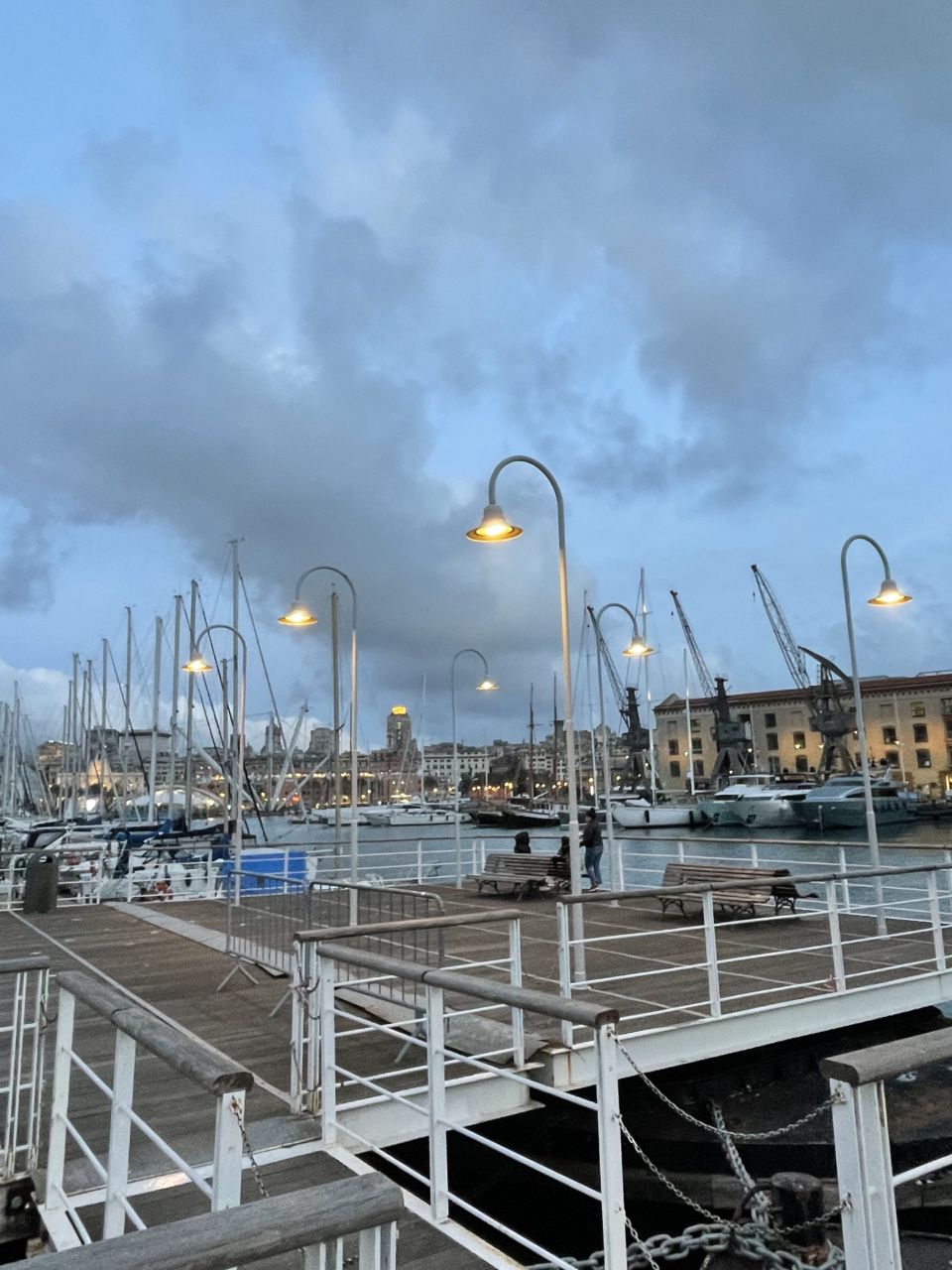
Marina lamps coming on over the dark water 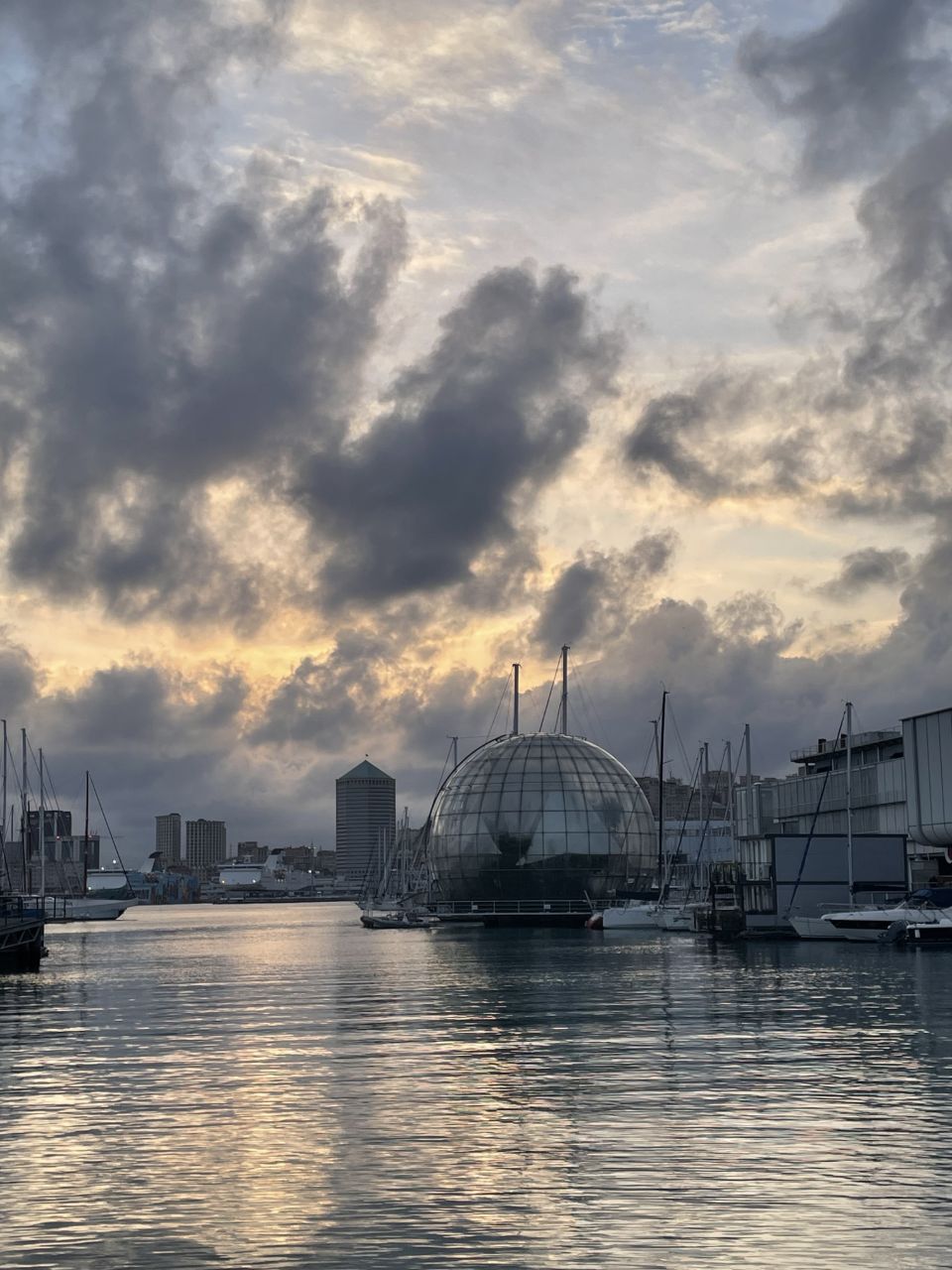
The Biosphere under assembling clouds, yachts below
Dinner on the port
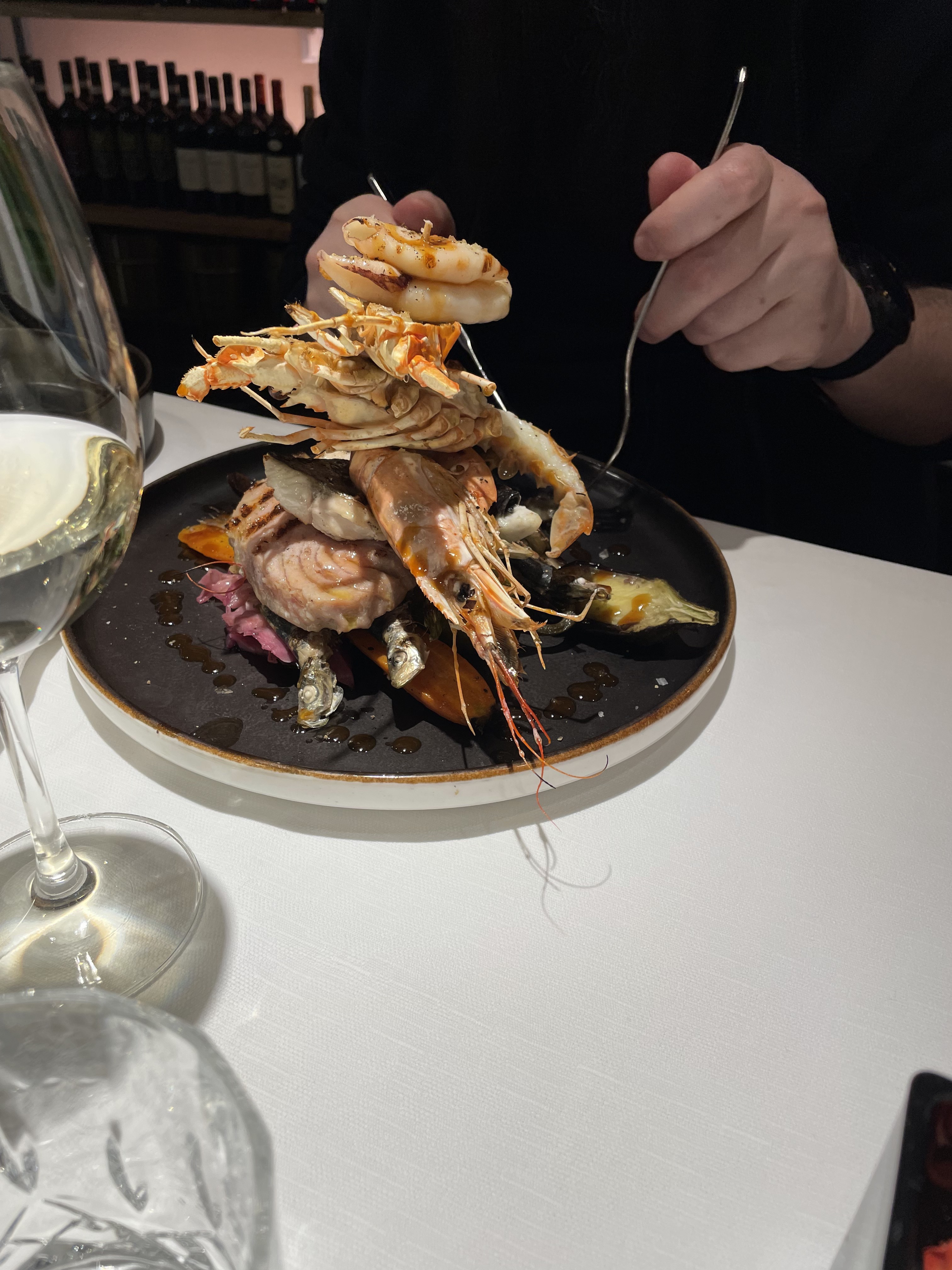
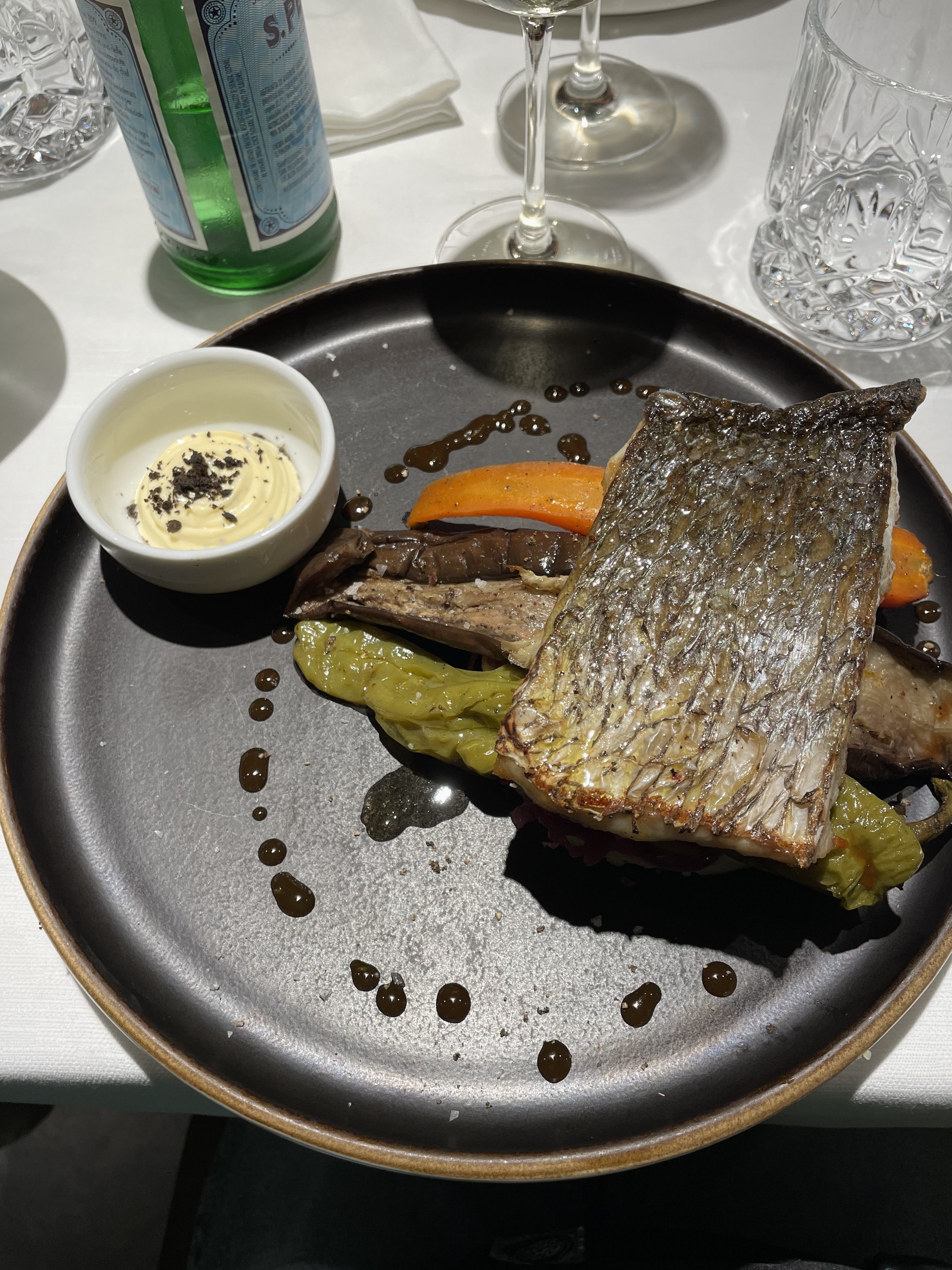
Dinner was at a trattoria on the port itself. A tall stack of shellfish — prawn, langoustine, squid — arrived on a dark plate, built like architecture. After a day of watching the sea behave badly from the shore, eating its residents felt like the correct response. A turbot arrived after, calmer and more precise.
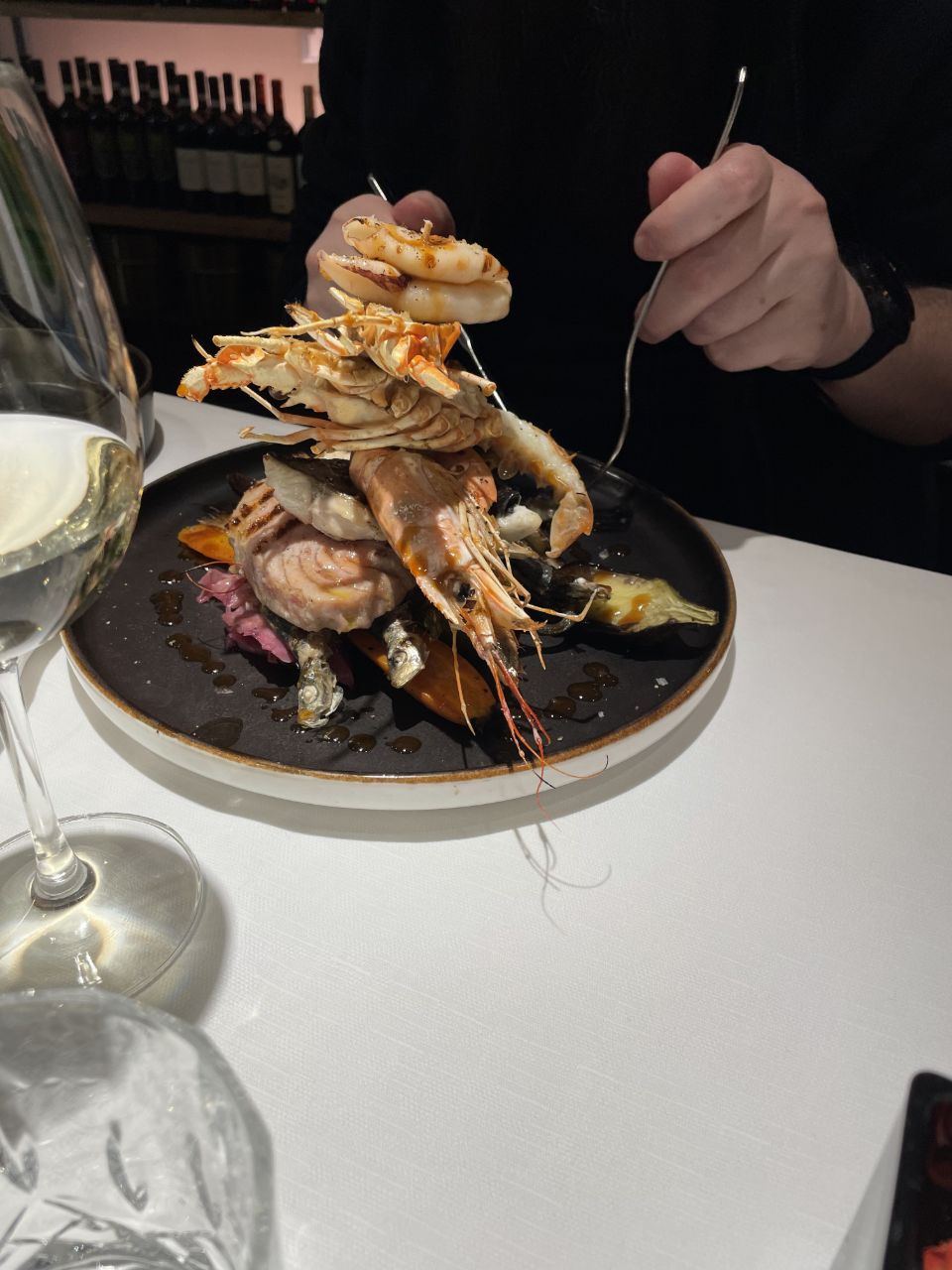
The stacked catch: prawn, langoustine, squid 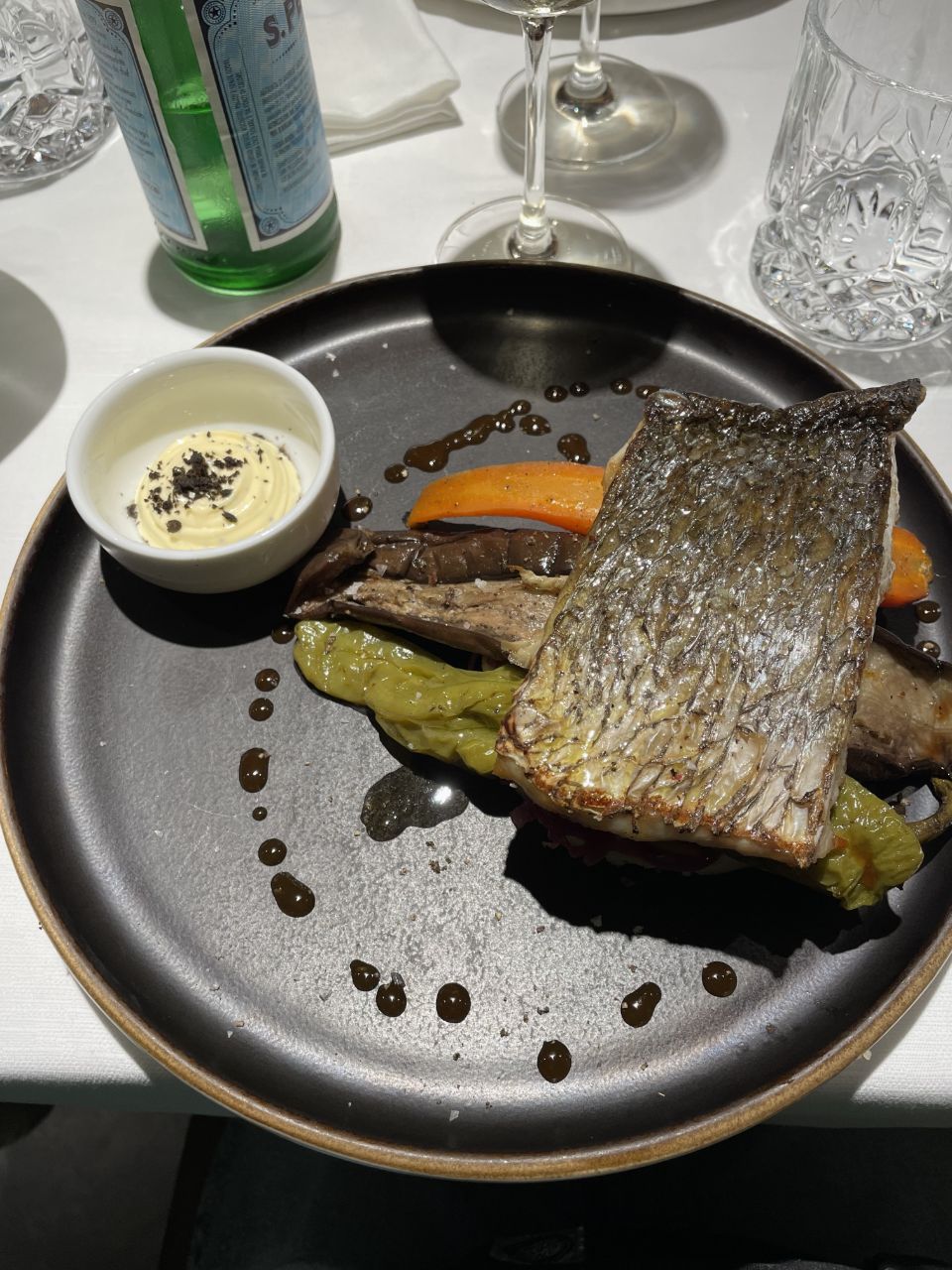
The fish course, plated