Andalusia trip 2024 — Málaga
Málaga
A new set of keys
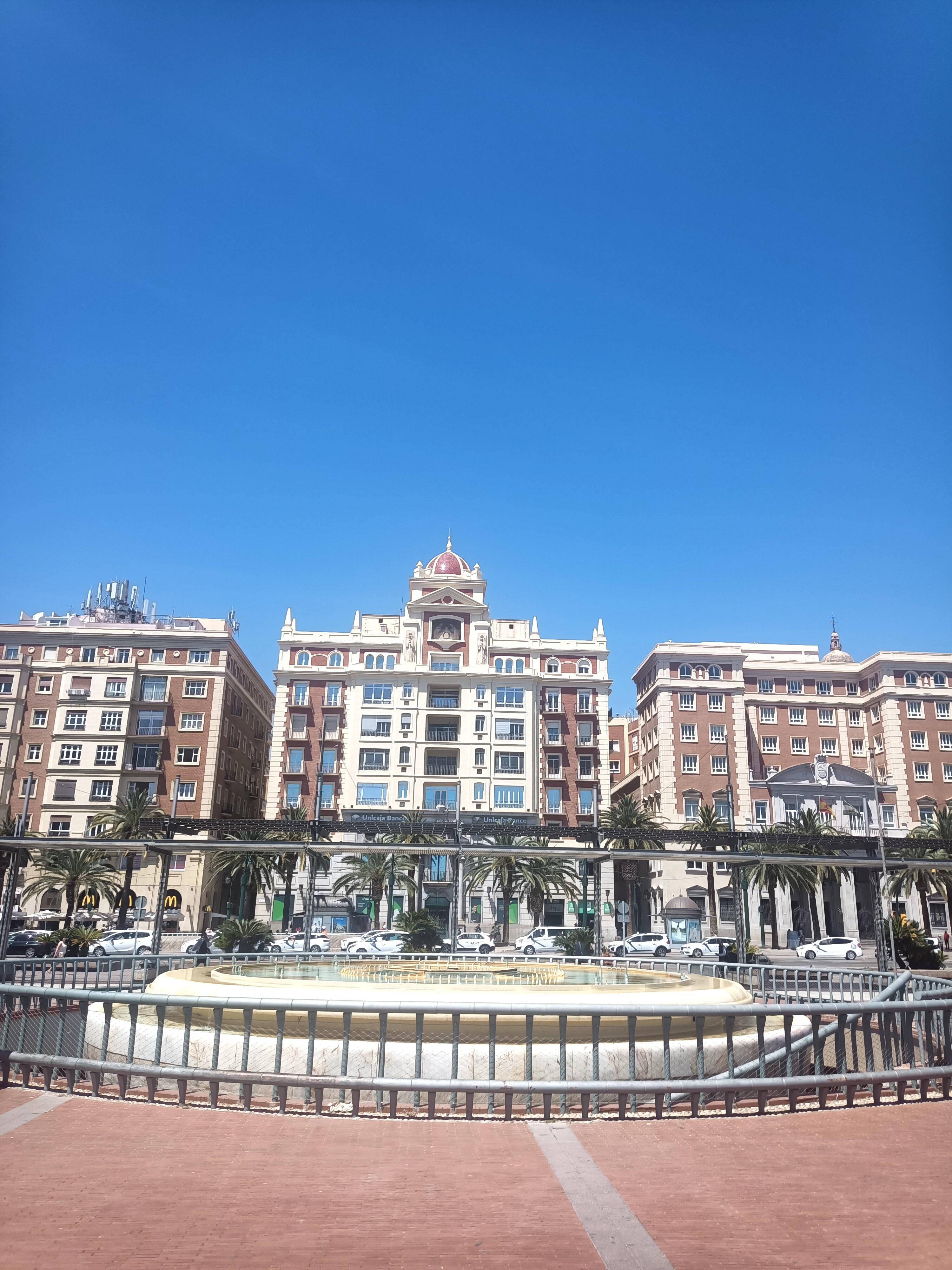
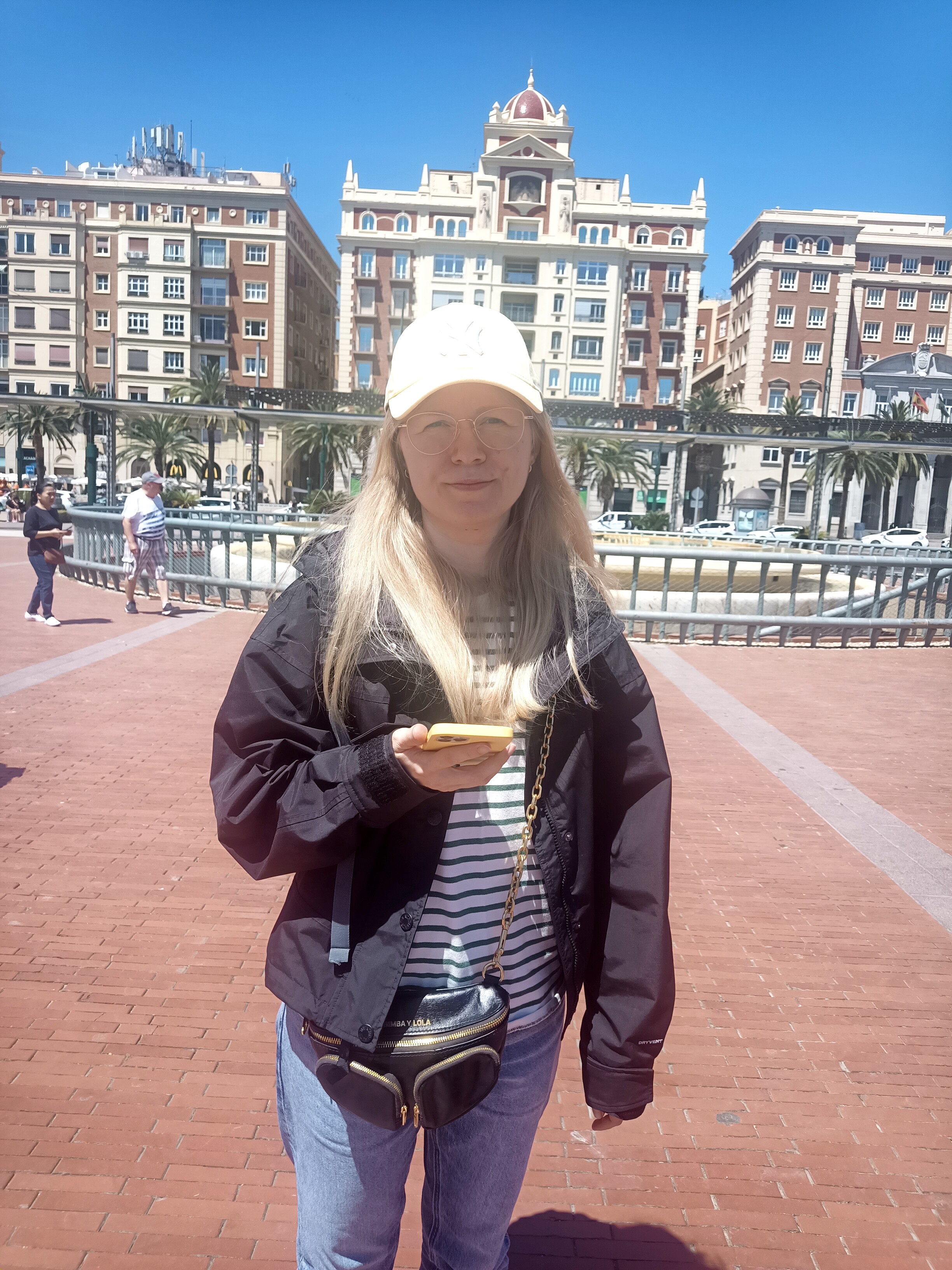
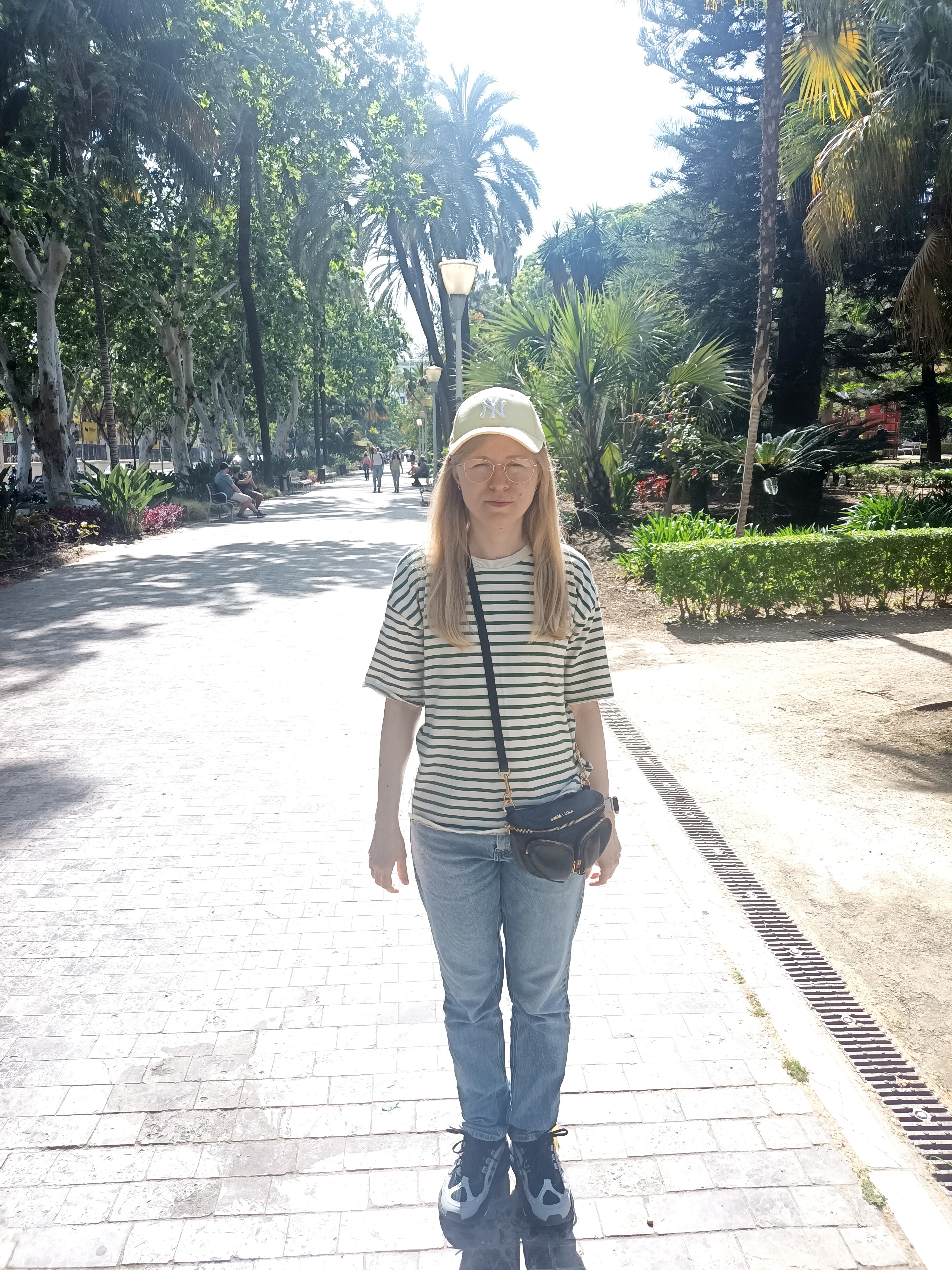
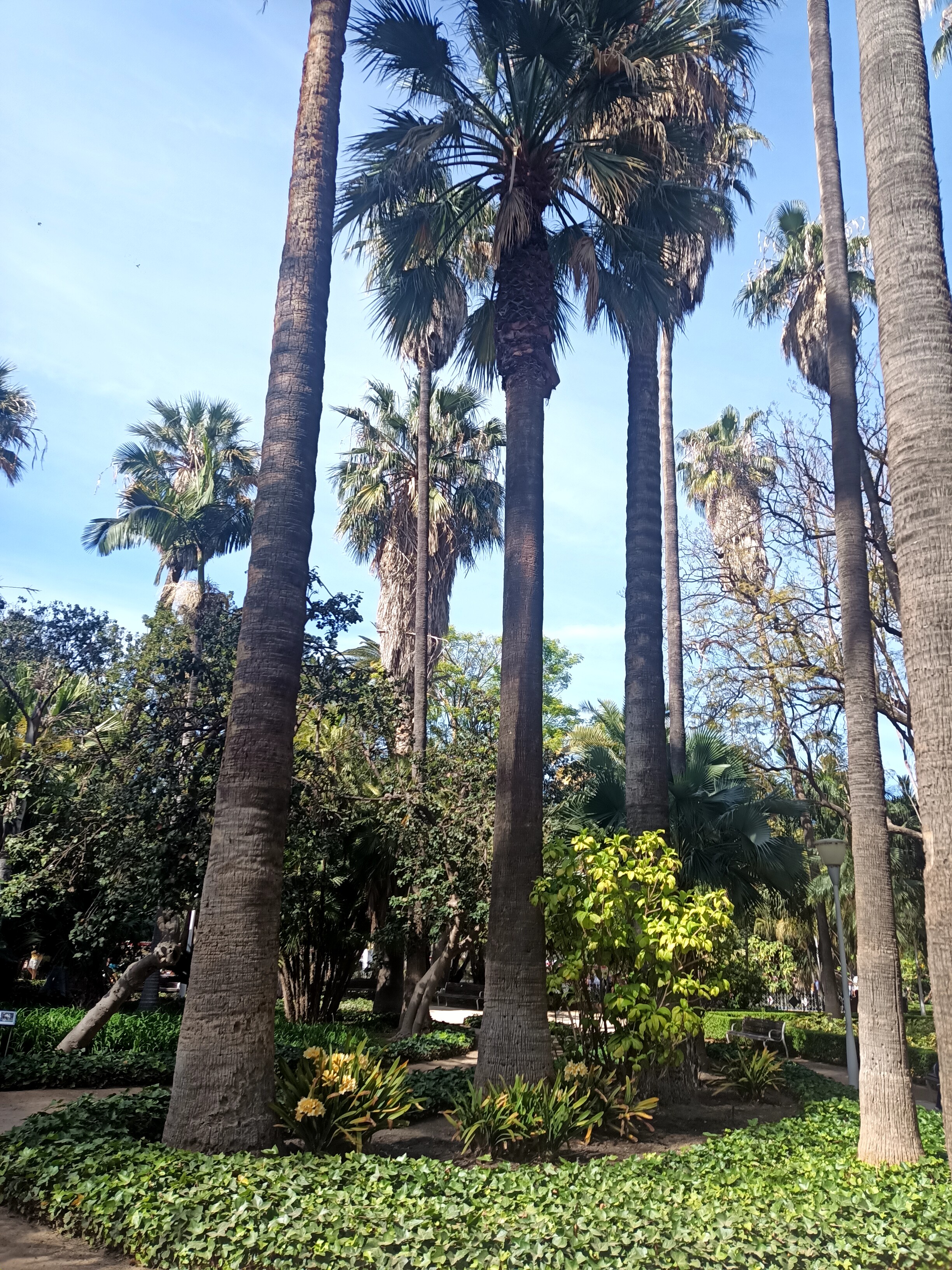
After the farewell lunch the bus took over: an hour of coastal traffic, Nerja disappearing politely in the mirrors, and Málaga arriving as a low skyline with its one towered cathedral already visible. The first plaza was red-brick and busy in the best possible way, and the palm park runs through the centre like a green corridor that has somewhere to be. At four, the keys performed their ceremony in the door of the new apartment — Lagunillas, a quarter of studios and laundry lines that feels lived-in rather than exhibited — and the evening stretched out along the palm park while the light learned the new city.
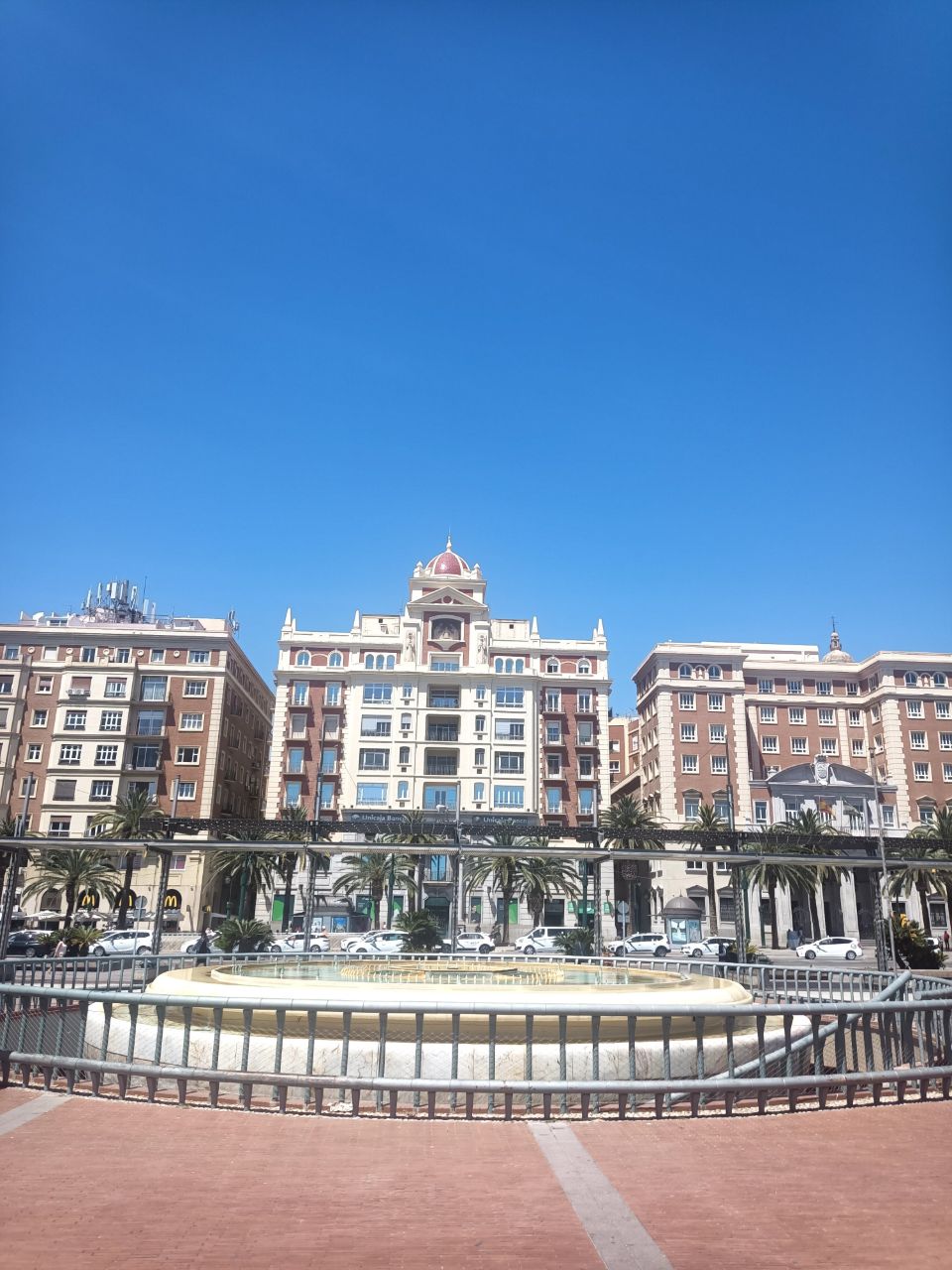
First plaza in Málaga, straight off the bus 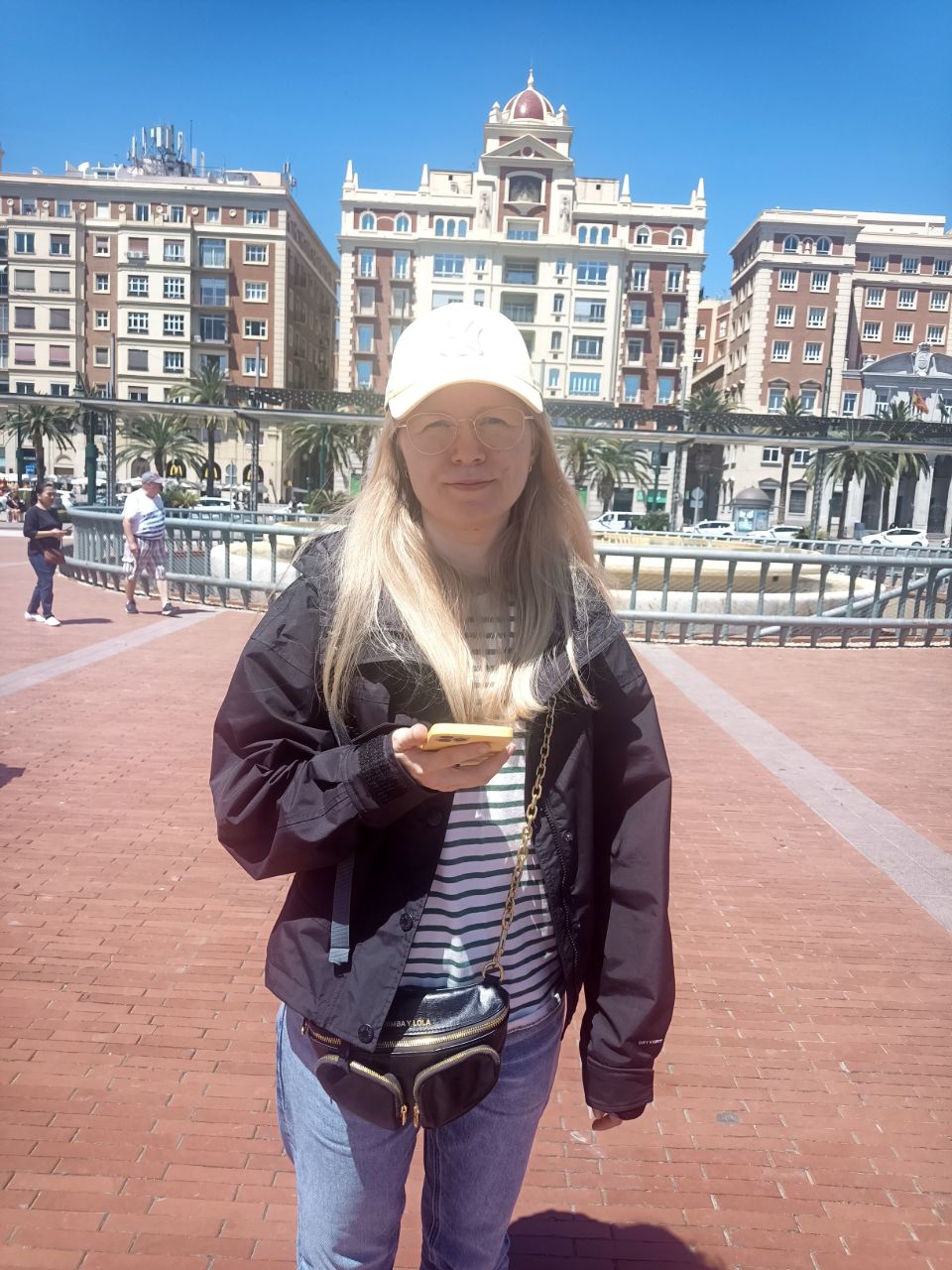
Anna on the red-brick plaza 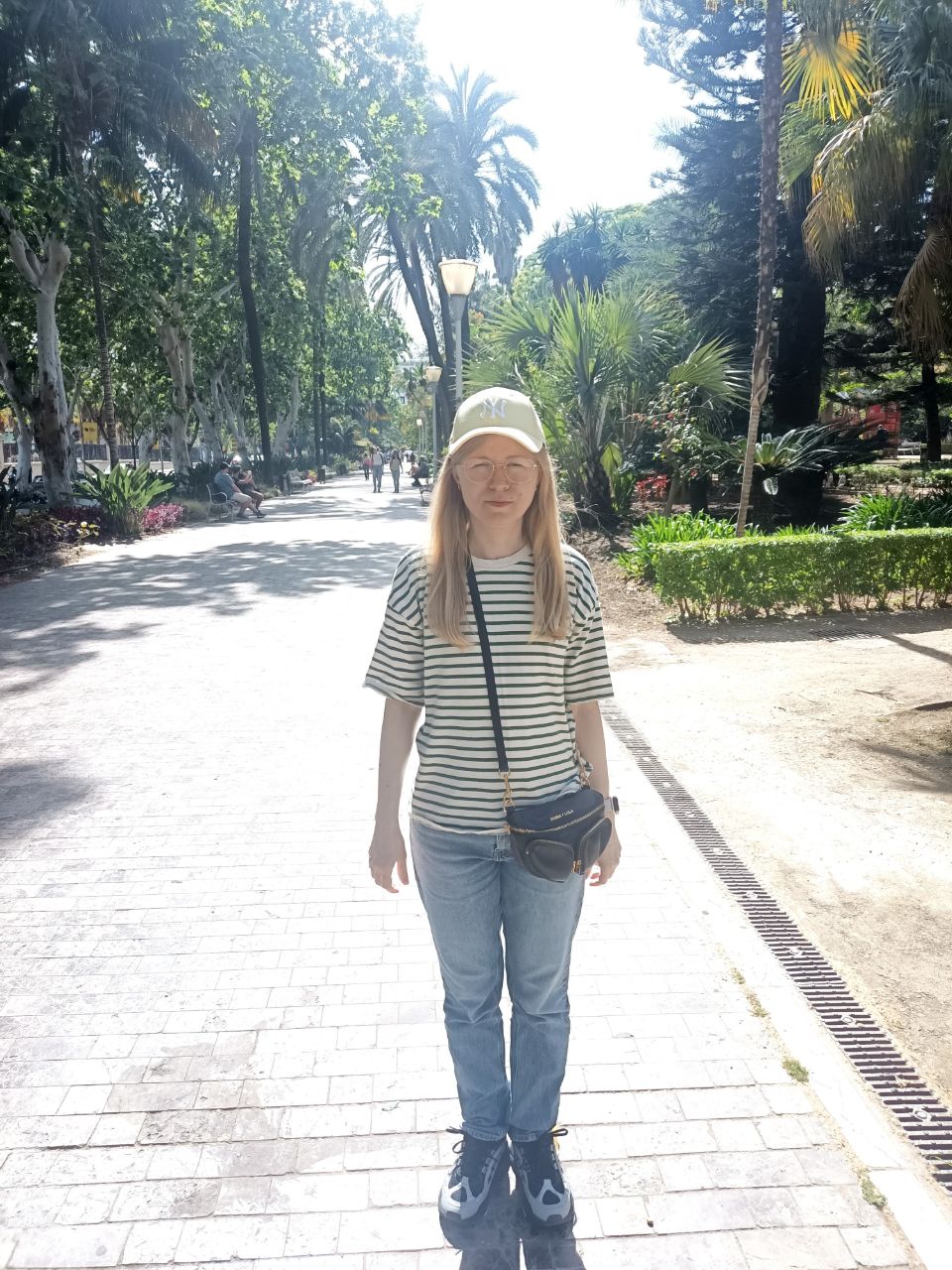
Into the palm park 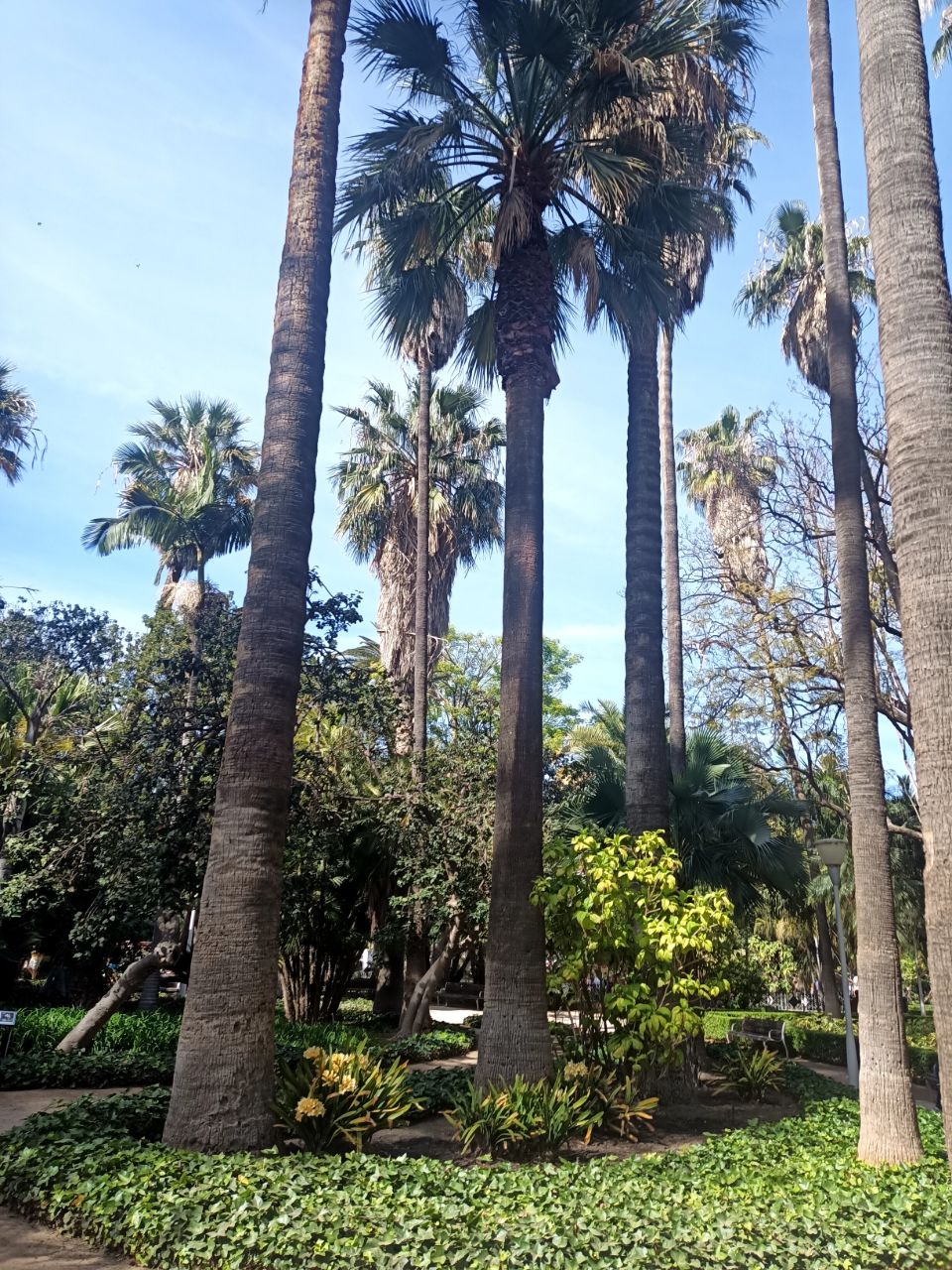
Palms over the path
Doors, a rooftop, one nata
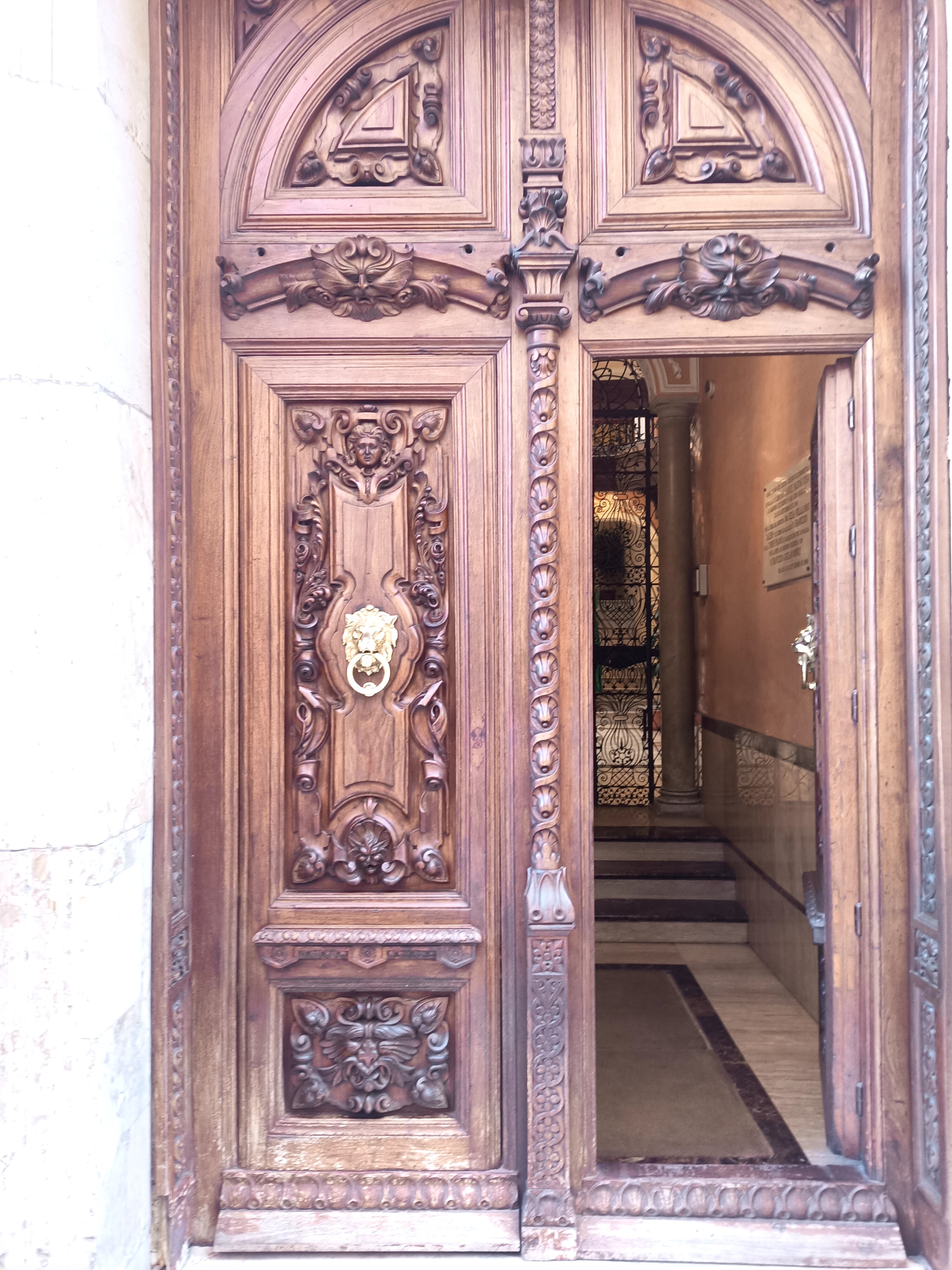
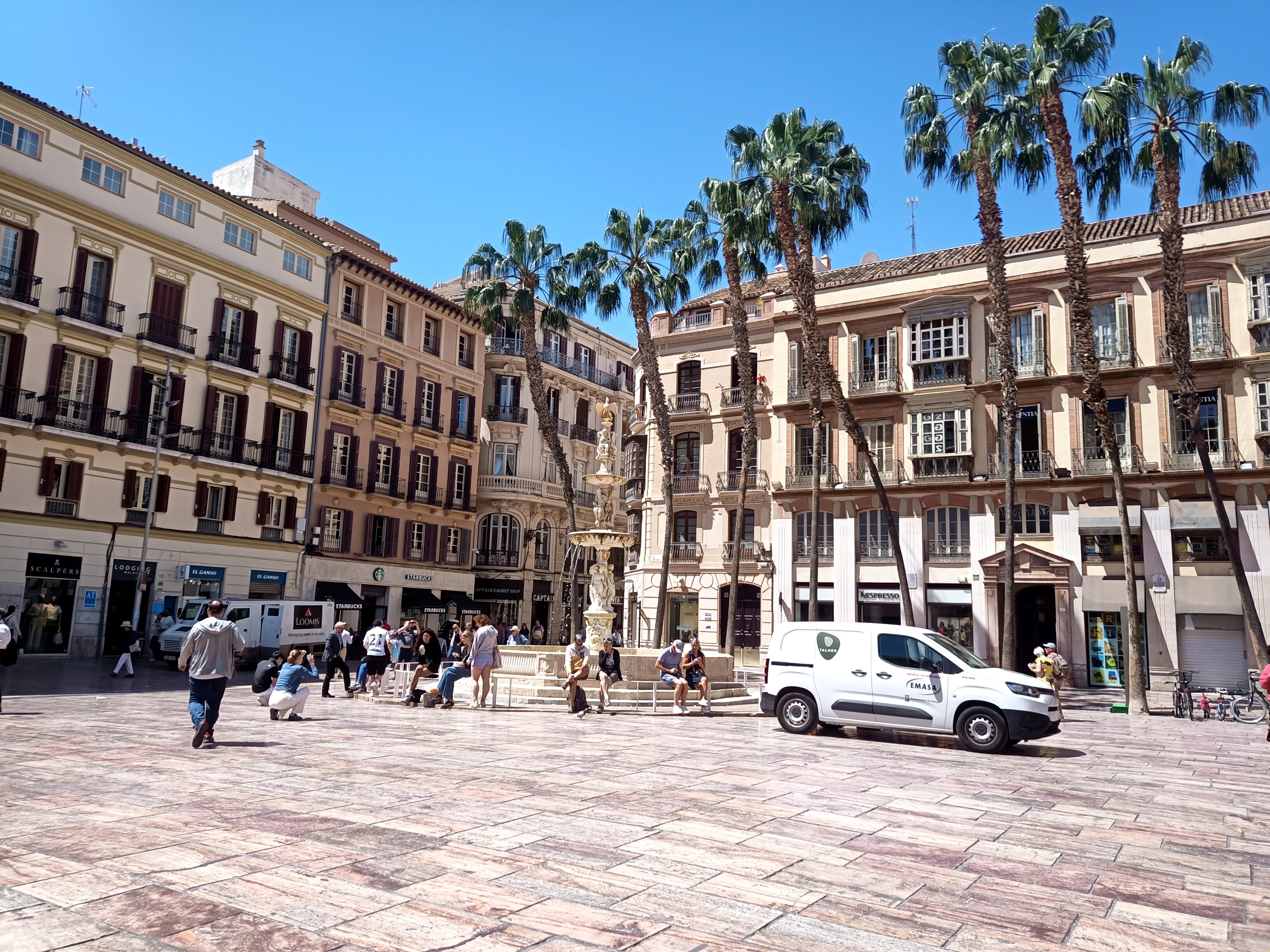
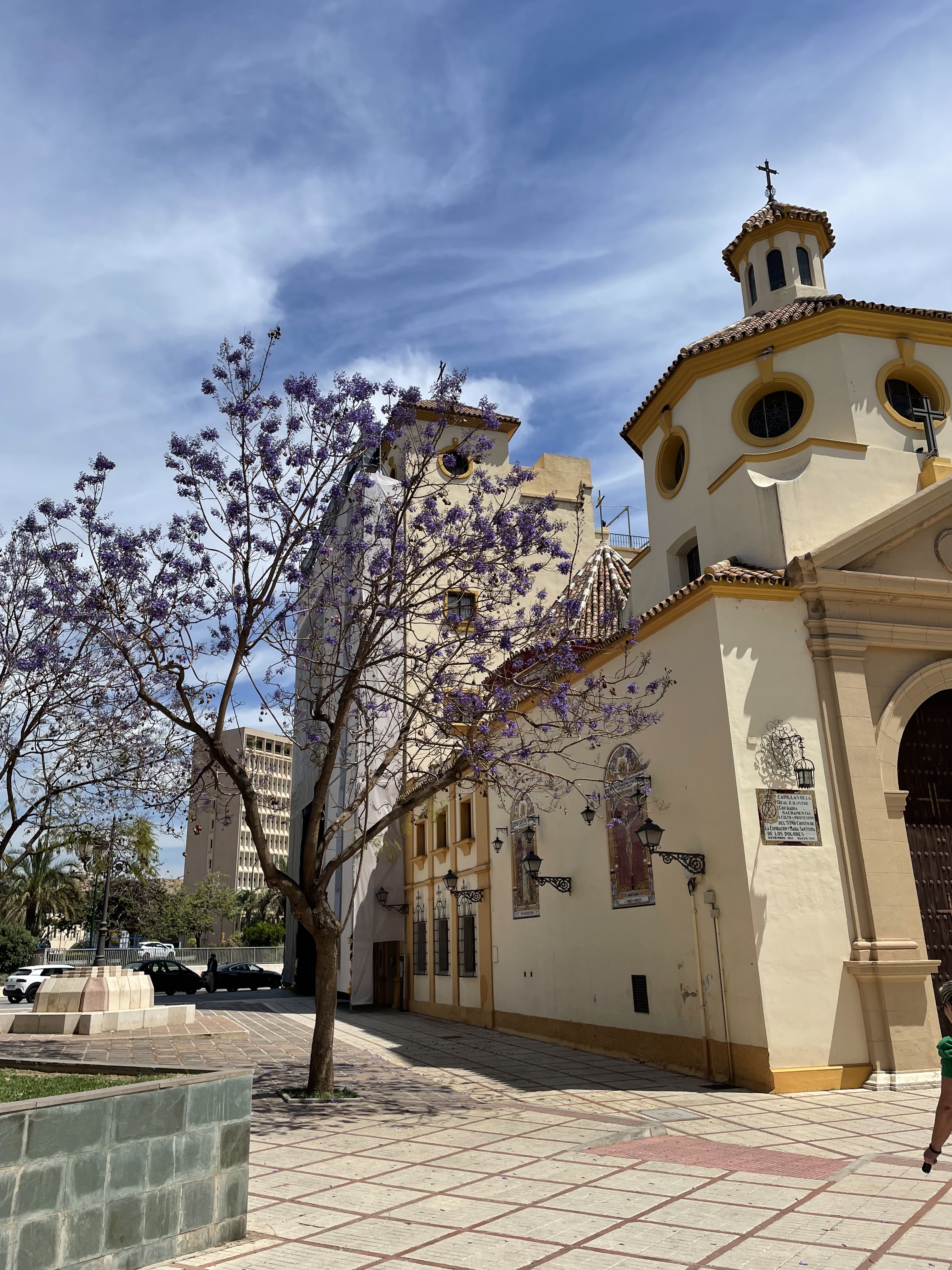
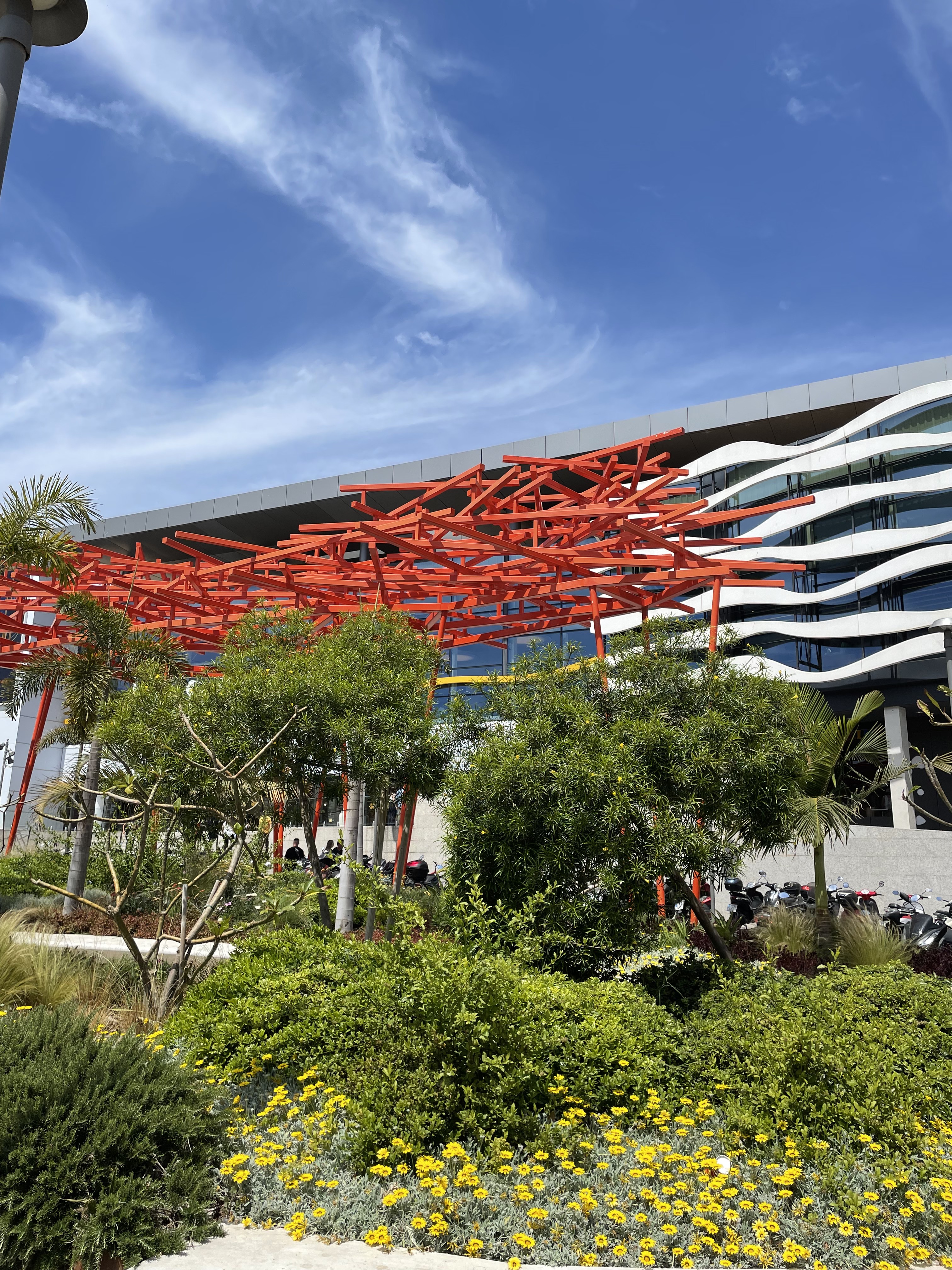
The twenty-fifth went to the city's details. The old streets keep their entrances like exhibits — one double door of carved wood, opened onto a marble staircase by a brass lion who has plainly been answering it for a century — and the plazas hand out shade to everyone having coffee at once. A whitewashed church wore yellow trim under a jacaranda in full bloom, a red steel canopy stood in a small garden like modern art parked among the palms, and the palm avenue crossed the whole centre without hurrying for anyone.
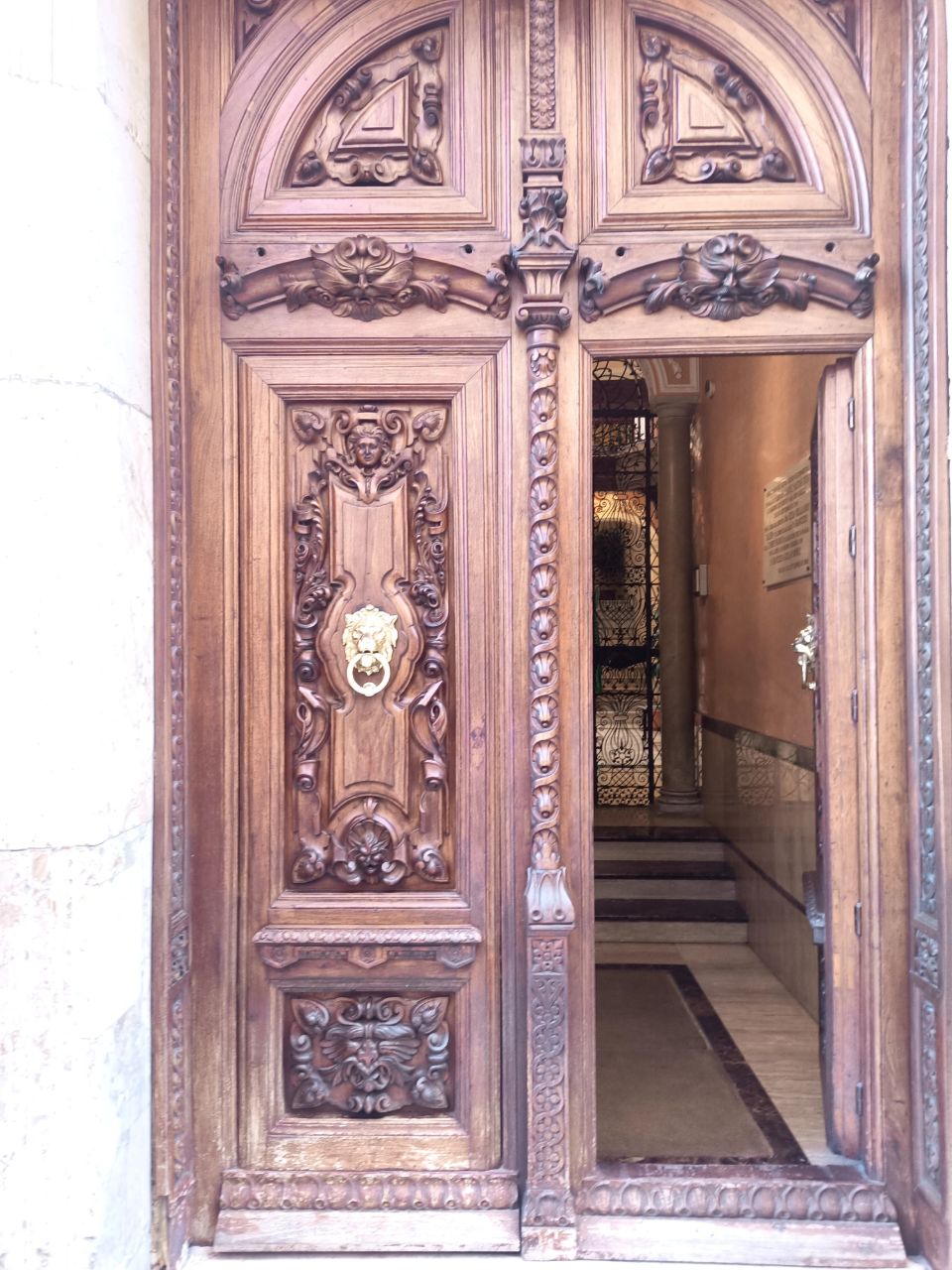
A grand door with its brass lion 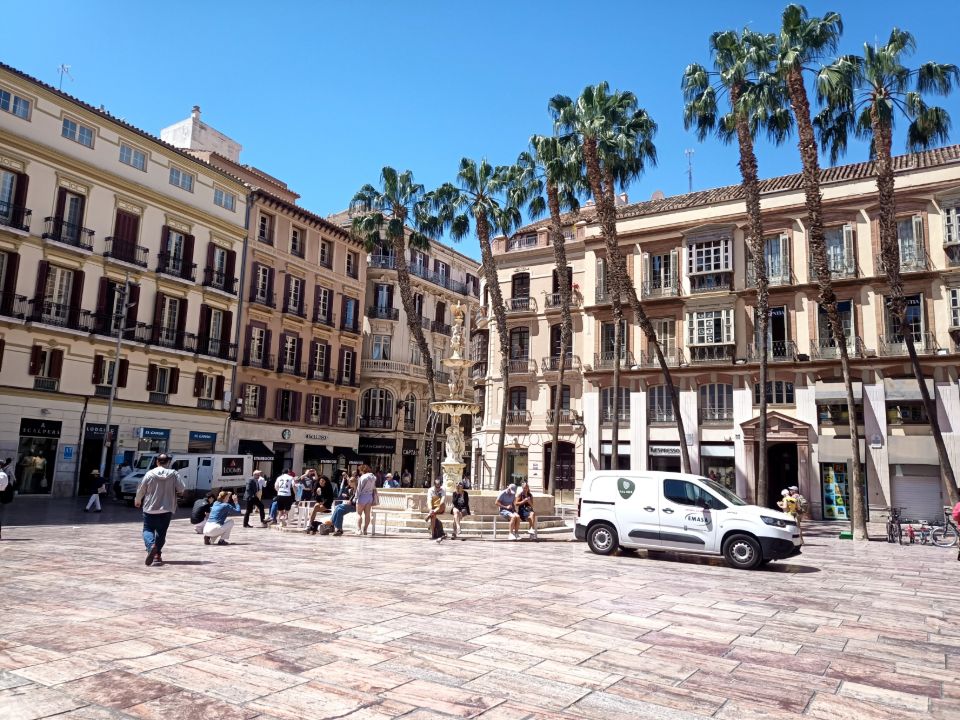
Palms, fountain, midday bustle 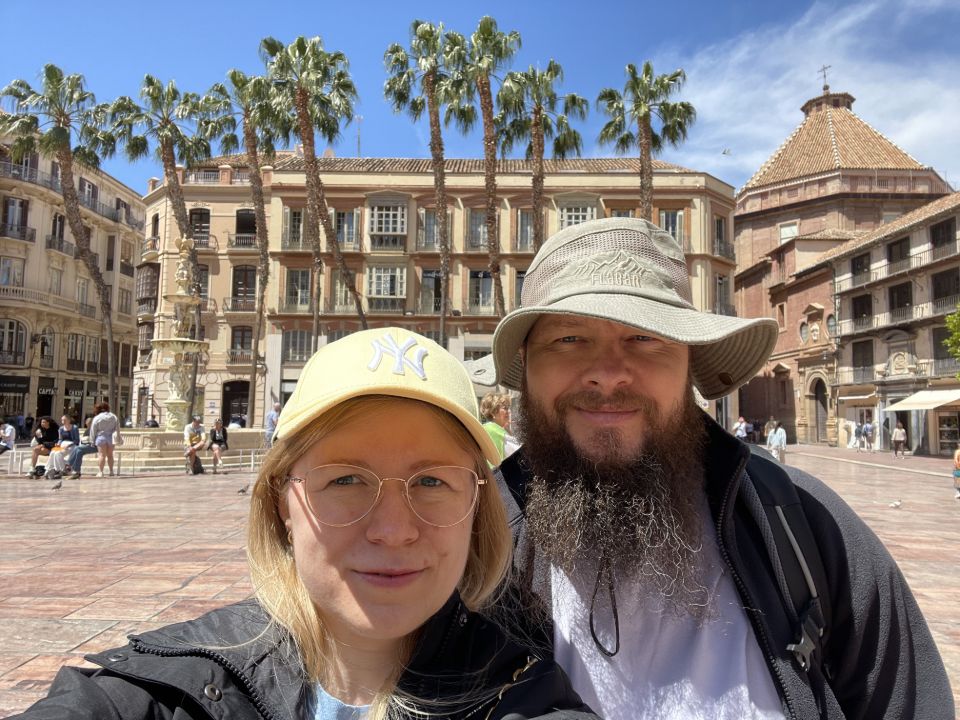
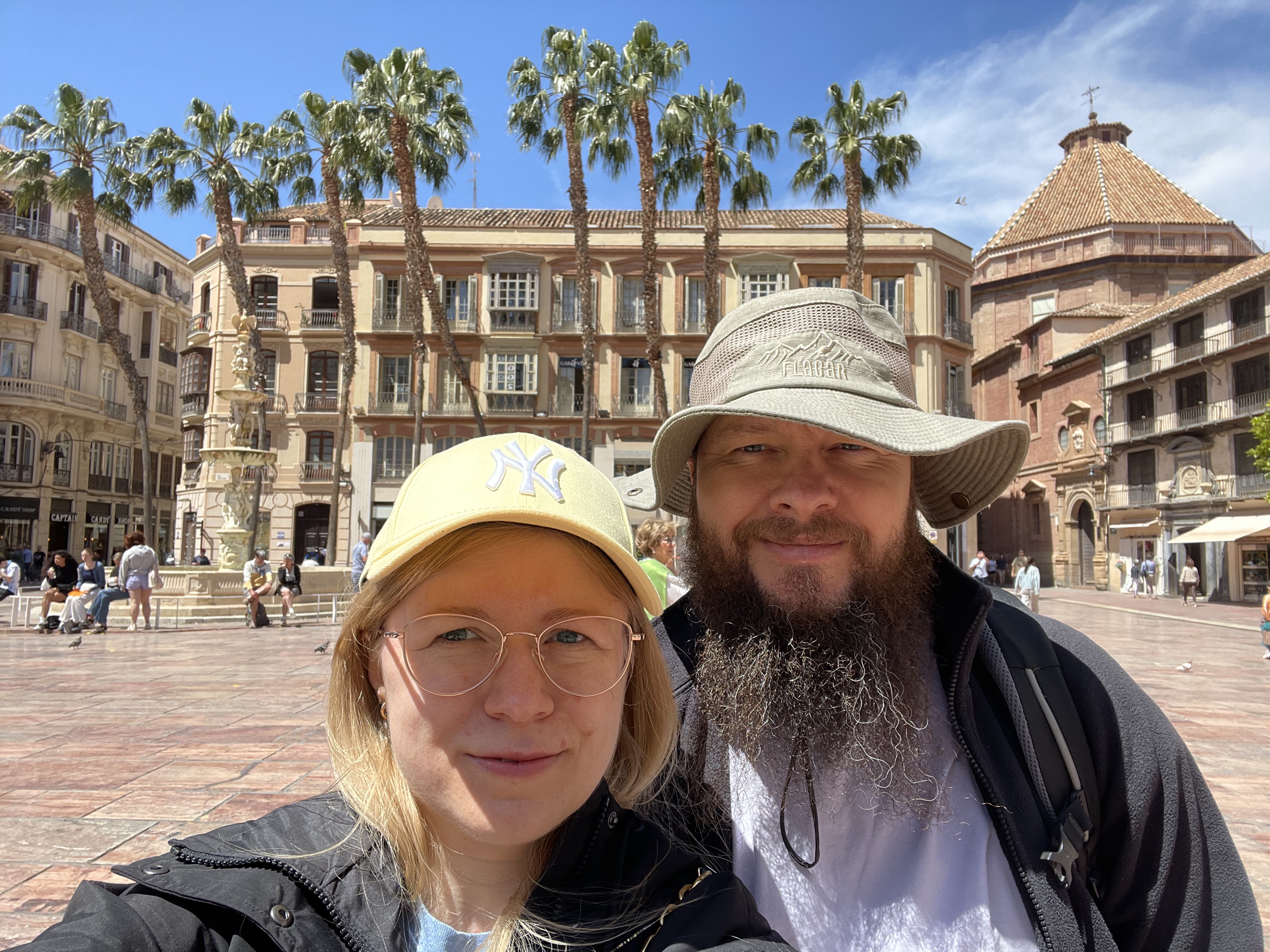
Plaza selfie 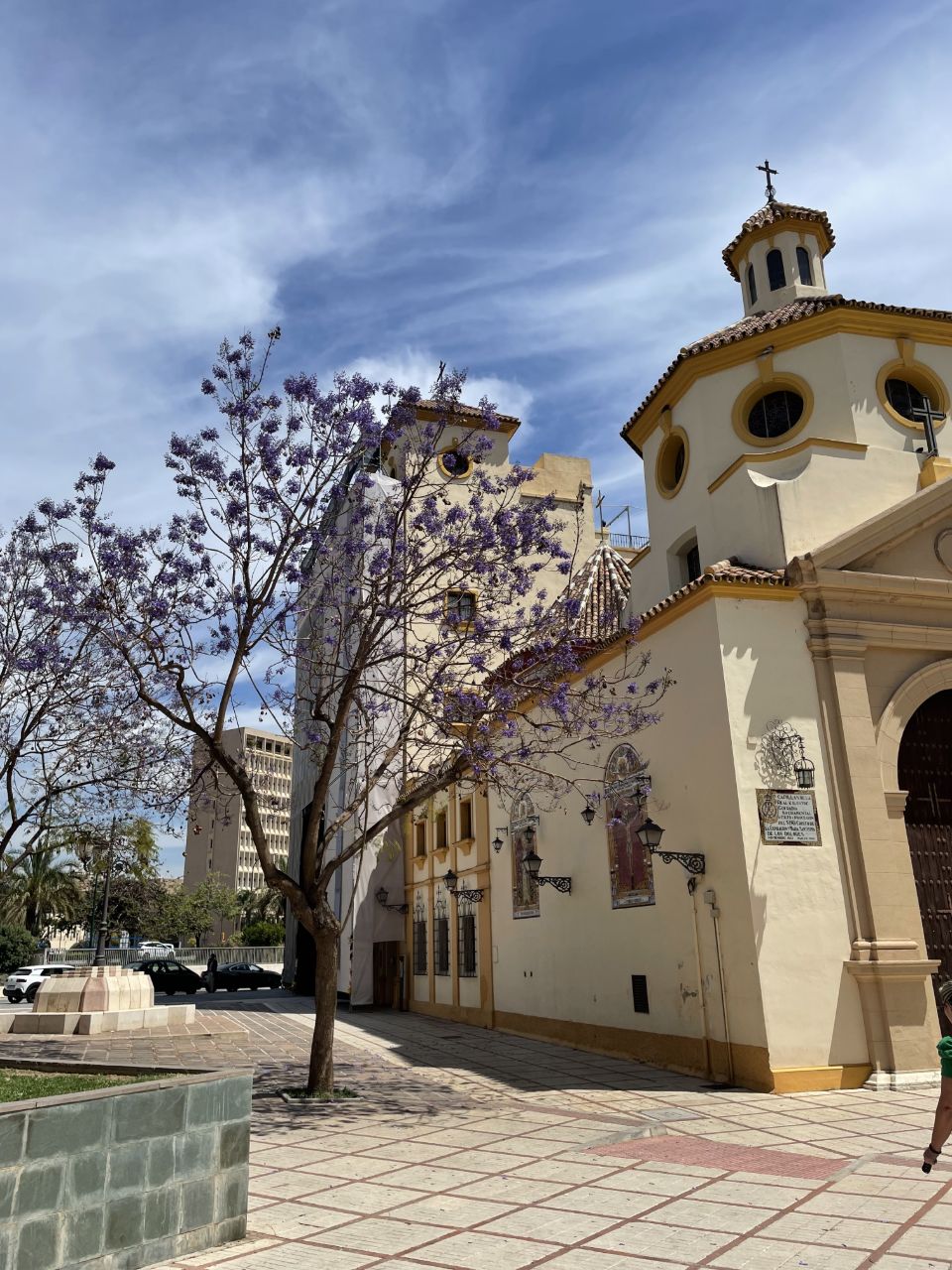
Whitewashed church, jacaranda in bloom 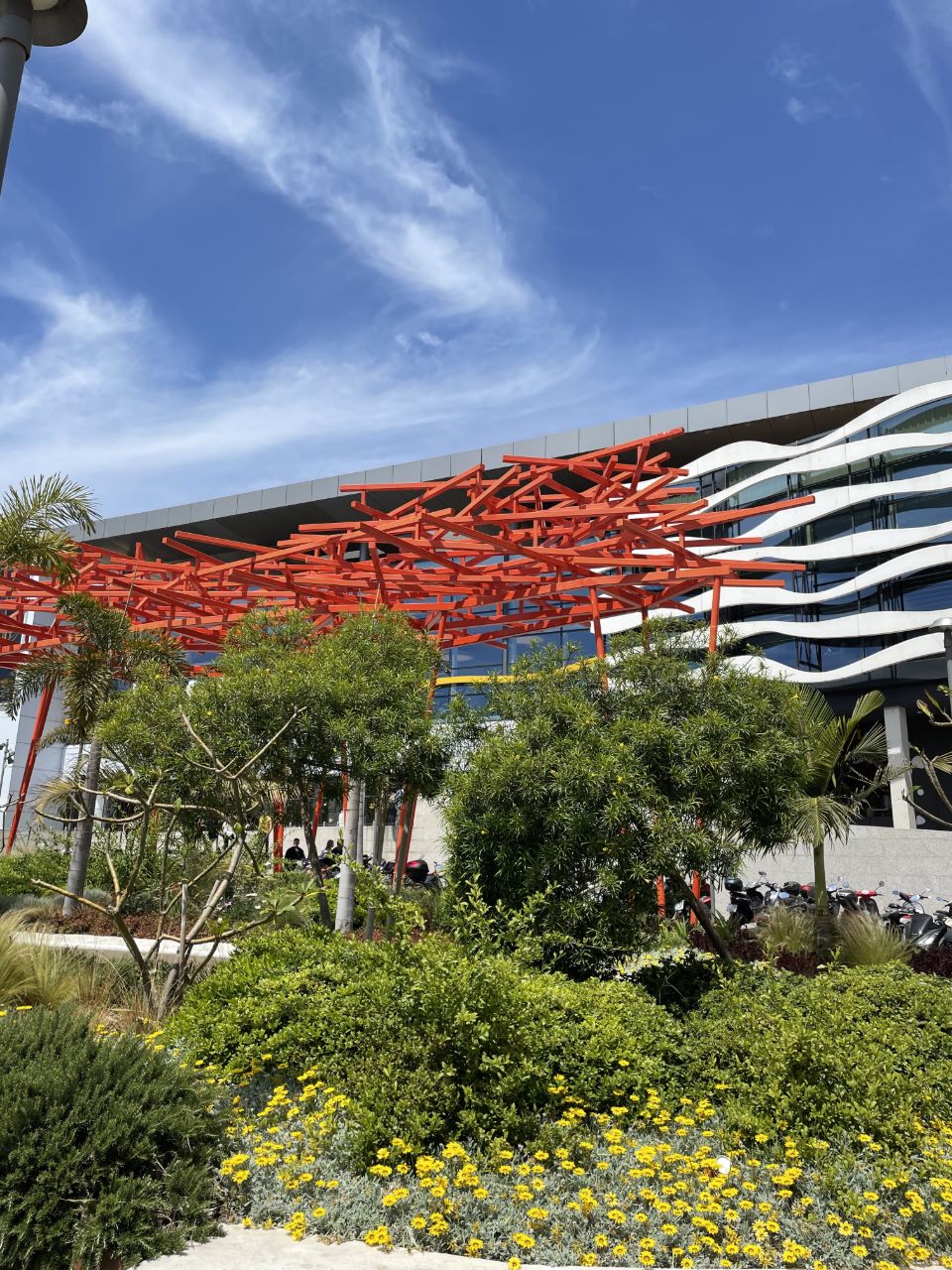
Red steel canopy in the garden 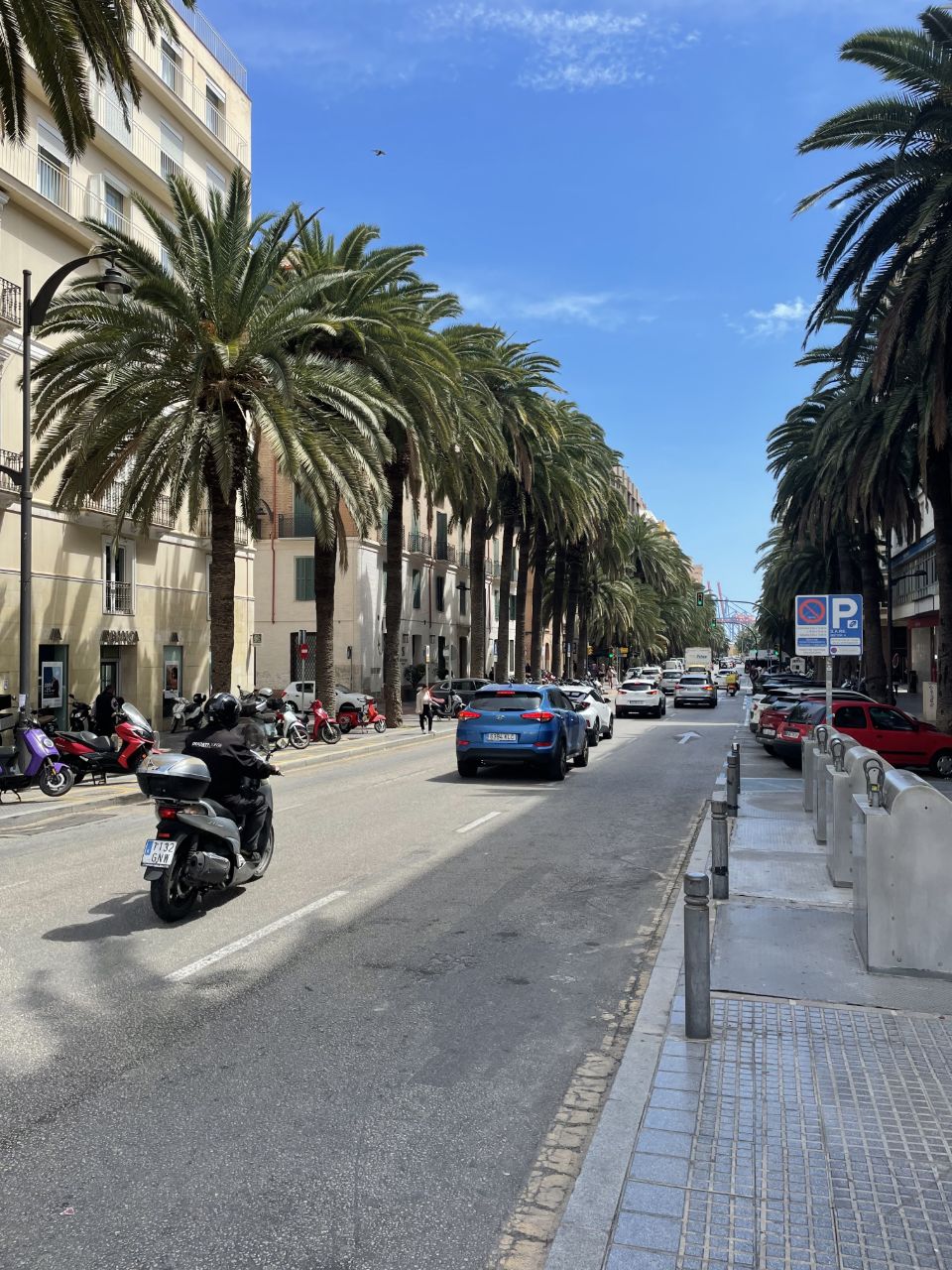
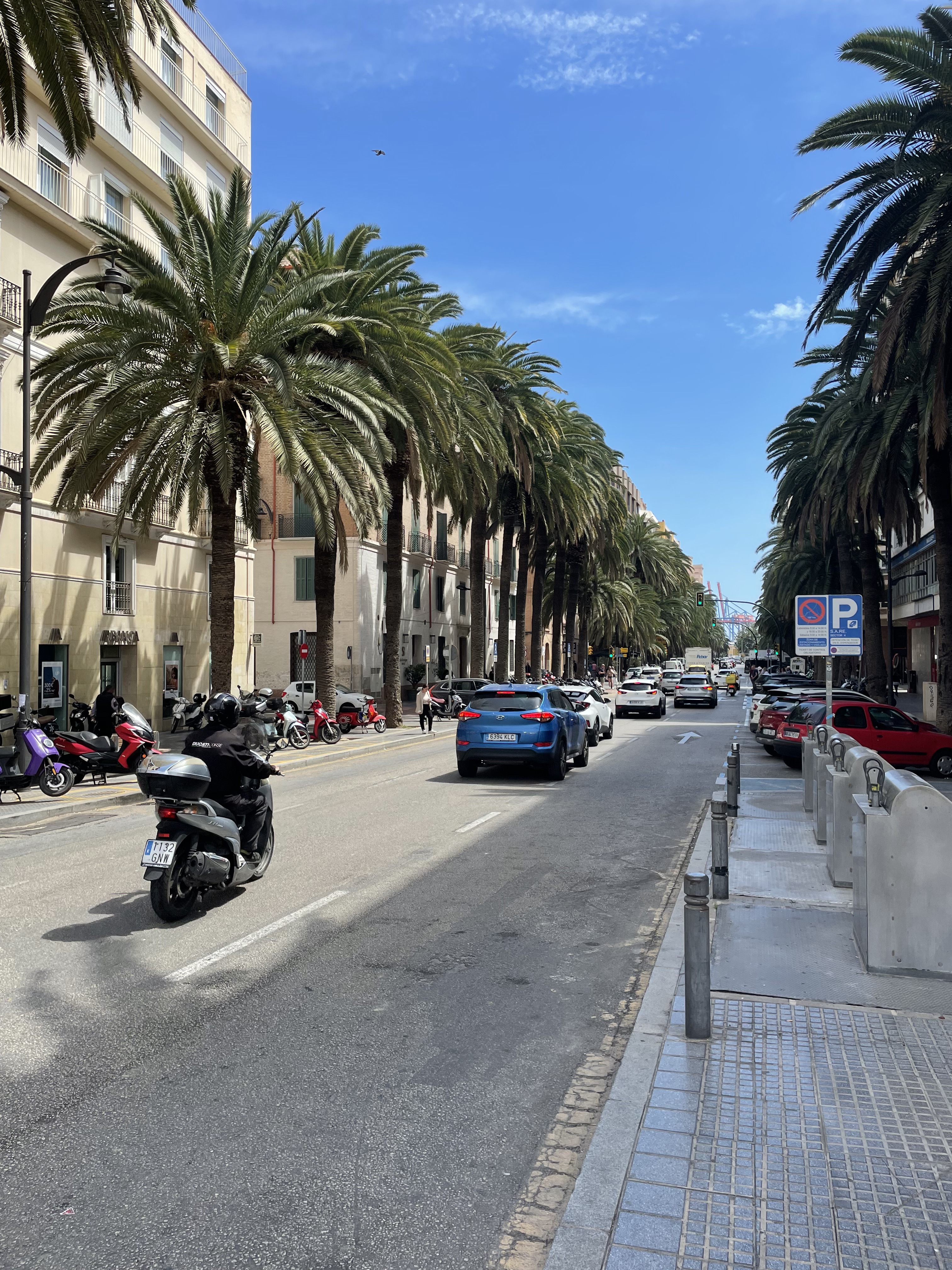
The palm avenue
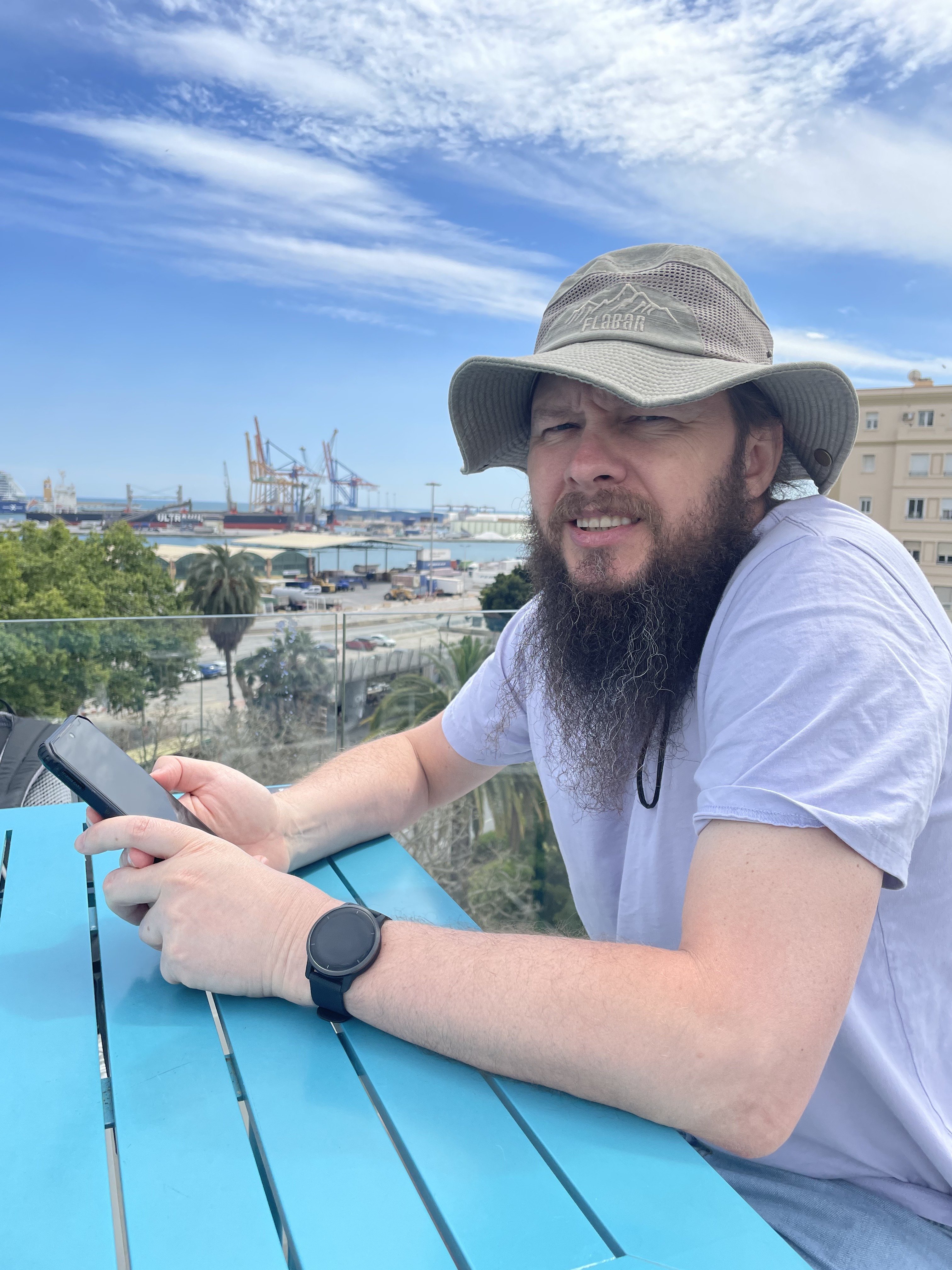
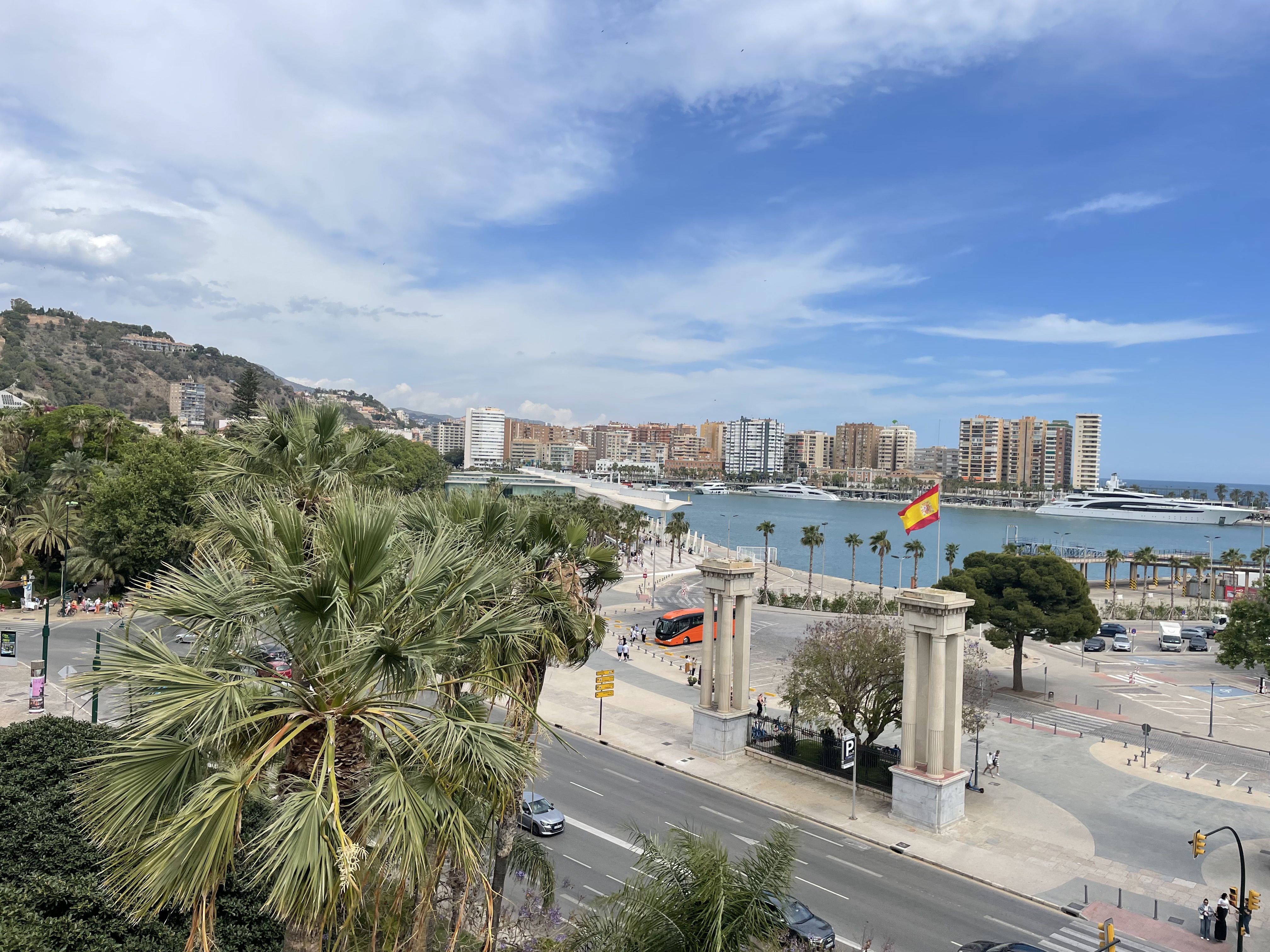
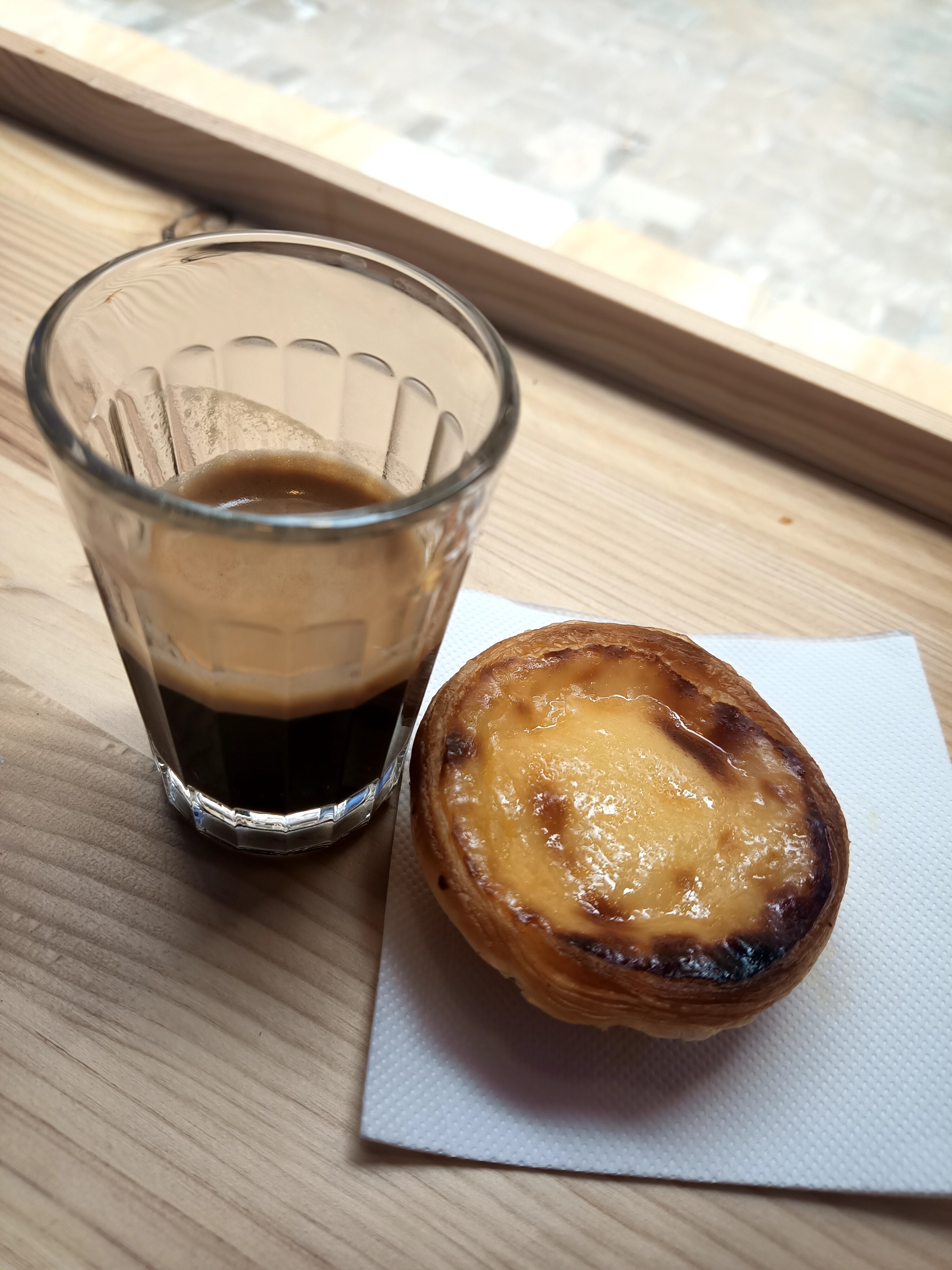
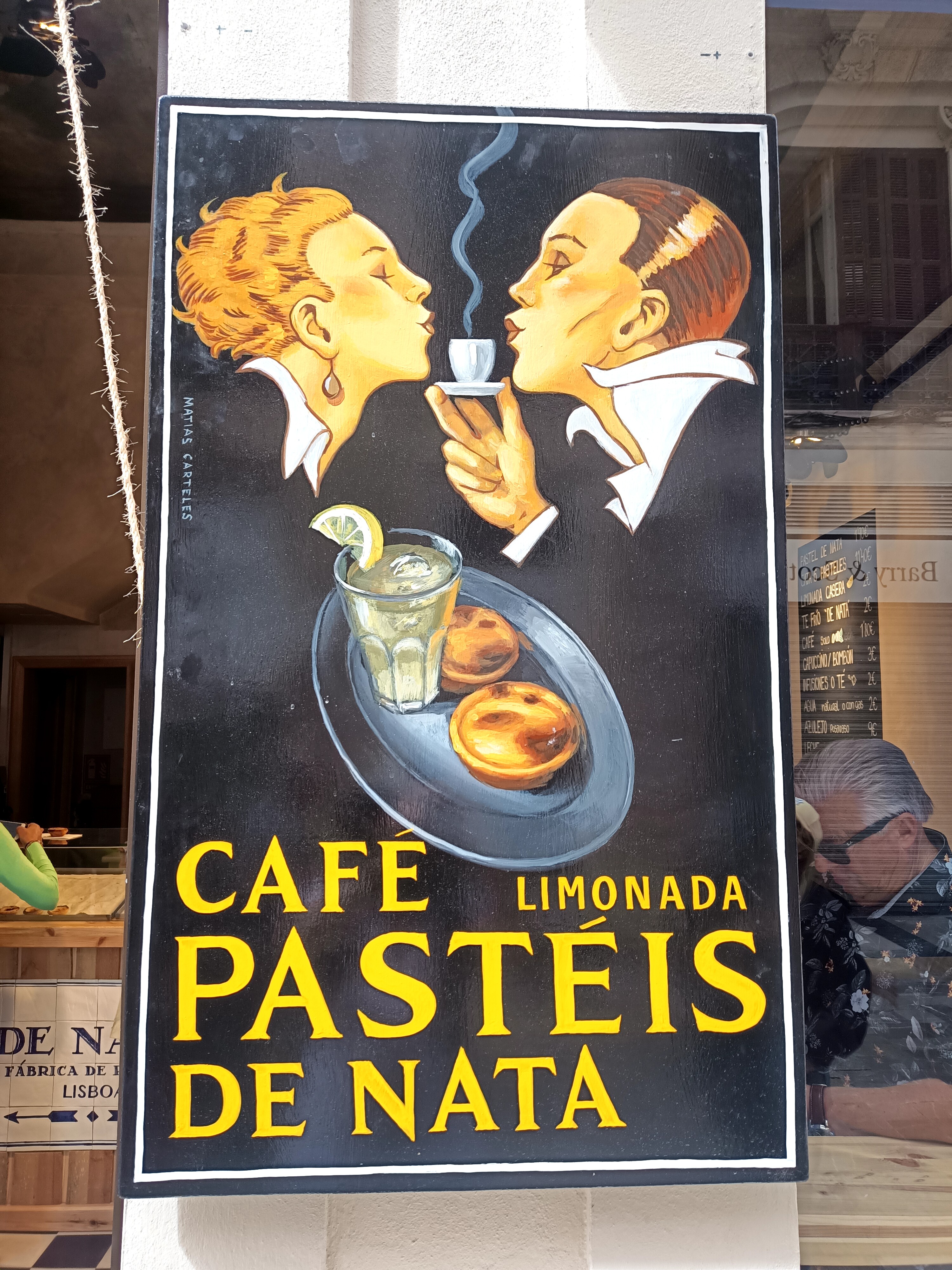
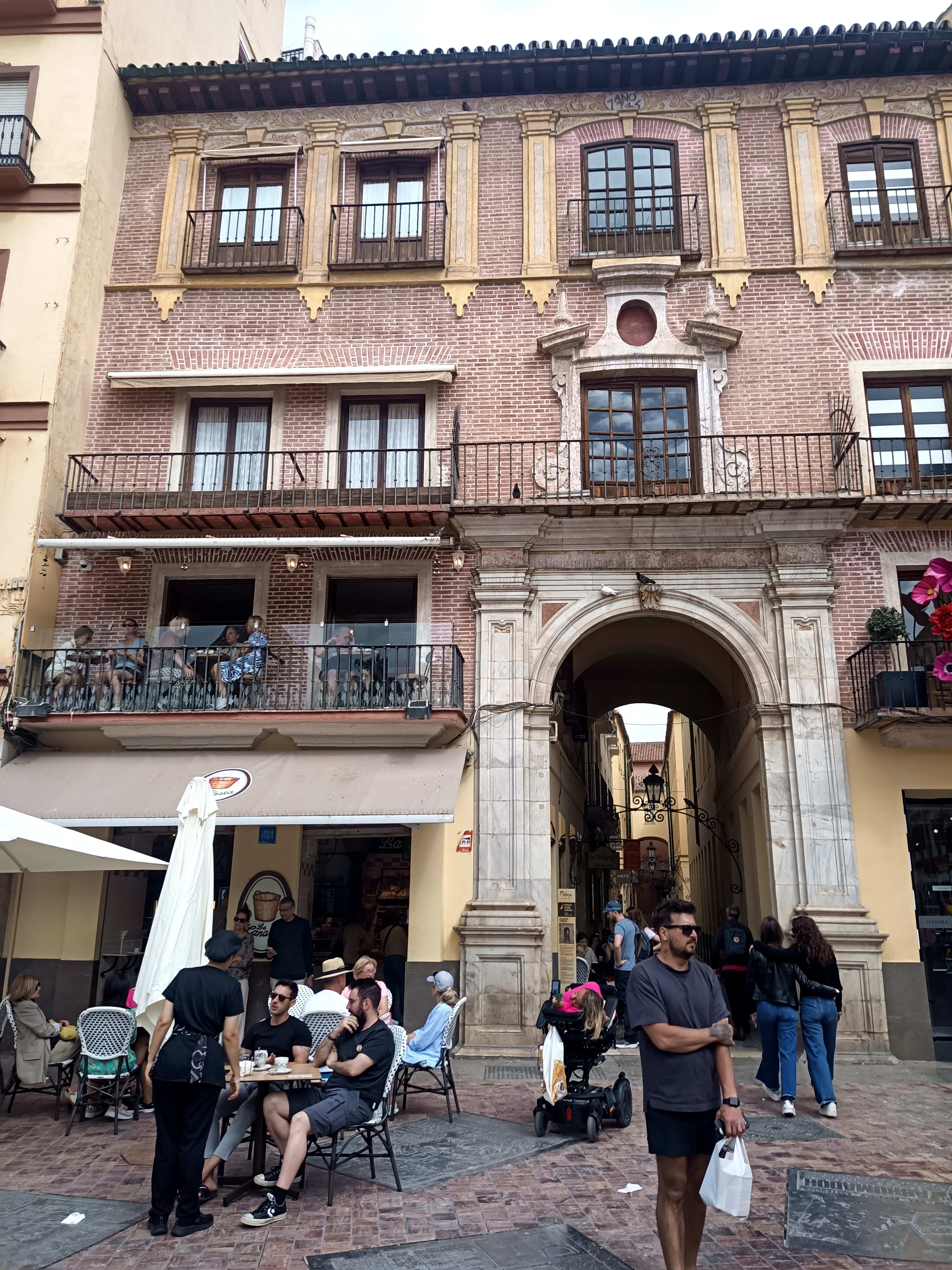
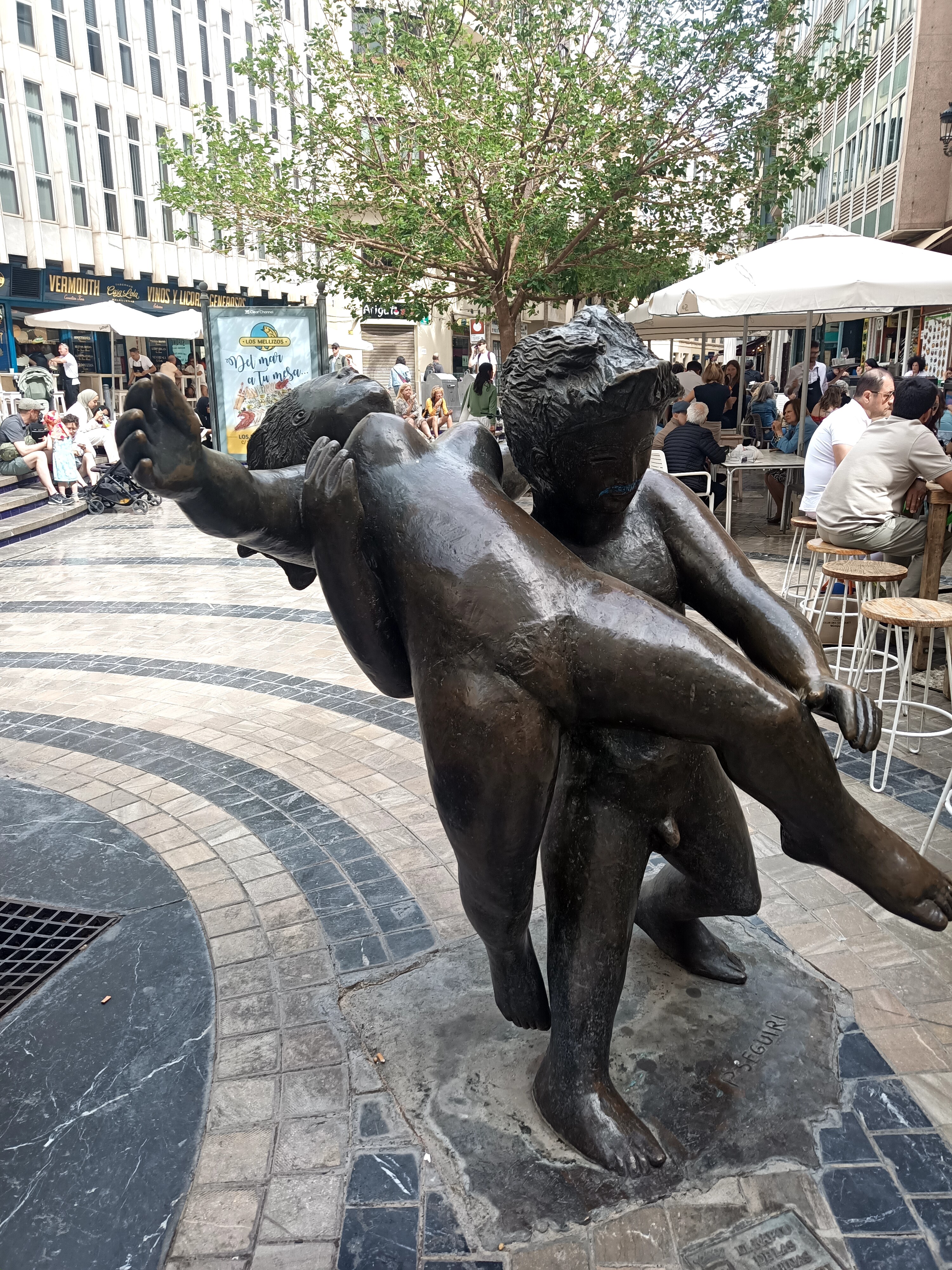
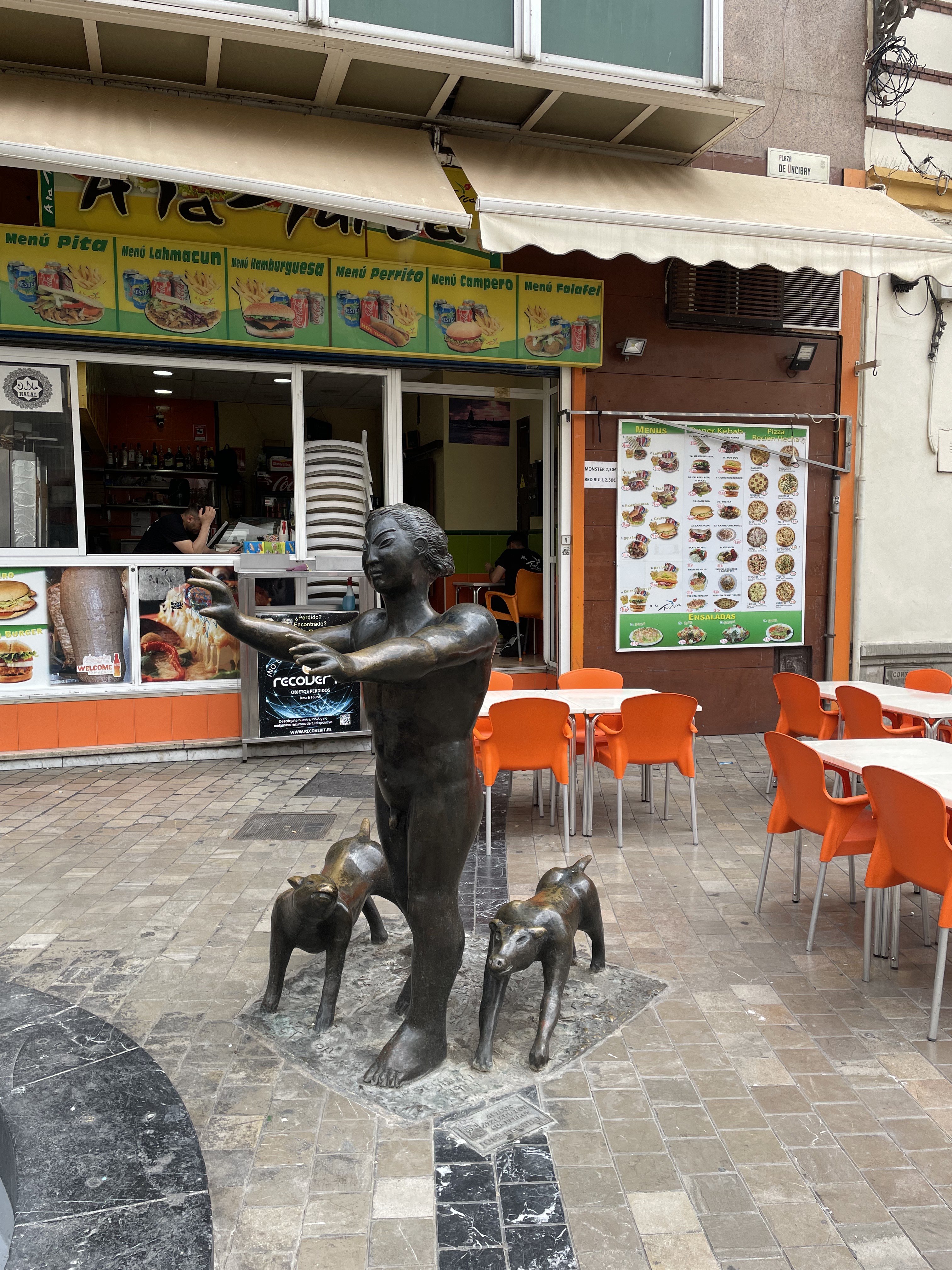
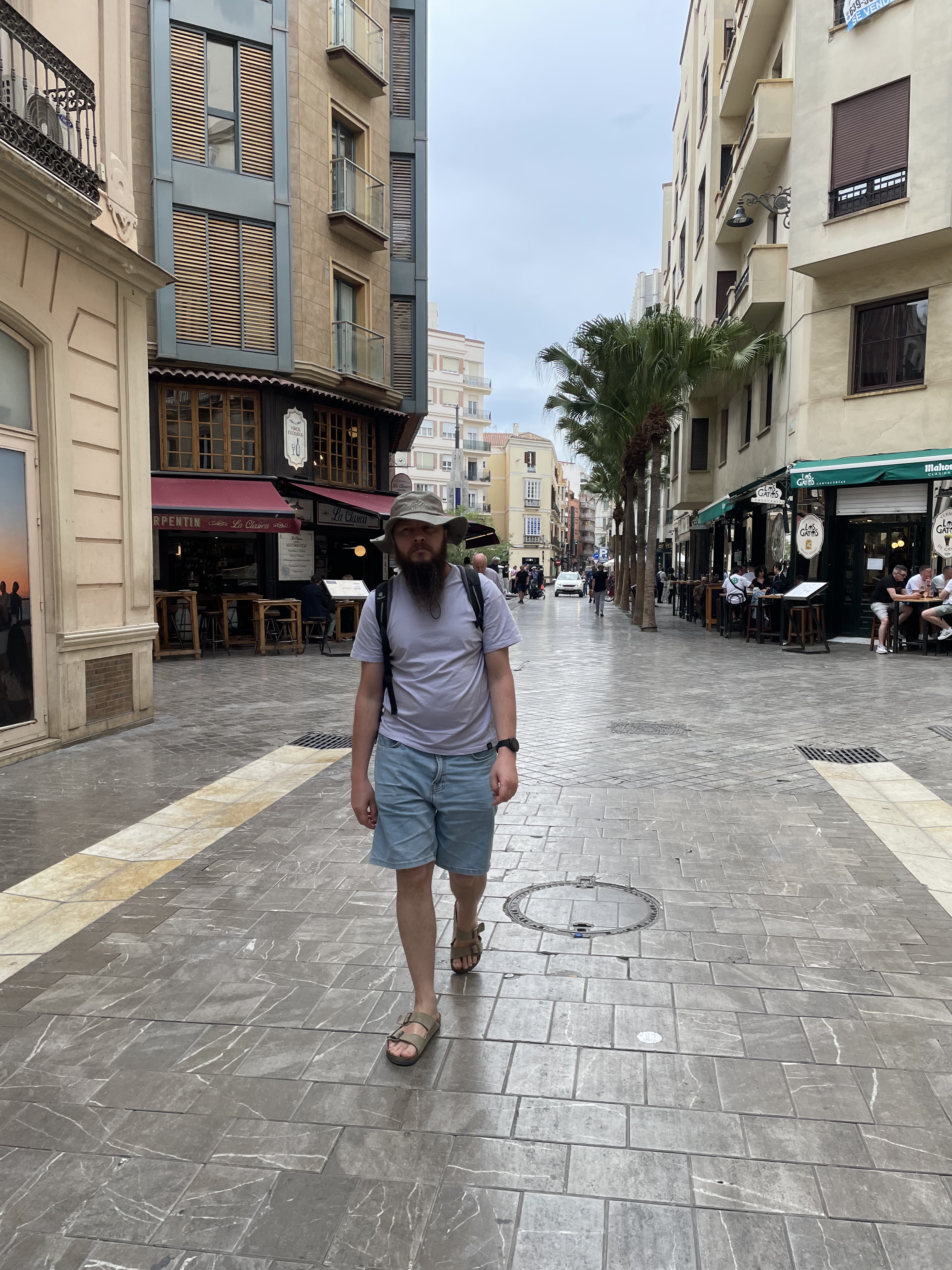
A rooftop coffee came with the whole port for a view — the cranes working, the stone gate to the harbour, the sea beyond doing its reliable background job — and then the lanes took over: café tables under ancient balconies, an espresso with a pastel de nata that has emigrated from Lisbon and settled in beautifully, two bronze children frozen mid-game in a plaza, a boy standing his ground between two small pigs, and one bearded tourist strolling through the middle of it with nowhere in particular to be.
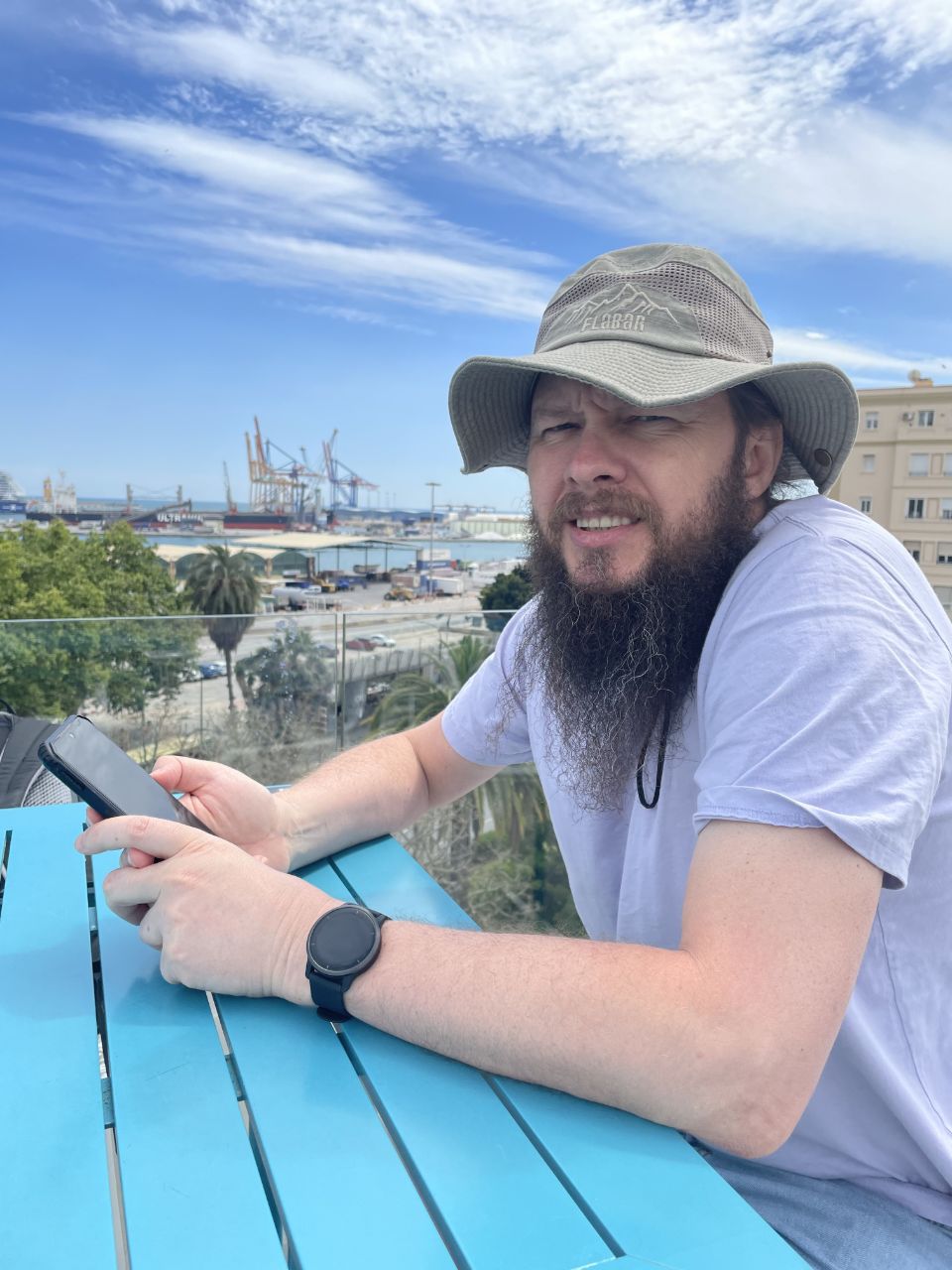
Oleg with the port cranes 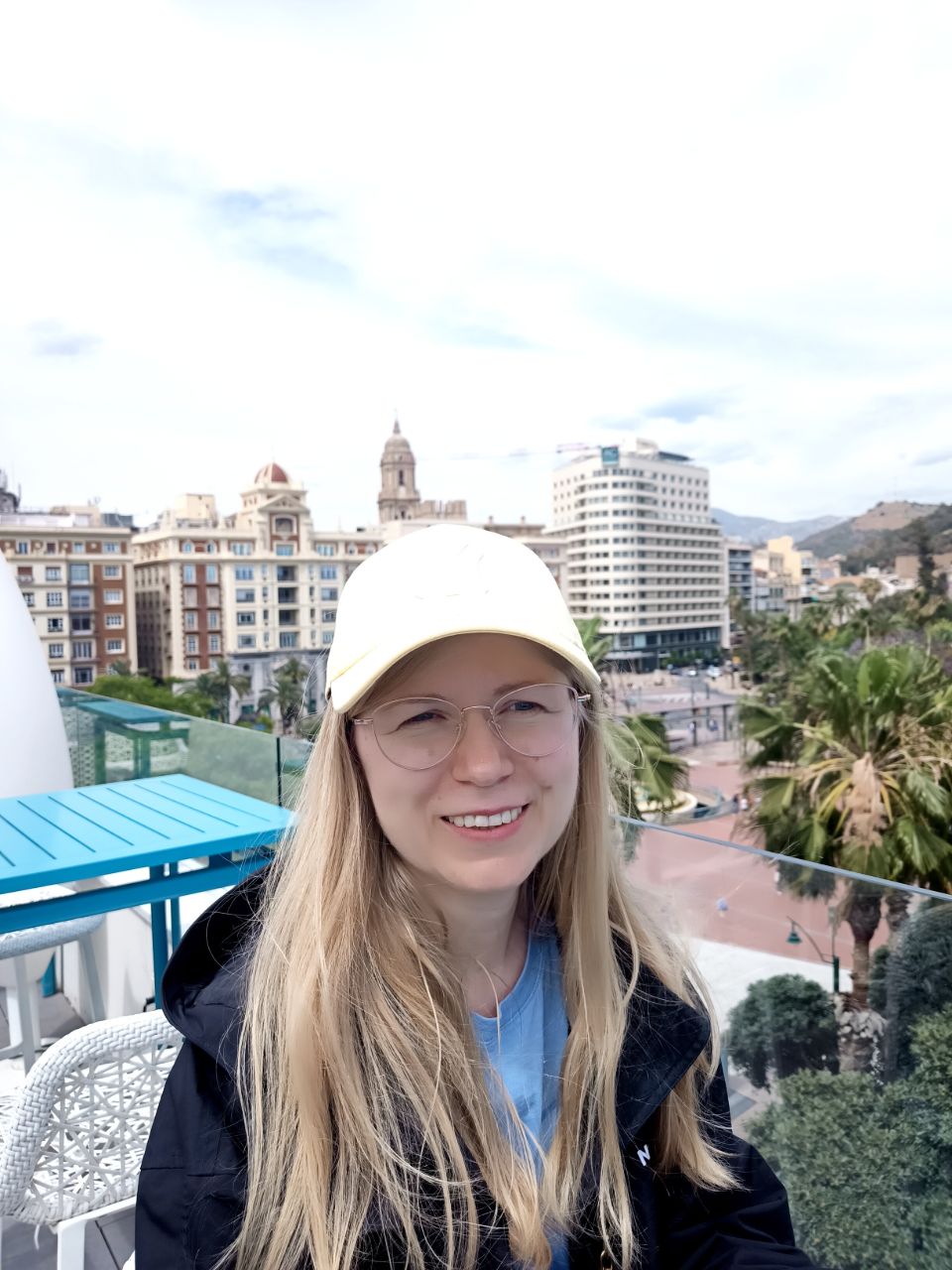
Anna on the rooftop 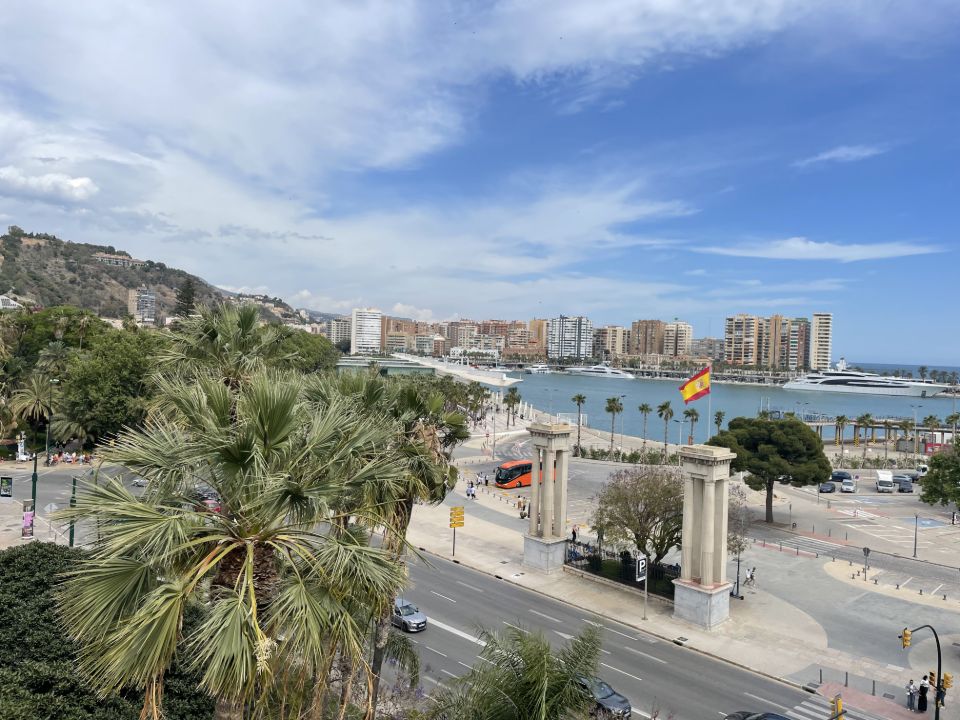
The port from the rooftop 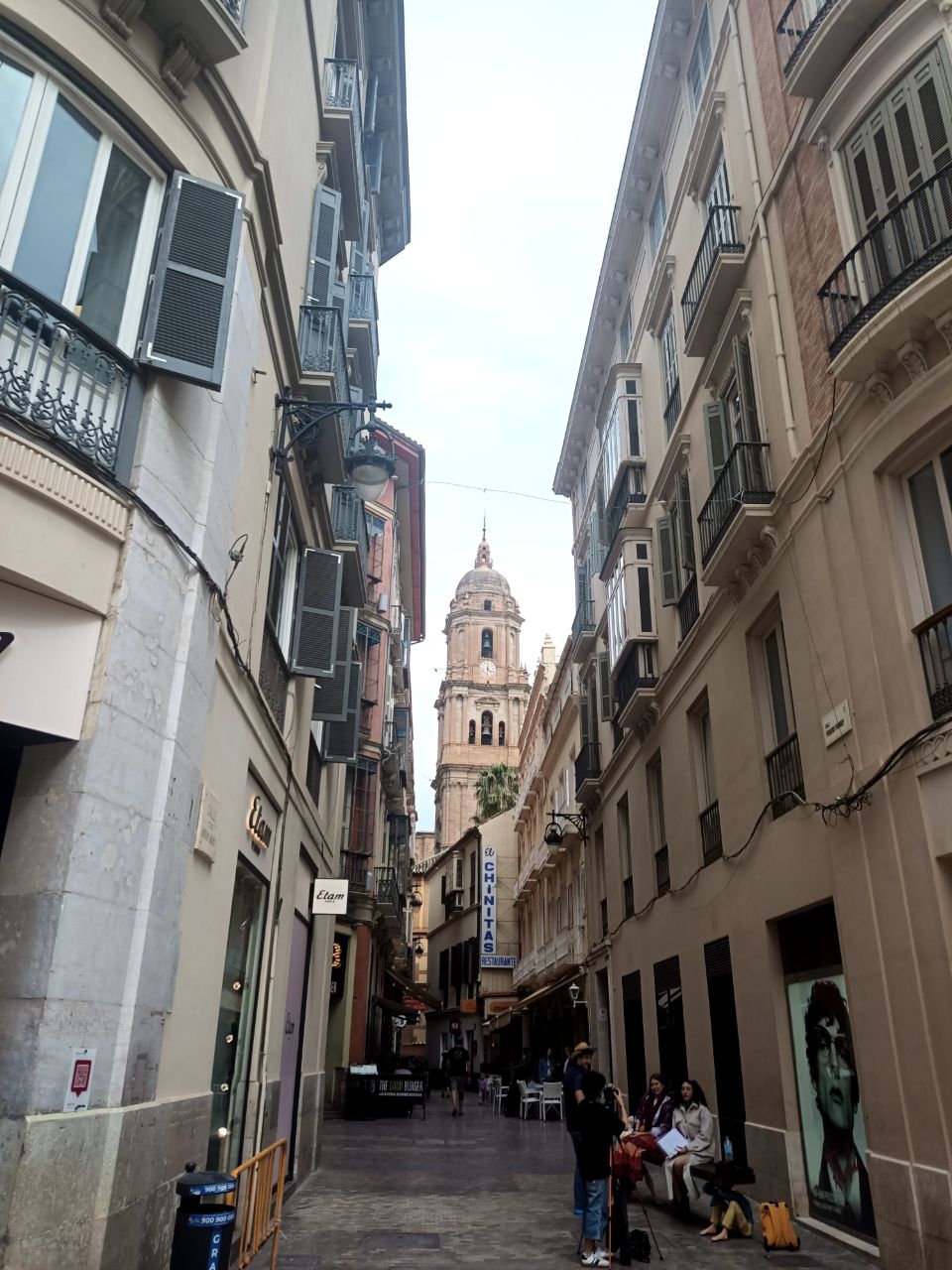
Old lanes of the centre 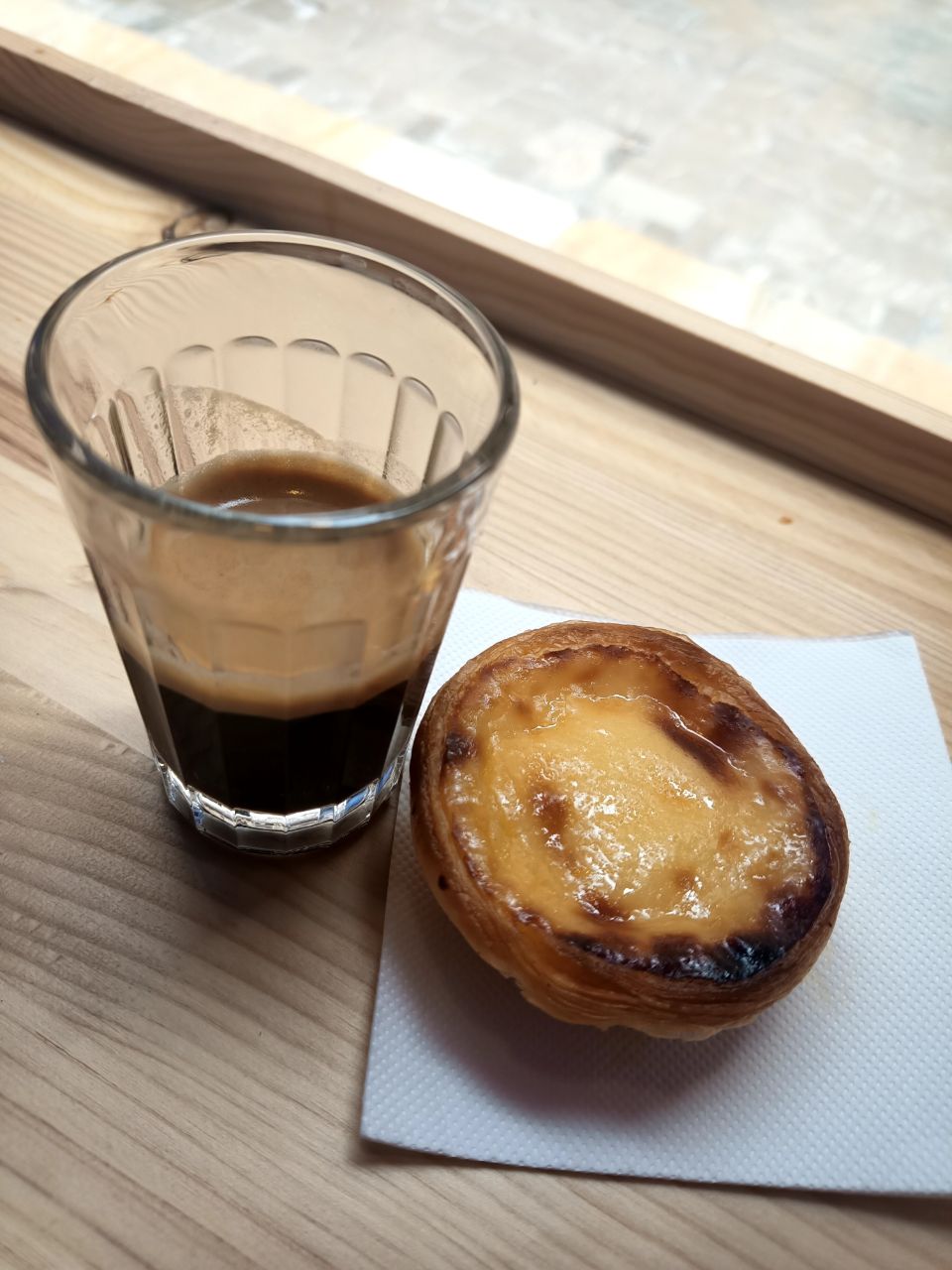
Espresso, and a not-so-Spanish nata 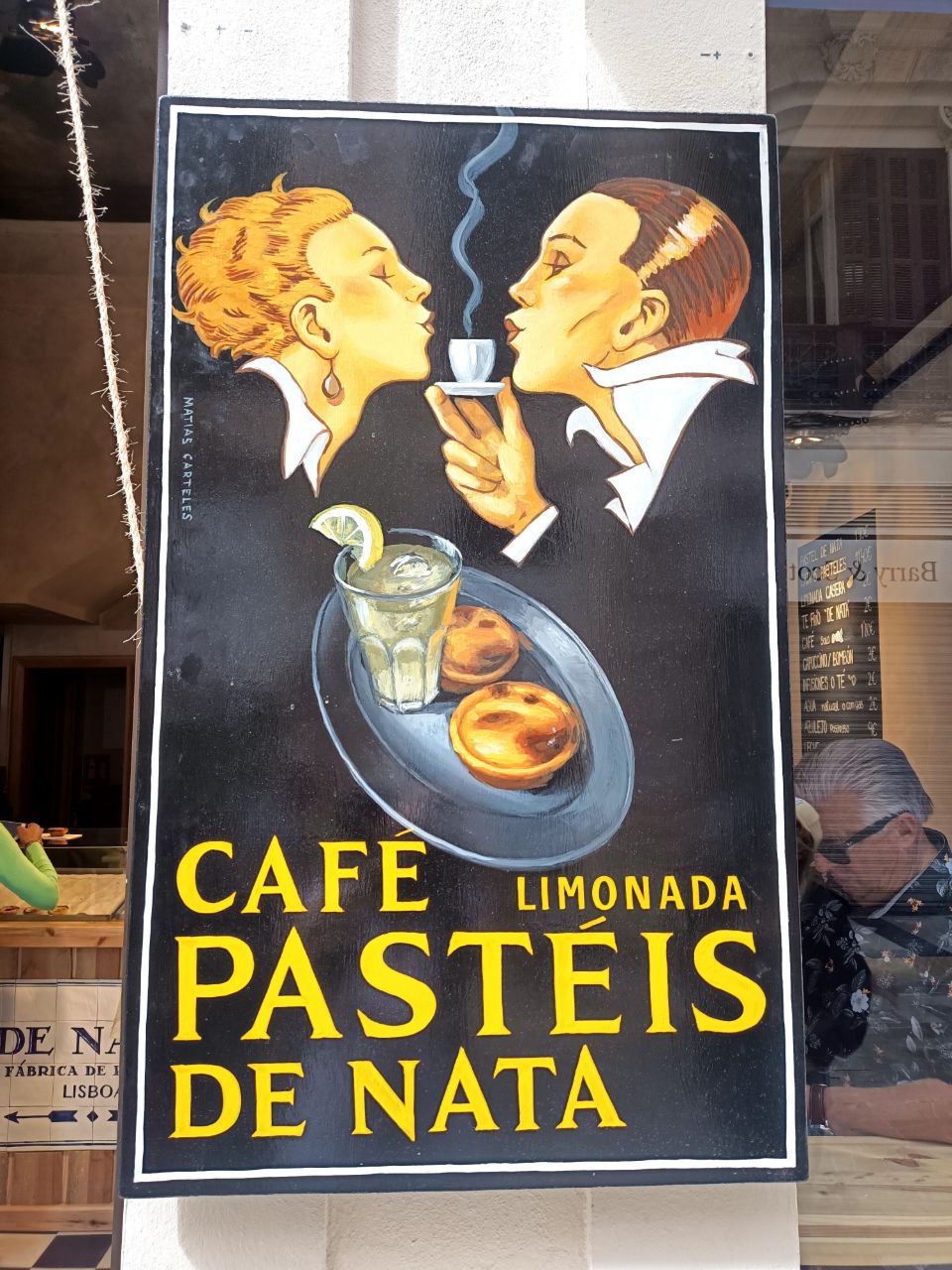
The nata café, its own advertisement 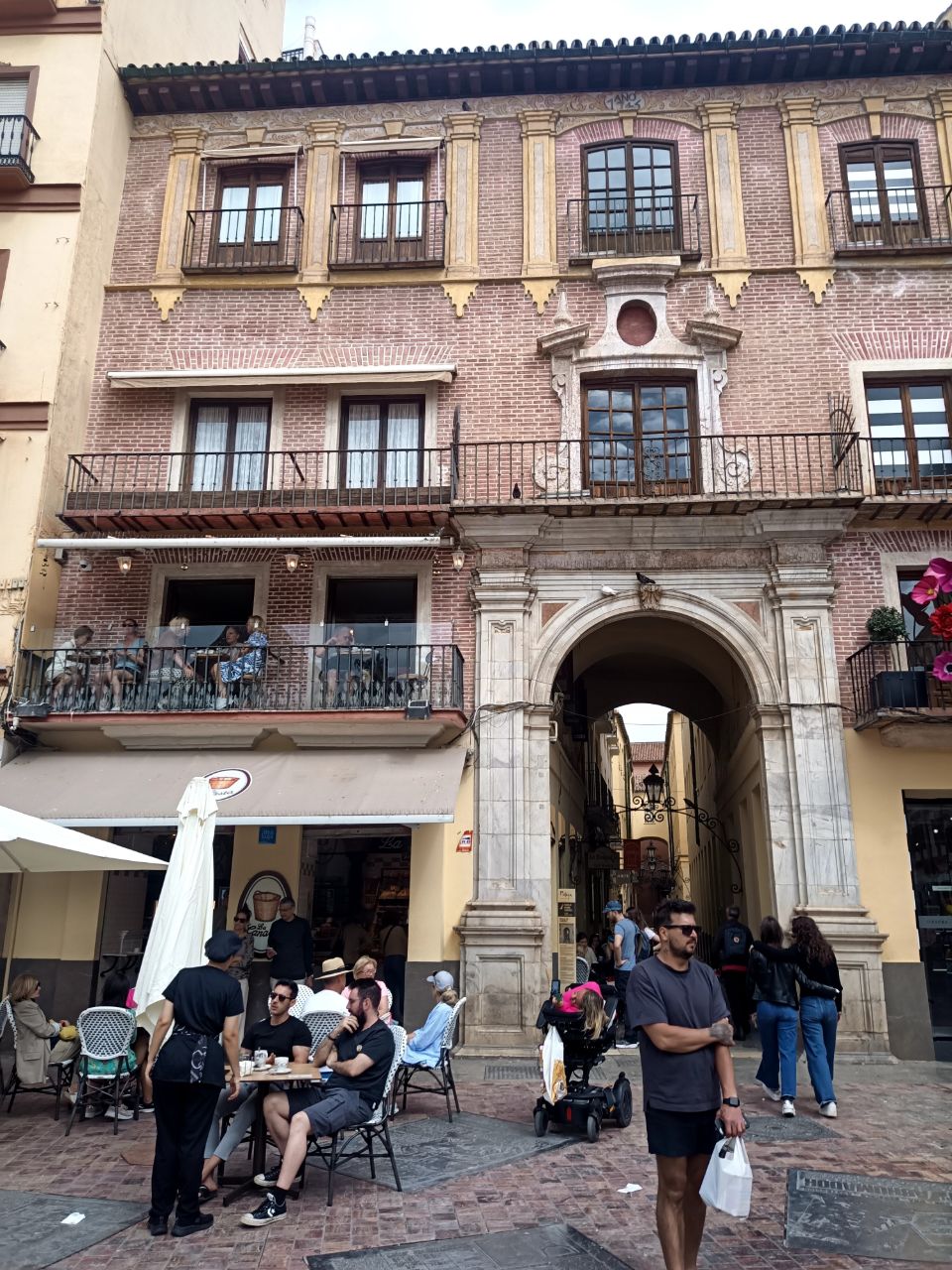
Café tables under old balconies 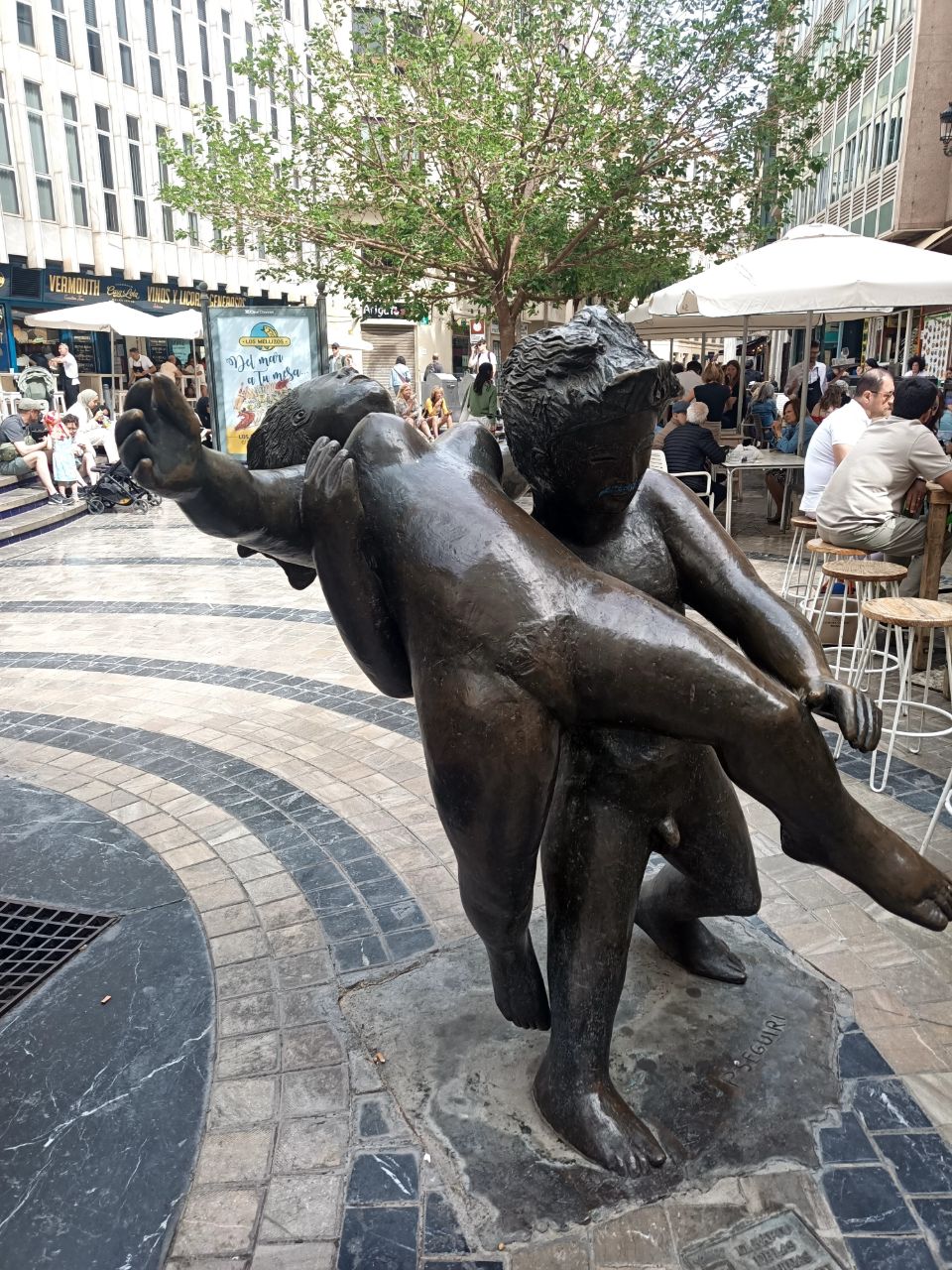
Children at play, cast in bronze 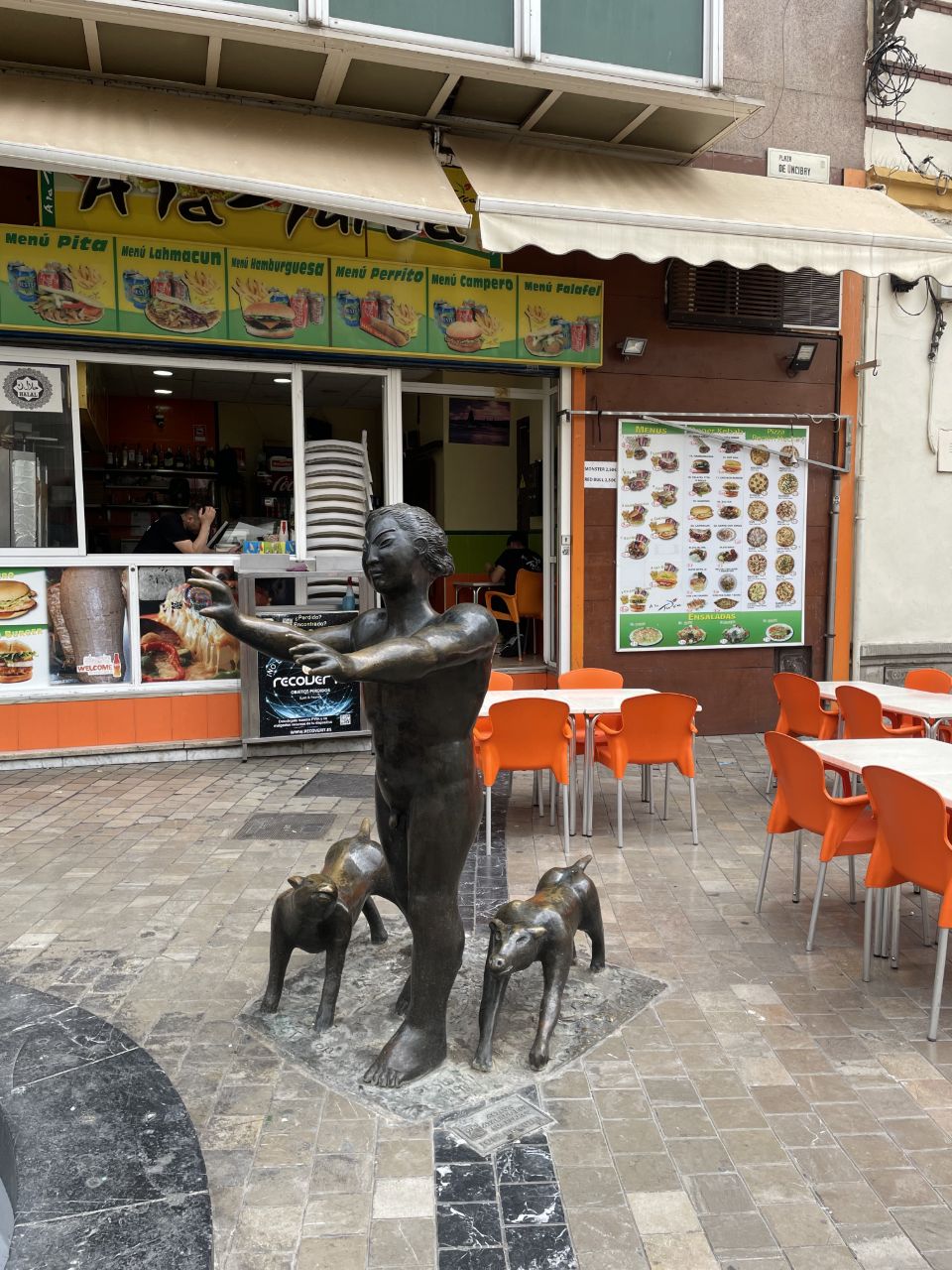
The boy with the pigs 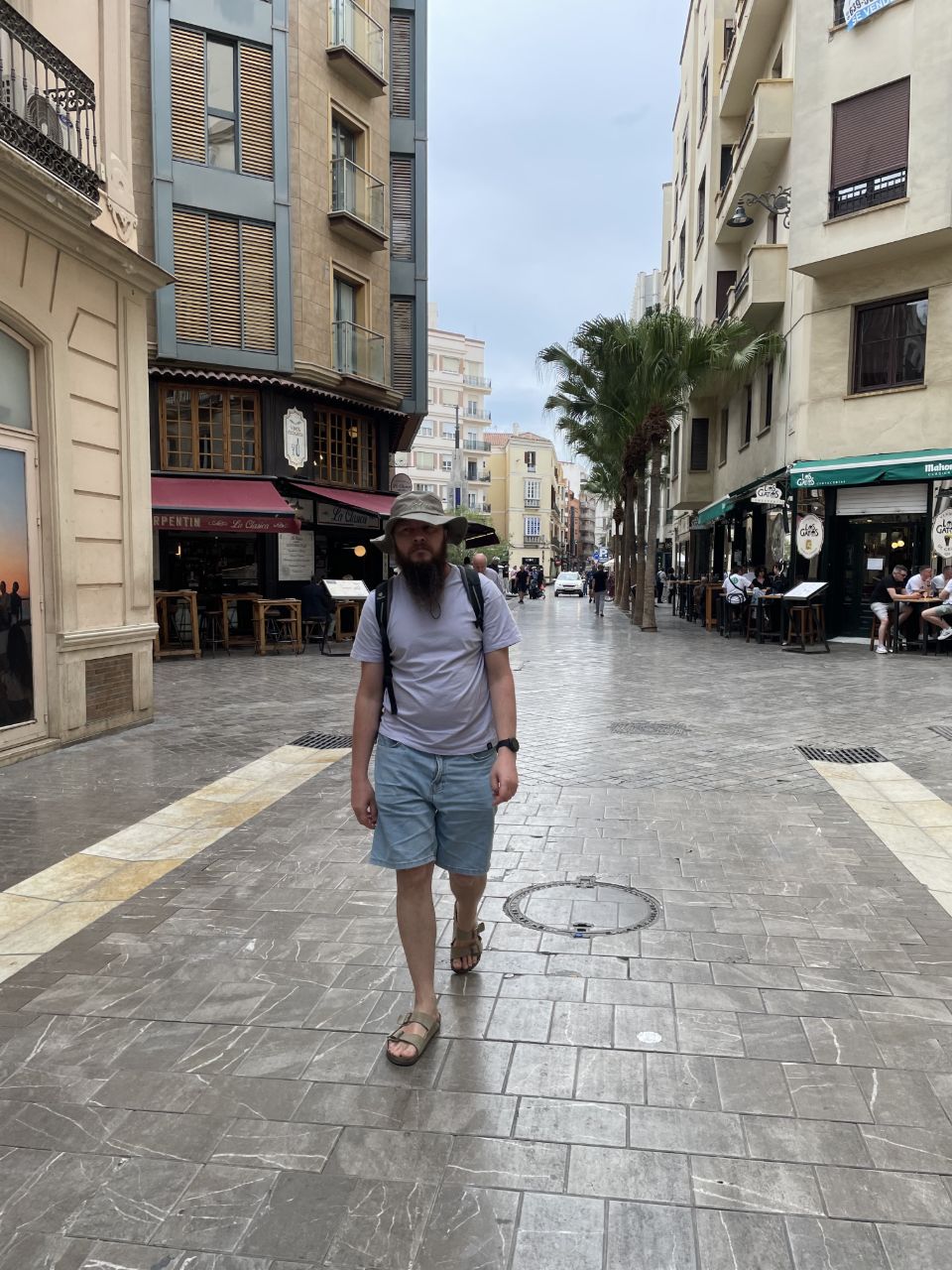
Oleg strolling the centre
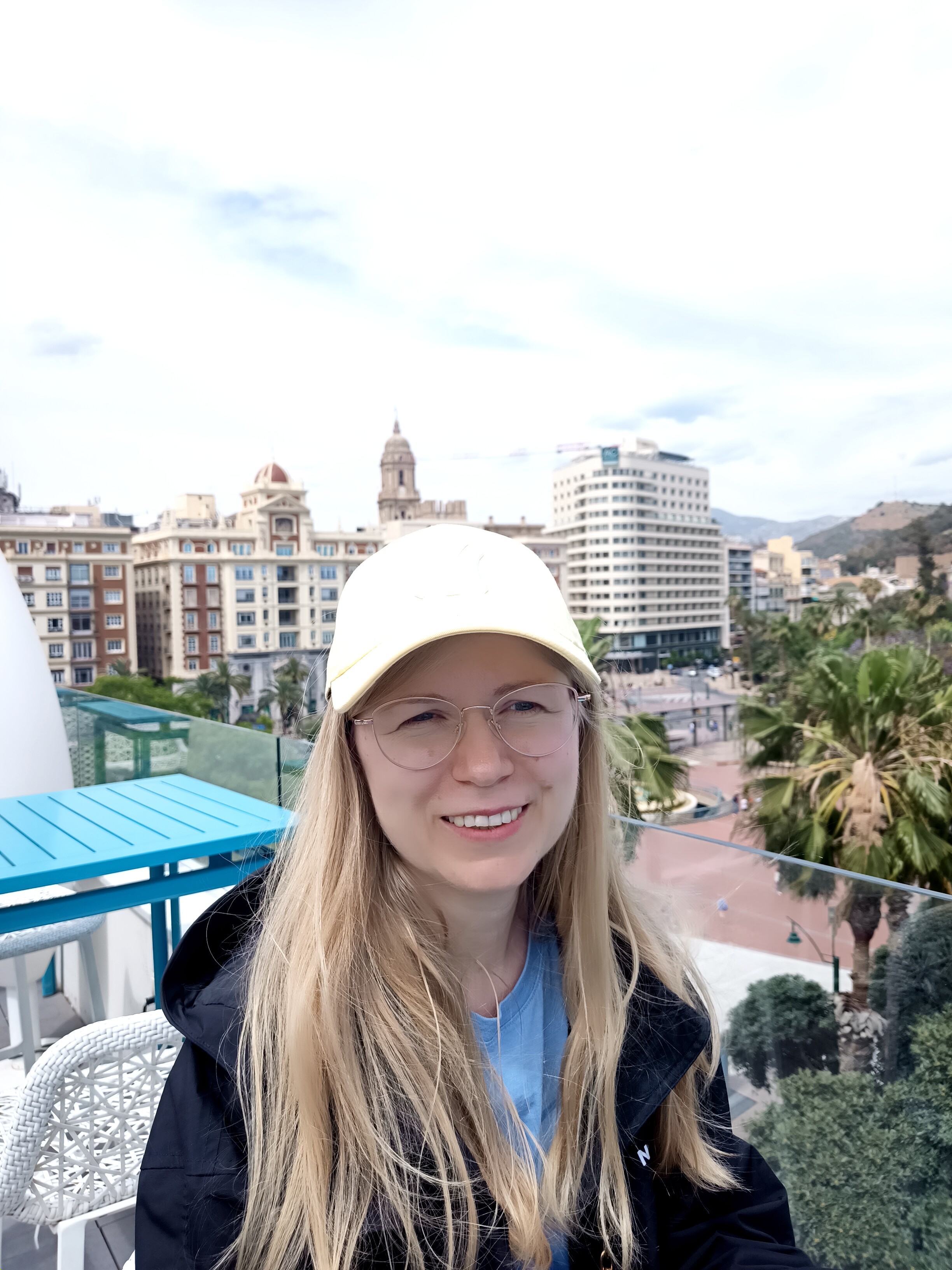
Rooftop coffee, 15:57: a limonada for one, an Aperol for the other, a wave to the camera, the port parked below.
The Alcazaba at its own hour
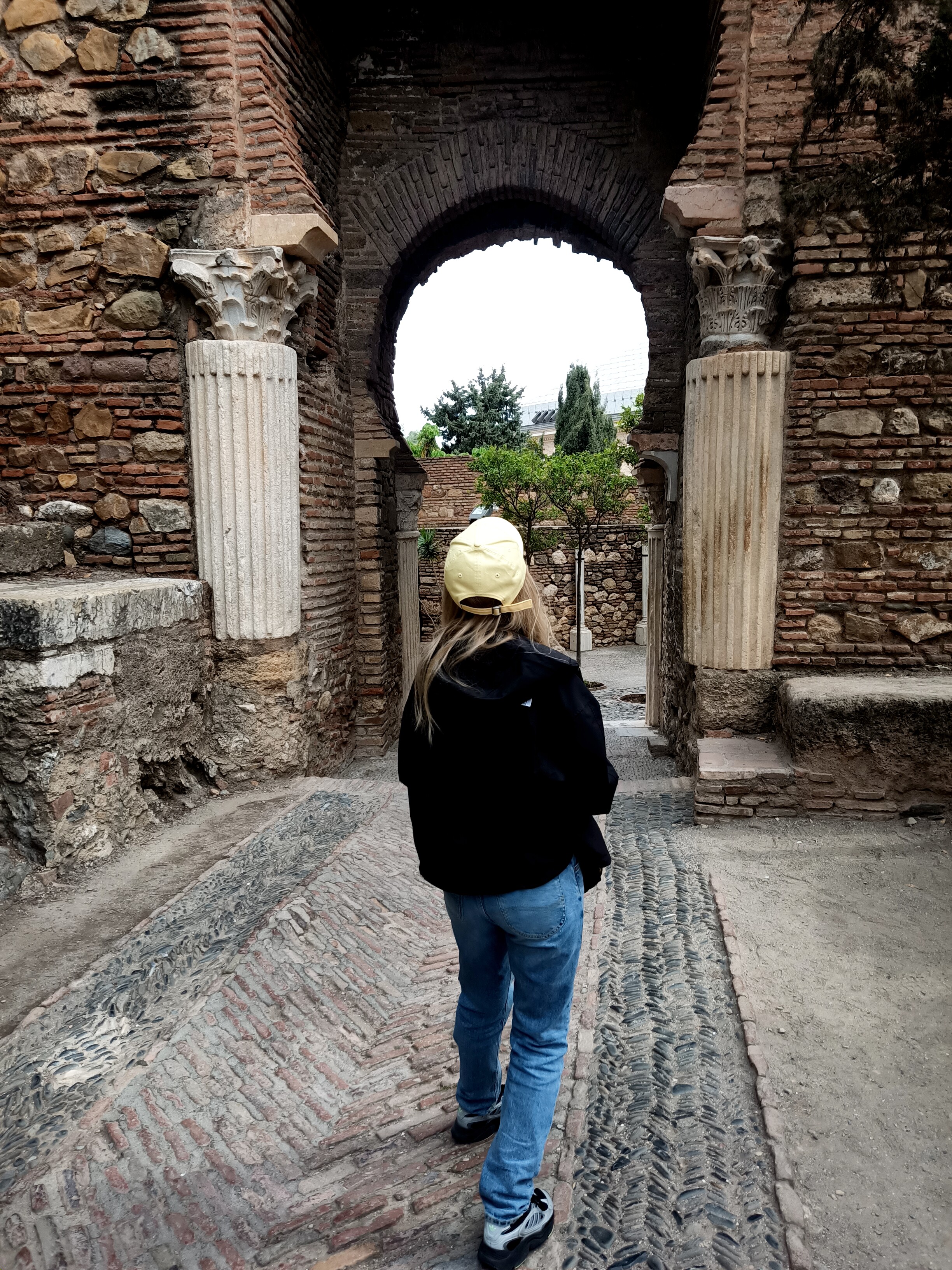
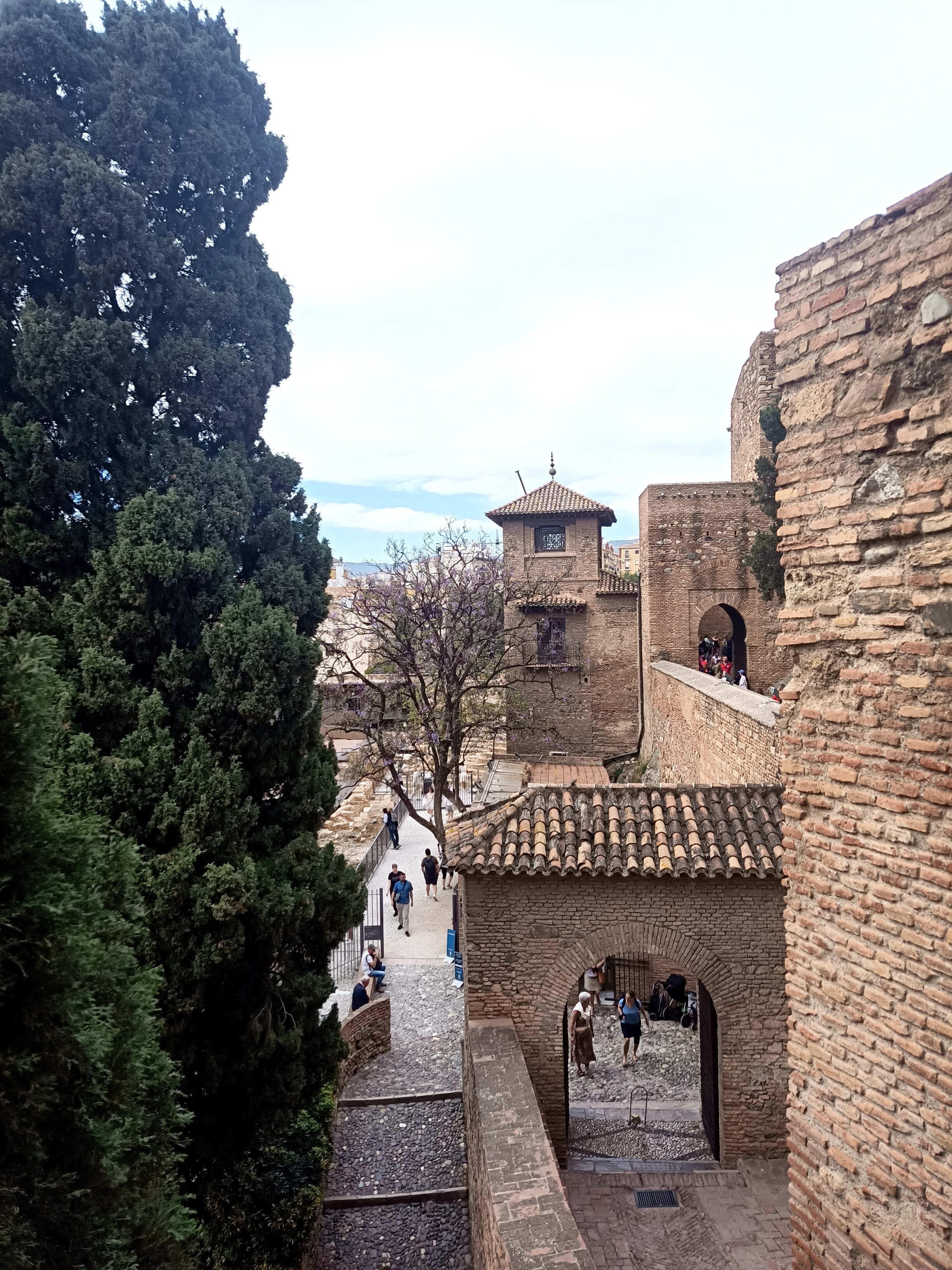
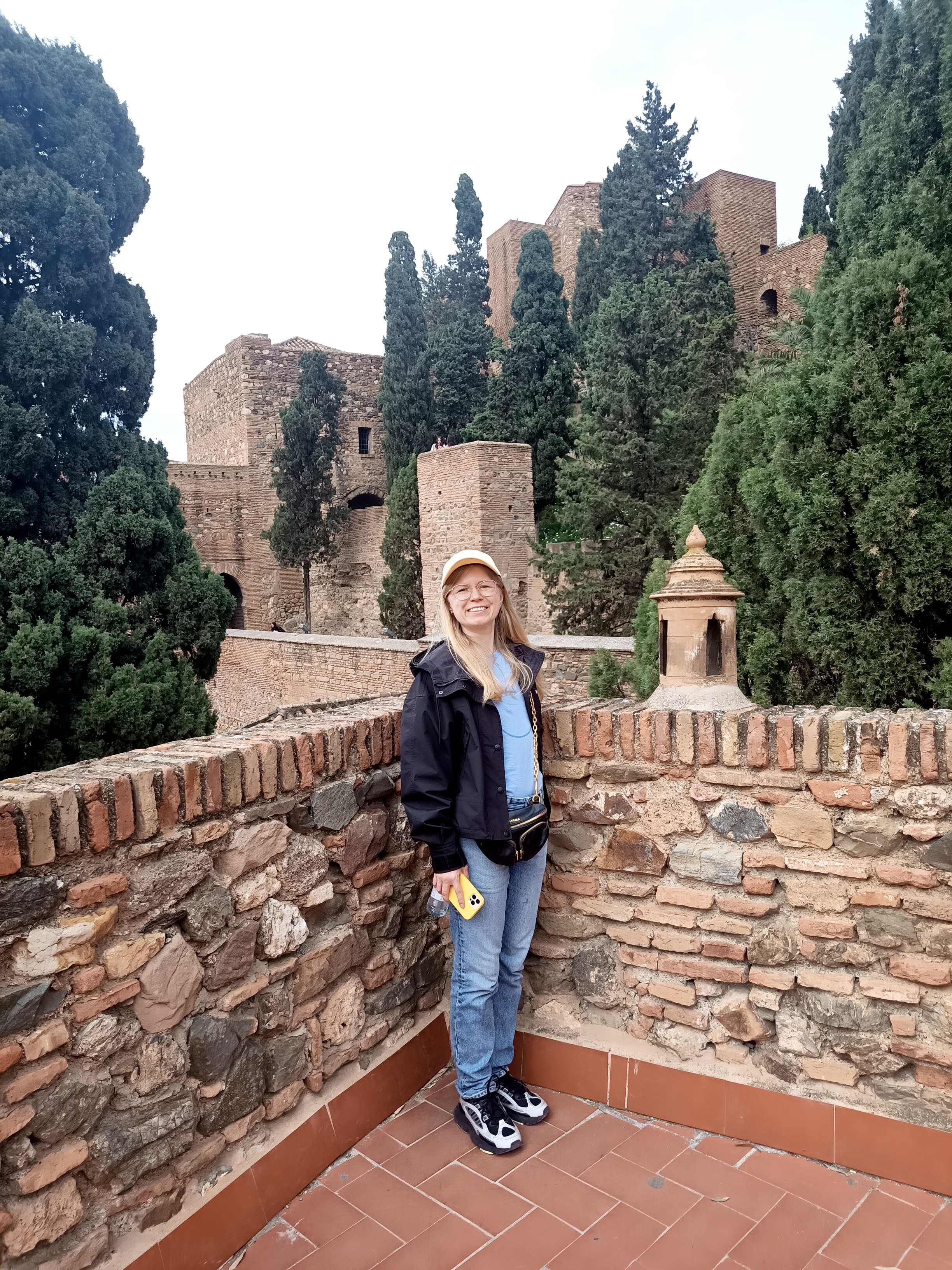
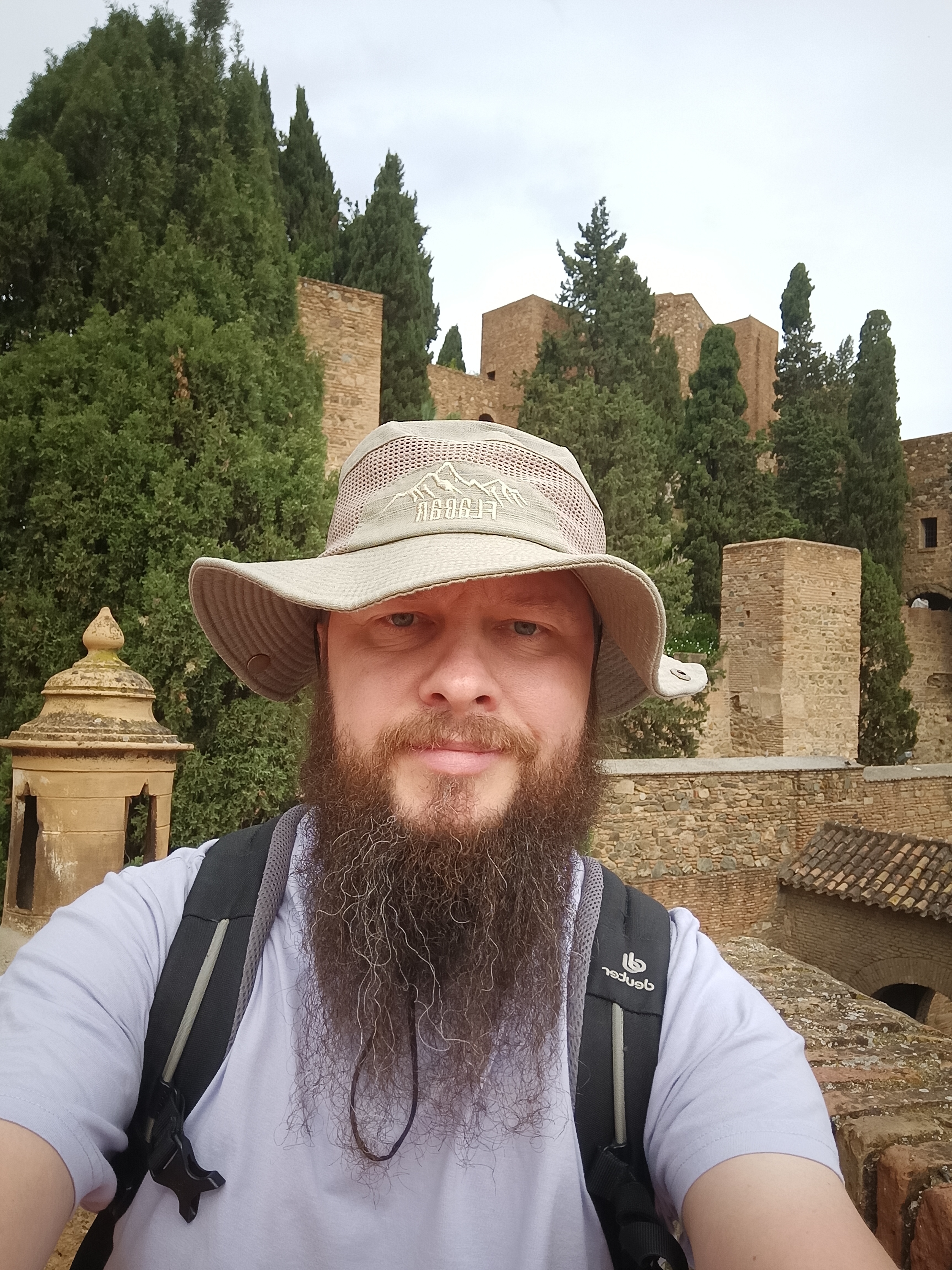
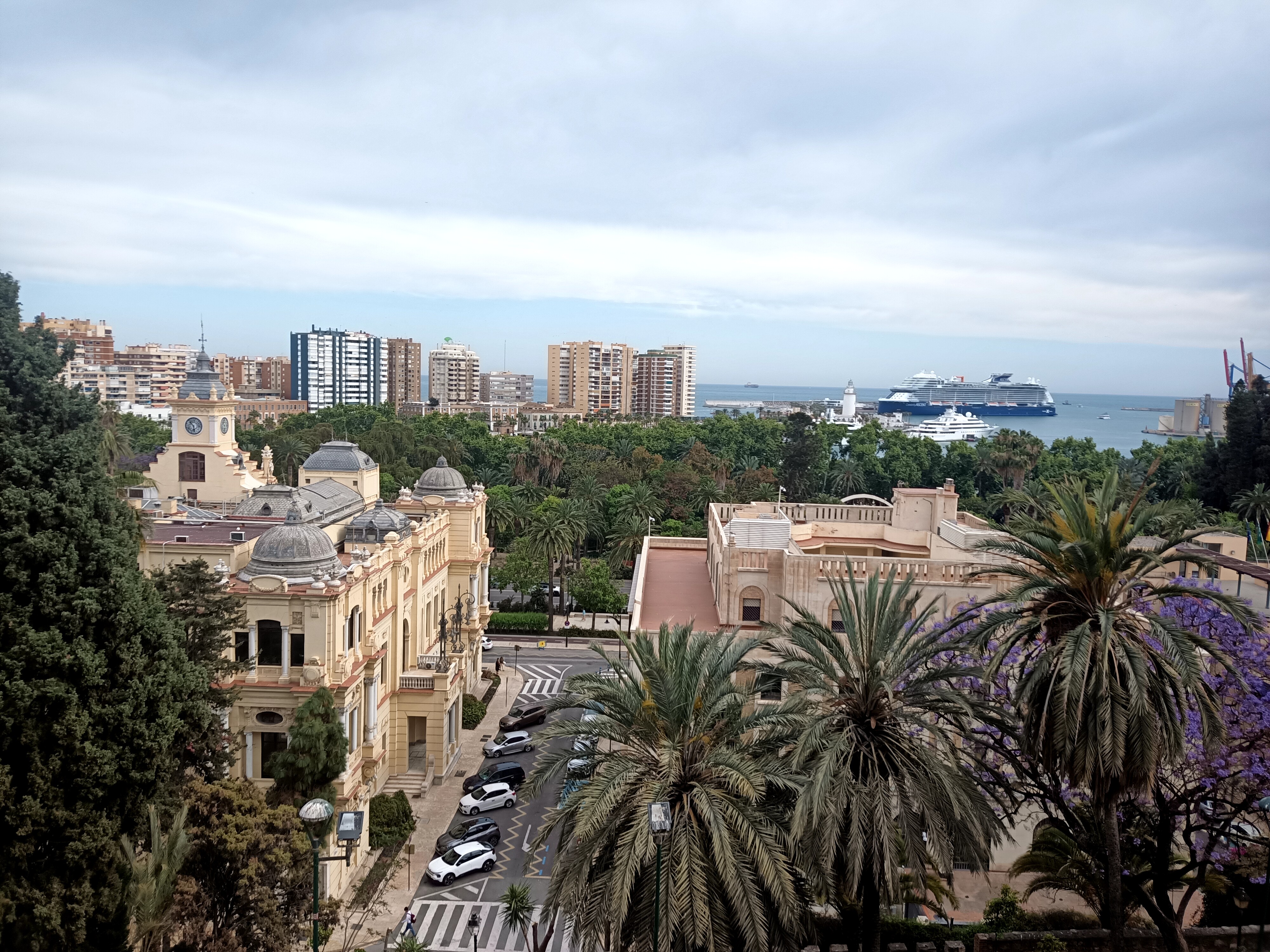
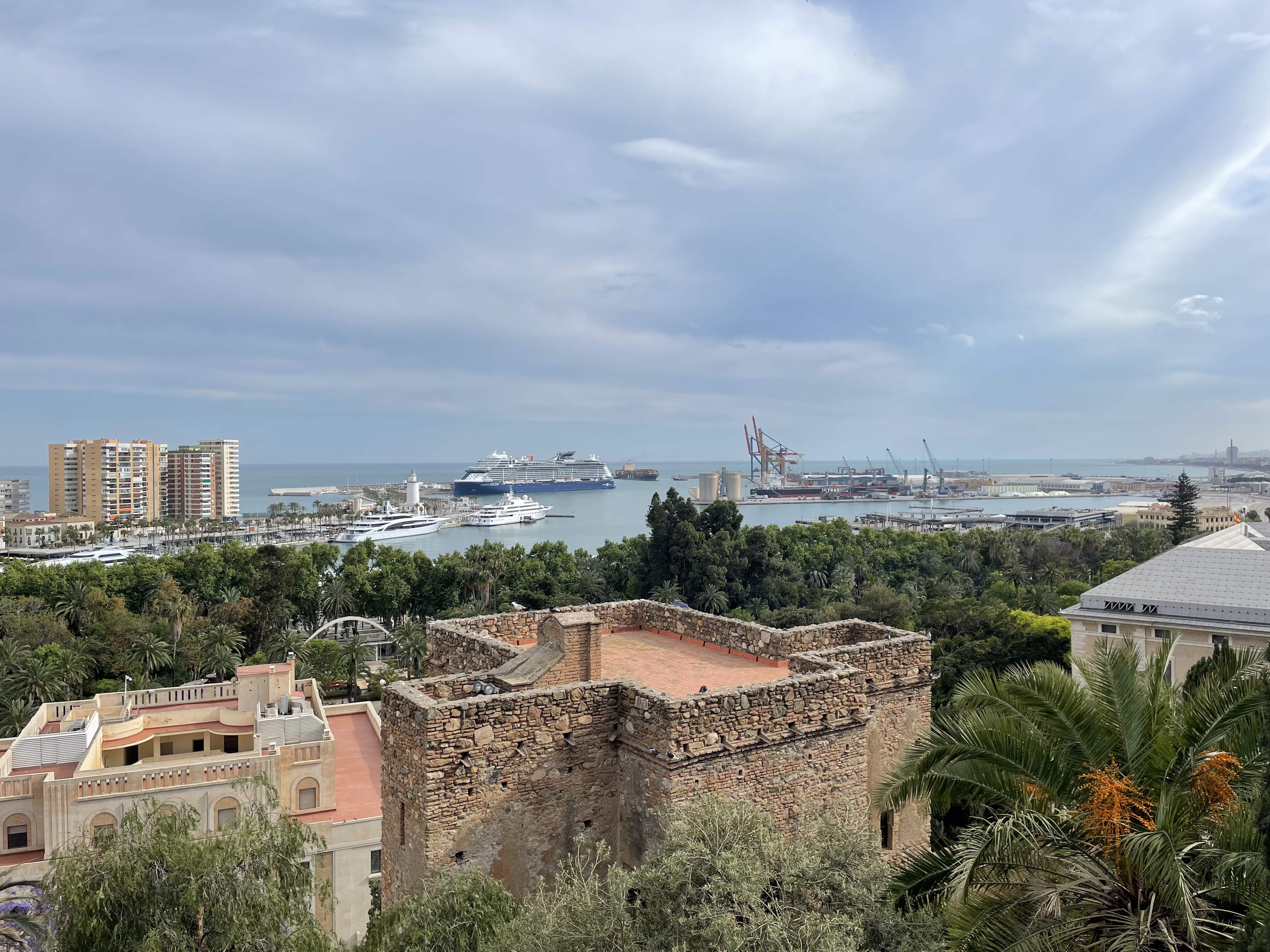
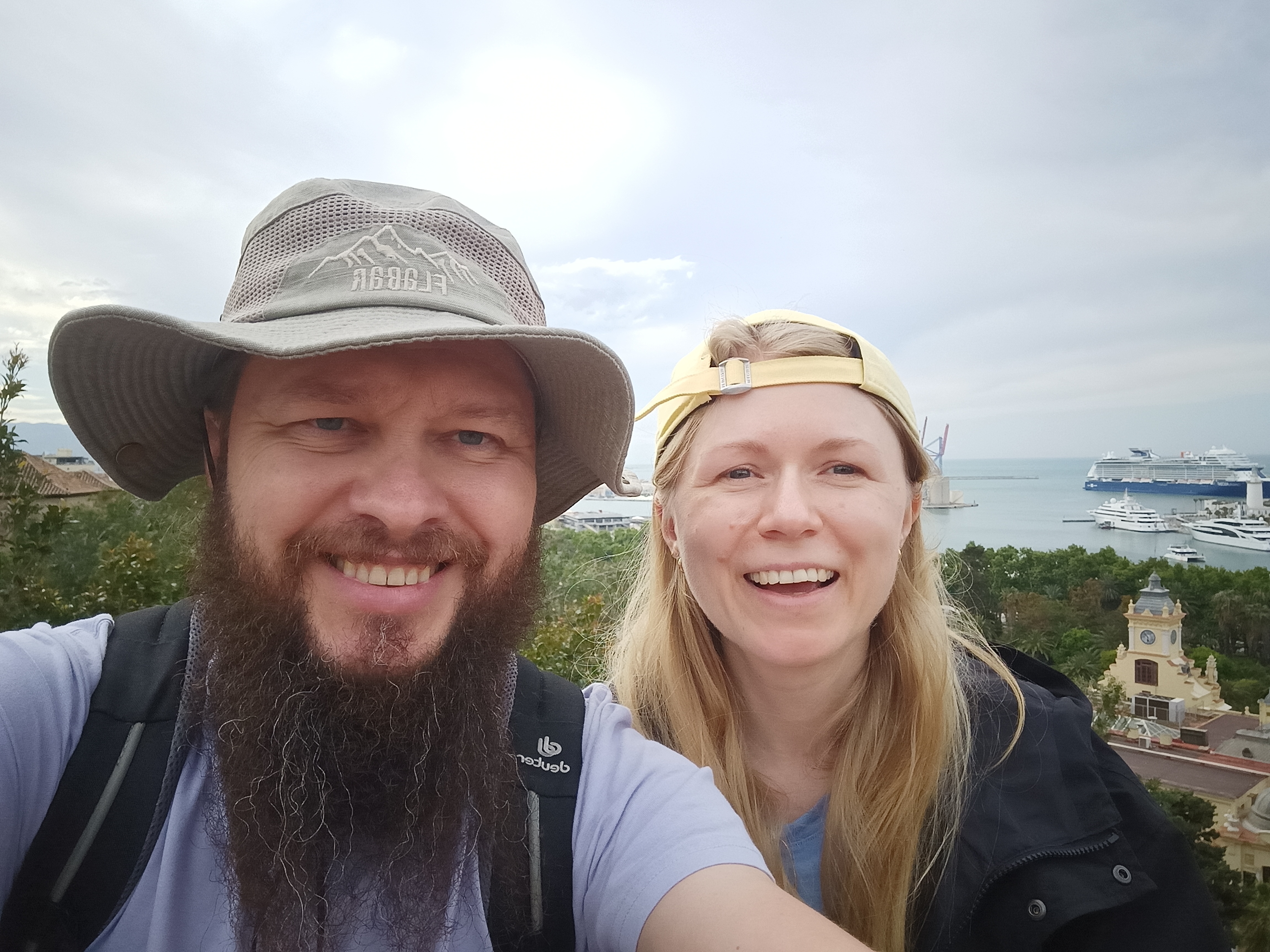
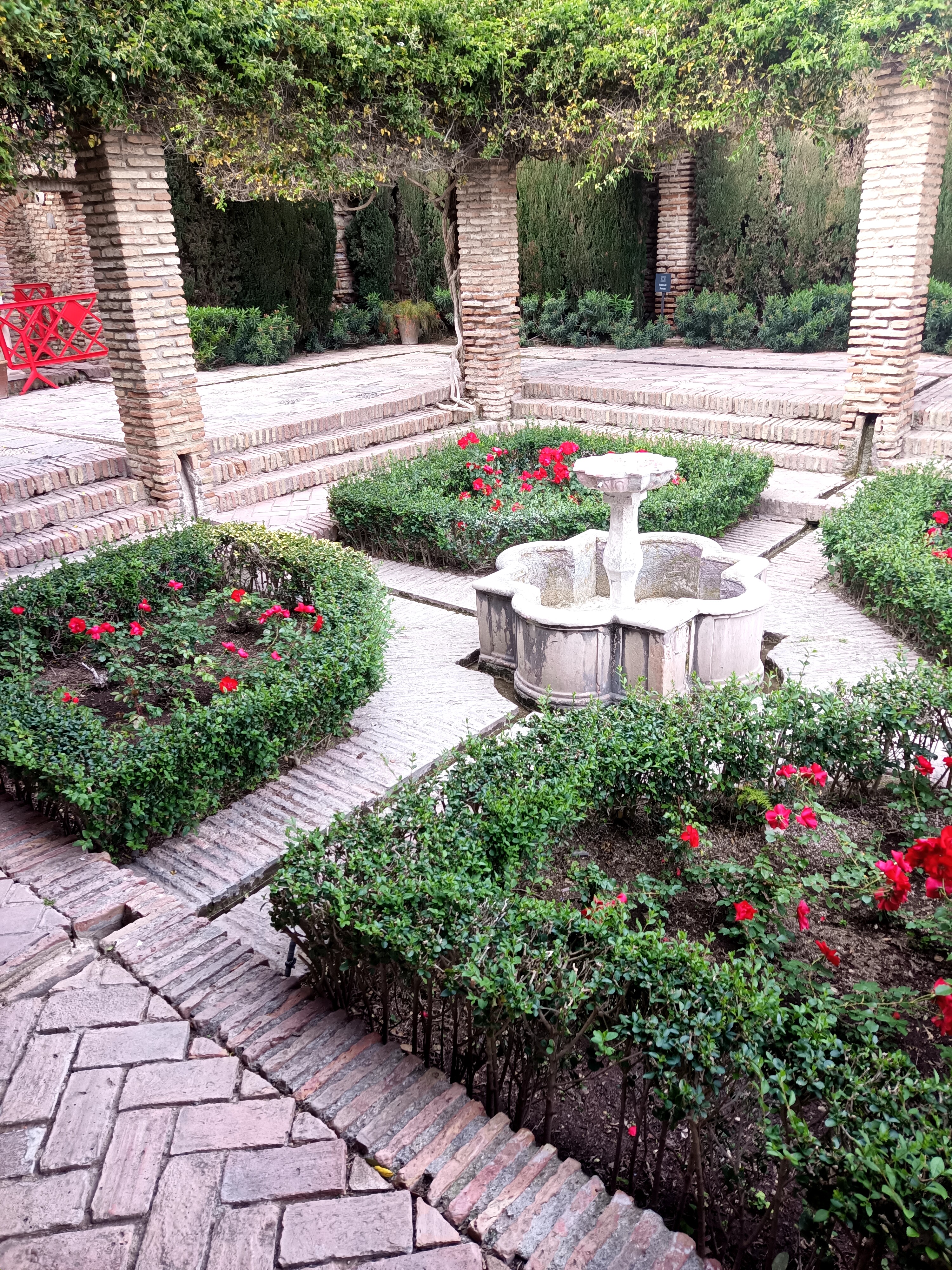
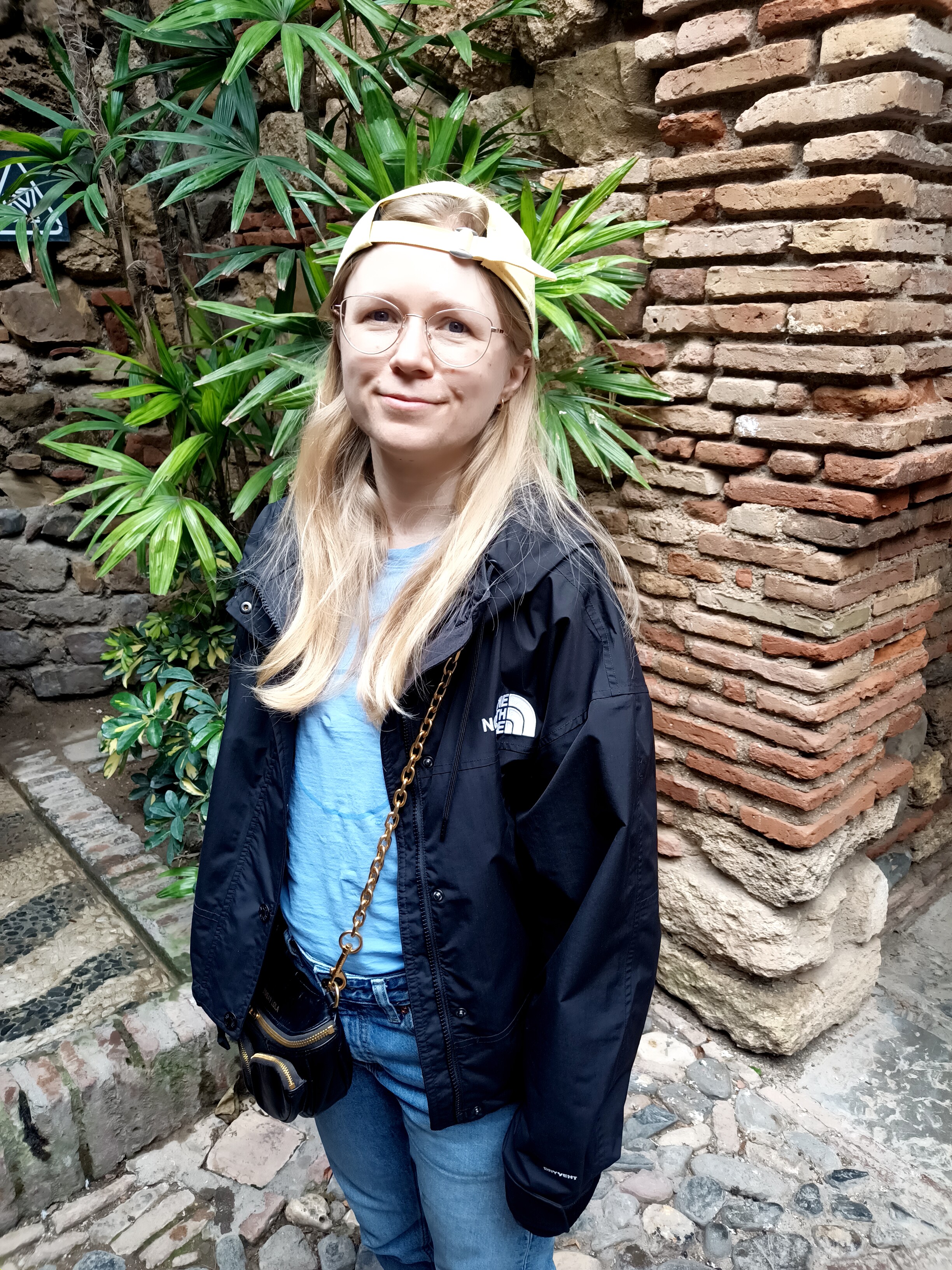
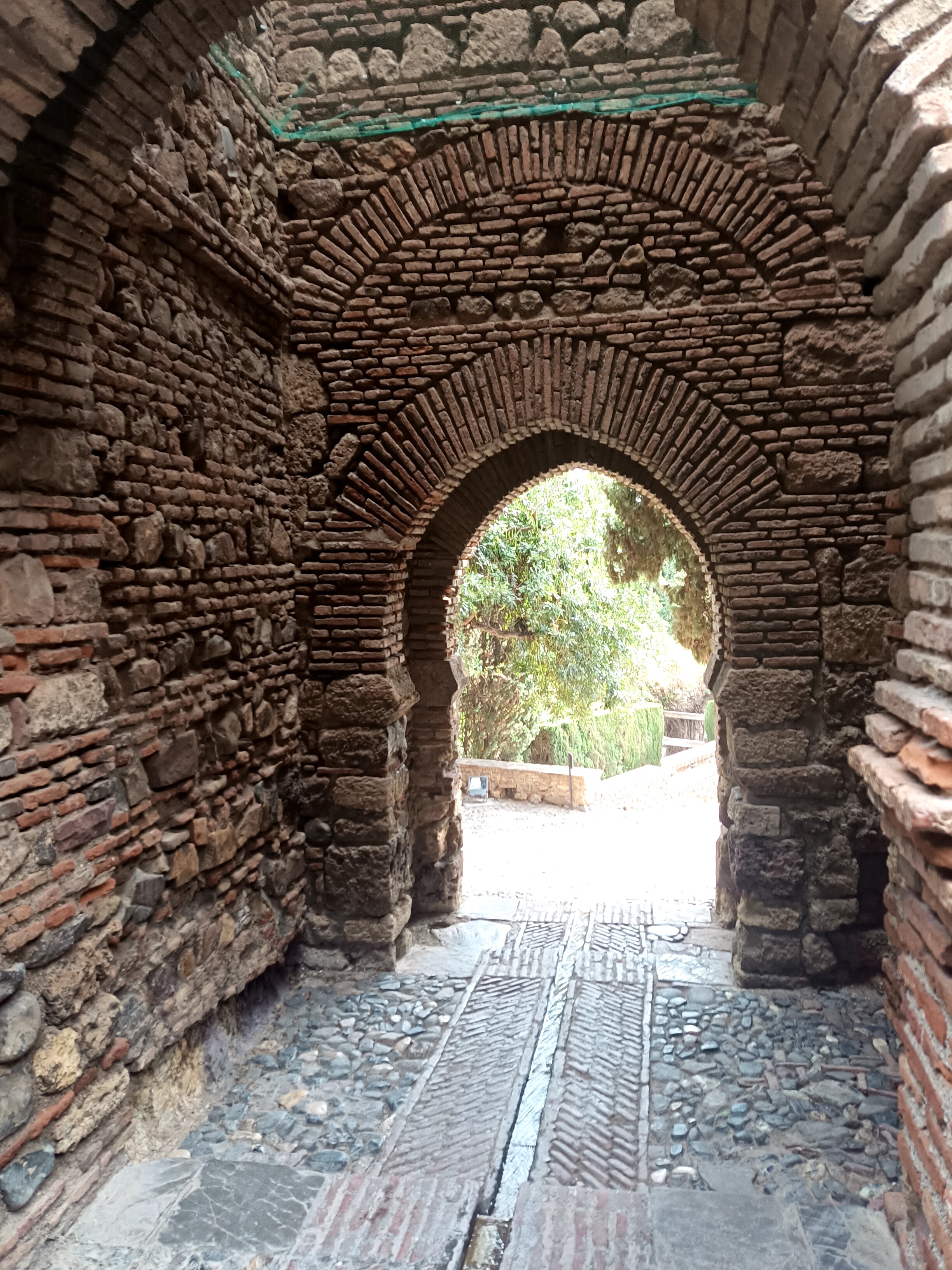
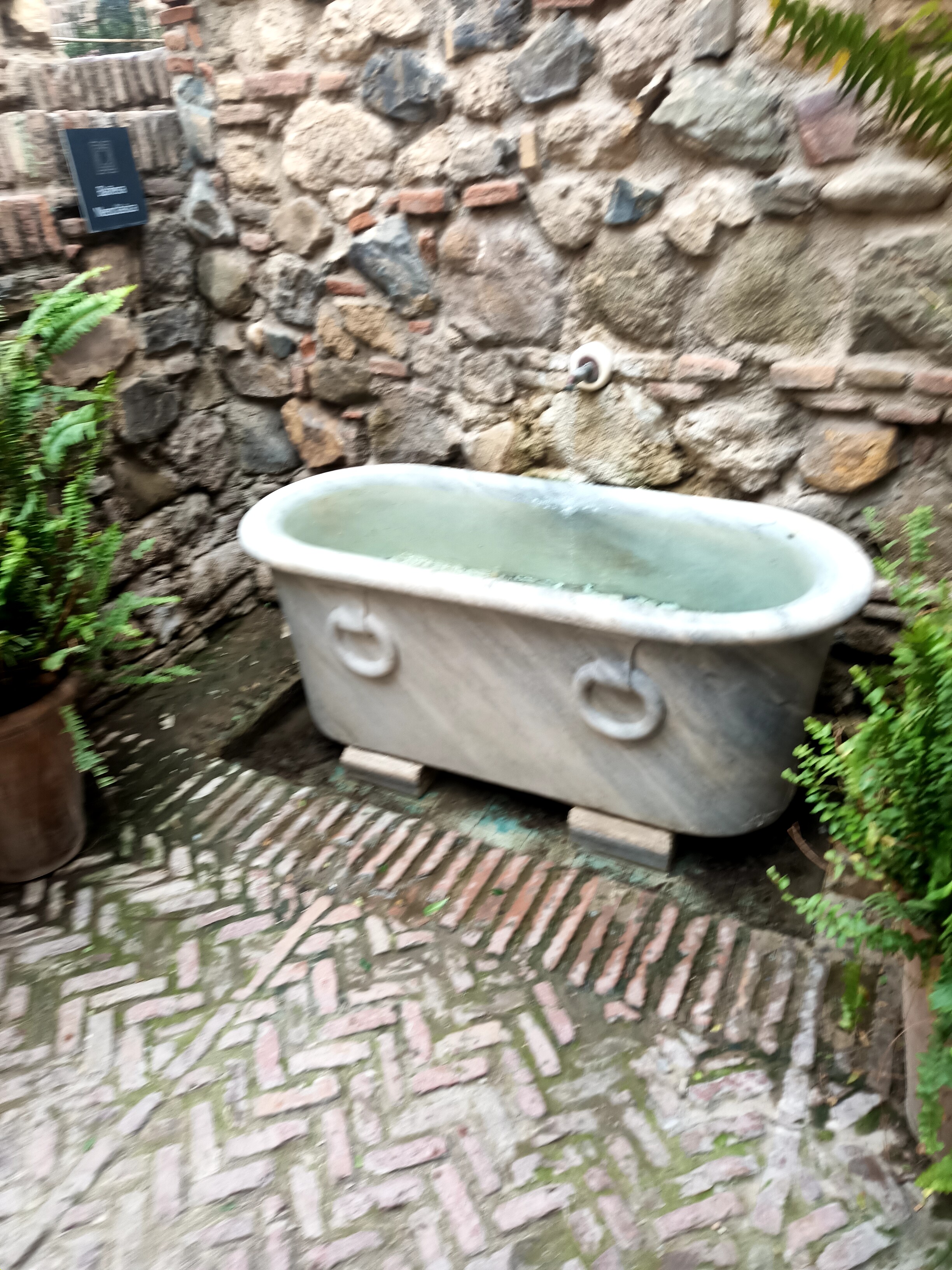
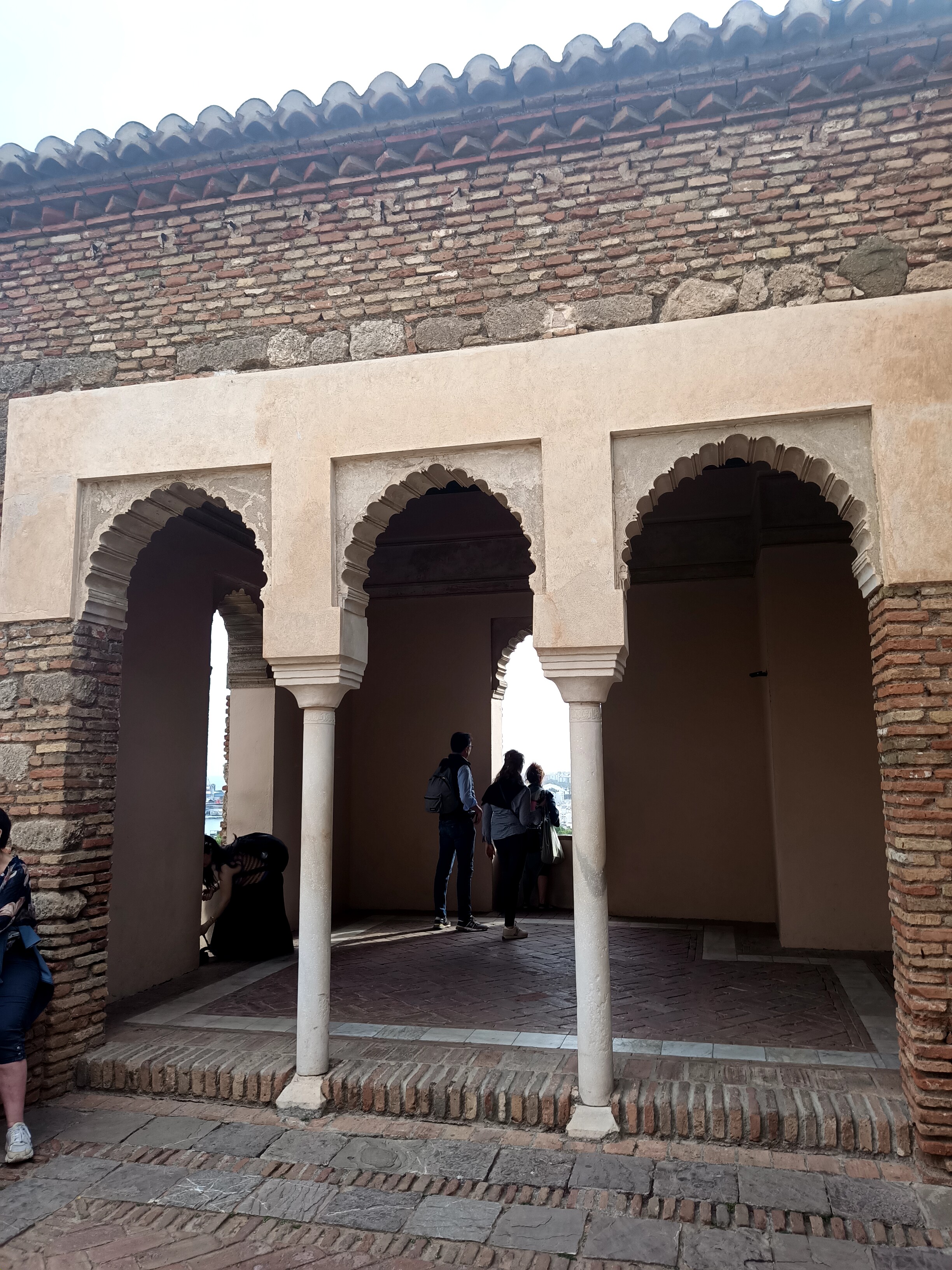
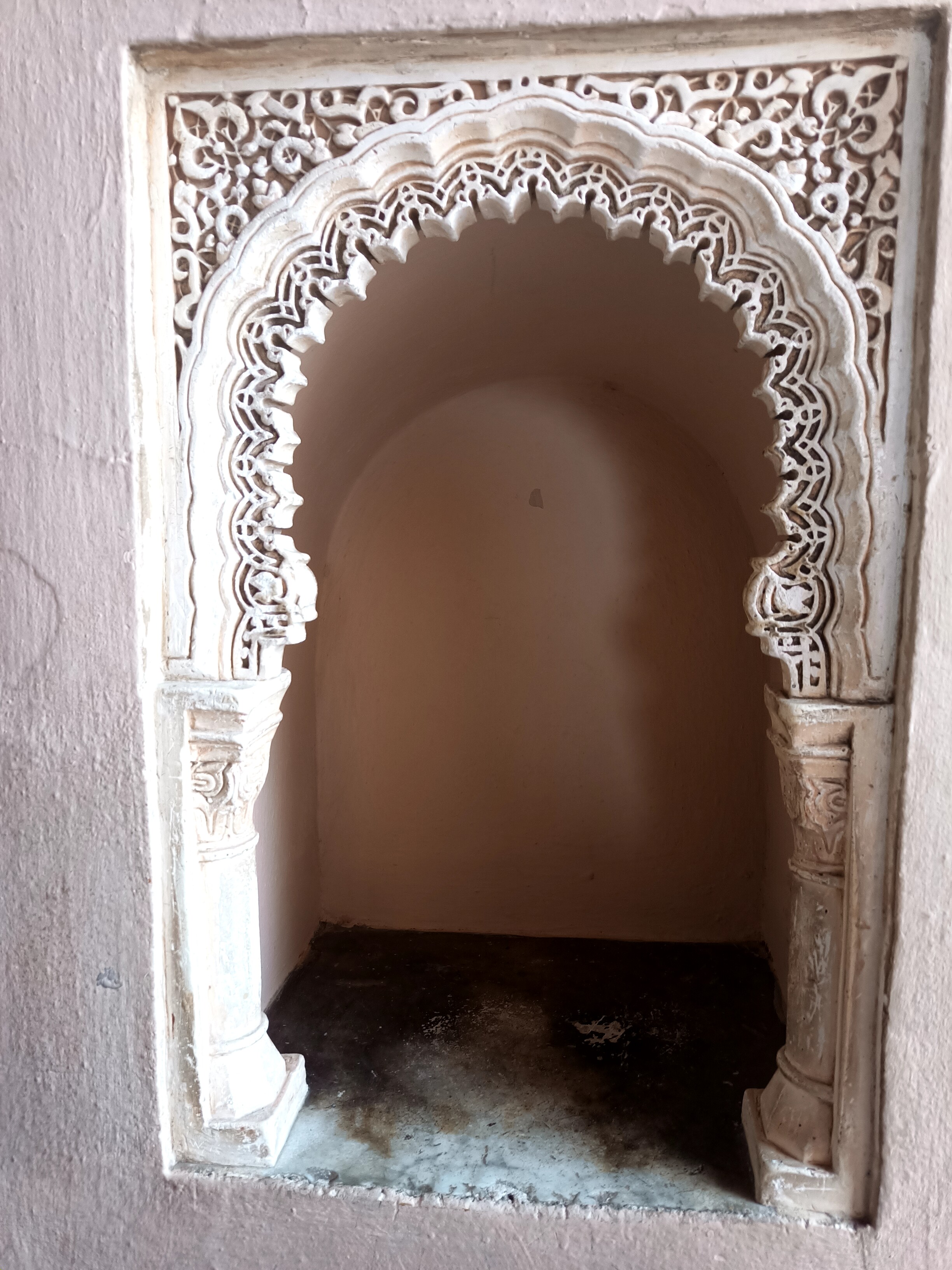
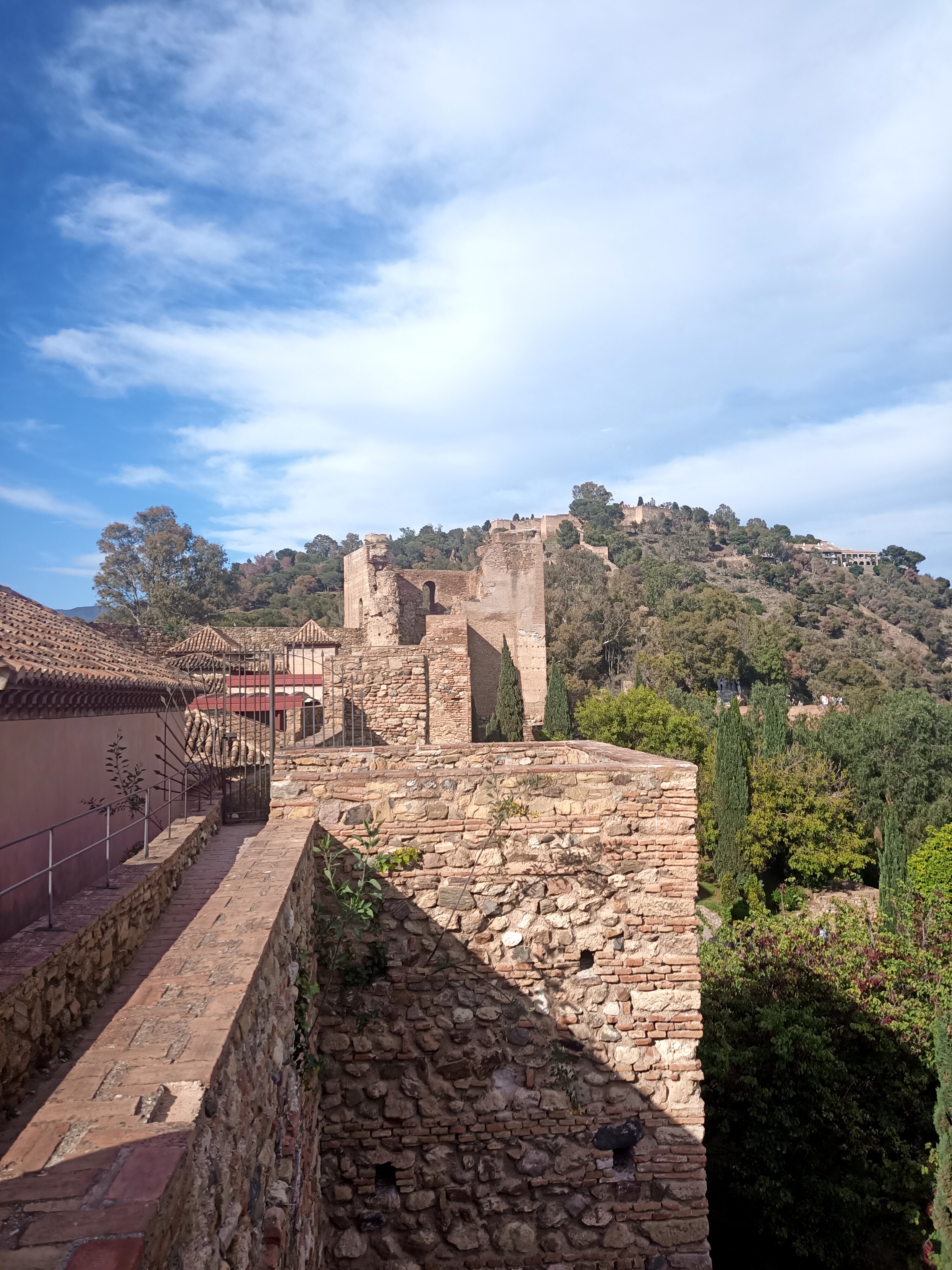
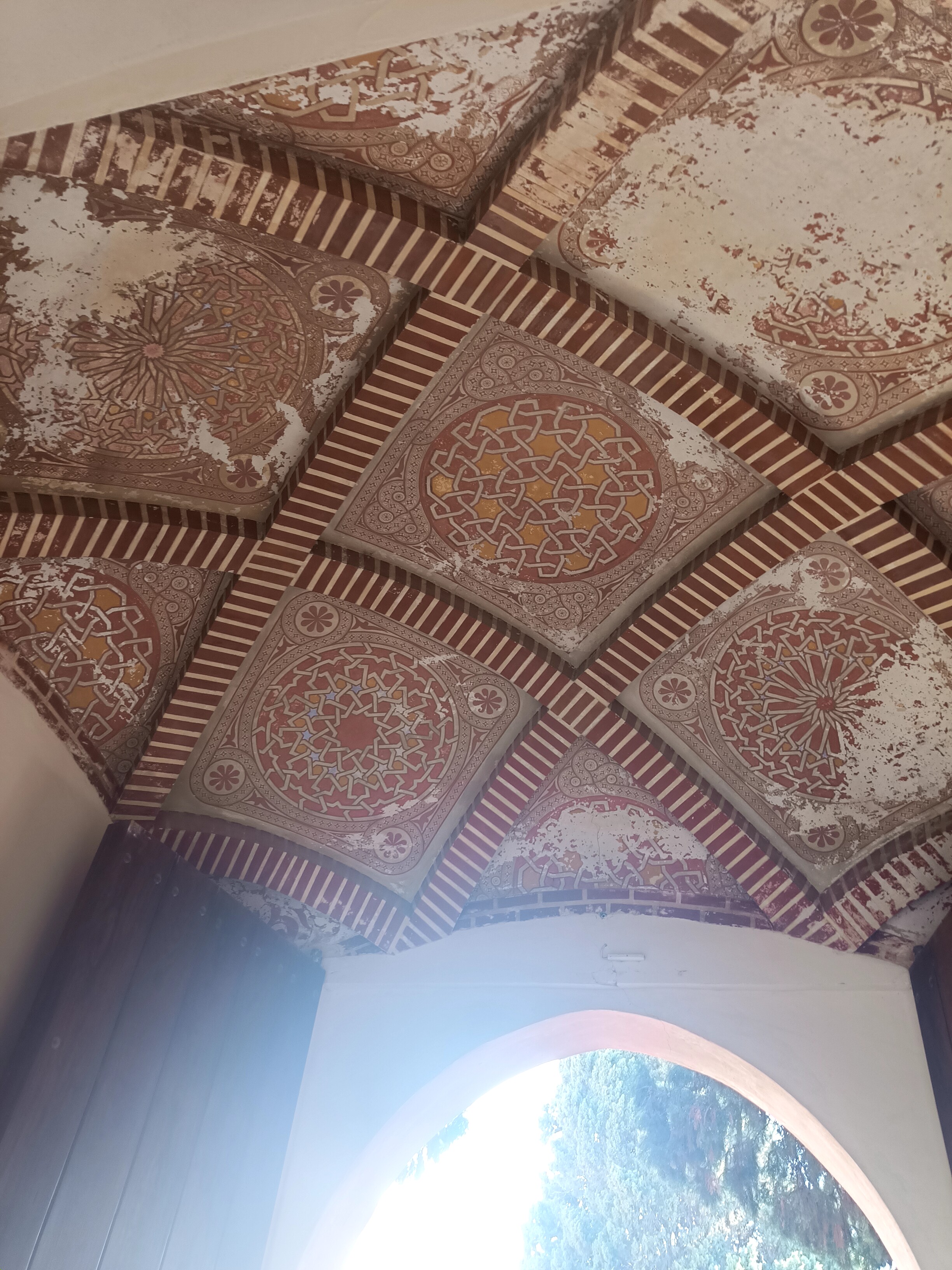
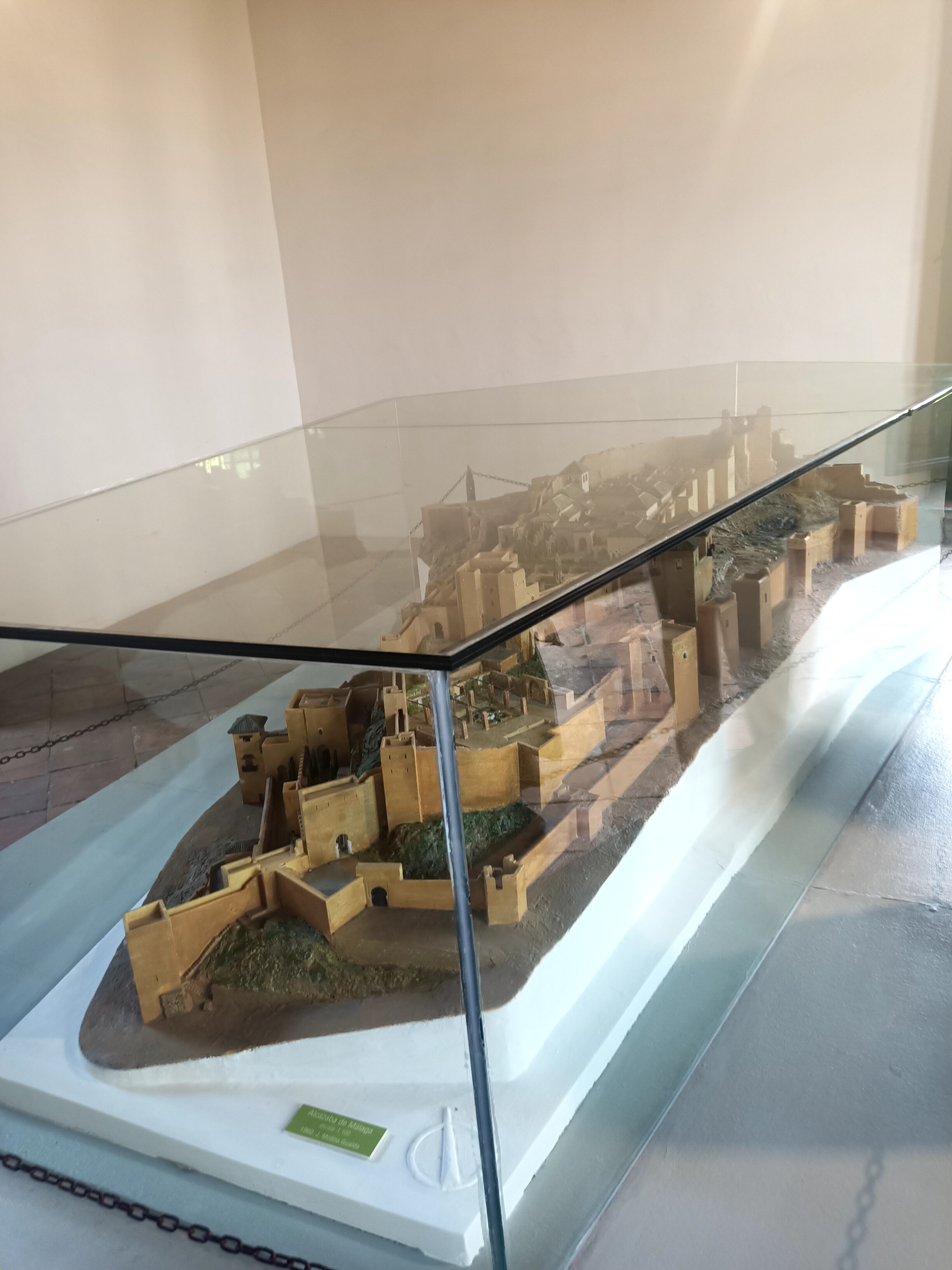
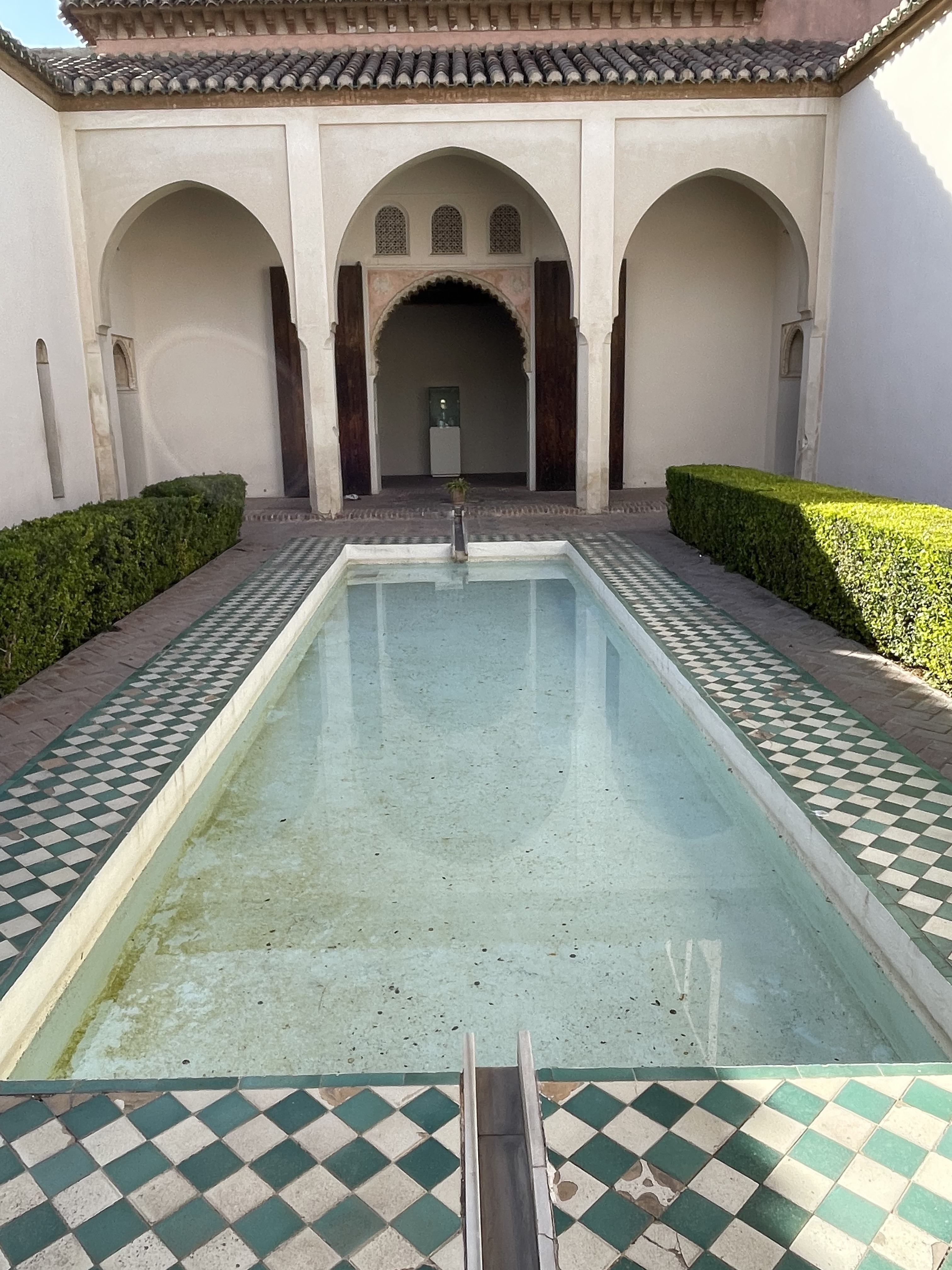
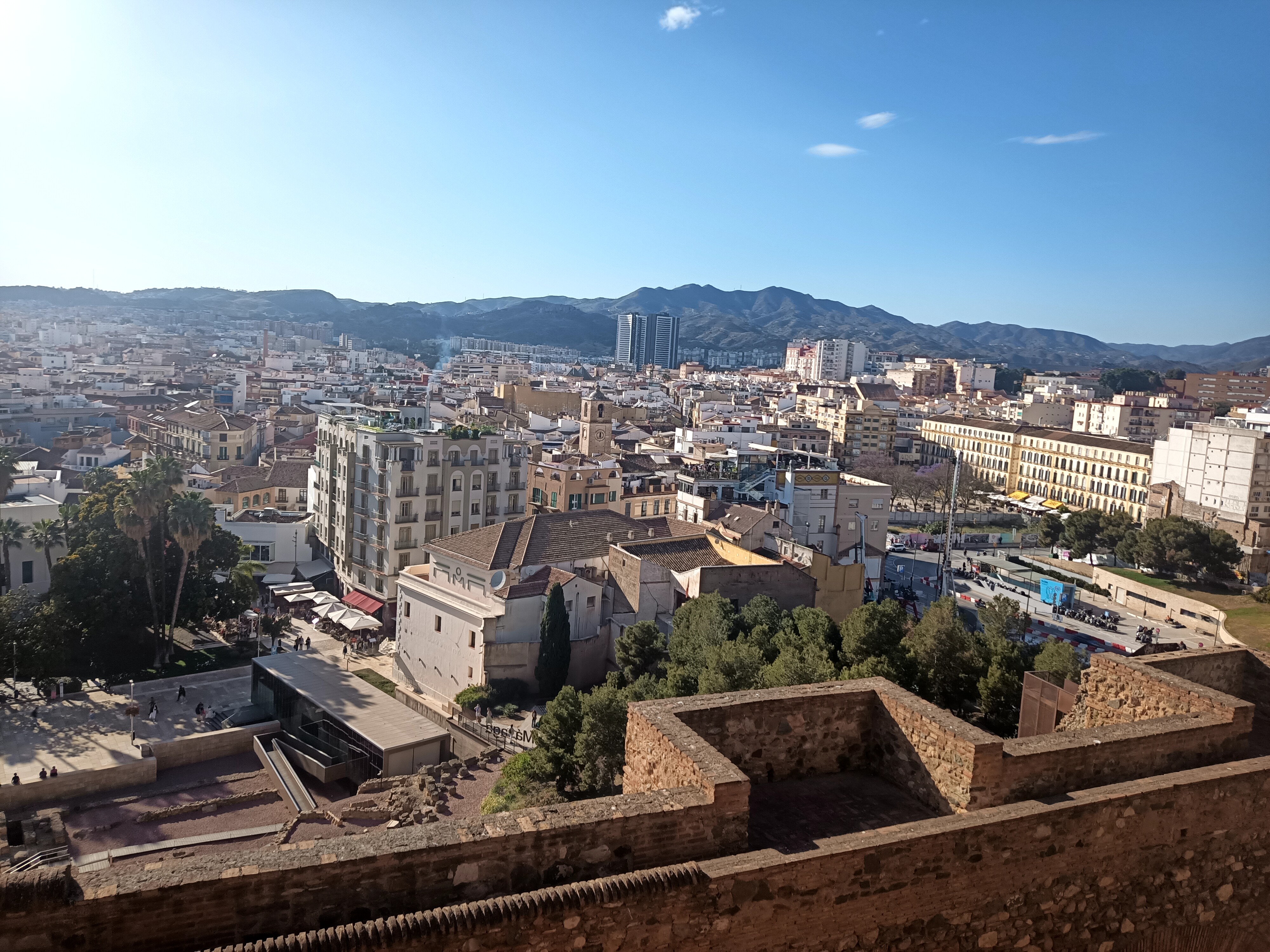
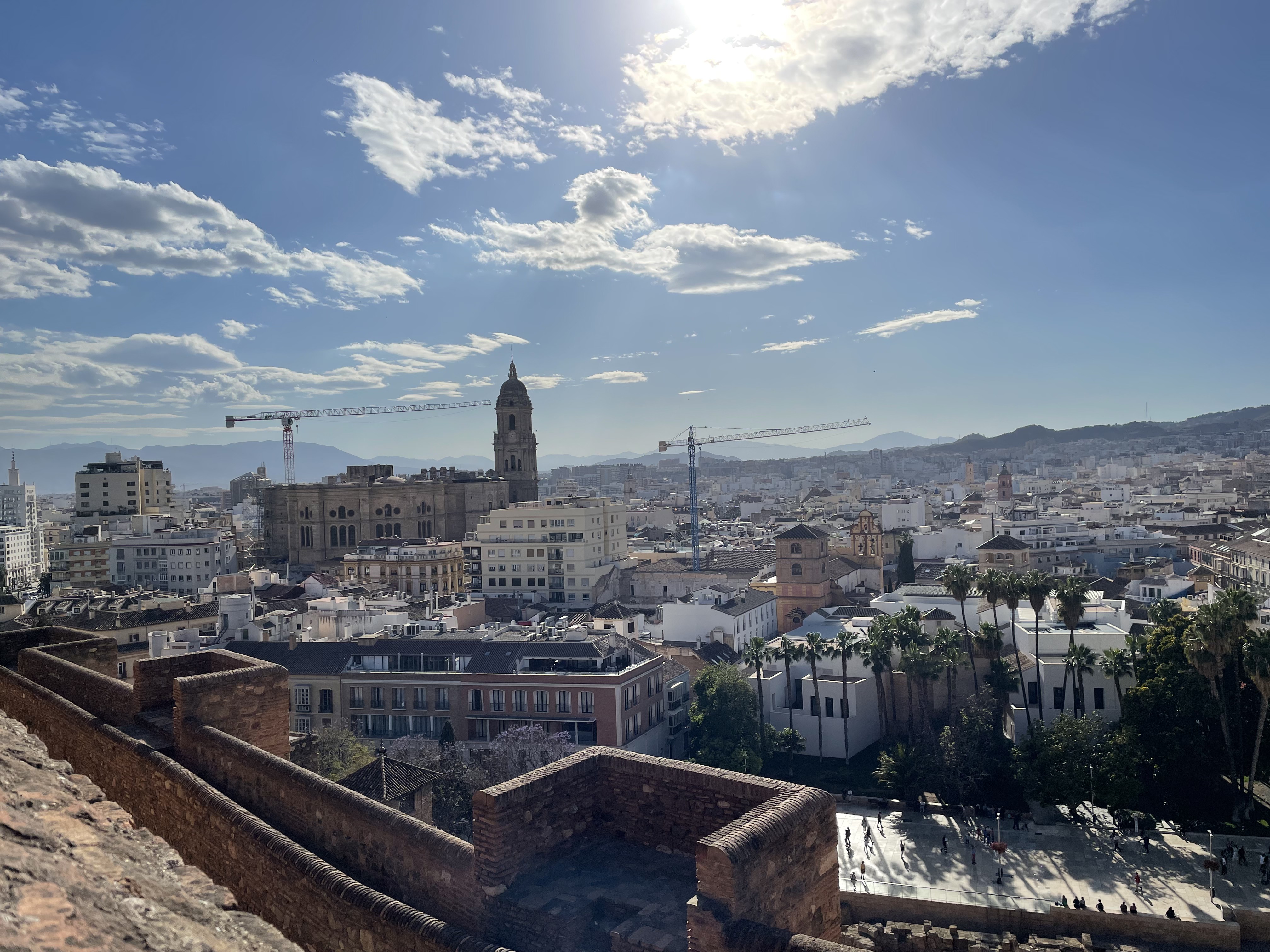
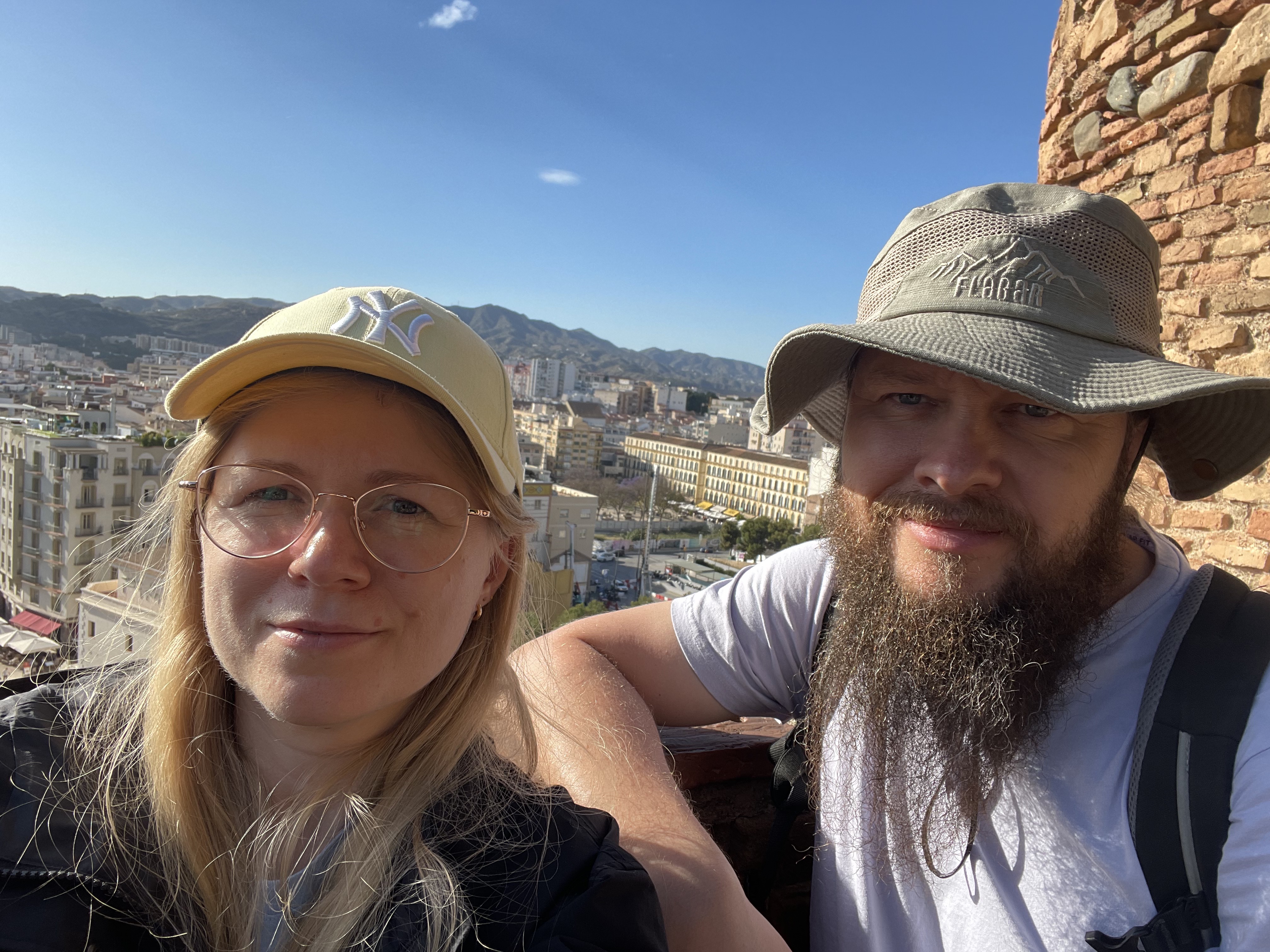
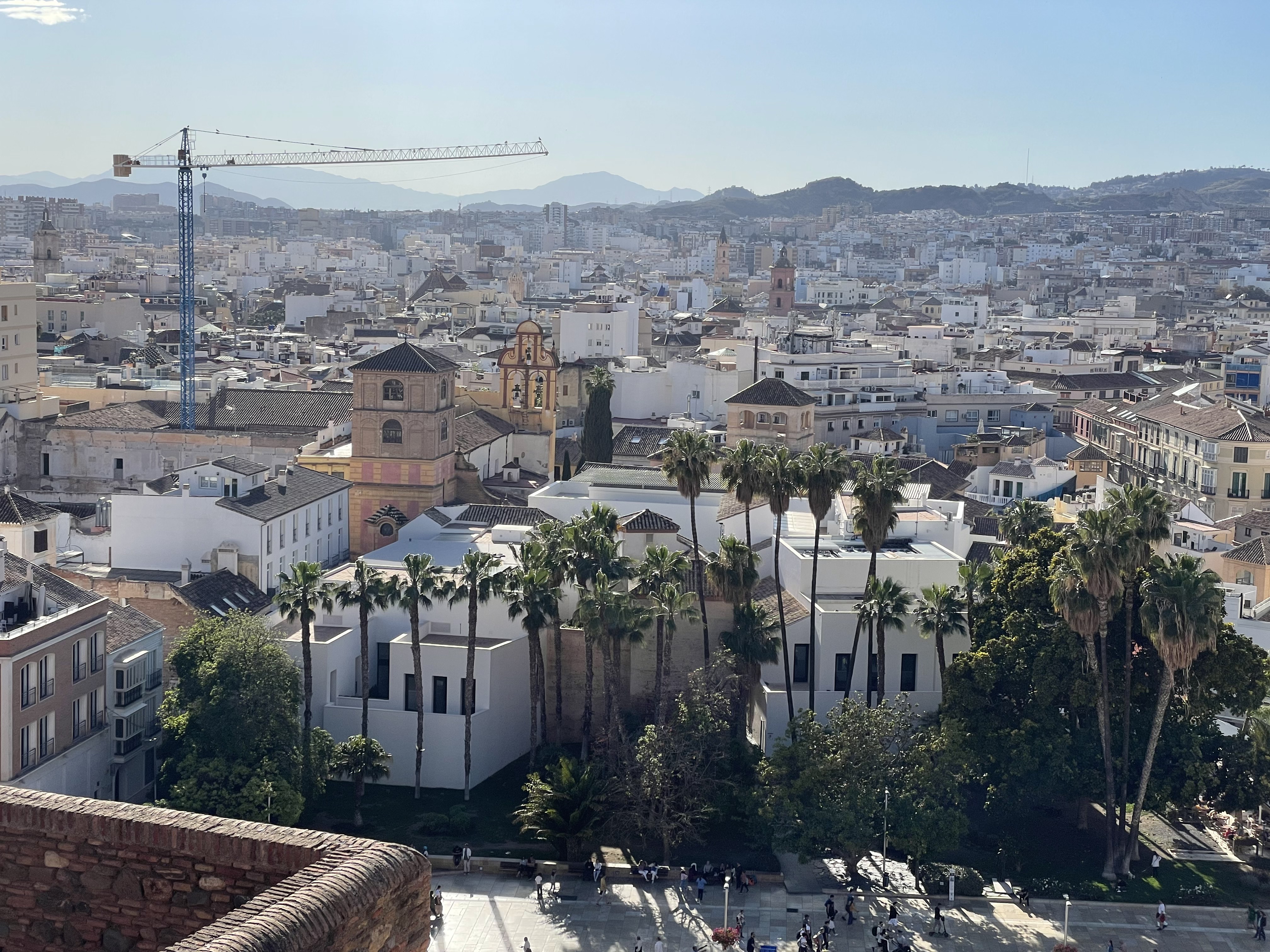
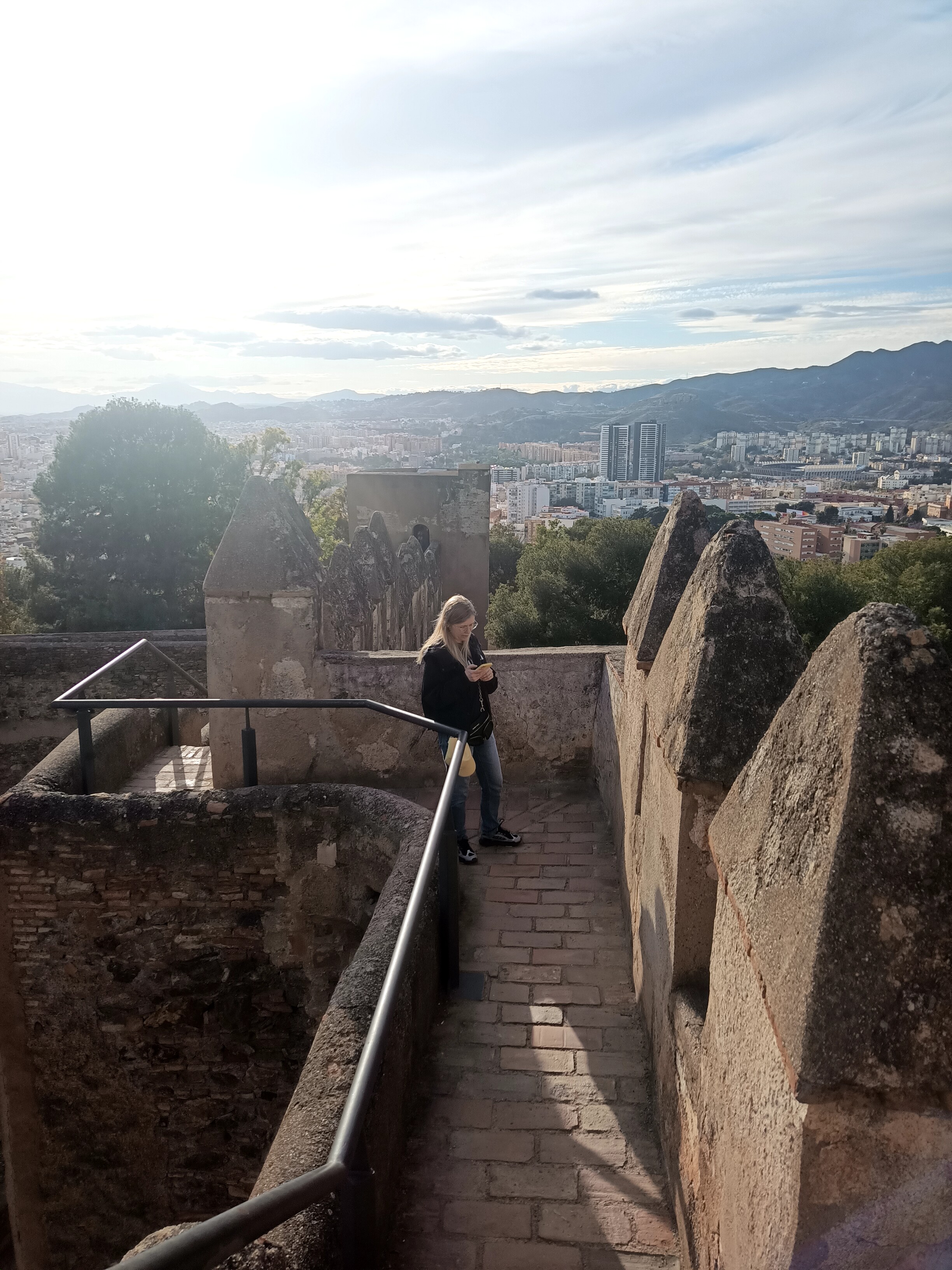
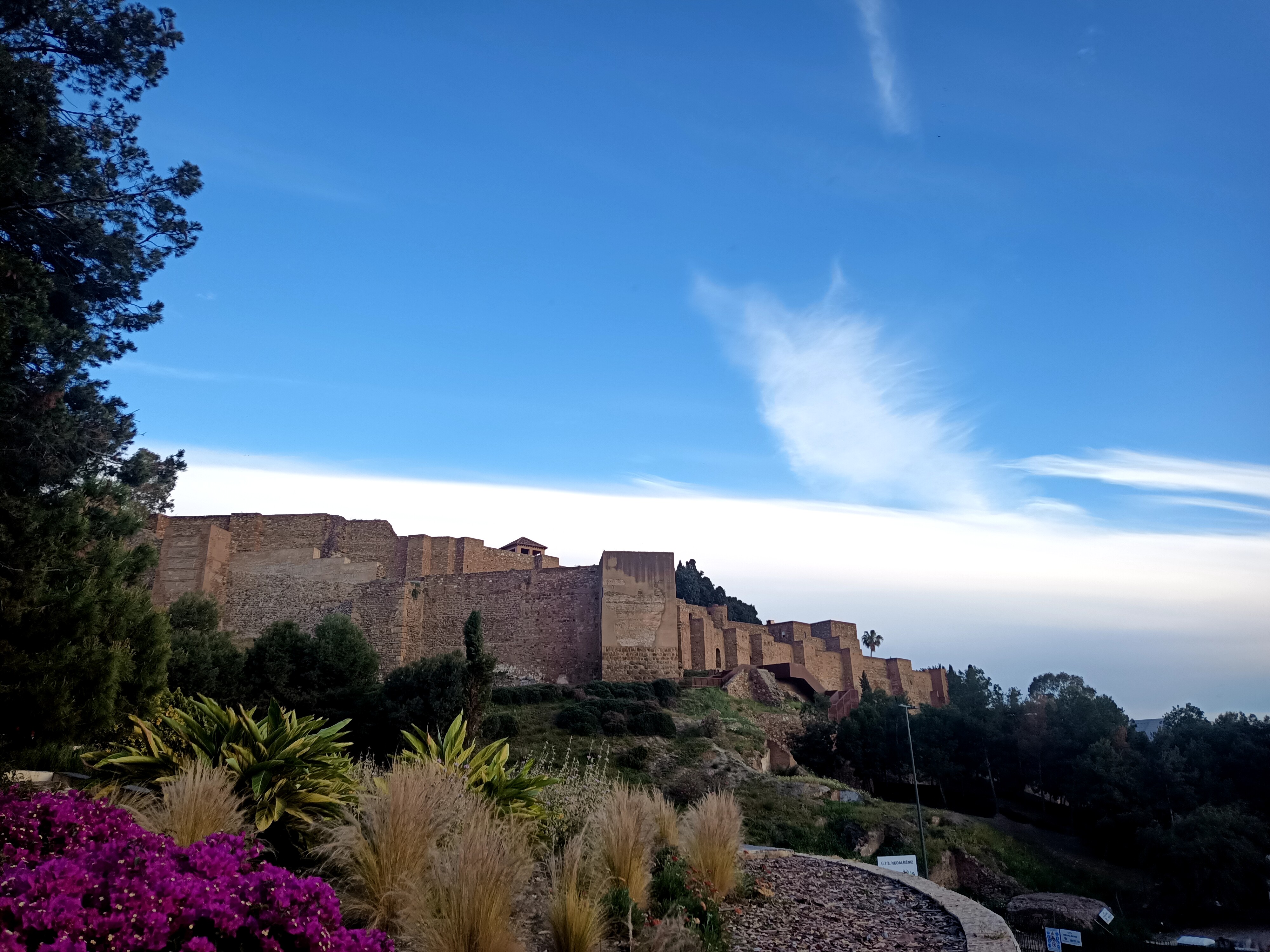
Late afternoon belonged to the Alcazaba, and the city considerately moved downhill. You come in under horseshoe arches and the traffic drops away: tiled turrets in the shade of a very tall cypress, ramparts provided for leaning, a sunken garden doing its roses, a marble water basin holding green water behind iron rings, a pavilion of scalloped arches with visitors drifting through, and the fortress itself reduced to respectful miniature under glass. The reflecting pool keeps the whole arrangement doubled in green-and-white tiles. Then the pay-off at the wall rail: the white city below, the cathedral tower taking the cranes politely into its silhouette, the old centre packed in behind its rooftops, a cruise ship parked in the port making the scale easy to judge, and the two of us leaning on the same stone the builders leaned on — eight centuries apart, equally satisfied with the view. The walls keep their best angles on the way through: garden courtyards, brick gateways one after another, and the harbour with the week's cruise ship for scale.
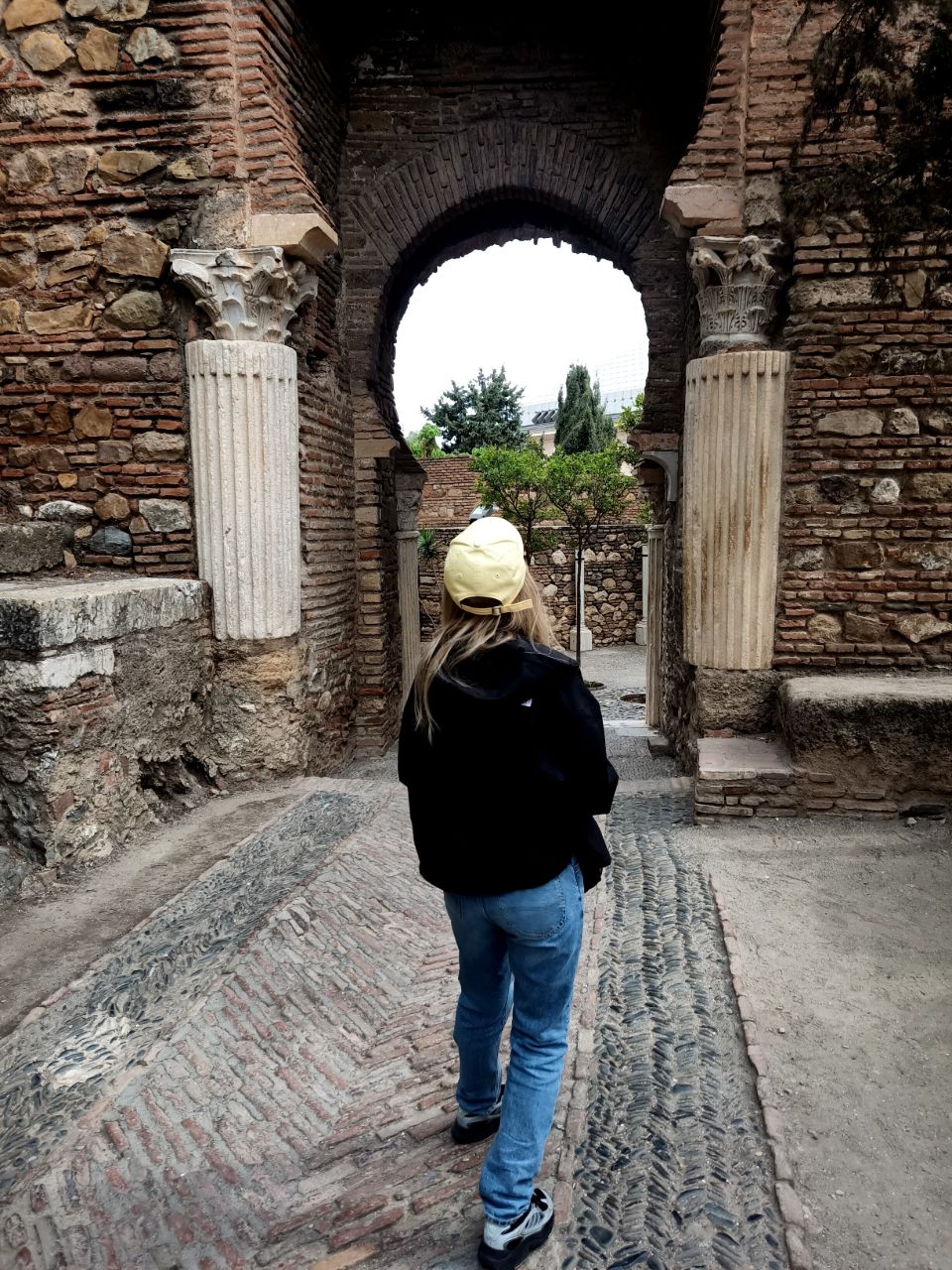
Into the Alcazaba 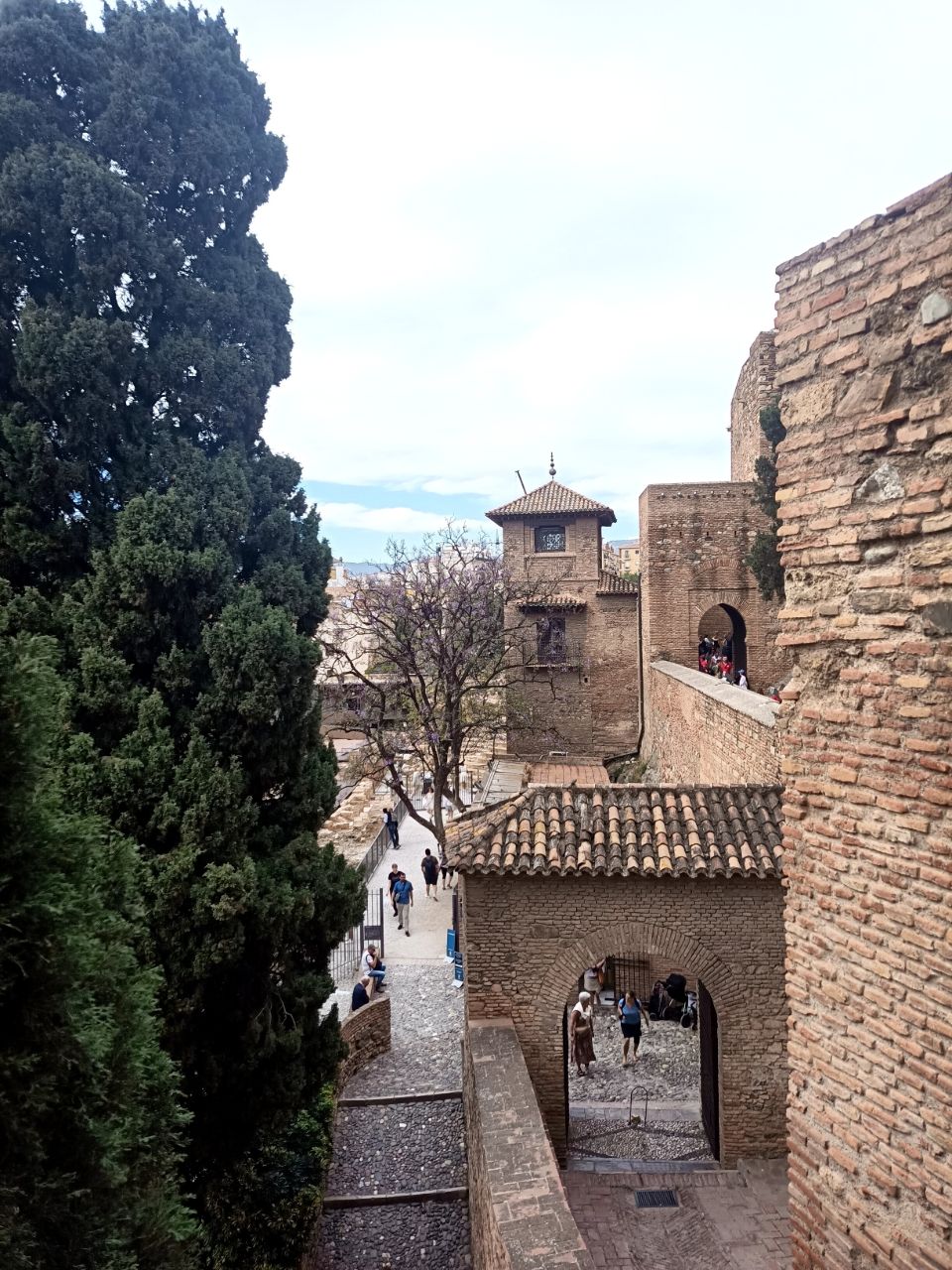
Turrets and cypress 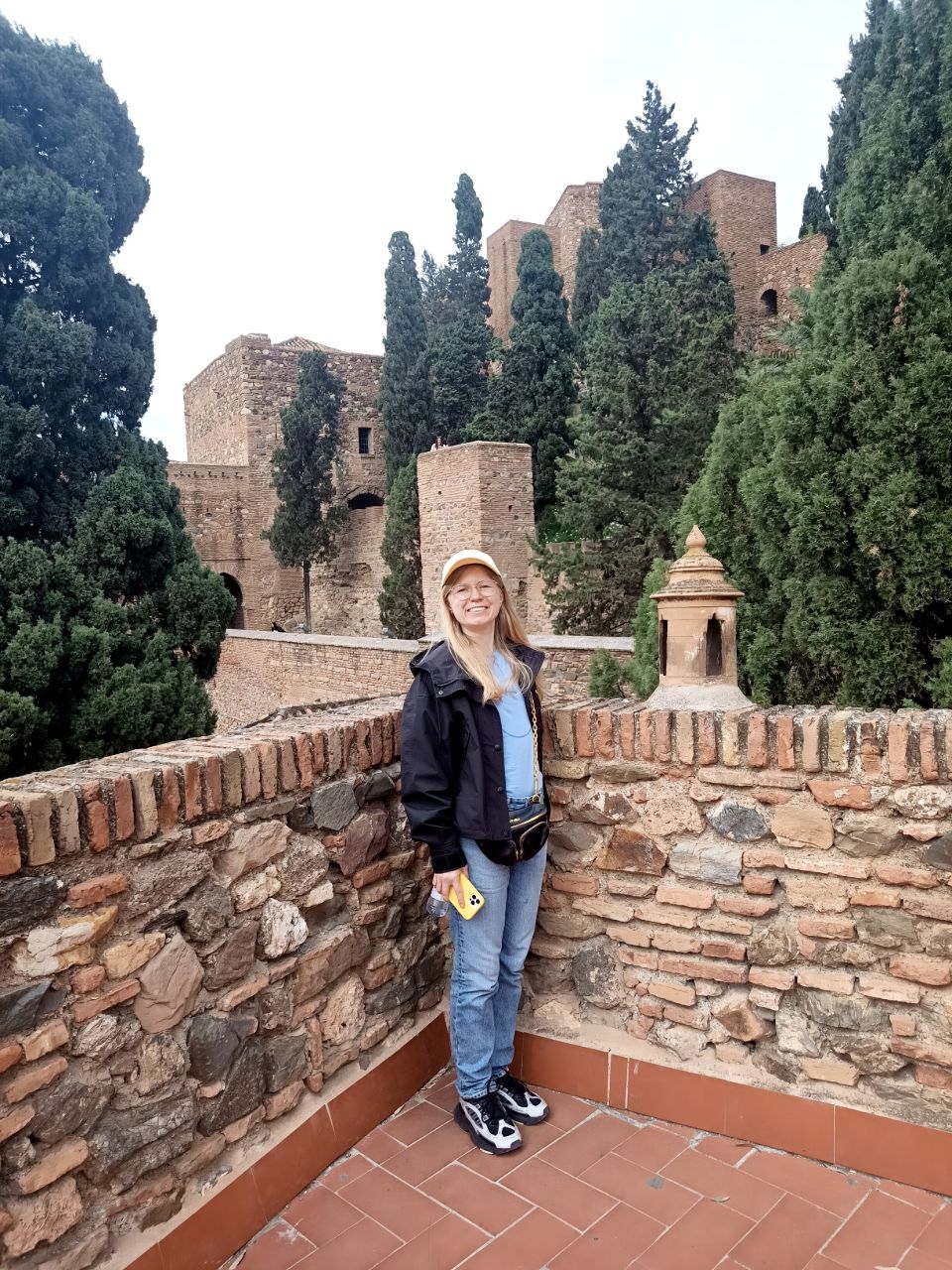
Anna on the Alcazaba's terraces 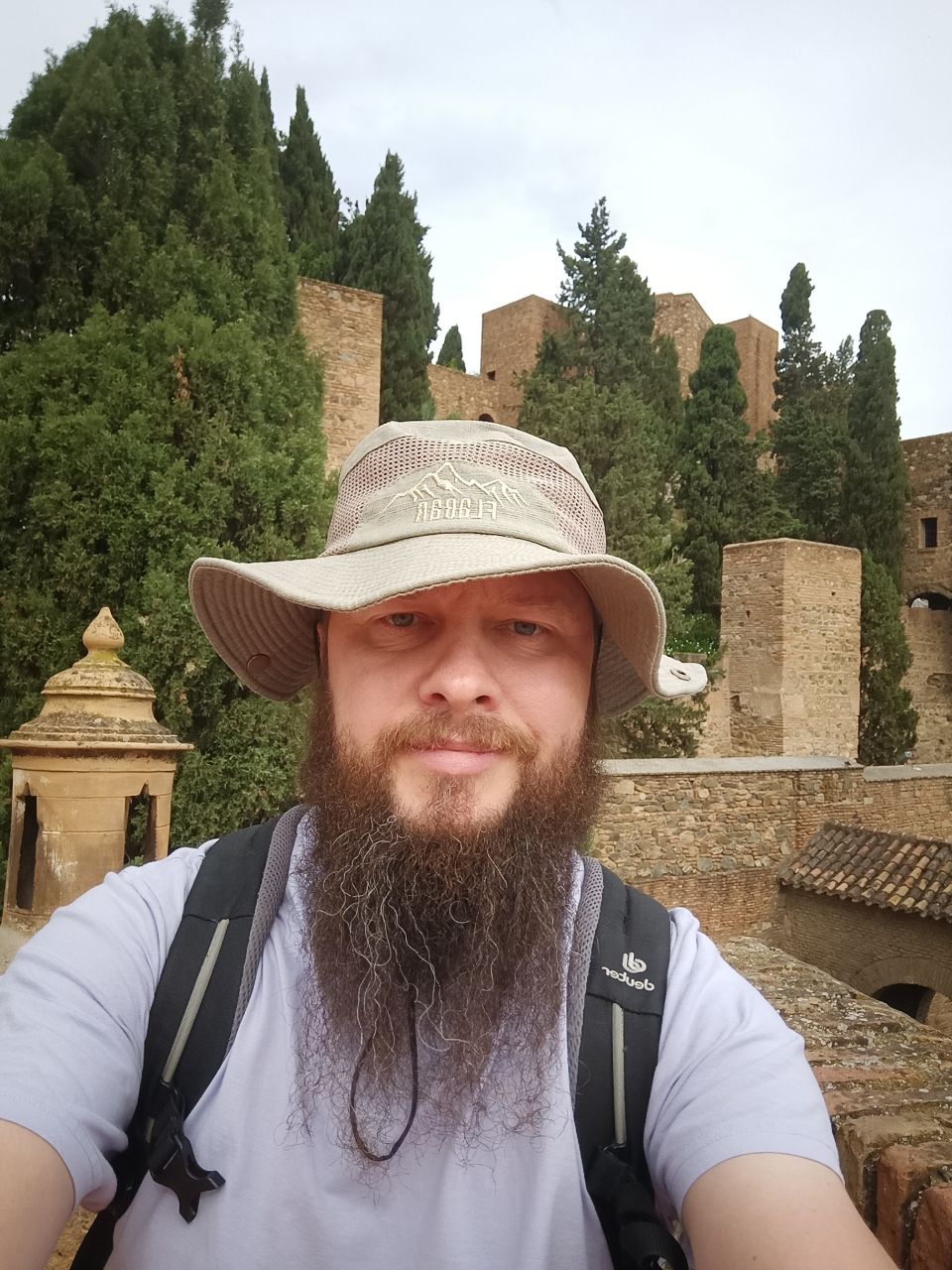
Oleg on the ramparts 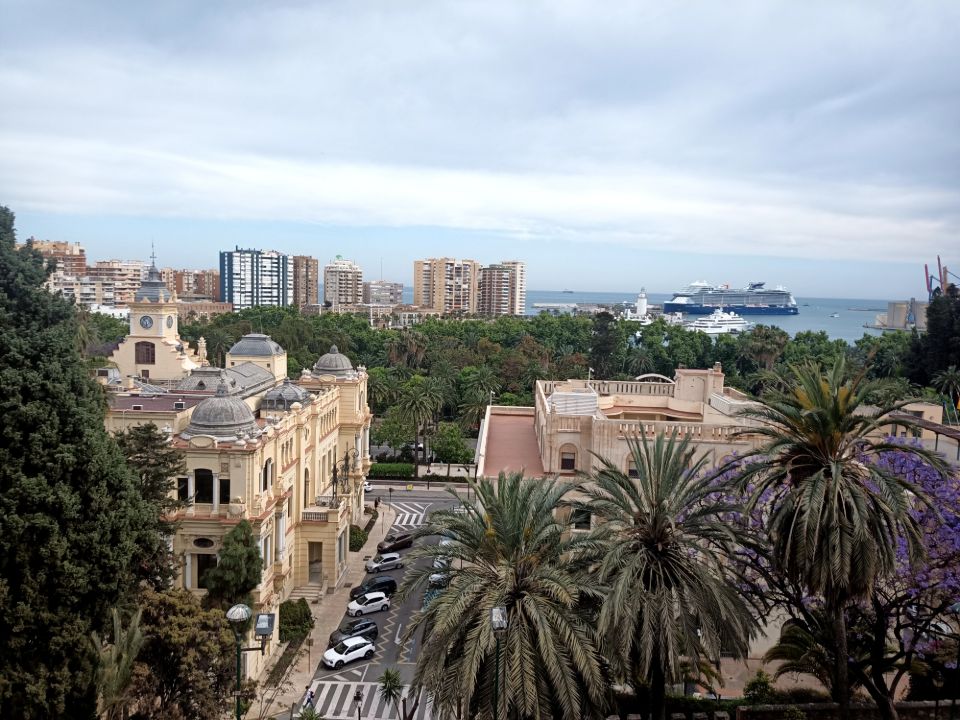
The city and its cruise ship 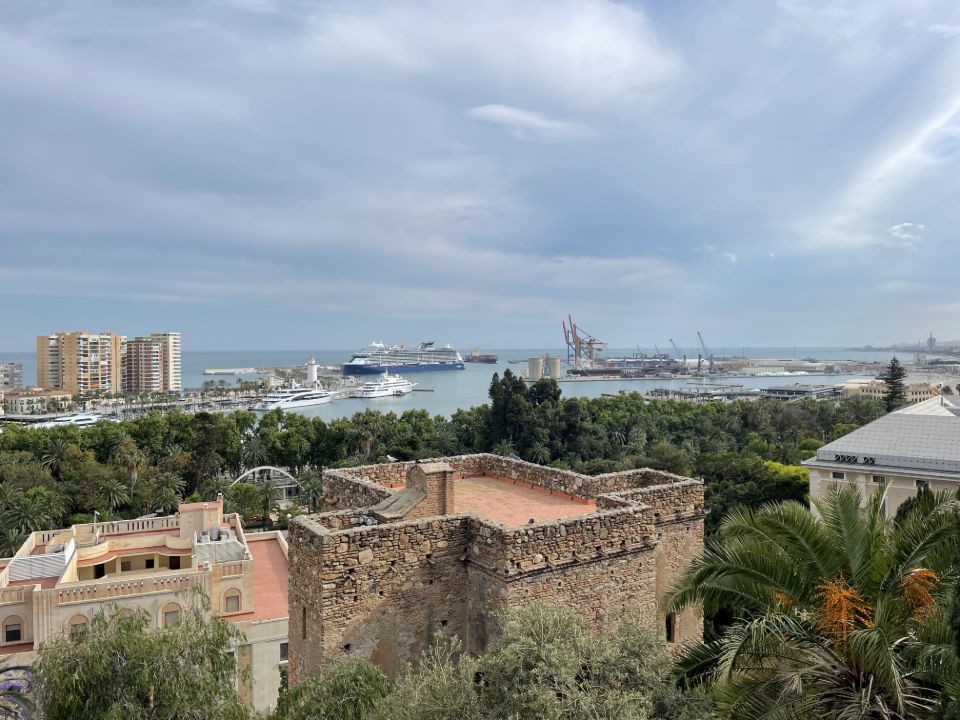
Down onto the harbour 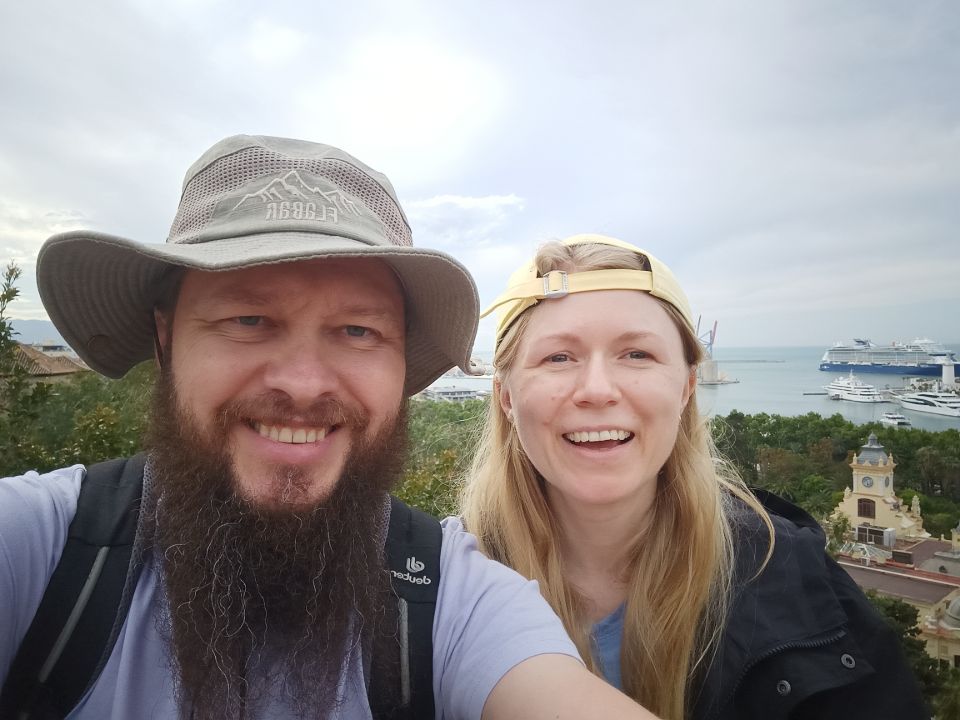
Above the city, cruise ship in the port 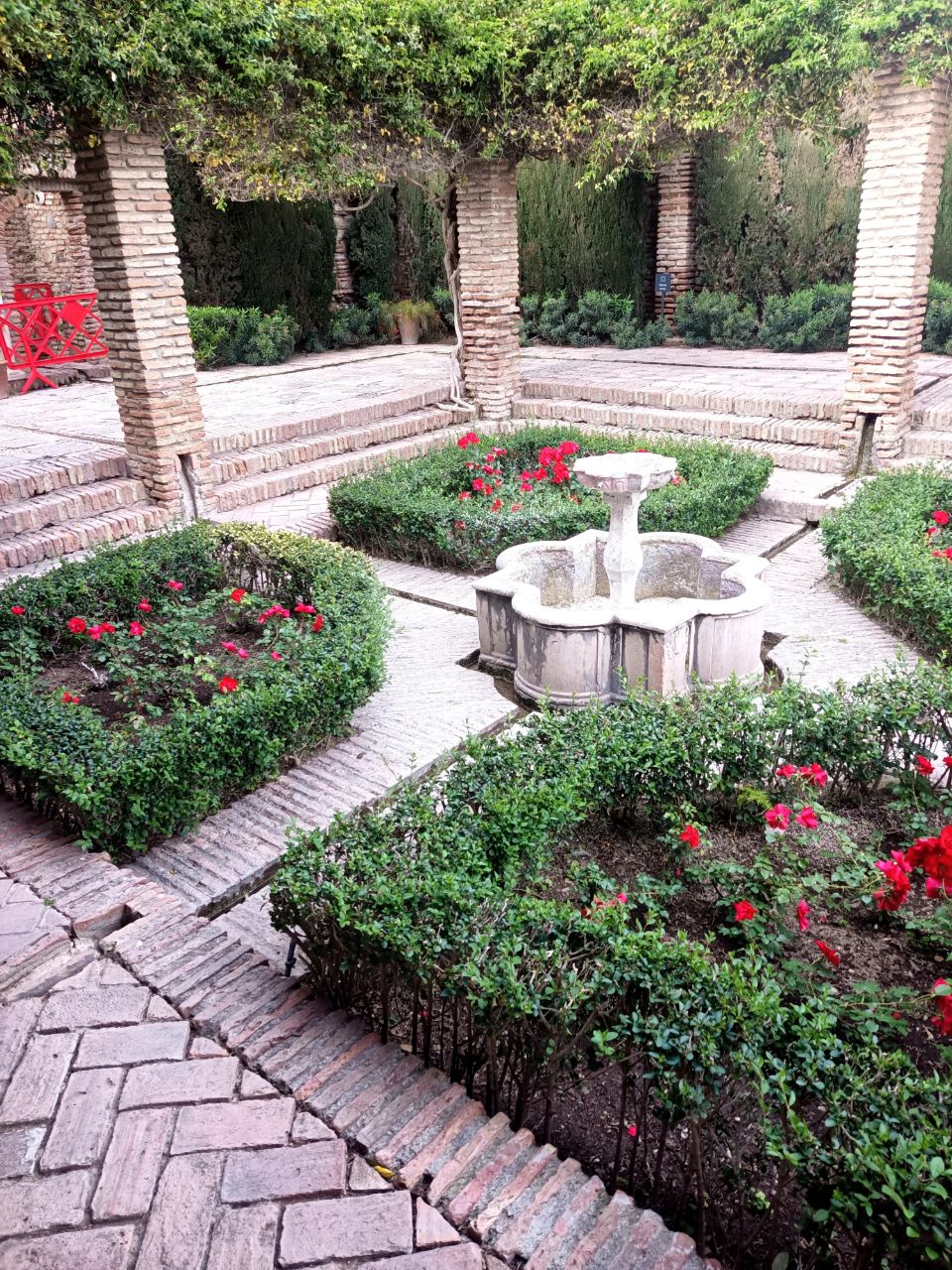
Roses in the fortress garden 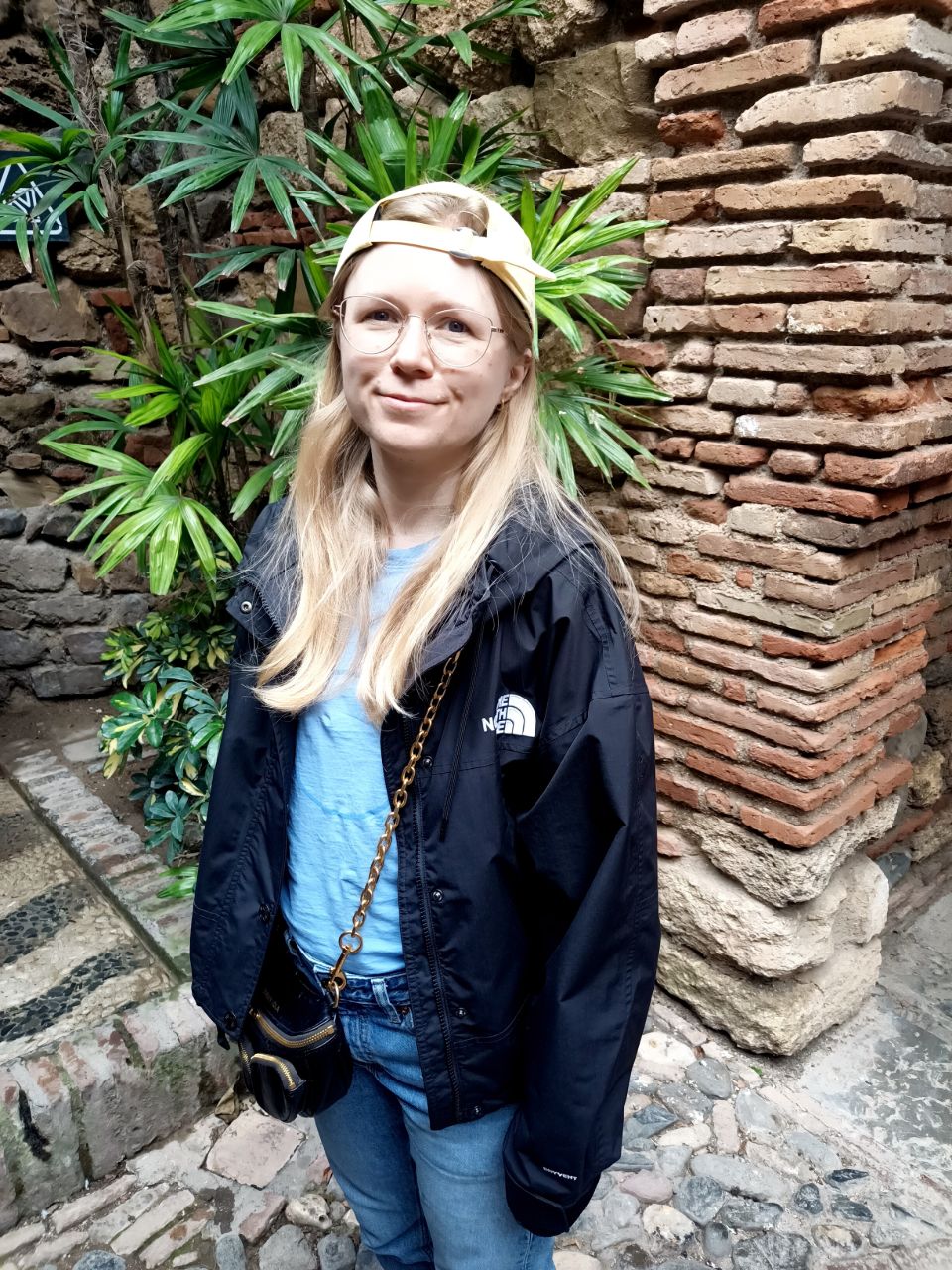
Anna in the fortress garden 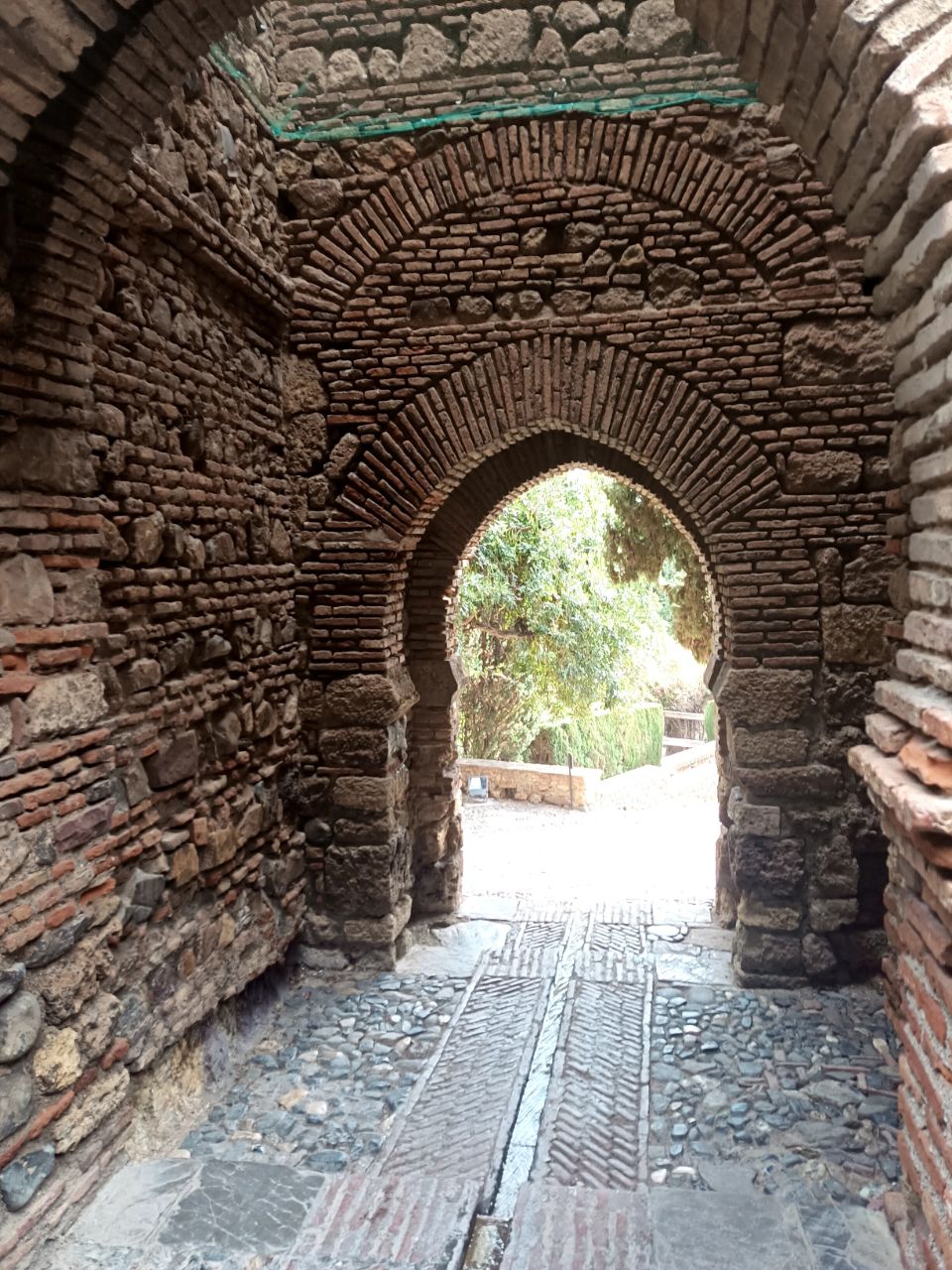
Gateway back into the gardens 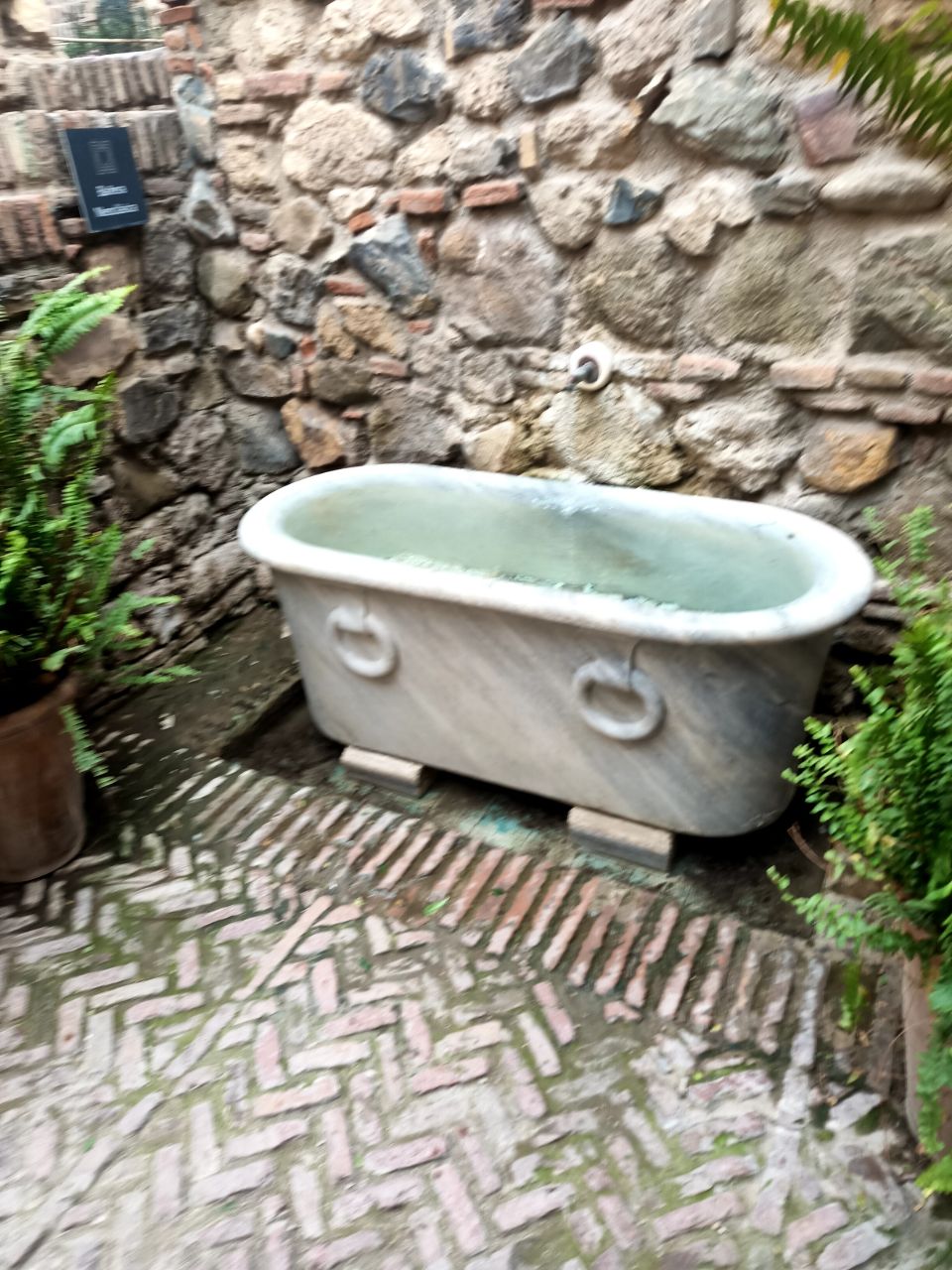
The old water basin 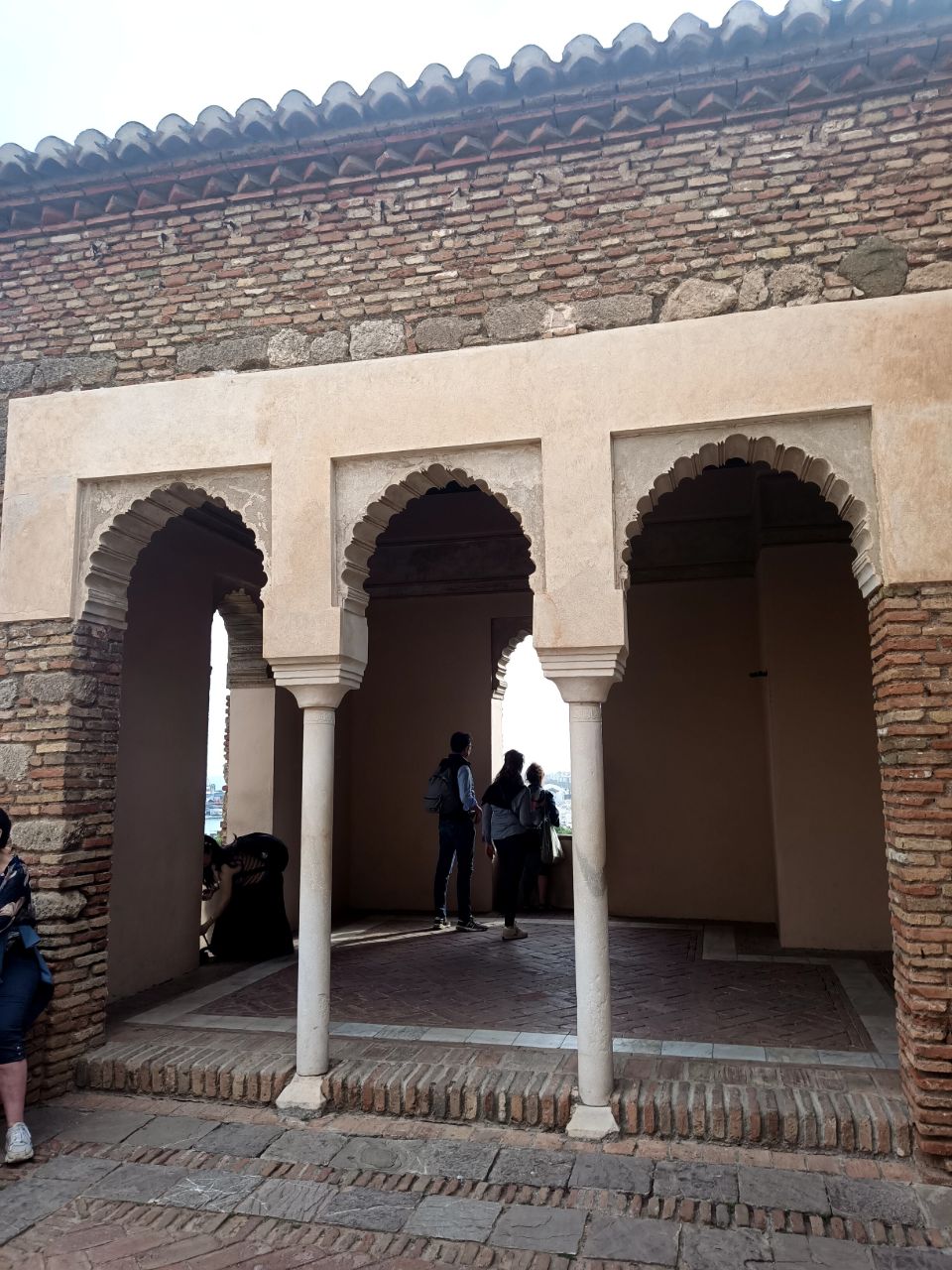
Scalloped arches, late-day calm 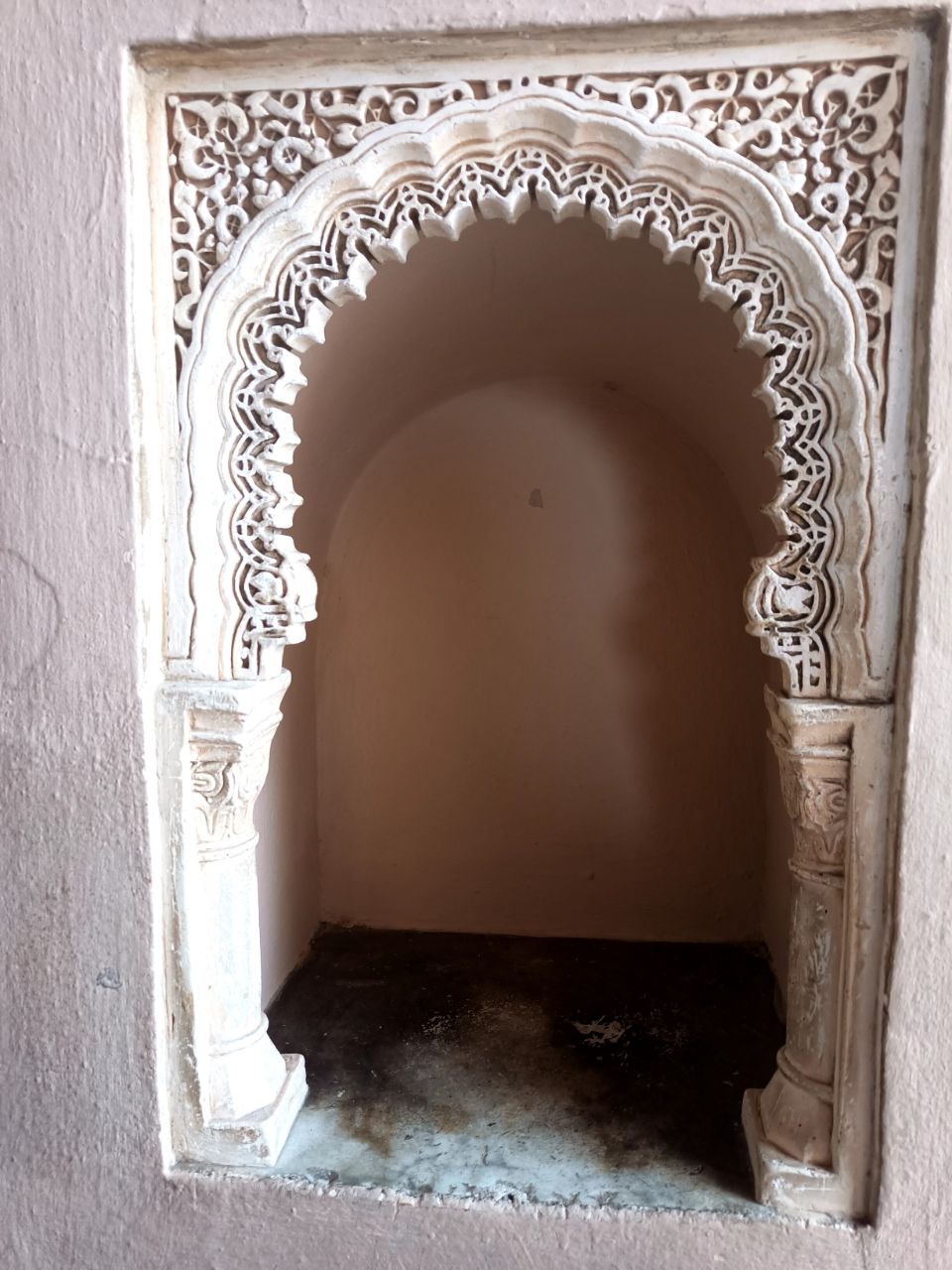
Courtyard above the gardens 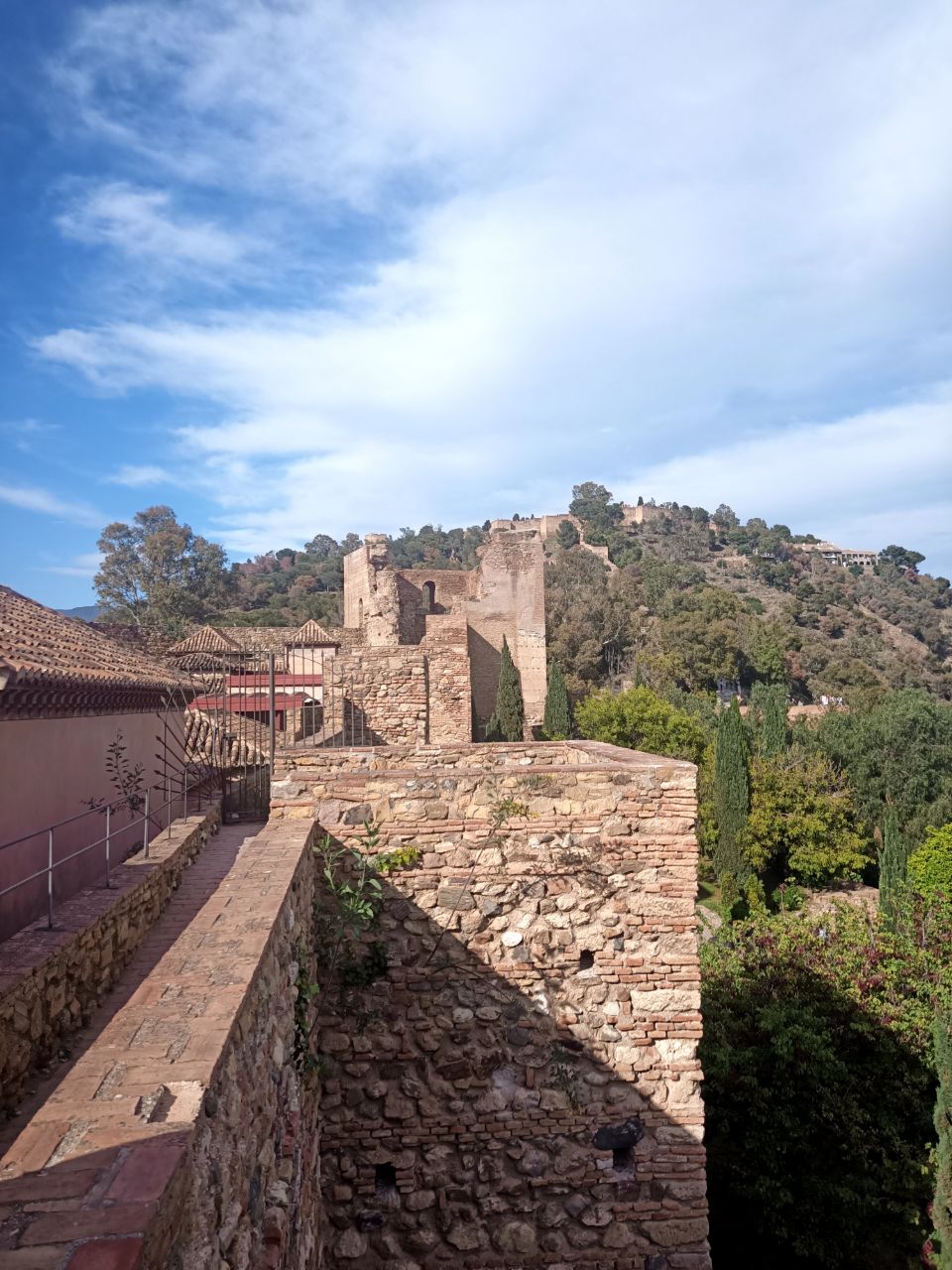
Down on the brick 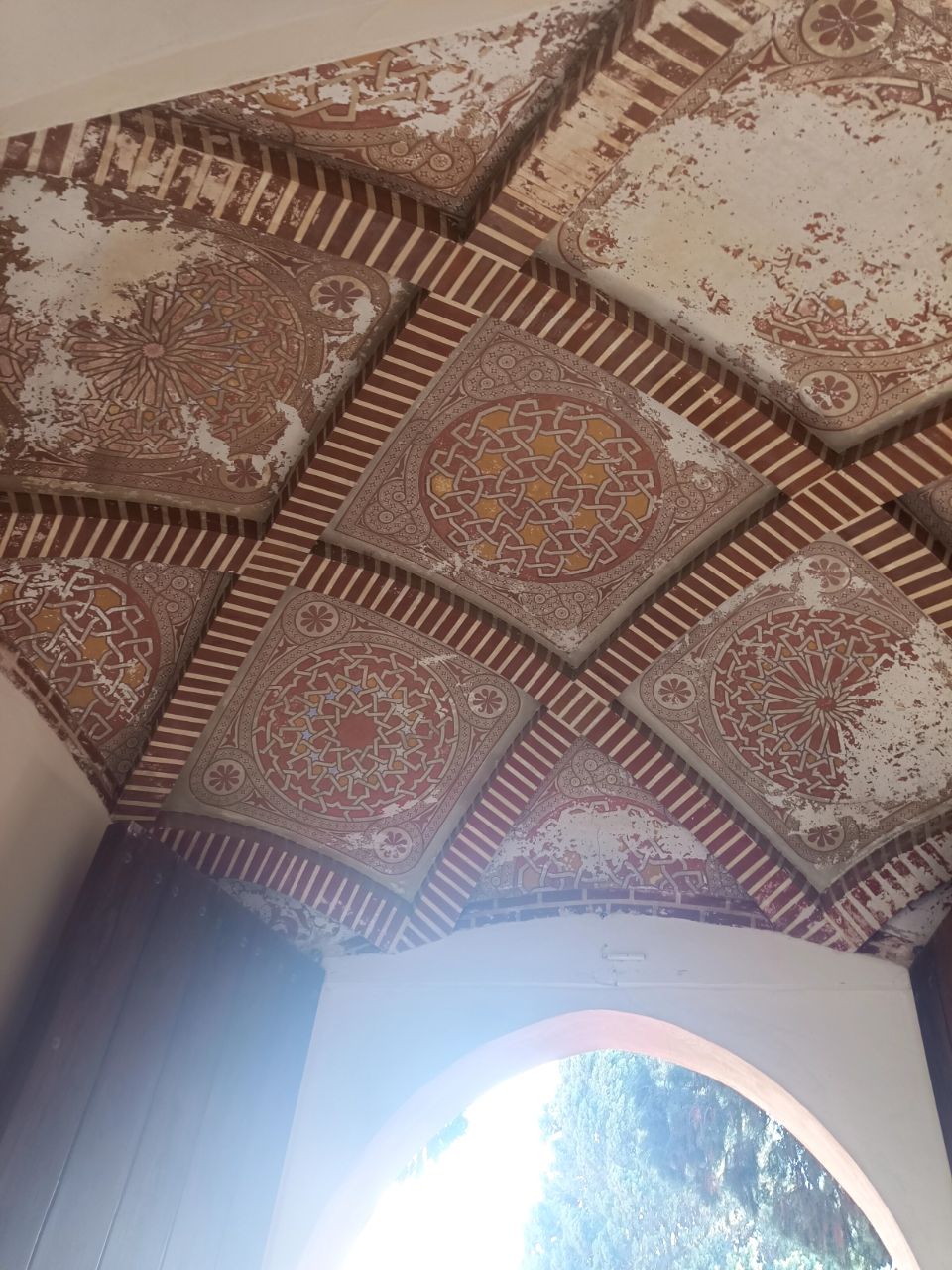
One more doorway, all brick 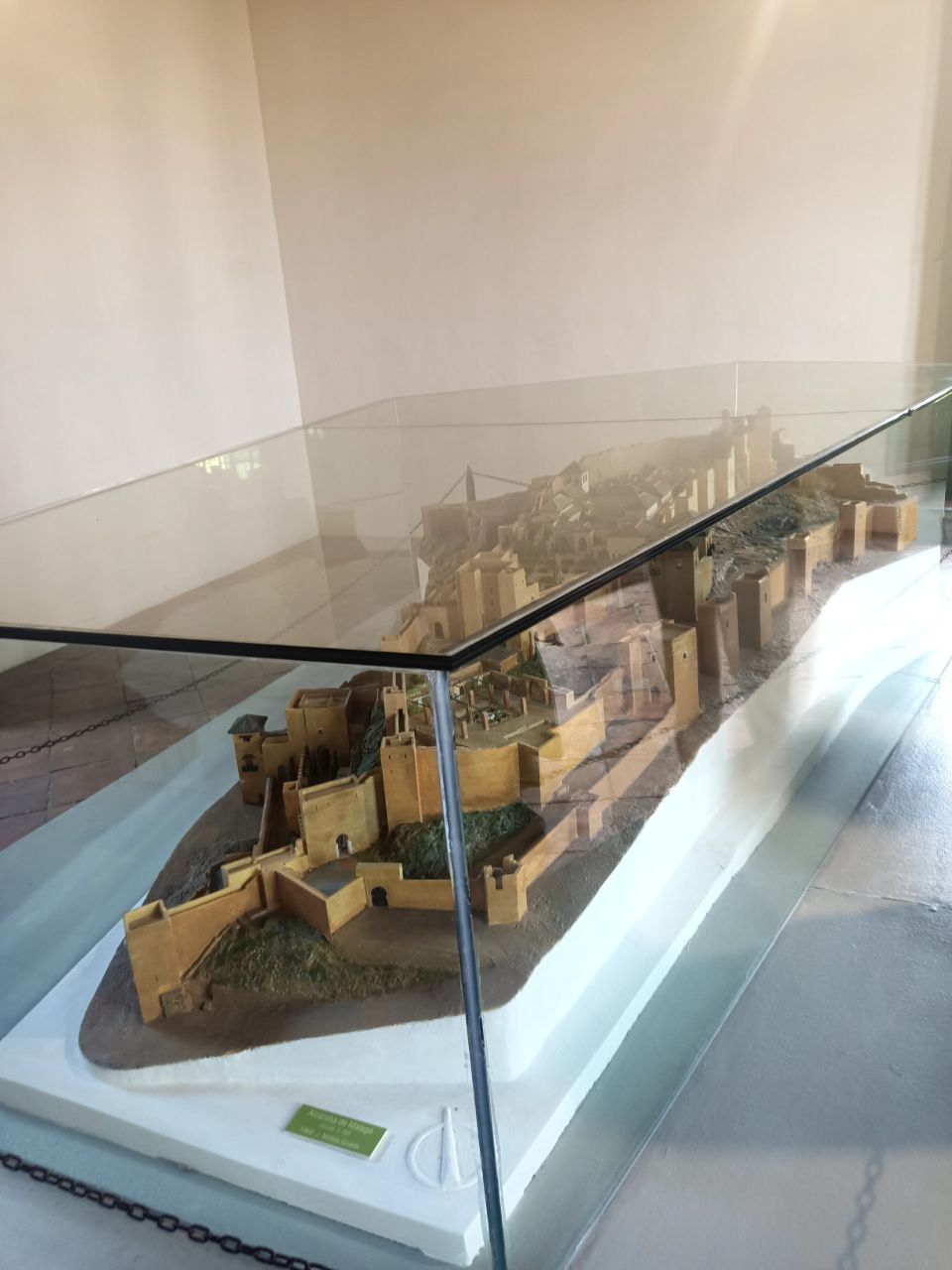
The Alcazaba in miniature 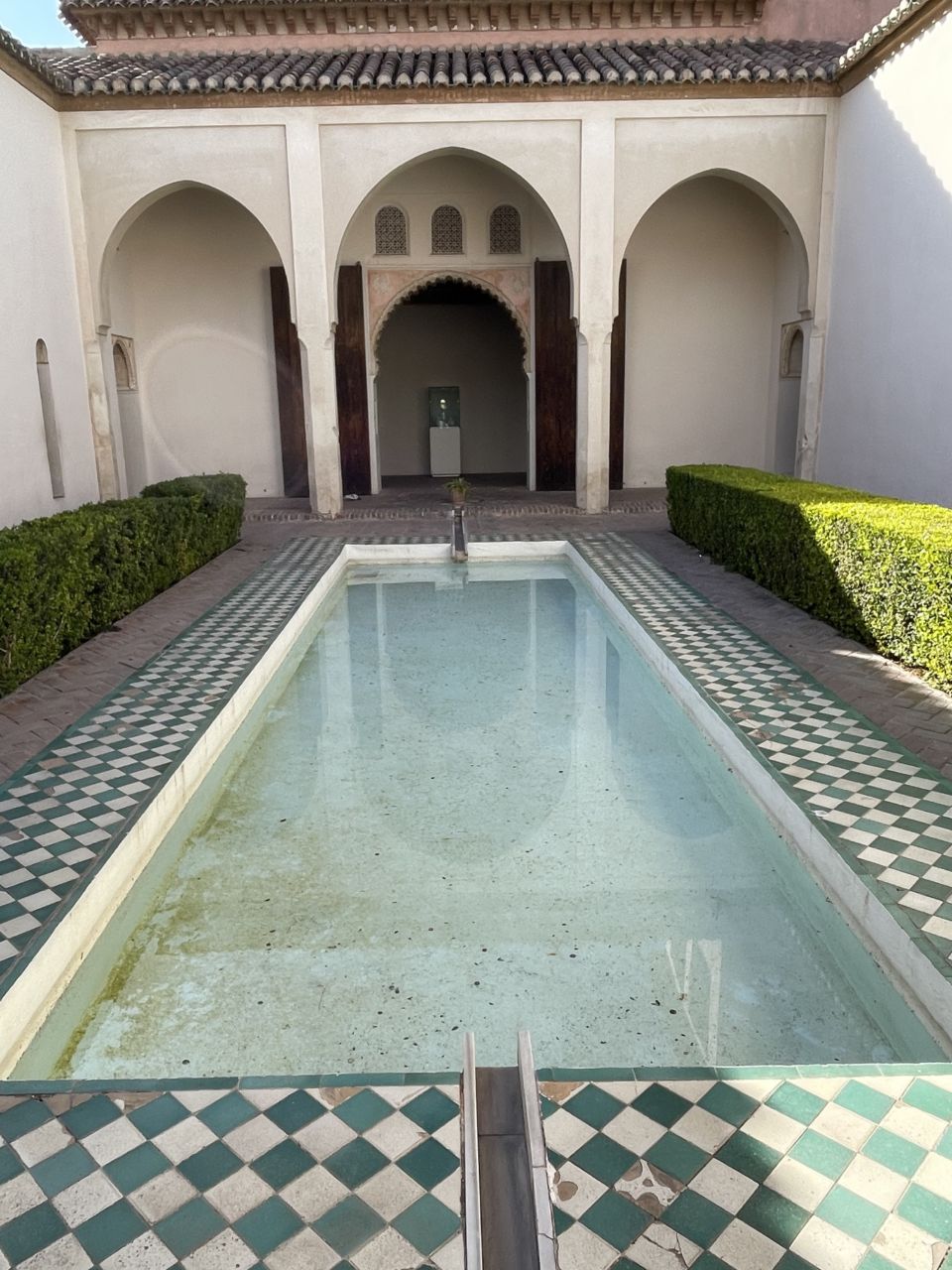
The courtyard of the reflecting pool 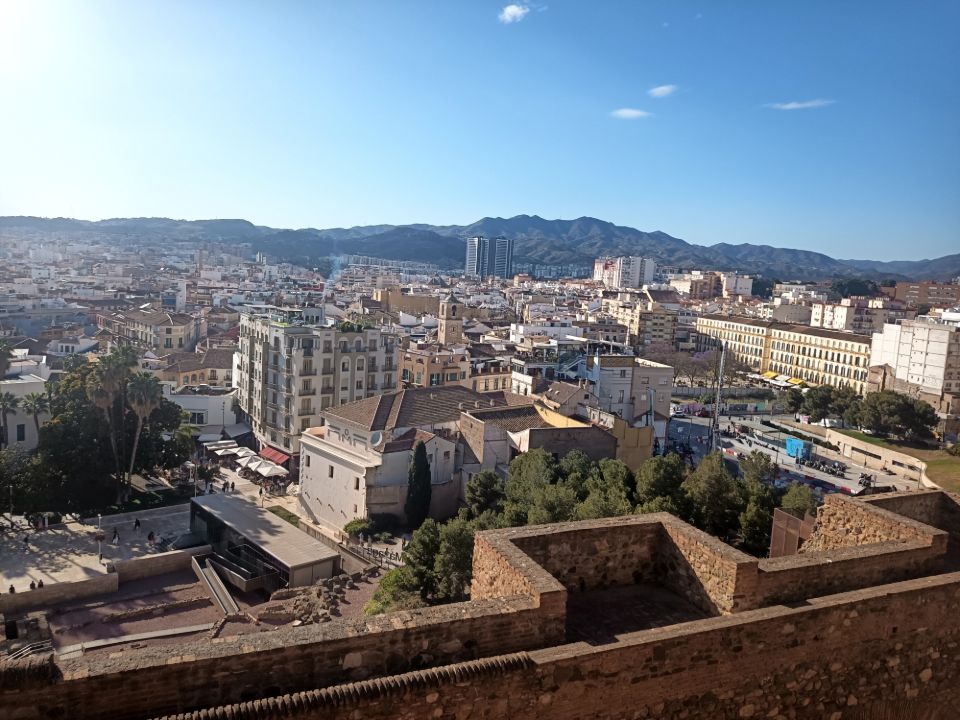
The city from the ramparts 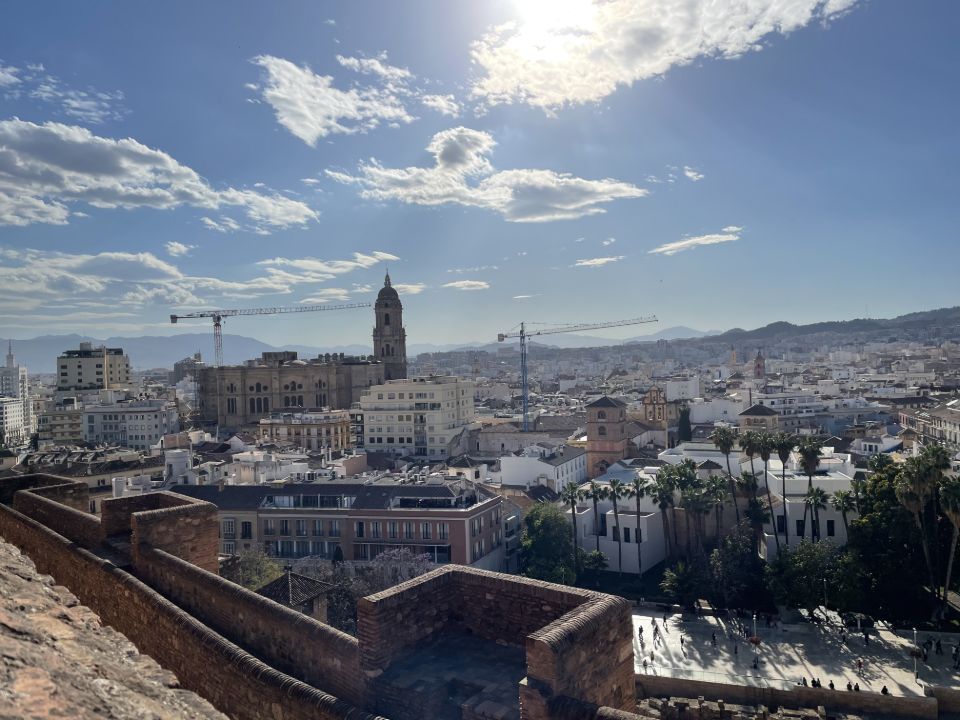
Cathedral tower above the white city 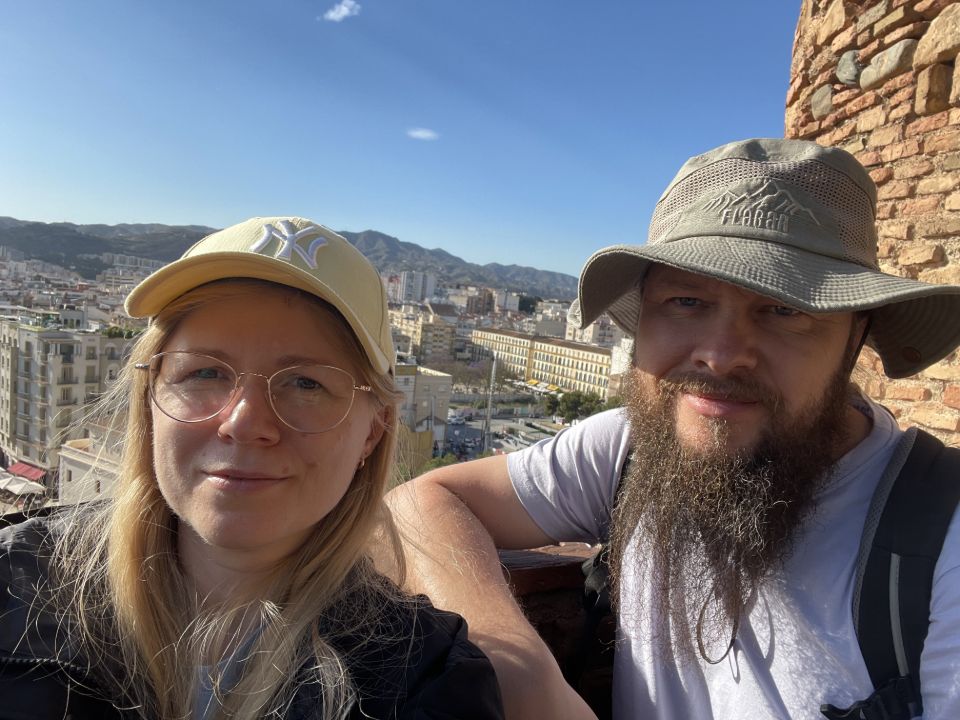
On the wall of the Alcazaba 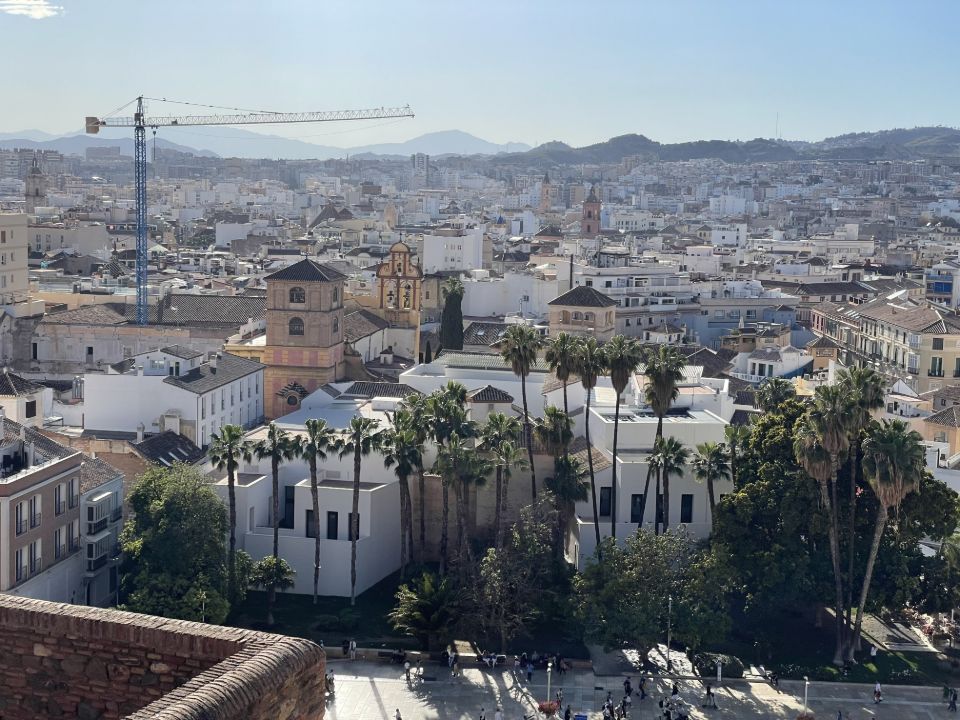
The old centre, one last look
Out past the yachts
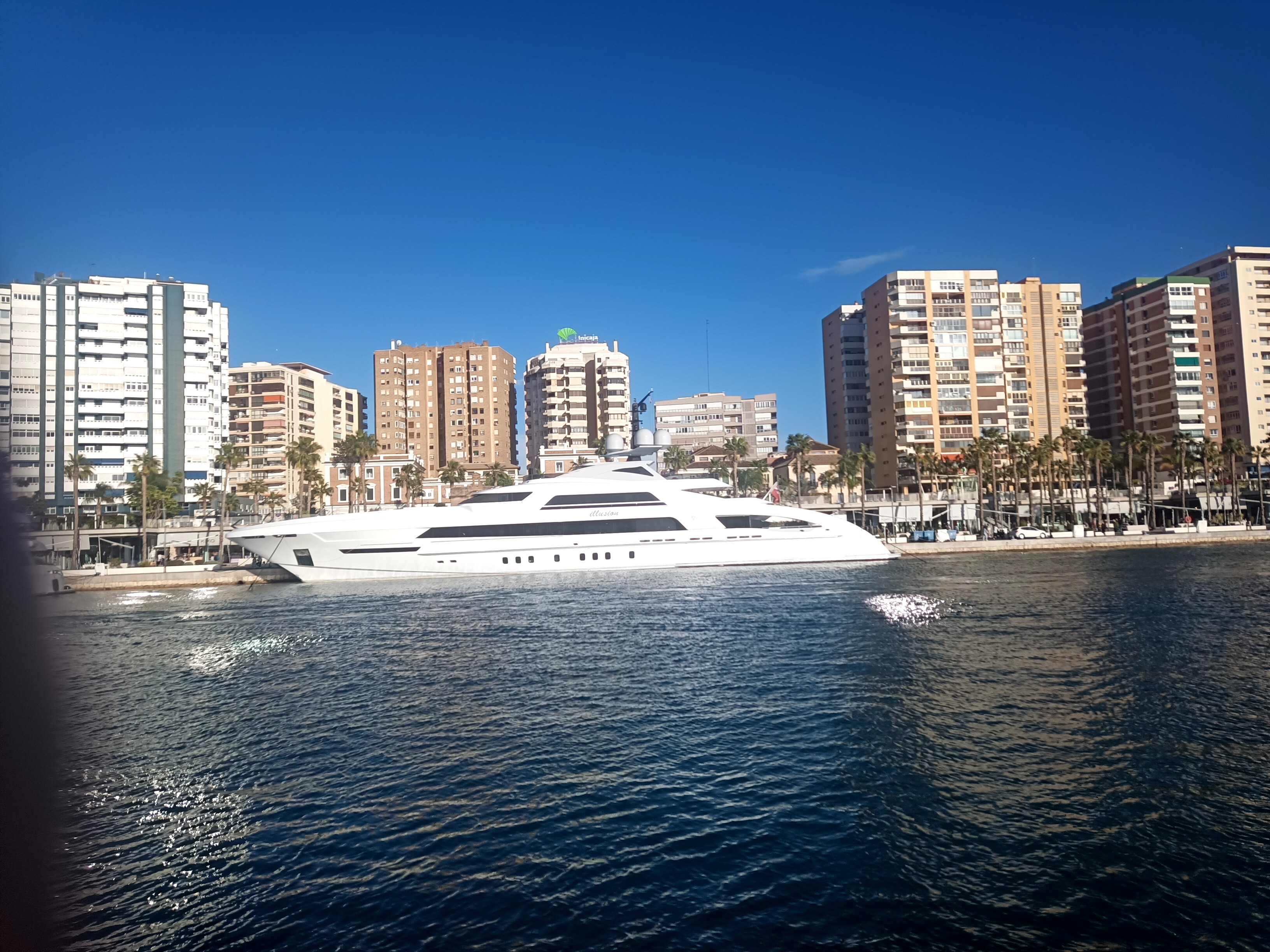
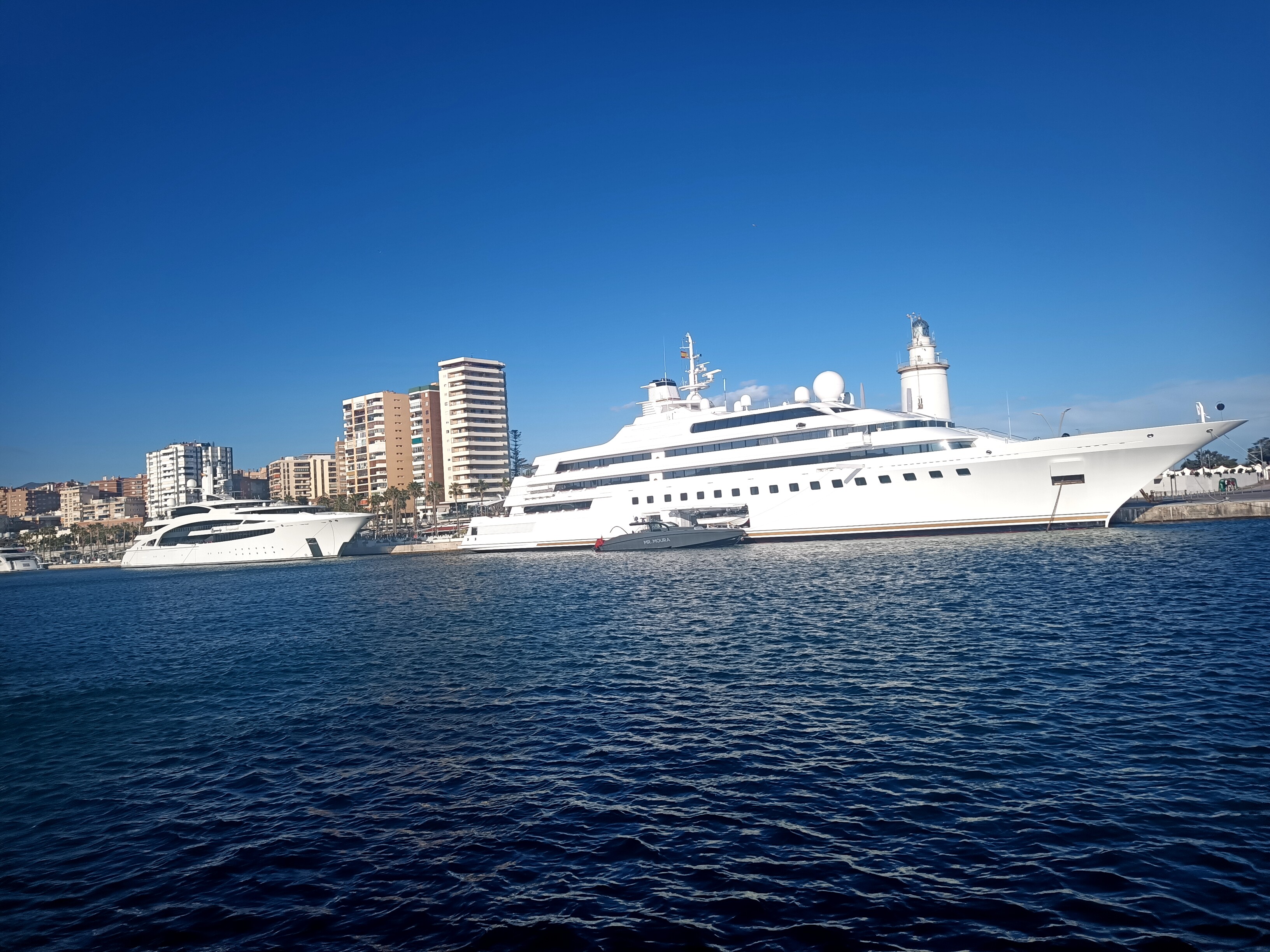
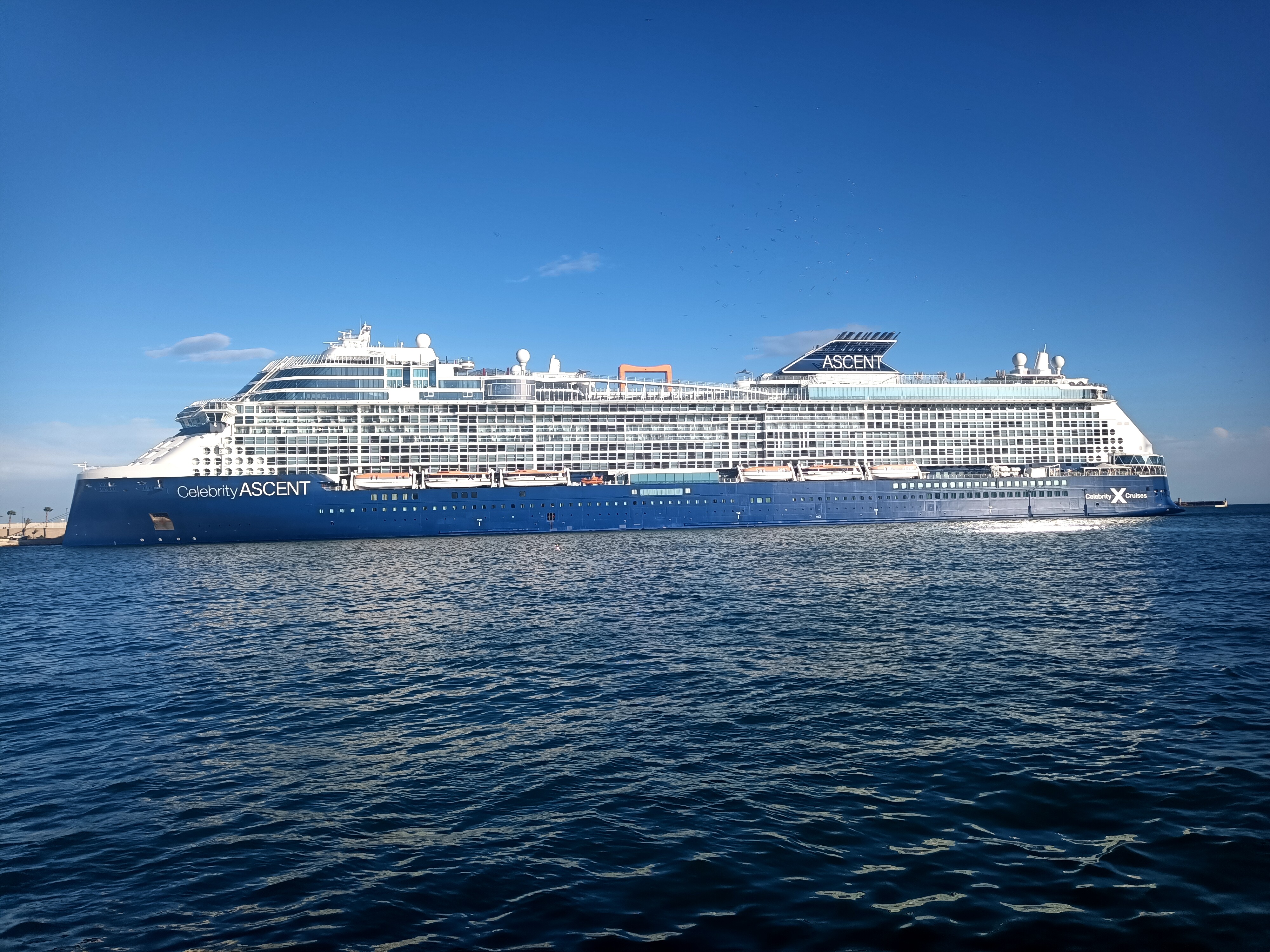
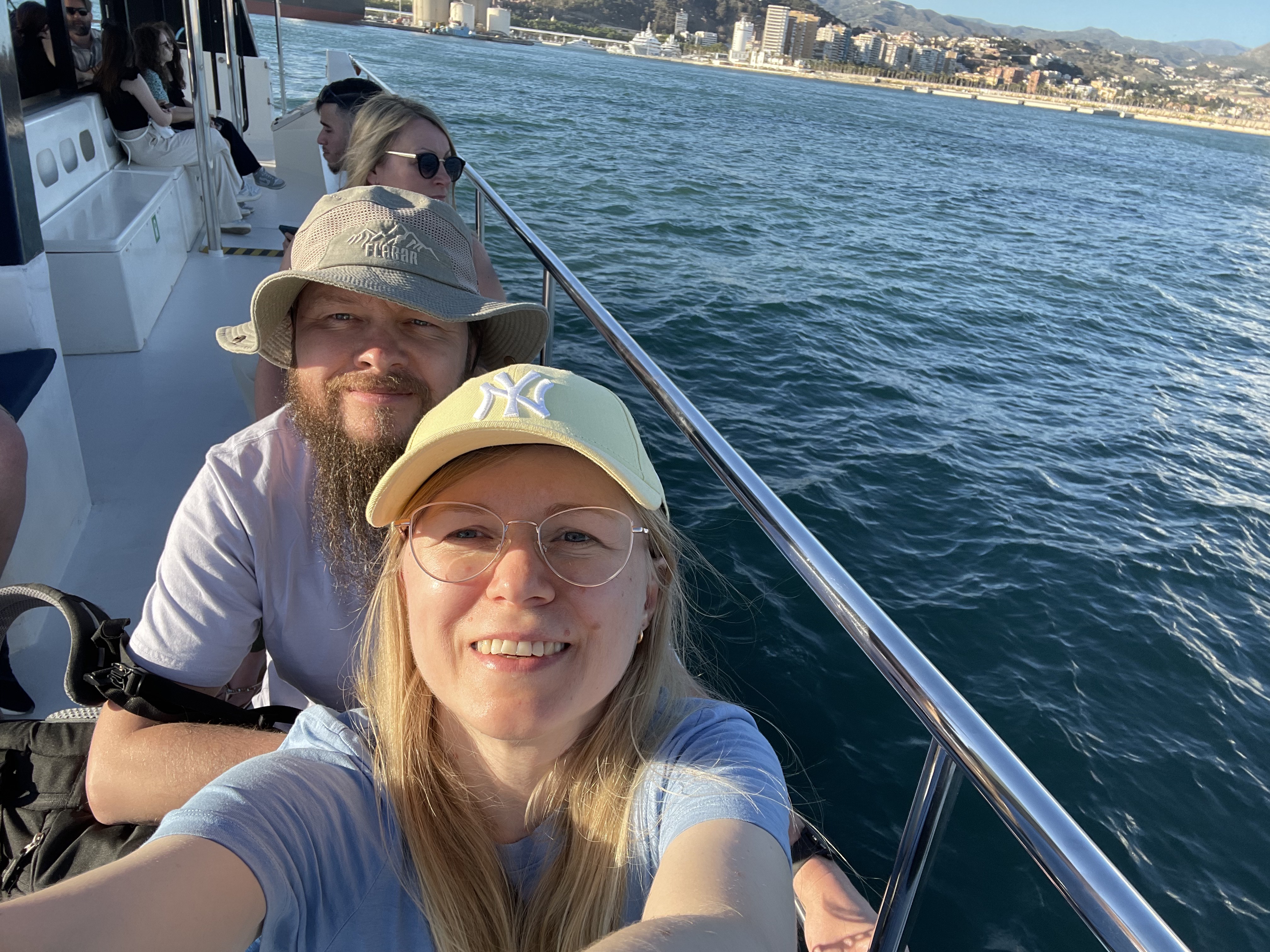
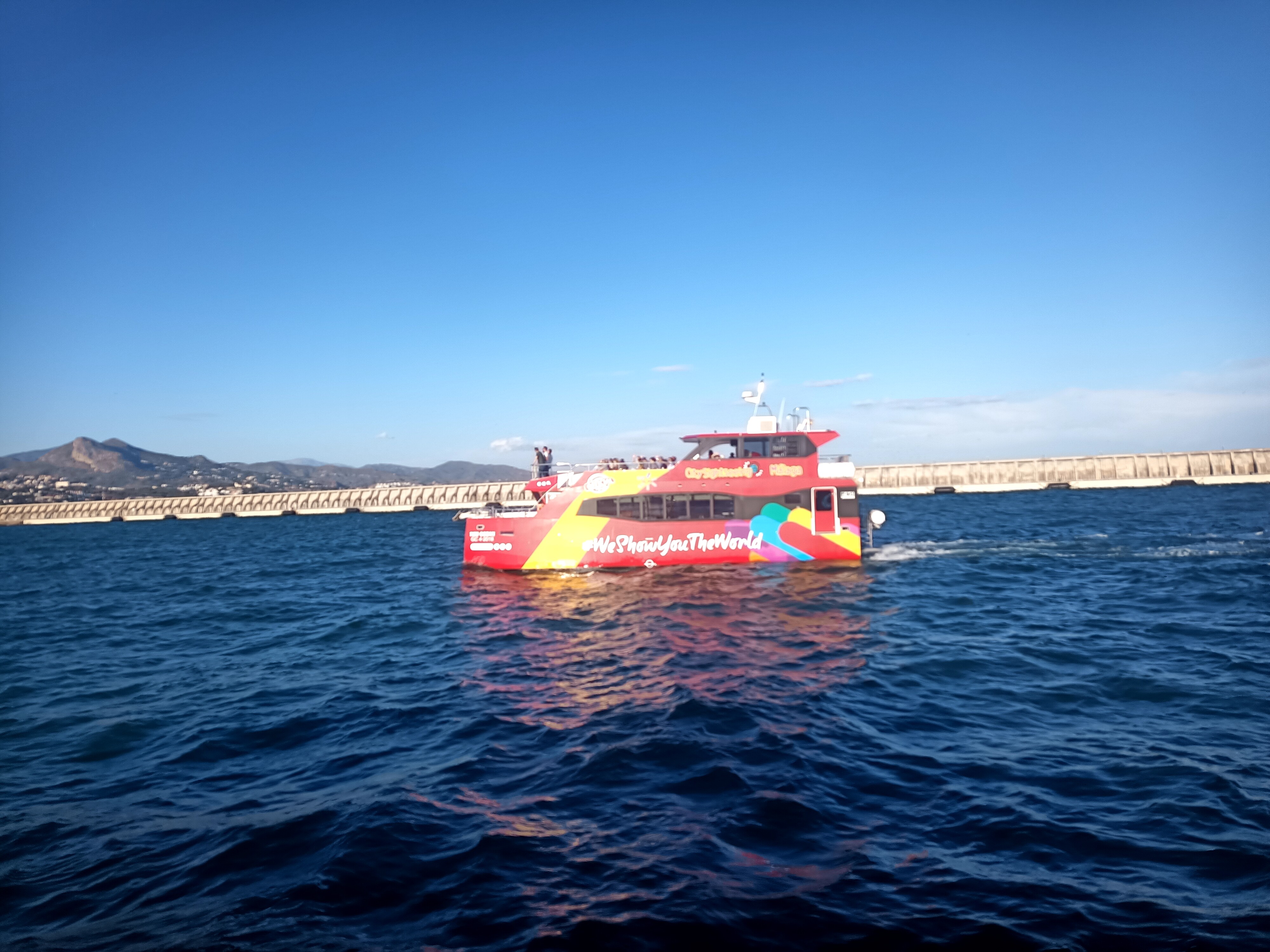
The third act of the Alcazaba day happened on water: a low white catamaran out of Málaga's marina, benches of strangers having the same idea we were, and a course set slowly past the port's white giants — two of them moored side by side like apartments that don't open their blinds, and out in the bay the blue-hulled Celebrity Ascent, providing scale for everything else that evening, including us. Only the painted Yellow Boat was moving with intent, crossing our path on the way back to berths we'd already left.
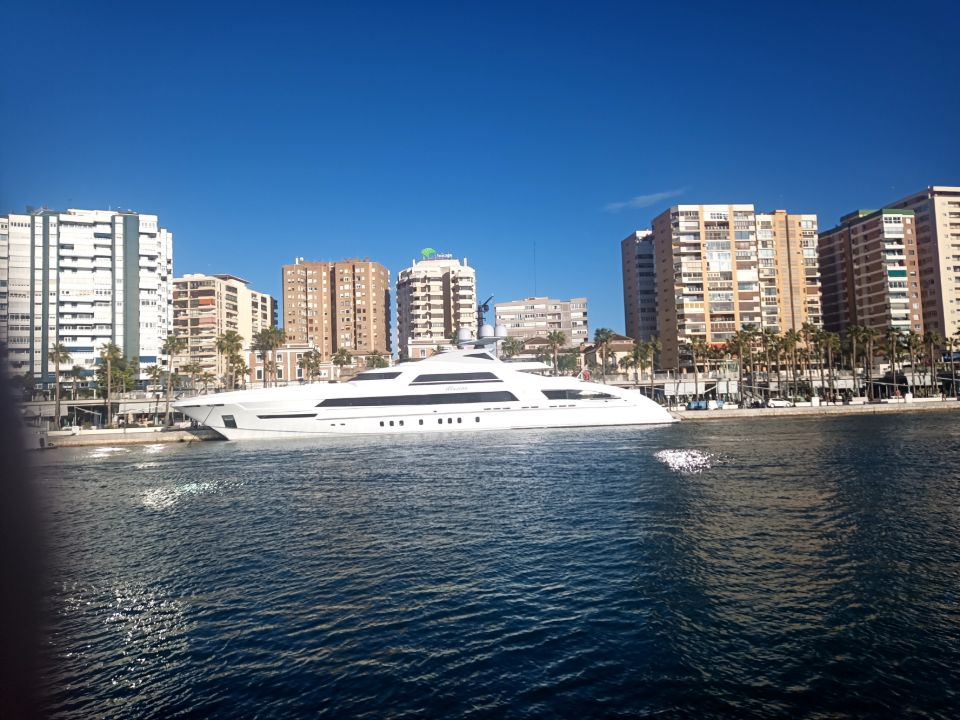
The giants of the marina 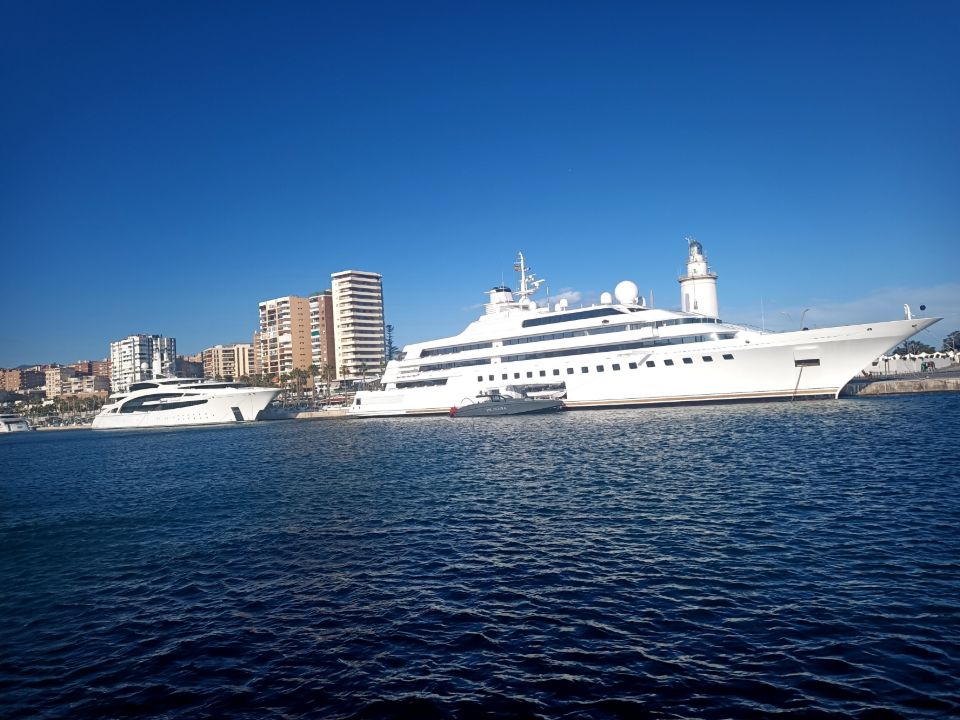
Yachts and the La Farola lighthouse 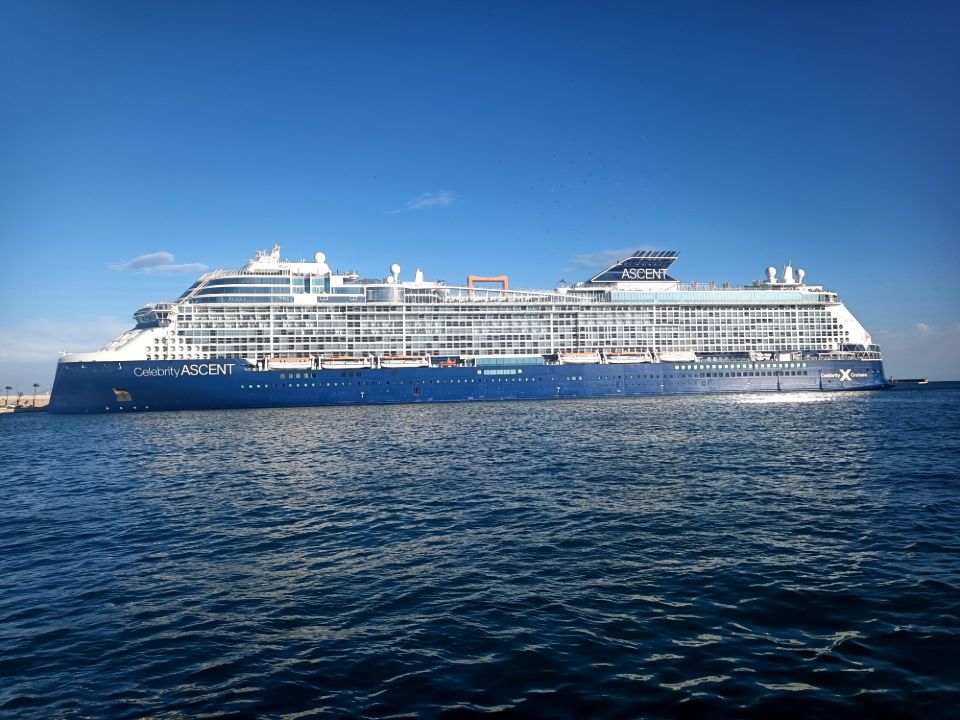
Celebrity Ascent at anchor 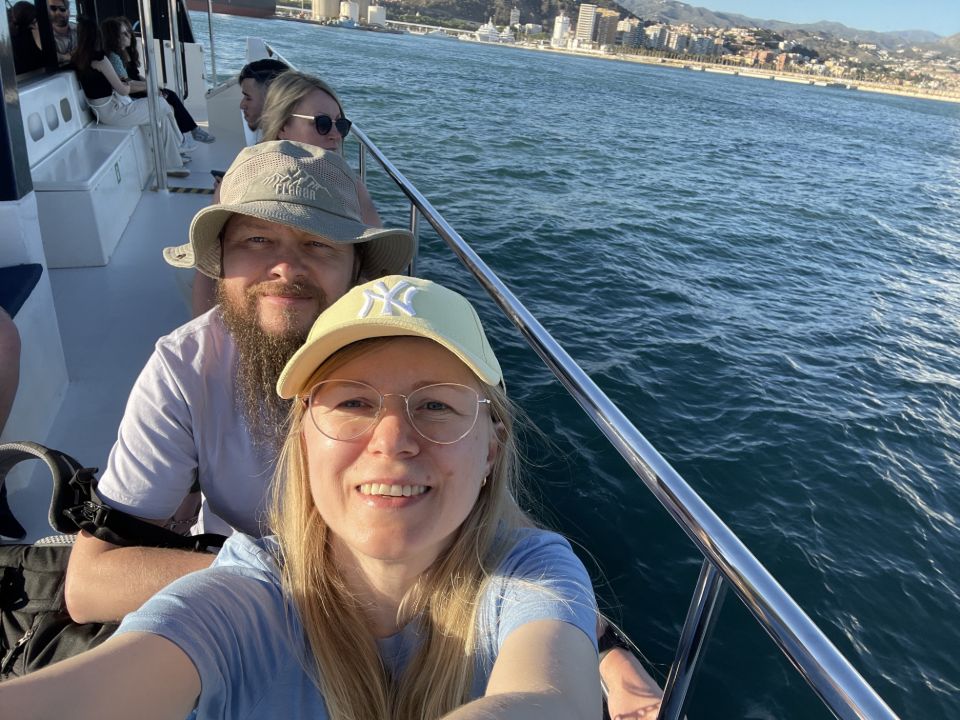
Aboard at golden hour 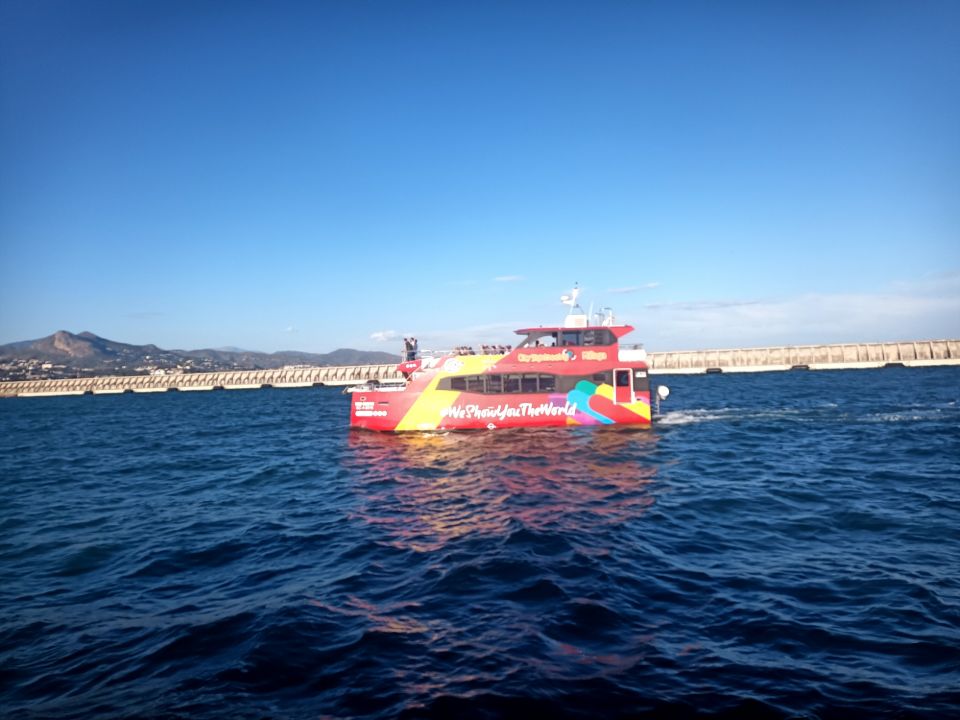
The Yellow Boat crossing back
The wind and the bow
Past the breakwater the wind found Anna and was dealt with: cap held on, glasses kept, hair going wherever it liked. The port's cranes shrank behind and the coastline turned to low dry hills, gold in the last angled light. Somewhere past the lighthouse the boat slowed to a drift; we sat at the rail with the wind on our faces and no plans for another hour.
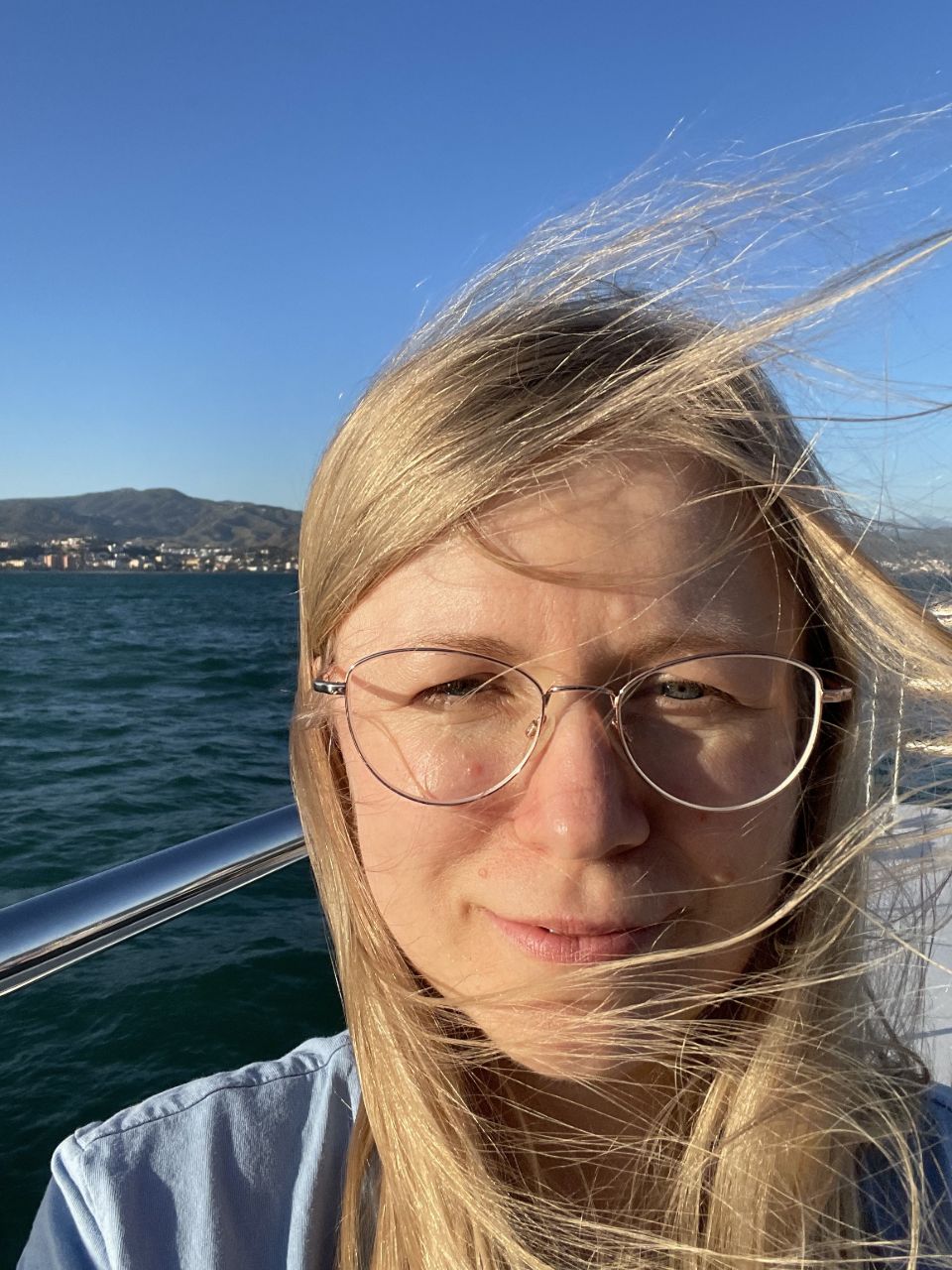
Anna and the wind 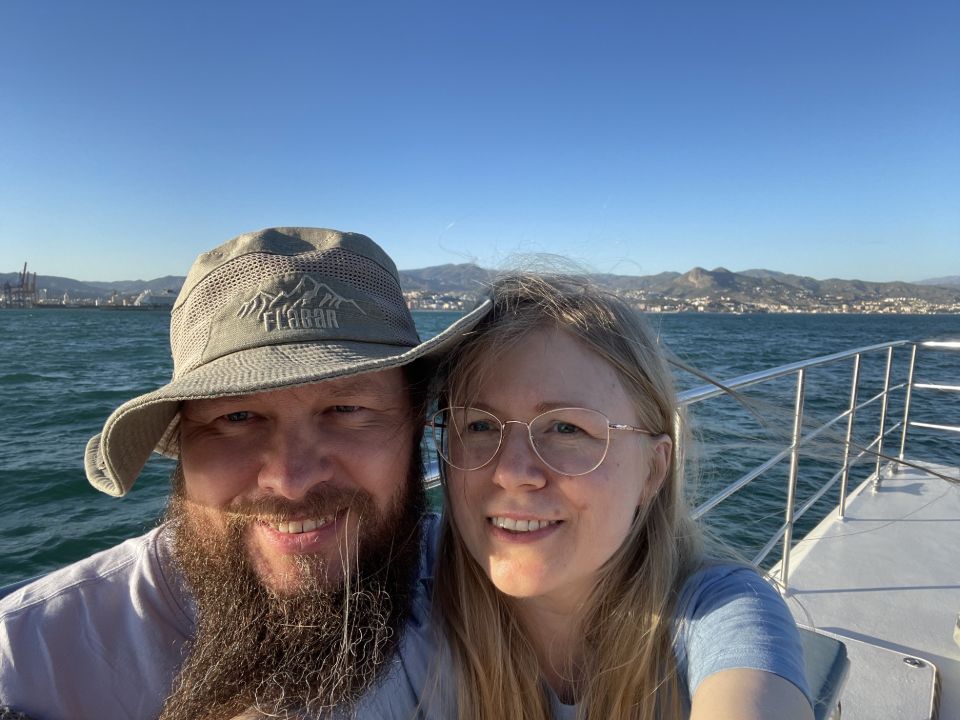
The two of us on deck 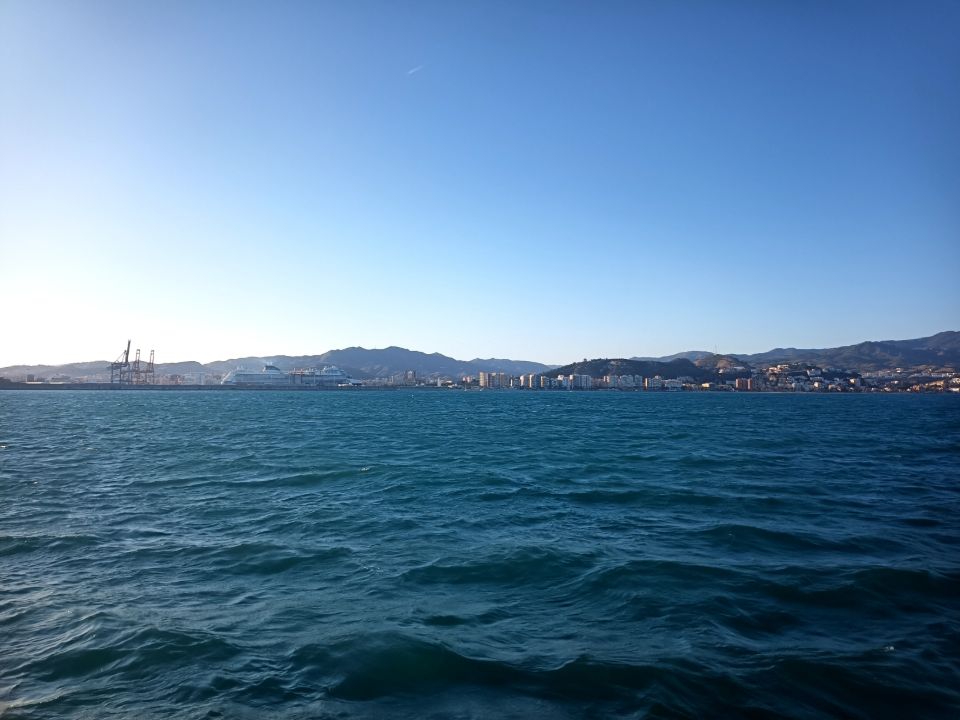
The port from the water 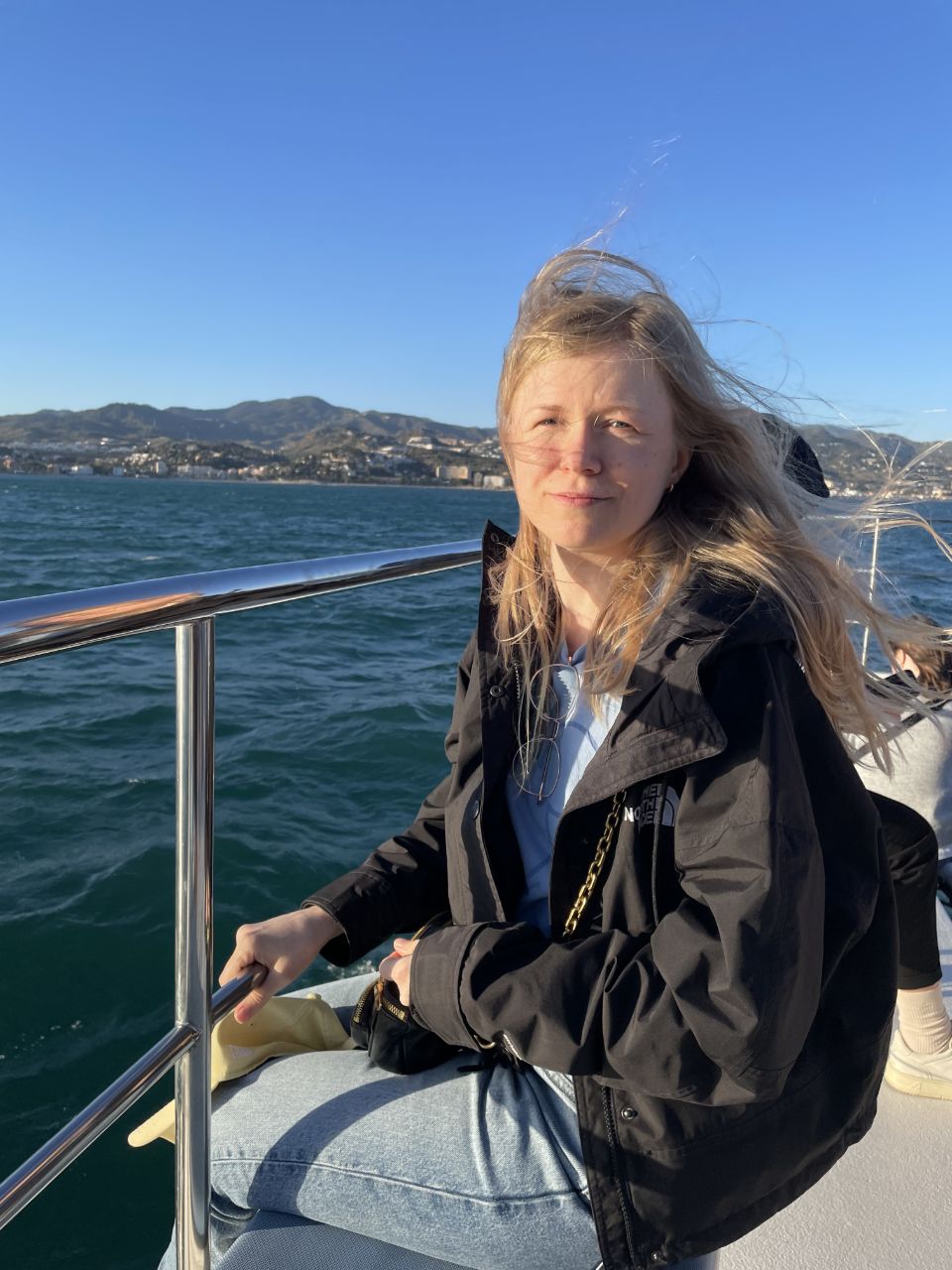
Anna at the rail, wind in her hair
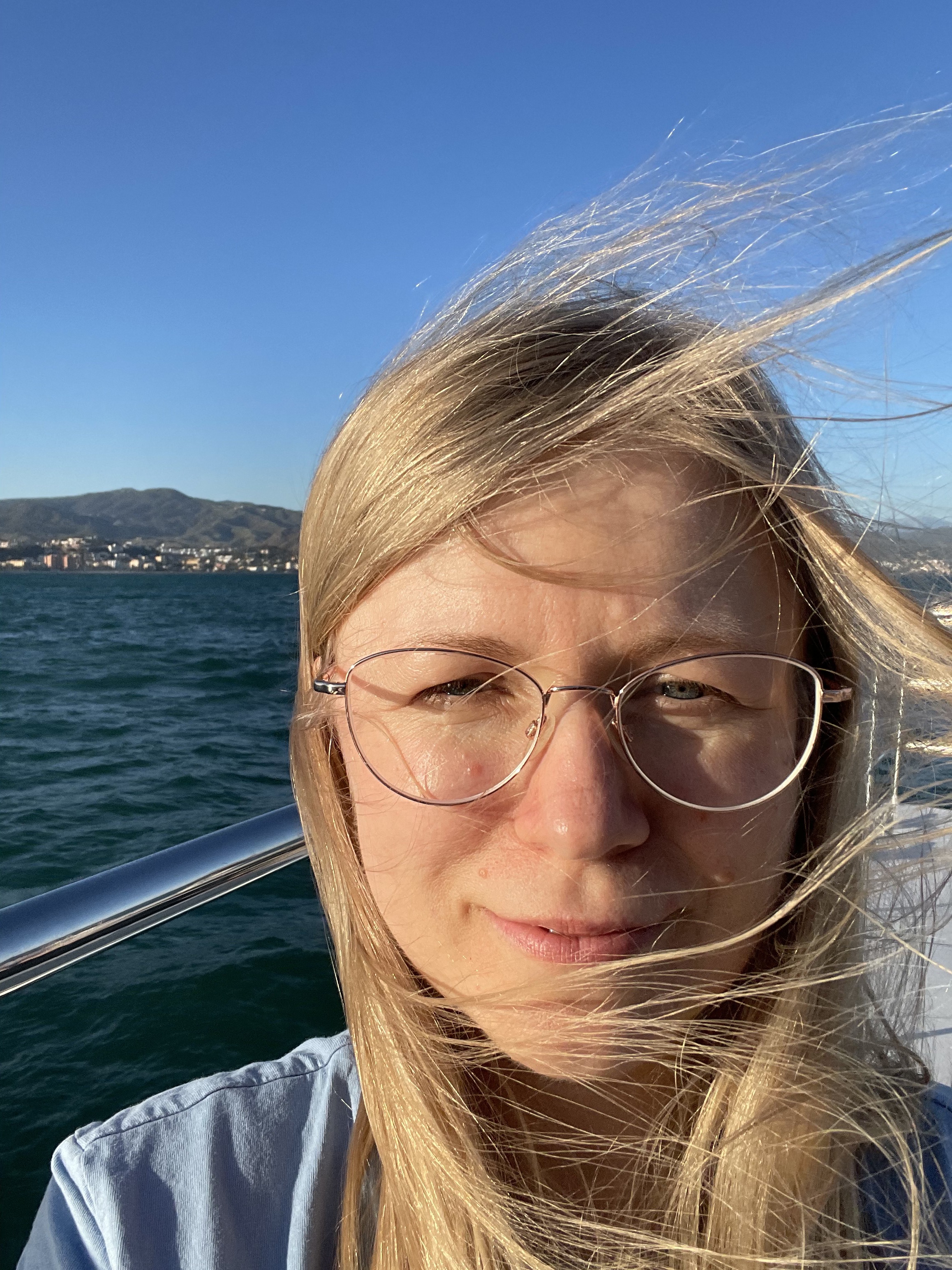
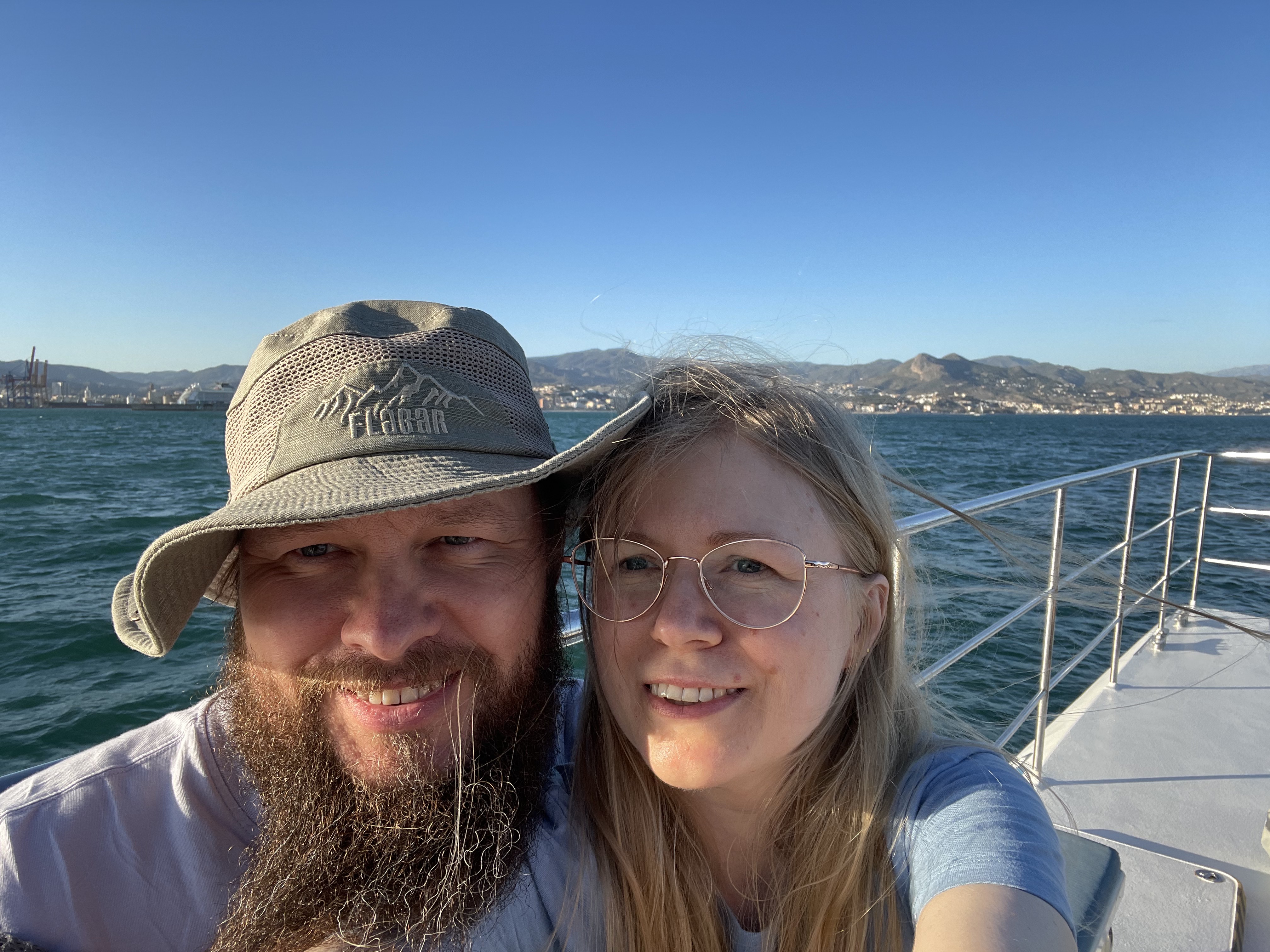
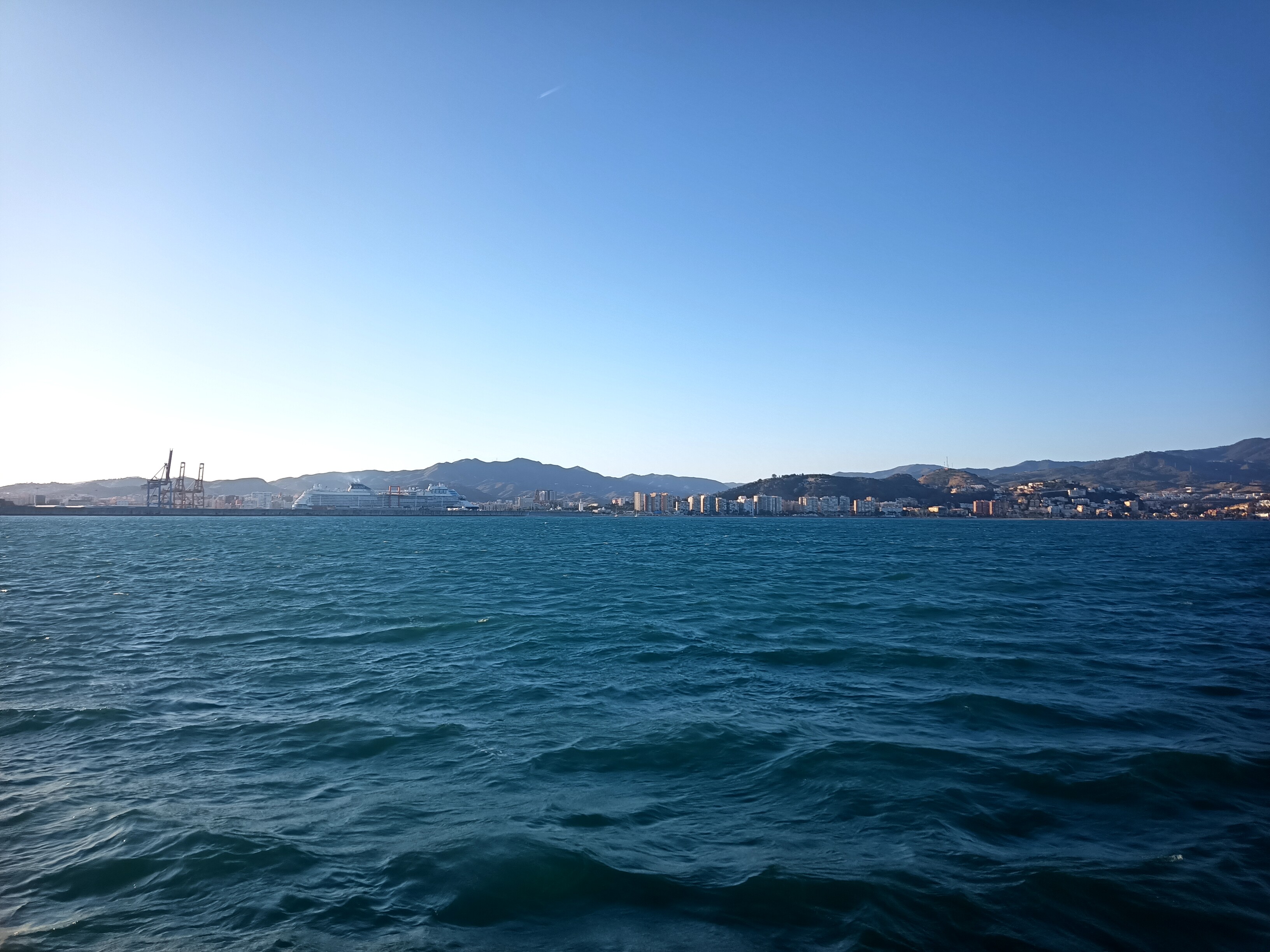
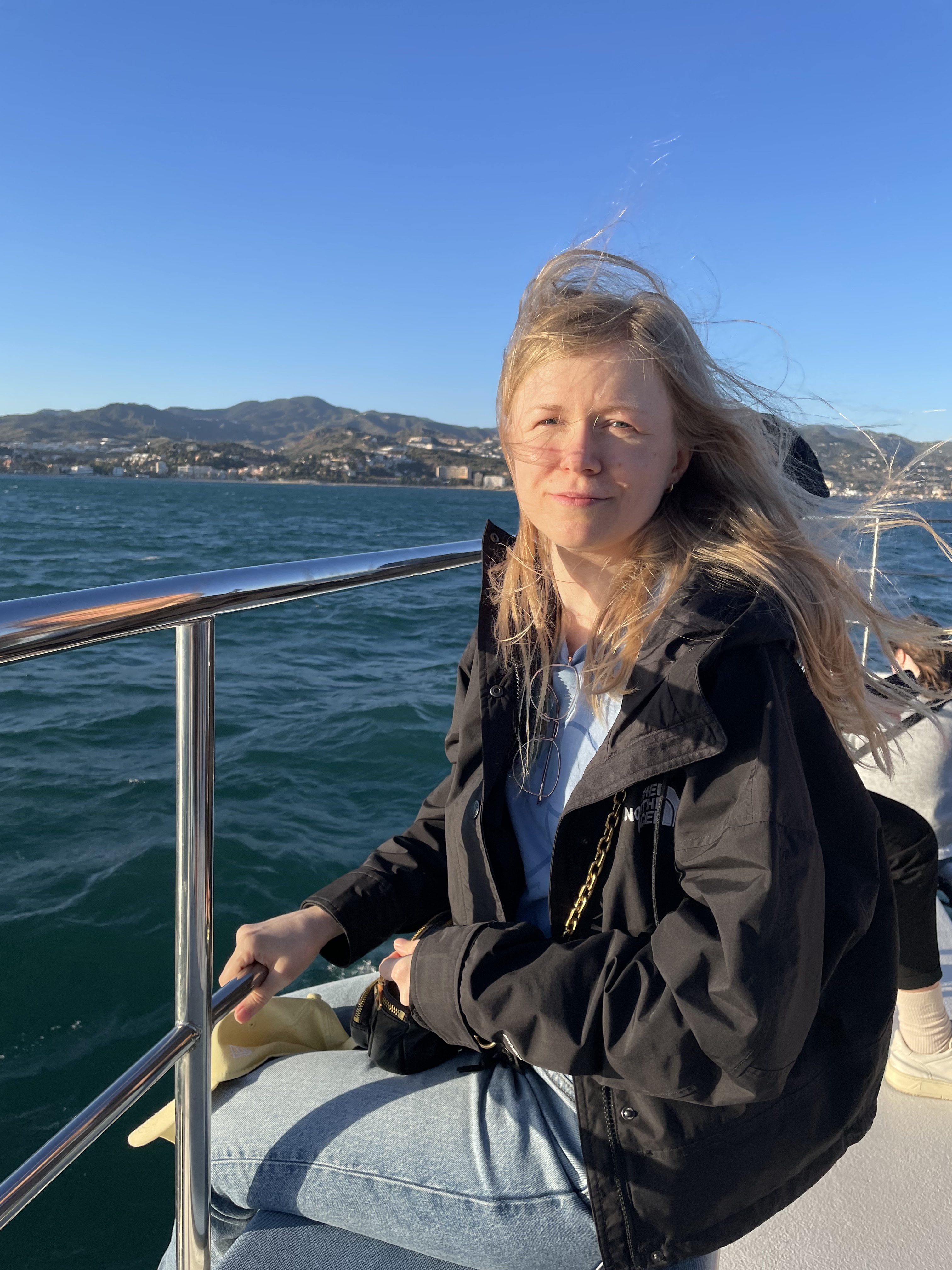
20:13: off La Caleta in the open water, hoods up, laughter over the engine.
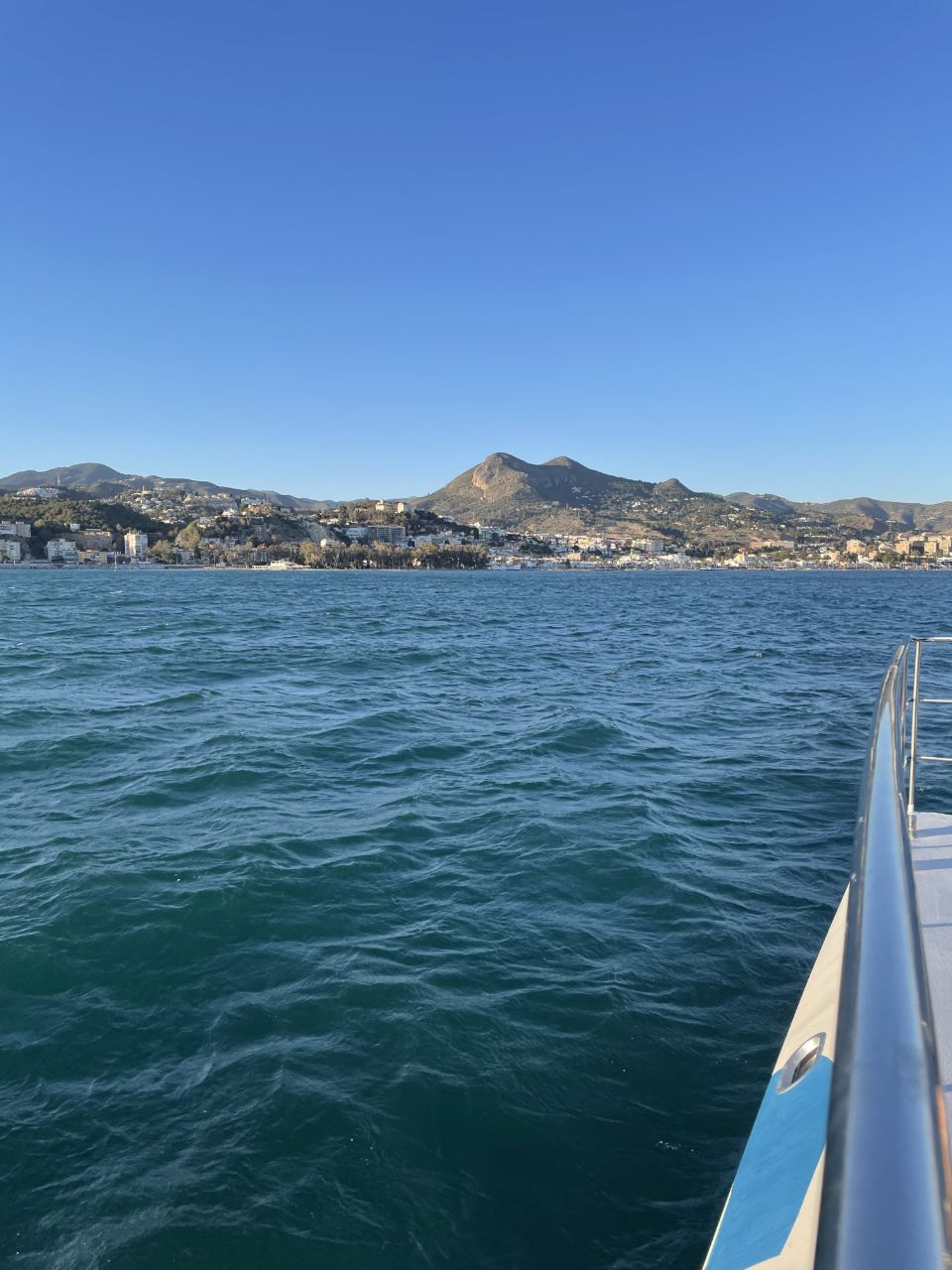
Around the bow, the coast
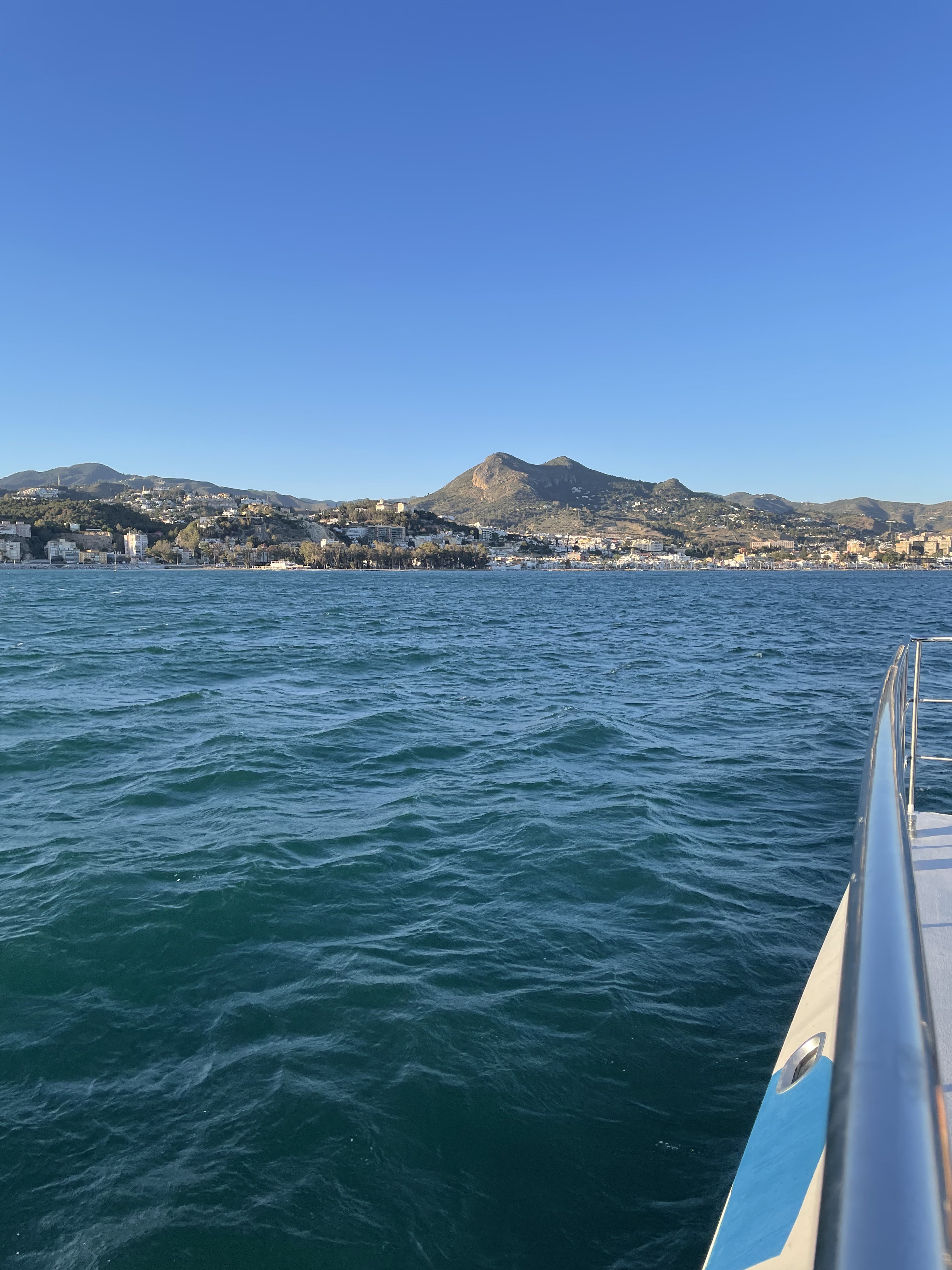
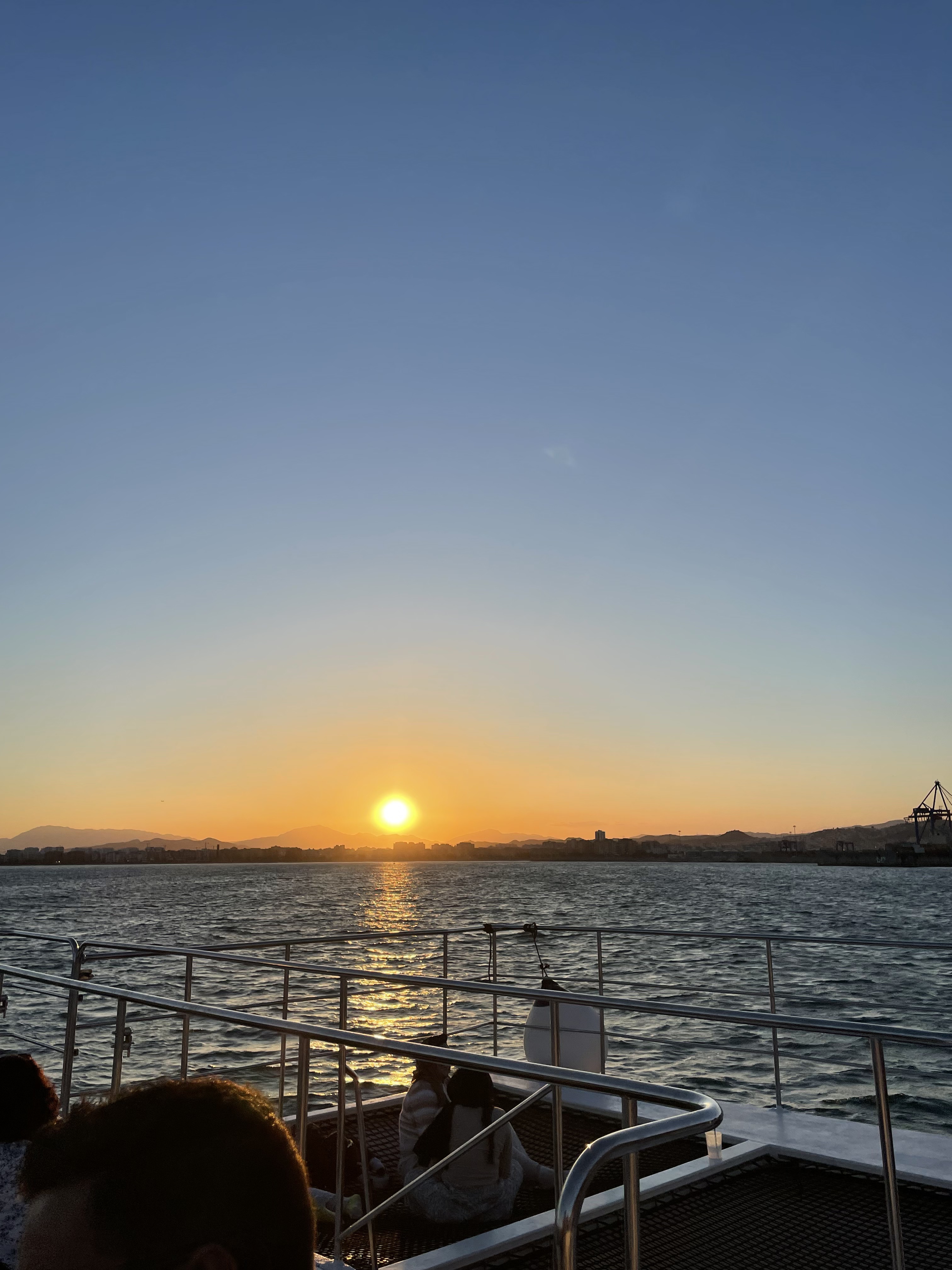
The sun goes down
At 20:52, to the minute, the sun went to the horizon behind the dark hills west of the bay, and the water went to hammered gold, and then to rumour. We had taken up rail seats with everyone else by then; the selfies document two people in coats at the end of April with salt on their faces and no complaints filed. Oleg took his turn at the rail, suitably backlit, as the light got serious for about ninety seconds and then gave it up as a bad job.
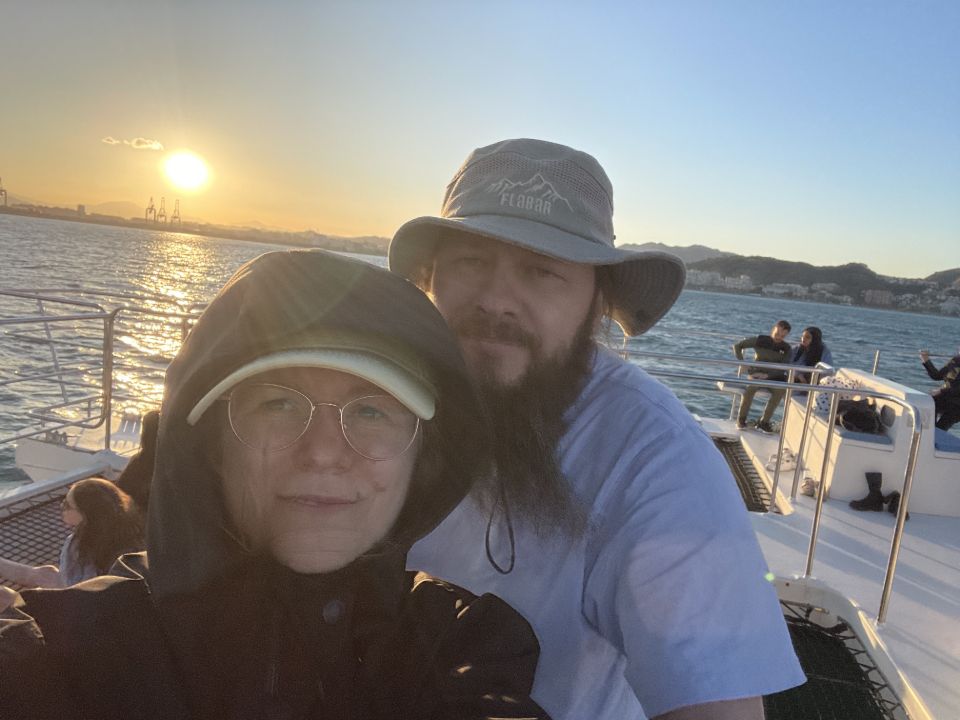
Sunset at sea 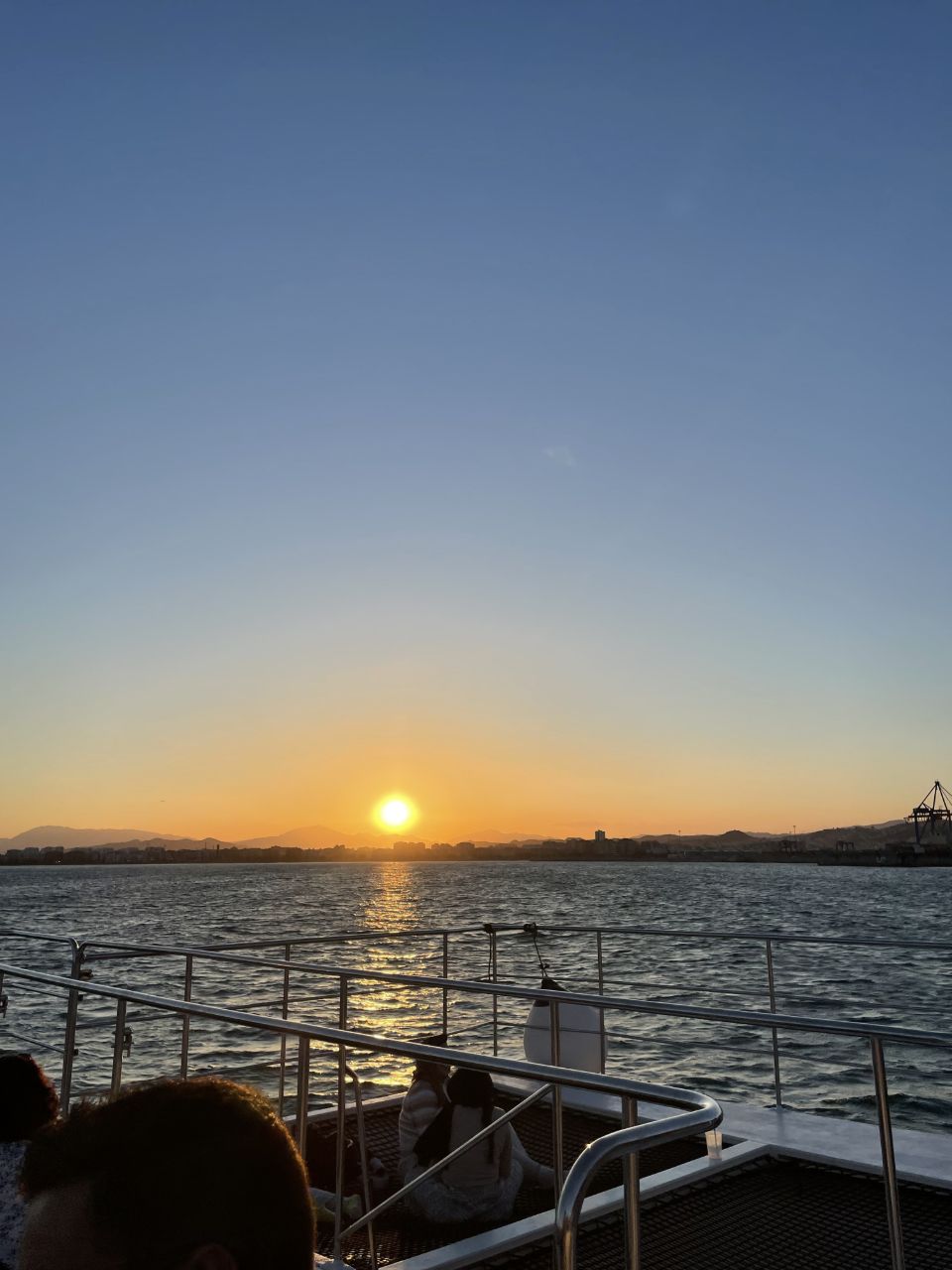
The last light over Málaga 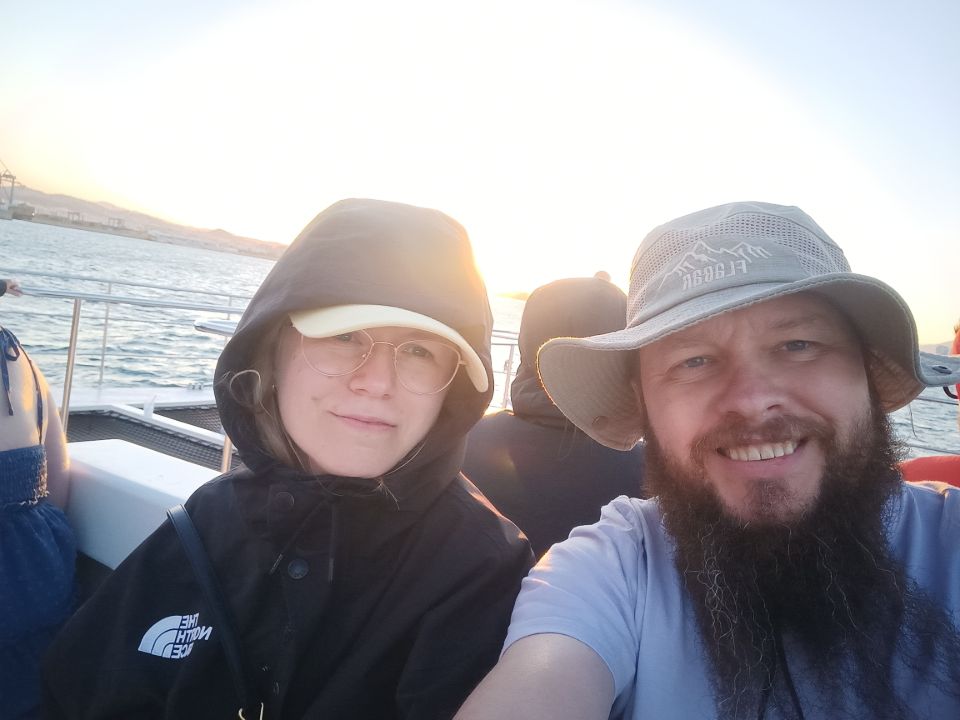
Dusk selfie on the boat 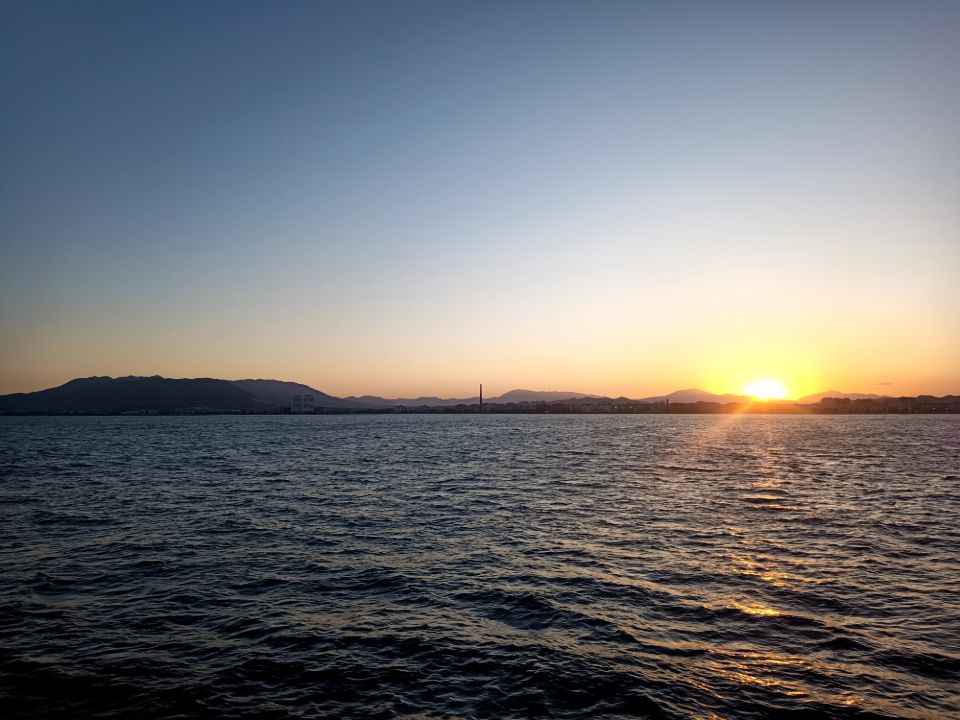
The sun sinks west of the bay 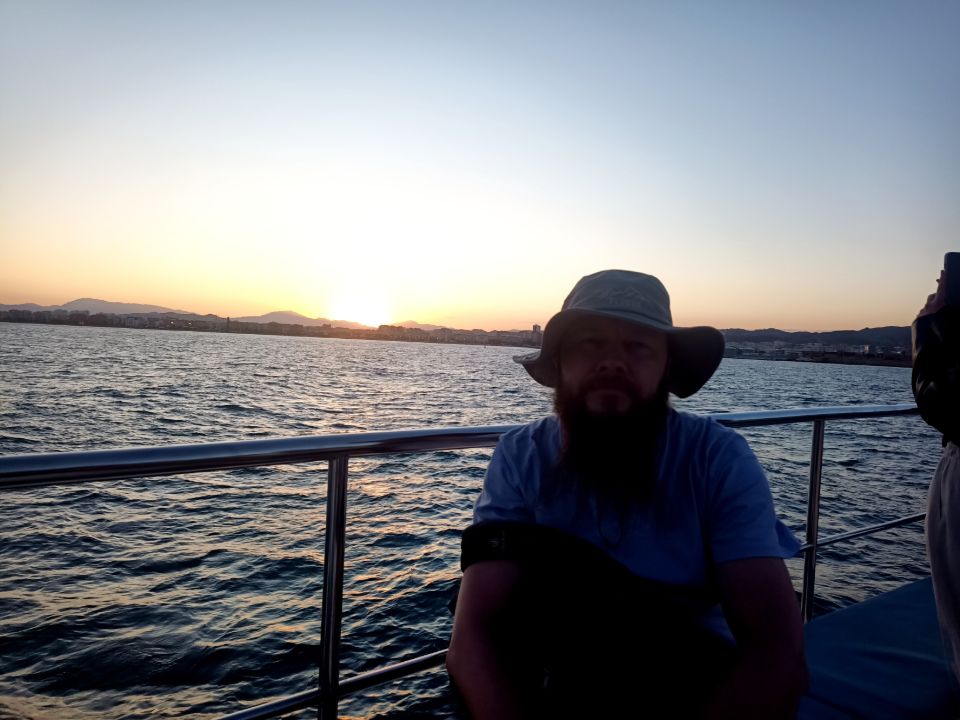
Oleg at the rail, backlit
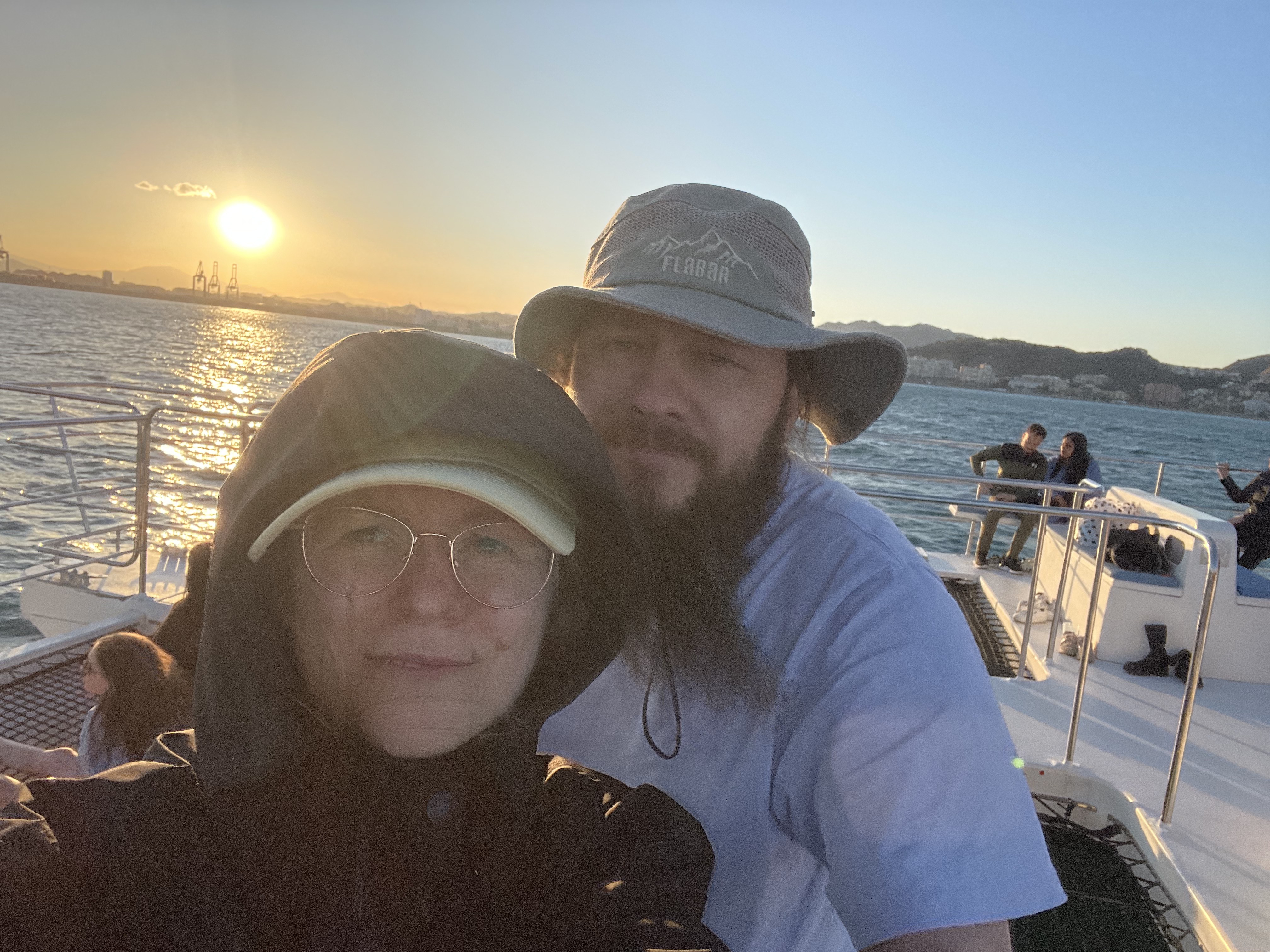
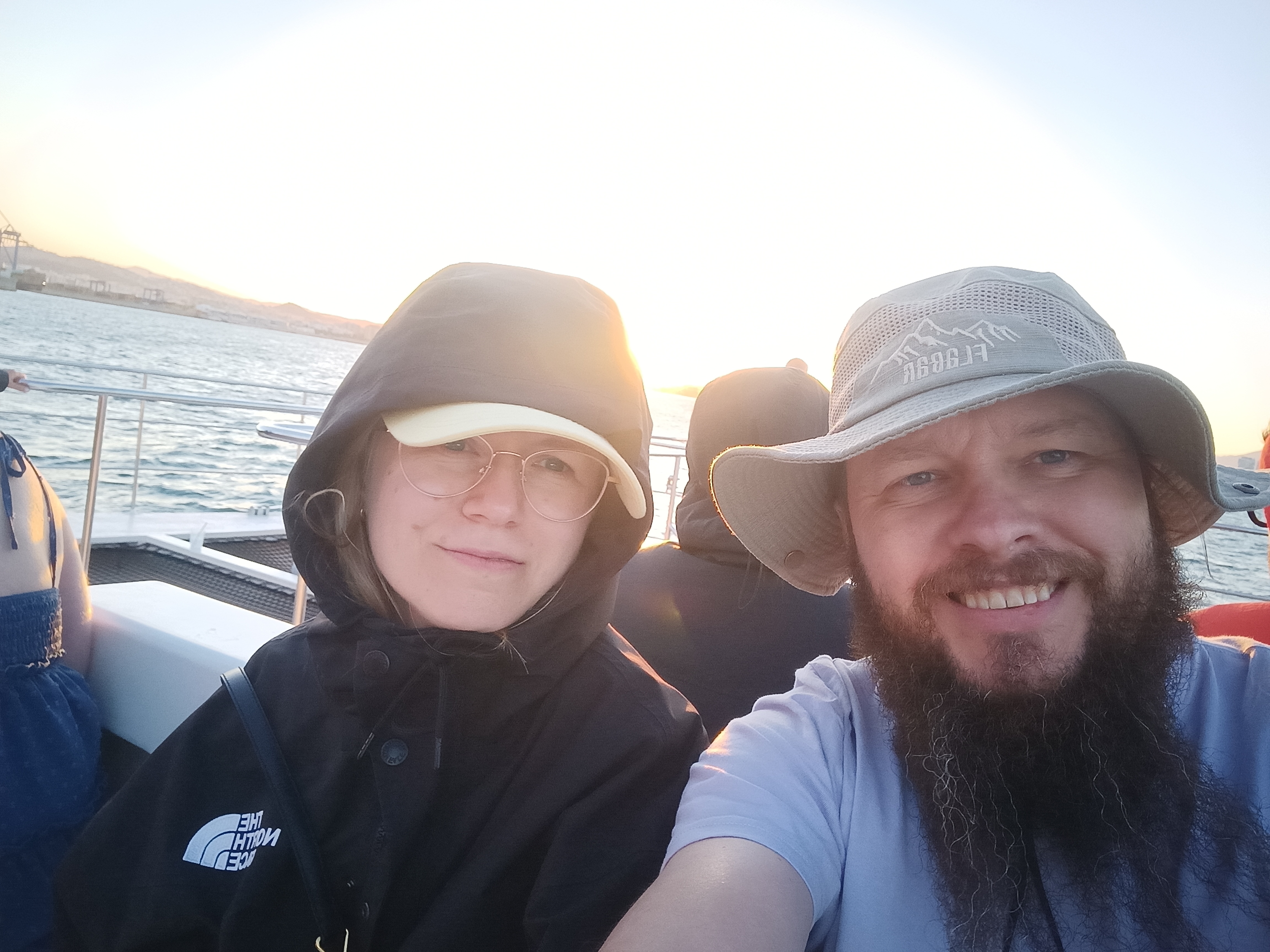
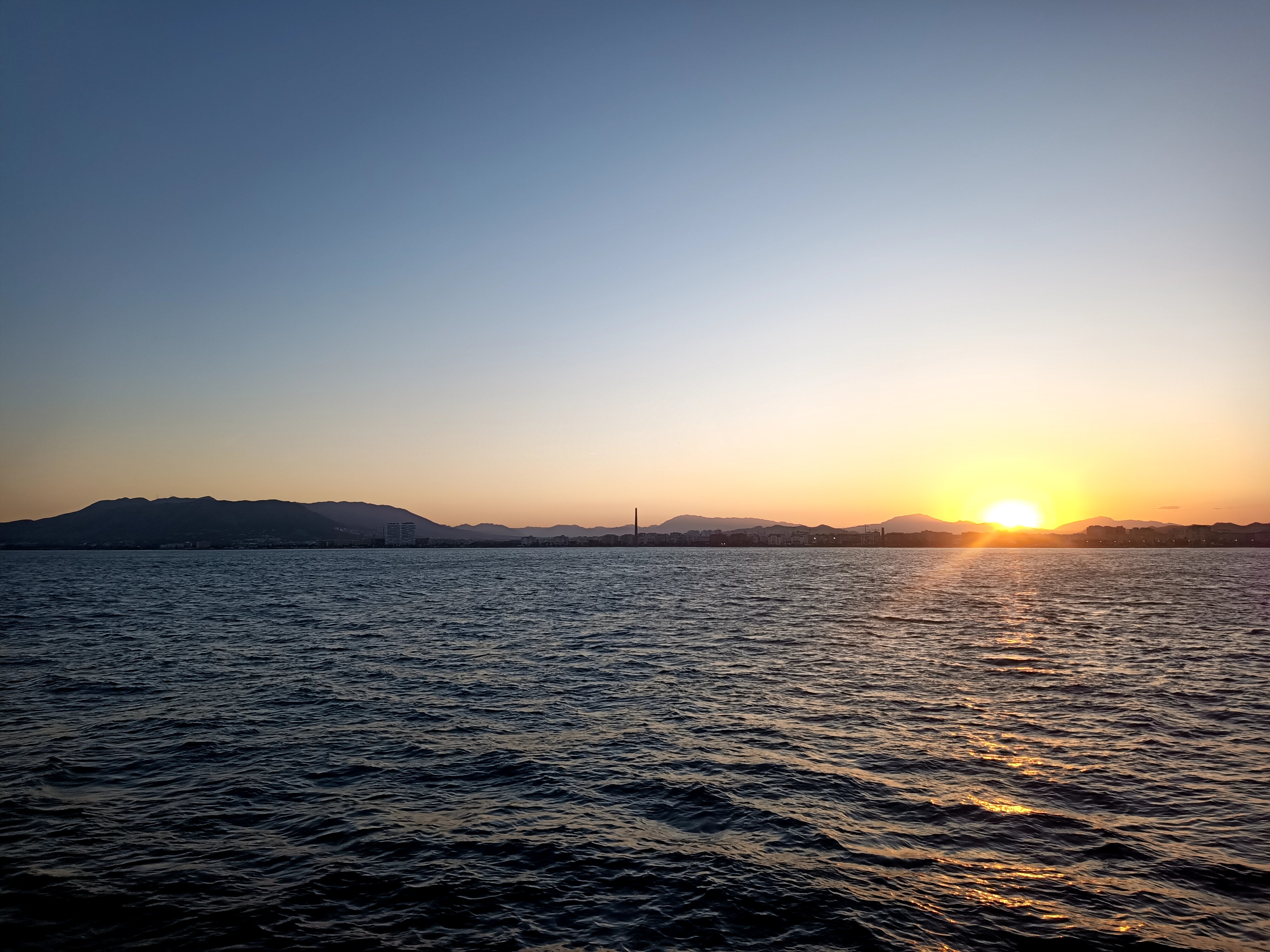
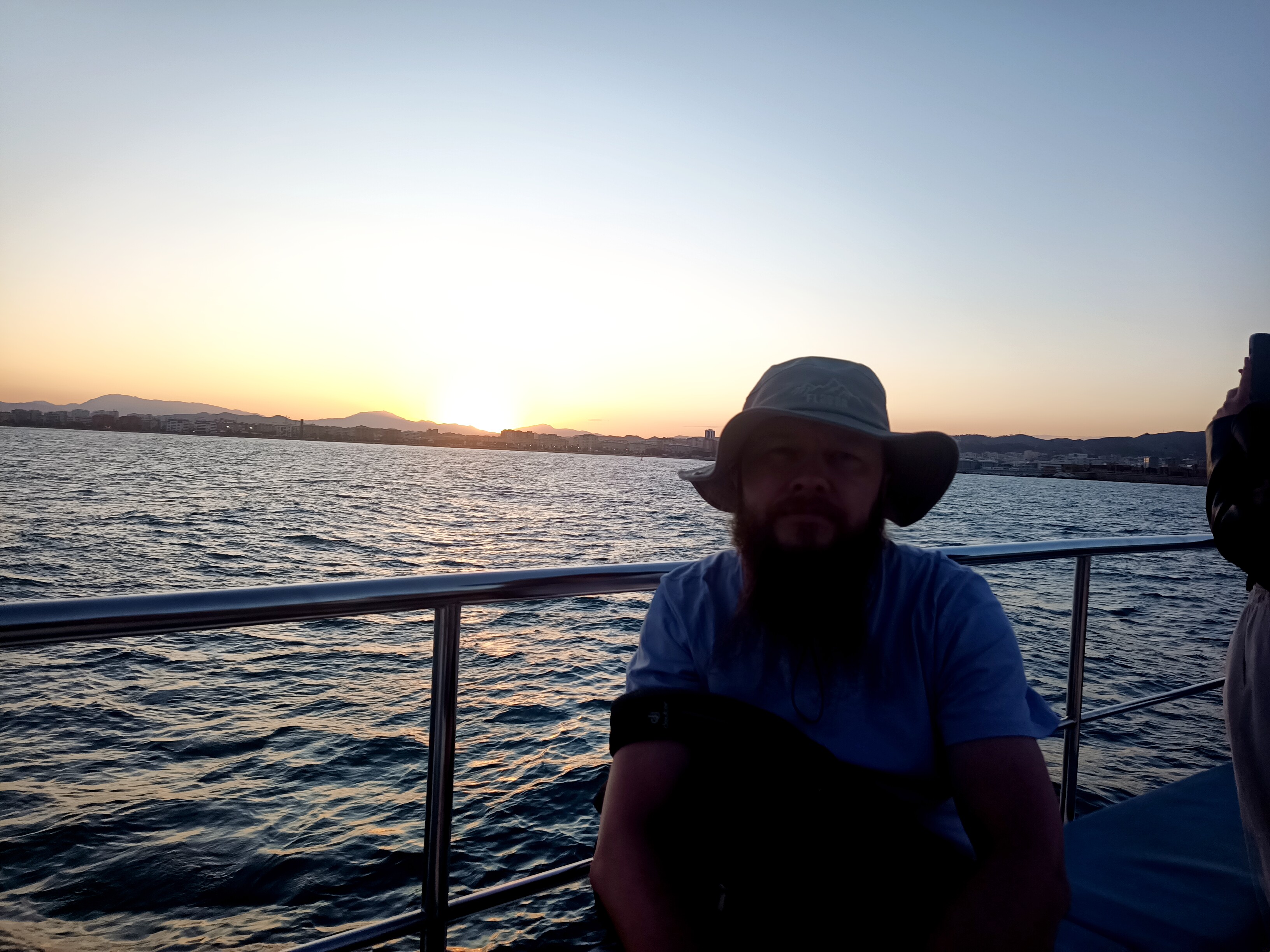
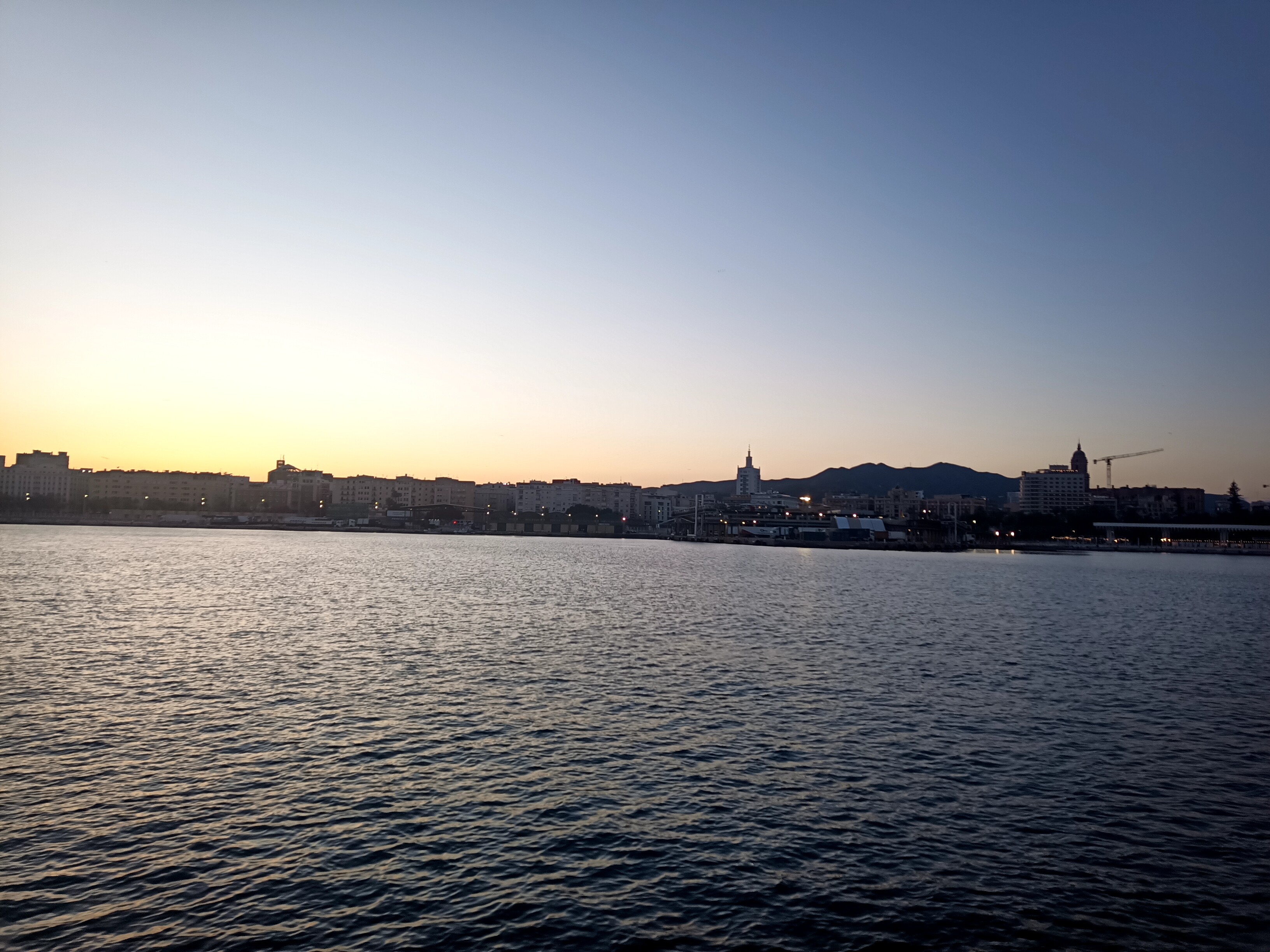
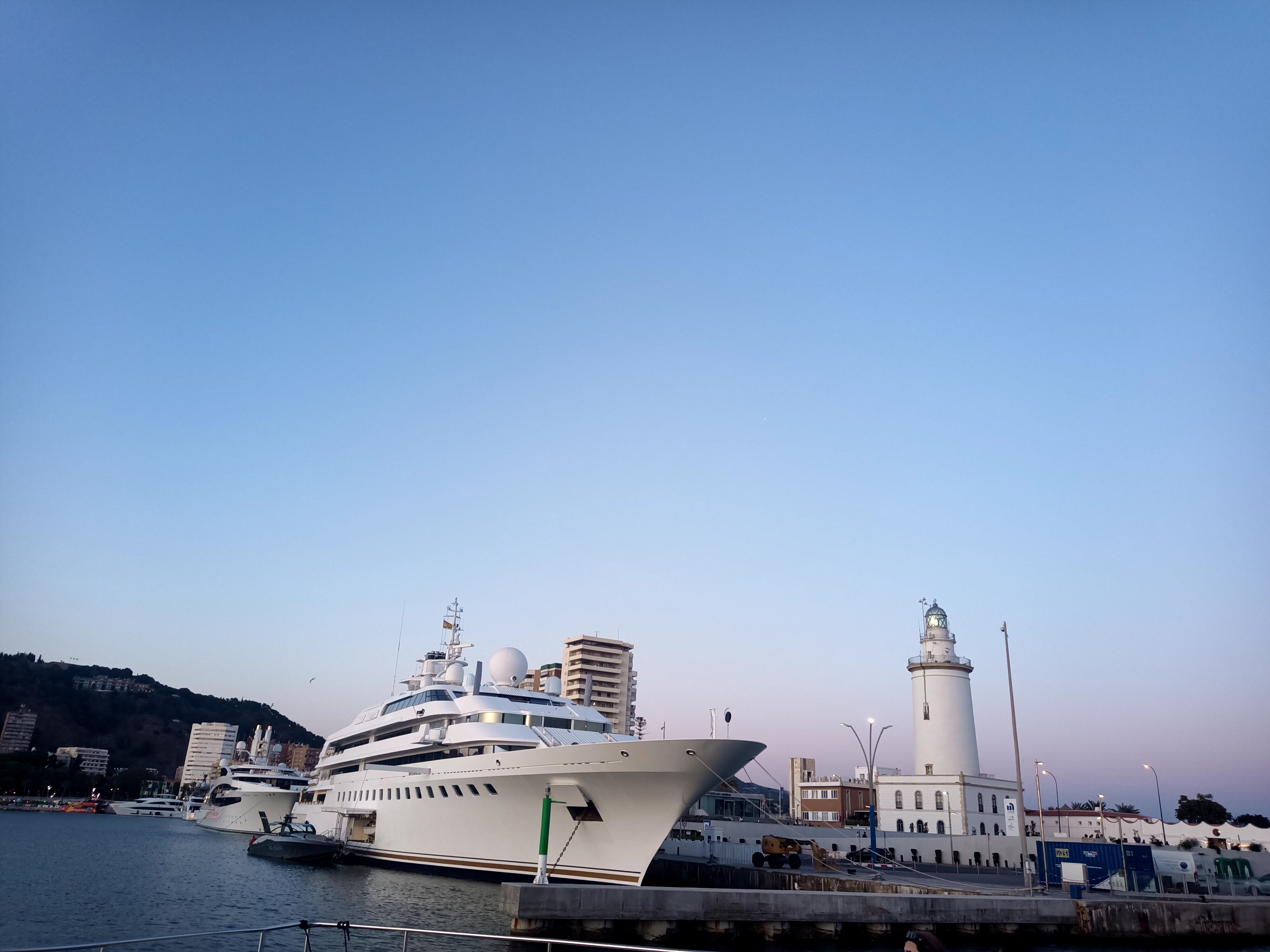
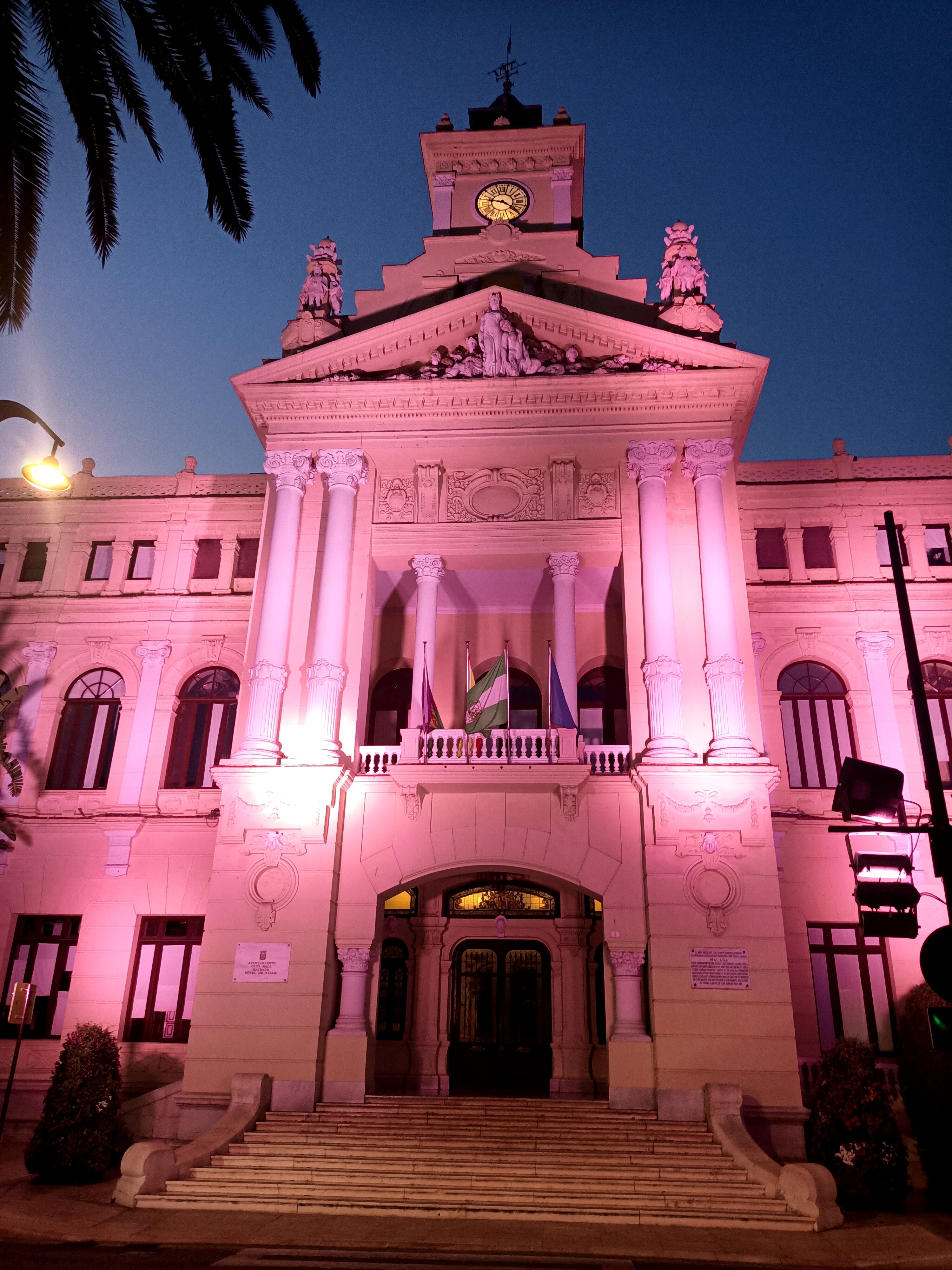
After ninety minutes of water the boat turned for home and Málaga switched itself on across the bay, lamp by lamp, to show us what we'd been walking through all day. We came ashore into it: the lighthouse and the giants on the quay, the town hall lit pink on the street home, every corner trying its hand at night lighting. The sea, for the running record, remains unswum — though it has now been drifted on for a while, which everyone aboard seemed to agree counts as progress.
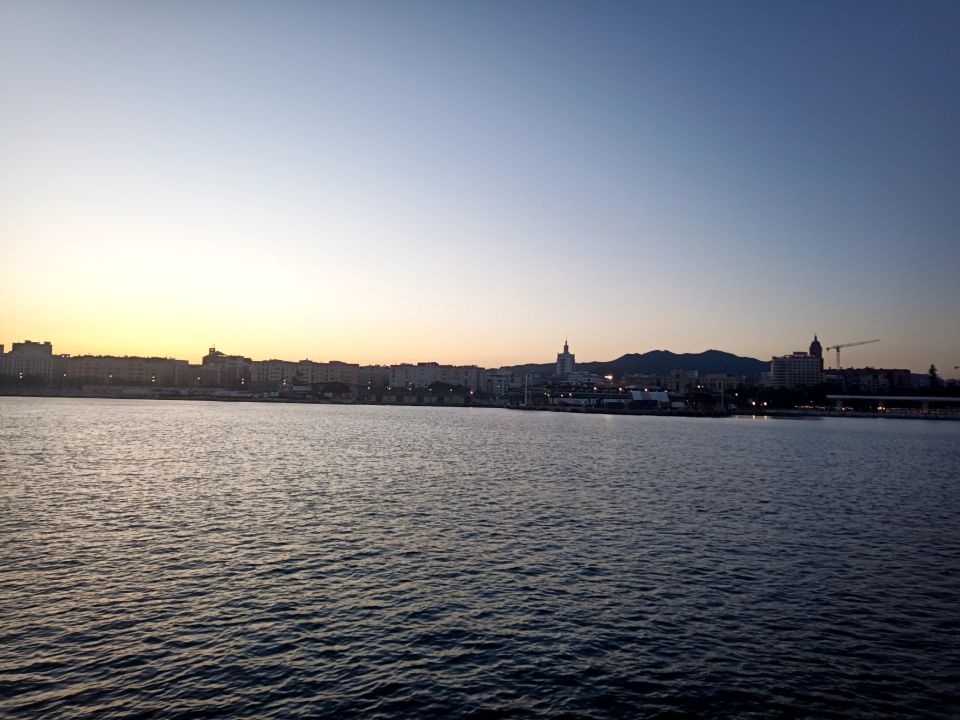
Incoming: the city already switched on 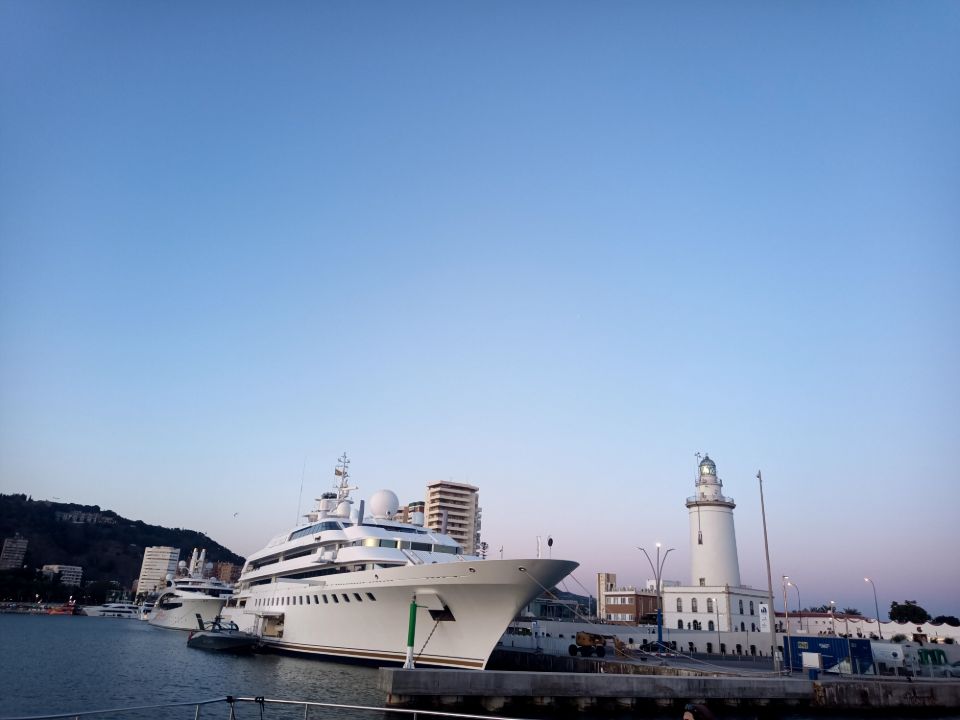
Back on the quay: La Farola and the giants 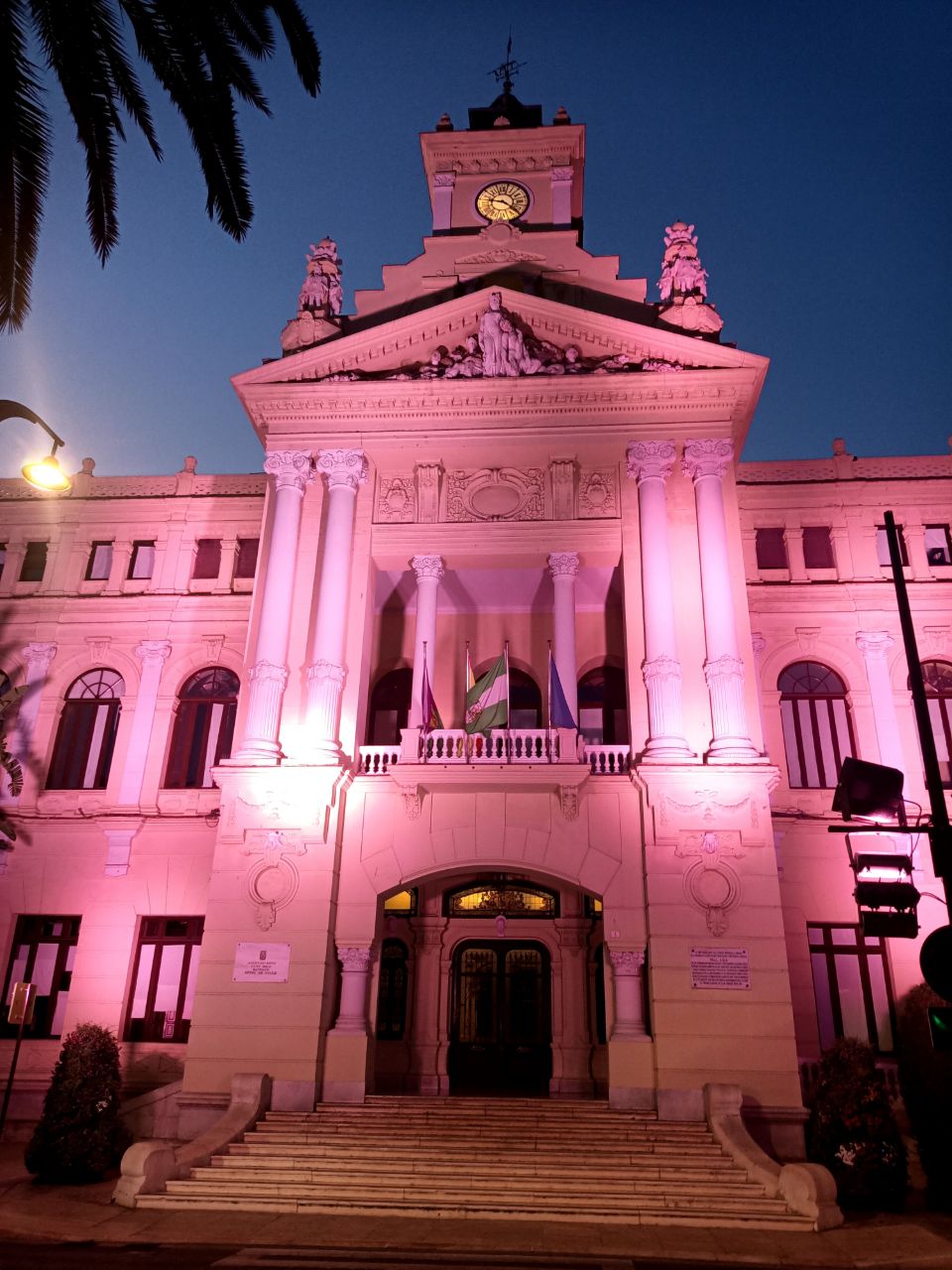
The town hall, lit for the evening 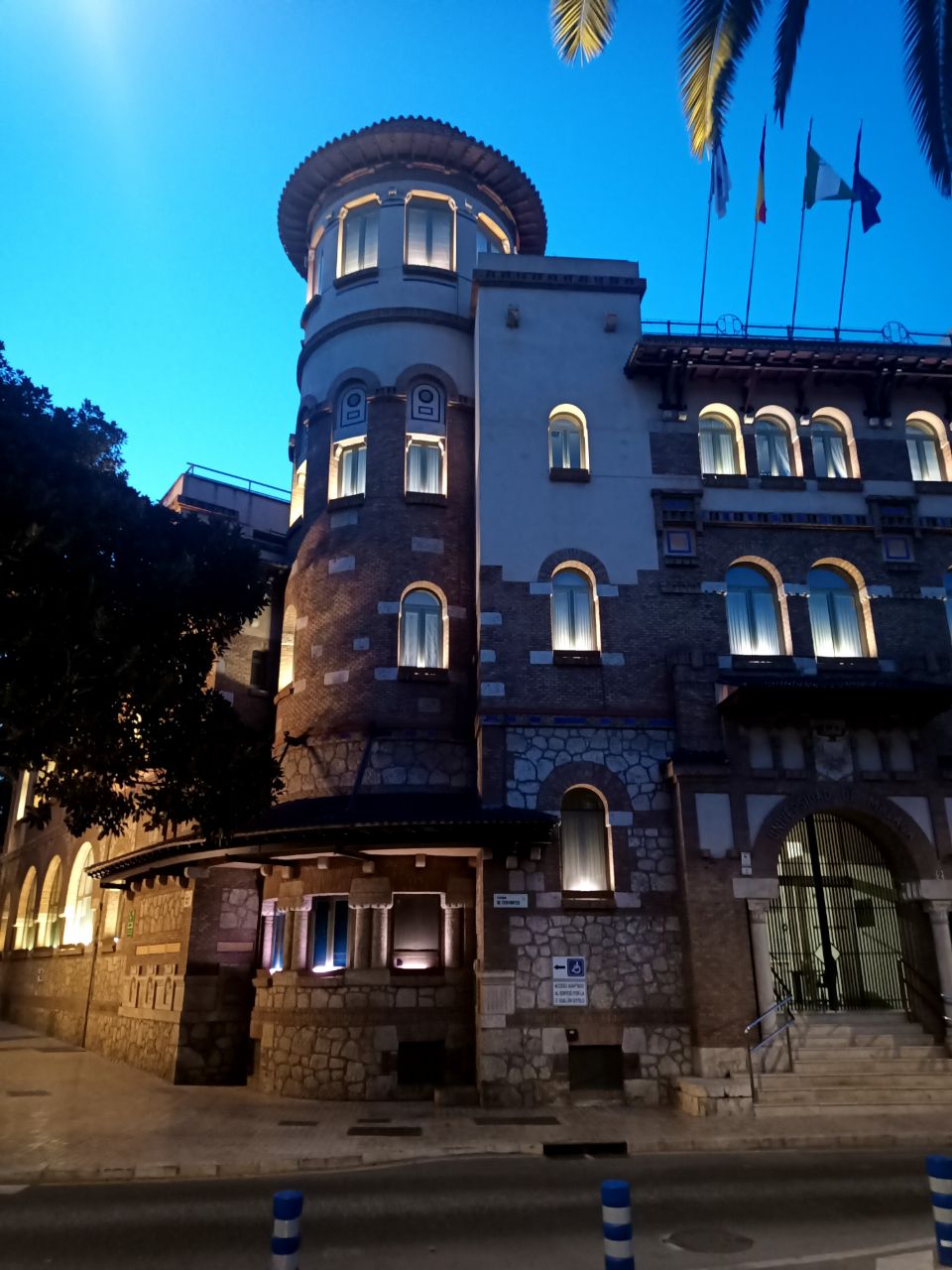
A lit corner on the walk home
The market, Pablo, and the hill above
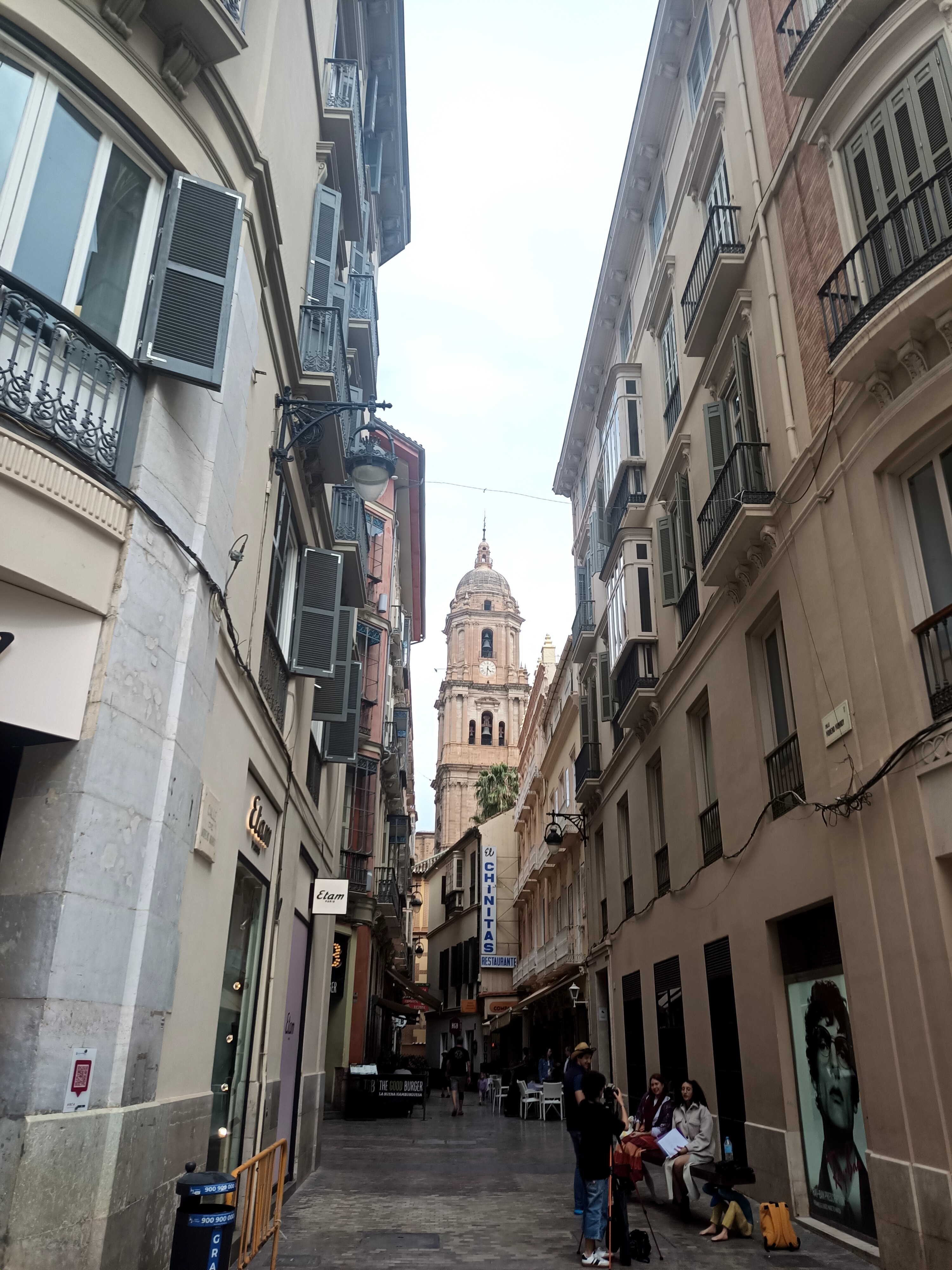
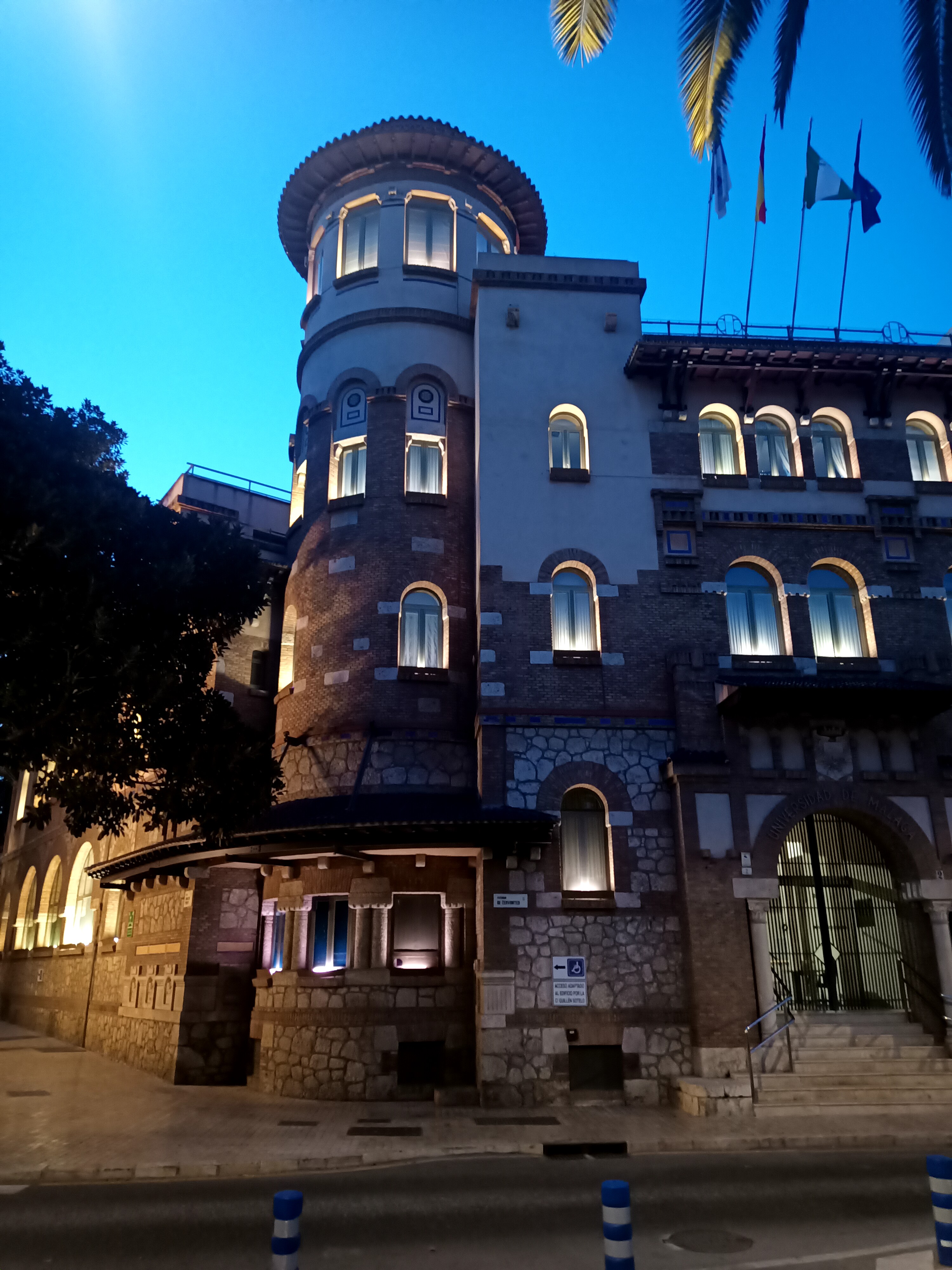
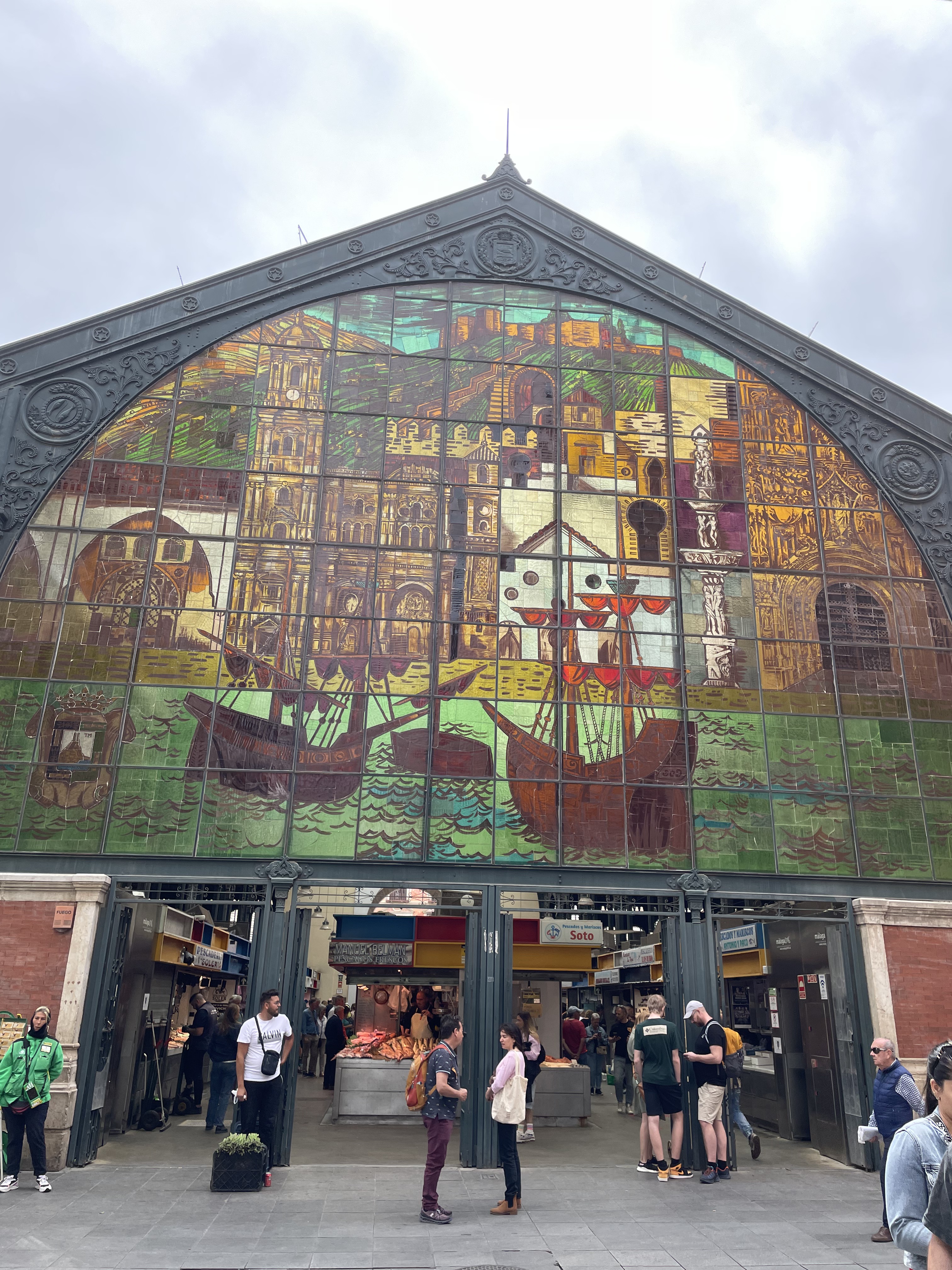
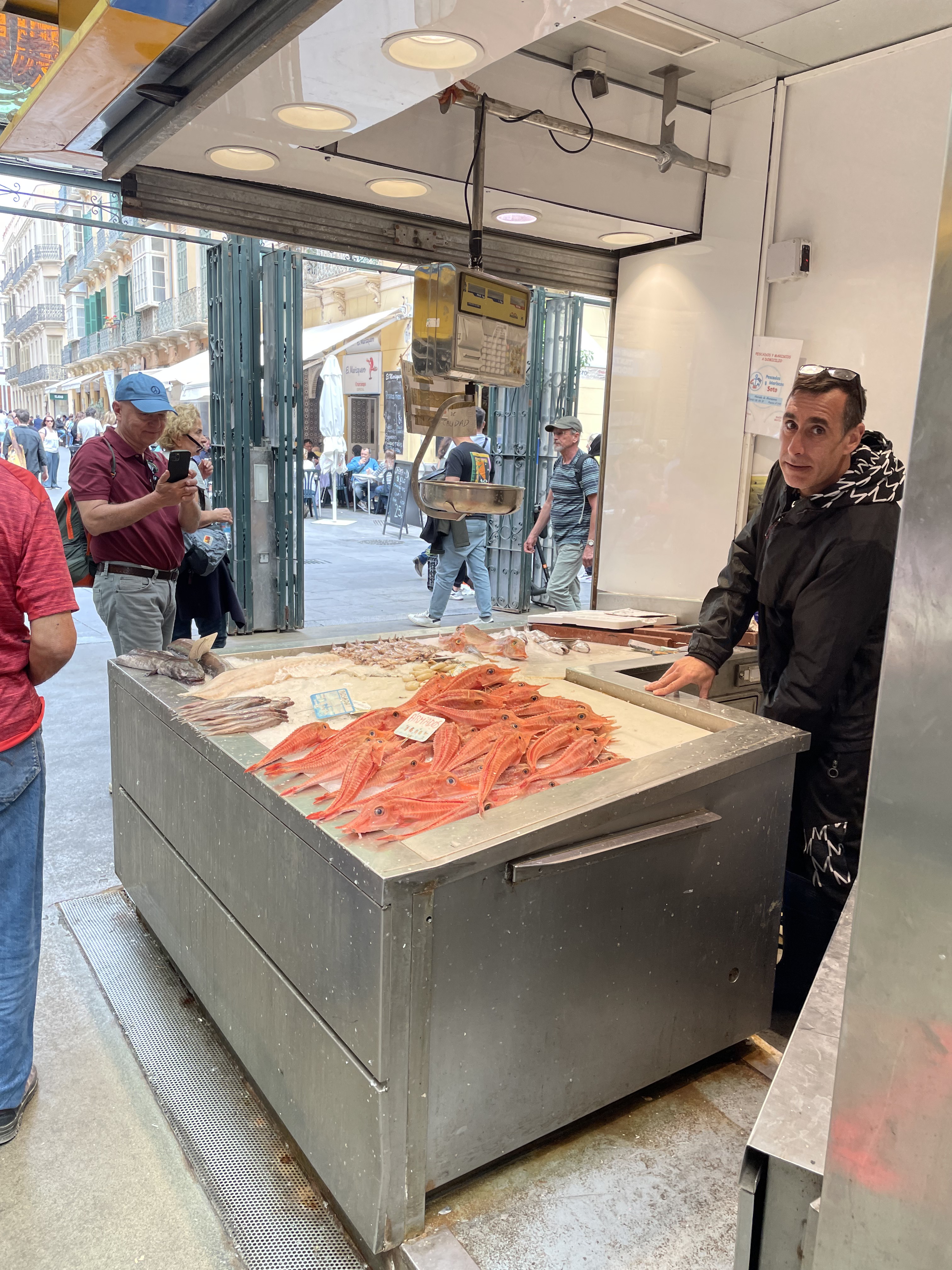
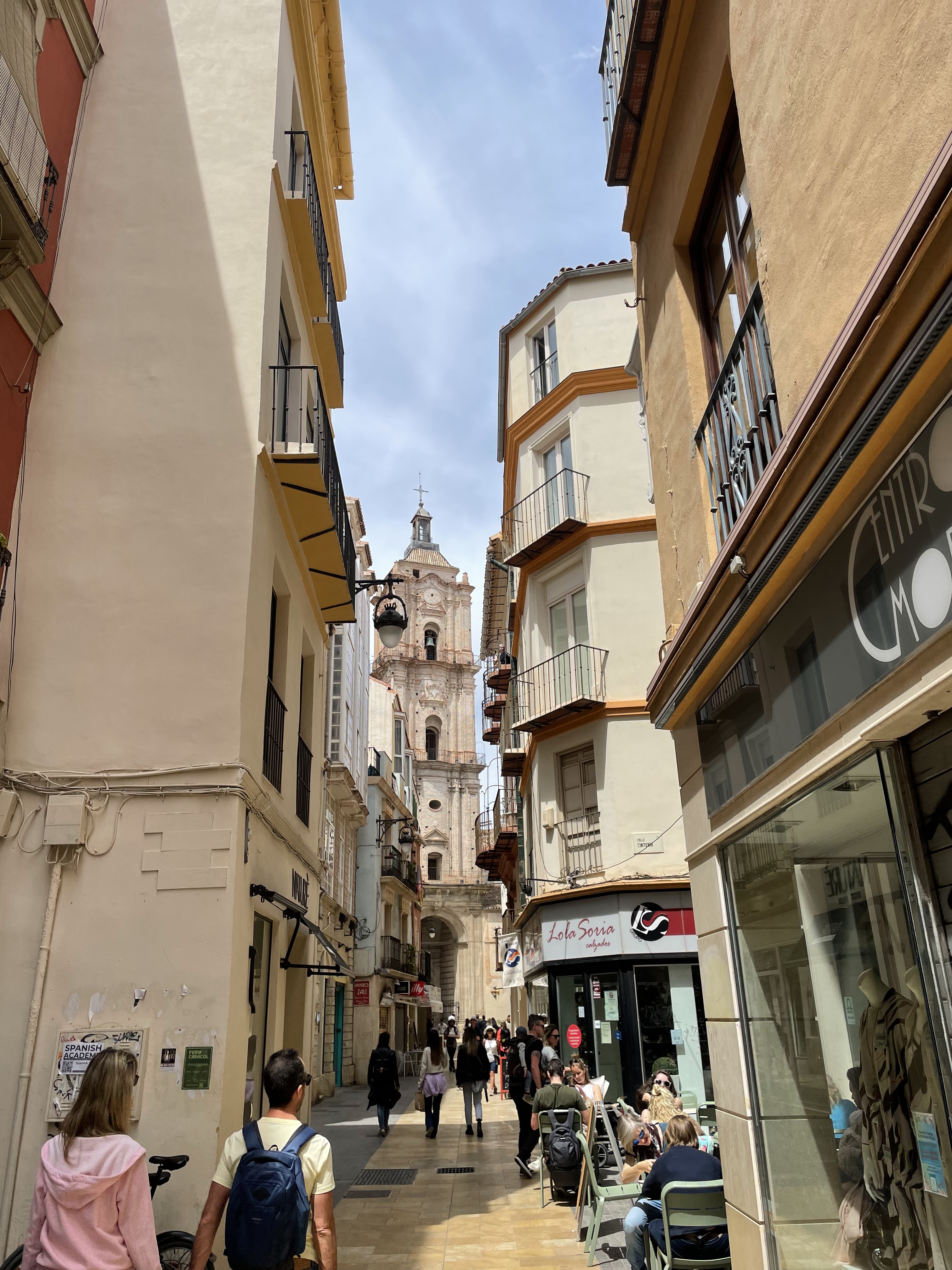
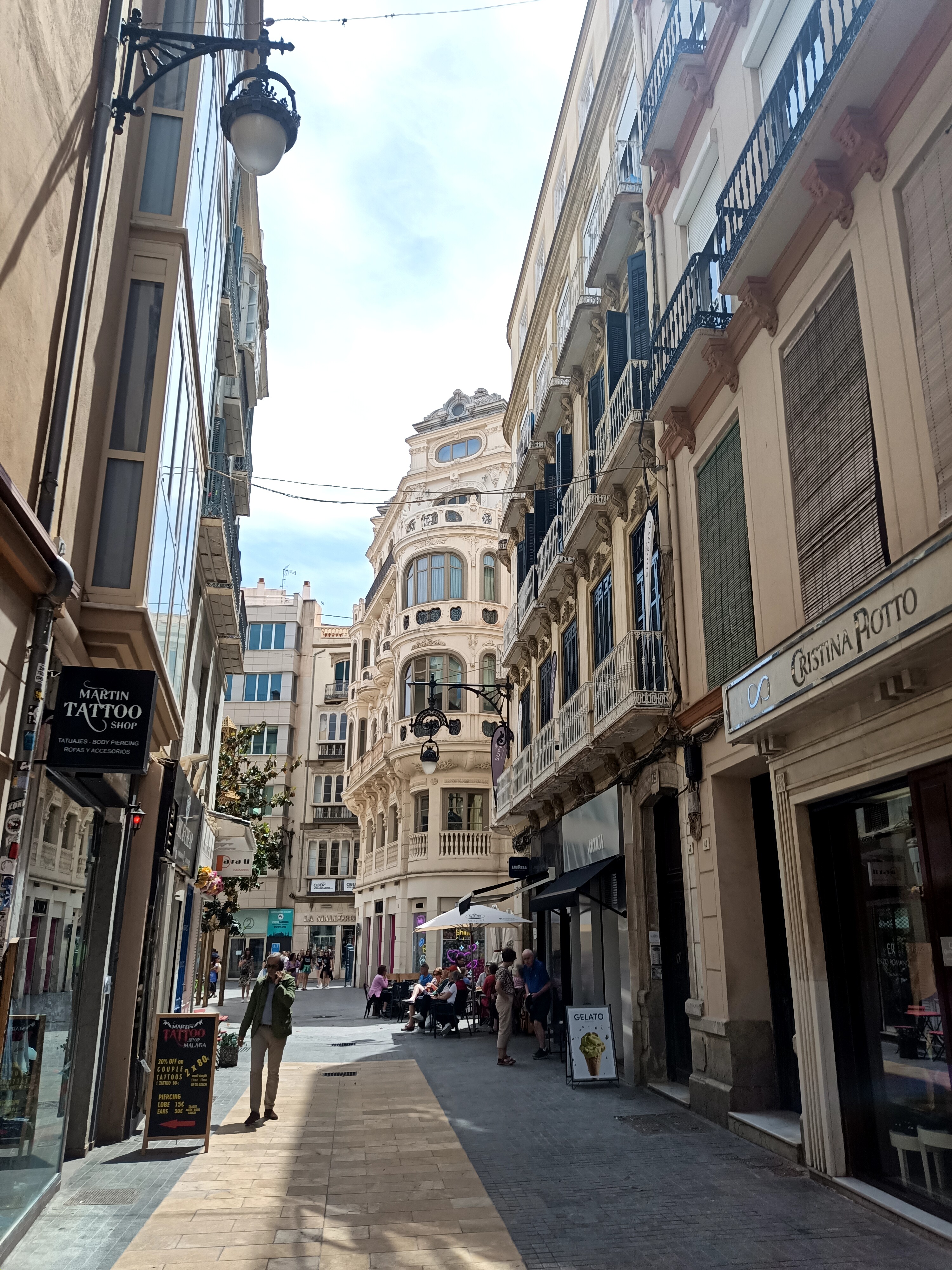
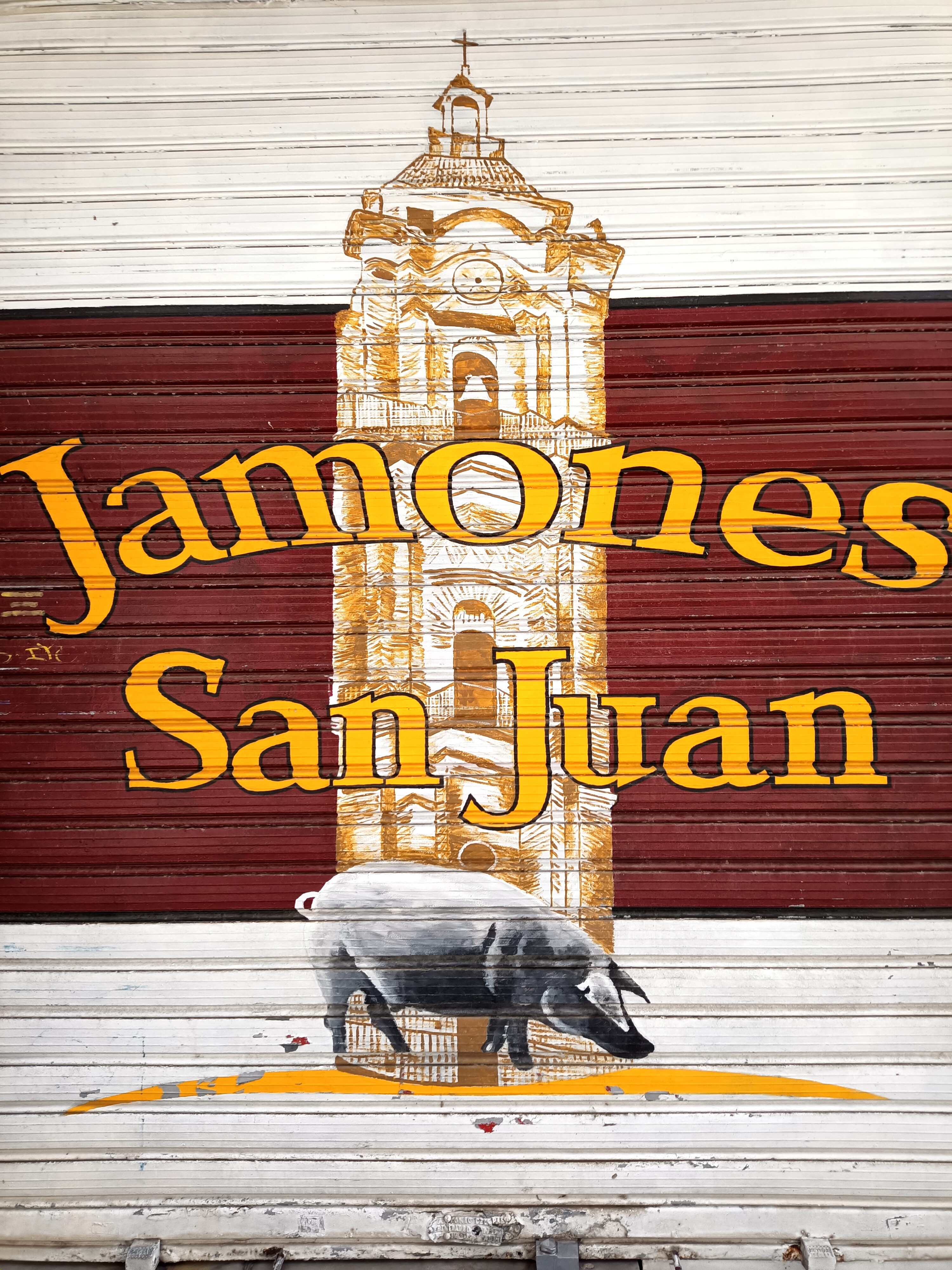
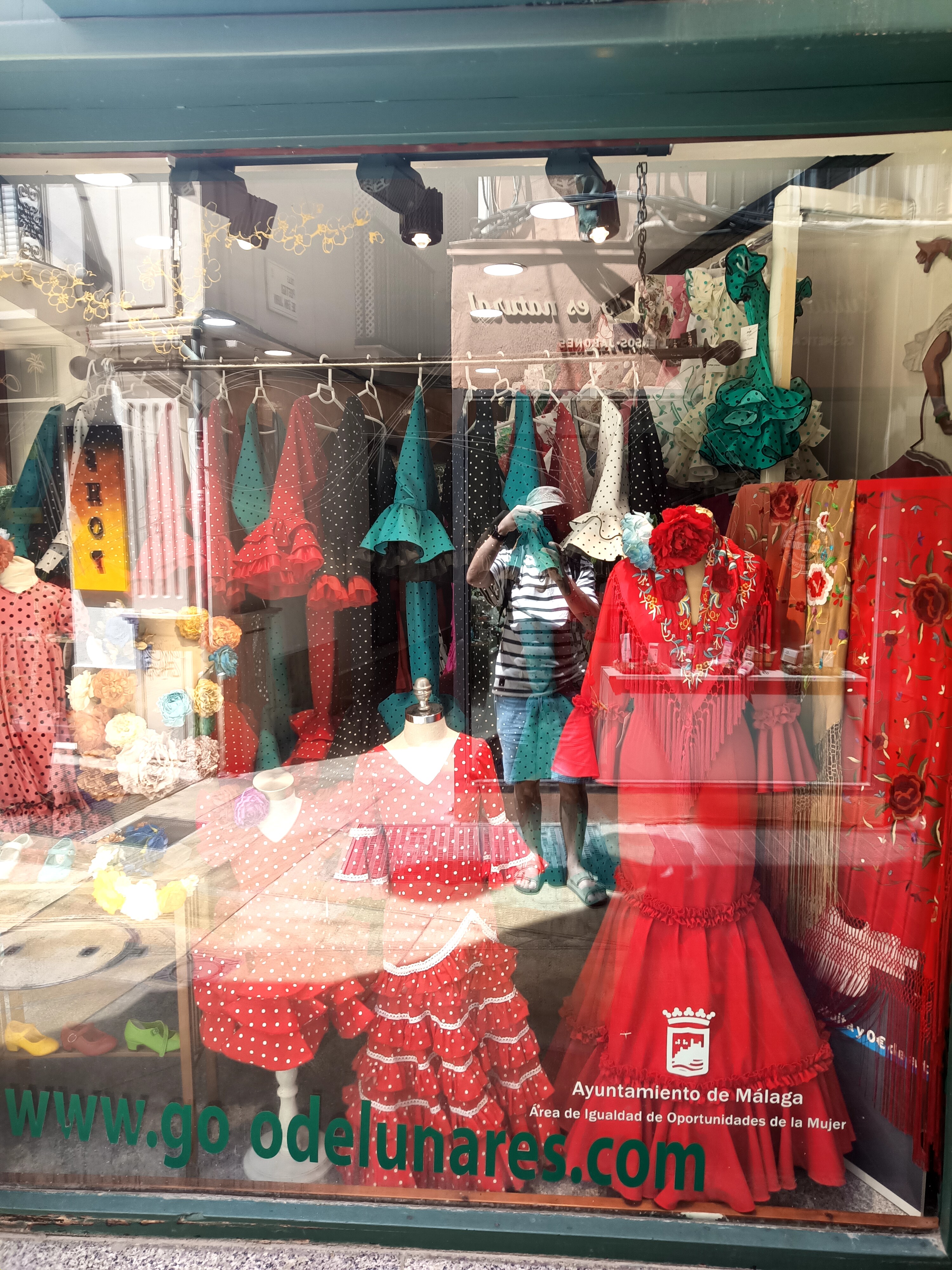
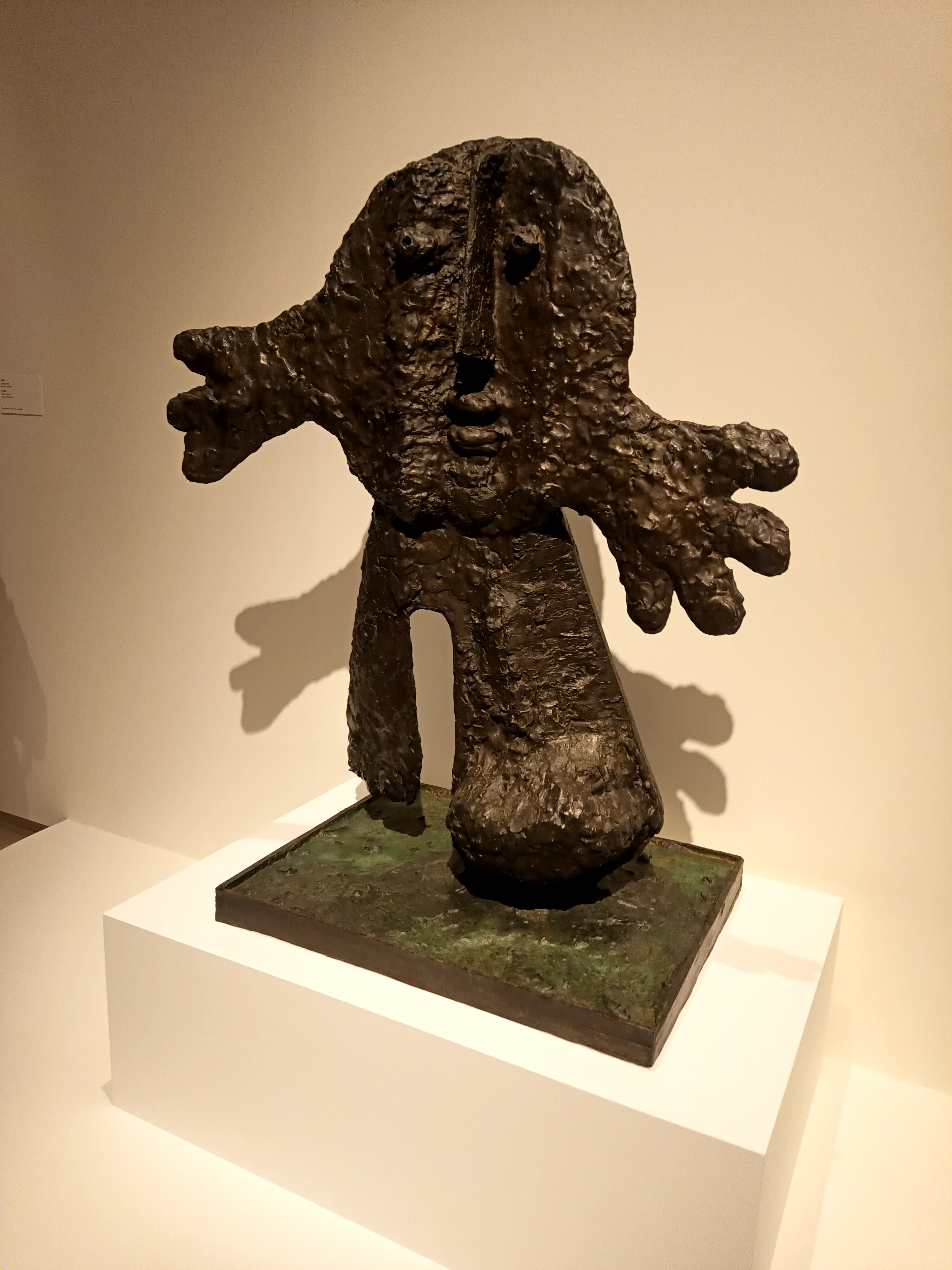
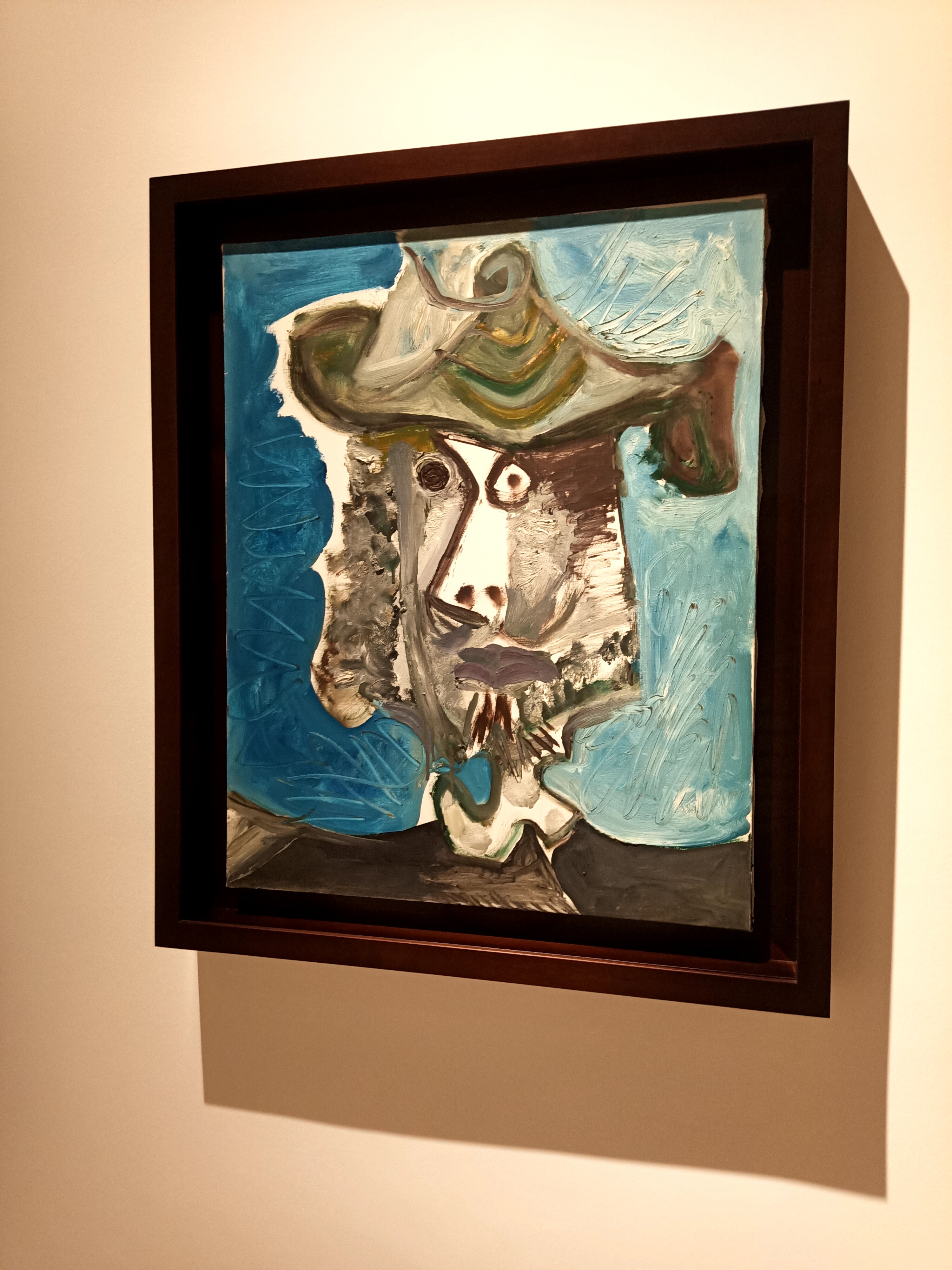
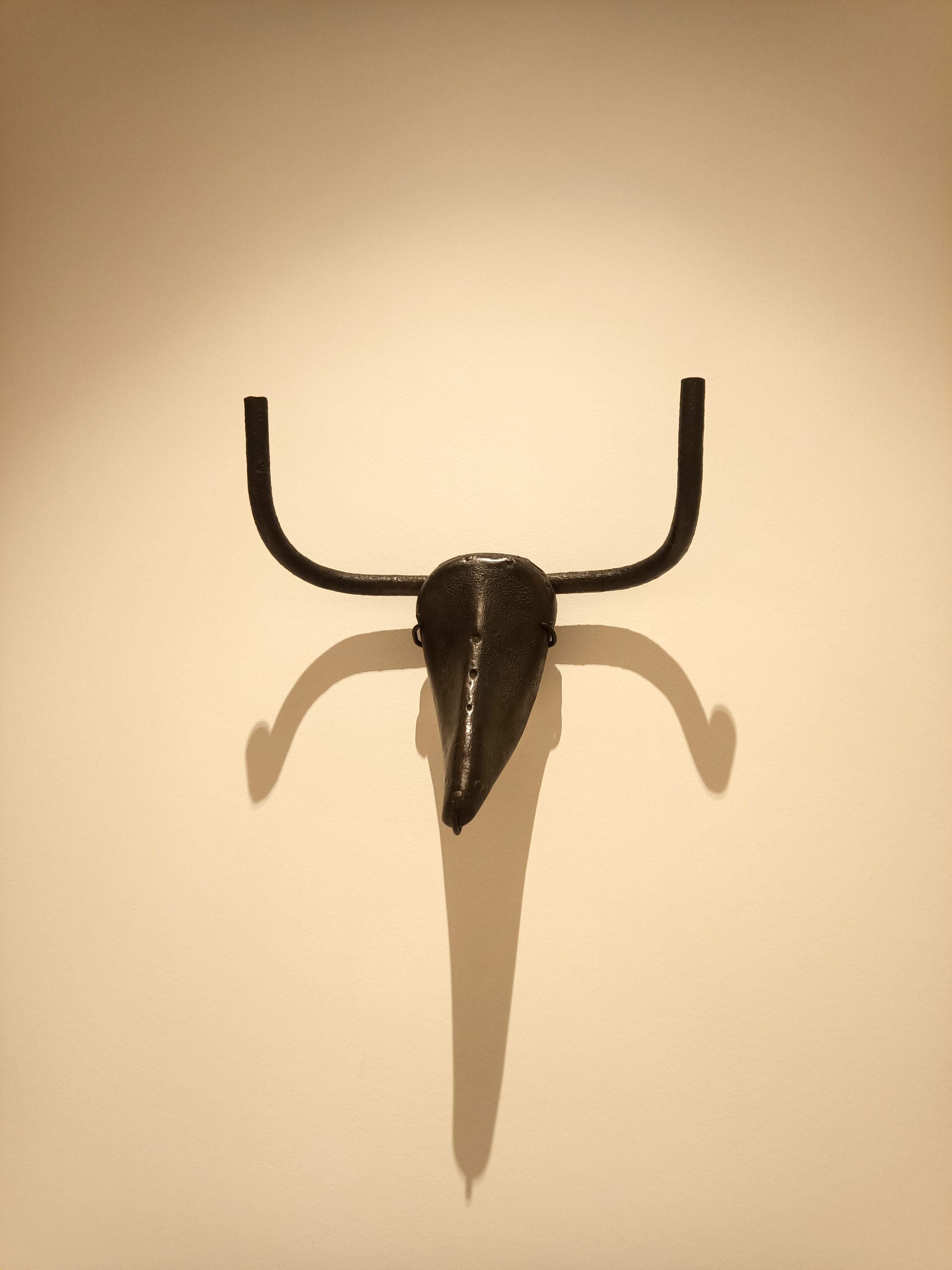
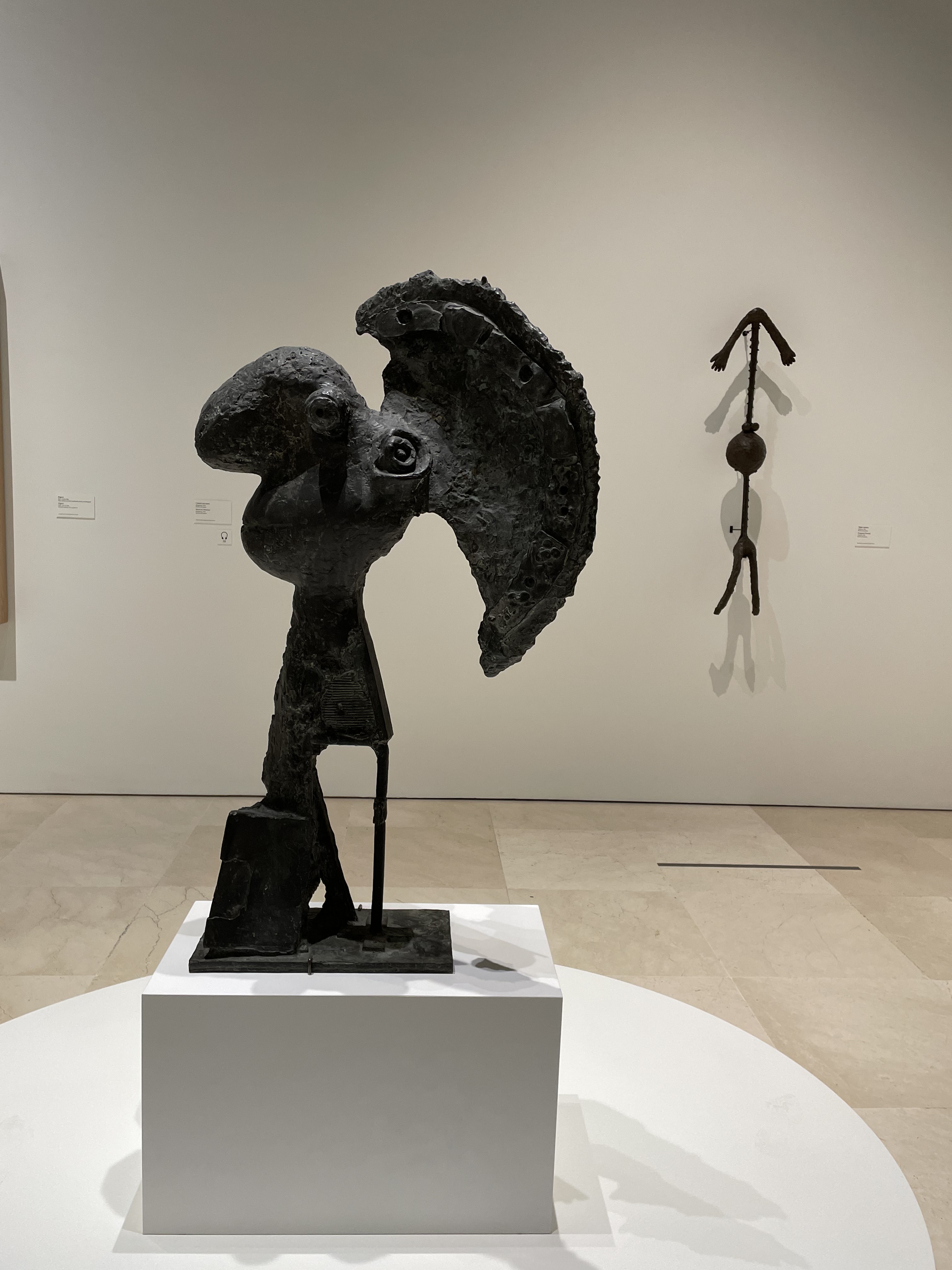
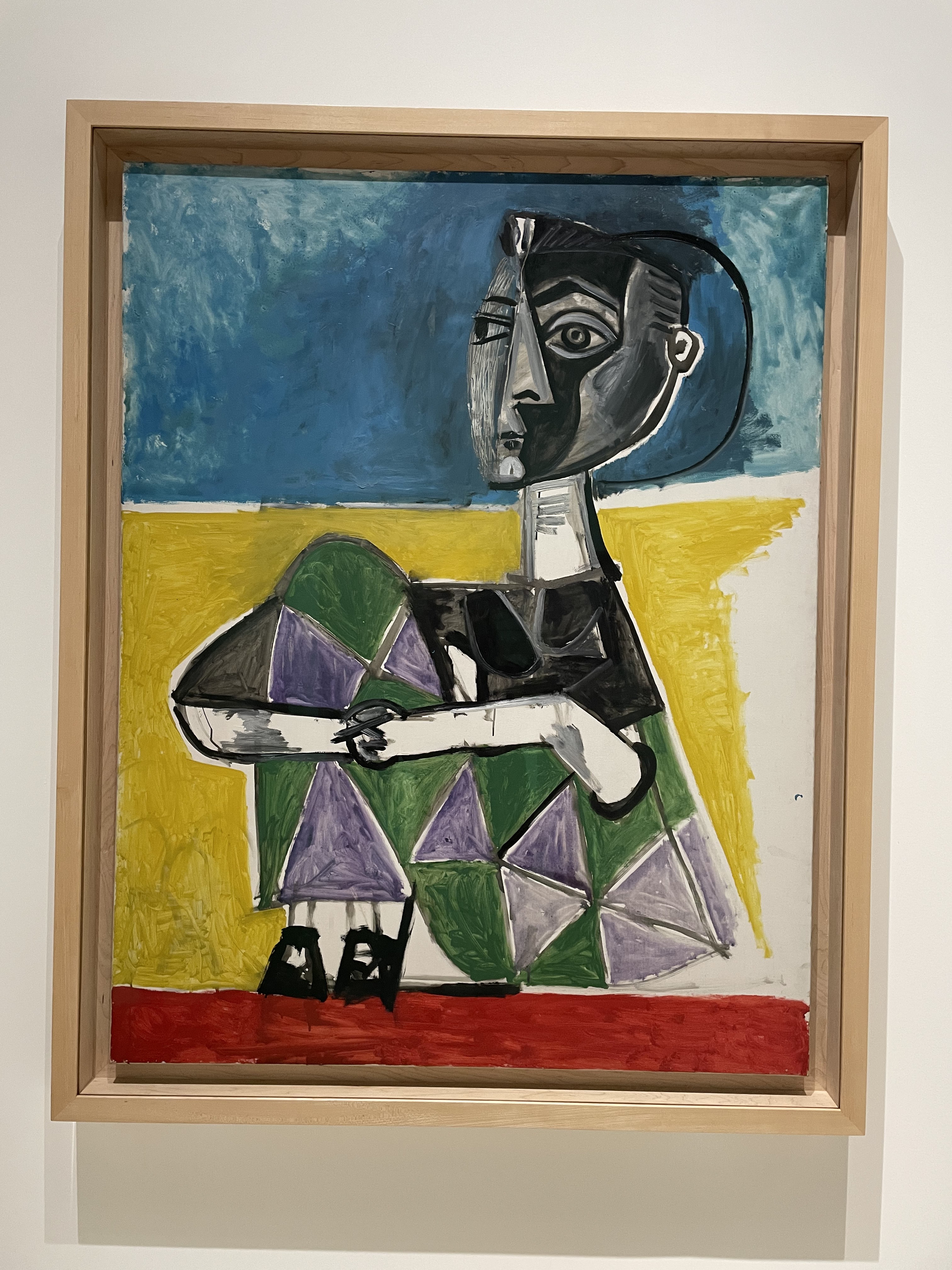
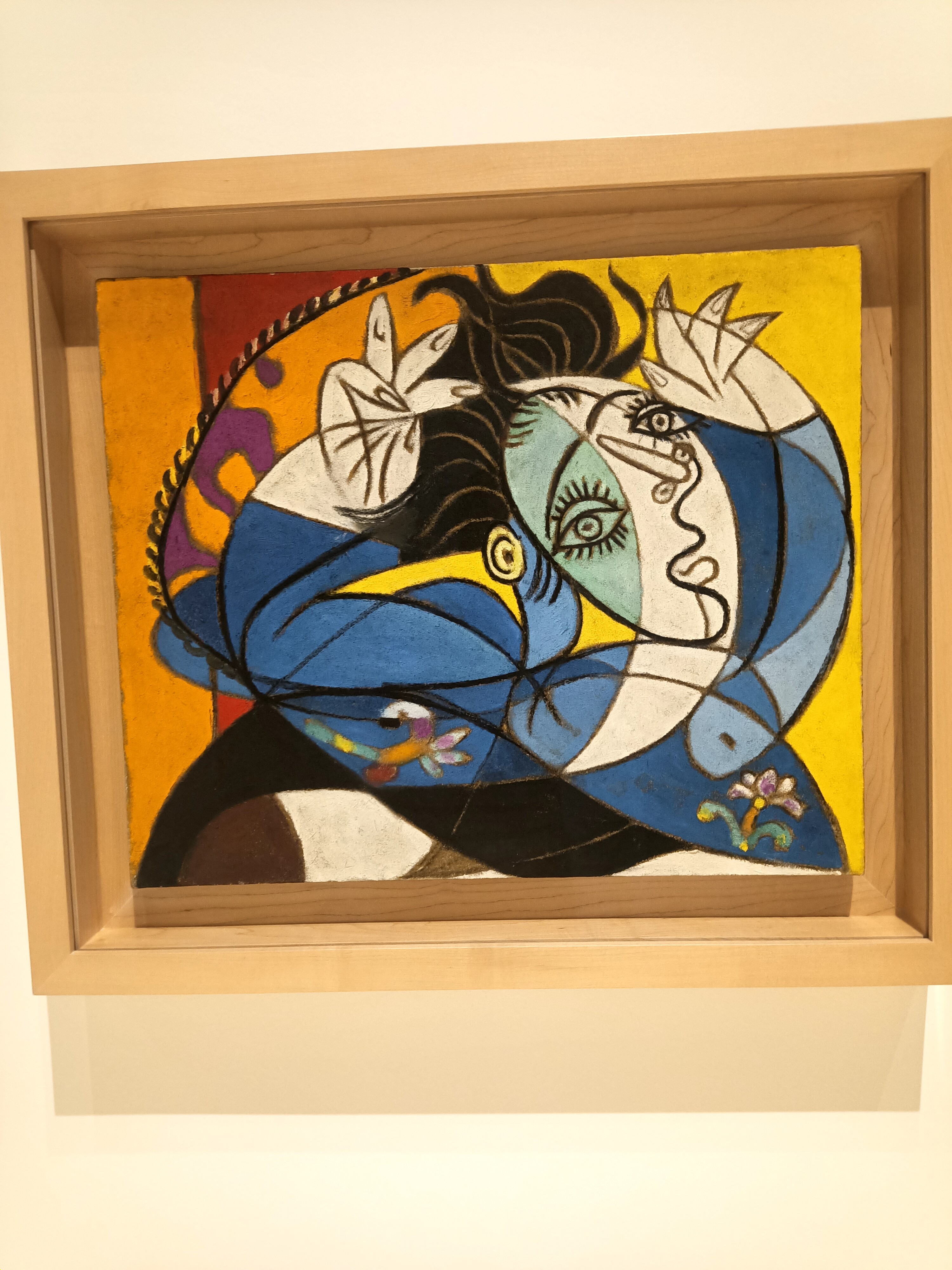
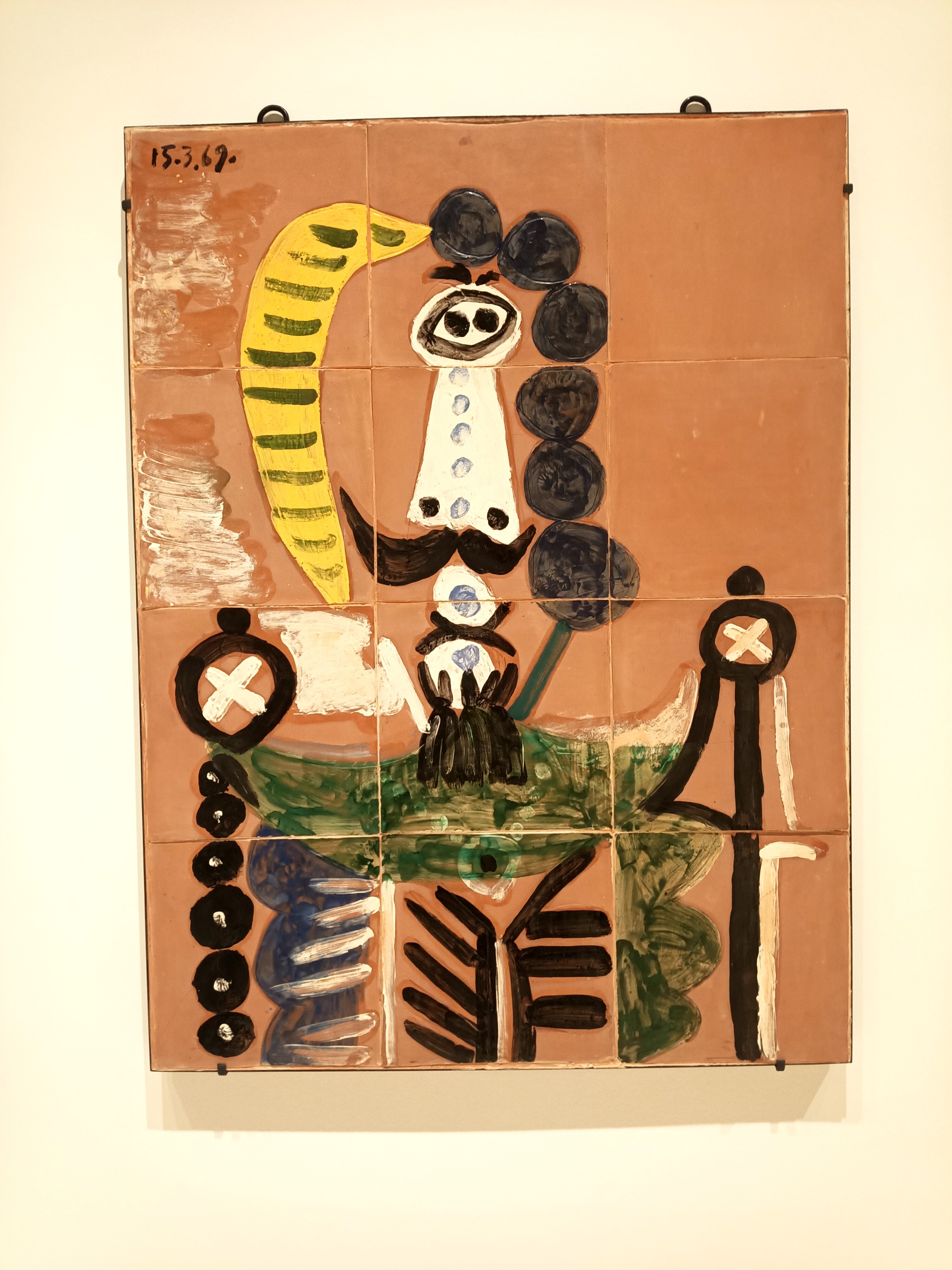
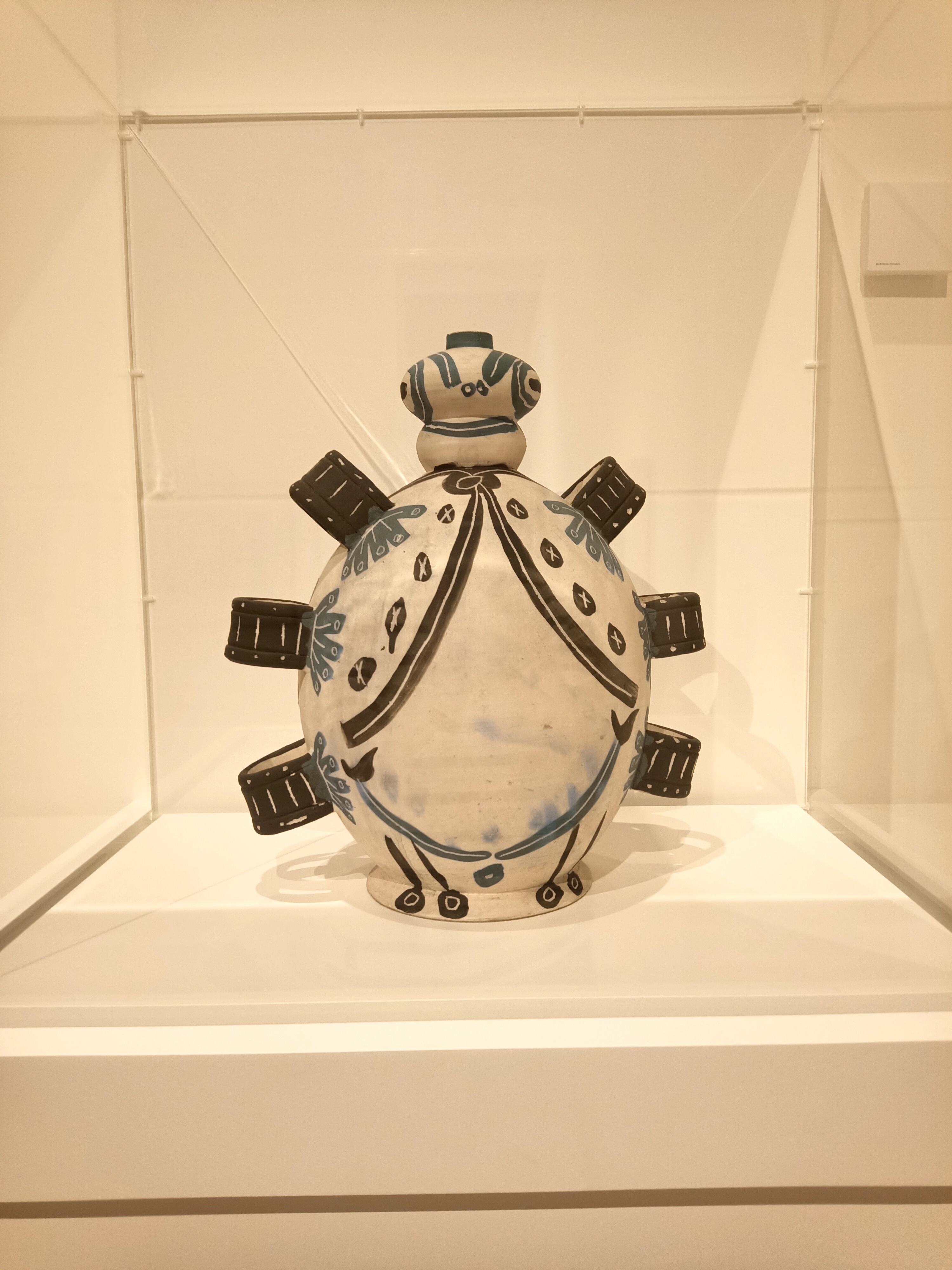
The twenty-sixth divided its day between trade and art. Atarazanas is a market installed in a medieval shipyard — the name still says so — and its stained glass is an entire maritime mural stacked over the fish stalls, as if the sea had been invited indoors and shown to its seat. Out in the lanes again: a street running straight at the cathedral tower, the belle-époque corner doing its best architecture in curves, a ham shop's shutter hand-painted with its own church and its own black pig, and a window packed with red polka-dot flamenco dresses in every child's size. Then the Picasso museum, installed in the Buenavista palace a few streets from the house where he was born: a bronze with its face worked into knots, a man in a painted hat, an iron bull, a bronze that is nearly a bird, a late painting with the colour turned all the way up, and a fat ceramic face-vase that looks like the artist having a private joke at his own expense.
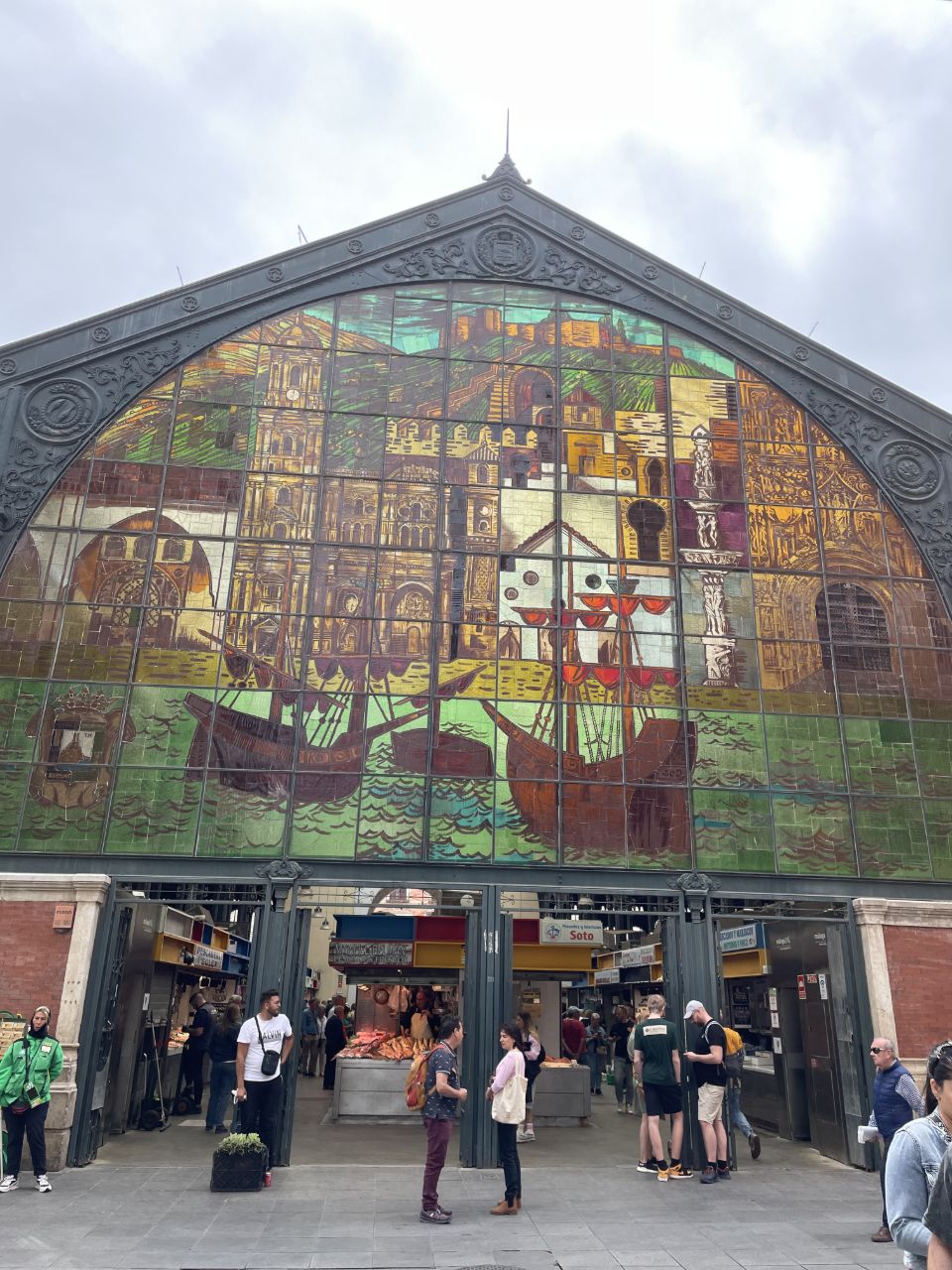
The market under its stained glass 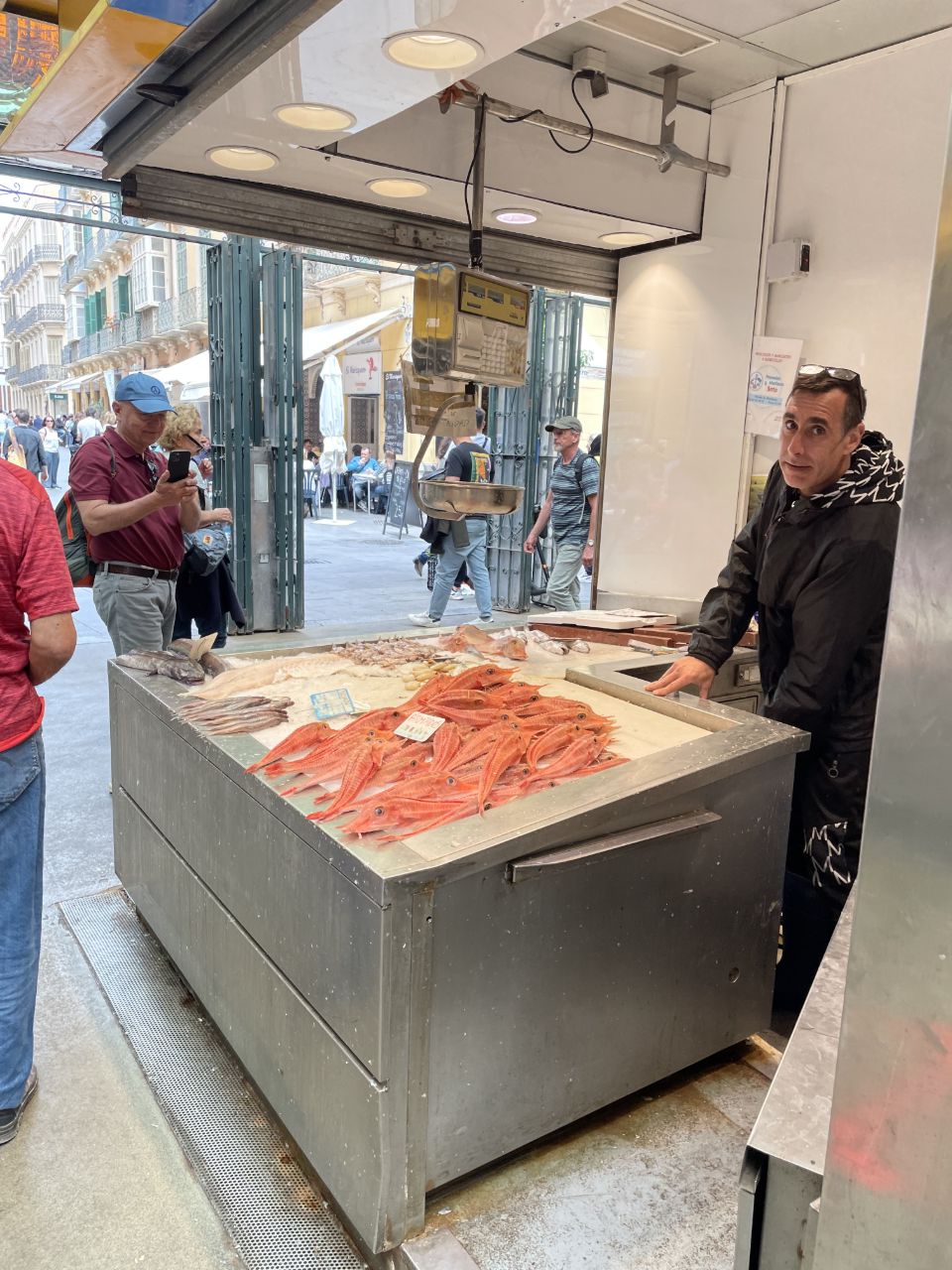
The fish stall at Atarazanas 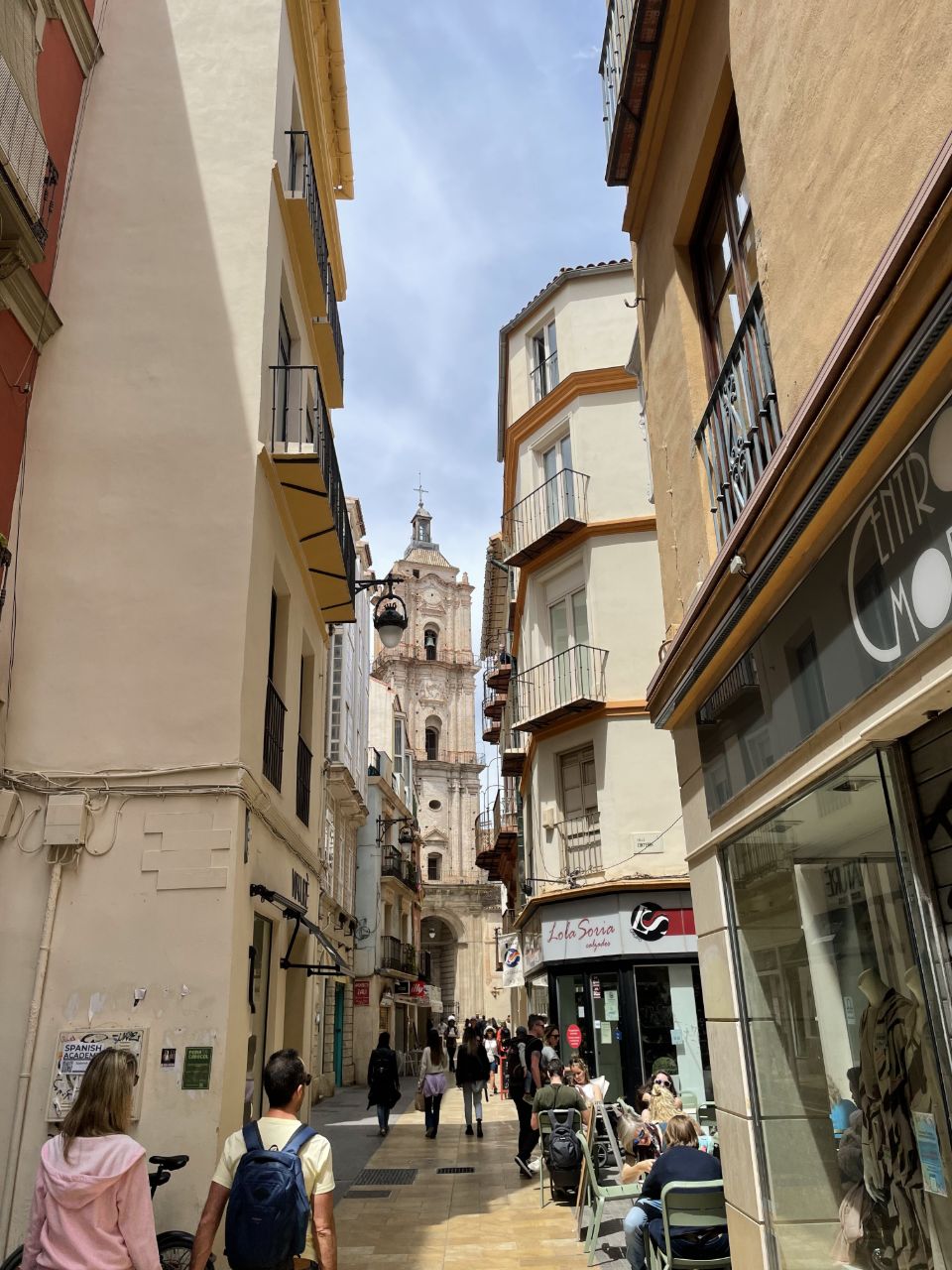
The lane to the cathedral 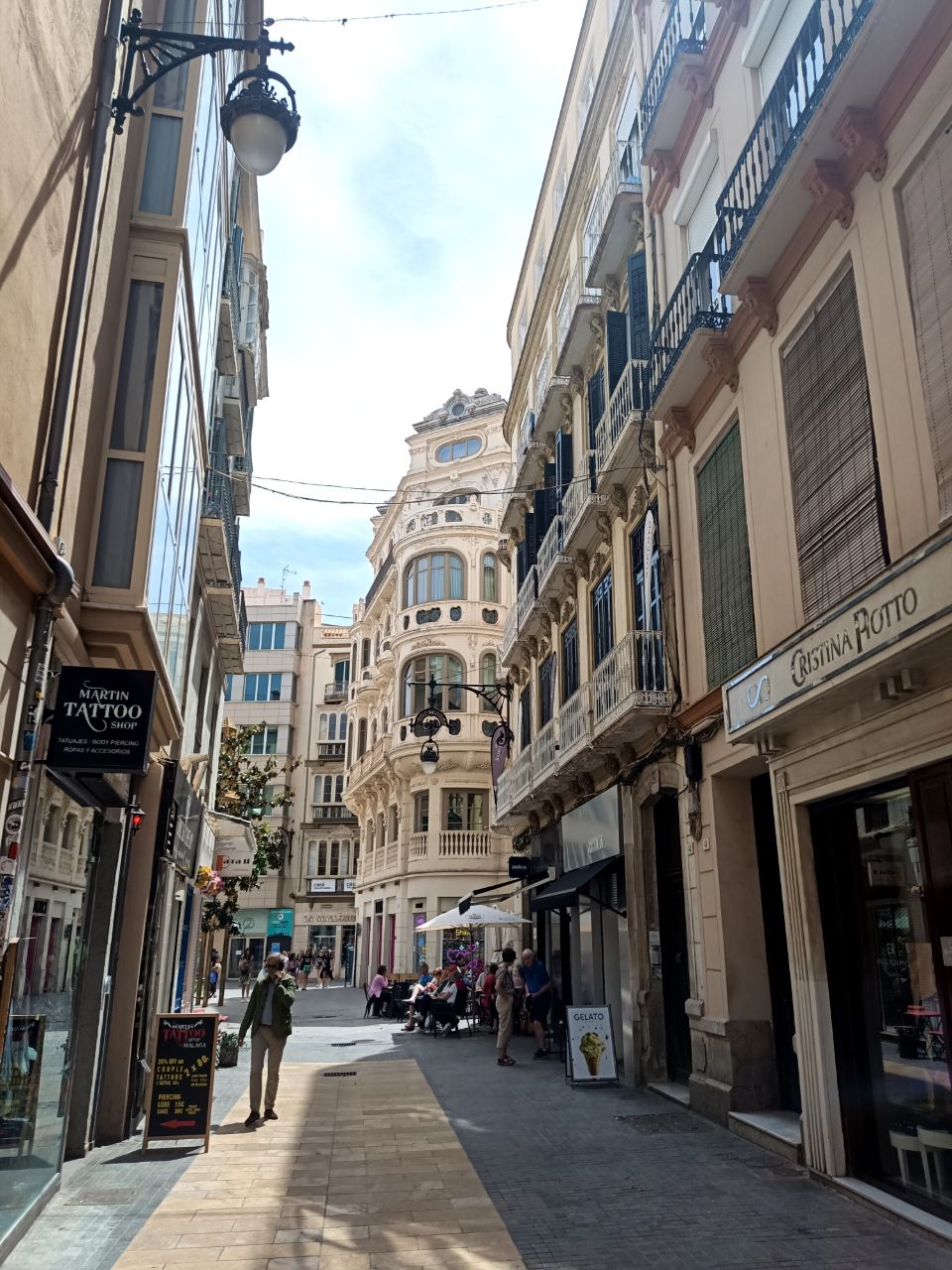
Calle Larios and its side lanes 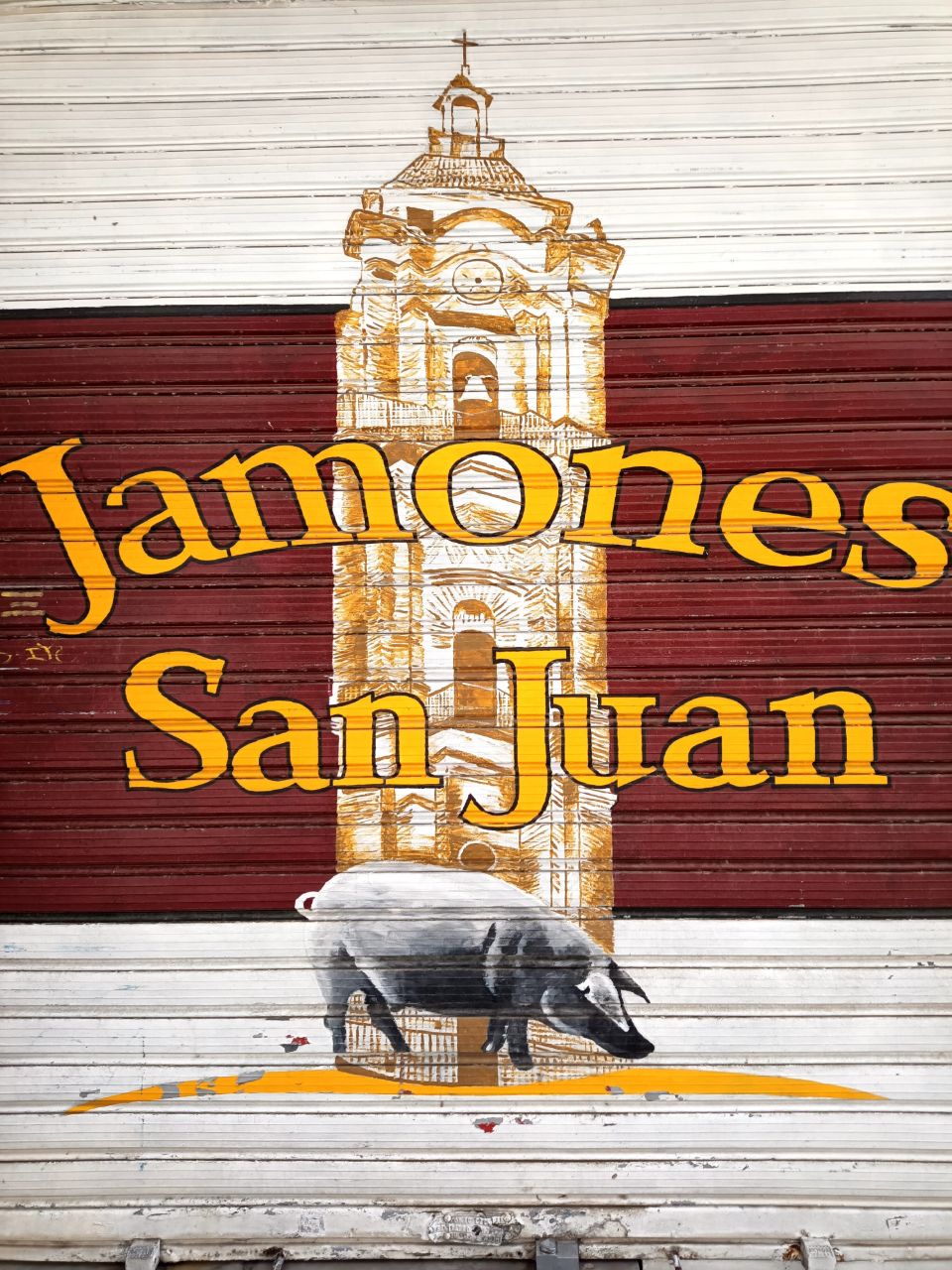
Hand-painted shutter, ham shop 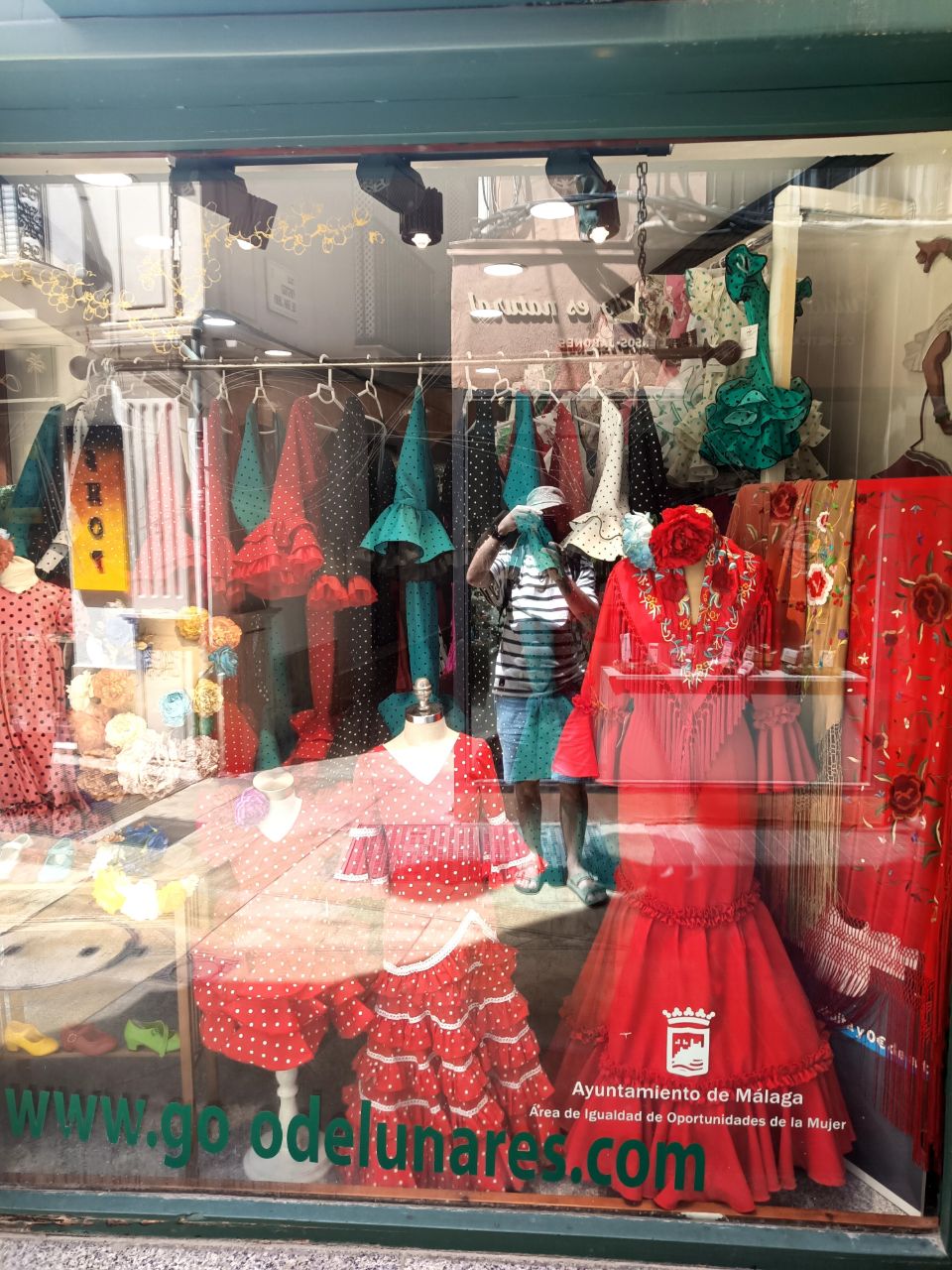
Flamenco dresses in the window 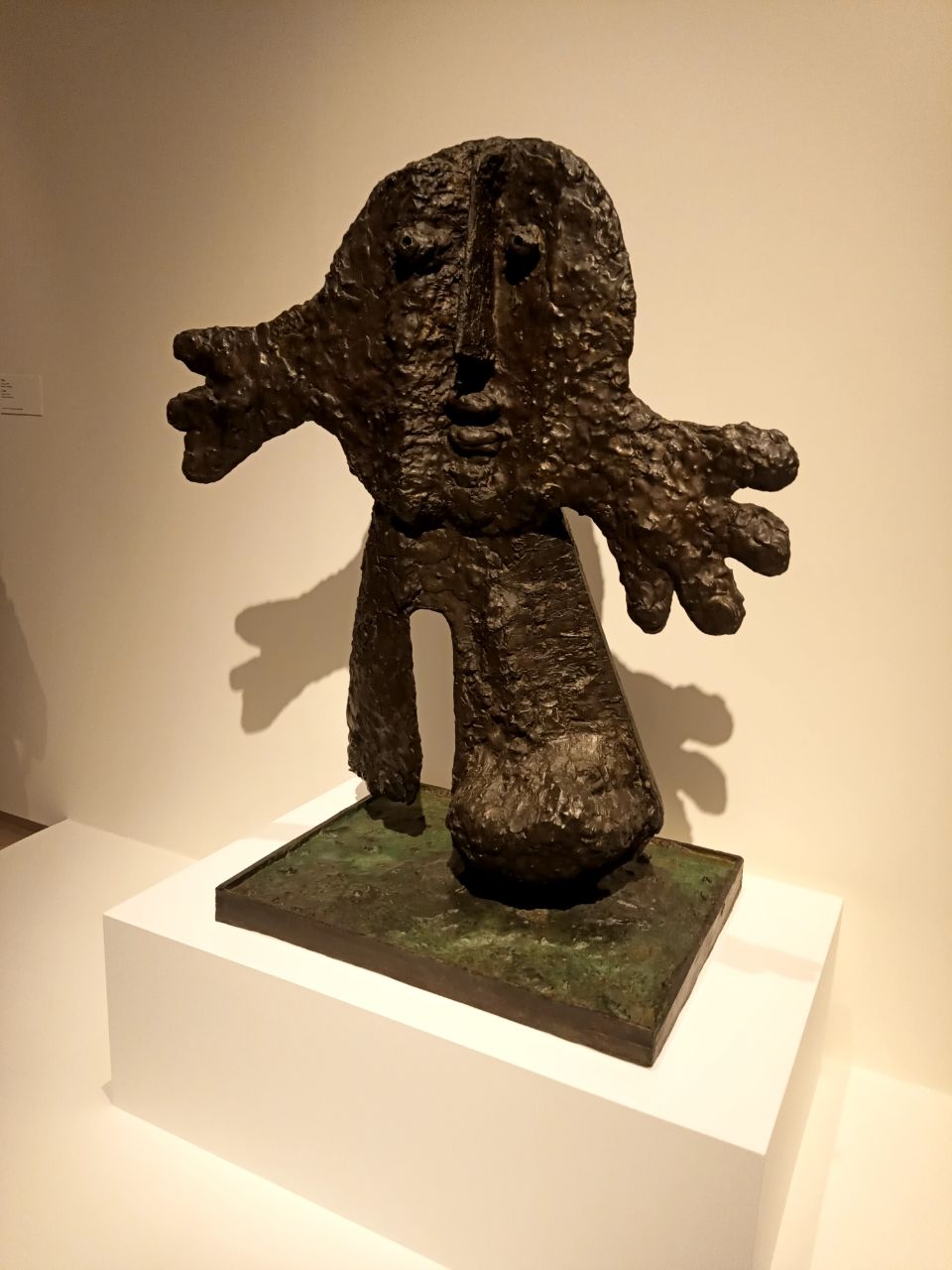
In the Picasso museum 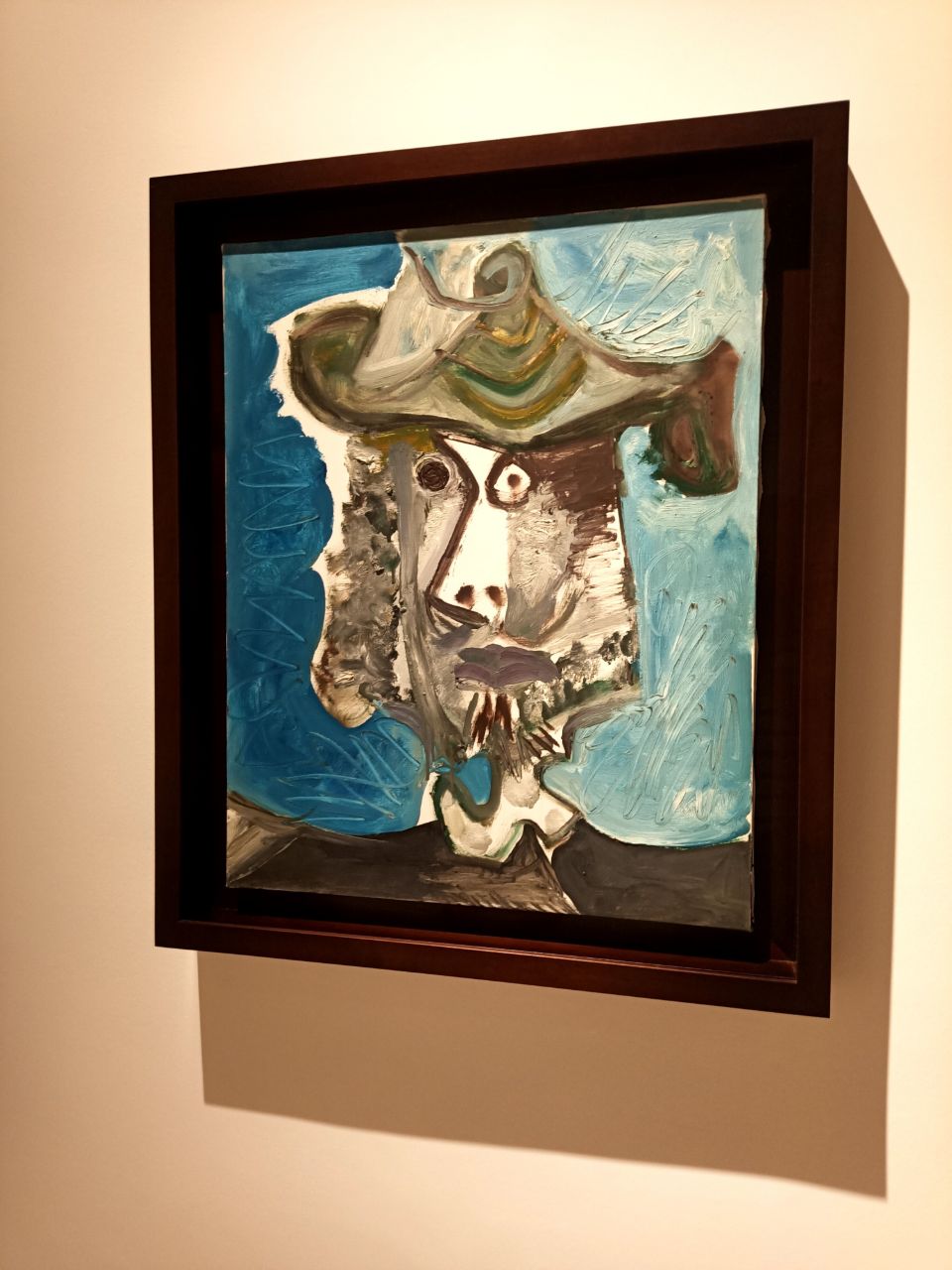
Picasso in oil, hat included 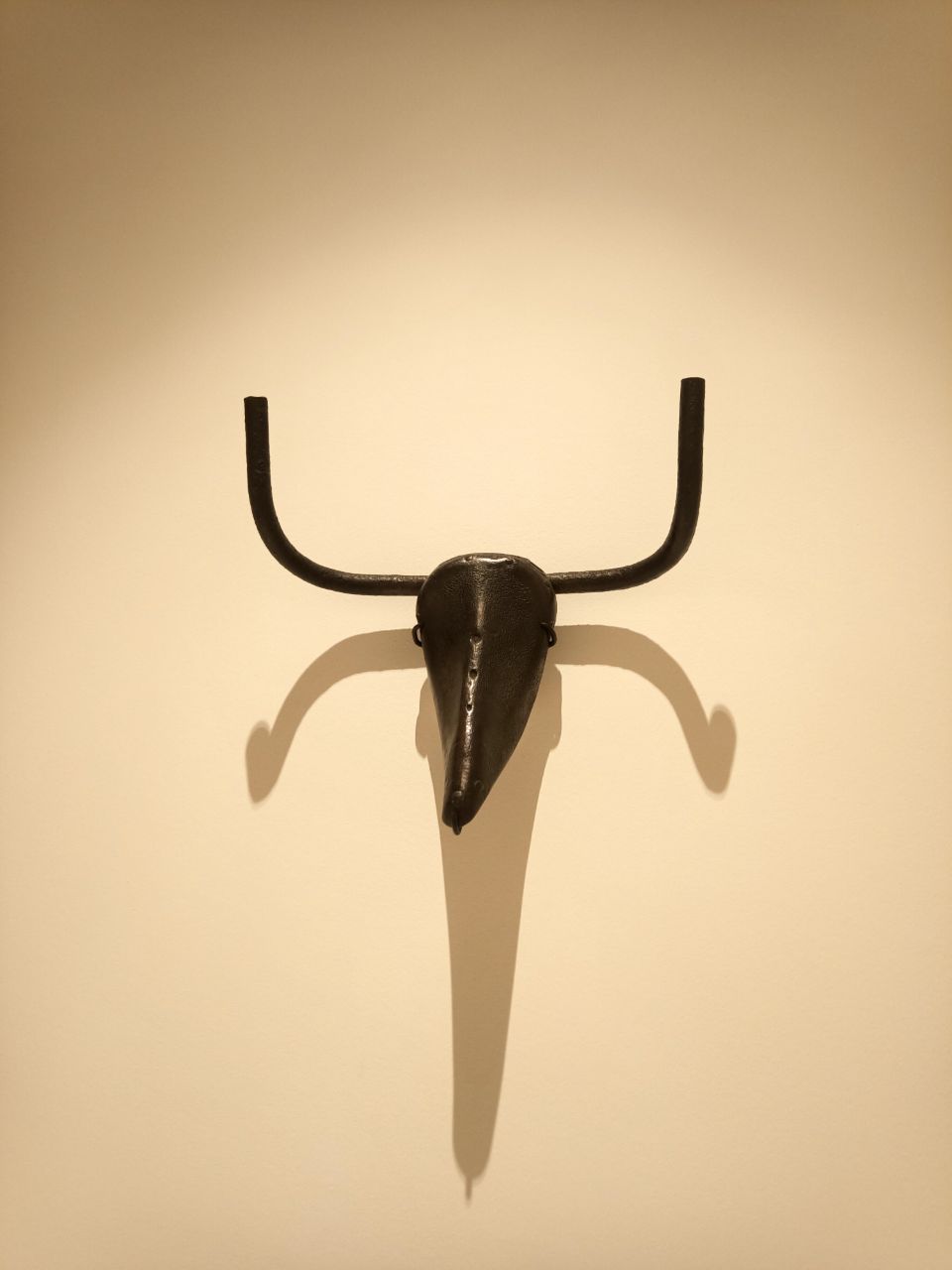
The iron bull 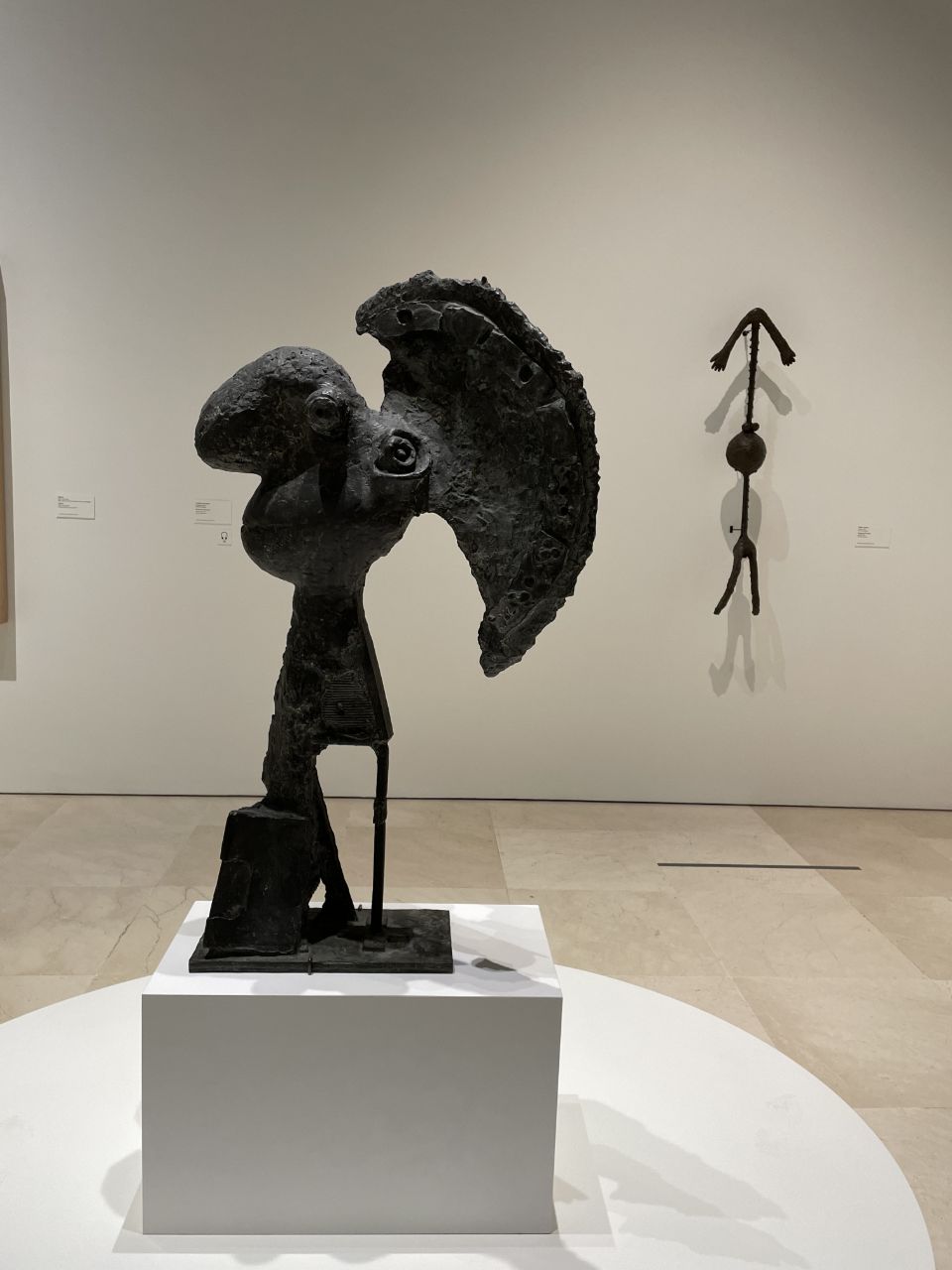
The bronze that is nearly a bird 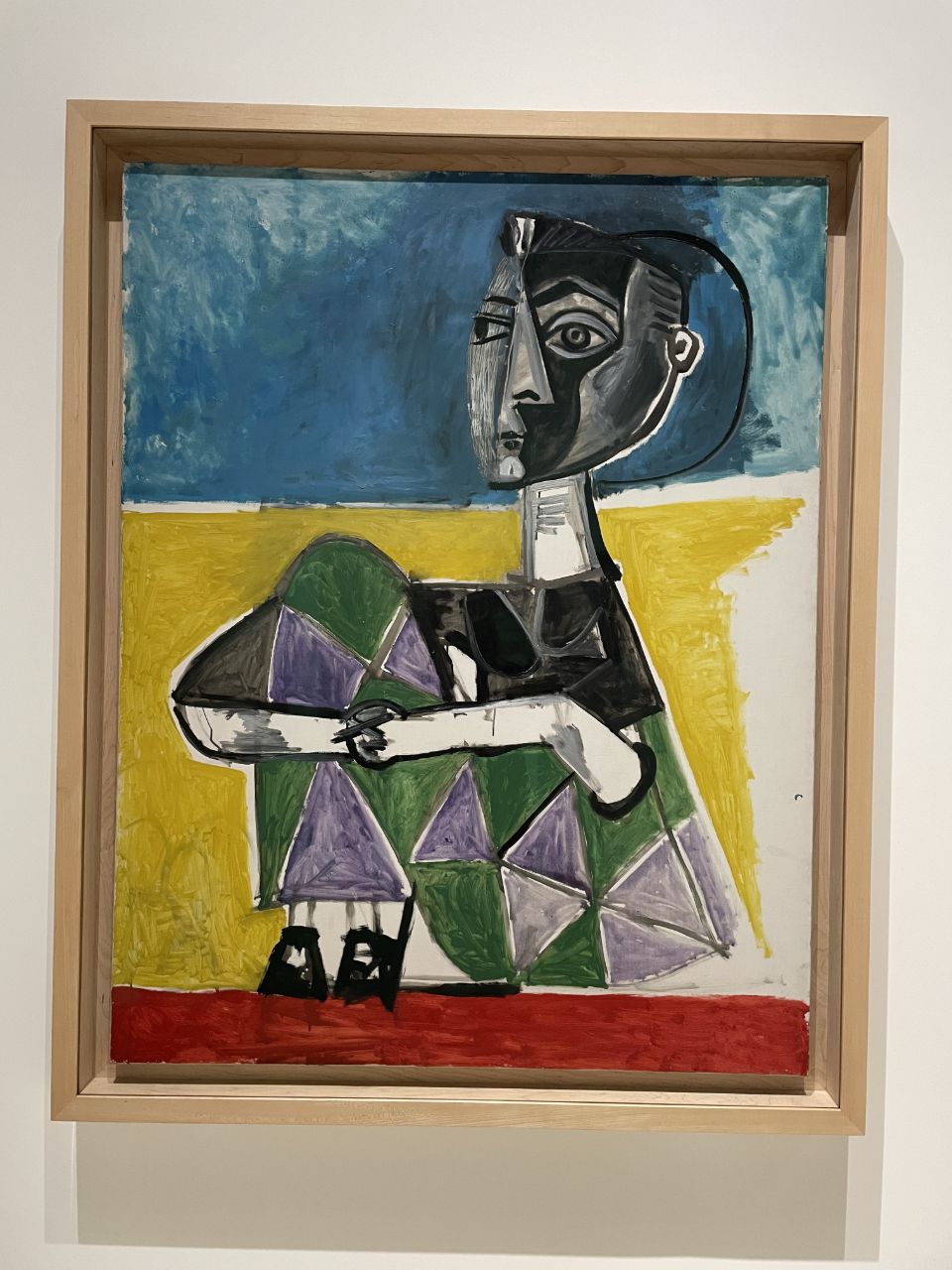
A late Picasso, colour all the way up 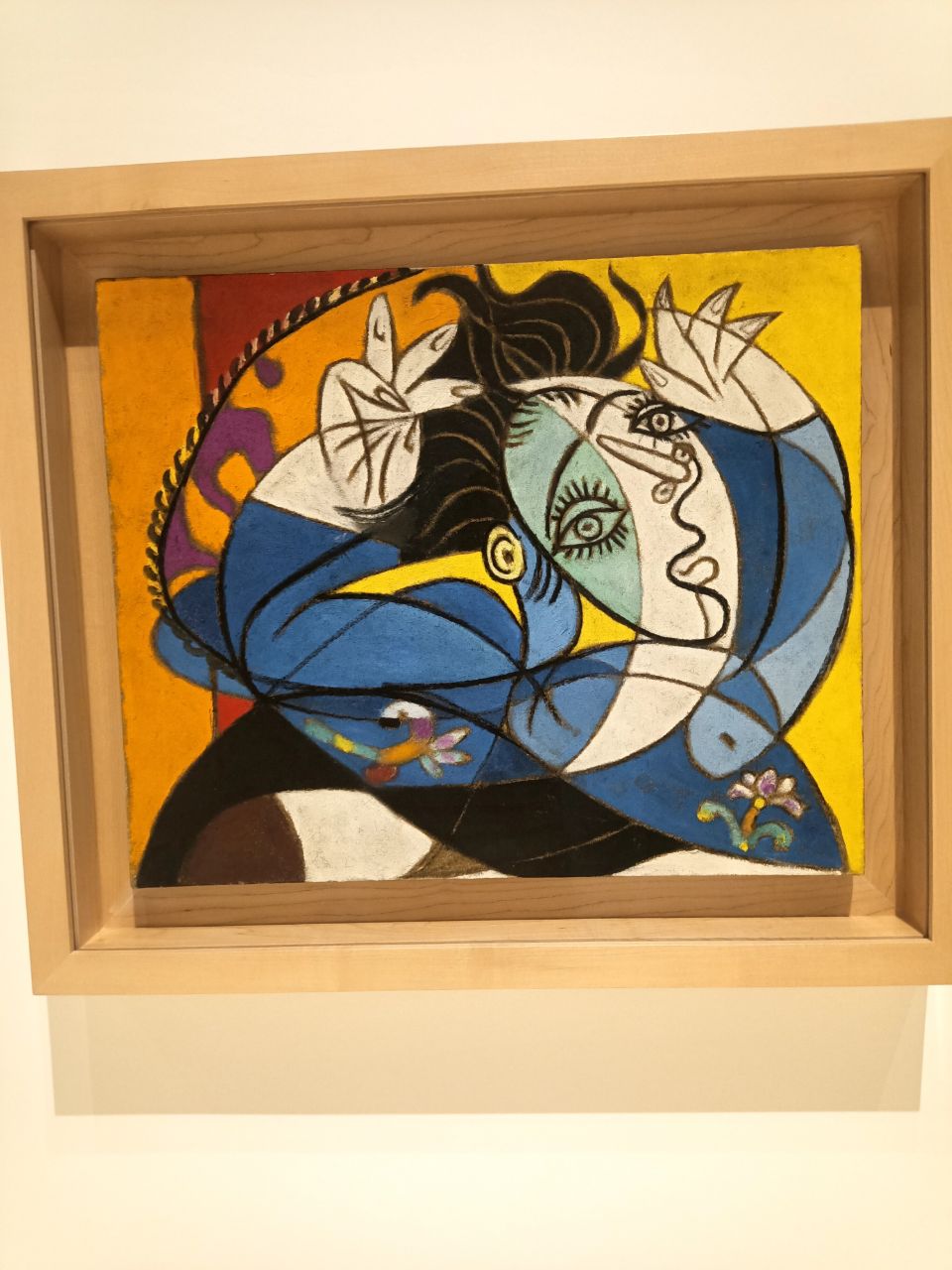
A woman, rebuilt from angles 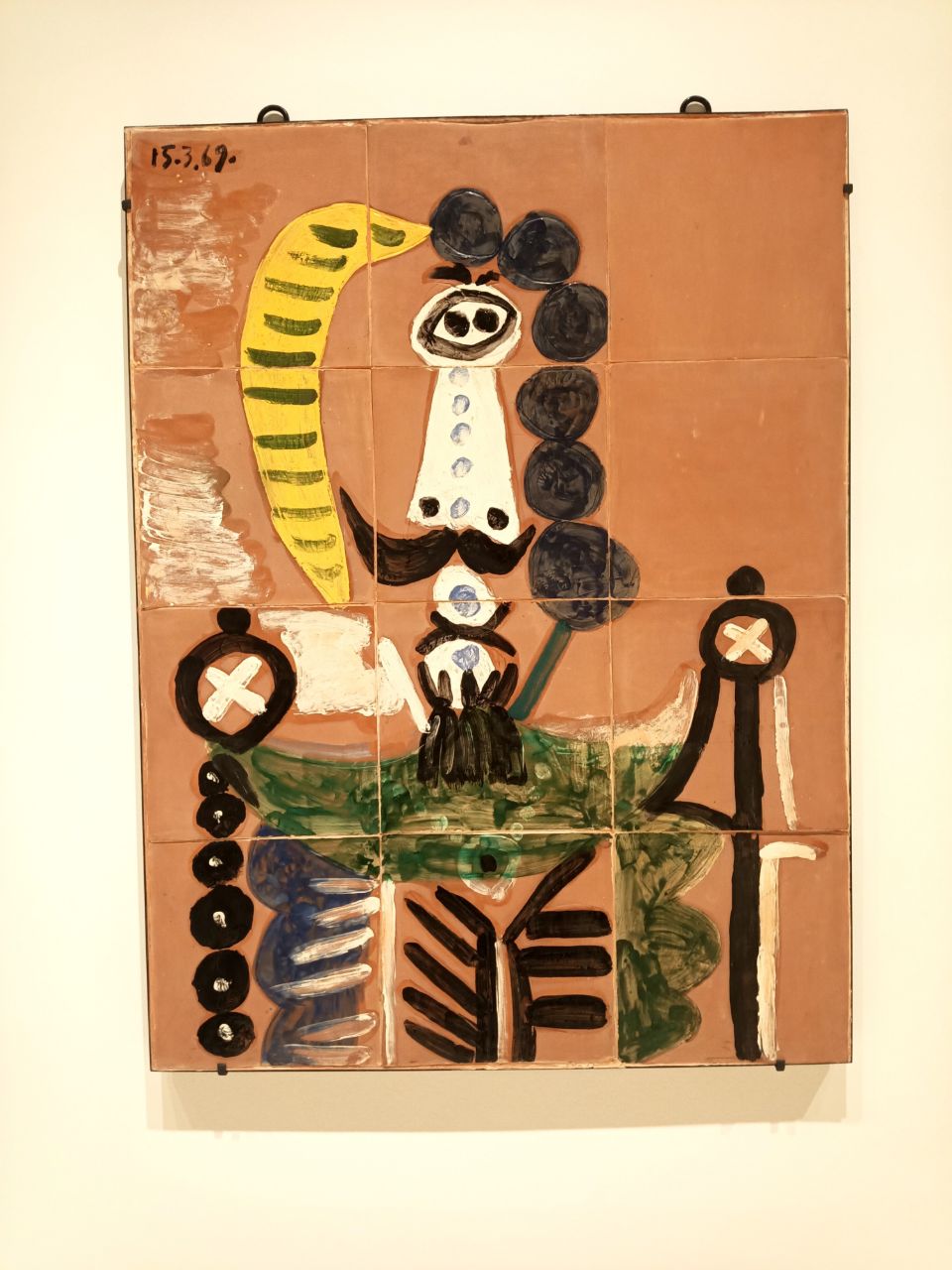
Picasso on tiles 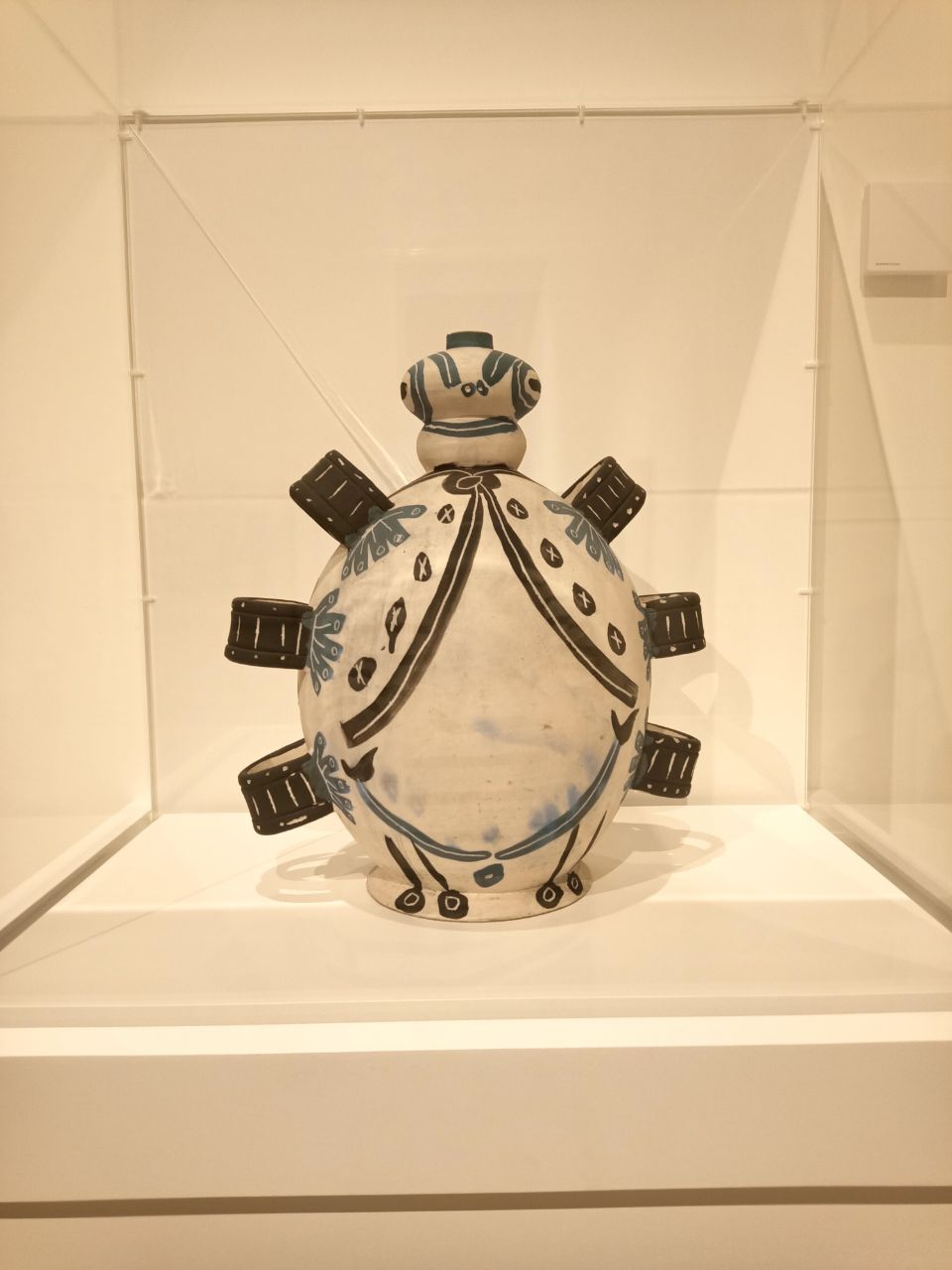
Picasso the ceramicist
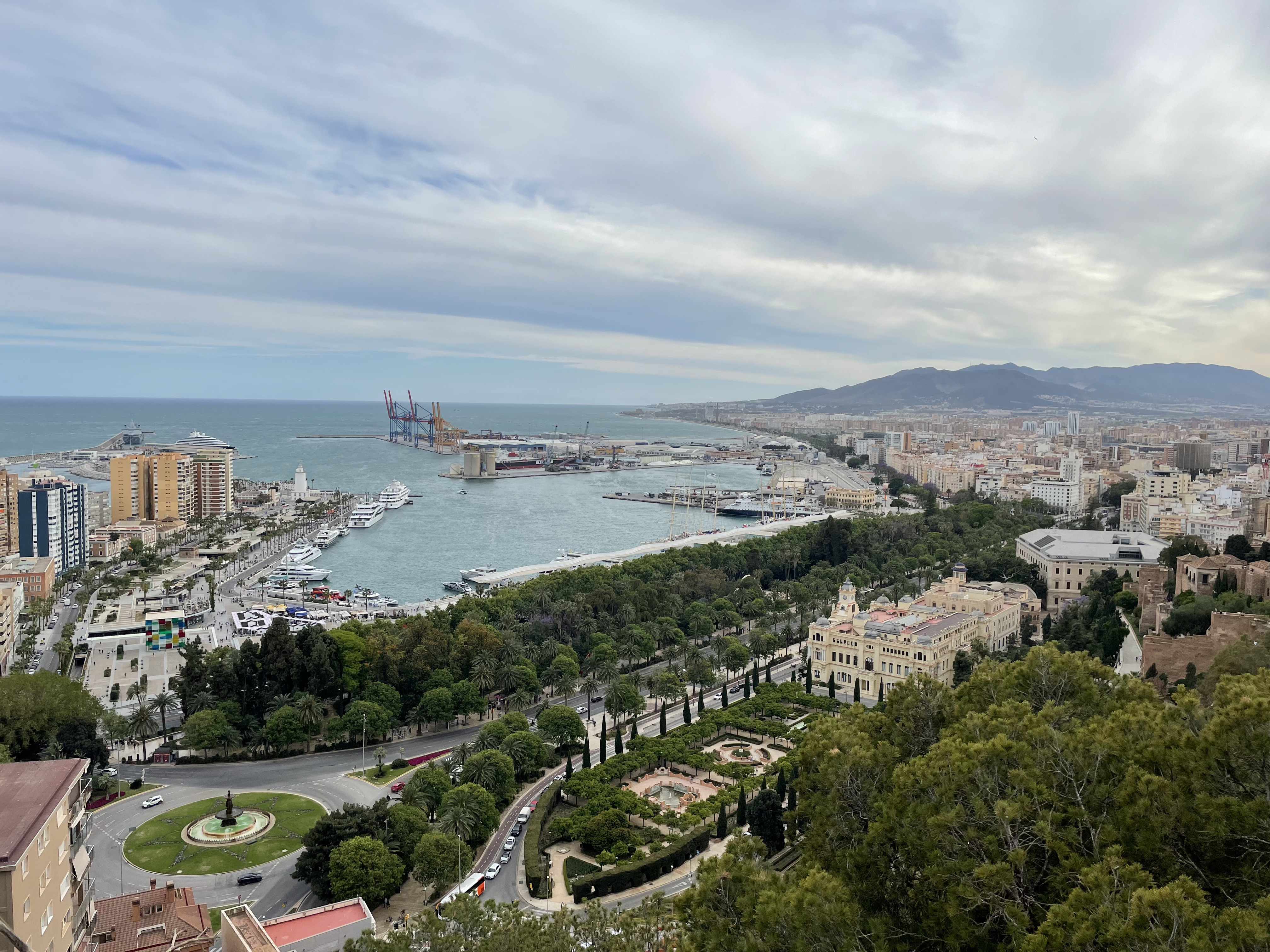
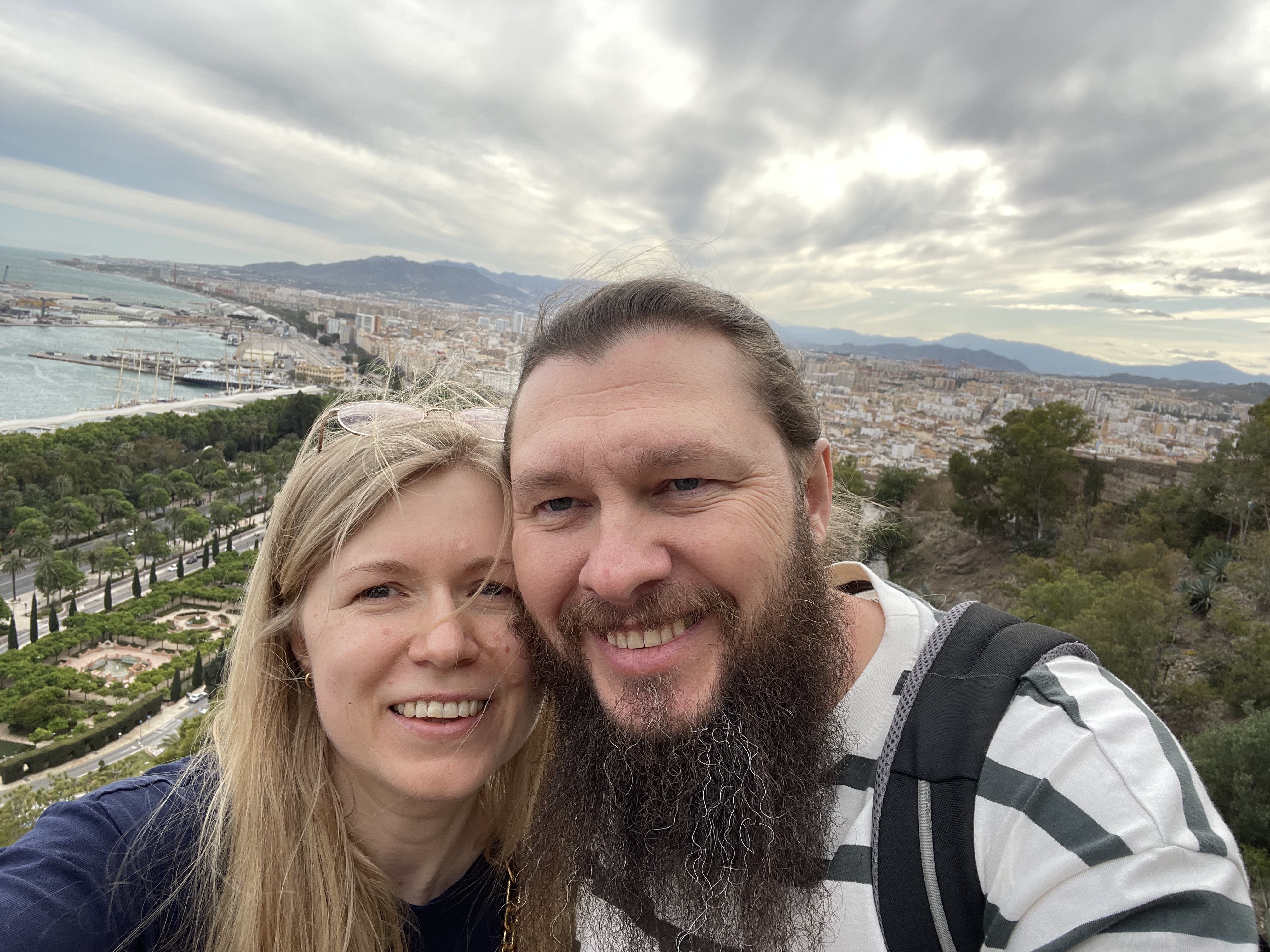
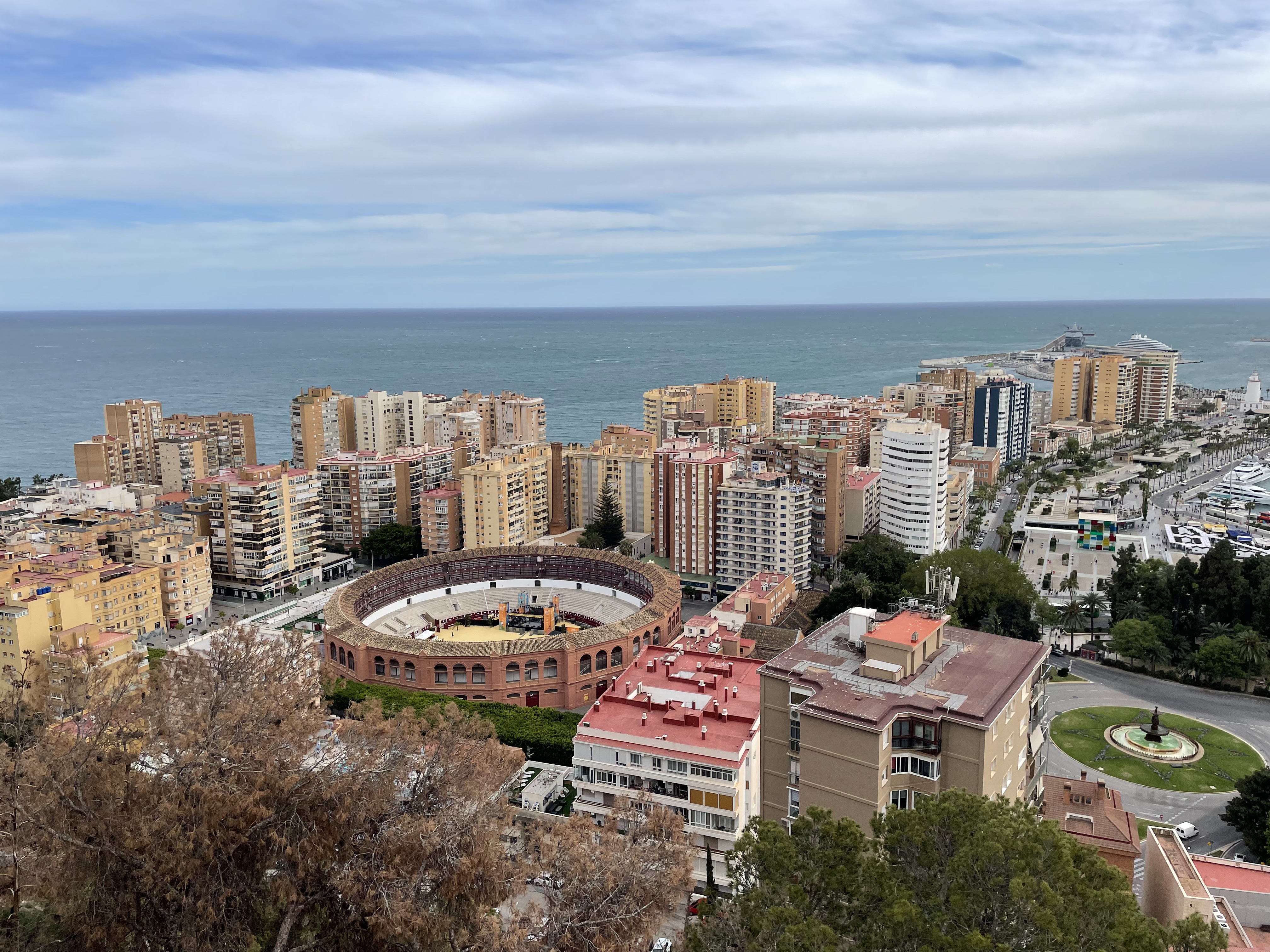
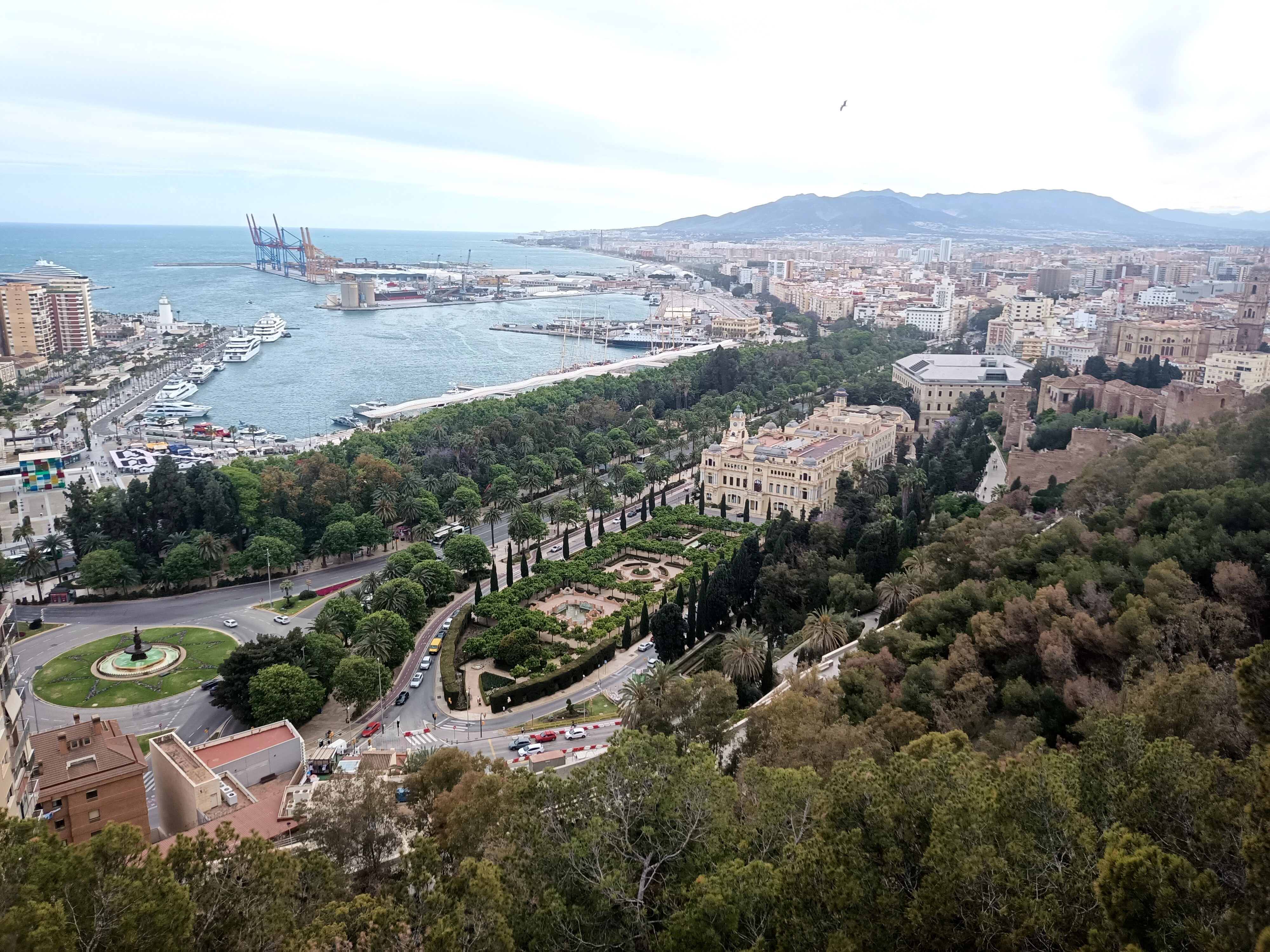
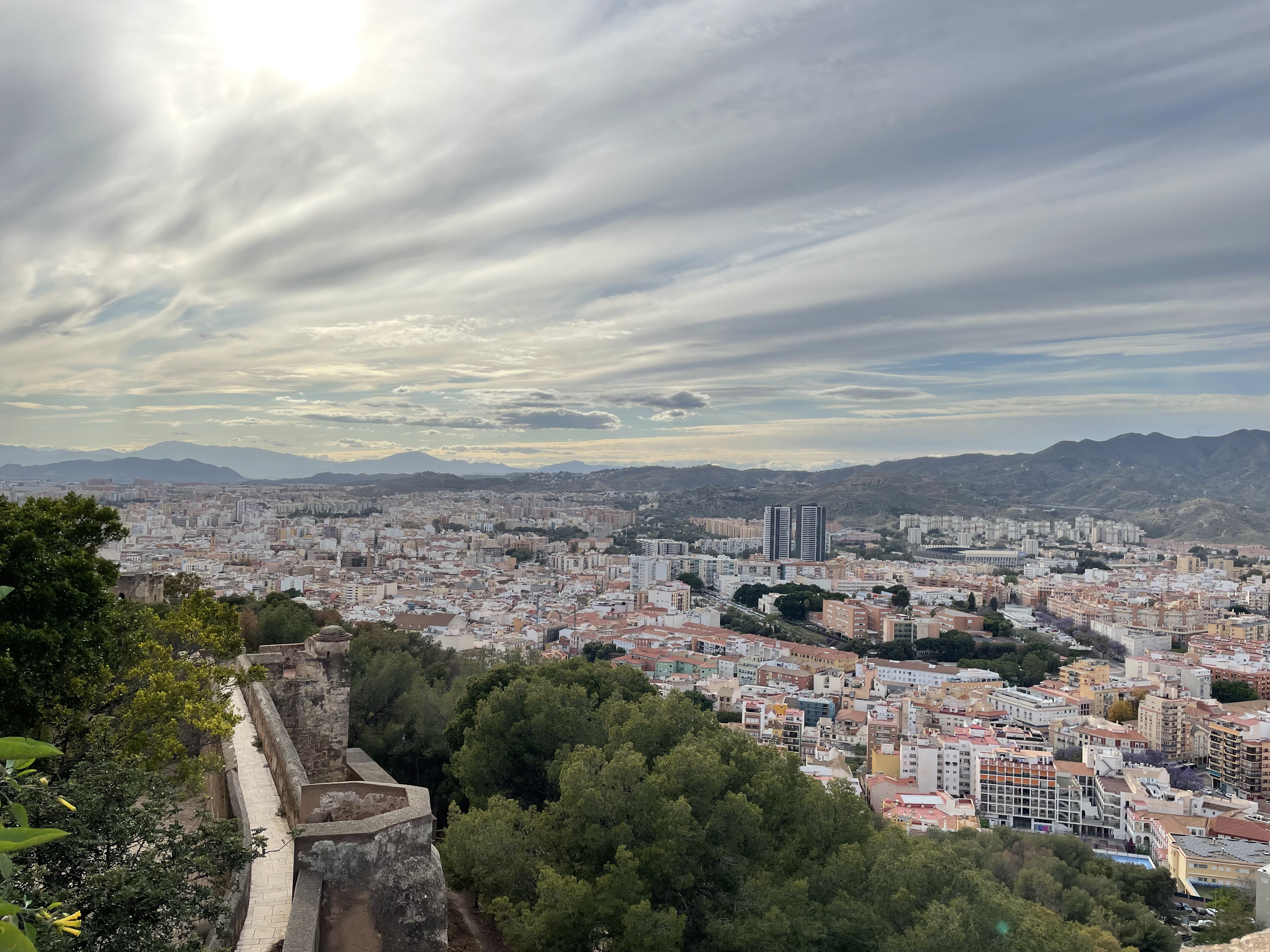
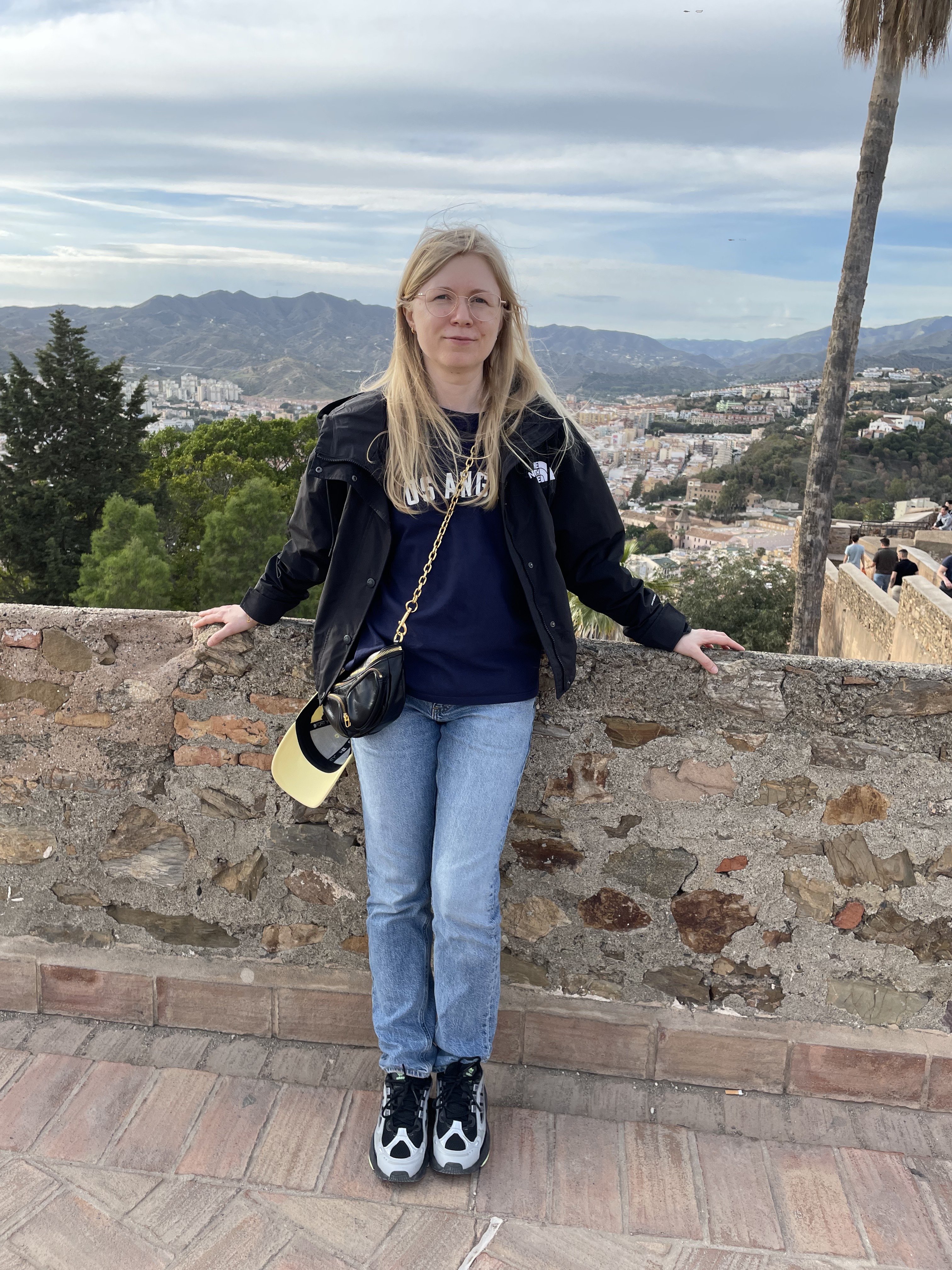
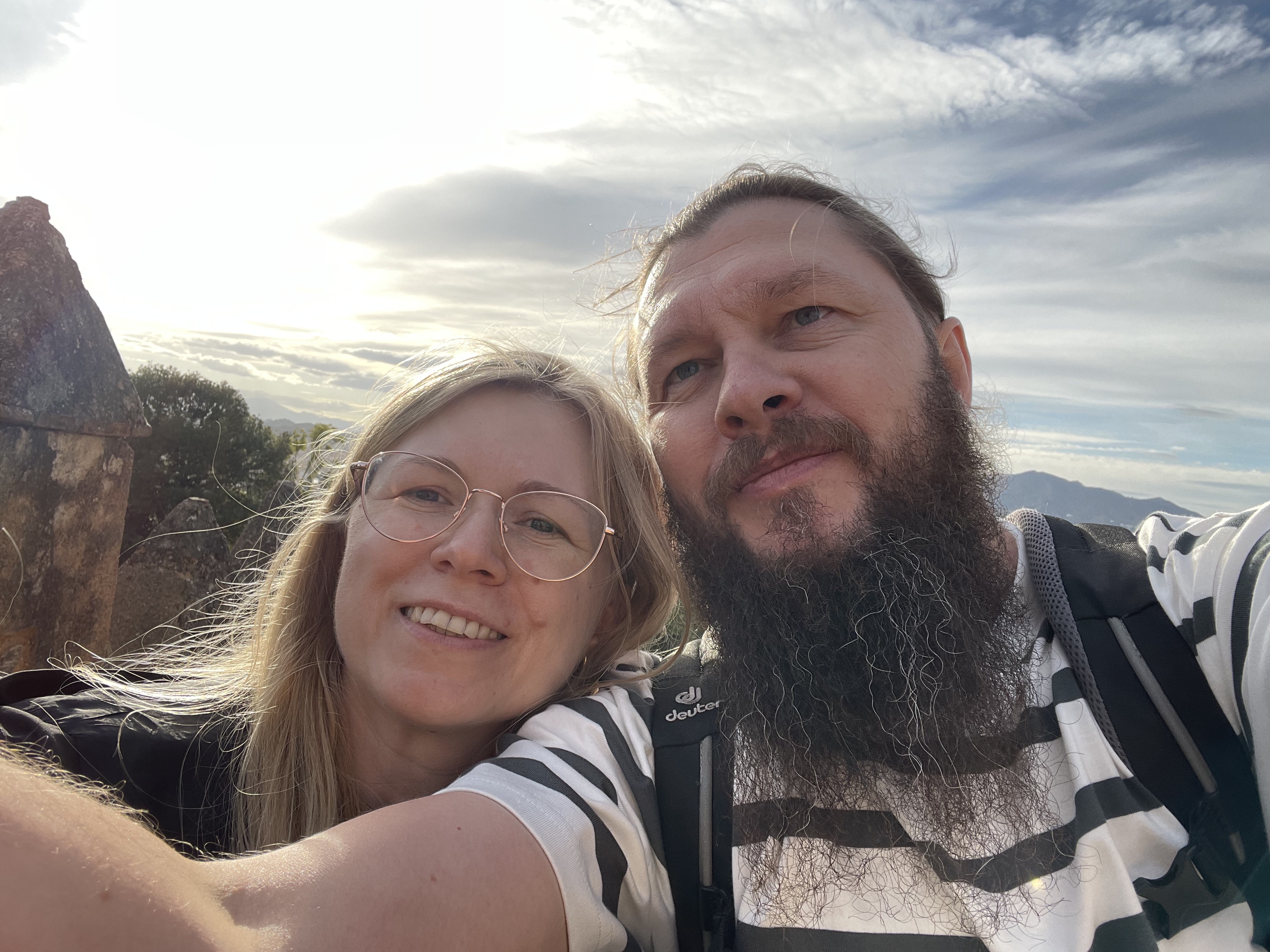
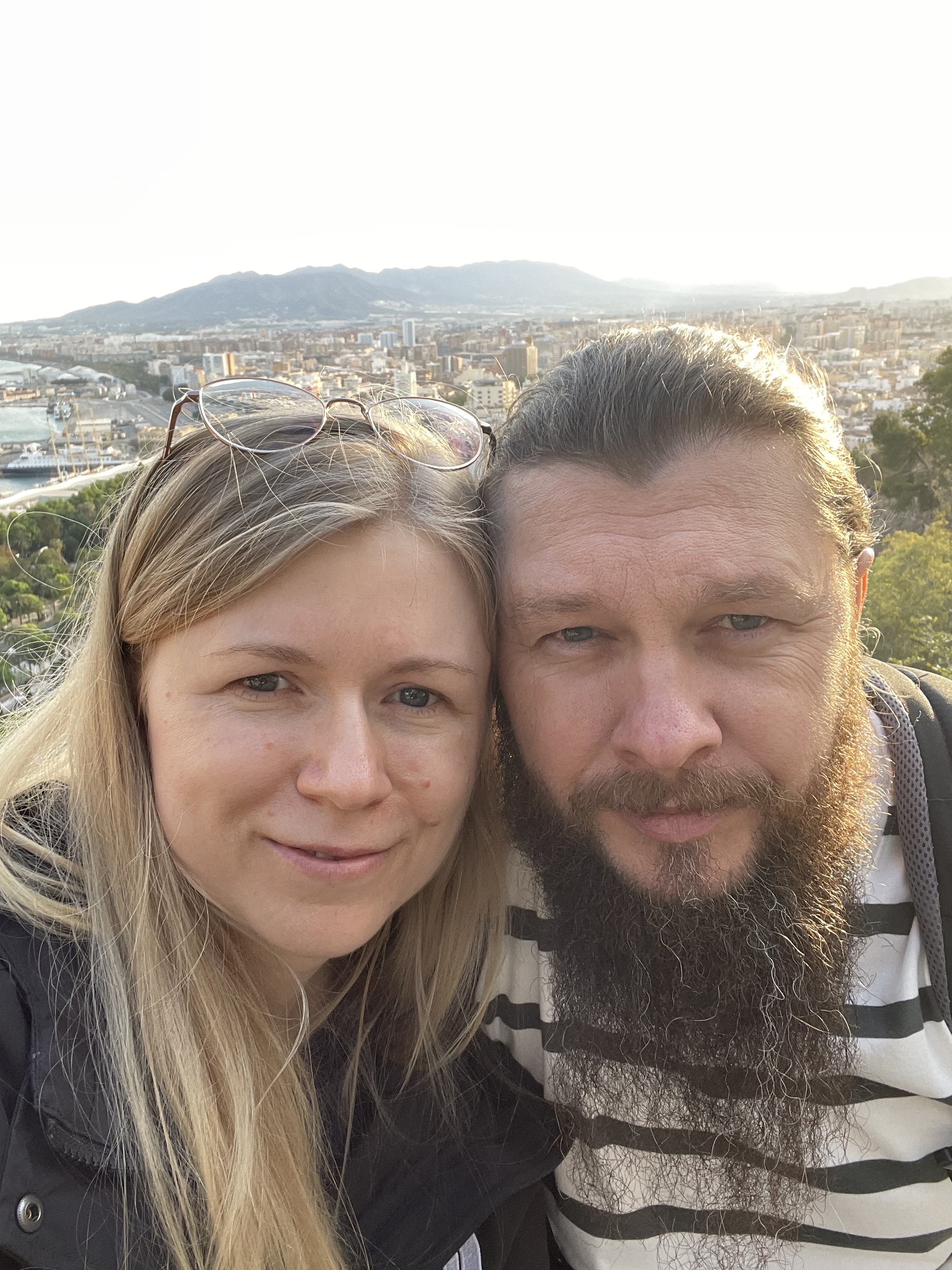
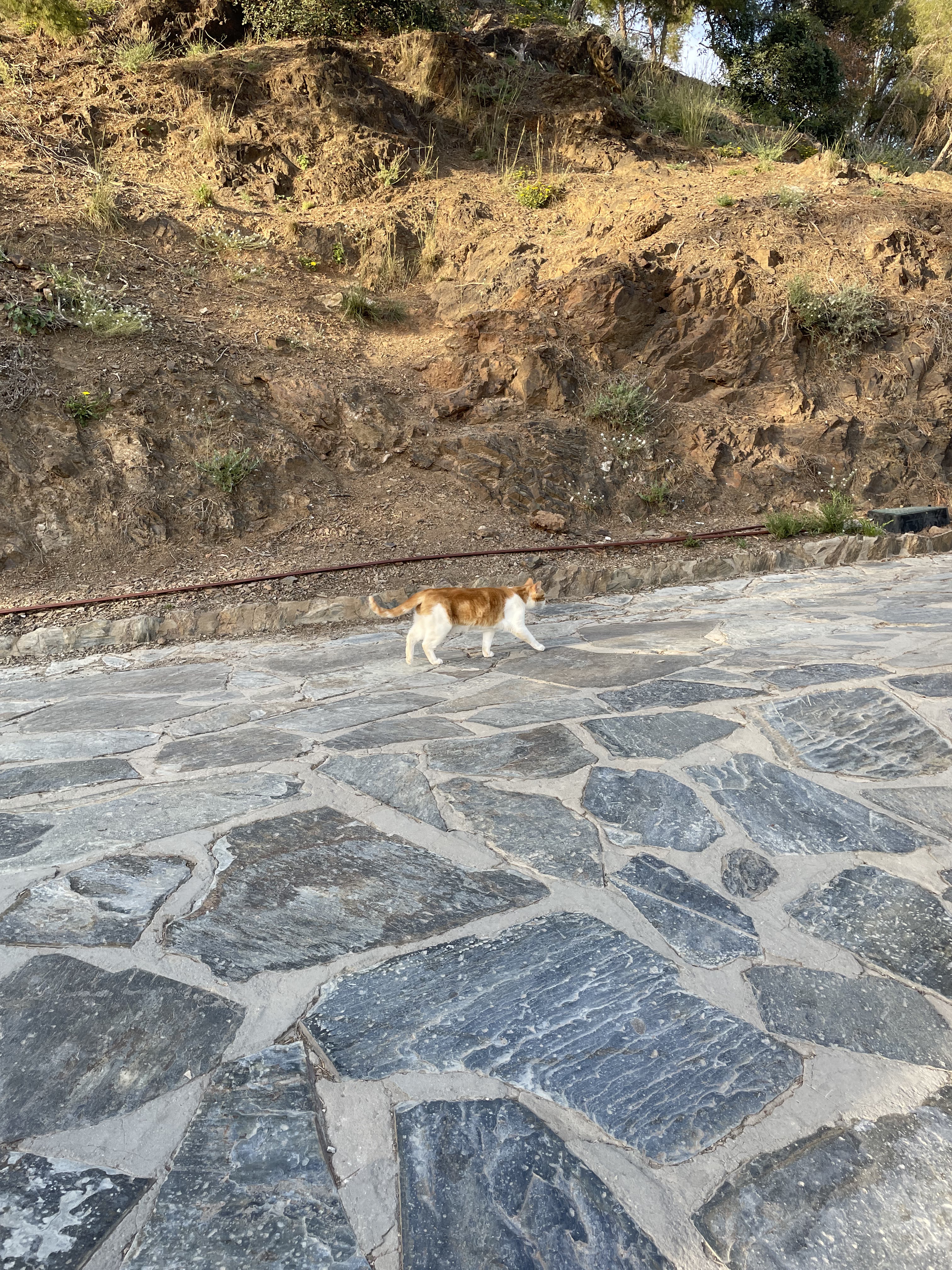
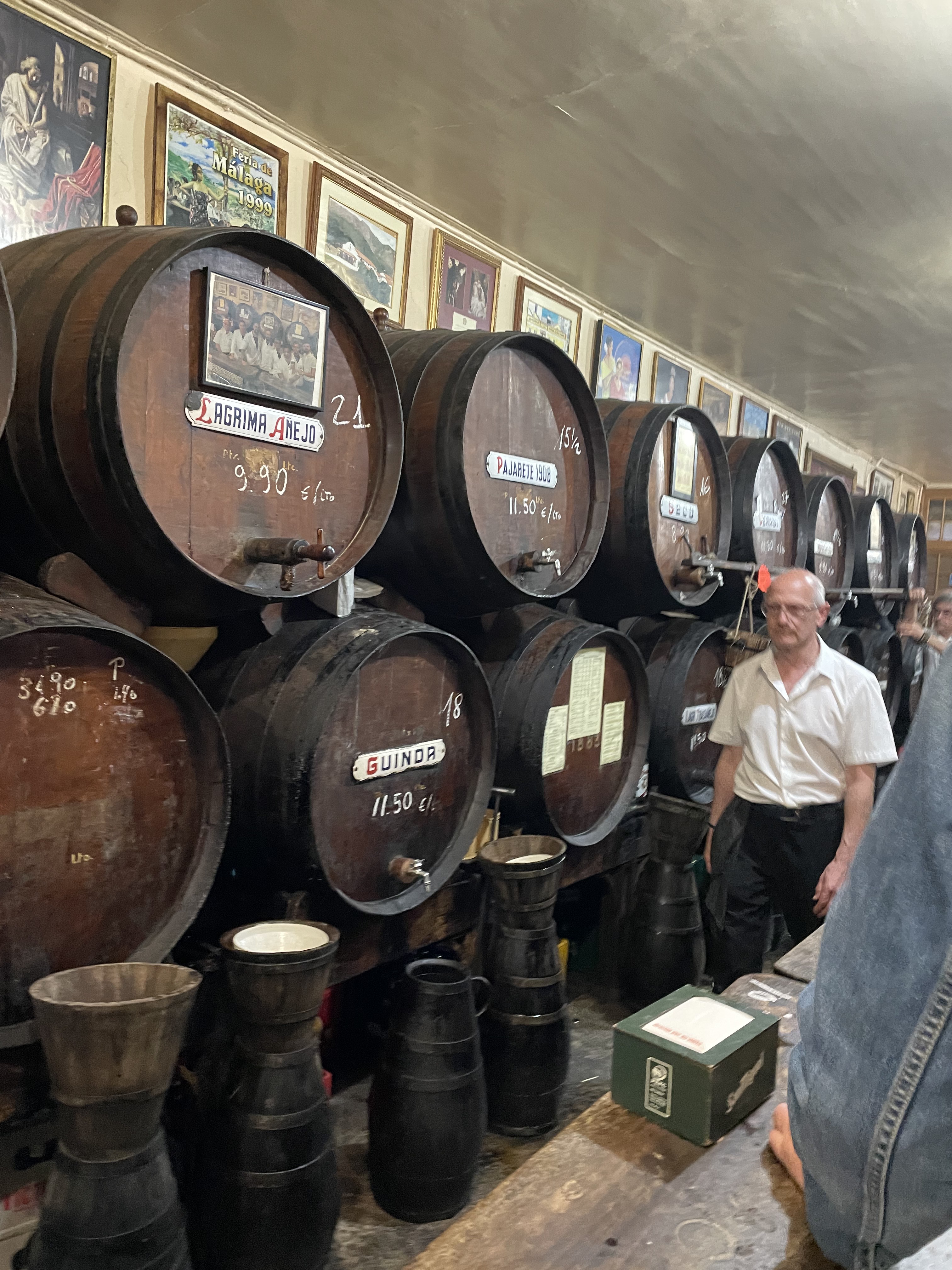
The evening went up instead of out. Gibralfaro's viewpoint laid out port, promenade and palm gardens in one wide frame at dusk — the bullring tucked into the east end like a period detail — and the walls ran on over blue hour into violet, while a stone watchtower kept its golden hour for a selfie and the path back down was supervised, at a discreet distance, by an orange-and-white cat with evident seniority. When the walls went violet the evening was filed under wine: a tavern of stacked painted barrels, names and prices kept on the wood, and the good glass poured straight from a spout in the cask.
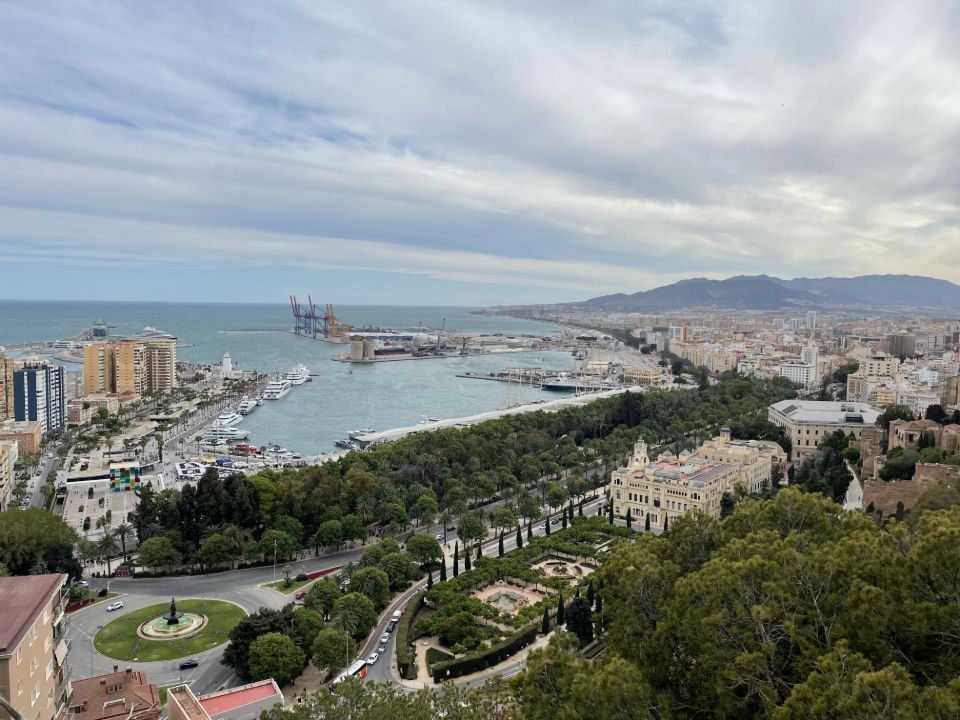
Málaga from Gibralfaro at dusk 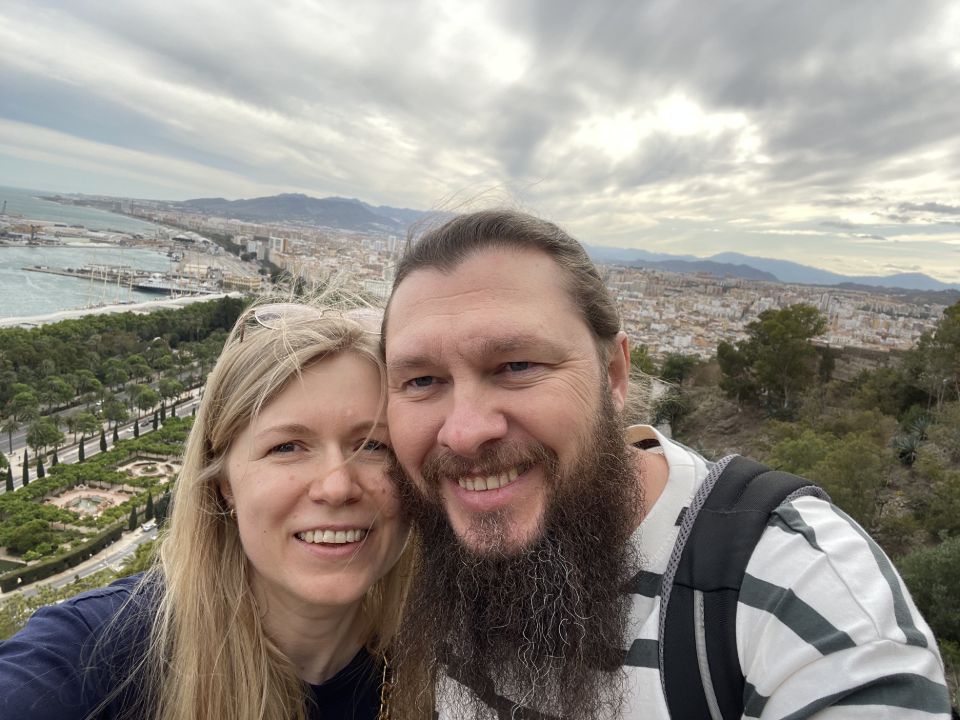
Both of us over the city 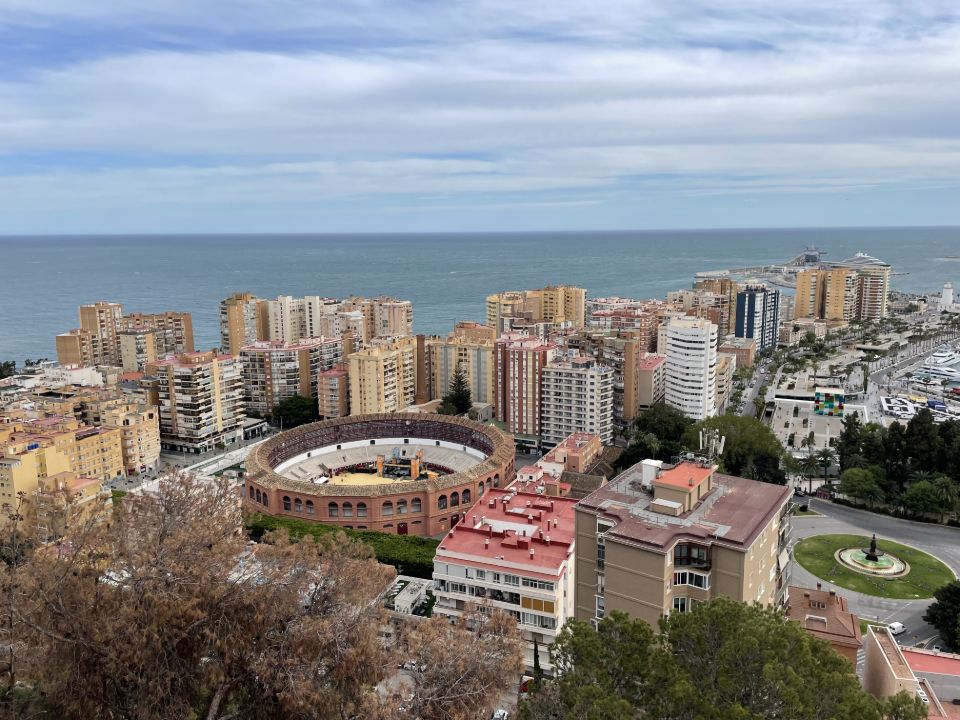
The bullring from above 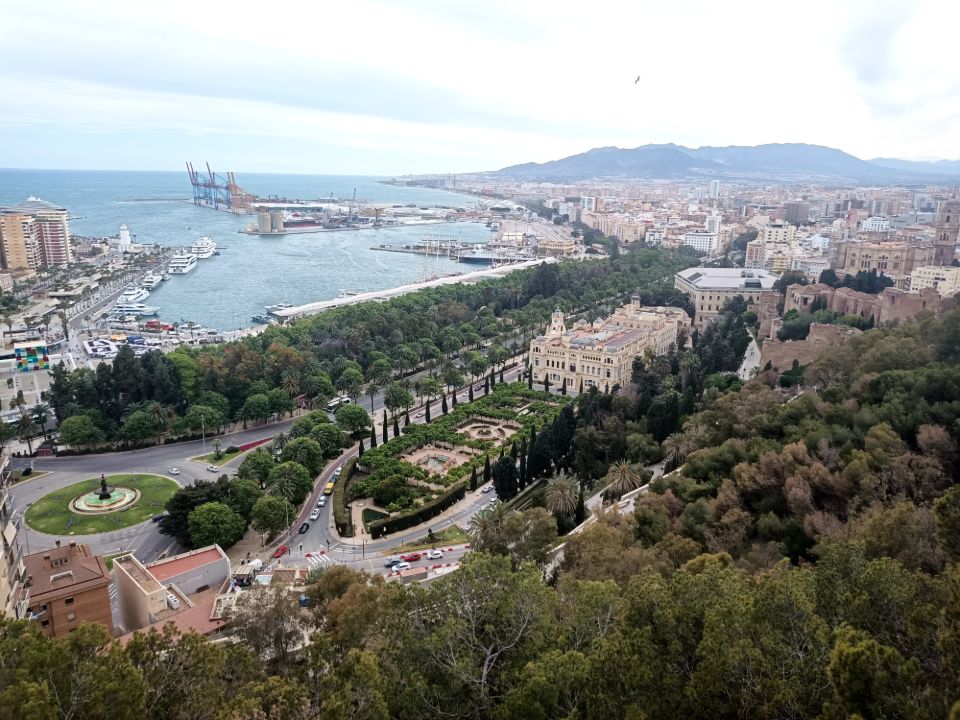
The viewpoint, one more angle 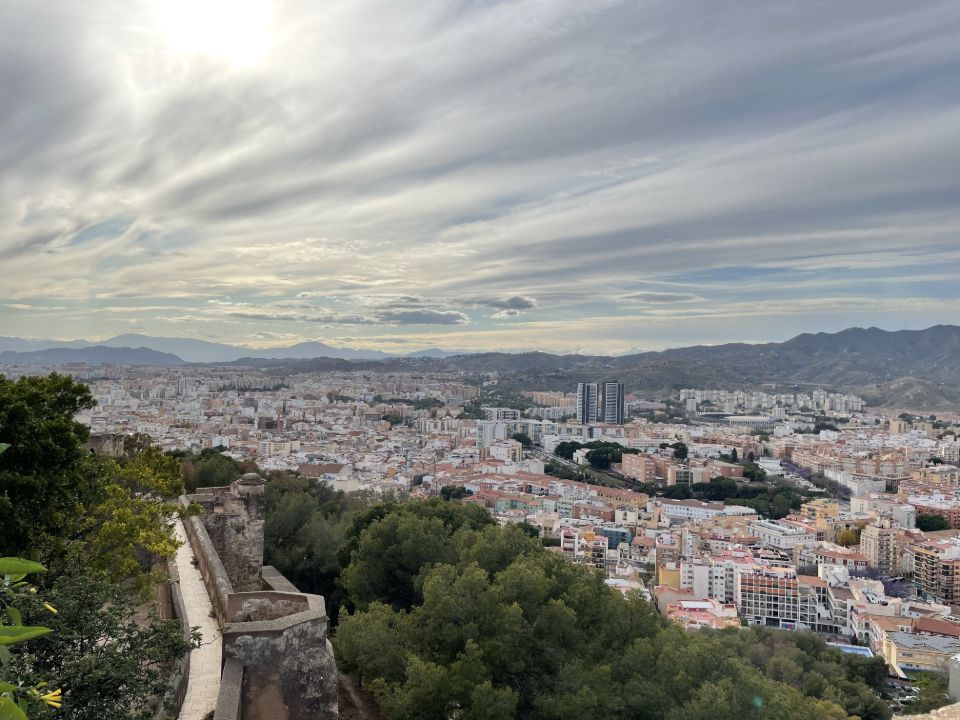
The walls in blue hour 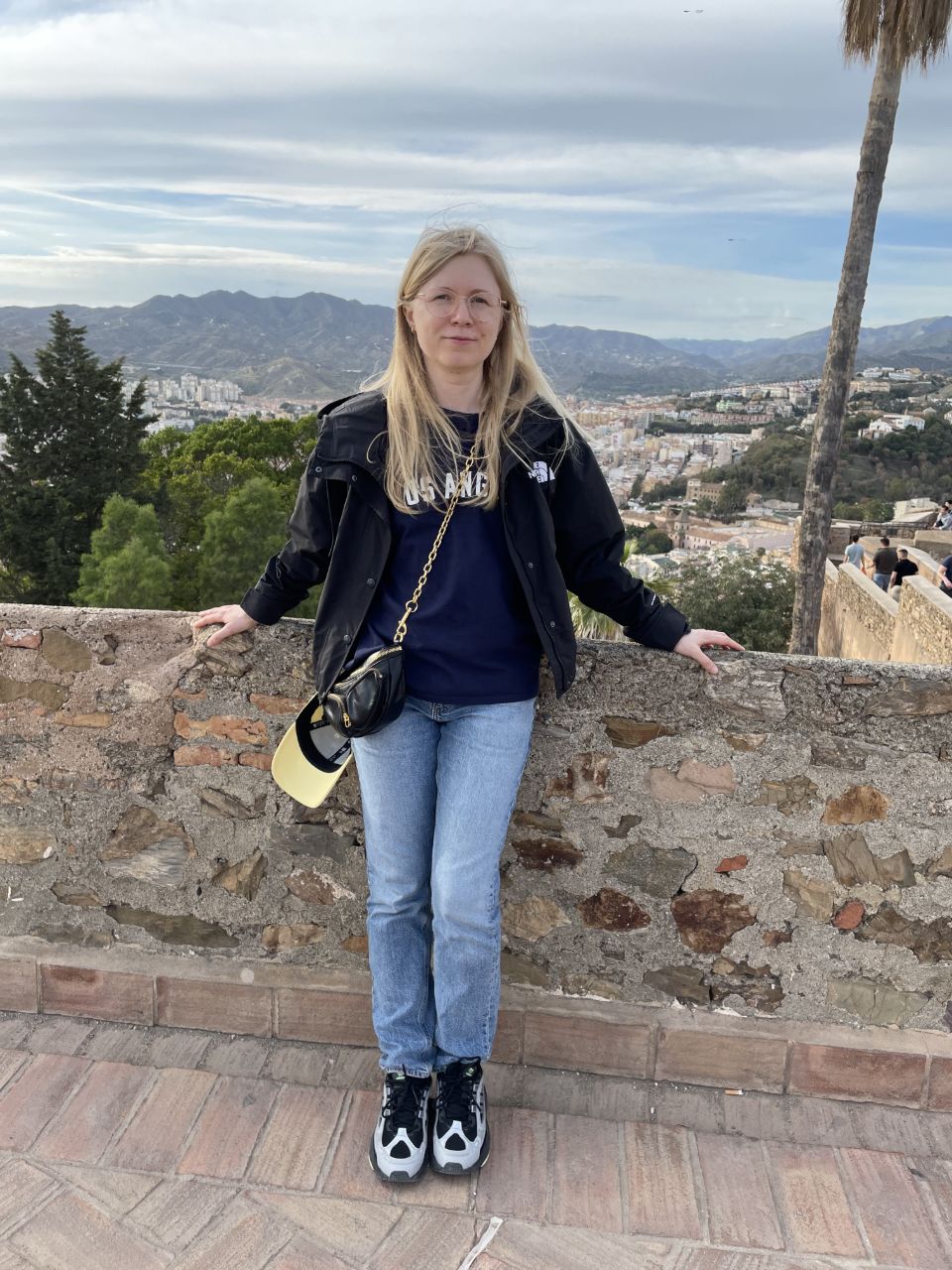
Anna on the Gibralfaro wall 
Torre Blanca, golden hour 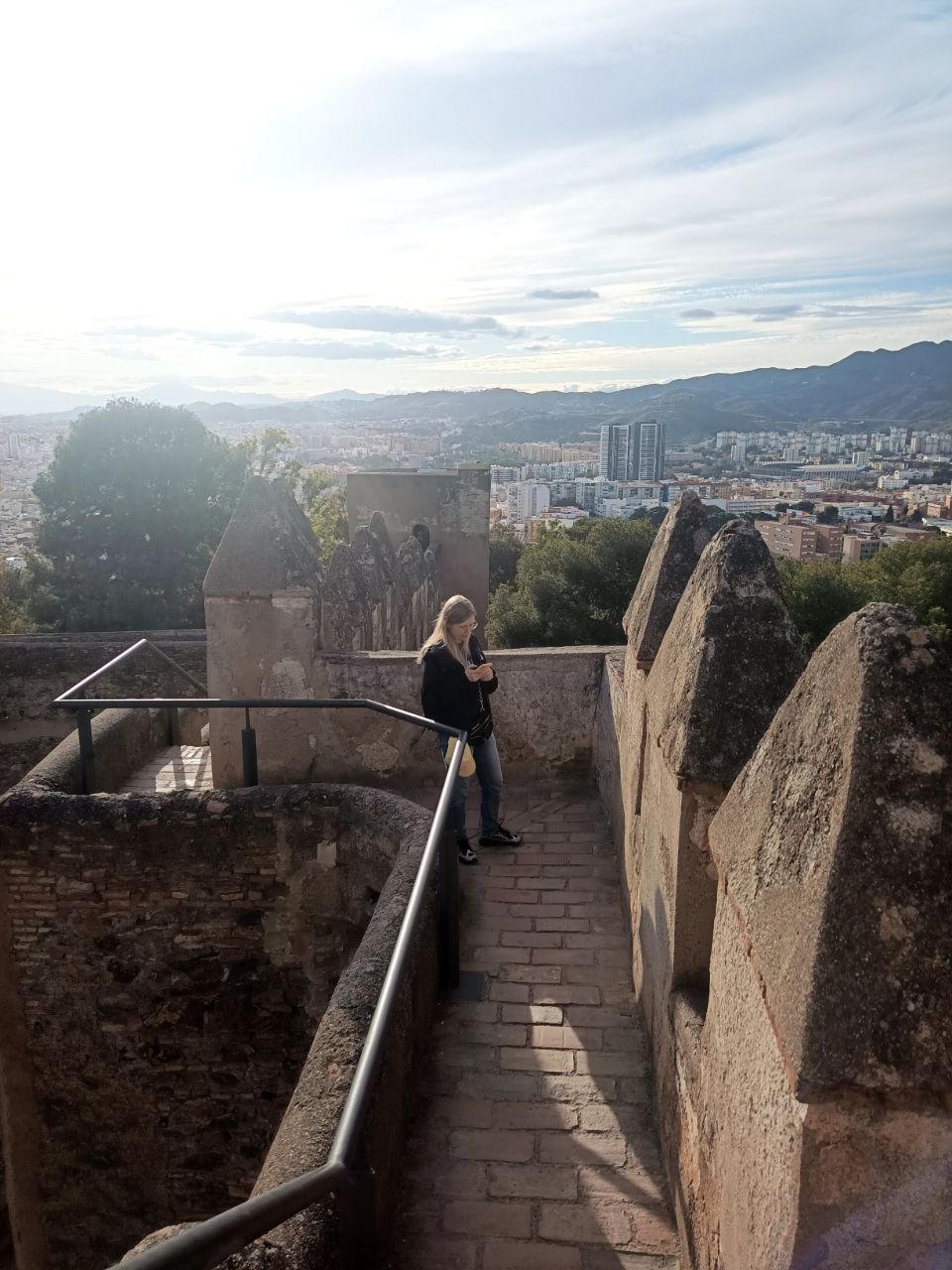
The watchtower, sun on the water 
Torre Blanca, one look back 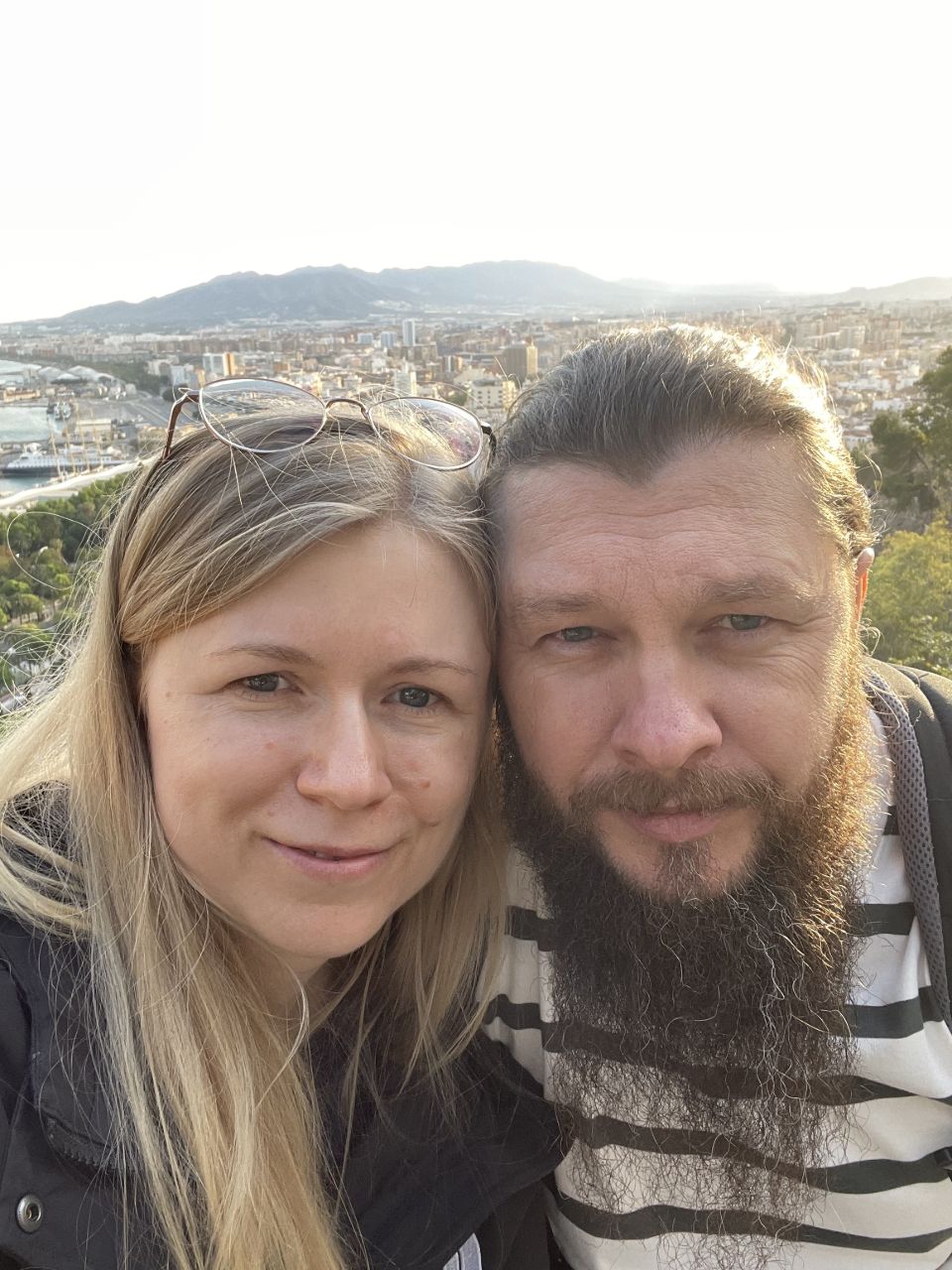
The violet hour above the city 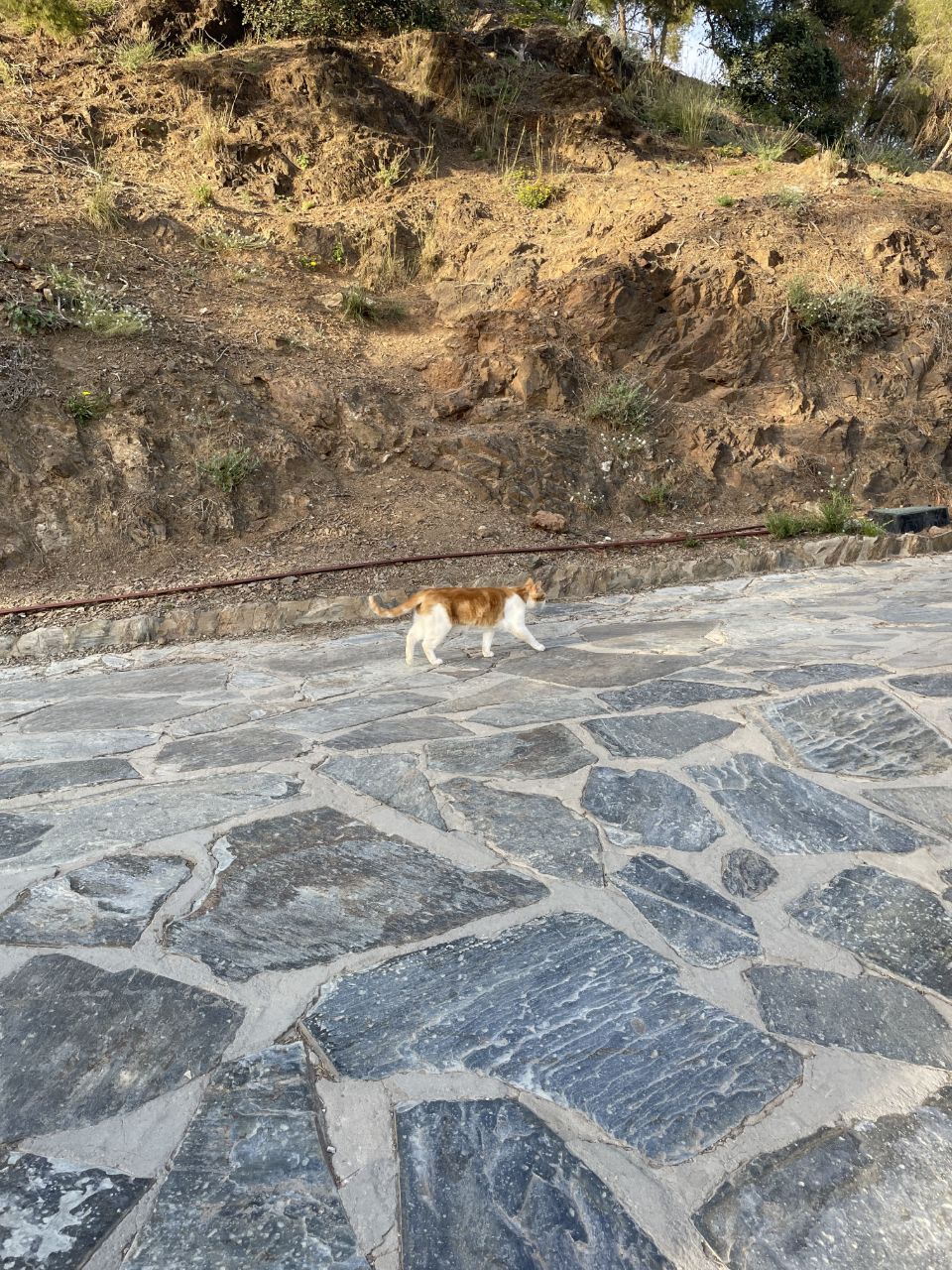
The cat of Gibralfaro 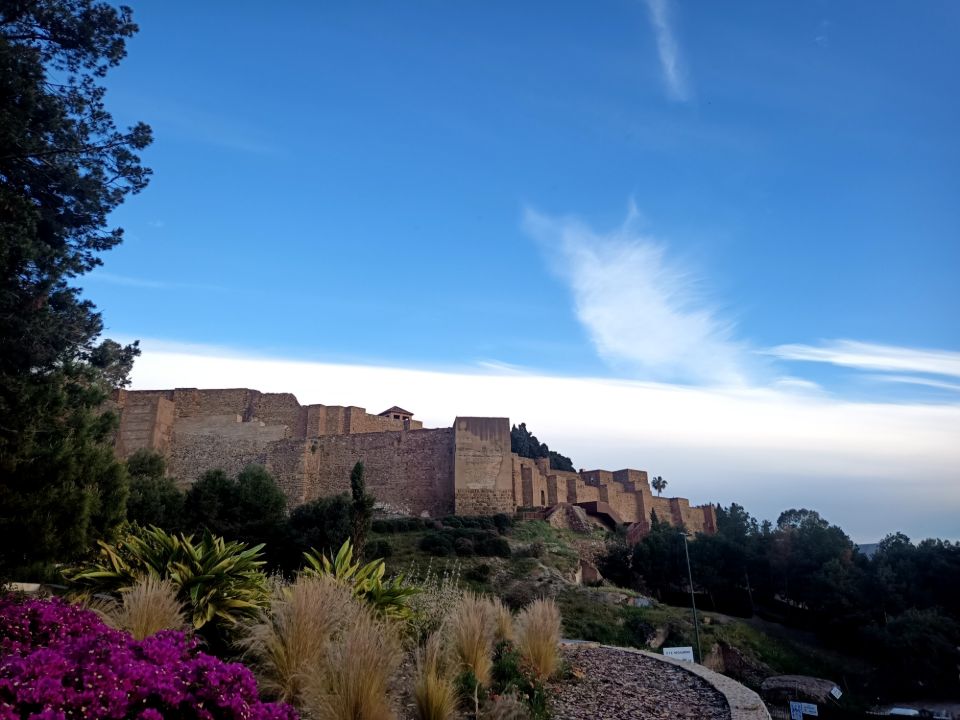
Fortress walls at dusk 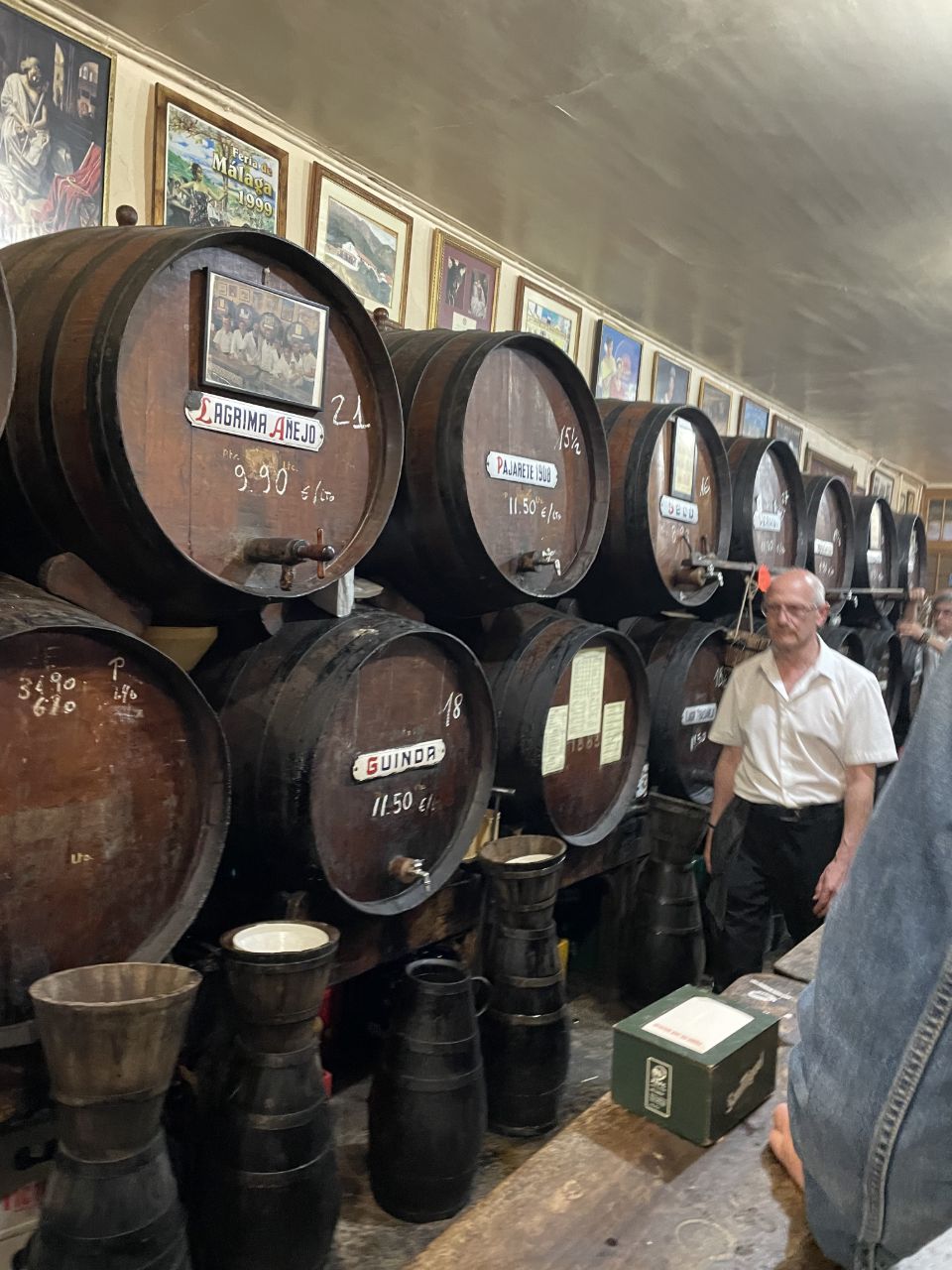
Wine from the painted barrels

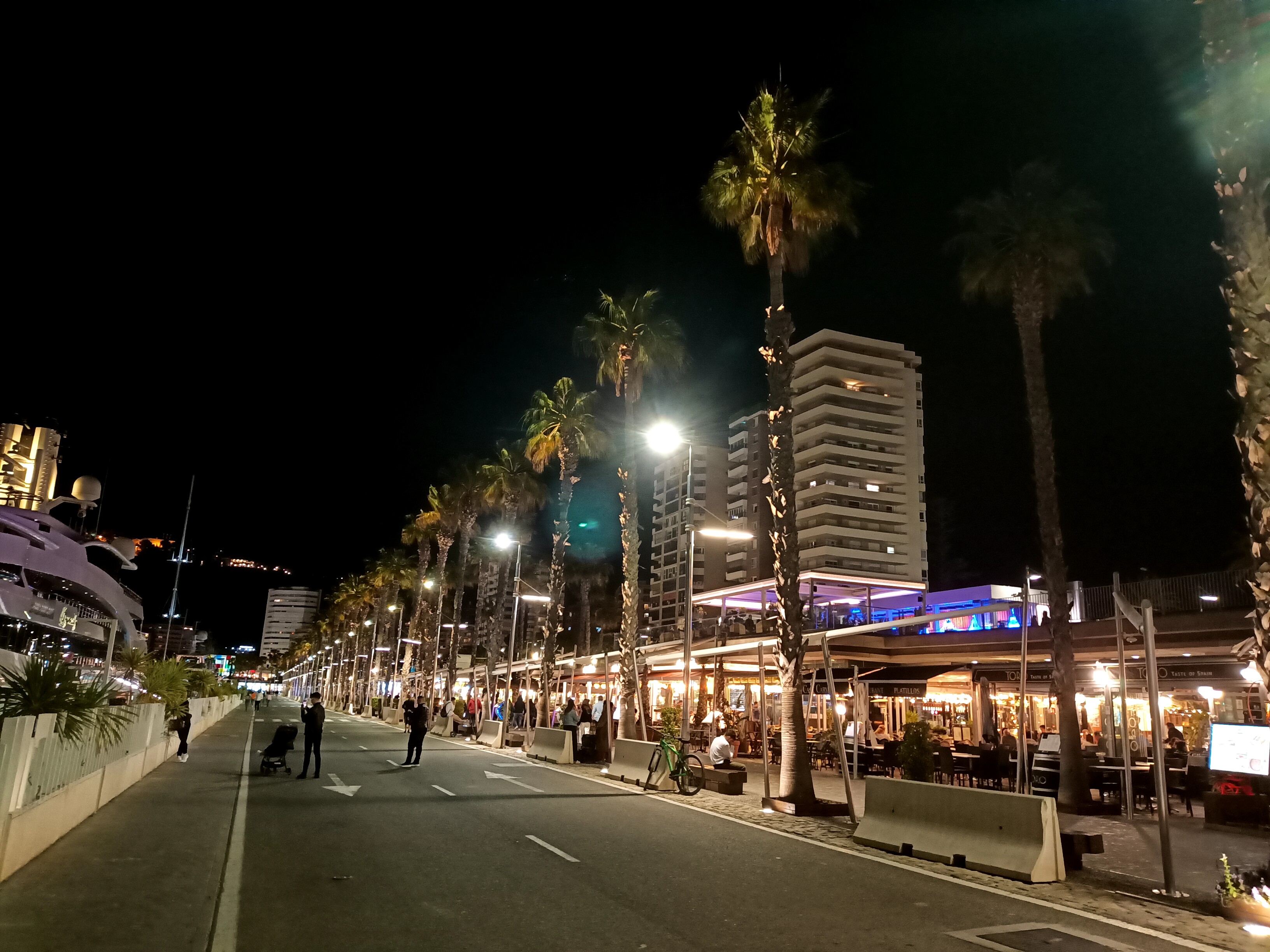
La Malagueta, after dark
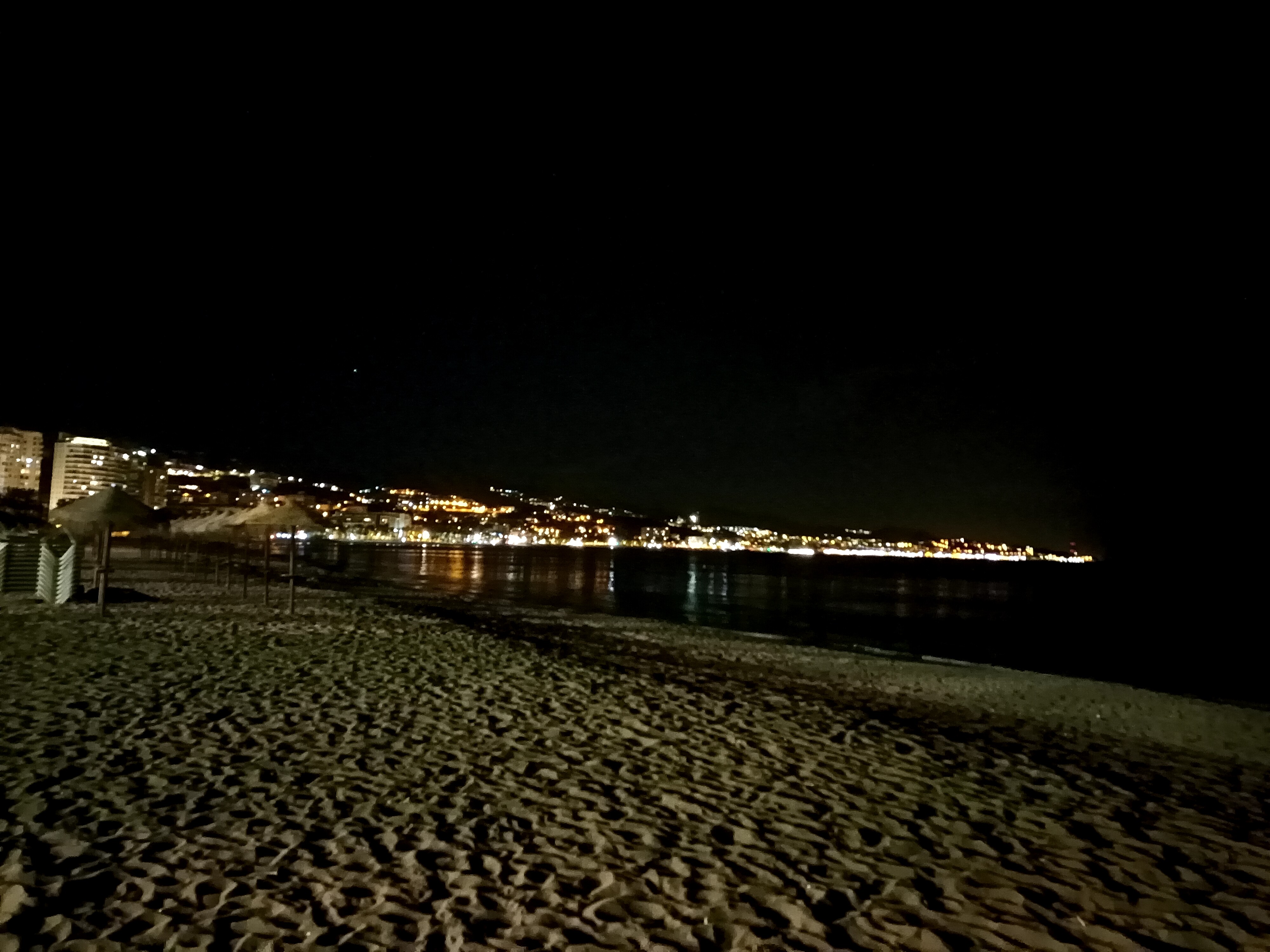
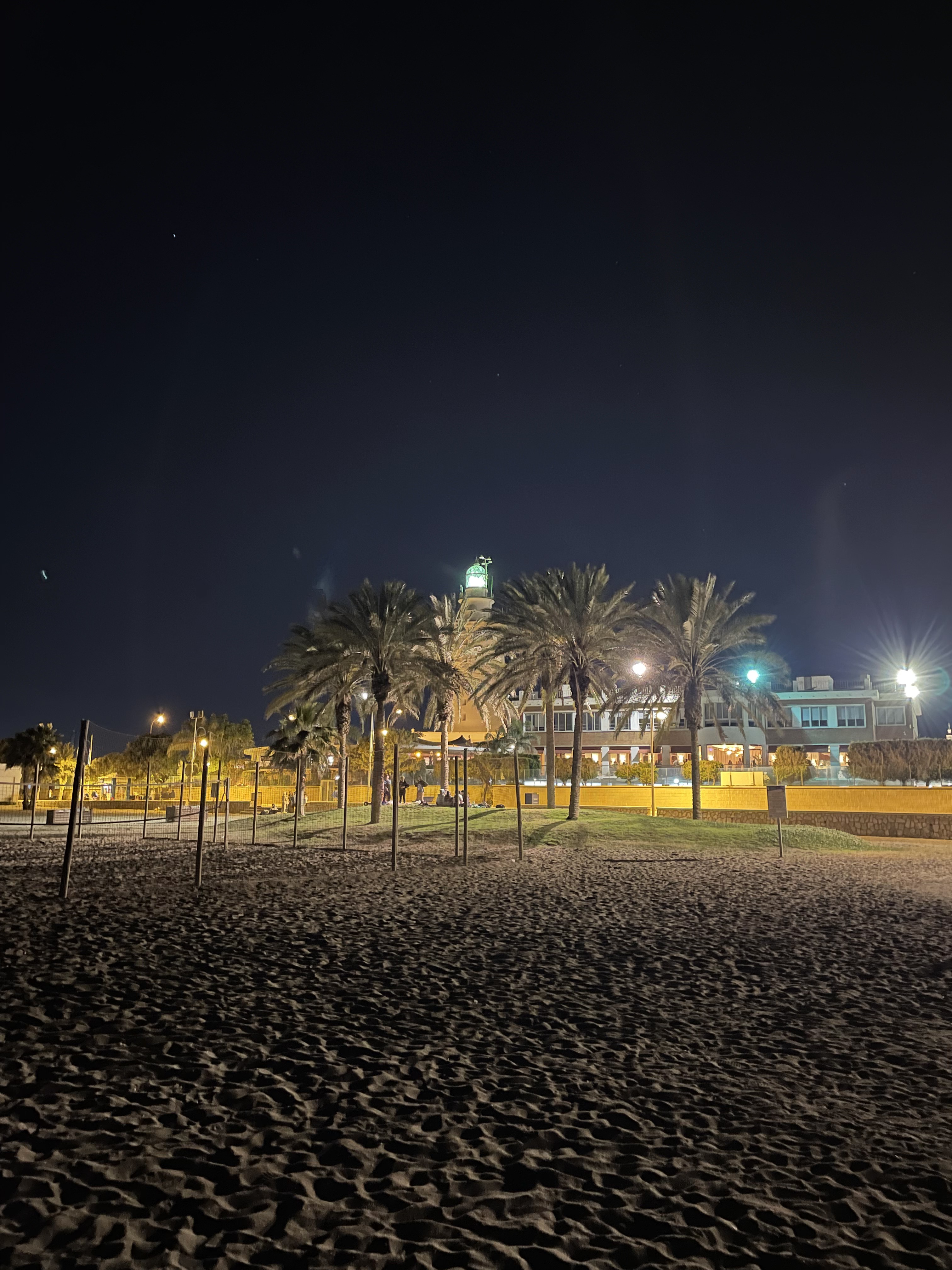
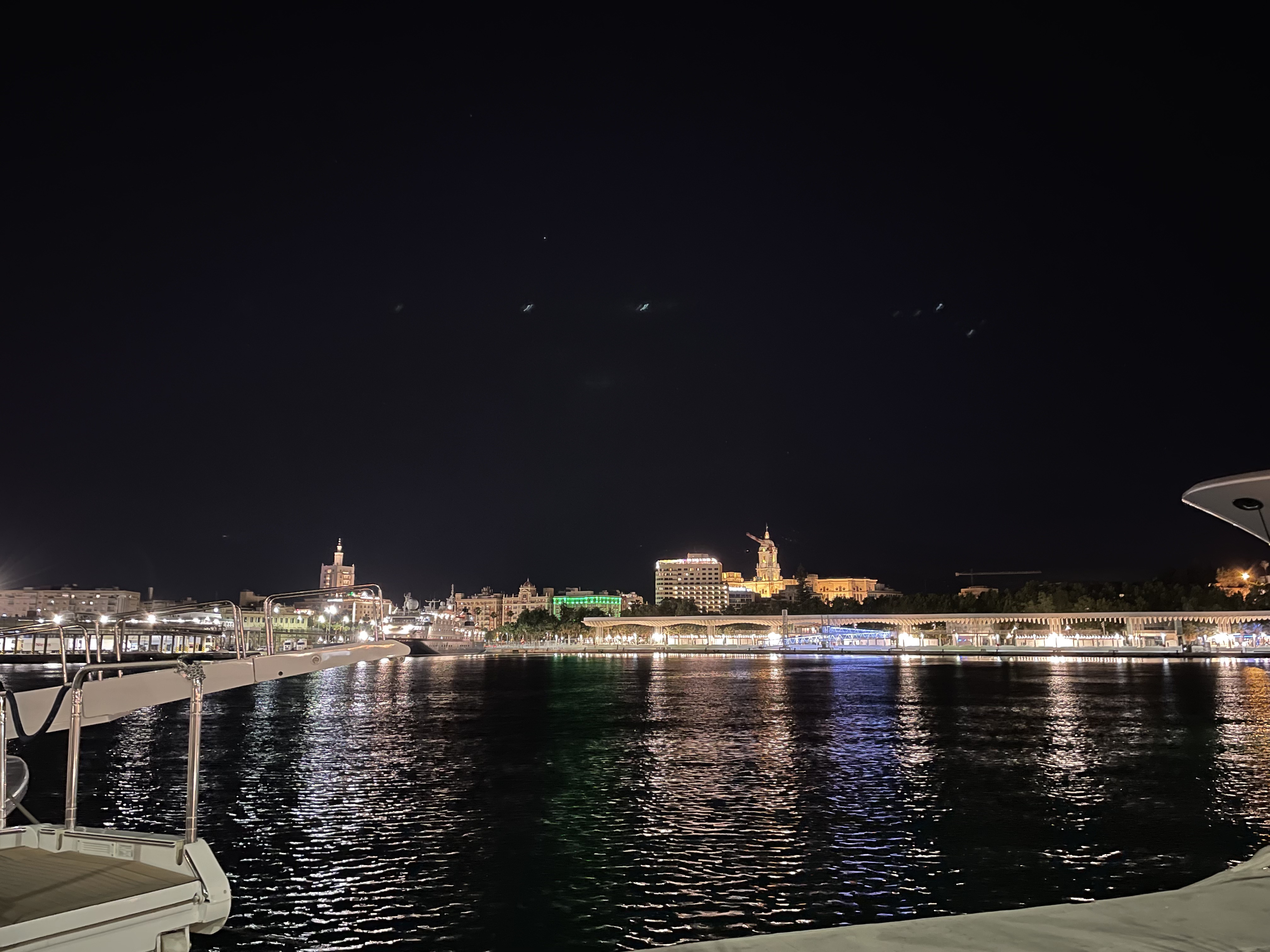
The day's last shift was down at the Malagueta sand, where the beach keeps late hours without admitting it: black rippled ground, the little lighthouse lit, the harbour lying flat with the cathedral tower carrying the glow across the water, and the promenade palms wired with light for whoever is still walking.
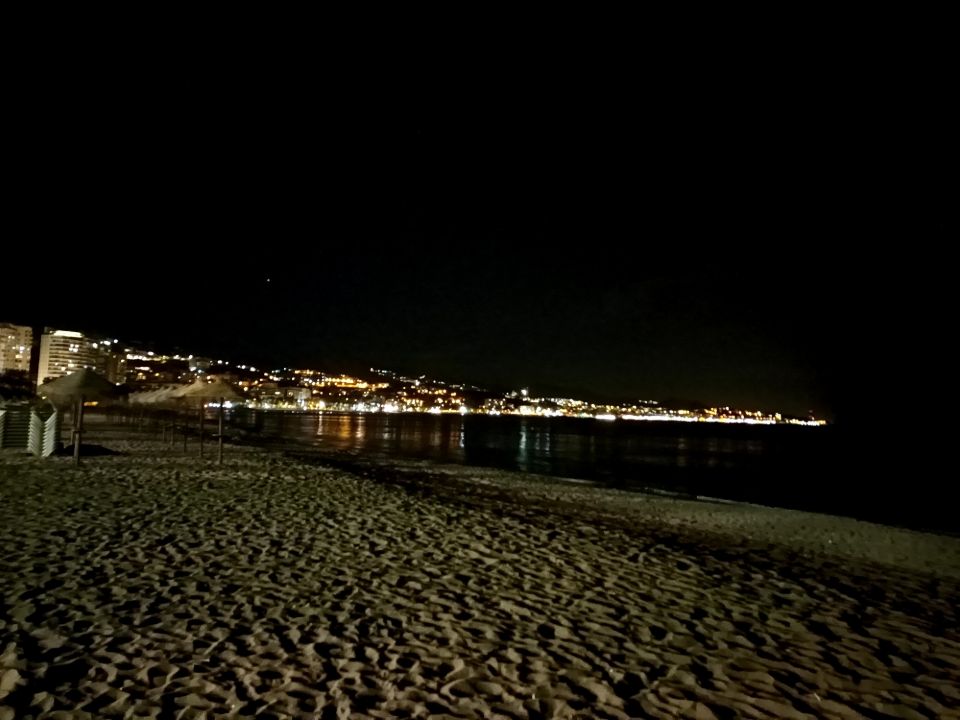
La Malagueta, the night walk 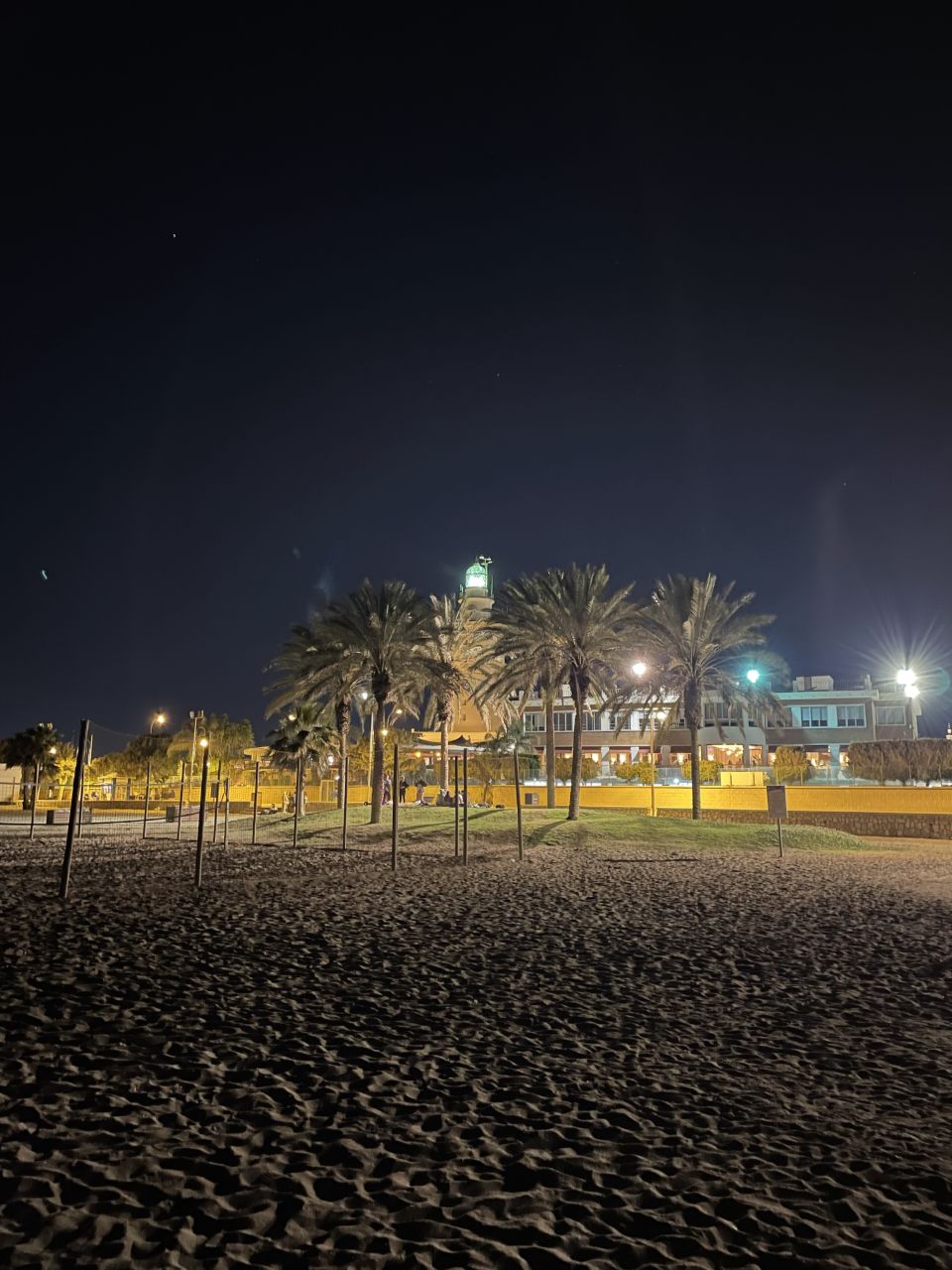
The lighthouse at night 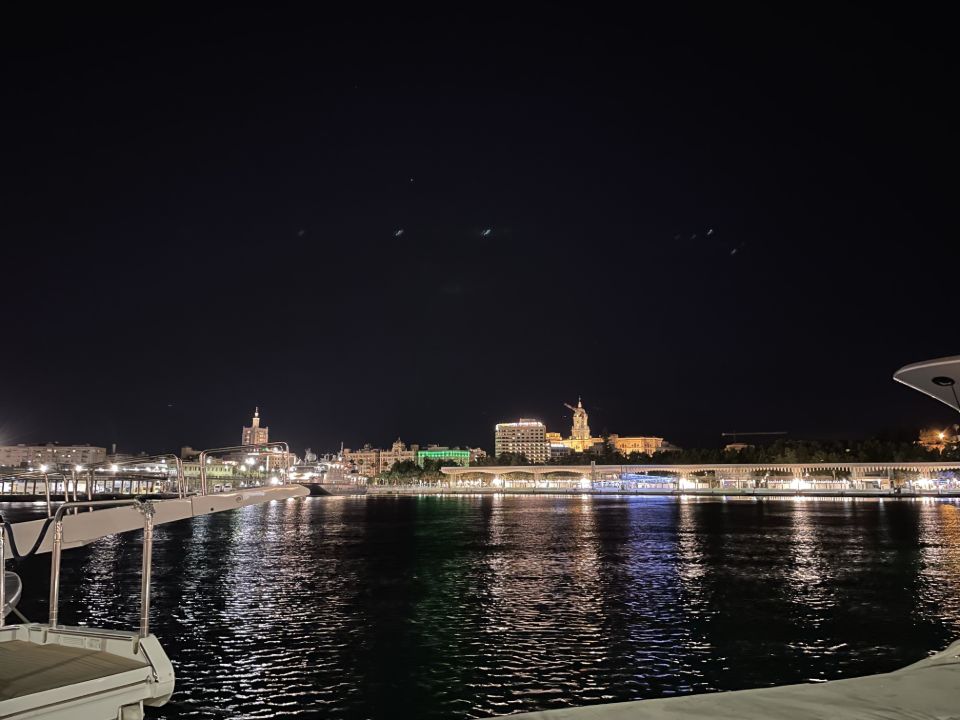
The harbour and the lit cathedral 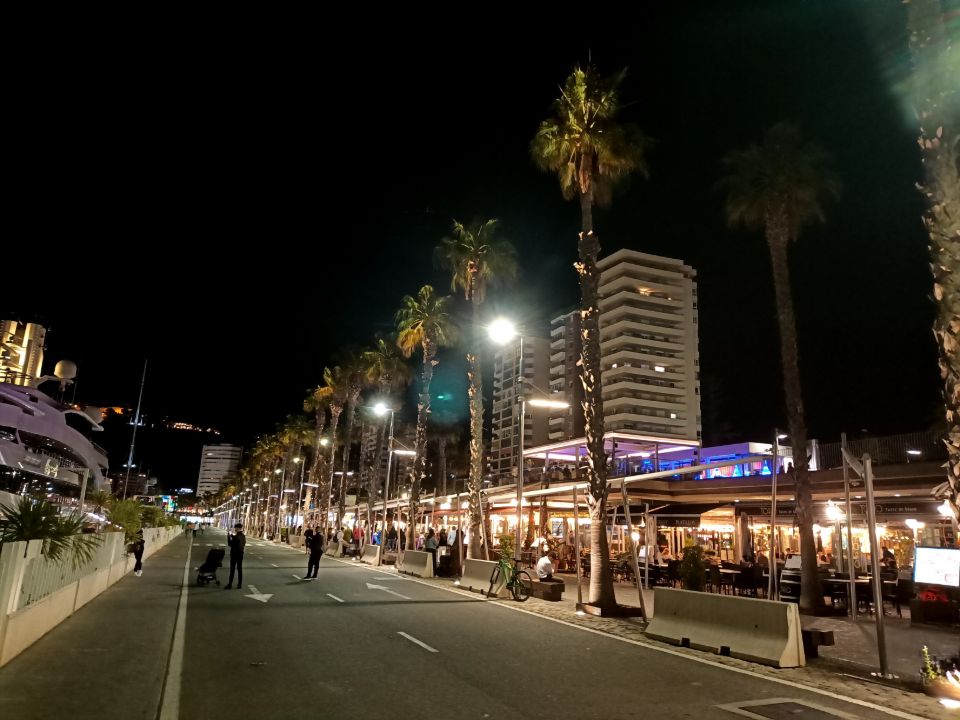
Palms alight on the promenade
Last day, and the rain
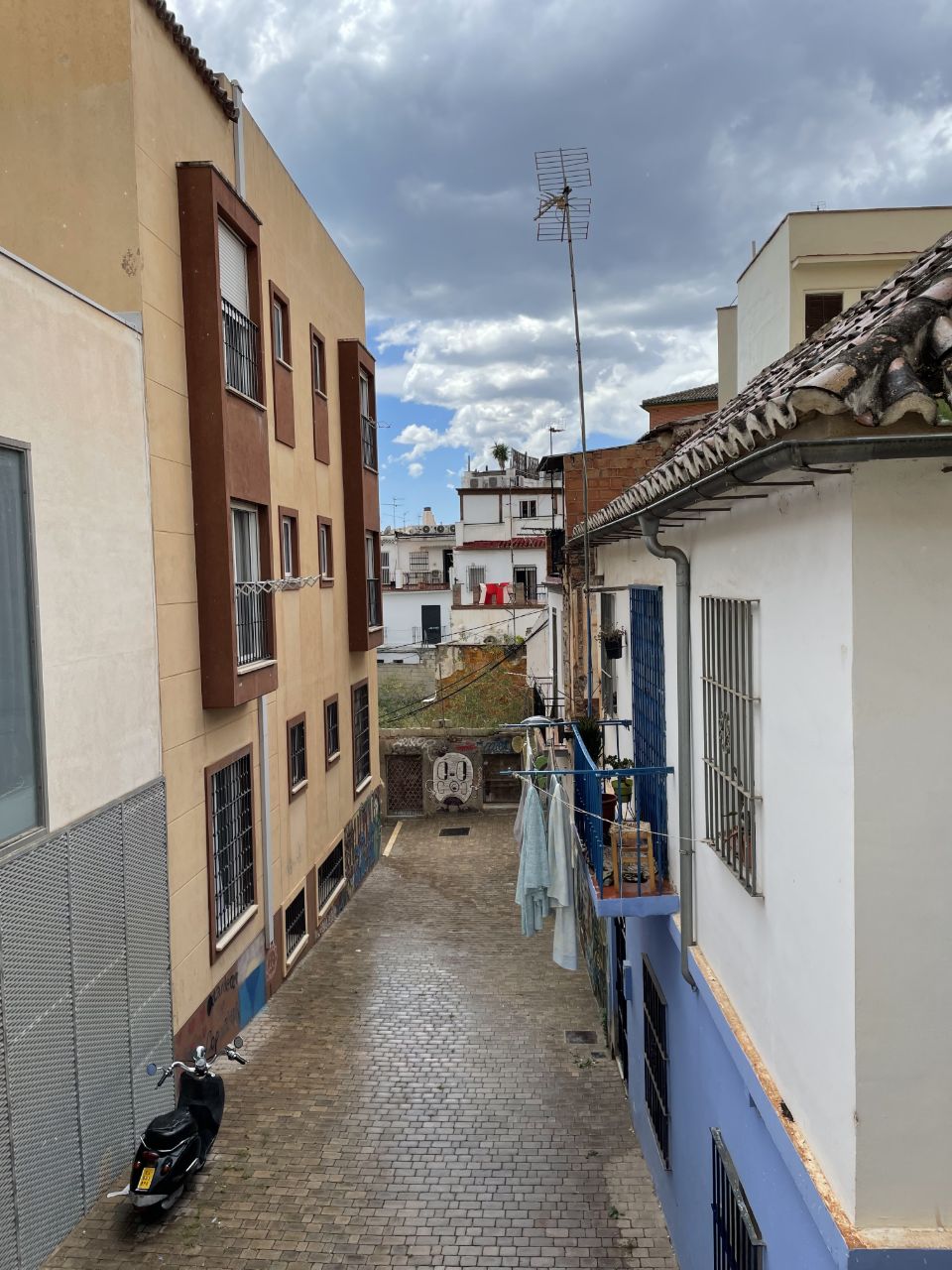
Wet cobbles in Lagunillas
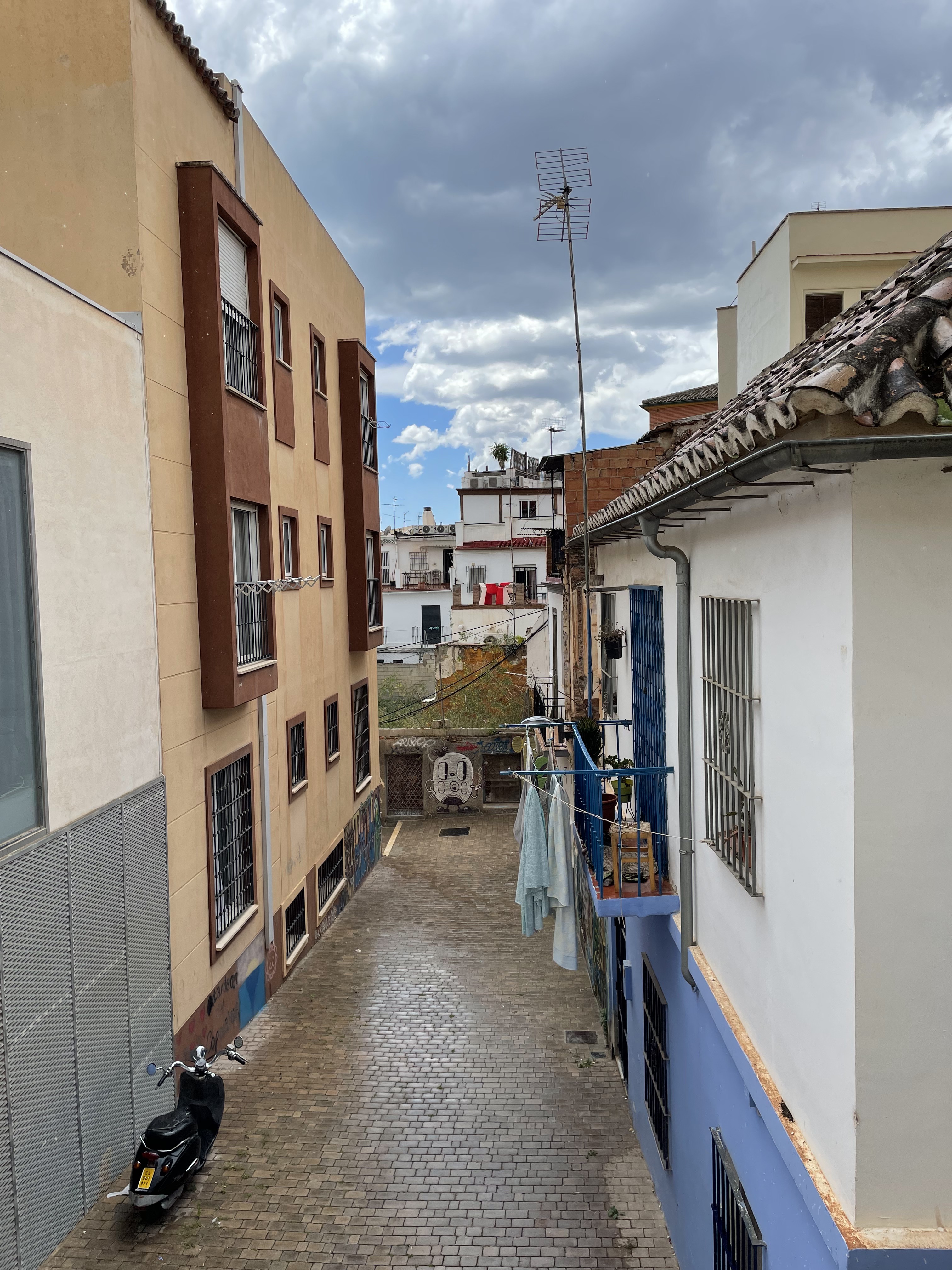
The forecast had been threatening all trip and, on the last day, kept its appointment. Lagunillas, which spends April showing off in murals and bright paint, turned suddenly into a neighbourhood of wet stone and drying laundry, and looked, if anything, more itself for it.
Laundry over the wet lane
Around the centre, under umbrellas
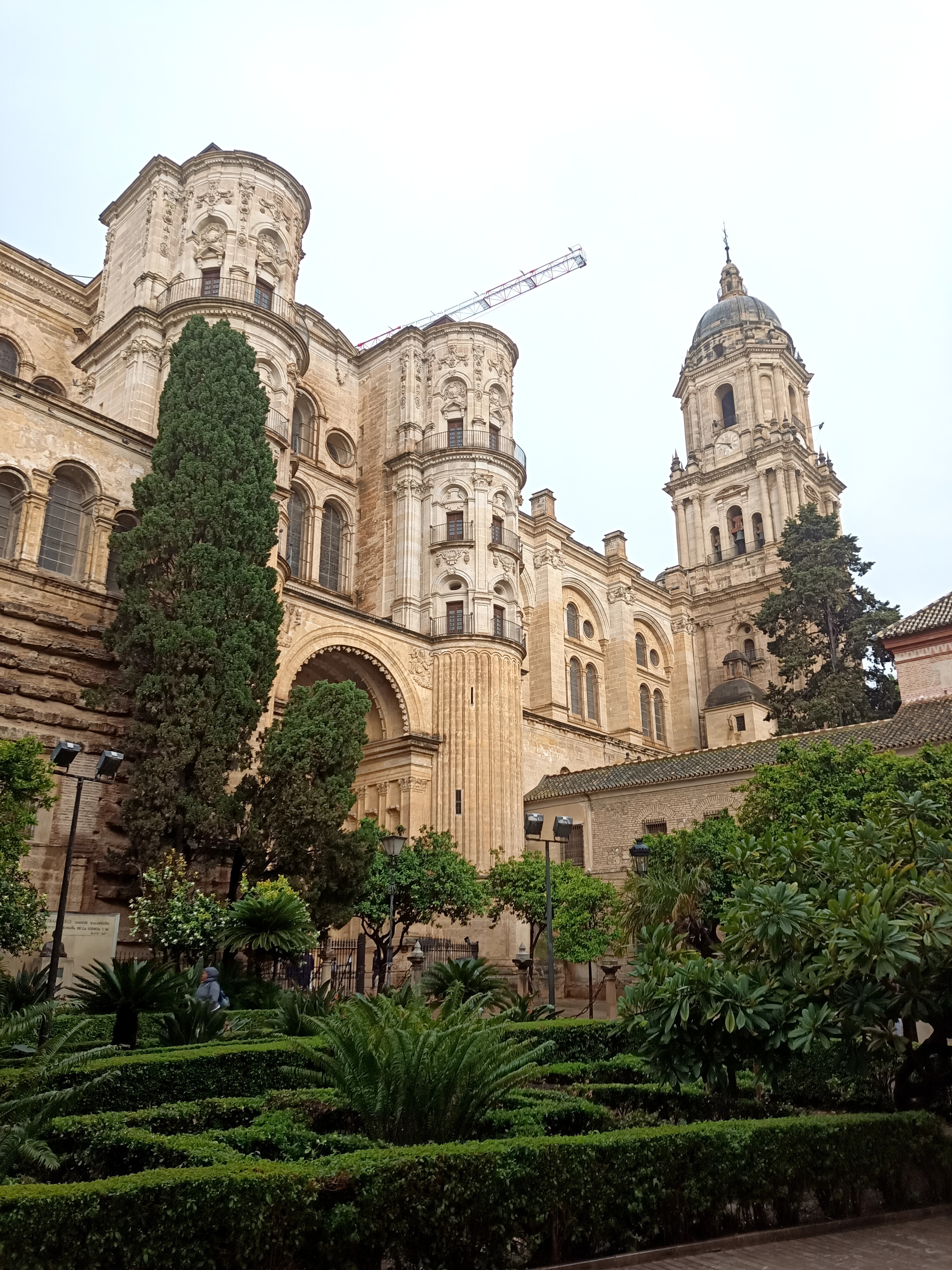
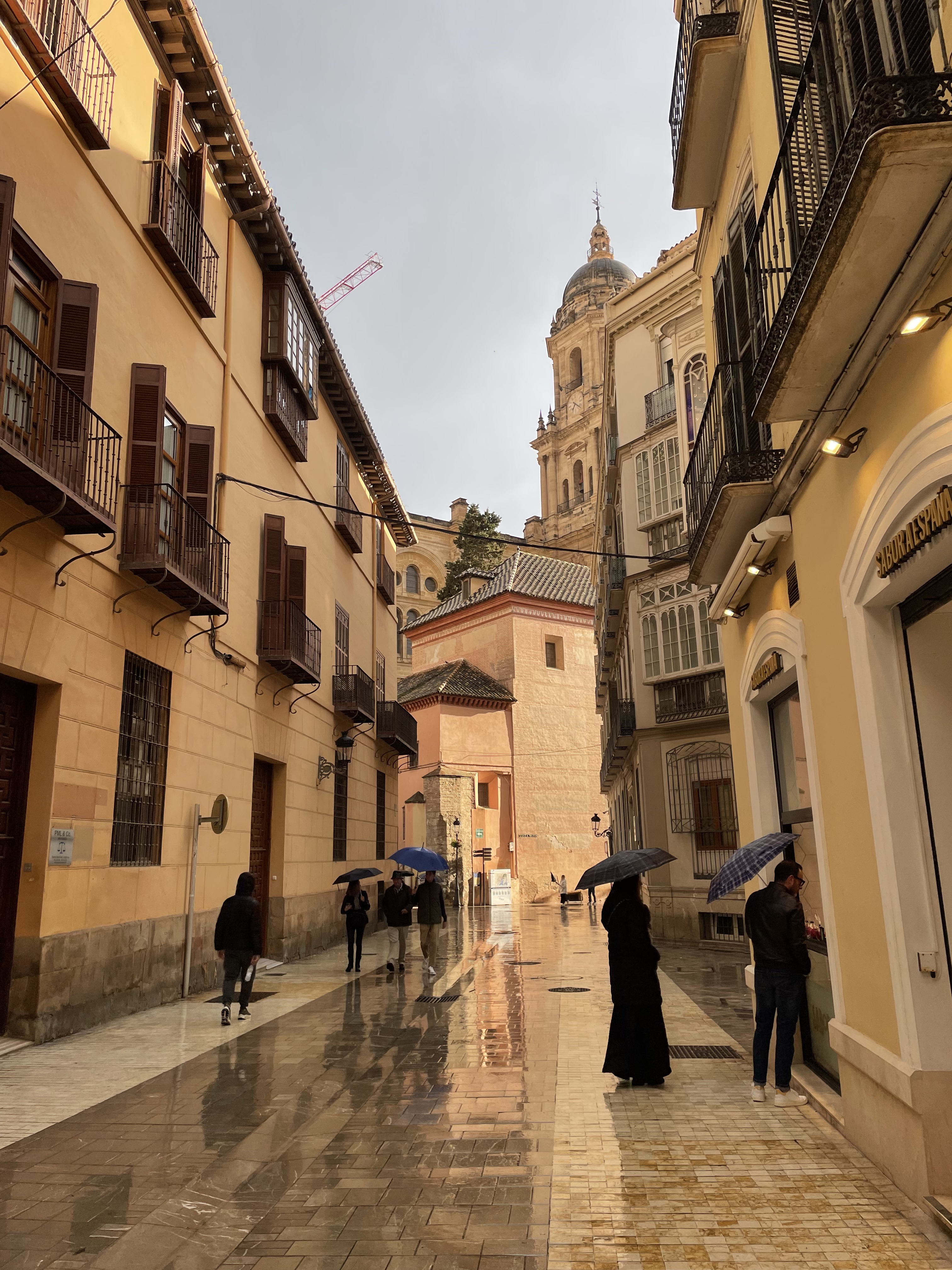
The long way into the centre went past the cathedral garden, where the hedges were being rinsed with nobody's permission and the tall cypress stood as if nothing had happened. By late afternoon the rain organised everyone: the lanes between taverns went glossy, umbrellas multiplied, and the historic centre looked like the cover of a novel about someone arriving with a suitcase and a plan, which is roughly what we were.
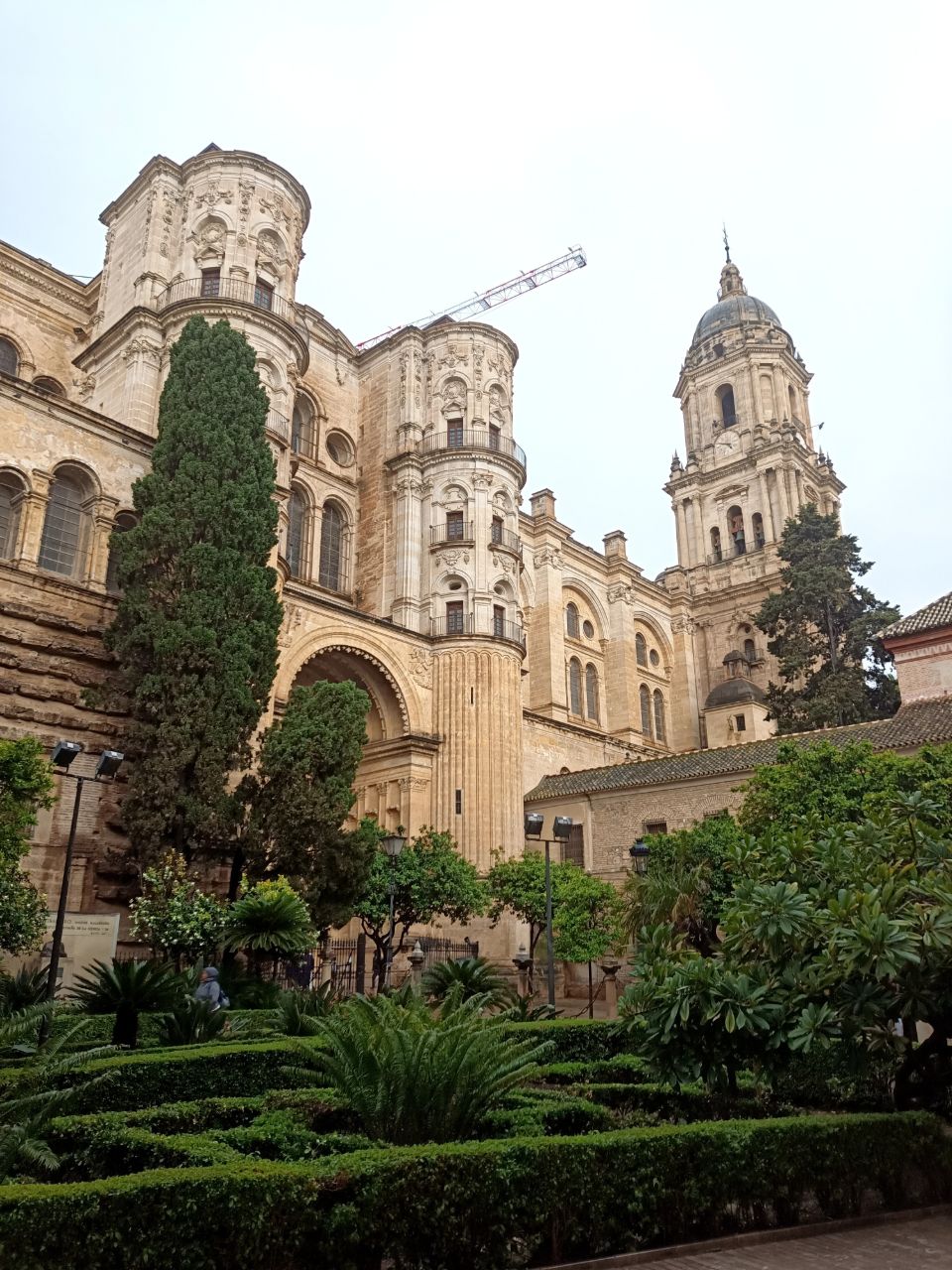
The cathedral from its garden 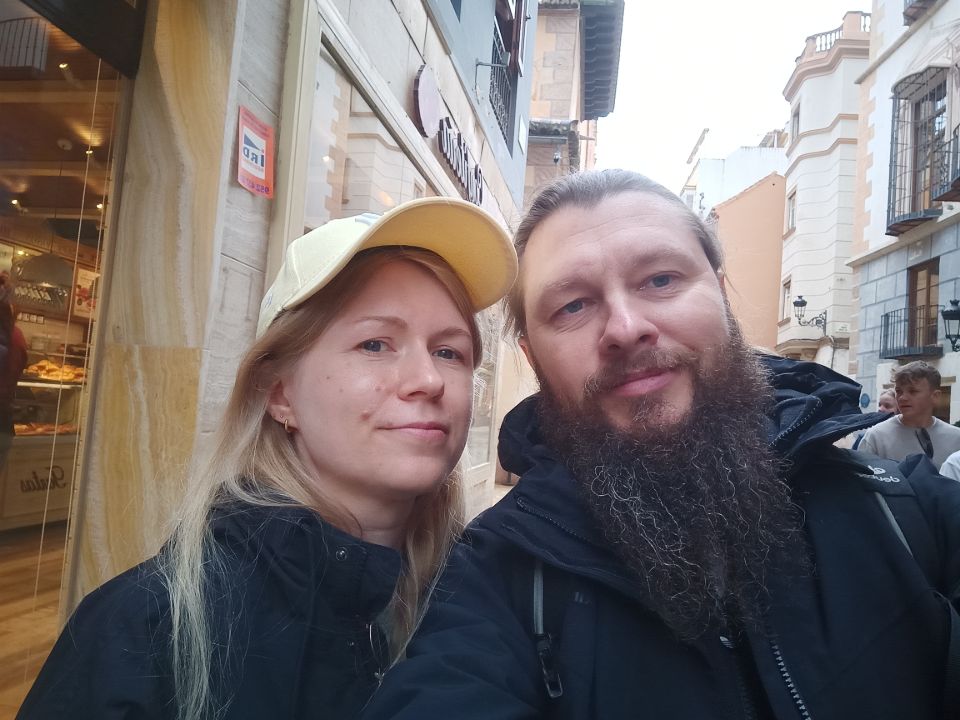
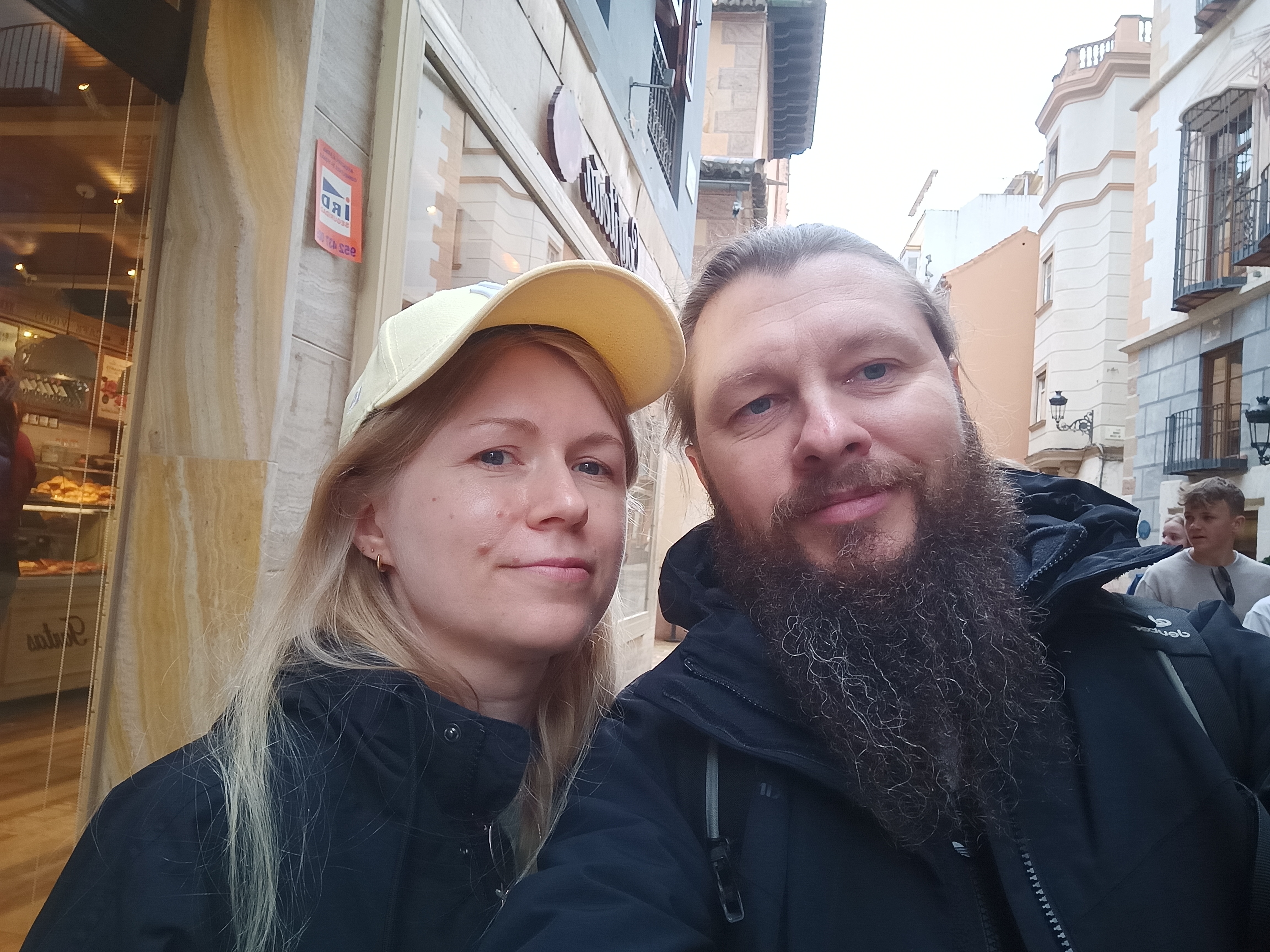
Rain selfie in the centre 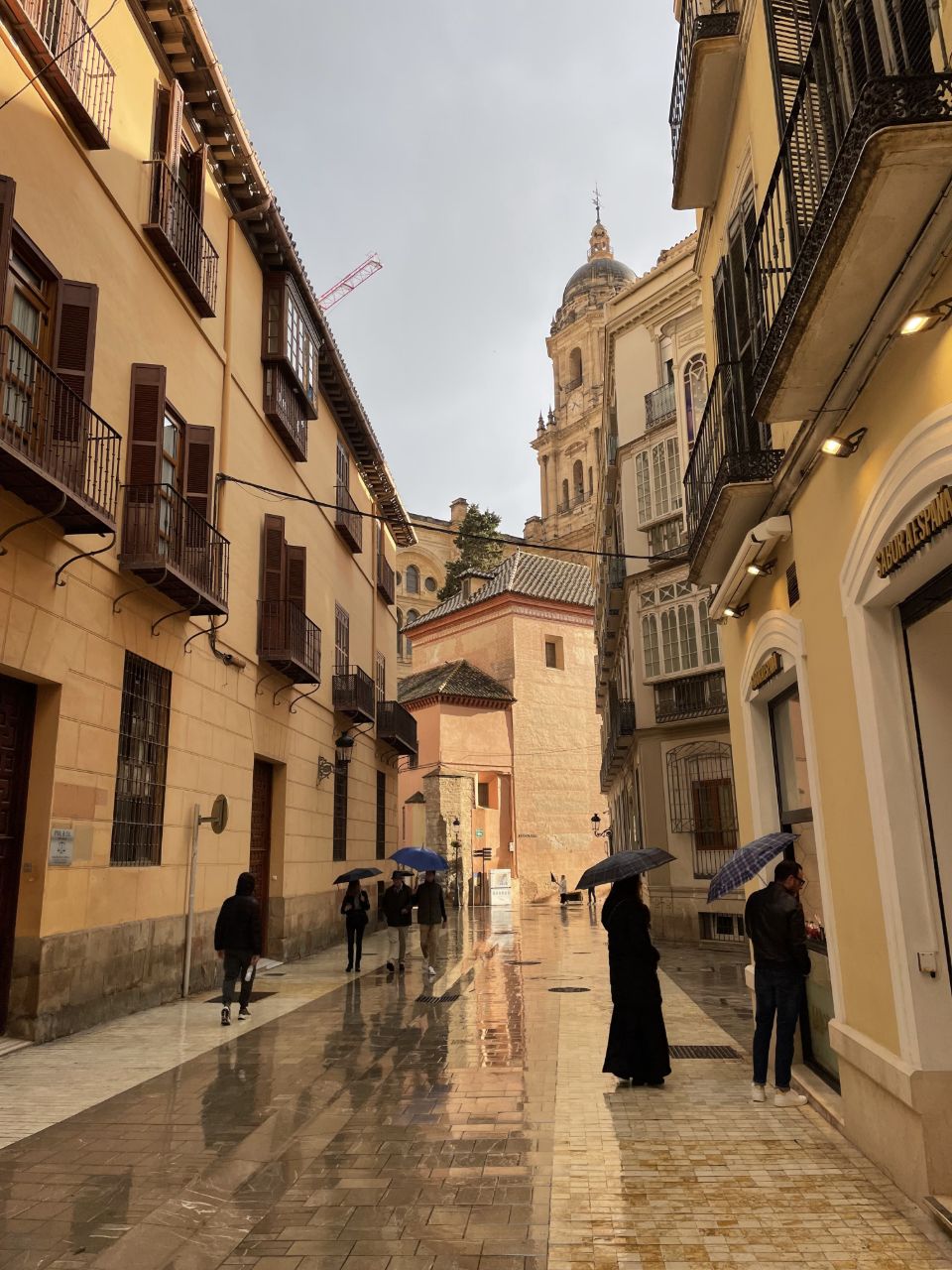
Umbrellas in the wet lane
Vermouth, olives, one more Victoria
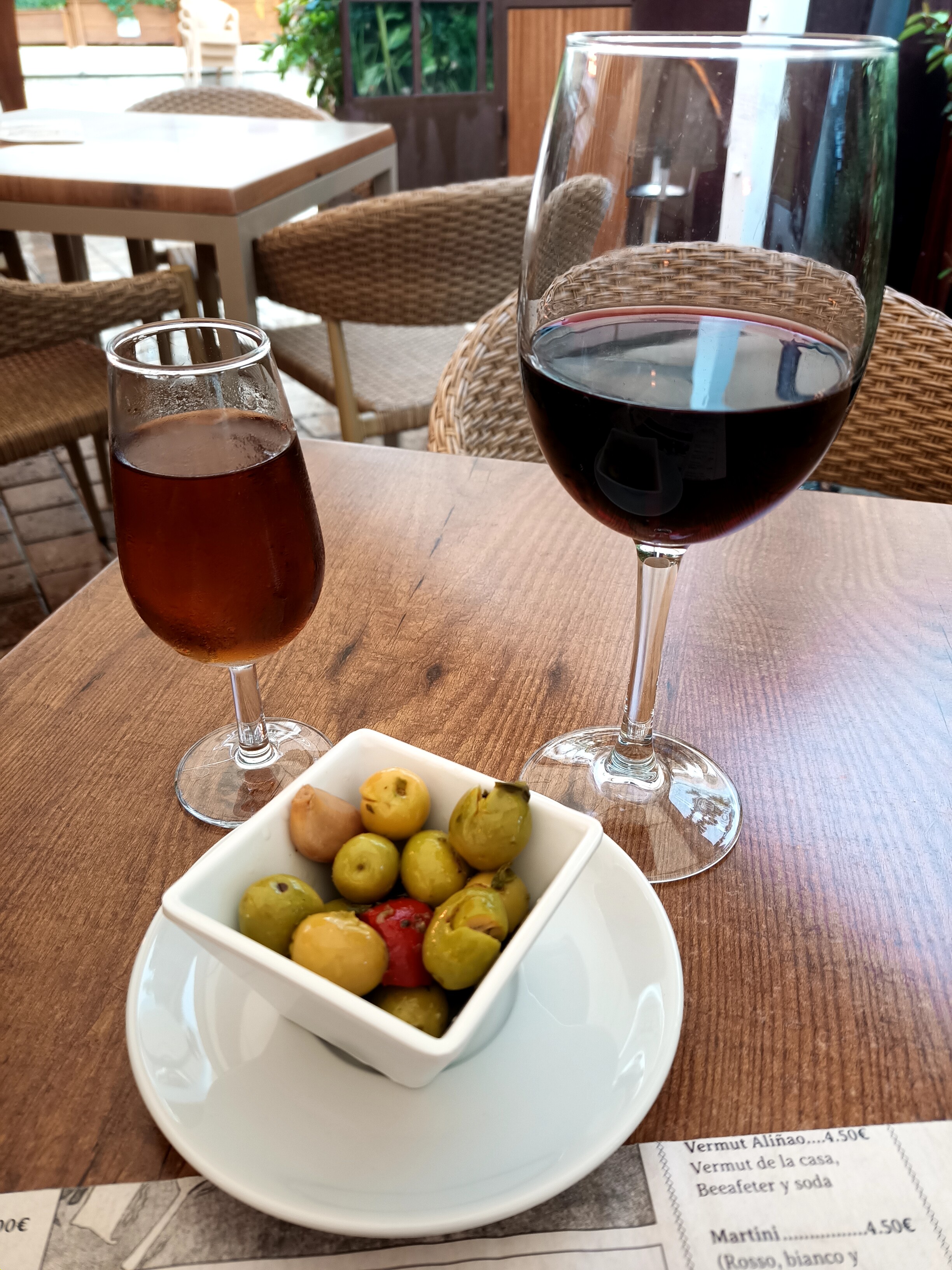
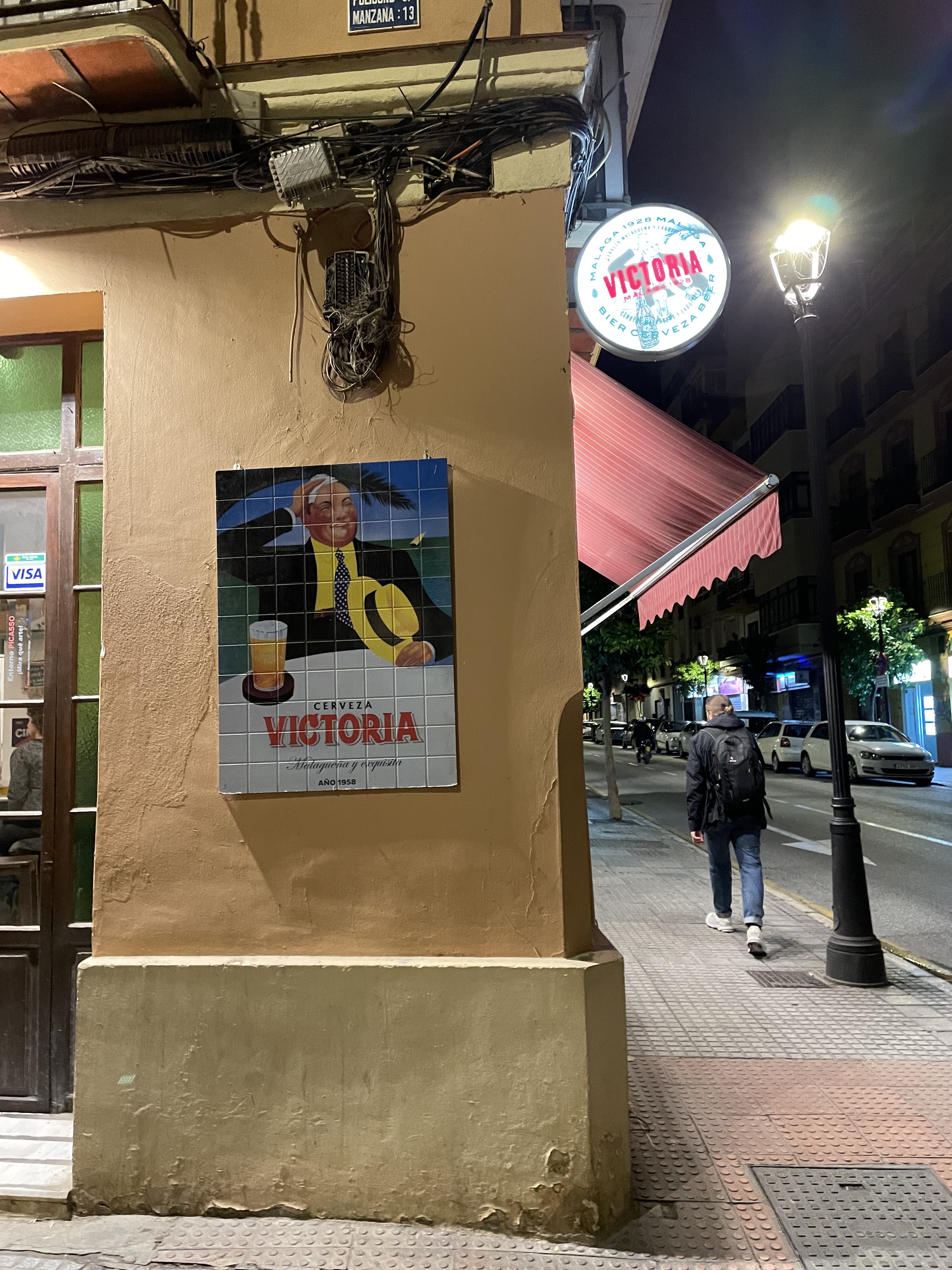
Twenty minutes in a tavern solved the weather question the way it is best solved: a small vermouth, a large red, a dish of olives, and no further decisions required. The rain, finally, was allowed to win after dinner, and did it politely. Some trips end on a sunset; this one went out sung down in drizzle, with a tiled advertisement raising a glass on a pink wall.
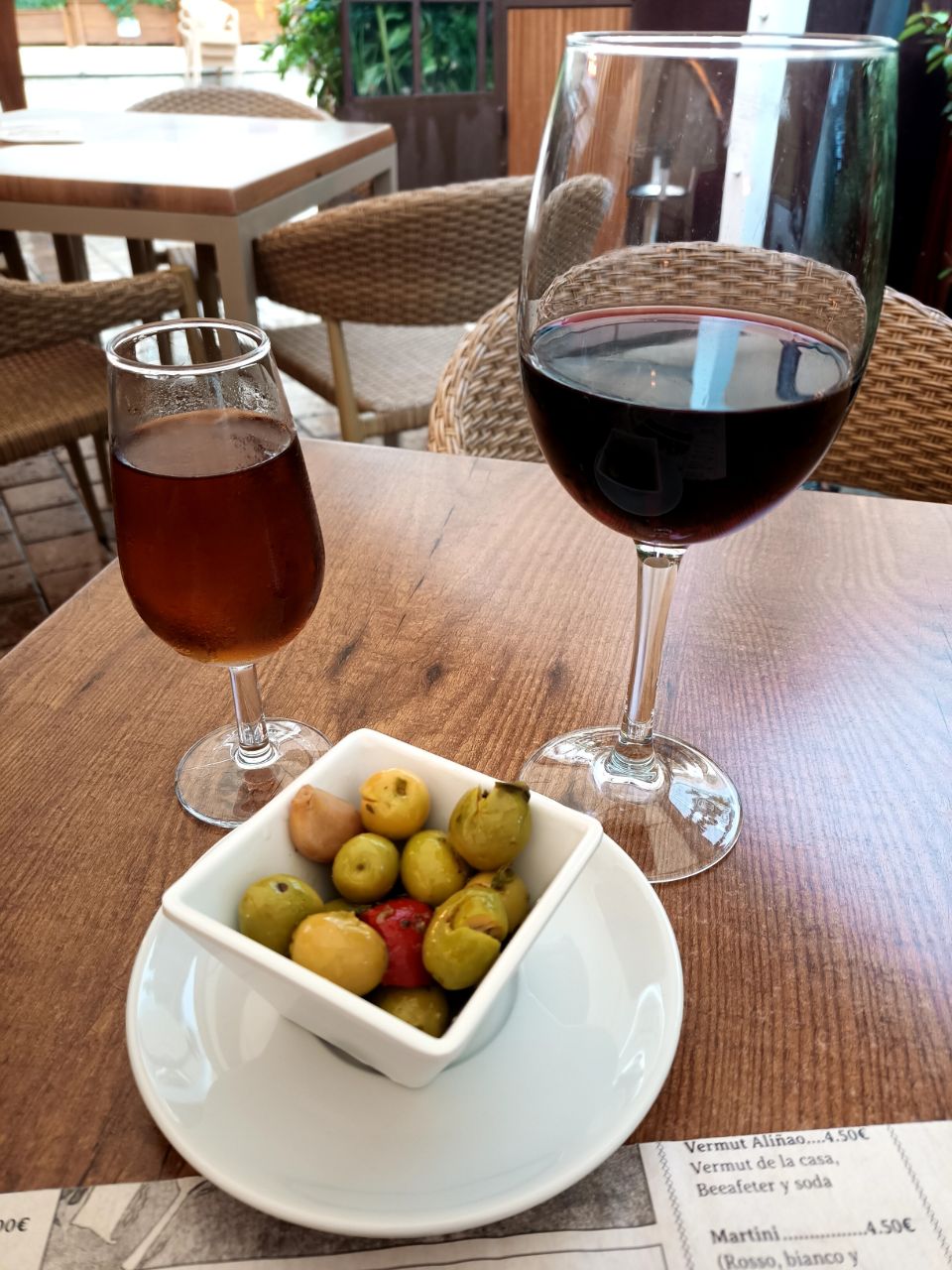
Vermouth, wine, olives 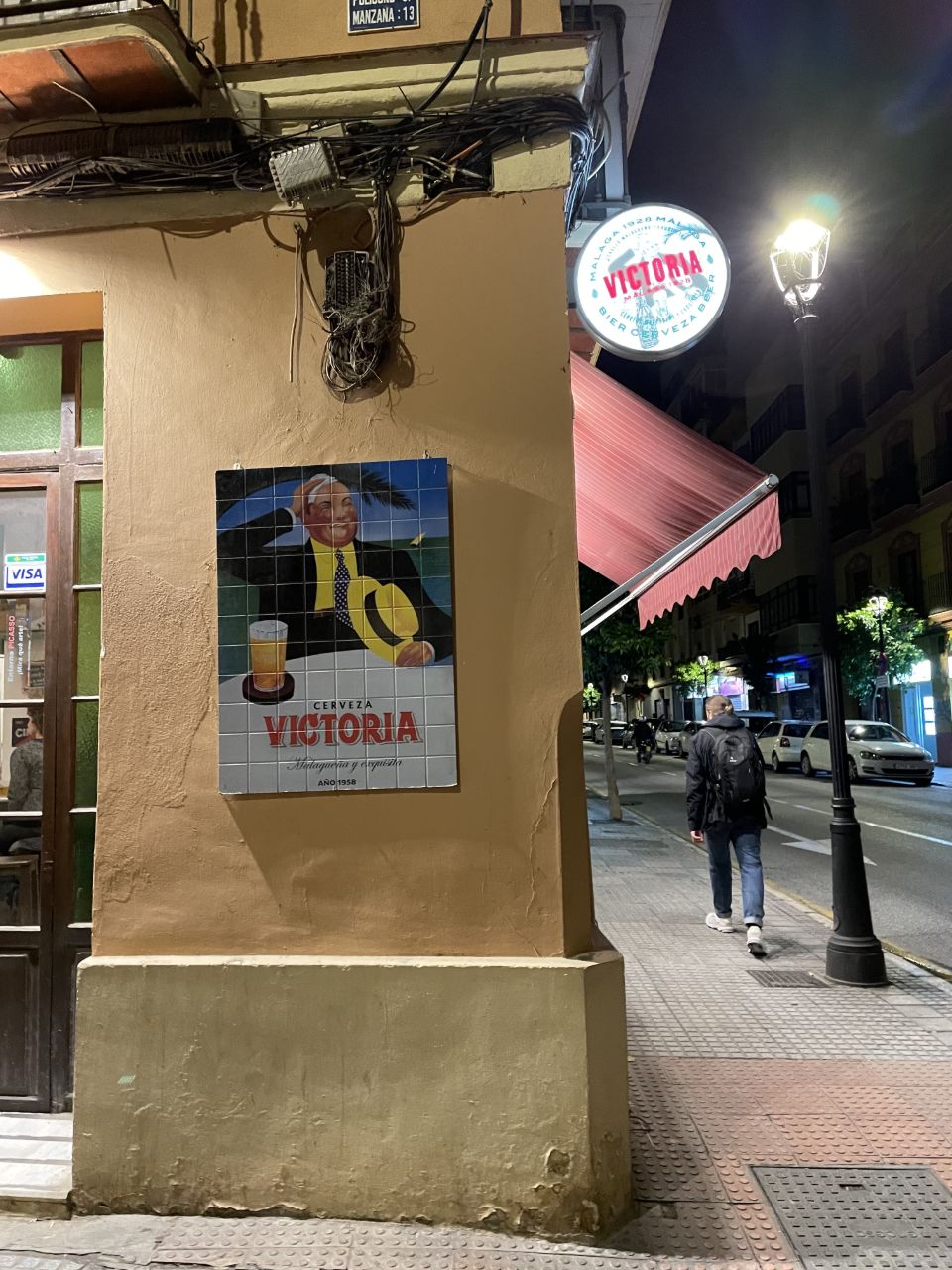
One more Victoria before home