Puglia trip 2024 — Monopoli
Second of nine posts. Four nights one town south of Polignano: a working port full of blue boats, a cathedral with a marble planet for a ceiling, fortress walls with cannons, rocky coves and a first swim, Aperol at sunset, a moon over the seafront — and the best octopus of the trip.
Monopoli sounds like a board game and works like a real town: a fishing port, a cathedral, a web of alleys, and a seafront running from fortress wall to rocky cove. The name is said to come from the Greek monon polis, a city alone: when the Ostrogoths destroyed the ancient Egnazia, down the coast, in 545, its survivors looked around and found this the one city still standing — and moved in. We took the coast train one stop along and gave it four nights, and it repaid us daily — first with the harbour, then with everything else.
One town along the coast
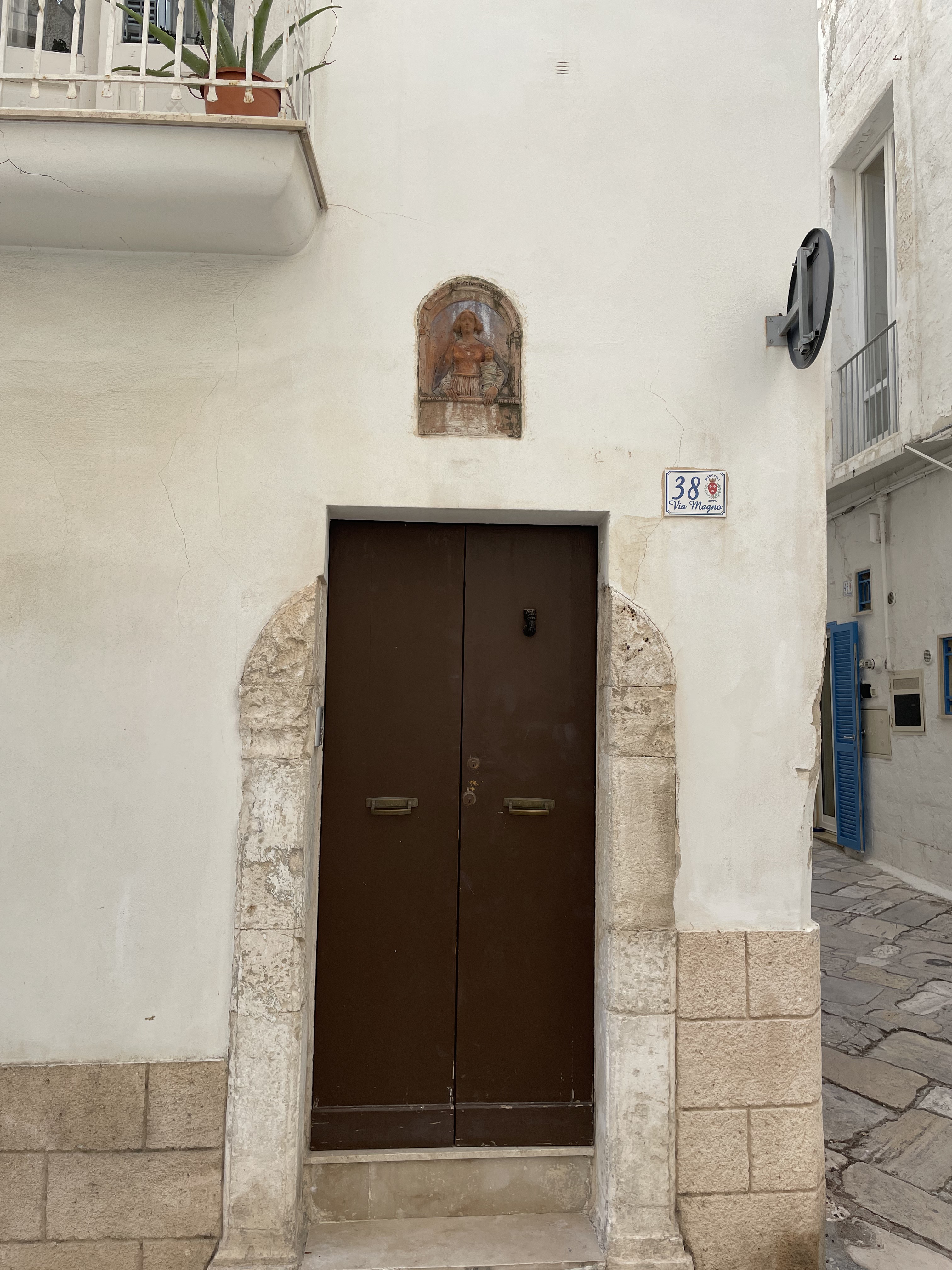
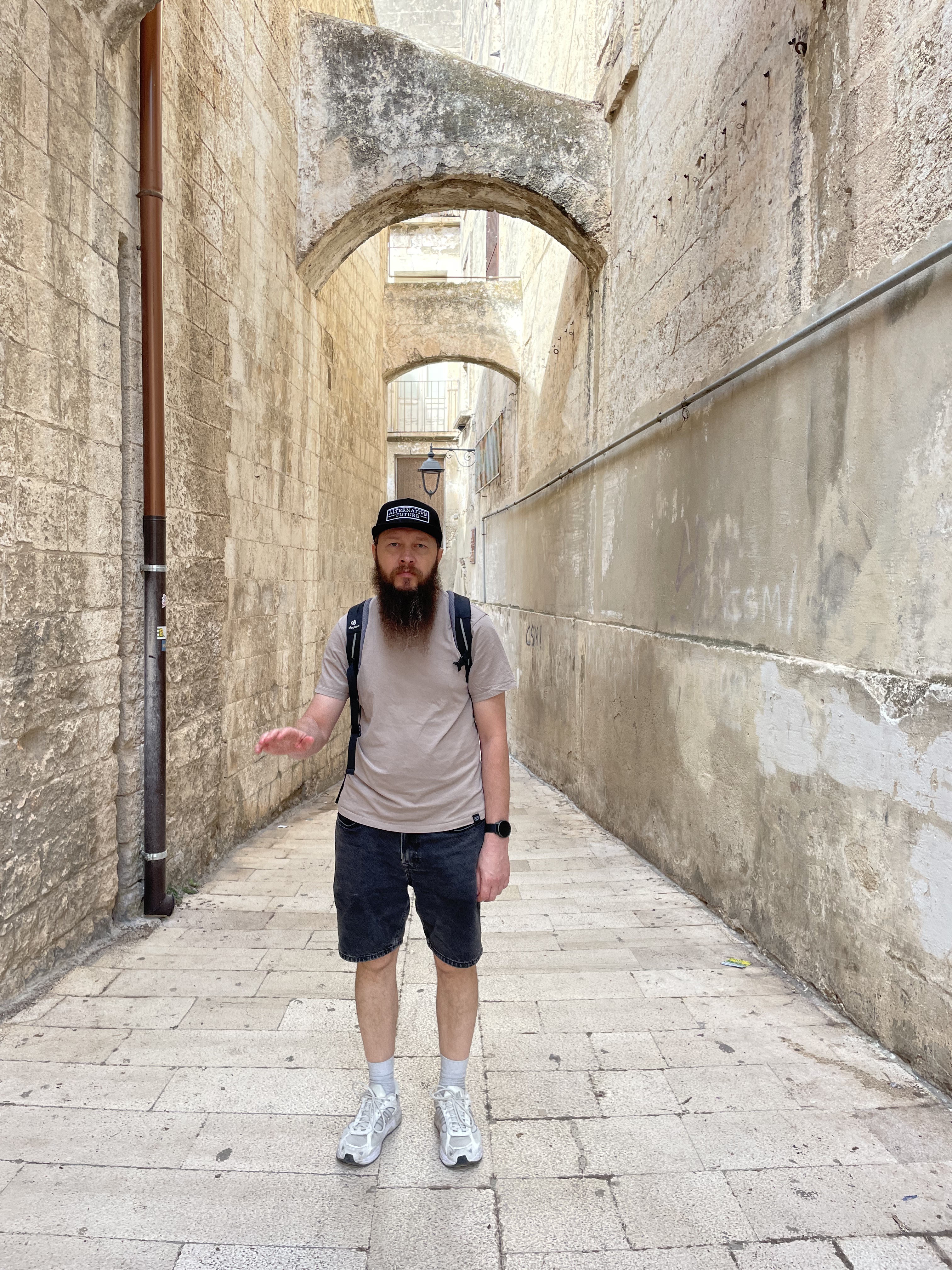
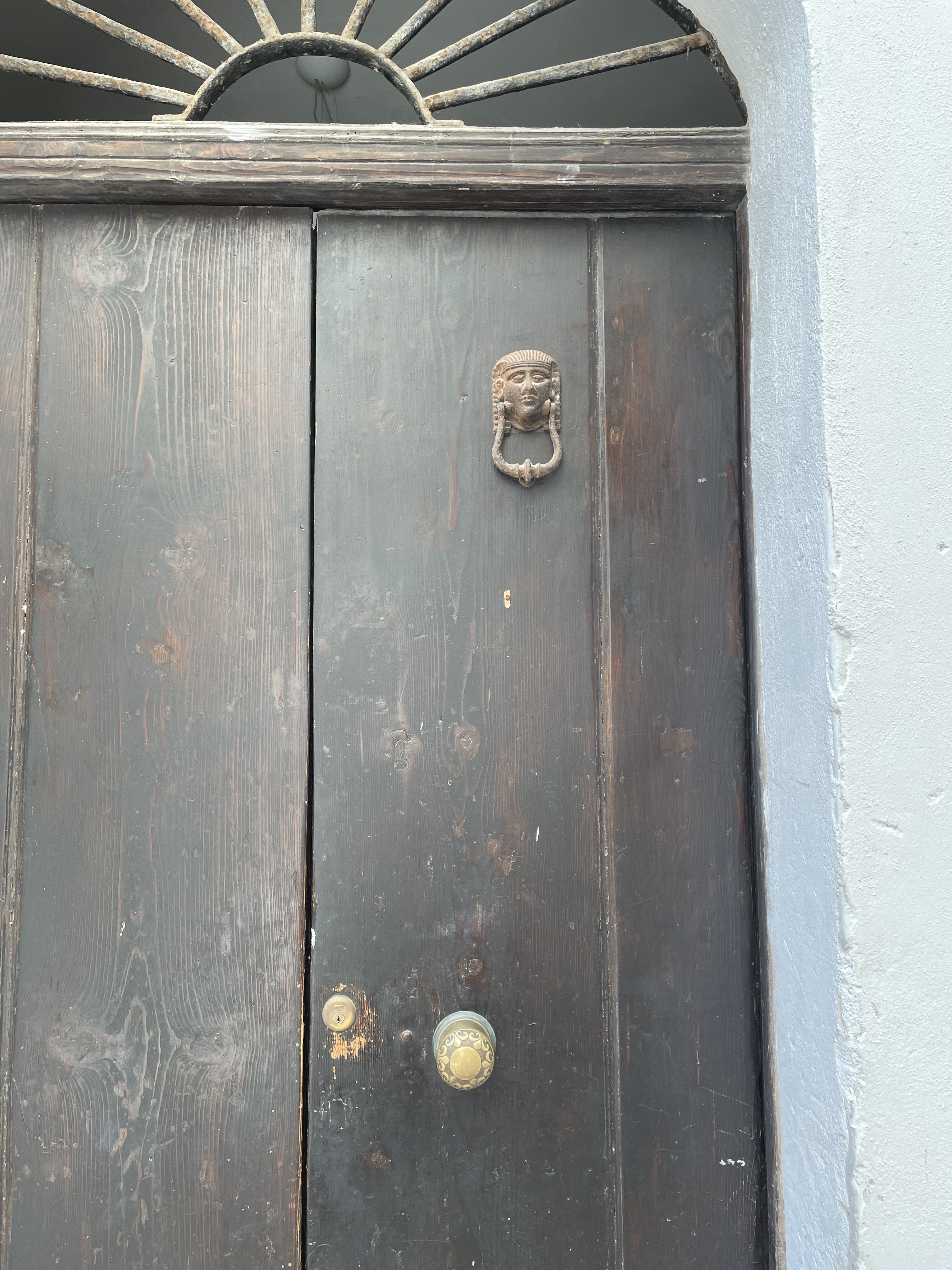
We arrived at noon and walked straight into the old town: arches over doorways, doors with bronze faces as knockers, and Oleg already finding the alley with the best light to pose in. The move from Polignano took minutes; the shift in mood took none — bigger, busier, more lived-in, and the blue boats made themselves known immediately.
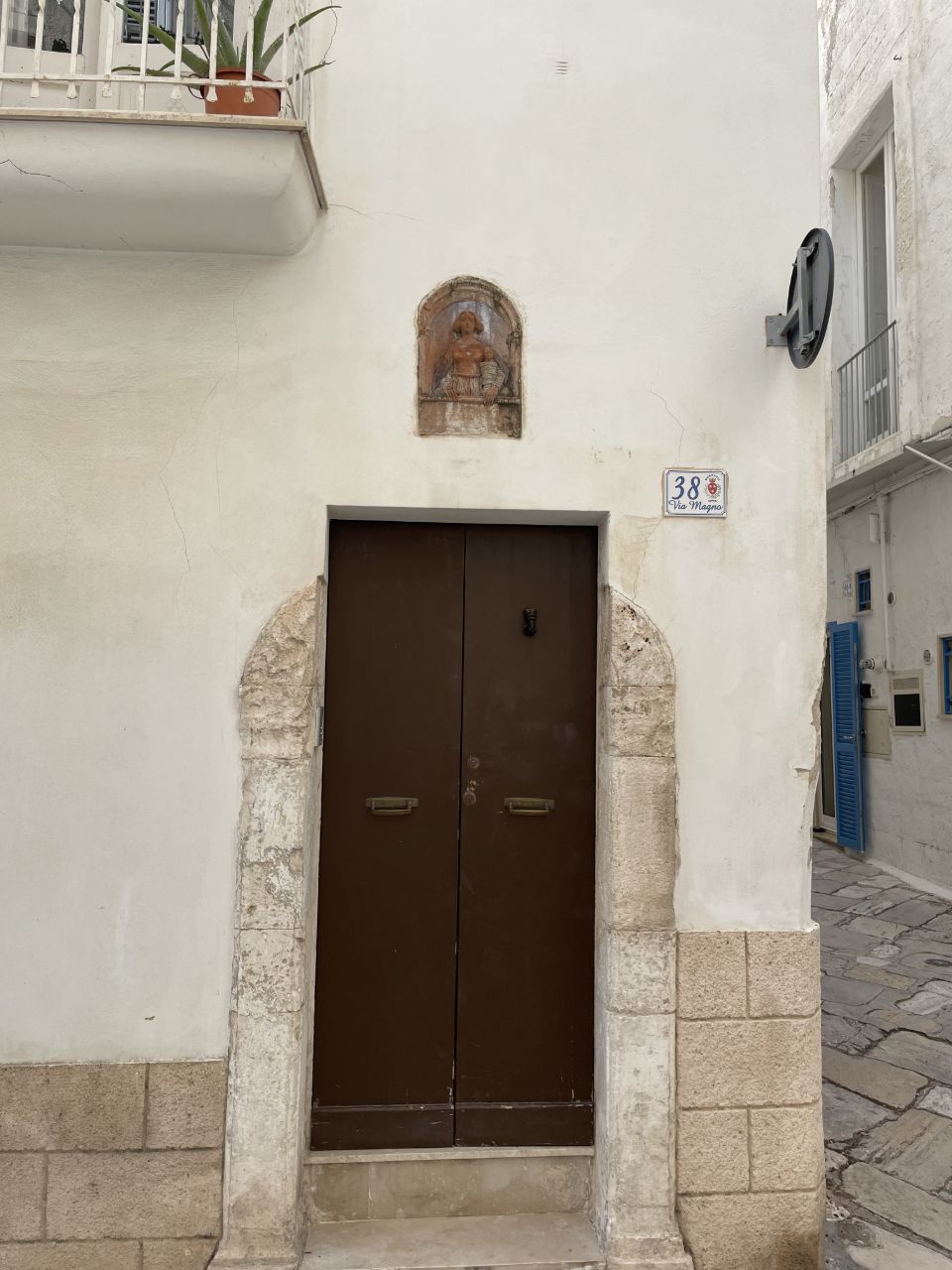
The corner with the arched door 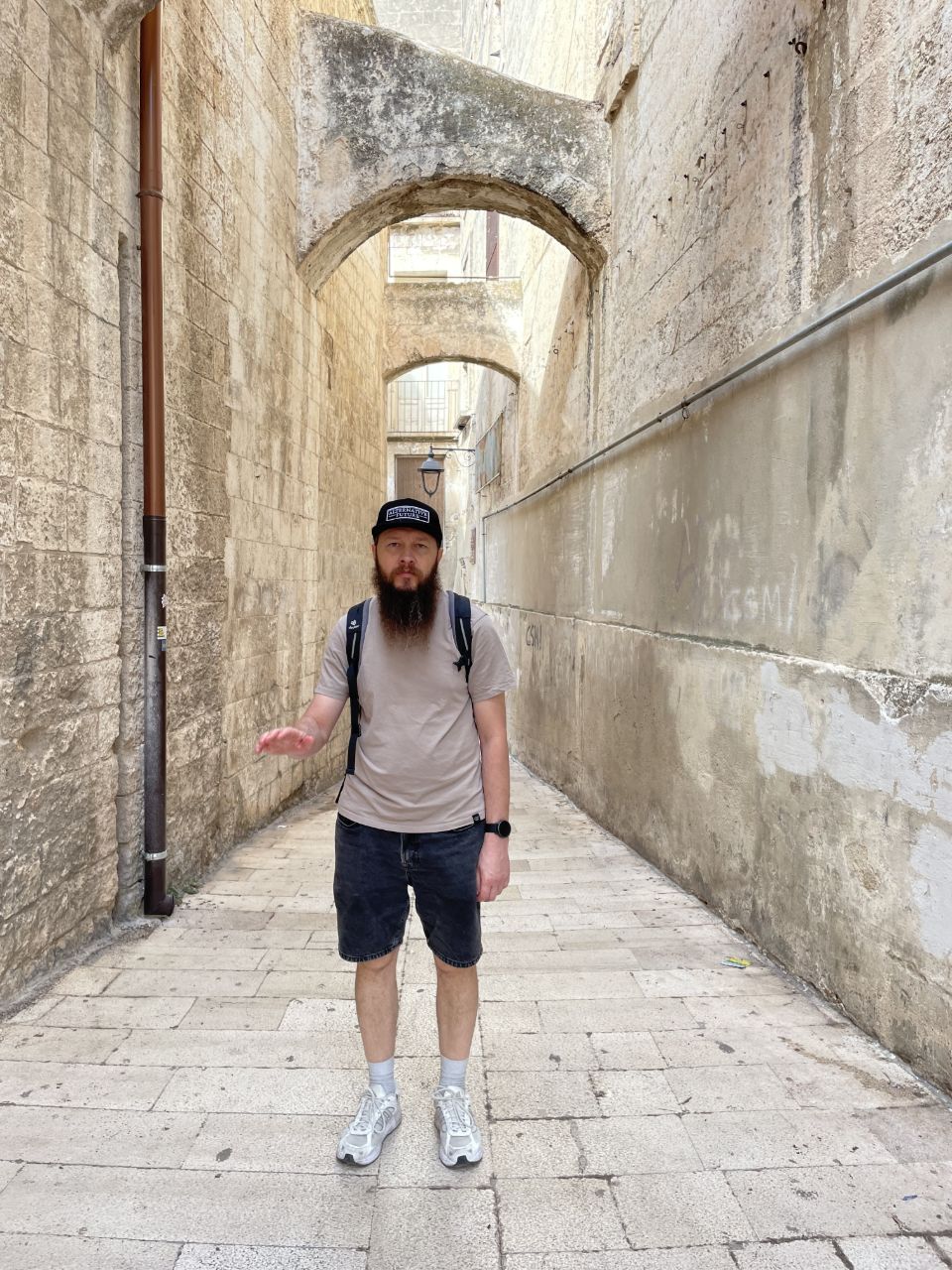
Oleg, in the alley with best light 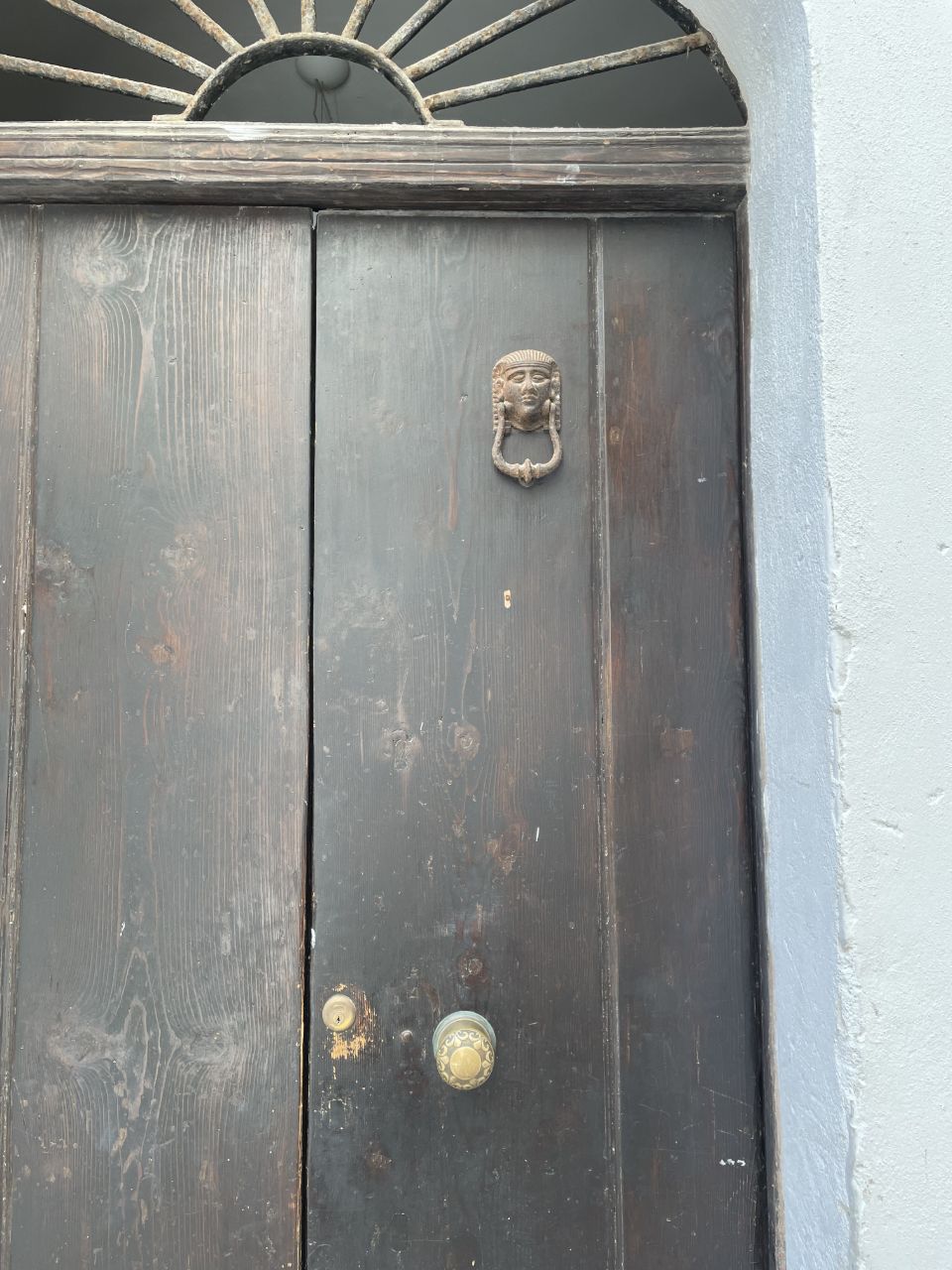
The bronze face, on duty as a knocker
The old harbour
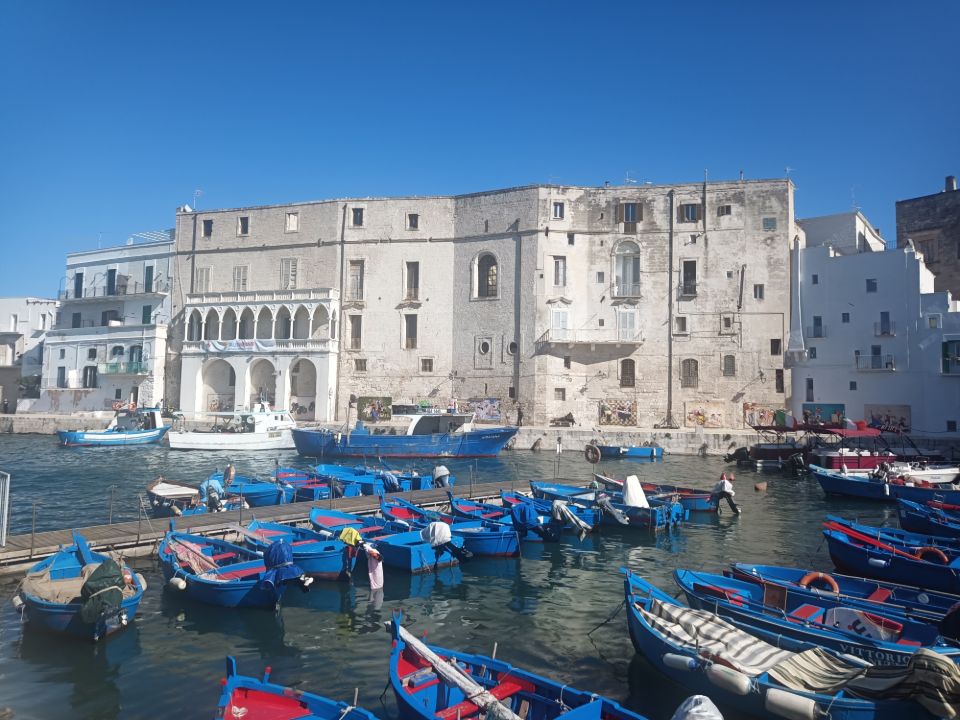
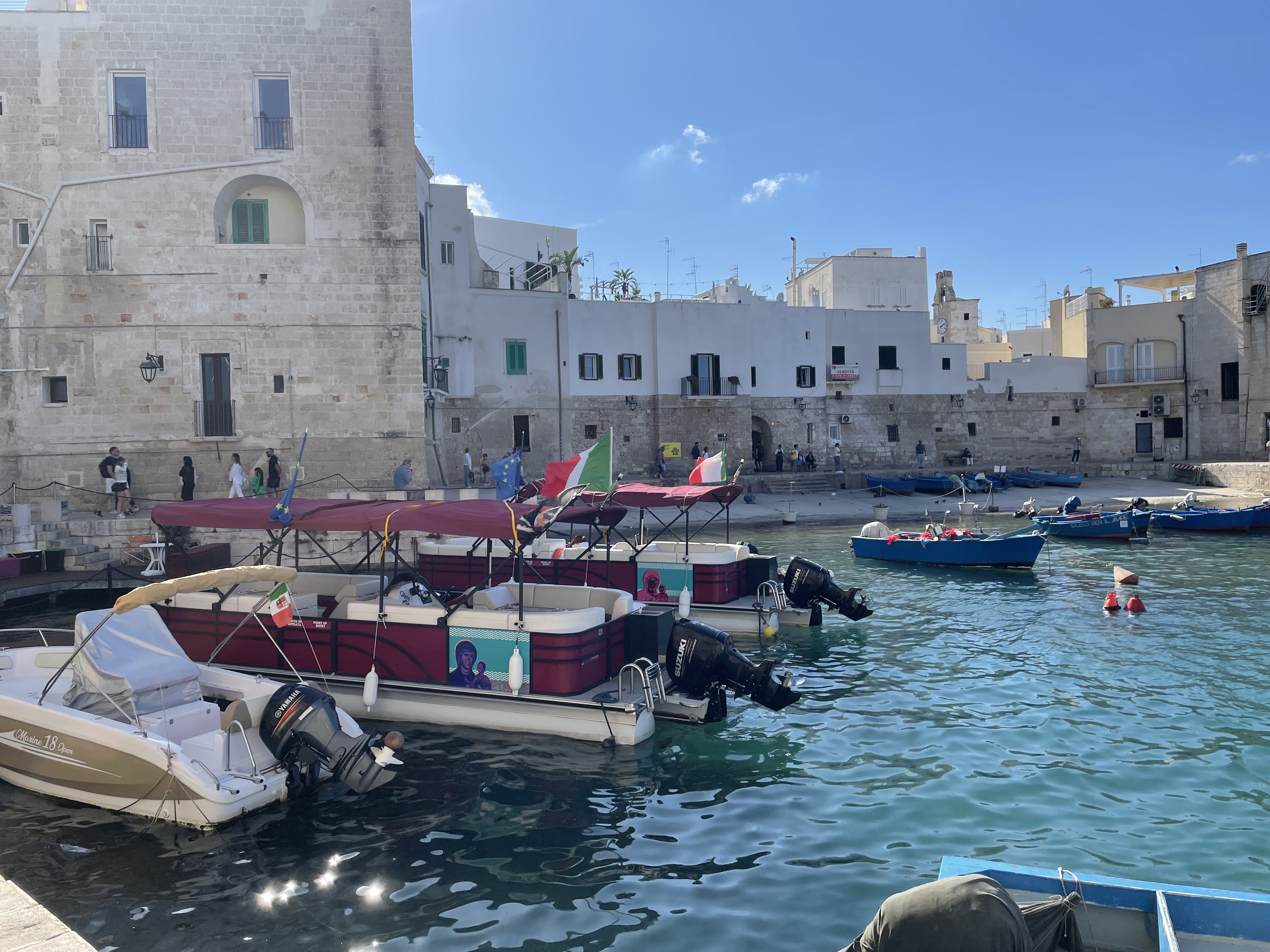
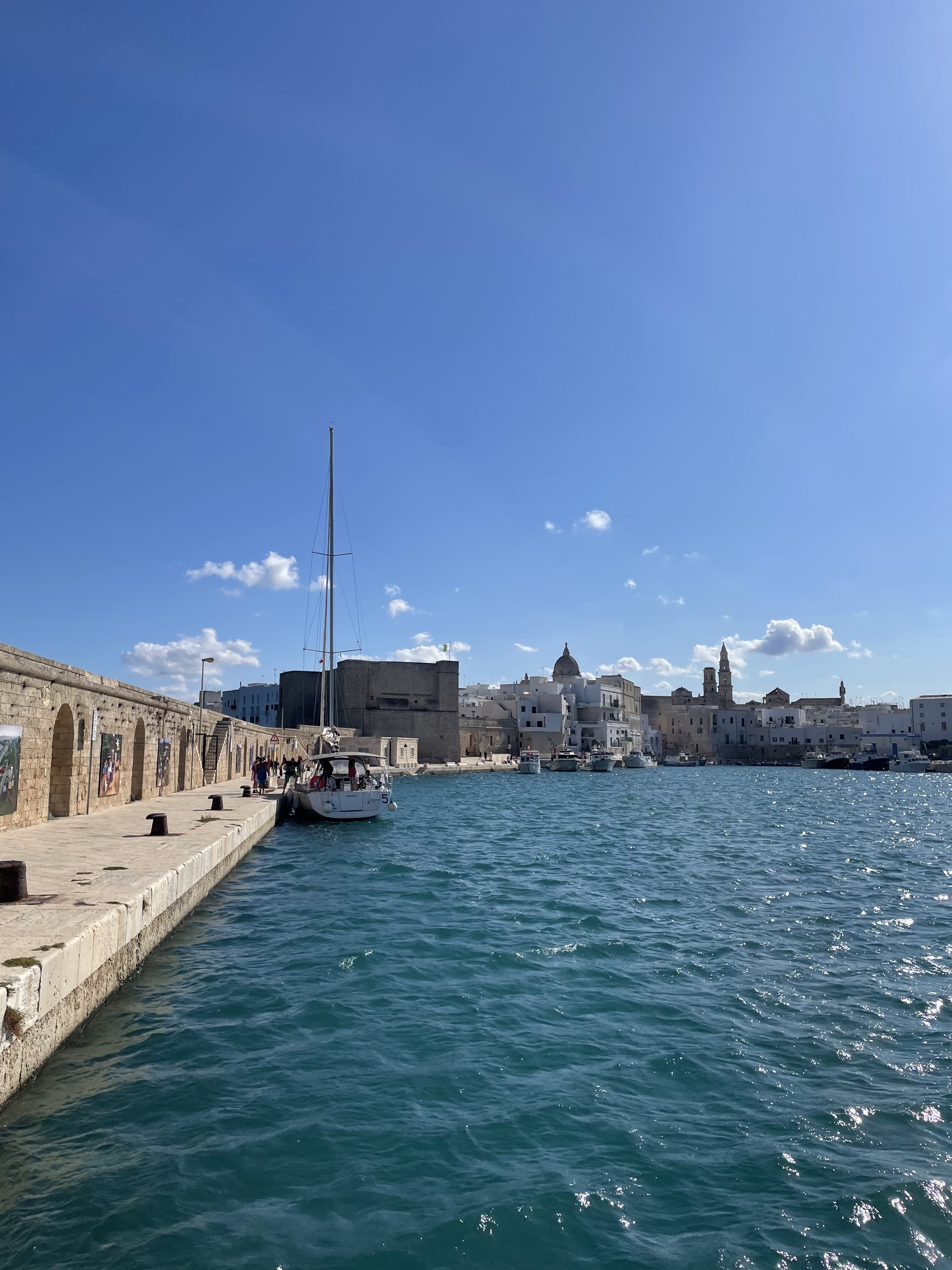
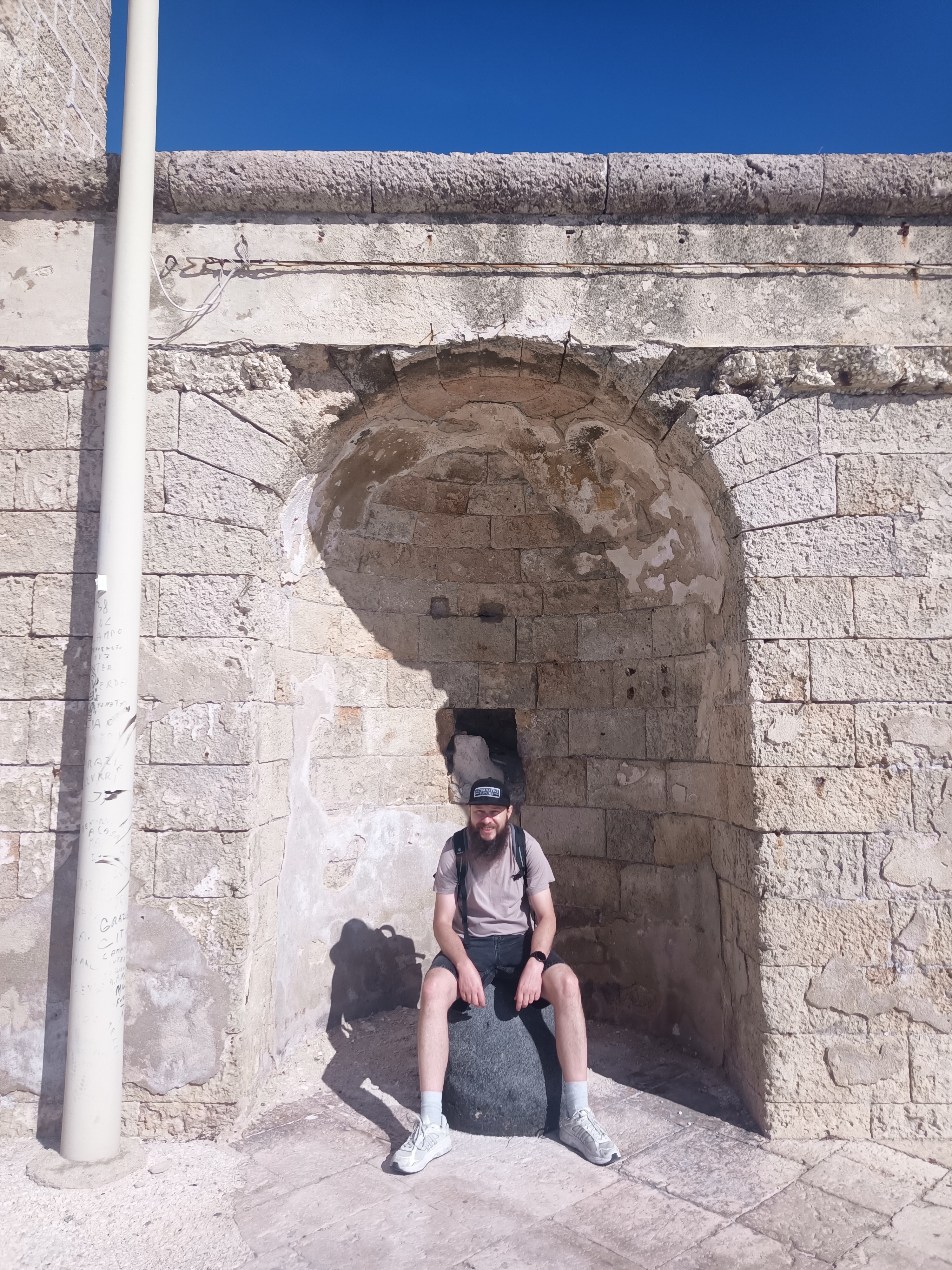
The port is Monopoli’s heart: dozens of small blue fishing boats packed in and bobbing, tour boats flying Italian flags, a mural boat, a pier to stroll, and the whole skyline — cathedral, domes, campanile — arranged across the water like a stage set. The water sparkled; we filmed it sparkling. Oleg posed from a stone arch niche on the sea wall.
Blue boats, full fleet 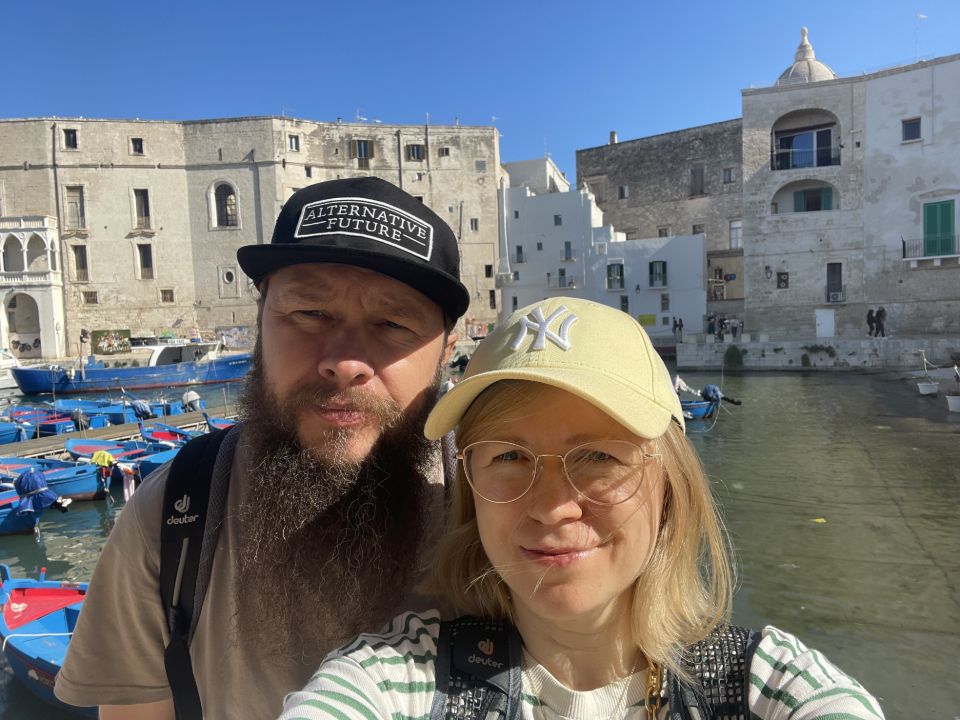
Both of us, in the port 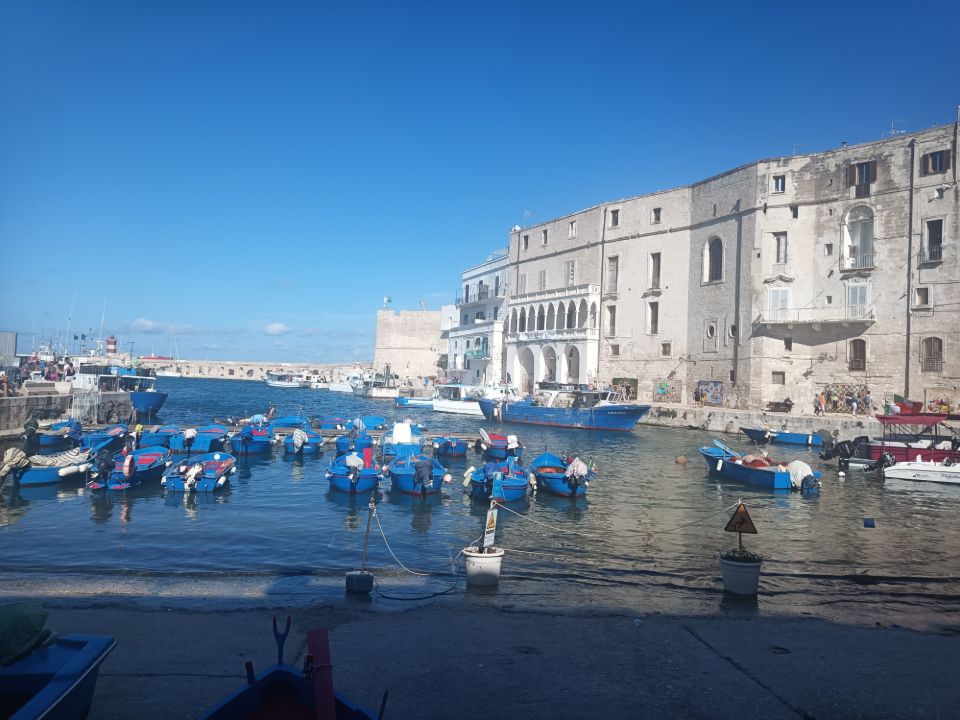
Cathedral skyline across the water 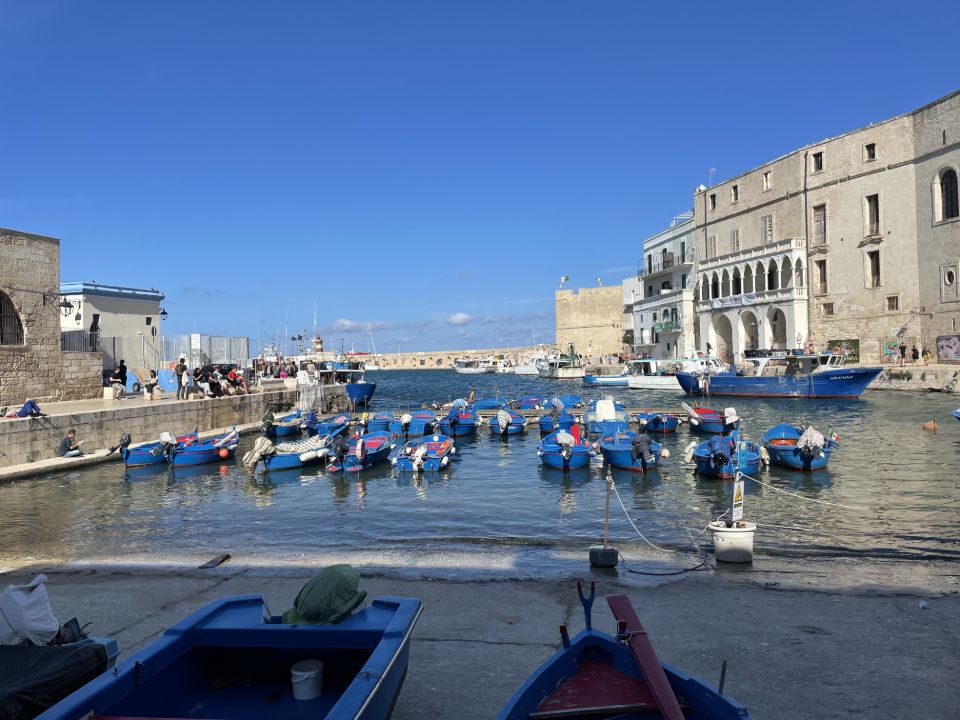
The whole port at once 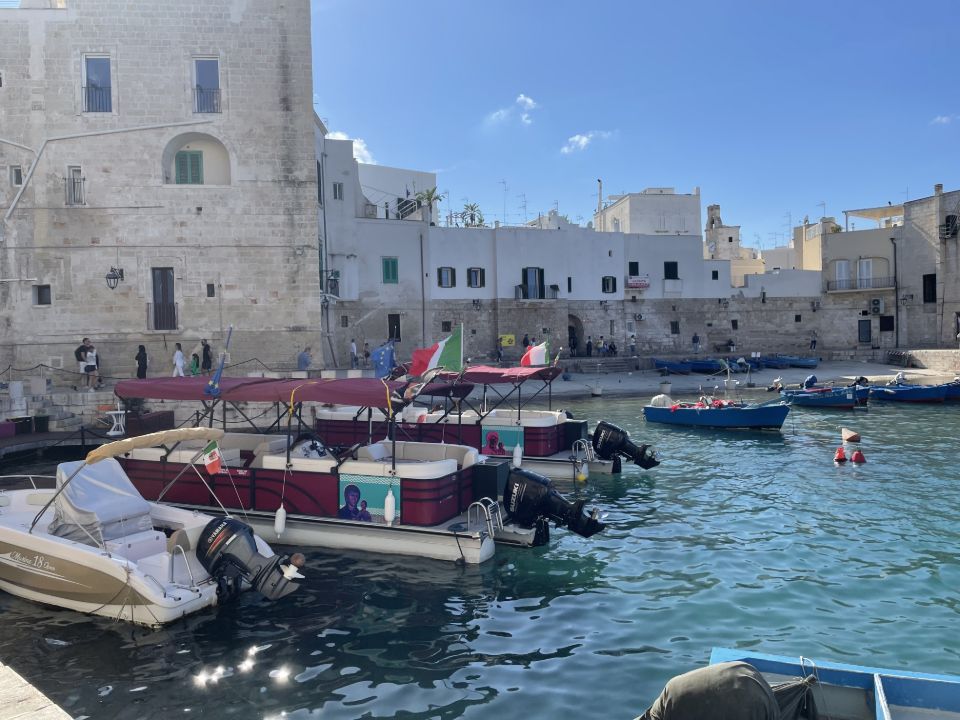
Tour boats, flags out 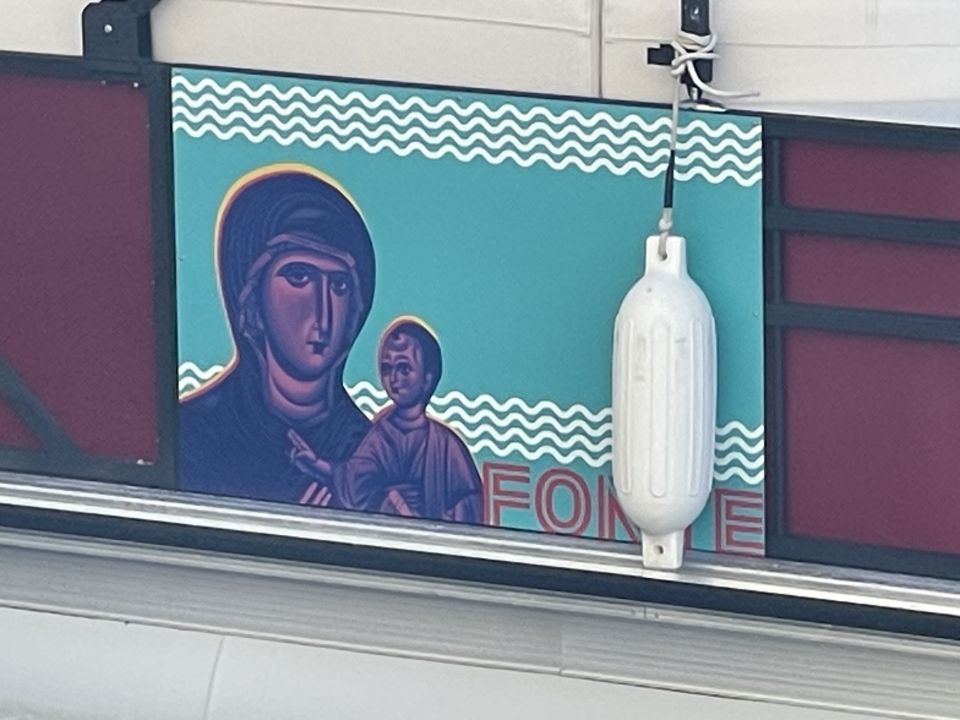
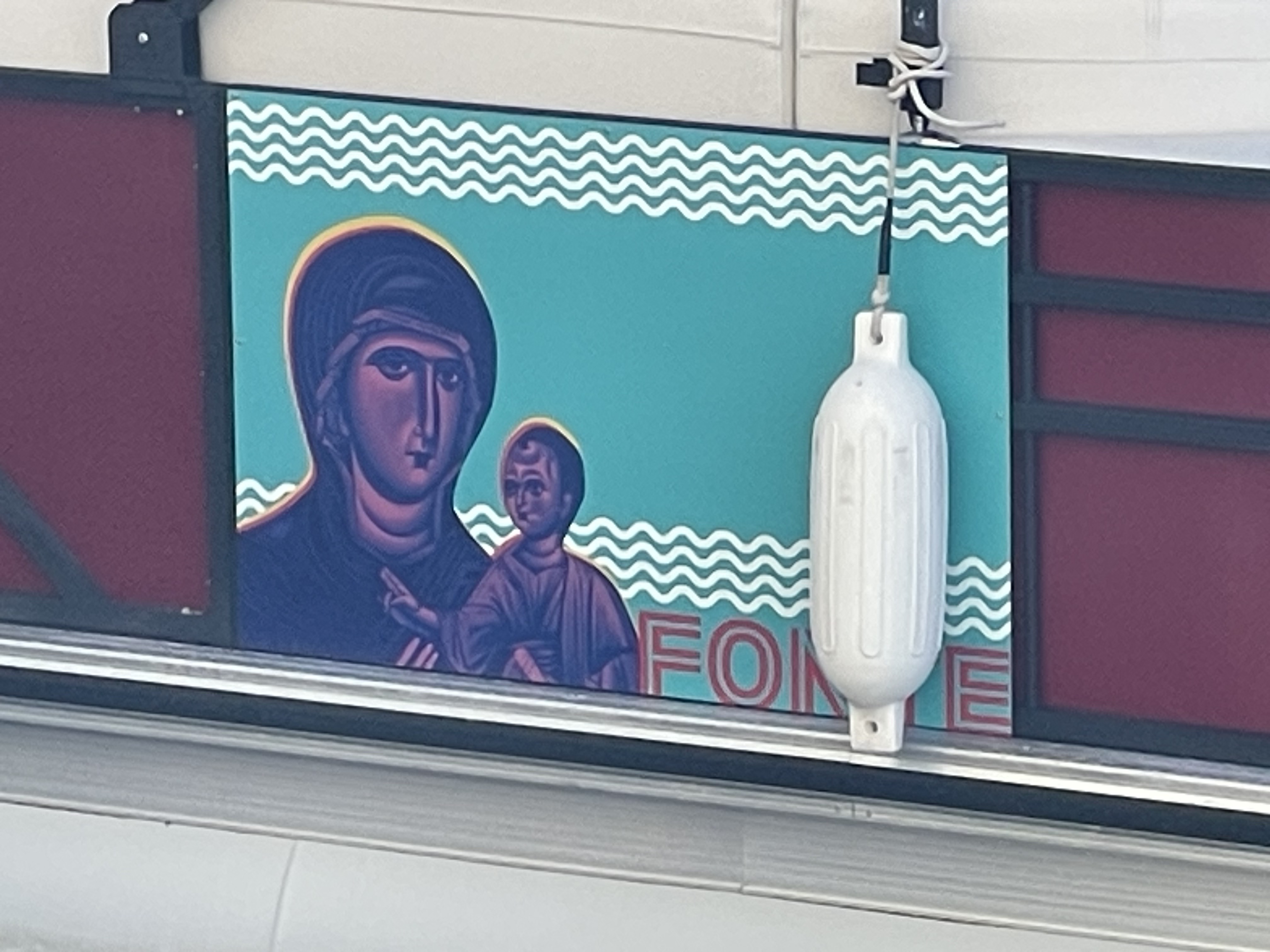
The boat painted as a mural 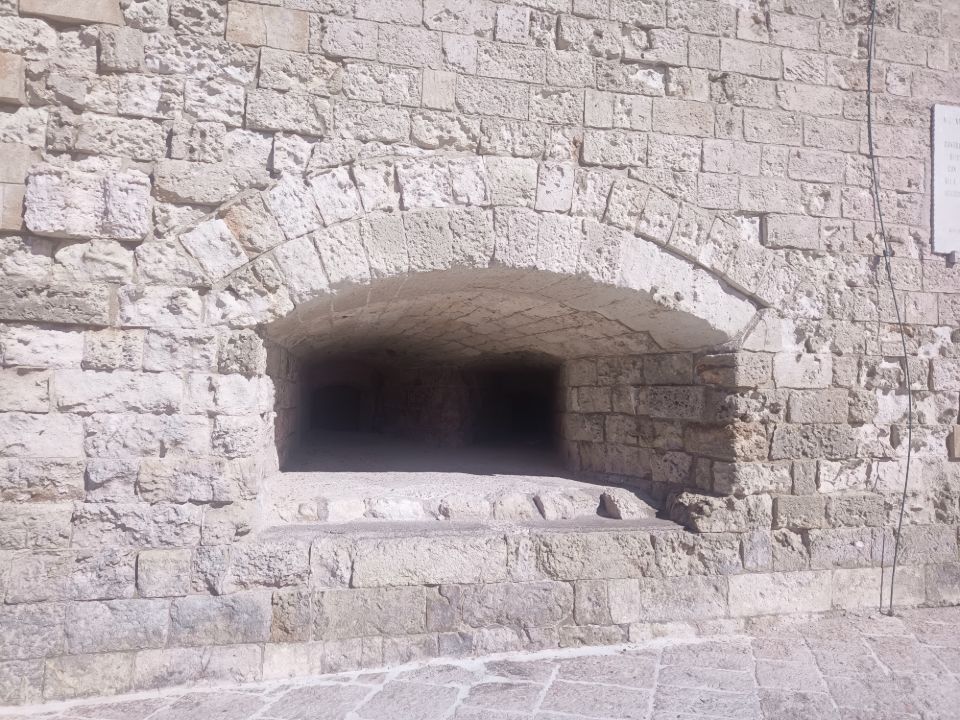
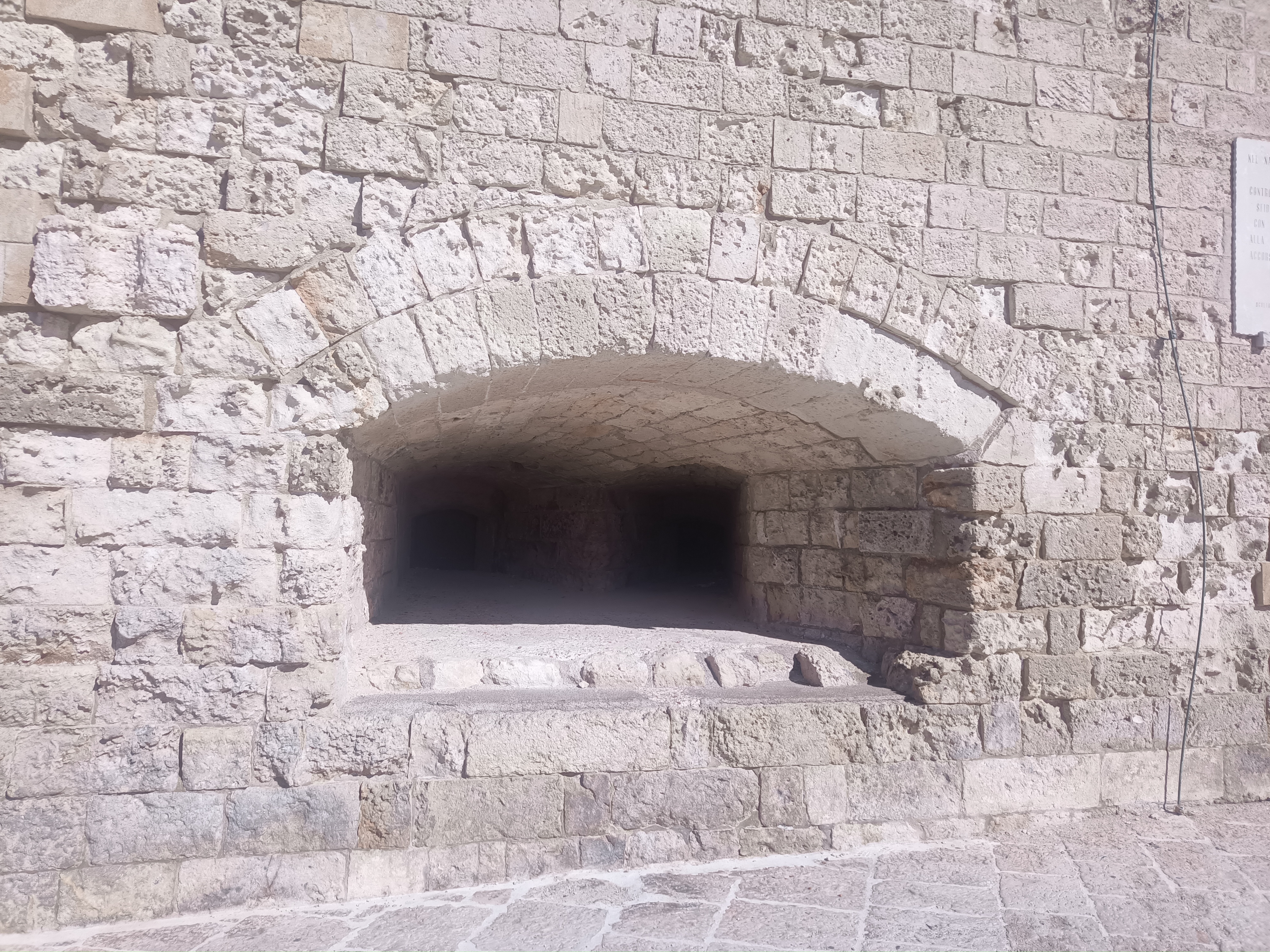
An arched recess by the water 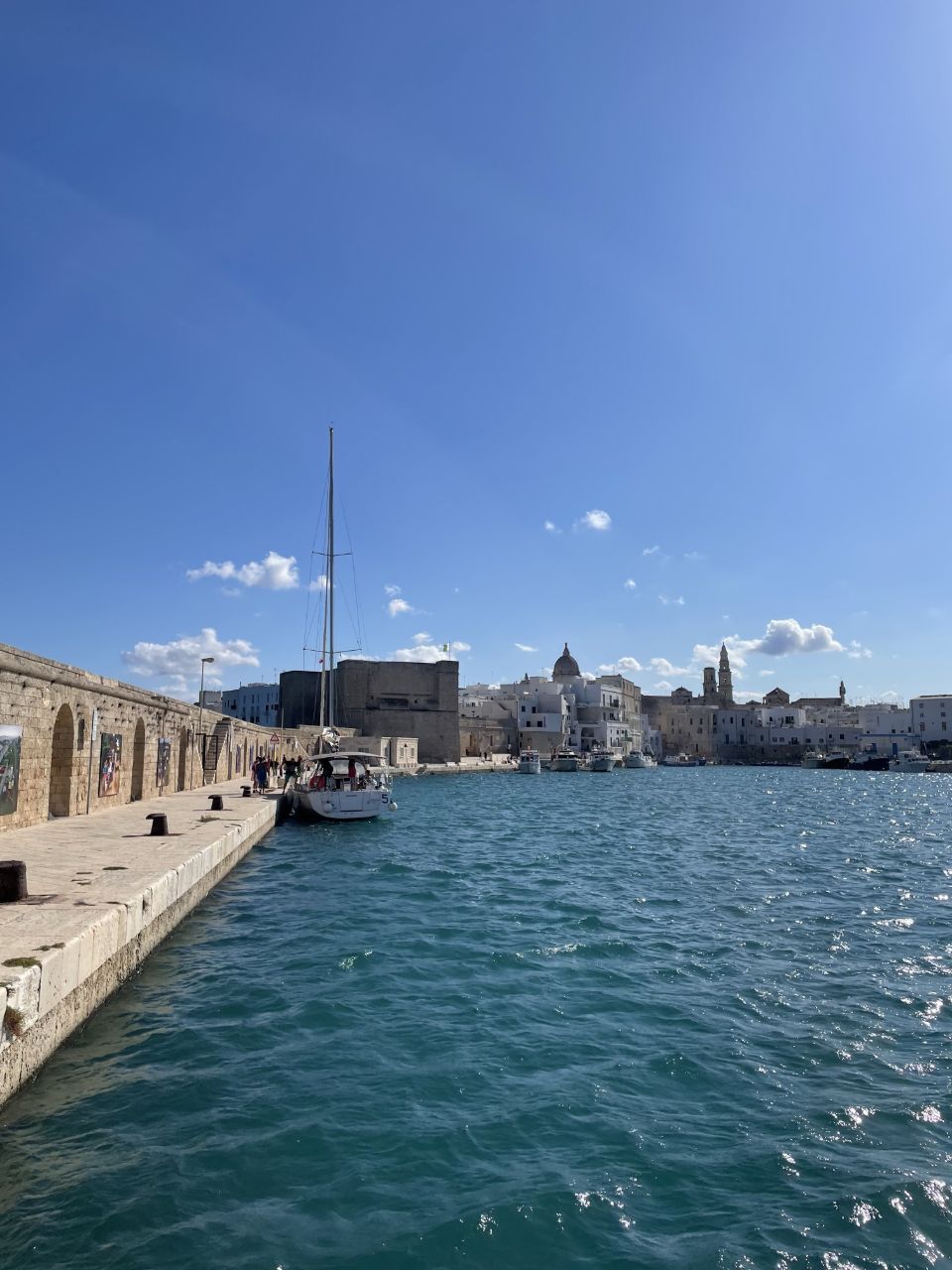
Down the pier 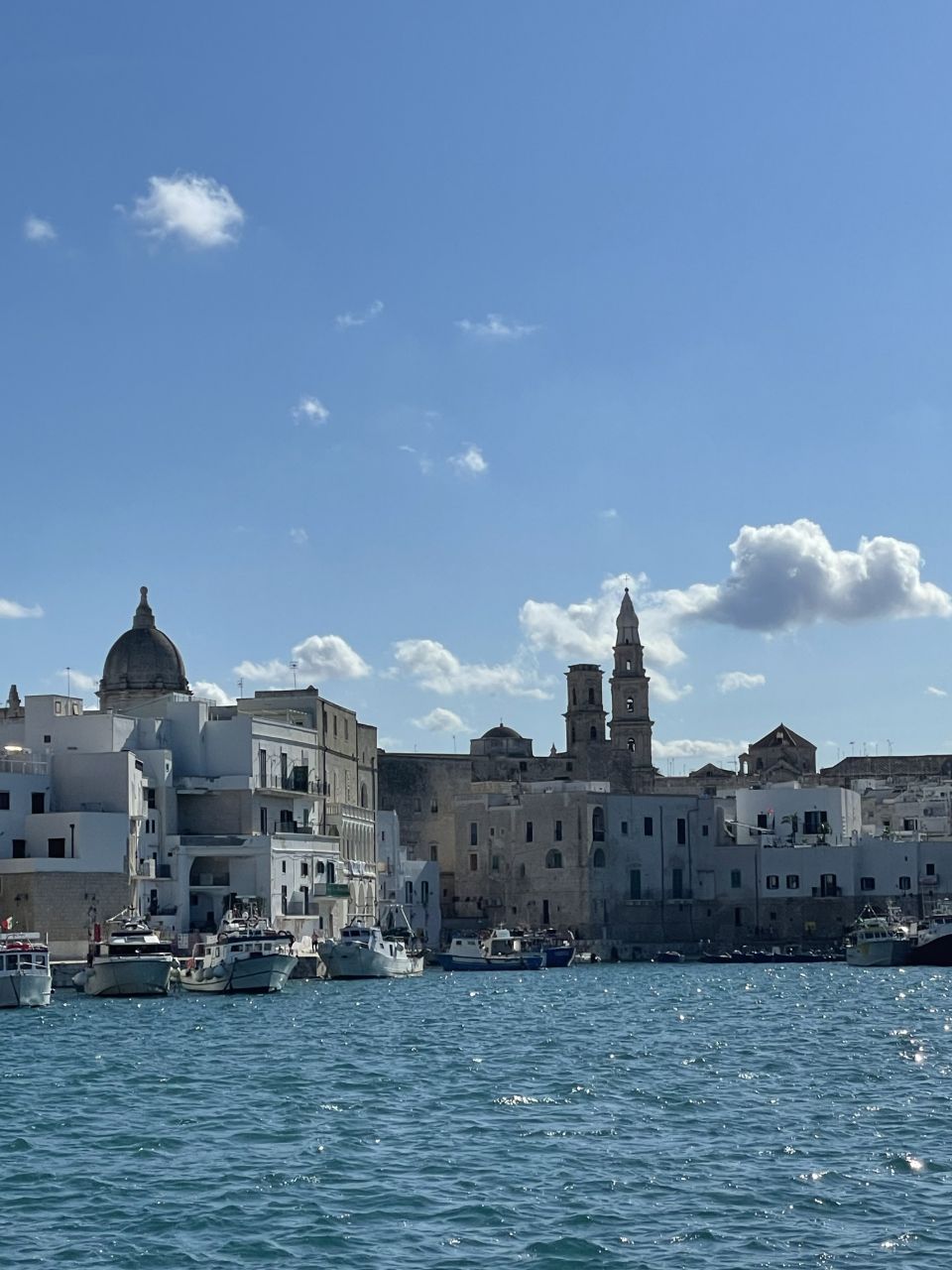
The town across the water 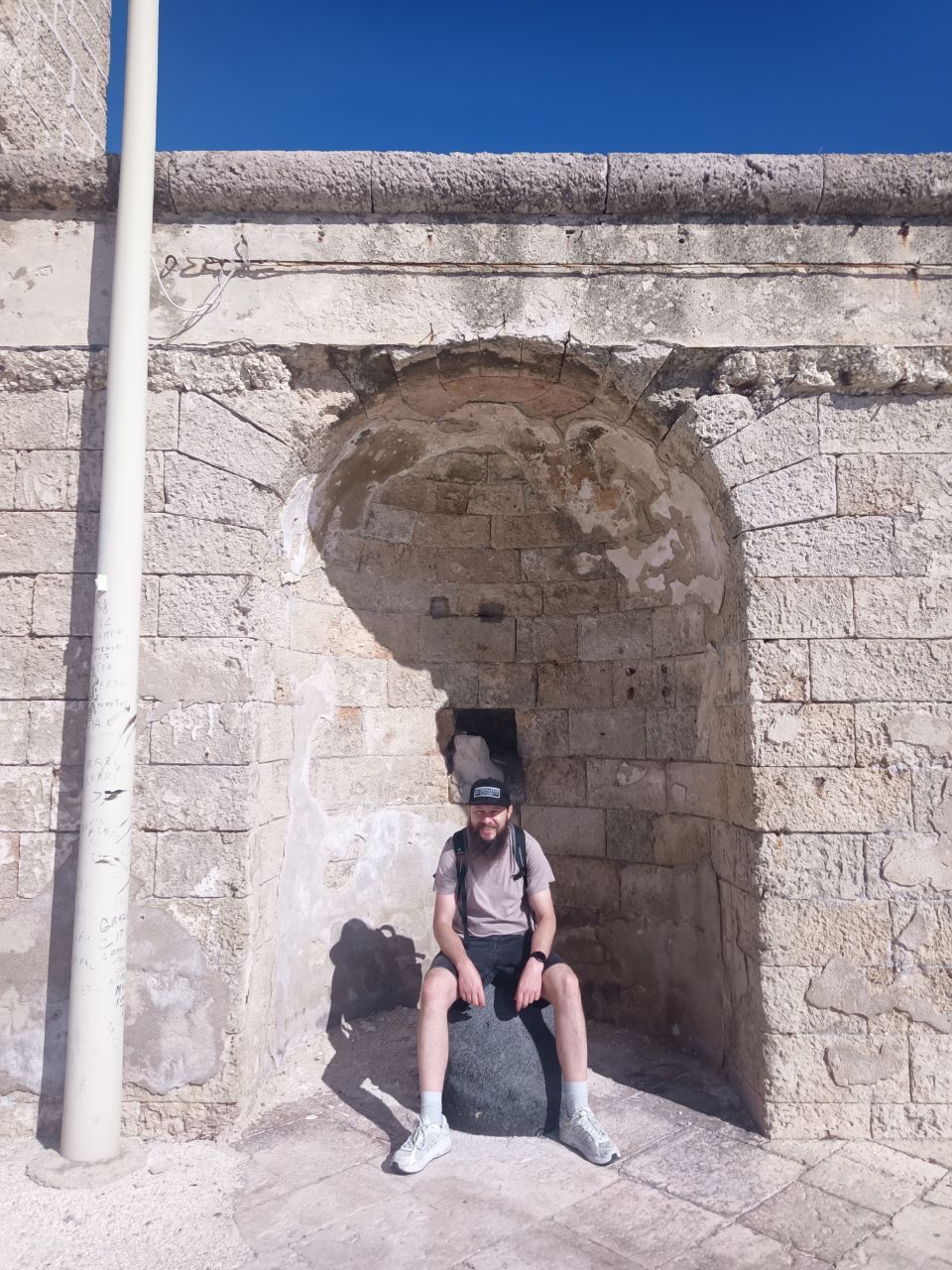
Oleg, in the arch niche
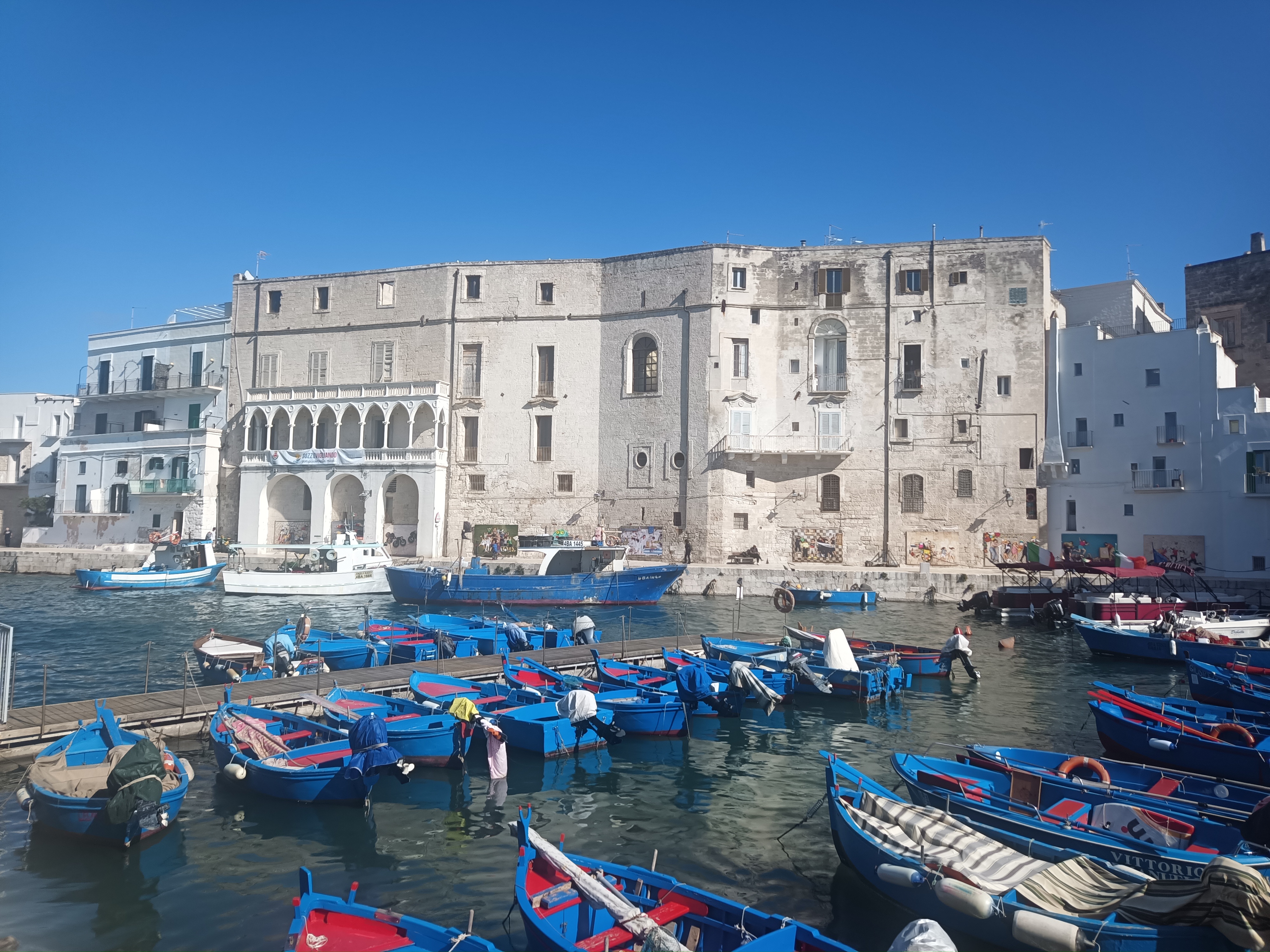
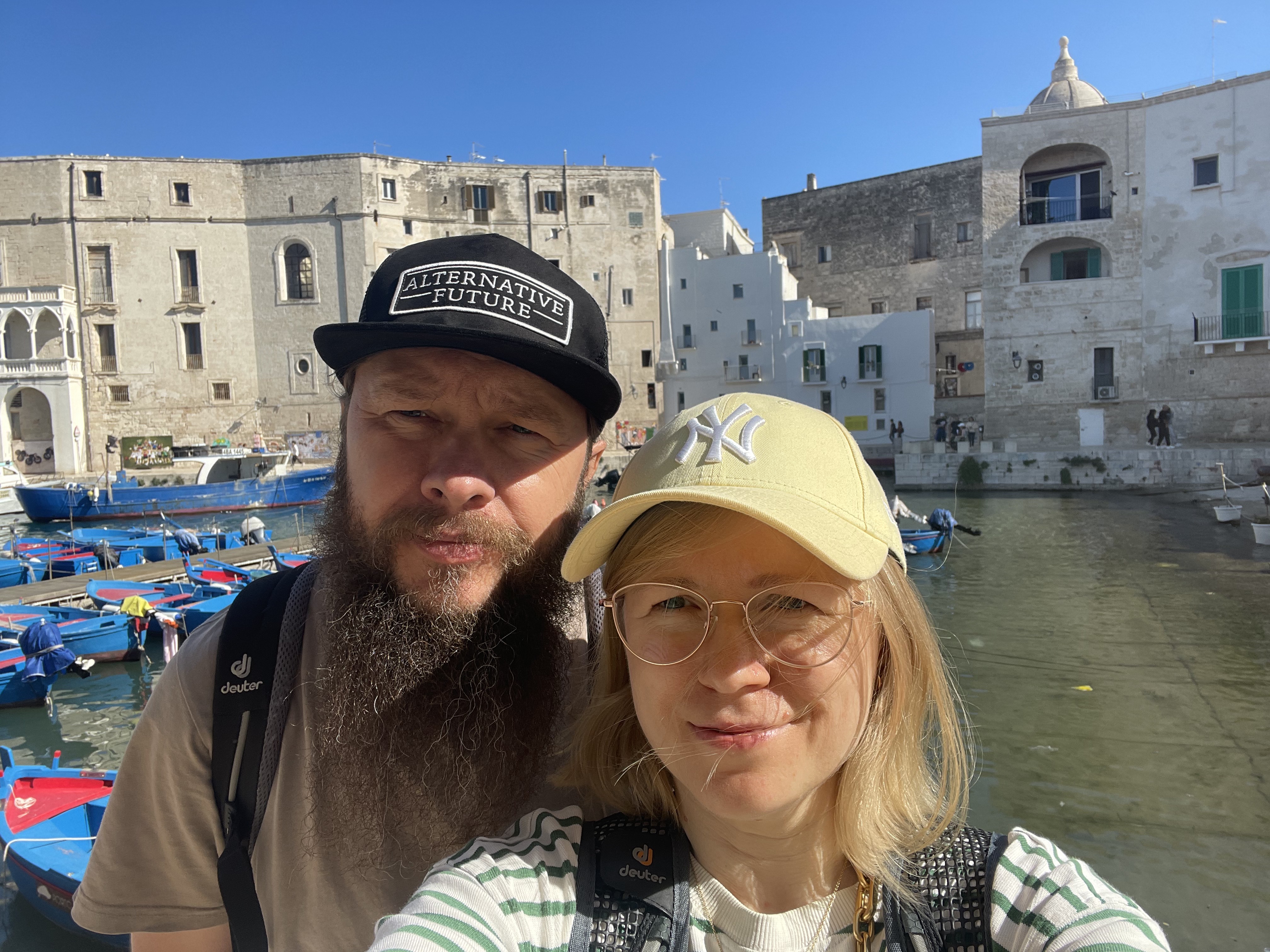
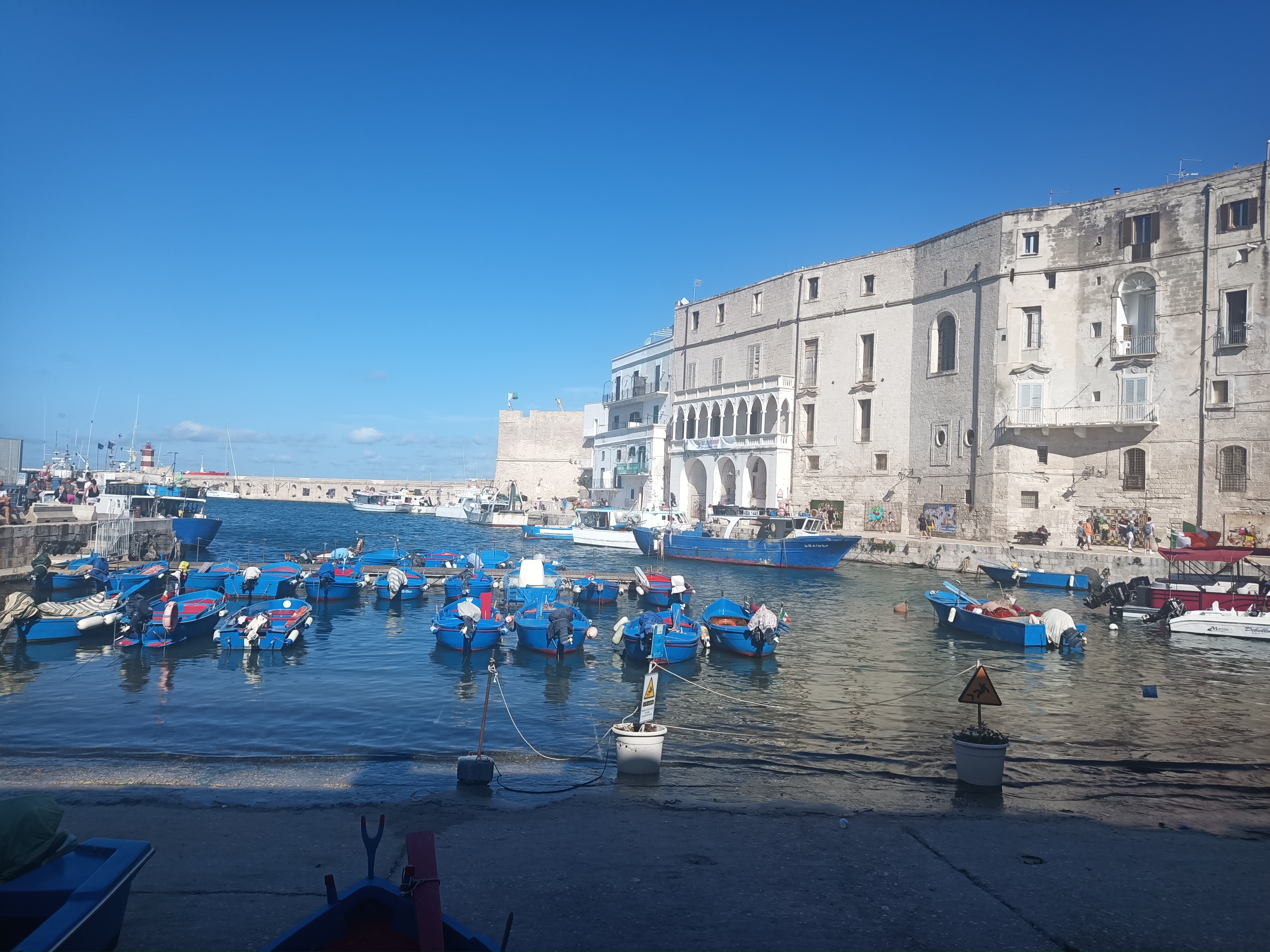
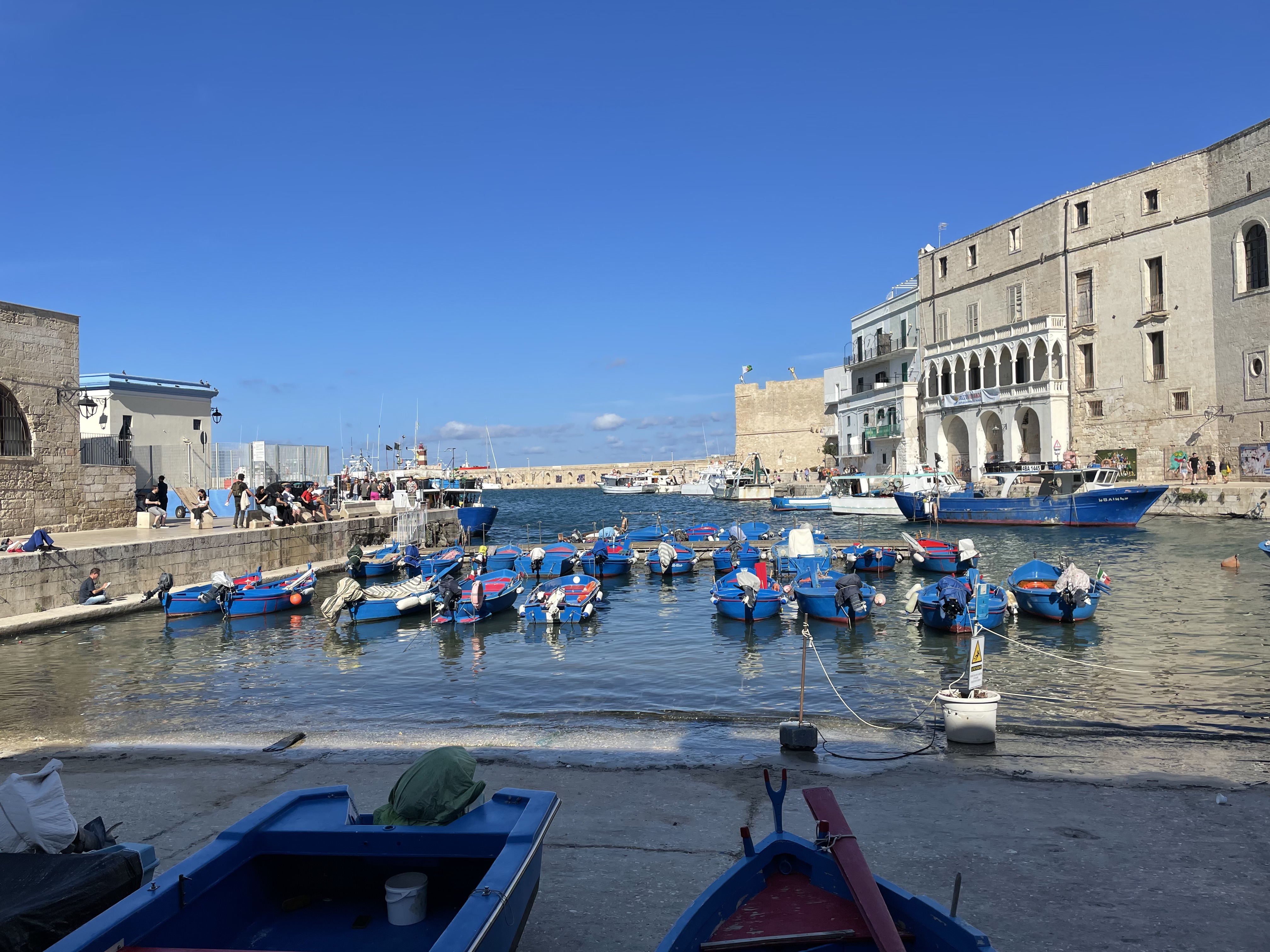
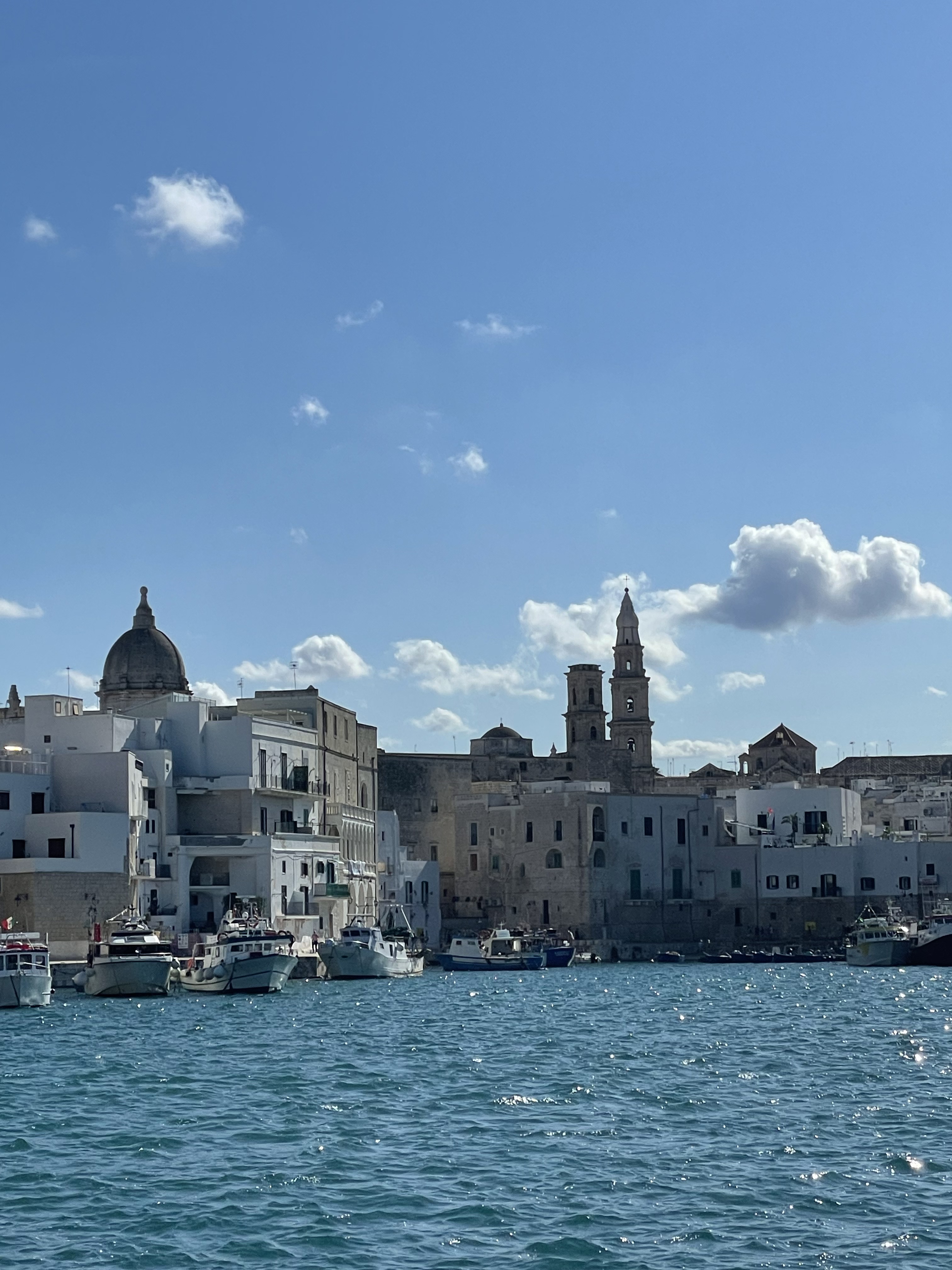
The old port, the water sparkling — sixteen seconds.
Night one: octopus and floodlight
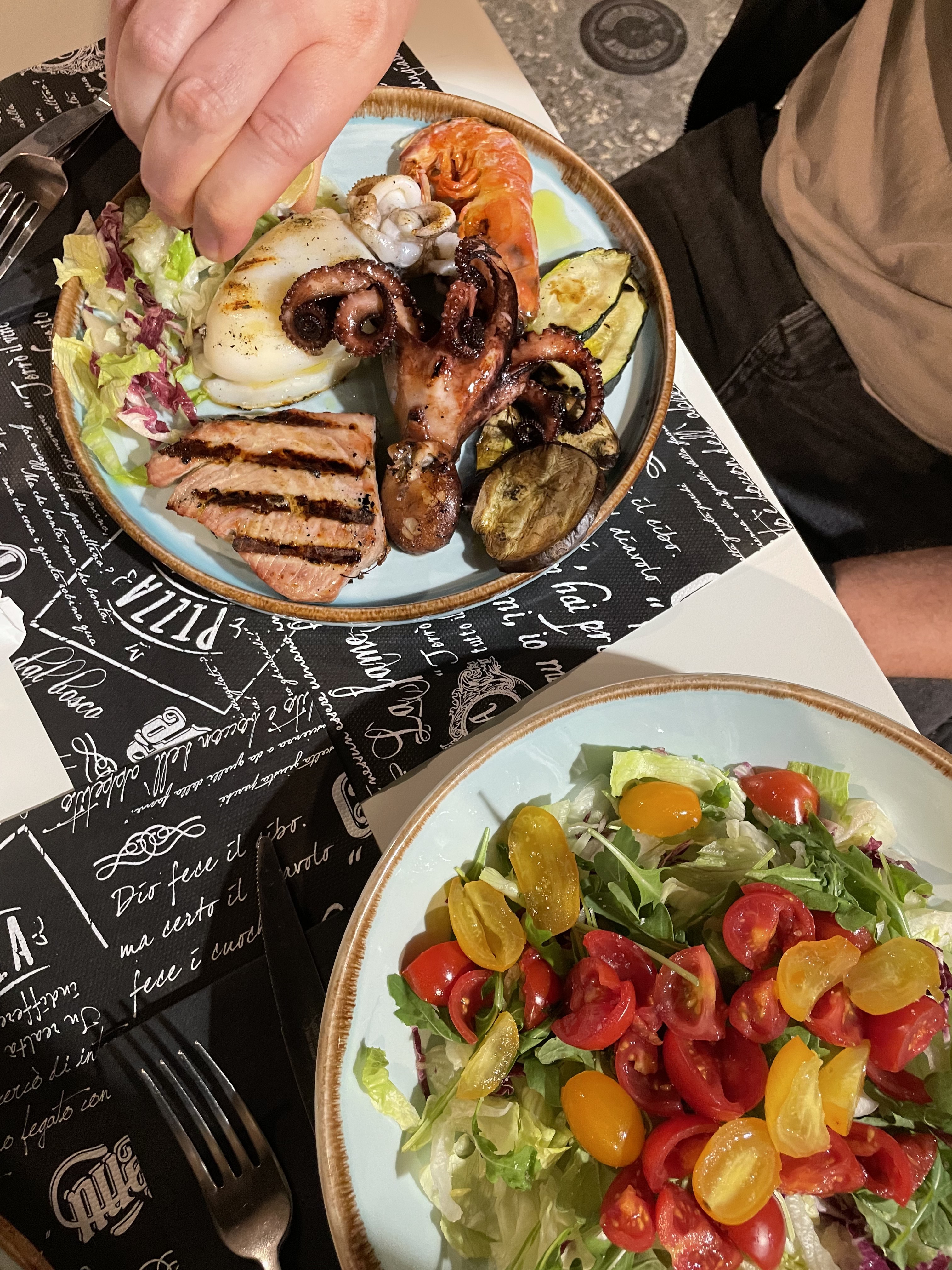
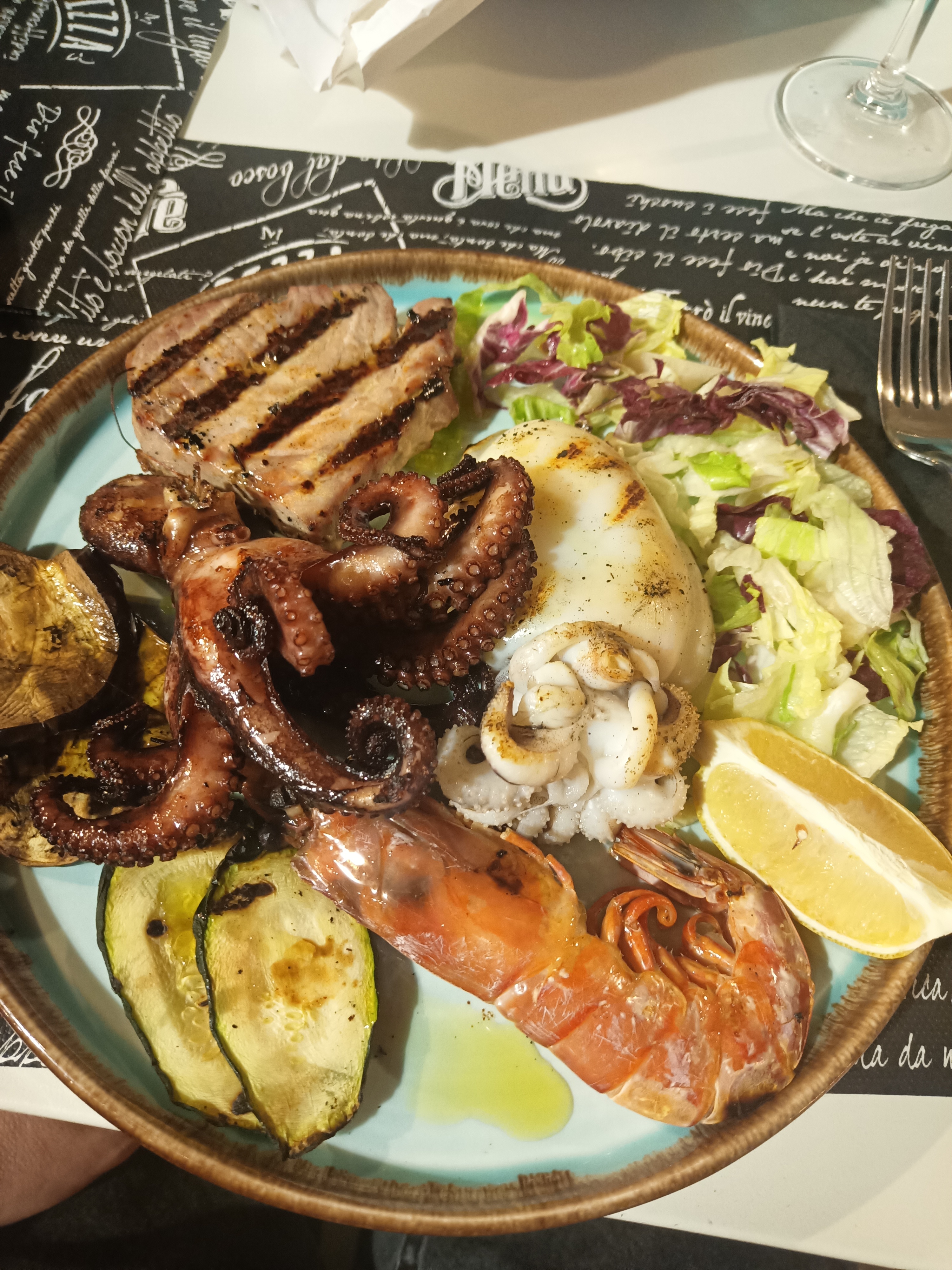
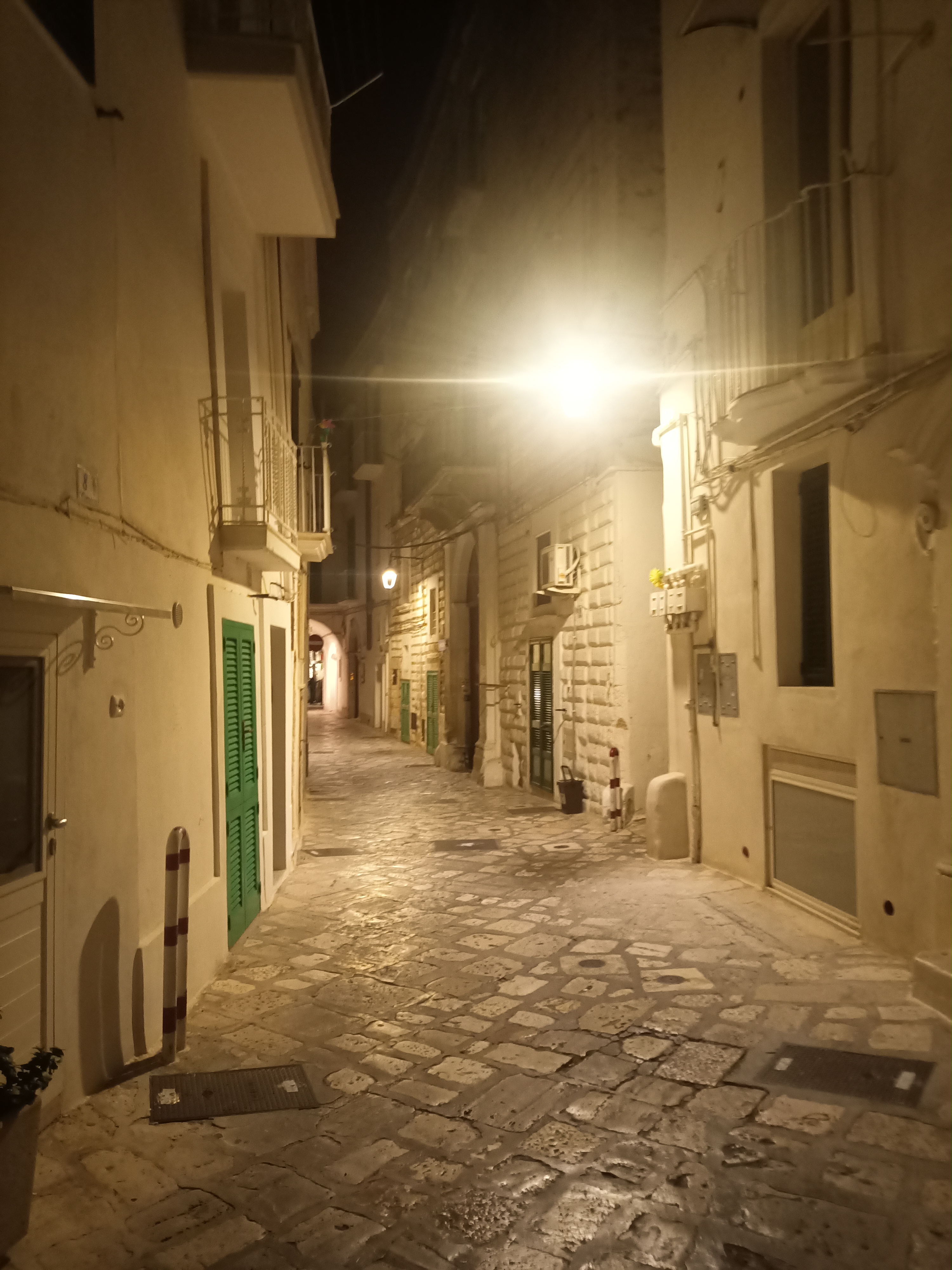
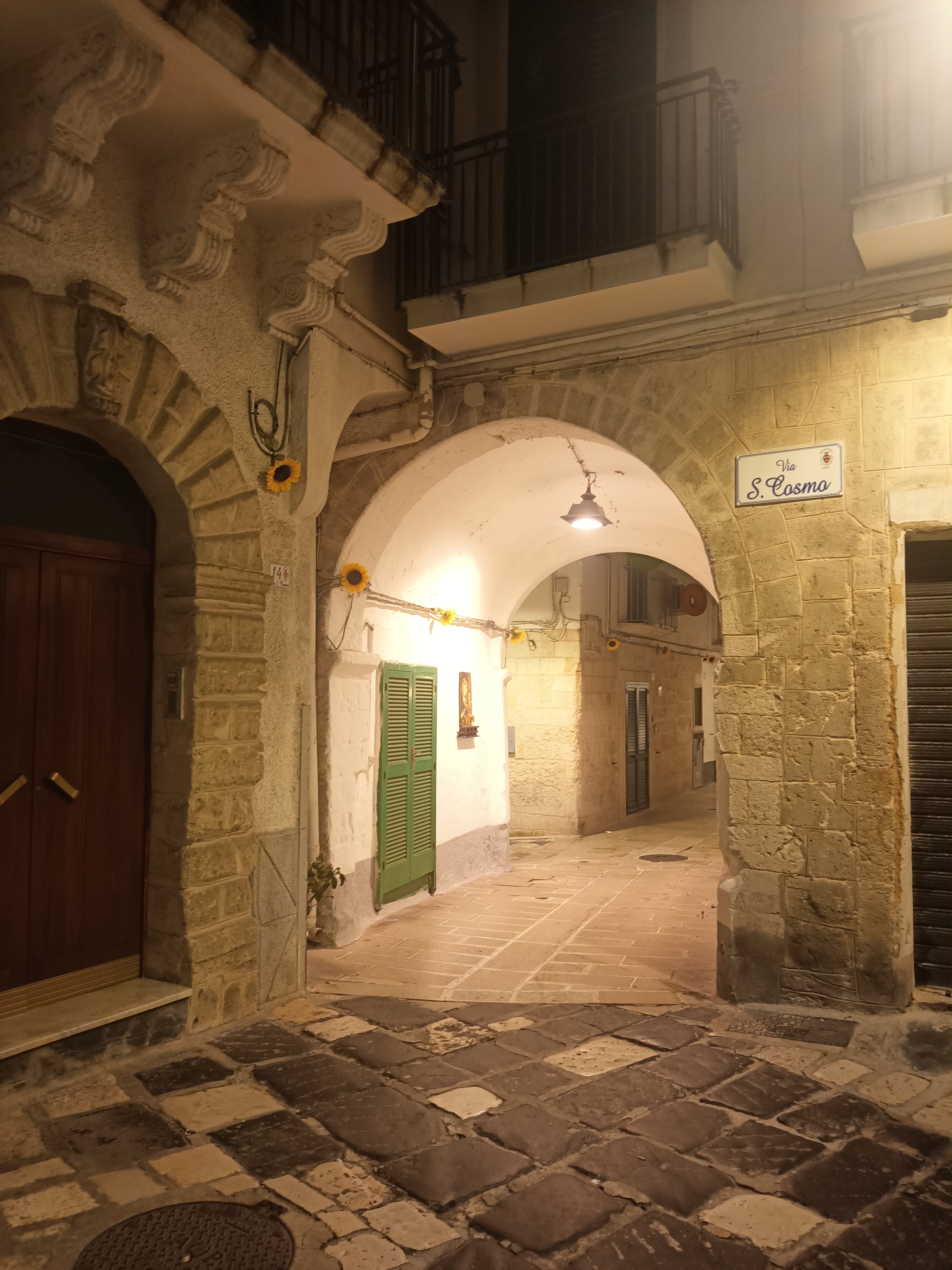
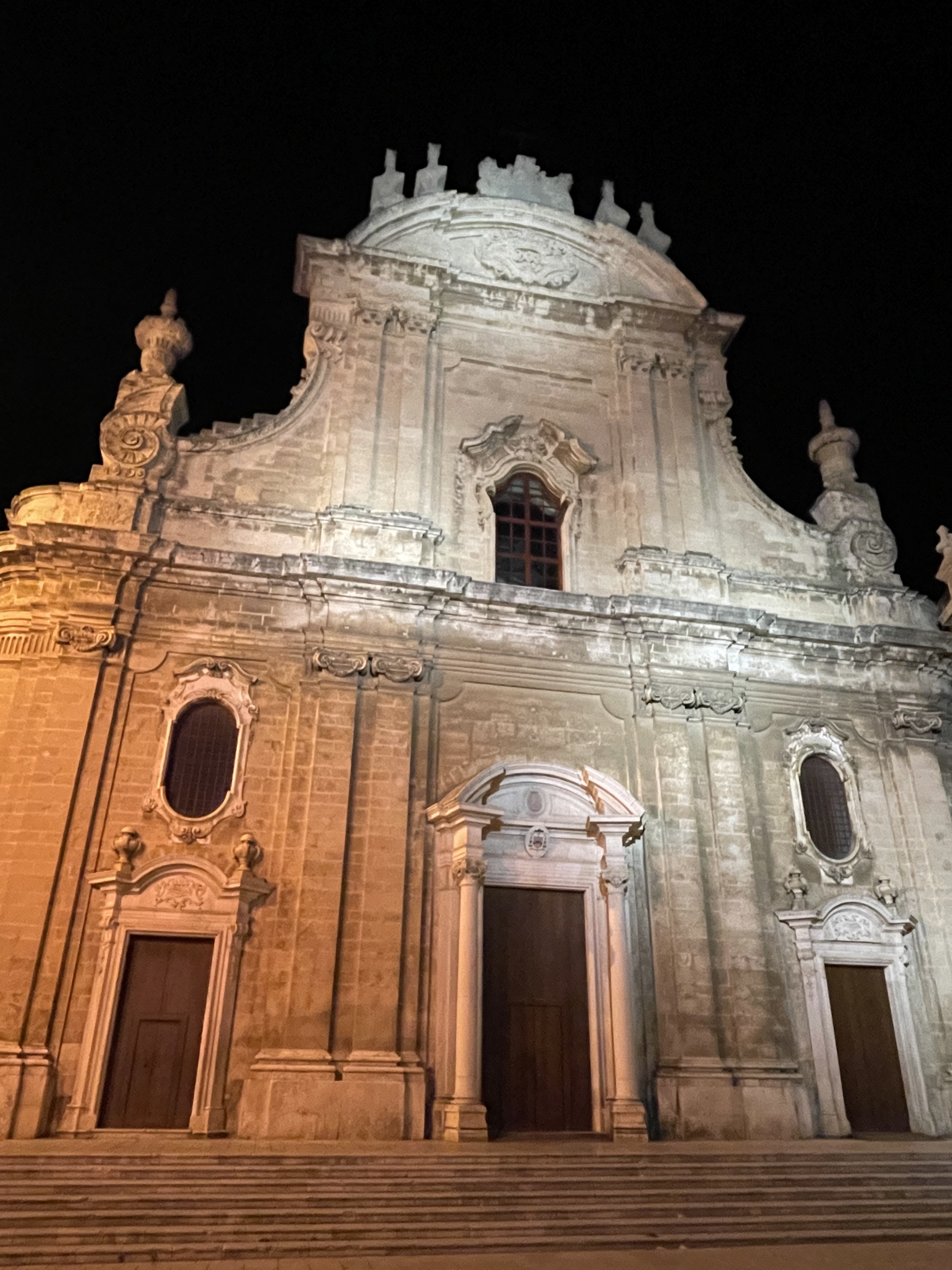
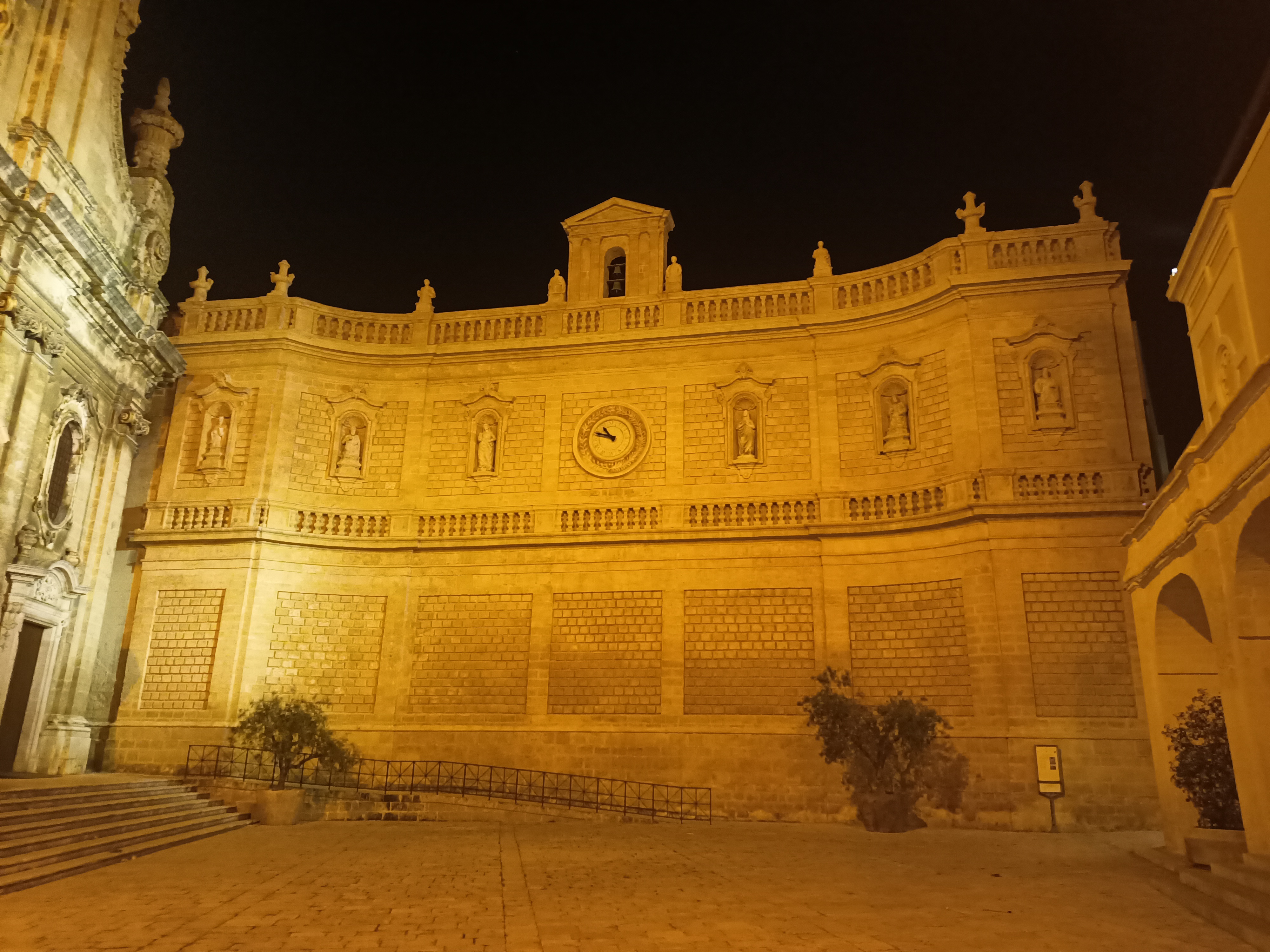
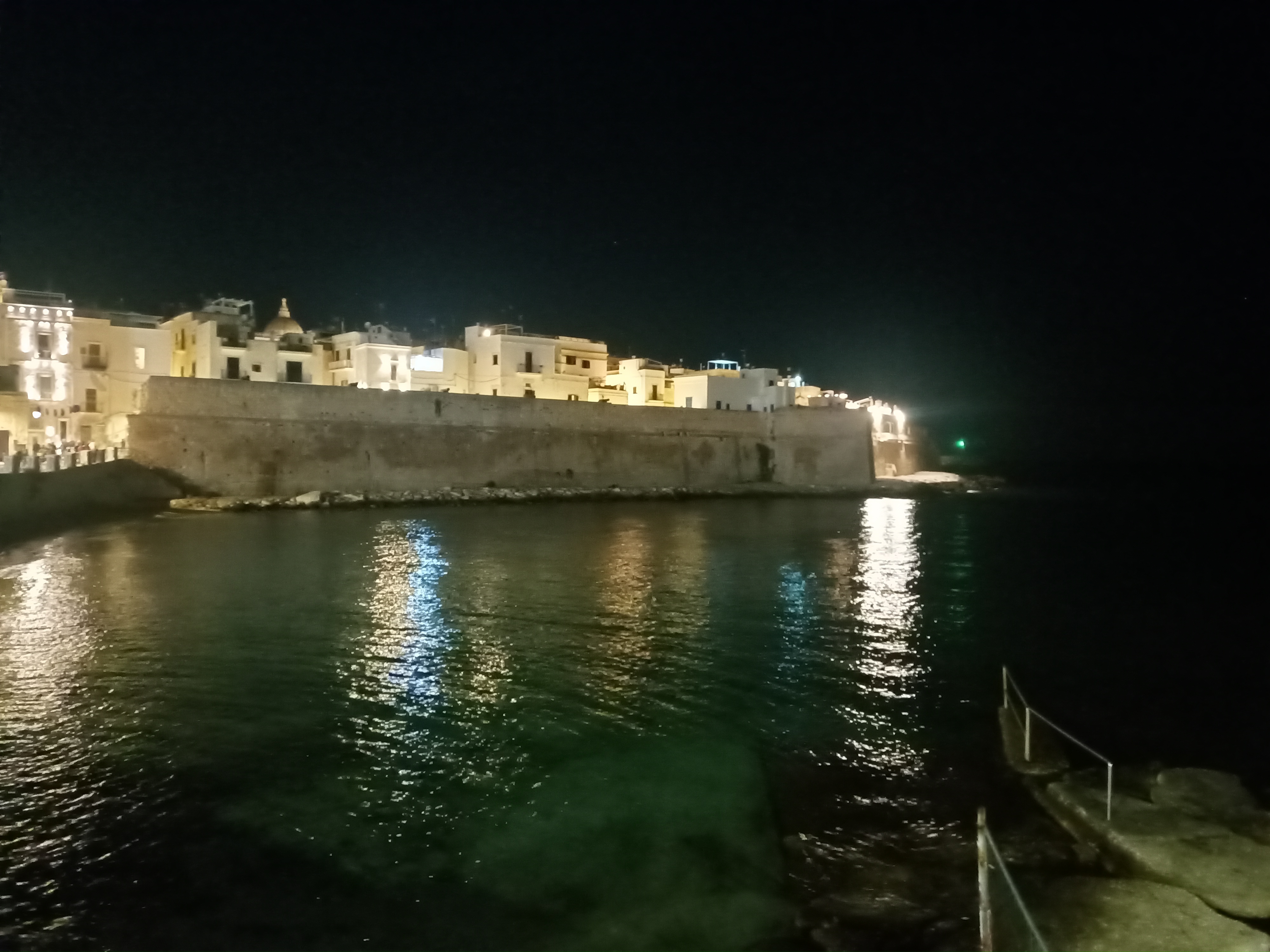
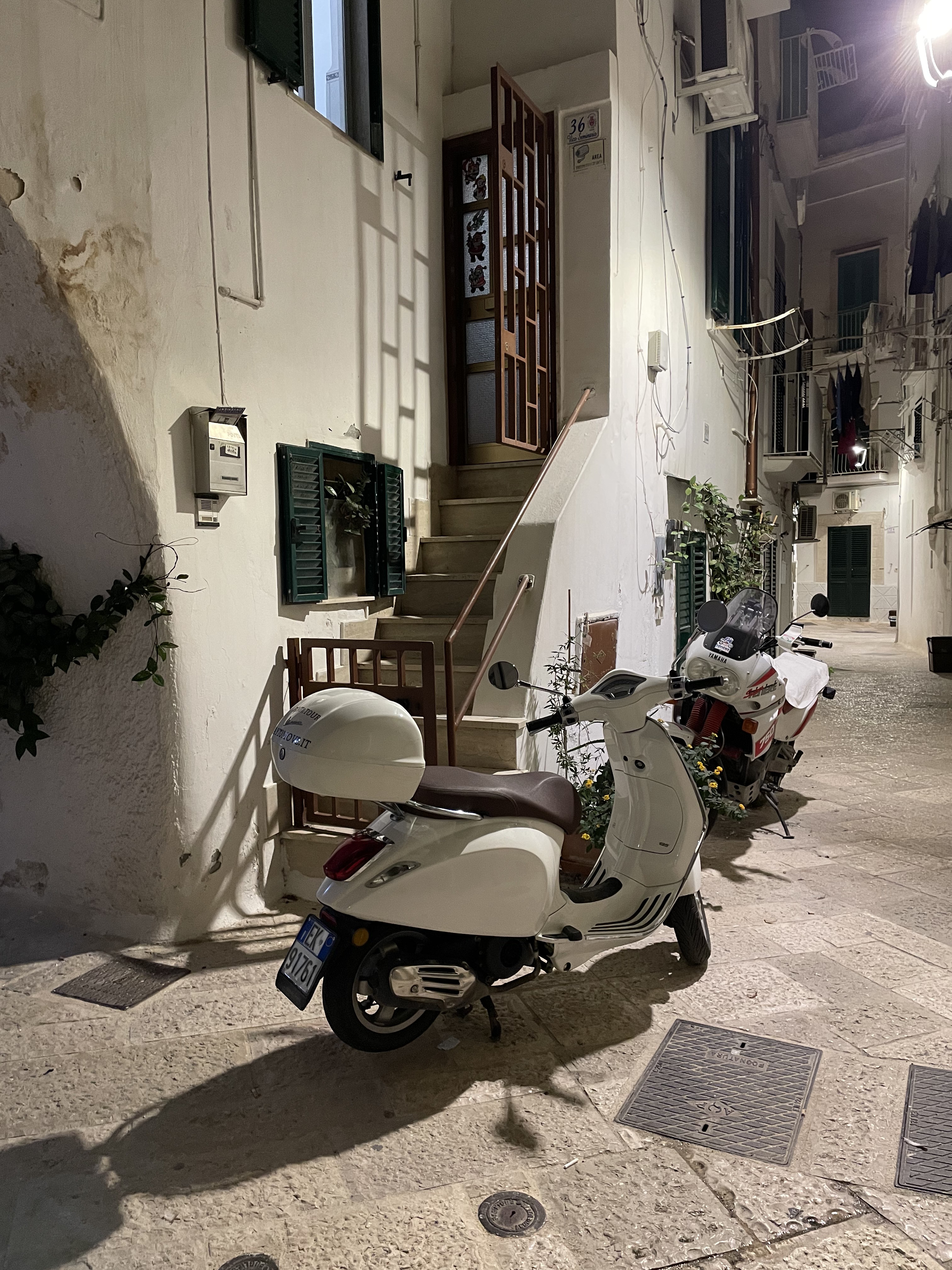
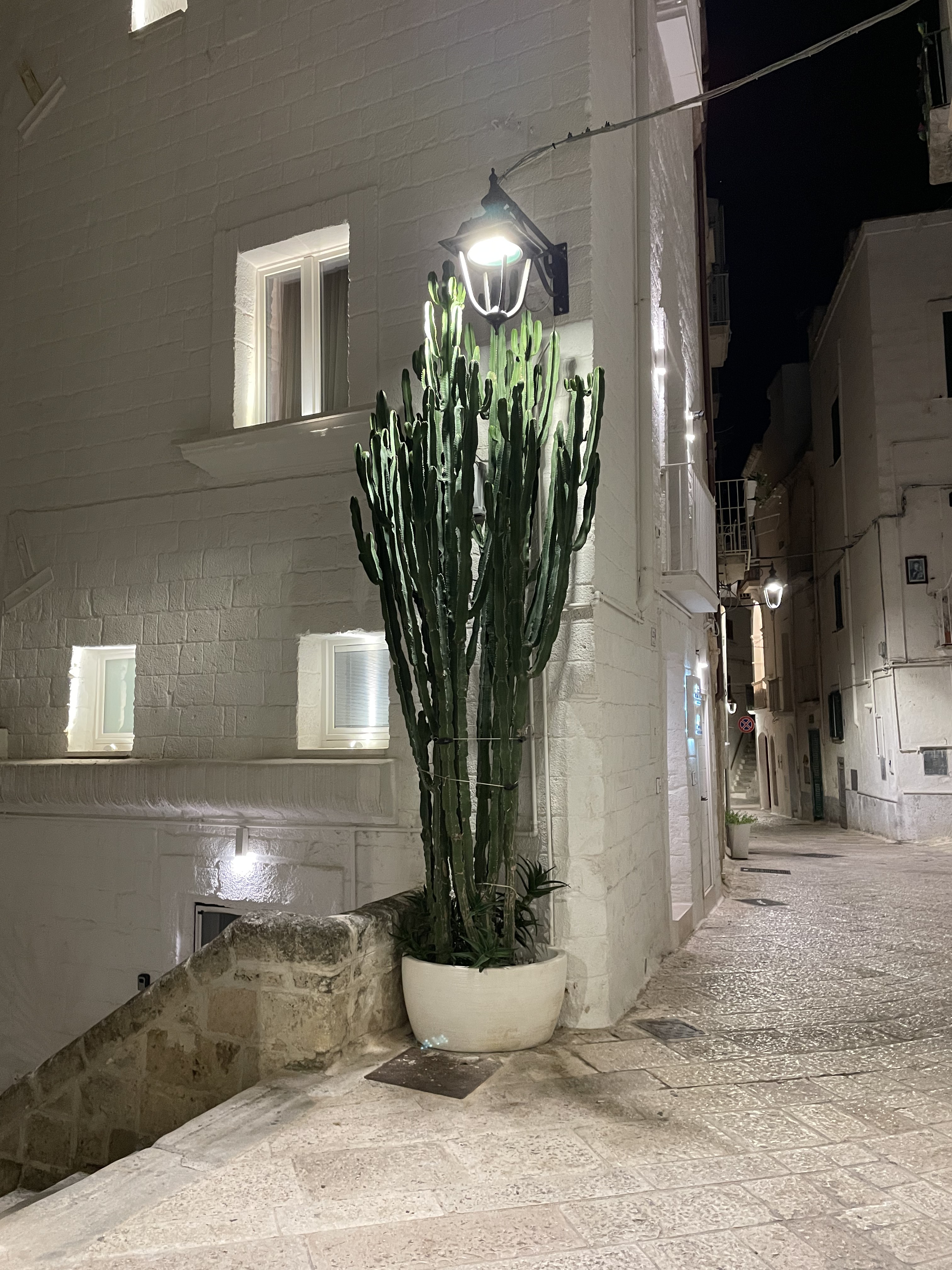
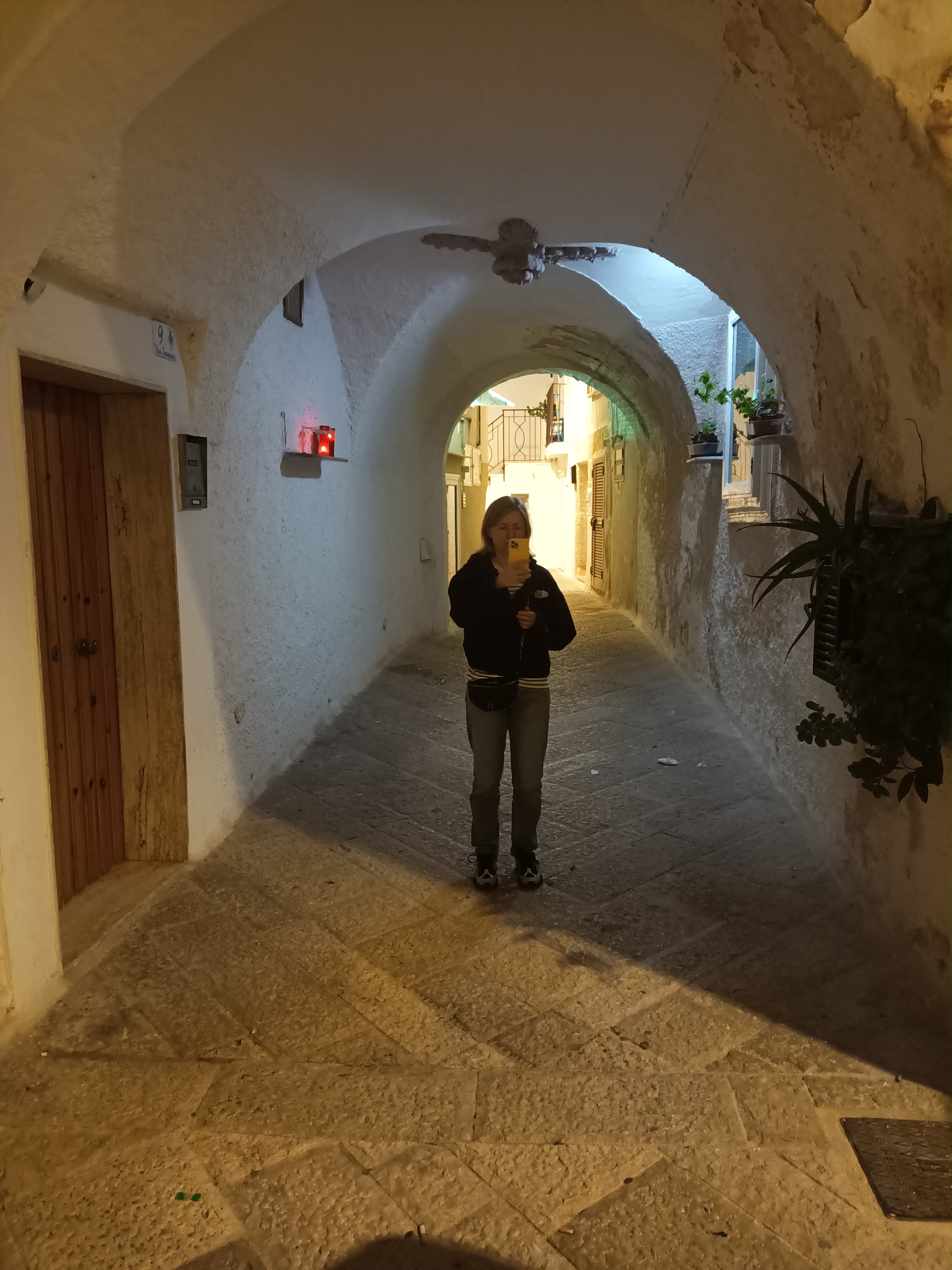
Dinner was the best octopus of the trip — grilled, with clam pasta holding up the other end of the argument — then the town by night, which is all floodlit stone: the baroque cathedral facade, its staircase, the seafront glowing over dark water. On the way home we found the Vespa, the alley cactus under its streetlamp, and Anna in a vaulted alley pretending to be a magazine photo.
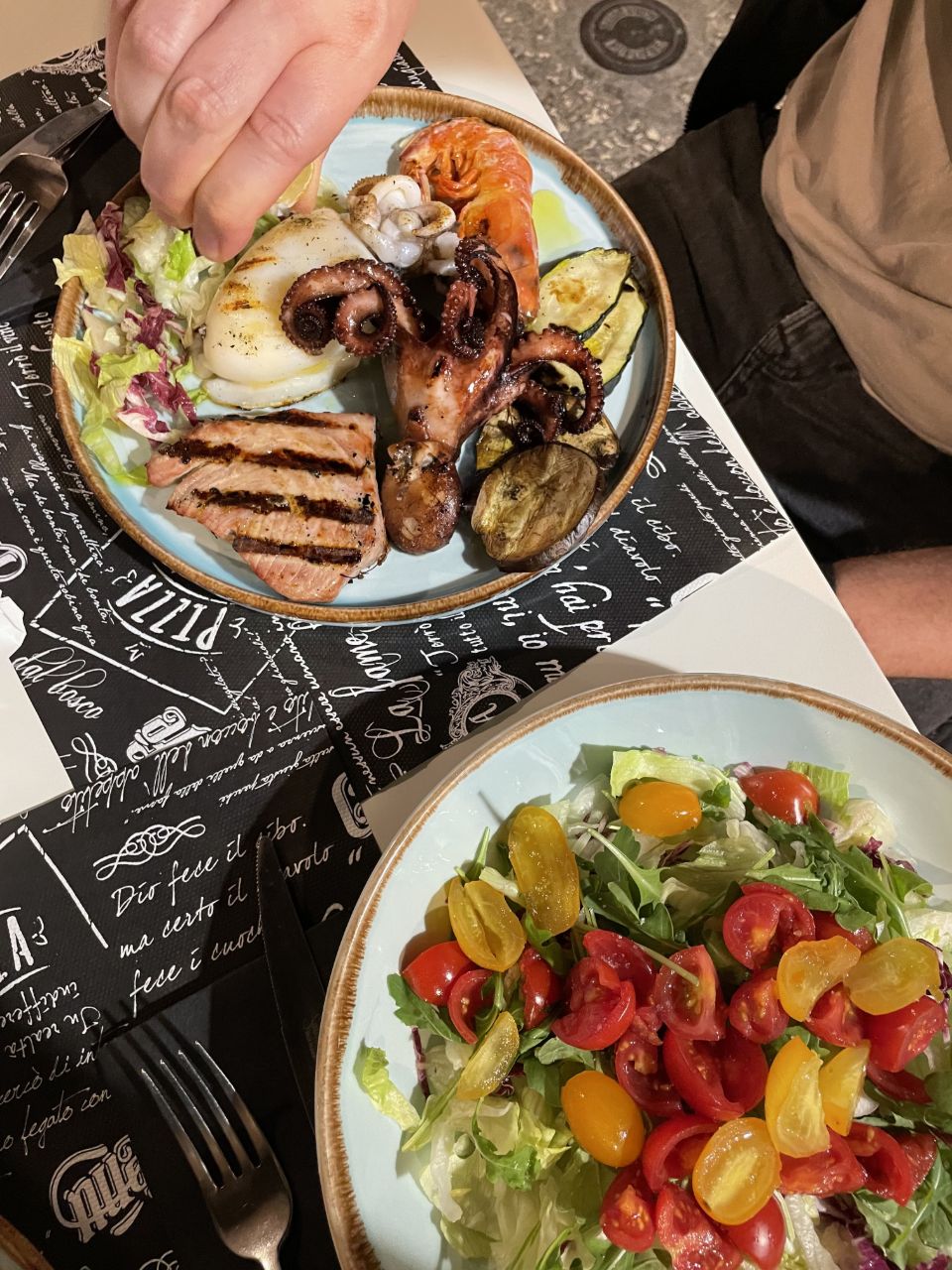
Dinner: octopus, clam pasta 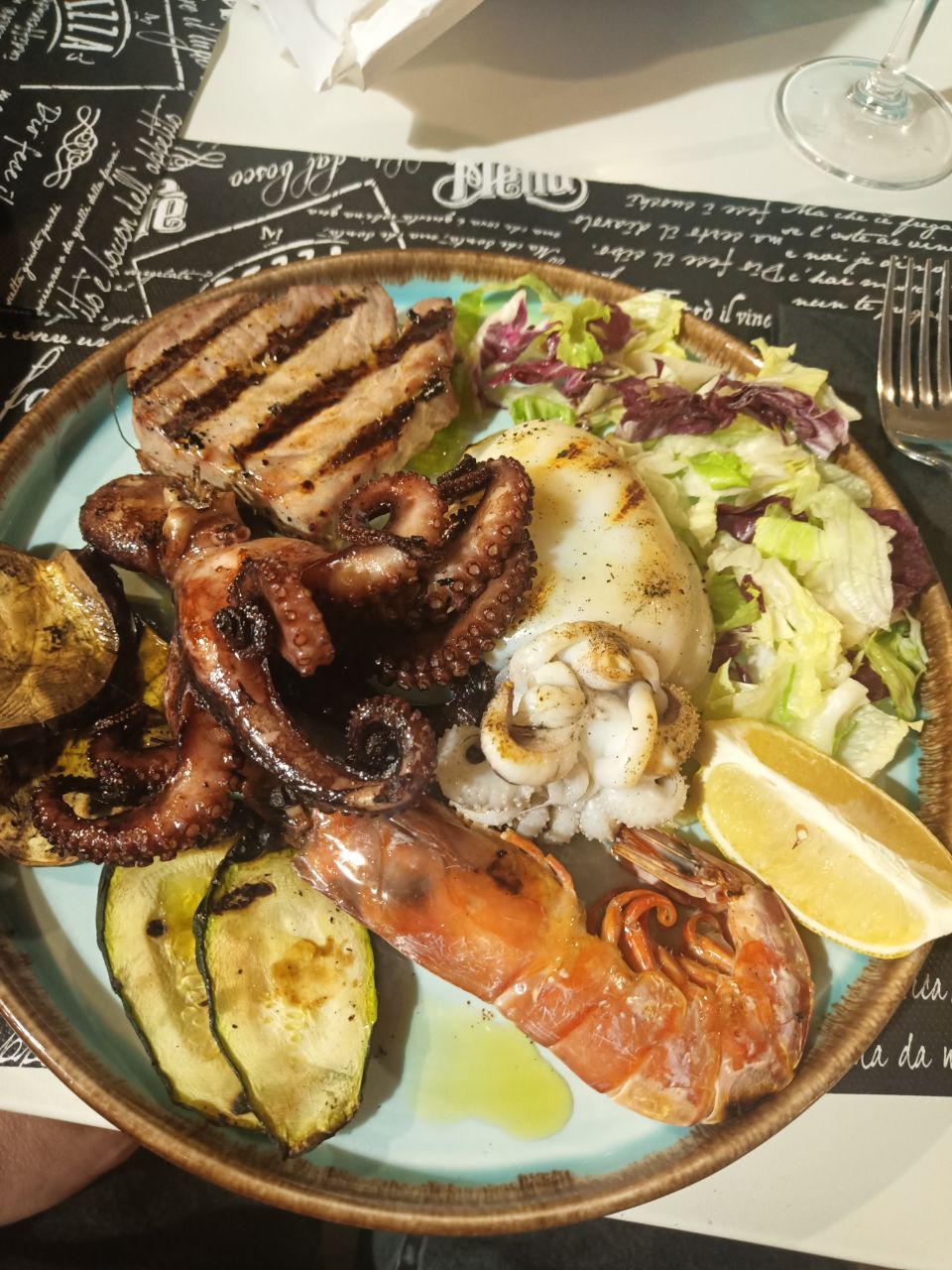
The octopus, overhead 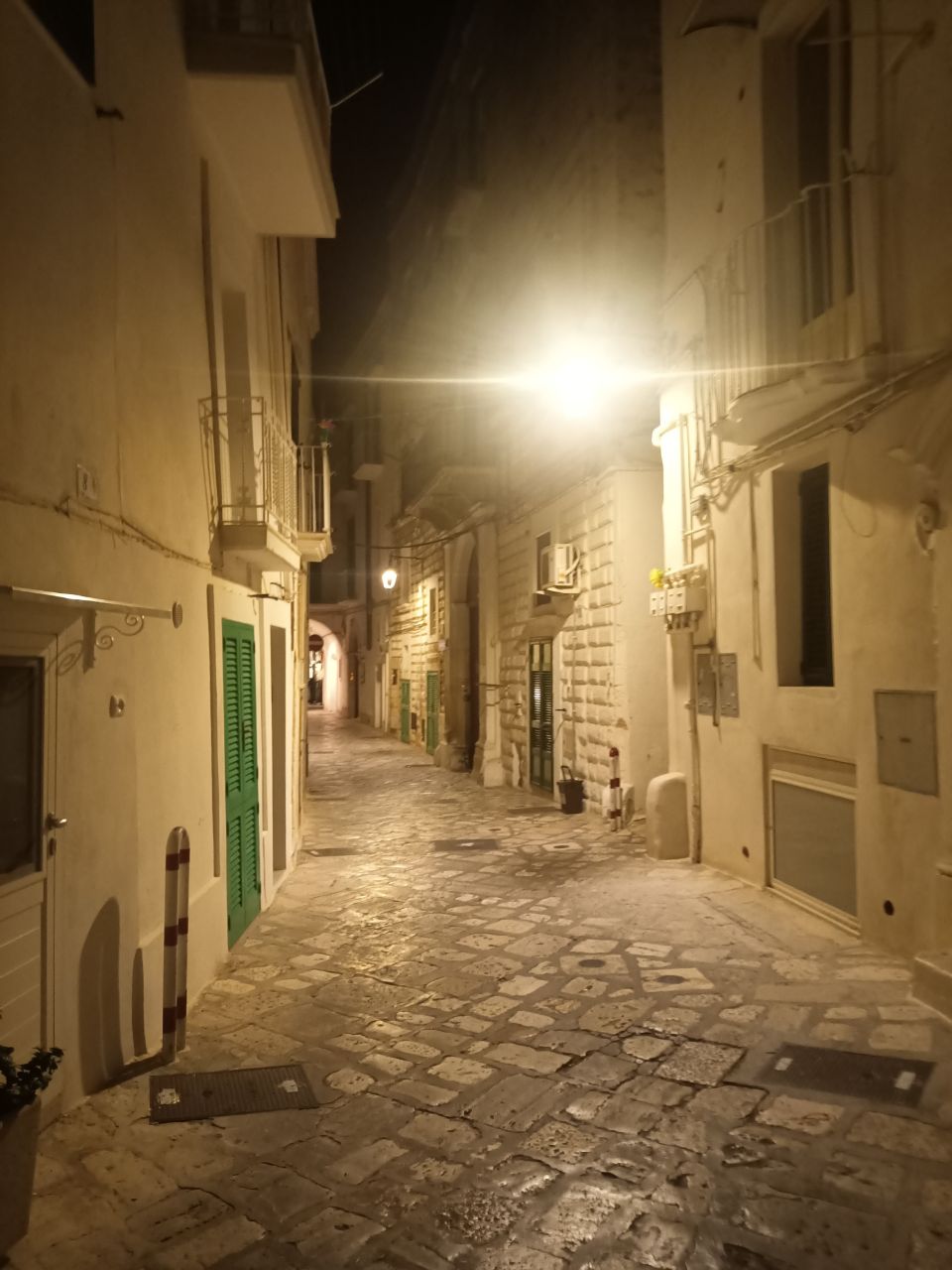
The alley, lit by one lamp 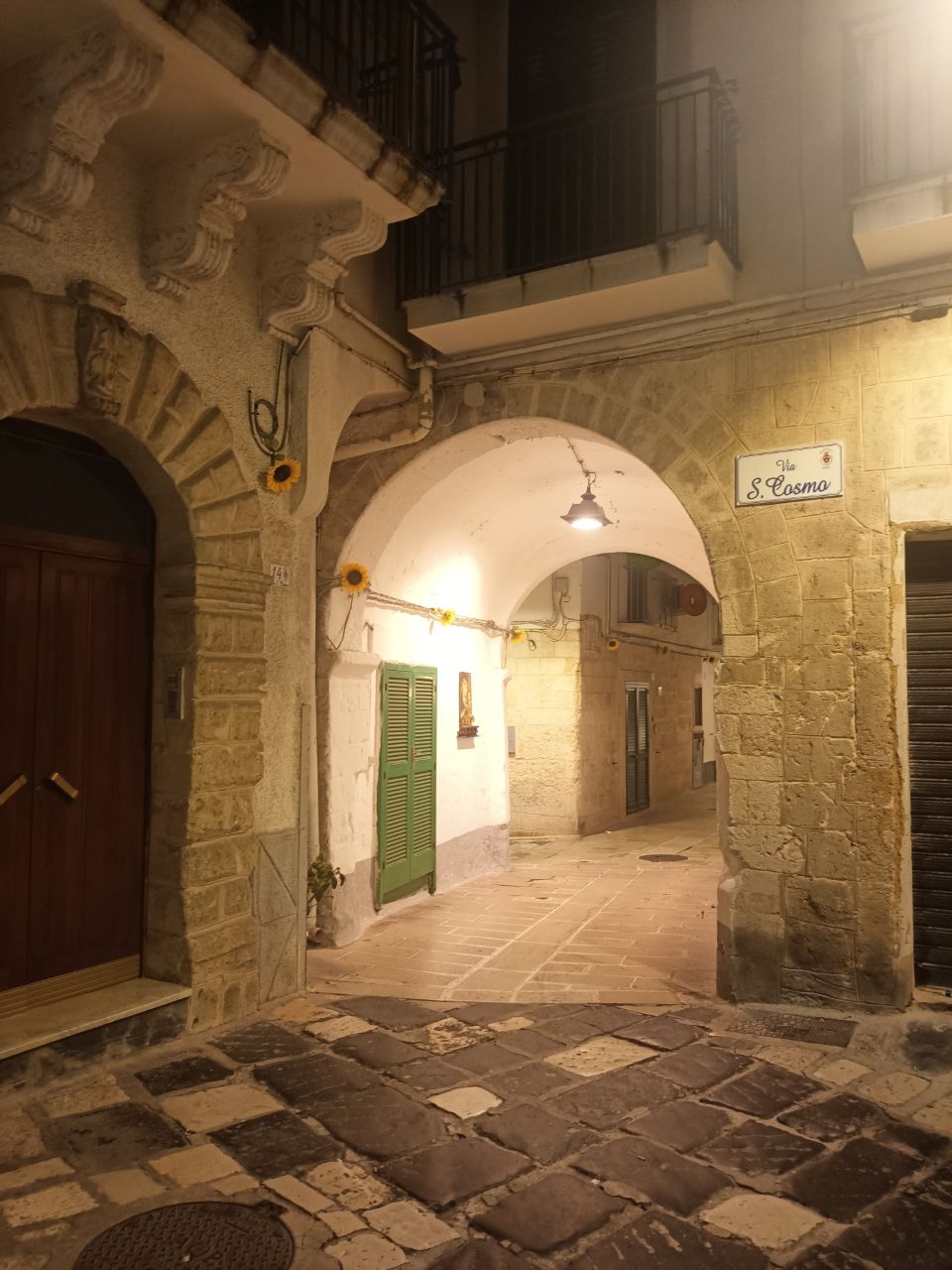
Via S. Cosmo, under the arch 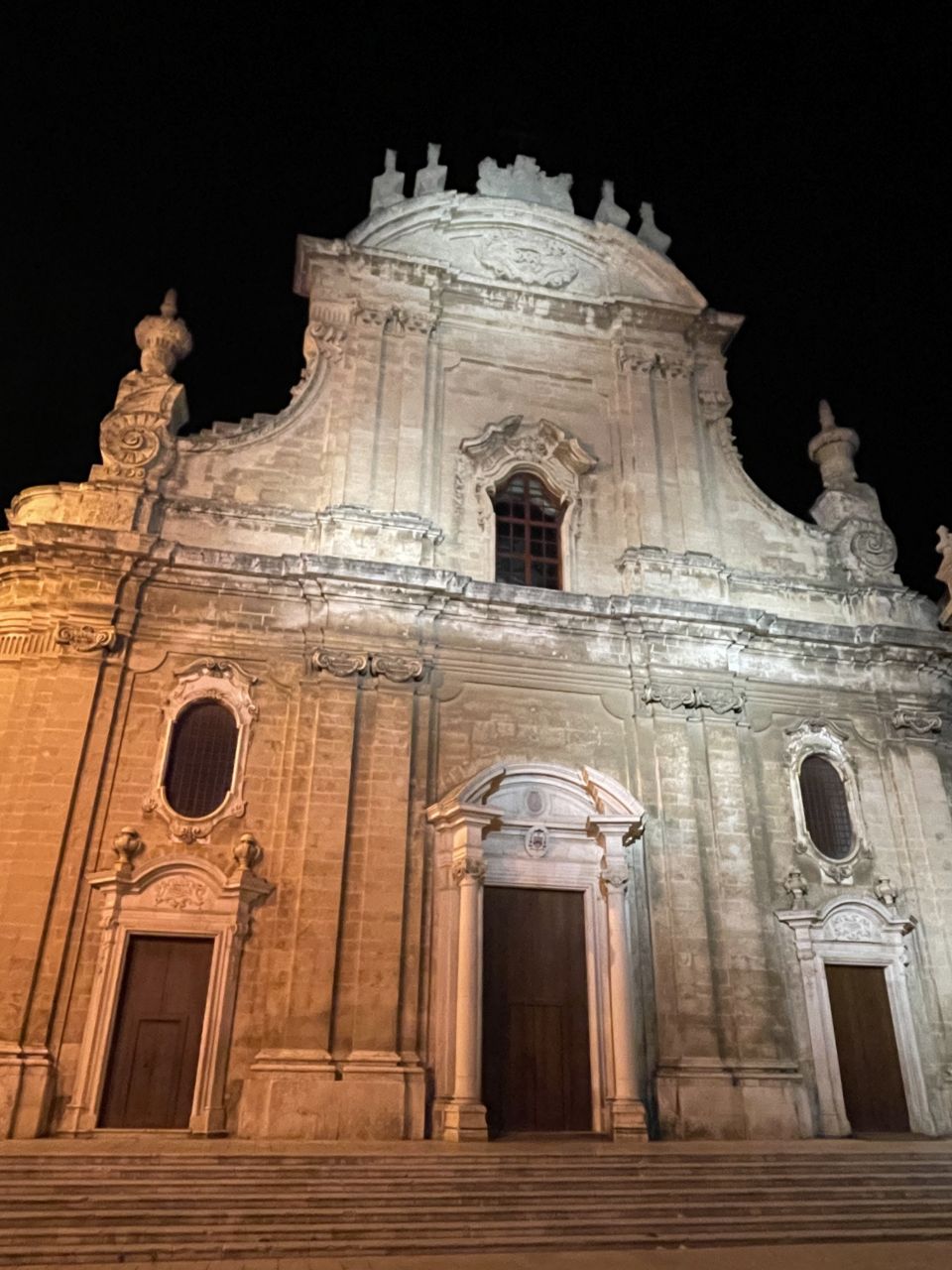
The cathedral, in floodlight 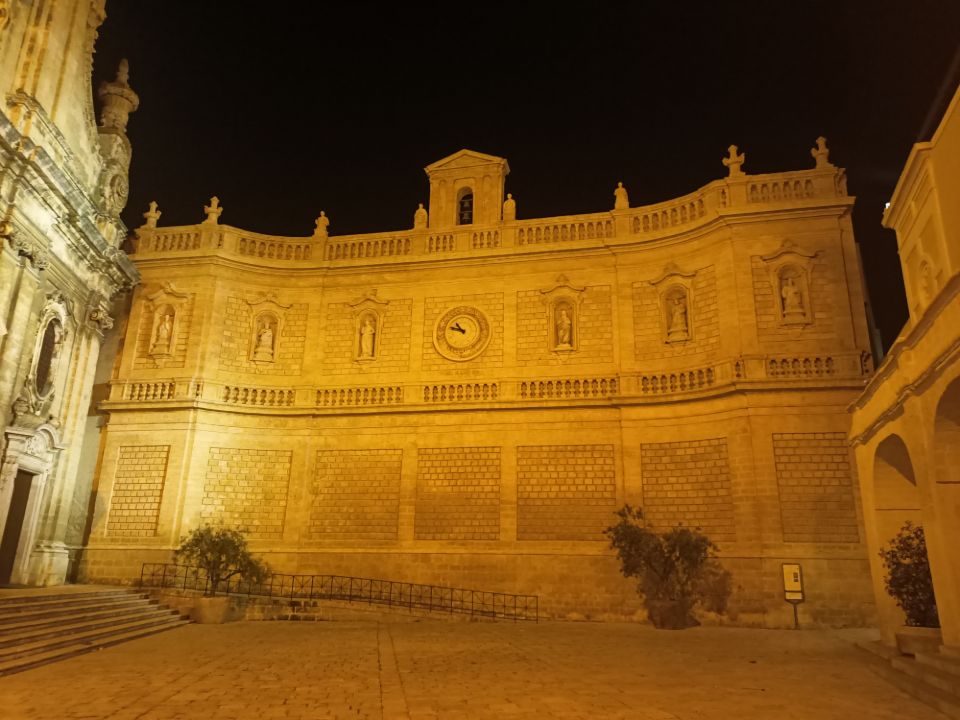
Stone steps, gold 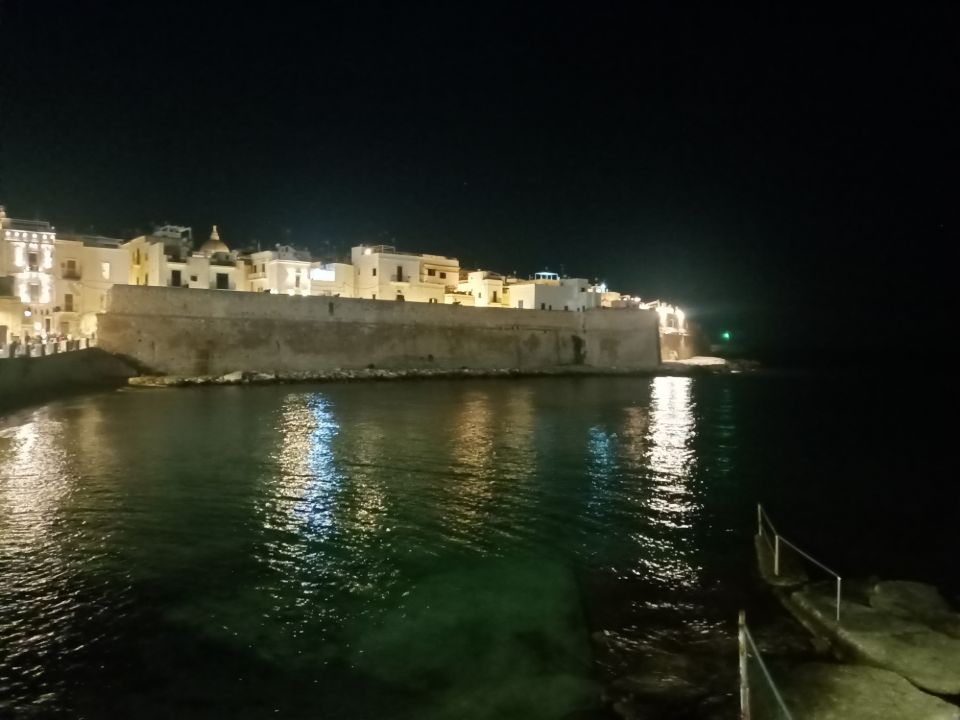
The seafront, glowing 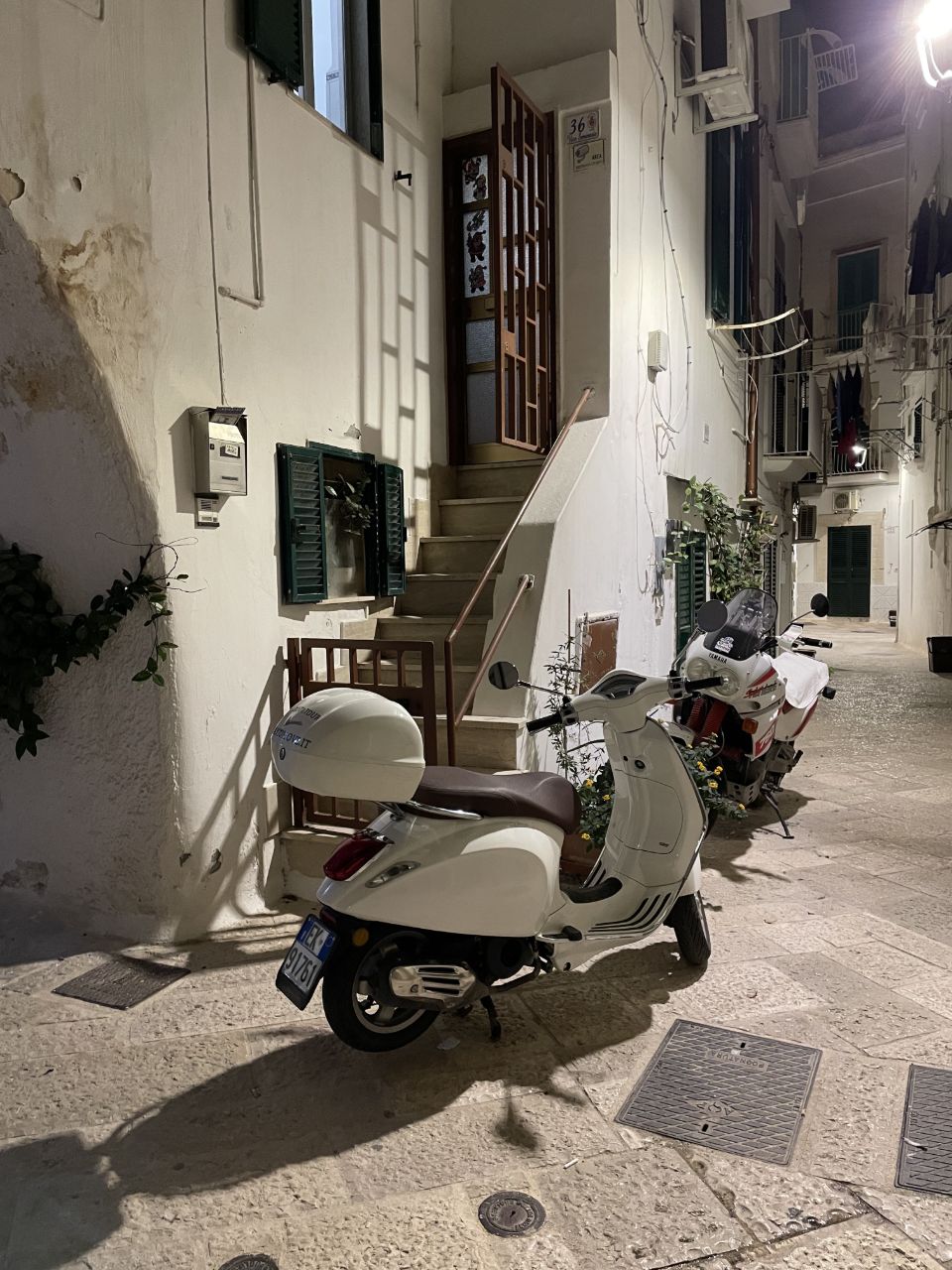
The Vespa, where Vespas live 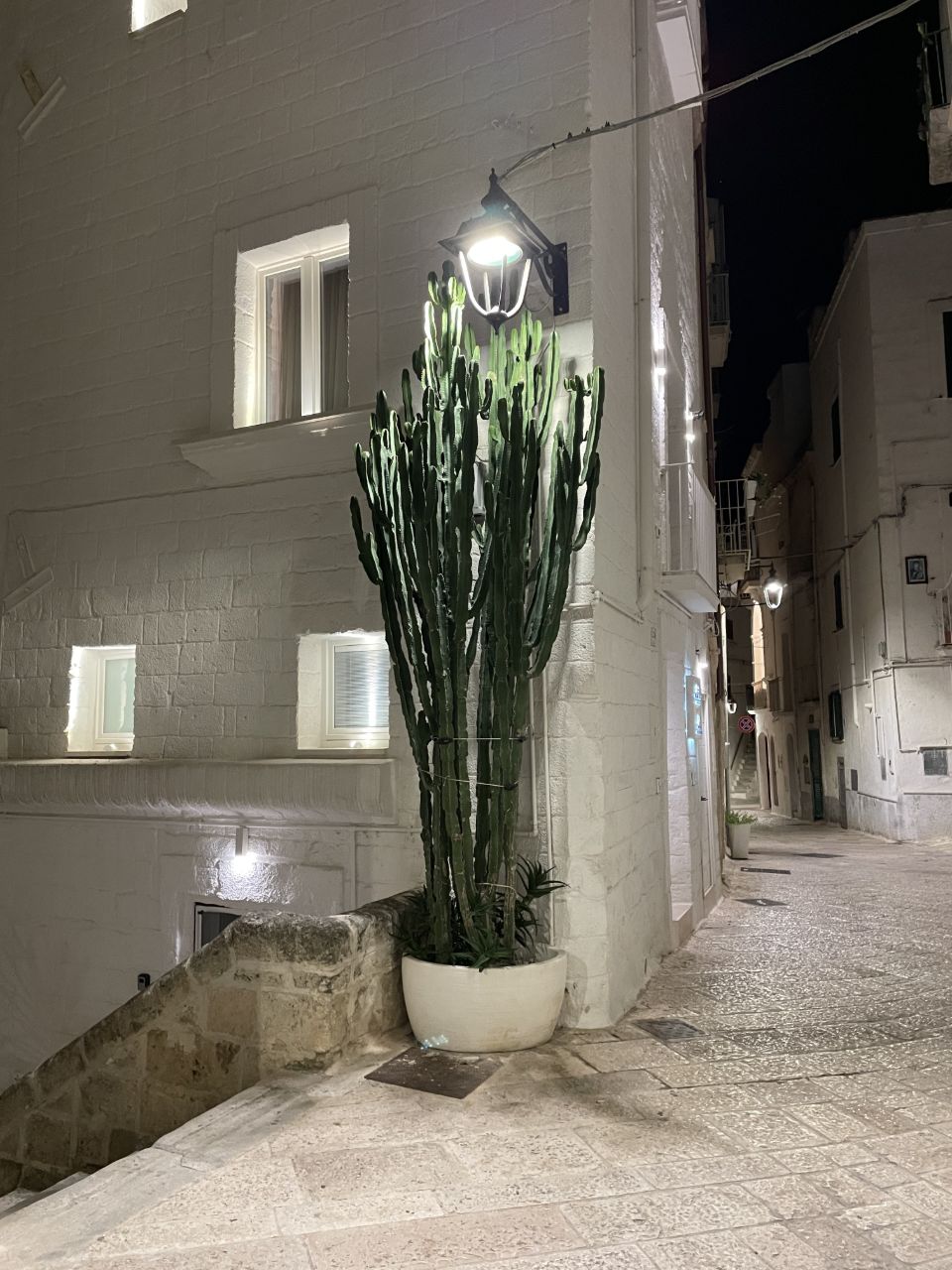
Cactus under the streetlamp 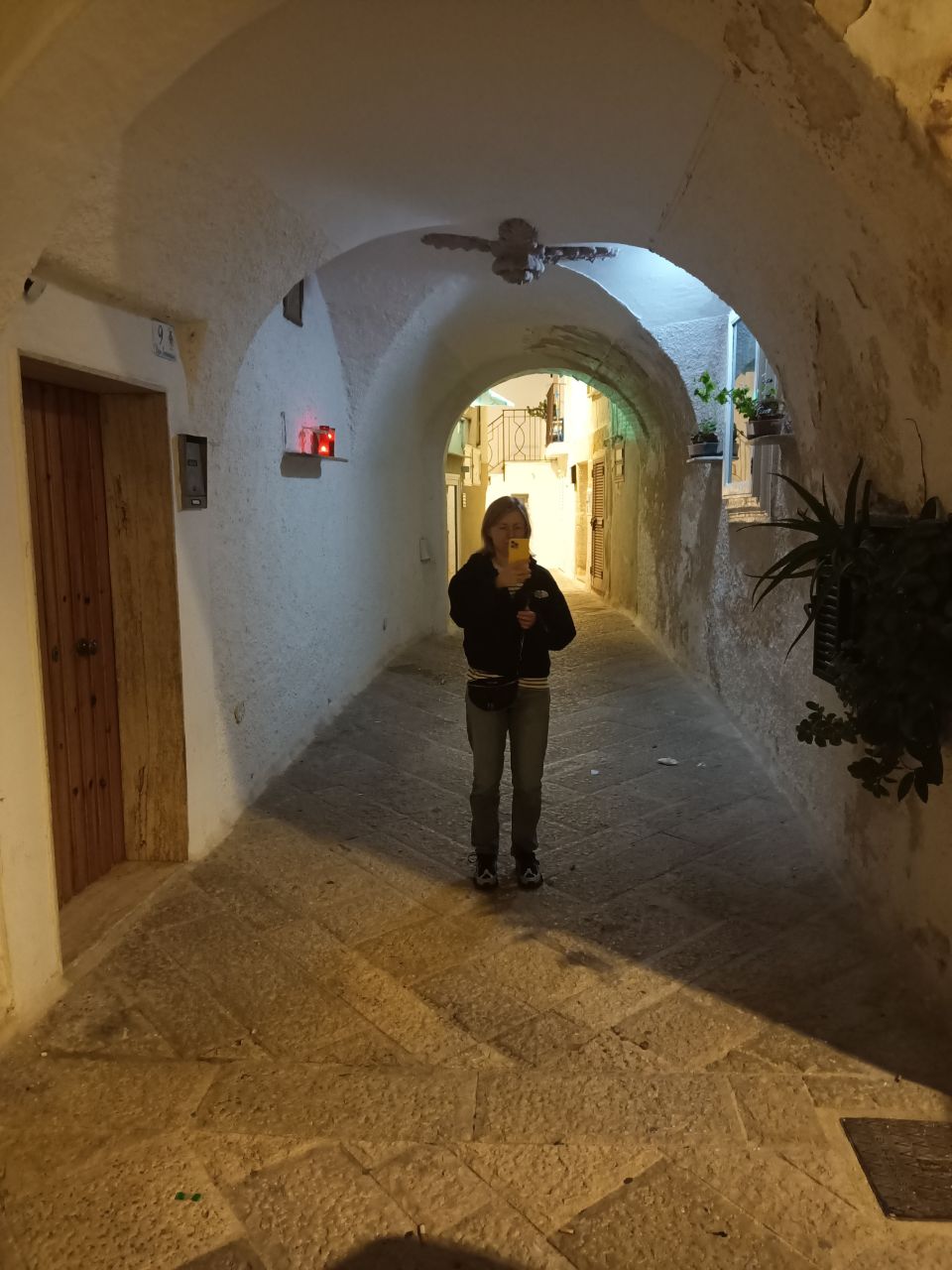
Anna, in the vaulted alley
Inside and around the walls
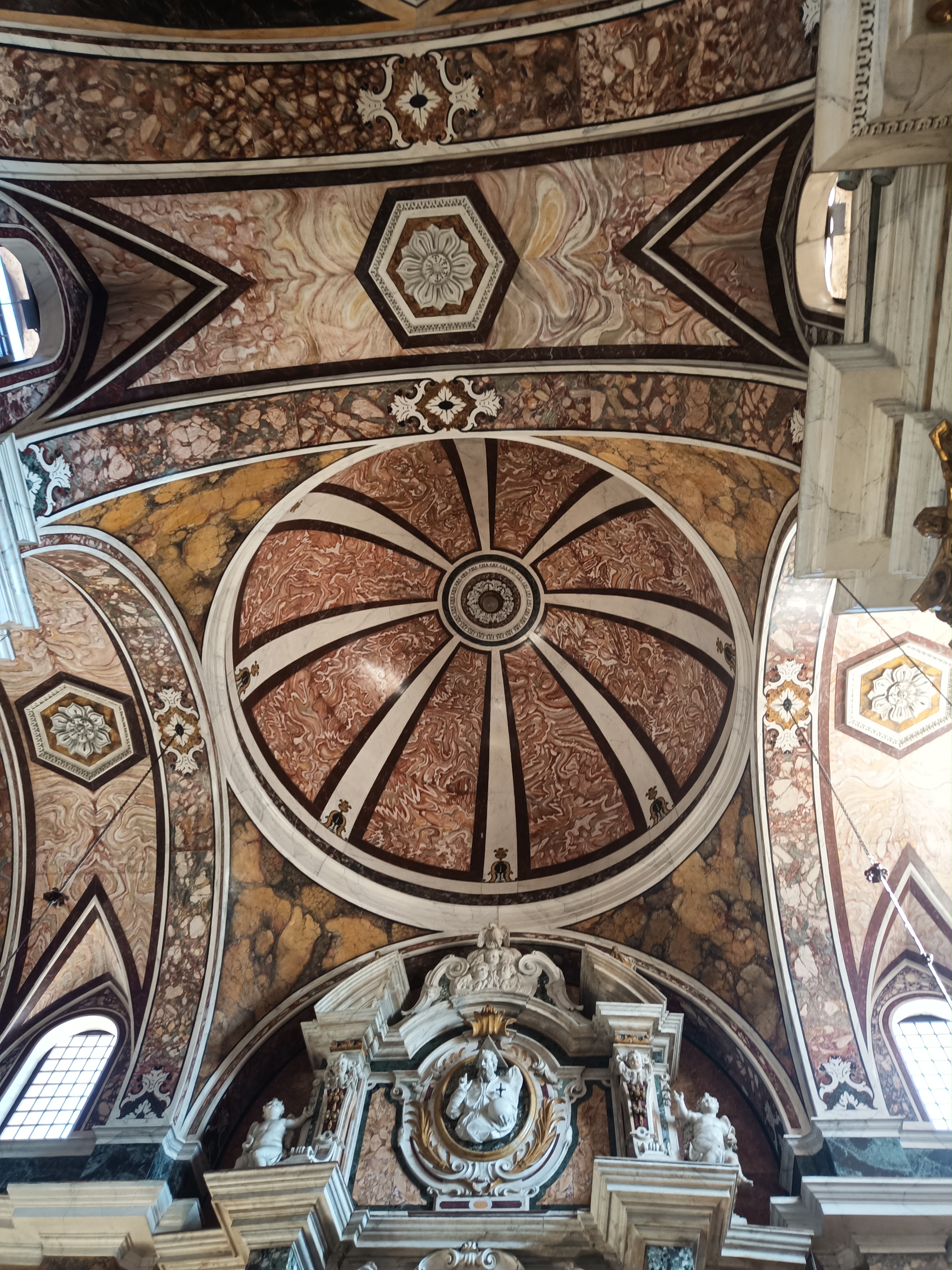
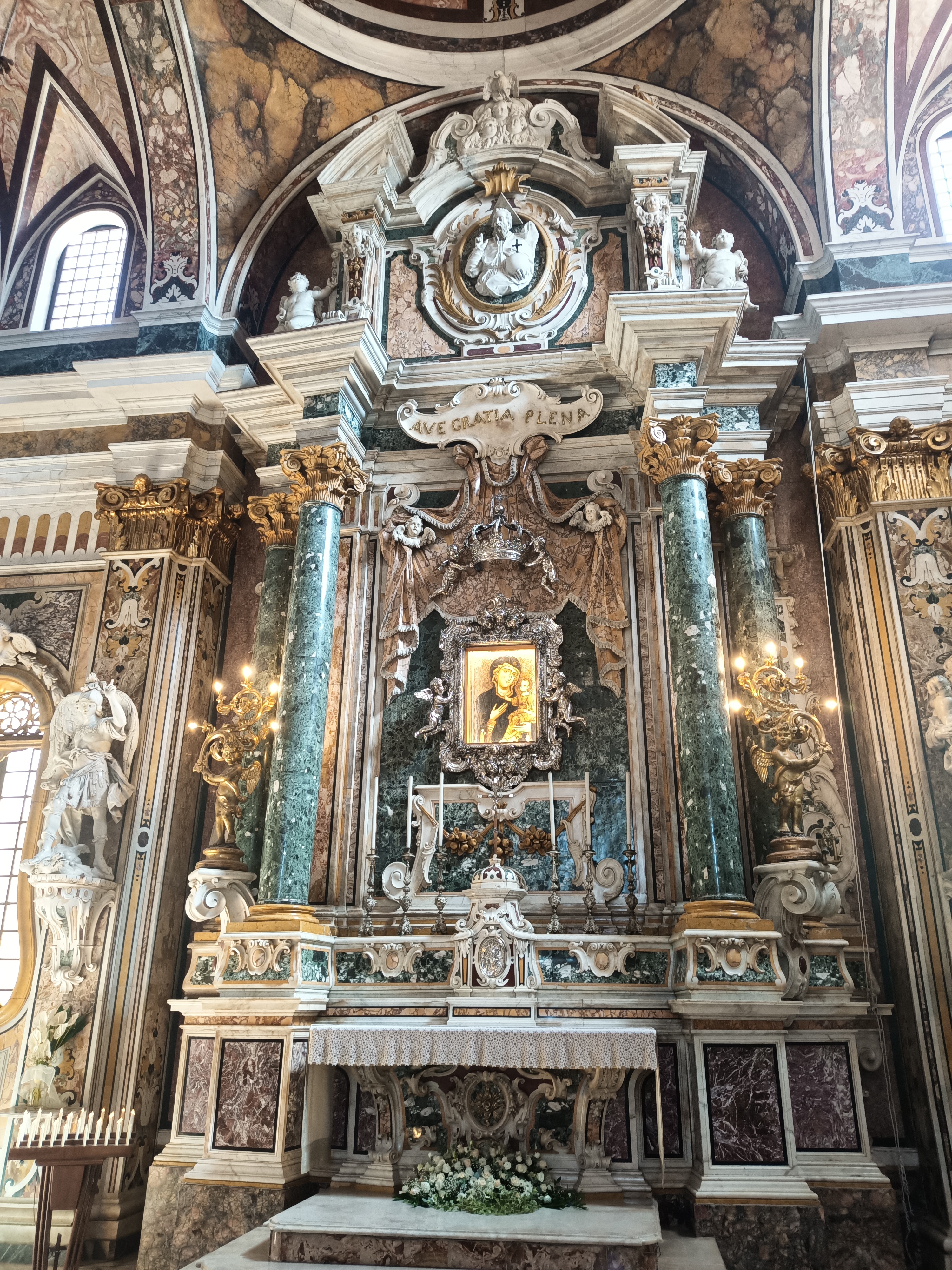
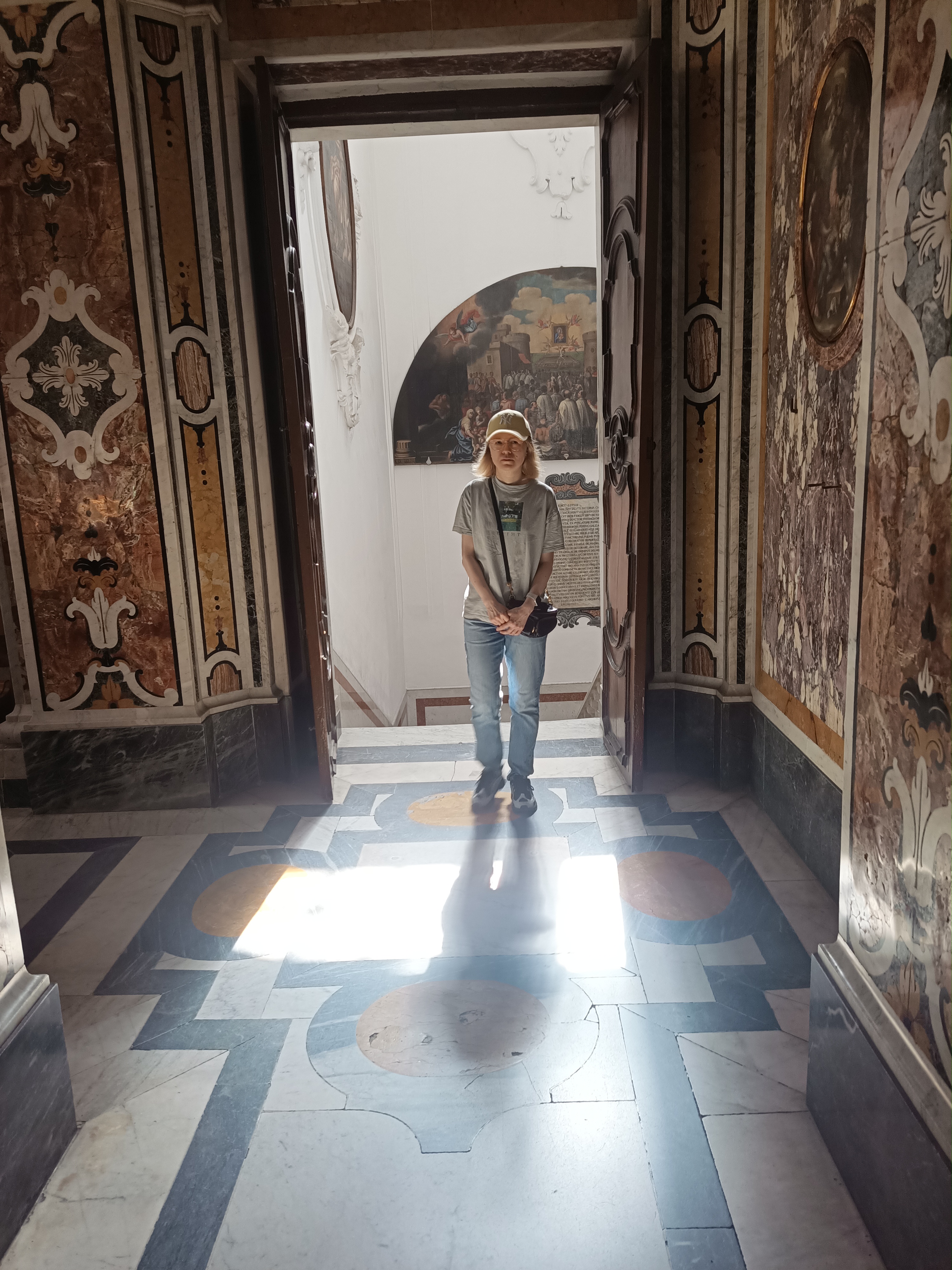
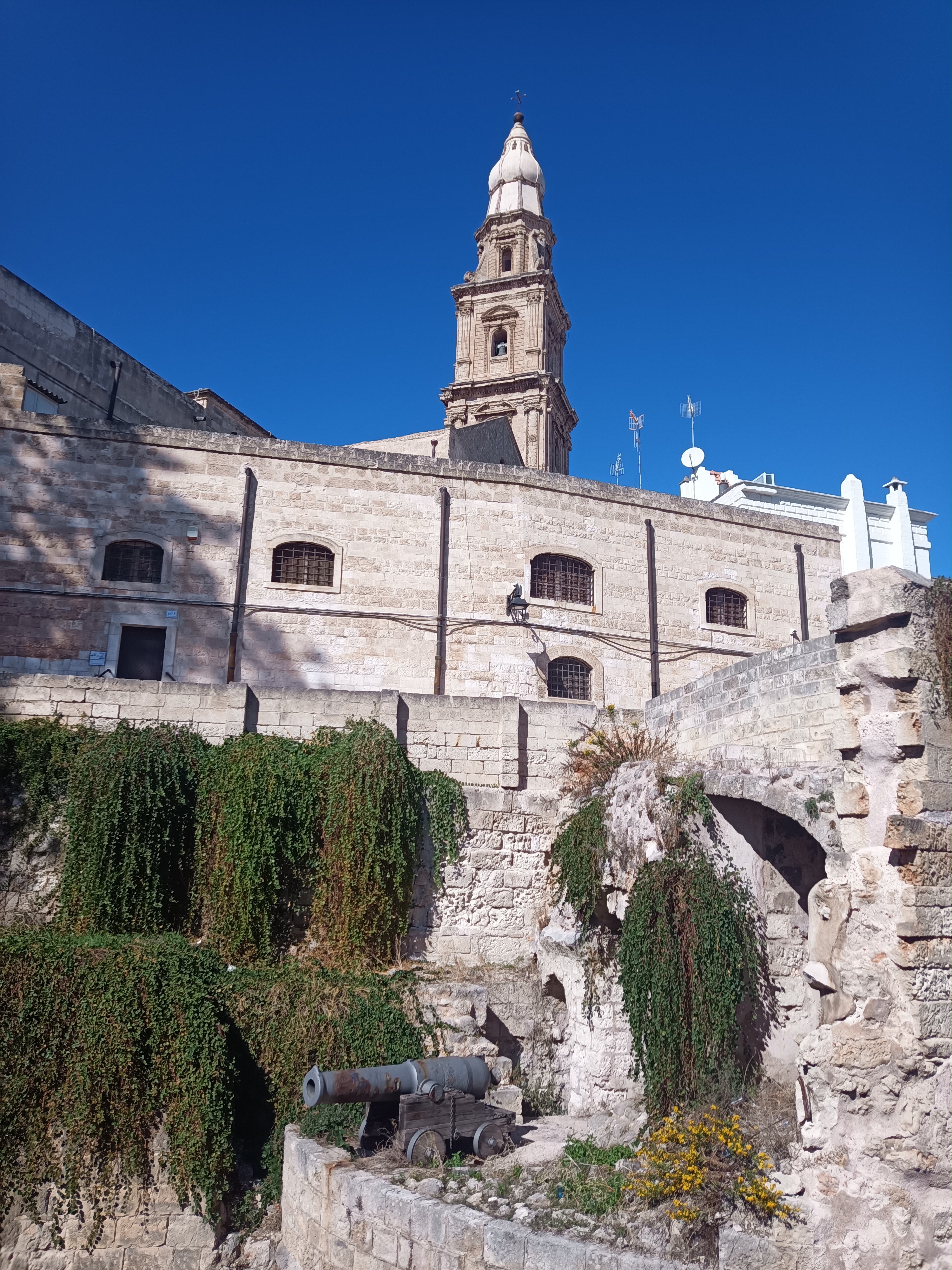
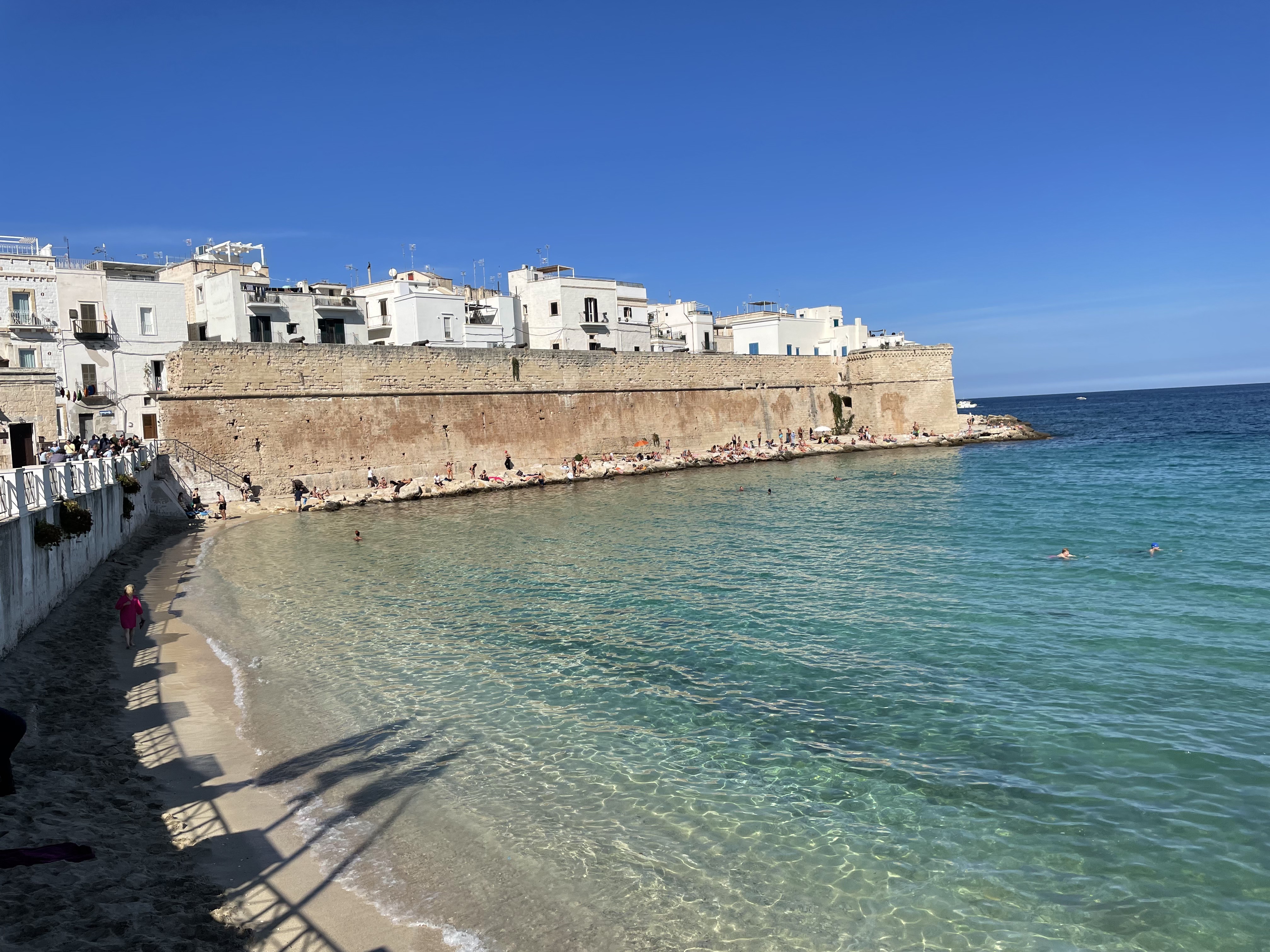
On the 13th, the cathedral first: a star-patterned marble dome over the crossing, a cupola that looks like a red-and-white planet seen from orbit, gilded altars, and Anna in a doorway being small next to enormous stone. This is the cathedral of the Madia: its icon, Maria Santissima della Madia, is said to have arrived by sea in 1117, on the night of 16 December, carried in on a wooden raft — and the raft’s beams went straight into the church as its ceiling beams, where they still are. Then the old fortress at the water, a Charles V affair from the 1500s. Cannons still point politely out to sea, and the walls curve around a cove where, October notwithstanding, people were already in the water.
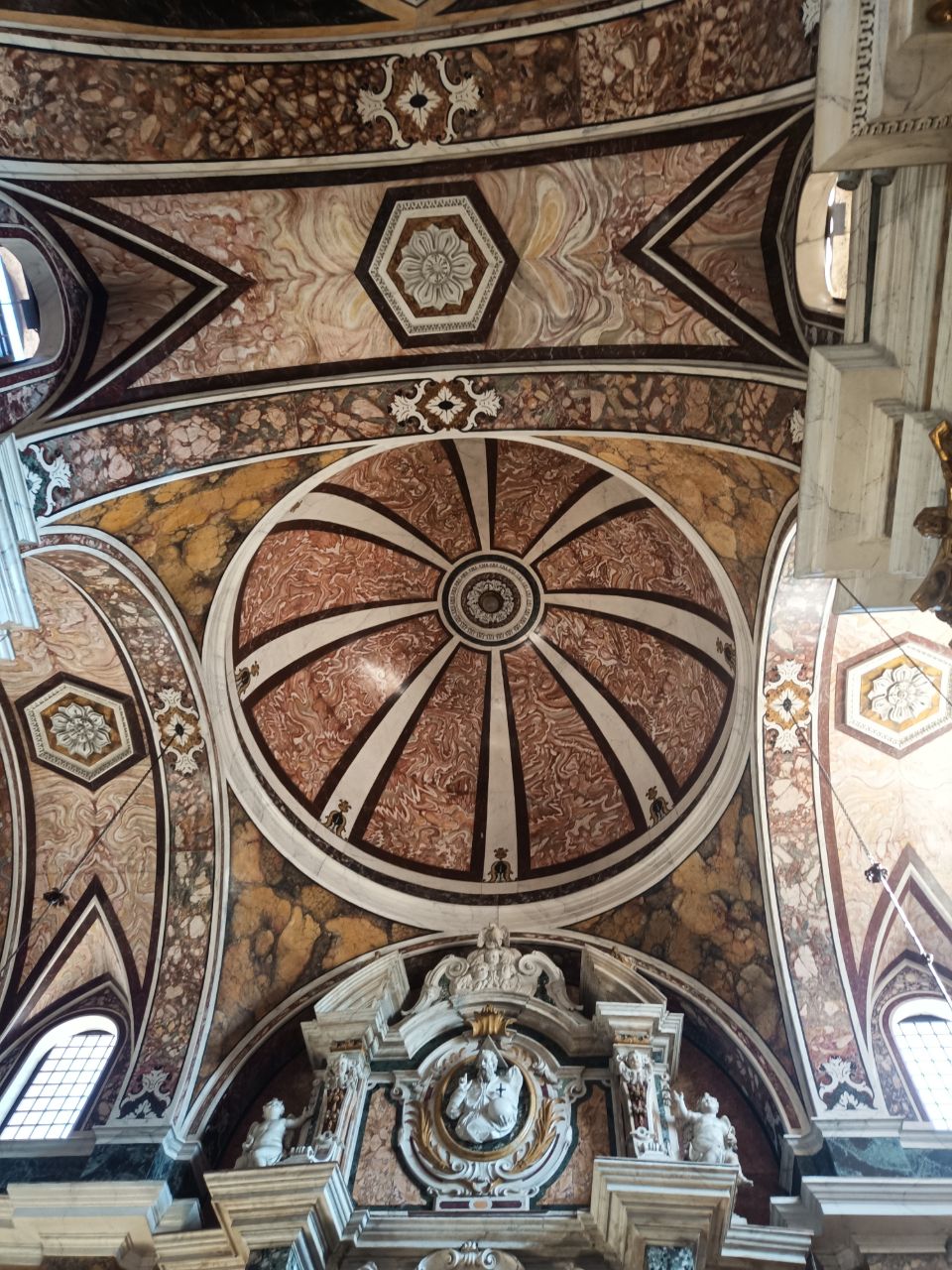
The cupola, from underneath 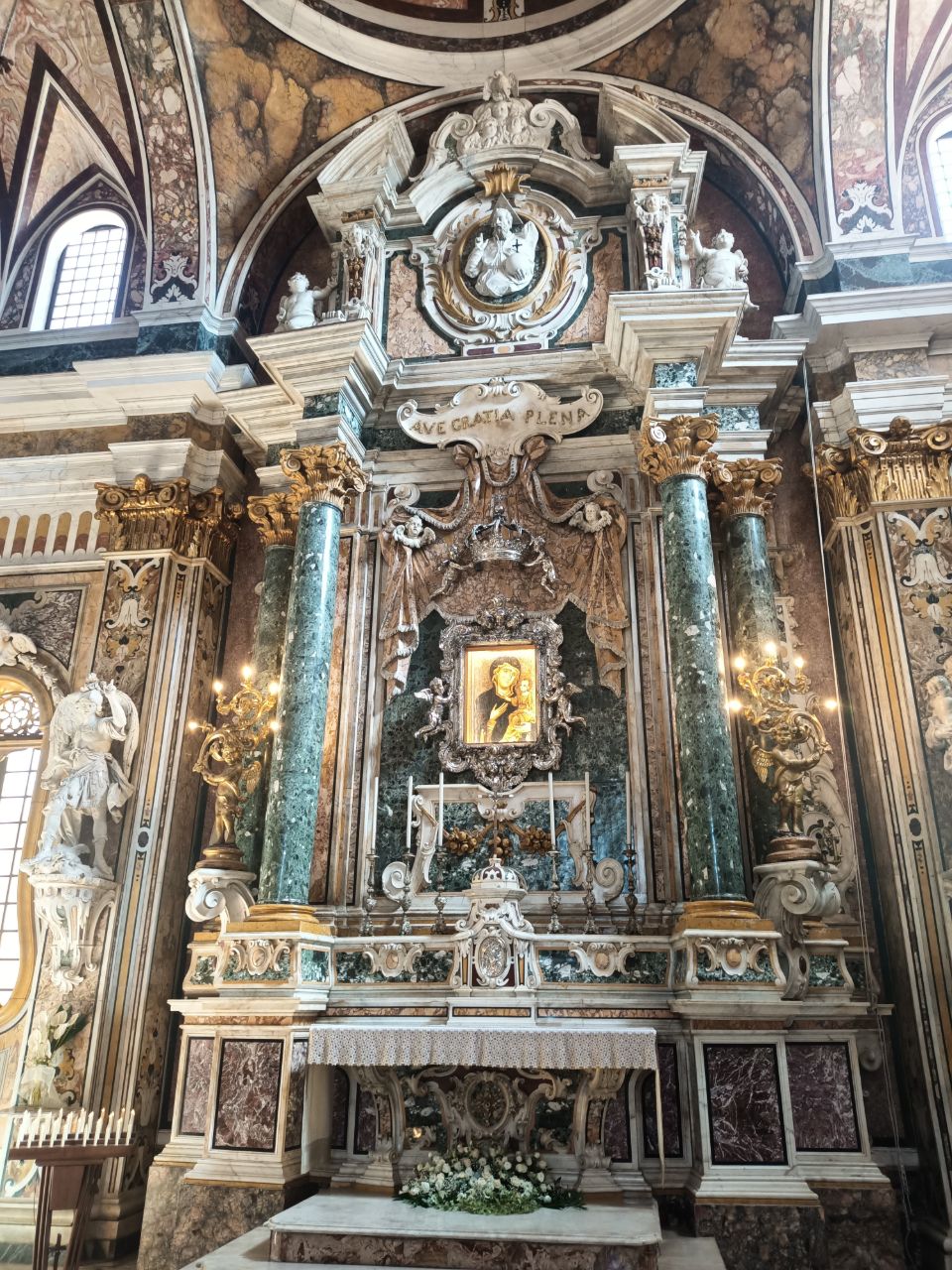
Gilded altar, candles lit 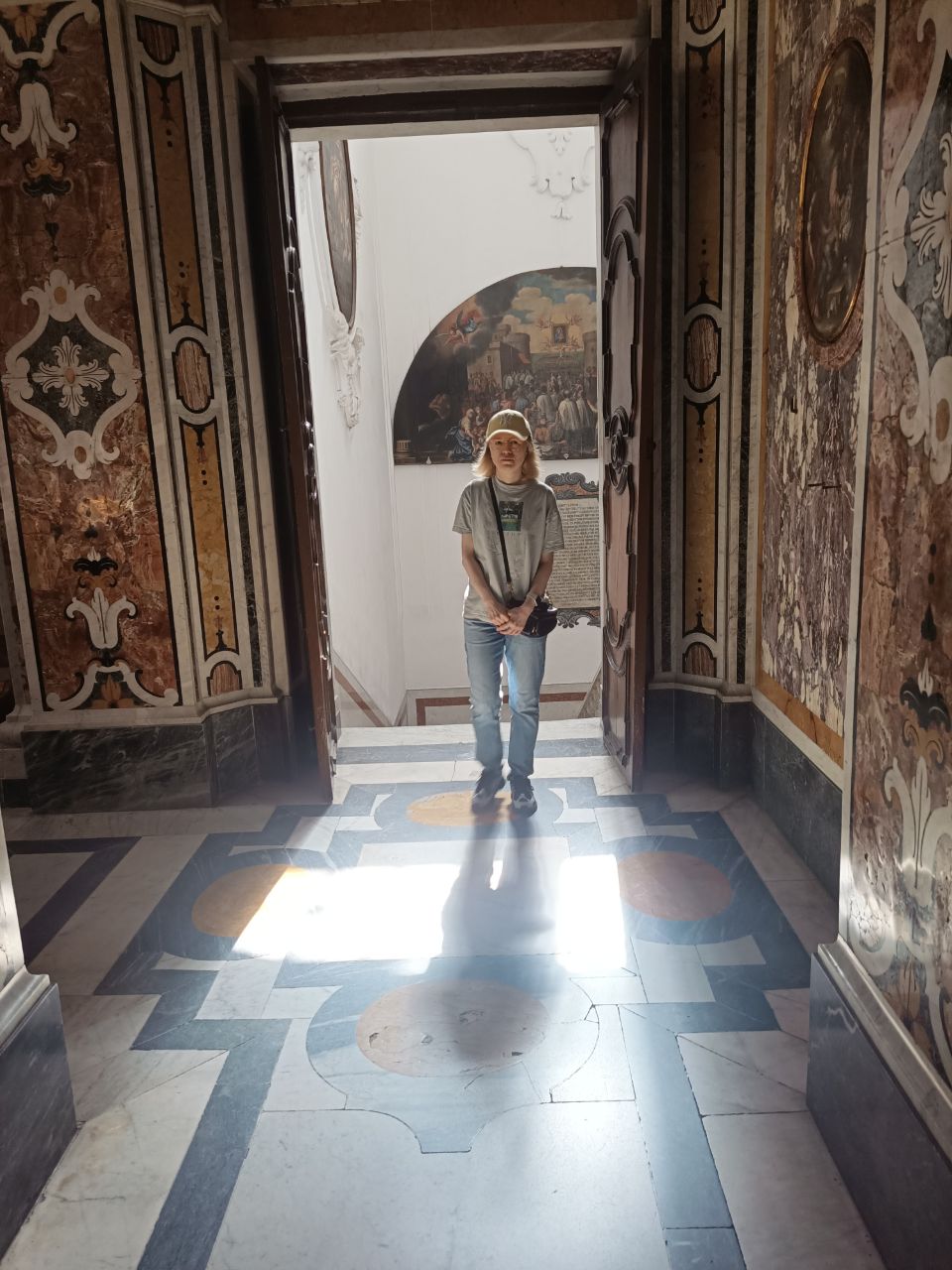
Anna, in the doorway 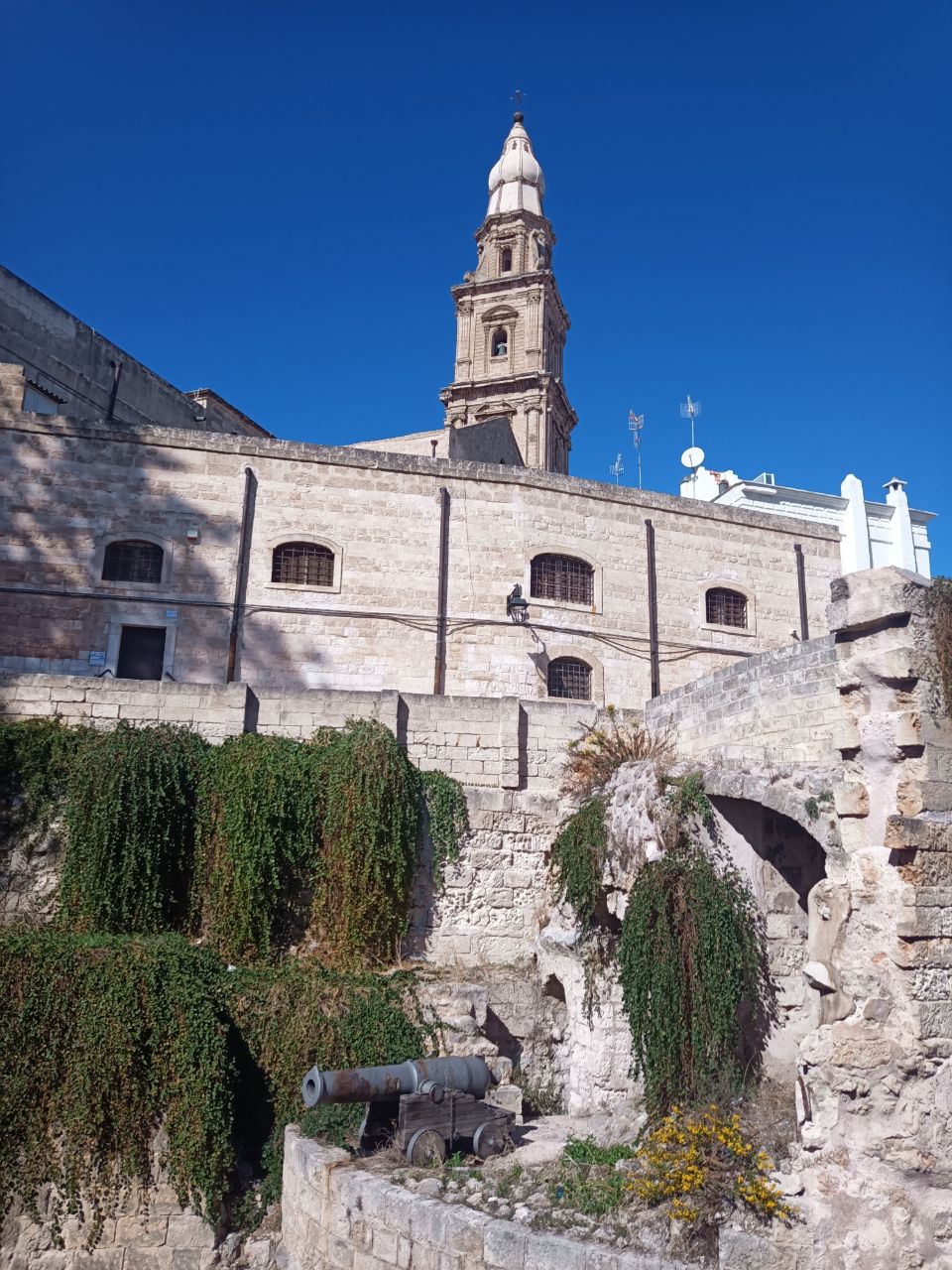
Cannon, on duty 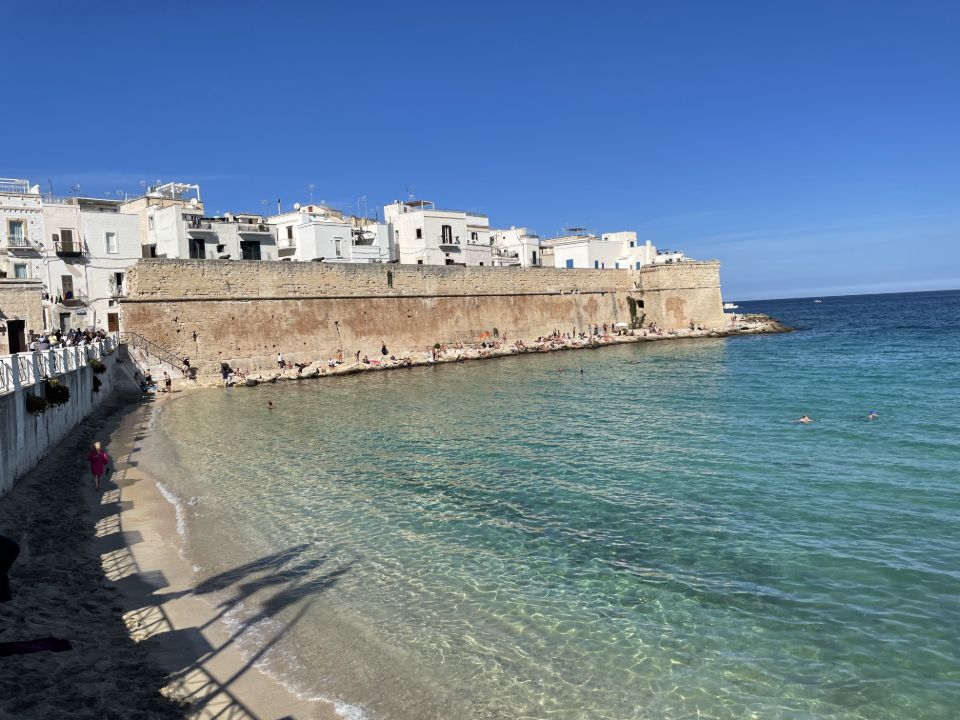
The walls, curving around a cove 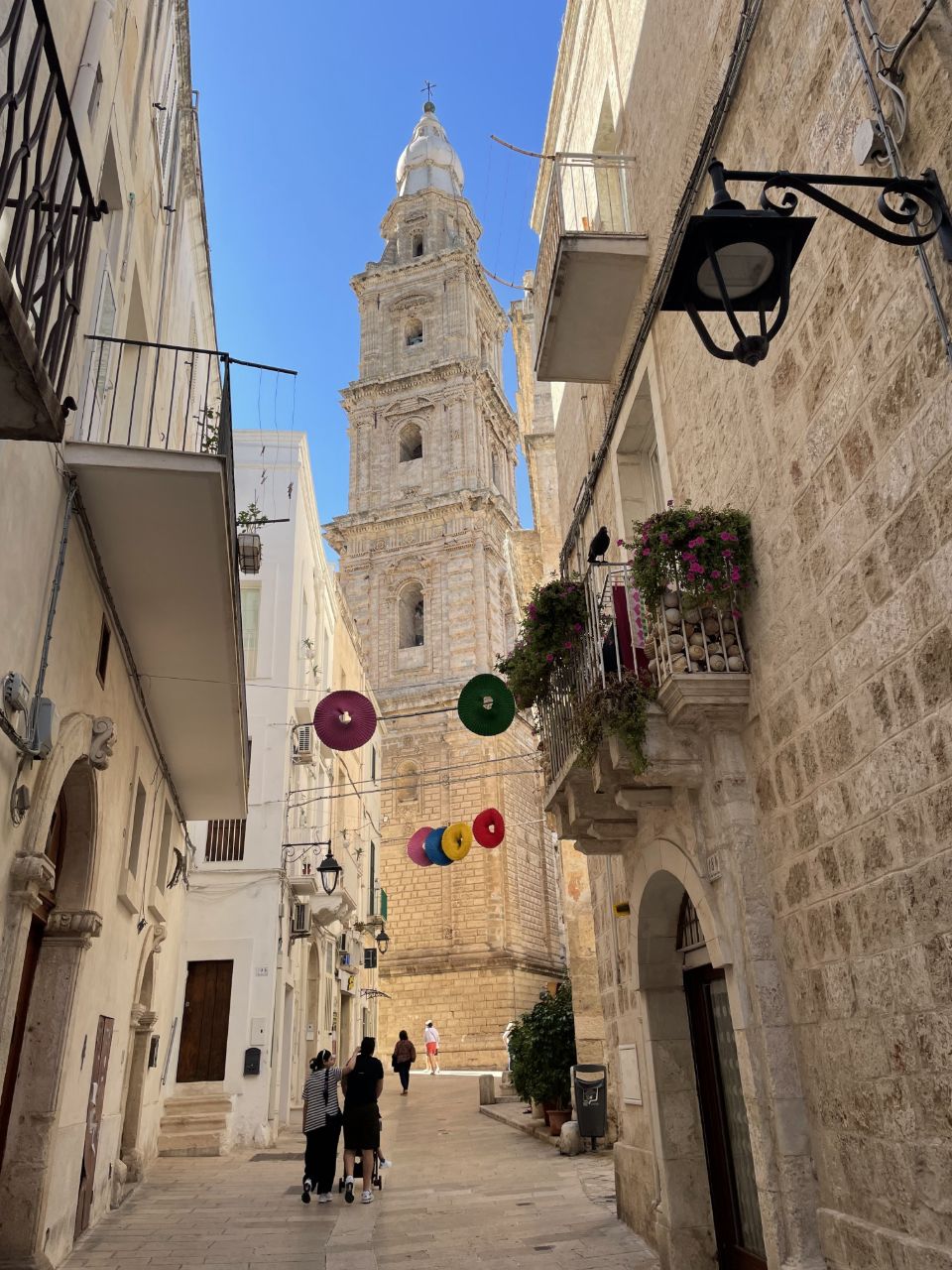
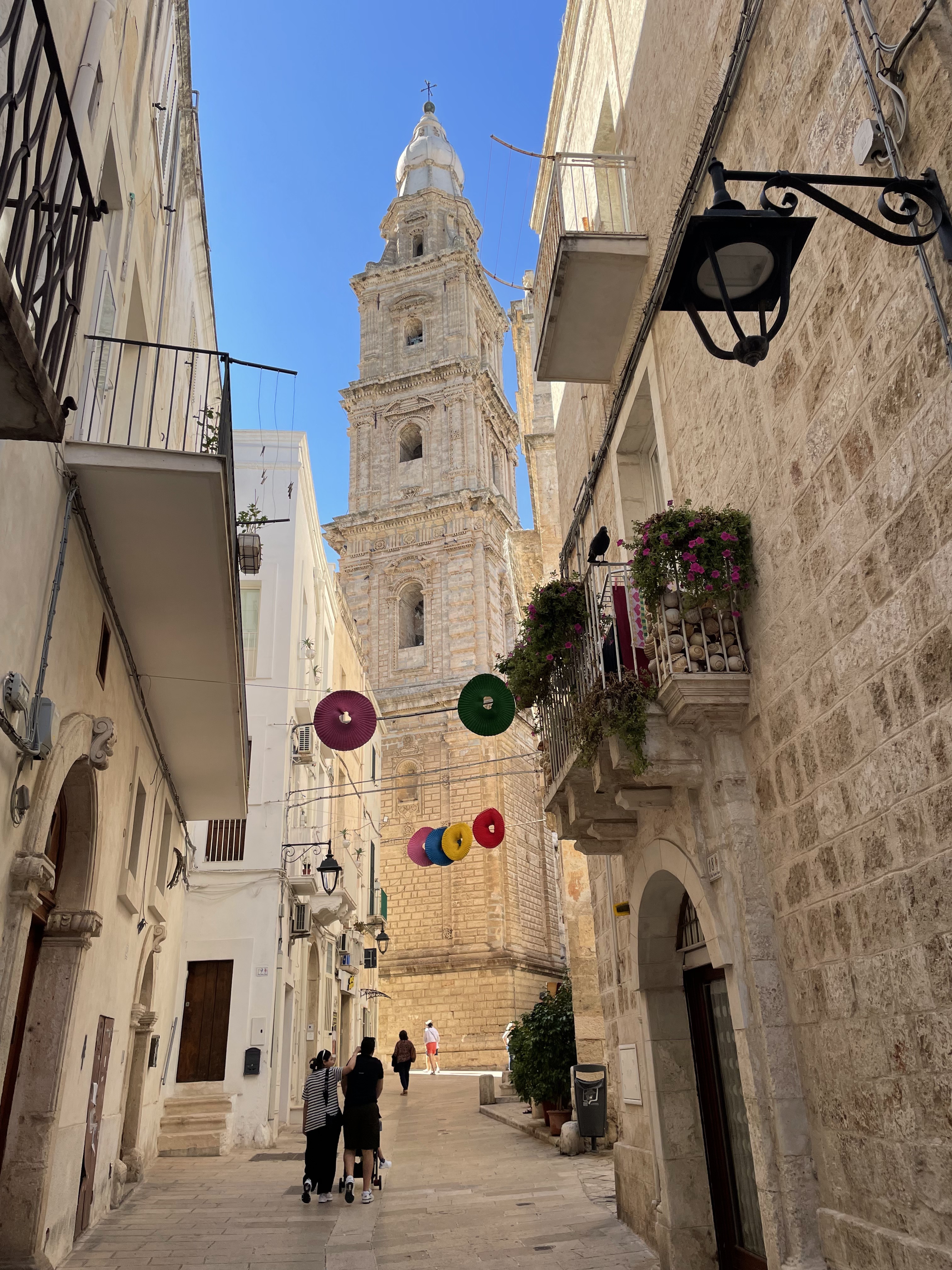
The alley with the bell tower
The coast south of town
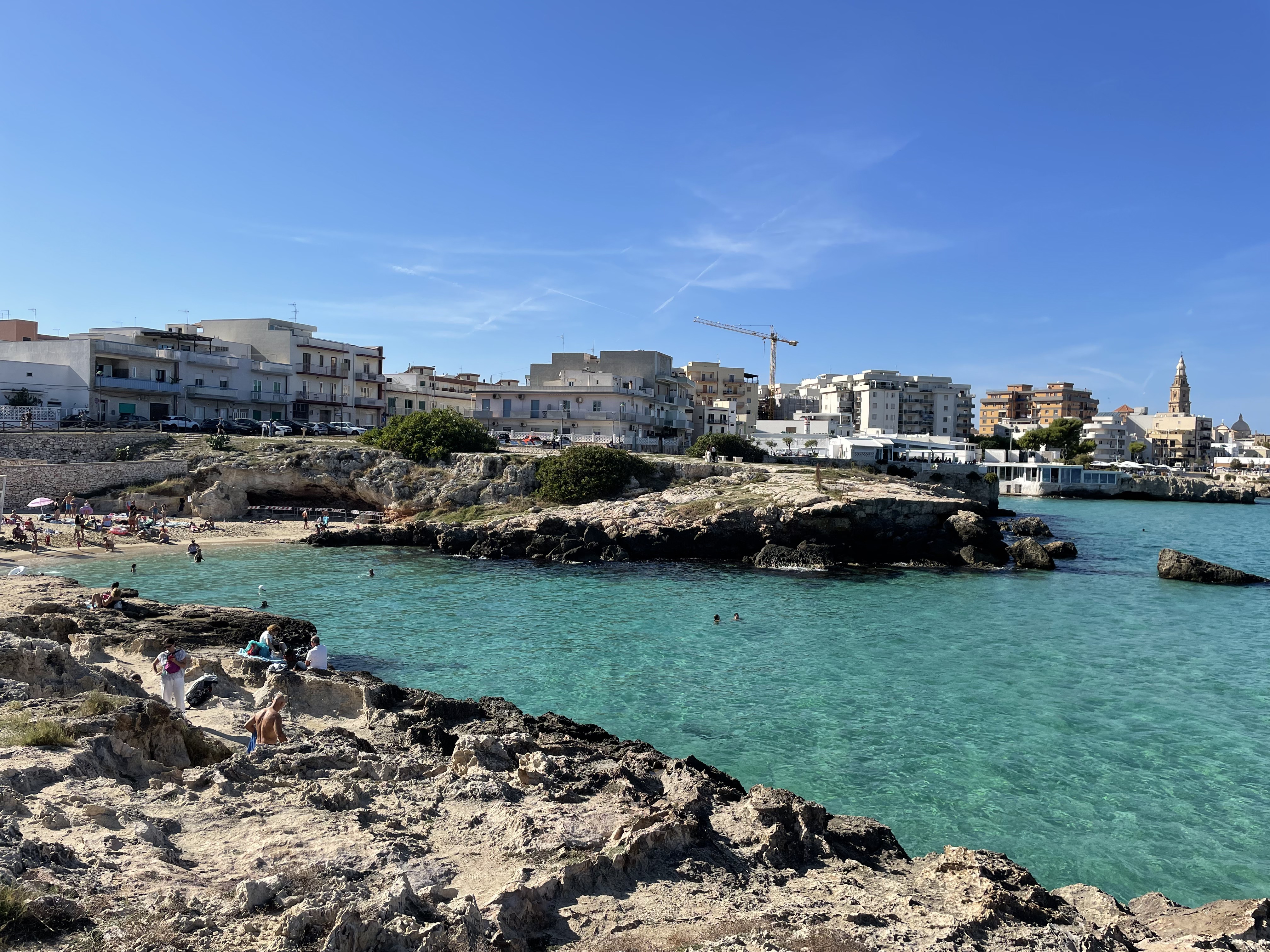
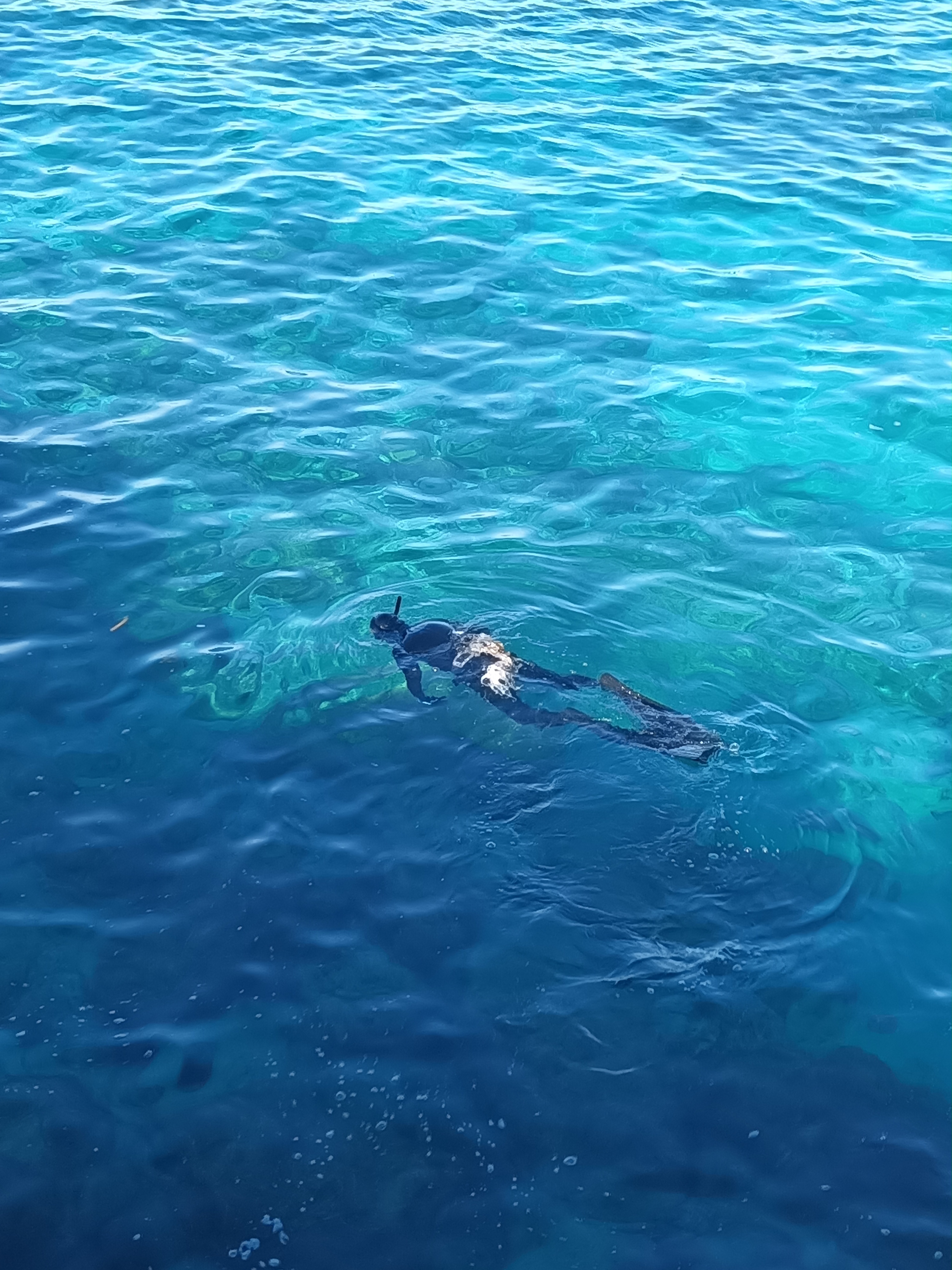
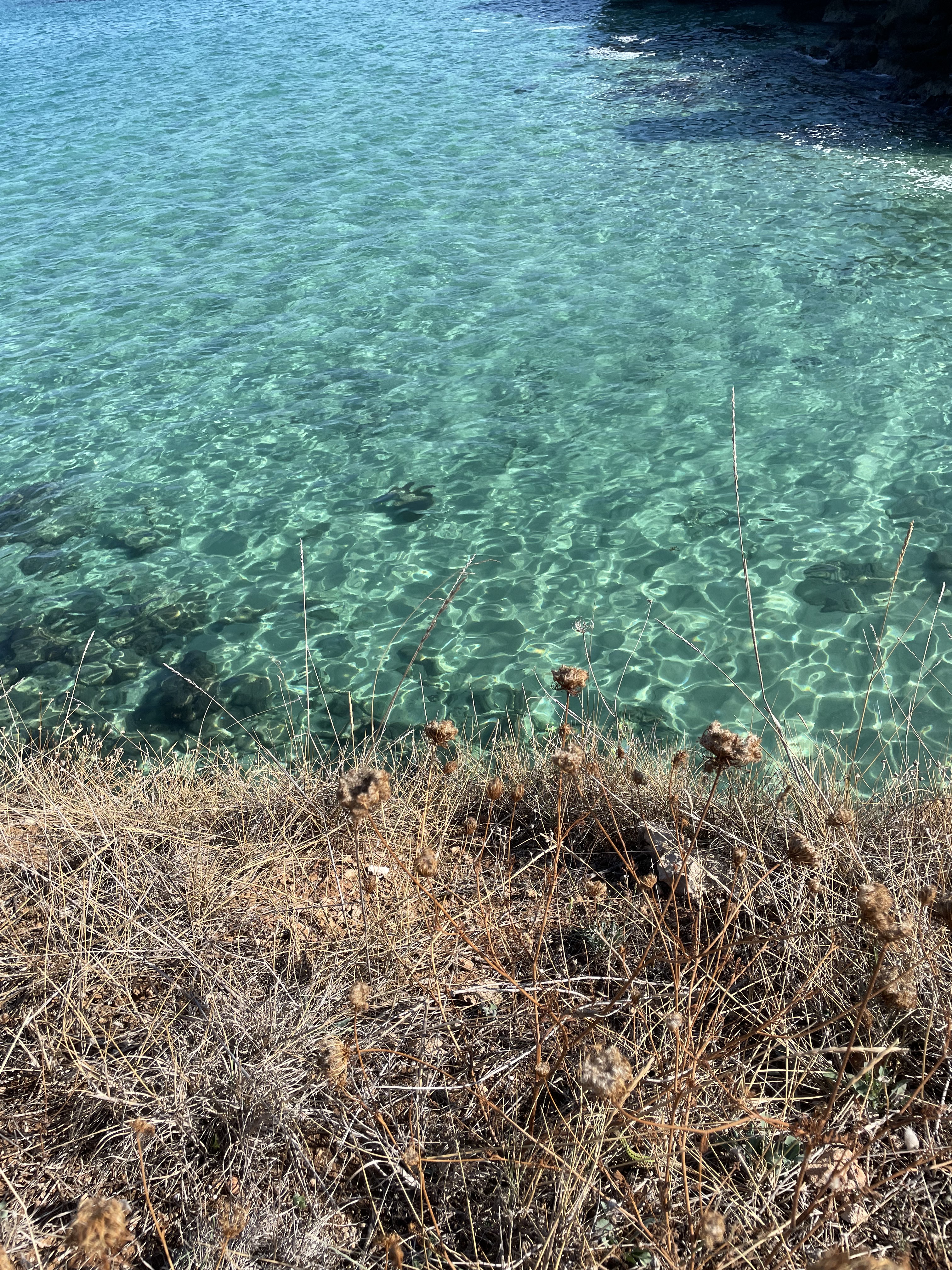
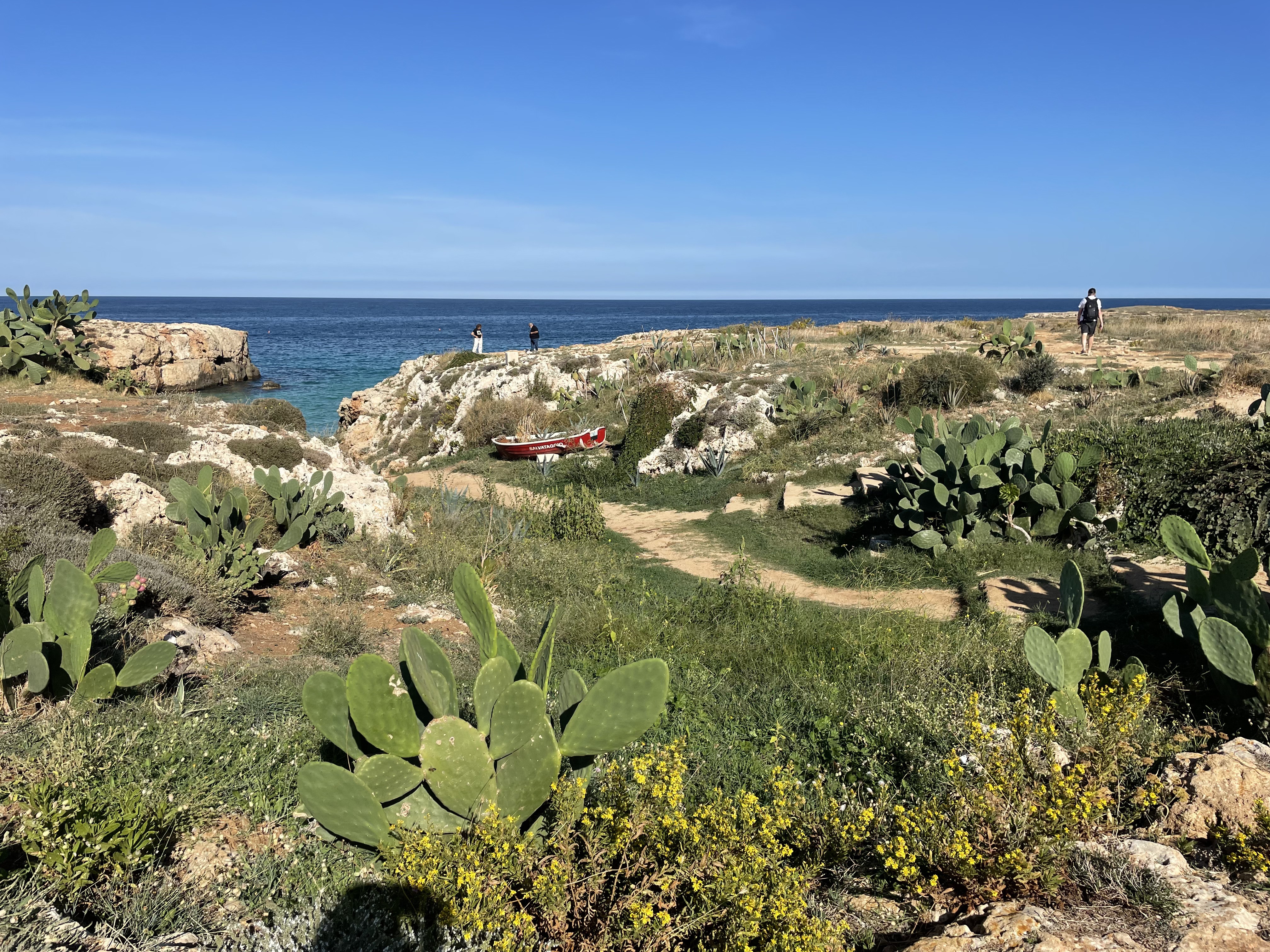
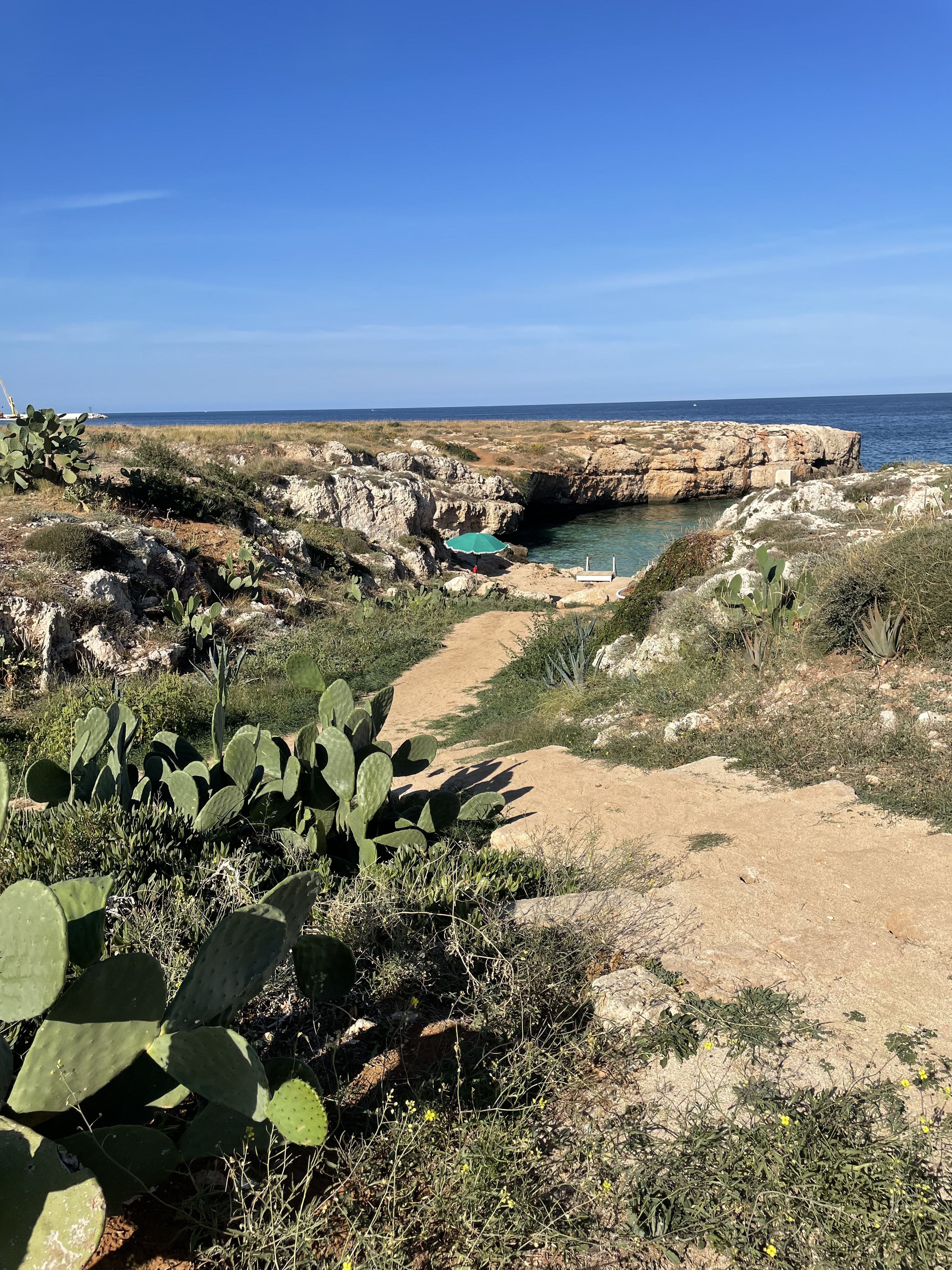
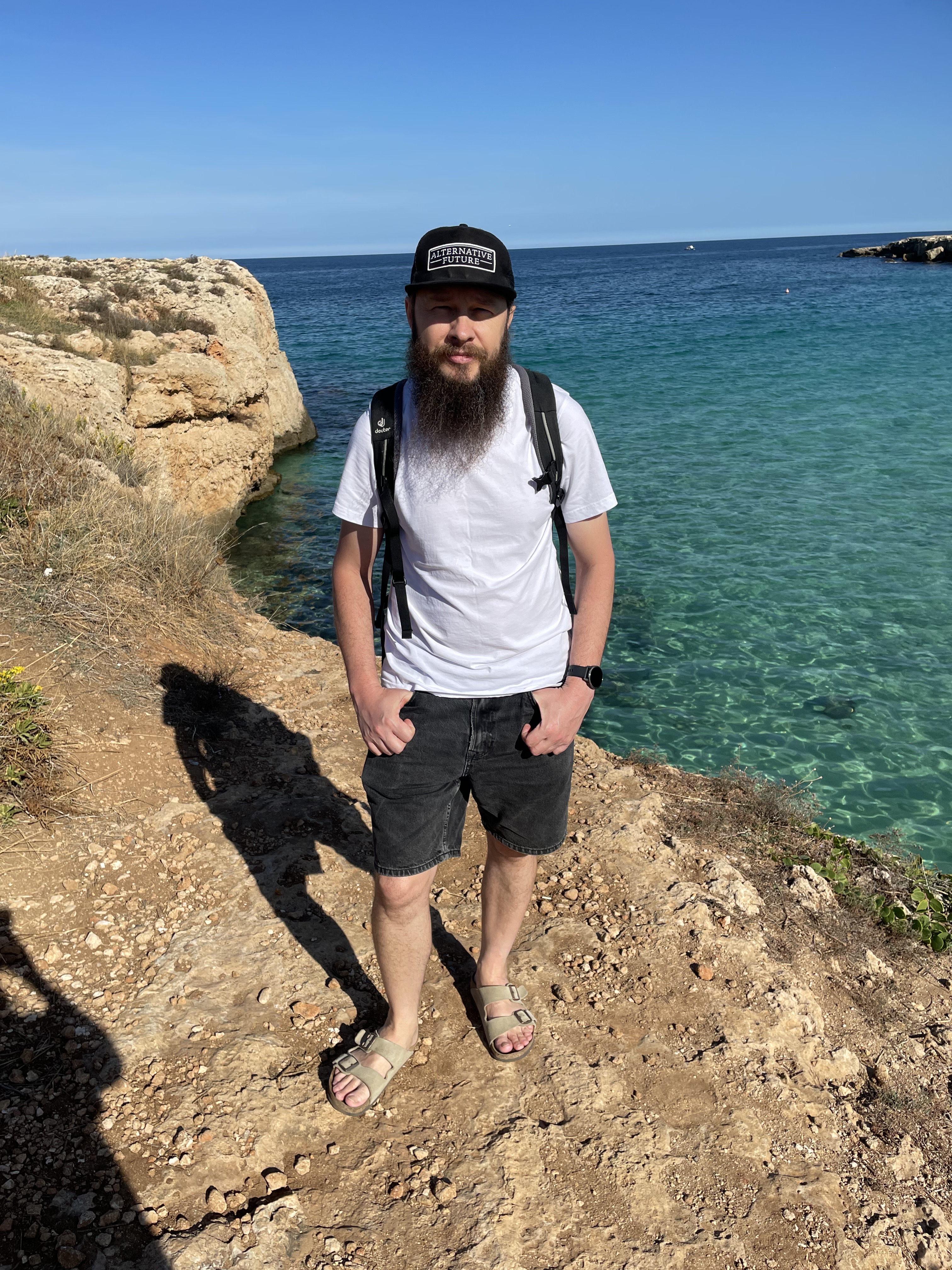
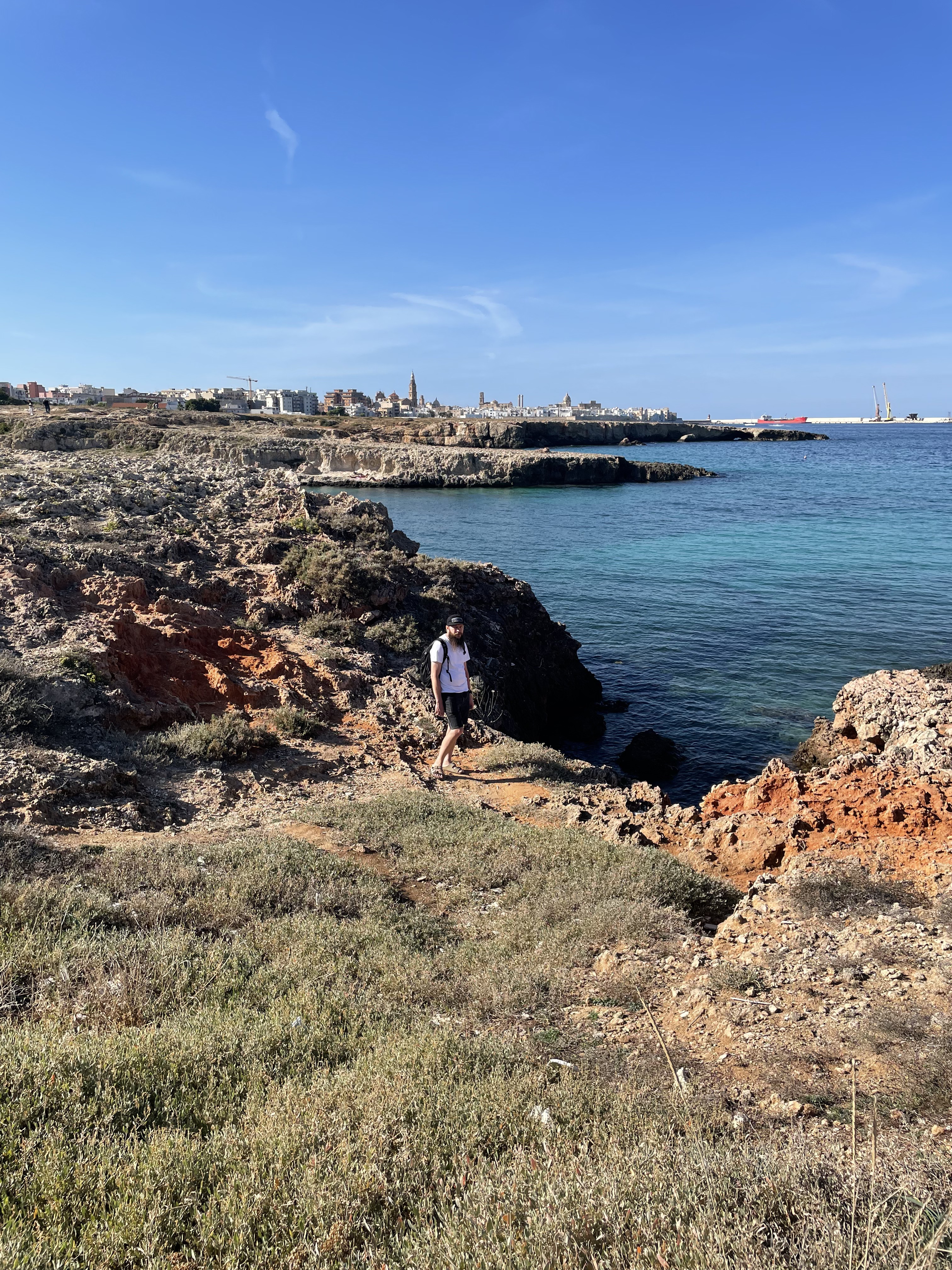
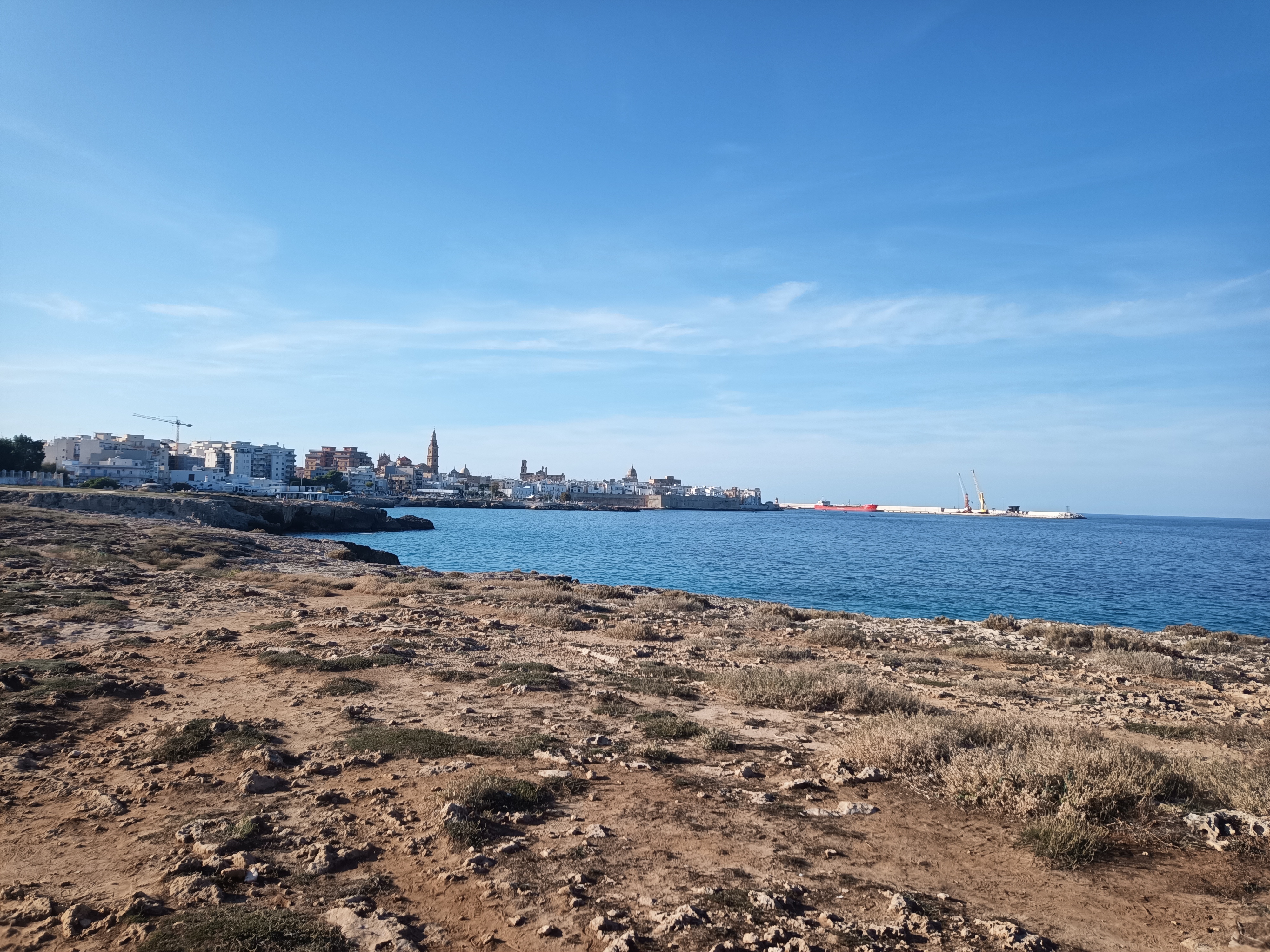
South of the walls the coast goes wild: little coves, flat rocky platforms, bathers on ledges, and water going from glass to navy. Oleg went in properly, mask and snorkel, and surfaced with a good report of the visibility. The plants along the path did their part too — dry thistles over transparent water, prickly pears, a sandy path wiggling between cacti.
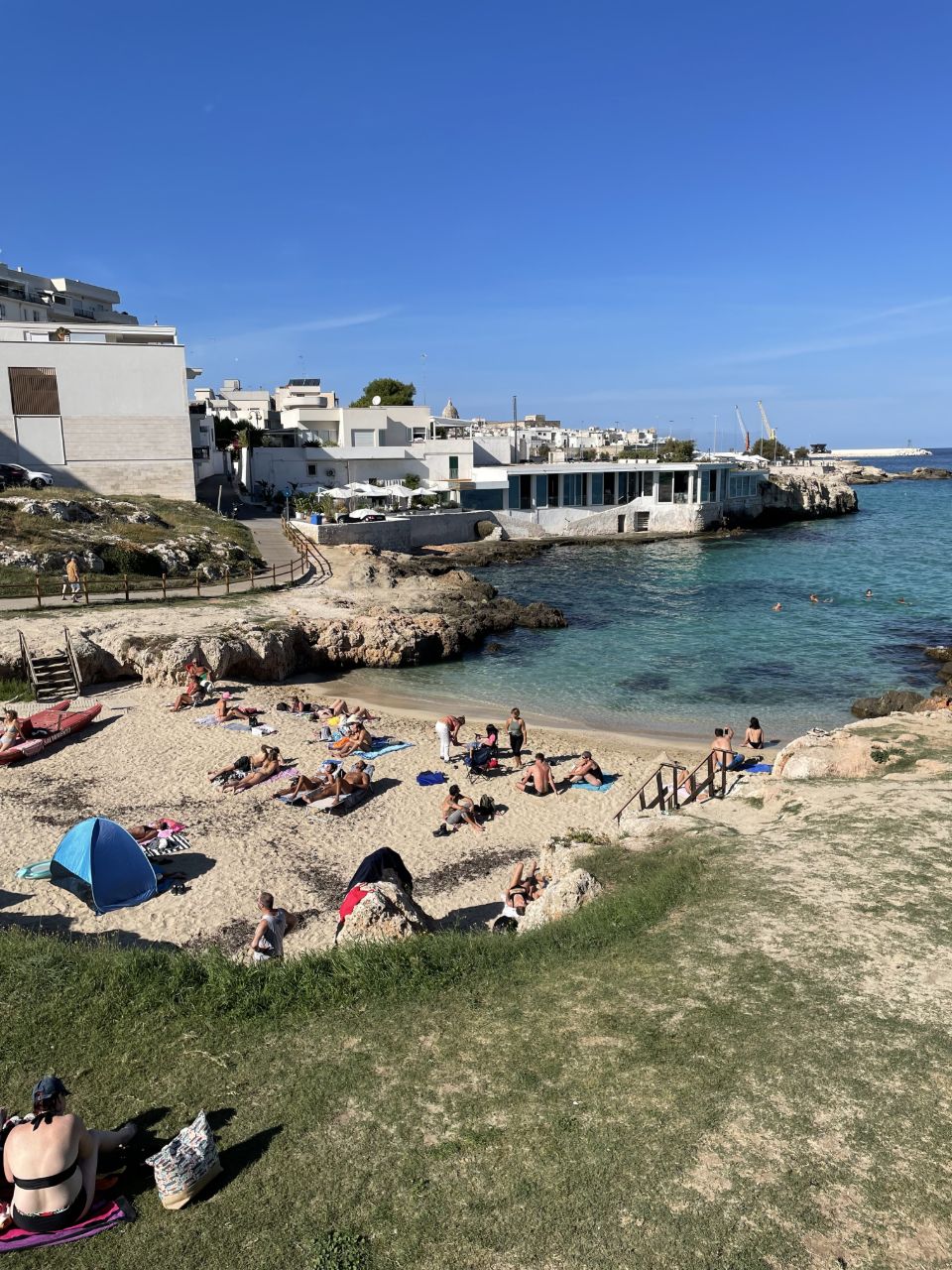
Bathers on the rocks 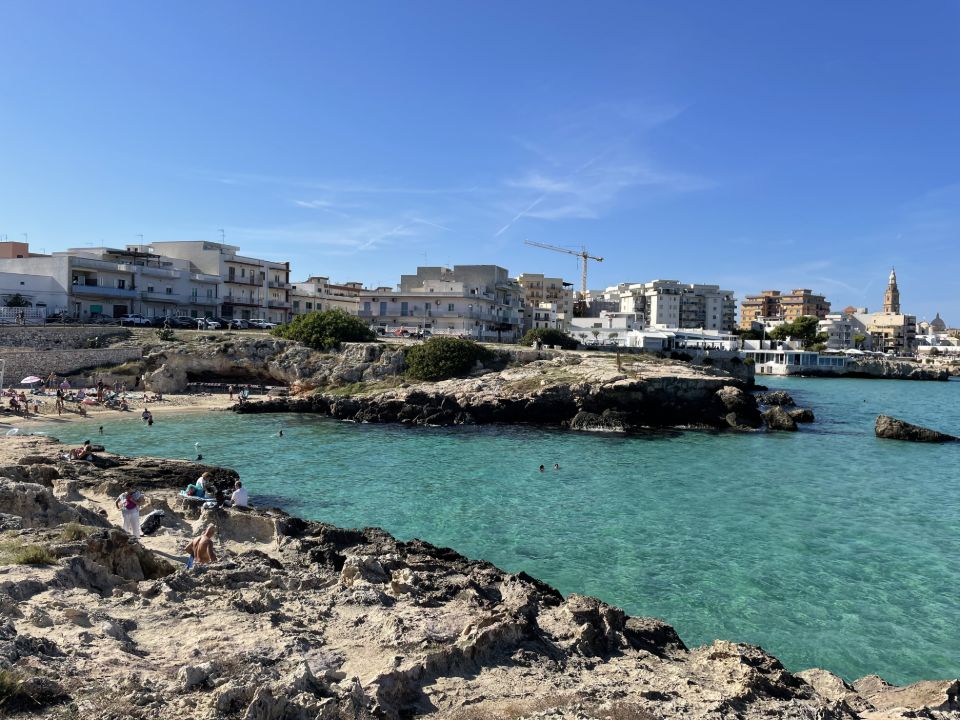
Porto Rosso, green-turquoise 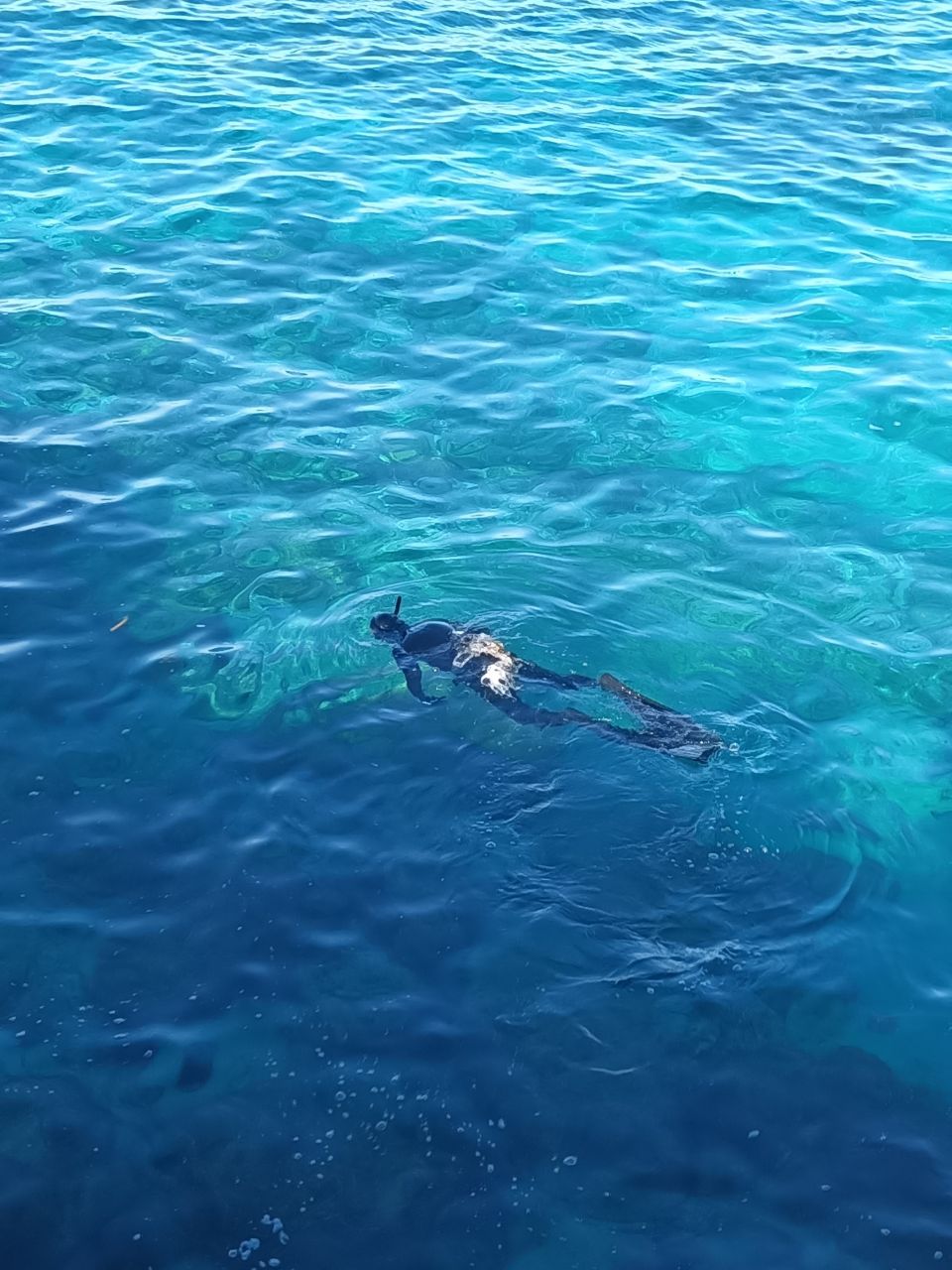
A local hunting octopus 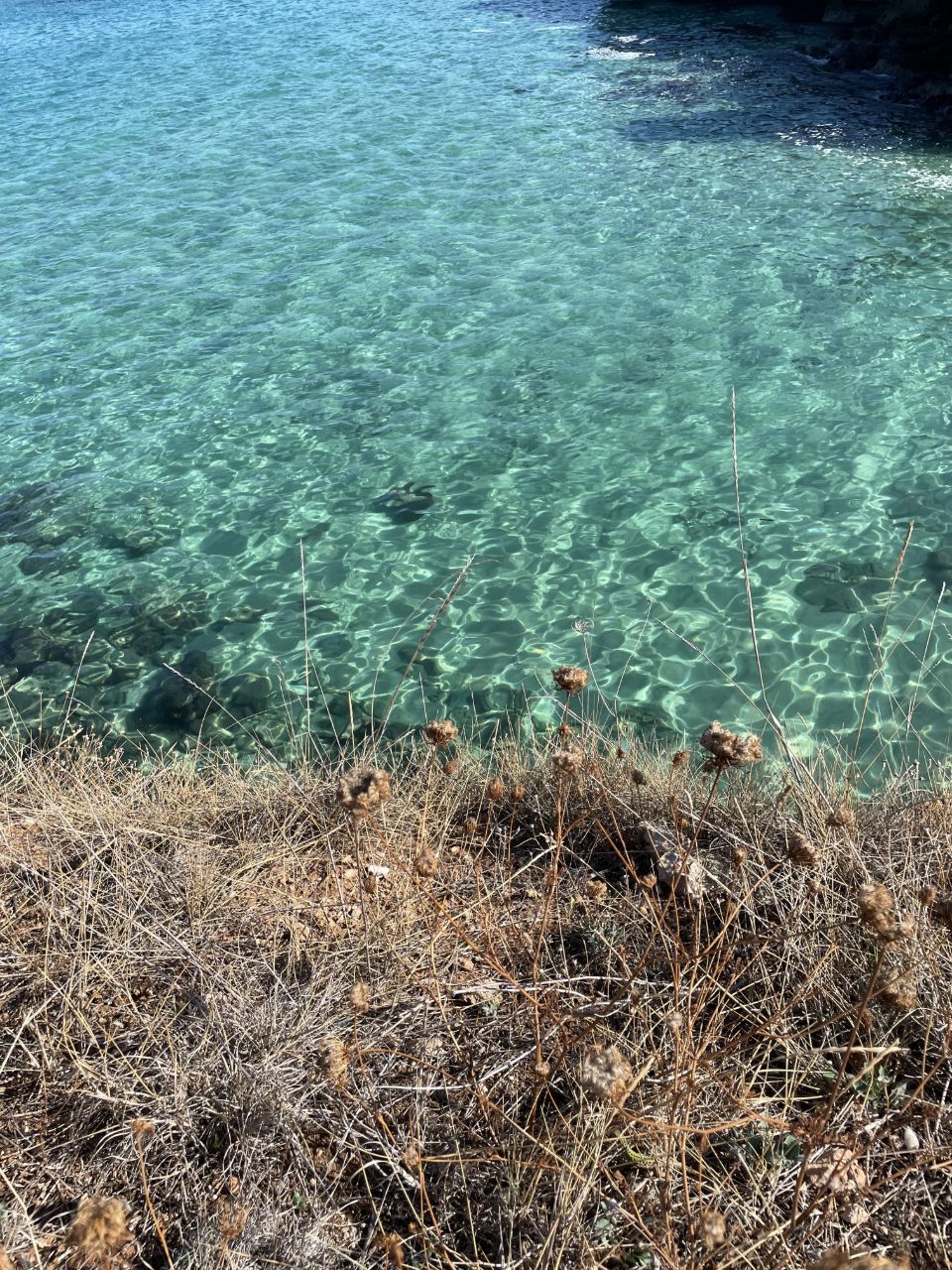
Thistles over the shallows 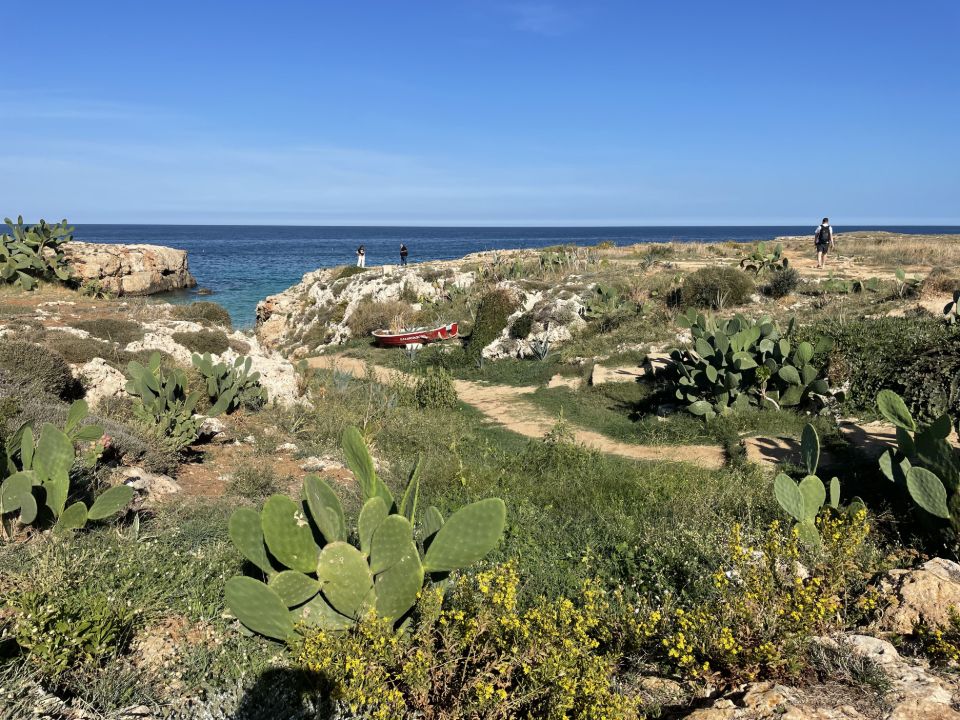
Prickly pears, yellow flowers 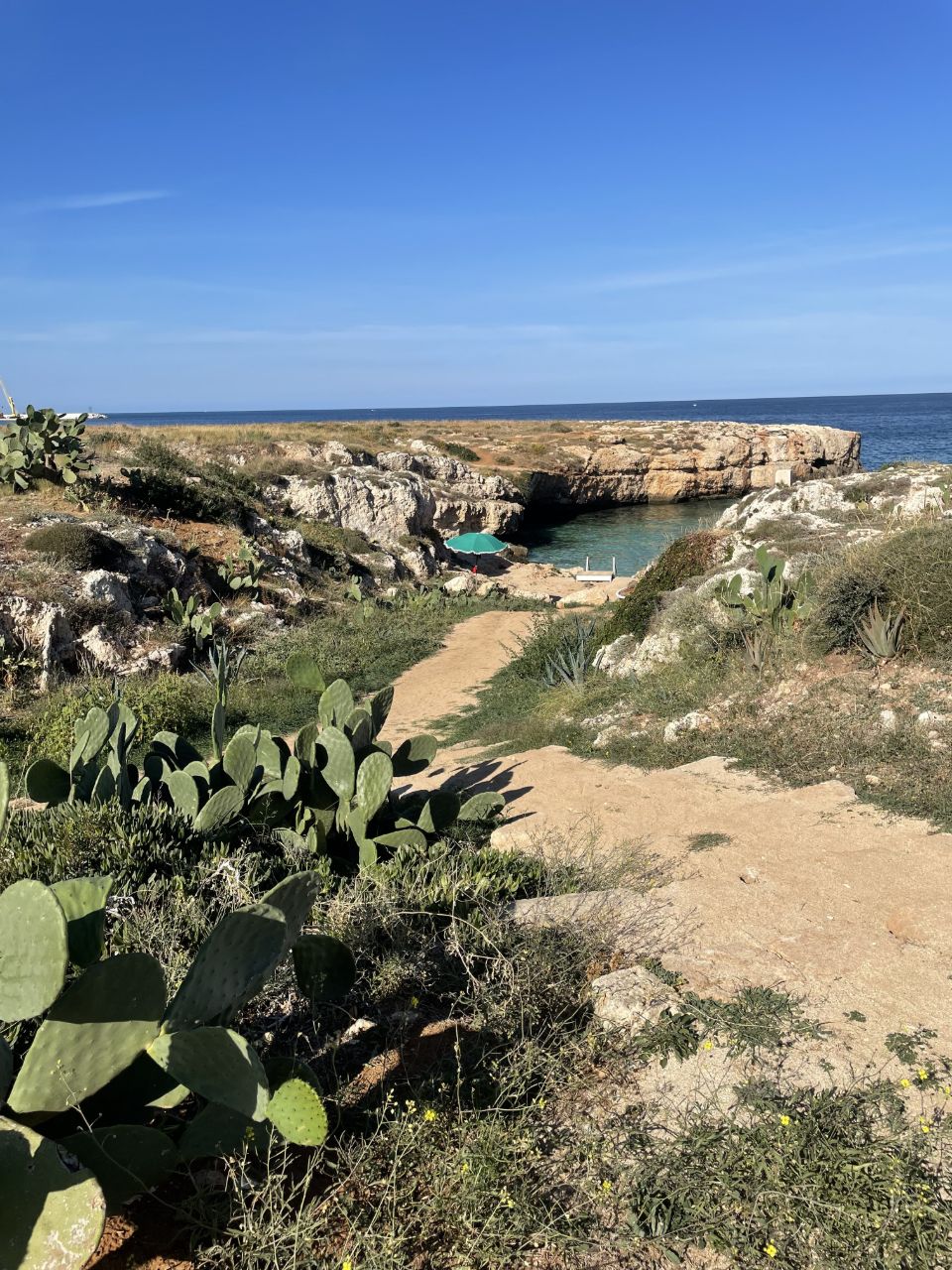
The path between the cacti 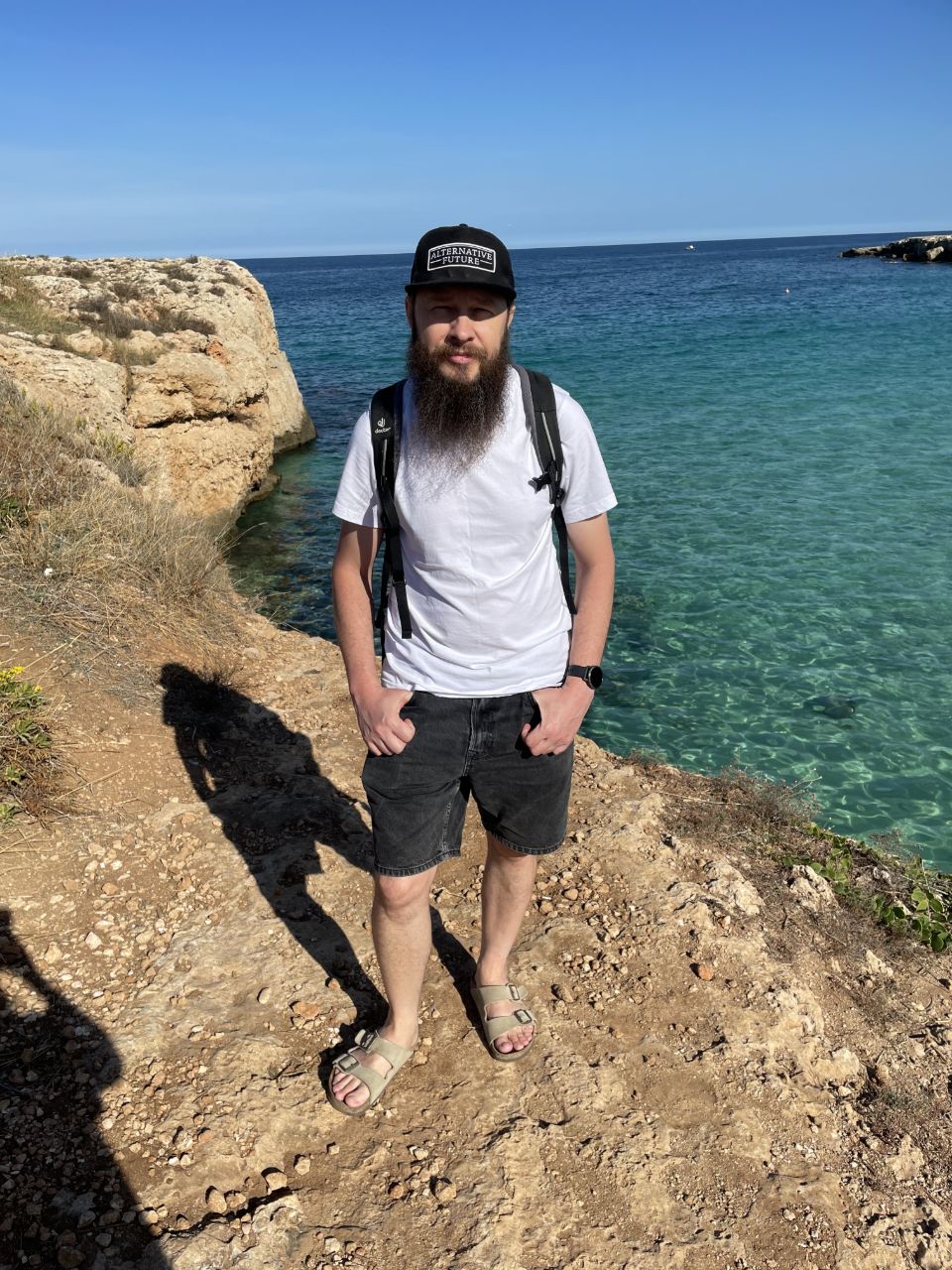
Oleg, surveying 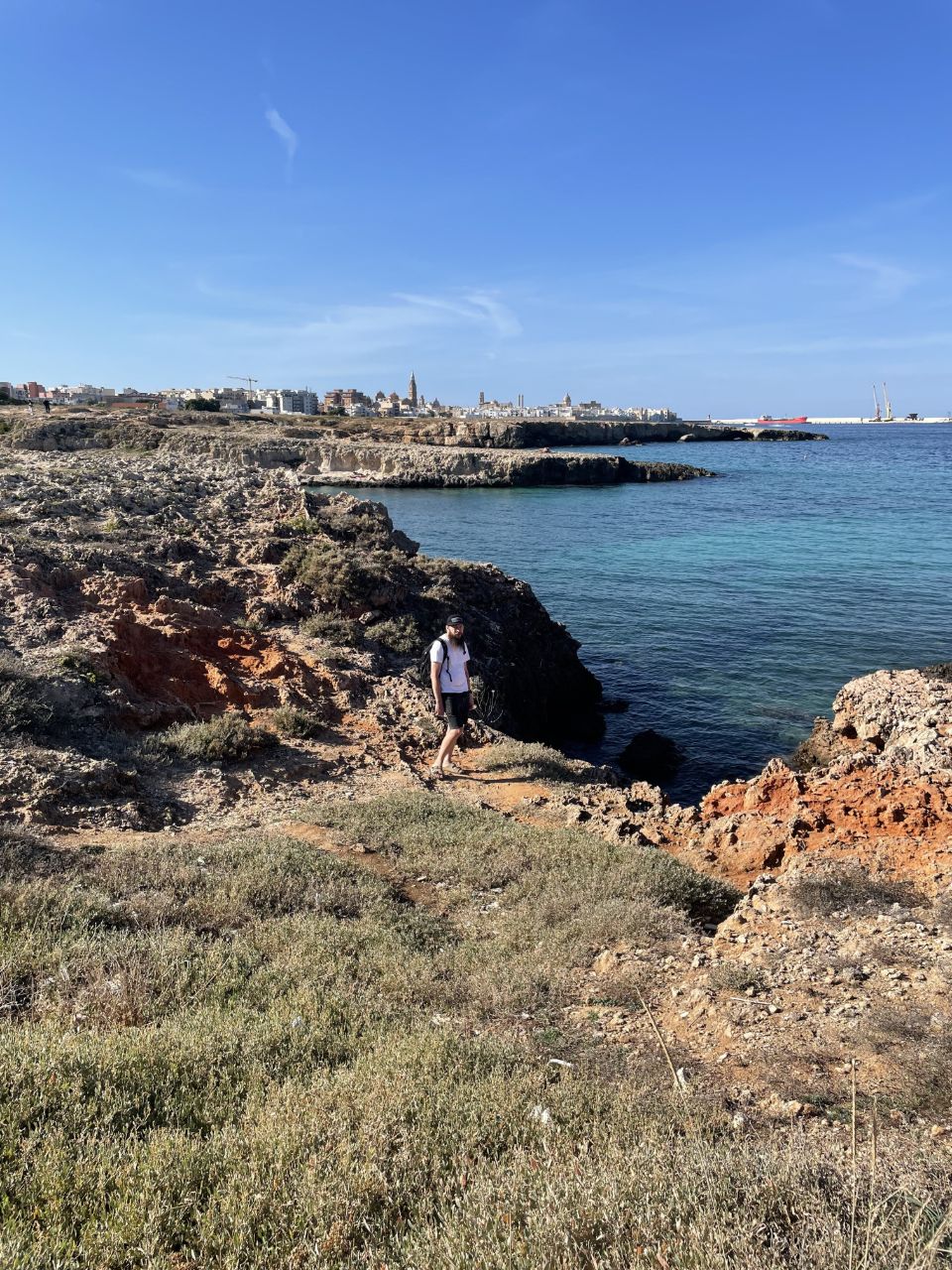
Oleg, on the rocks 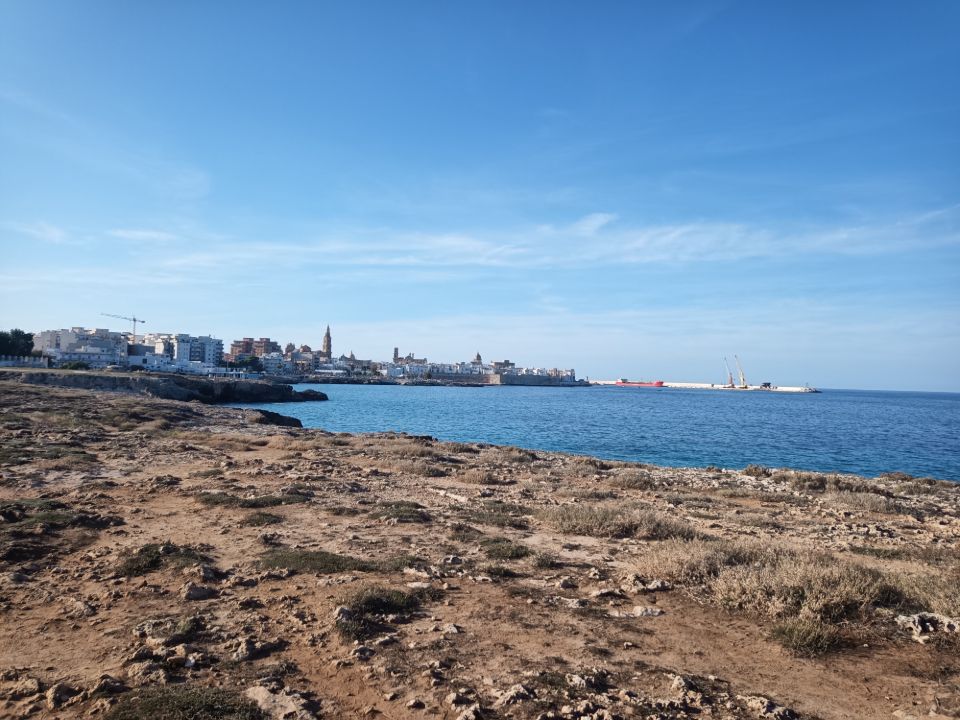
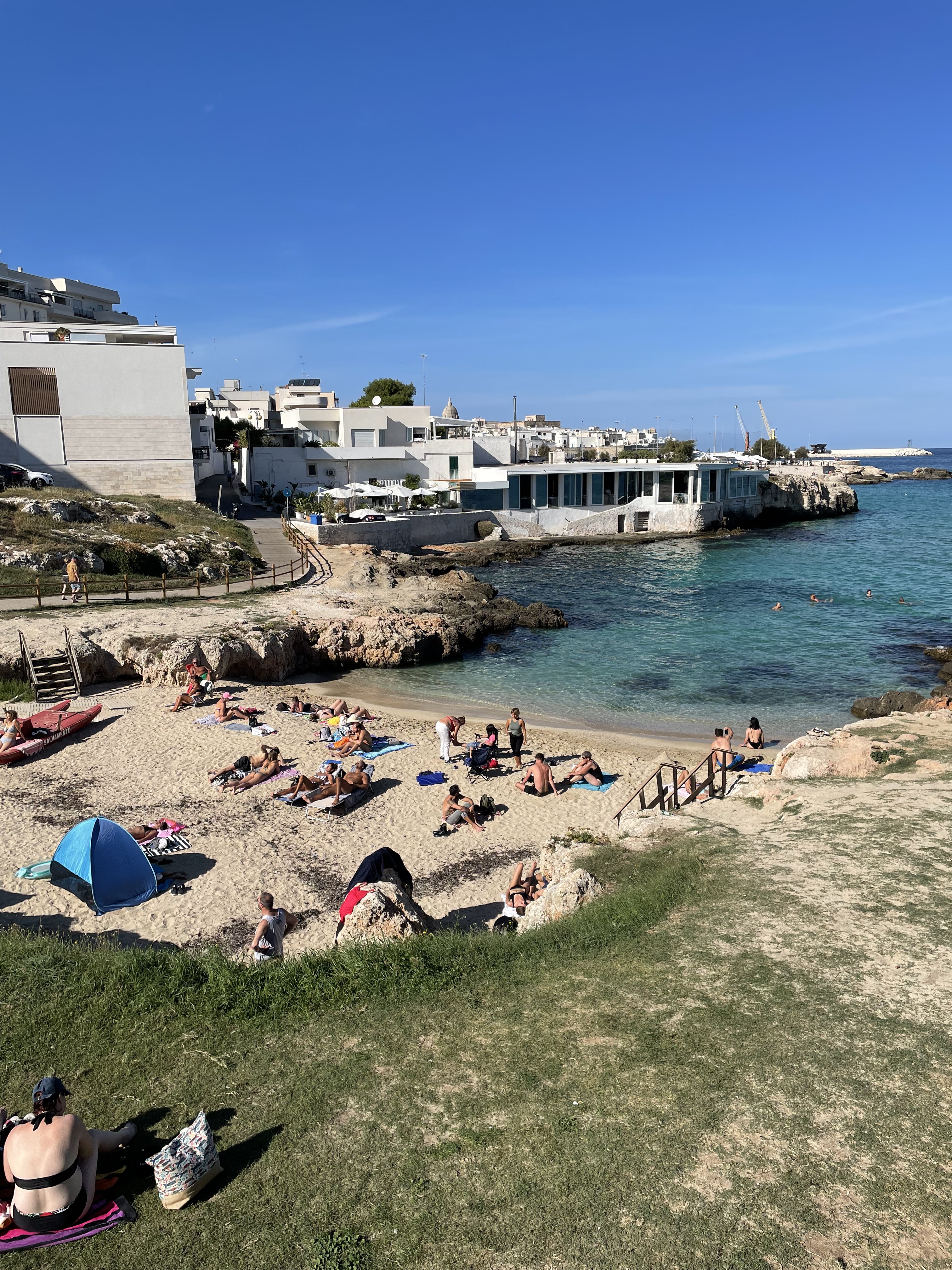
Looking back at the white town
Aperol hour at the beach bar
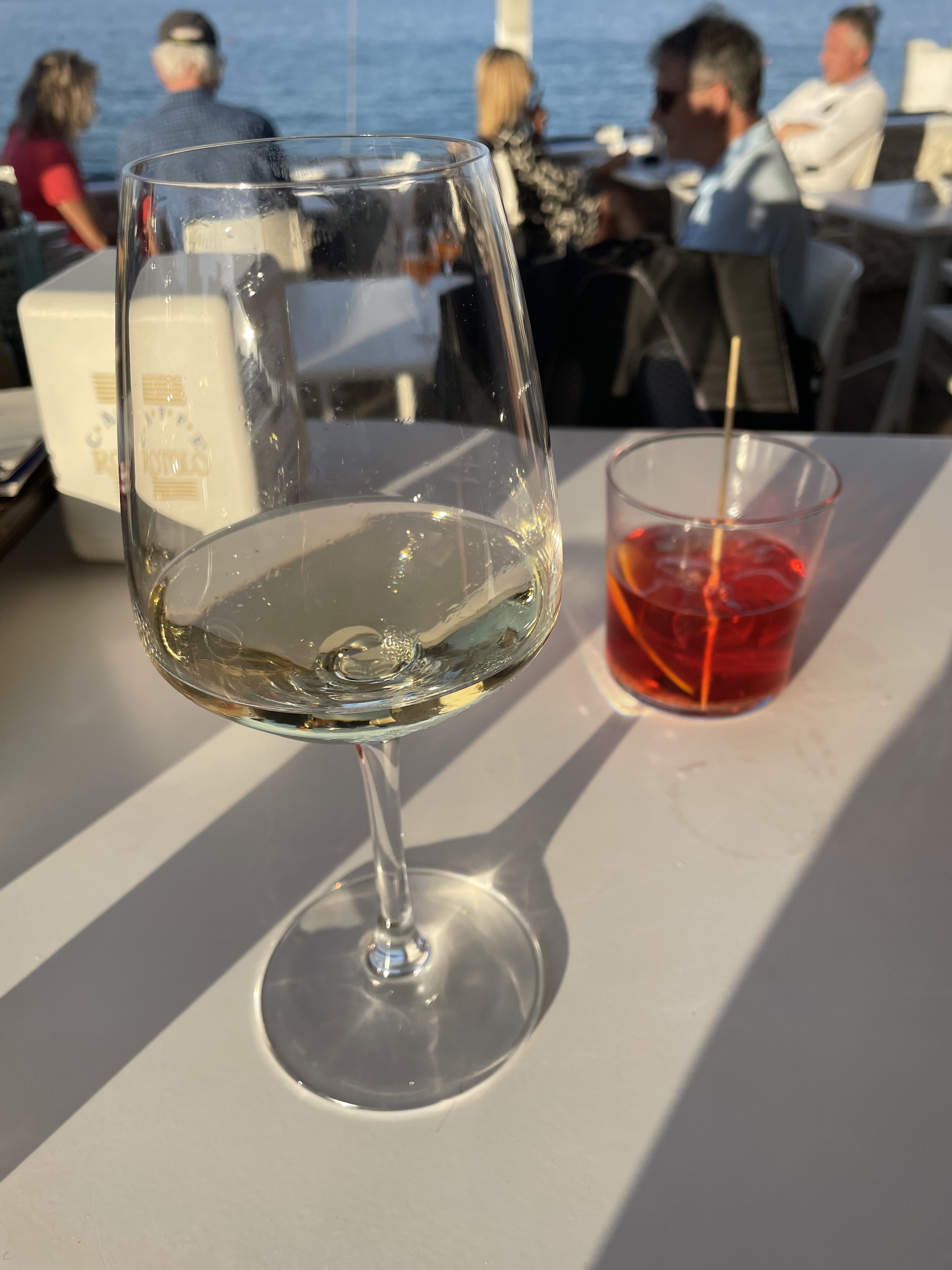
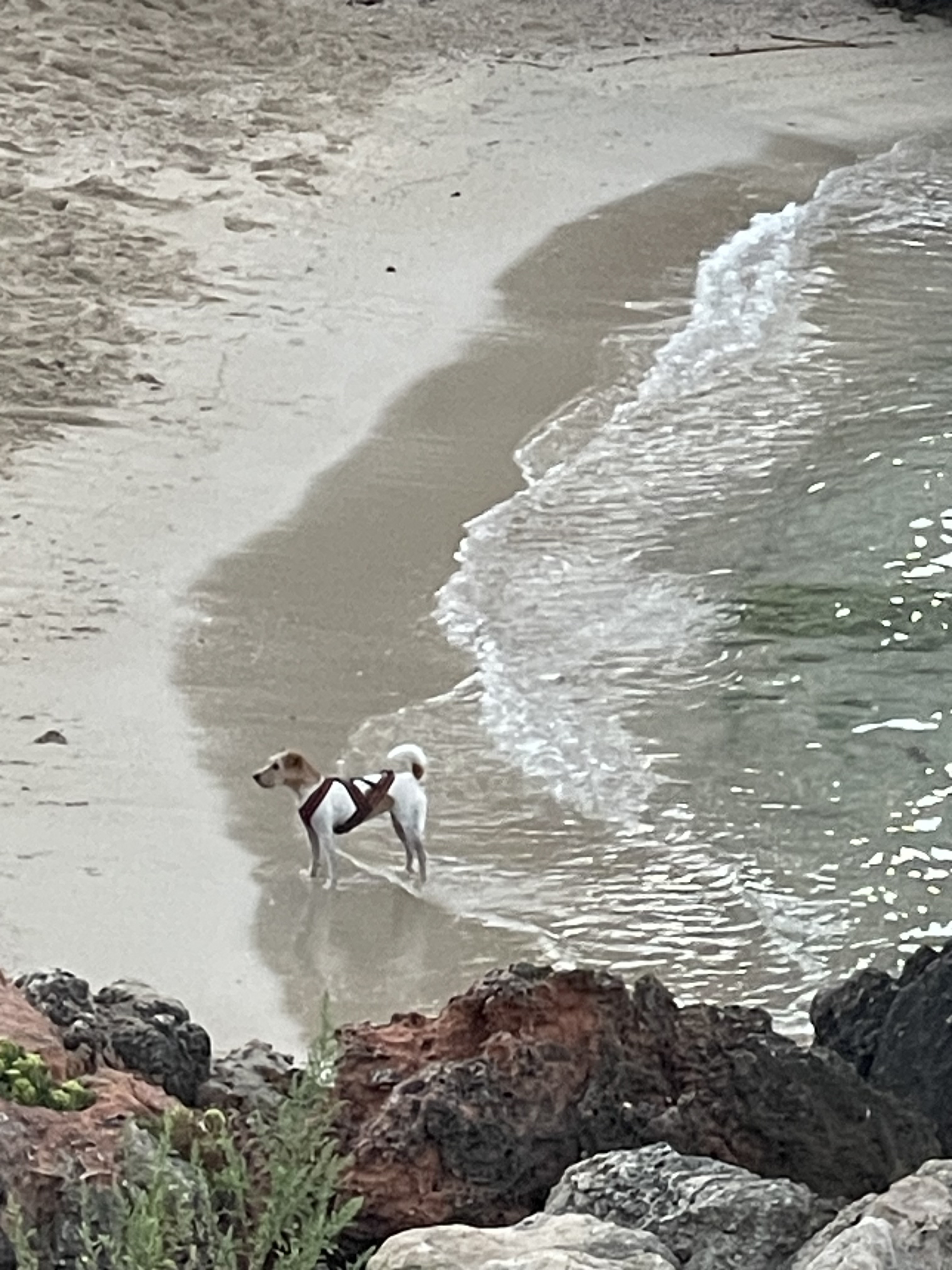
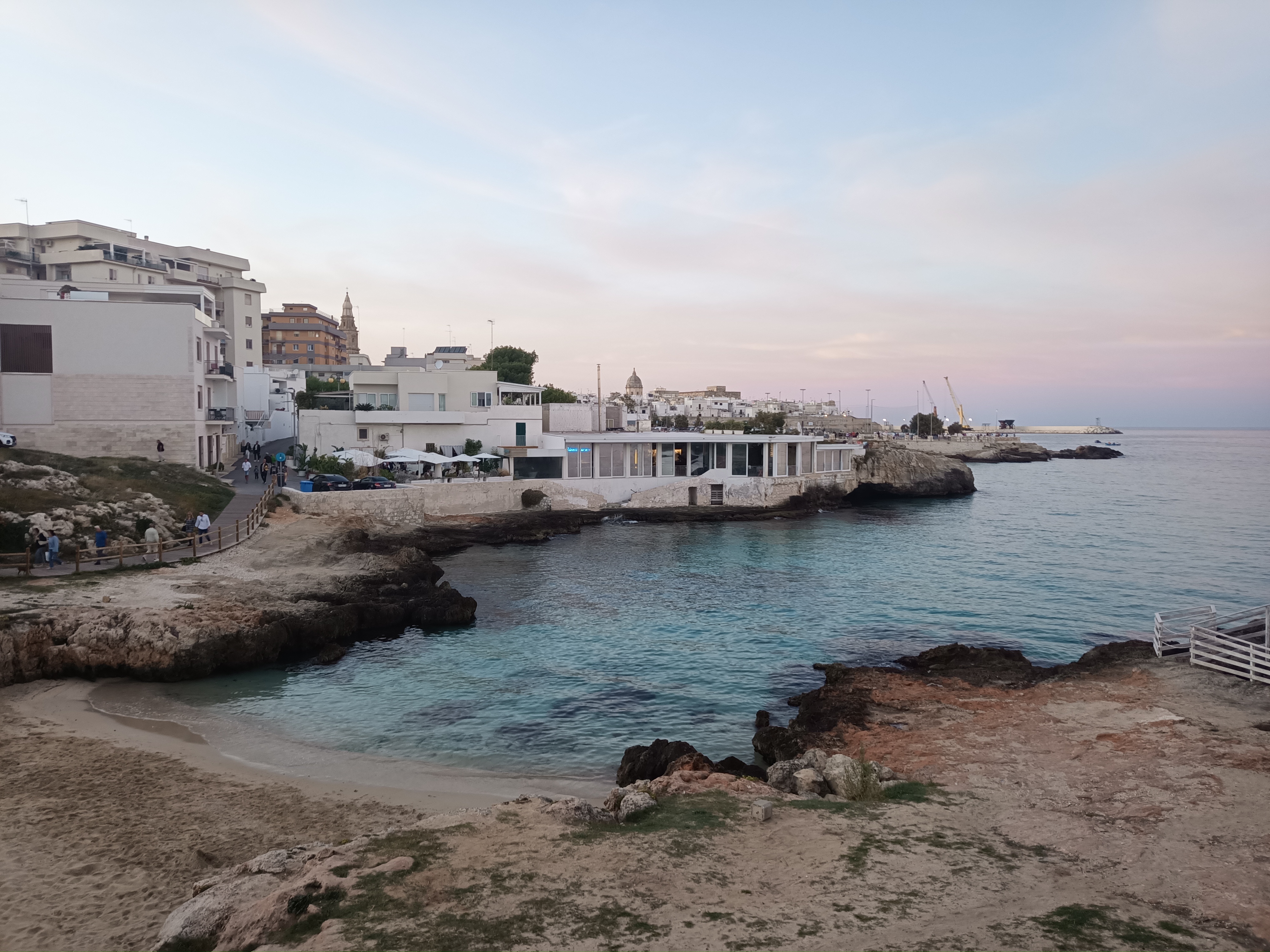
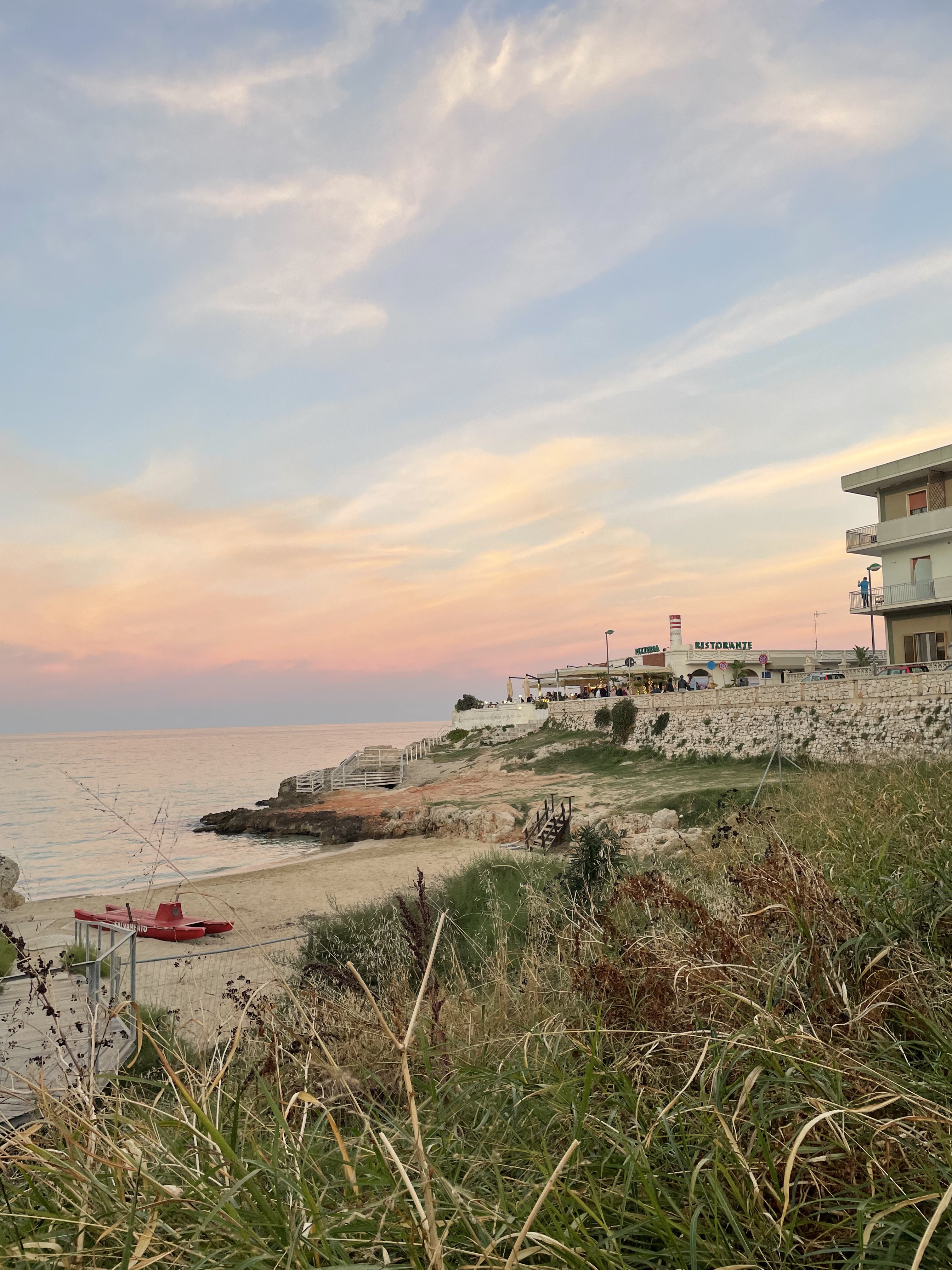
The early evening belonged to the beach bar at the water’s edge: spritz for one of us, wine for the other, parasol overhead, the sea doing light theatre. A small dog stood at the water’s edge. Then we walked out along the coves as the sun went down — the red rowboat at Lido Bianco, Oleg out on the dark rocks, and faces lit by the last warm light.
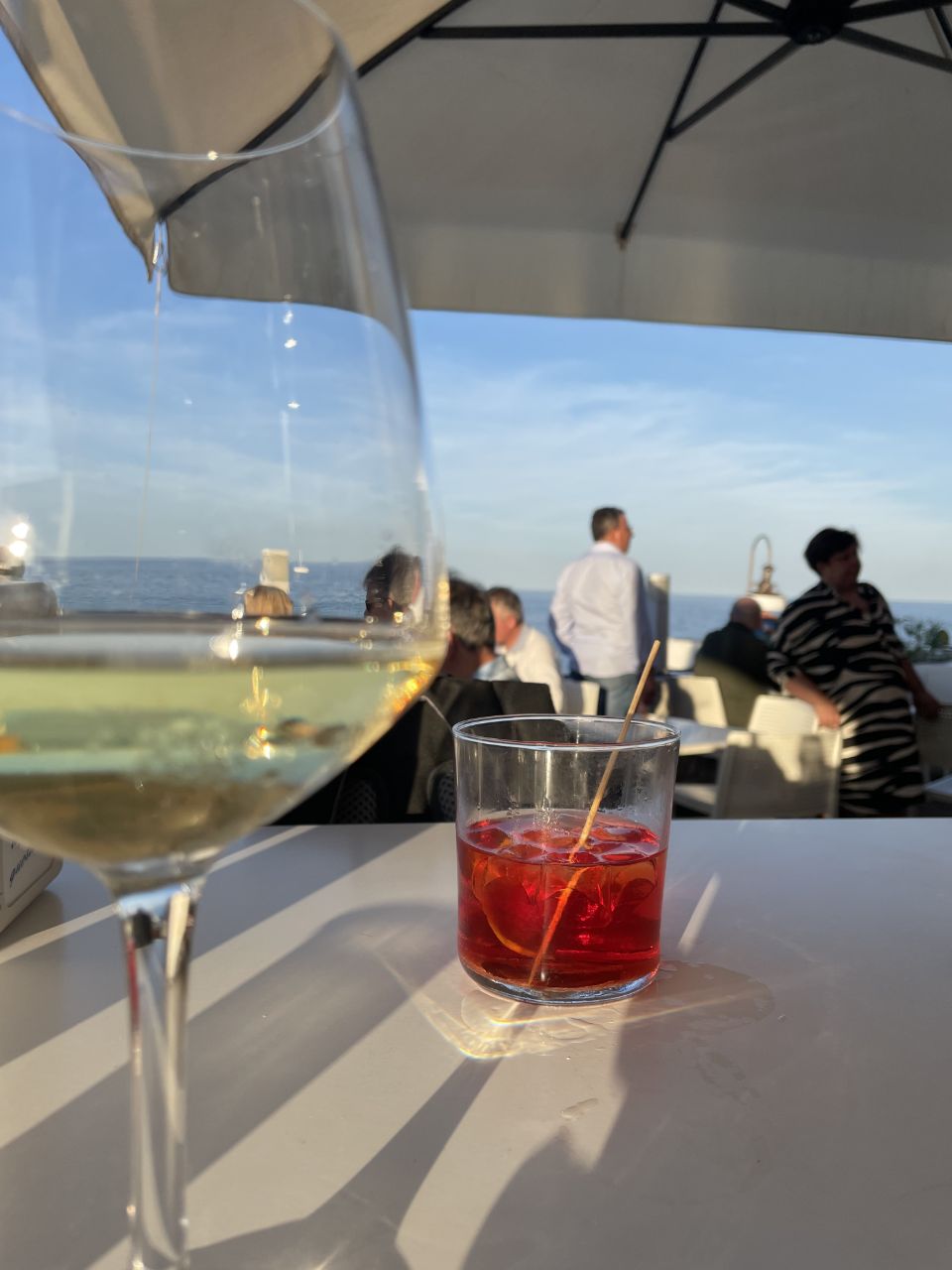
Aperol, obviously 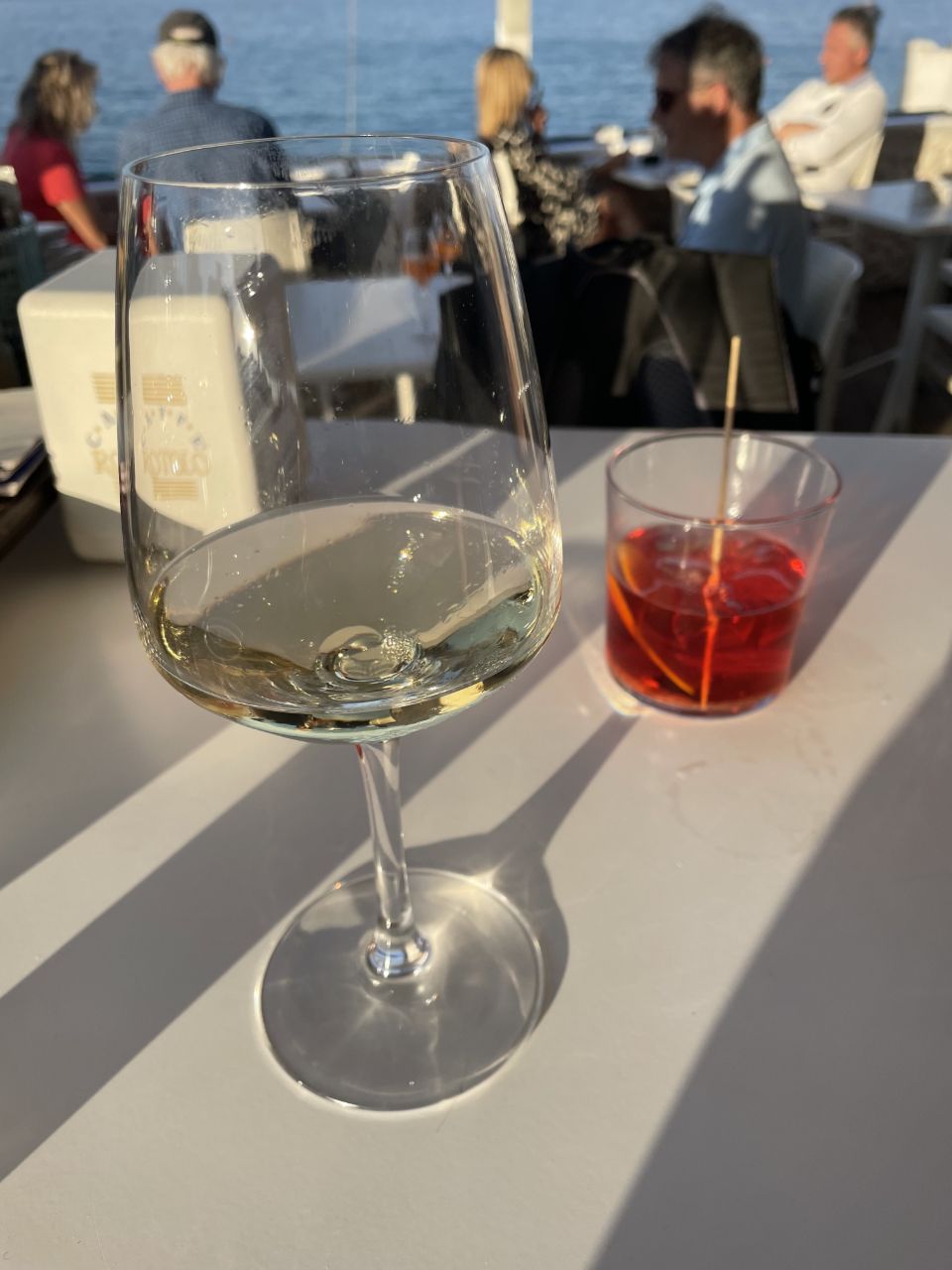
White wine and a sunset table 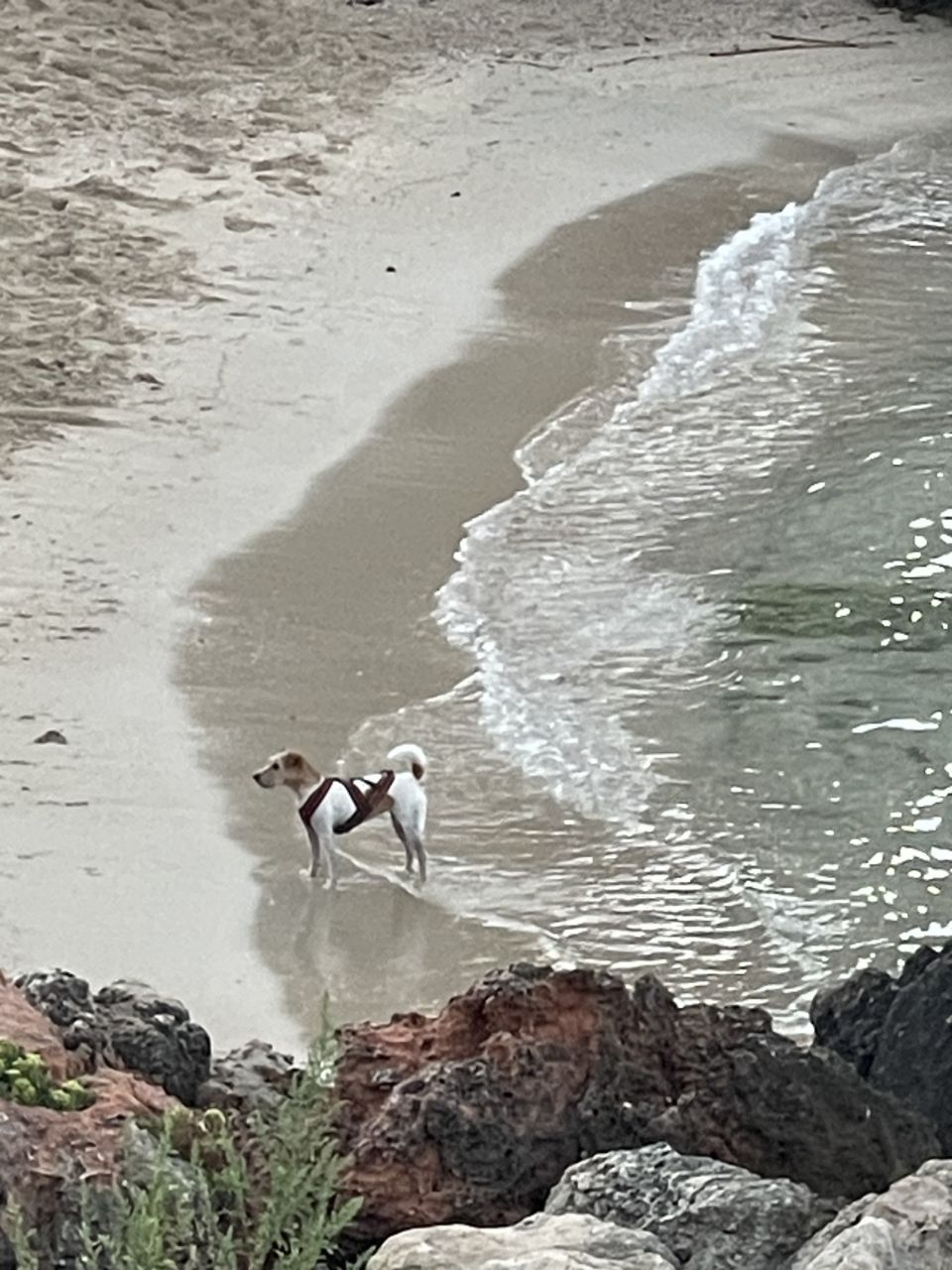
The dog at the water's edge 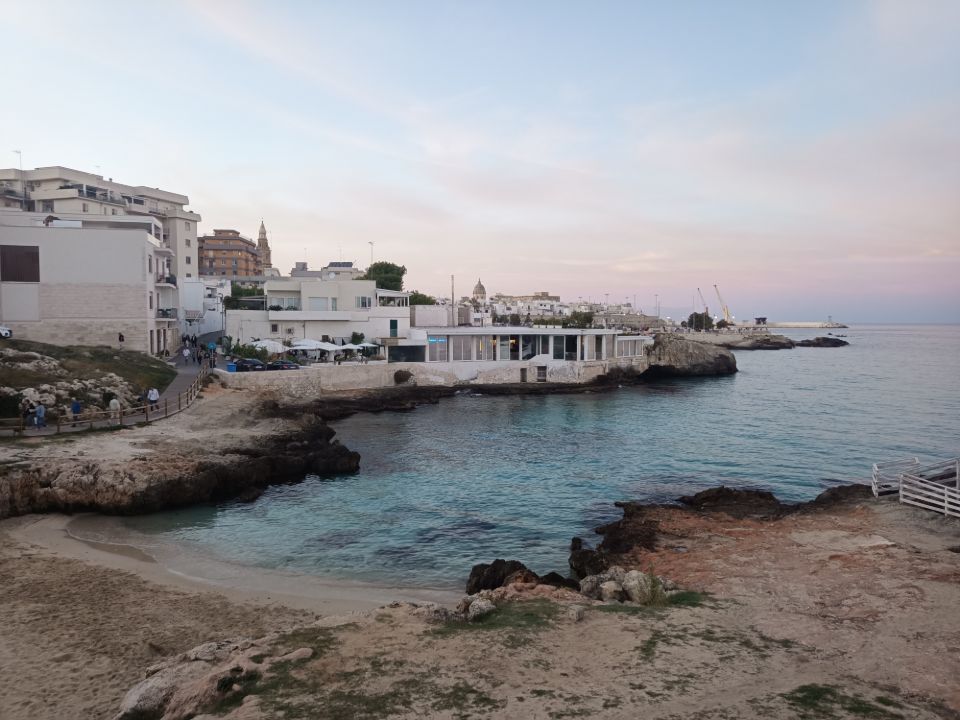
Porto Rosso, in dusk light 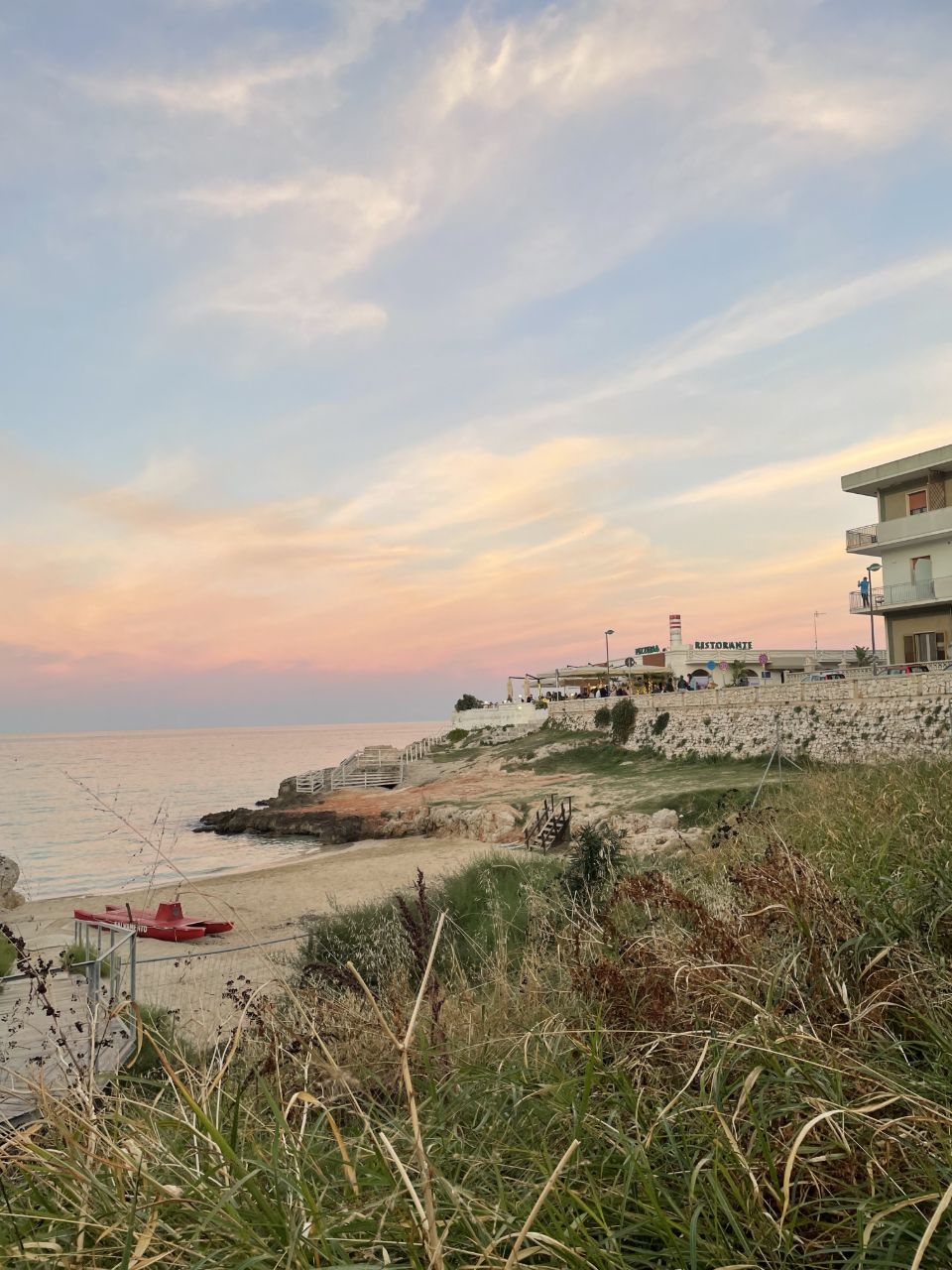
The red rowboat, Lido Bianco 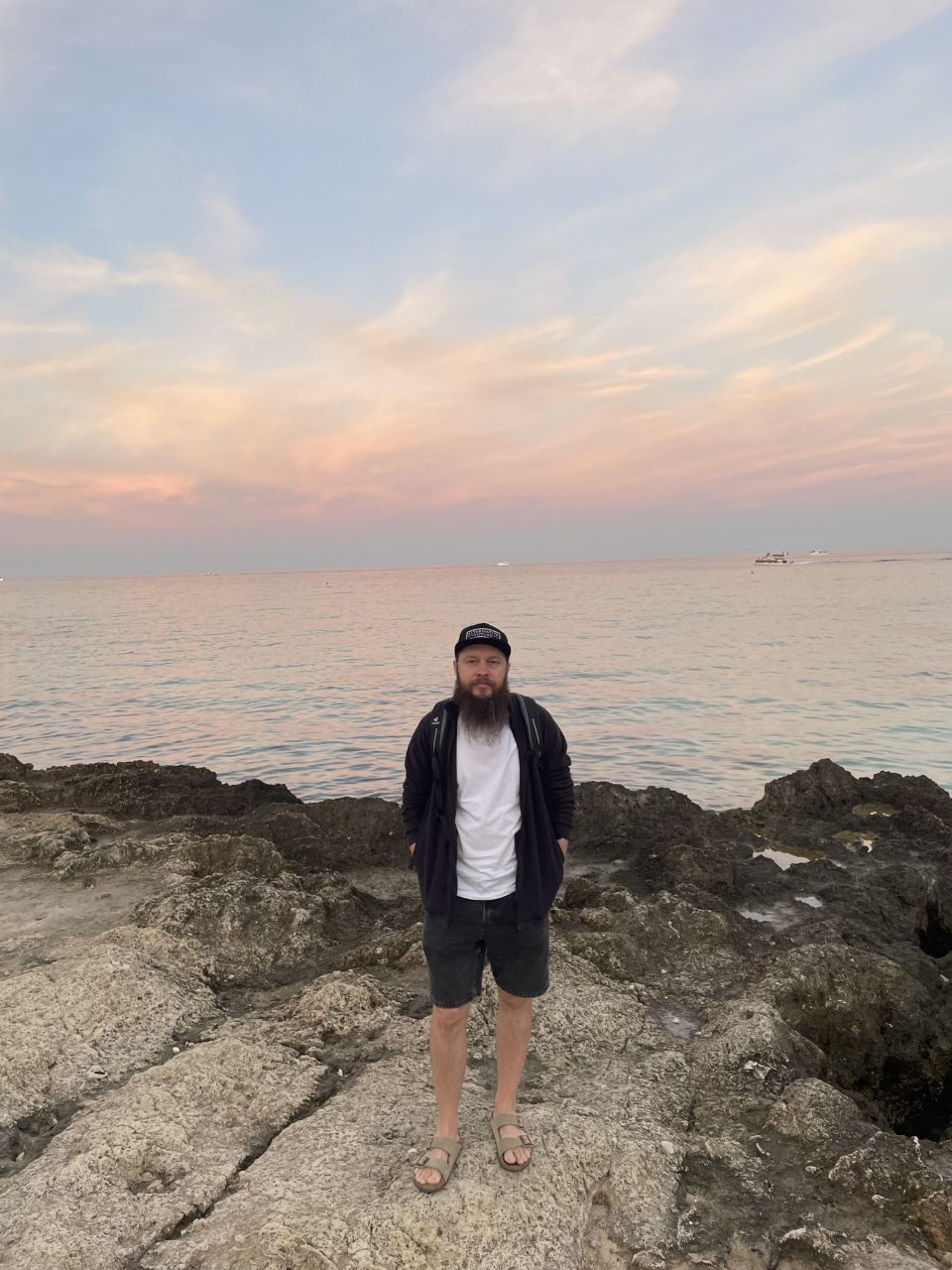
Oleg, on the rocks at sunset 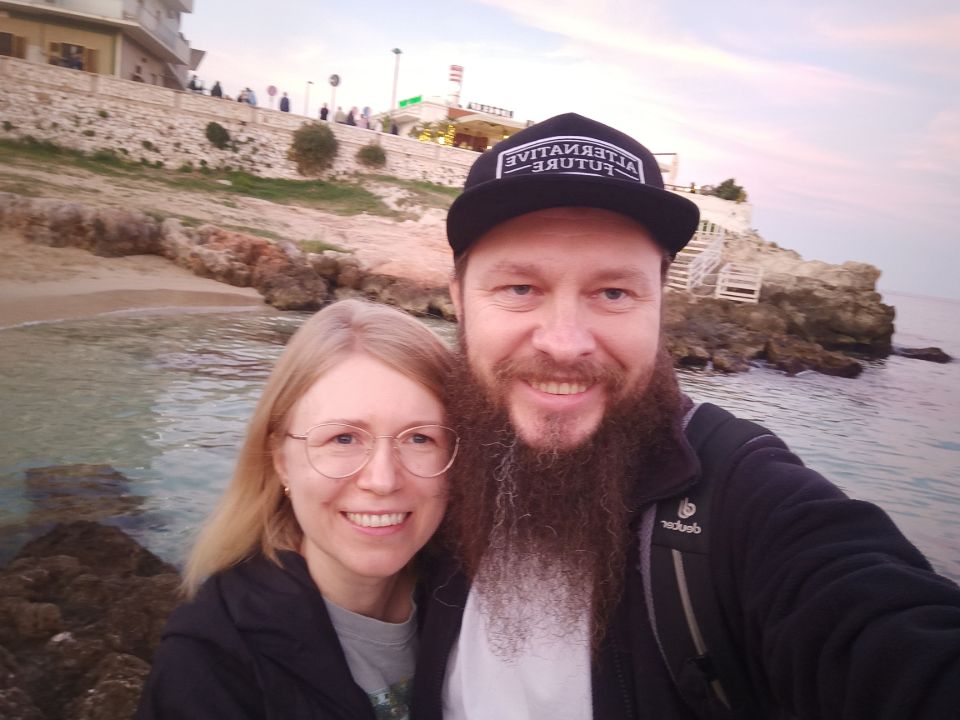
Both of us, smiling by the cove
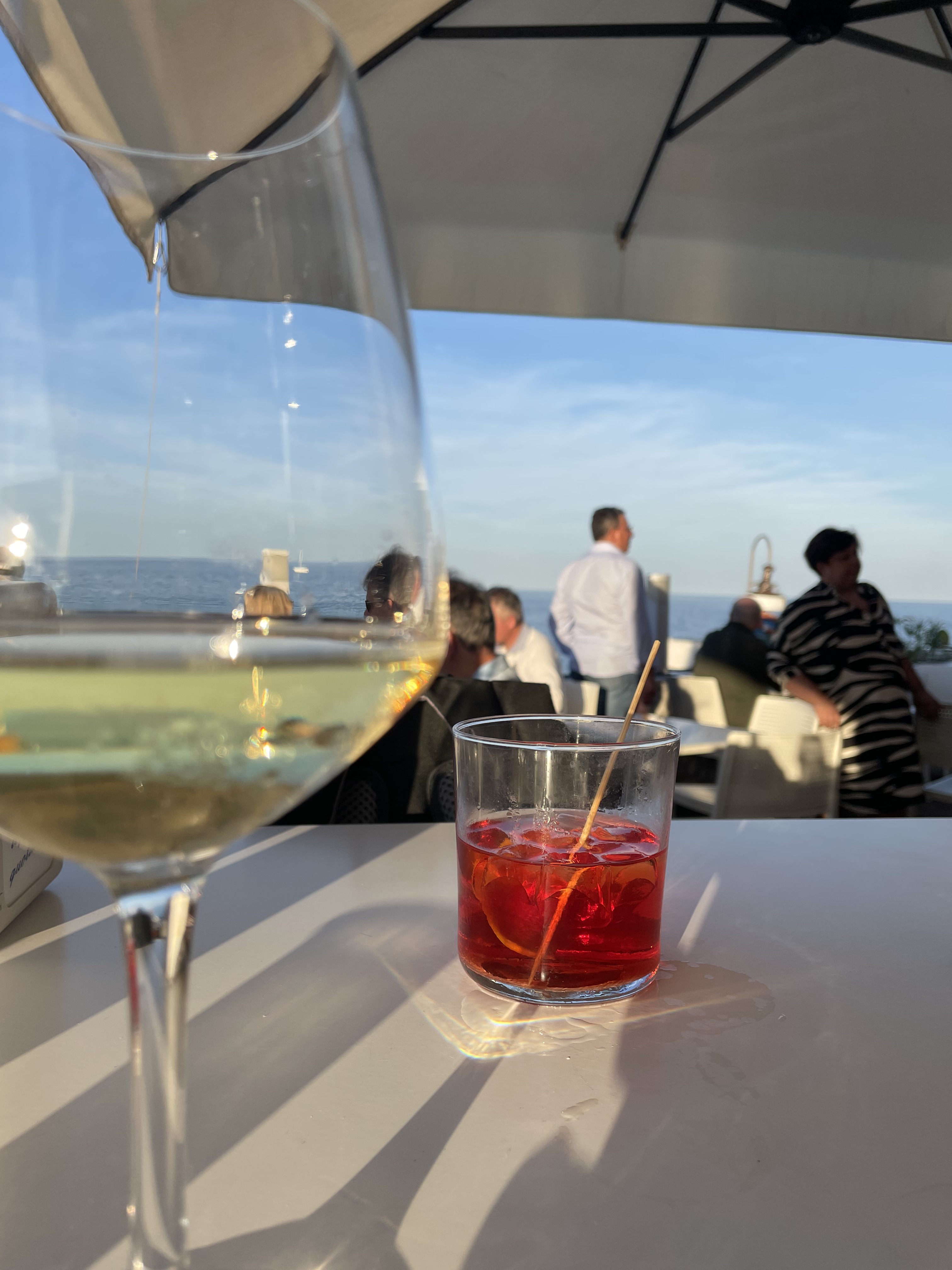
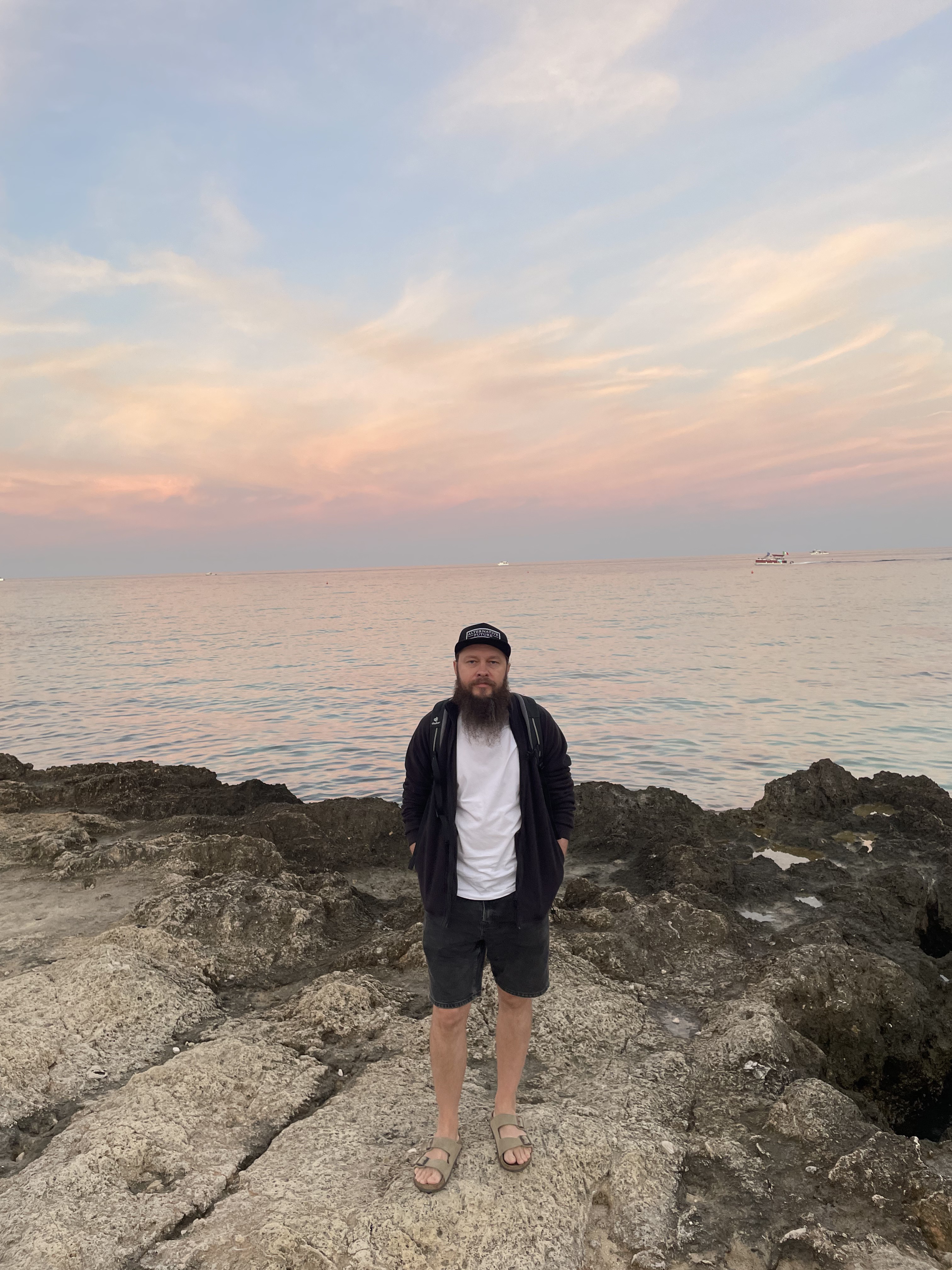
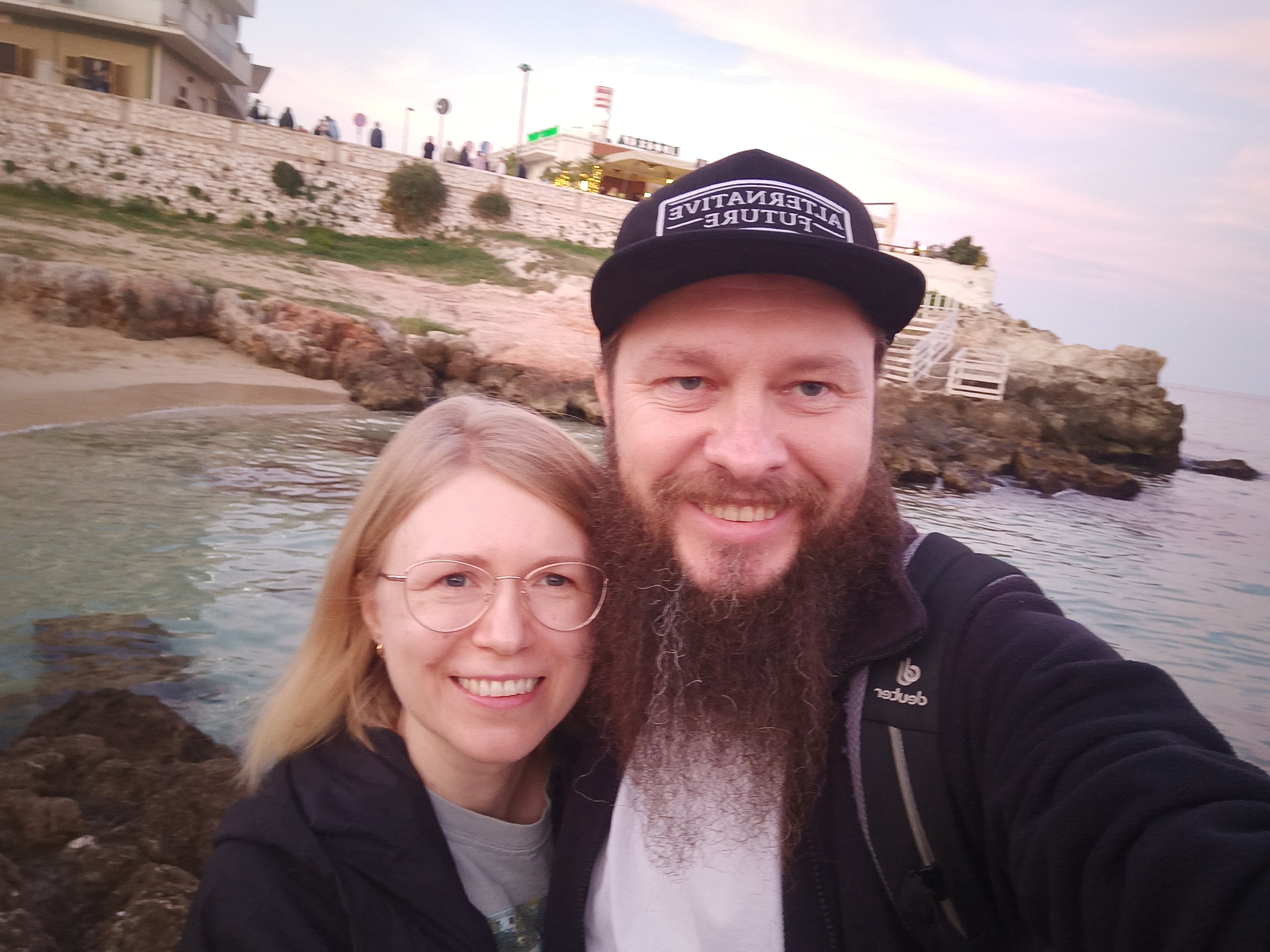
From the terrace: wine at the table and Monopoli over the shoulder — thirty-three seconds.
Moonrise over Portavecchia
The sunset then staged the best show of the stay: pink and lilac sky, water below turning violet, and a moon over the roofs before dusk finished the handover. The campanile held its silhouette, the town held its lamps, and the breakwater put its lamp row along the black water. We walked back past the fly sign (“Sono una mosca” — painted in a restaurant doorway).
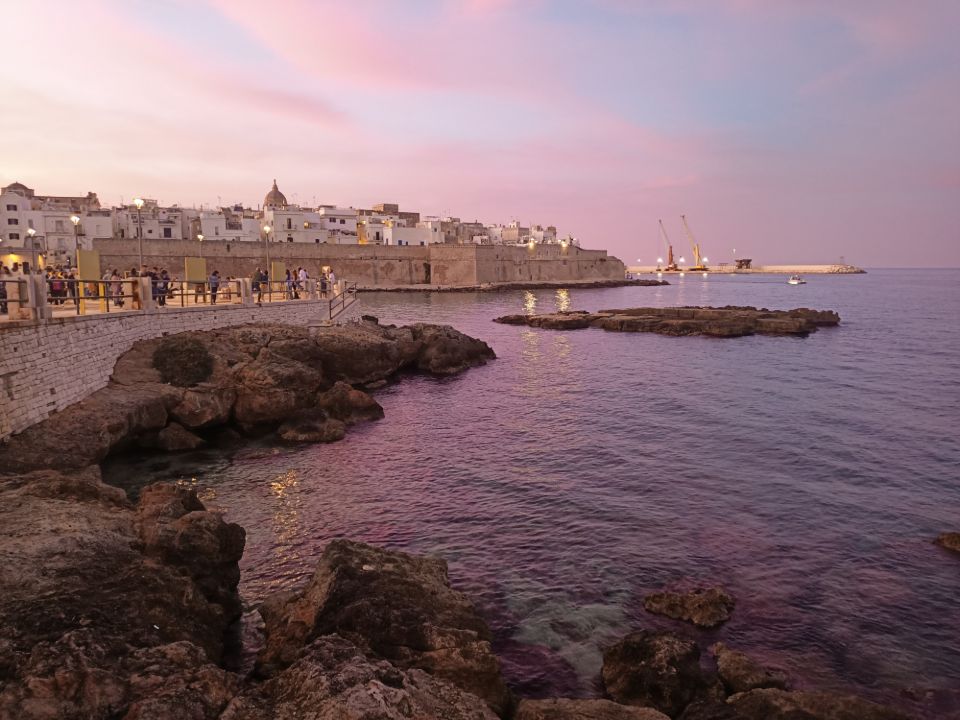
Pink and lilac over the water 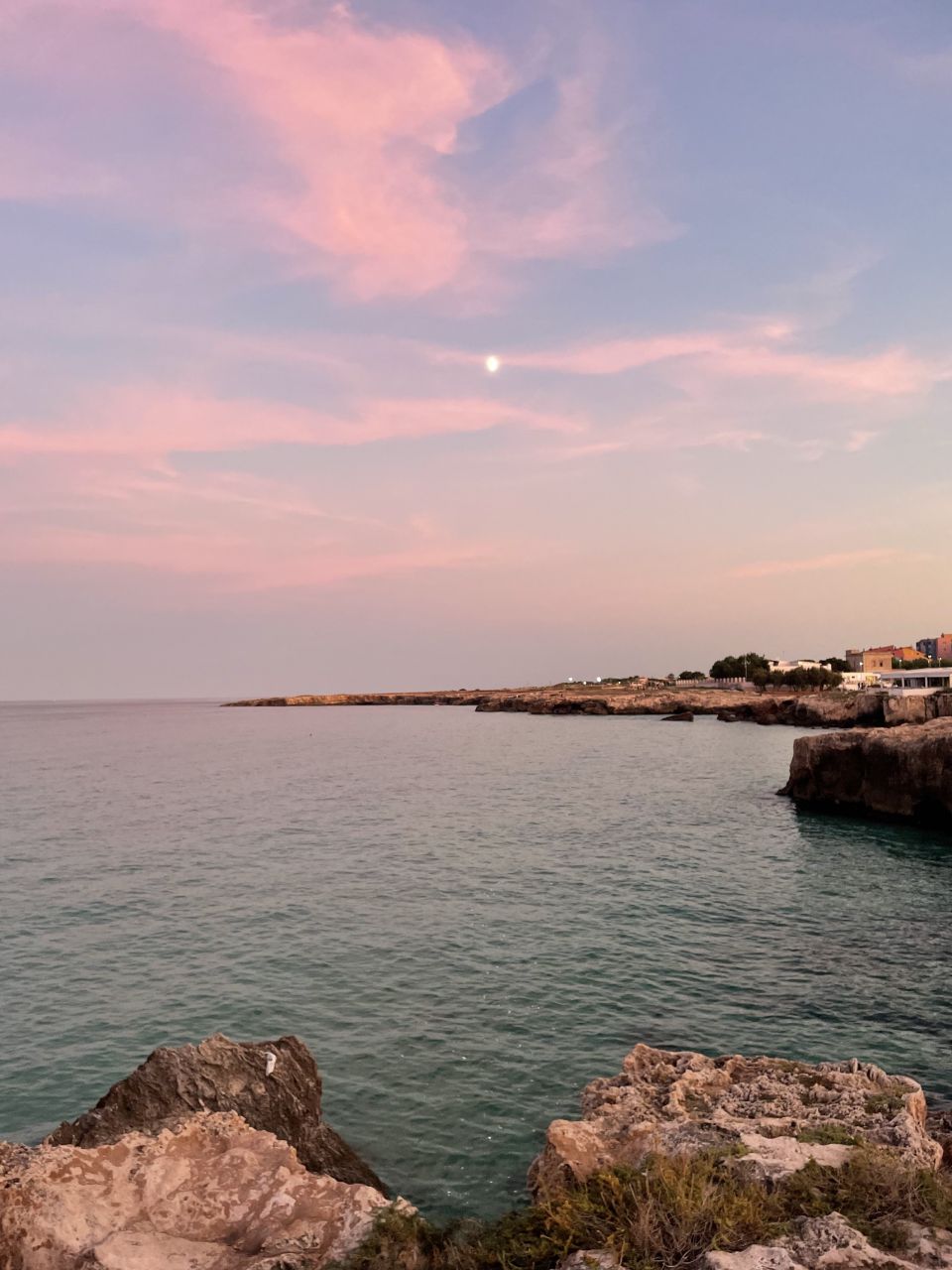
The moon, pink sky 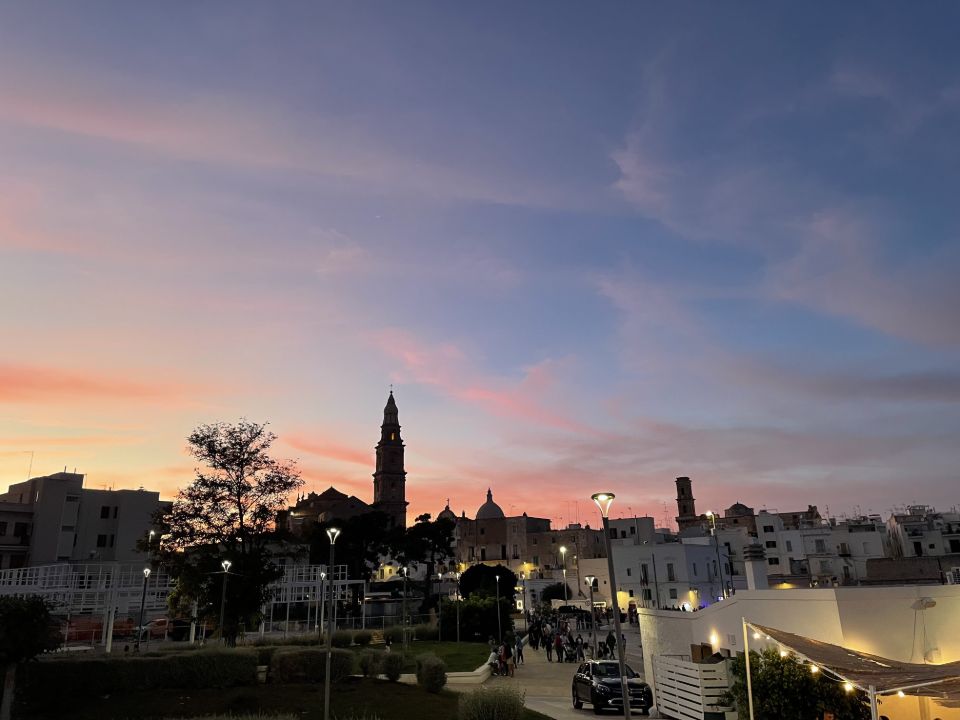
The skyline, from the park 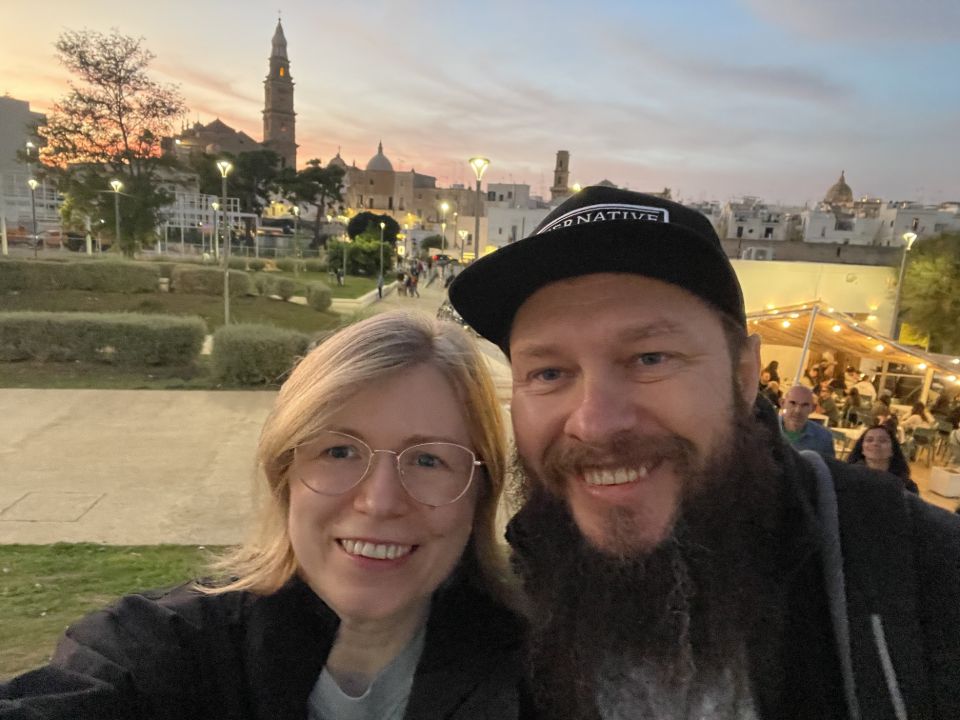
The square, dusk edition 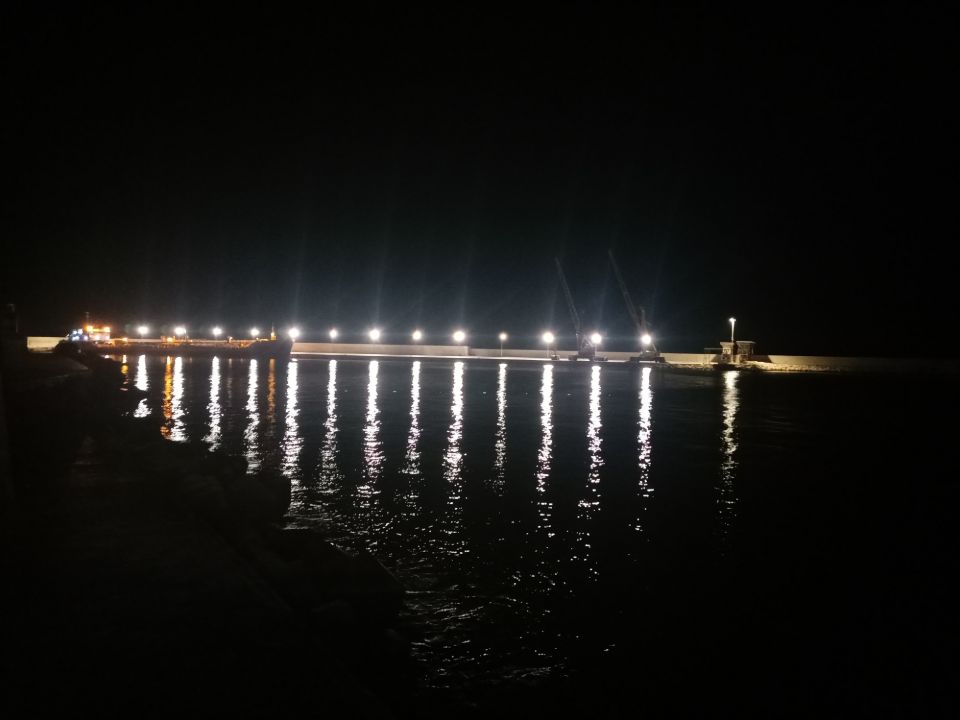
The breakwater's lamps 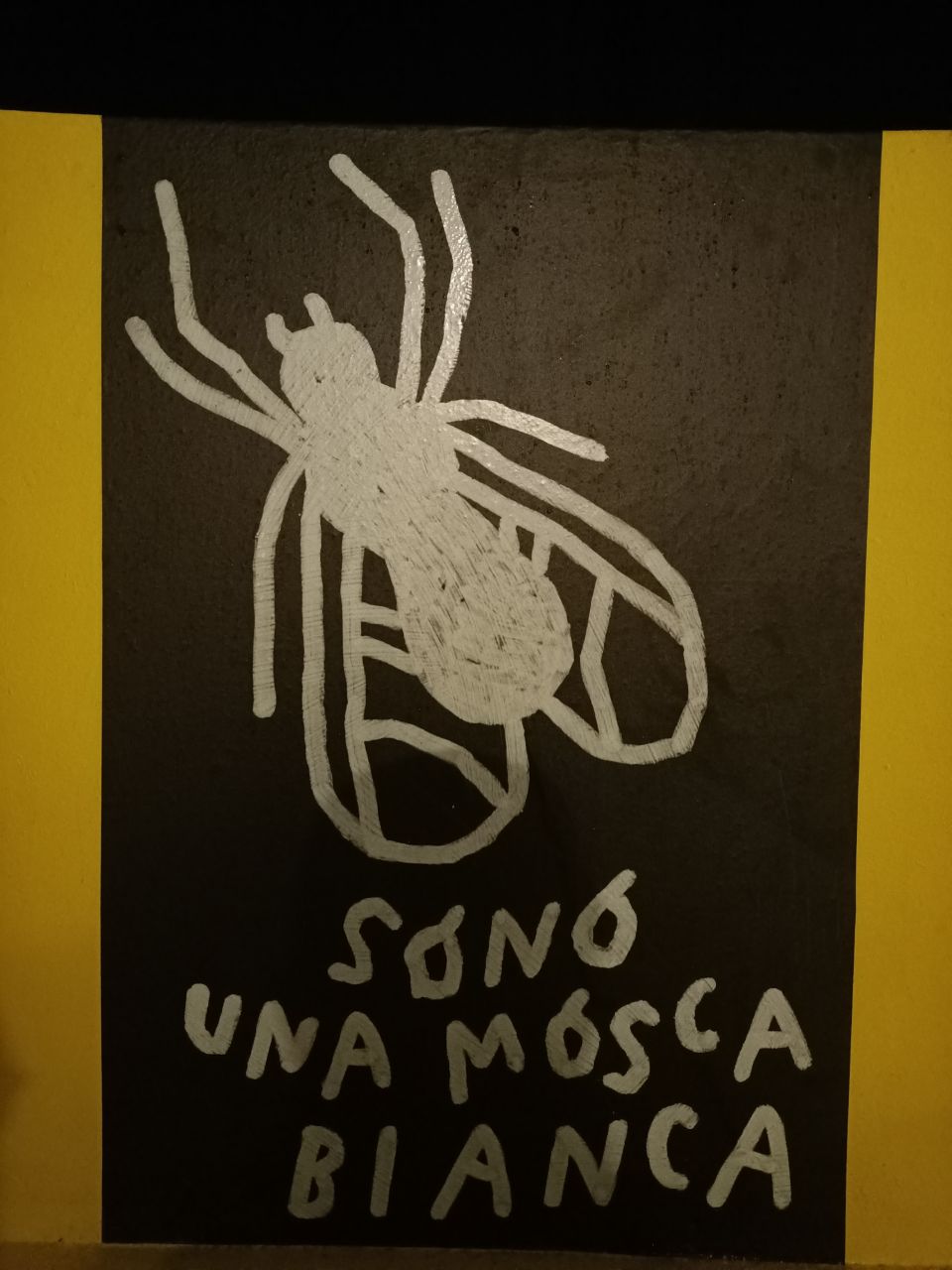
The fly sign: Sono una mosca
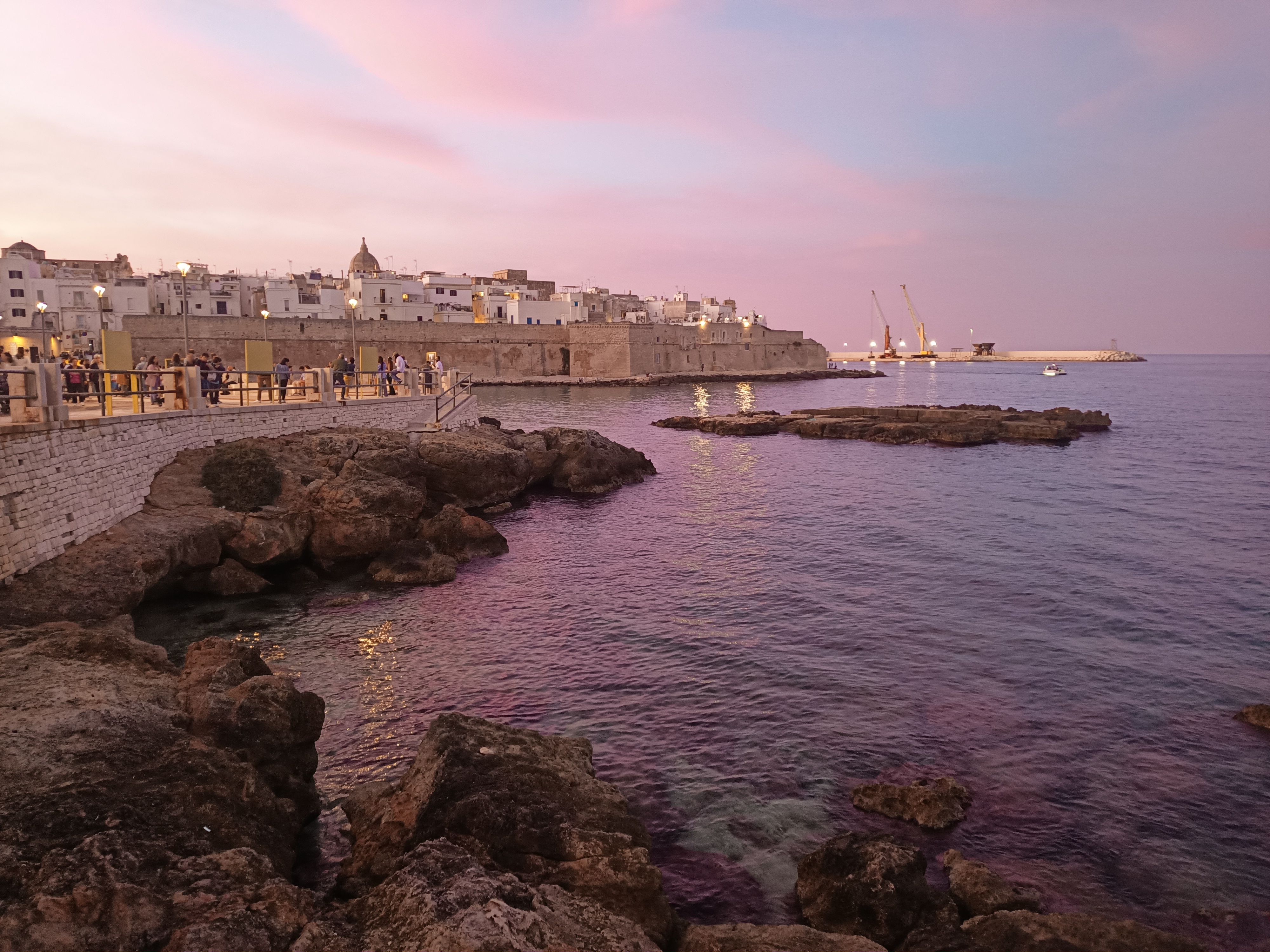
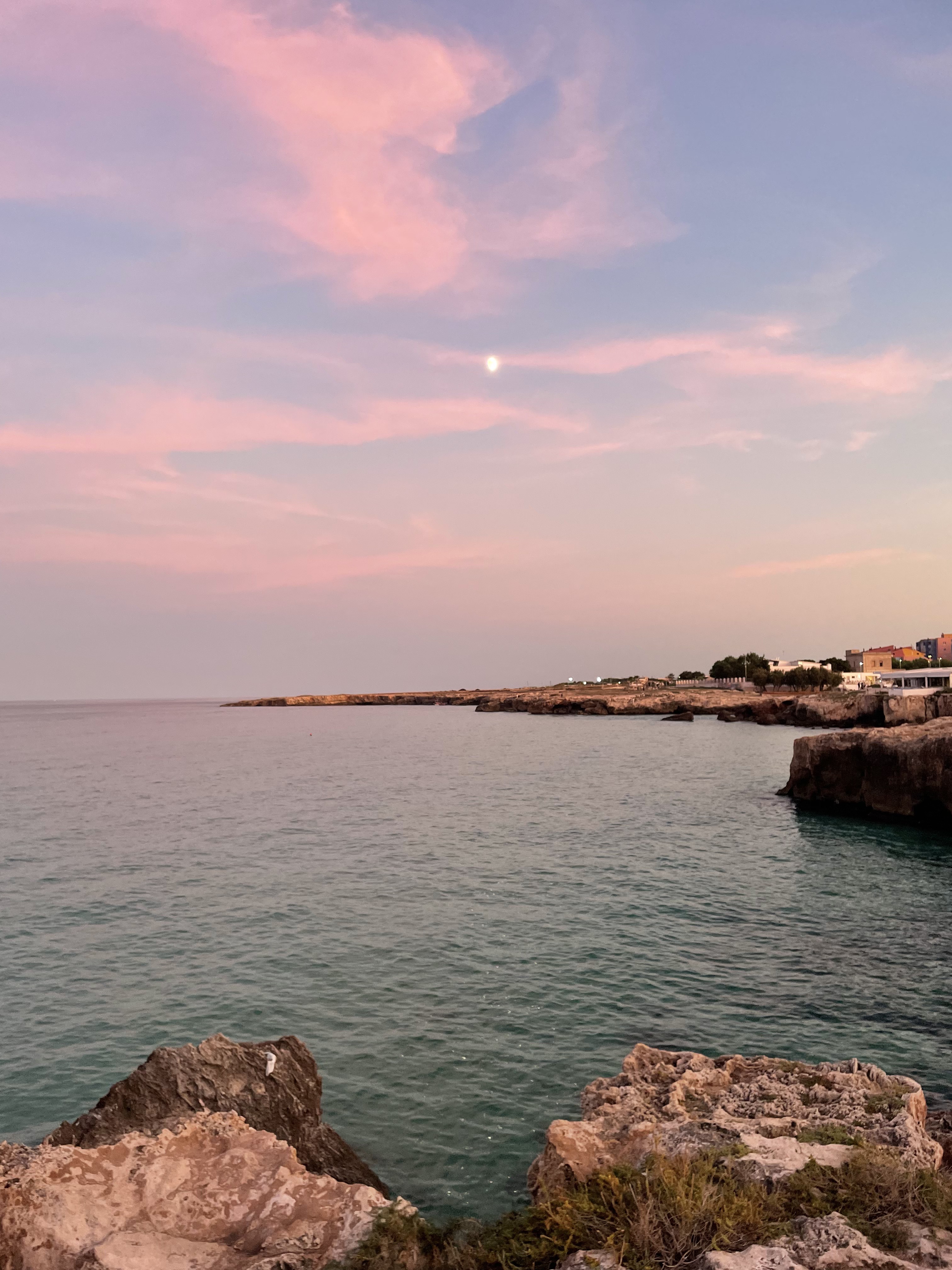
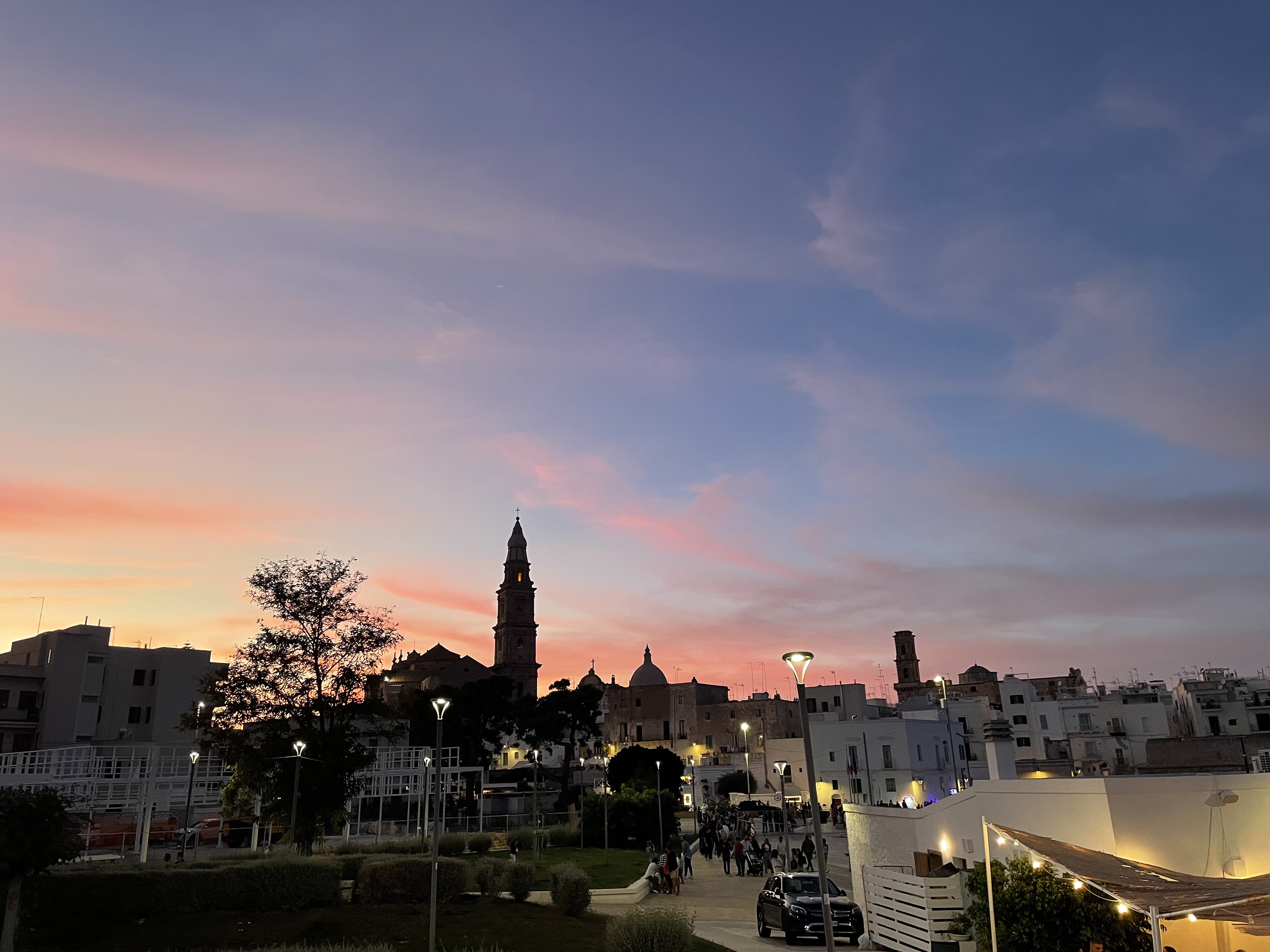
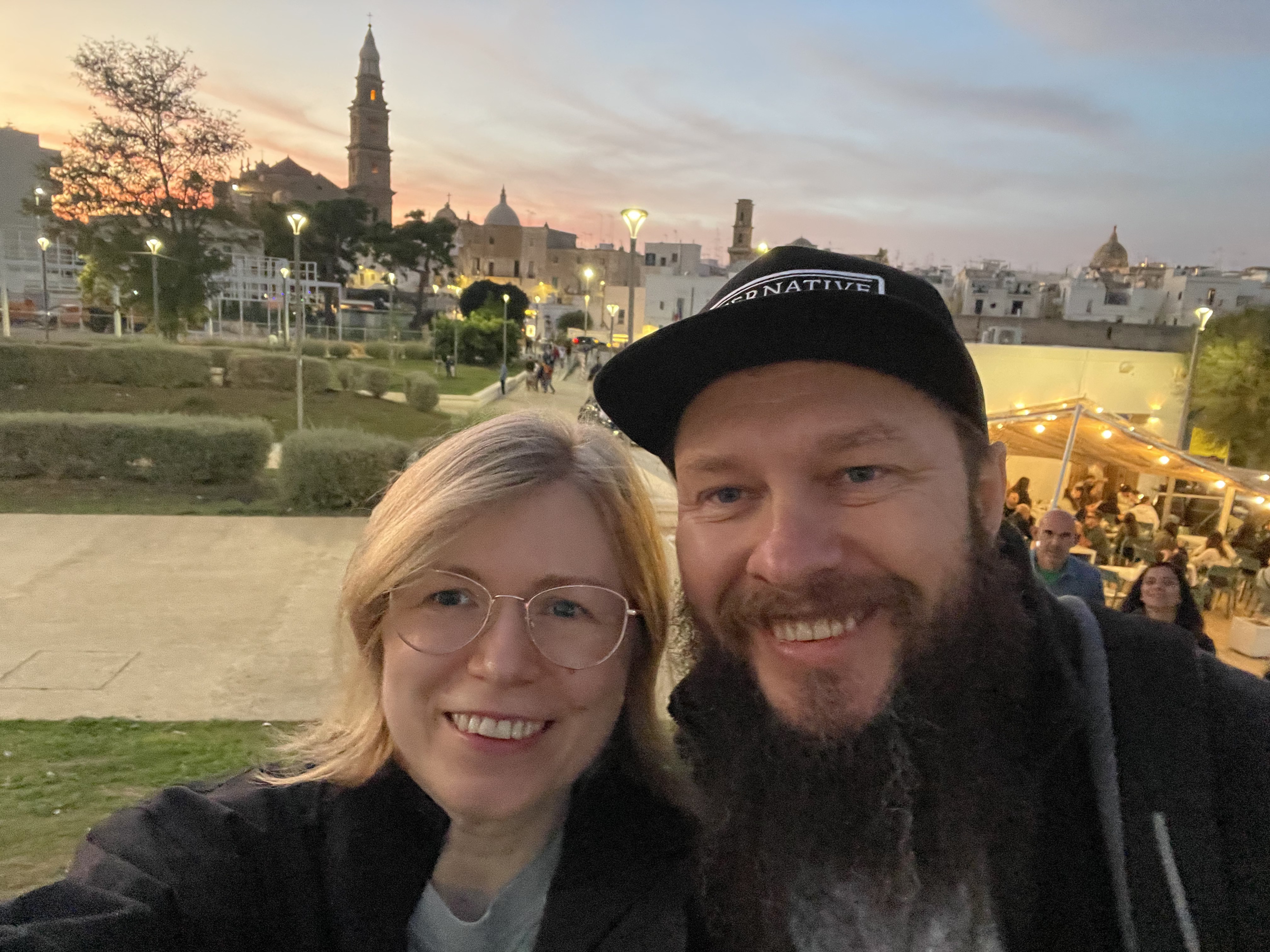
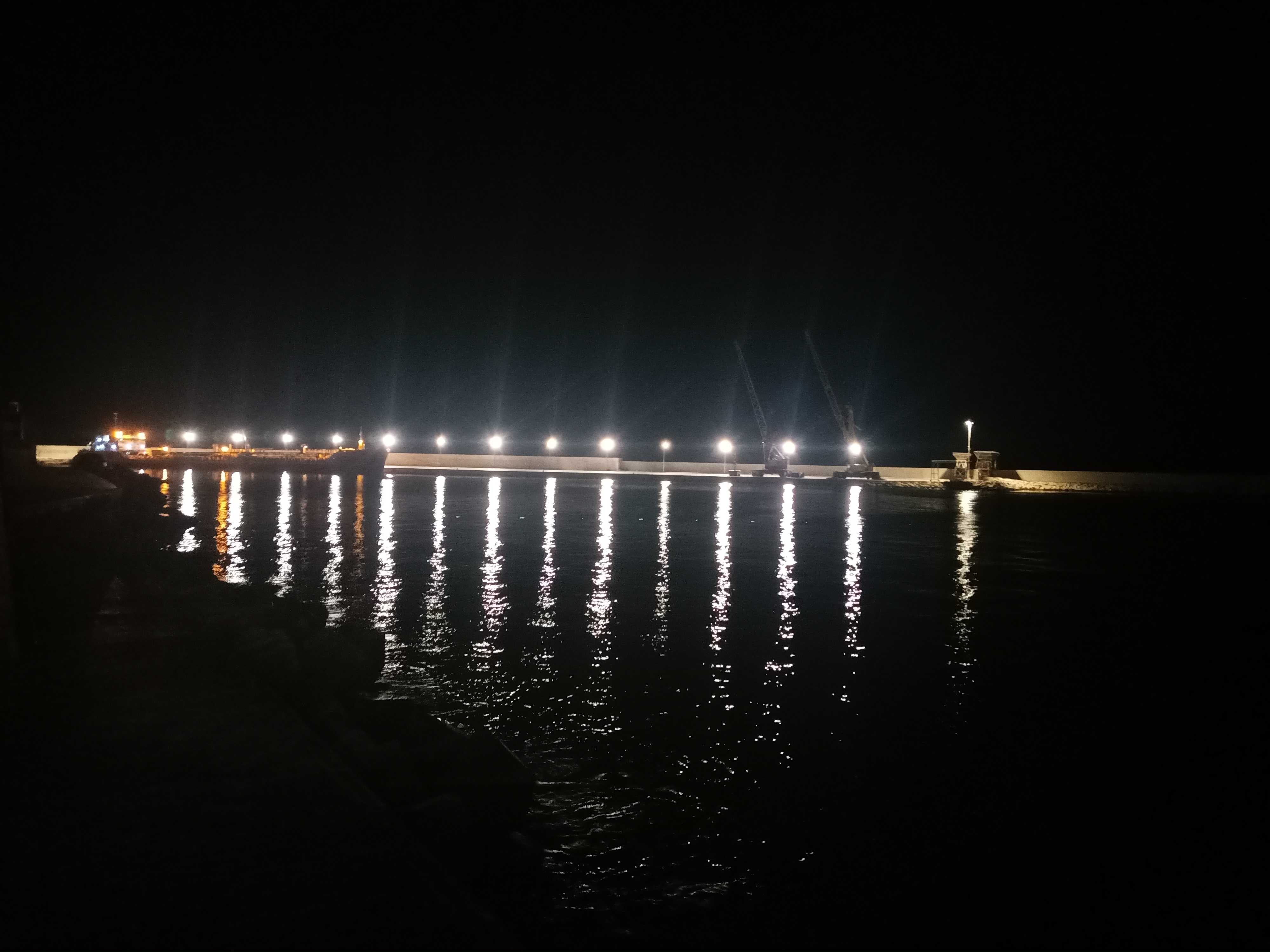
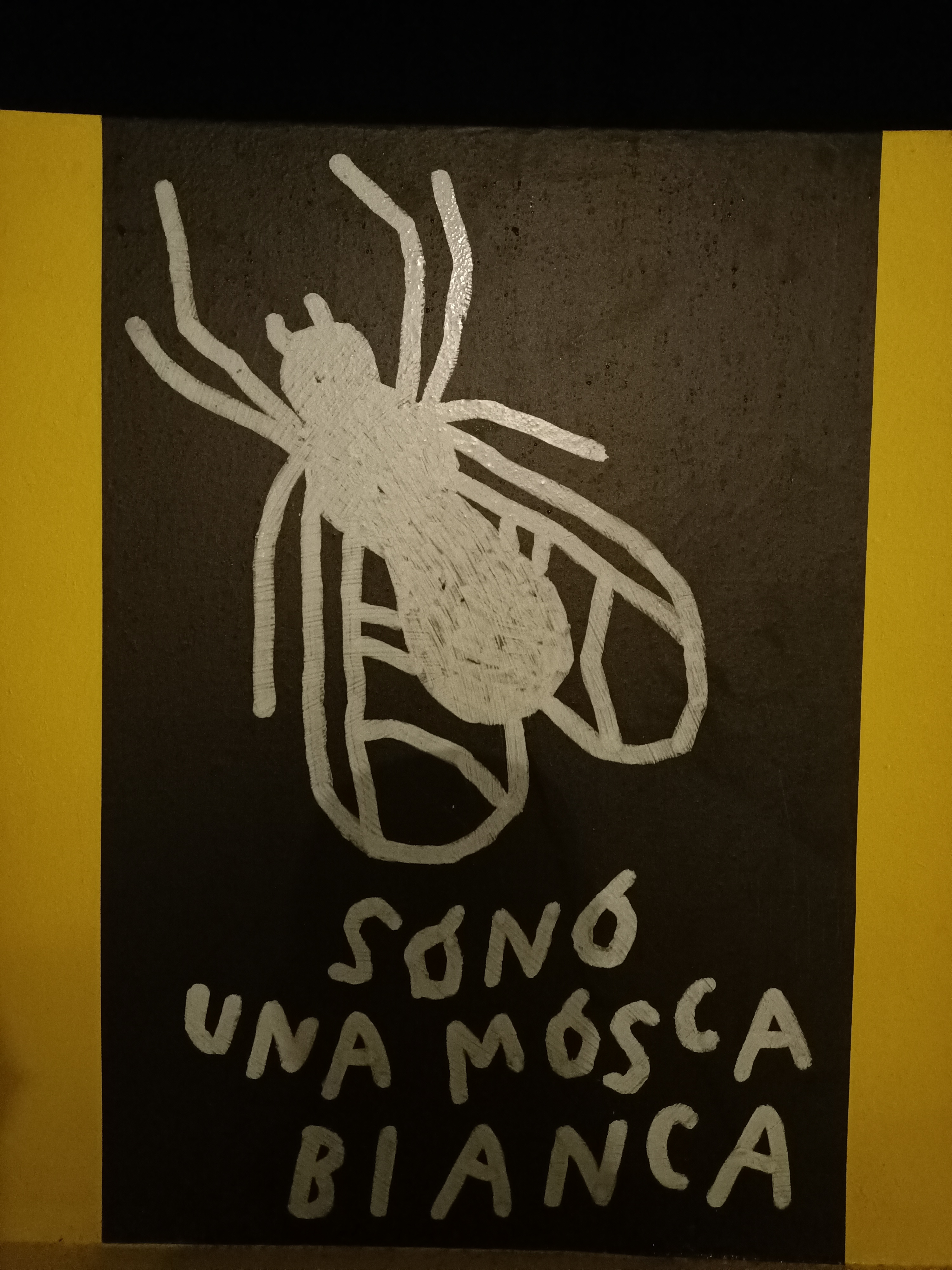
Moonrise over the cove, water in violet — sixteen seconds.
The last day: grottos and fossils
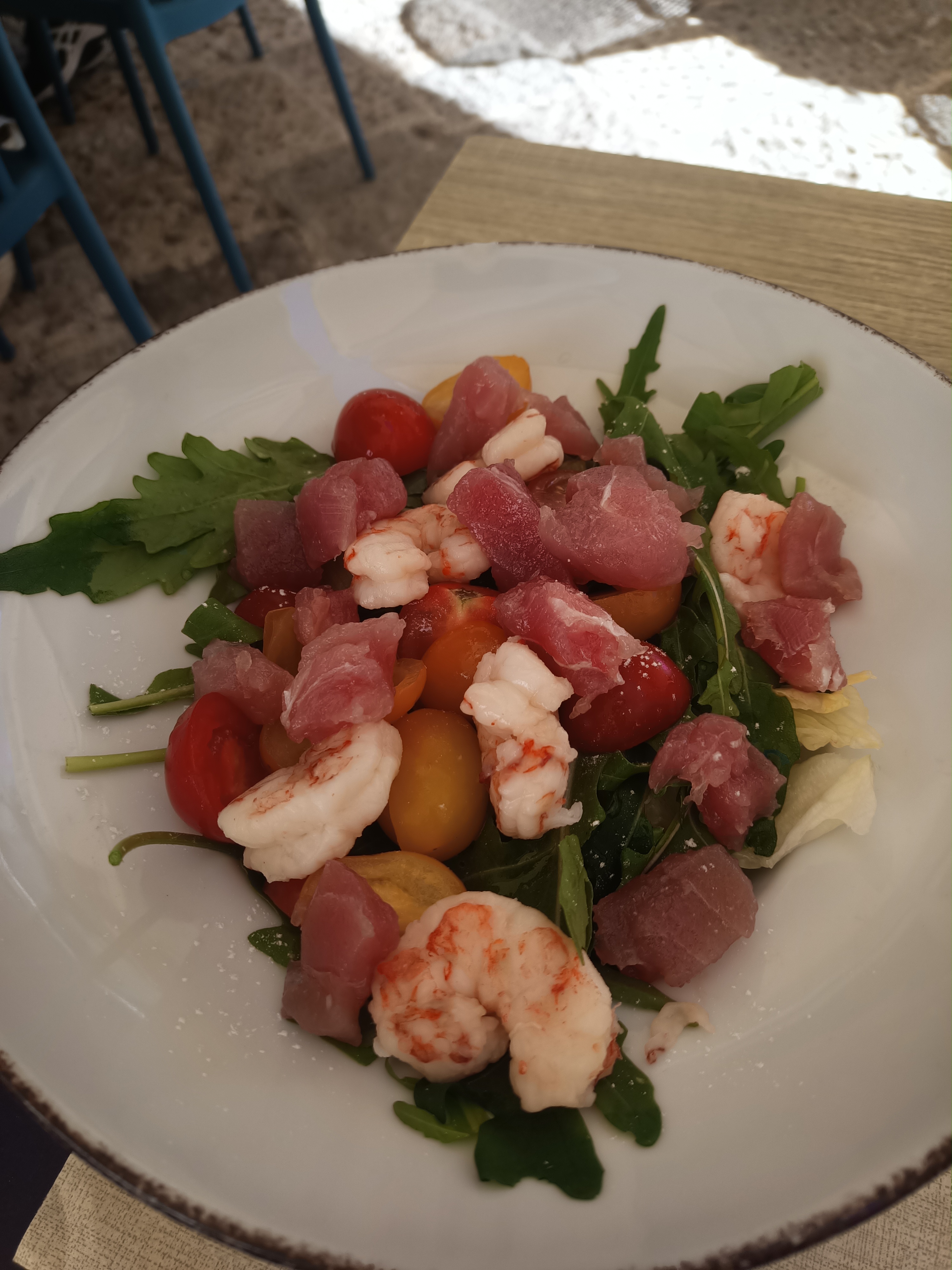
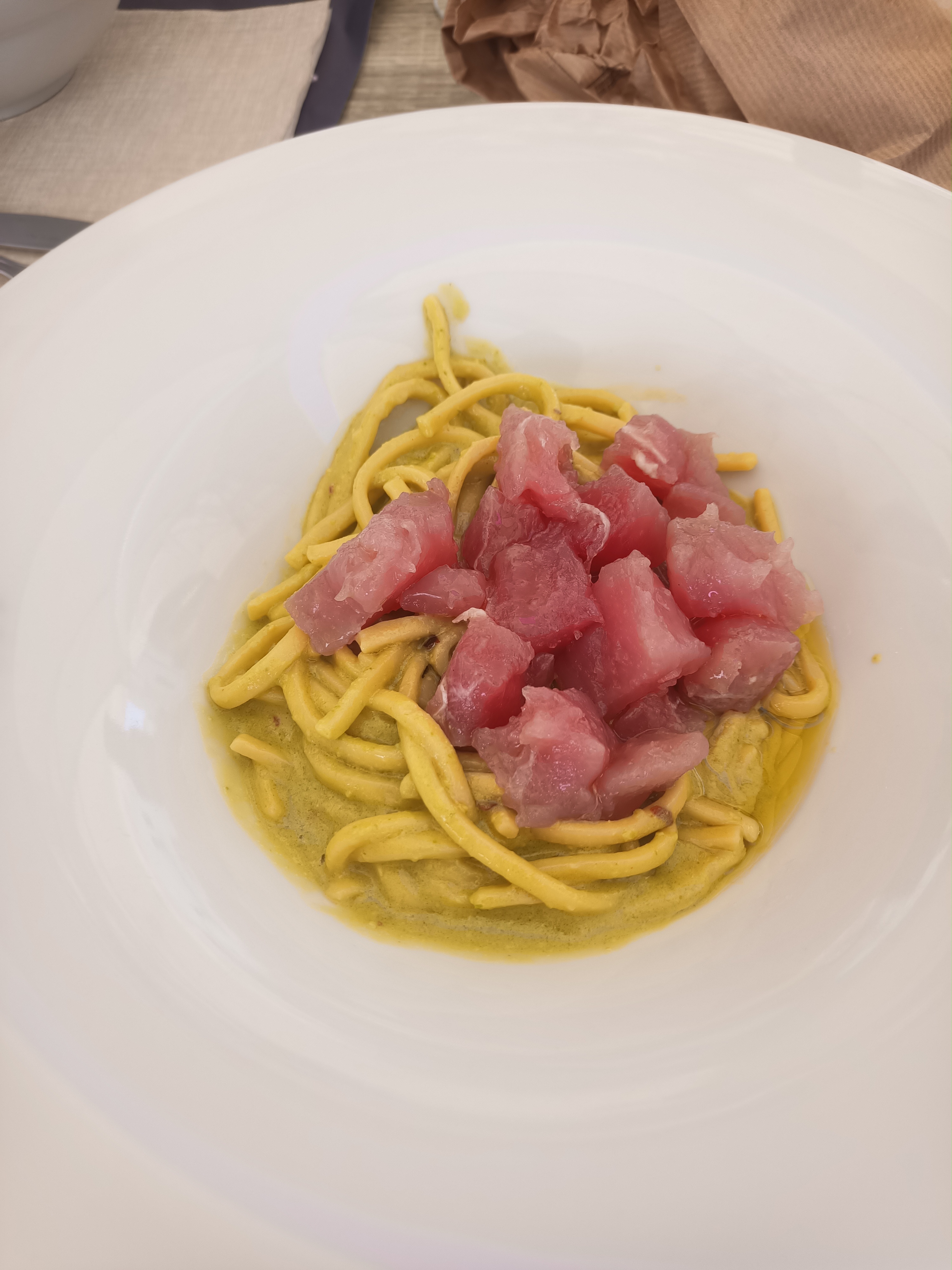
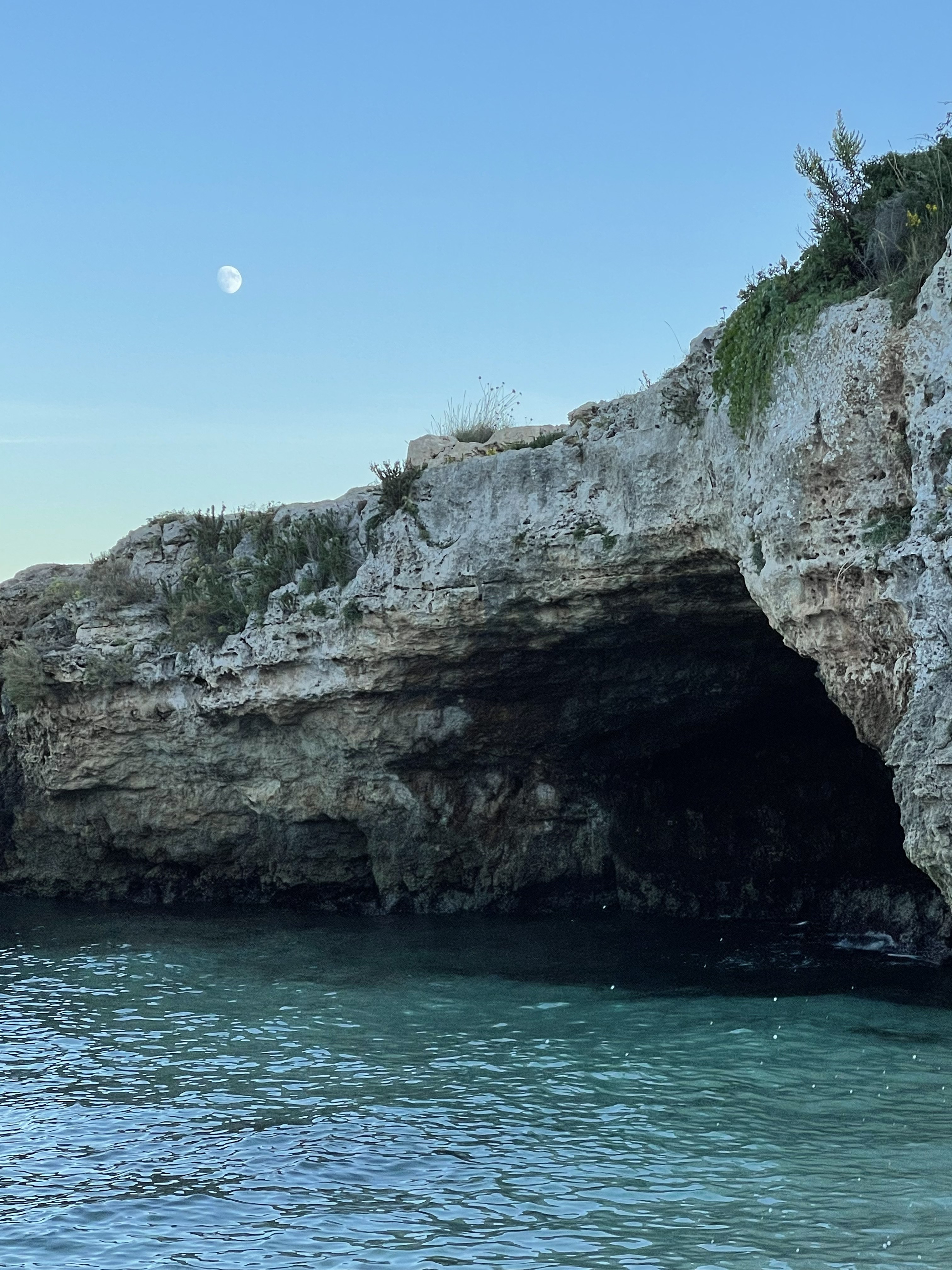
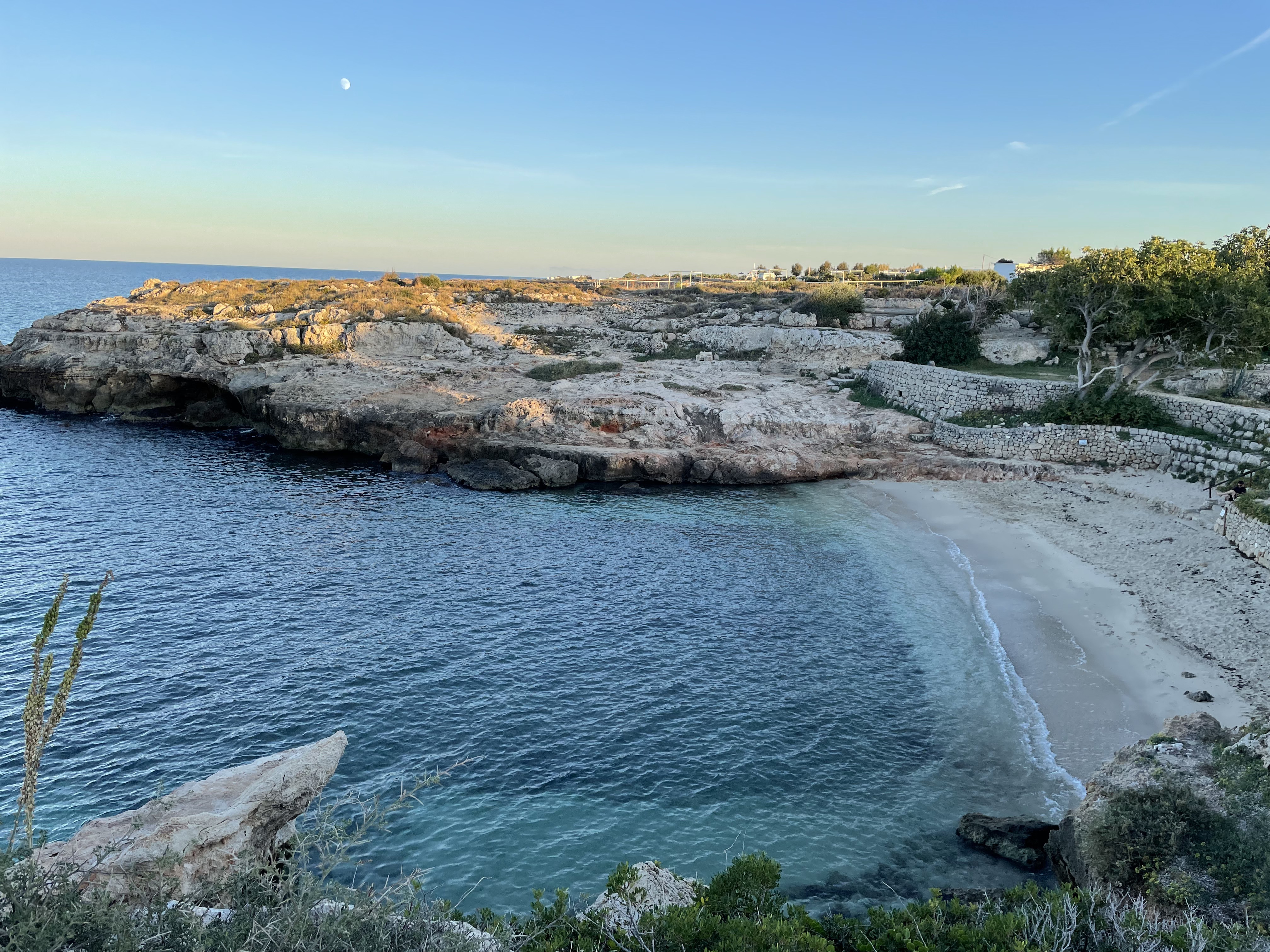
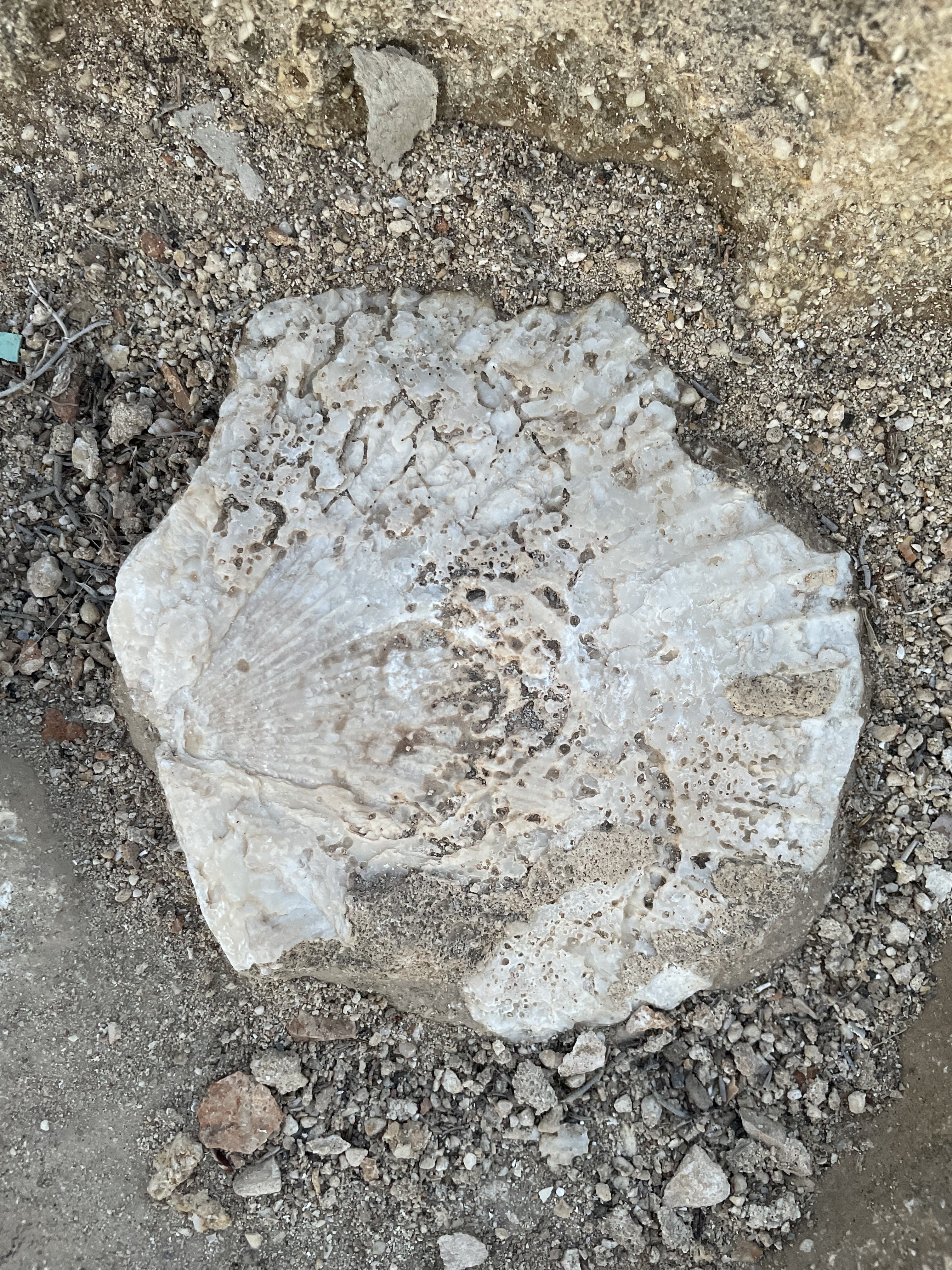
On the 14th, farewell to the area the way we like it: a long walk down the coast to the grottos. Lunch was a seafood salad with tuna cubes and rocket, then the trail led south past Grotta San Francesco — sandy coves under ledges of white stone, a long dark sea cave, arches of rock over turquoise water, and fossil shells embedded in the limestone, several million years old.
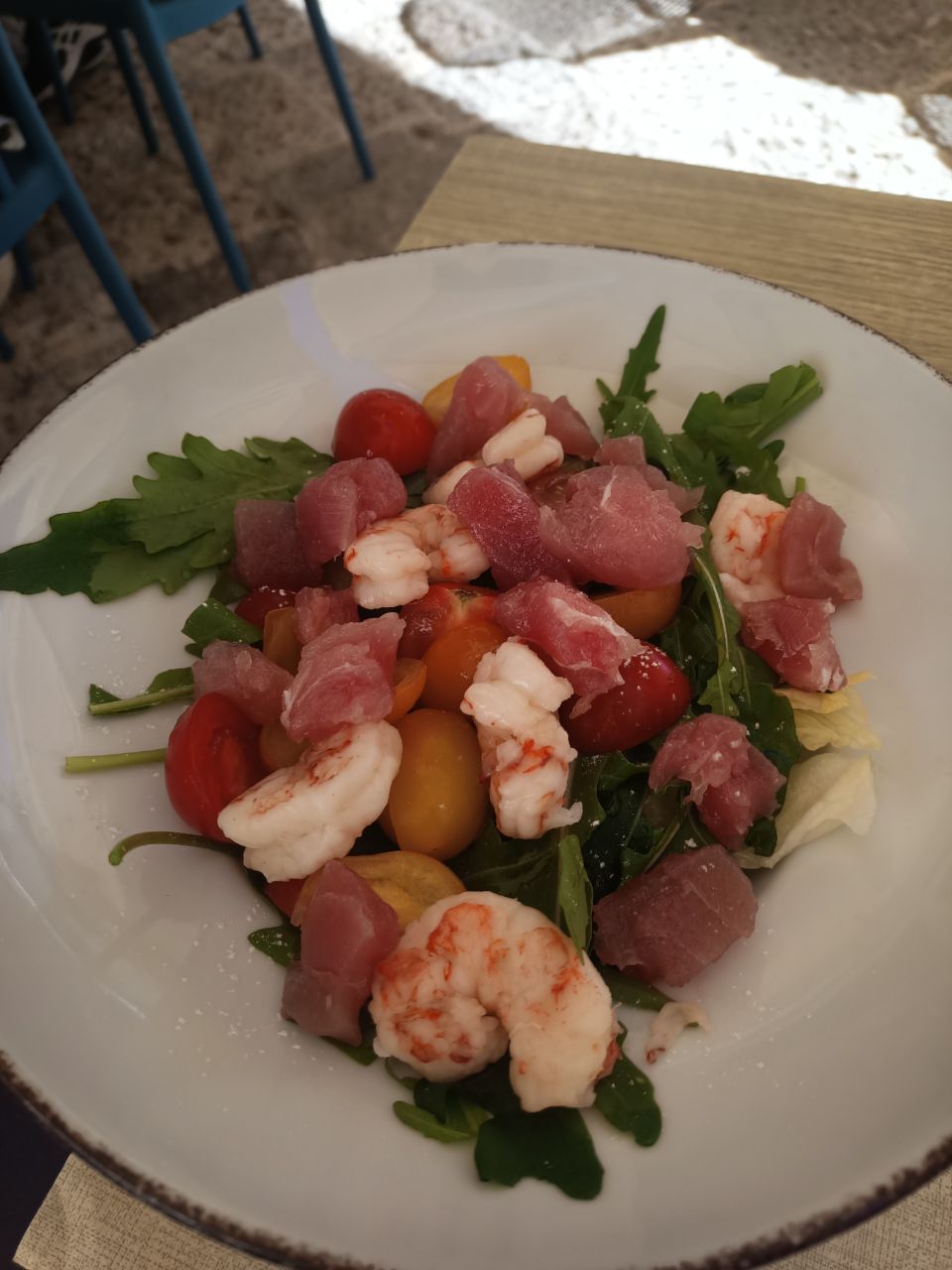
Lunch first: seafood salad 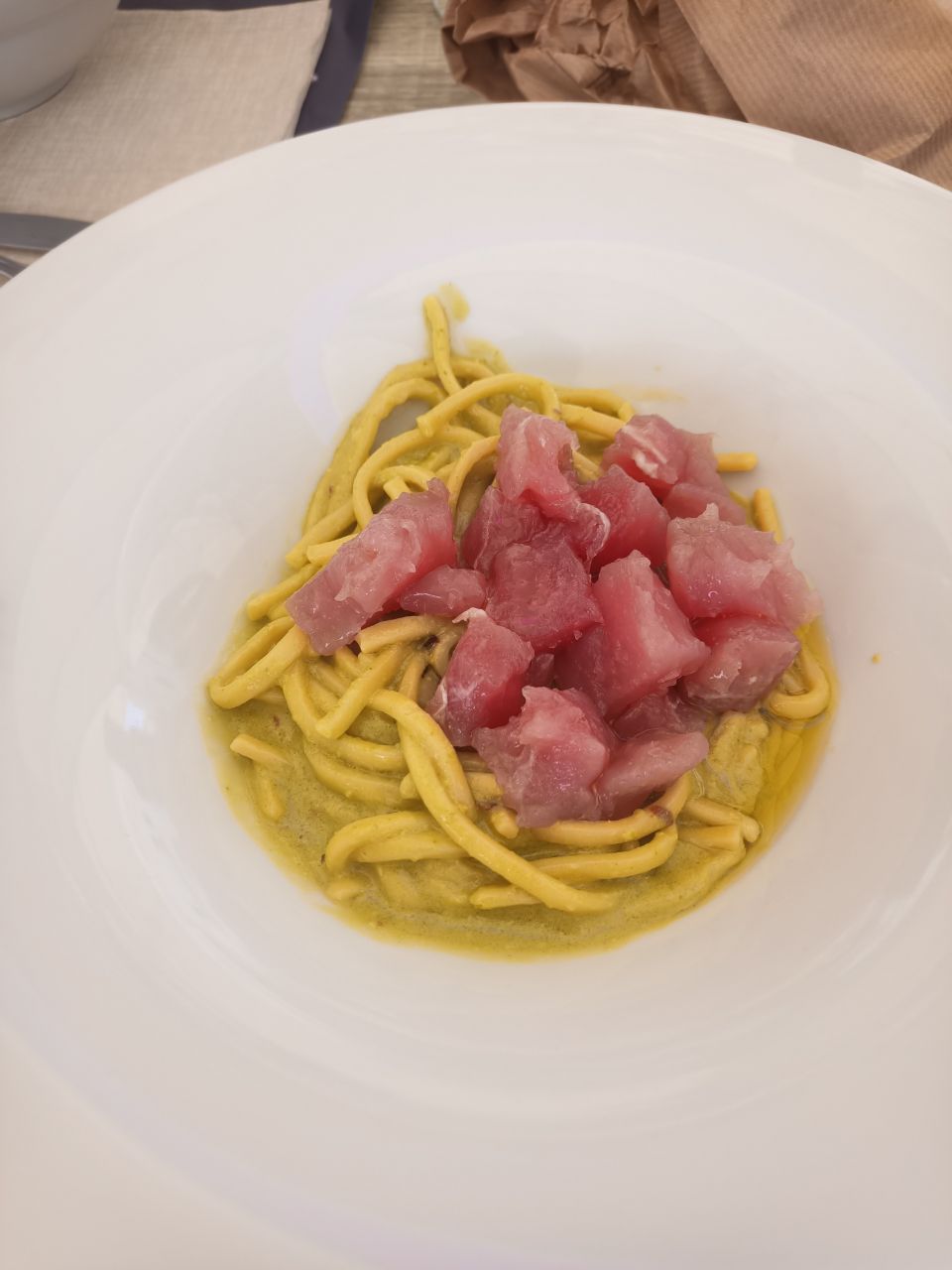
Tuna pasta, the second act 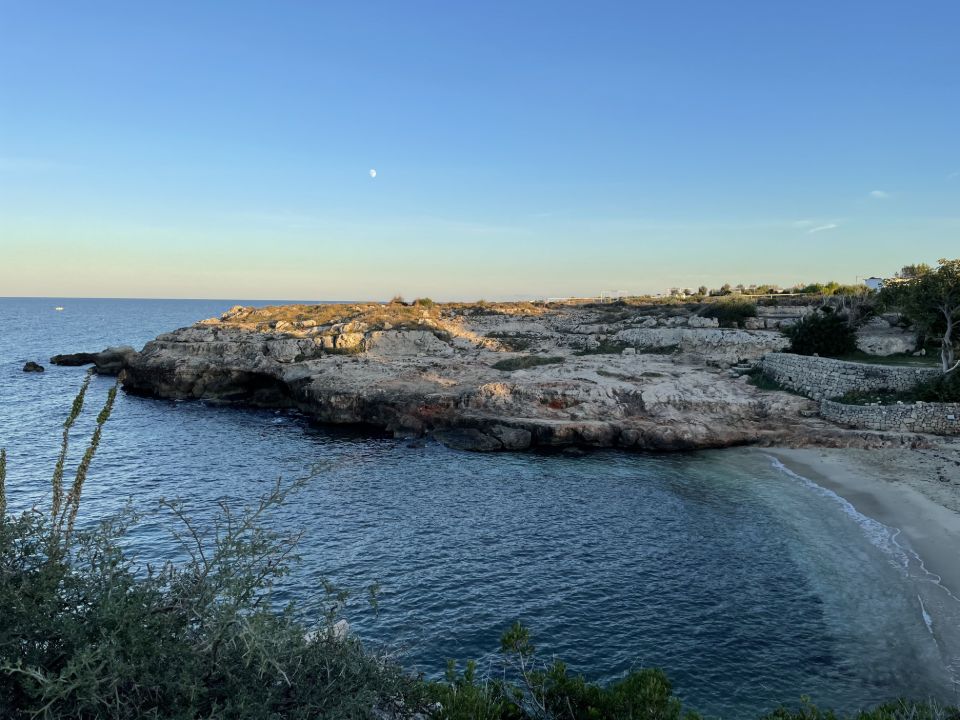
Grotta San Francesco, the cove 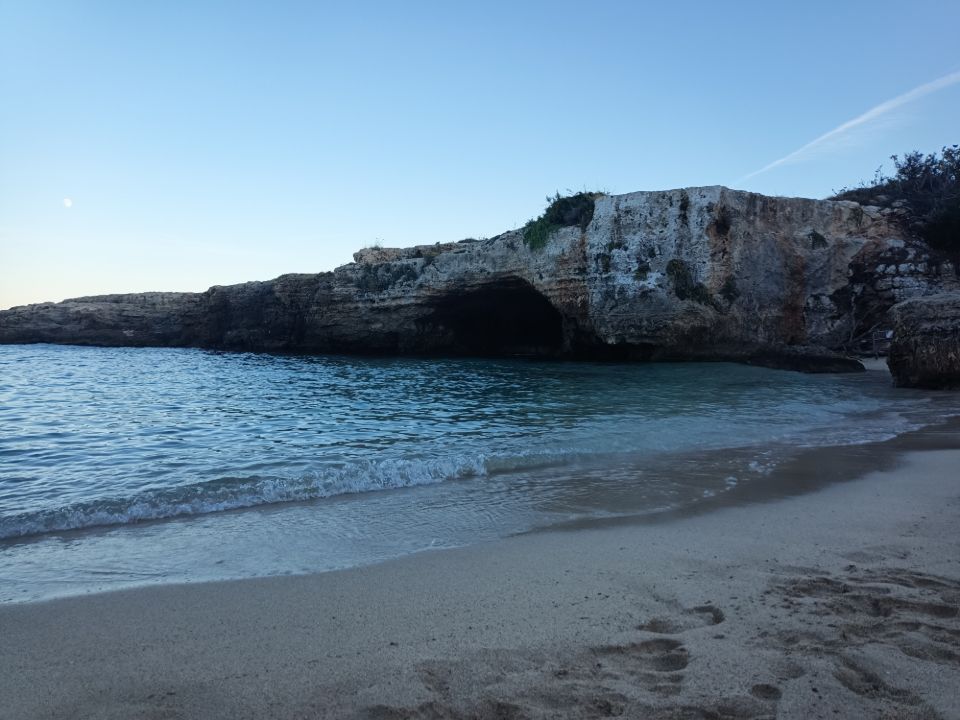
The sea arch over the water 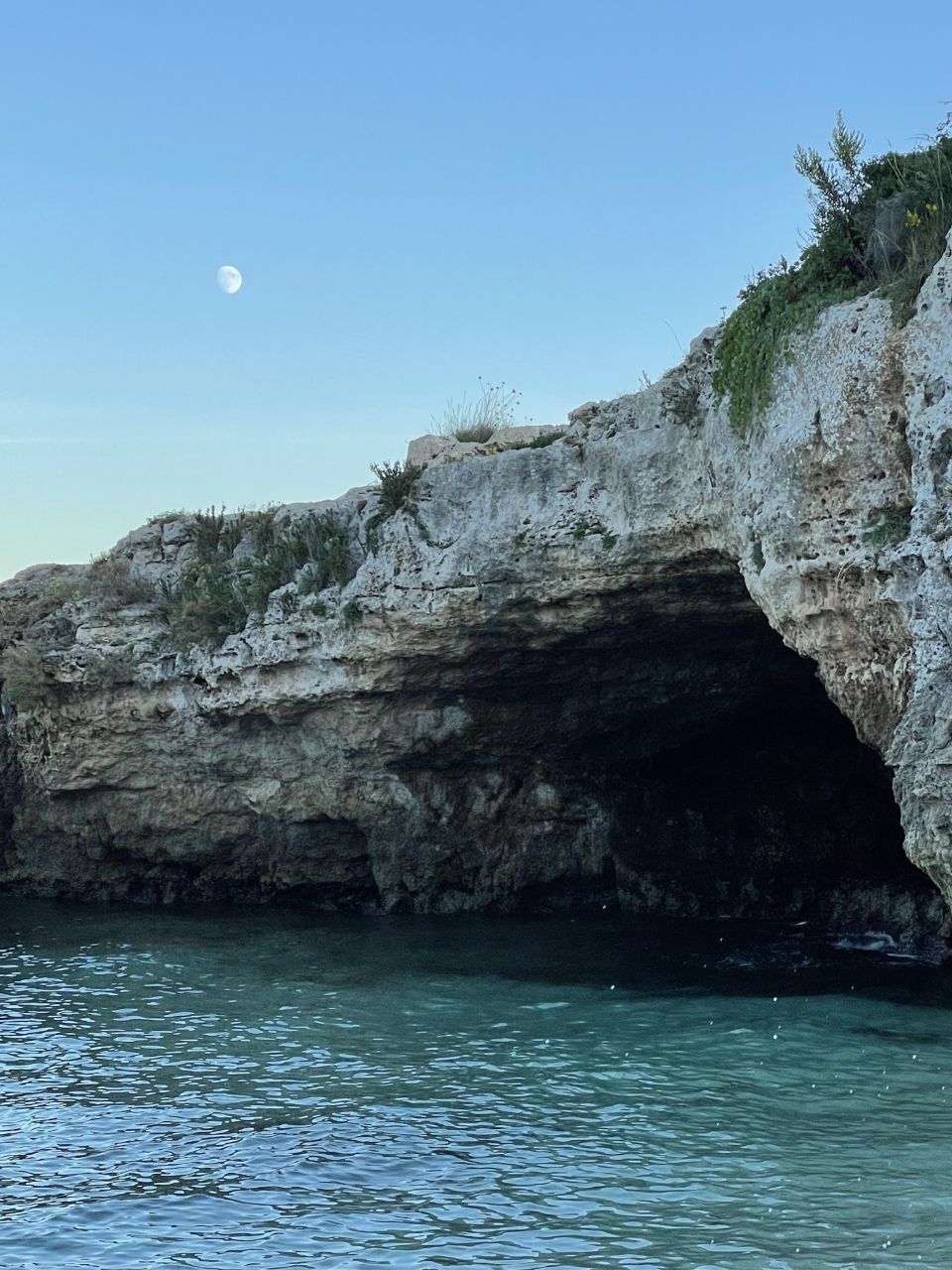
A dark cave, a green sea 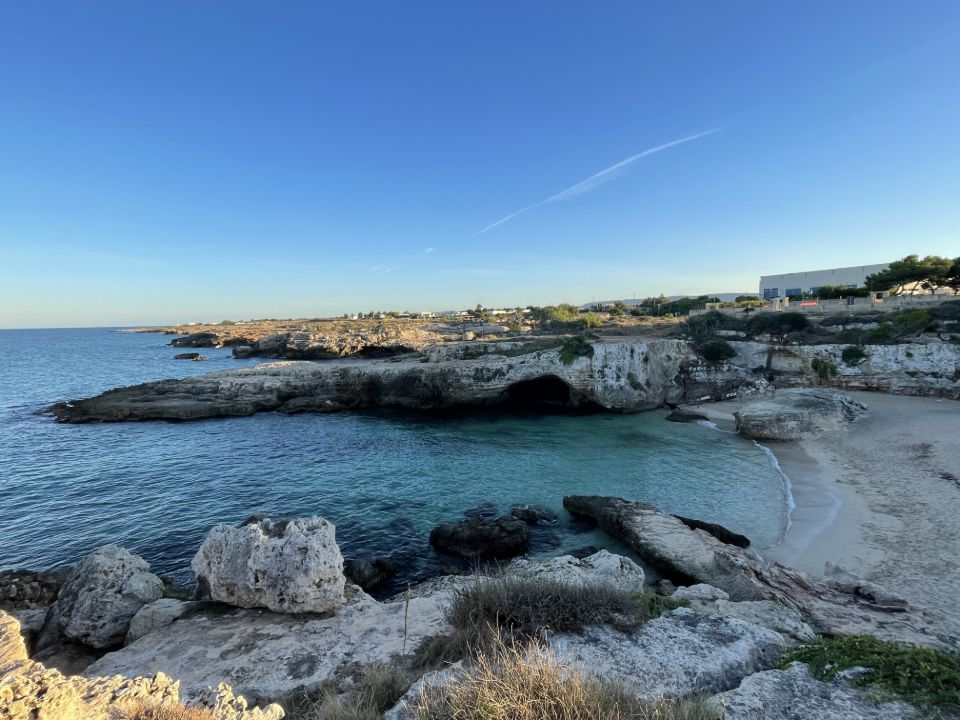
Our cove with white sand 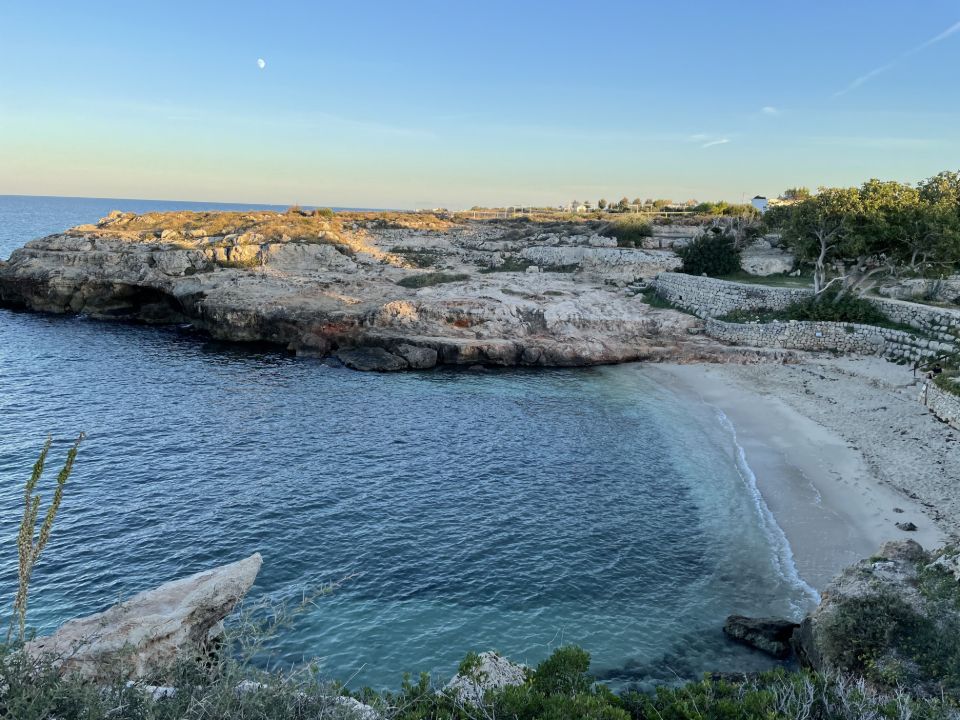
Golden hour, moon already up 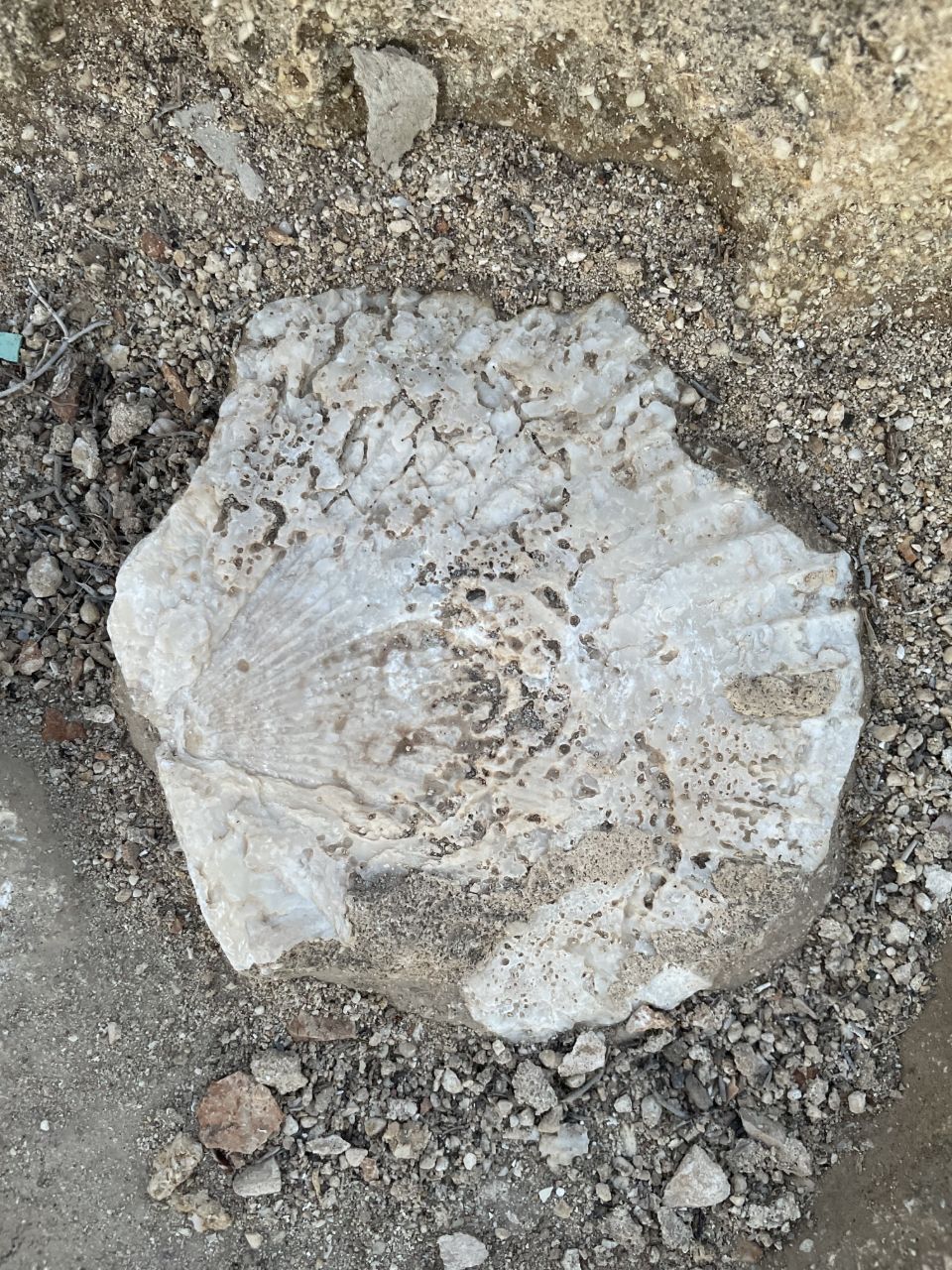
The fossil, still on duty 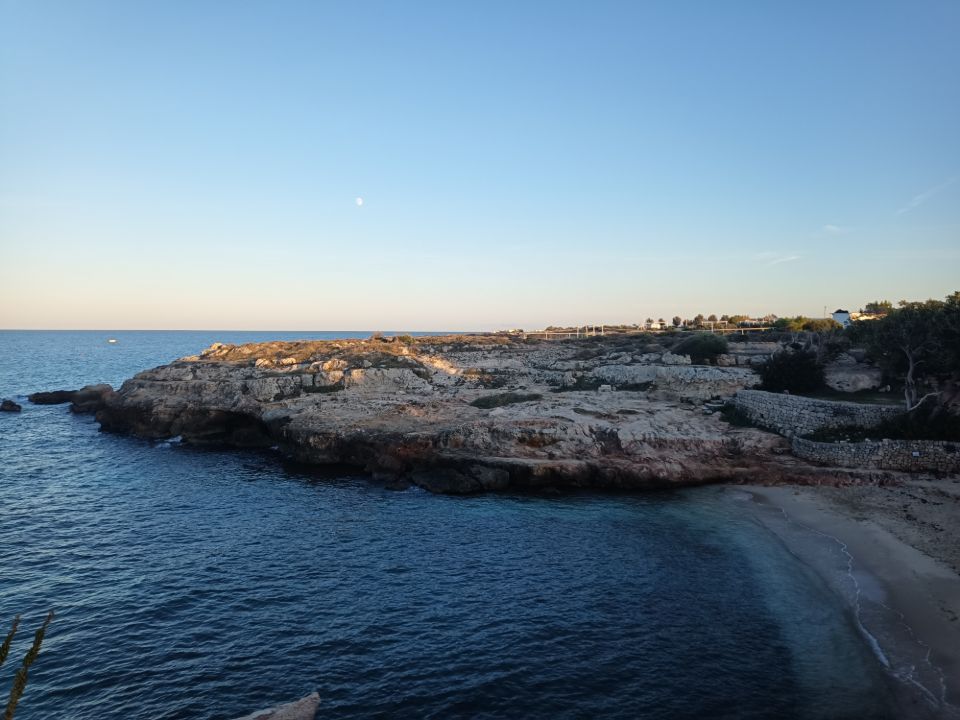
White sand from the clifftop 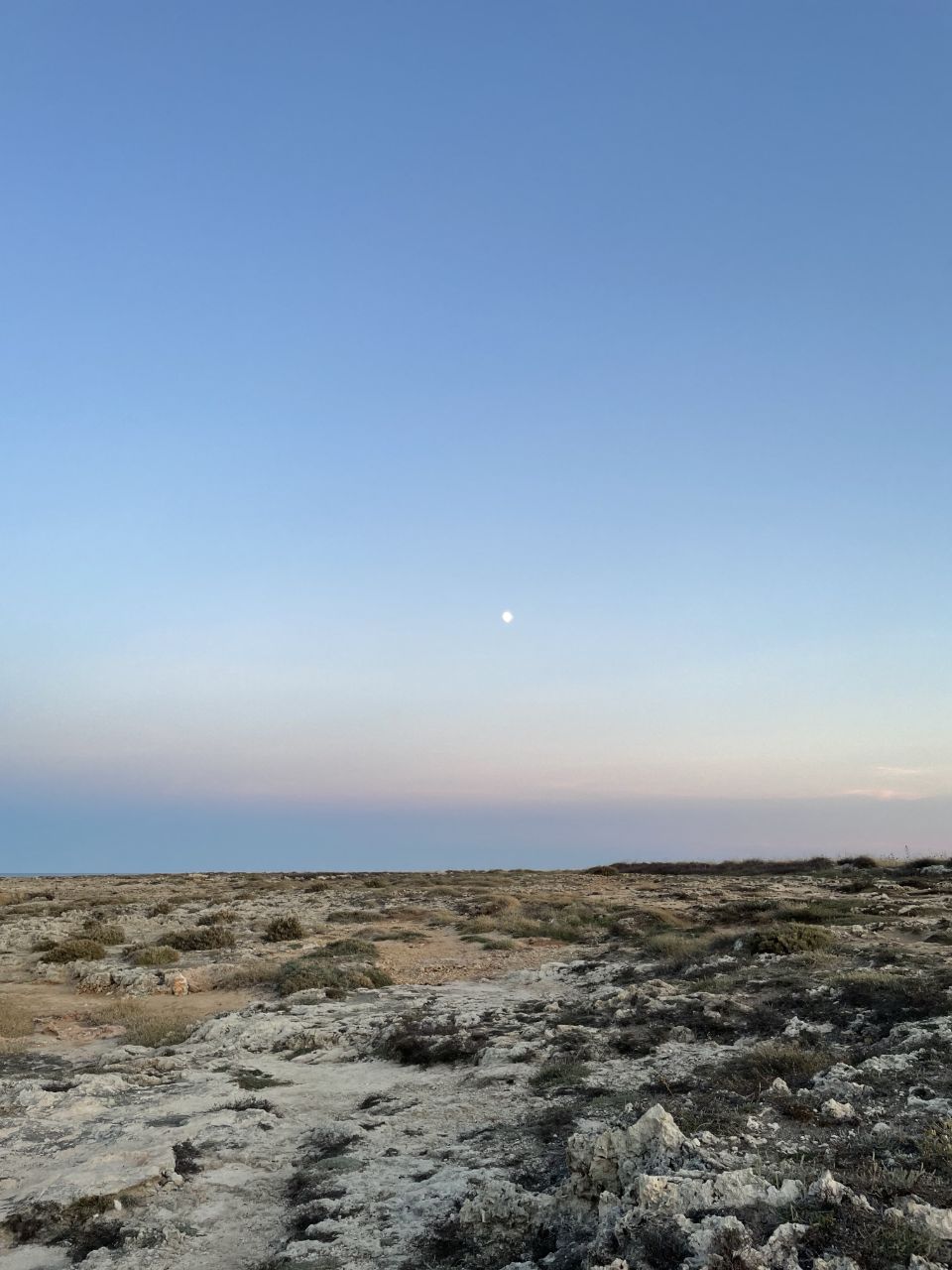
Last light on the barren coast
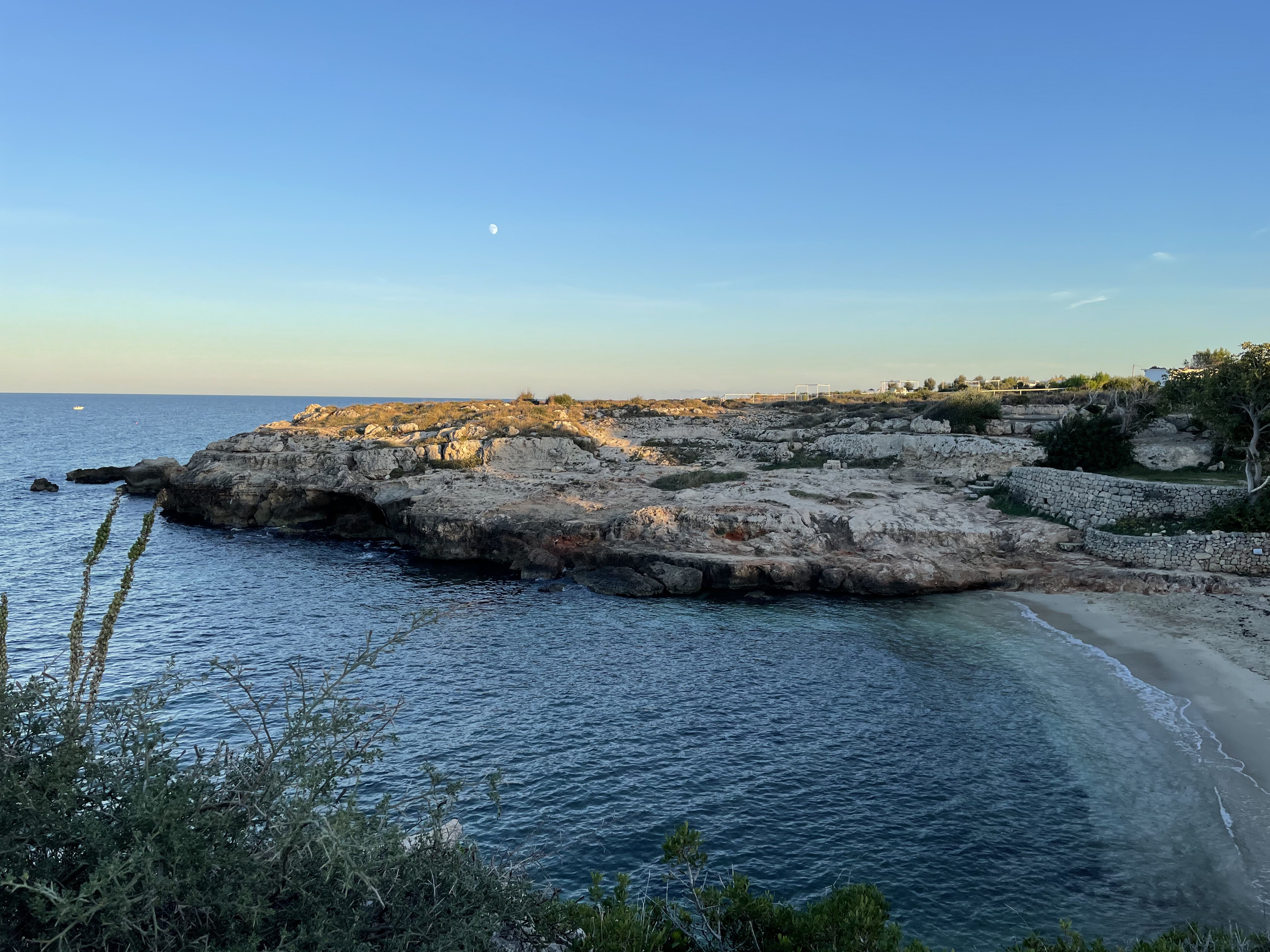
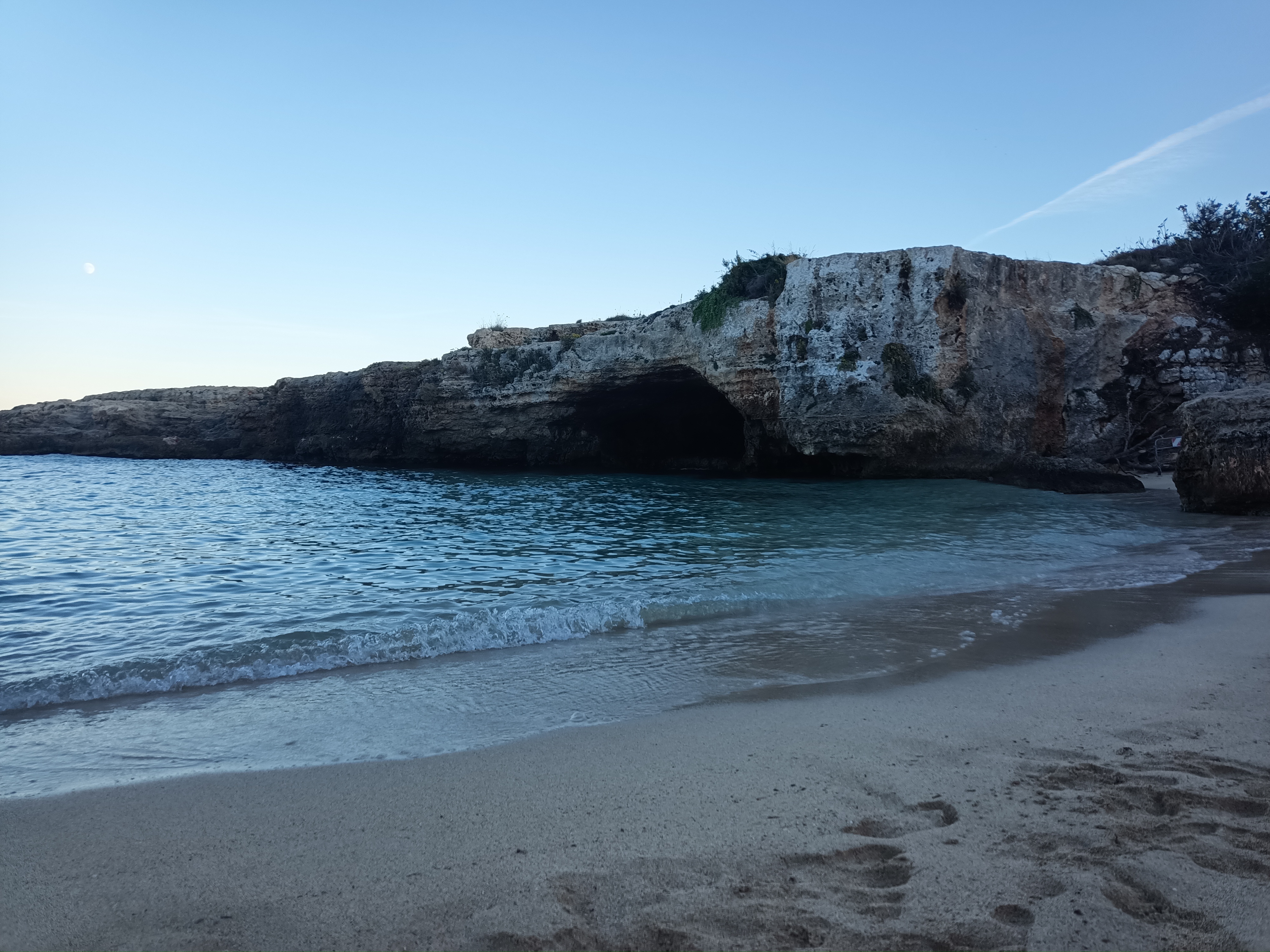
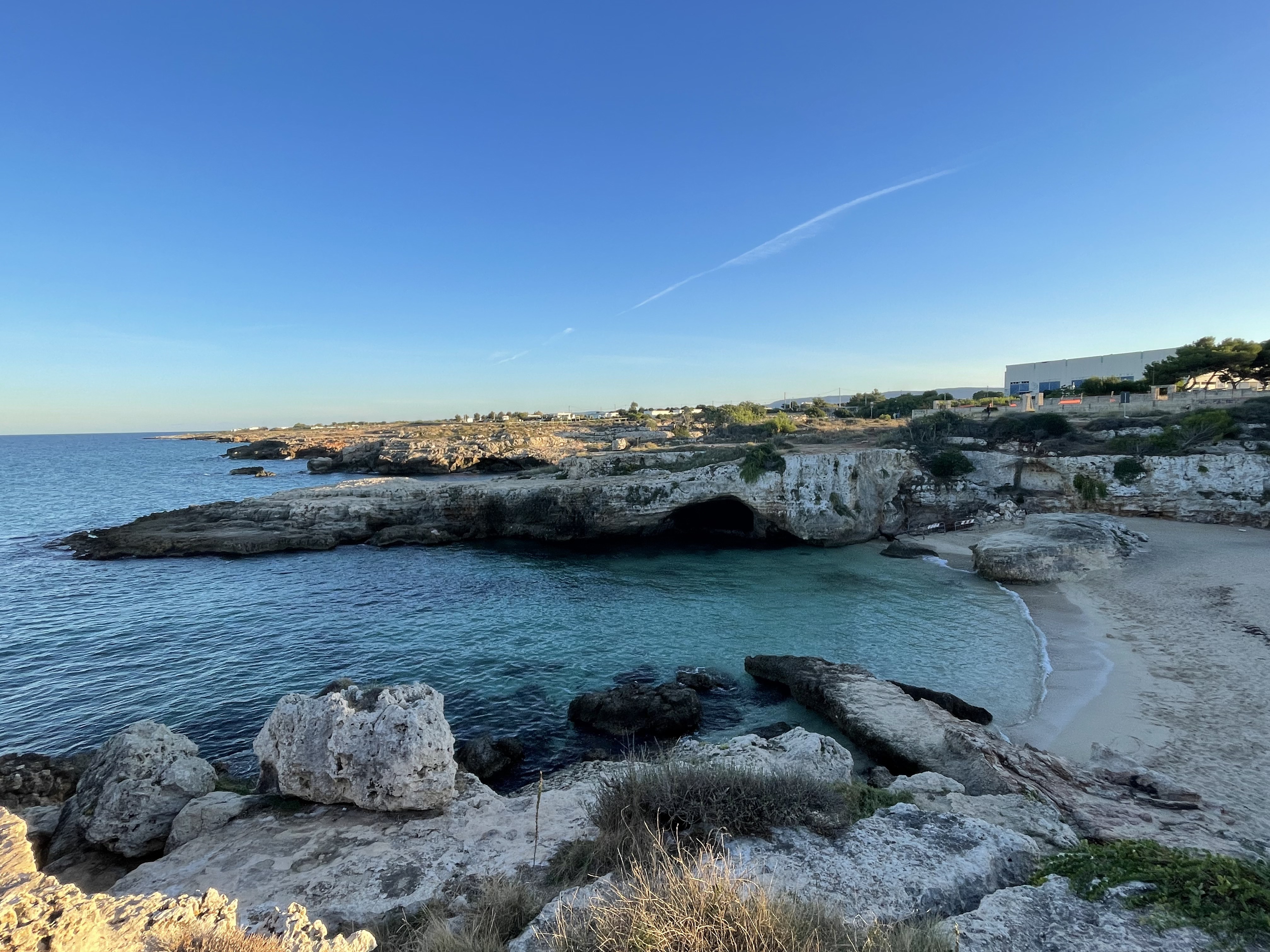
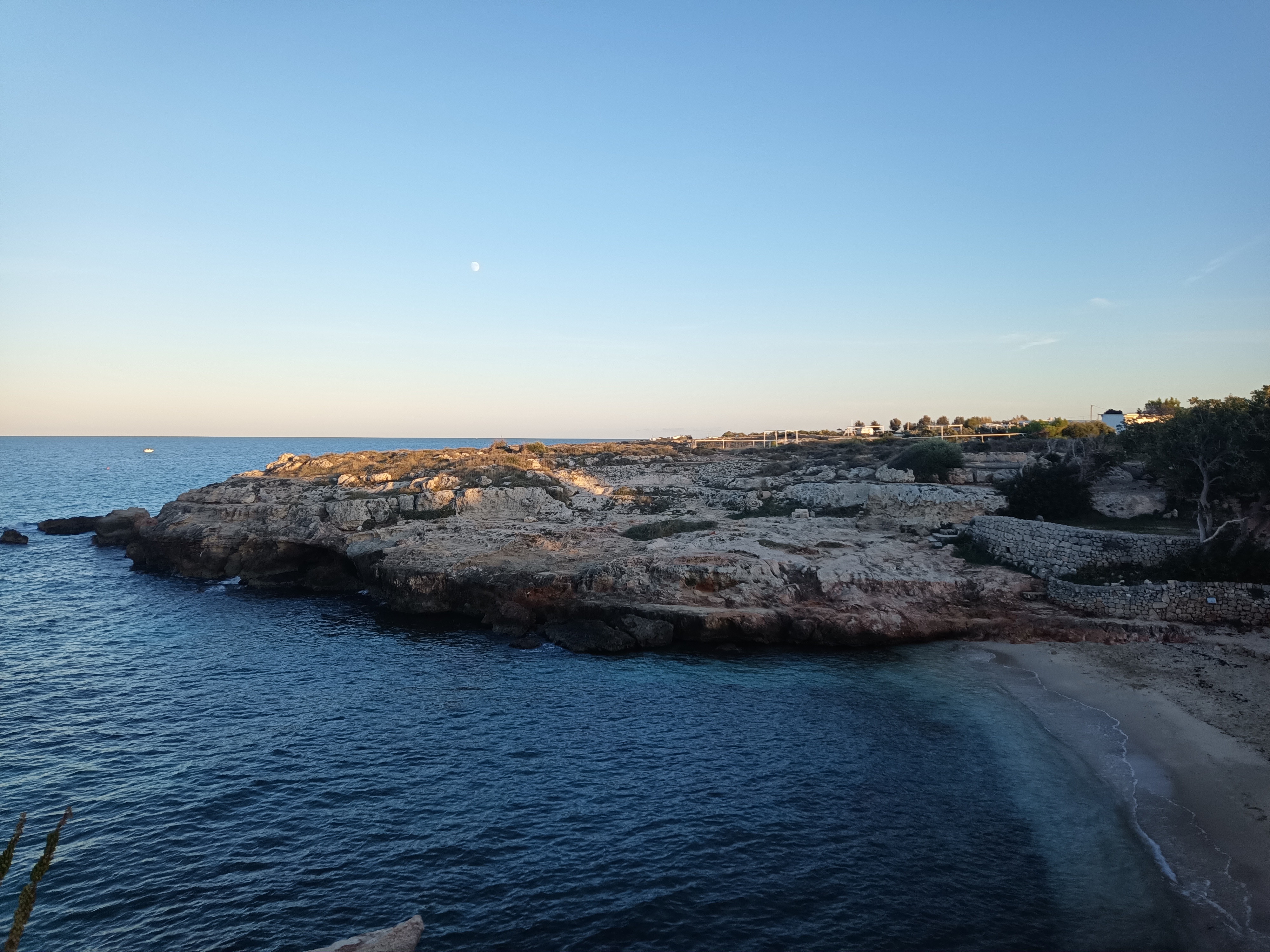
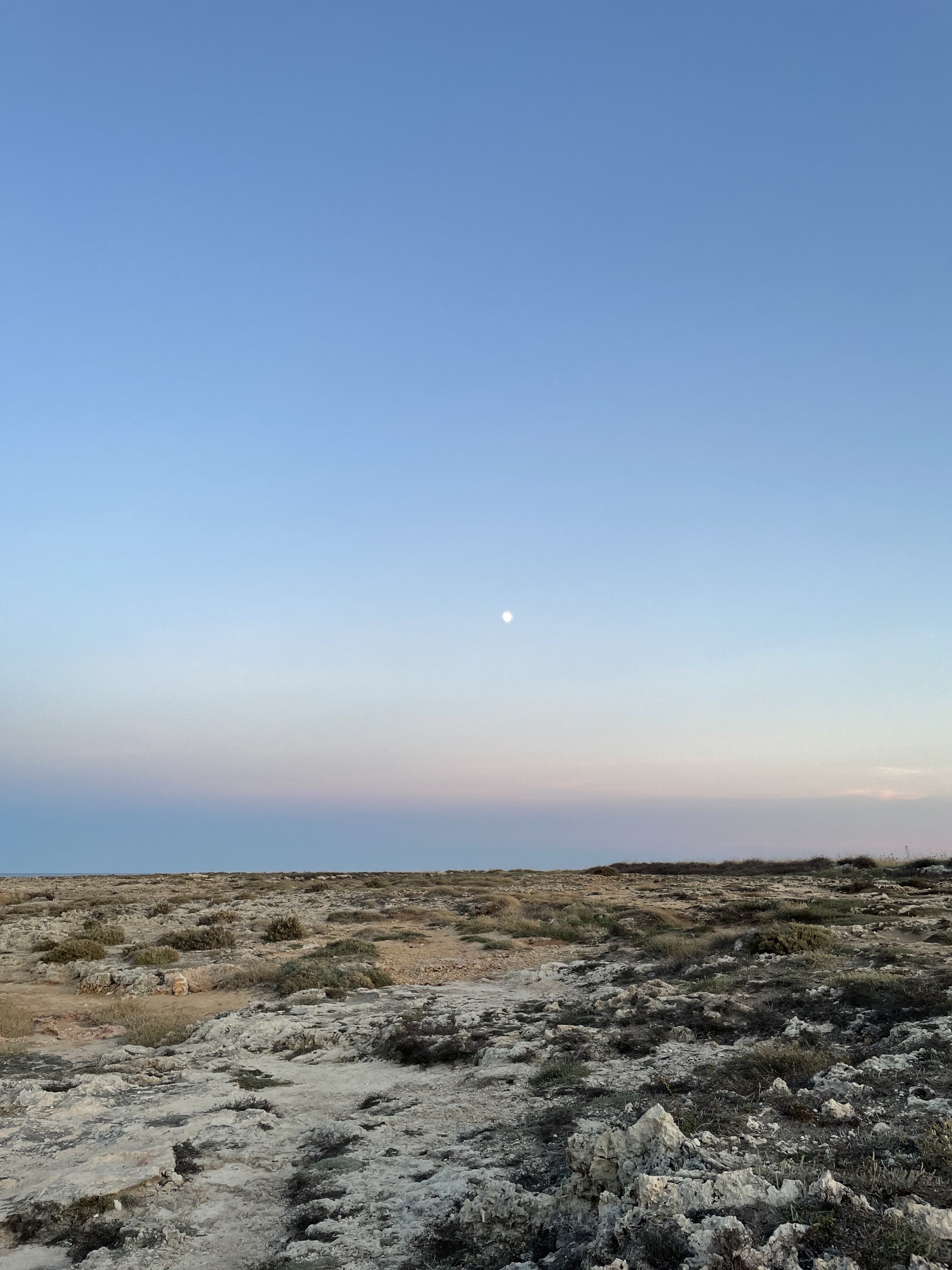
The cove above Grotta San Francesco, caves in the ledges — twelve seconds.
One sandy cove, one long line of sea caves, nobody else in sight — thirty-one seconds.
Four nights, all of them good. On the 16th we packed the panniers and rode out of town towards Savelletri — the bike ride gets its own post. But Alberobello came first, on a bus, with time to spare.