Andalusia trip 2024 — Nerja
Nerja
First evening, straight off the bus
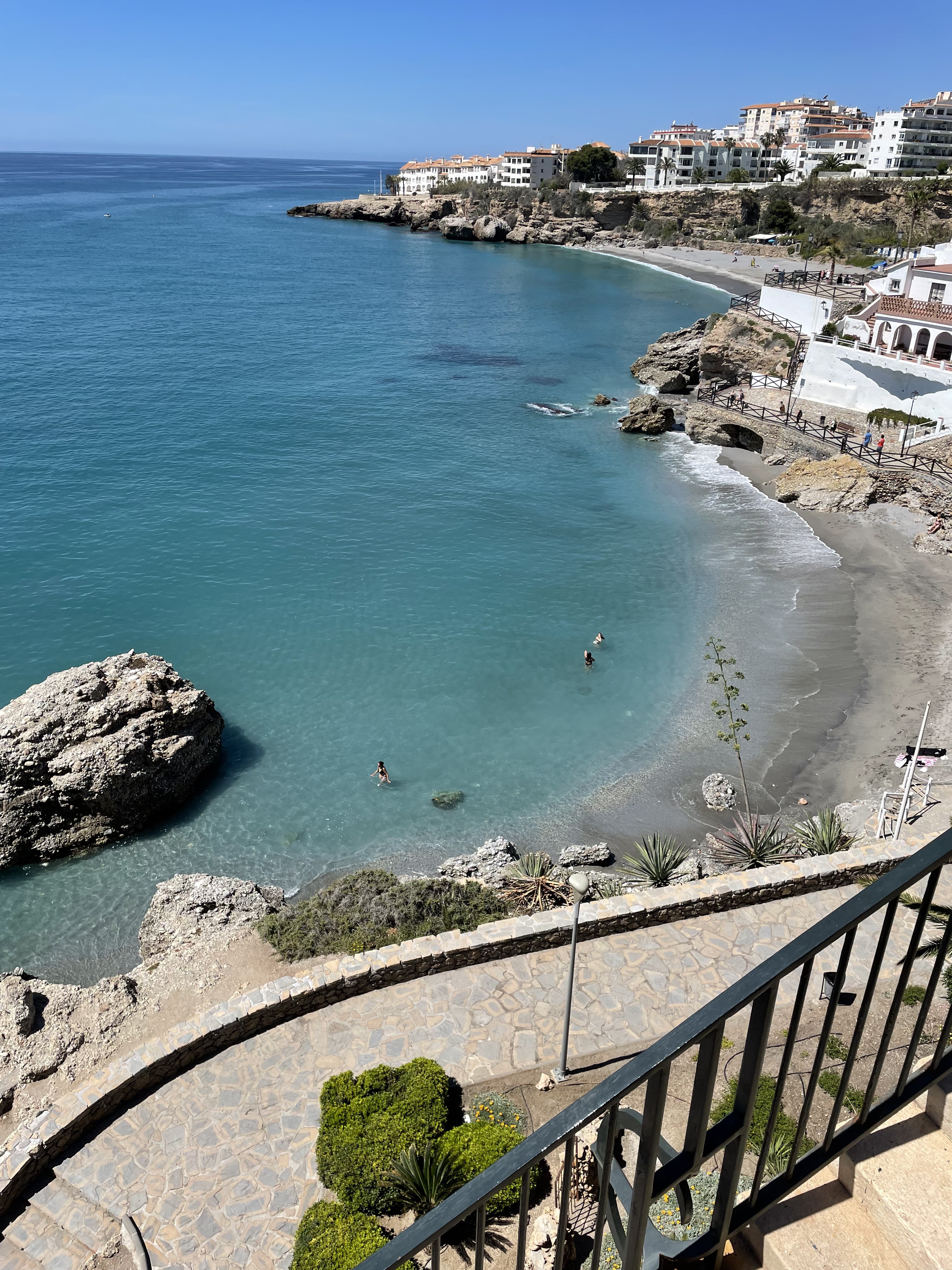
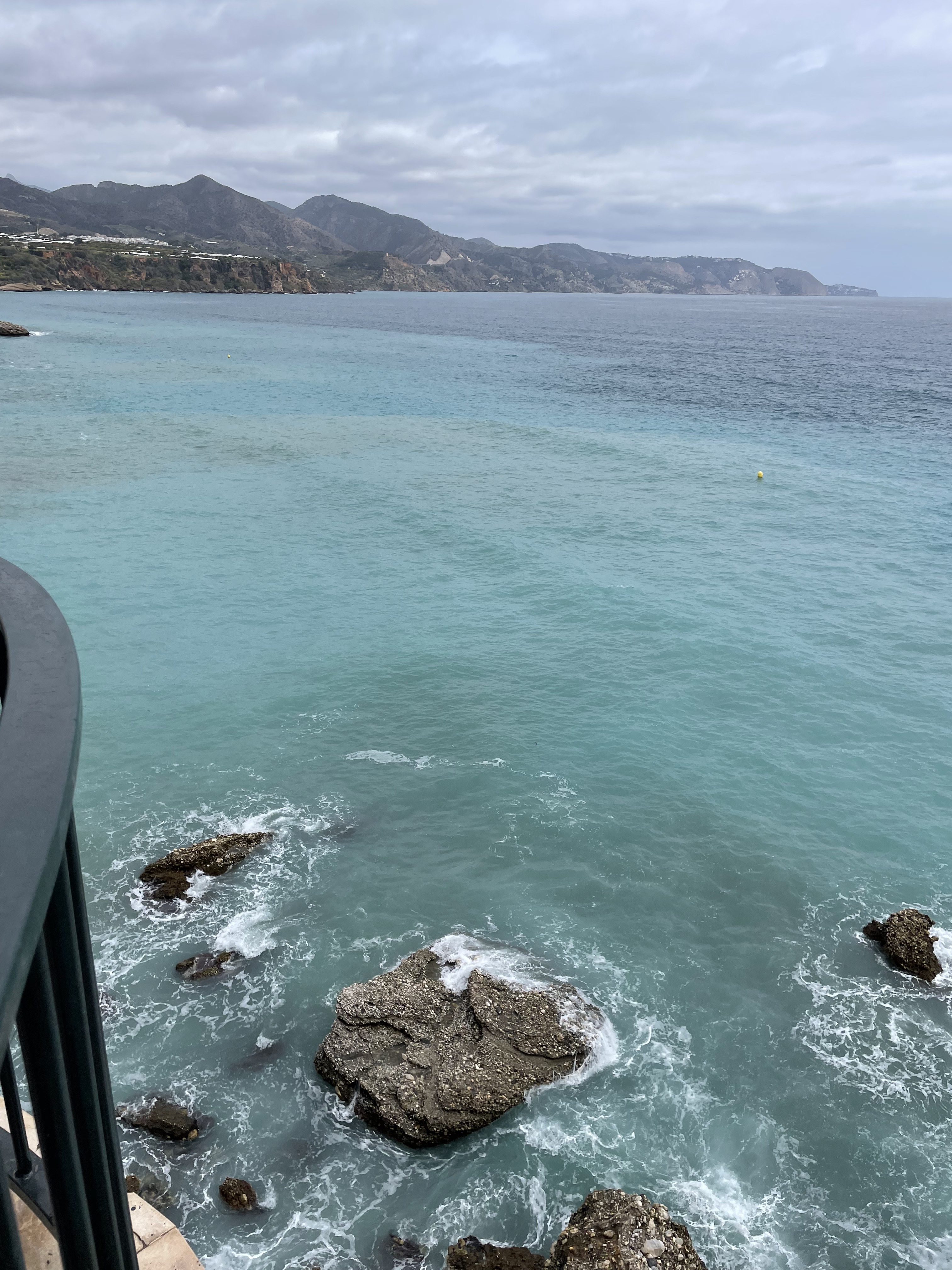
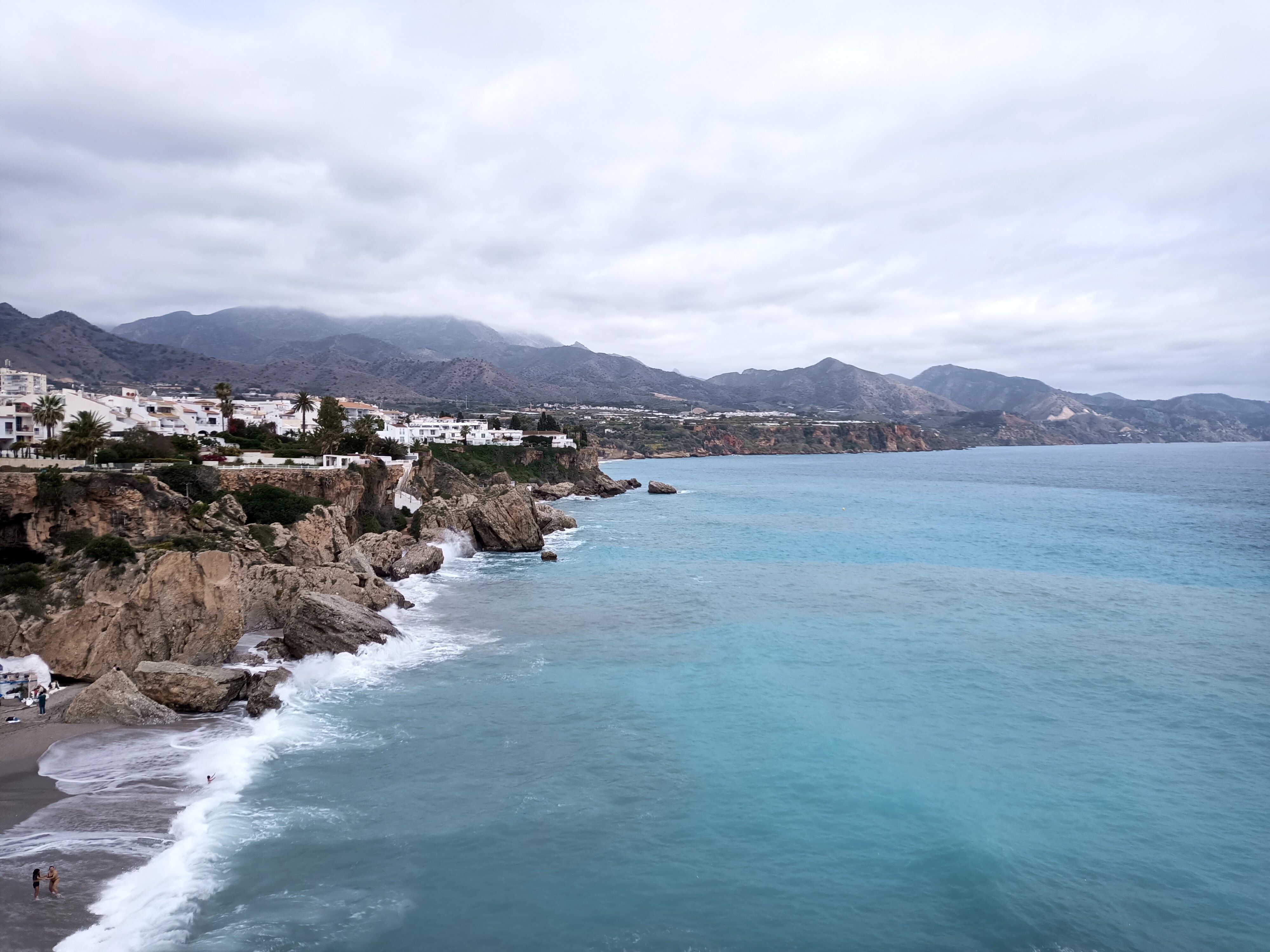
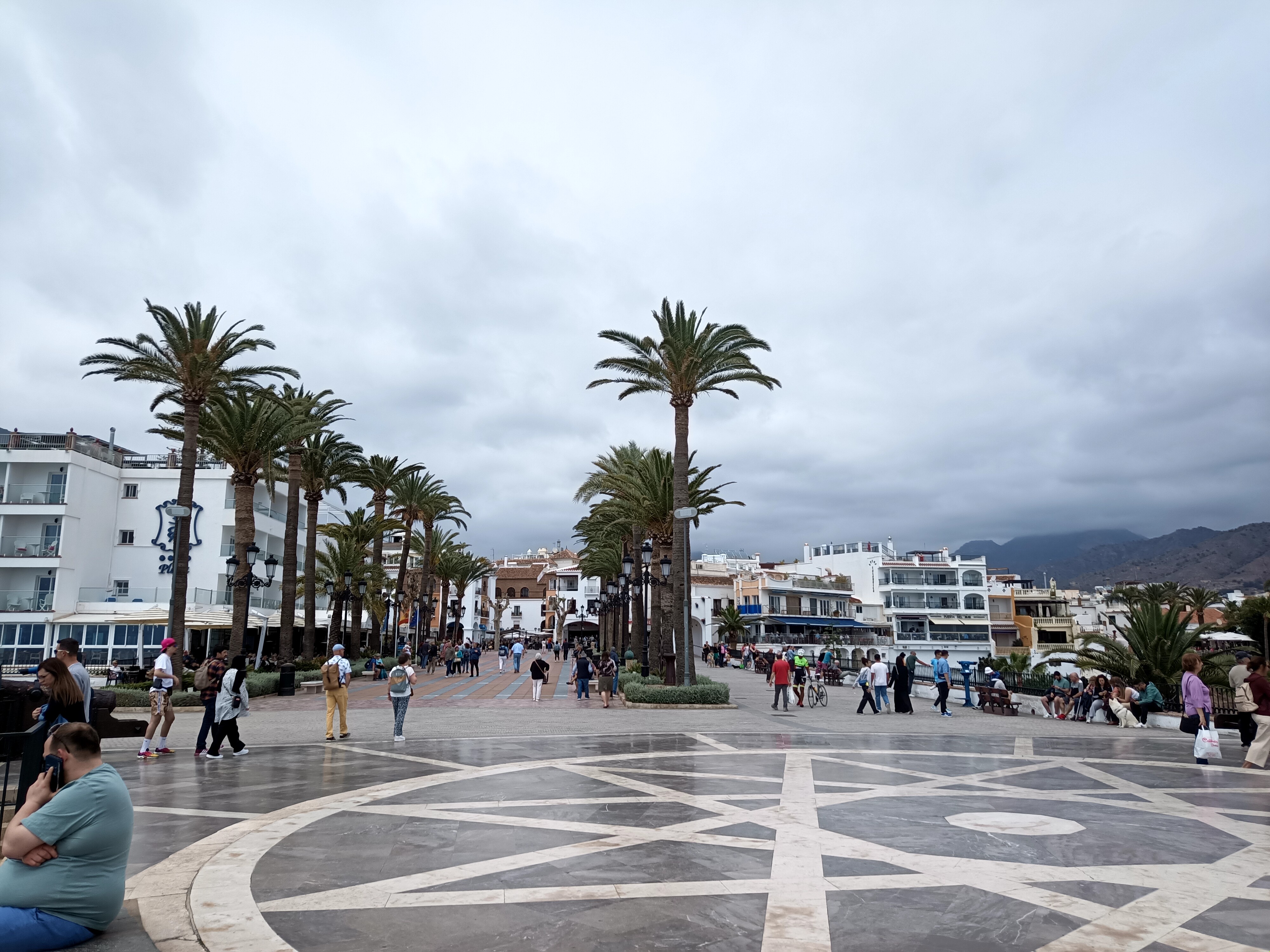
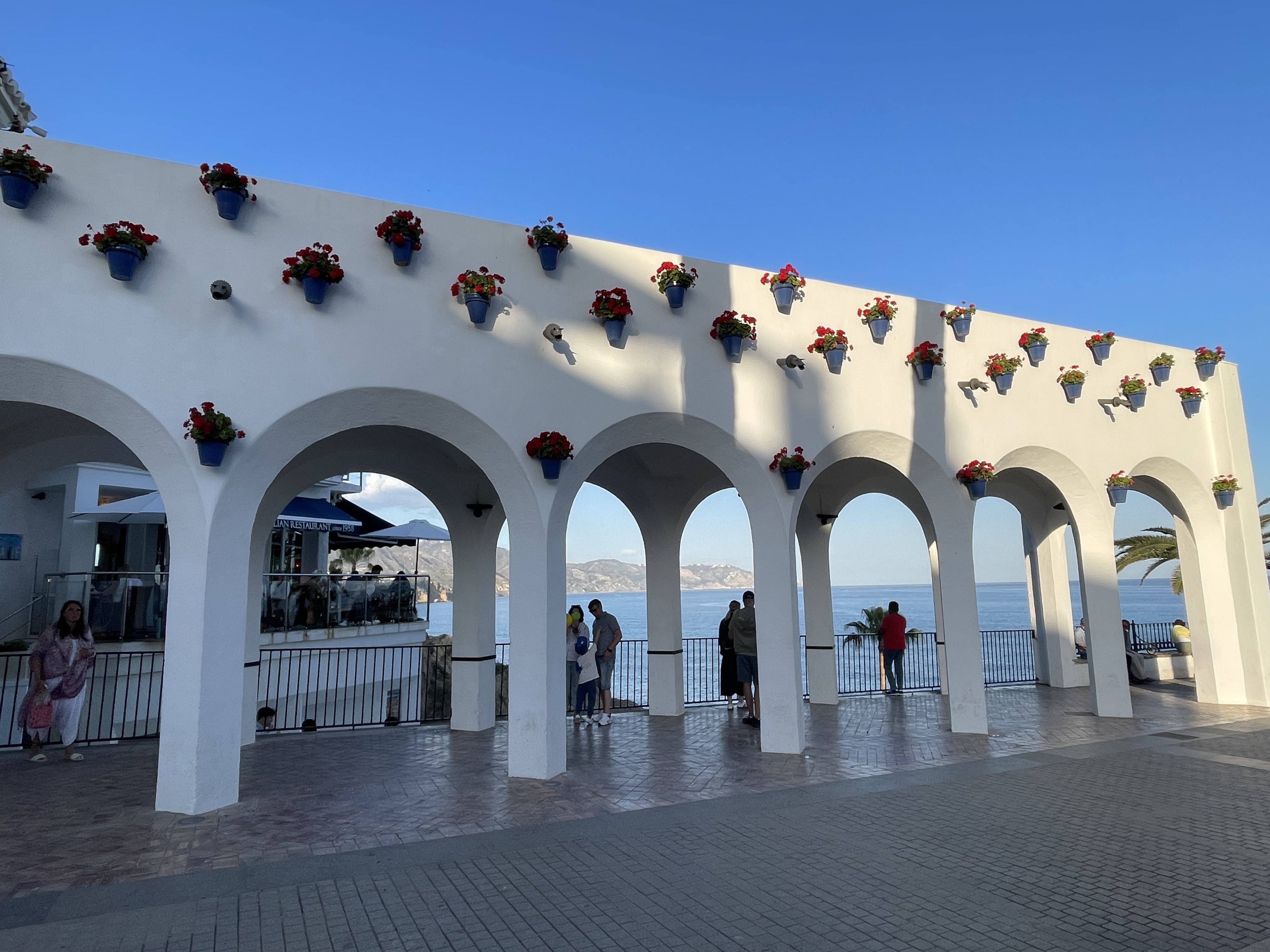
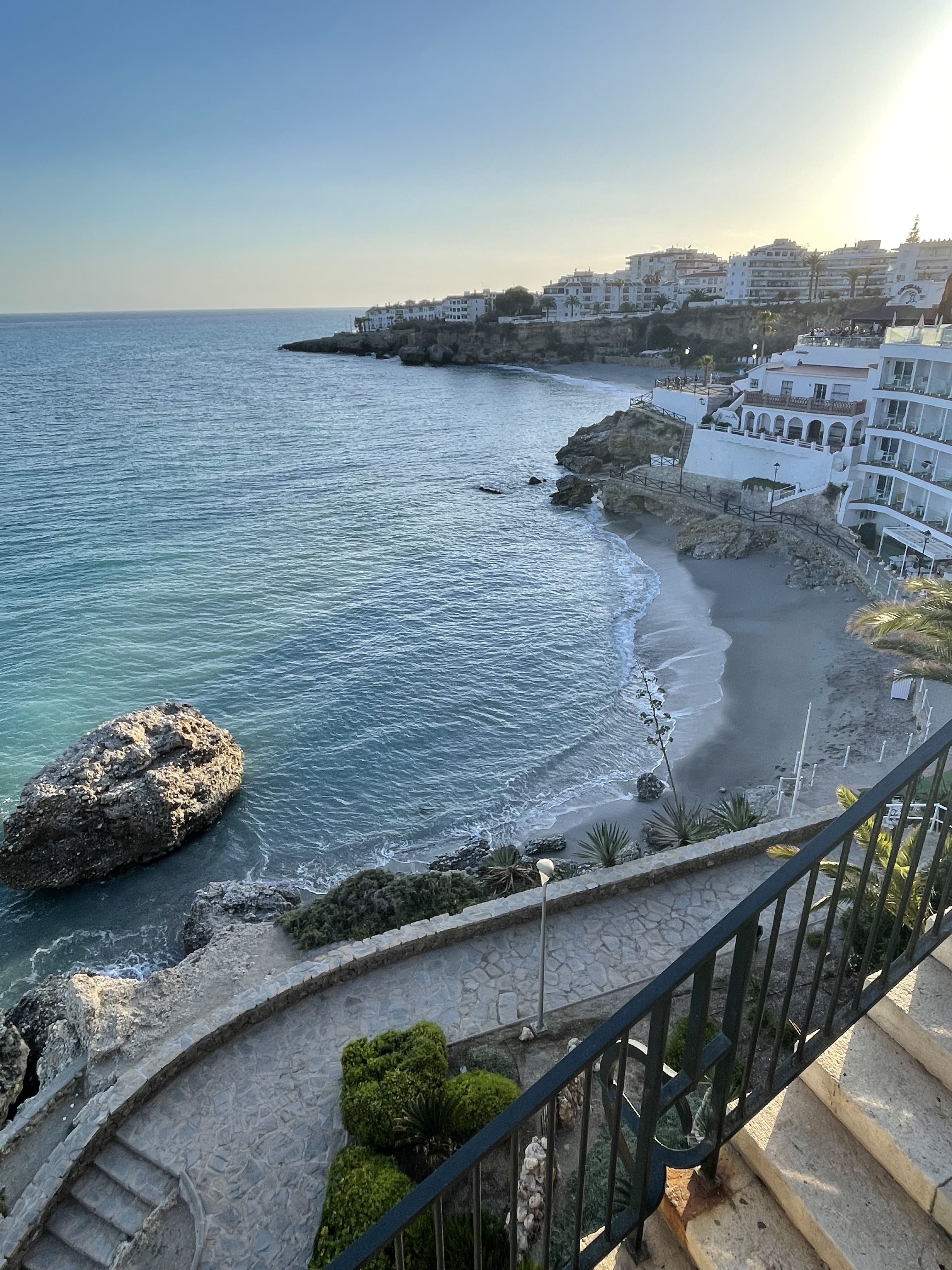
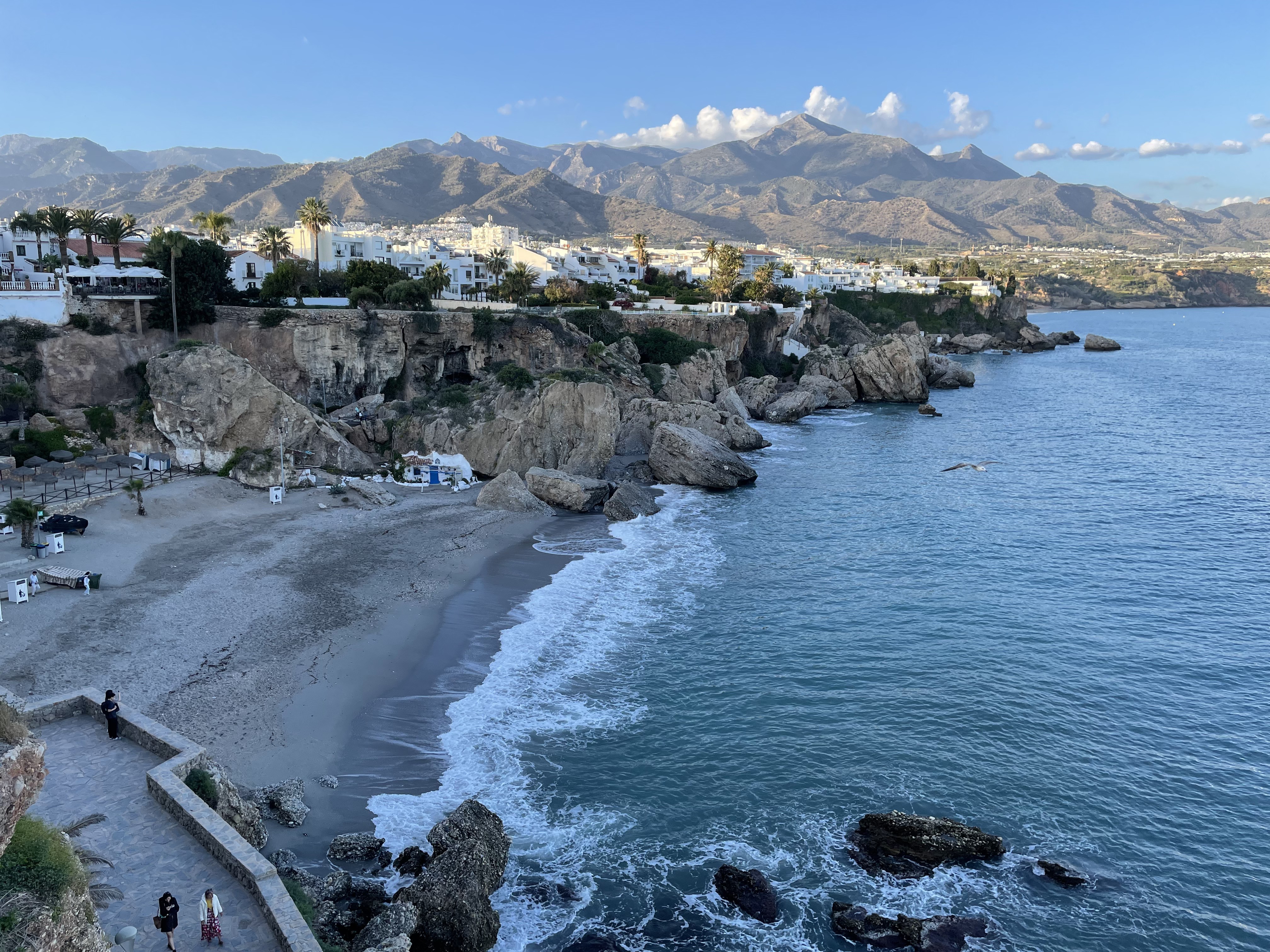
The plane came down under a flat grey lid, which felt like an administrative error — we had flown away from that specifically. The bus along the coast needs half an hour of resort towns, and then Nerja appears at the exact spot the road gives up: white houses stacked over the water and the whole arrangement balanced on the rock the locals had the nerve to name the Balcón de Europa, the Balcony of Europe, a promontory with a railing and a view that defends the title. We dropped the bags and did the ceremonial circuit — turquoise shallows over dark rocks, a seafront plaza with a compass rose worked into the paving, bougainvillea going over a wall like it owned the deed. The afternoon went to the Senda Litoral toward Burriana, pines on one side, water on the other, and the first caña of the trip was consumed at a beachfront table. By then the grey had withdrawn to the horizon, where it stayed. The blue boats of Burriana were already in their positions, and the pebbles were announcing their plans.
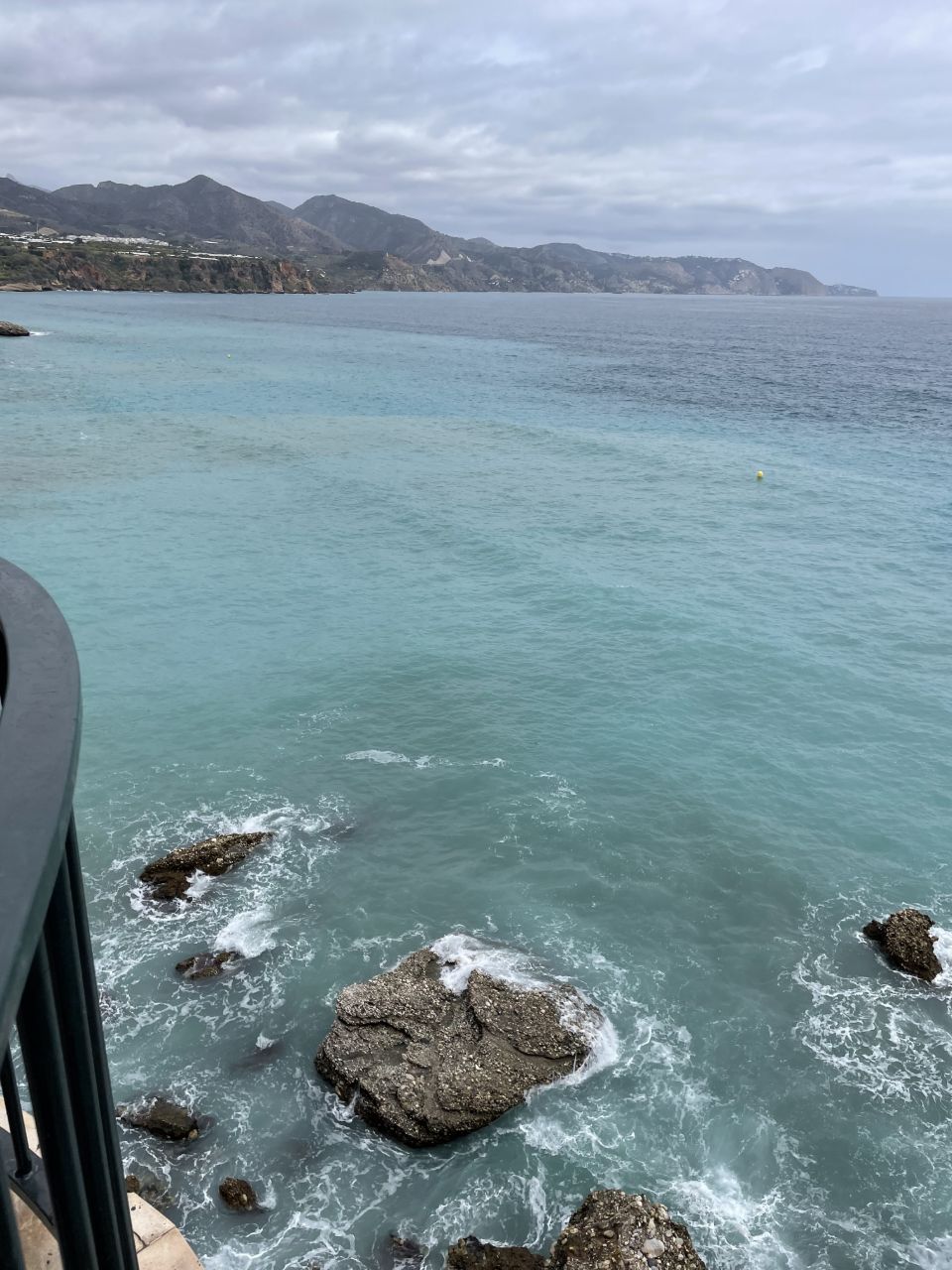
Balcony of Europe, first evening — turquoise shallows over dark rocks 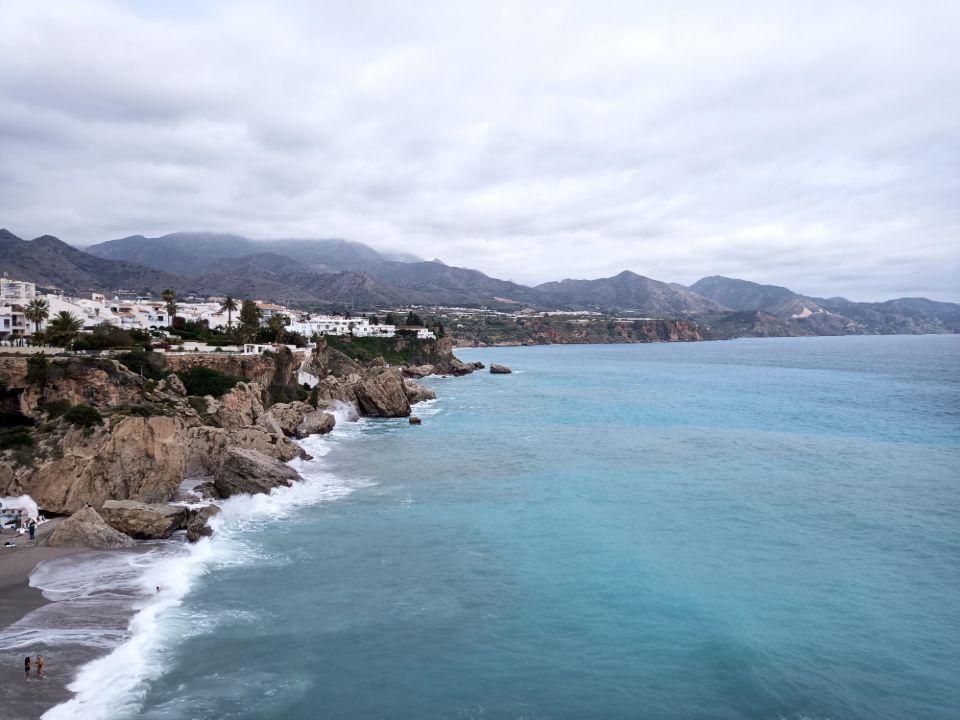
First look at the coast, the grey lid still on 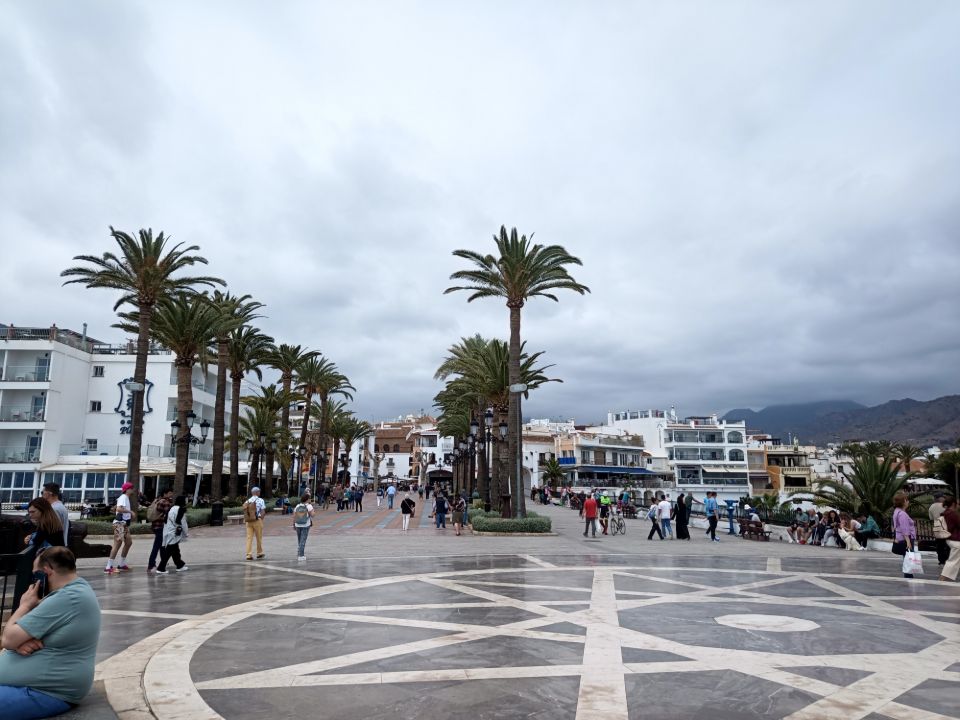
The plaza with its compass rose, grey and all 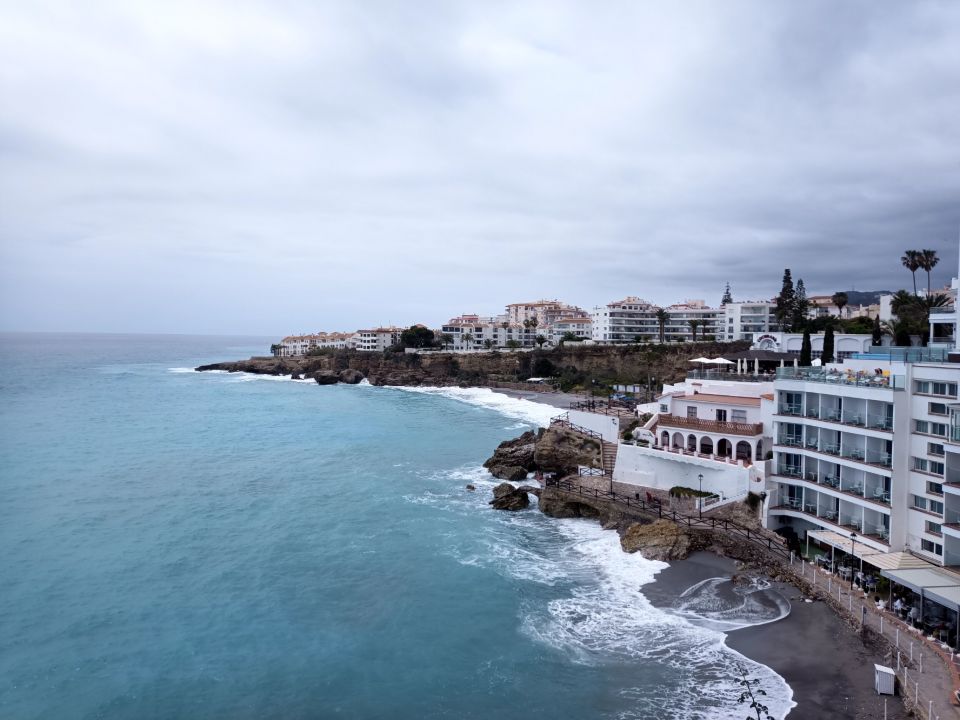
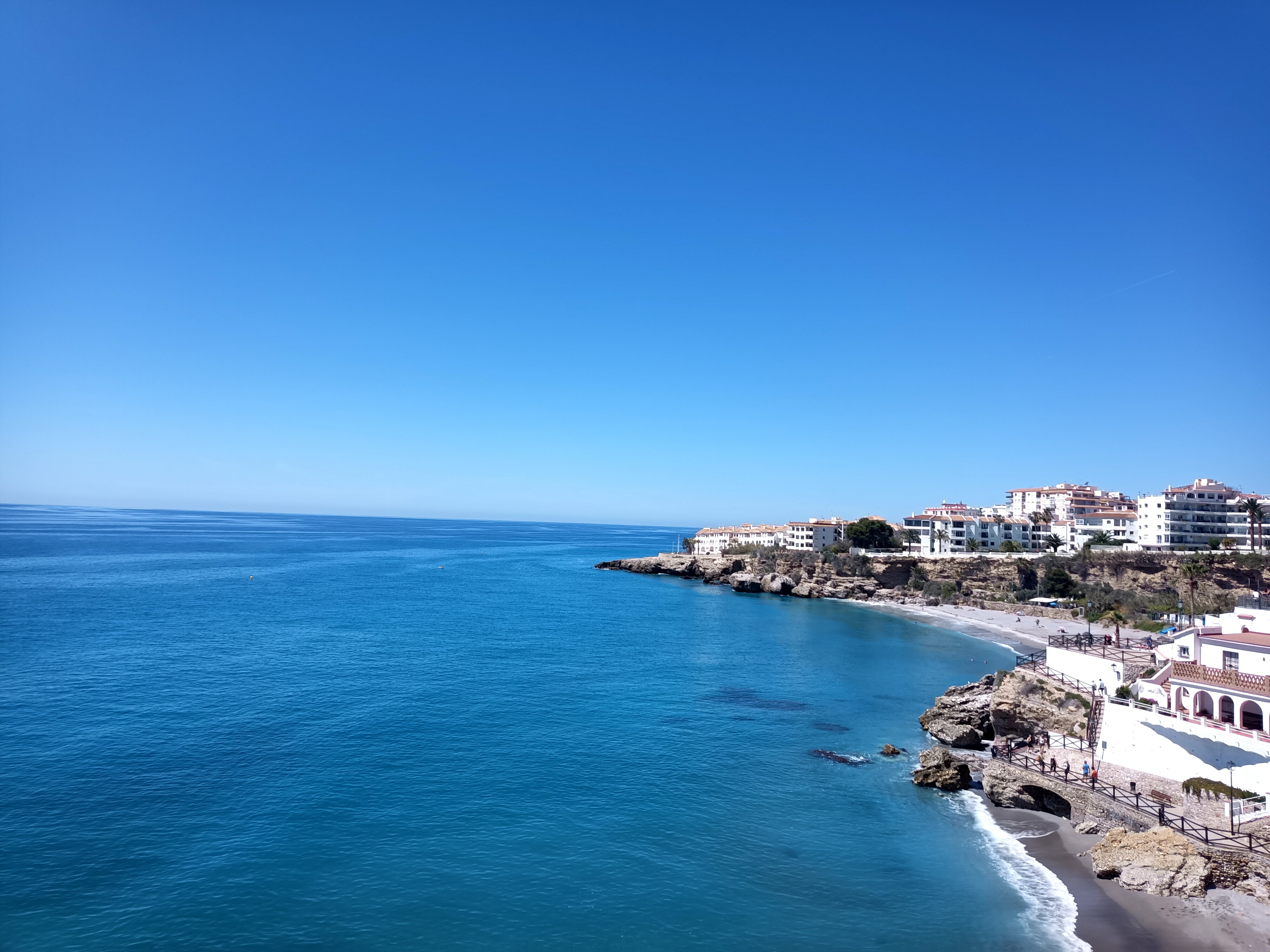
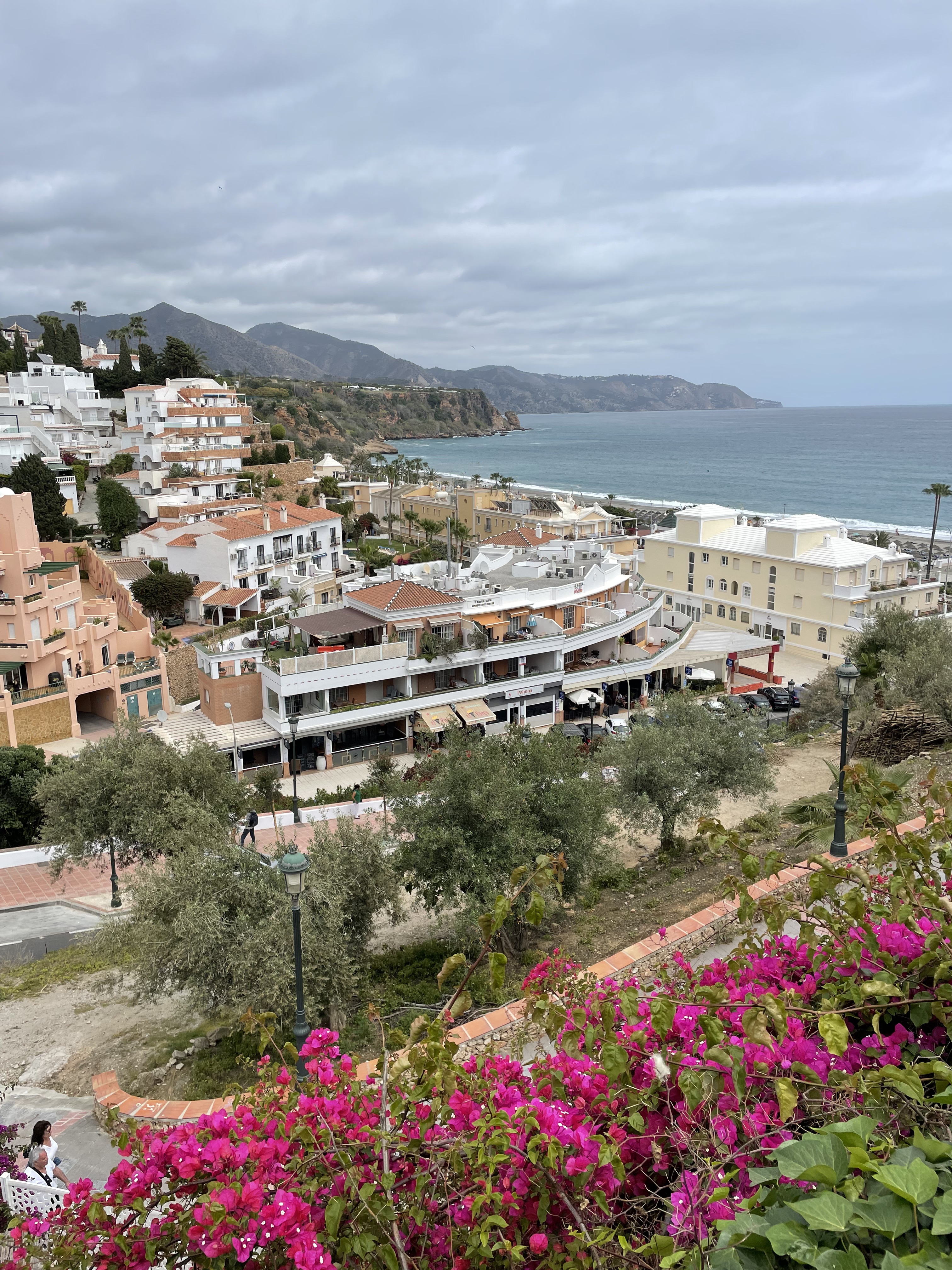
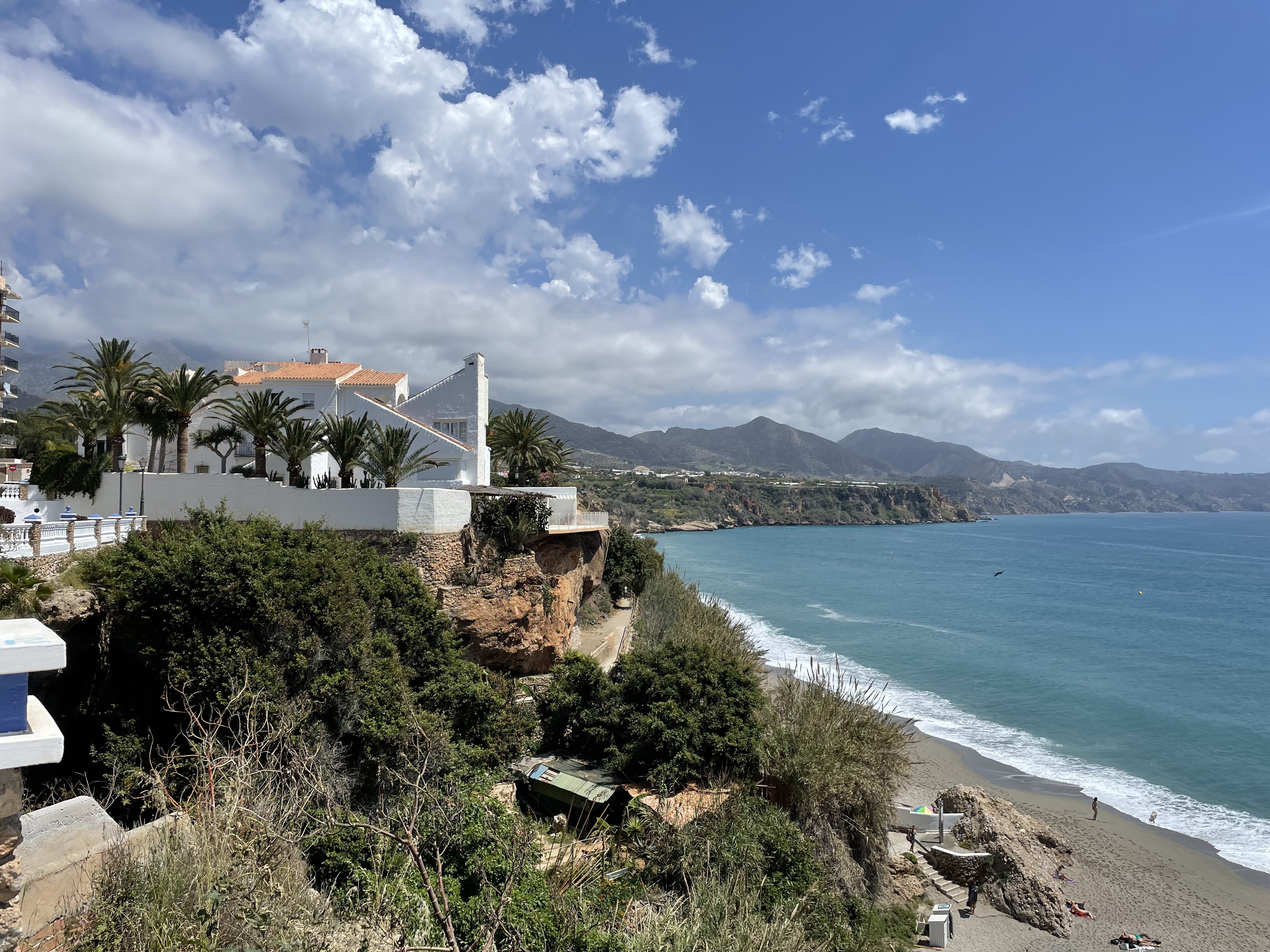
Nerja's coastline from the Balcony 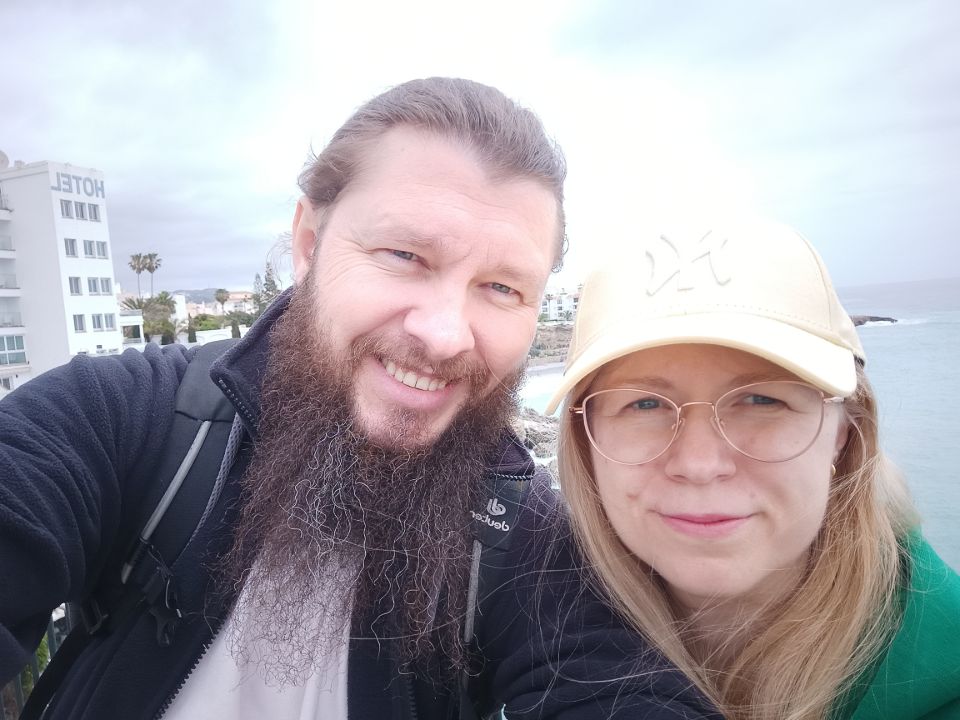
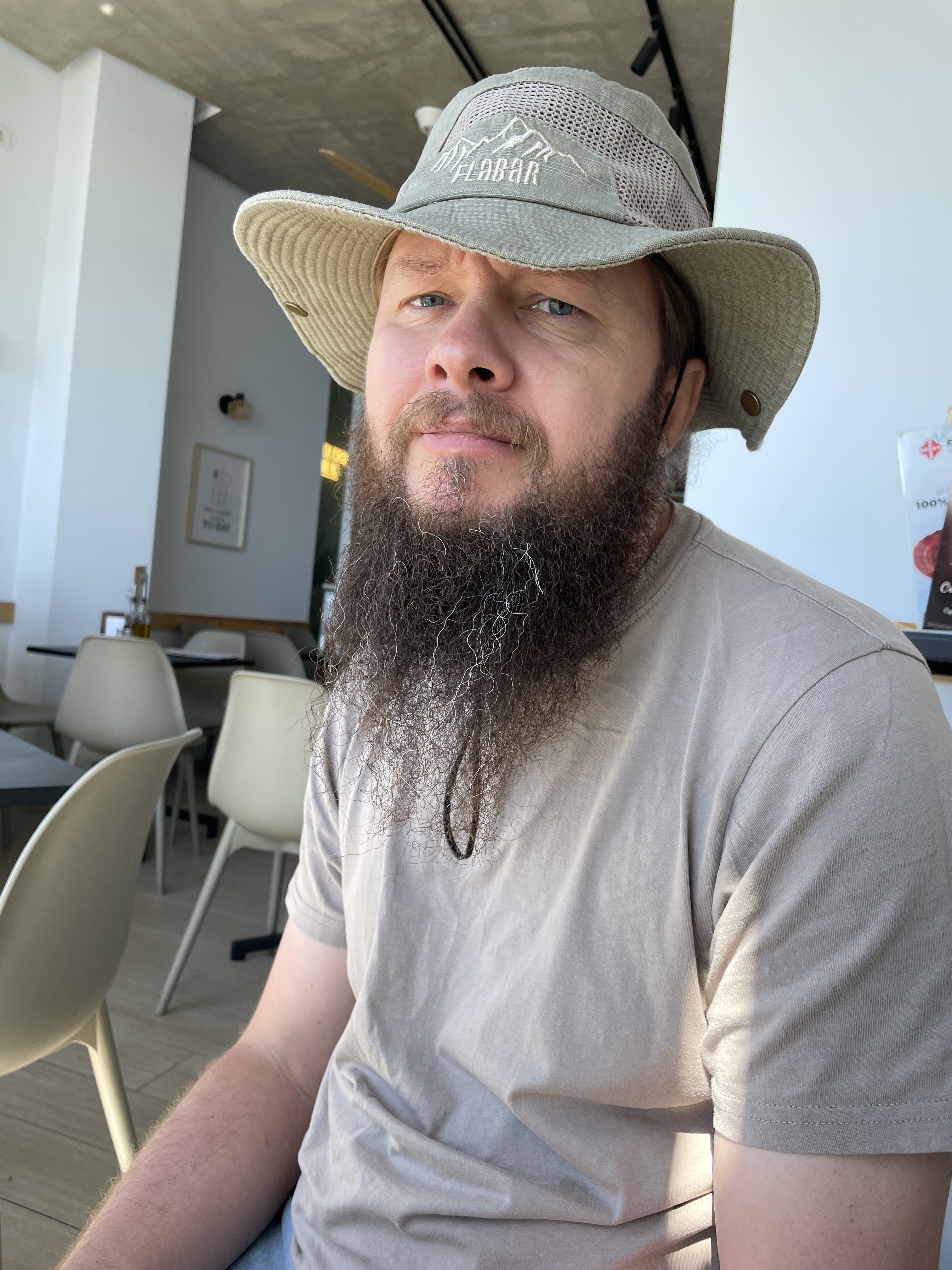
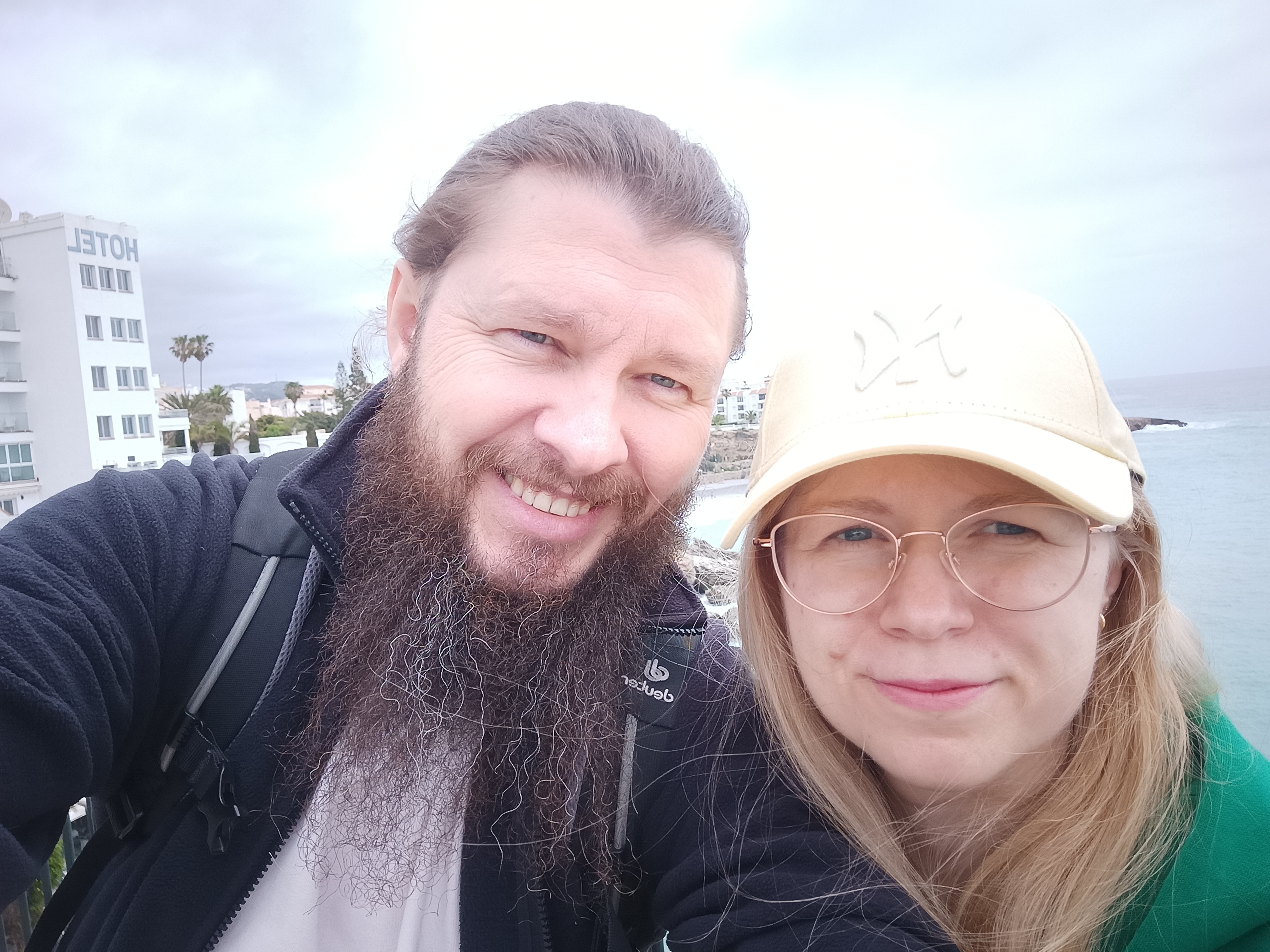
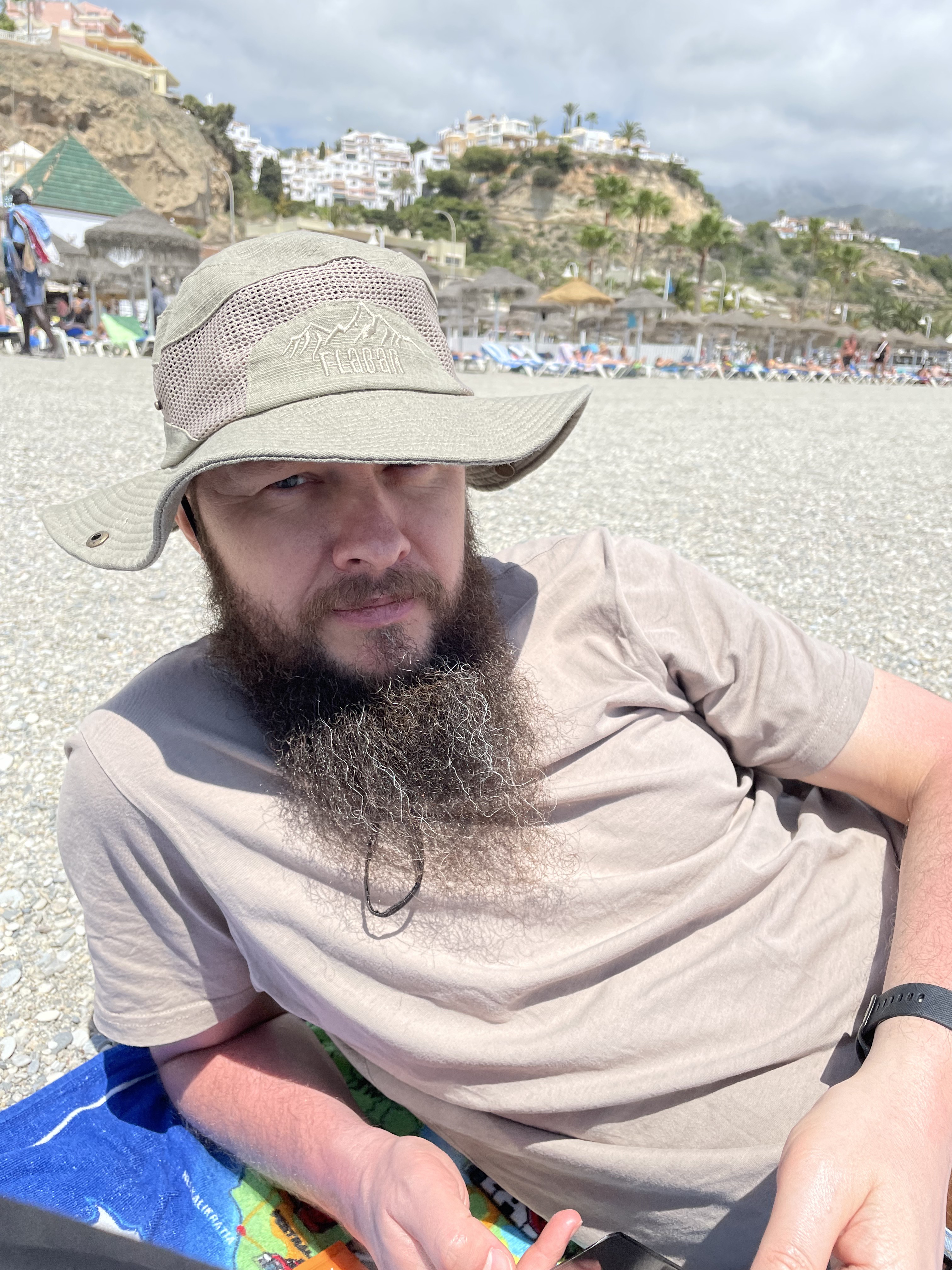
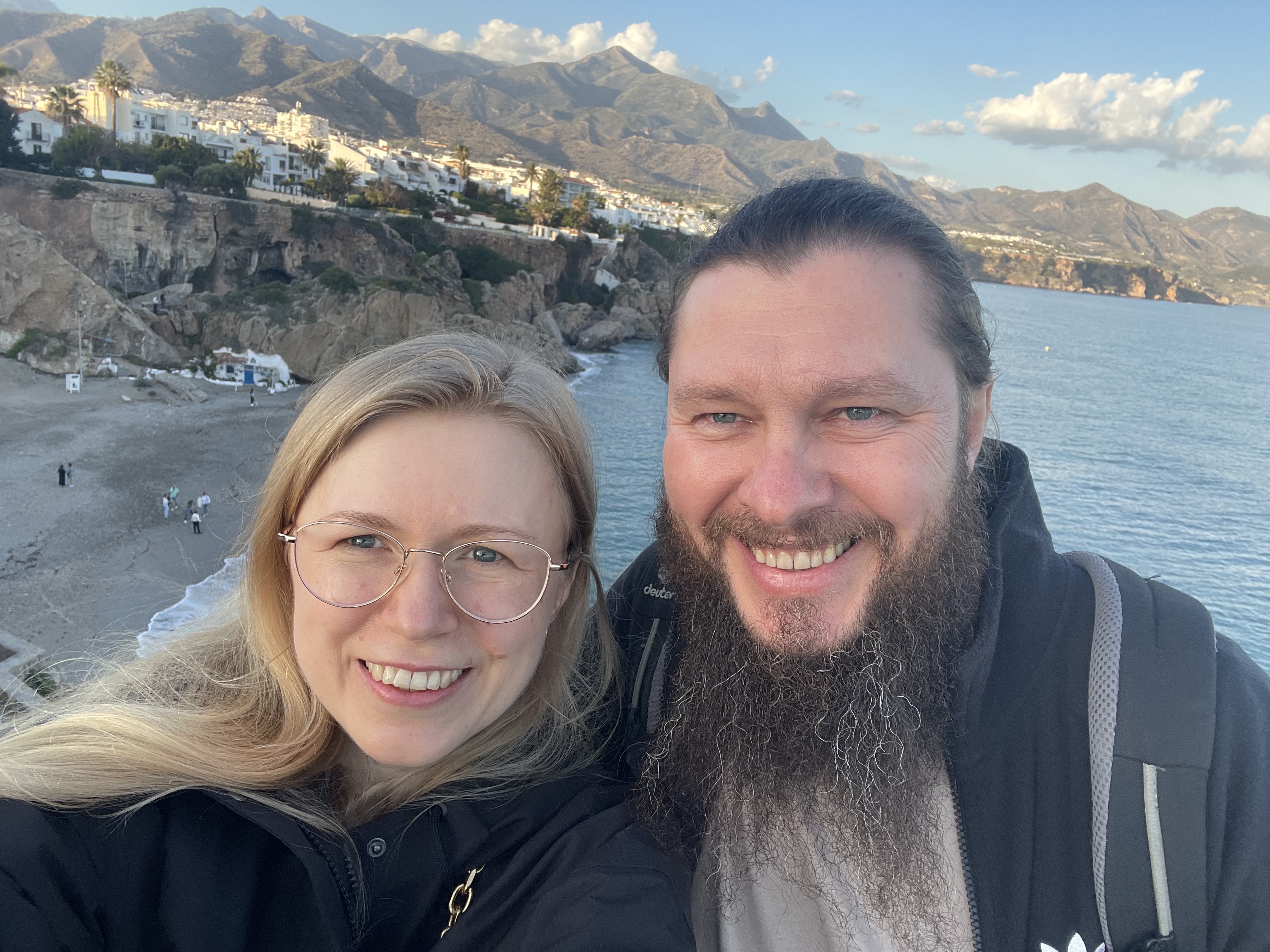
First selfie off the bus 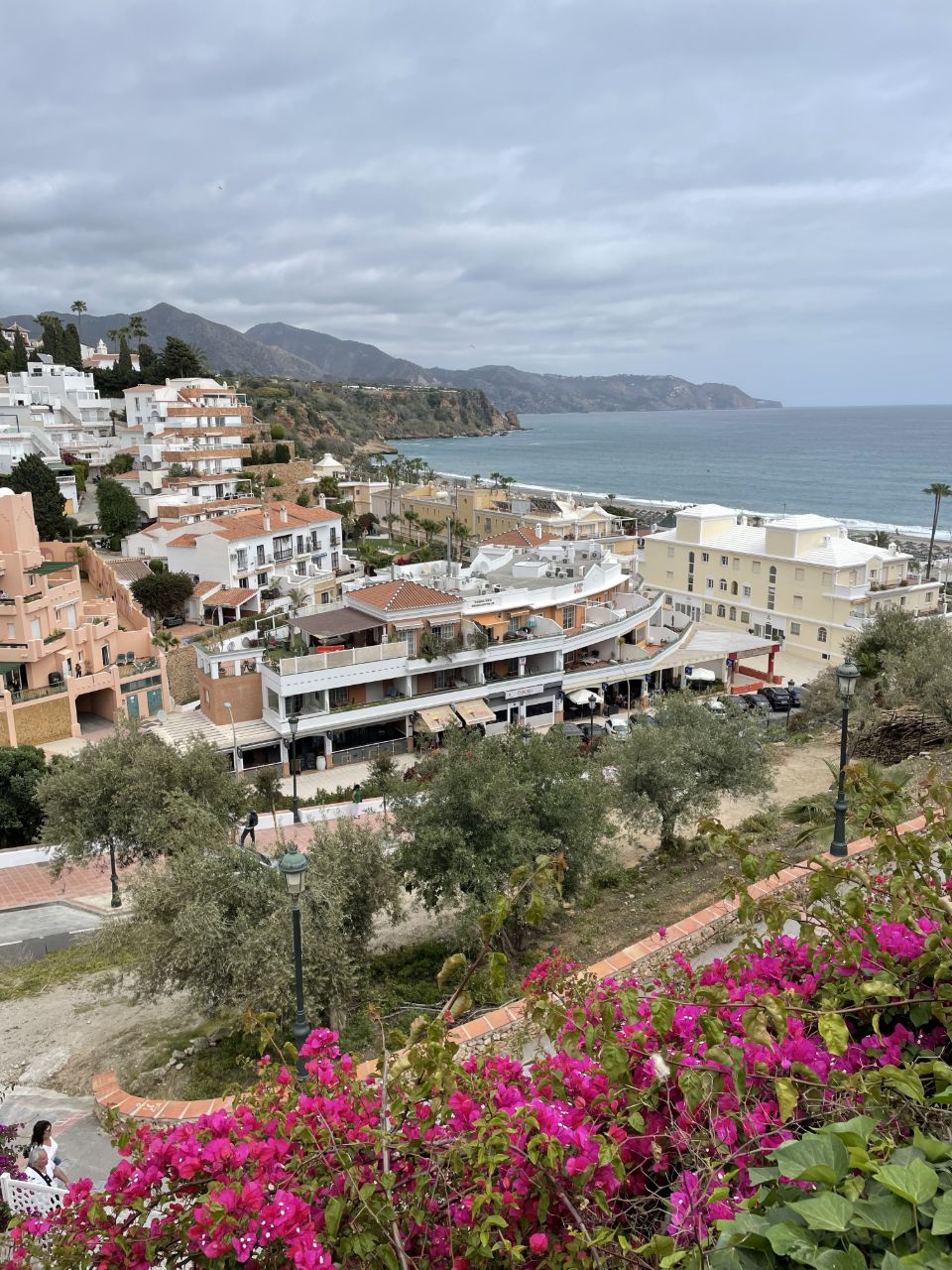
Over the rooftops to the sea 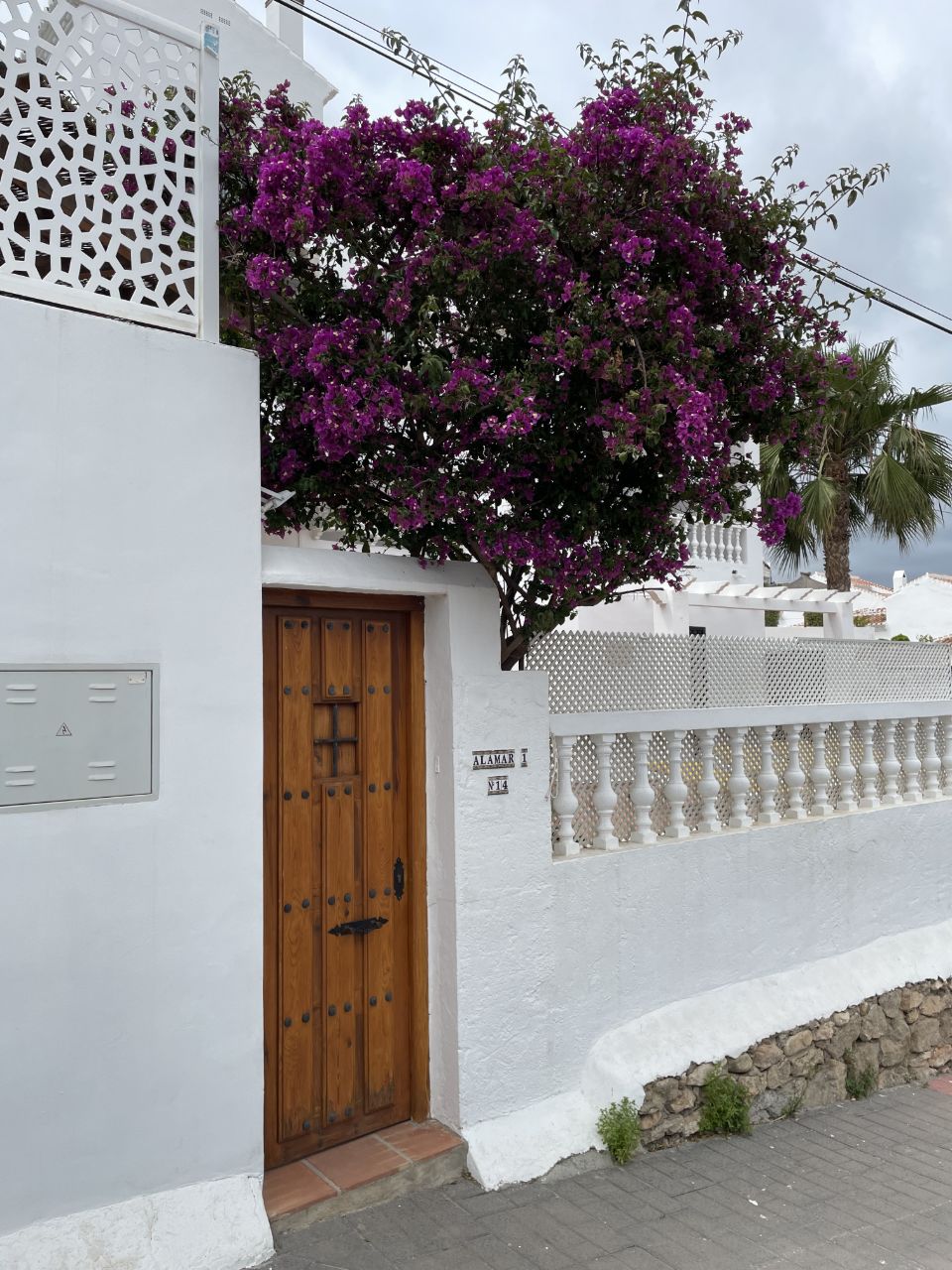
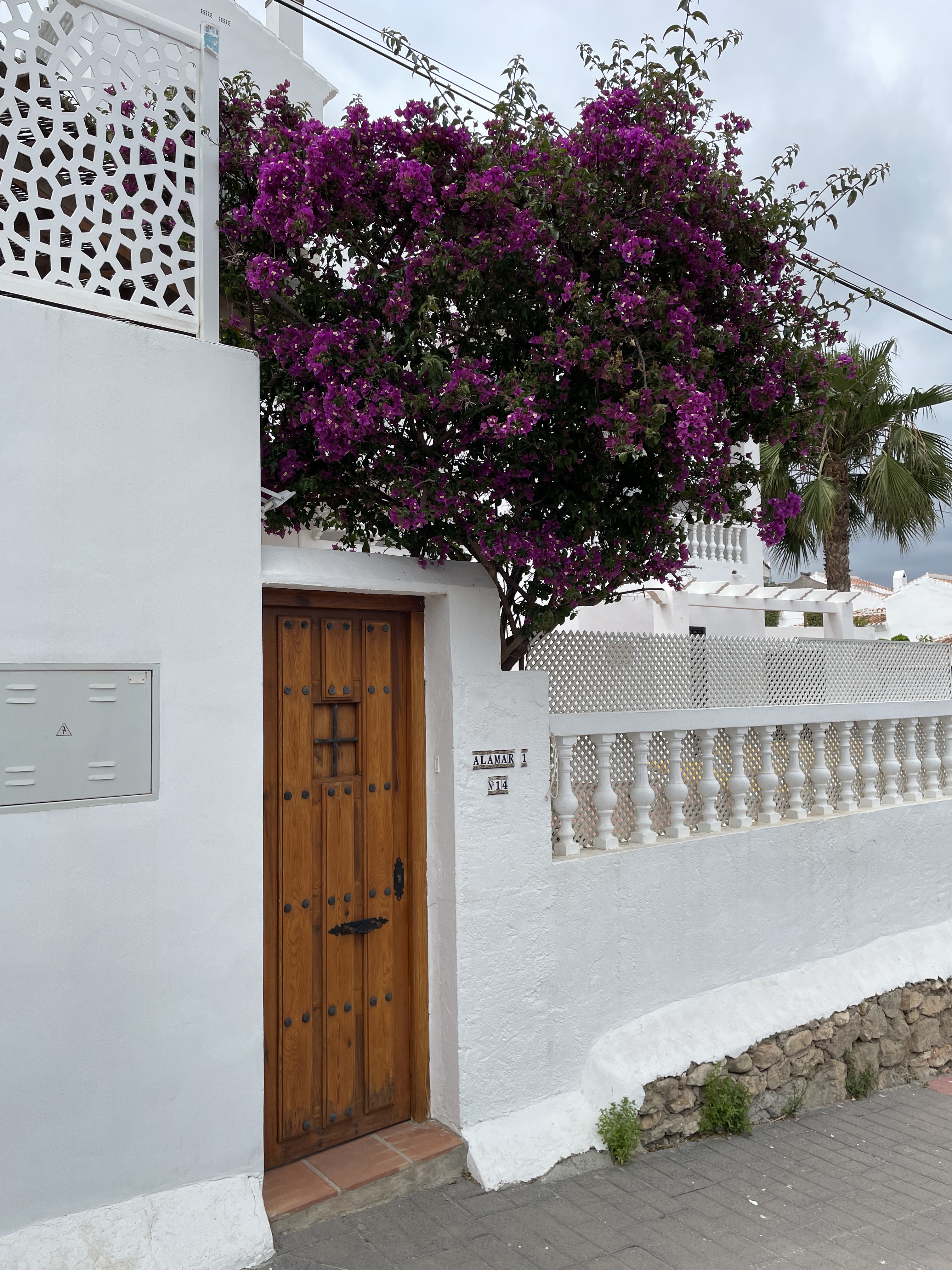
Bougainvillea over a white wall 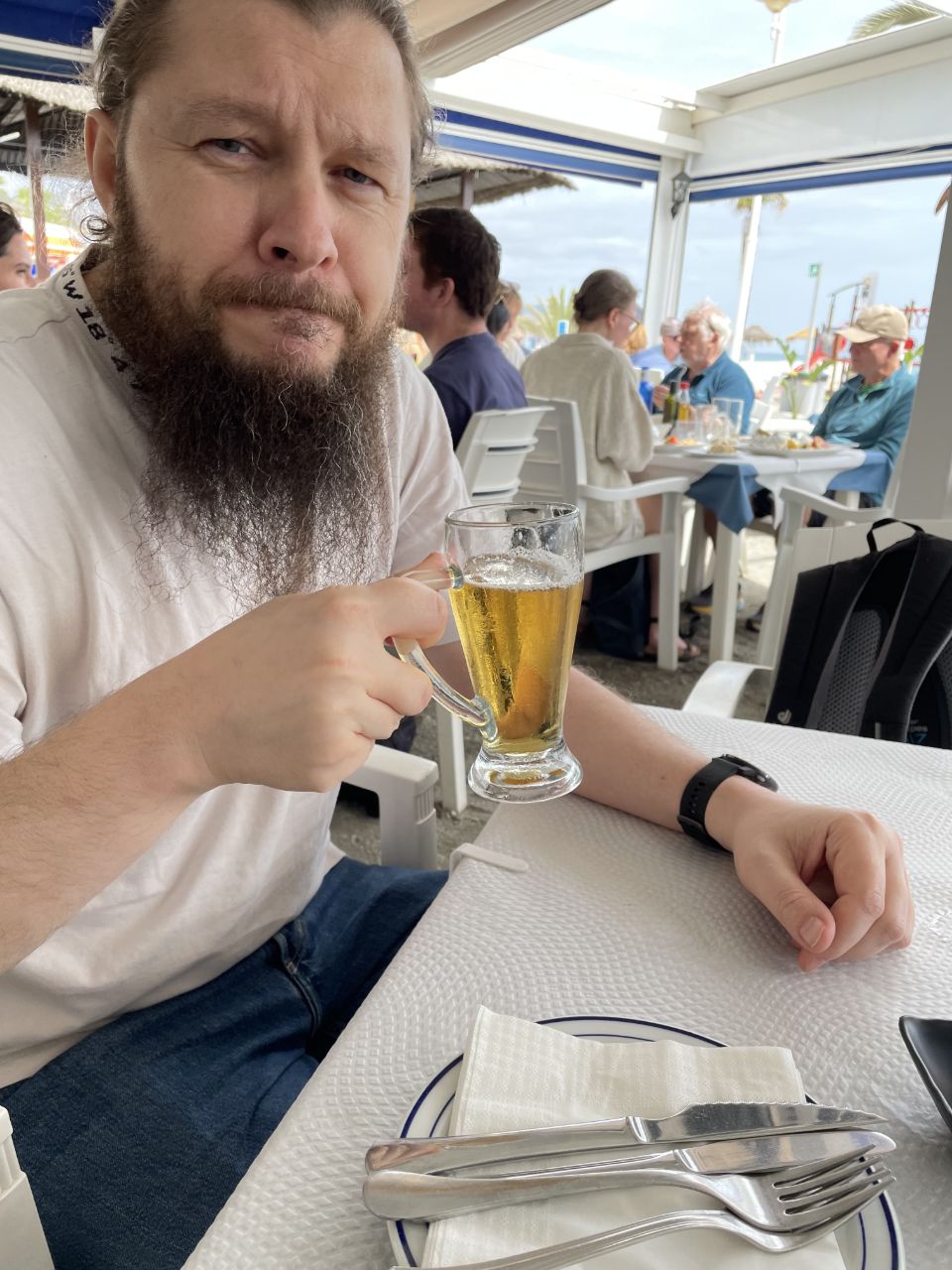
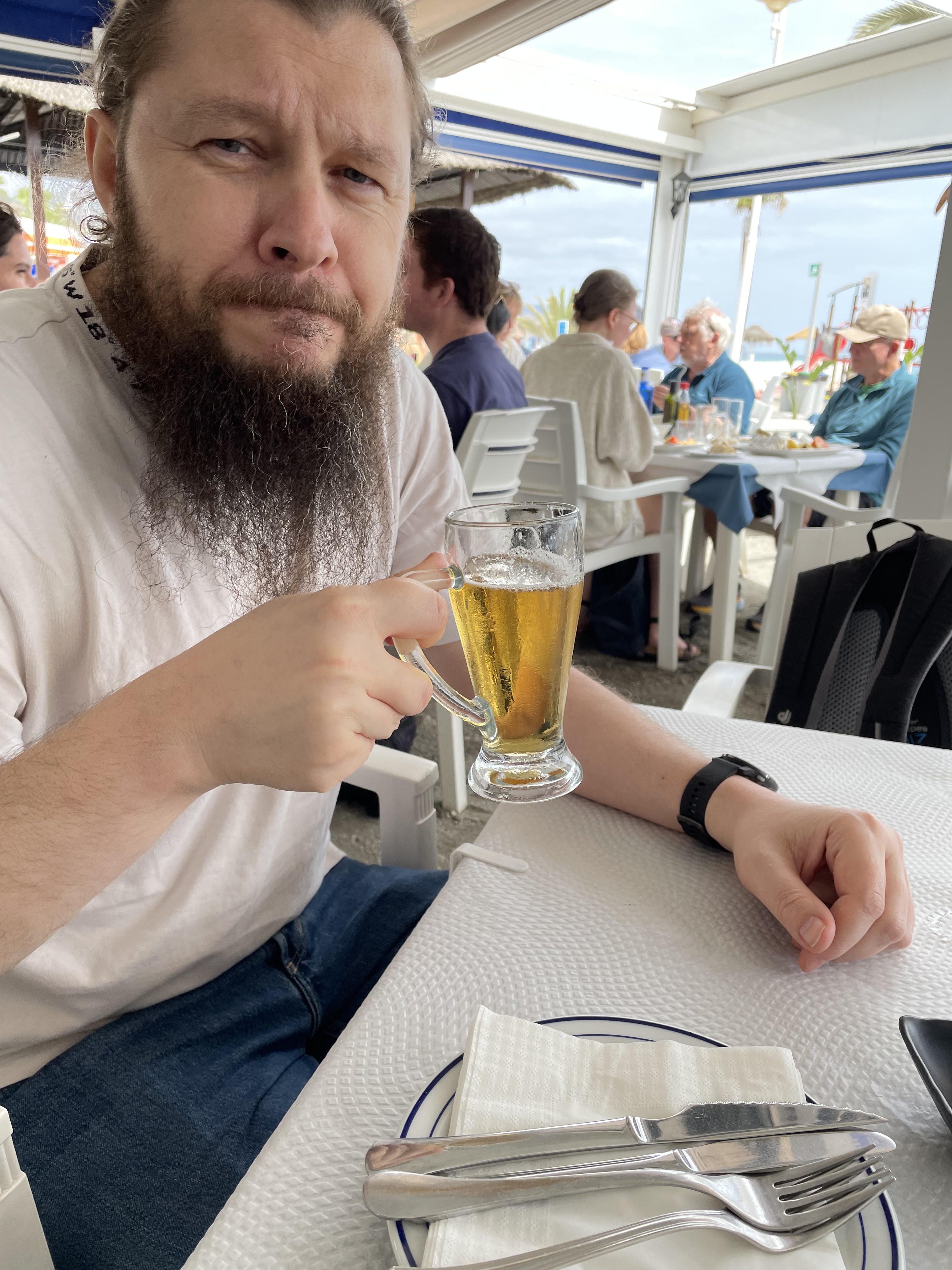
First beachfront caña 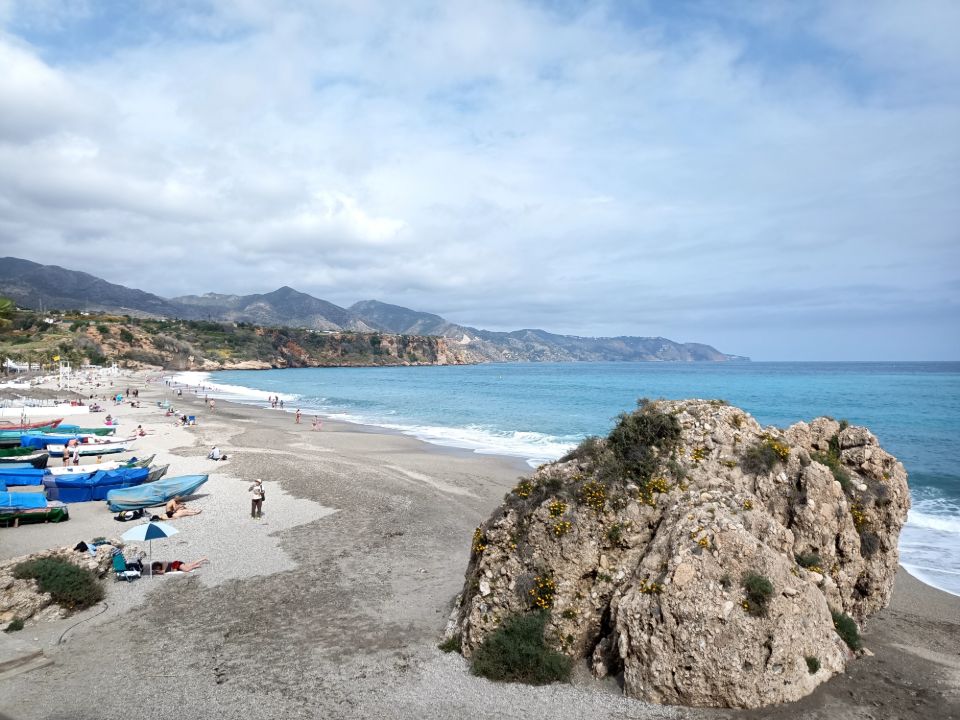
Burriana beach, blue boats 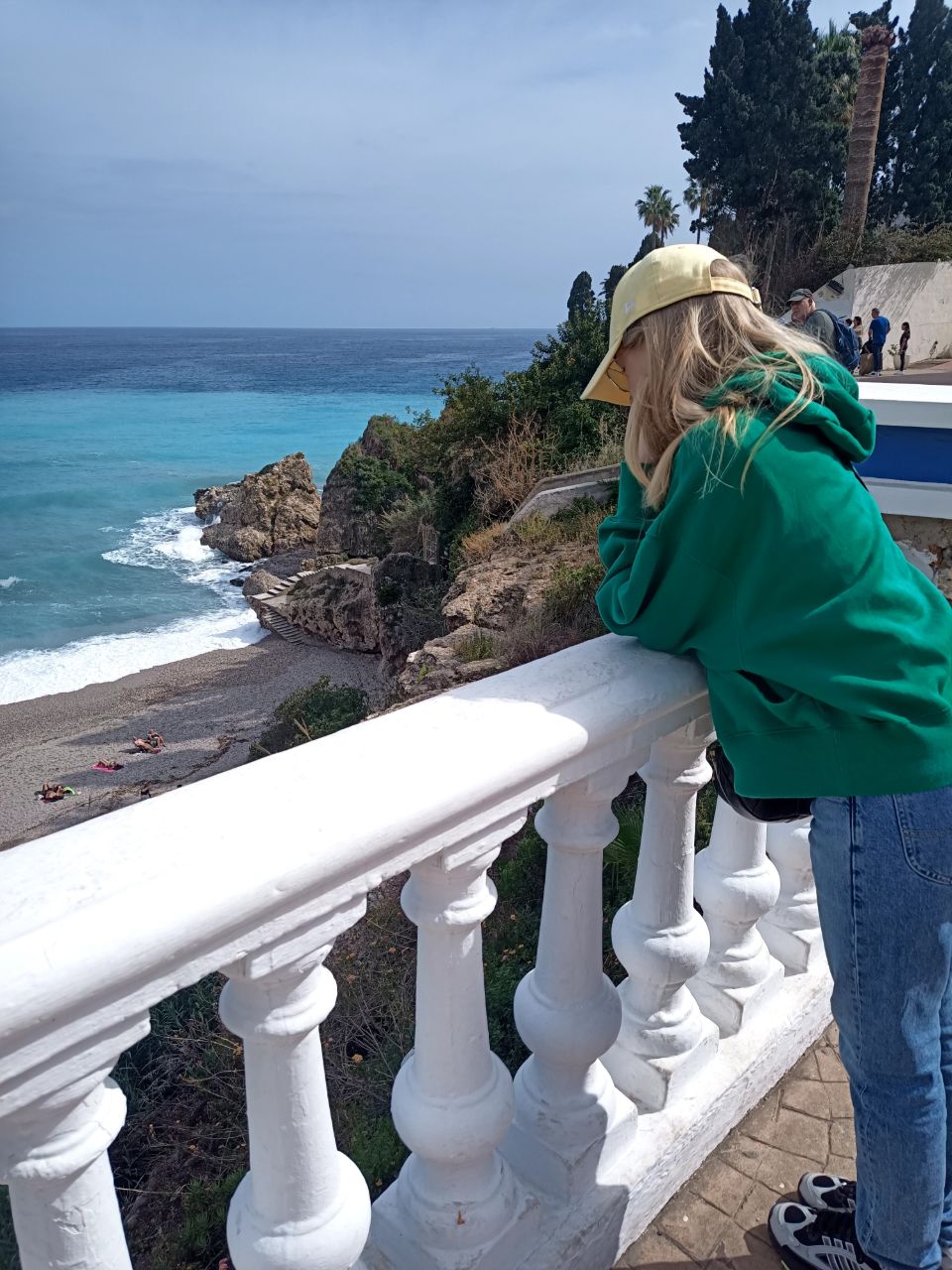
Anna looking down at the cove
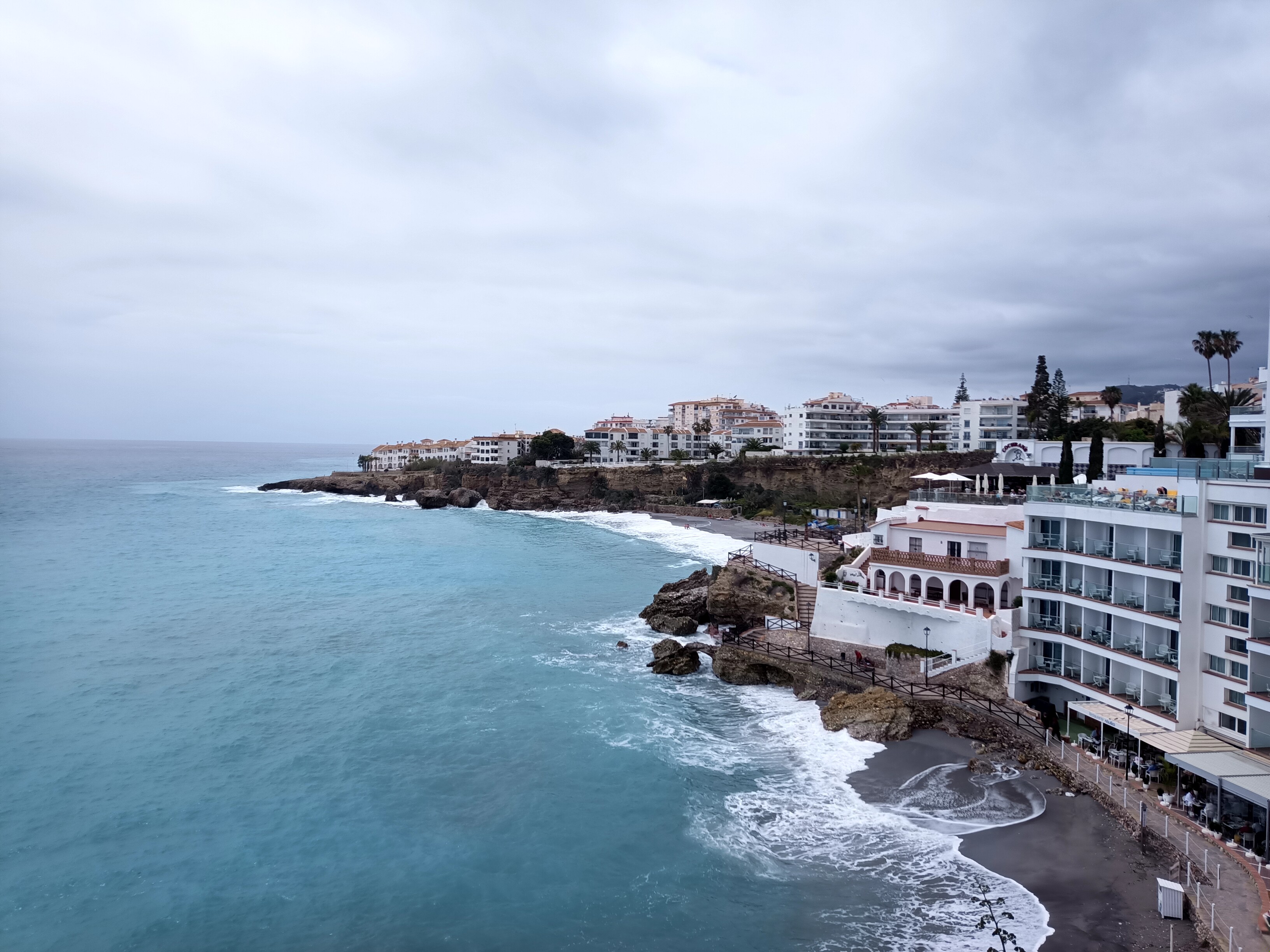
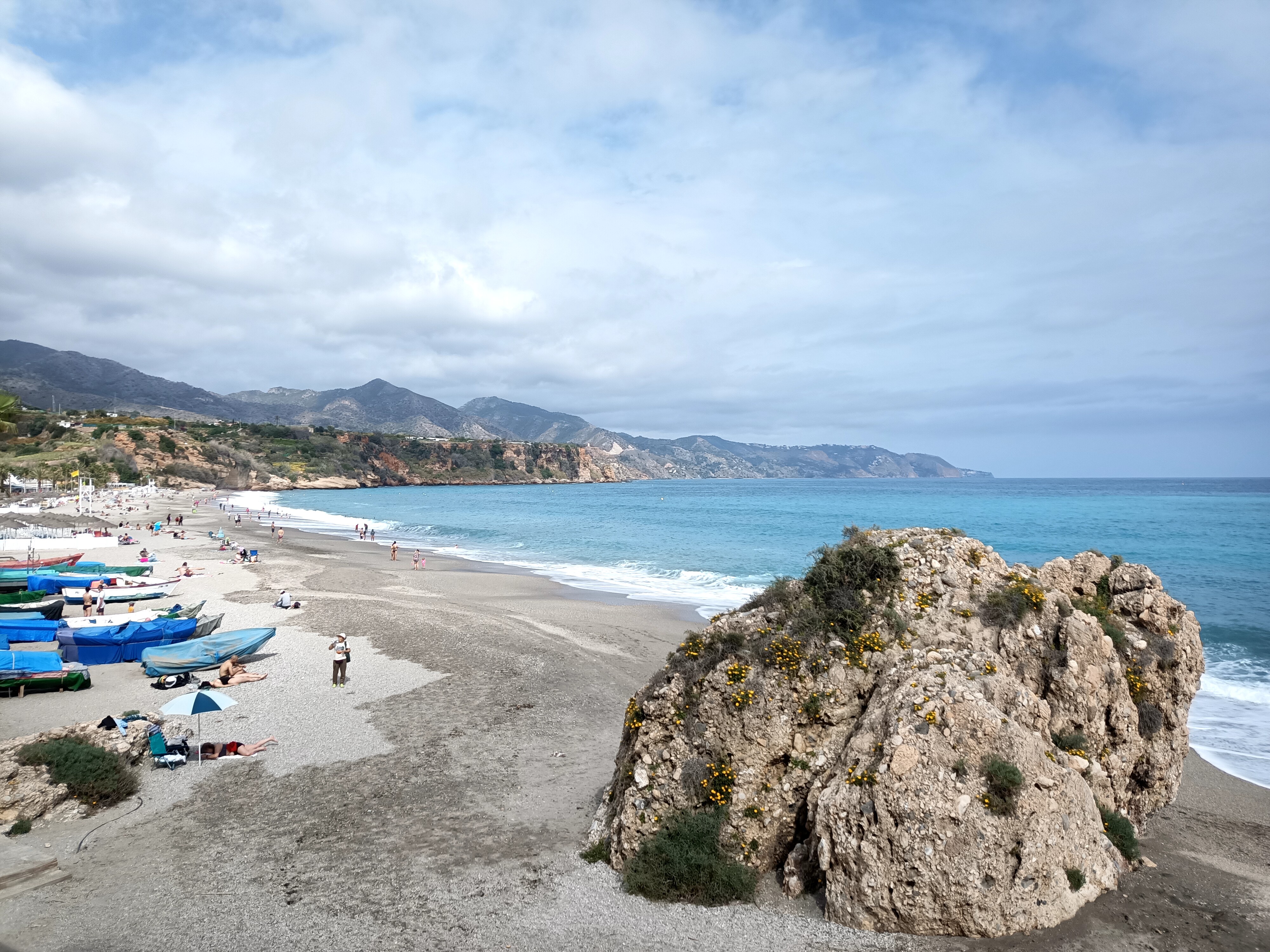
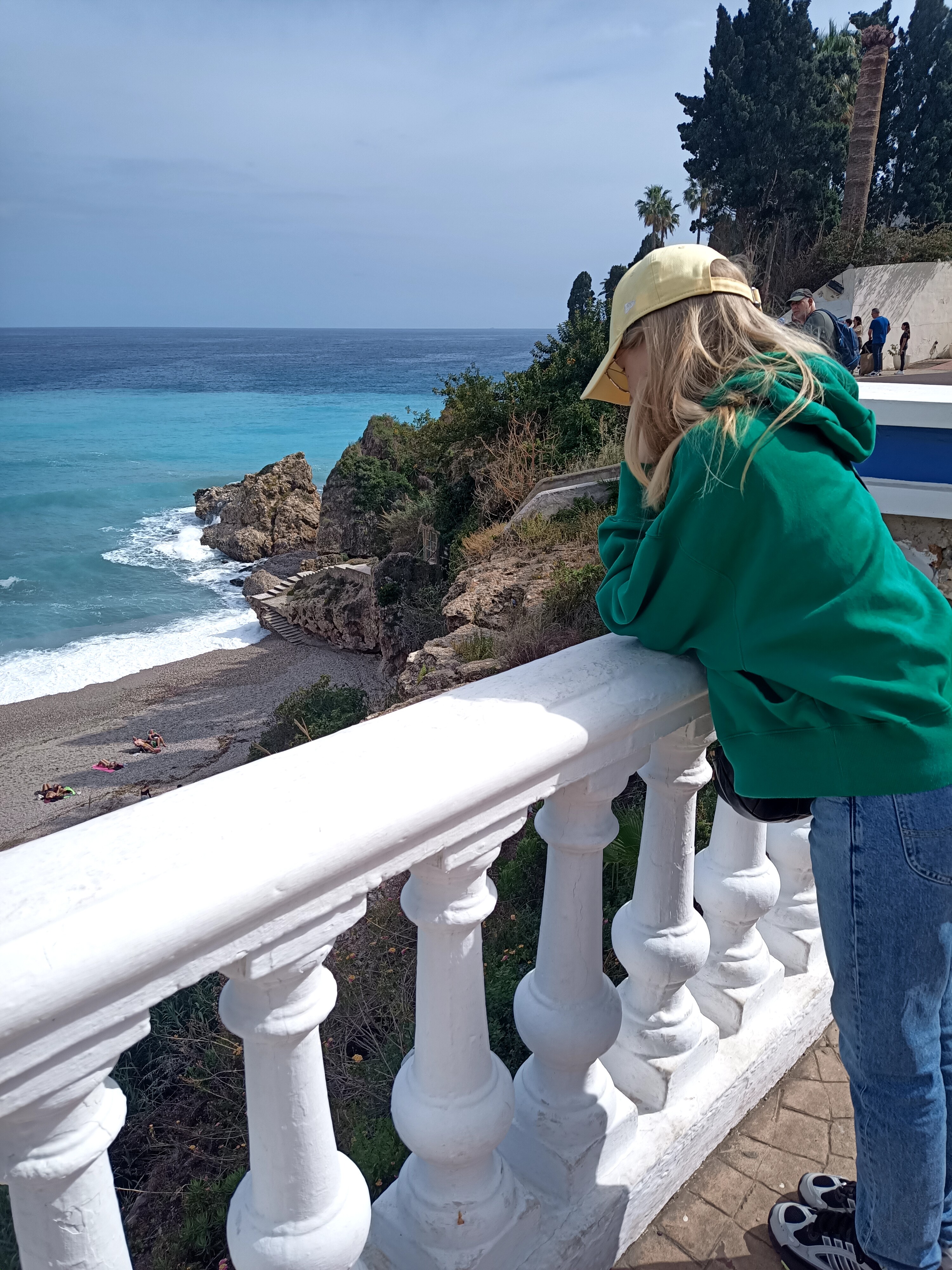
The Senda Litoral between the coves, first evening — pines to the right, sea to the left.
Burriana in the early evening: the blue boats, the rock with its weather, the town uphill of it all.
Day two, the sun keeps its word
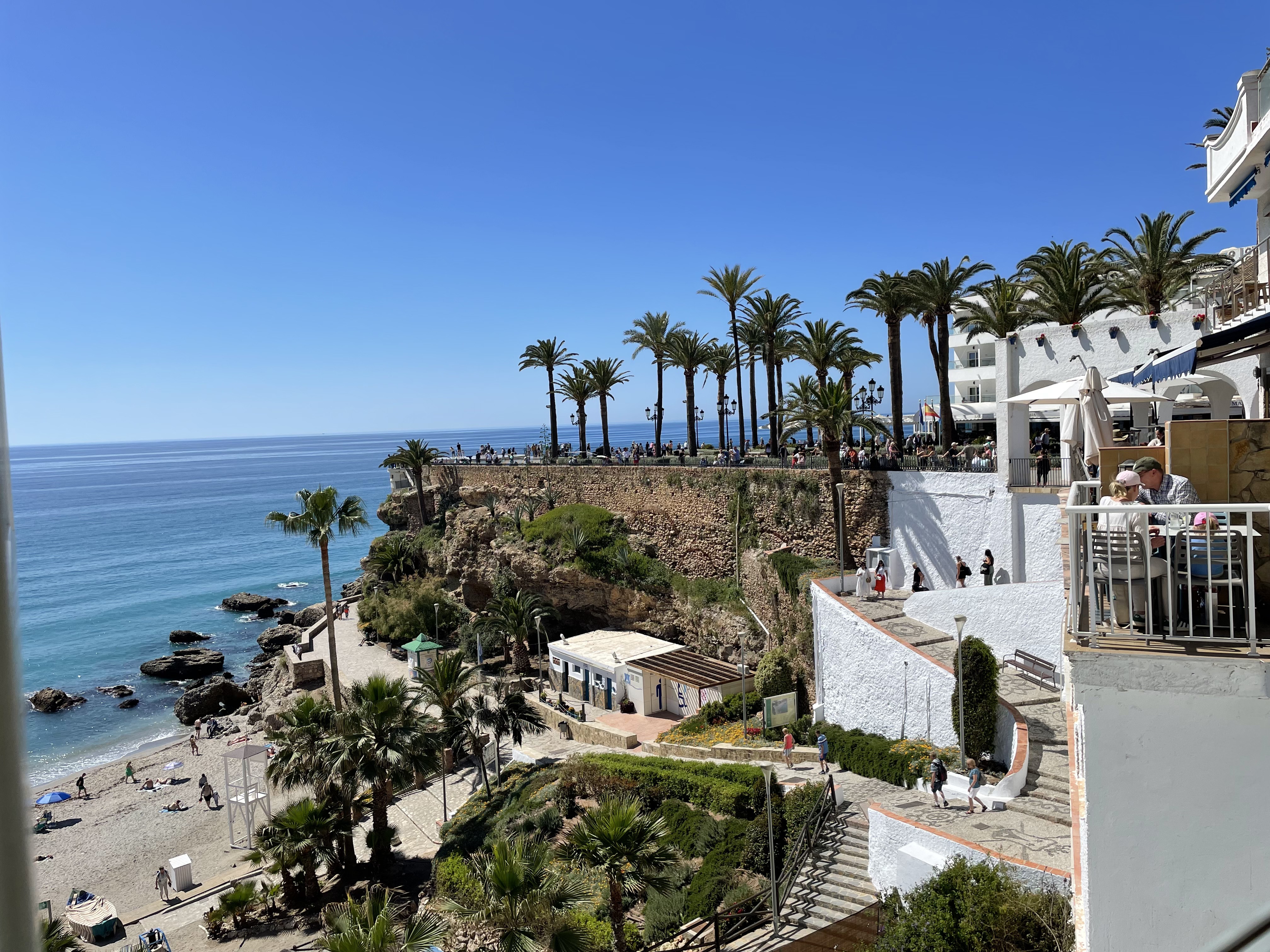
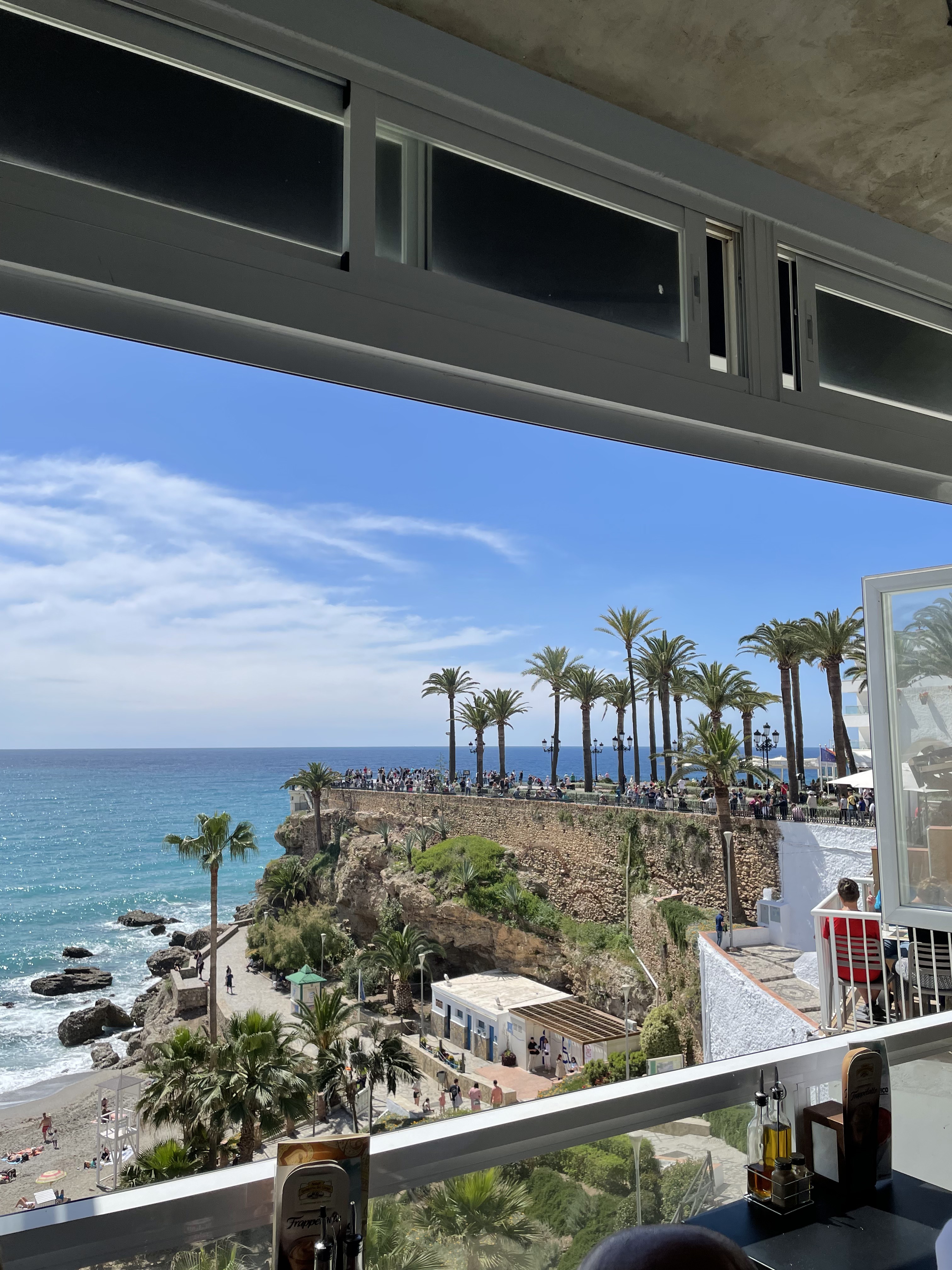
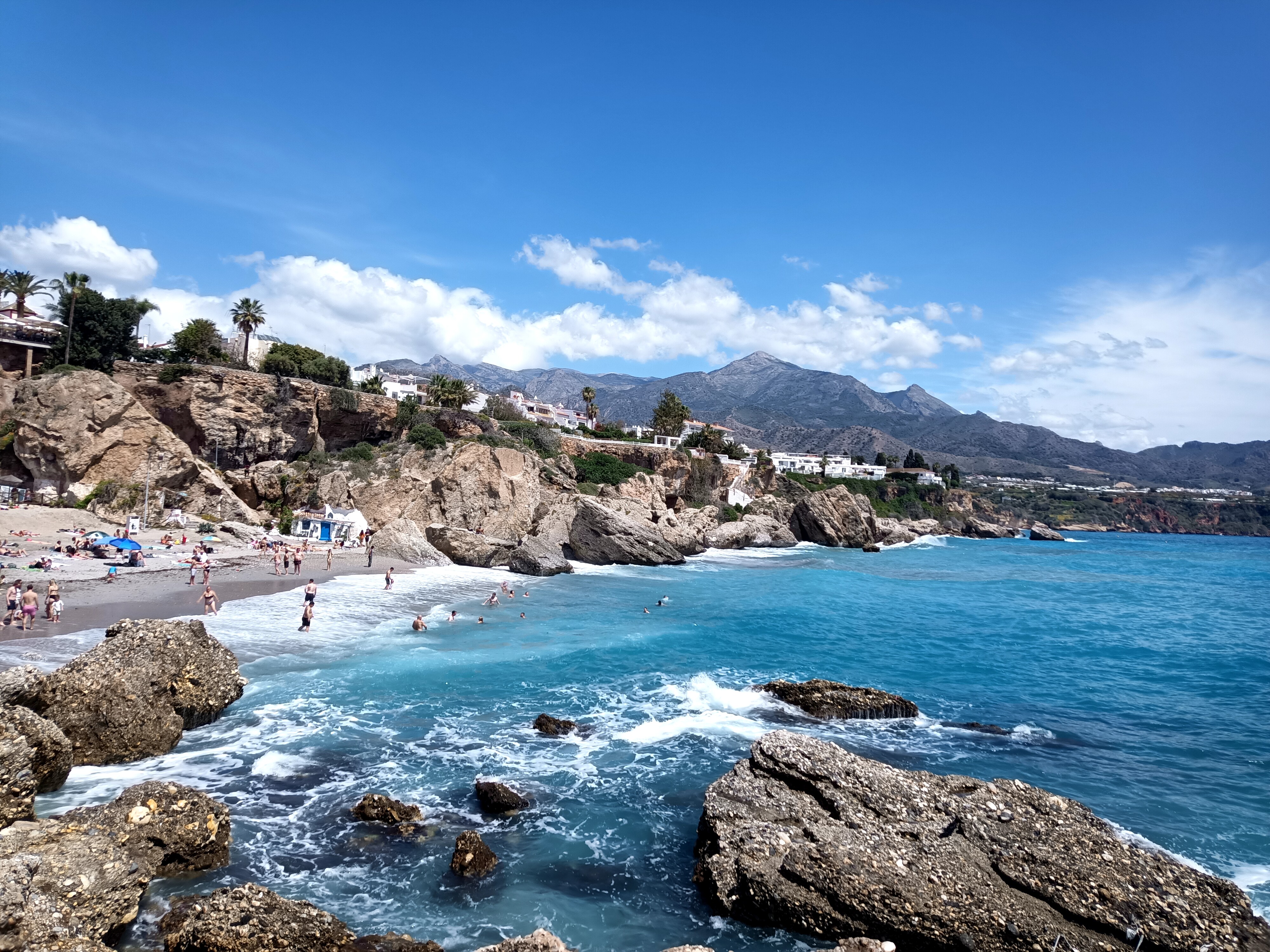
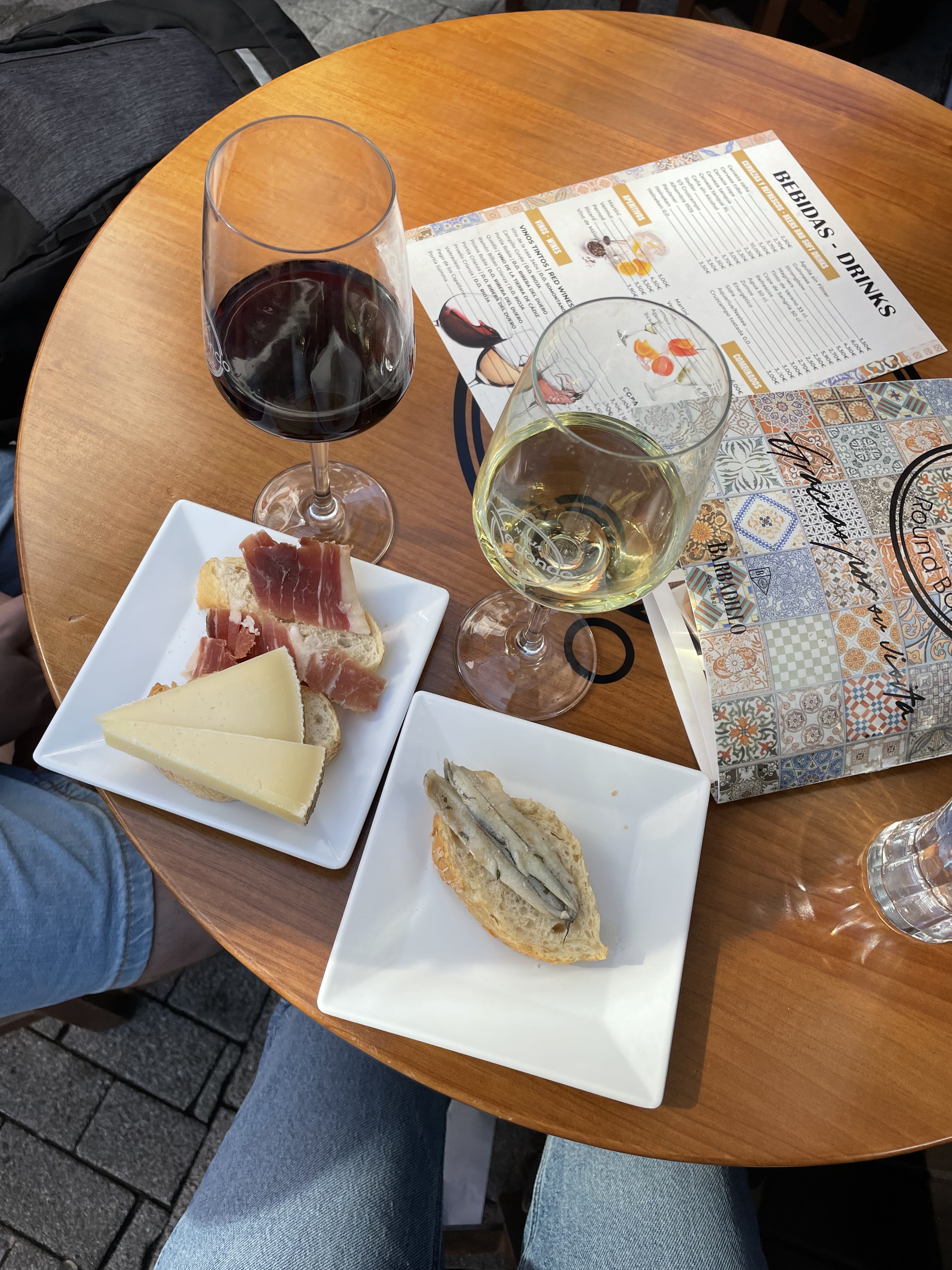
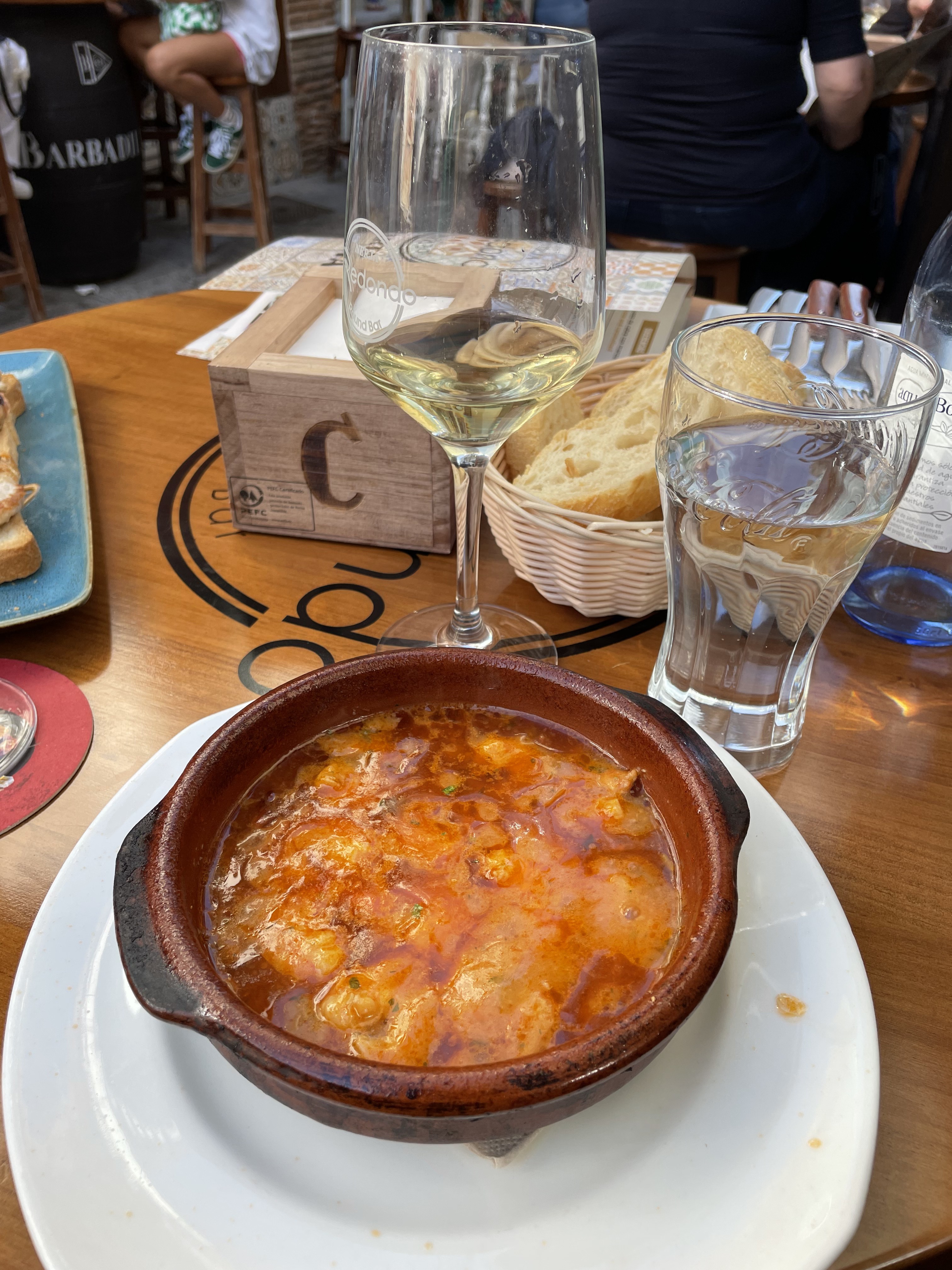
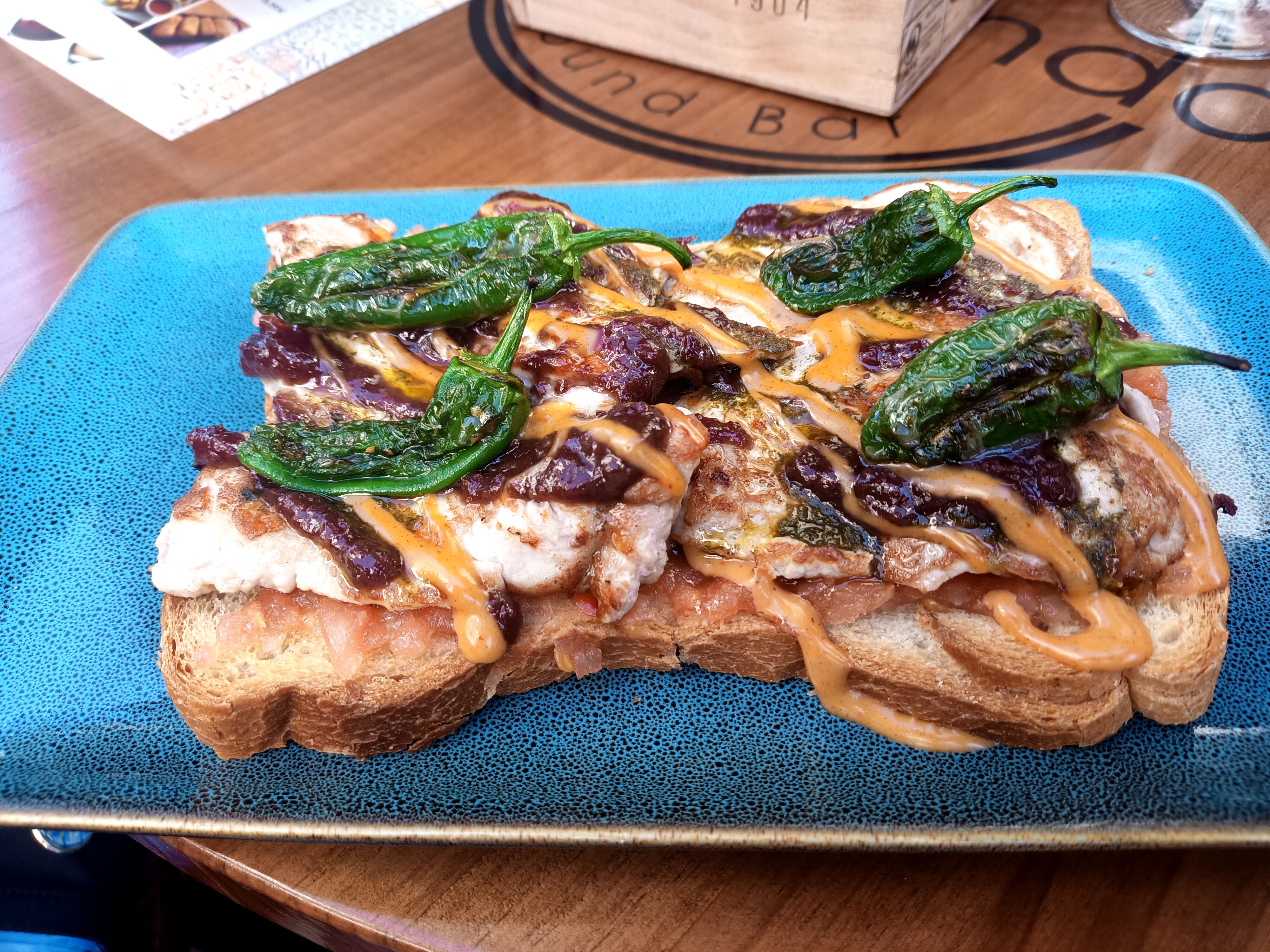
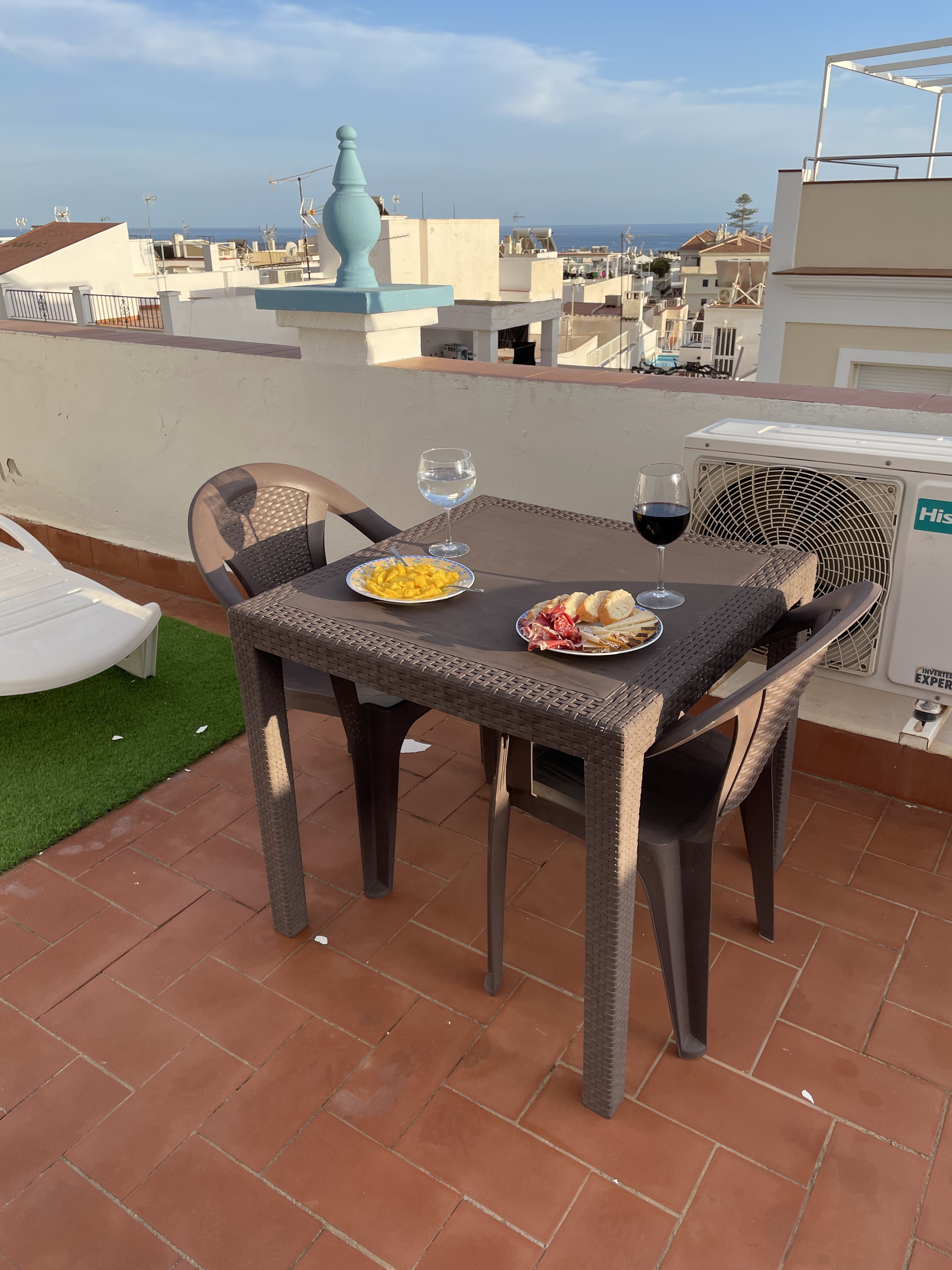
The twenty-first was the postcard day. The Balcón in full sun does the thing it does — light on the water, palms on the cliff edge, the whole town leaning out to watch its own view — and the café windows frame it a second time for free. Down at the cove the swimmers had multiplied and the sea had turned from grey to aquarium glass over the rocks. The first paddle of the trip was conducted at the waterline, with an official finding of brisk. We walked the promenade the long way, then settled in at one of the round wooden tables, where the tapas lunch went round after round — ham and cheese, anchovy toast, a clay pot of the house stew — and the green-pepper tapa with onion jam earned its own photograph. By the time the light went low the white arches looked freshly minted. The day ended the way days here end: slowly — the Balcón at golden hour, then dinner on the roof terrace while the town switched its lights on below.
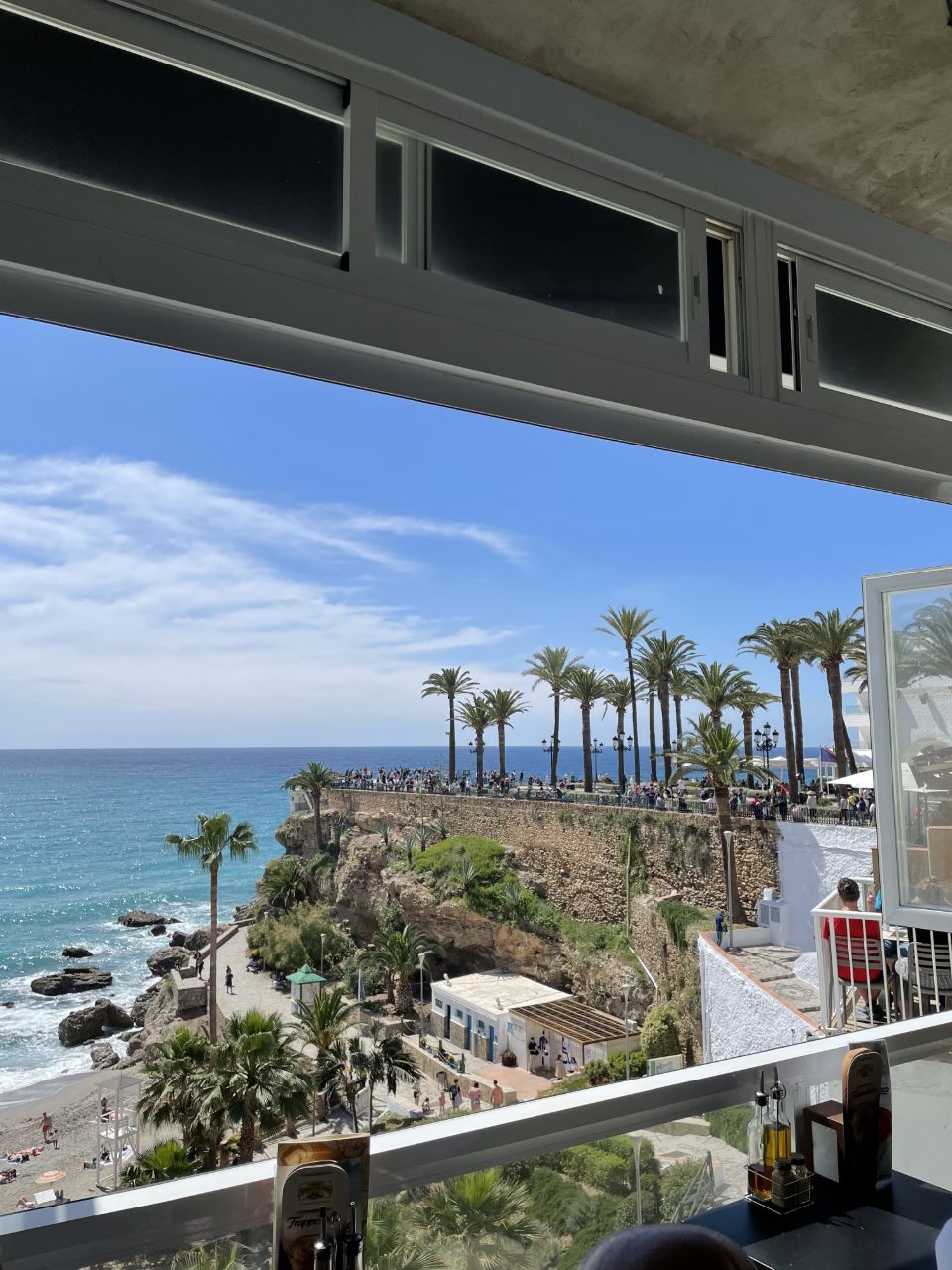
Through the café window, the Balcón in full sun 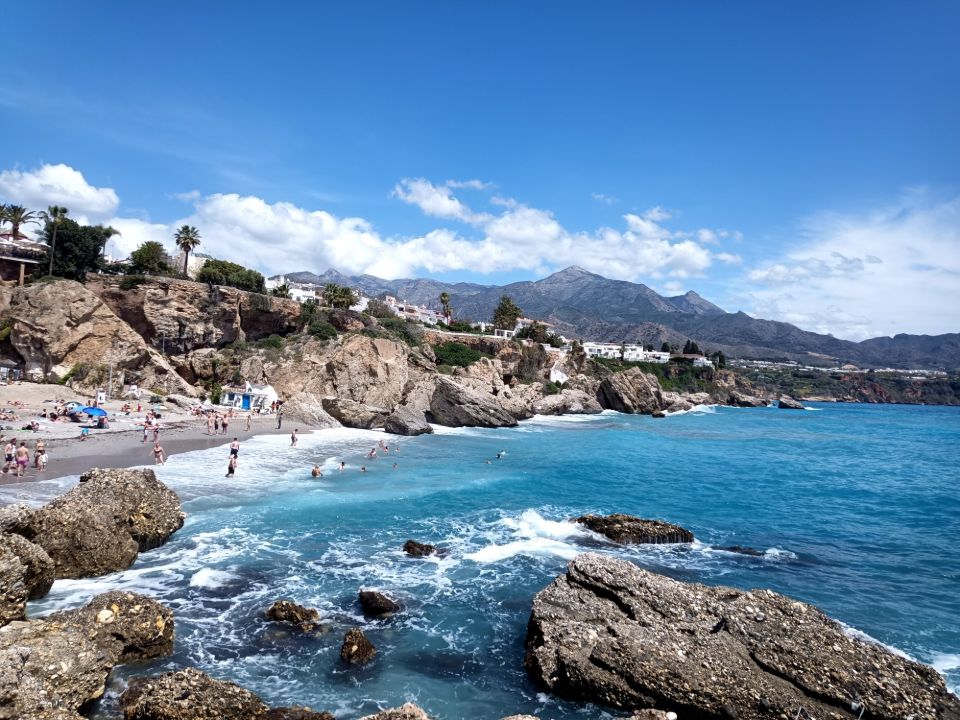
The cove in sunshine 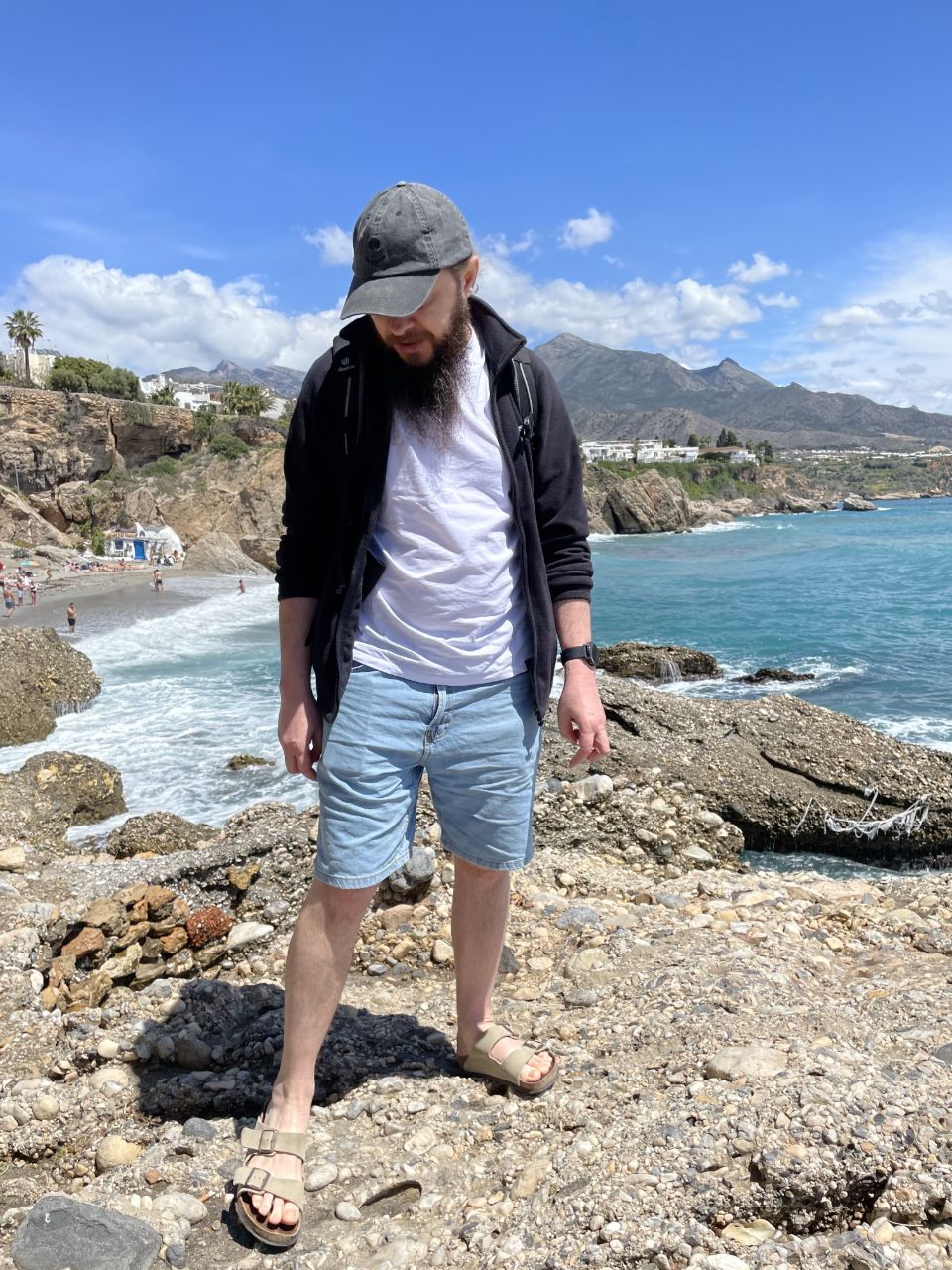
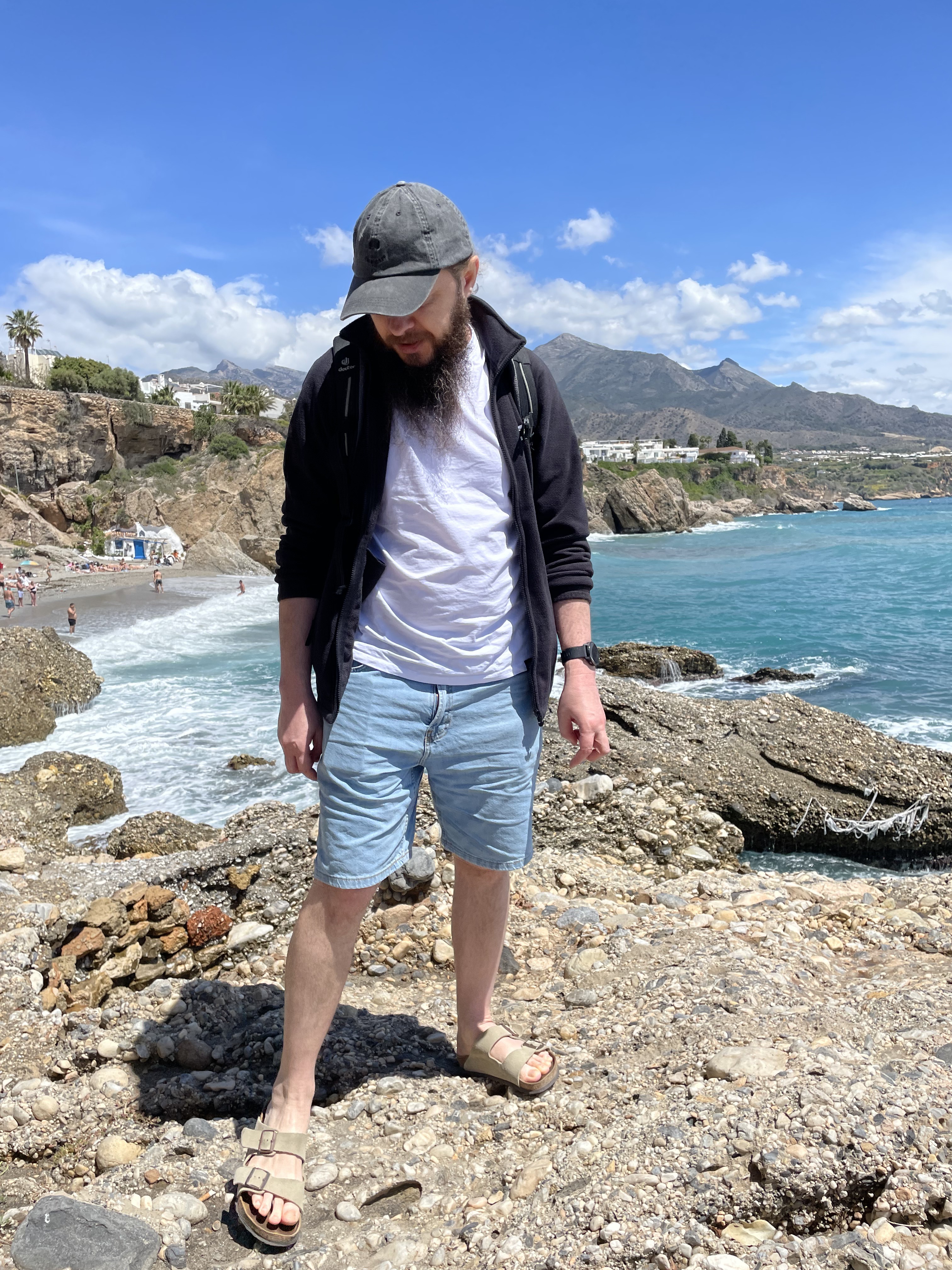
Oleg on the shore below the Balcón 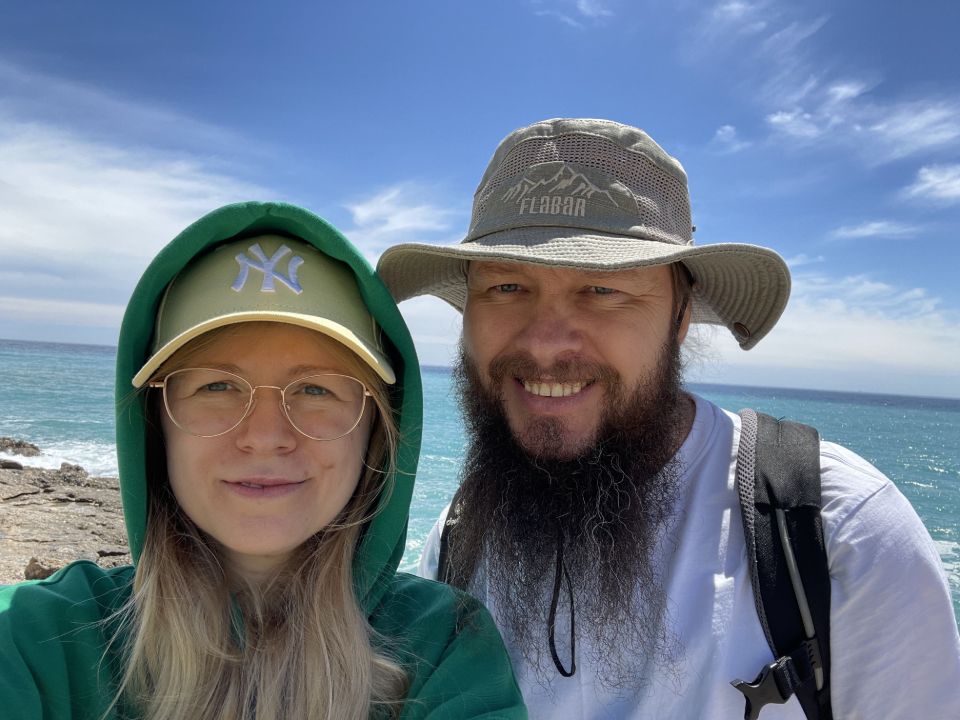
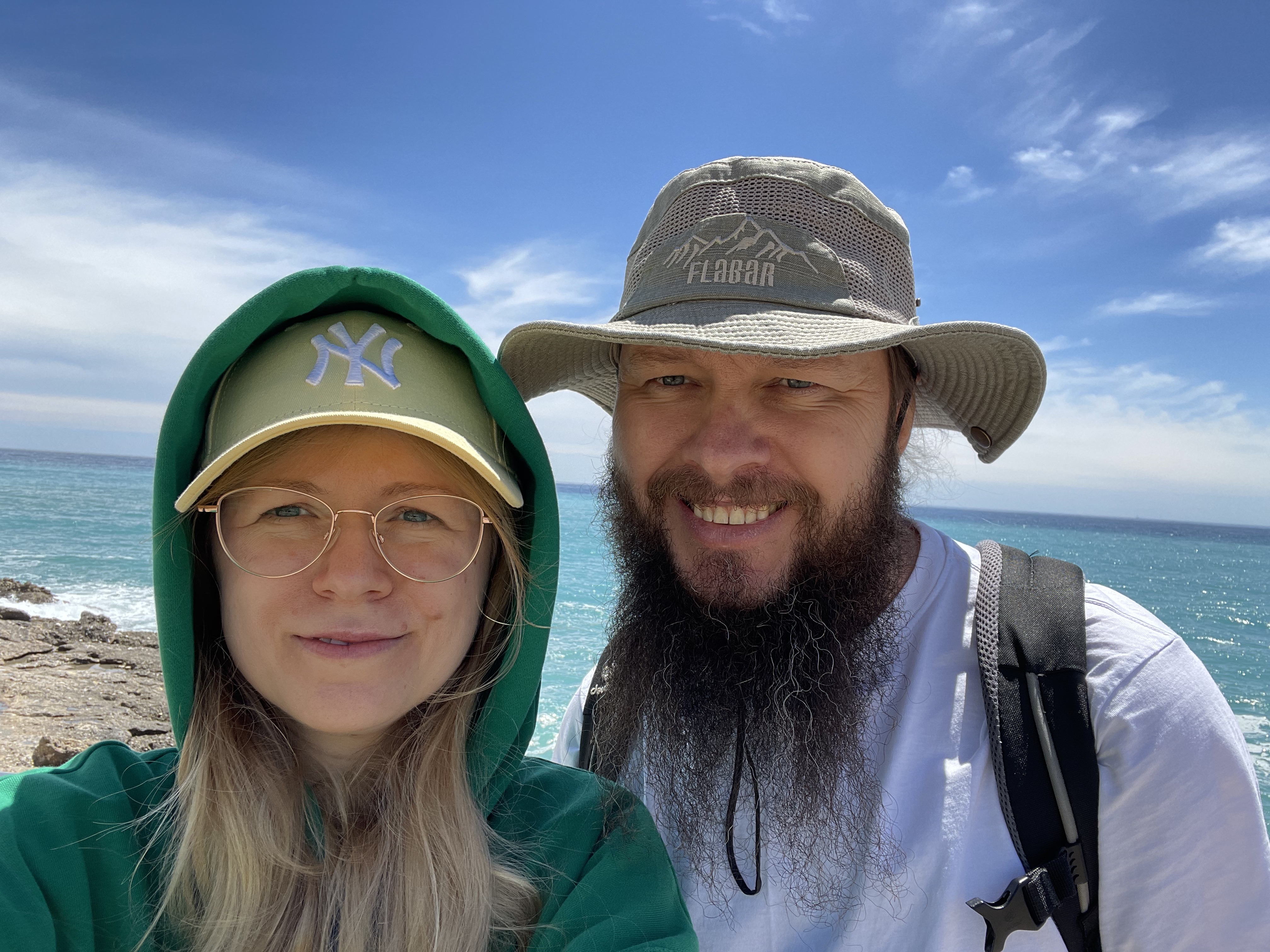
Sea selfie on the paseo 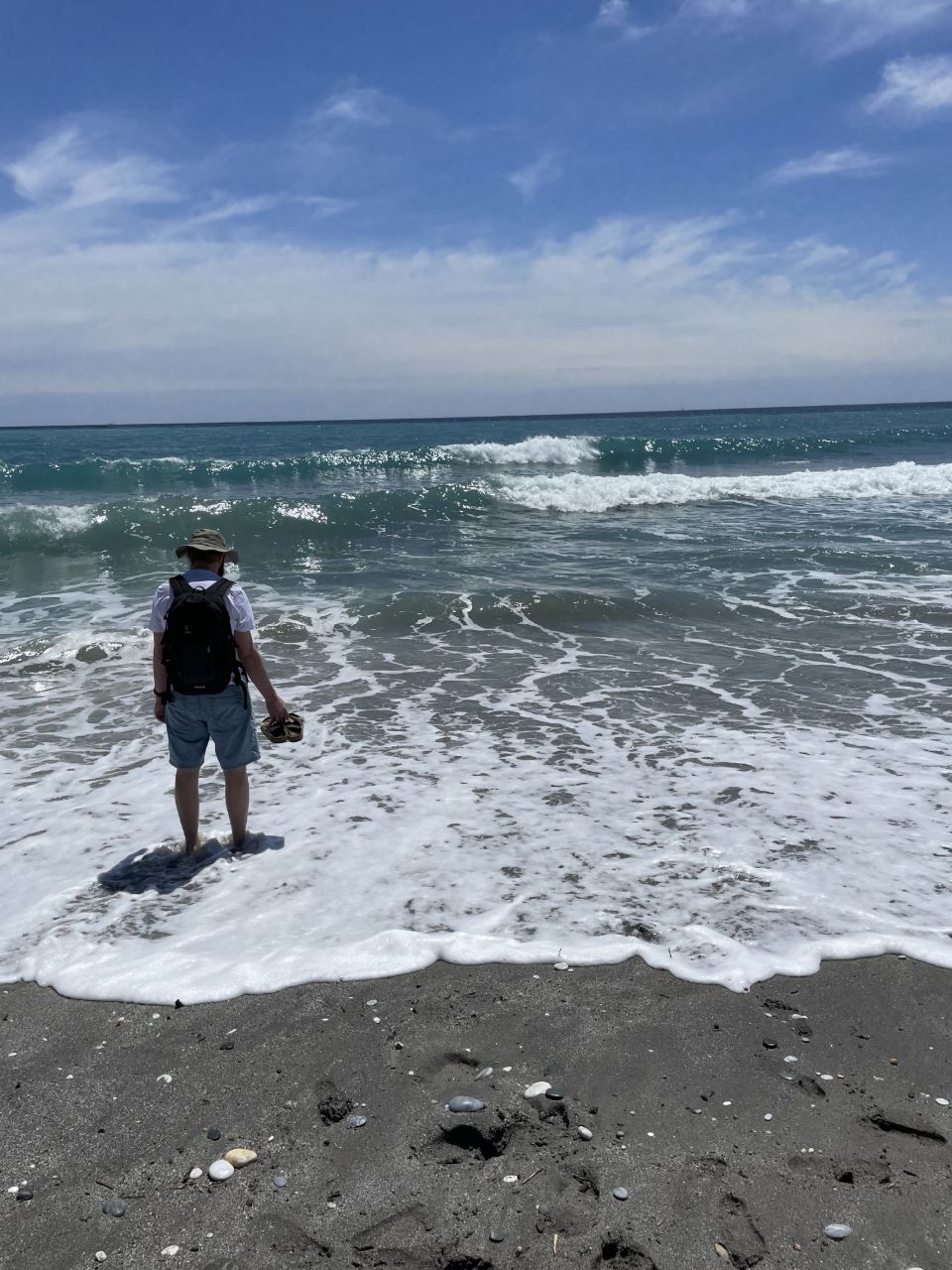
First paddle of the trip 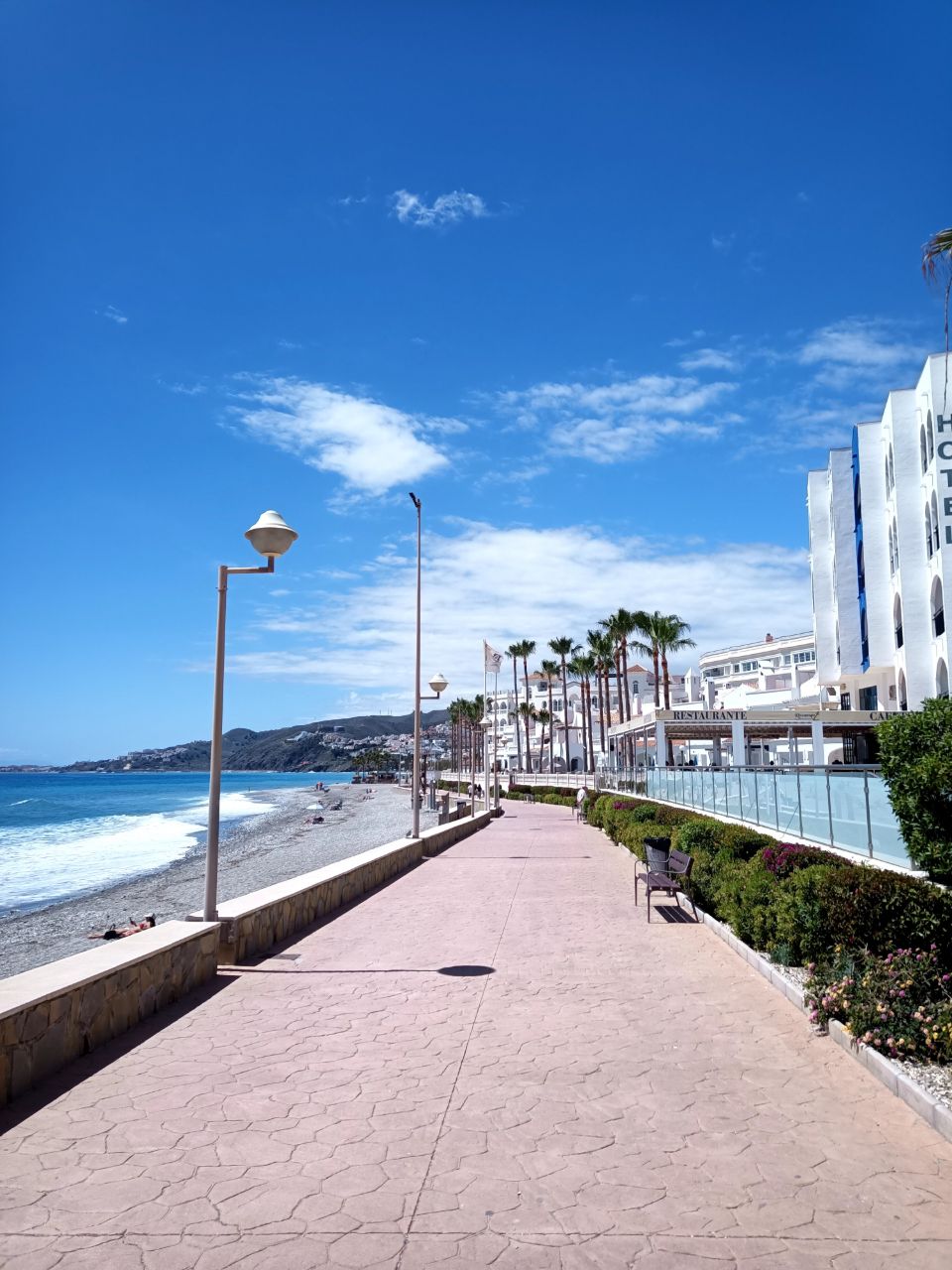
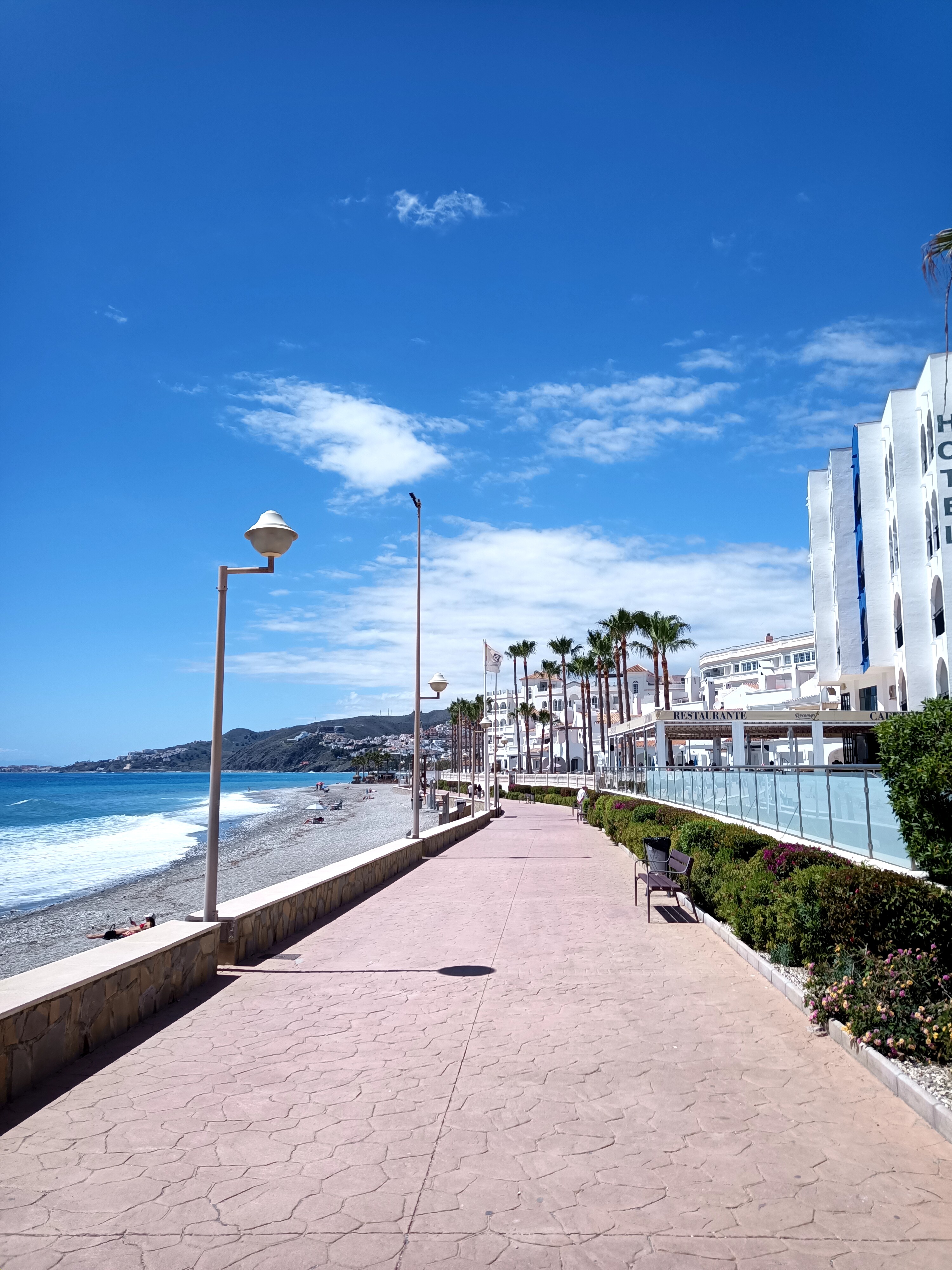
The paseo east, the long way 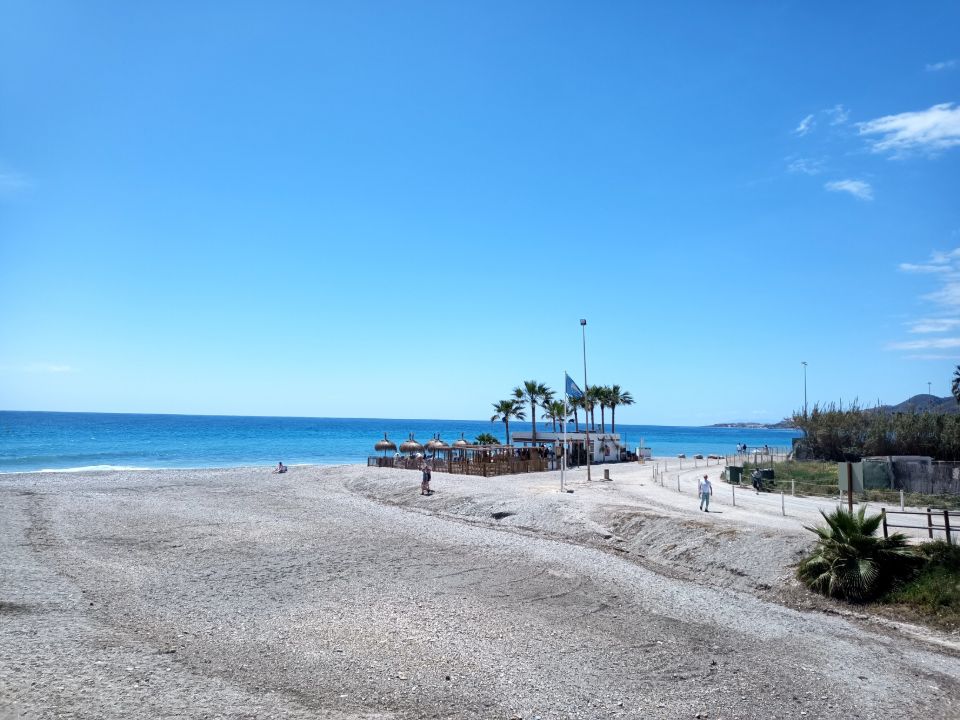
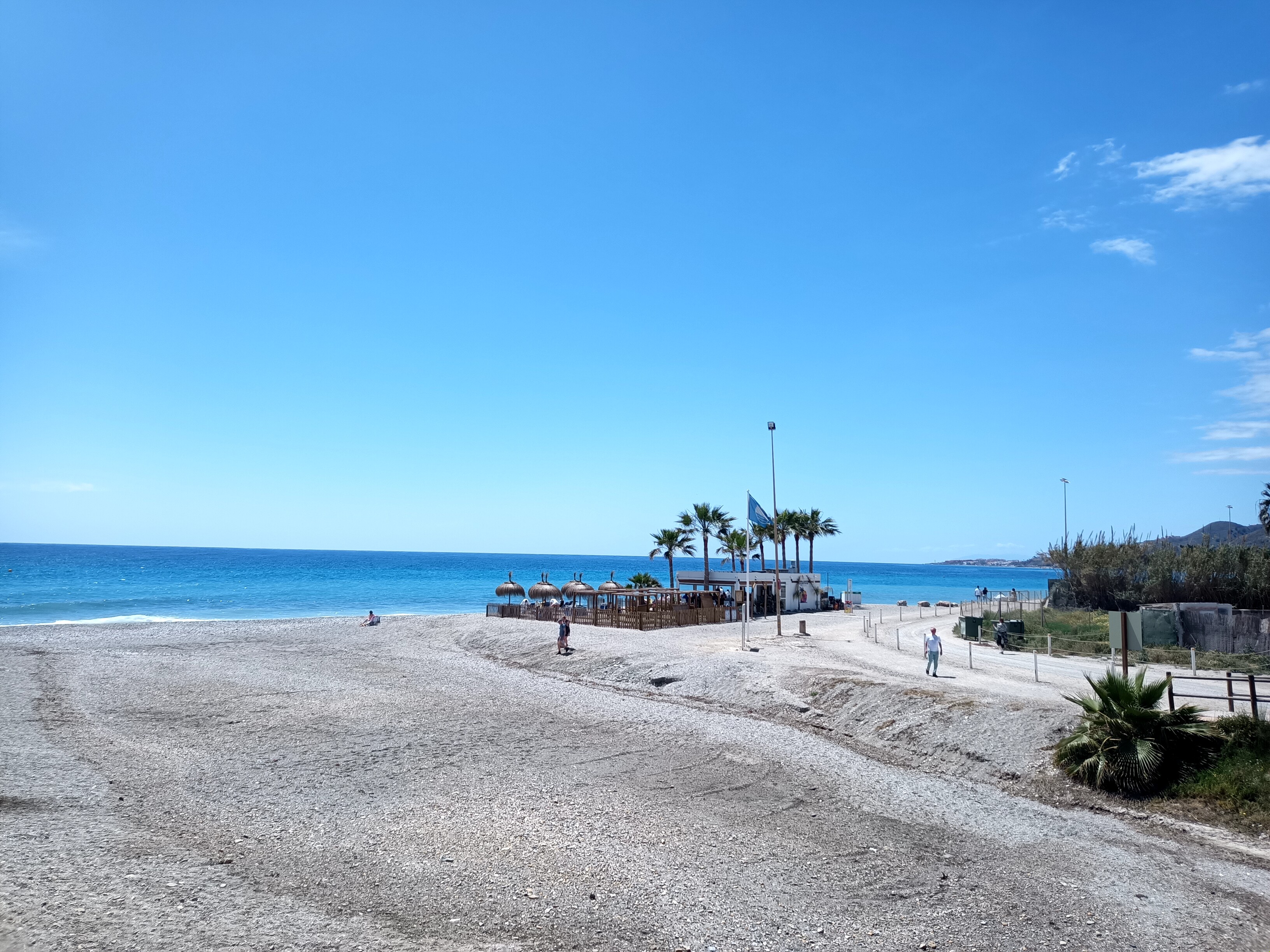
A beach bar in late-April quiet 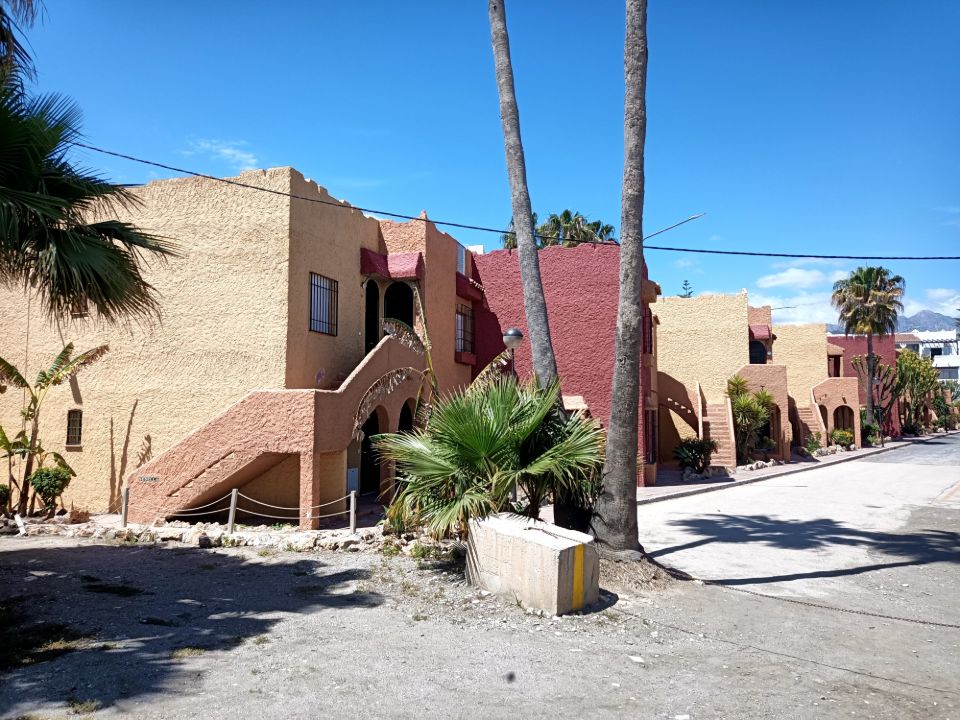
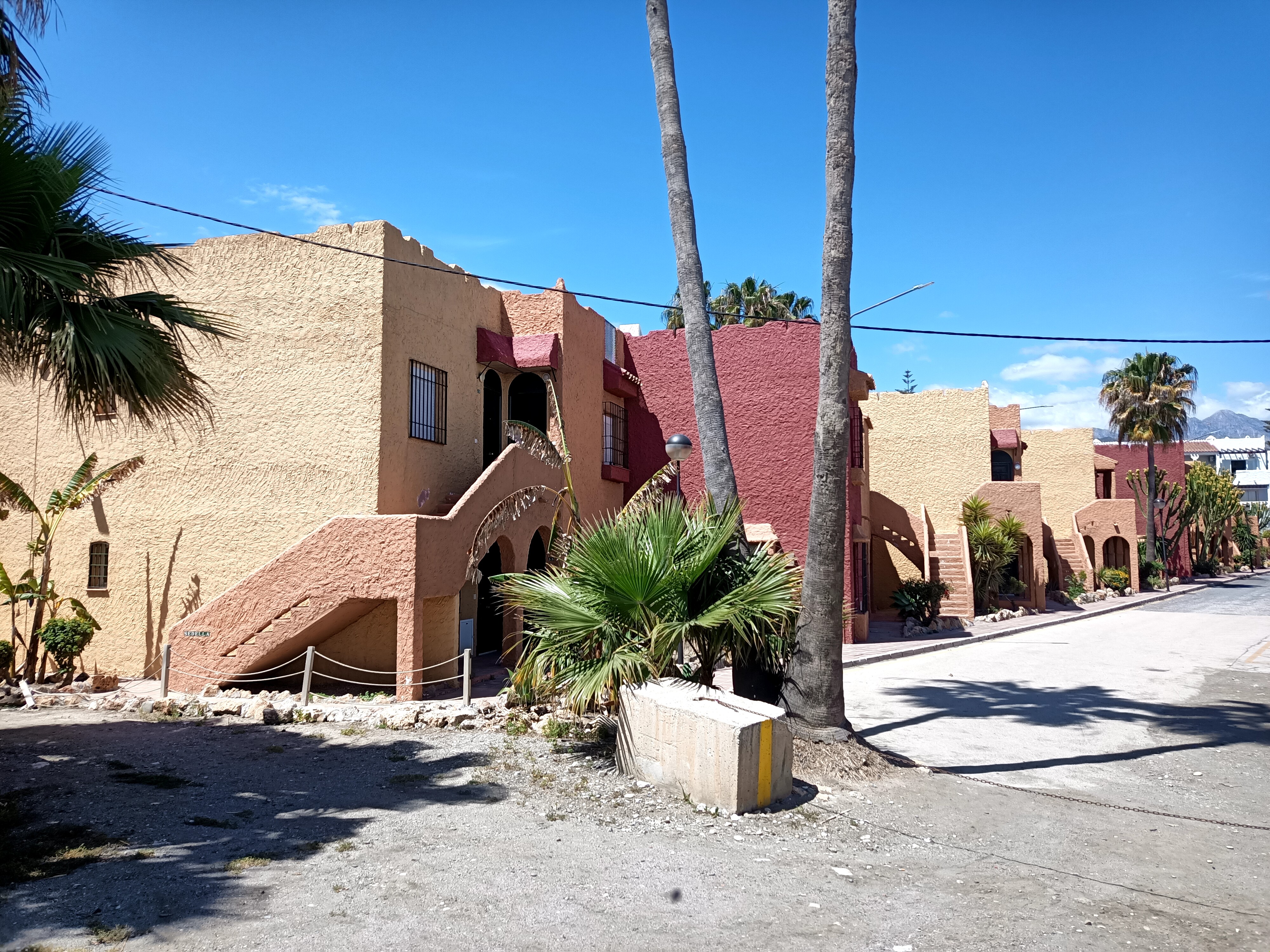
The ochre-and-red backstreet 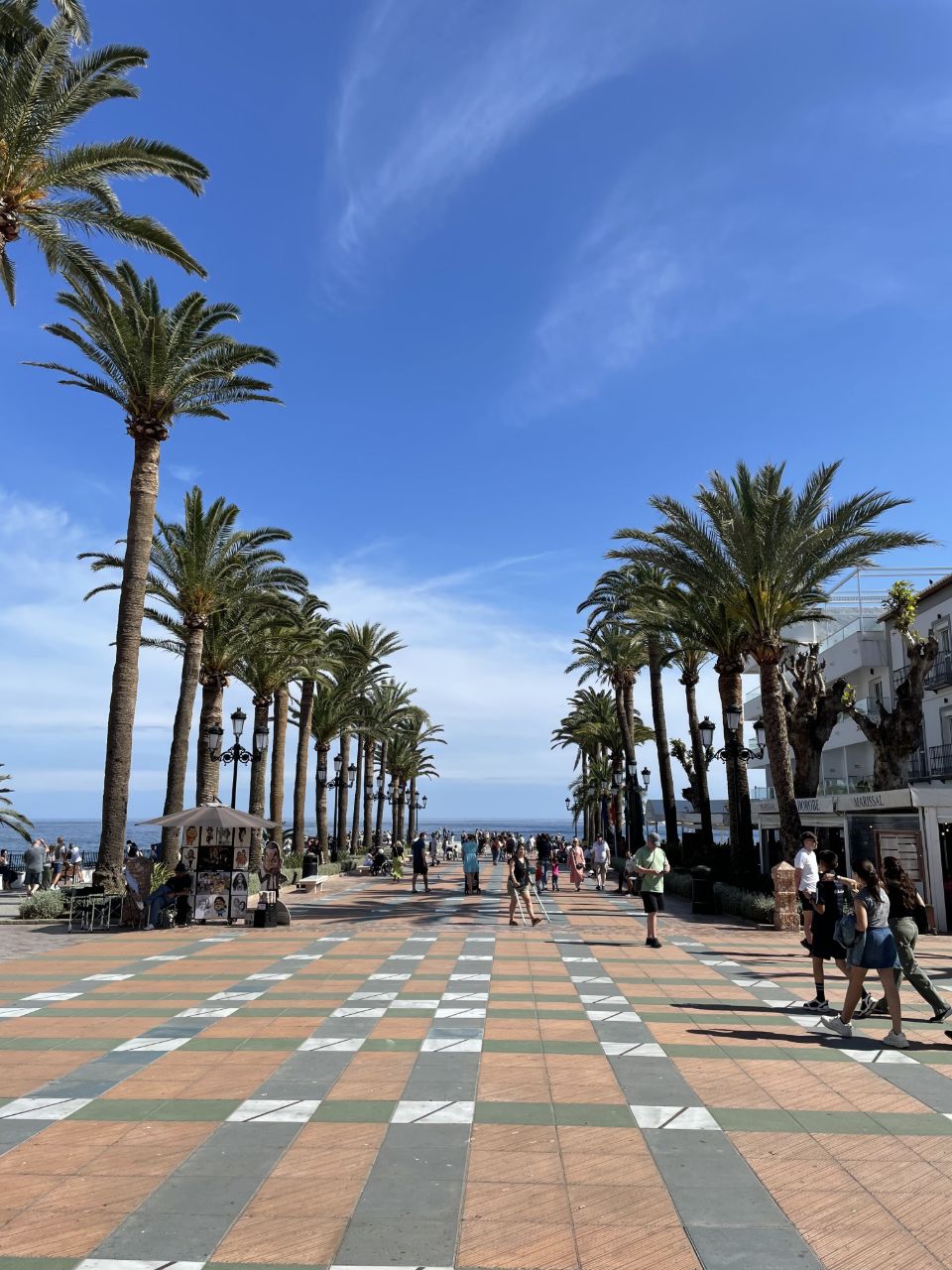
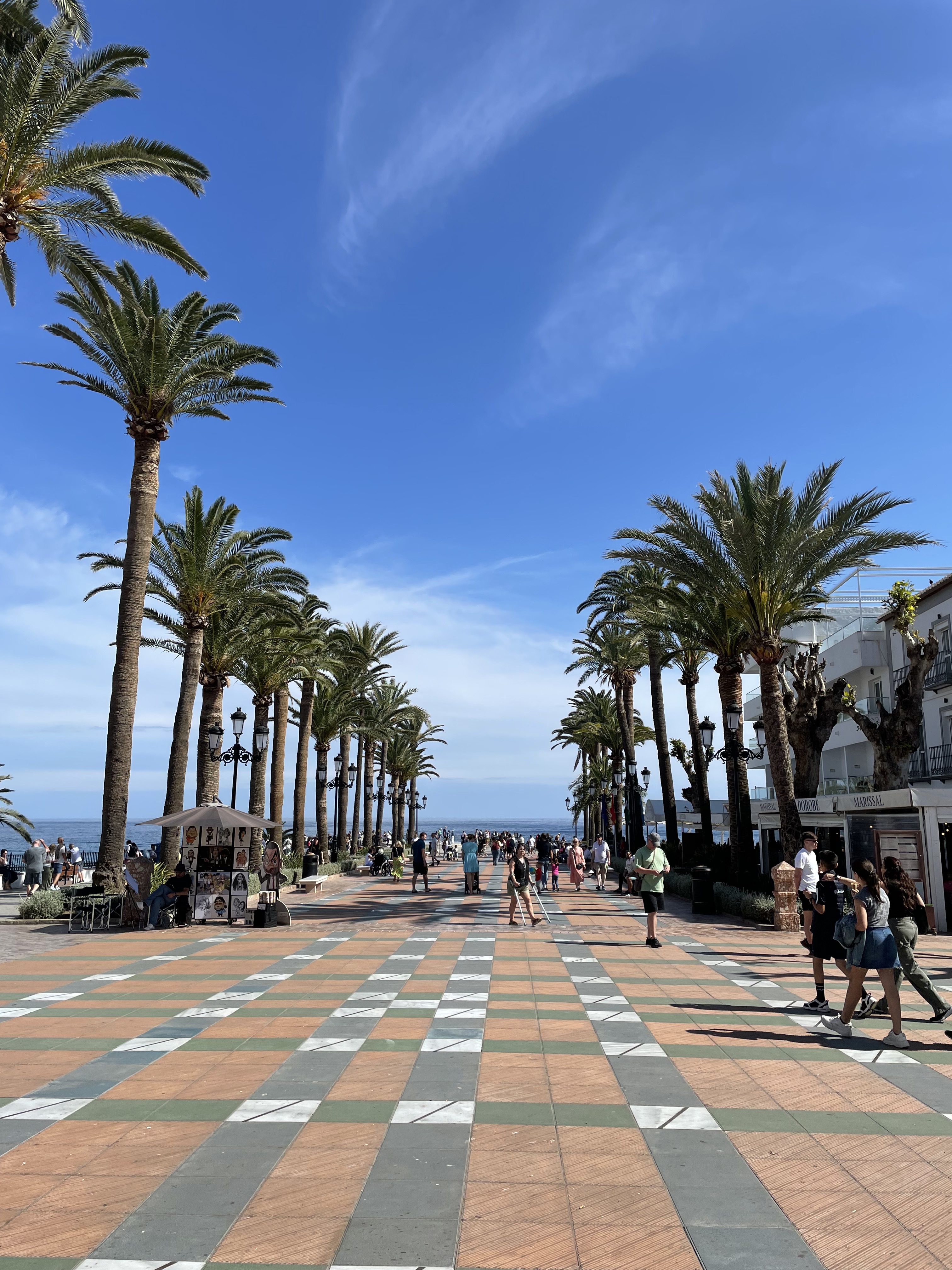
Palm avenue down to the sea 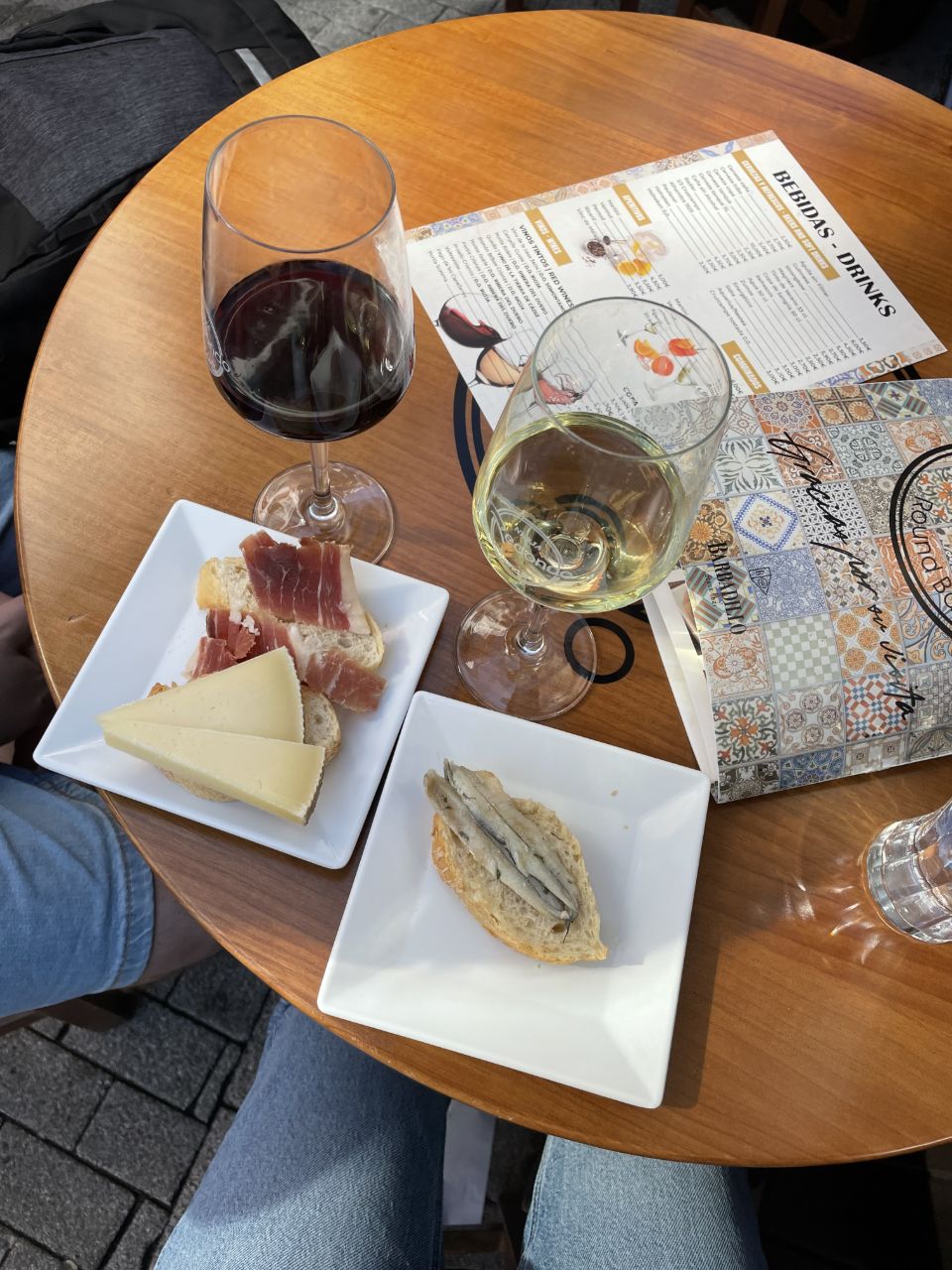
Tapas: ham, cheese, anchovy toast 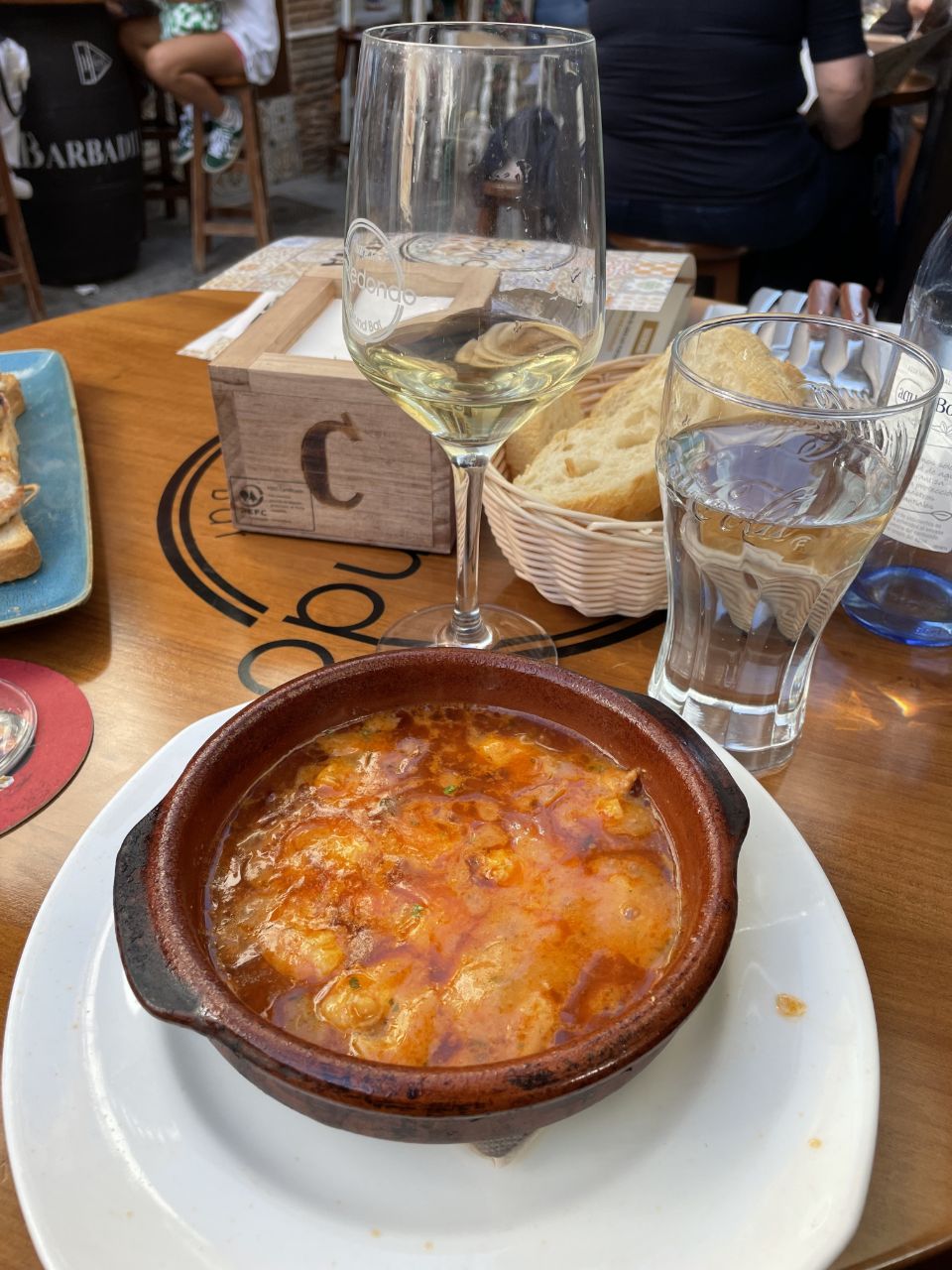
A clay pot of the house stew 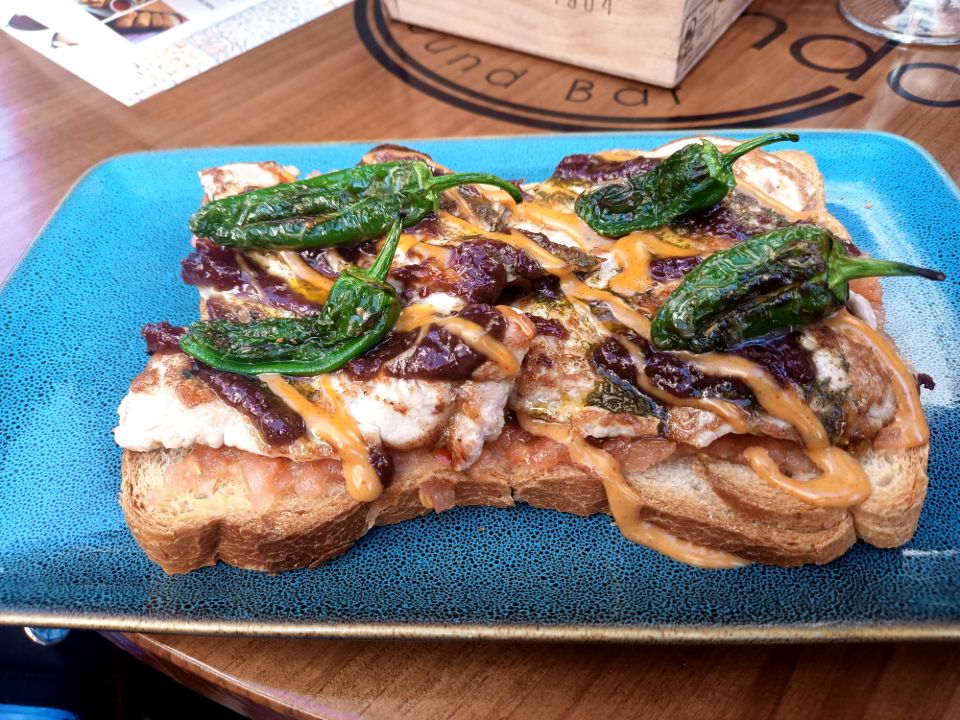
The green-pepper tapa 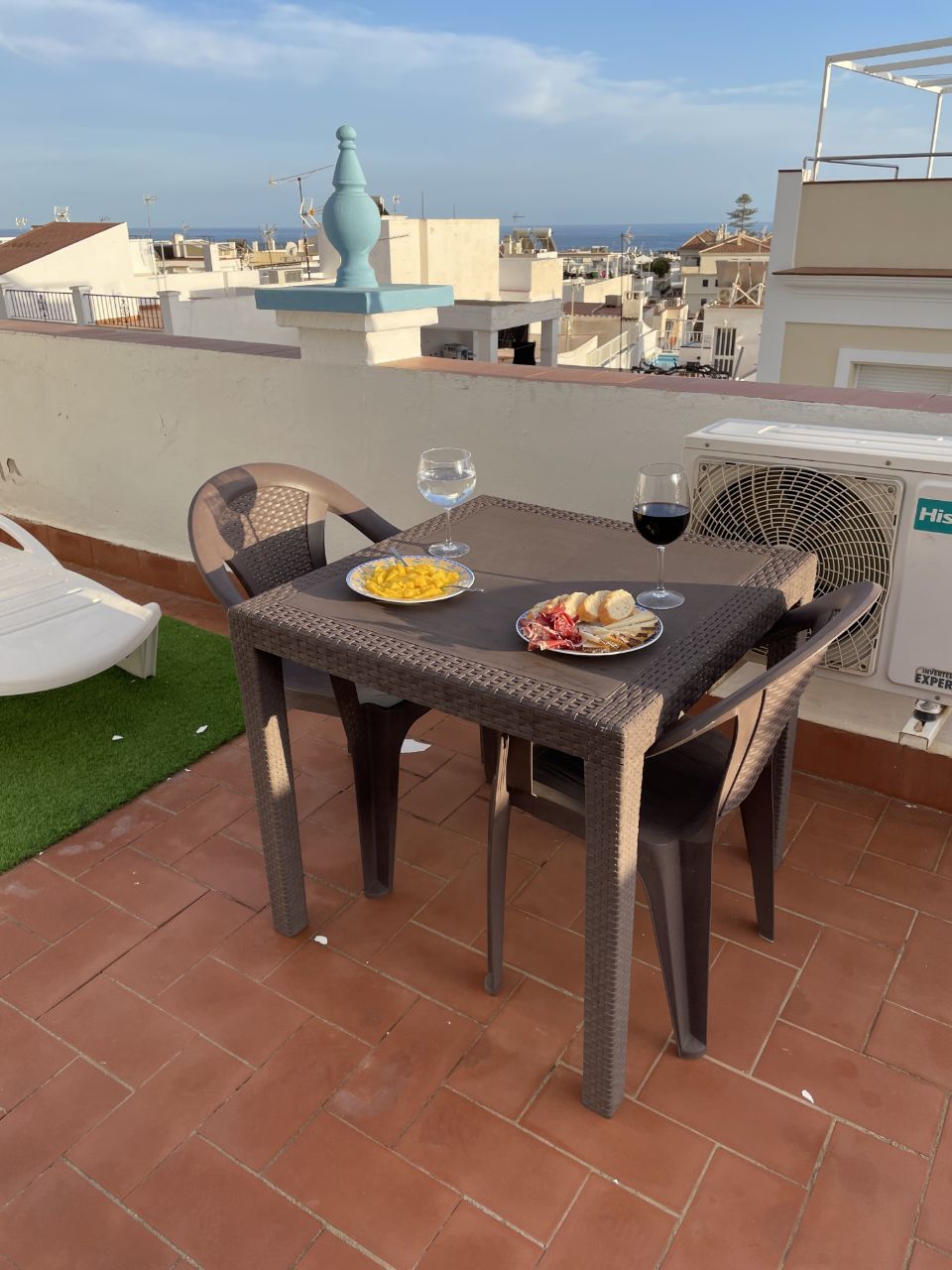
Rooftop dinner, the town switching its lights on below 
Anna at the end of a long sunny day
The long day east: loquats, an aqueduct, one rain
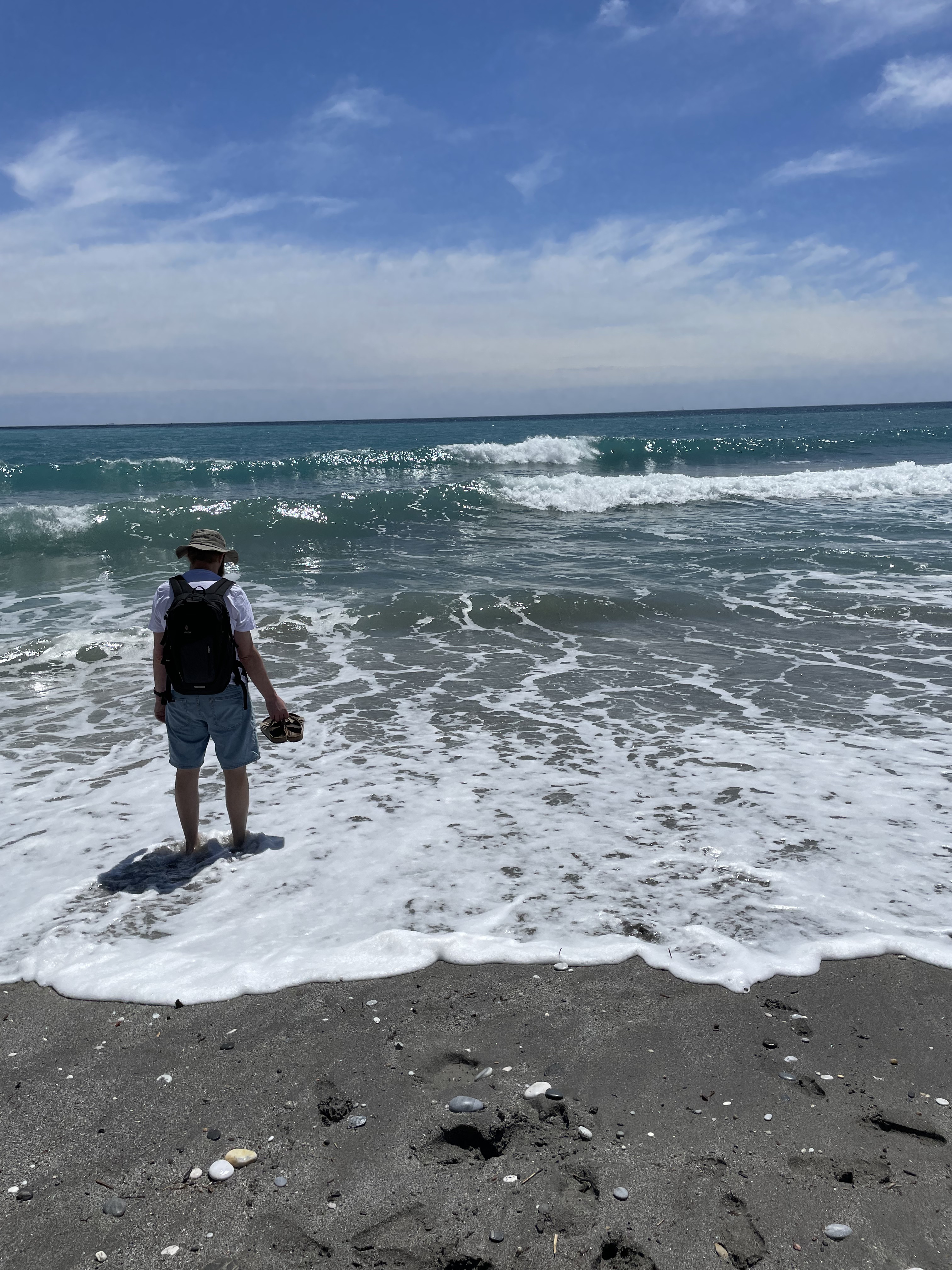
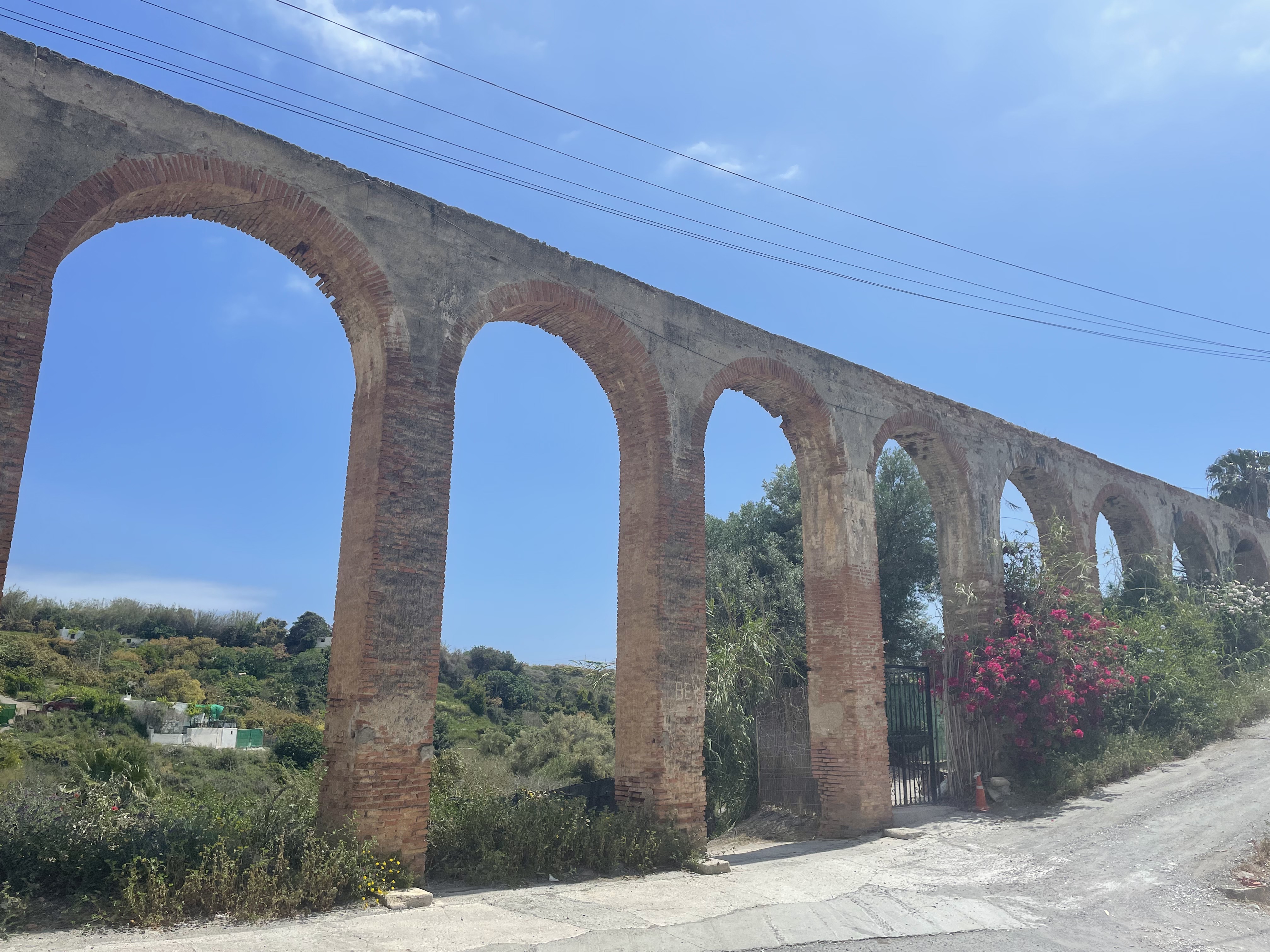
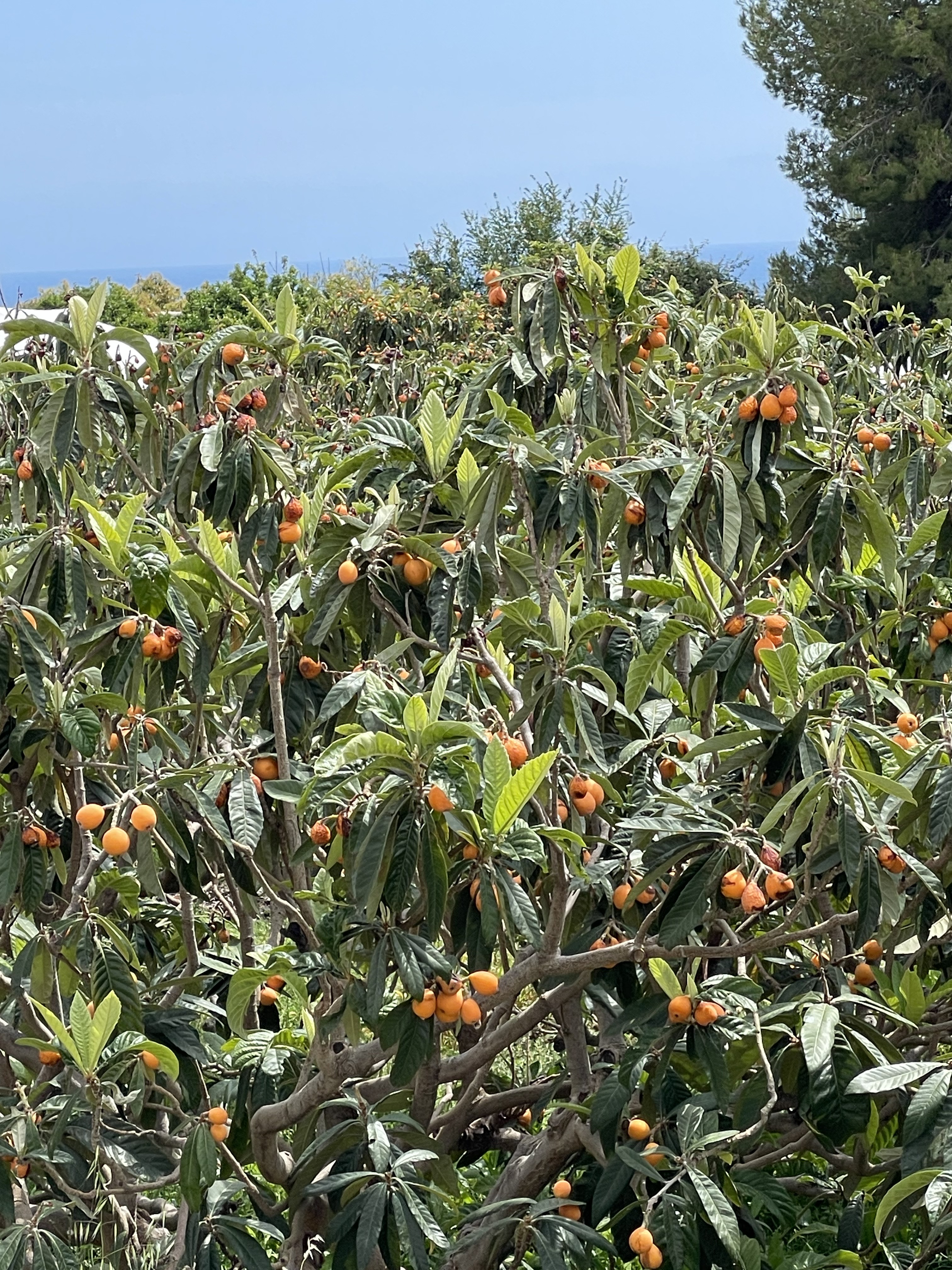
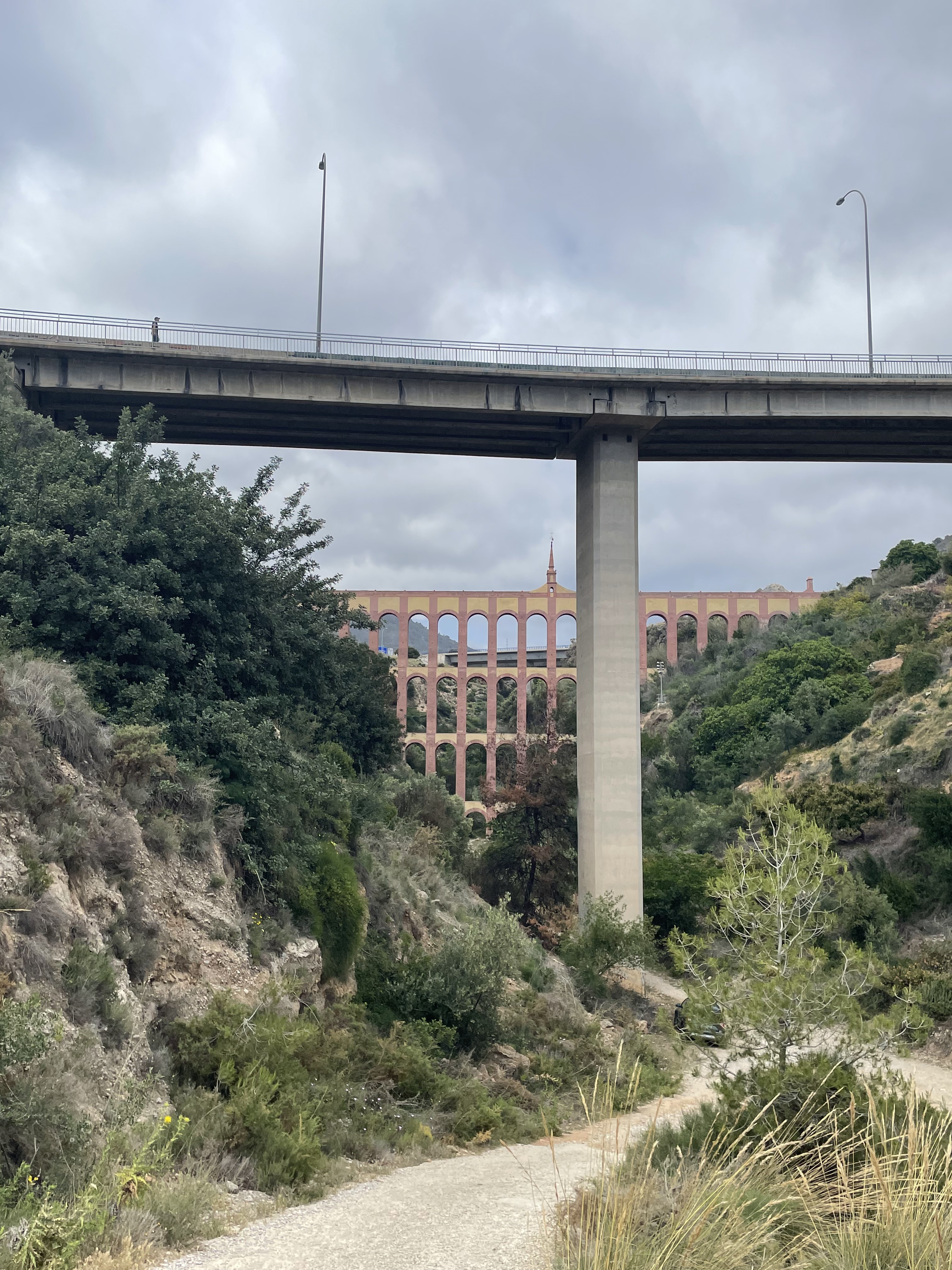
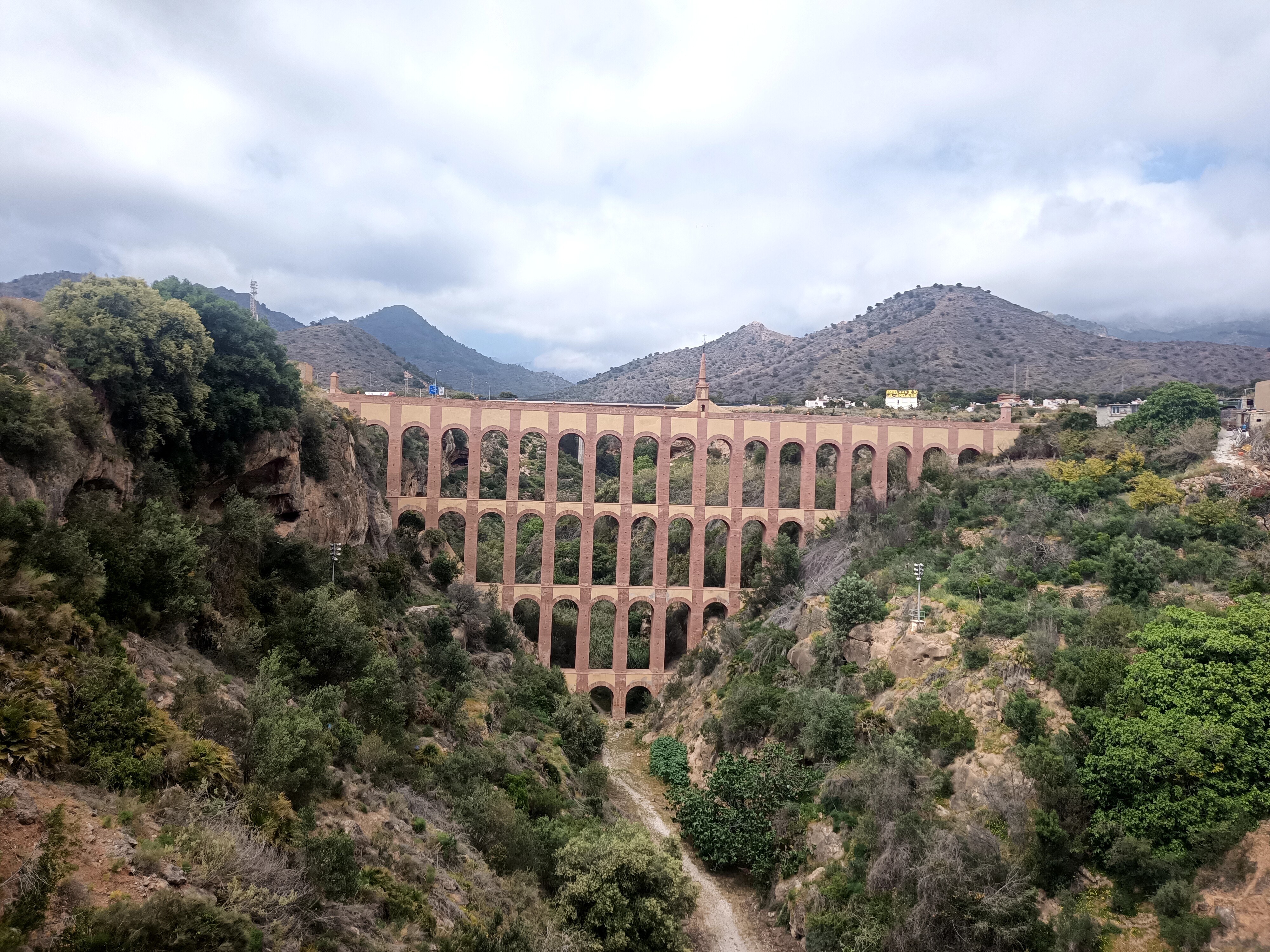
The twenty-second opened on the pebbles — Nerja's beaches are pebble beaches, announced politely by everyone and taken seriously by our feet — with Anna surveying the surf line at close range and Oleg testing the towel-on-pebbles hypothesis. After lunch we followed the road east toward Maro, which hands out its surprises at intervals: a segment of old brick aqueduct crossing the road on tall arches, a loquat tree on the verge loaded with ripe orange fruit, and then the Águila aqueduct itself, tiers of salmon-pink arches marching through a green ravine between the hills. The rain caught us on the way back and gave up within the hour, as if embarrassed. The evening made up for it on the Balcón in gold, and after dark the town switched to its night version — red flowers in blue pots lit from below, the church floodlit, the moon in the correct window of sky.
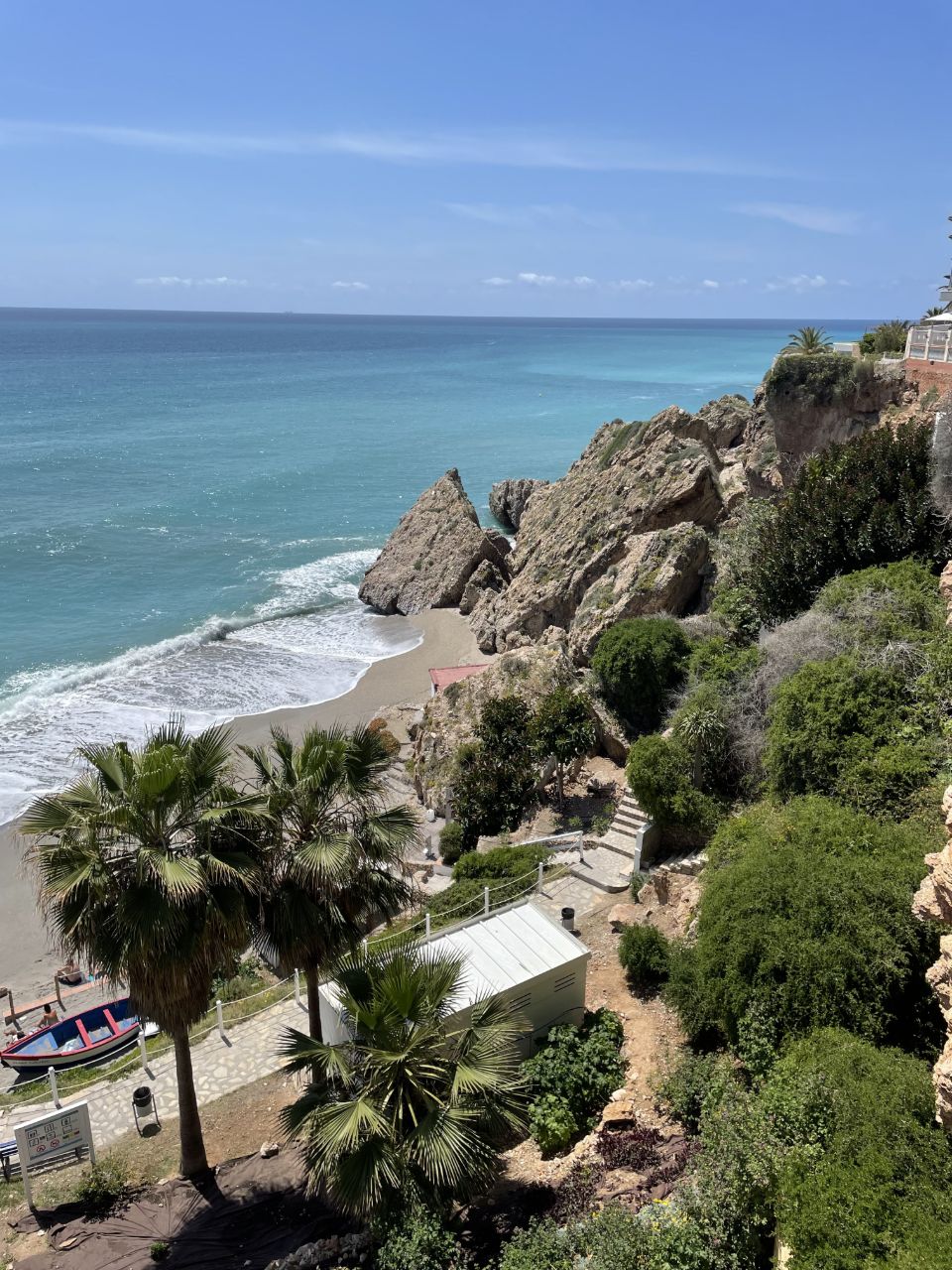
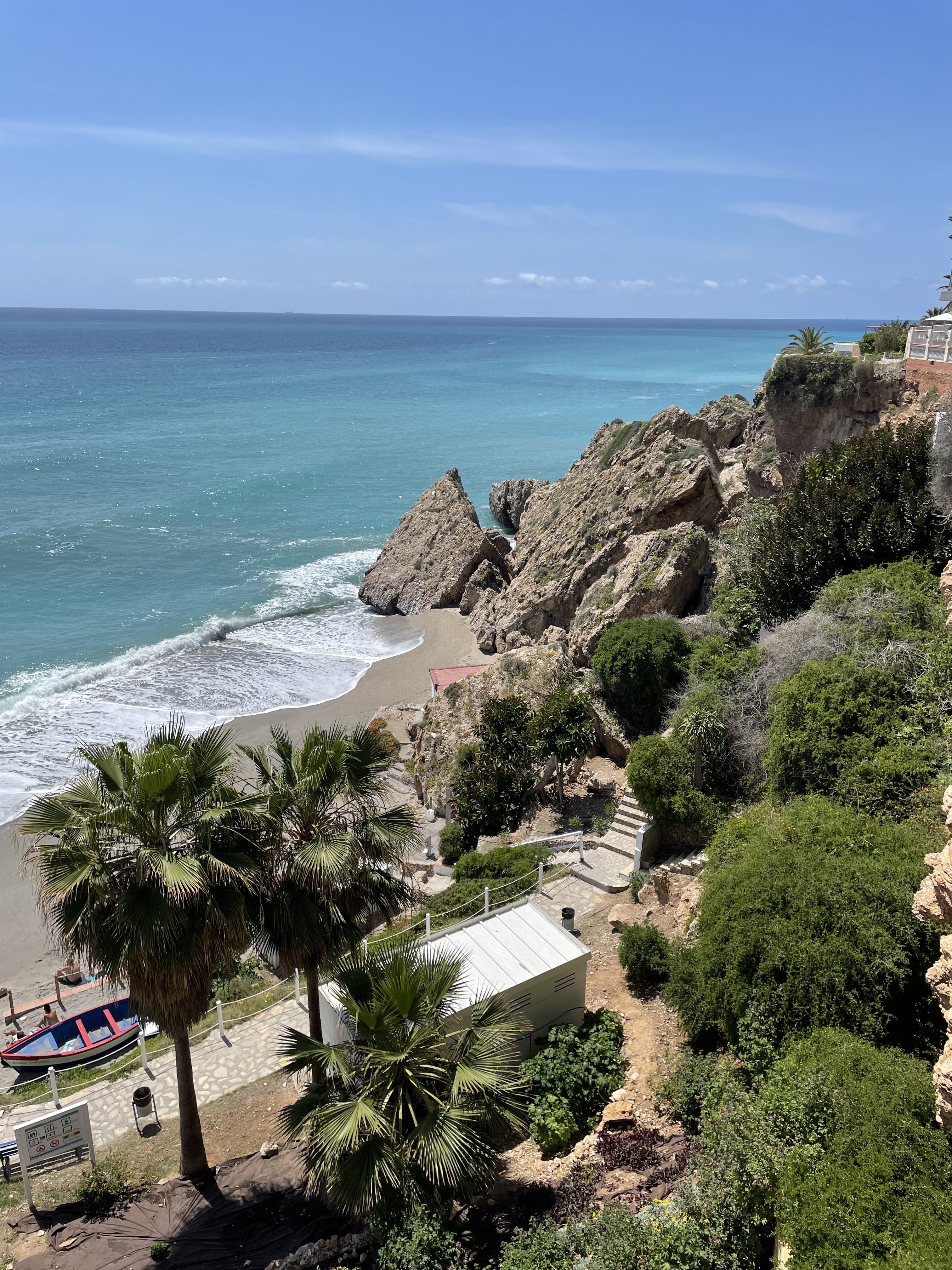
The cove from above 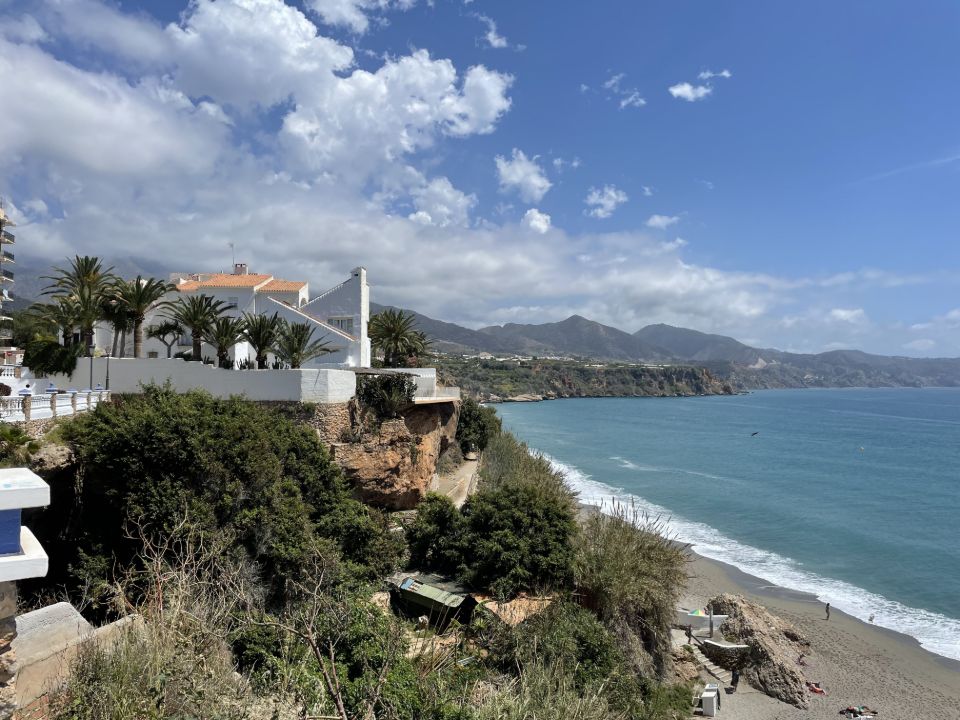
From the church terrace, the east bay 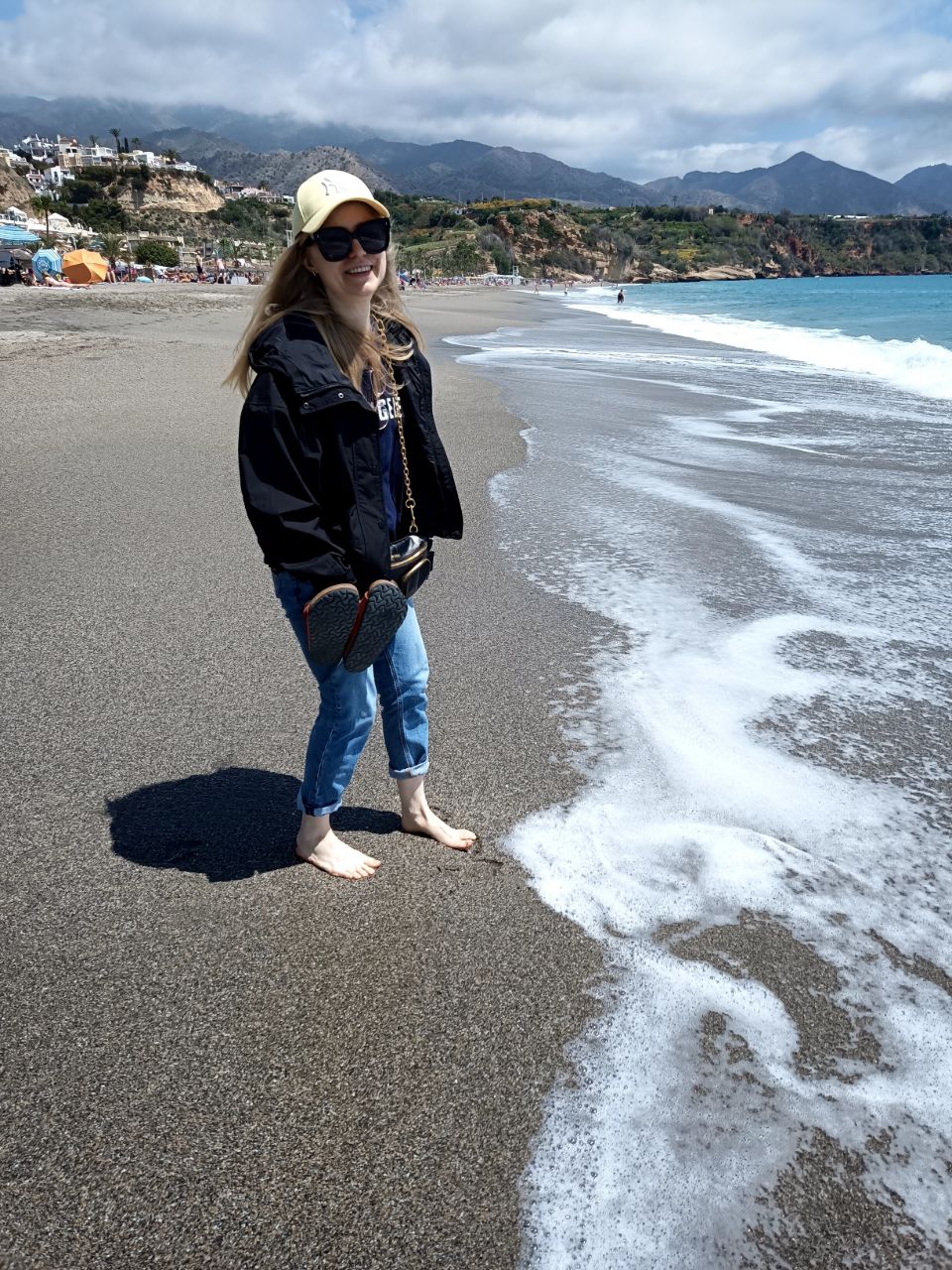
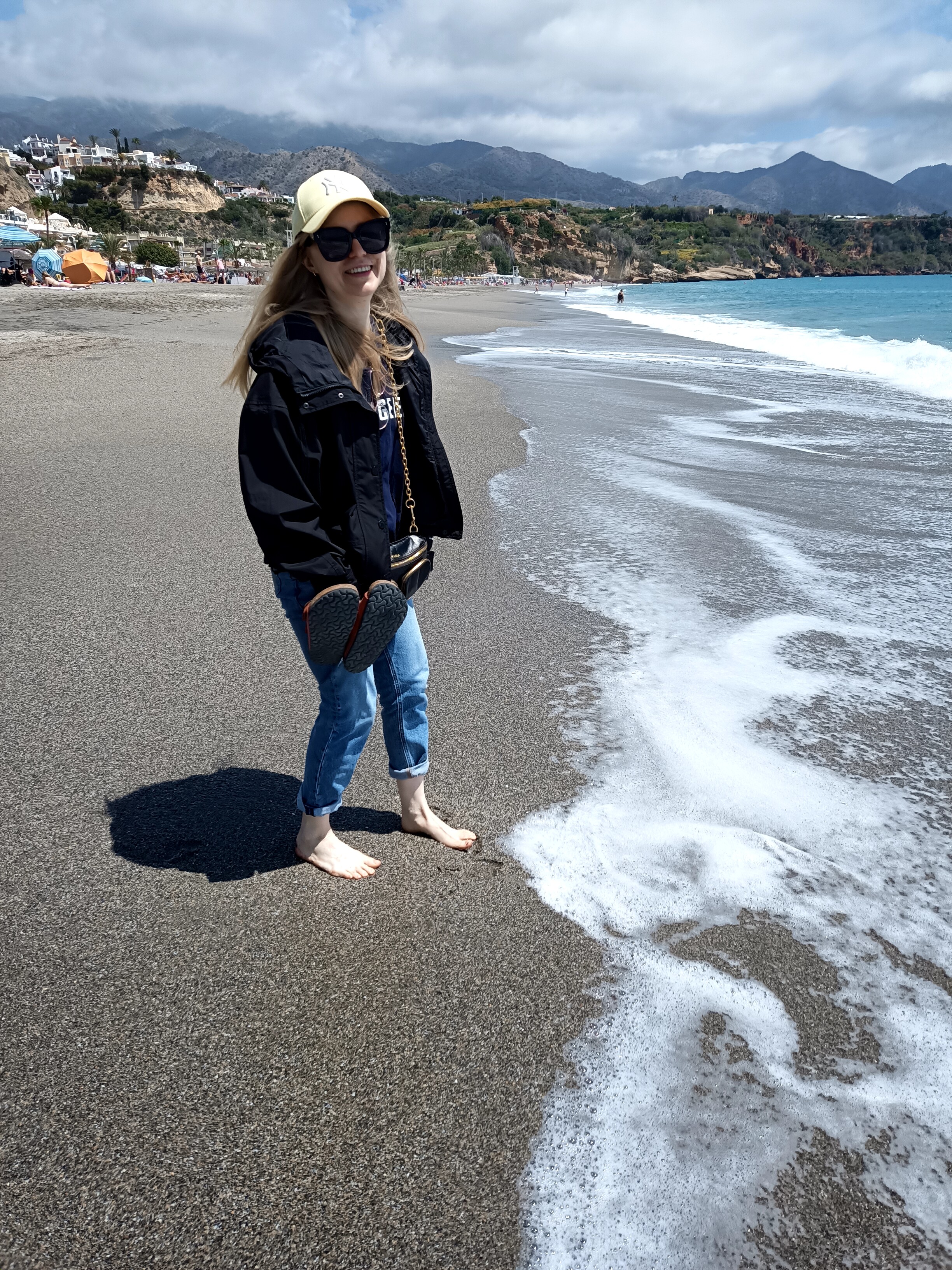
Anna in the shallows 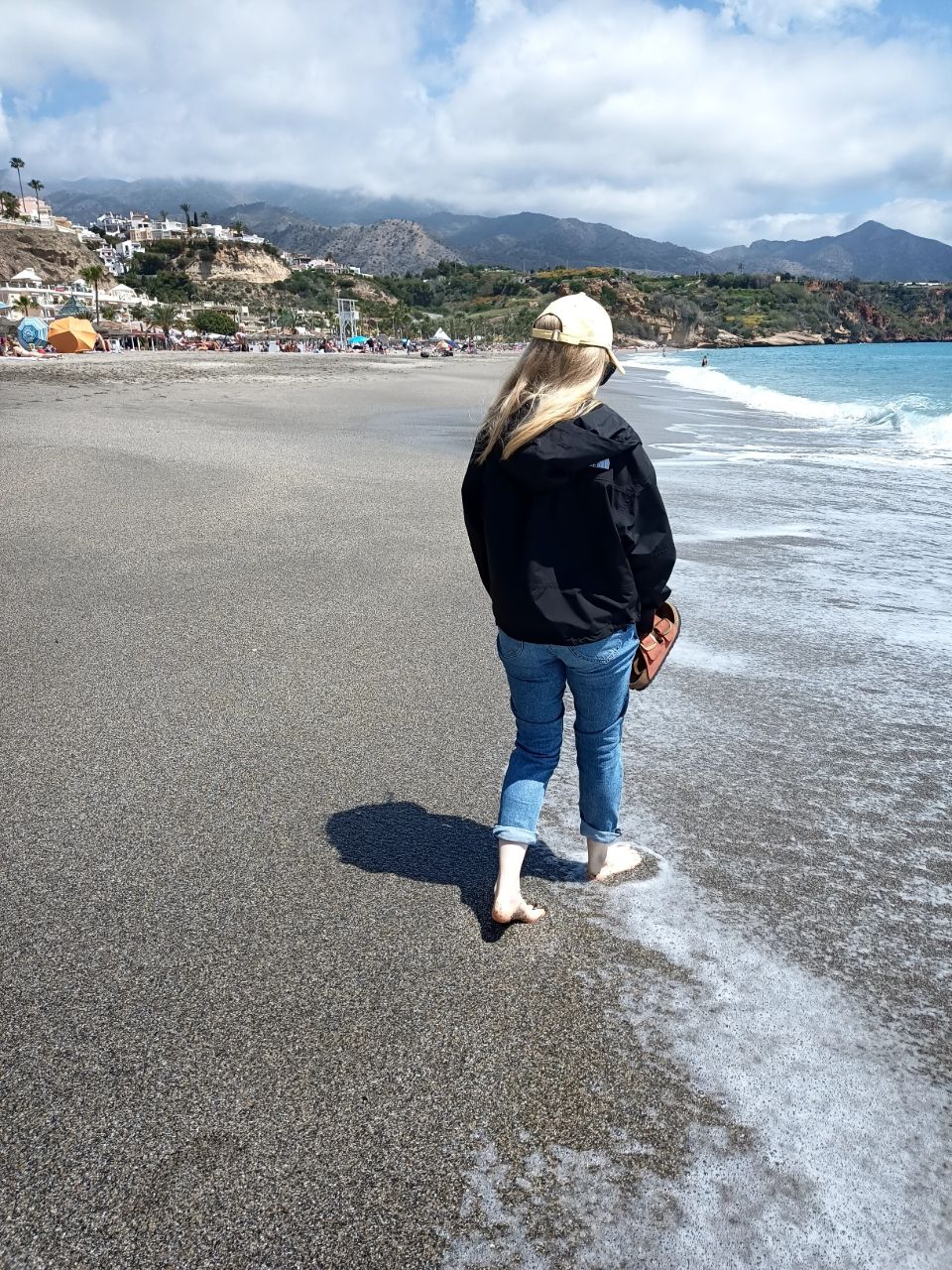
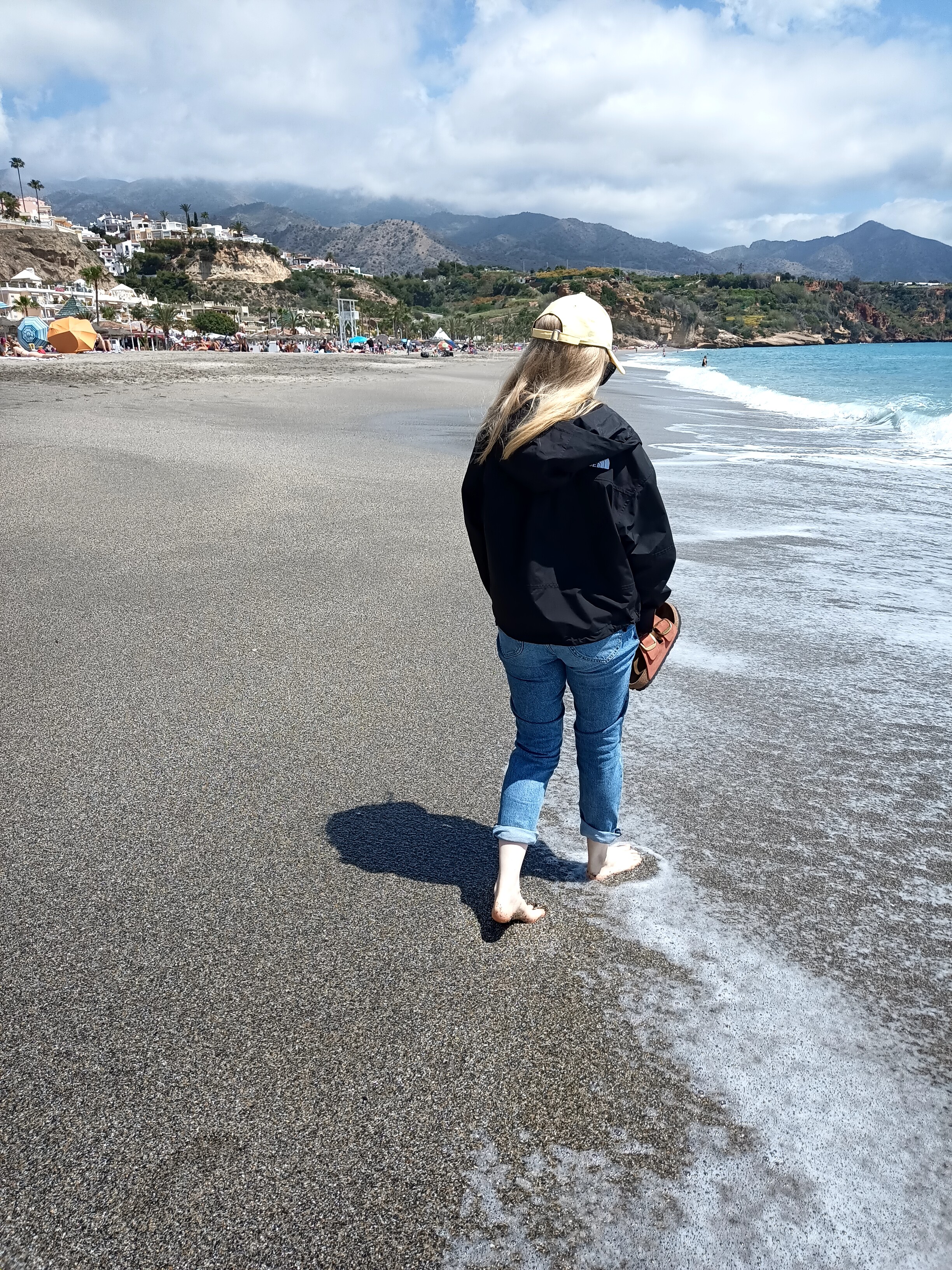
Anna along the water's edge 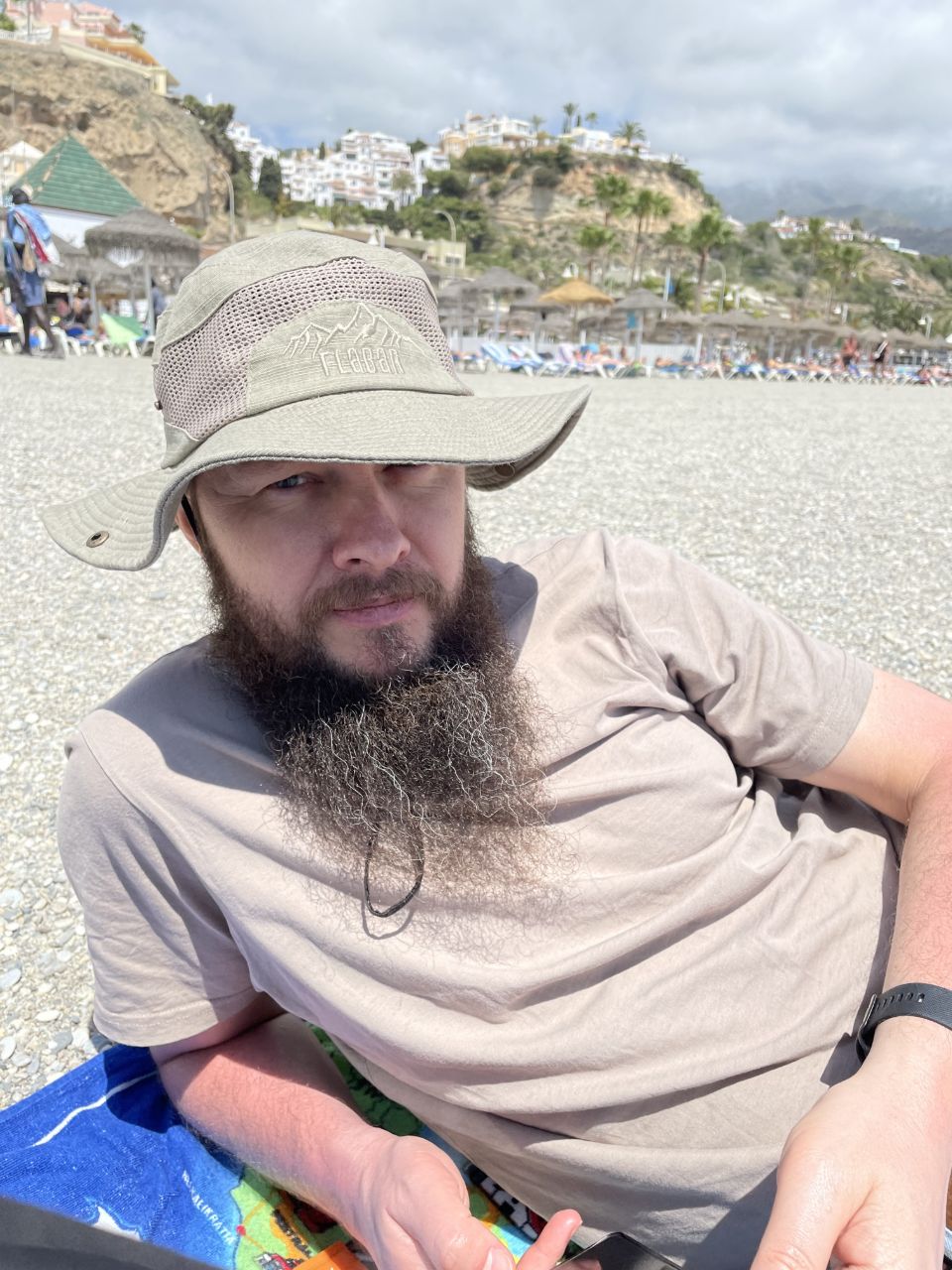
Oleg on the pebbles 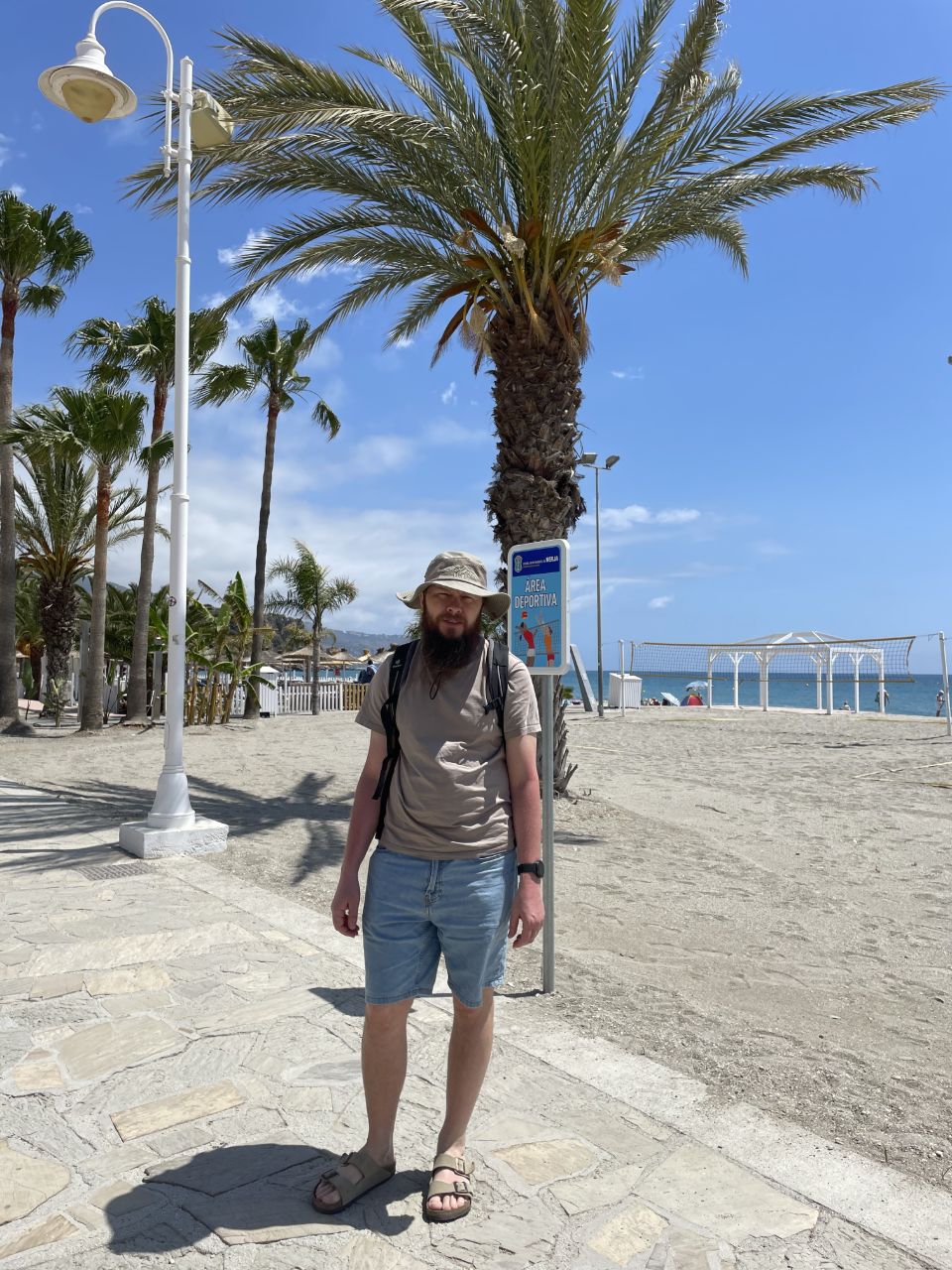
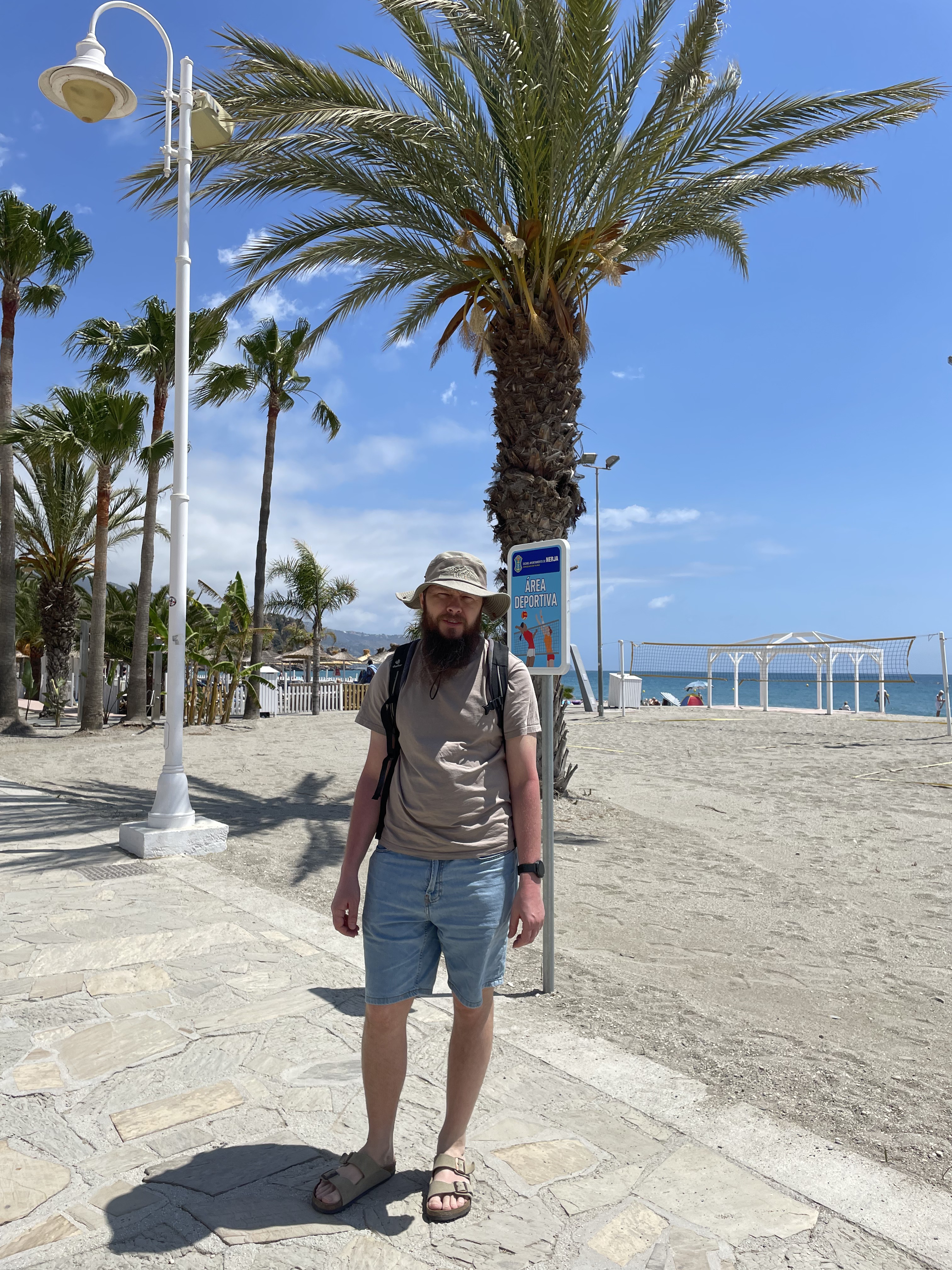
Burriana, palms and volleyball 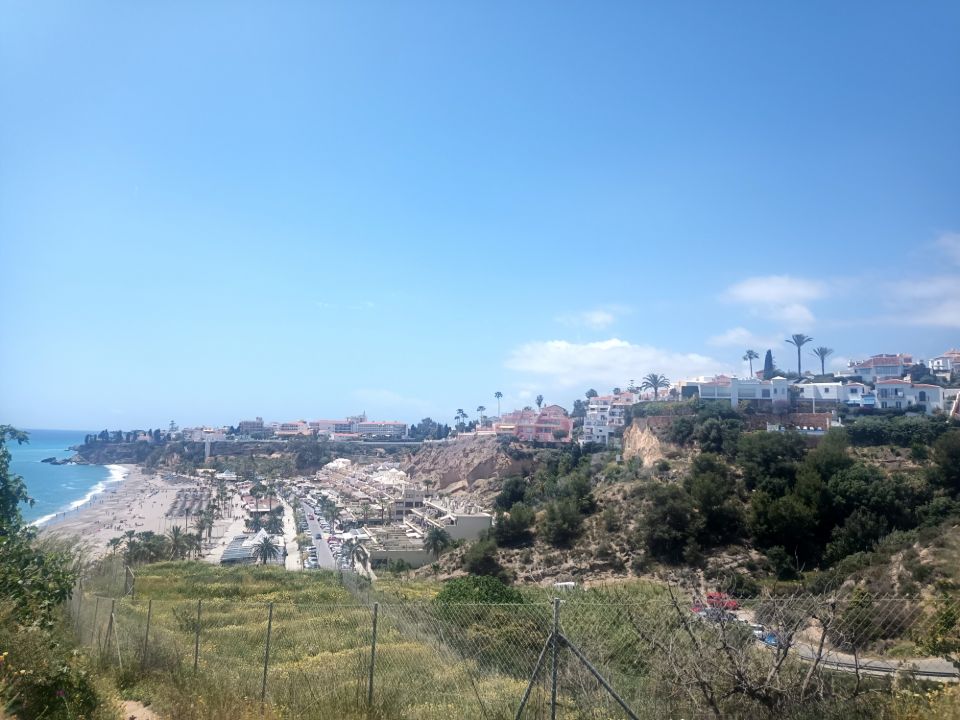
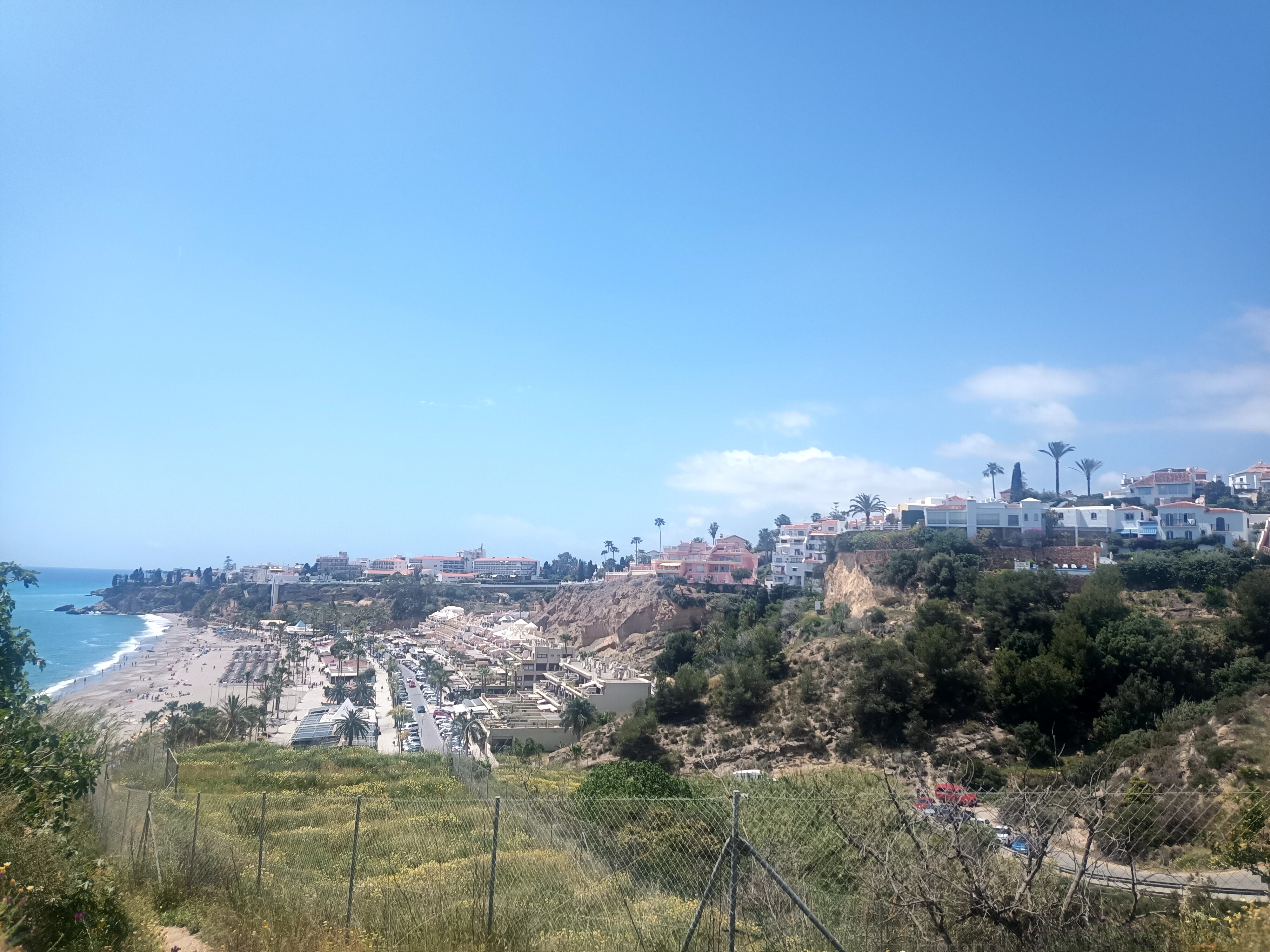
Nerja from the hillside road 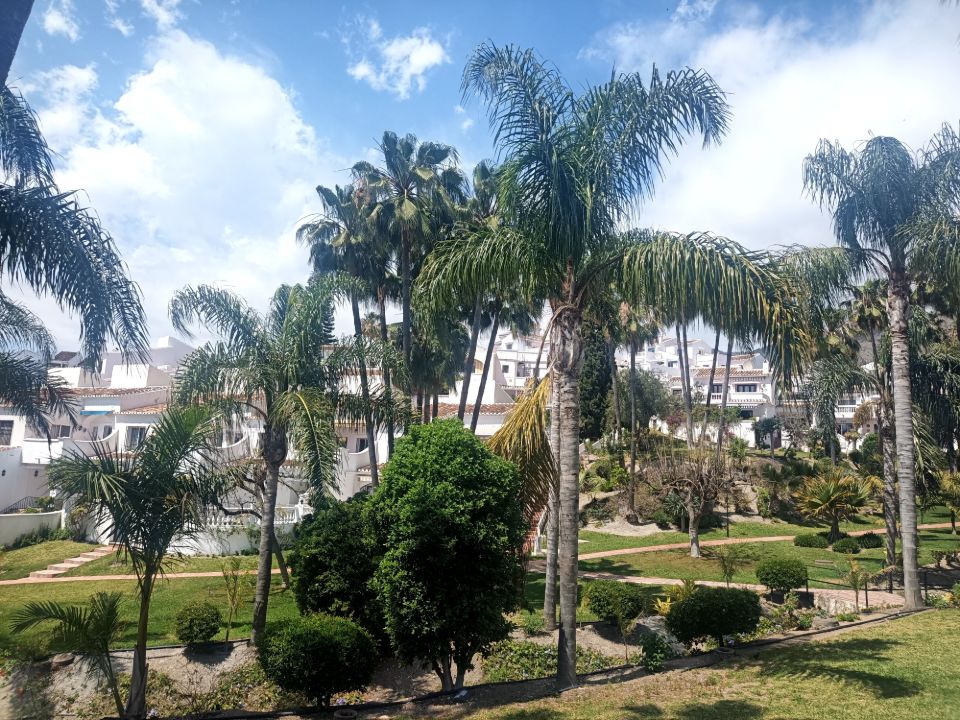
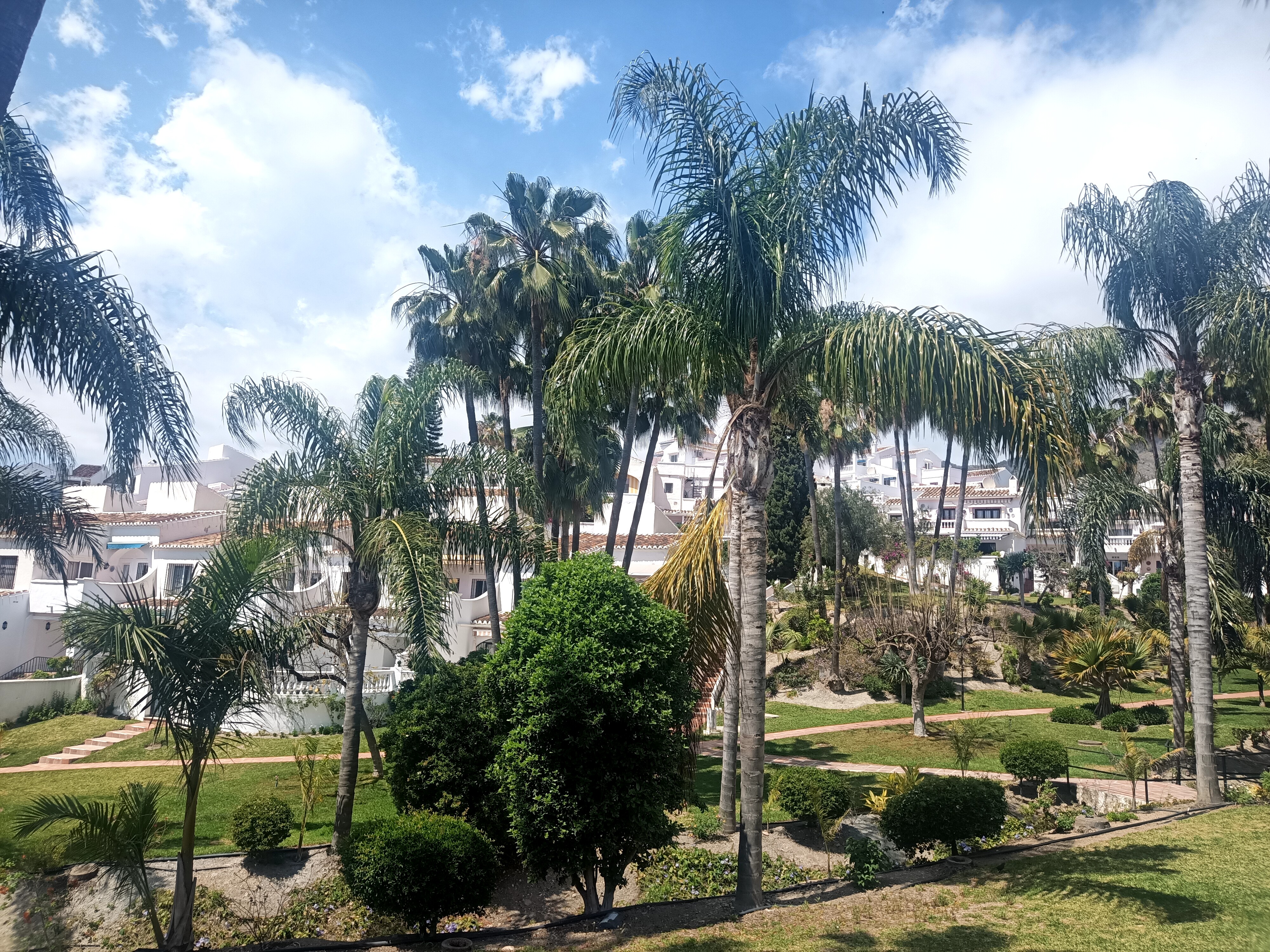
The palm garden on the walk east 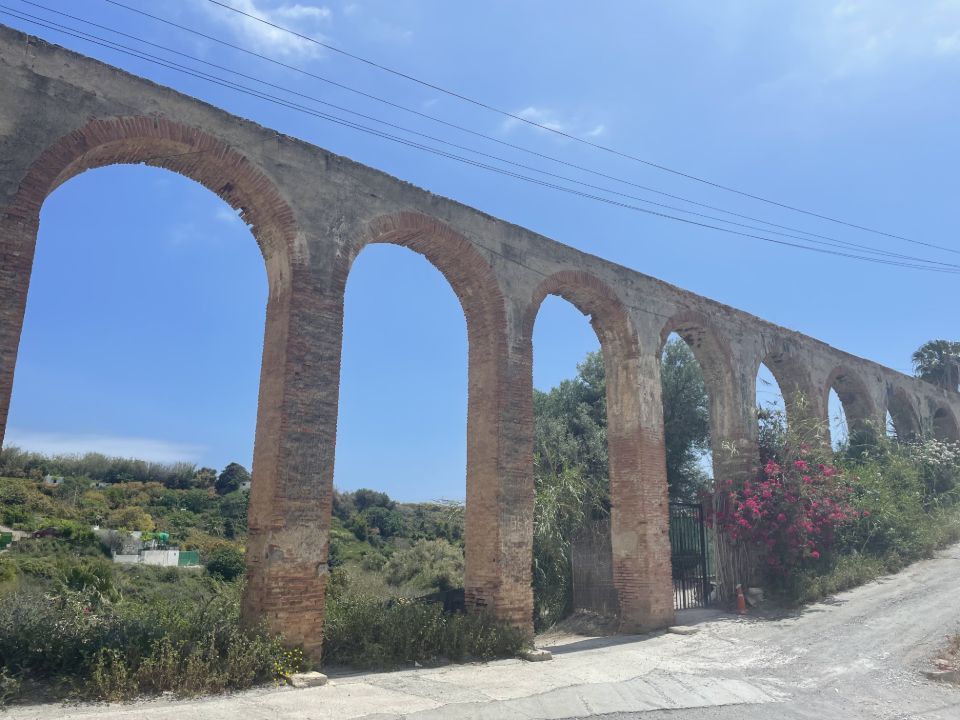
Arches over the road on Calle Rabat 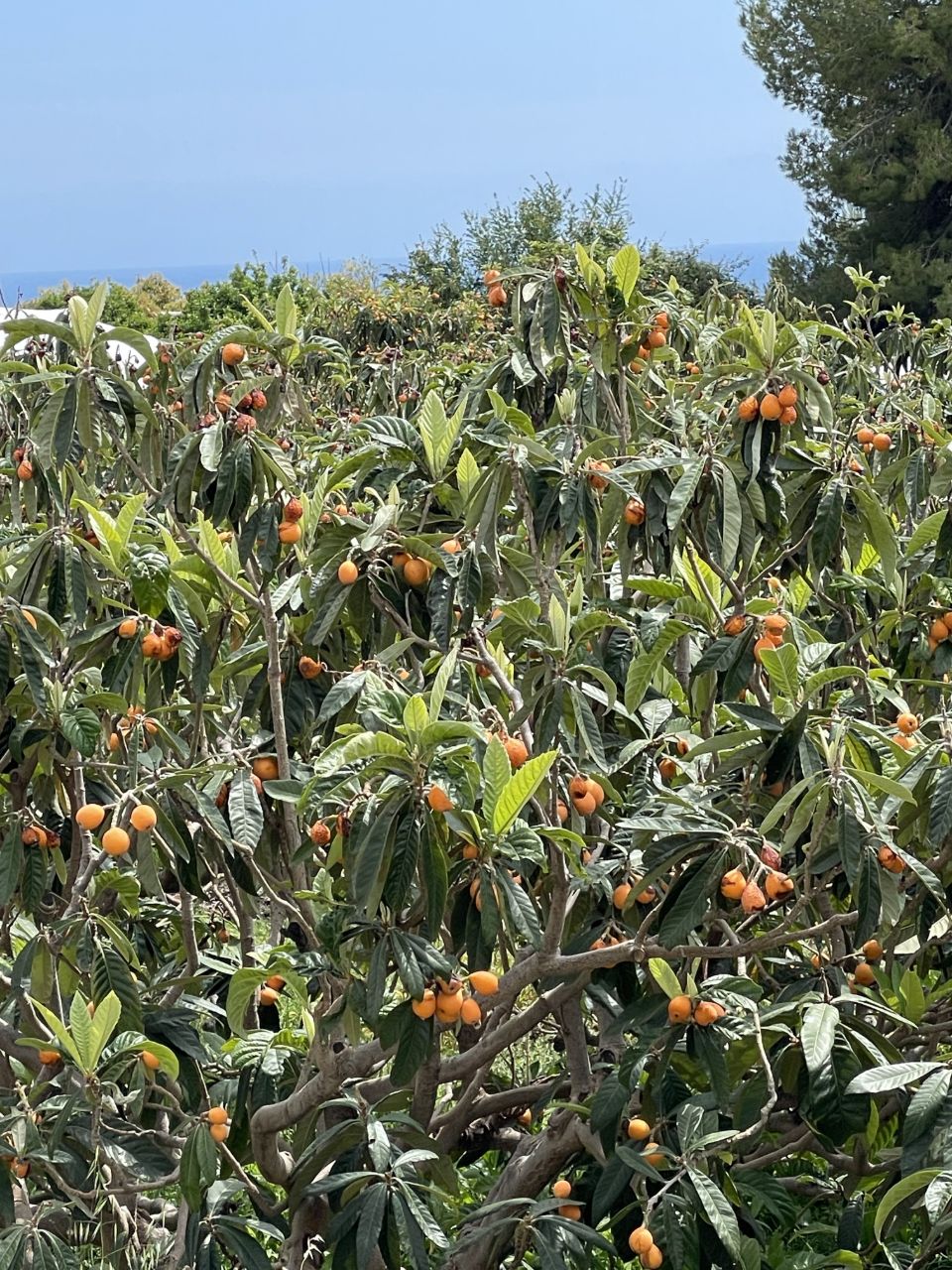
Loquats ripe by the road to Maro 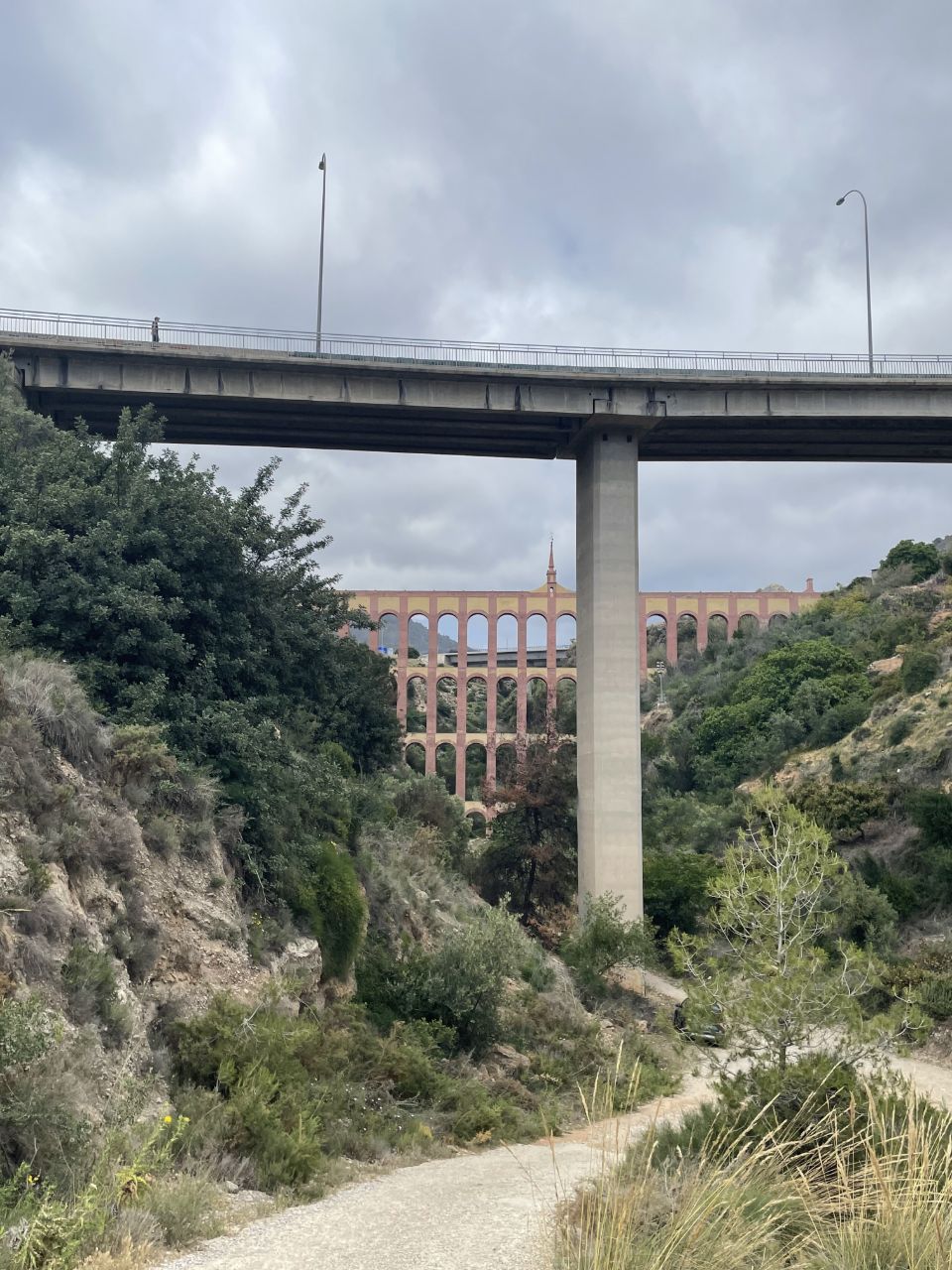
The Águila aqueduct through a road bridge 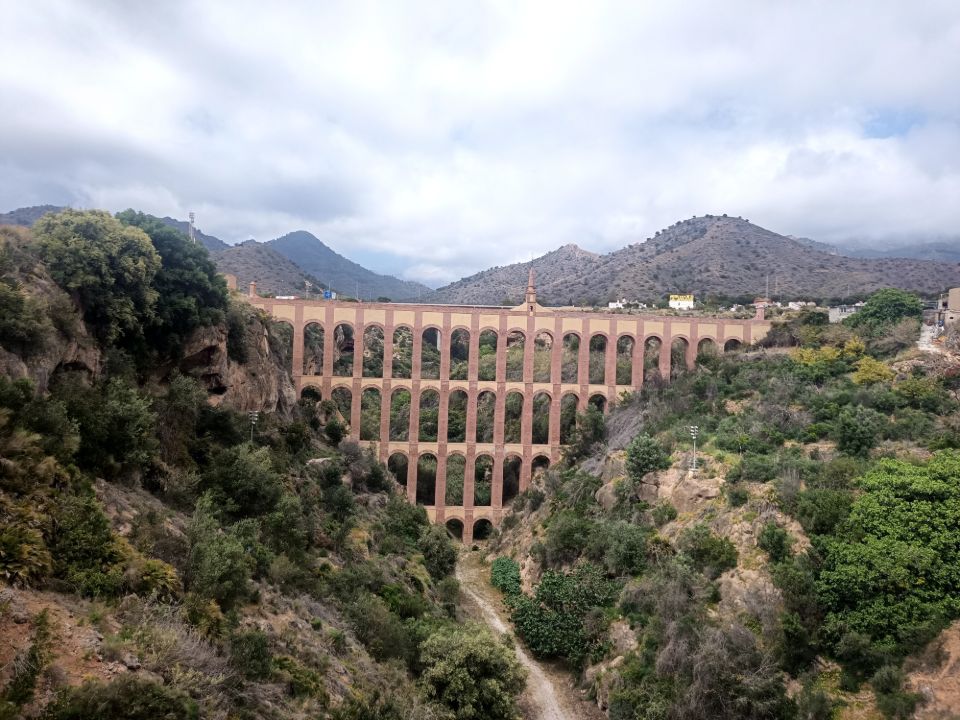
The Águila aqueduct in its ravine 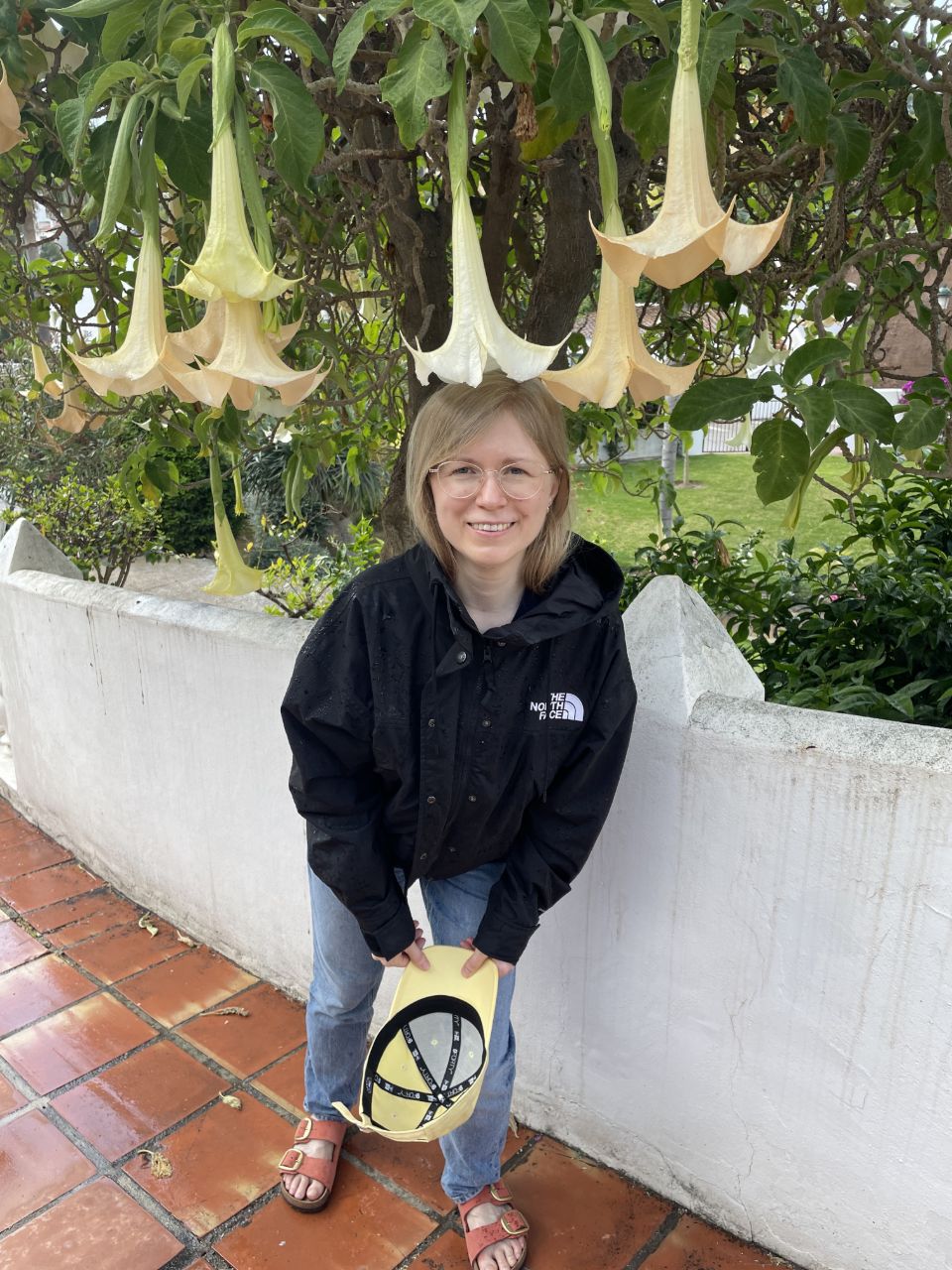
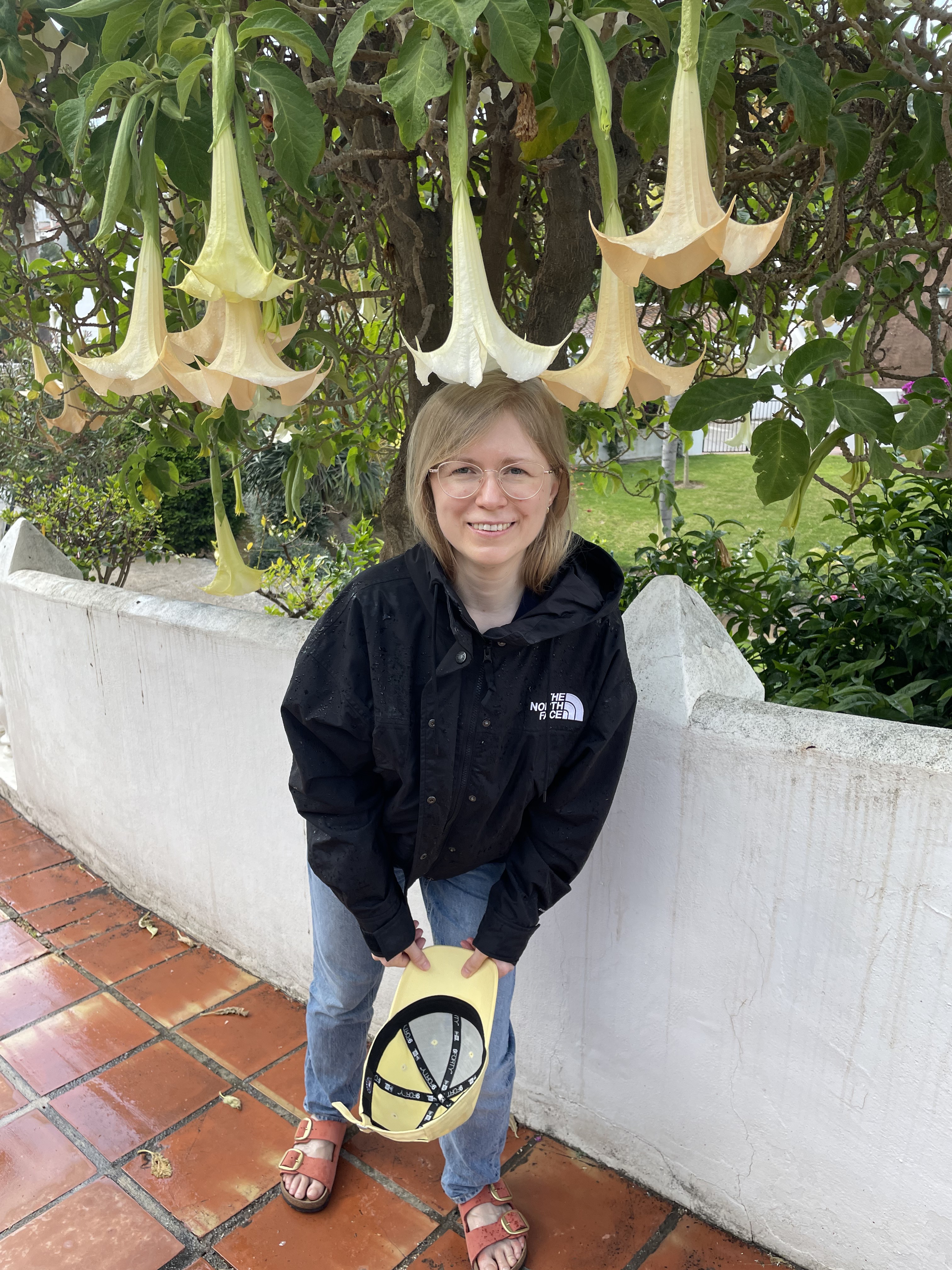
Anna under the trumpet flowers 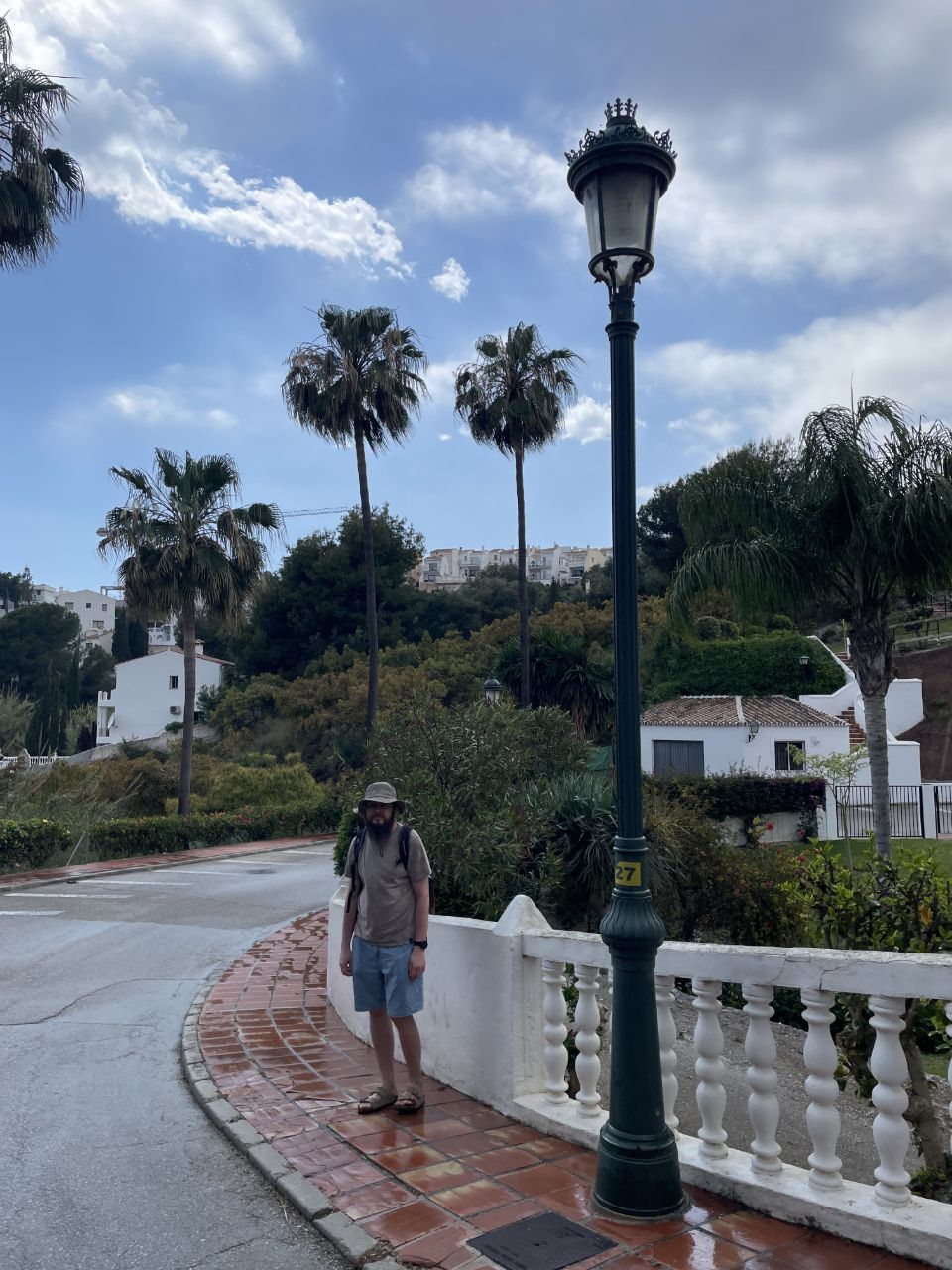
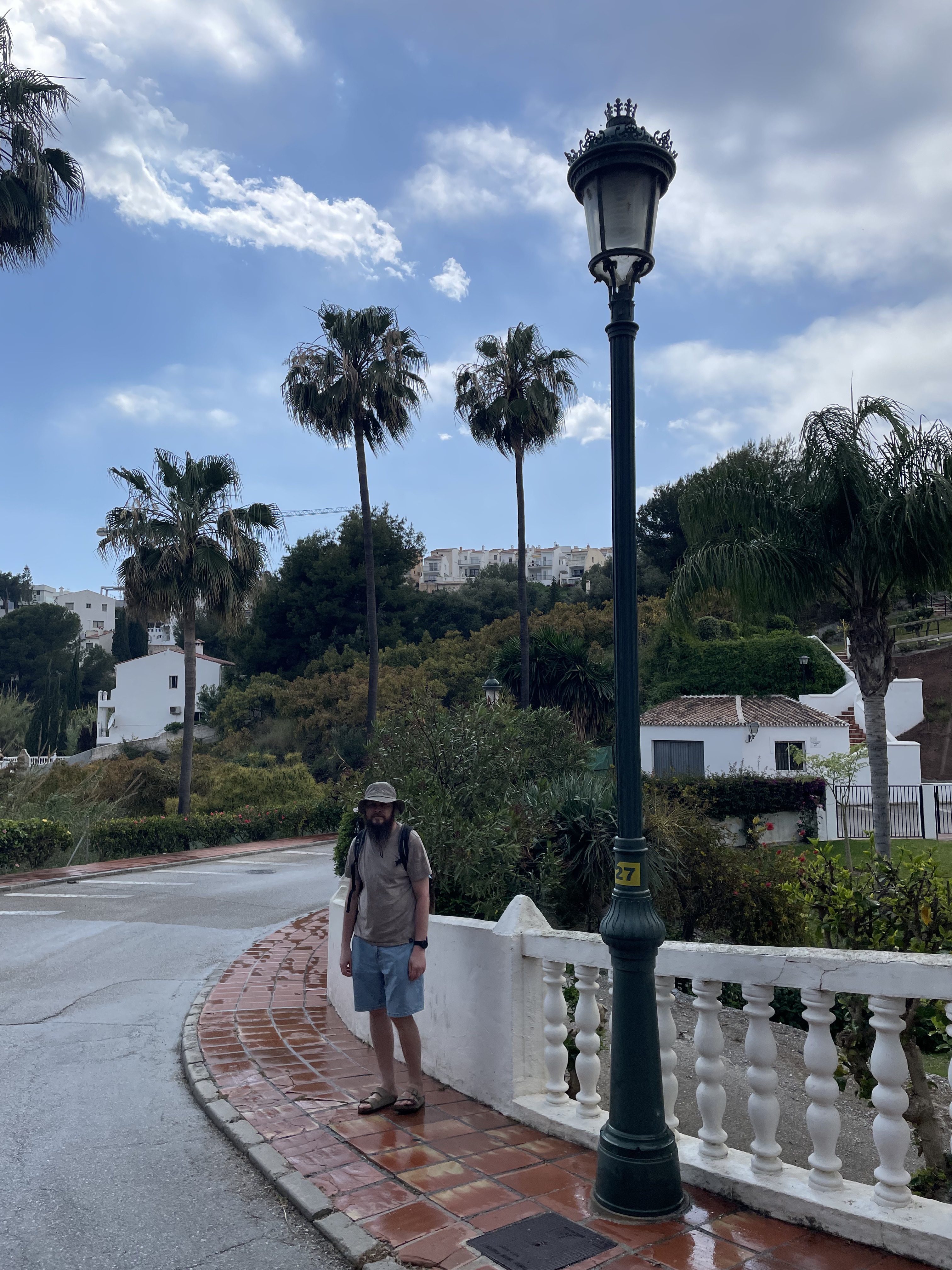
After the rain, lamp post on Calle Rabat
The evening shift
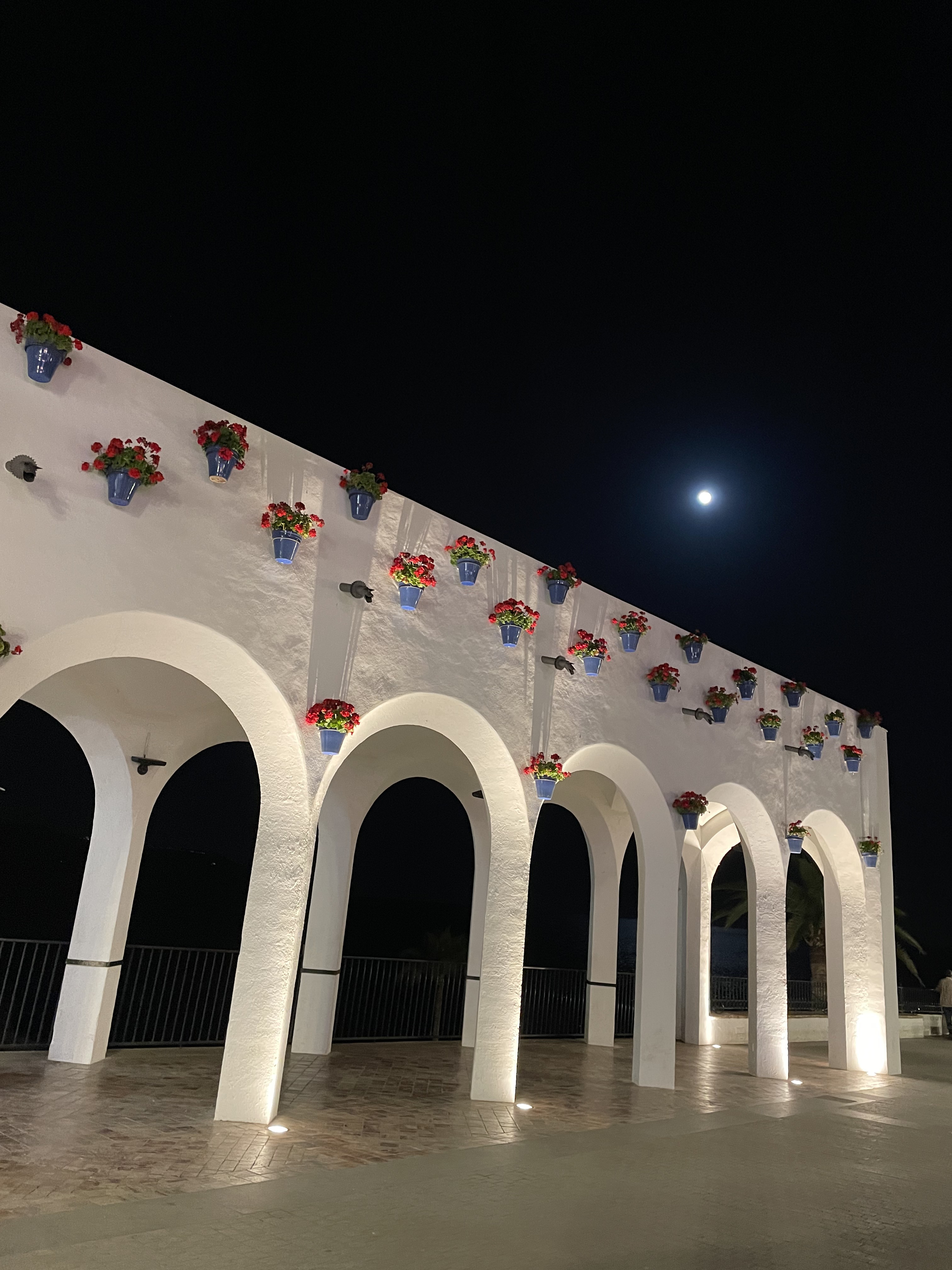
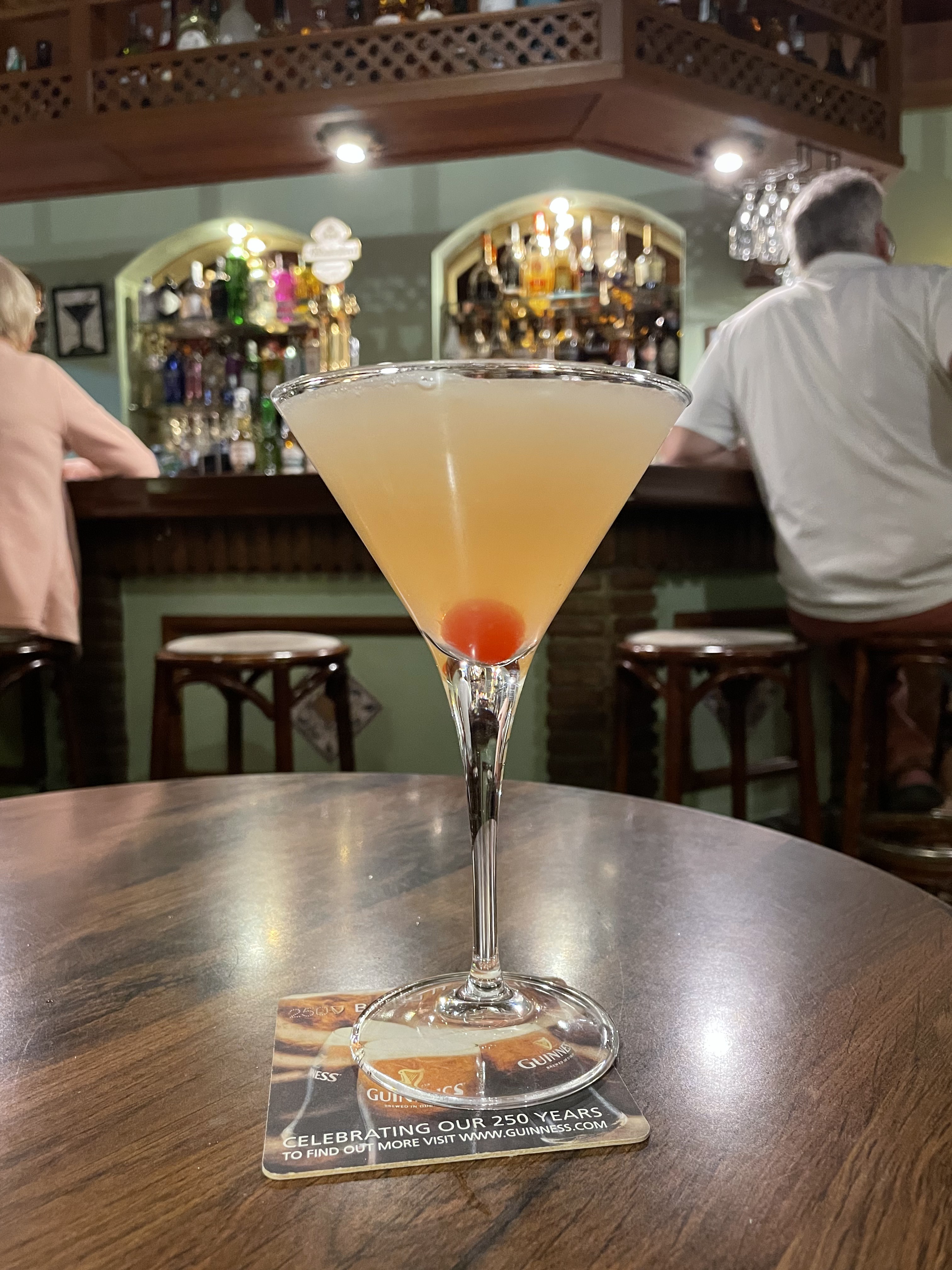
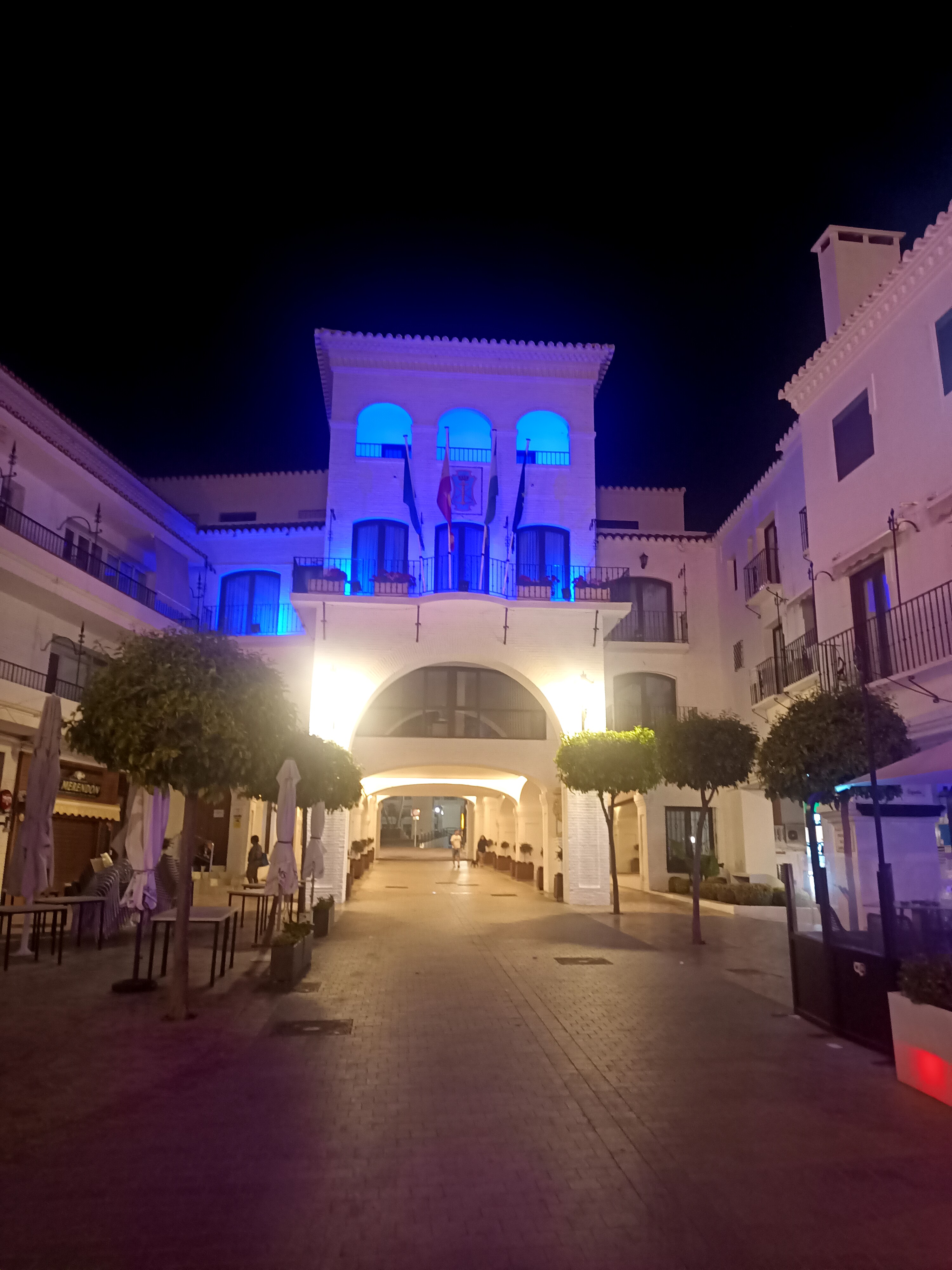
The golden hour on the Balcón is a twice-daily performance, and on the twenty-second we took our seats for both halves. Sunset coppered the cove first, the town then went amber at the edges, and after nightfall an extra act appeared over the arches, the moon making its entrance at the correct stage position. The cocktail afterwards — pale, with a cherry, held up under the shelf of bottles — was research. Somebody has to. And the night went long: past midnight, a gatehouse along the street was lit top-to-toe in blue.
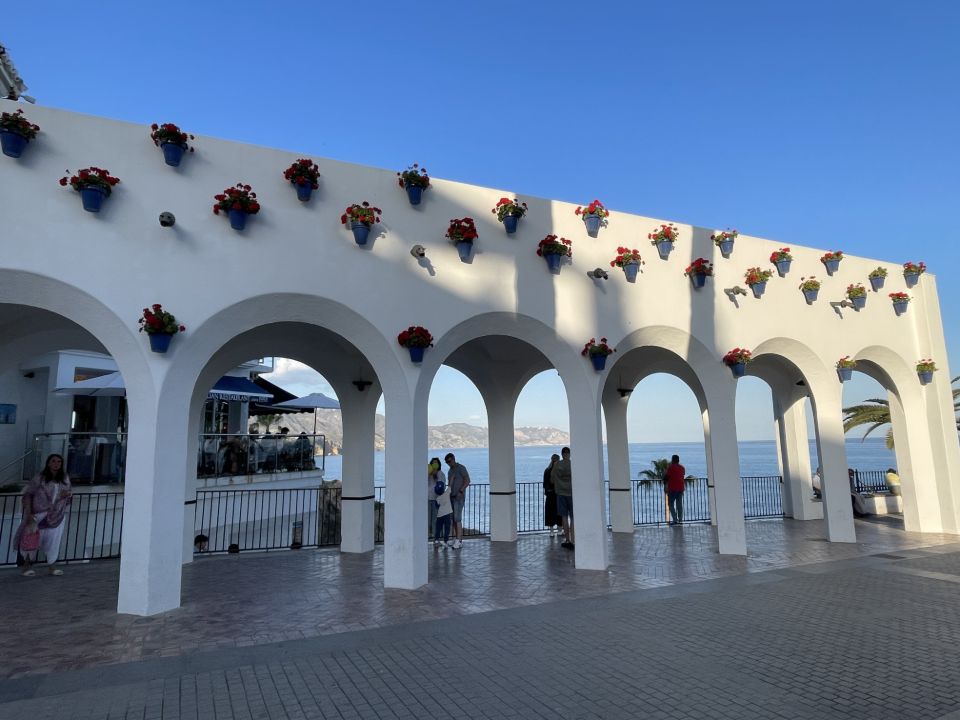
The arches at twilight 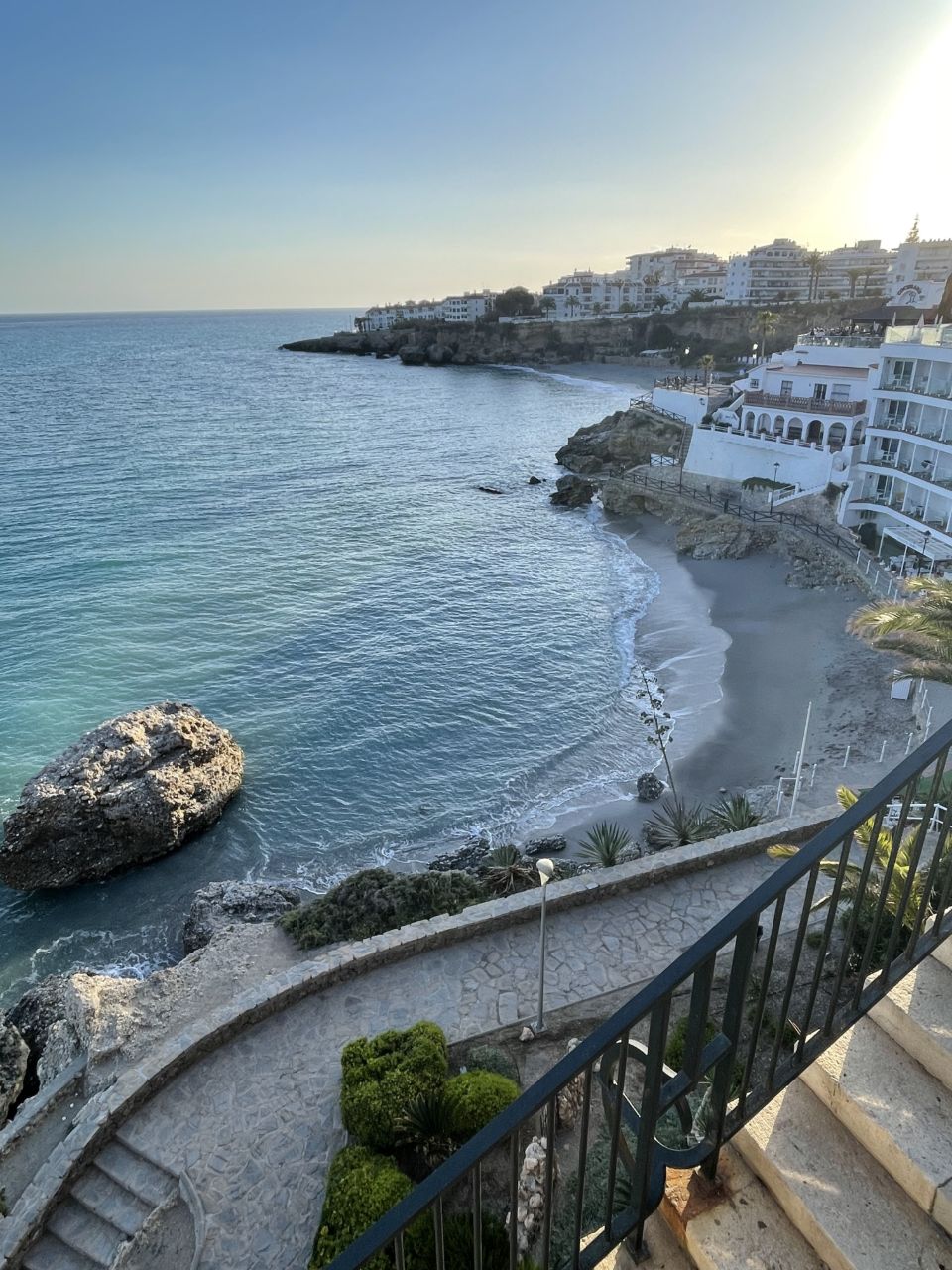
Golden hour over the cove 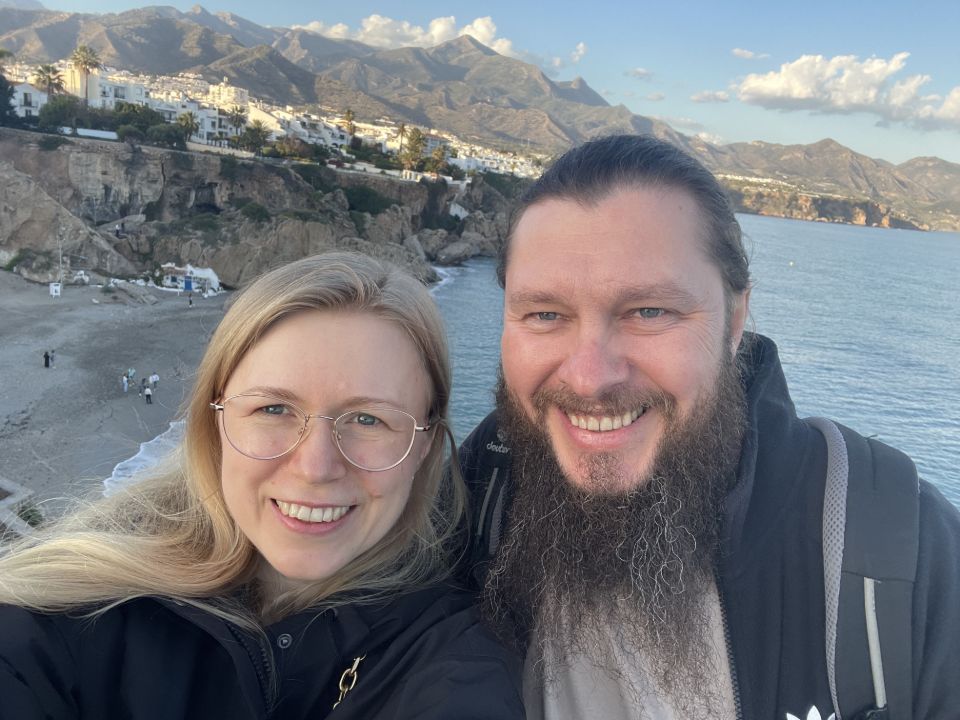
Golden-hour selfie on the Balcón 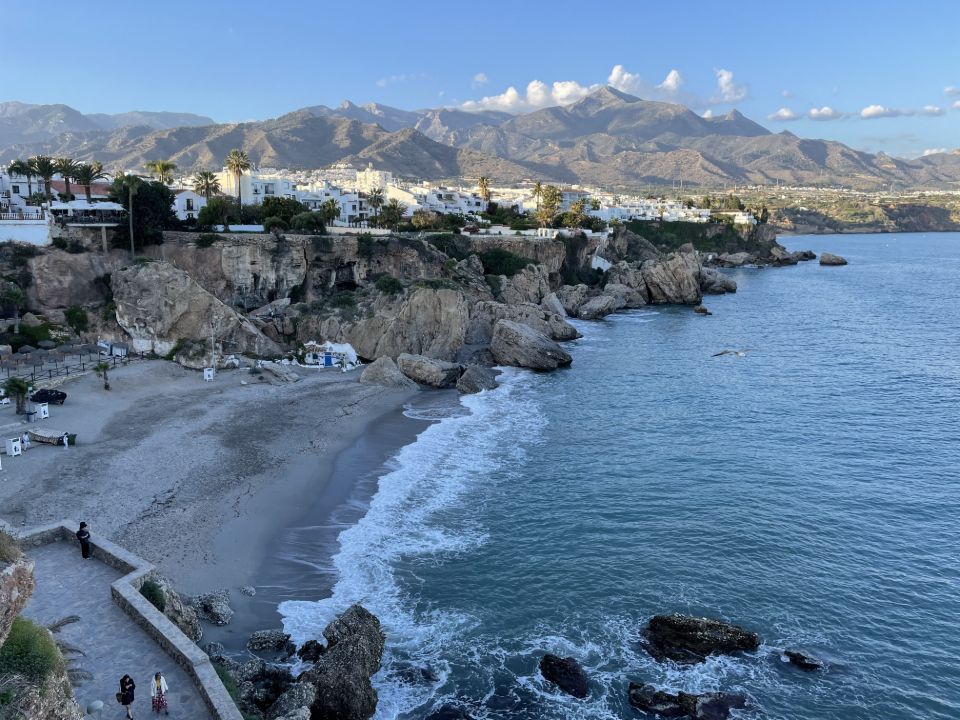
Waves on the rocks, town behind 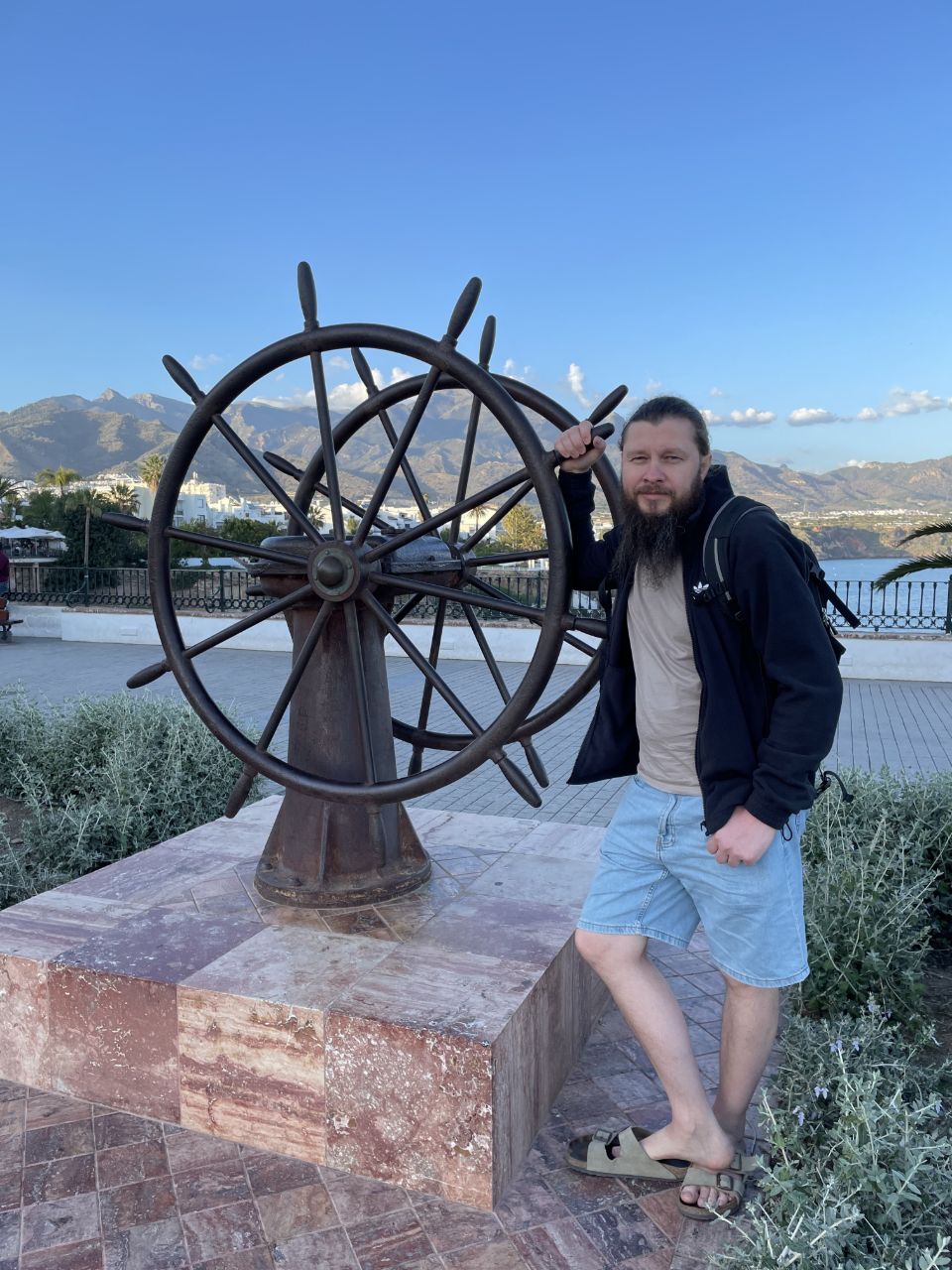
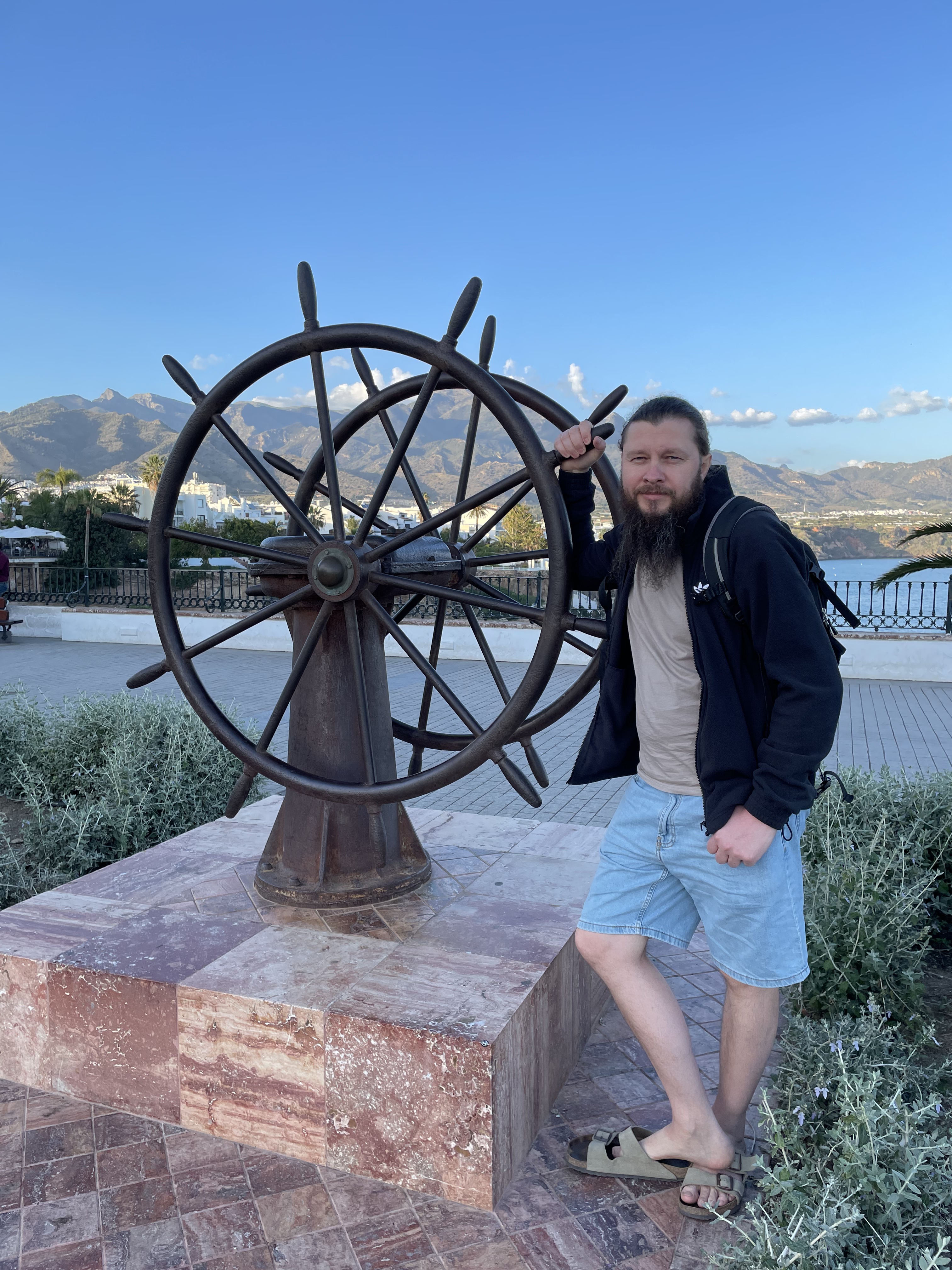
Oleg at the ship's wheel 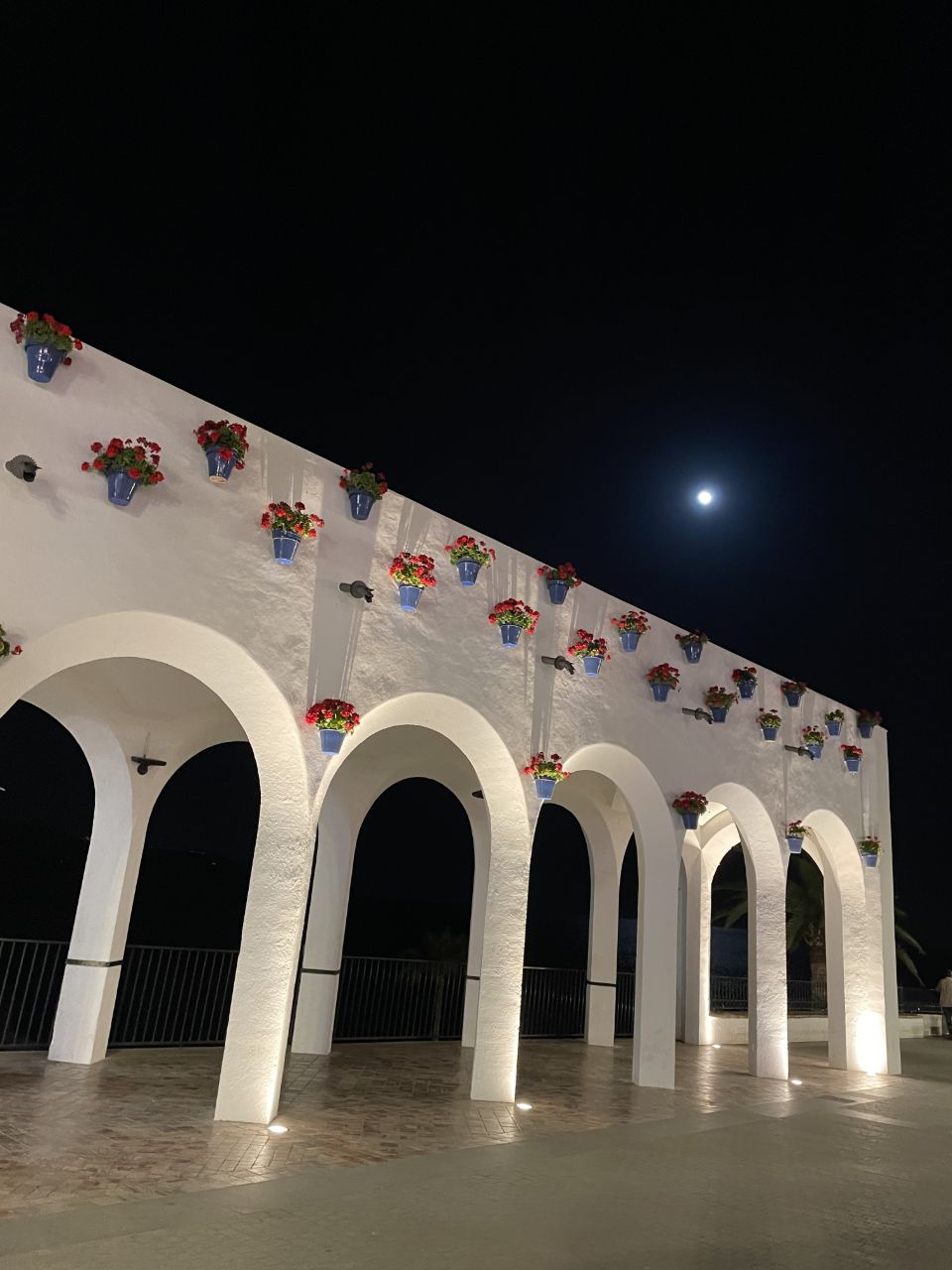
Moon over the arches 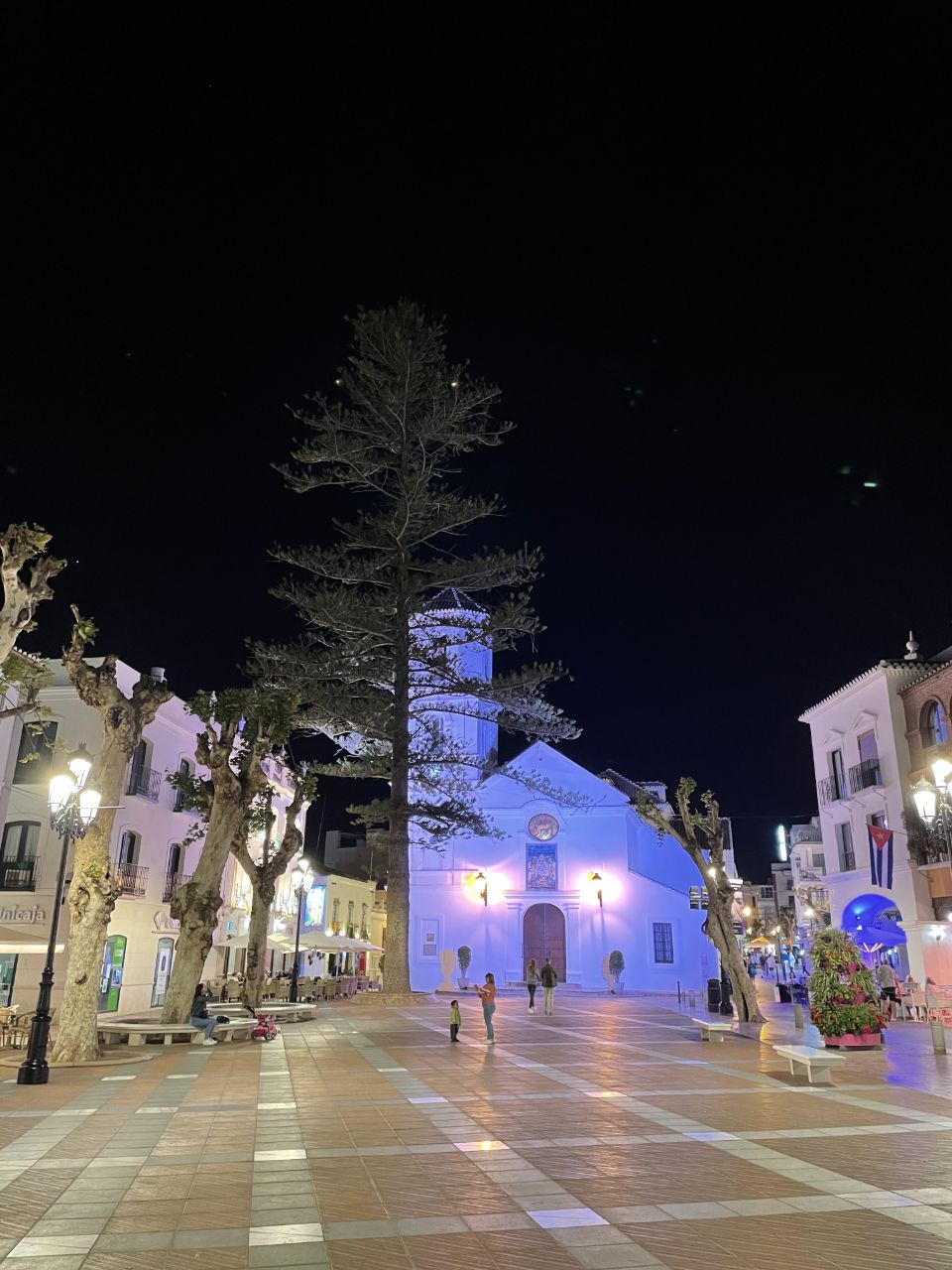
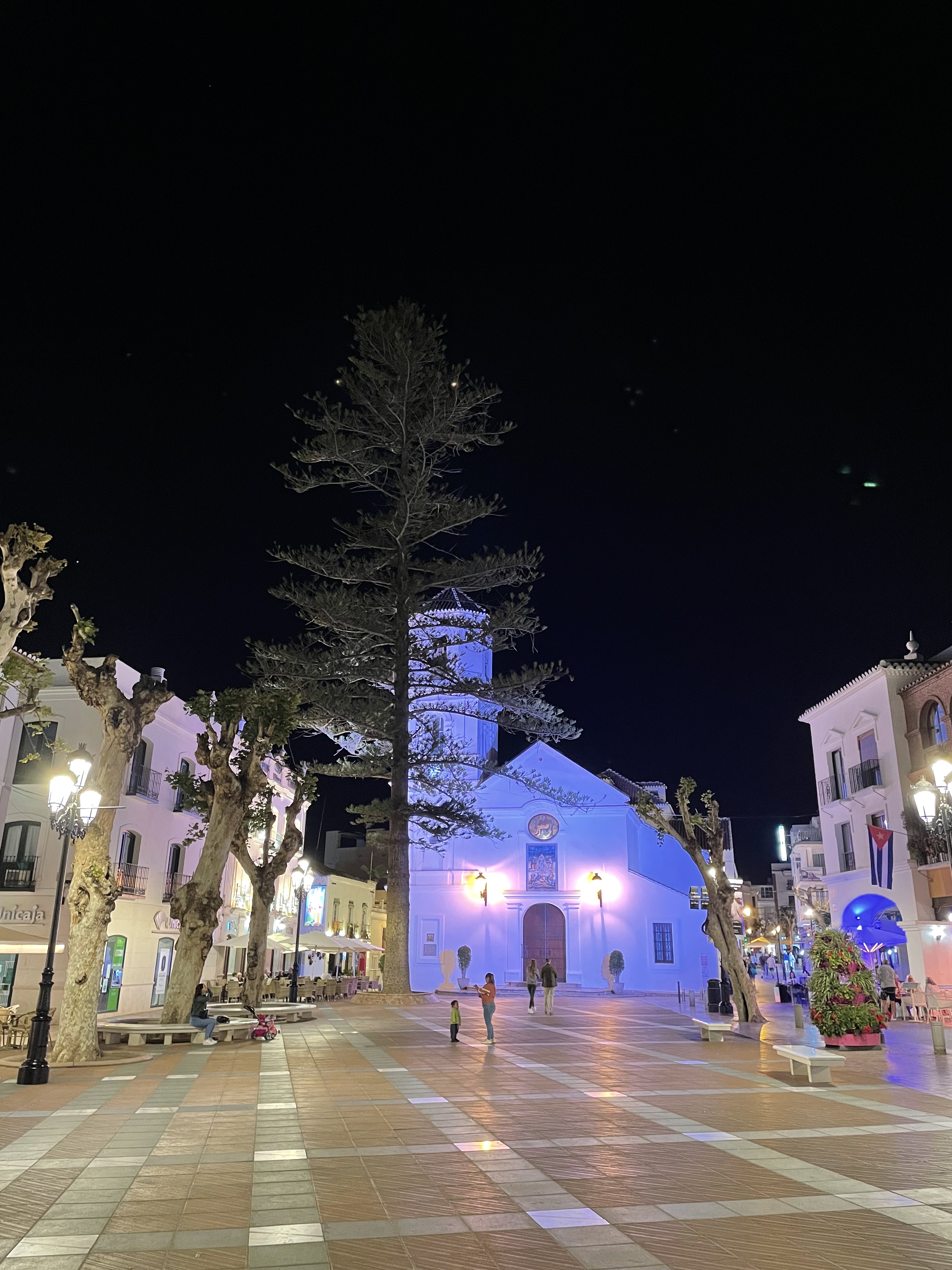
The church, floodlit 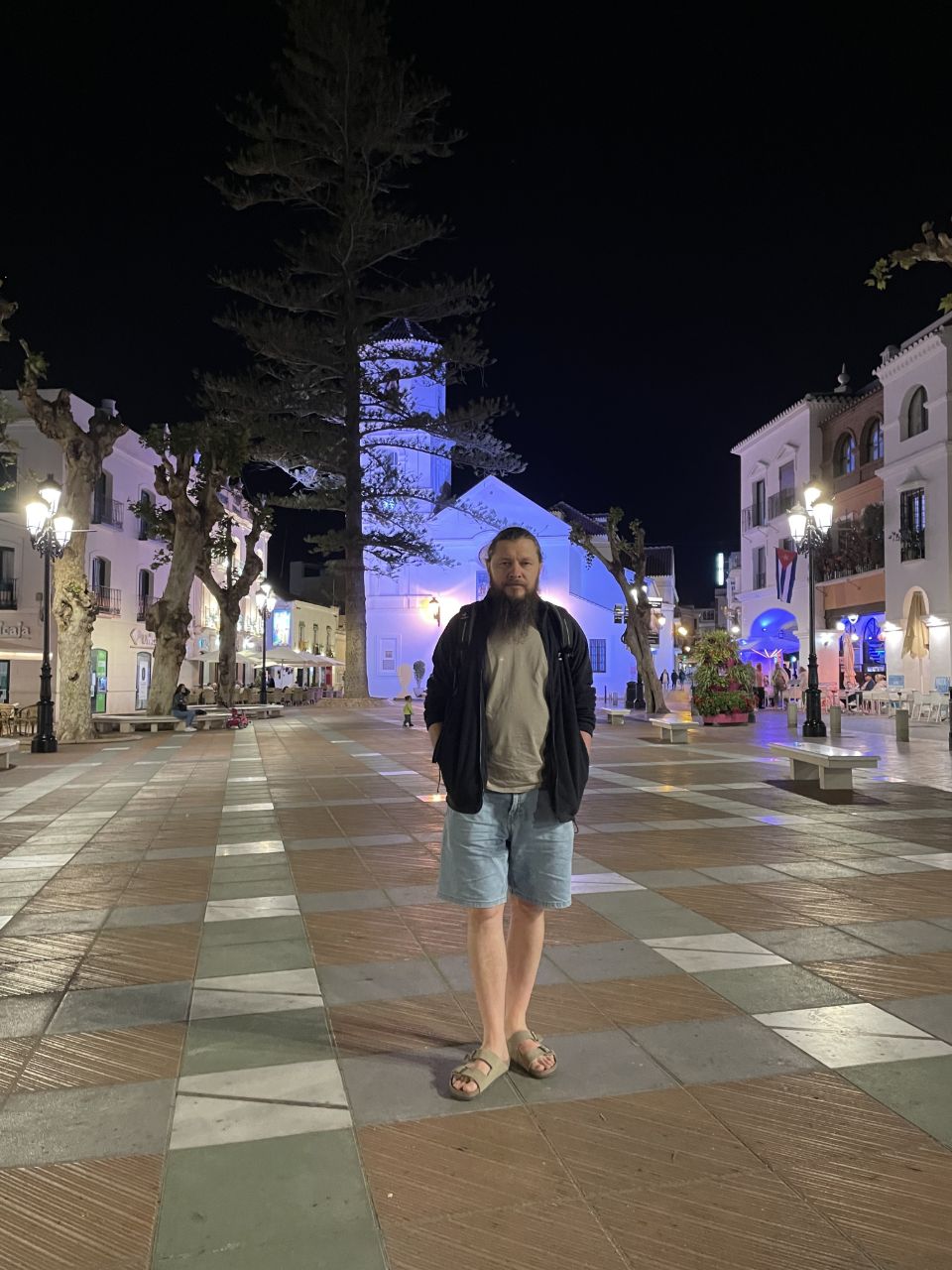
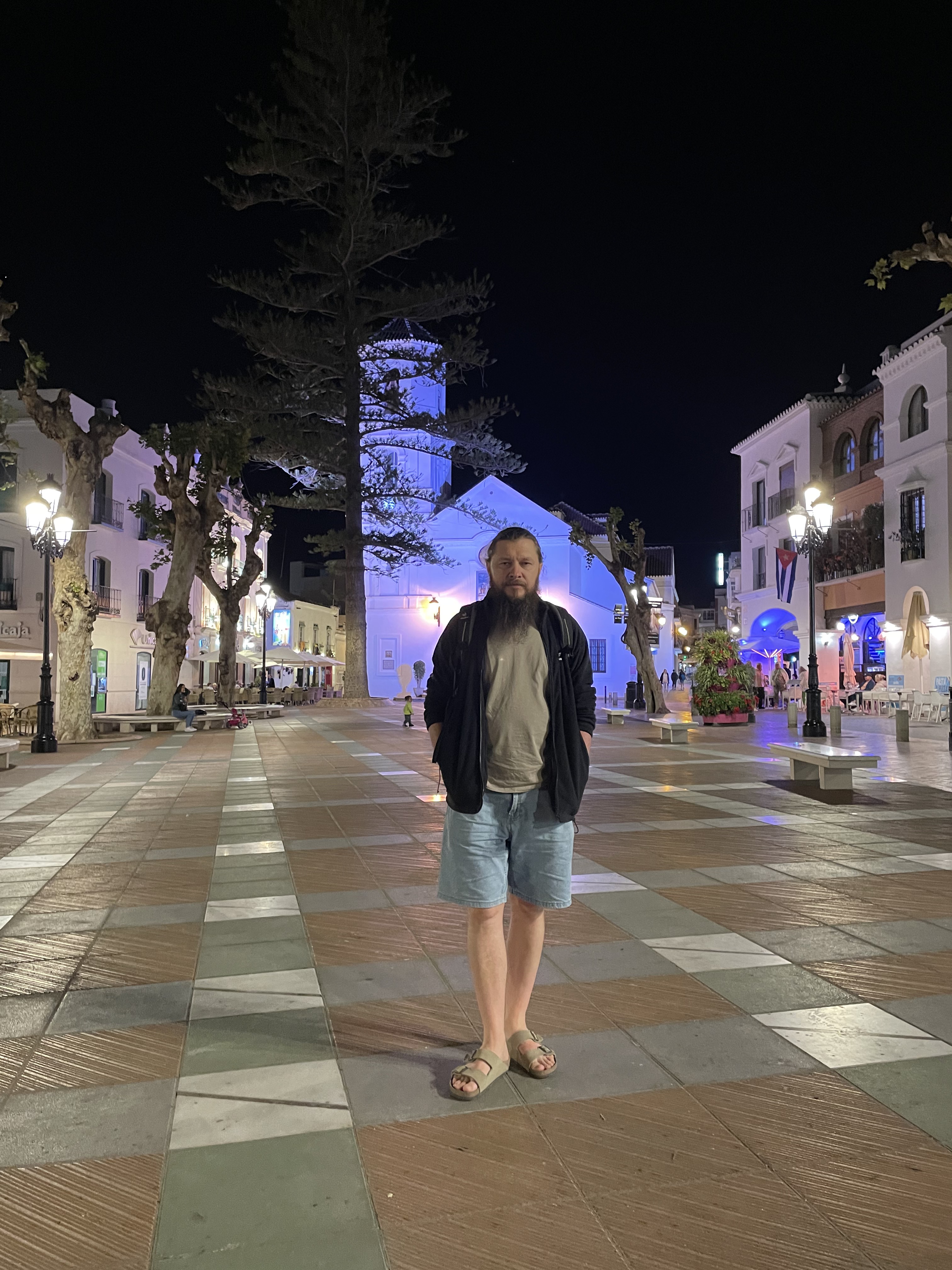
Oleg on the night plaza 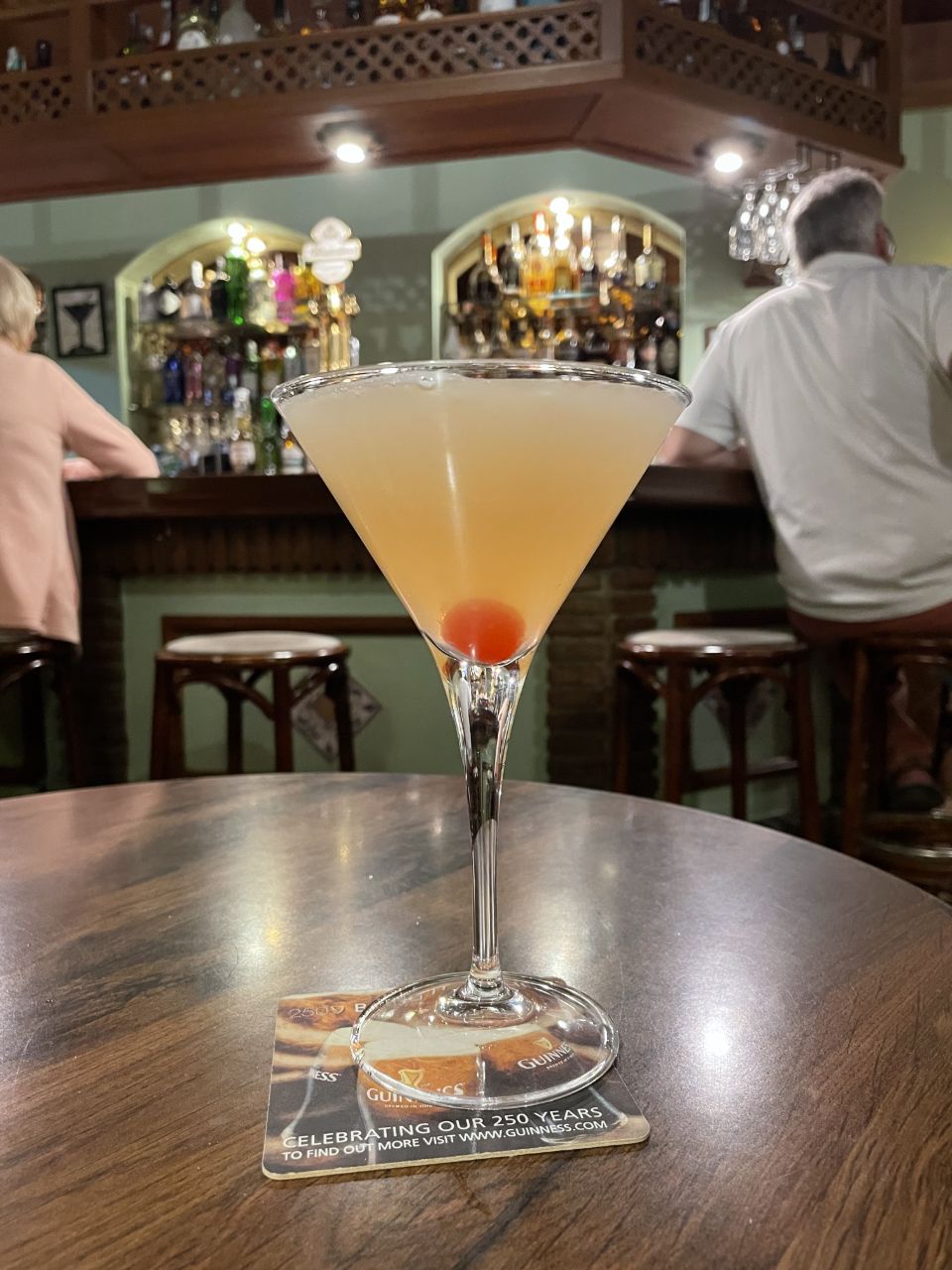
The cocktail, cherry and all 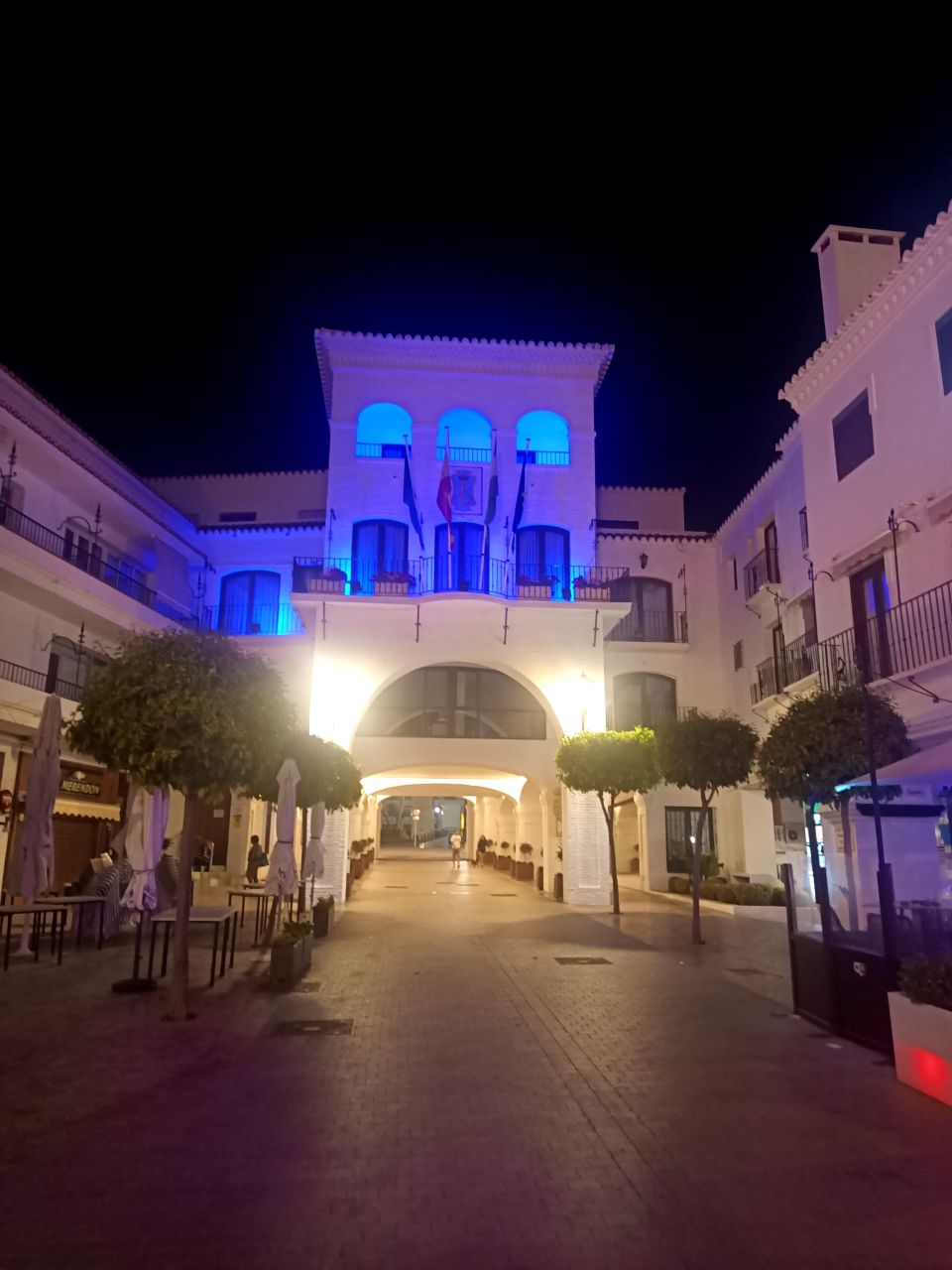
Past midnight, the gatehouse in blue
Day four: soup, mosaics, the right hour
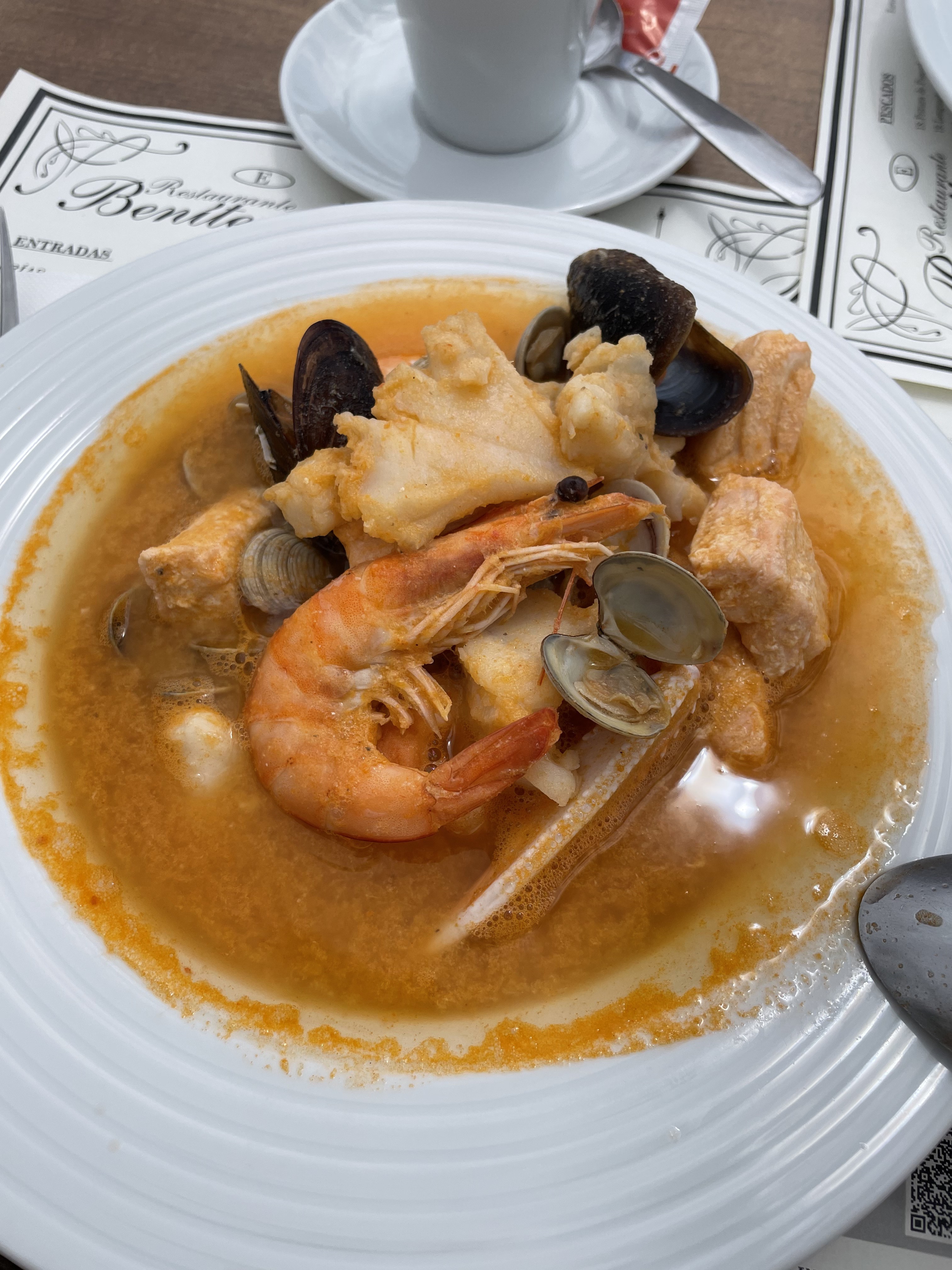
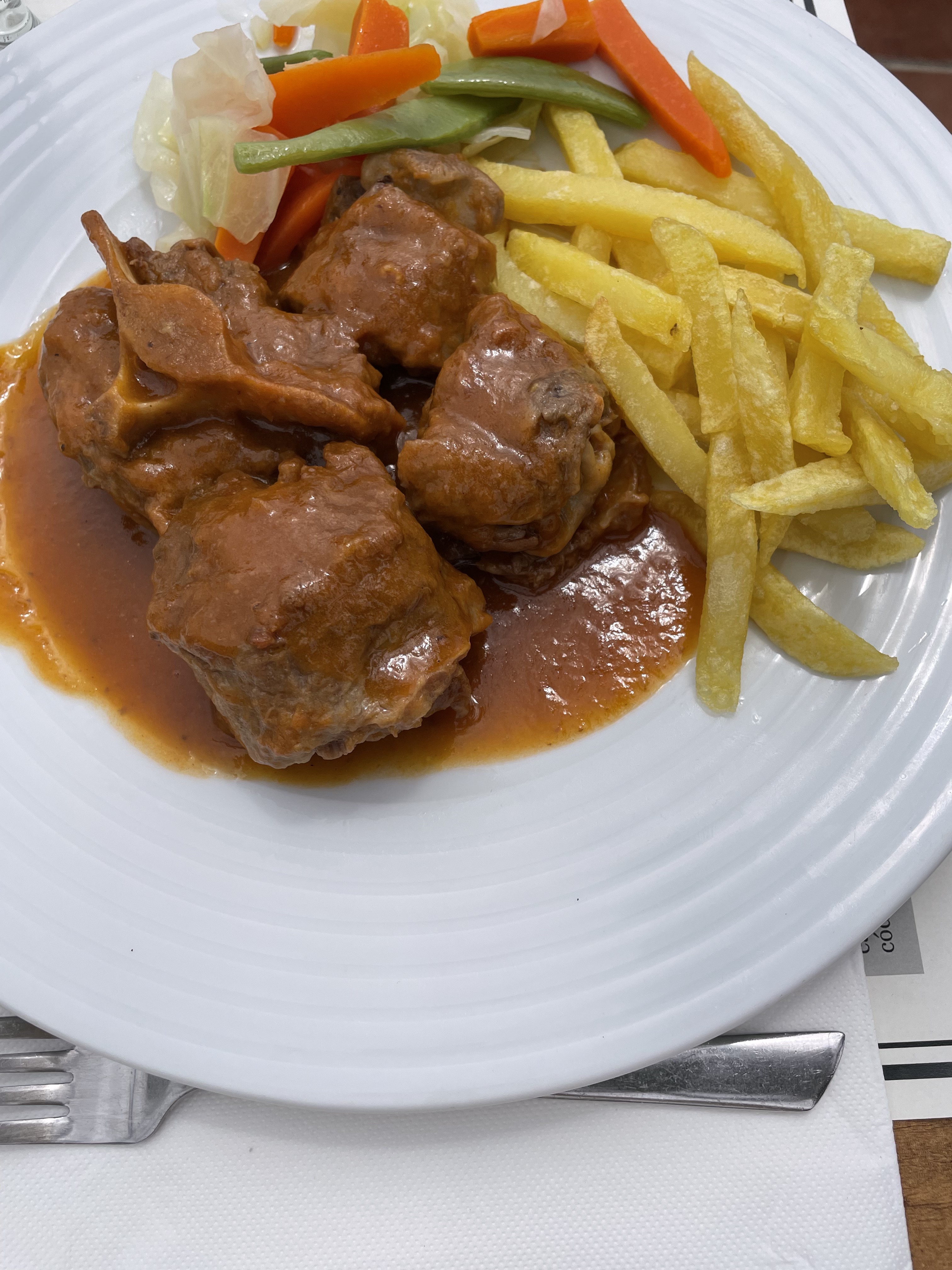
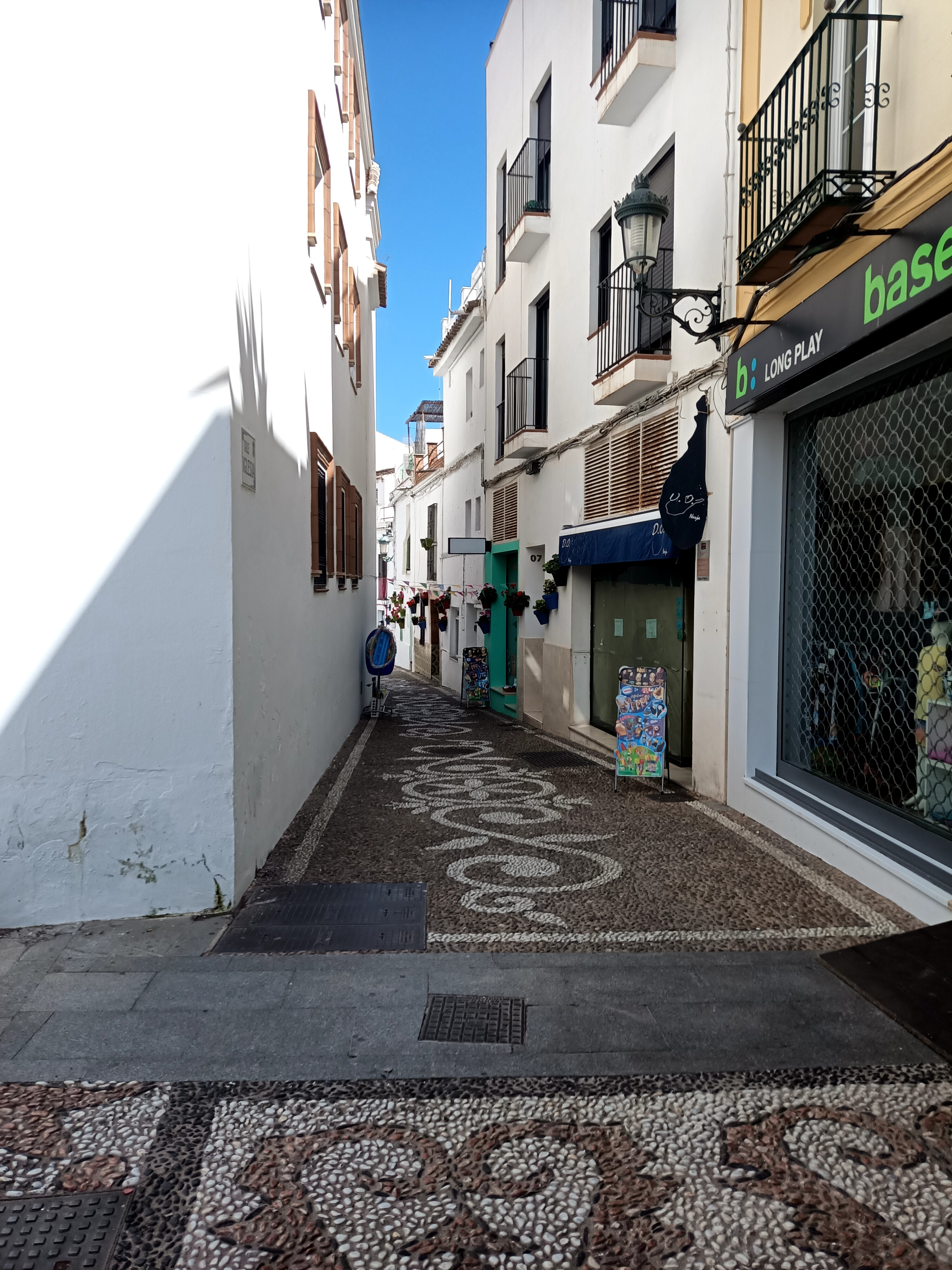
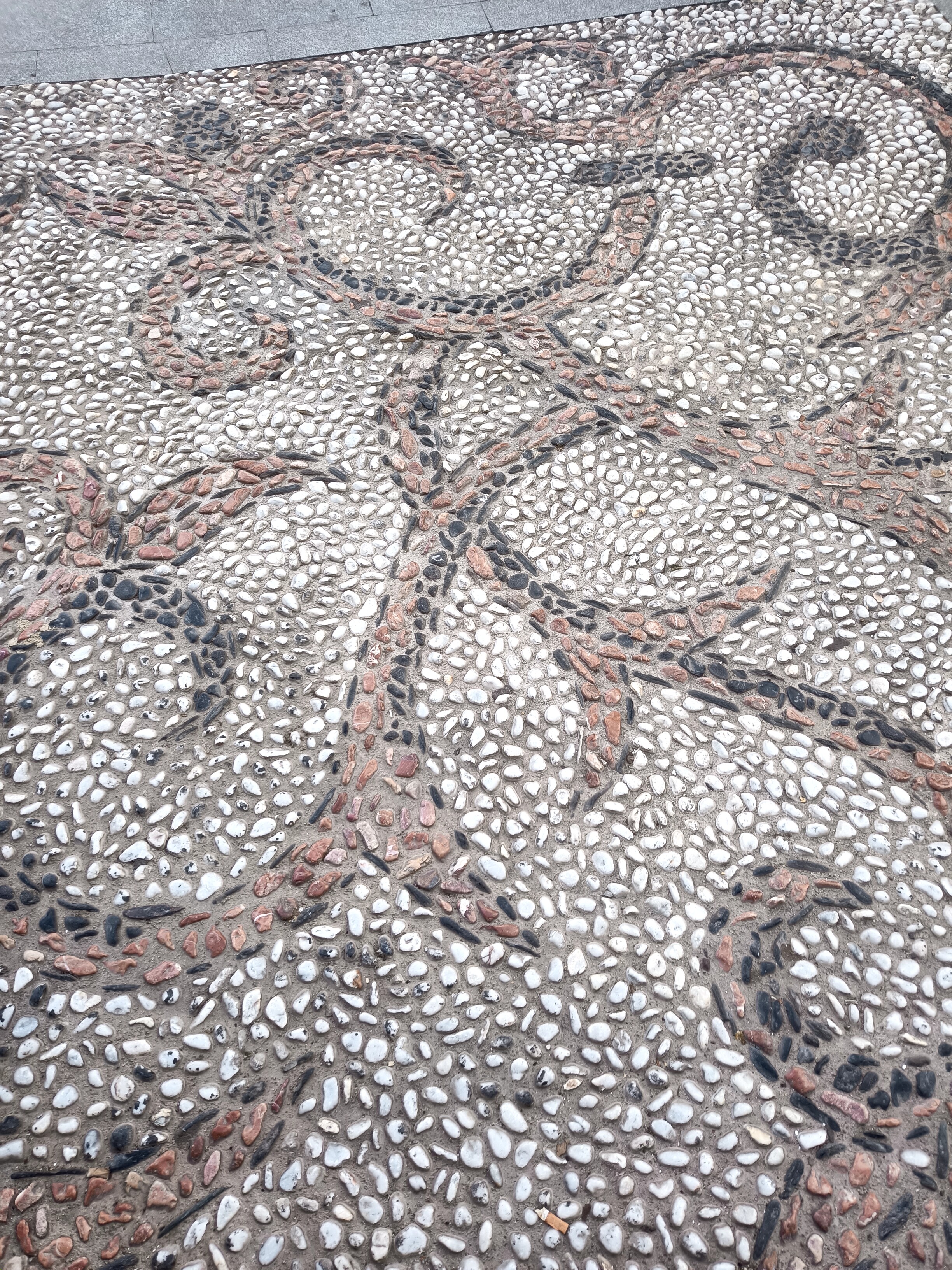
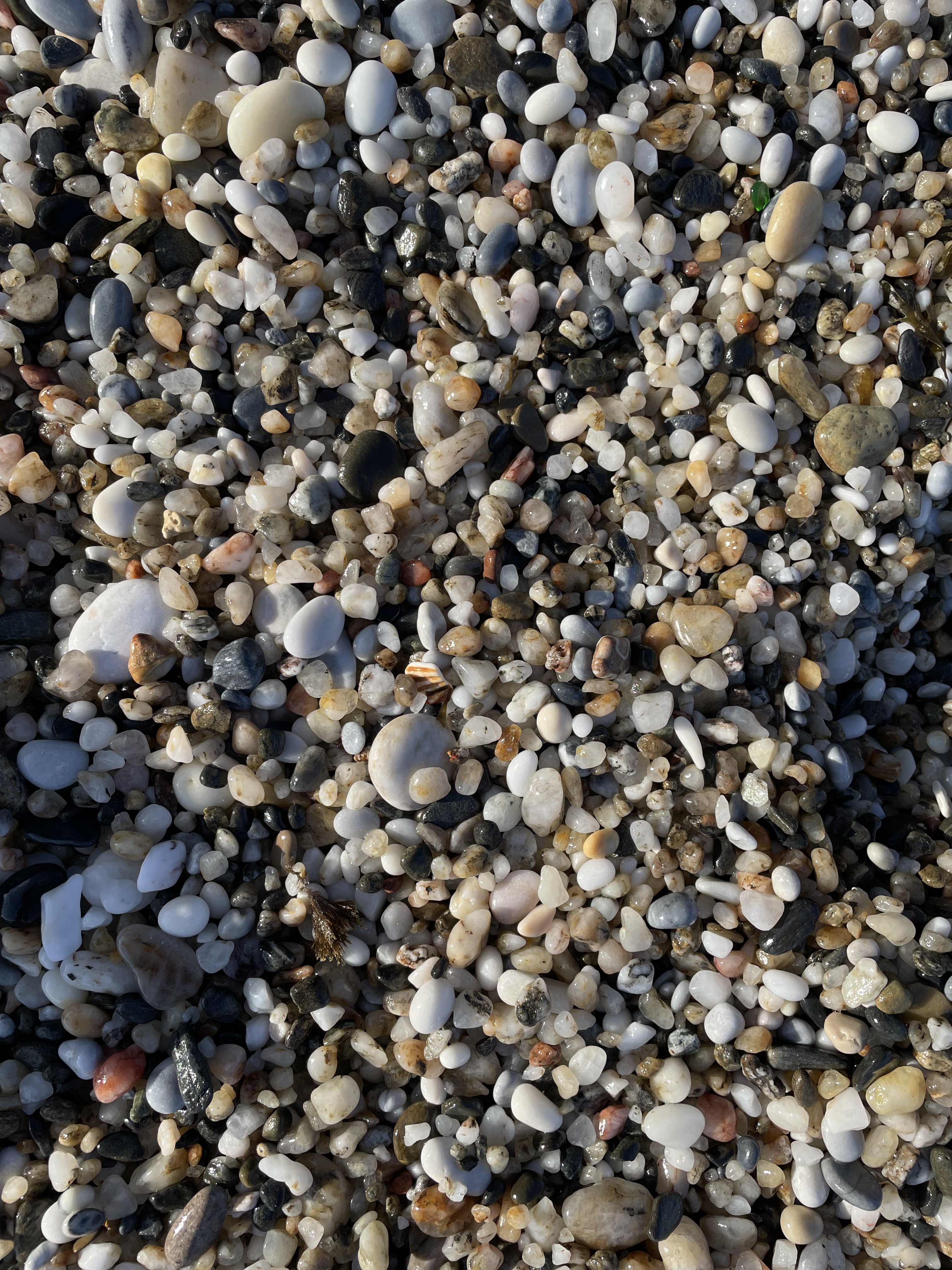
The twenty-third did almost nothing, on purpose. Lunch at Restaurante Benítez was the seafood soup of the trip — a large prawn holding the middle of the plate, clams, mussels, and a broth that made the shell work worth it. Because lunch was plainly not finished with us, an ox tail followed — dark, glossy, in its own sauce, with fries for the serious work. Then the afternoon idled down through the old lanes, where the pavements are laid in pebble mosaics, swirls and flowers worked out in white, black and reddish stones. The chiringuito at the pebble beach of Macaca had its straw parasols up and no urgency anywhere in it. The pebbles themselves got their close-up: white, grey, brown, every shade polished by a sea that has plainly been at this for some time. The evening walk home ran through the plaza off the Rambla del Río Chíllar at the right hour, when the fountain is going and the day is being put away.
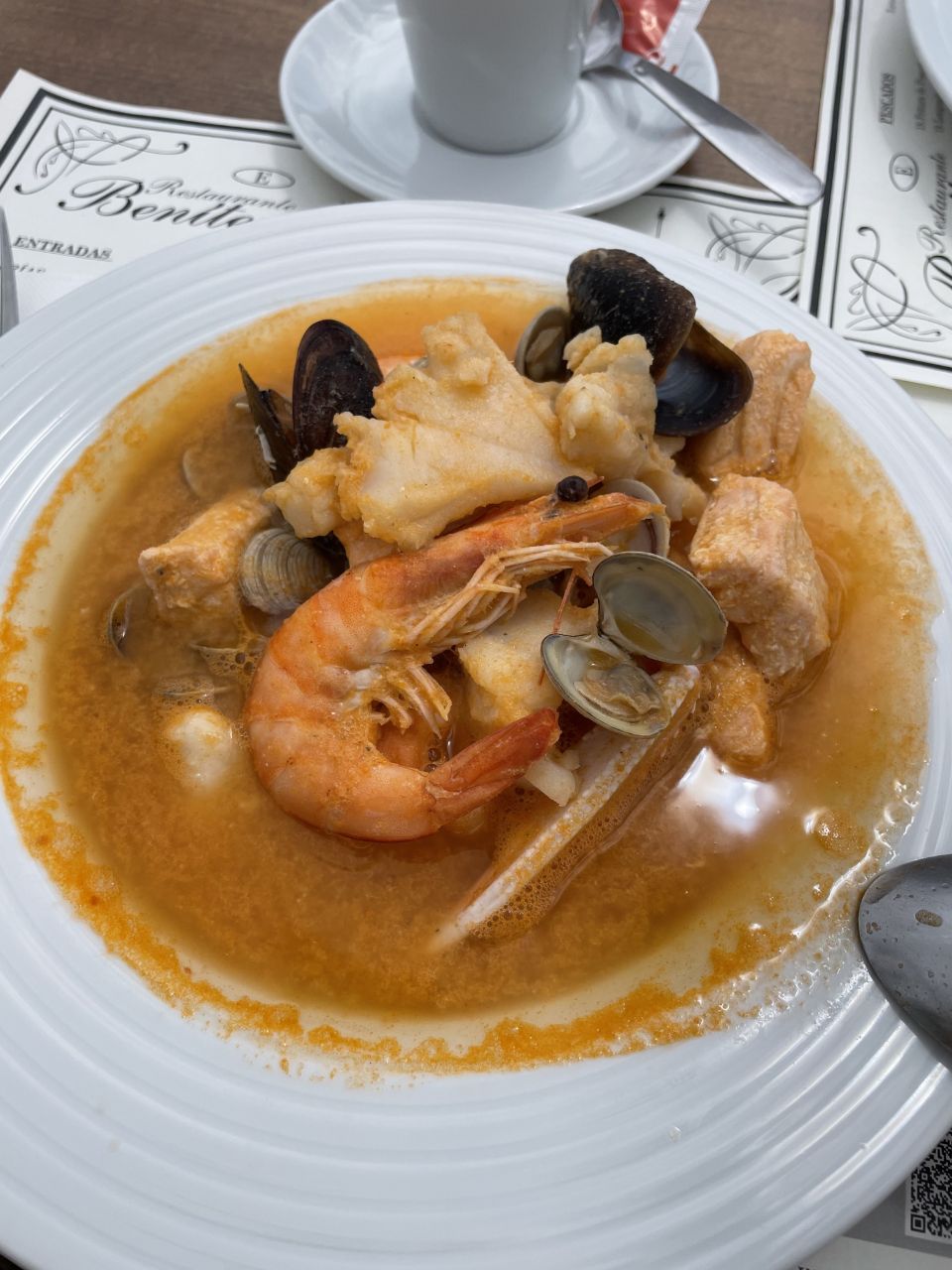
Seafood soup at Benítez 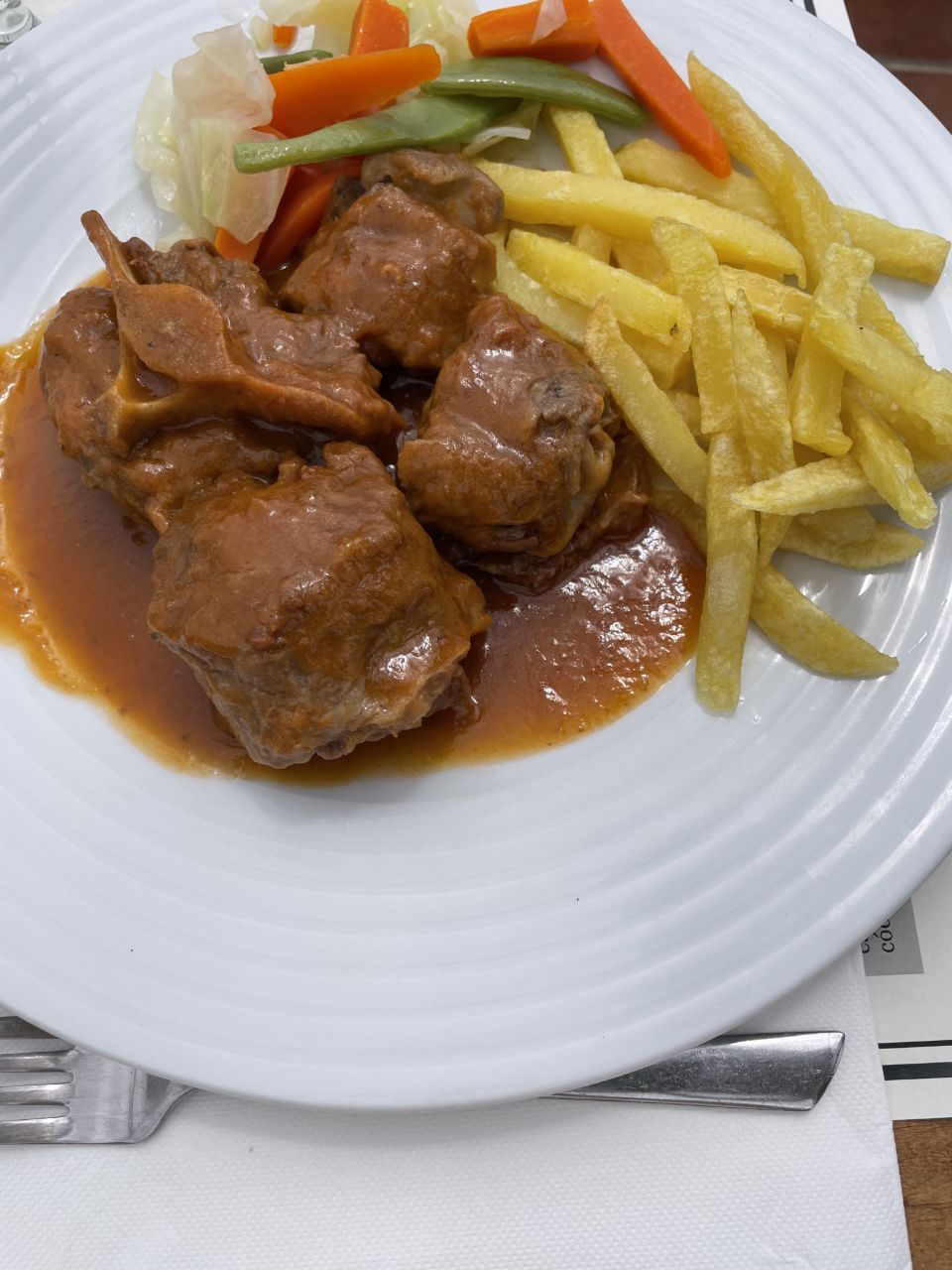
Ox tail at Benítez 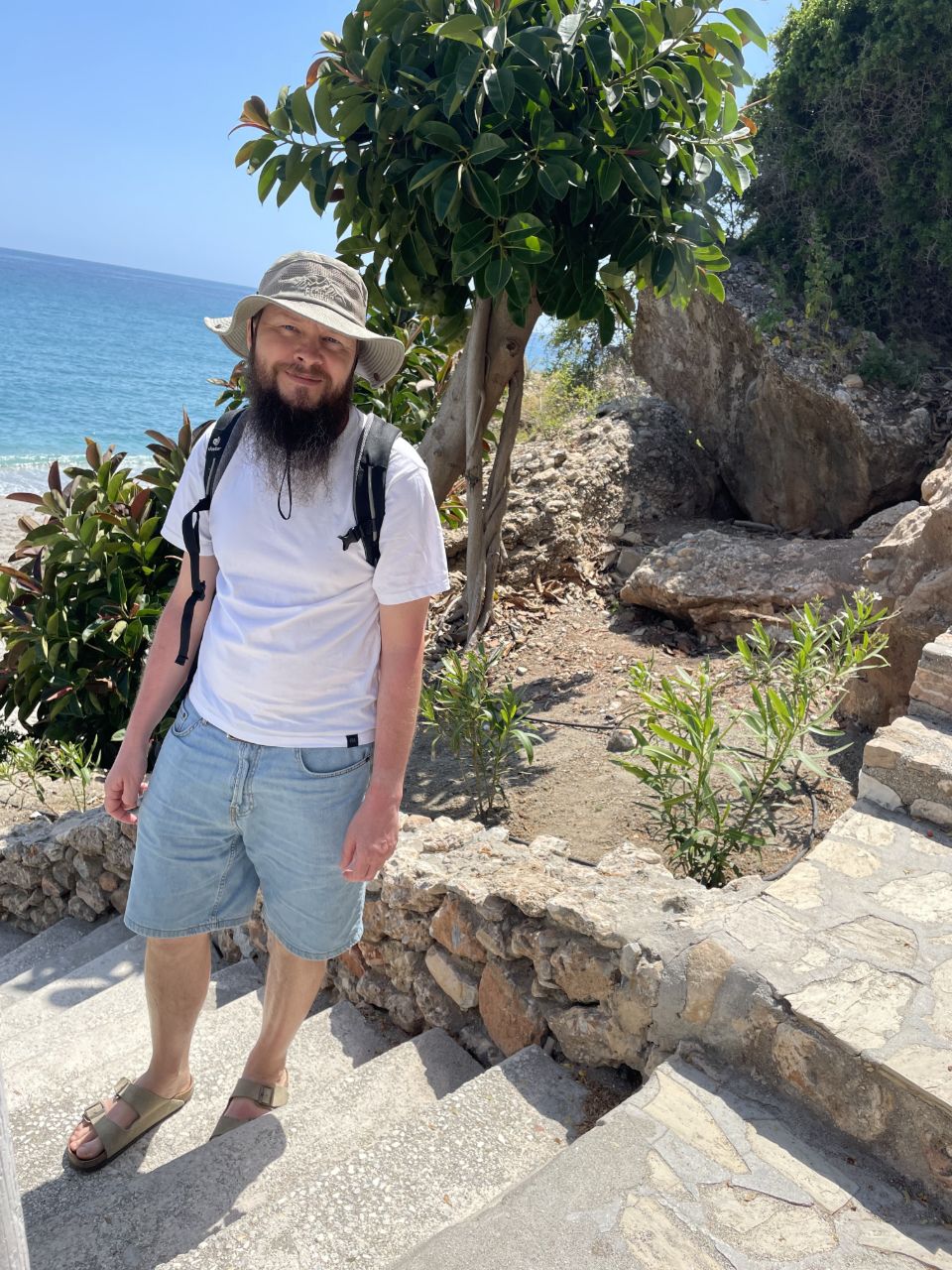
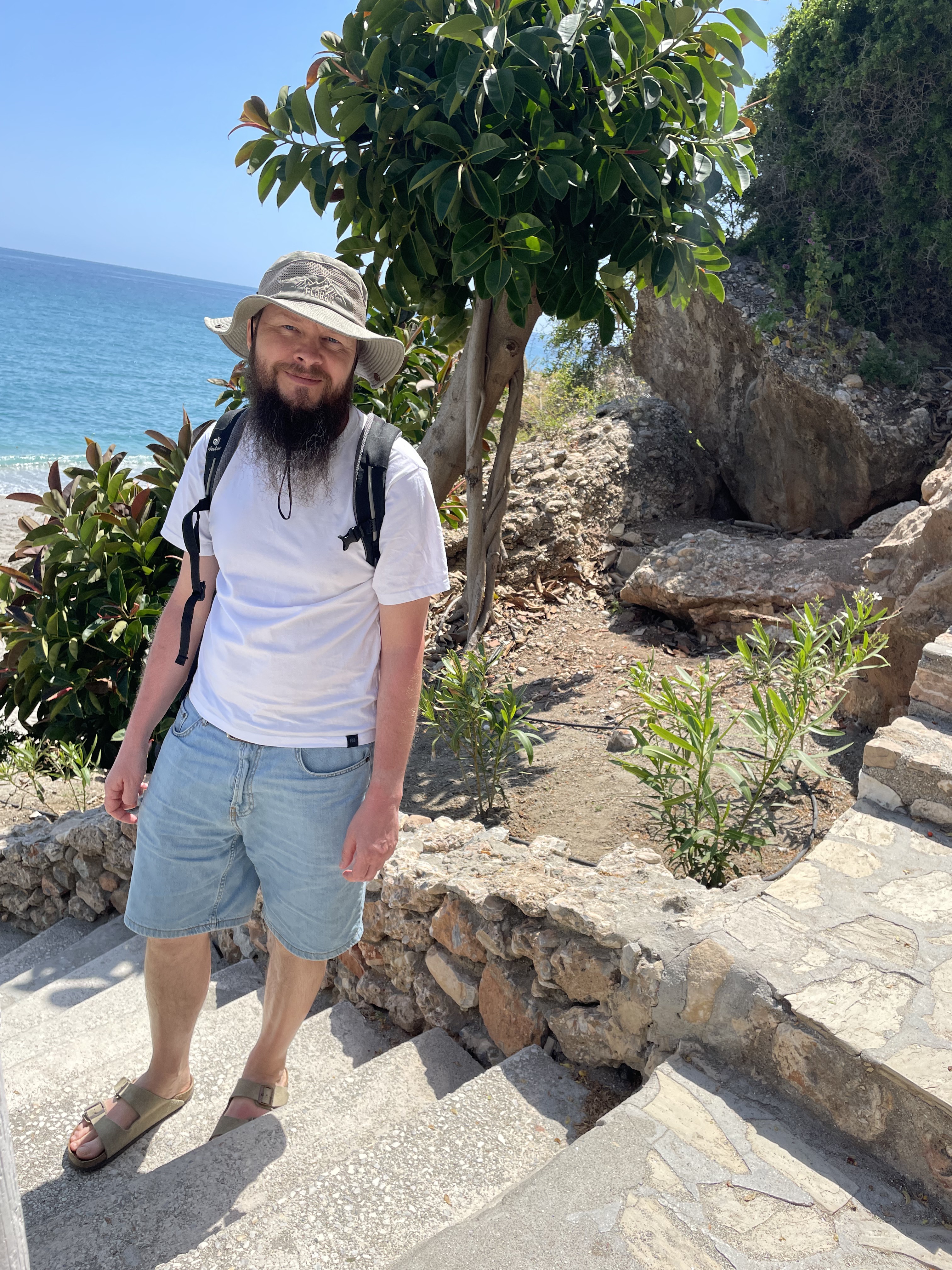
Oleg on the sea steps 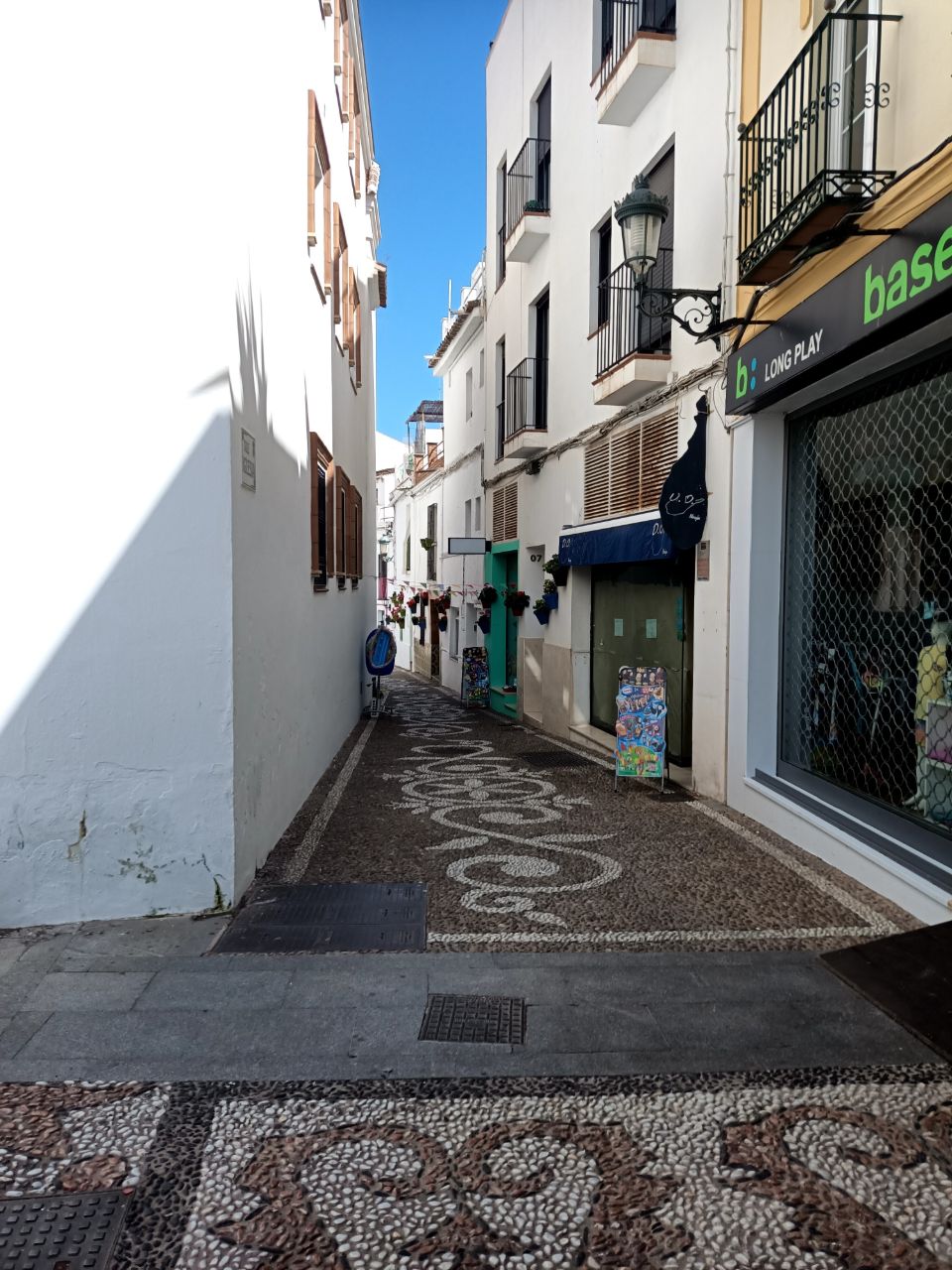
A lane paved with pebble mosaics 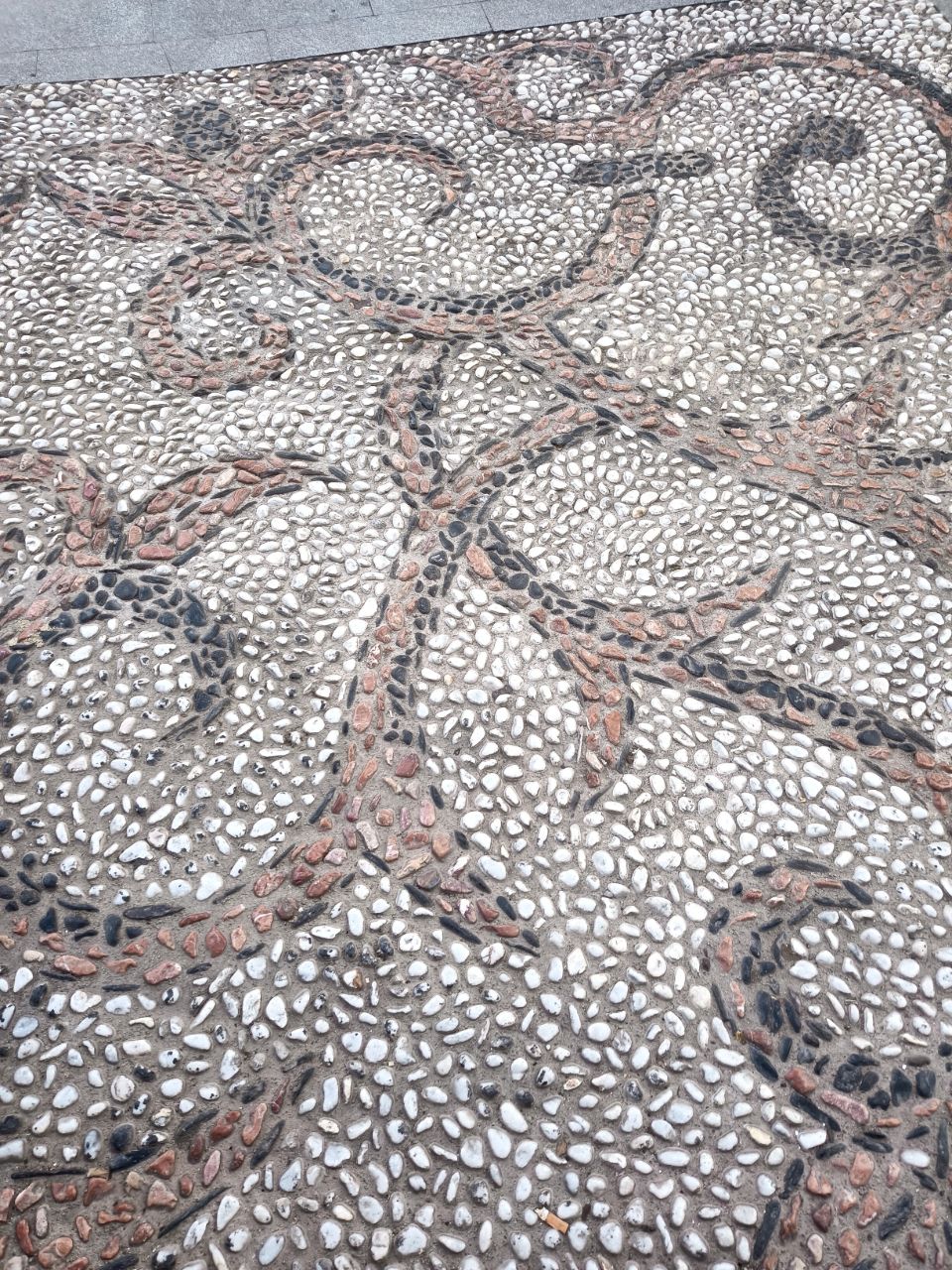
The mosaic up close 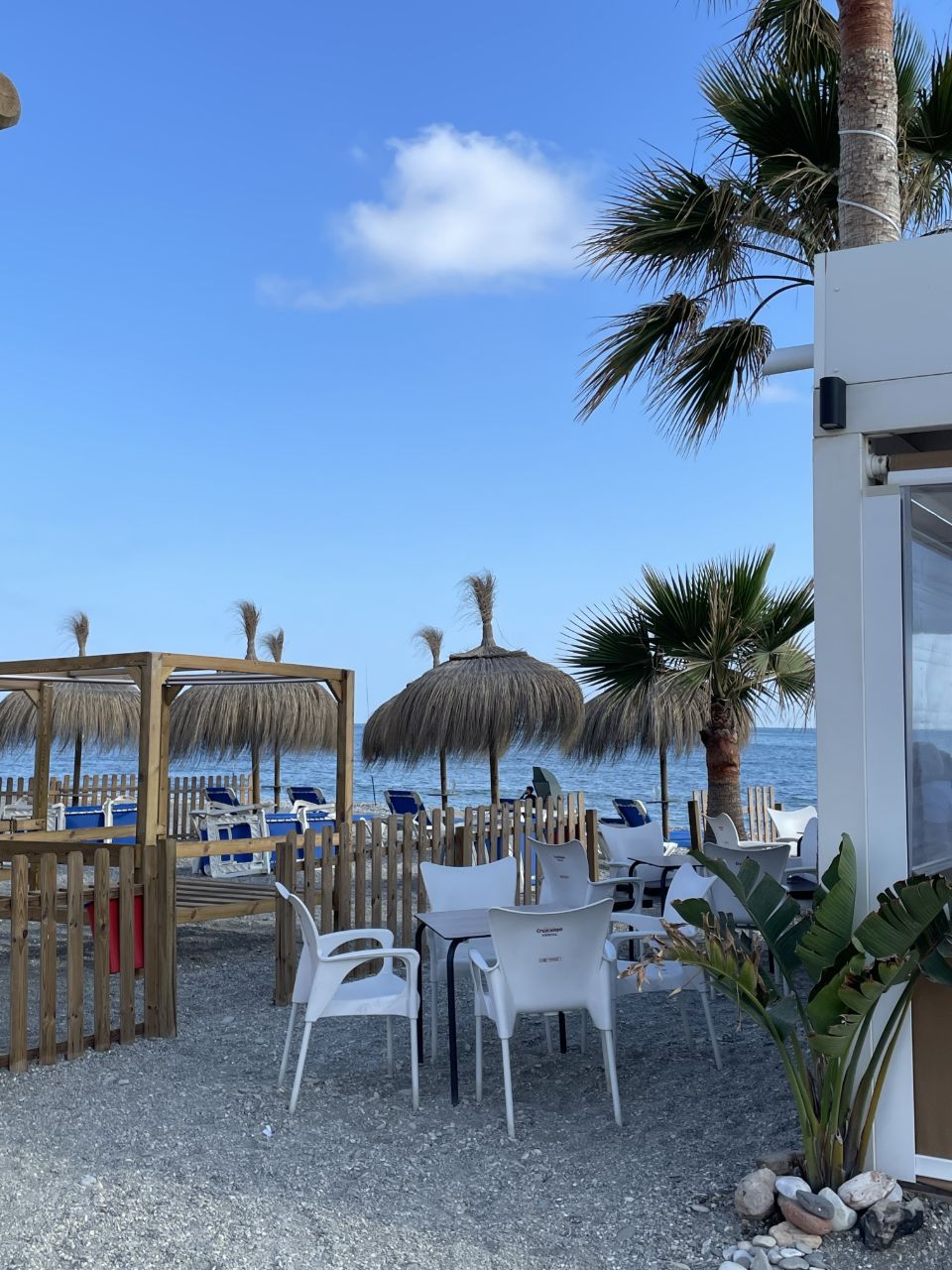
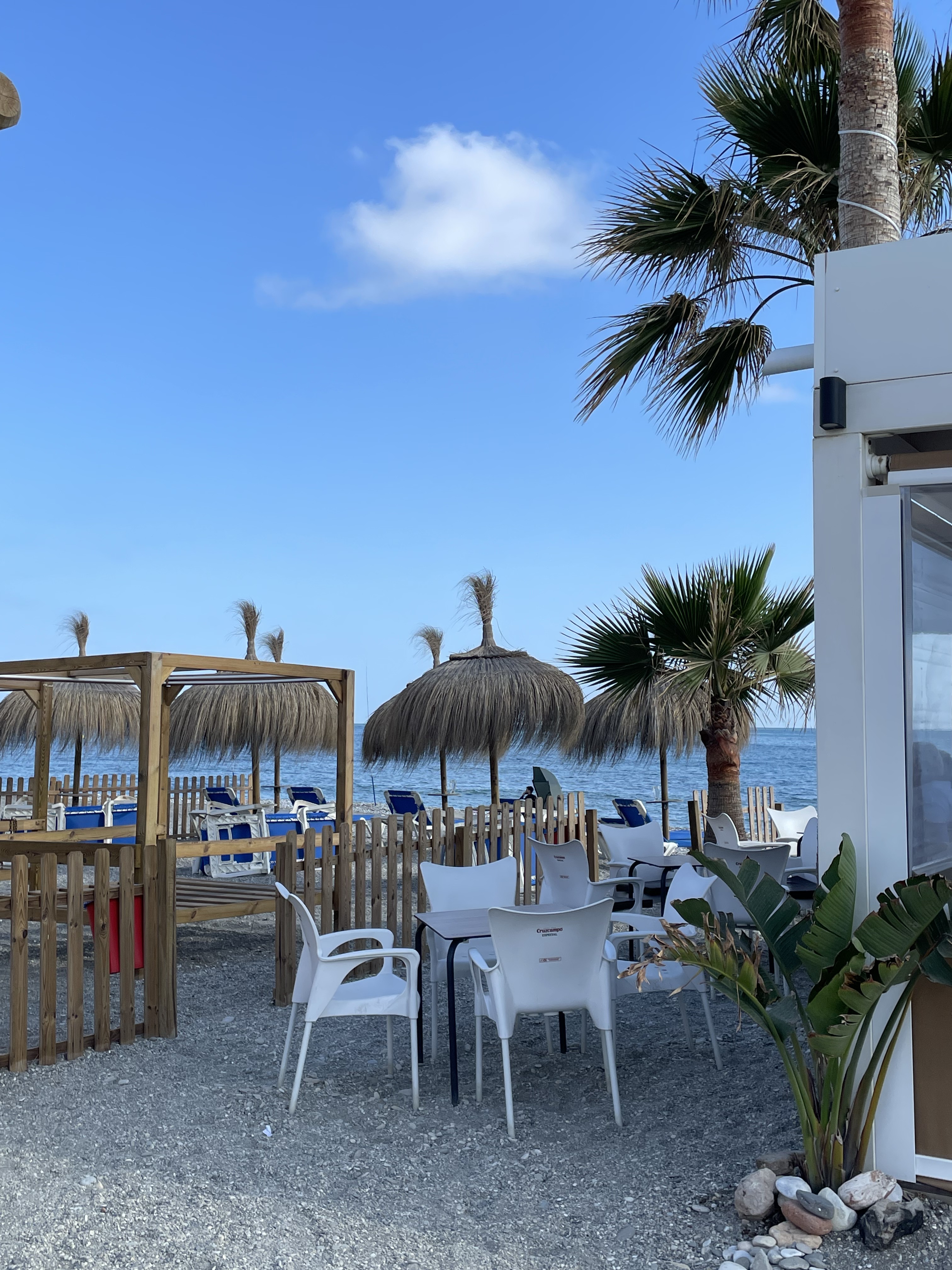
Straw parasols at the chiringuito 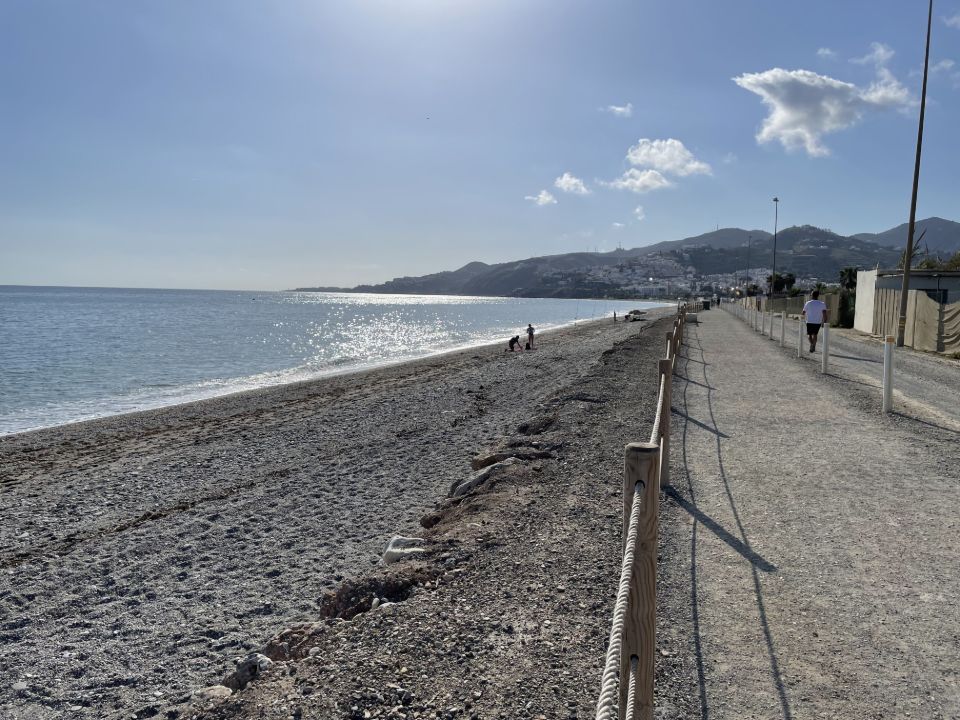
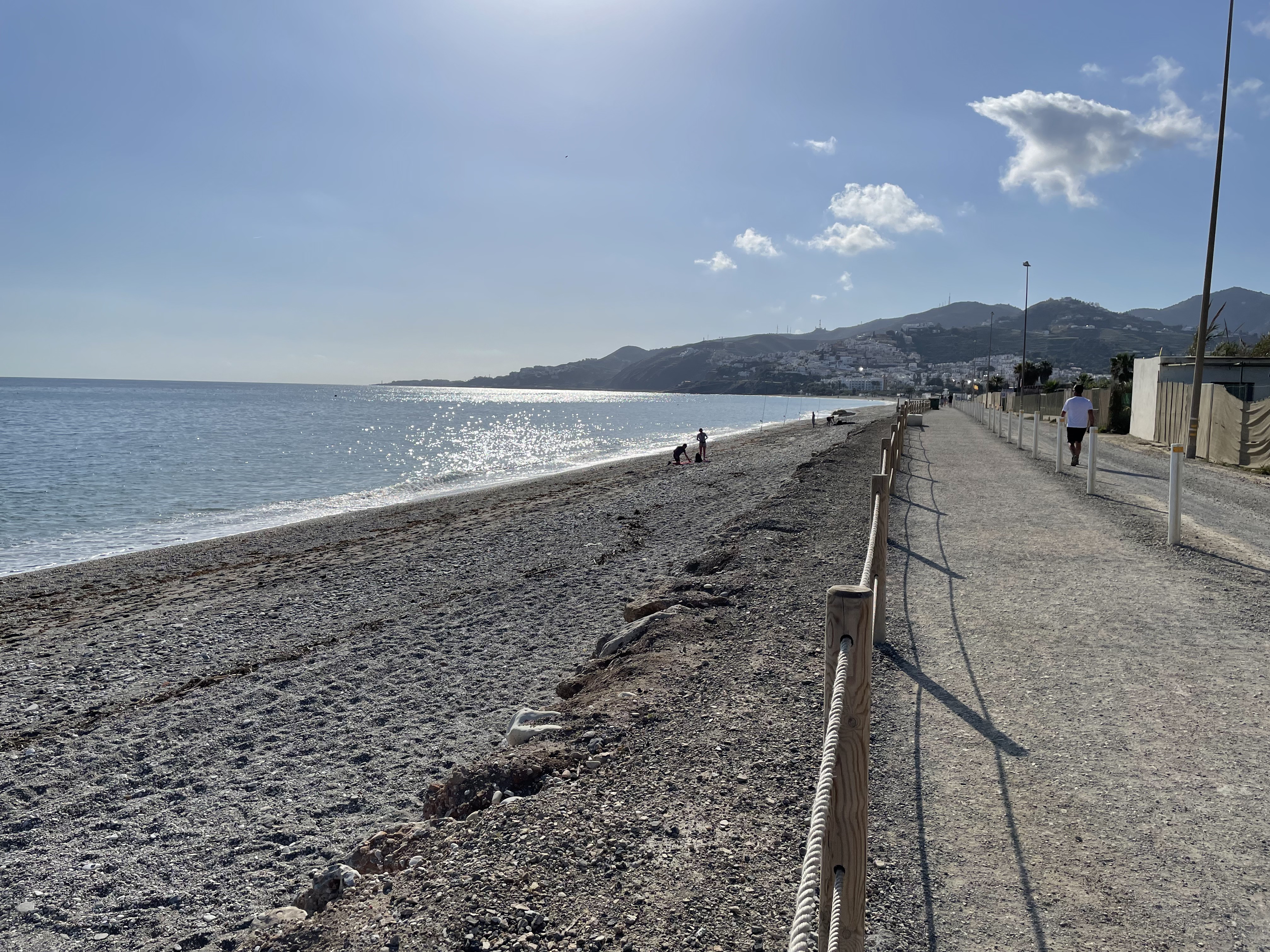
The pebble beach at Macaca 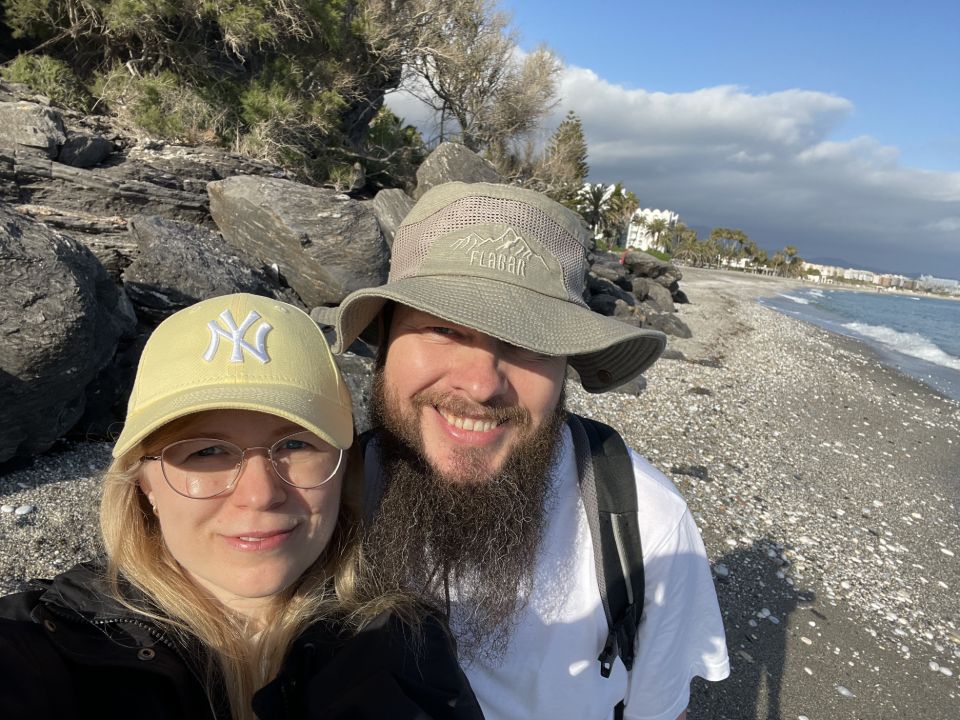
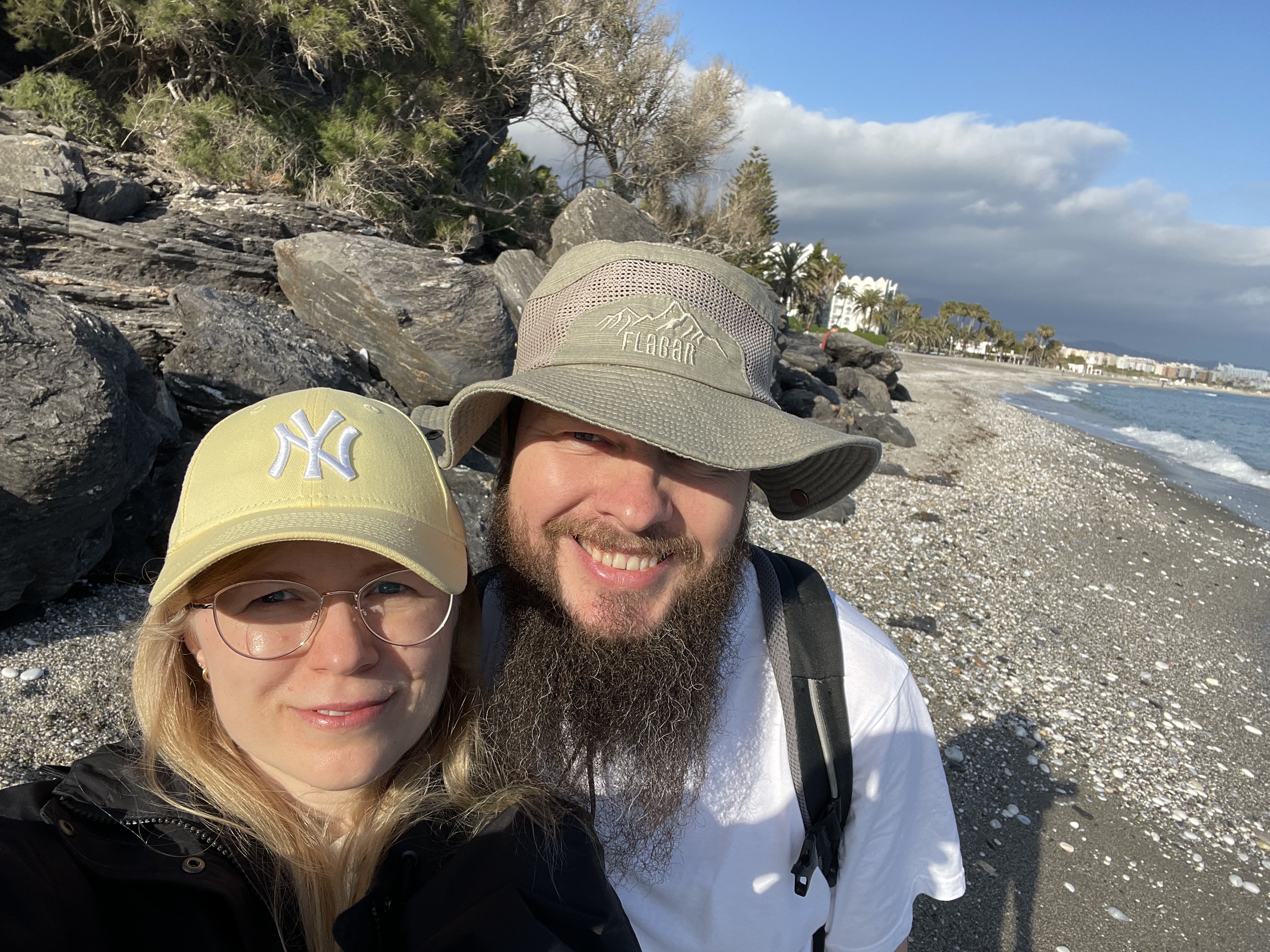
Selfie on the pebbles 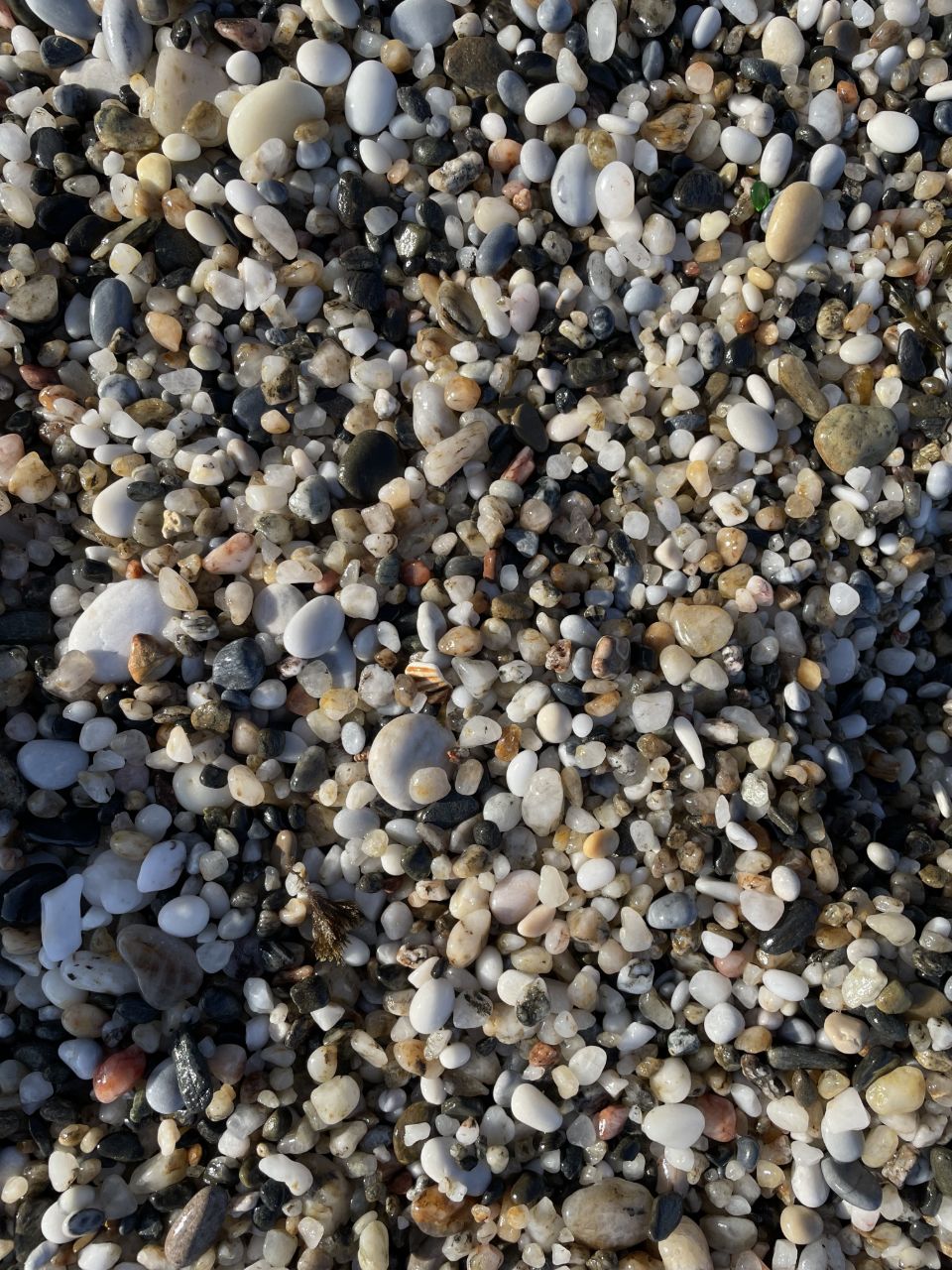
Nerja's pebbles, polished by the sea 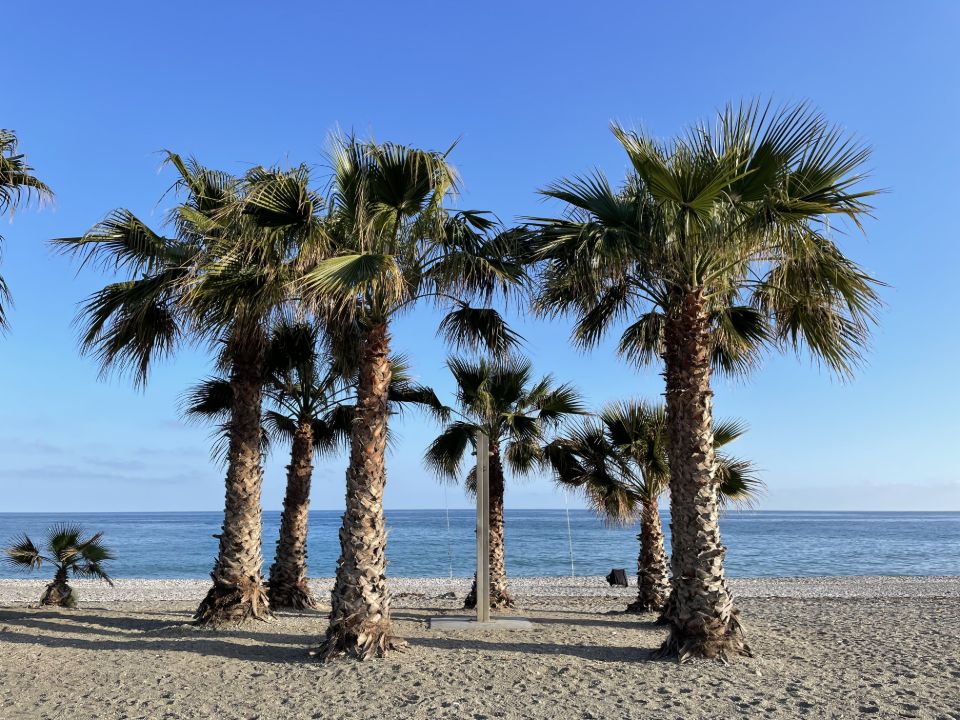
Palms on the evening beach
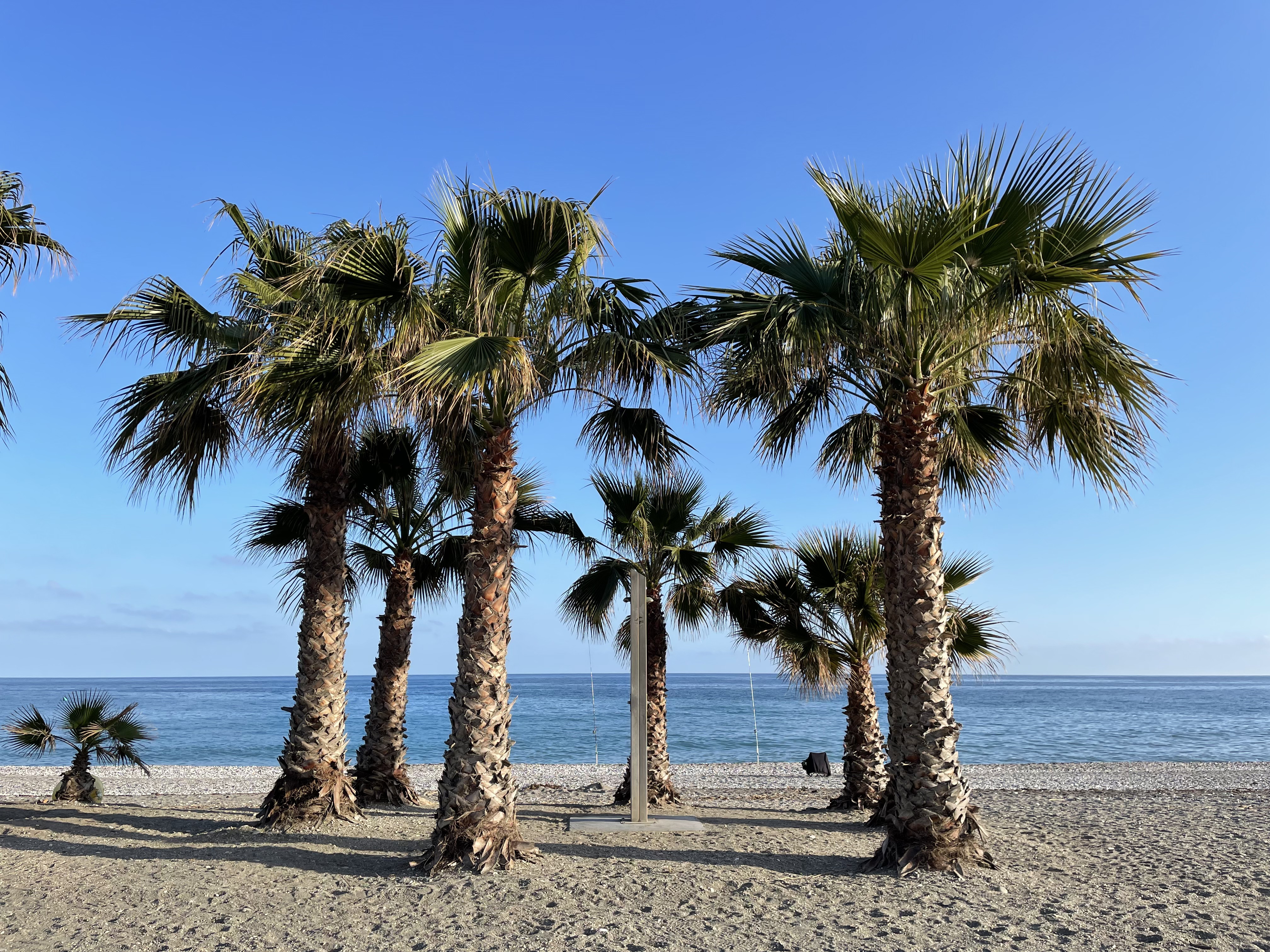
The walk home at 19:12, the Casa Blanca side: palm shadows on warm walls, nobody in a hurry.
19:15, the plaza off the Rambla del Río Chíllar: the fountain still going, the evening settling in.
The last morning, and the sea's opinion
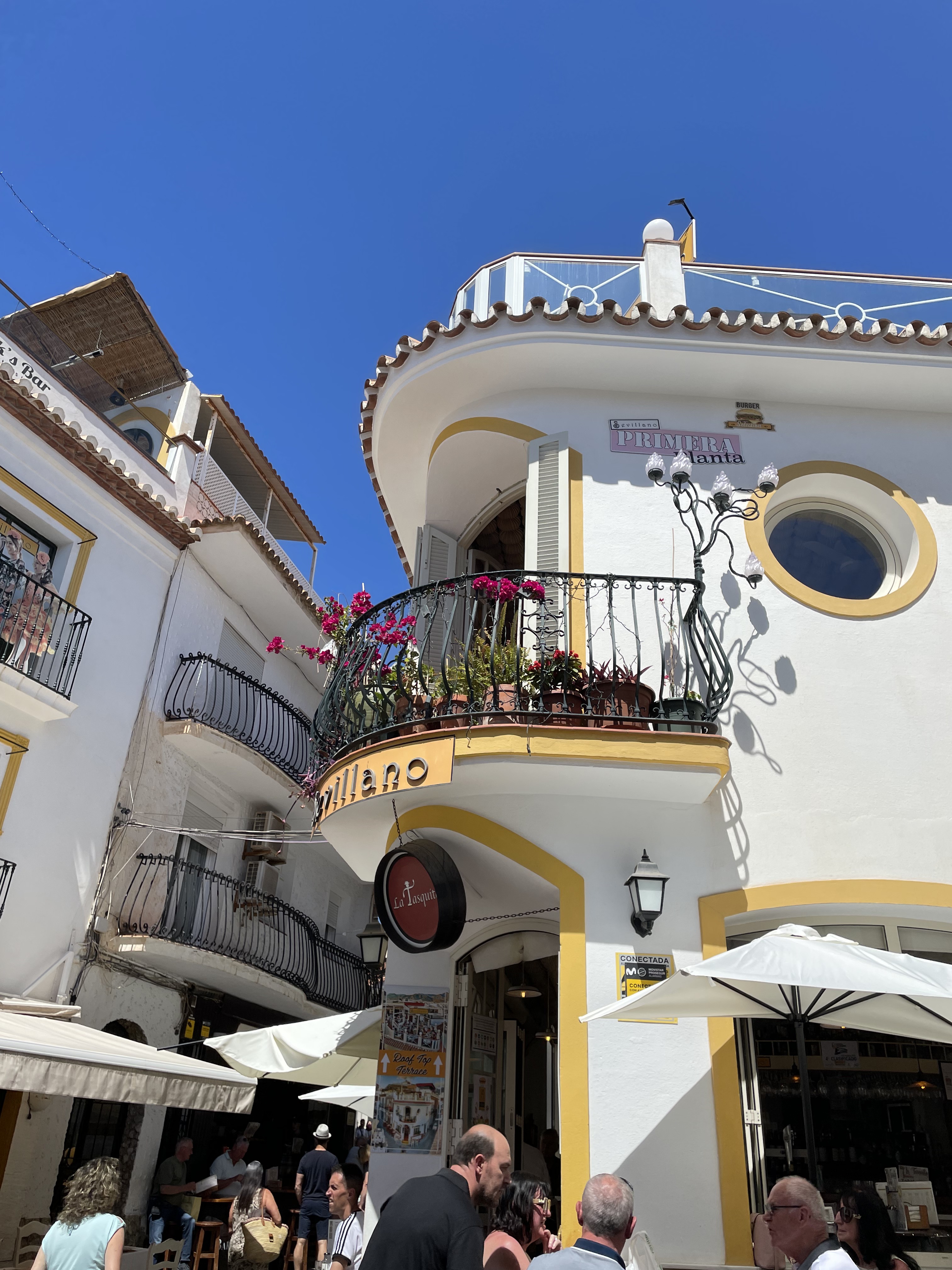
On the twenty-fourth the farewell was done properly: a last slow walk to the Balcón at high noon, the sea at its most agreeable turquoise, the Calahonda cove below packed with swimmers who had clearly not consulted us, and a long lunch at the bright café around the corner that was really a negotiation with the departure time. Then a last stroll past the corner café with the yellow trim and the balcony full of flowers, and the bus south arrived to collect us at the agreed minute. Four nights, and the town did everything except let us keep the pebbles.
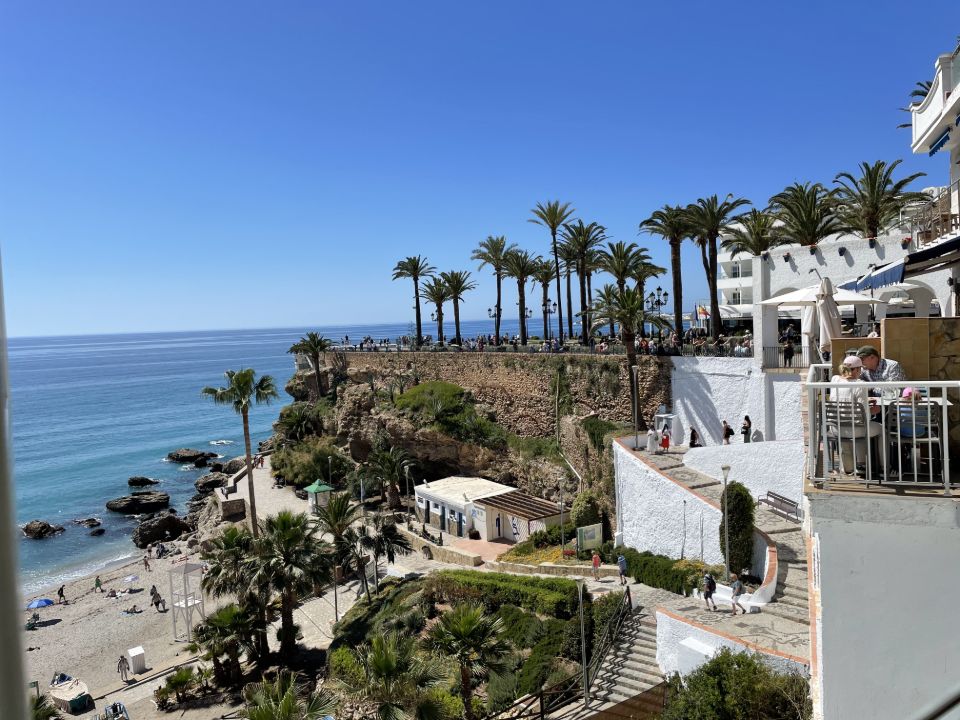
The Balcón at noon, a day before leaving 
Oleg at the farewell-lunch café 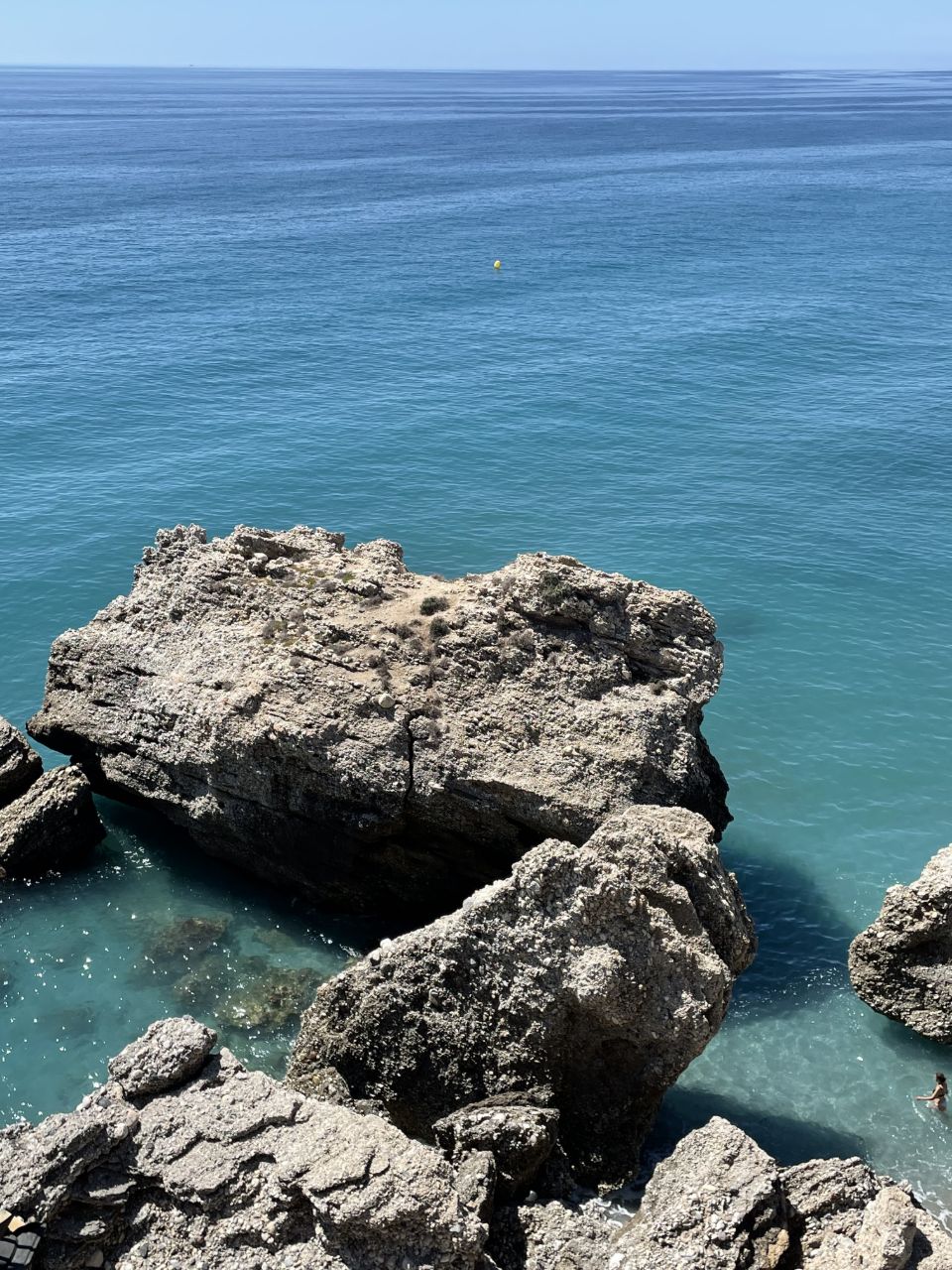
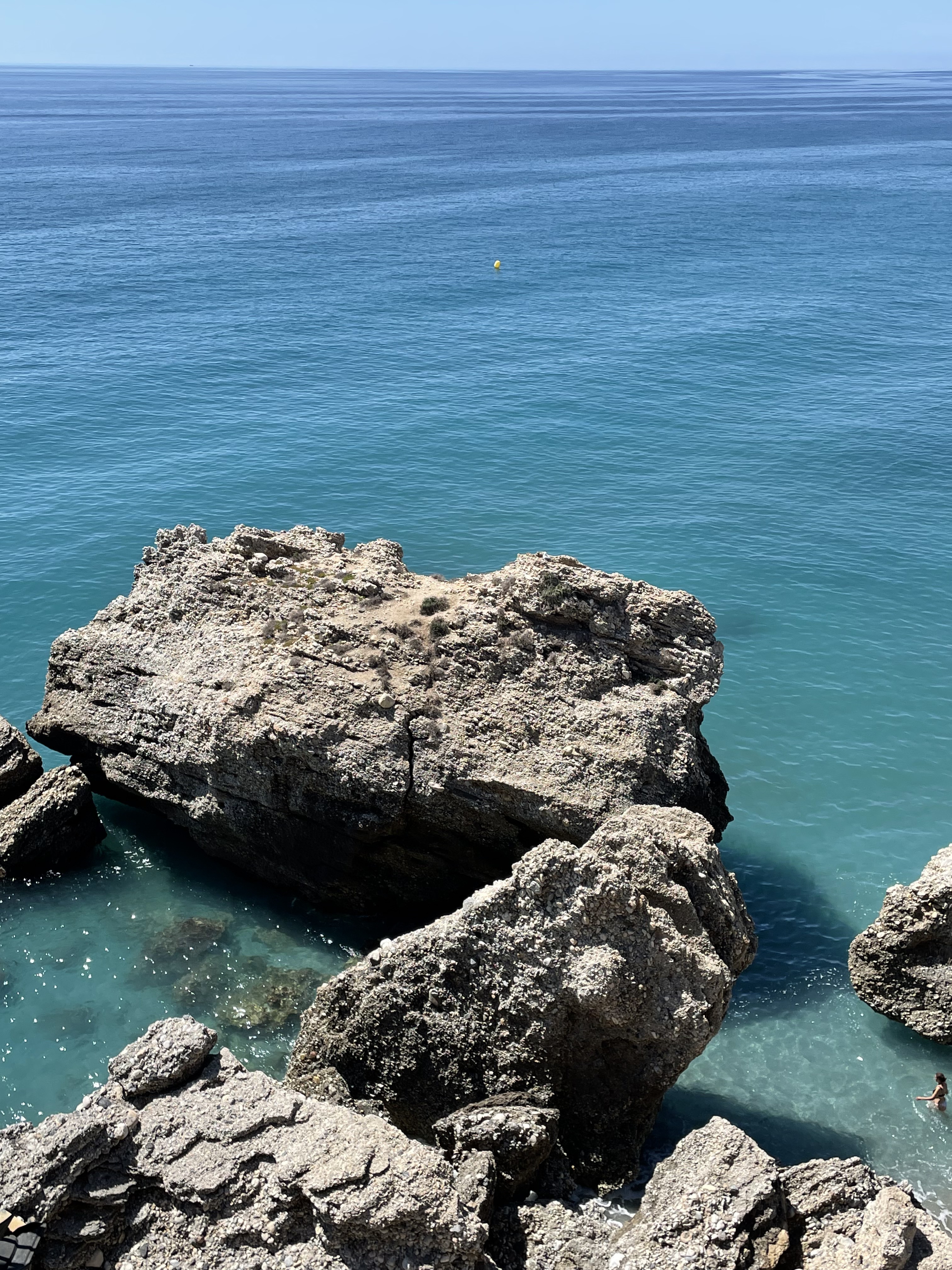
Rocks and turquoise water 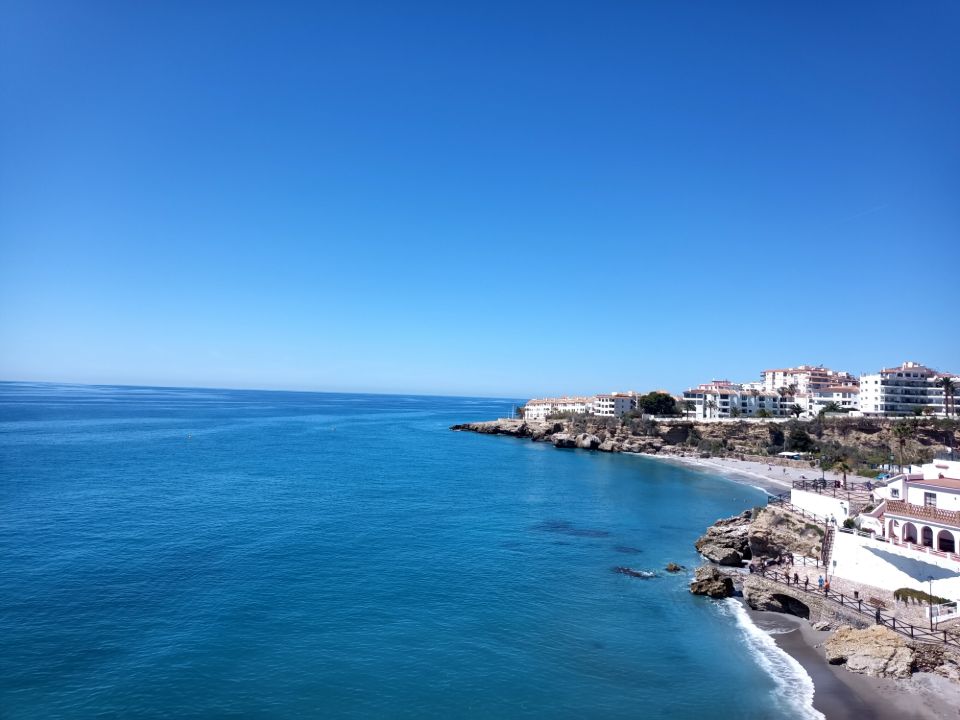
The coast one last time 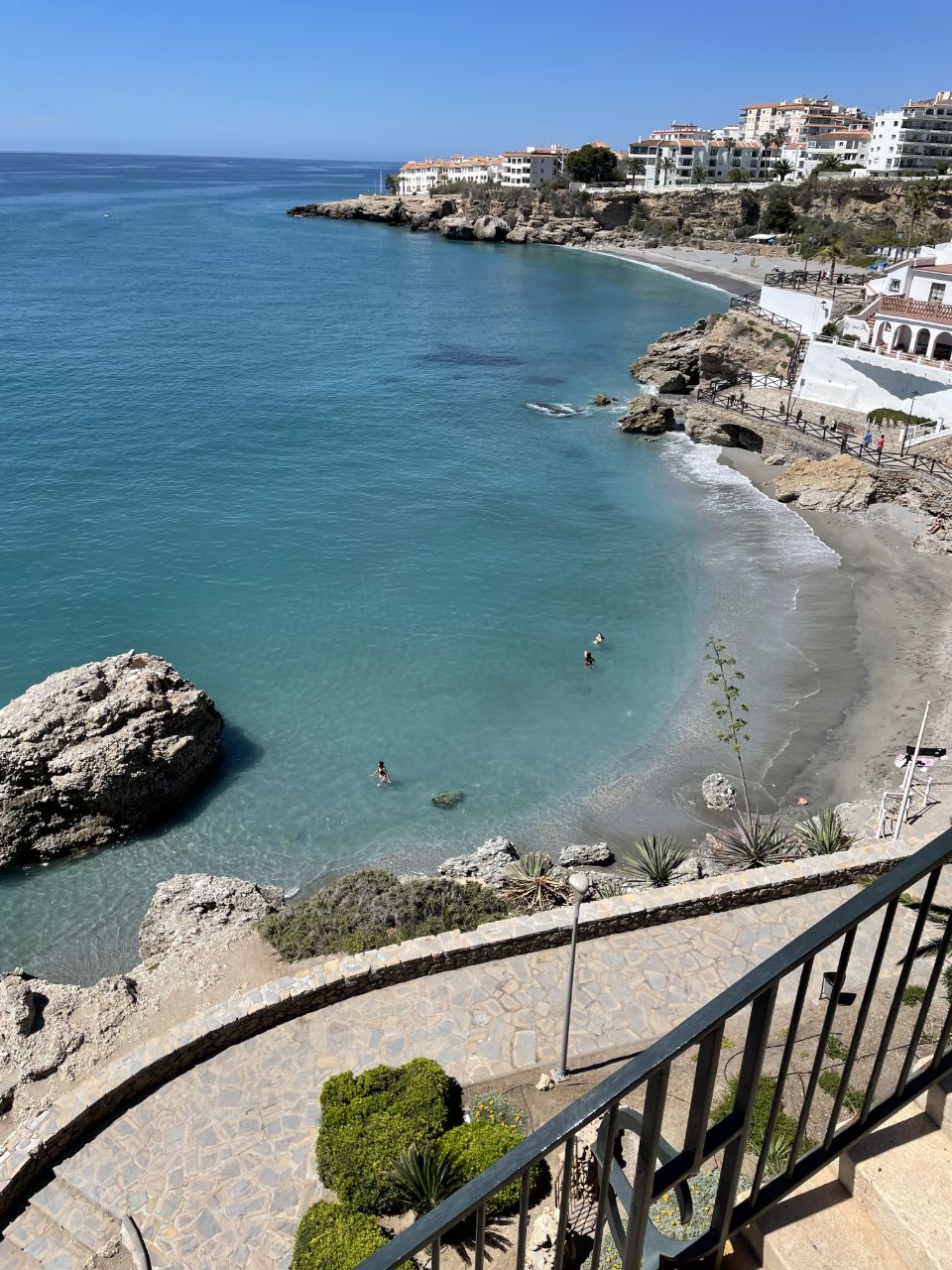
Calahonda from above 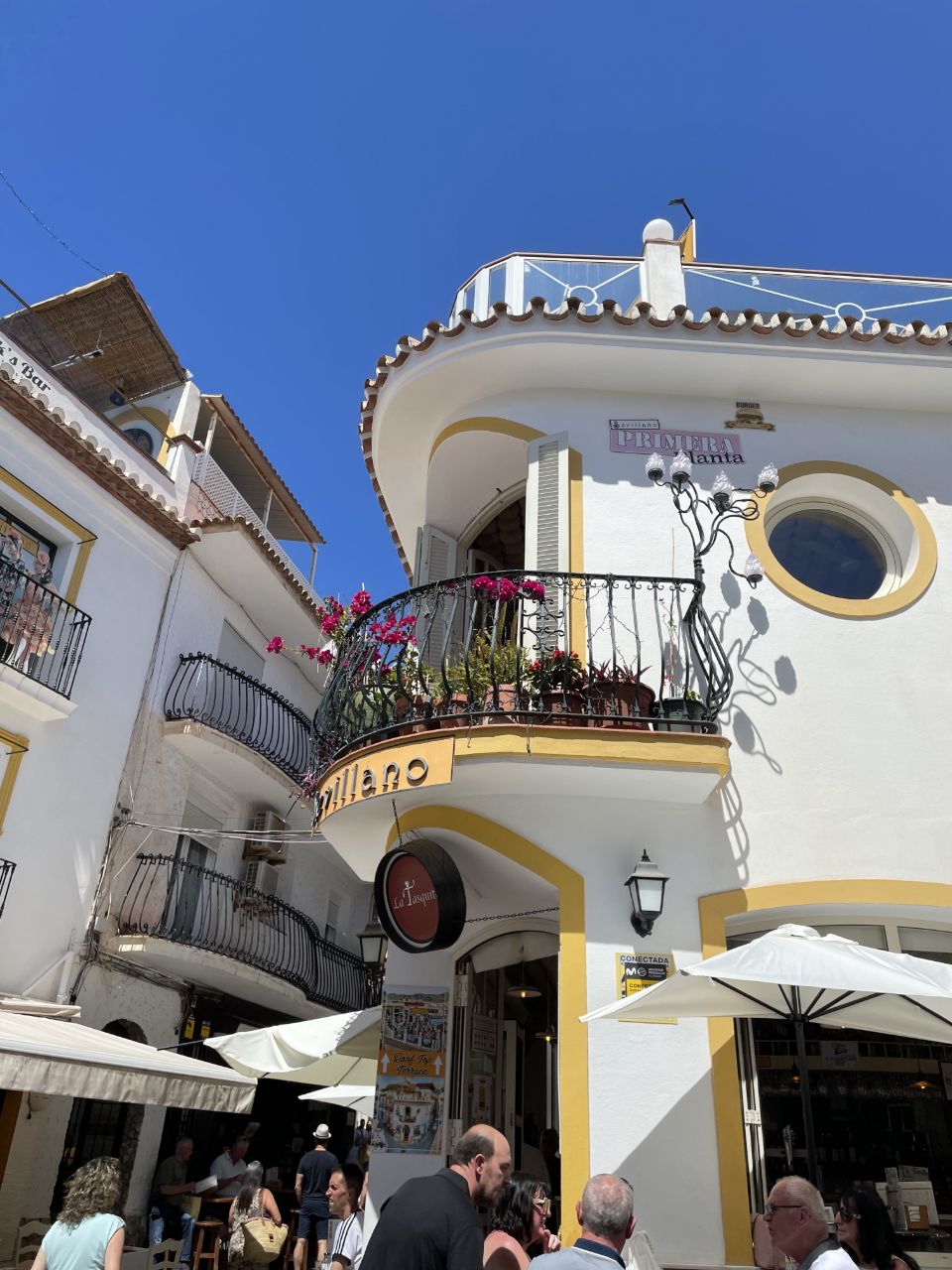
A last stroll through town