Puglia trip 2024 — Polignano a Mare
First of nine posts. Three nights in a white town balanced over a pebble cove: an arrival after dark, old-town lanes, the famous Balconata and its Roman bridge, a lunch on ice, grottos and reef on the coast path, a day’s walk as far as San Vito — and a brass band in the piazza to send us onward.
First of nine posts from Puglia, our four bases being Polignano a Mare, Monopoli, Brindisi and Bari, and the sea never more than a walk away. The trip opened on the evening of 9 October: a flight from Berlin into Bari, the train from the airport, and on to Polignano a Mare, where the lanes were already lit and the famous view had gone to bed behind the houses. We gave it three nights anyway. It deserved them.
An evening arrival
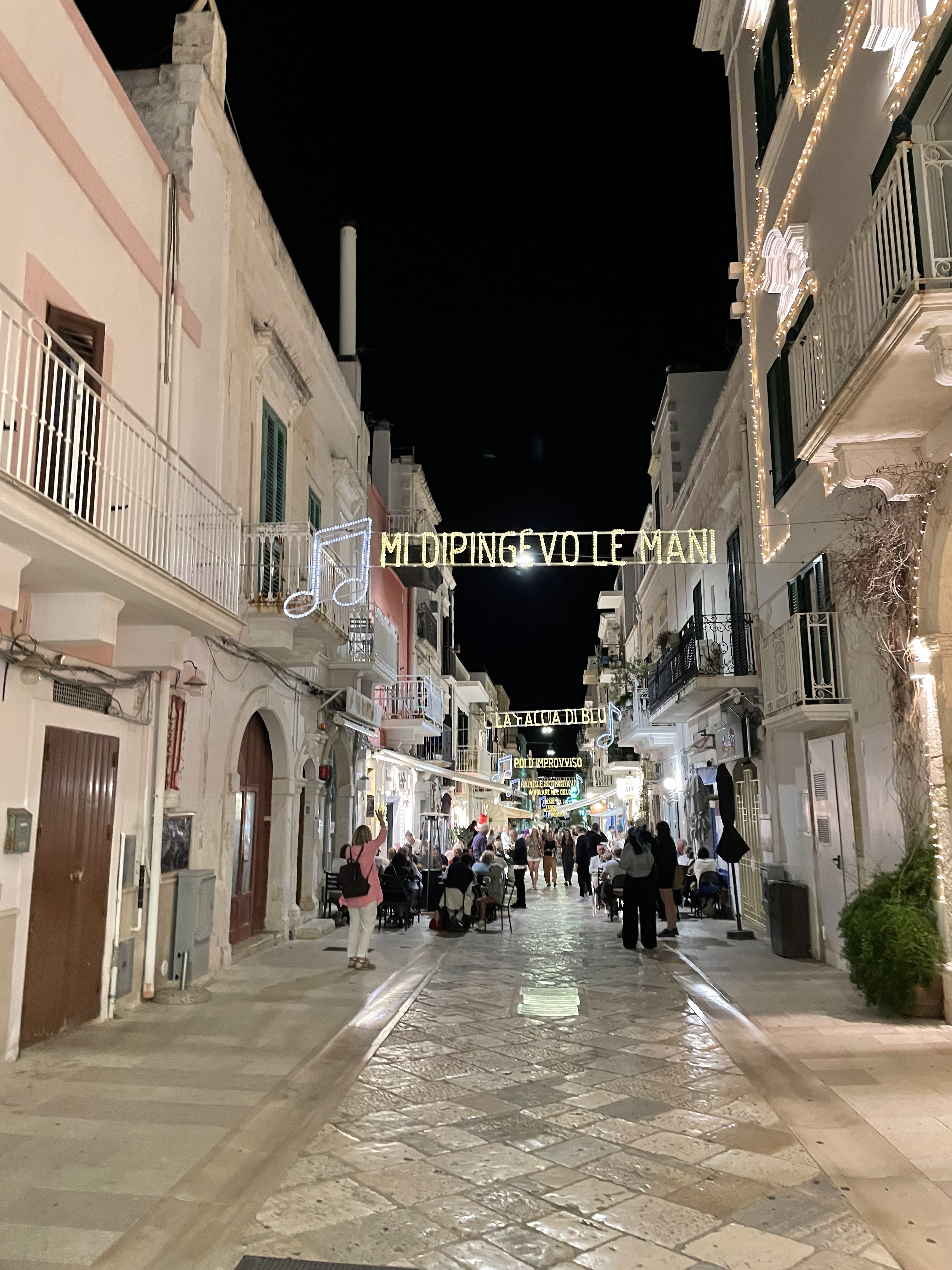
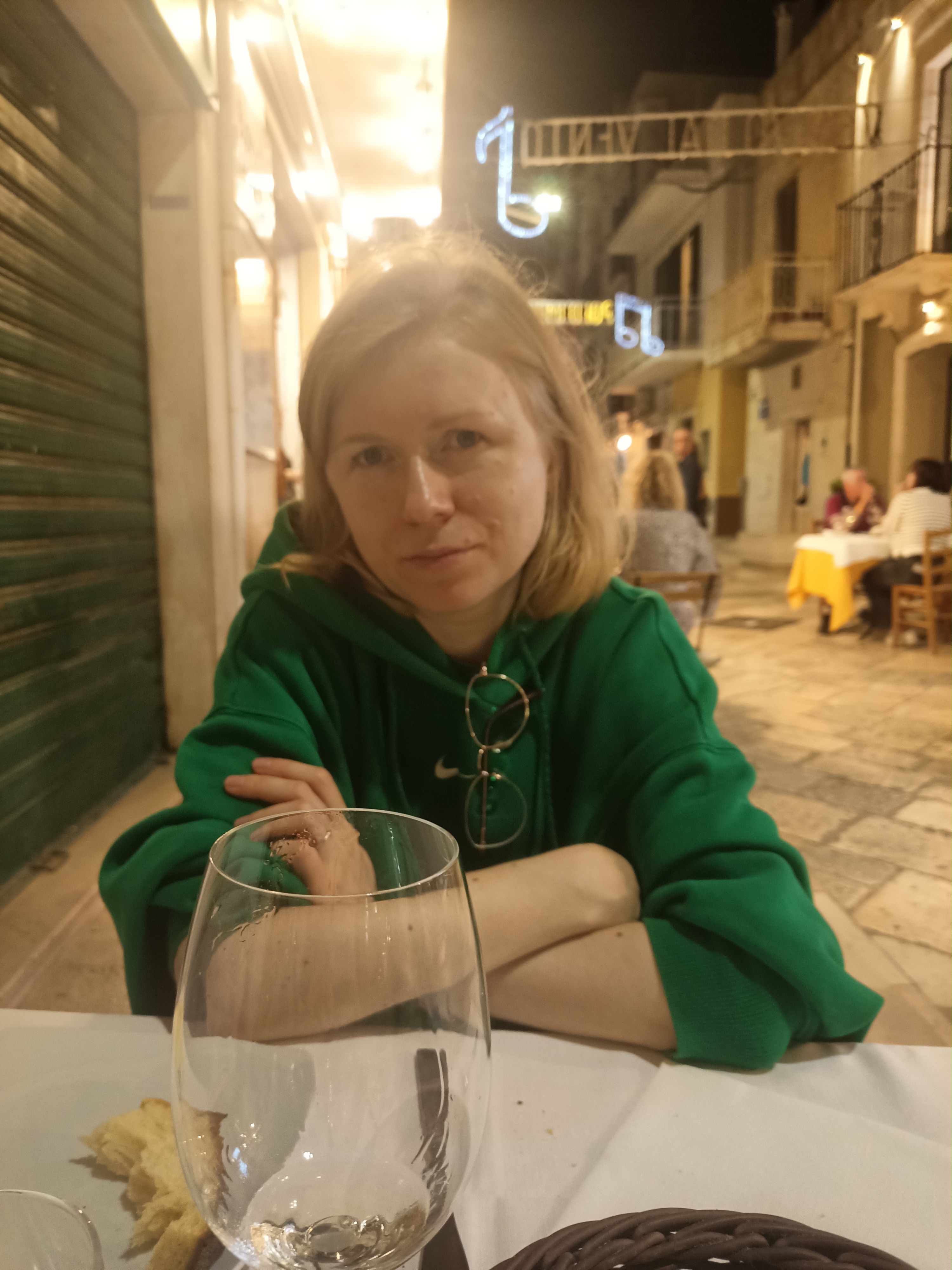
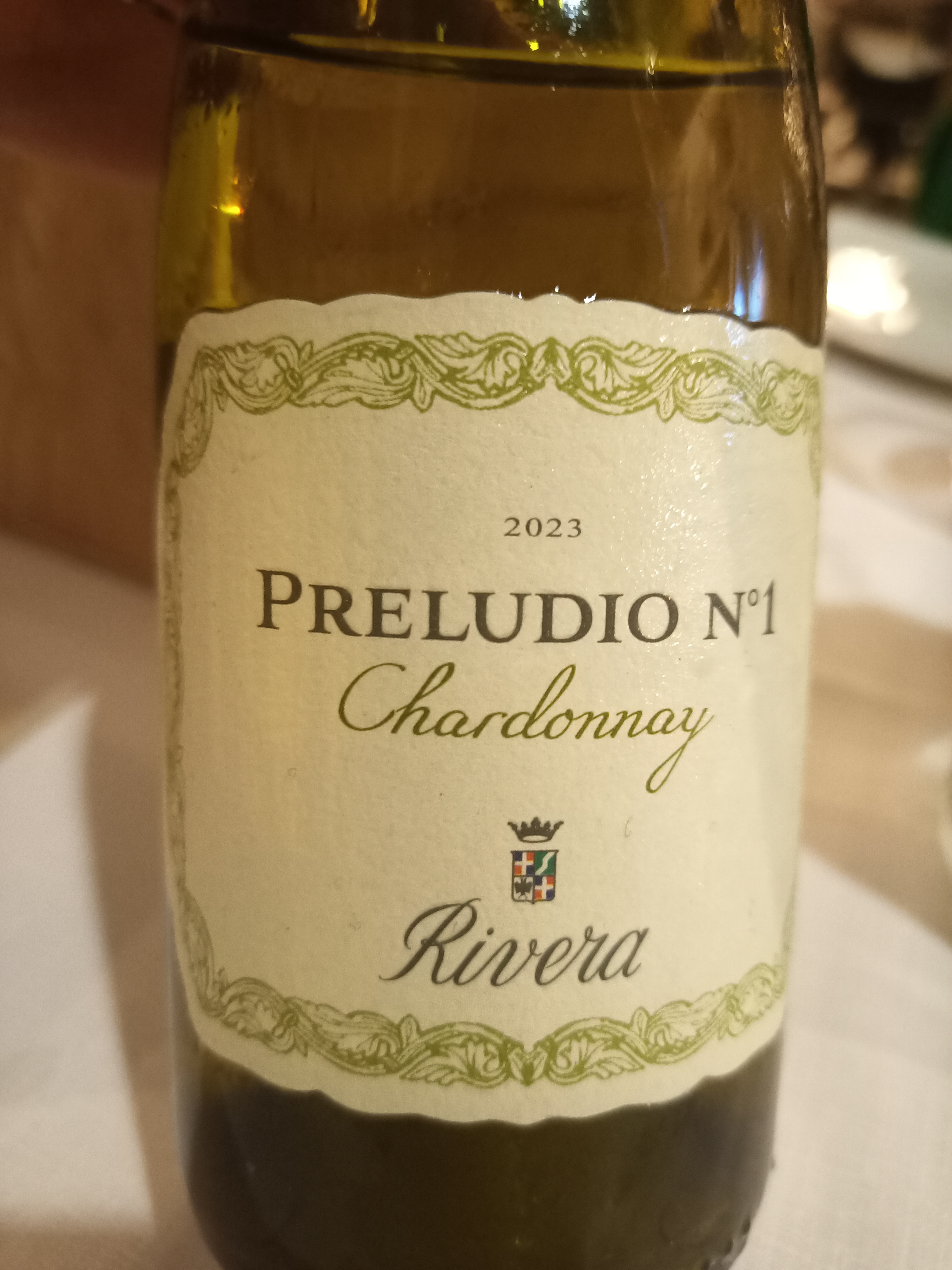
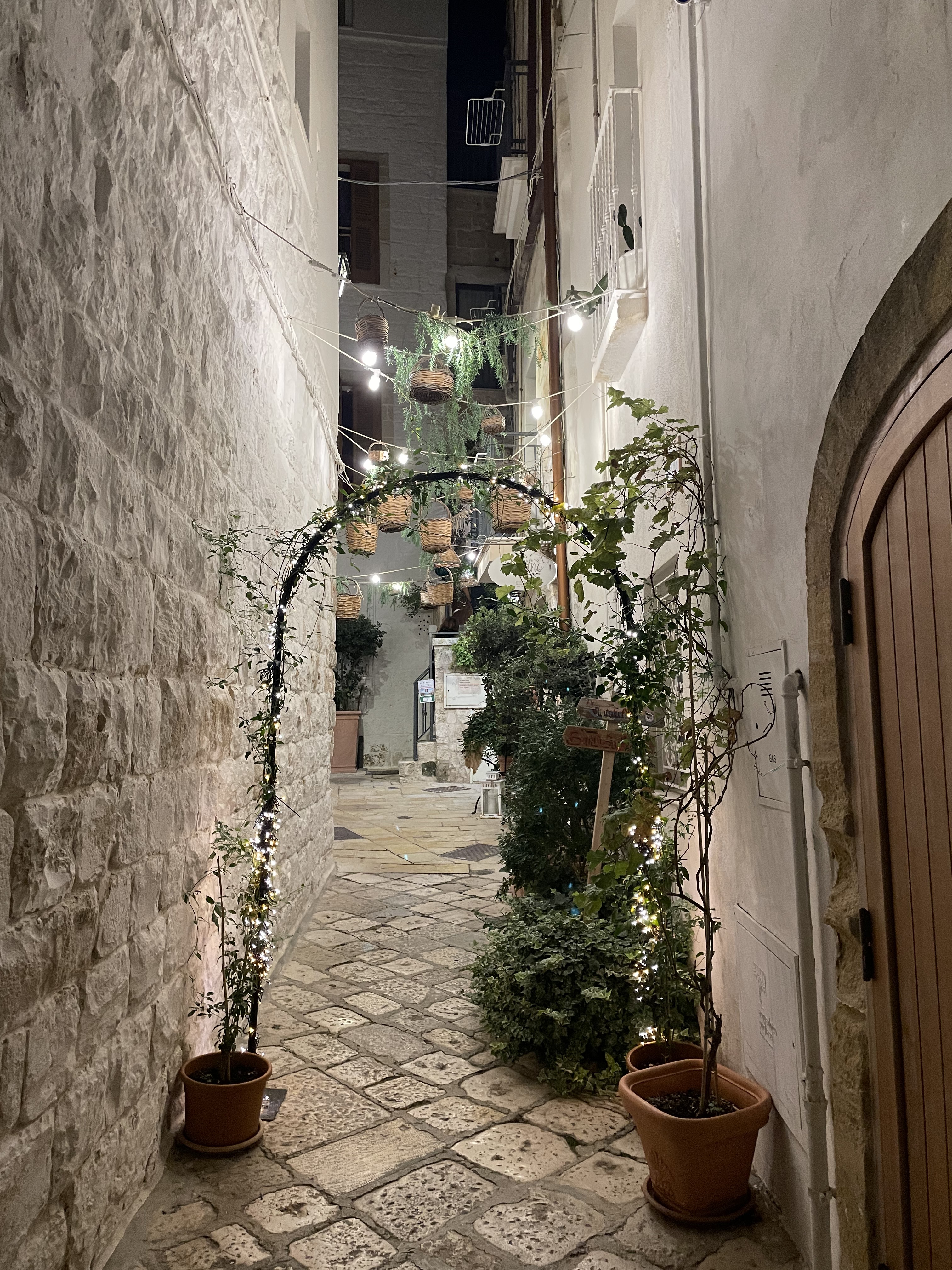
The first Puglia evening is recorded in three frames: dinner at an outdoor table in the old town, a Rivera Chardonnay to mark the arrival, and lanes around them strung with lights and wicker and plants, everyone out strolling at ten o’clock like it was July. And the lights had a secret: strung across the street letter by letter, they spell out the words of Volare — this town’s own song — so an evening’s stroll down the lane reads you the whole lyric.
The song those lights spell out — as Modugno recorded it in 1958.
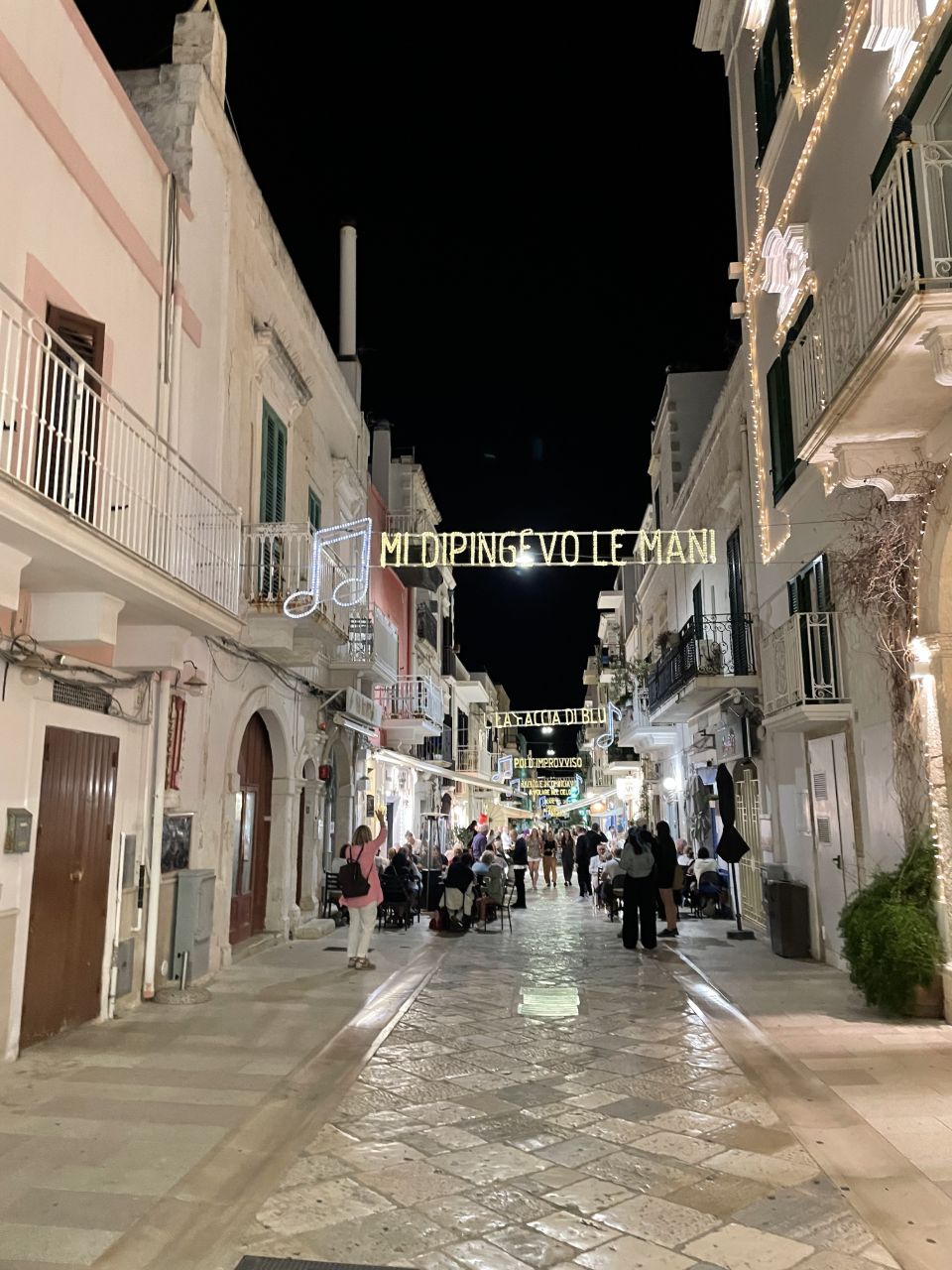
Volare, spelled out in lights, night one 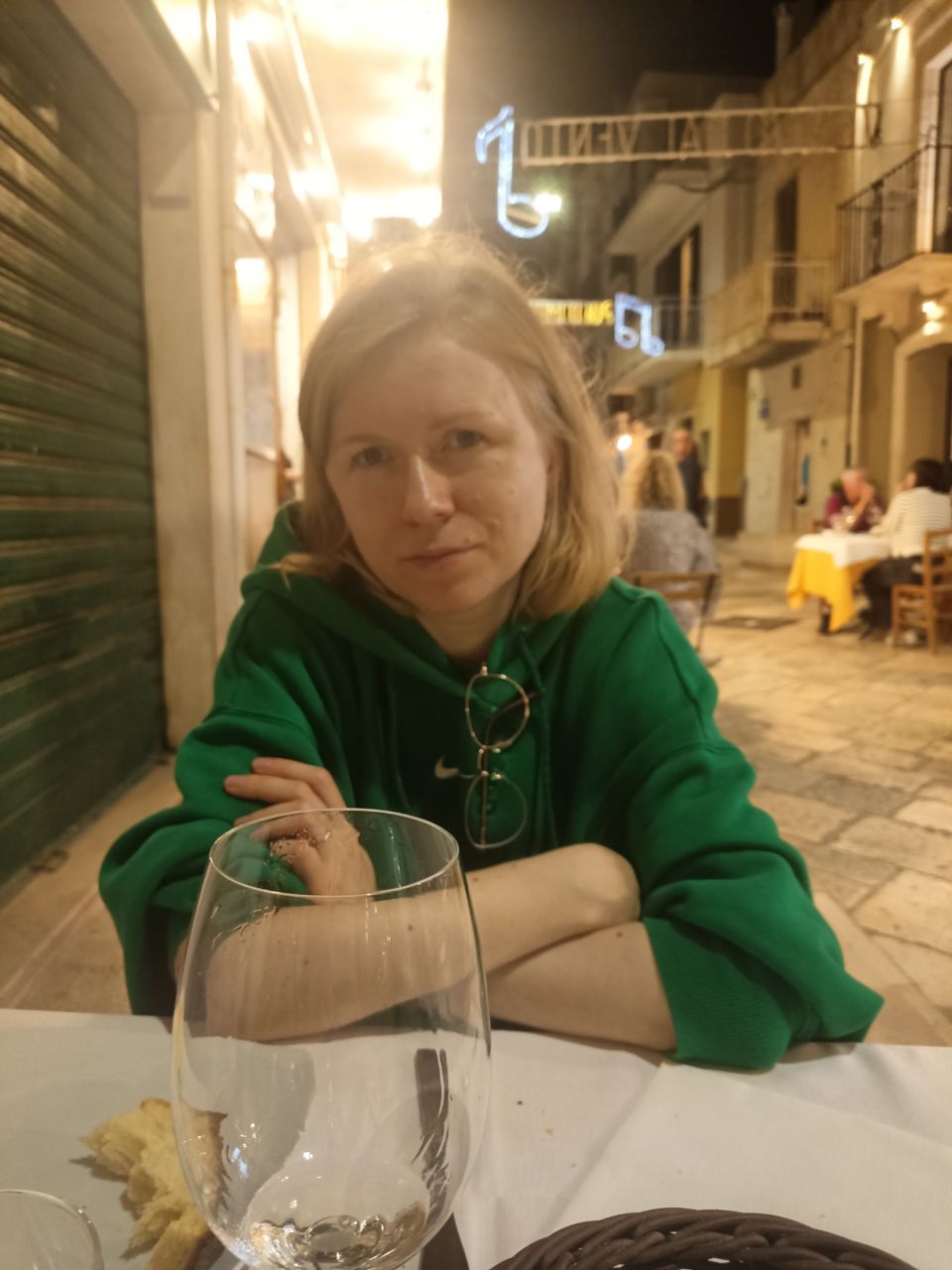
Anna at the table, first dinner in Puglia 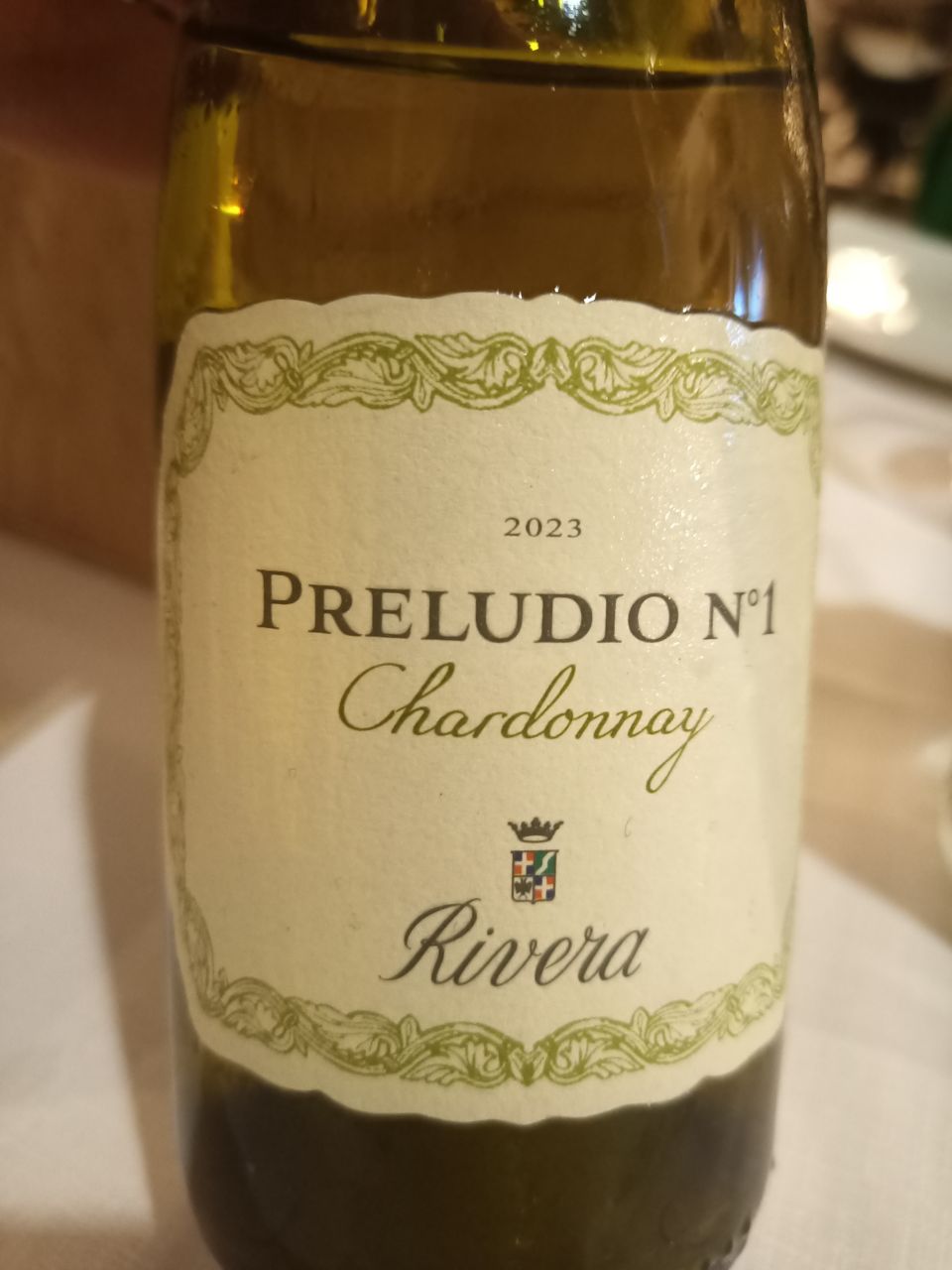
Rivera Chardonnay, the first bottle of the trip
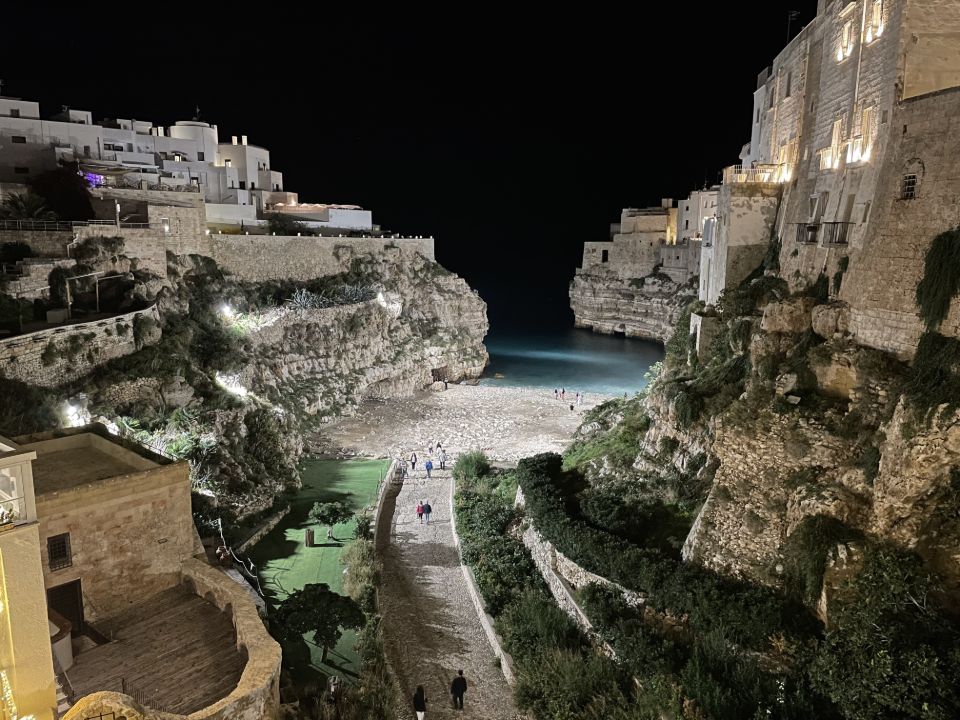
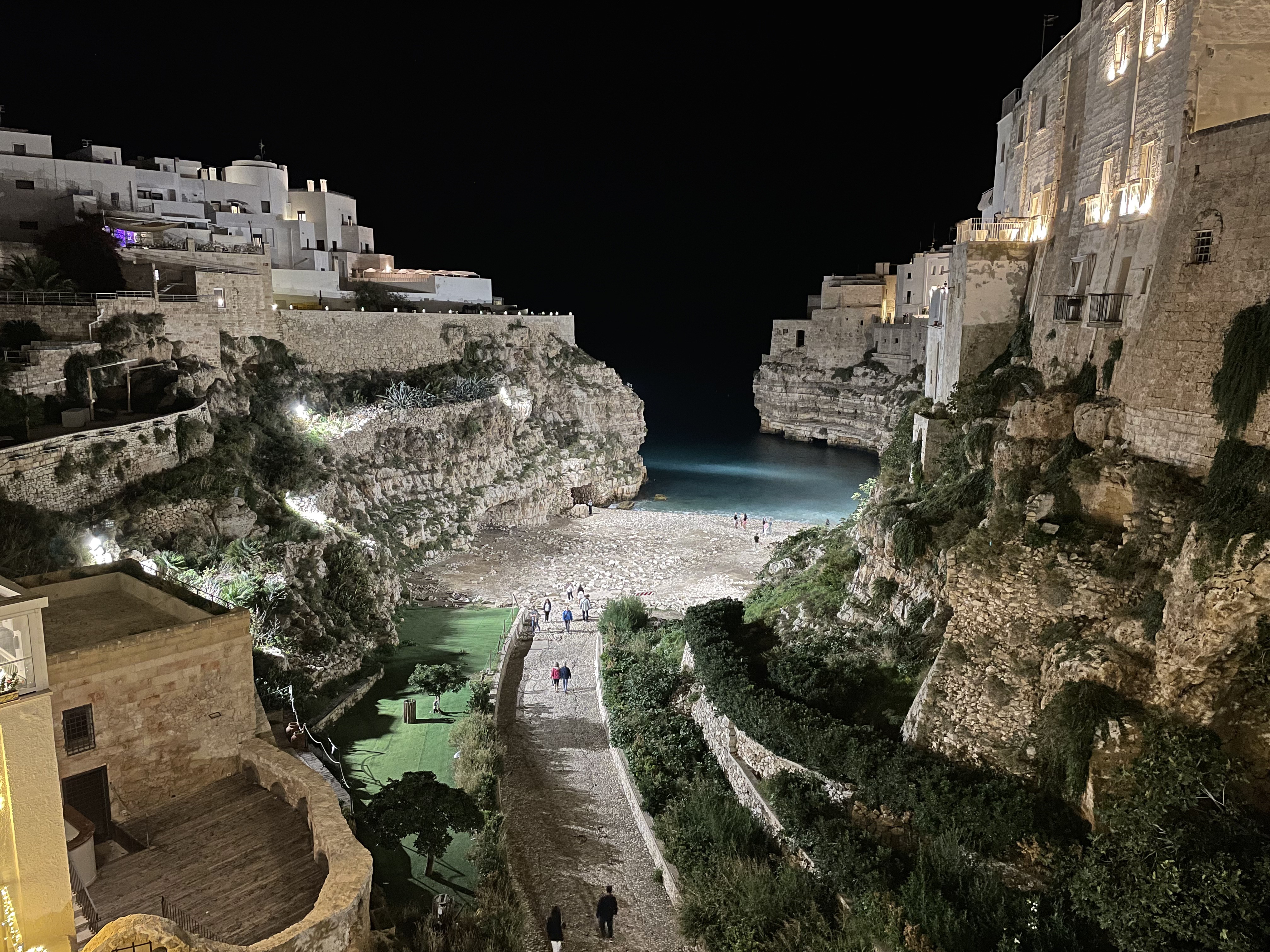
Lama Monachile after dark
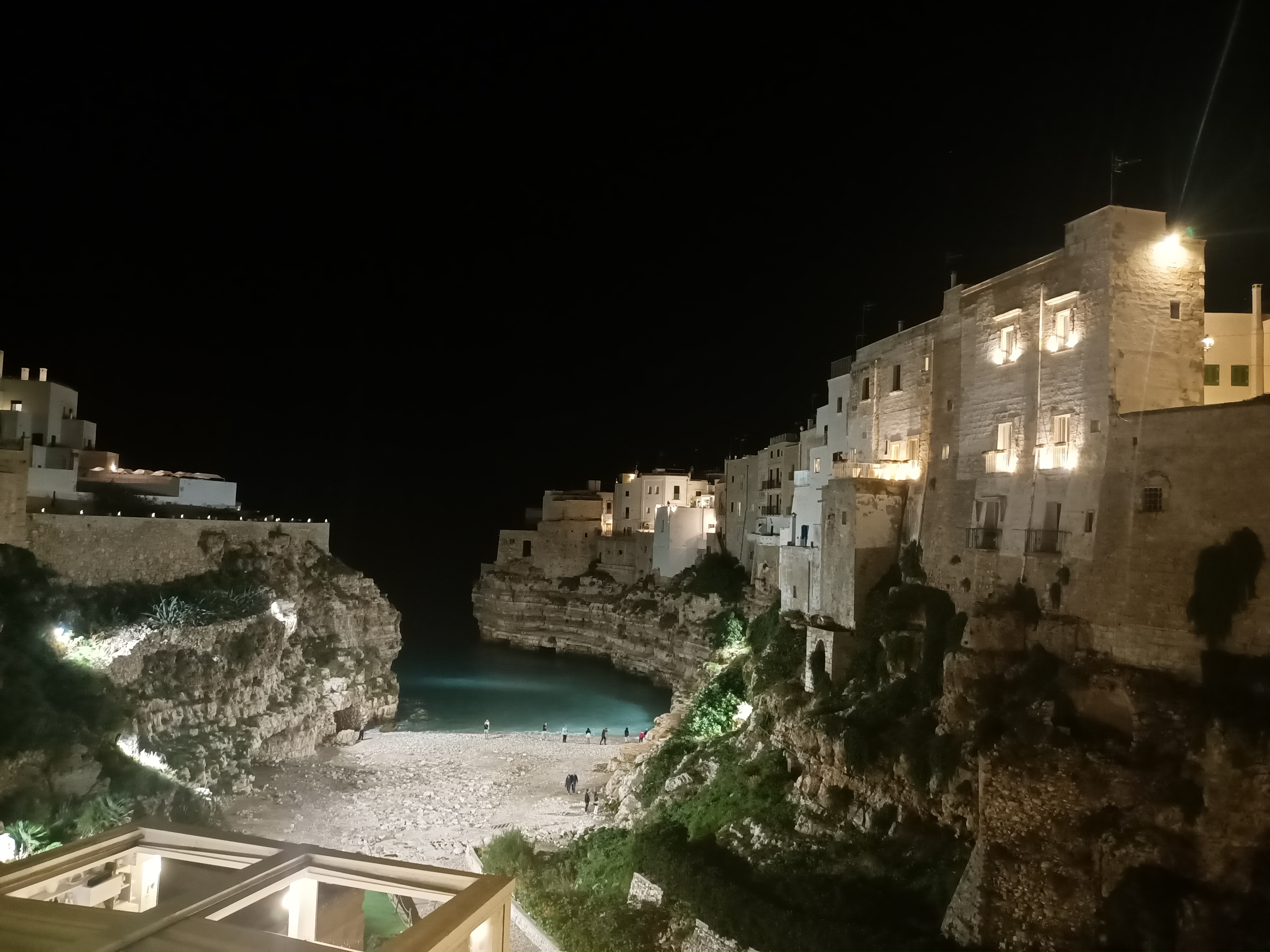
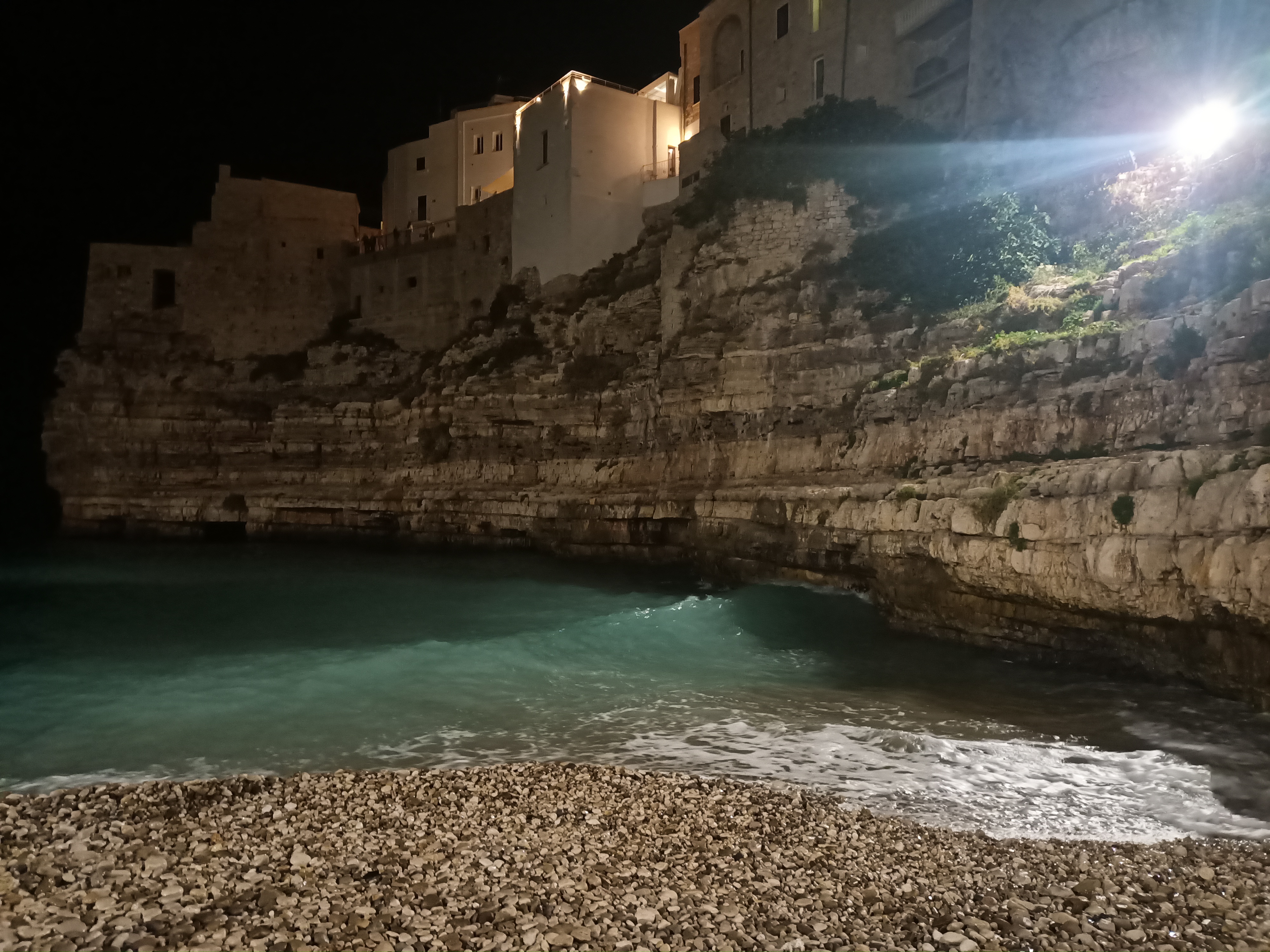
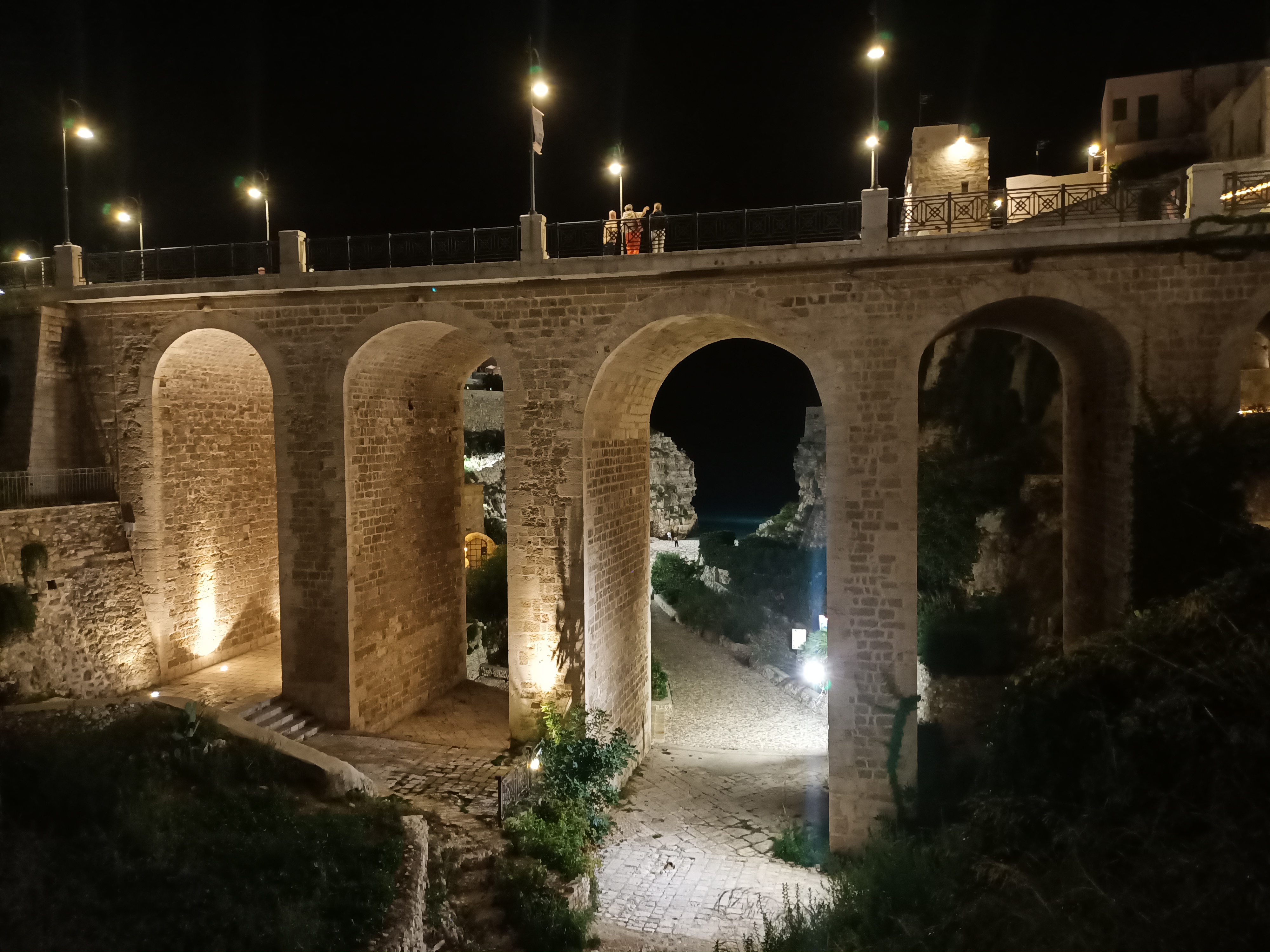
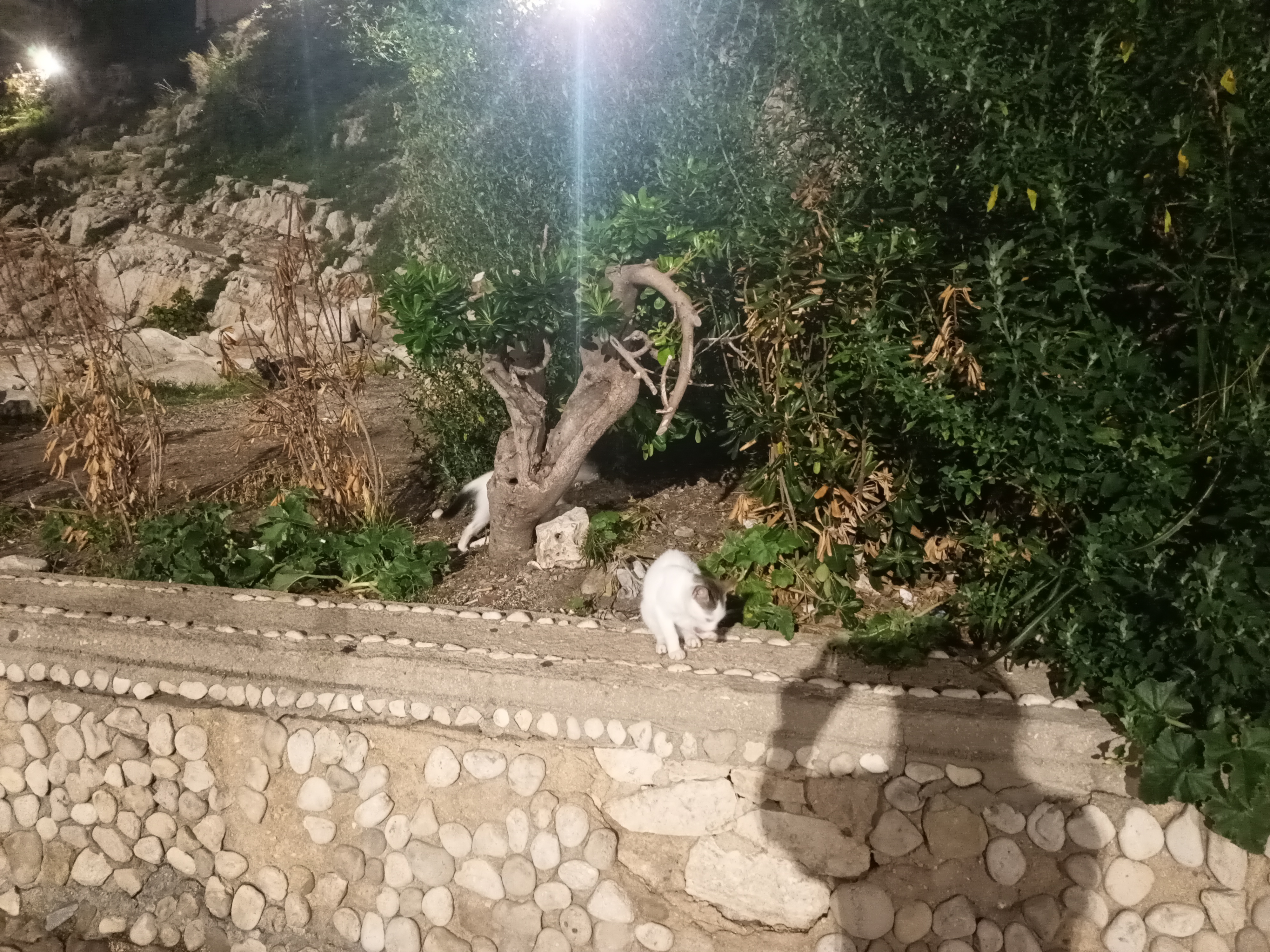
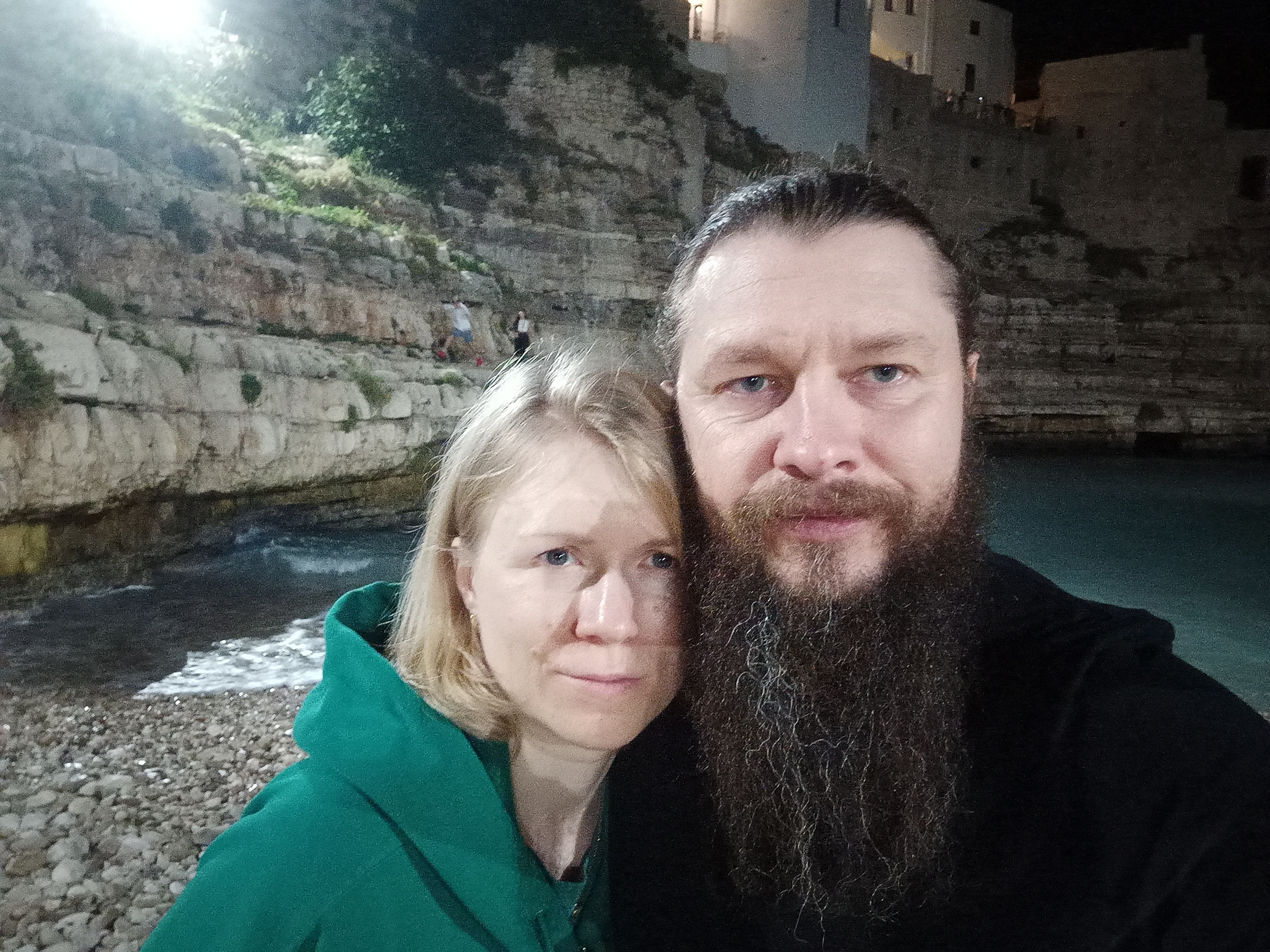
Then the evening walk that every visitor takes at least once: down the gorge to Lama Monachile, the pebble cove the whole town is arranged around. The lamps had the beach to themselves, the water came out green where it caught the light, the bridge arched overhead with every arch lit, and two cats on a wall above the path watched us pass. We took the night-selfie.
The cove from above, lamps keeping the beach alone 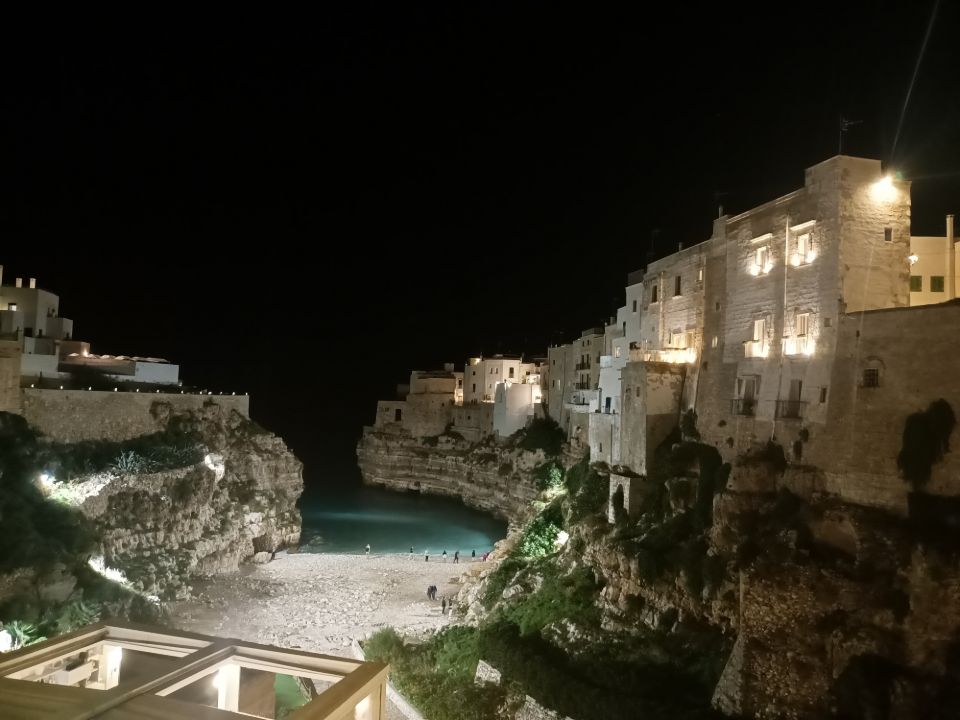
The beach after dark 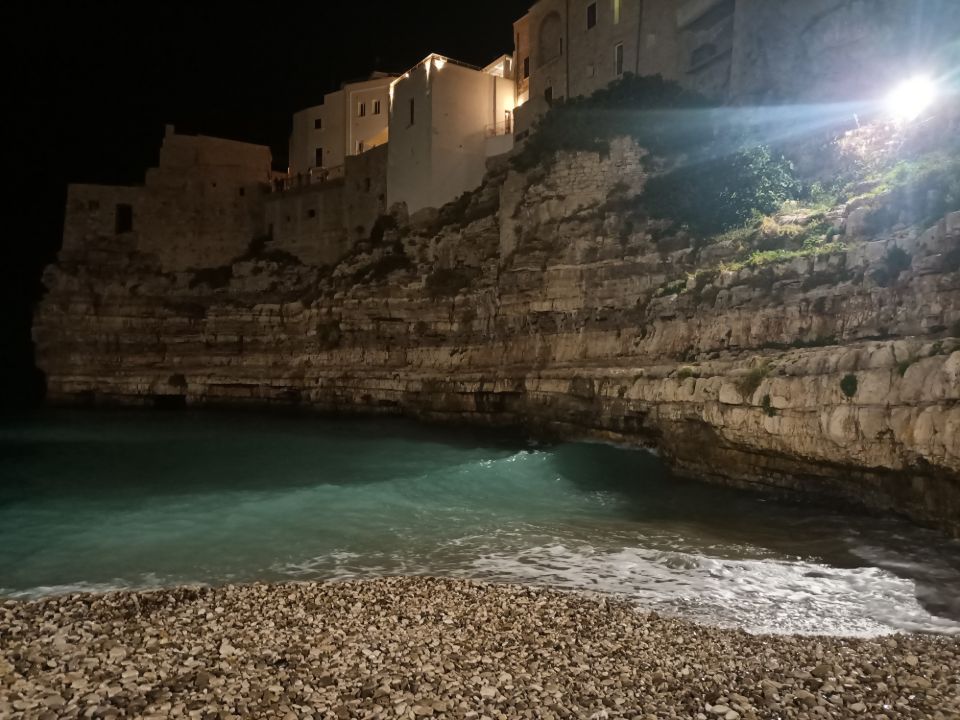
Green water at the edge 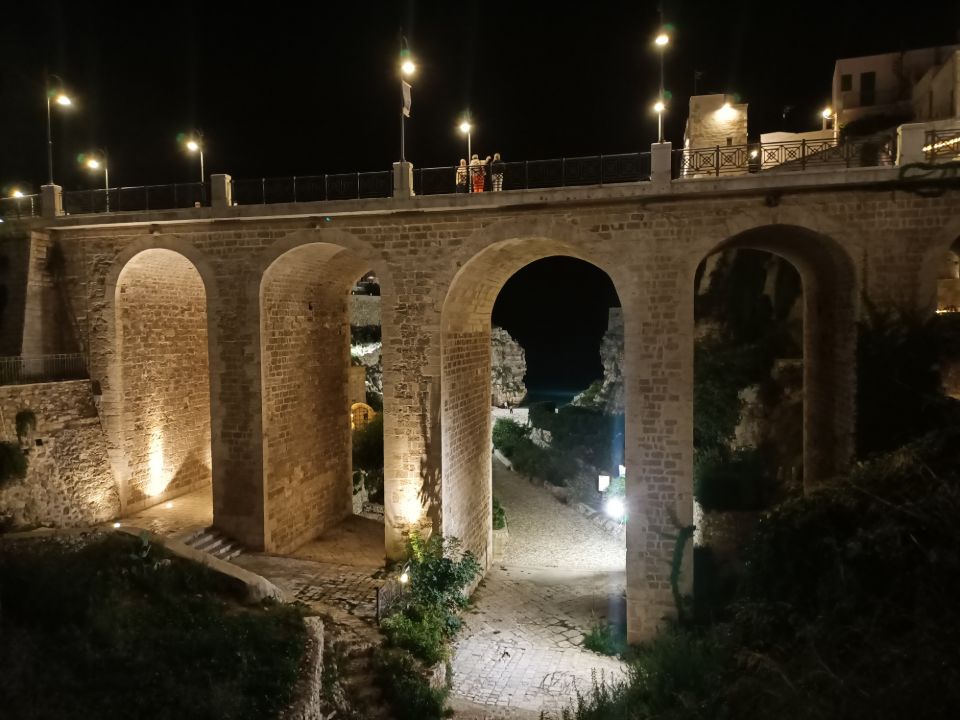
The bridge, every arch lit 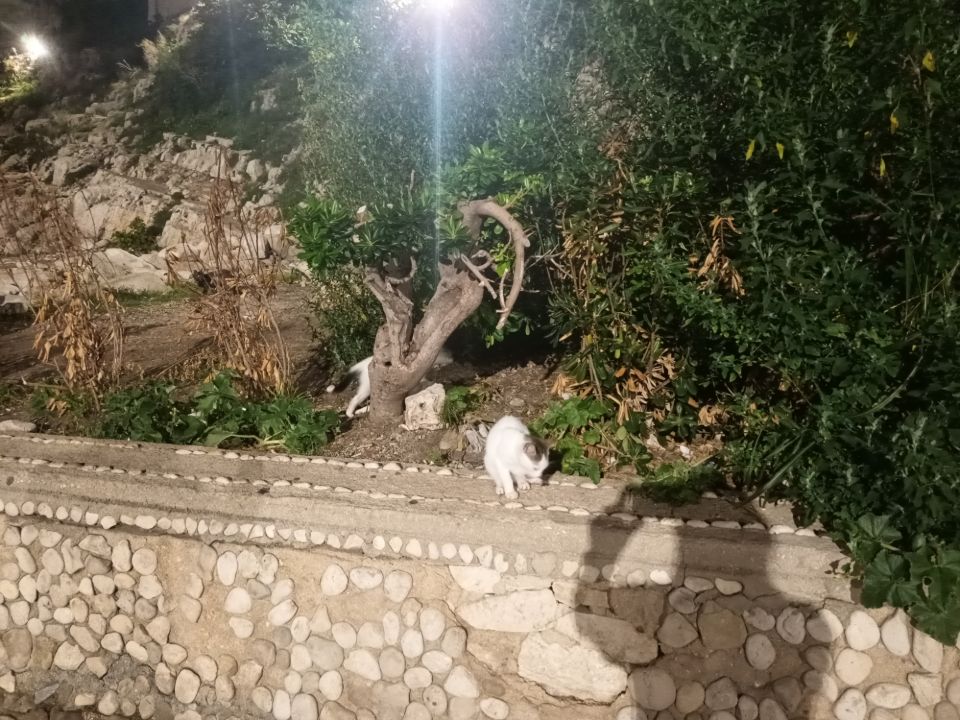
Two cats on the wall 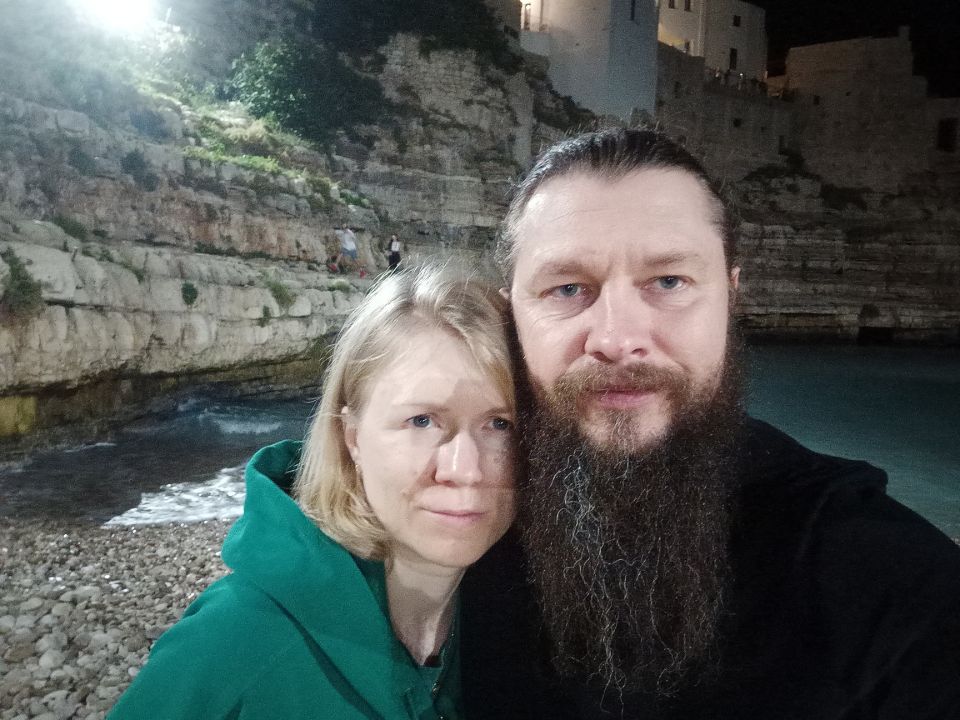
Both of us, on the pebbles
The old town in daylight
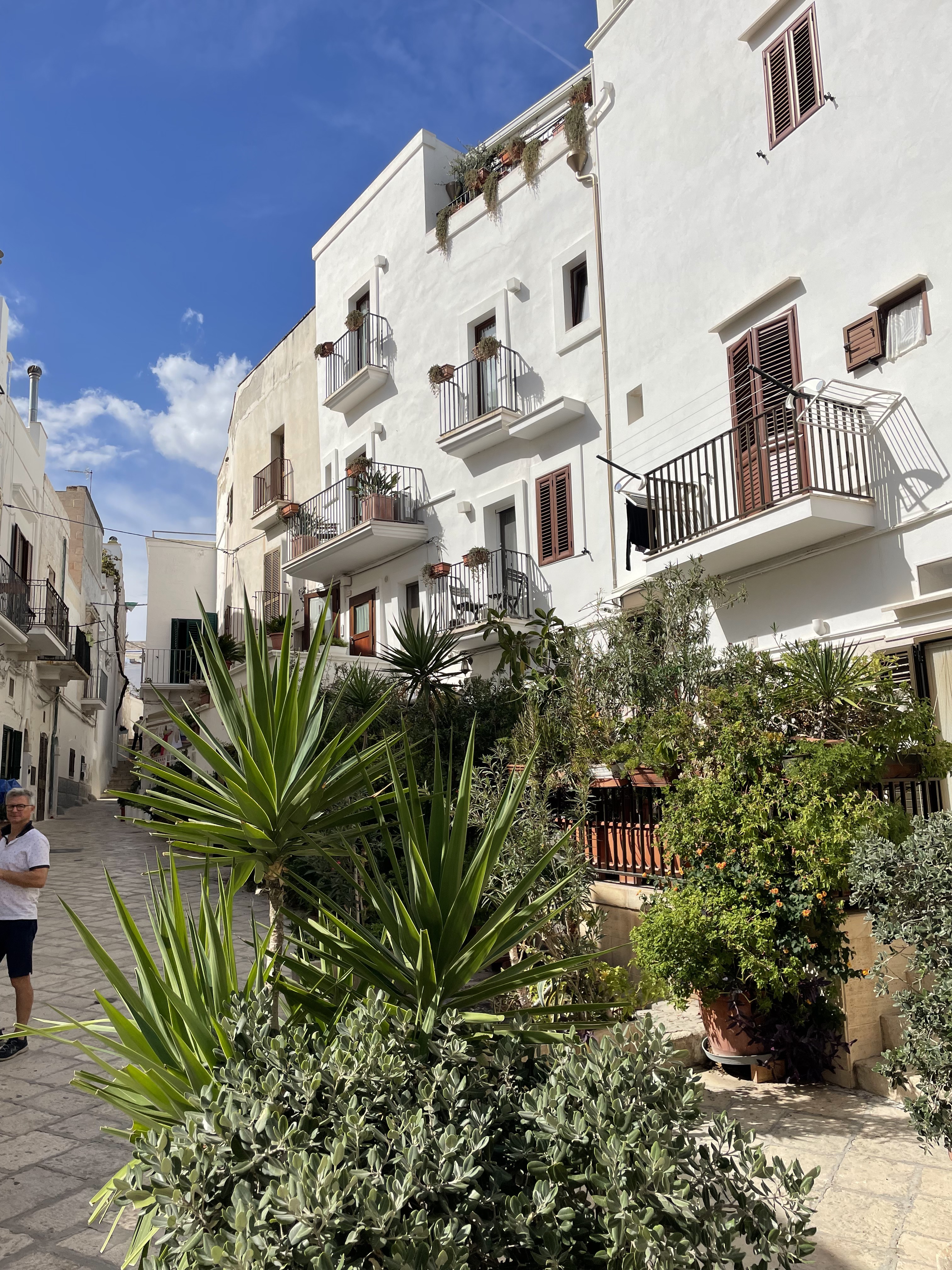
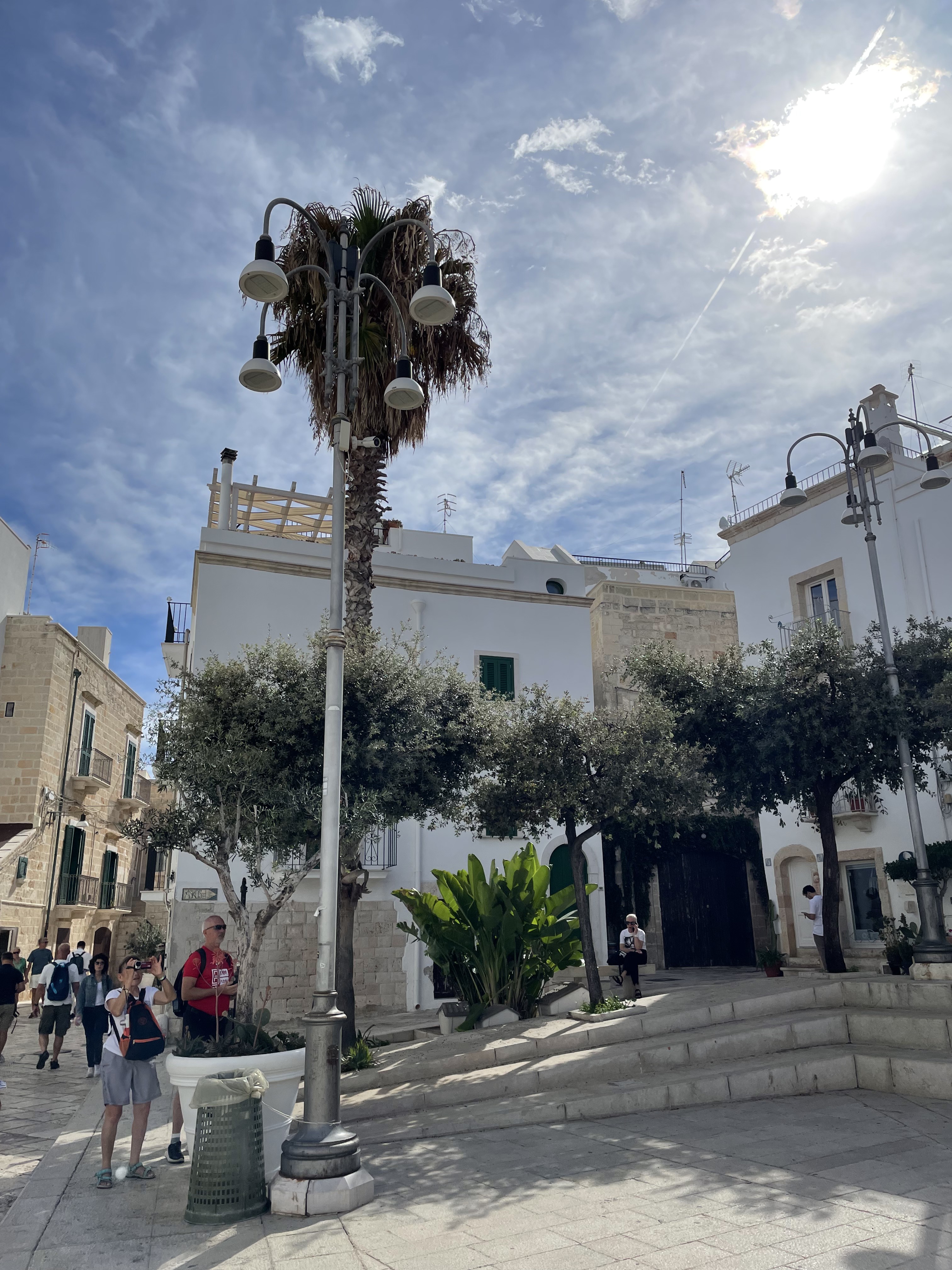
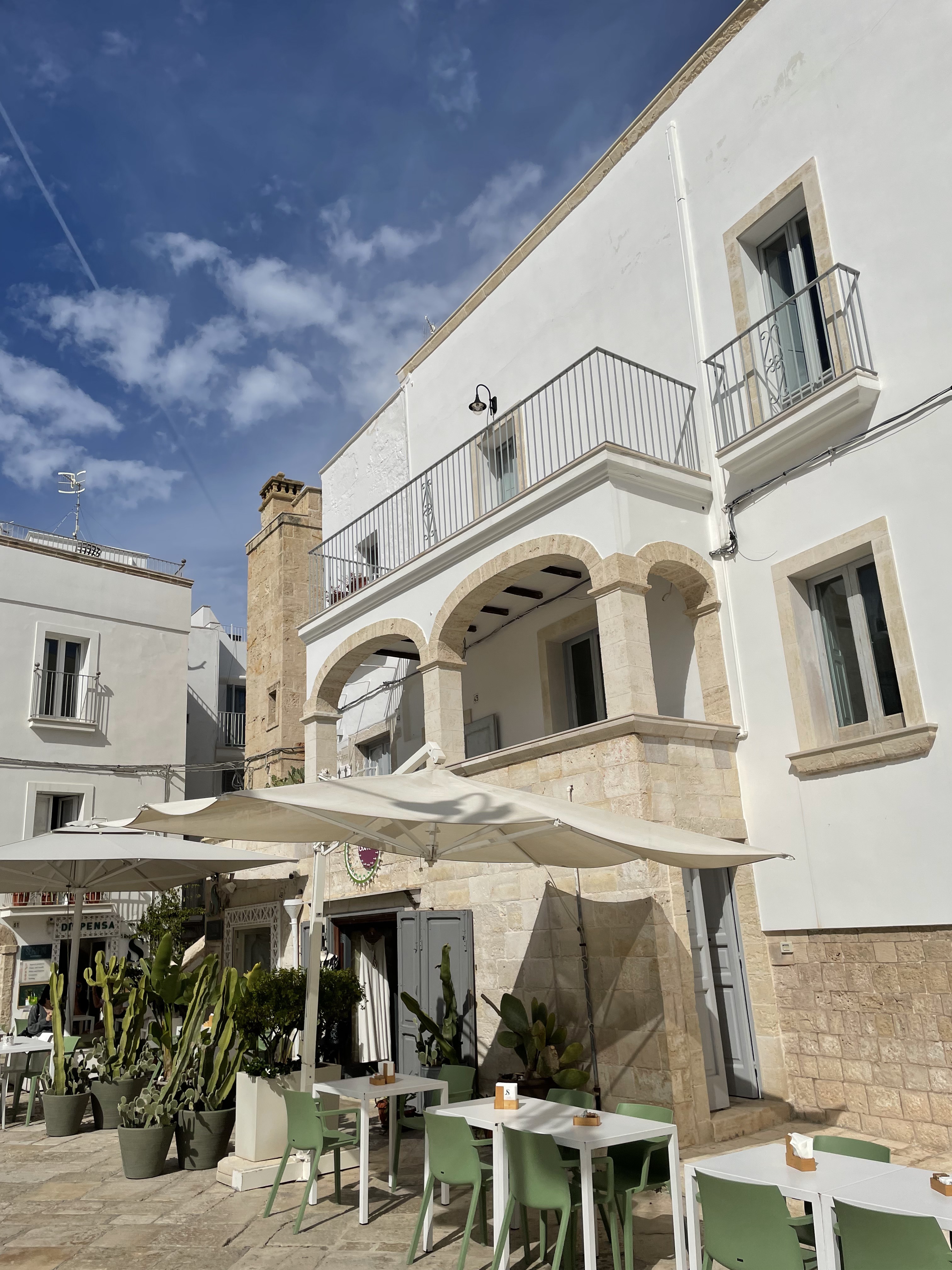
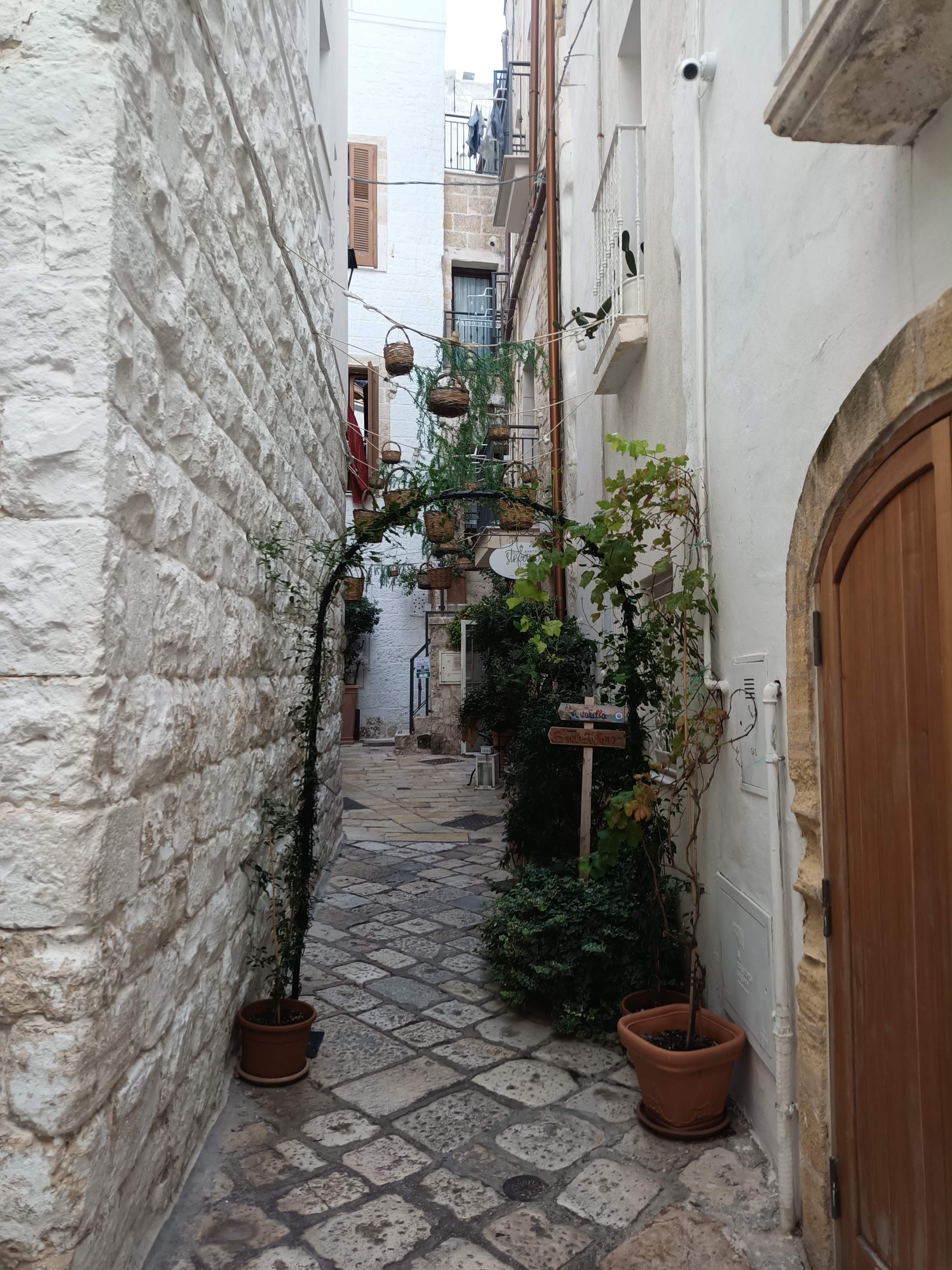
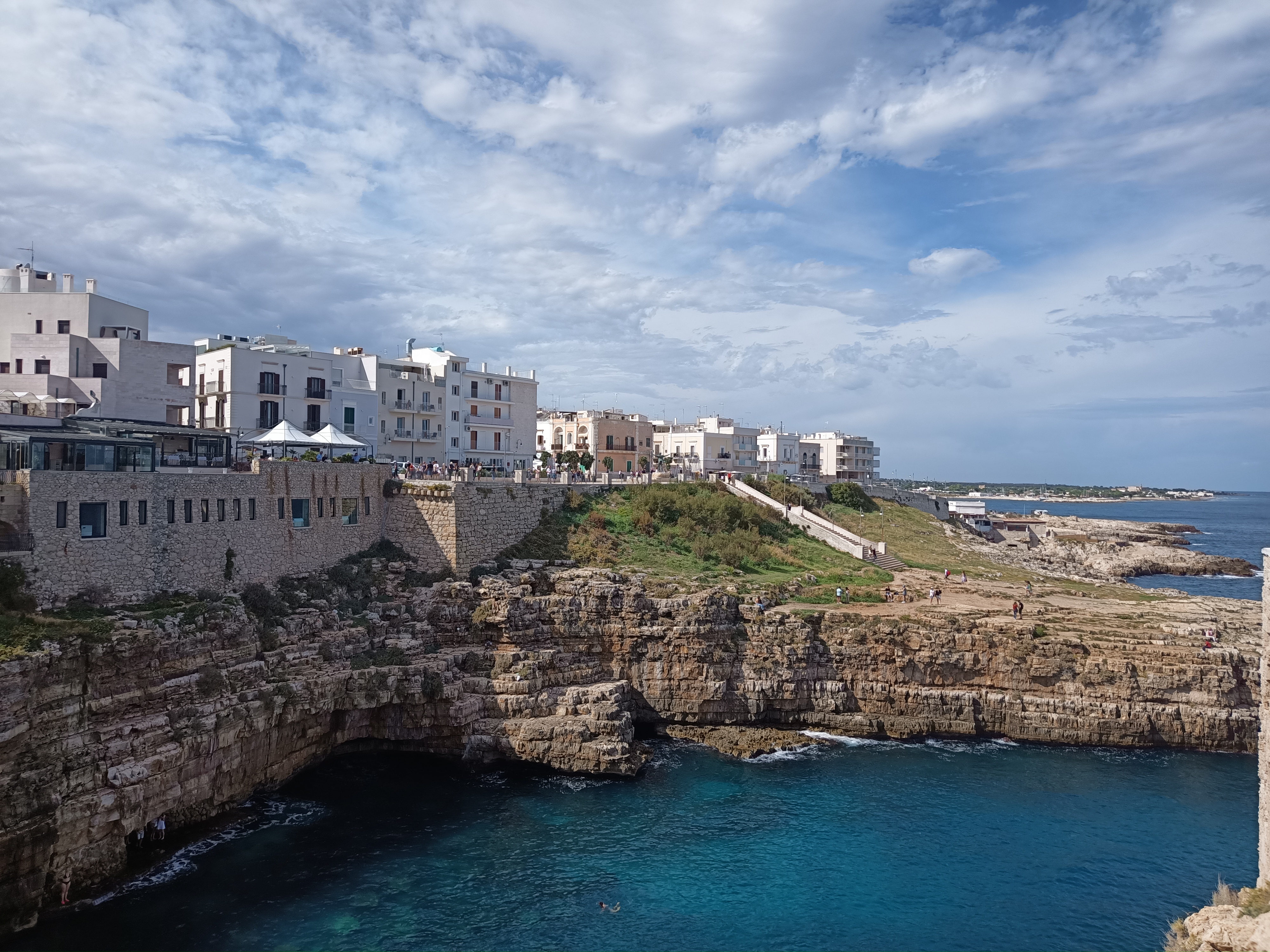
Daylight revealed what the lamps had hinted at: a town of scrubbed white and honey stone, lanes squeezed between palazzi, balconies carrying red geraniums, squares with palms and vintage lampposts, and one stretch of wall doing street art in hearts.
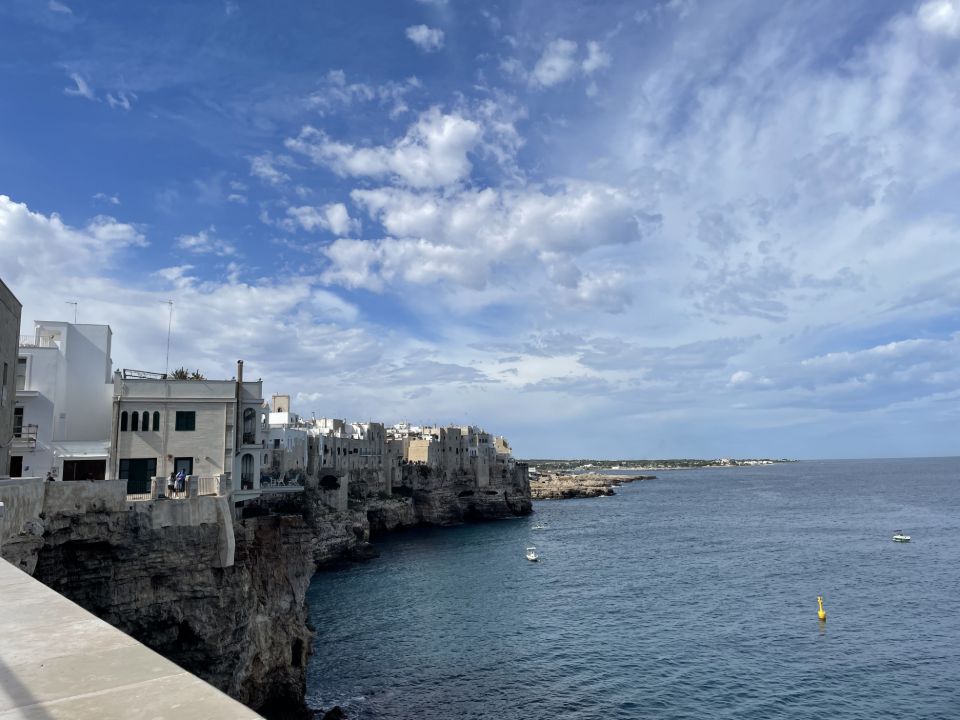
The town on its cliffs, morning 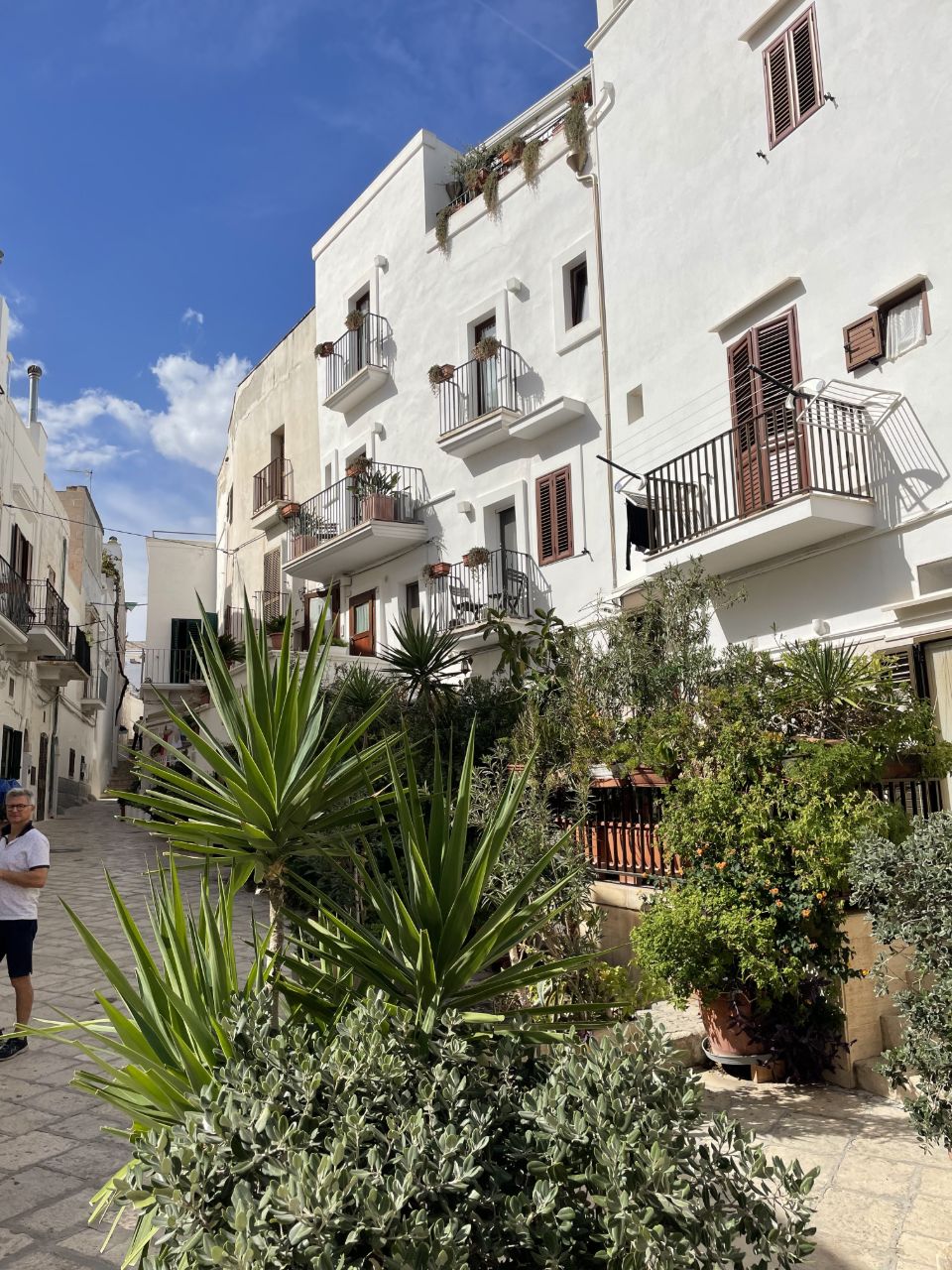
Lane of balconies and potted flowers 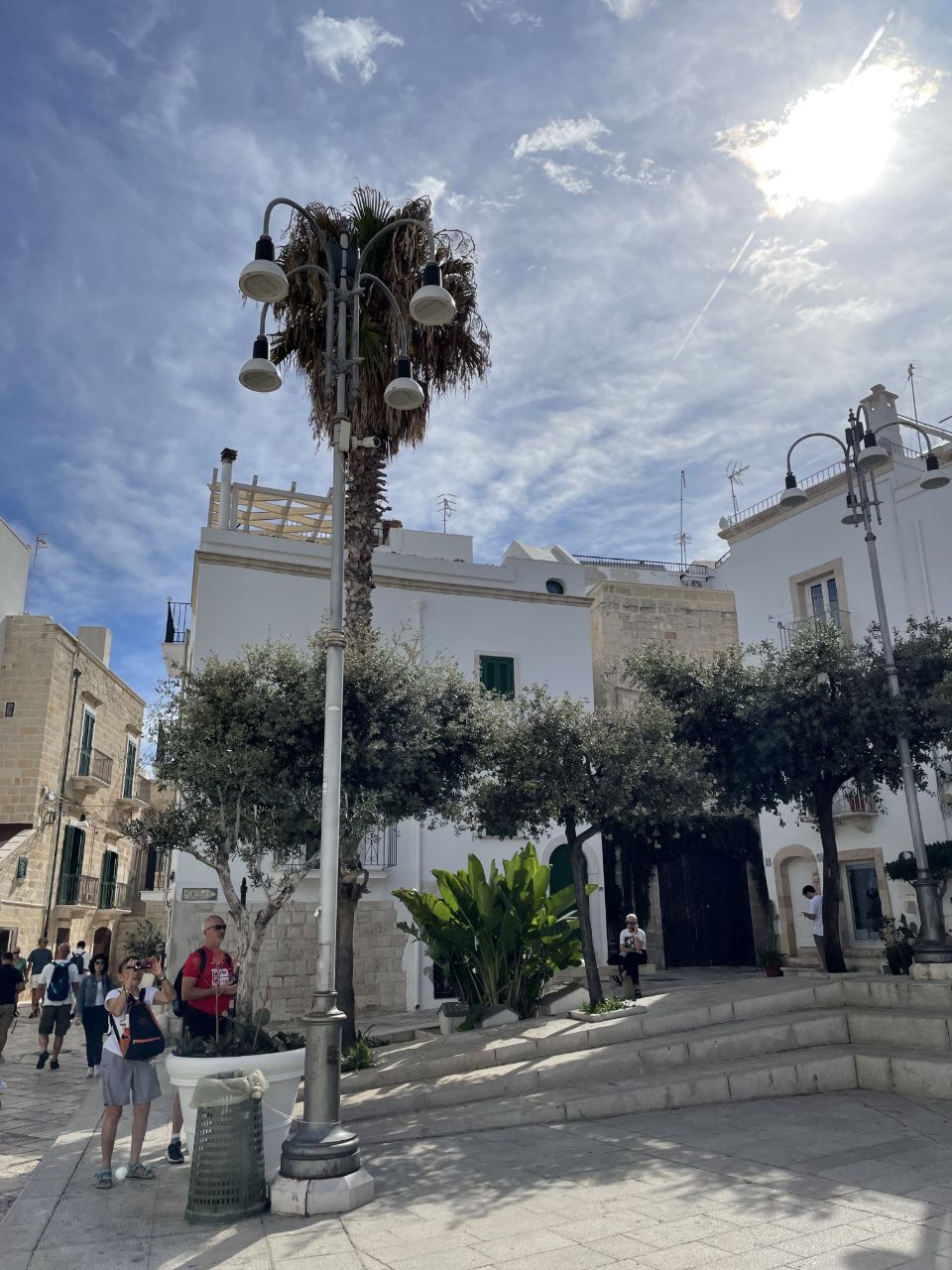
The square, palm and vintage lampposts 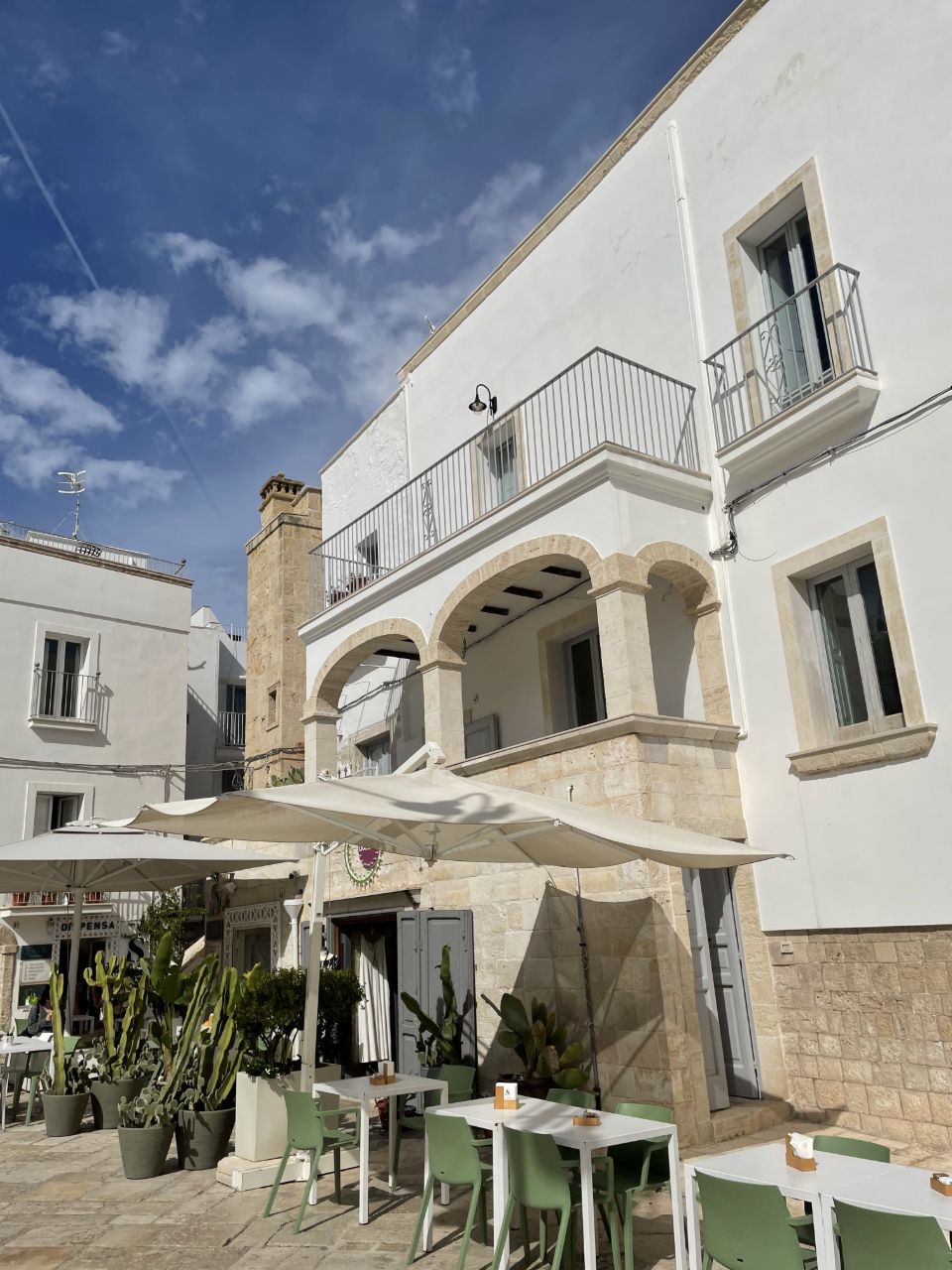
Arches on stone, sun included 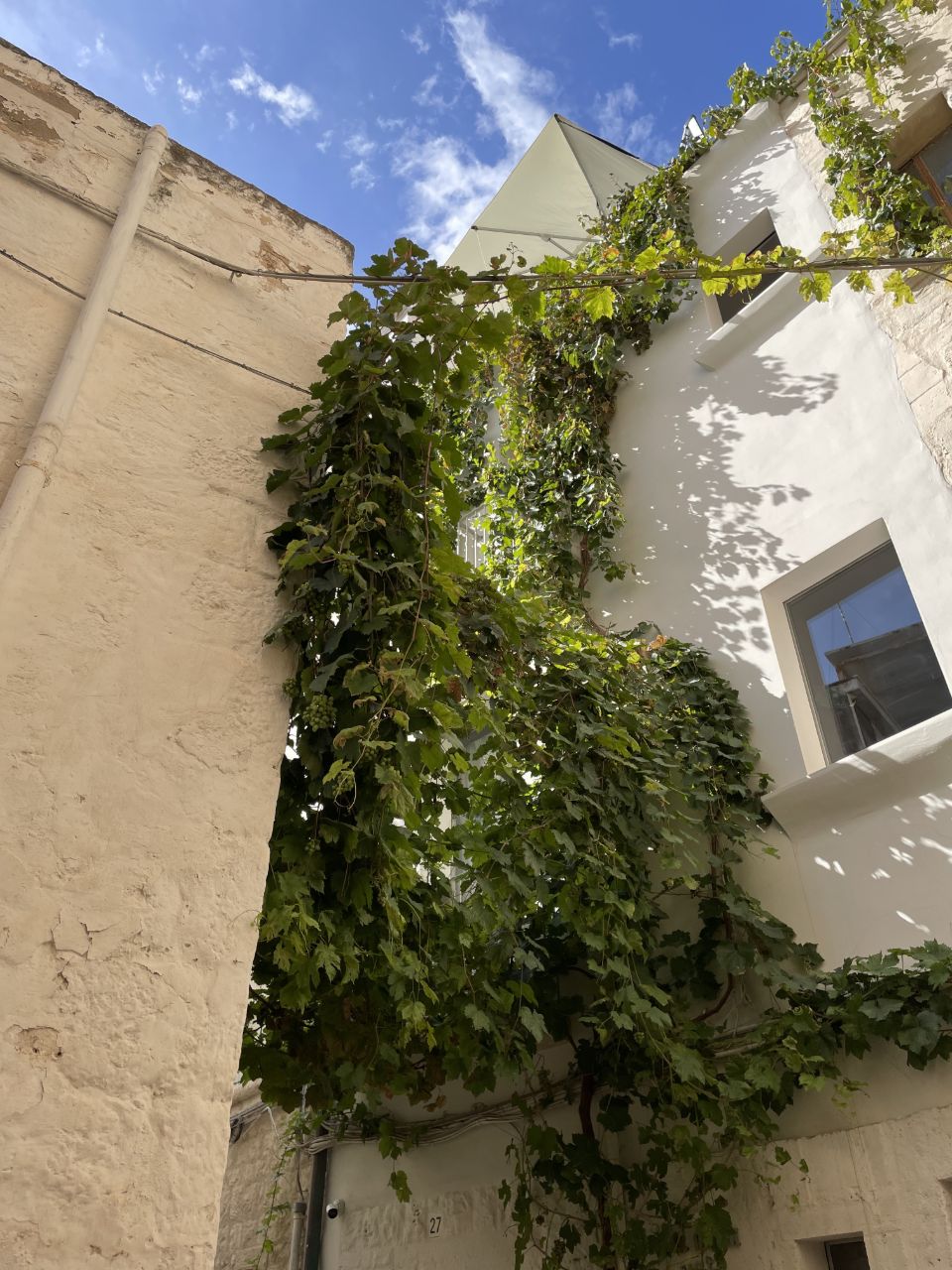
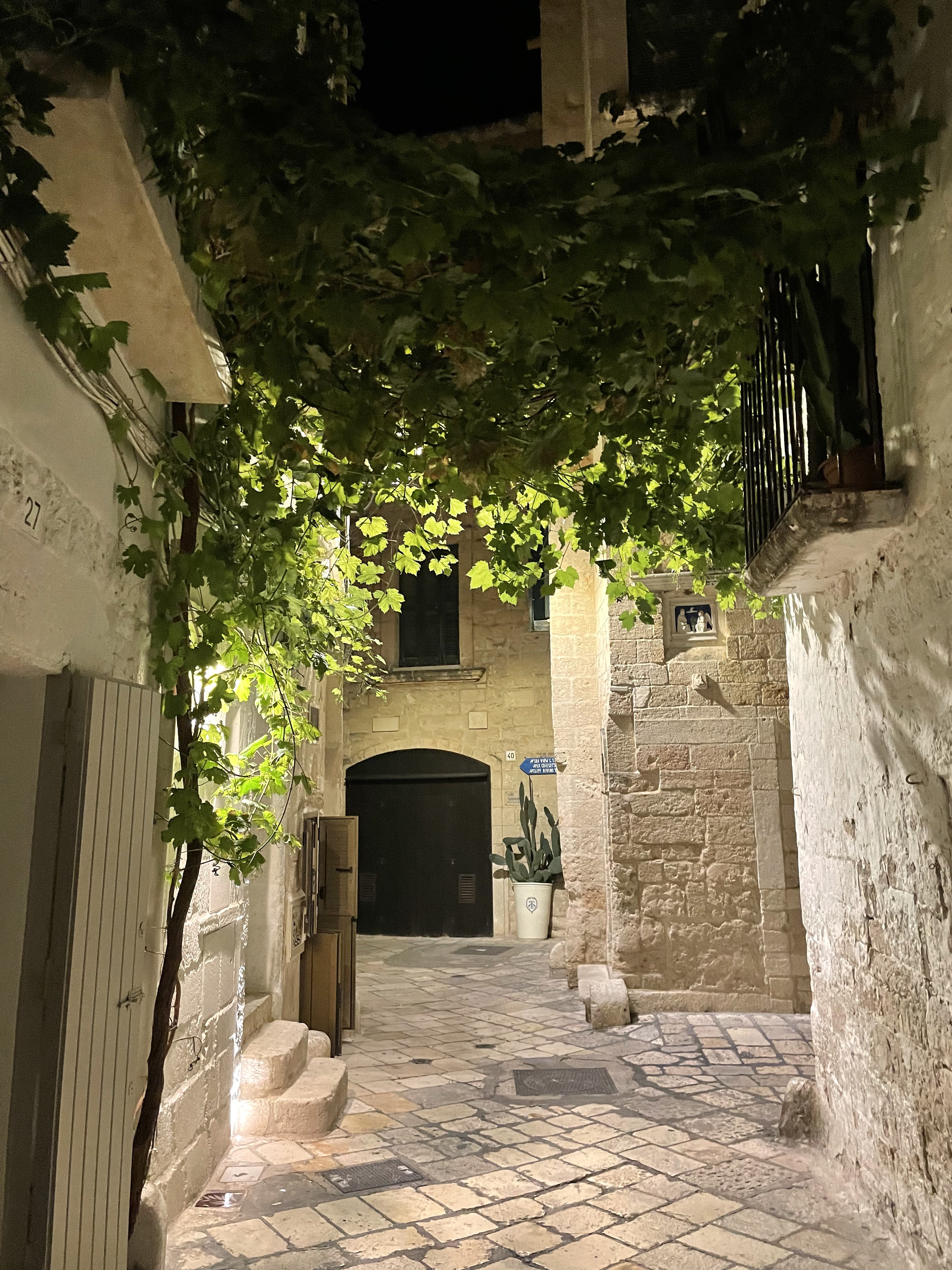
A passage of plants 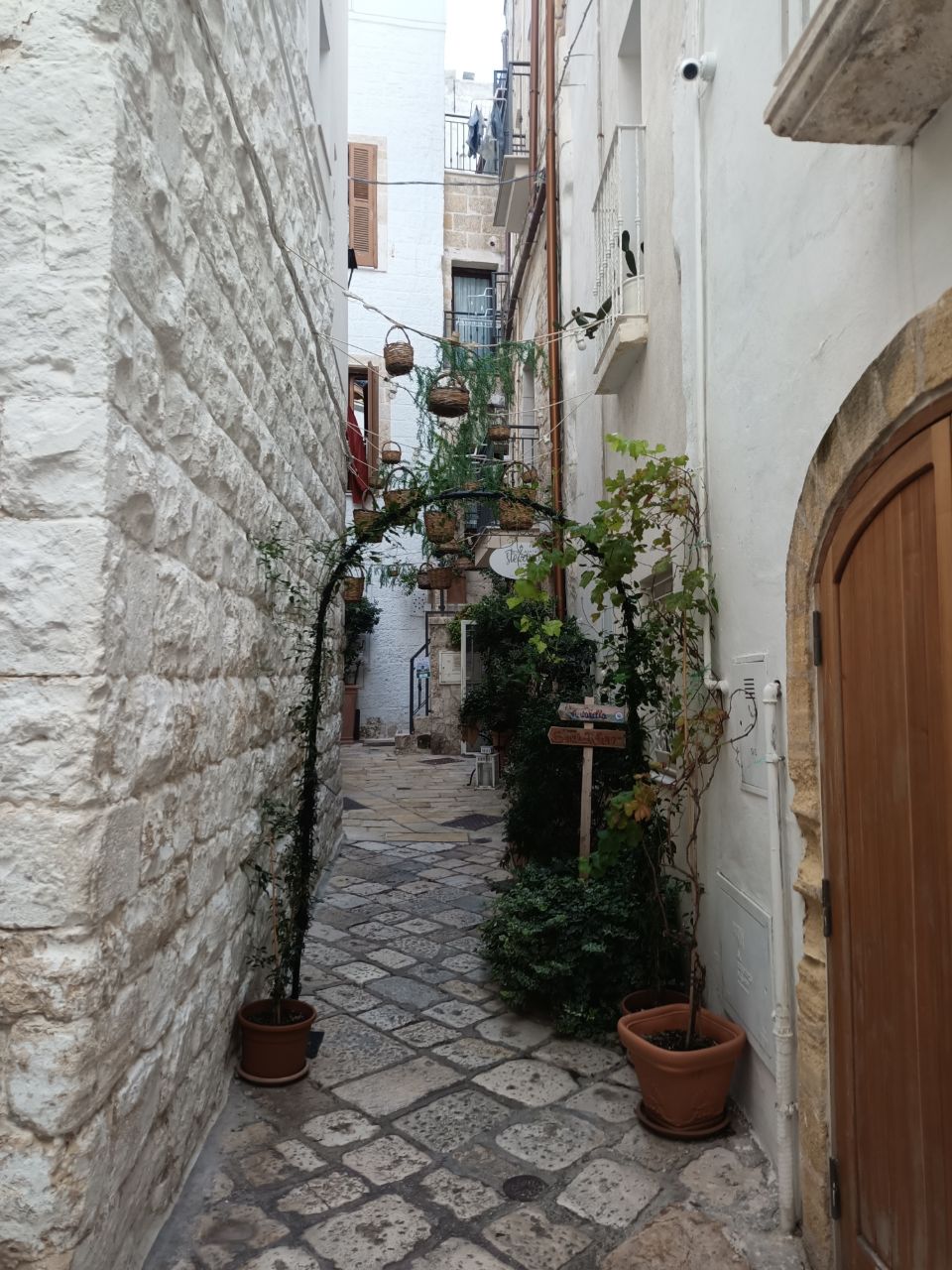
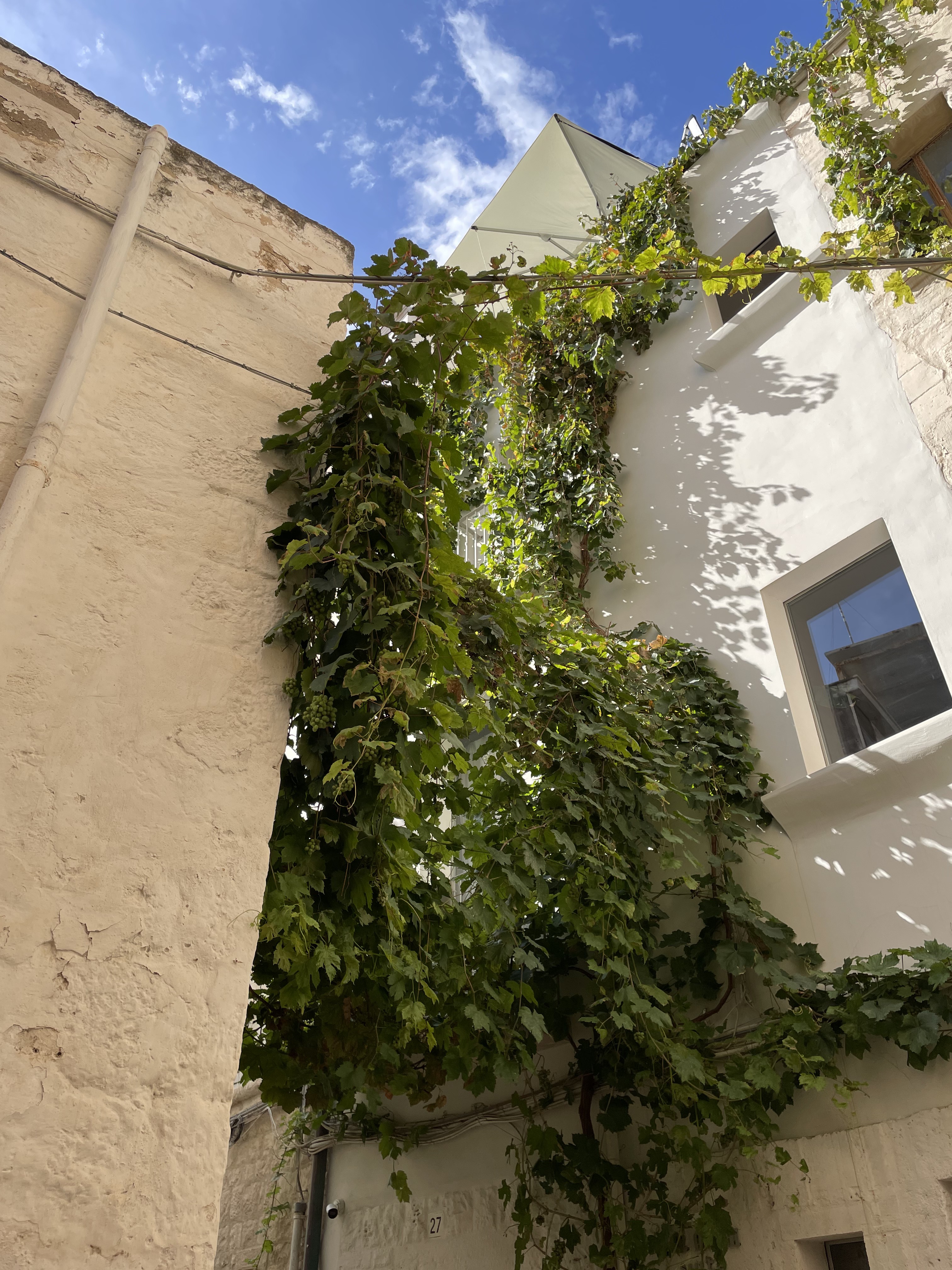
The vine, the arch, the hanging baskets 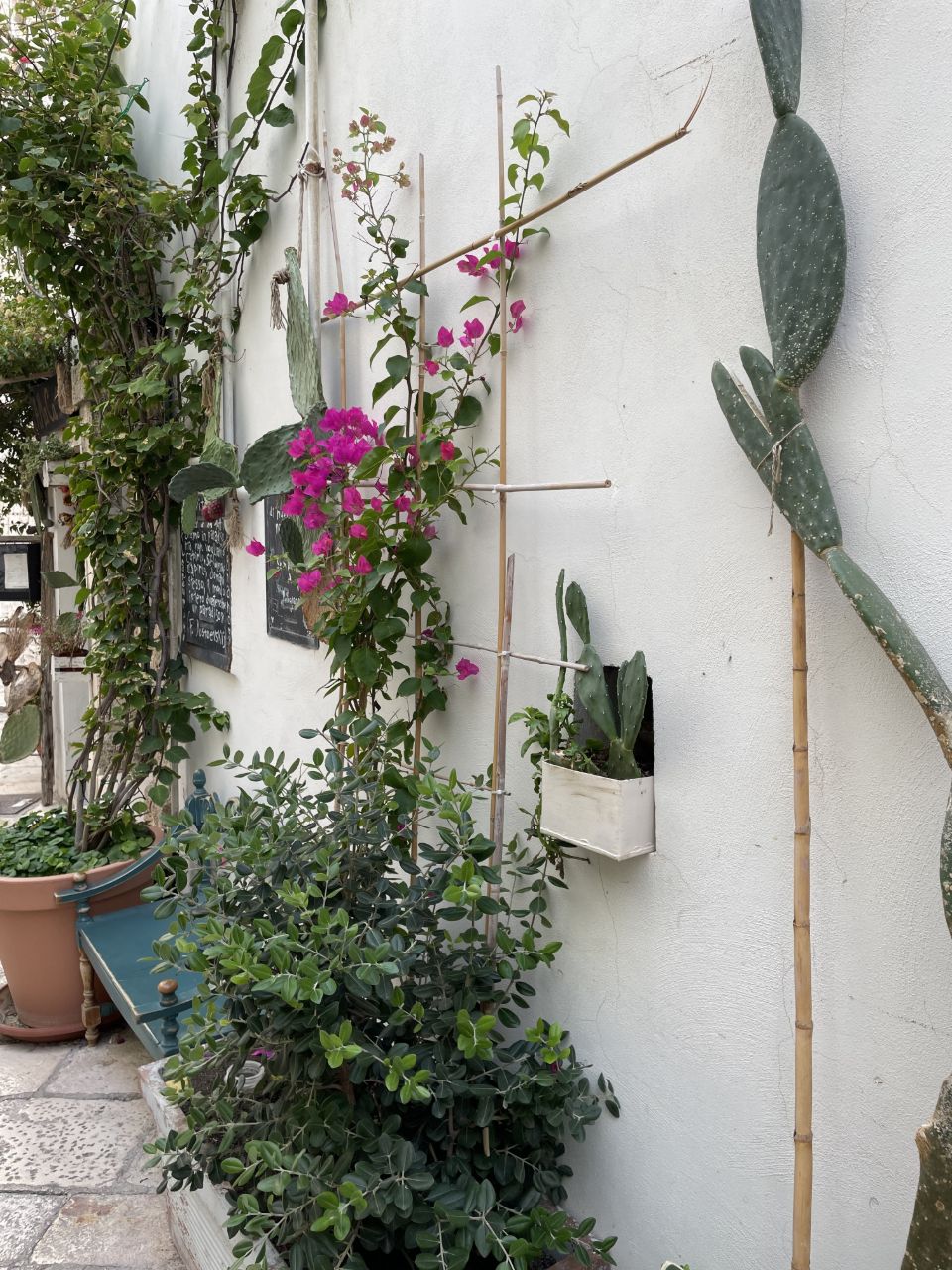
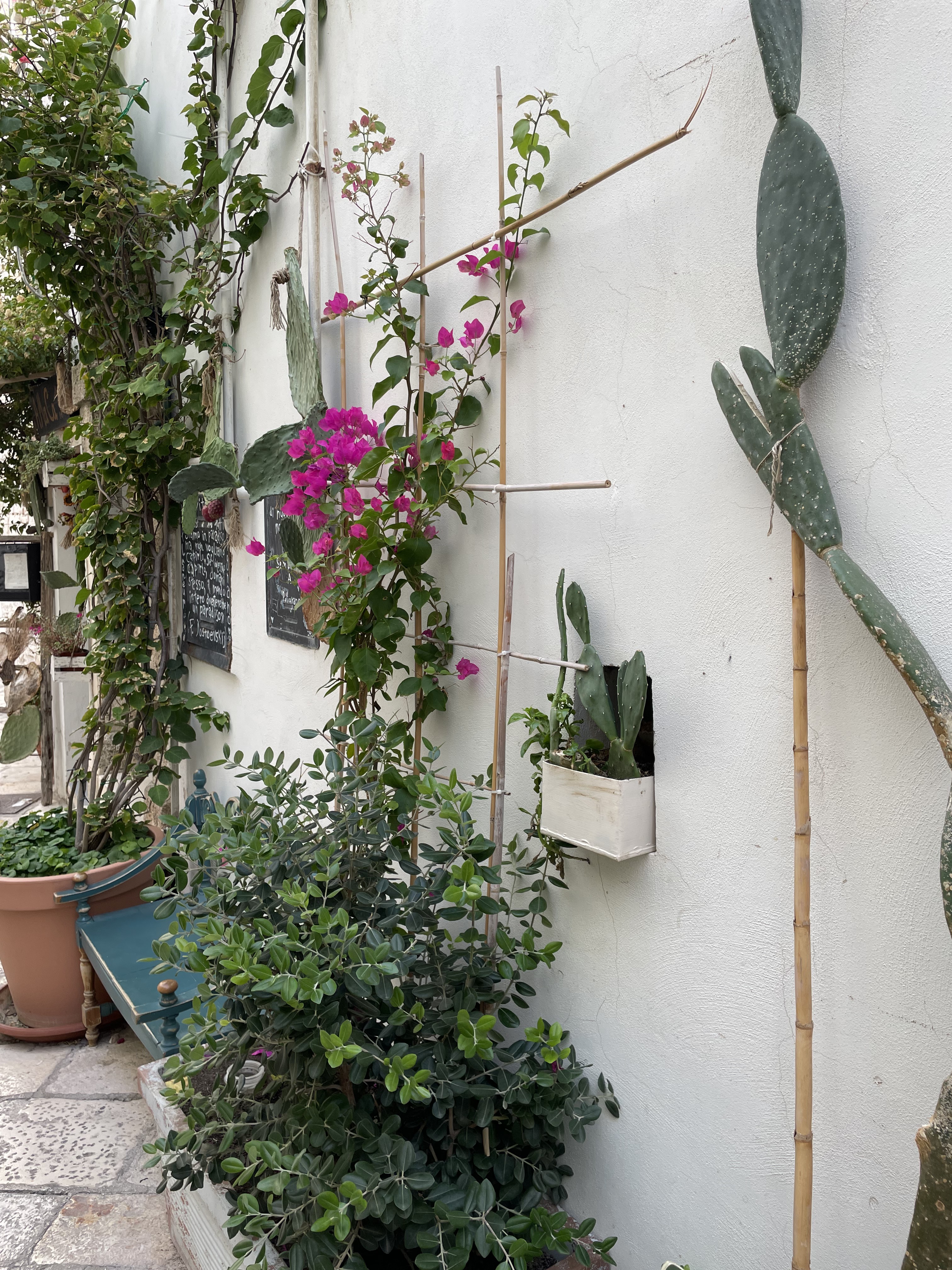
Bougainvillea, on duty 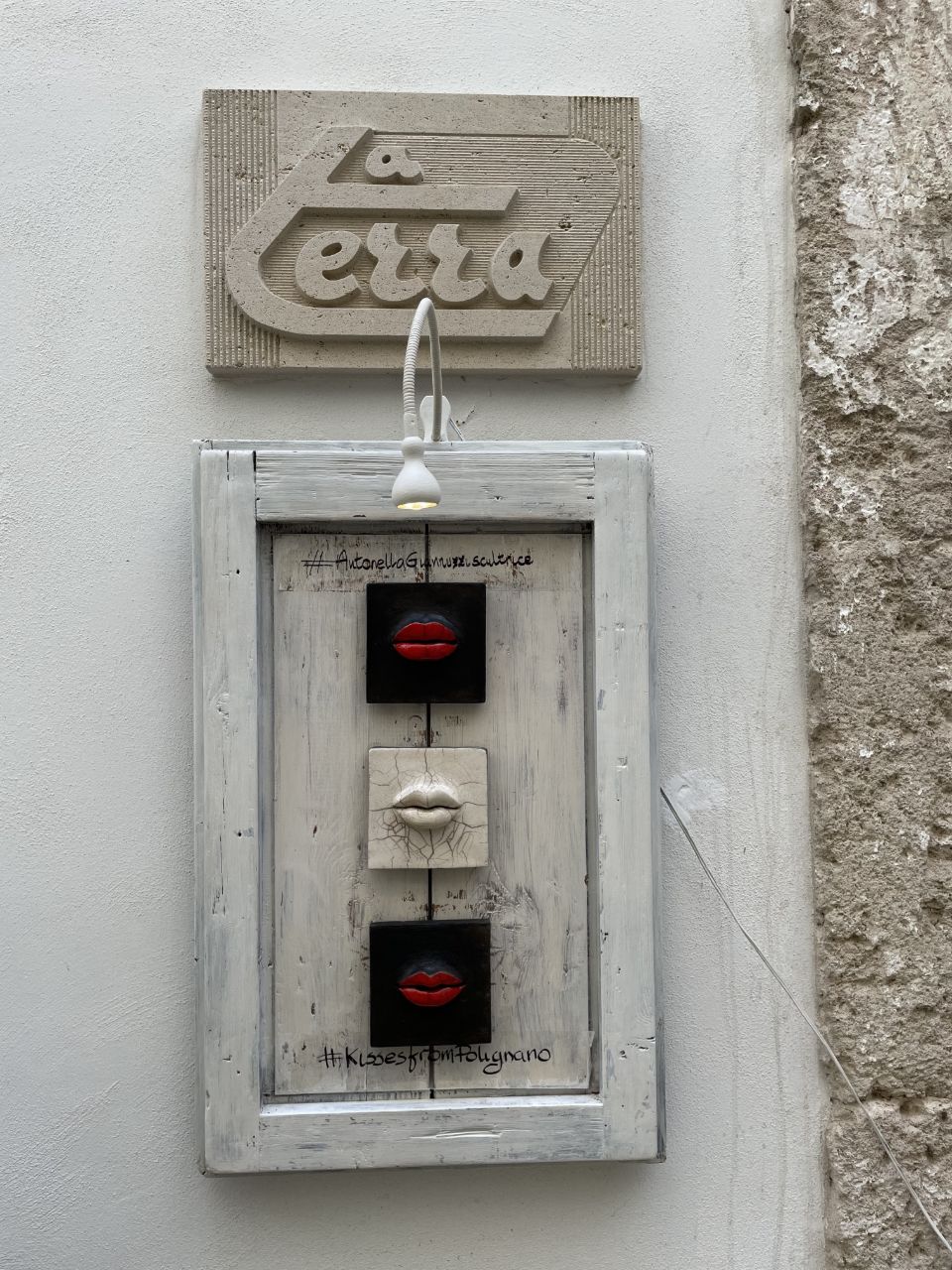
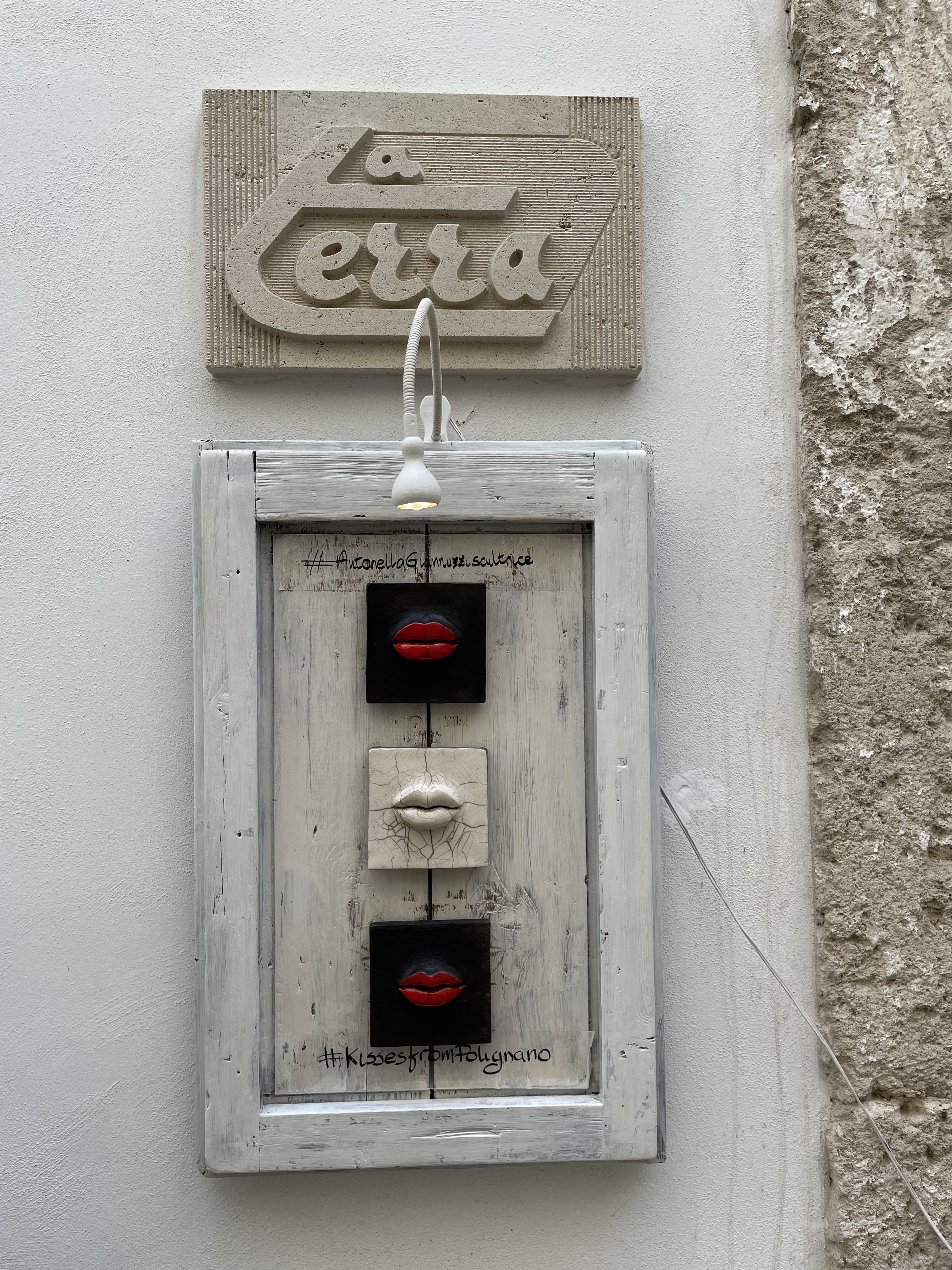
Street art, heart edition 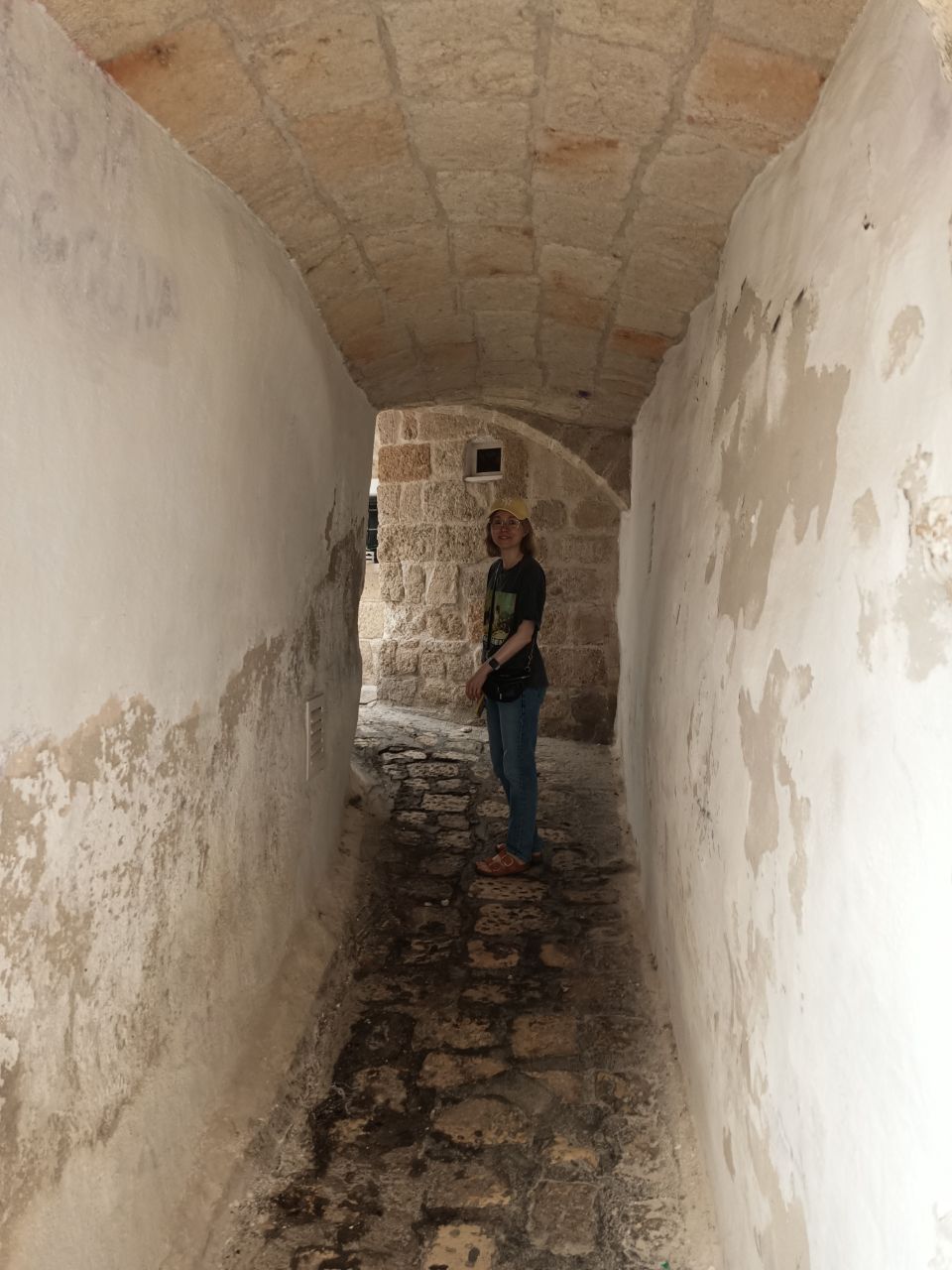
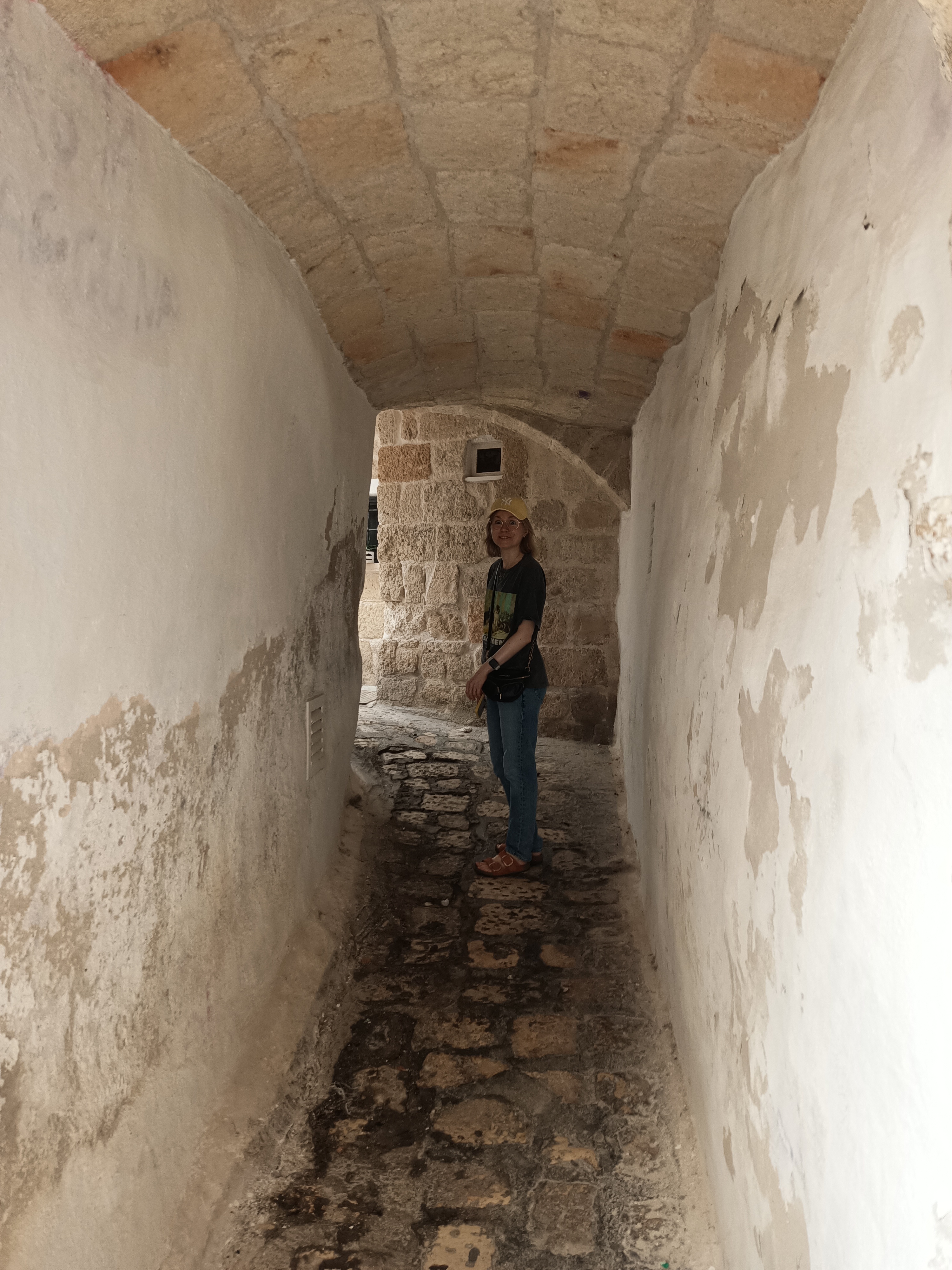
Anna, in the vaulted alley
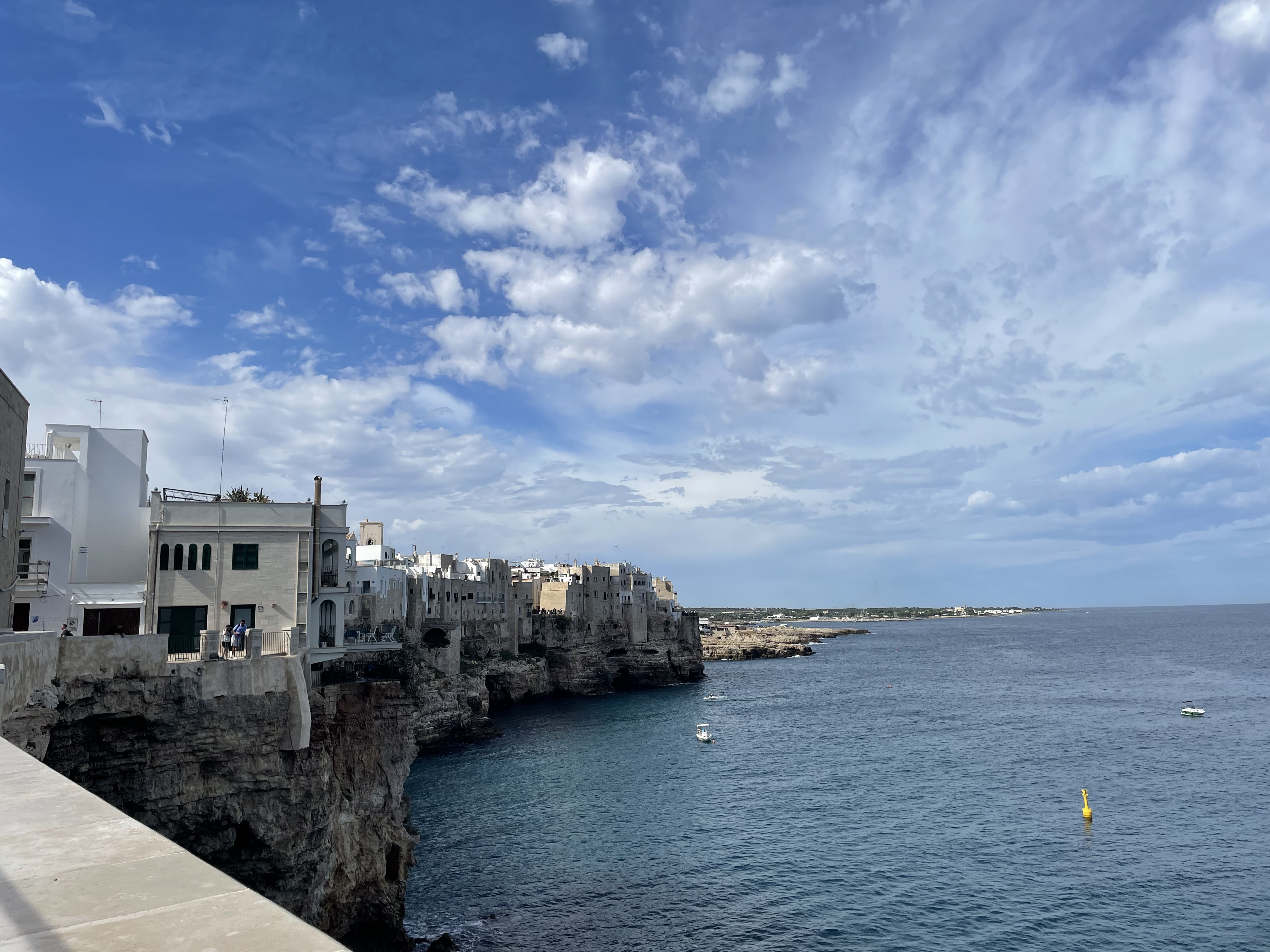
The point, and the water doing its thing
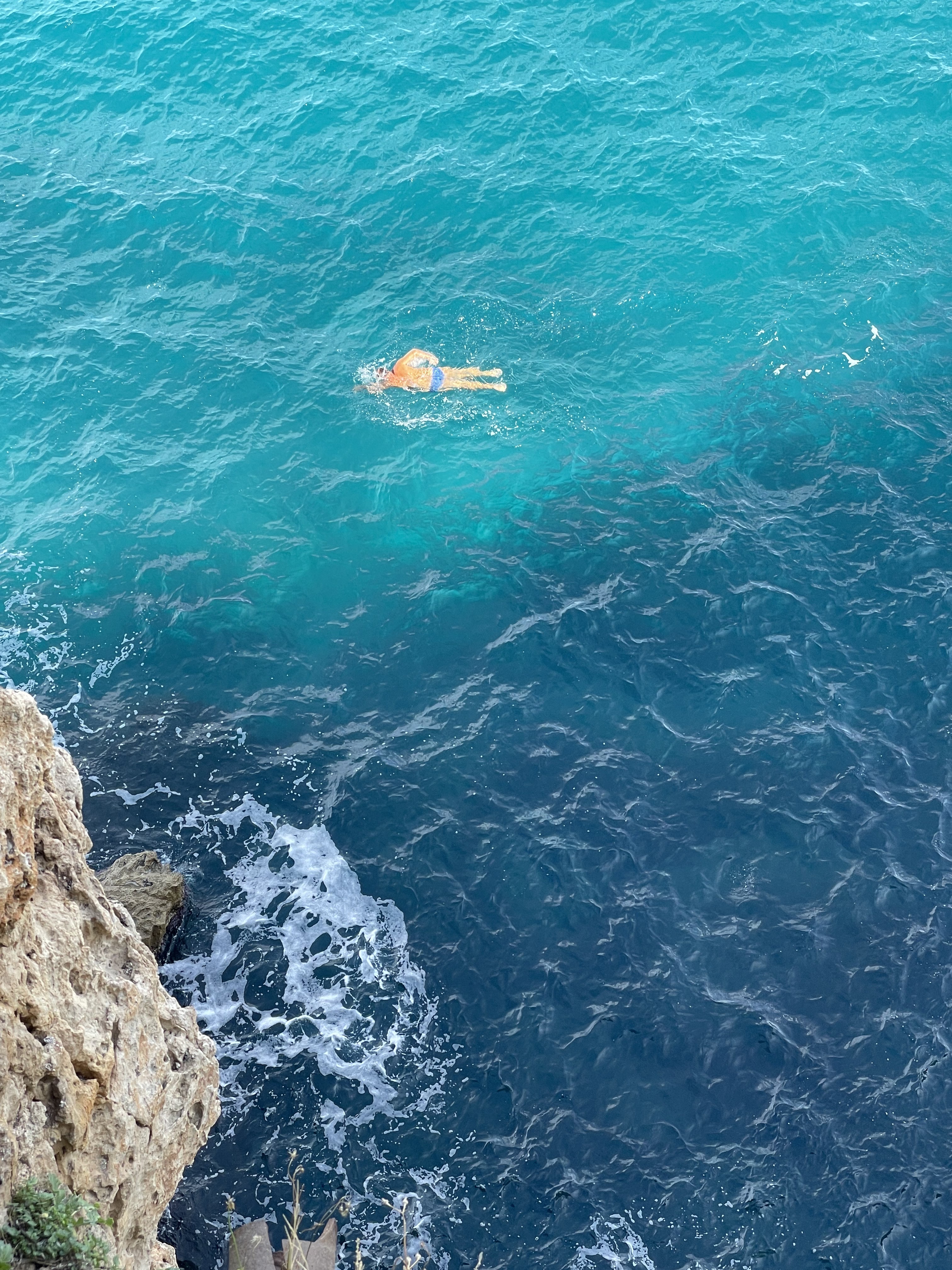
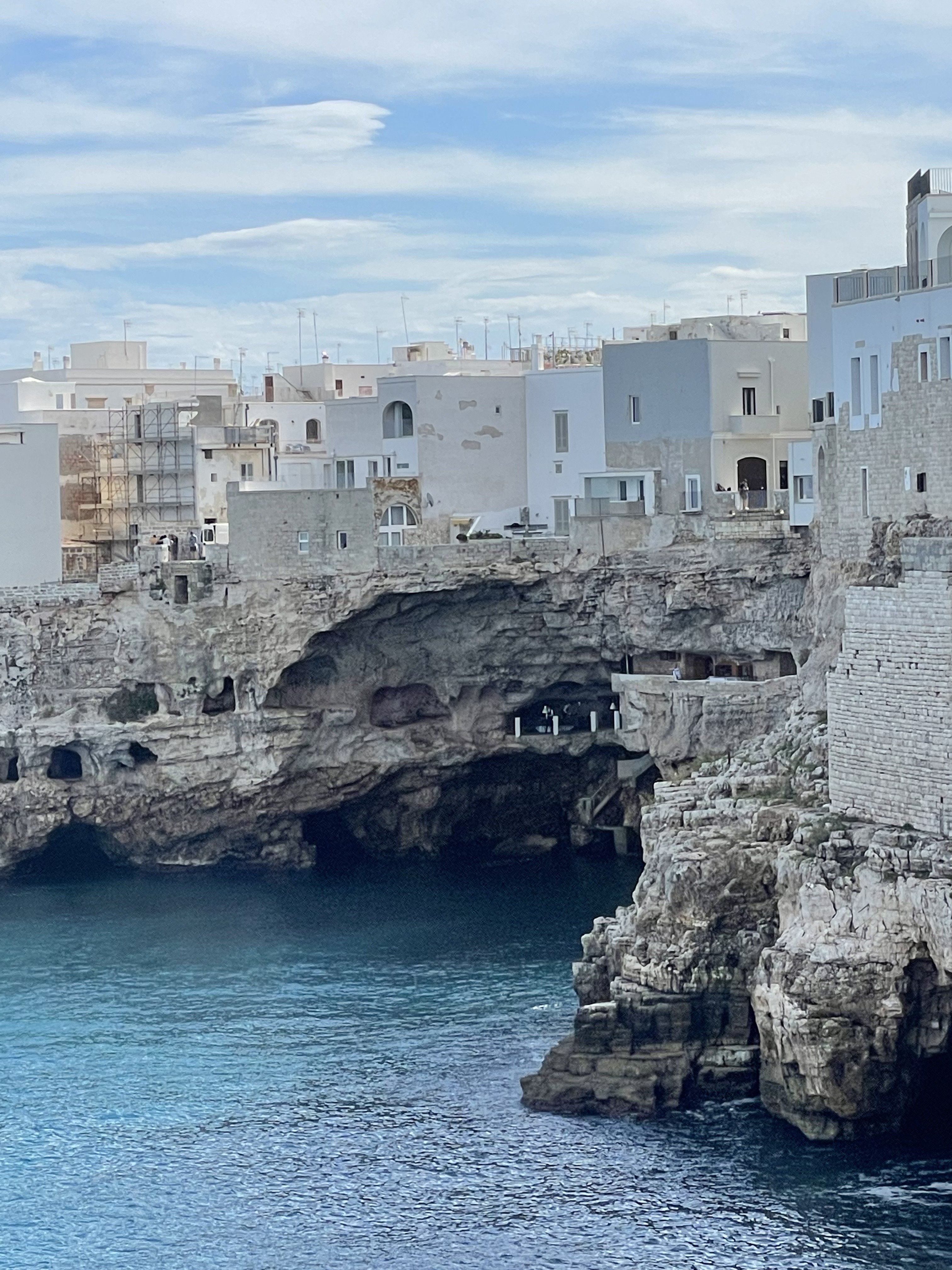
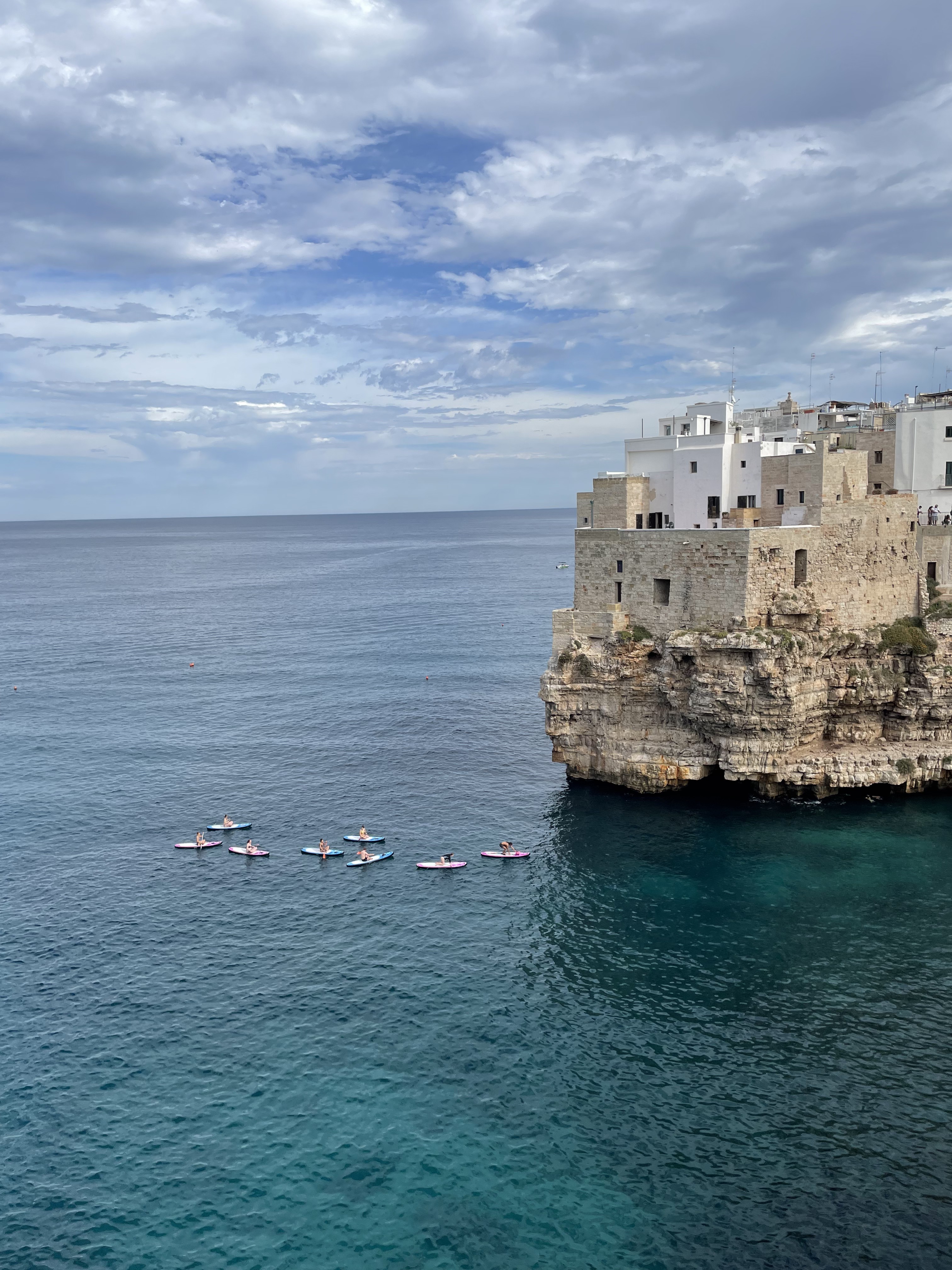
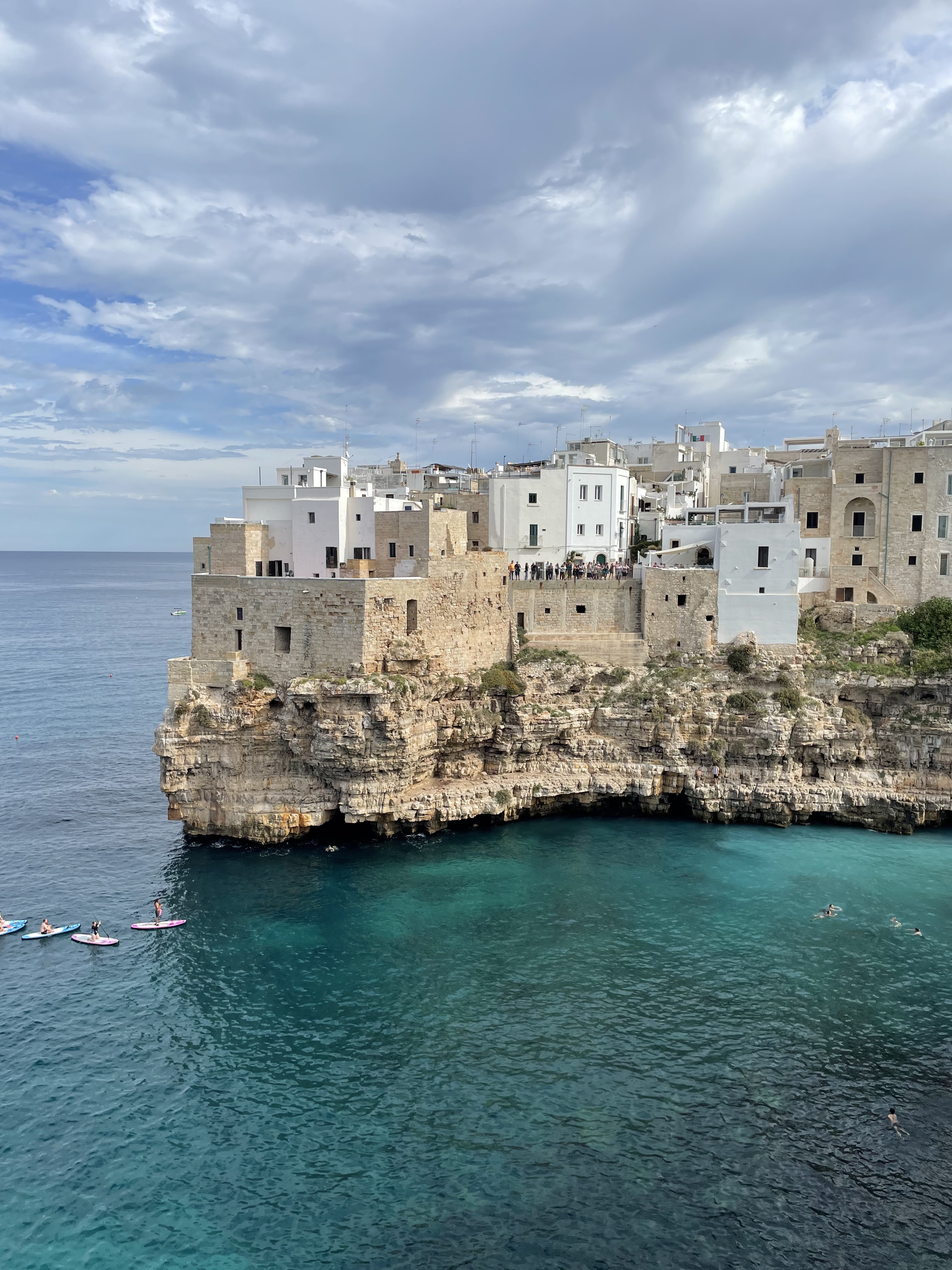
At twelve we climbed out to the point south of the cove, where the water does its two-tone trick between the grottoes and the terraces. October had not retired the swimmers — there was a man floating on his back in water the colour of a soft drink, entirely unbothered — and the town stacked white above the caves exactly as the postcards claim. This is also the water the world’s divers fly into once a year: every year since 2009 the international cliff-diving circuit has made Polignano one of its regular stops, with athletes stepping off platform towers up to twenty-seven metres above the same sea. A boat passed; we filmed it.
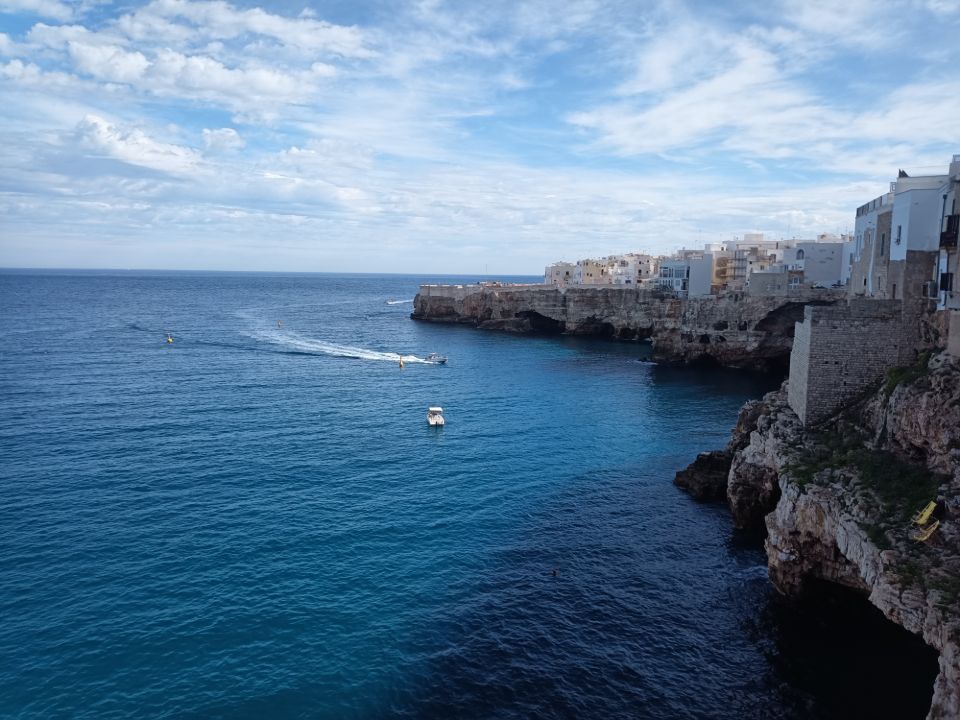
Turquoise coast, white town 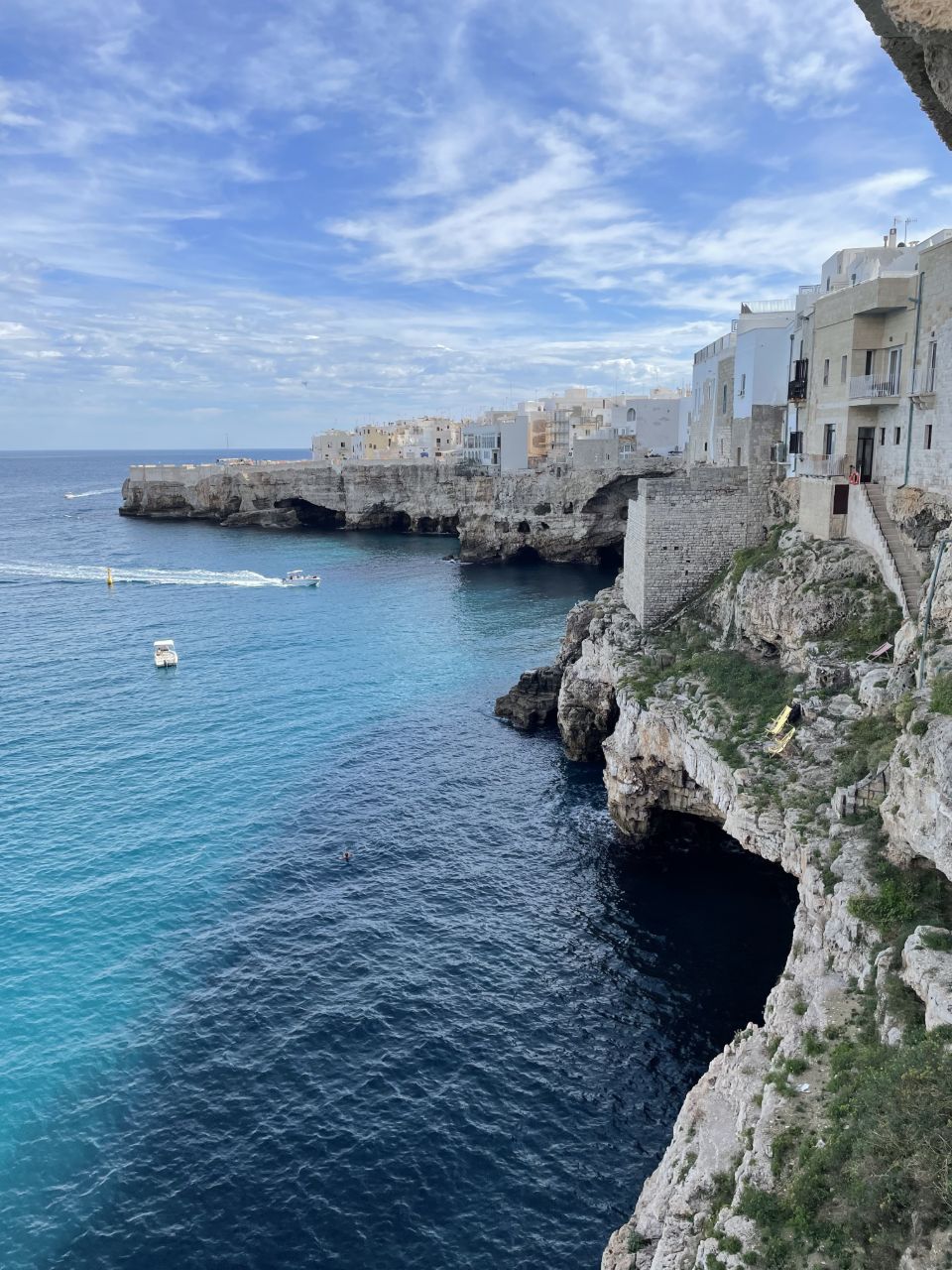
Vertical edition of the same view 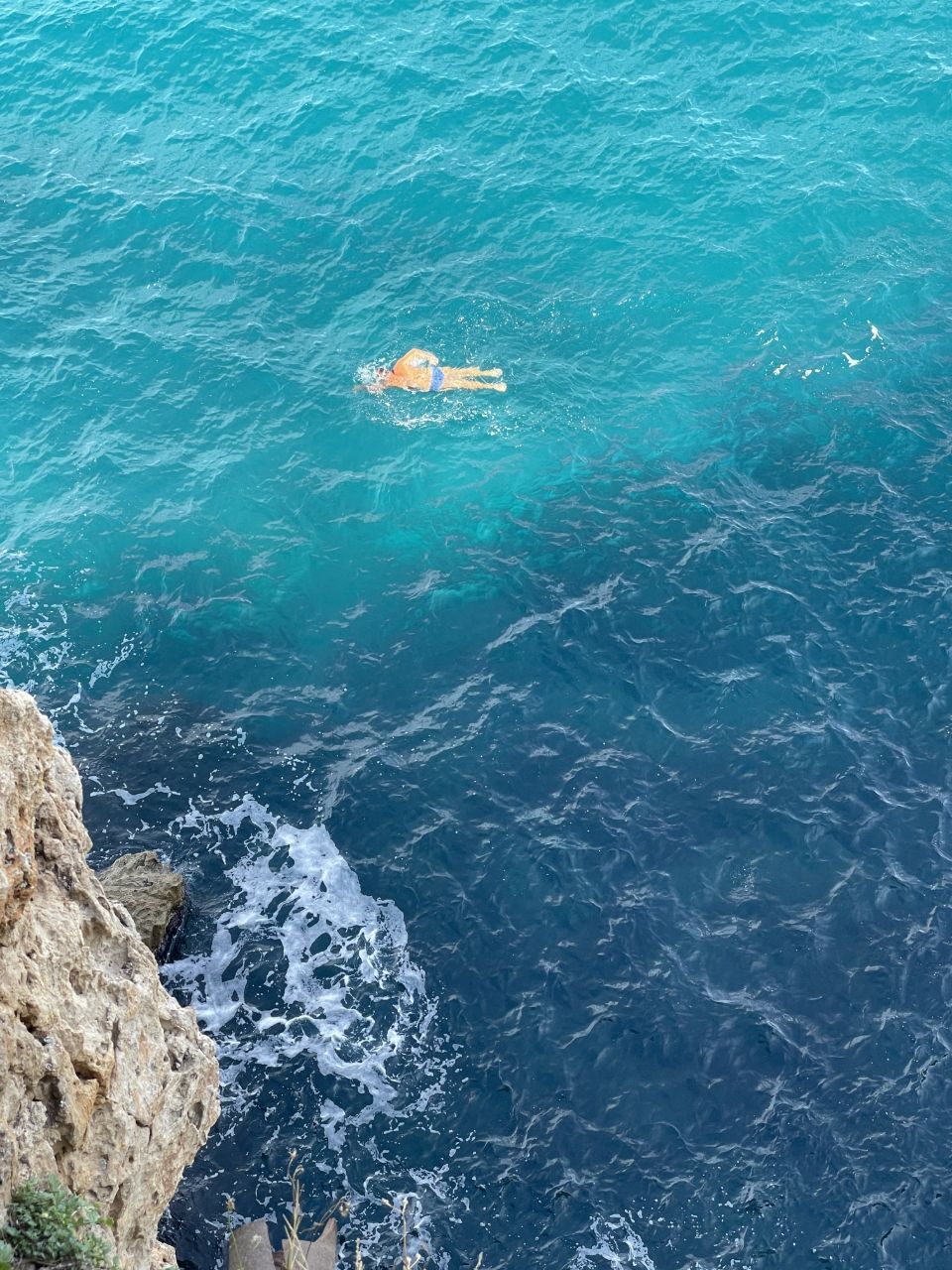
October, and somebody swimming 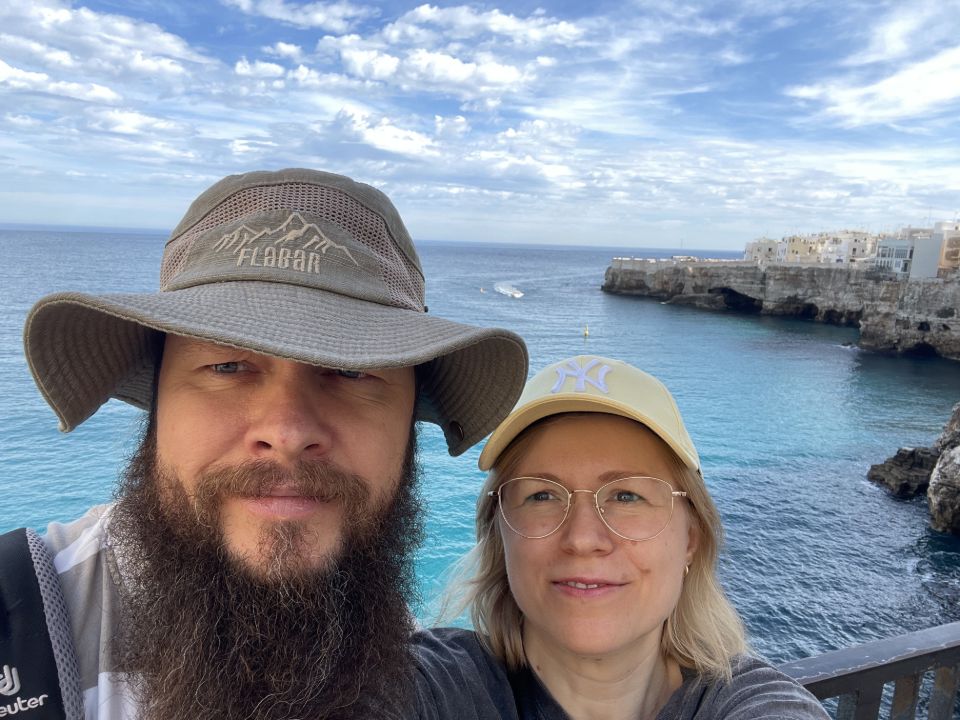
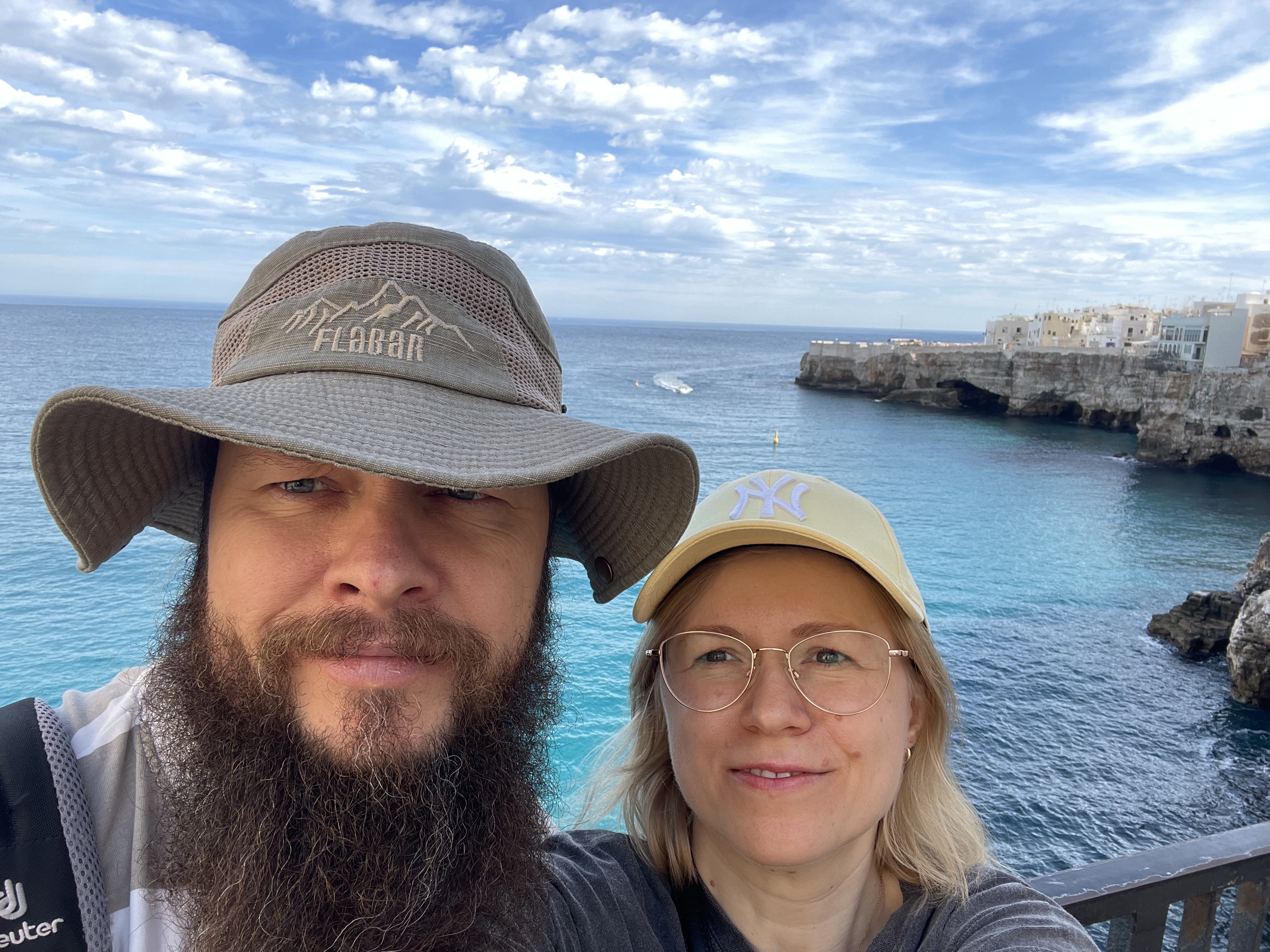
Both of us, in the hat competition 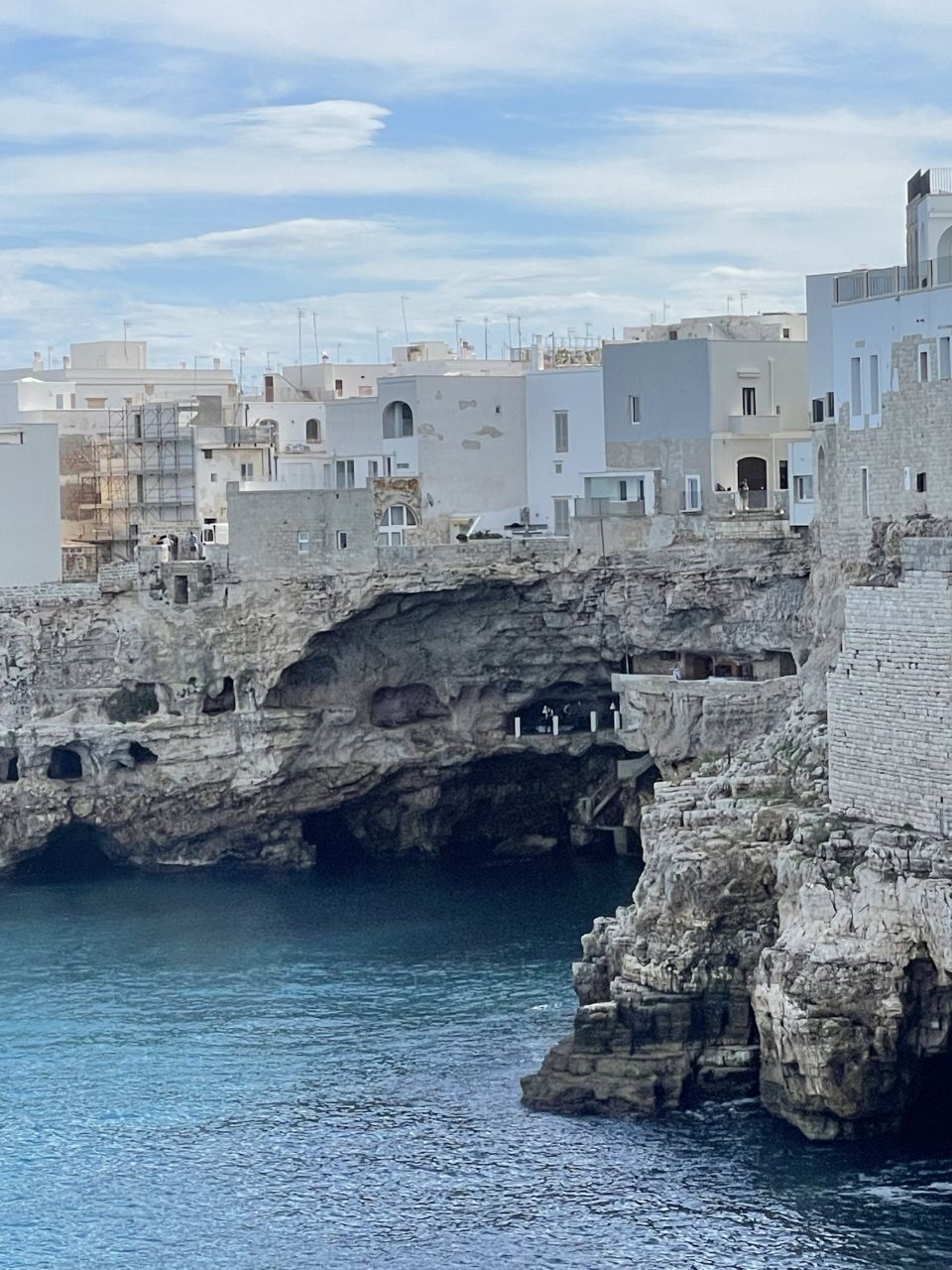
White above, caves below
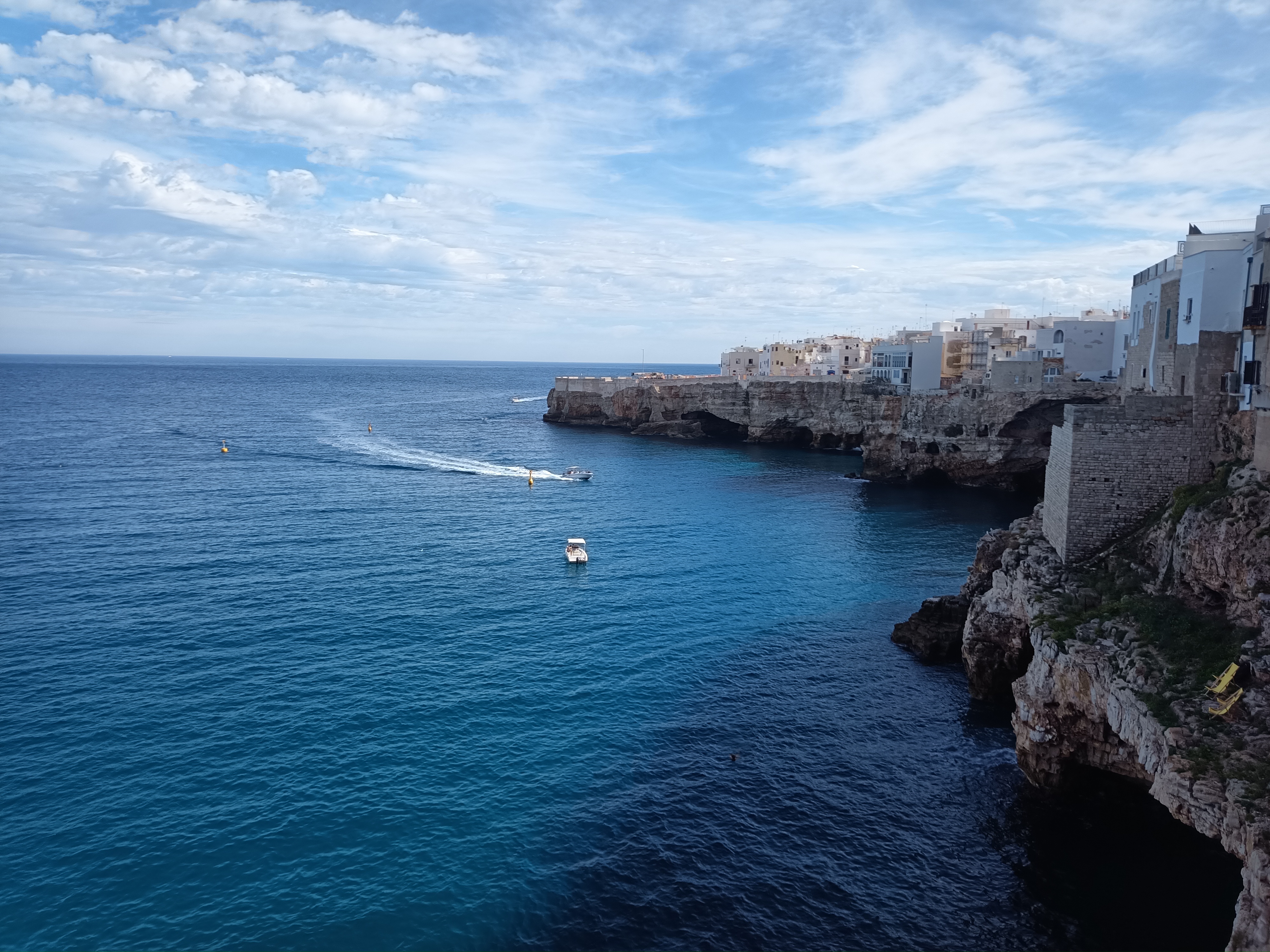
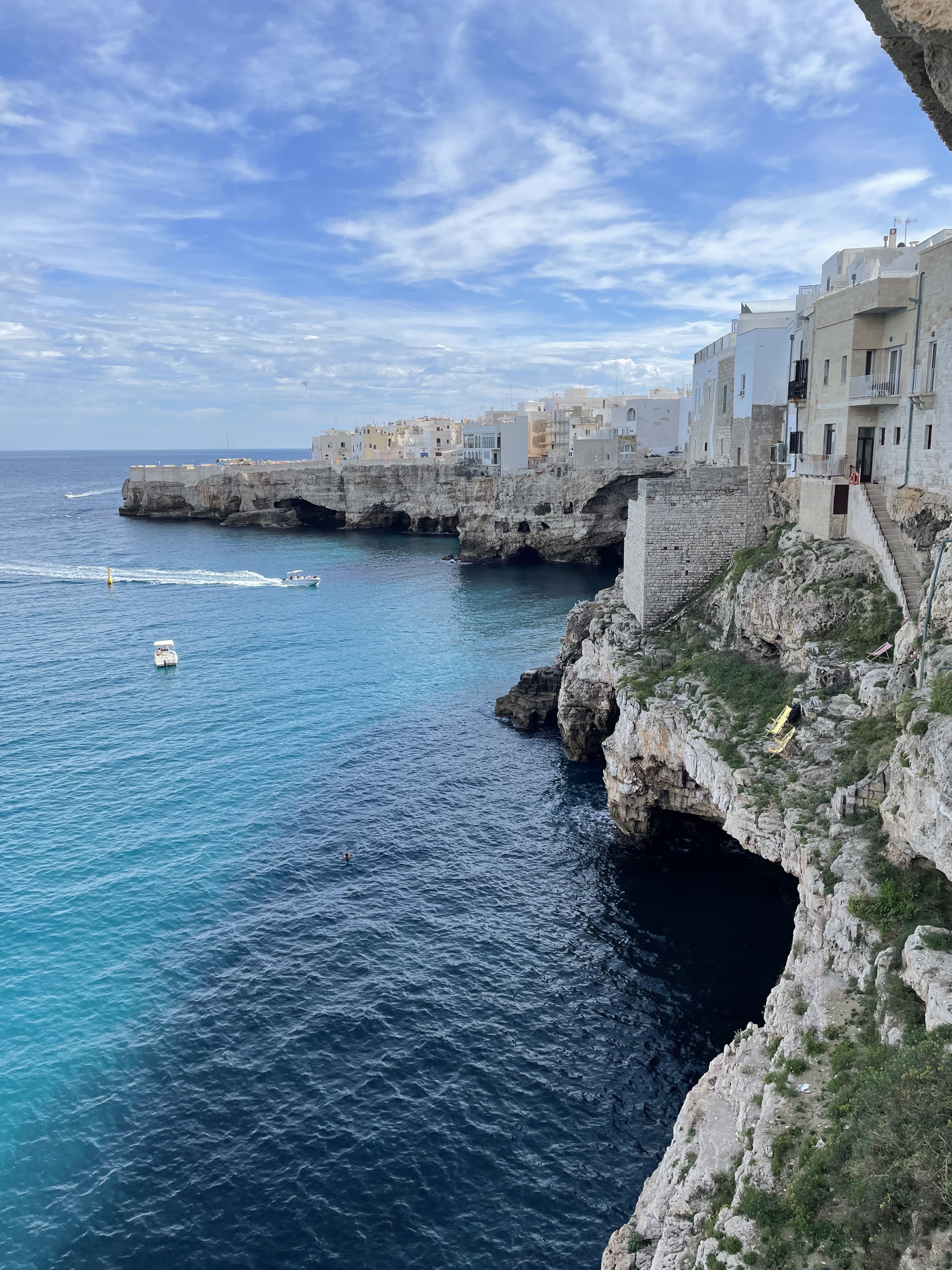
The two-tone water from the cliffside lane, with a boat for scale — fourteen seconds.
The postcard, from the Balconata
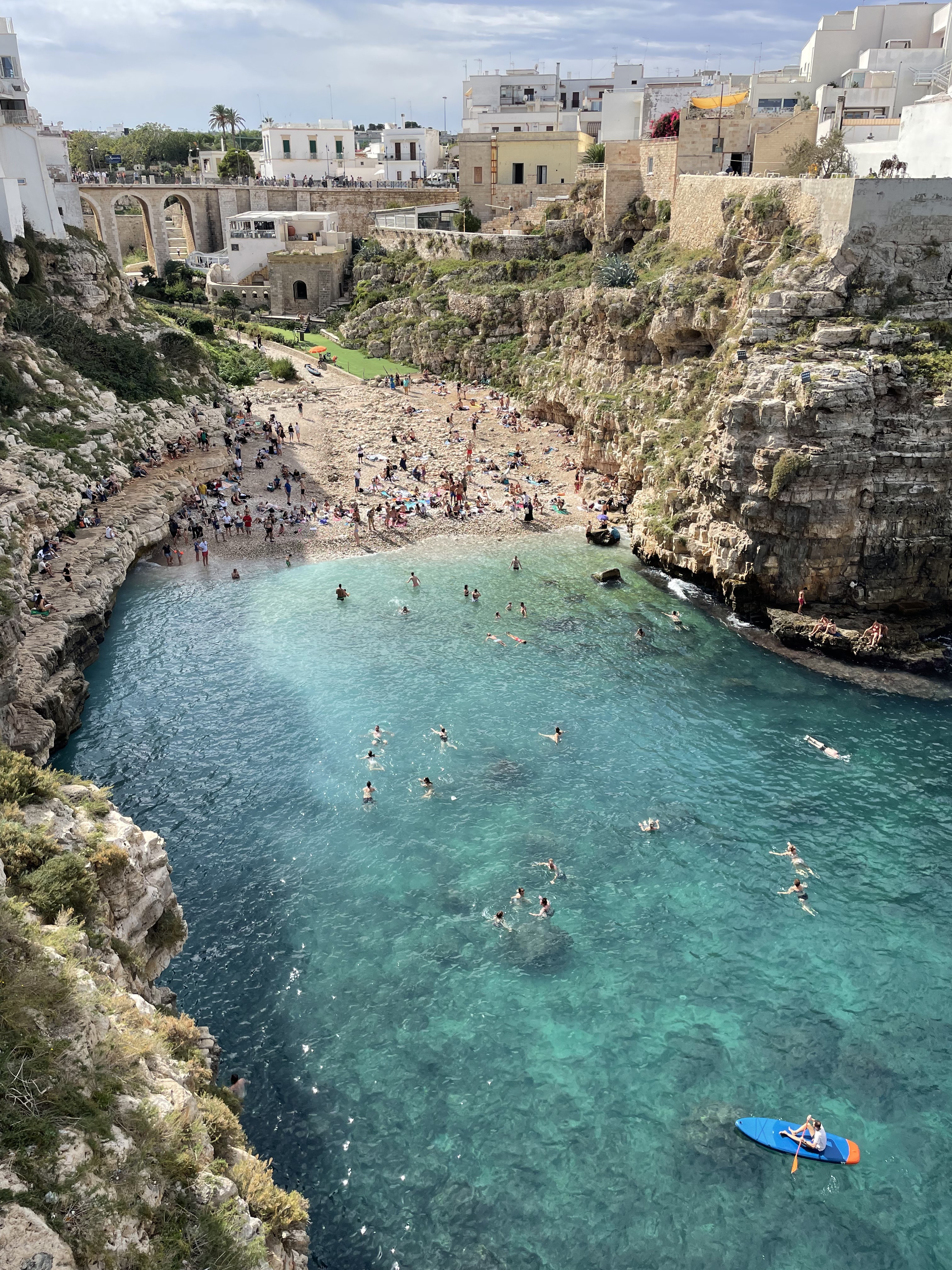
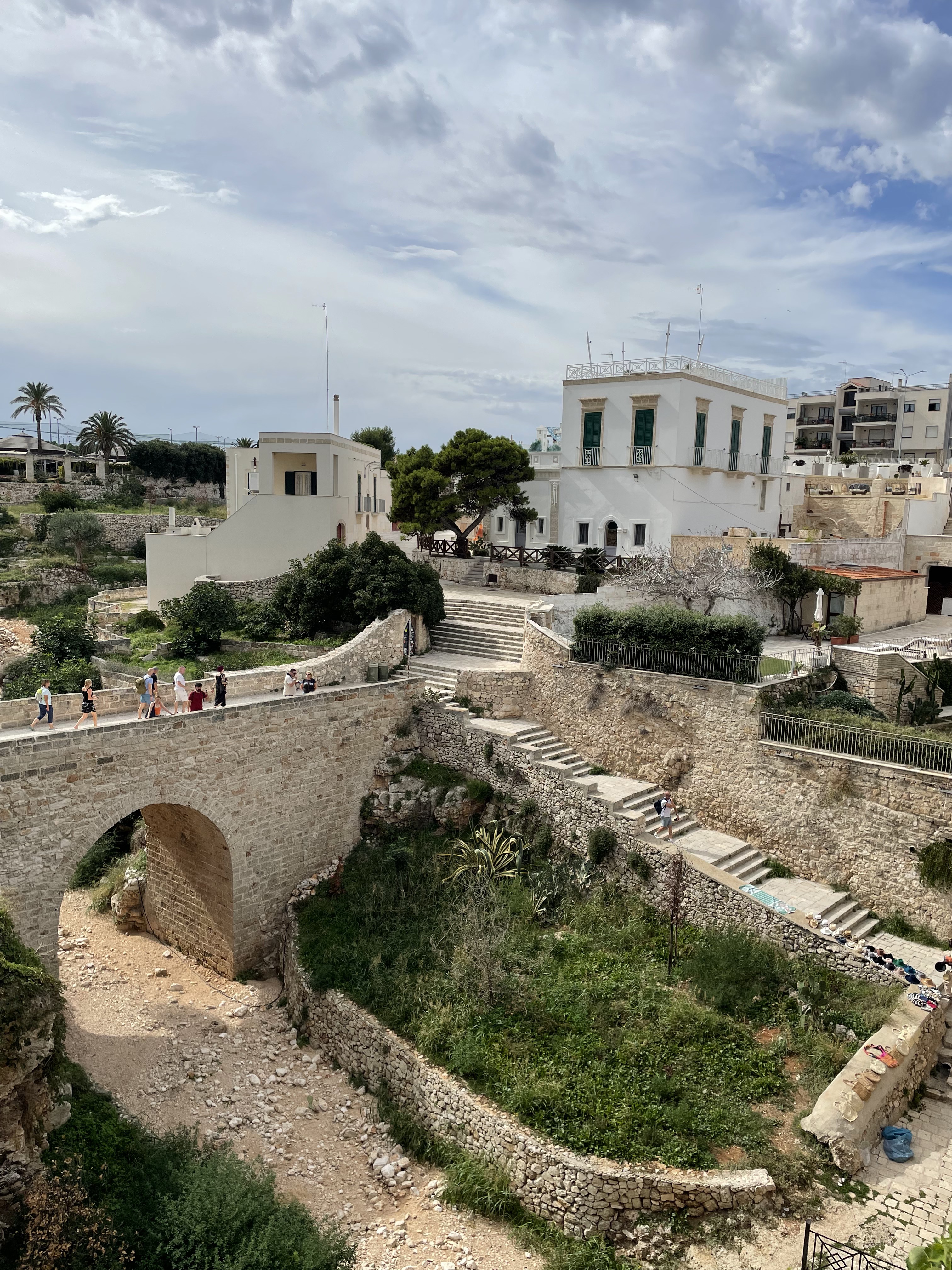
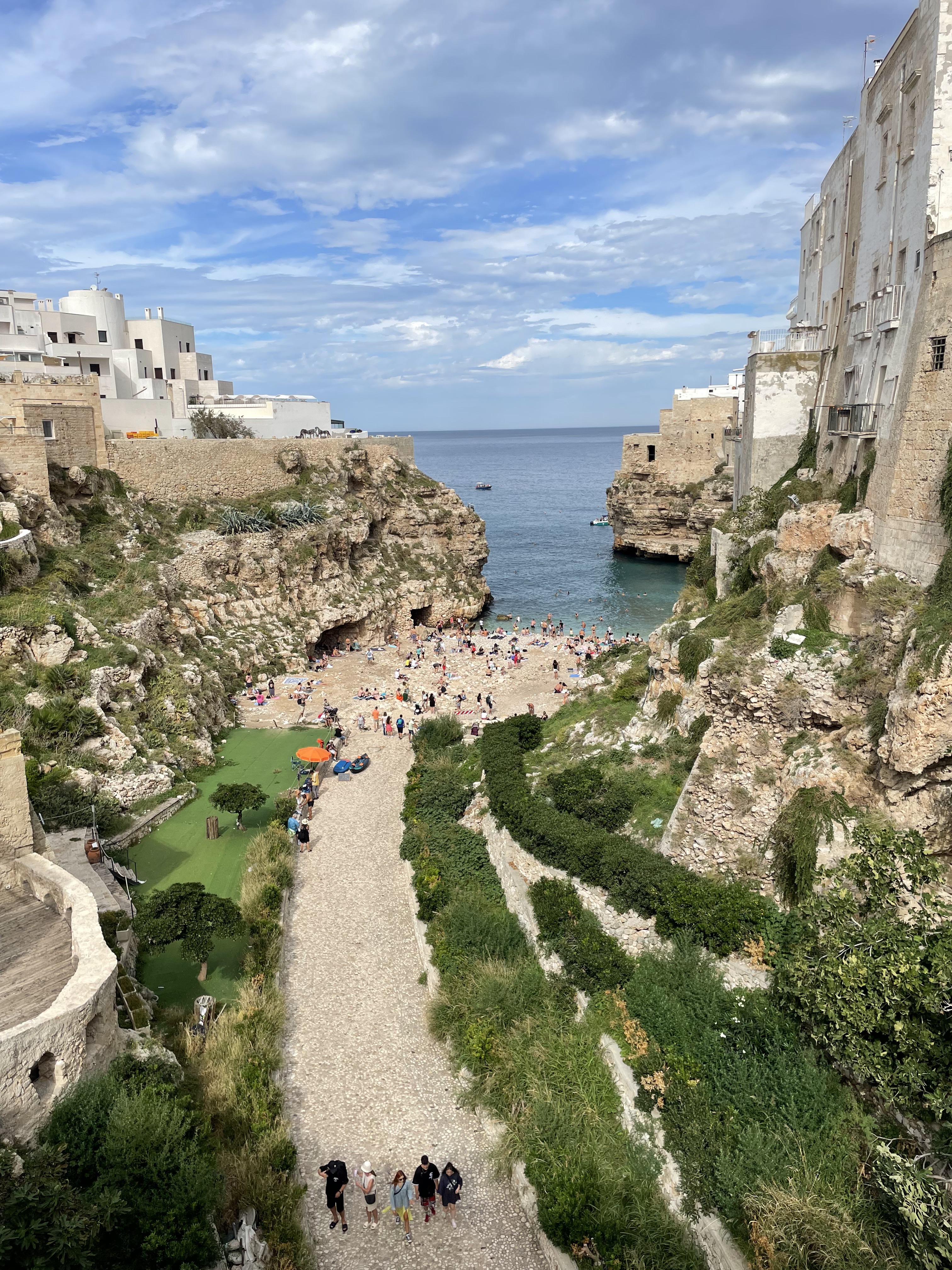
The Balconata Lama Monachile is the terrace everyone has seen online, and it does its duty: the cove below with its crowd of swimmers, the Roman bridge leaning over the gorge, the town laid out along the clifftop in white. The bridge is genuinely Roman below deck — the Bourbons rebuilt the top in the 1800s, but the foundations under the arches have been holding the road since antiquity.
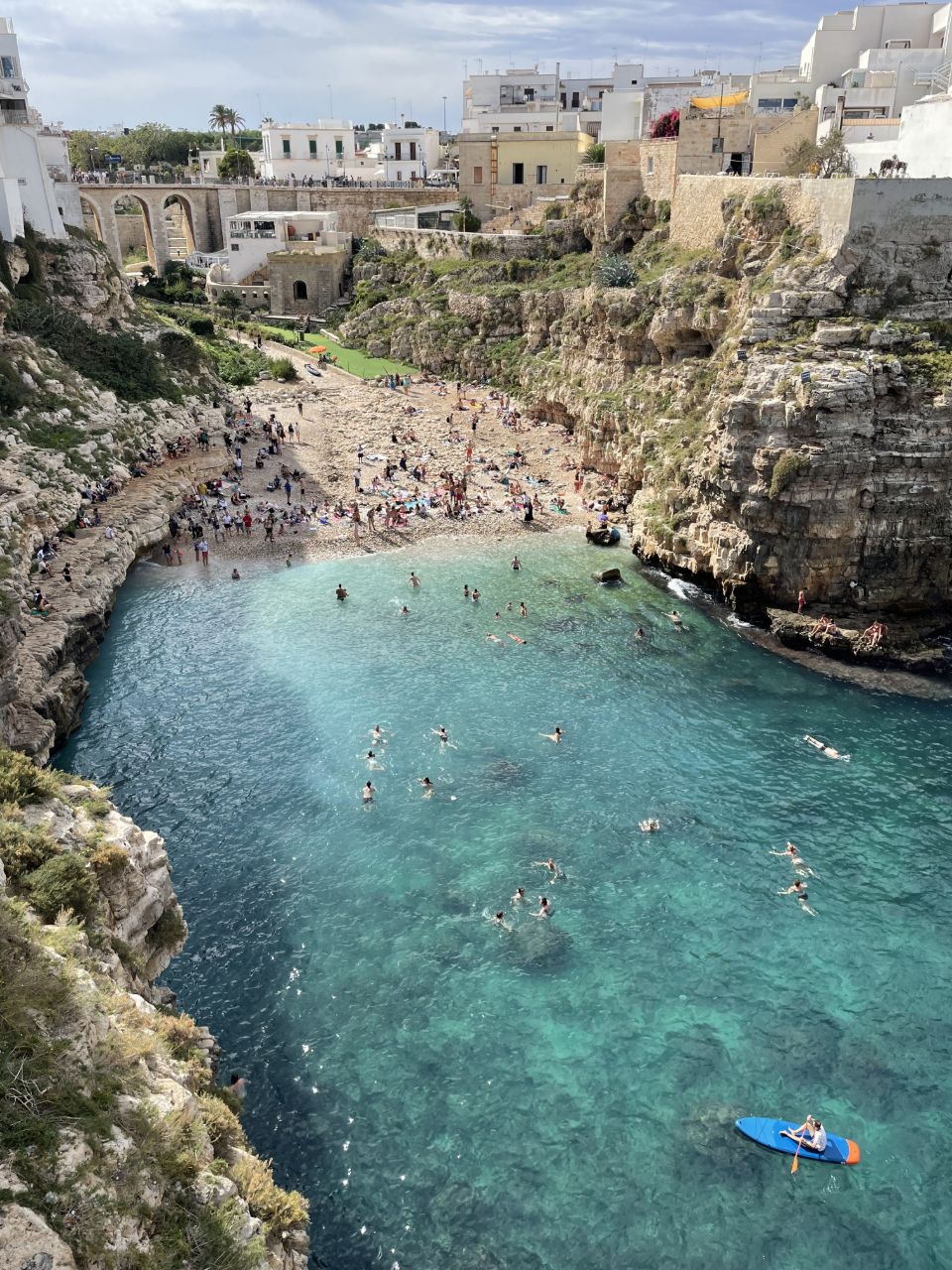
The famous cove, doing the famous thing 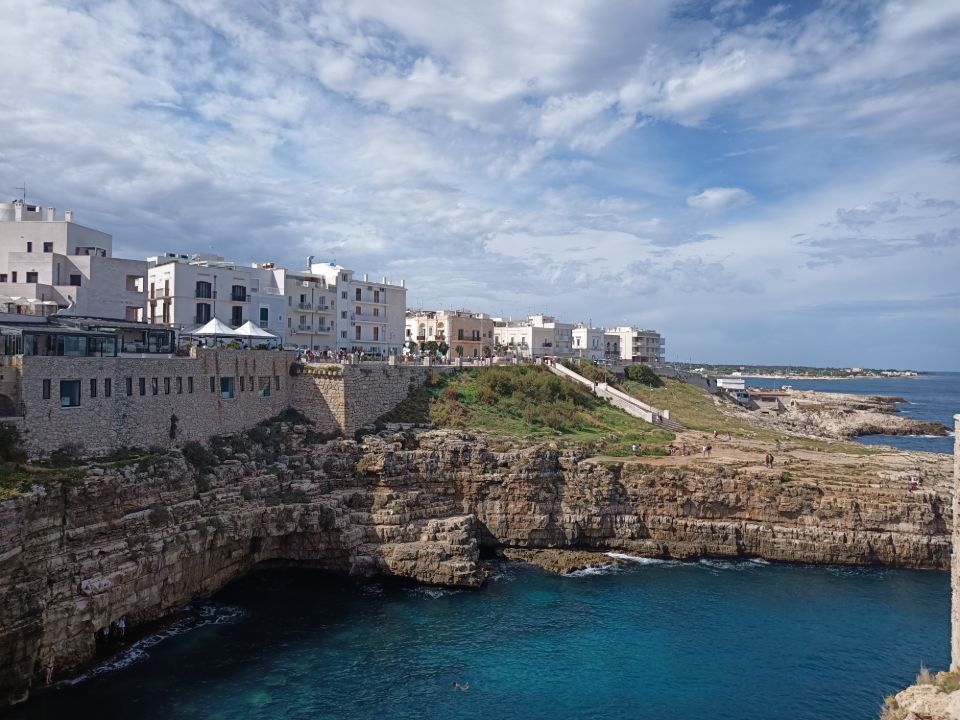
The town along the clifftop 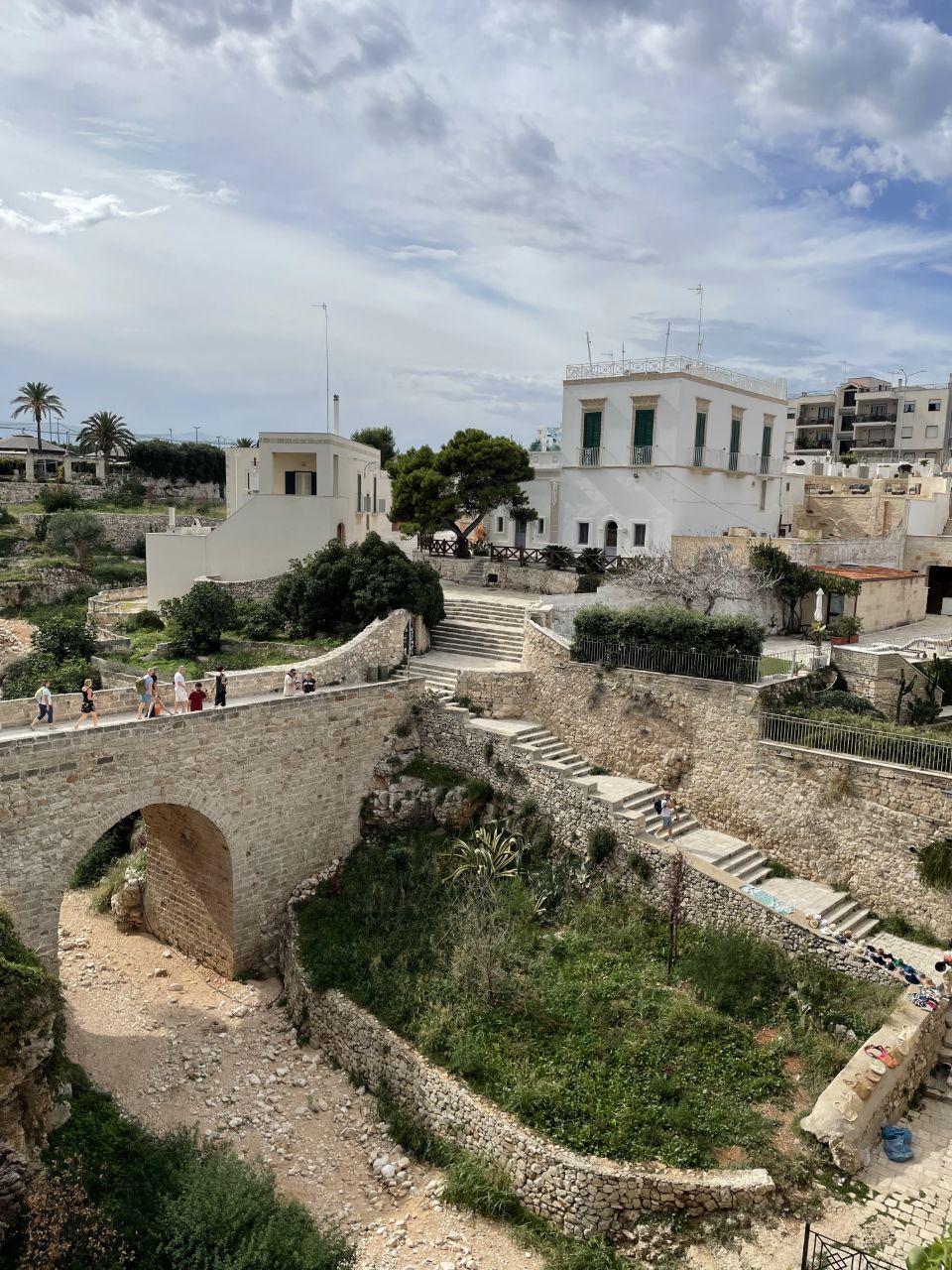
The Roman bridge over the gorge 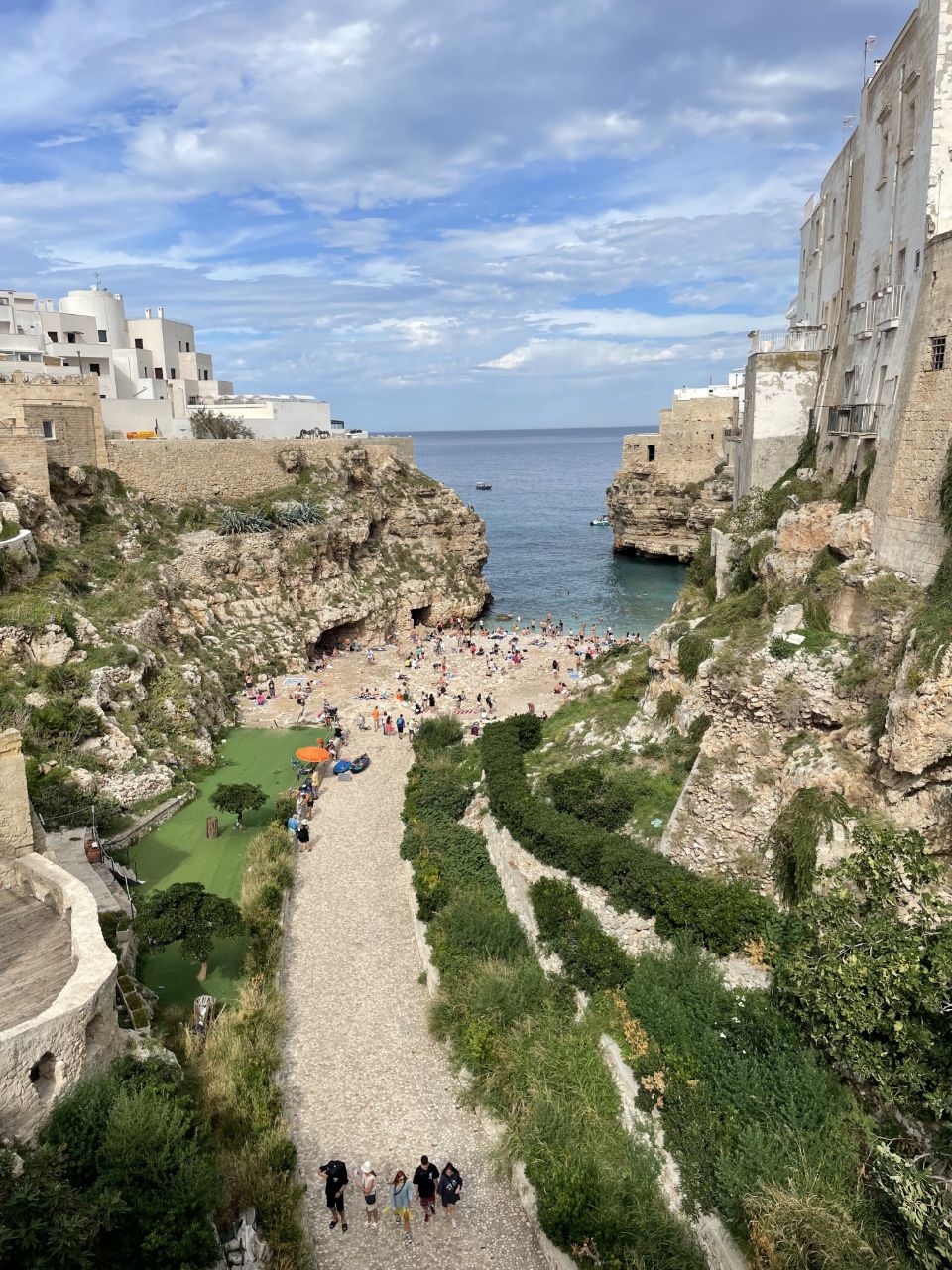
The cove between the white houses 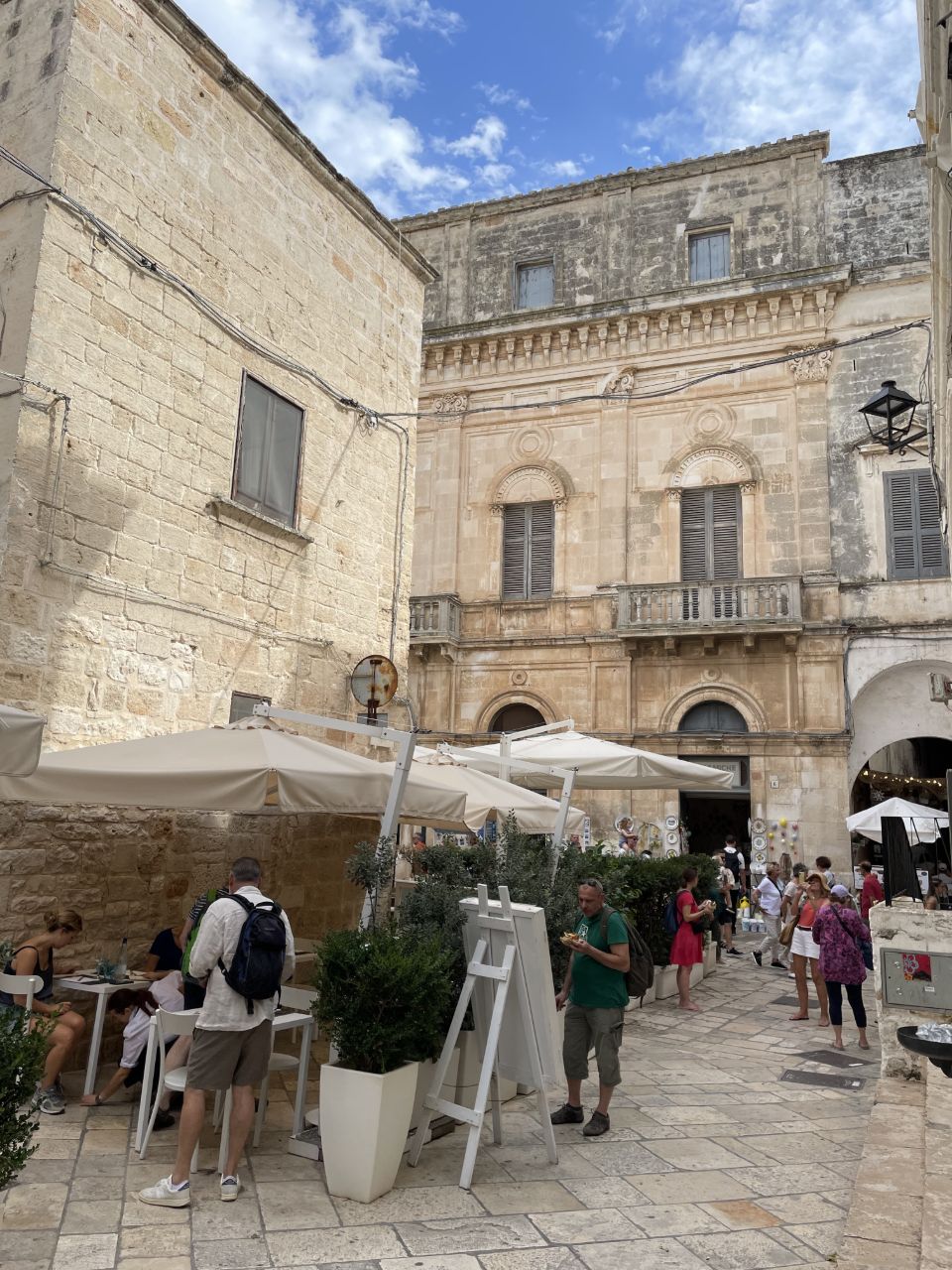
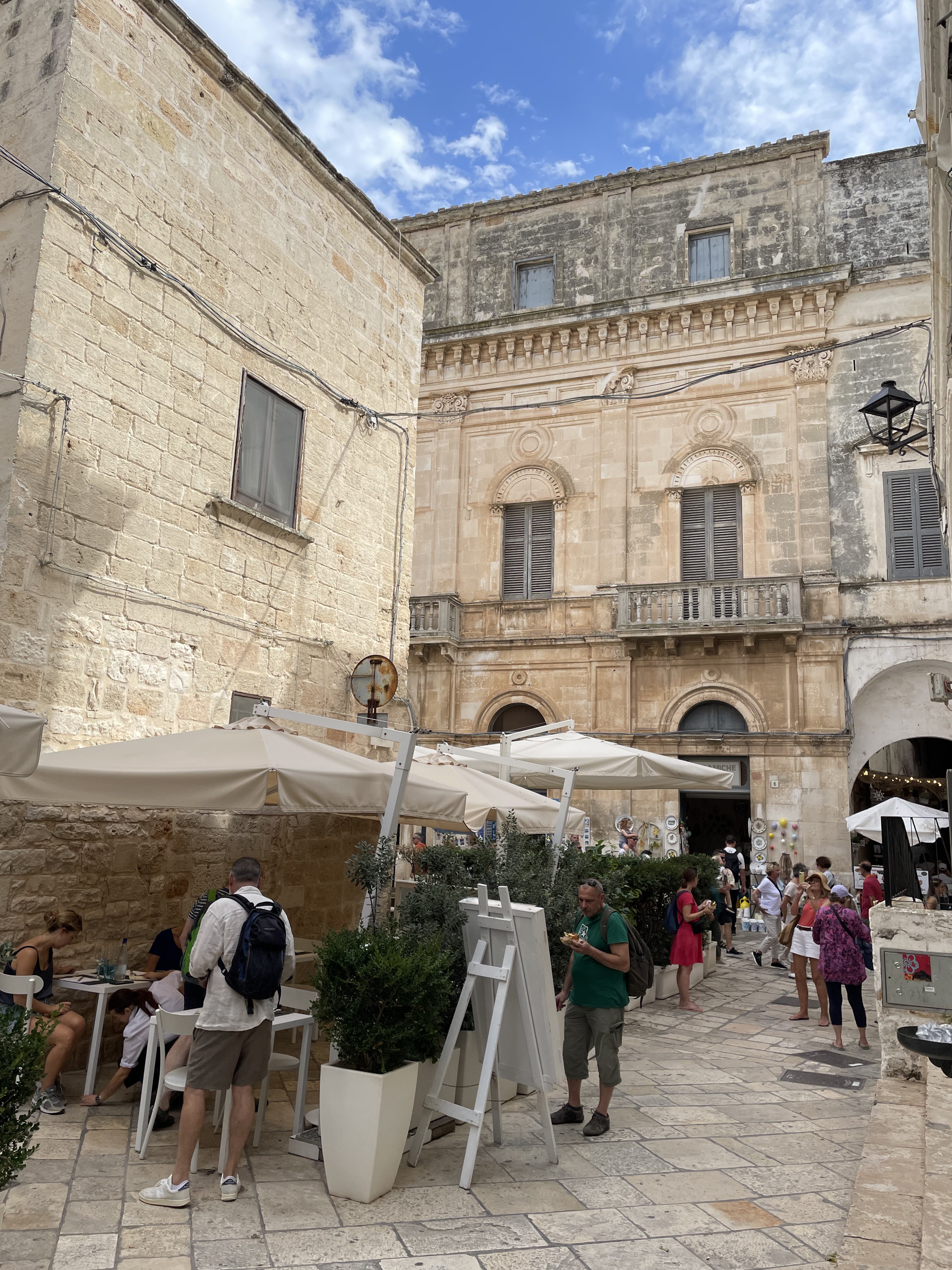
Cafe square, October still going
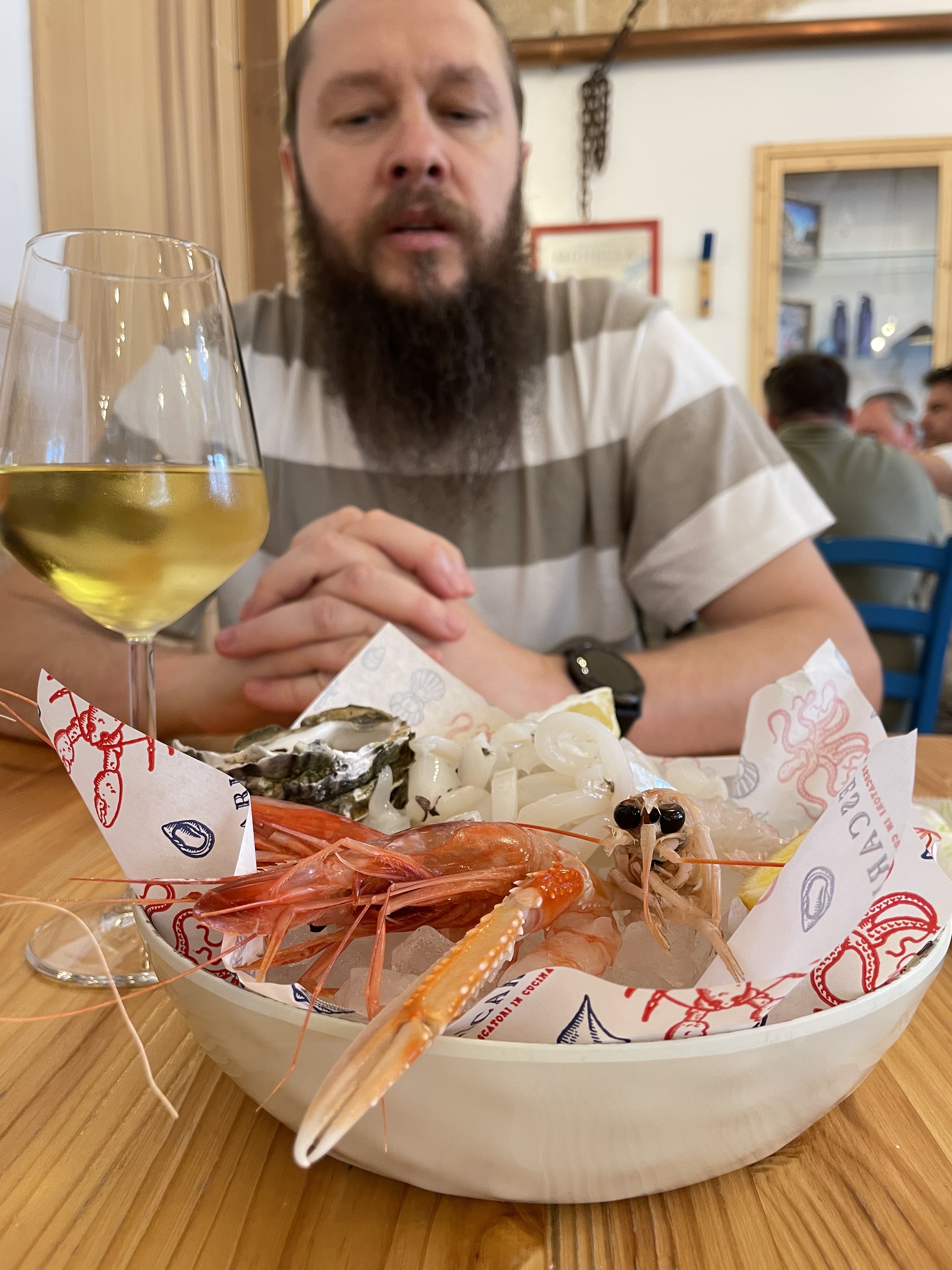
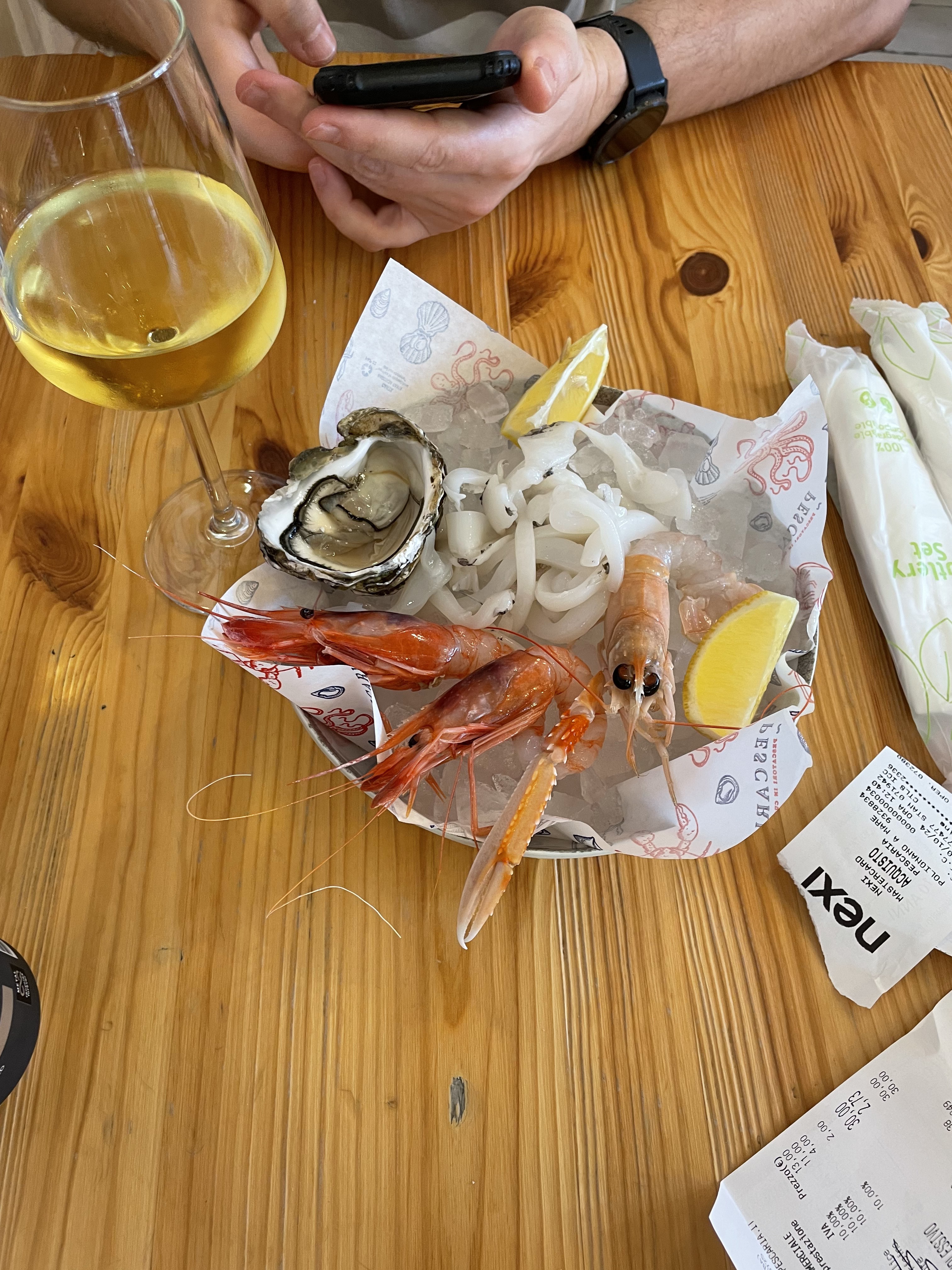
Seafood on ice
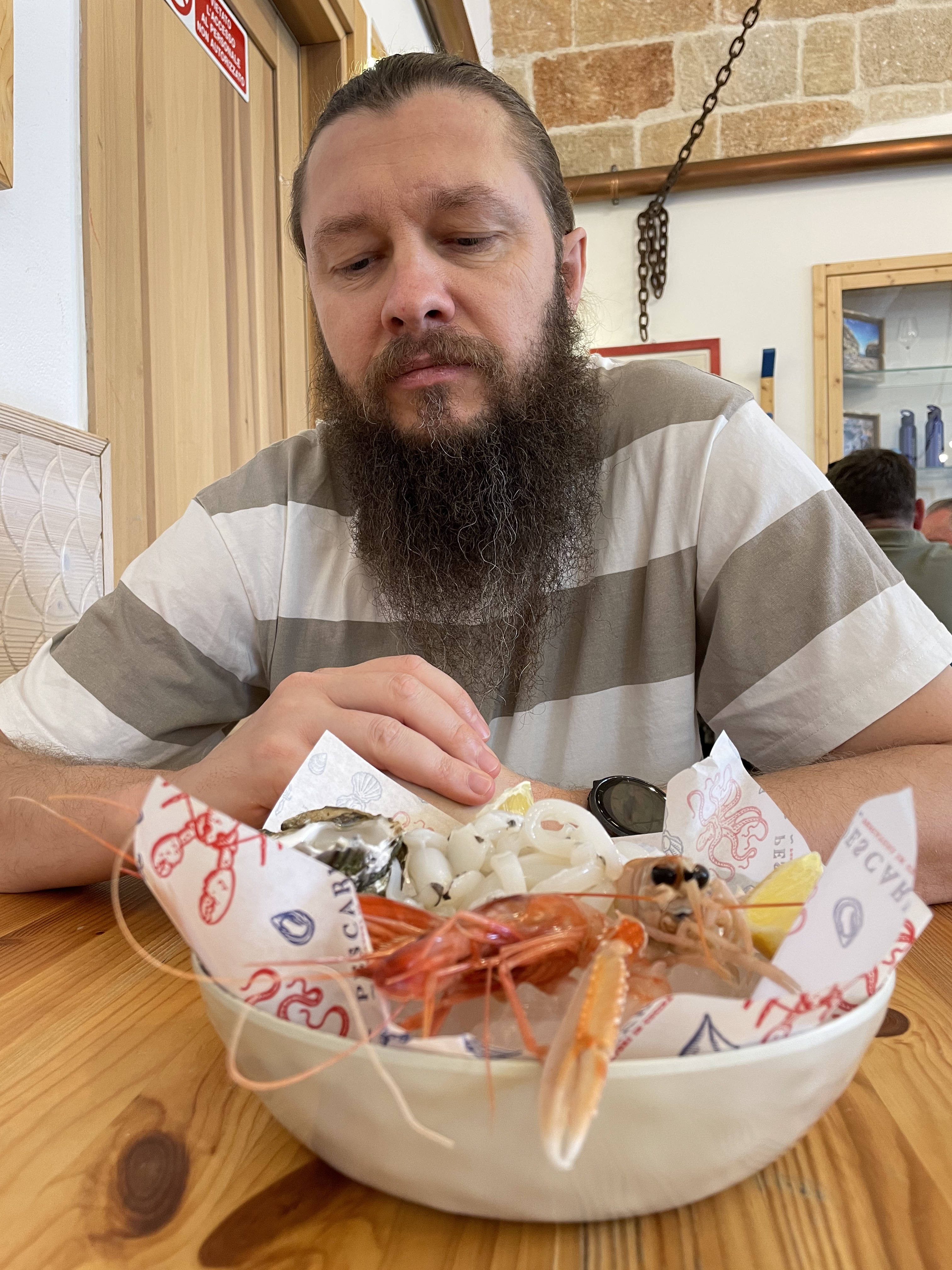
Lunch was at a fast-food kind of place that deals in fresh seafood — you order from the counter, and they hand it over chilled. Ours arrived as a platter of prawns, langoustine, octopus and an oyster, all on ice, with white wine. Oleg’s one-line verdict: the kind of place Berlin could use more of.
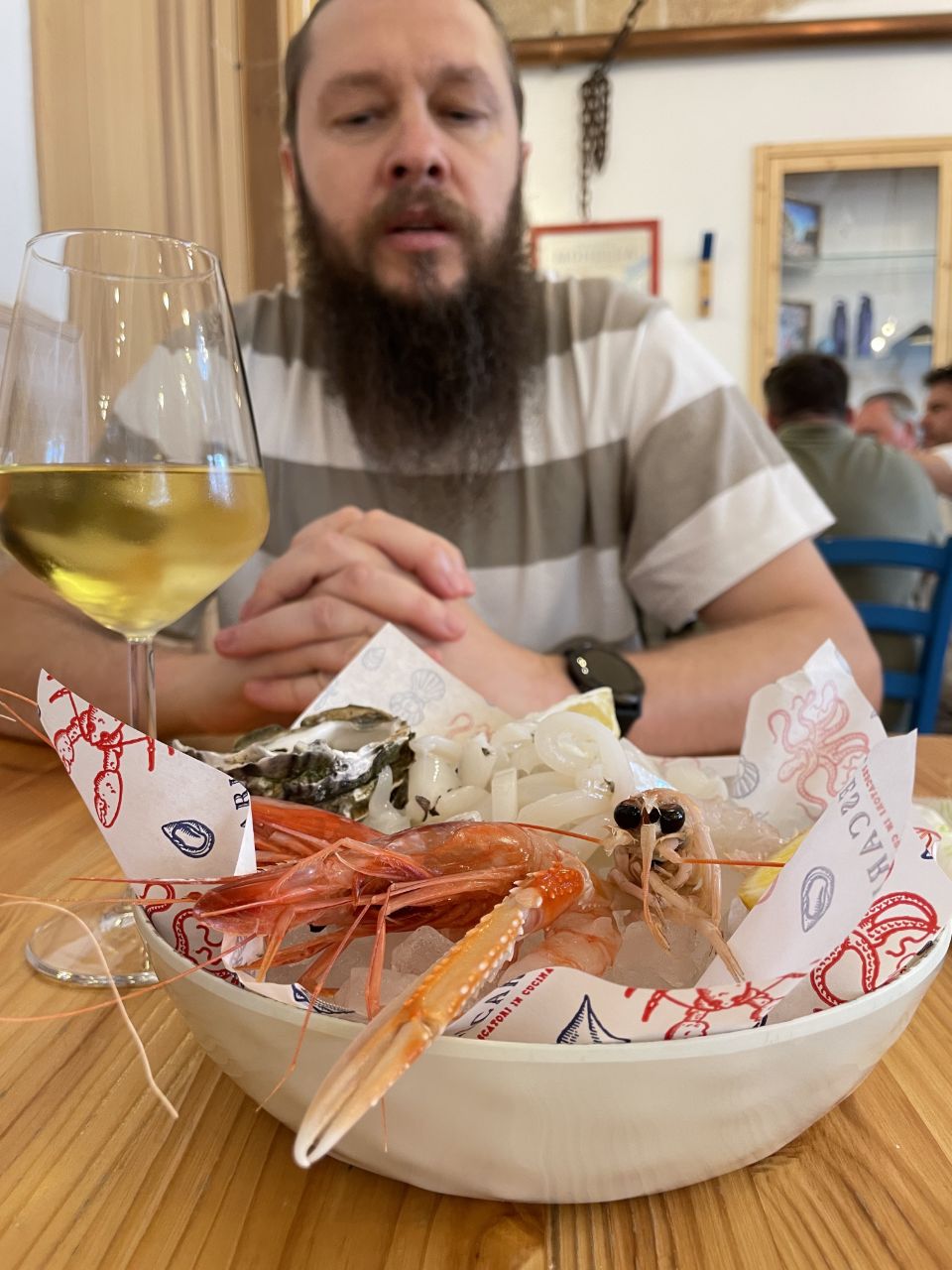
The platter, on ice 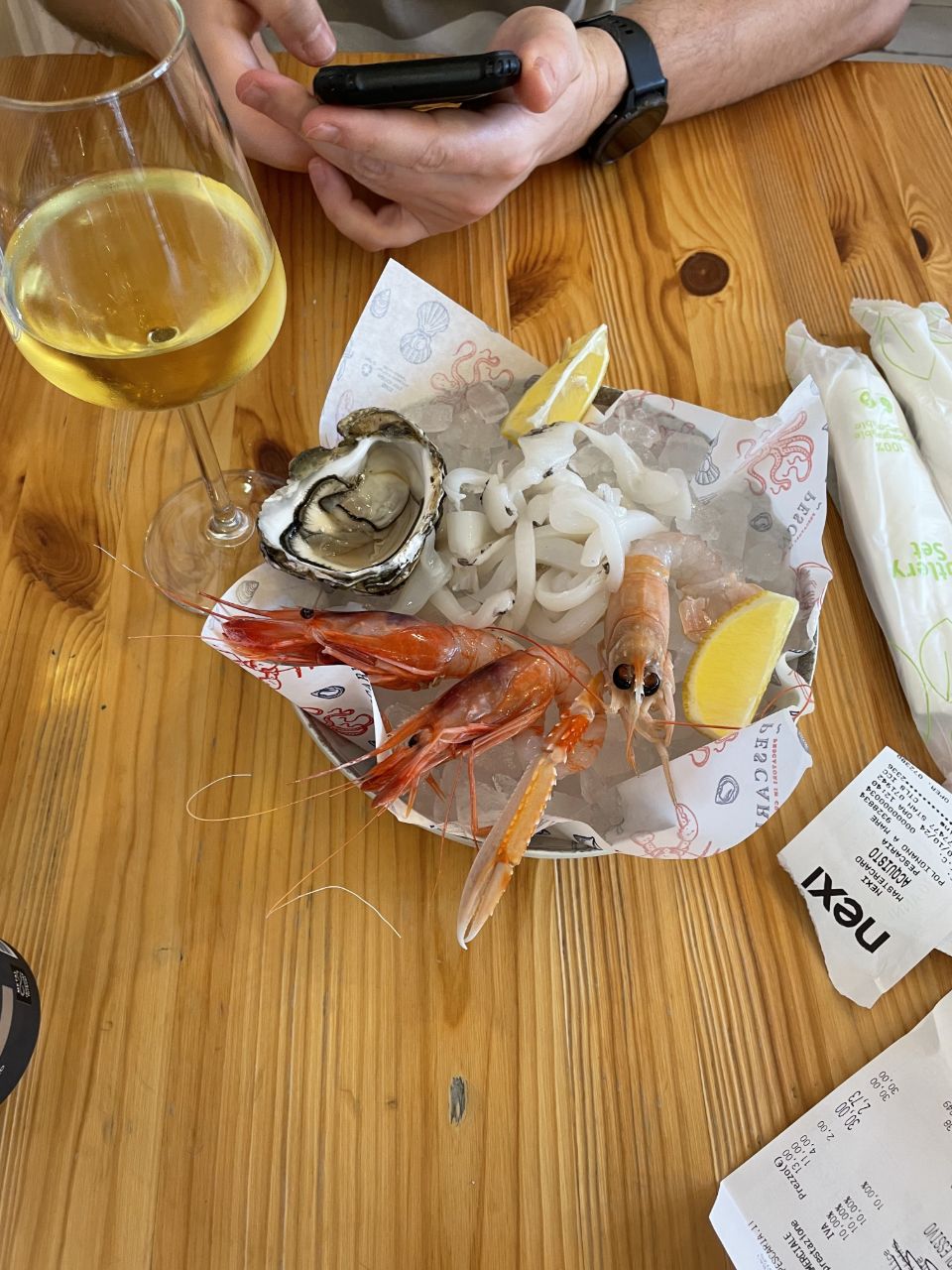
Overhead view with the wine 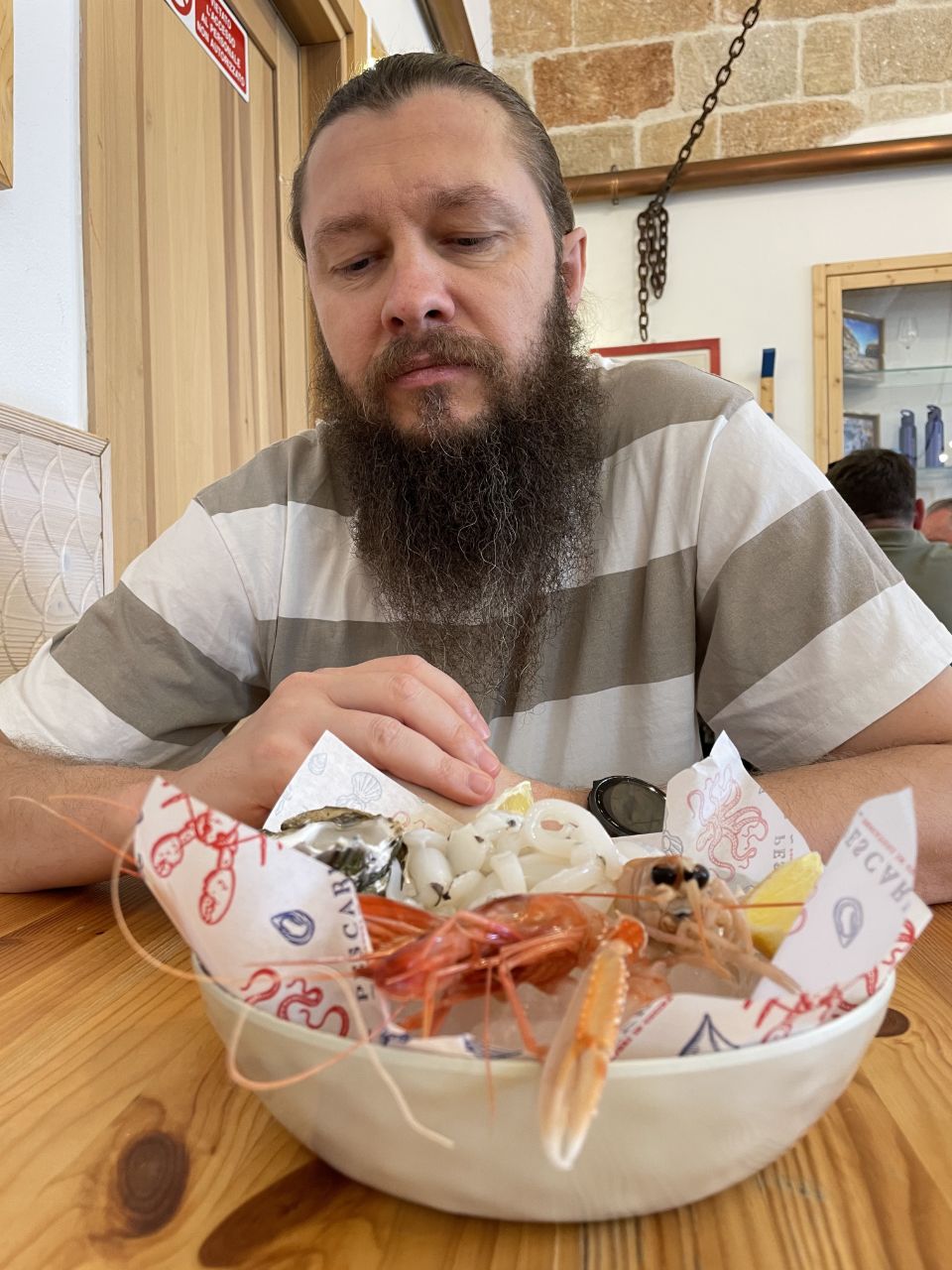
Oleg at the table
Modugno, and the white cliffs
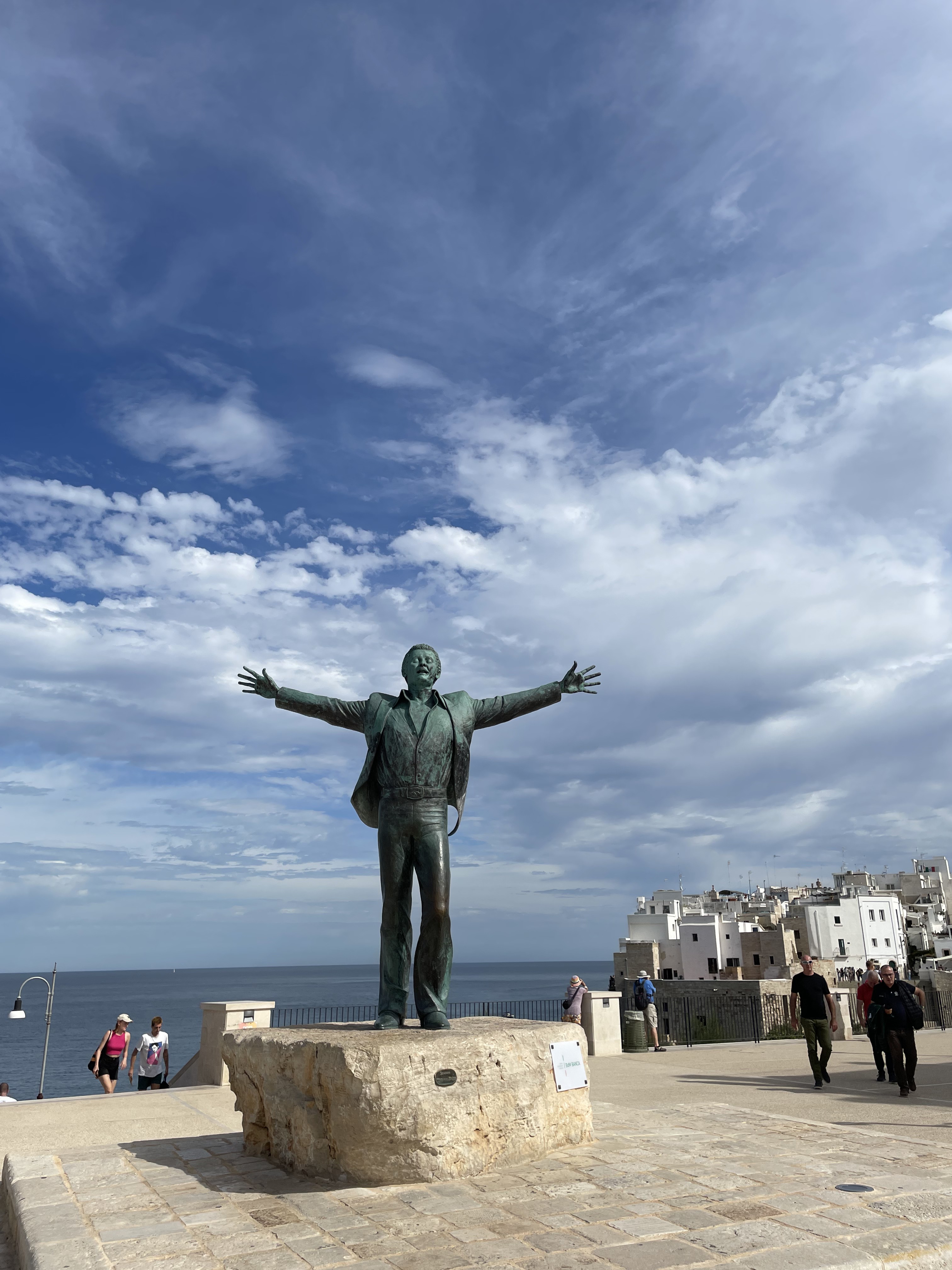
Down on the promenade, Domenico Modugno — Polignano’s own, born here in 1928 — holds his arms out at the sea as if conducting it. You have almost certainly heard his song, even if you have never connected it to a place: more than a hundred recorded versions around the world, fifteen of them on release in America the same year as the original, Dean Martin’s English take reaching number two in Britain, all of them together selling past eighteen million copies. What almost nobody knows is the where. Not Naples, not Hollywood — this town. The statue is standing in it on purpose. The song is Nel blu, dipinto di blu, the one the whole world calls Volare — and it is less literal than it sounds: a man paints his hands and face blue, the wind suddenly carries him off, and he flies into the endless sky. The flight is the metaphor — the giddiness of being with the one you love; the blue-painted man is the dream his co-writer Franco Migliacci woke up with after staring too long at a Chagall painting. Released in February 1958, it spent five weeks at number one in America, was named Billboard’s single of the year, and took both Record of the Year and Song of the Year at the very first Grammy Awards — an Italian-language song doing all of that. Polignano never stops claiming him: the statue, the seafront’s name, the lyric strung in lights across the old town’s streets — and a museum we skipped in favour of the ice bucket. Further along, the clifftop gives out its panoramas: the old town balanced in white on tawny rock, turquoise below.
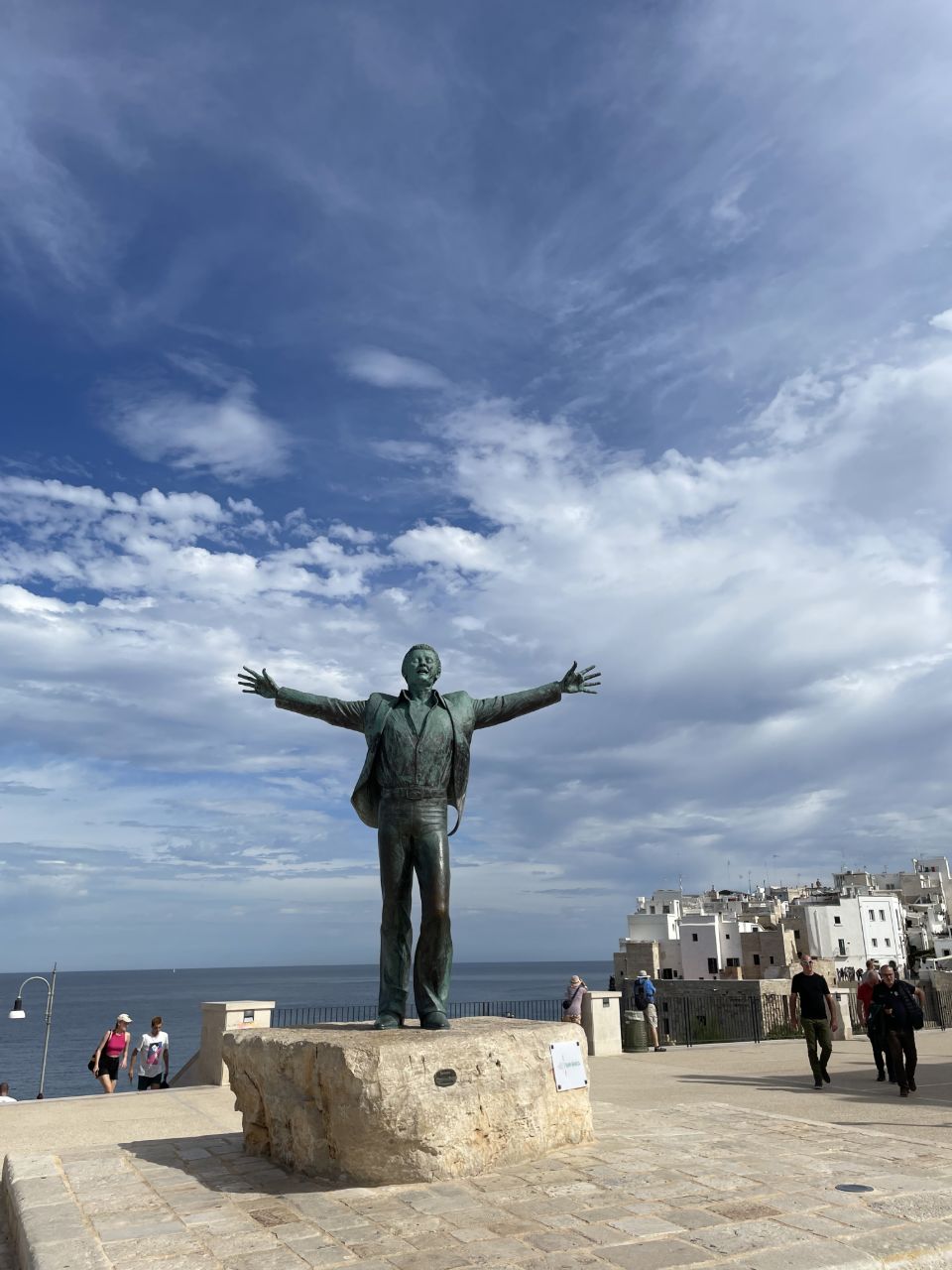
Modugno, arms out to the sea 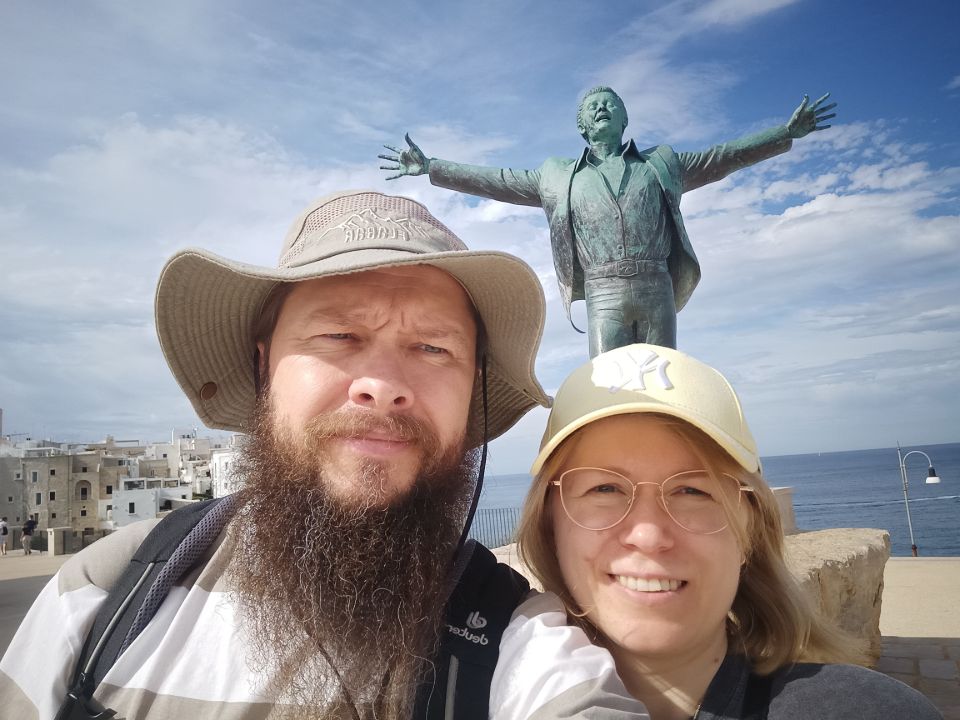
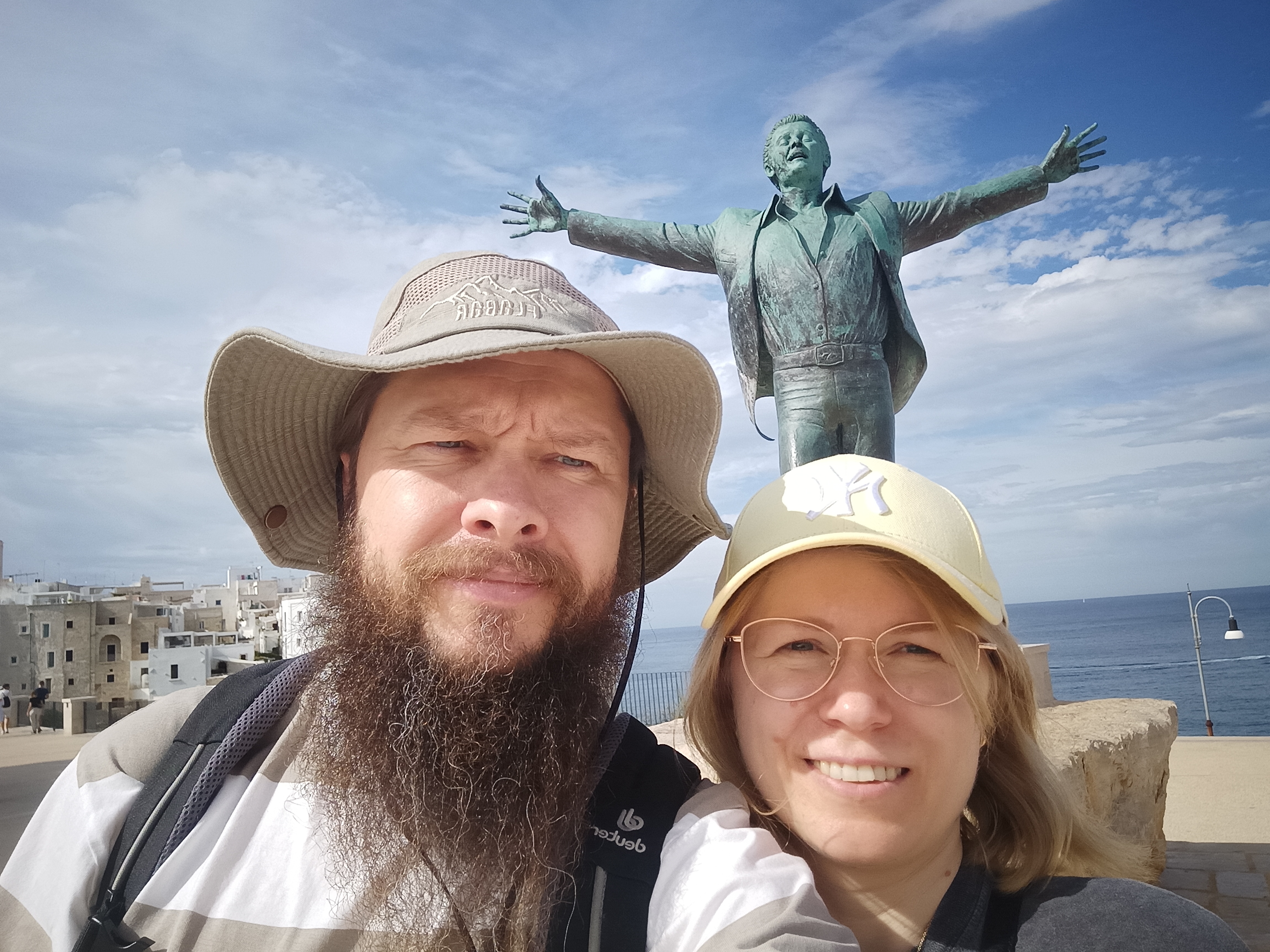
Both of us, in his shadow 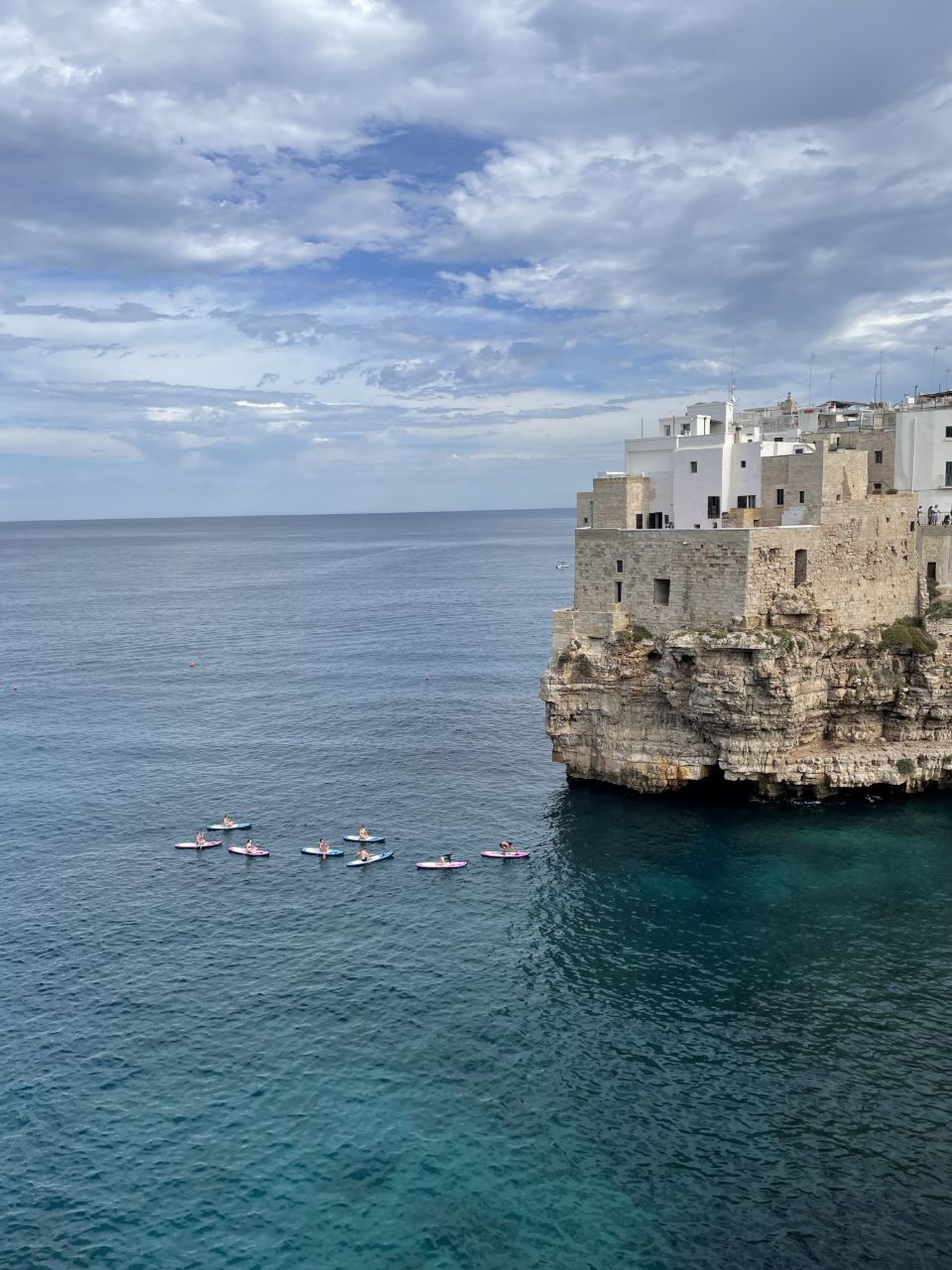
Clifftop panorama, turquoise below 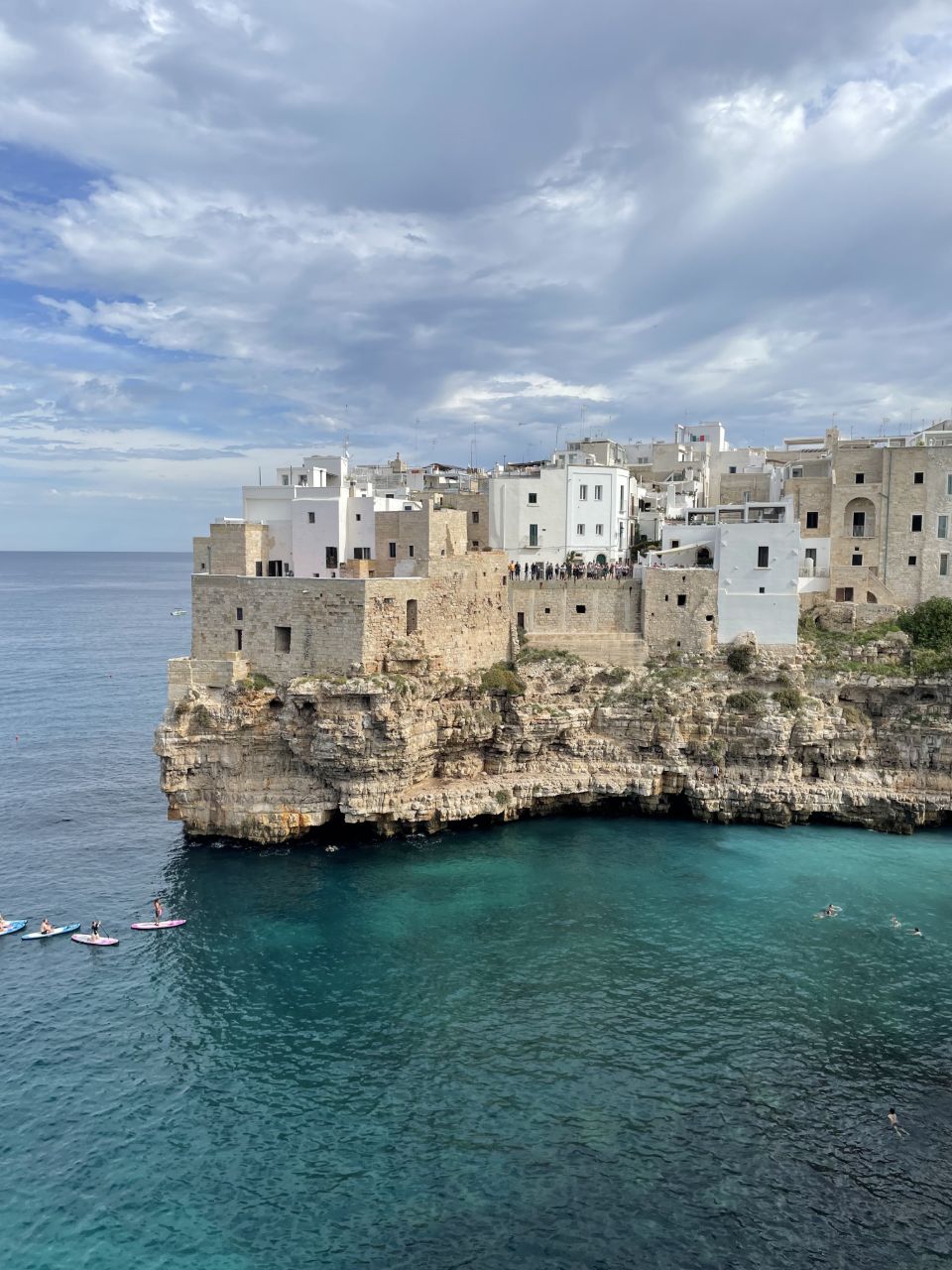
The town, balanced in white
A walk to San Vito
The afternoon we spent on the coast path, working our way out of town as far as San Vito, where the cliffs settle down and the water runs from glass to navy across one wide bay. The white rock face kept its caves and its boat, filmed out of respect.
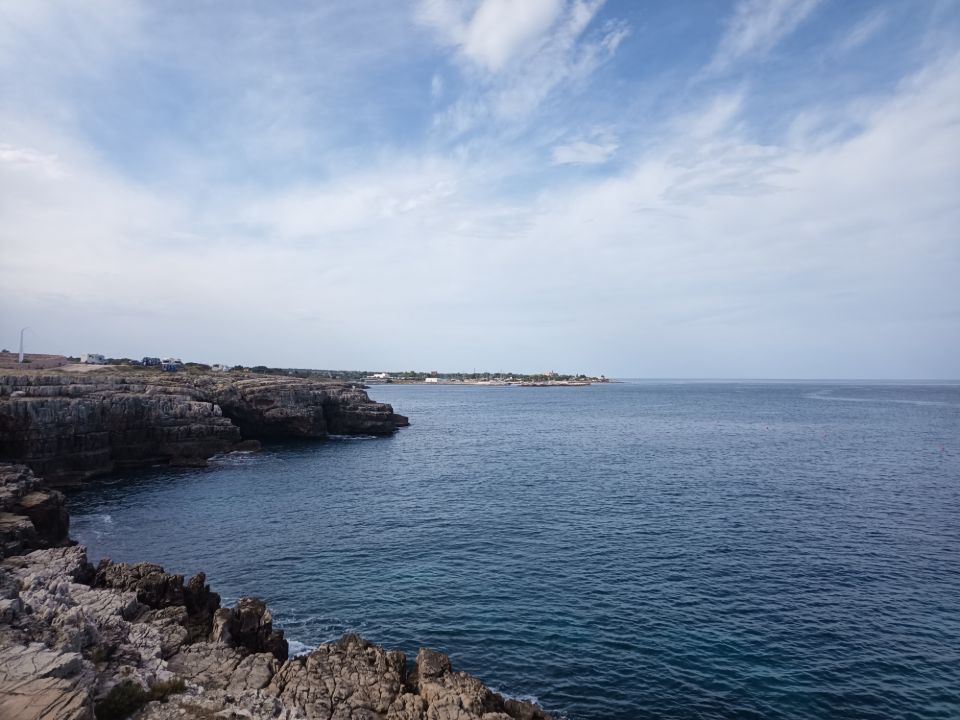
The bay at San Vito, glass to navy 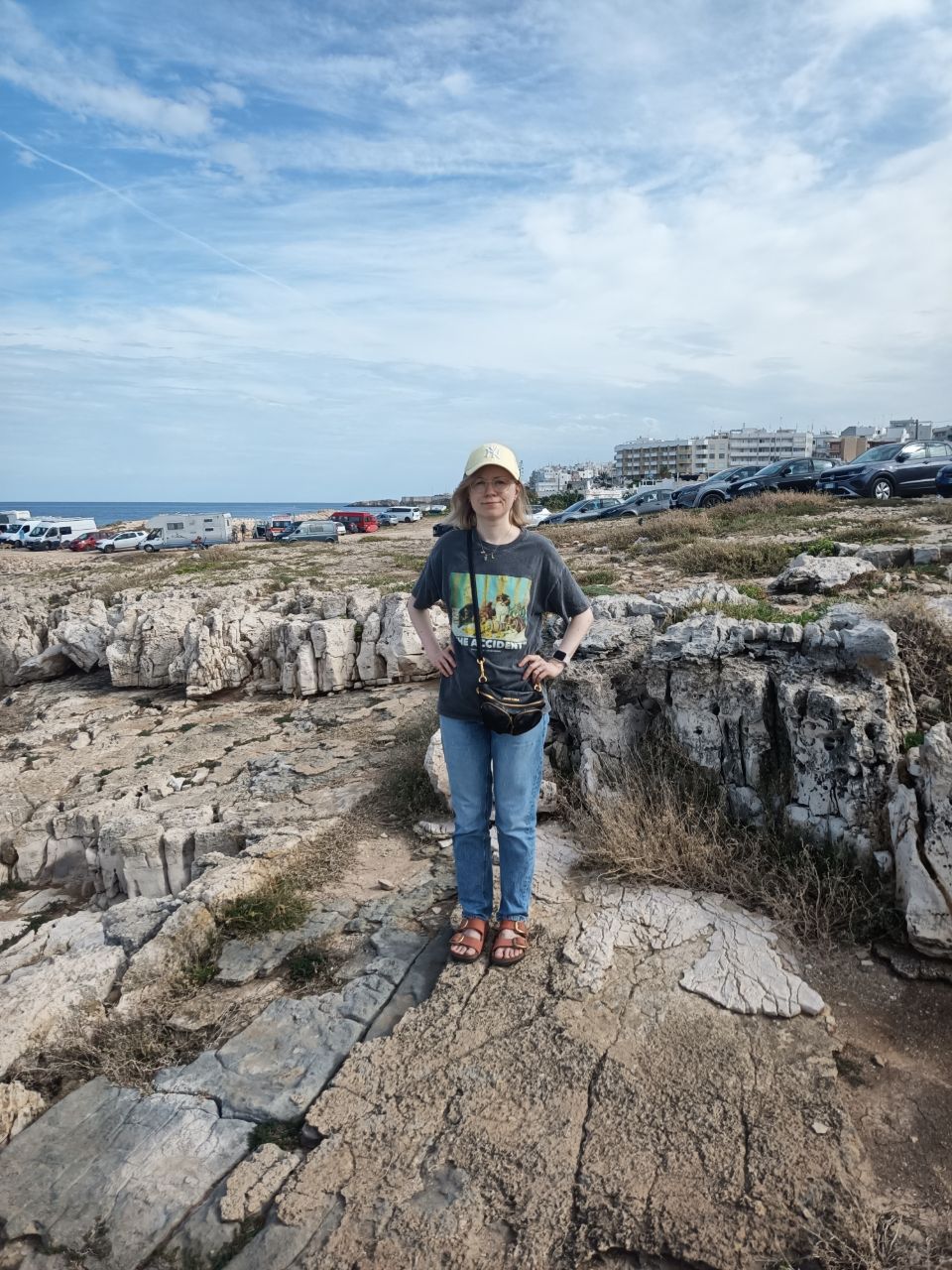
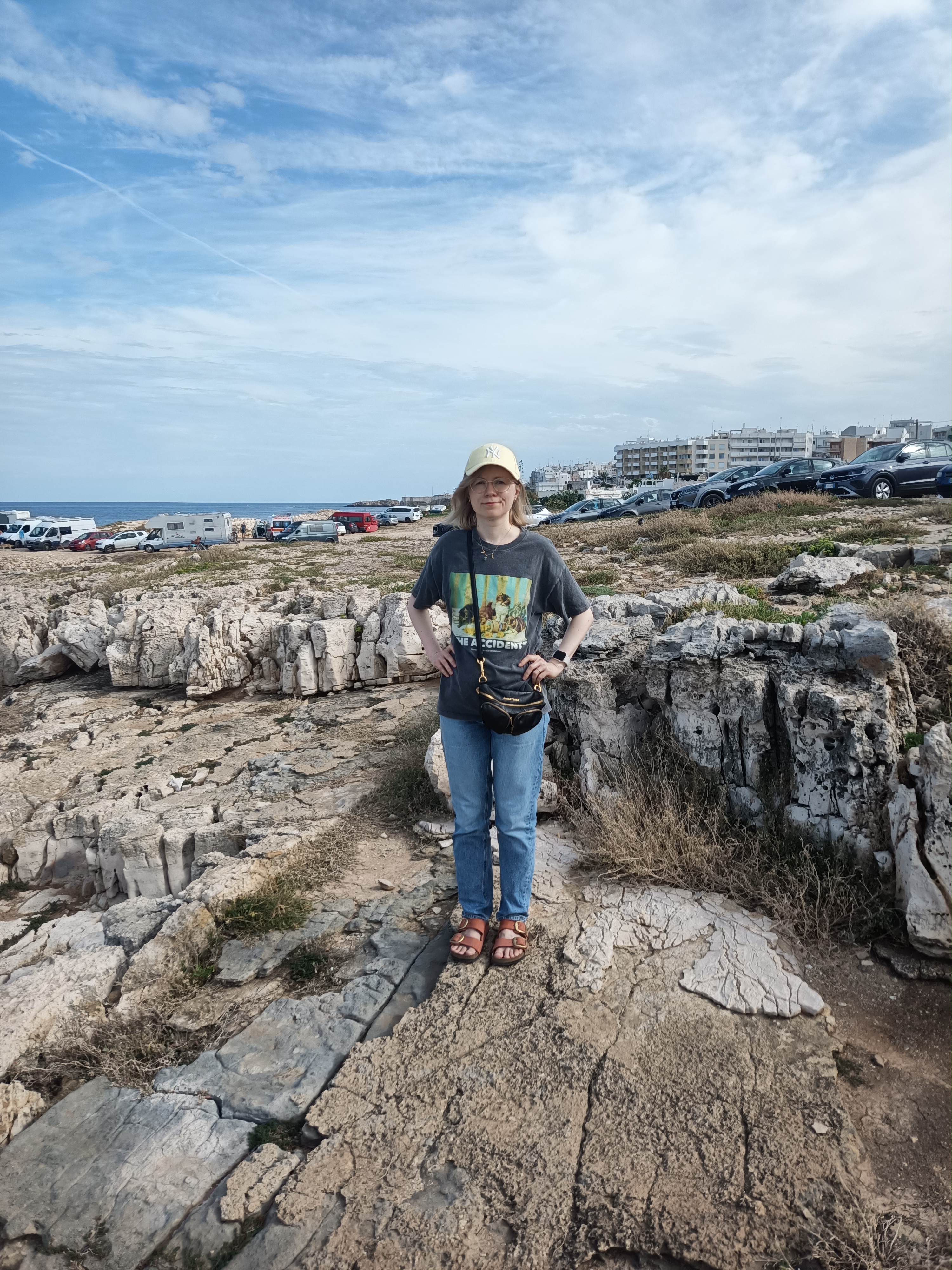
Anna, on the path with a bag 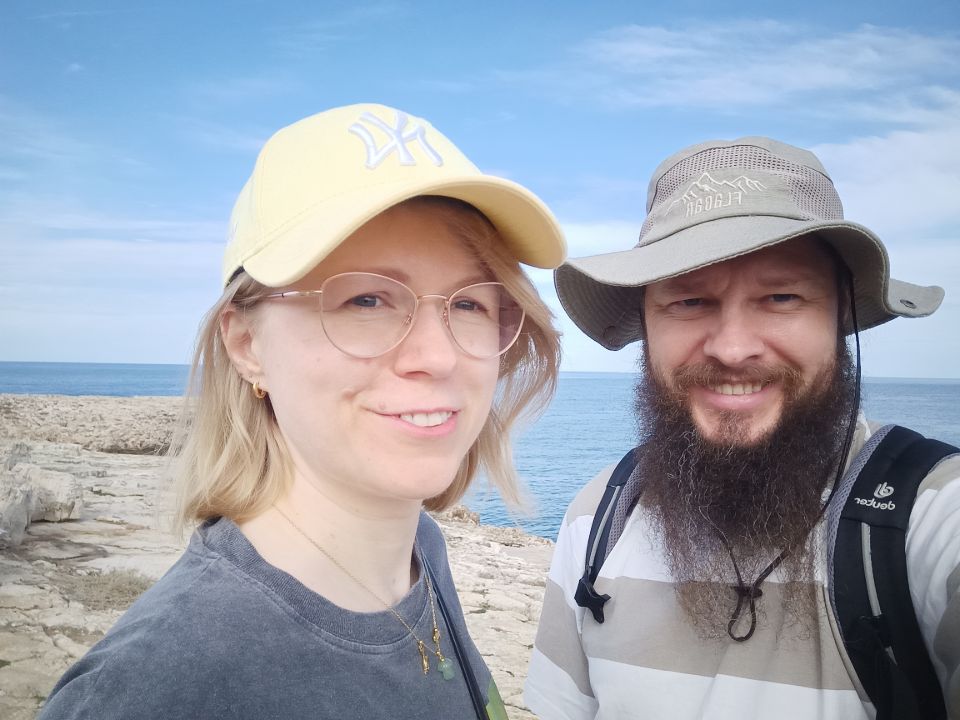
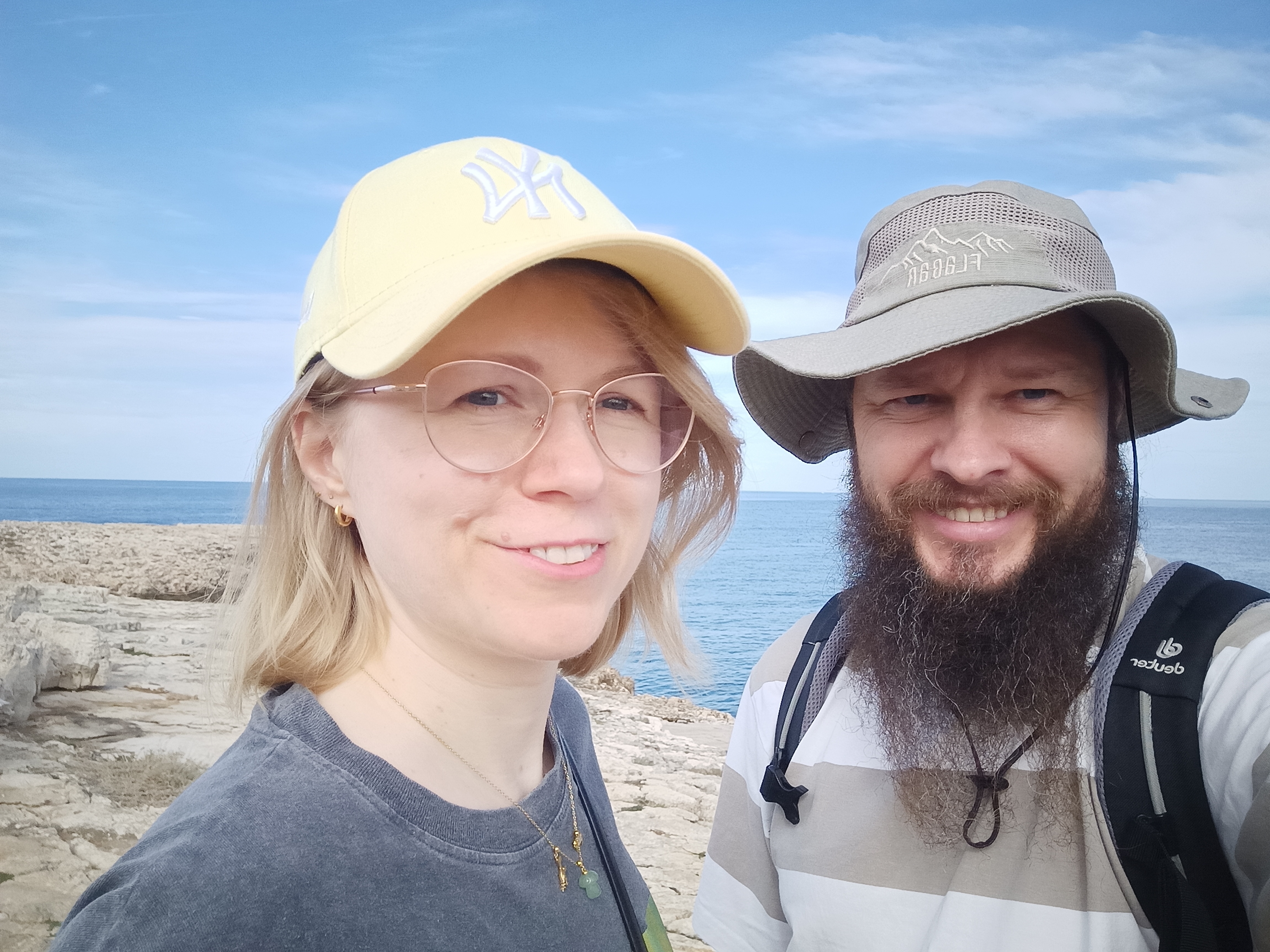
Both of us, on the rocks
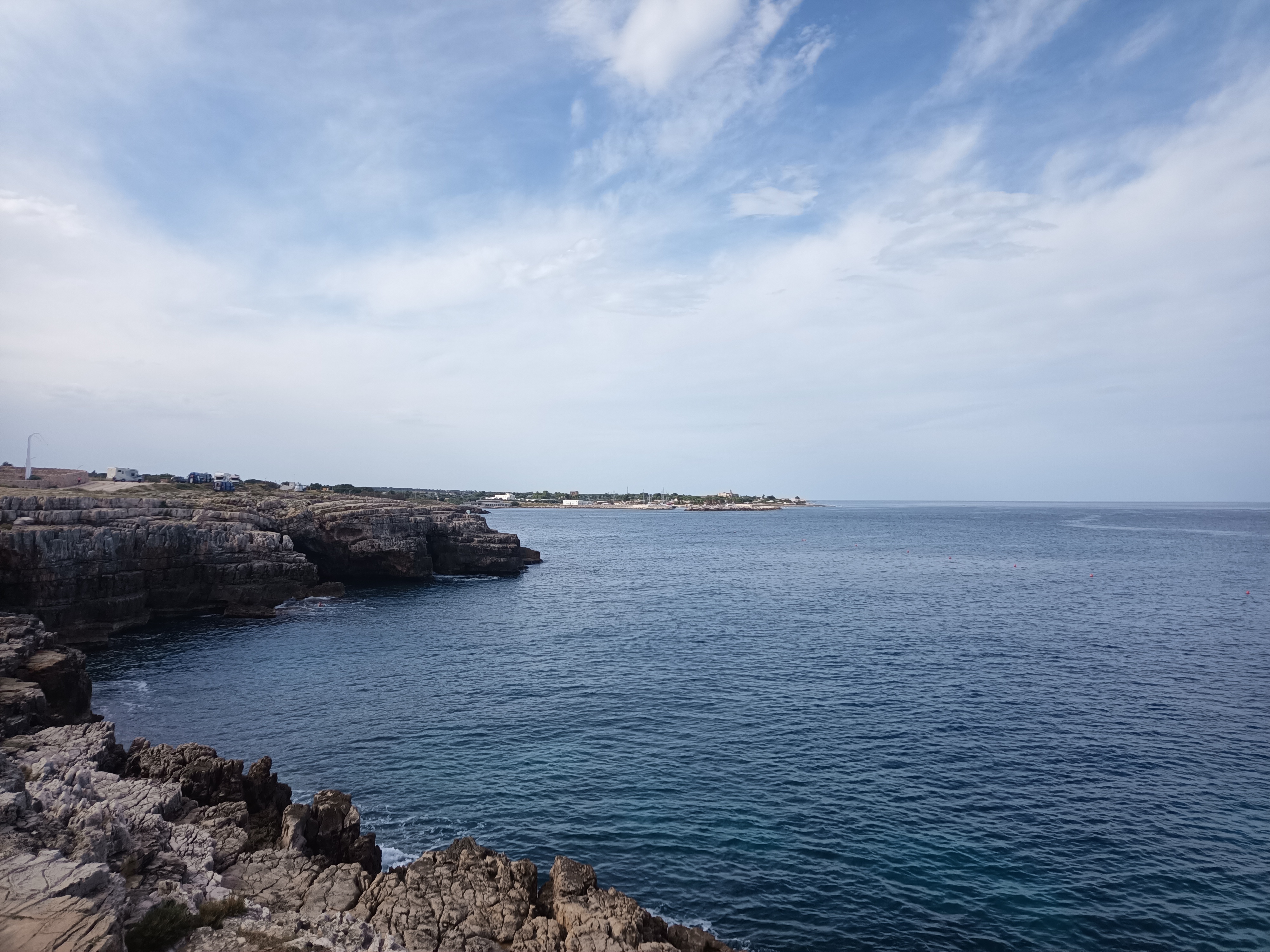
One boat, off the grottoes — twenty-one seconds.
Dusk on the Lungomare
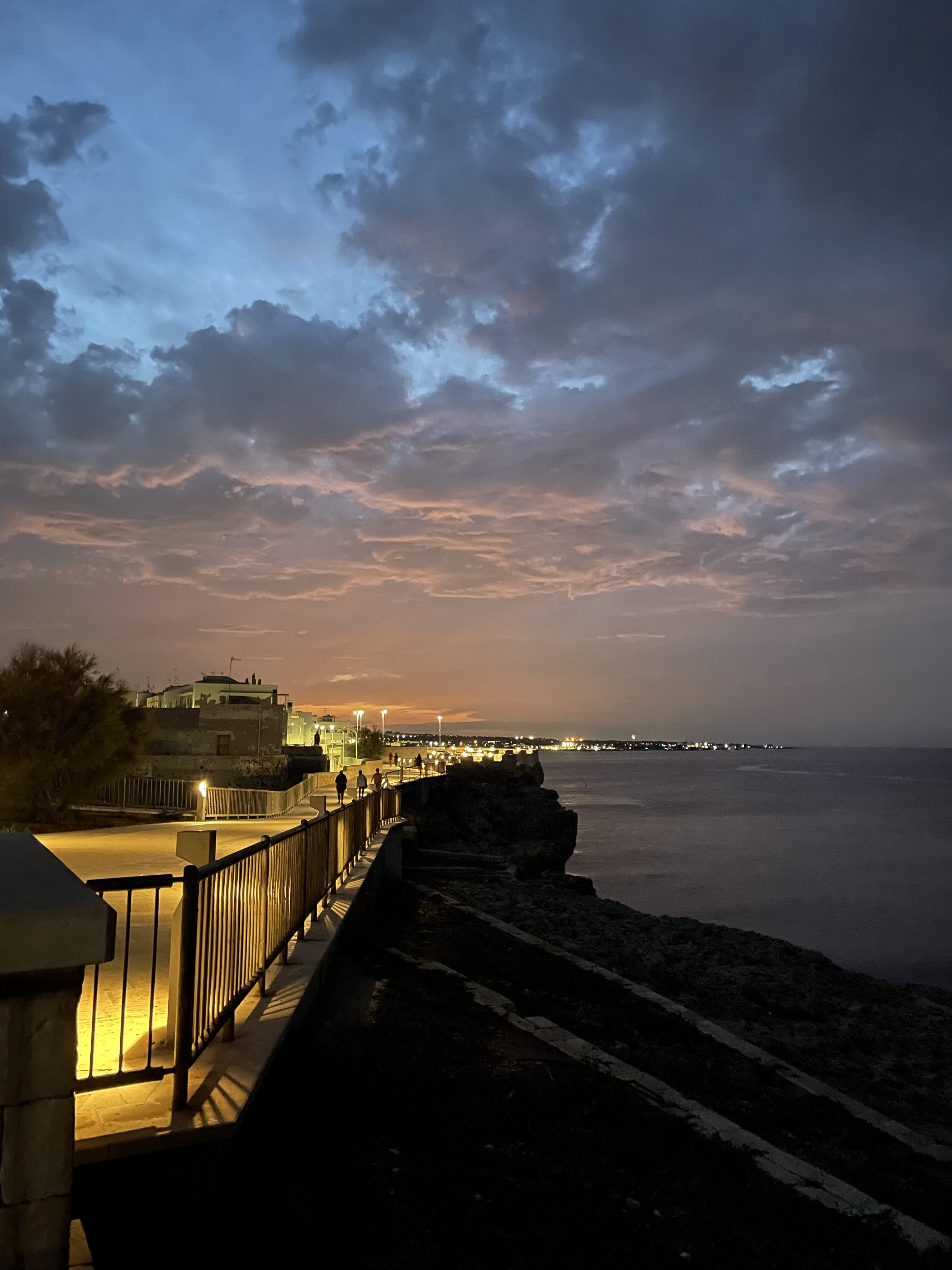
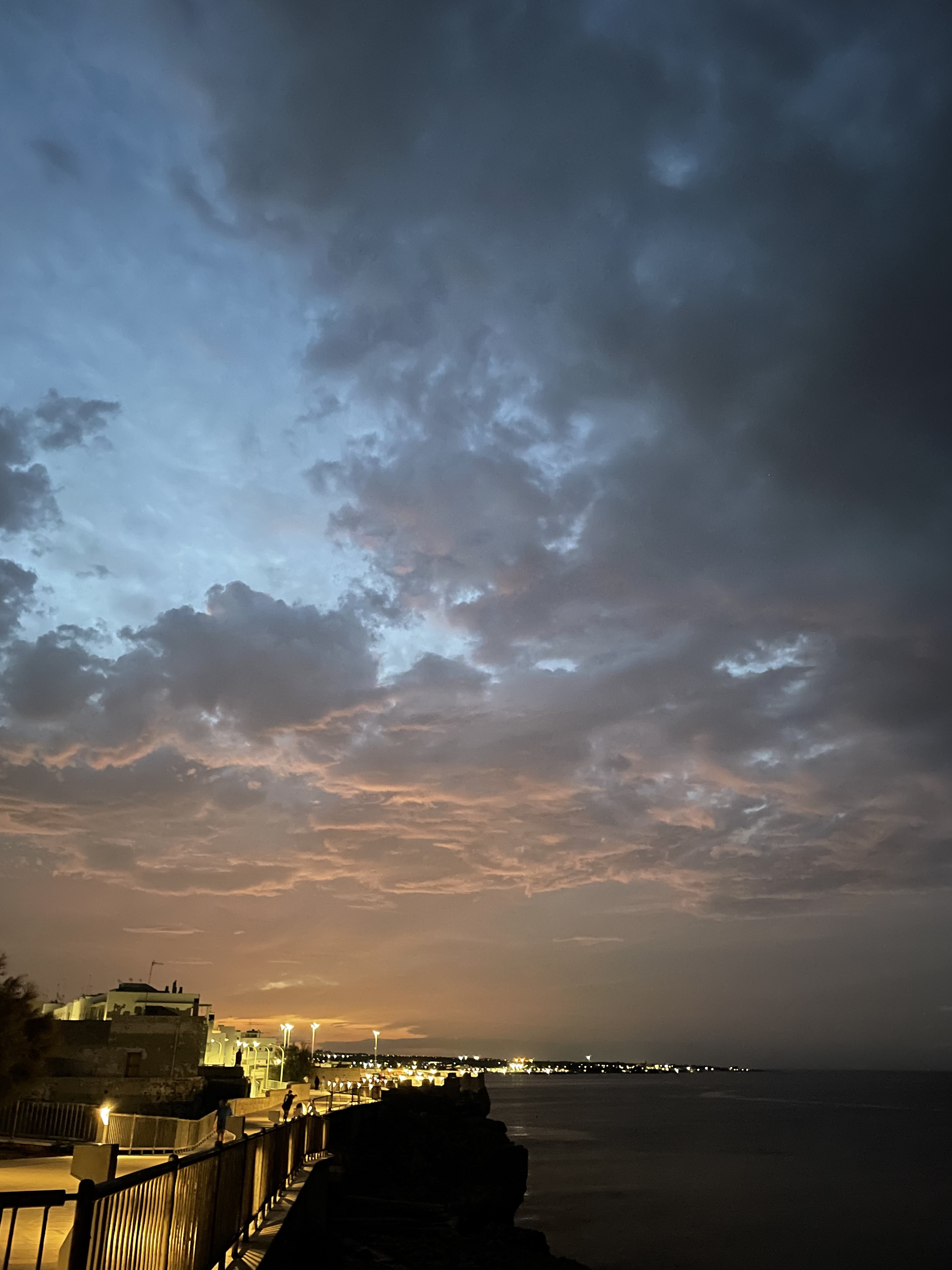
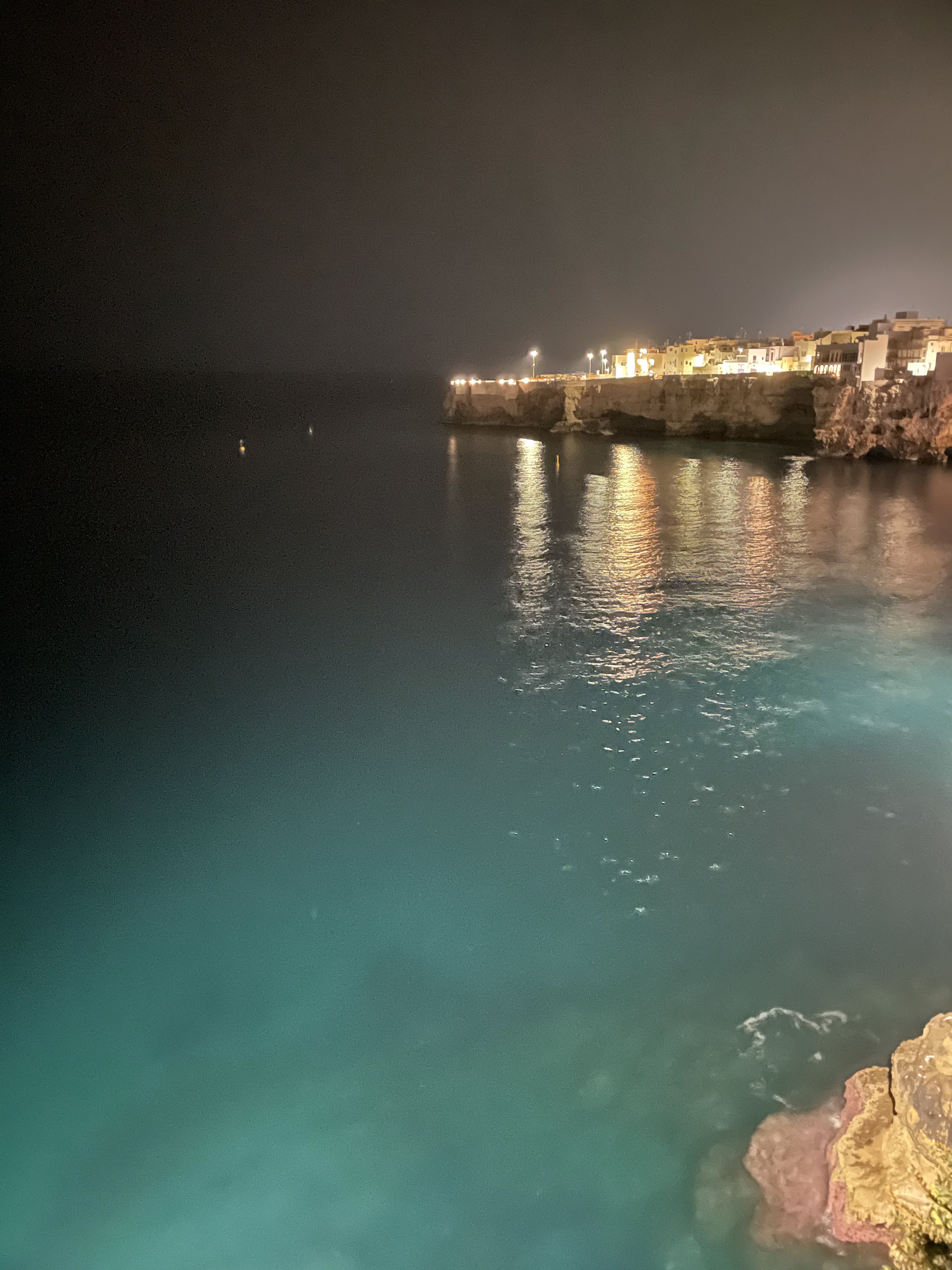
The evening walk belongs to the seafront, and Polignano’s seafront is named for Modugno: warm paving stones going gold, the promenade switched on, and the old town across the water doing its cliff-edge lighting. Then inland, where the alleys had changed shifts — ivy lanes and fairy lights, hanging wicker, everything softly out of a magazine.
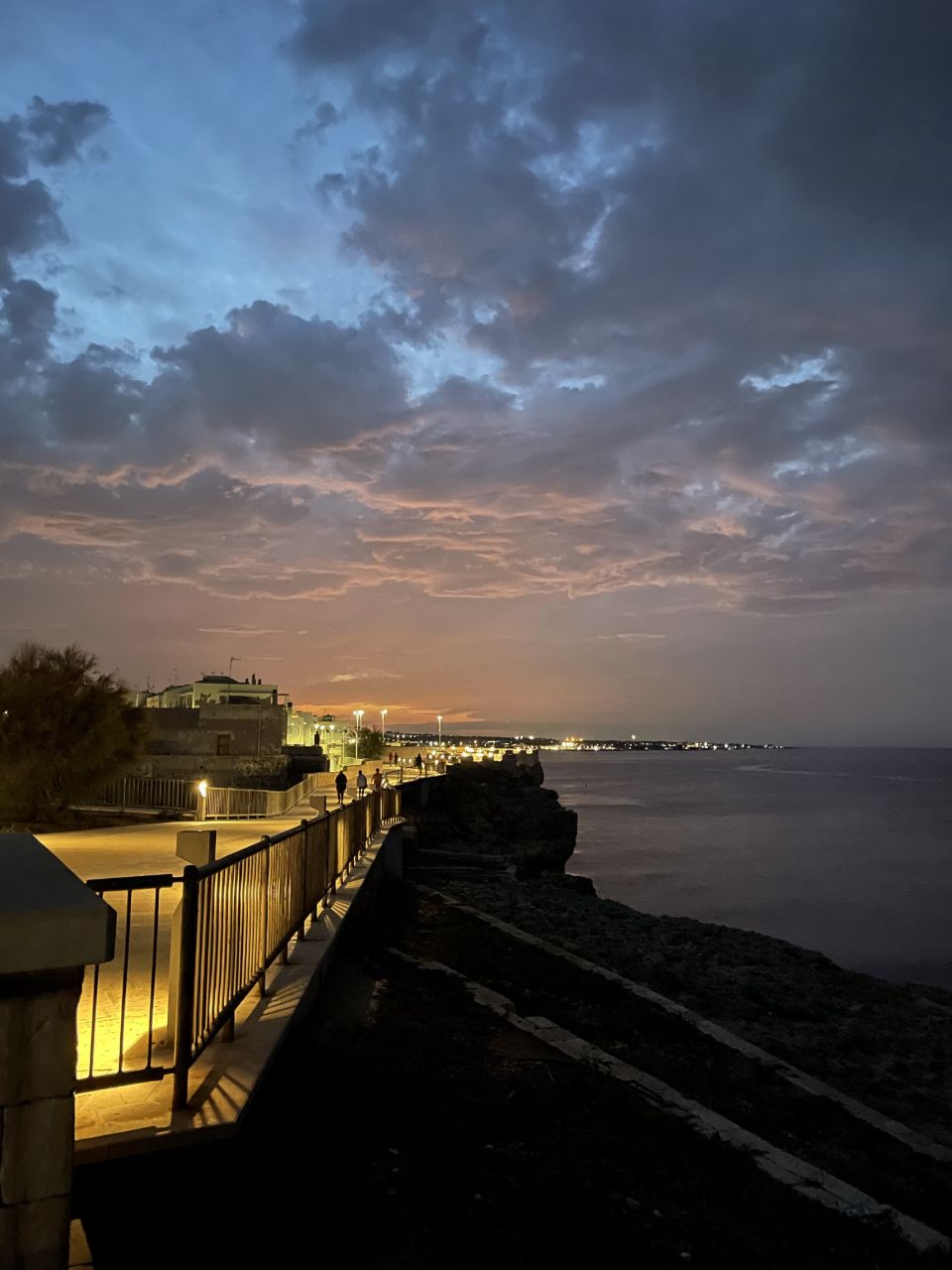
The promenade, warm-lit 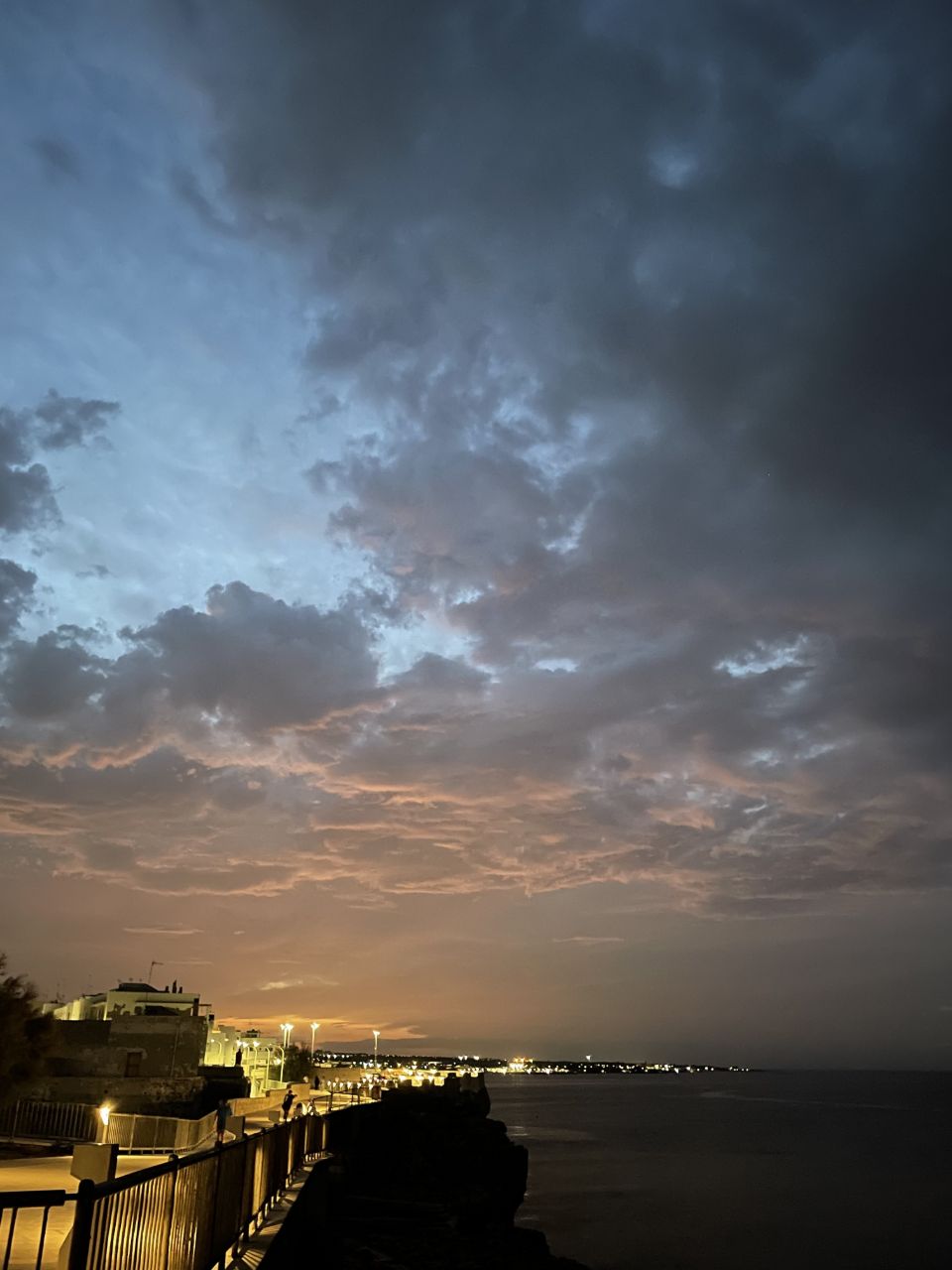
The dusk, tilted up 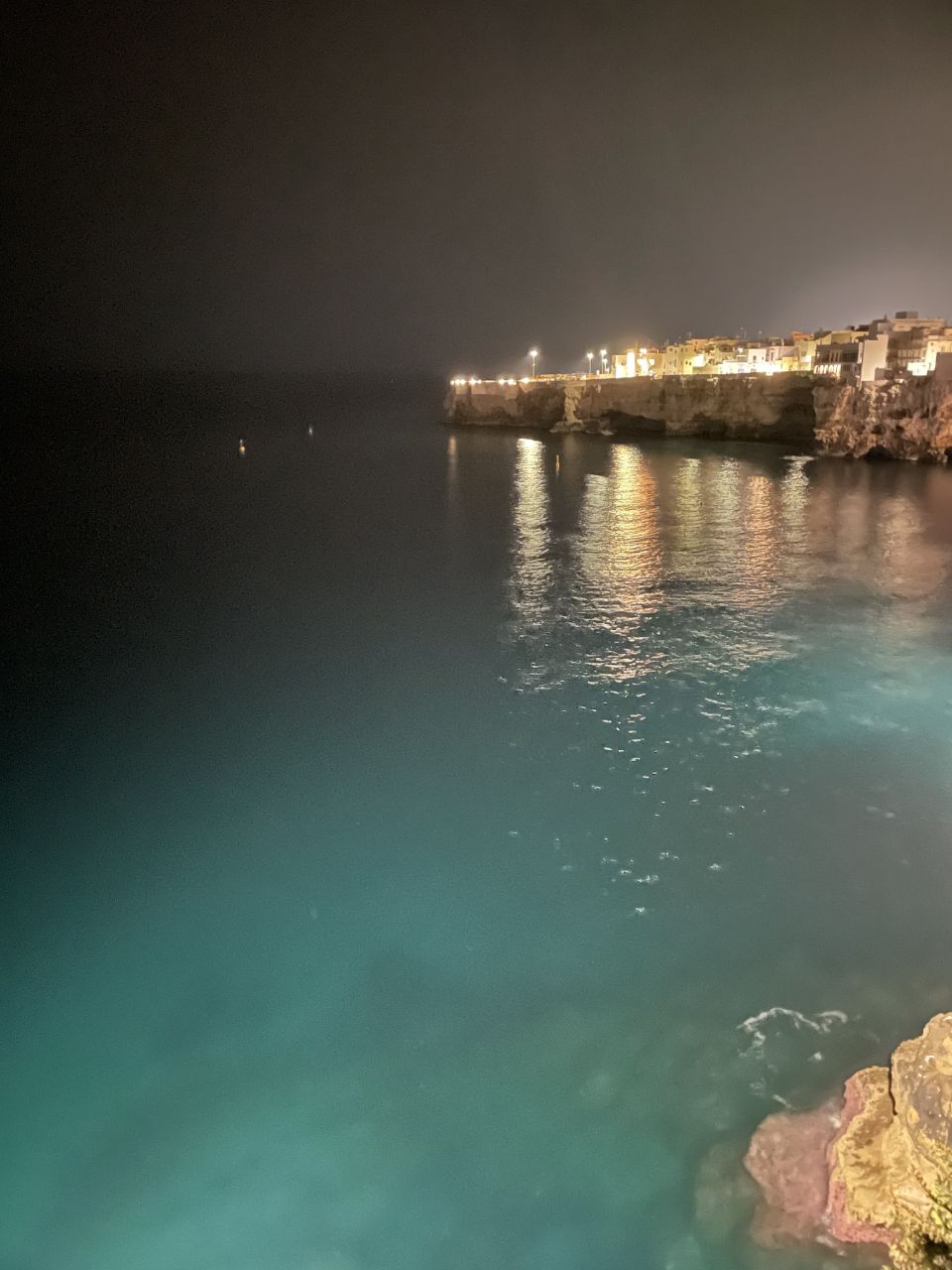
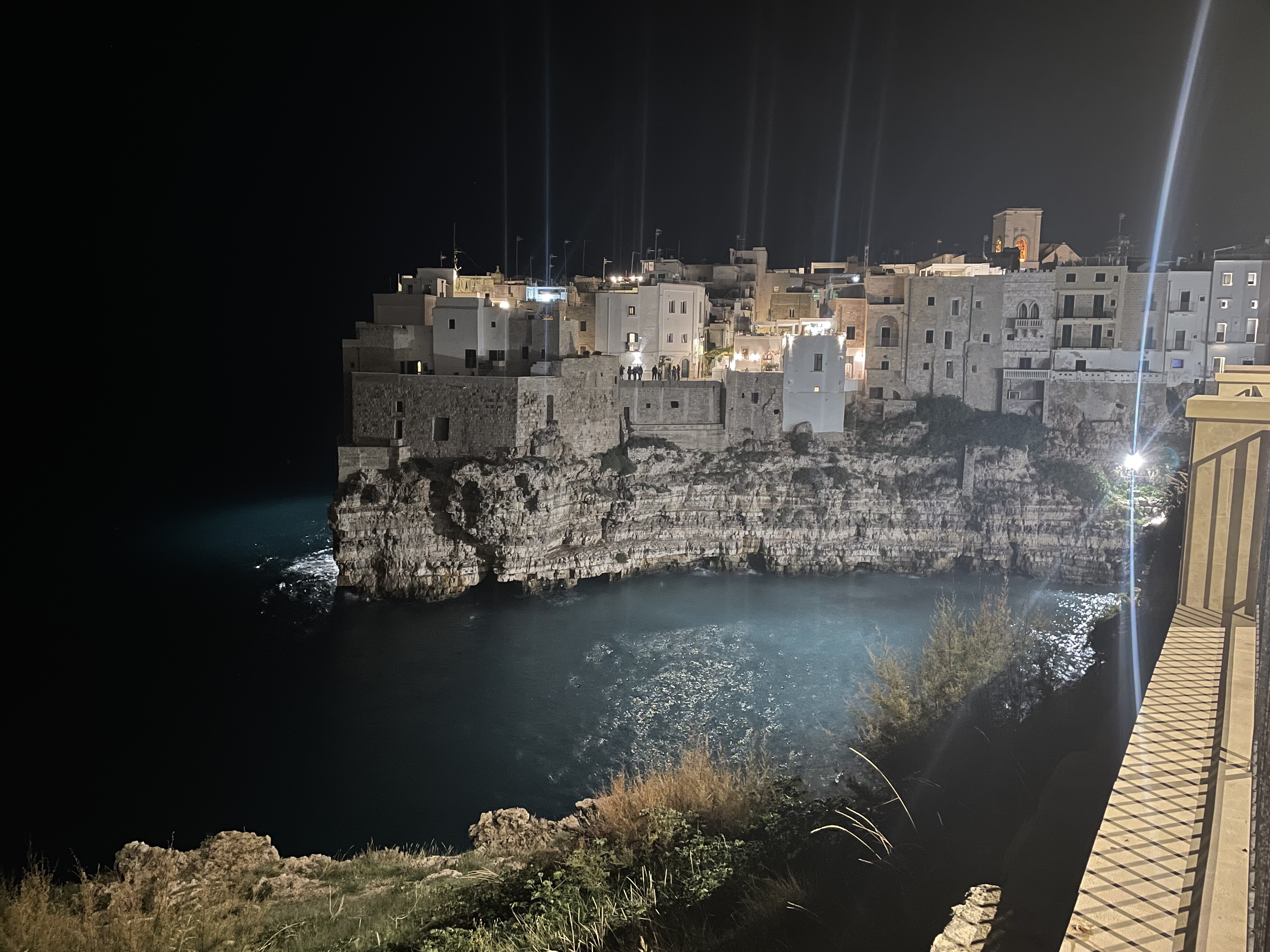
The old town, lit on its cliff edge 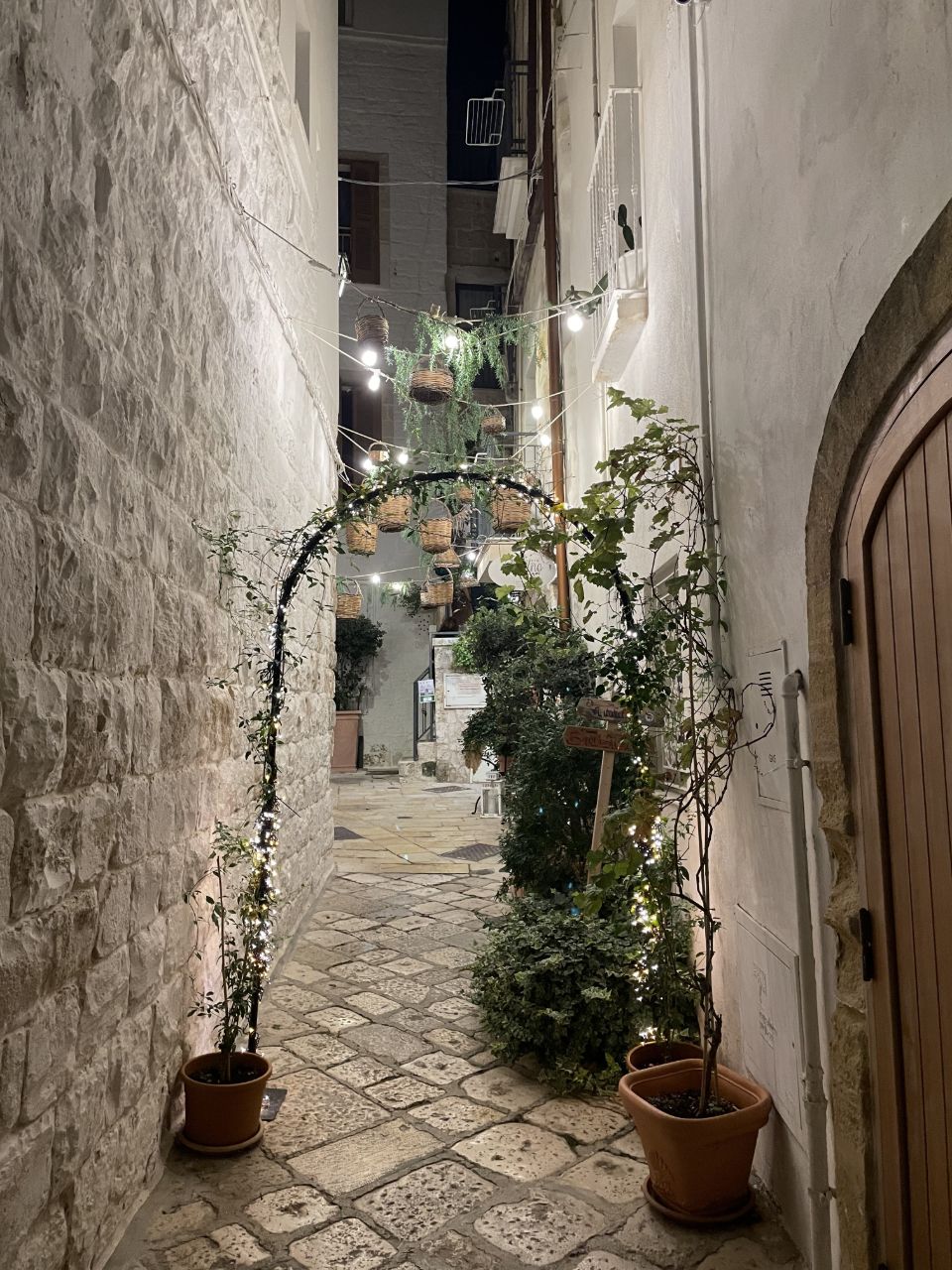
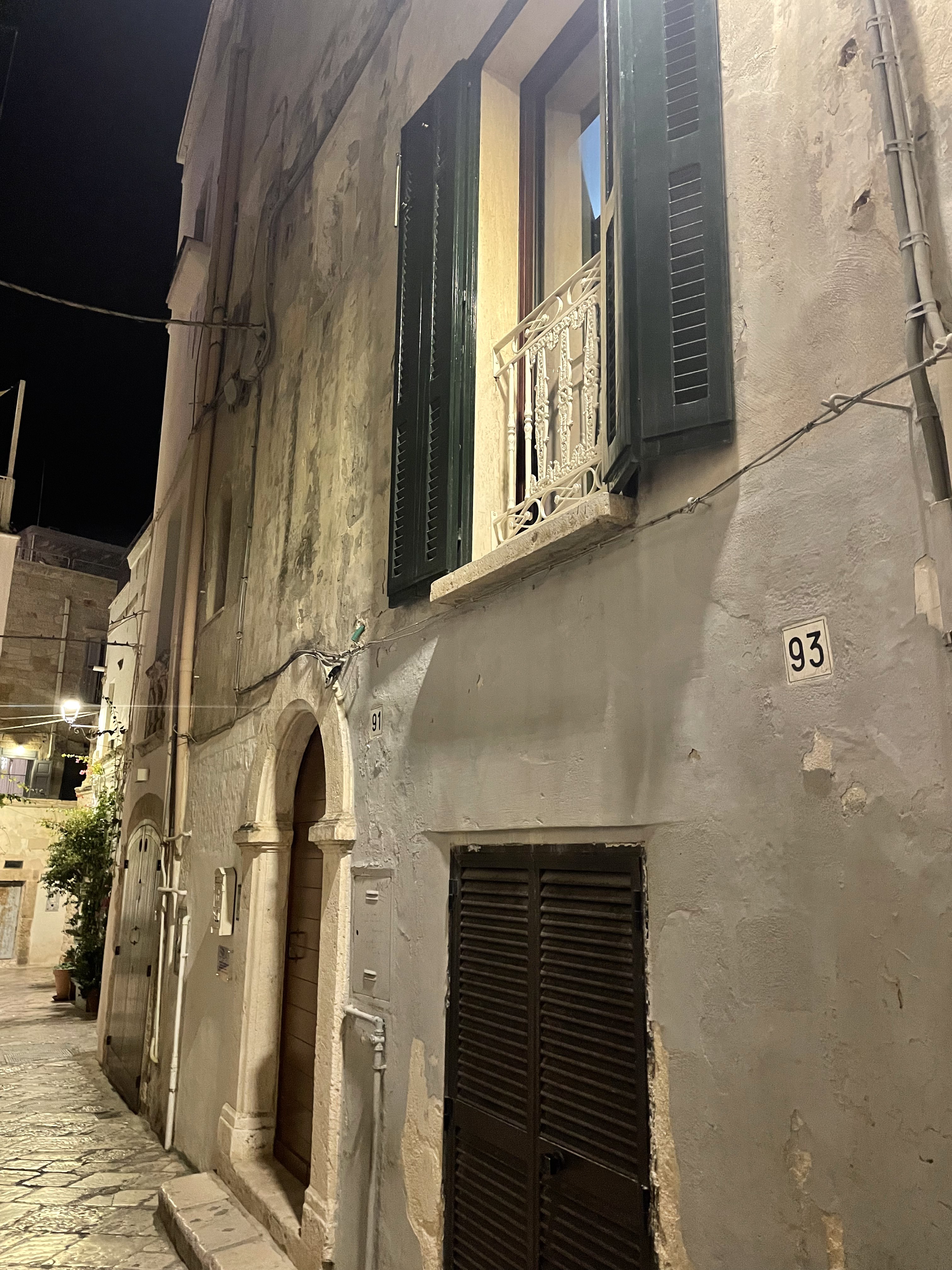
The alley on the night shift 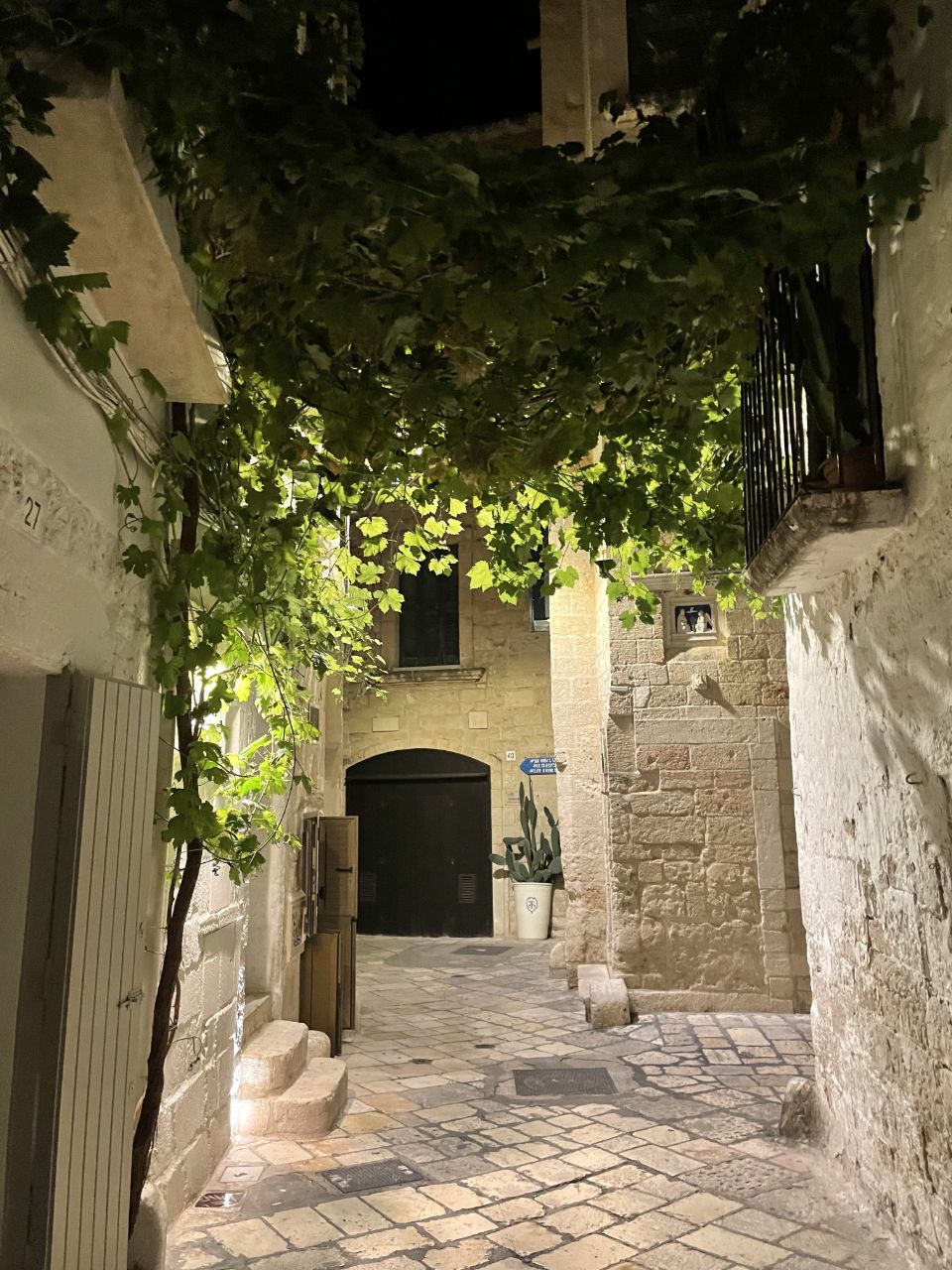
The ivy lane, close up
Day three: the coast path north
The 11th went to the north coast, the walk the town was built to overlook: an hour or two of cliff path past reef rocks, grottoes, a sea pool, and small harbours where fishing boats float like toys. We came back with a memory card full of the same colour spectrum.
The viewpoint
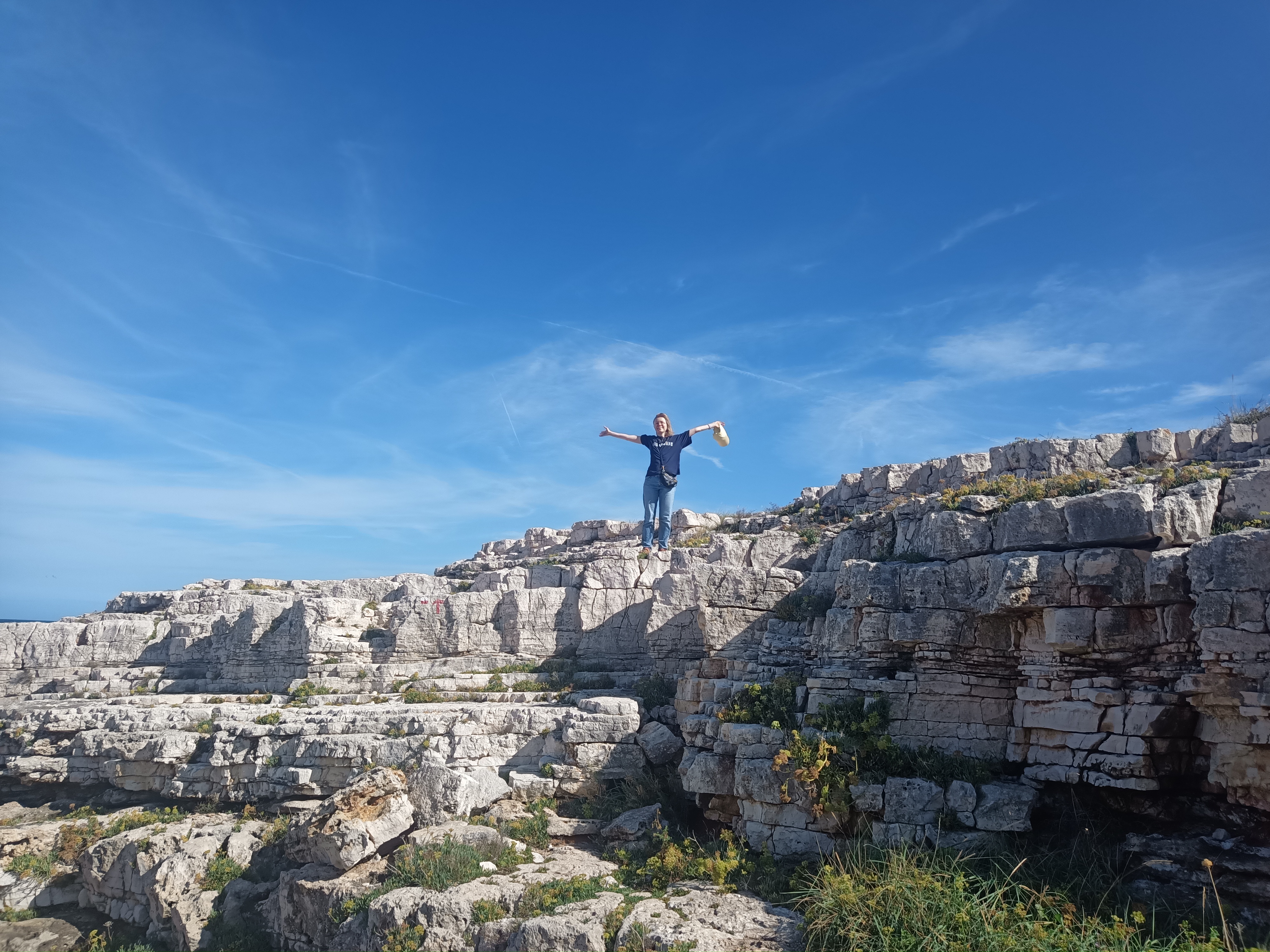
First stop, the low headland where the islets sit in the current: Anna and Oleg, the sea doing its blue work, and Anna on the edge of the white limestone, arms out, taking her turn as the town statue.
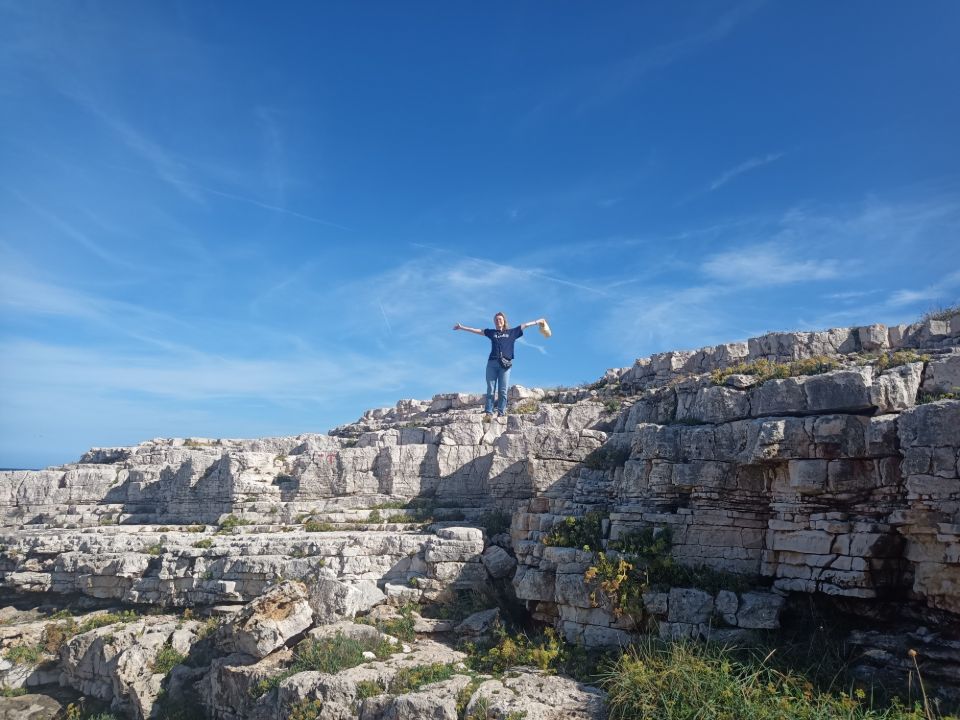
Arms out, white edition 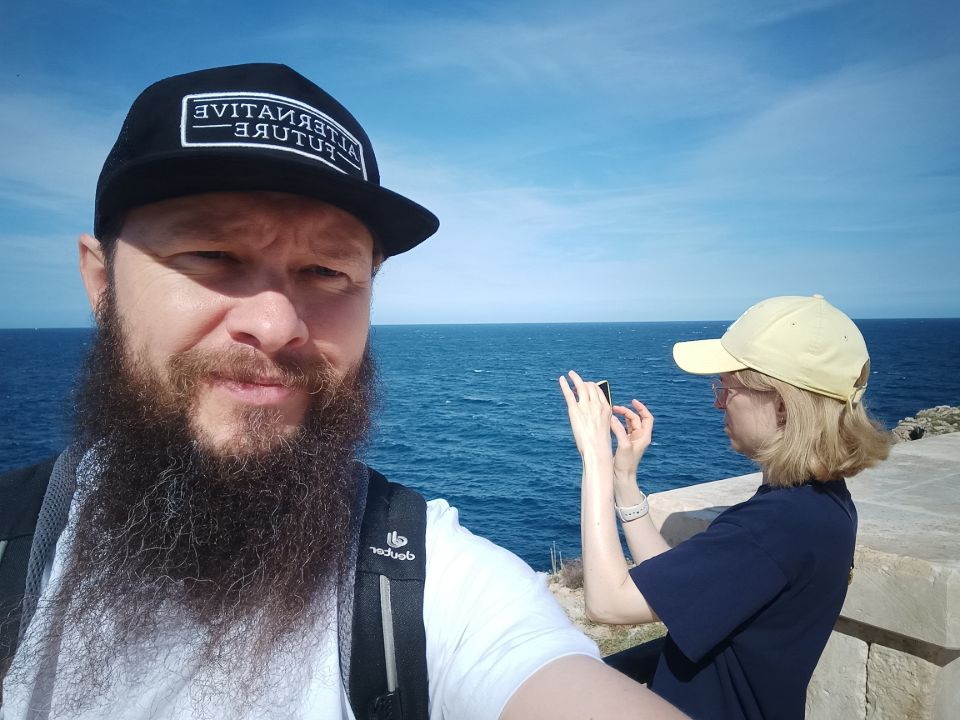
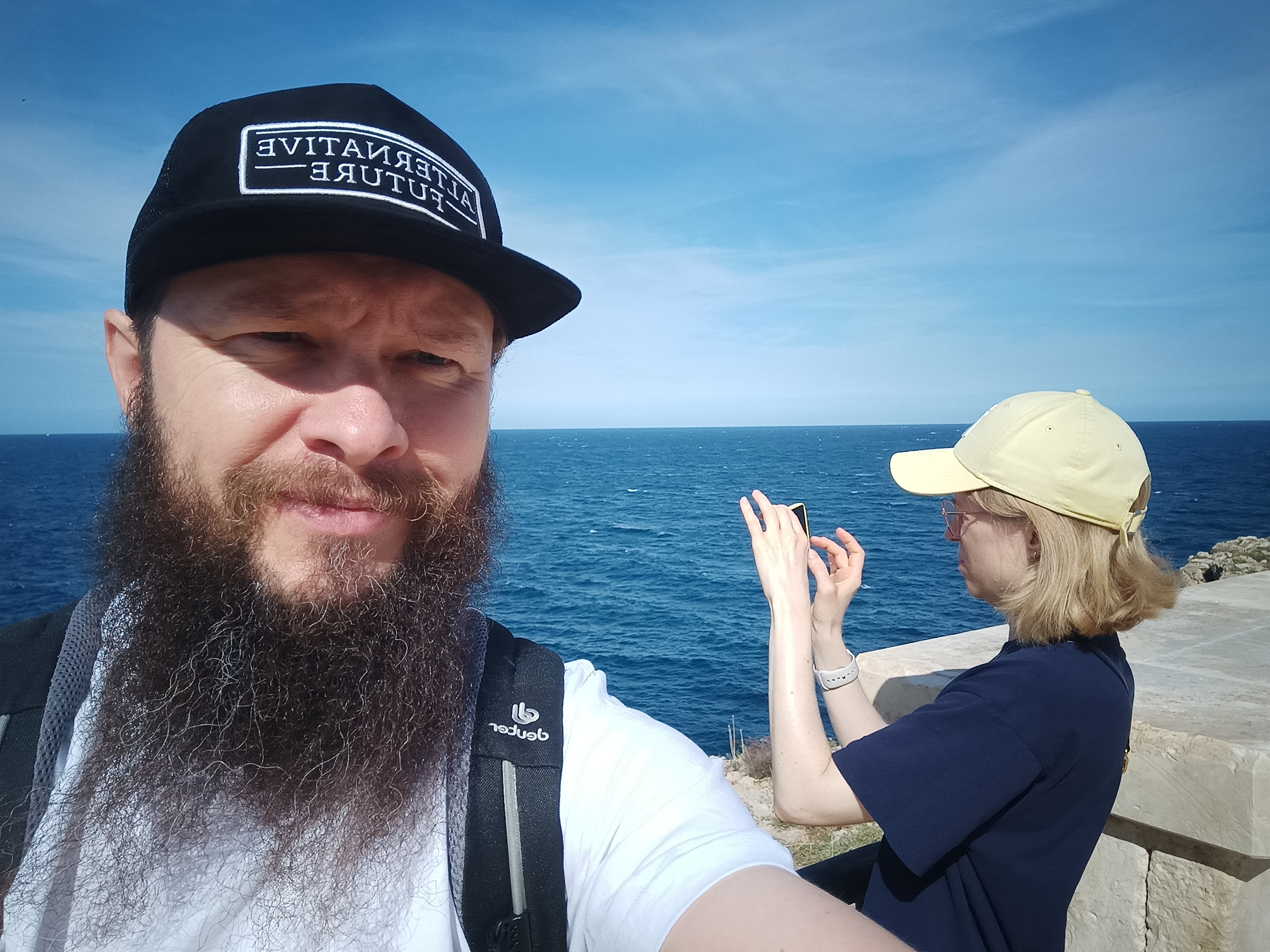
Both of us, at the seafront 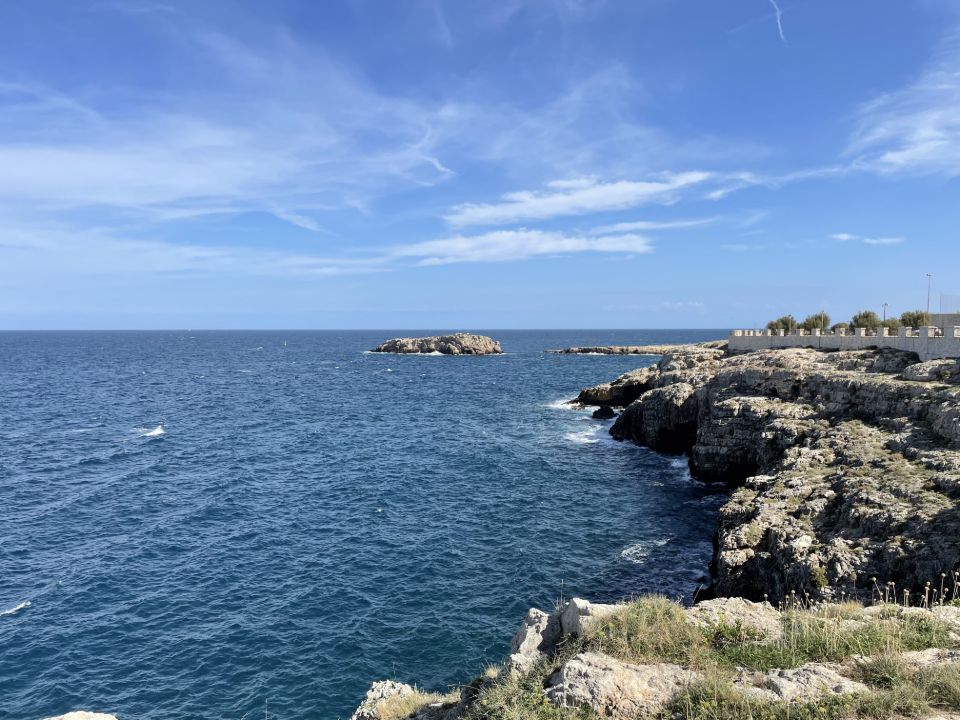
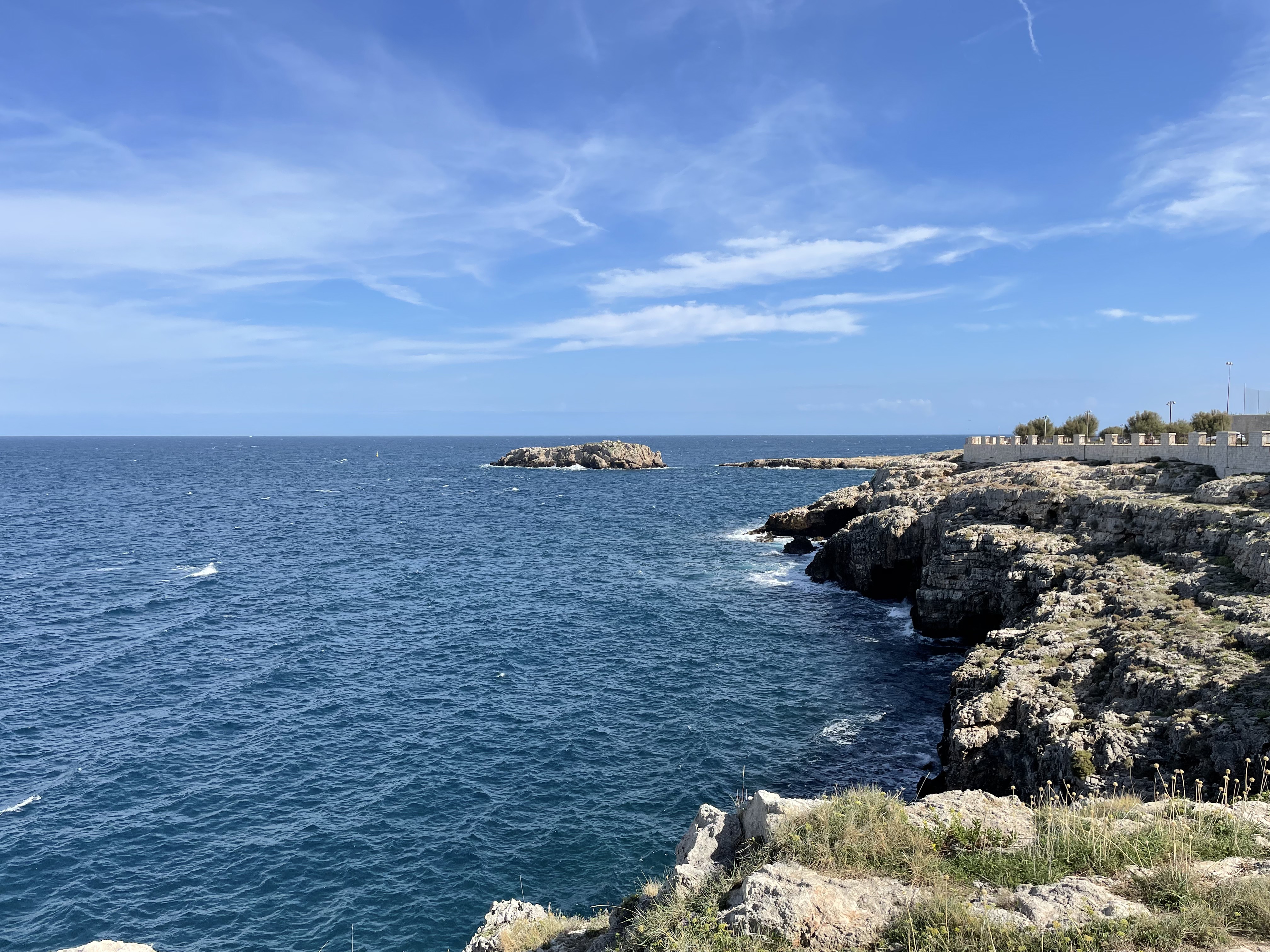
The islets, from the viewpoint
The grottos and the surf
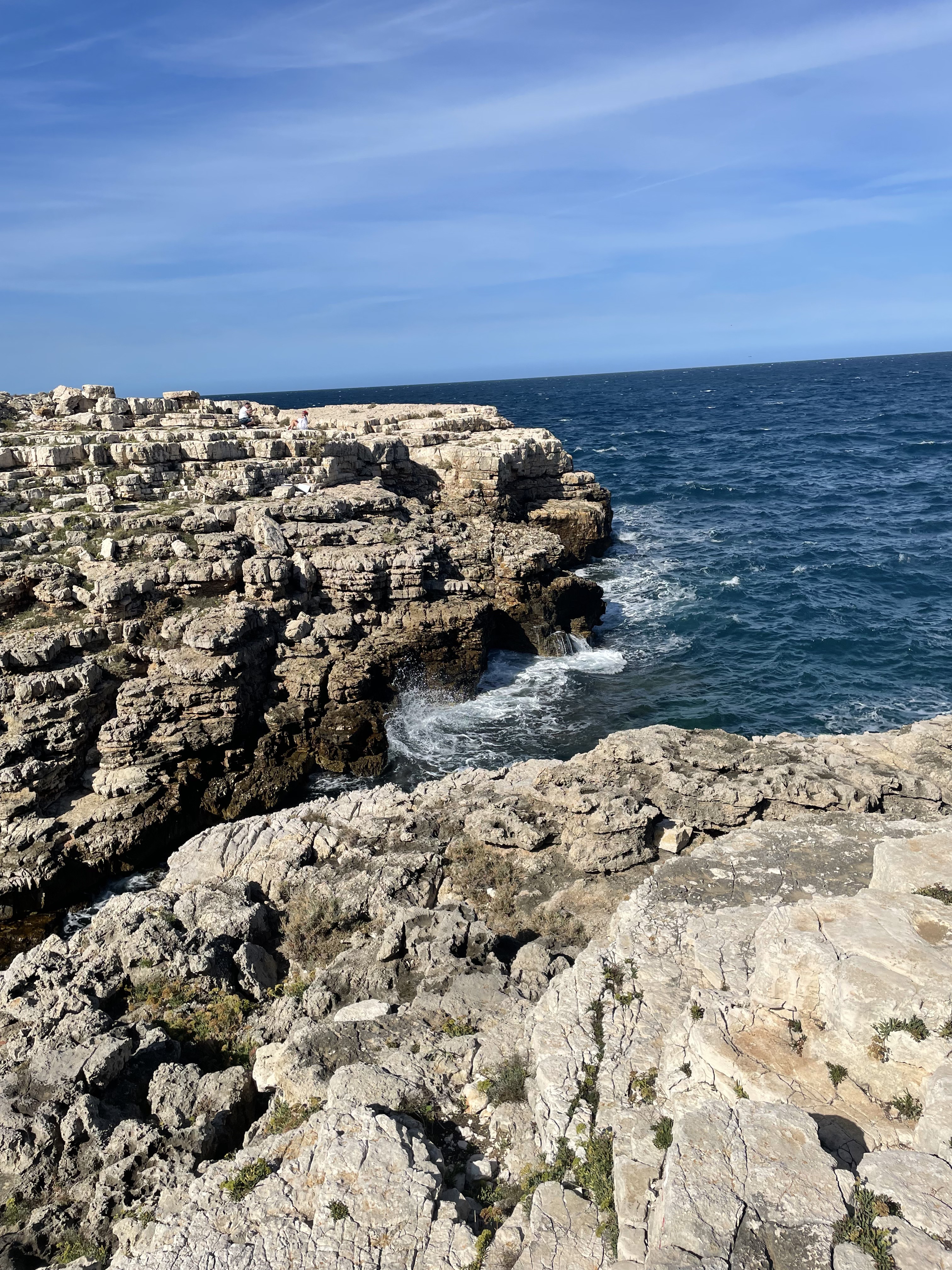
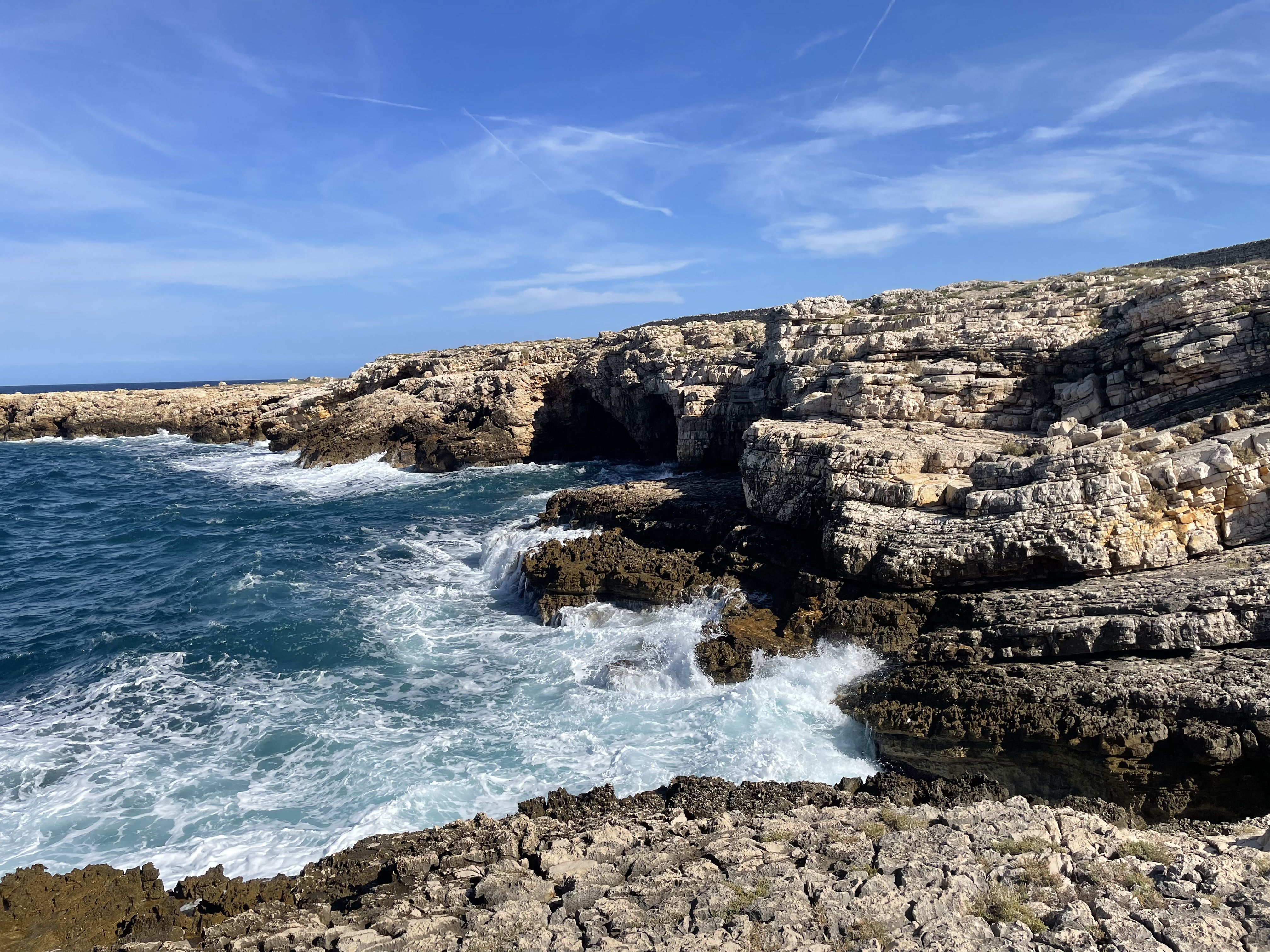
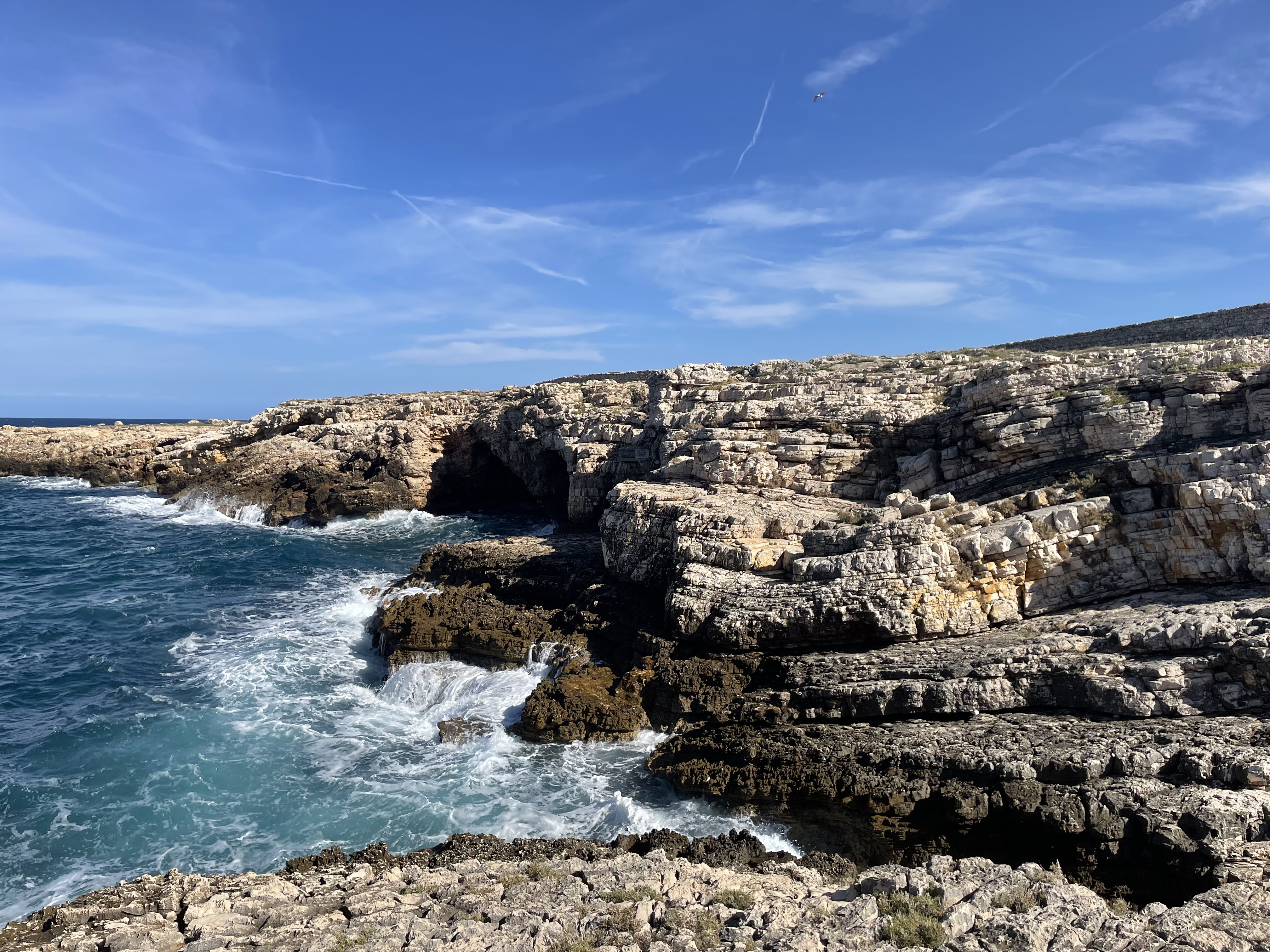
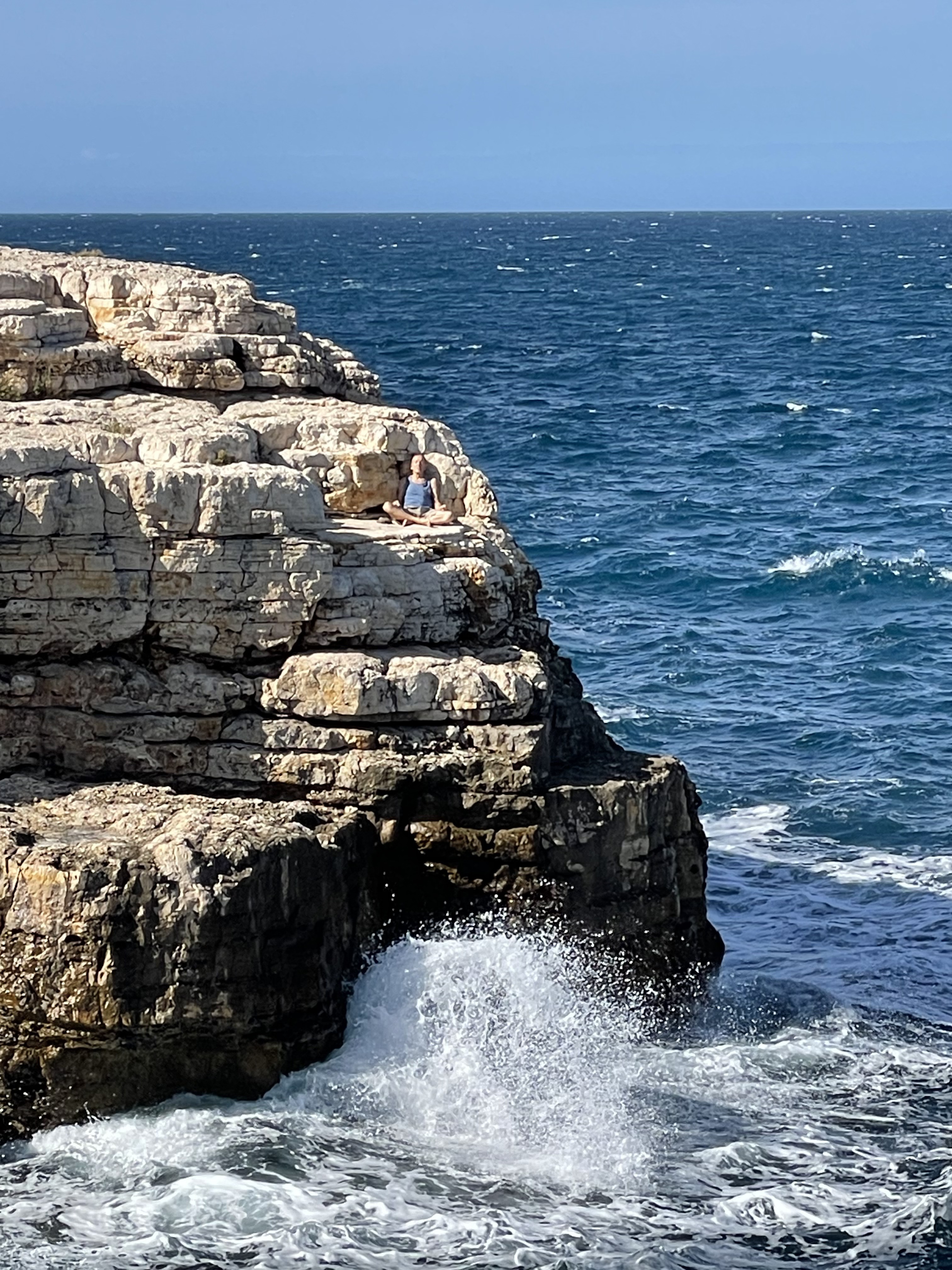
Past the viewpoint the path turns to geology: weathered white limestone, wave-carved grottos at Grotta della Colonna, an islet sitting offshore like it was placed there, and surf arriving at every crack in the rock with a white report. The Adriatic was in a working mood.
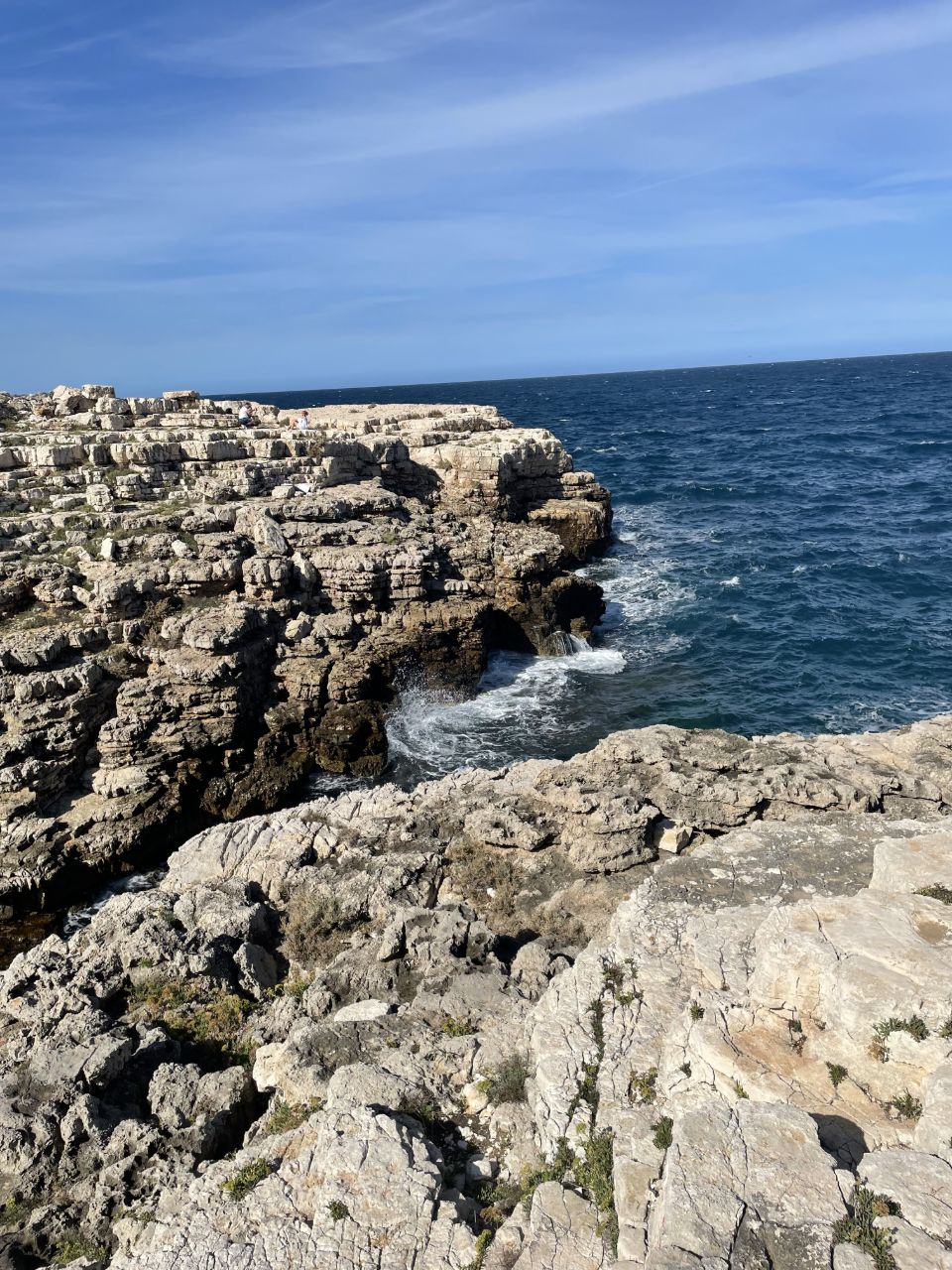
Turquoise in the cracks 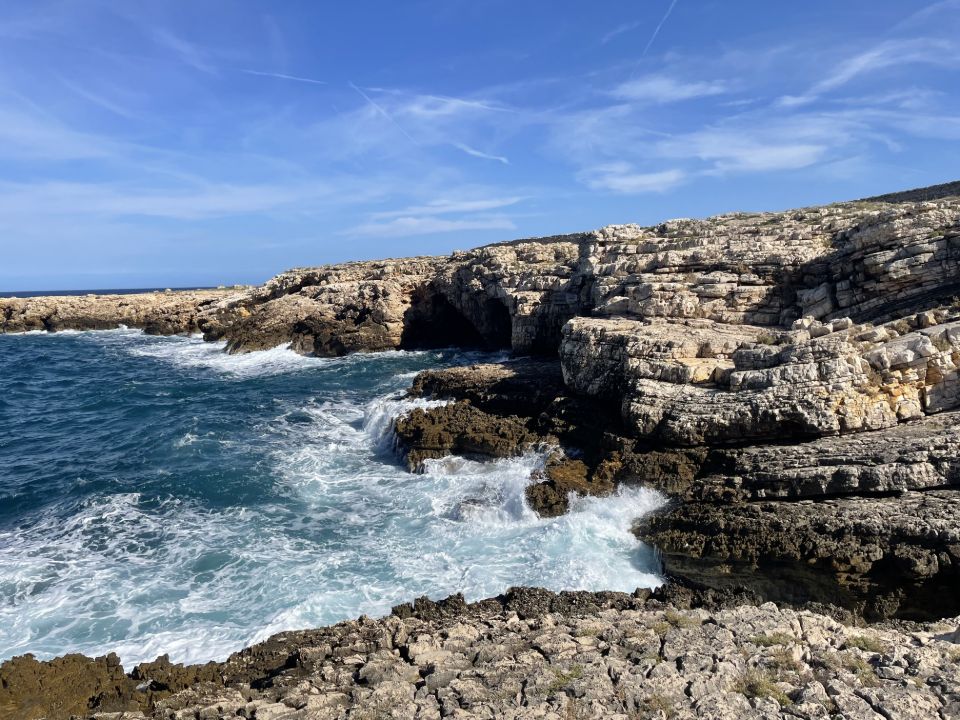
The surf, filing its report 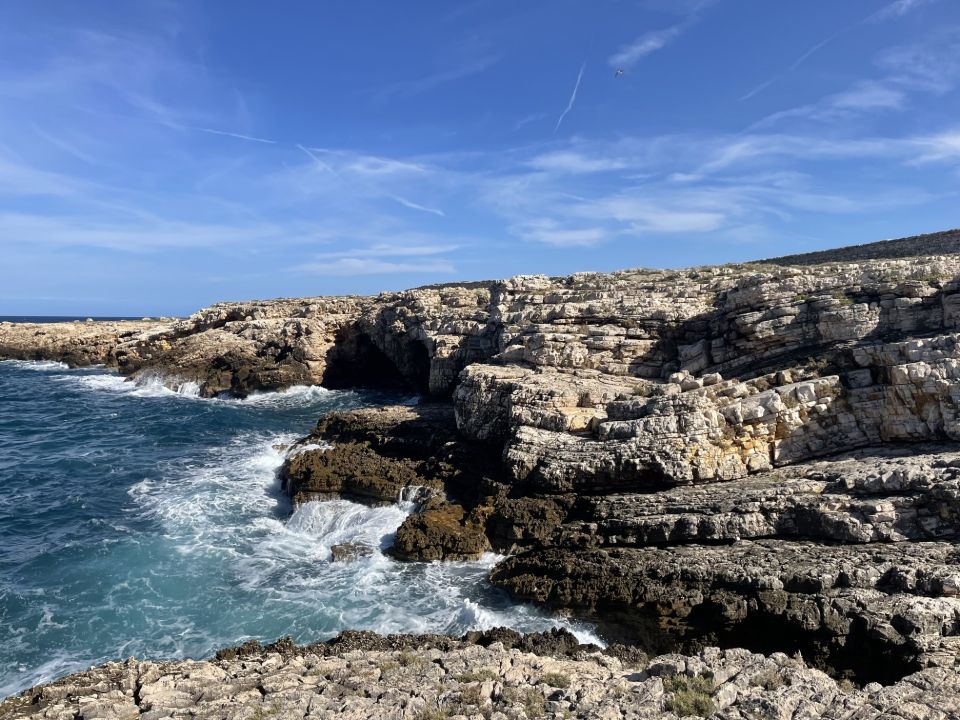
The grottos of Grotta della Colonna 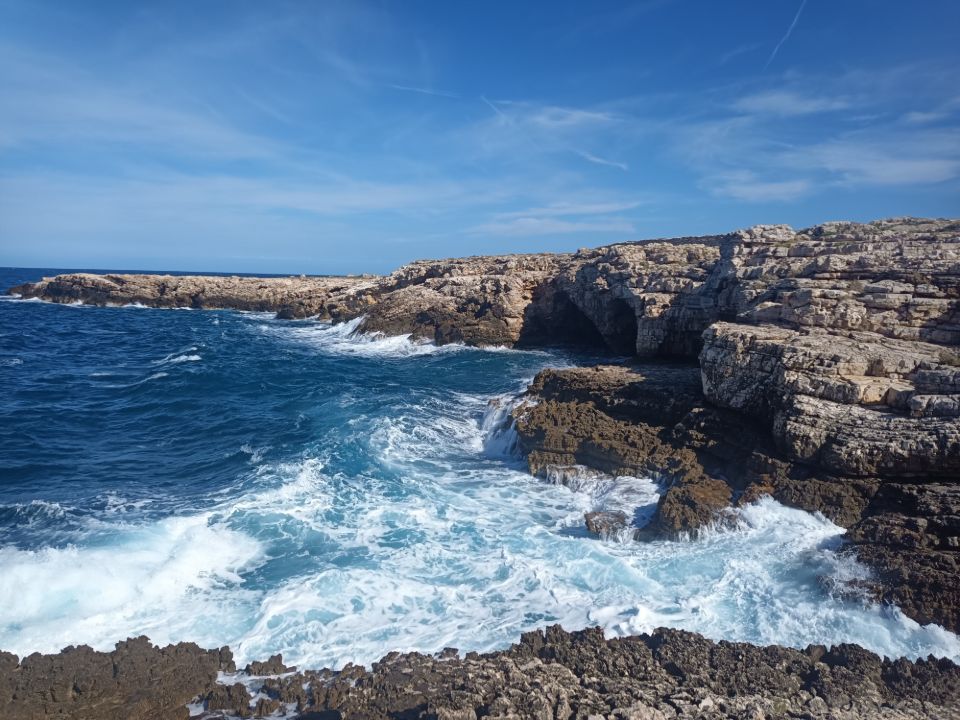
Churning white, at full volume 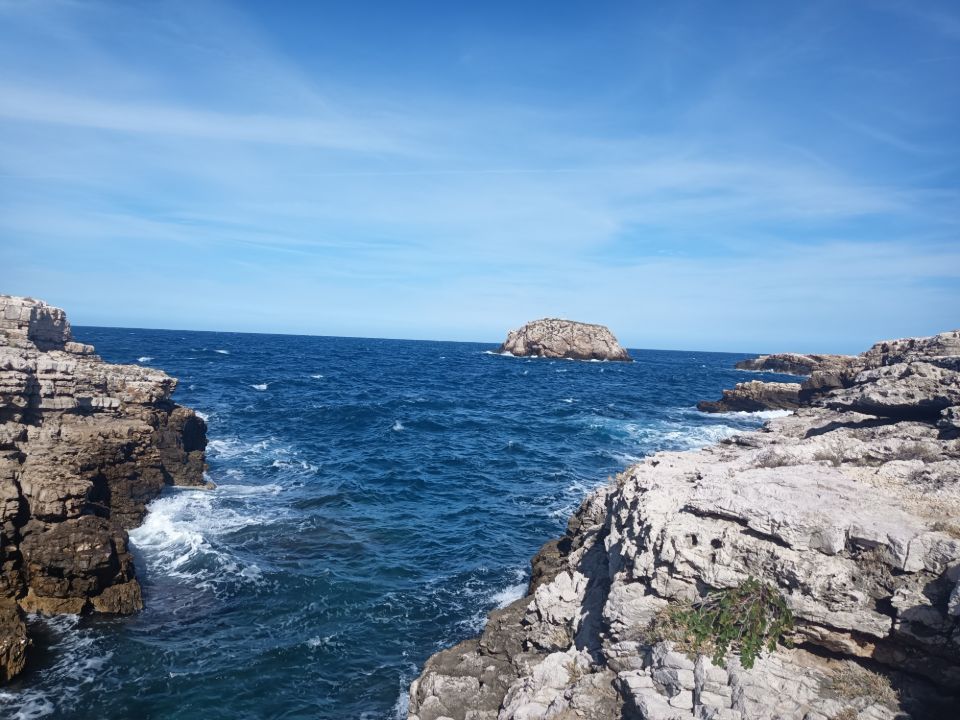
The islet, offshore
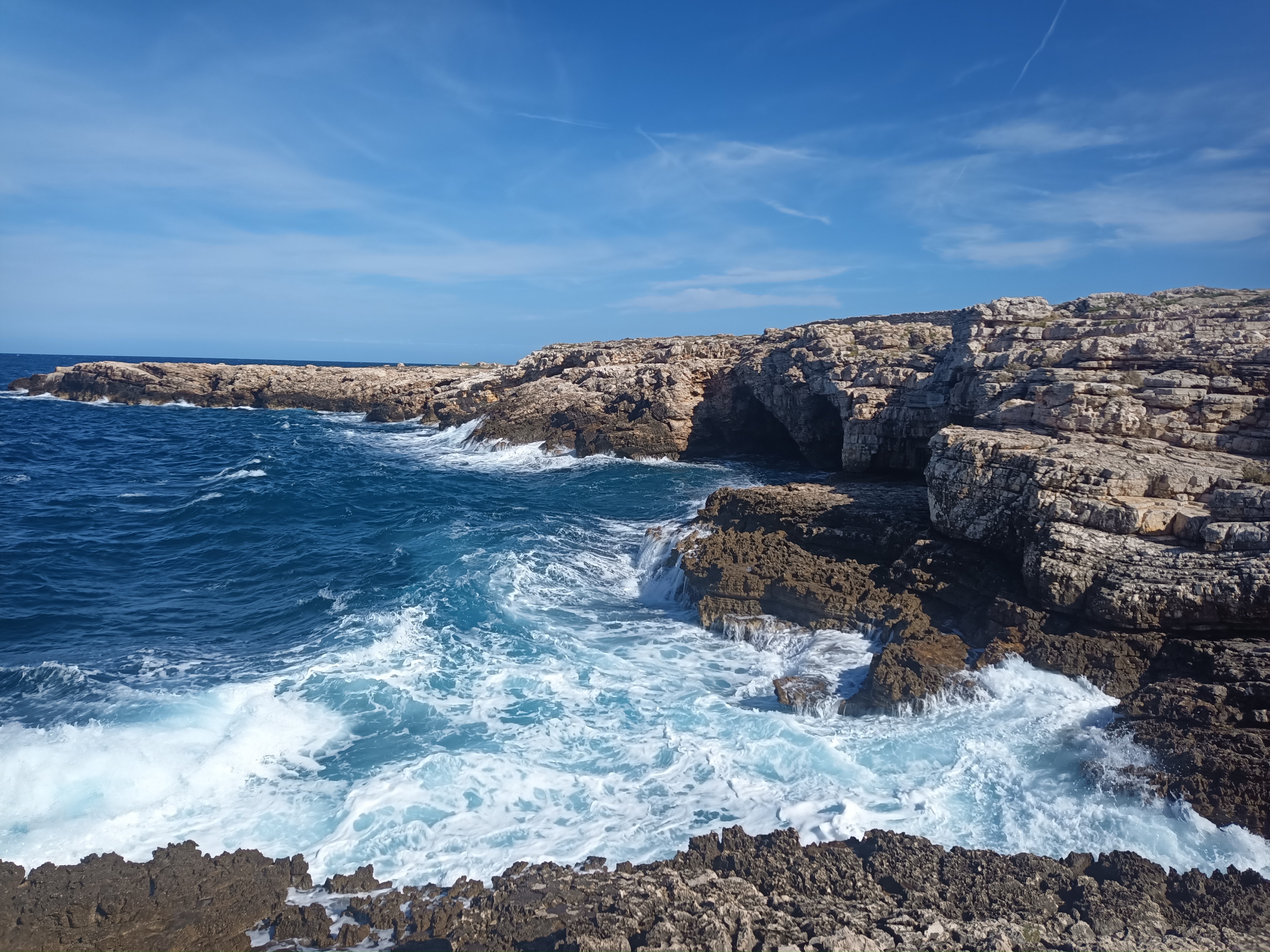
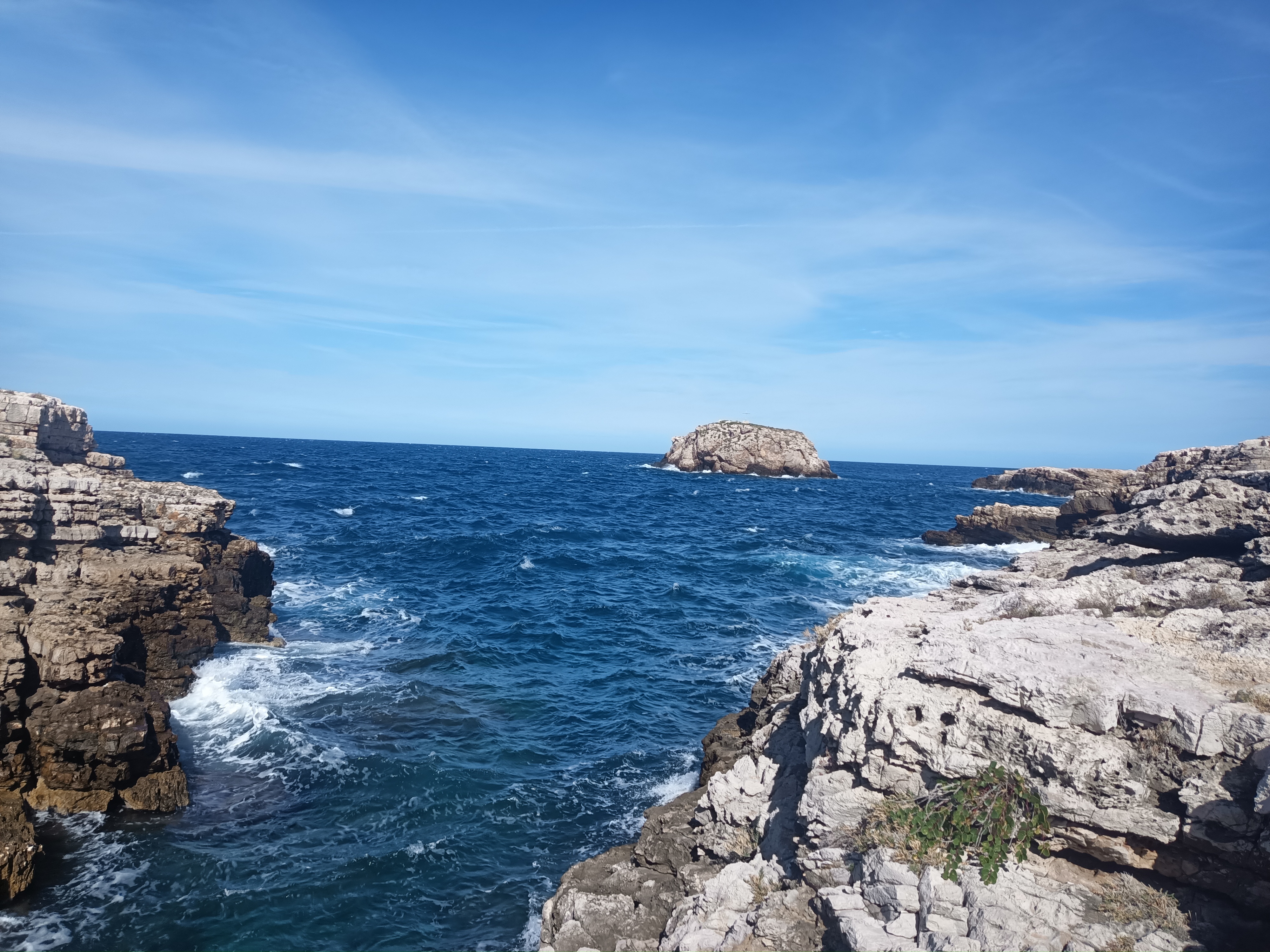
The reef and the islet, sound included — twenty-nine seconds.
Out towards San Vito: the islet, and the sea working — fifty-five seconds.
The sea pool, and the portraits
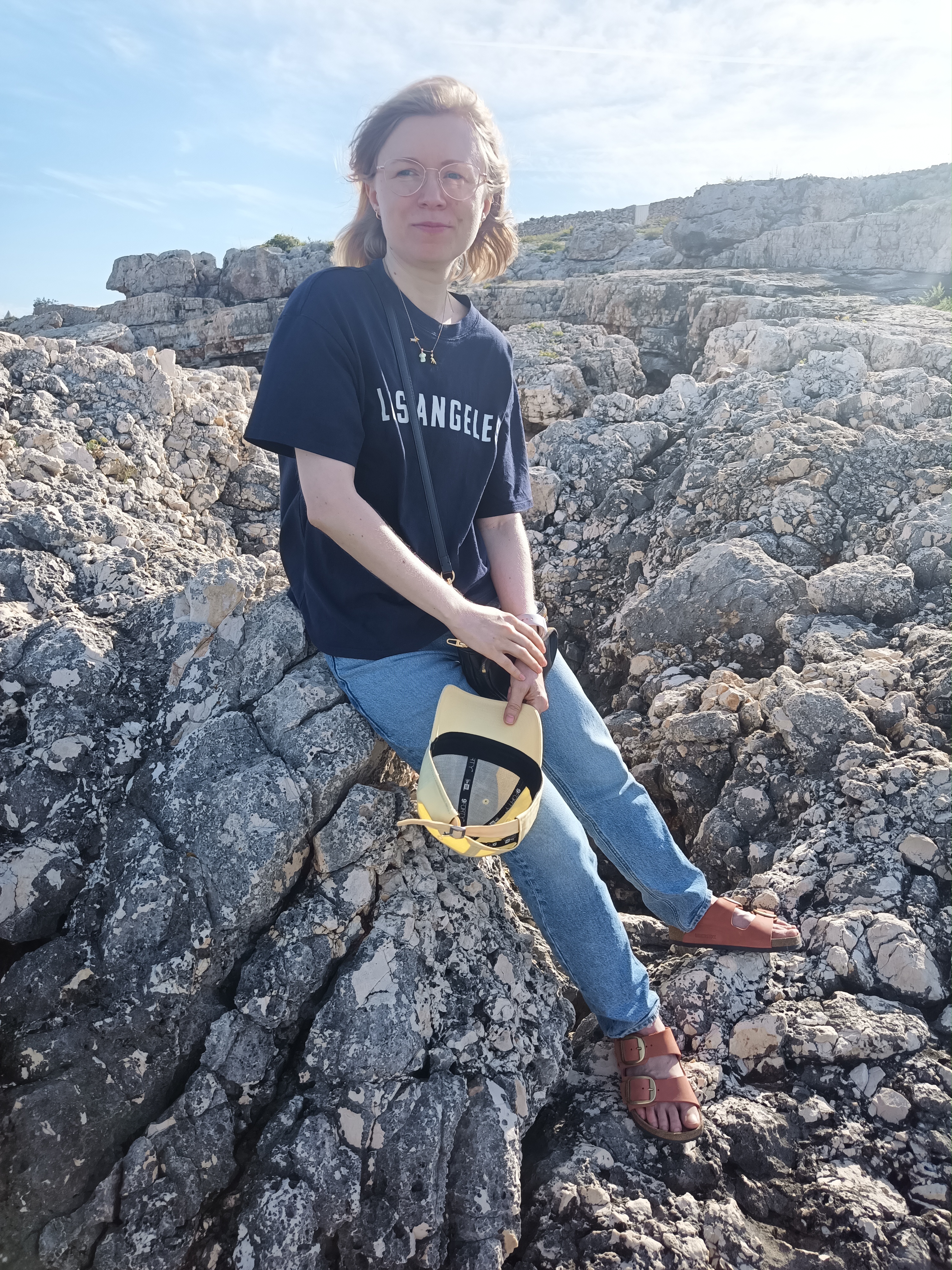
In the lee of the rocks somebody built a proper bath: a natural sea pool, calm and glassy among all that working surf. Feet went in — ours, briefly; the rest of us stayed dry. Anna used the afternoon light the way she uses every afternoon light, and the rocks posed along.
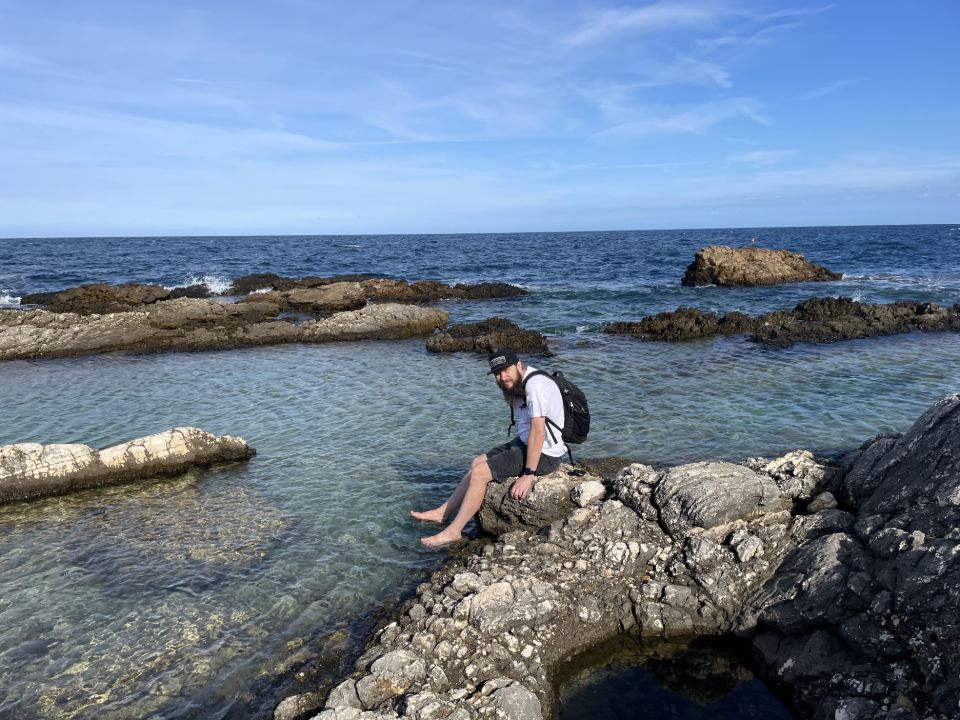
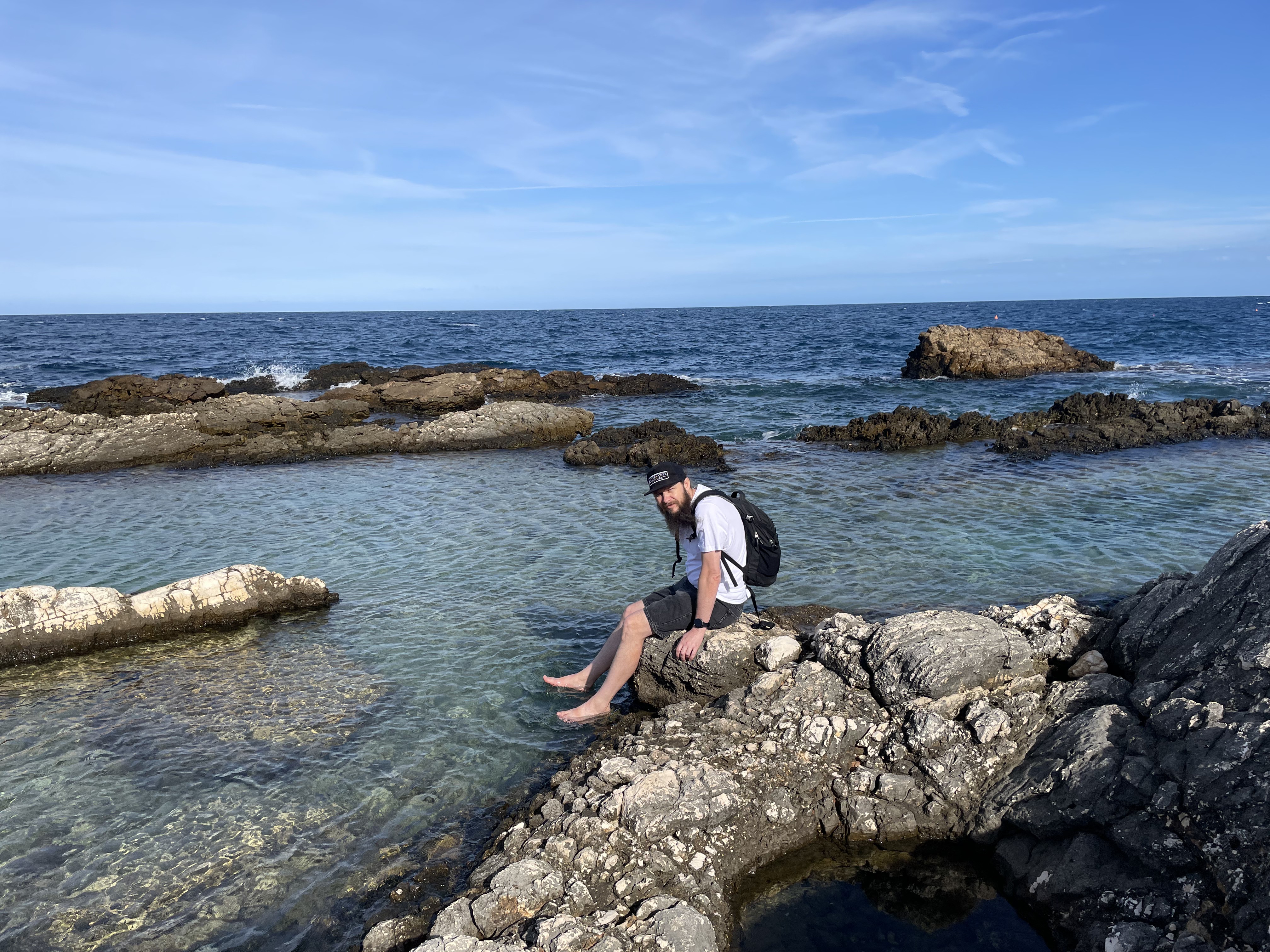
Oleg, feet in the sea pool 
Oleg, grinning, sea behind 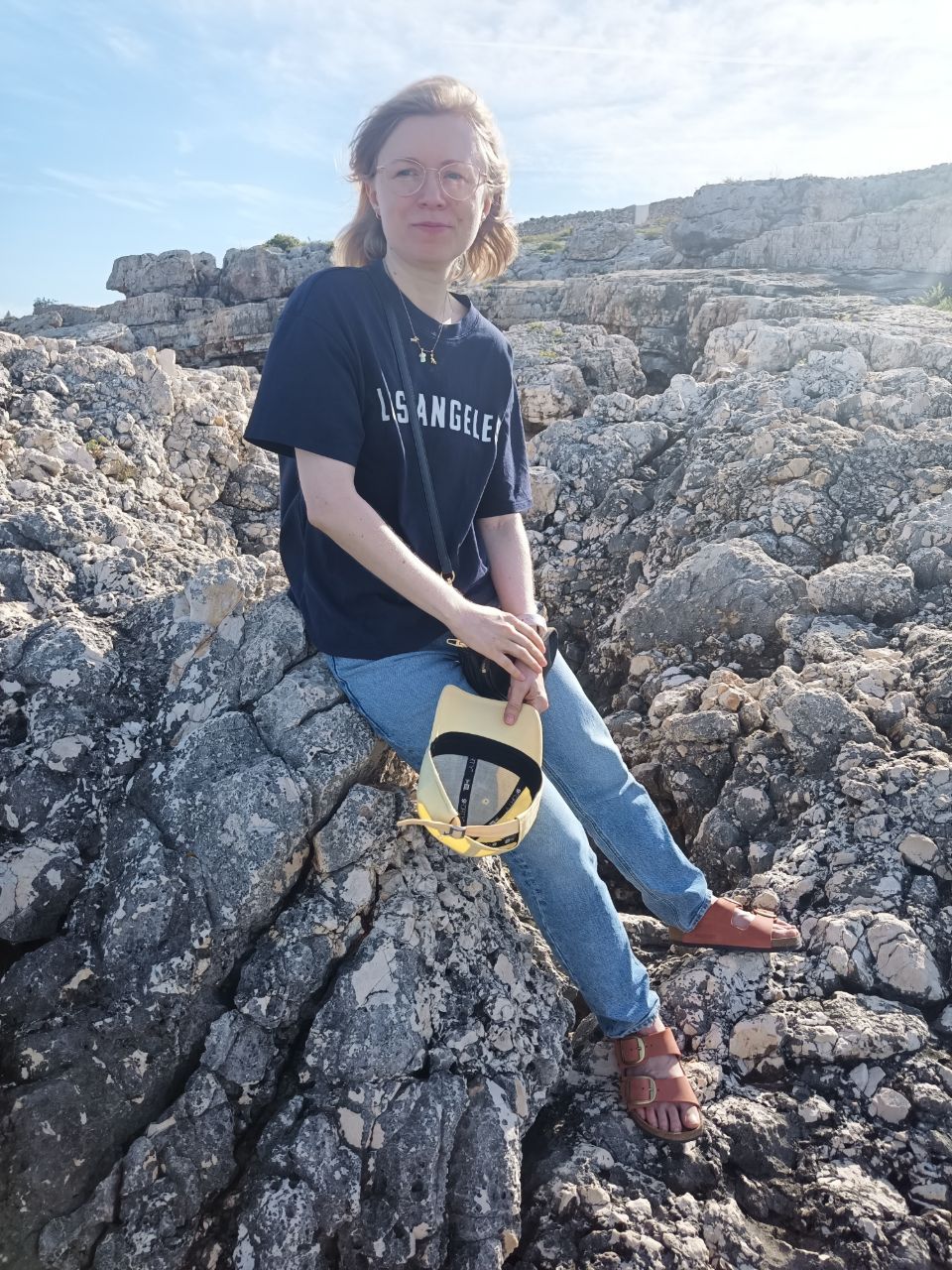
Anna, sitting on the pale rocks 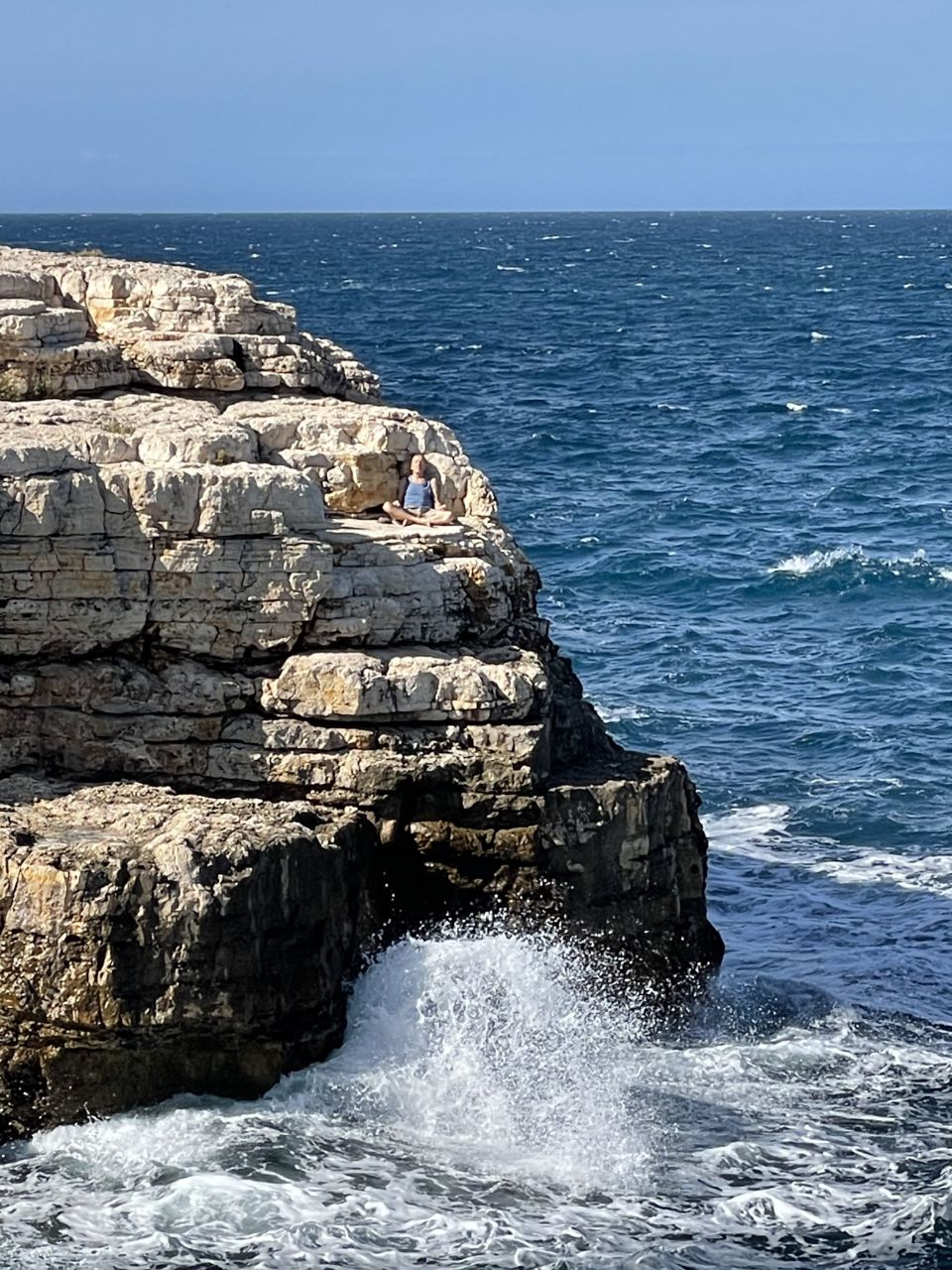
On the ledge above the water 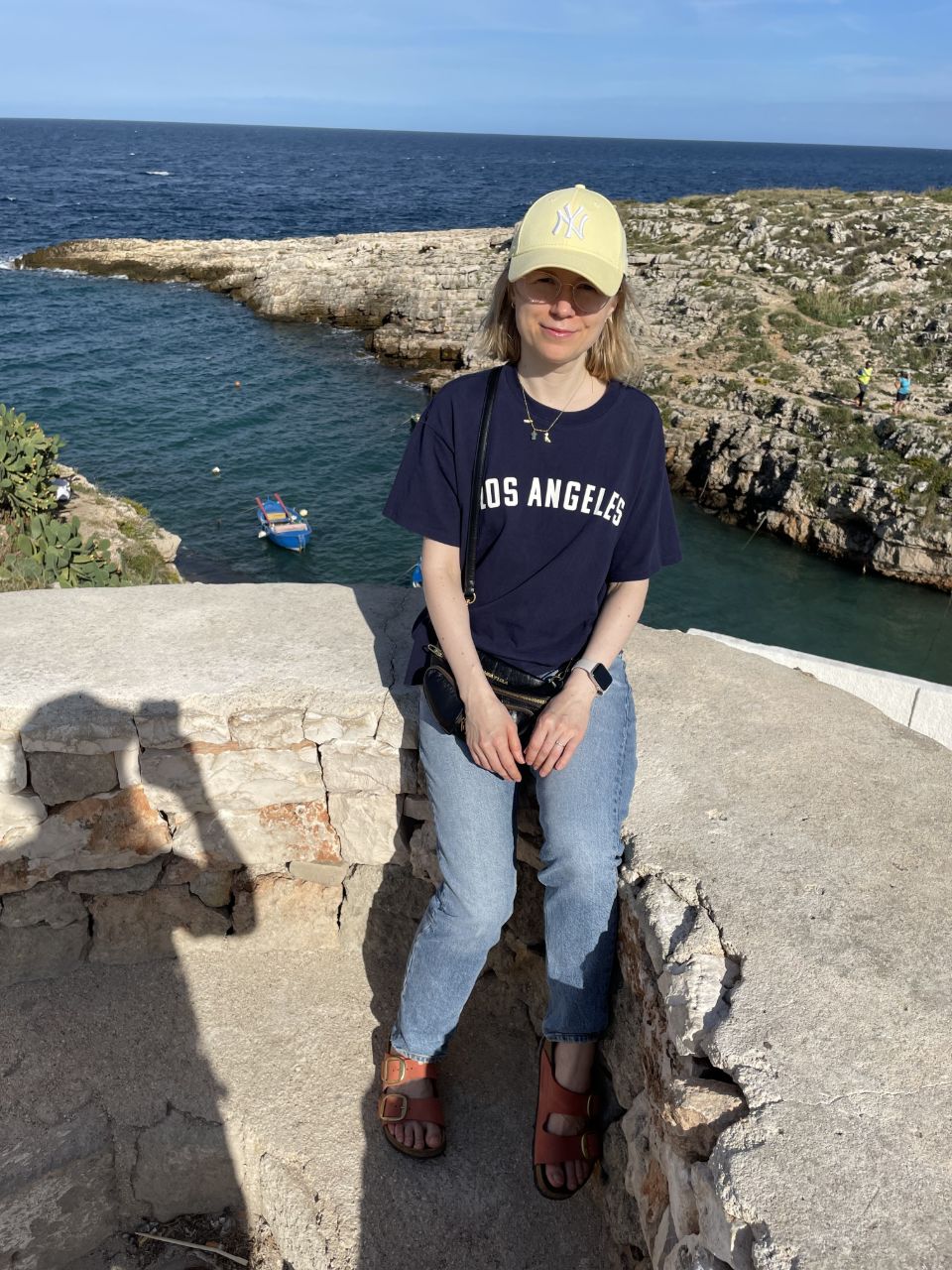
Anna, on the wall above the inlet 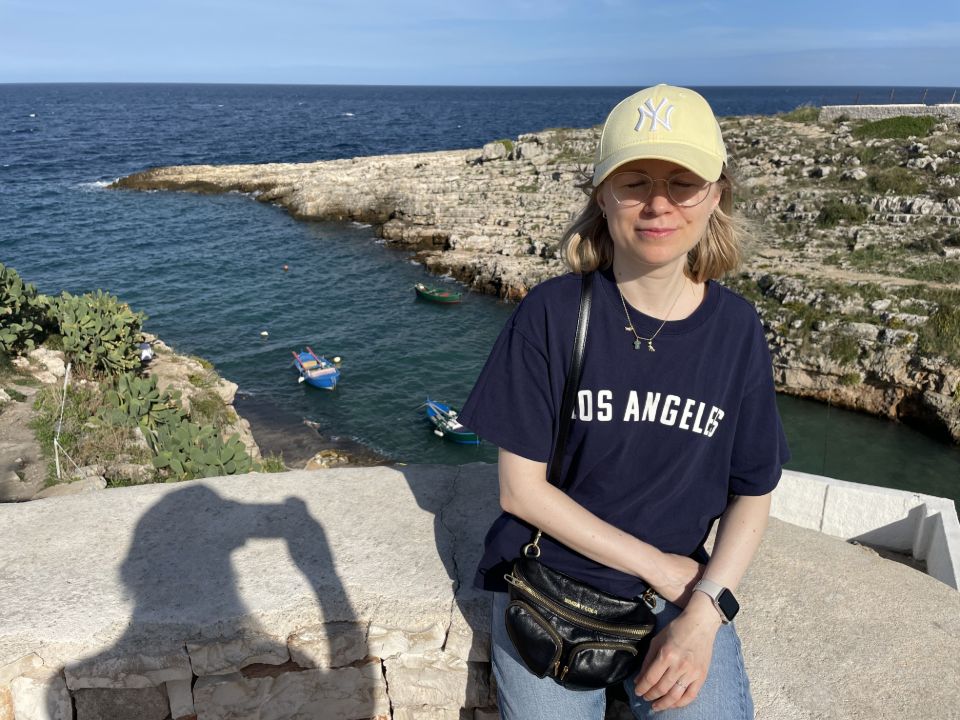
Anna, close up on the stones

Cala Sala’s boats
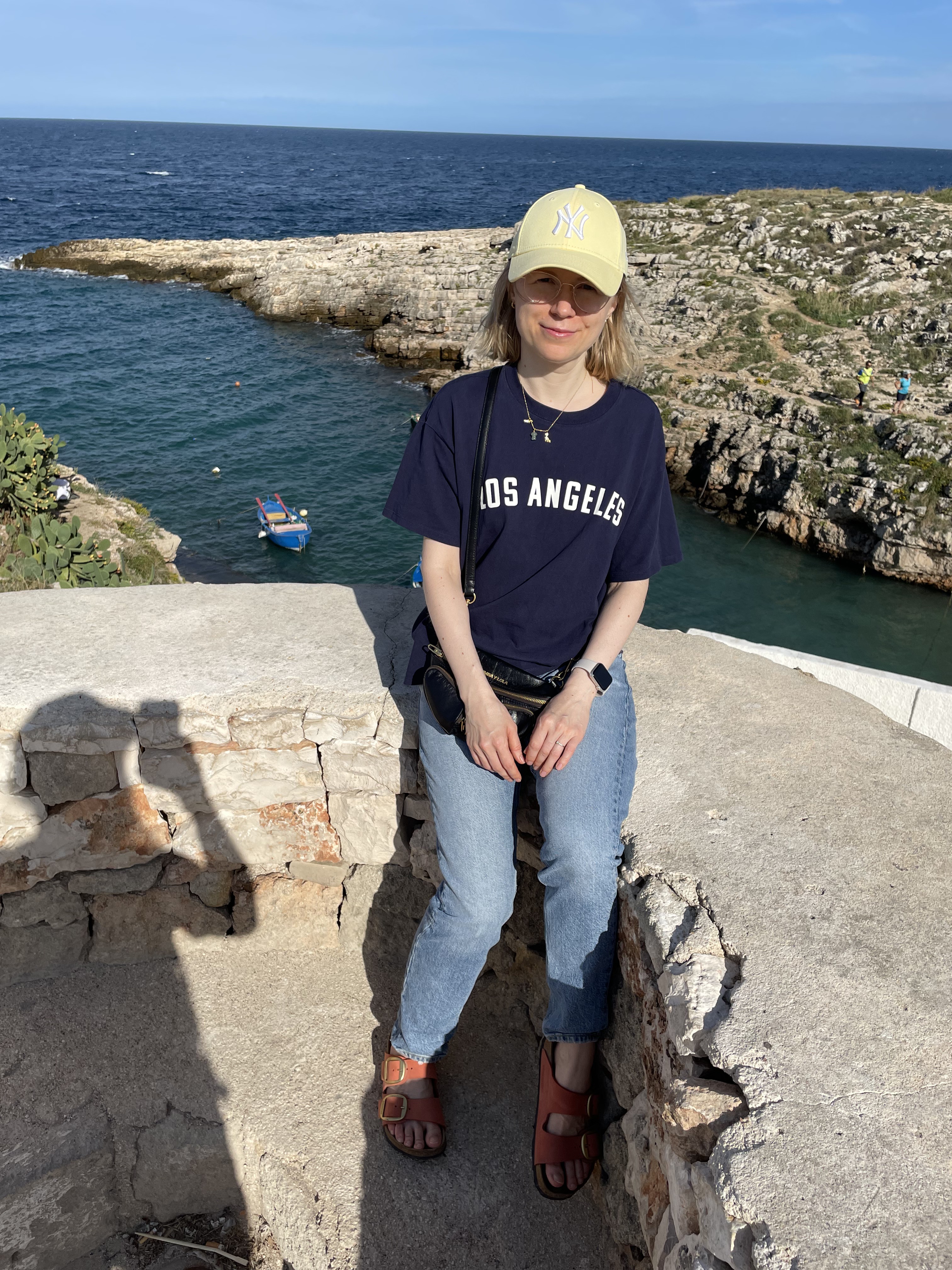
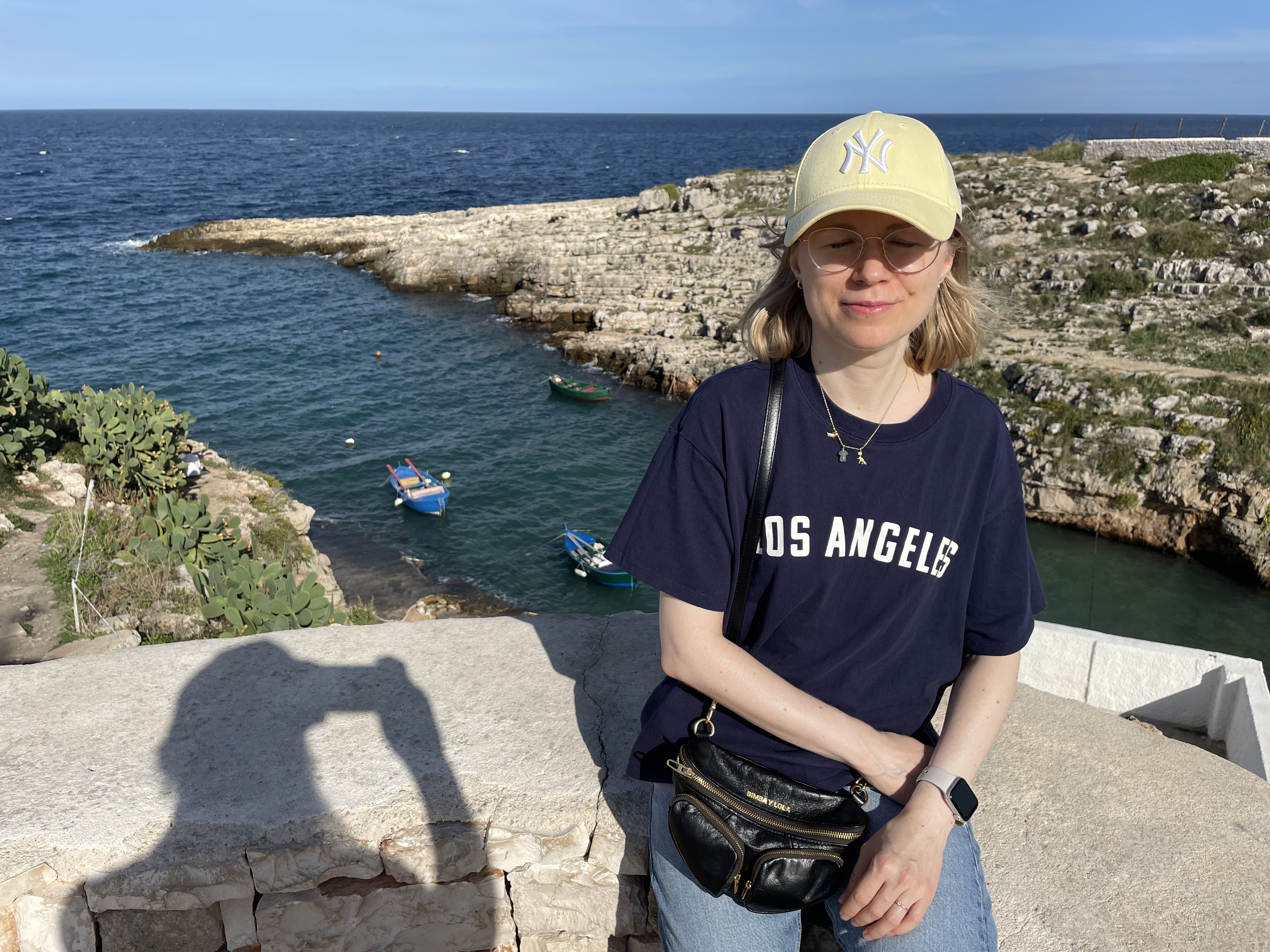
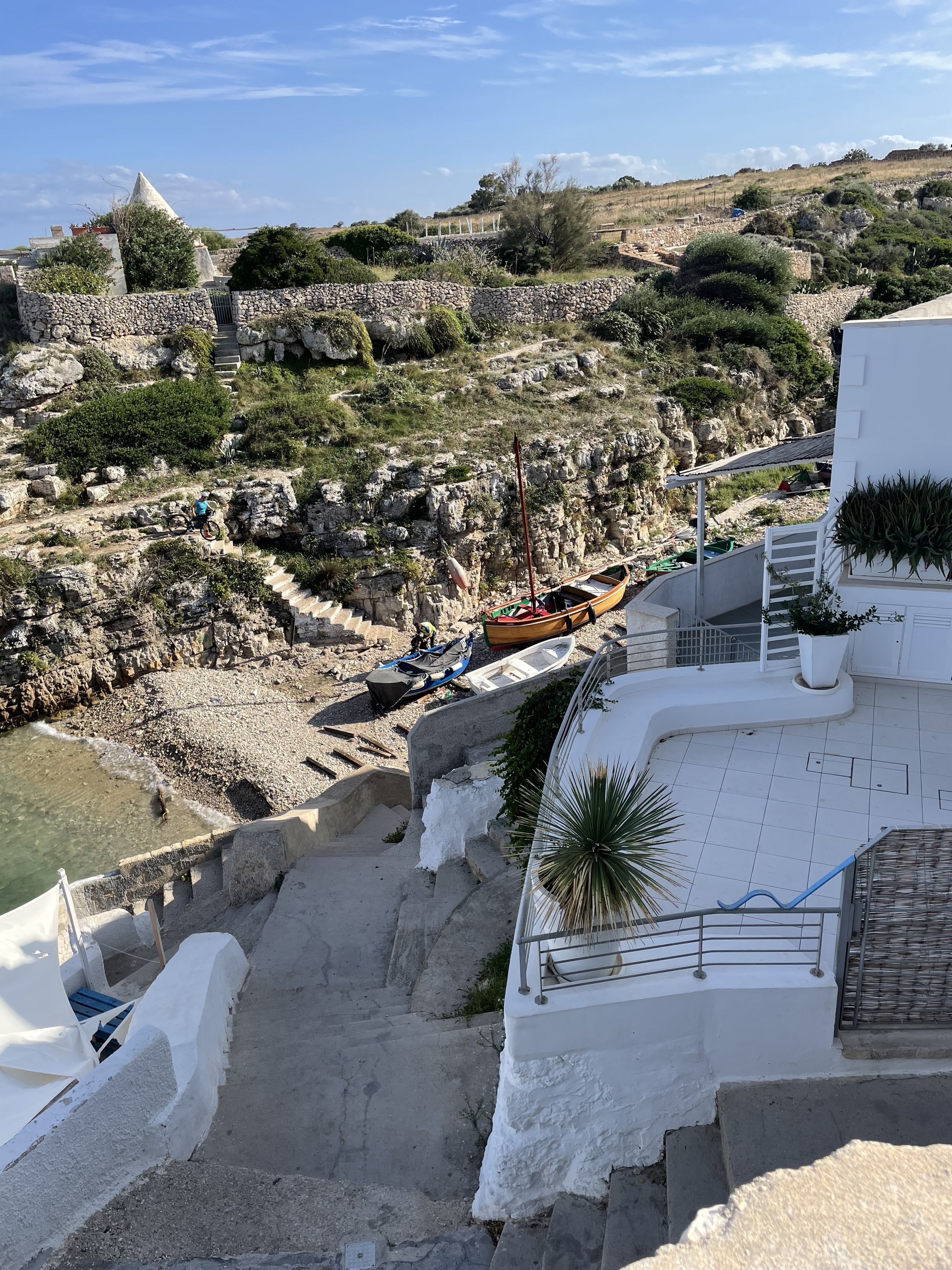
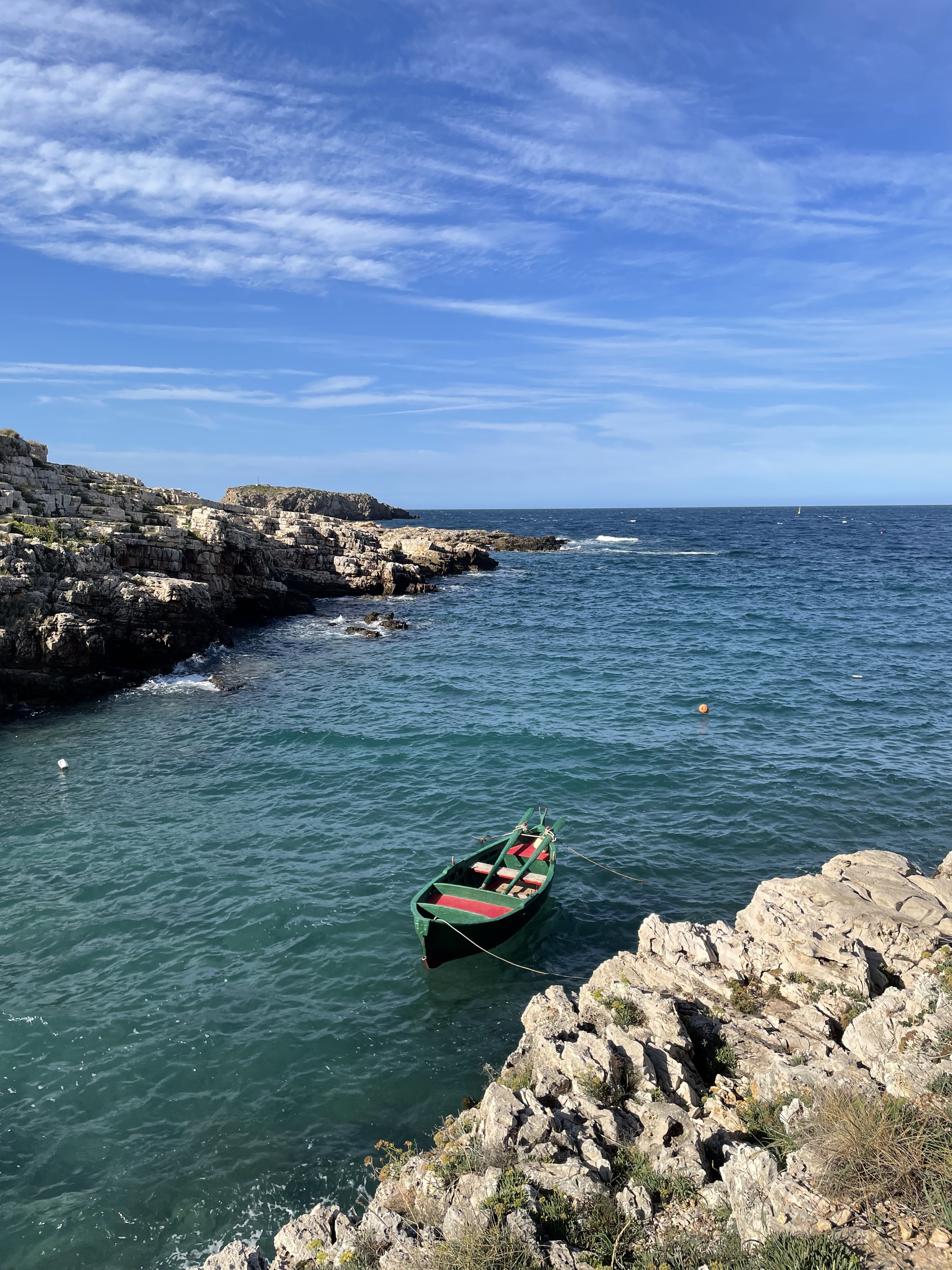
The path down to Cala Sala ends in a small harbour where green and blue fishing boats lie around on water so clear they seem moored on nothing. We photographed each one individually, as is only correct — the old wooden hull by the whitewashed steps in particular looked like it still has things to say.
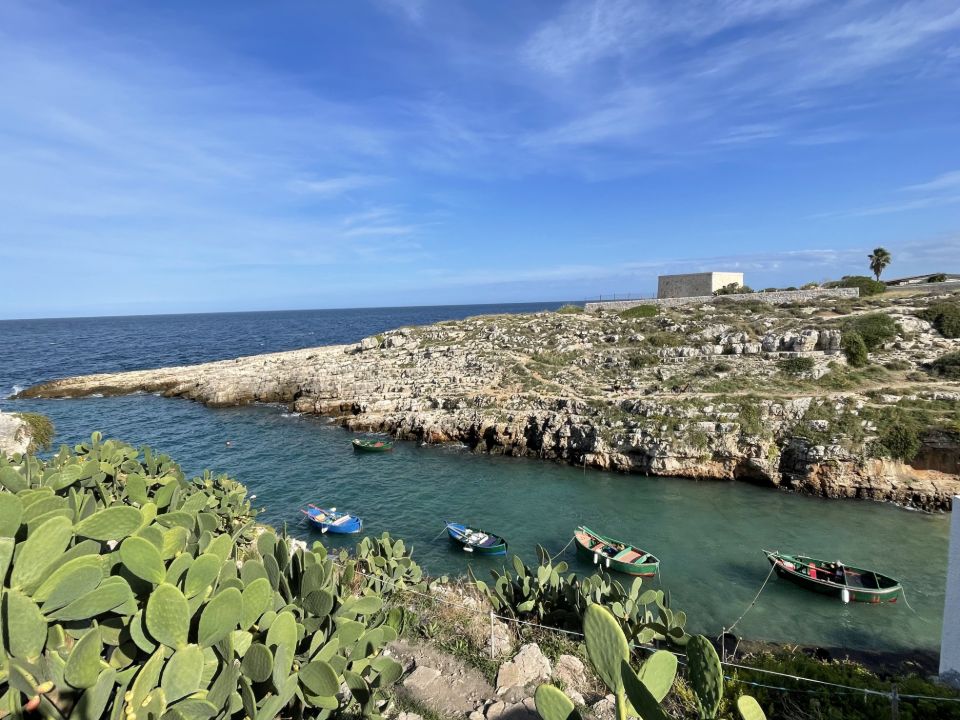
The cove, the boats, the cactus 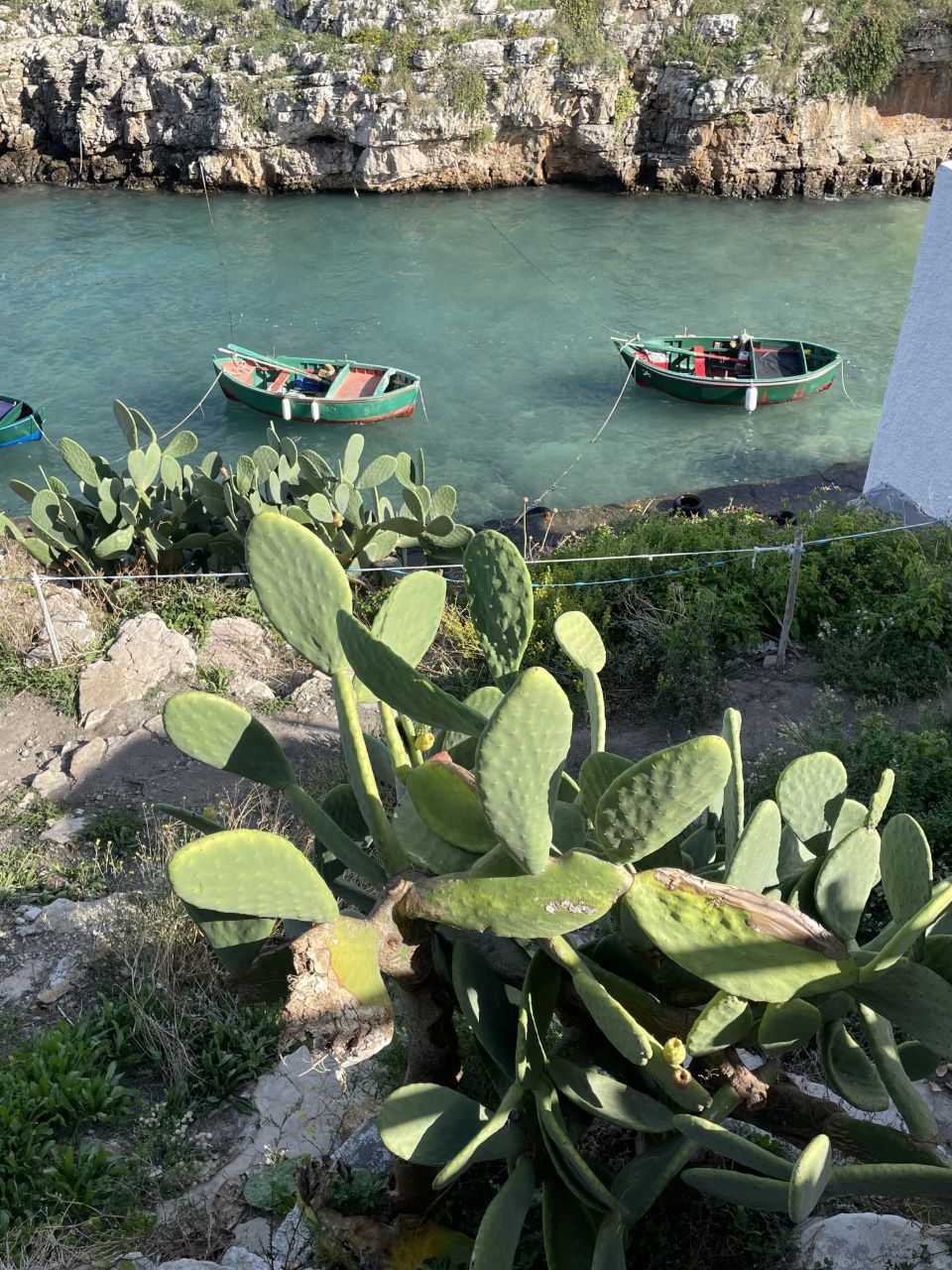
Painted hulls, up close 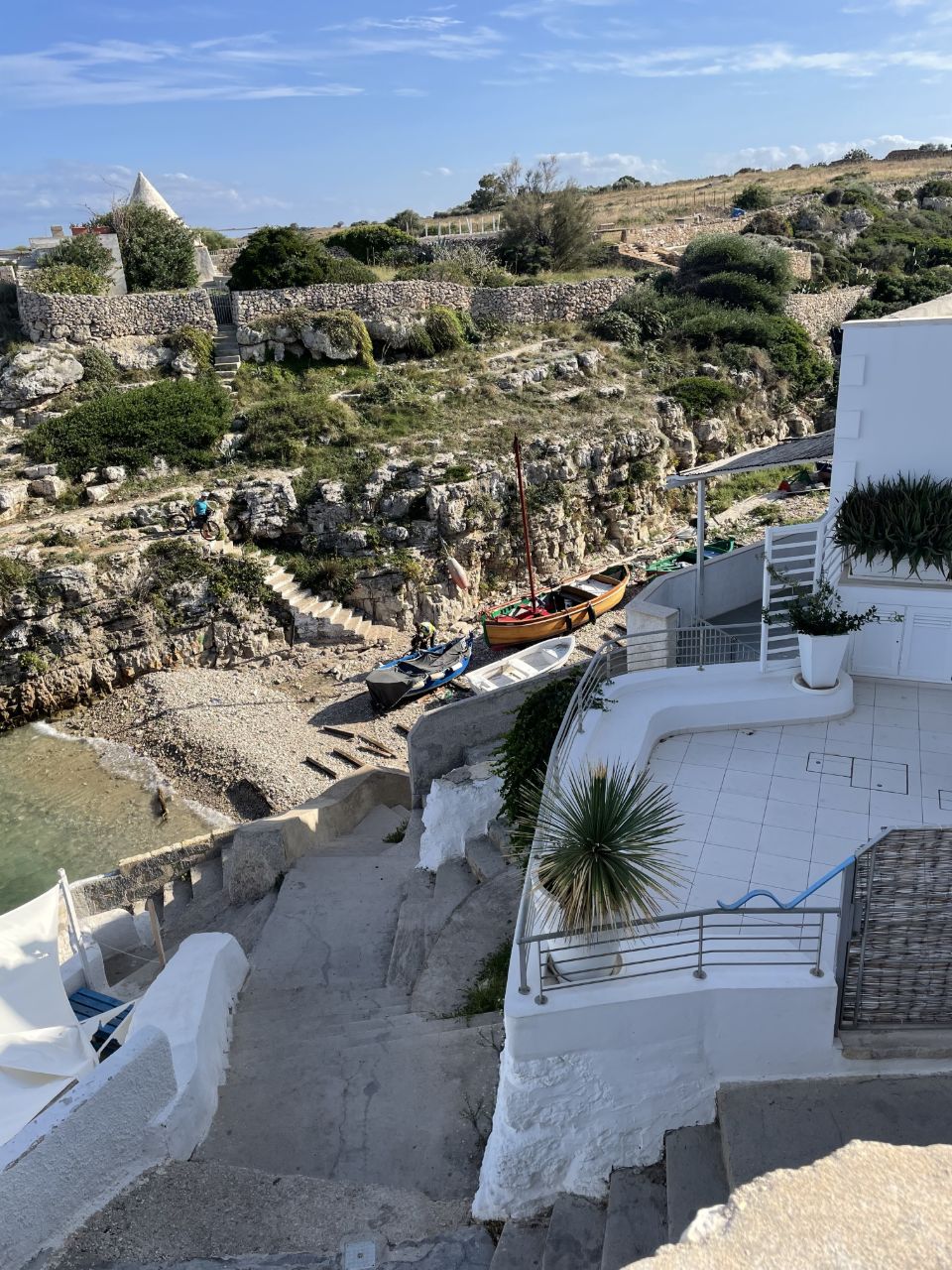
The steps and the old hull 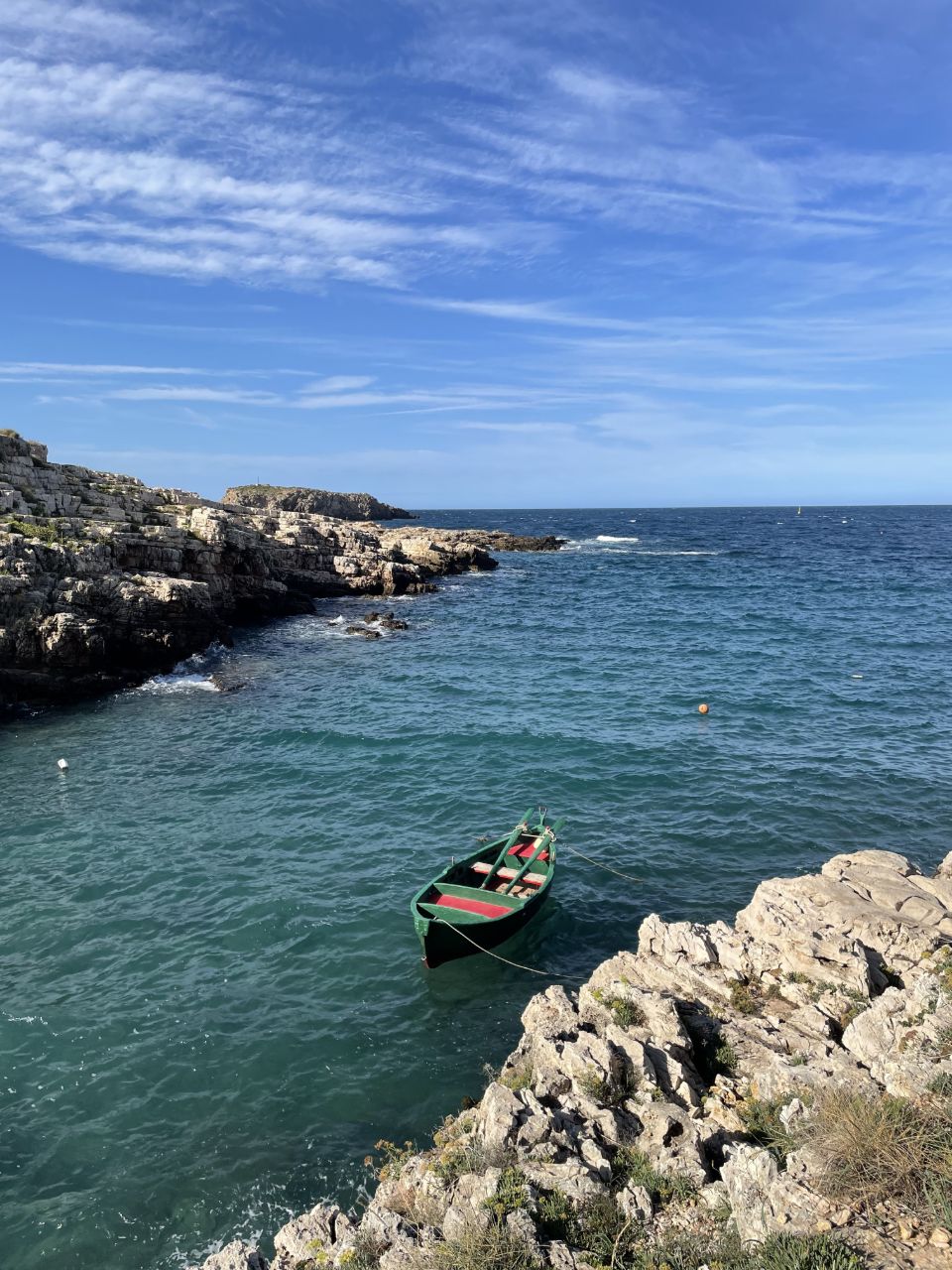
The green boat, resting 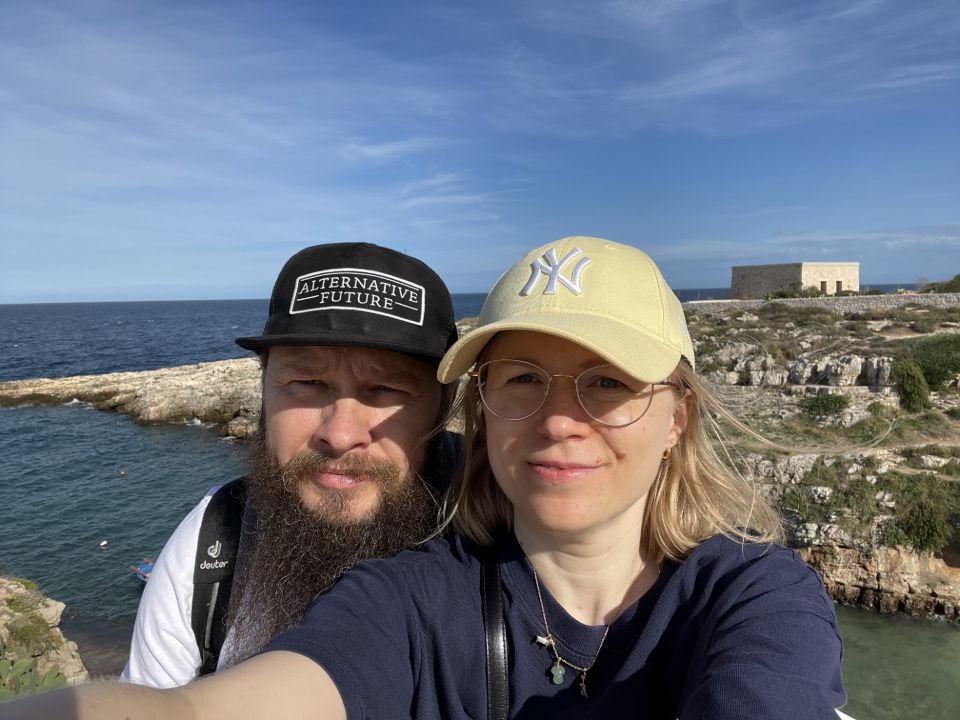
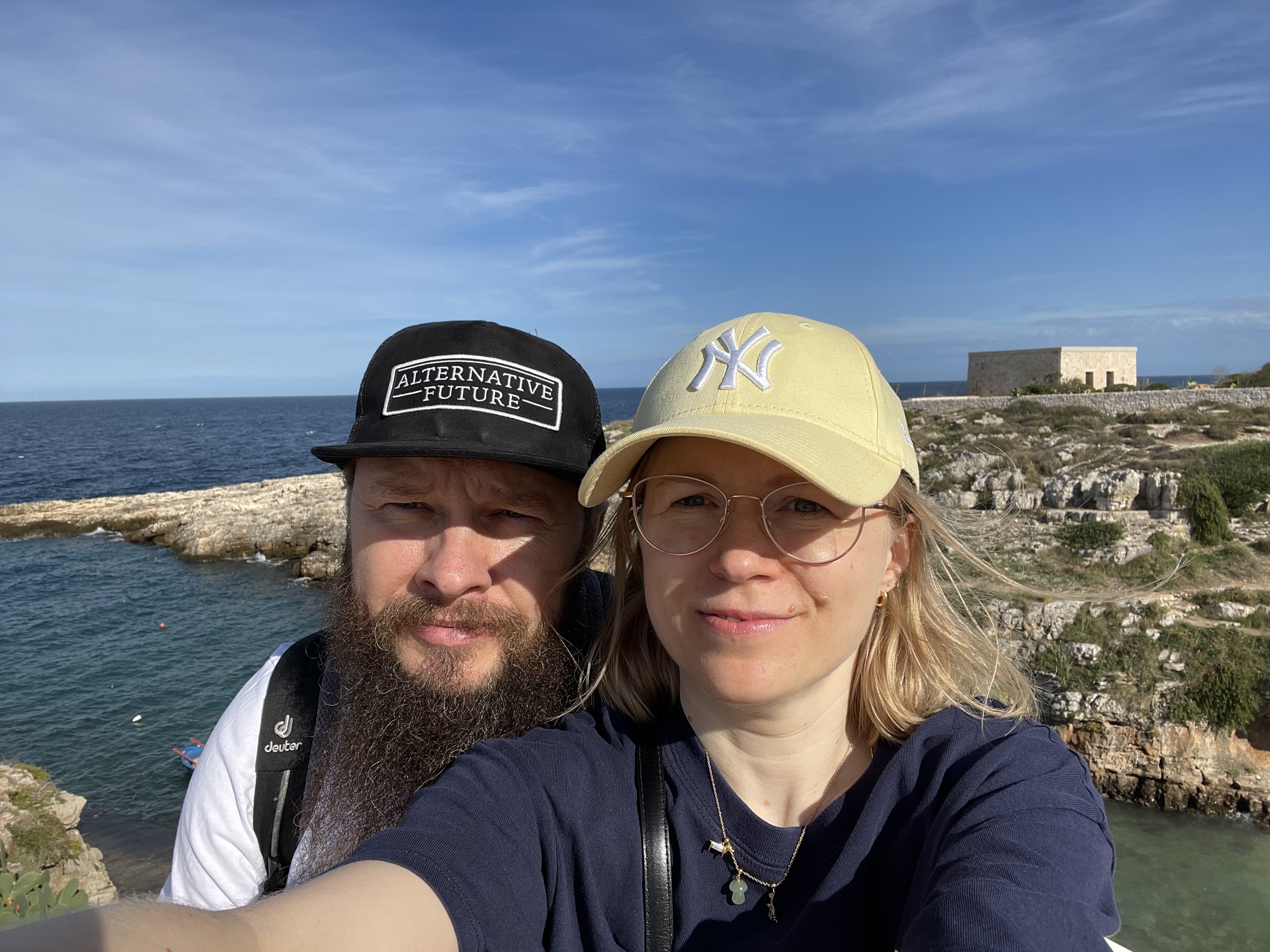
Both of us, harbour edition 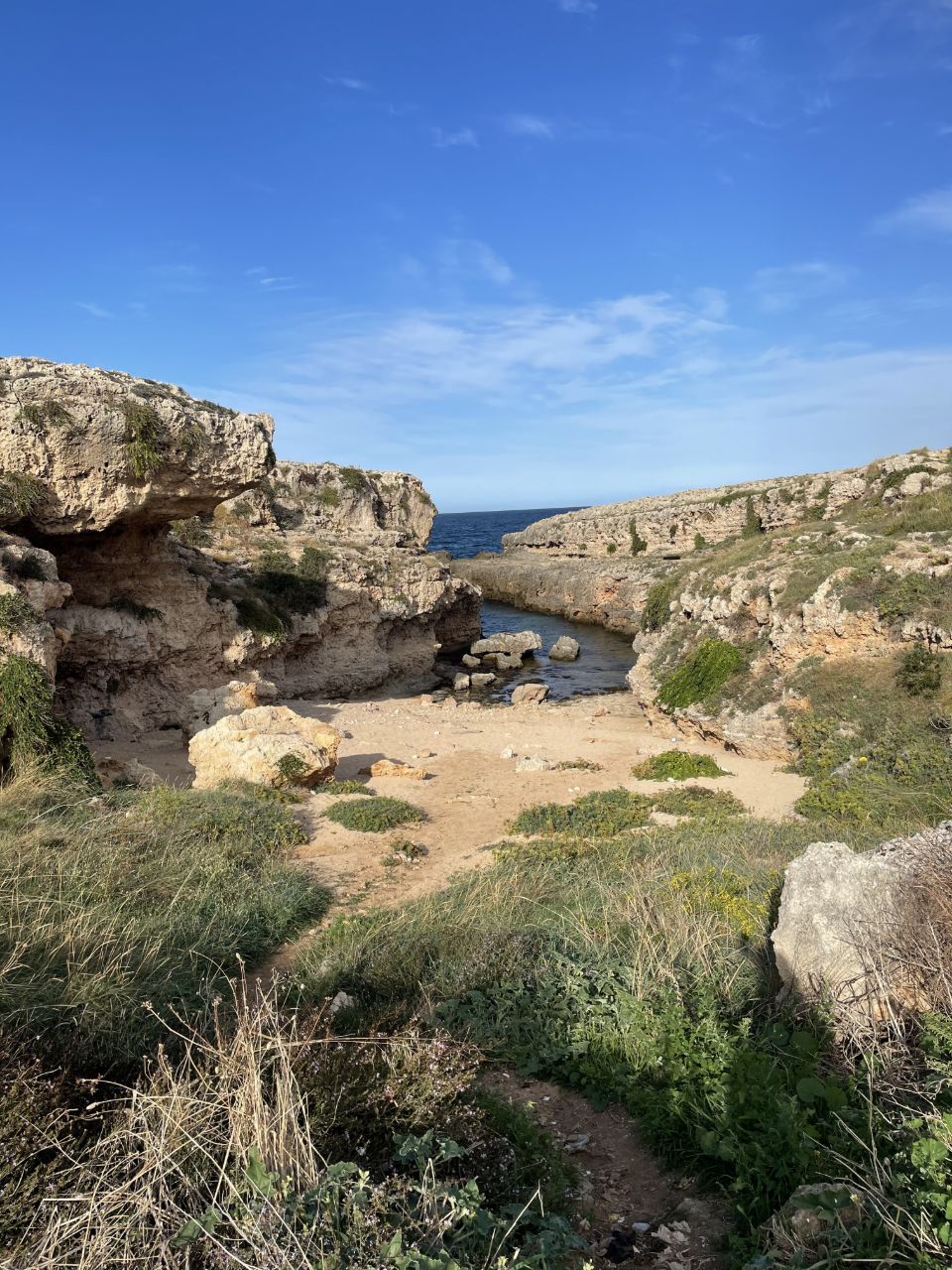
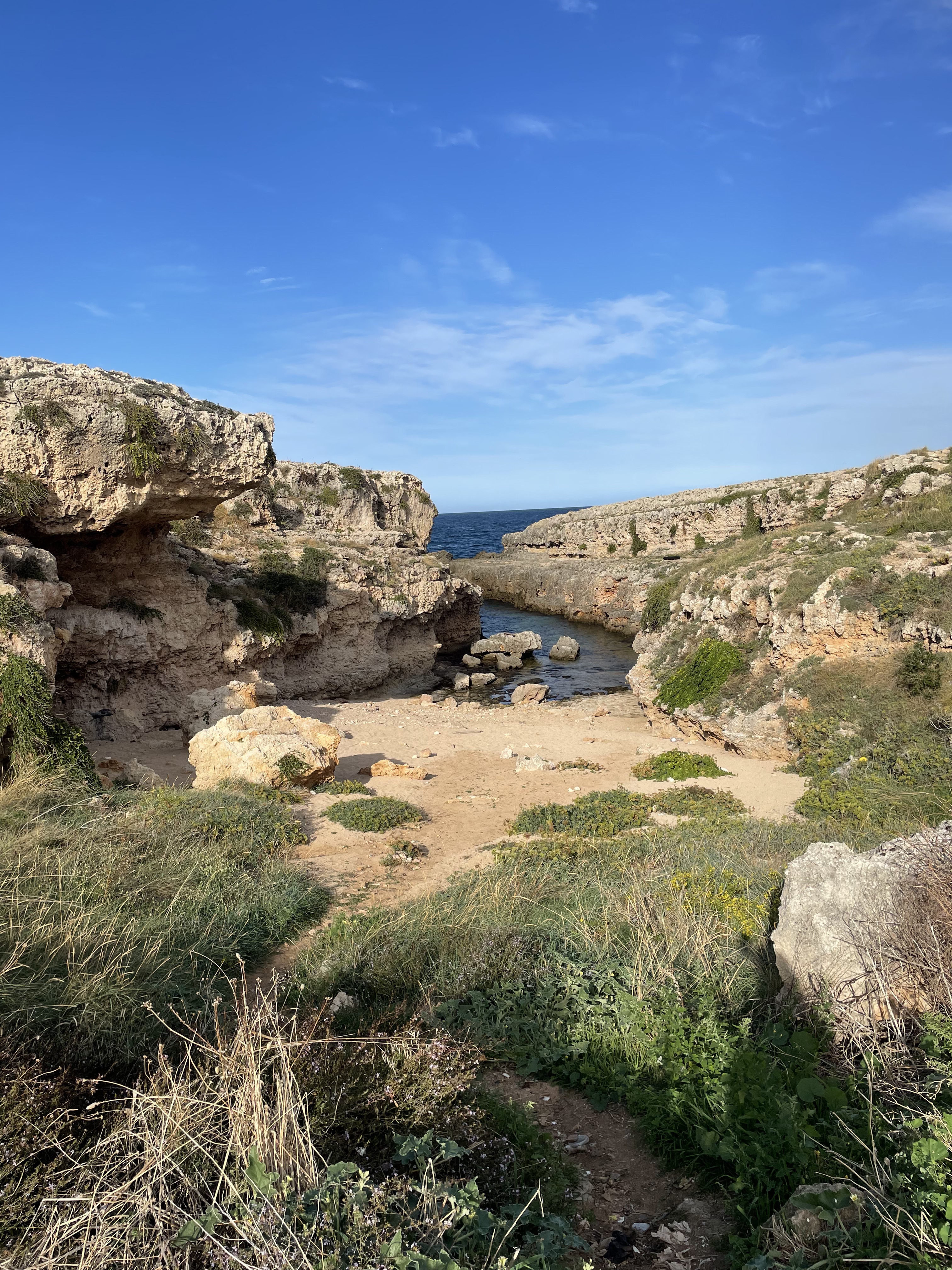
The inlet, from the clifftop 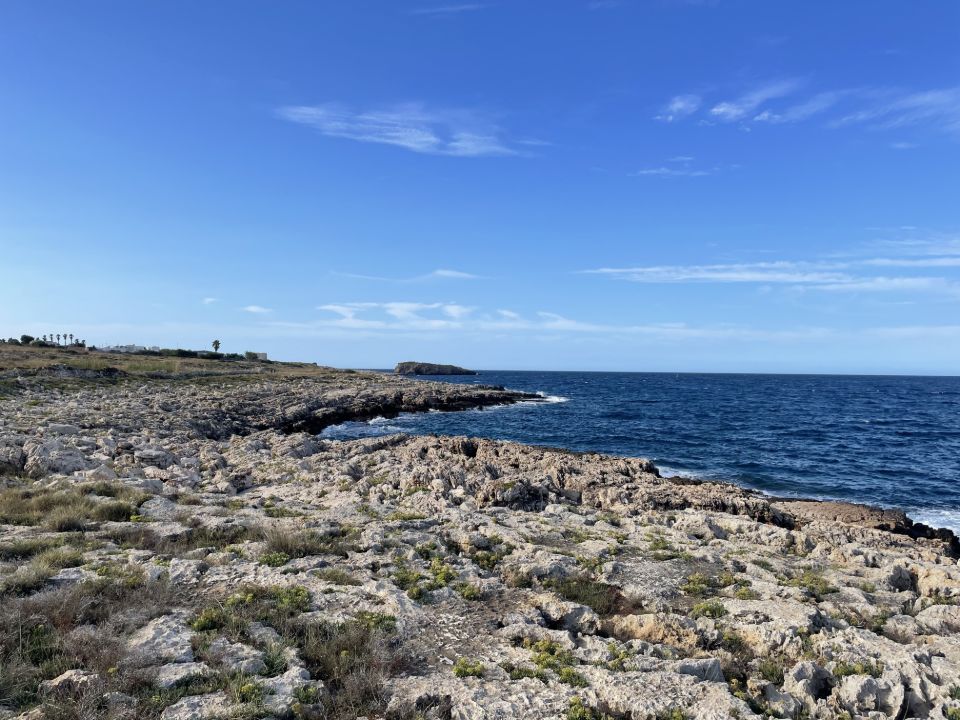
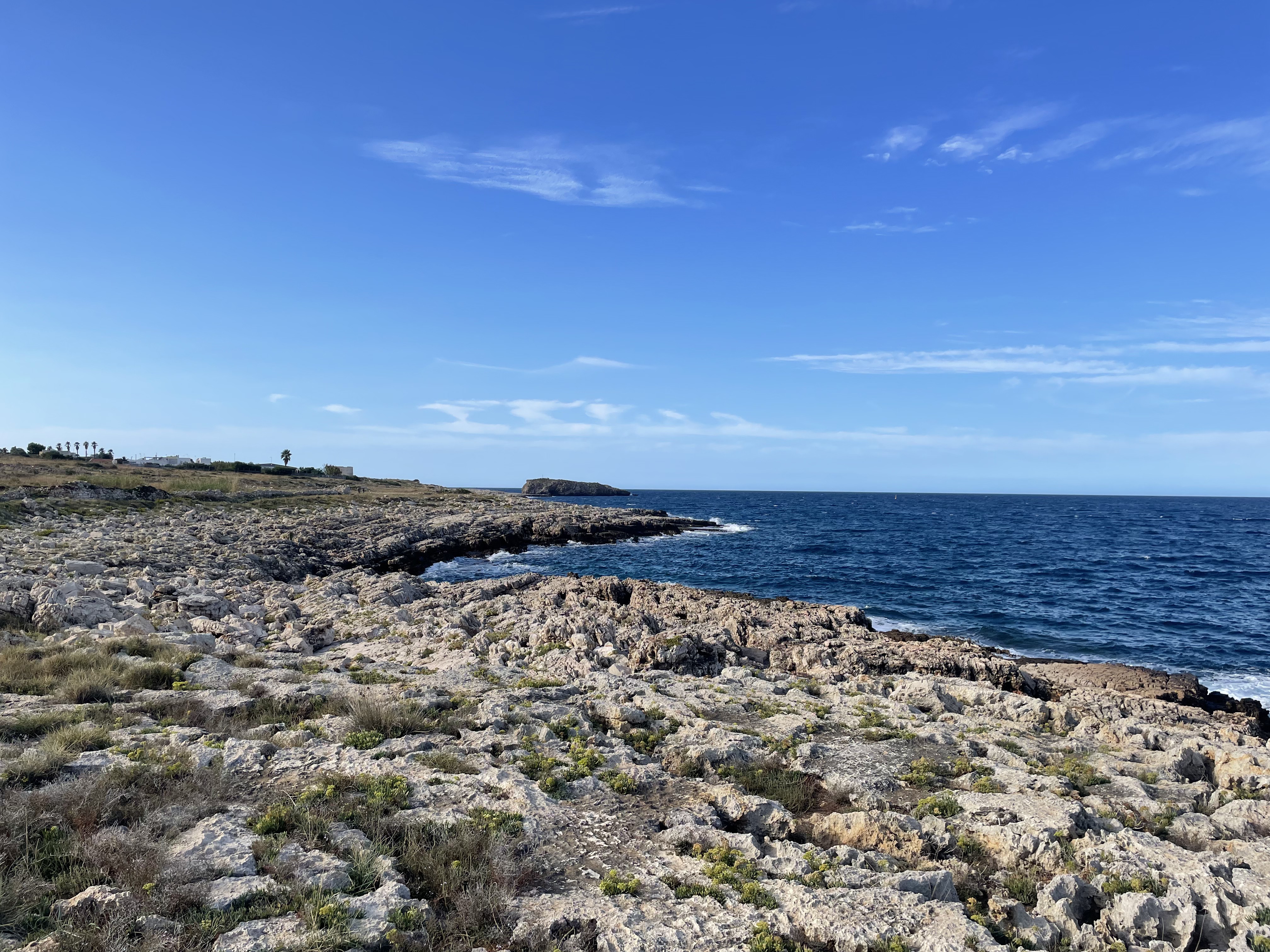
The coast, going quiet 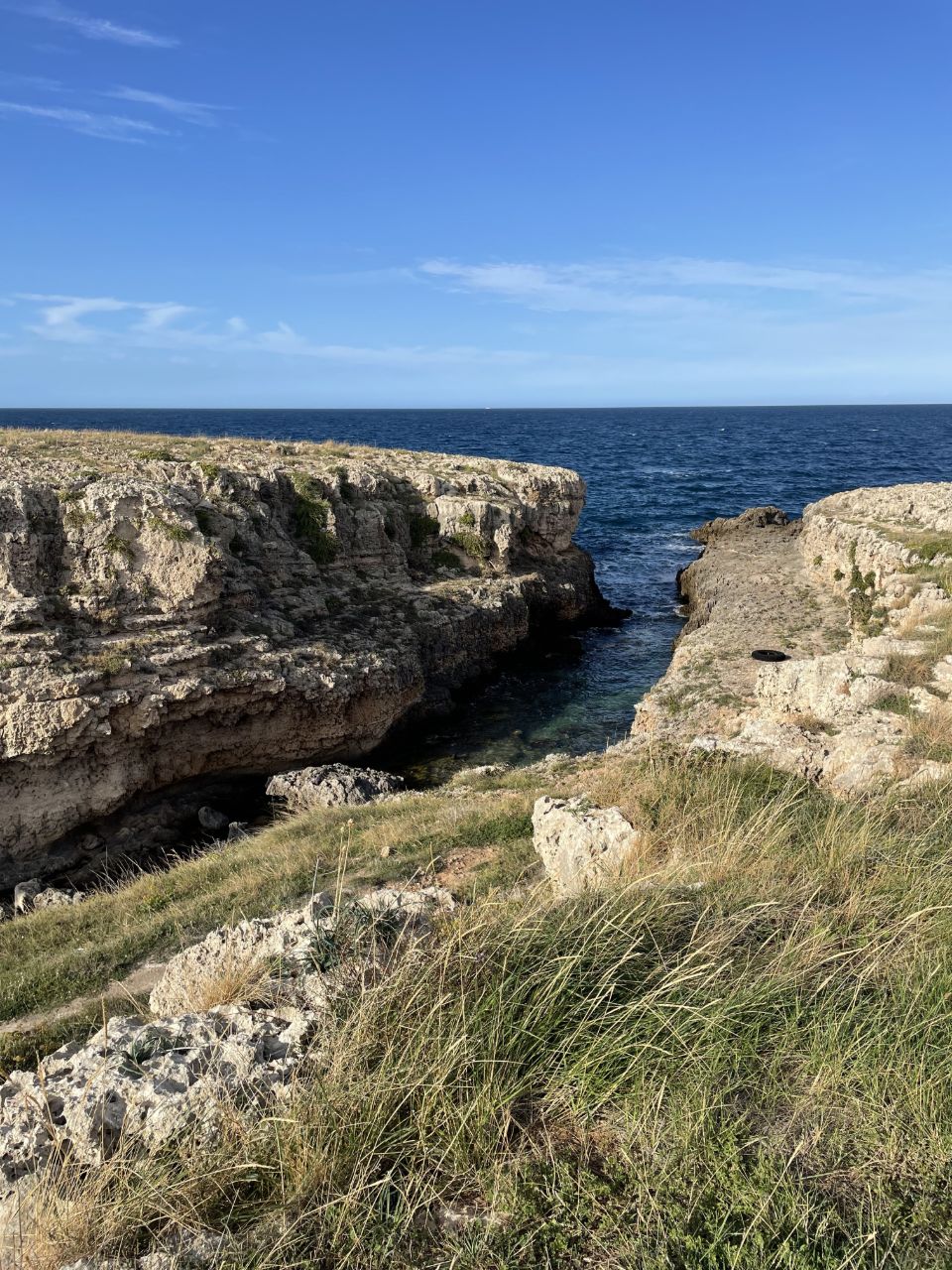
Cliffs making a doorway 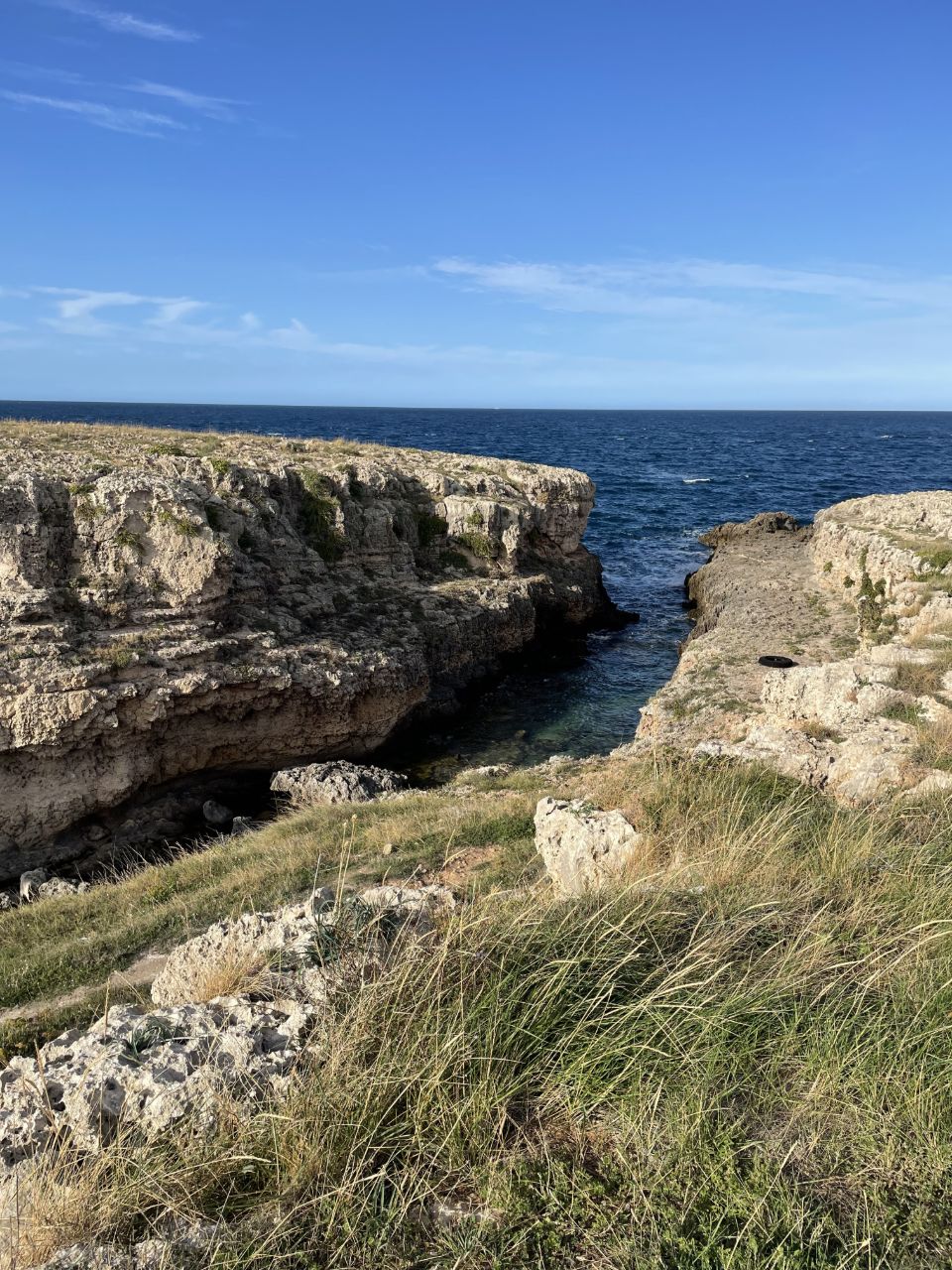
The channel at Grotta di Pozzovivo
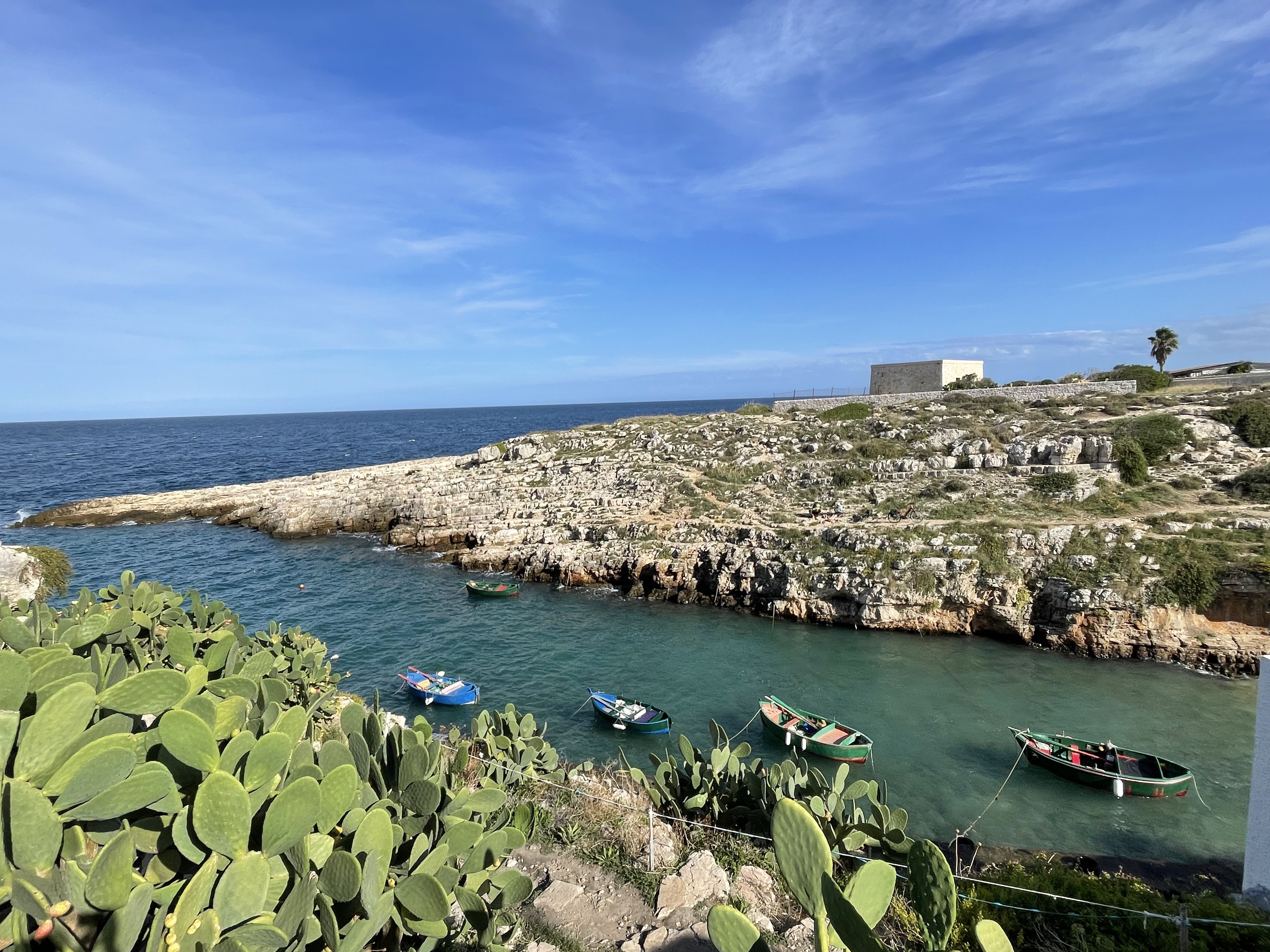
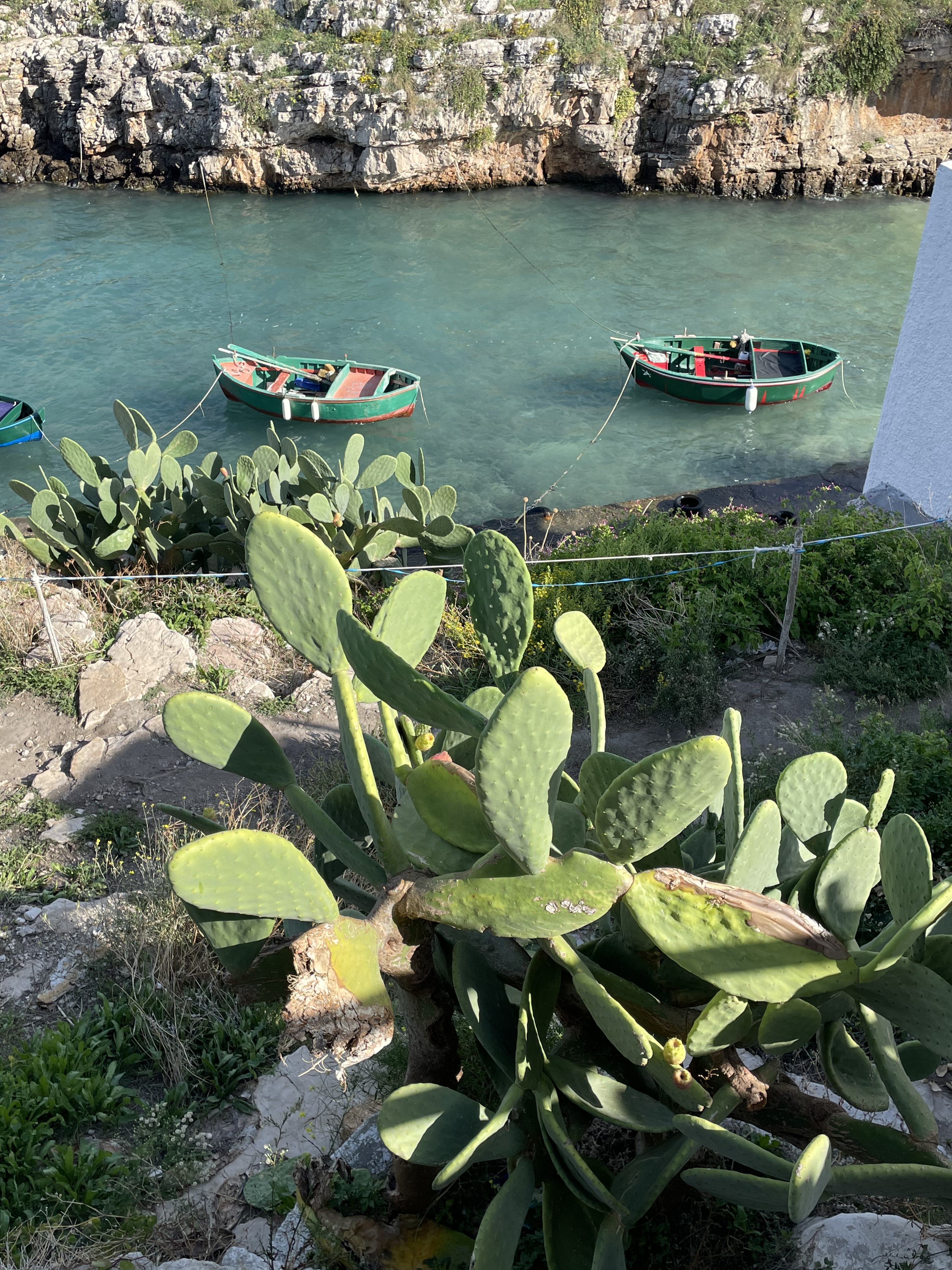
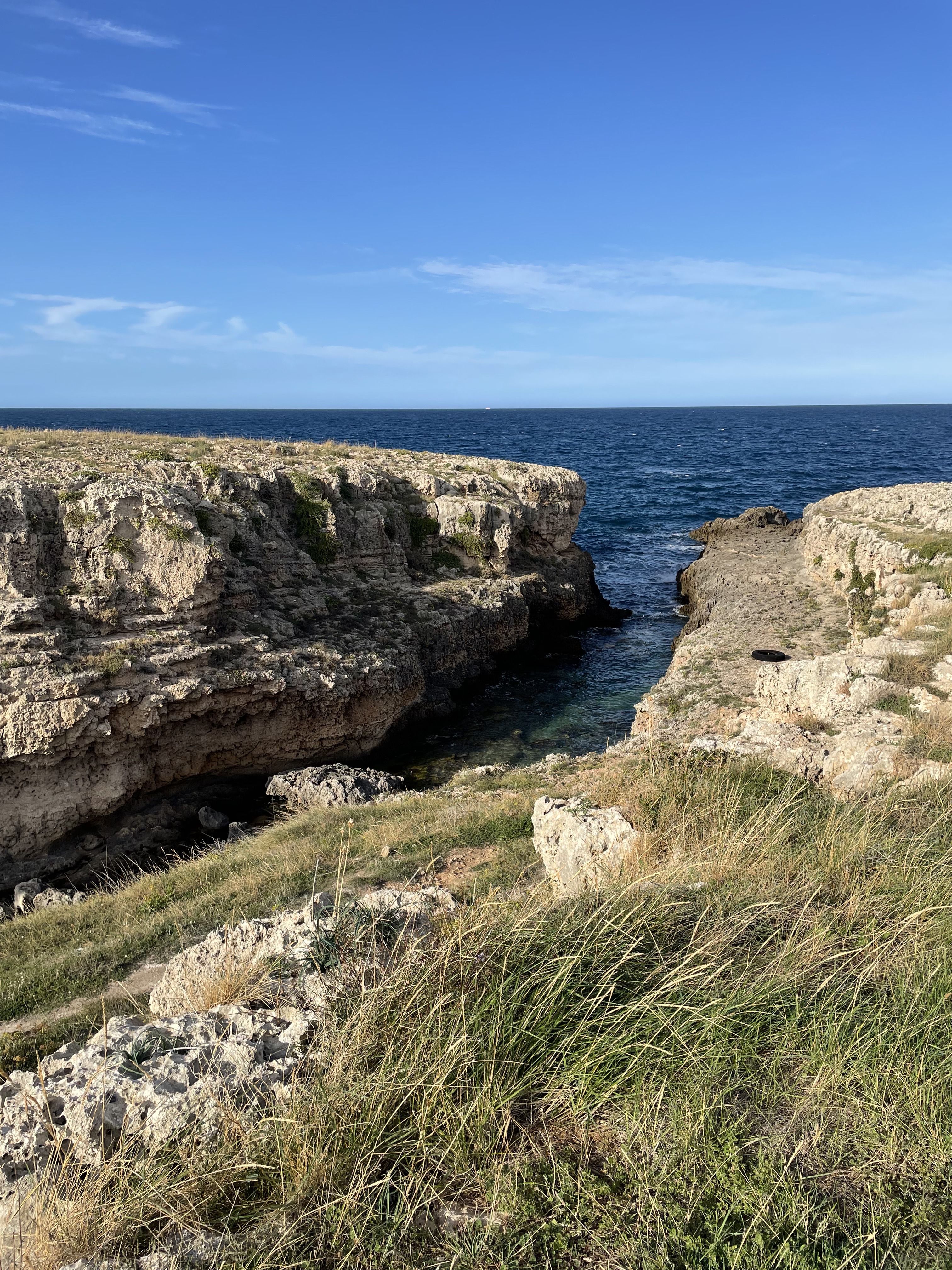
Green boats on glass — thirty-one seconds.
The last evening
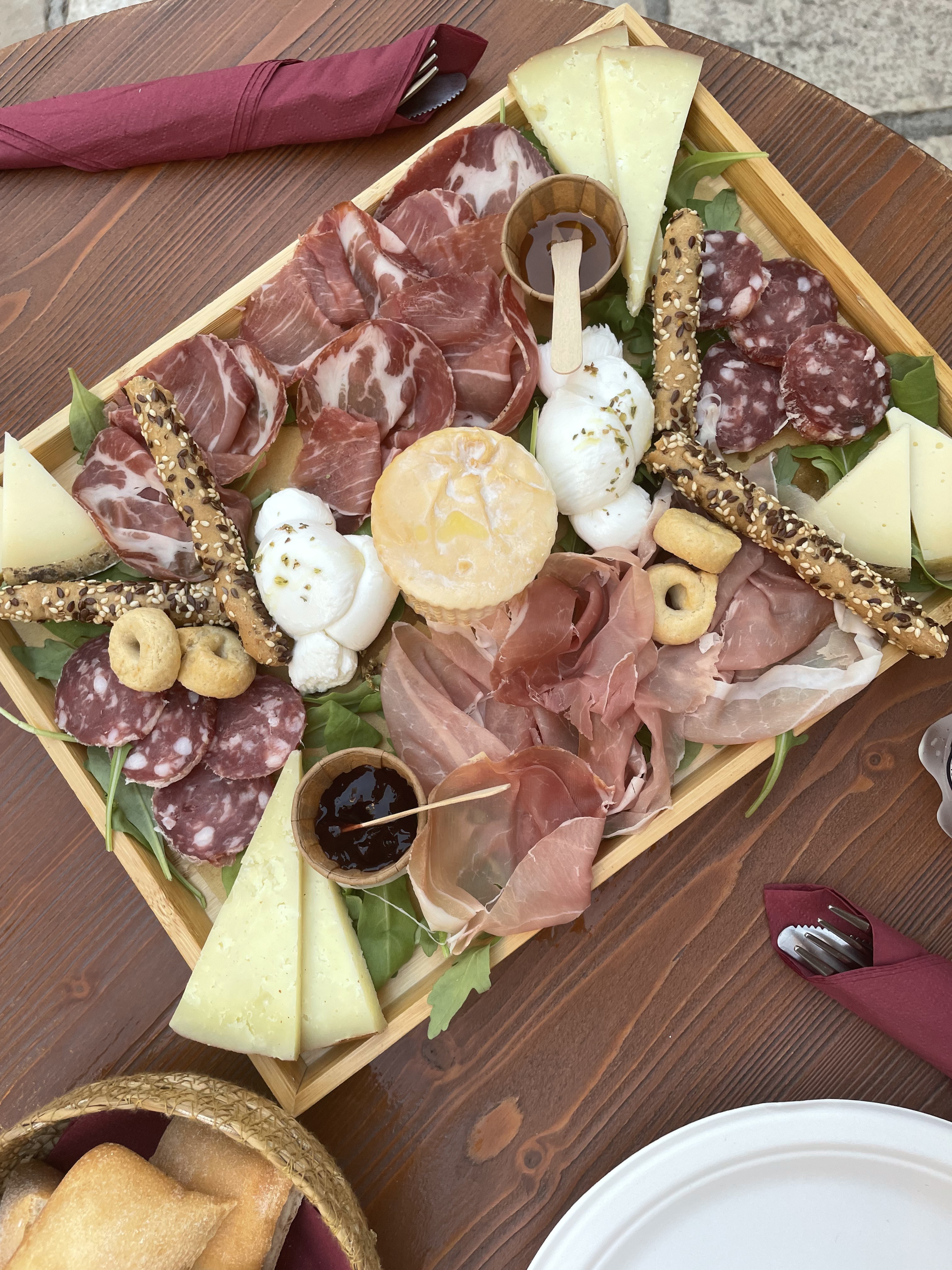
The trip back through the old town included an aperitivo board and a square with a full brass band in cream uniforms, playing to the floodlit facades. Polignano did not send us off quietly, and we did not ask it to. Farewell to base number one; Monopoli is next, one town along, three more nights.
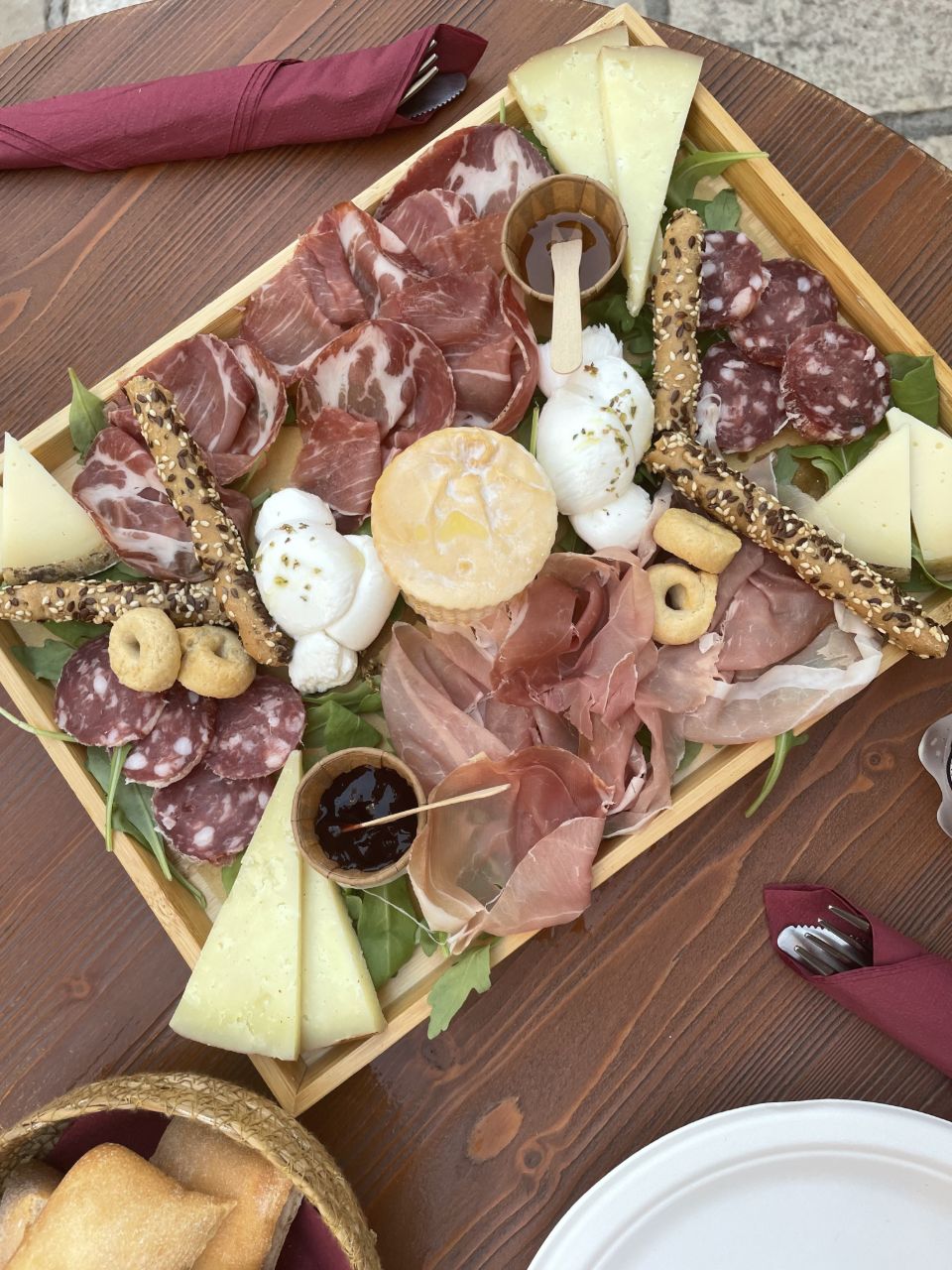
The aperitivo board 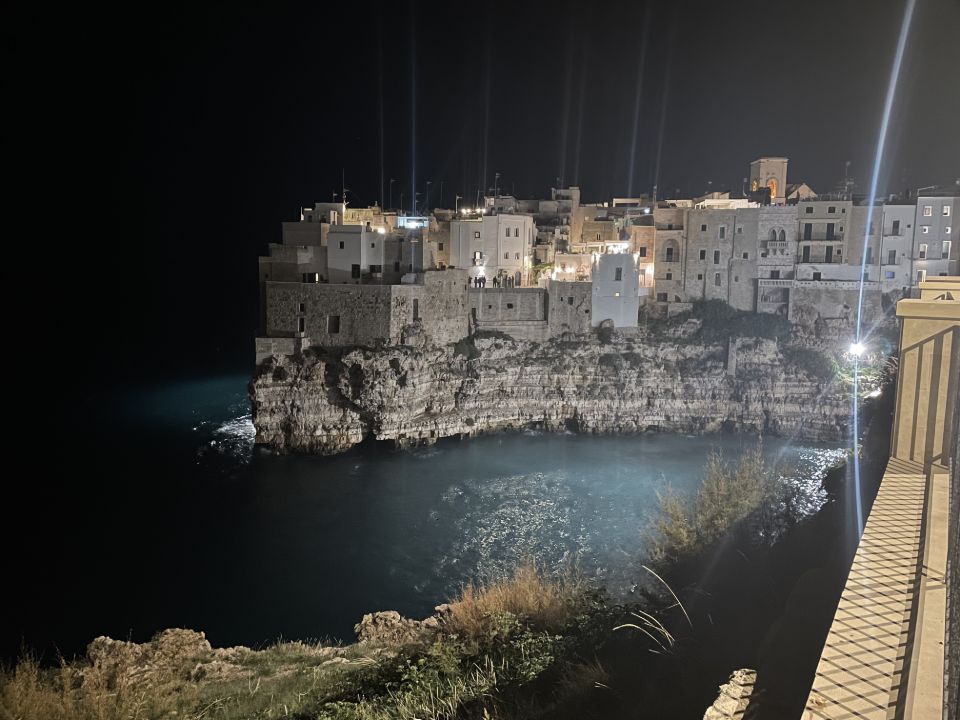
The Lungomare, night shift 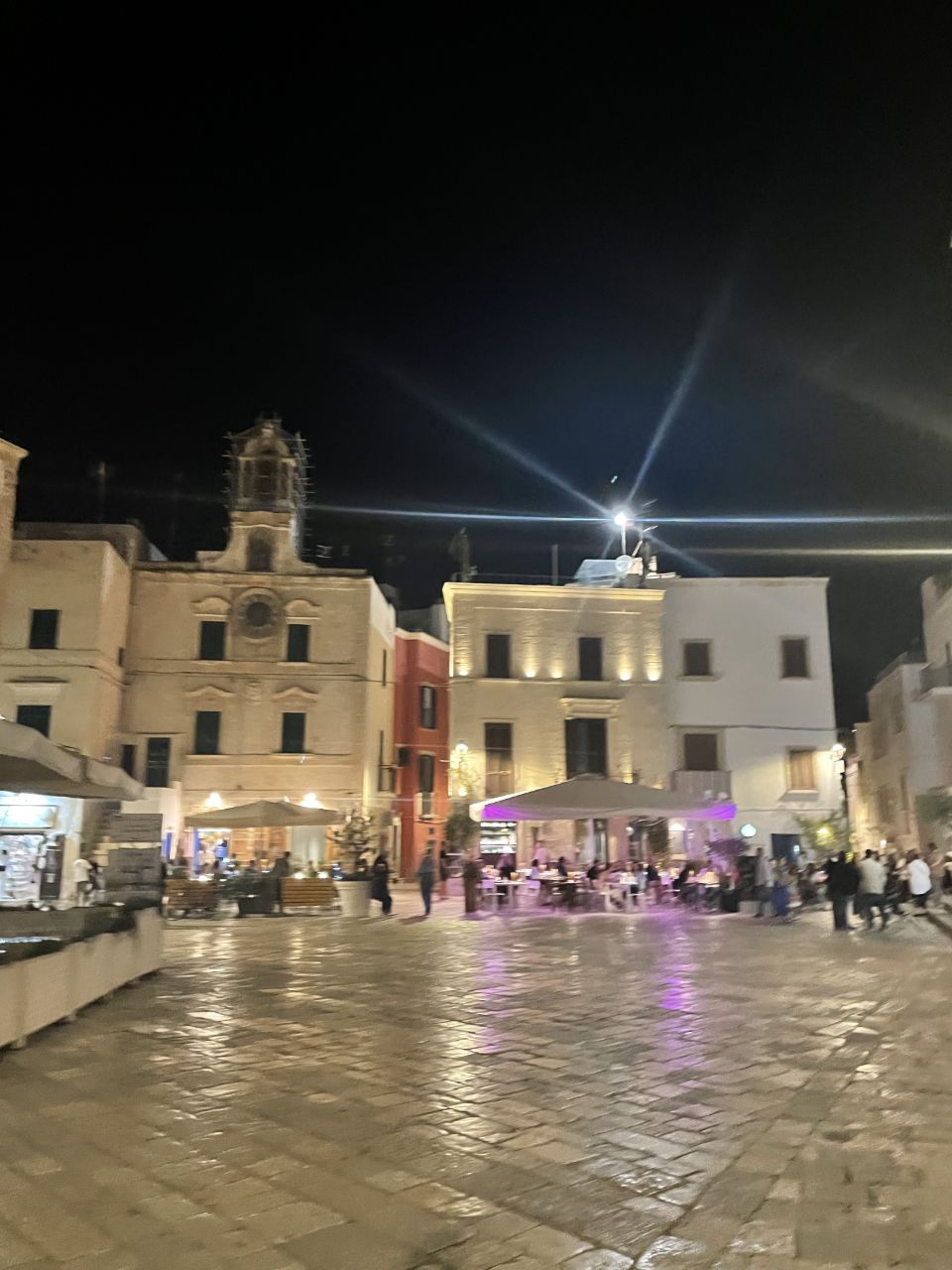
The band, in the square 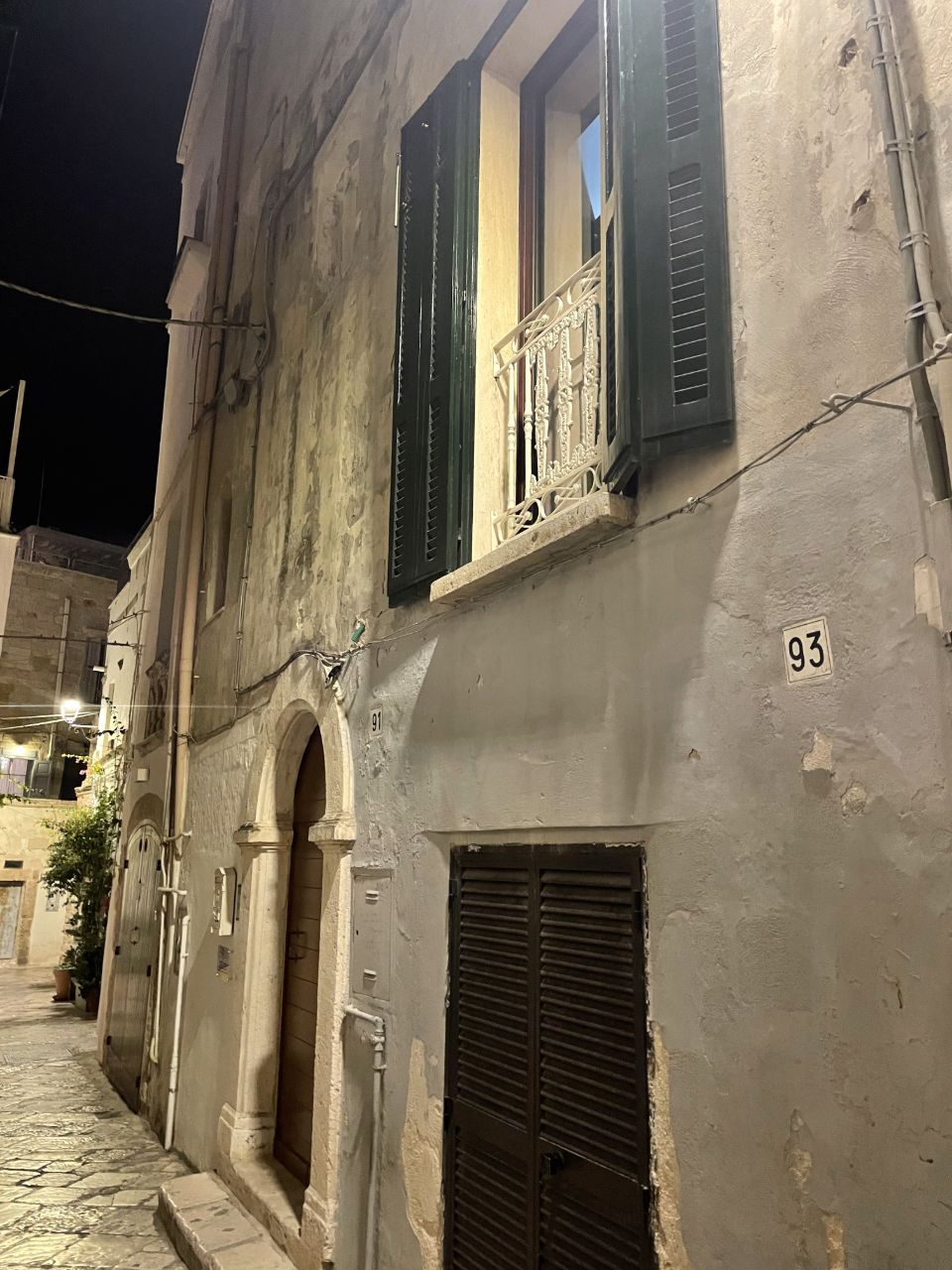
A weathered house, keeping the corner 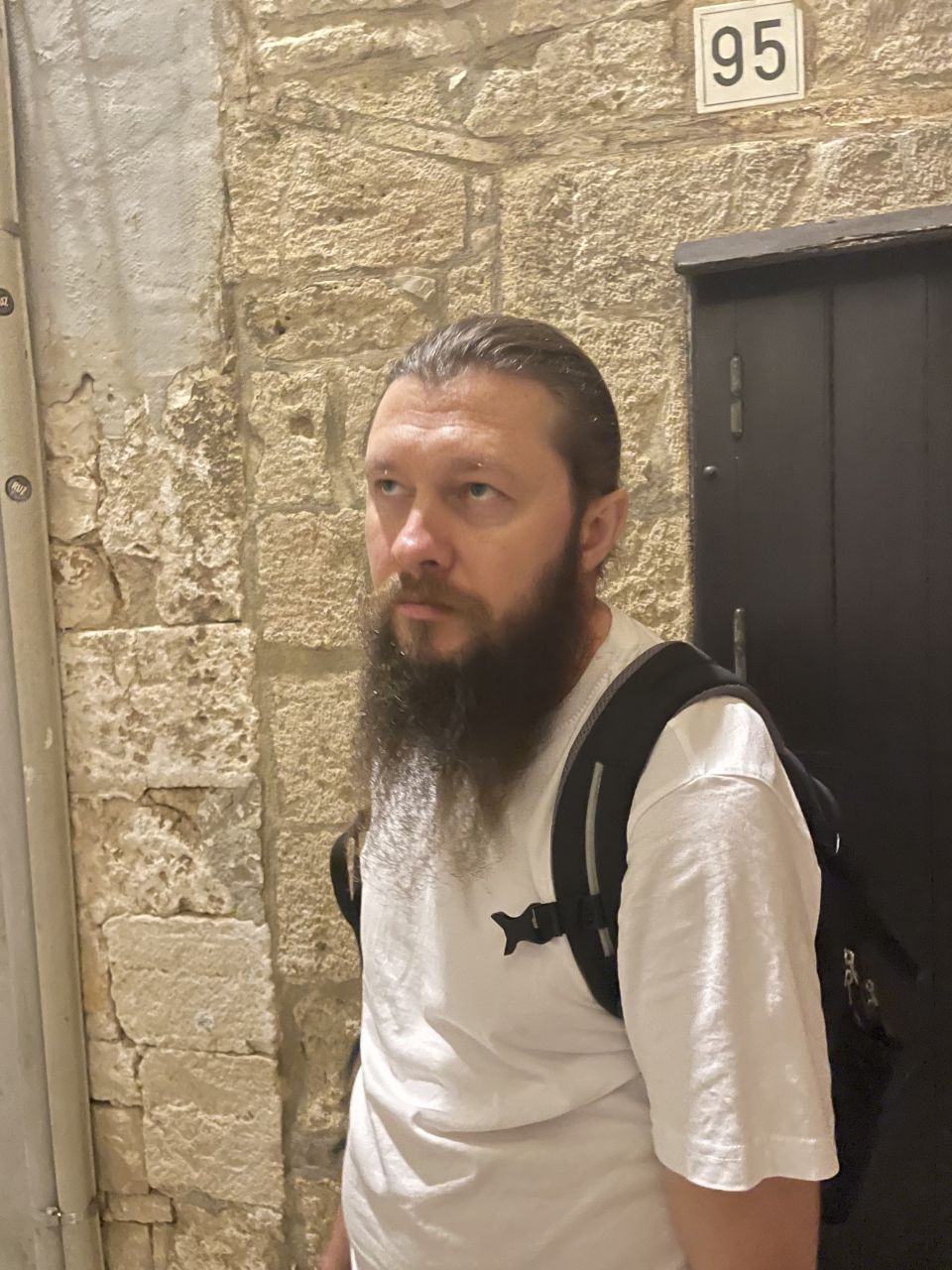
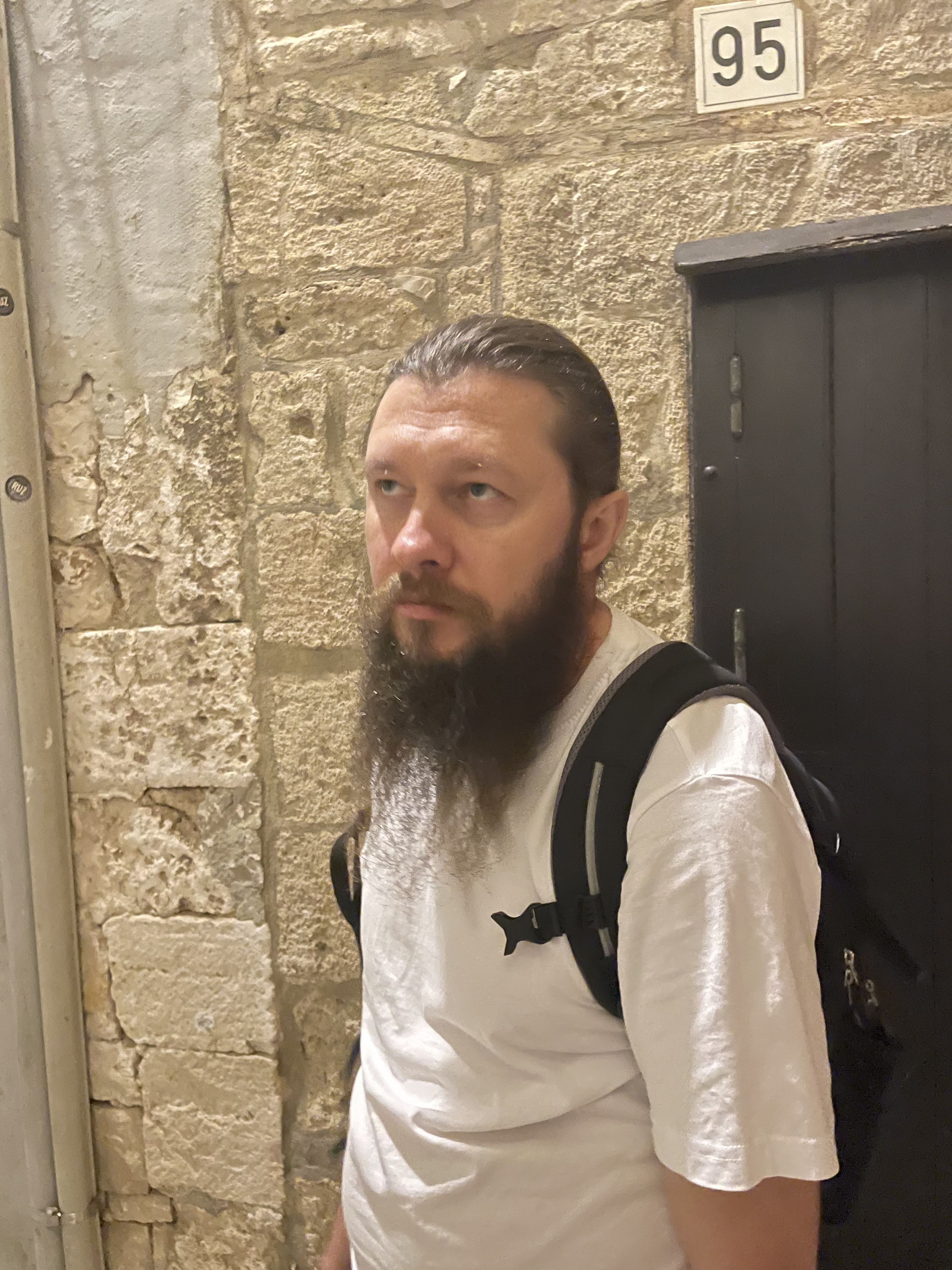
Oleg, night portrait 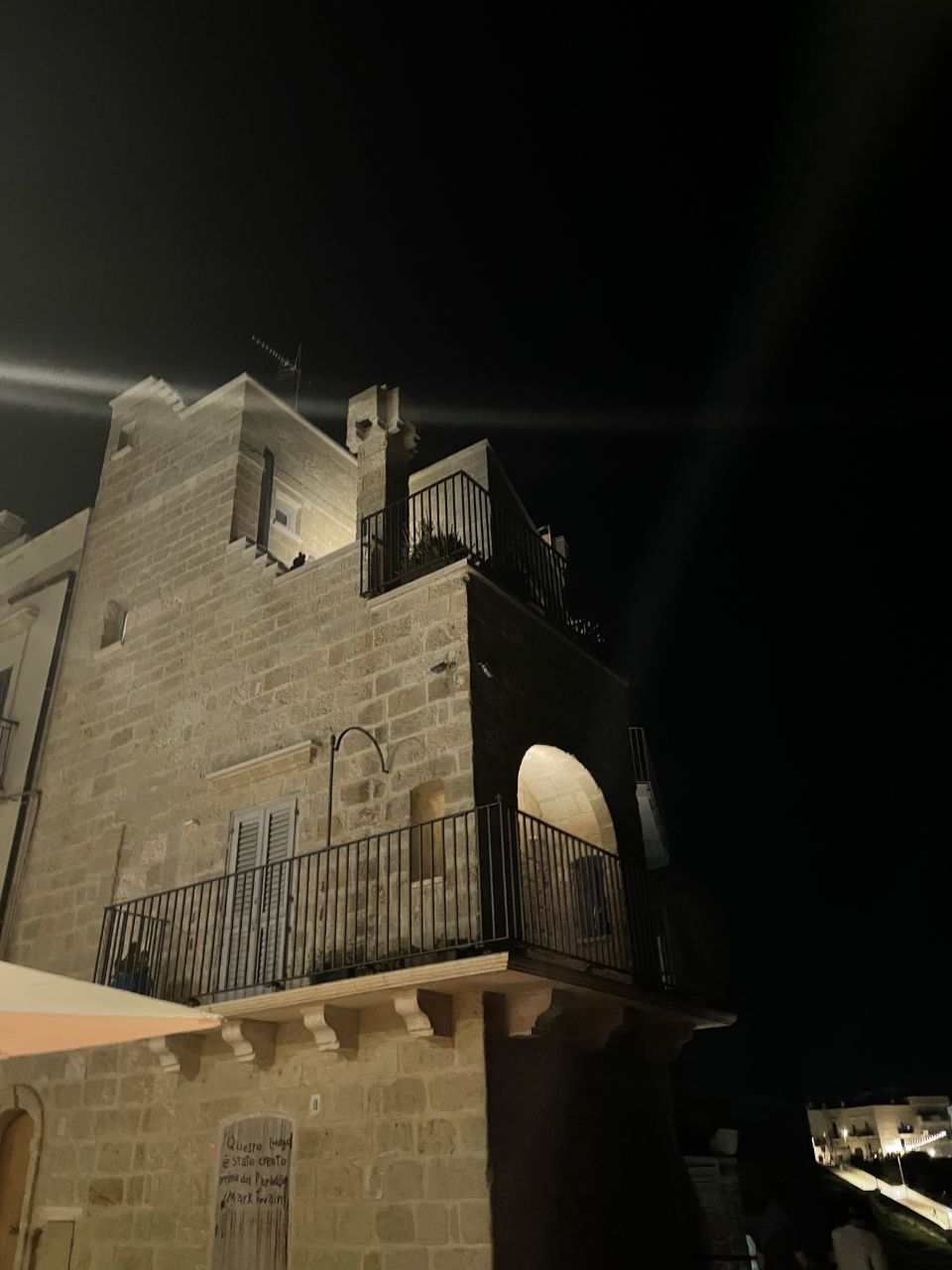
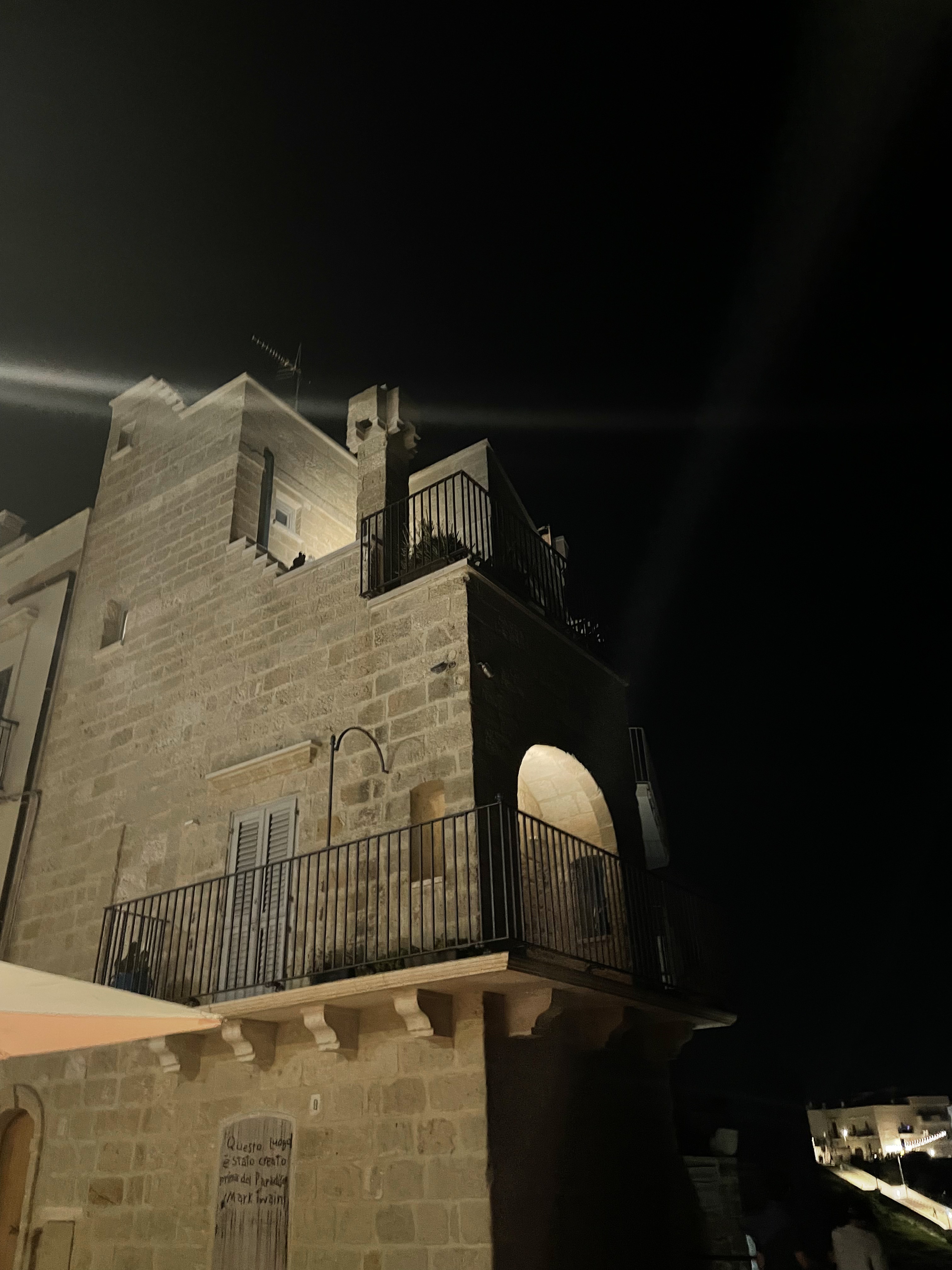
The building over the water 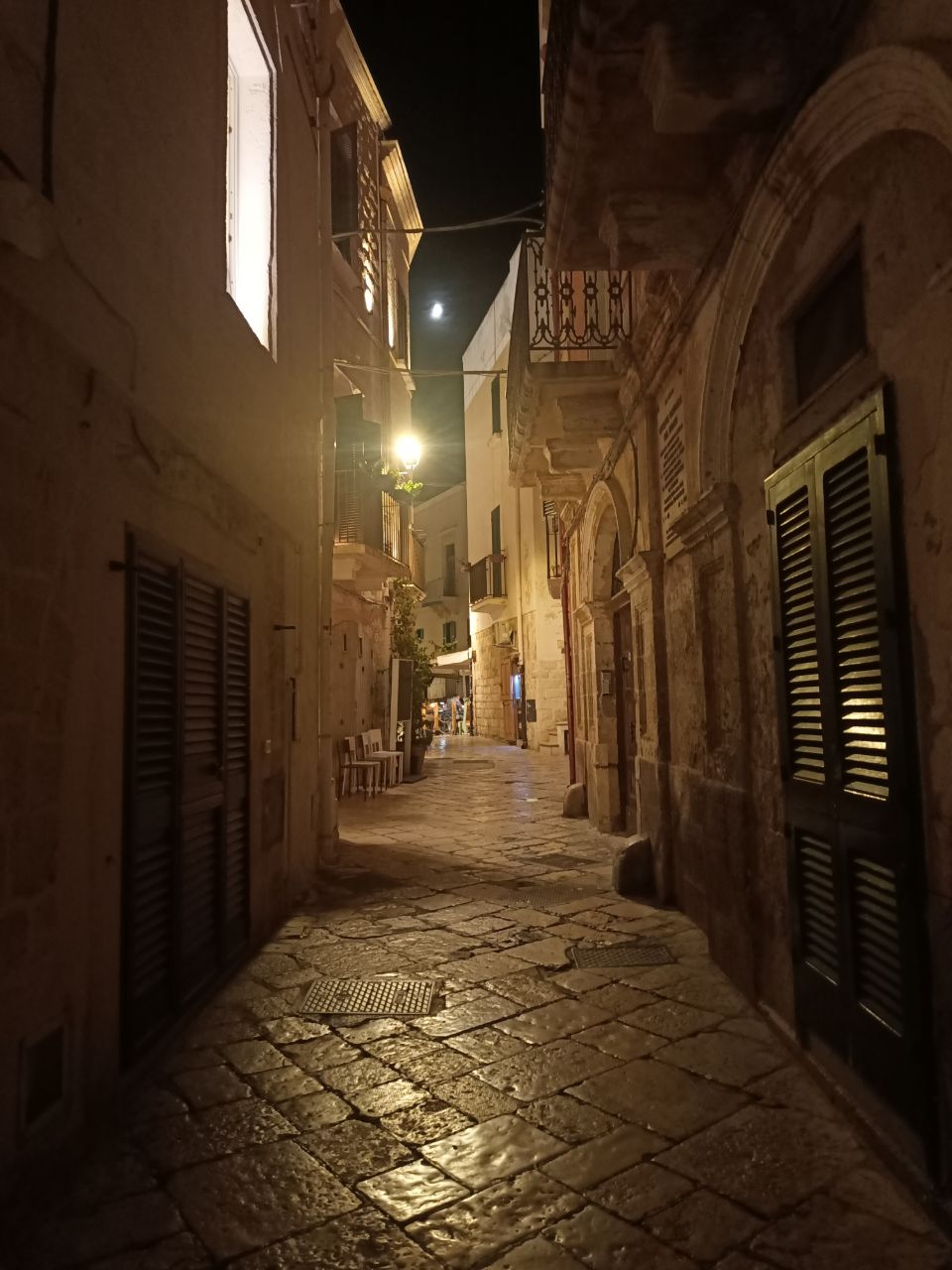
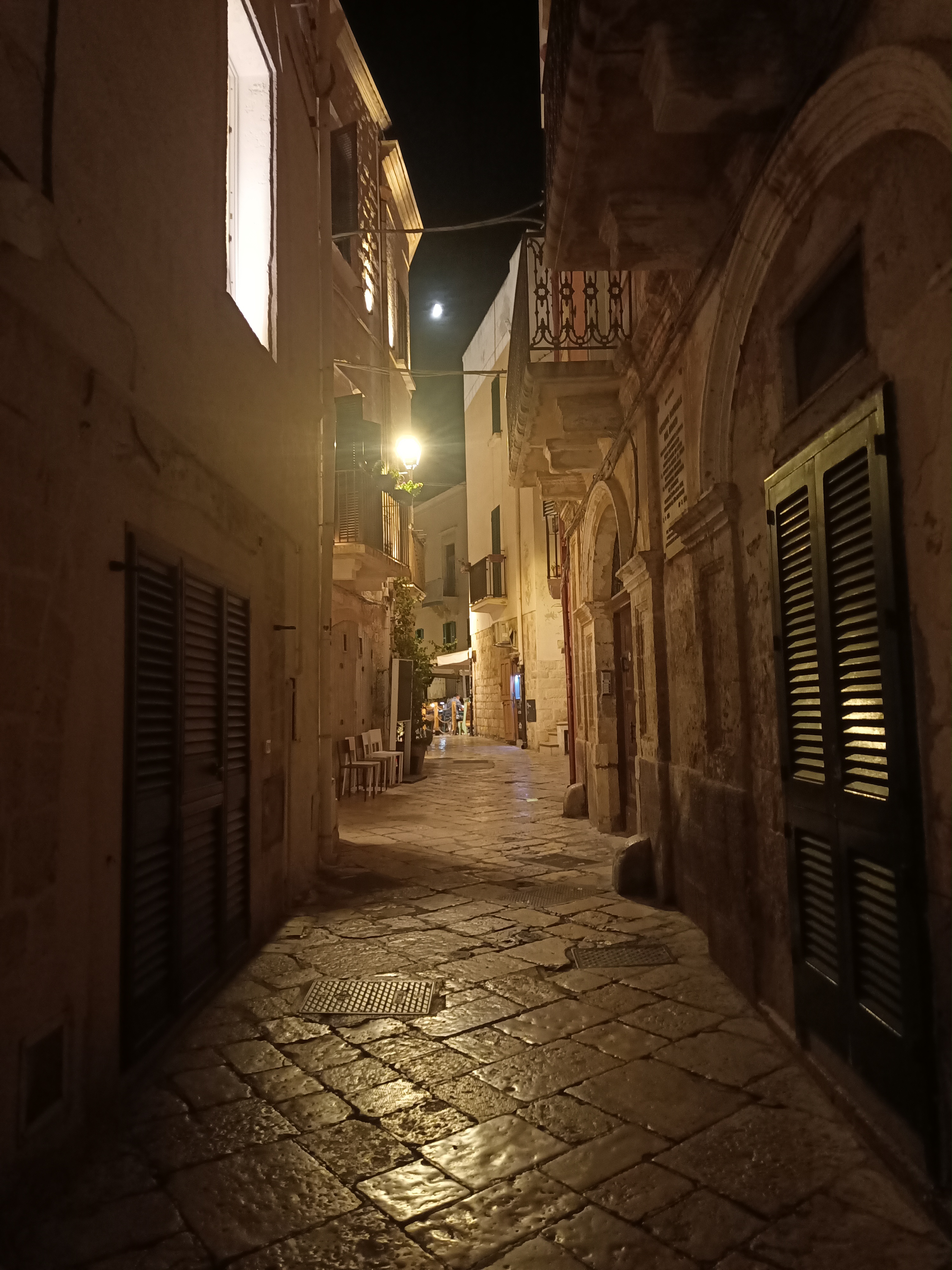
Final frame: the empty lane, warm
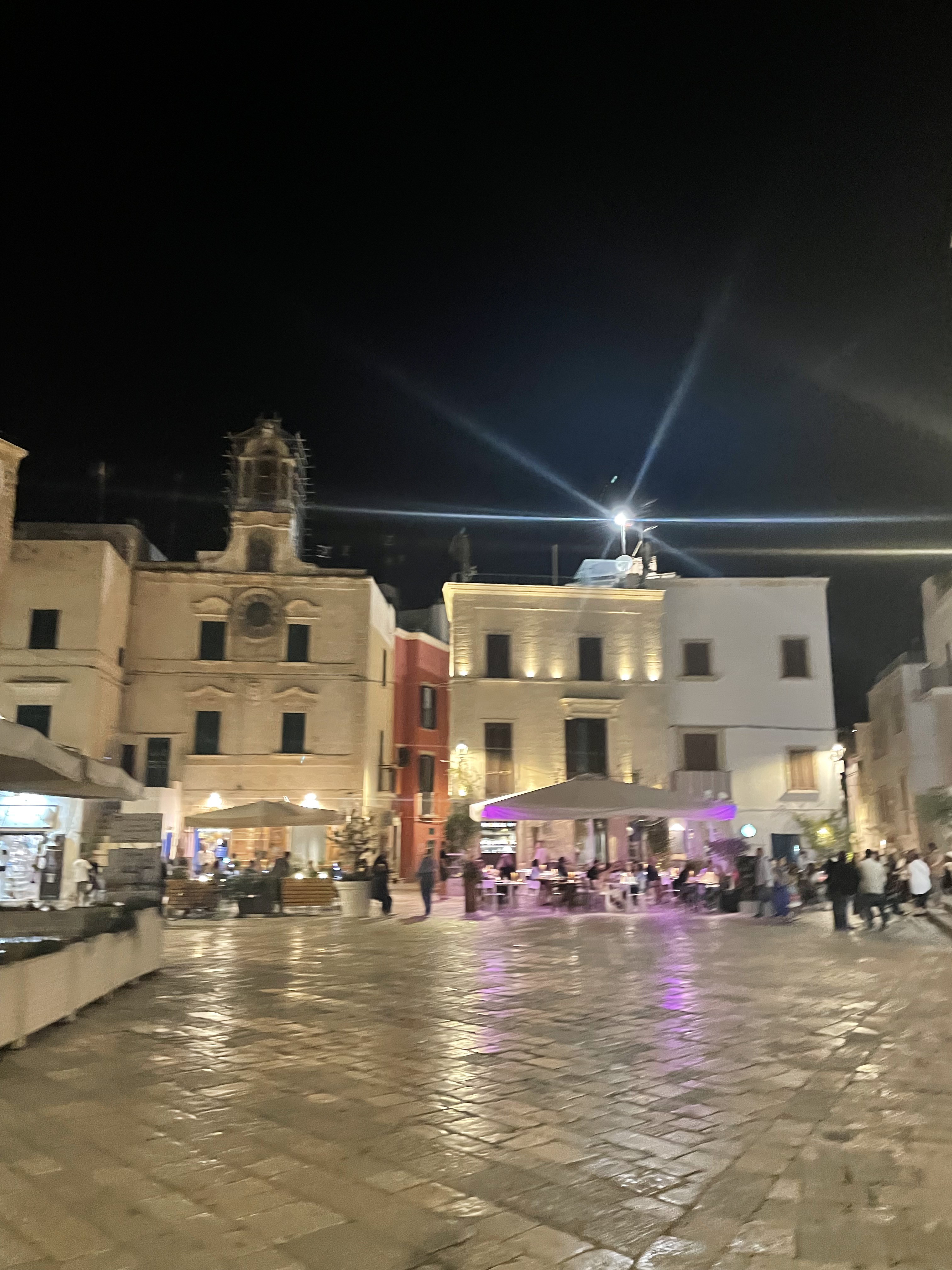
The brass band doing its farewell set in the piazza — fifty seconds, our last in Polignano.