Italy trip 2025 — Pompeii
Sixth of seven. We had been looking at Vesuvius for two weeks — from the ferry, from rooftops, across every dinner table in Sorrento — and it had behaved. Now we walked directly into its argument with the town below it. A full day inside Pompeii: paved streets, fountains, forum, baths, snack bars, a bakery, amphitheatre, the plaster casts, and the Villa of Mysteries to close. Here it is in order.
The walk in
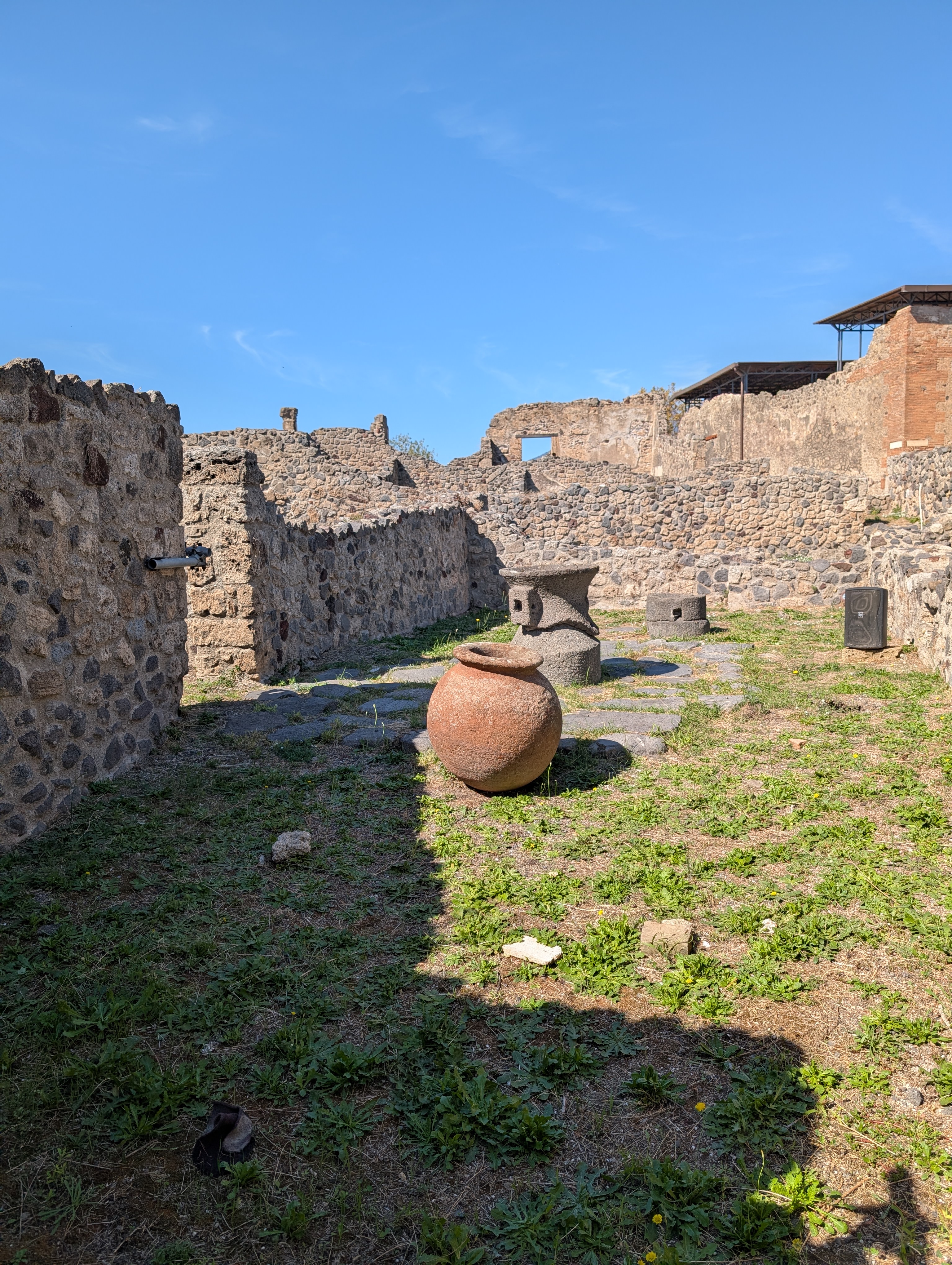
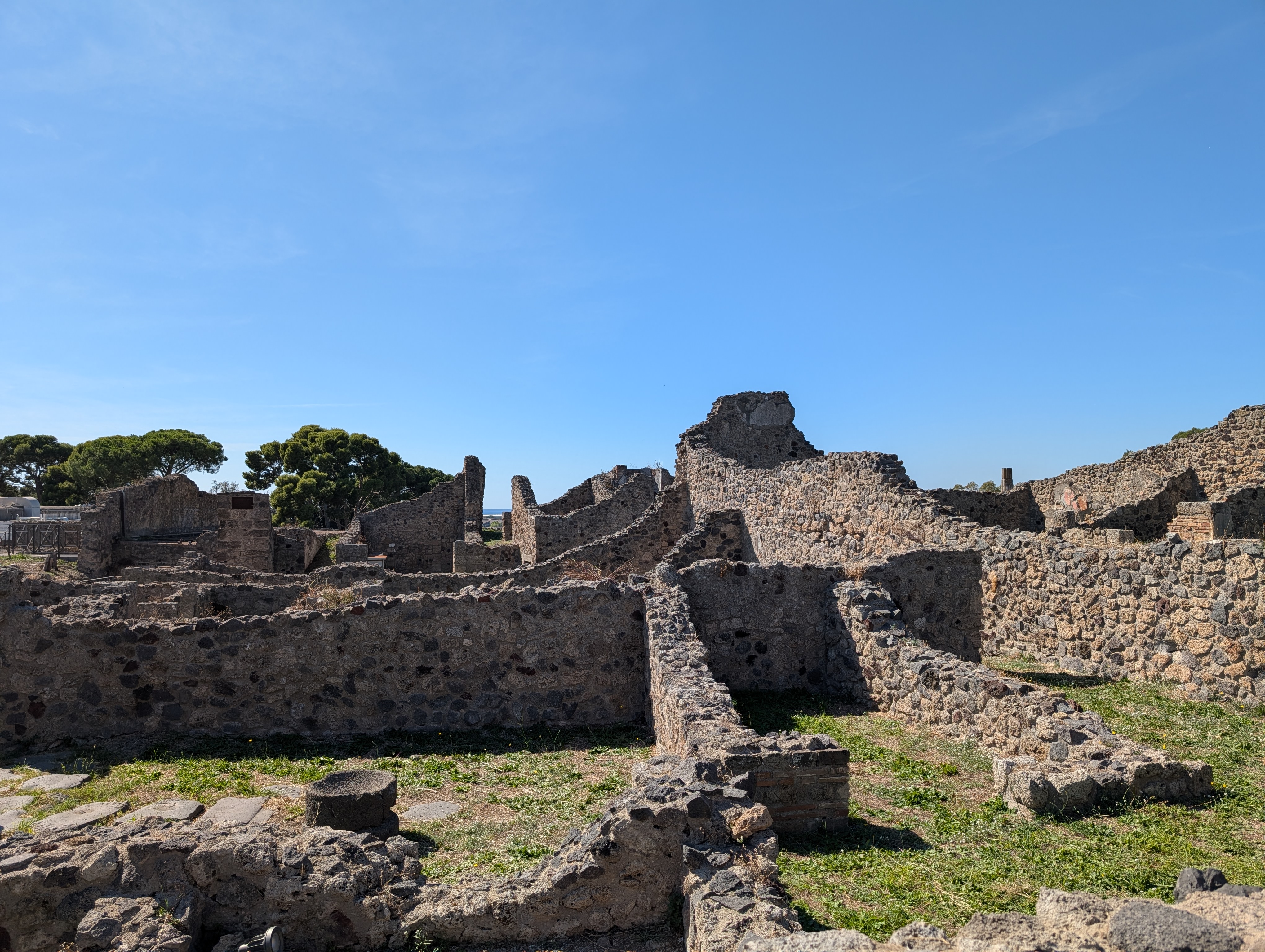
Morning around the walls: a ruined room holding its amphora in the grass, and the first panorama — roofless blocks, umbrella pines, and the volcano standing quietly in the background of every frame.
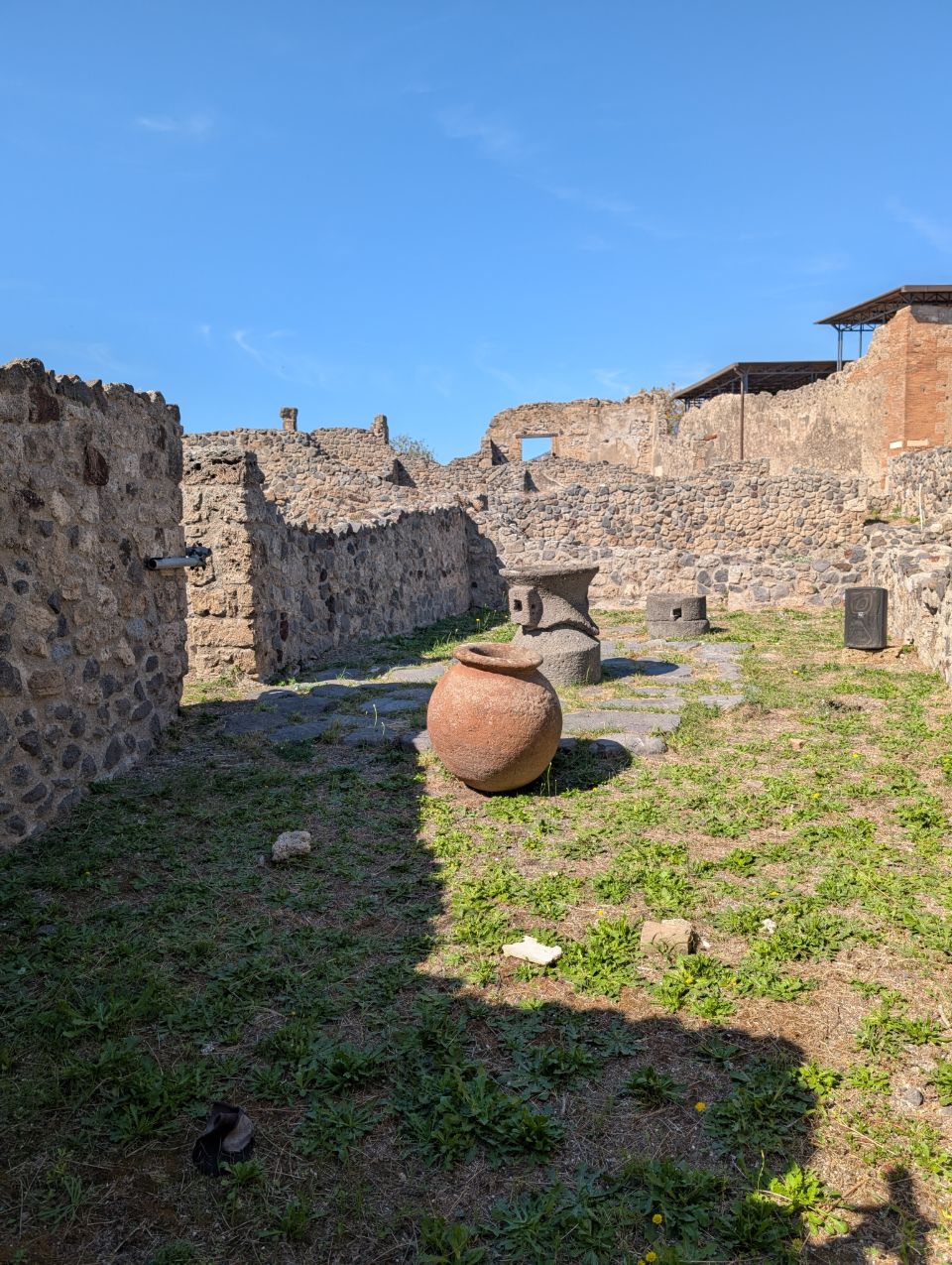
A ruined room keeps its amphora 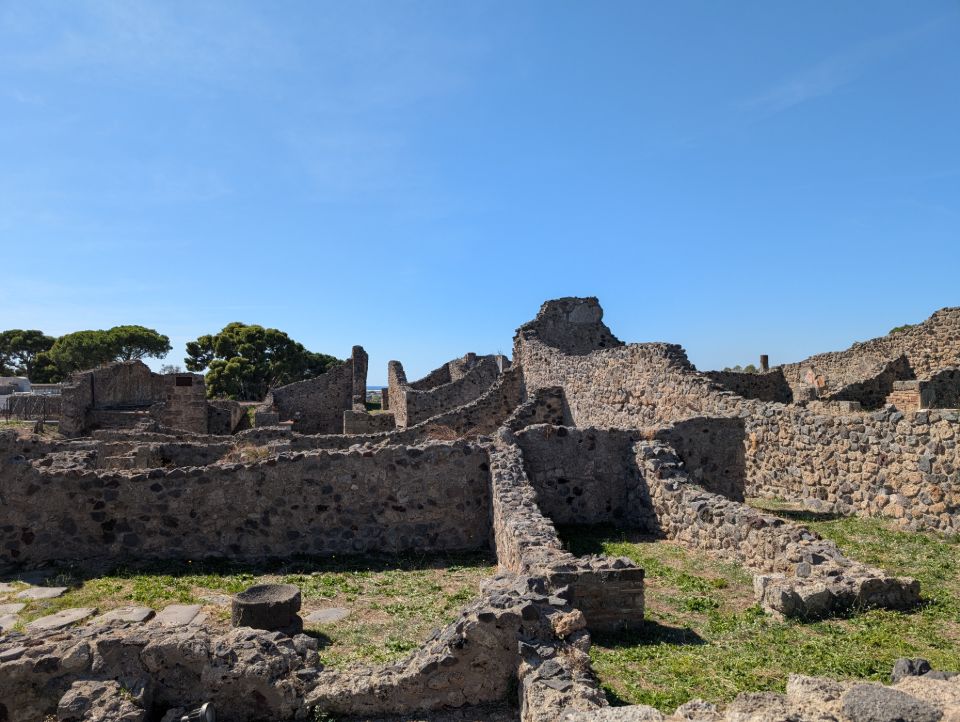
First panorama: pines above the ruins
First streets
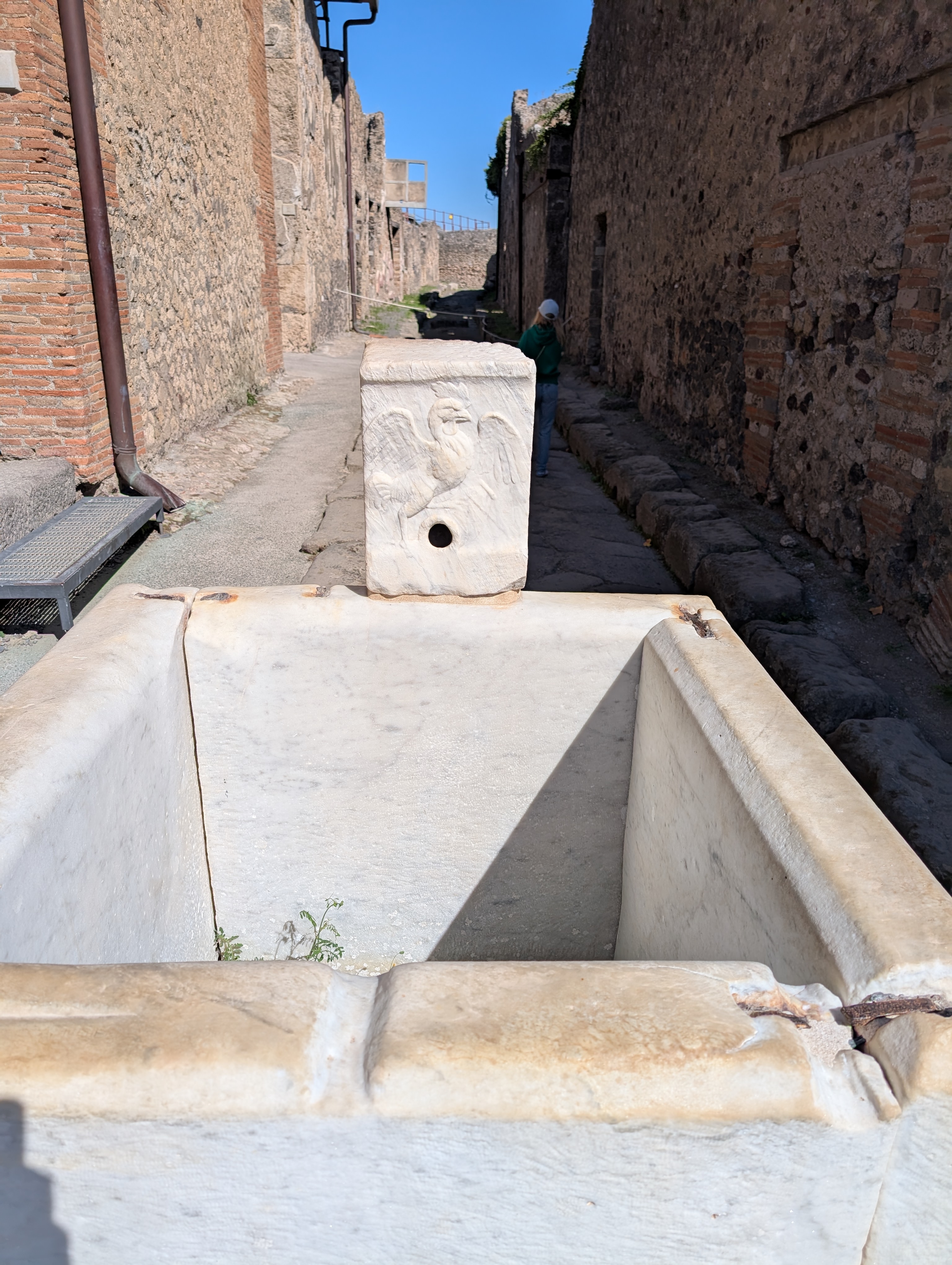
Inside at last: a marble fountain basin worn round at the lip, a portico on a geometric mosaic floor, a doorway framing column and painted wall, Anna climbing a basalt street that has carried two thousand years of feet, and a black-and-white flower floor still perfectly in date. Then a house’s atrium, its impluvium square in the floor where the rain used to come in.
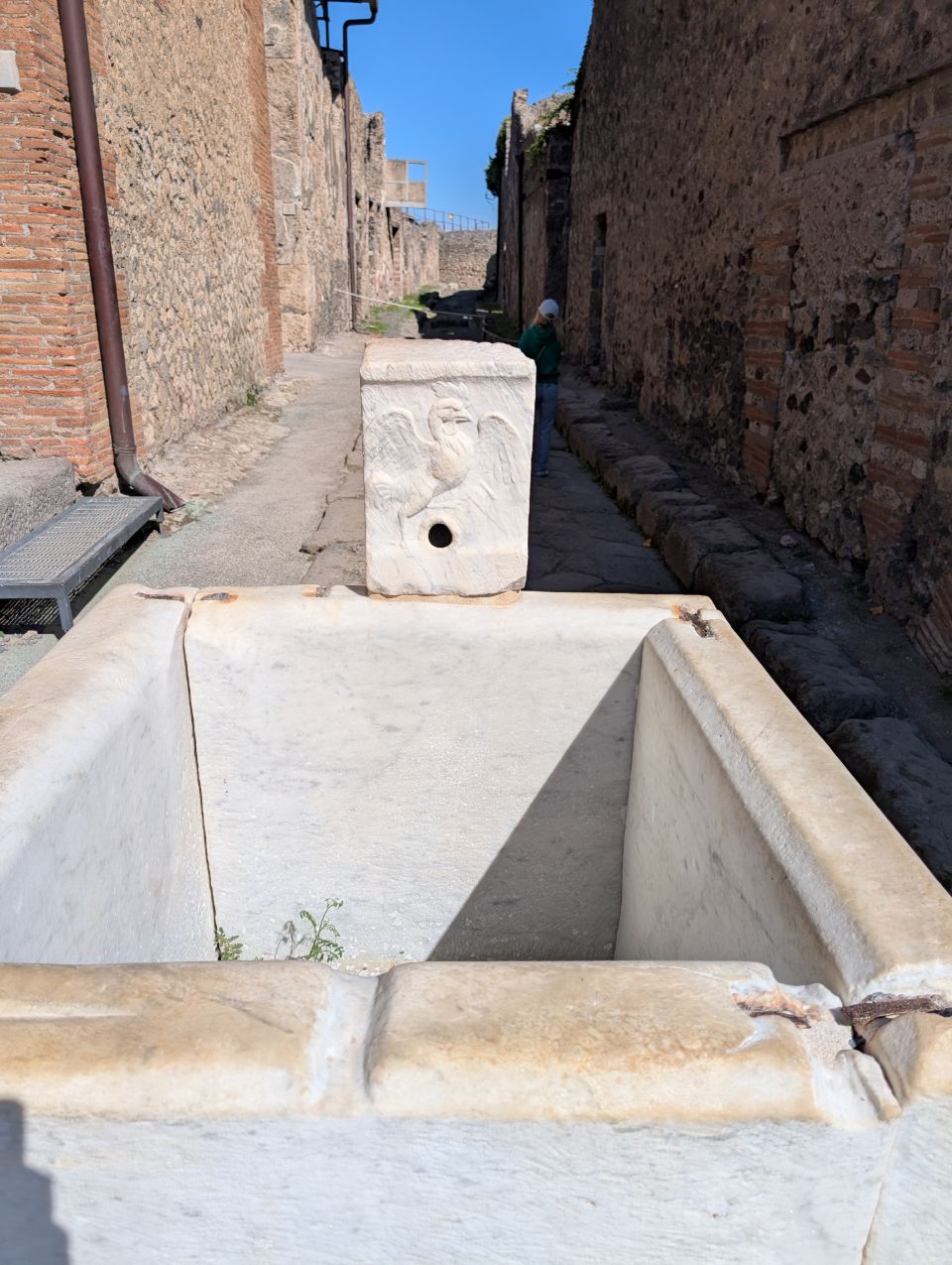
Fountain basin, worn round by centuries 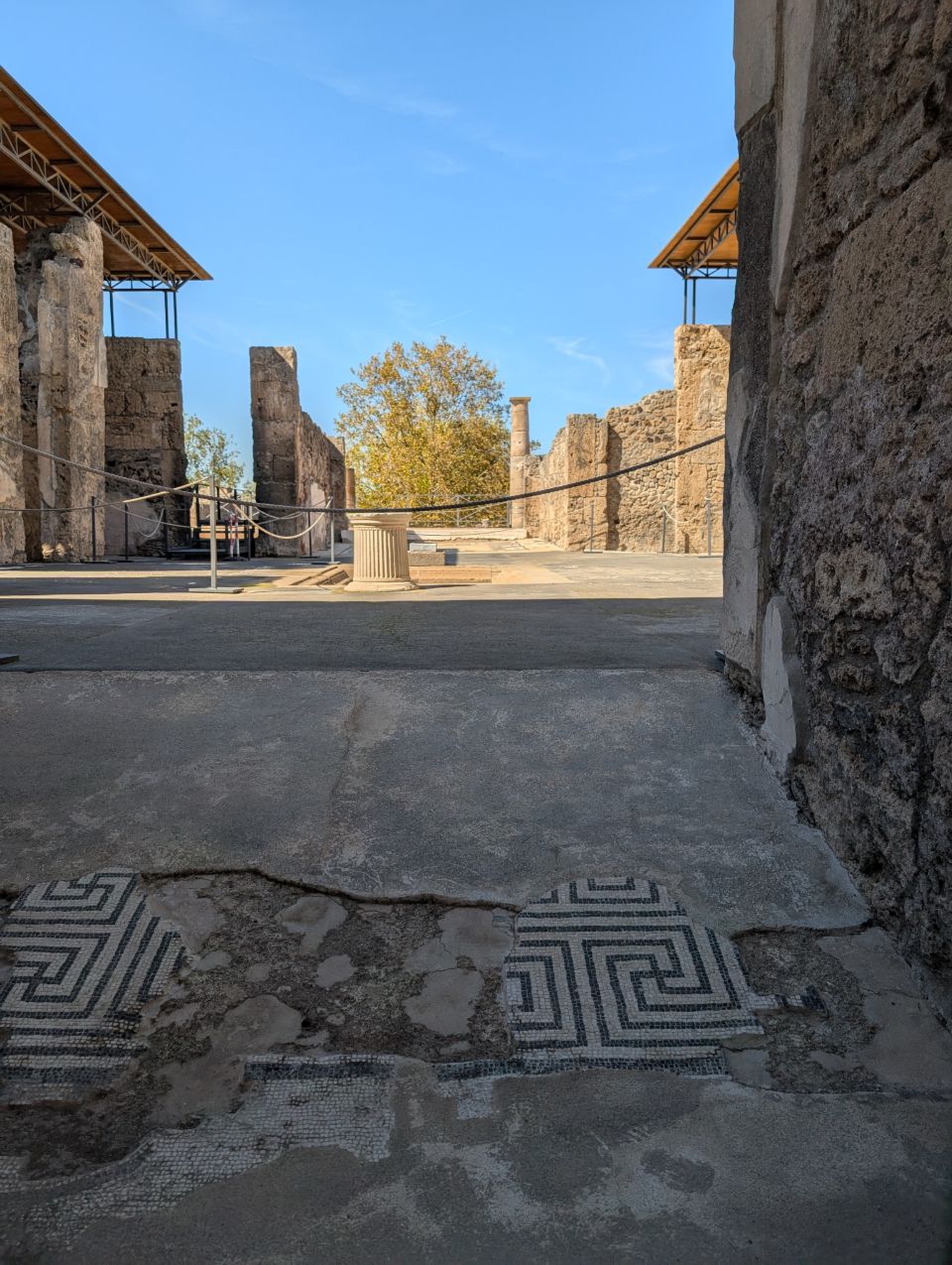
Covered portico, geometric floor 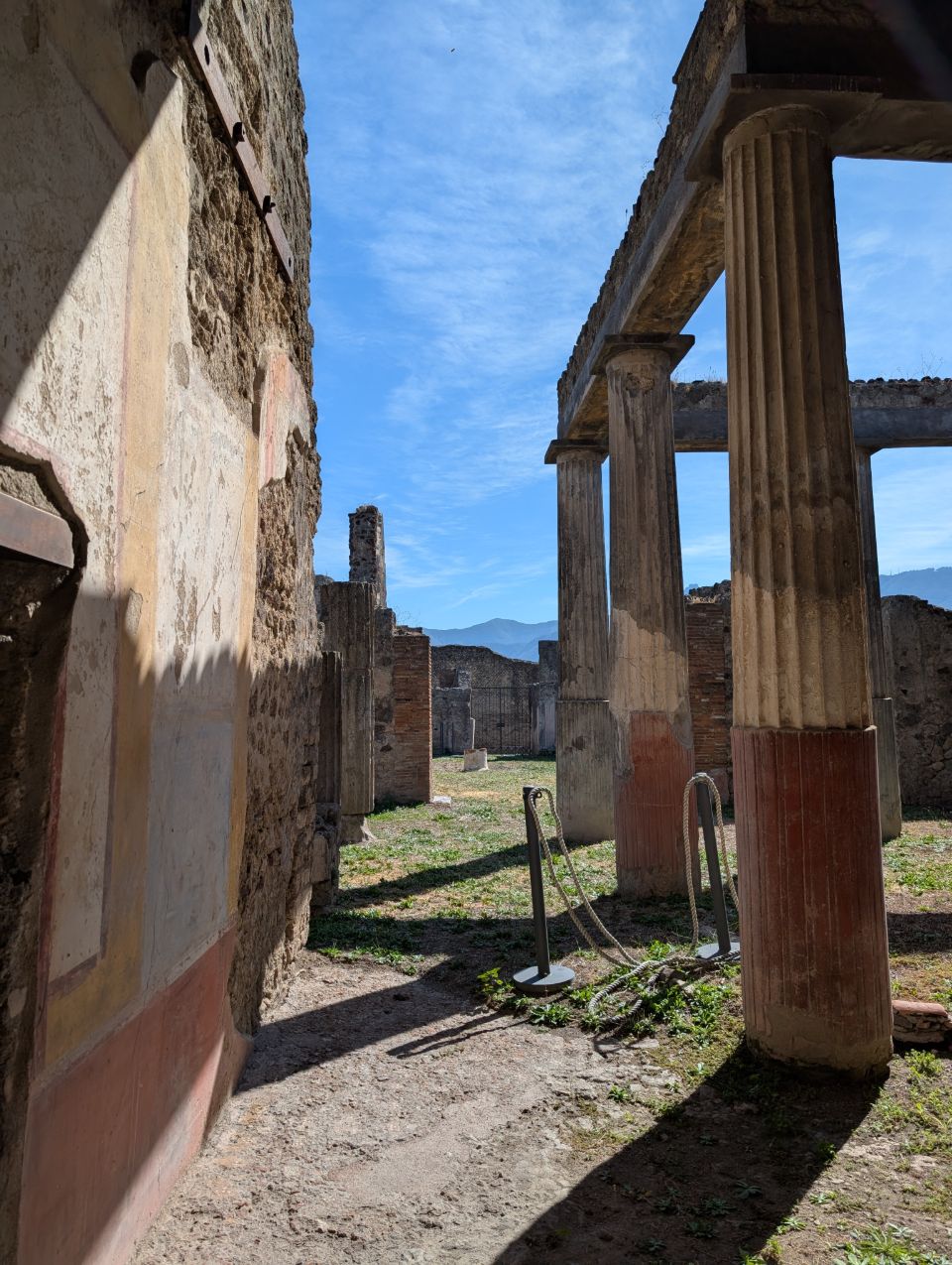
Column and painted wall through a doorway 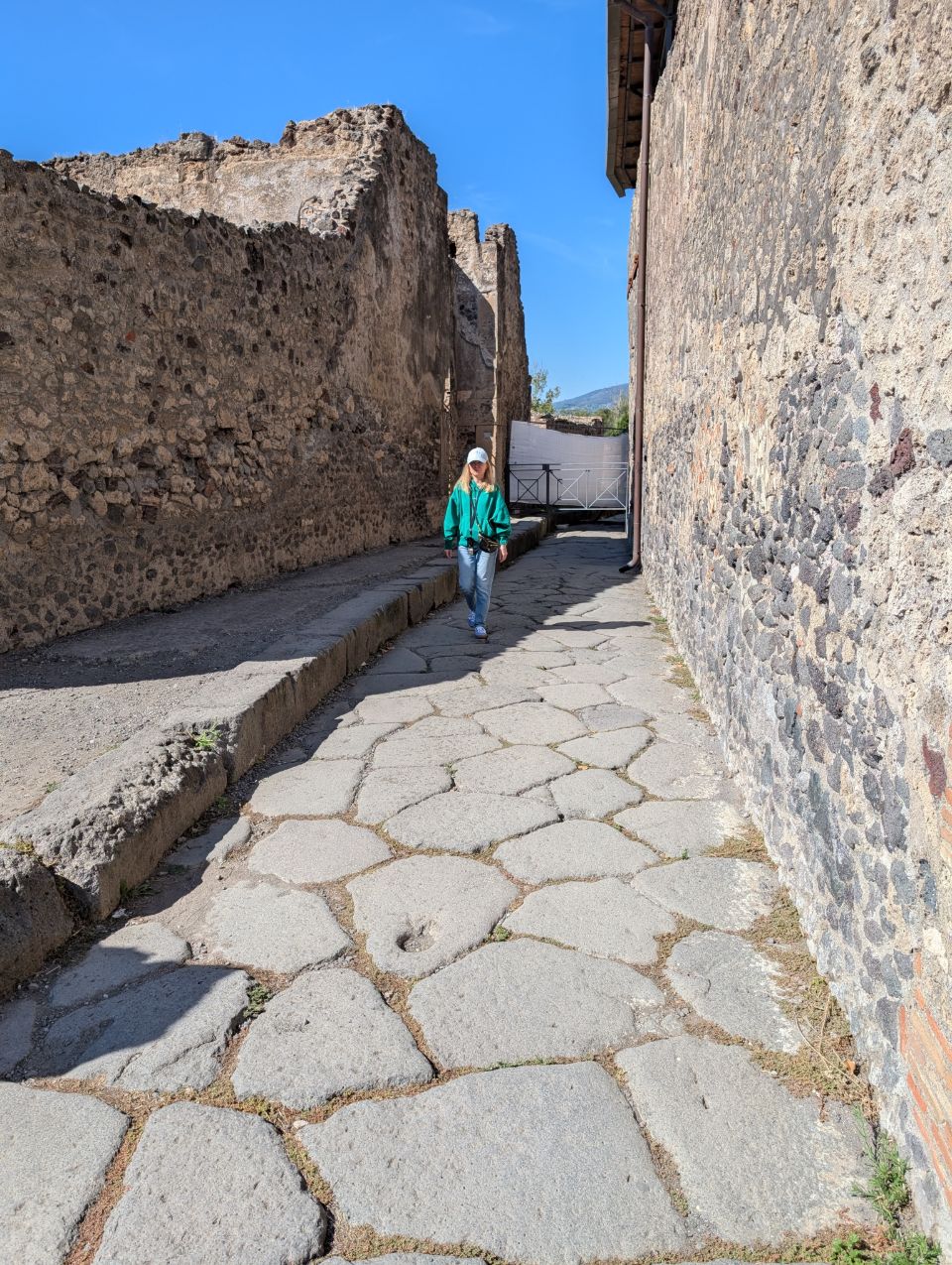
Anna, climbing history 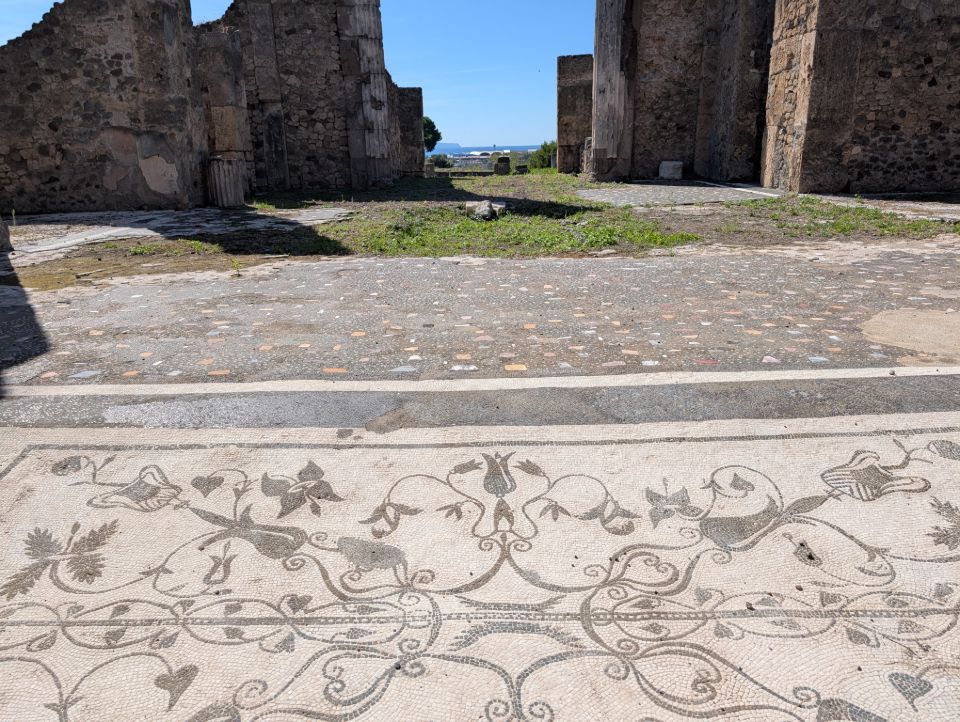
Black and white flowers, still fresh 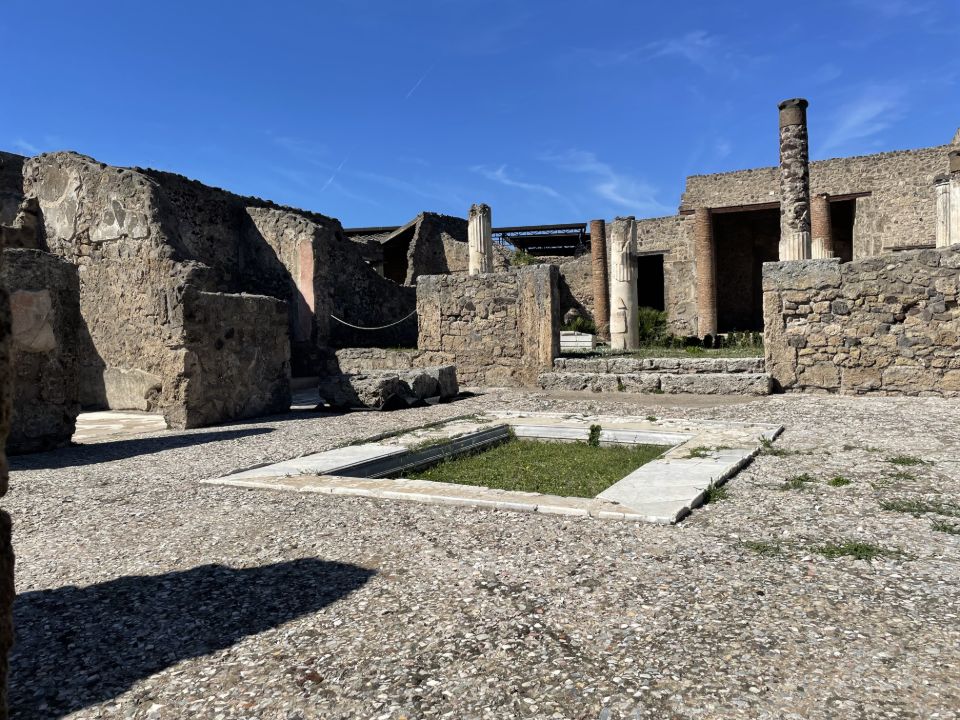
A house atrium and its rain pool
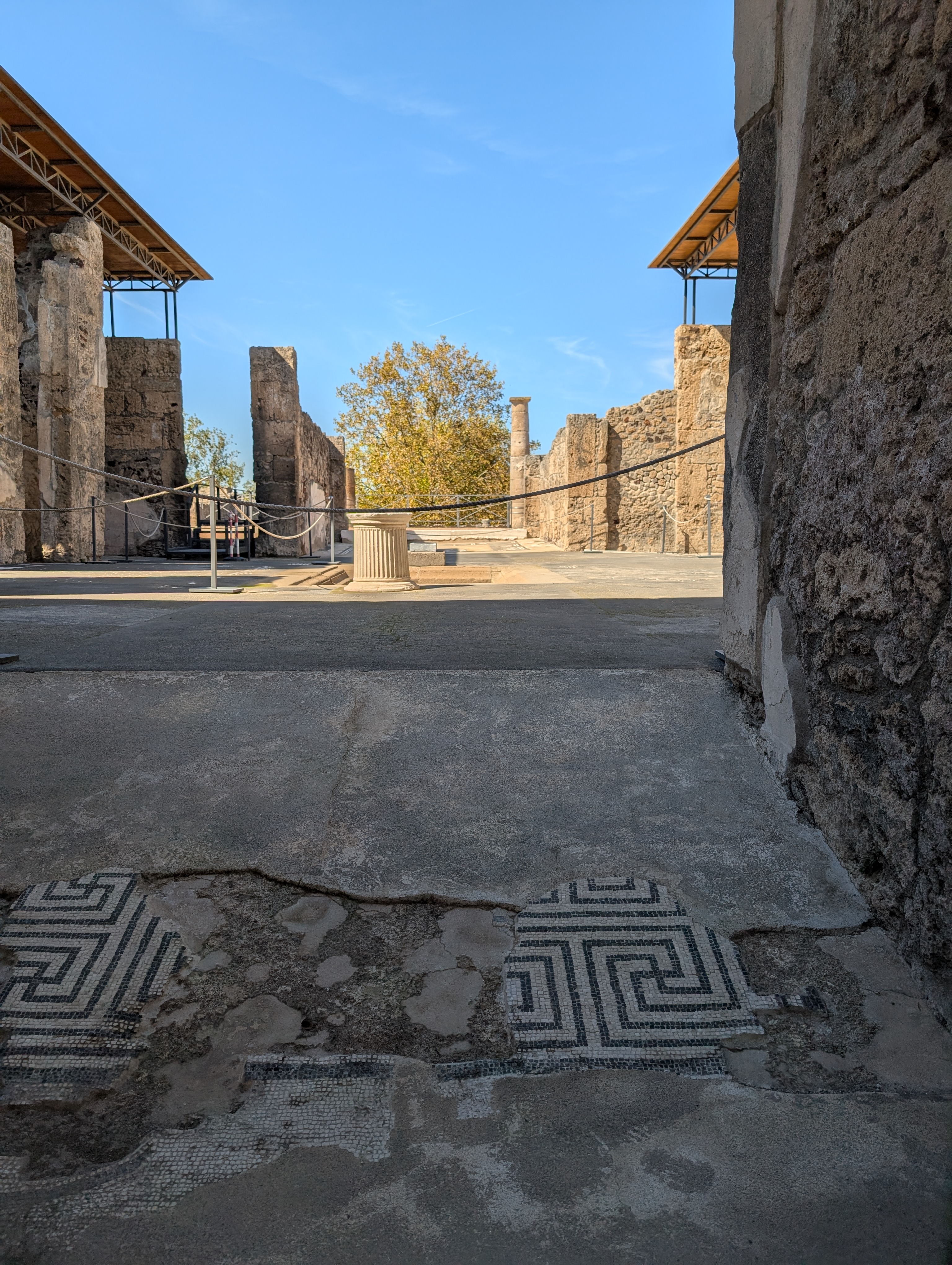
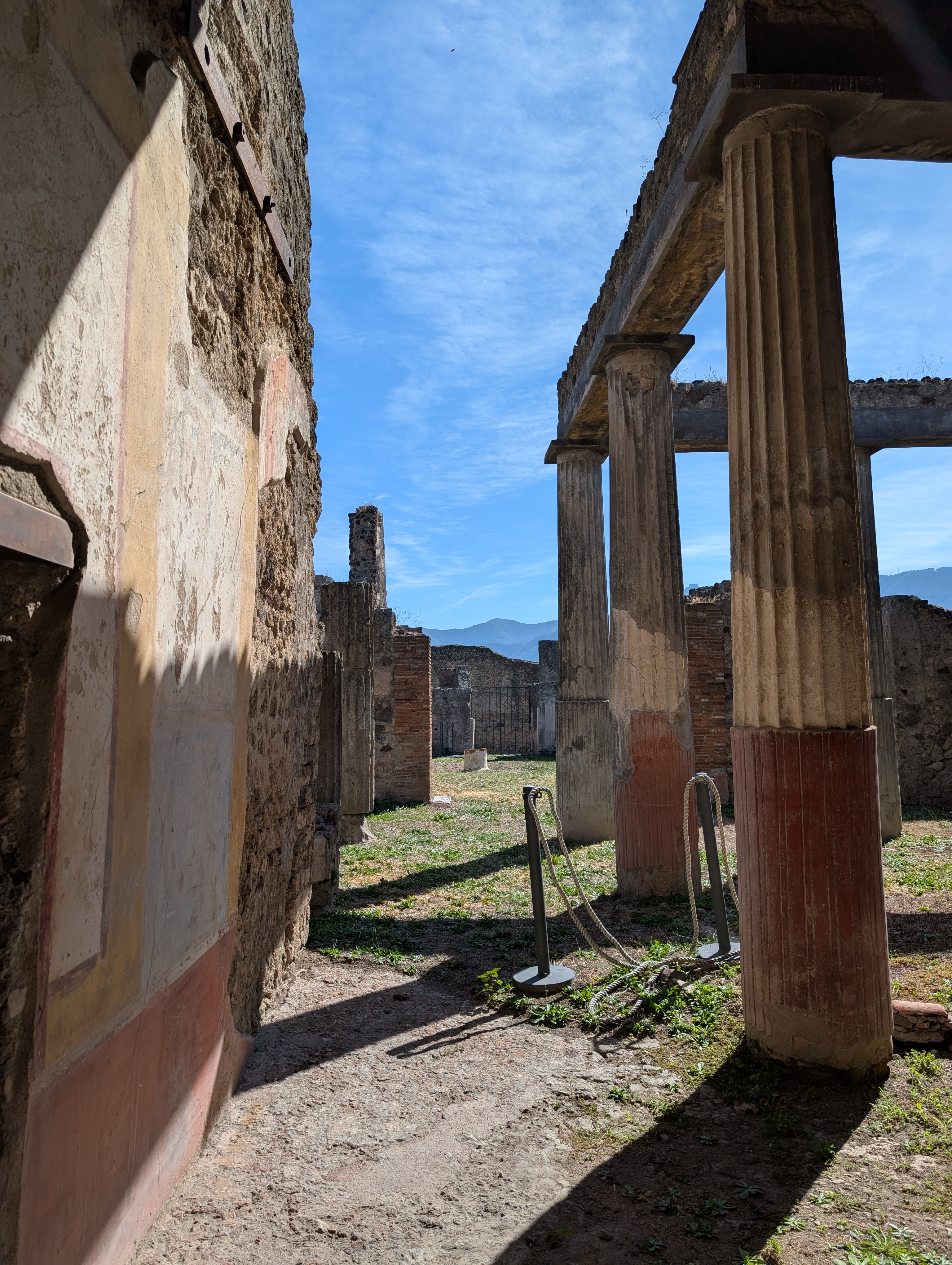
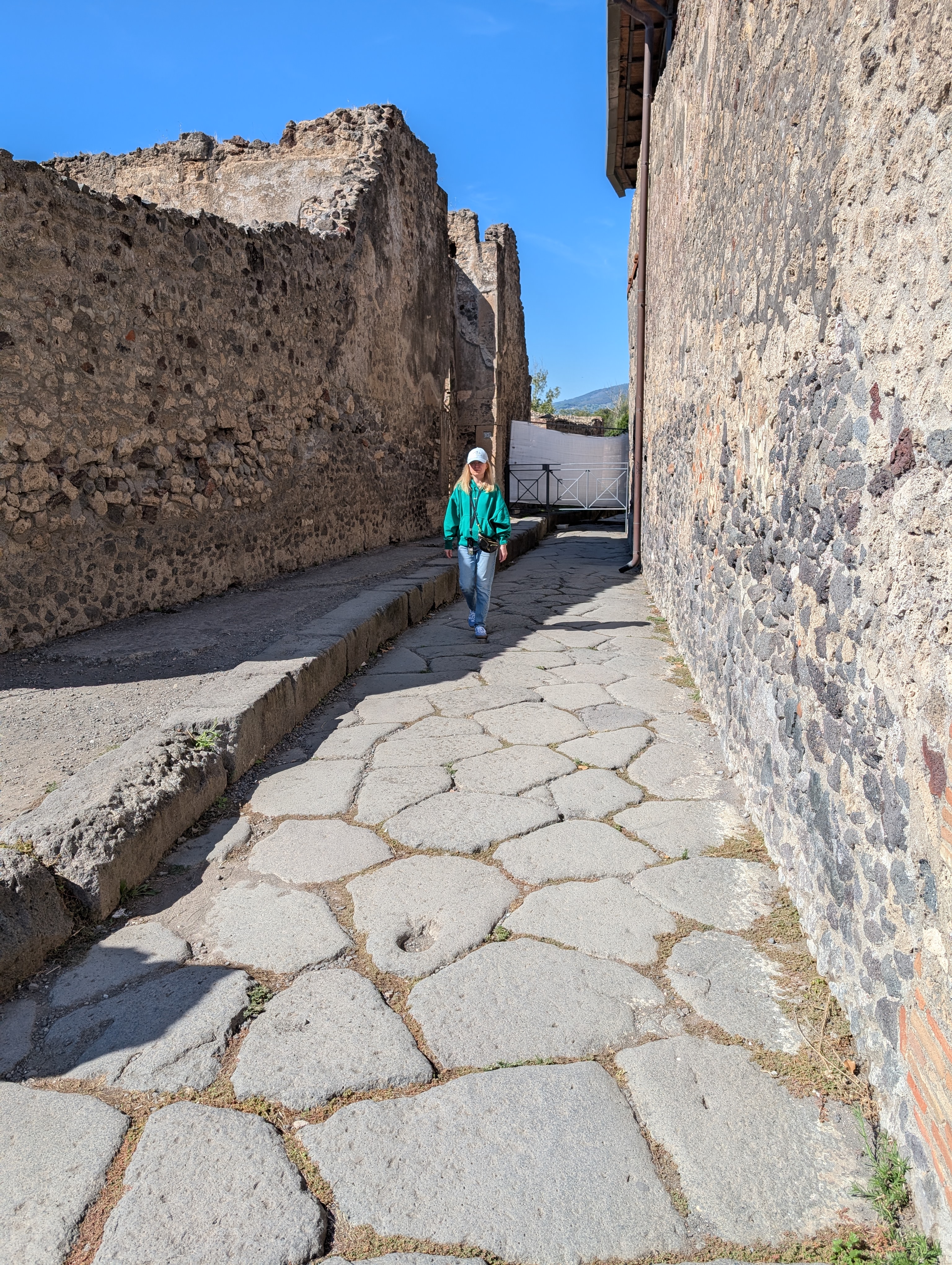
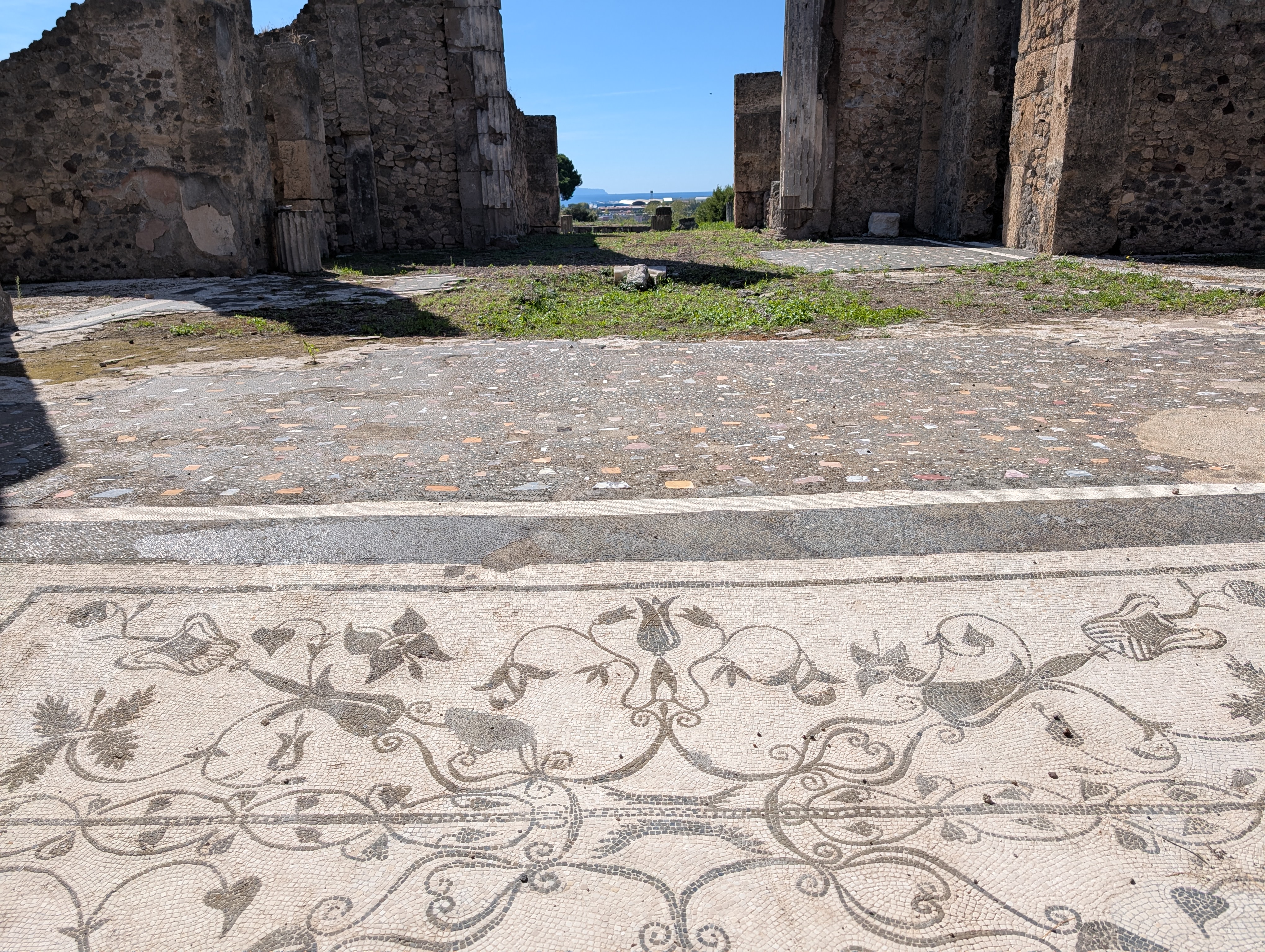
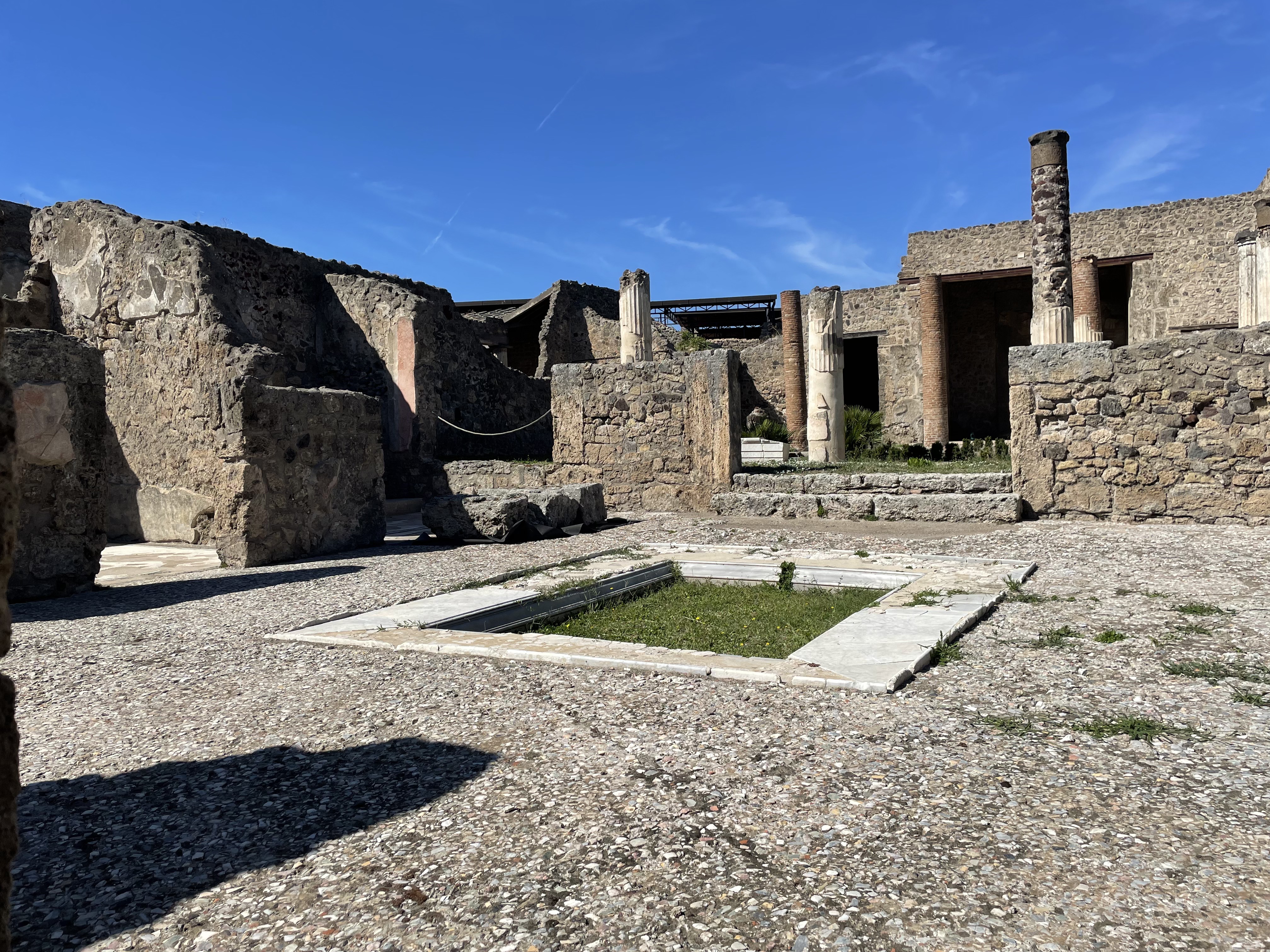
Temple ground
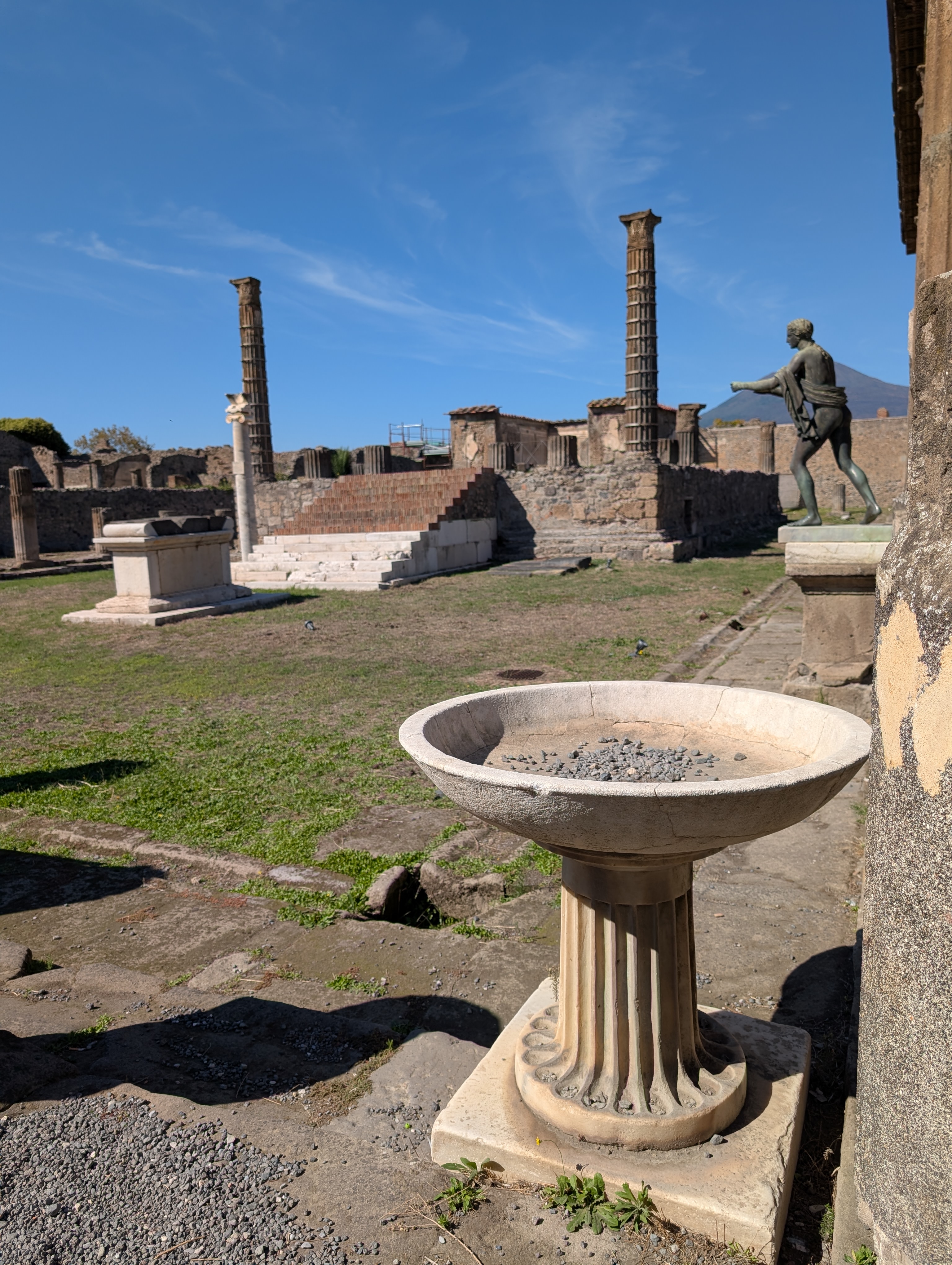
The first temples put their columns above the walls: brick shafts over an enclosure wall, the Temple of Apollo keeping its statue column and marble basin, a courtyard with a broken column mid-fall, and a restored portico with white columns standing like it had never left. A carved altar up close, a temple-selfie with the ruin doing the posing, and the empty crossroads street with its stepping stones — the ancient answer to a puddle.
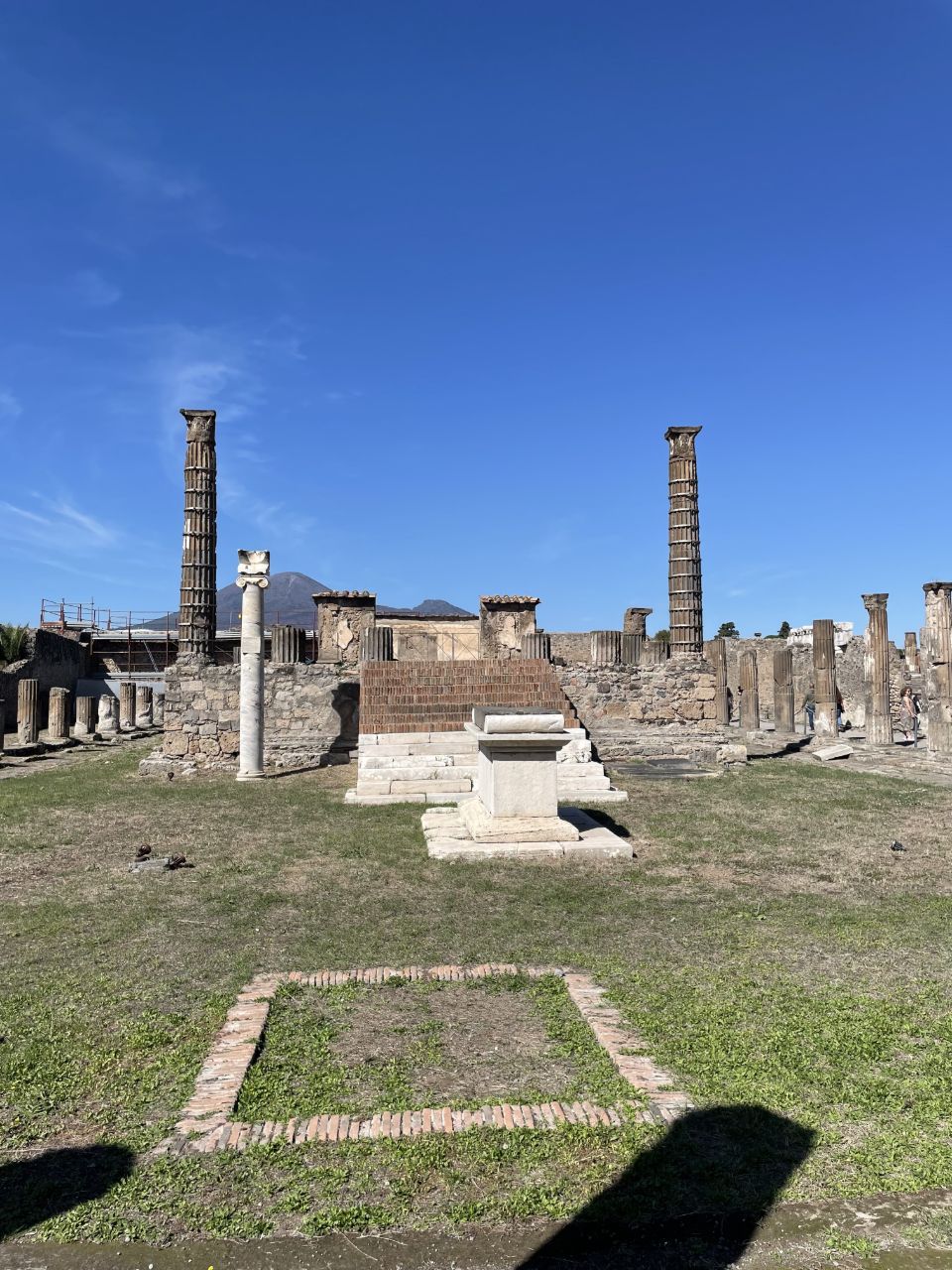
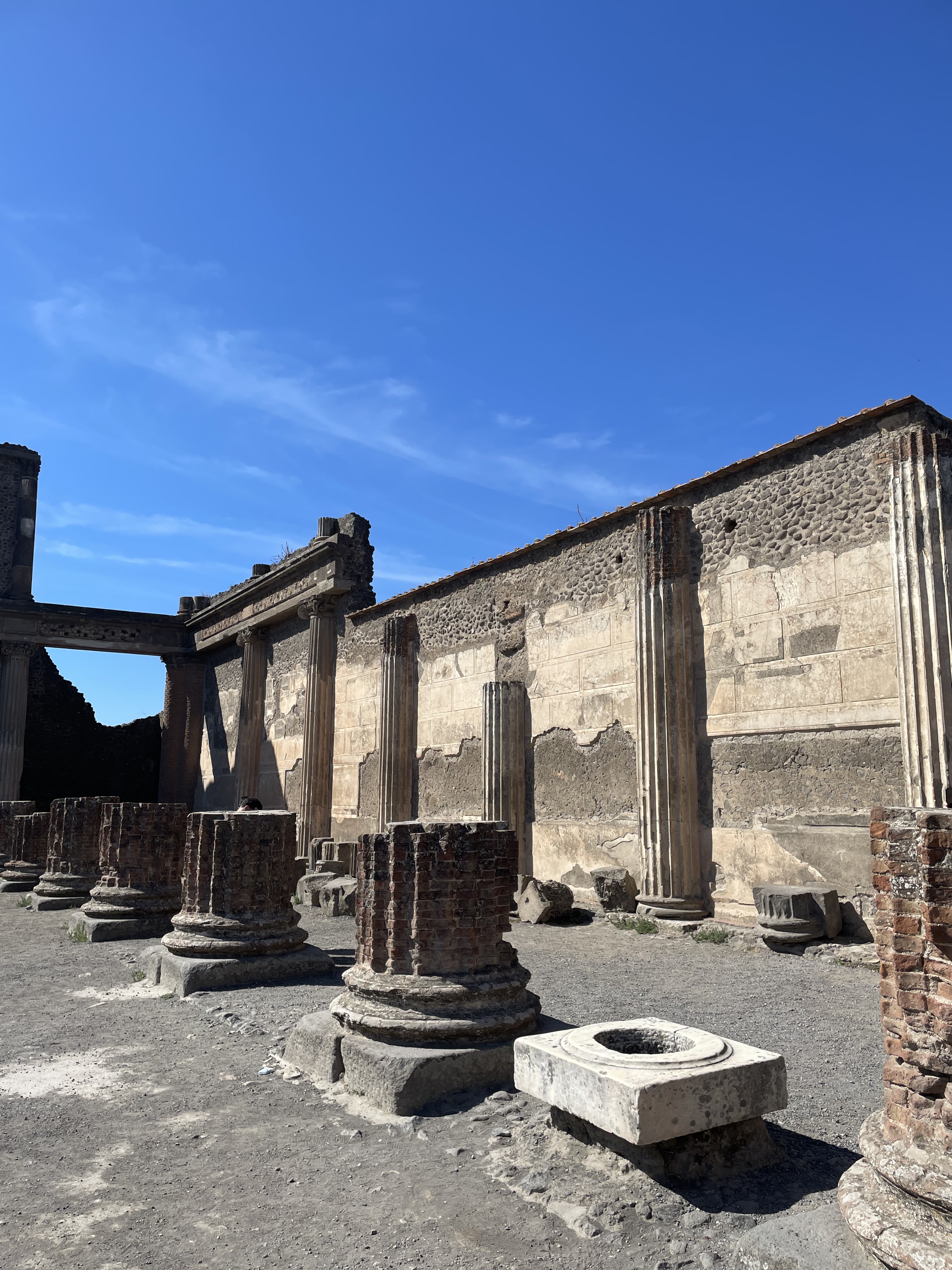
Brick columns over the wall 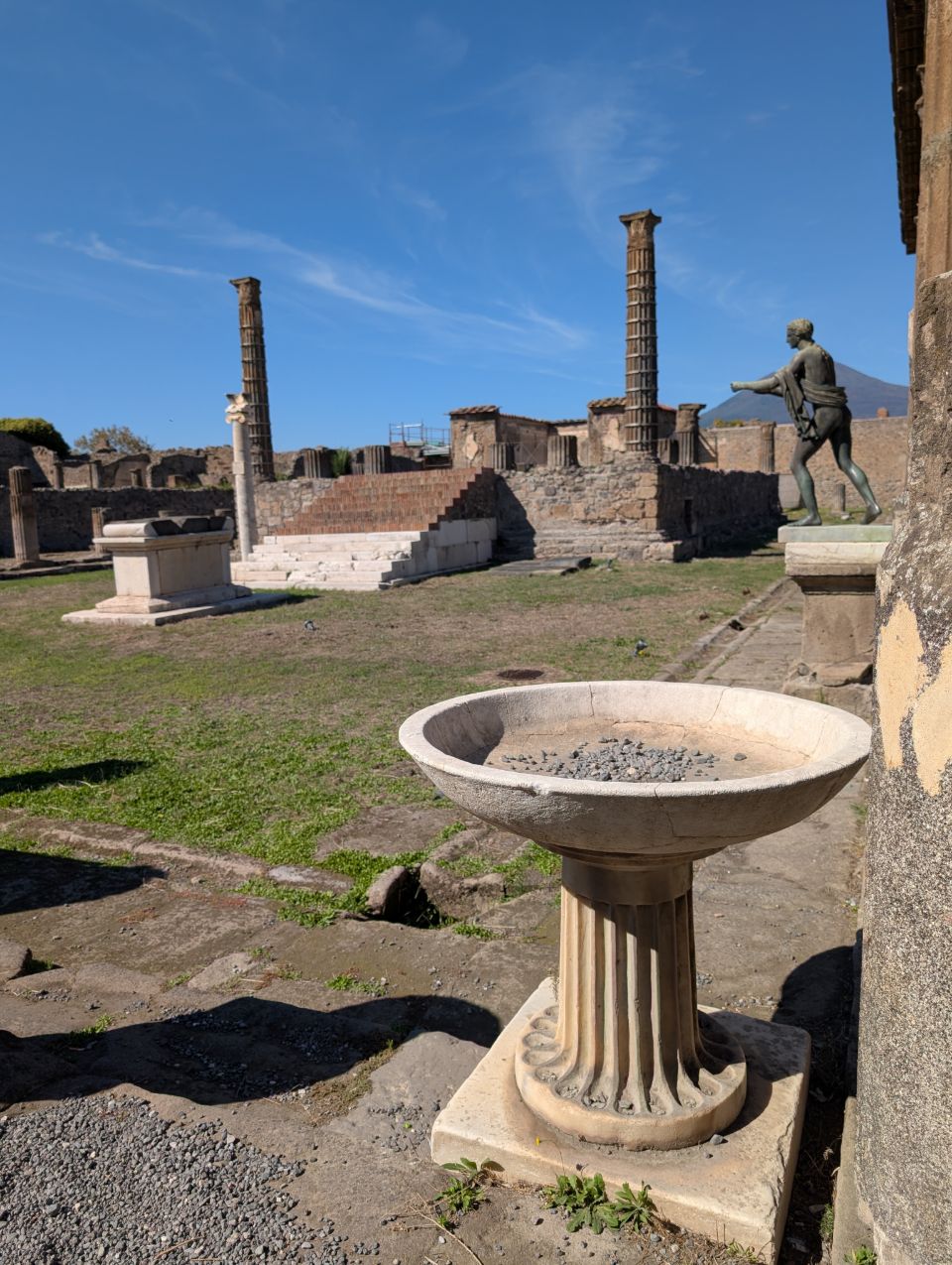
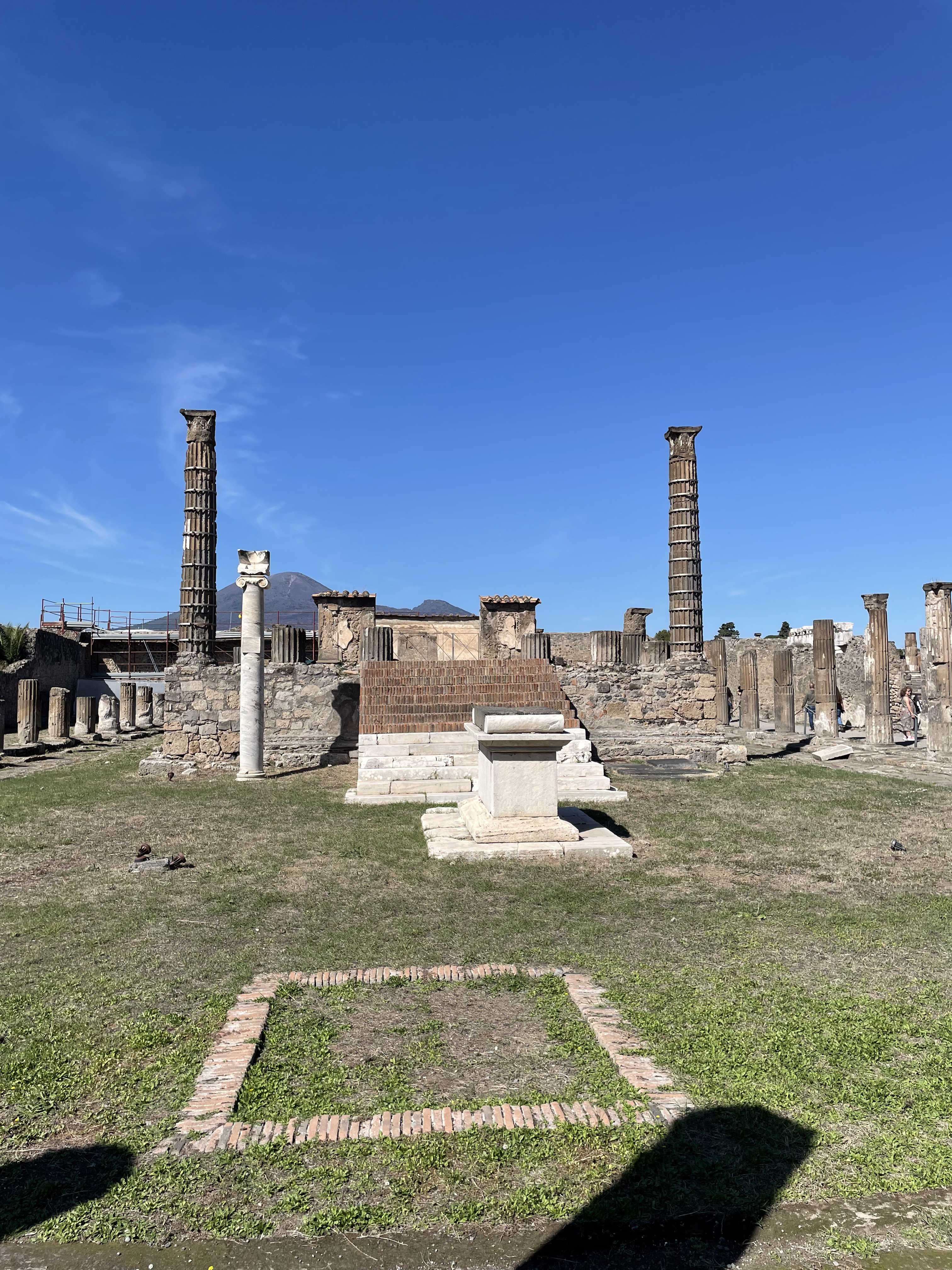
Temple of Apollo: statue column and basin 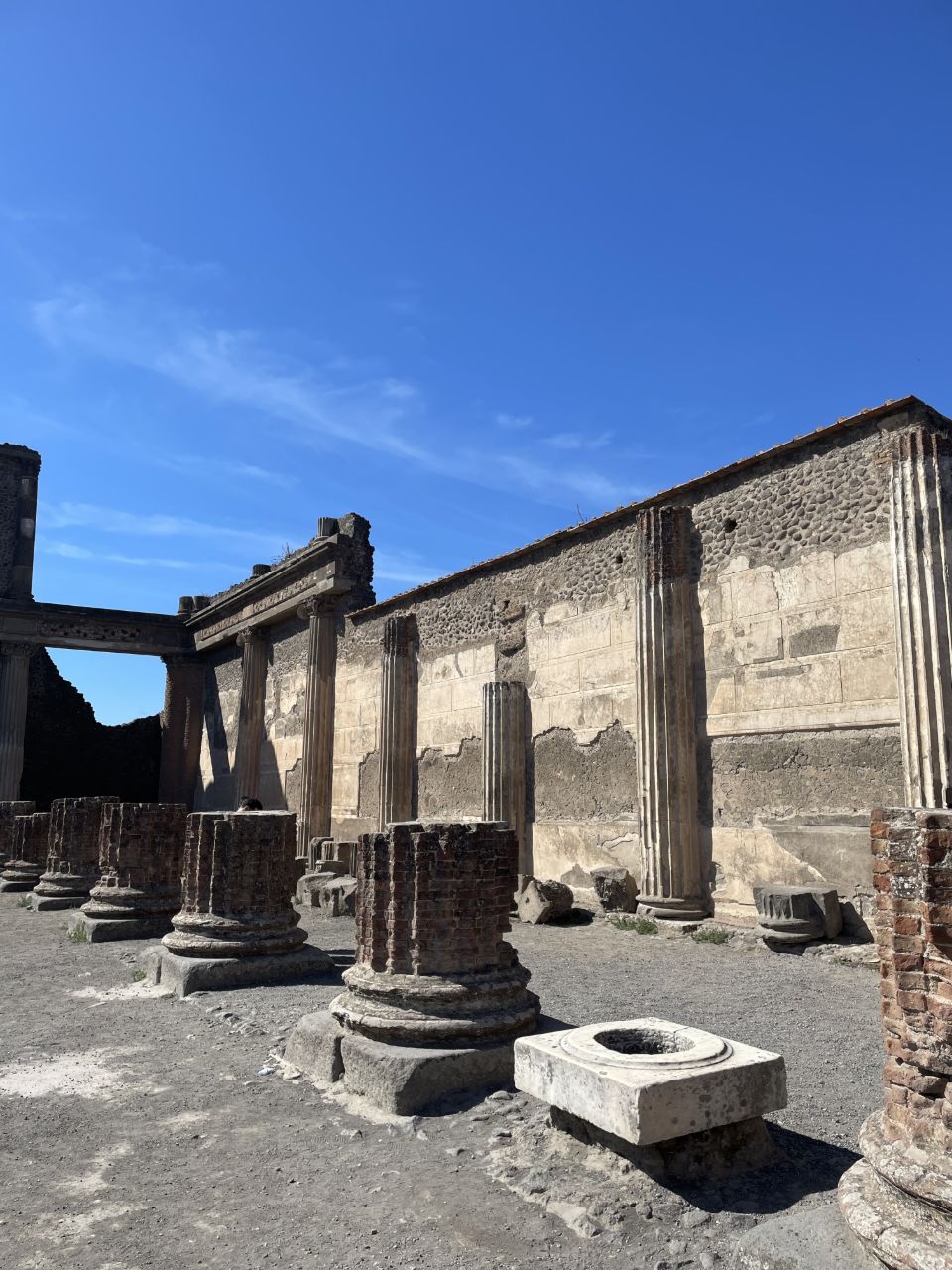
A column, caught mid-give-up 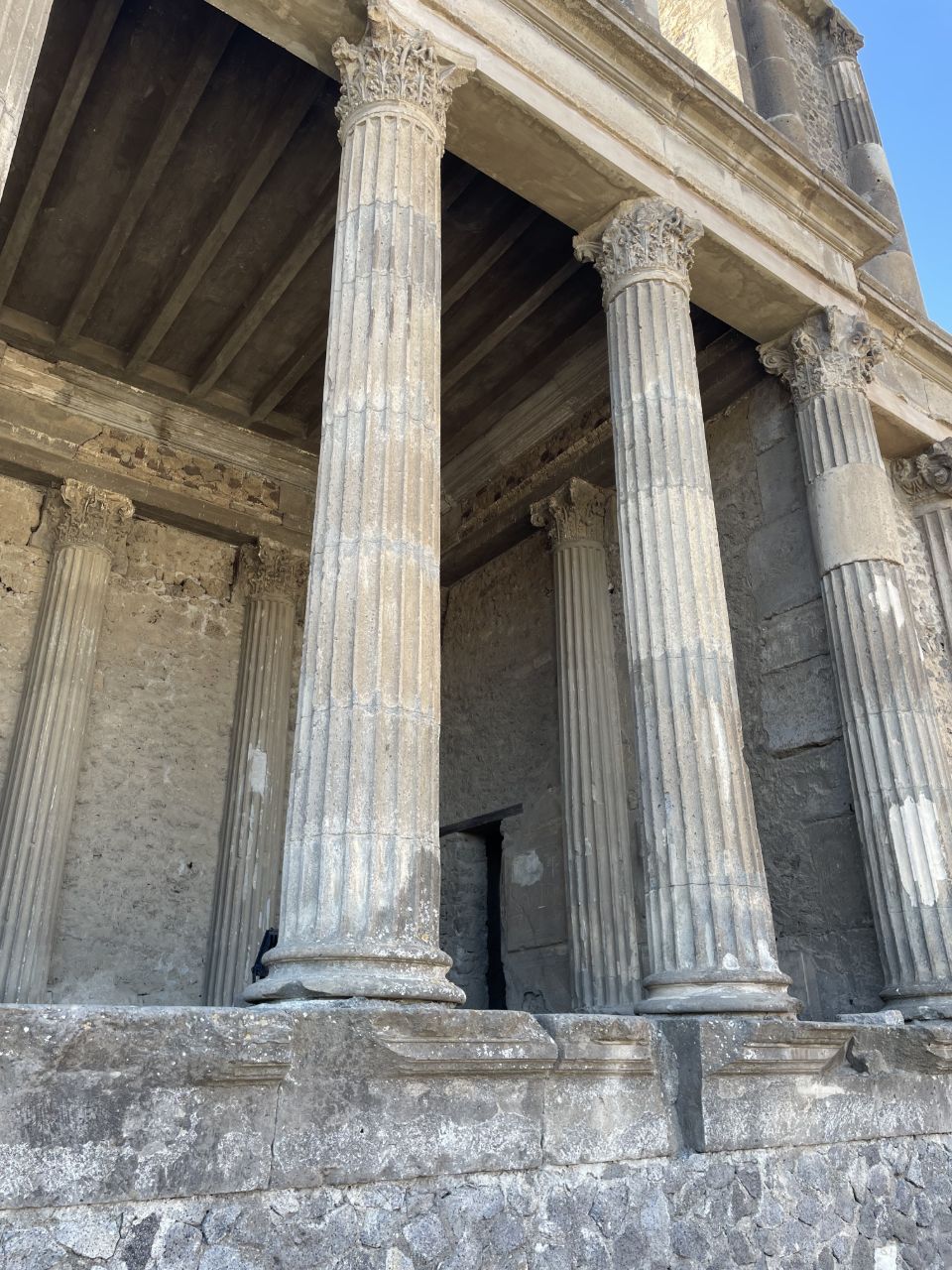
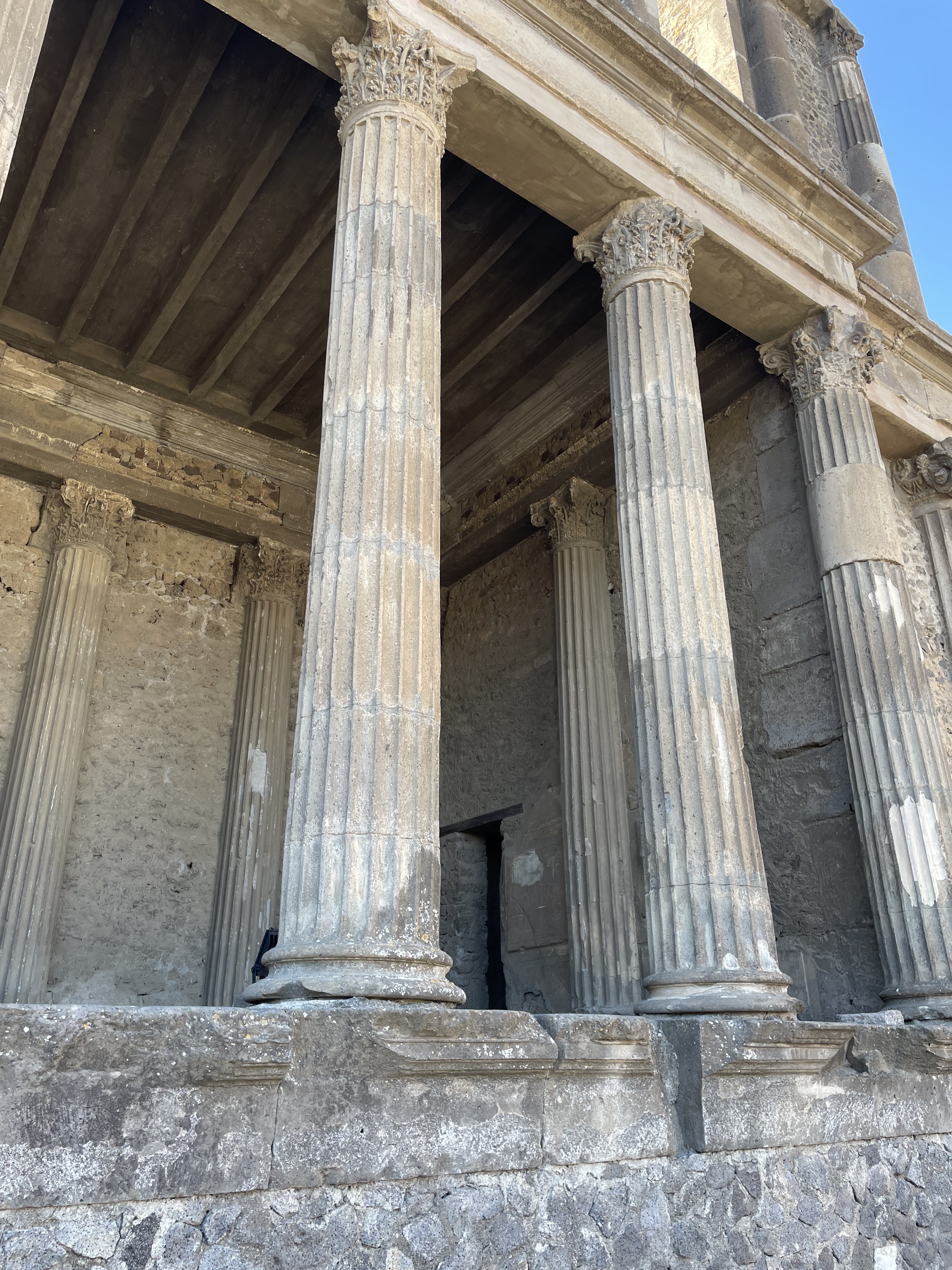
Restored portico, white and upright 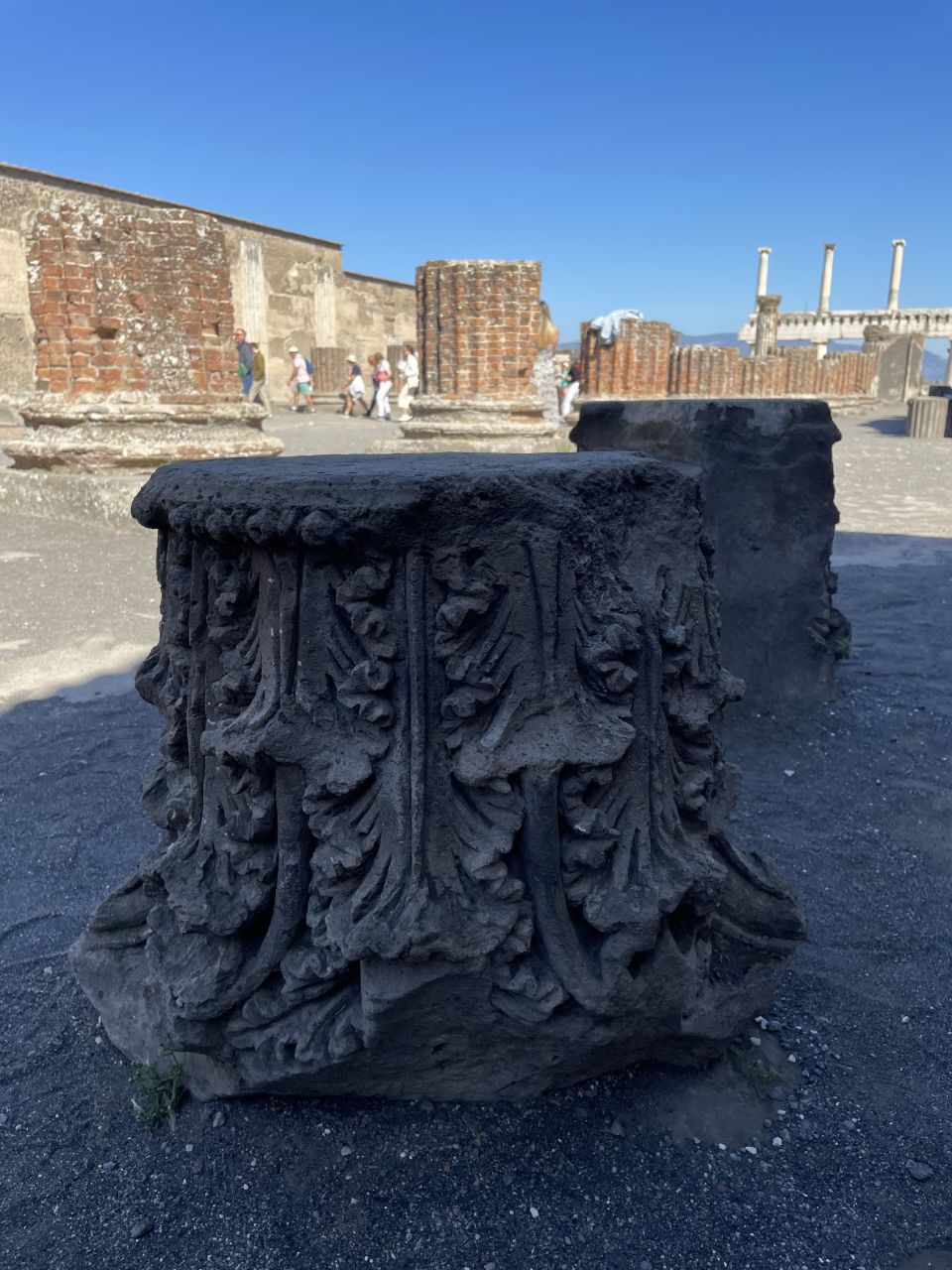
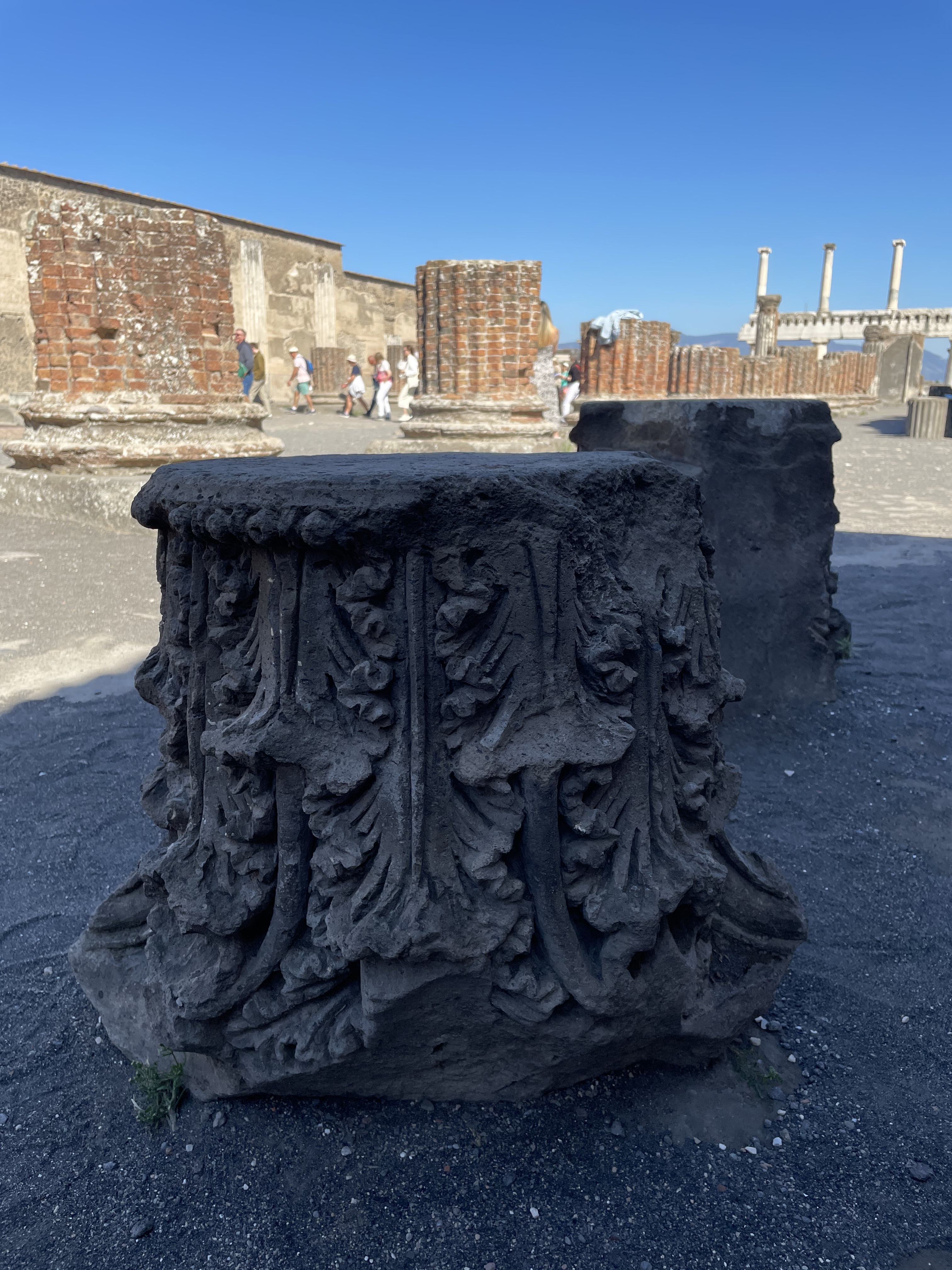
The altar, carved close 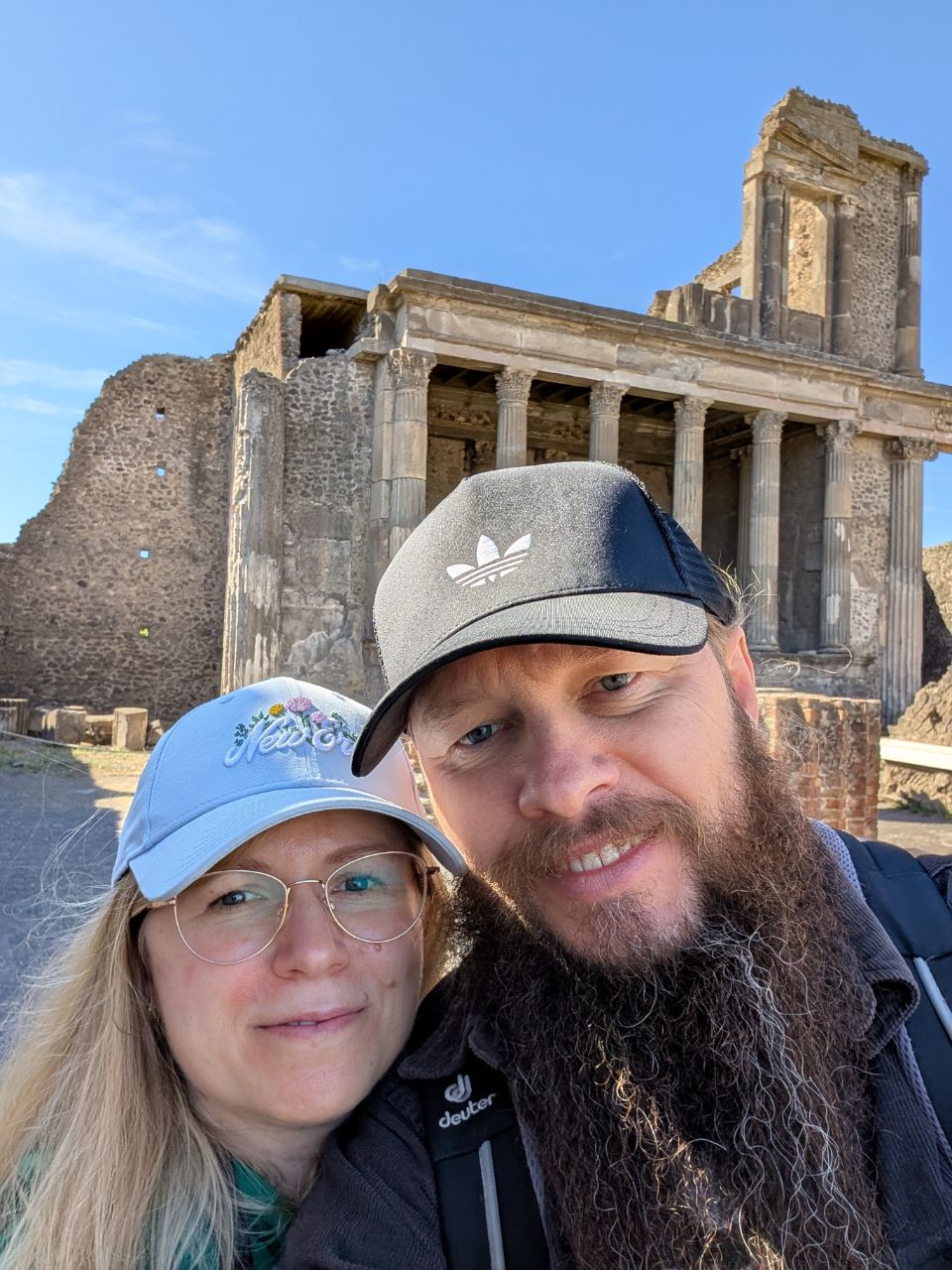
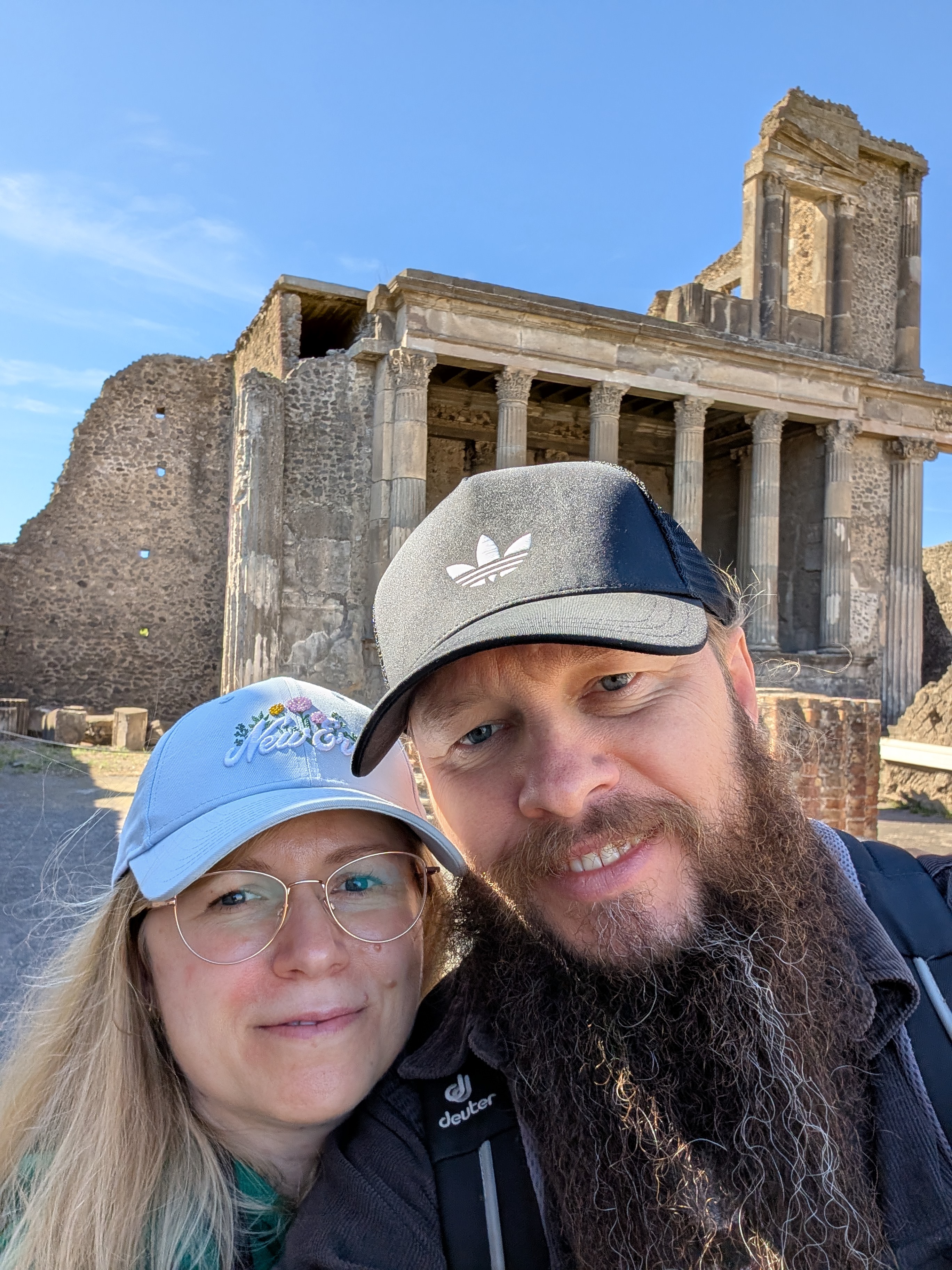
Temple ruins, us included
Stepping stones and inscriptions
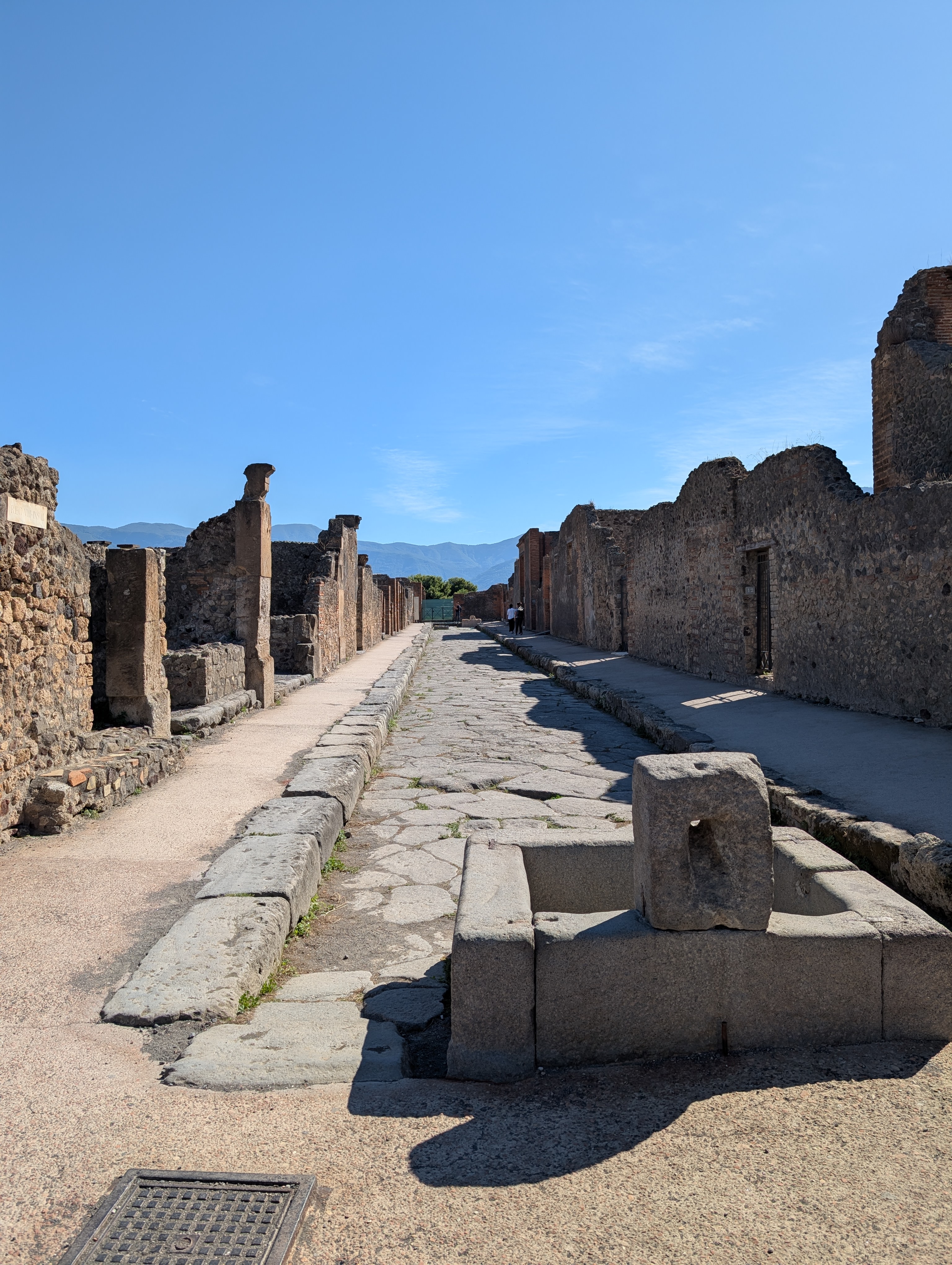
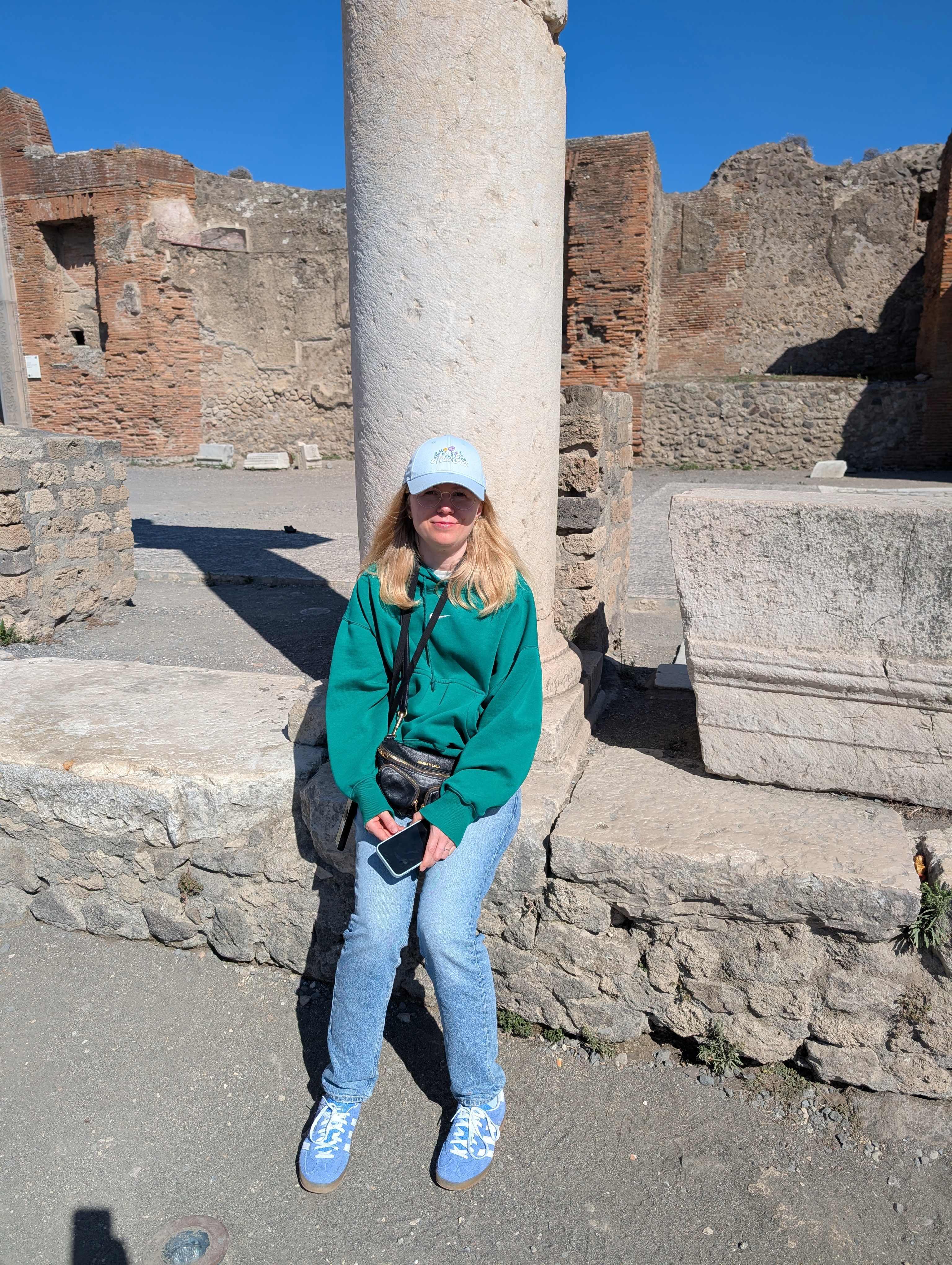
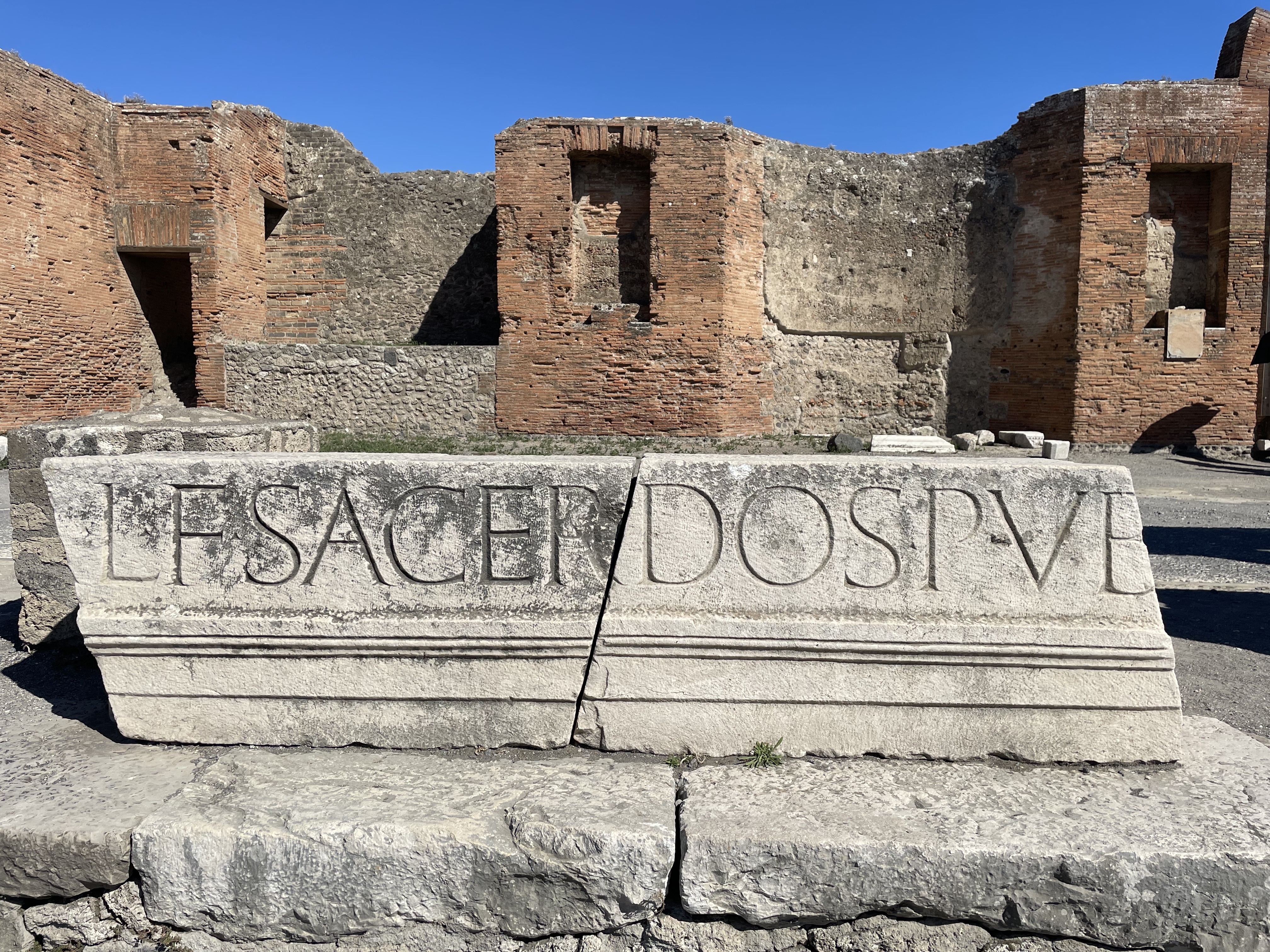
Streets as furniture: basalt crossings worn by cart wheels, an inscription carved in marble so it would outlast everyone who read it, an ornamental relief on a brick pilaster, and Anna taking a load off on a ledge that has hosted visitors for a while.
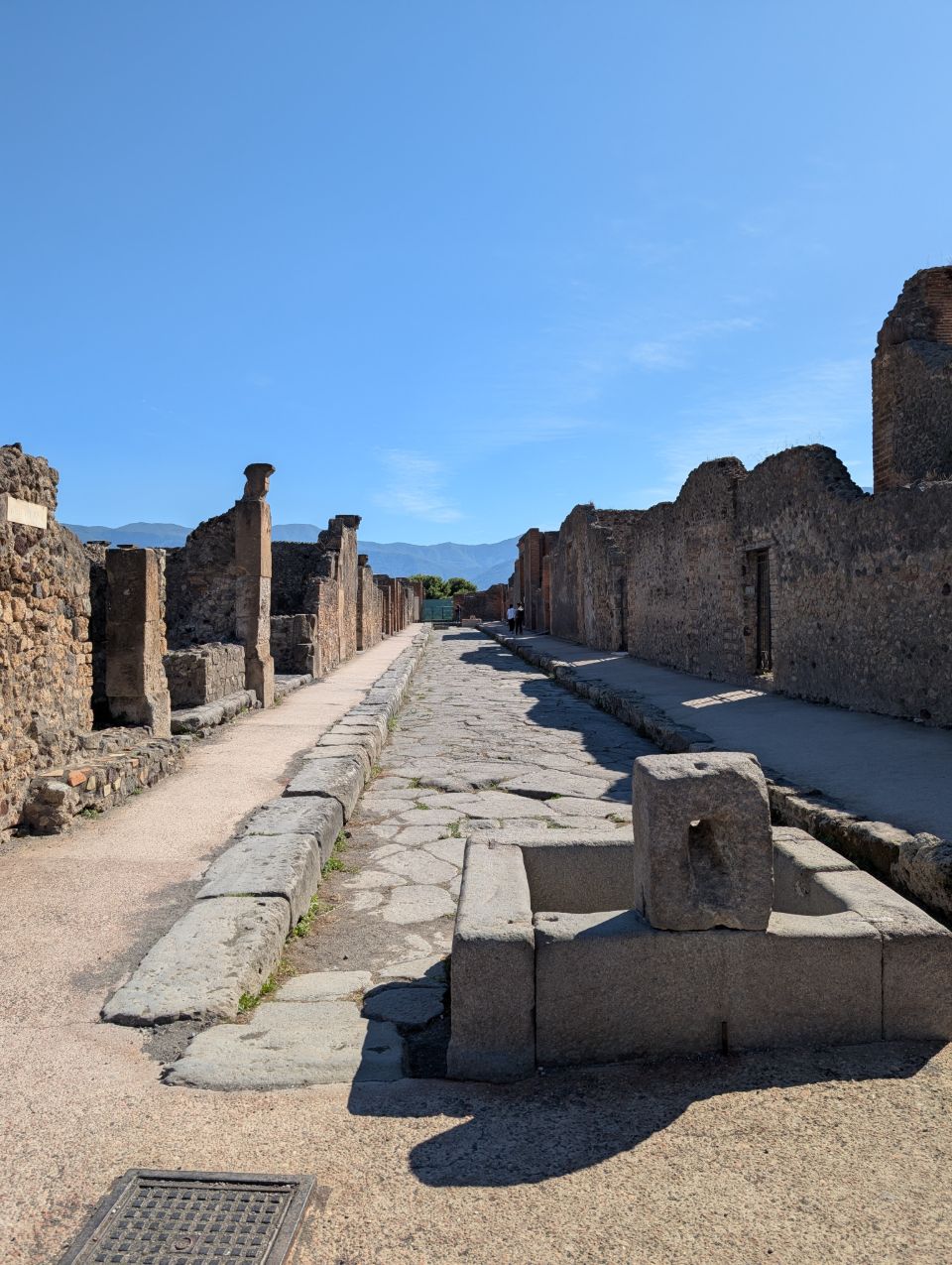
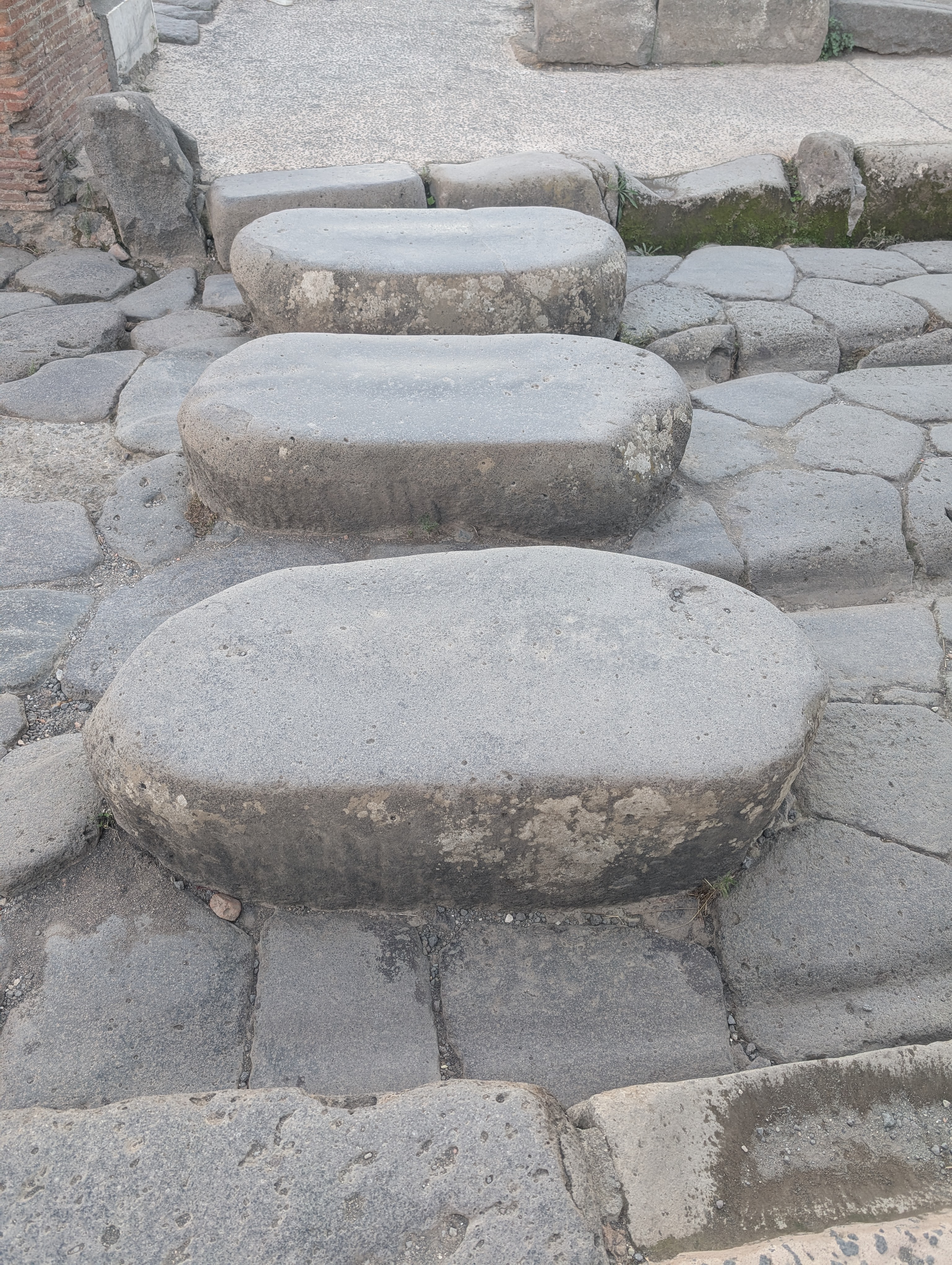
The pedestrian crossings, original 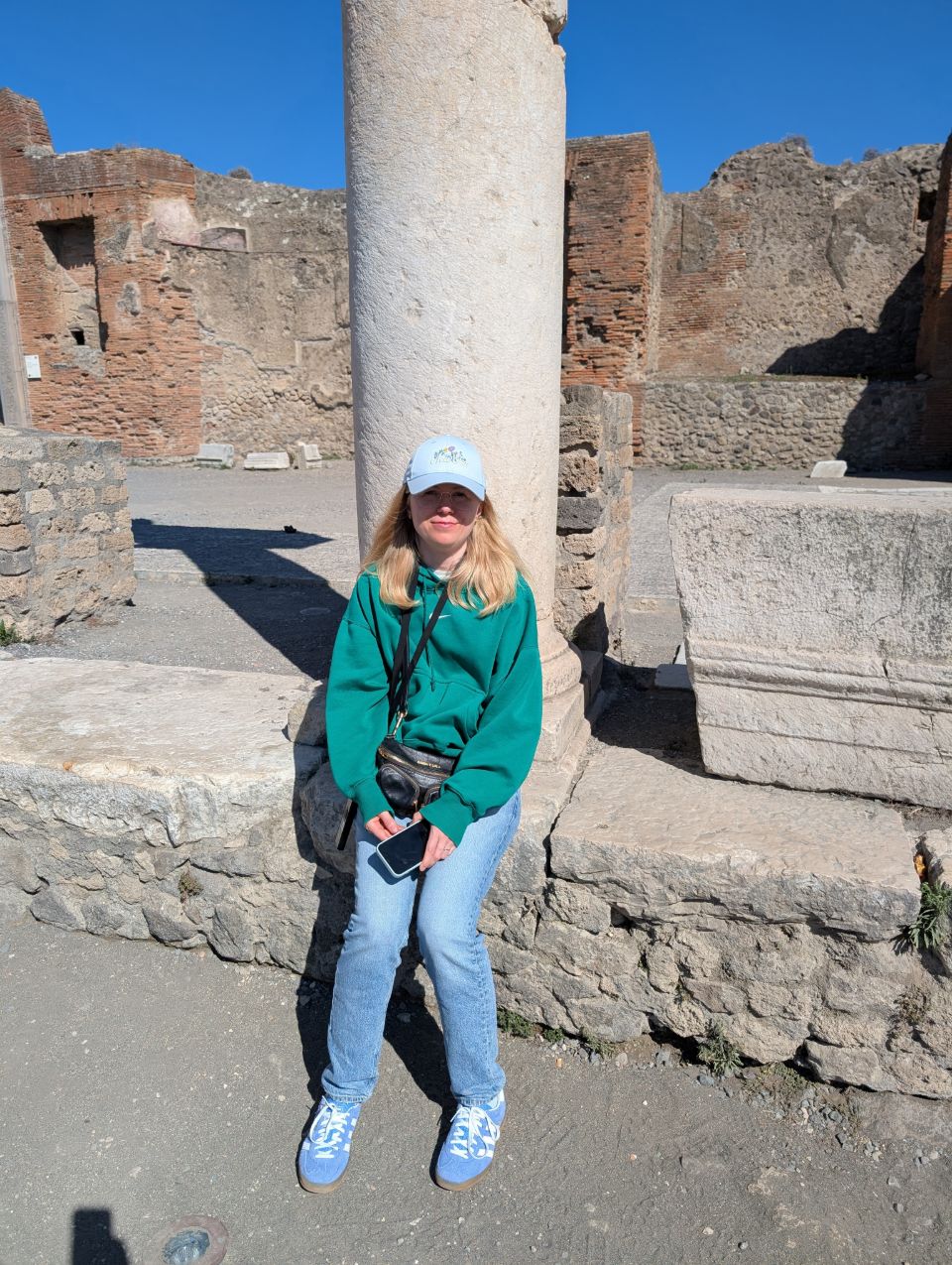
Anna tests the ledge 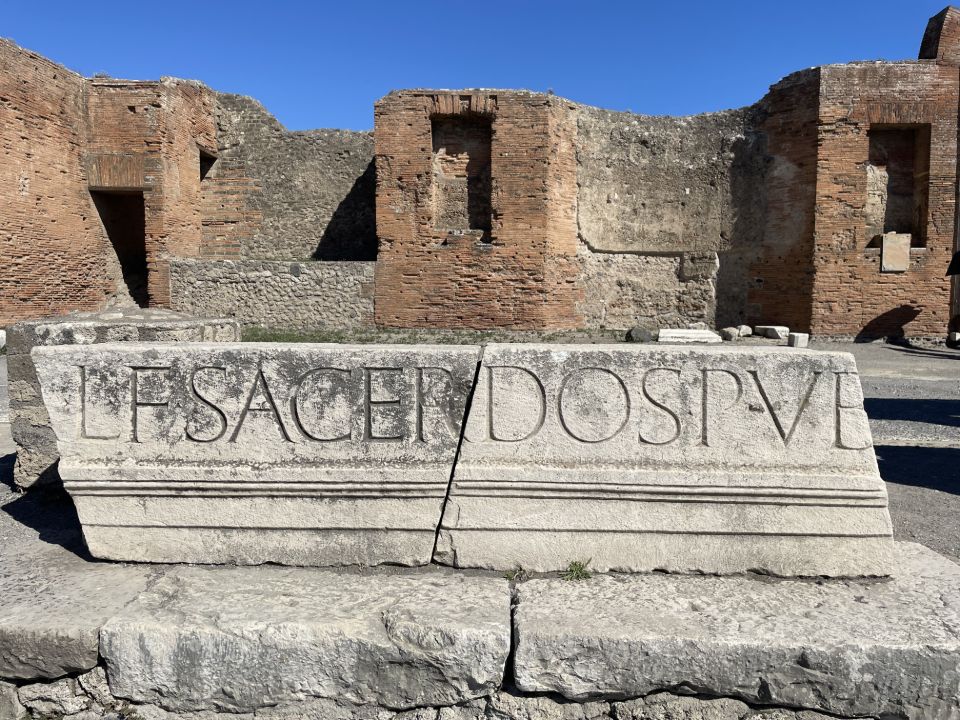
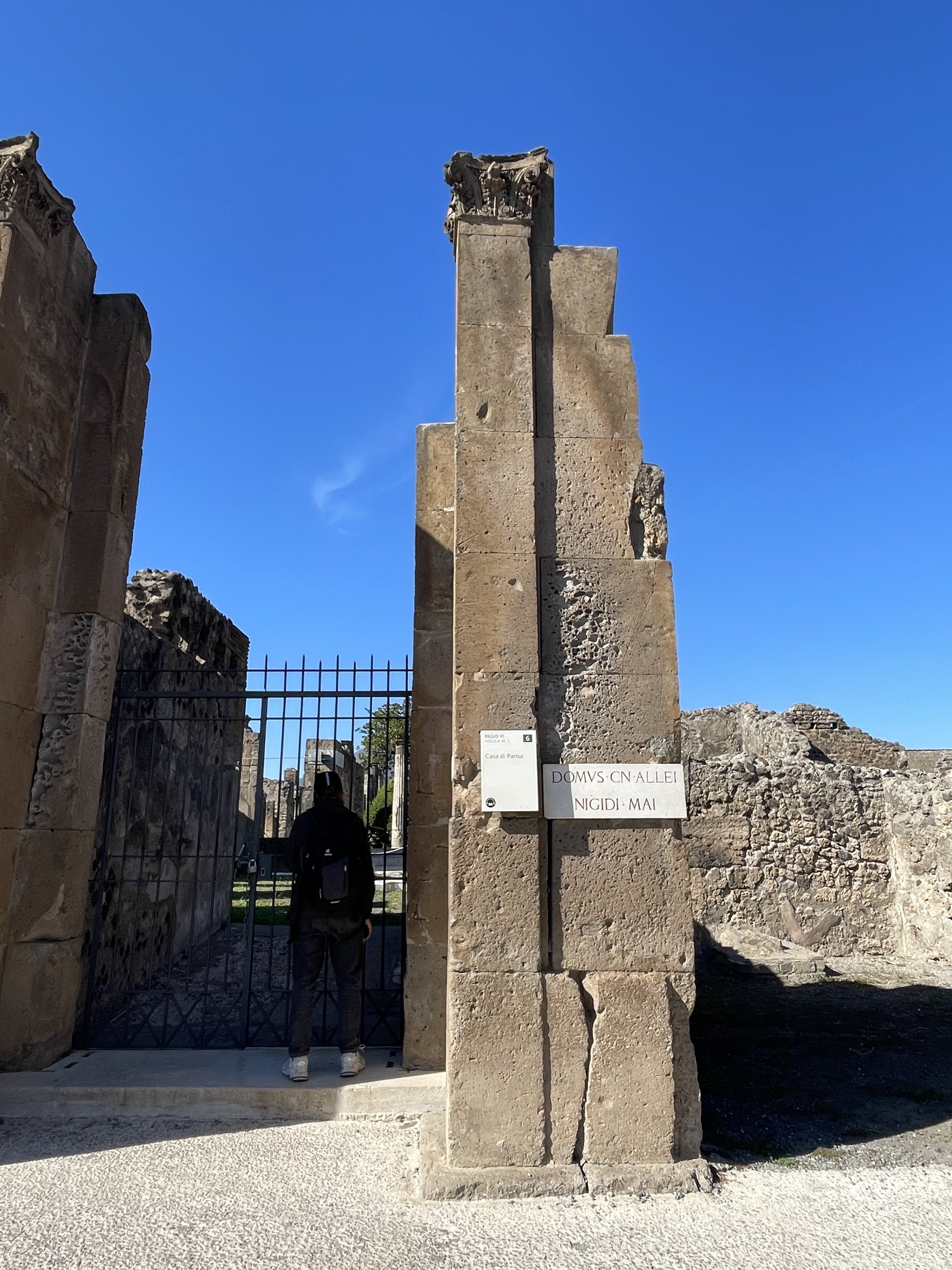
Marble, still saying its thing 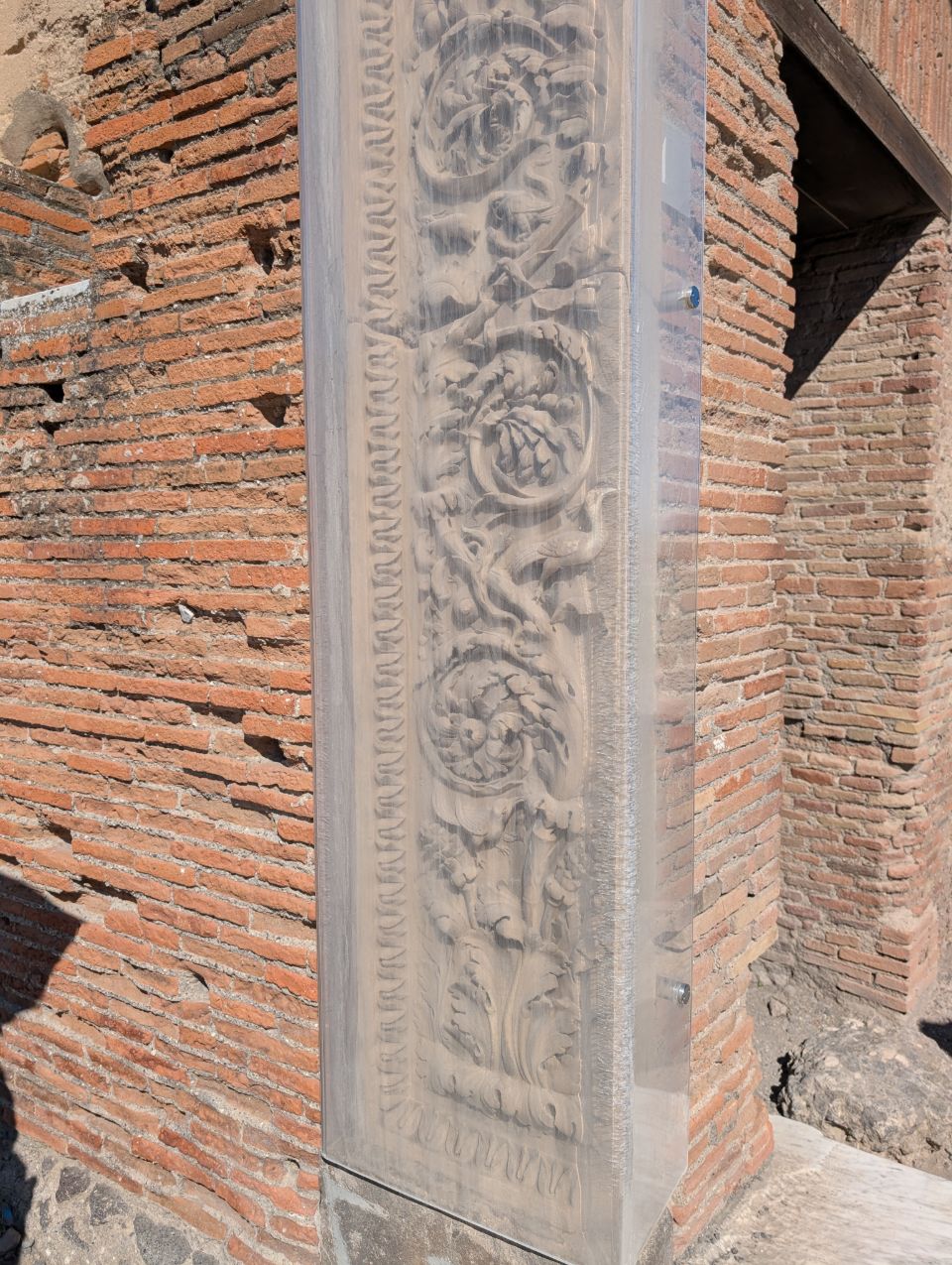
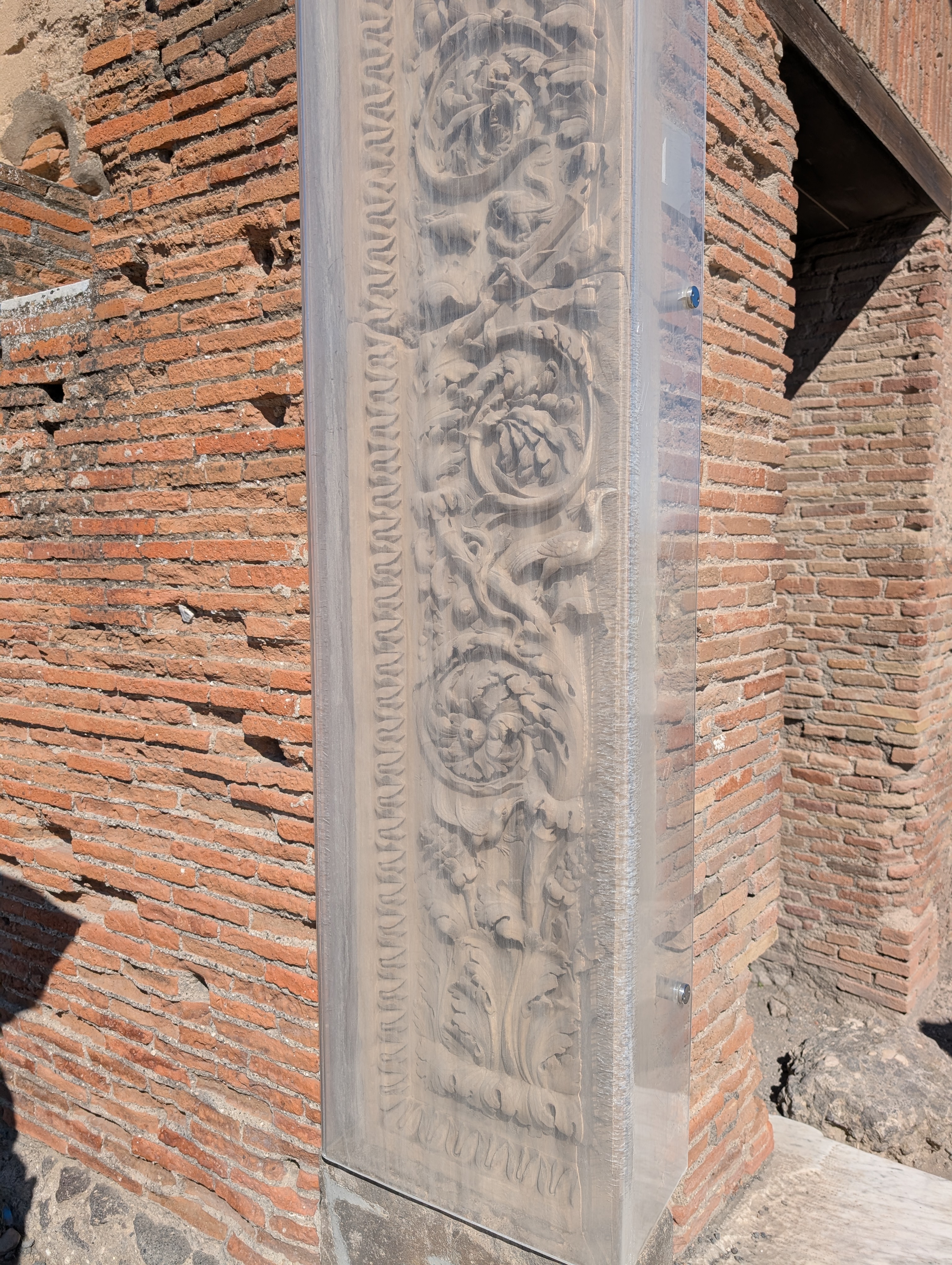
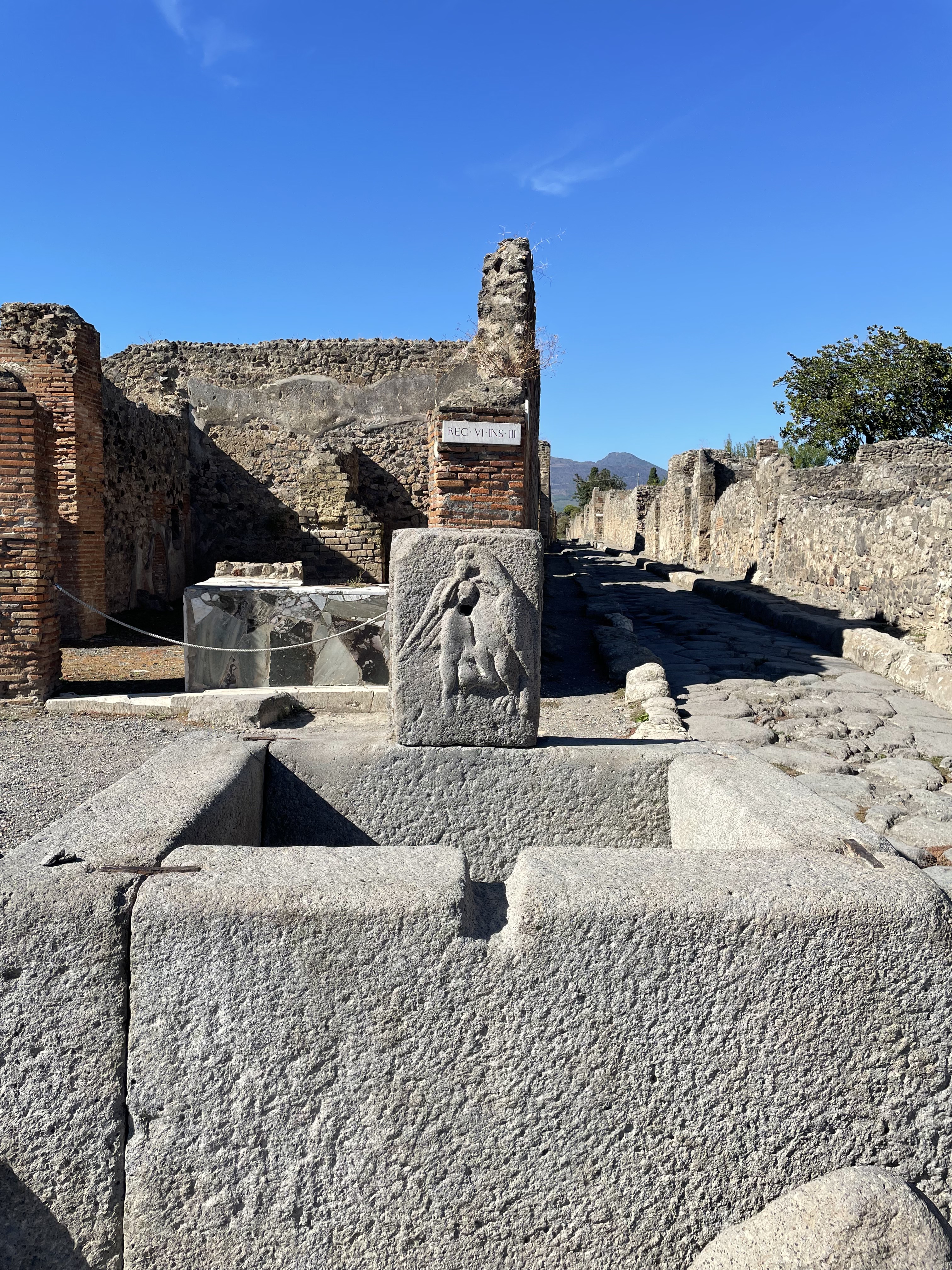
Decor on a brick pilaster
The Forum
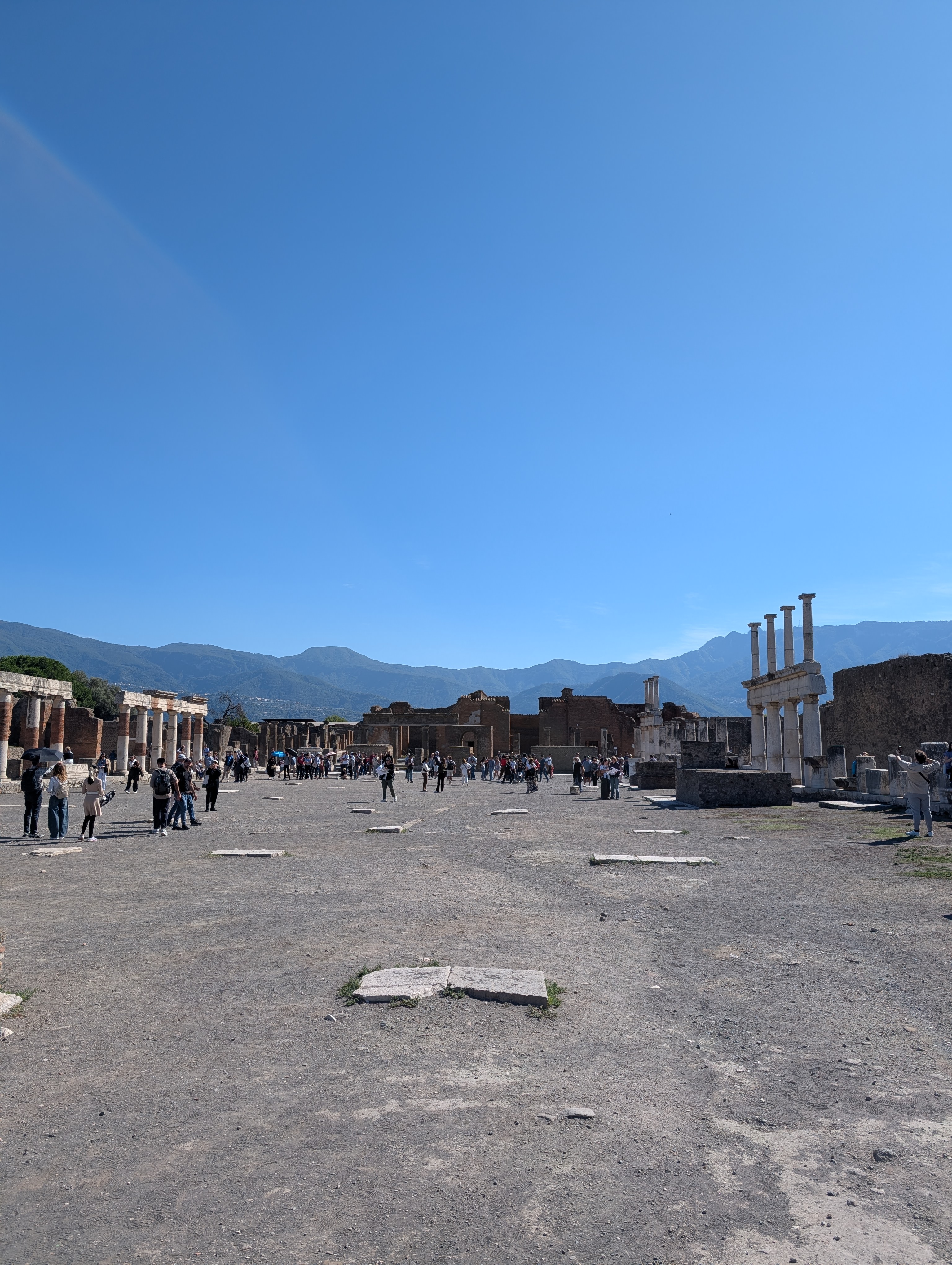
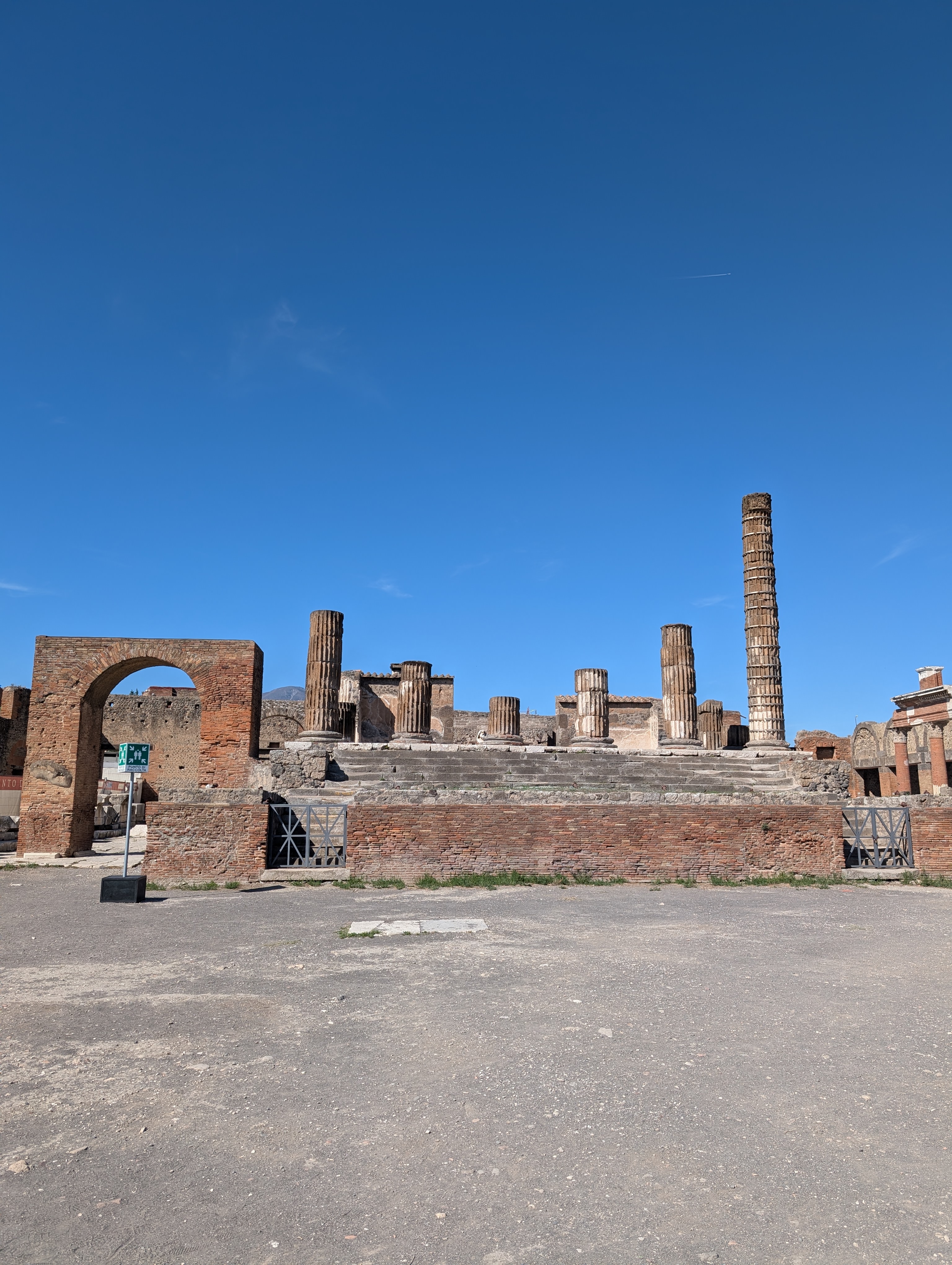
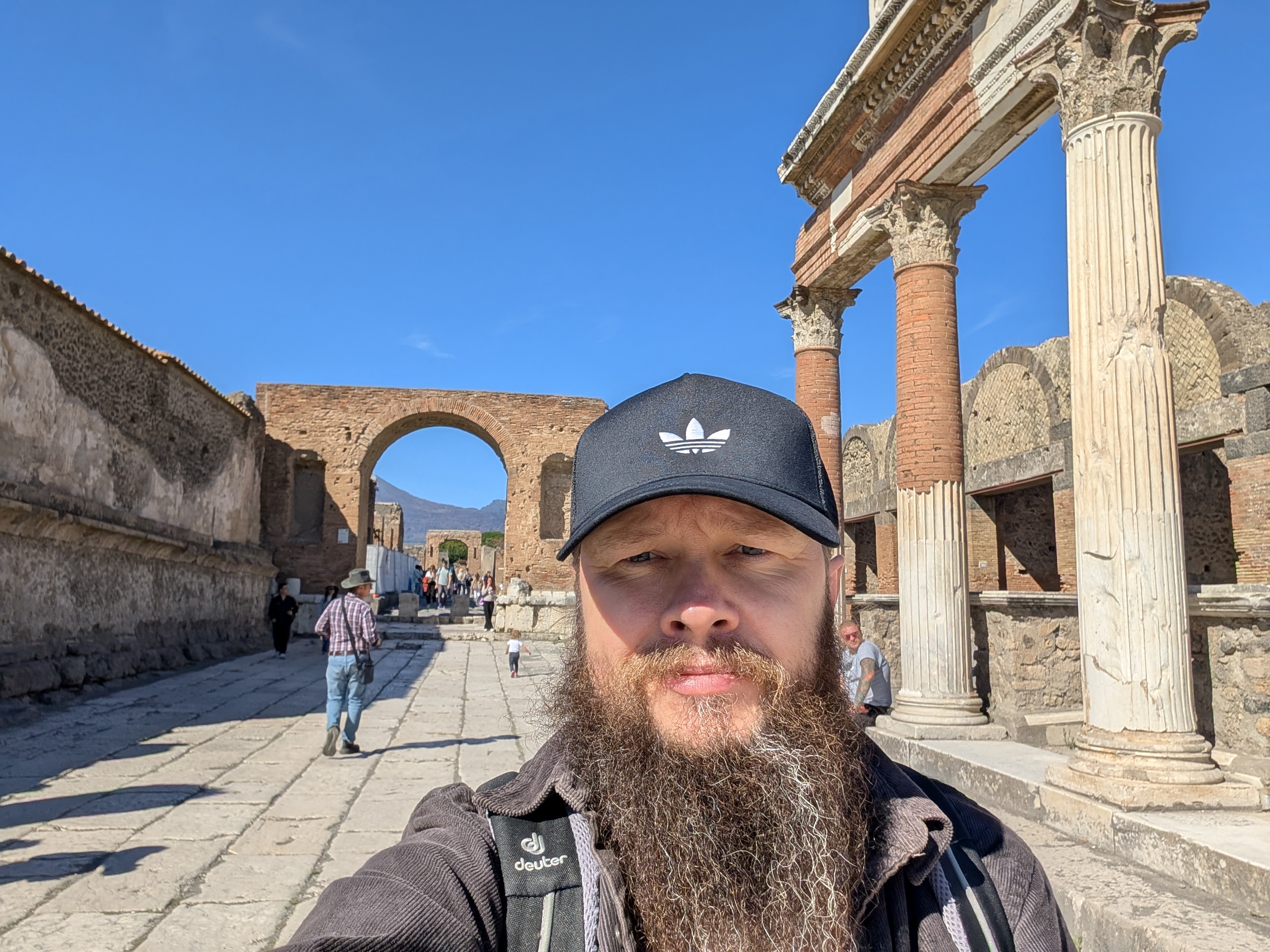
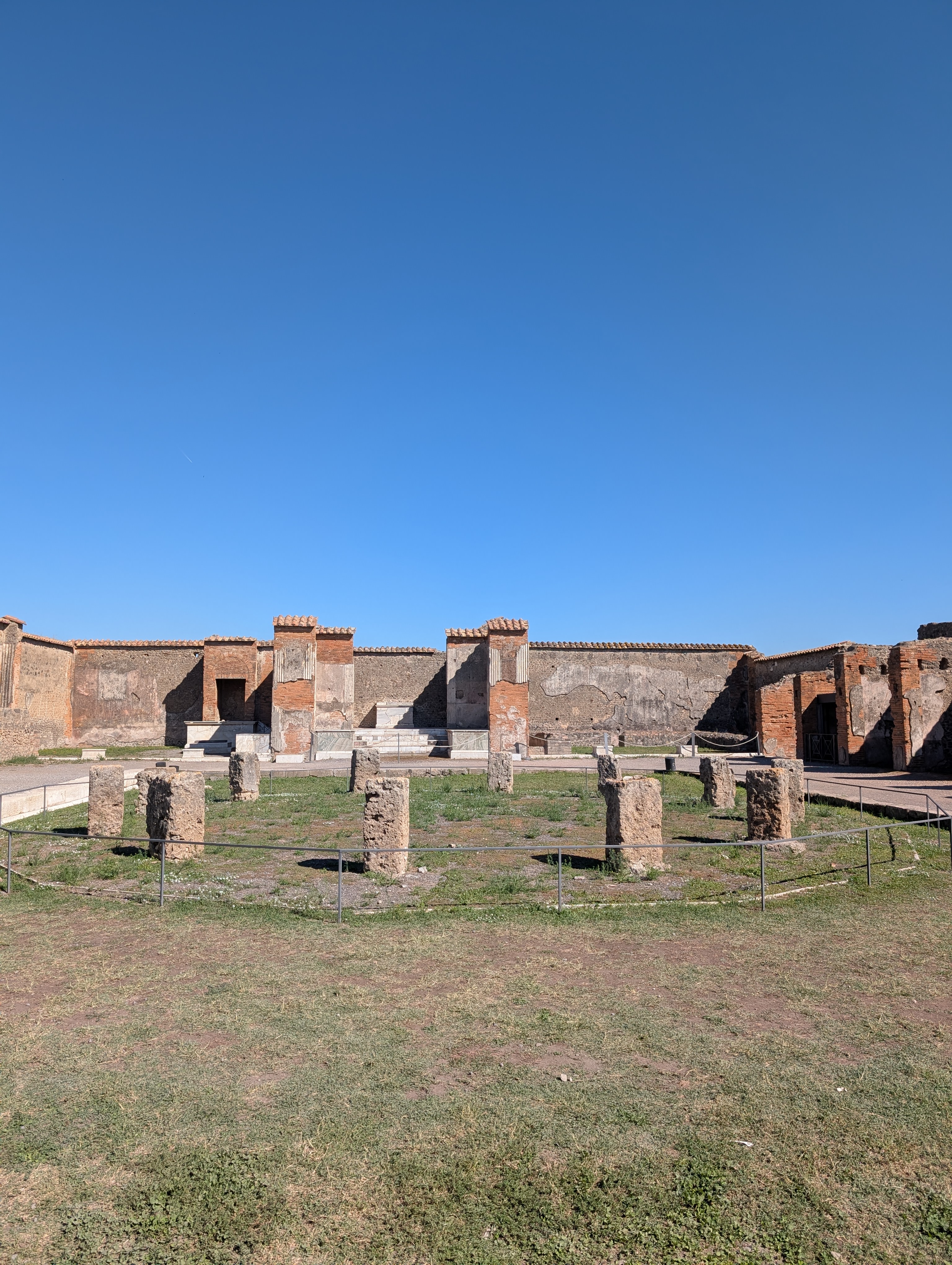
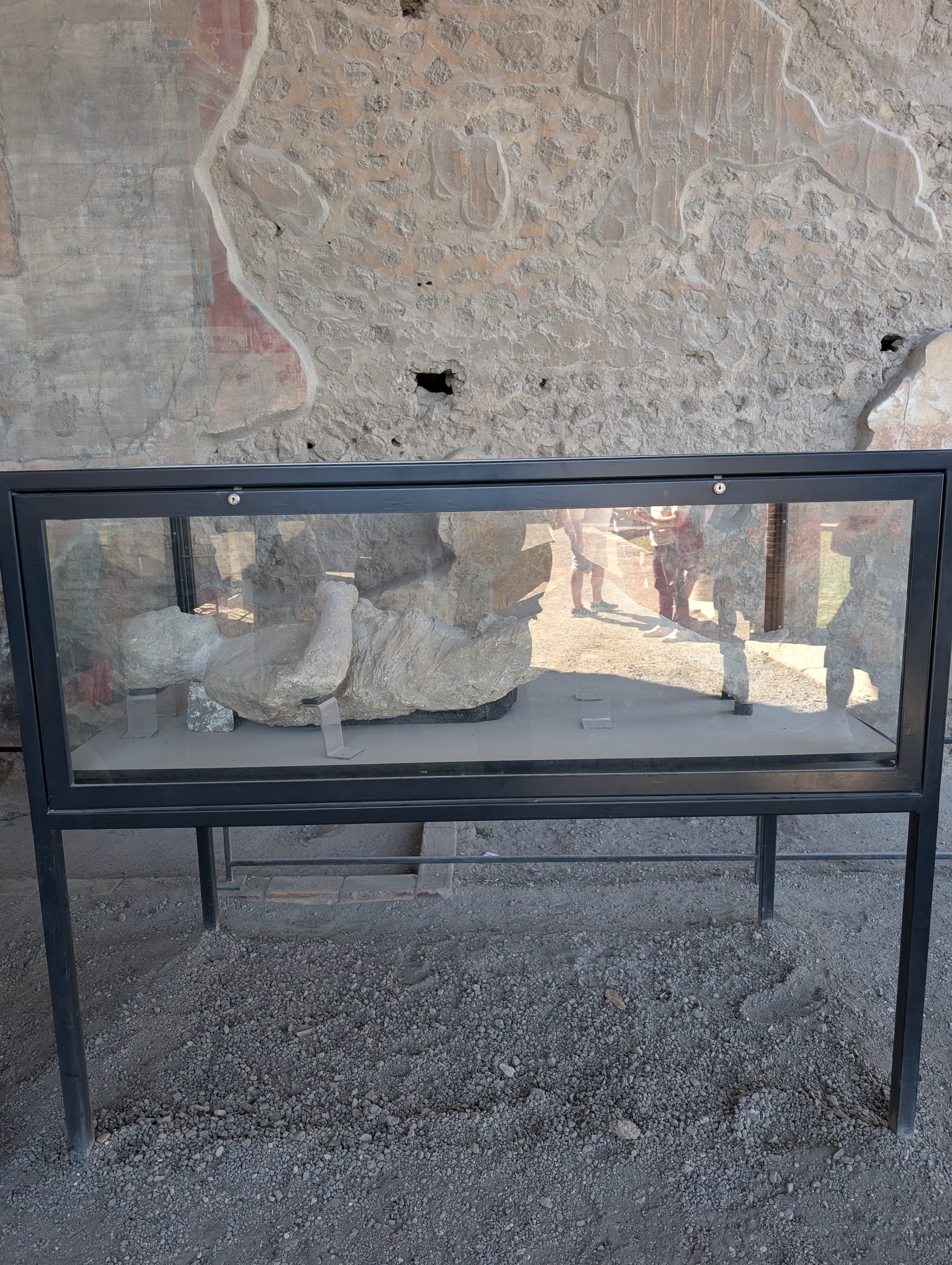
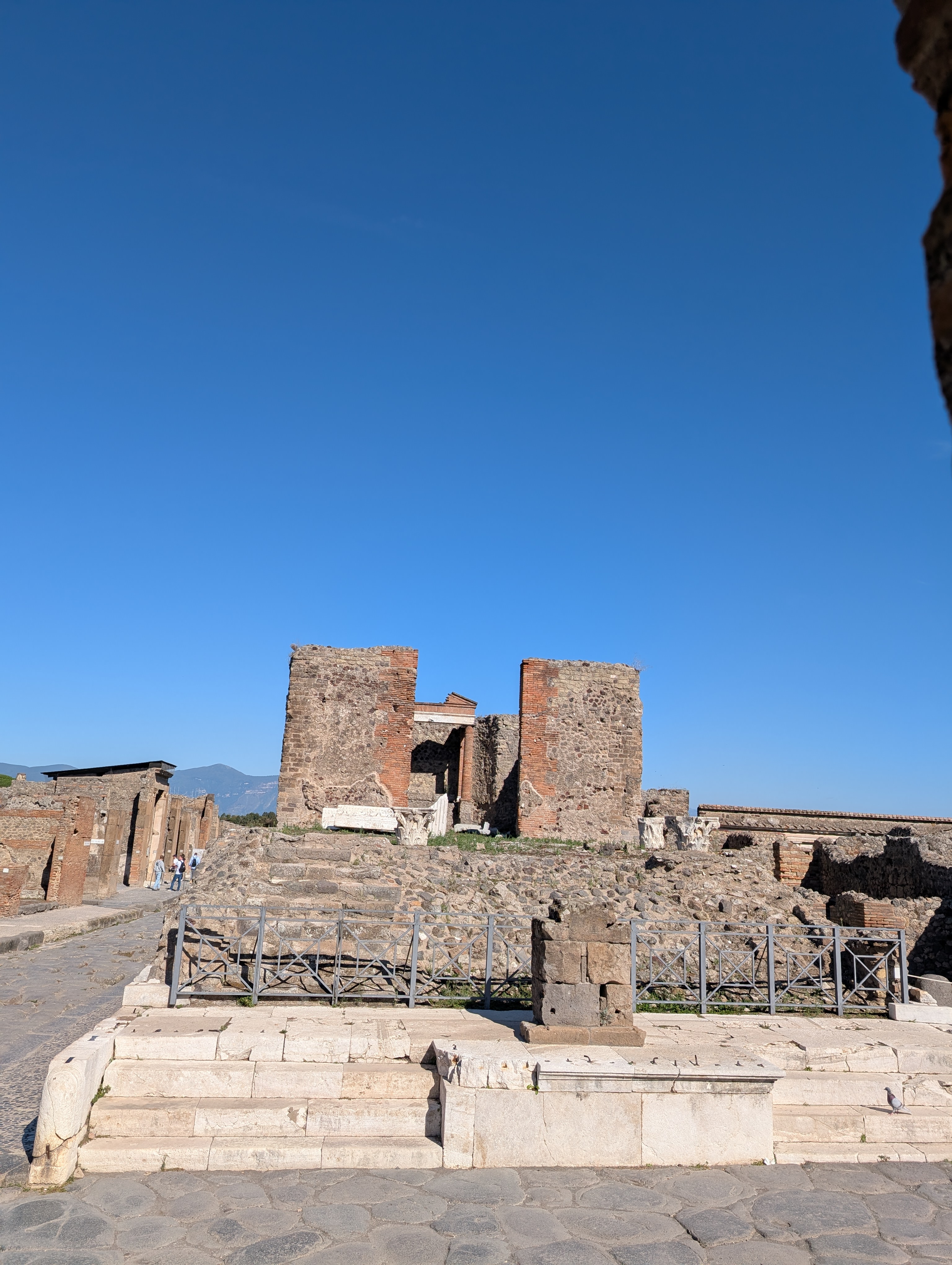
The main square opens toward Vesuvius: a temple podium with its arch, a gateway worth a selfie, a row of column stumps like pulled teeth — and then the display case with one of the plaster casts inside, and the day got serious.
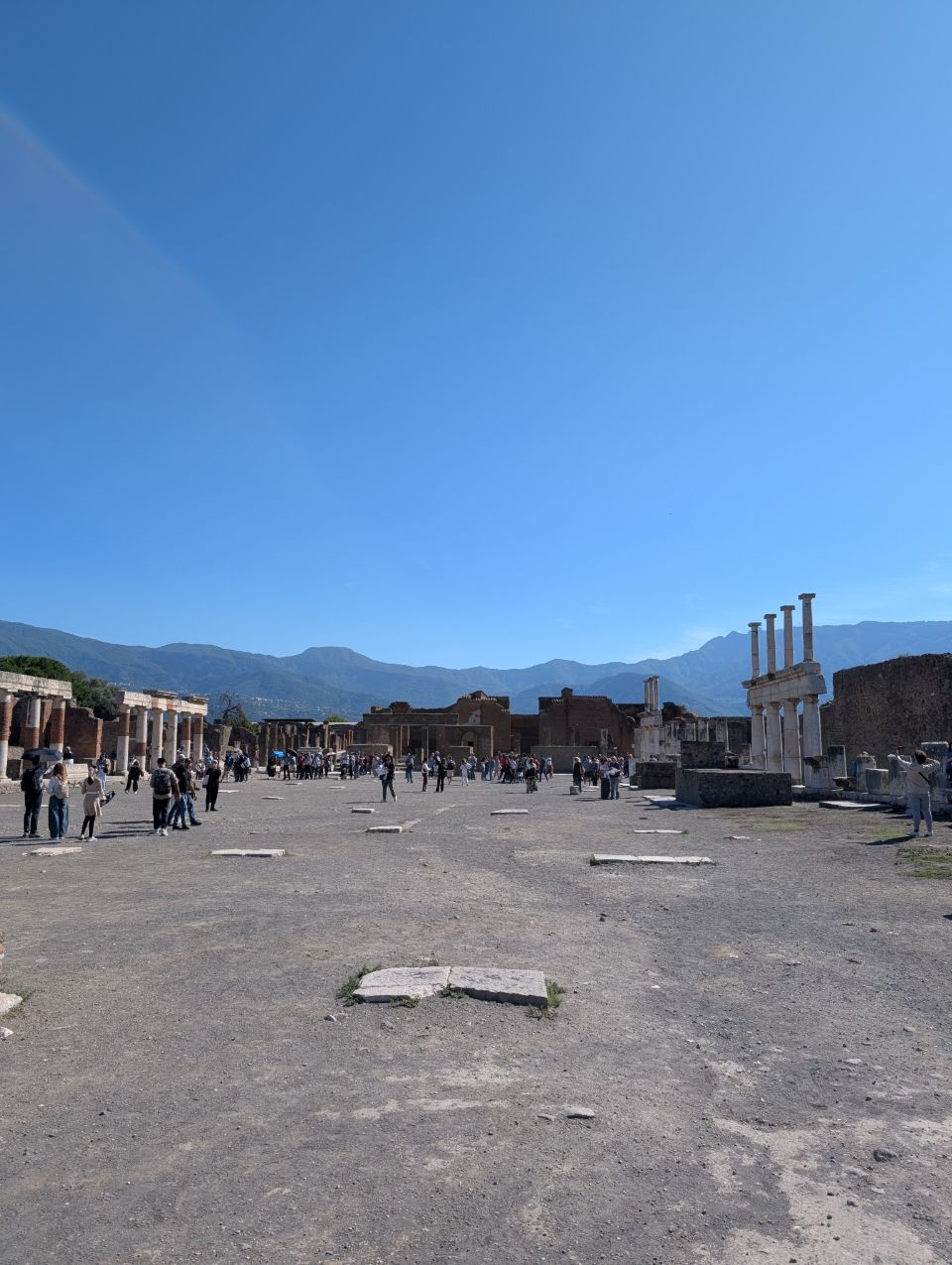
The Forum, Vesuvius at the end of it 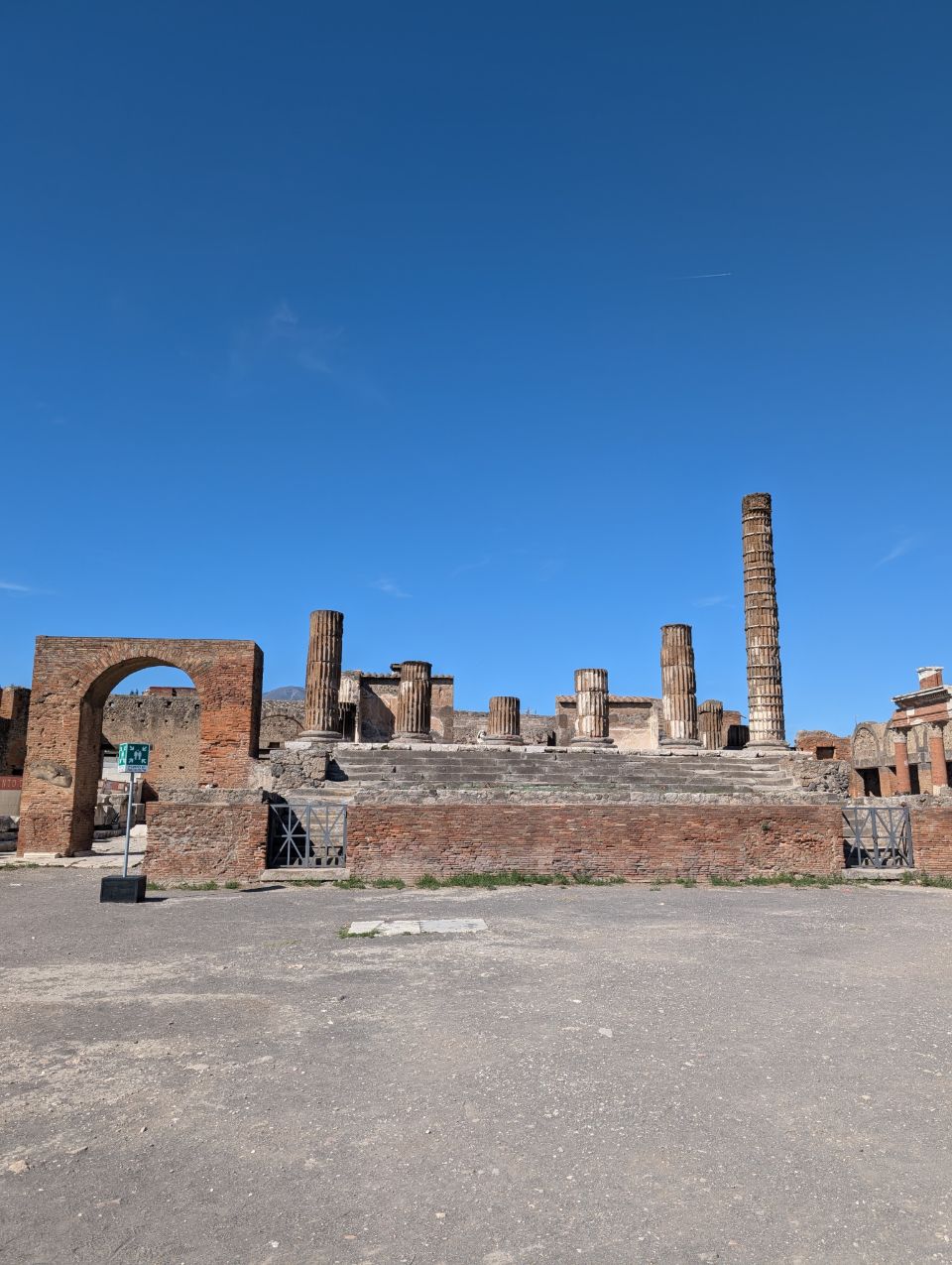
Podium and arch 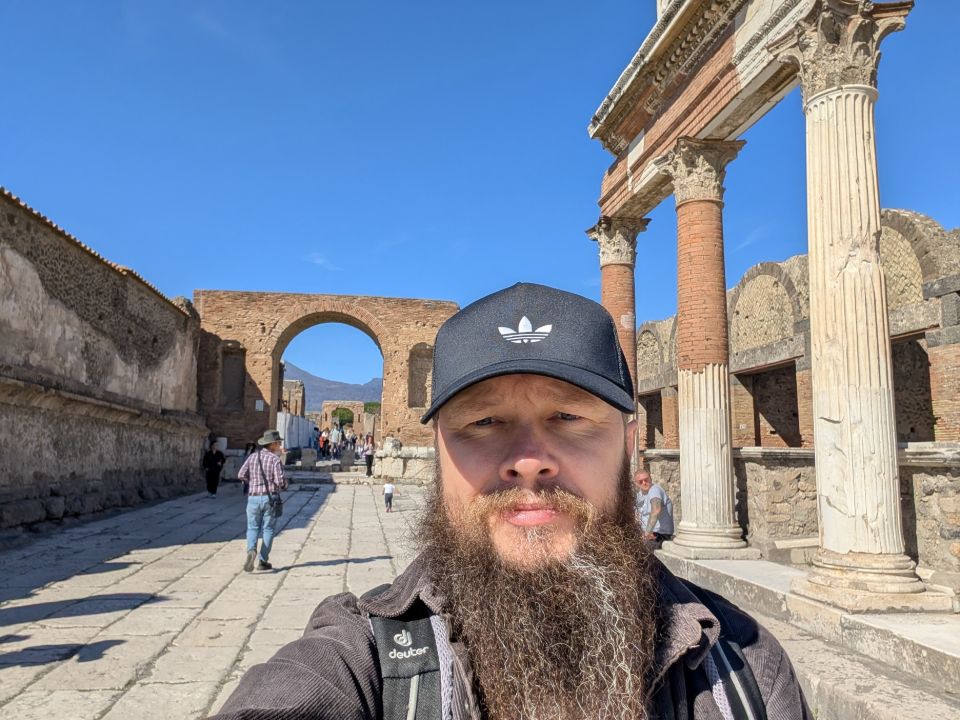
Gateway selfie — him and the archway 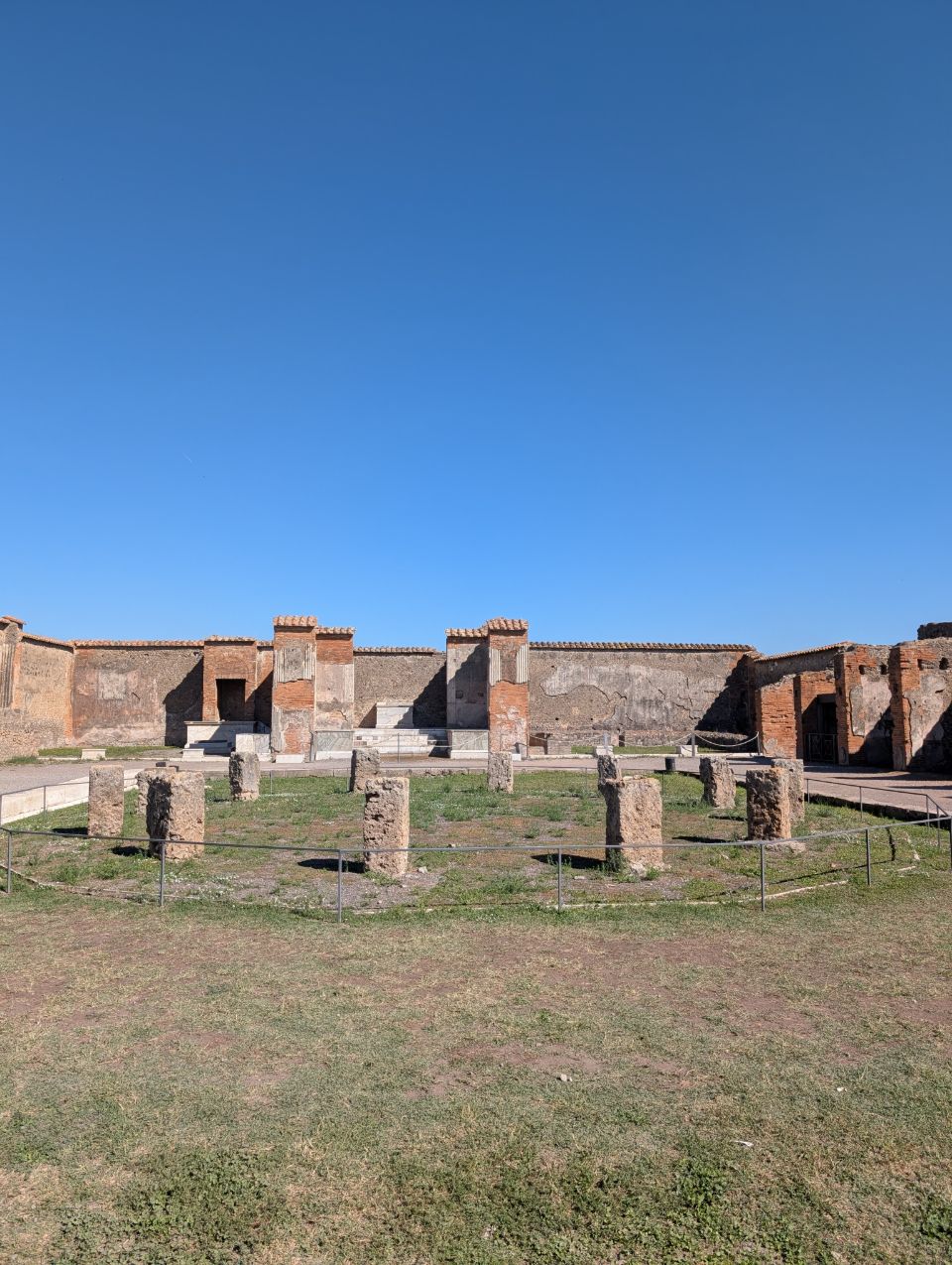
Column stumps, pulled teeth of the Forum 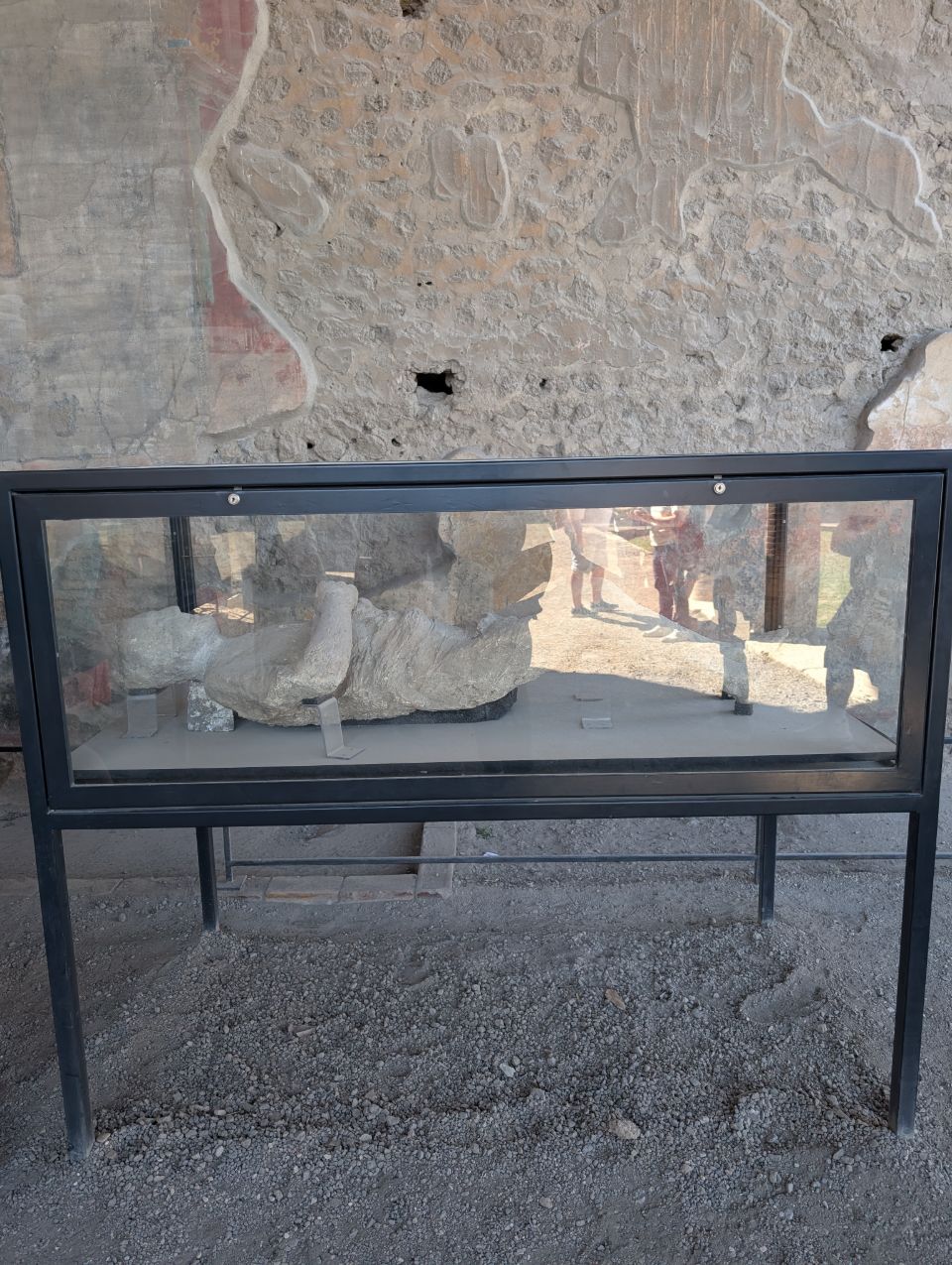
A plaster cast in its display case
The Garden of the Fugitives
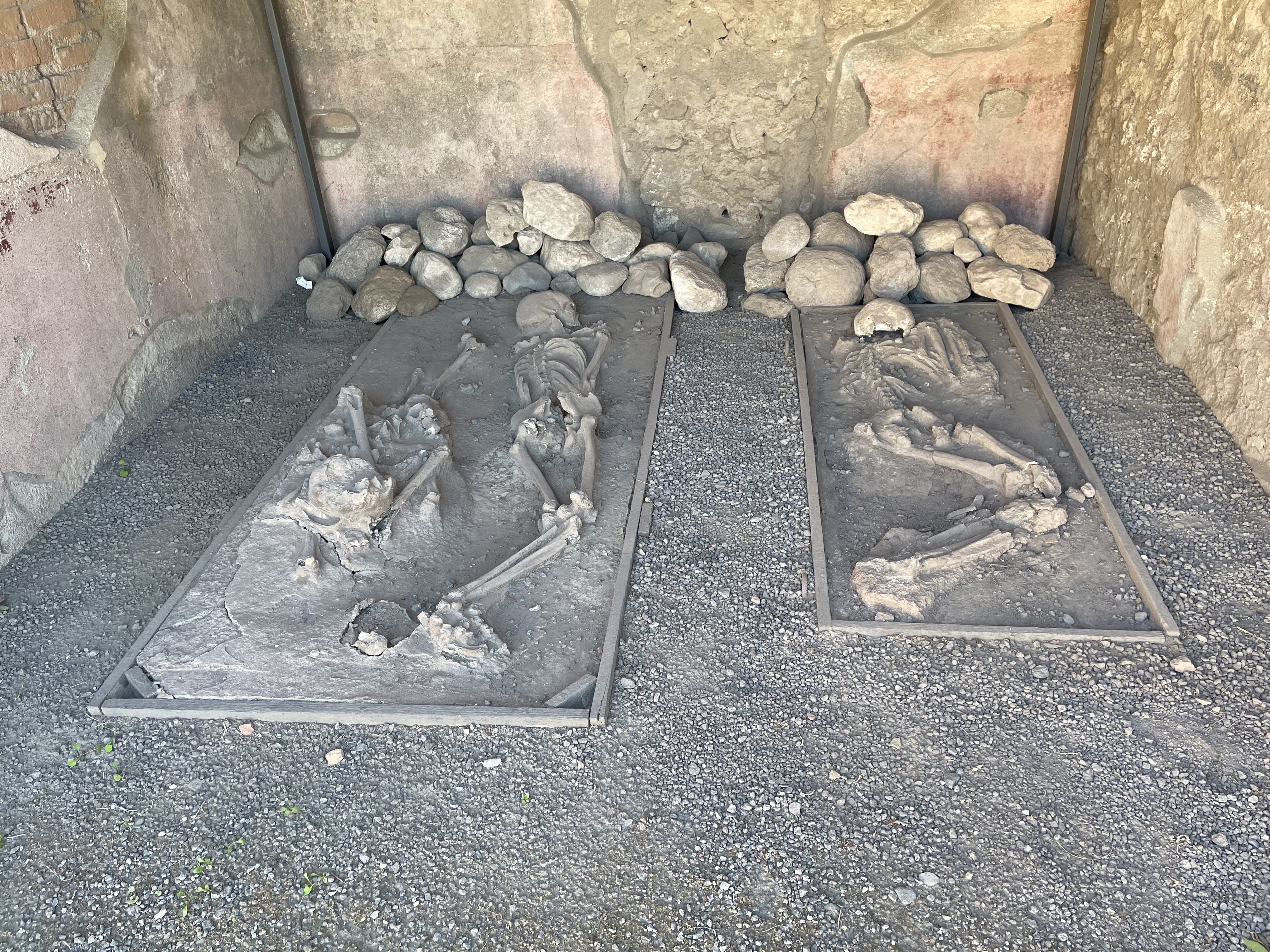
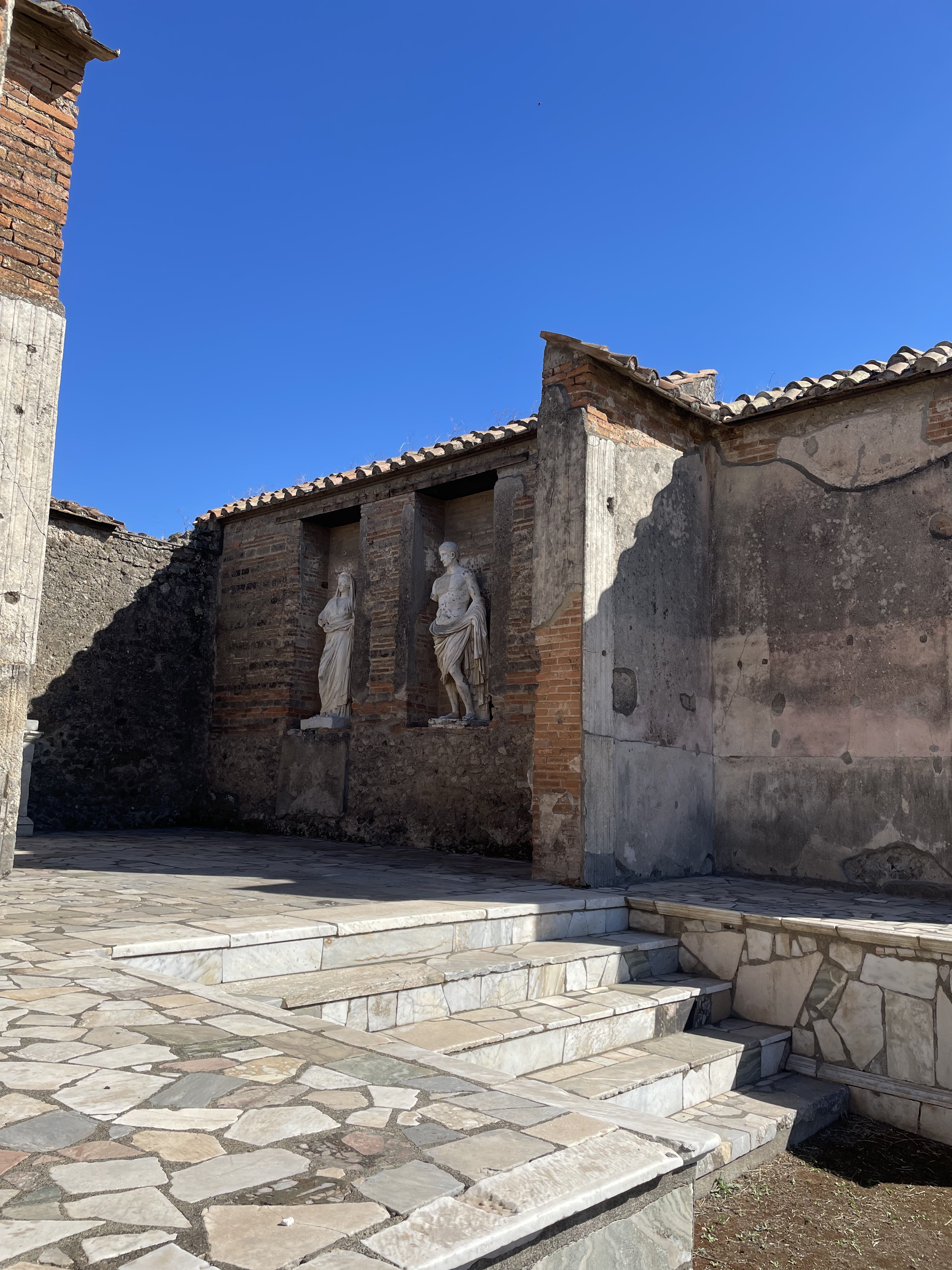
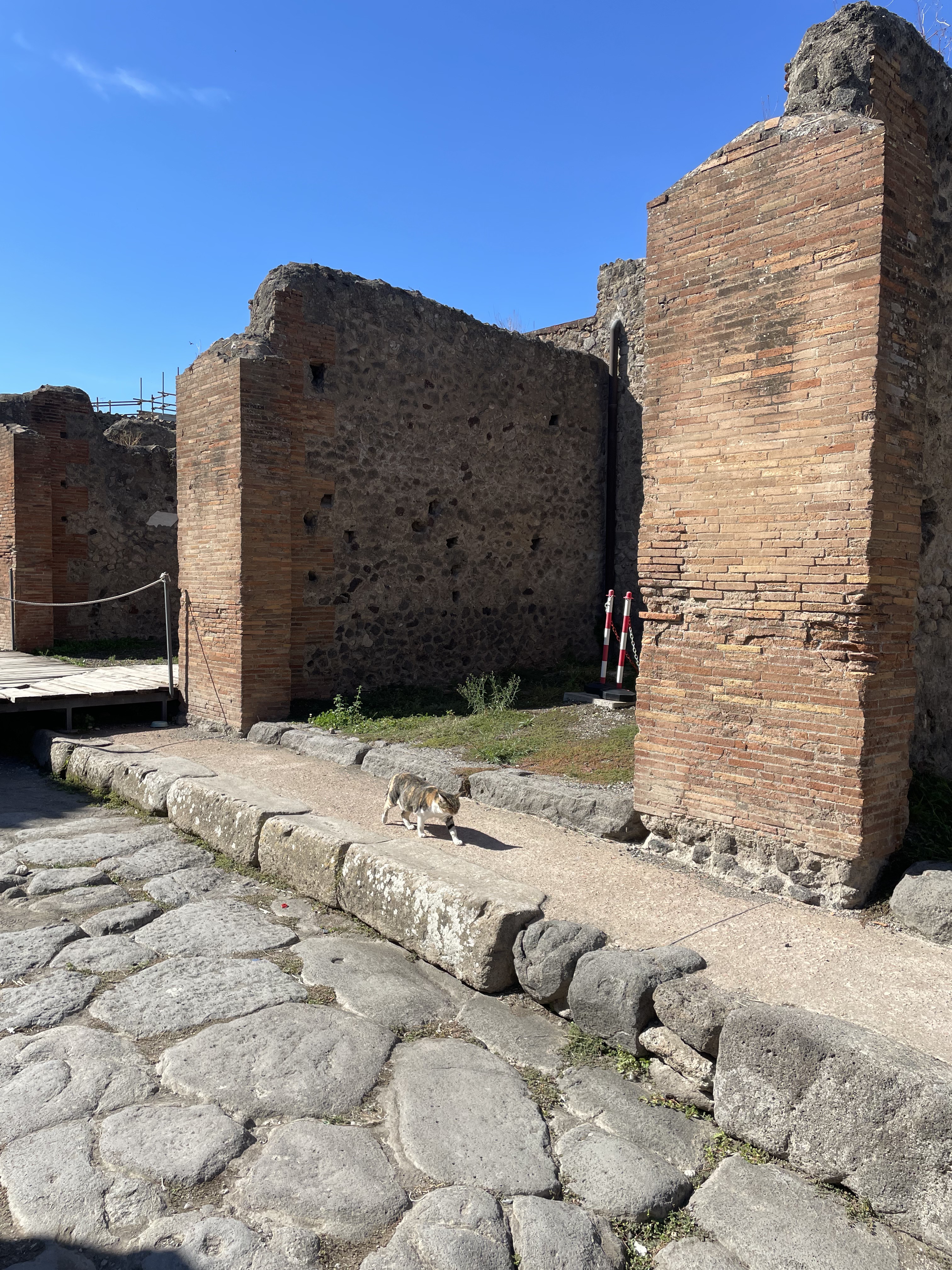
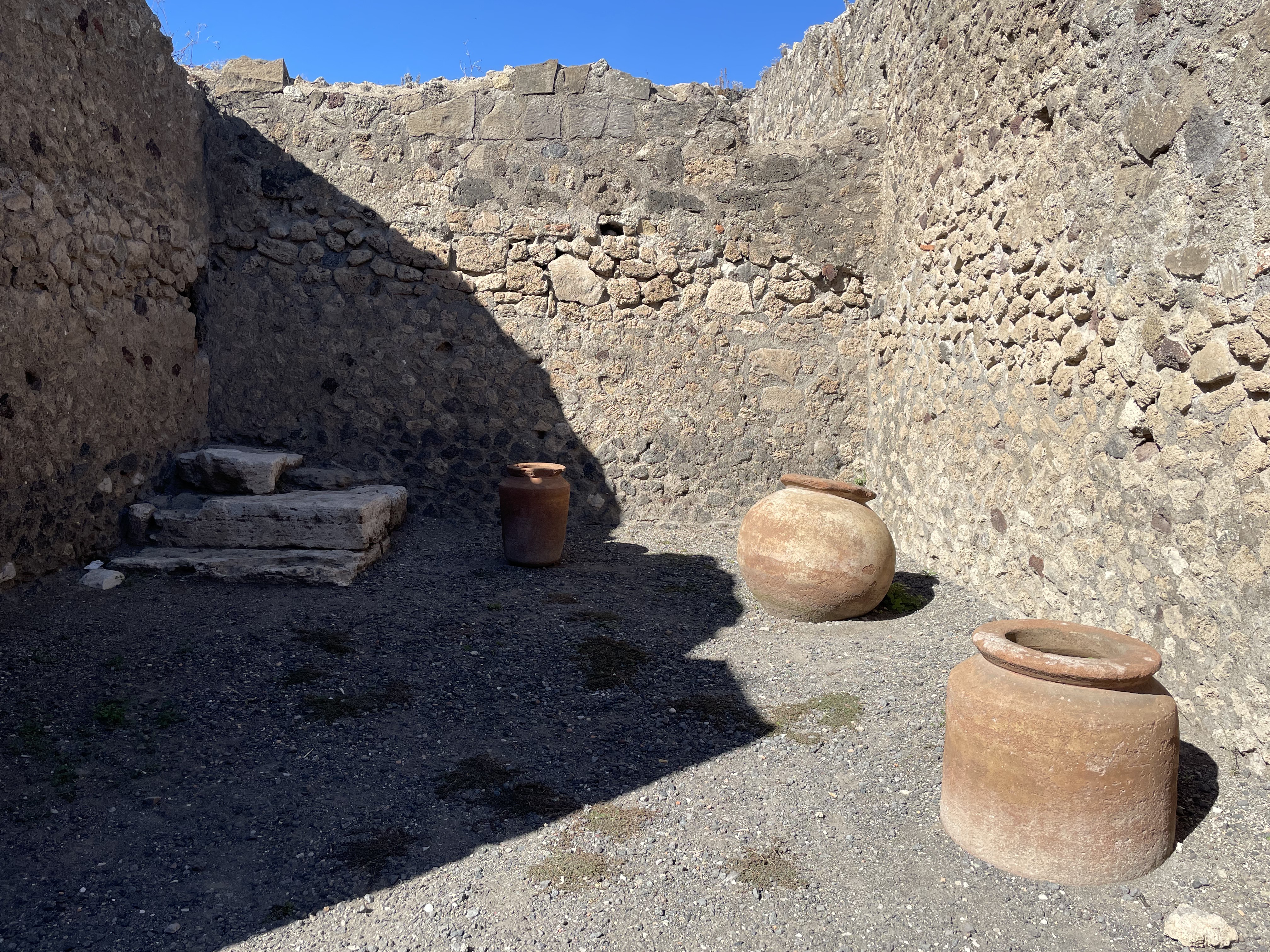
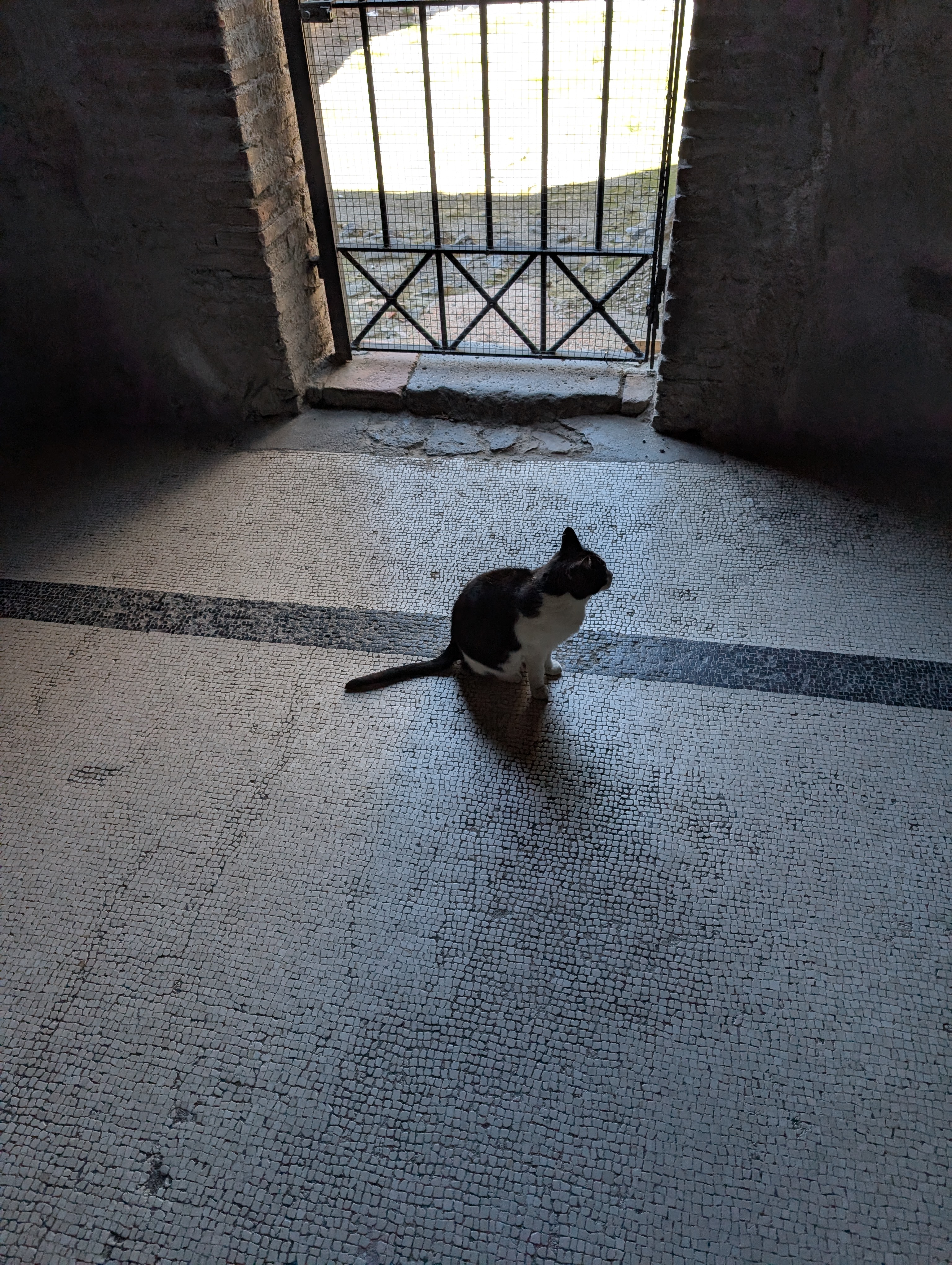
The casts lie in a walled garden now: a row of figures caught mid-motion, in the exact shape of their last minute. Not easy photos, and we kept them small in number for that reason — the niched statue and the staircase beside the garden, the tall brick facades looking inward, a courtyard of clay pots, and the corridor where the site’s own cat looked up, judged us, and settled.
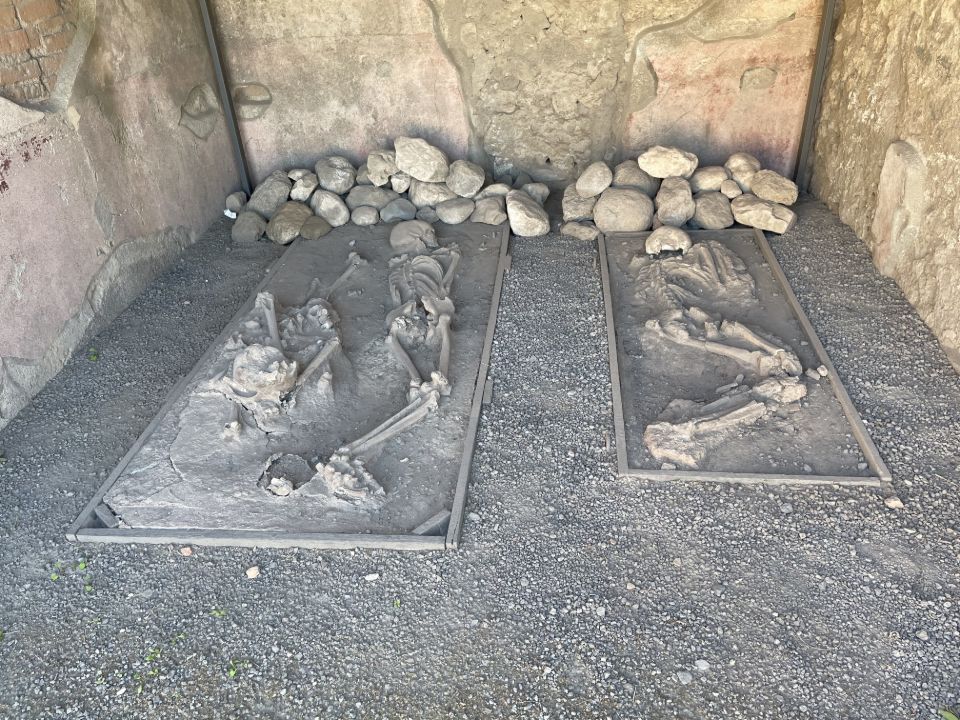
The Garden of the Fugitives 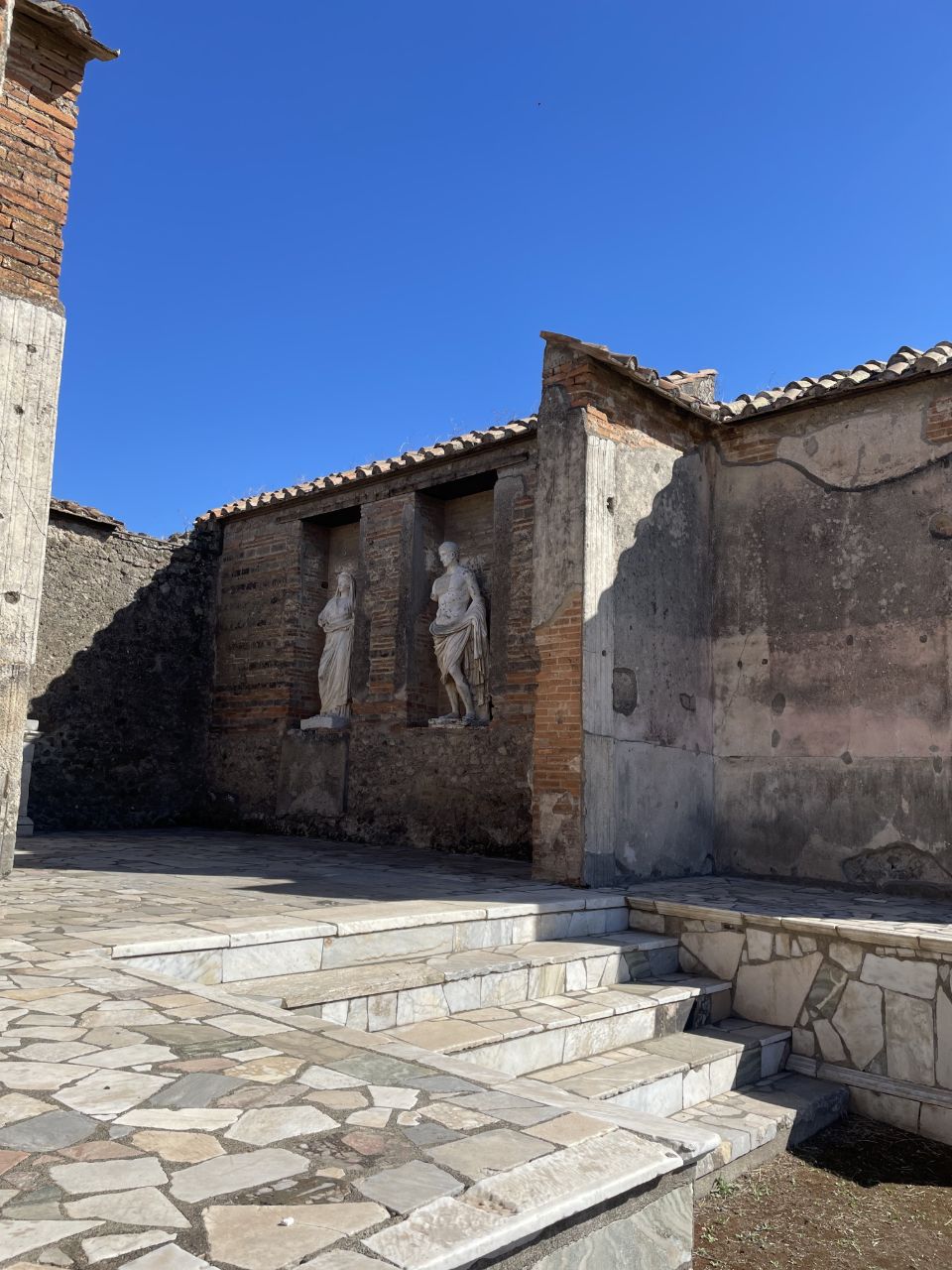
Niche statue beside the stair 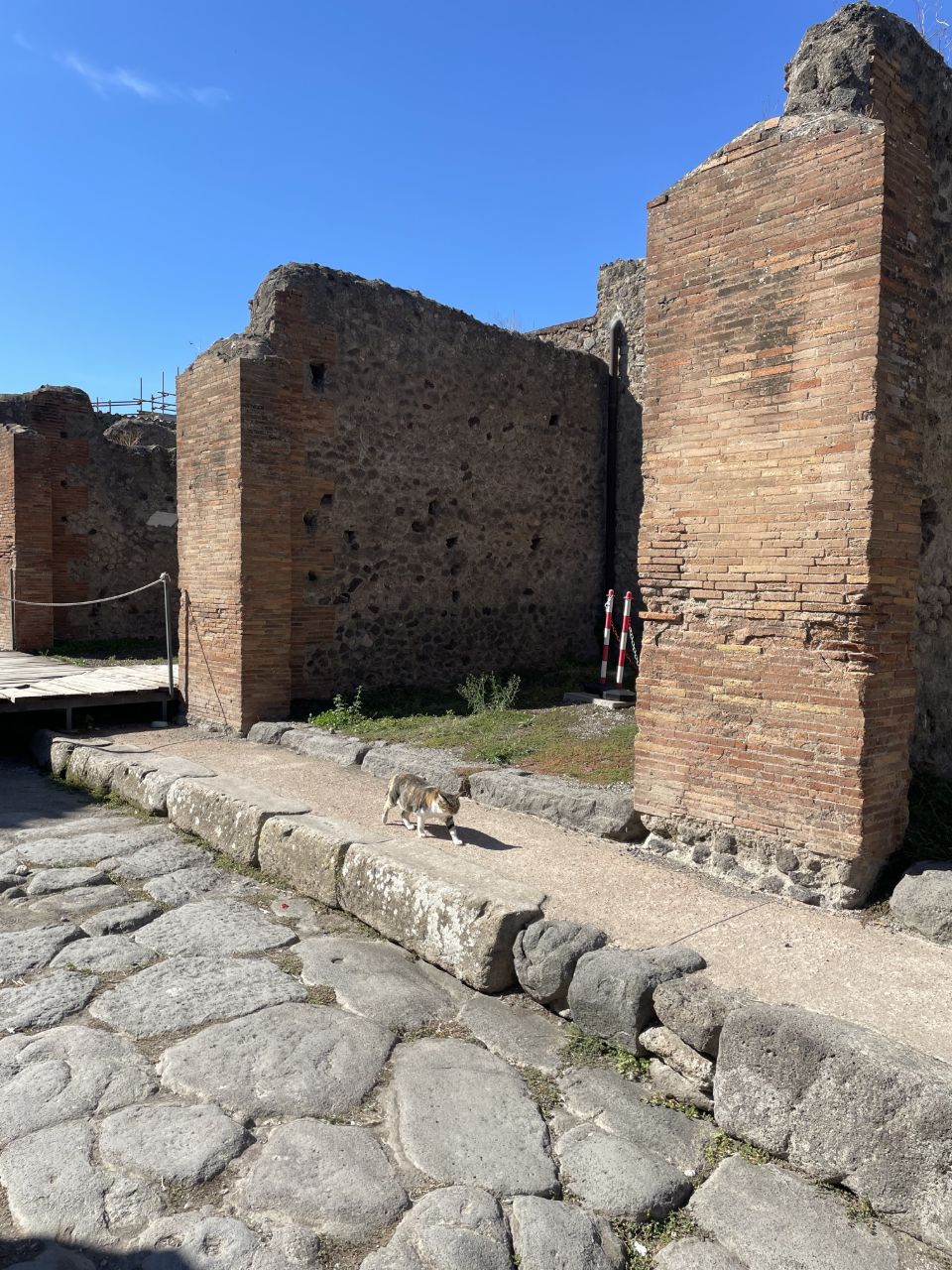
Tall brick facades, streets between 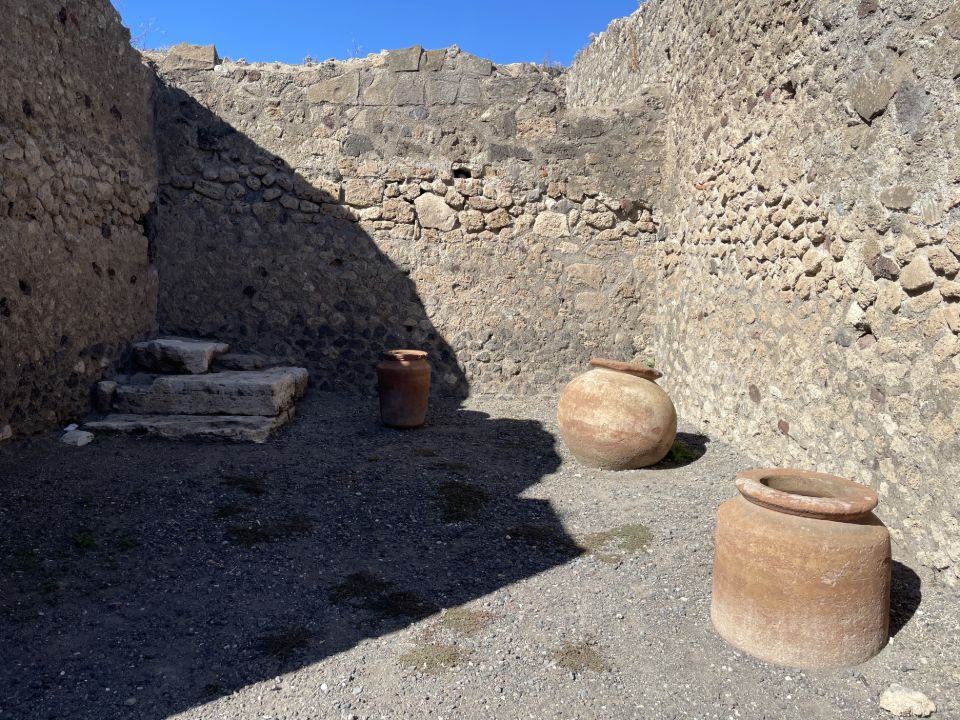
A courtyard of clay pots 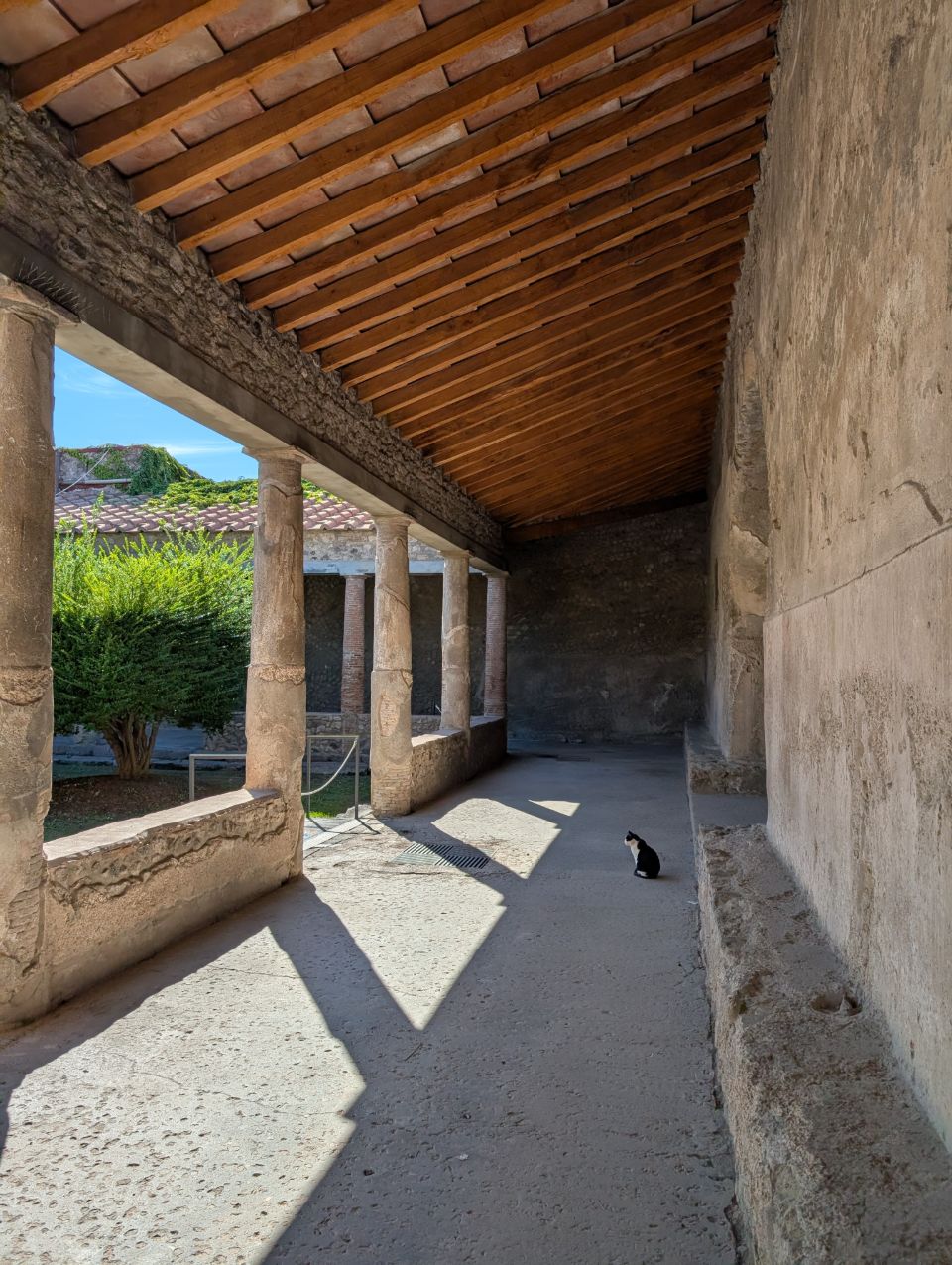
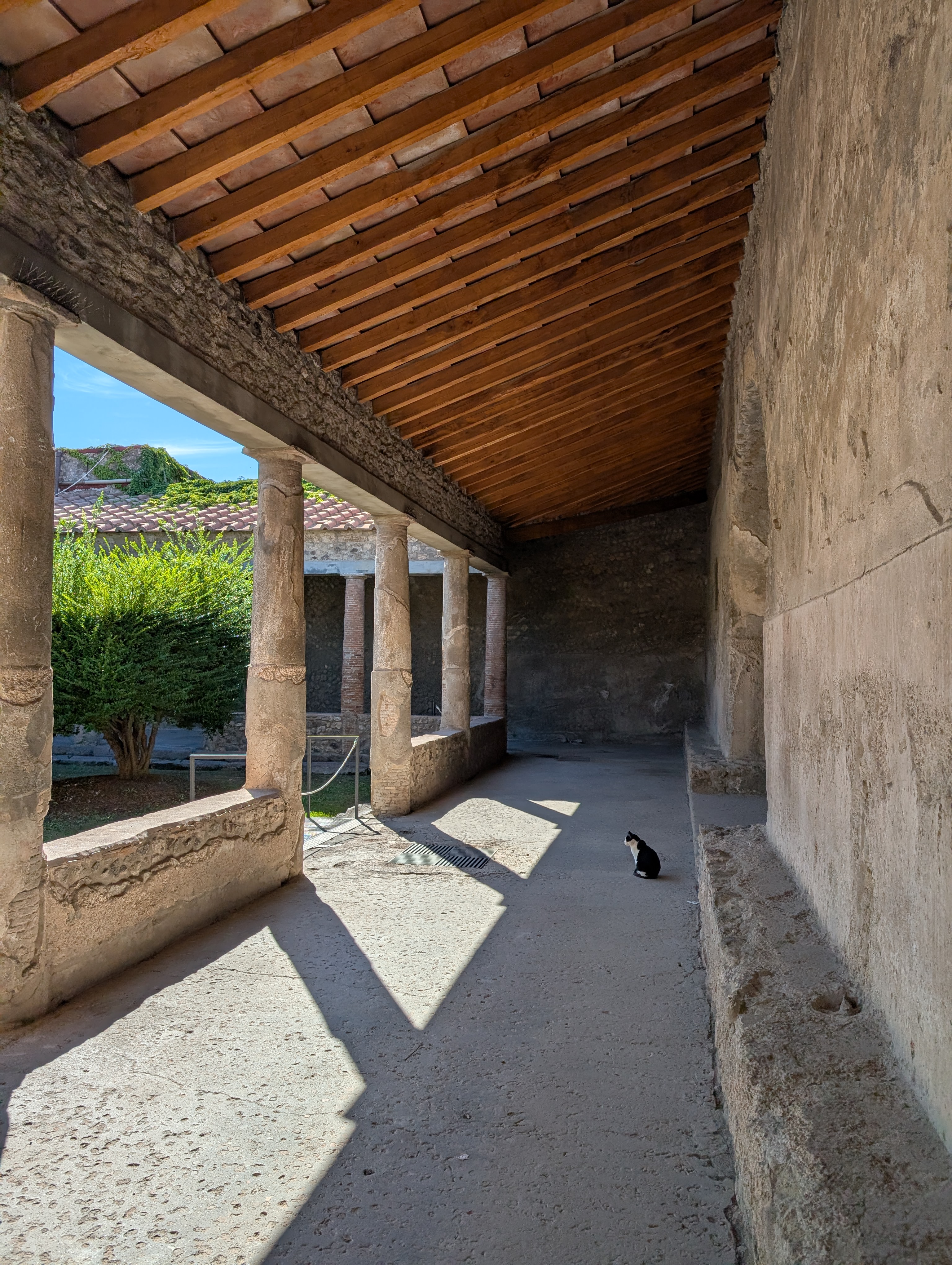
Colonnaded corridor, with the cat — best moment so far
The Stabian Baths
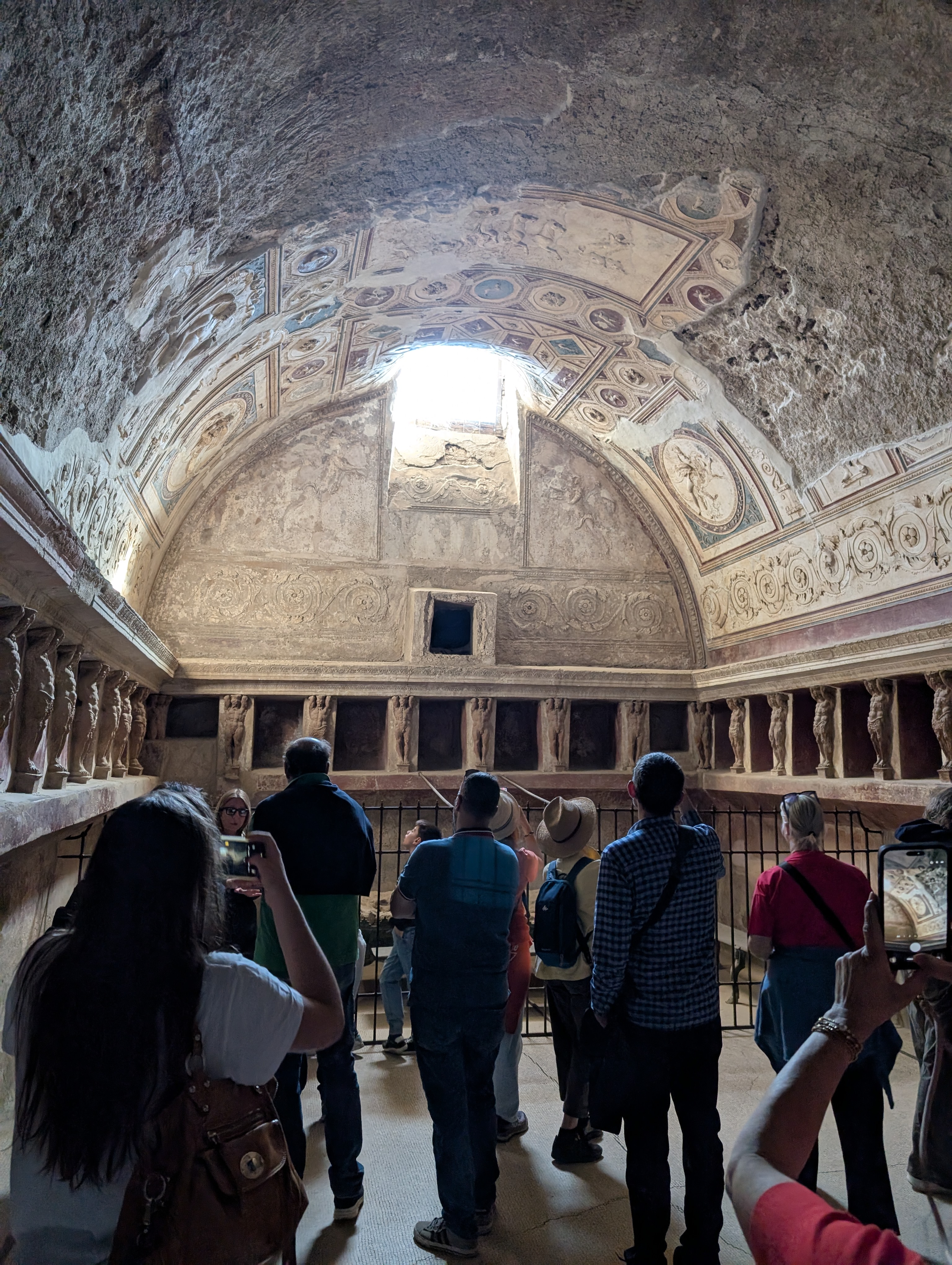
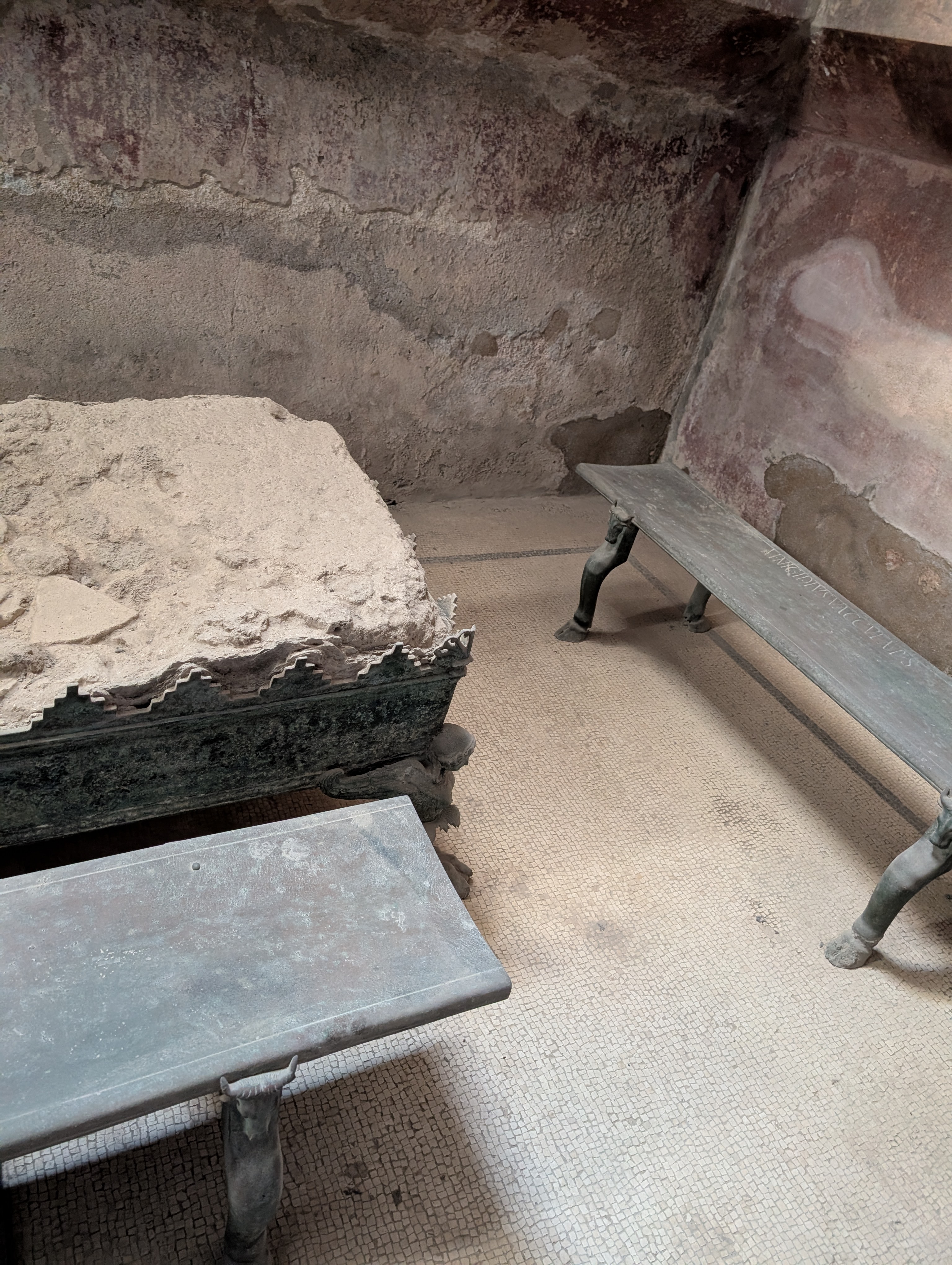
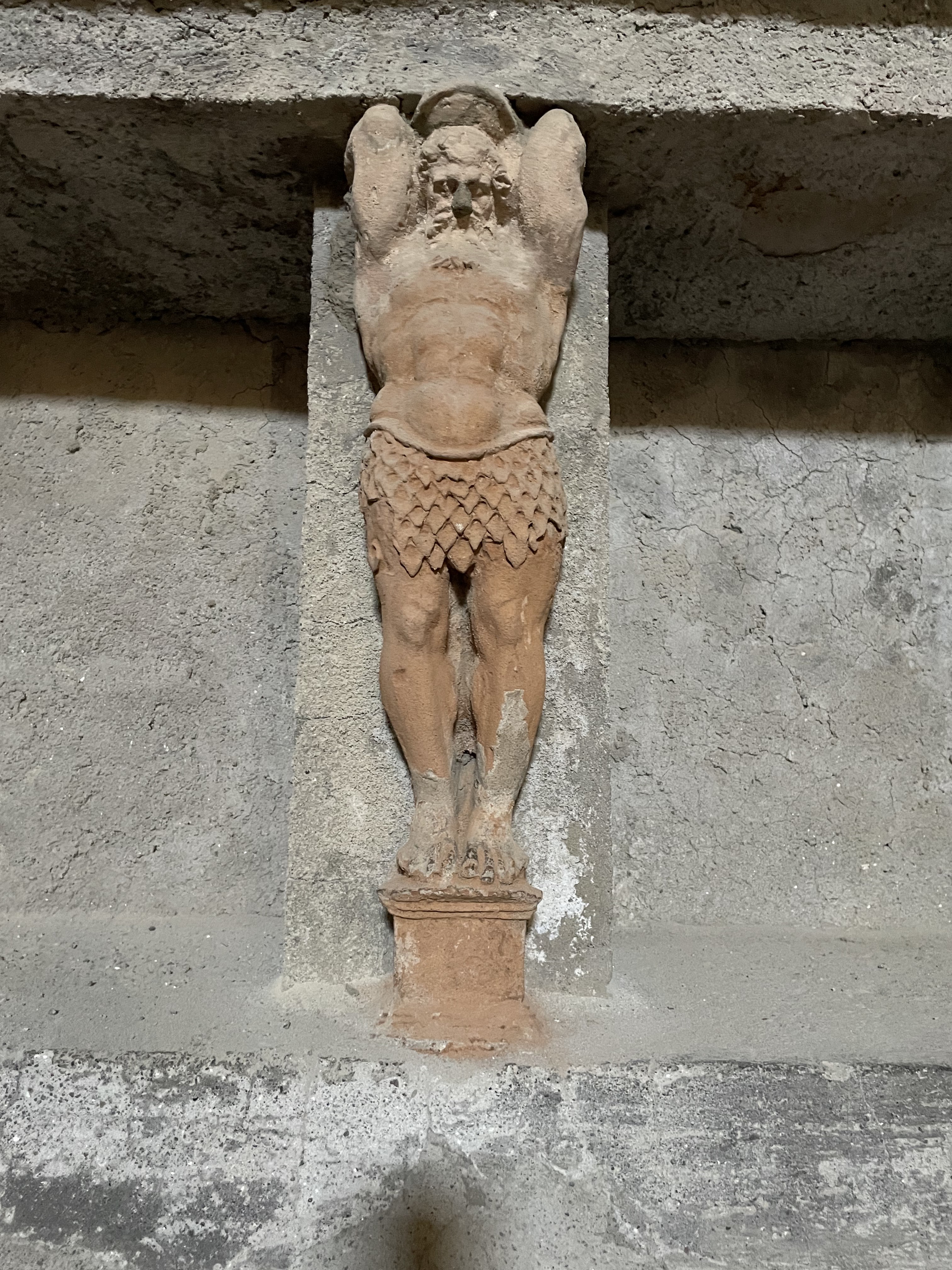
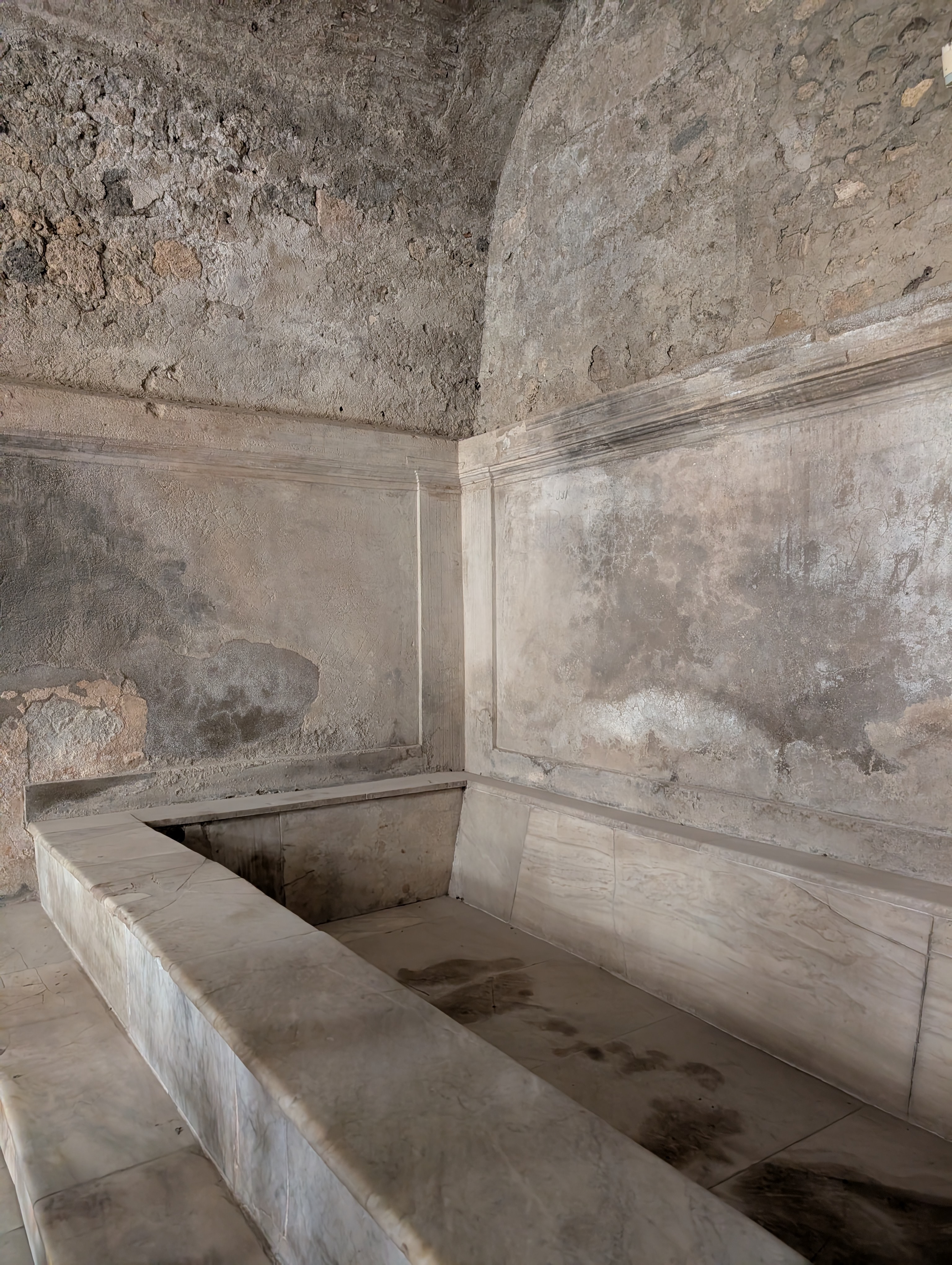
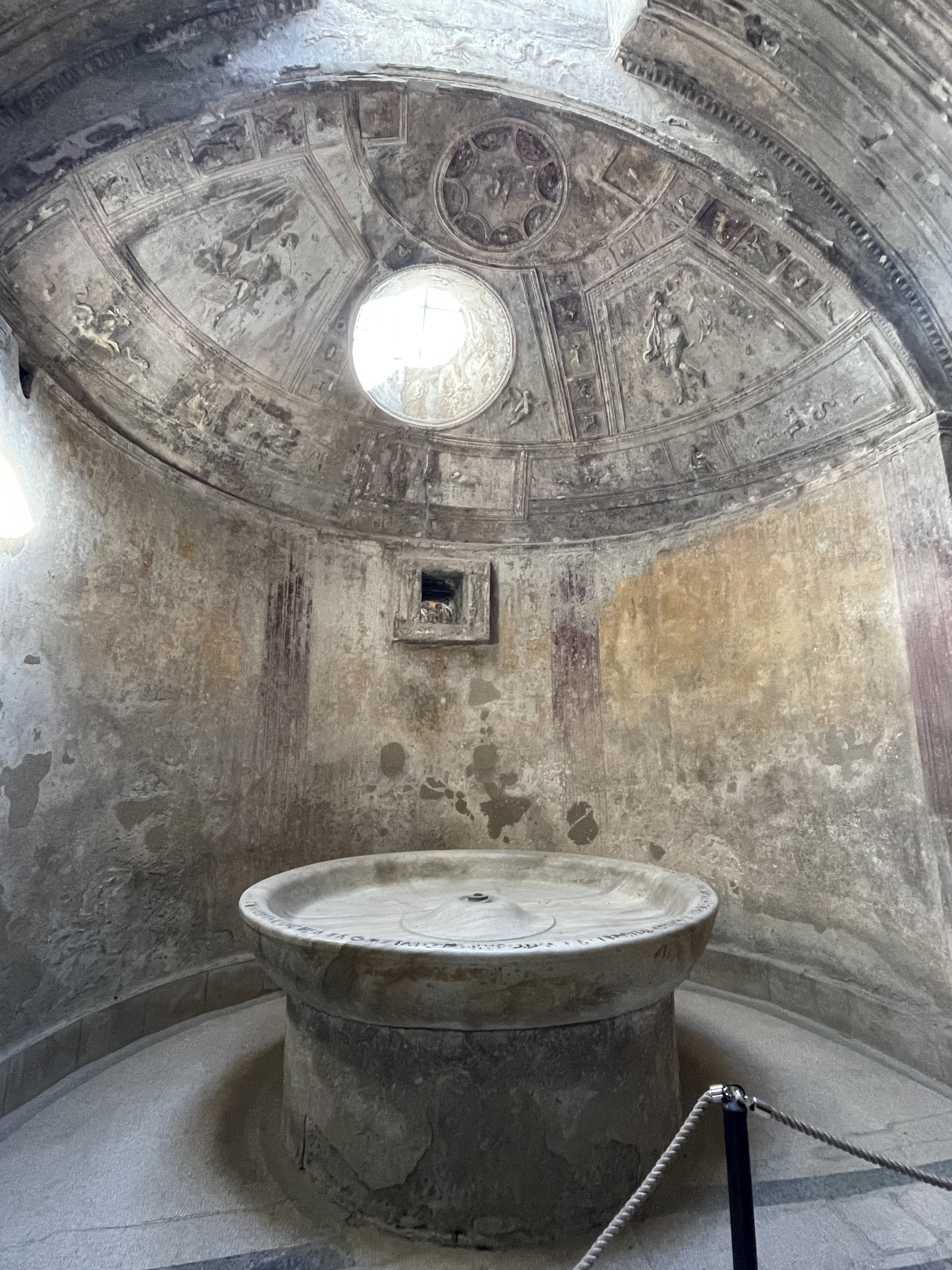
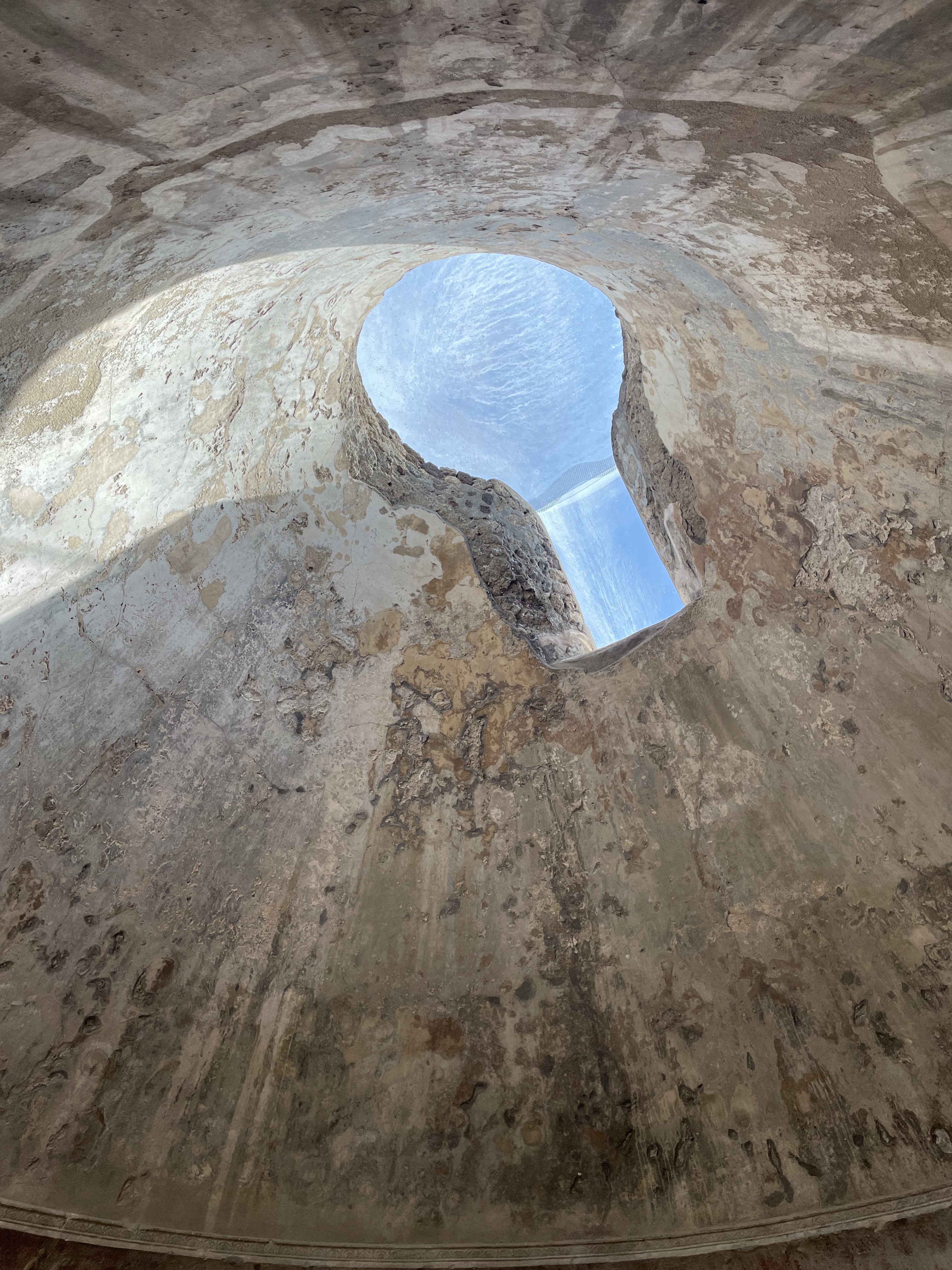
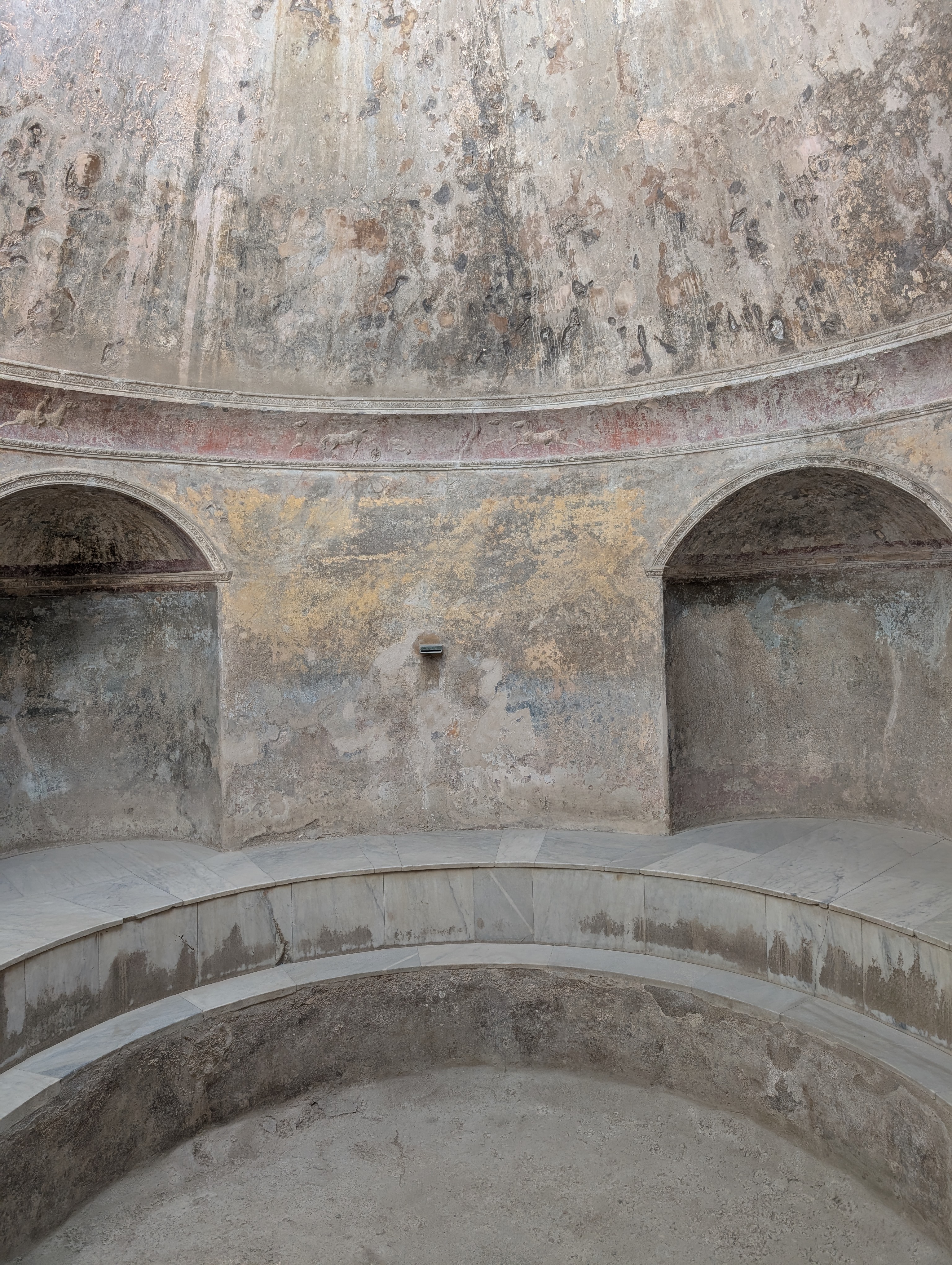
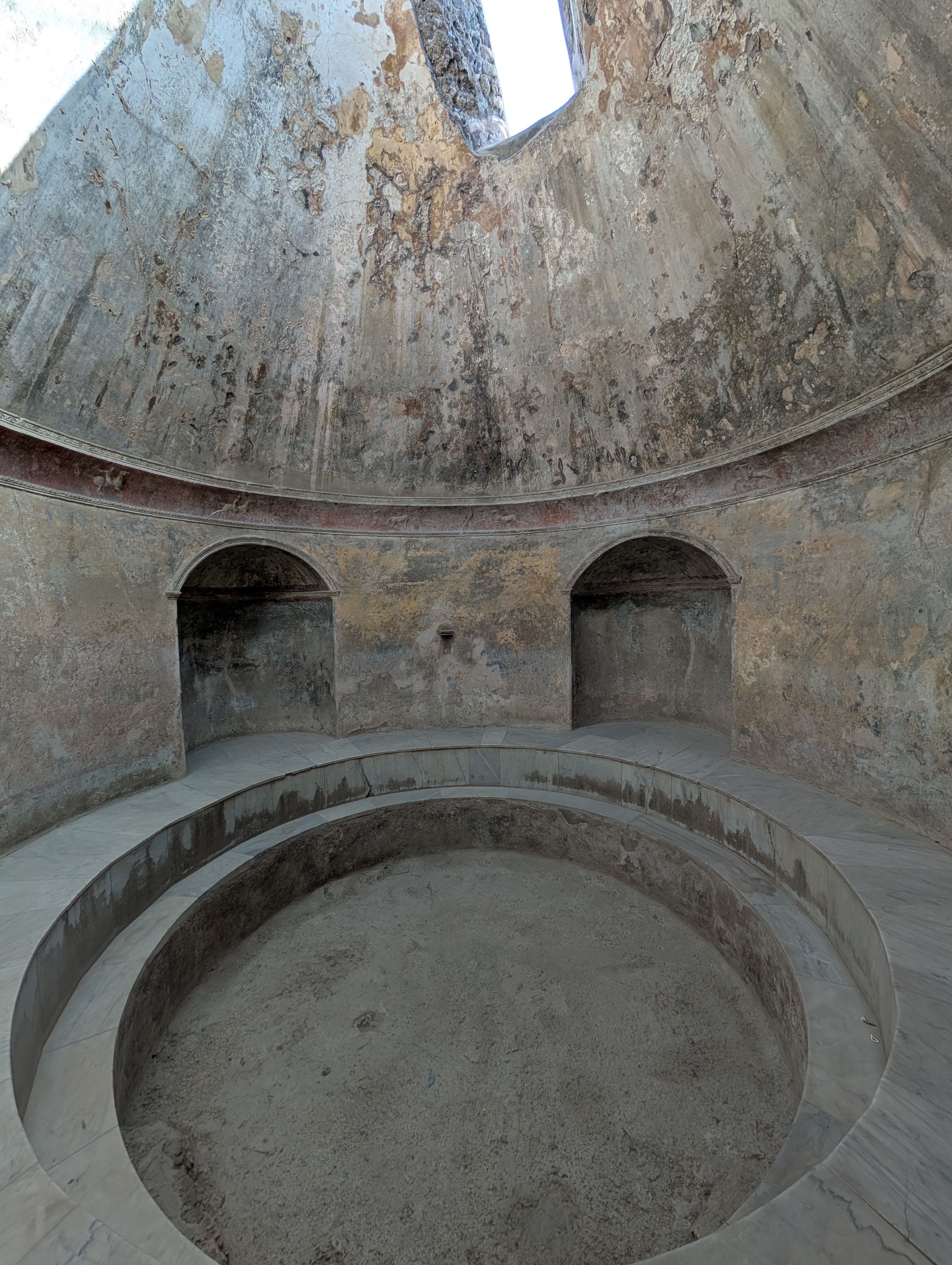
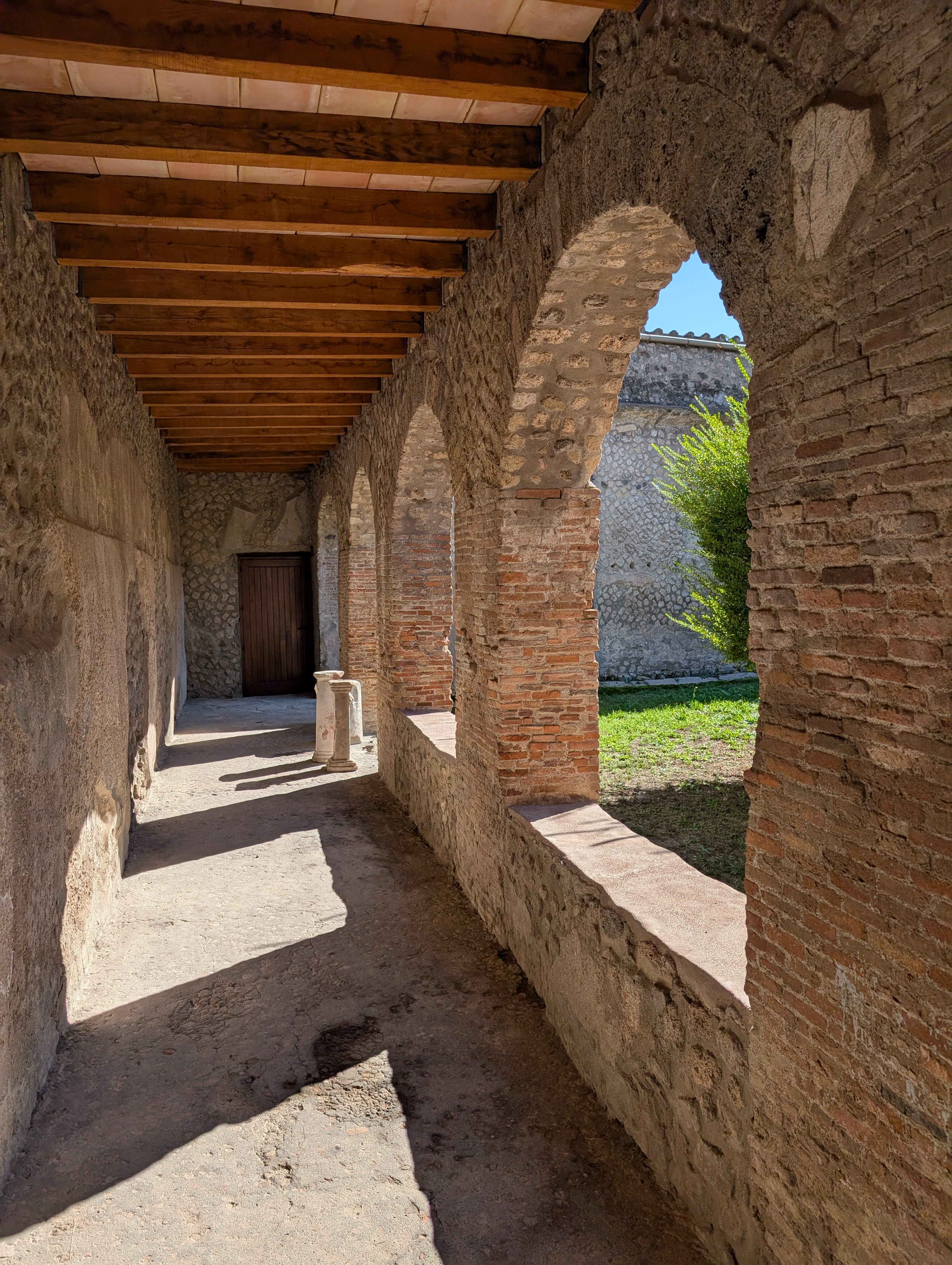
A bathhouse’s afternoon, two thousand years retired: a vaulted hall with its stucco ceiling holding, a dressing room with bench and marble table, terracotta figures standing in their niches, a bathing room with a tub, a round basin under a domed skylight glowing. Straight up into the oculus; inside the circular laconicum with its stepped basin and faded paint; the plunge pool room with its domed apodyterium; an arcaded corridor with its wooden ceiling — and the cat again, sitting in a mosaic doorway like it had been waiting for the queue to form.
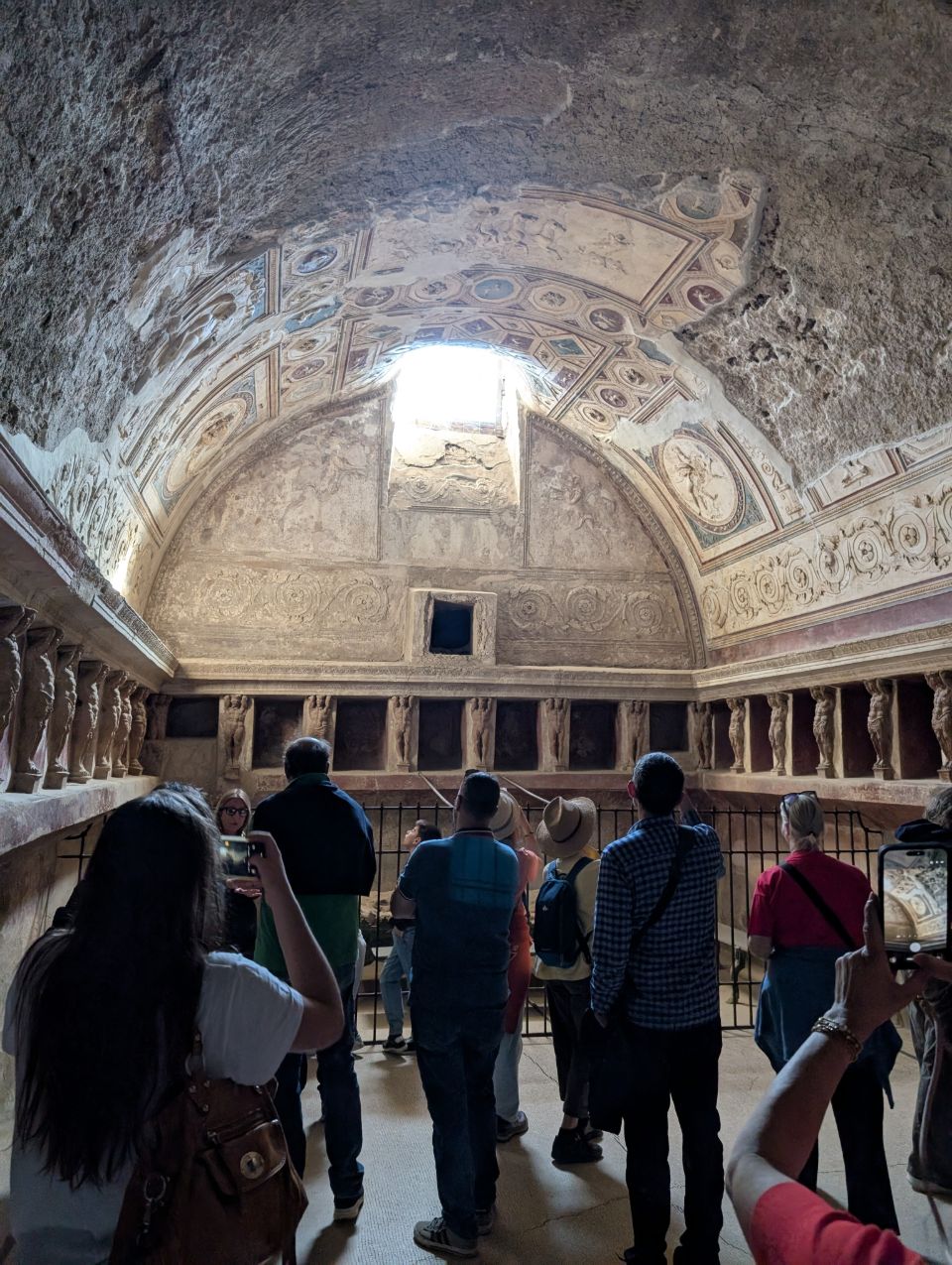
Vaulted hall, ceiling holding 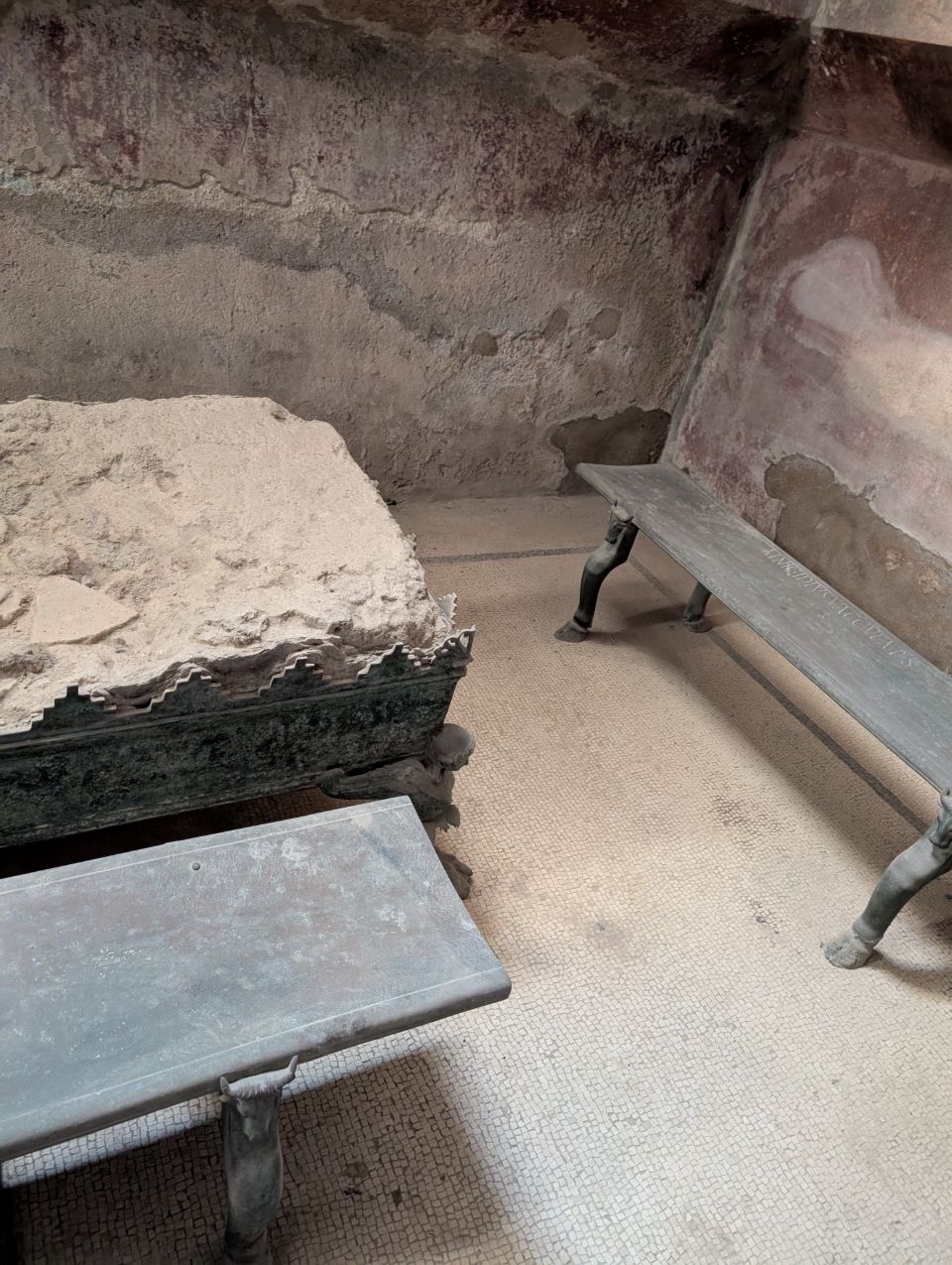
Dressing room, bench and marble side table 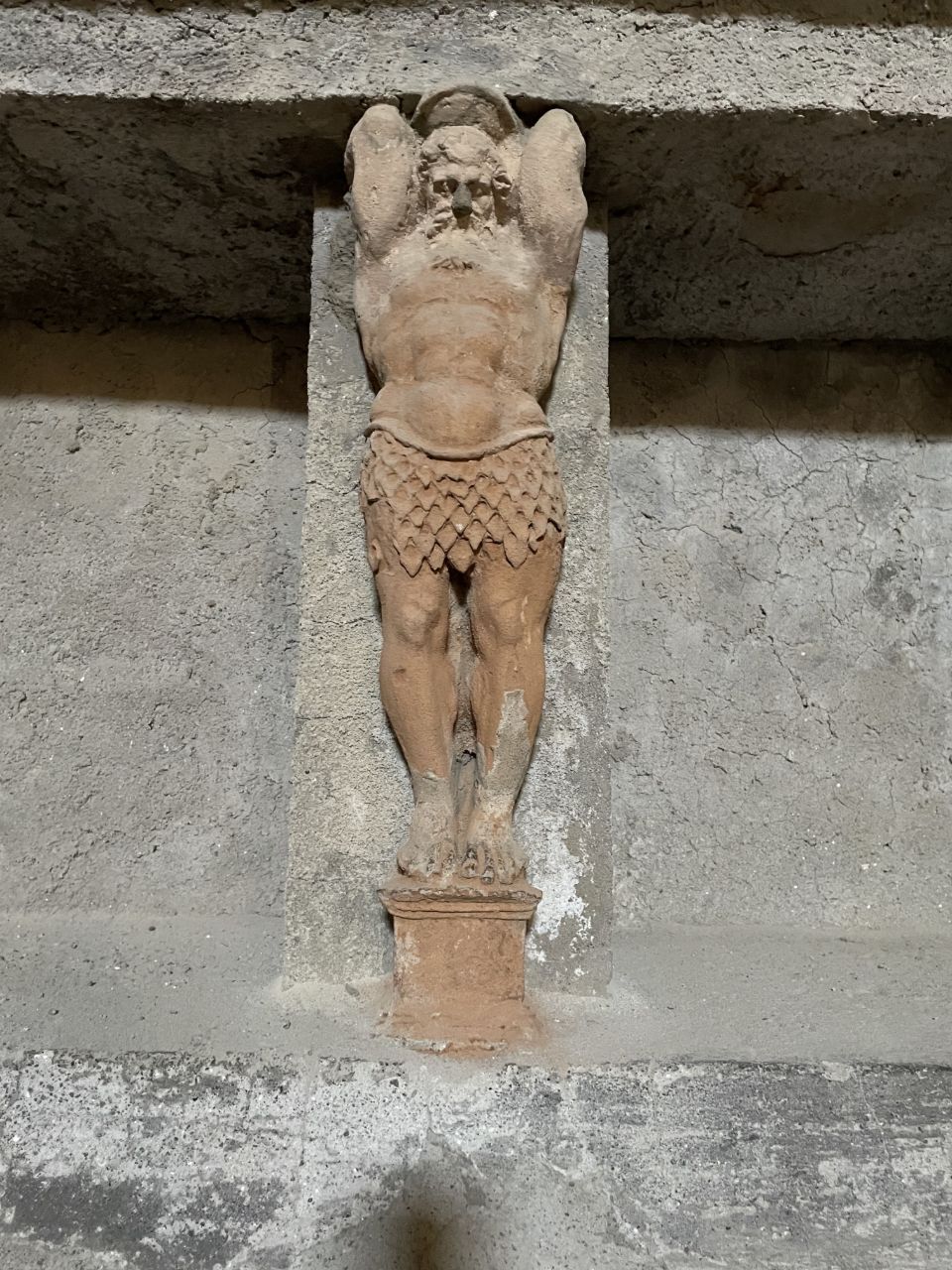
Terracotta figures in their niches 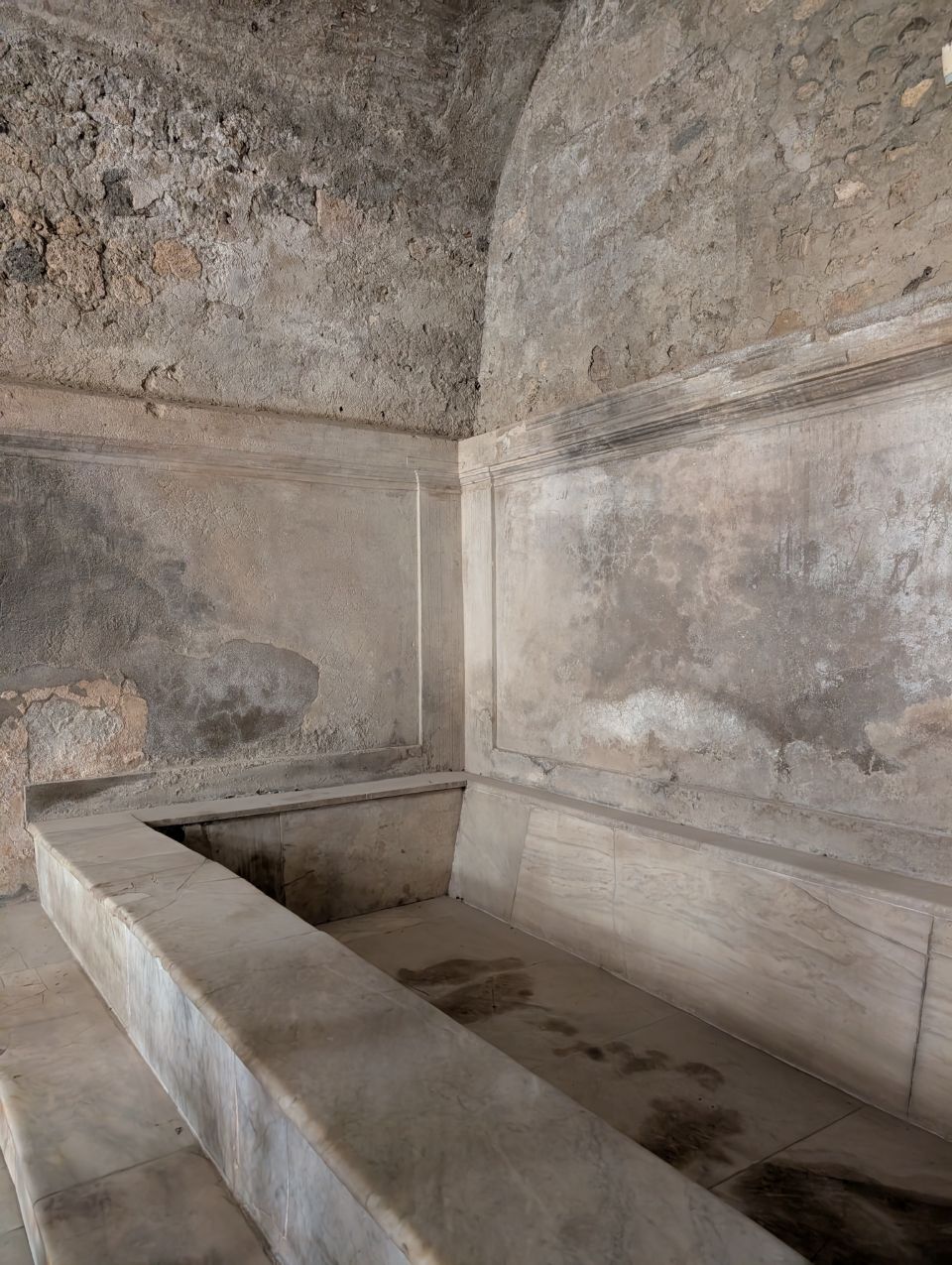
The bathing room, minus the water 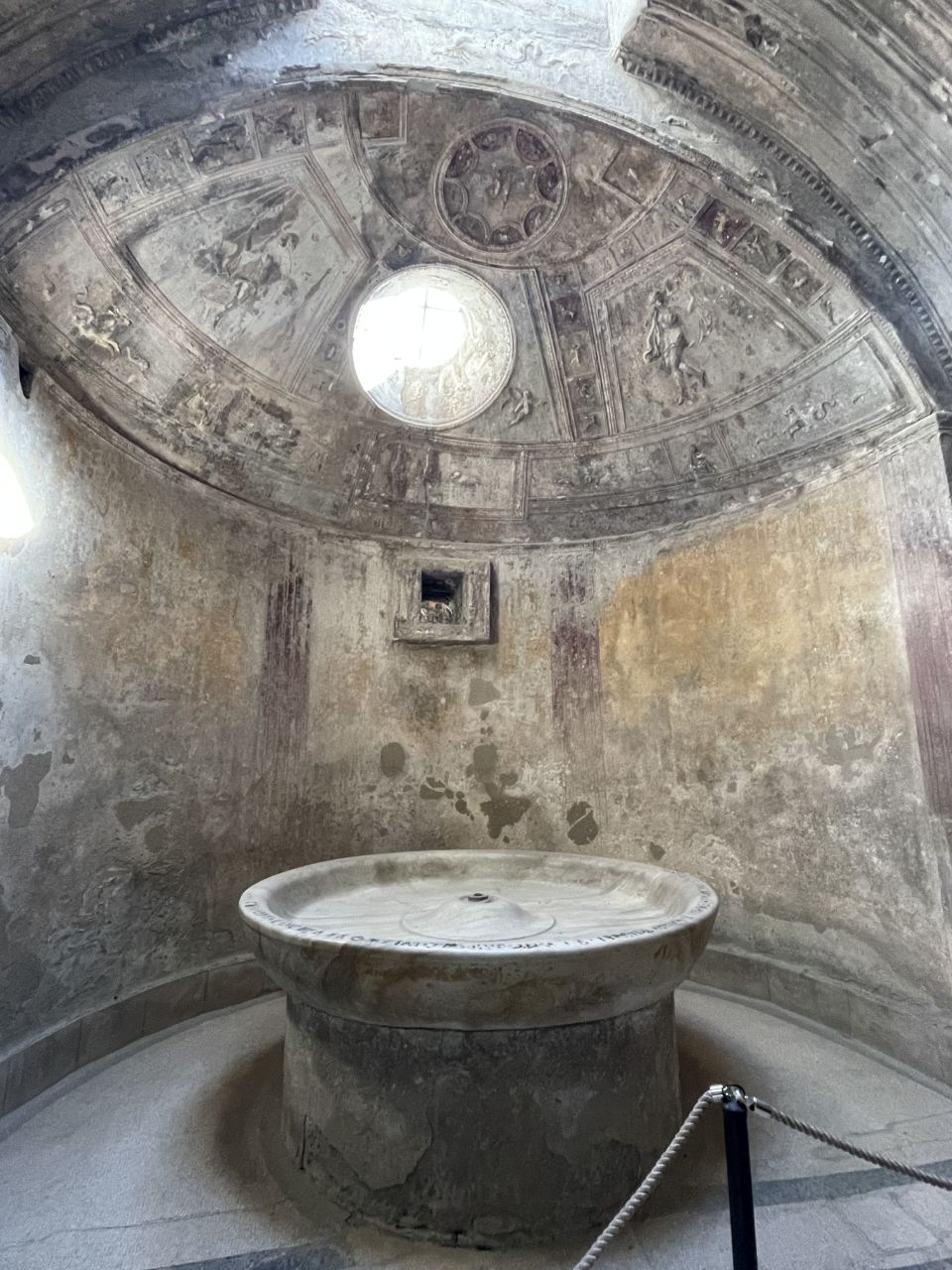
Round basin under the dome 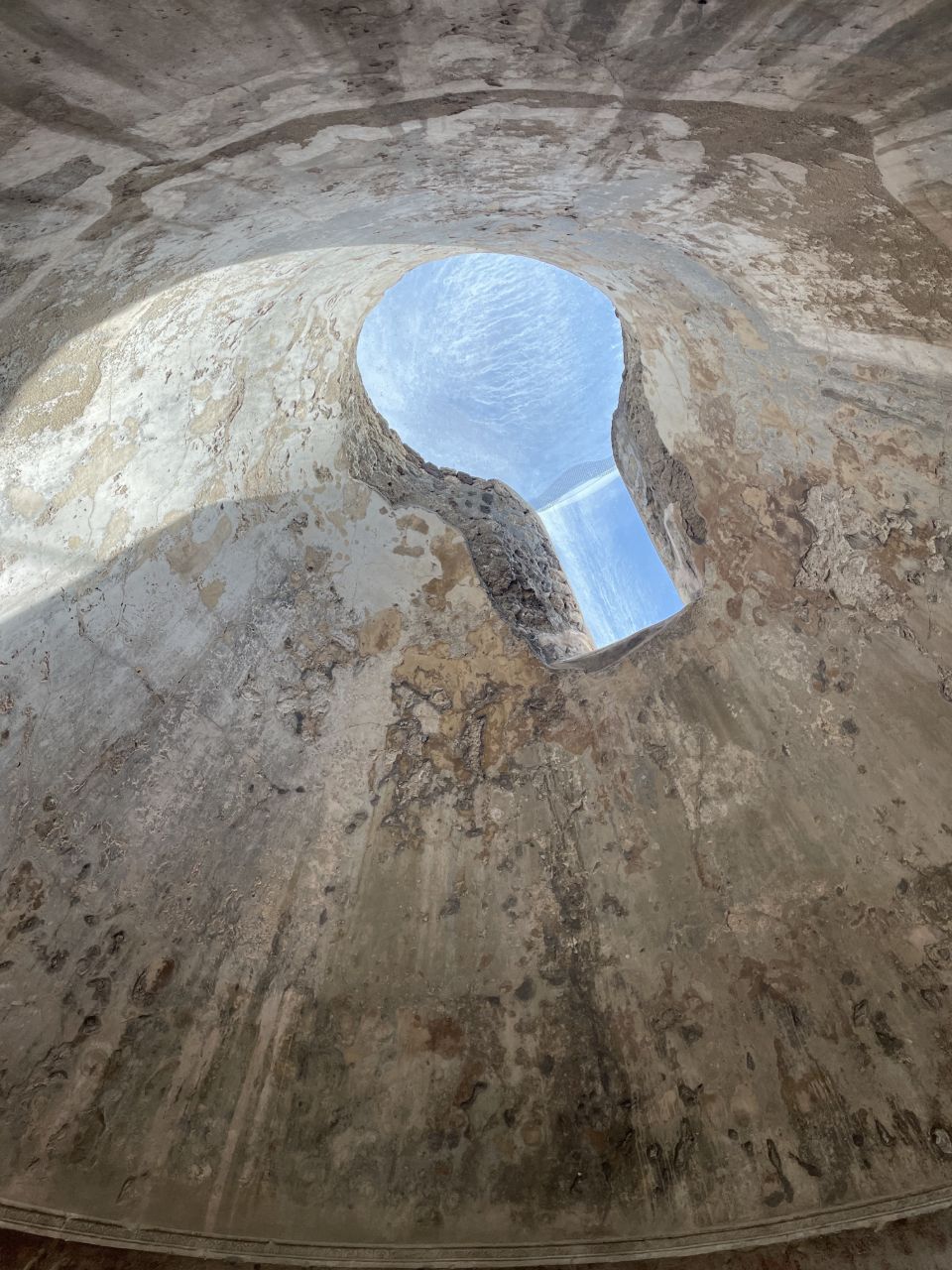
Straight up: the dome and its glass 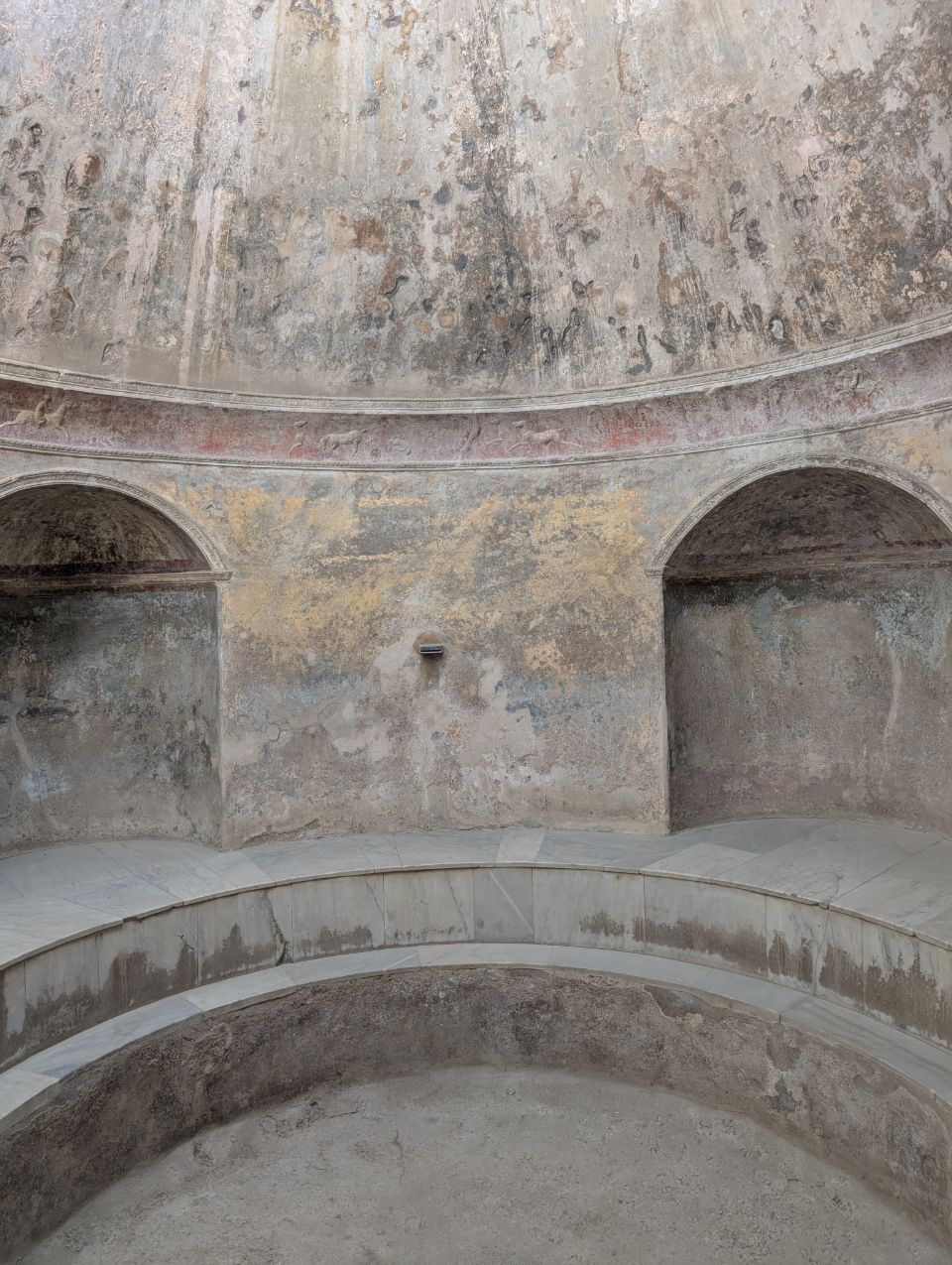
Inside the laconicum: niches and a round basin 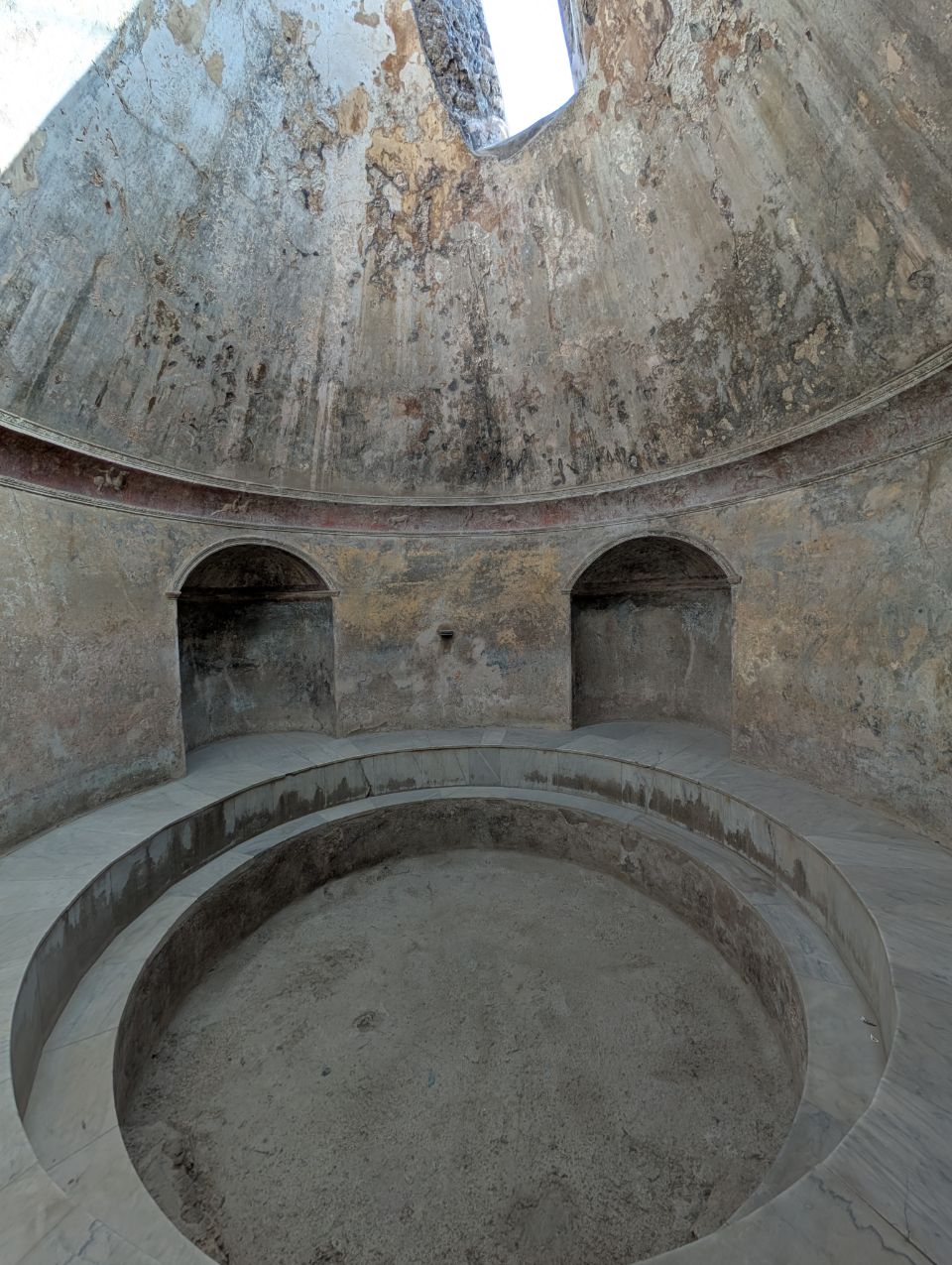
The plunge pool room, domed 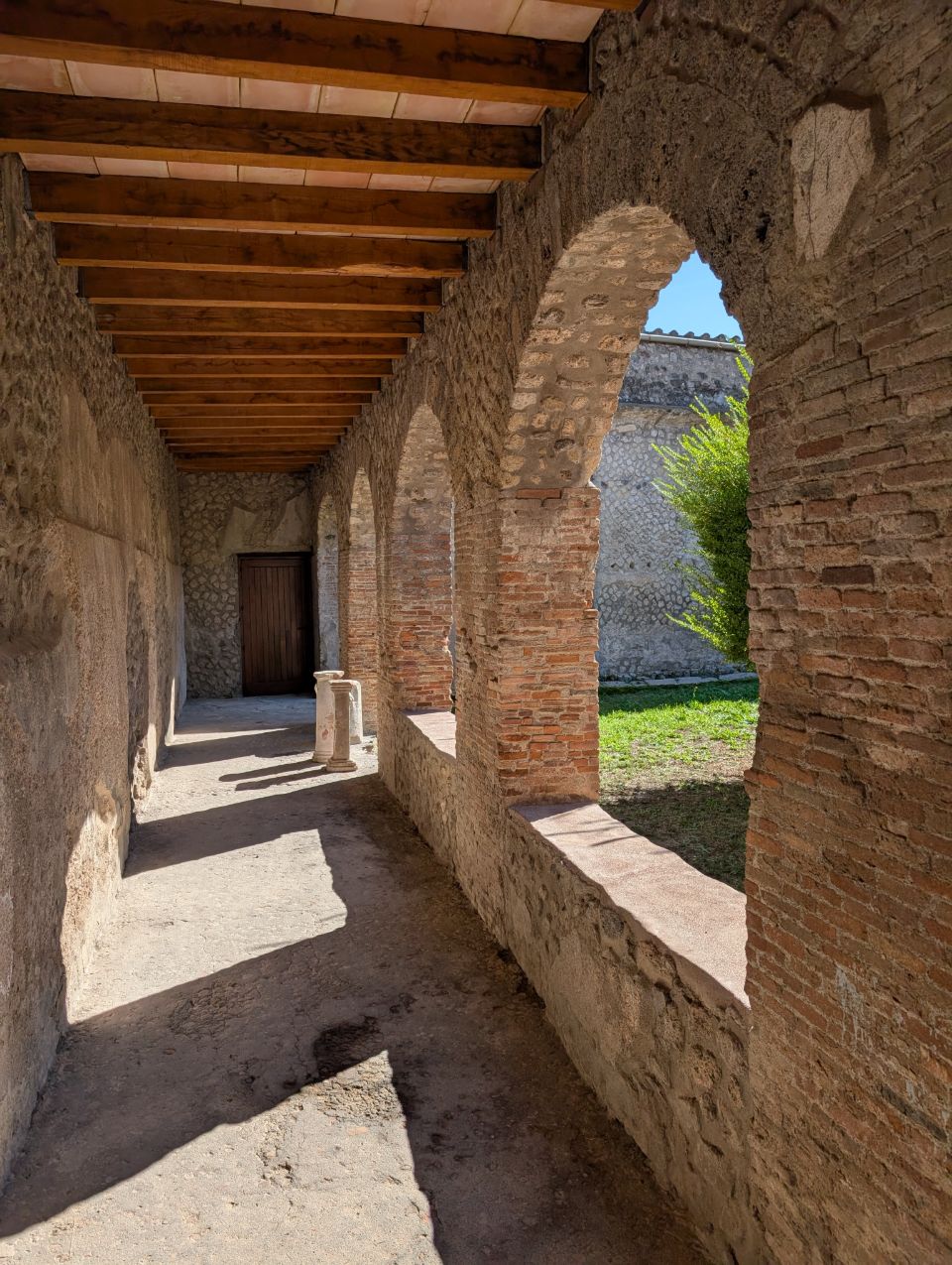
Arcaded corridor, wooden ceiling 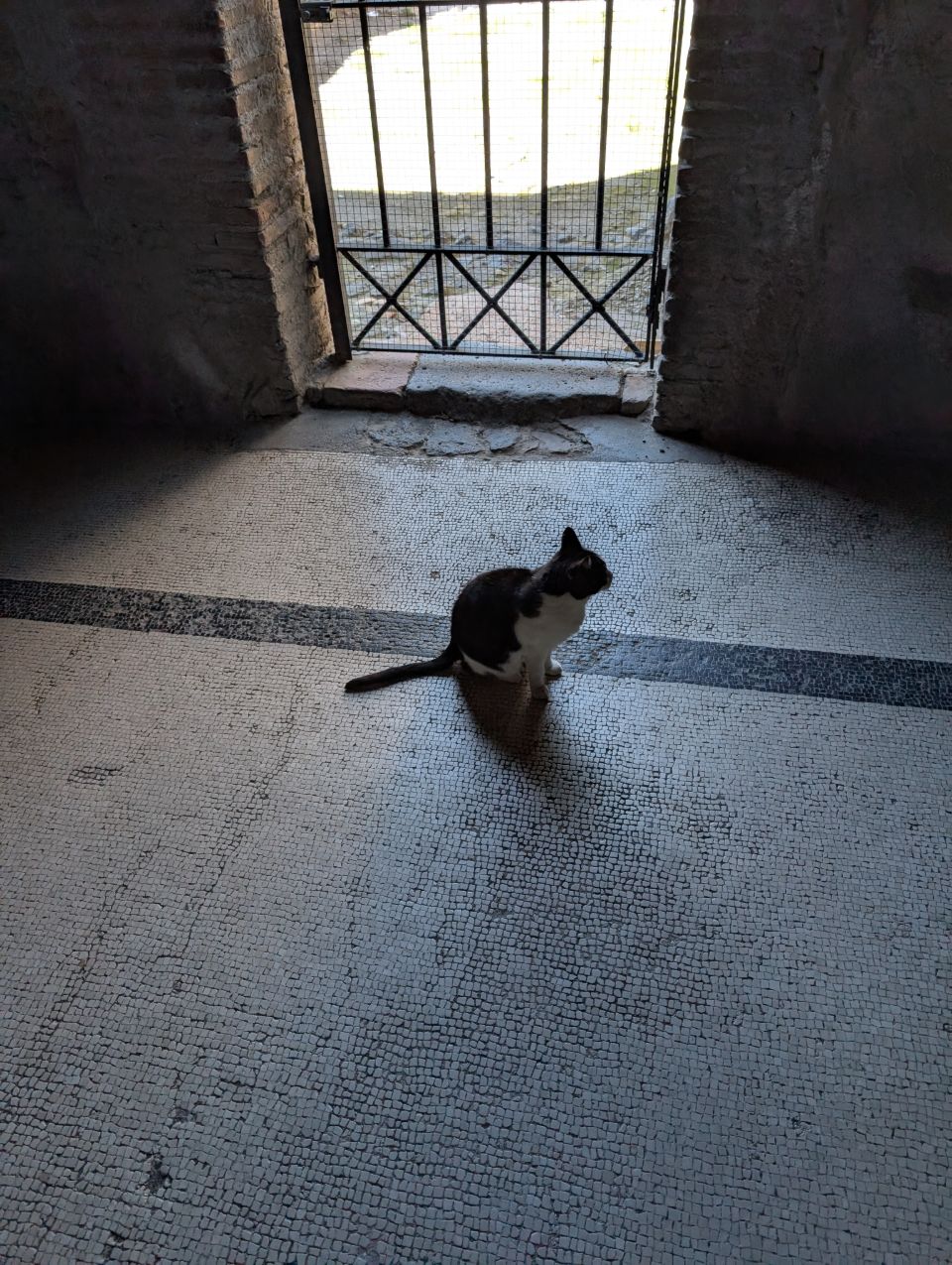
The cat again, in the mosaic doorway
Snack bars and shopping streets
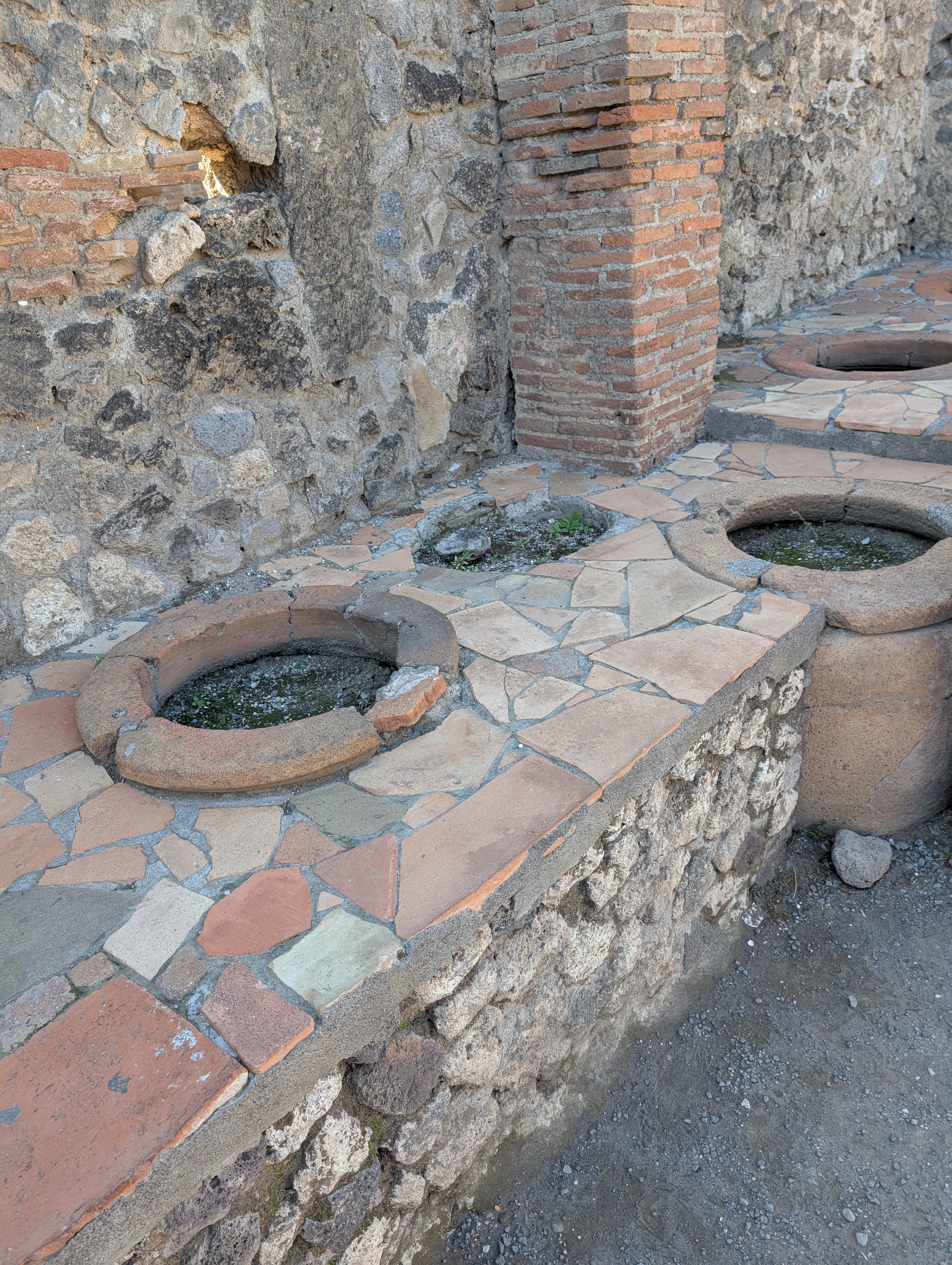
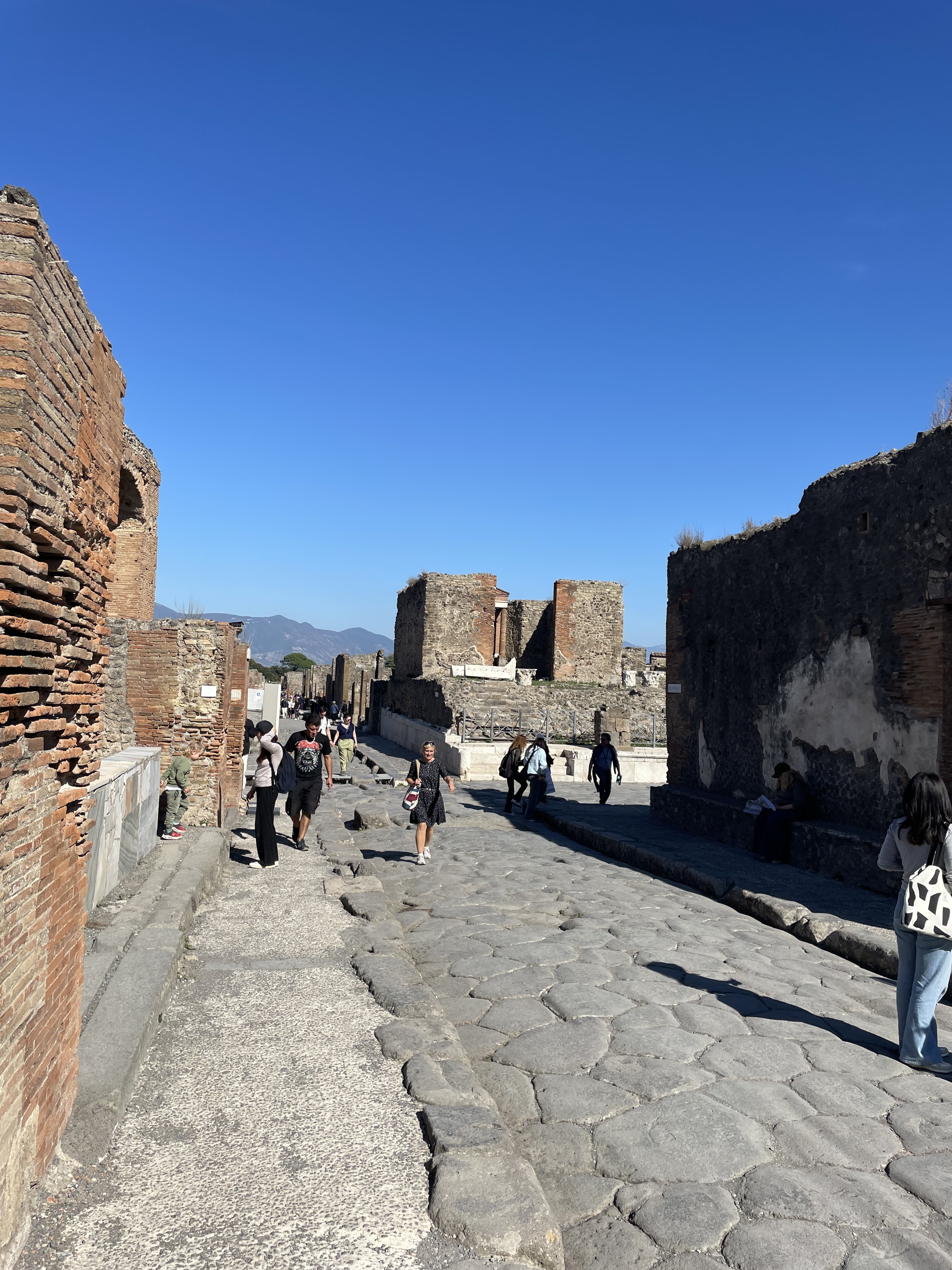
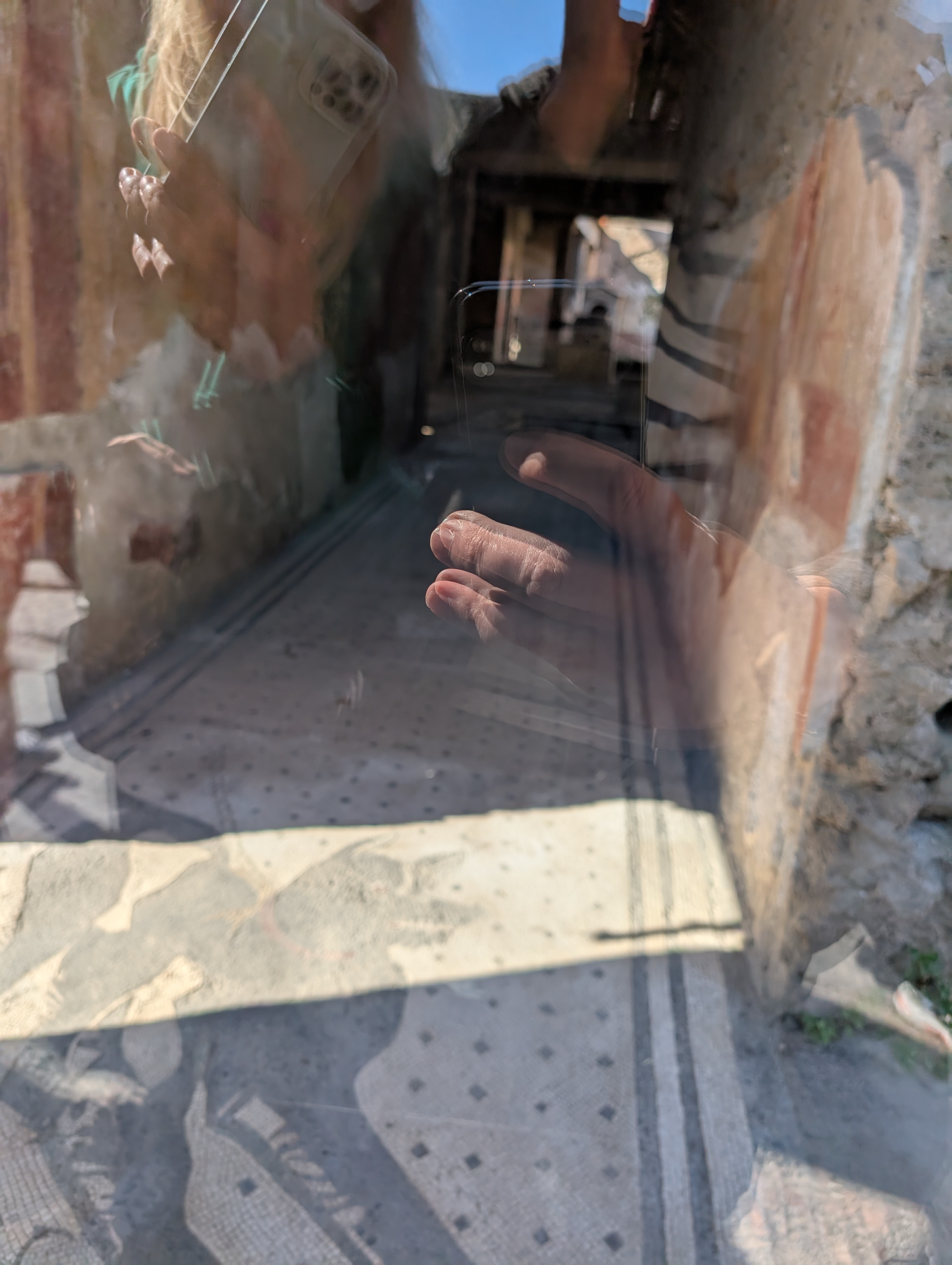
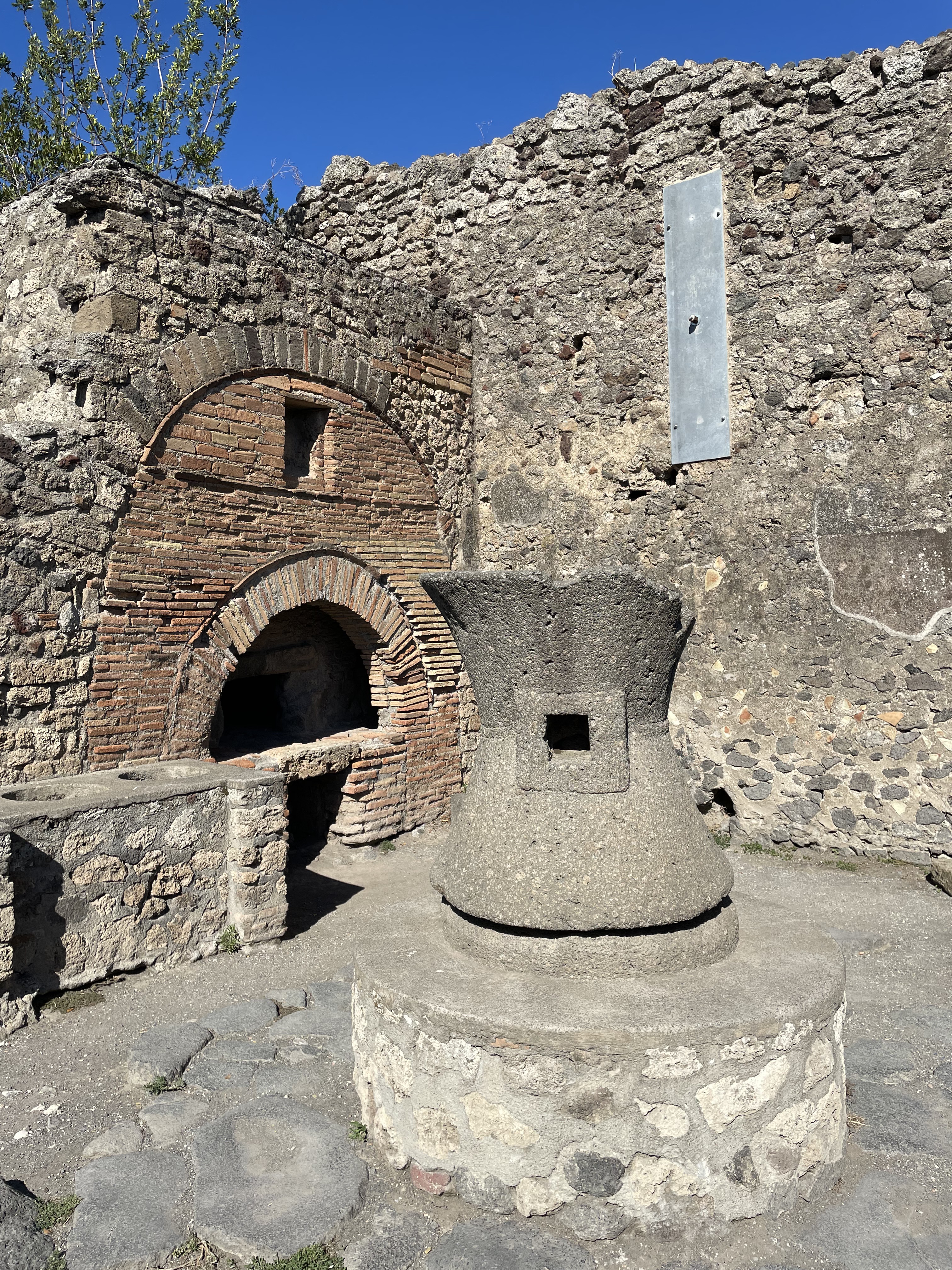
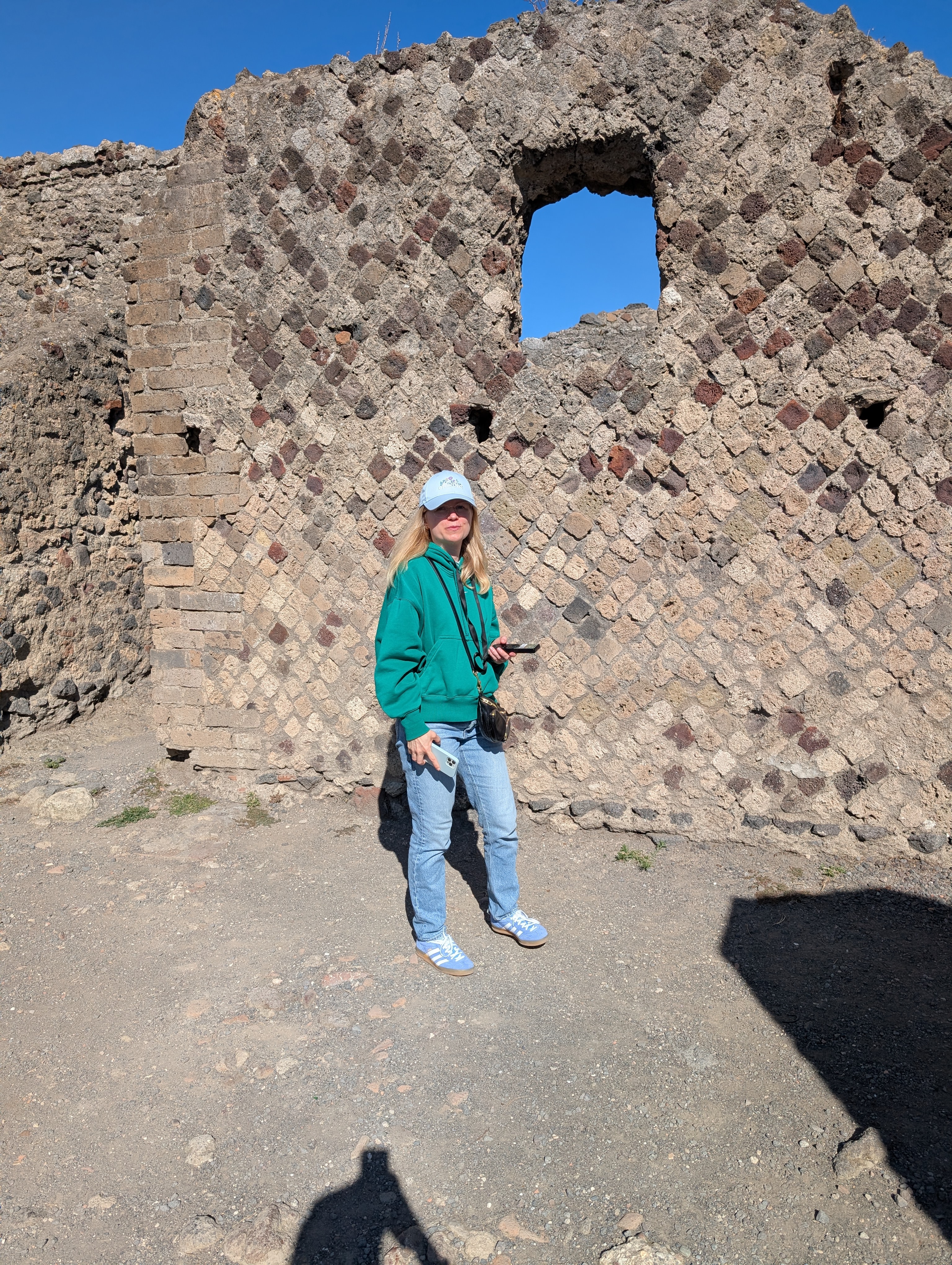
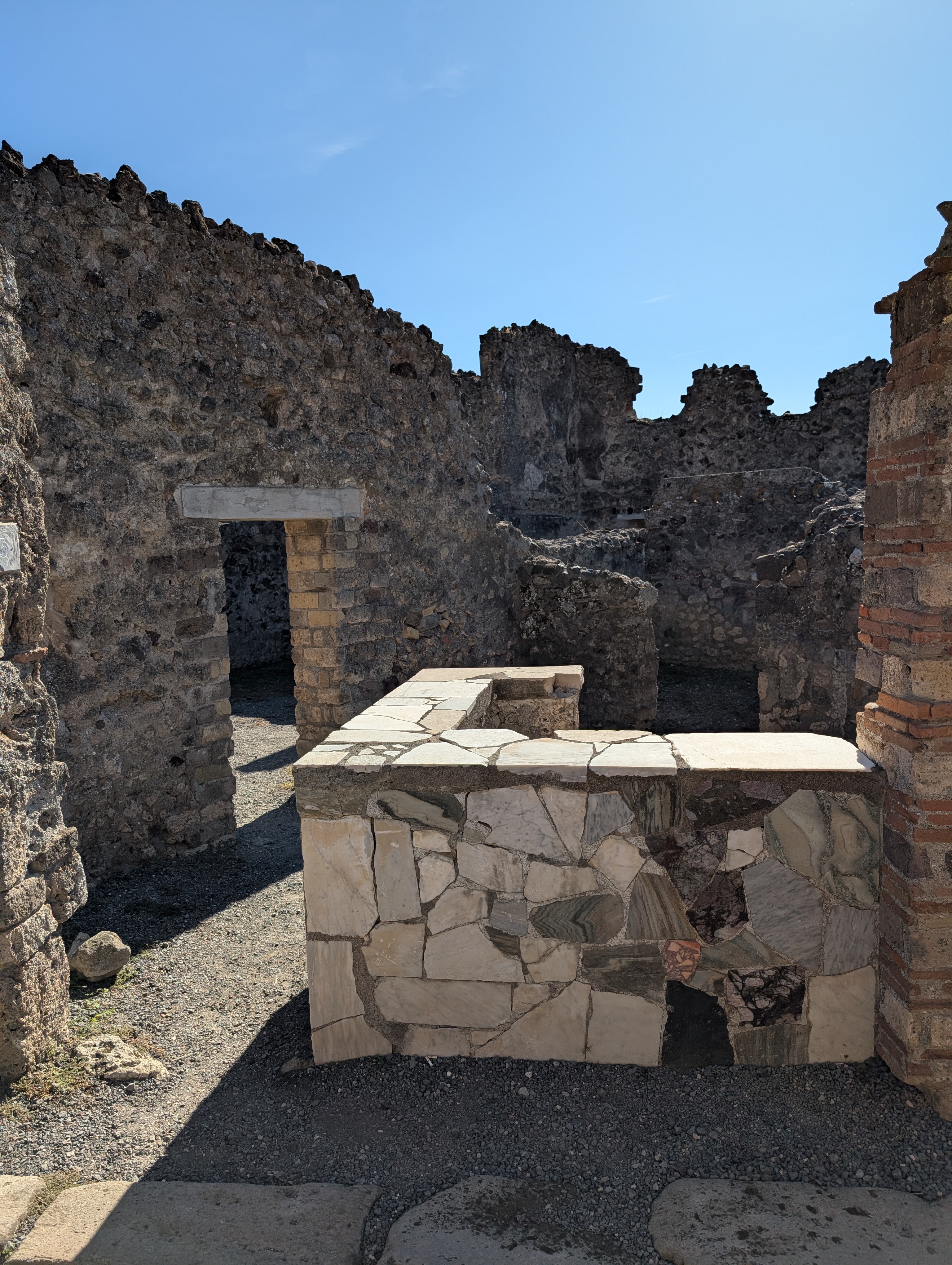
The city’s daily life is the easiest to read: a thermopolium with its mosaic front and the dolia sunk into the counter, another snack bar keeping a marble statuette and its painted shrine, a bakery with its millstones and domed ovens intact, a shop room with its stone counter. Anna posed at an opus-reticulatum wall, walkers crossed between ruins, a temple caught the podium-blue sky, and the House of the Tragic Poet still greets the street — the burst of ‘HAVE’ mosaic with its reflective glass — while a tall brick monument with its plaques and arch rounds it off.
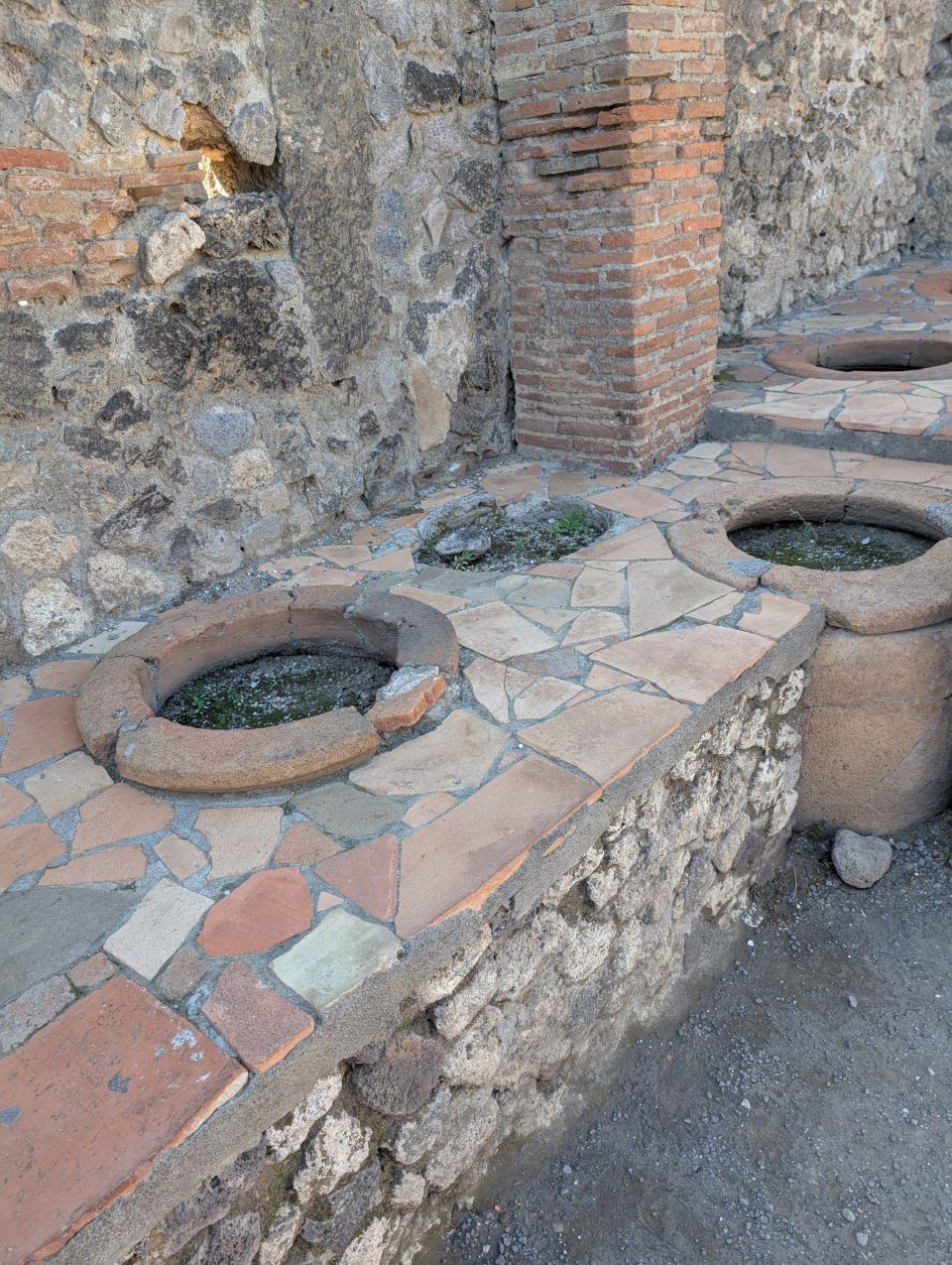
Snack bar counter, dolia in place 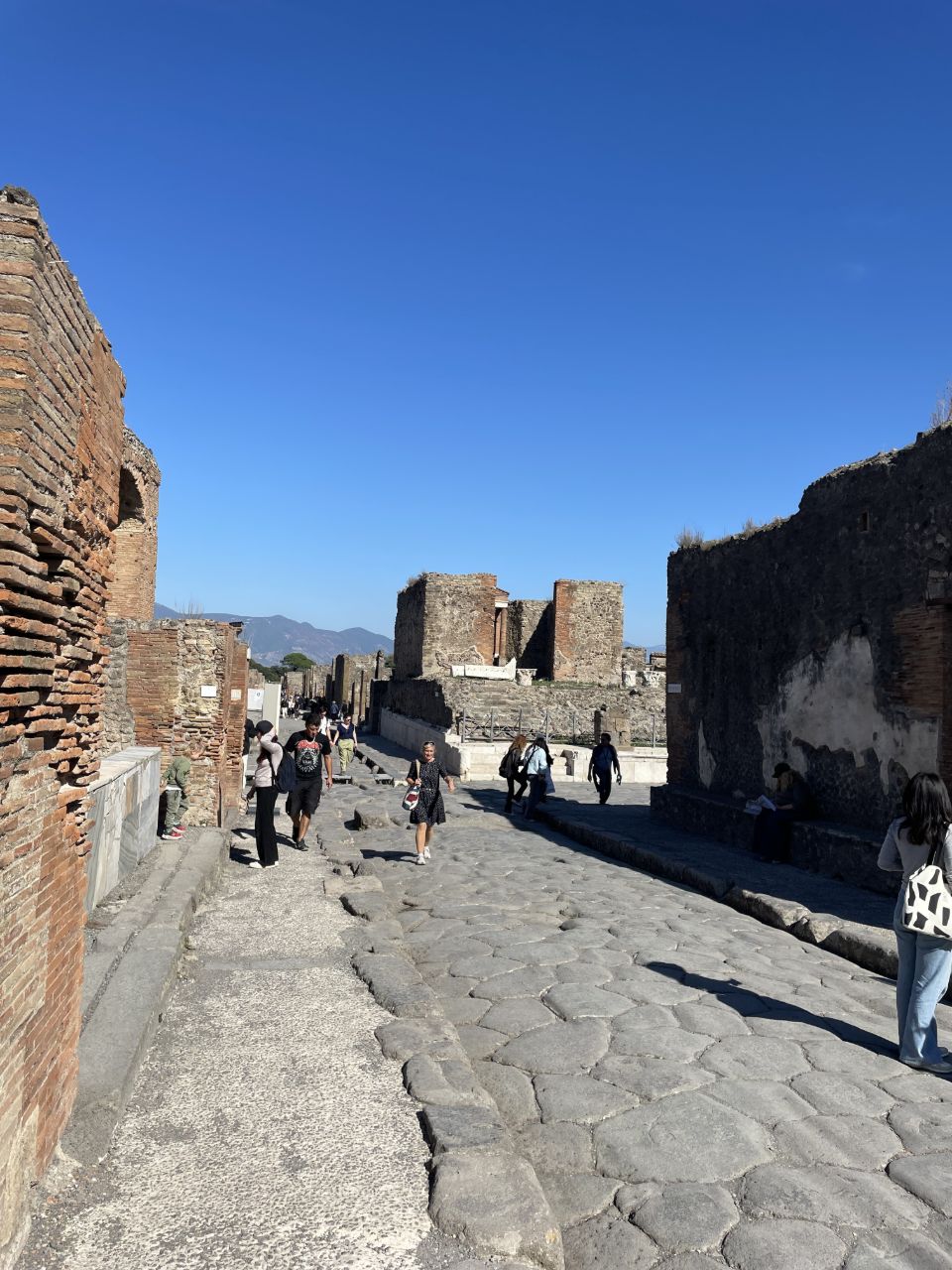
Walkers between ruins 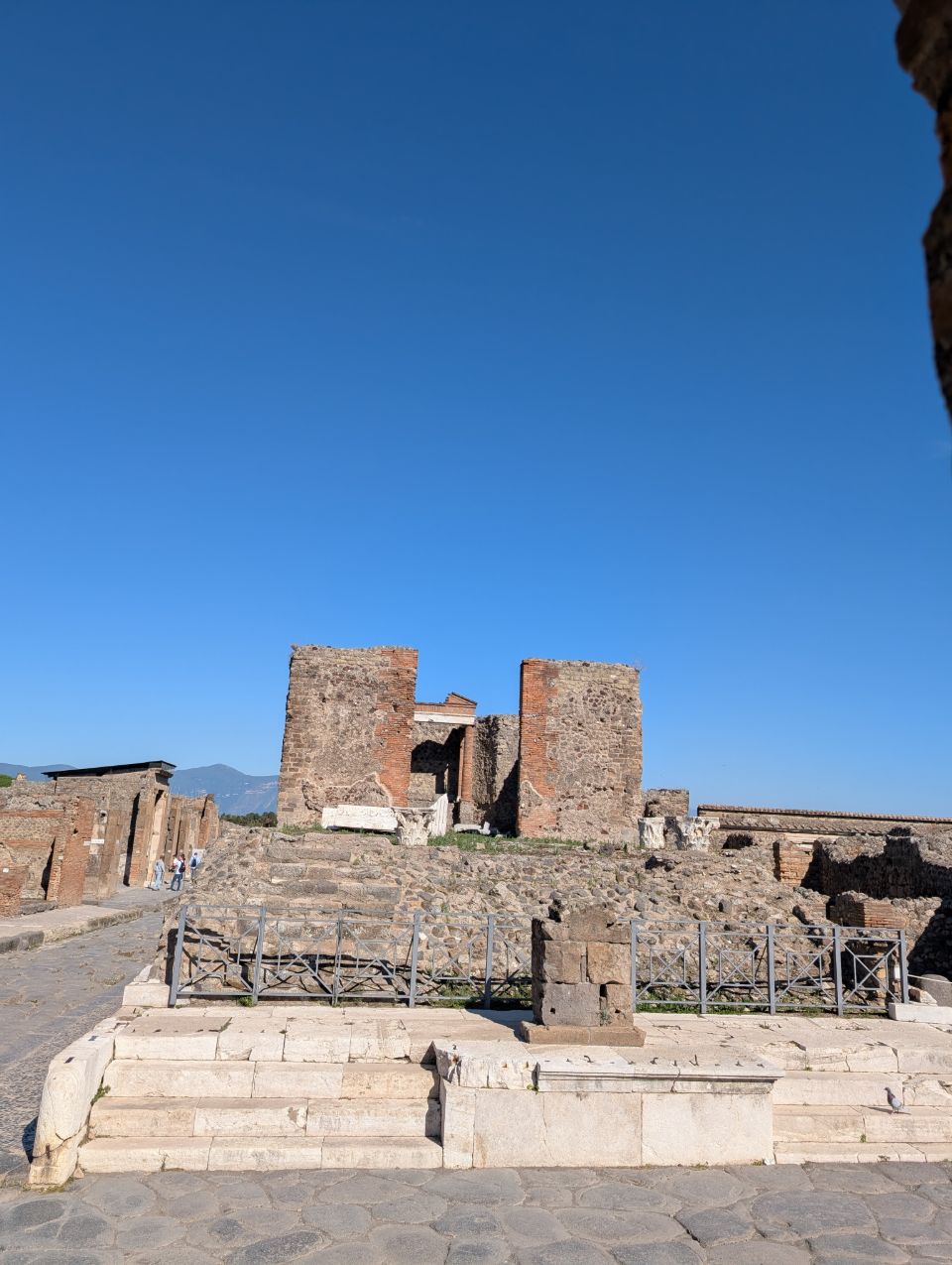
Temple podium under blue sky 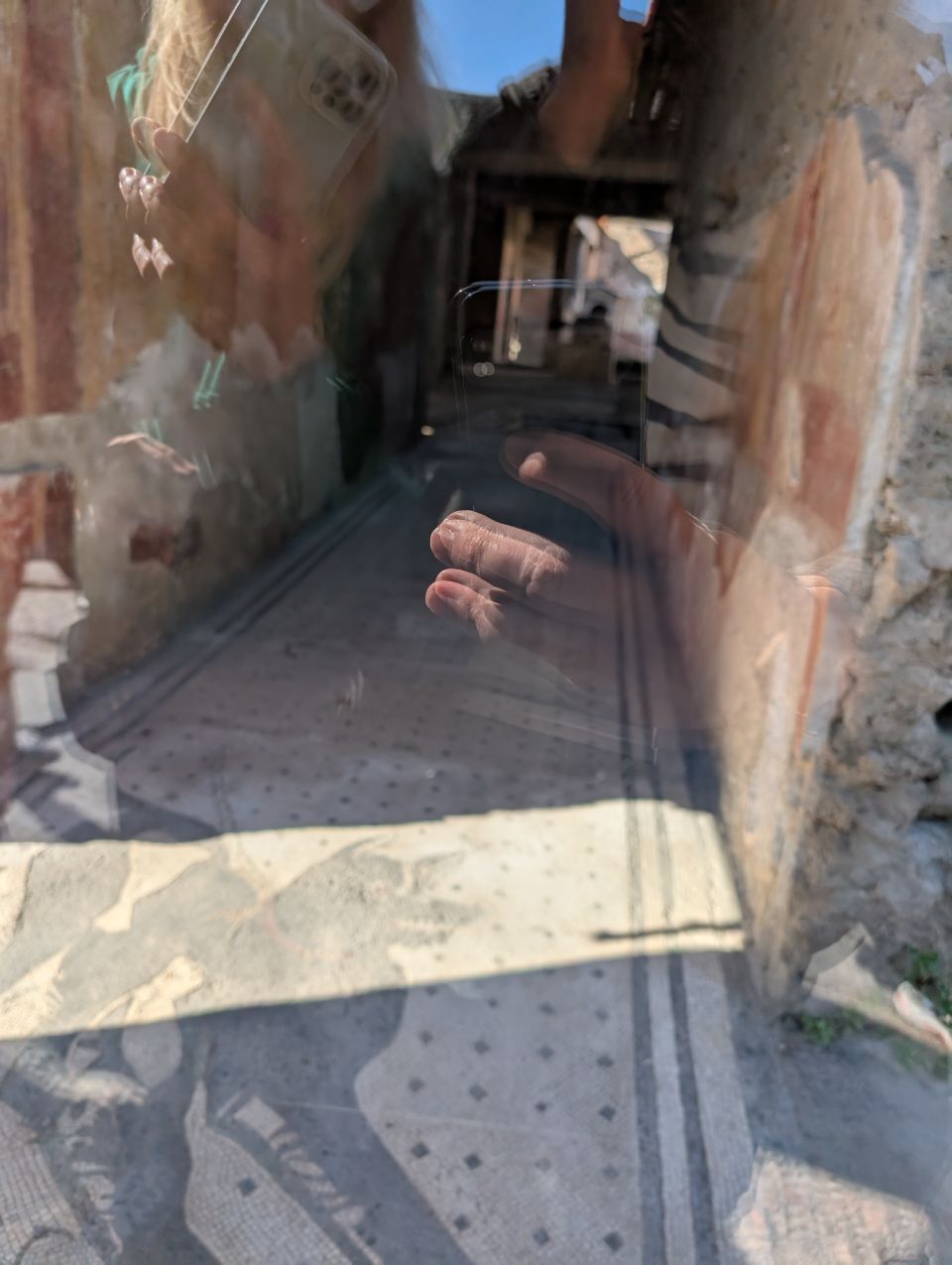
'HAVE', the welcome of the Tragic Poet 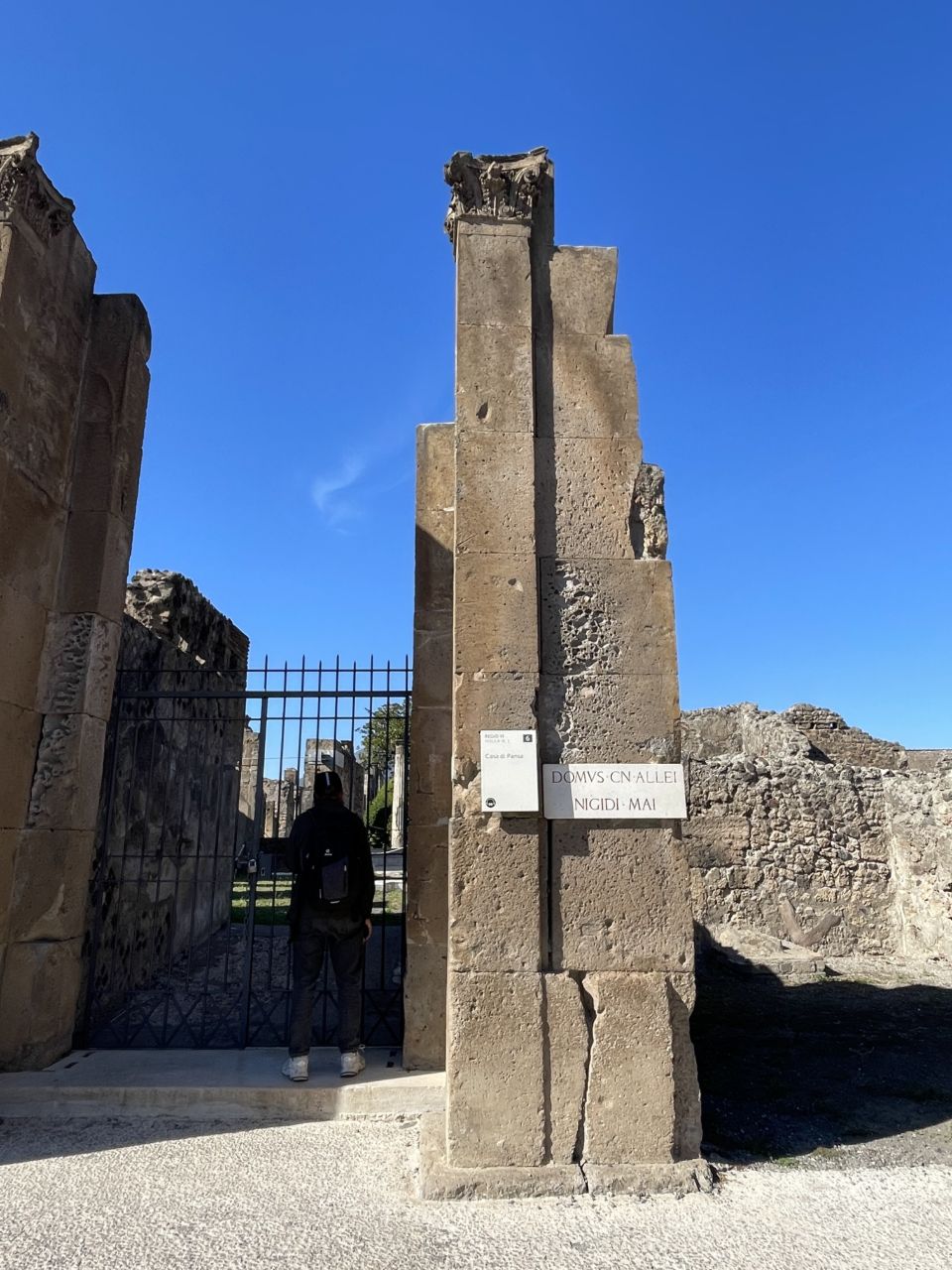
A brick monument, plaques up 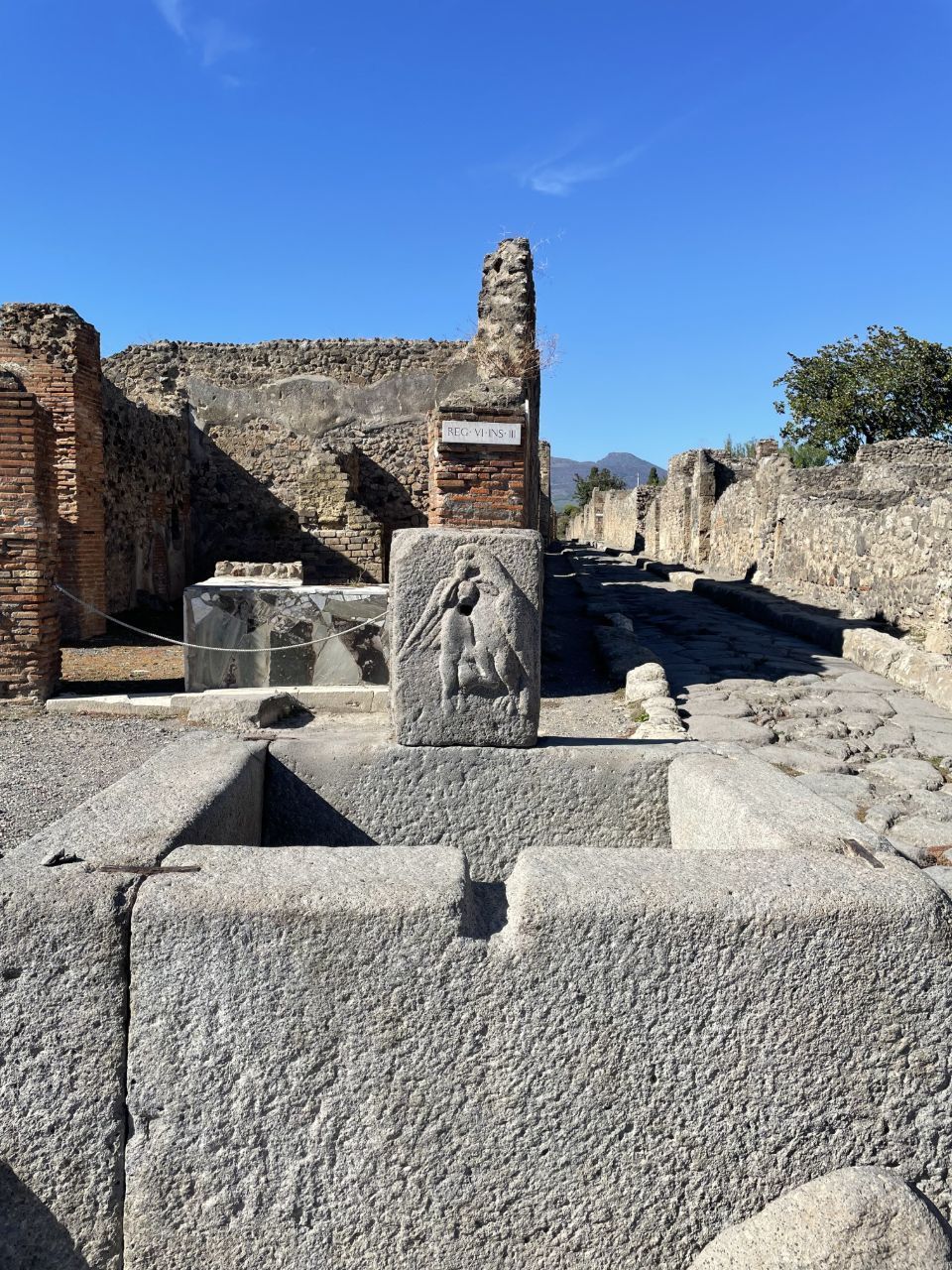
Snack bar, marble statuette and shrine 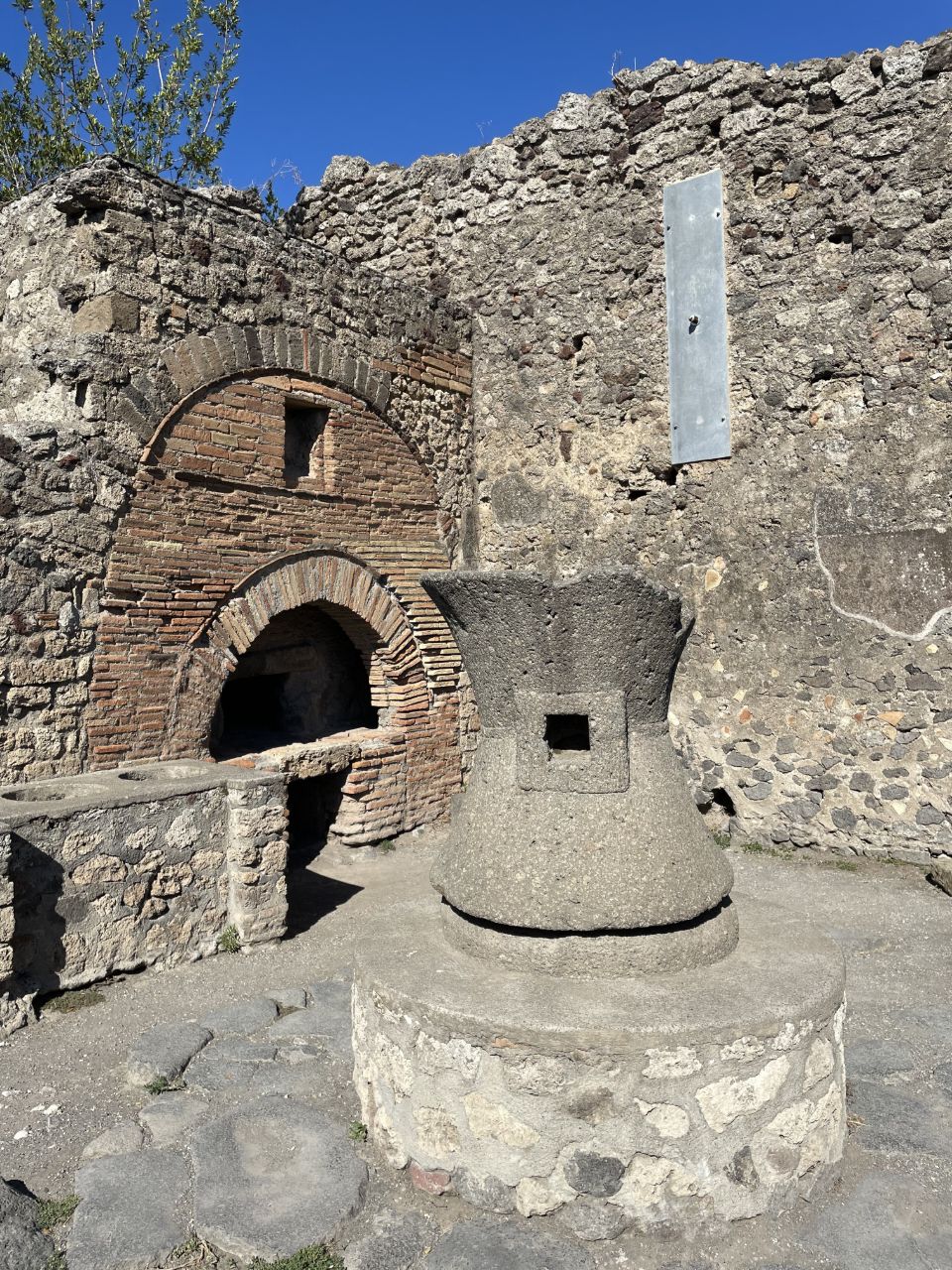
Bakery: millstones and ovens 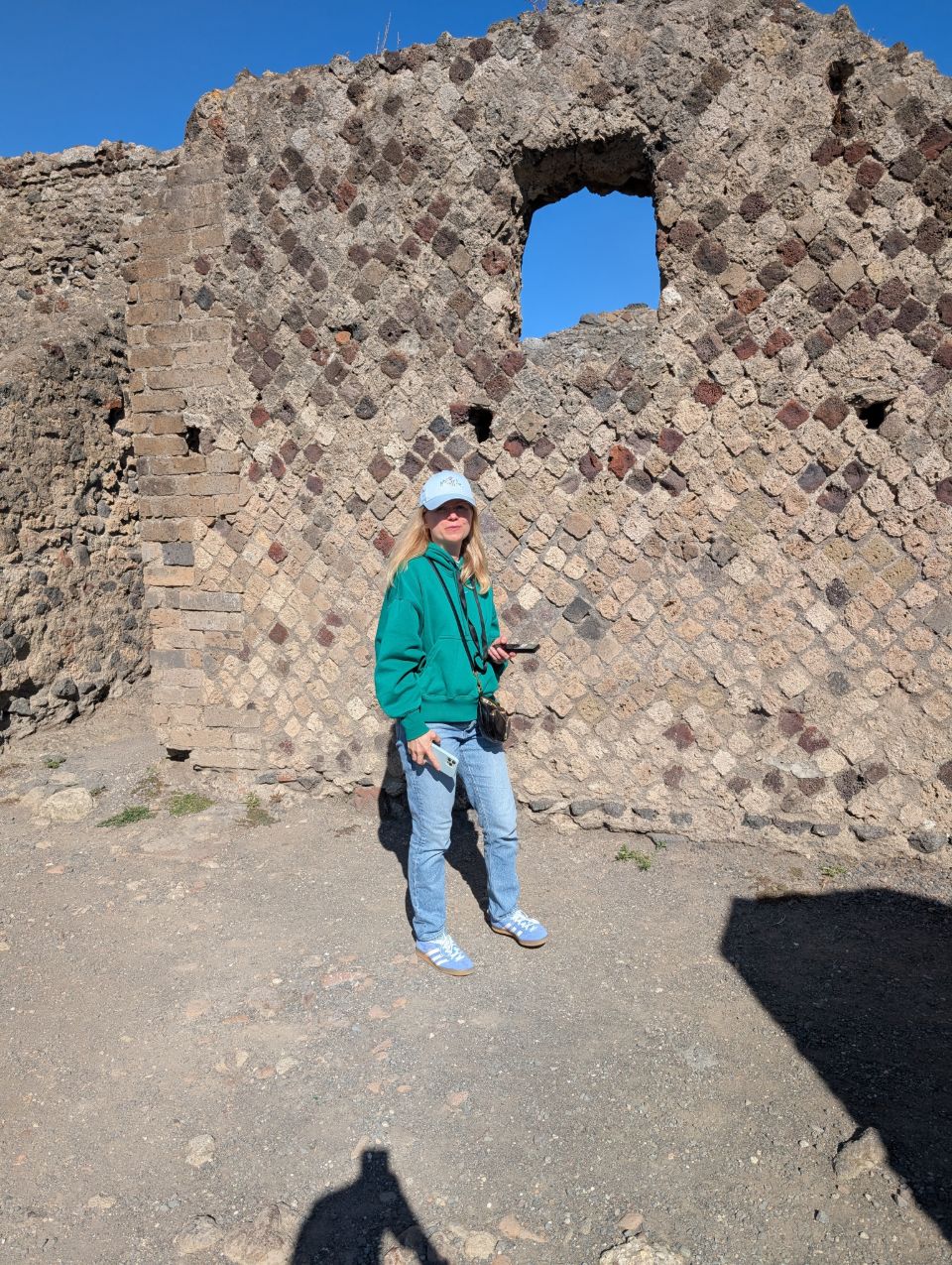
Anna, opus reticulatum, window 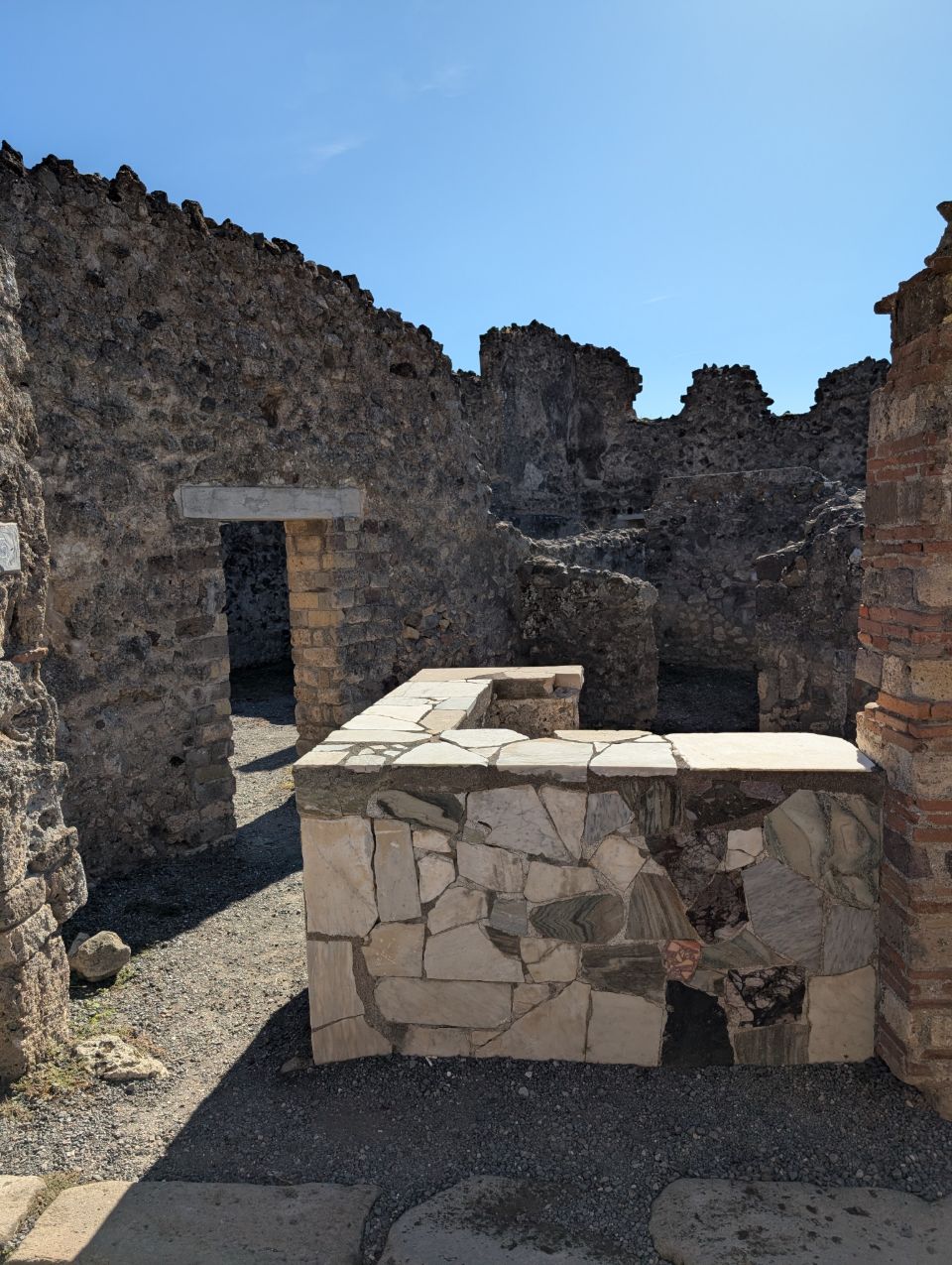
A shop room, counter of stone
The road of tombs
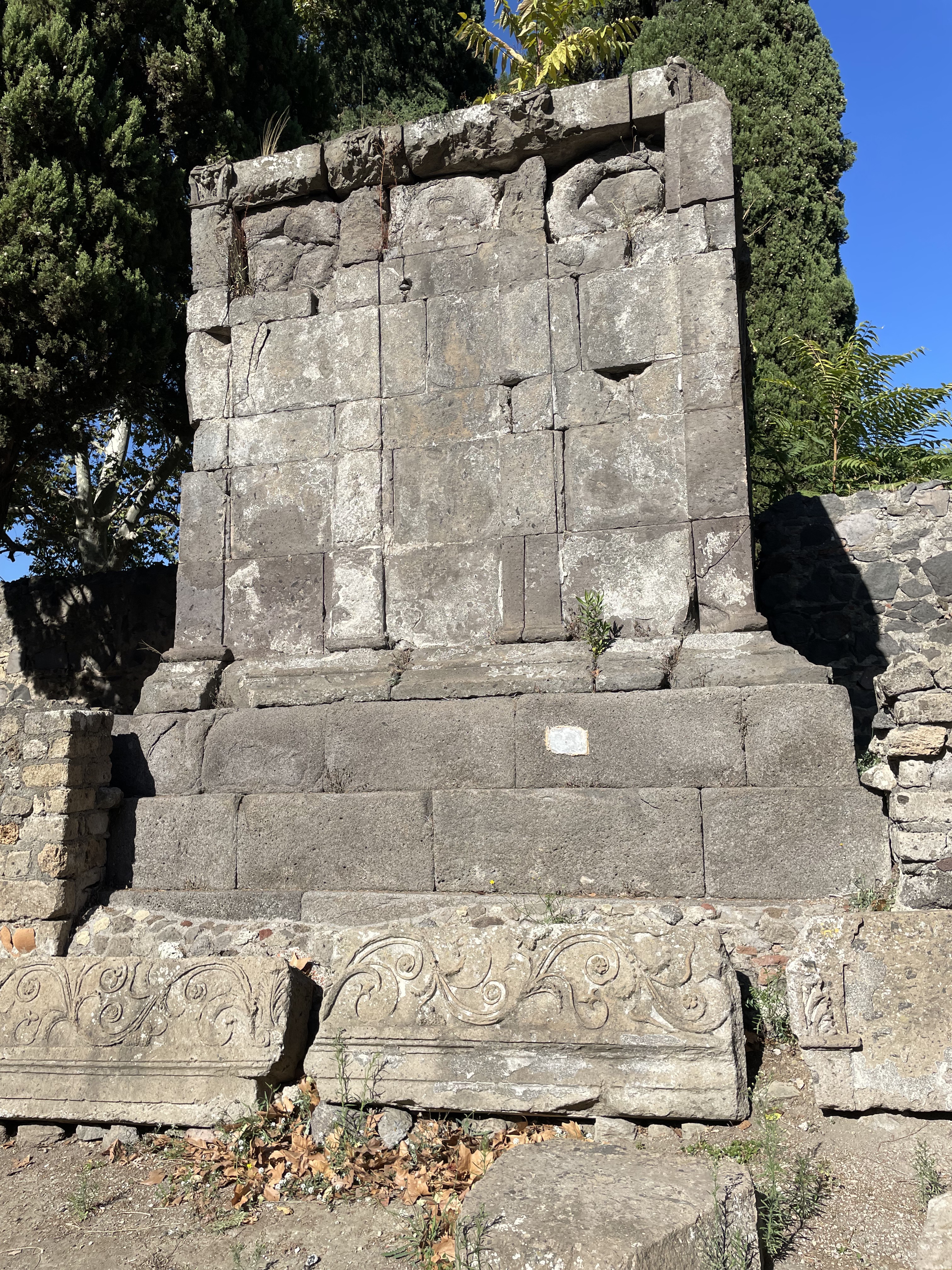
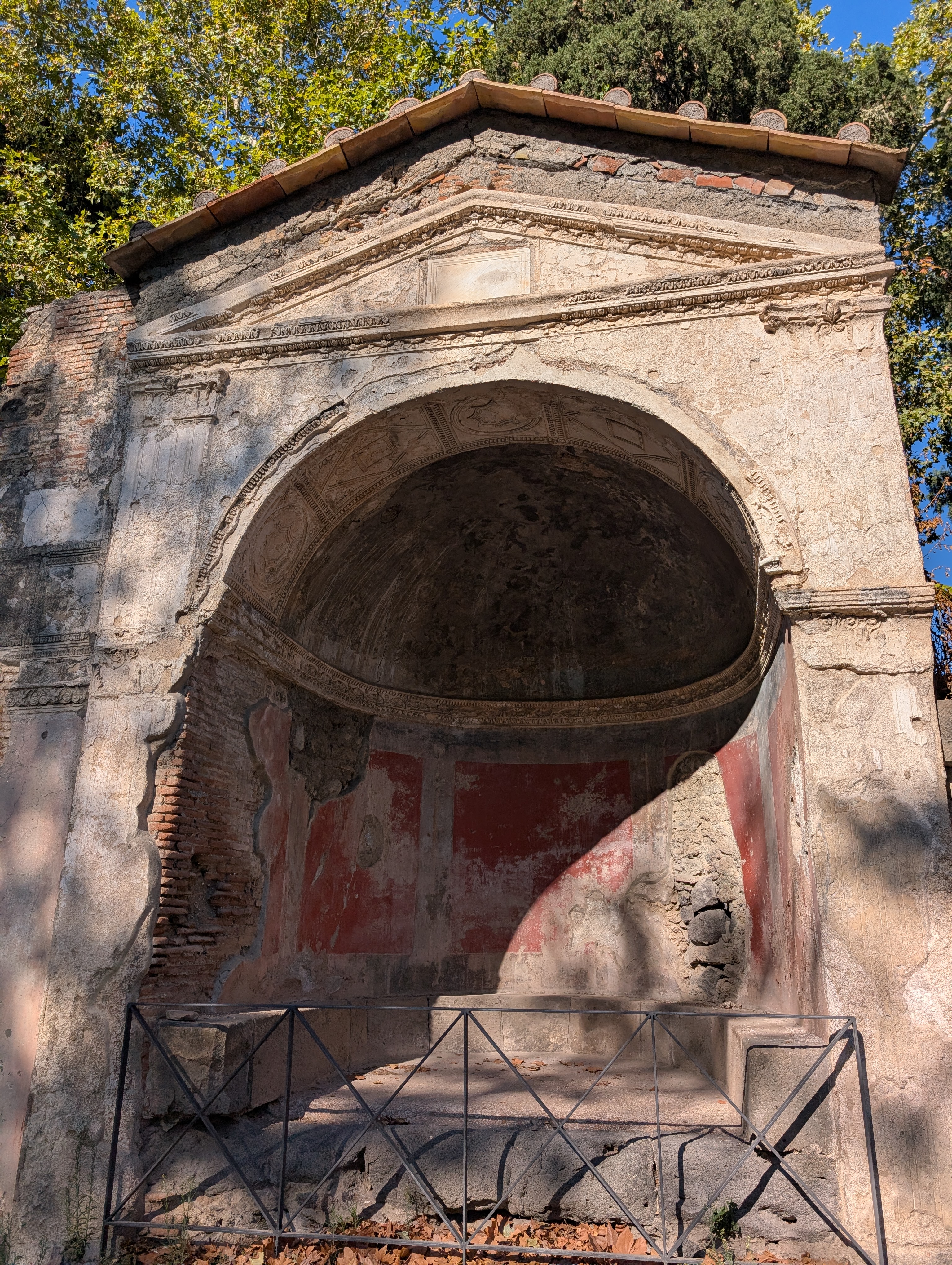
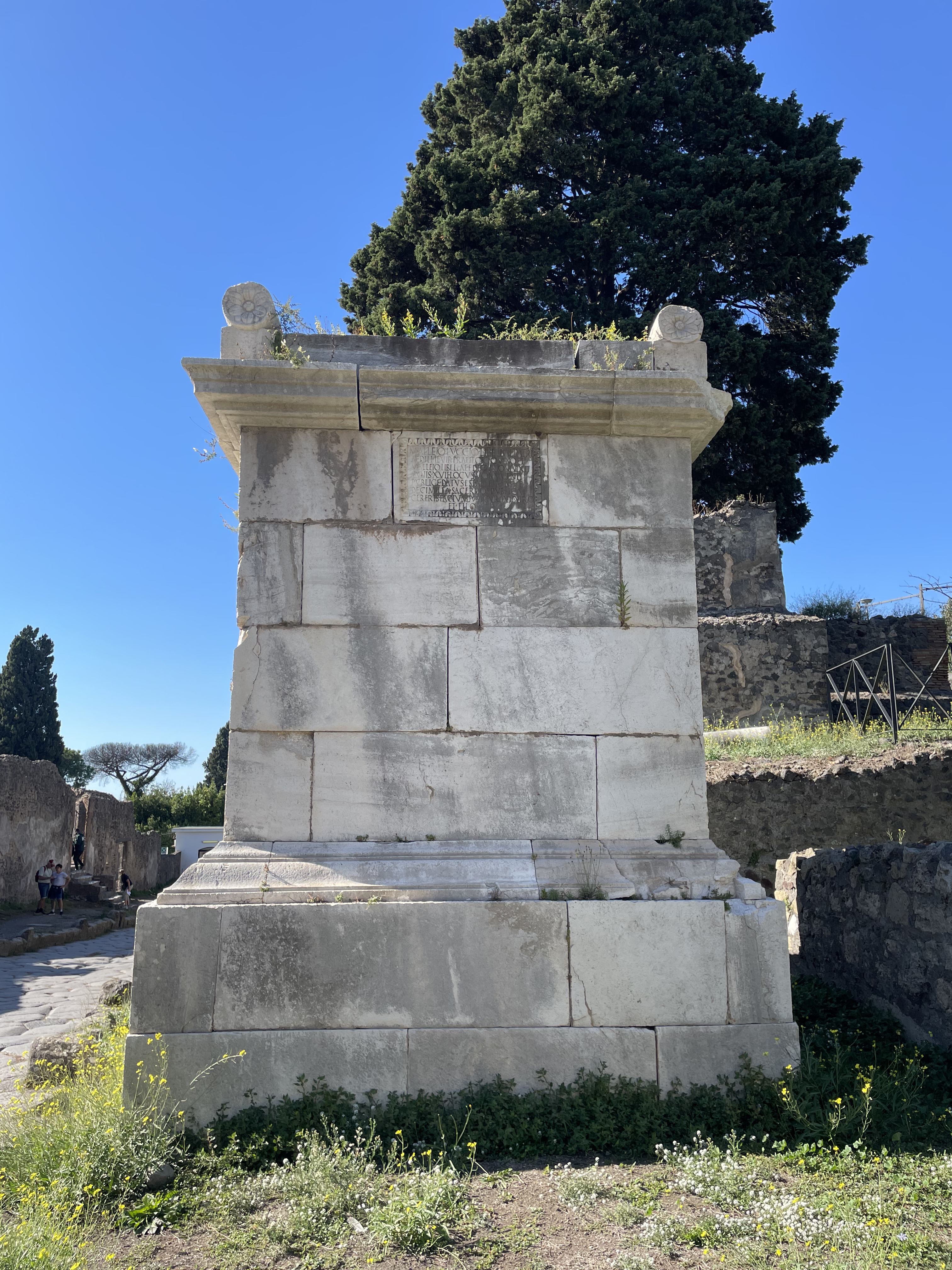
Out of town, the tombs took the verge: grey stone dadoes, a pedimented tomb with a red-painted niche, plain grave benches and pedestals — the Romans built their memorial city right next to the living one, on the busiest road out.
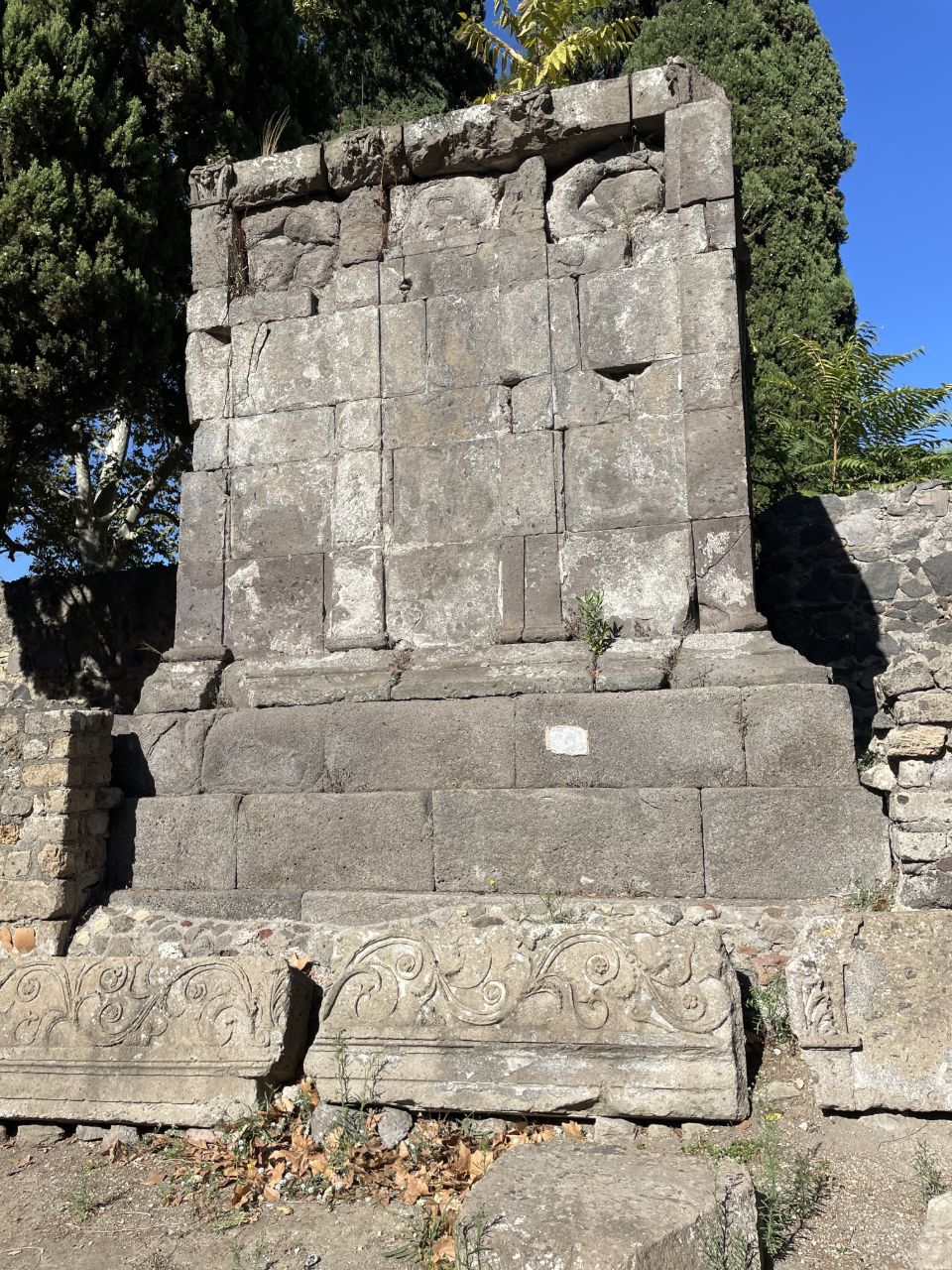
Grey stone on the road out 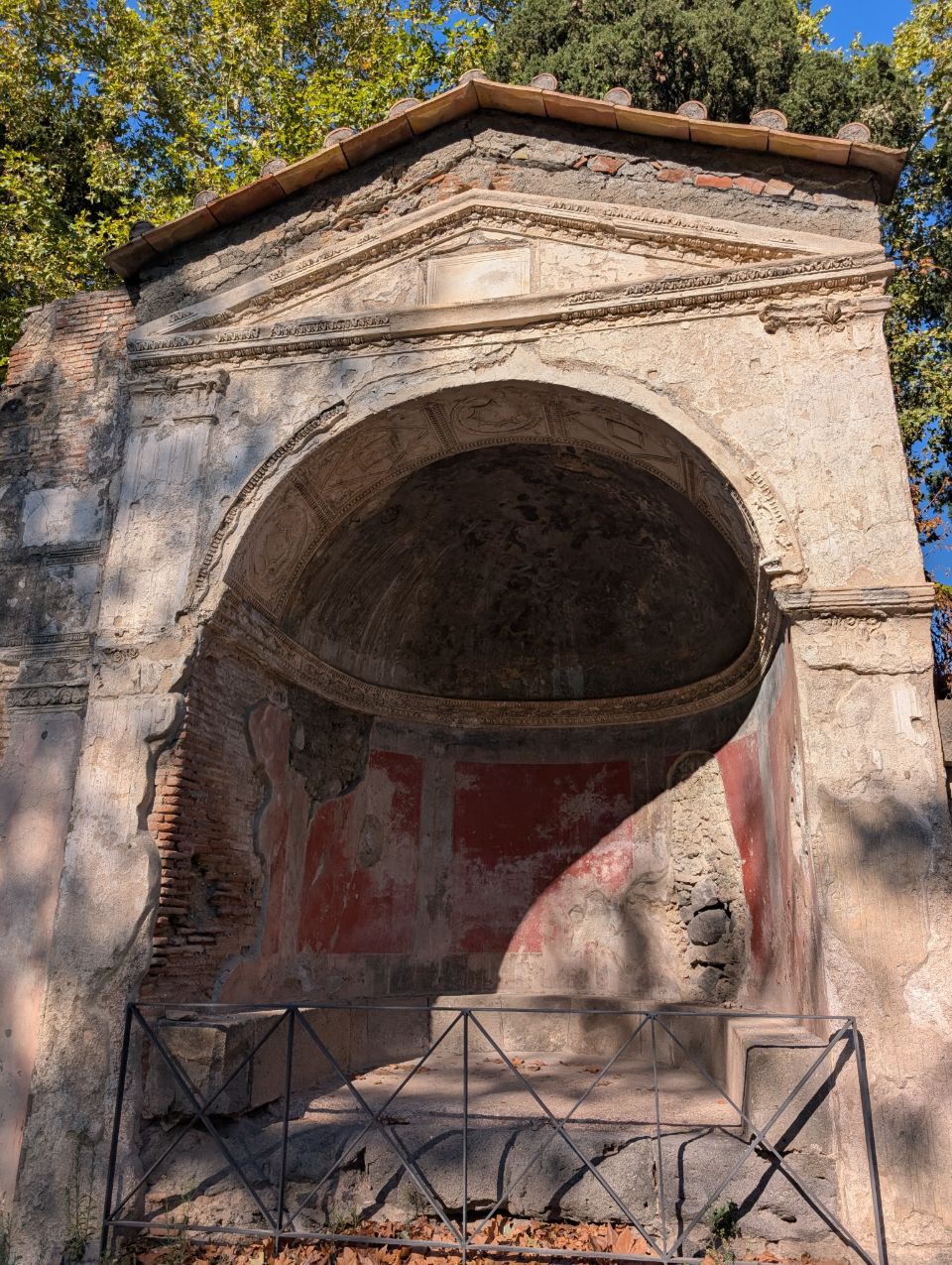
A tomb with its red-painted niche 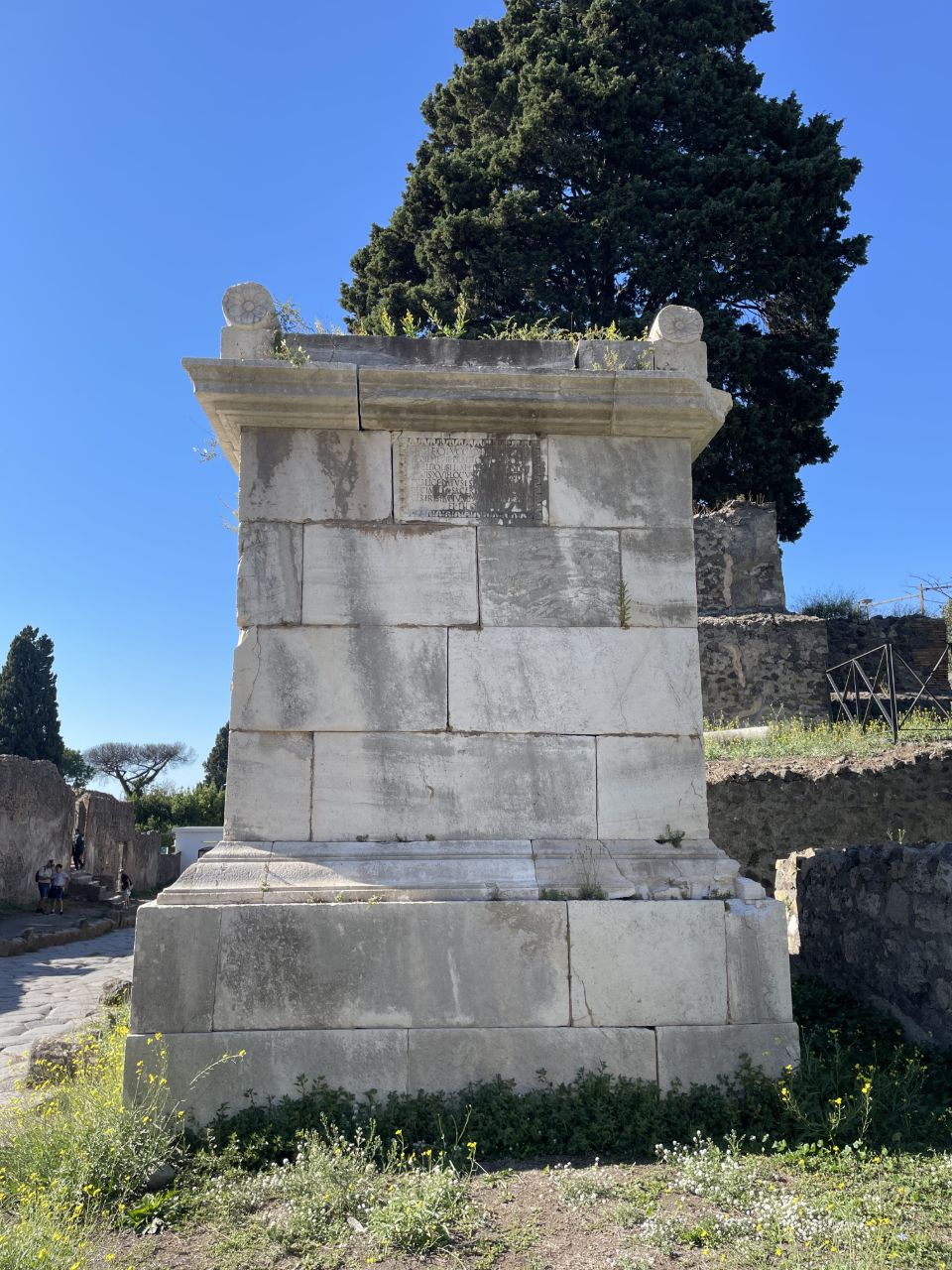
Grave benches and pedestals
The Villa of Mysteries, on foot
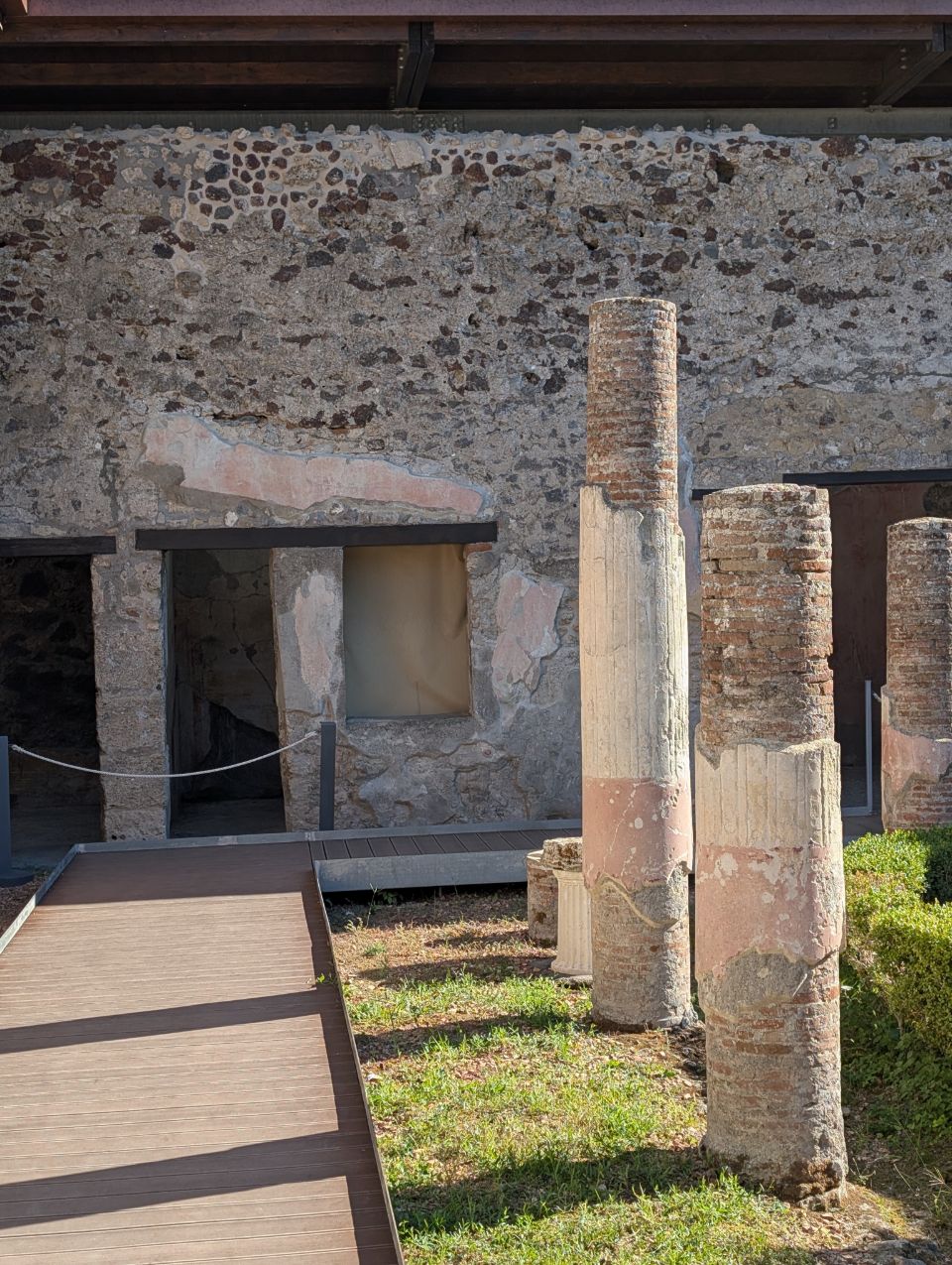
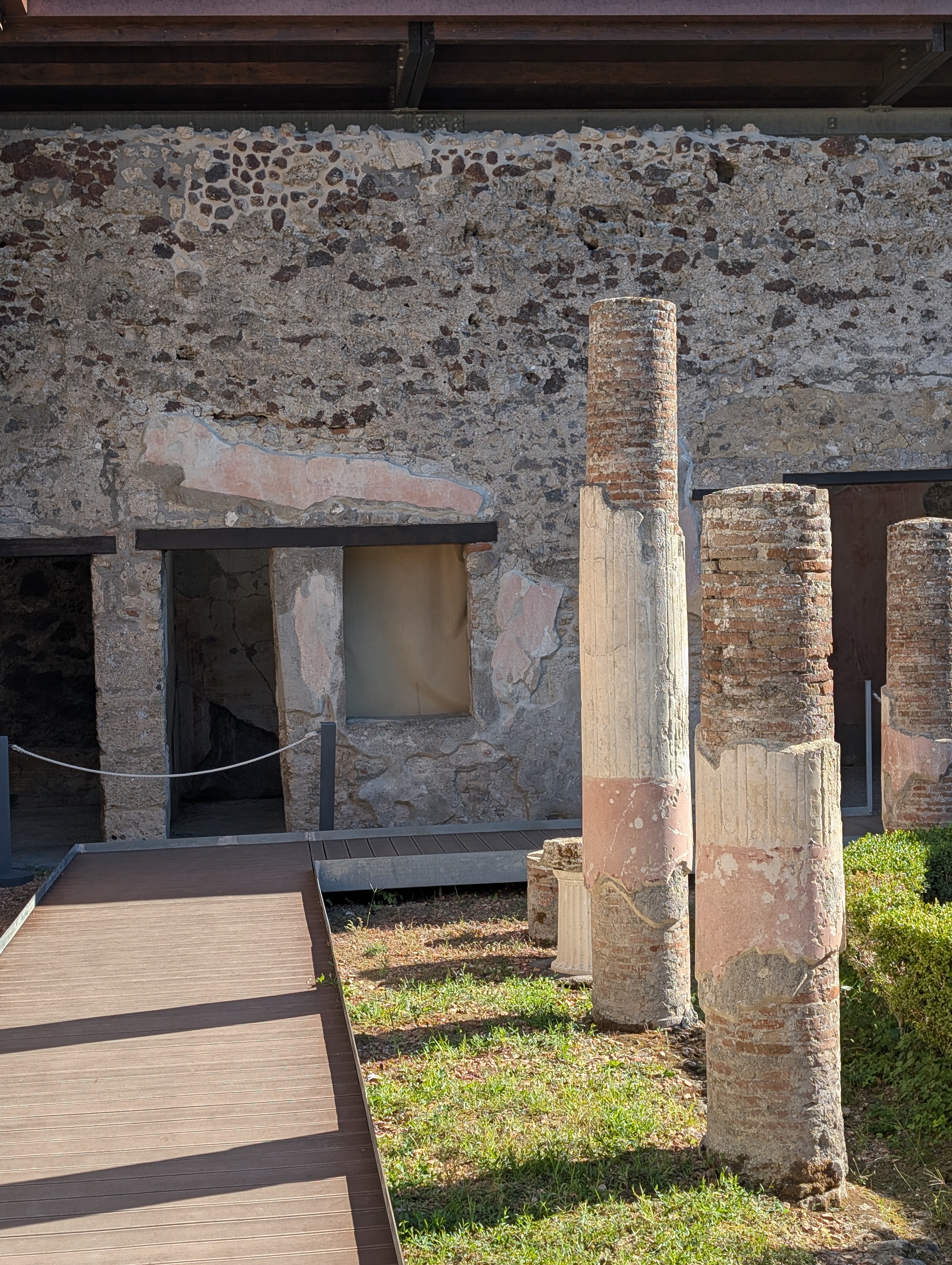
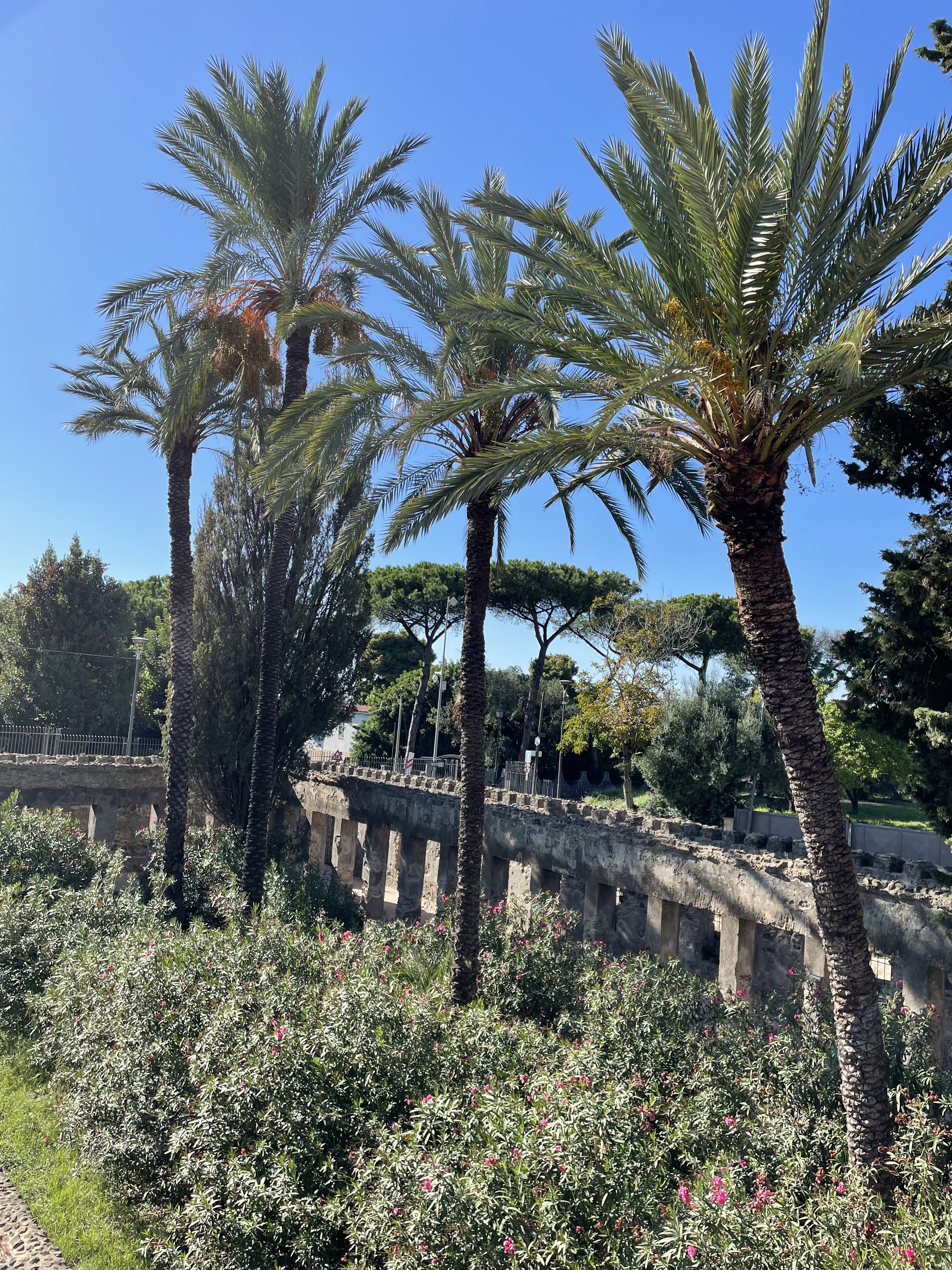
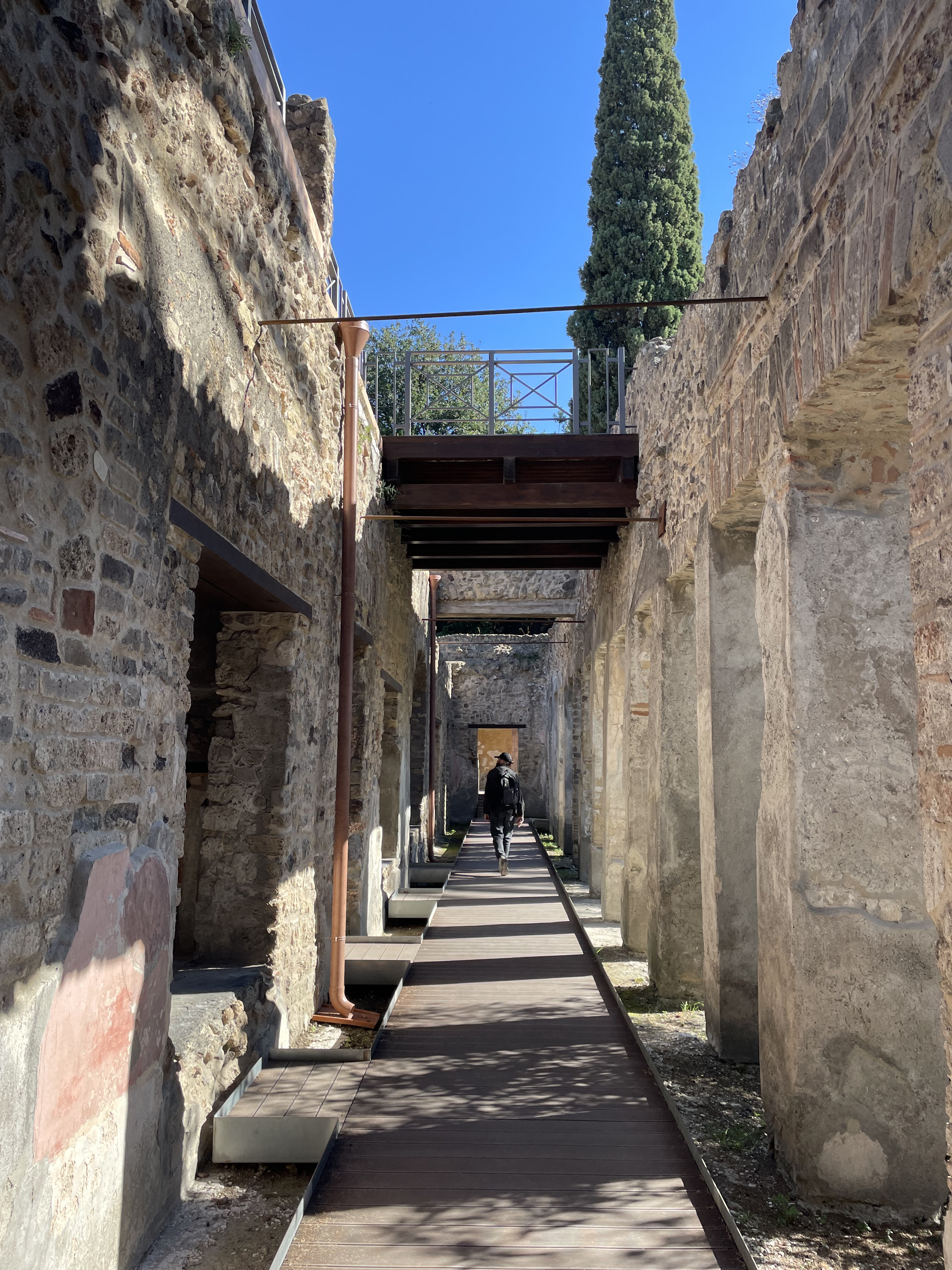
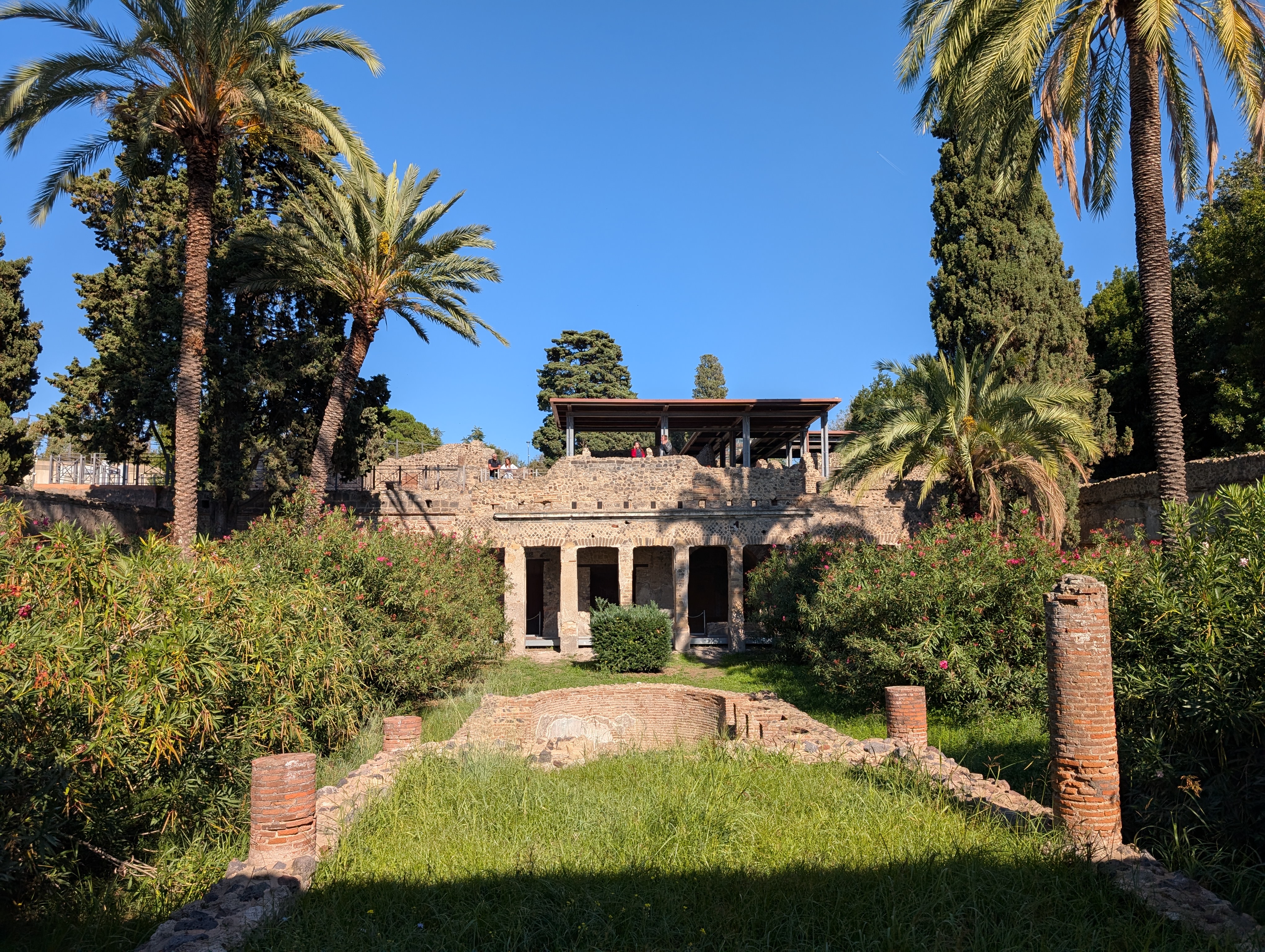
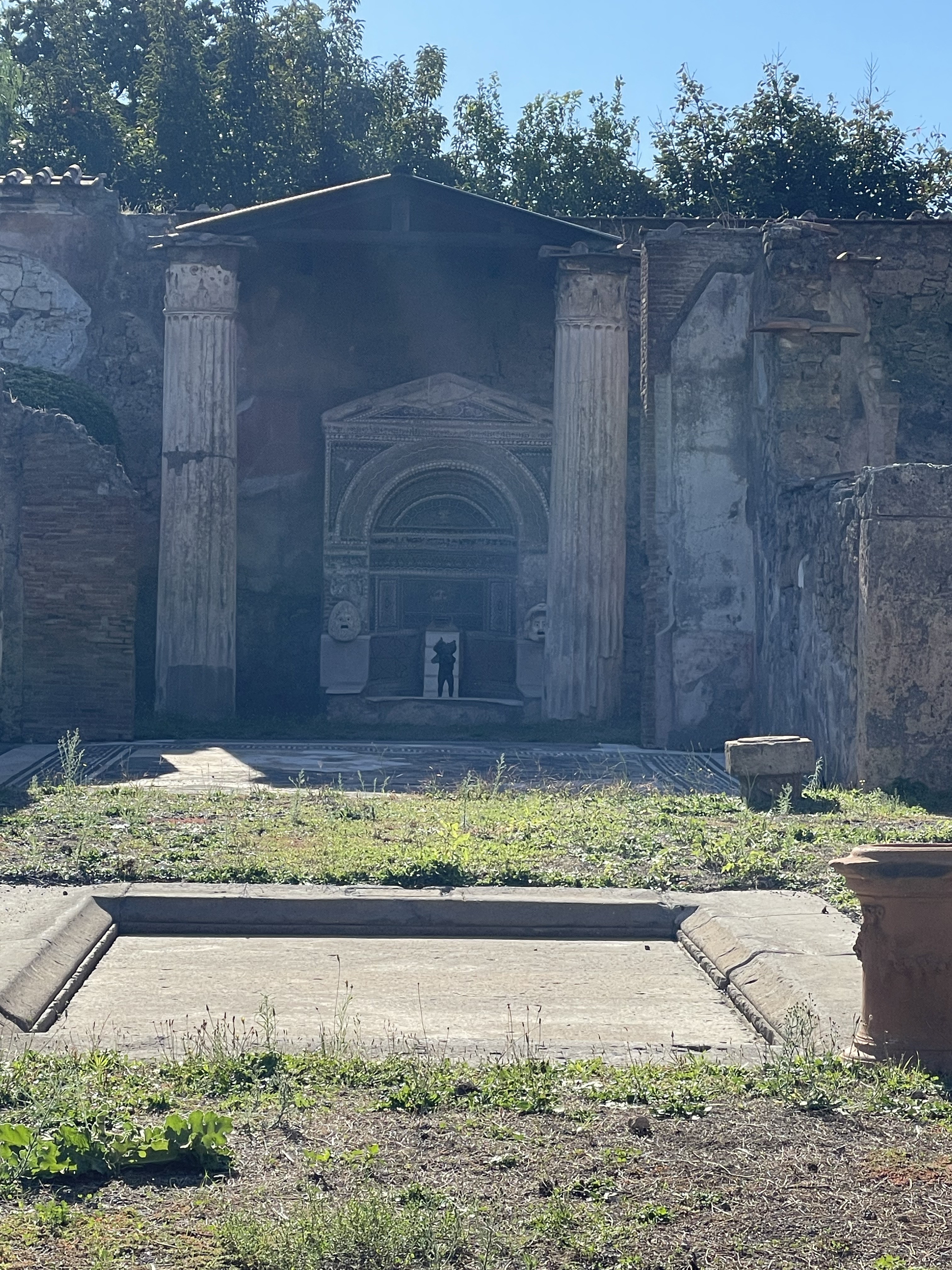
Past the walls, down the walkway with brick columns and palms over the garden wall: a long frescoed corridor on the boardwalk, a colonnaded villa over the garden lawn, and then the villa’s own courtyard — crumbling columns framing a painted shrine in full sun, the frame we hadn’t known we were waiting for.
The villa walkway 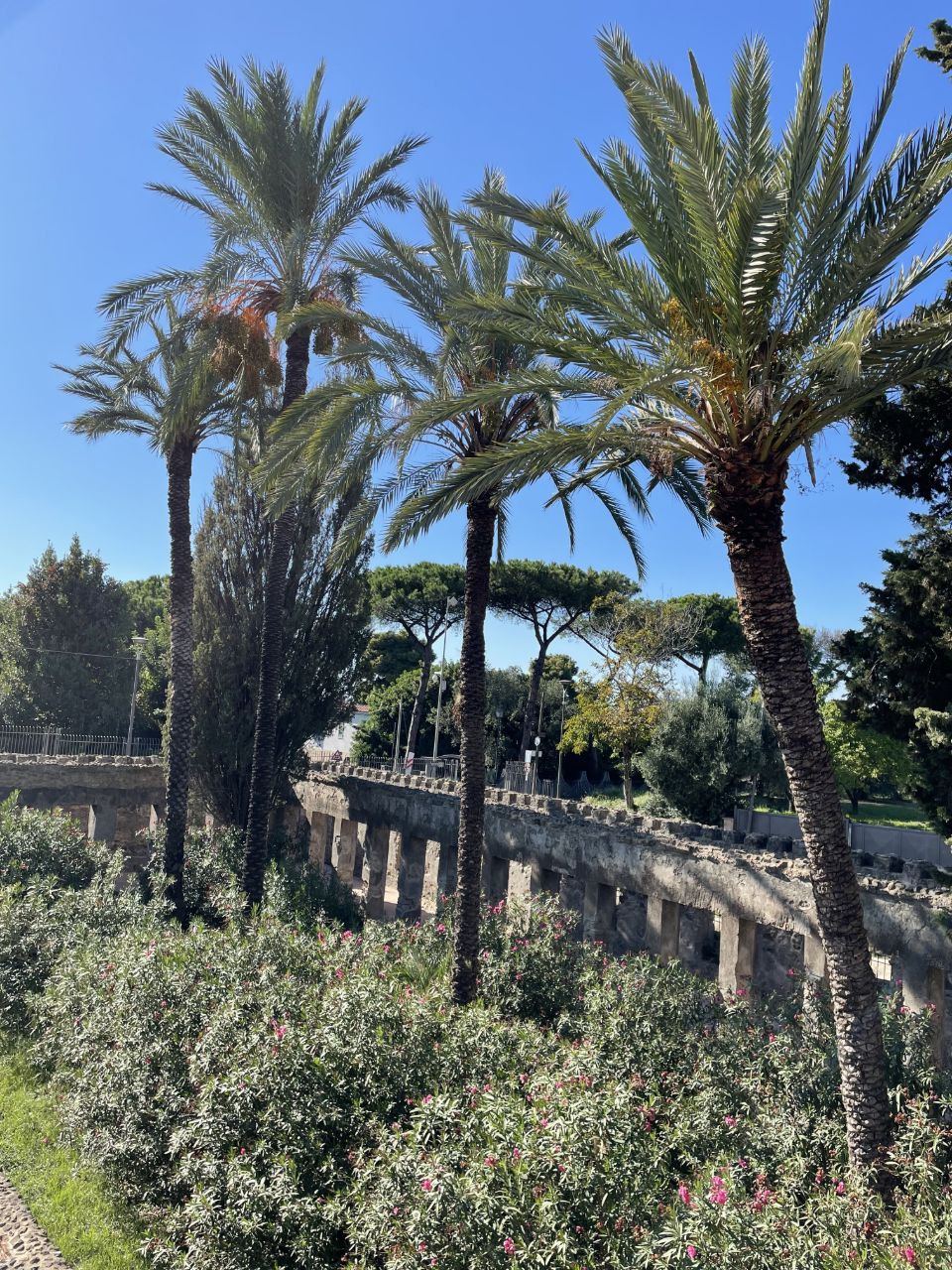
Palms over the garden wall 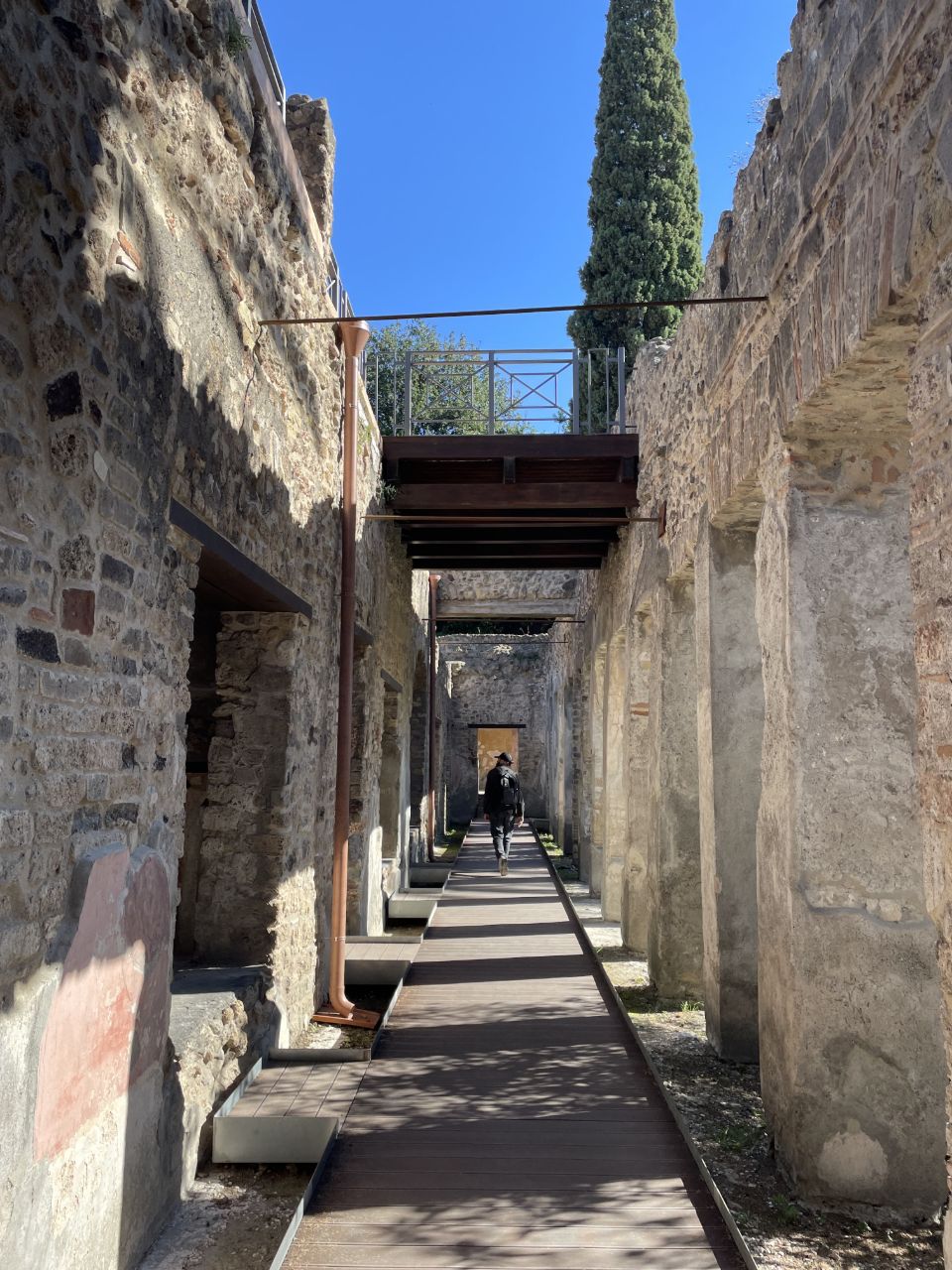
Frescoed corridor on the boardwalk 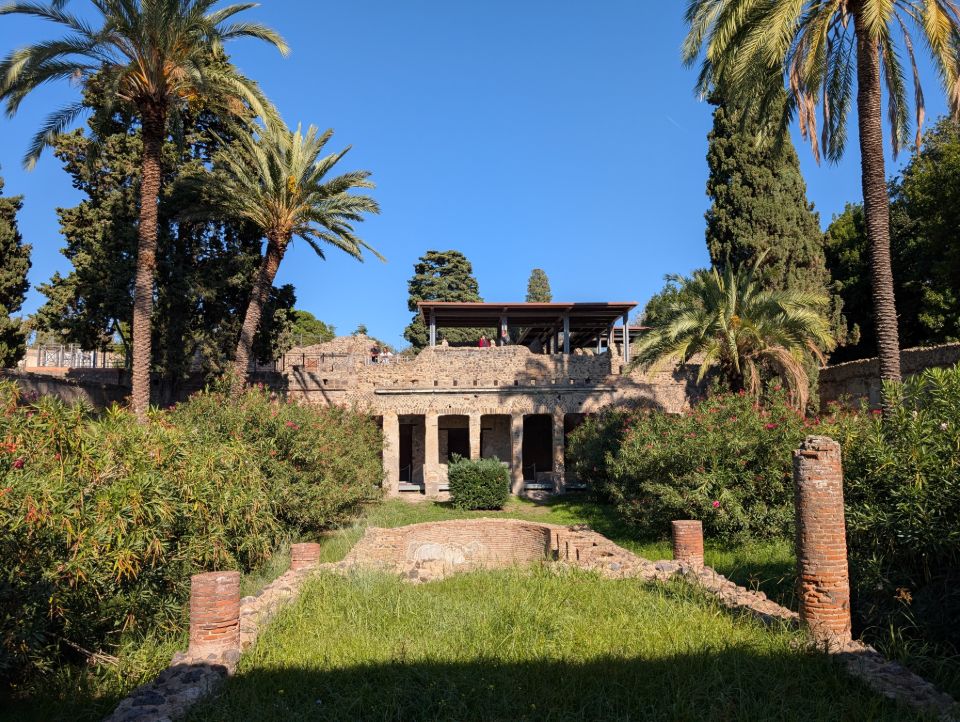
Colonnaded villa over the lawn 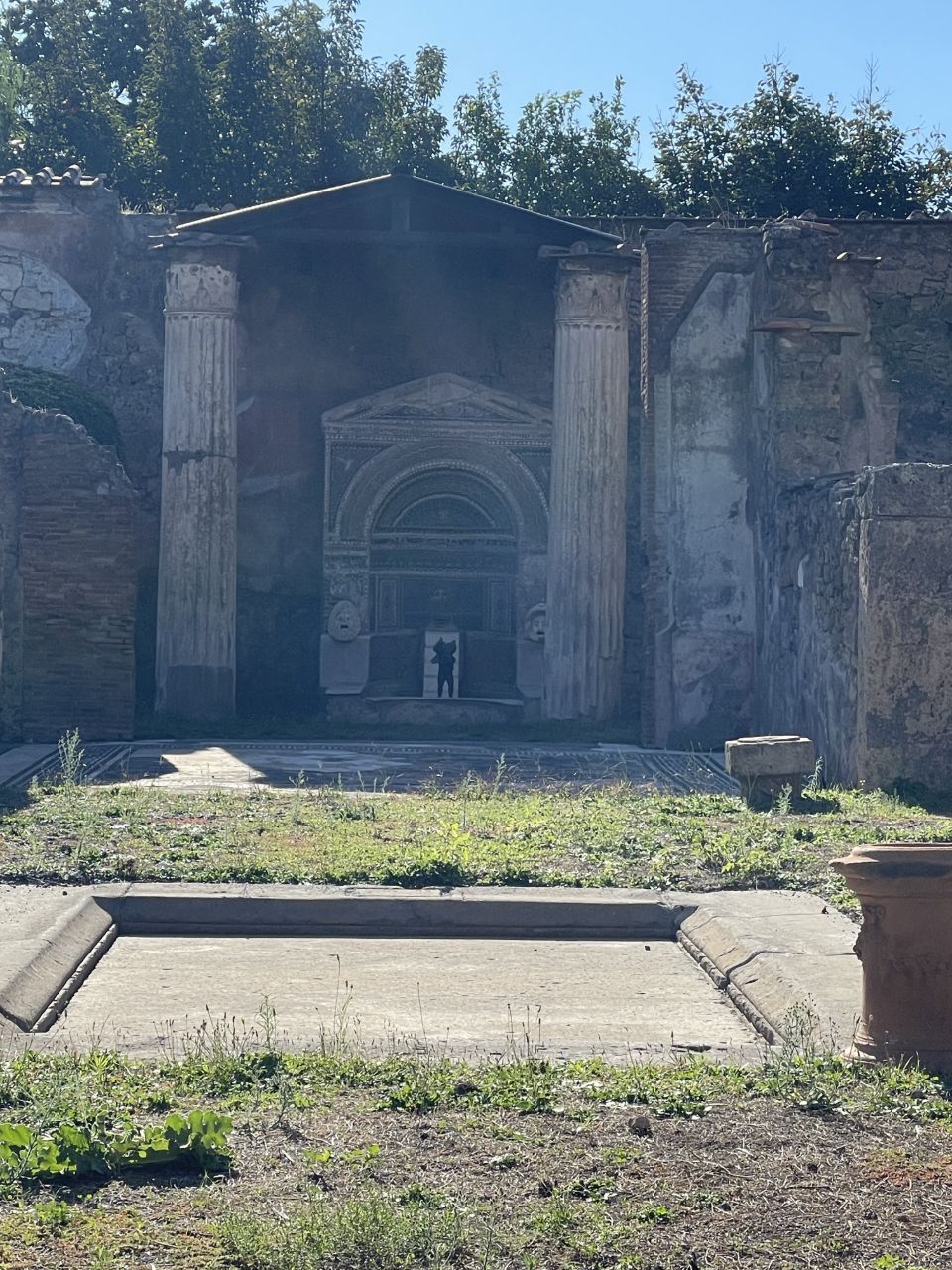
A painted shrine, framed by columns
The theatre district
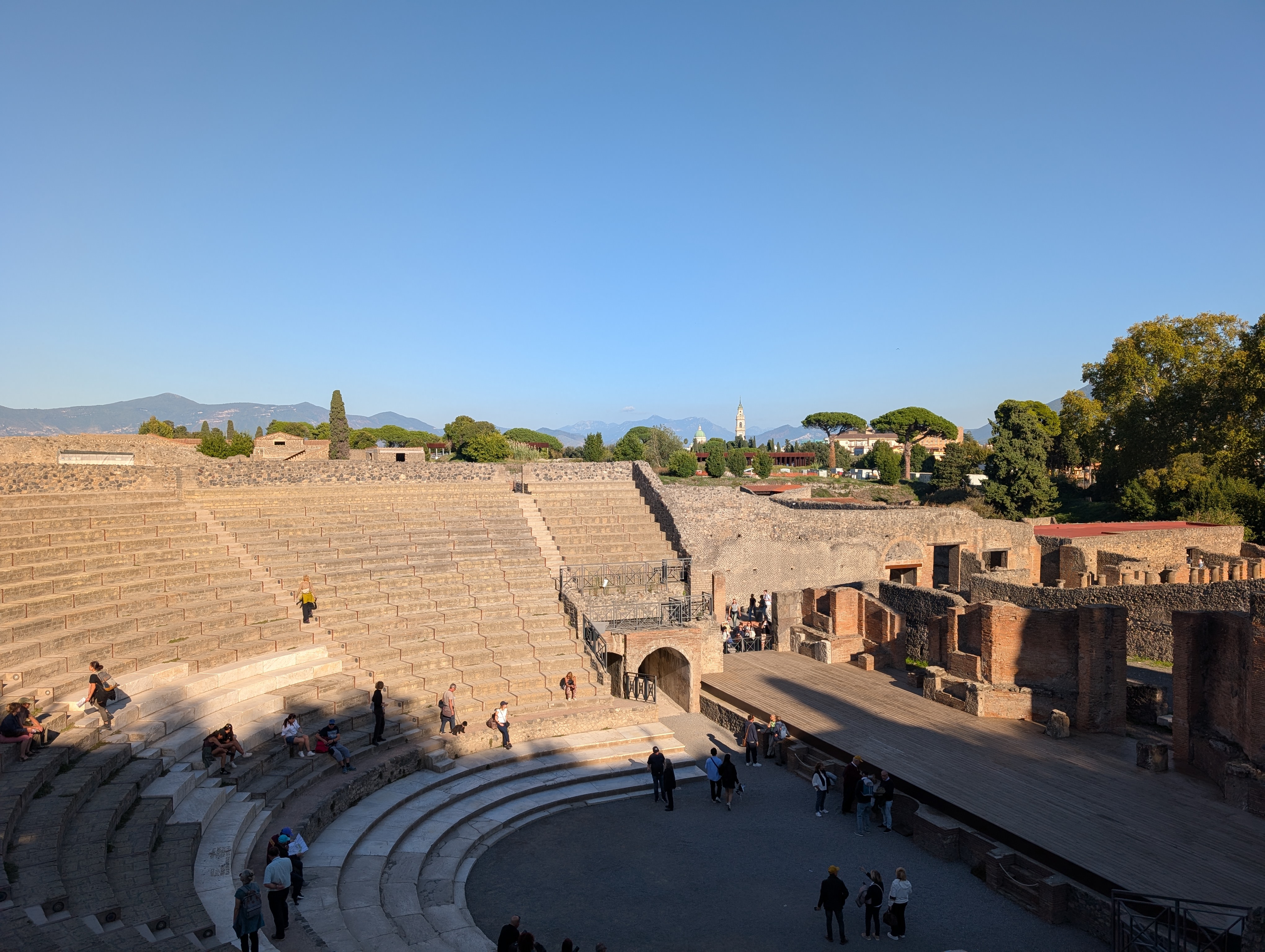
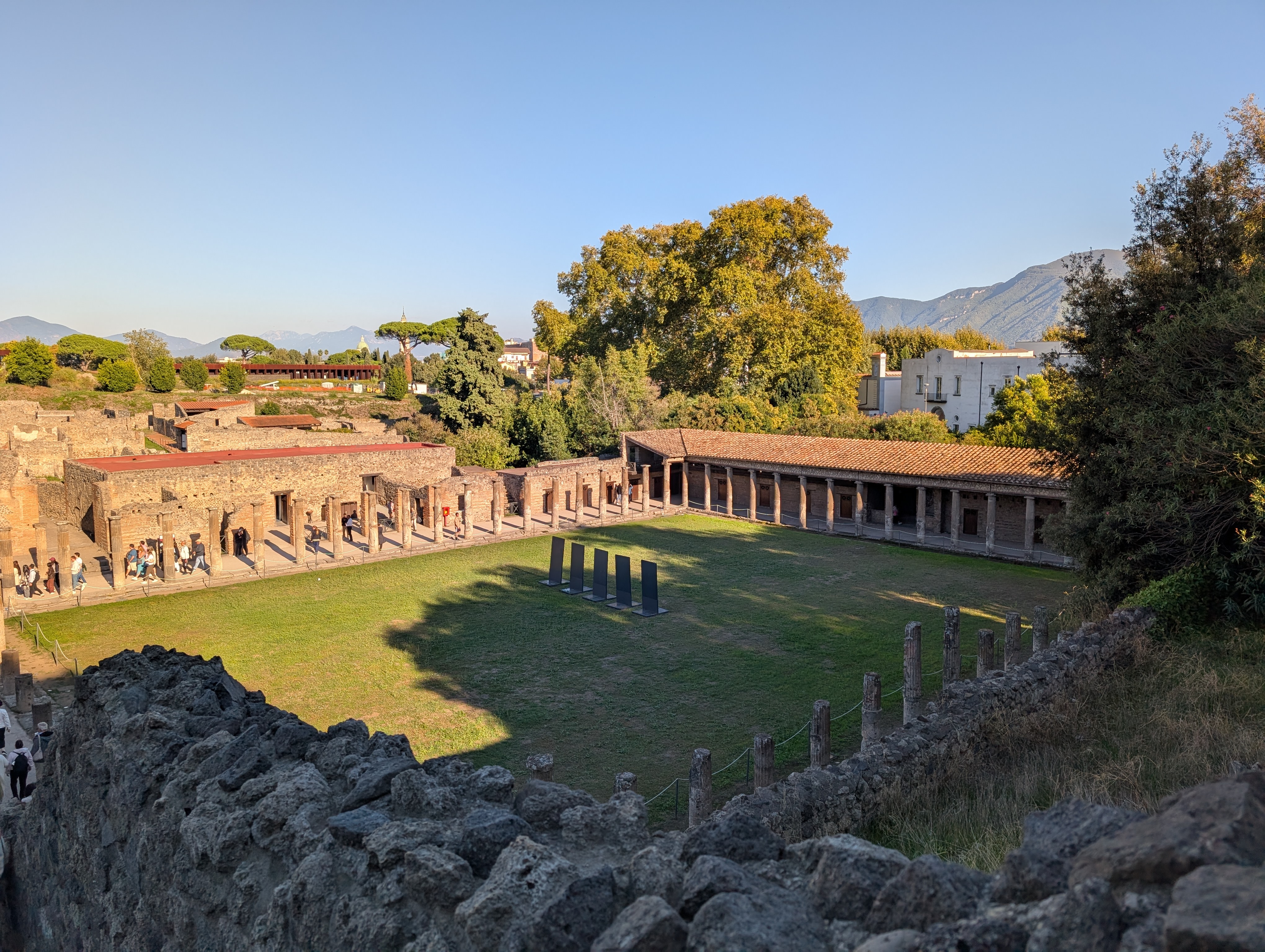
The Grand Theatre from its top tiers: stone seats, the visiting crowds, a small performance underway. Steps north, down into the Quadriporticus below — the old gladiator barracks, garden lawn and Vesuvius right behind its columns.
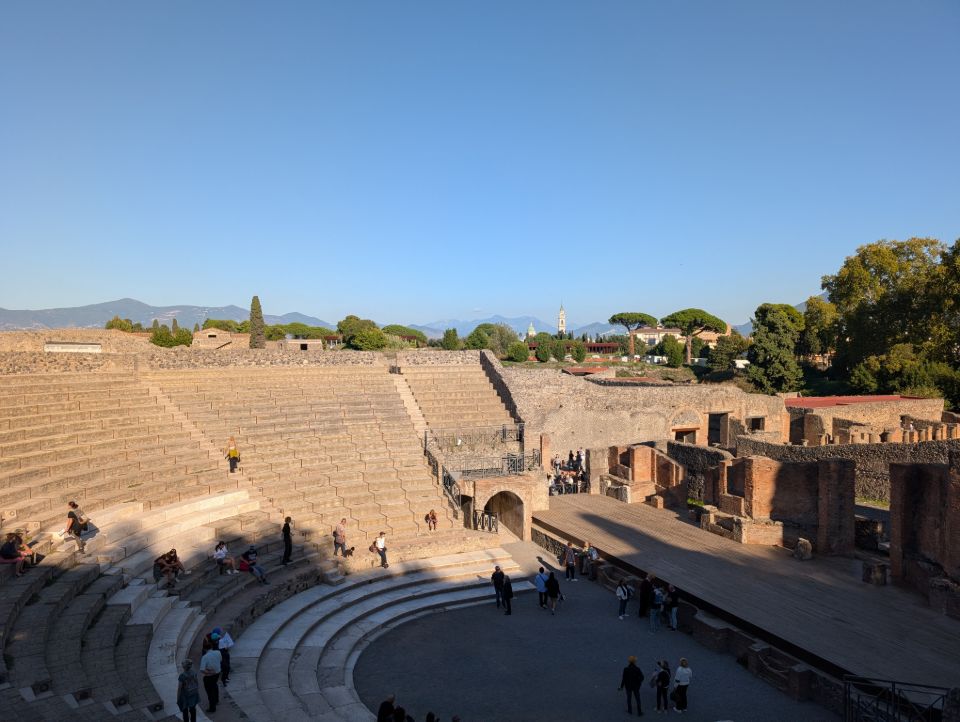
Down into the Grand Theatre 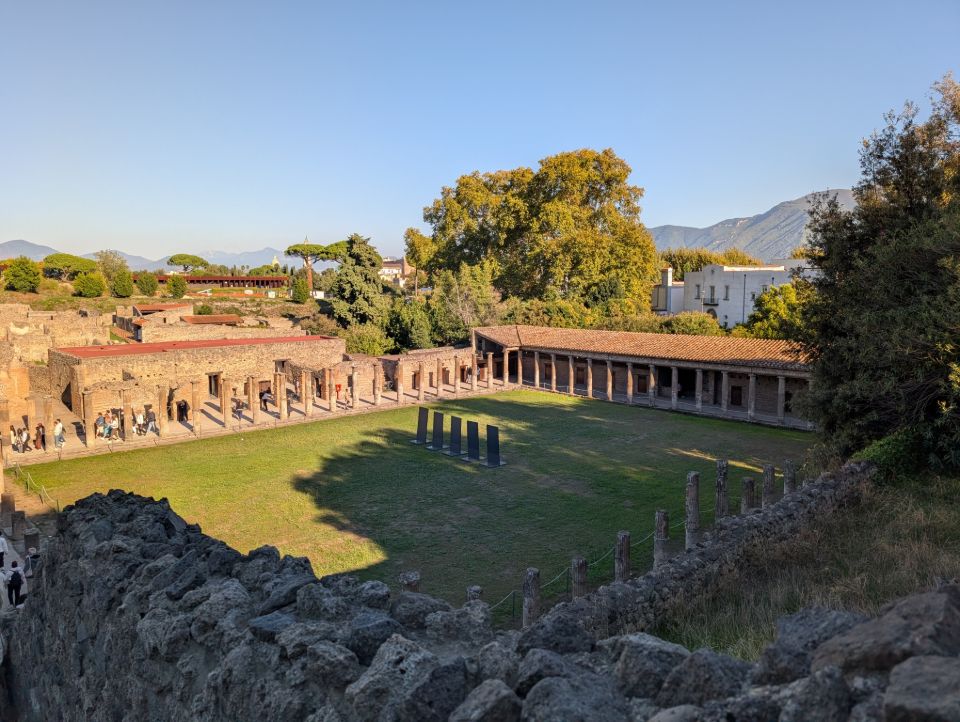
The Quadriporticus garden, Vesuvius behind
The amphitheatre
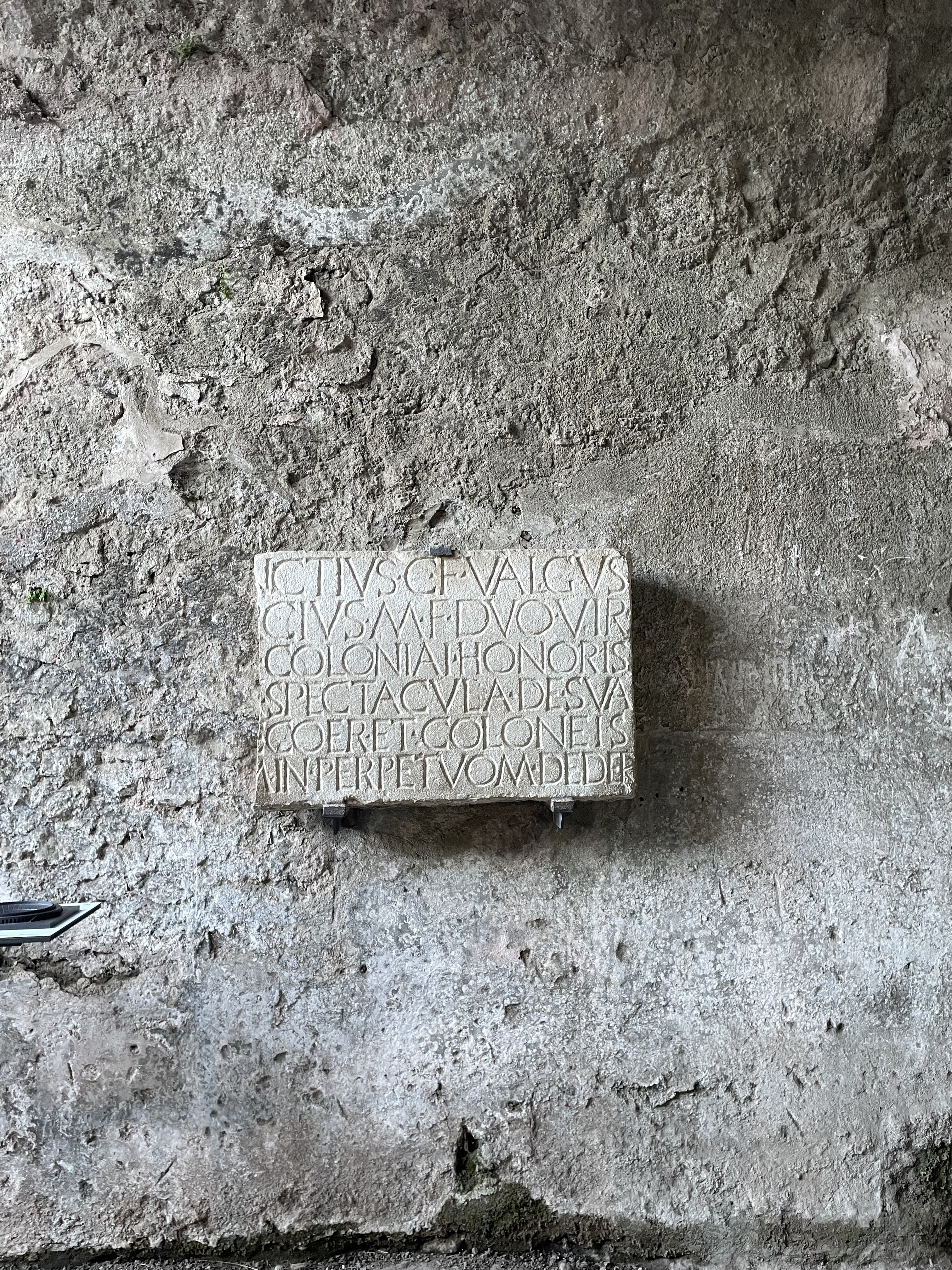
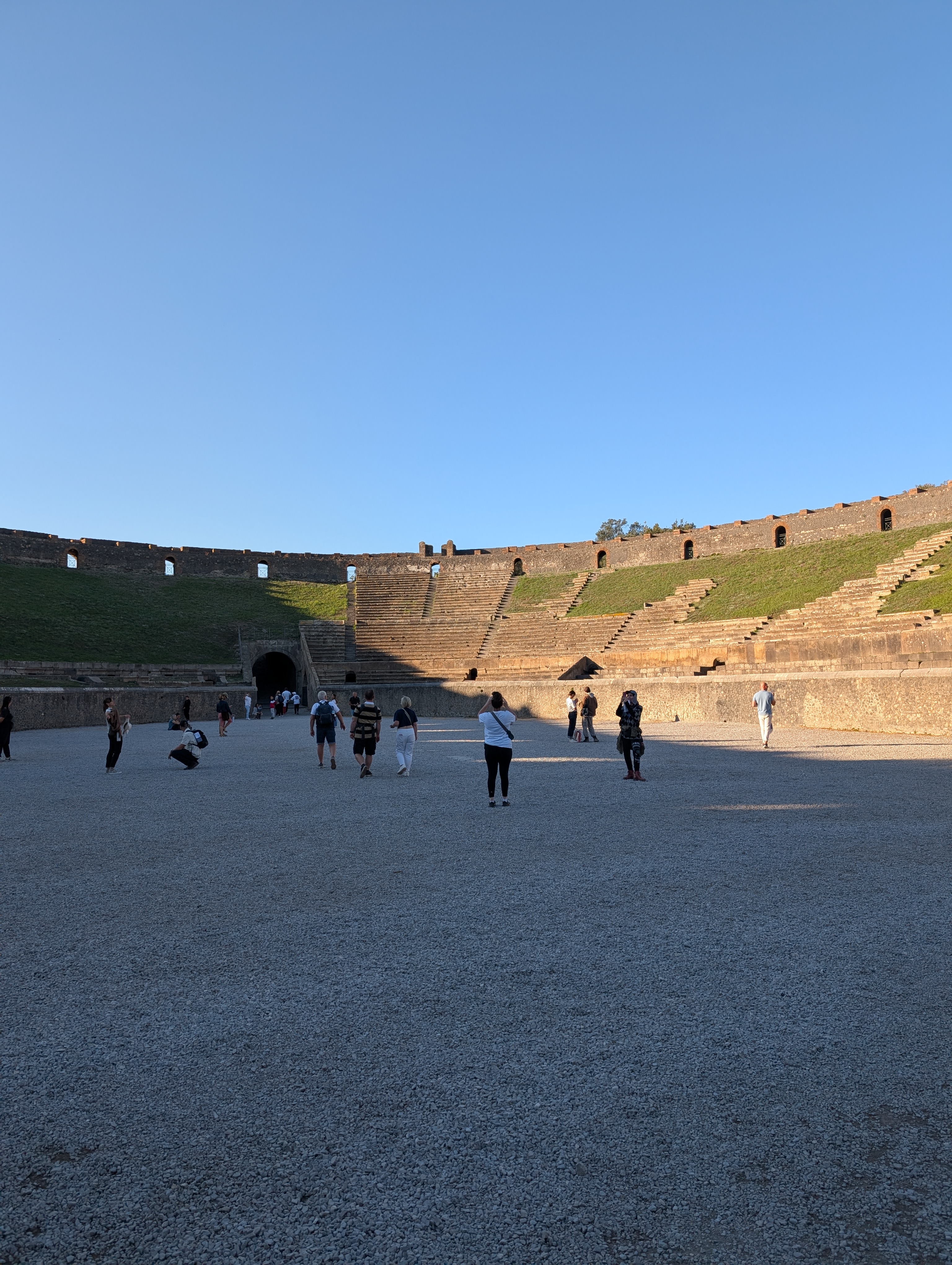
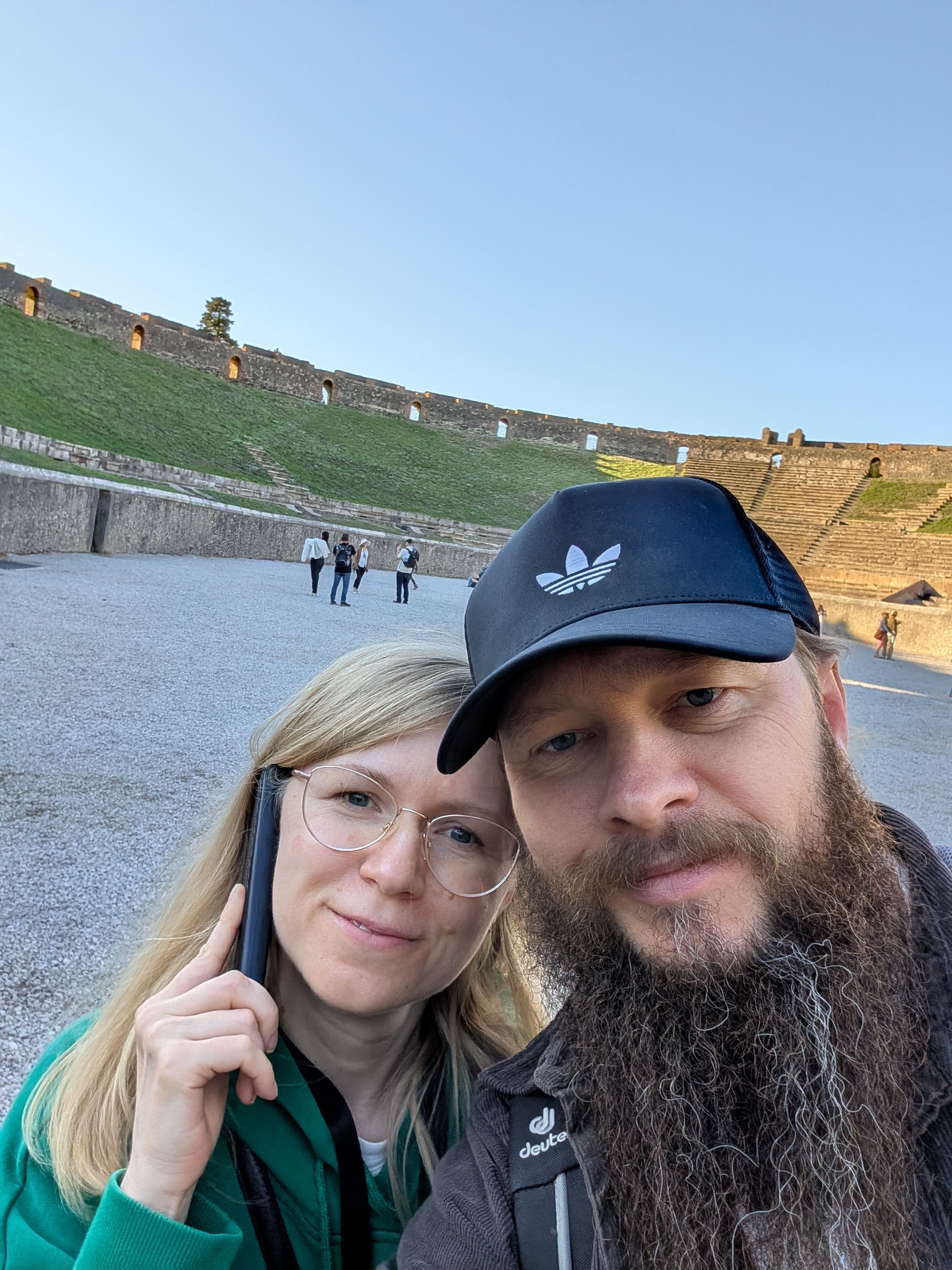
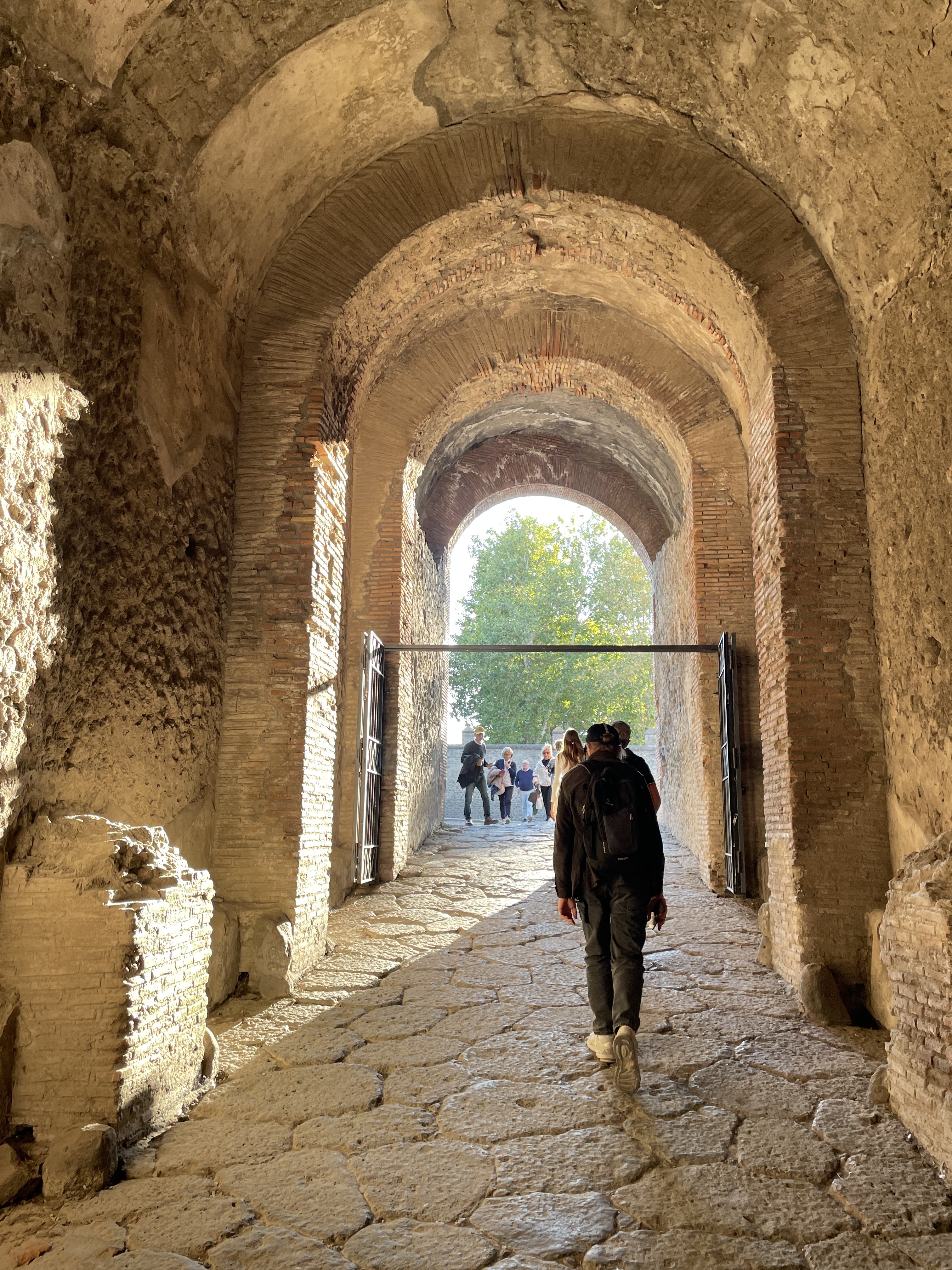
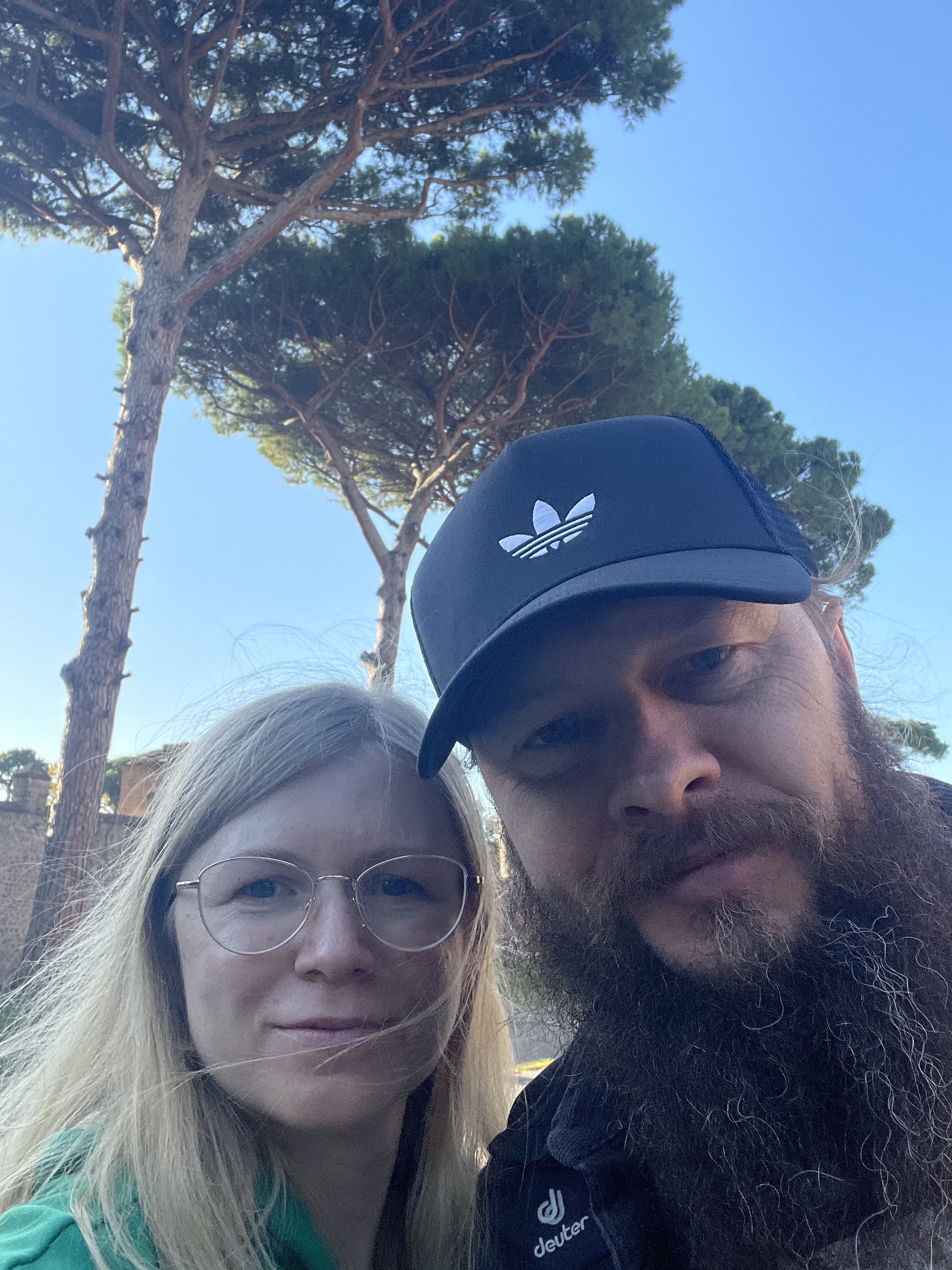
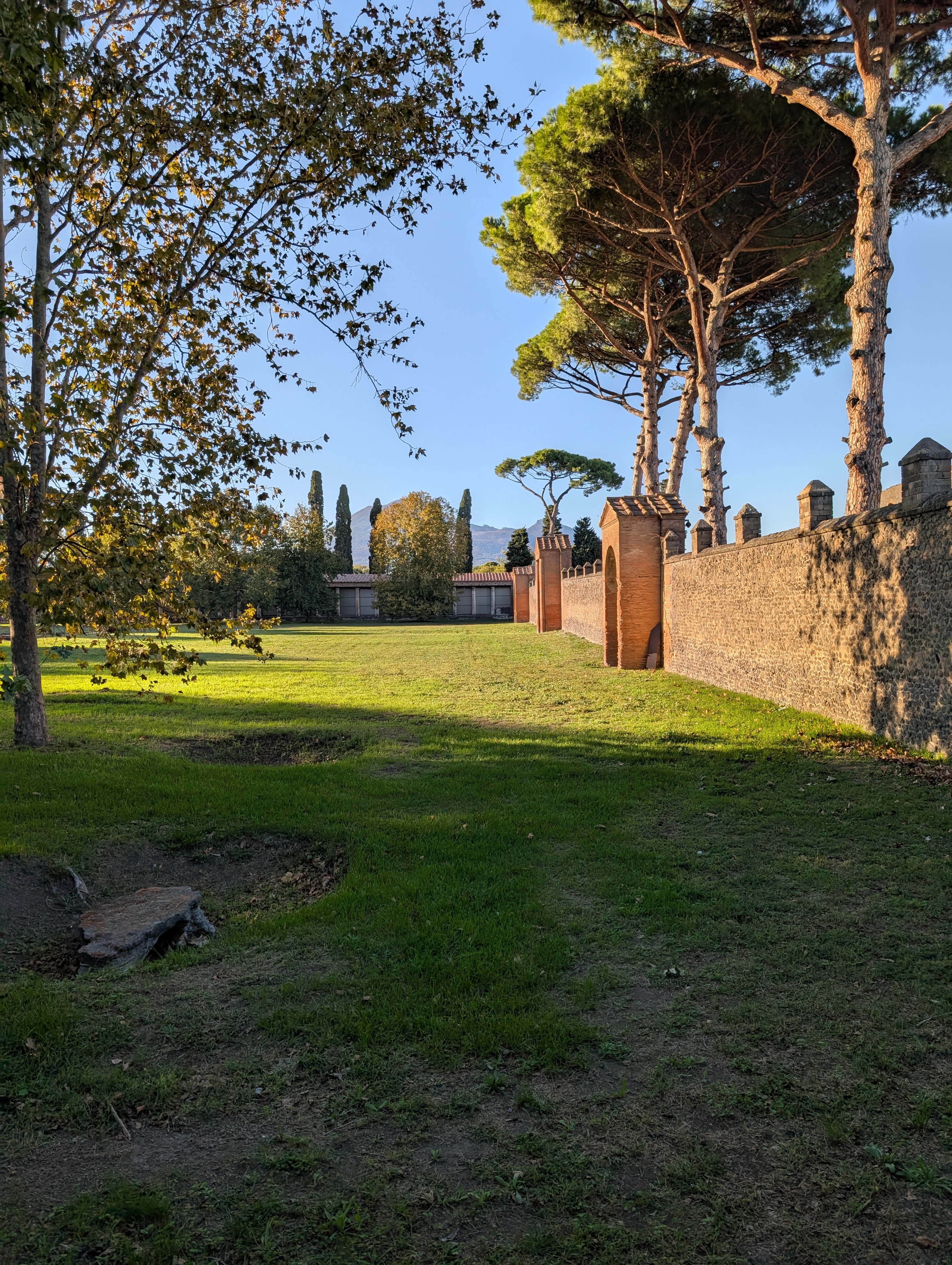
And here it is — the oldest stone amphitheatre we’ve ever walked: a Latin inscription in stone, the stair arches and arena floor, and the two of us standing in the middle of it. A gate corridor with a visitor passing under, an umbrella-pine selfie run, and the pines themselves over the villa garden walls.
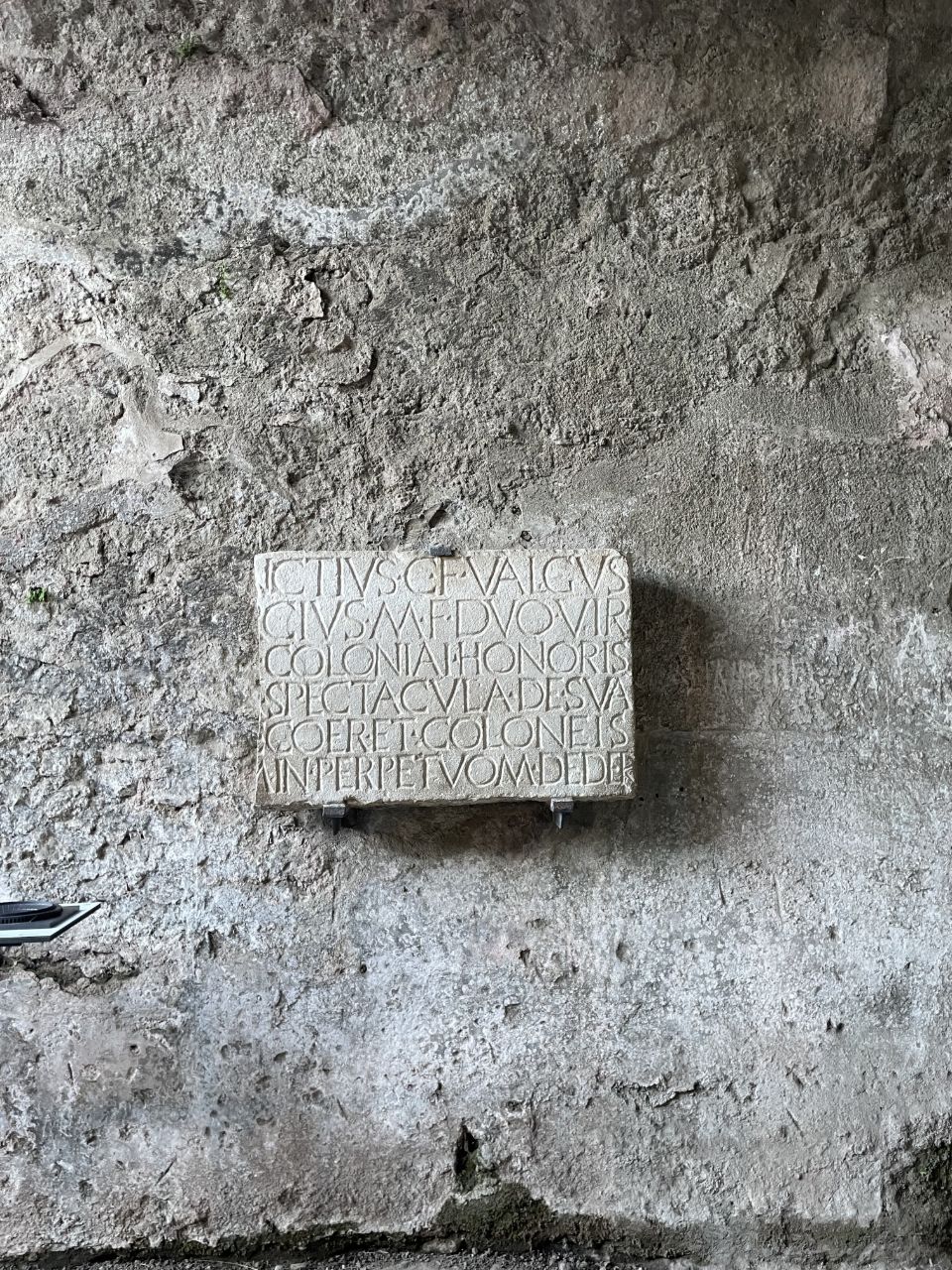
Latin, carved in stone 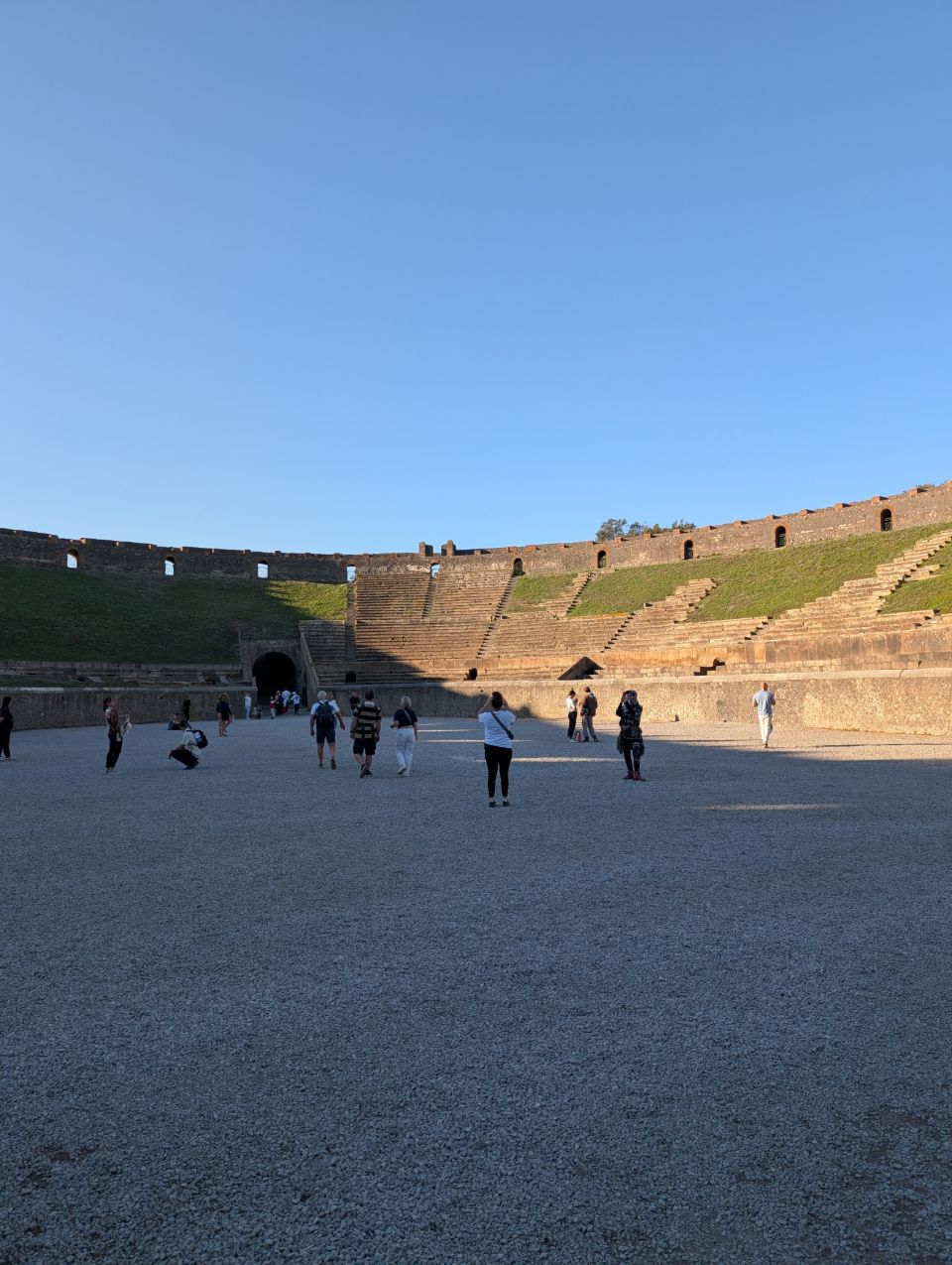
The amphitheatre, arches and arena 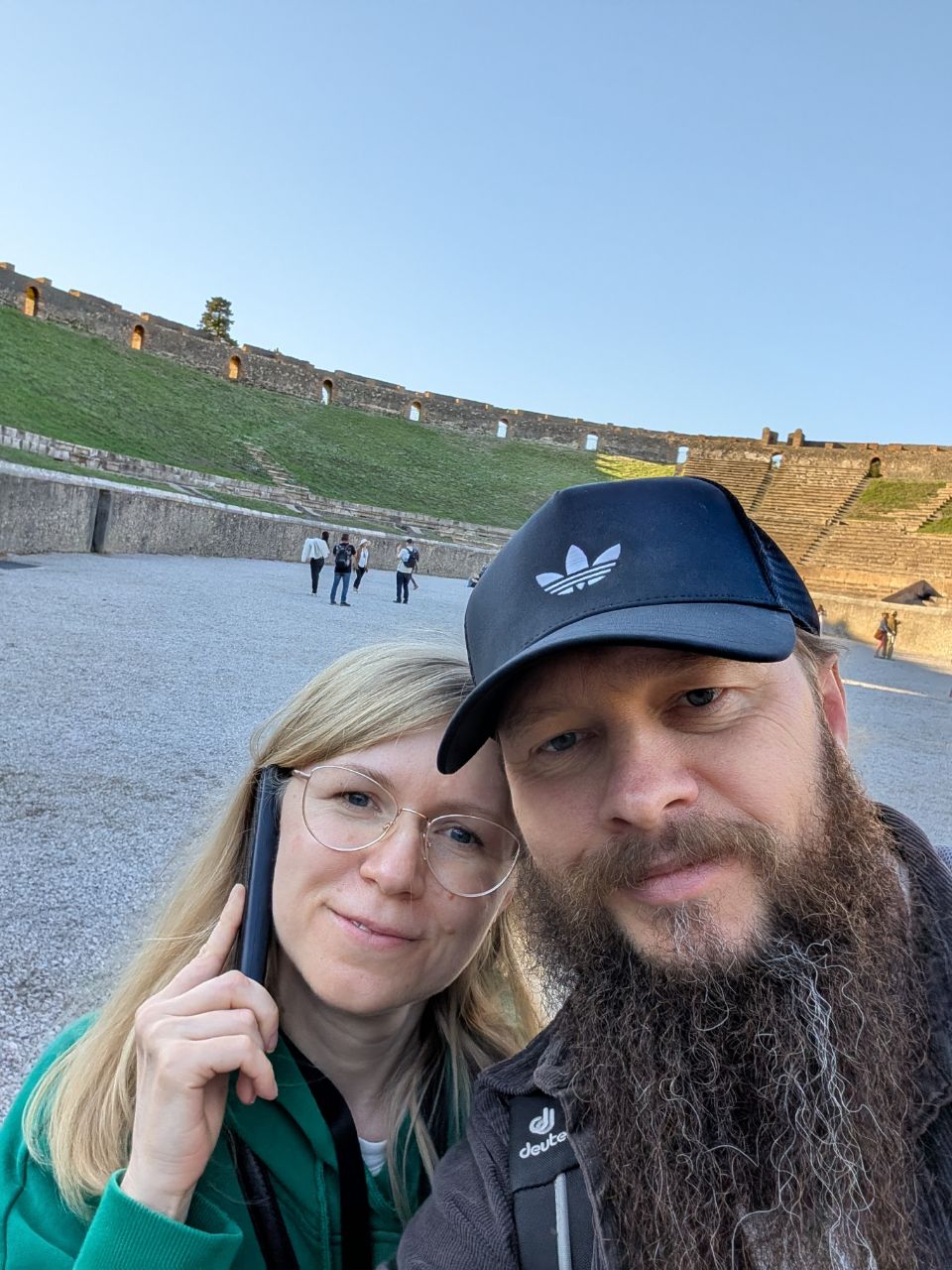
In the arena 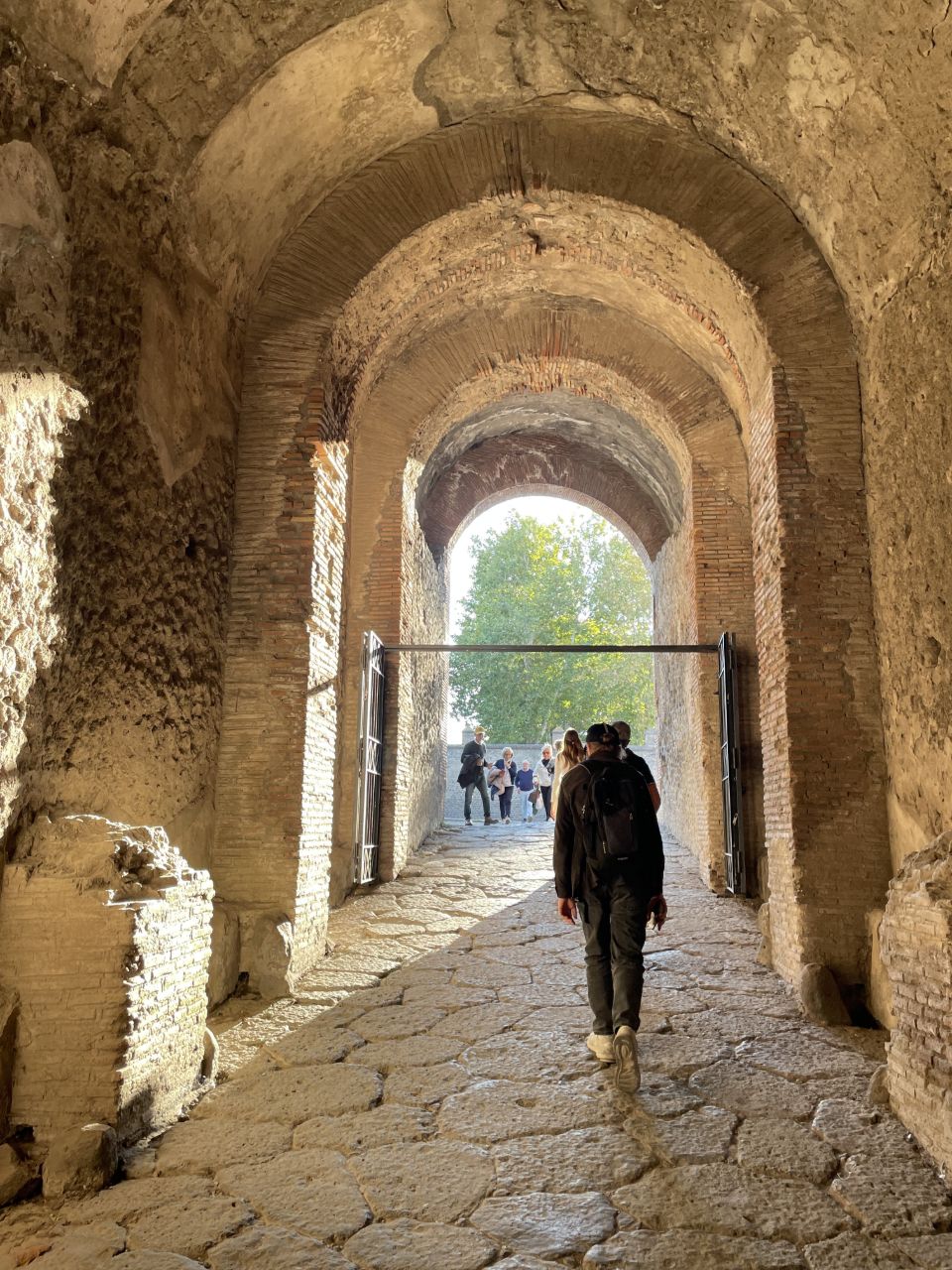
A visitor through the gate corridor 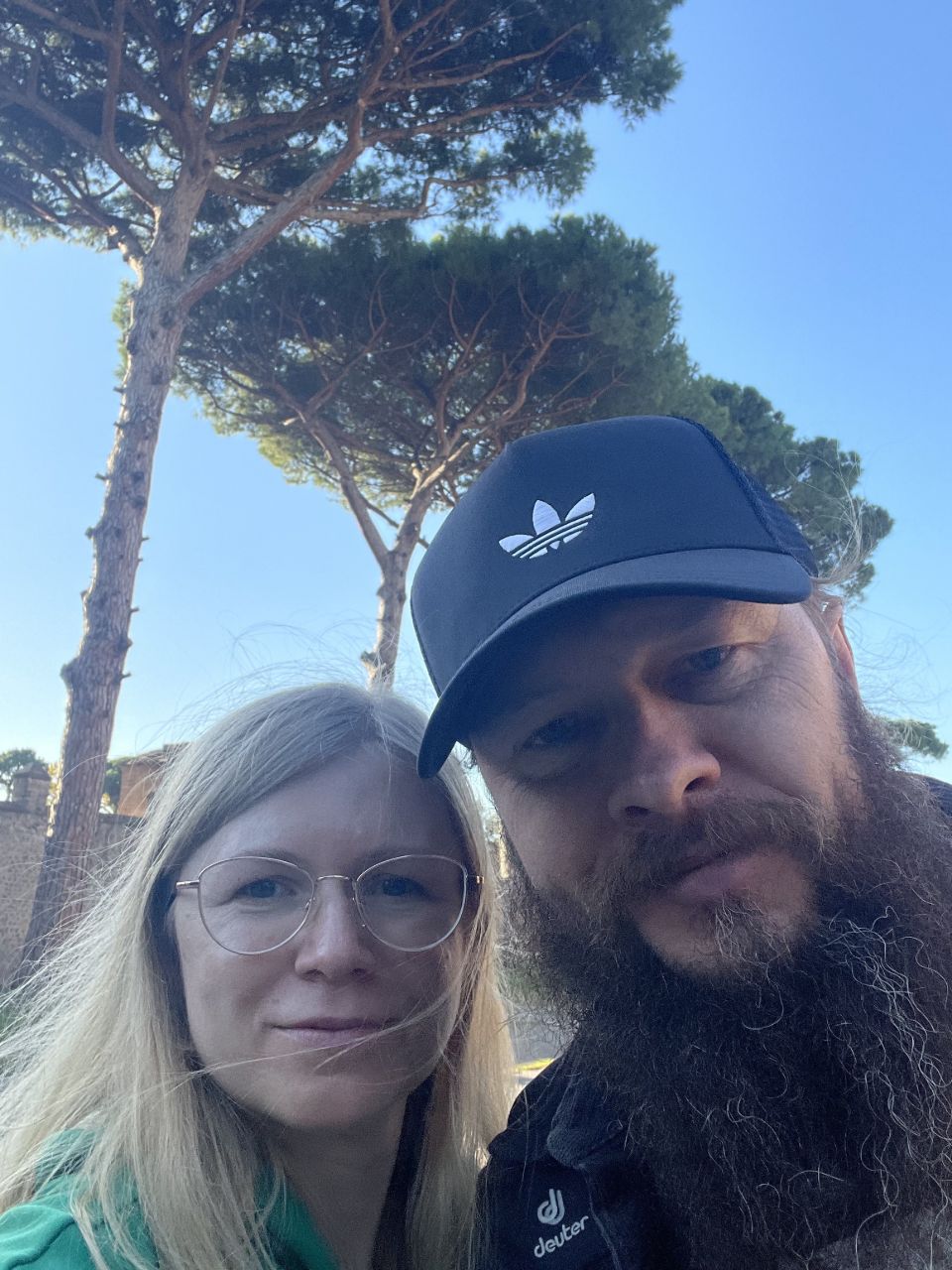
Umbrella pines, us included 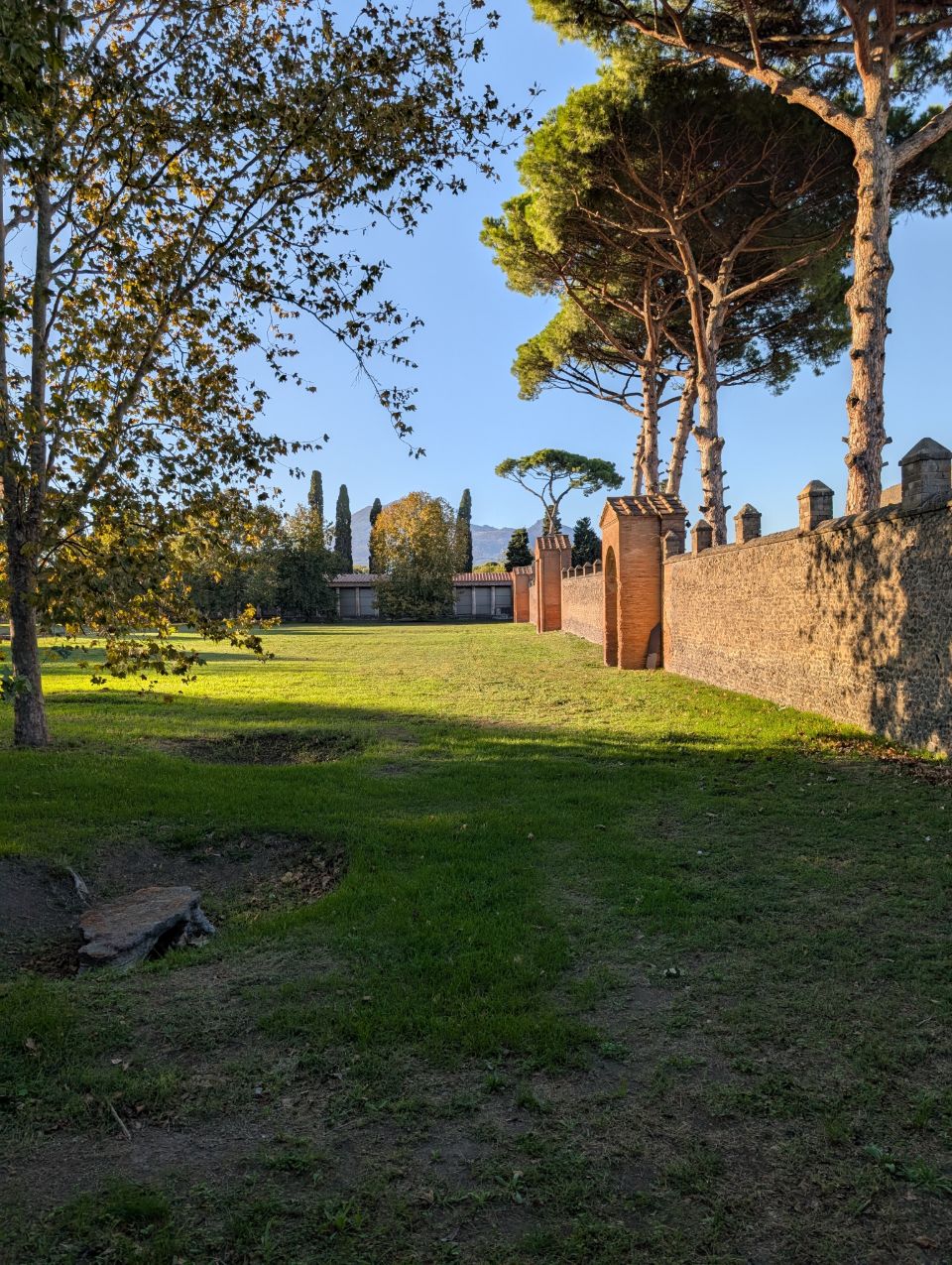
Pines over the garden walls
Back to the Villa: frescoes, the frieze room
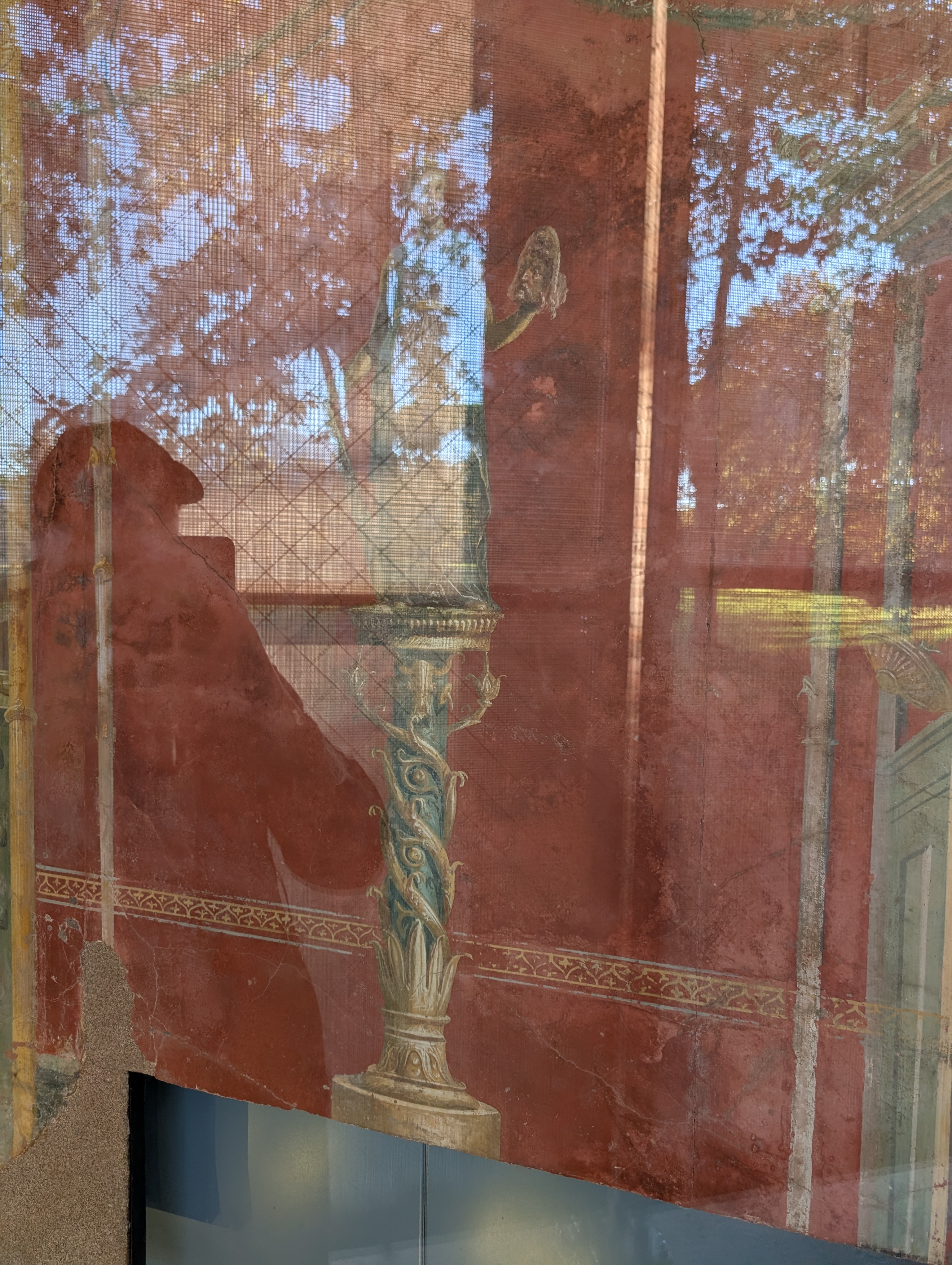
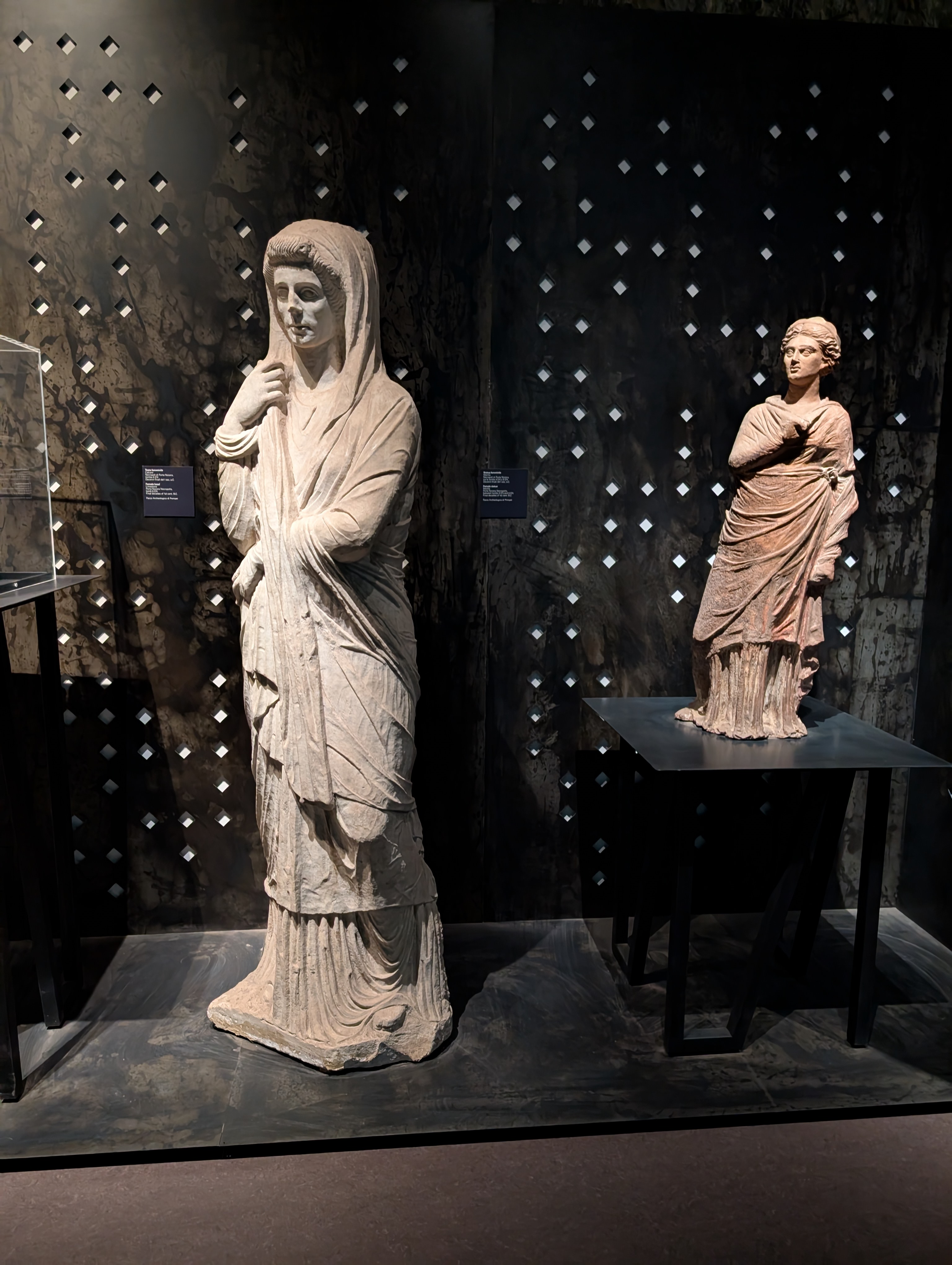
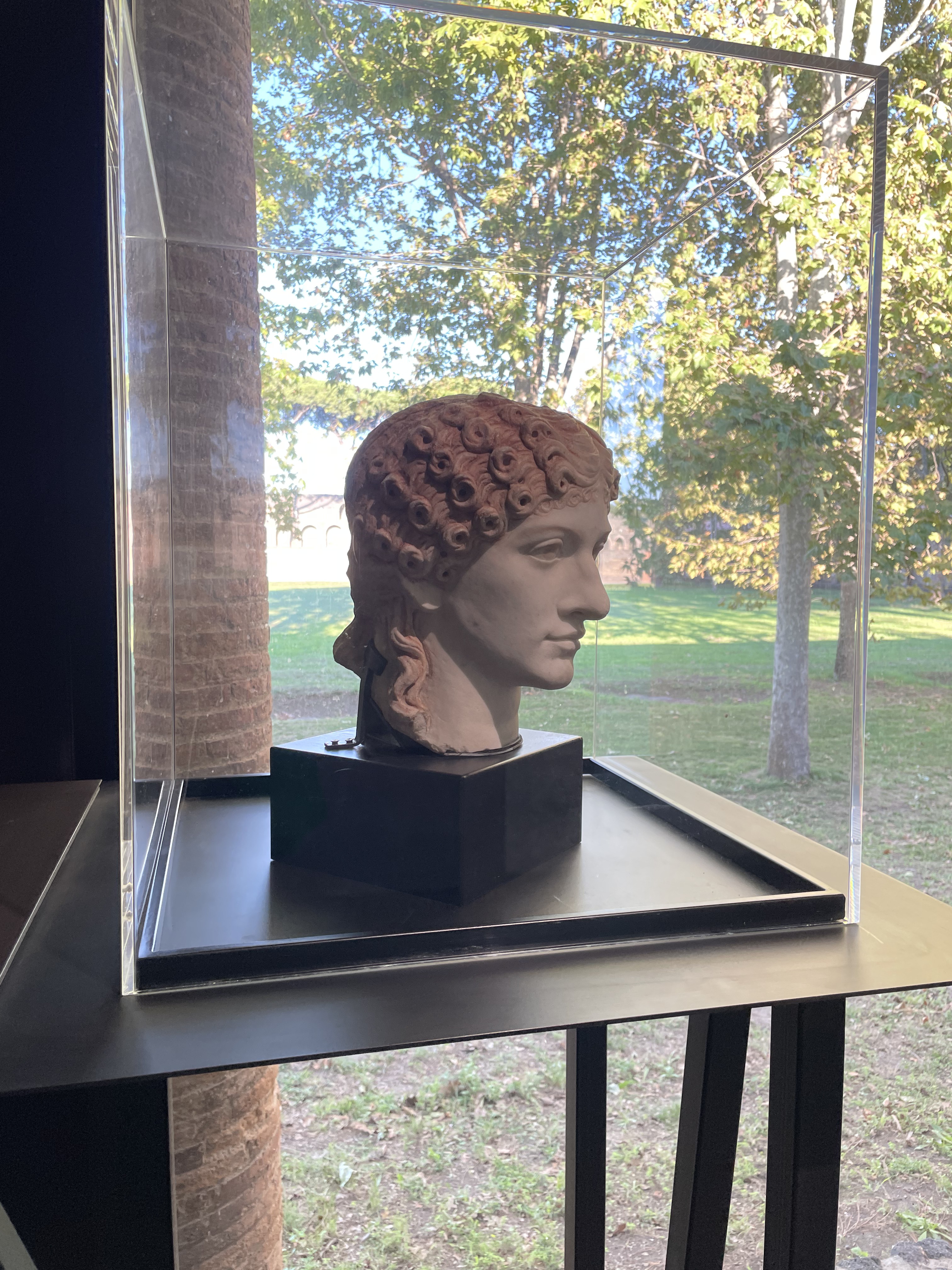
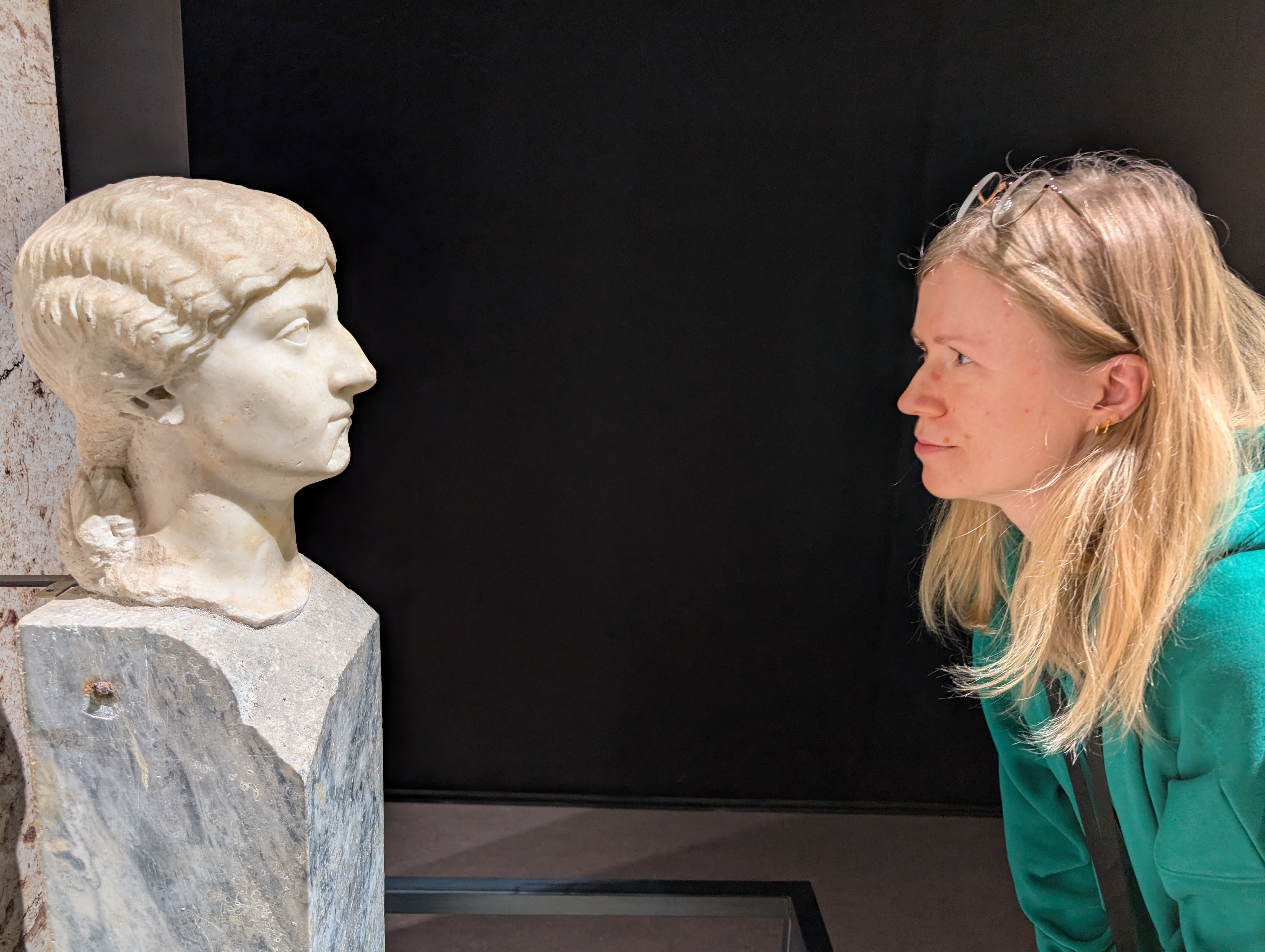
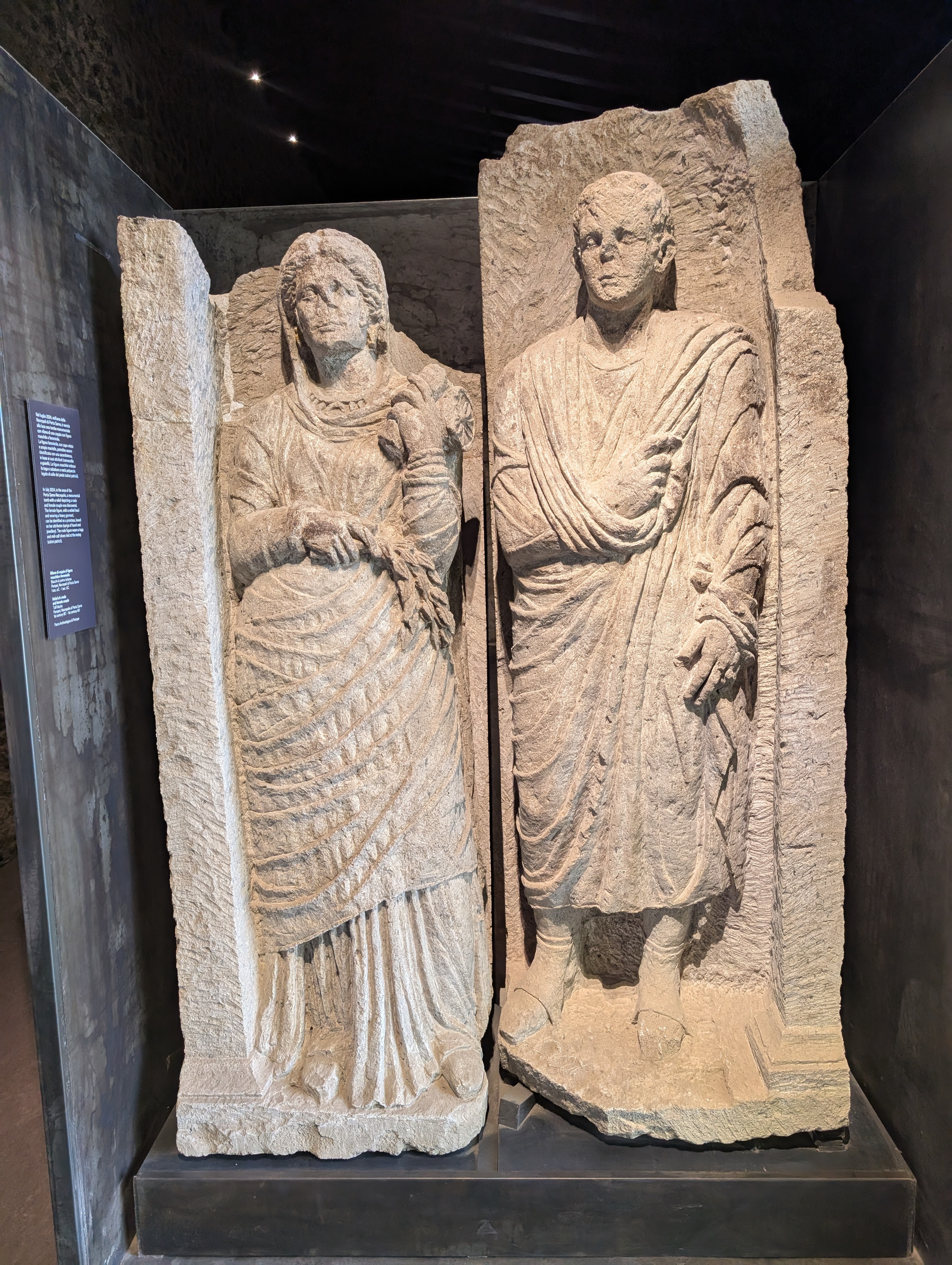
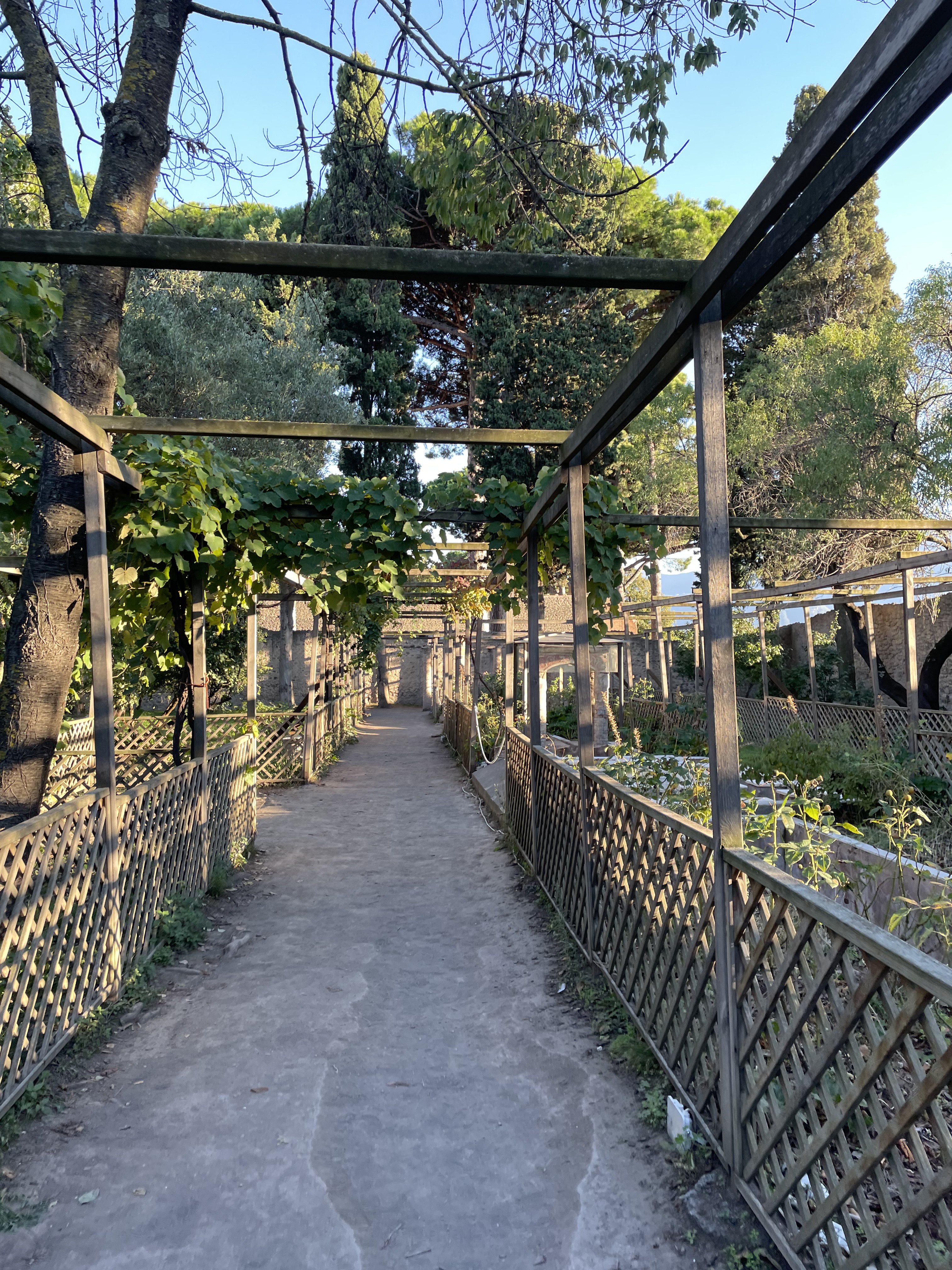
Inside the Villa of Mysteries, the red paint gets its hour: a fresco wall behind glass, the veiled marble statue pair in their dark display, Agrippina with her caption and portrait head, Anna giving a marble bust the eye, a tomb relief of a Roman married couple, the vine pergola walkway, the frieze room itself — and a sunken water channel in the garden with its clipped topiary, a corridor colonnade, and a caption fragment for the record.
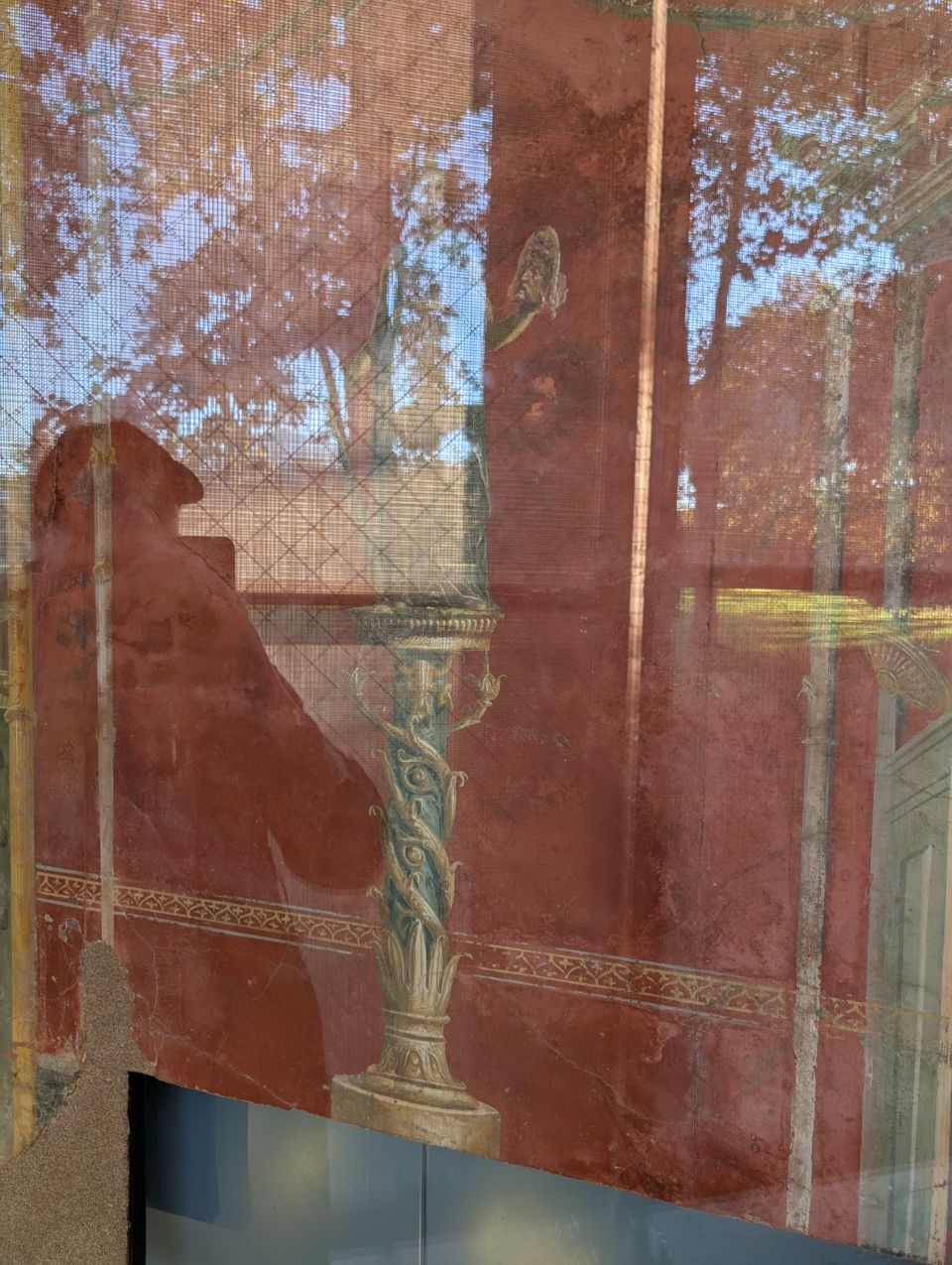
Pompeii red behind the glass 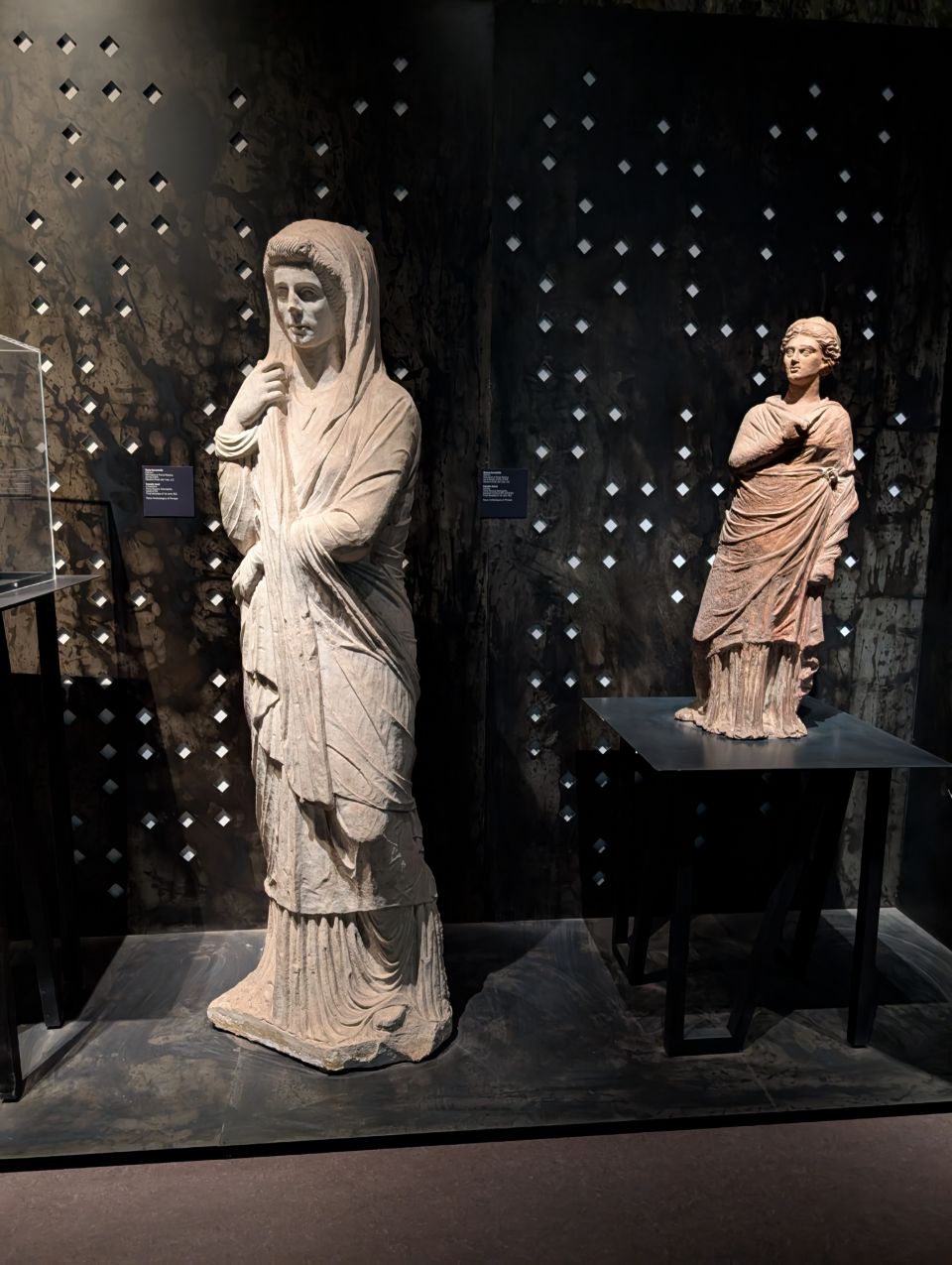
Veiled marble figures, in their dark room 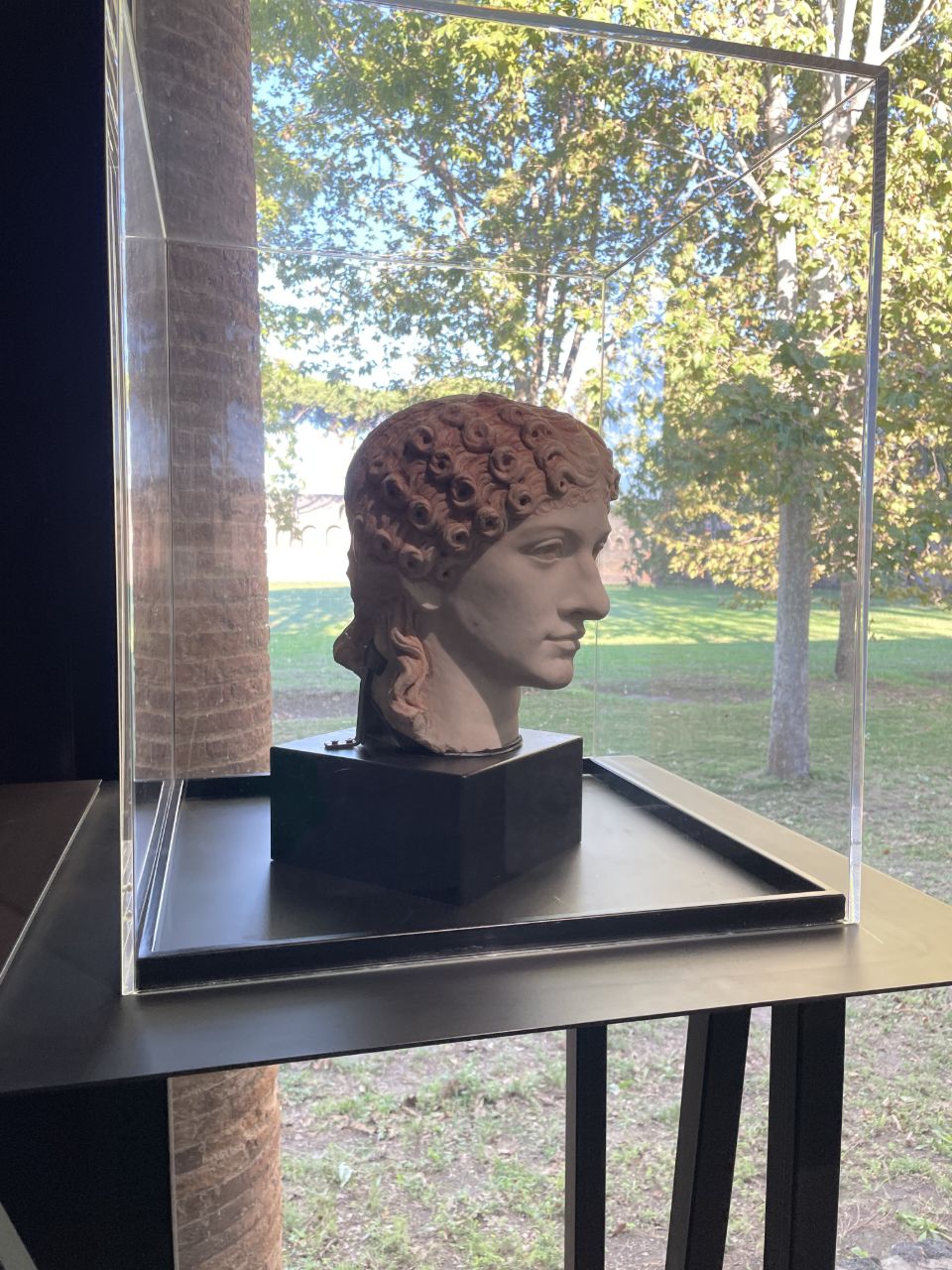
Agrippina the Younger with her caption 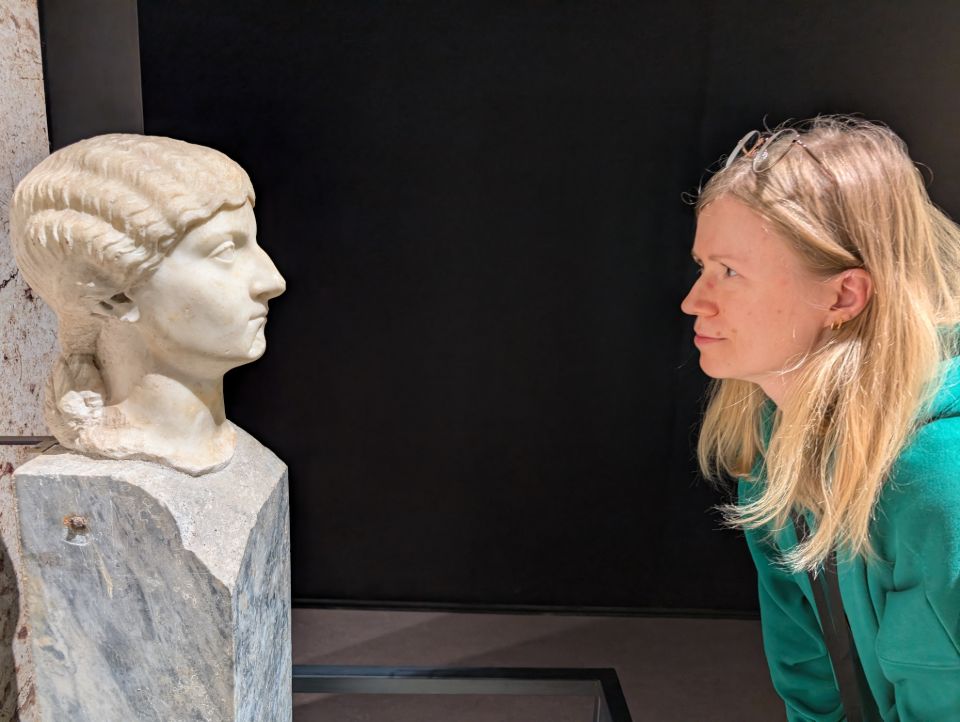
Anna, and a bust that gets the eye 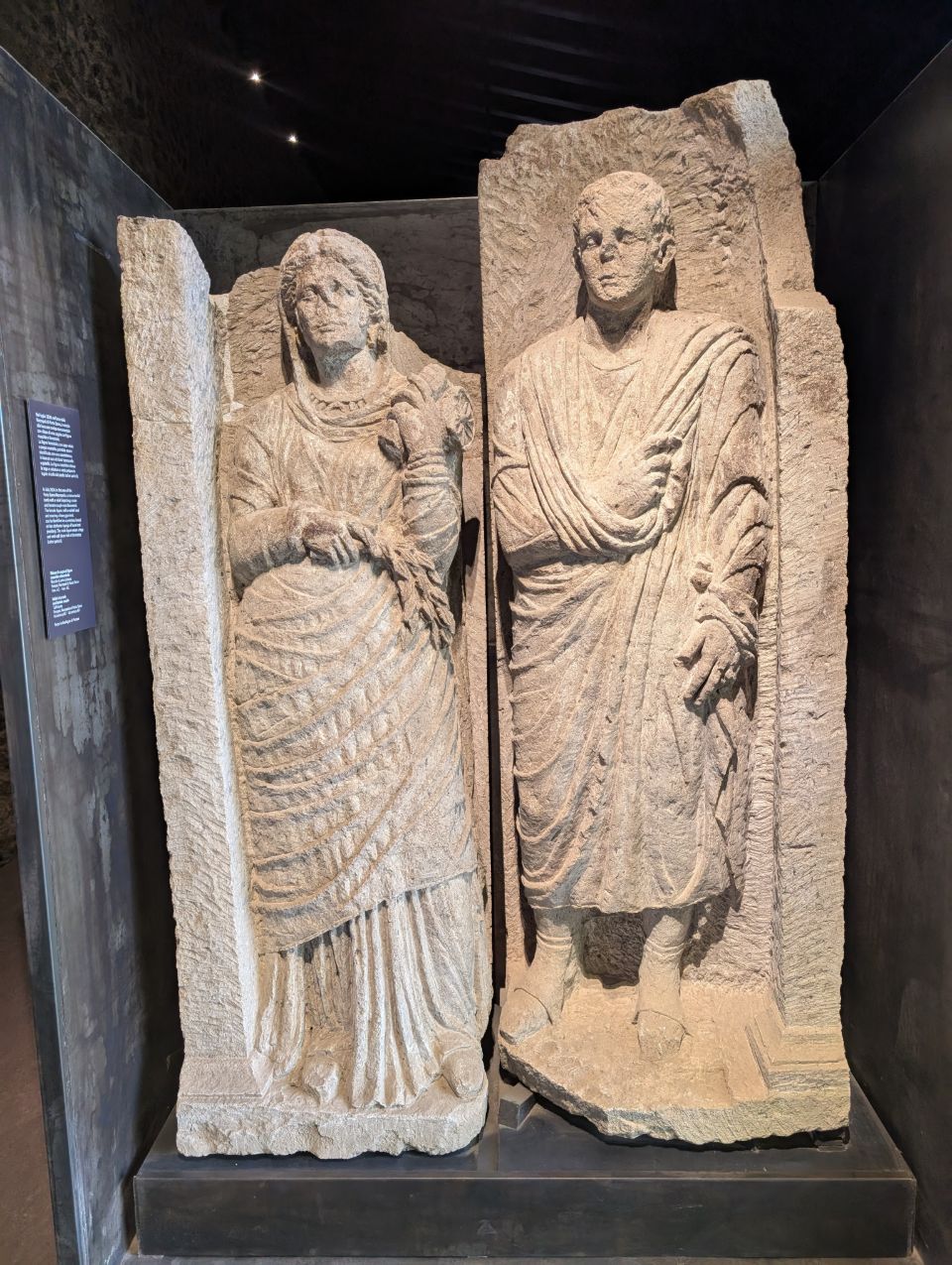
A tomb relief: the married couple 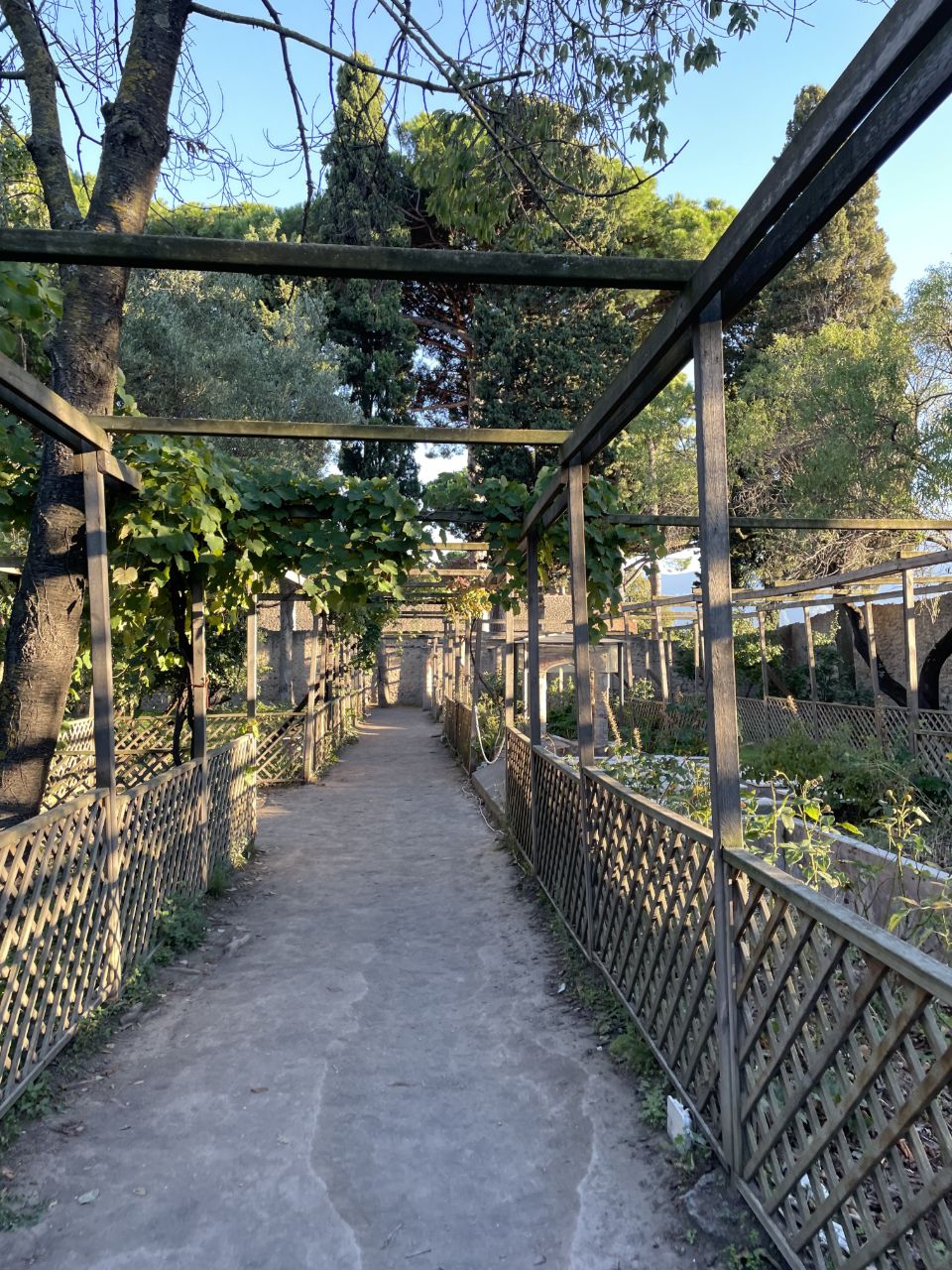
The vine pergola walkway 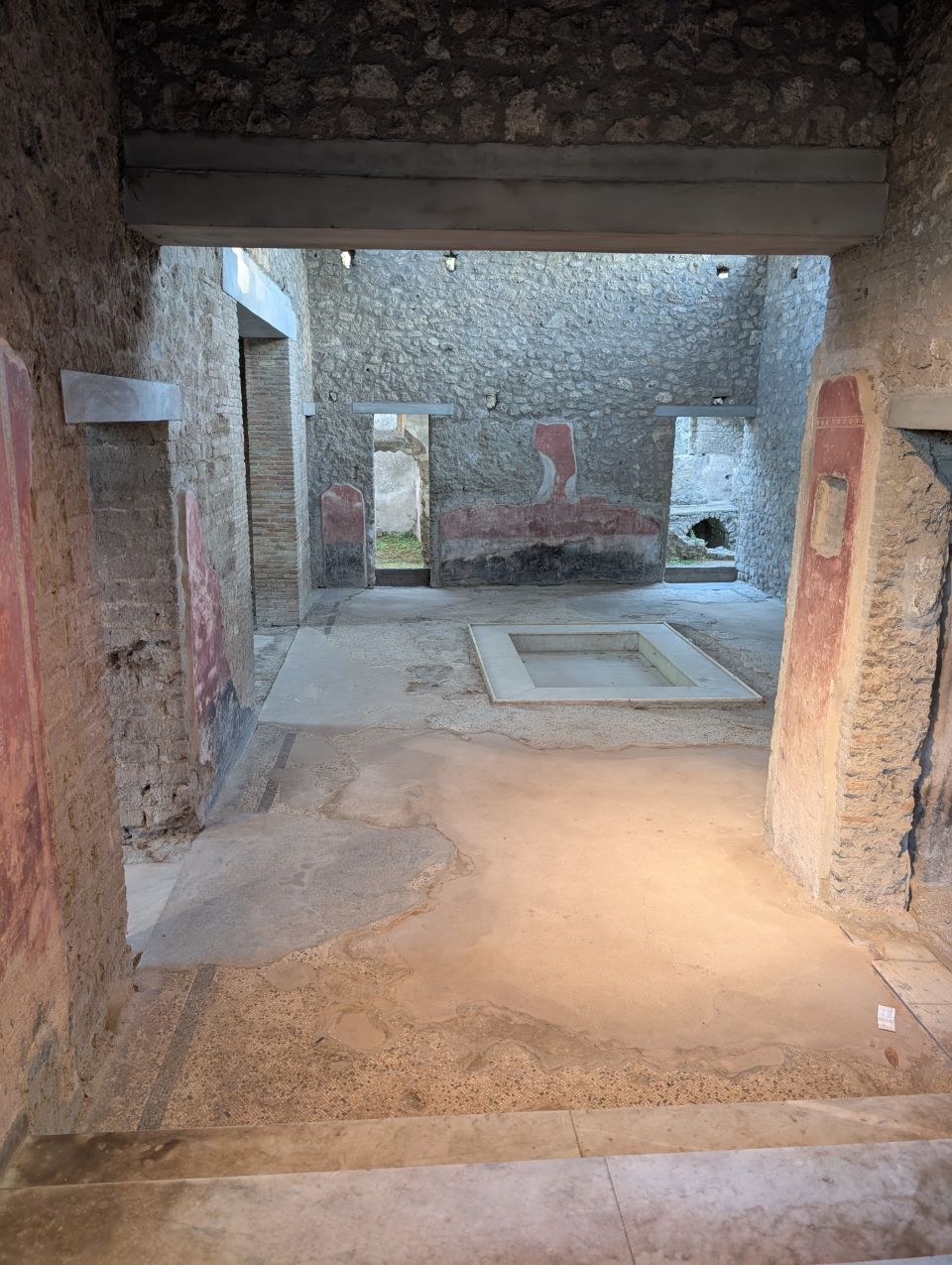
The frieze room 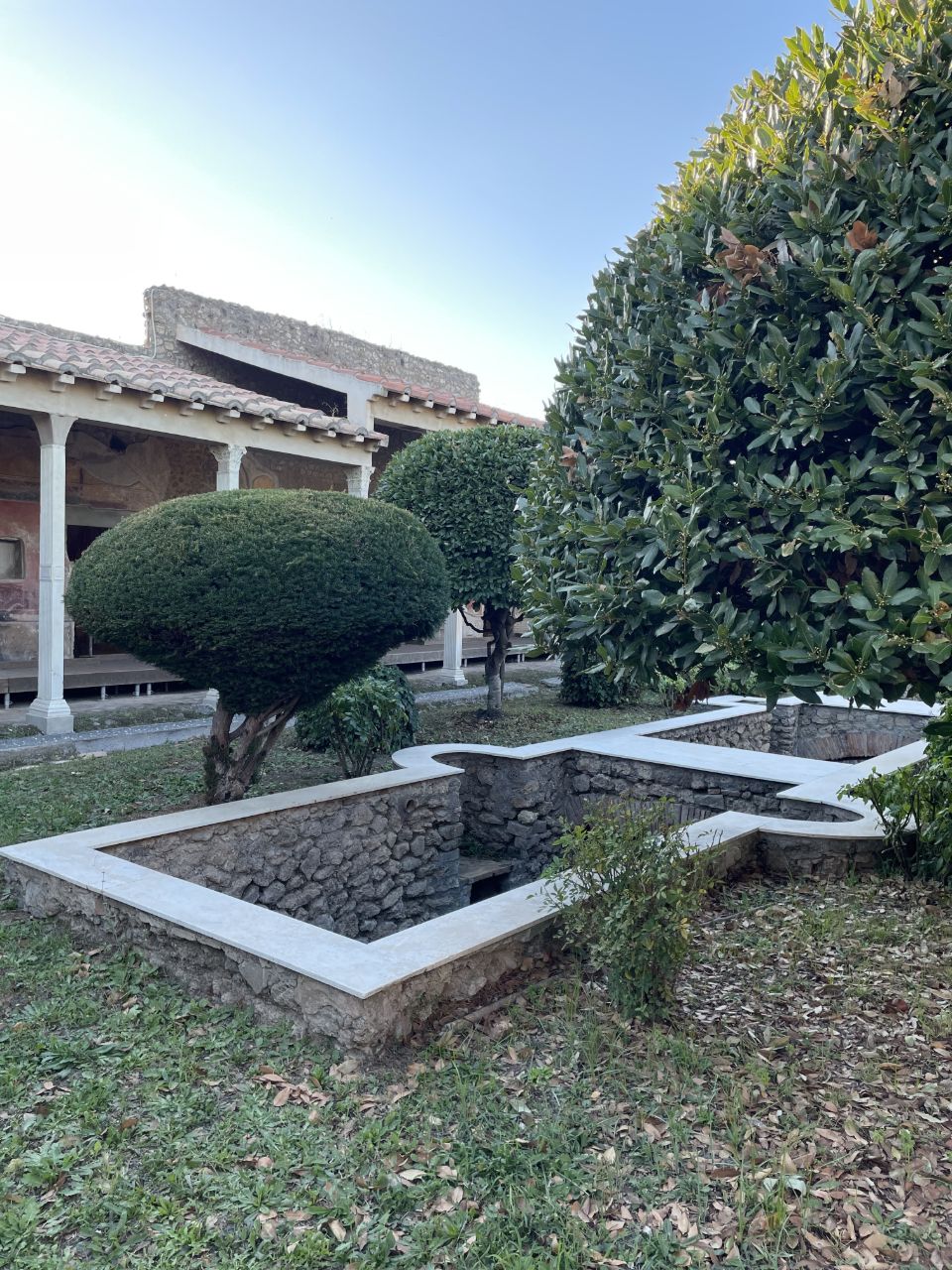
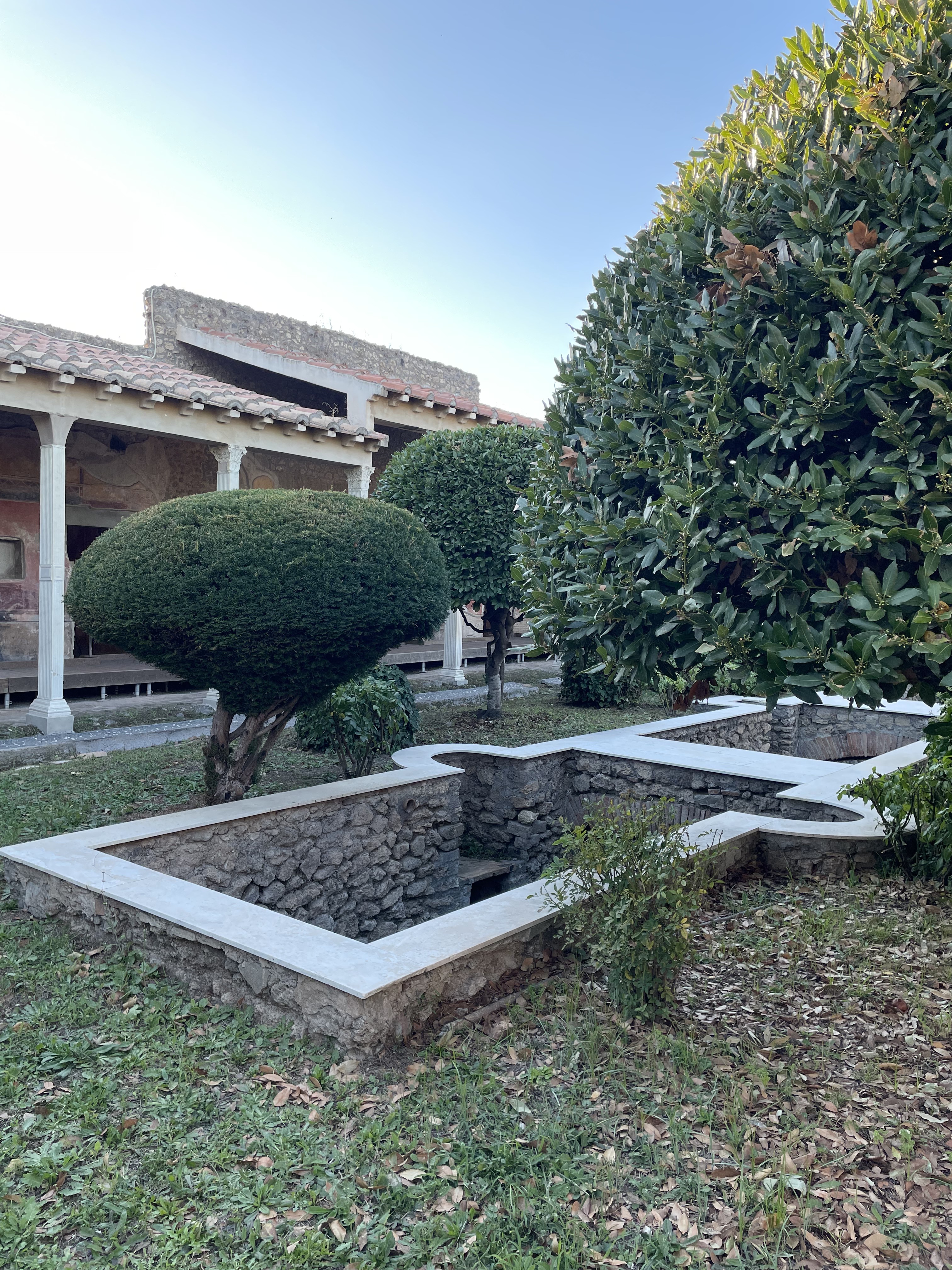
Sunken channel and clipped topiary 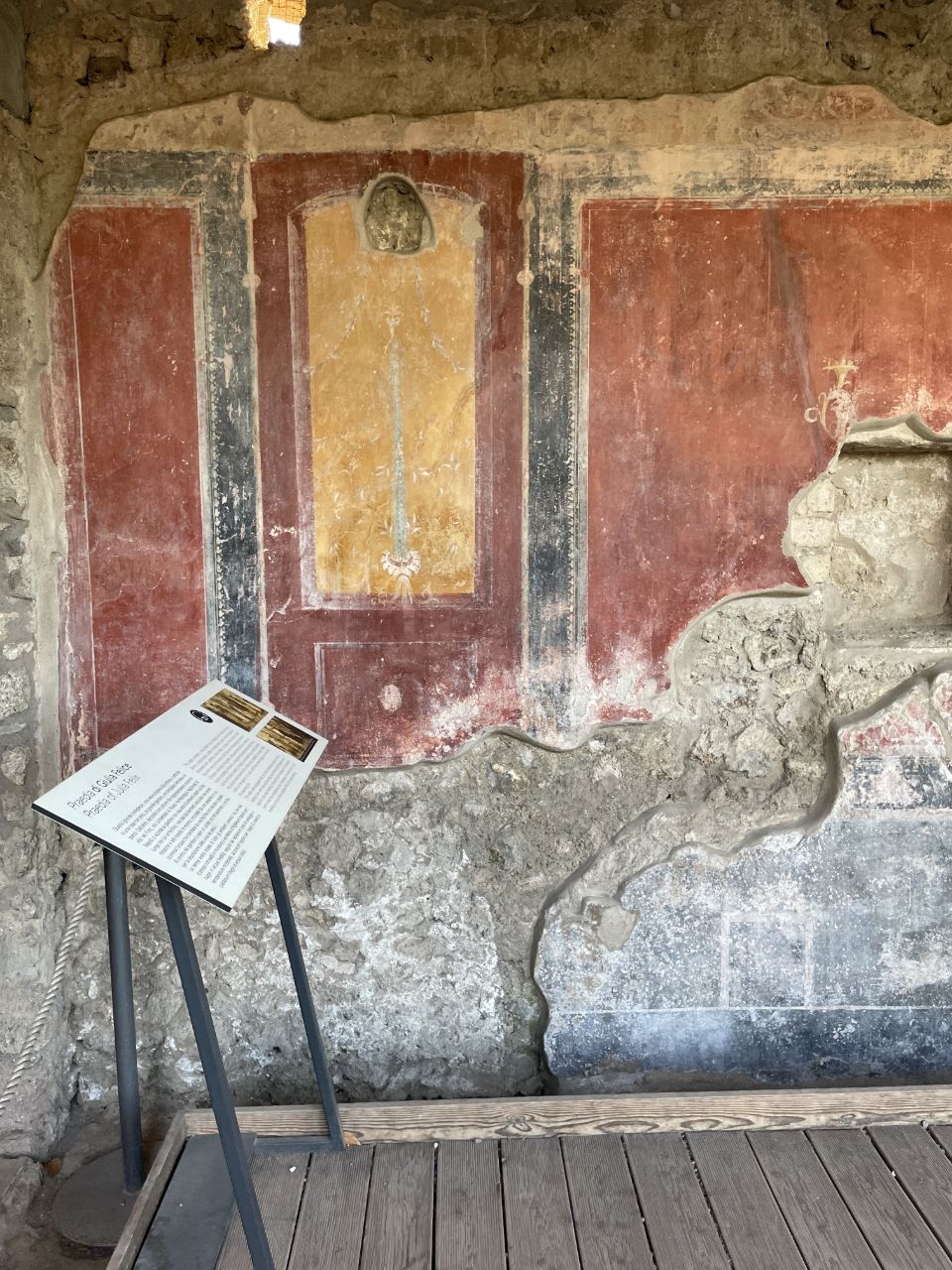
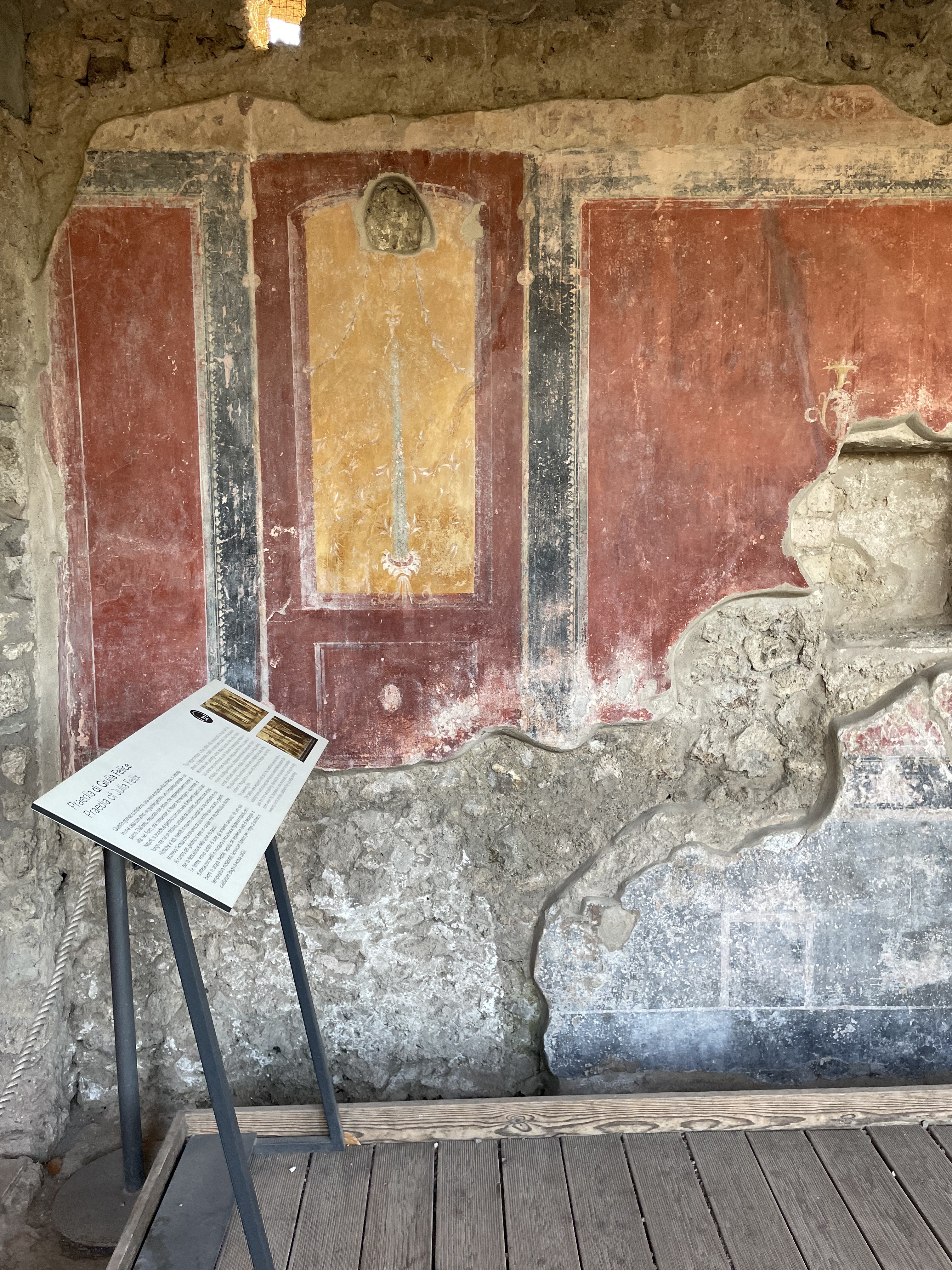
A fragment and its caption board 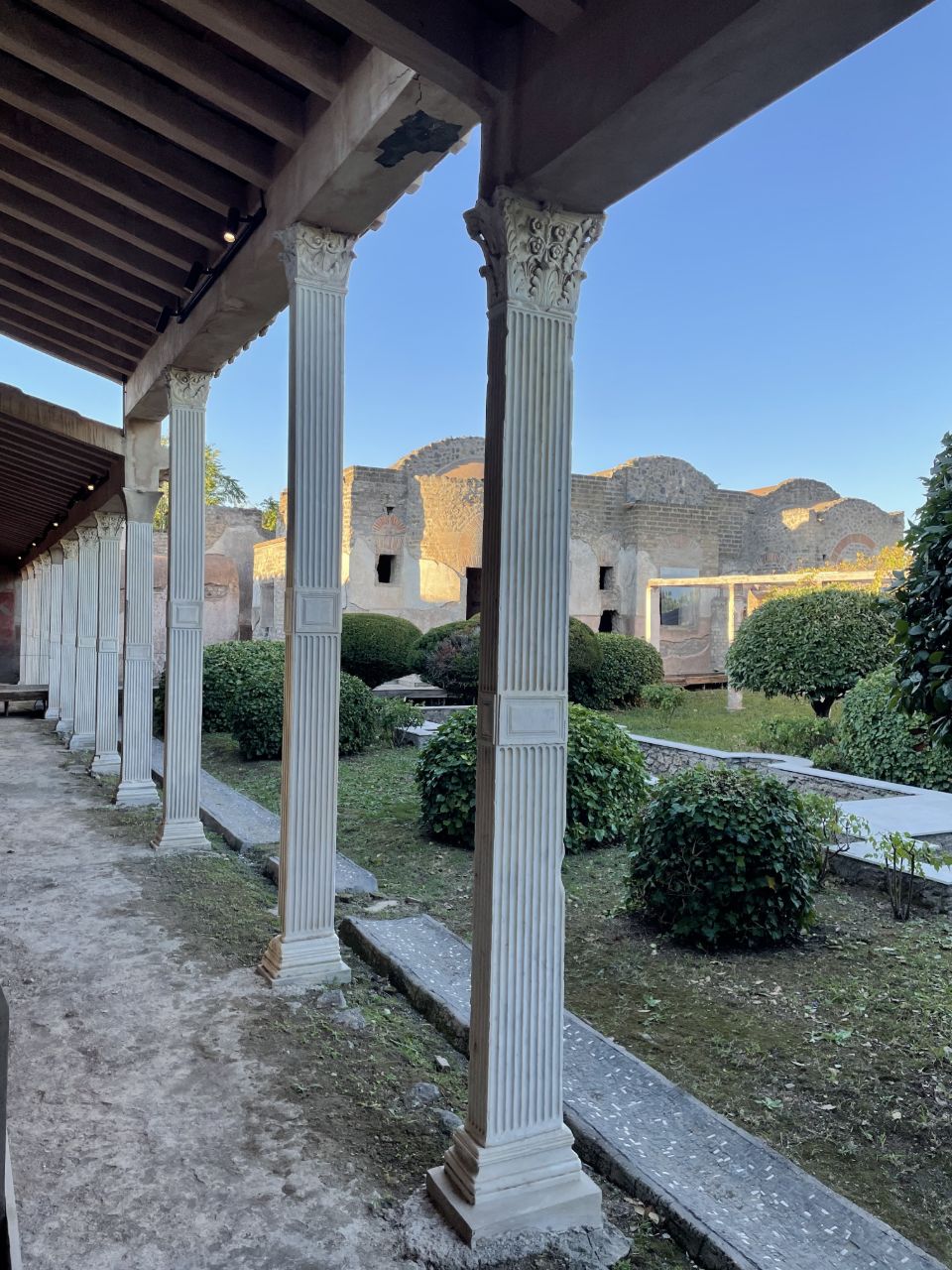
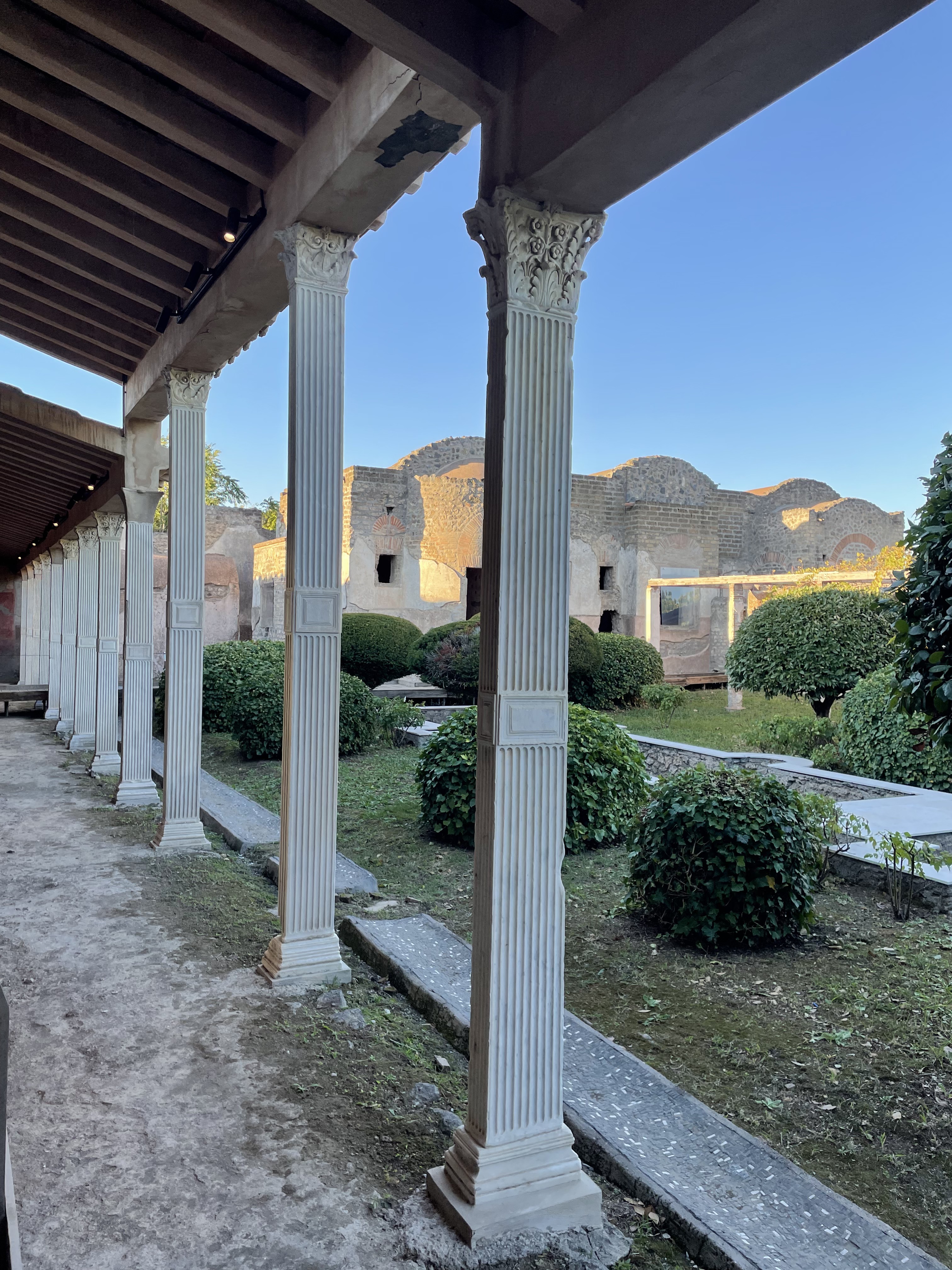
The portico garden walk 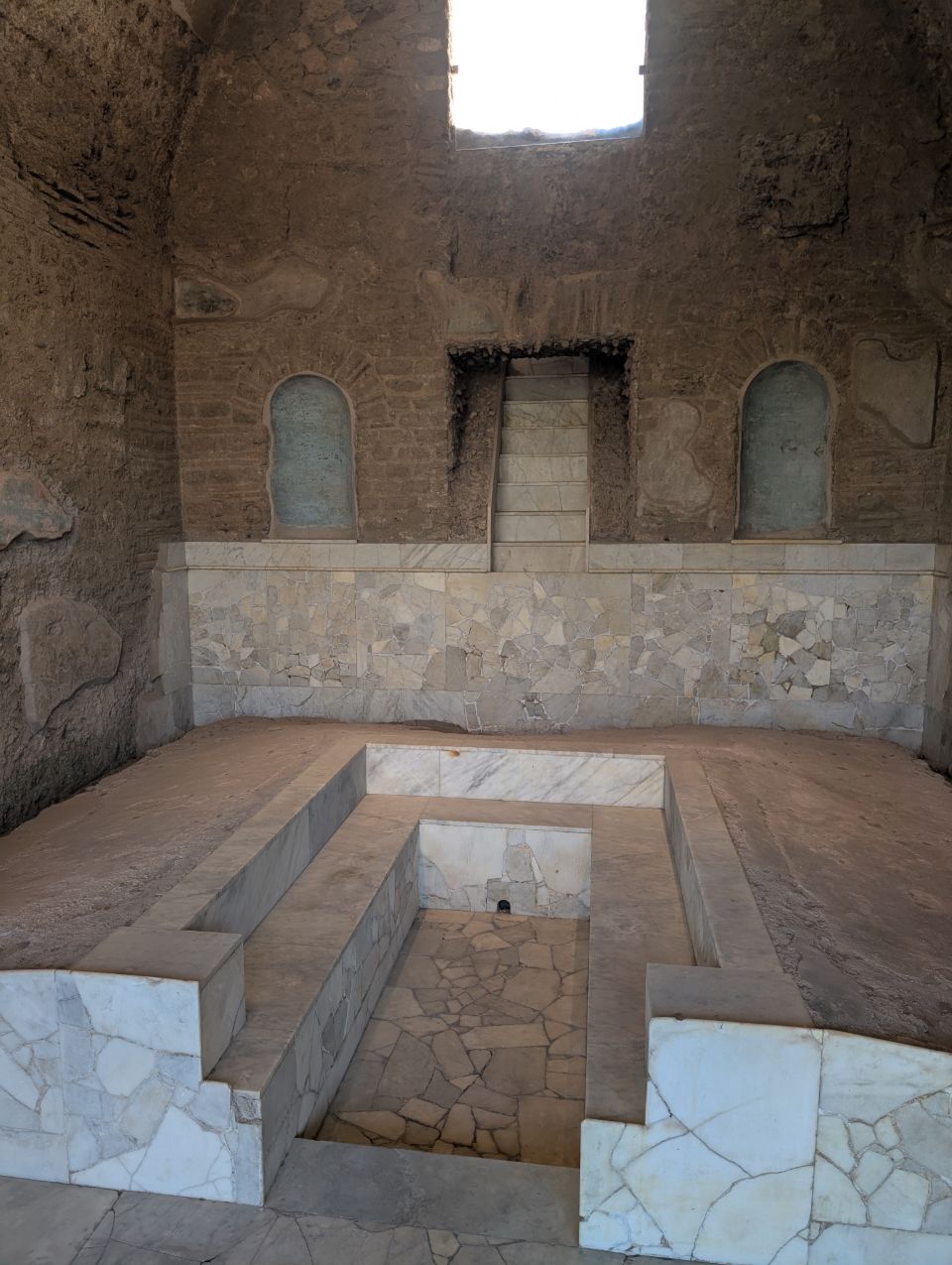
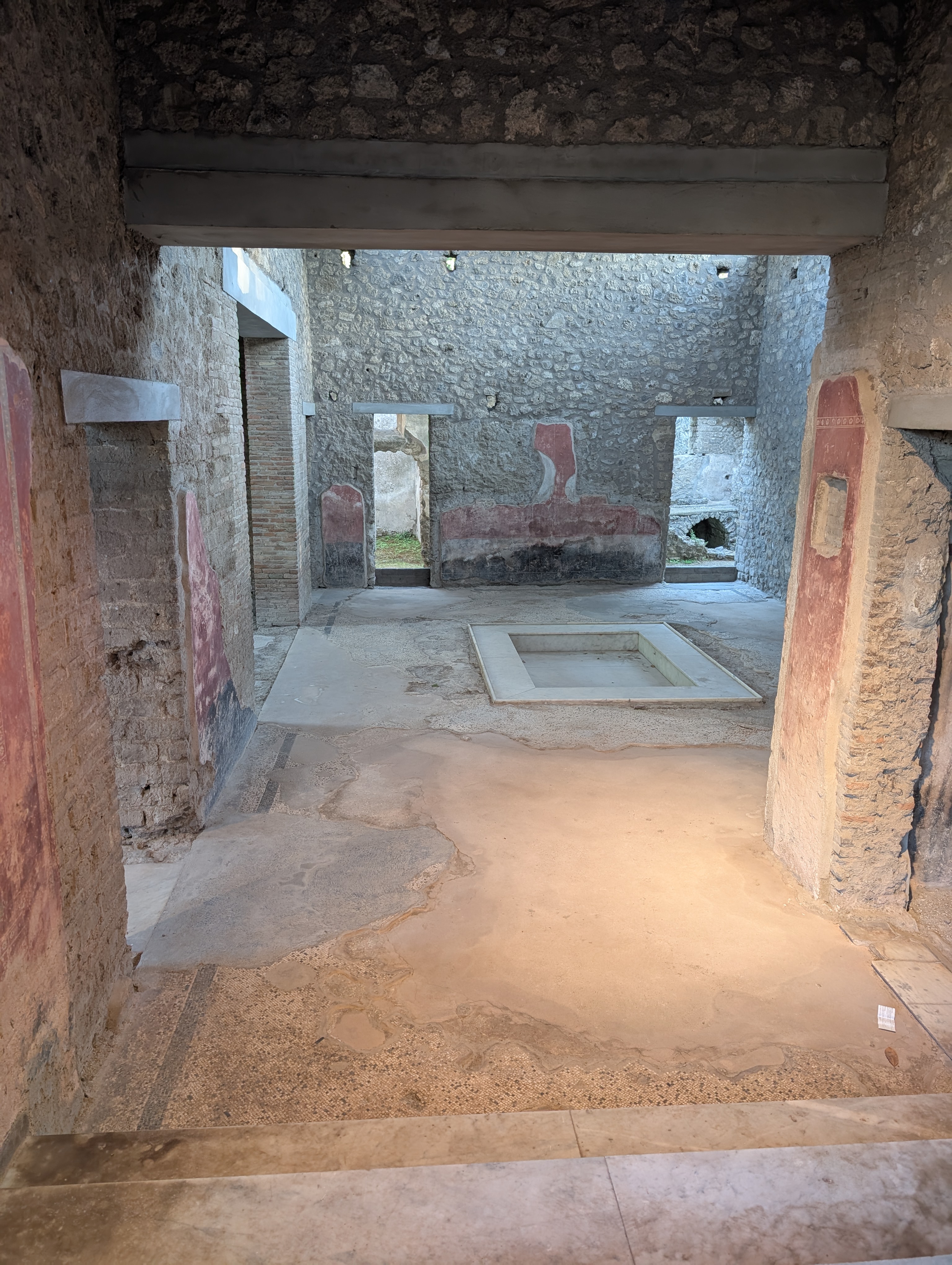
The bath hall with its central pool
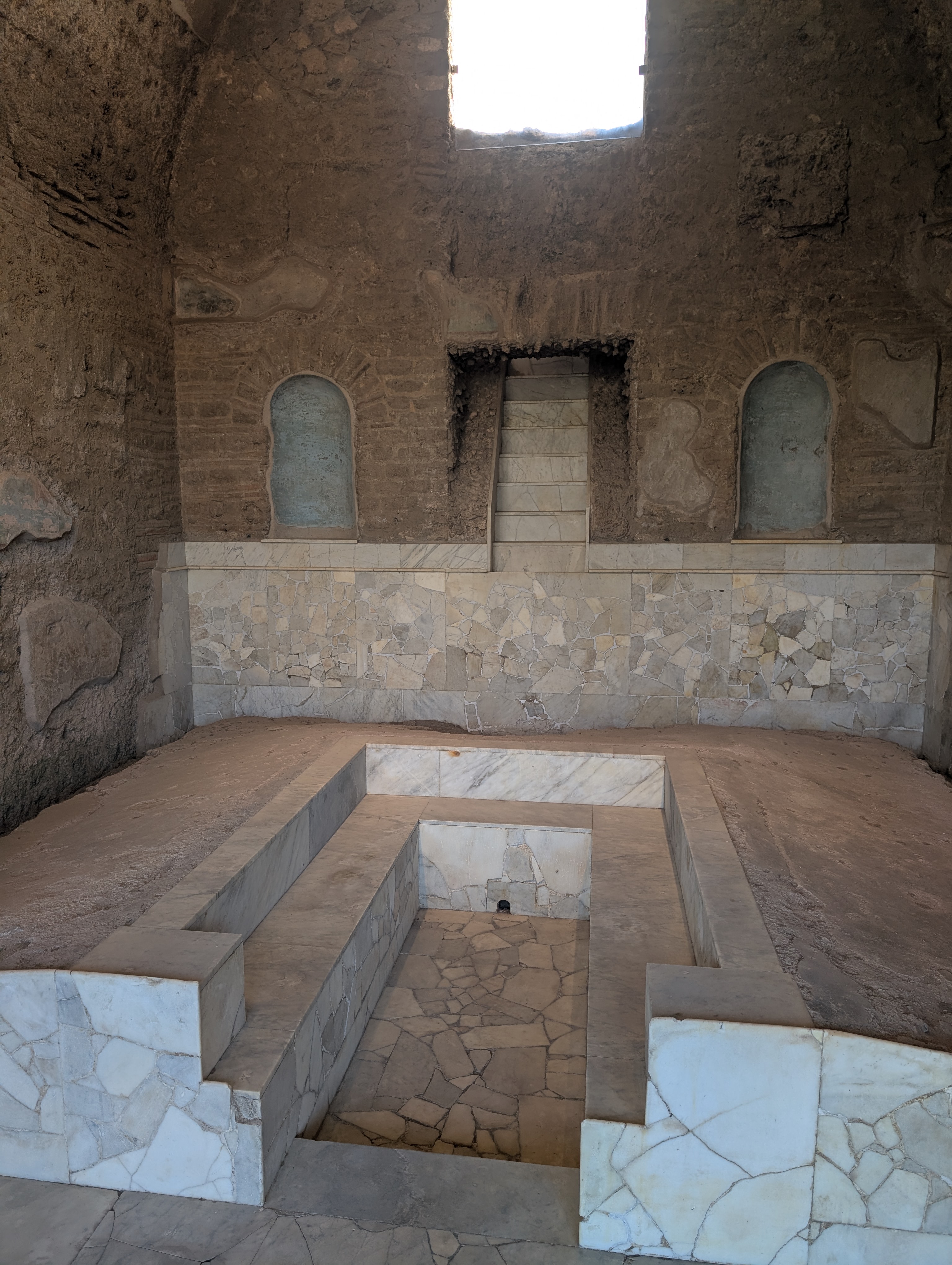
The walk out, in its own light
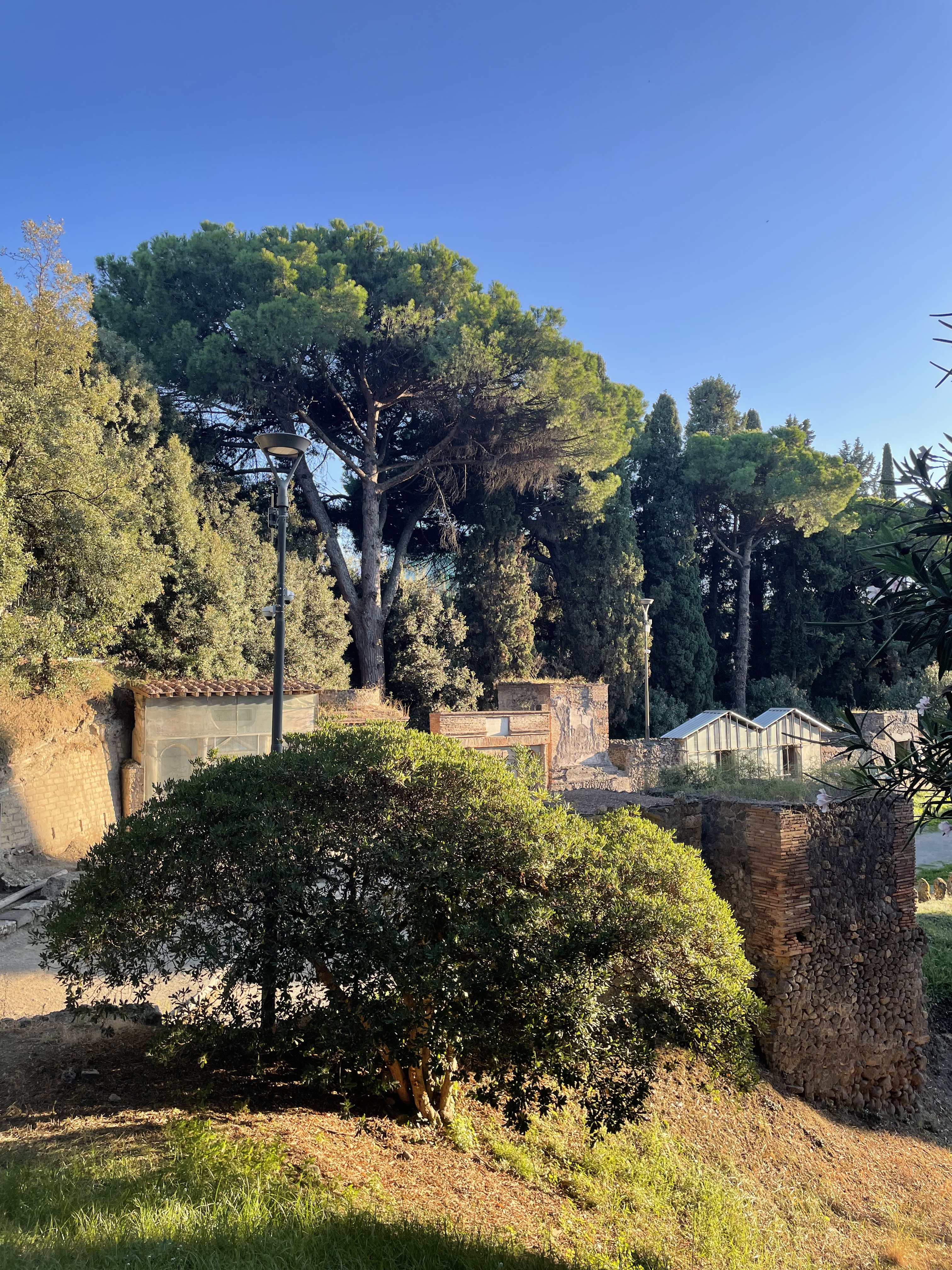
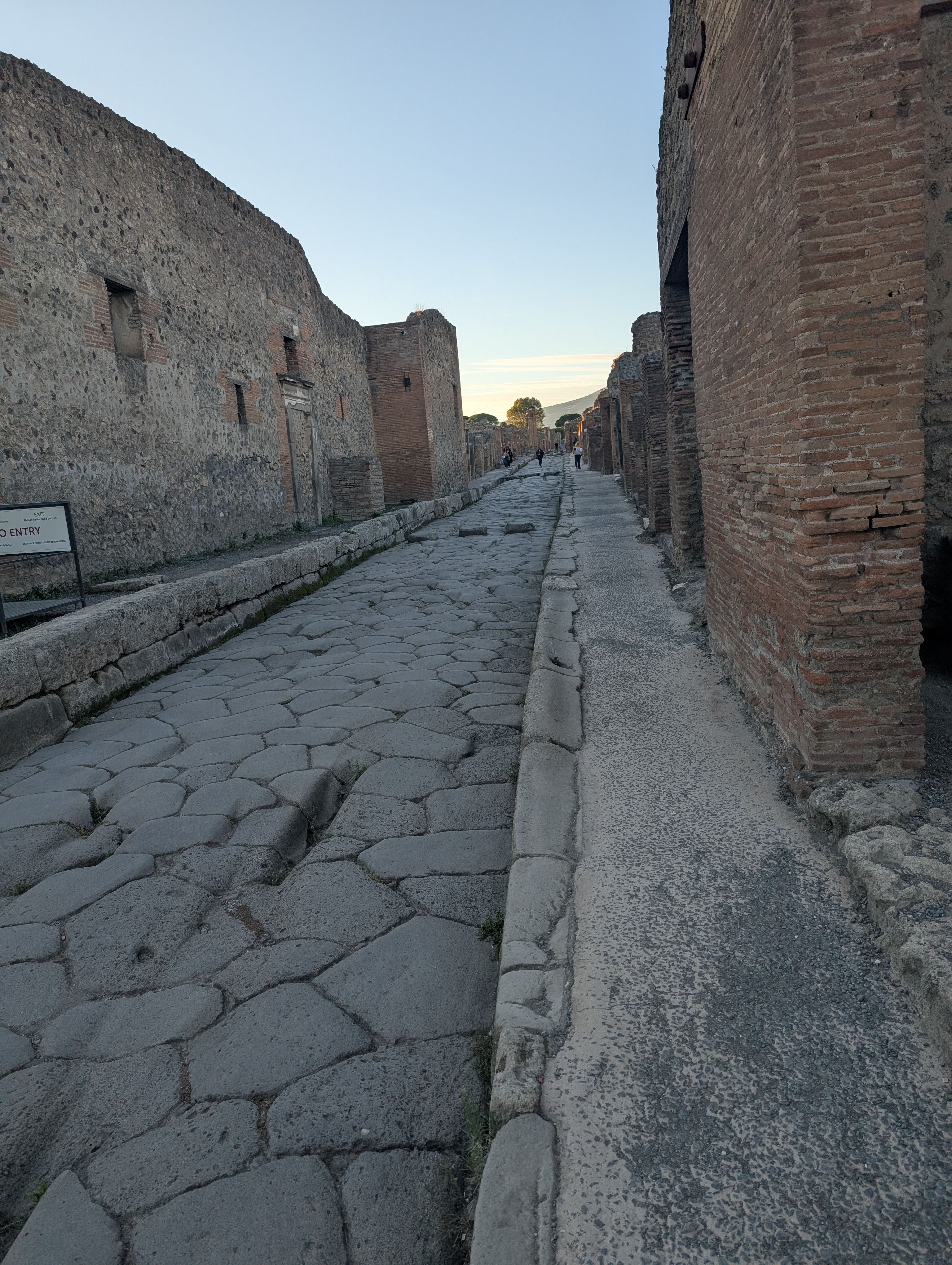
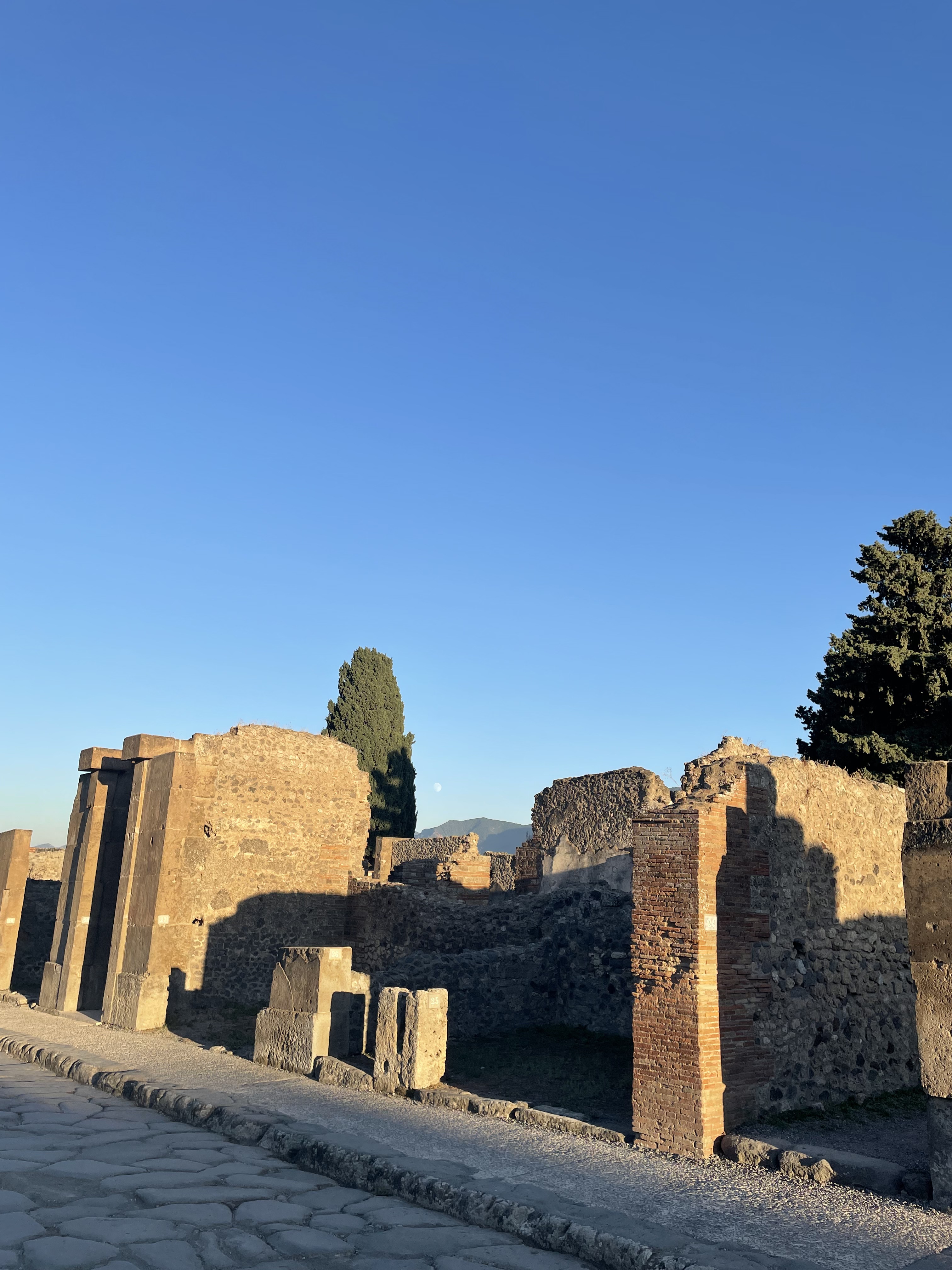
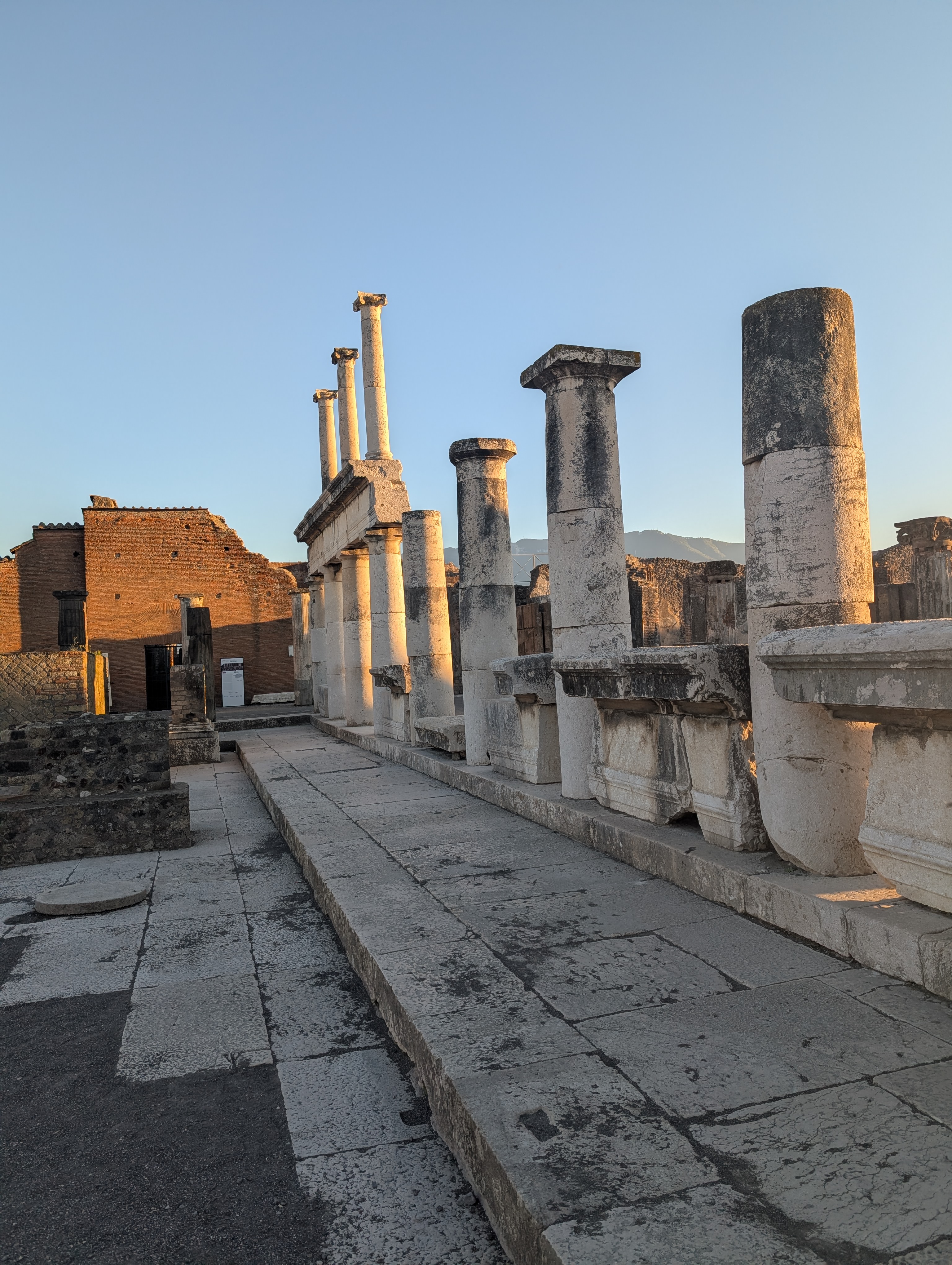
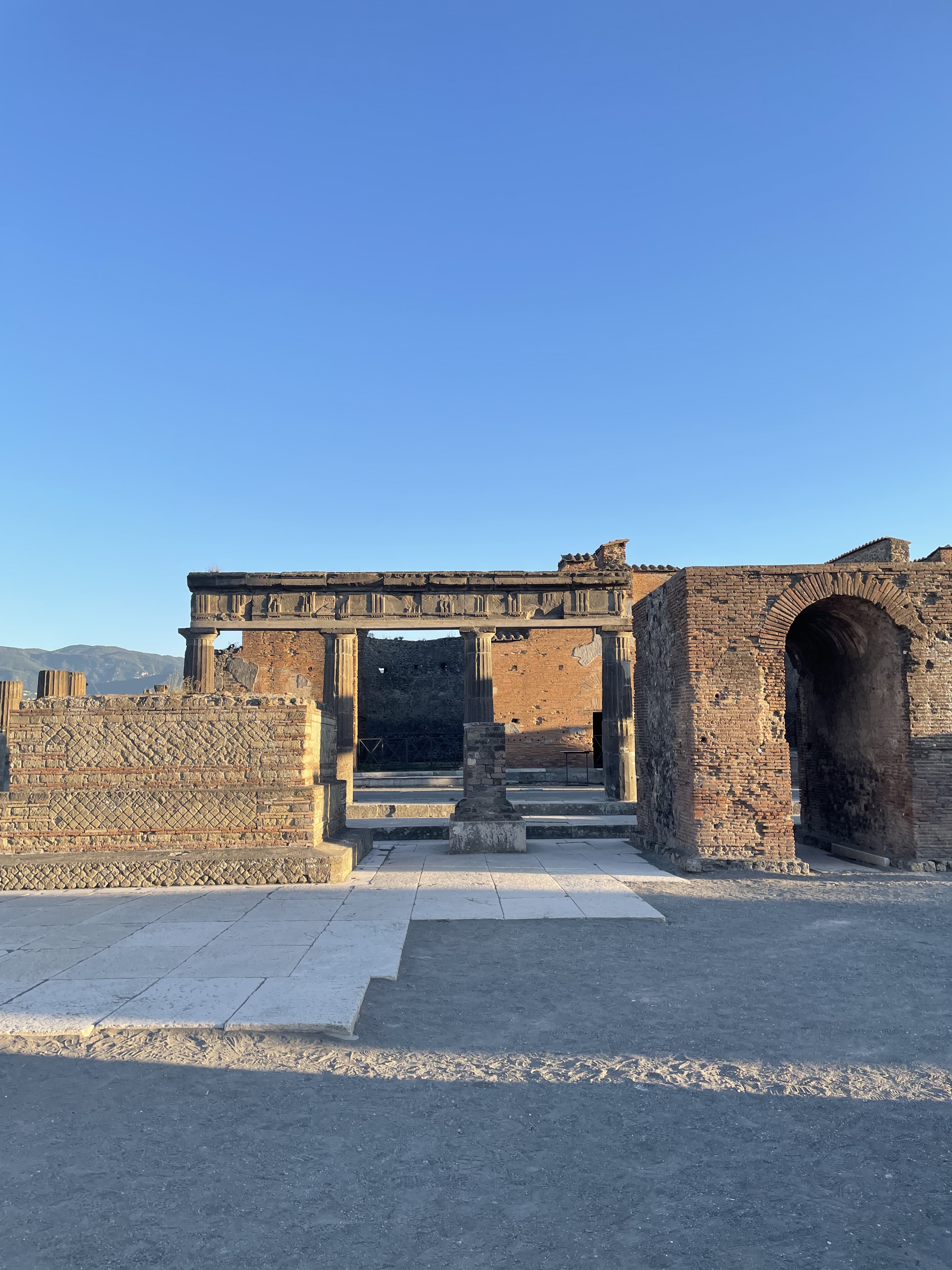
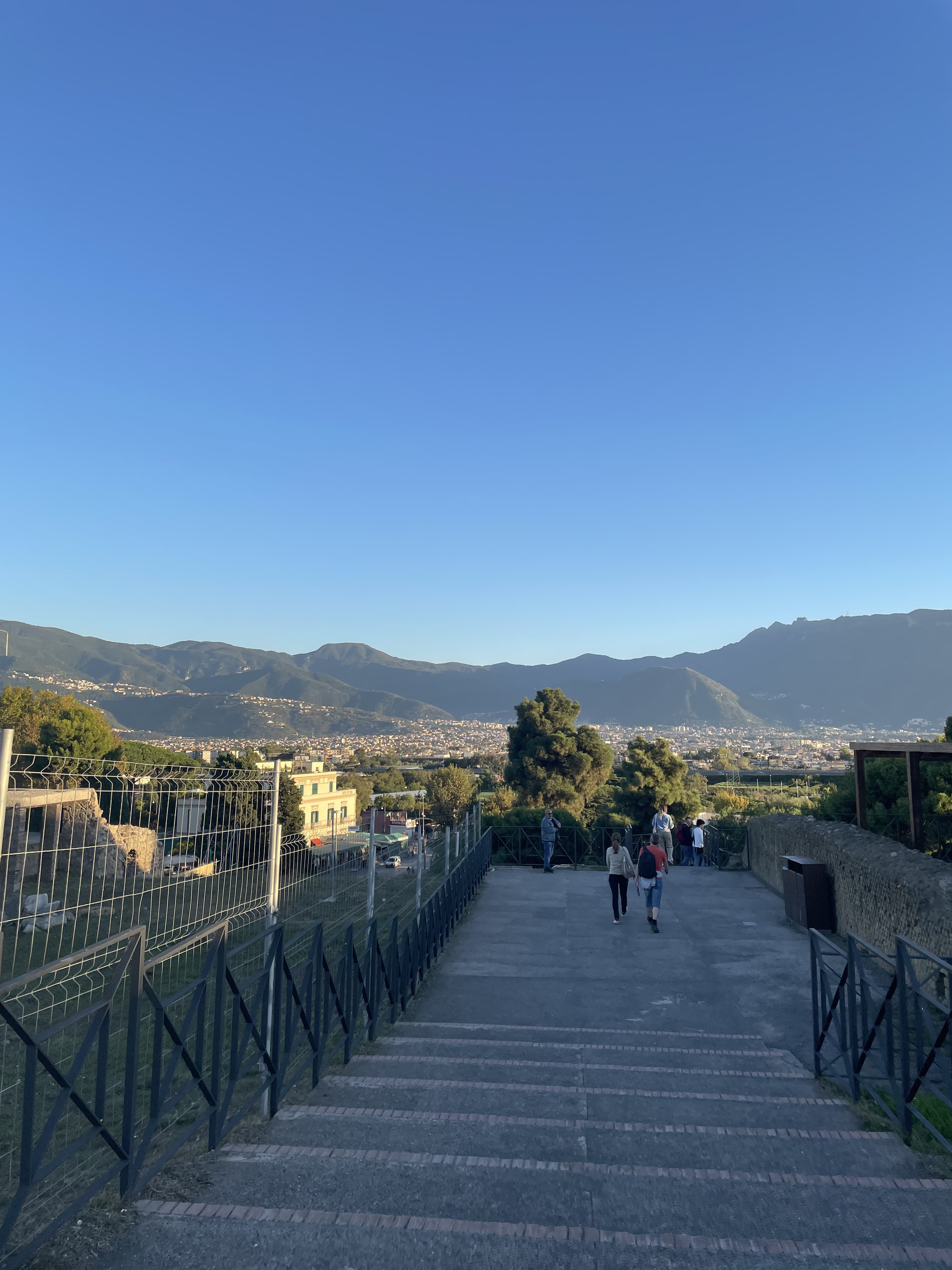
Golden hour came in as we worked our way back: the ruins in warm sun — rounded evergreen, brick remains, all of it glowing, then the deep-rutted basalt street, the stepping stones at close range, a lone column and a cypress at a ruin corner, the long colonnaded portico in warm evening light, the Forum facing the Temple of Jupiter colonnade, and the view down the terrace stairs over the town toward the mountains.
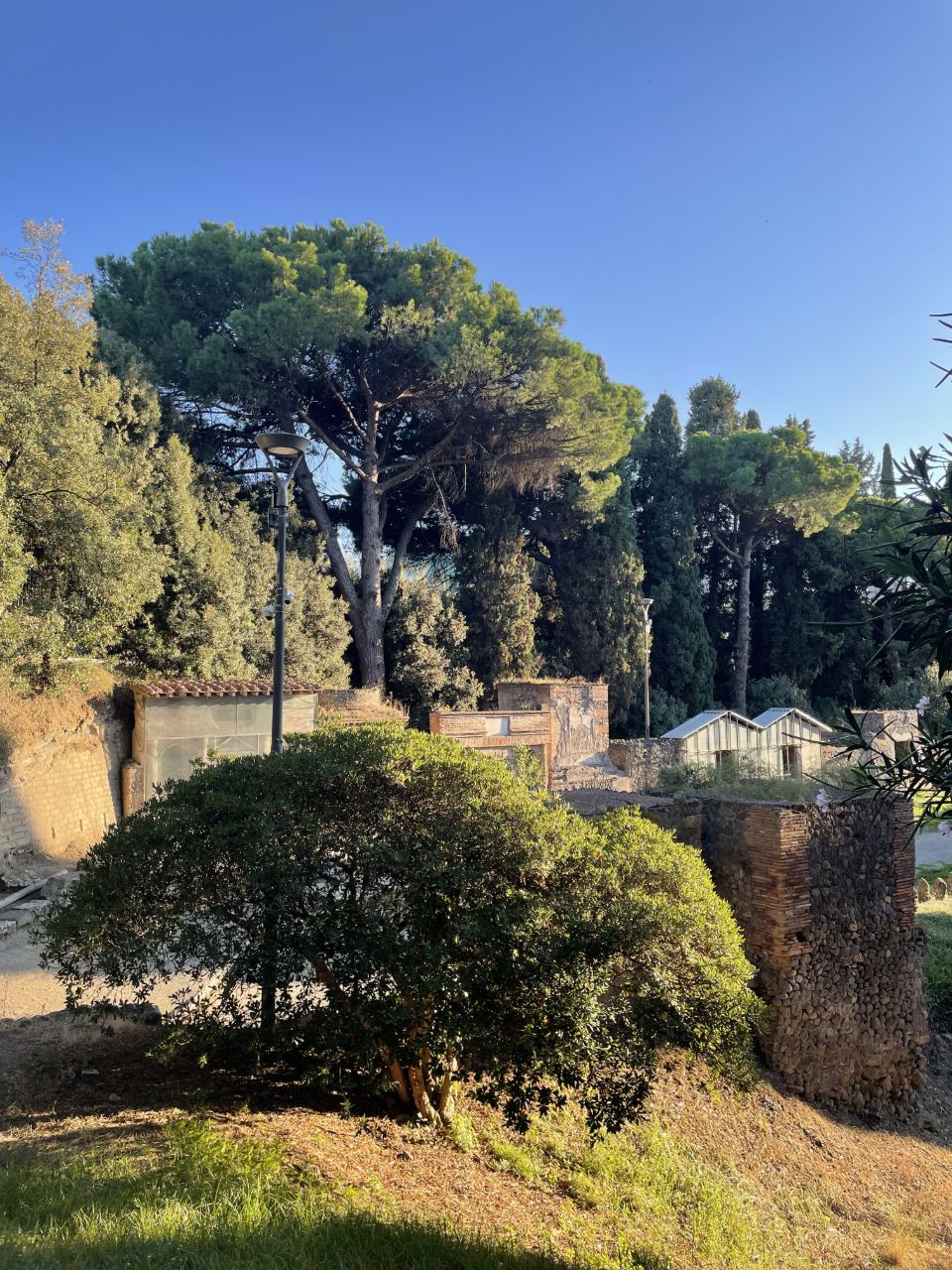
Warm sun on the ruins 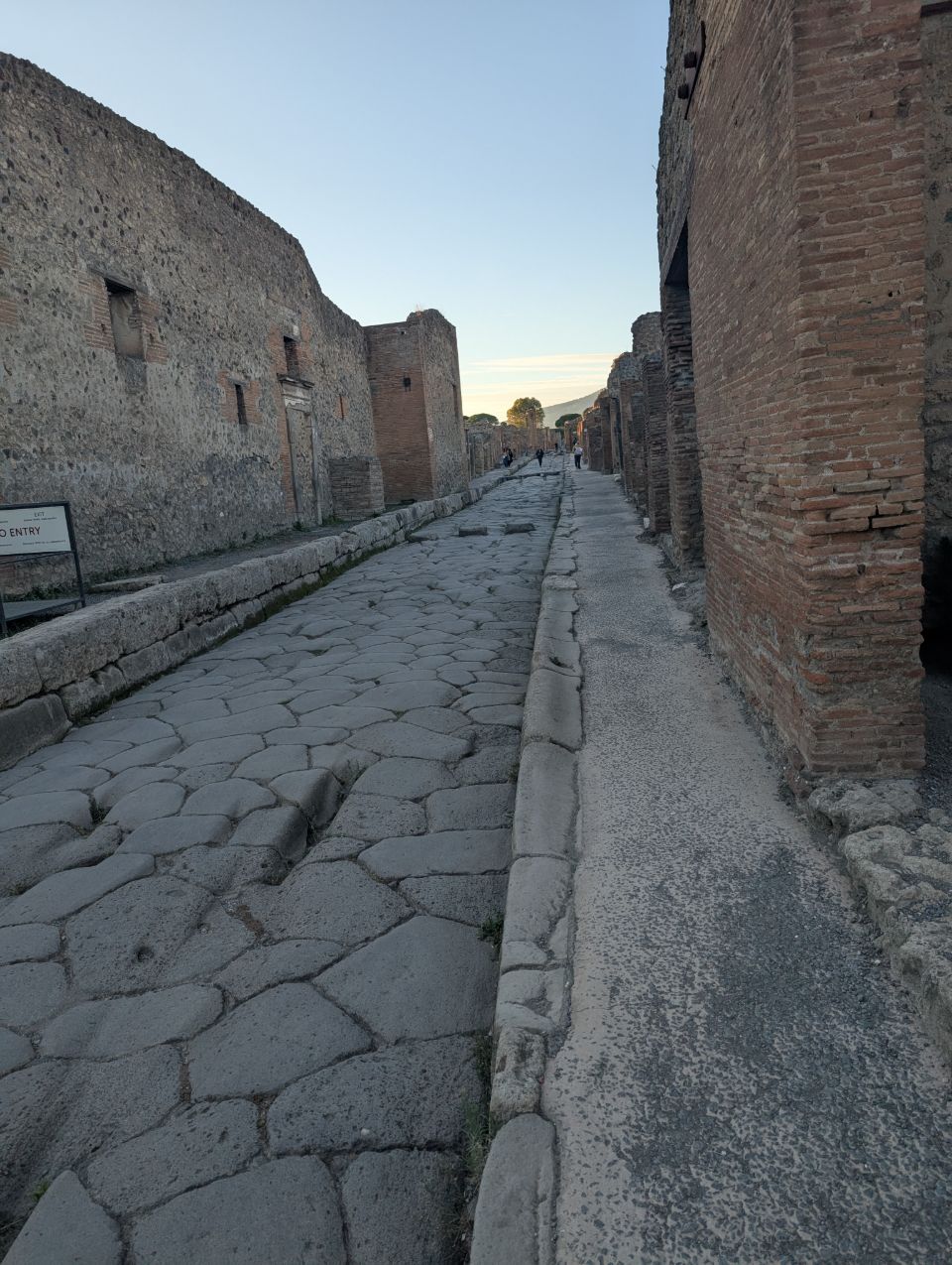
Street of the cart ruts 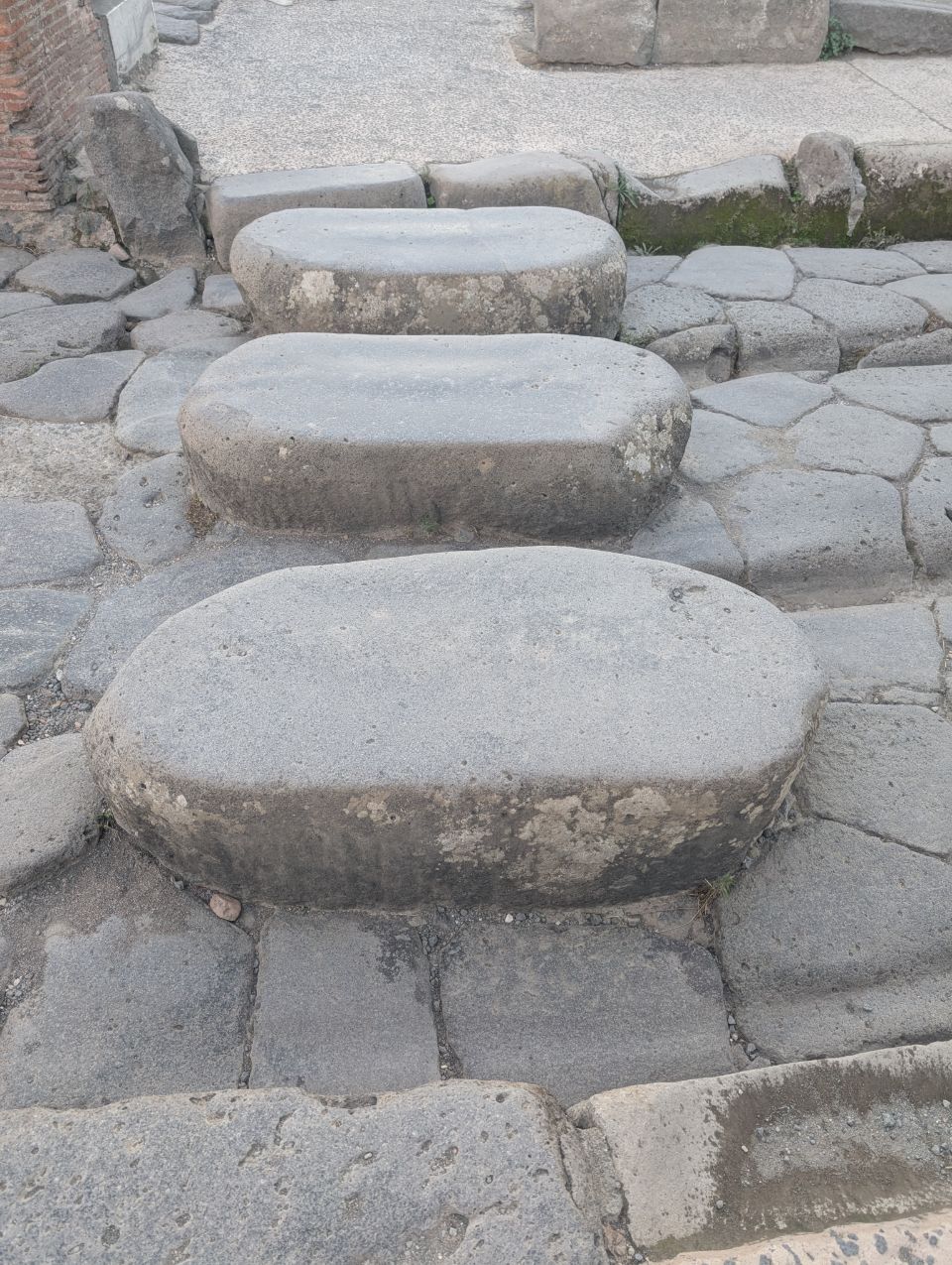
Stepping stones, up close 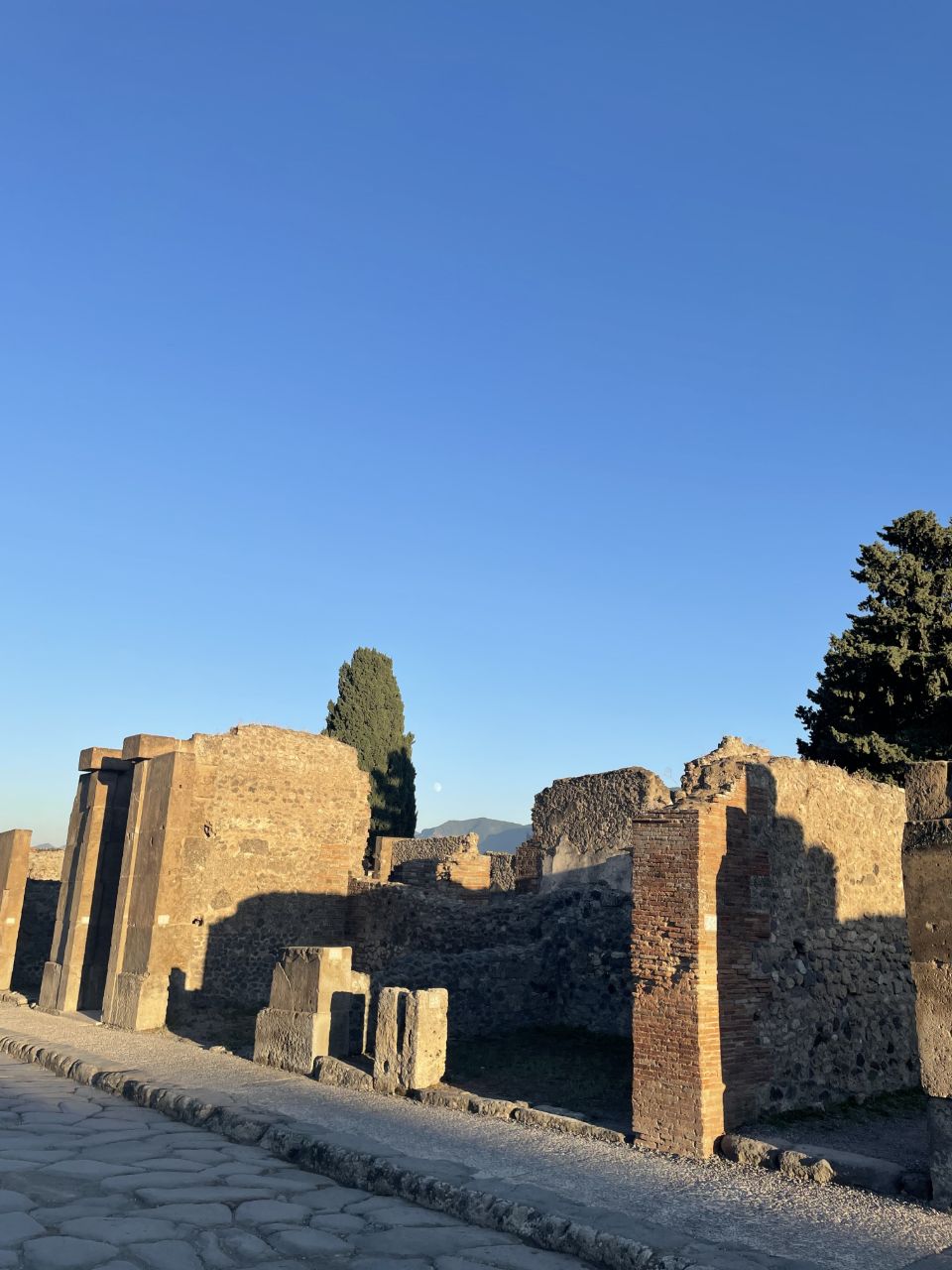
Column and cypress, corner pair 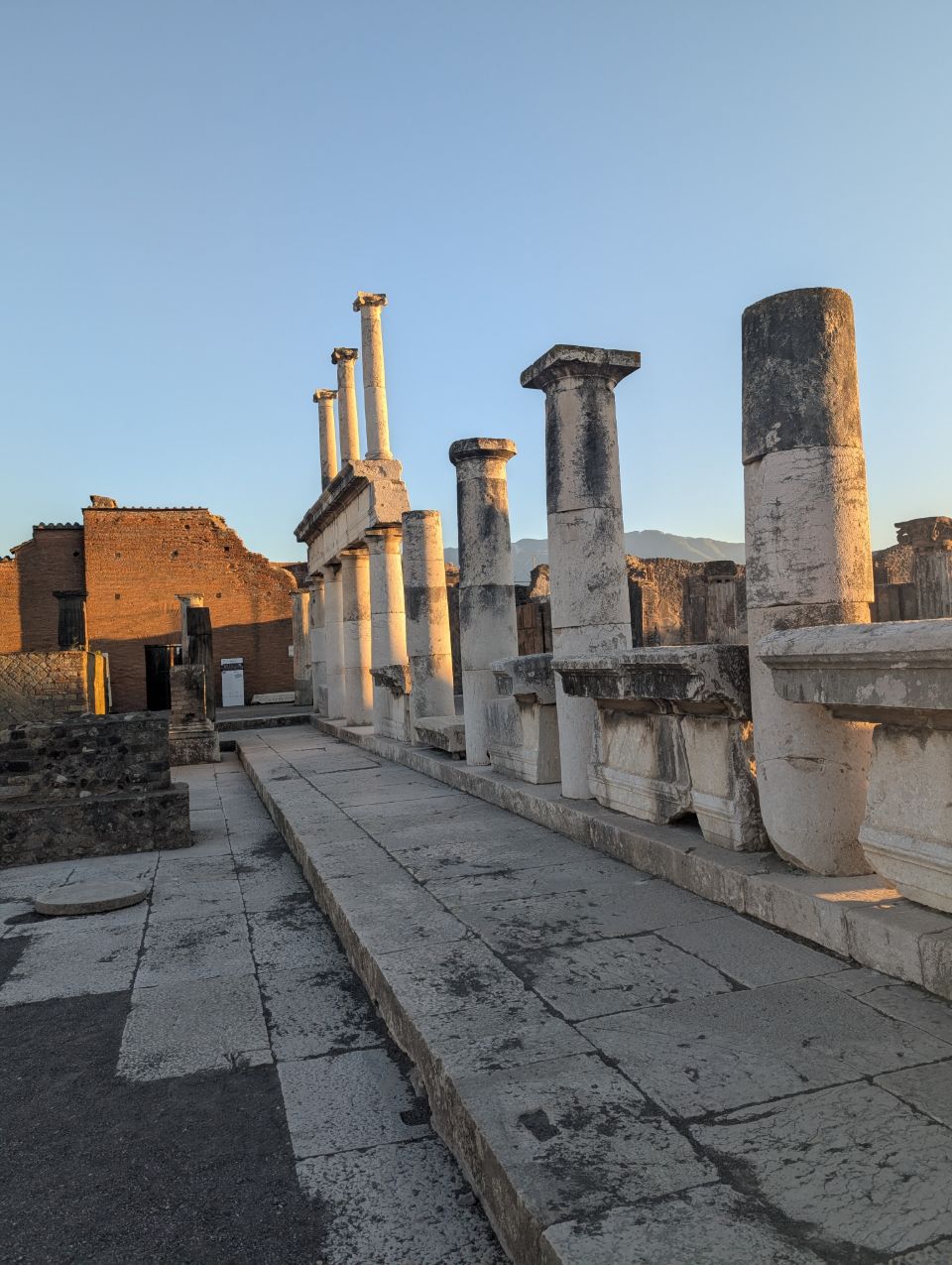
The long portico, golden hour on 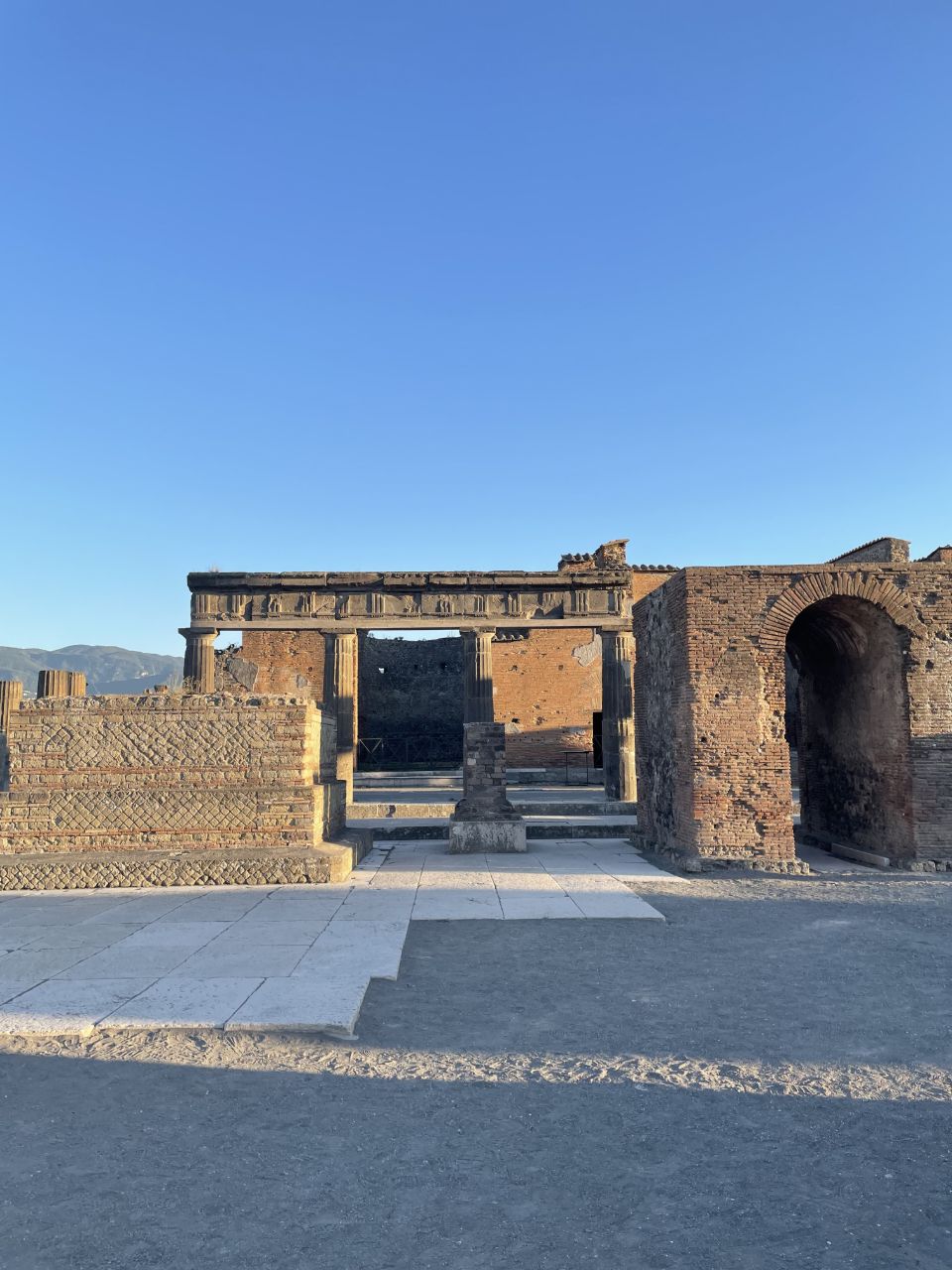
The Forum faces Jupiter again 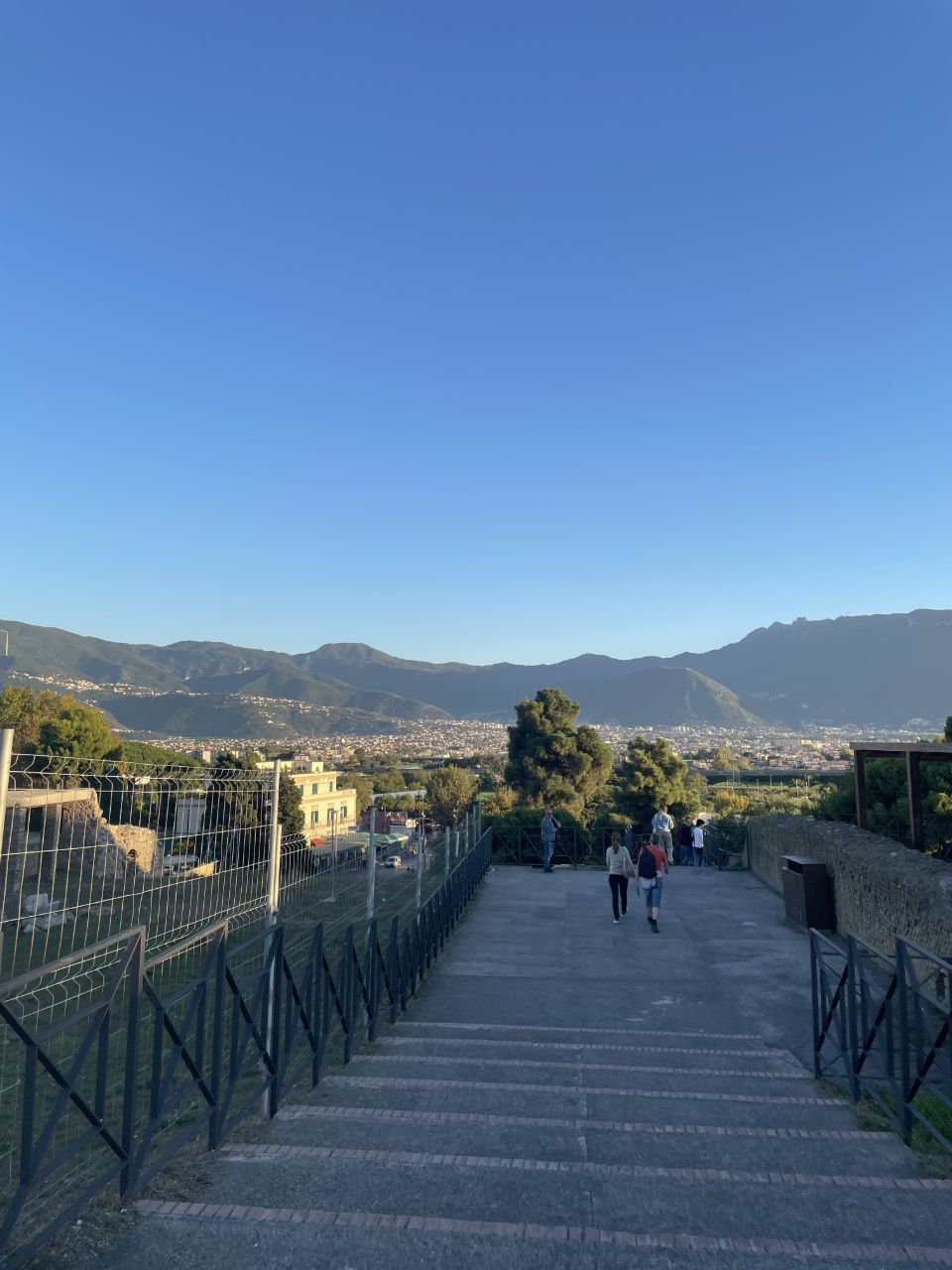
Down the terrace stairs, town and mountains
The last light
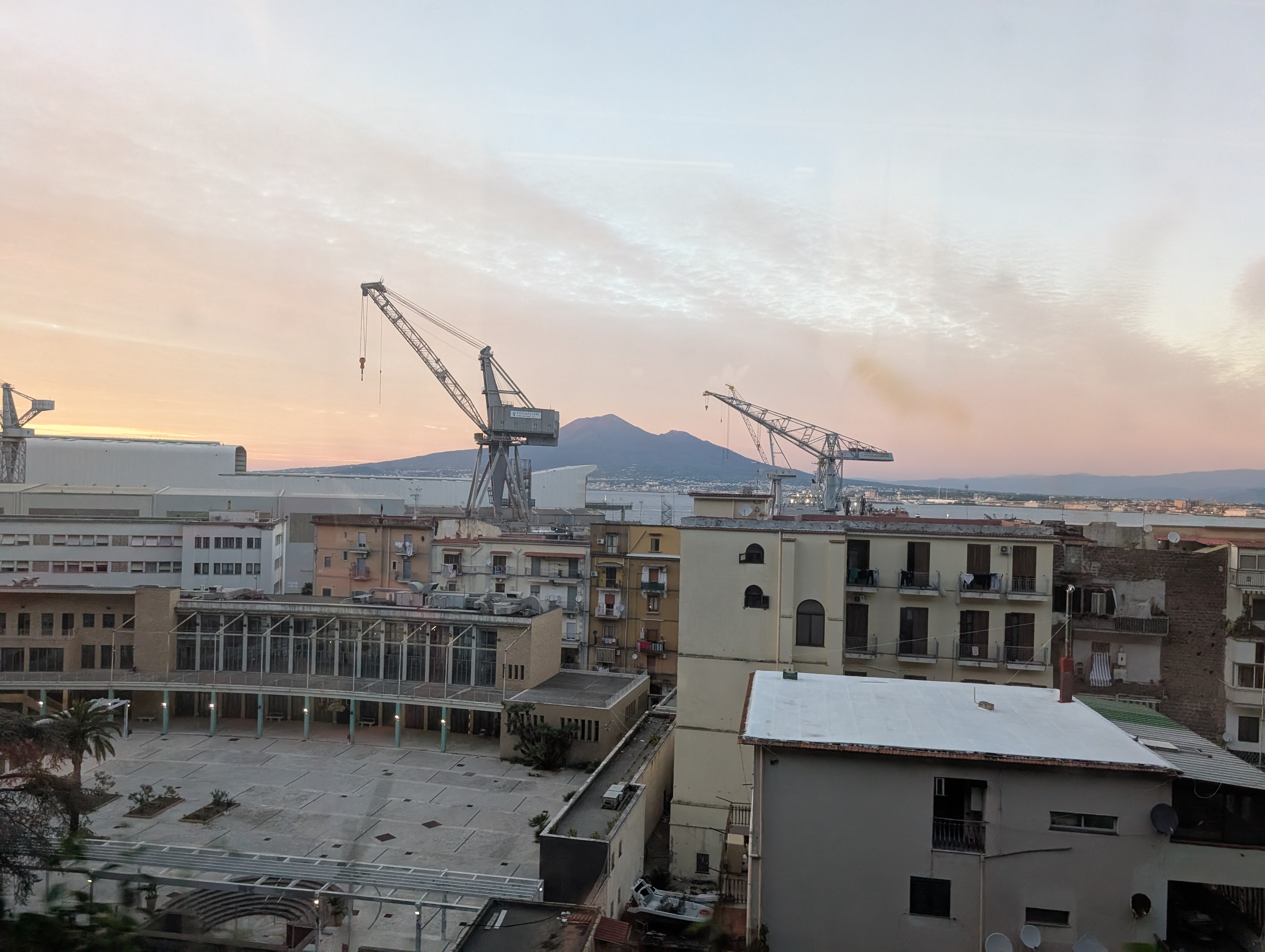
Back on the train, dusk closed the deal: sunset over Castellammare di Stabia, cranes and rooftops all in pink evening light. Next post: Rome.
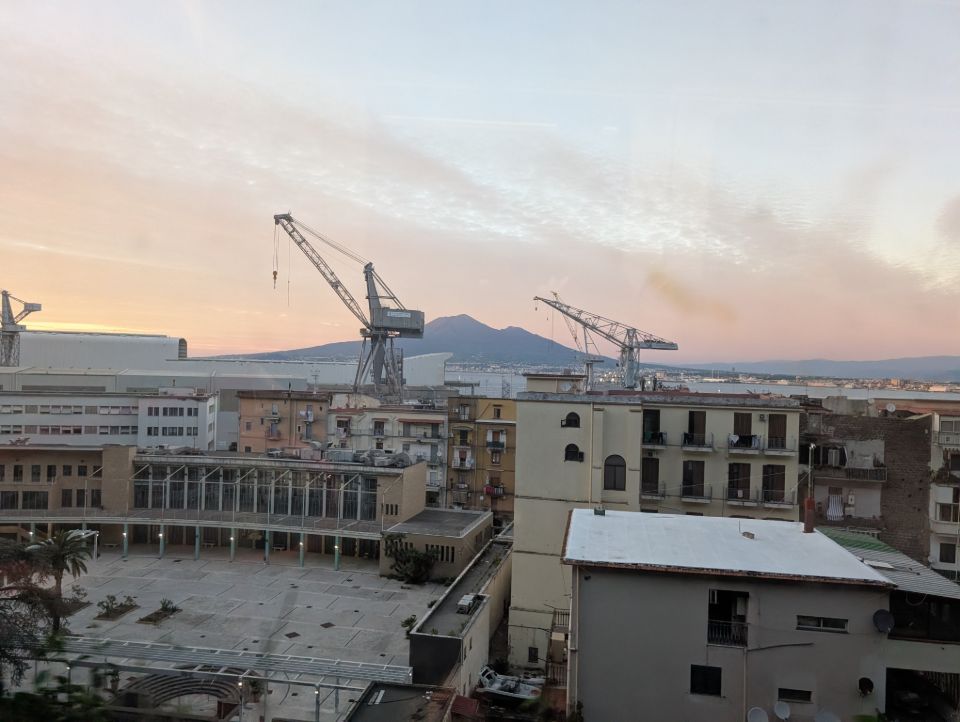
Castellammare di Stabia, pink evening from the train