Italy trip 2025 — Scilla
Scilla
First, an evening across
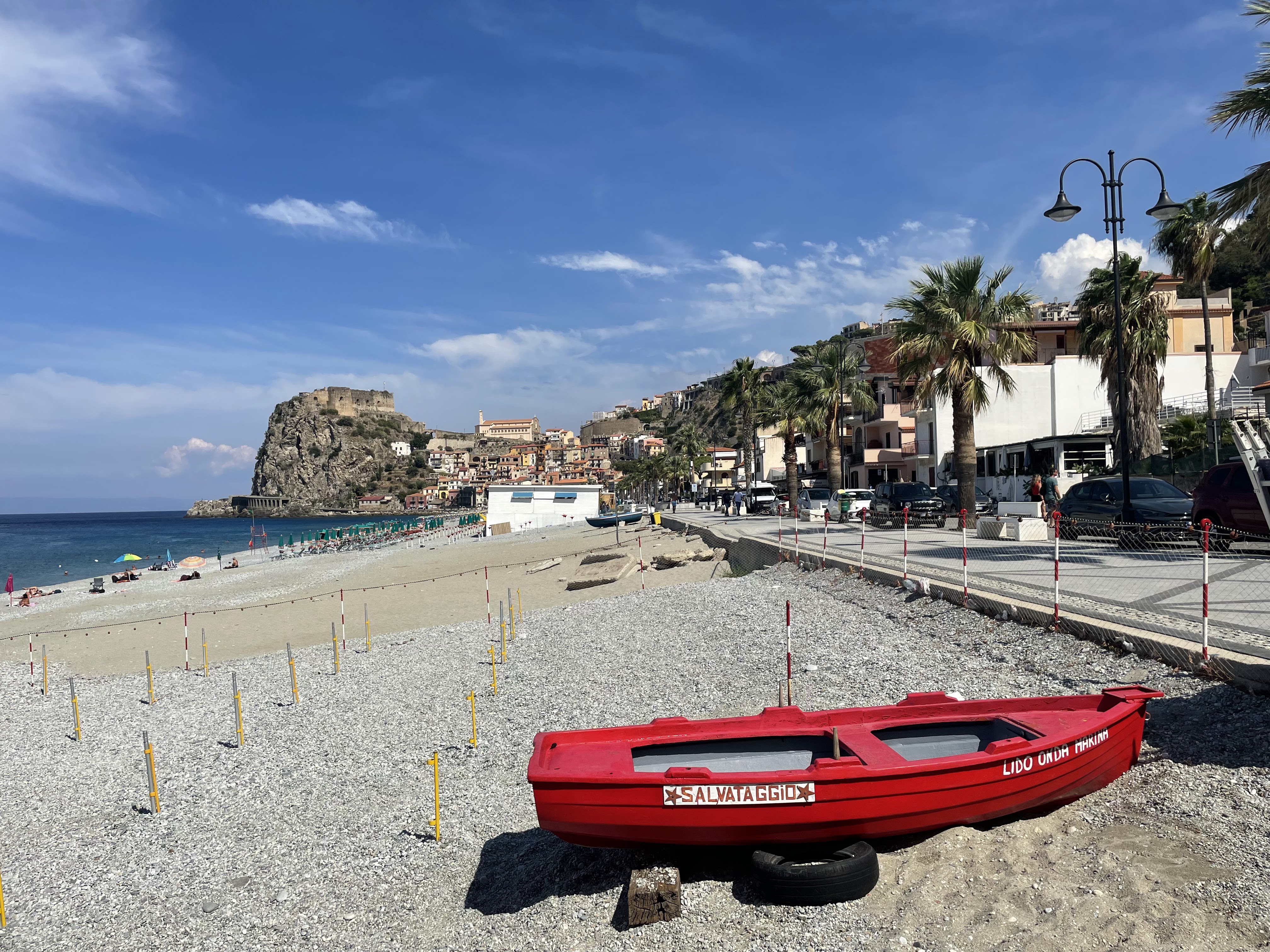
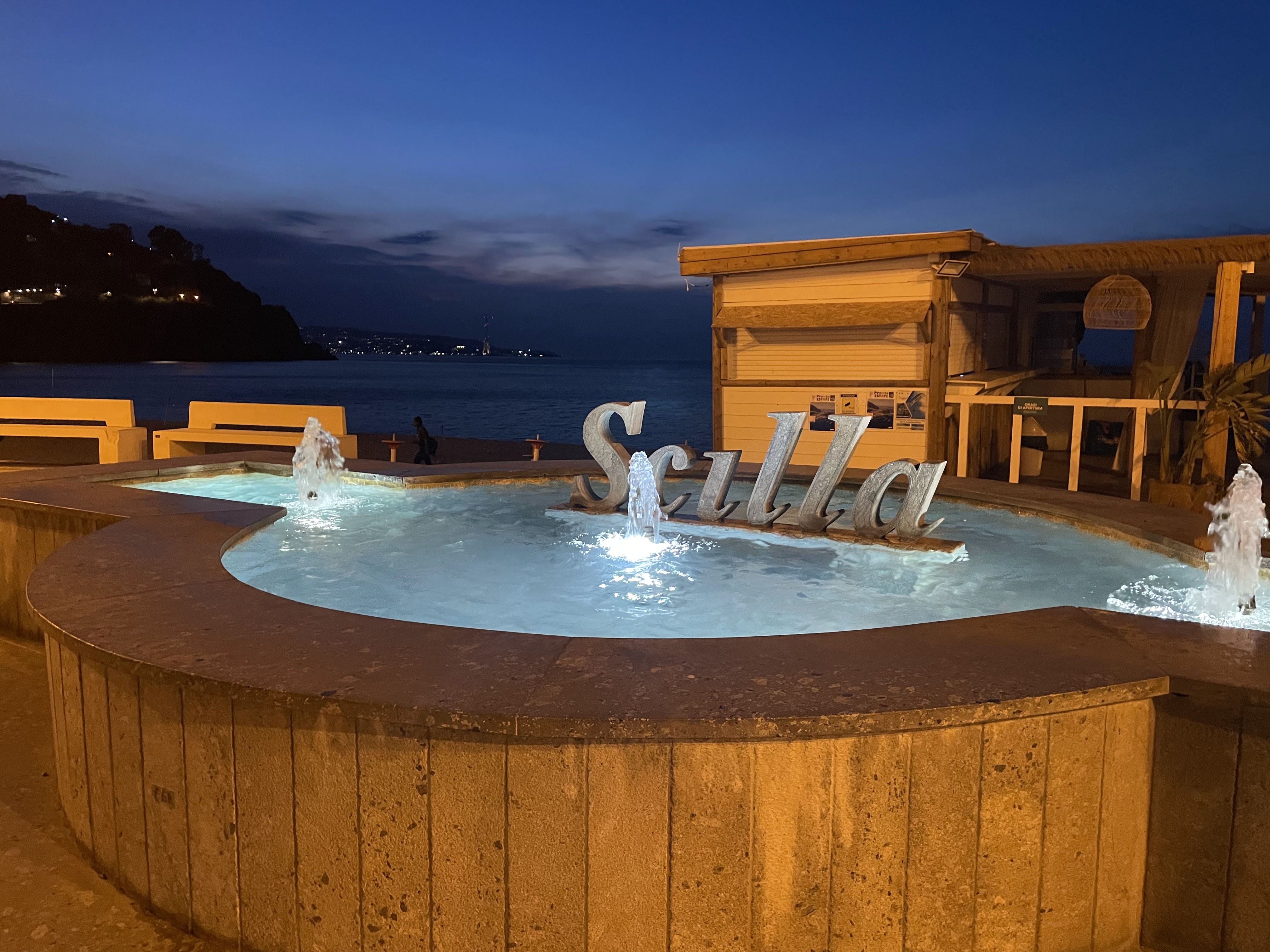
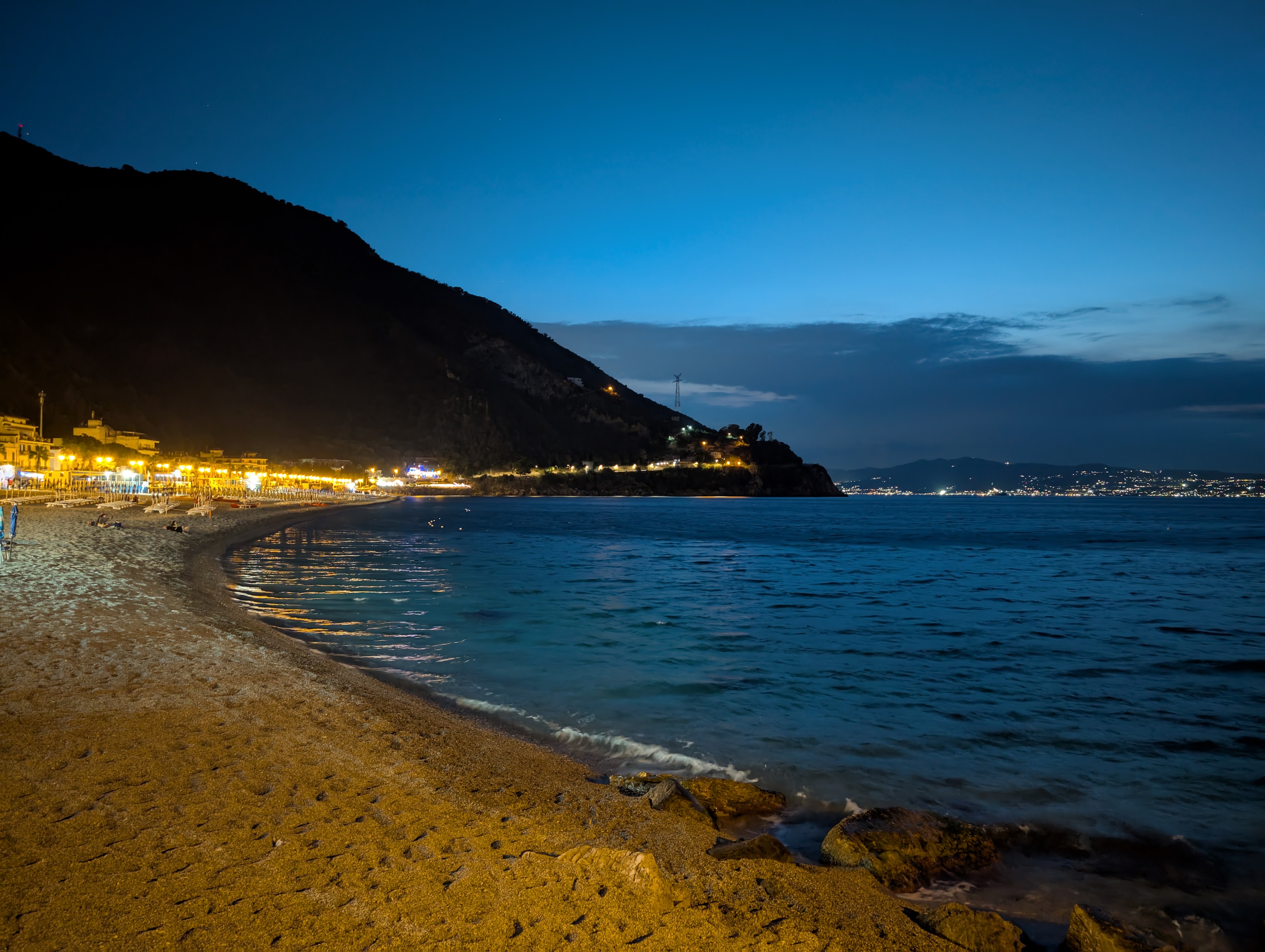
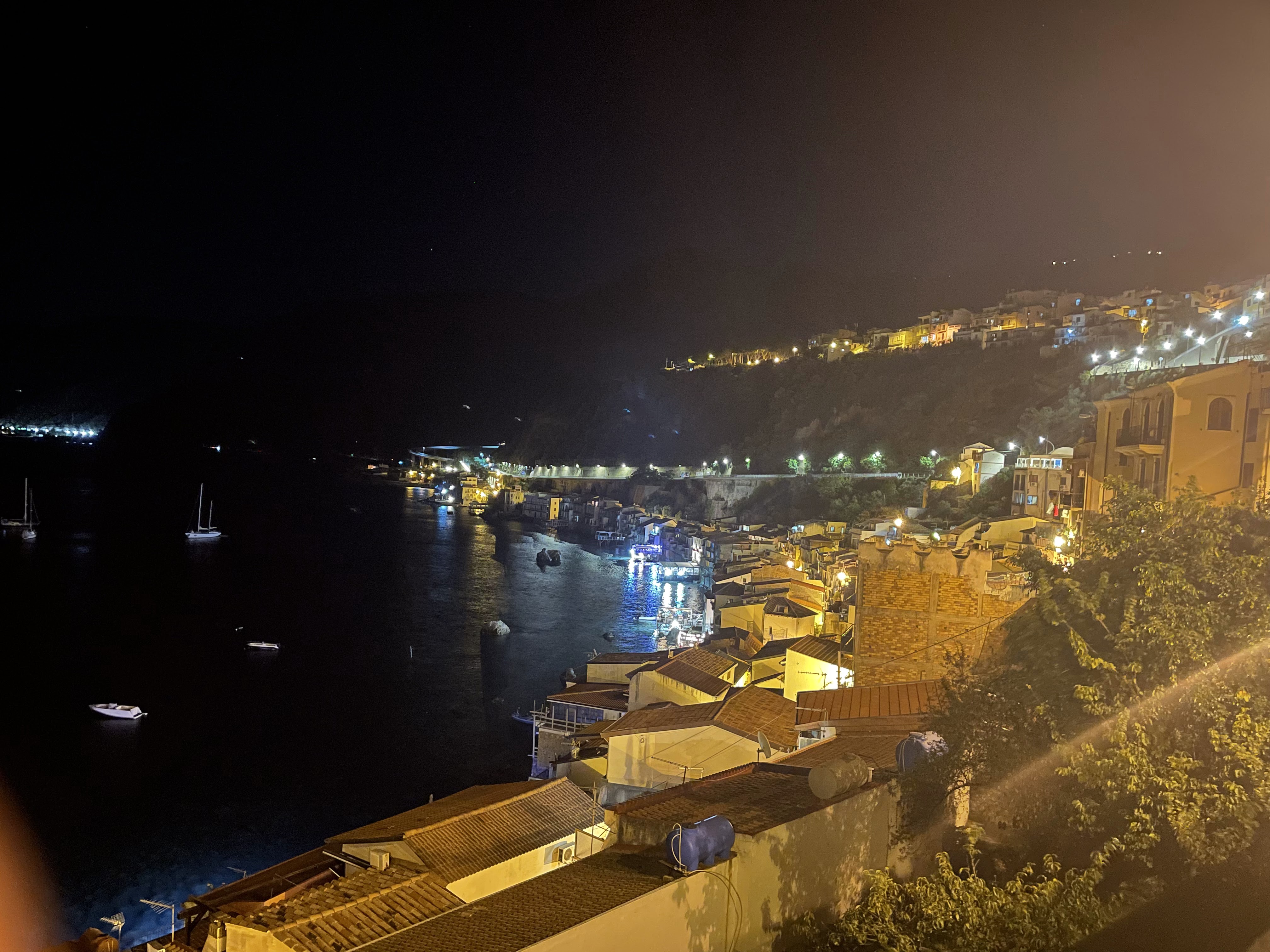
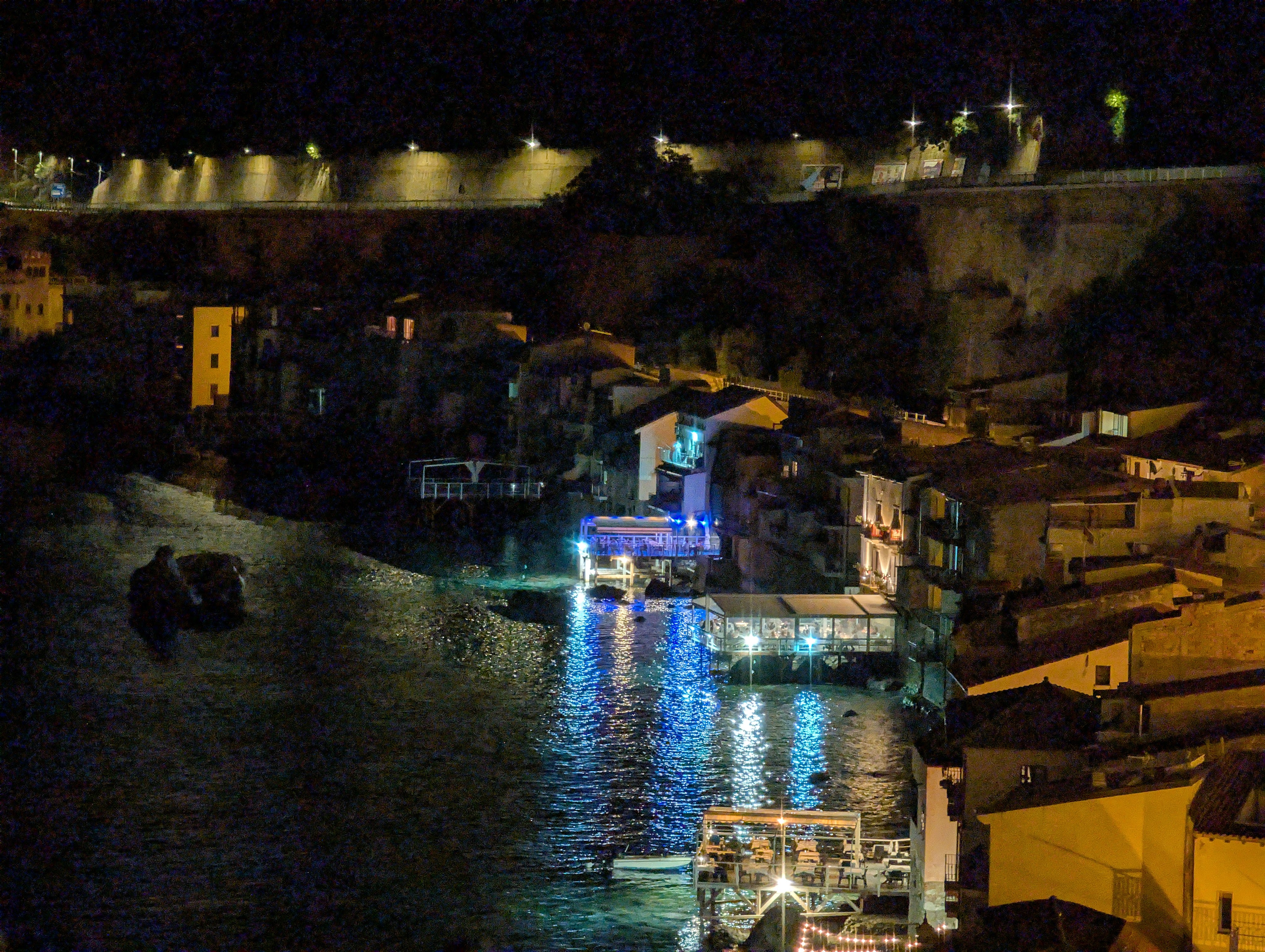
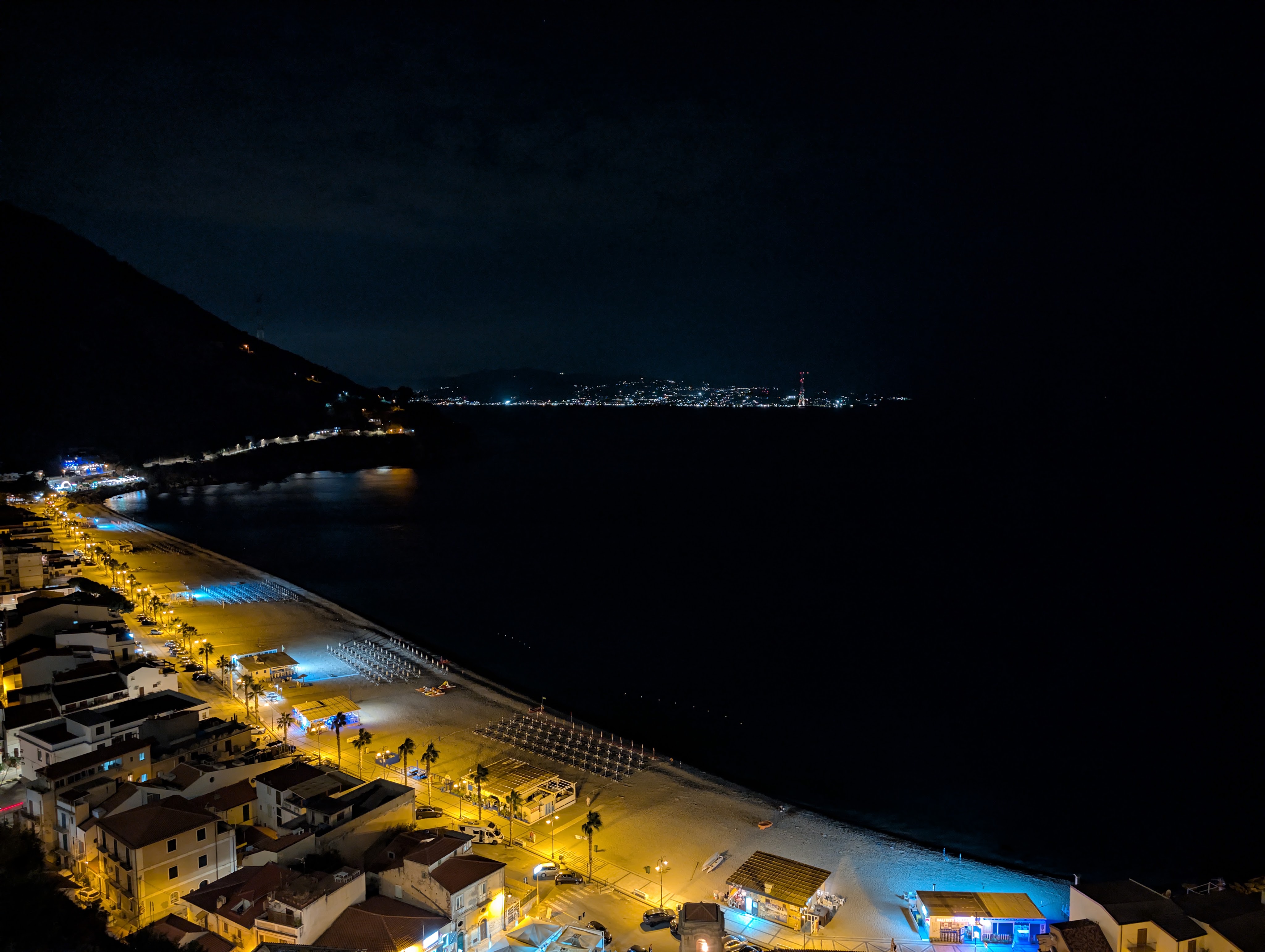
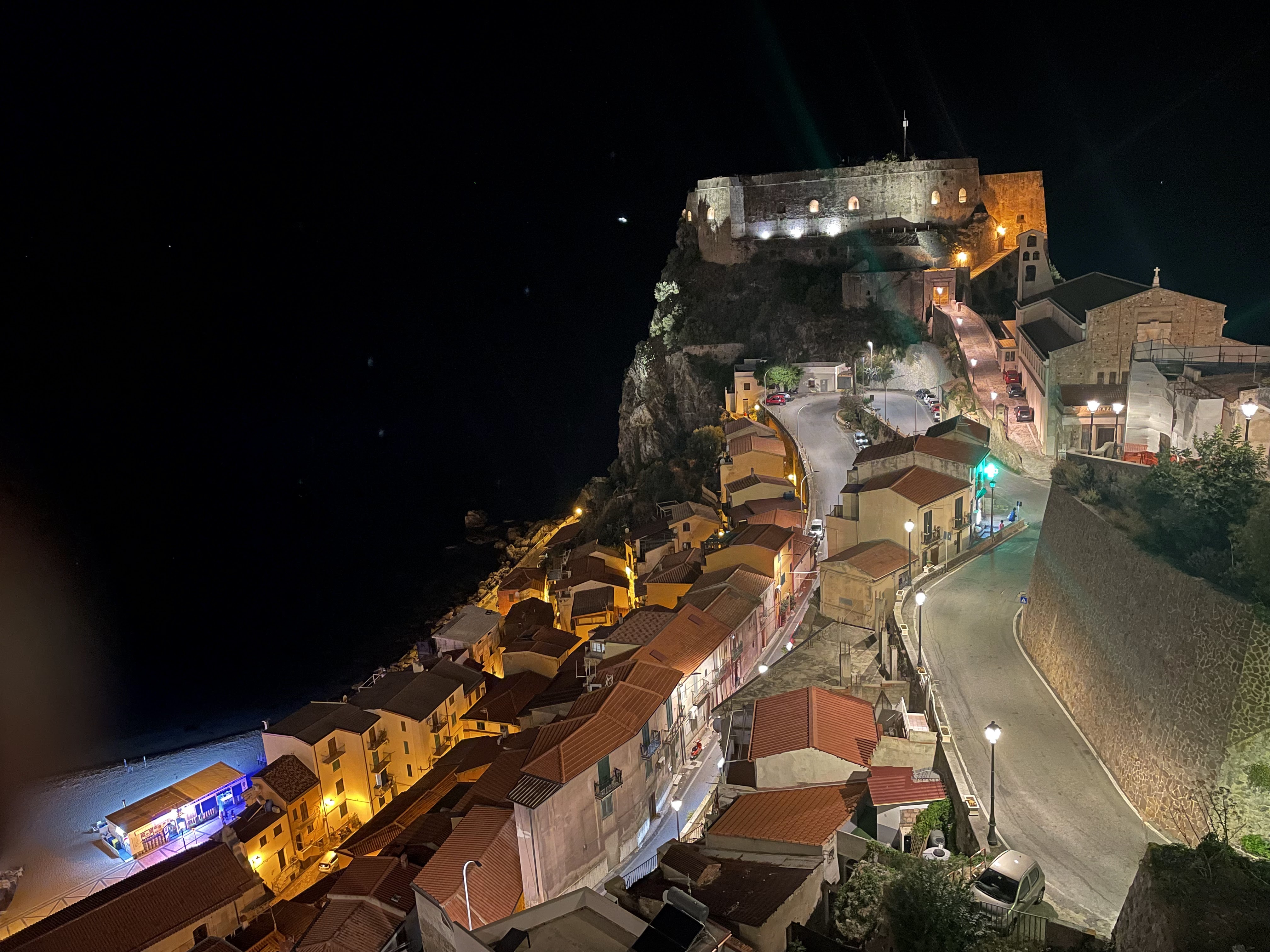
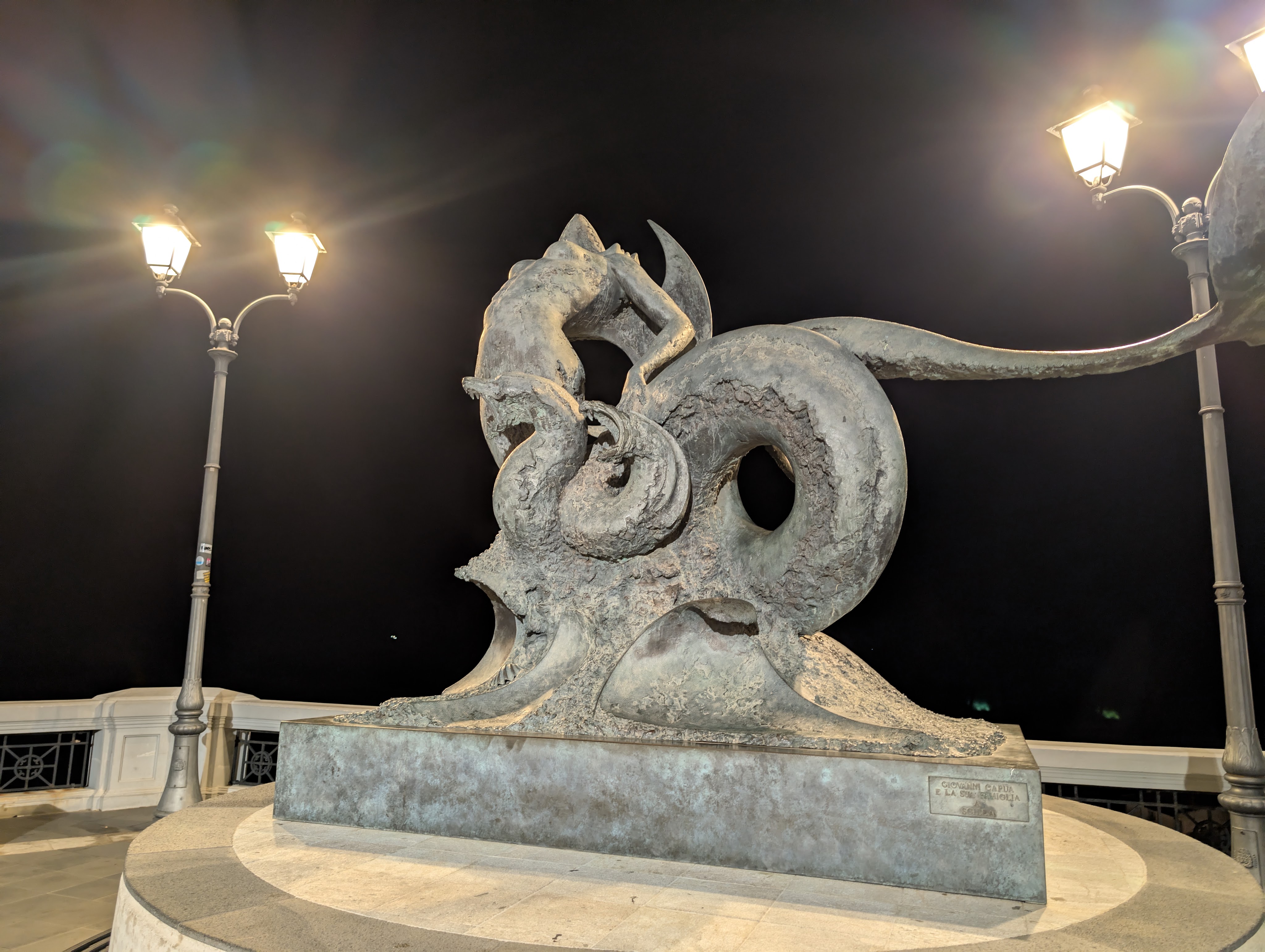
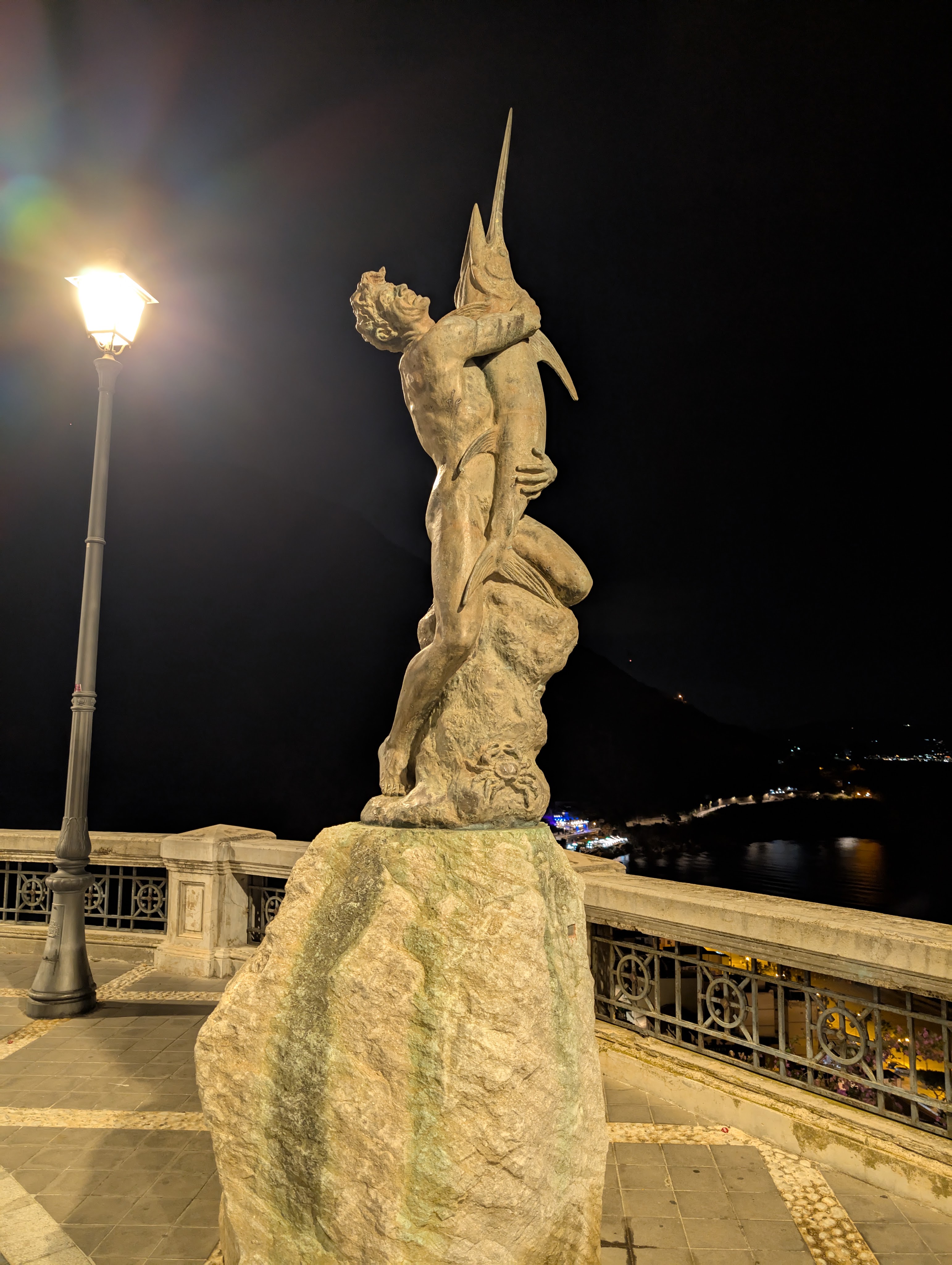
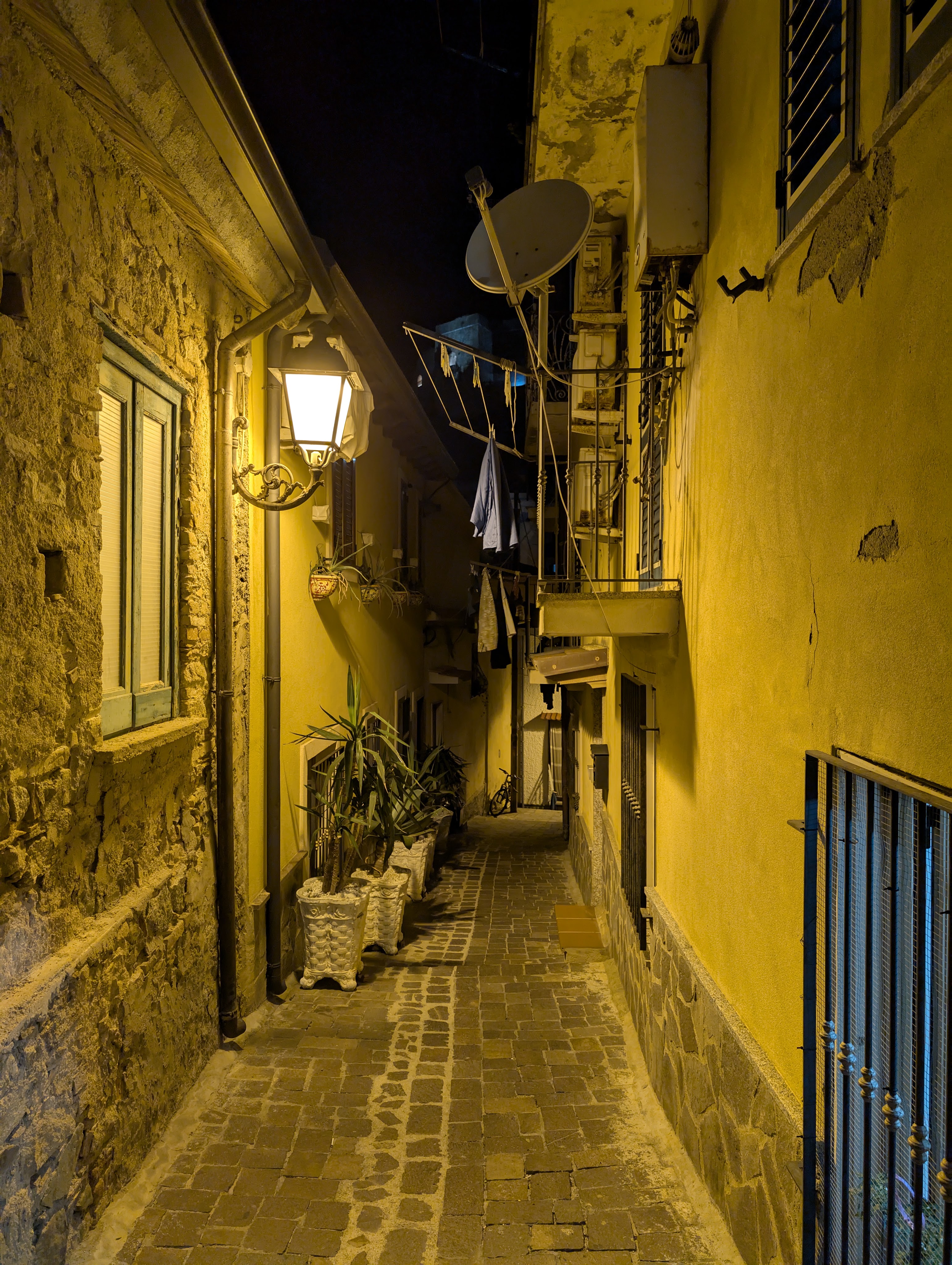
Scilla is the next town along the coast from Reggio, close enough that the first visit was an afternoon decision. We arrived to the postcard exactly as printed — the castle rock at one end, a beach running the whole bay underneath it, and houses stacked up the slope behind like a stage set waiting for its audience. The afternoon went to the water. The evening went to walking, and after dark the village turns theatrical: a fountain spells its own name in illuminated metal, the promenade lays out its lights in a gold chain down the beach, and across in the fishing quarter, Chianalea, the lamps hang over still boats in a street that is mostly water. The bronze population keeps the sea-monster theme — the town's name is the theme: Scilla is Scylla of the Odyssey, monster of this very strait, and Francesco Triglia's bronze La Scilla in Piazza San Rocco shows her mid-metamorphosis, the nymph she began as turning into the beast. At the other end of the seafront a fisherman holds his swordfish up like a verdict, floodlit after dark. The last frame of the night is an alley, one lantern, and the day ending politely. After dark the rock puts on its own show: from the bridge above, Chianalea floats on black water with its lamps doubling in it; from the heights above the beach, the town of lights runs down the shore and the castle rock wears its floodlights, with Sicily keeping its glittering distance.
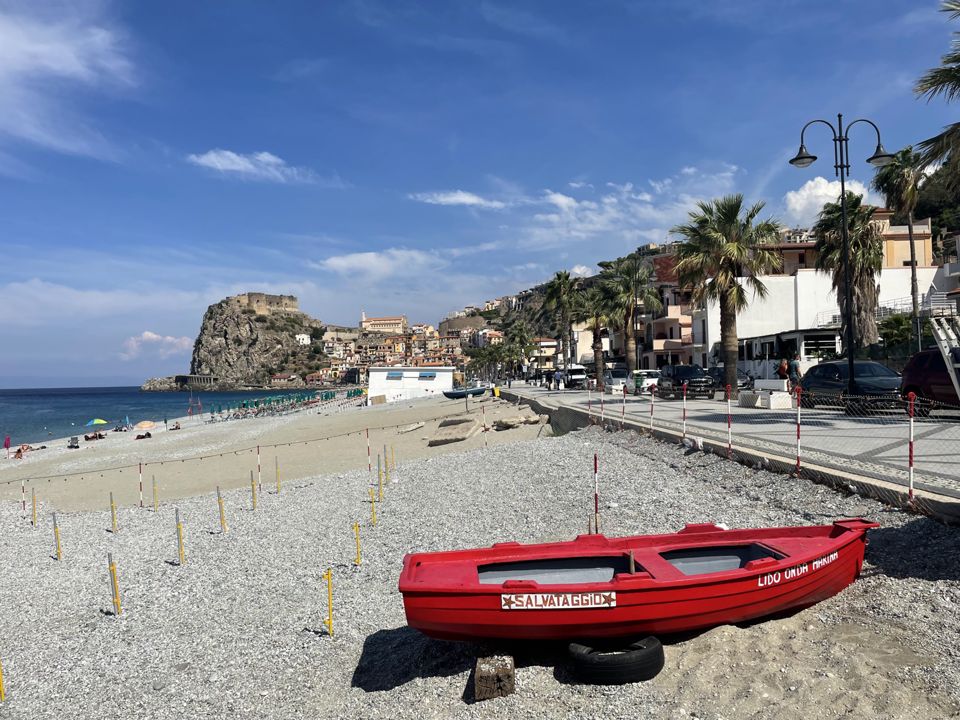
The beach, the castle rock, the town stacked up the hill 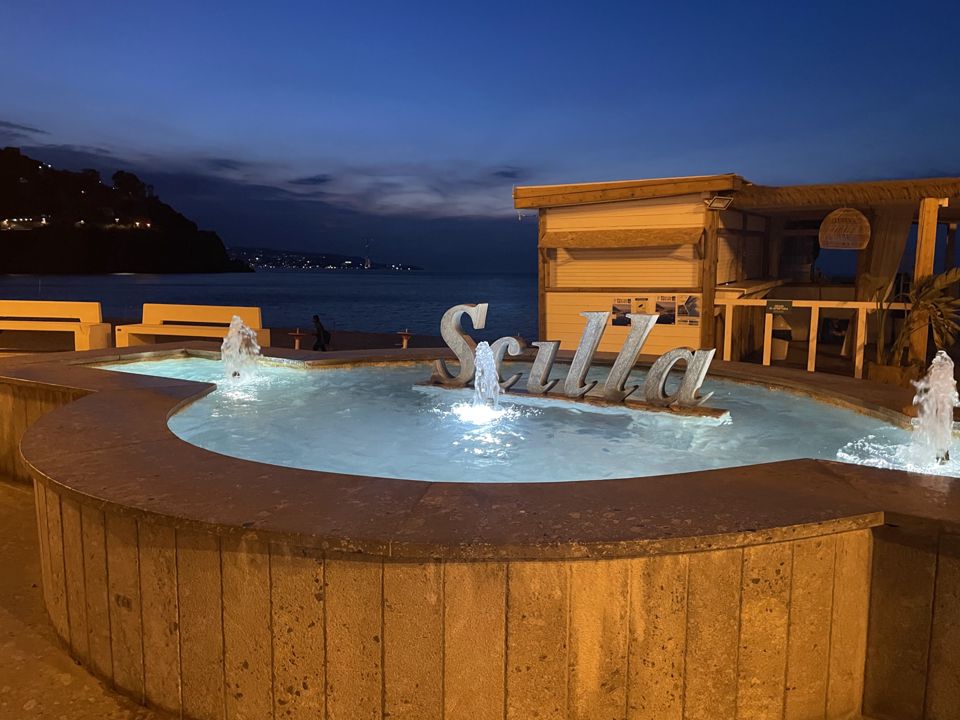
After dark, the village spells its own name in the fountain 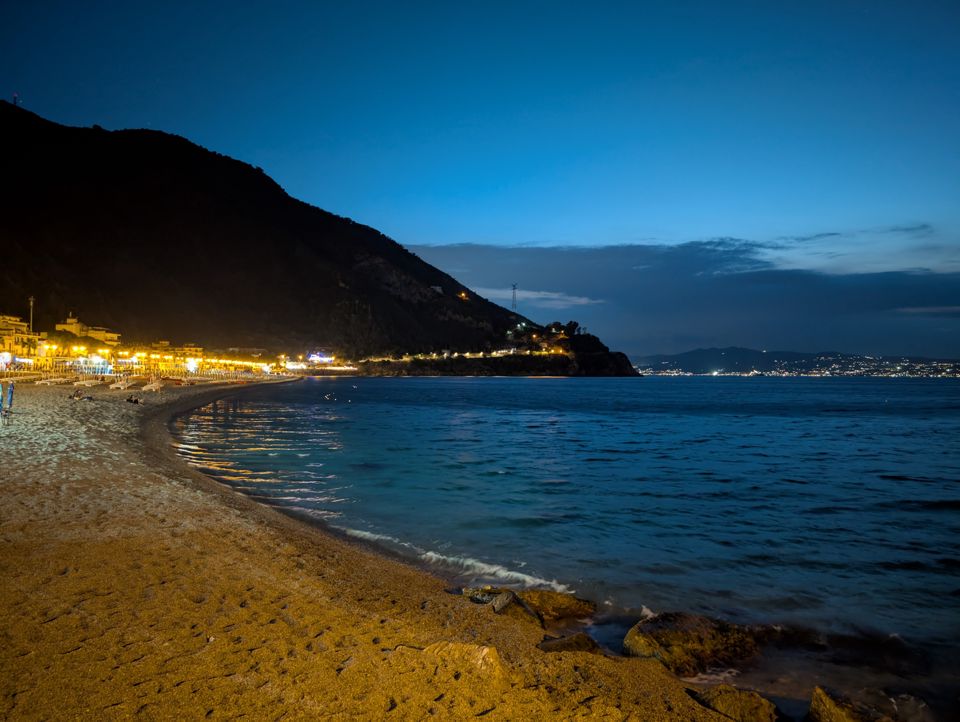
Blue hour: the lights come up along the beach 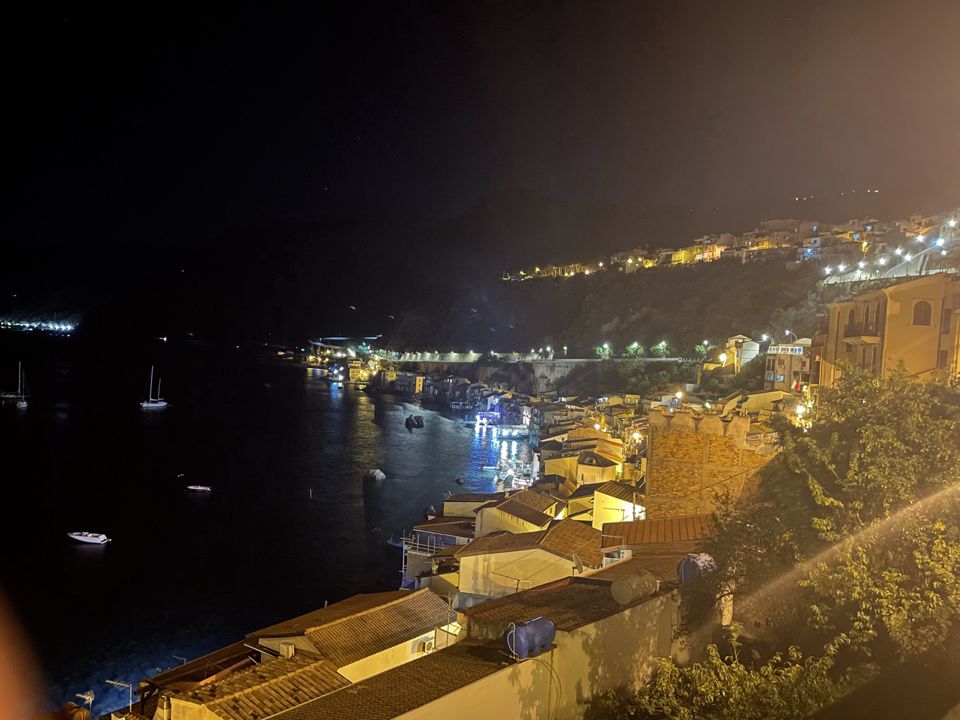
From the bridge, Chianalea's lamps and boats on black water 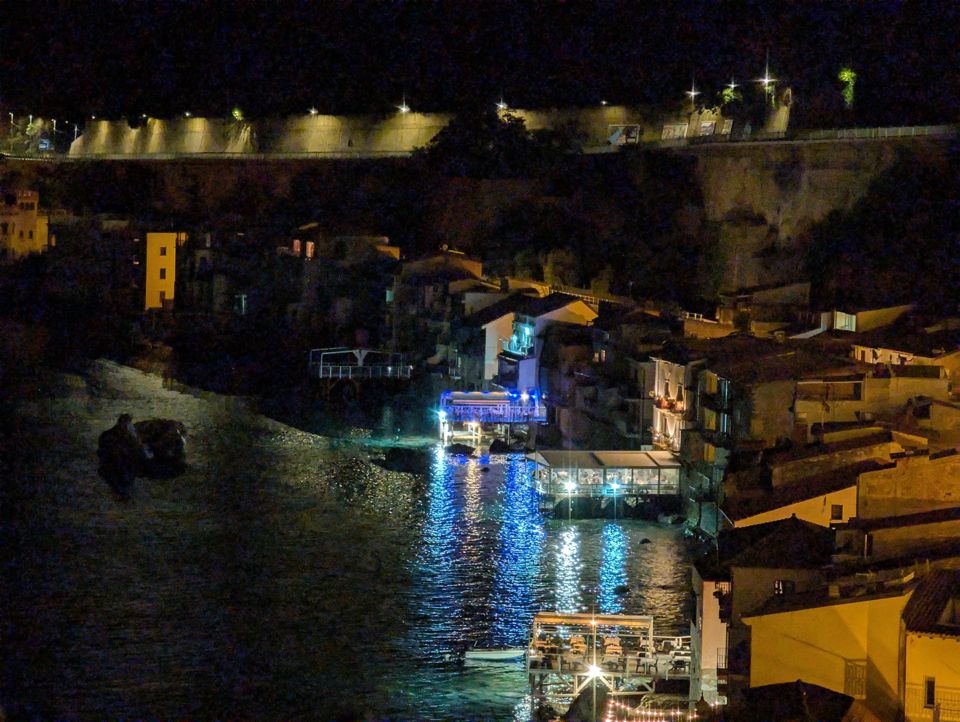
Chianalea by night: the boats under the lamps 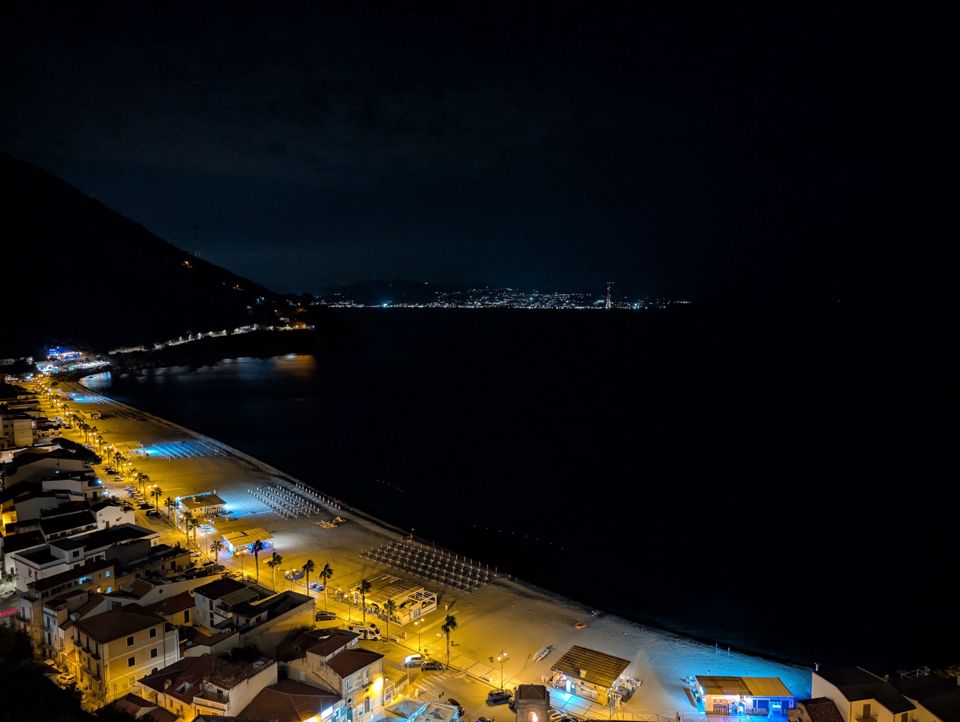
Full night from the heights: rooftops, blue-lit beach, the lights running to Sicily 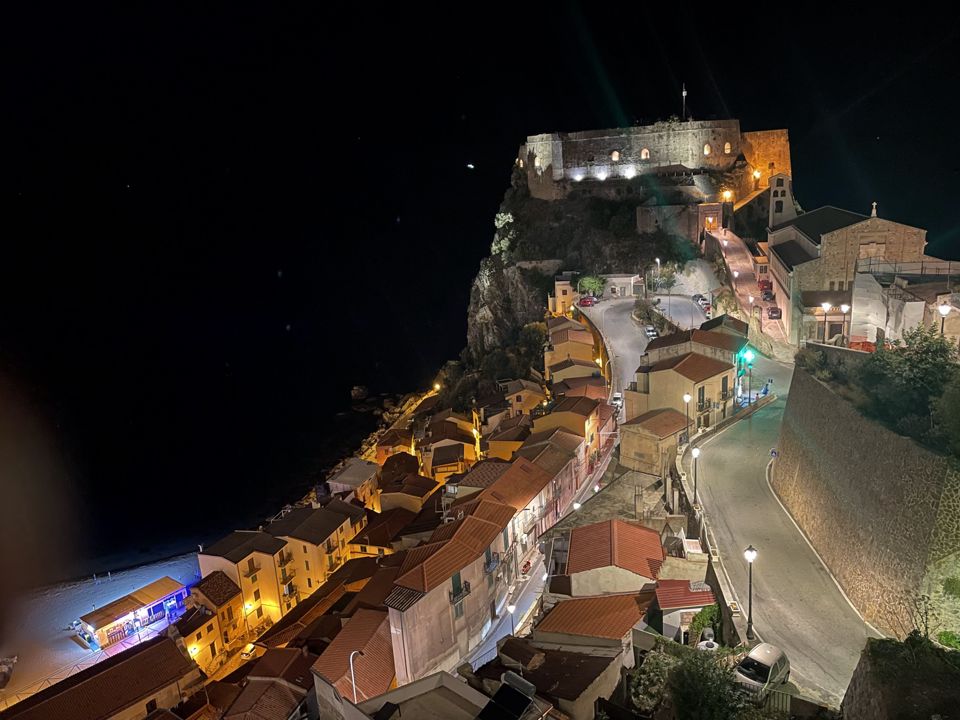
The castle rock, floodlit, from the beach promenade 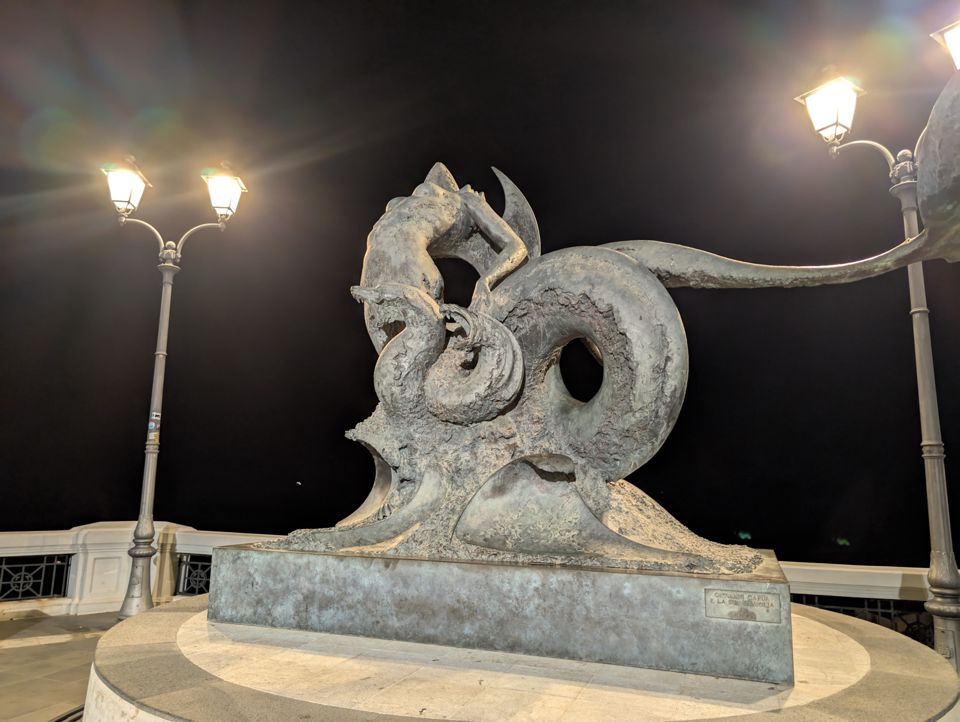
La Scilla — the nymph mid-metamorphosis, floodlit and unbothered 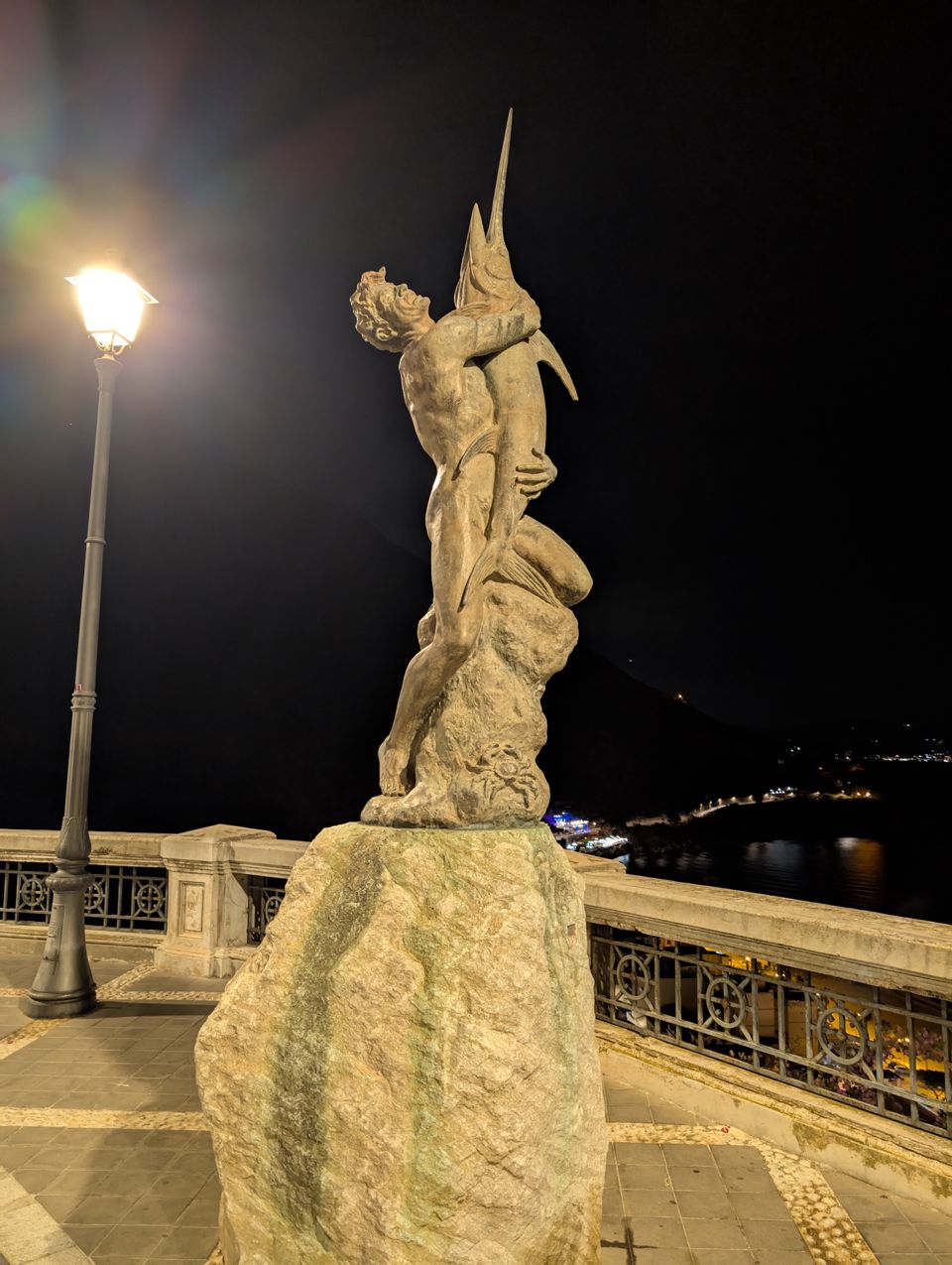
The fisherman and his swordfish at arm's length 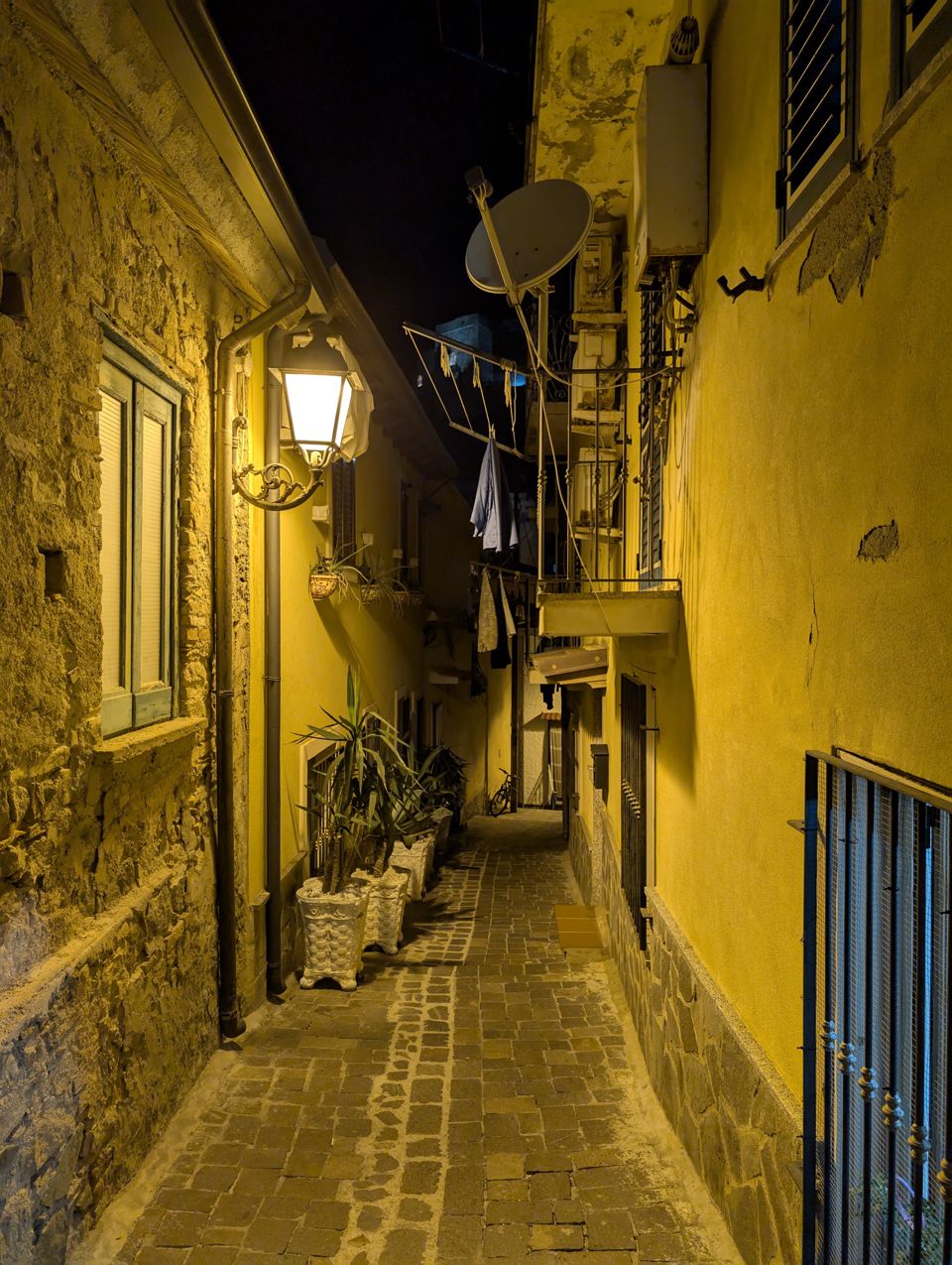
One lantern, an alley, the last frame of the night
Moving in
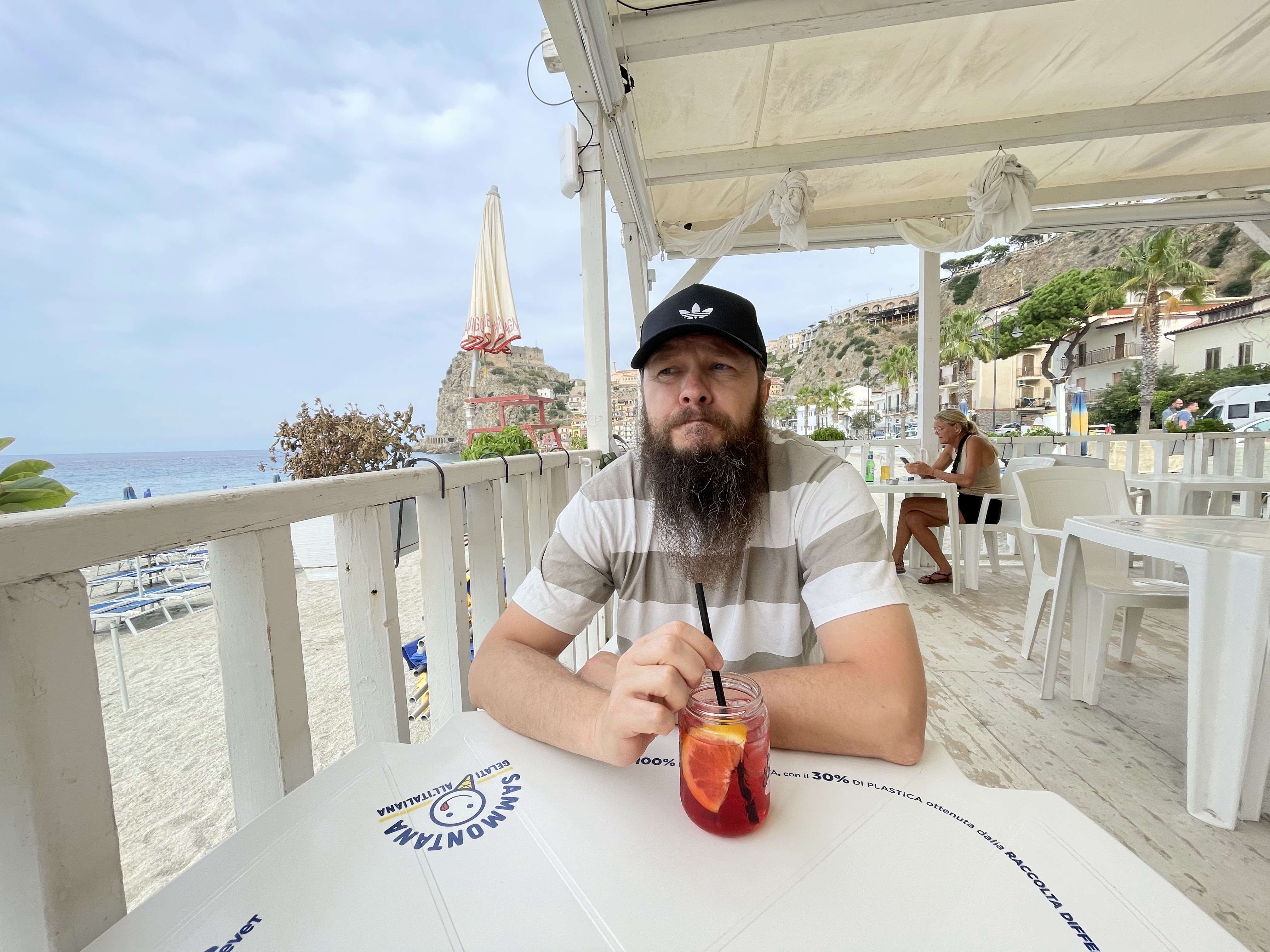
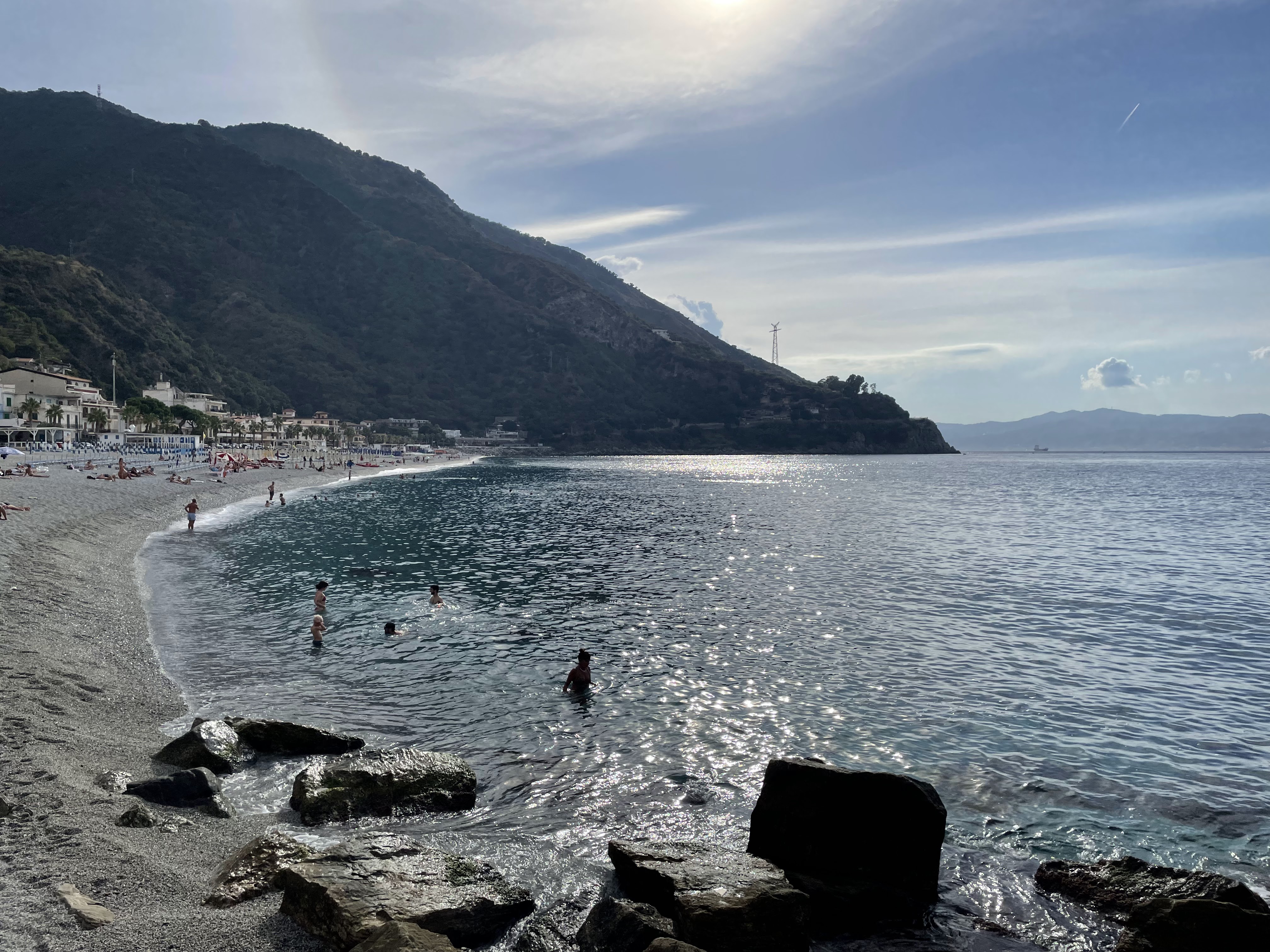
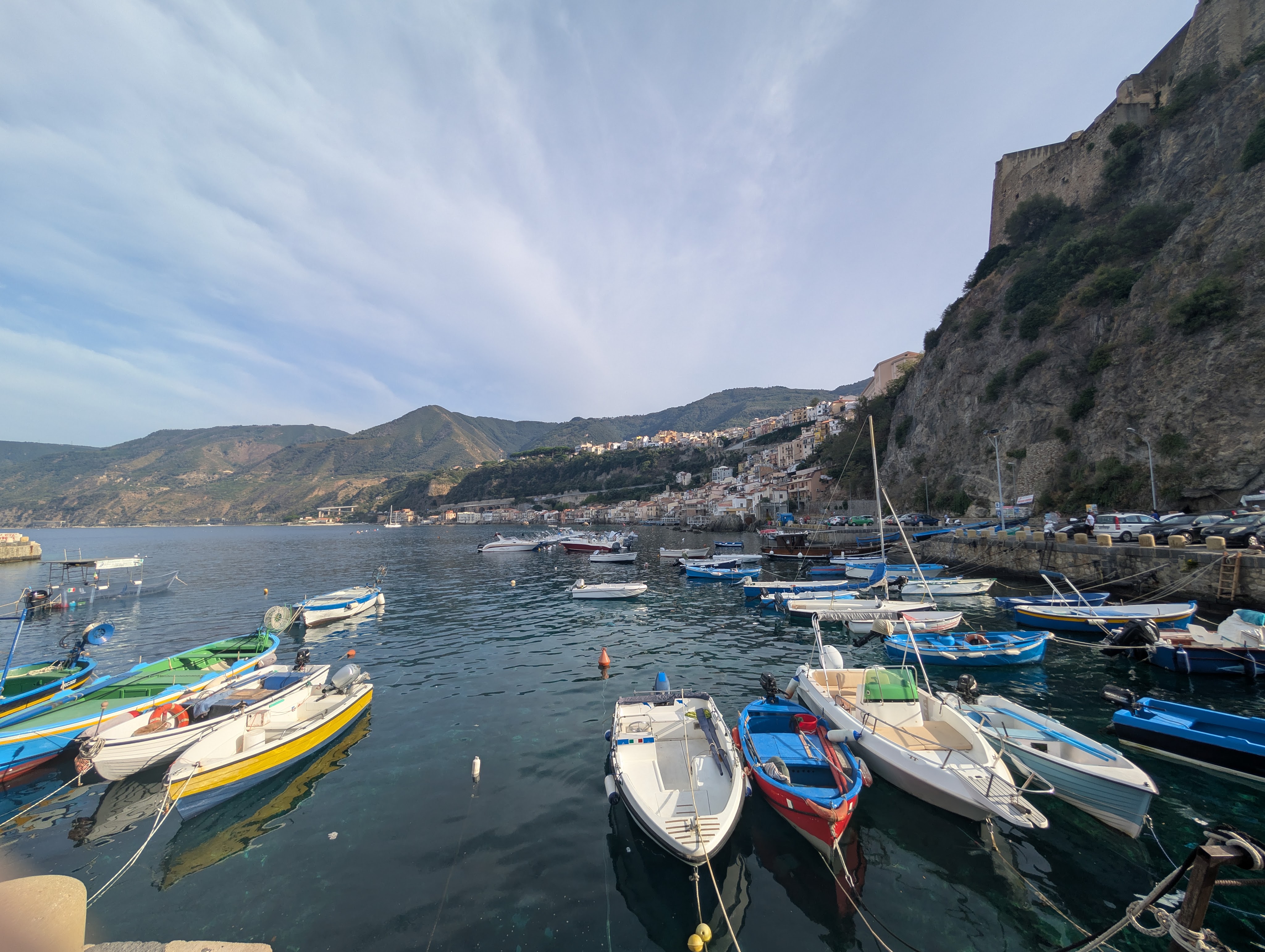
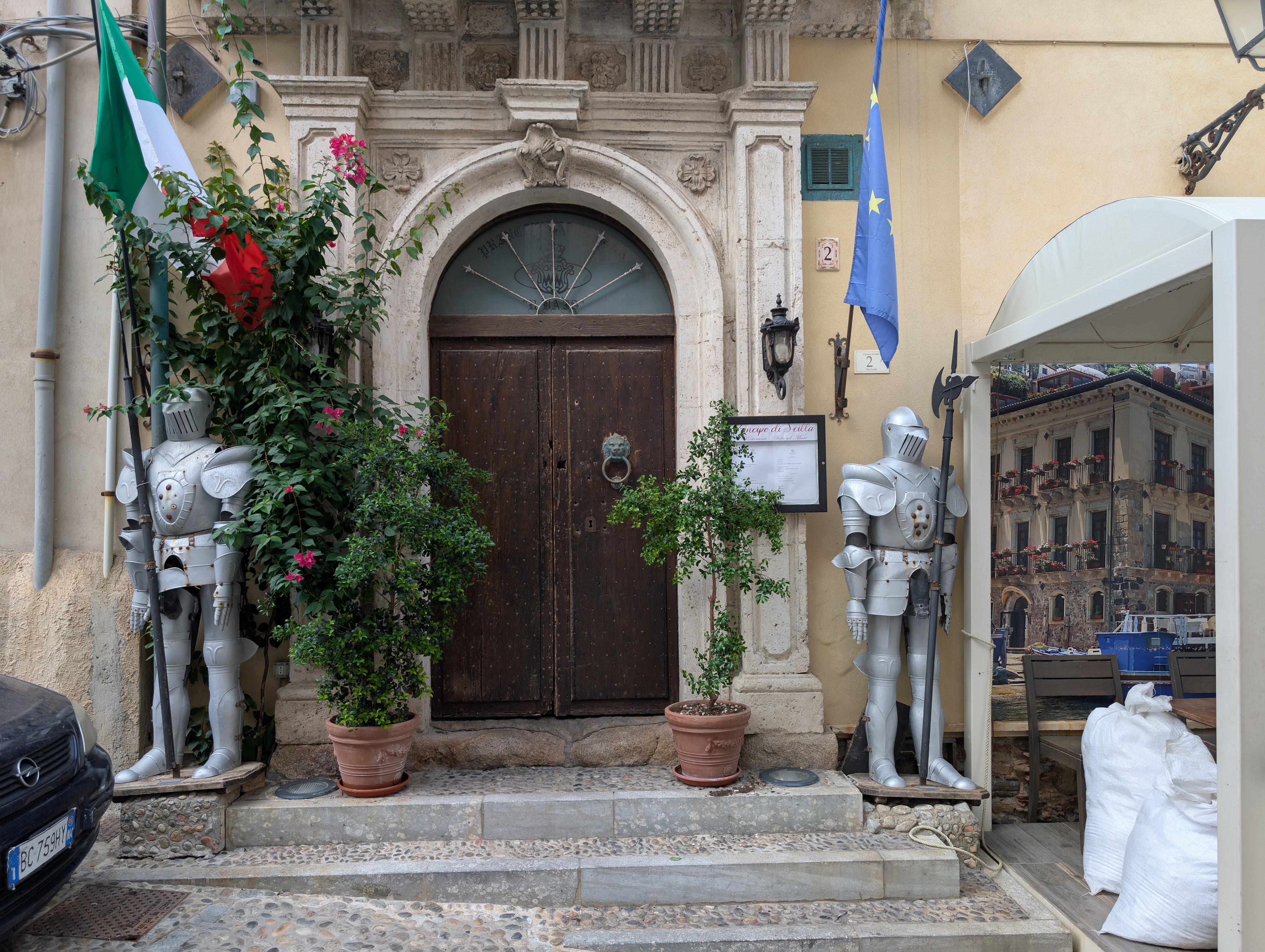
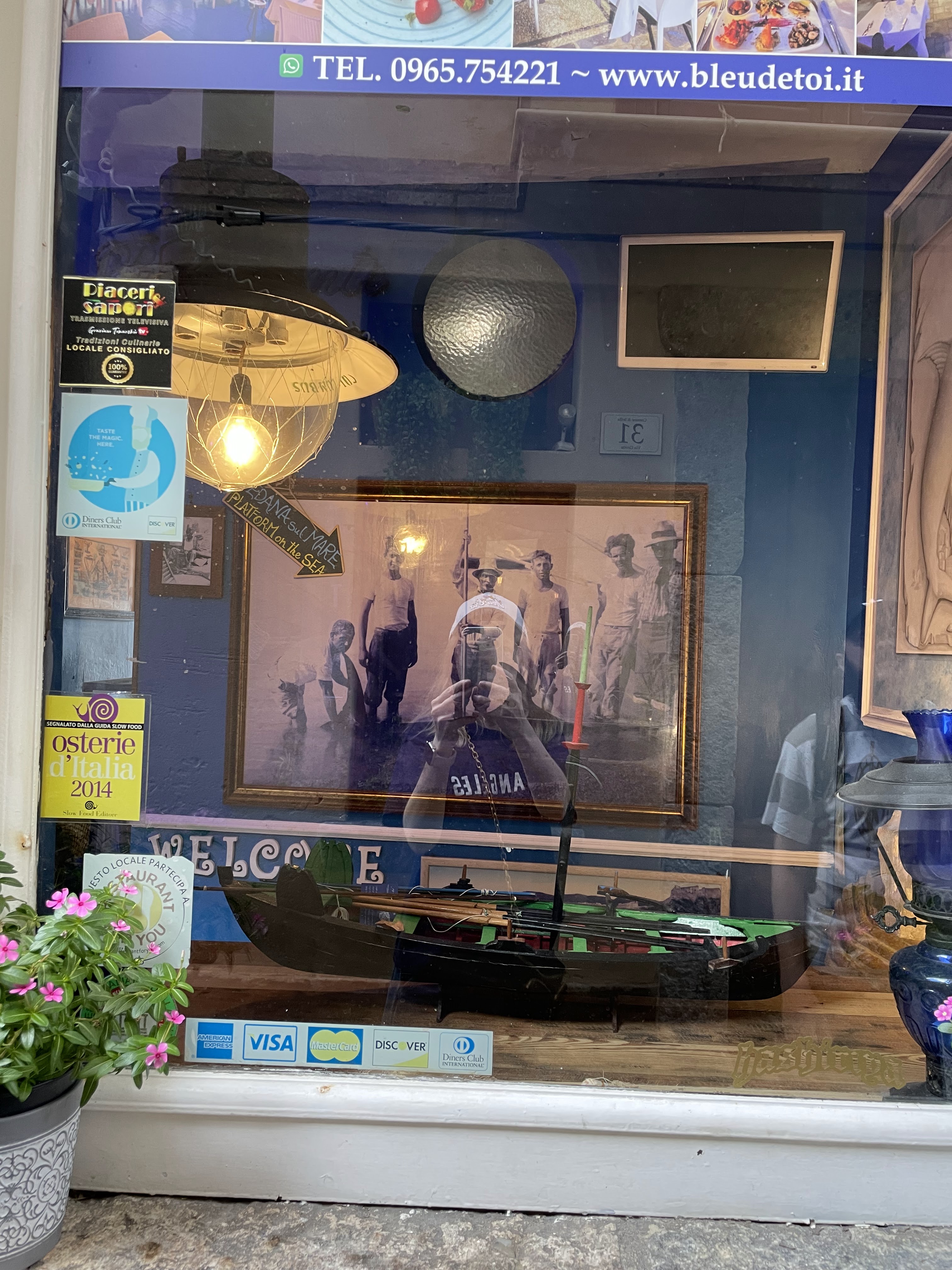
On the twenty-fourth we made it official and brought the luggage along. The coast road keeps the water in view the whole way, and the first official panorama is the same one printed on every postcard, taken from the road above: castle rock, beach, village, and the strait laid out flat to the horizon. The weather, which had spent three days being indecisive, gave up and cleared by four. The afternoon established residence at the beach — swimmers on the rocks, and the harbour below the castle wall filled with working boats in ranked order. Chianalea in daylight turns out to be houses standing in the water with the boats parked at their doors, which is the most sensible arrangement we saw on the whole trip. Lunch ran long: a spritz at a café with the swim zone for company, a blue shed called the Chilipepper openly not fishing for compliments, a window called Bleu de Toi packed with lamps and old photographs, and one doorway by the water that keeps two full suits of armour on duty.
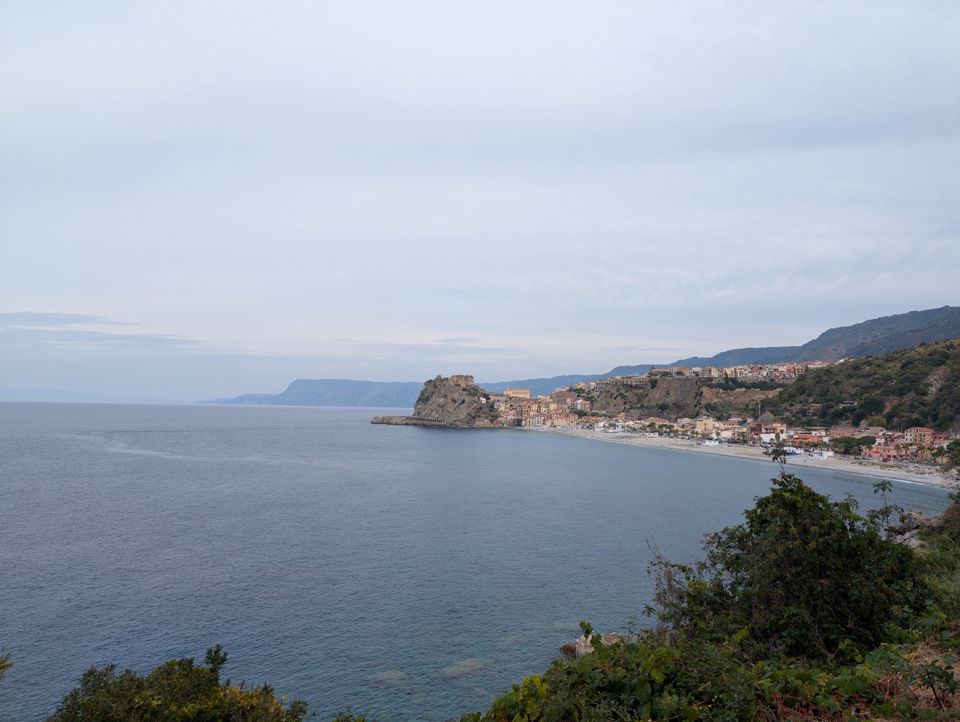
From the road above: the bay as advertised 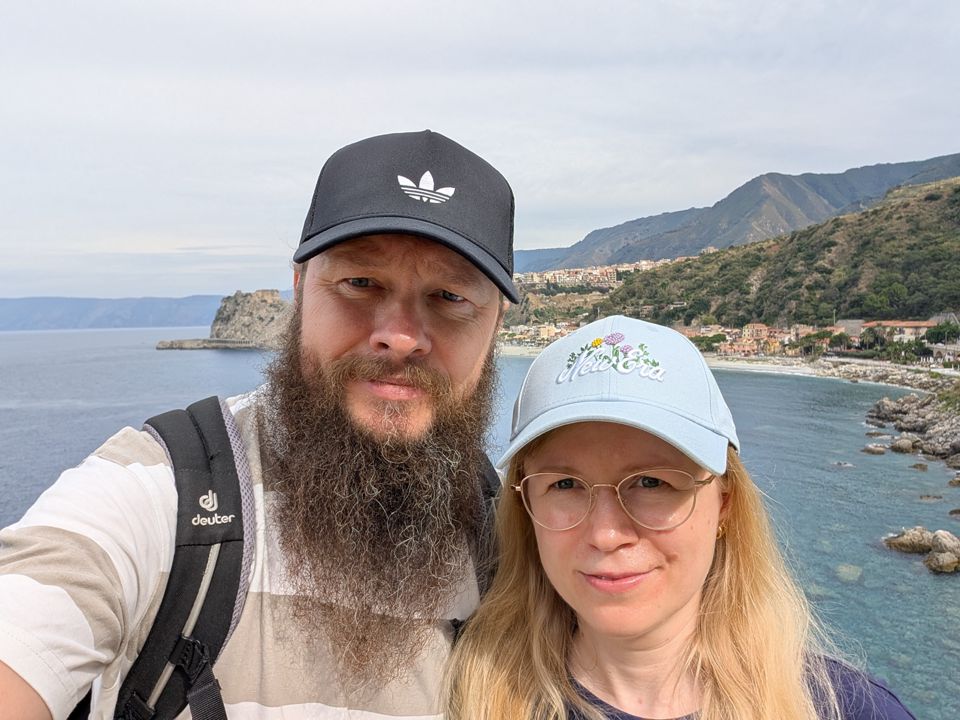
Arrived — beach behind, castle to the left, two hats 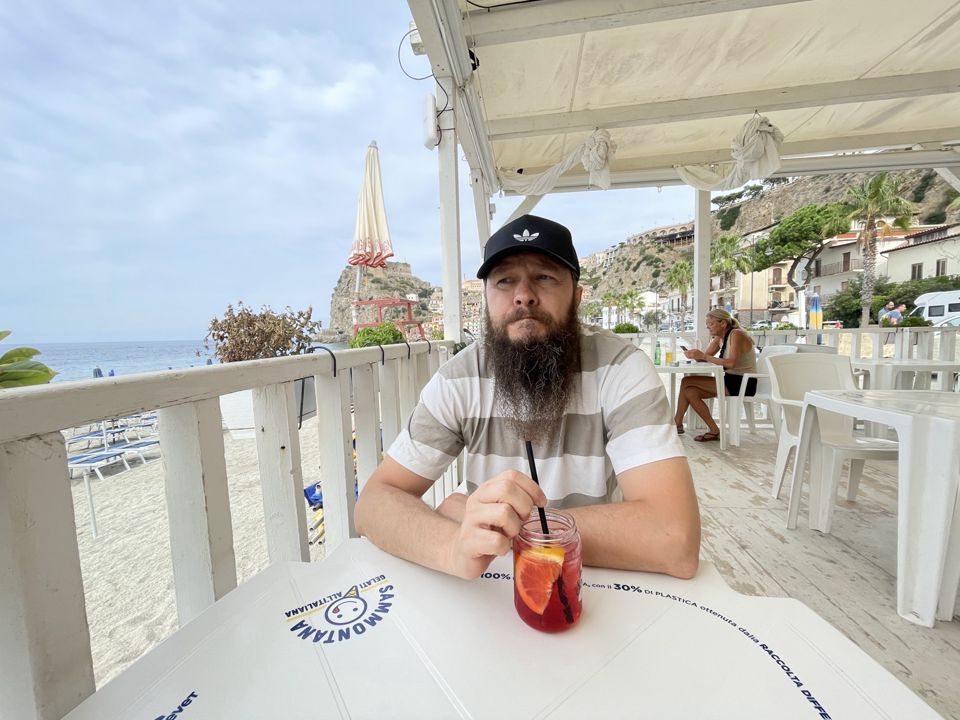
The spritz hour, with the beach for company 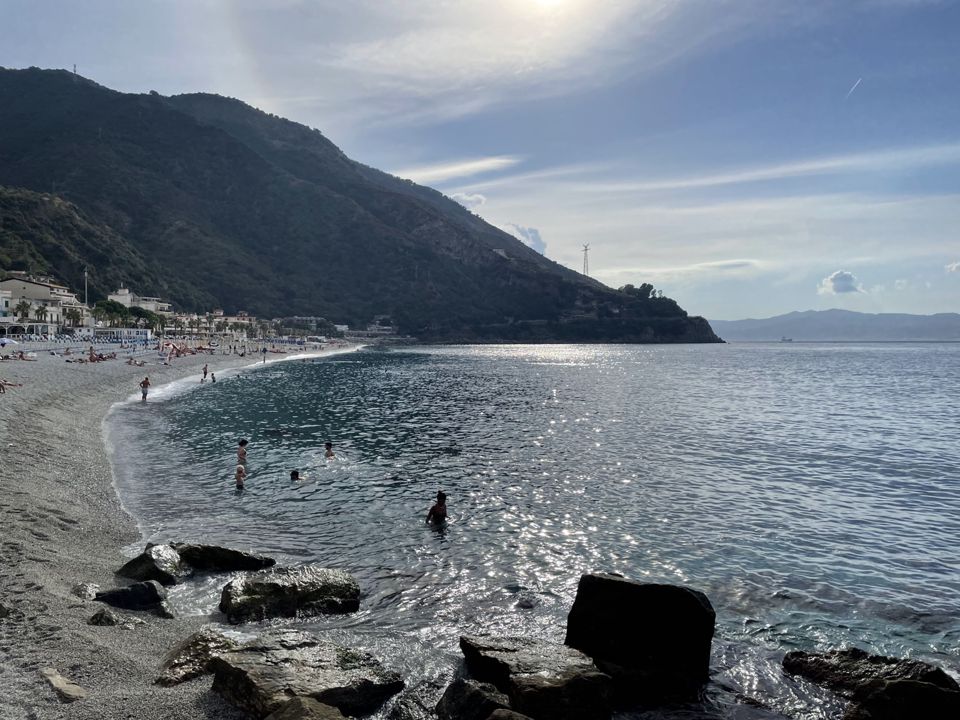
By four the indecision is over: swimmers on the rocks 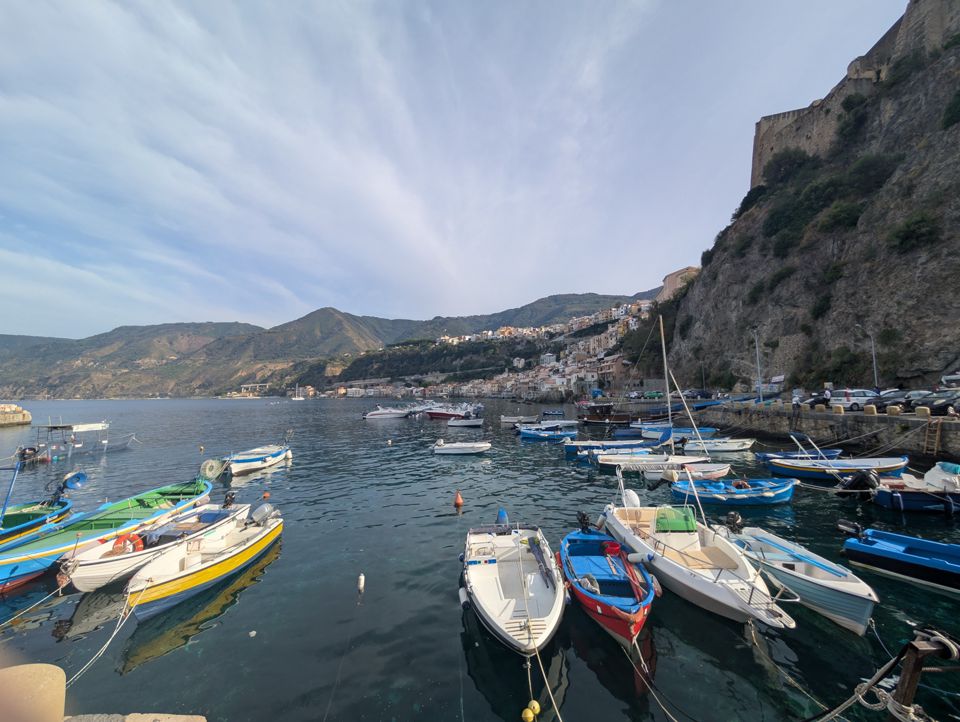
The harbour under the castle, boats in ranks 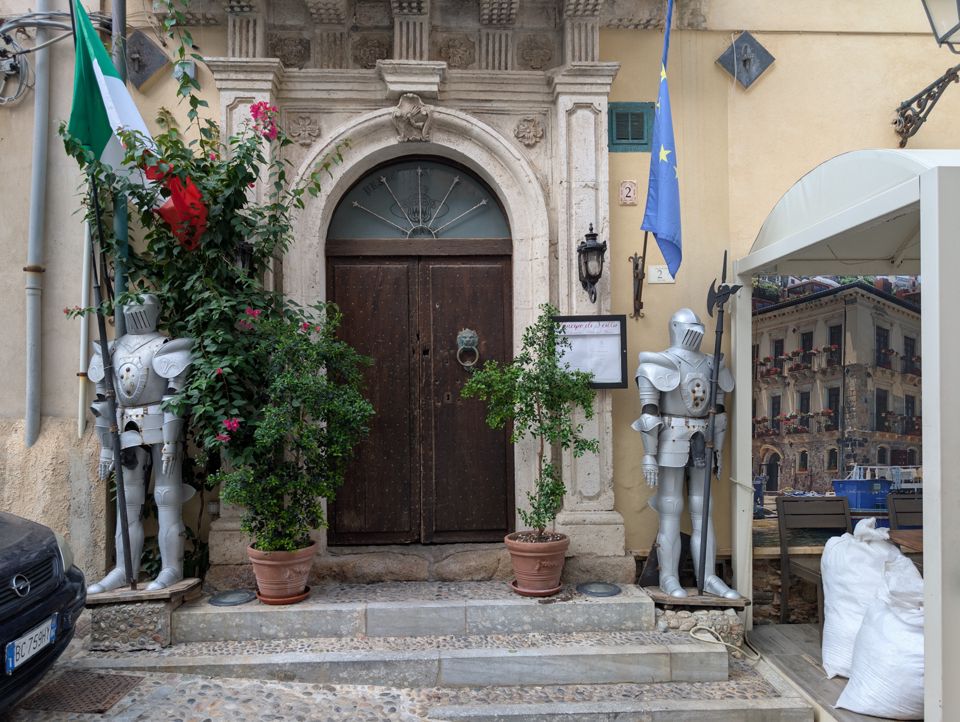
A doorway with two full-time suits of armour 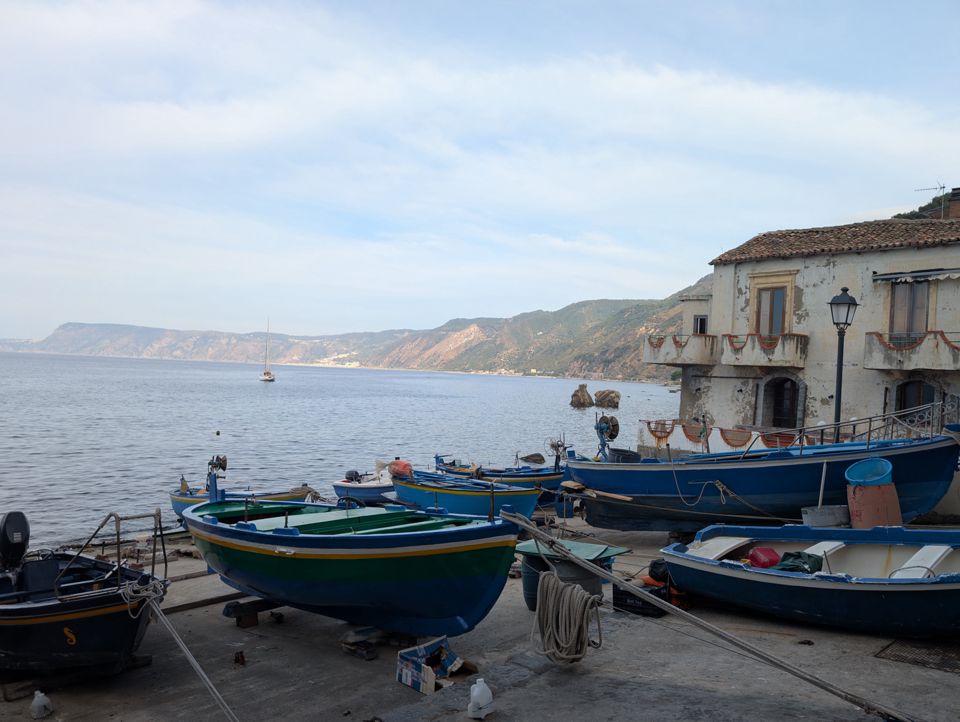
Chianalea in daylight: a house, a palm, a boat at the door 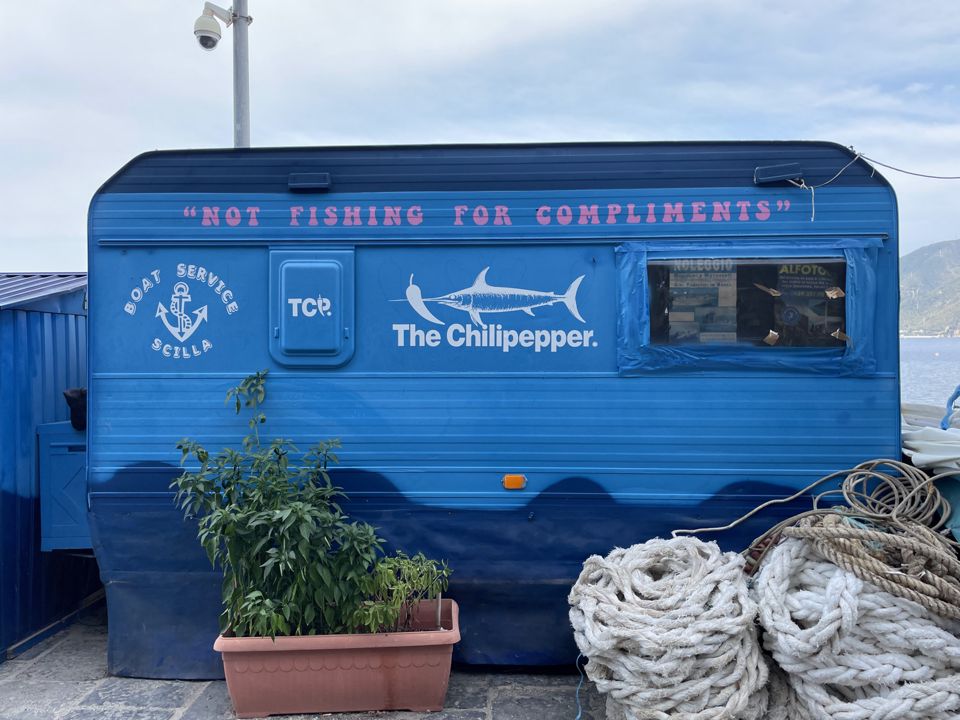
The Chilipepper, signed and not fishing for compliments 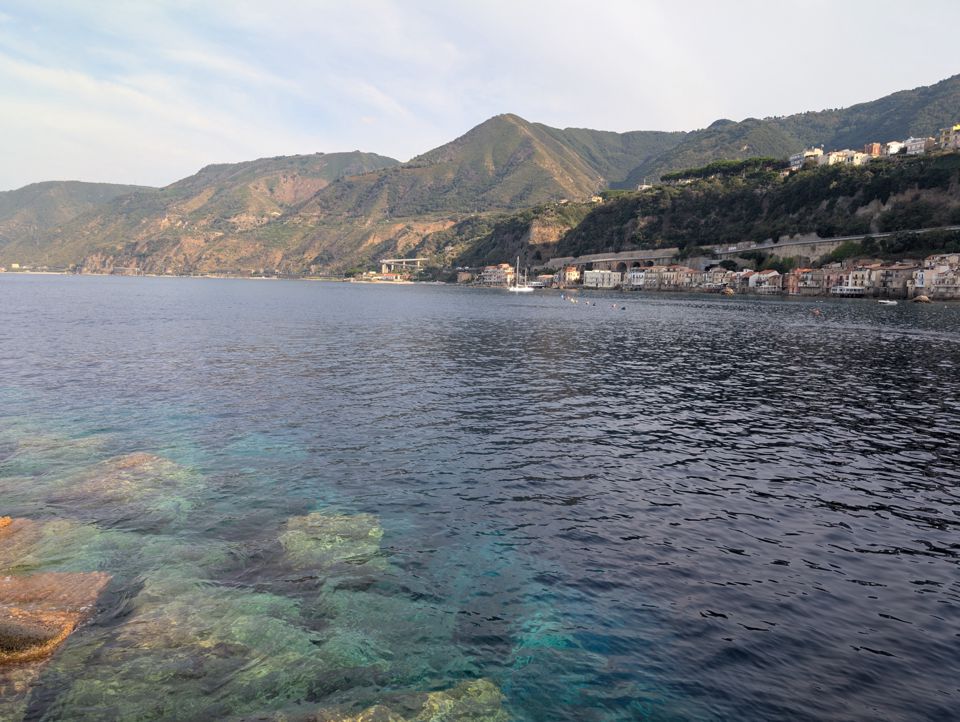
The water over the rocks, reading like aquarium glass 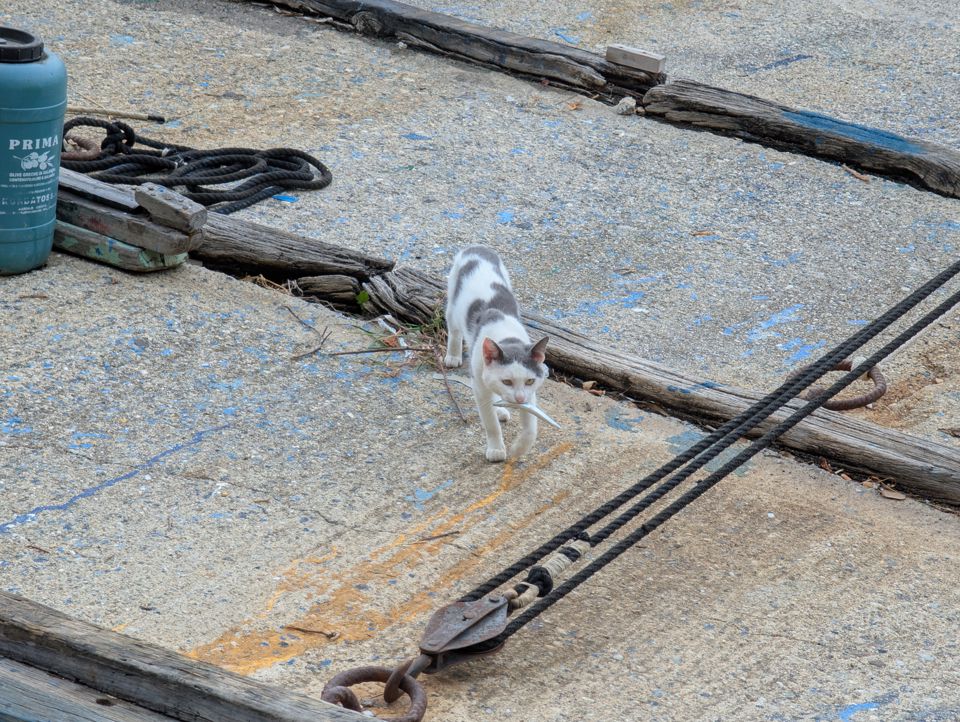
The quay's small supervisor, mid-patrol 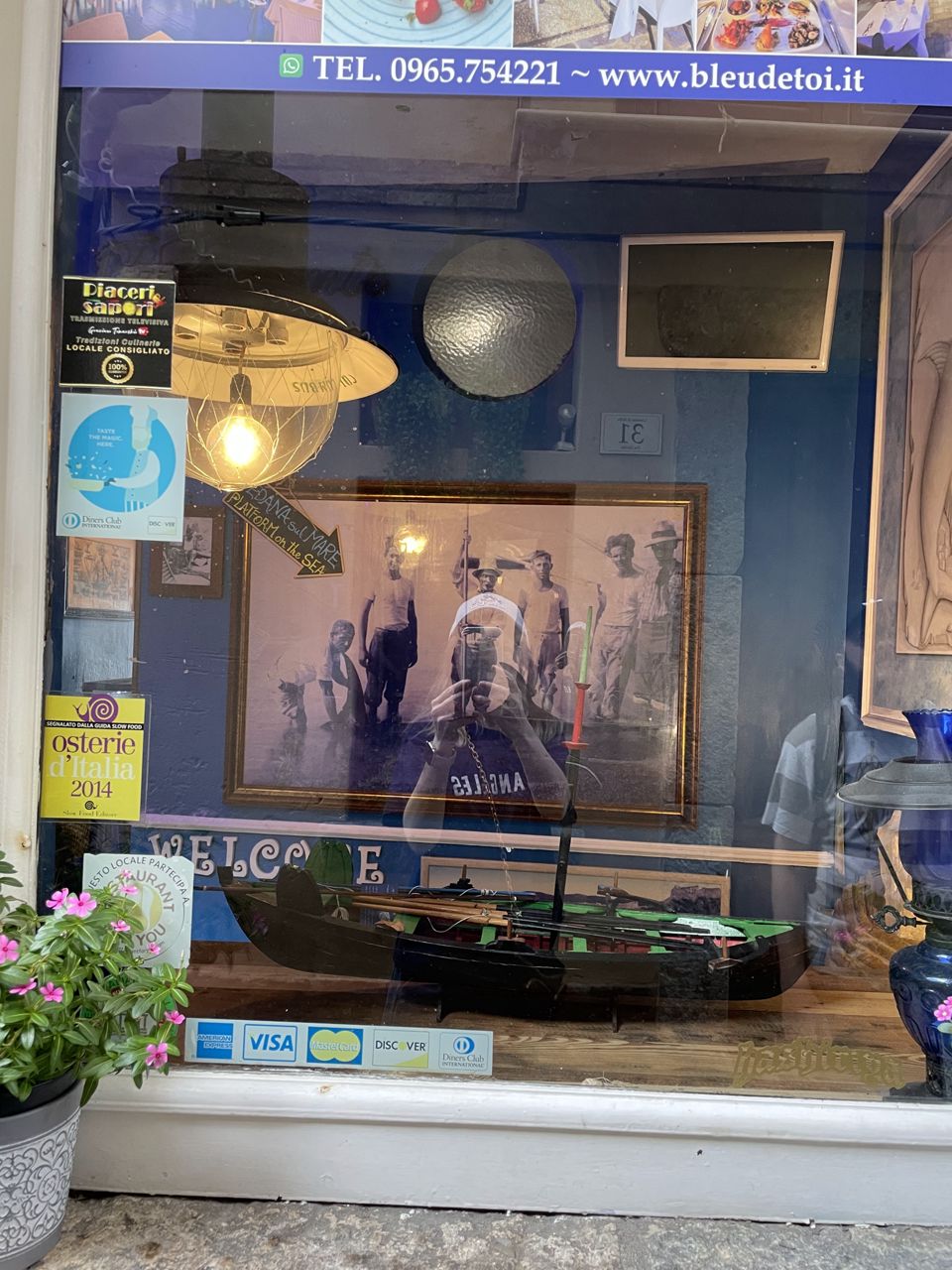
Bleu de Toi: lamps, vintage portraits, the photographer in the glass 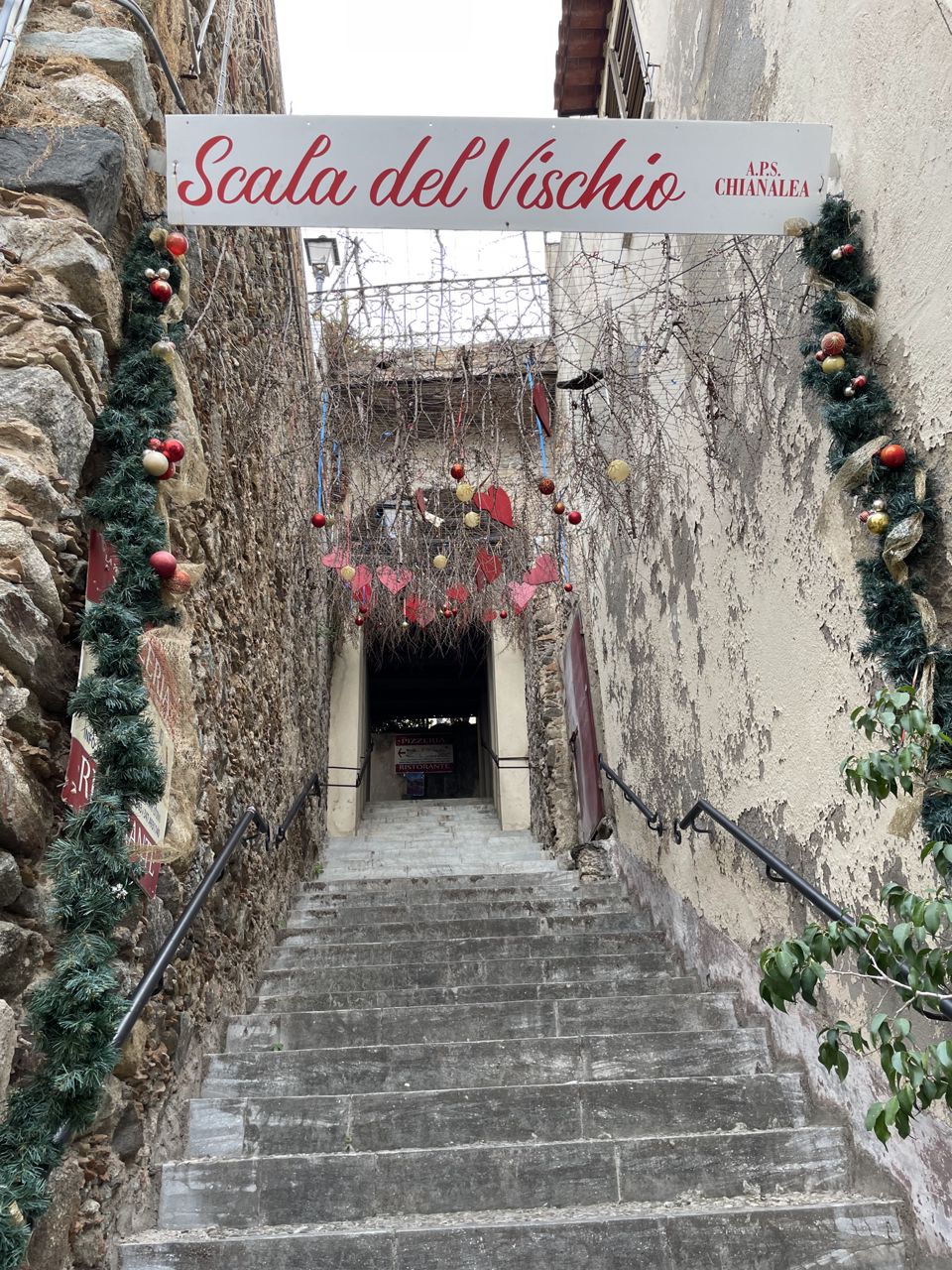
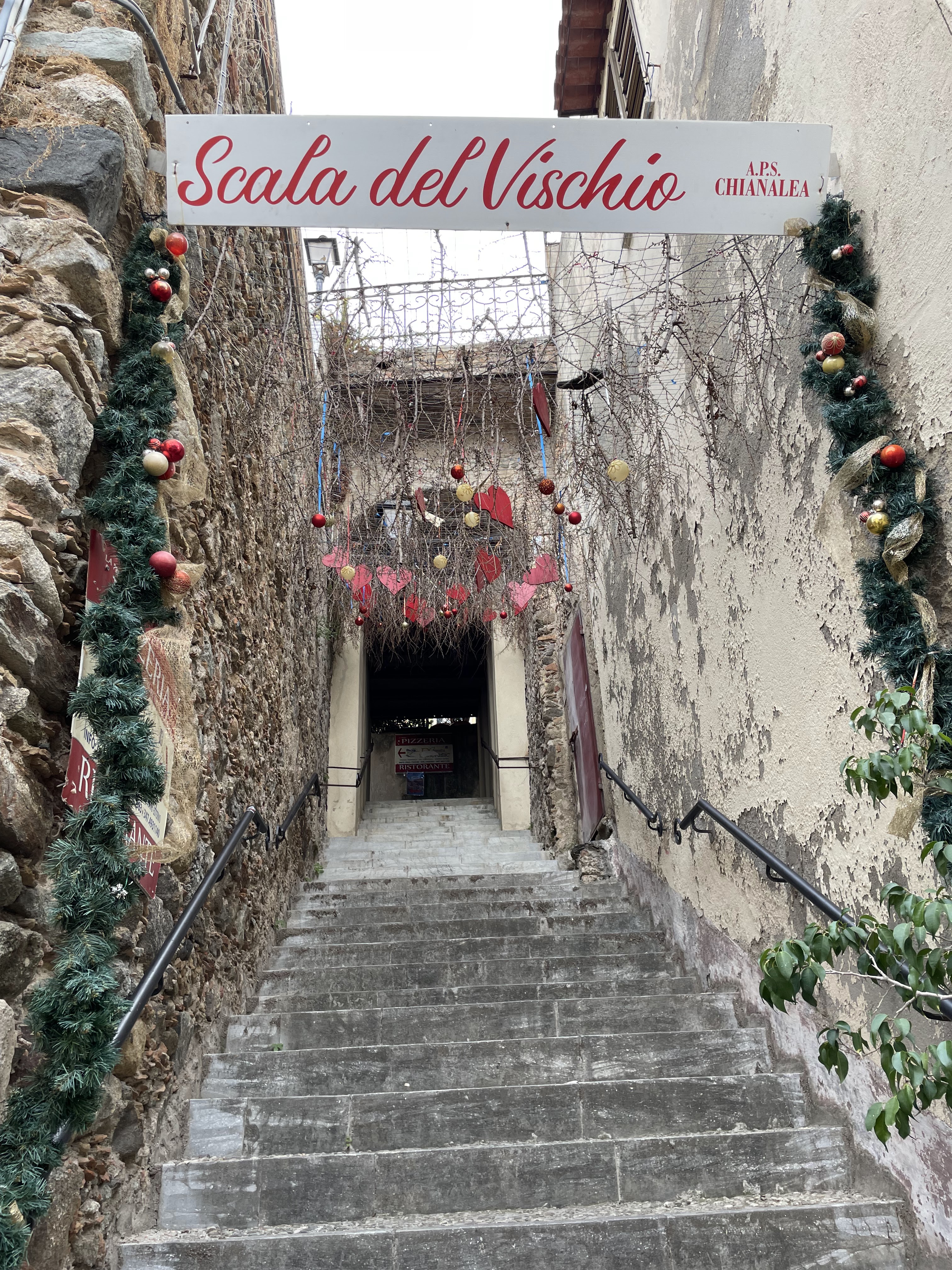
Scala del Vischio: stairs through the rock, decorated with last winter's confidence 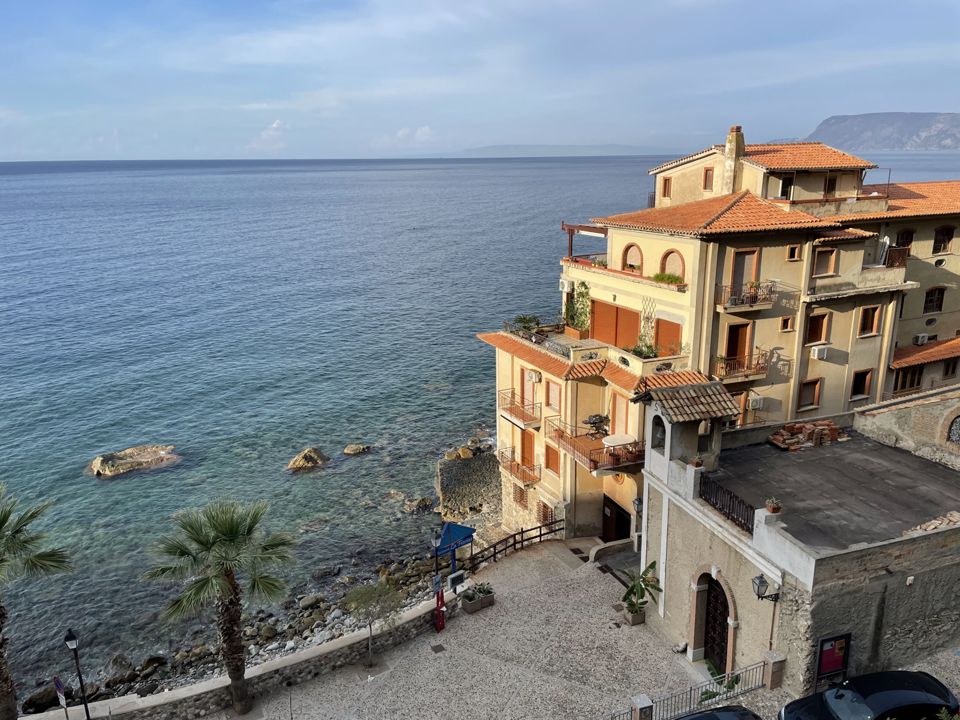
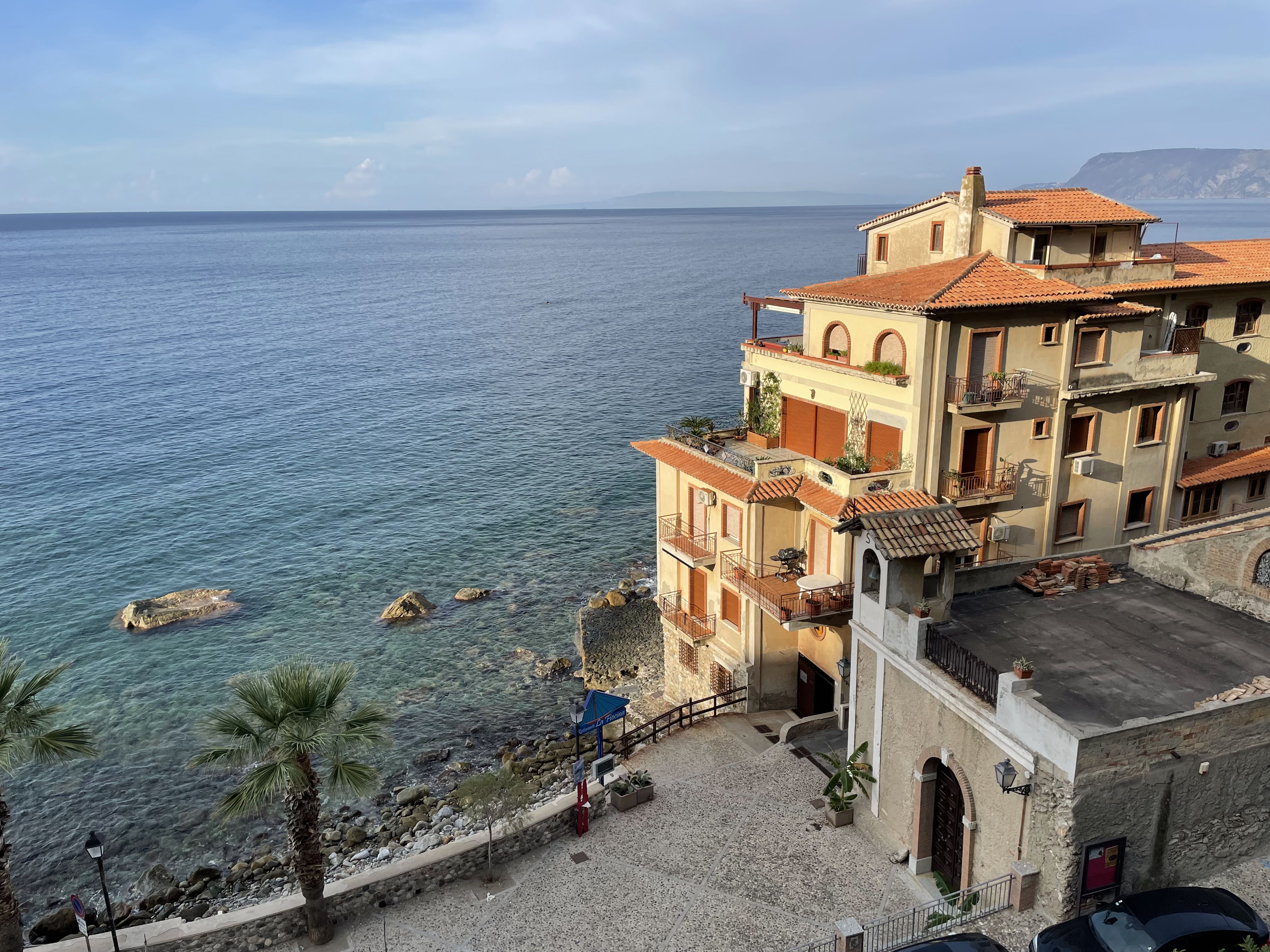
The seafront's ochre houses, standing over the rocks 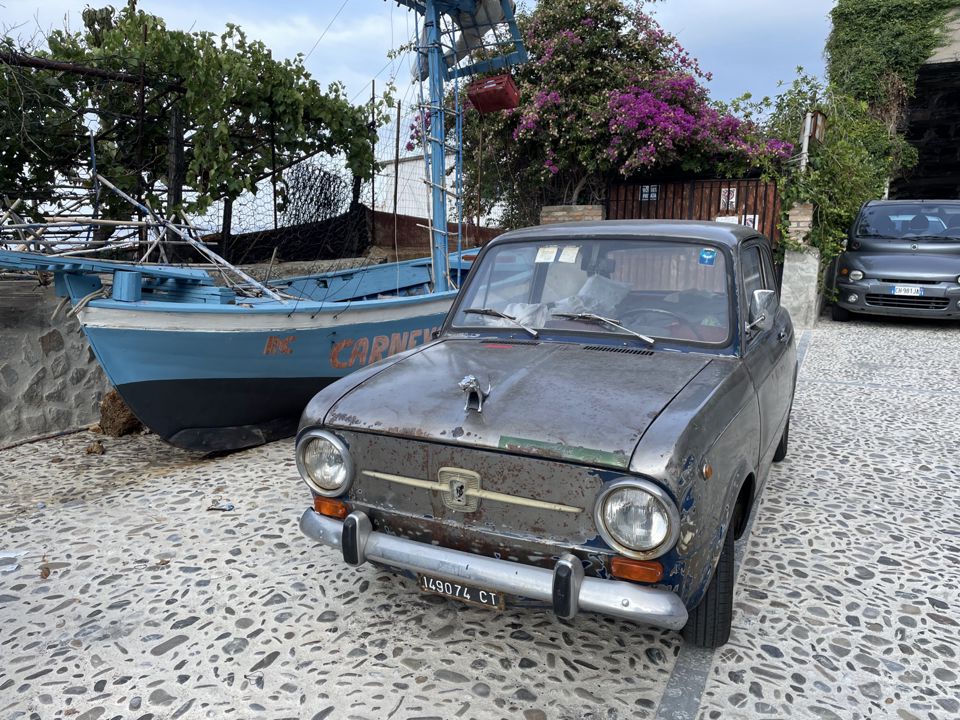
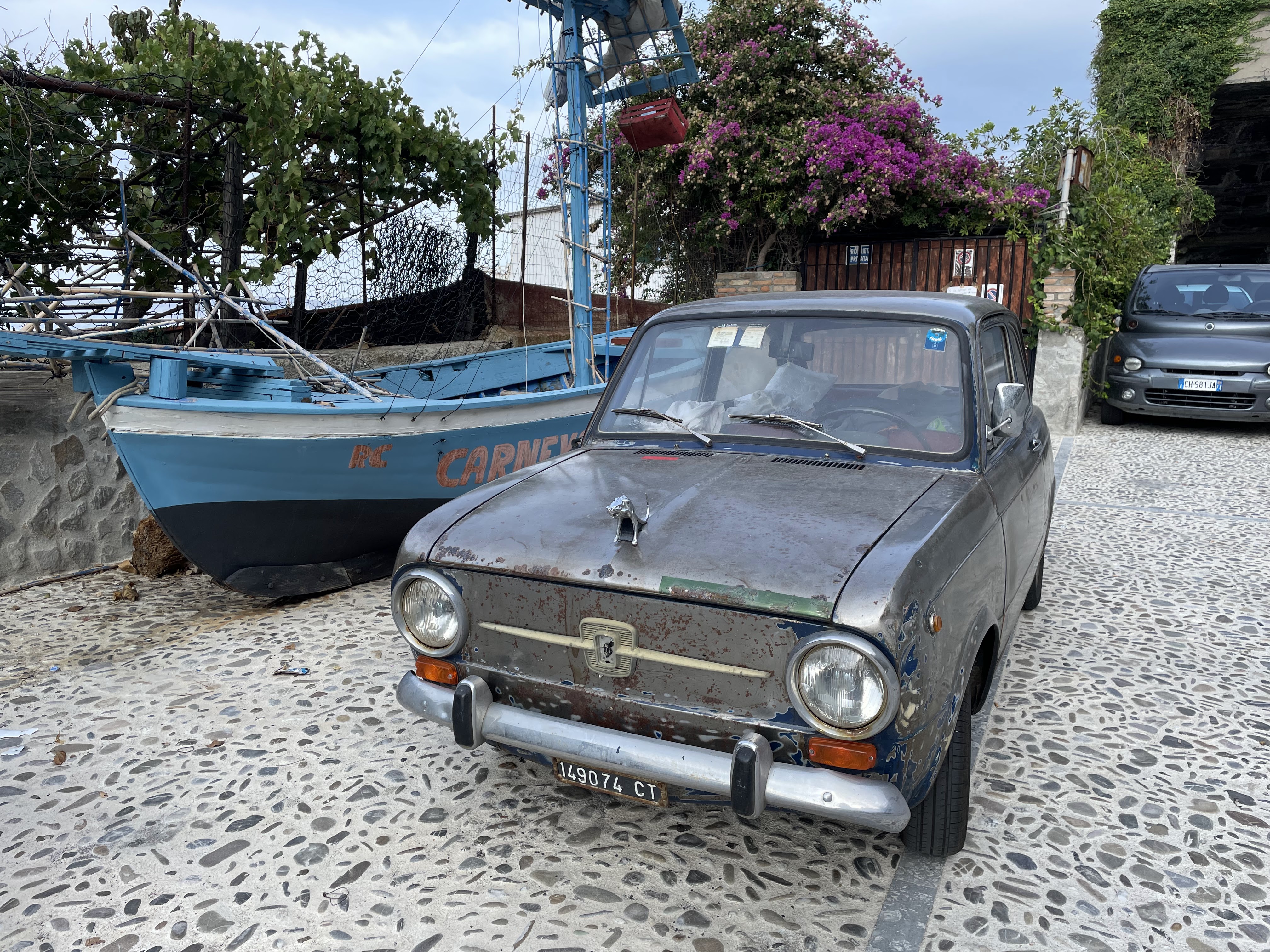
Street parking the way Chianalea means it
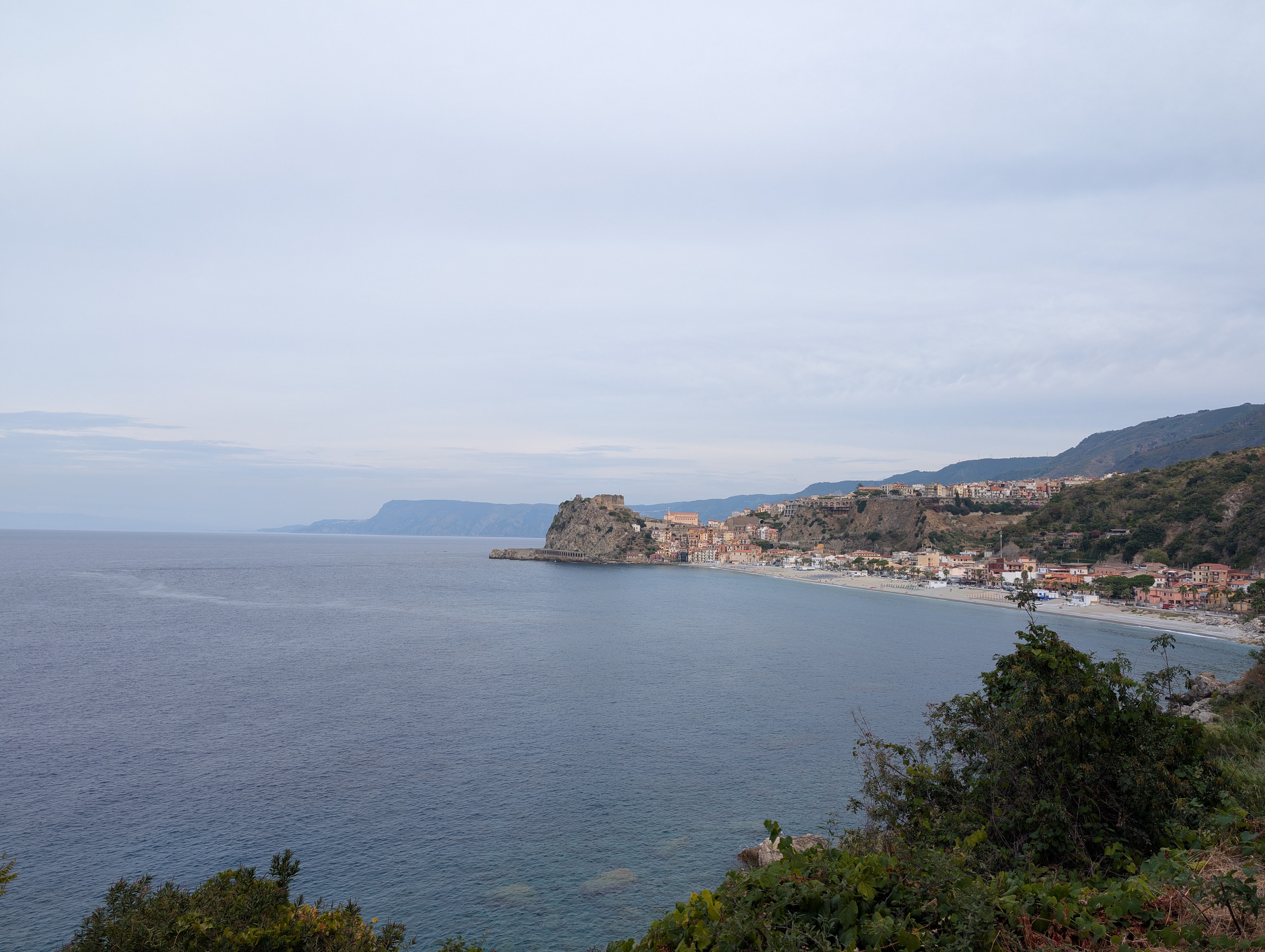
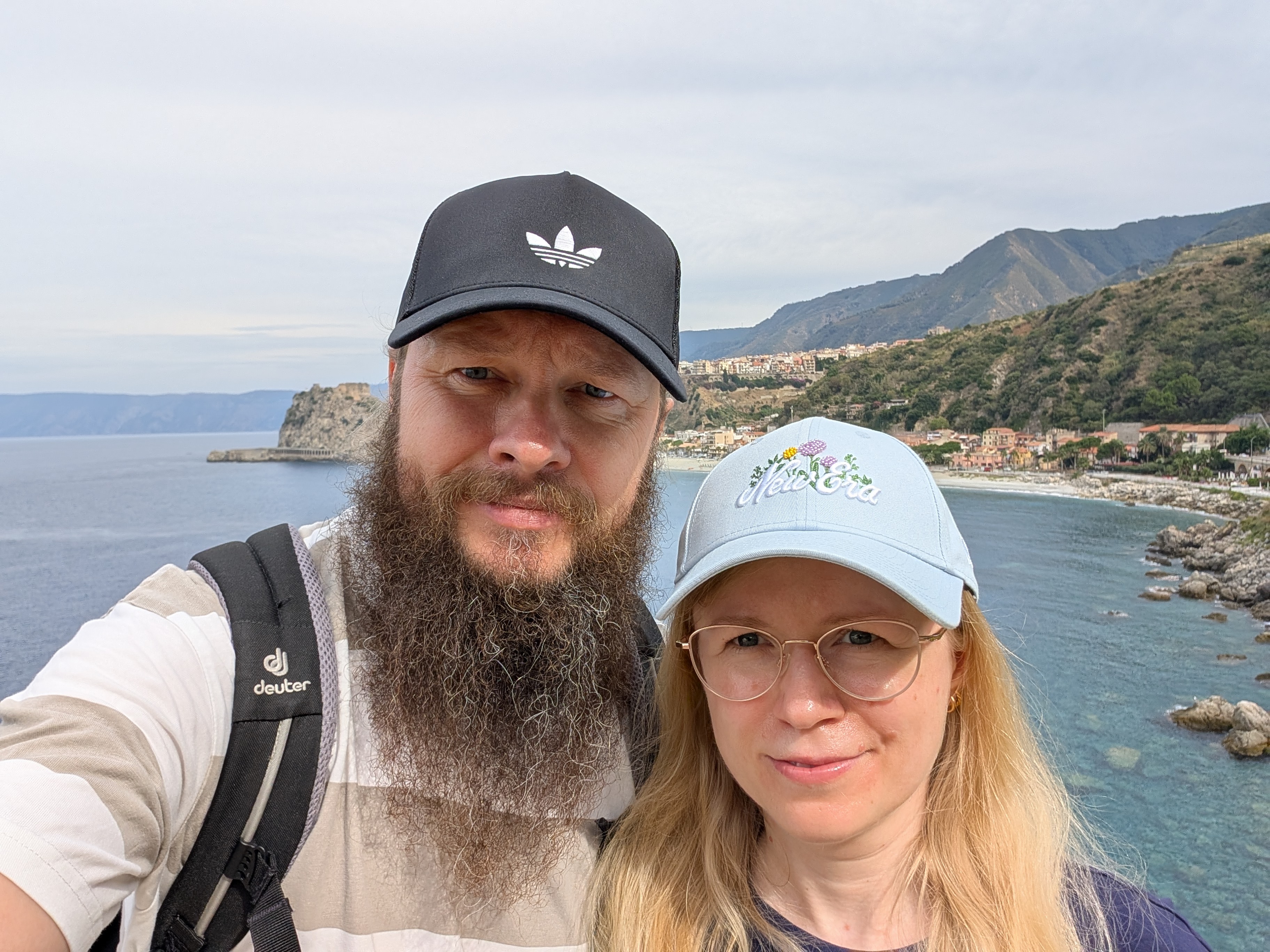
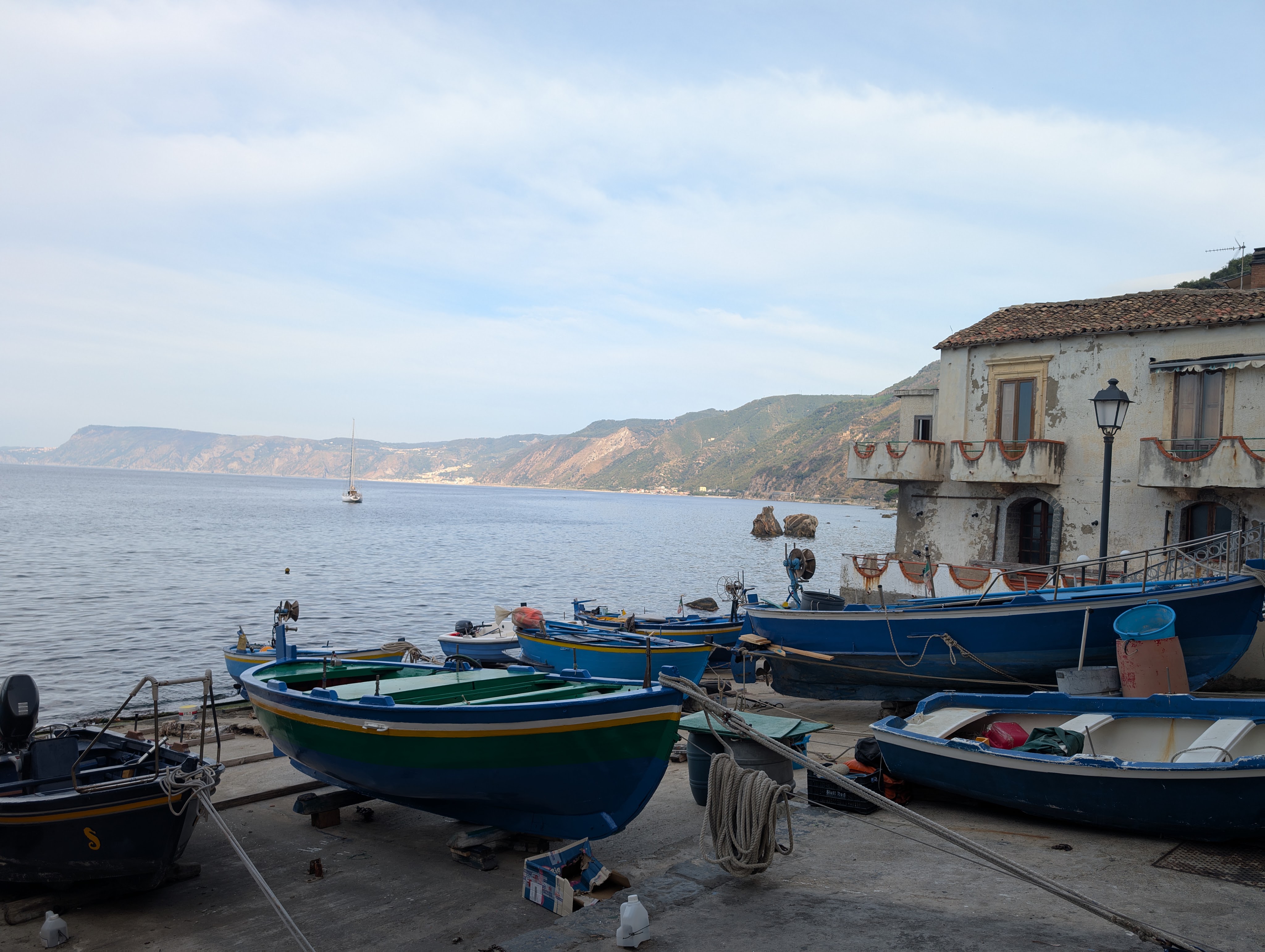
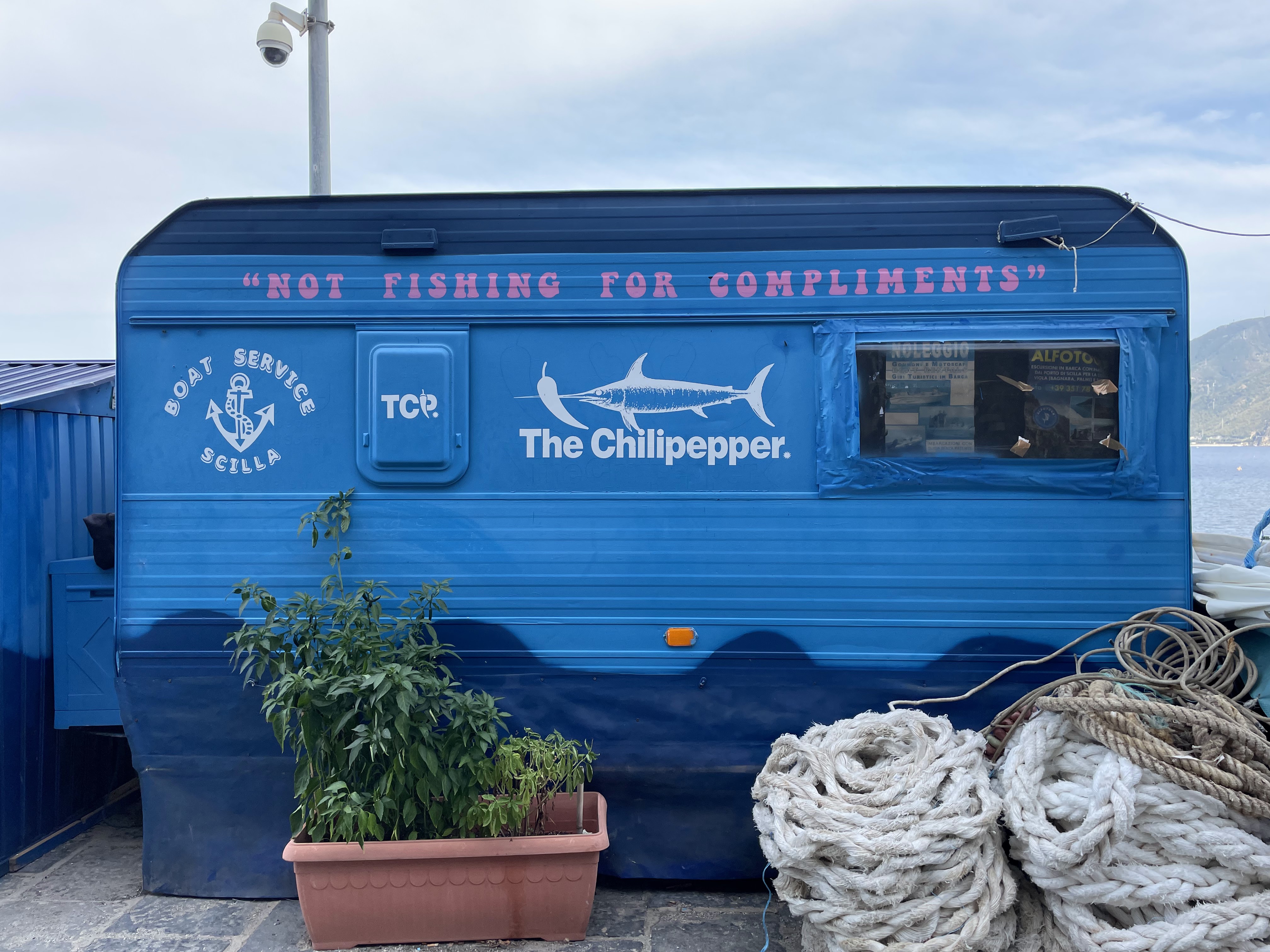
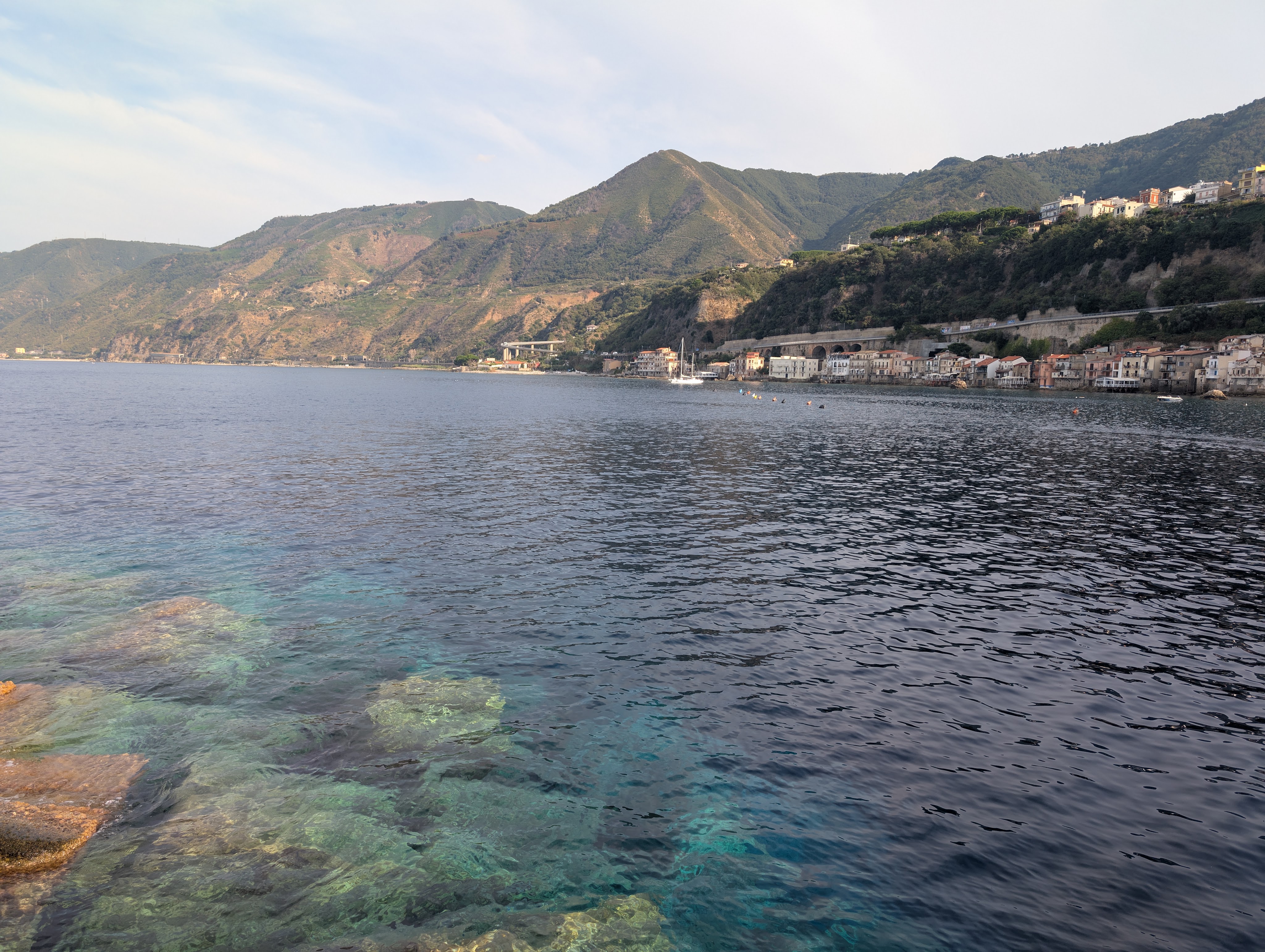
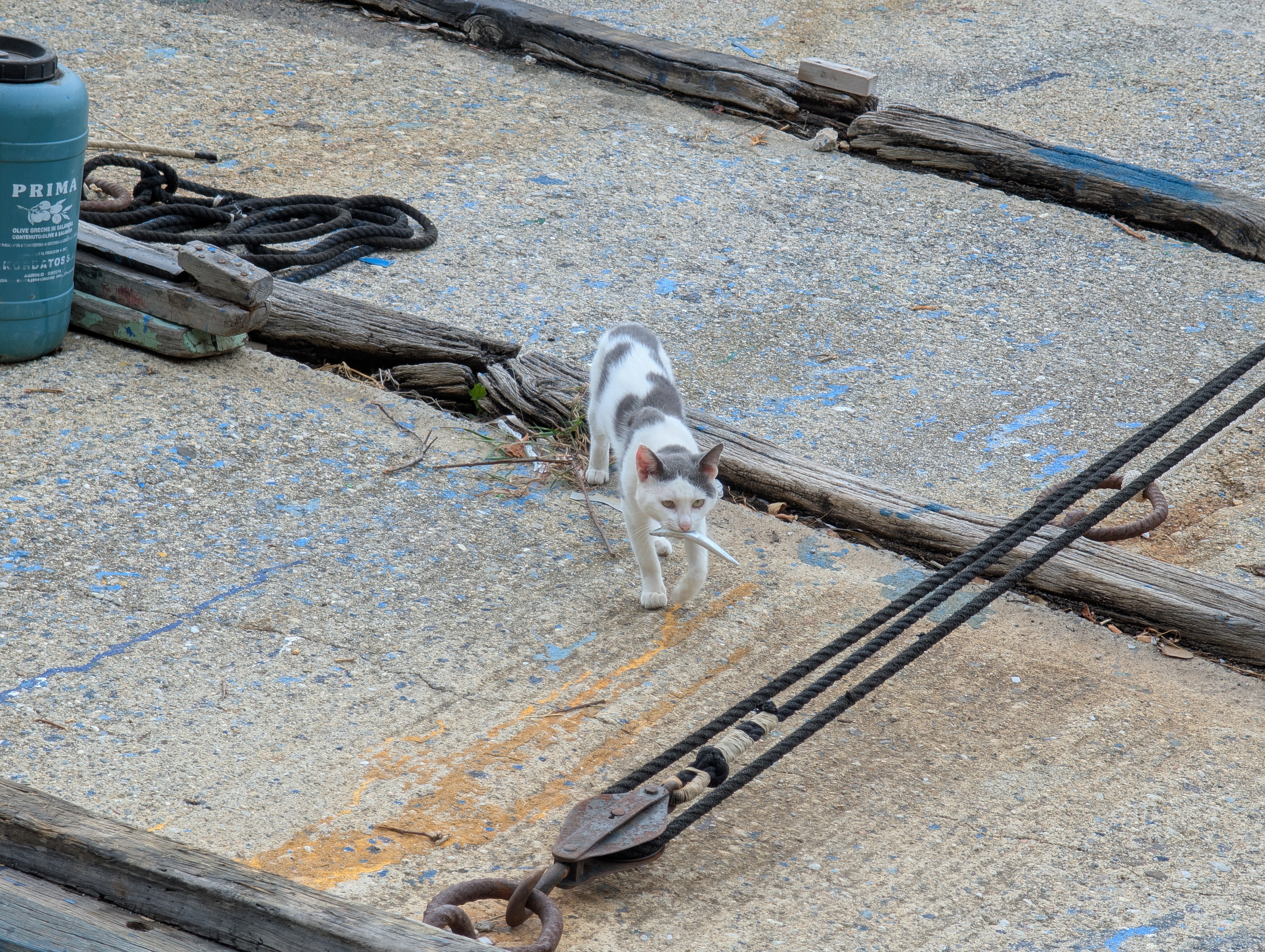
The castle over the two villages
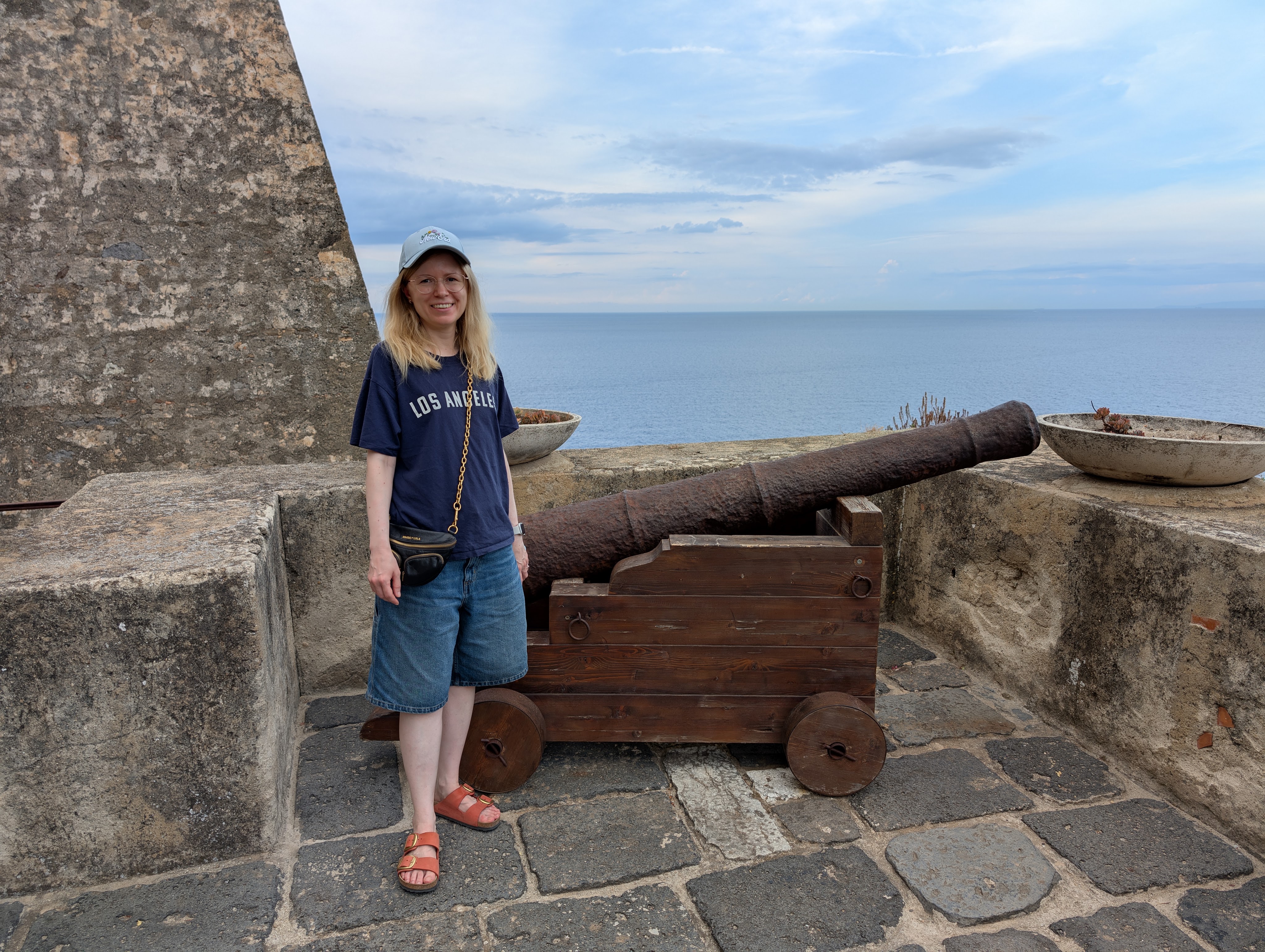
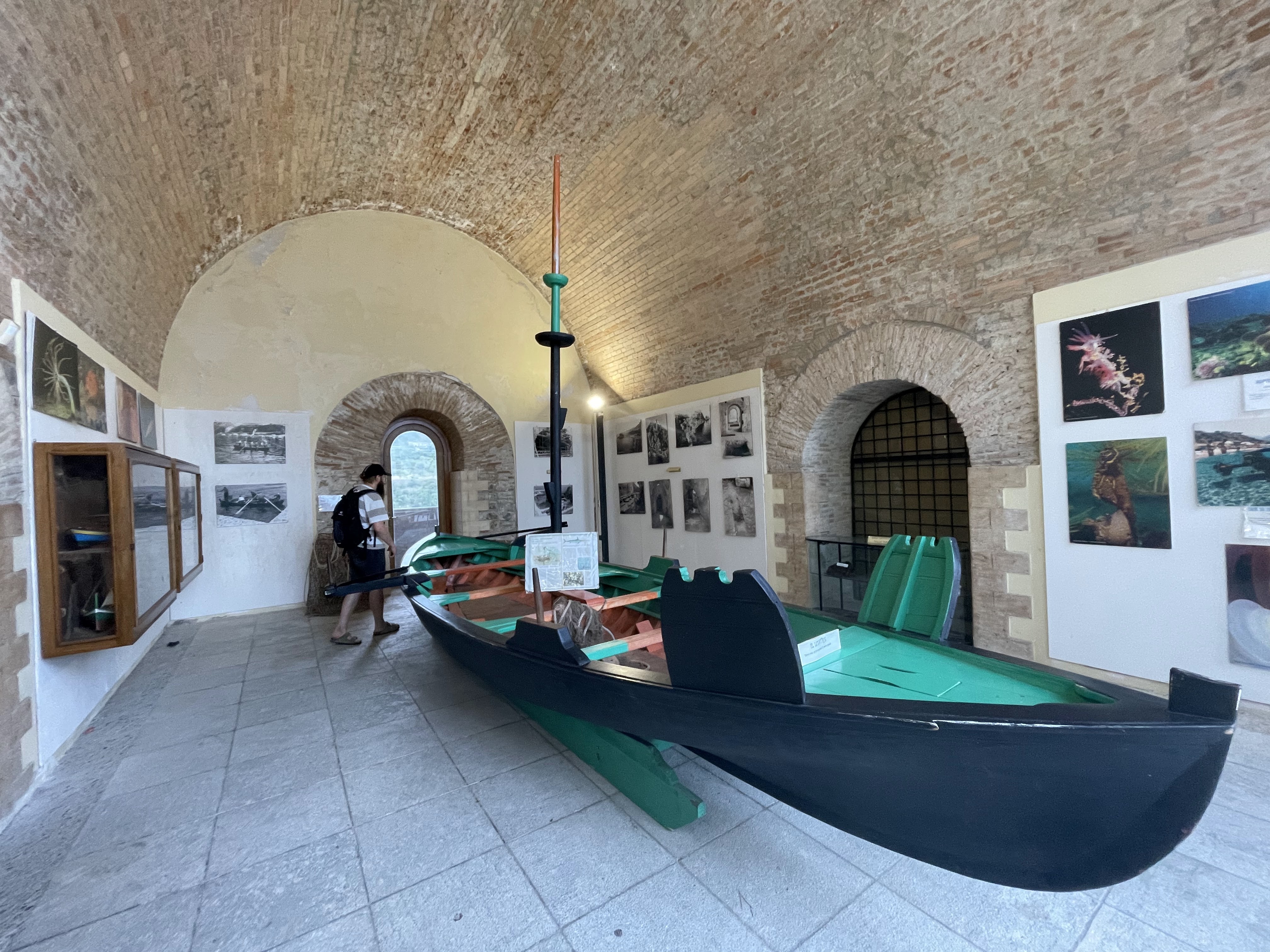
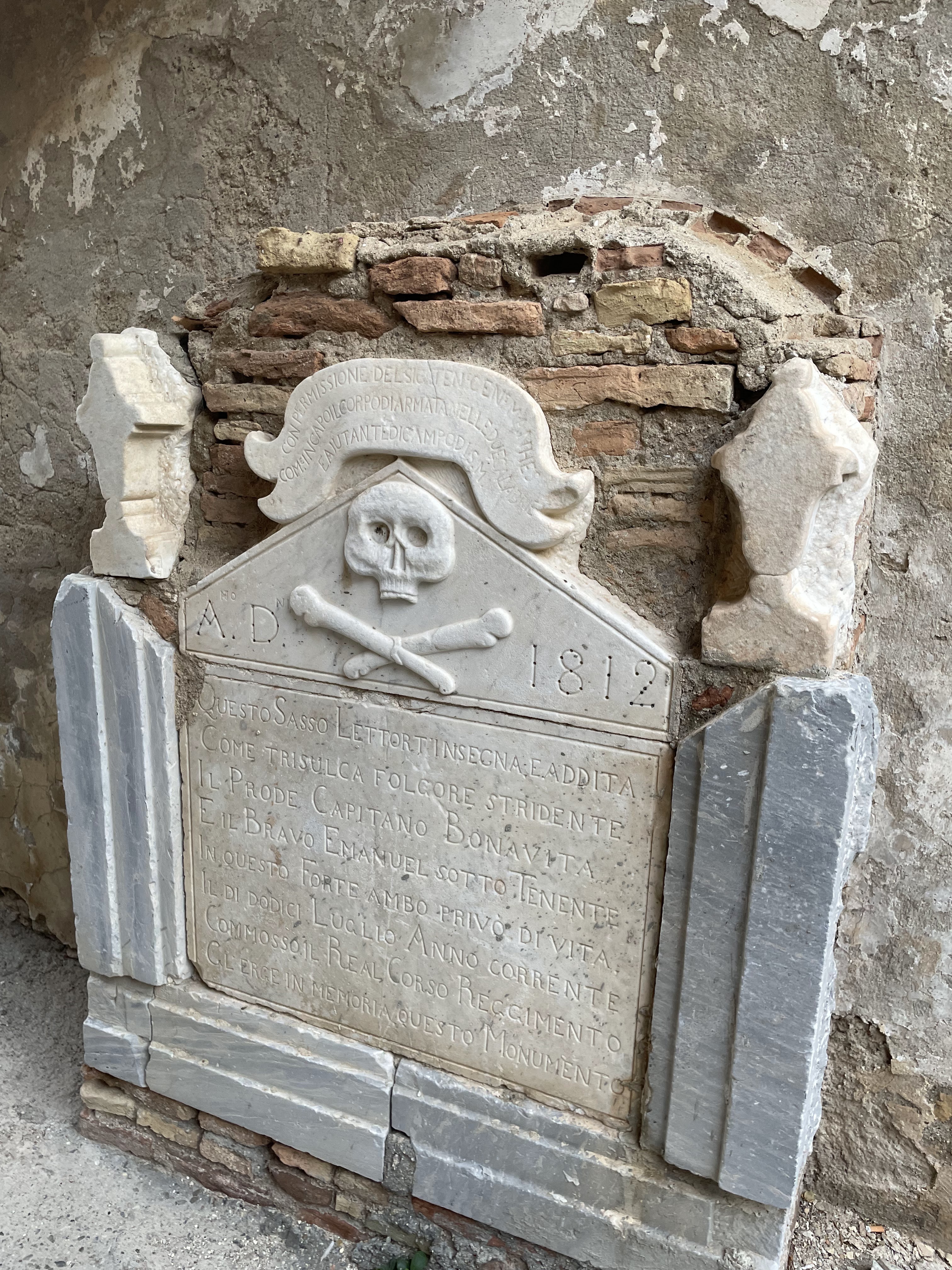
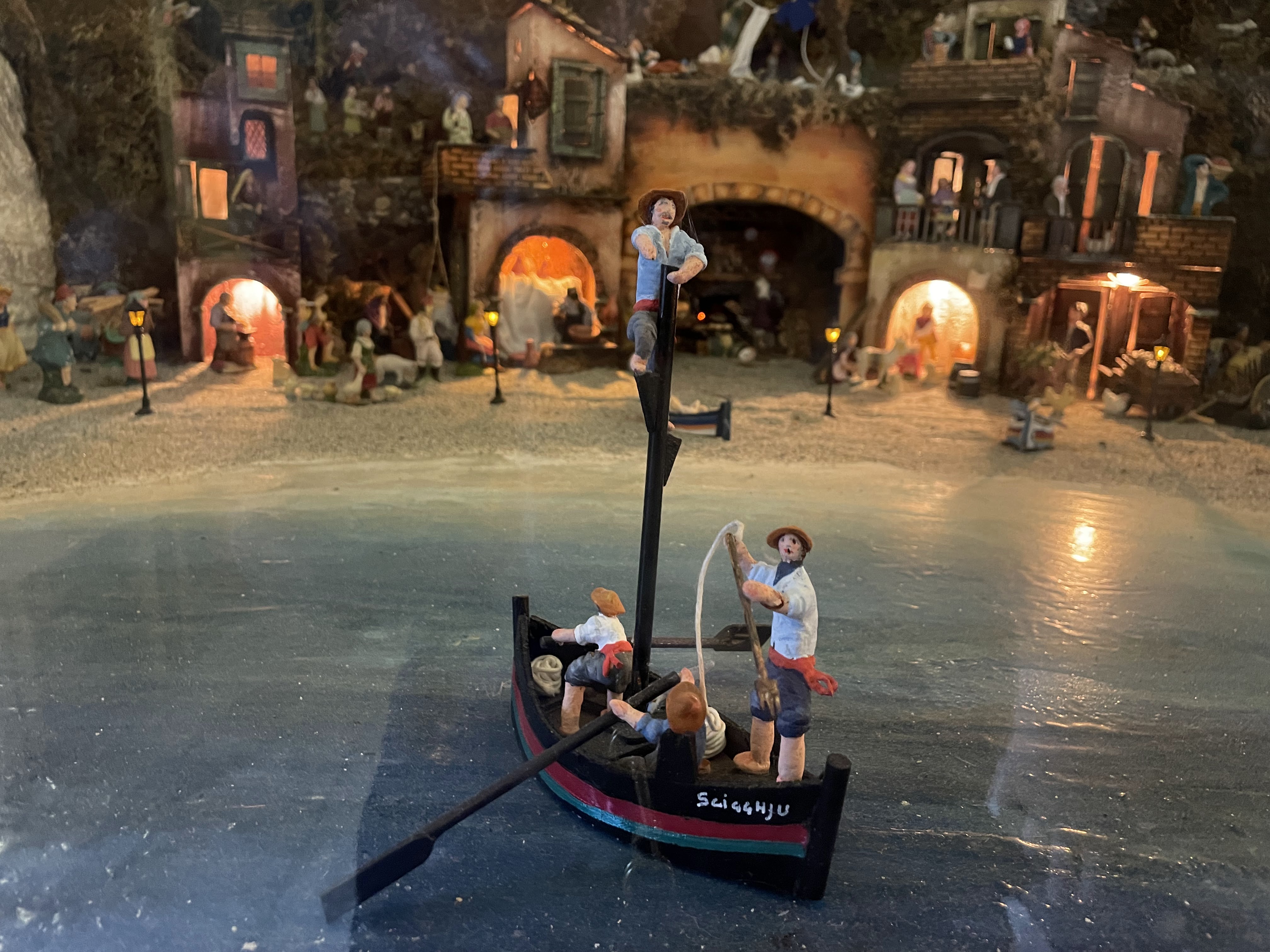
The castle occupies the entire headland and has opinions about privacy. You enter up through the village — past the campanile, with the rooftops stepping down beside you — and then it opens into terraces, and the whole arrangement spreads out in one gesture: the beach, both halves of the town, the harbour, and the long blue of the strait with Sicily somewhere in it, keeping quiet. Up top the ramparts still carry a cannon, pointed out to sea with more confidence than accuracy, and set into the wall an eighteenth-century burial plaque on which the skull is carved plainly, in case anyone wonders how it went. Inside, one vaulted room keeps the fishing history: photographs and articles on the walls, and the boats themselves in miniature with their harpoon towers up. Another vaulted room keeps its stage set — red brocade, a chandelier, a pair of suits of armour standing at ease. The light went soft while we were up there. The last frames of the day are from the terrace rail, watching the day's version of the bay hand over to the evening's.
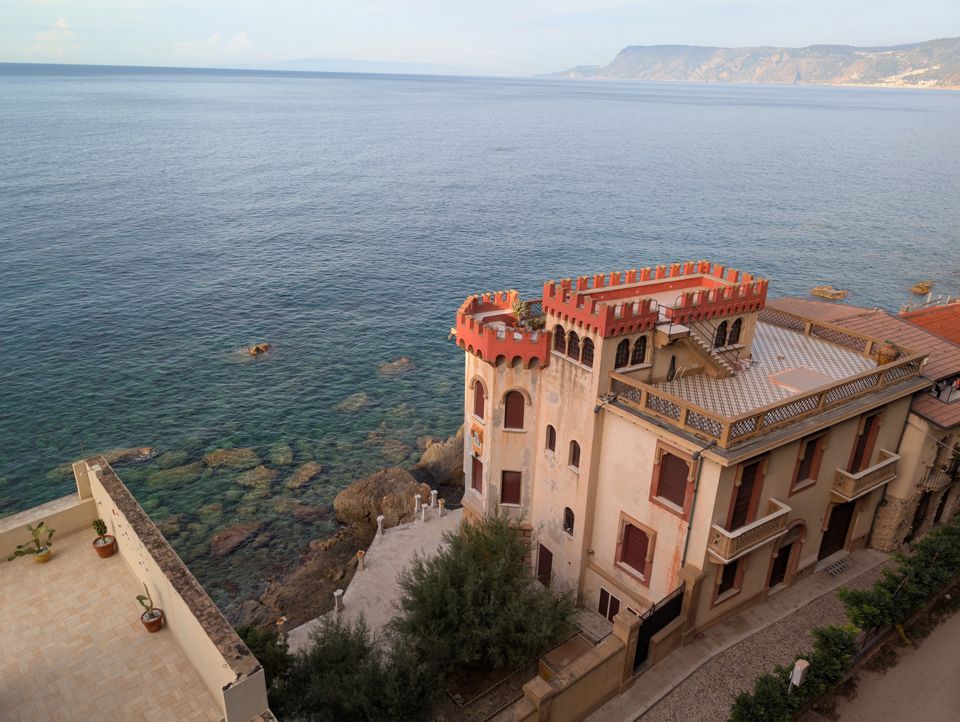
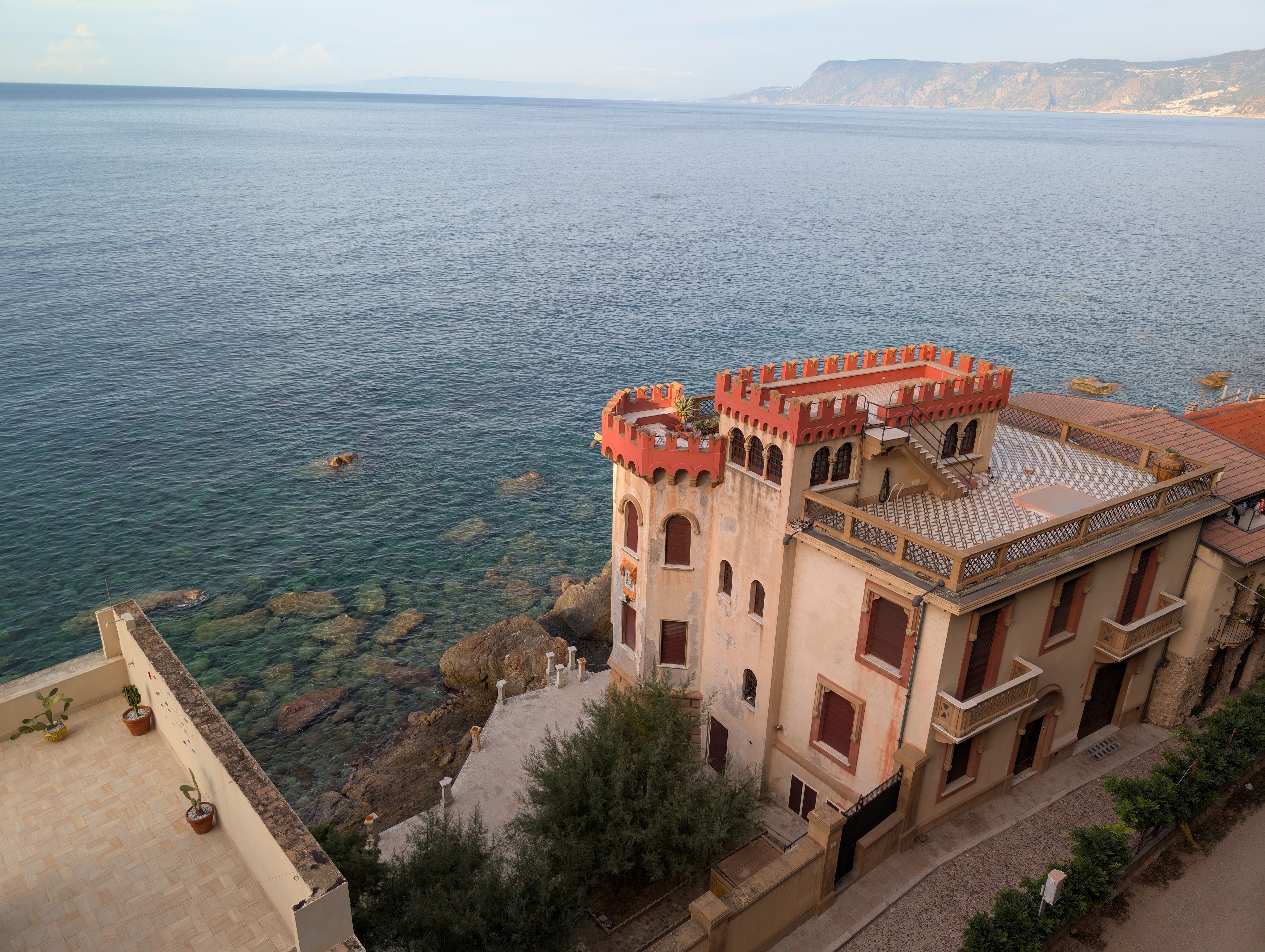
The castle-villa, its crenellations aimed at the horizon 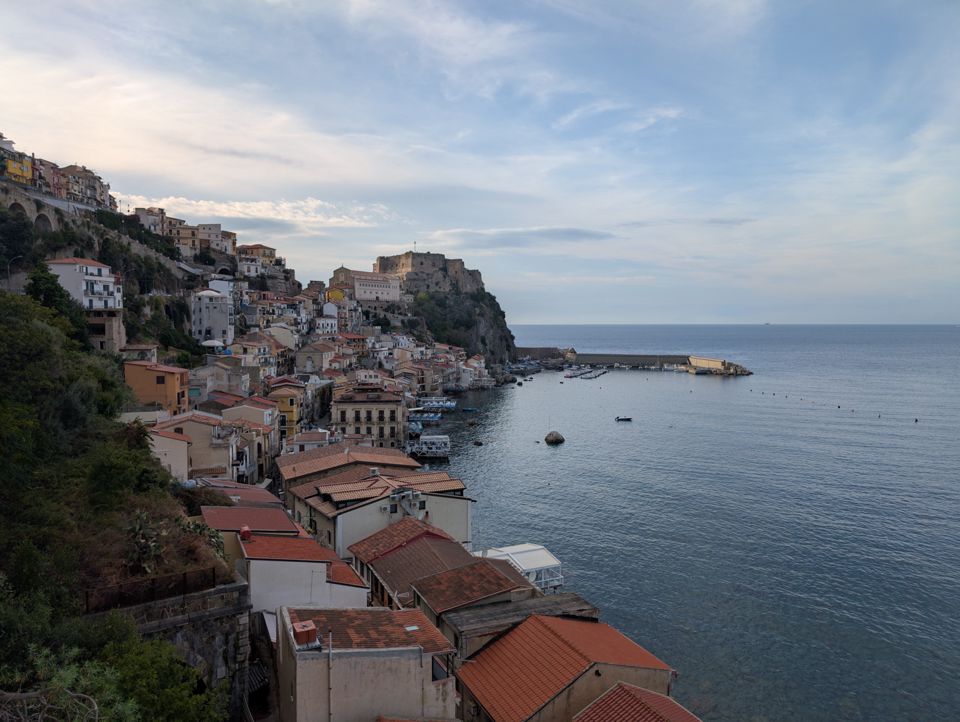
The way up: campanile and rooftops, the rock above them 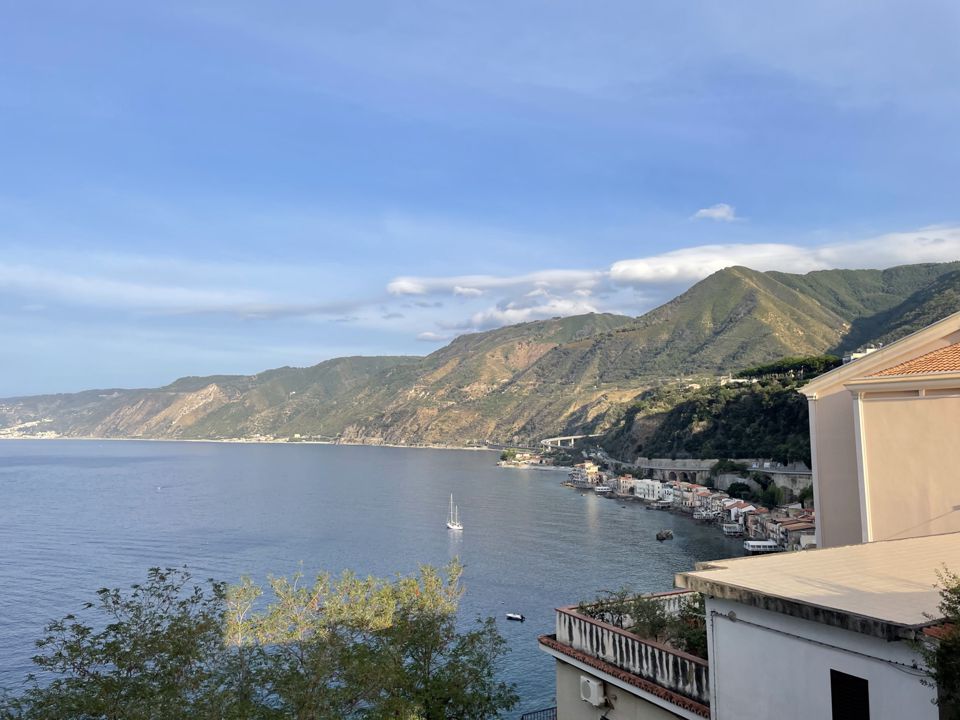
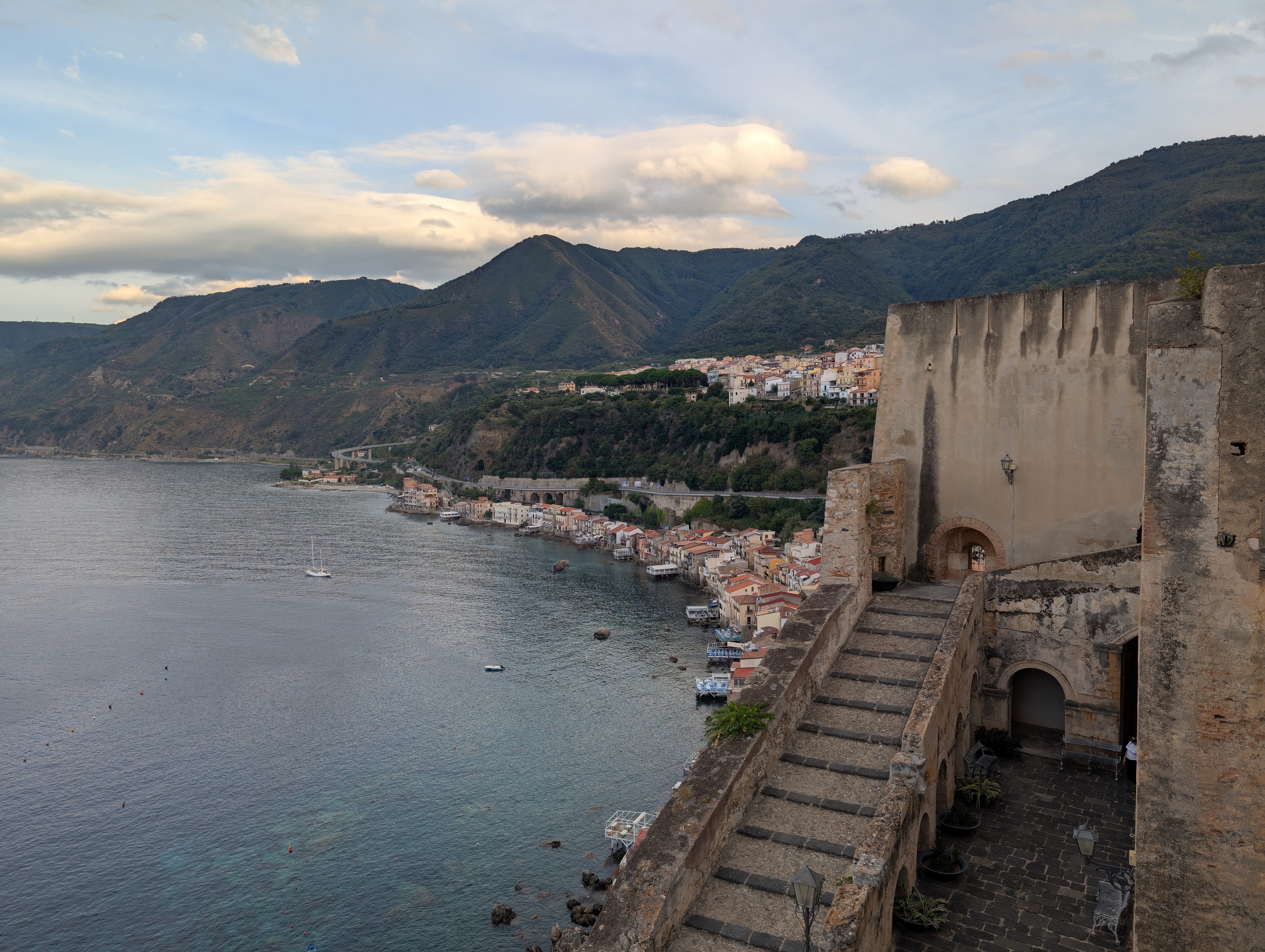
From the terraces: the whole bay, one sailboat for scale 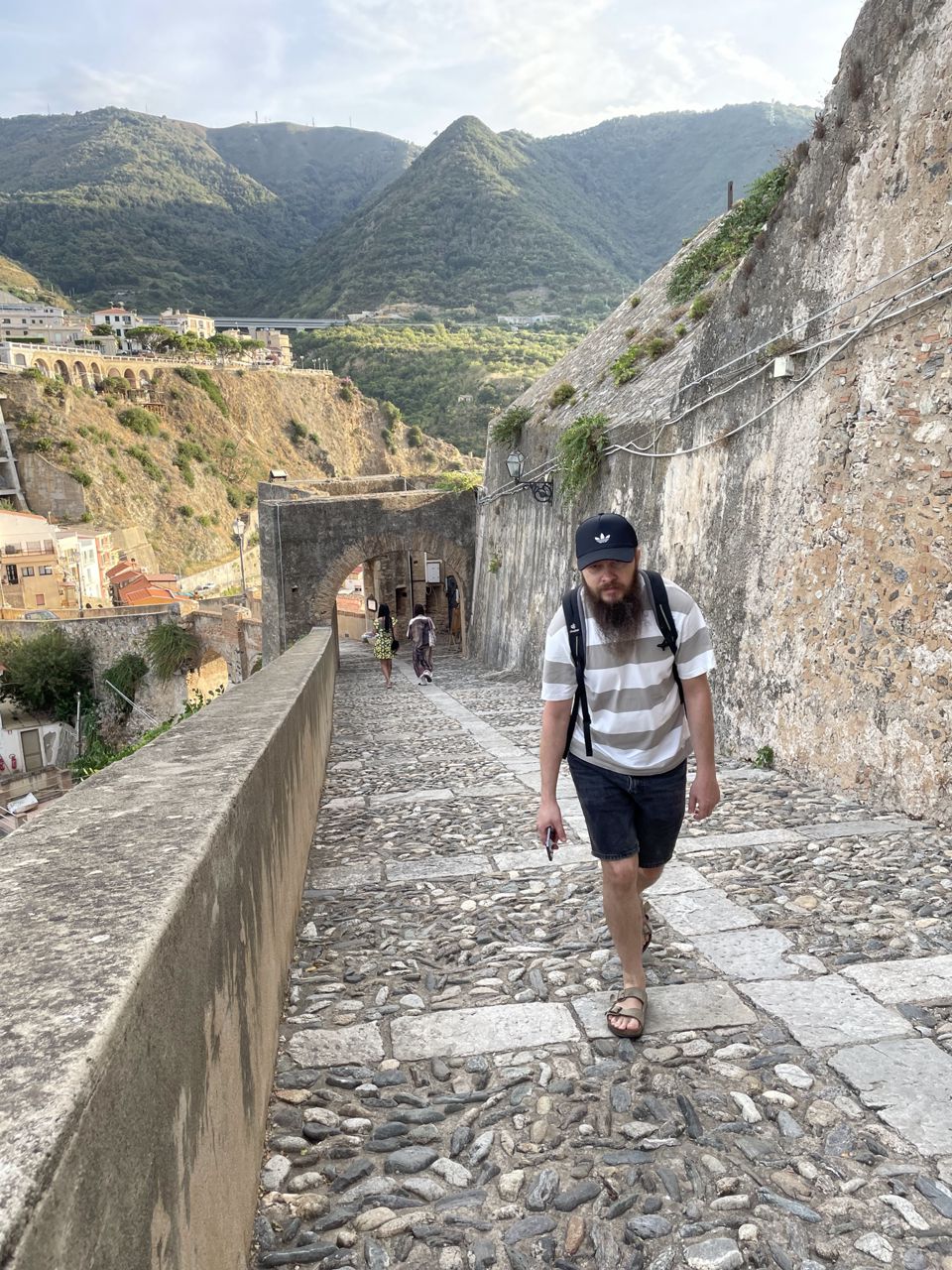
The approach, through the village 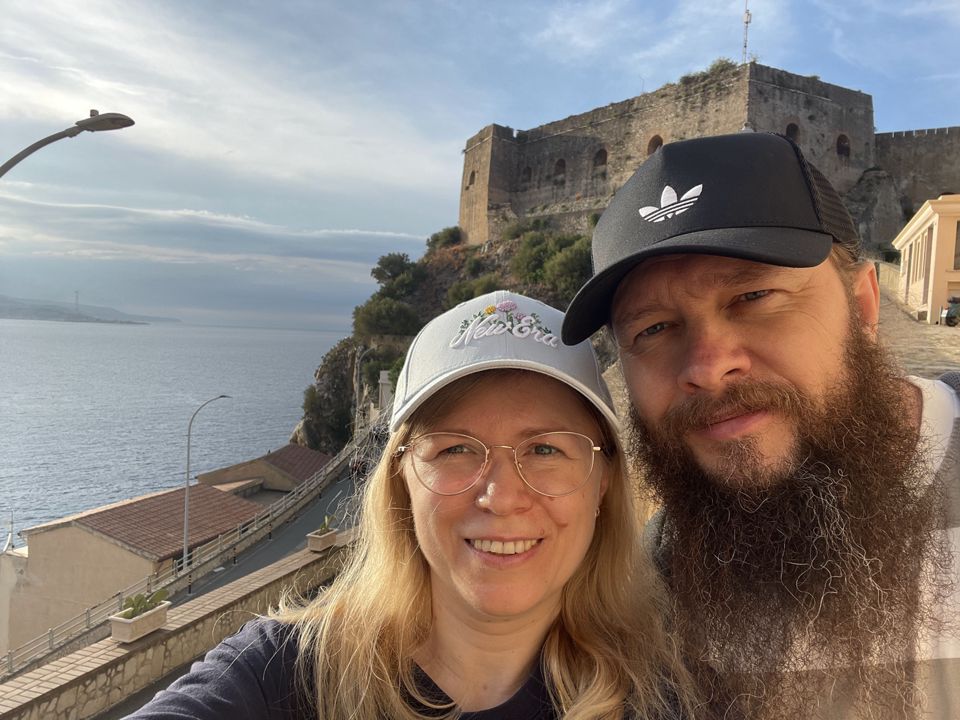
On the walls: keep behind, sea beyond 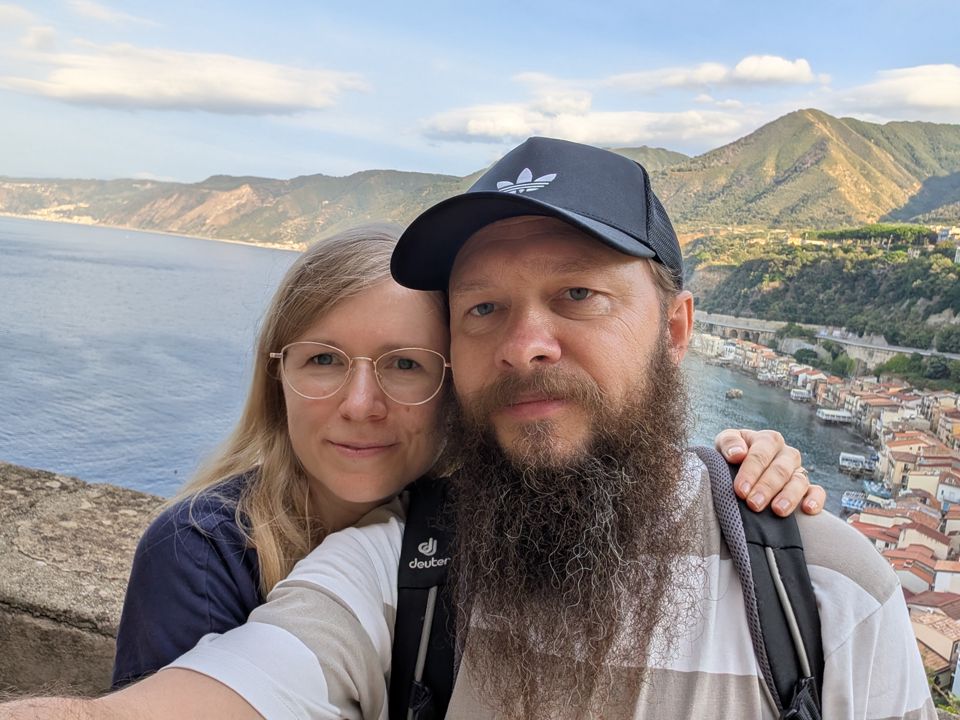
The wall walk, with the mountains making the background 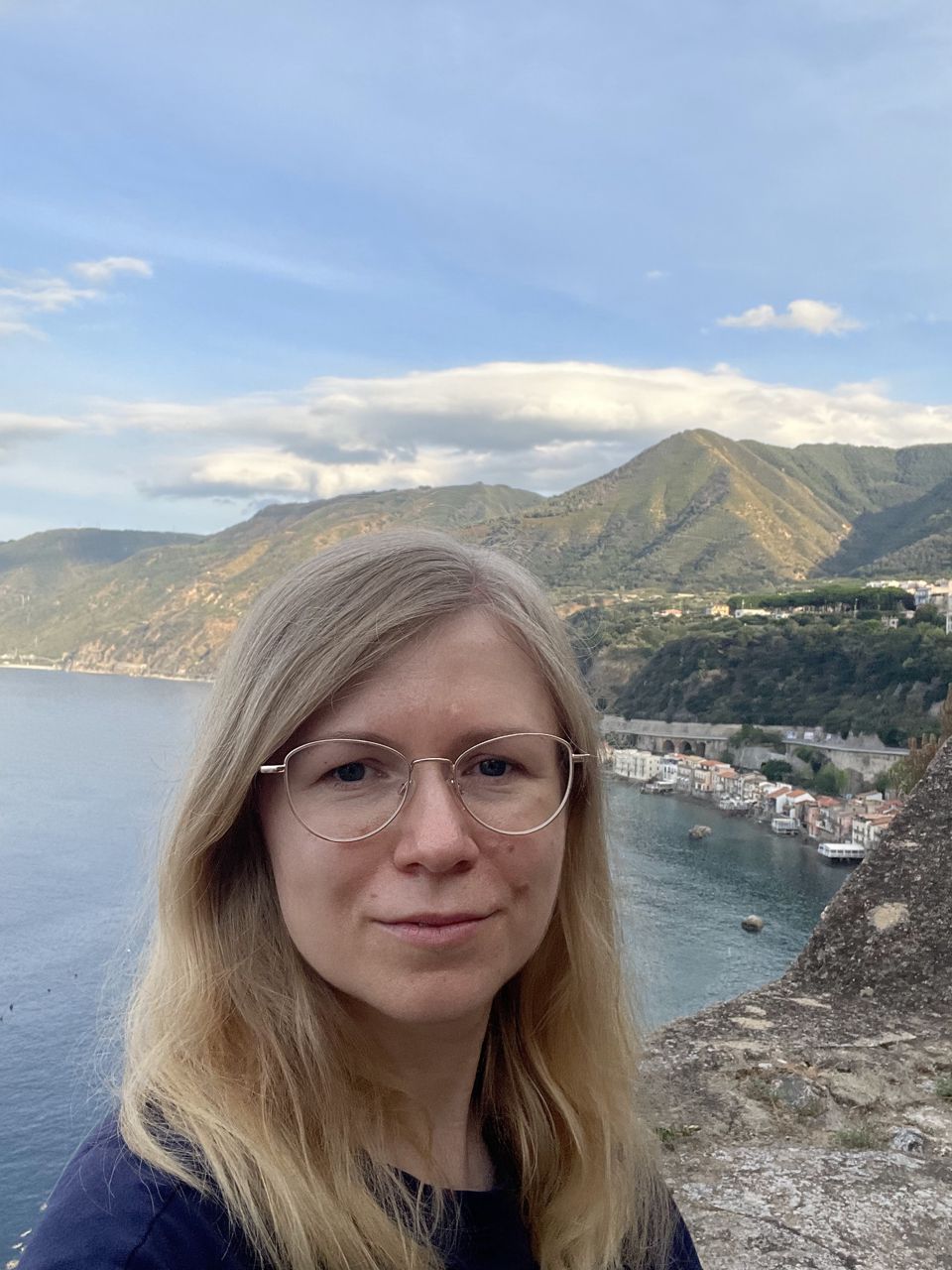
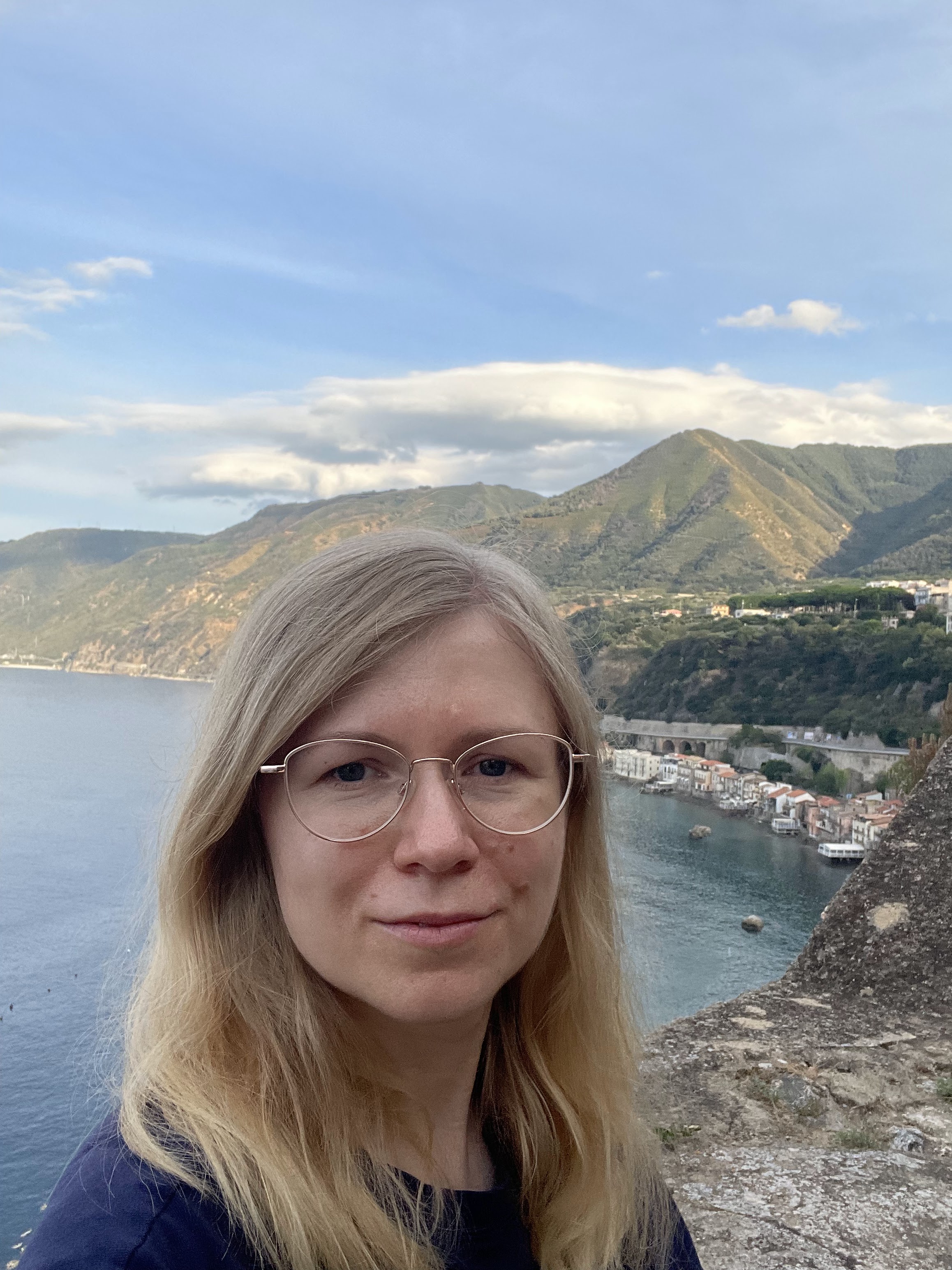
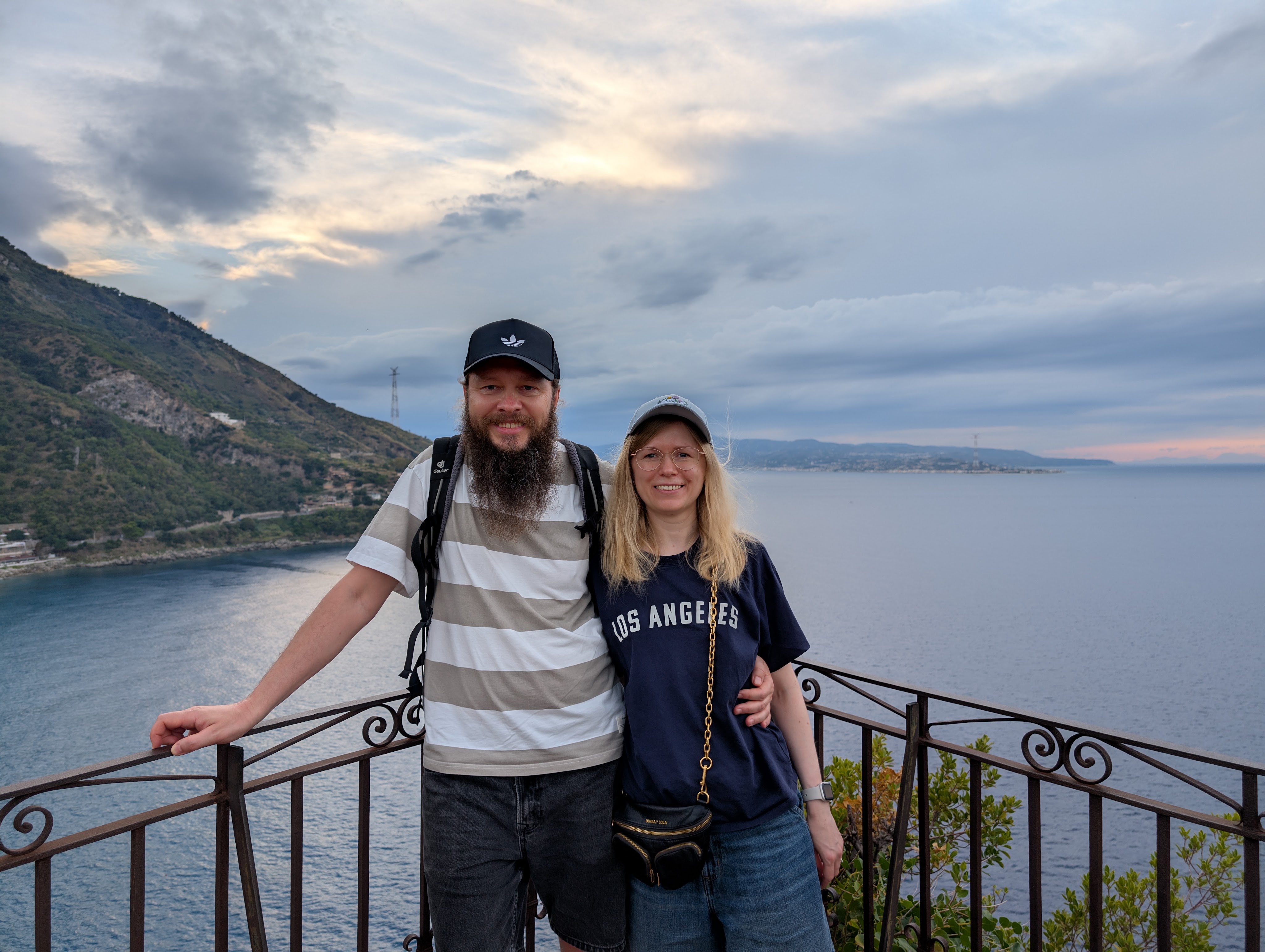
A portrait with the coast holding still 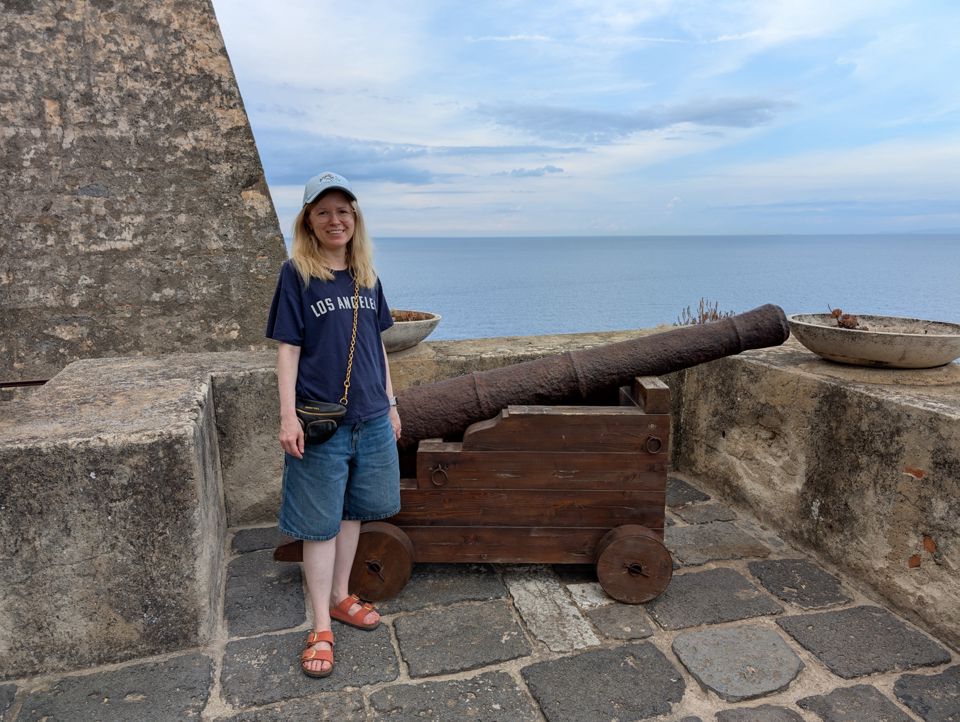
On the ramparts: a cannon, and company 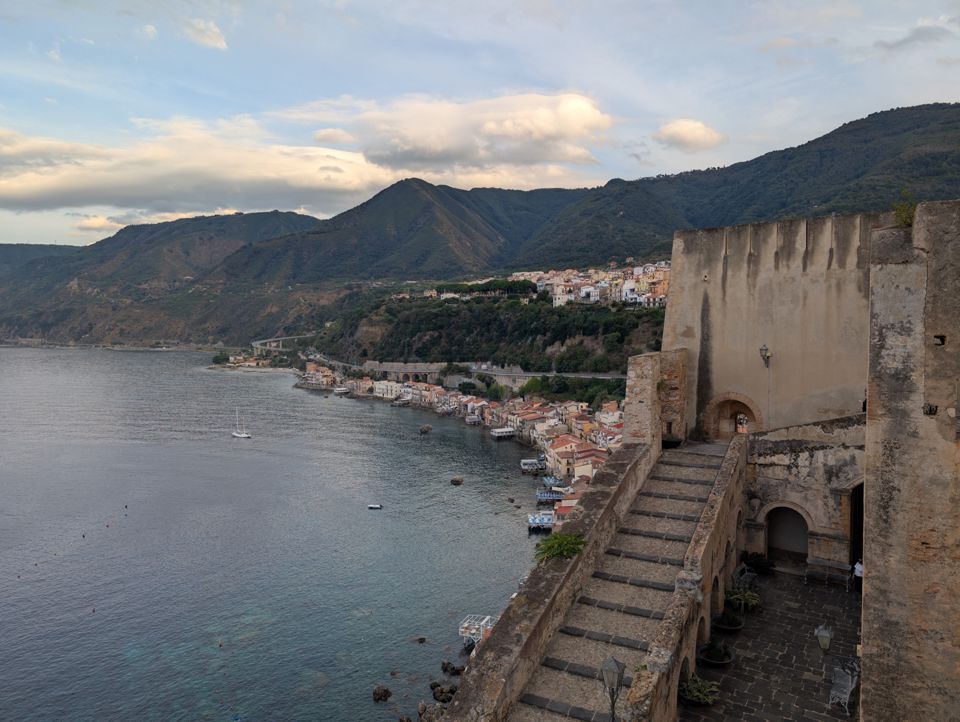
The wall, the stairs, Chianalea's roofs underneath 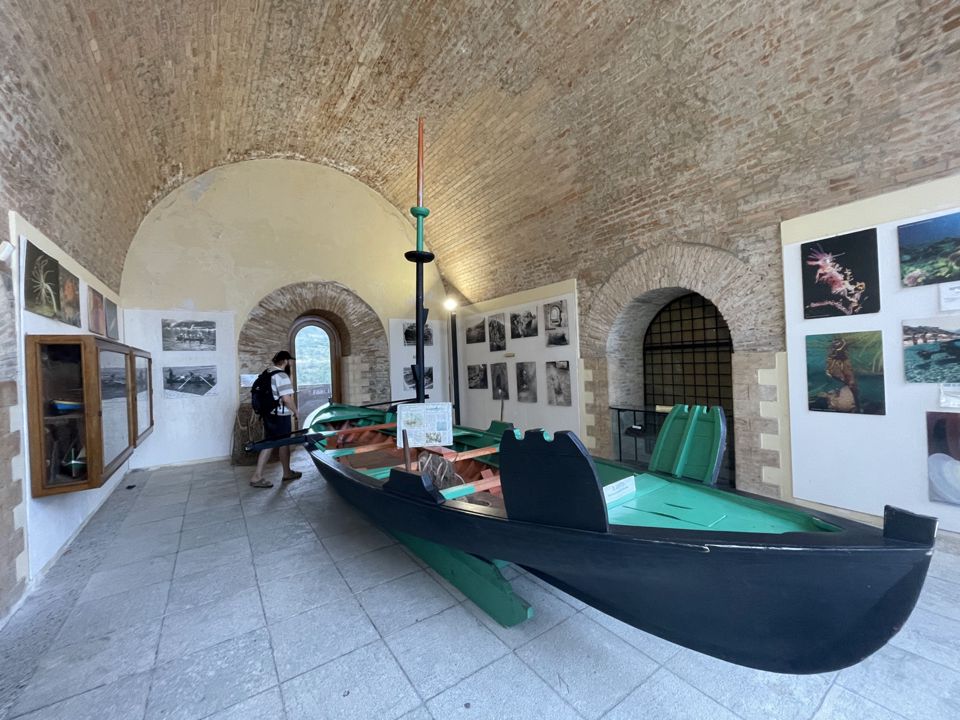
Inside: the vaulted hall, the boat, its harpoon mast up 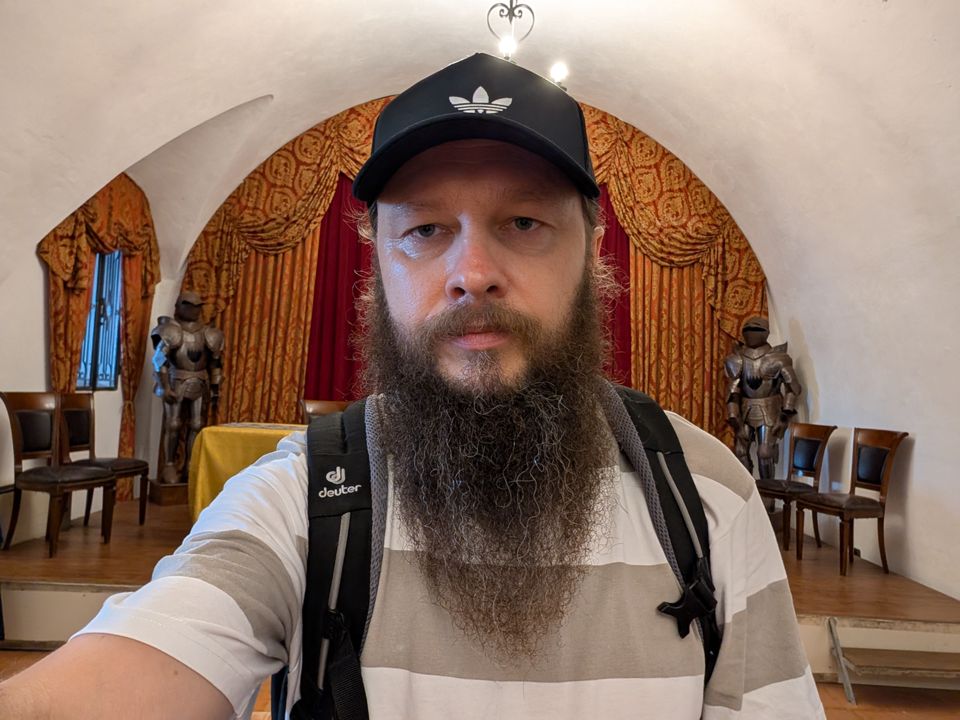
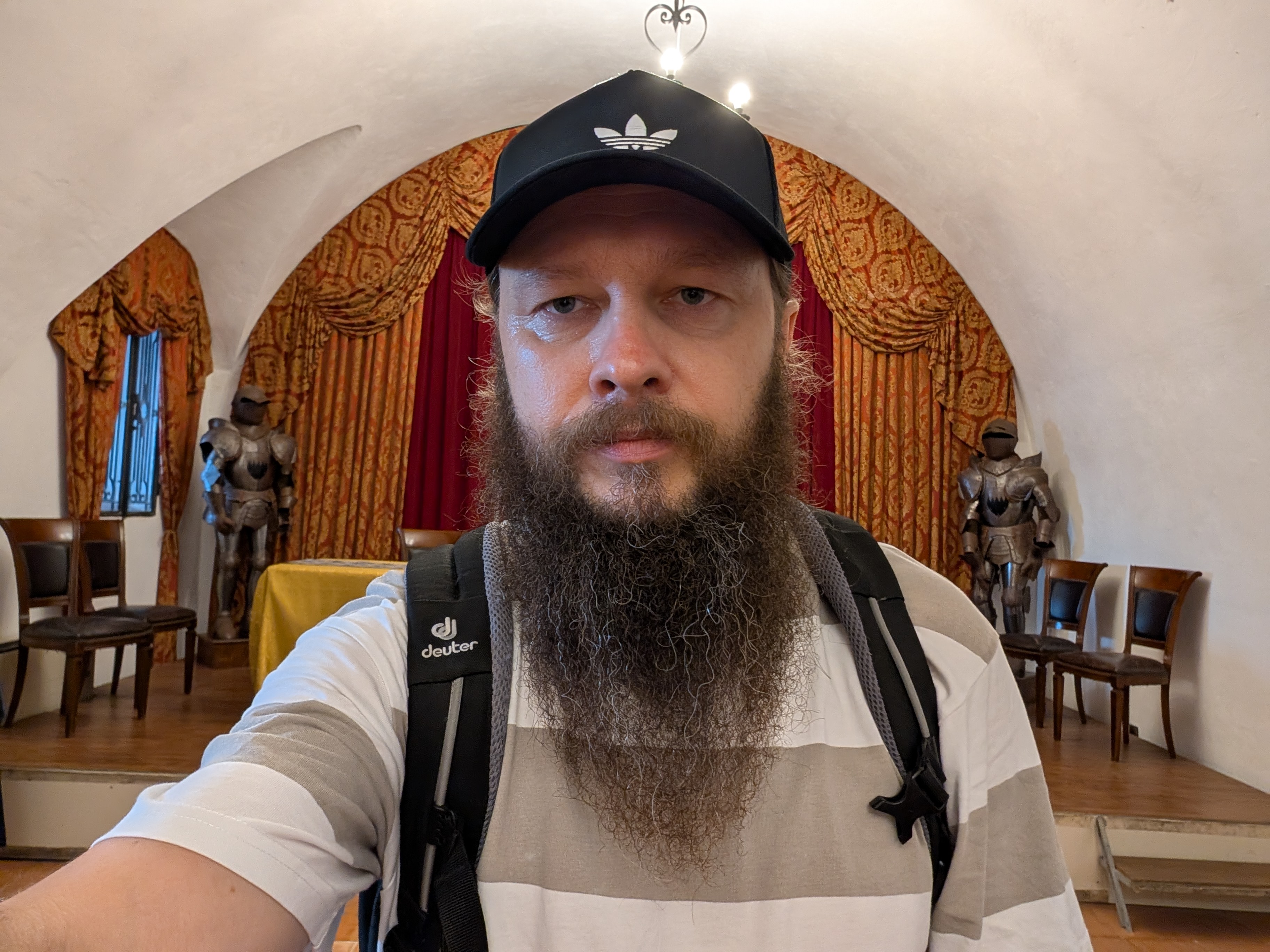
The other hall: brocade, a chandelier, armour at ease 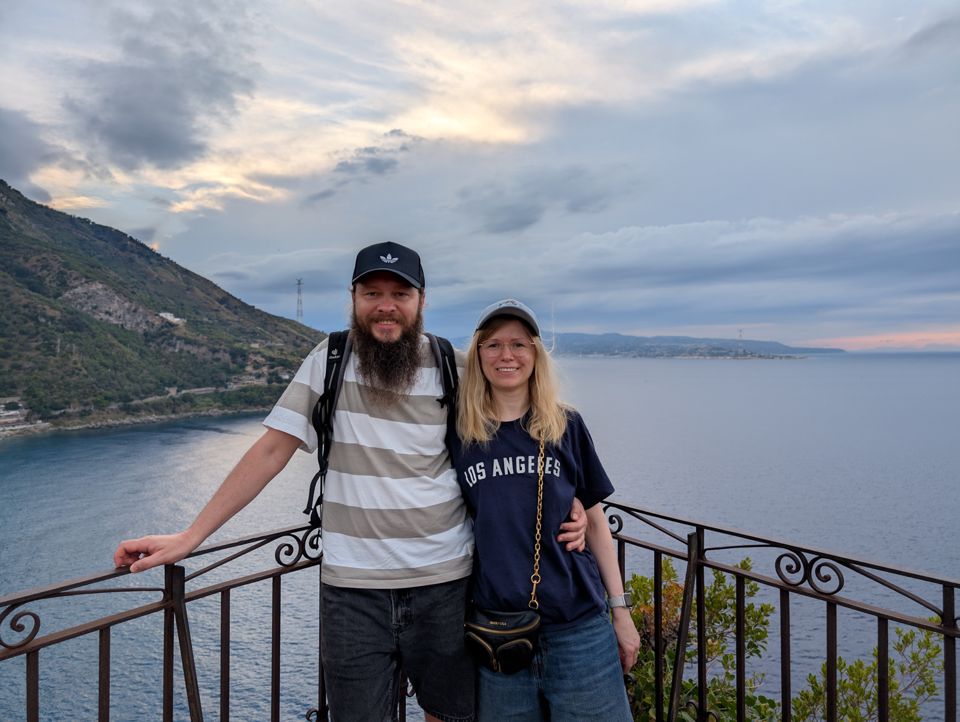
The terrace rail, the light going soft 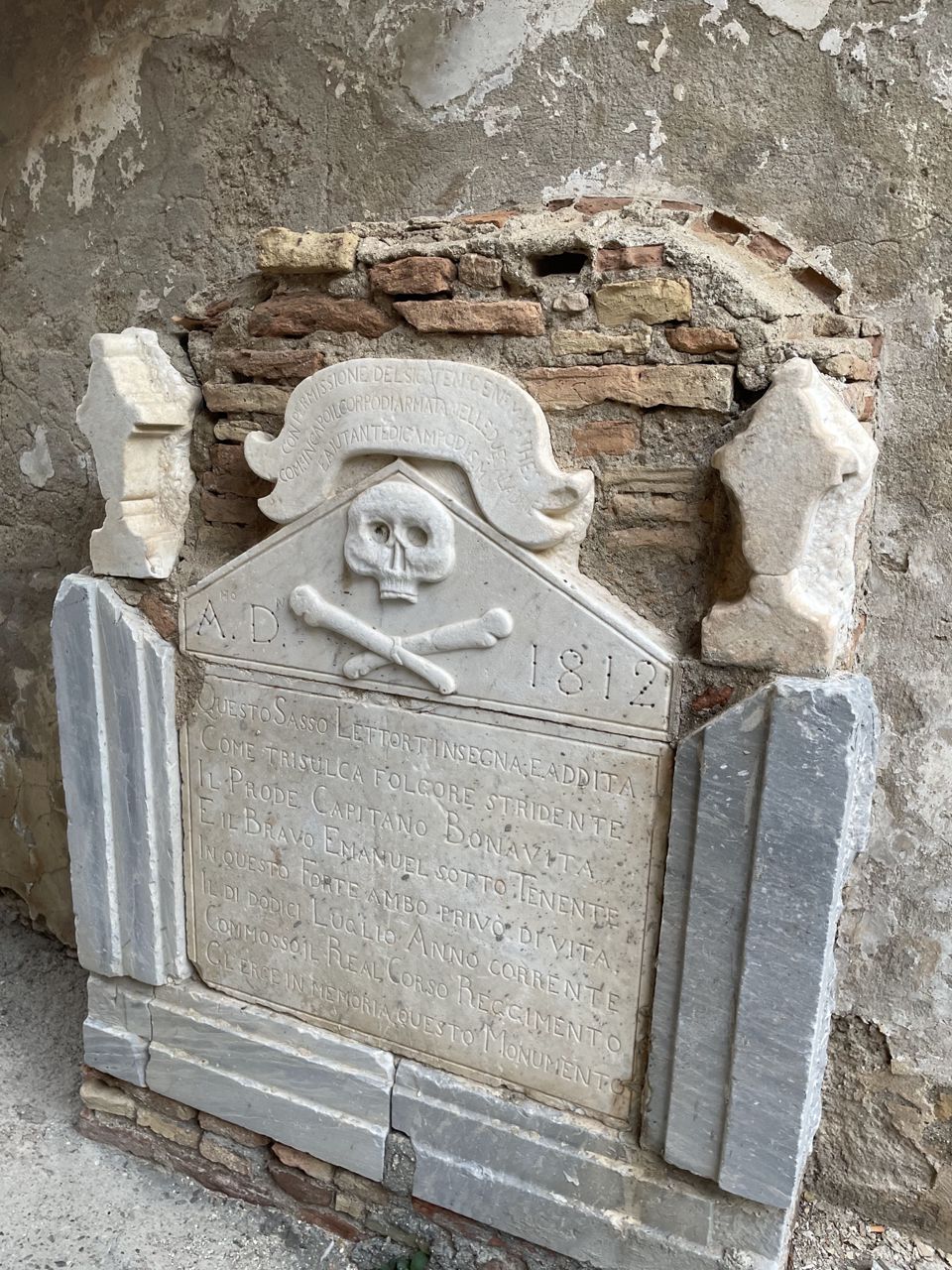
A.D. 1812, and the skull carved so there's no confusion 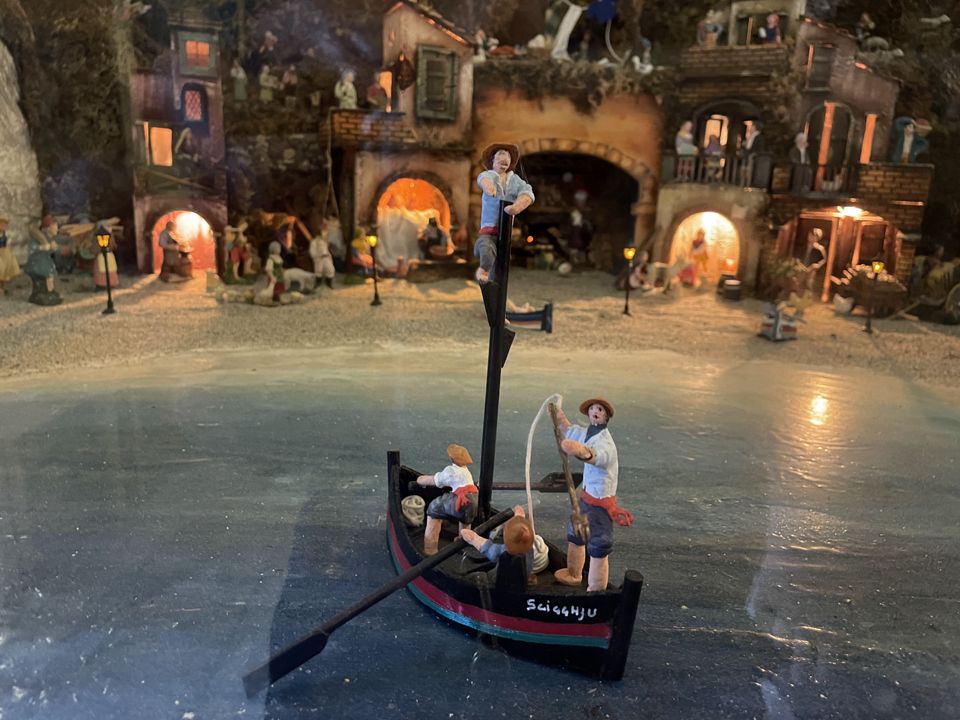
In miniature: the fleet, towers up, ready
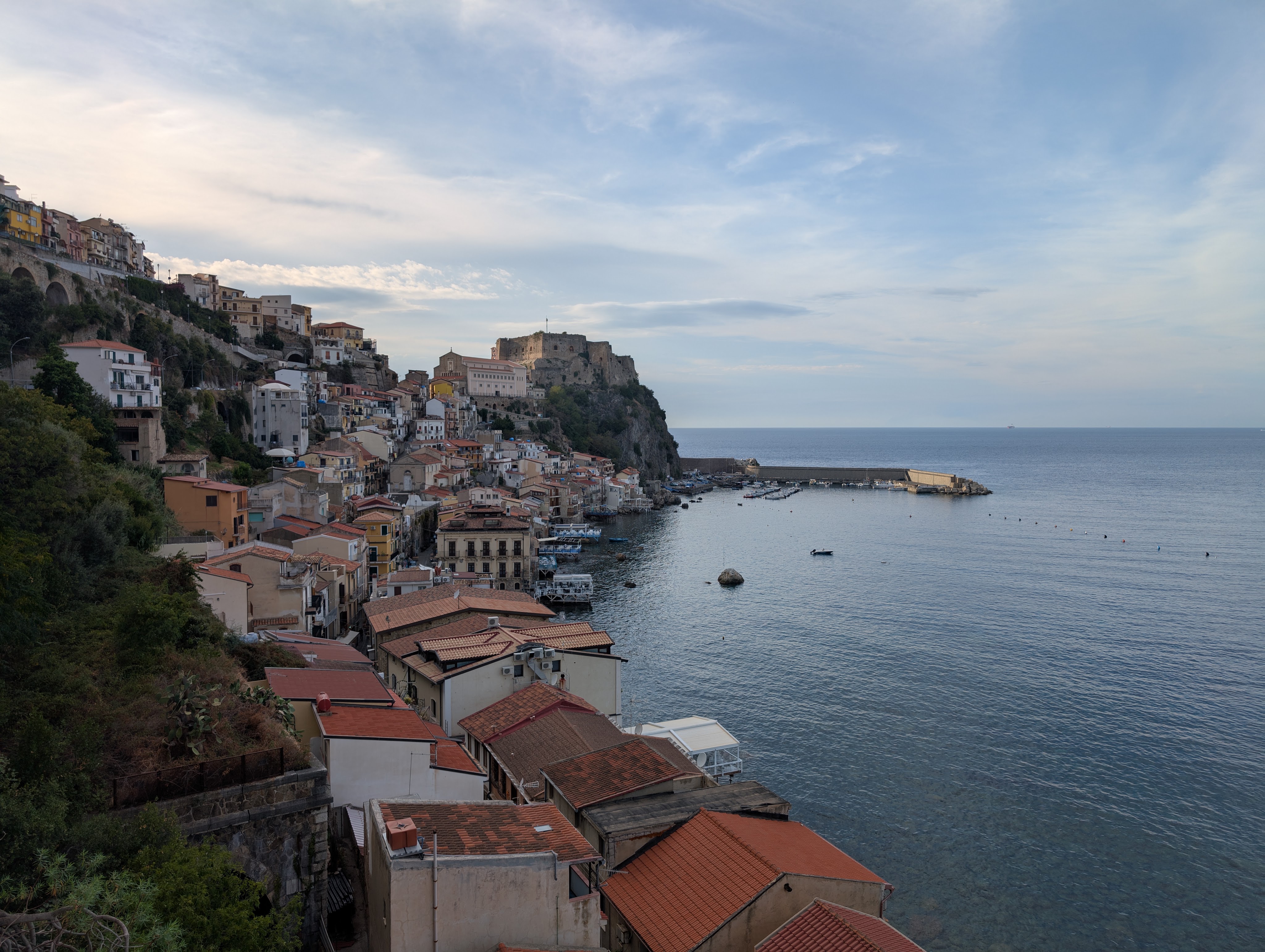
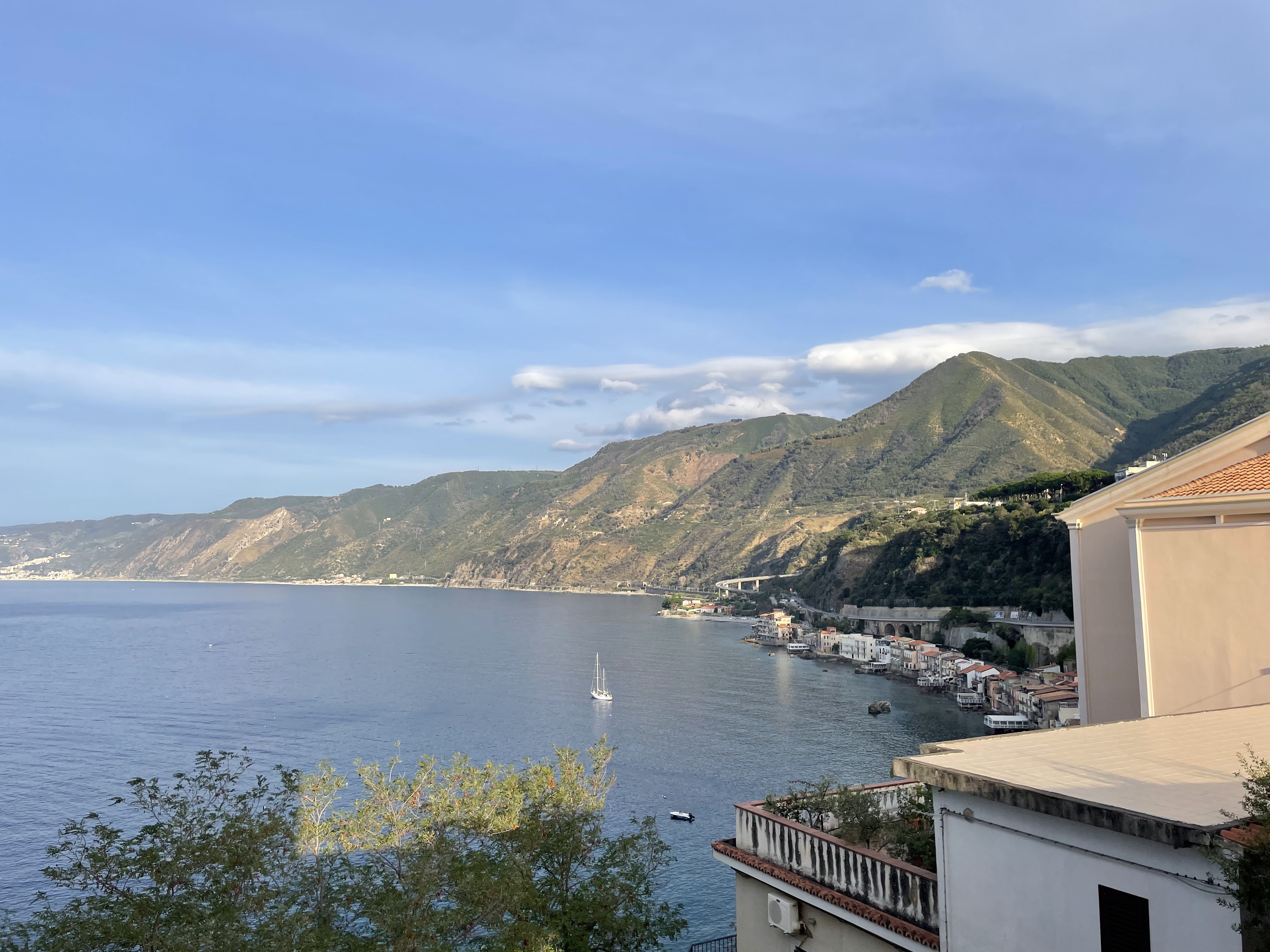
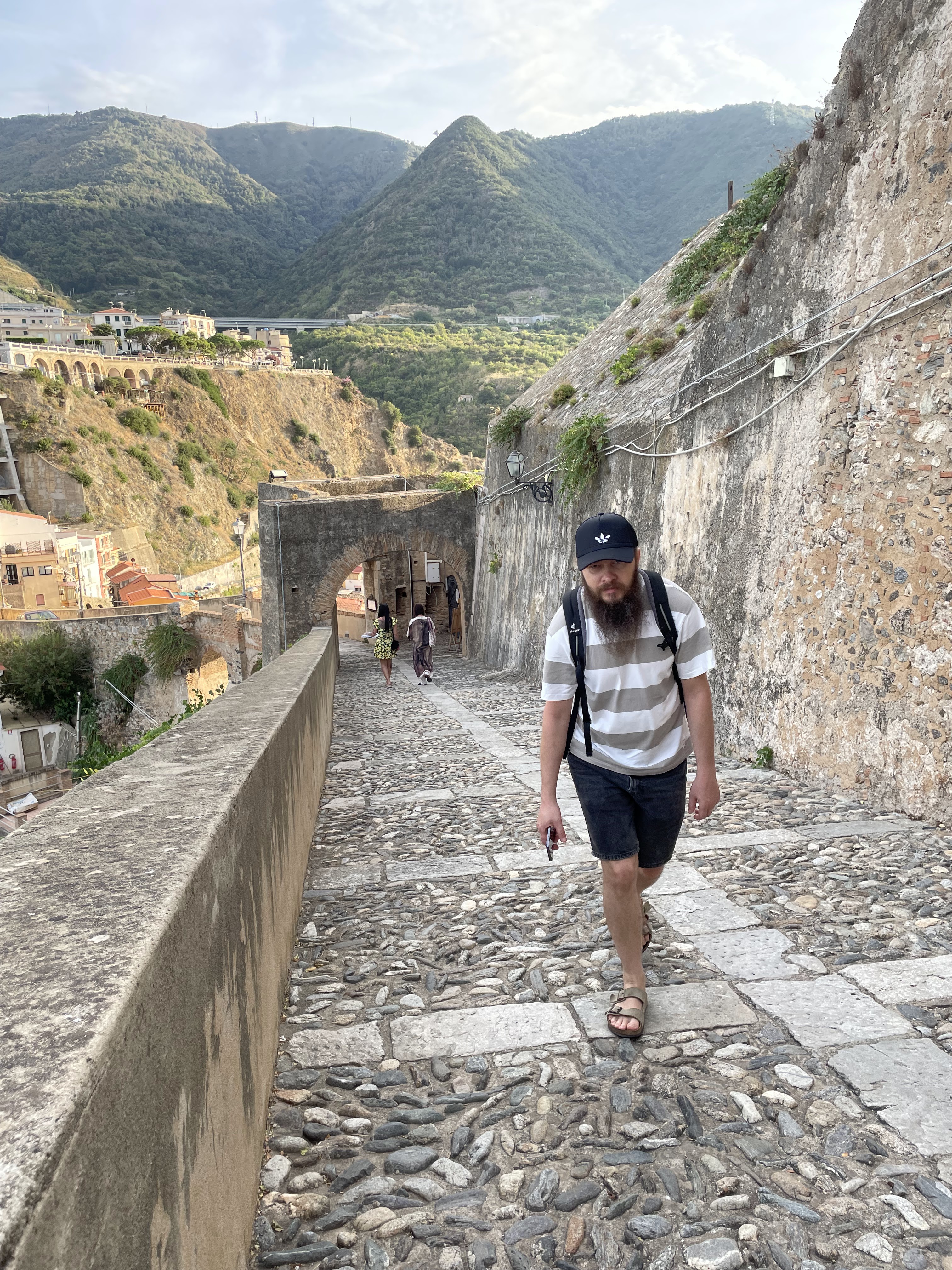
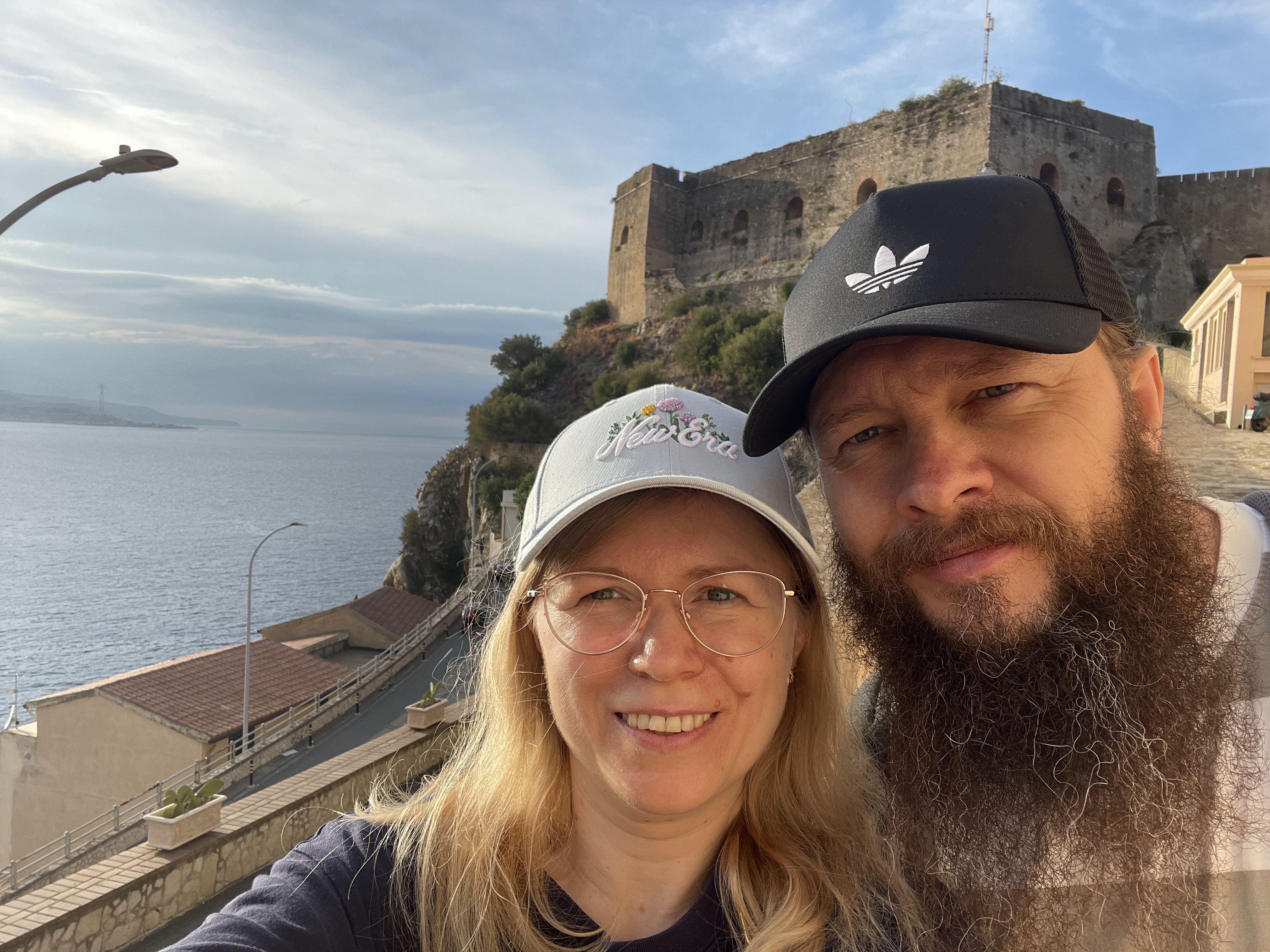
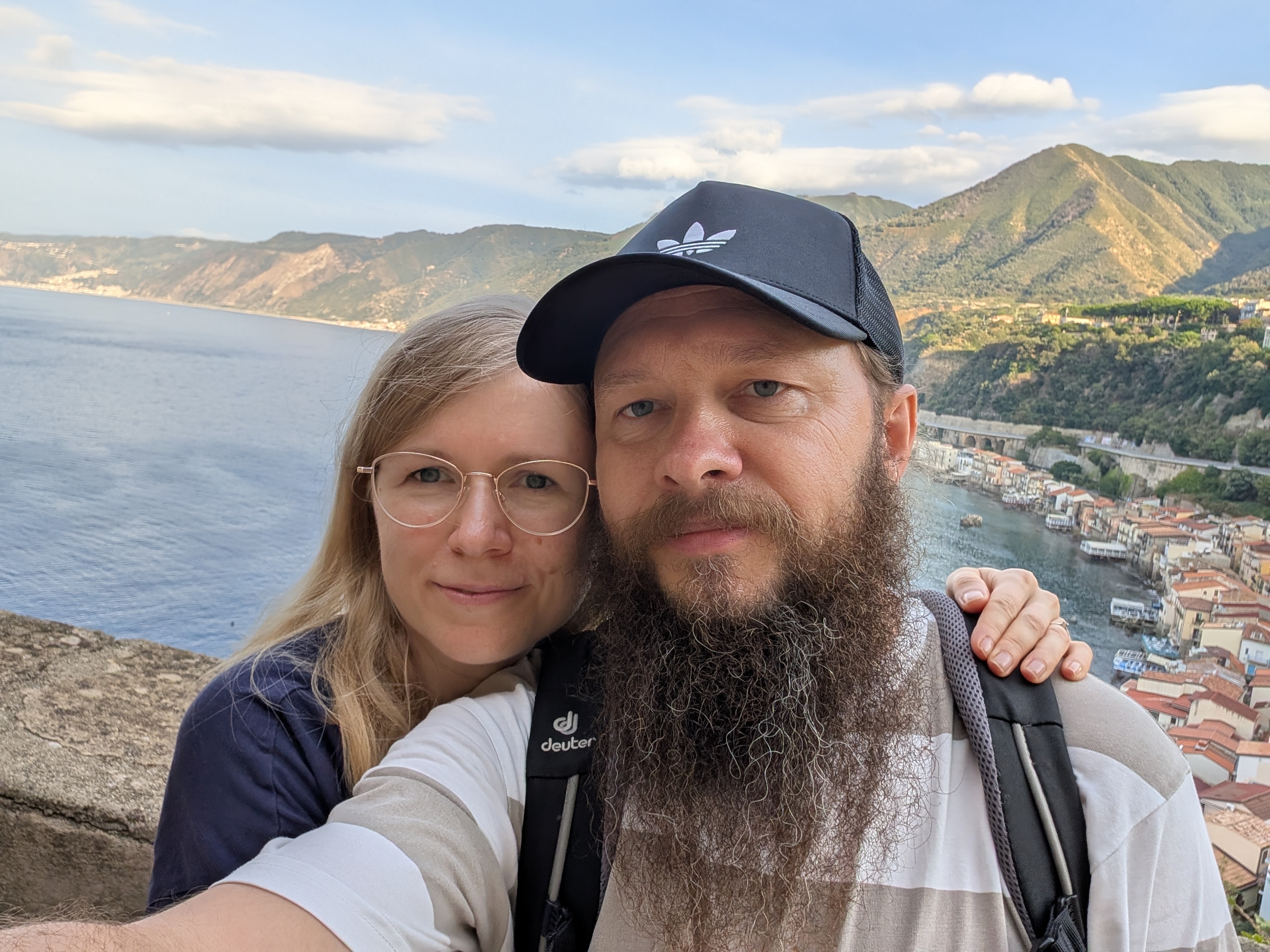
The castle headland at six in the evening — the whole arrangement, town to horizon, in one slow turn. The cargo ship keeps the scale honest.
The quiet day, and the boat
The twenty-fifth is the day that proves the village earned its keep: the photographs admit to a sunset from the balcony running pink to seven, and otherwise decline to testify until eleven at night, when the beach bar kept exactly one table operating. The twenty-sixth spent itself similarly until it was time to leave, and ended where the town's whole trade begins: the harbour, the boats, the S. Rocco — the working one, with the harpoon tower up and the castle wall behind it. Scilla, on balance, keeps its arrangements older and its water clearer than anywhere else we stopped. The appointment with the next town was for the evening, and we made it.
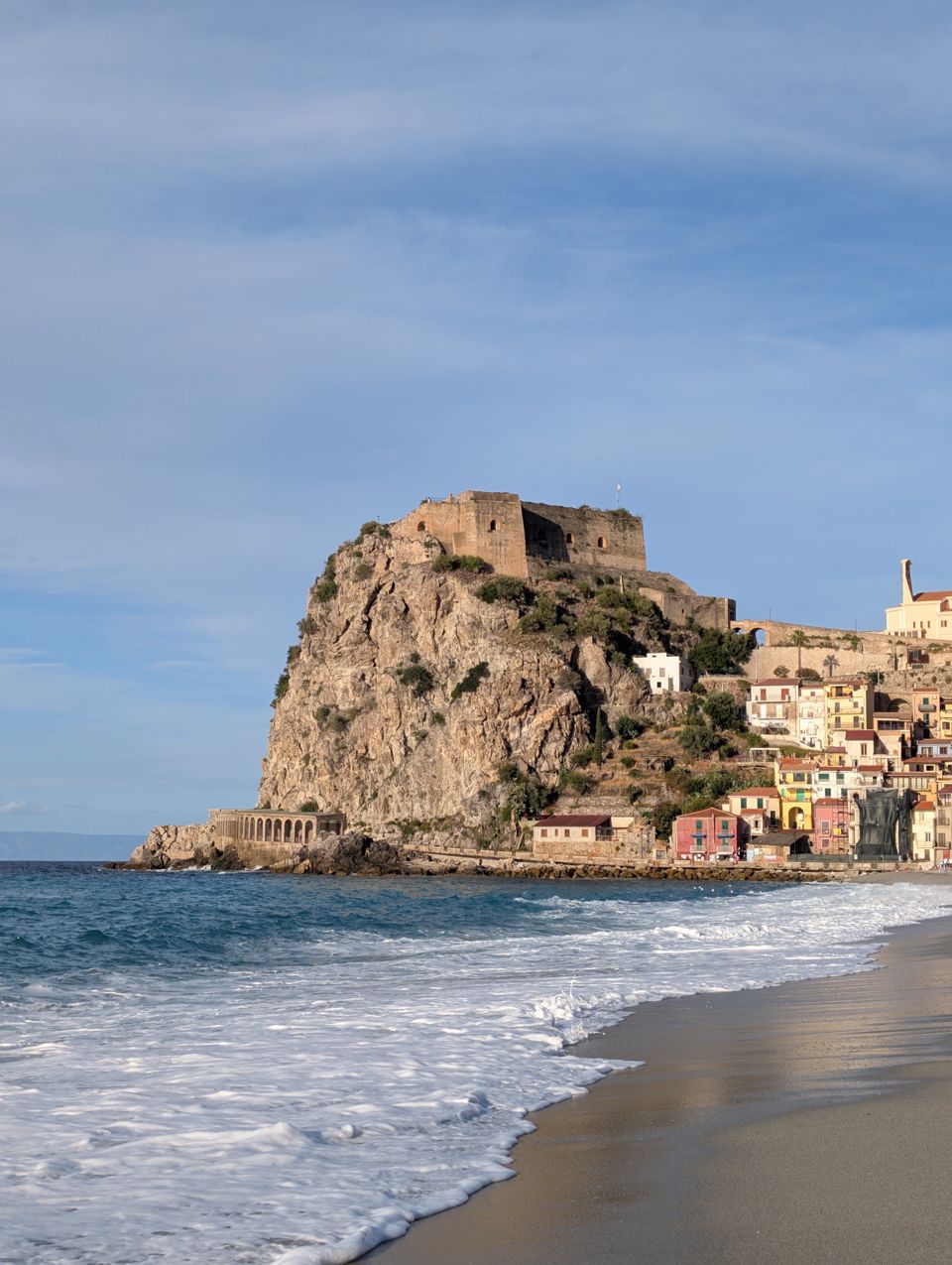
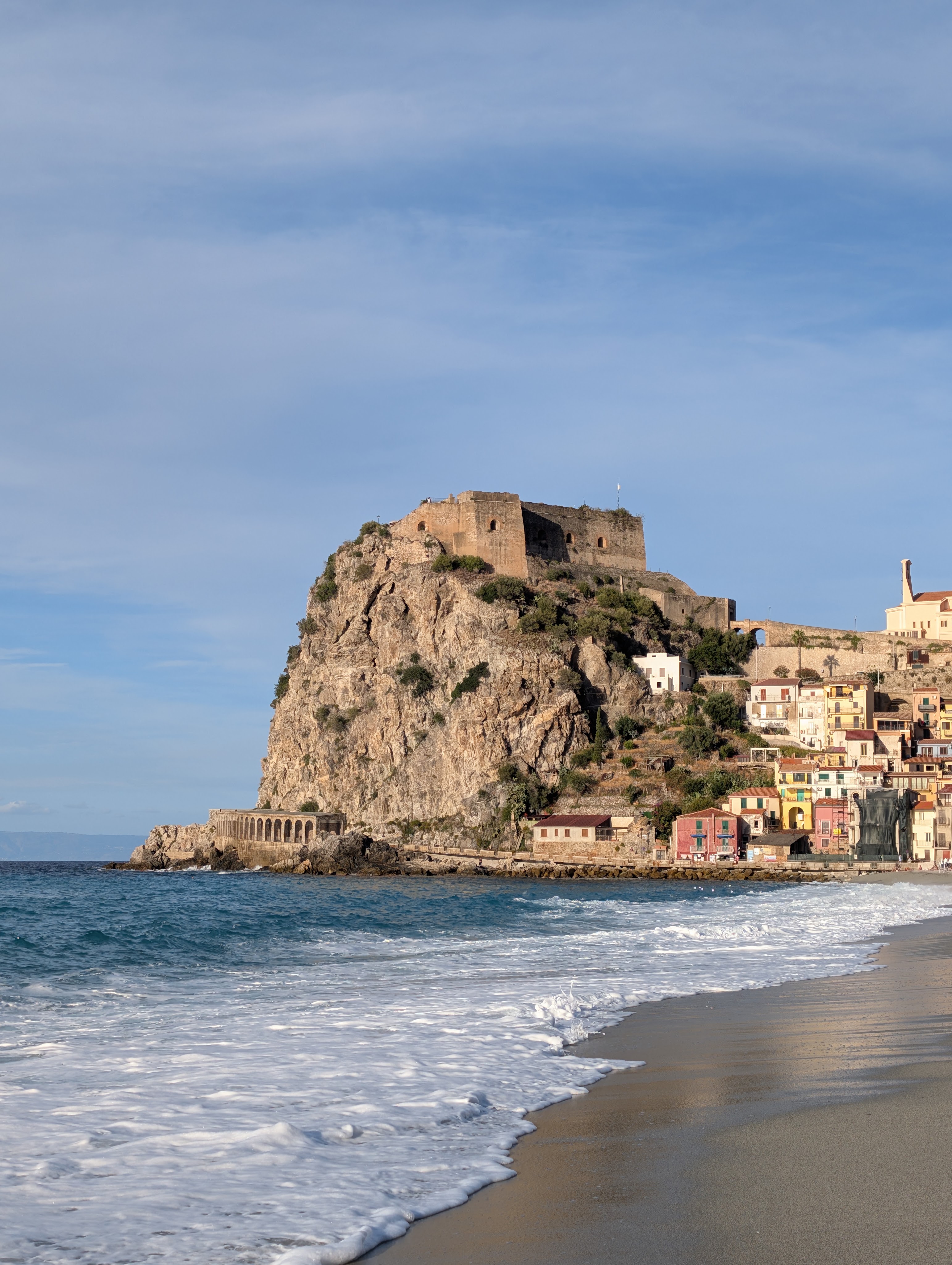
Castle rock, beach, village — the postcard, unretouched 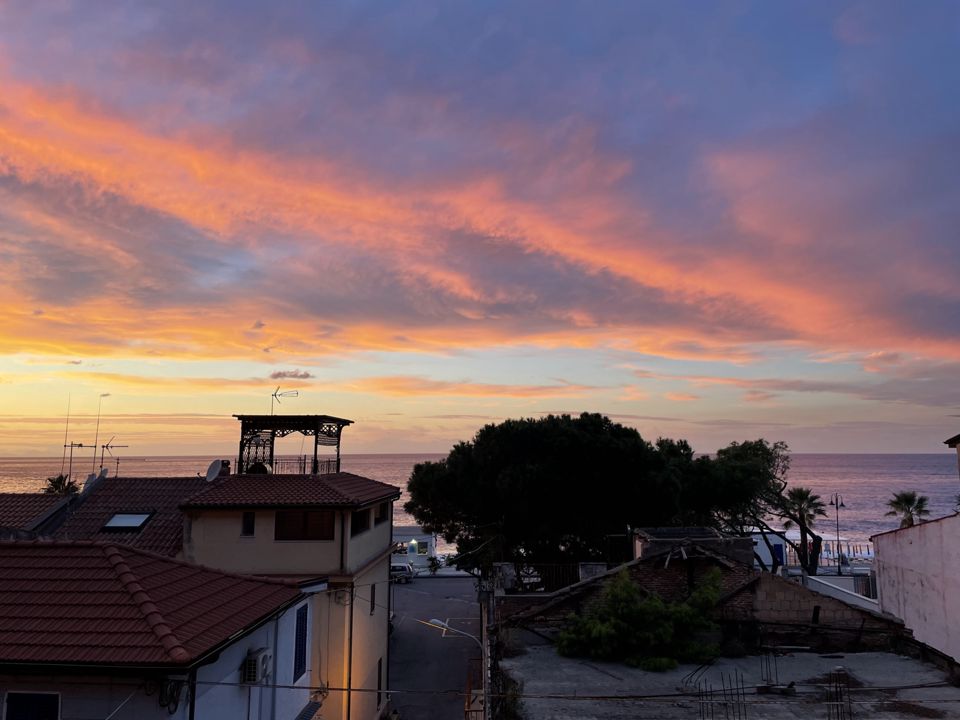
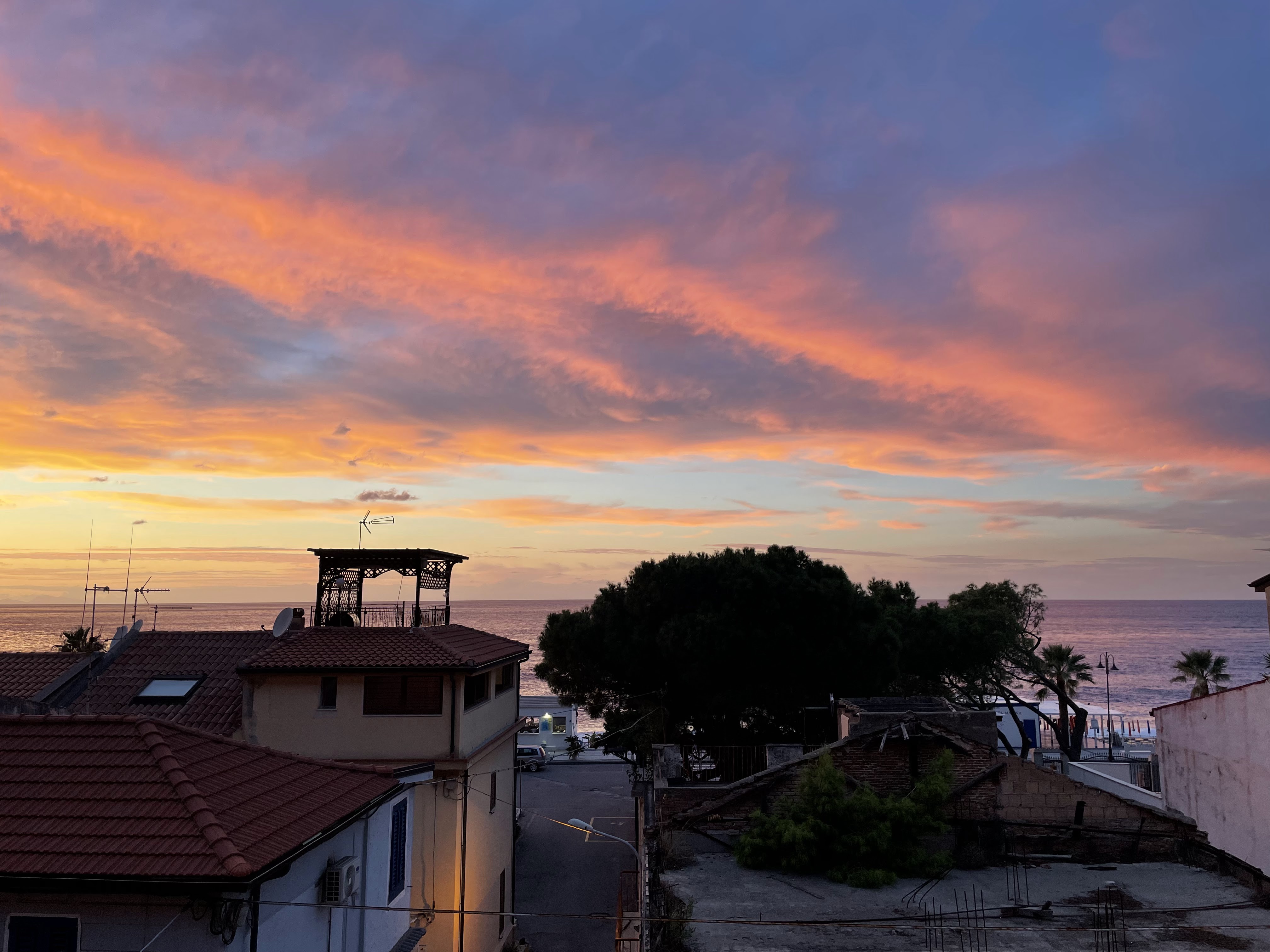
The sunset from the balcony, running pink and late 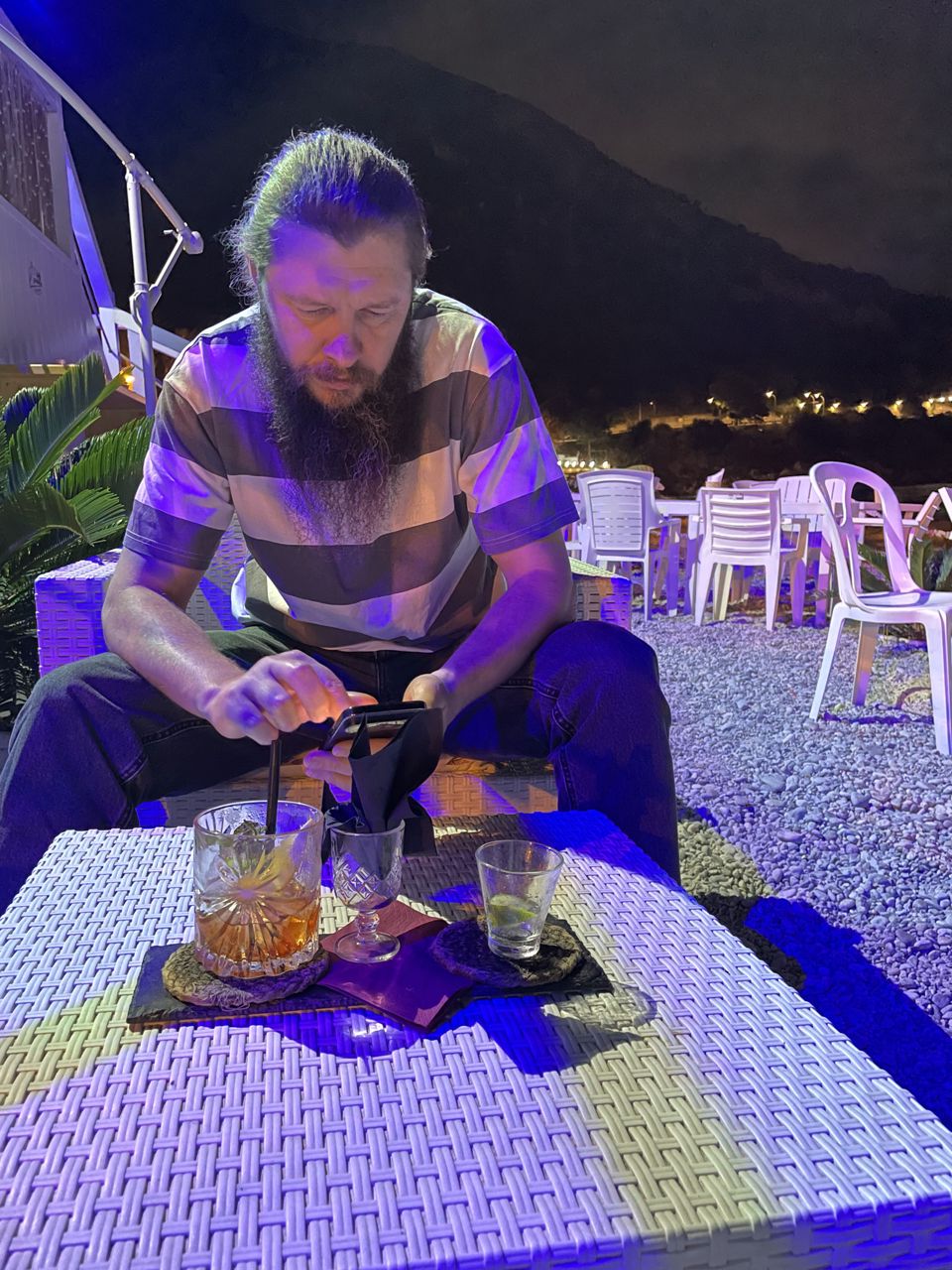
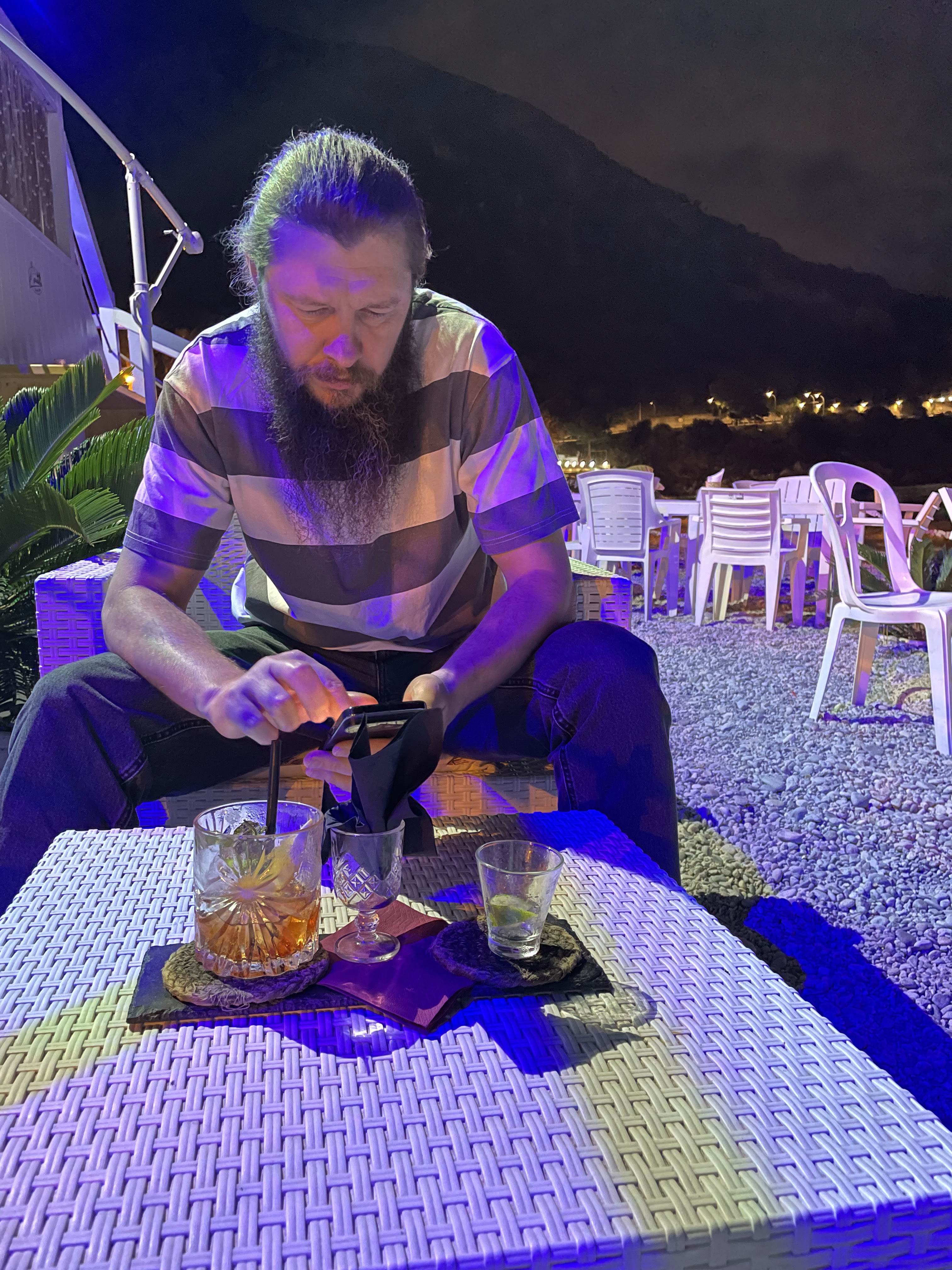
Eleven at night: the beach bar, one table operating 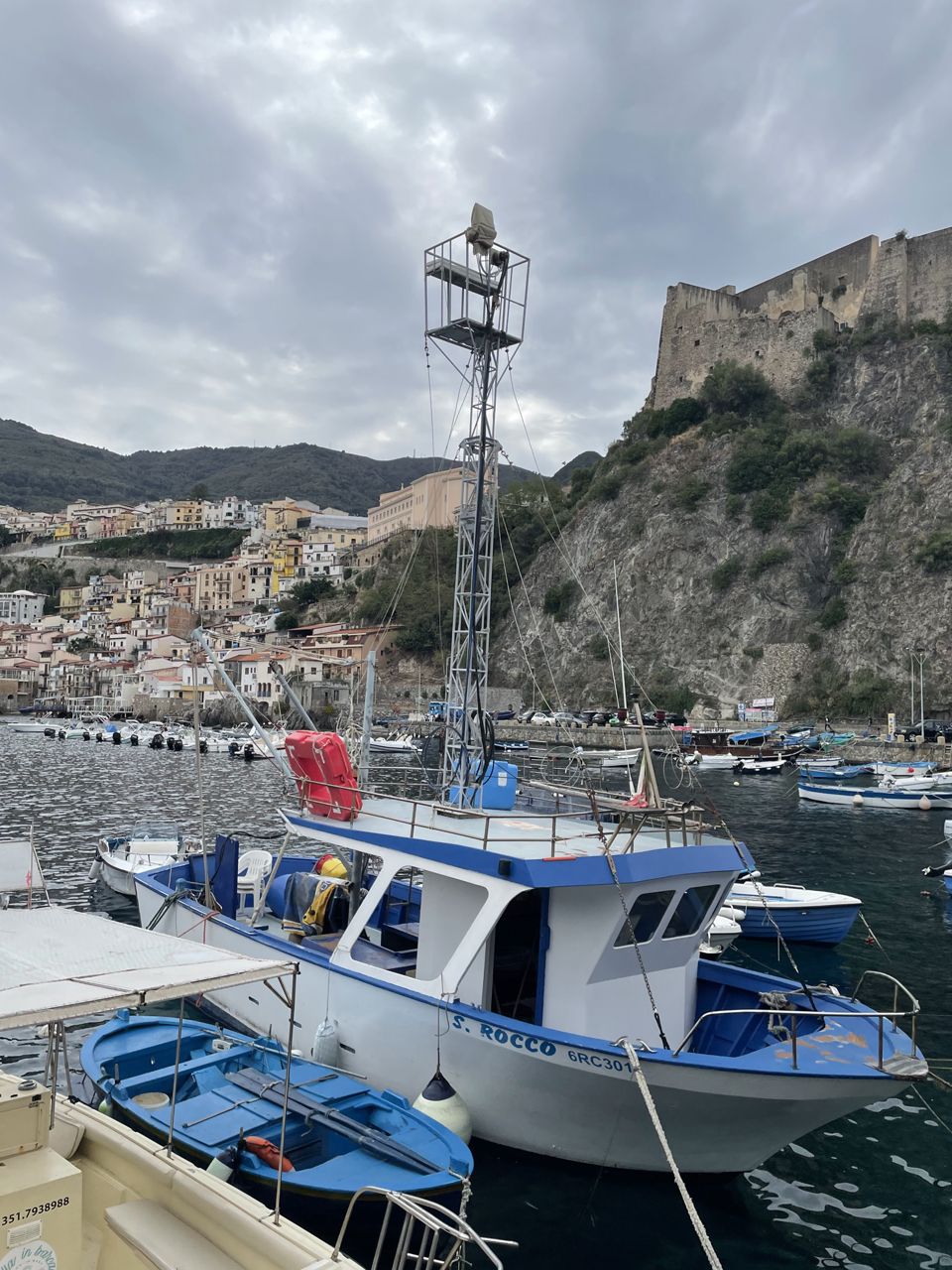
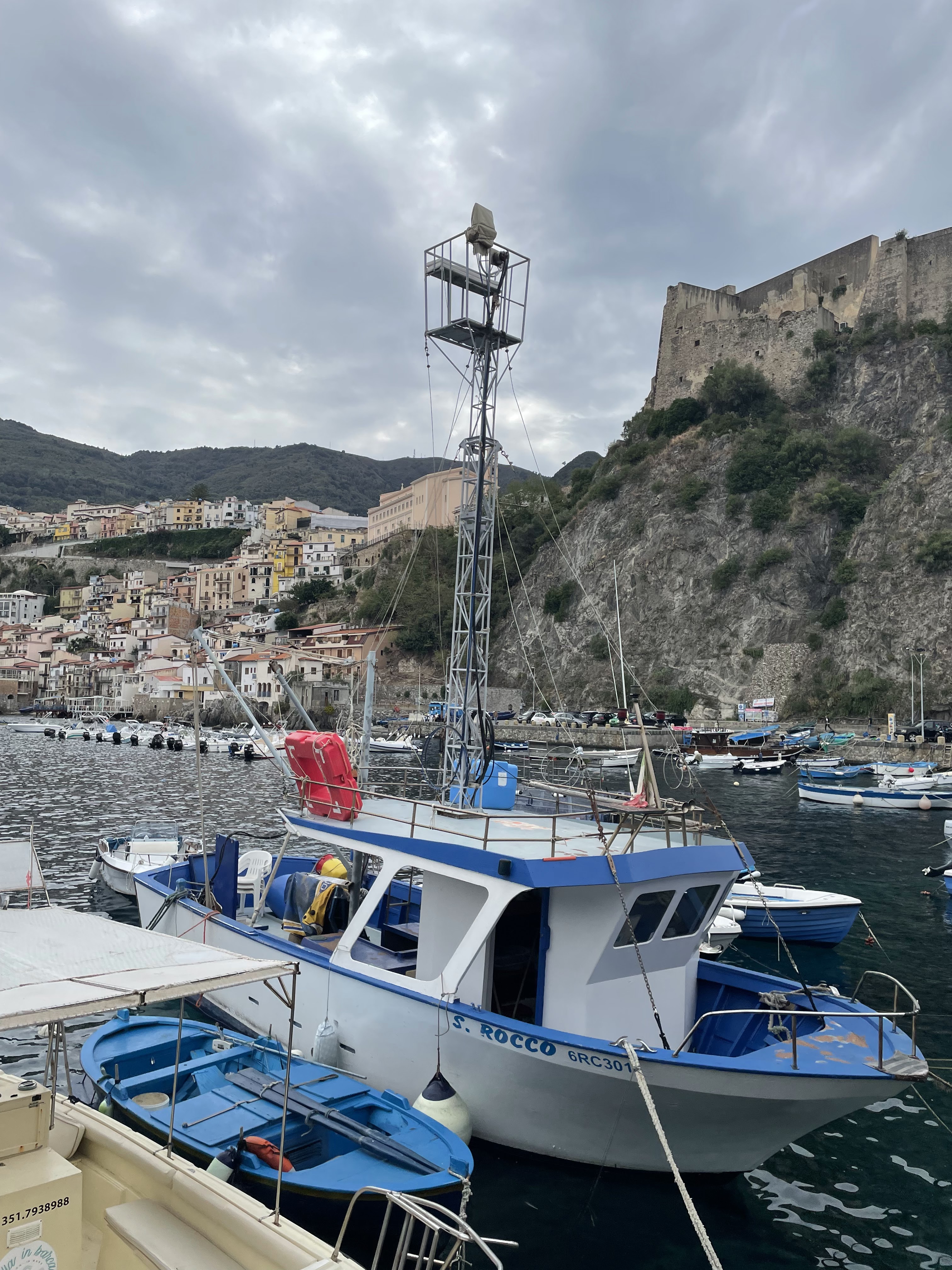
Last morning: the S. Rocco at the harbour, harpoon tower up