Puglia trip 2024 — Taranto
Seventh of nine posts. The one day it properly rained — and the city turned out to be the best kind of stormy Sunday: a naval port on two seas, two Doric columns where Poseidon was worshipped, a fortress with a moat of hedges, the Ponte Girevole swing bridge, a street-art gallery on the crumbling walls, and a park where cats keep to the stone urns.
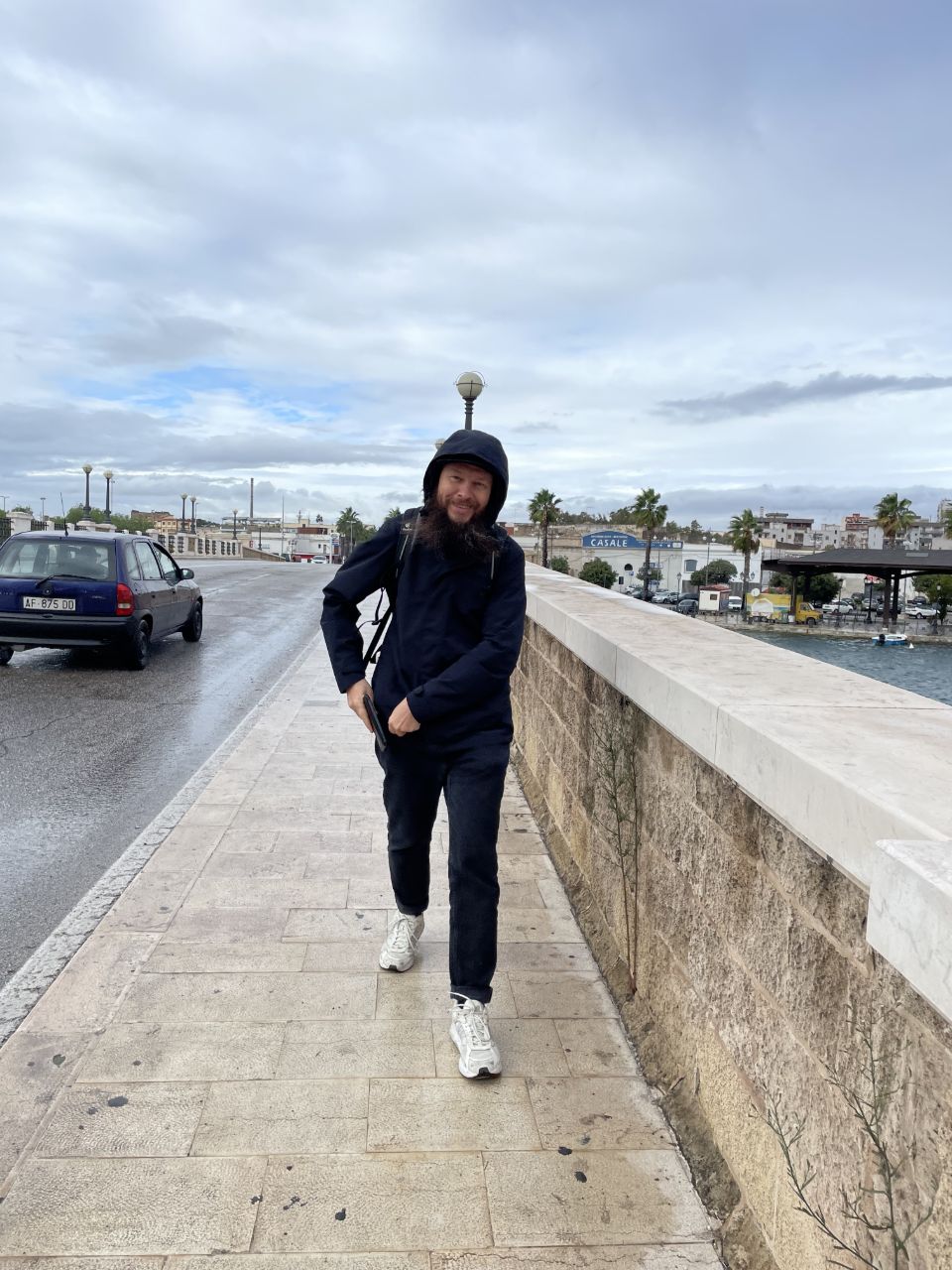
Arrival in the rain
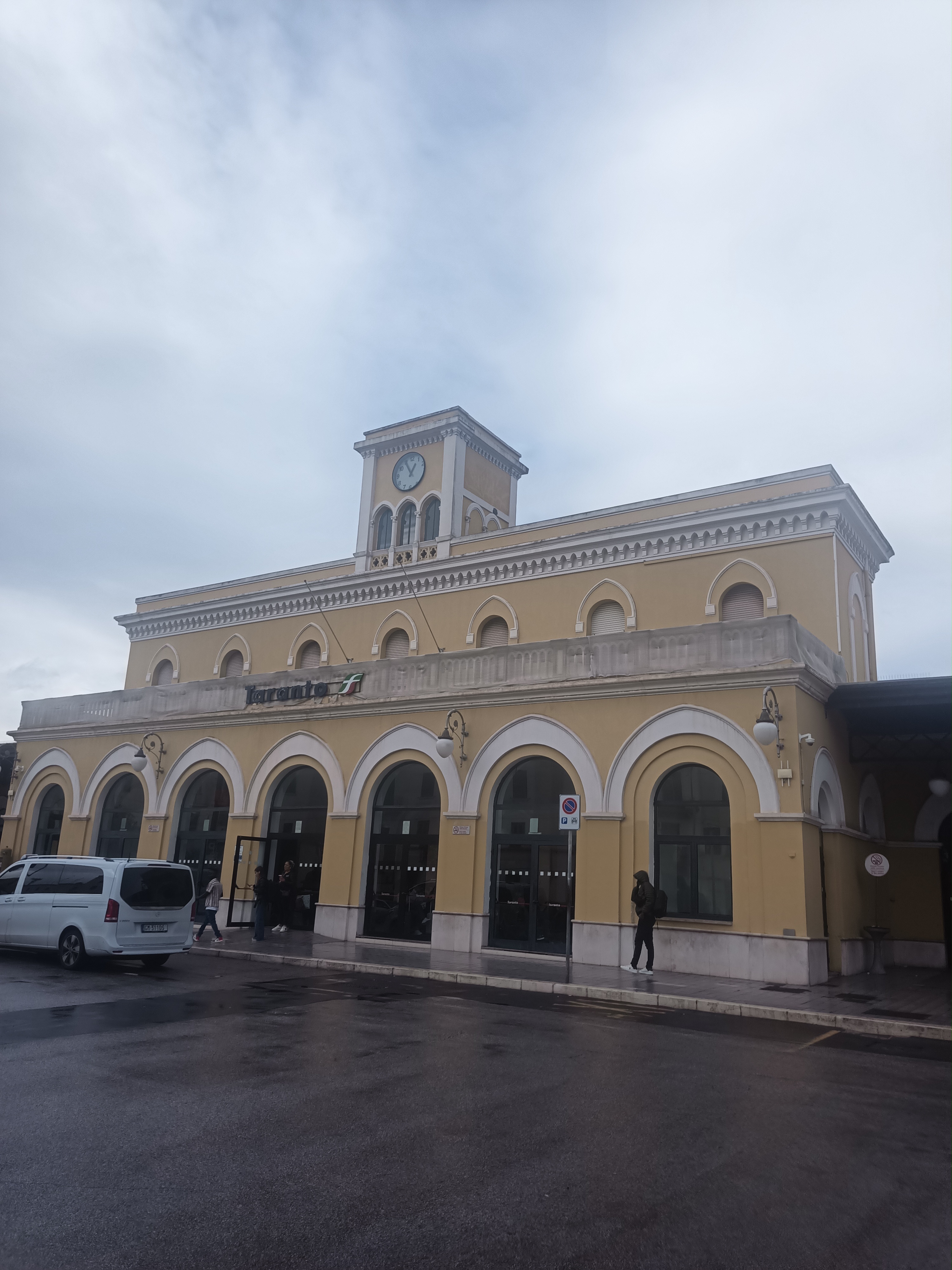
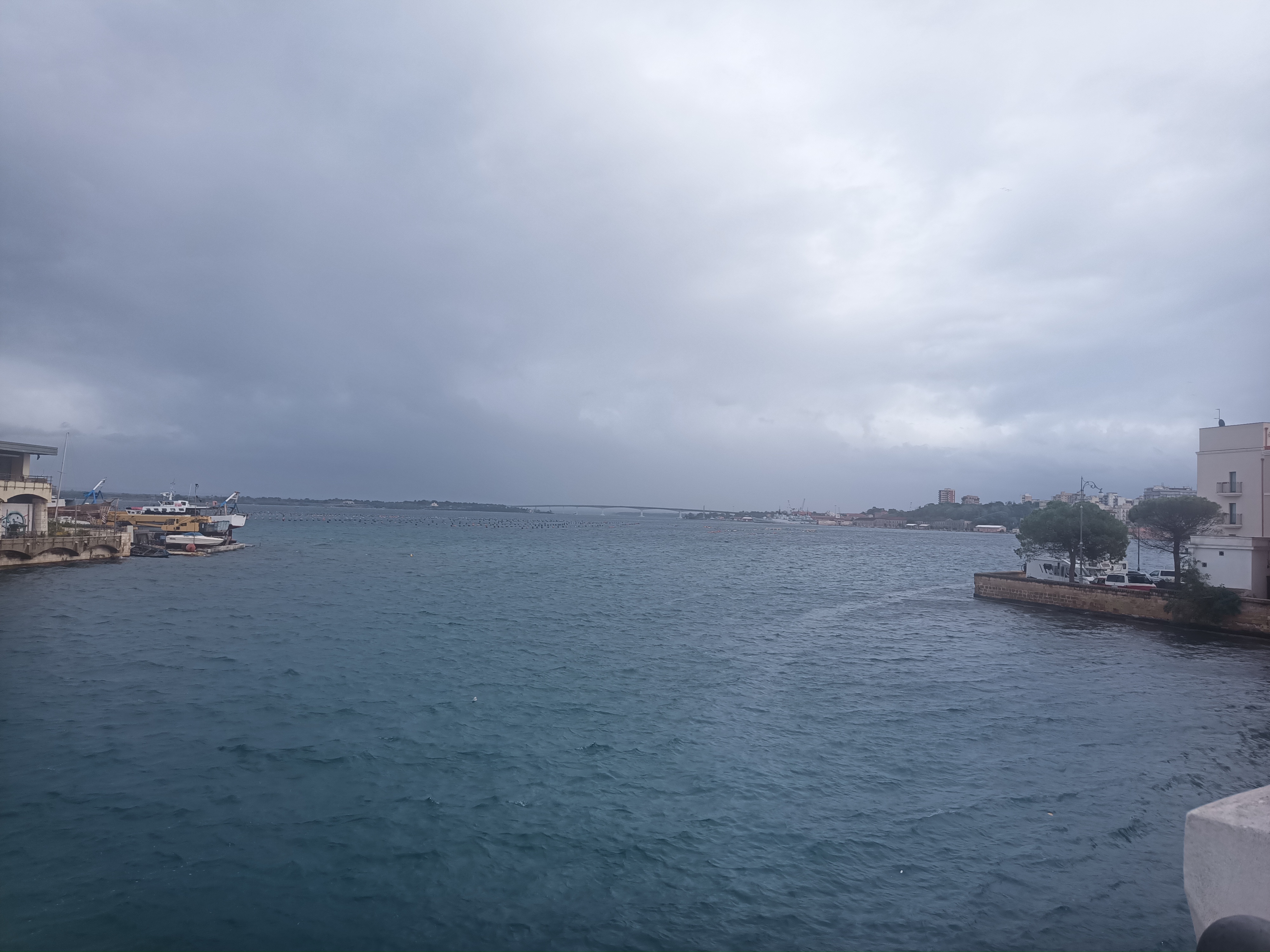
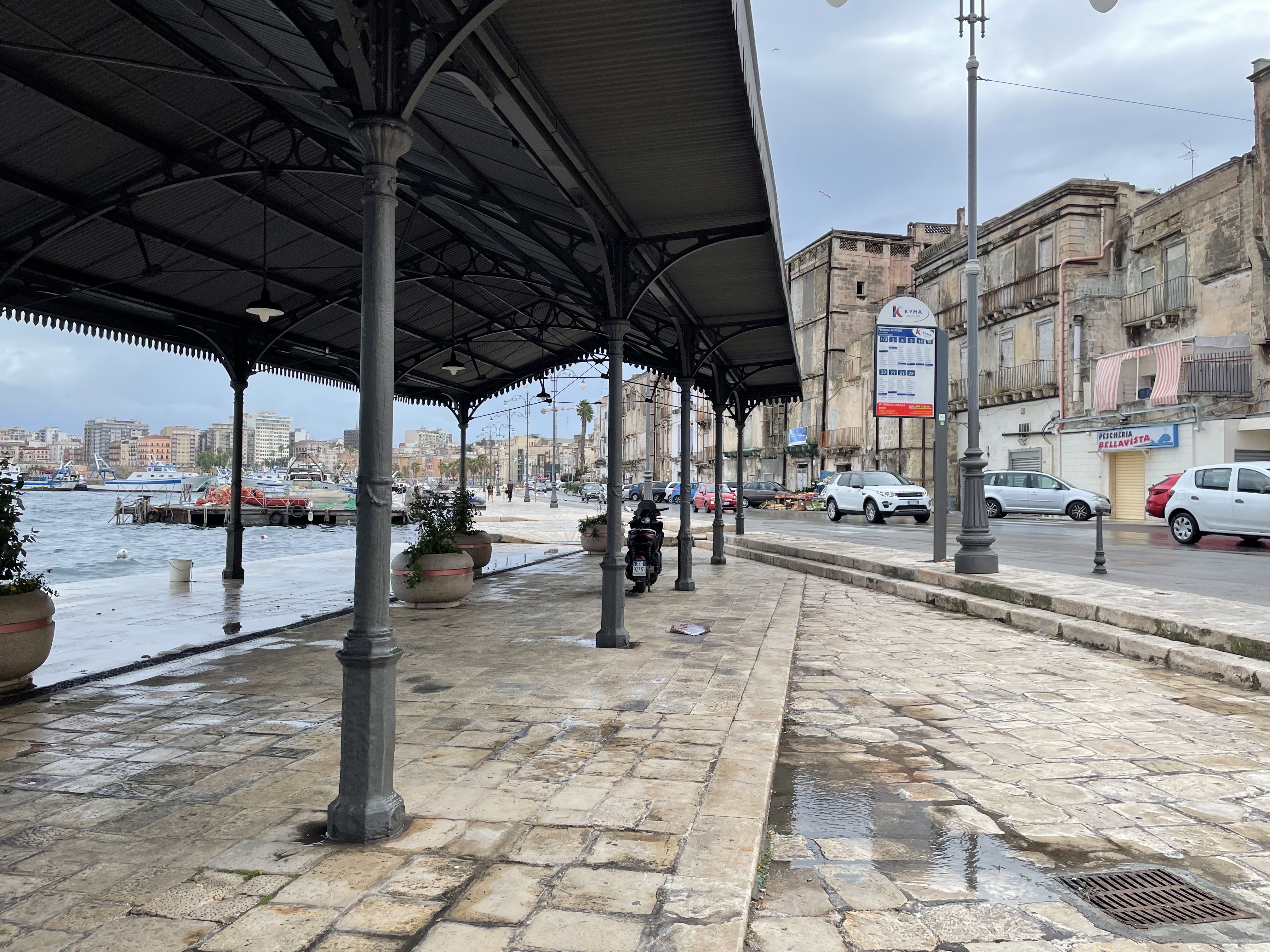
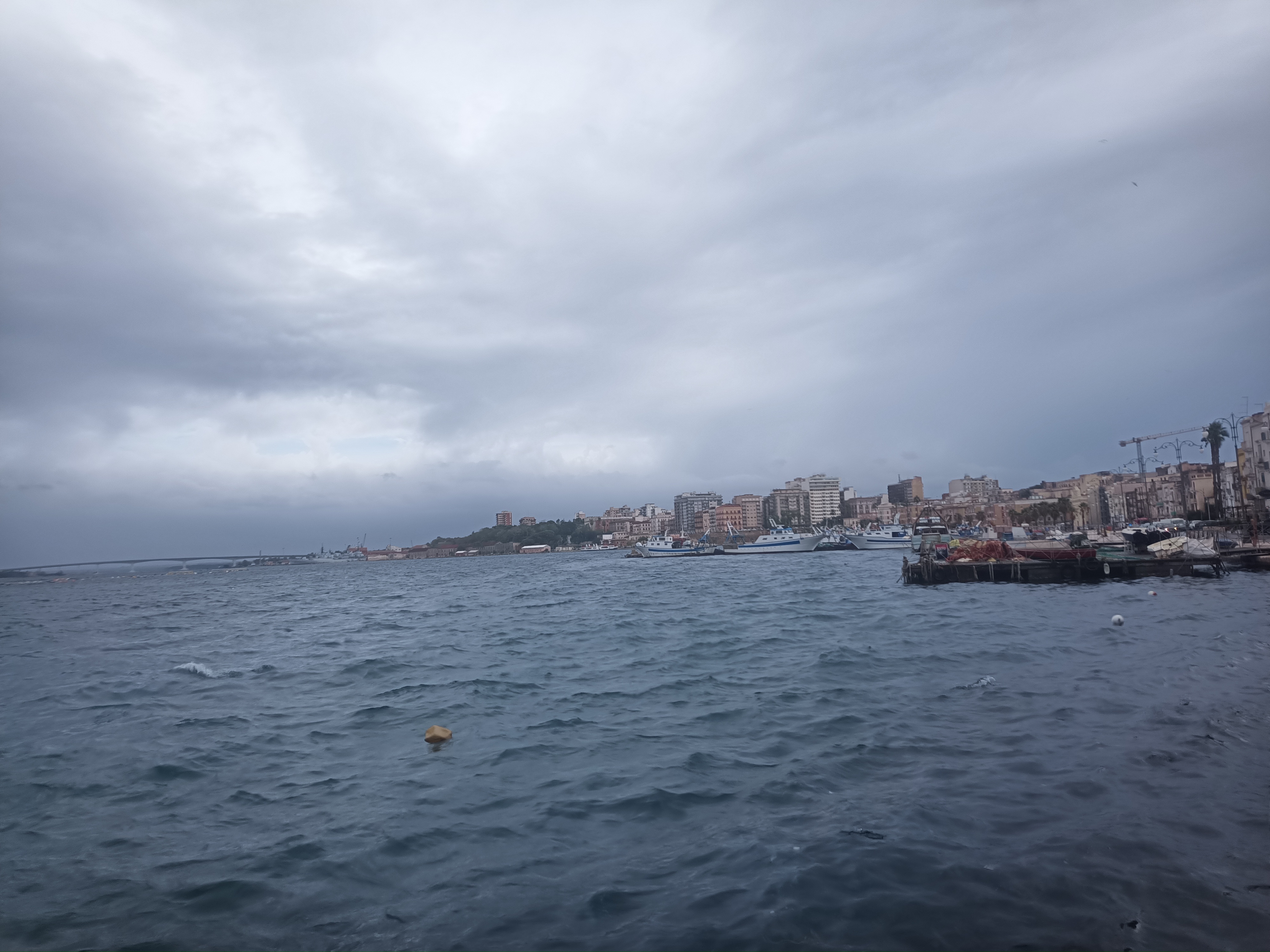
The train brought us to a jaunty yellow station with a clock tower, and the October rain was there to meet us. The old city, it turns out, sits on an island in Taranto’s two seas — the open Mare Grande outside, the sheltered Mare Piccolo inside — and it is the Mare Piccolo that made Taranto’s mussels famous — the town has grown them there since at least the 1500s. We crossed the stone bridge into the old town anyway, the grey sea on both sides, the wrought-iron seafront galleries dripping above their pebbled paving.
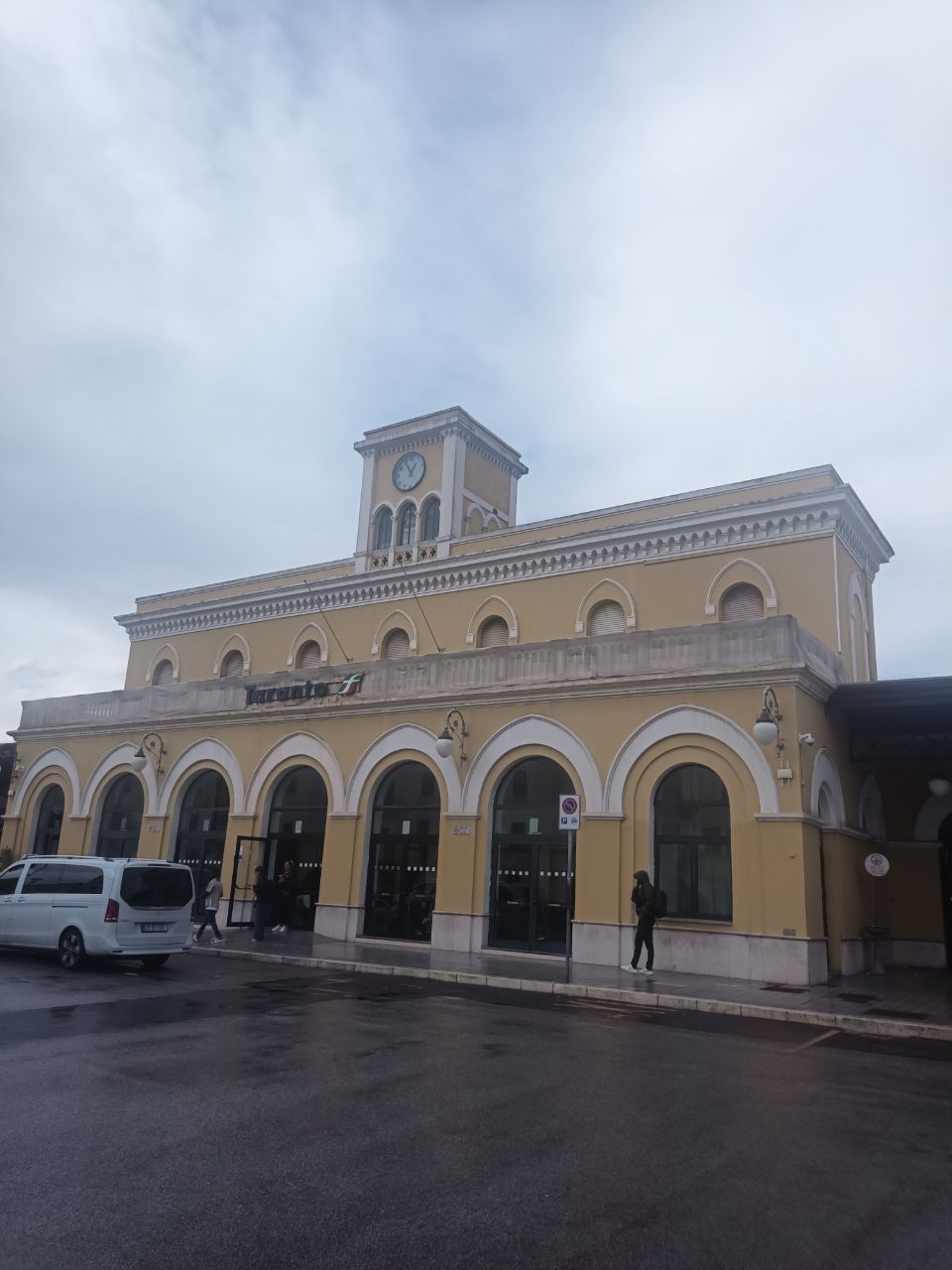
The station, in its Sunday paint 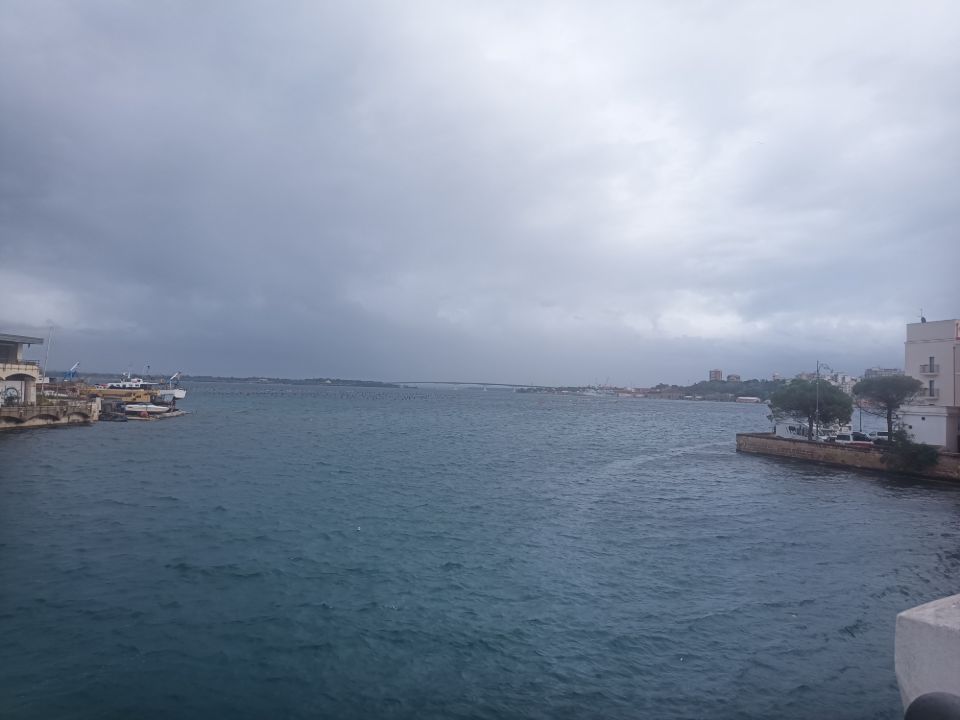
First look at the harbour 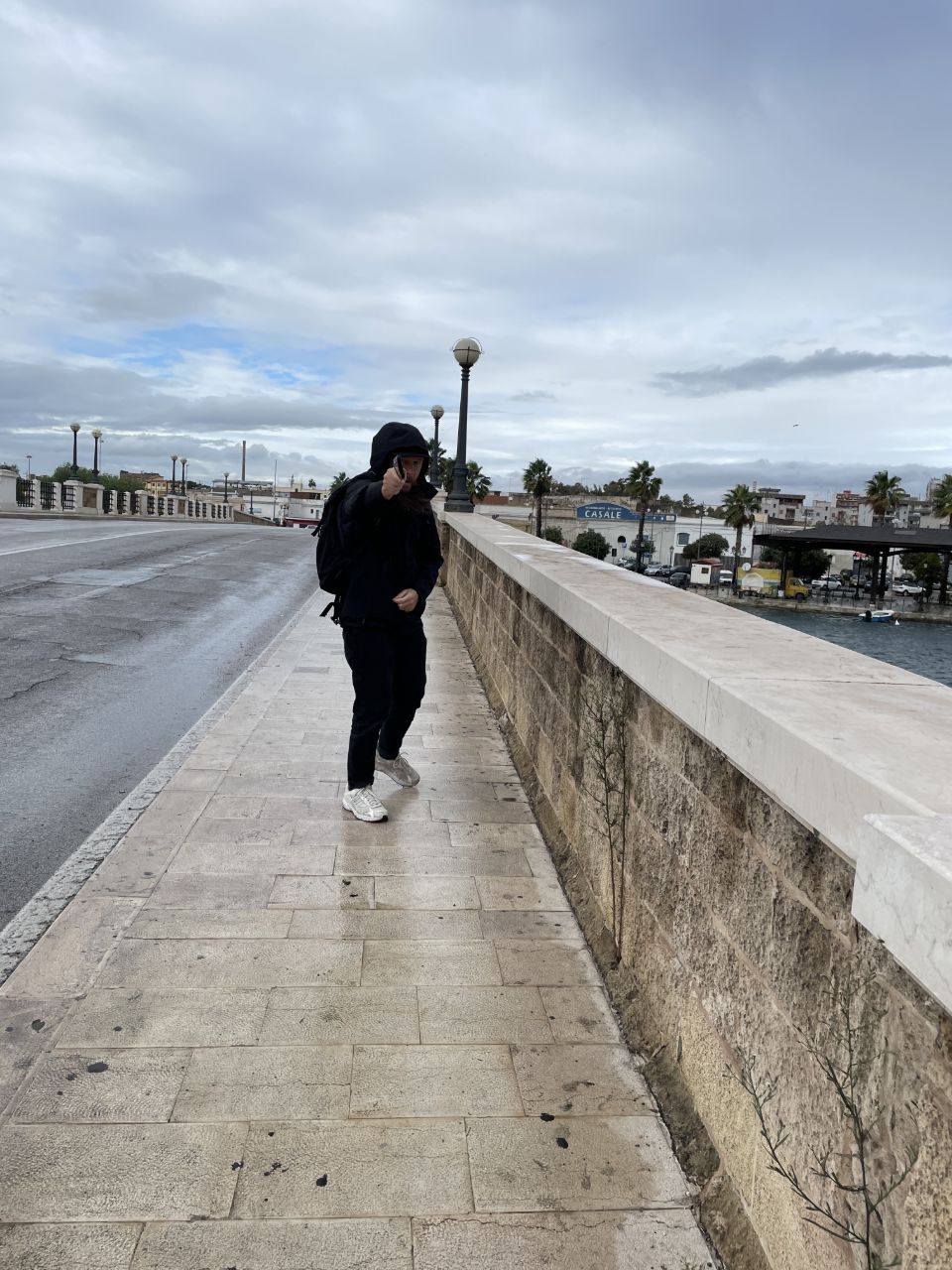
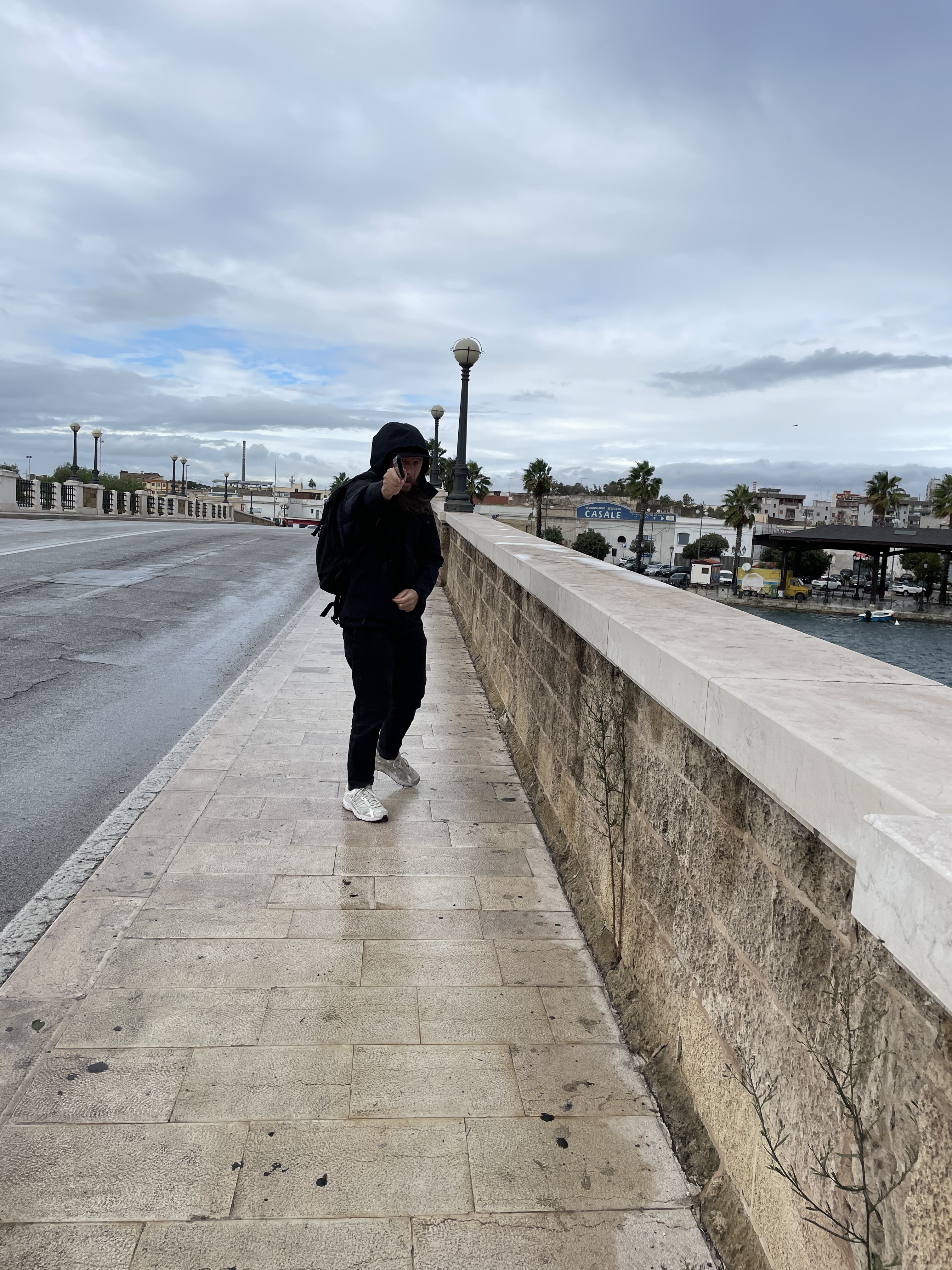
Anna, bridge, weather 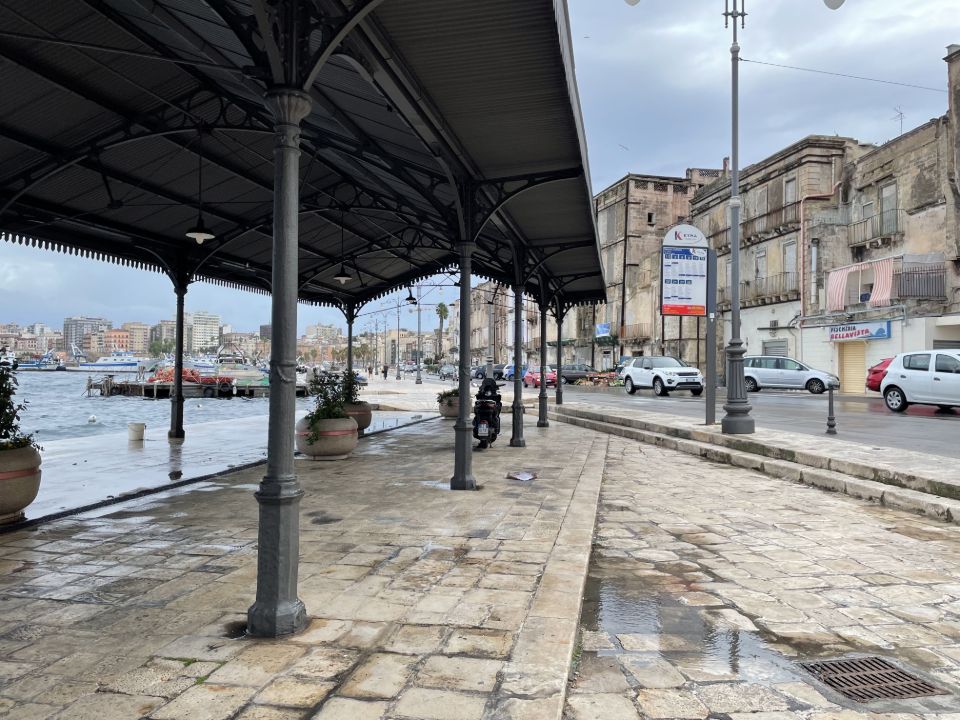
The covered promenade 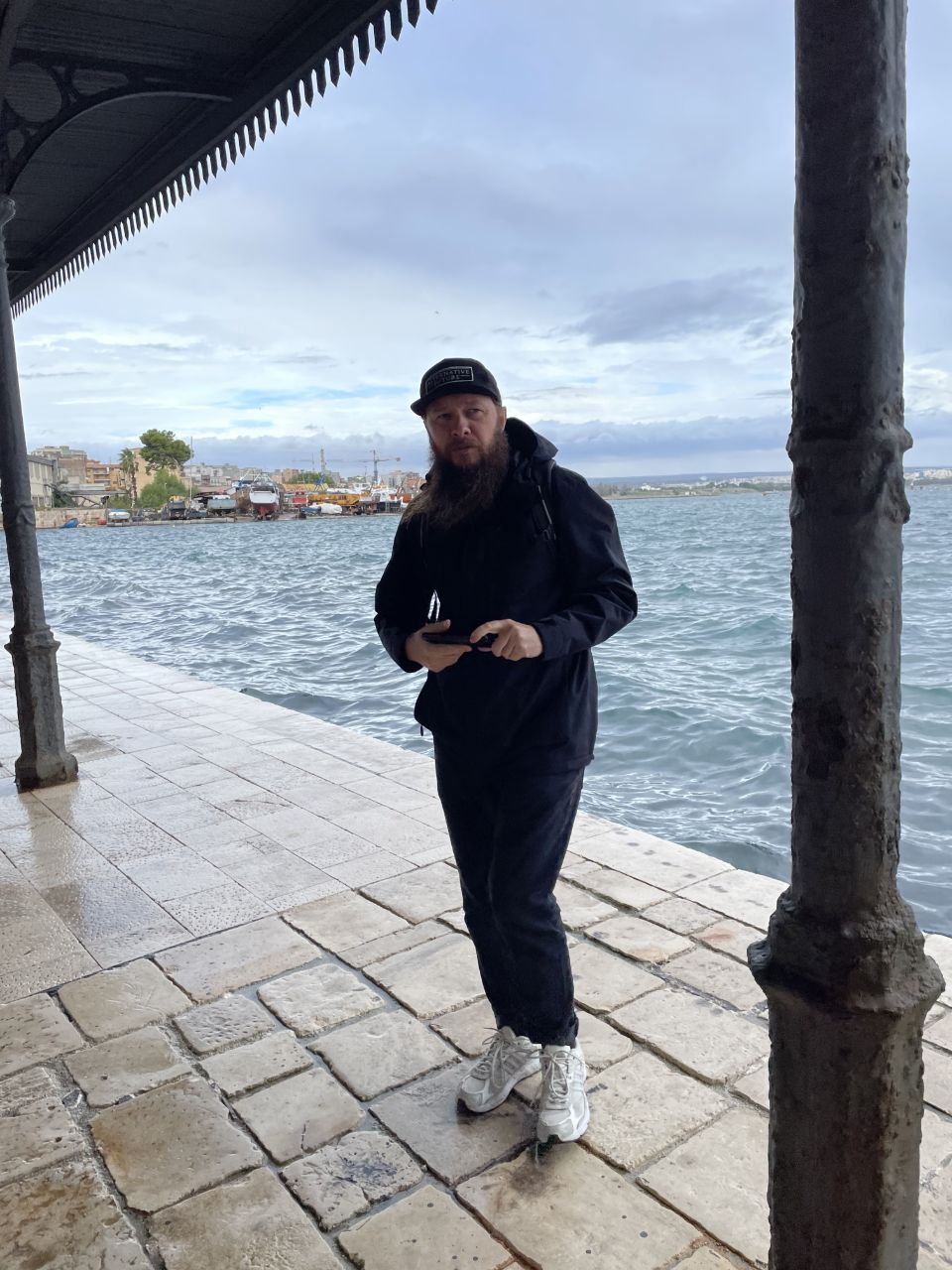
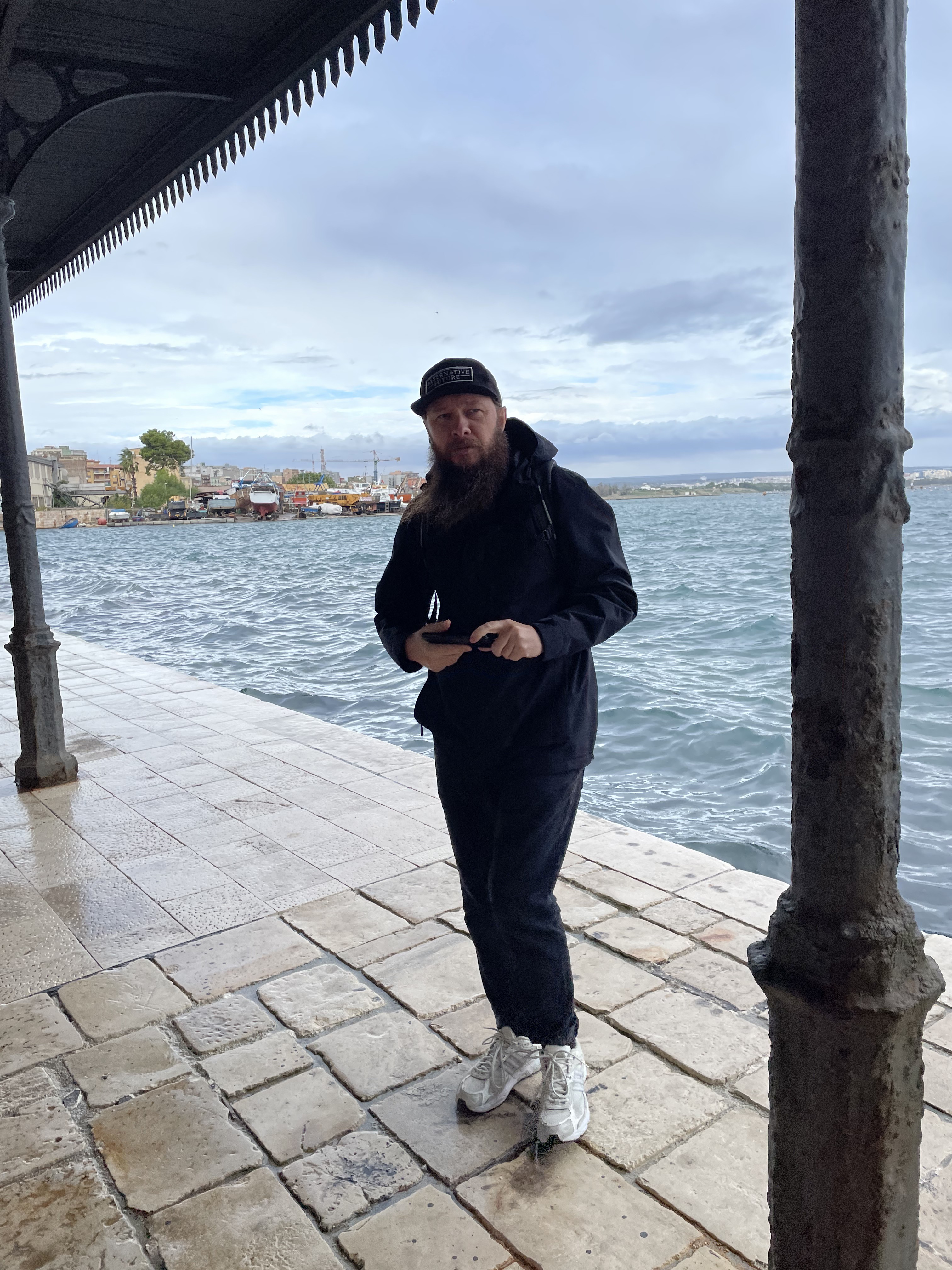
Oleg under the iron columns 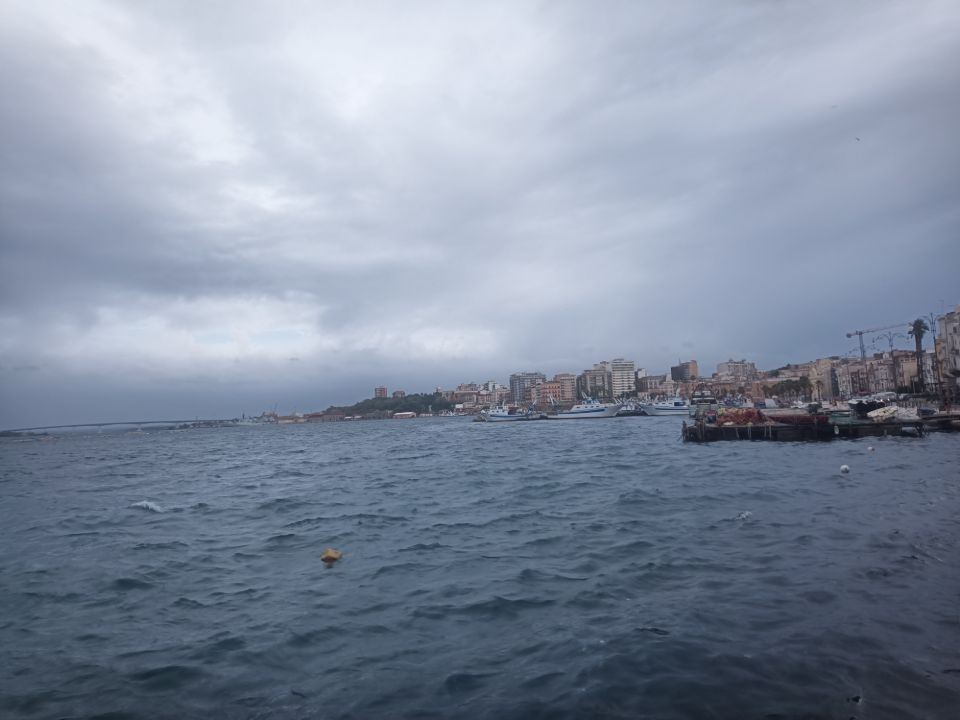
Grey sea, distant city
The old town
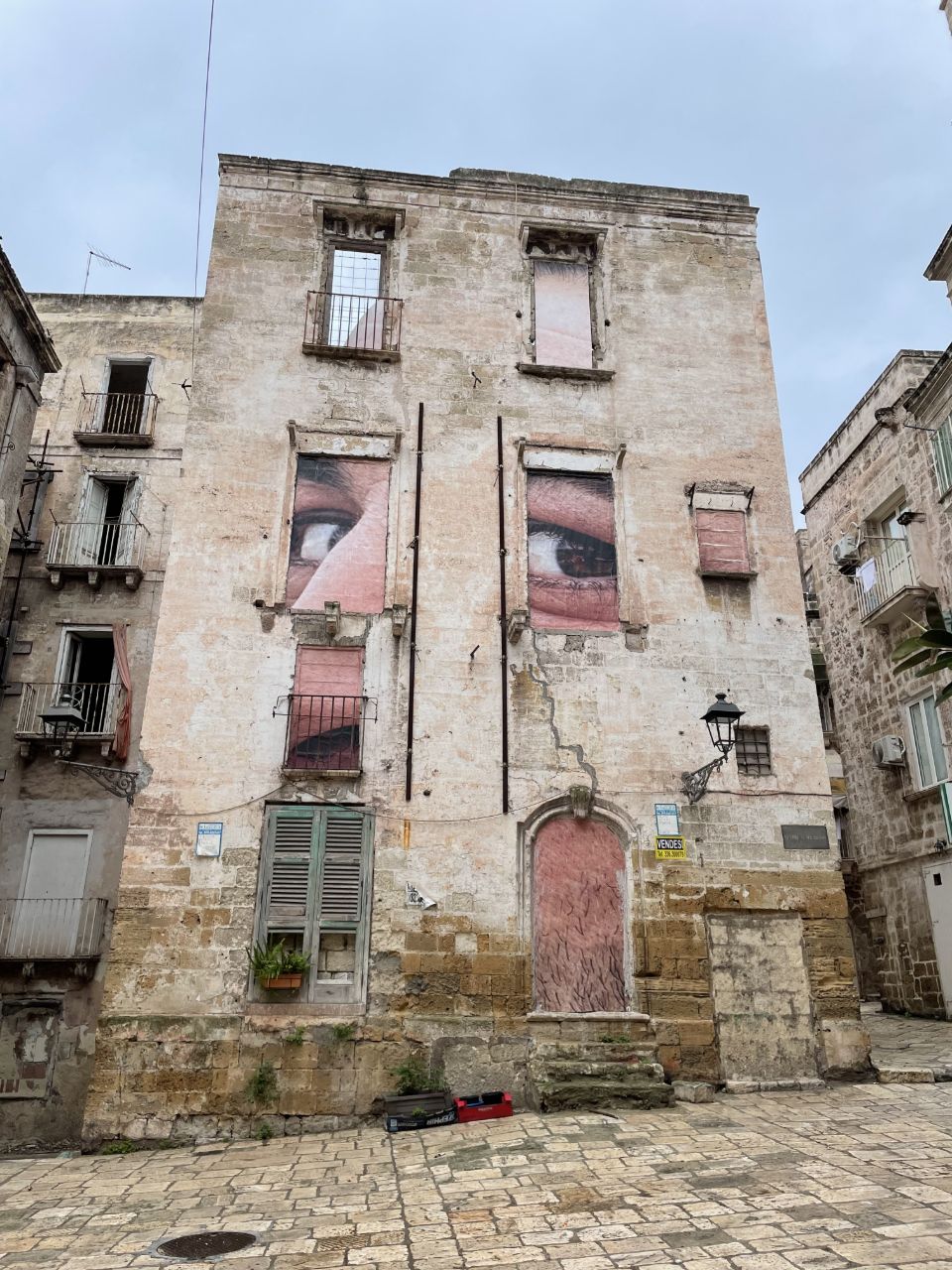
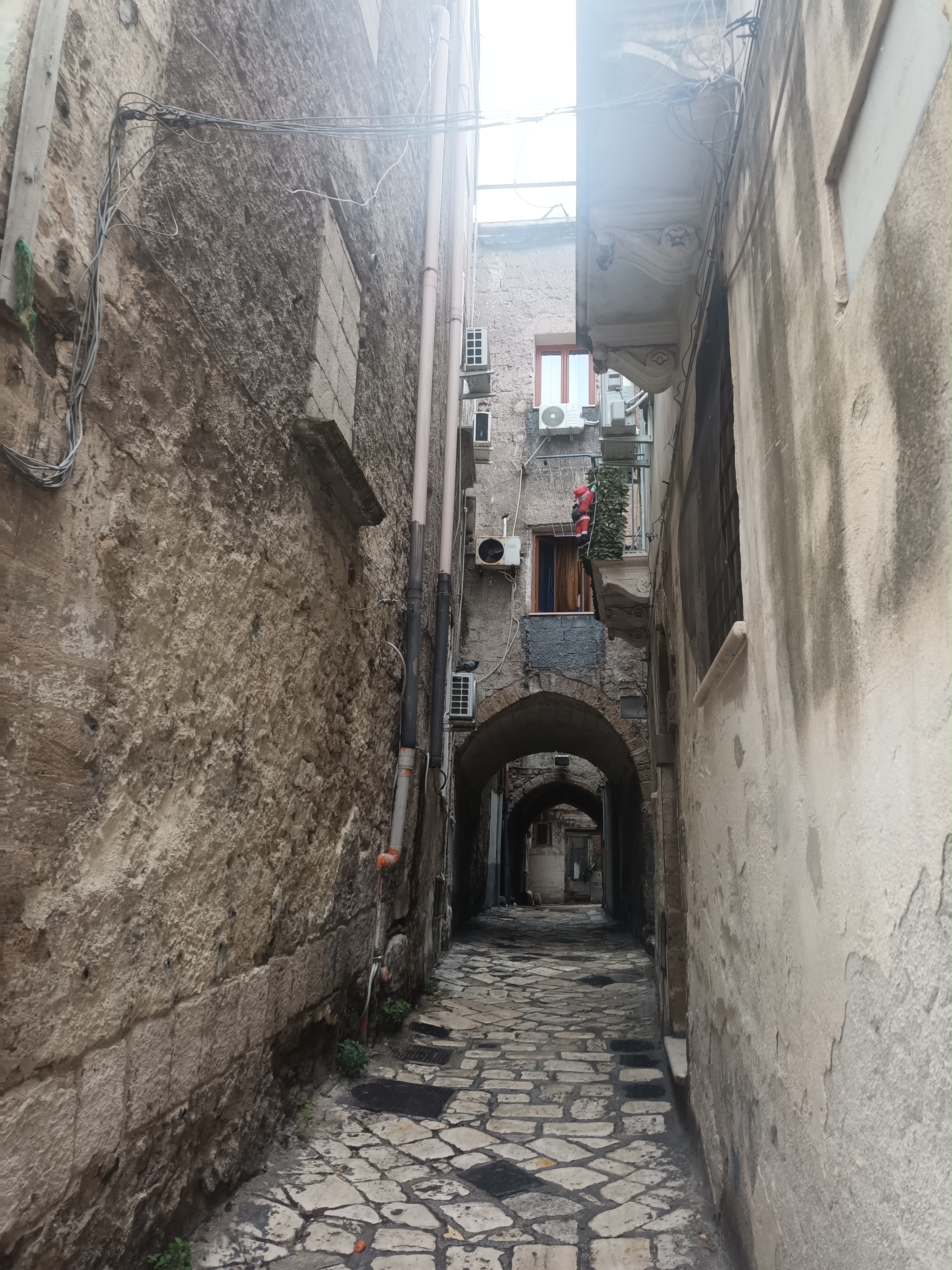
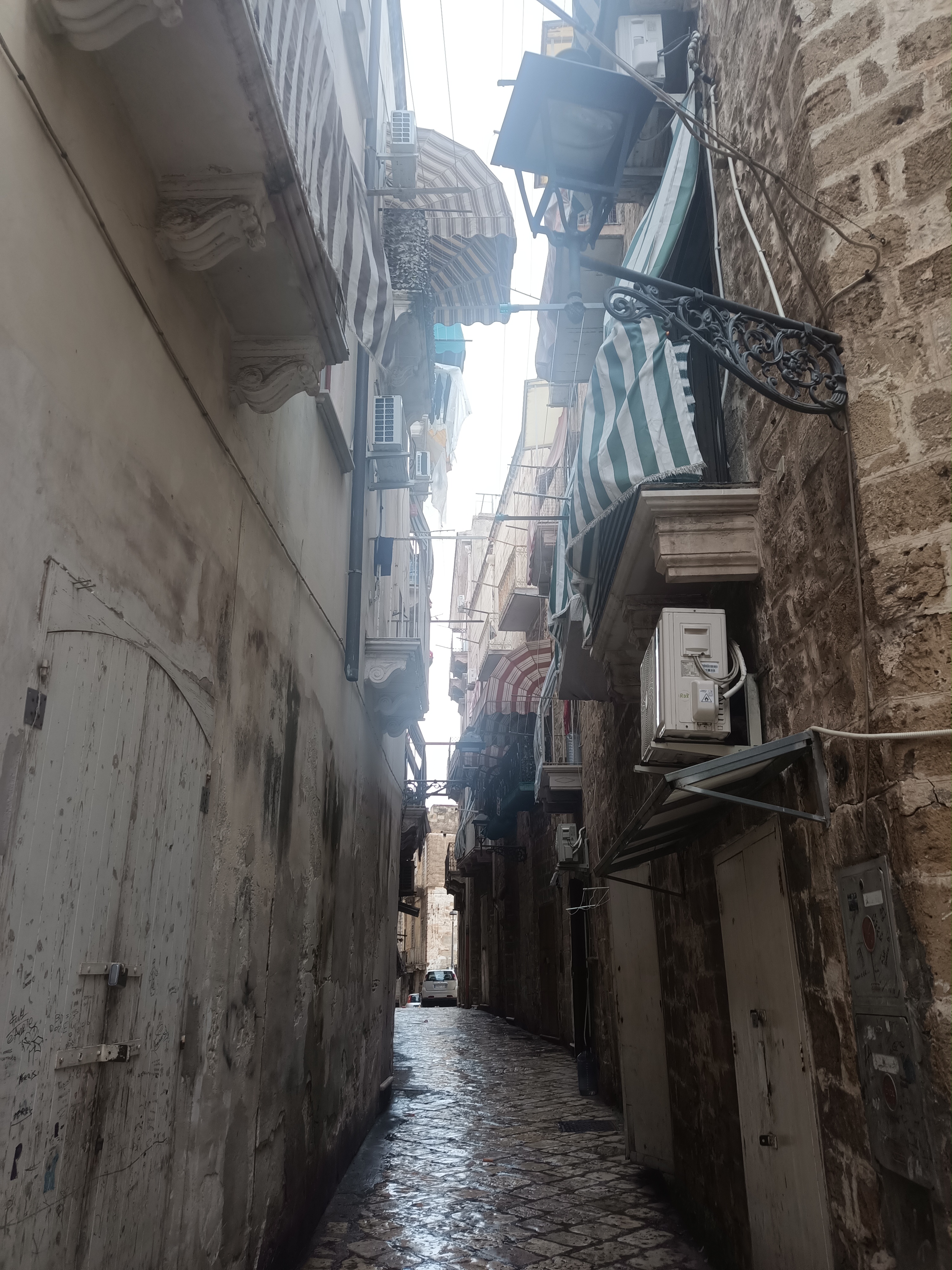
Taranto’s centro storico is famously rough around the edges — crumbling palazzi, stone staircases, medieval churches with carved portals, one bright green double door among all the grey. In one collapsing corner, a facade painted with eyes.
The eyes have it 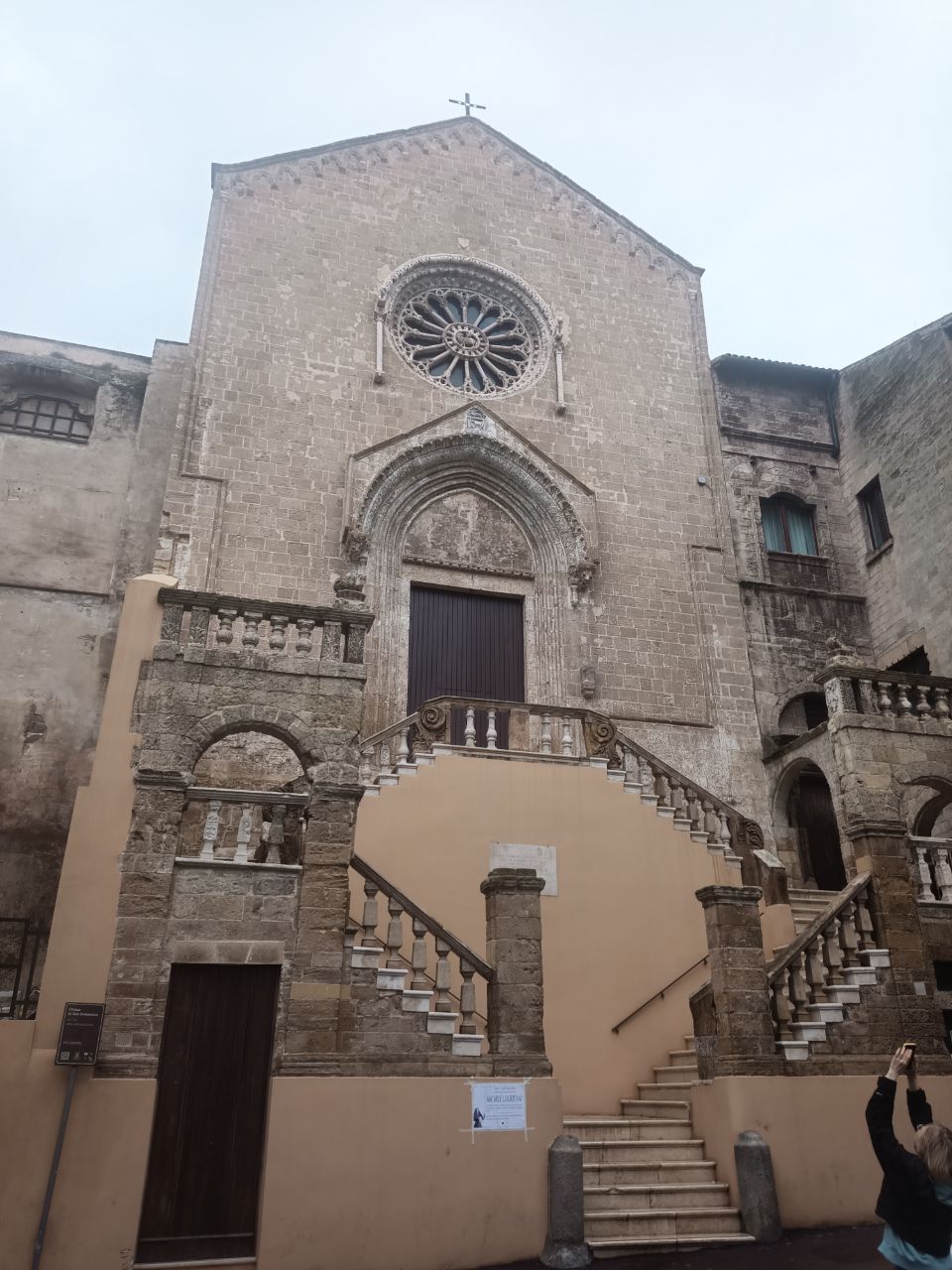
Church and staircase 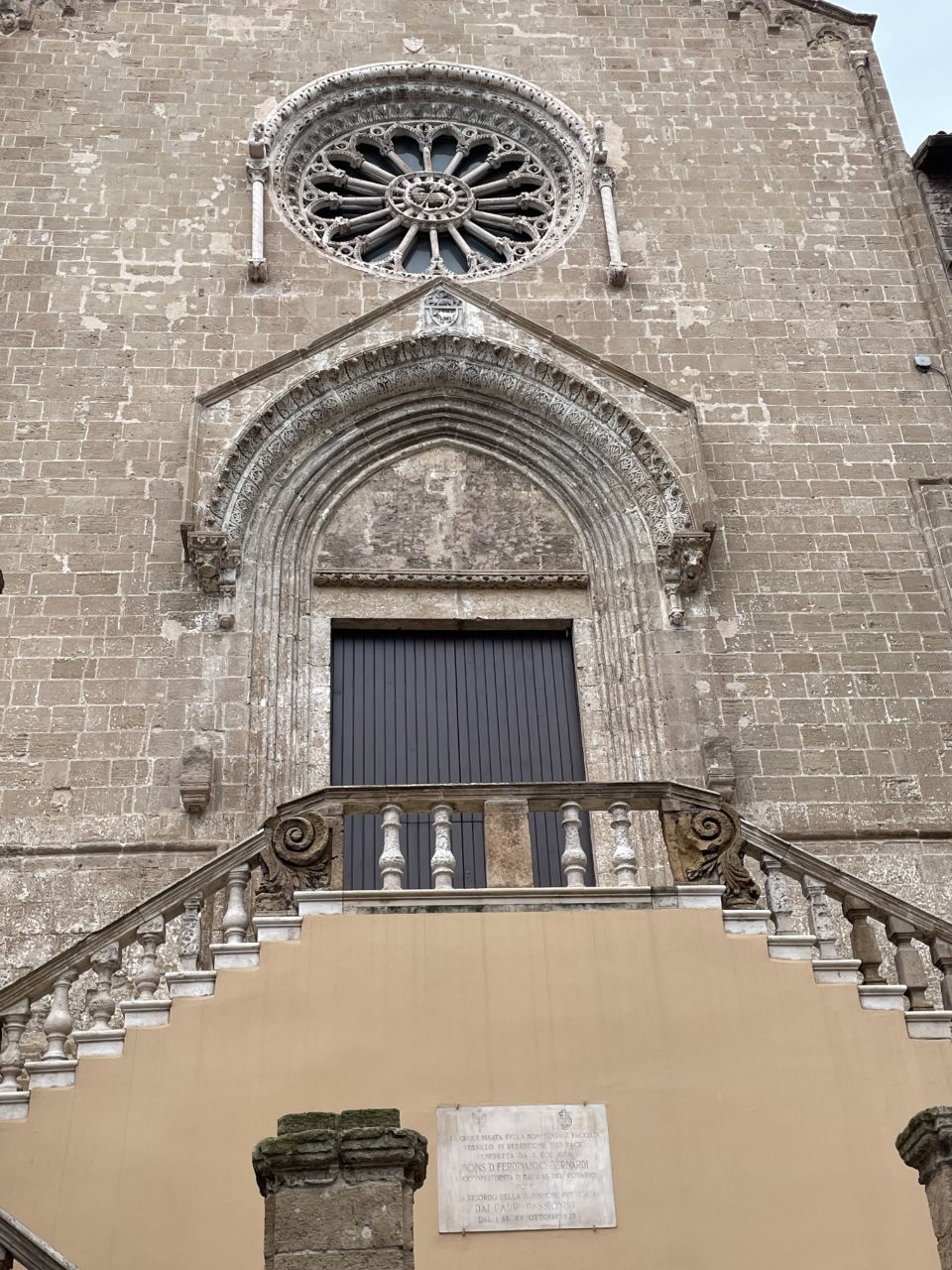
A Gothic portal, dripping 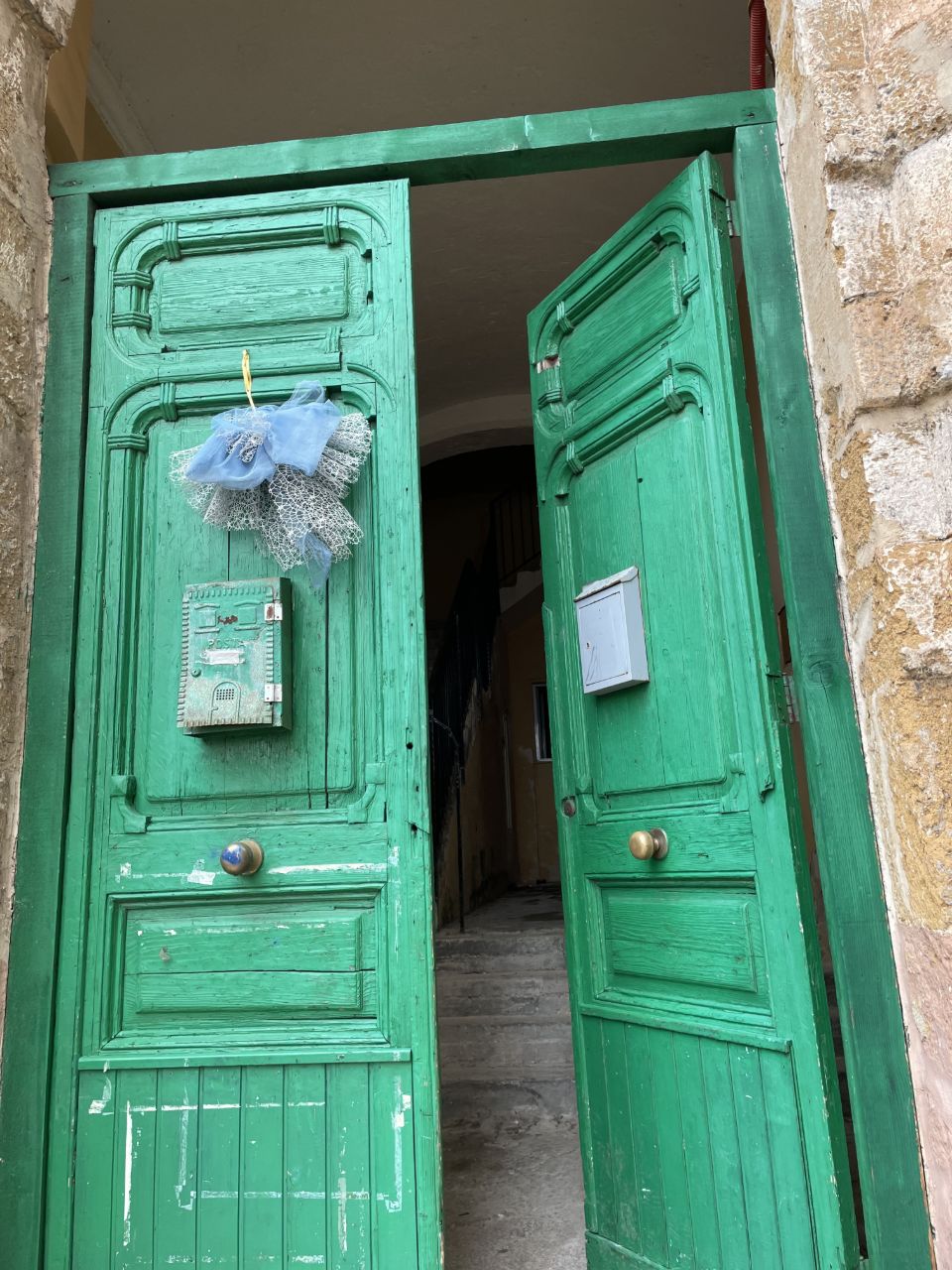
The green door 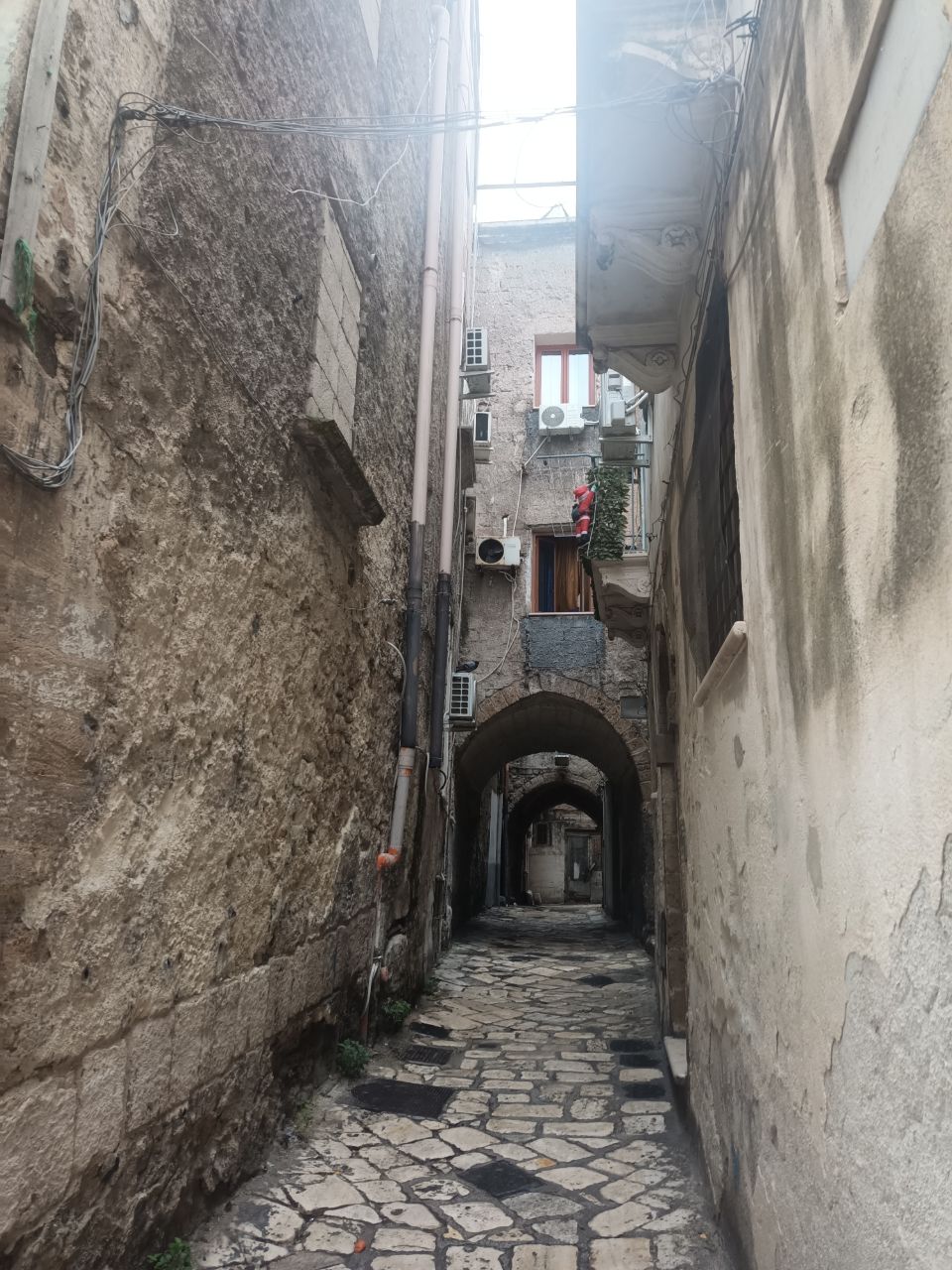
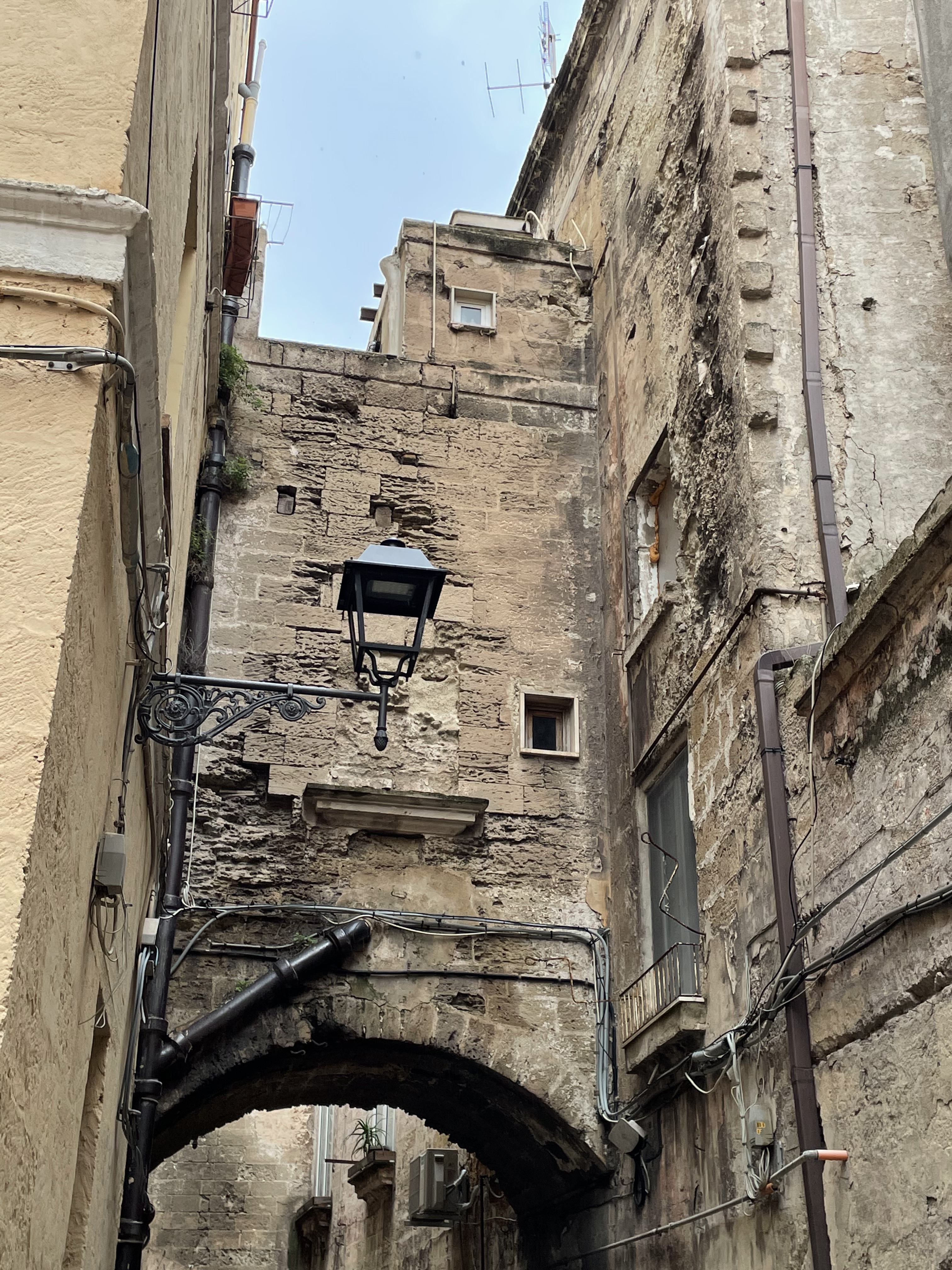
Arches over the alleys 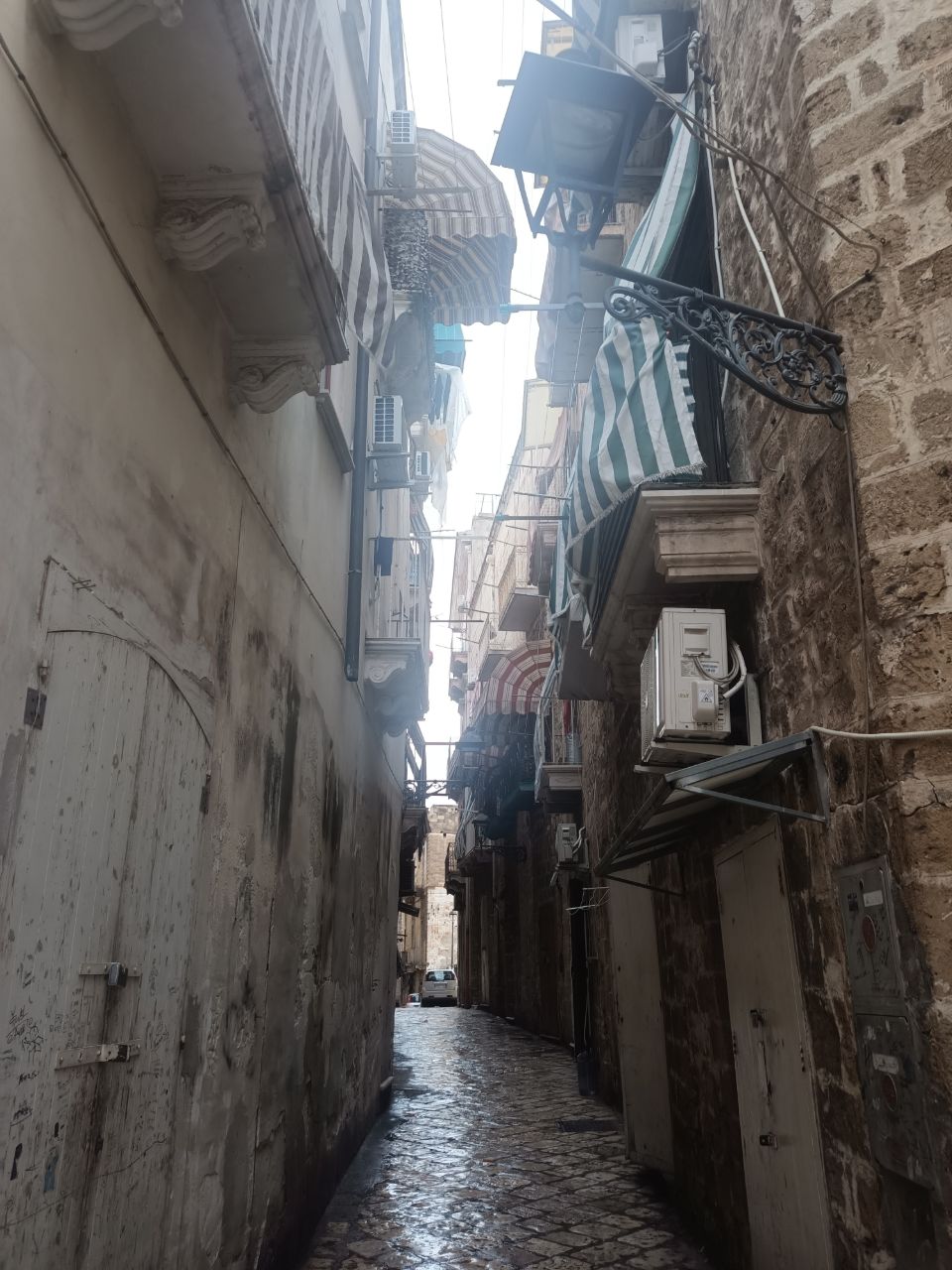
Lanes, deeper in 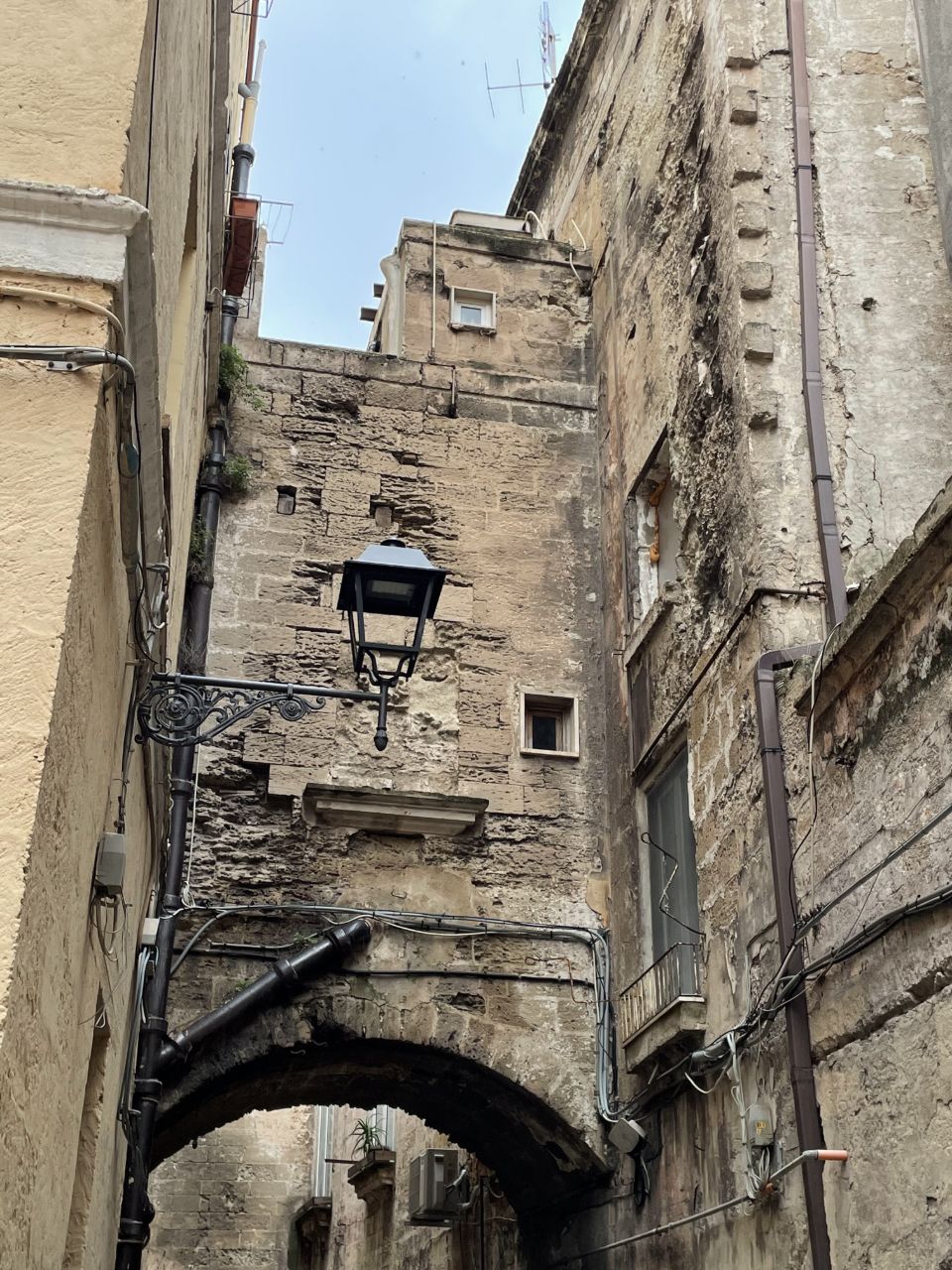
Archway and lamp
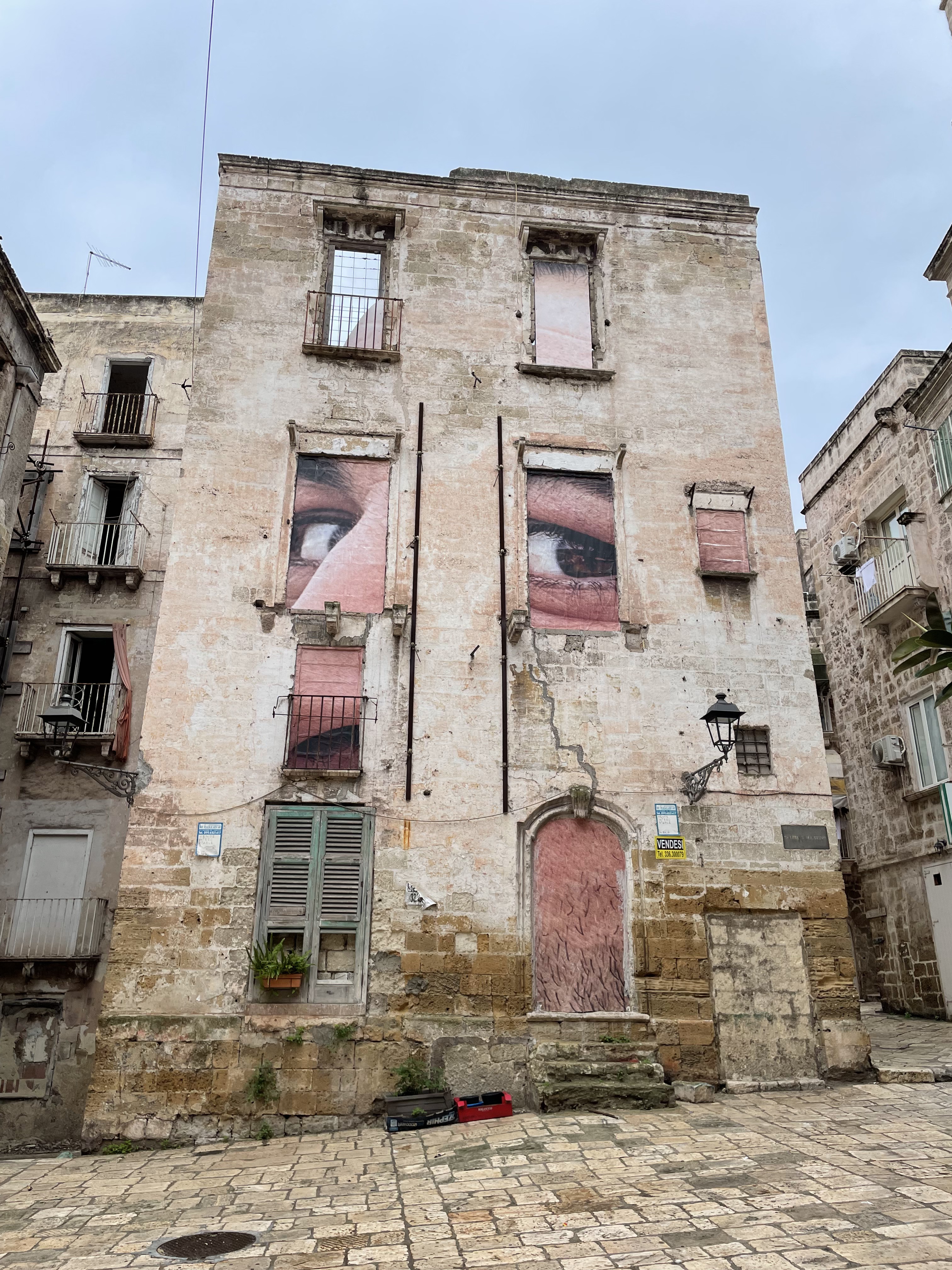
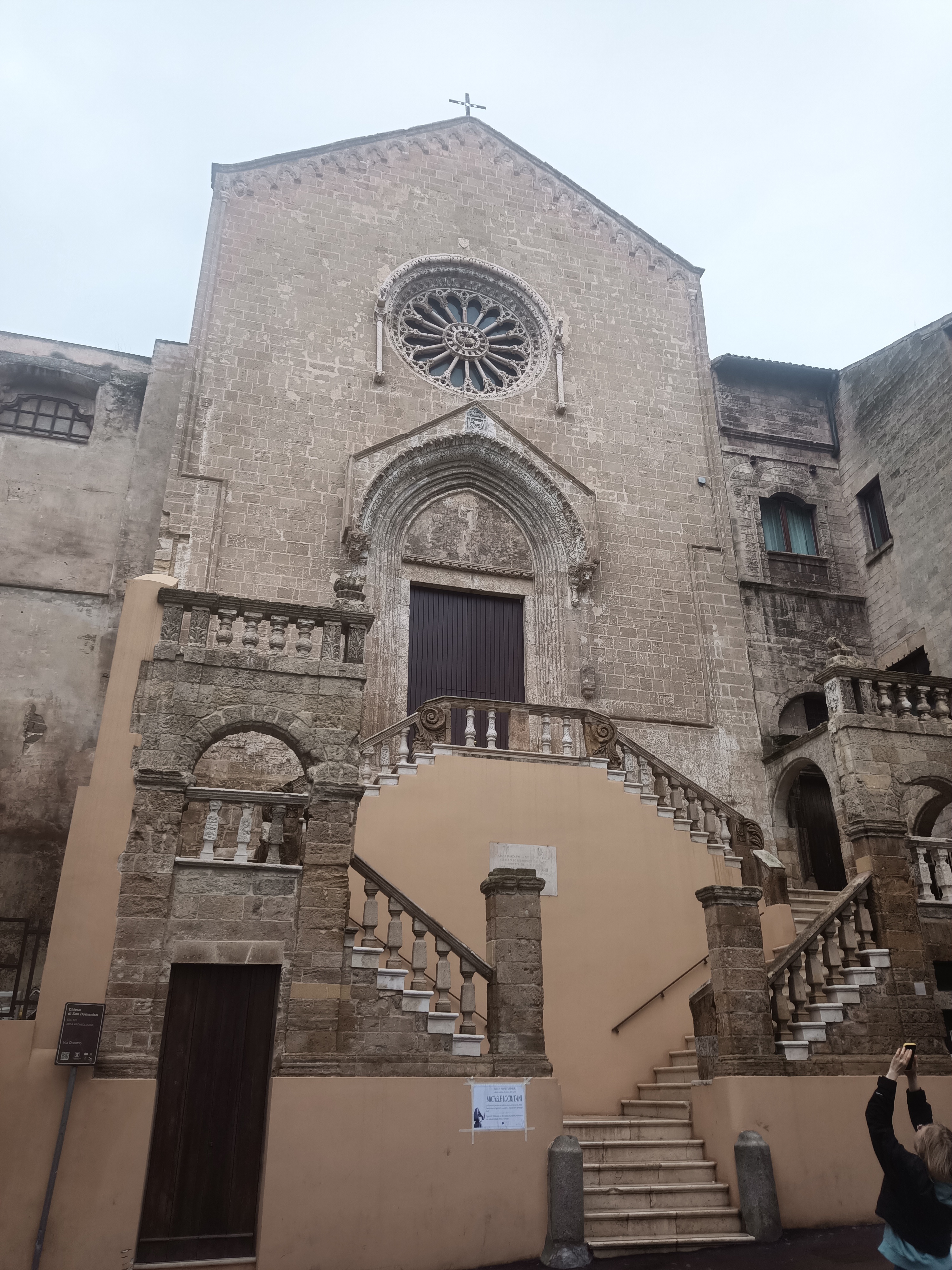
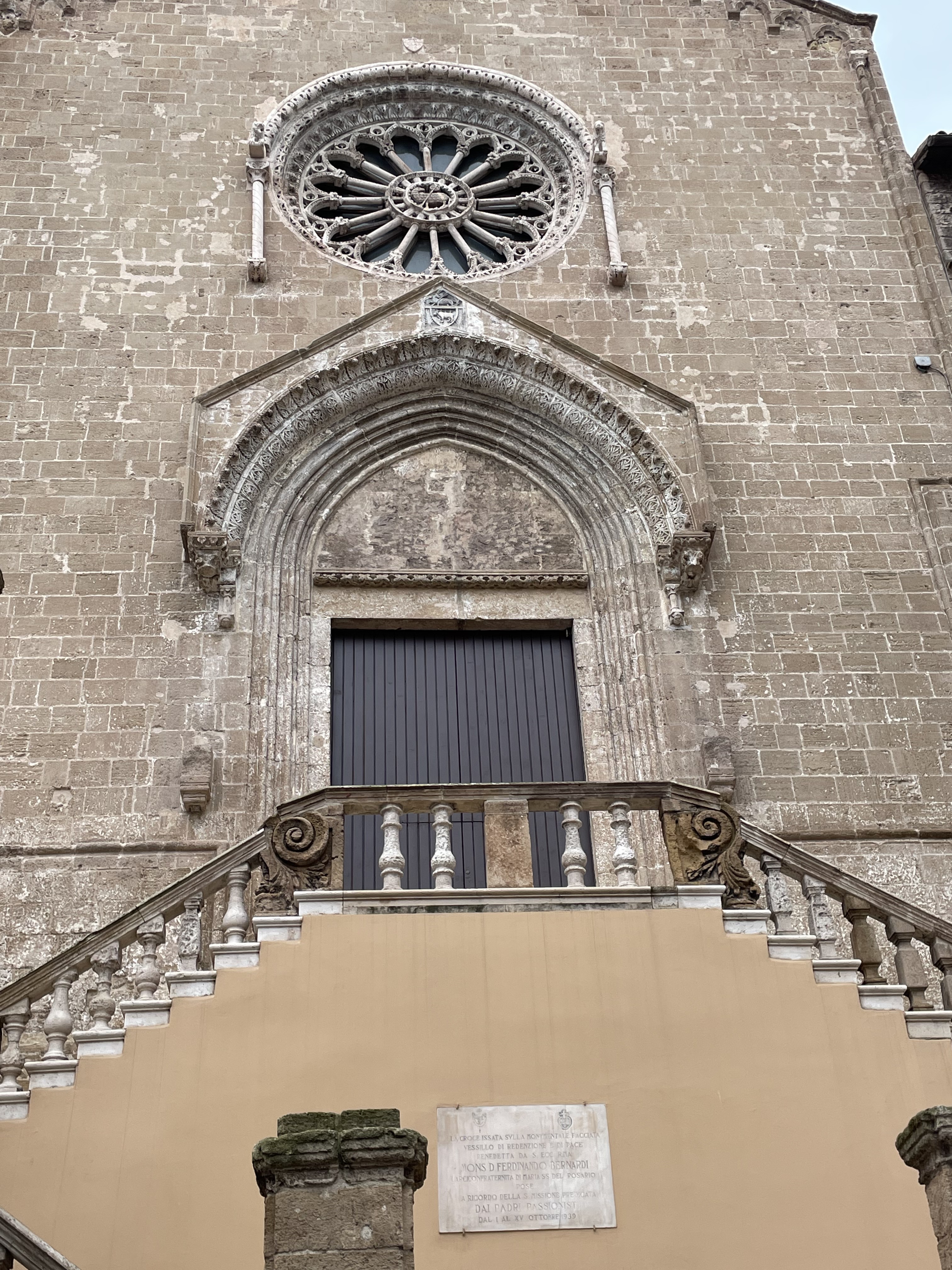
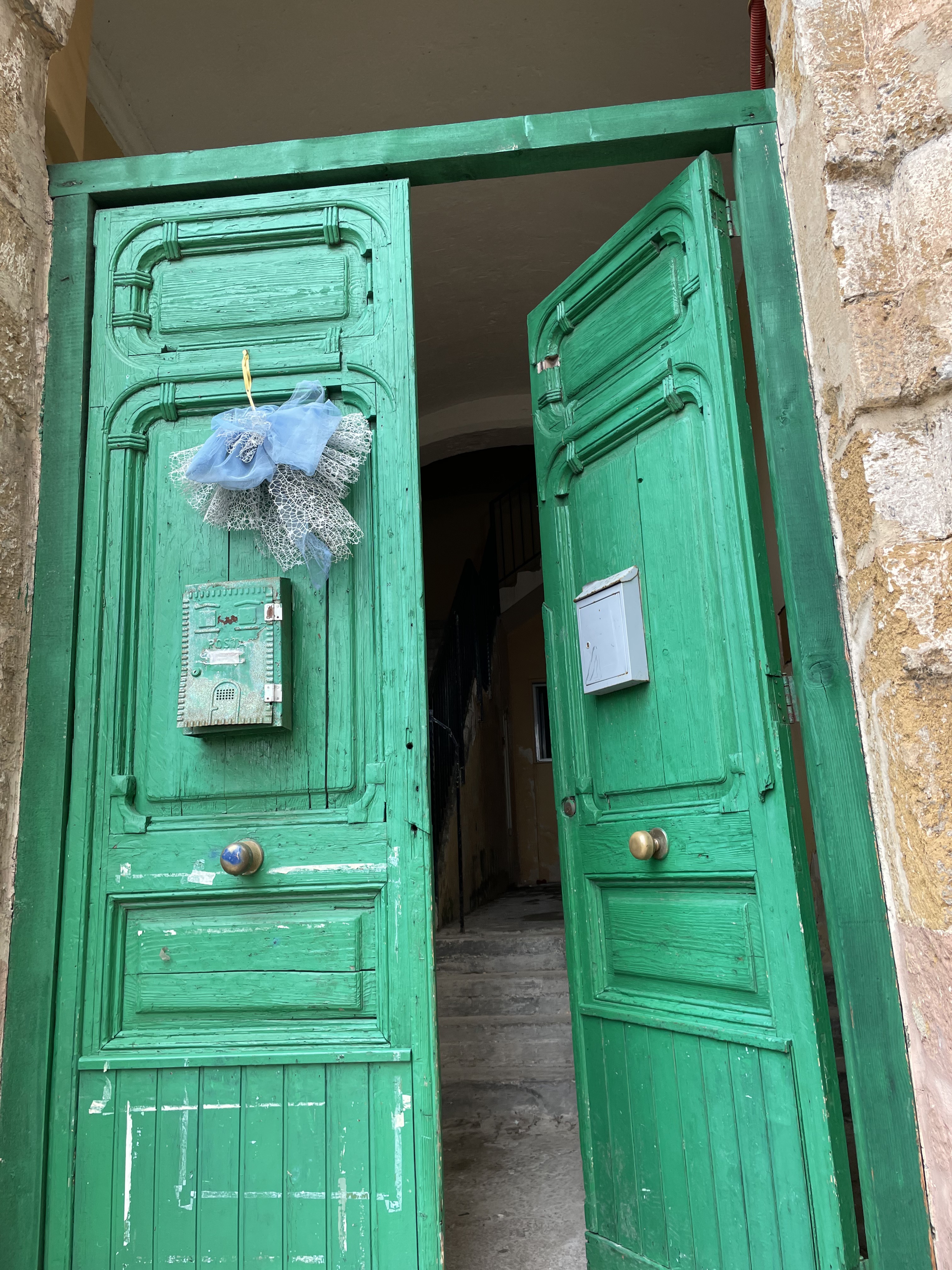
The street-art gallery
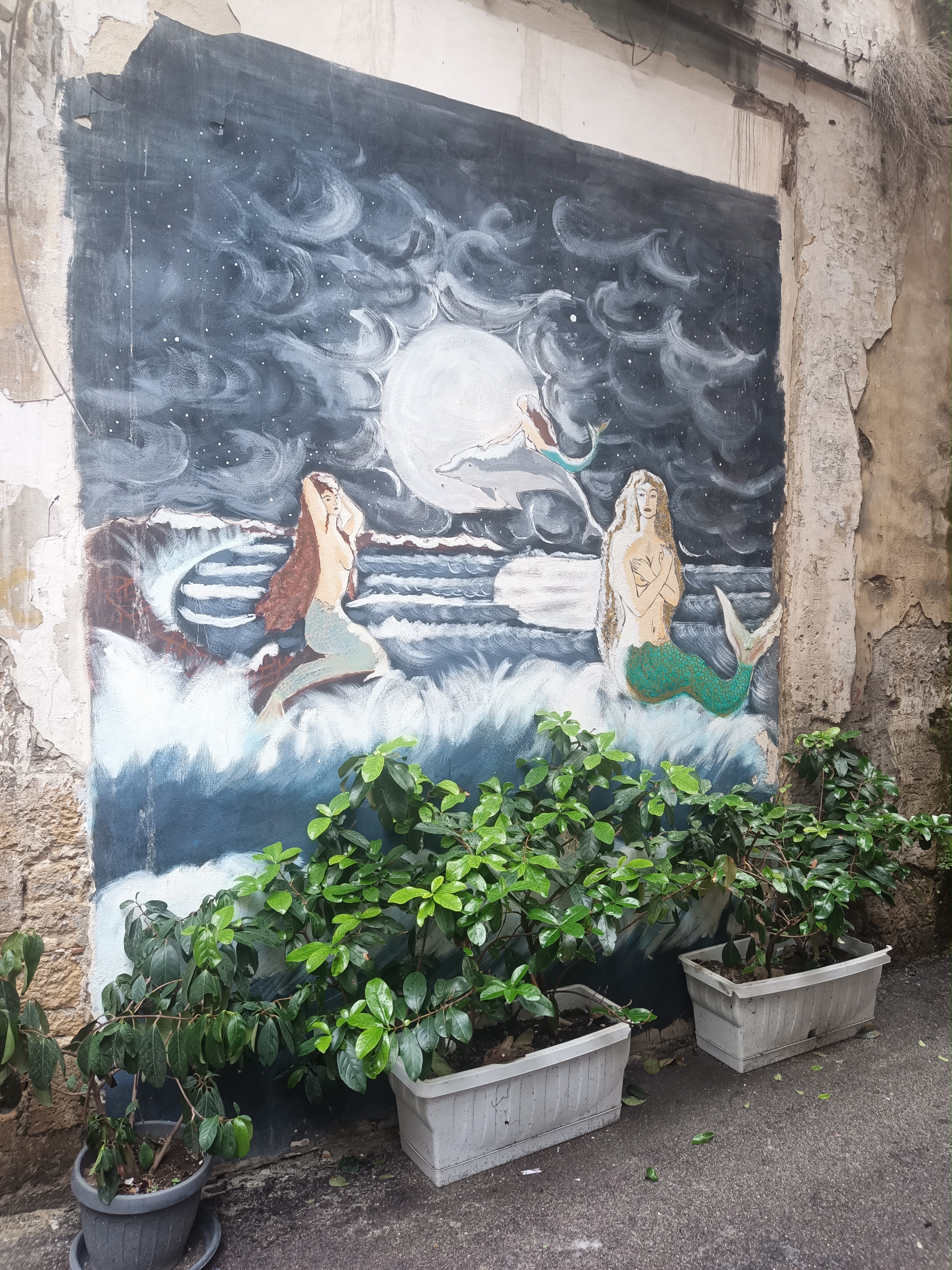
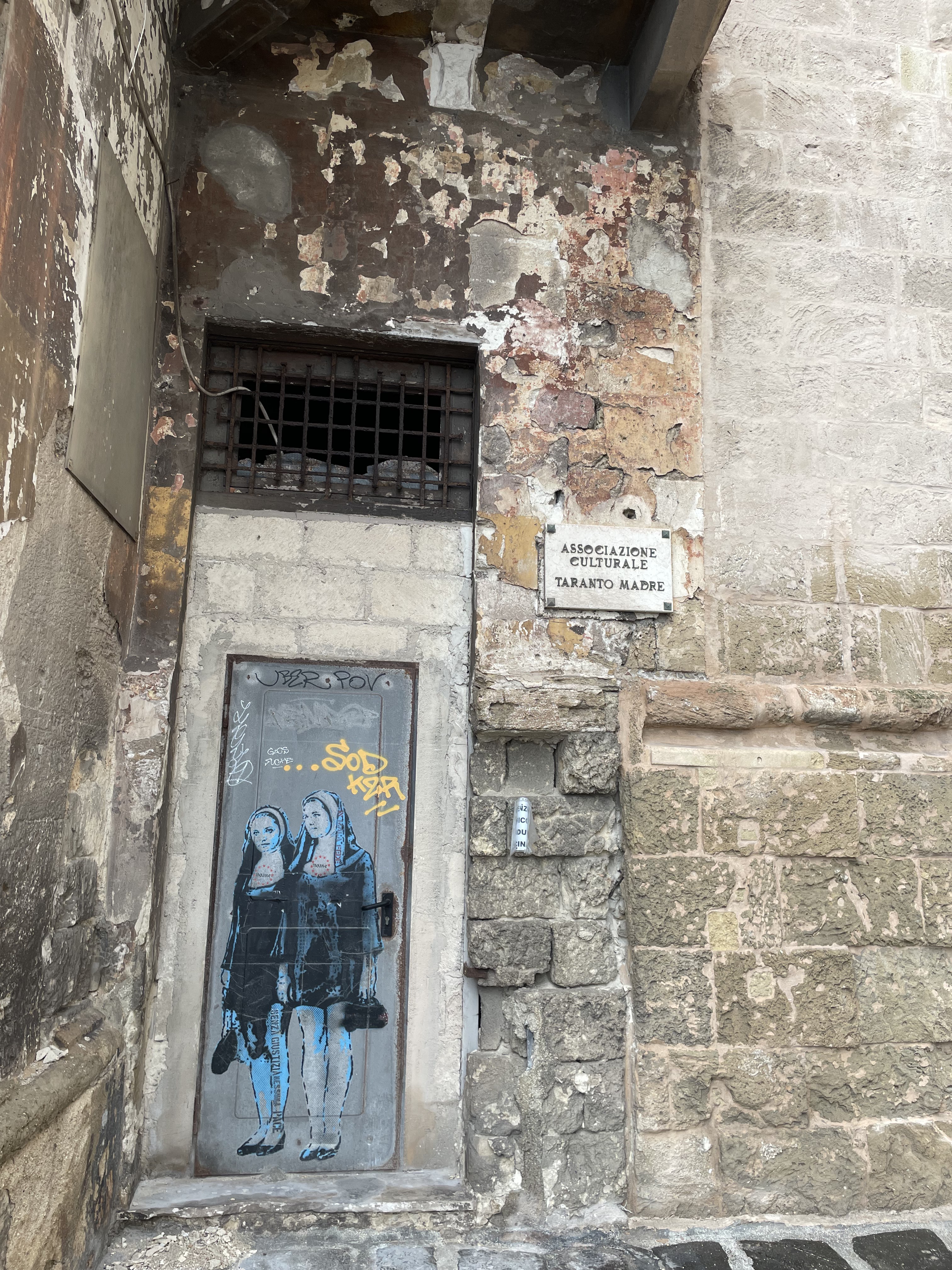
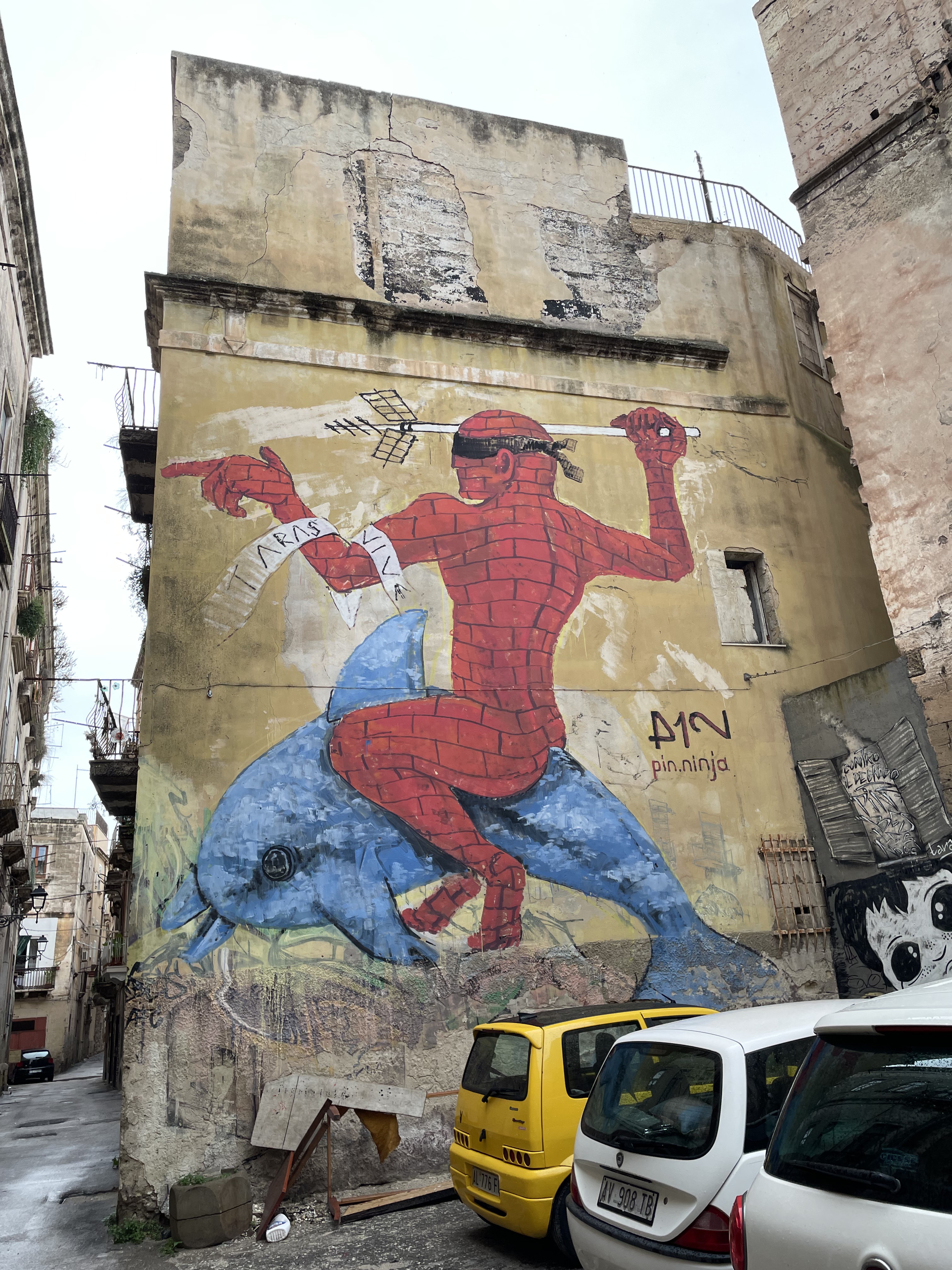
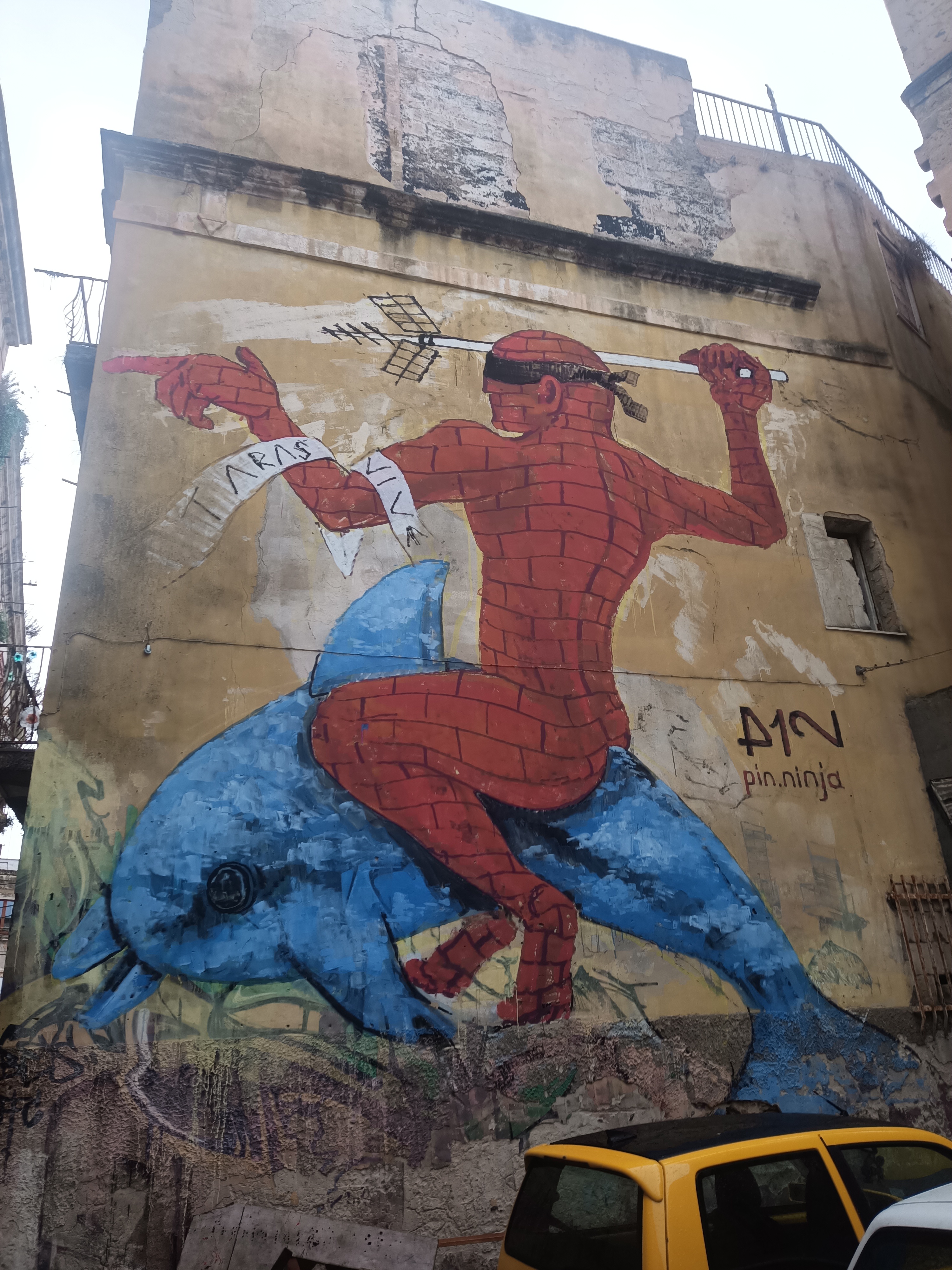
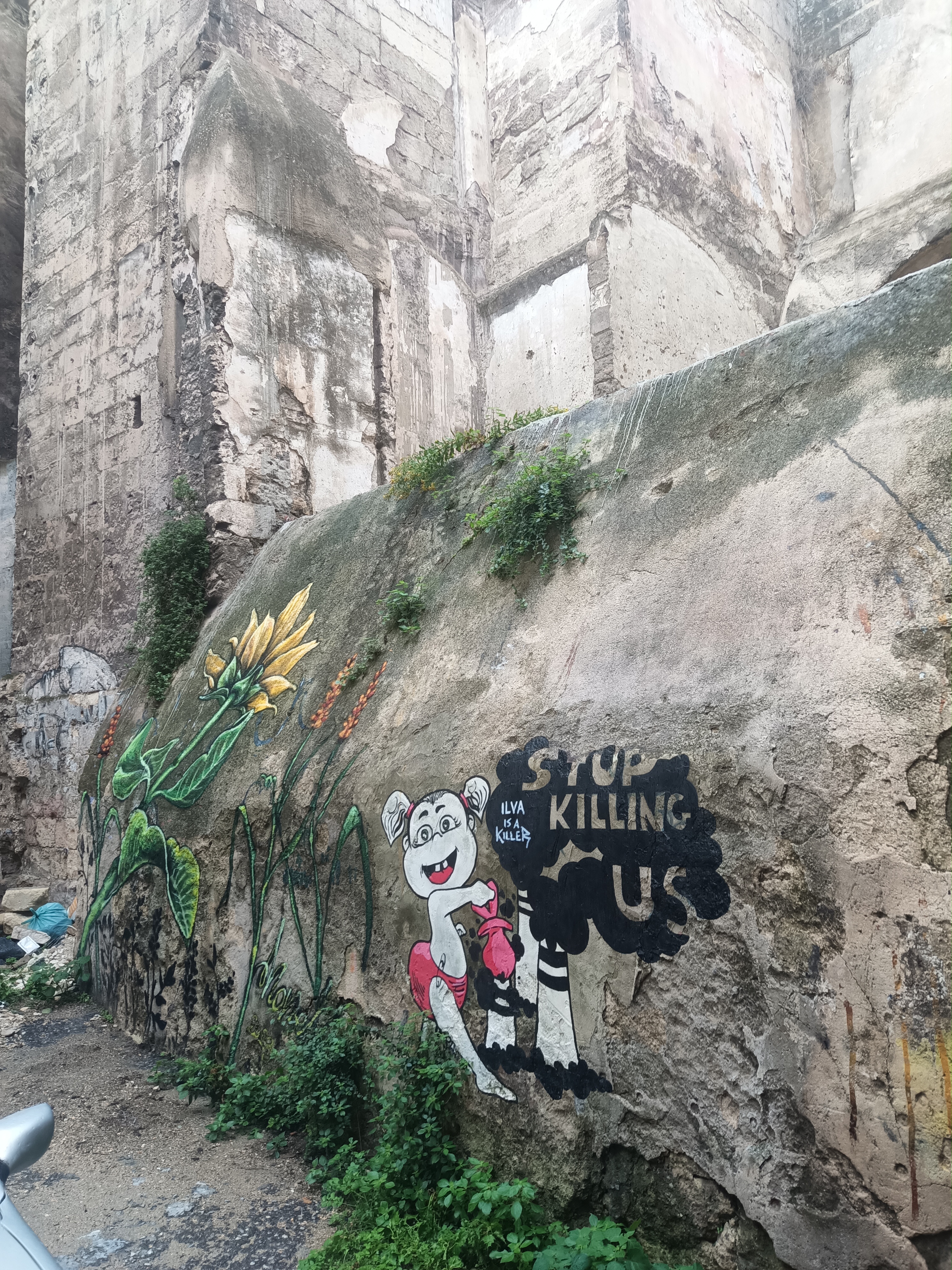
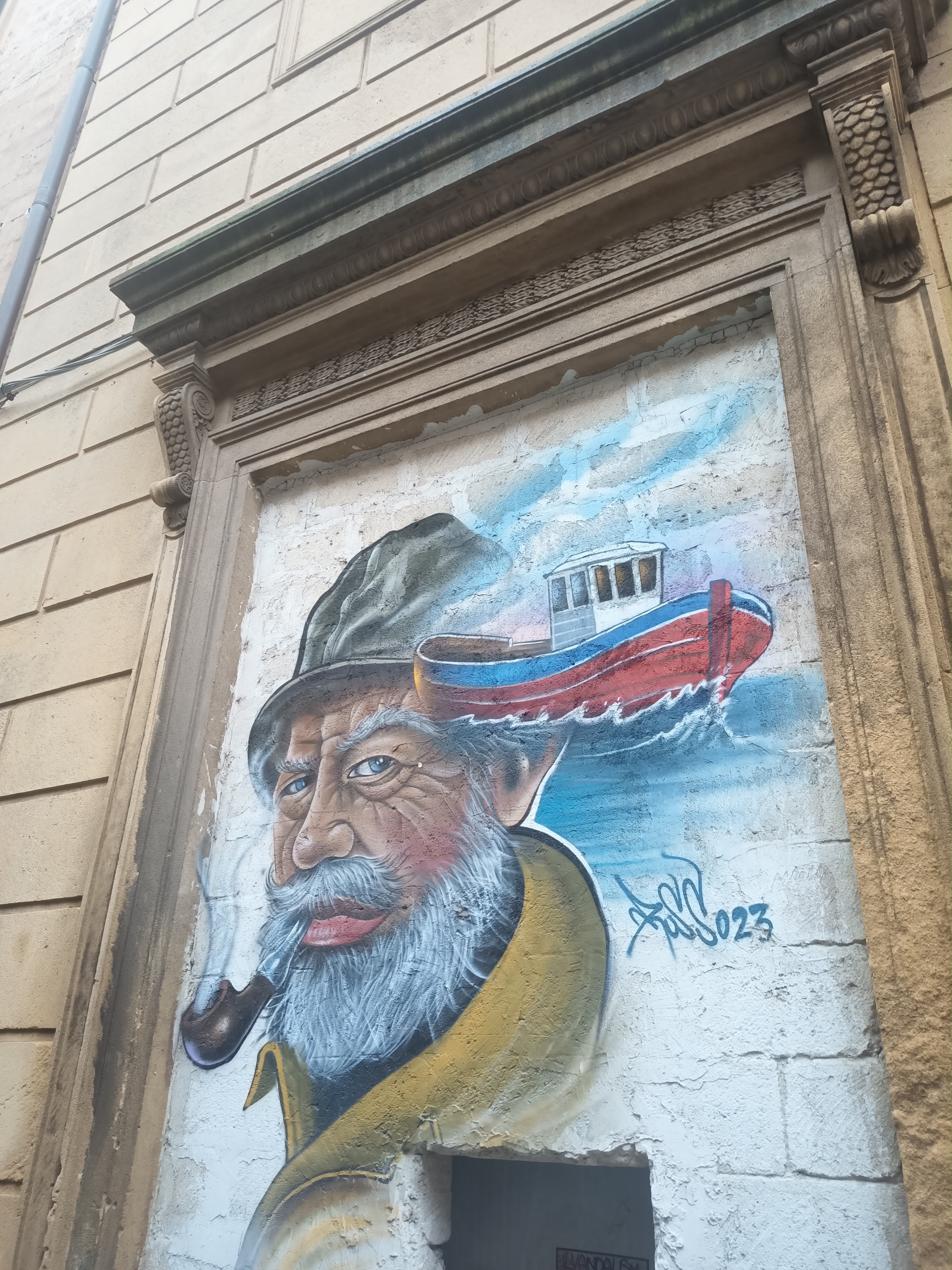
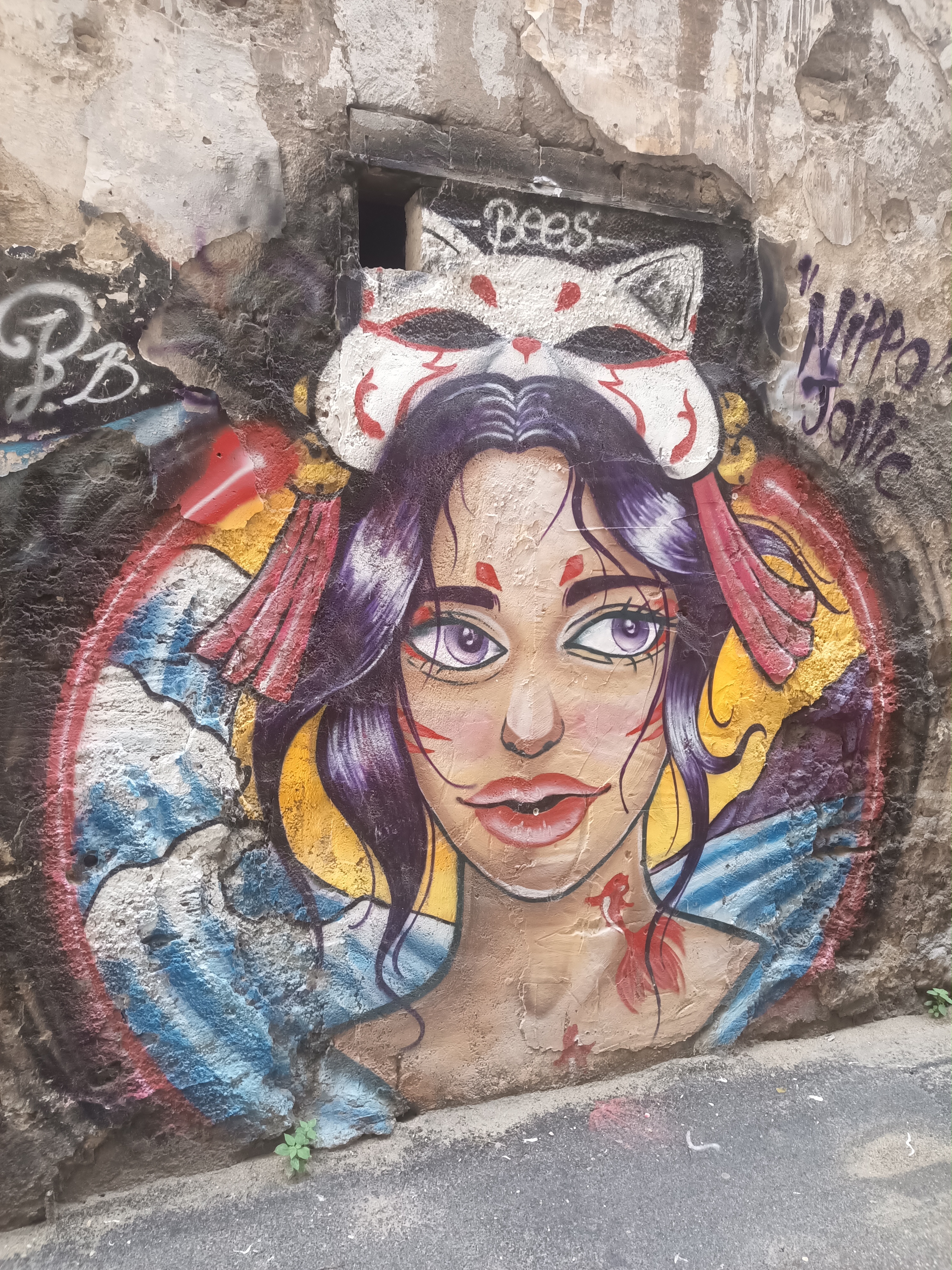
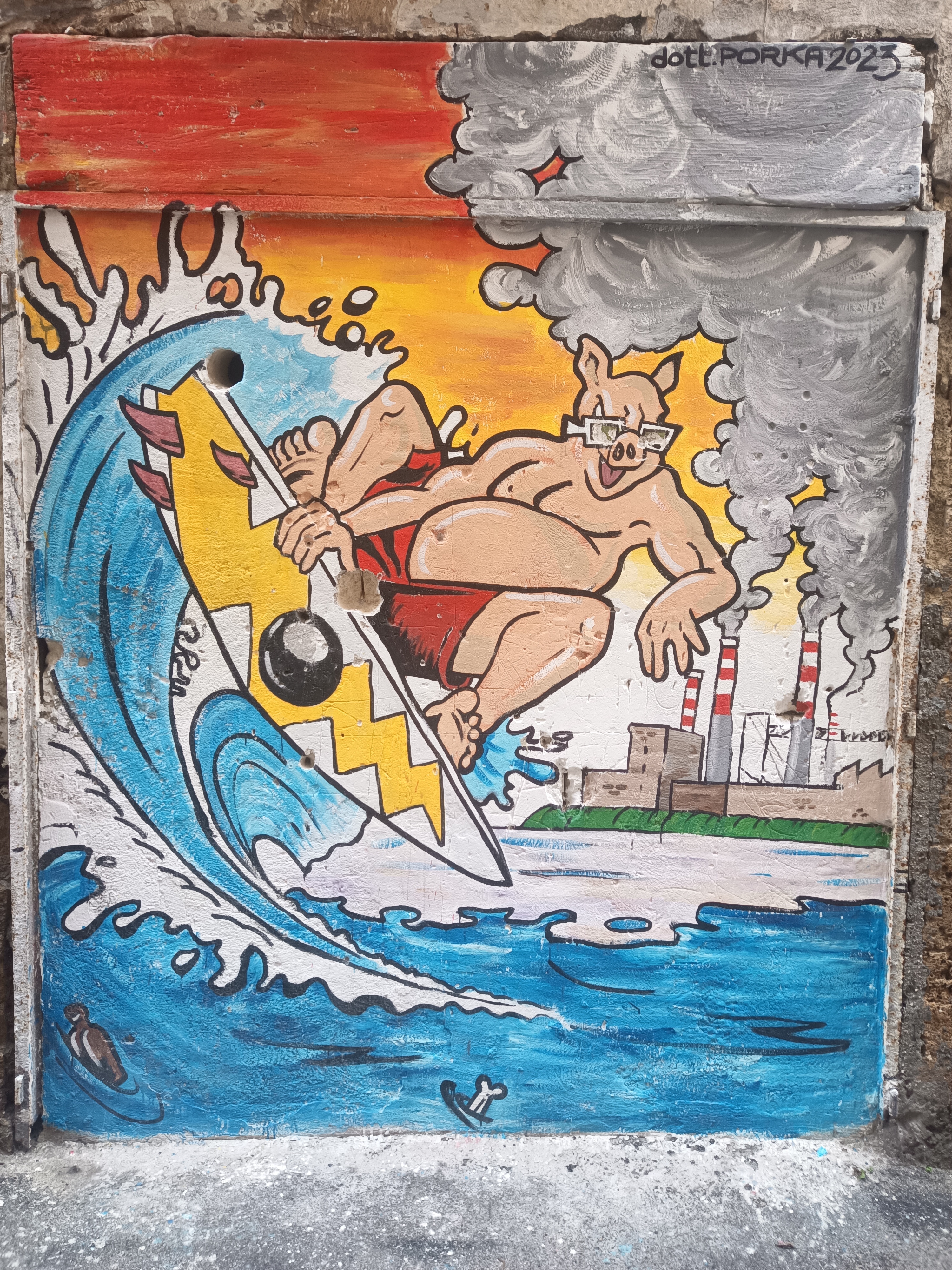
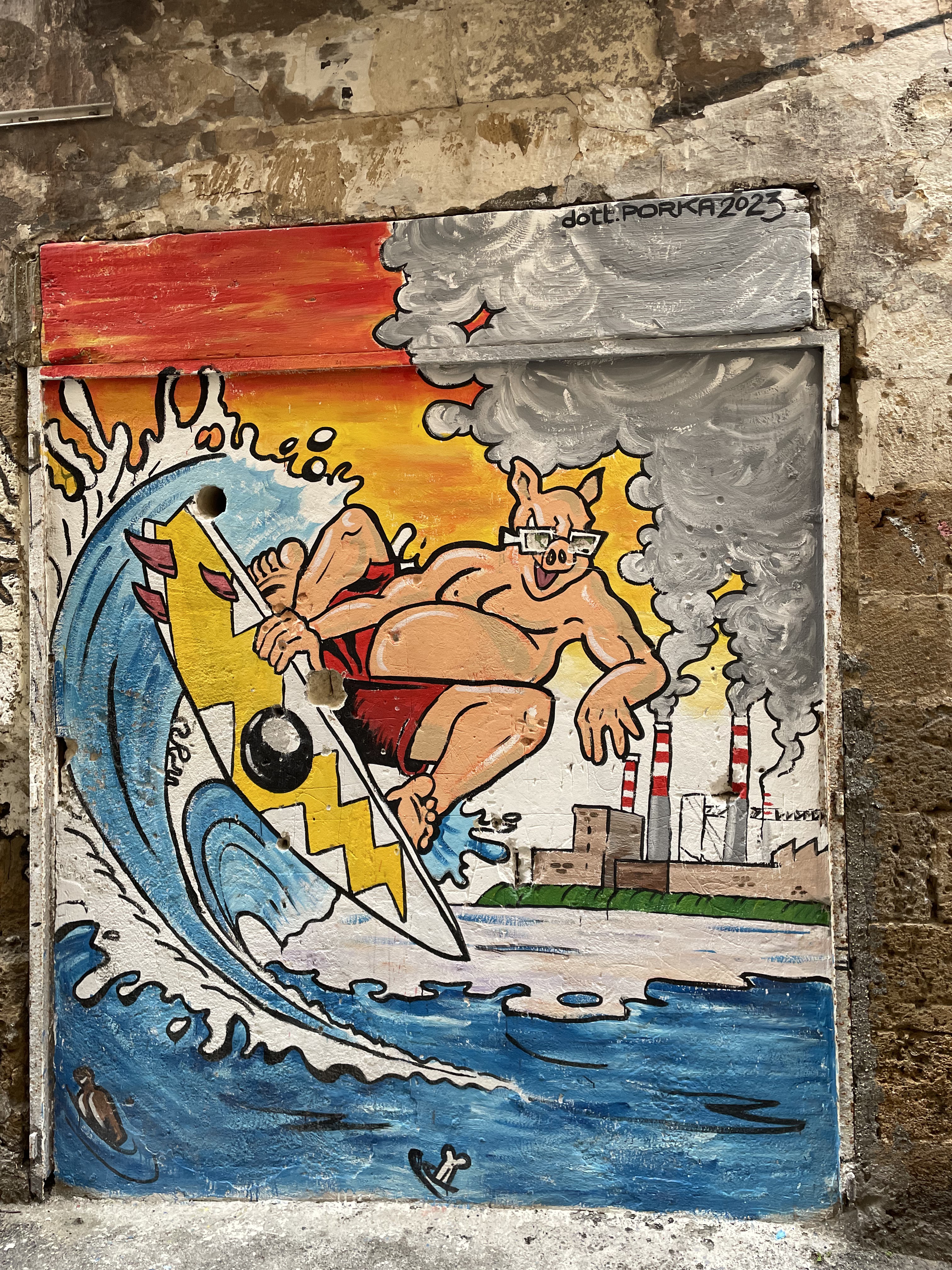
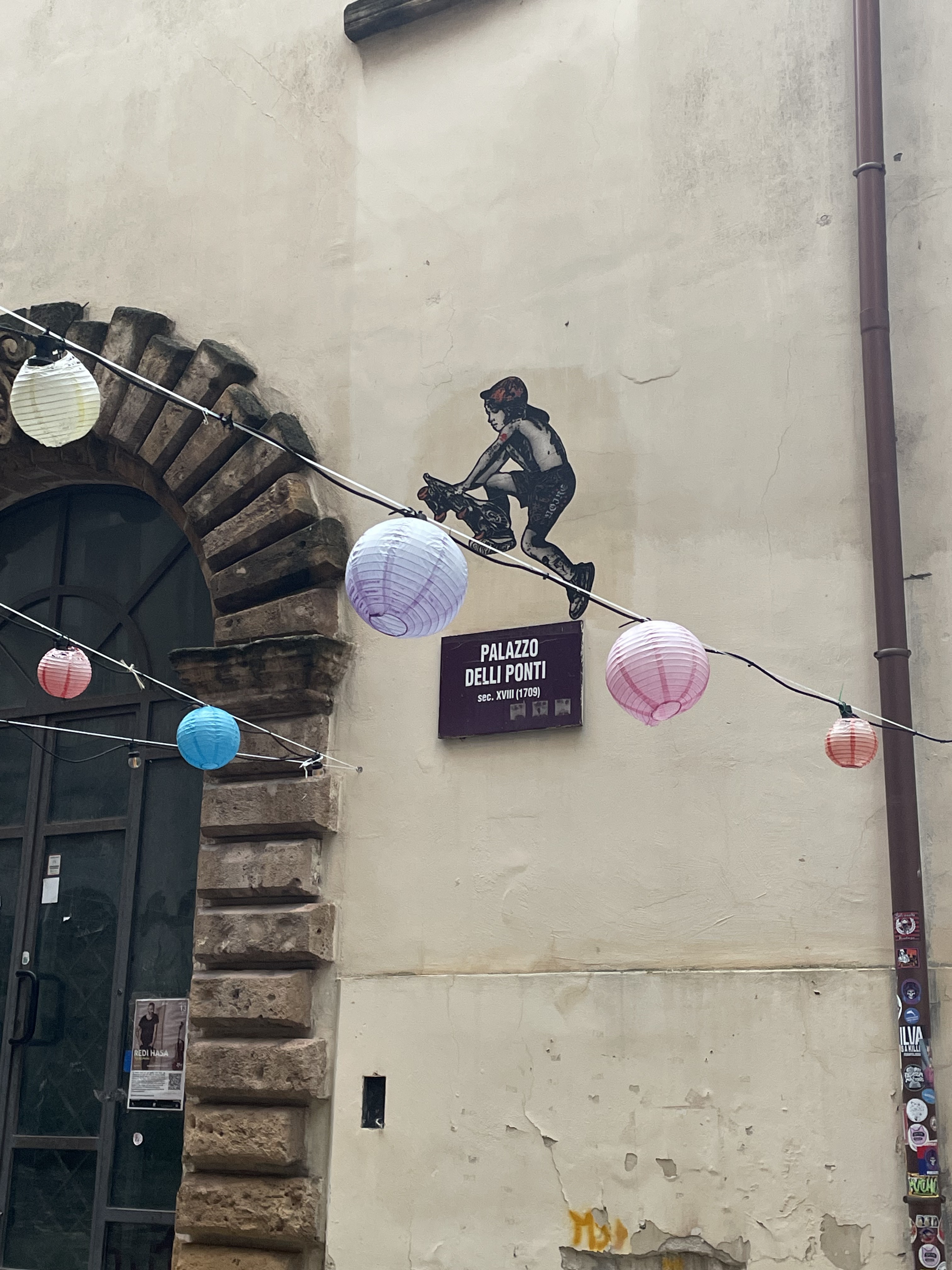
Here’s the thing about rain and crumbling walls: they make an open-air museum. Street art took over the old town in 2013–14, when the Neapolitan duo Cyop and Kaf covered derelict buildings with some 120 works — and the walls never stopped: mermaids and blue nuns, a superhero riding a dolphin, a red brick-patterned figure, a sea captain framed by a blocked-off doorway, a pig in red shorts on a surfboard, a mural of someone serving lunch. We simply walked the largest gallery of the trip.
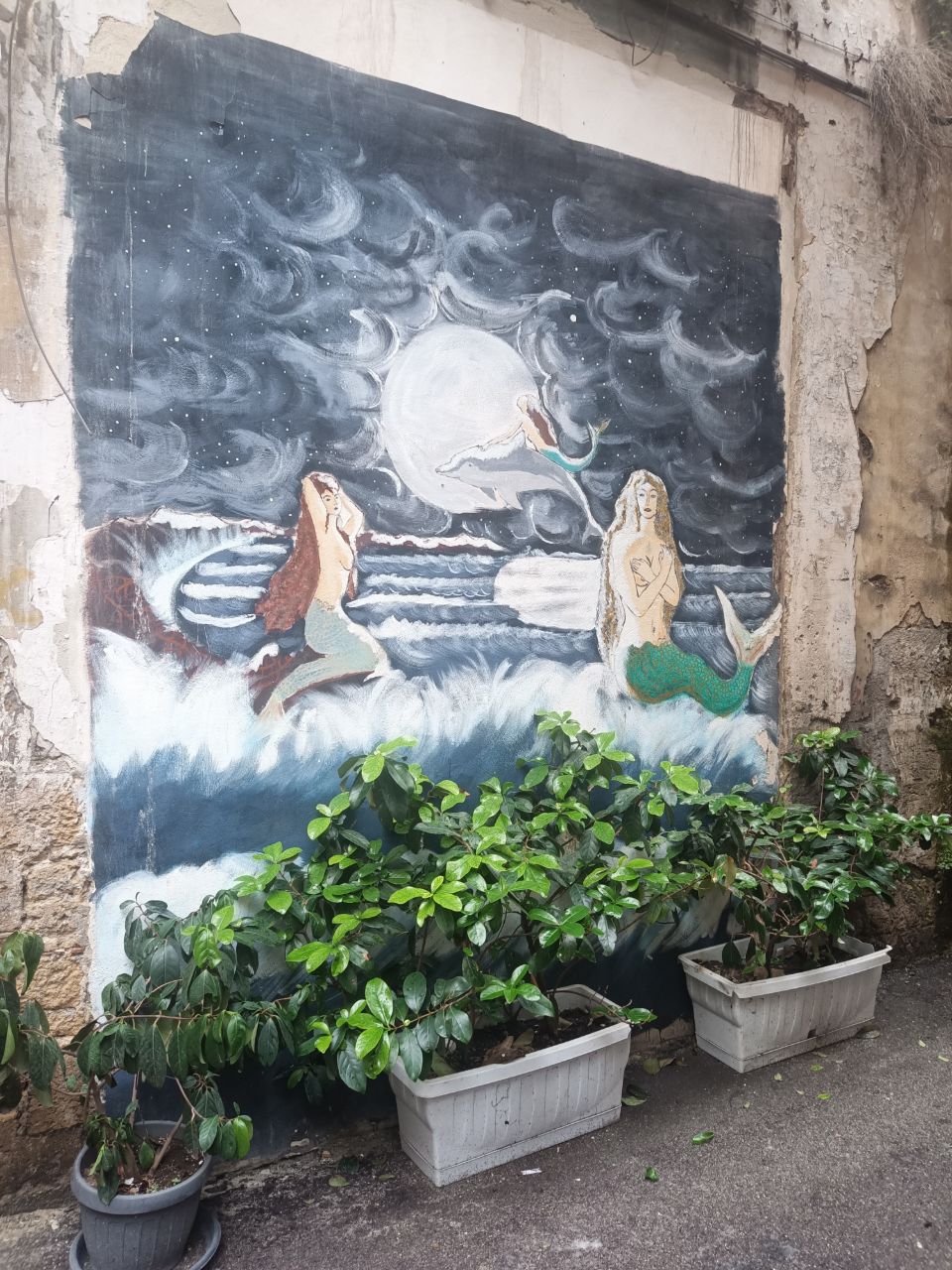
Mermaids, on the sea wall 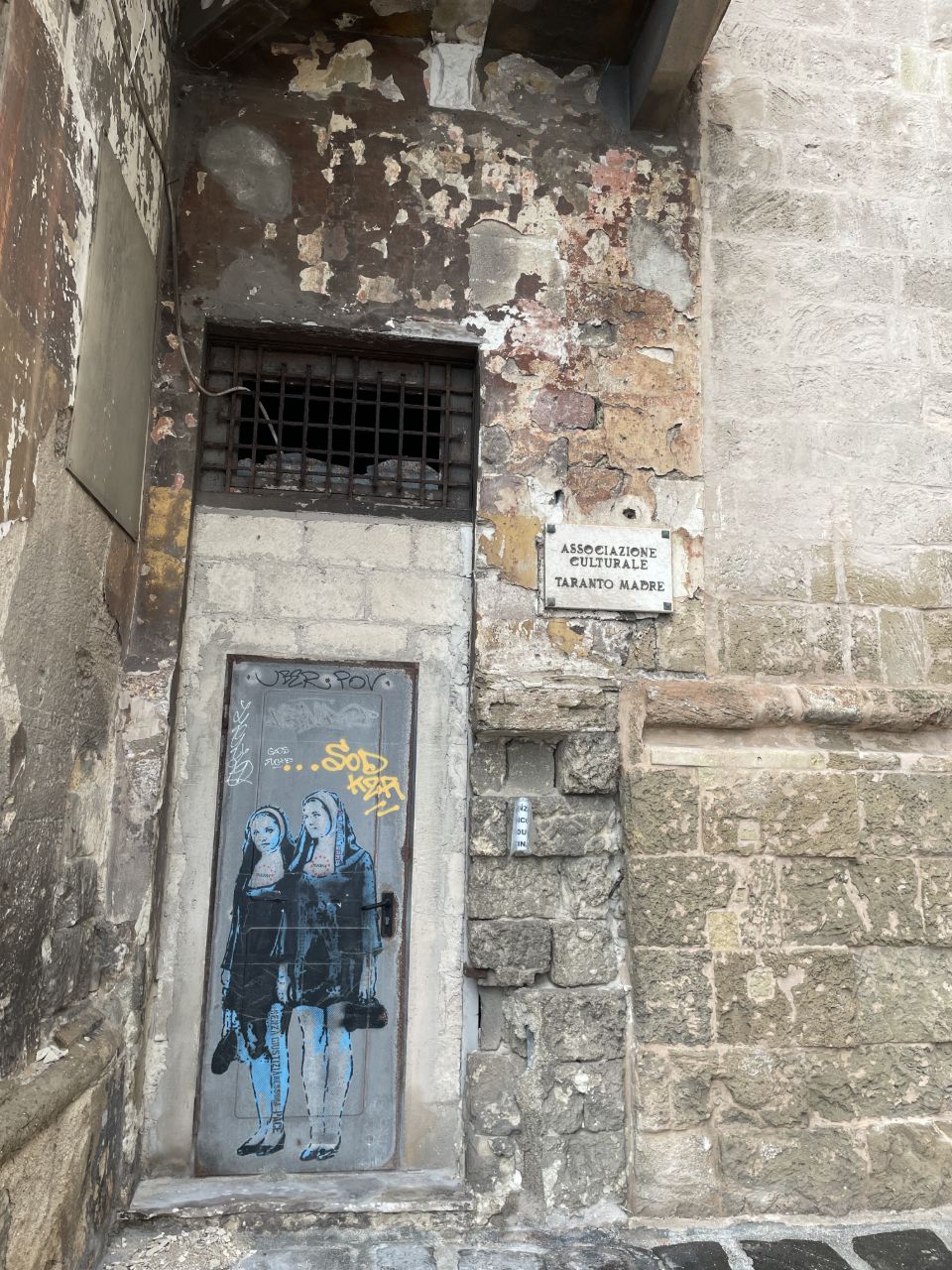
Blue nuns at the door 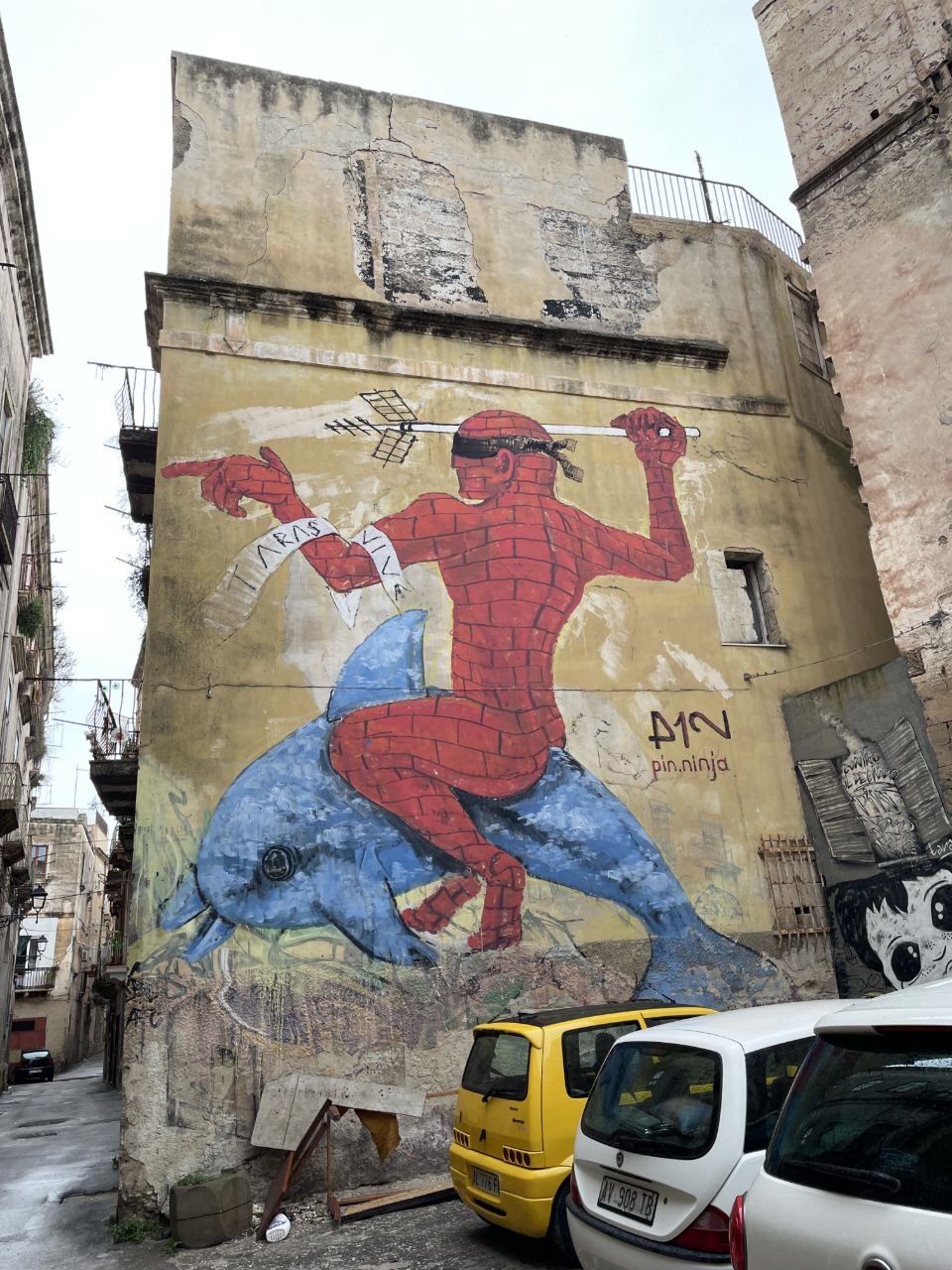
Rooftop heroics 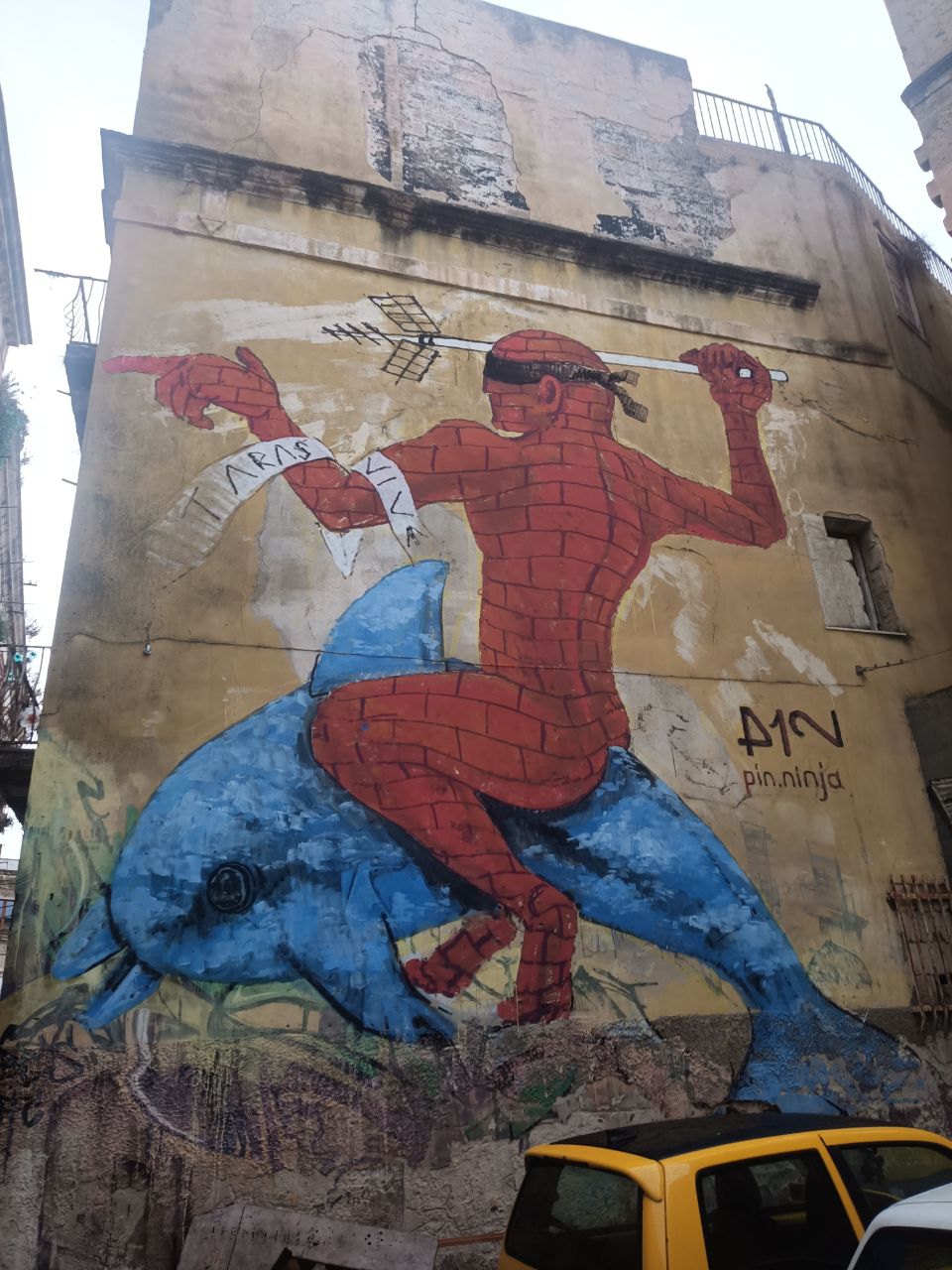
The brick figure 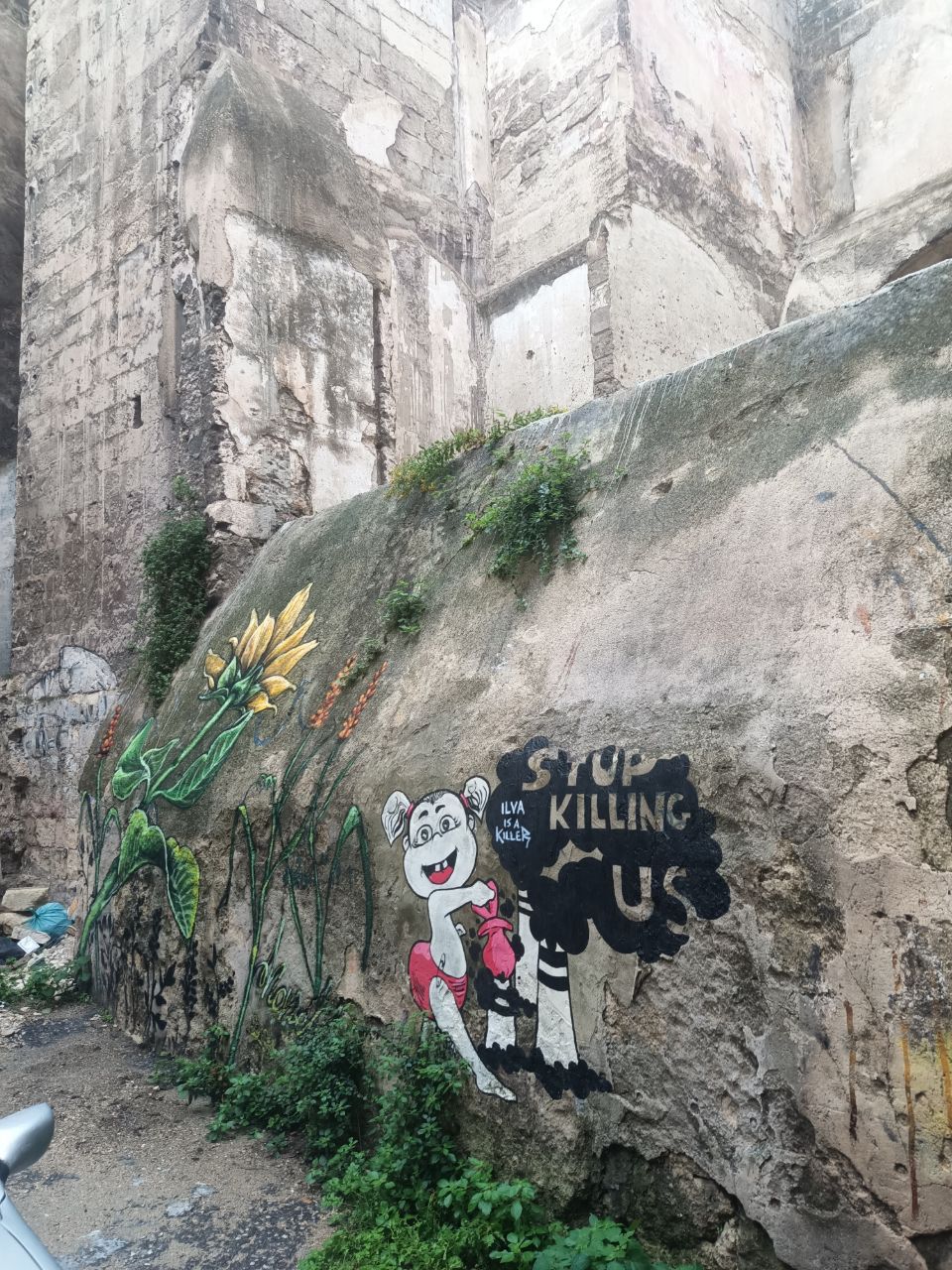
The grinning cow 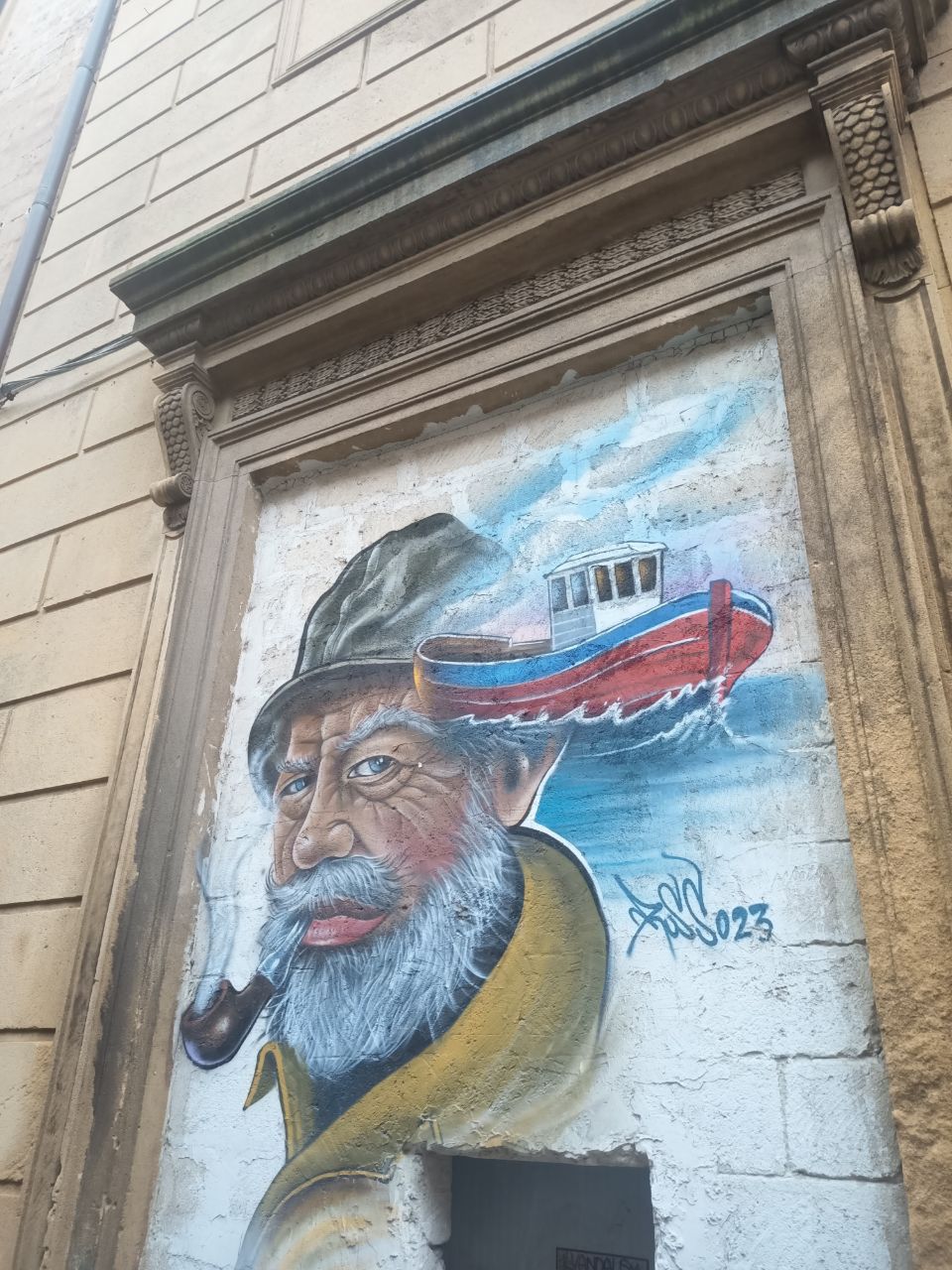
A sea captain in a blocked doorway 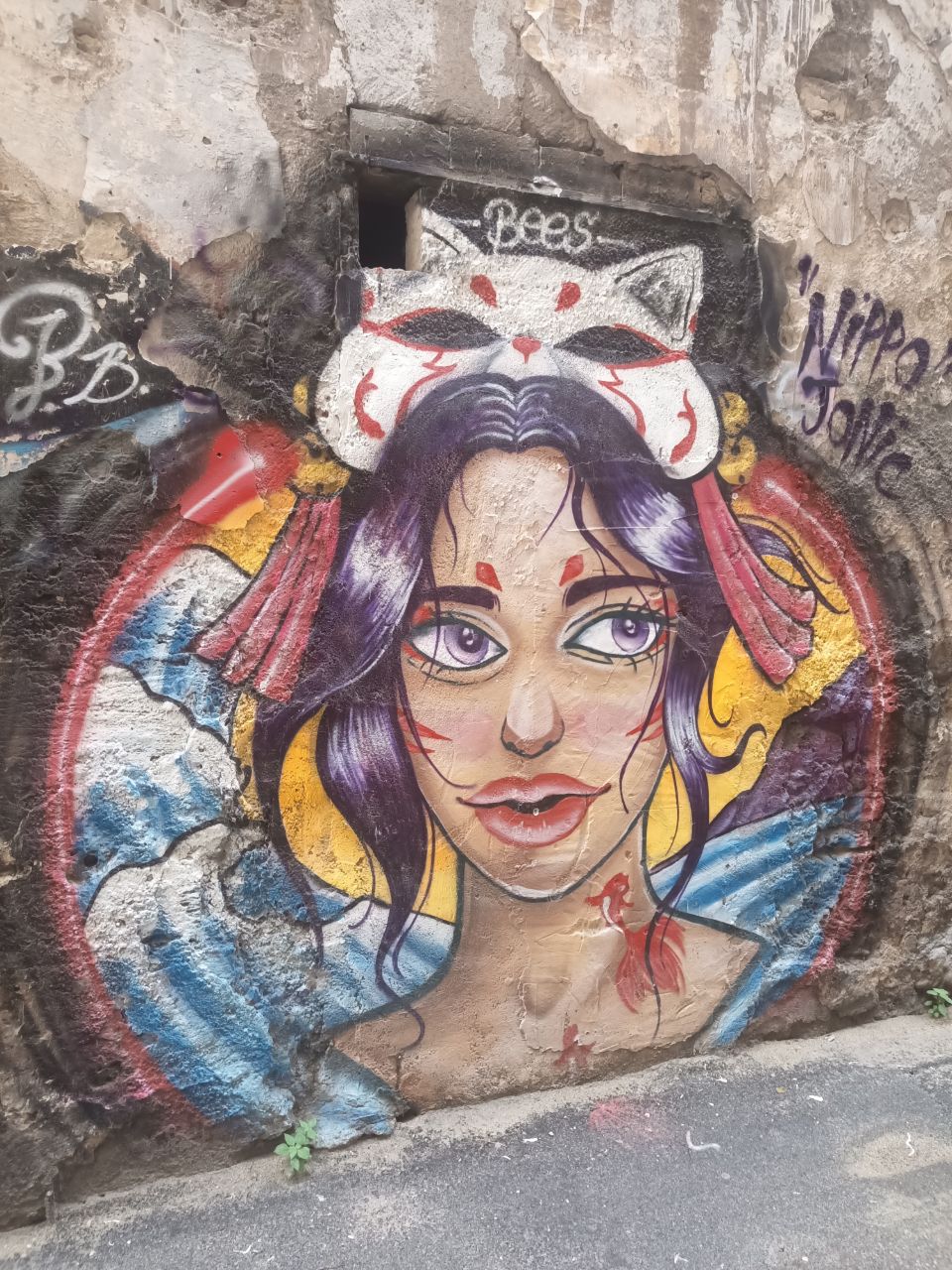
Purple hair, white fox 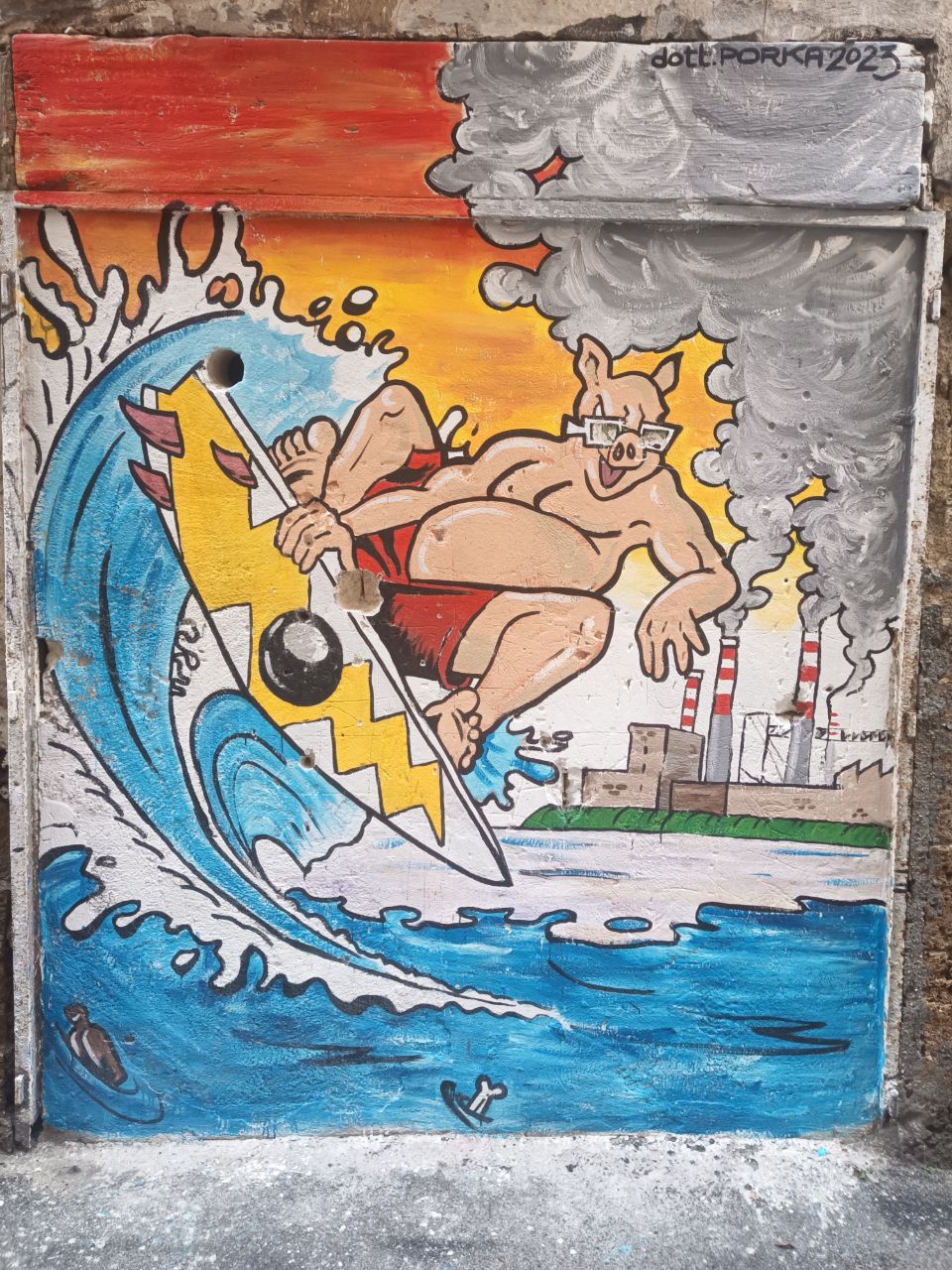
Surfer at the shutter 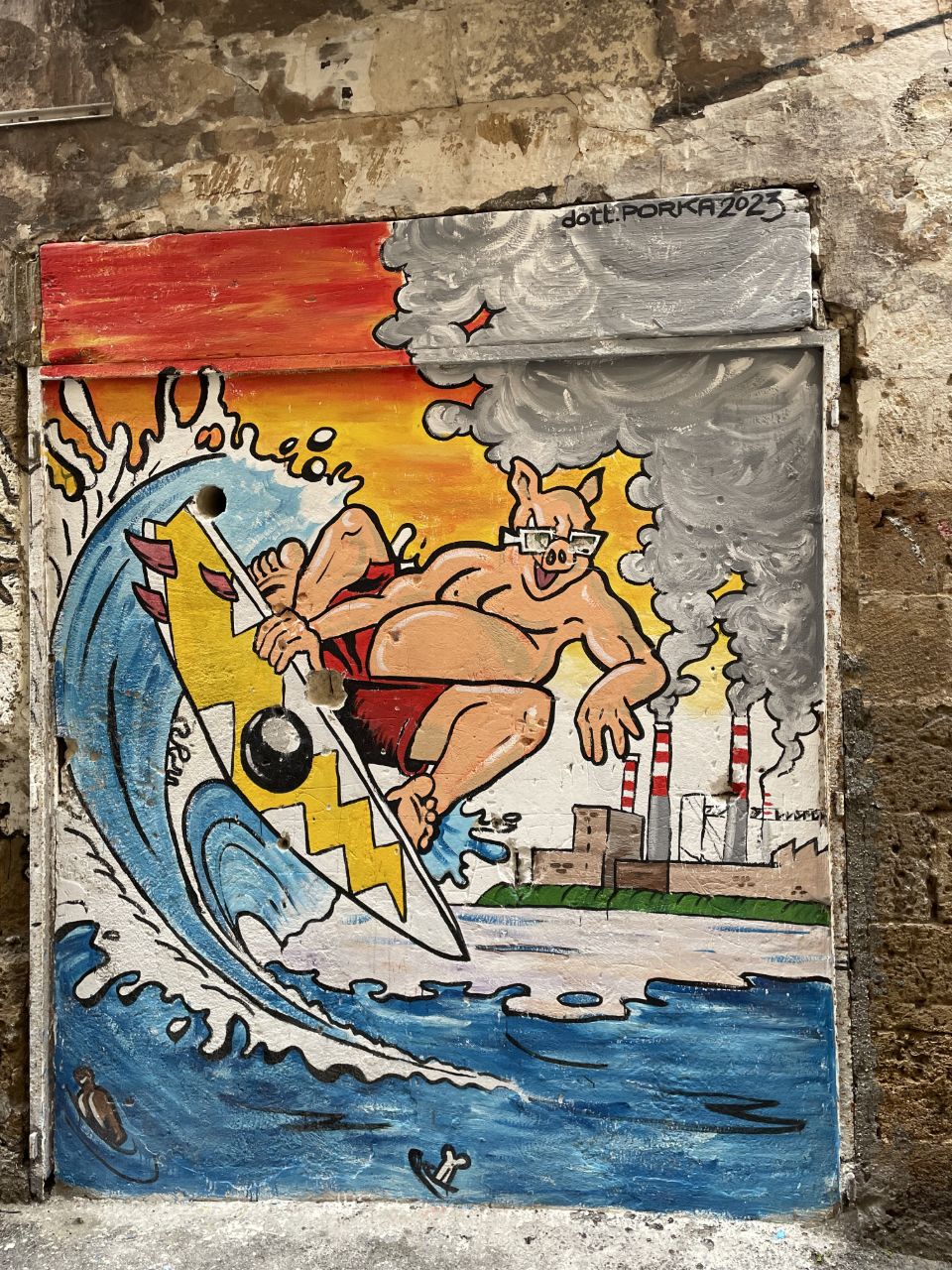
Surfing pig, obviously 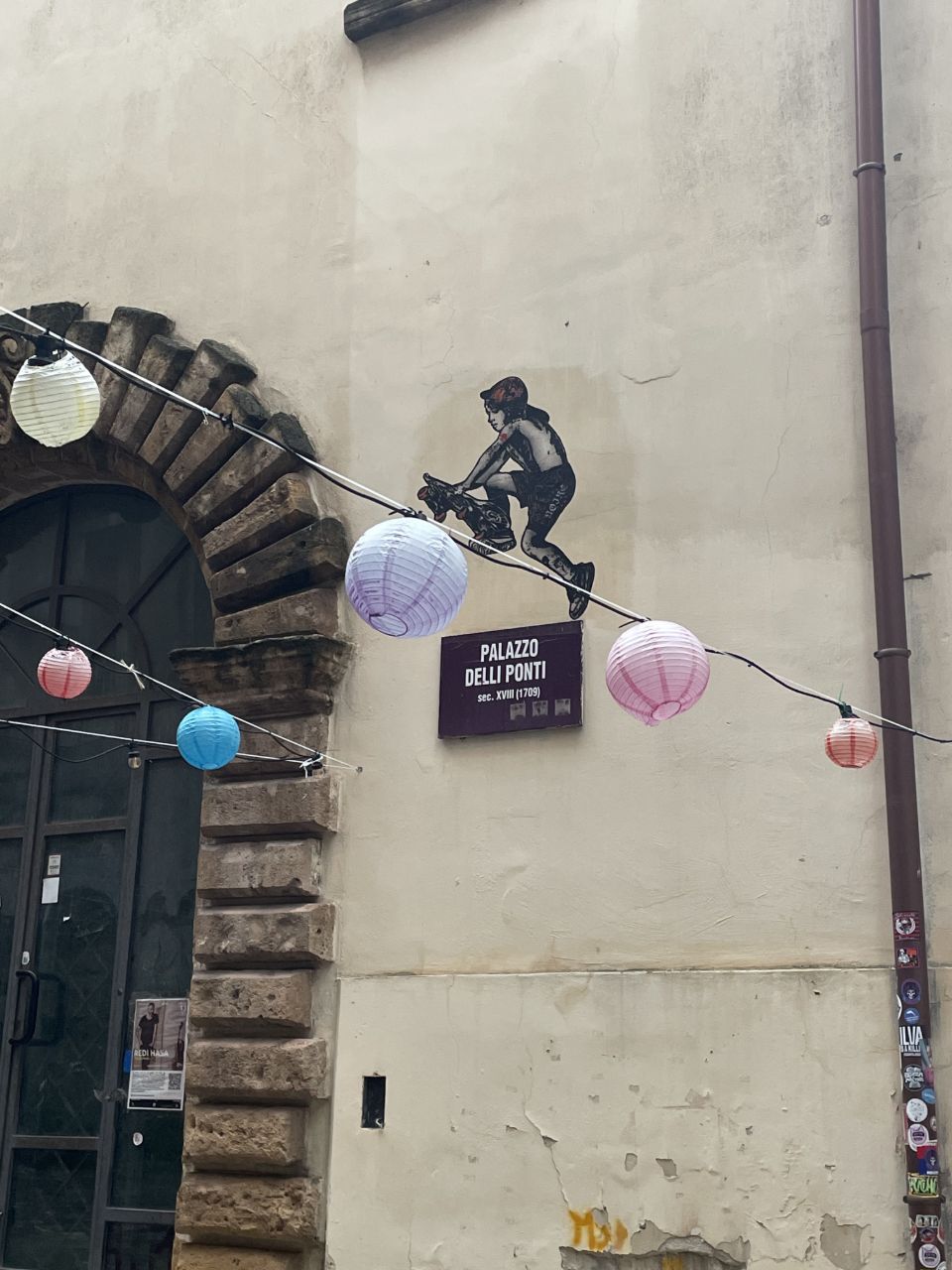
Child on a whitewashed wall
Poseidon and the fortress
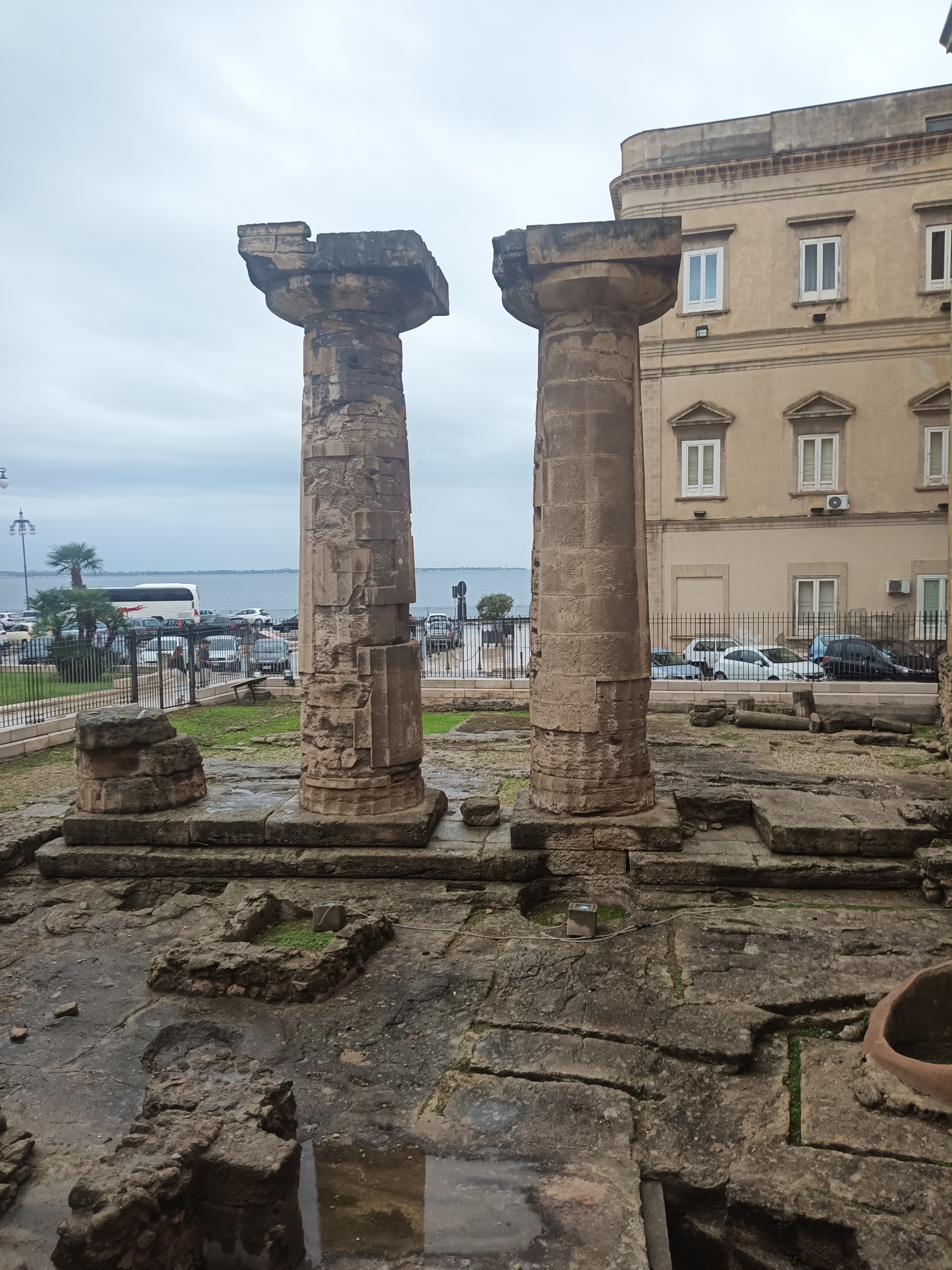
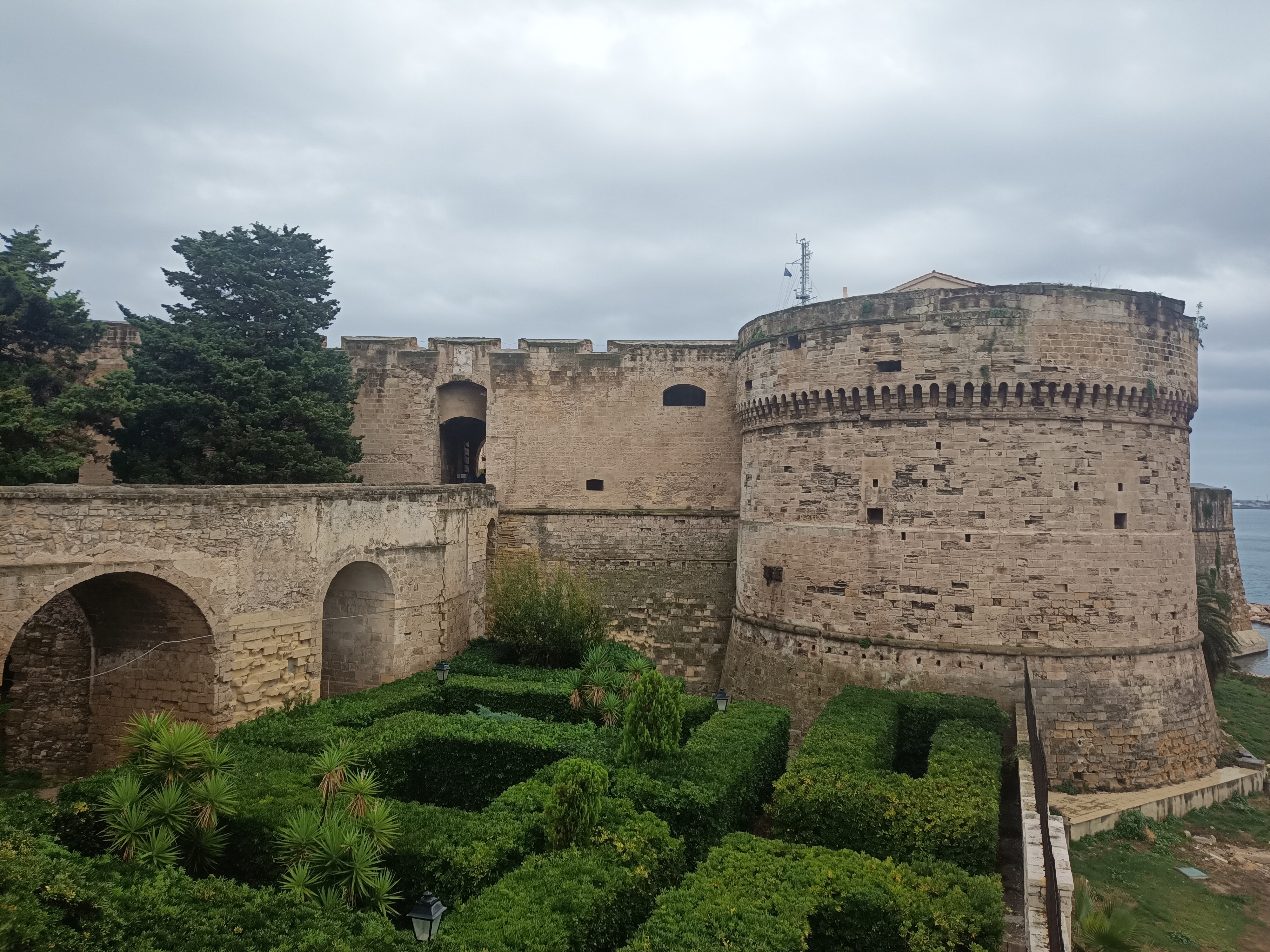
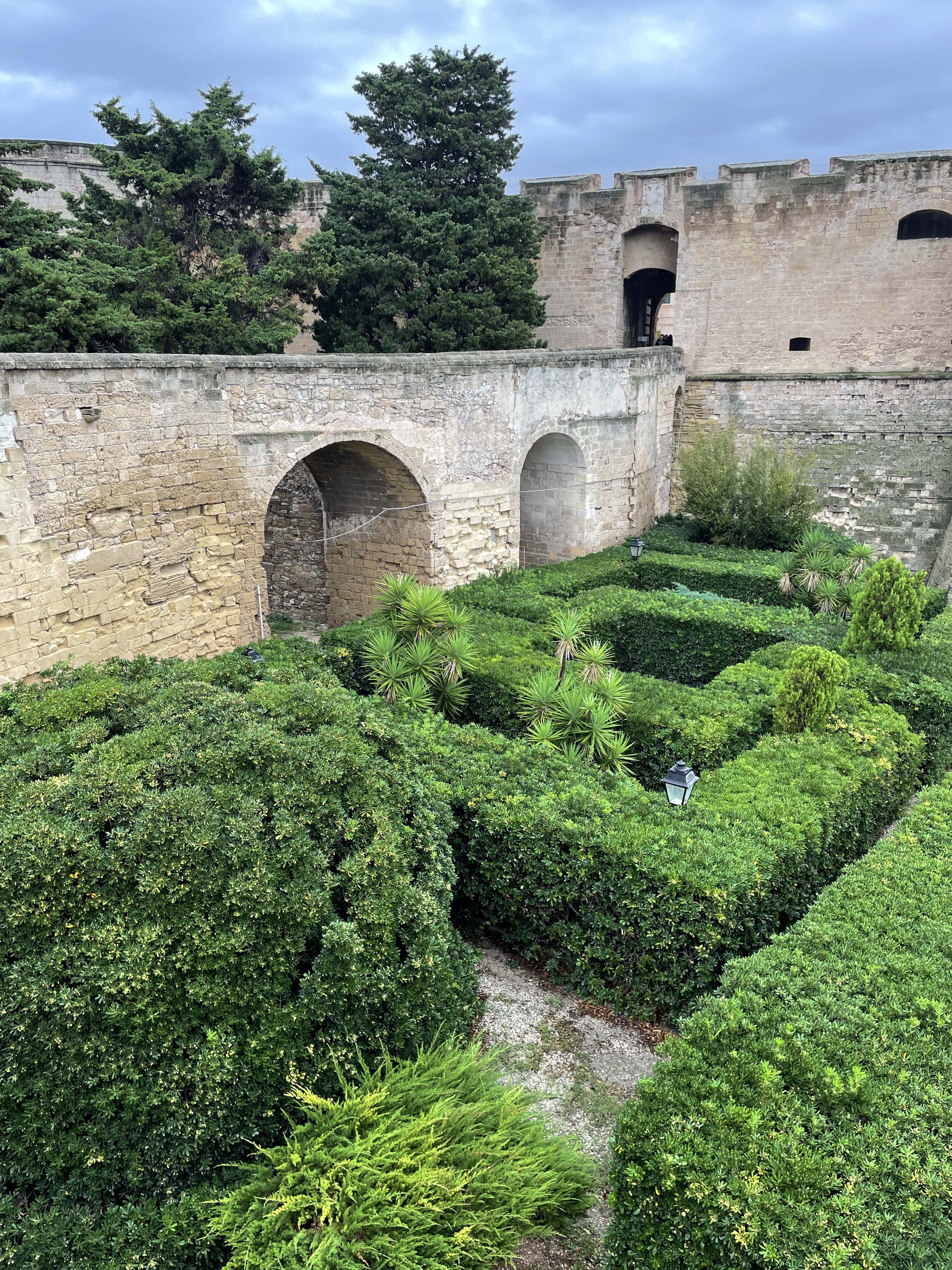
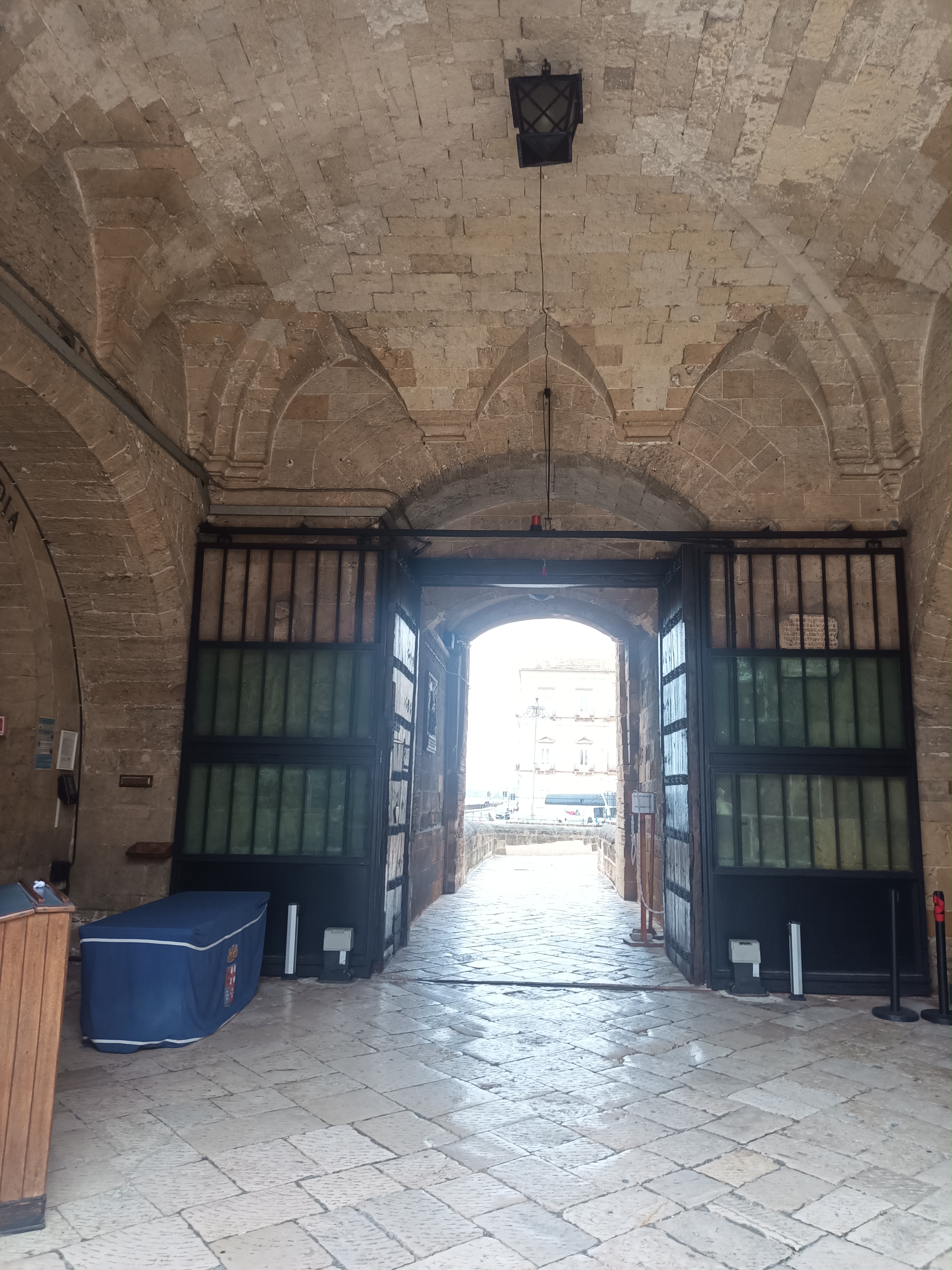
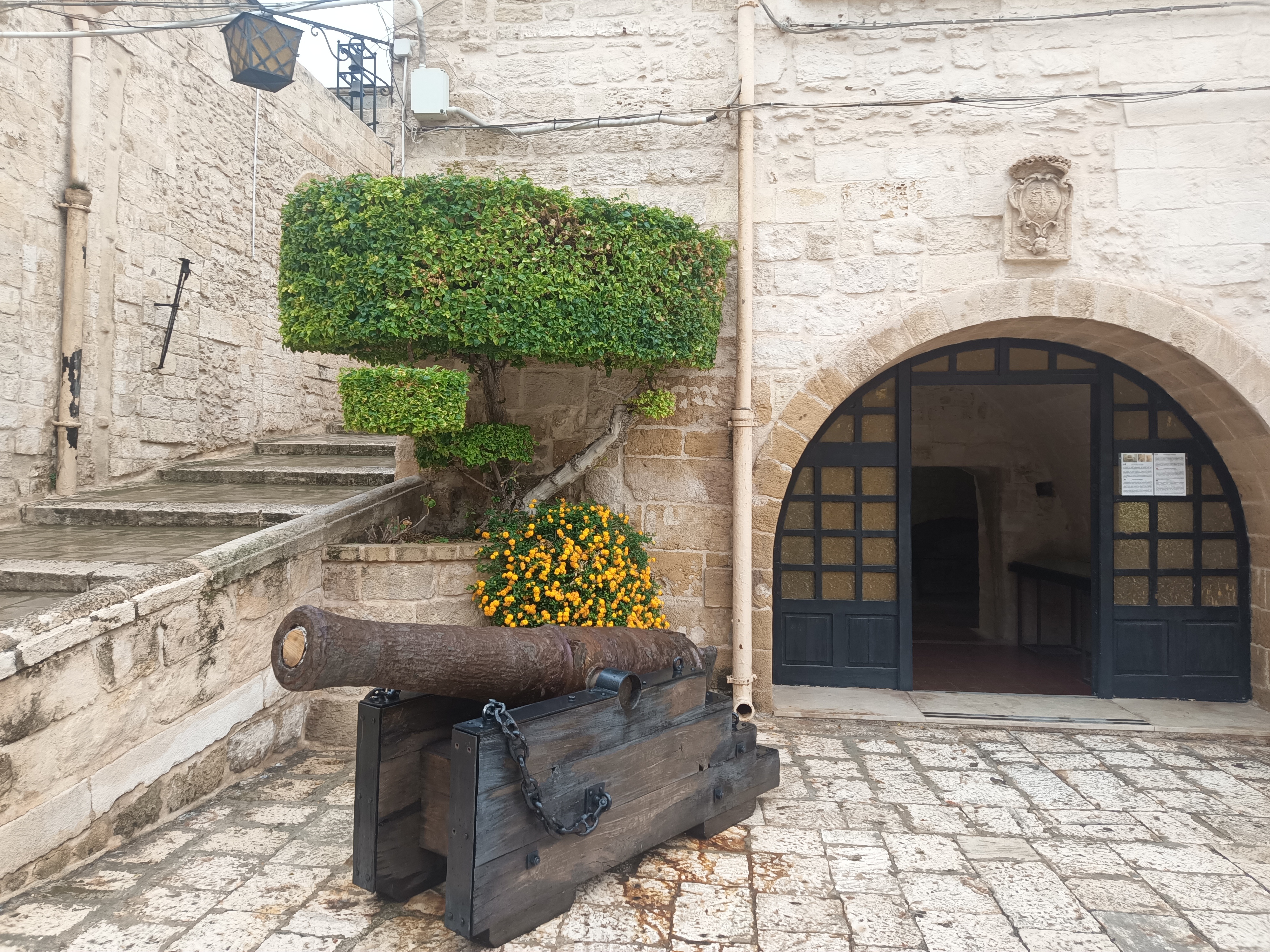
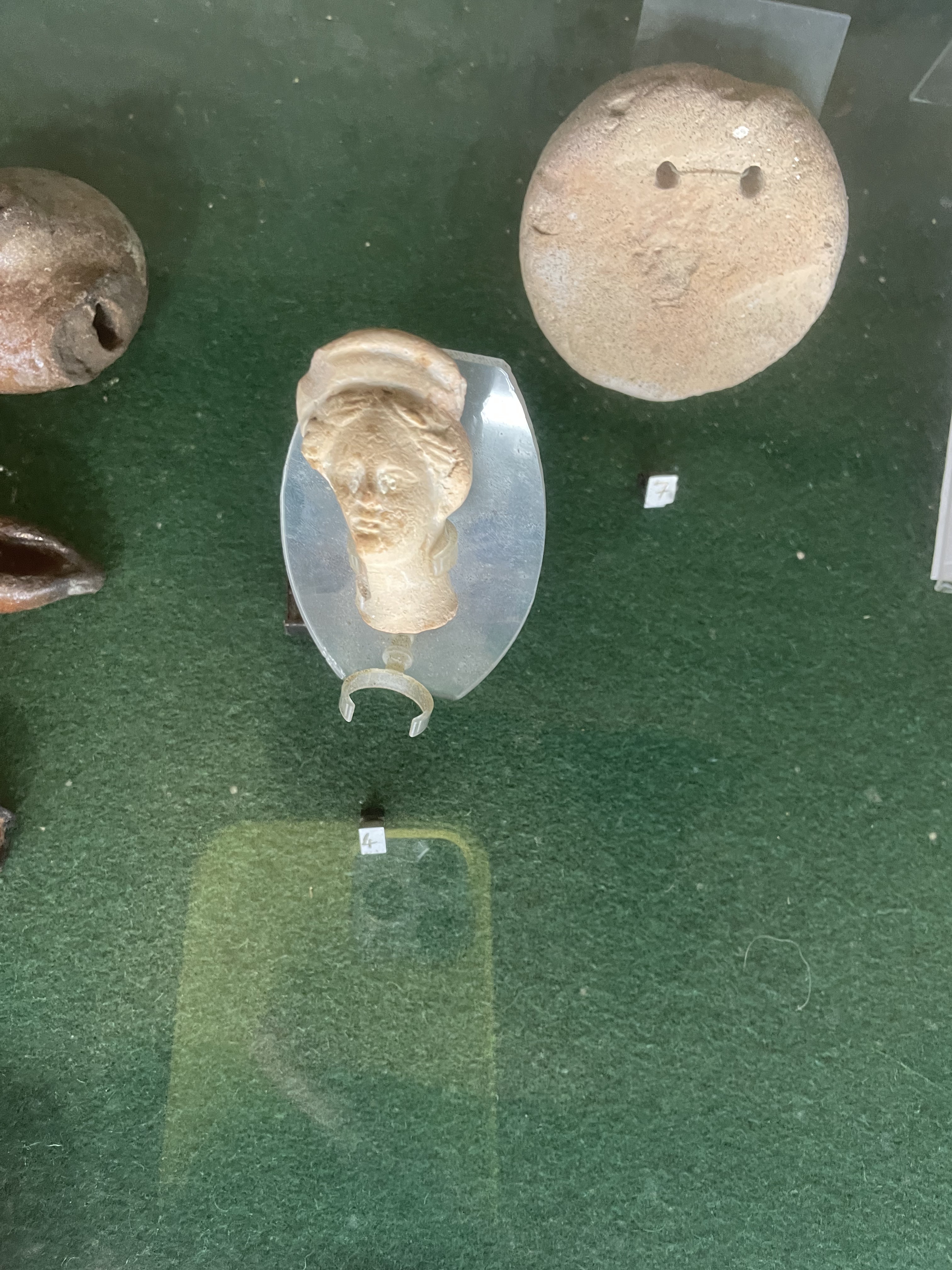
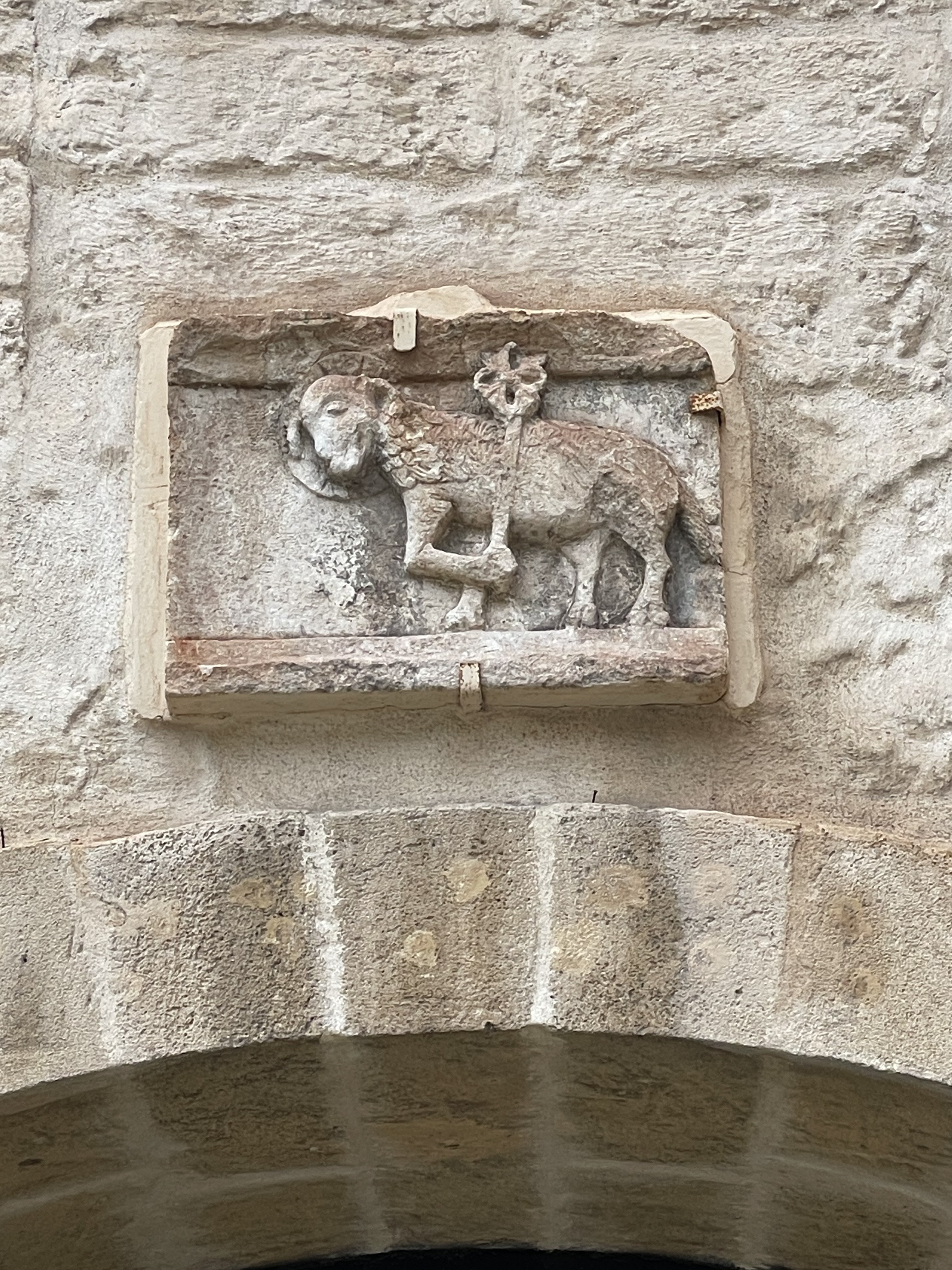
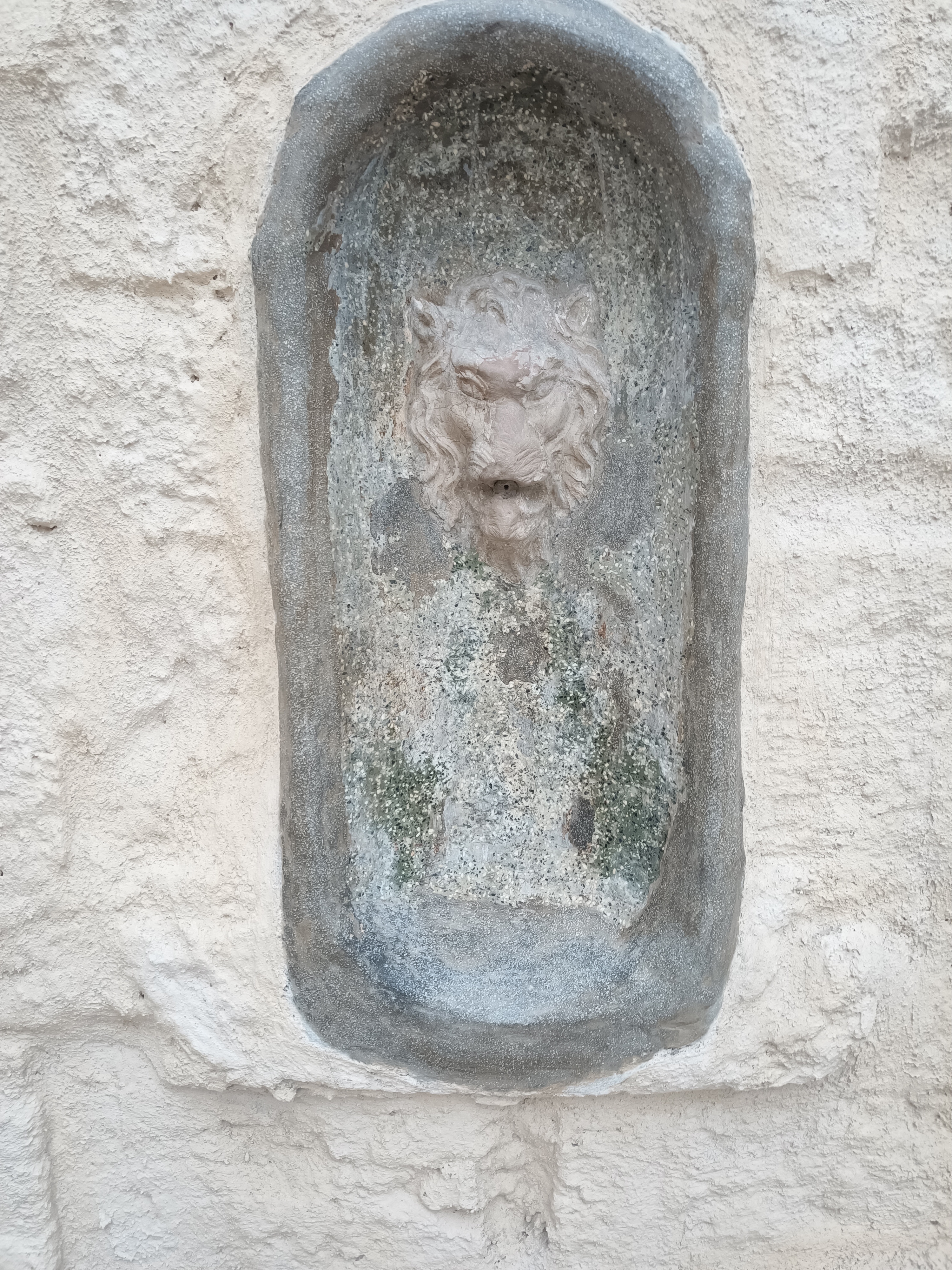
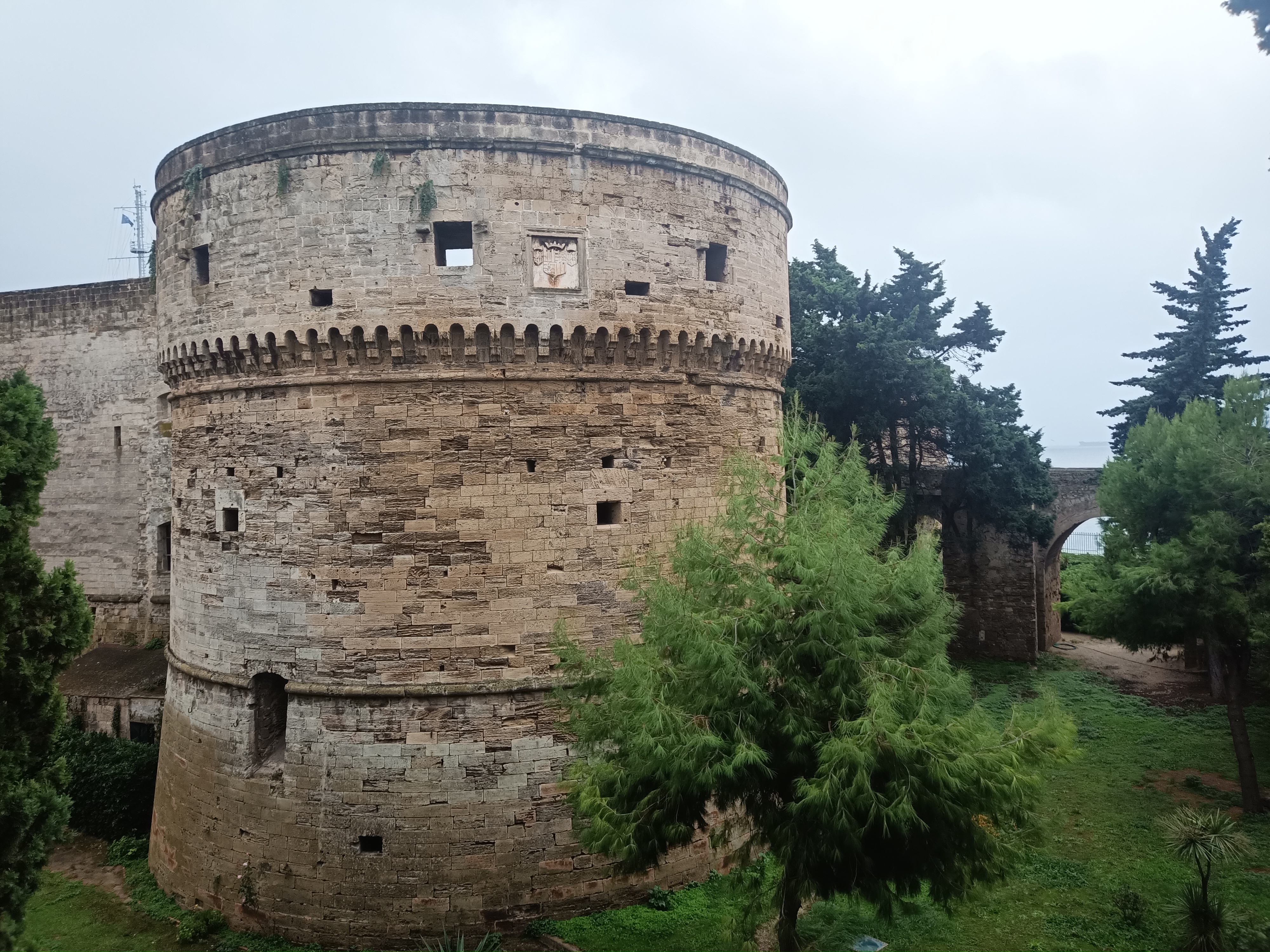
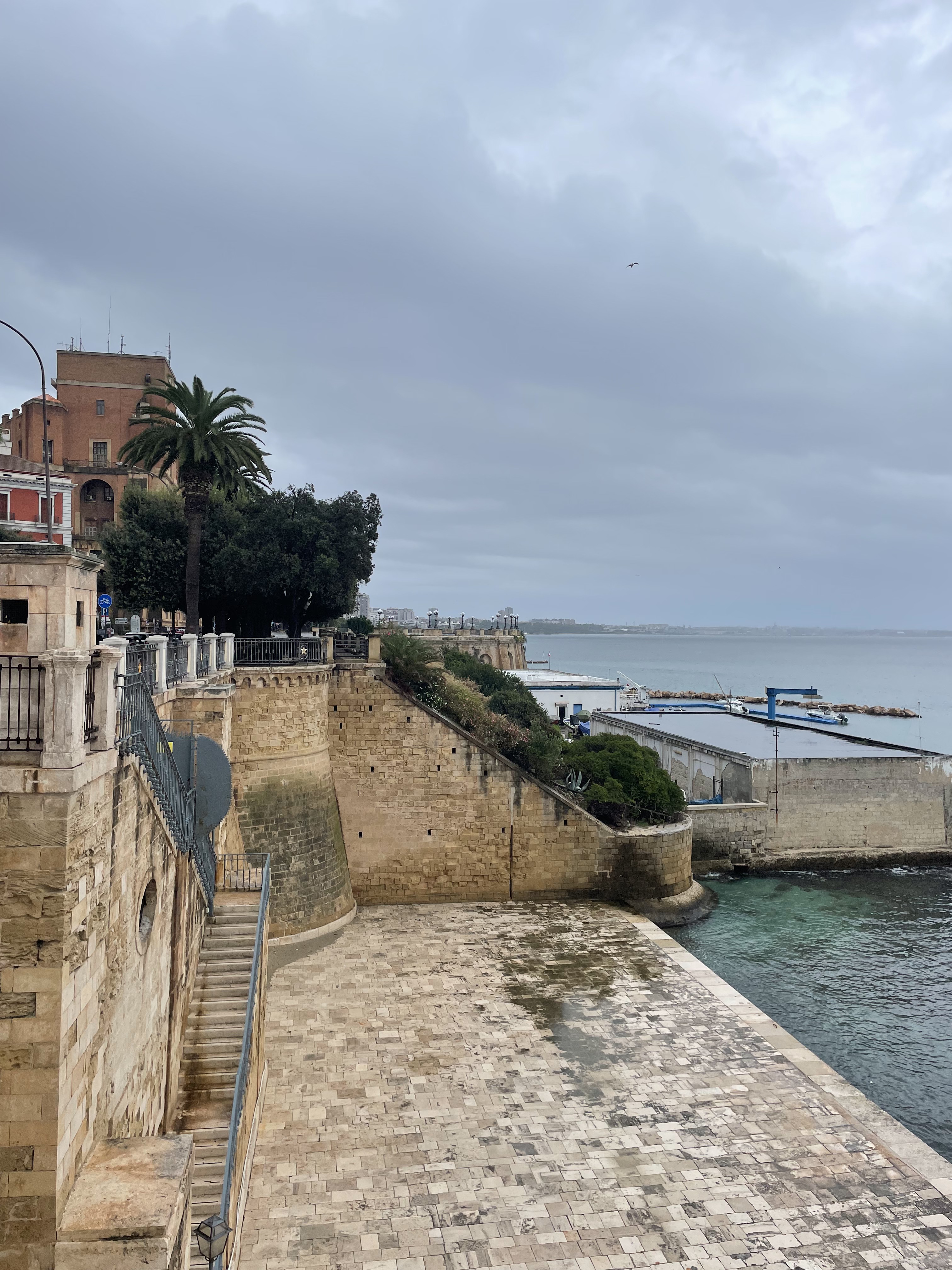
Then the ancient part: two surviving Doric columns of the Temple of Poseidon standing on their excavated foundations by the seafront — what’s left of the Greek city of Taras, the Spartan colony founded in 706 BC — reduced to this, and it’s enough. The Aragonese castle next door turned out to be open to all, and behind it the naval shipyard has been the city’s other story for well over a century. The same industrial boom emptied the old town: residents moved to newer housing over decades, whole palazzi stood derelict — which is exactly where all that street art came from. Round towers, a moat turned hedge garden, a vaulted gatehouse, a cannon, sculpture fragments, a she-wolf carved in stone, and a lion-head fountain in the courtyard.
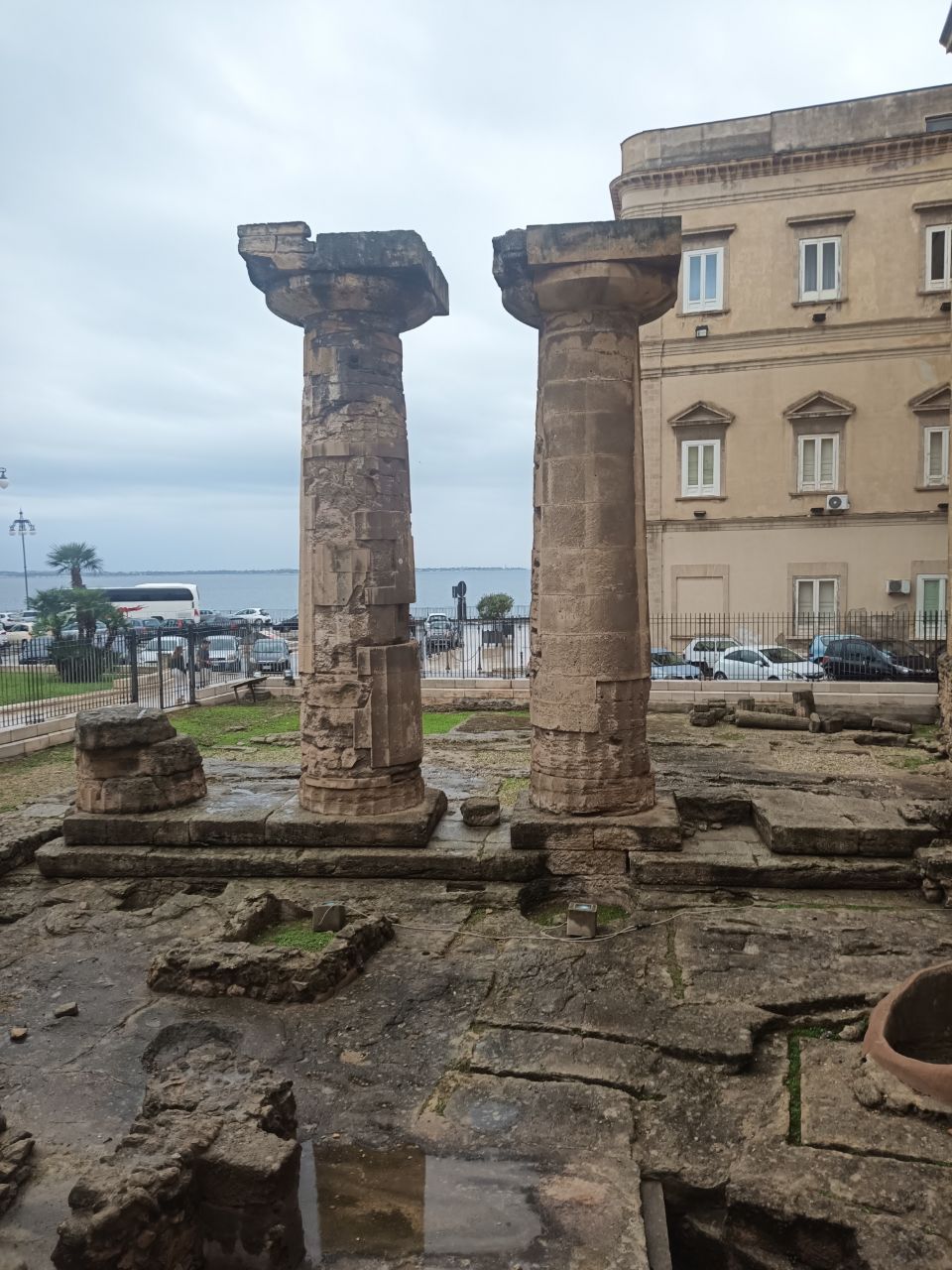
Poseidon's last two 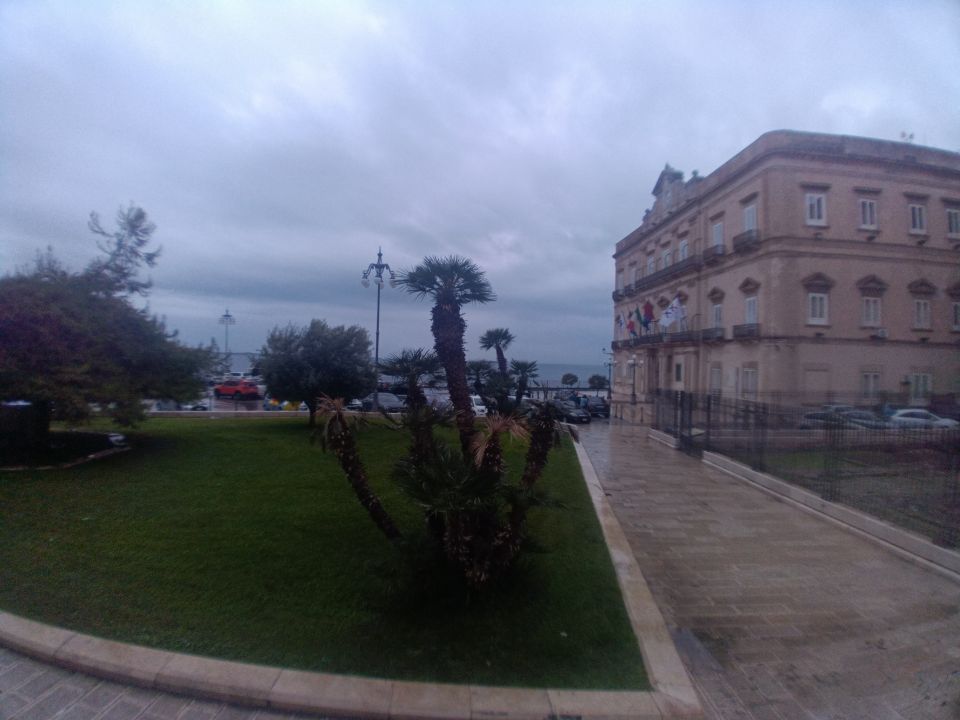
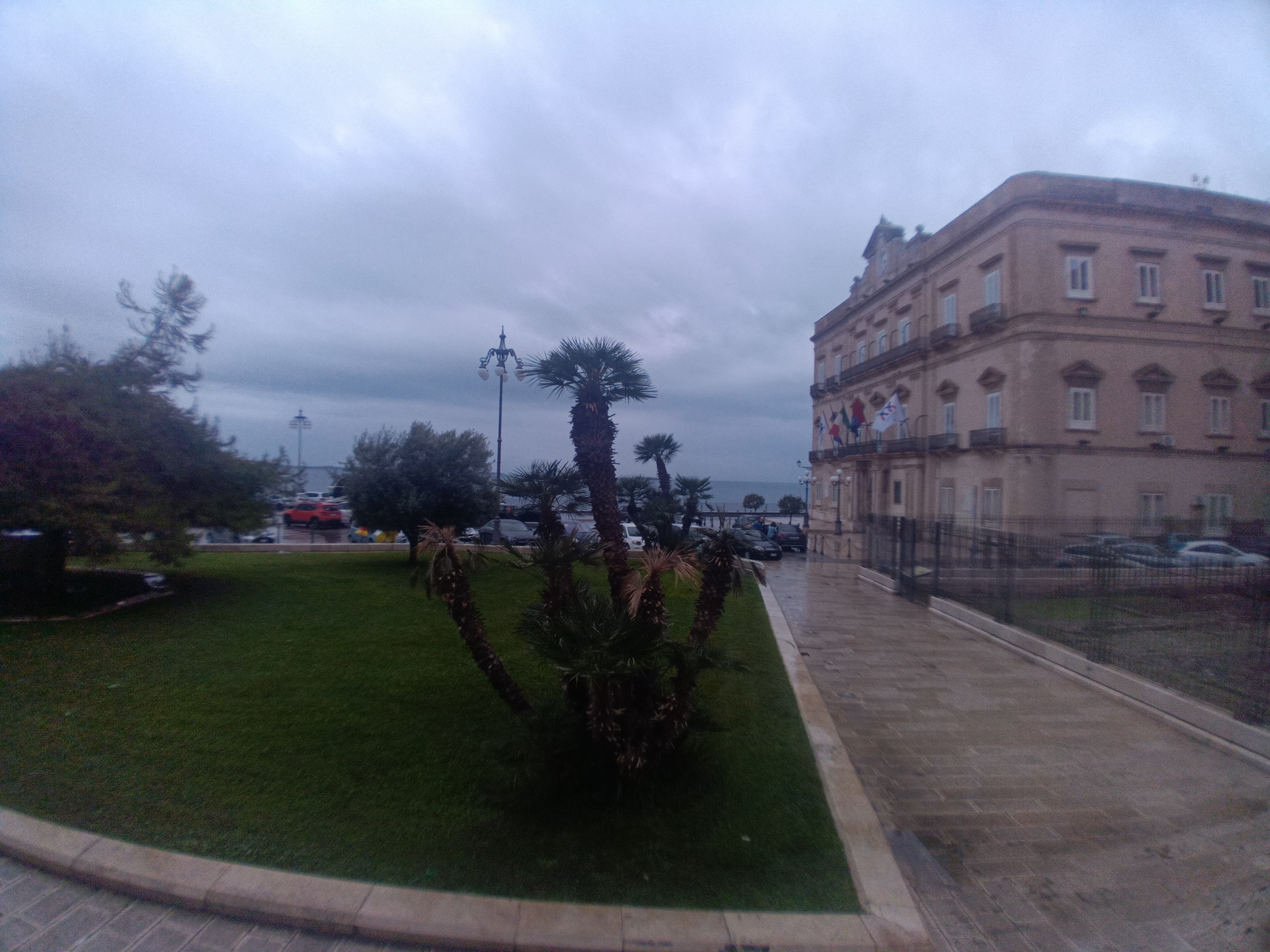
The wet seaside square 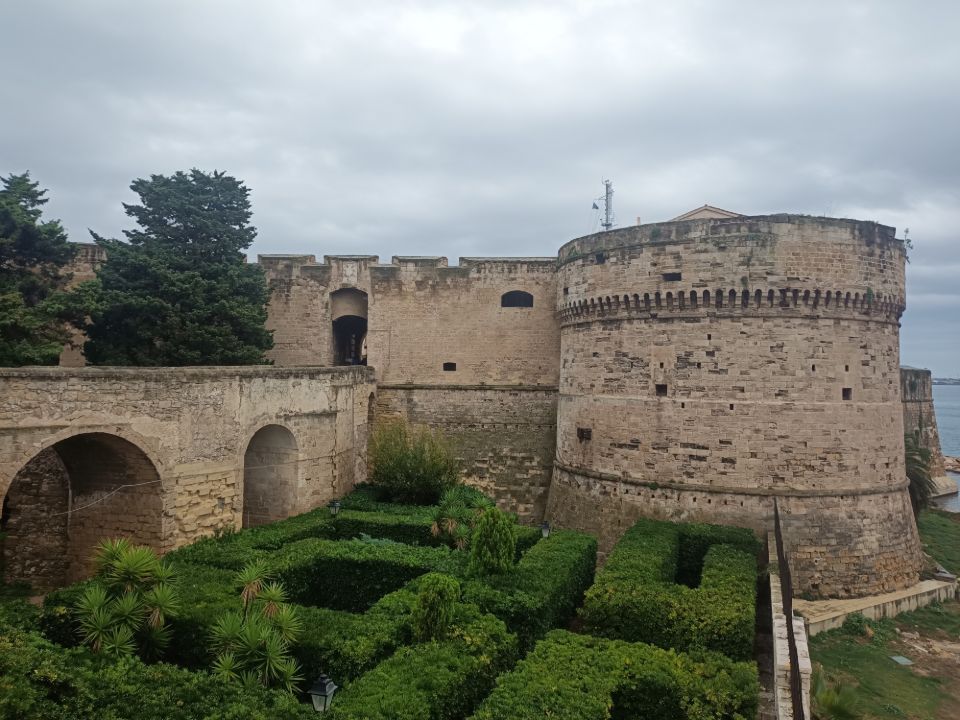
The round tower and hedges 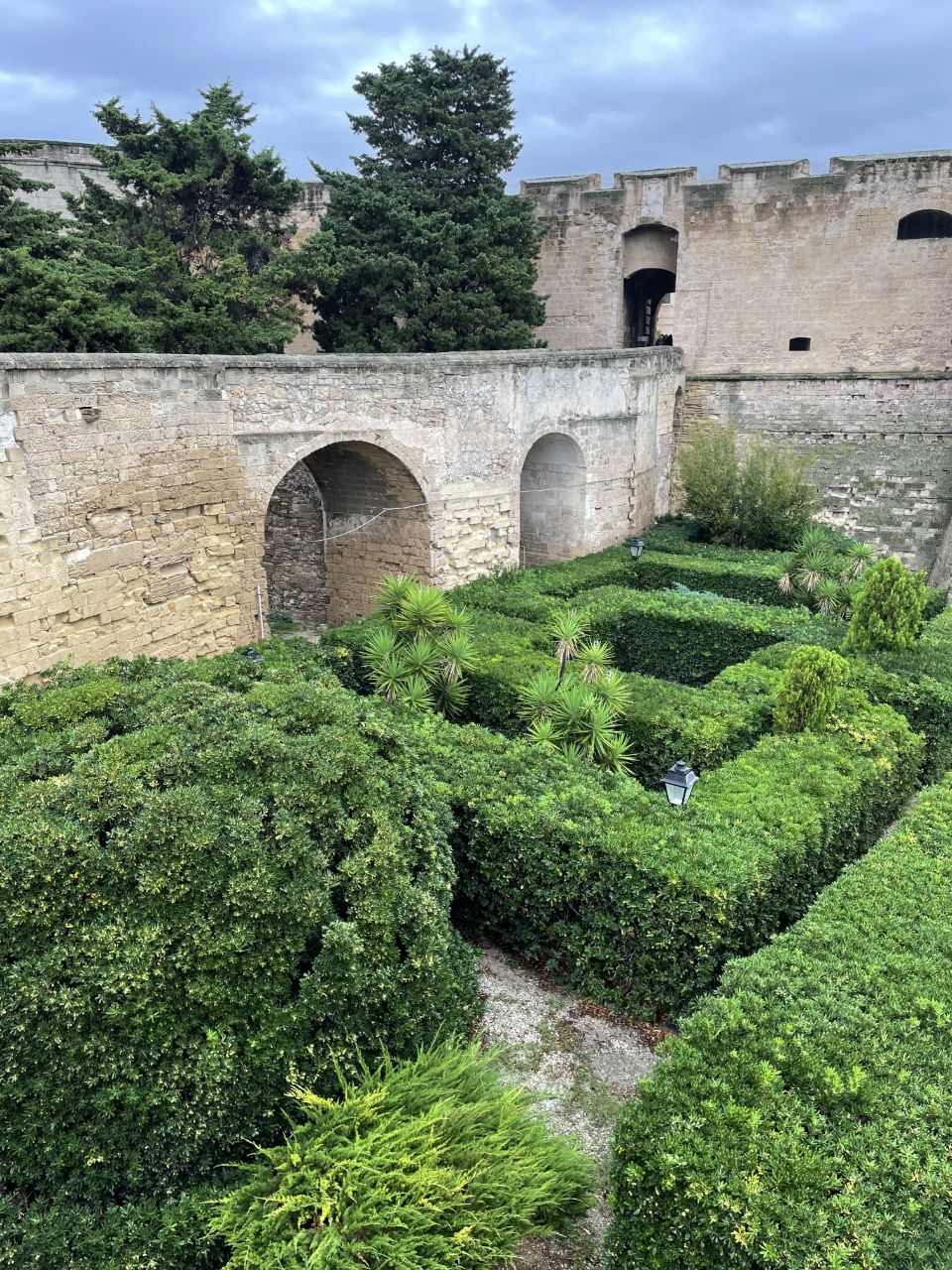
Rampart over the garden 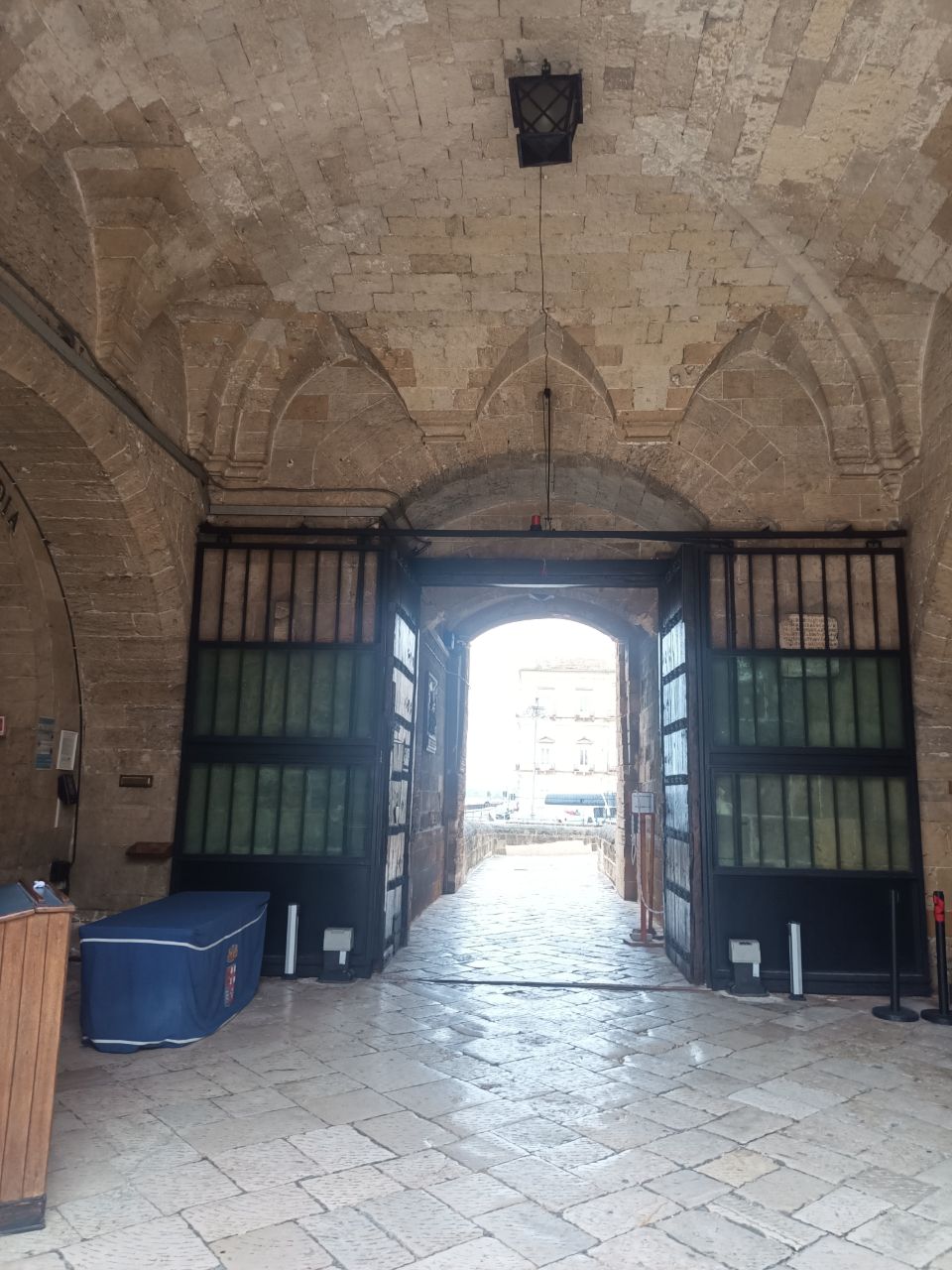
Inside the gatehouse 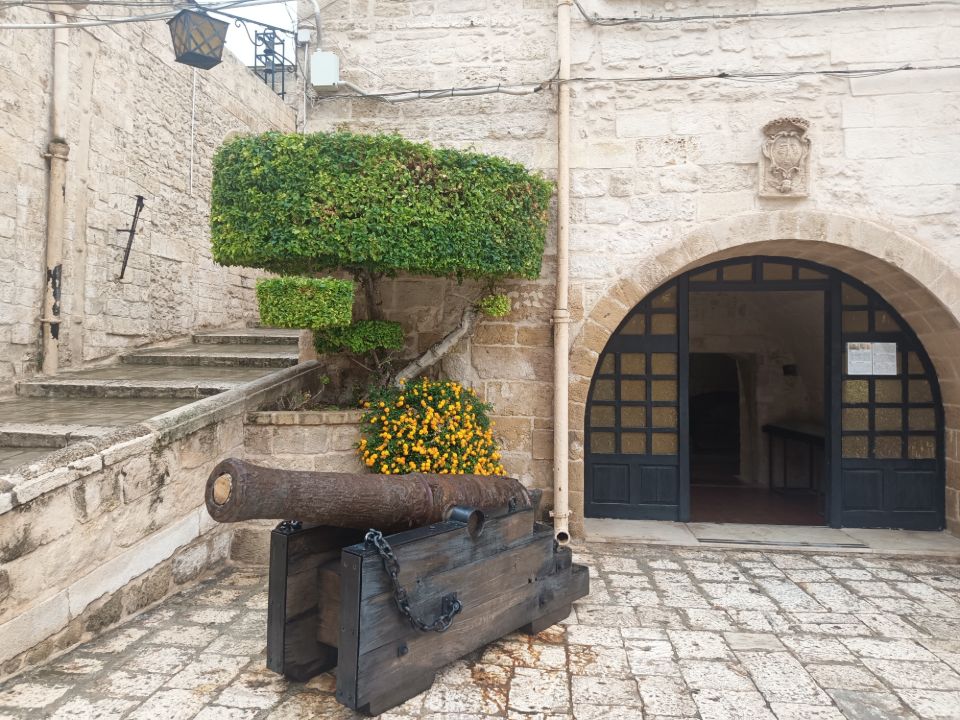
Retired artillery, kept busy 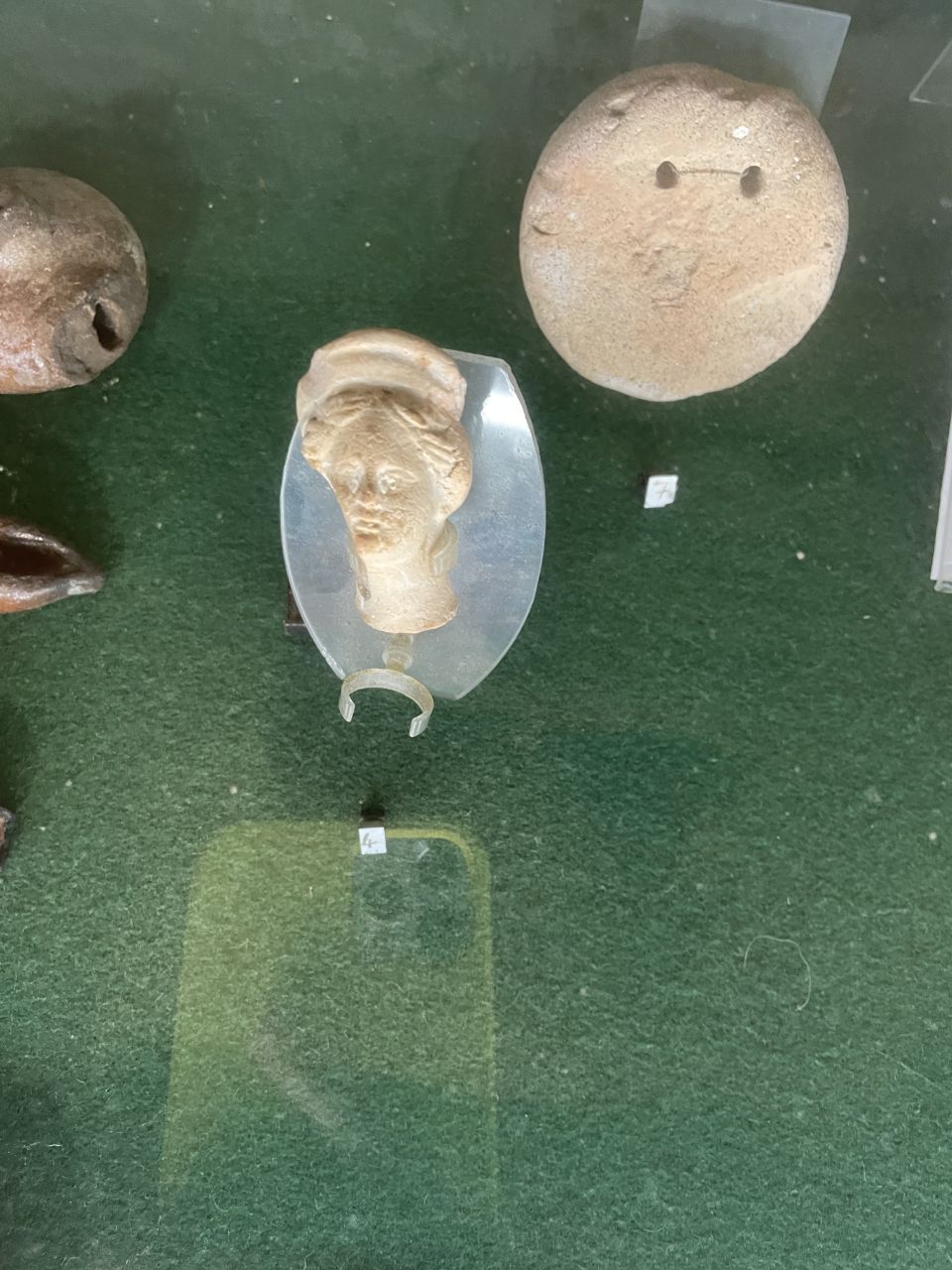
Fragments, carefully kept 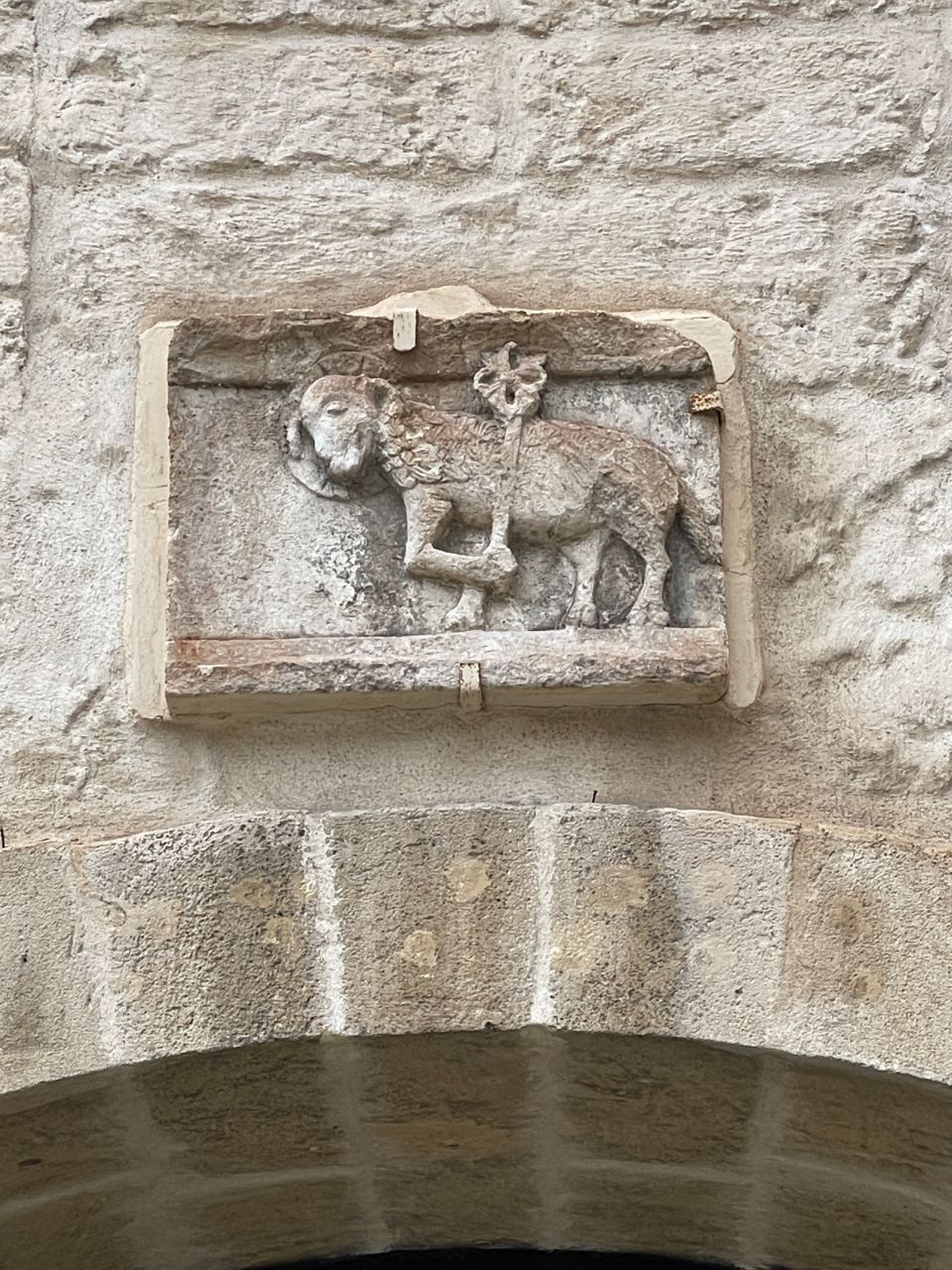
The she-wolf, weathered 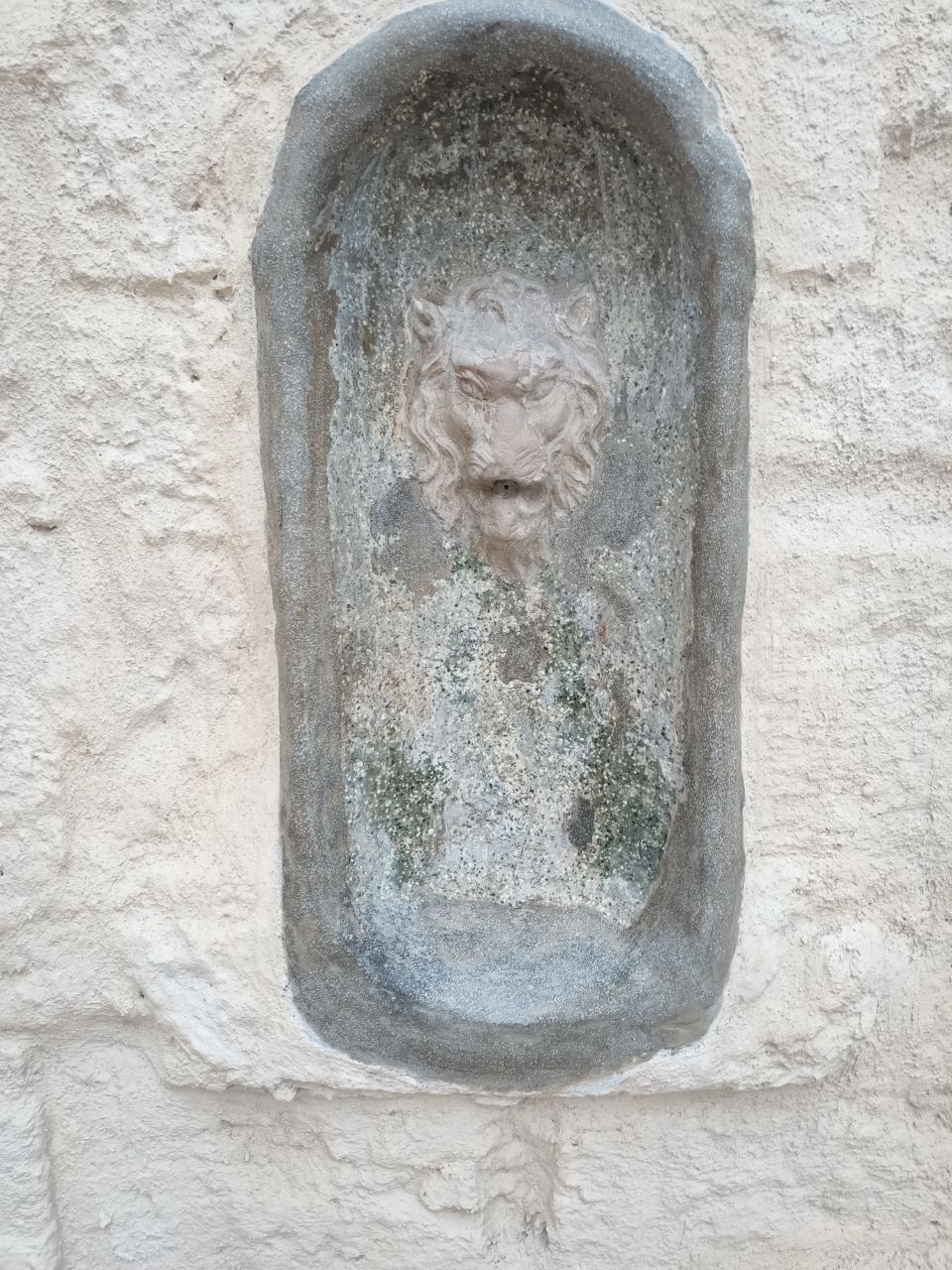
Lion-head fountain 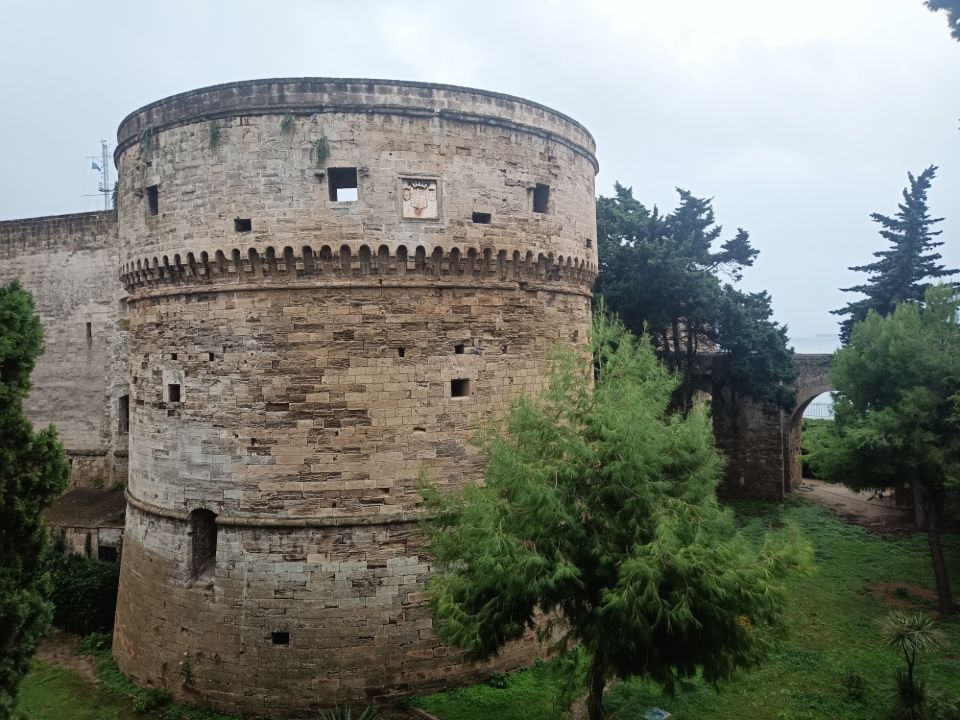
The round tower among the green
The swing bridge and the wet seafront
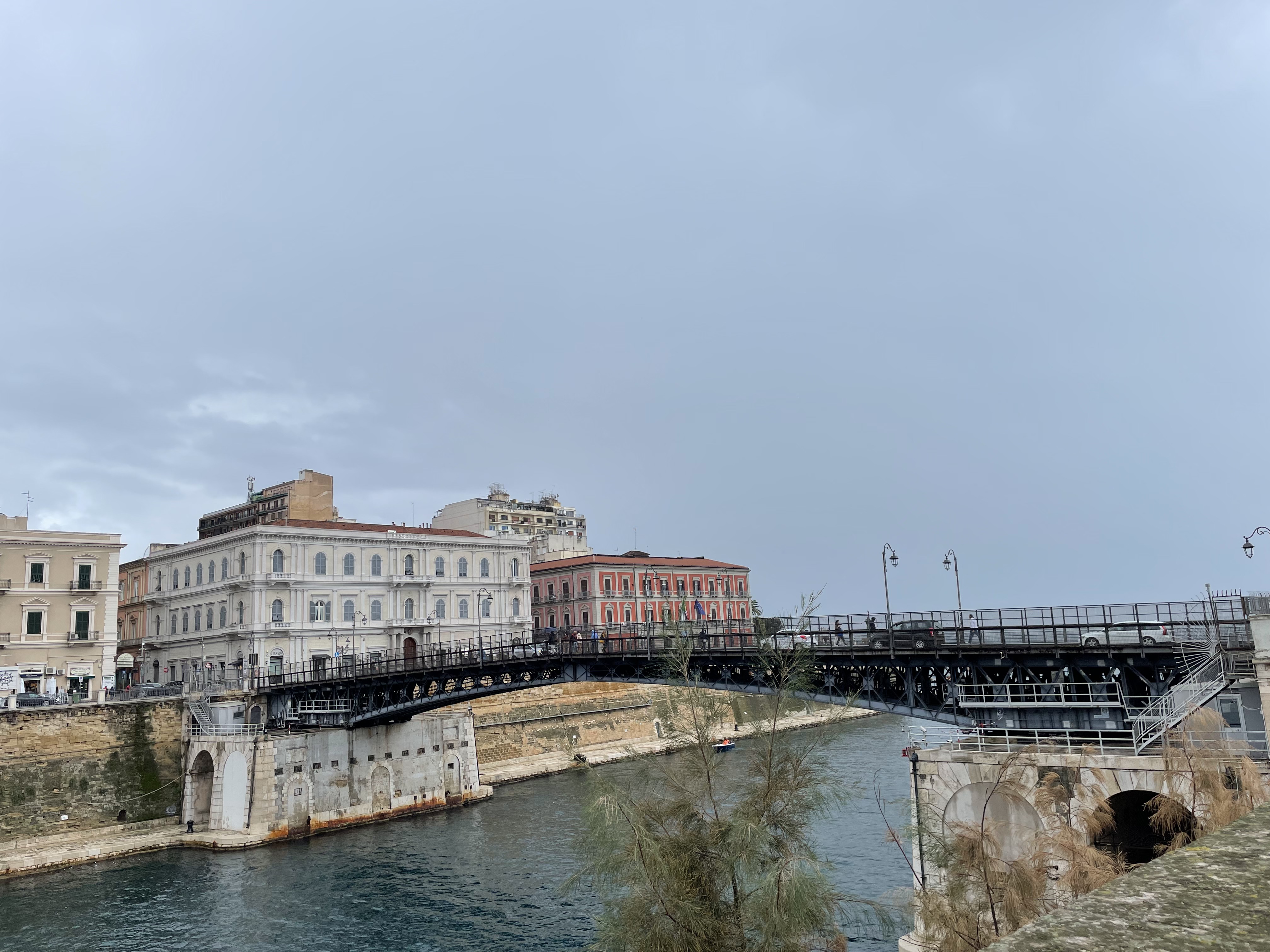
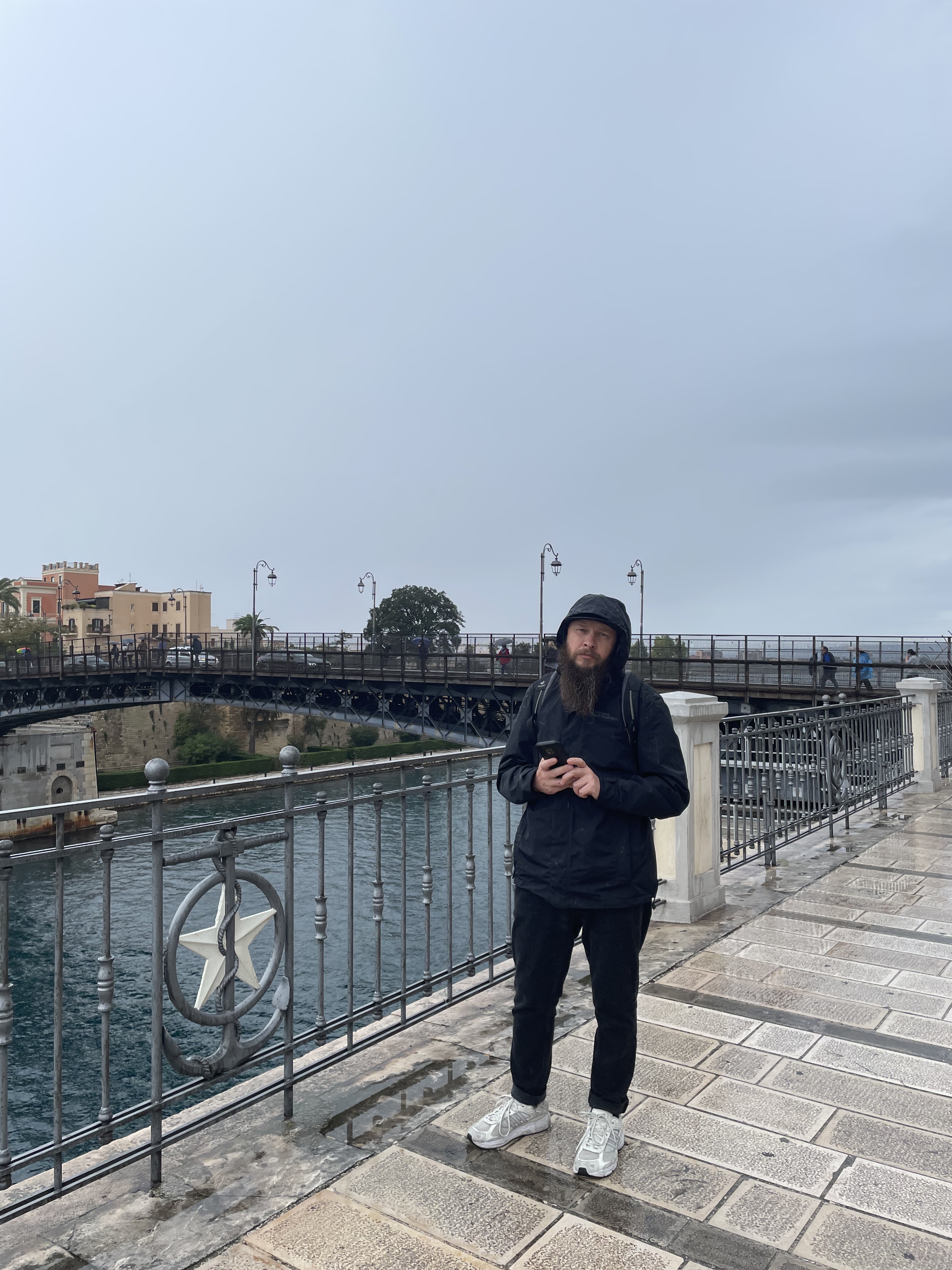
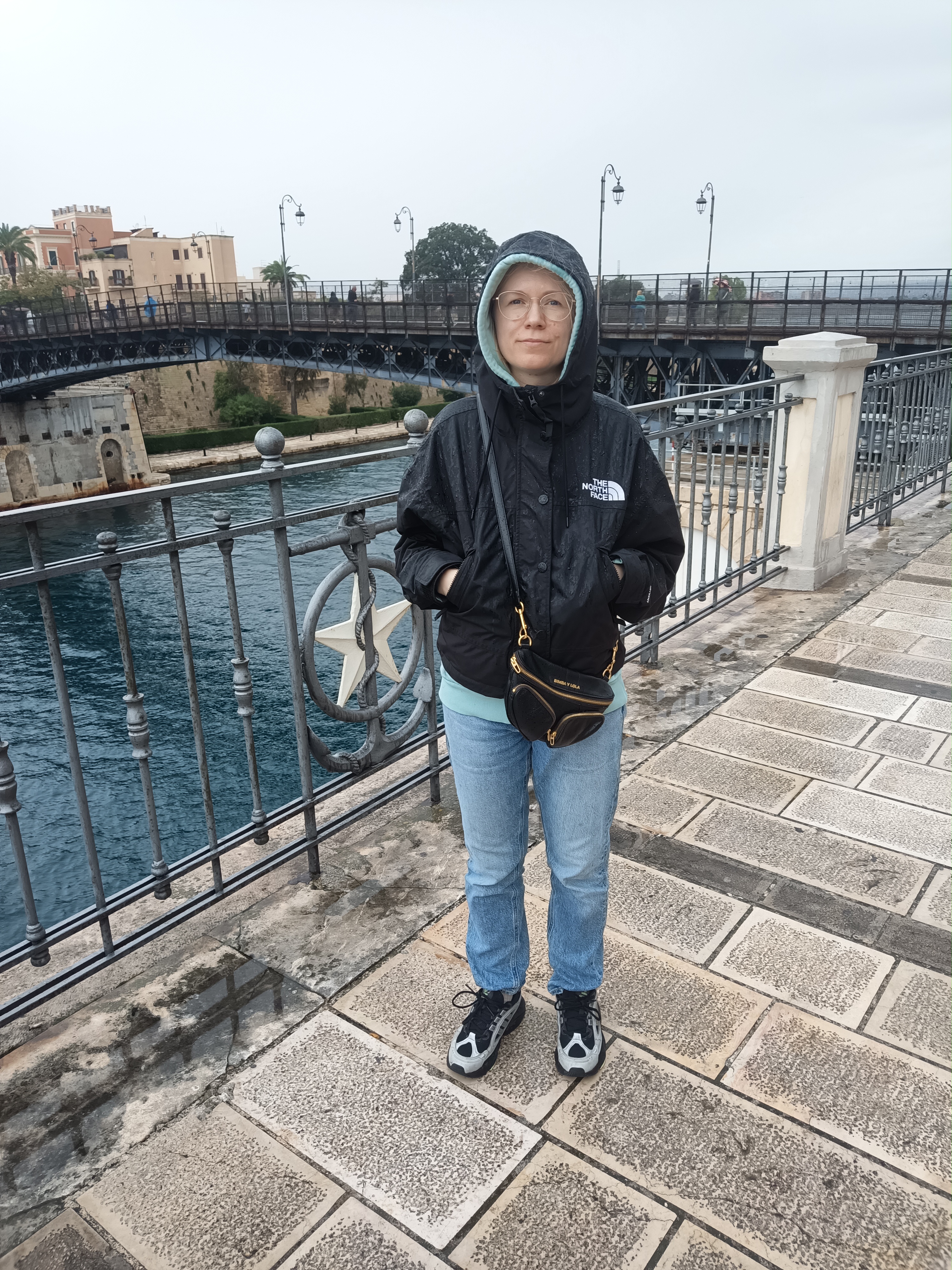
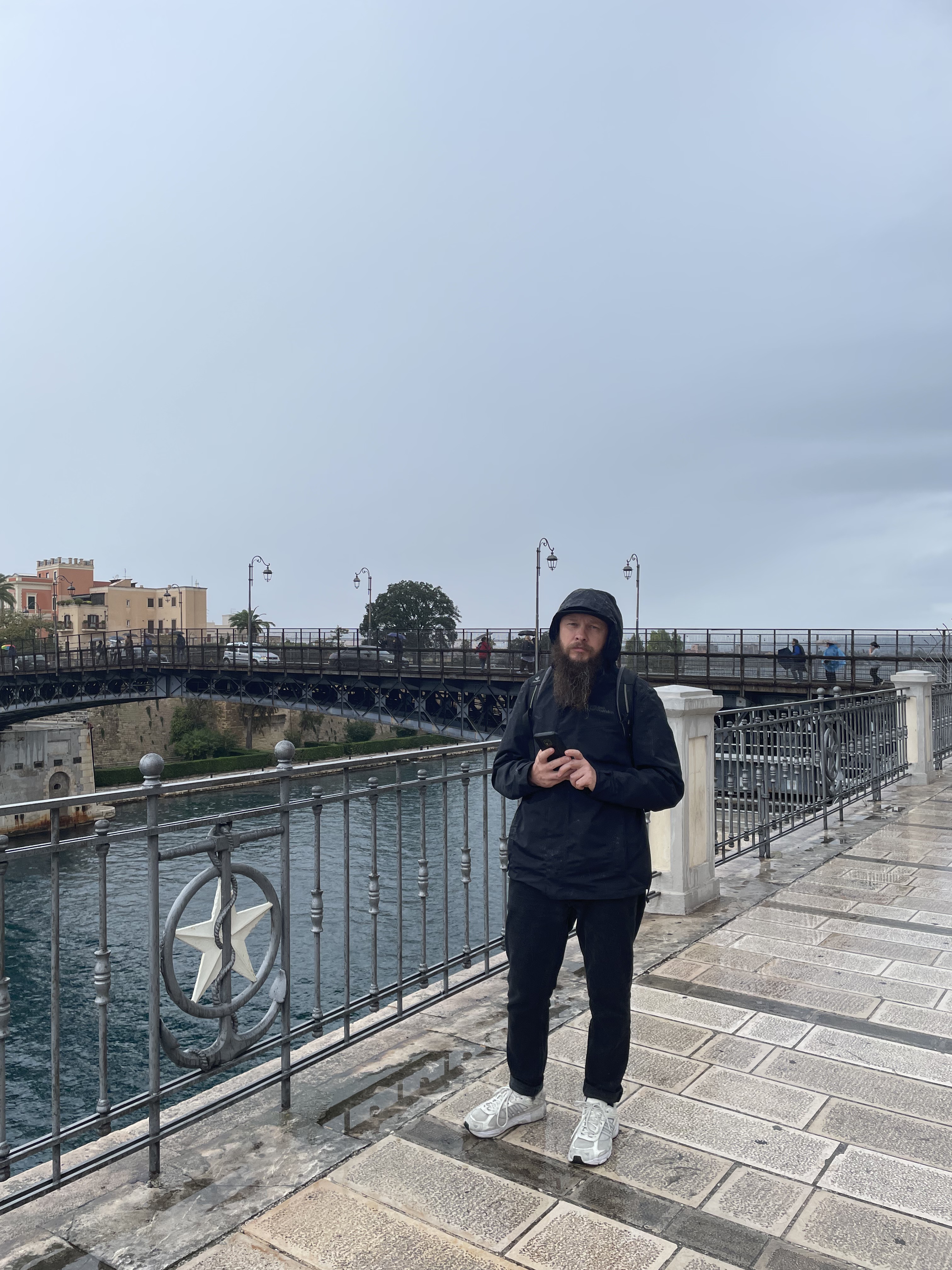
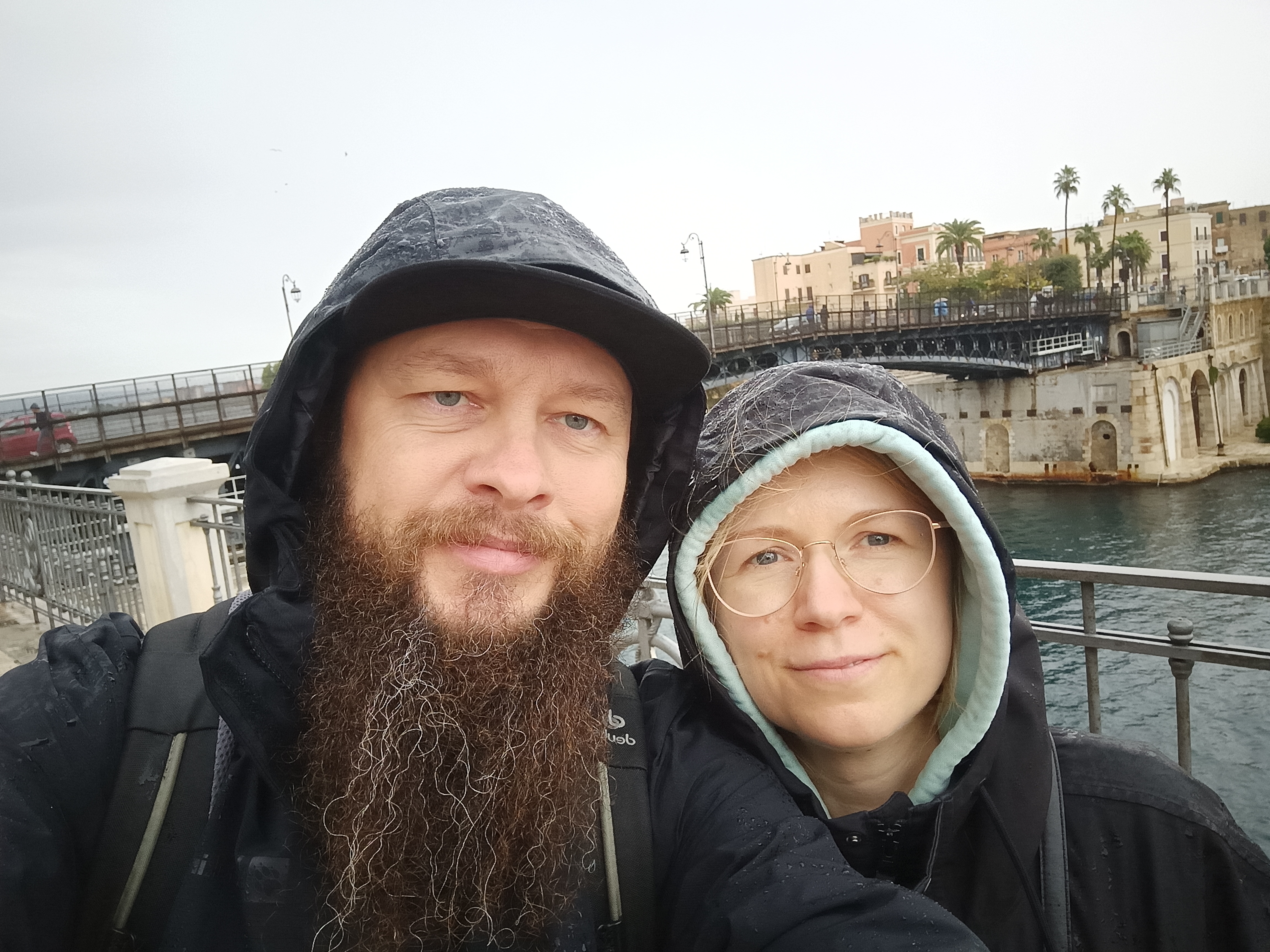
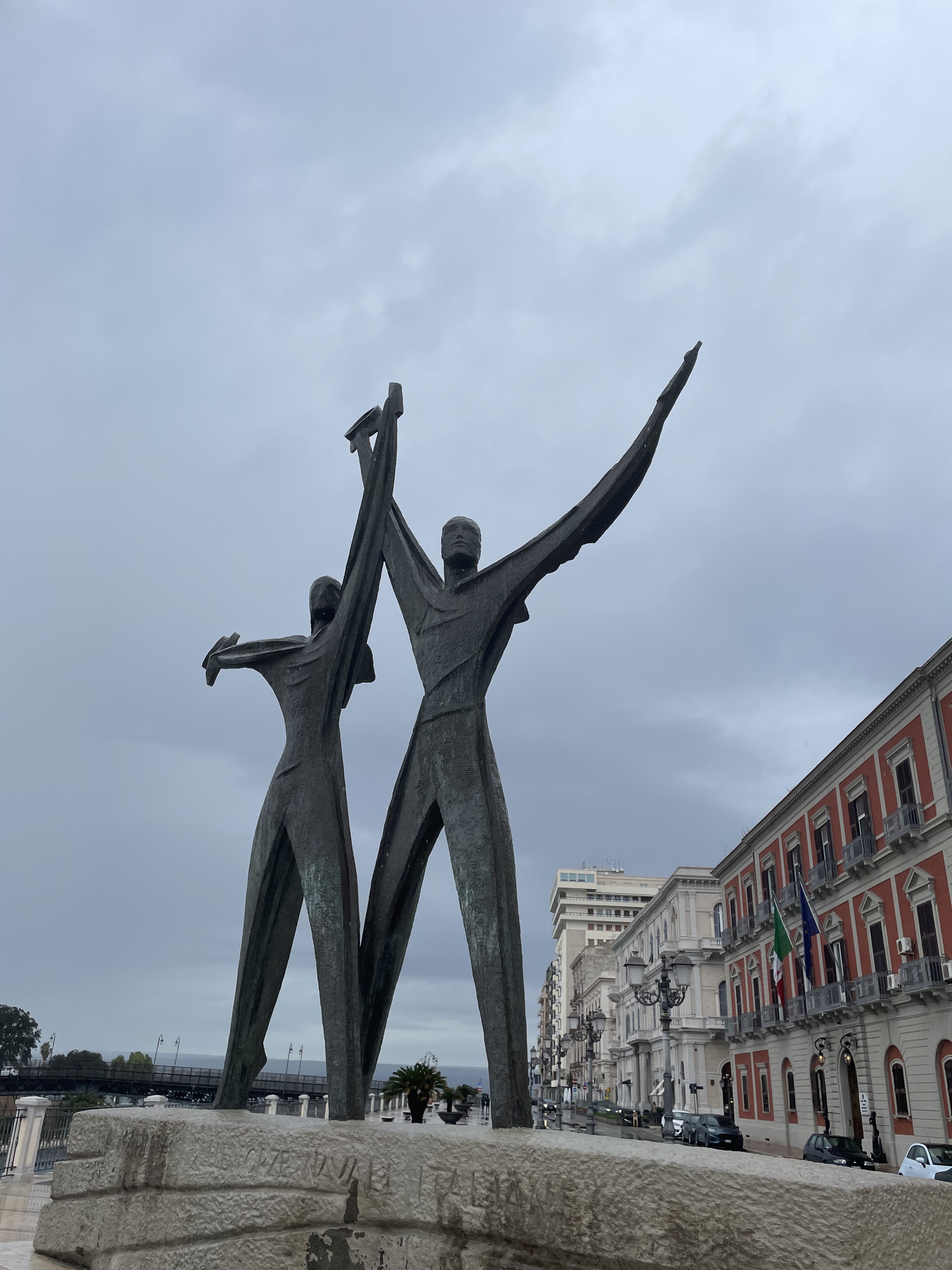
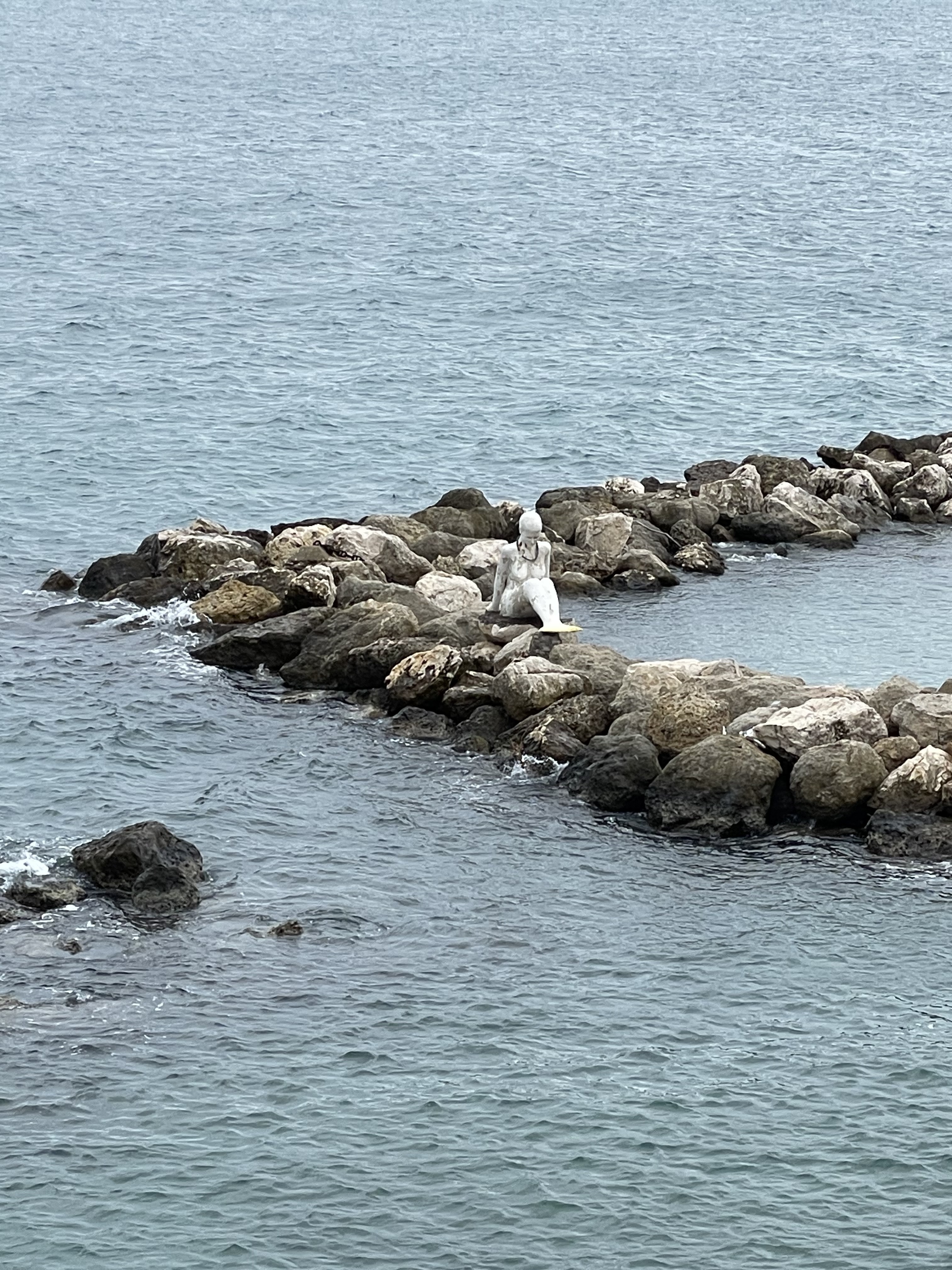
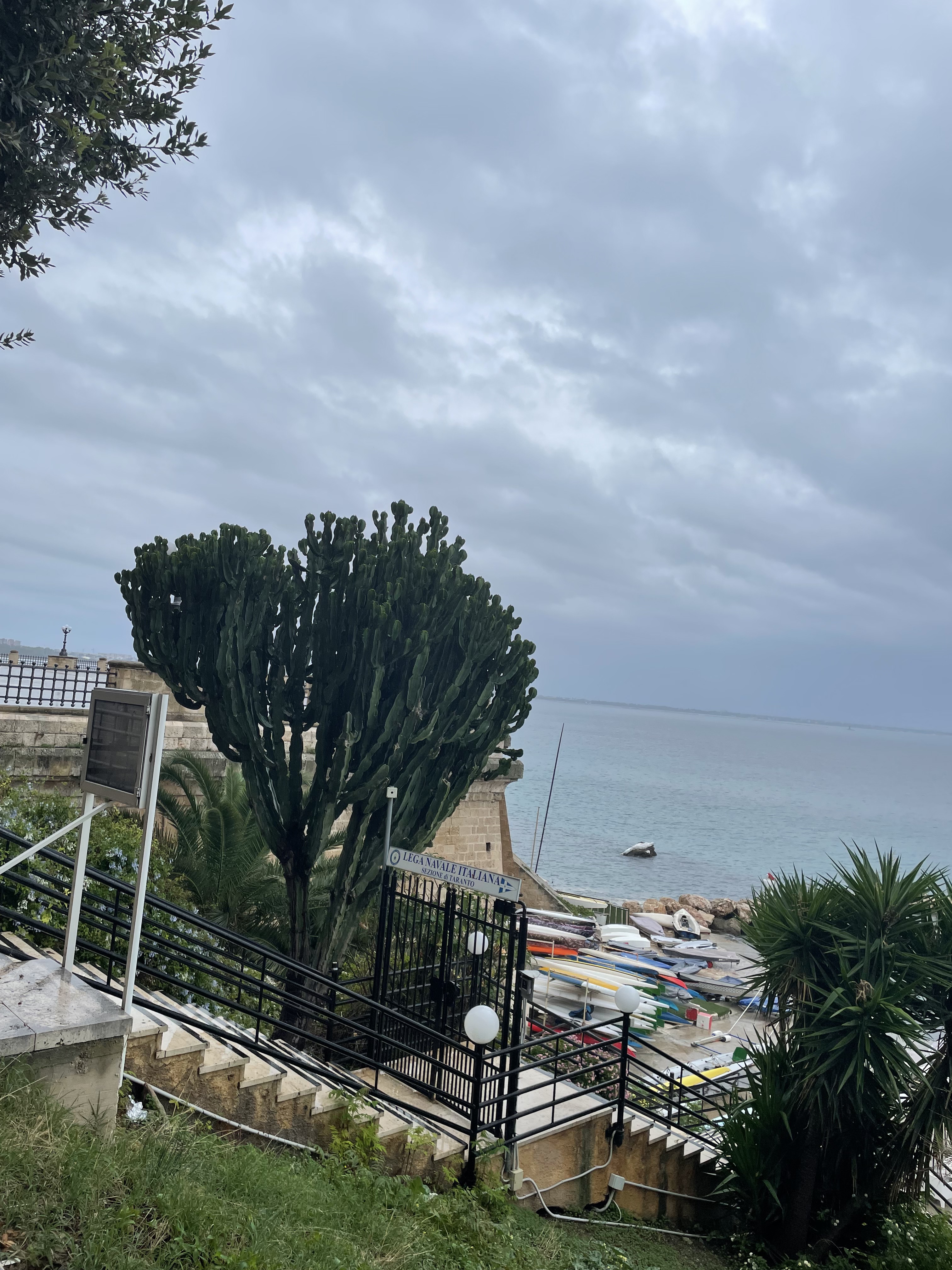
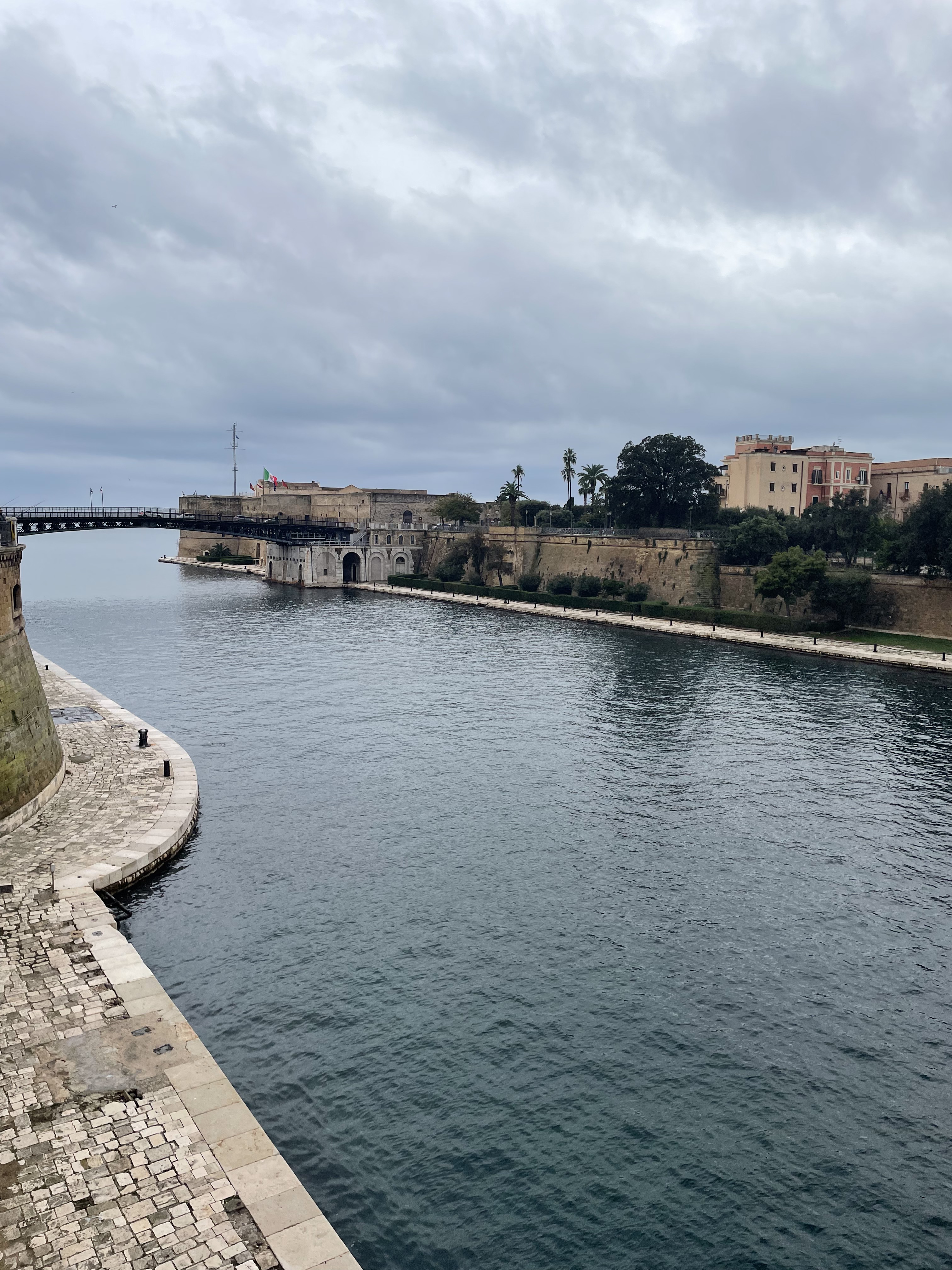
Ponte Girevole — Taranto’s iron swing bridge — still crosses the narrow canal: built in the 1880s and still in full working order, it swings open, lengthwise, for navy ships. We walked it both ways, hood up: Anna at the canal railing, Oleg mid-bridge with the old town behind, a marble white mermaid on her breakwater outside the port, stairs descending through cacti to the fishing harbour, and two bronze figures reaching for the sky on the seafront plaza.
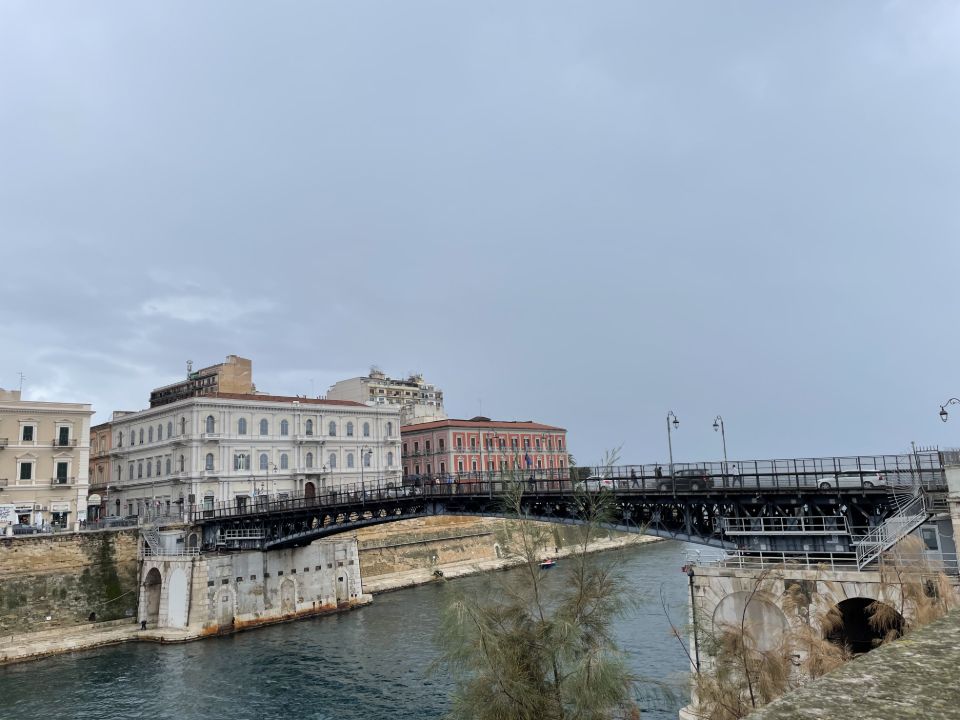
Ponte Girevole 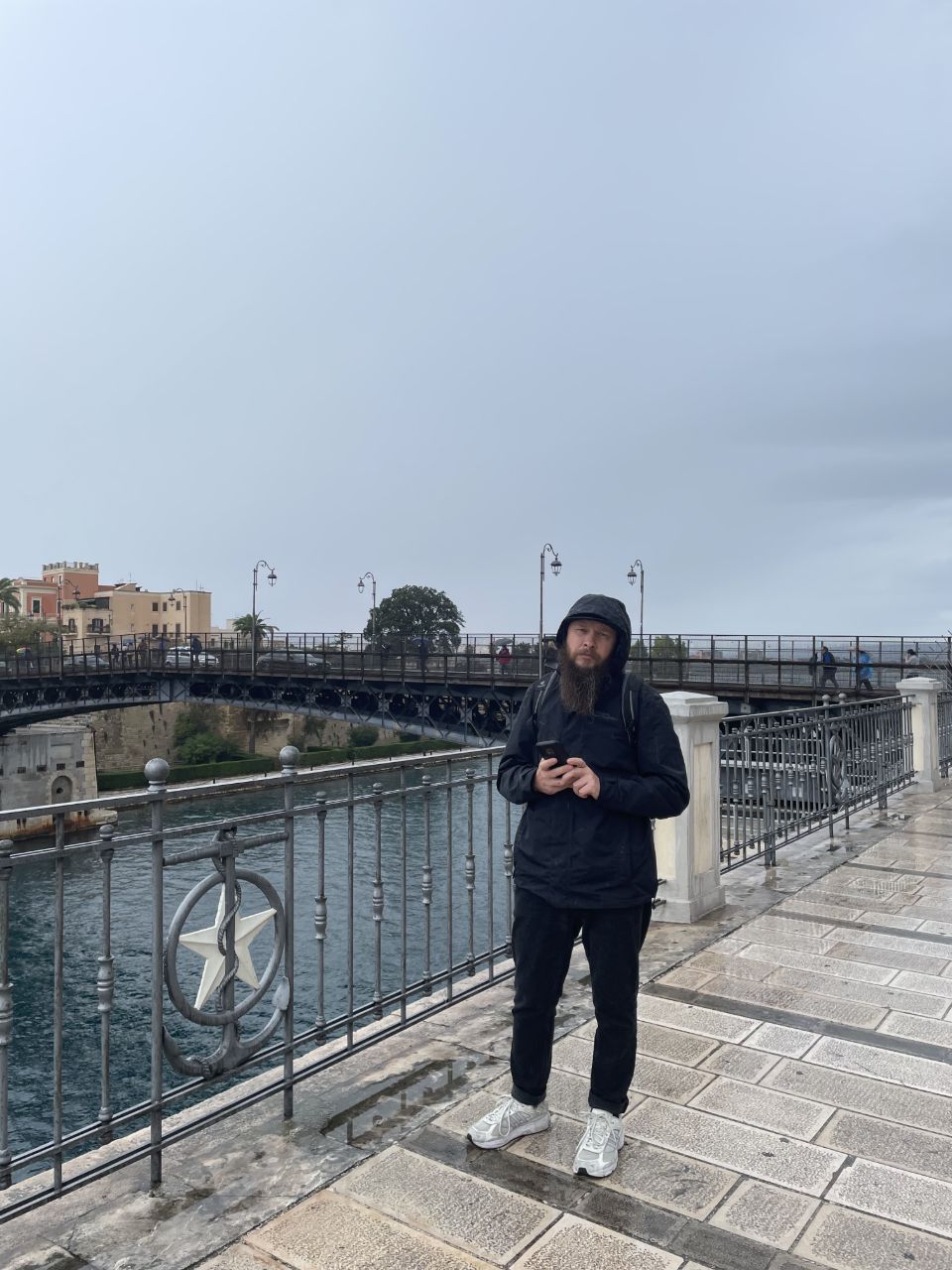
Oleg, mid-bridge 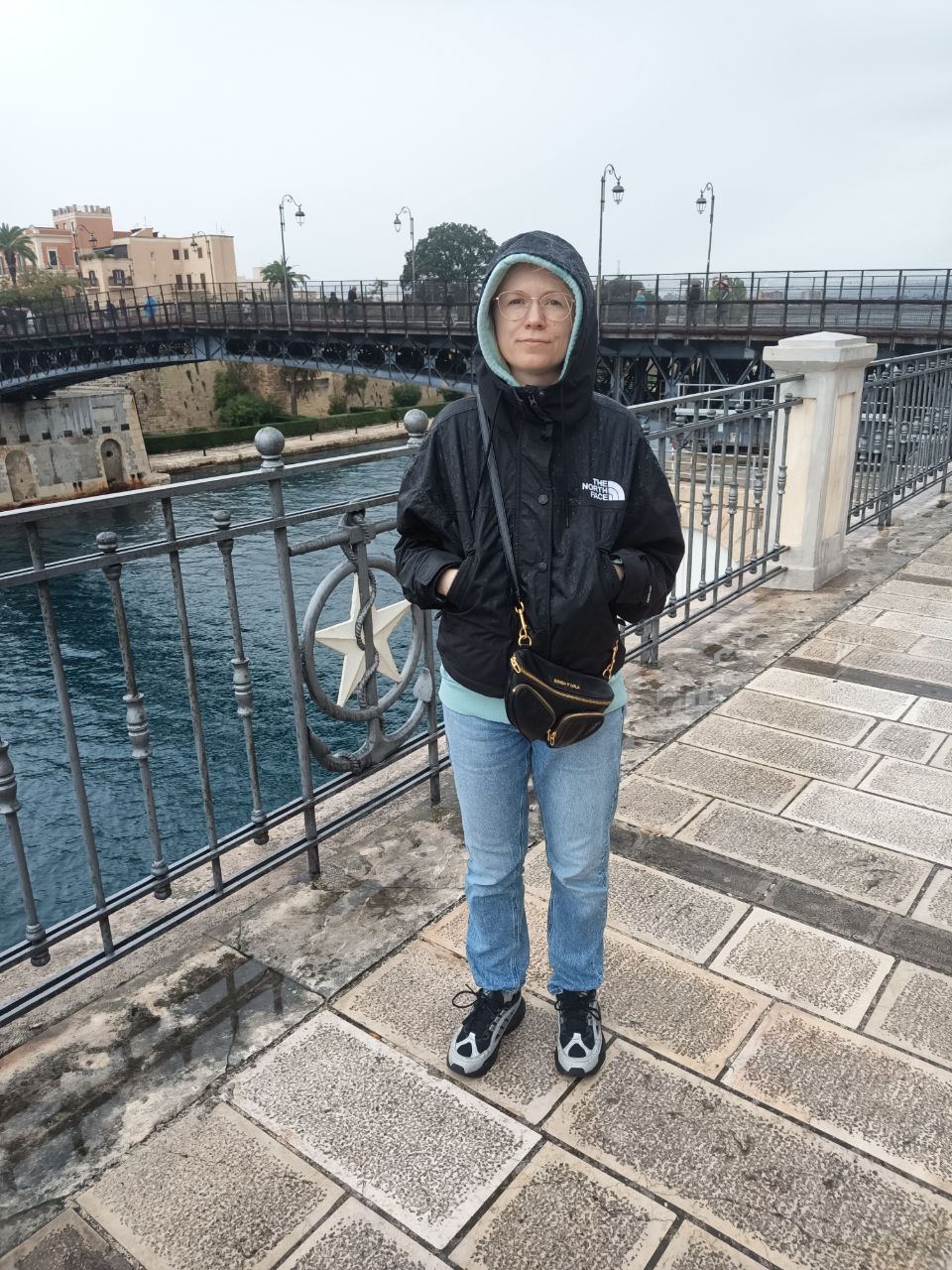
Anna at the canal railing 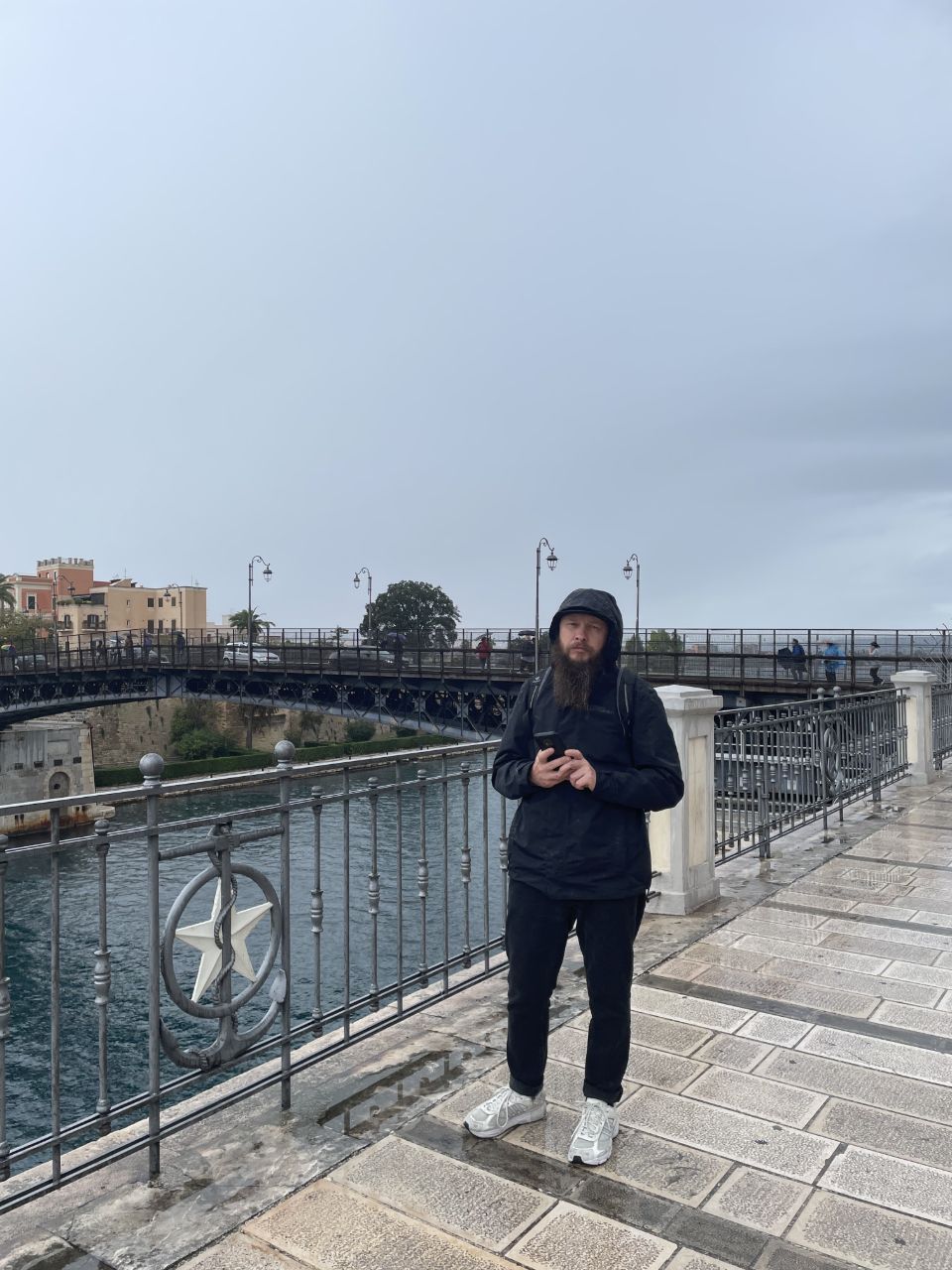
Down the walkway 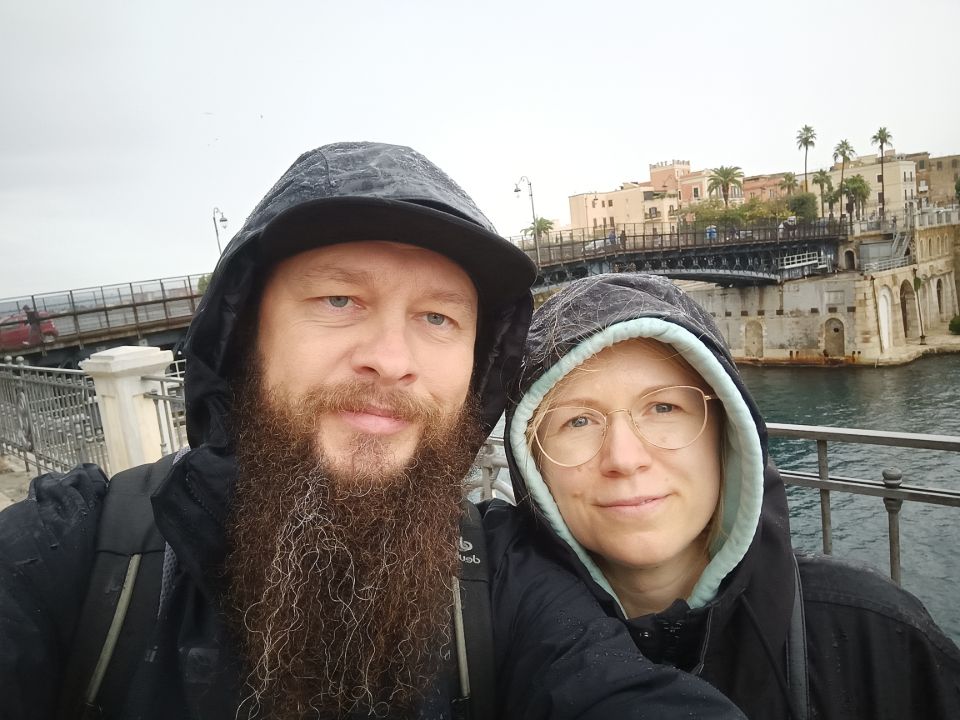
Both of us, hoods on 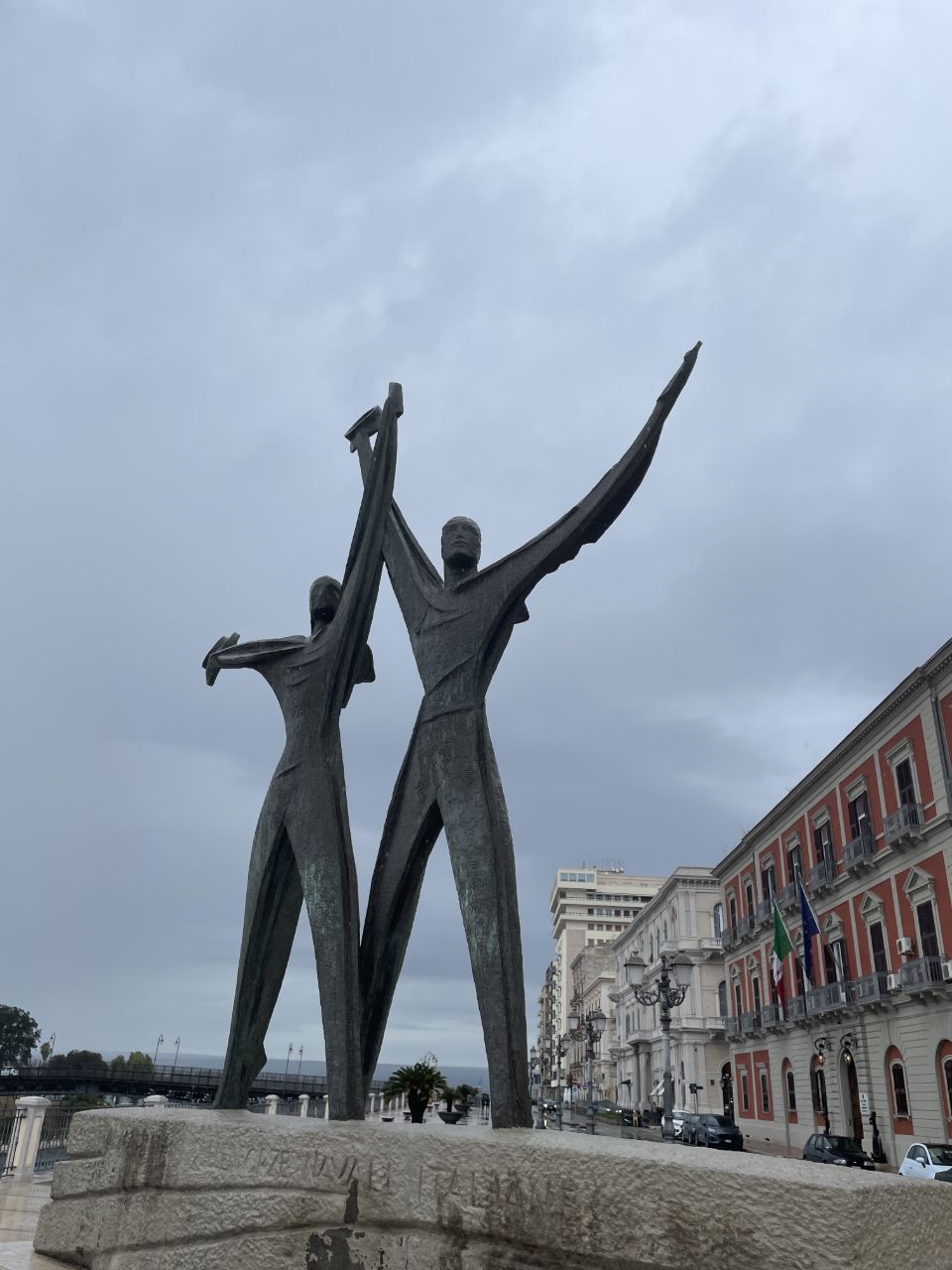
Reaching for the sky 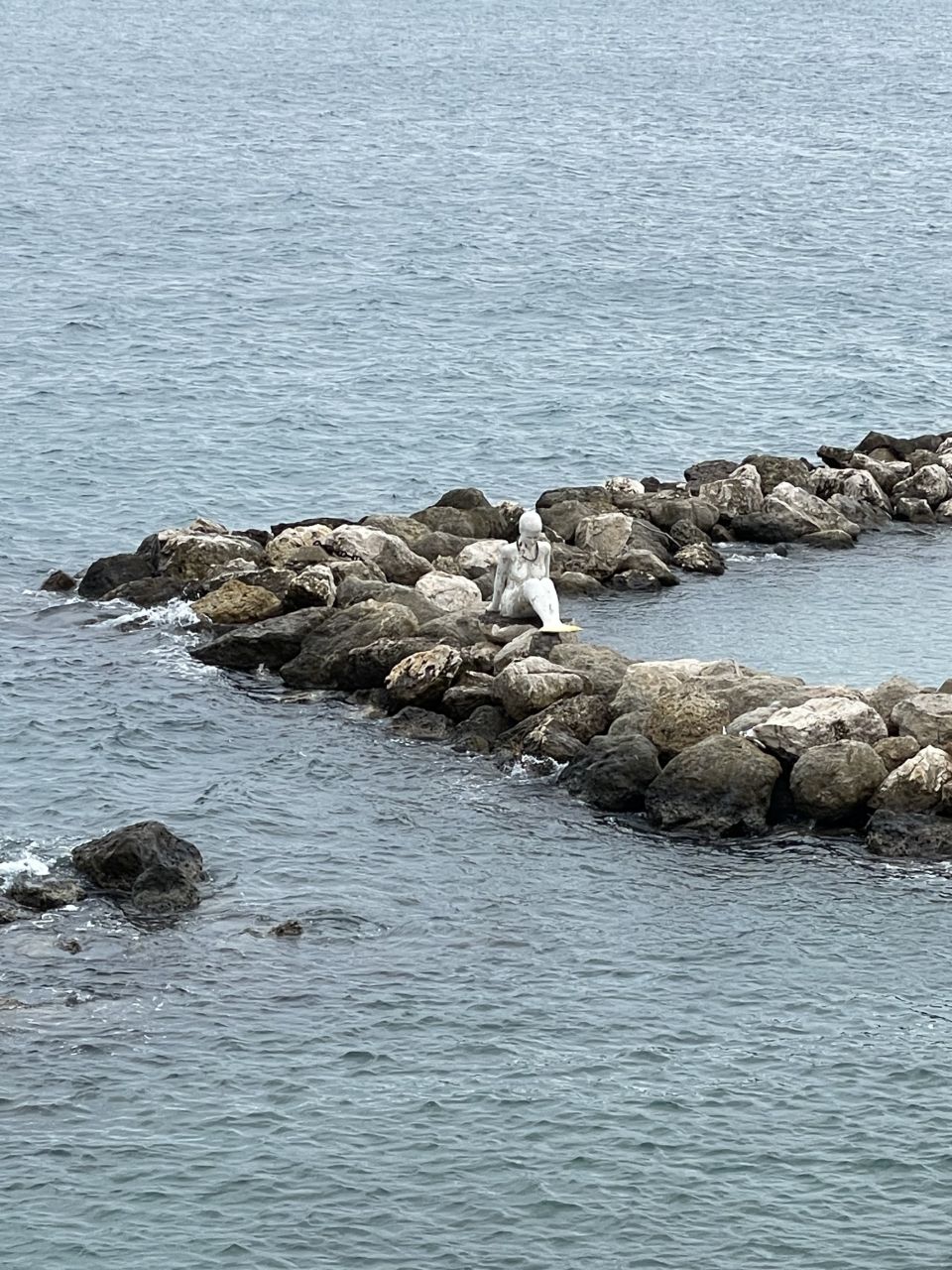
Mermaid on the breakwater 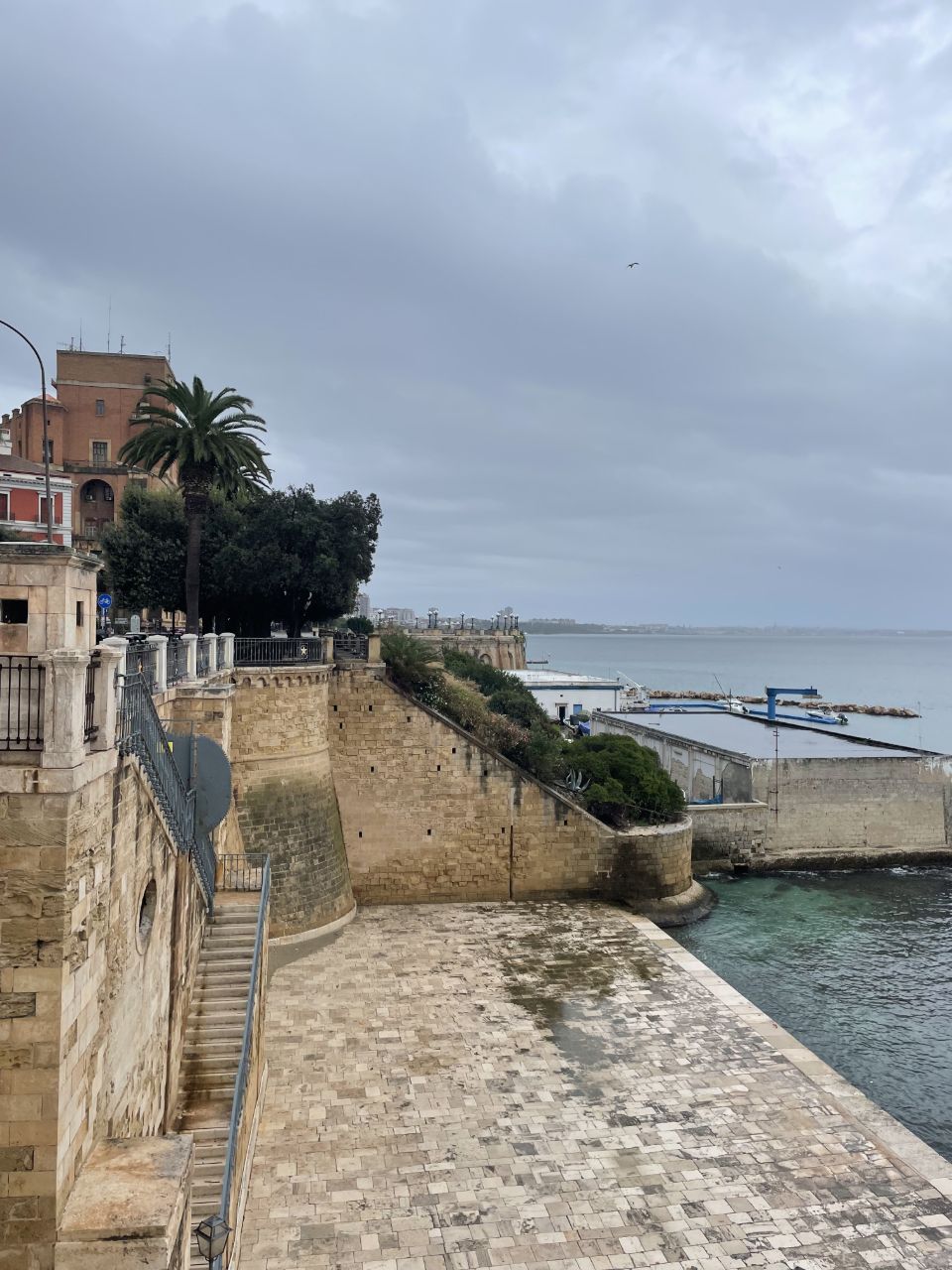
Stairs and lido, from above 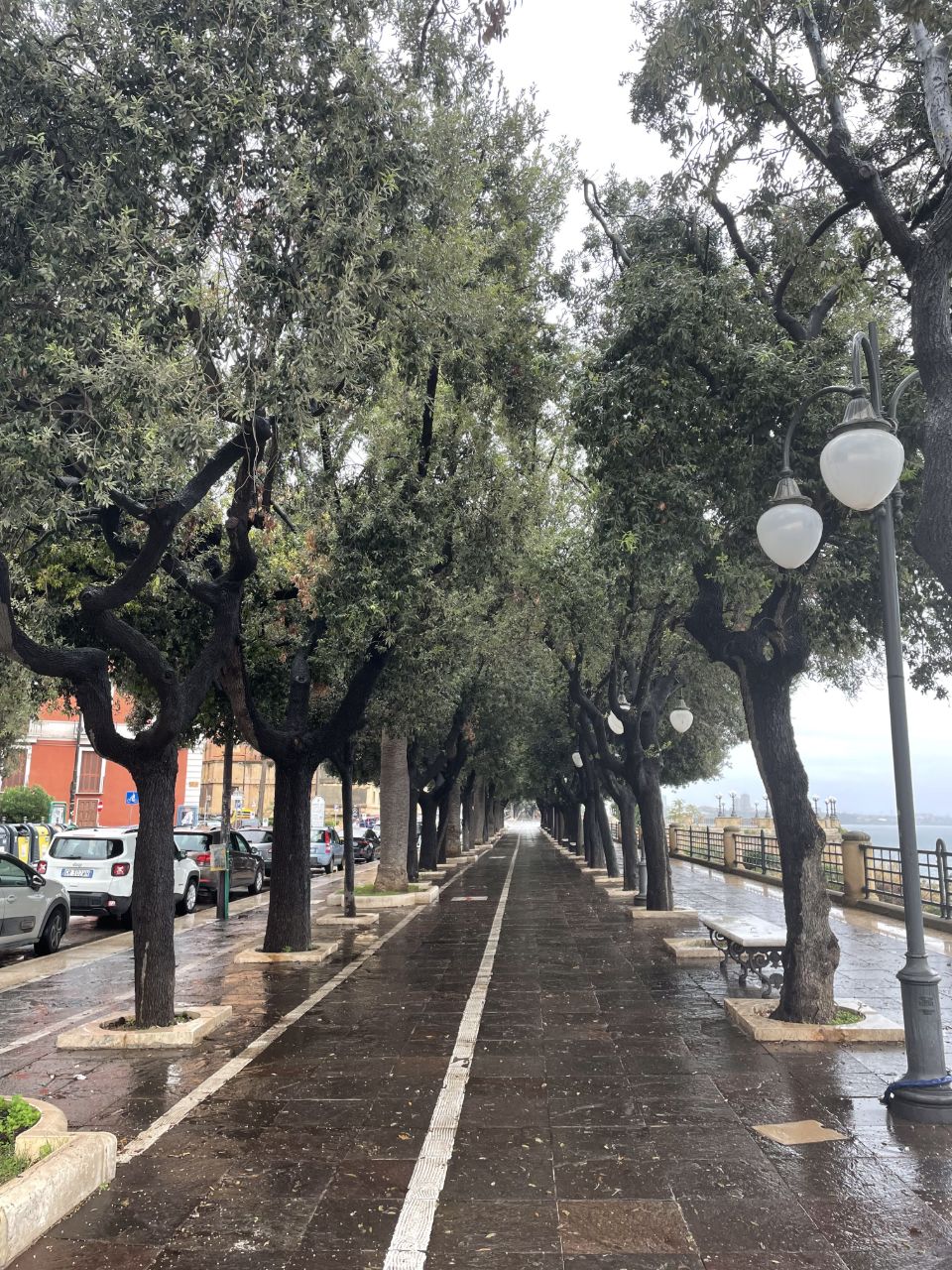
The tree-lined promenade 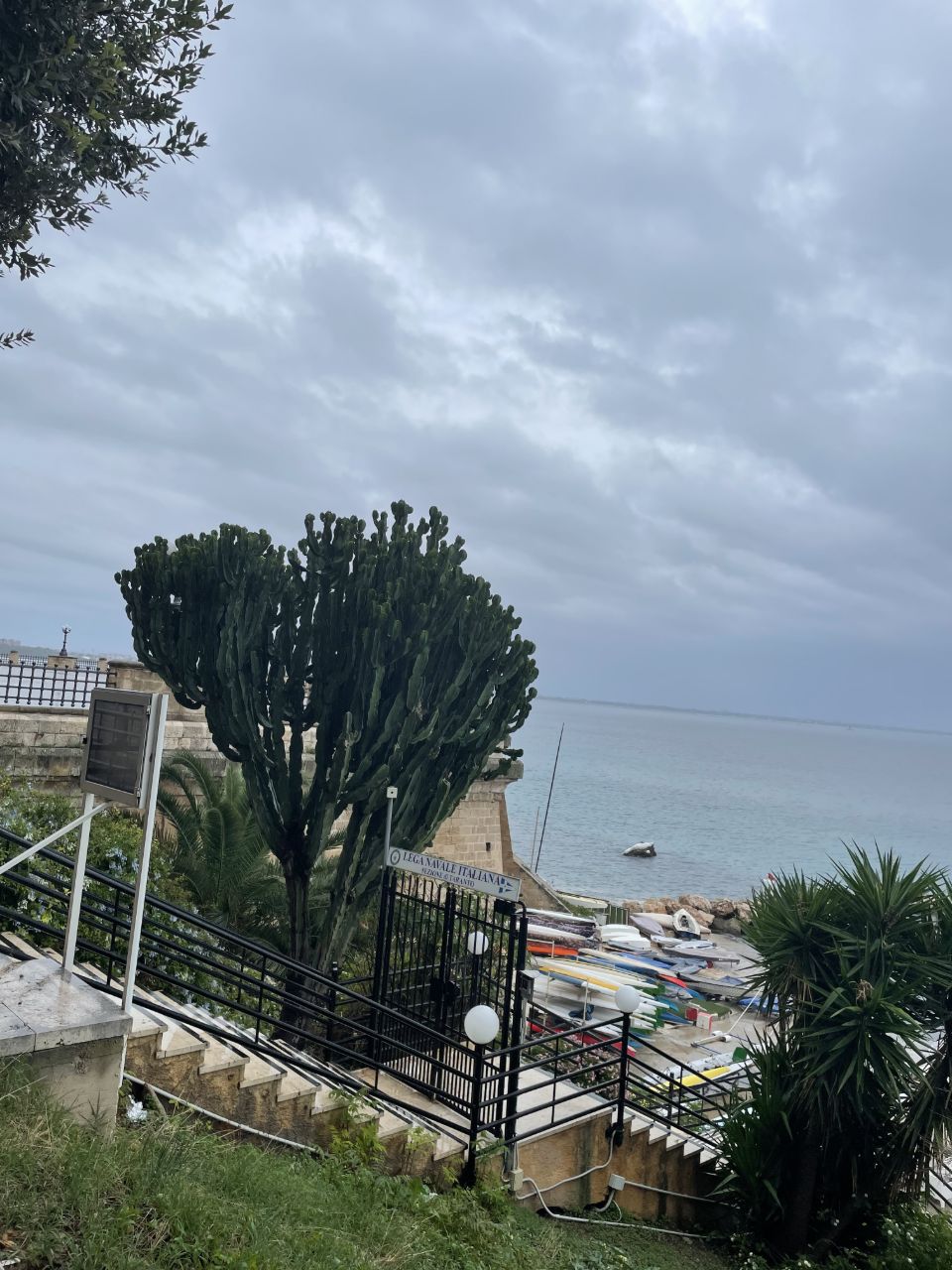
Steps to the fishing harbour
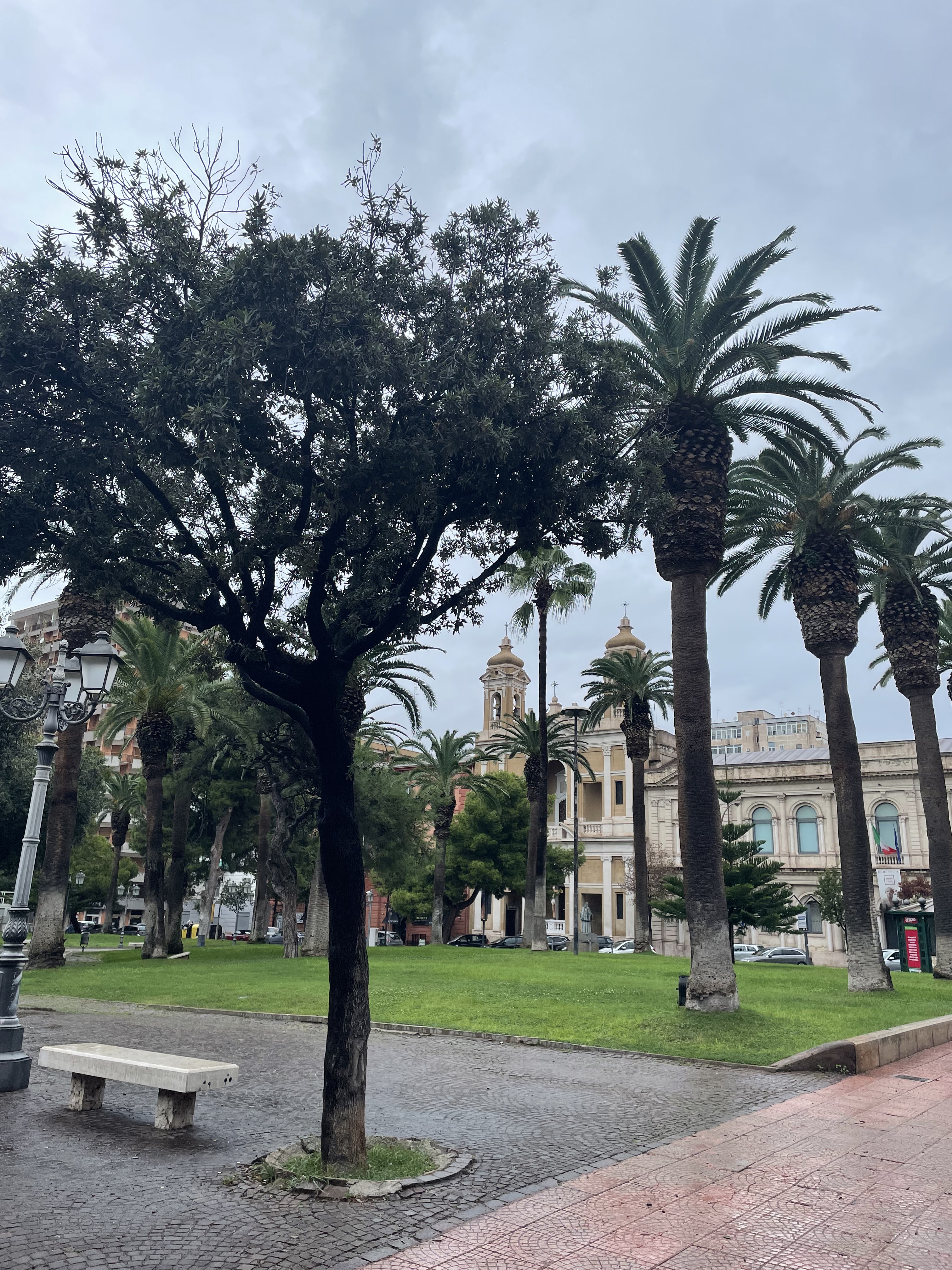
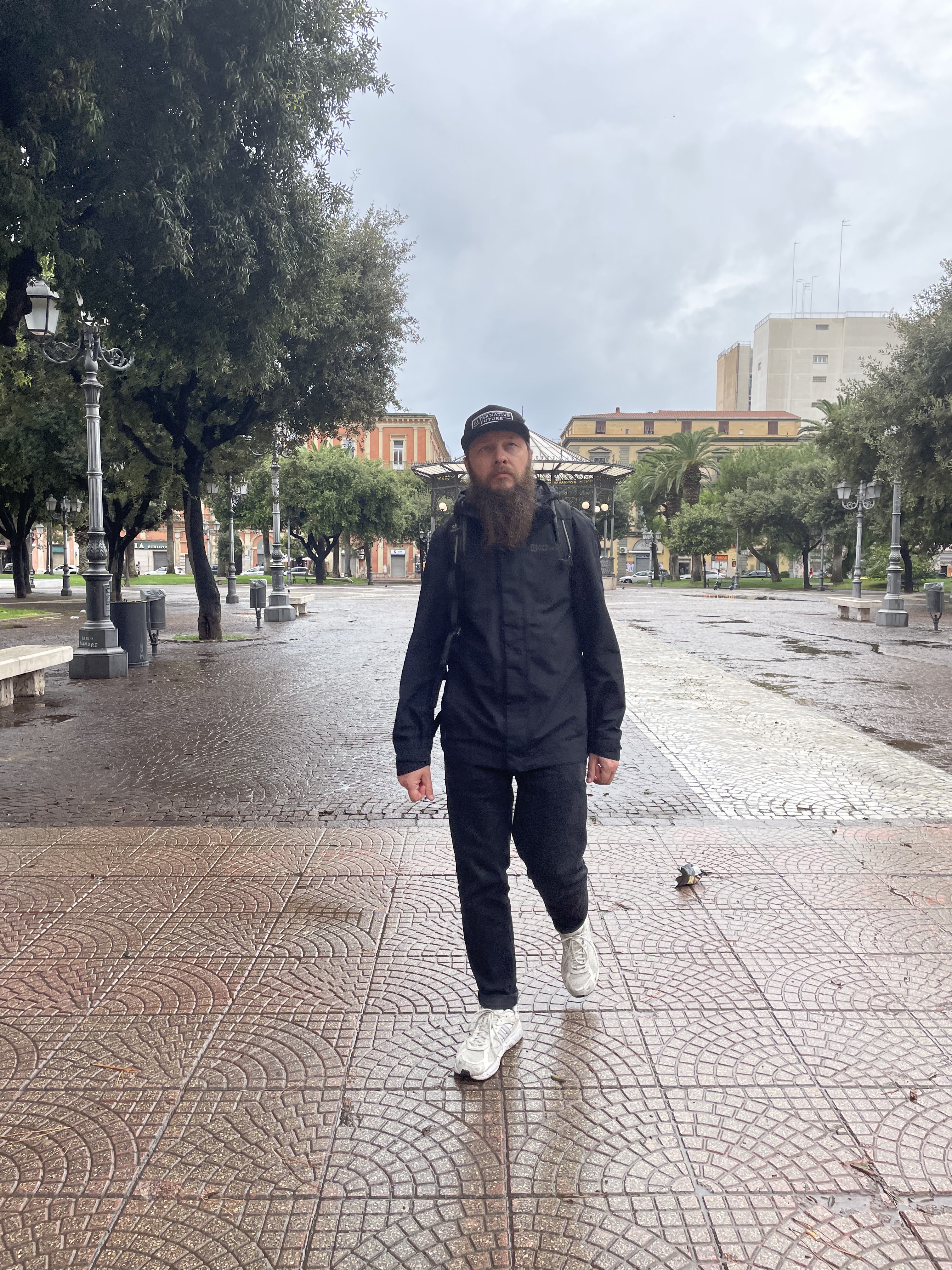
A wet square with palms in a burst of rain, one second of the day distilled.
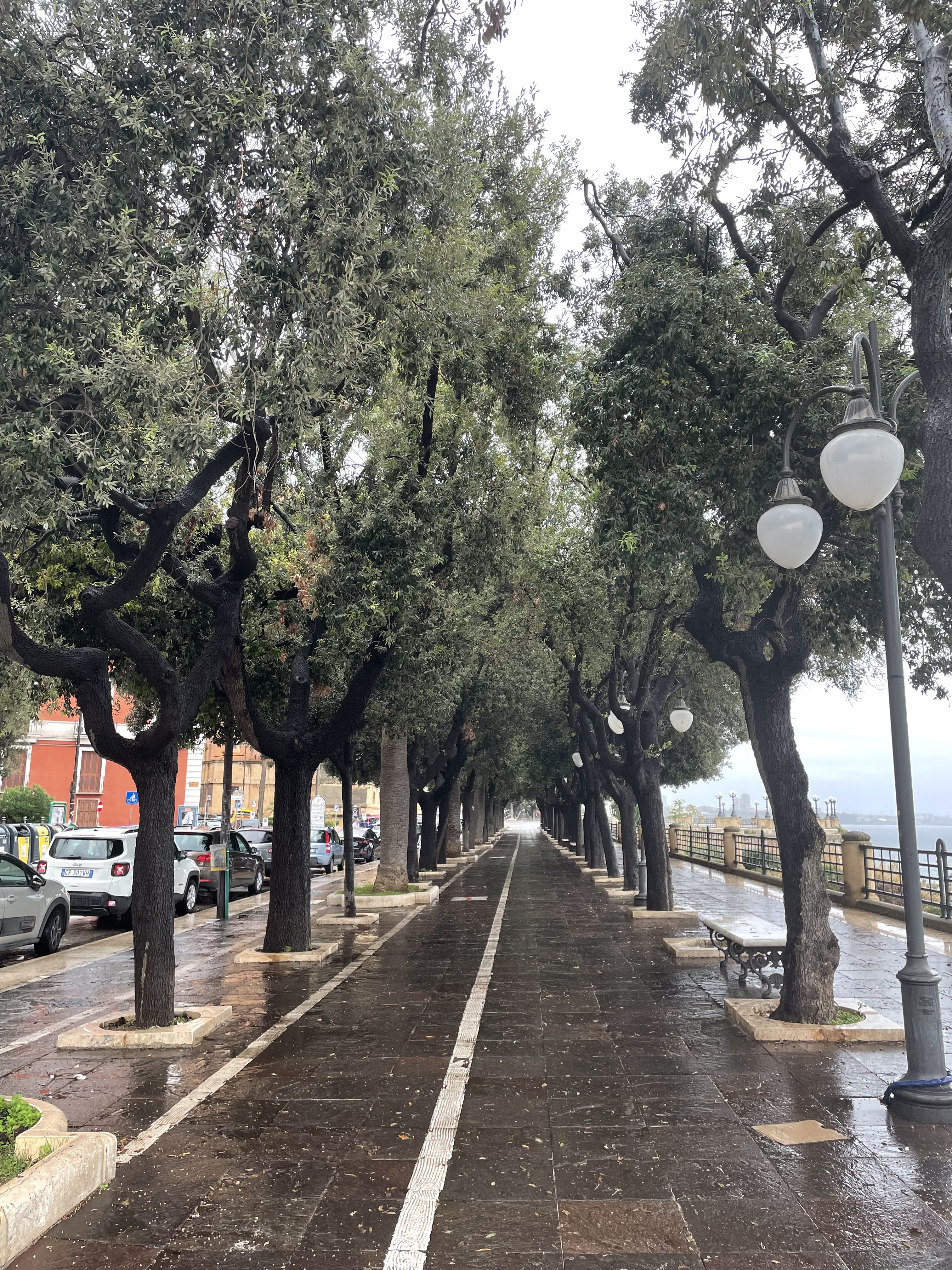
Twenty-five seconds from the big tree down the wet park promenade to the canal, green bench included.
The fortress and the Ponte Girevole across the water, another twenty-five.
Neptune and the red palace
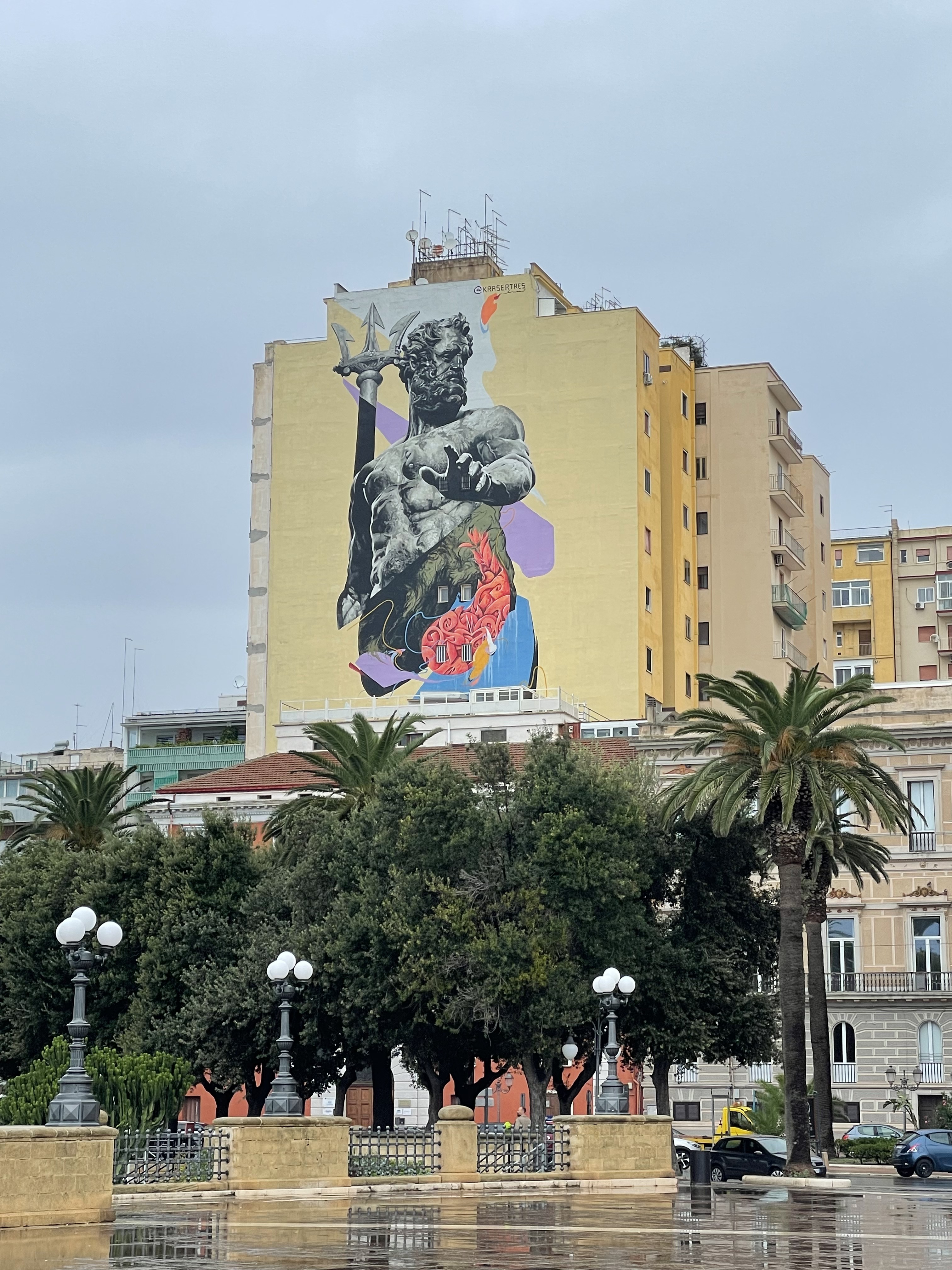
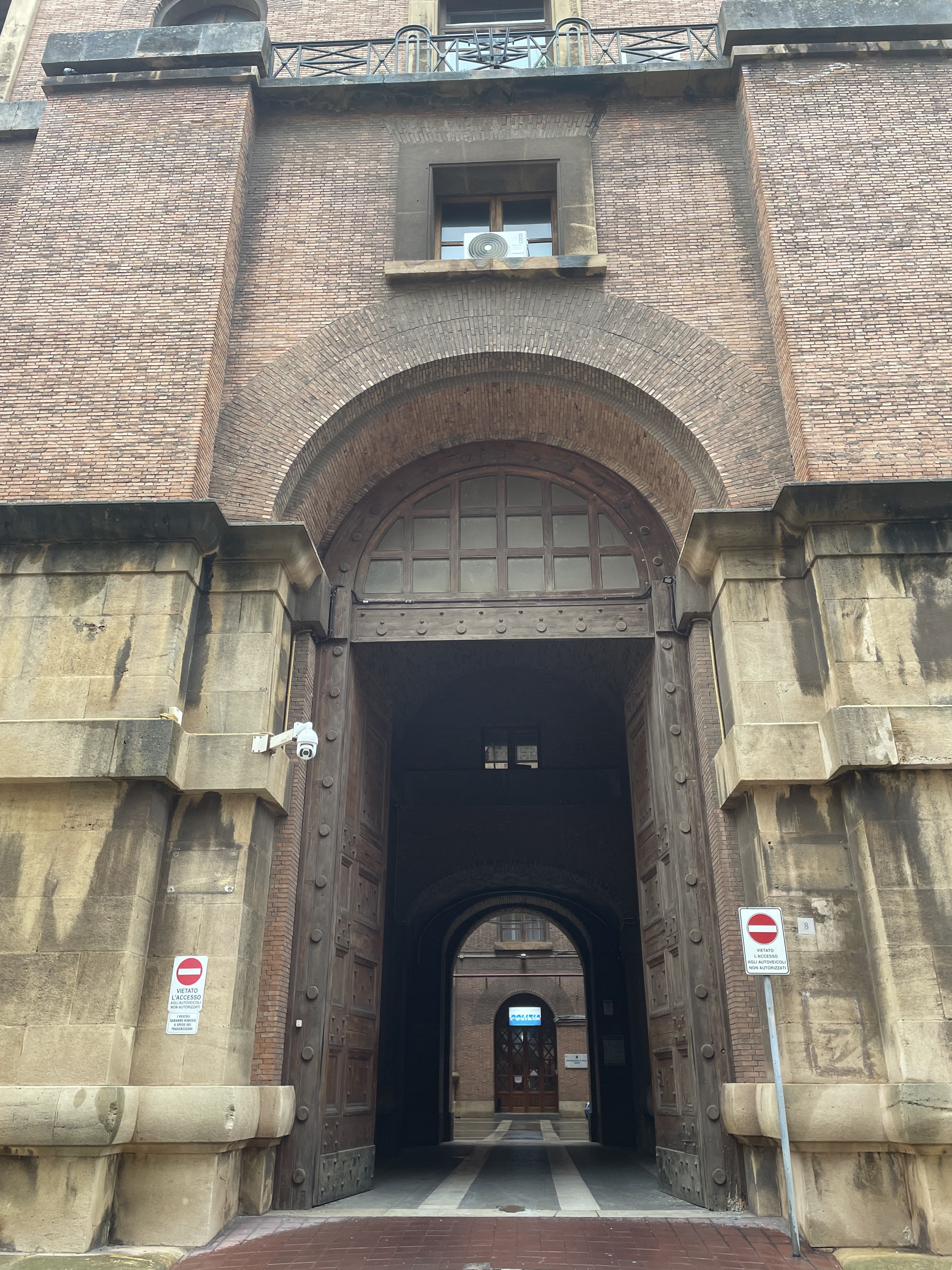
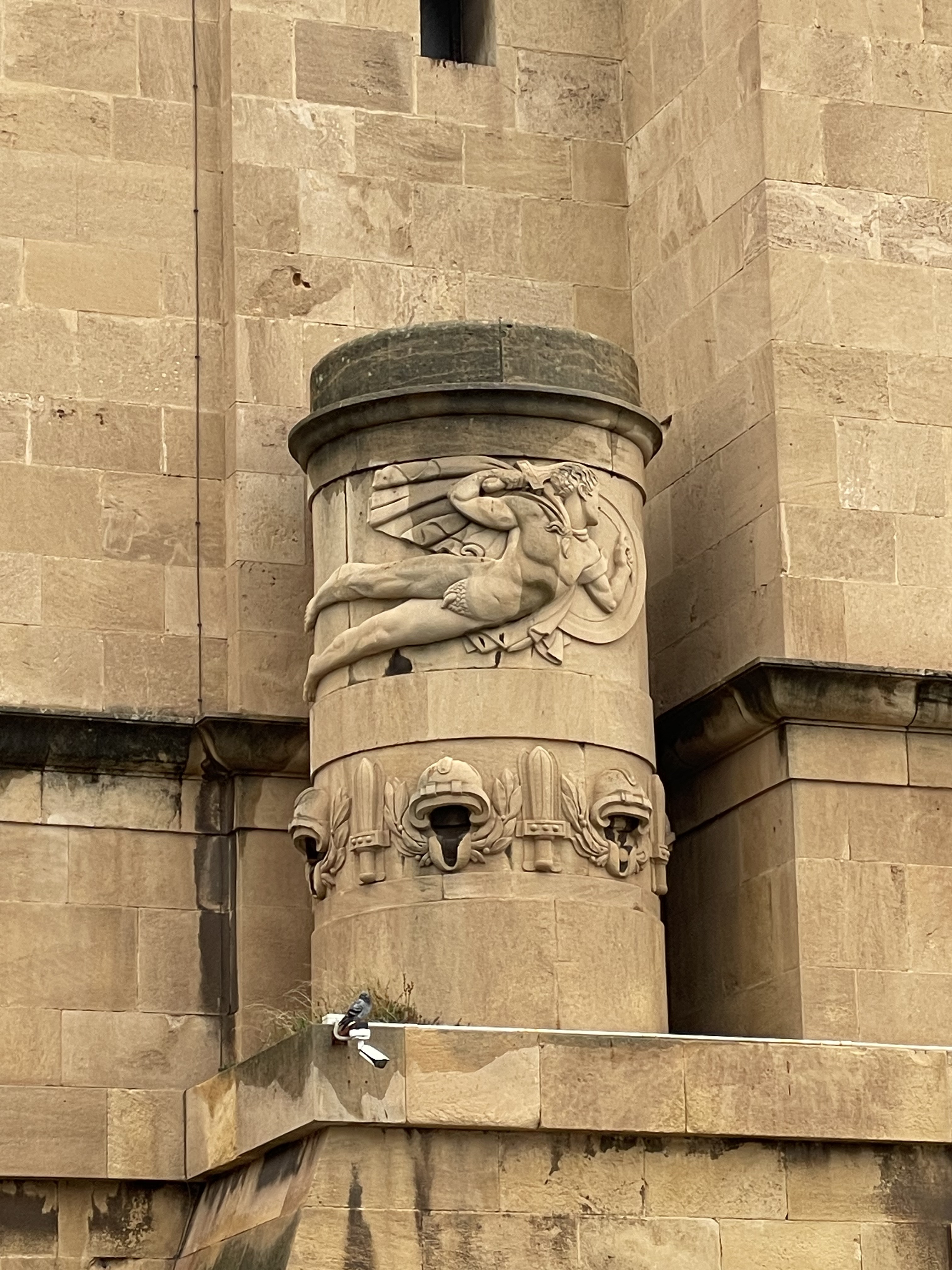
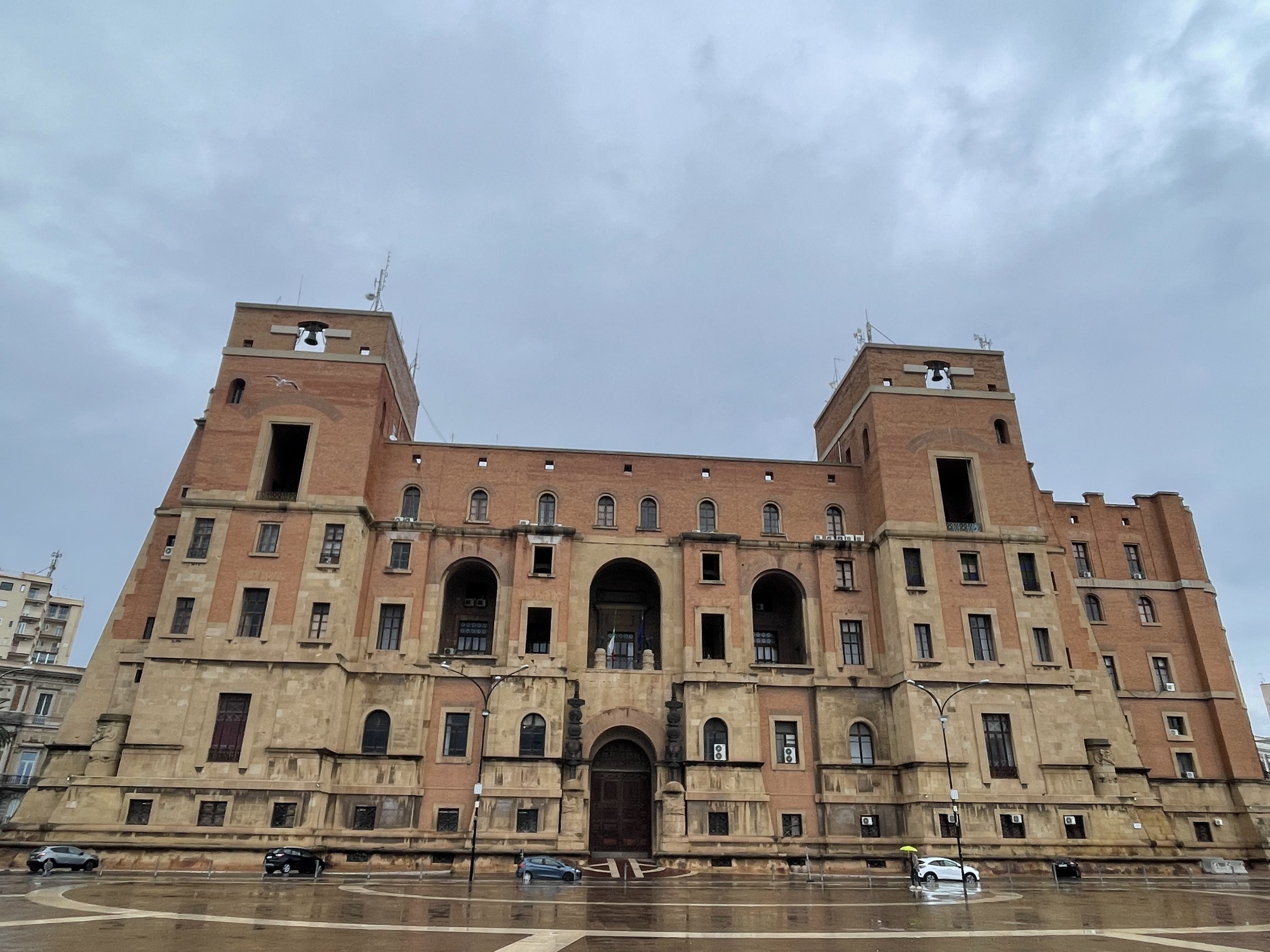
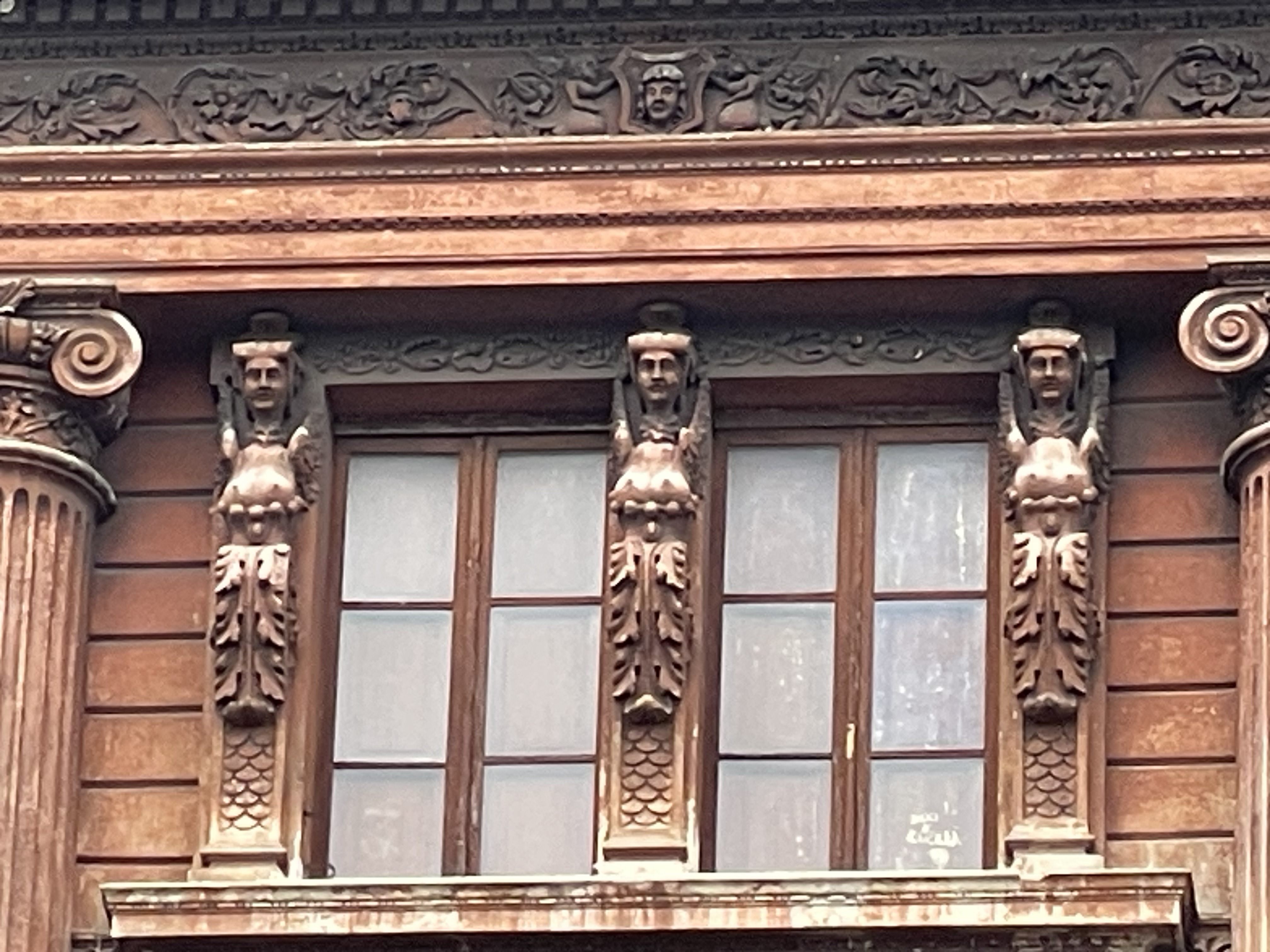
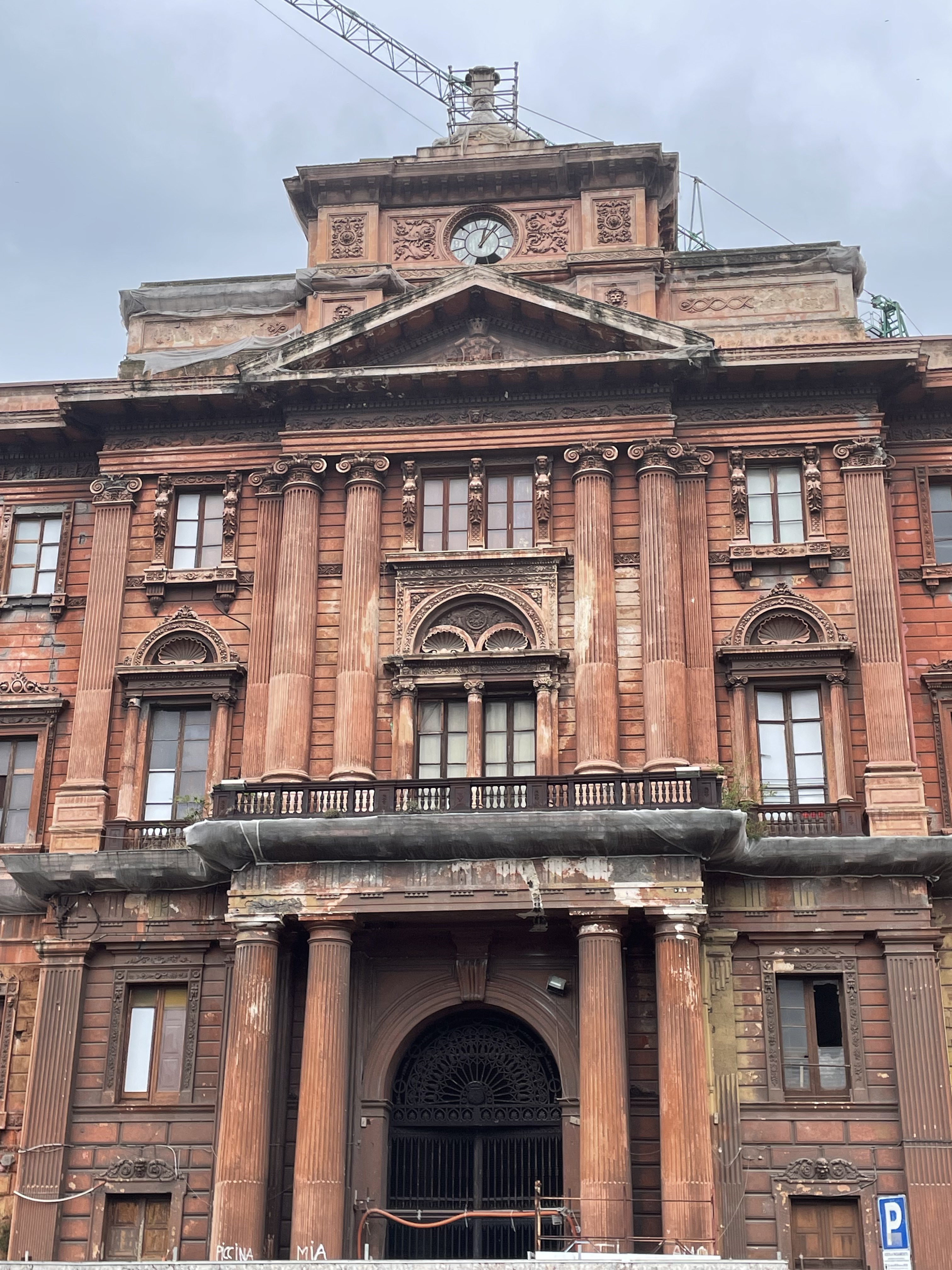
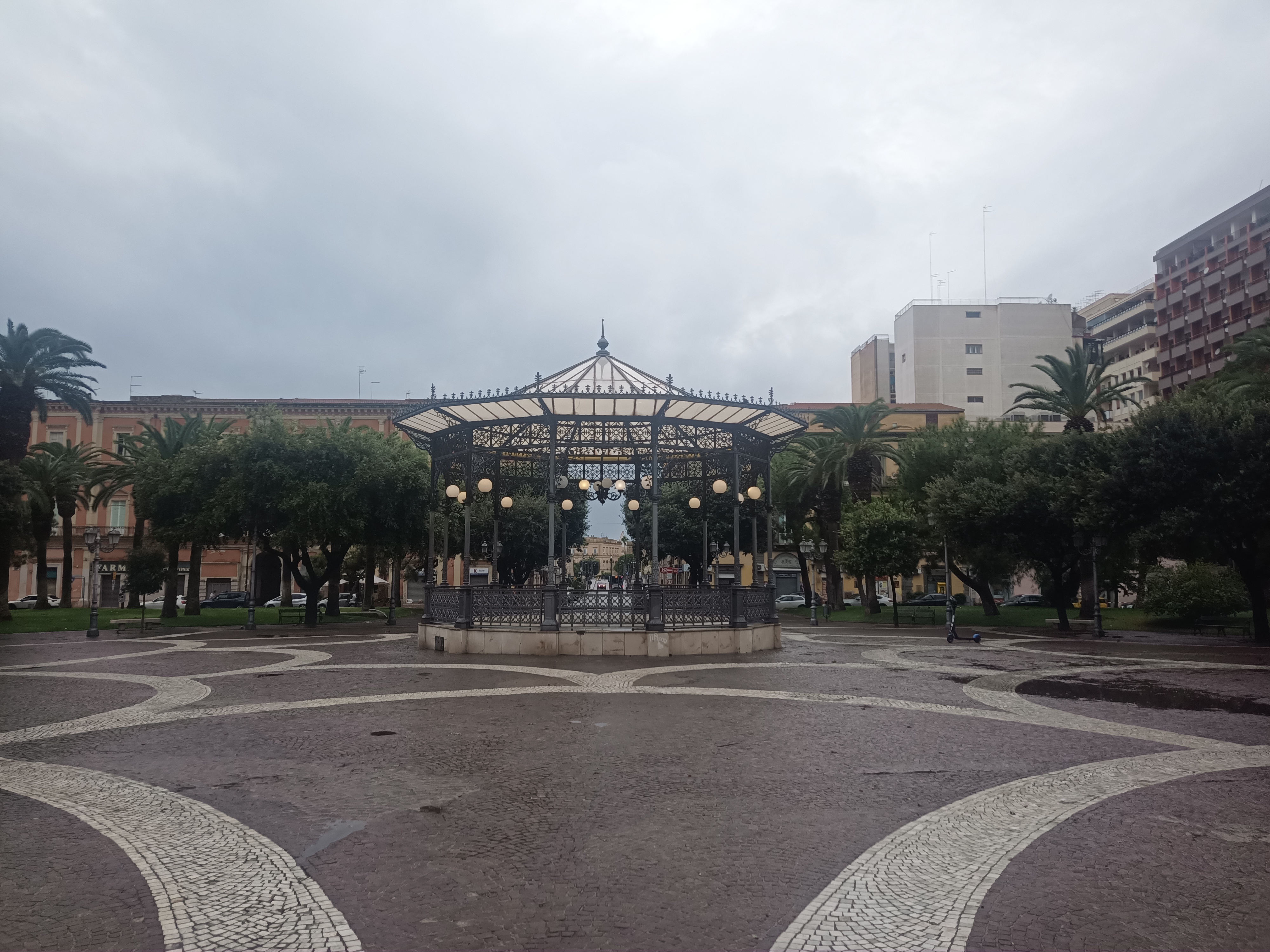
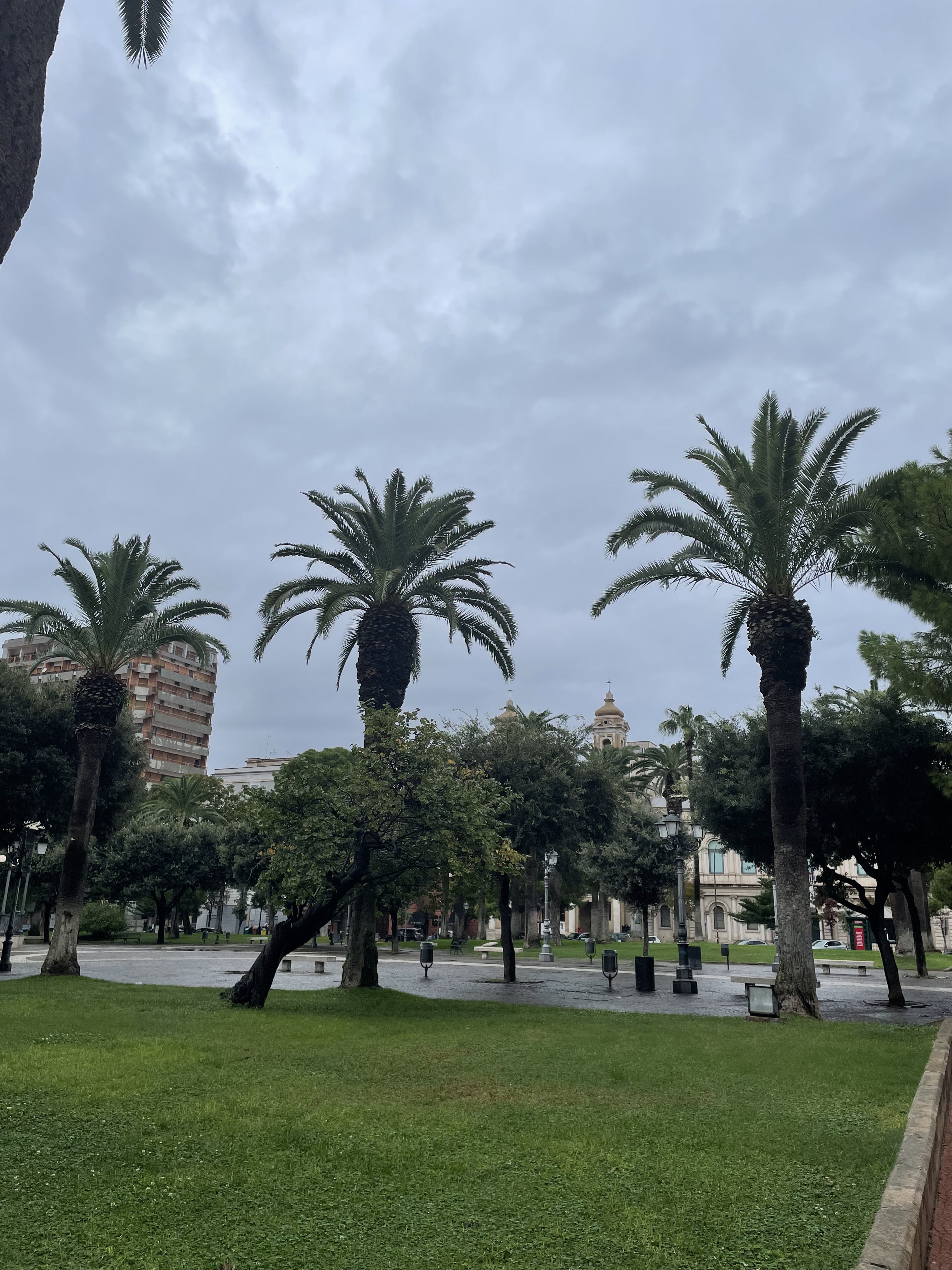
In the newer town, the Borgo Umbertino, the buildings get grander: a red-brick government palace, a palazzo with caryatids holding up the sills, a faded pink theatre of a building, an iron-and-glass bandstand on a swept square, palms and a domed church in the garden. And on a yellow apartment block, a giant Neptune, trident raised above the parked cars.
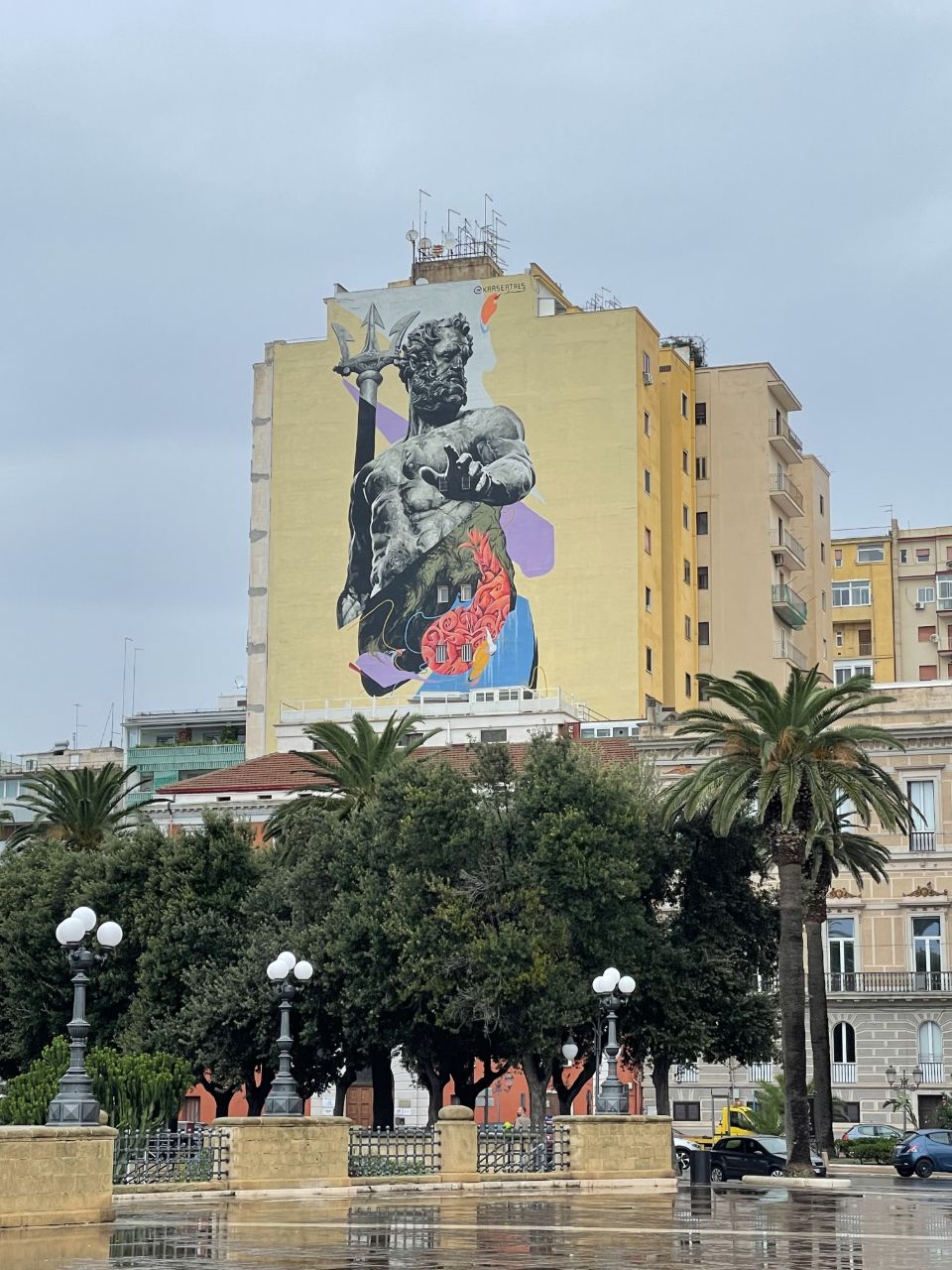
Neptune, apartment-sized 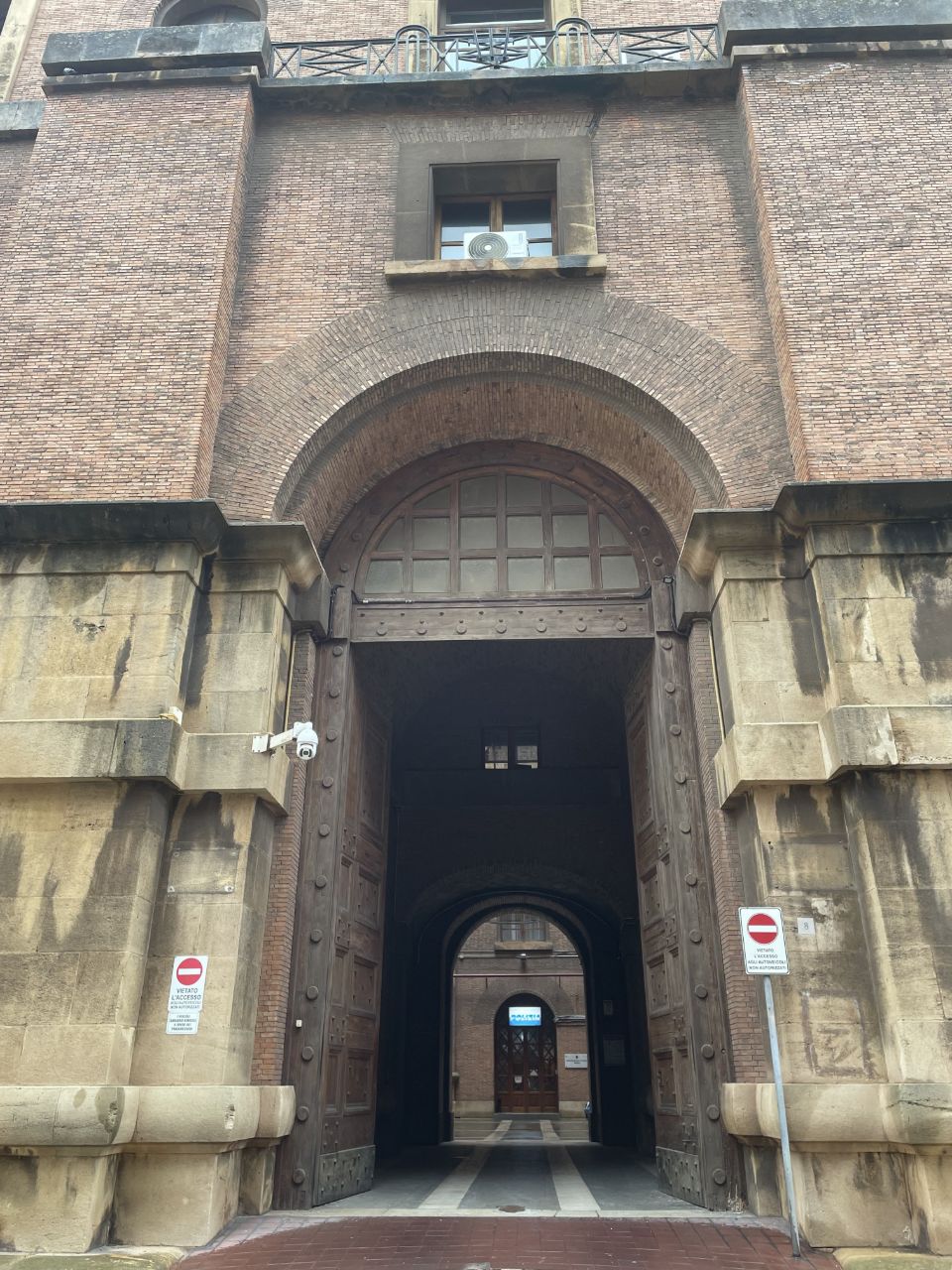
Studded wooden doors 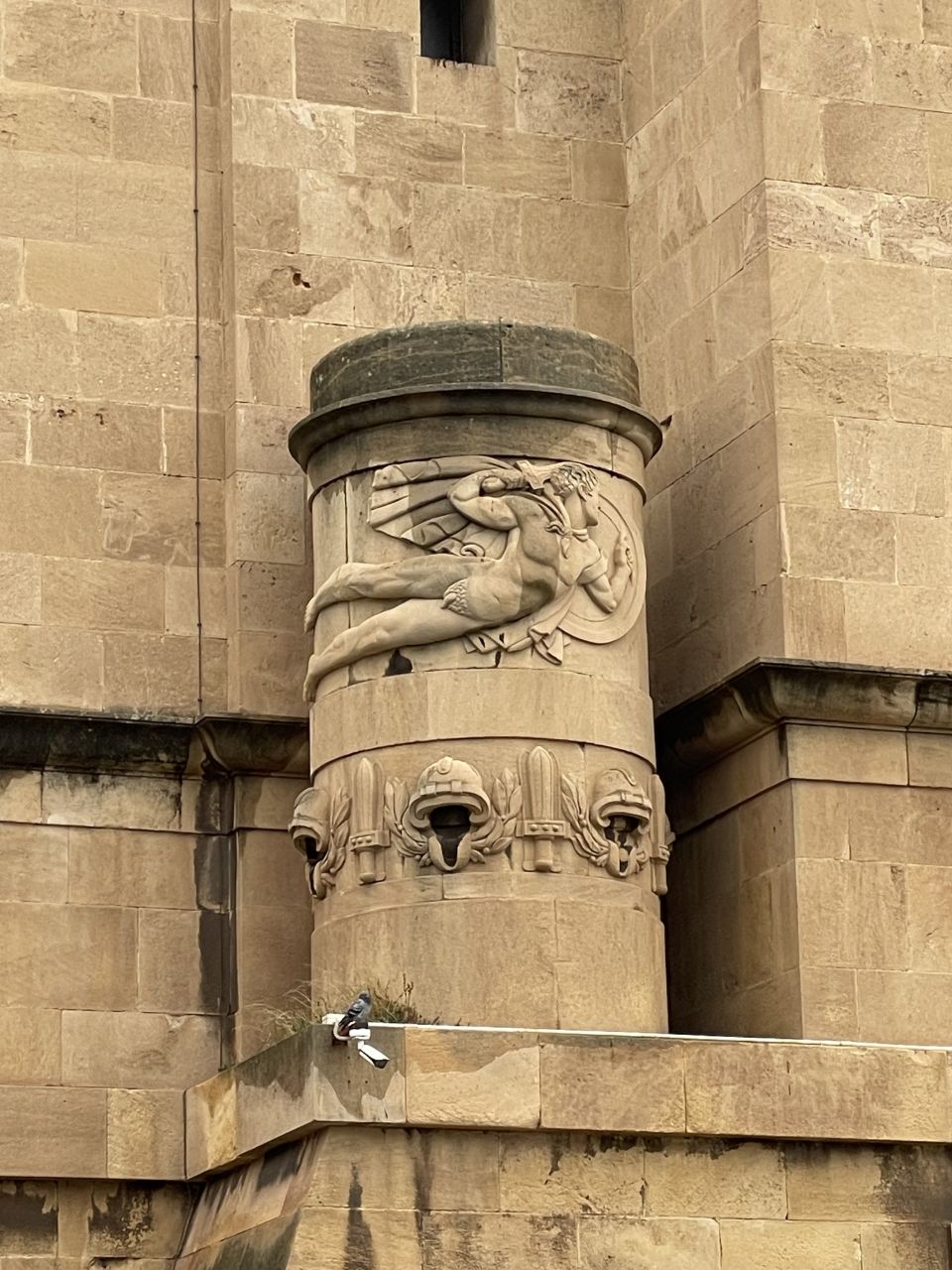
Winged figure on the pillar 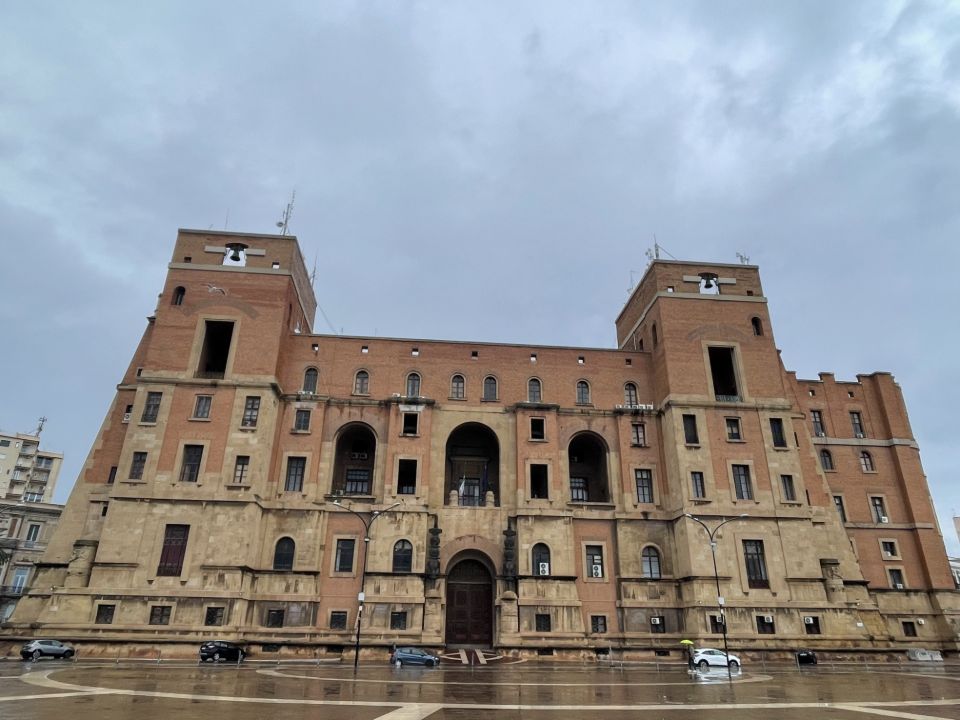
The government palace 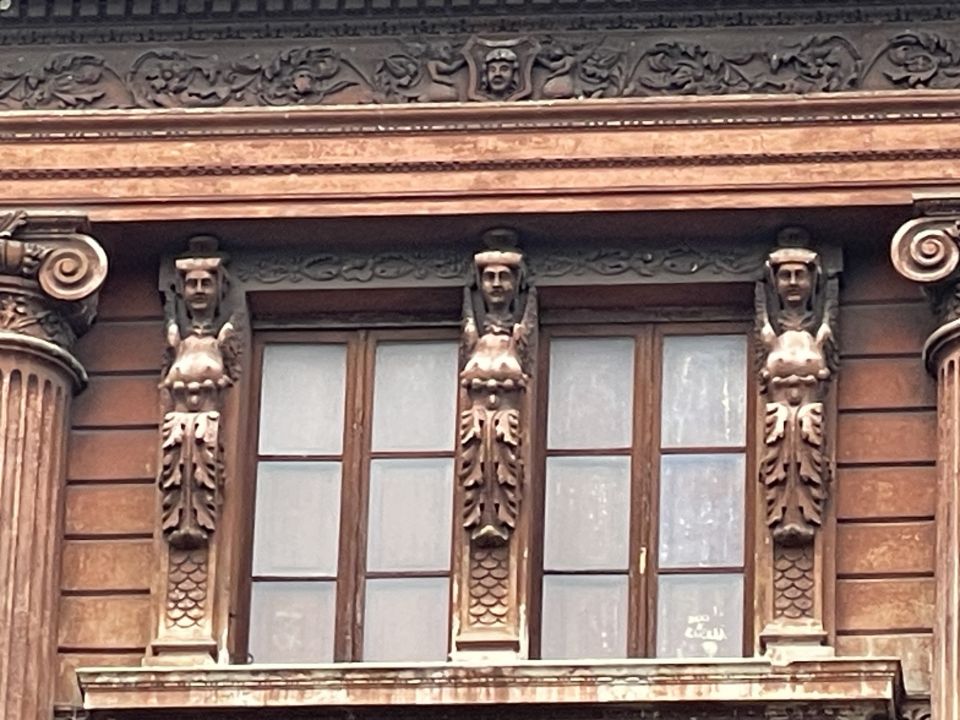
Caryatids on the sills 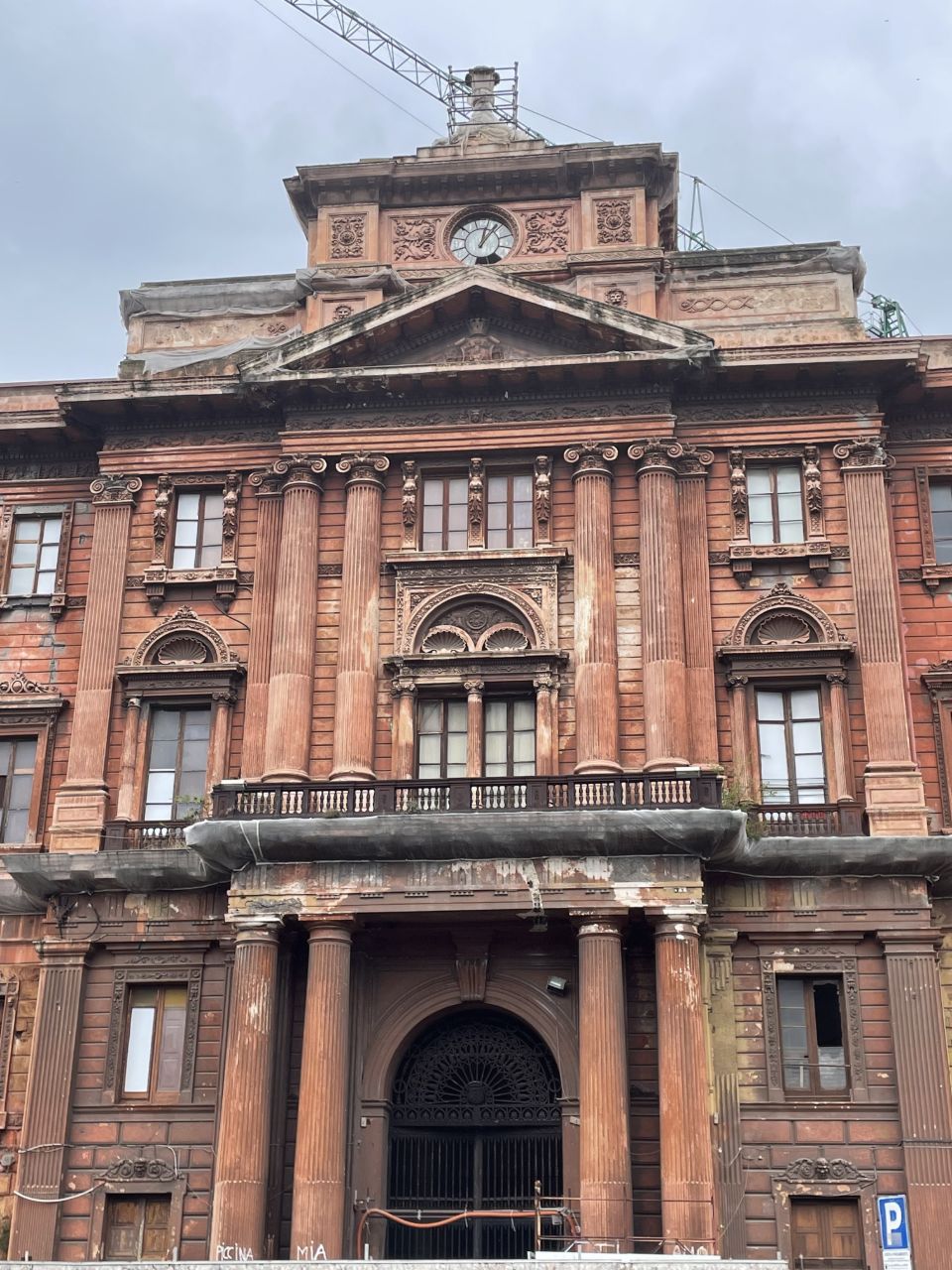
Faded pink, ticking on 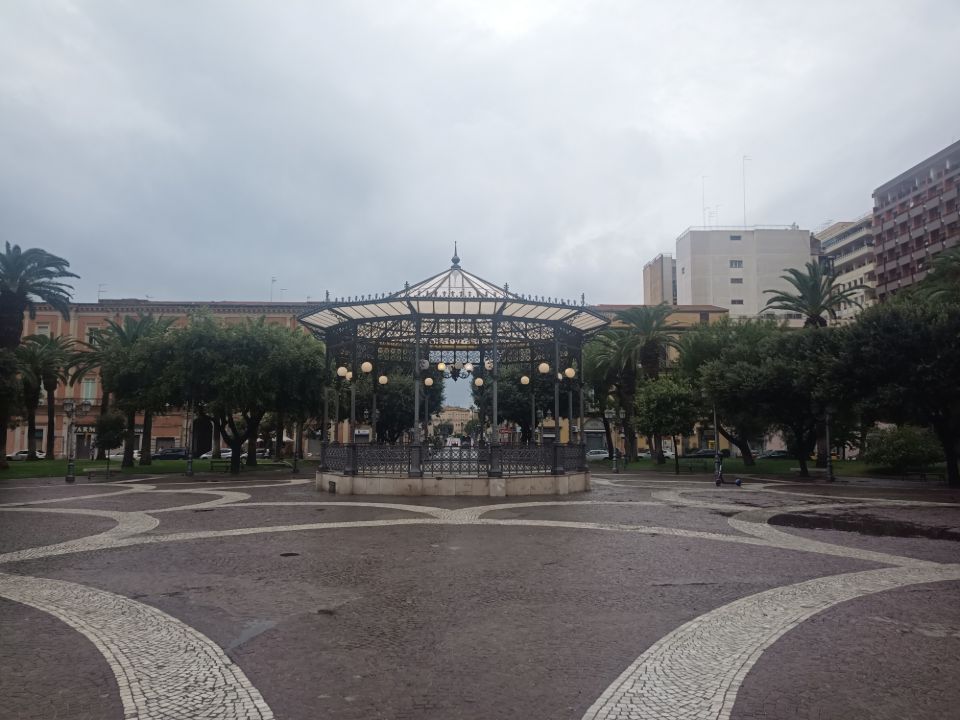
The bandstand square 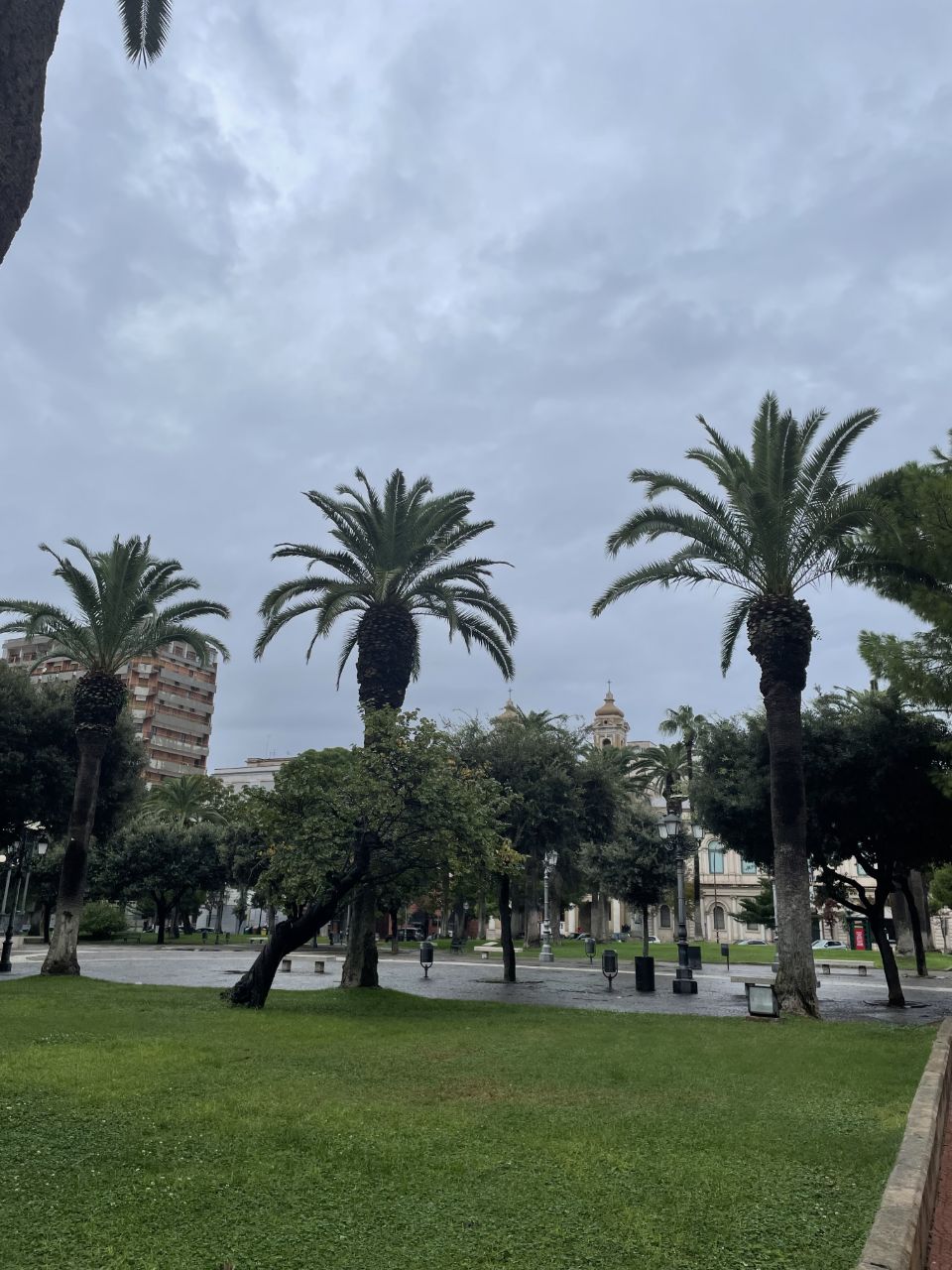
Palms and a dome 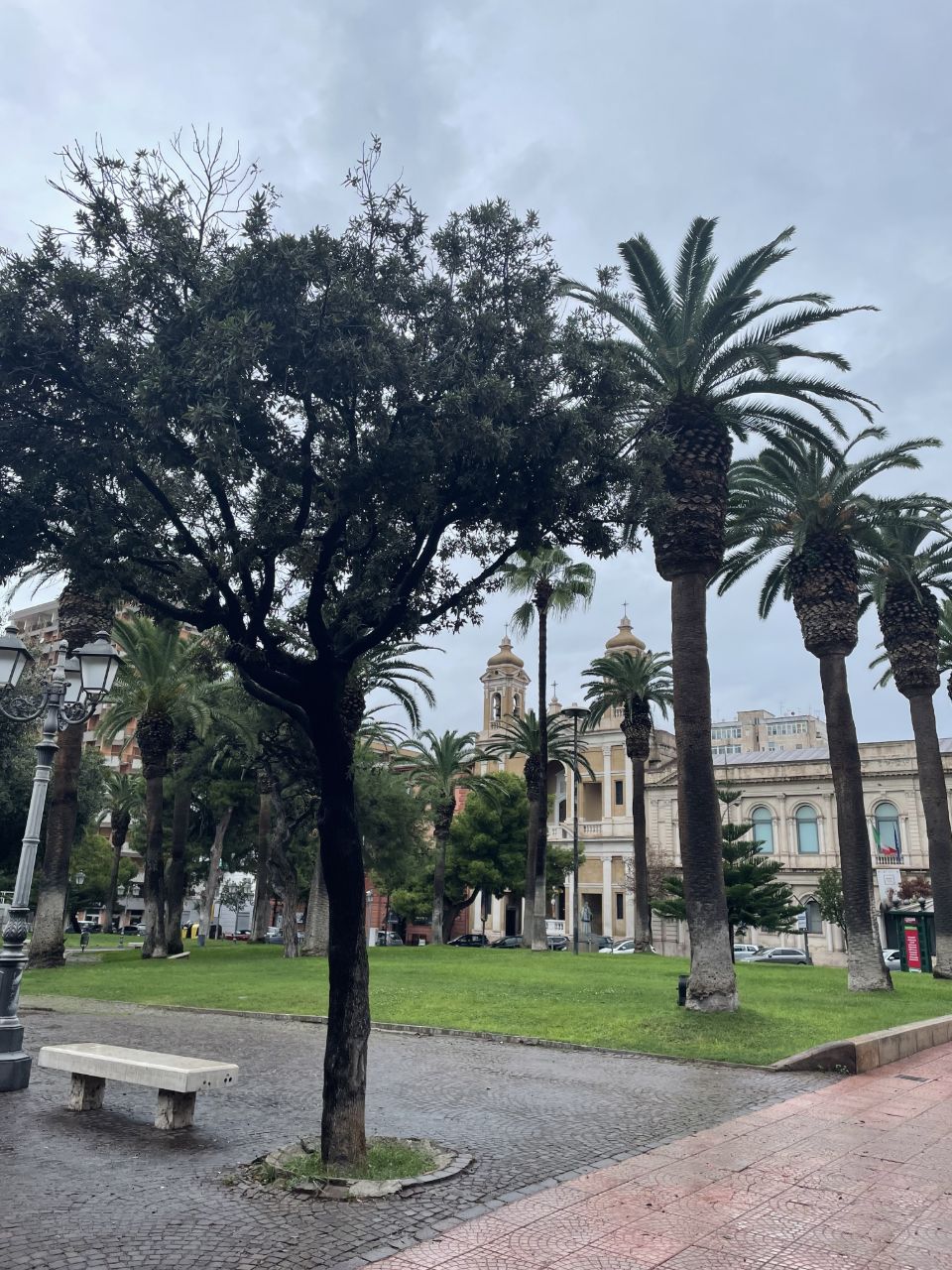
Park corner with a yellow church
The public gardens and their residents
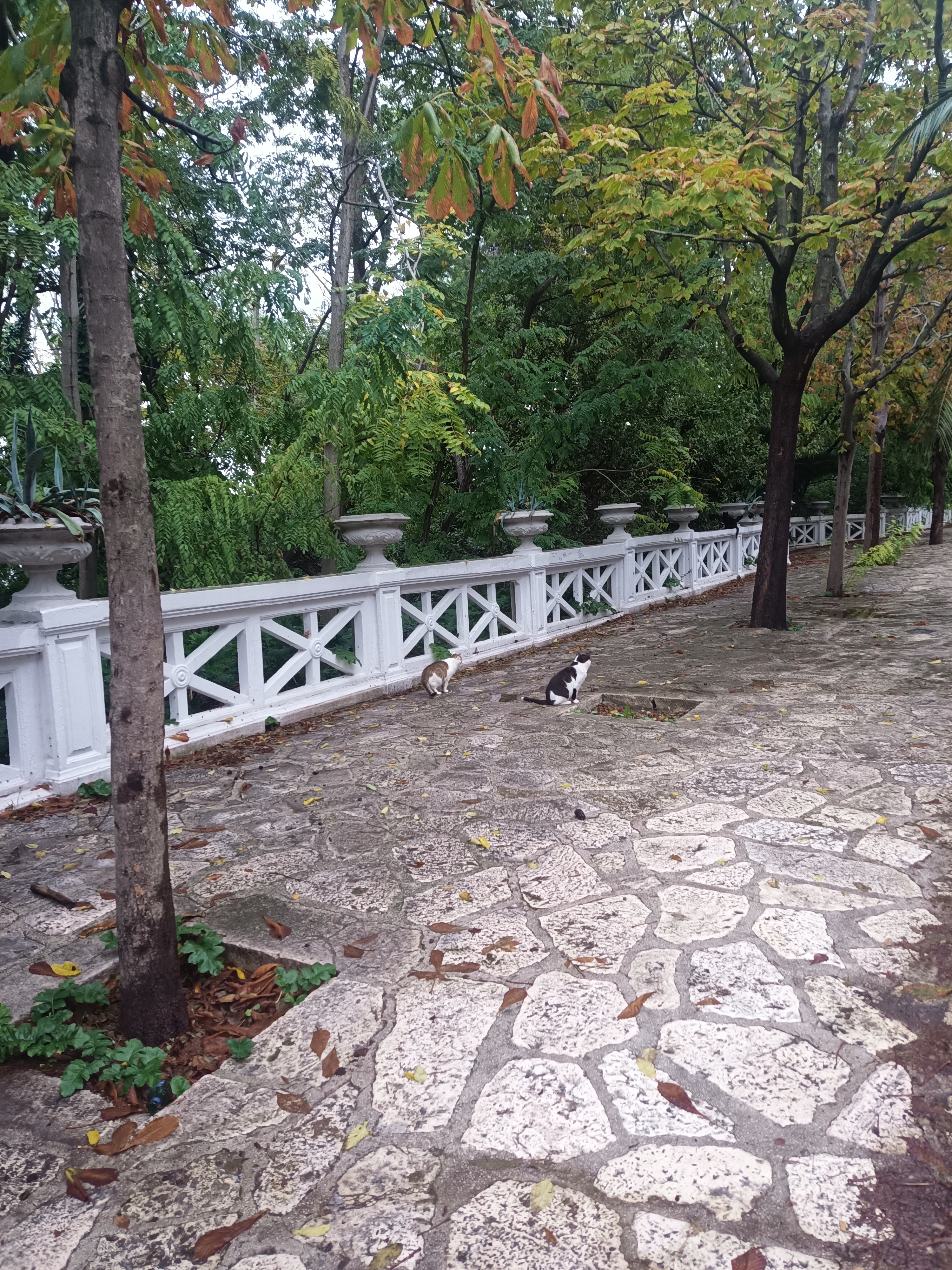
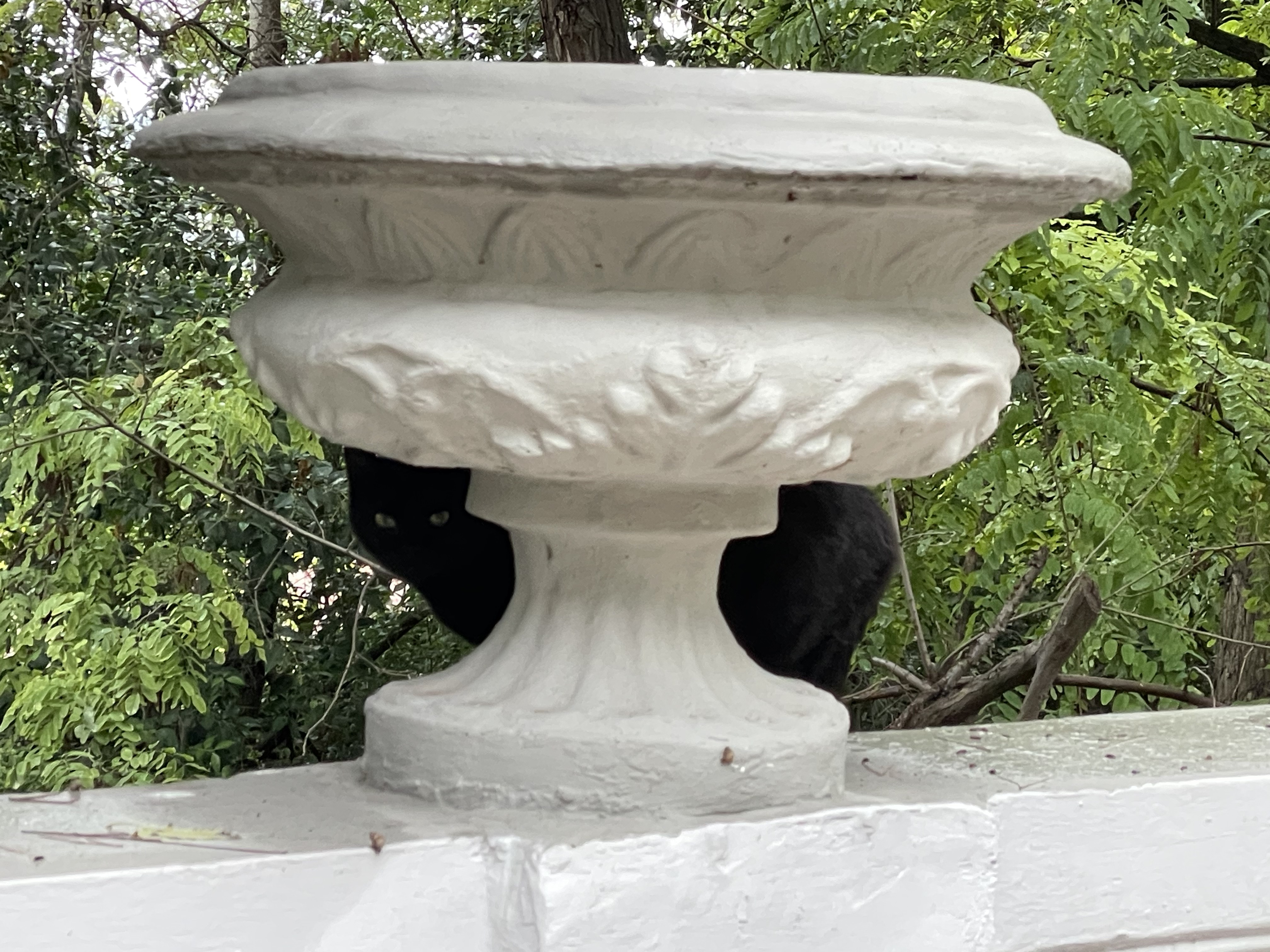
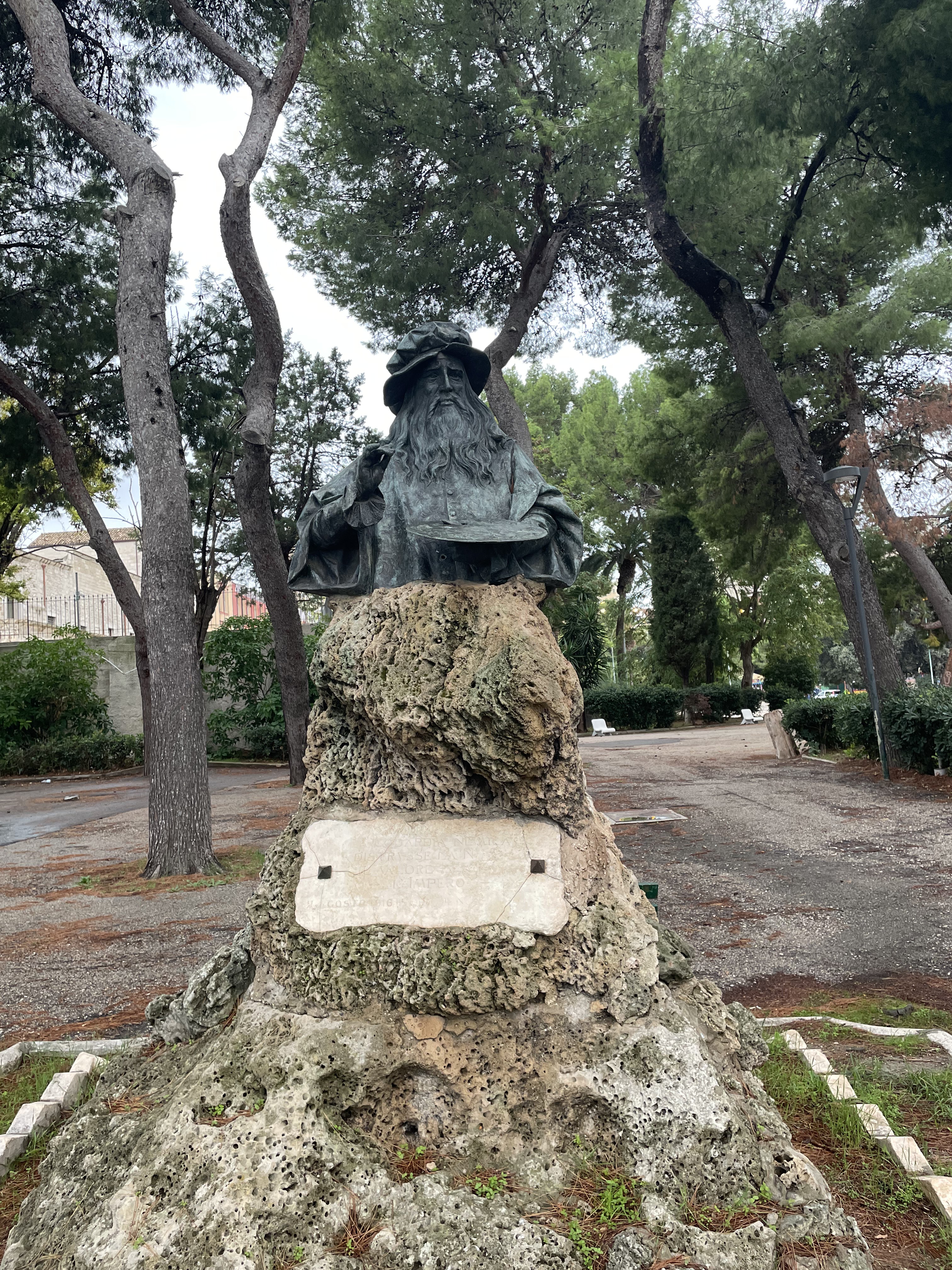
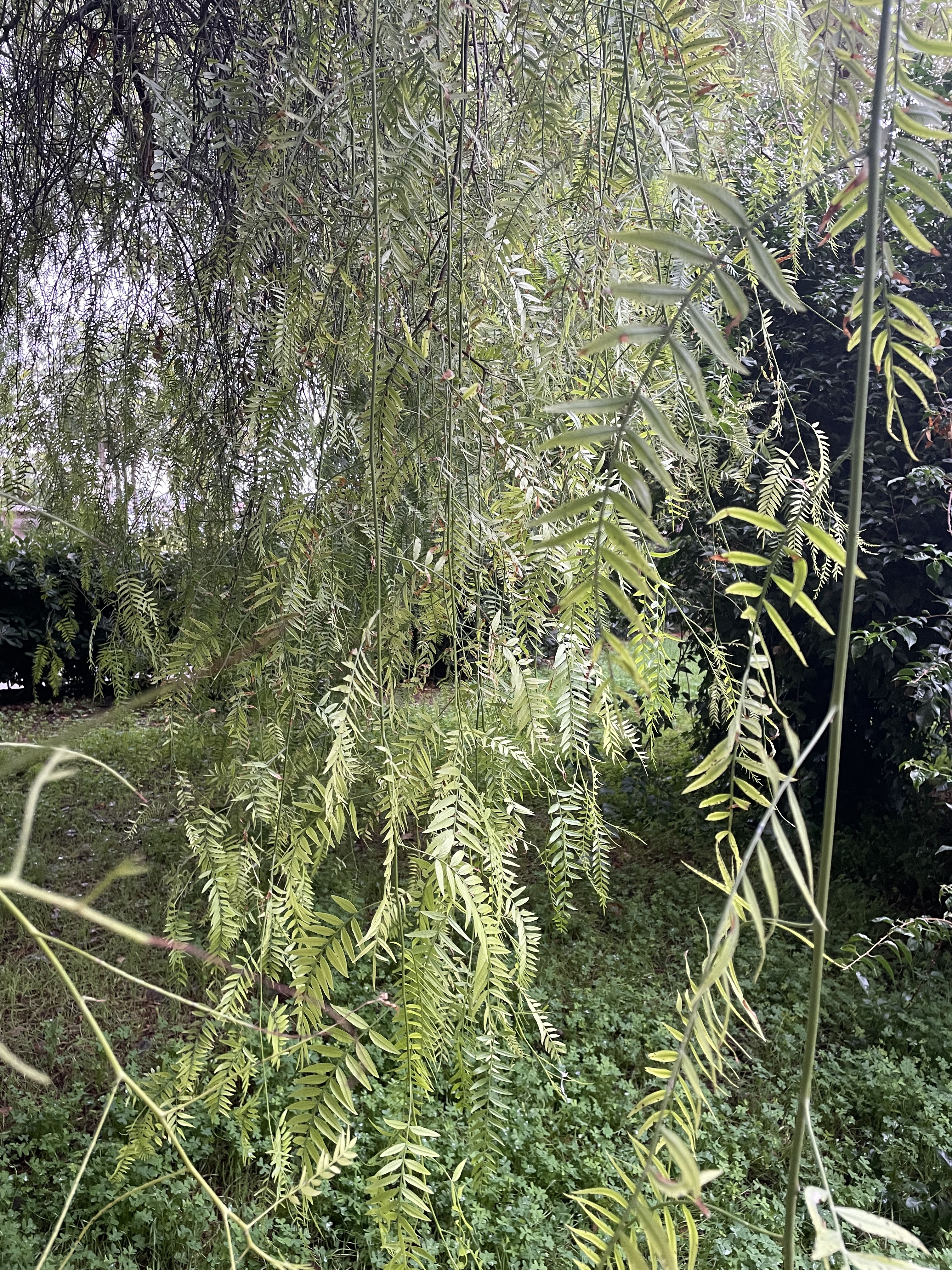
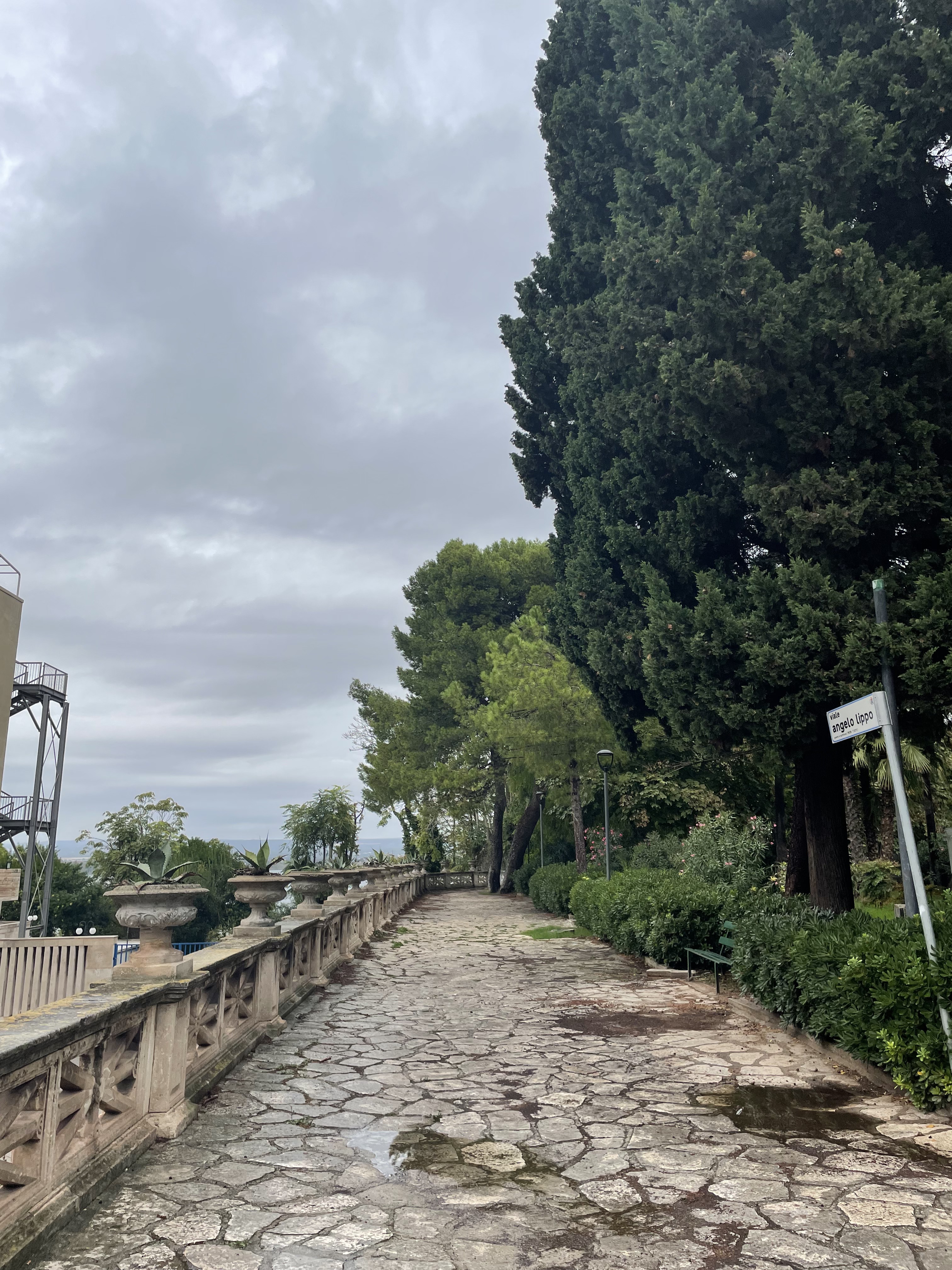
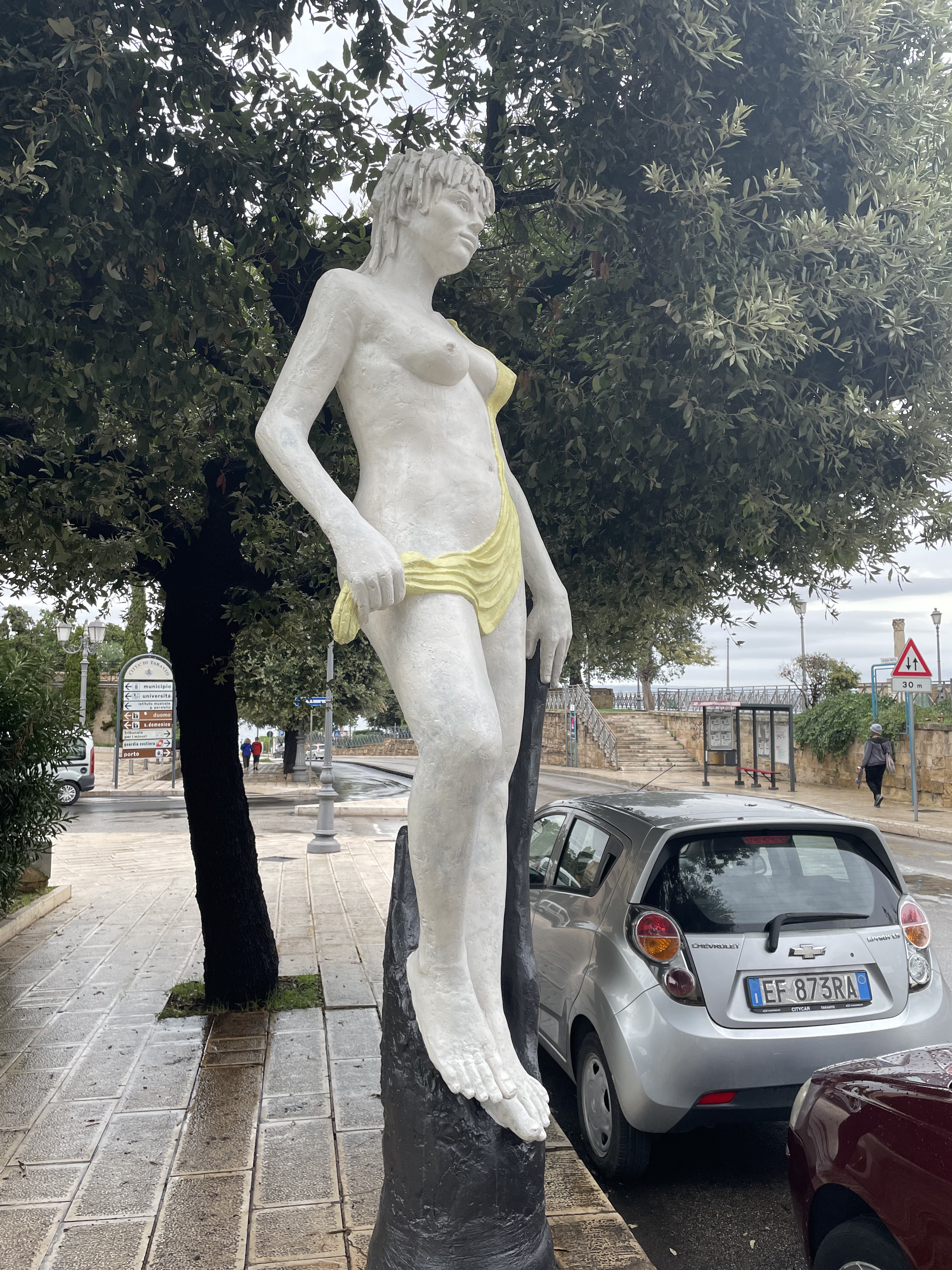
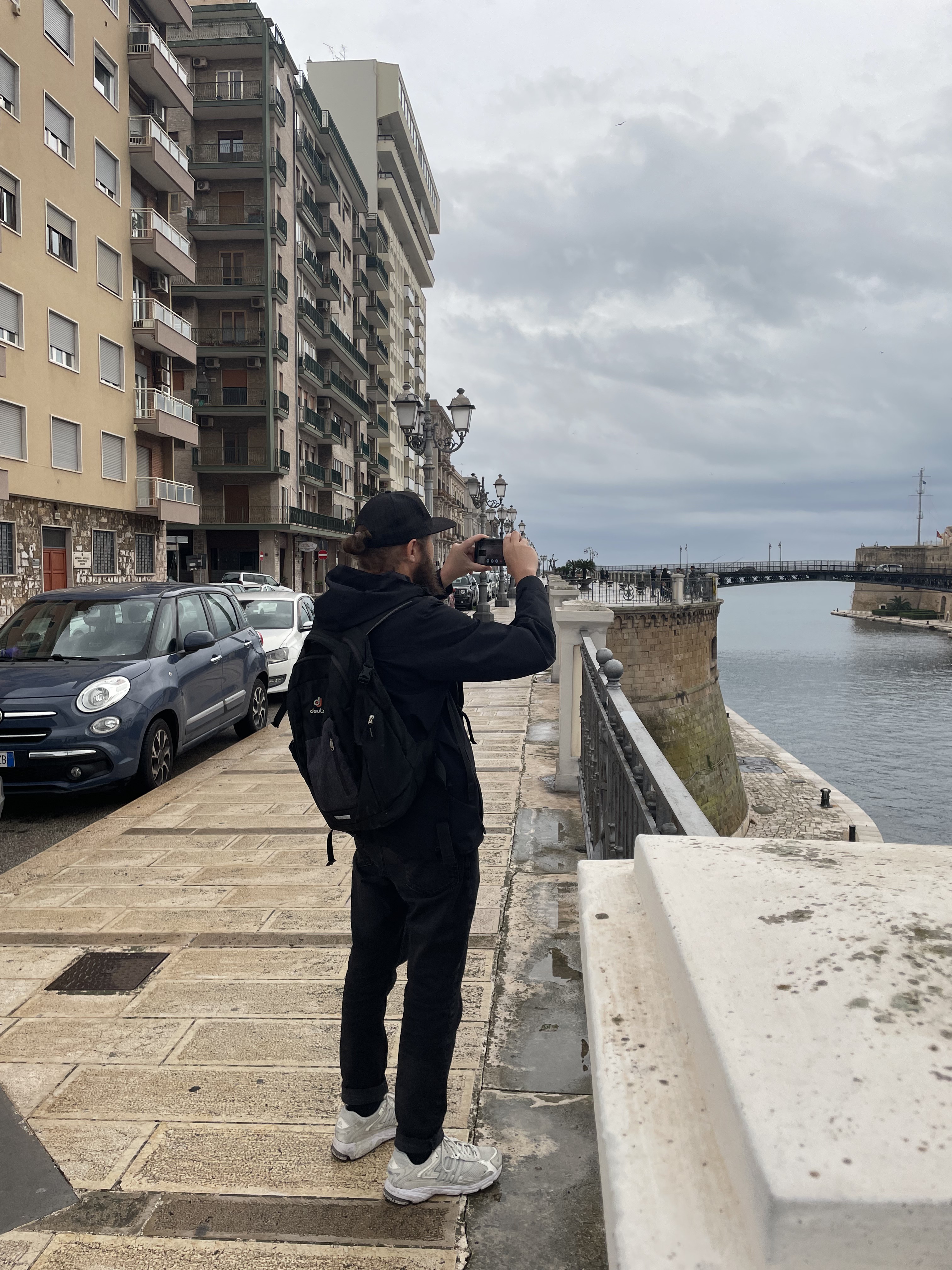
The public garden by the sea turned out to be the day’s funniest discovery: a wet flagstone terrace with urns, weeping willows — and cats. Two of them dozed along the ornate balustrade, and a black cat kept peeking from behind an urn. Portraits: a marble lady in a yellow drape, a bronze painter on his rock. Somewhere in there Oleg walked past with his phone up.
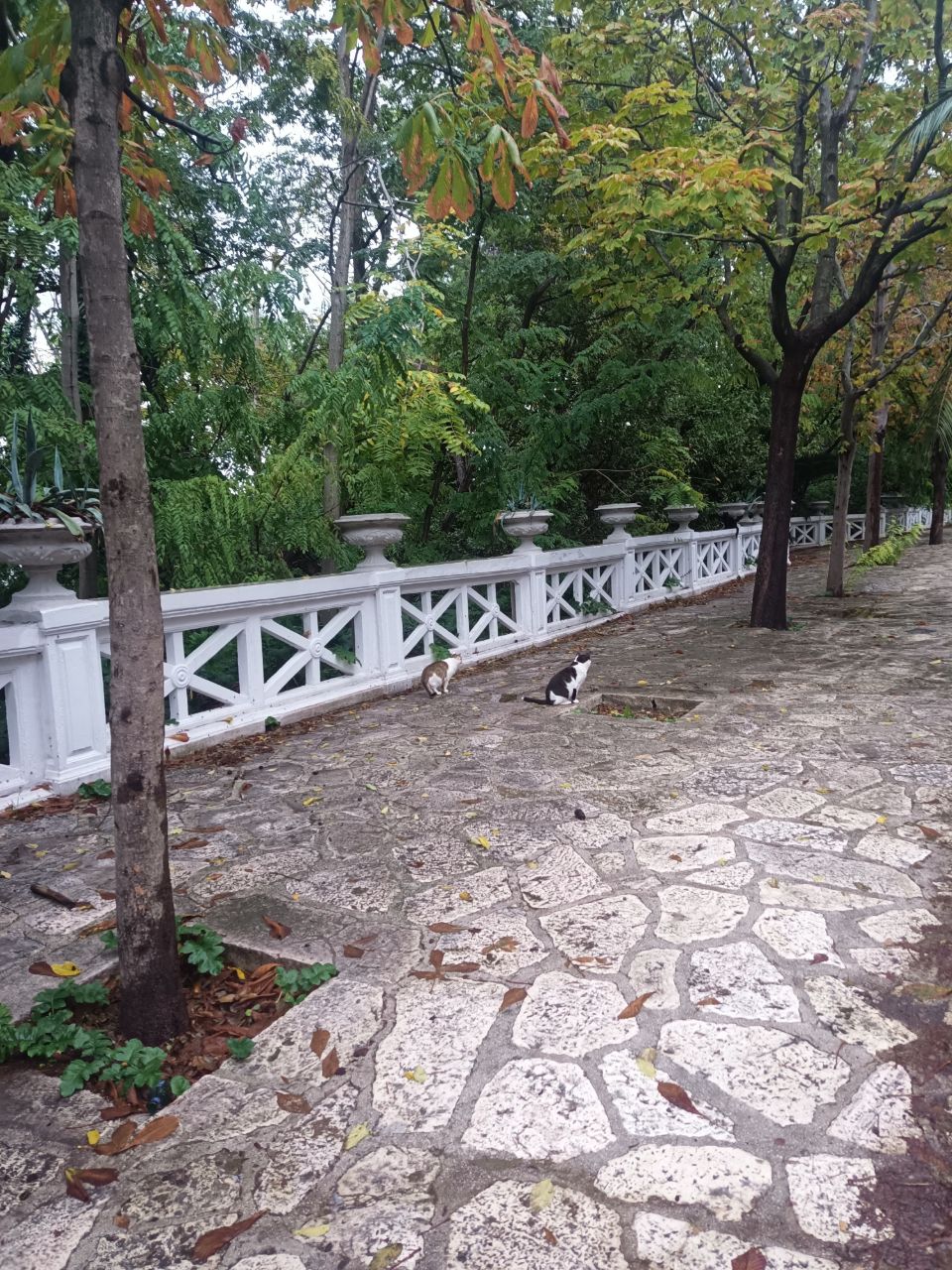
Cats on the balustrade 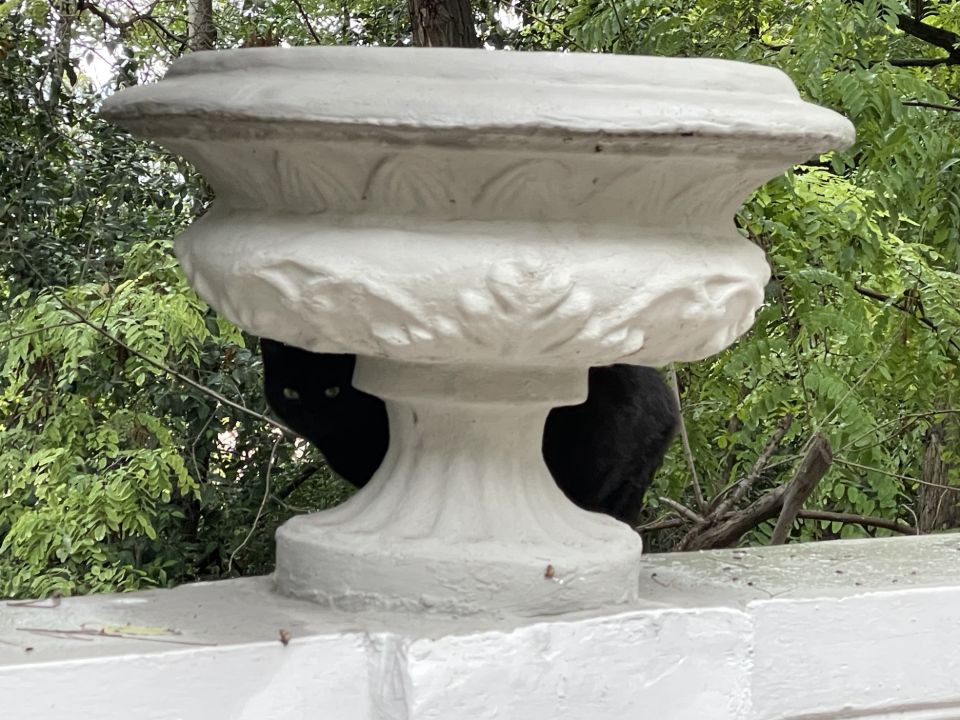
The cat behind the urn 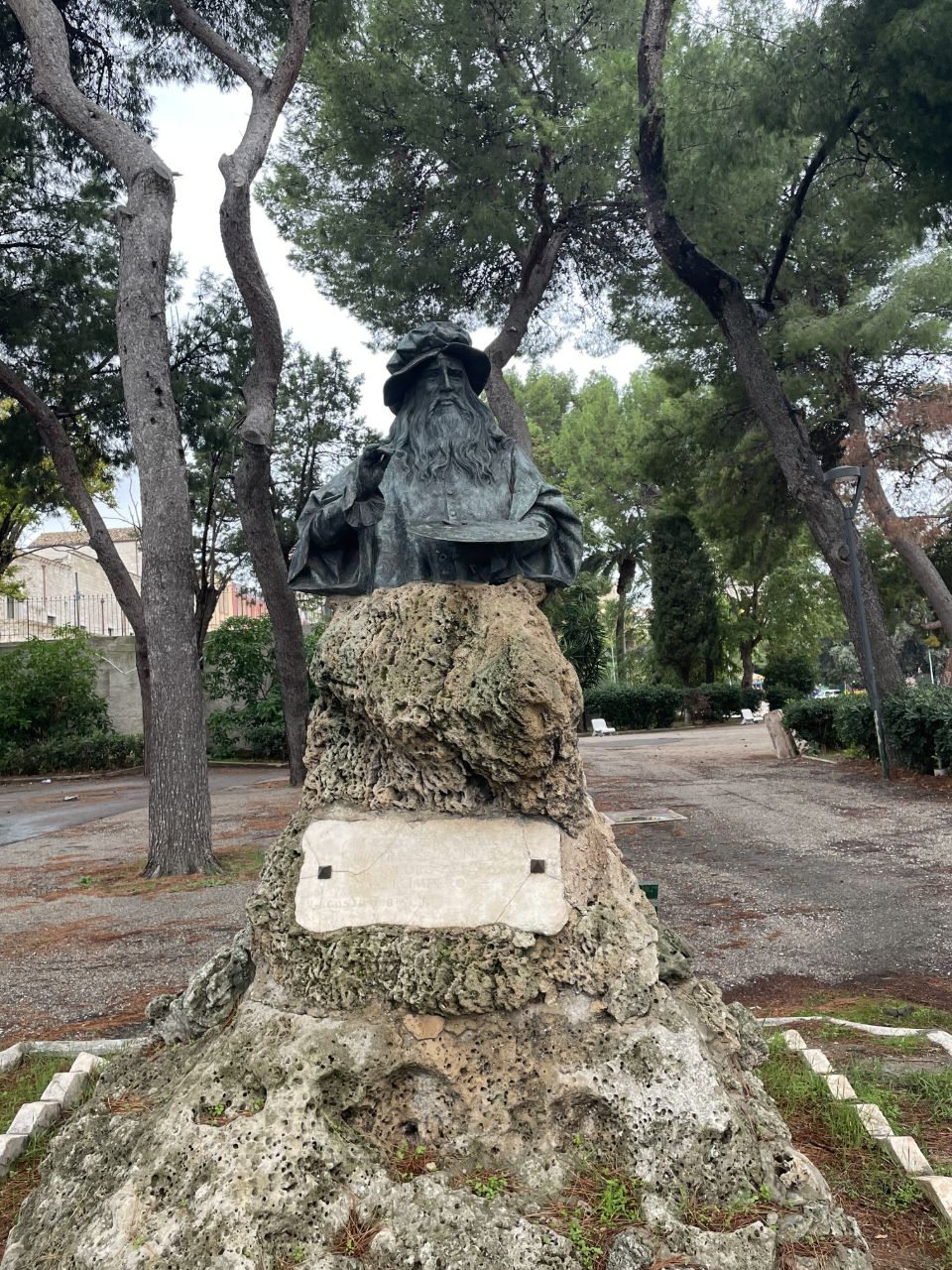
The painter at his rock 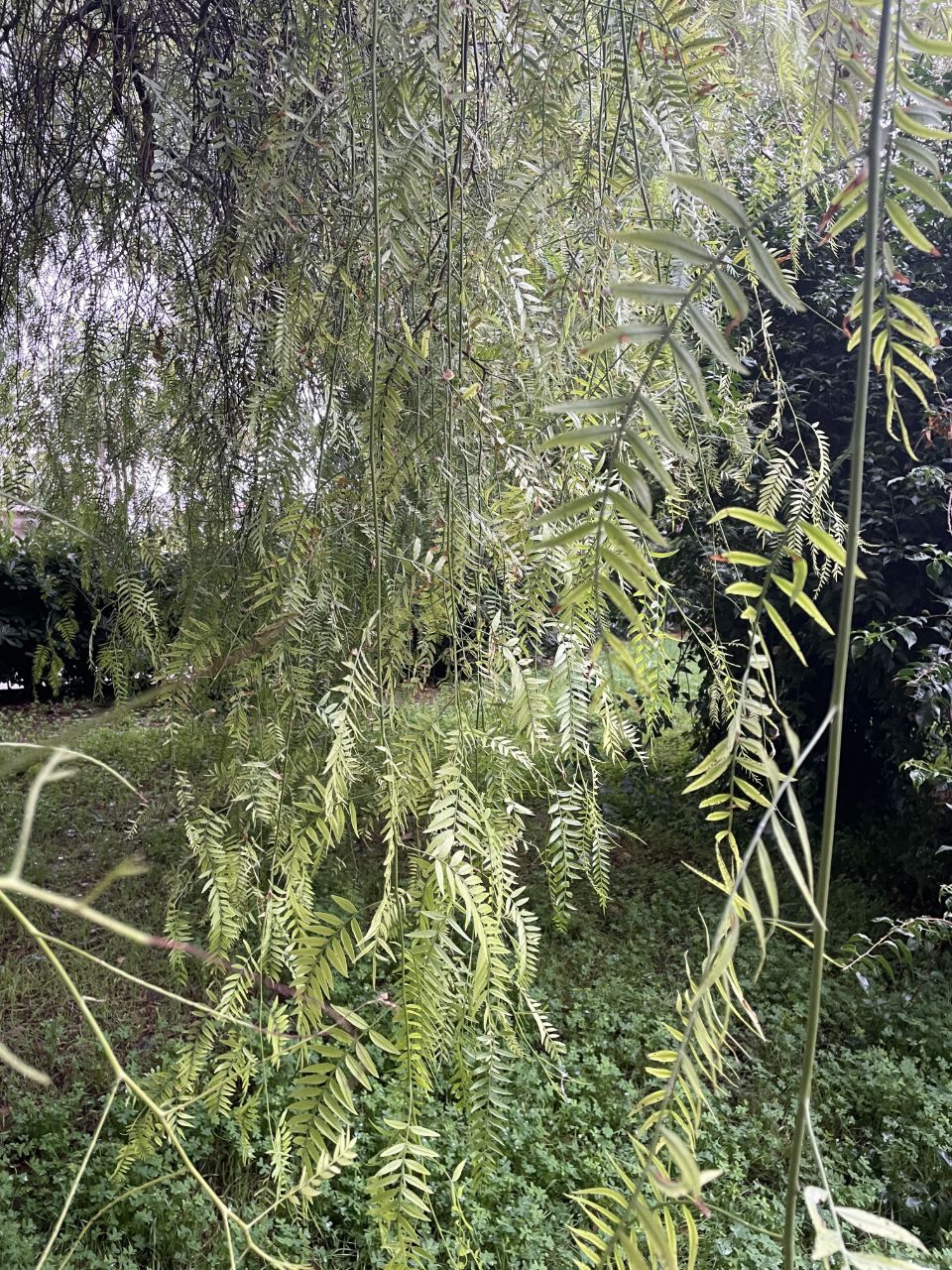
Willow in the rain 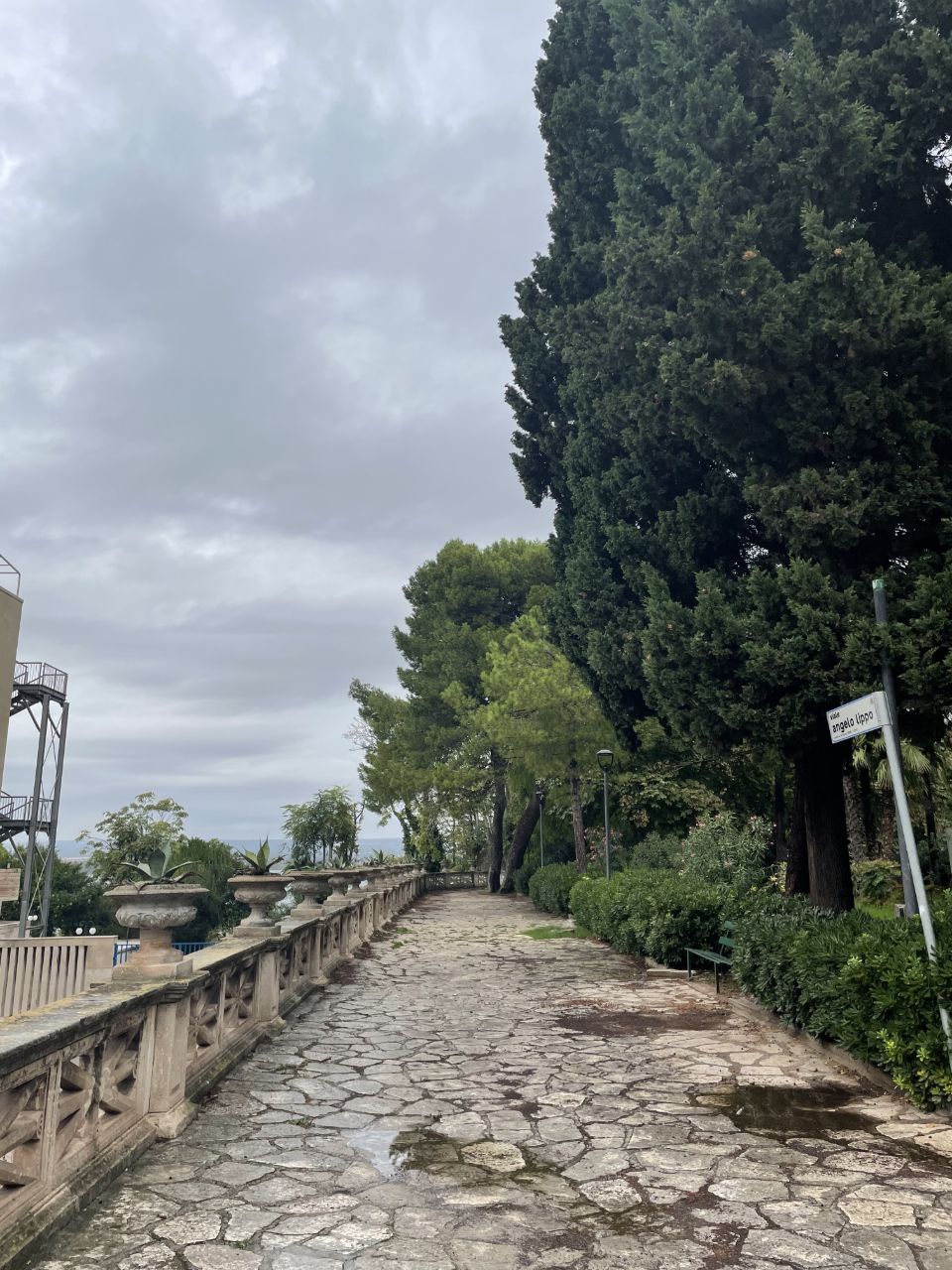
Balustrade with urns 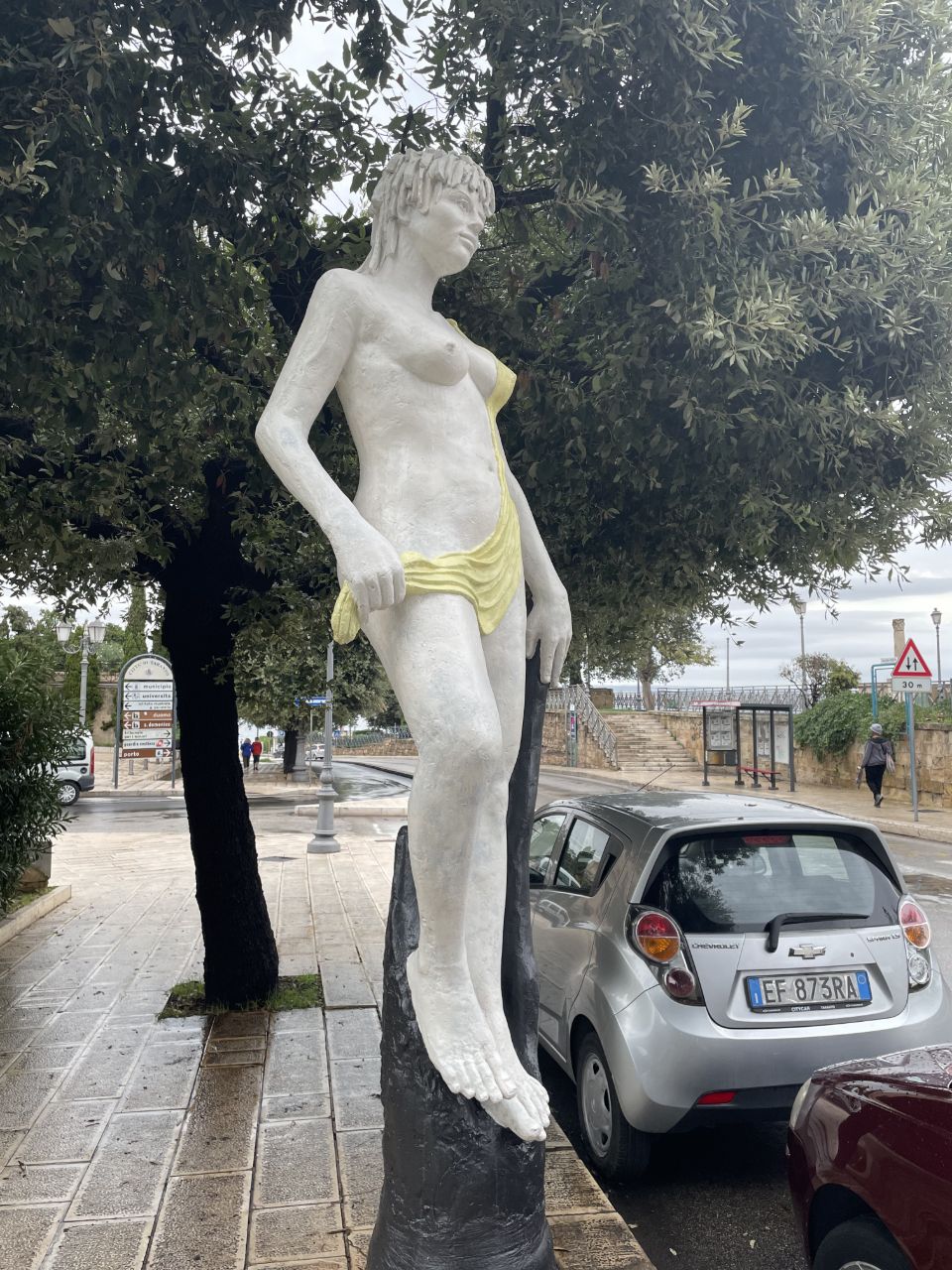
The lady in yellow 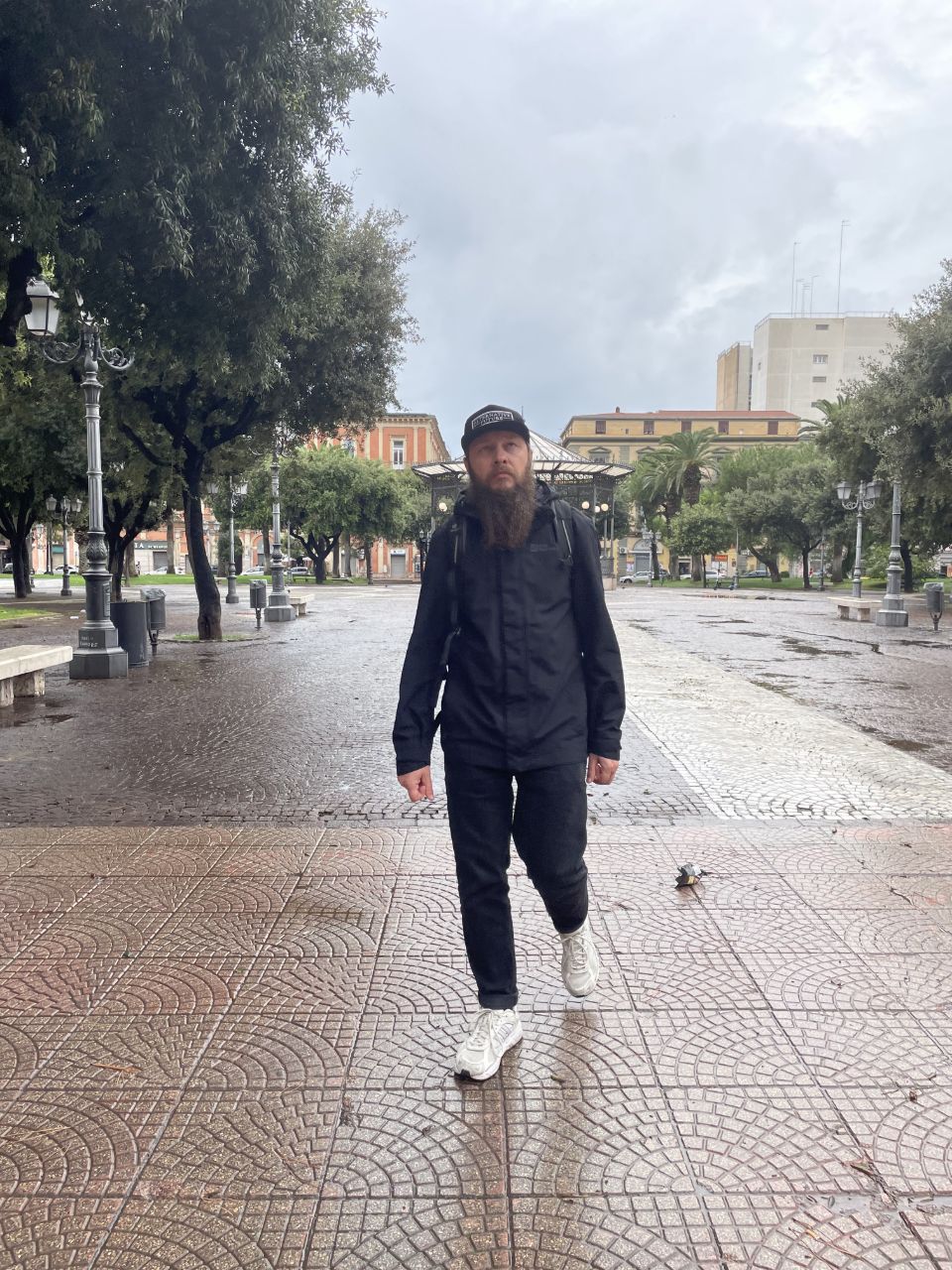
Oleg, phone out
Rain, canal, and the way home
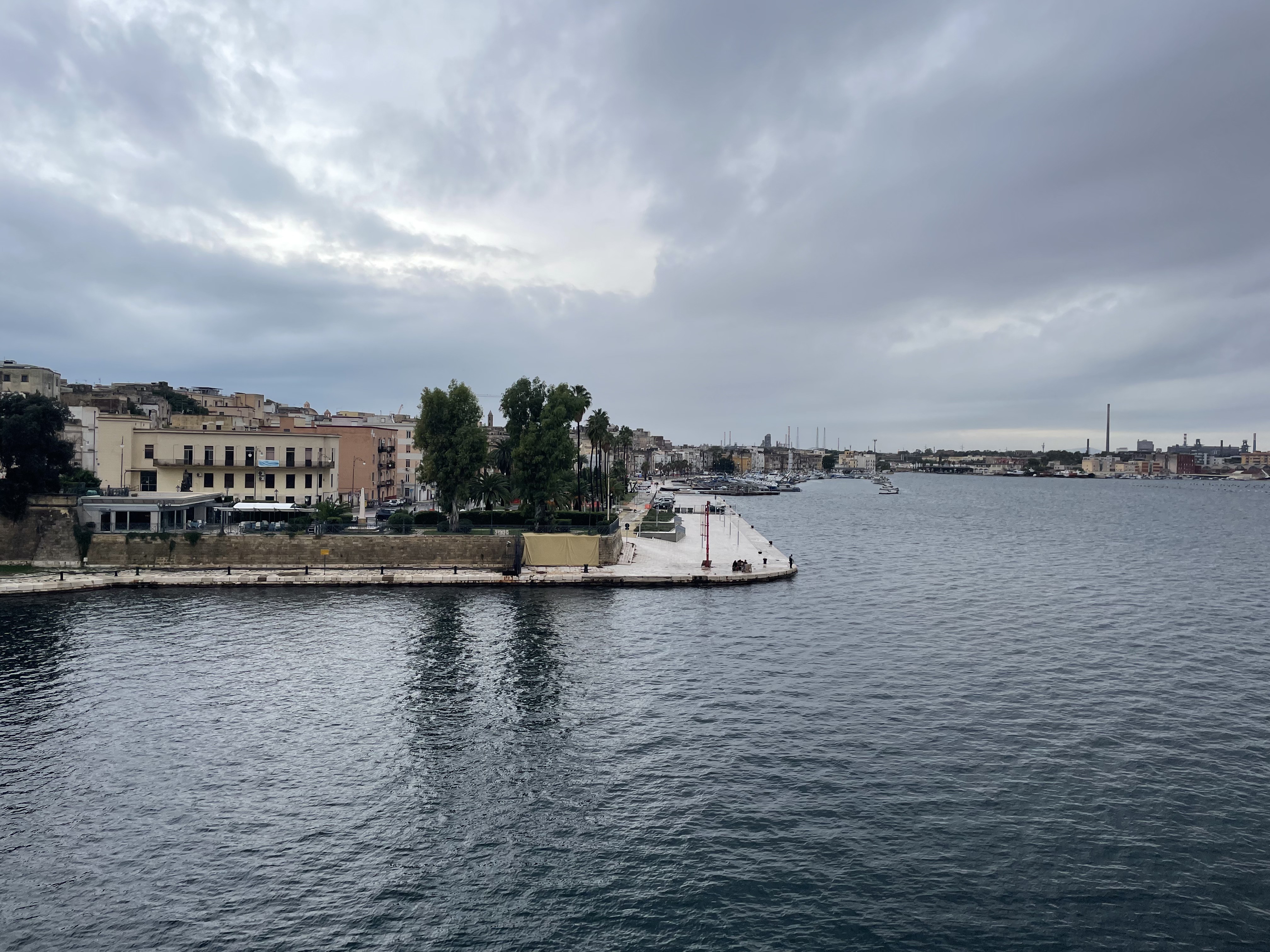
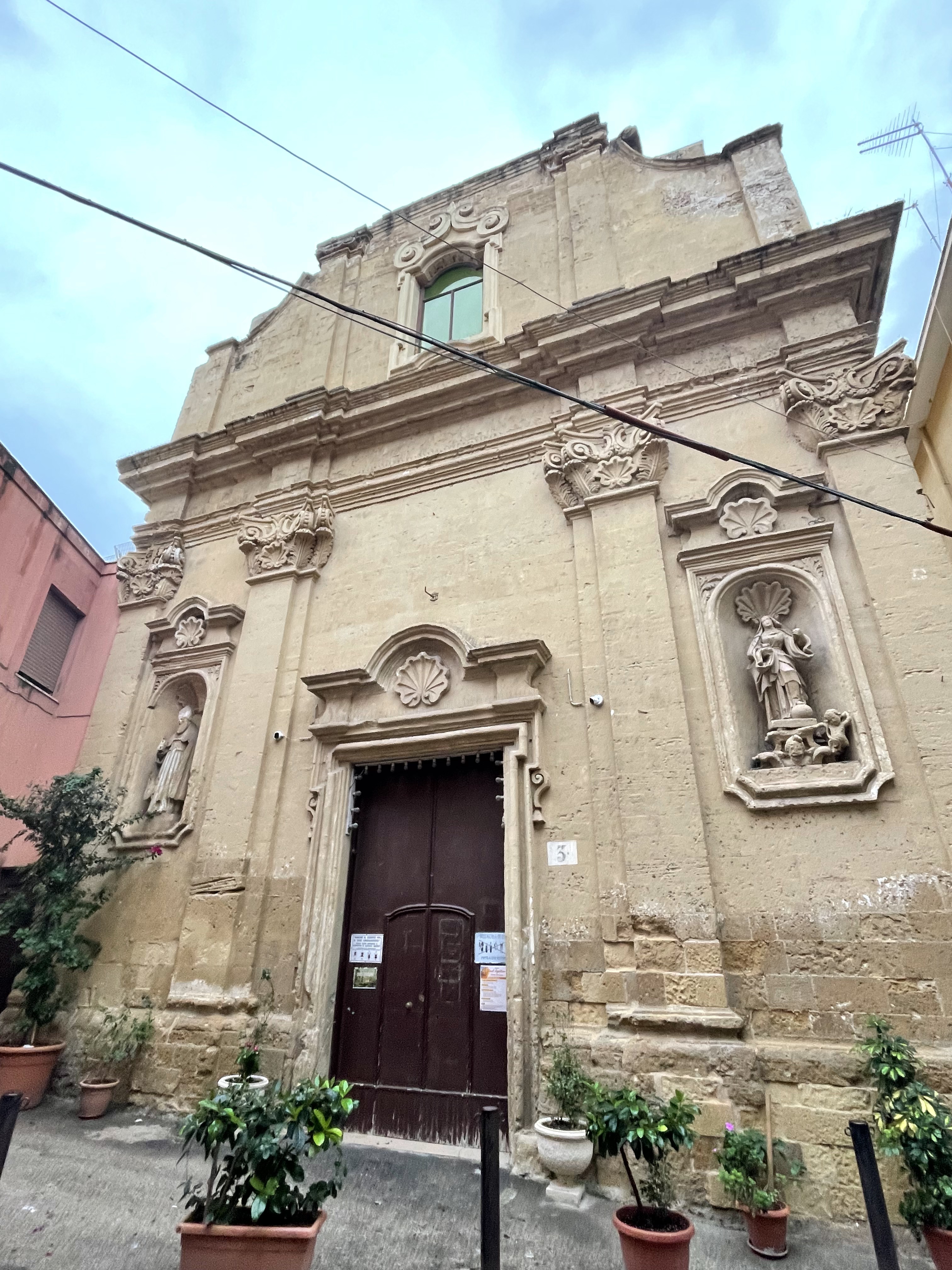
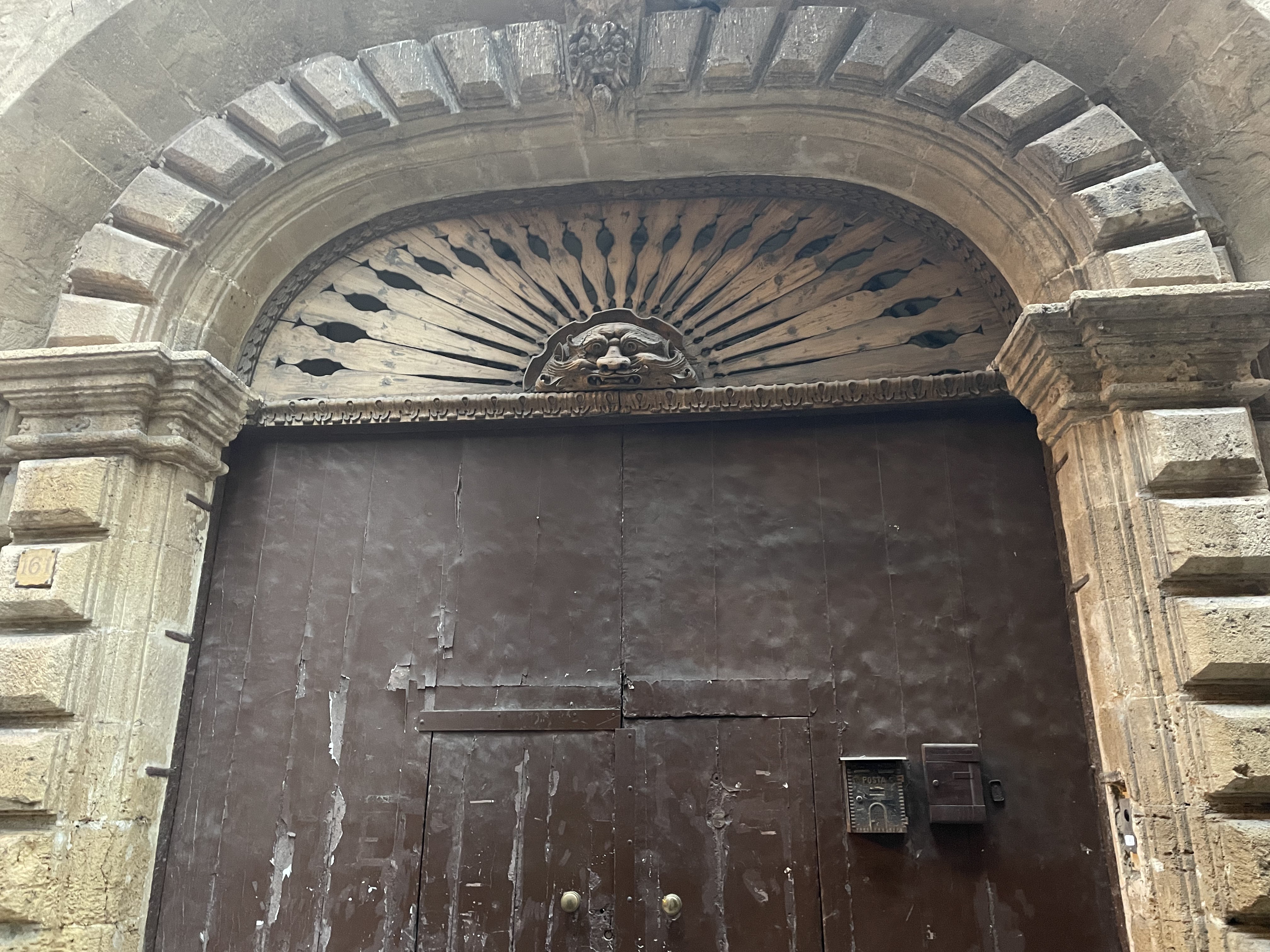
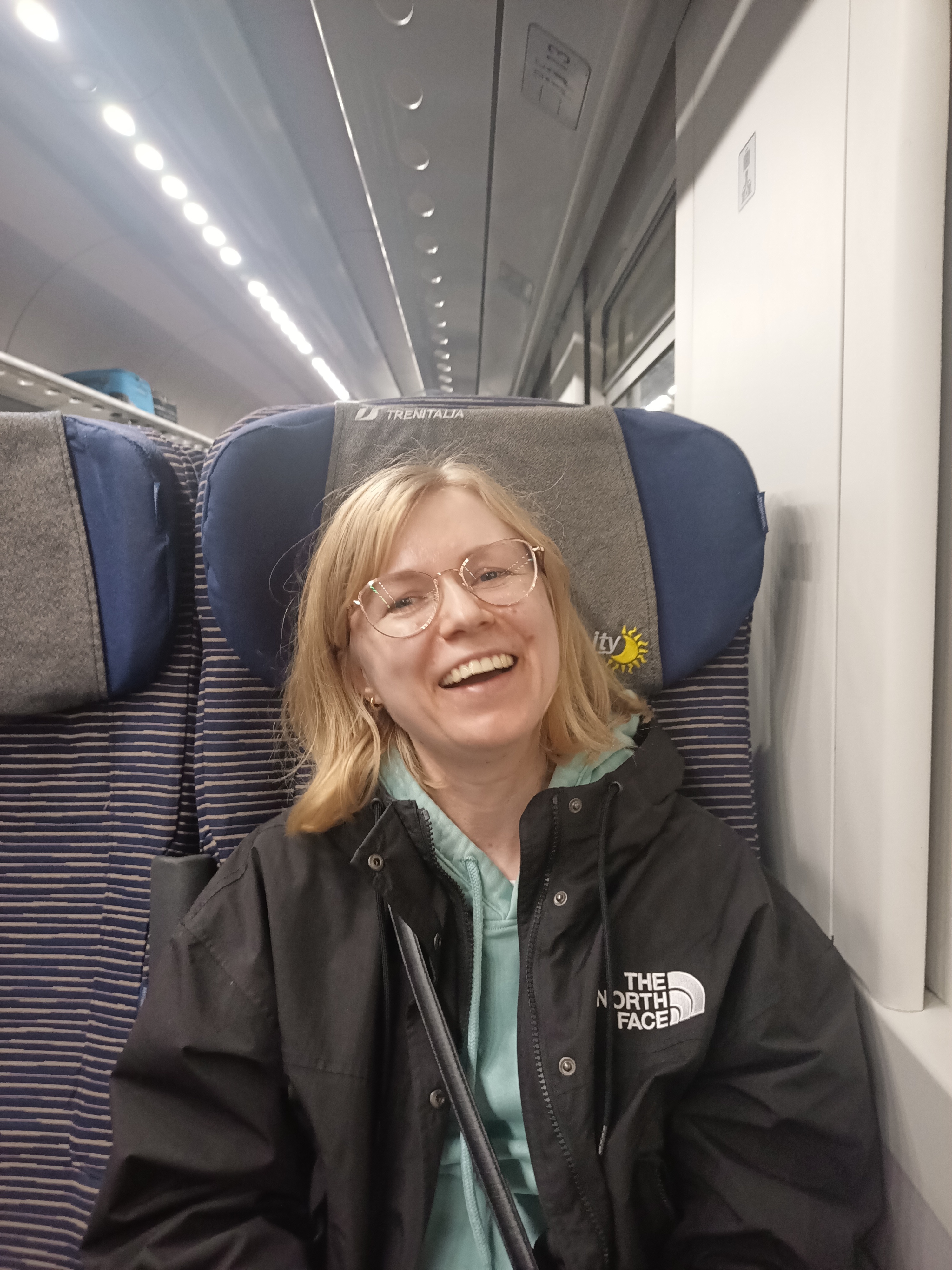
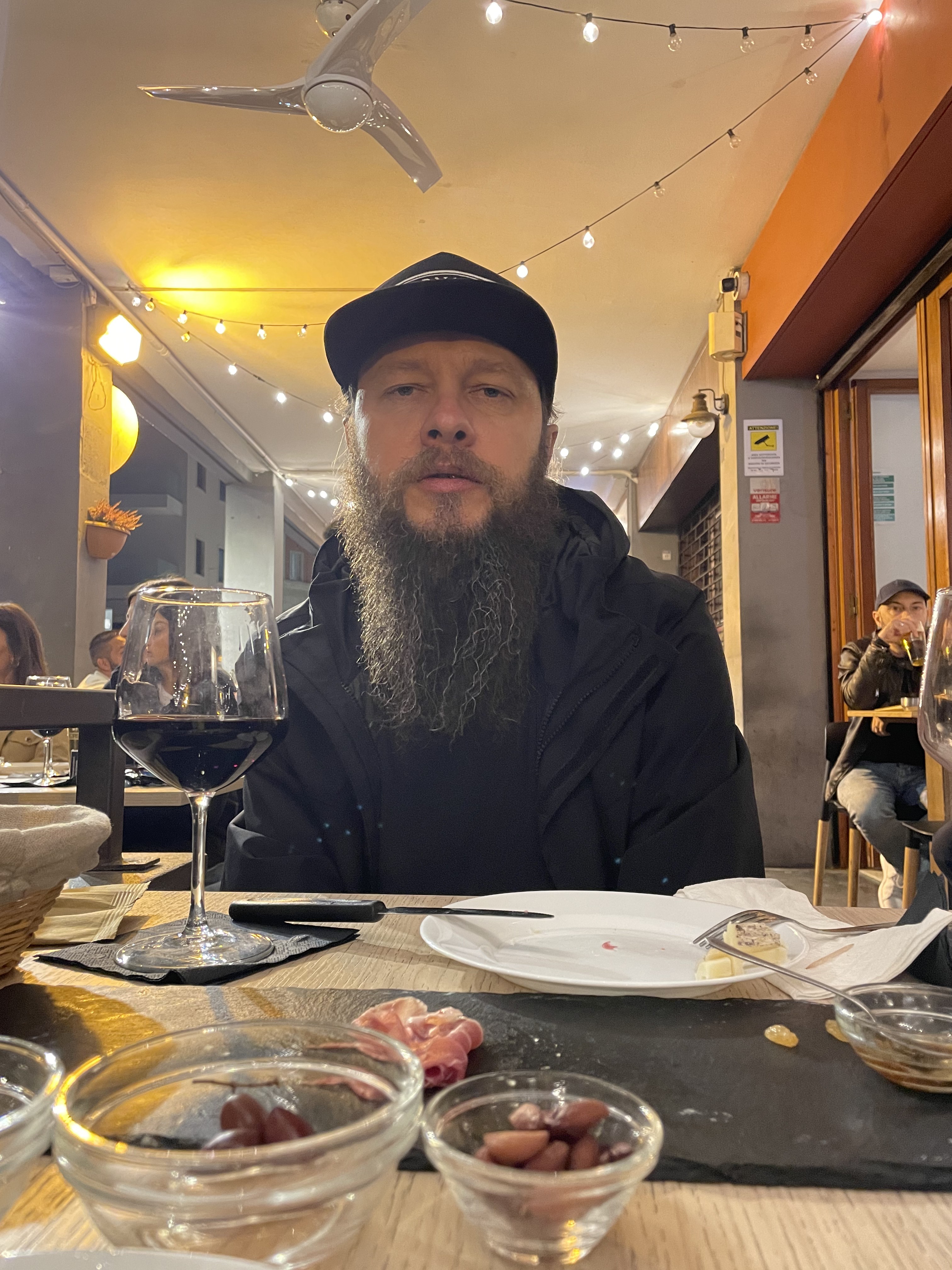
The last frame of the day: the canal under gun-metal sky, the harbour and the old town across the water, a weathered baroque facade and a fanlight portal caught on the way out. Then the evening train back to Brindisi, Anna smiling in her rain jacket, and a late dinner at home base to warm up.
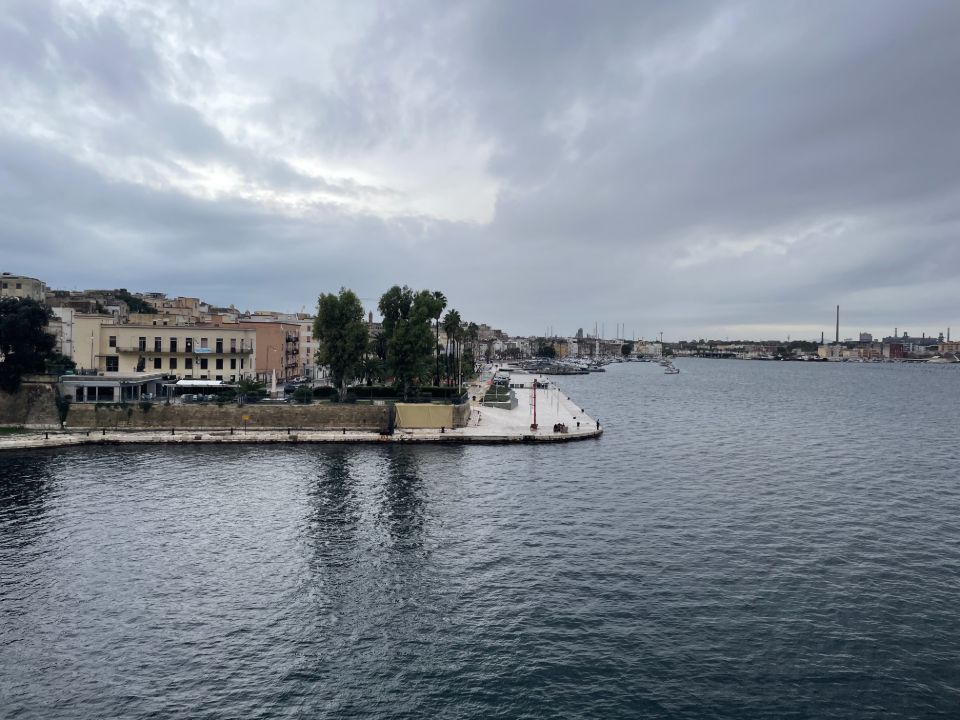
Old town across the water 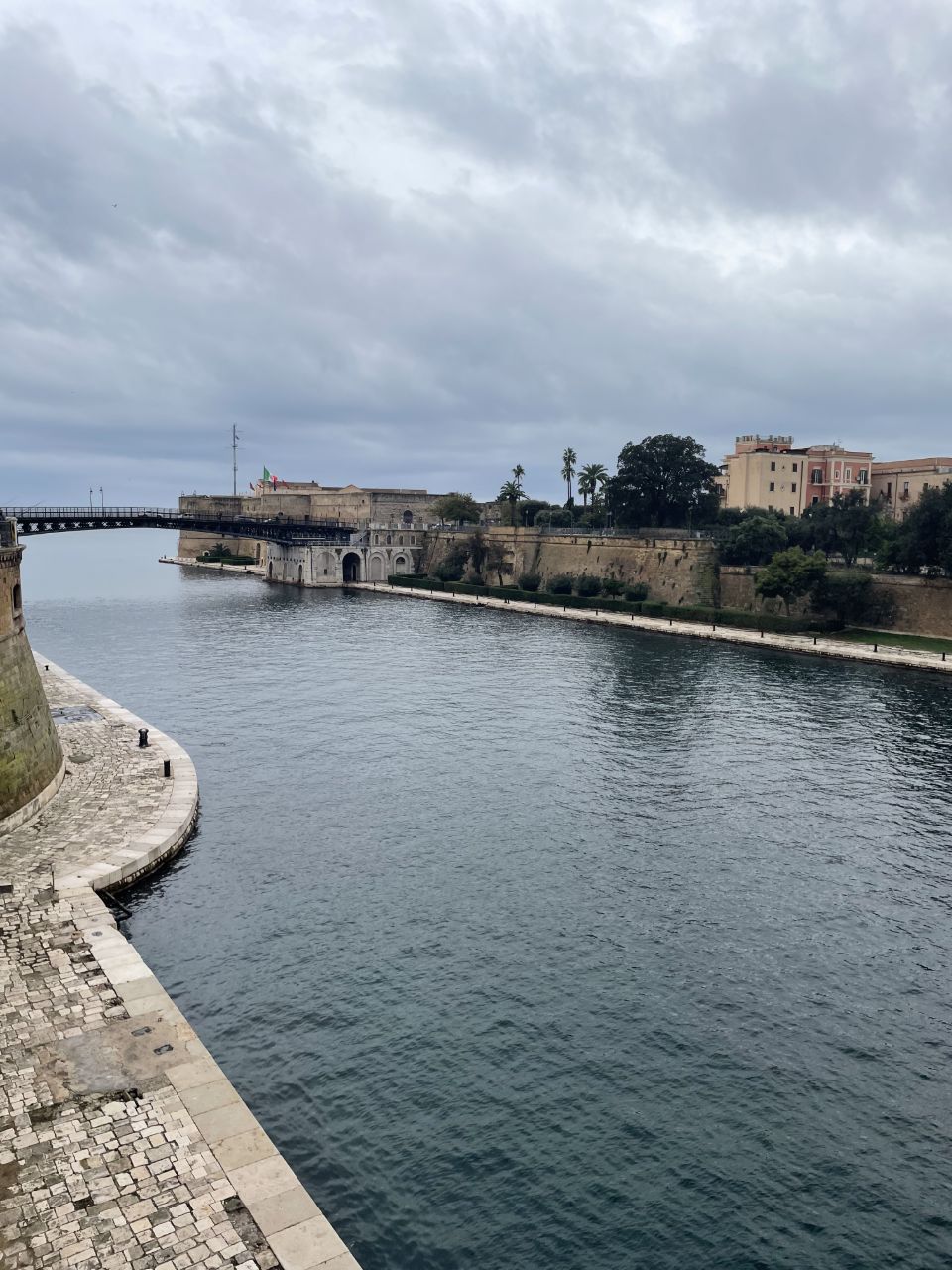
The canal, going grey 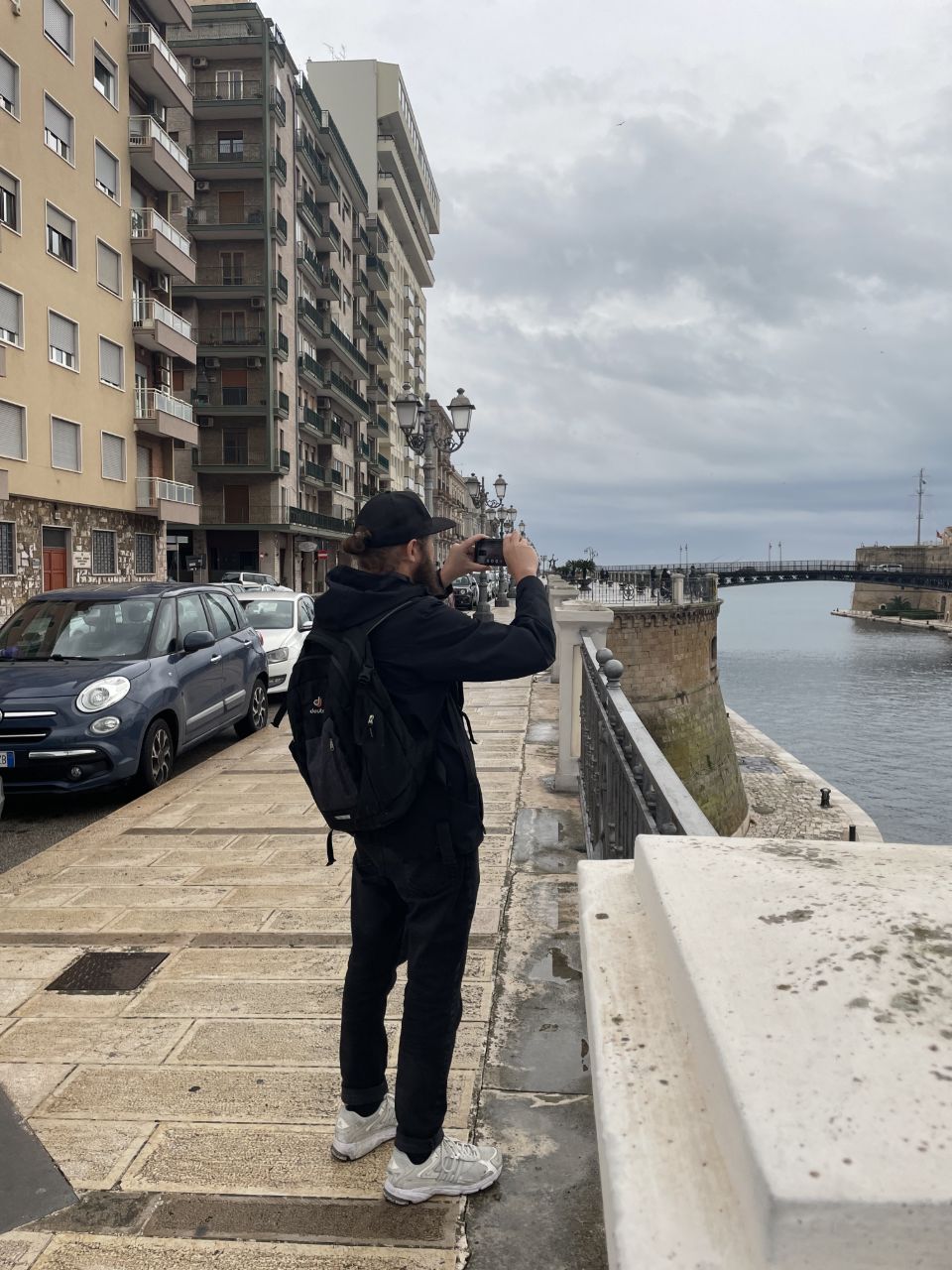
The photographer, from behind 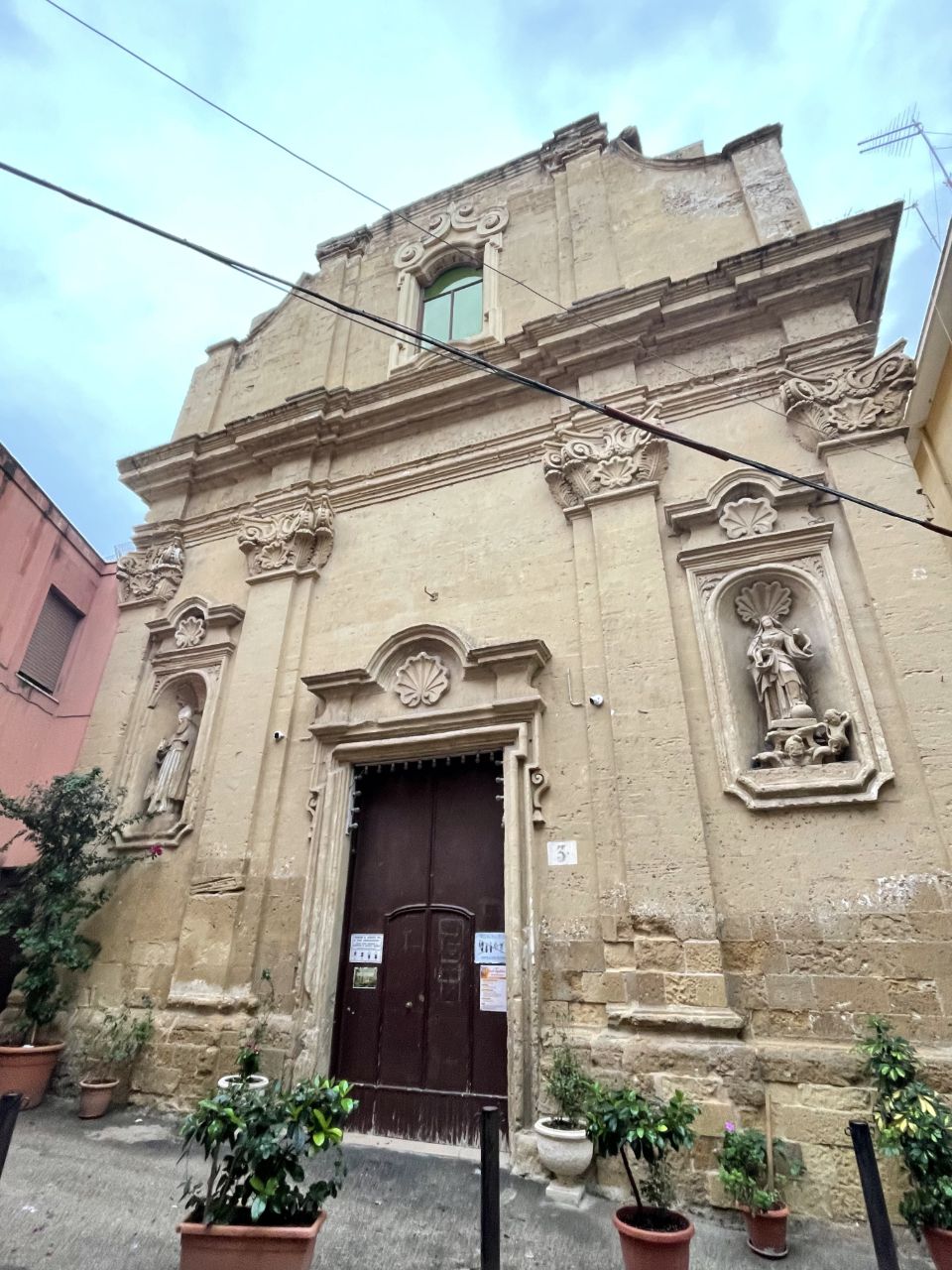
Baroque, weathered 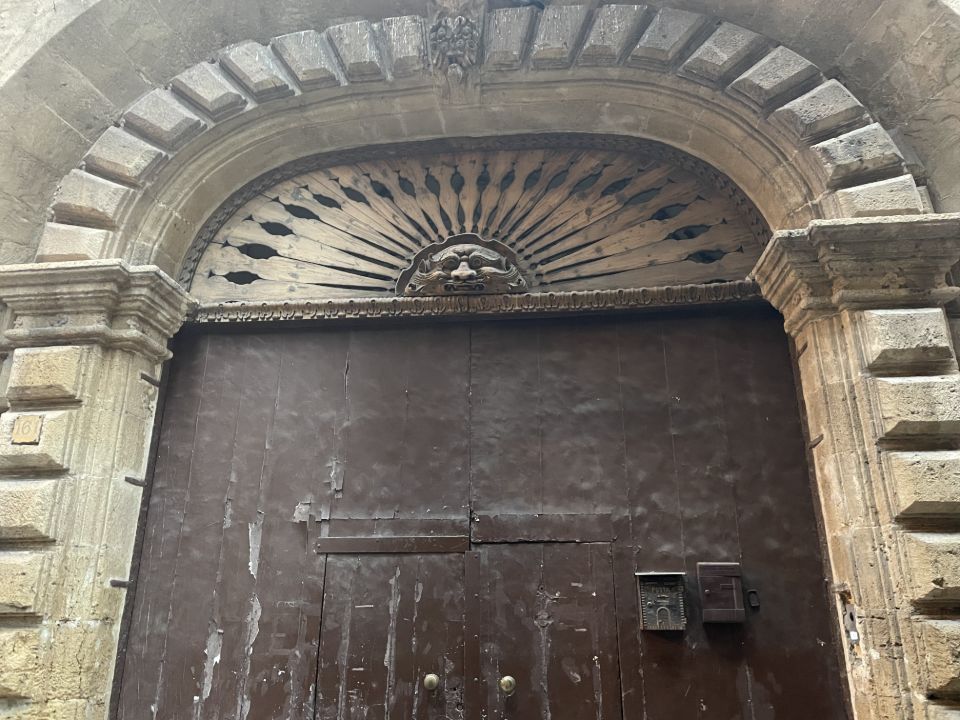
Fanlight on the portal 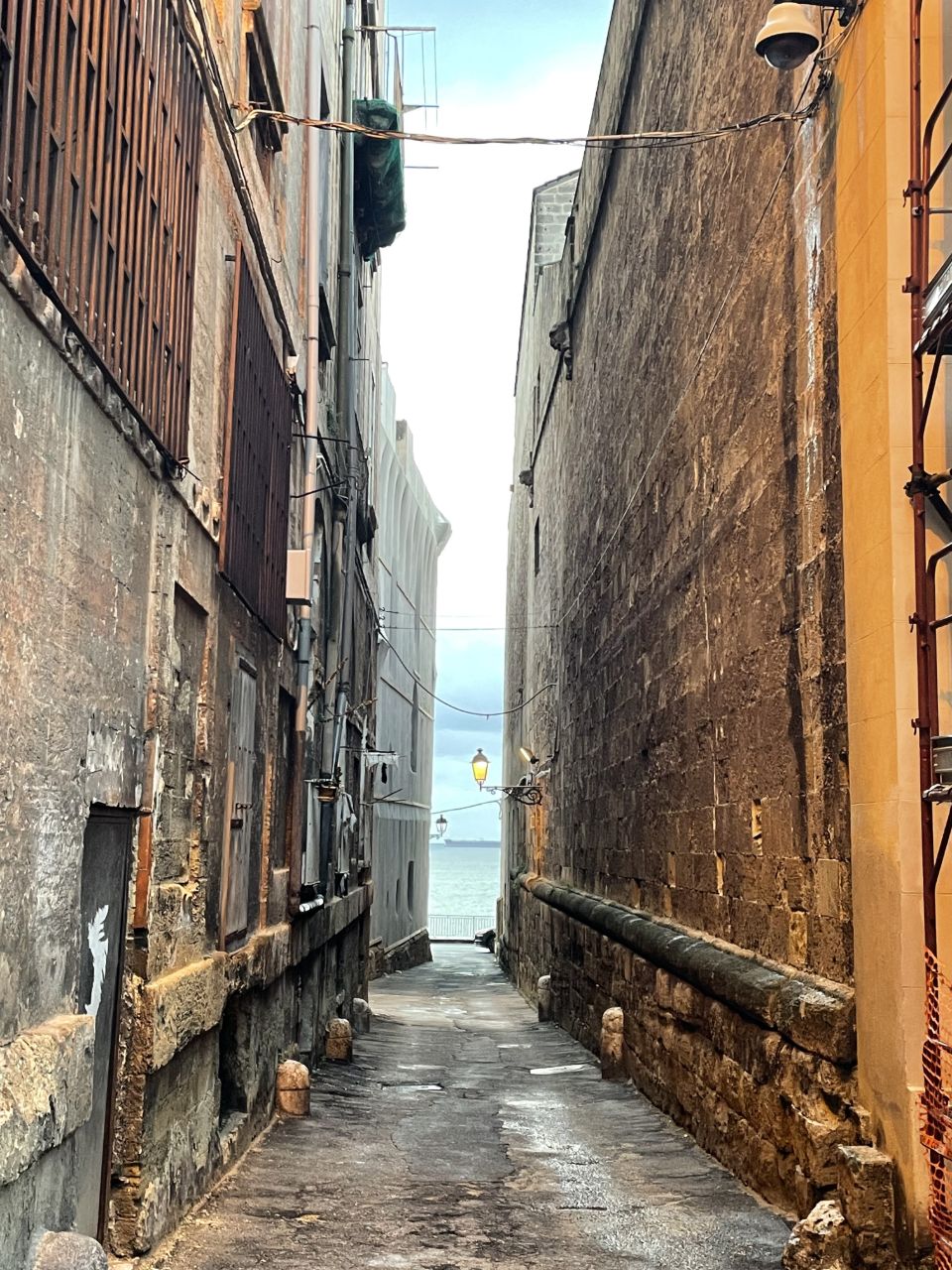
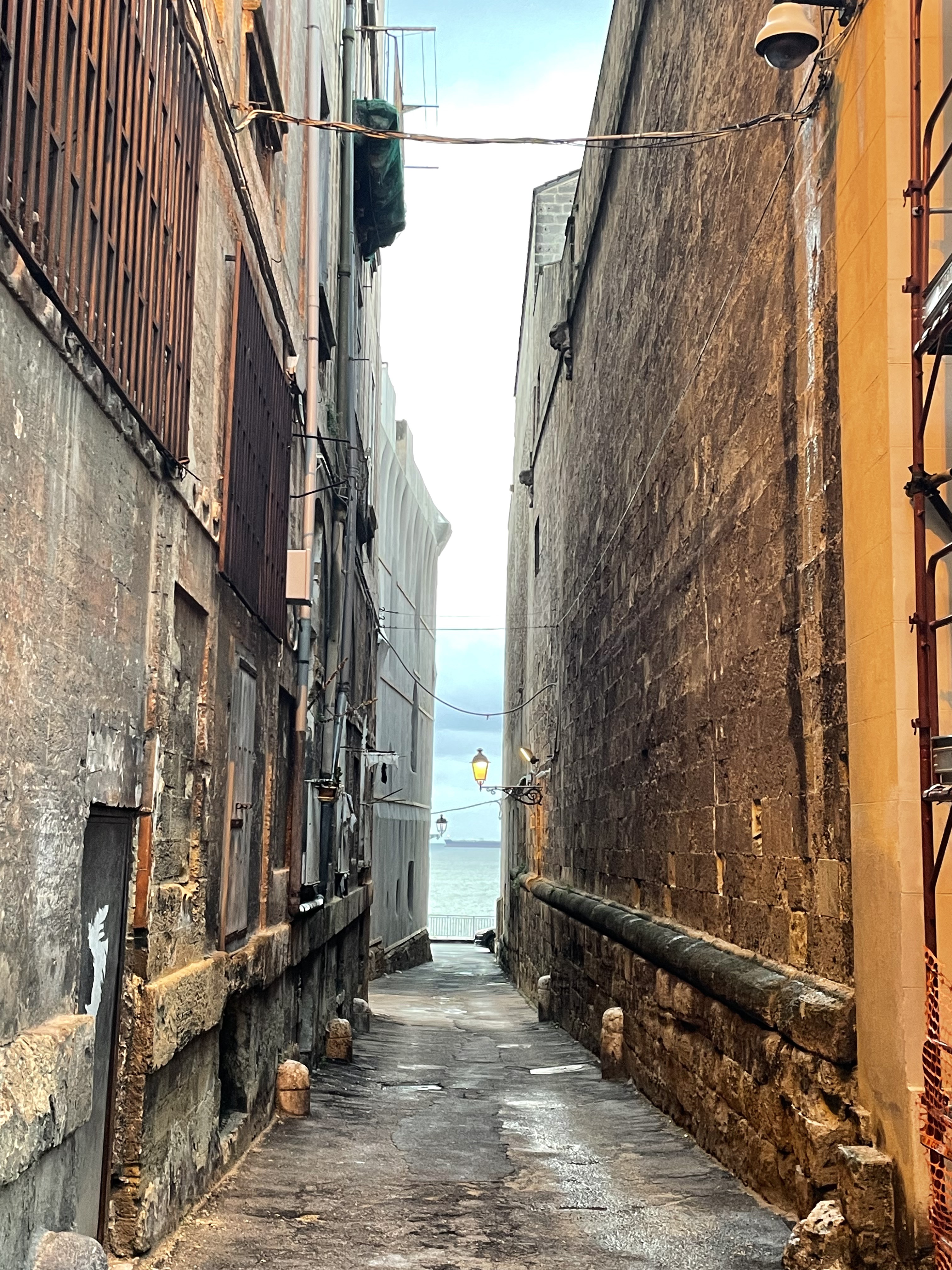
Alley on the way out 
Anna on the train home 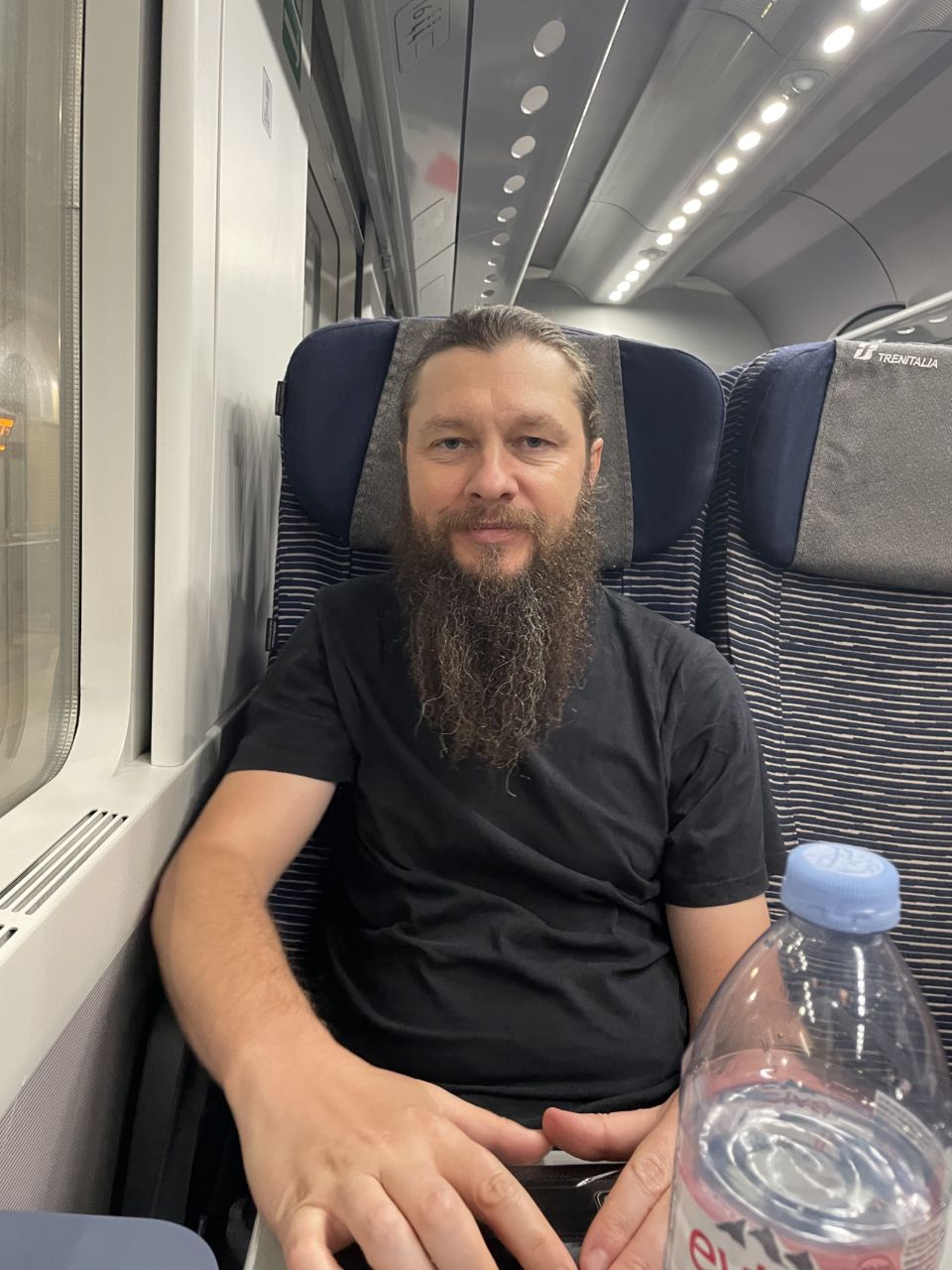
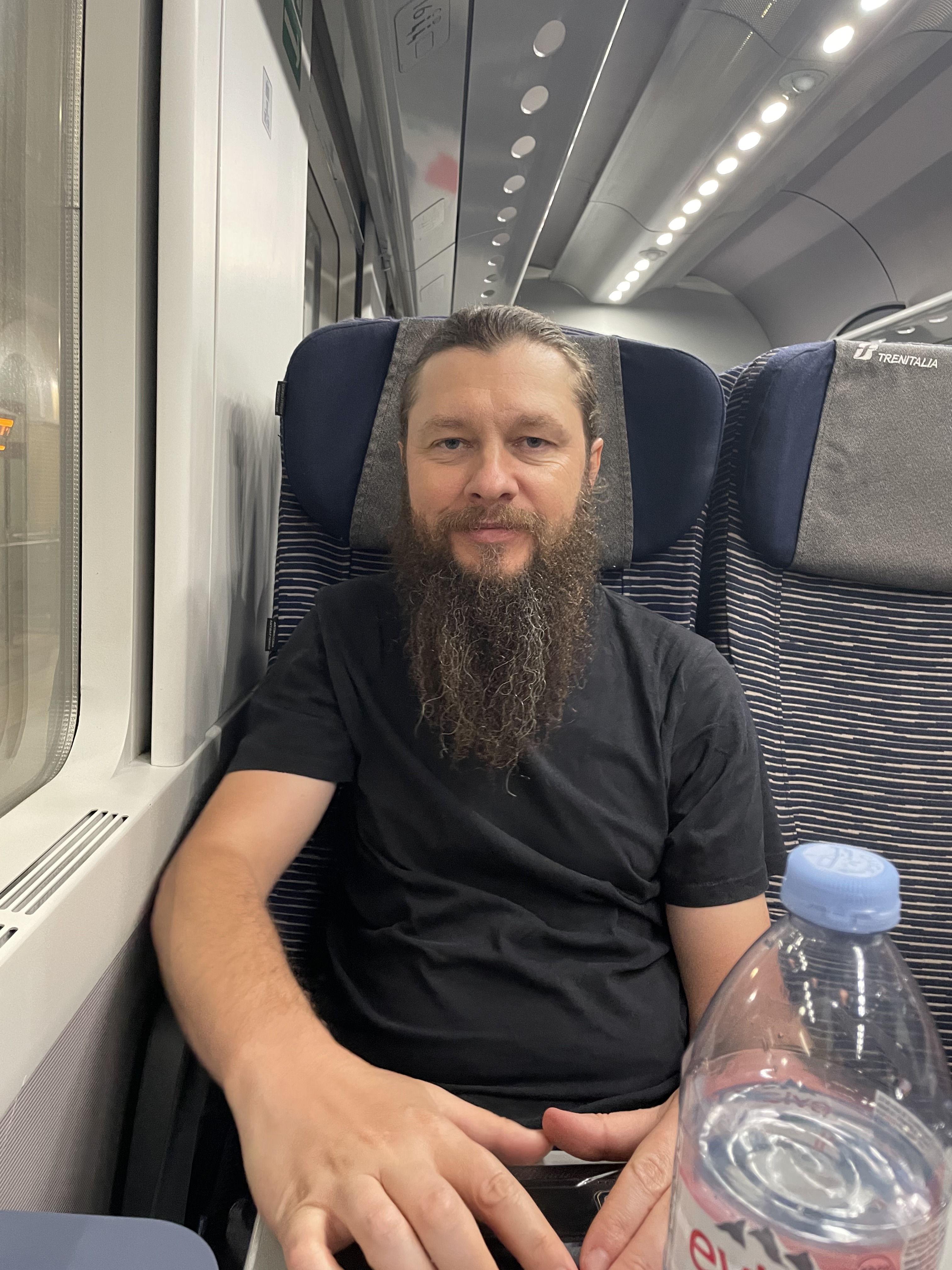
Oleg on the train home 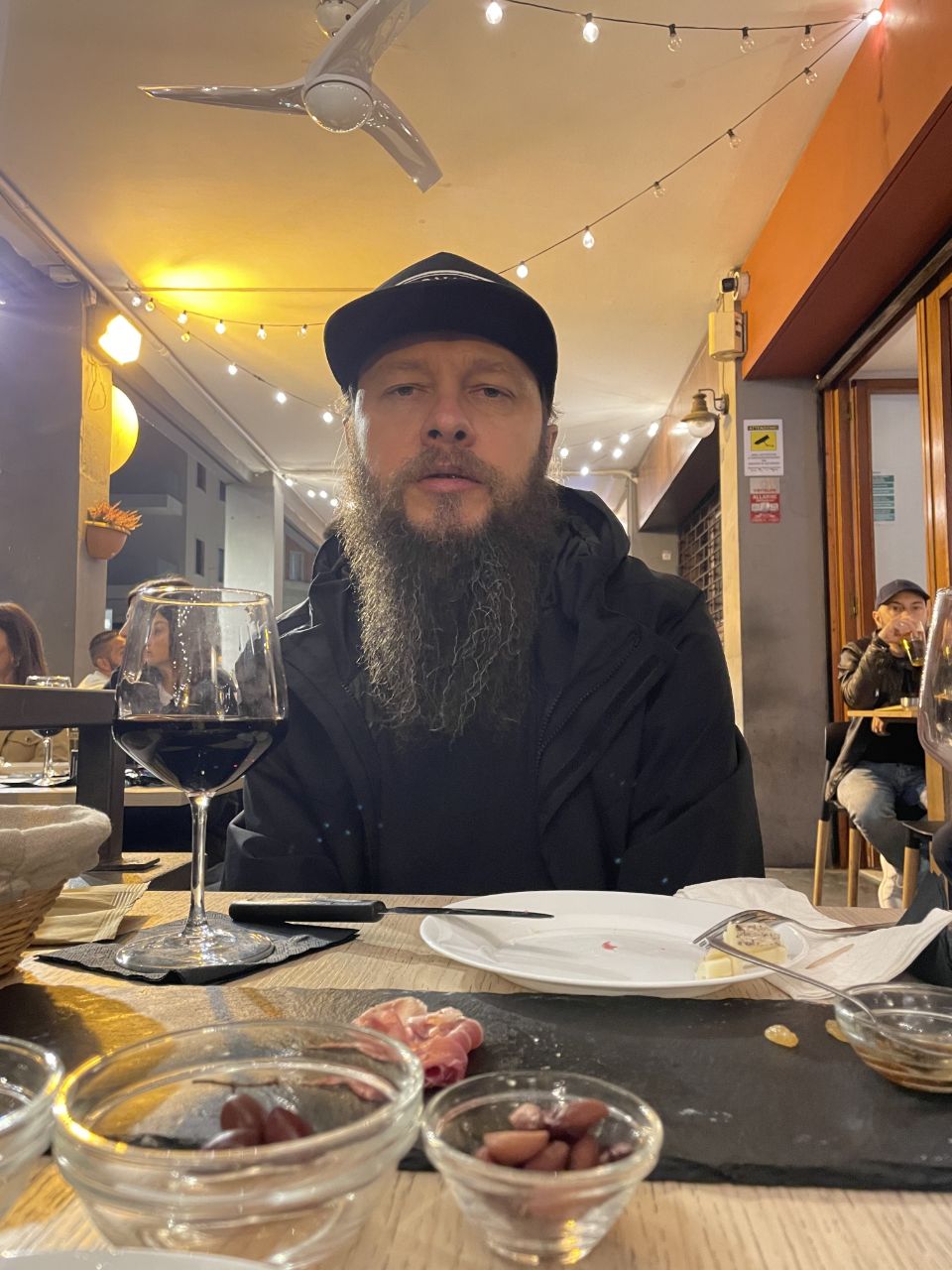
Late dinner, home base
One base city left — Bari, with its basilica, castle and golden-lit streets — and then the train out.