Italy trip 2025 — Tropea
Tropea
A flat above the harbour road
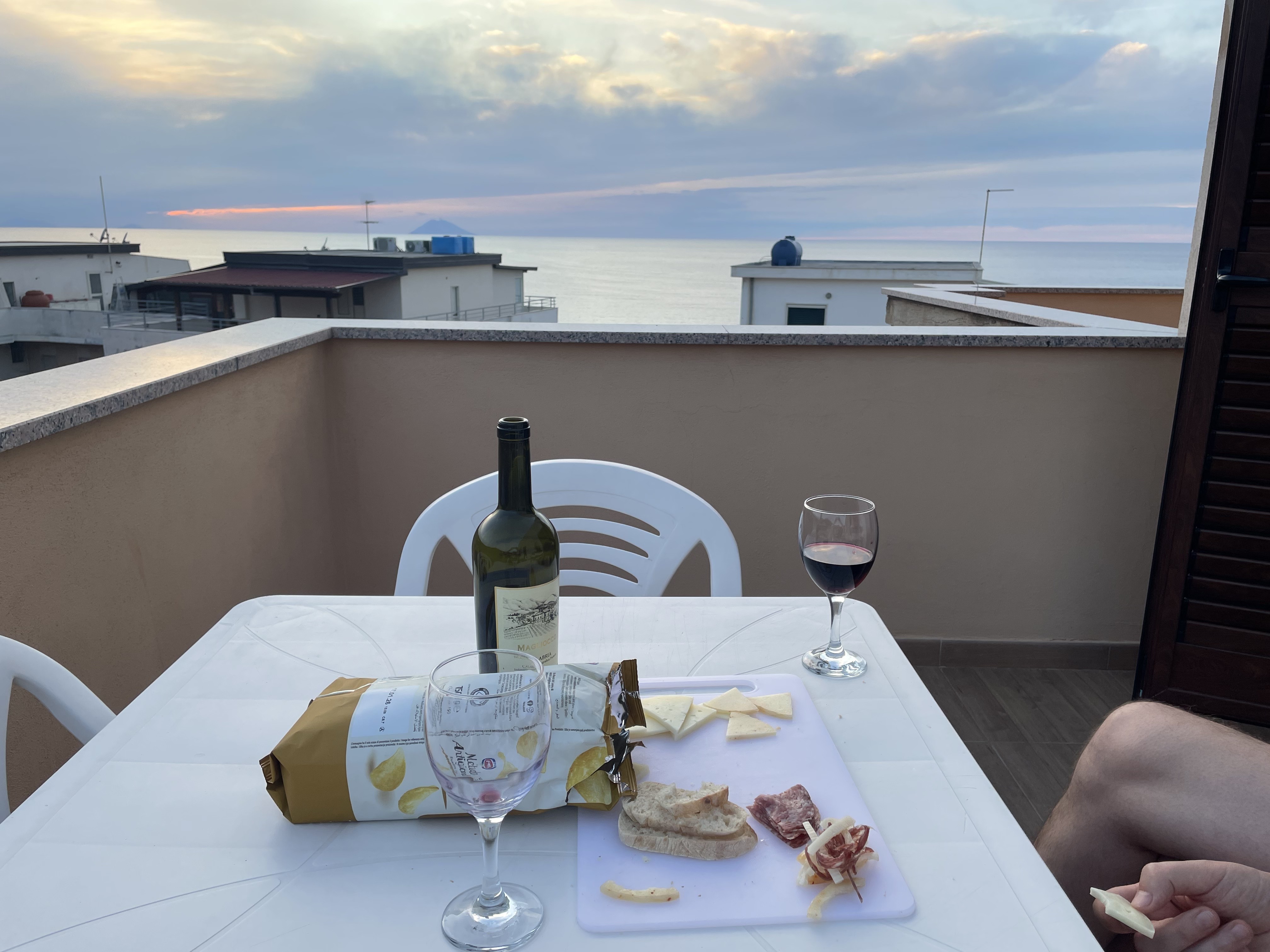
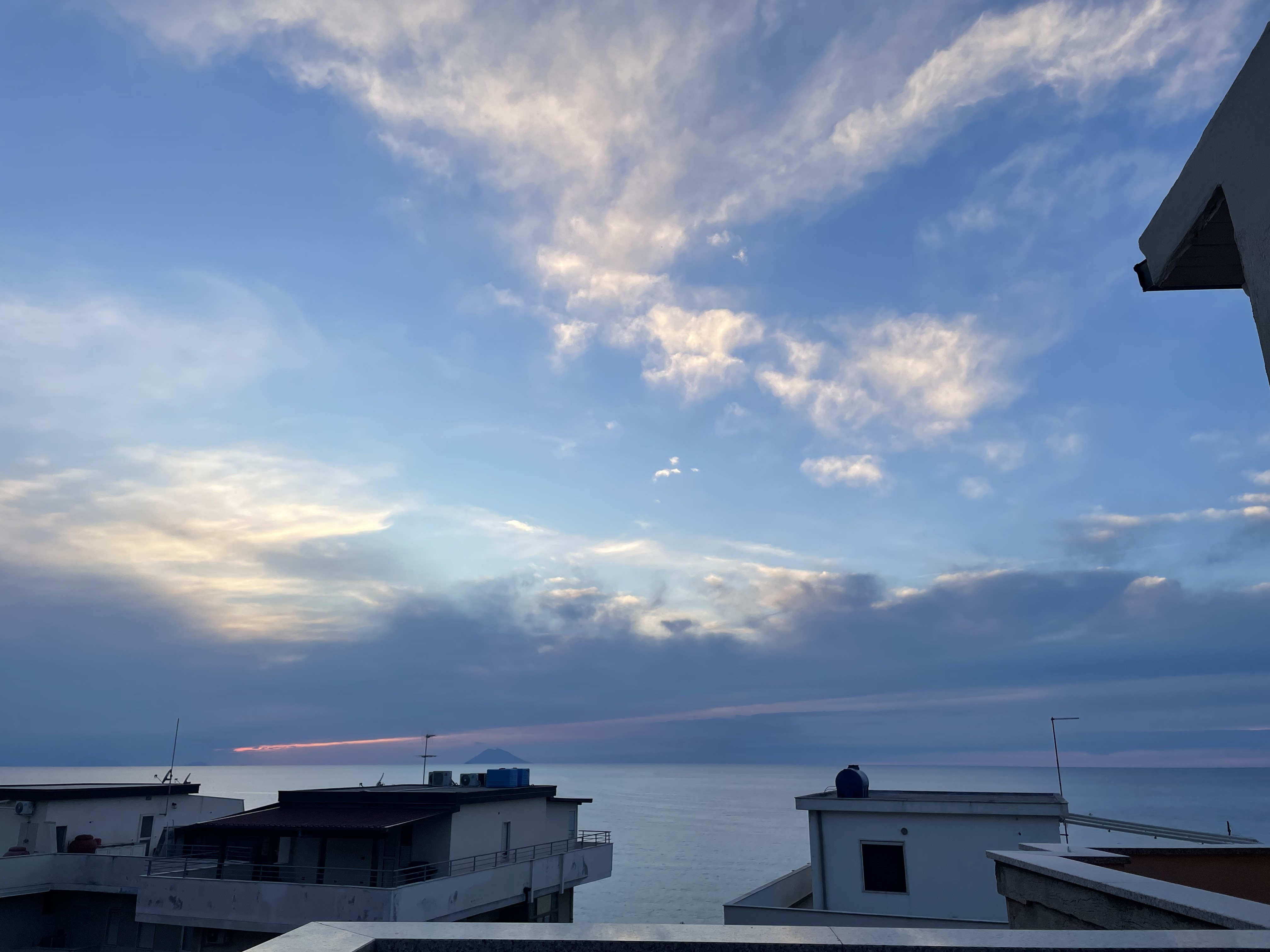
Tropea took us in by way of a flat above the harbour road — the directions said "near Farmacia internazionale," and turned out to be exactly right, in the sense that a pharmacy with international ambitions does mark the spot. The flat came with its own small archaeology: a spare capsule from a roaster in Siderno Marina, two towns down the coast, best before 07/2026 — brewed on principle. But the flat's real feature turned out to be the balconette: bread, ham and wine made it out there every evening, and the two photographs below — the provisions, then the roofs — are both taken from the flat's own balcony.
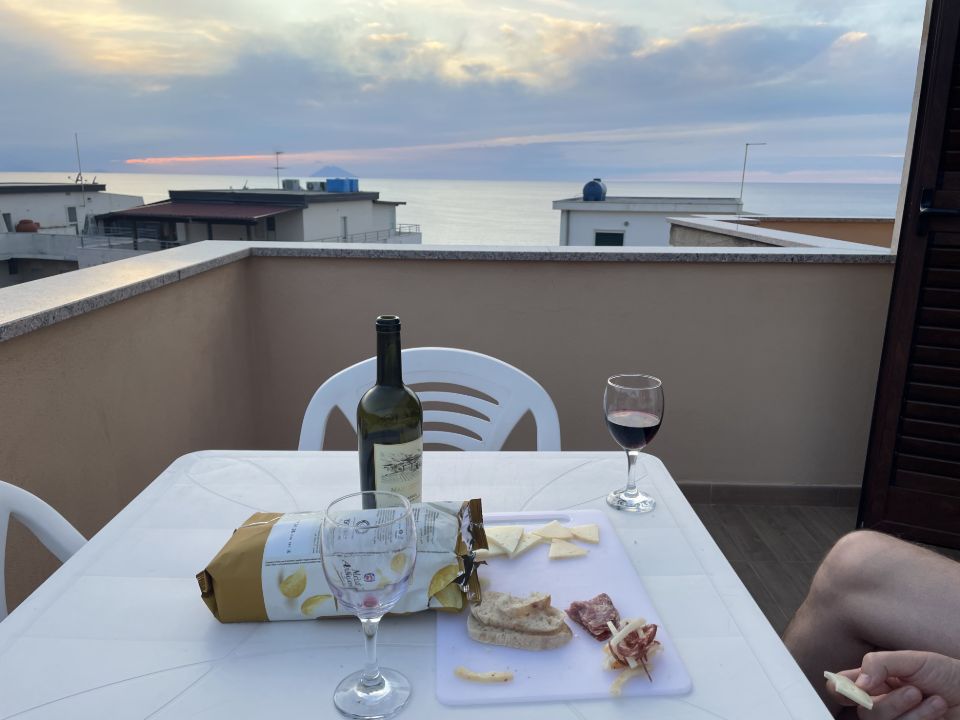
Provisions: bread, ham, wine — photographed from the balconette 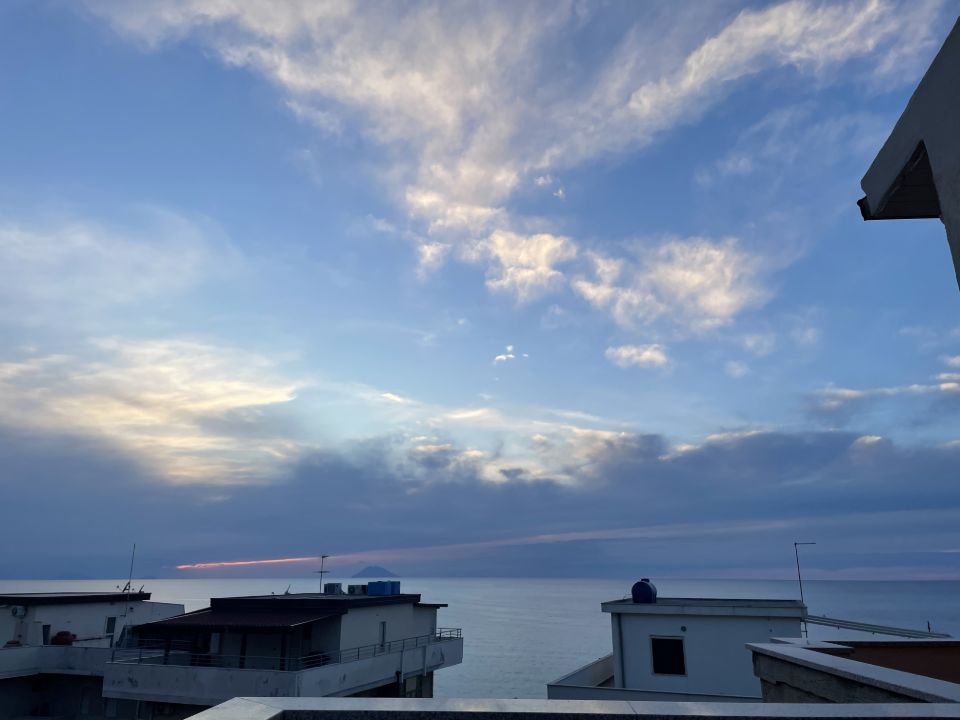
First evening: roofs stacked towards the sea, from the balconette
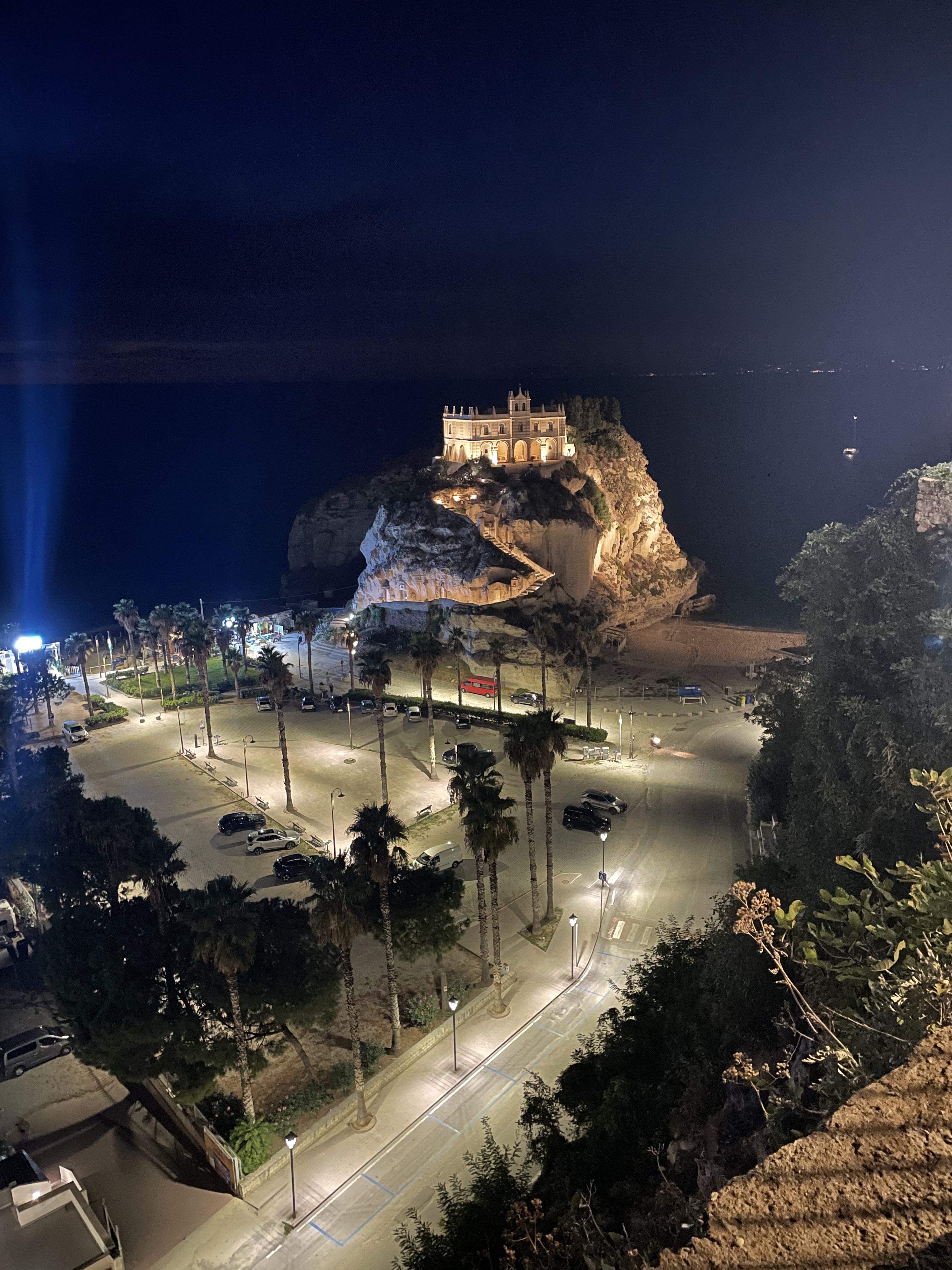
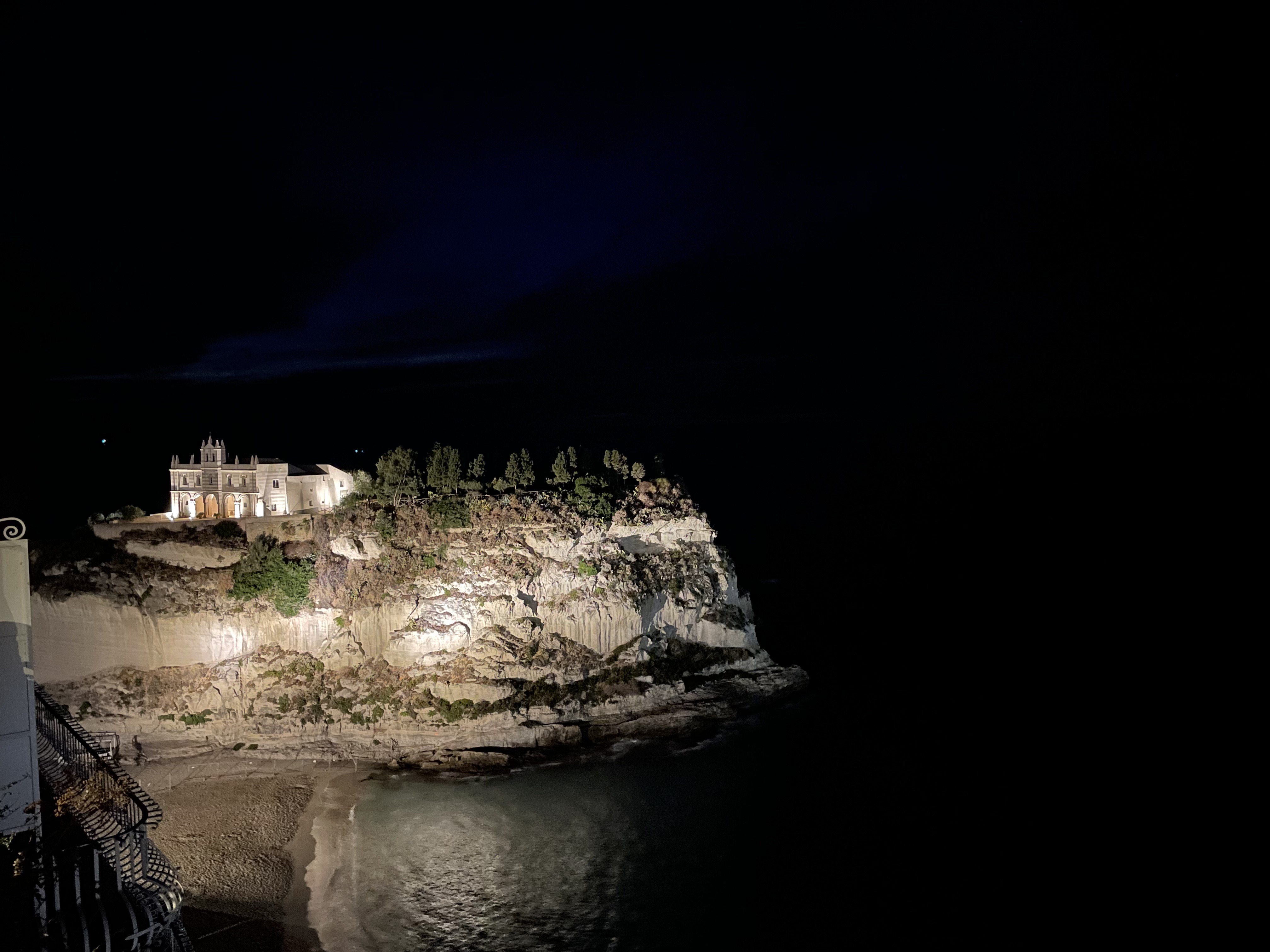
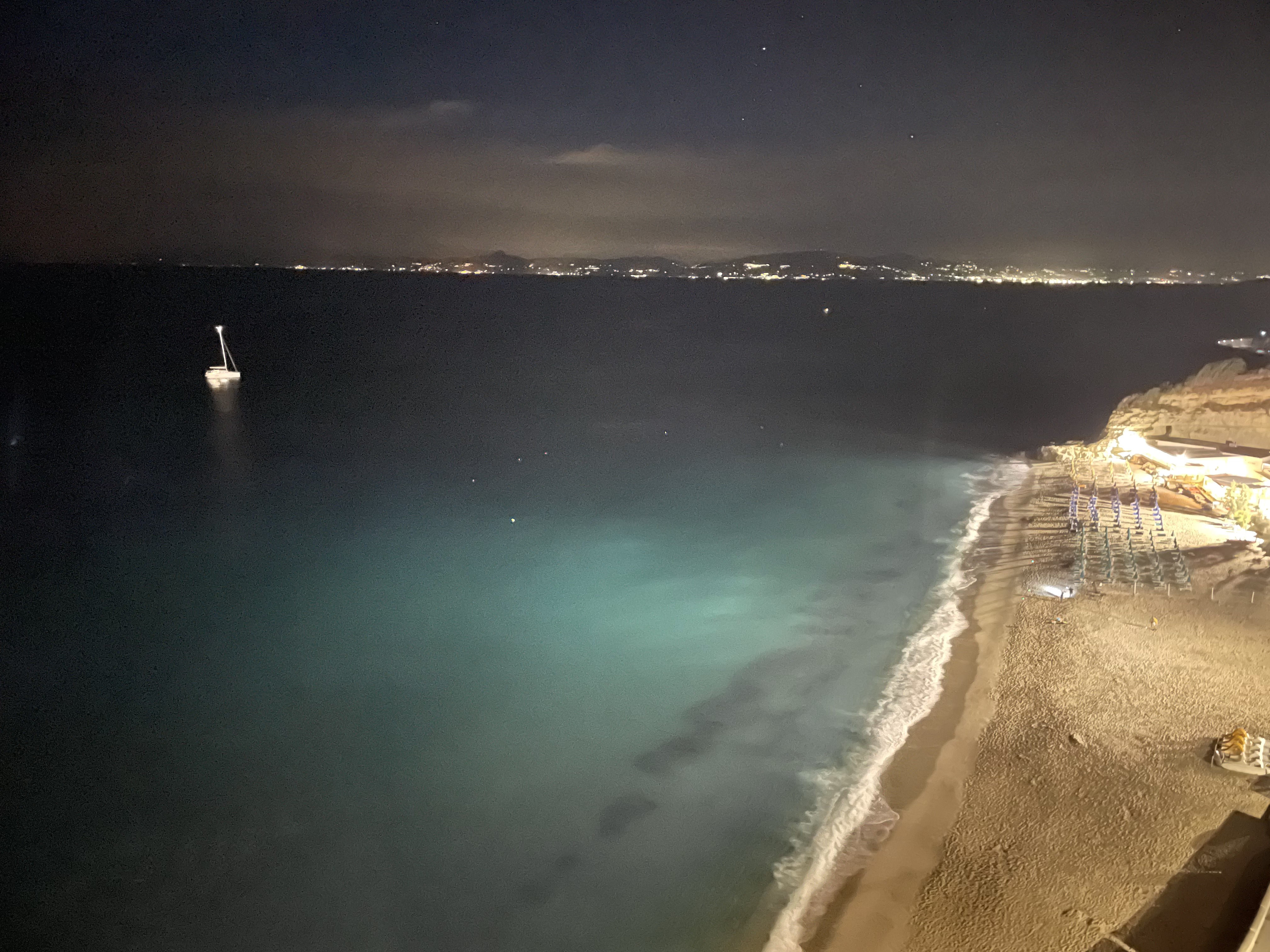
After dark: the island takes the floodlights
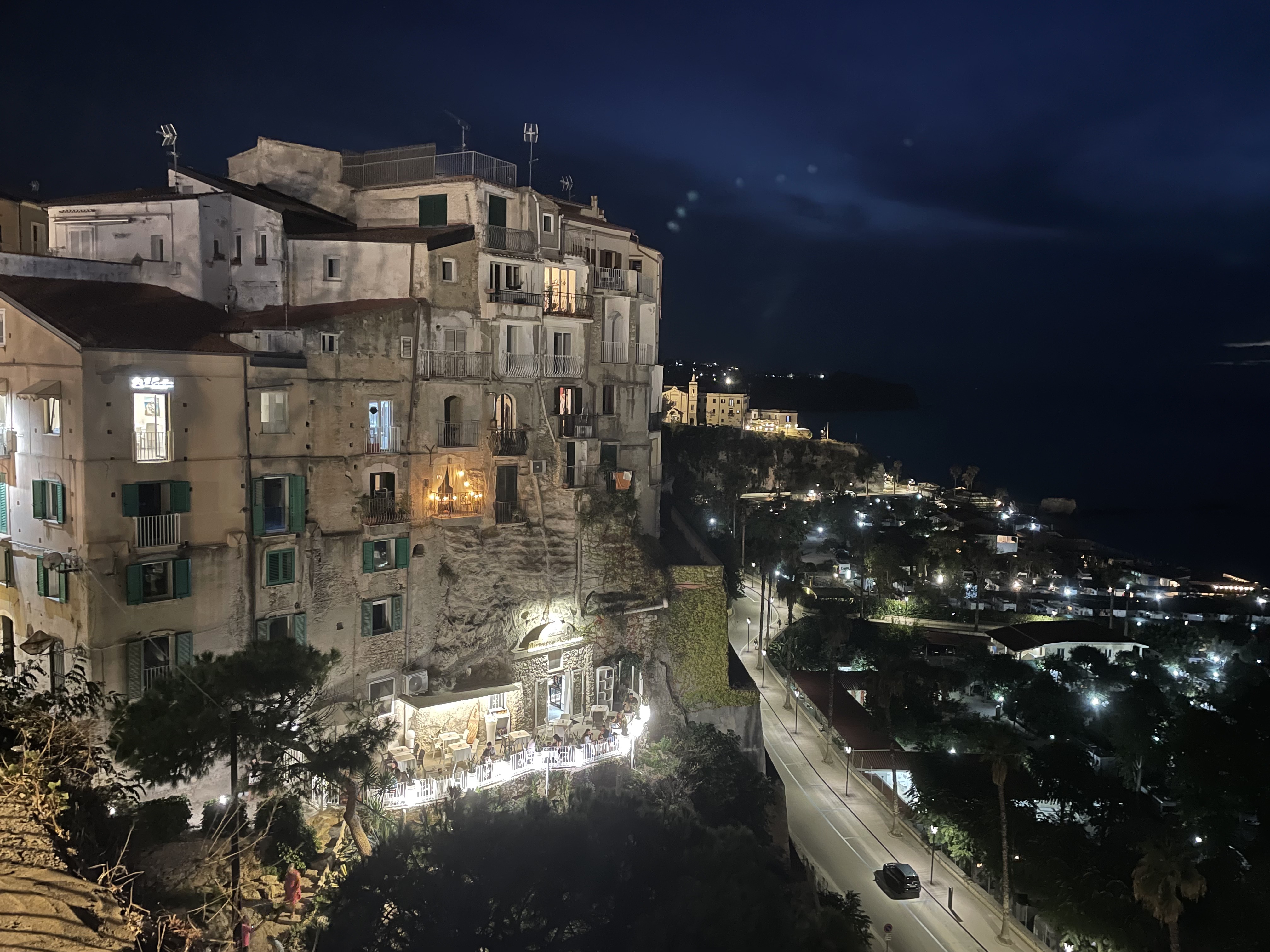
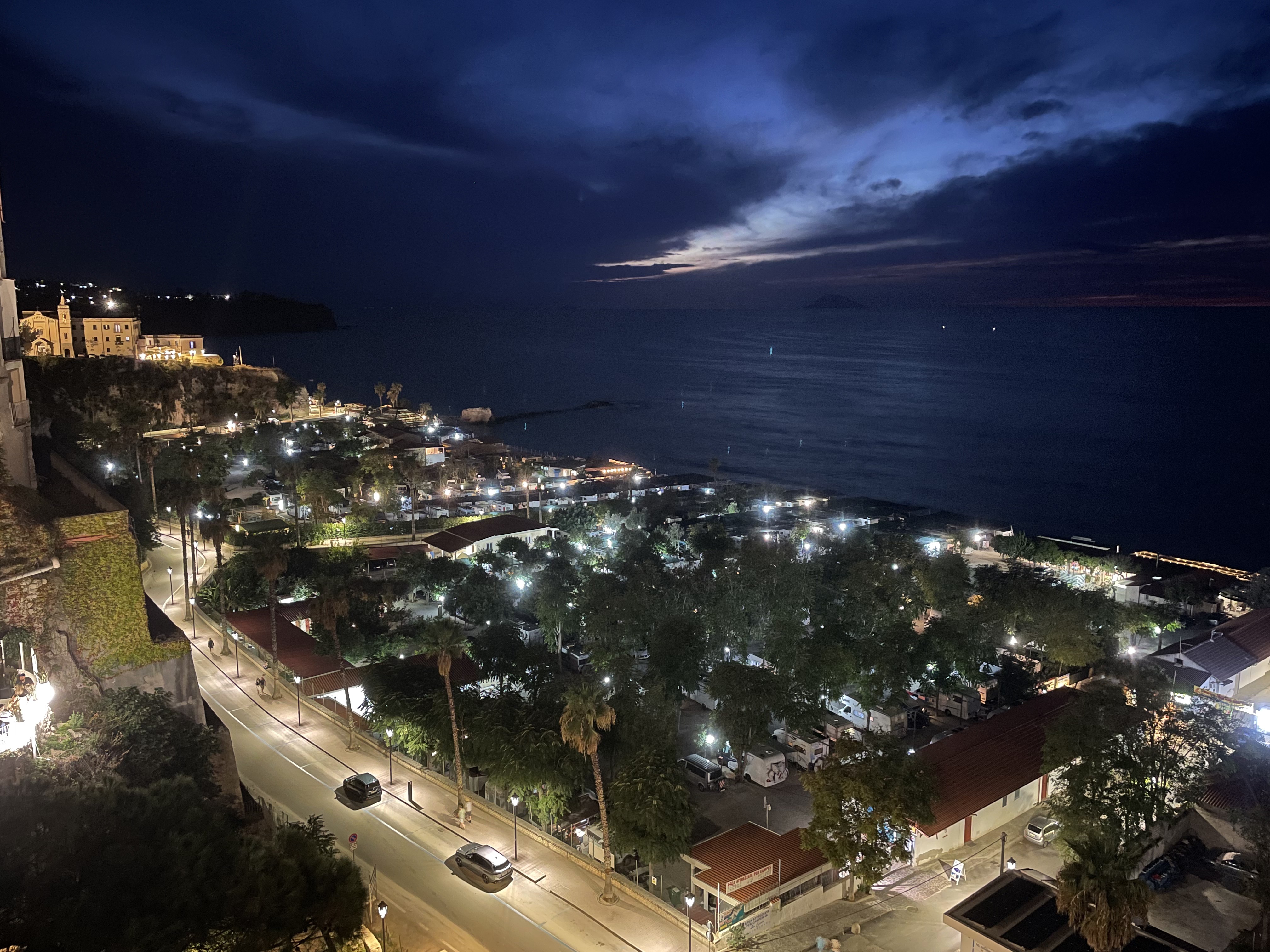
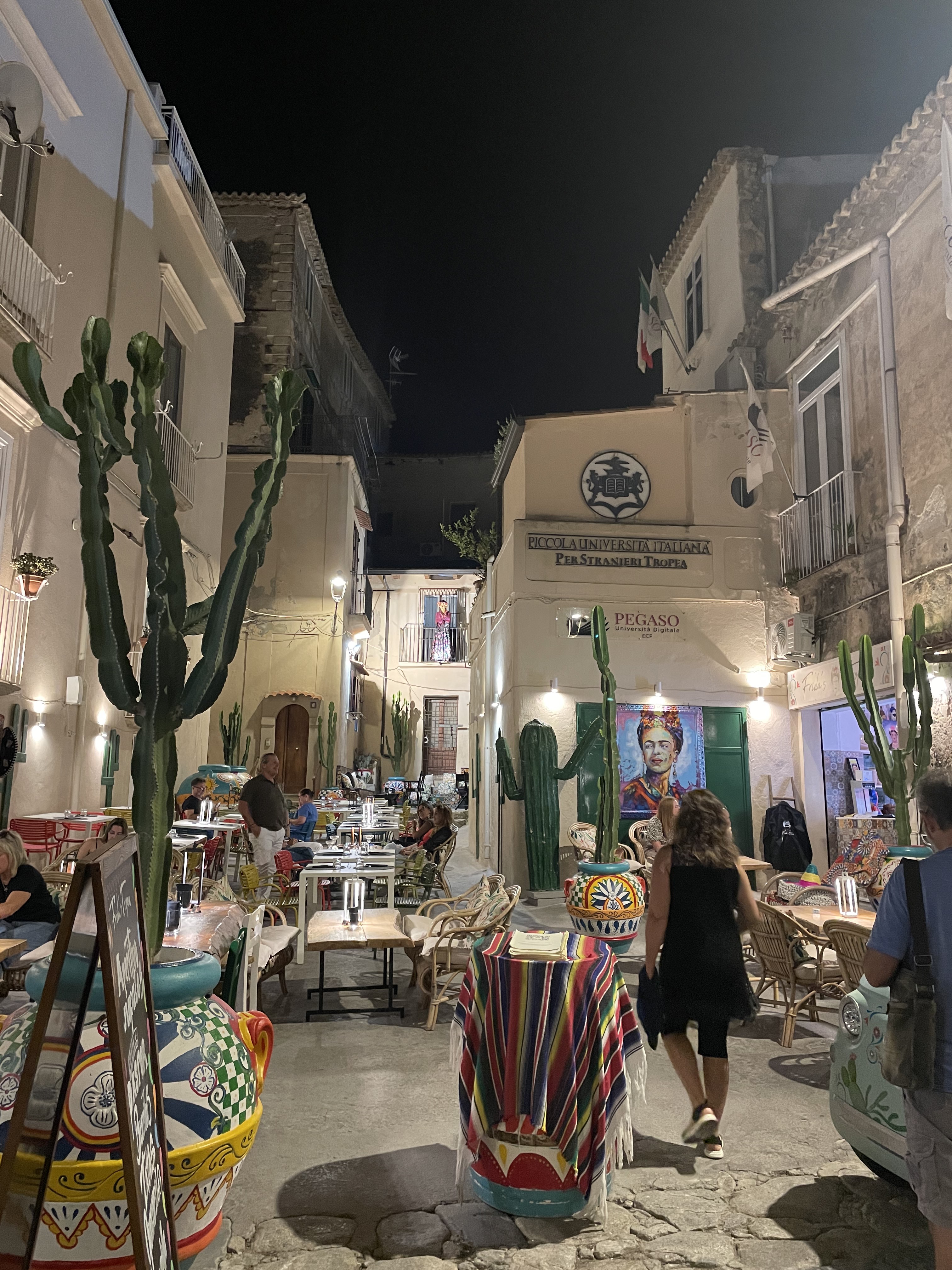
By nightfall we were out in the lanes. The old town had put itself on for the evening — cliff-hung streets all lit, the campsite glowing below like a small airport someone forgot to turn off, and Santa Maria dell'Isola standing out on its stack of tufa wearing its floodlights, as if the whole town had agreed on a nightly ceremony. In one of the lanes the cacti live in pots the size of bathtubs, with the dinner tables arranged underneath them. This is an architecture we could argue for.
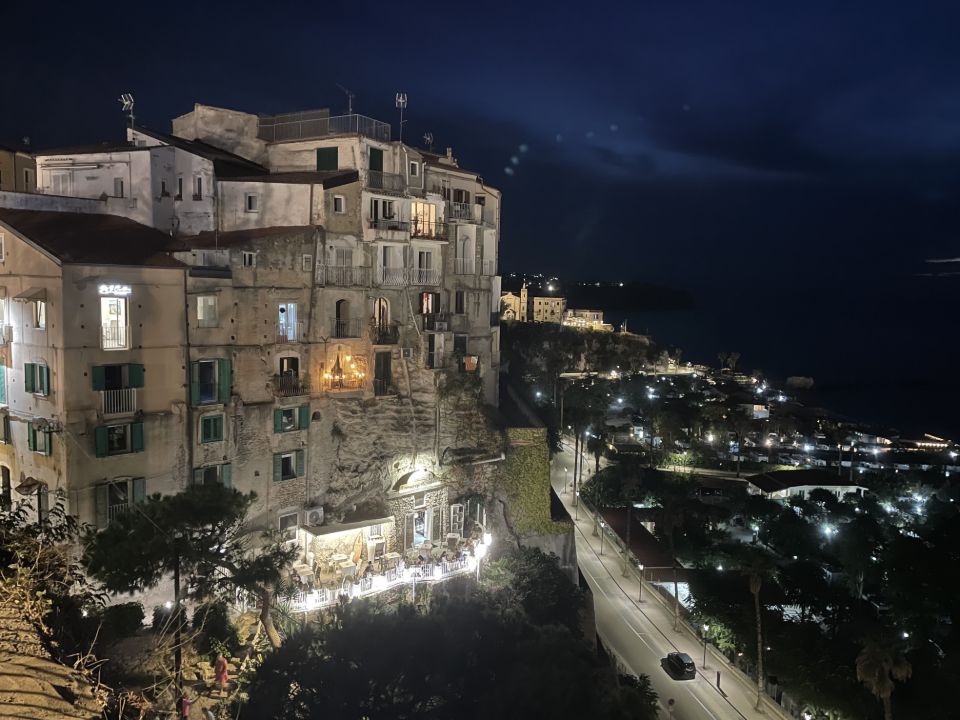
The old town, lit and warm, stacked on its cliff 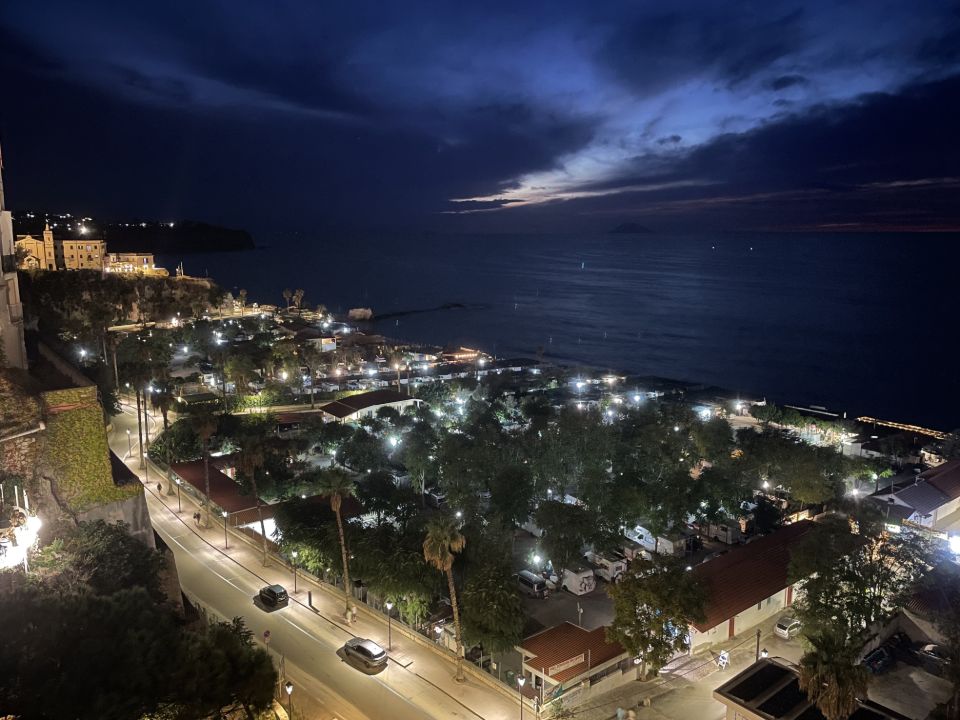
Below us, the campsite glows; past it, the dark sea 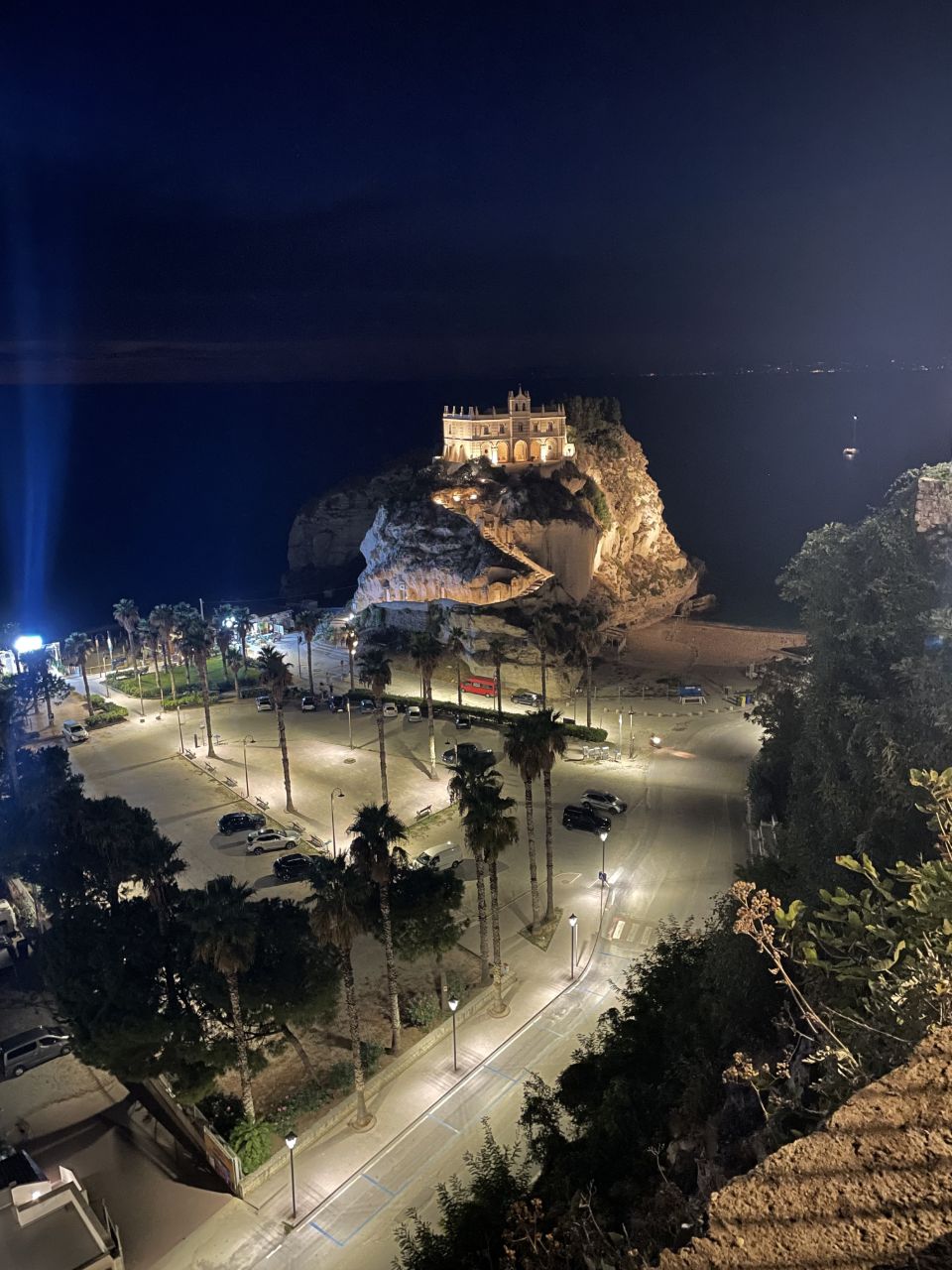
Santa Maria dell'Isola at night, wearing its floodlights well 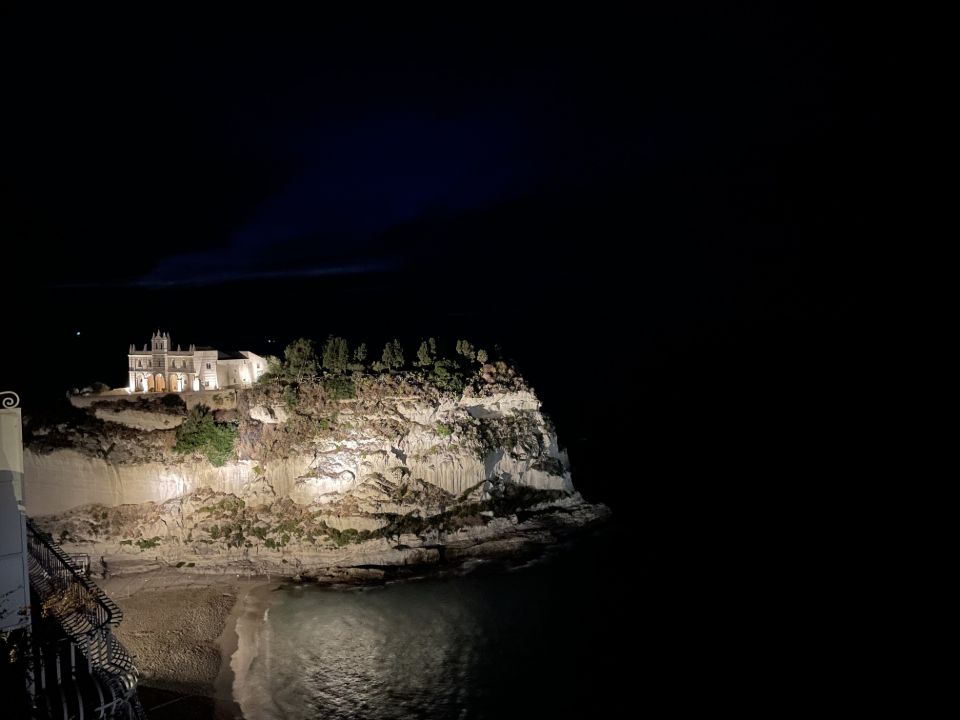
The island church, closer, still wearing the lights 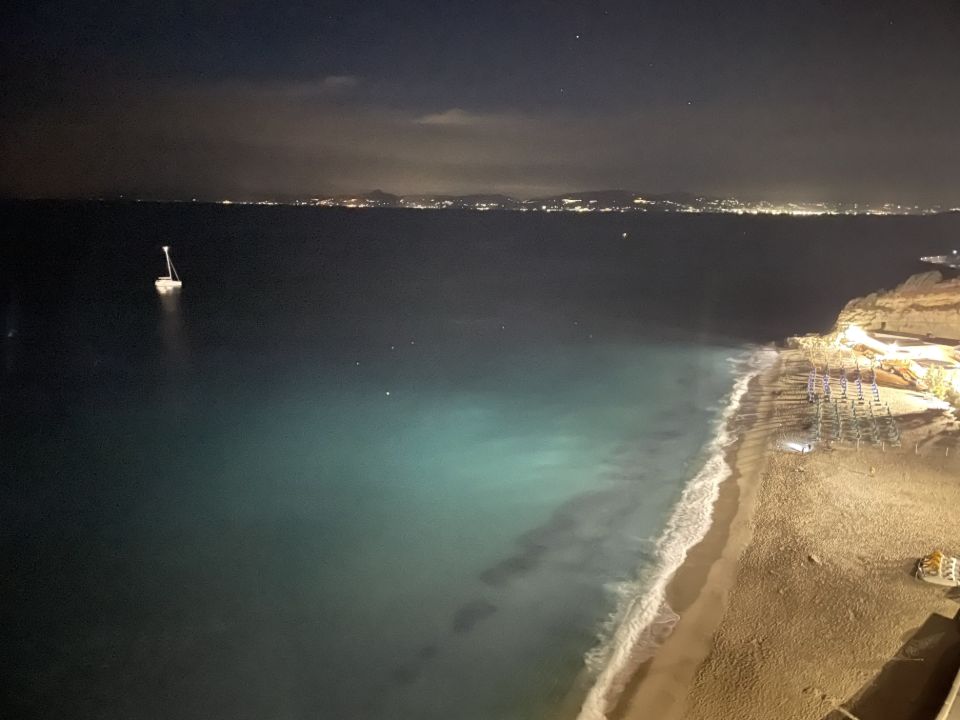
The beach at night: one light on the sand, the far coast out there 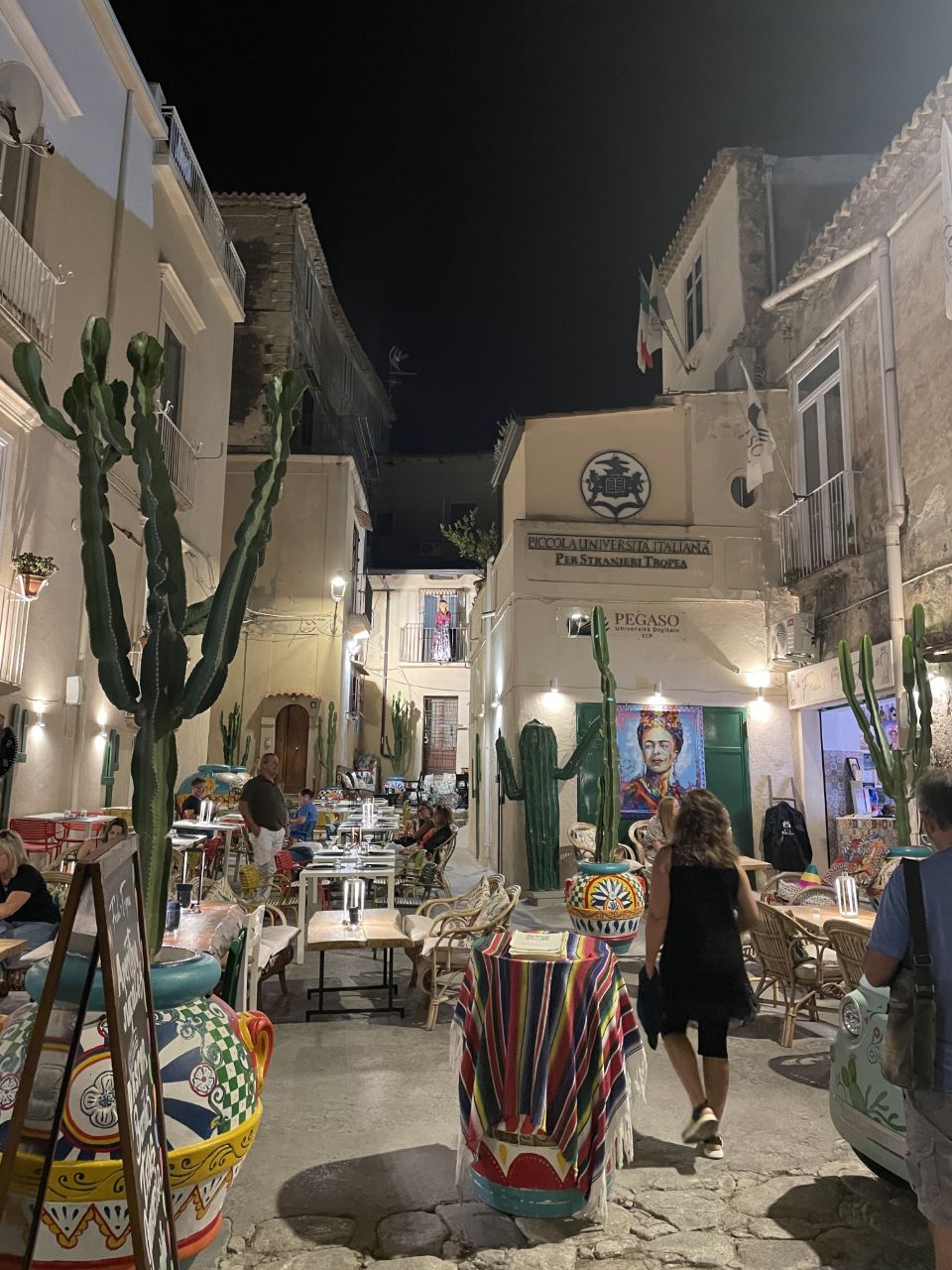
A lane of potted cacti the size of furniture, dinner tables underneath
Midday, with weather
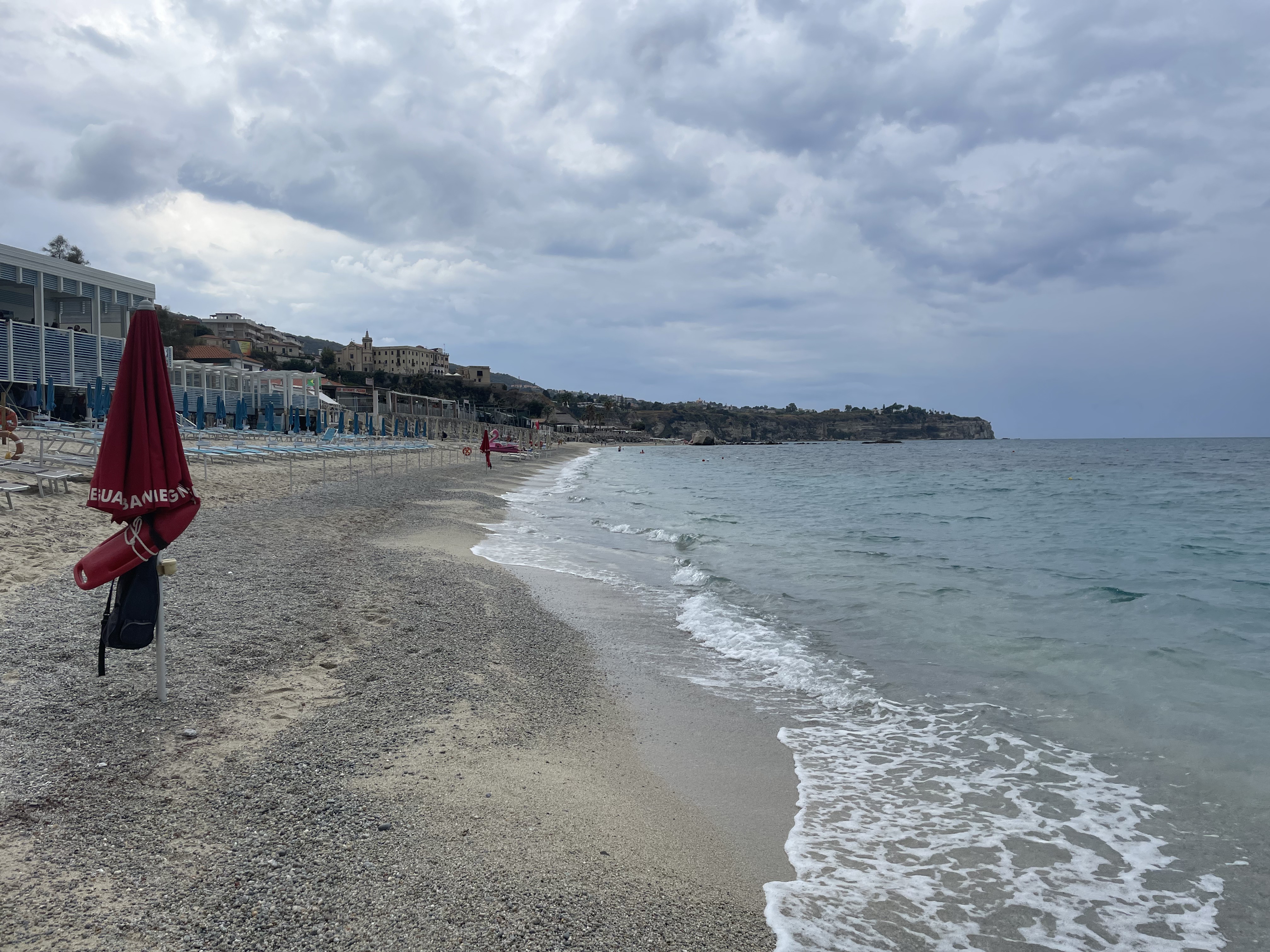
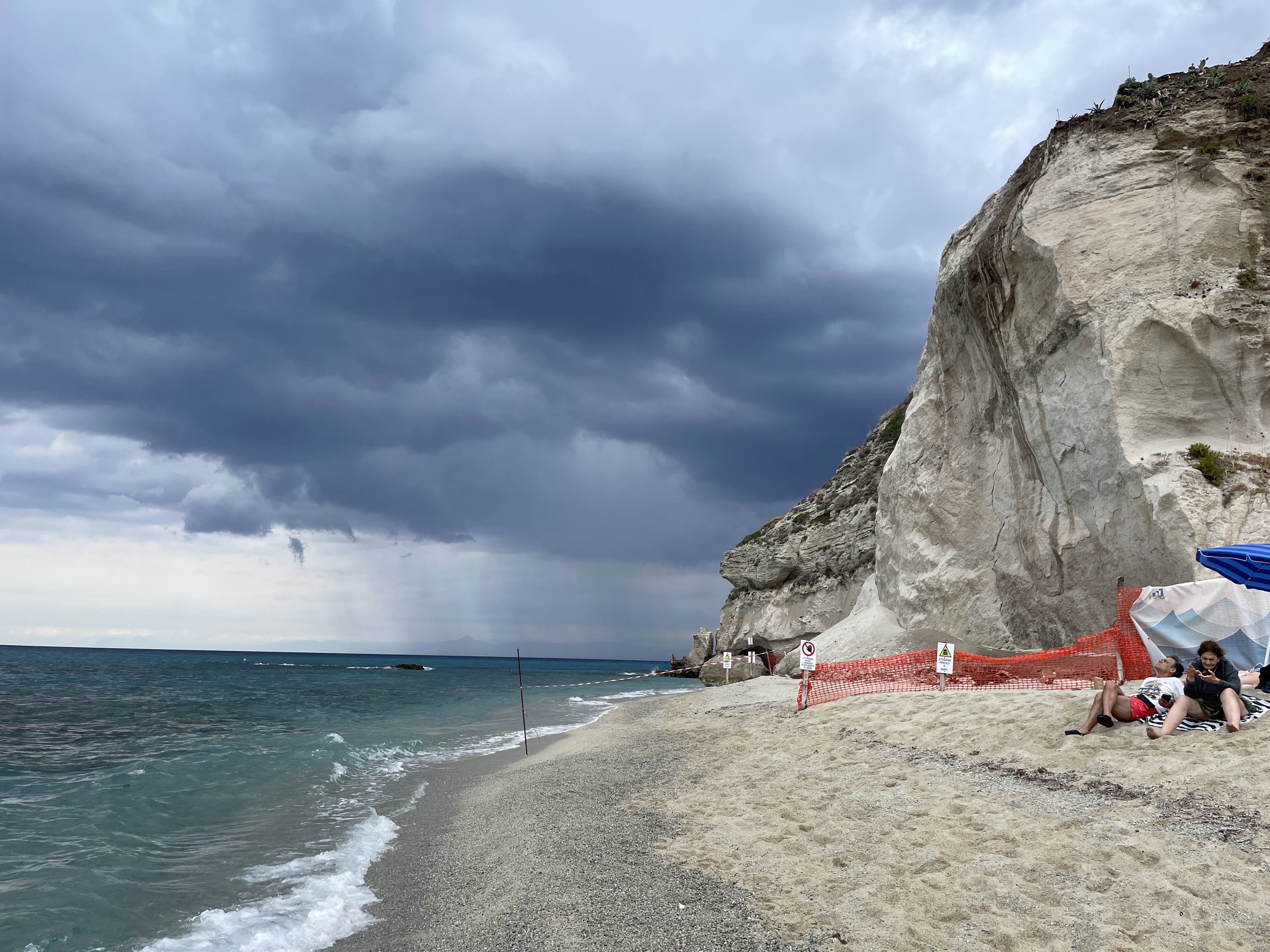
Saturday belonged to the campsite's beach. The road down runs between two walls of white tufa; the beach is the town's usual strip of sand, and the sea, in the morning grey, was absurdly green. Weather had plans of its own: towers of cloud stood out over the water, and while we were packing up, one of them lowered what looked like a small waterspout onto the horizon. We photographed it the way you file a curiosity — which it was, only temporarily. Meanwhile, above the beach road, a stand of bananas proved the region does fruit as well as tufa.
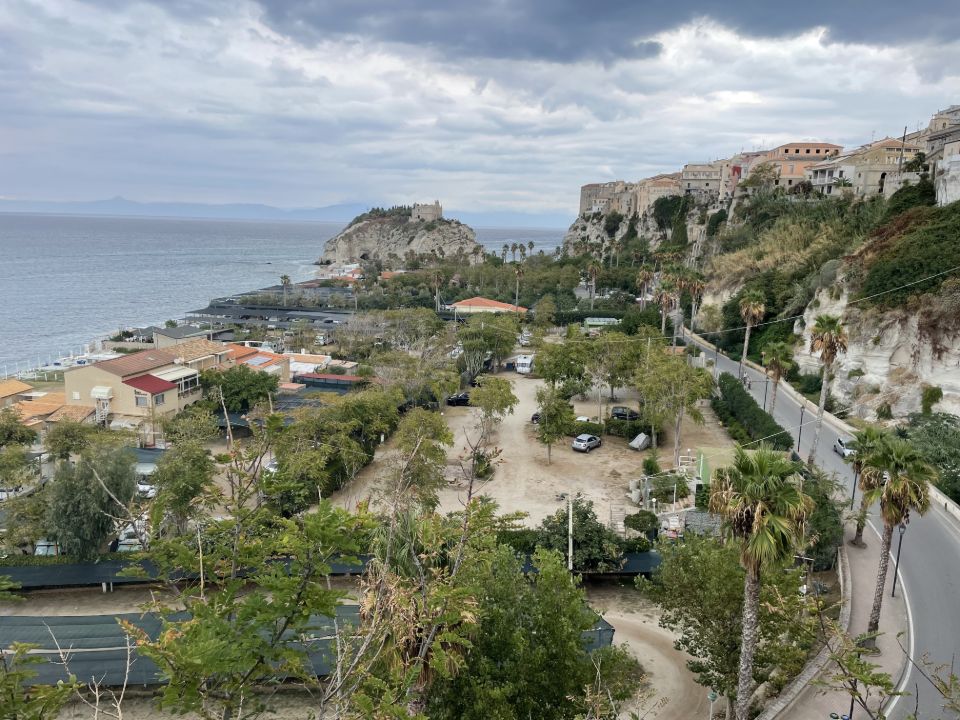
The campsite from the road above: bungalows, palms, headland beyond 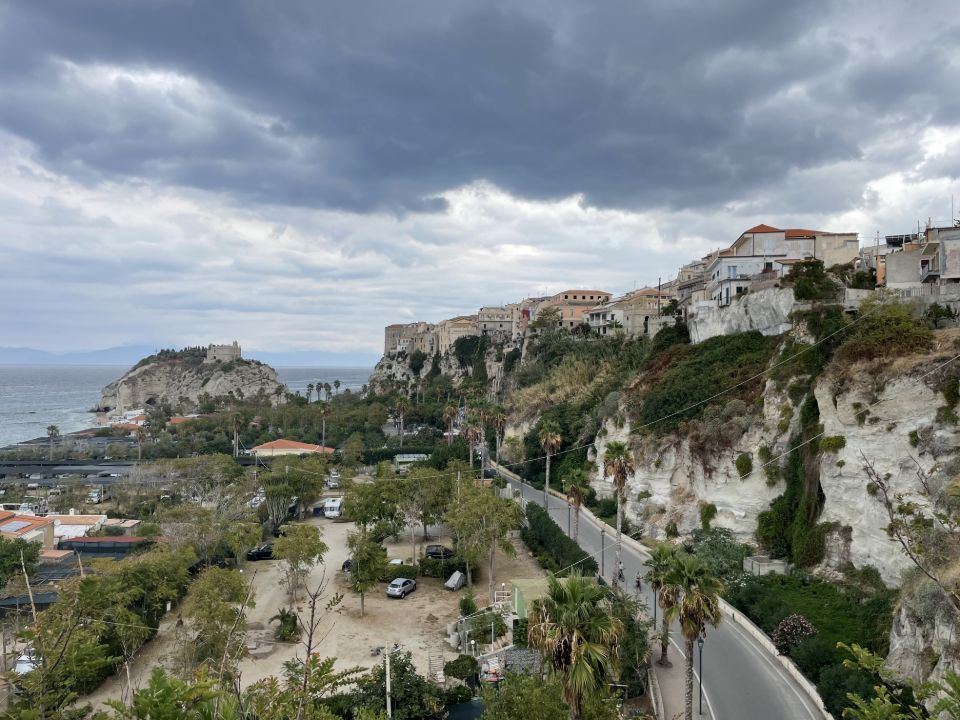
The road down runs between two walls of white tufa 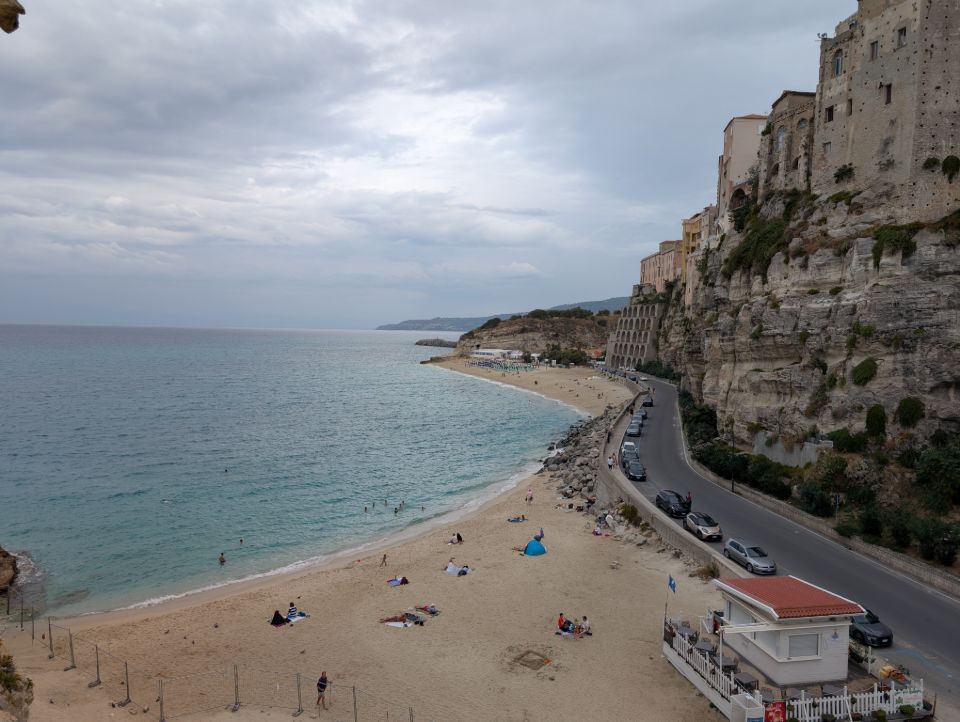
The bay, whole, from the road bridge above 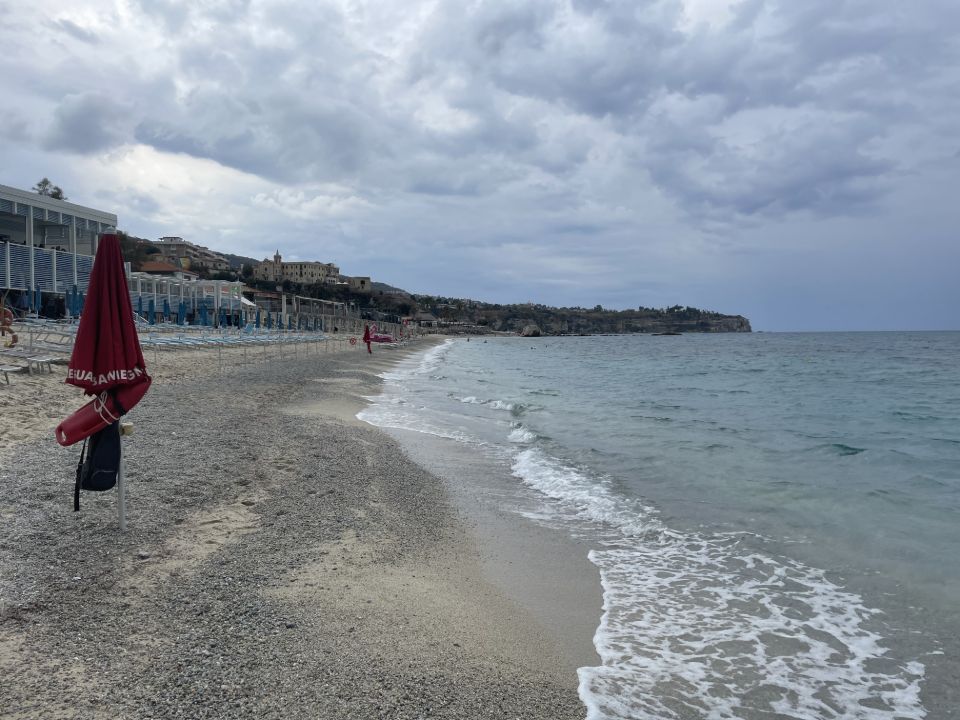
The parasols, mostly closed for the day 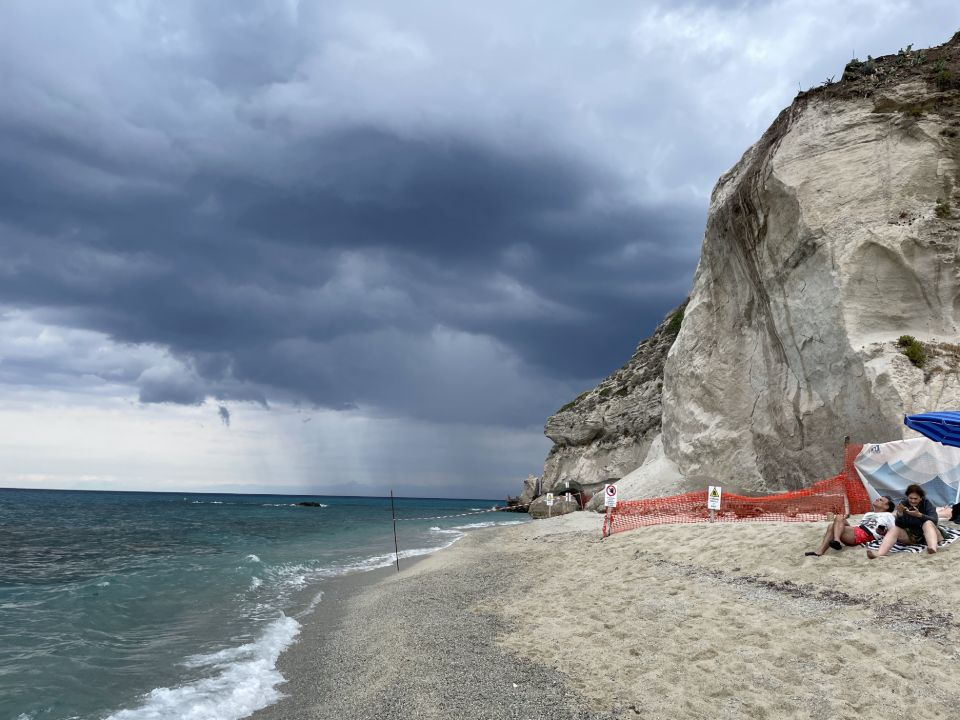
Weather building offshore, complete with a small waterspout we filed as a one-off 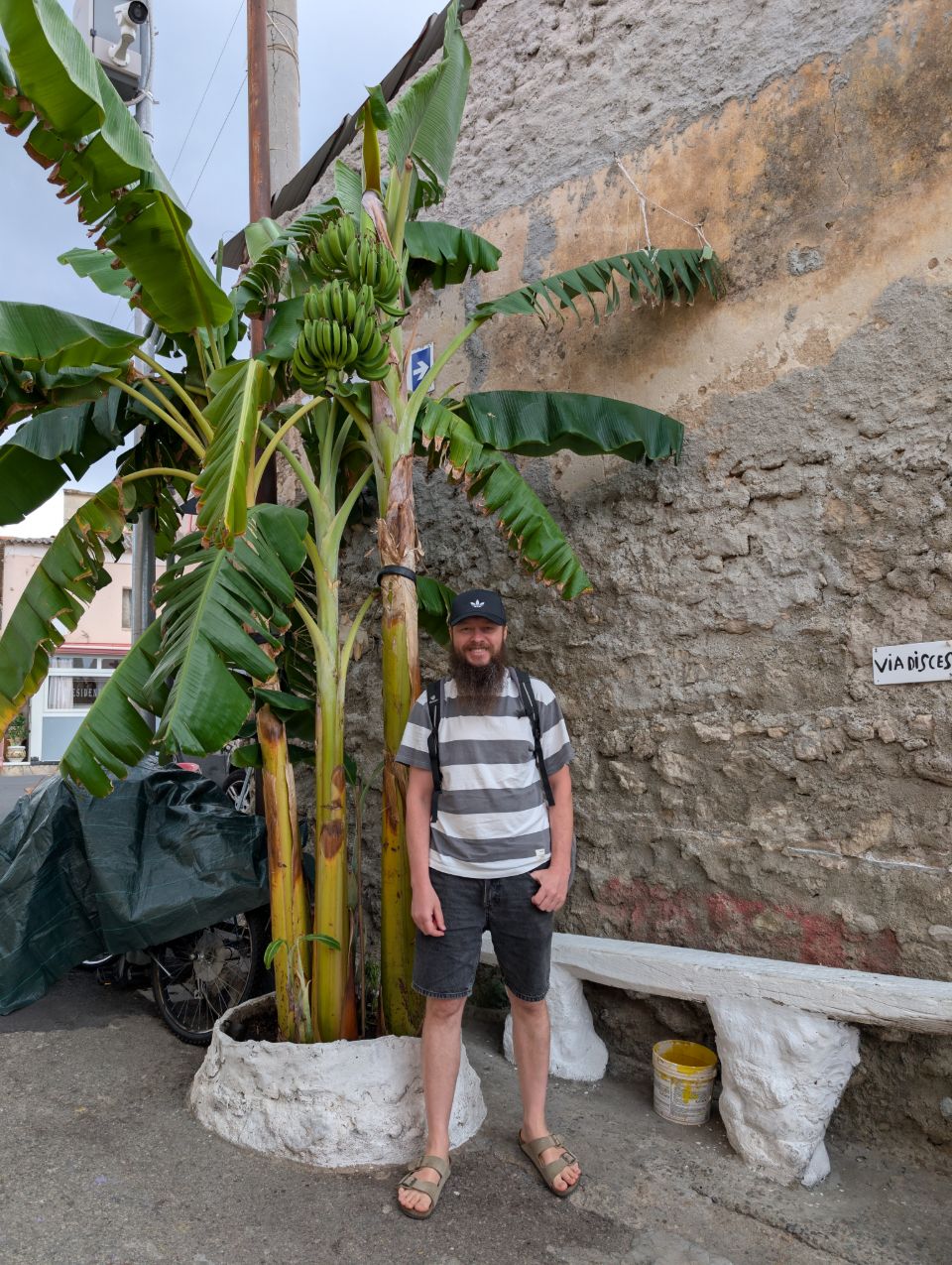
Bananas line the beach road; Oleg inspects the crop
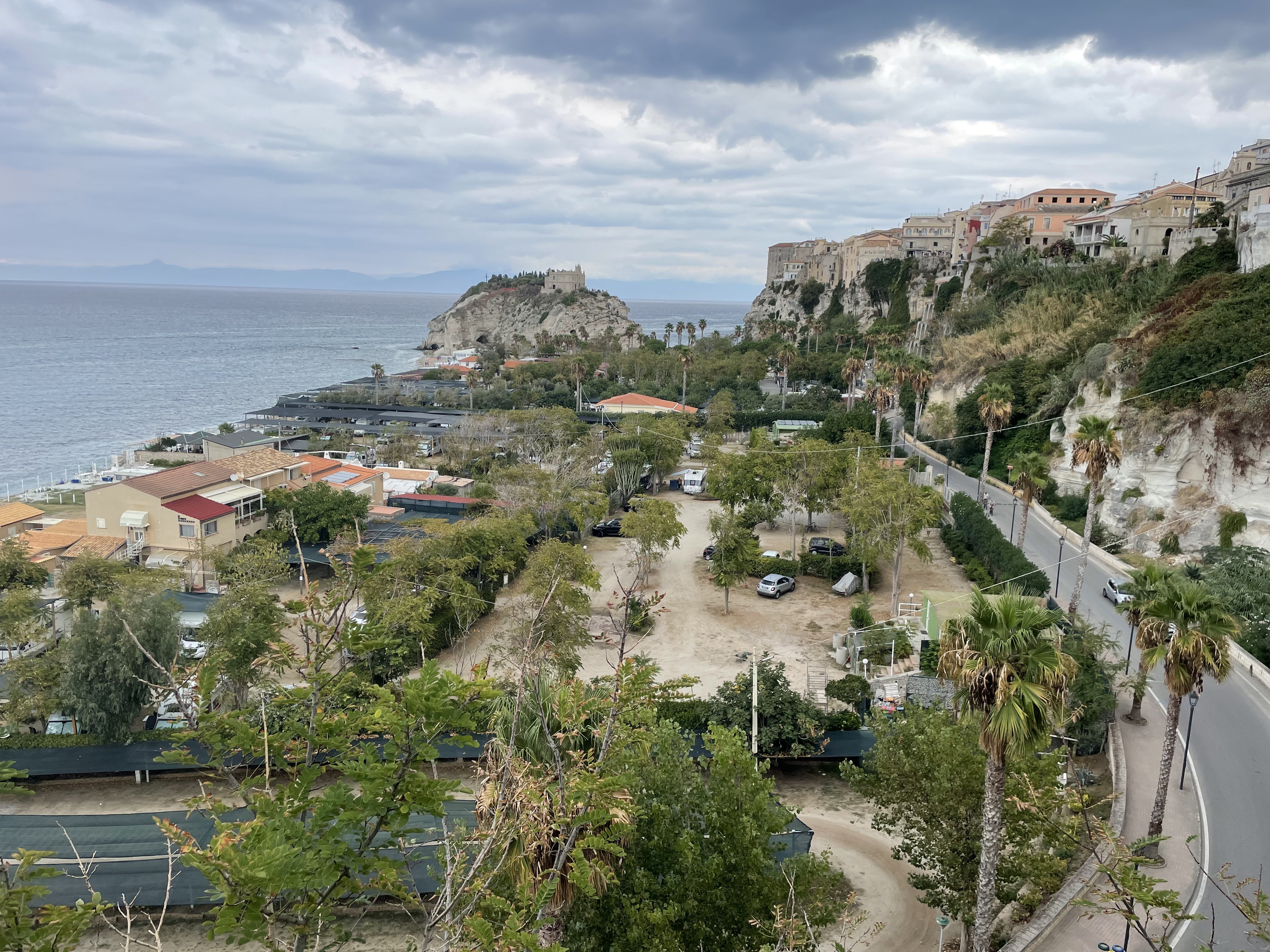
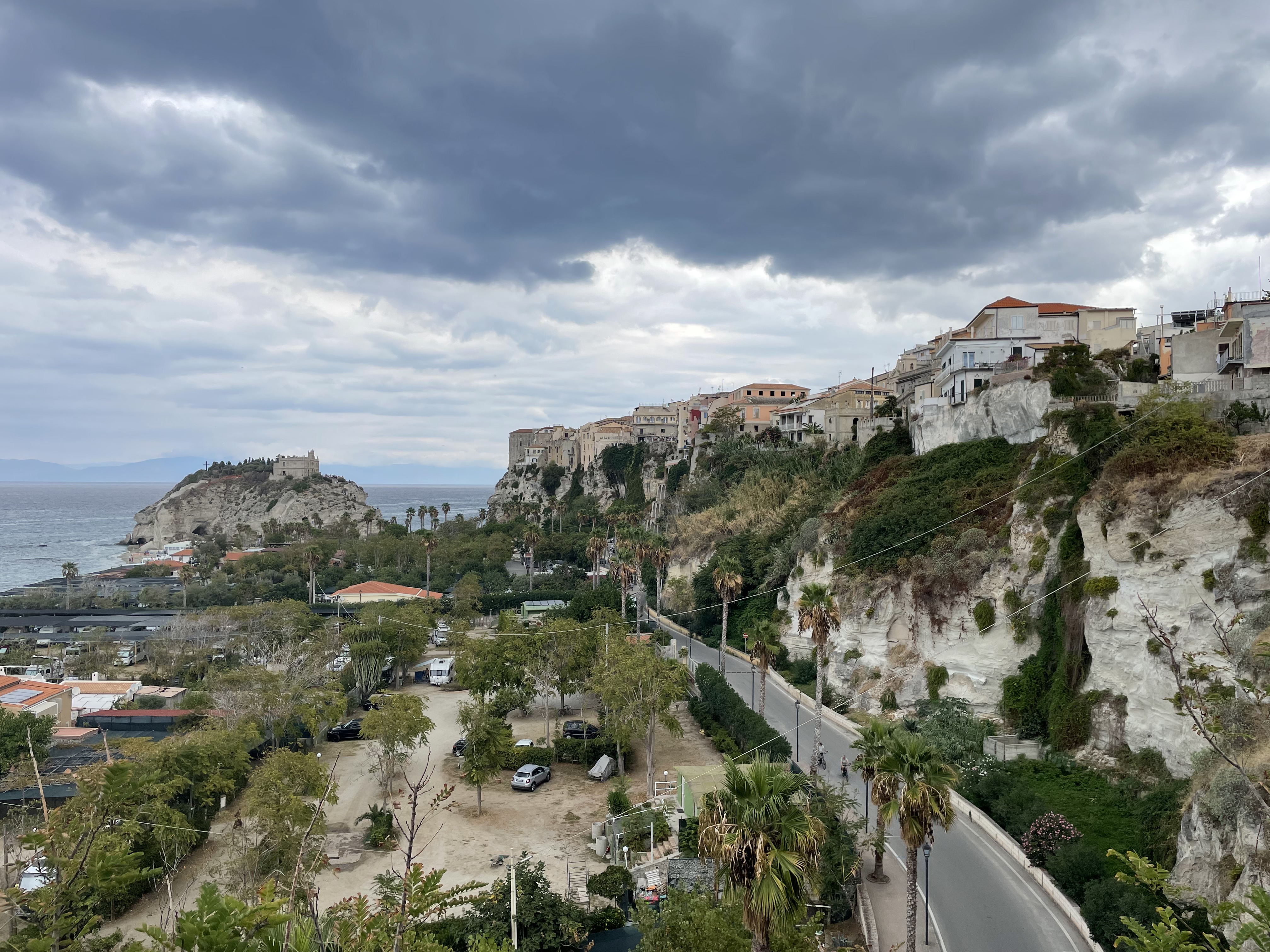
The railing above the sanctuary
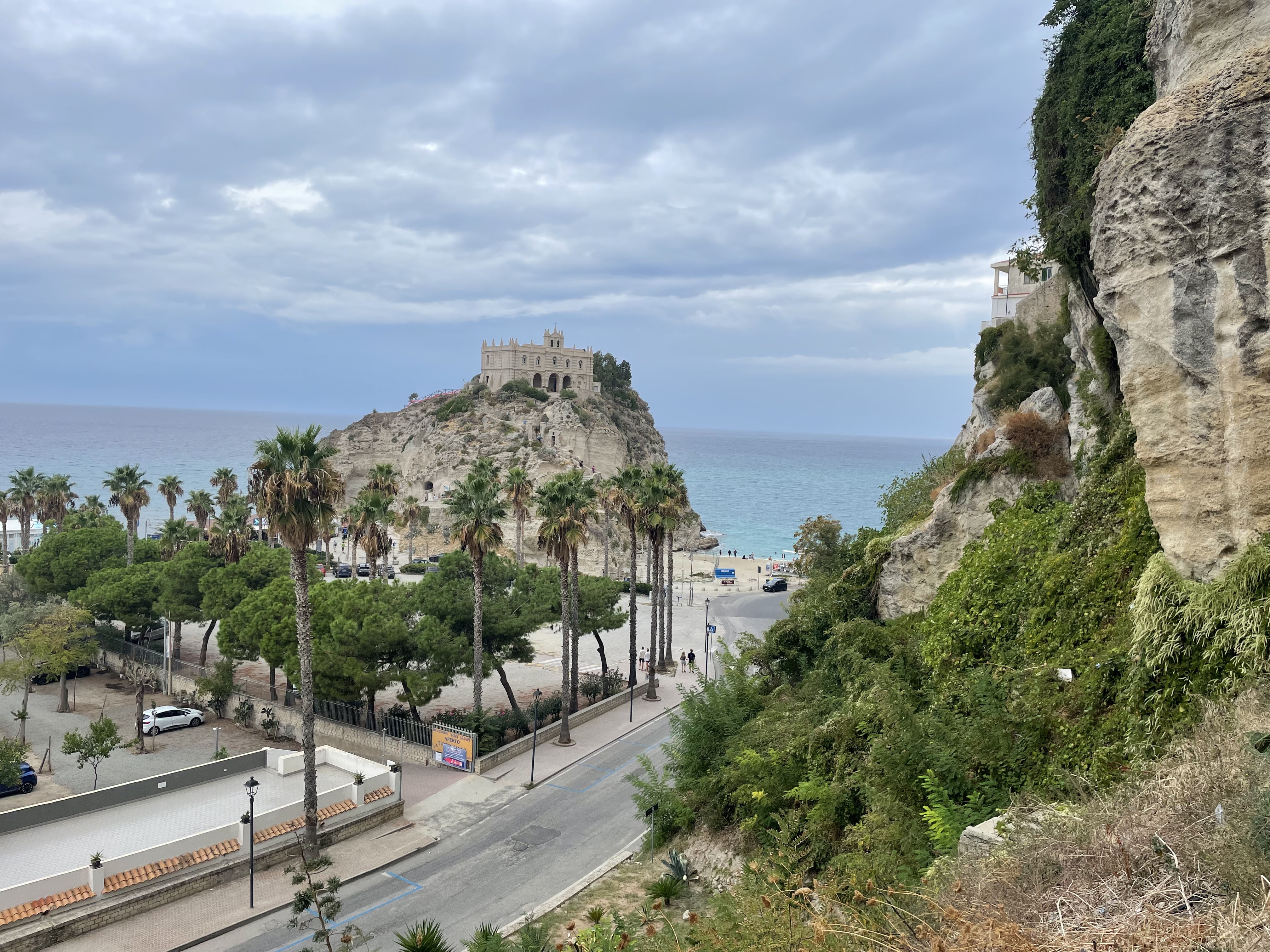
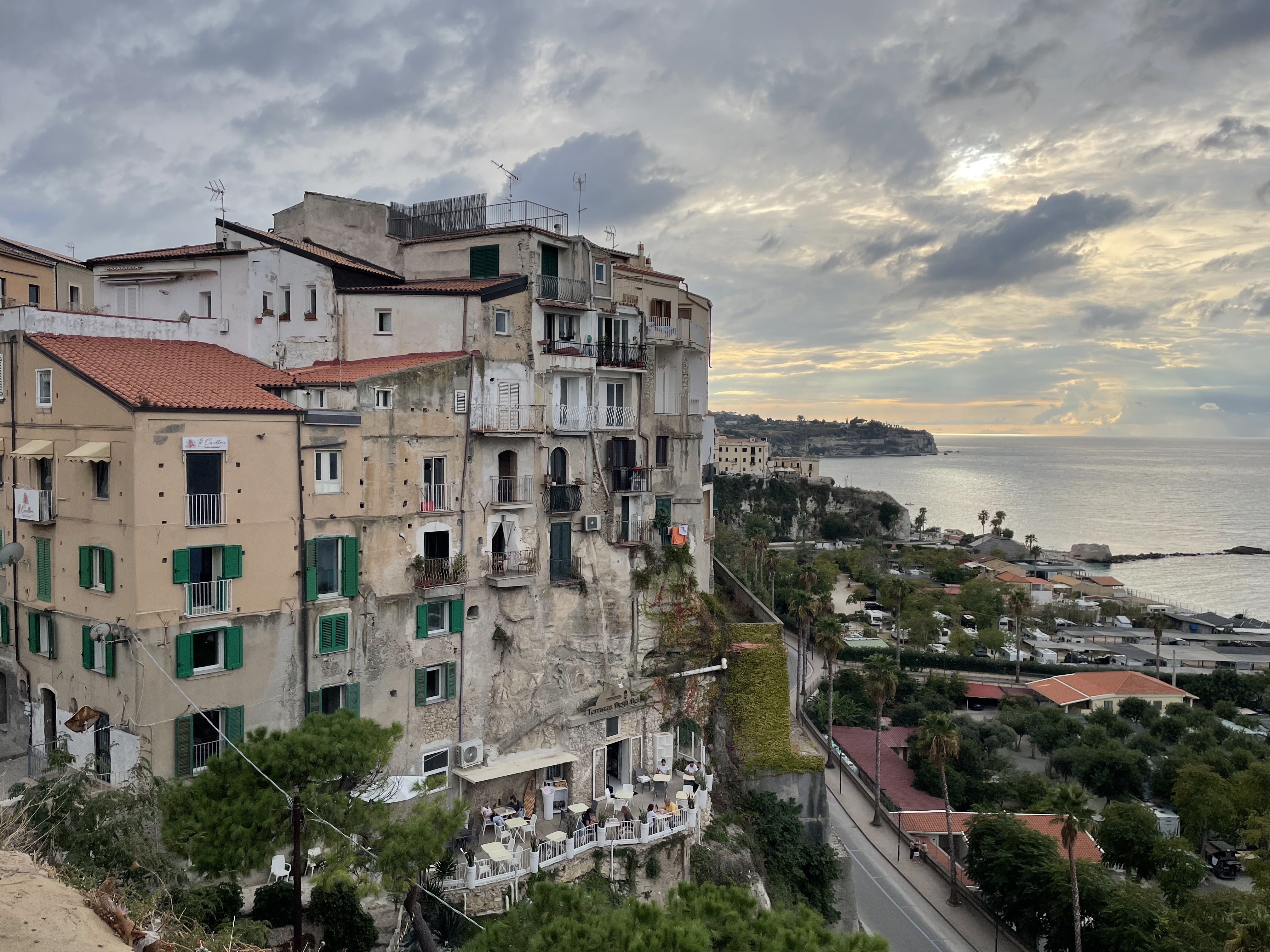
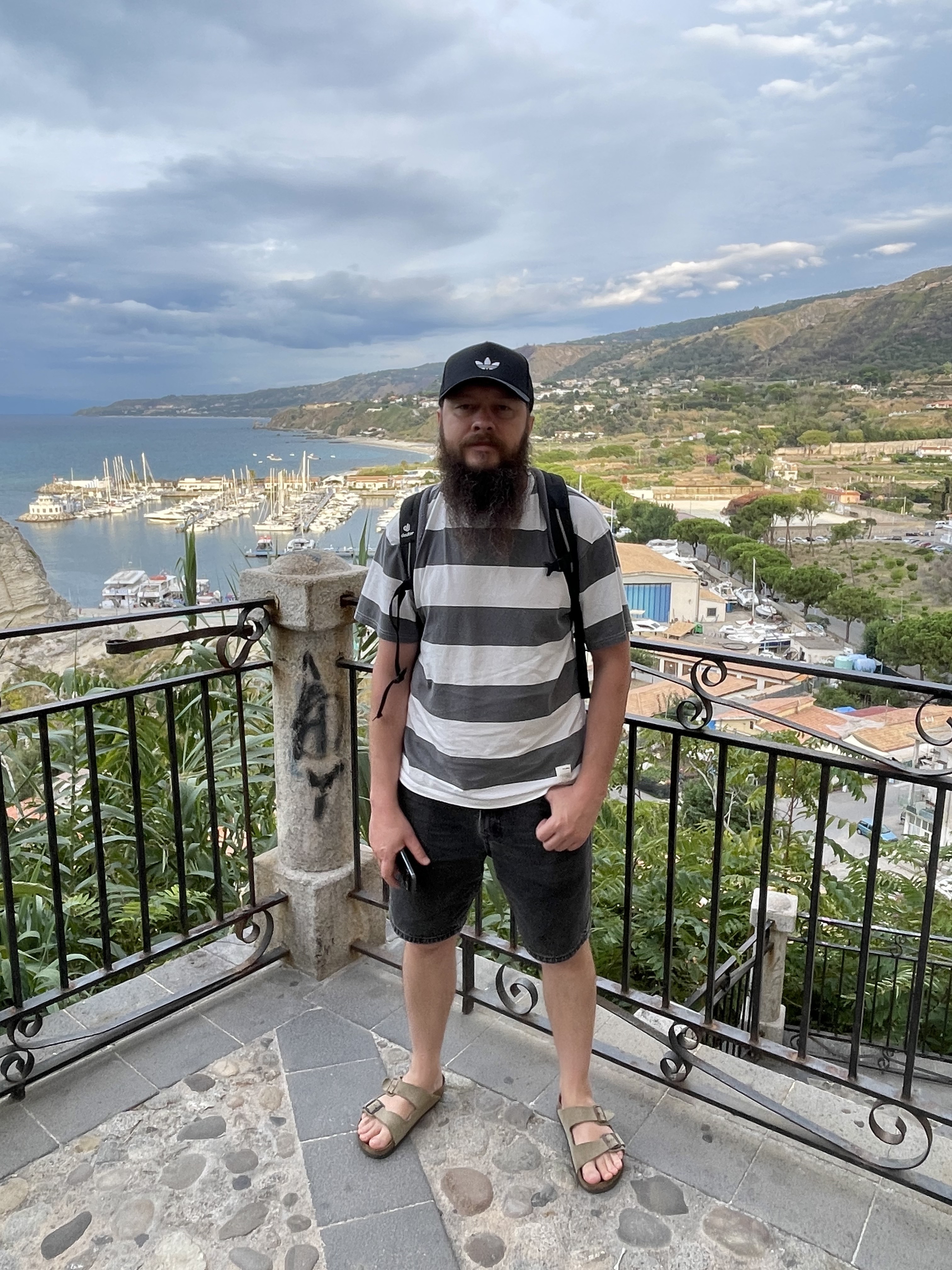
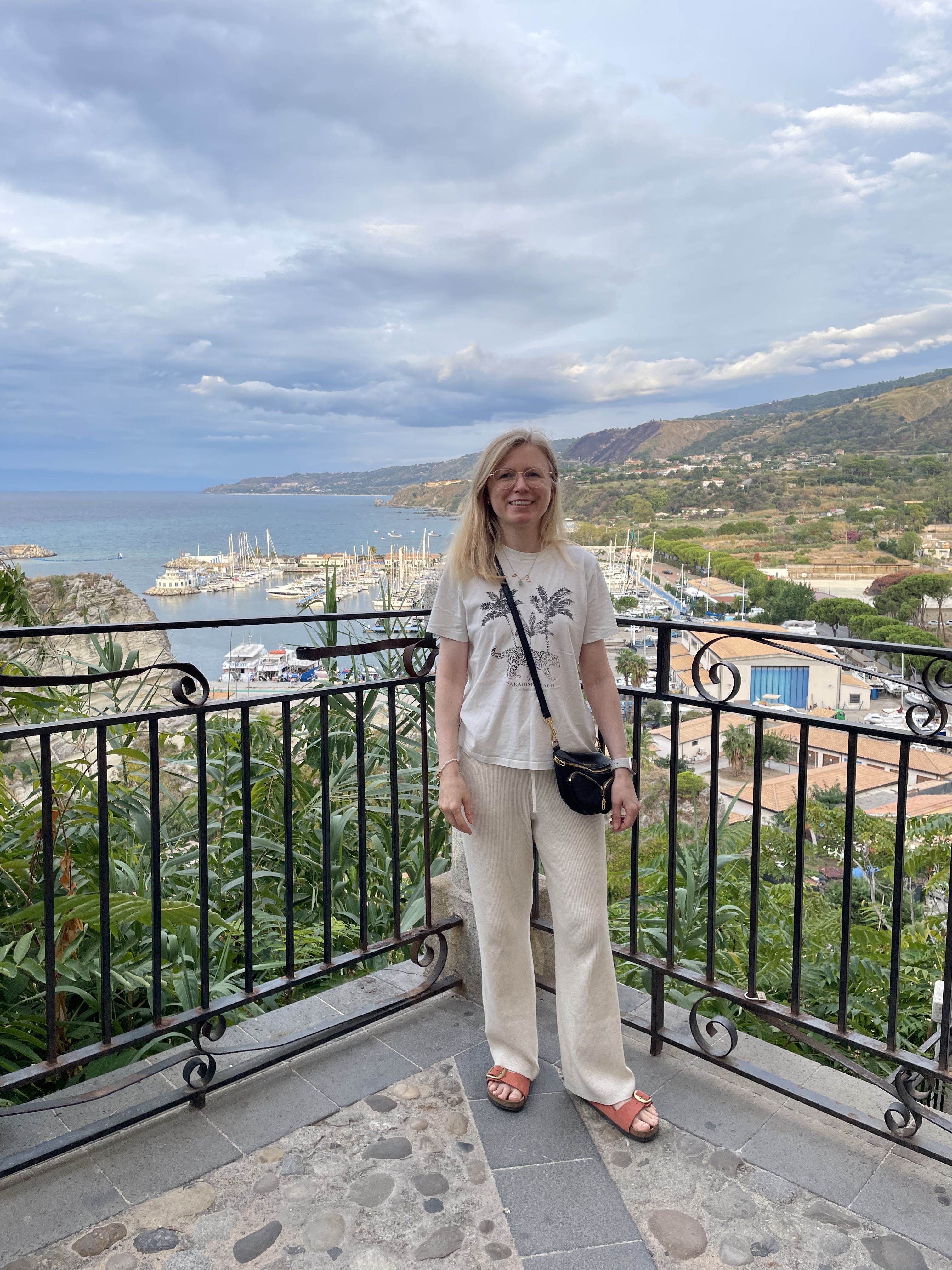
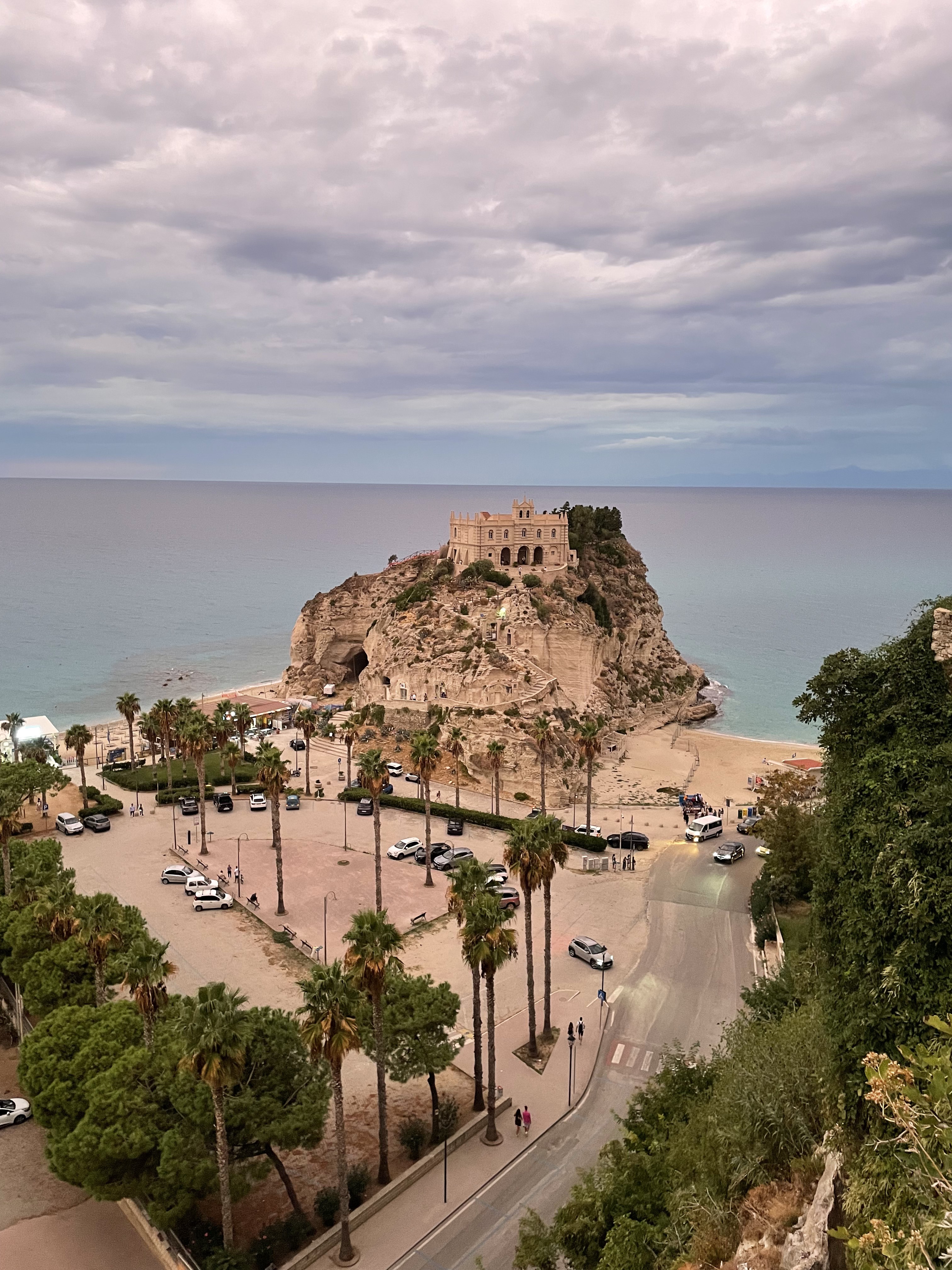
The sanctuary rules its headland from up here, with a railing running along the clifftop, and that railing produces one very particular kind of photograph. We complied, in the interest of completeness: the view with Anna photographing it, and our best result from seven attempts against the storm sky. By the path, a pole carries Baden-Württemberg's own tourism campaign — Nett hier — apparently all the way to Calabria. One of the keystones along the walk keeps its stone face on the whole arrangement.
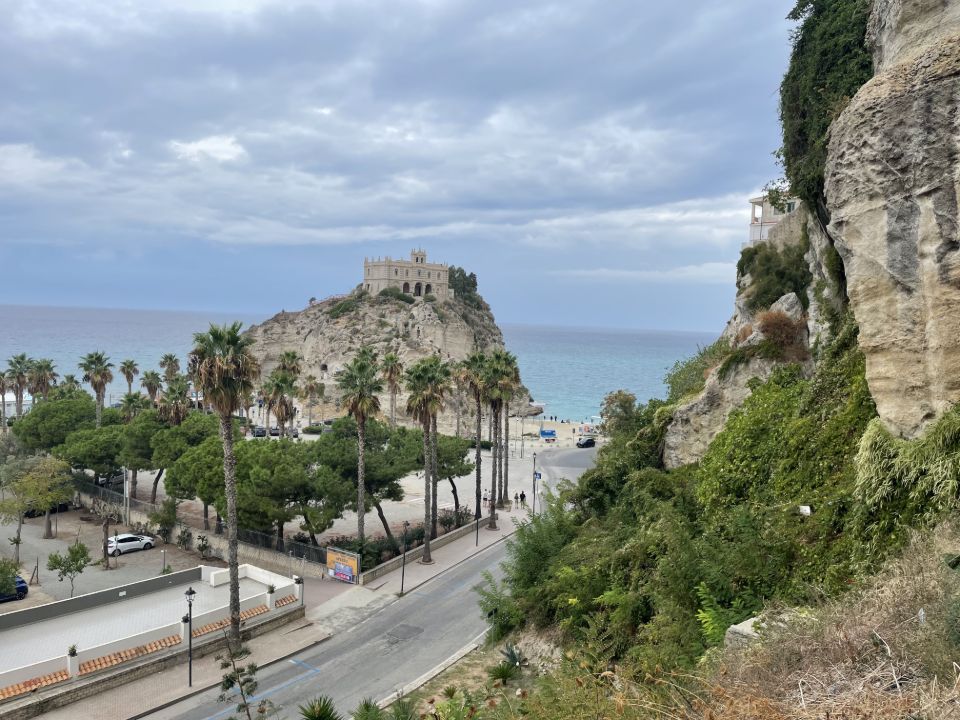
By day, the same island: sanctuary, palms, tufa, campsite 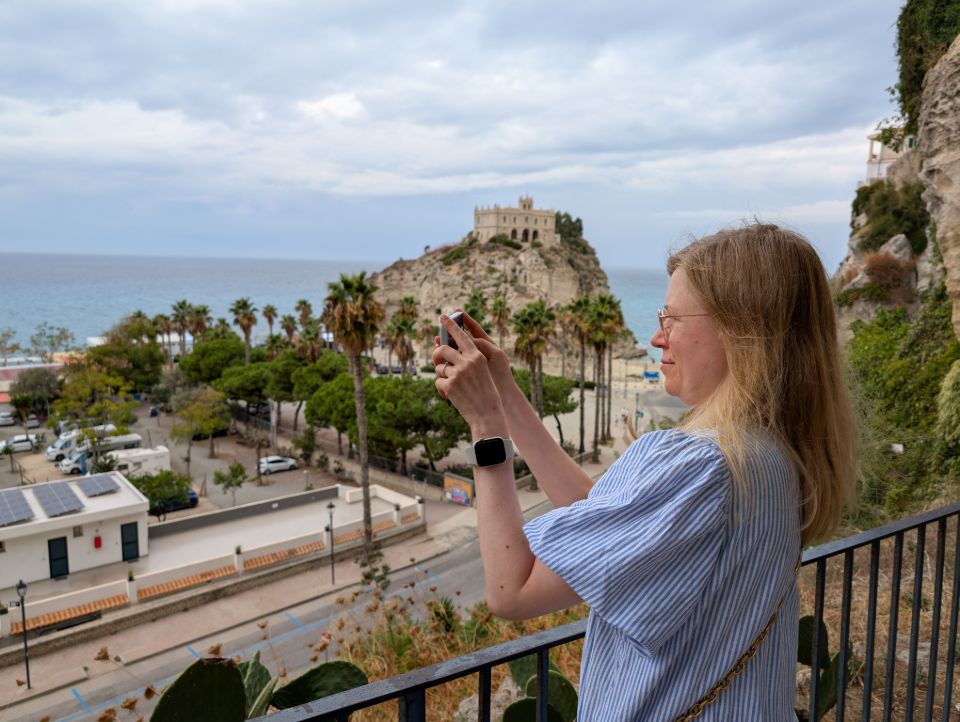
Anna, photographing the view; cactus in attendance 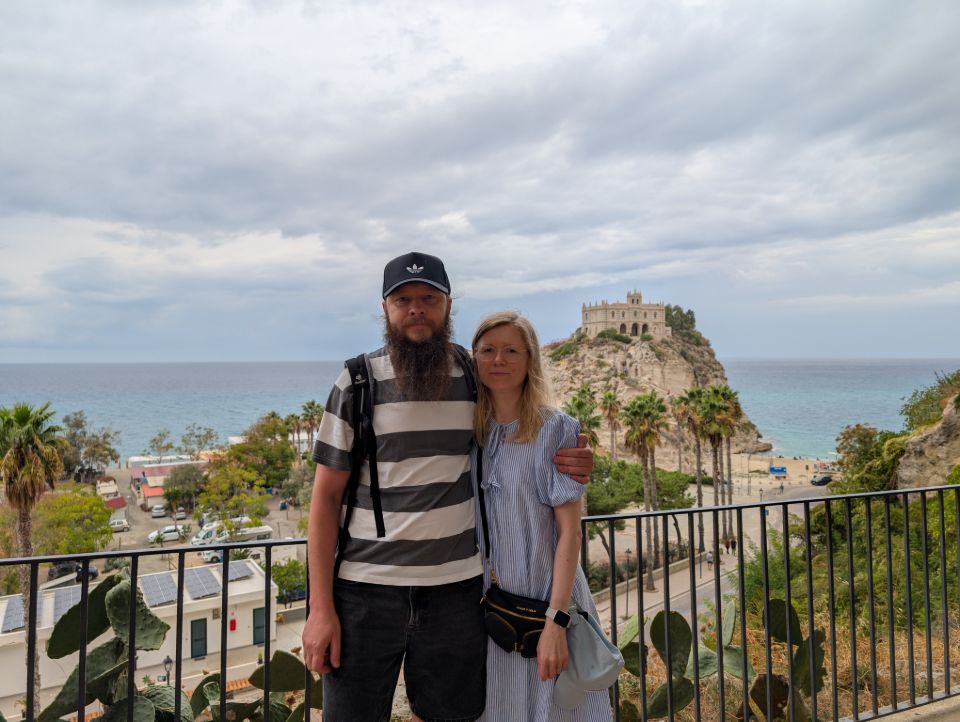
Two of the seven attempts at the same railing 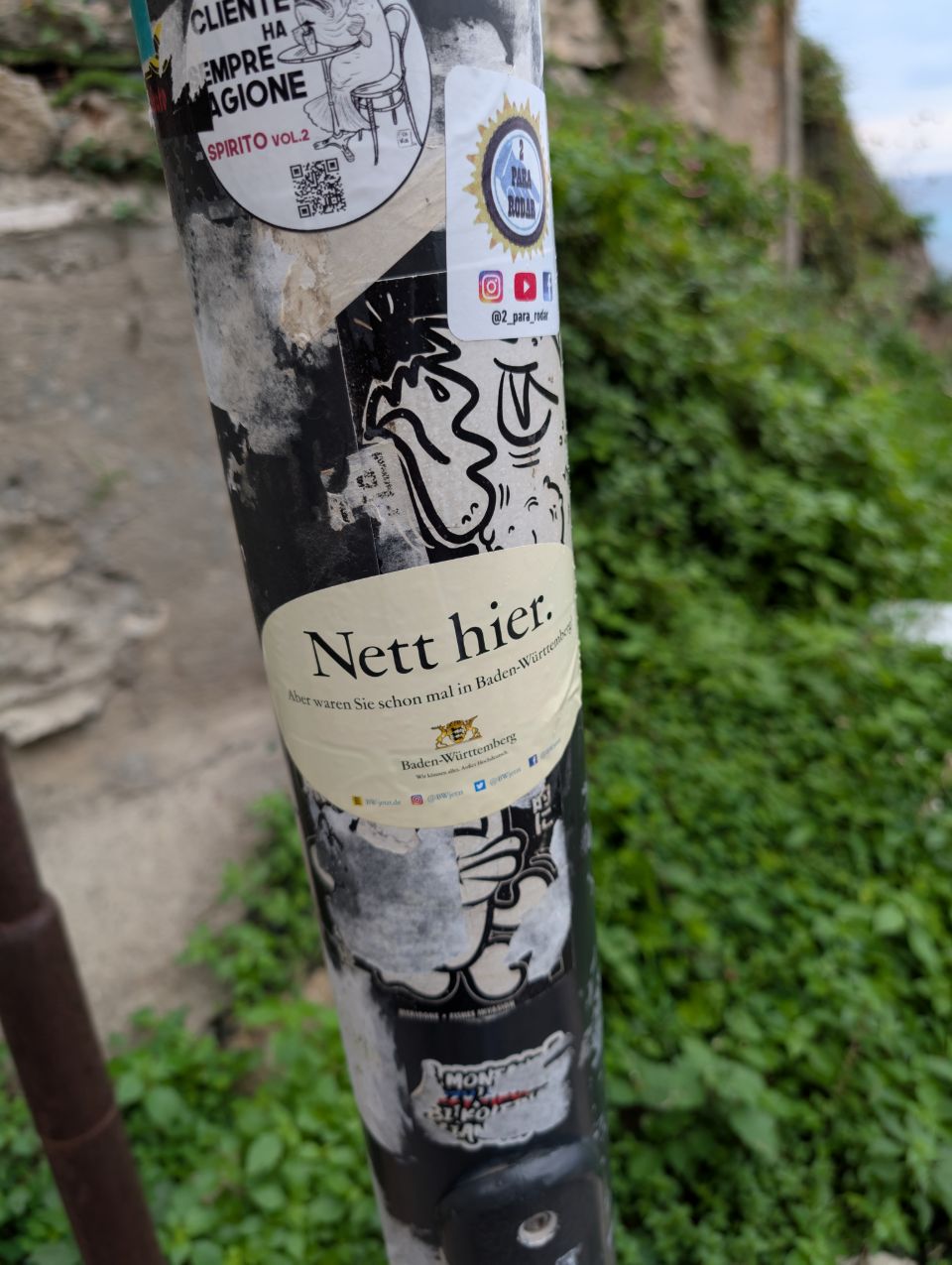
The pole insists: Nett hier — but were you ever in Baden-Württemberg? 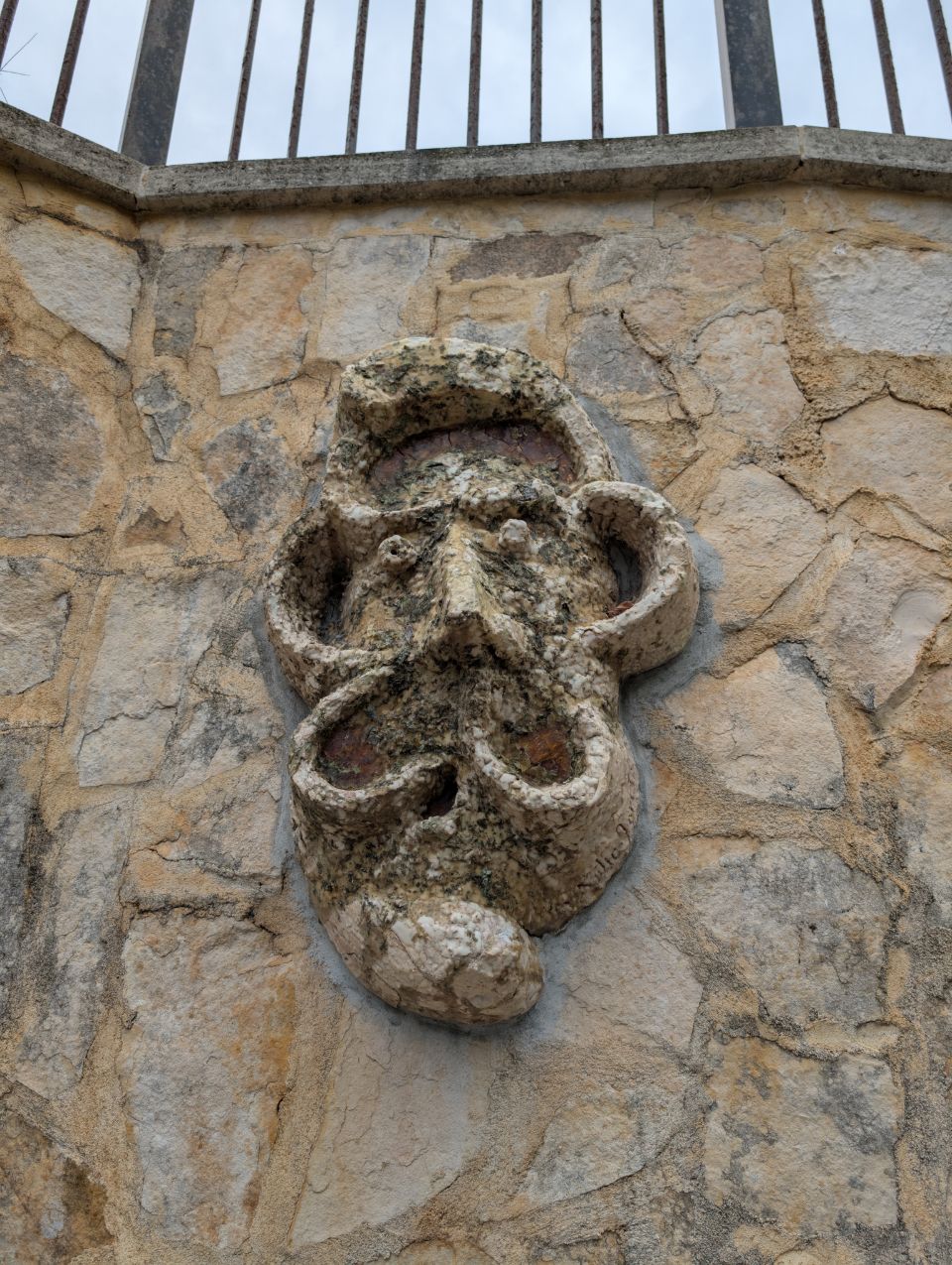
A keystone along the walk, with opinions about visitors
Storm light in the lanes
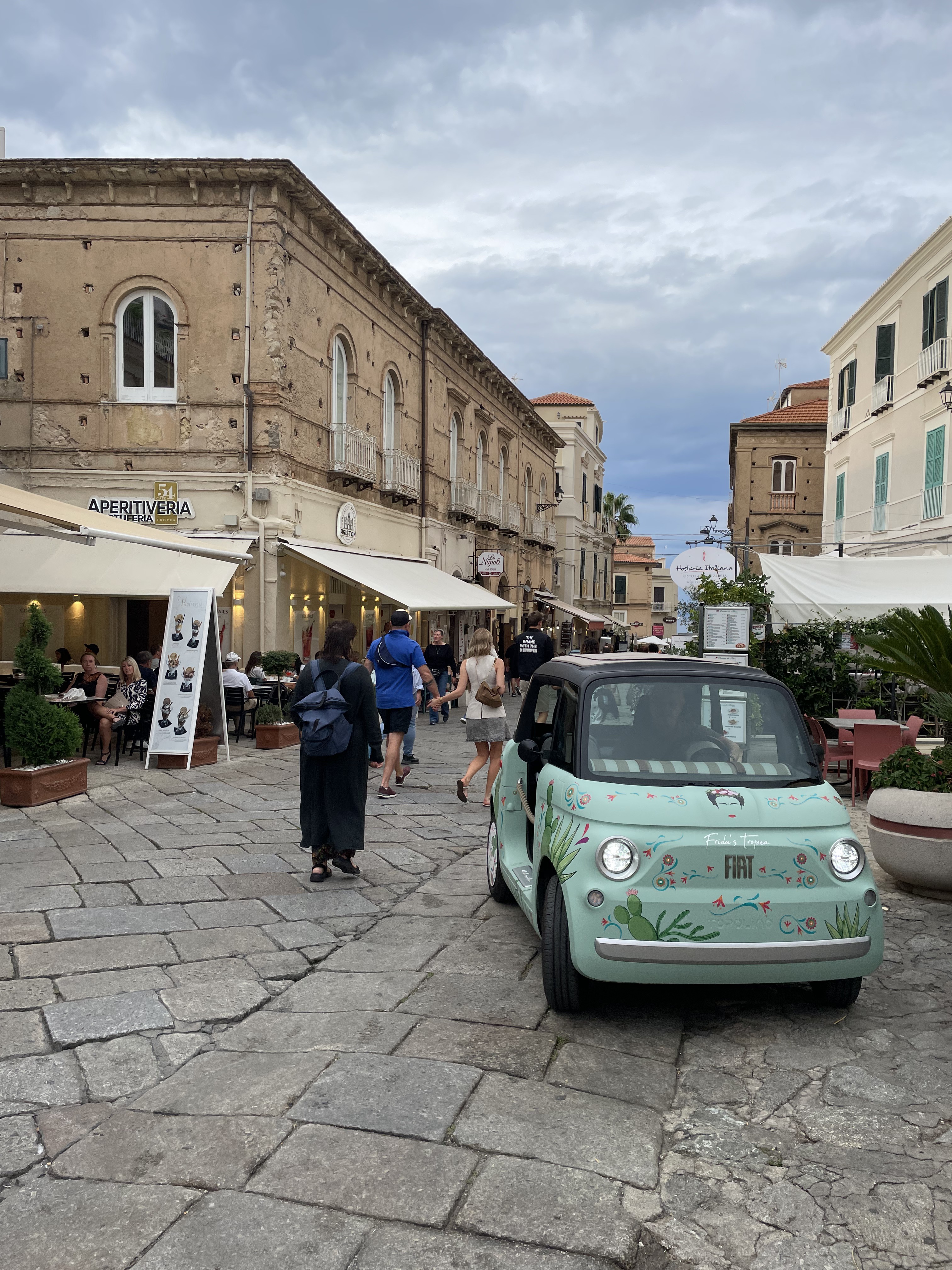
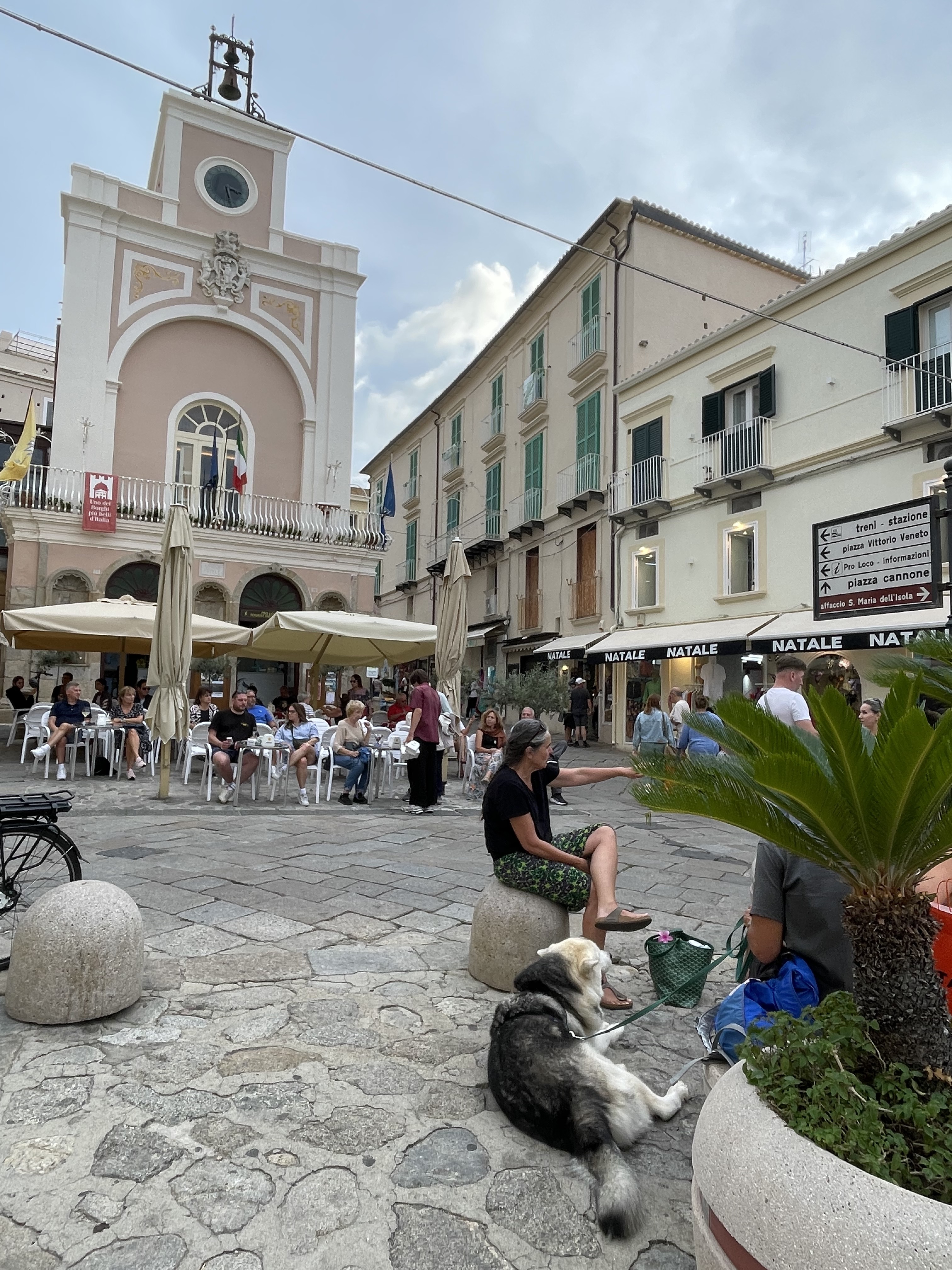
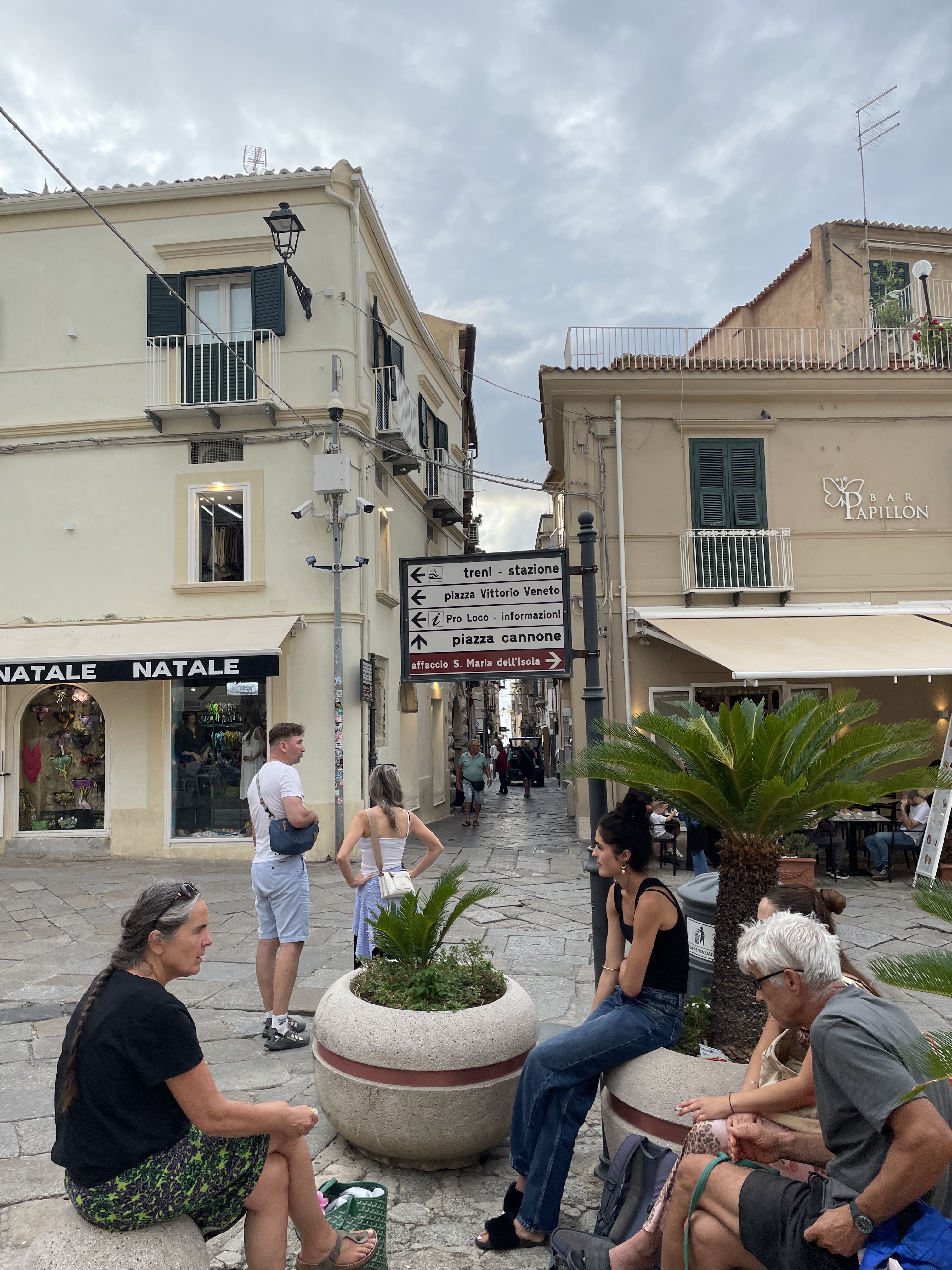
With the sky doing its dramatic work, the town turned into a colour study: a mint-green Fiat 500 hand-painted with fish, parked in a lane where the lanes are pedestrian anyway; the piazza with a dog who had claimed the best stone; a town hall wearing bougainvillea, a blue Vespa under hibiscus, and the belvedere road running between palms with the storm light on it. We also photographed the square's signpost, which points, among other futures, to treni · stazione — filed for later, since it would prove prophetic.
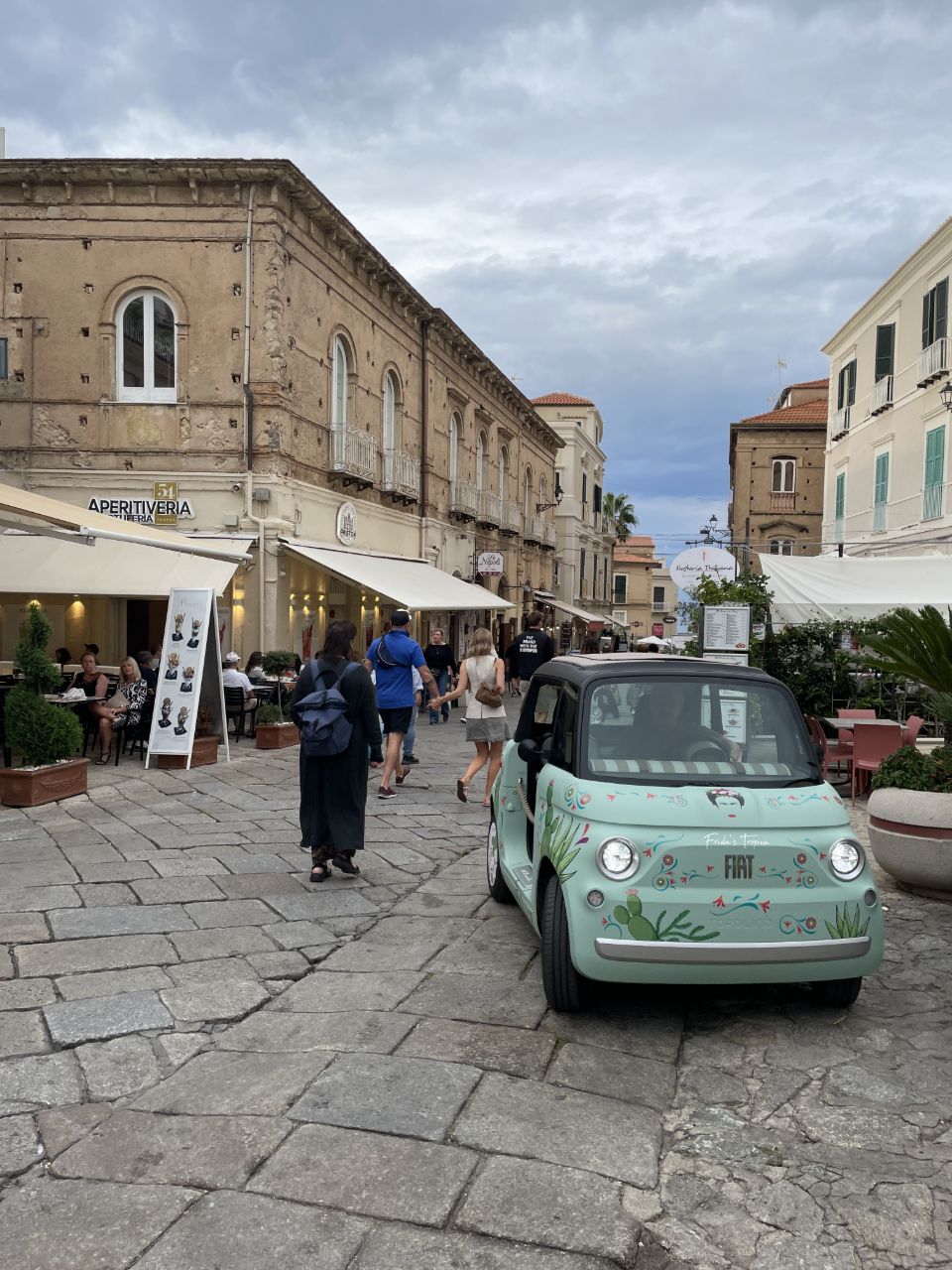
The lanes are pedestrian; traffic is down to one mint-green Fiat 500 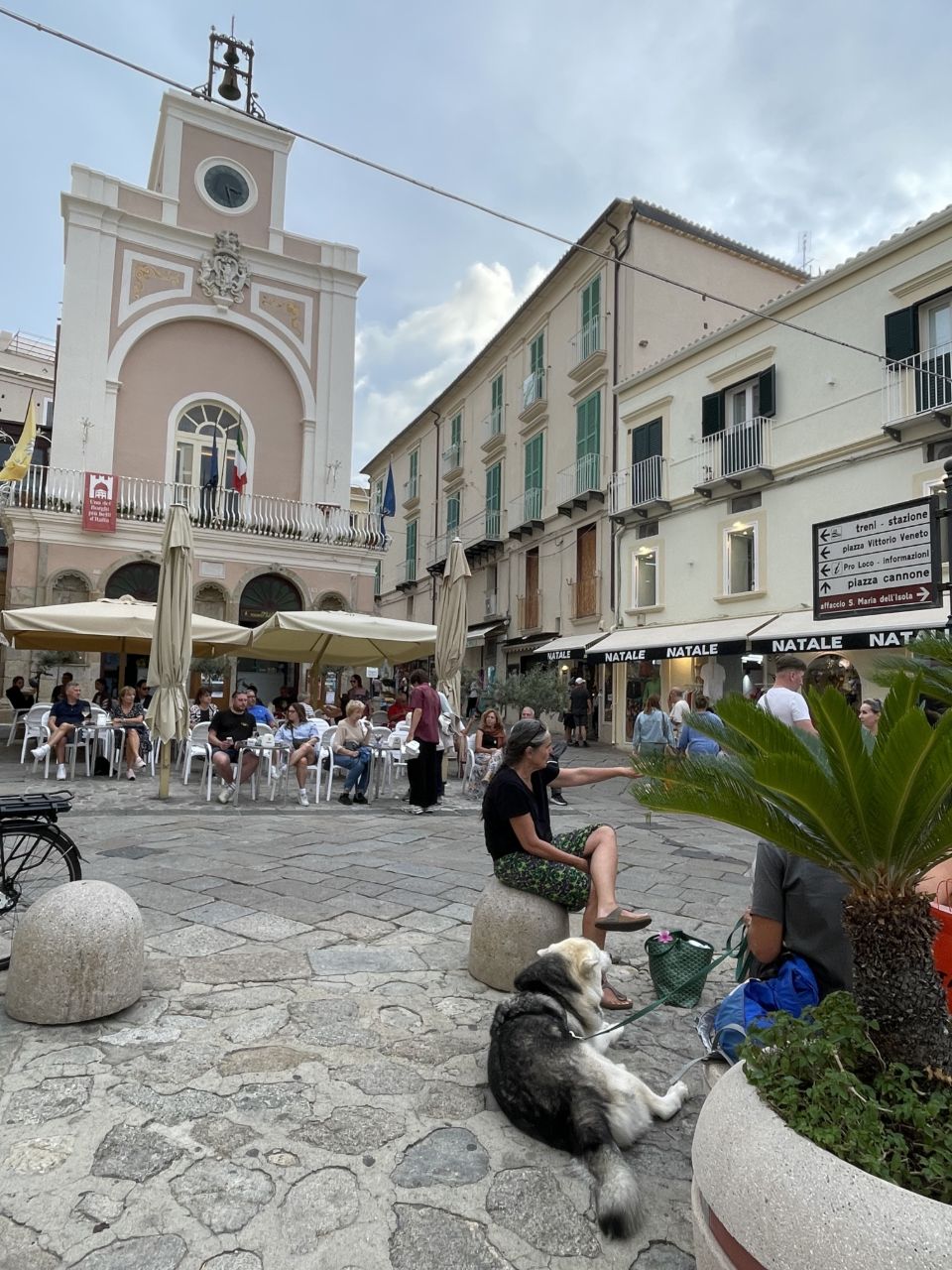
A piazza, a palazzo, and a dog that has claimed the best stone 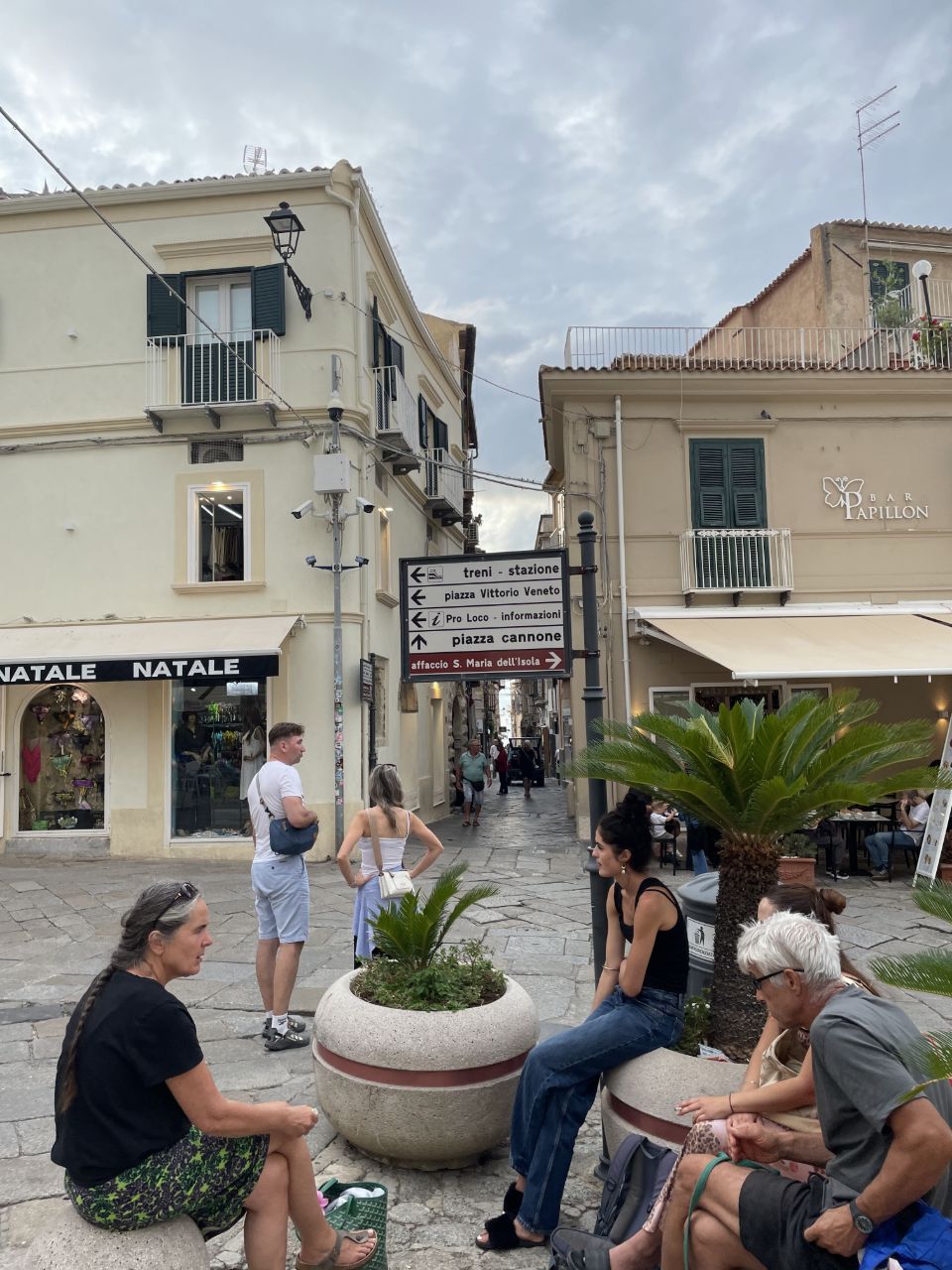
The signpost: treni · stazione, filed for later 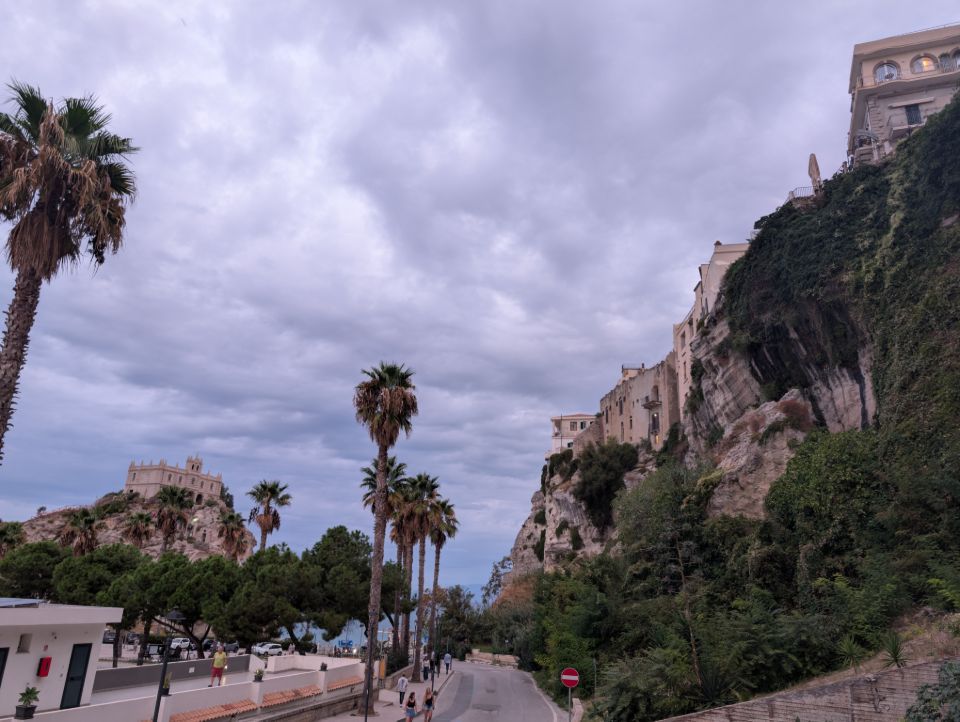
The belvedere road between palms, under storm light 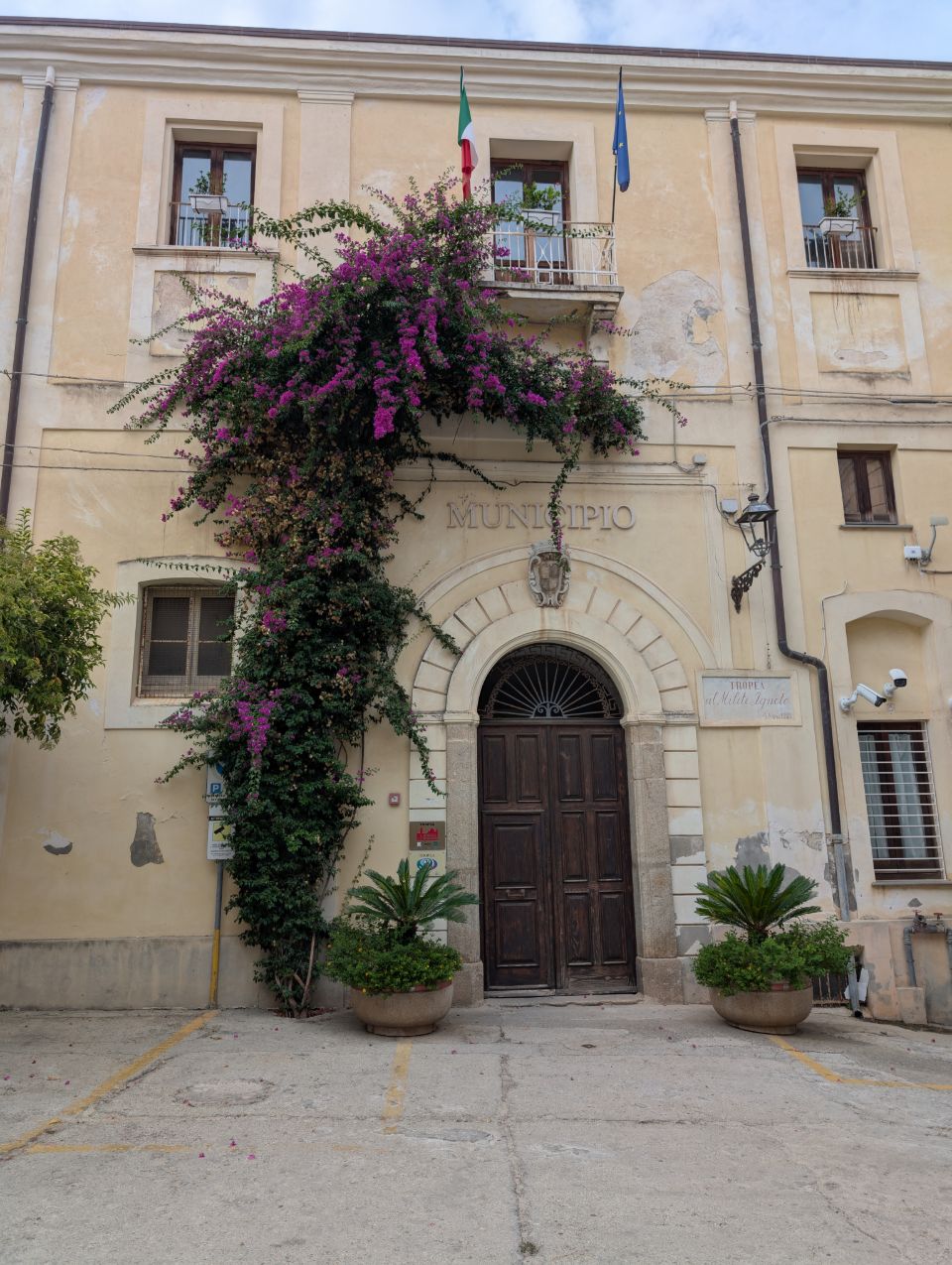
The town hall, wearing bougainvillea 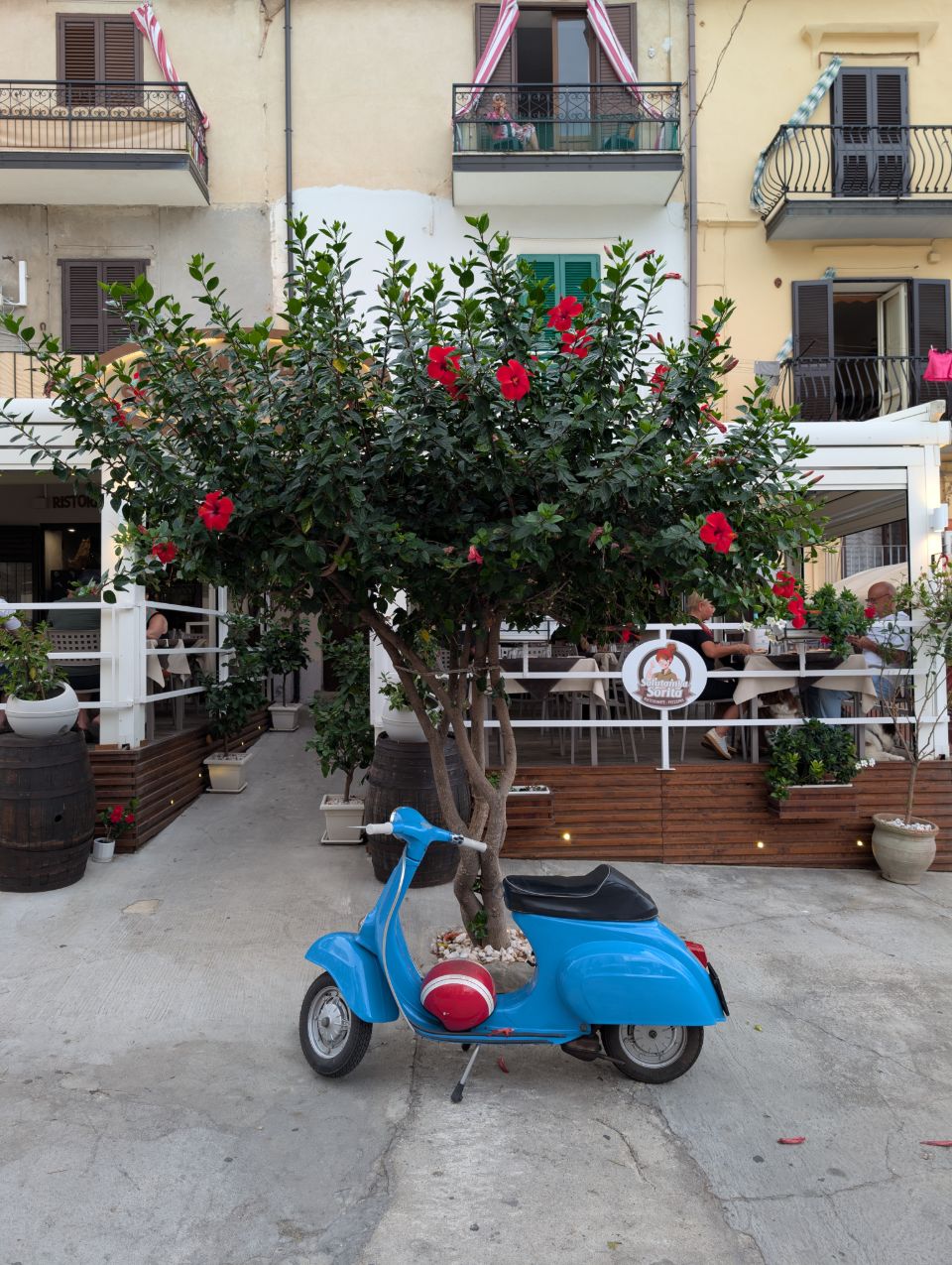
A blue Vespa, parked where Vespas are supposed to park
Golden hour, all the way down to the marina
Late afternoon the light came sideways and gold, and we spent it walking down. The cliff houses got theirs full on; the island took a last warm stripe across the water; the pedal fleet sat off duty and photogenic; Anna held down the sea wall in what light was left. And below everything the marina opened out — breakwater, boats, the whole coast rolling north with the town still on its crag, lit.
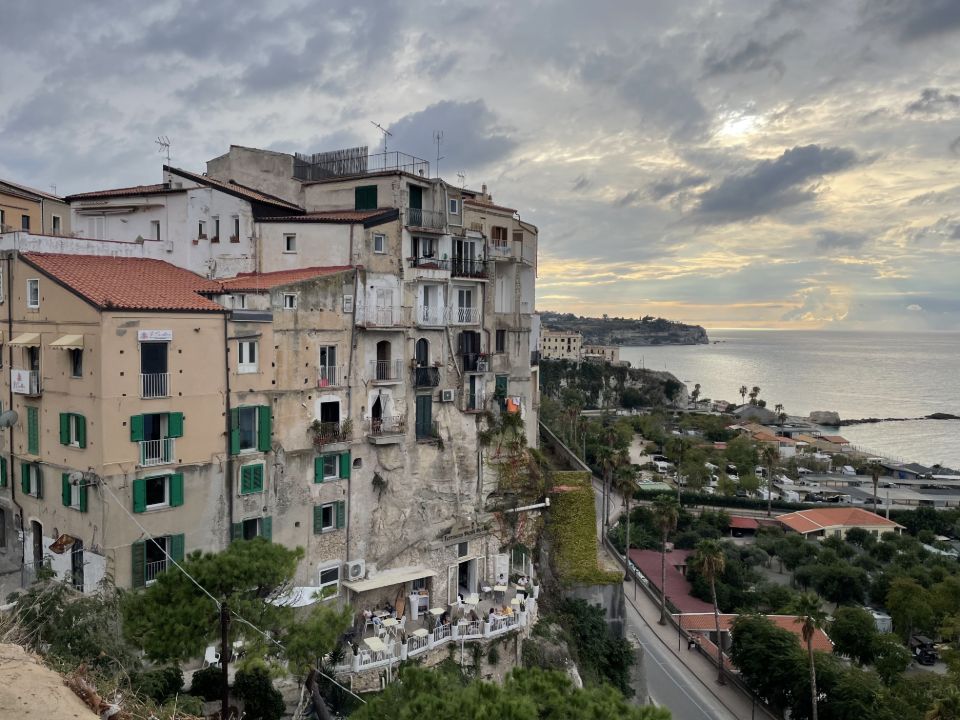
Storm light over the cliff houses, gold at the last minute 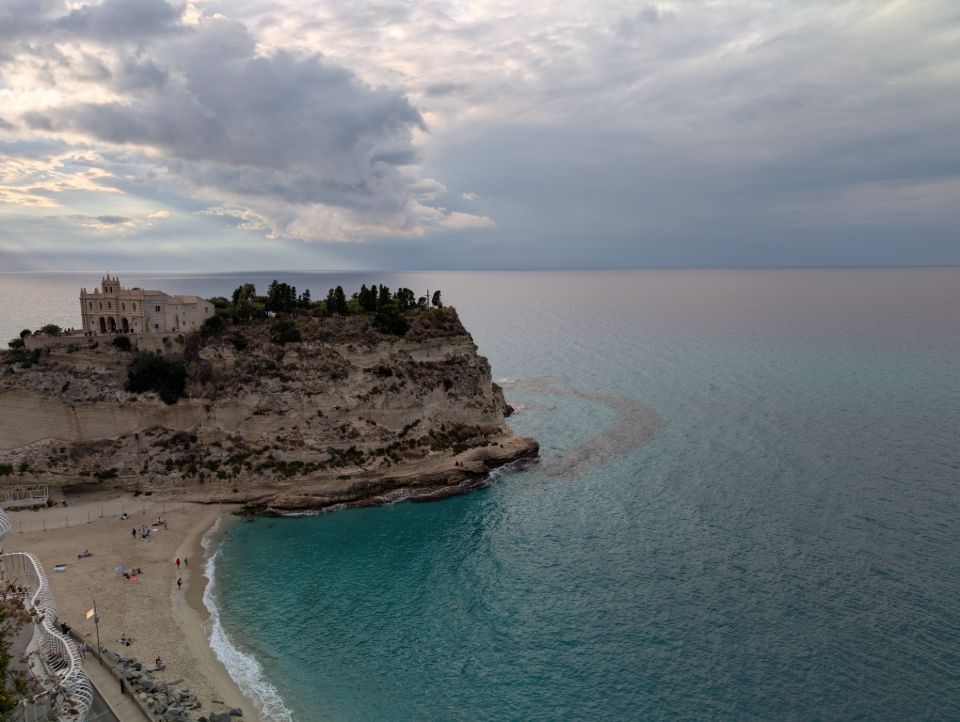
The island, storm silver, with a last warm stripe on the water 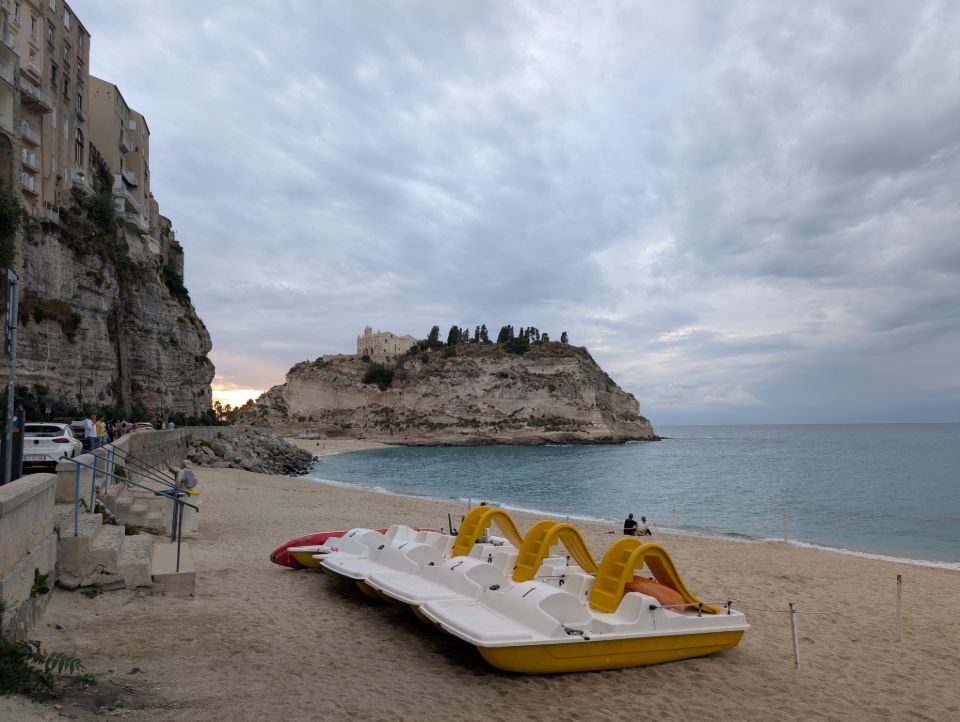
The pedal fleet, off duty, with the island keeping station 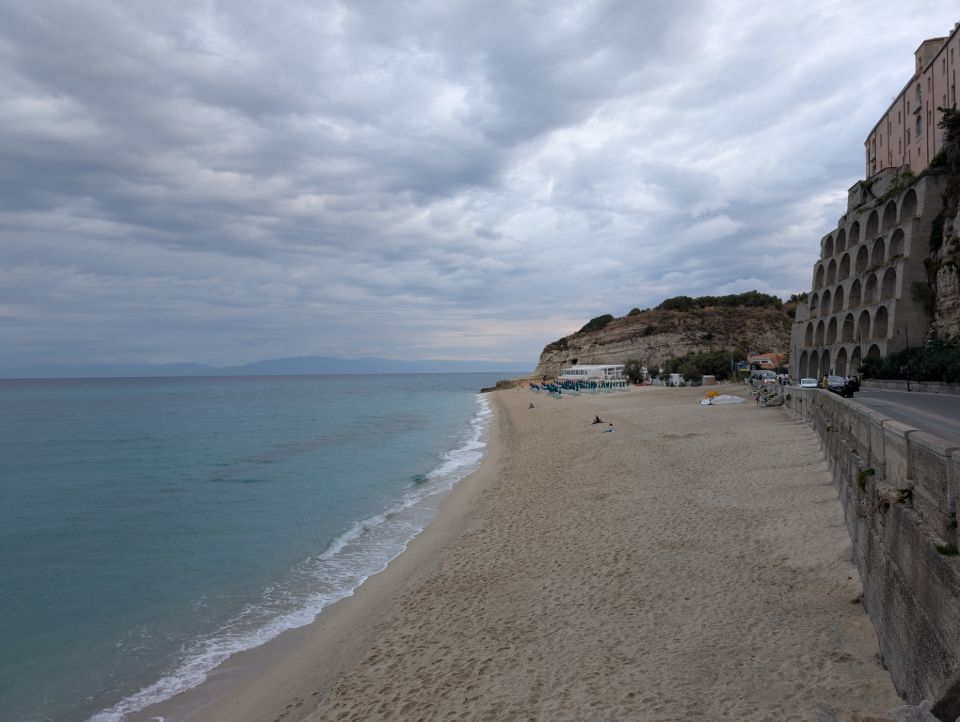
The seafront road, with the promenade's house of arches 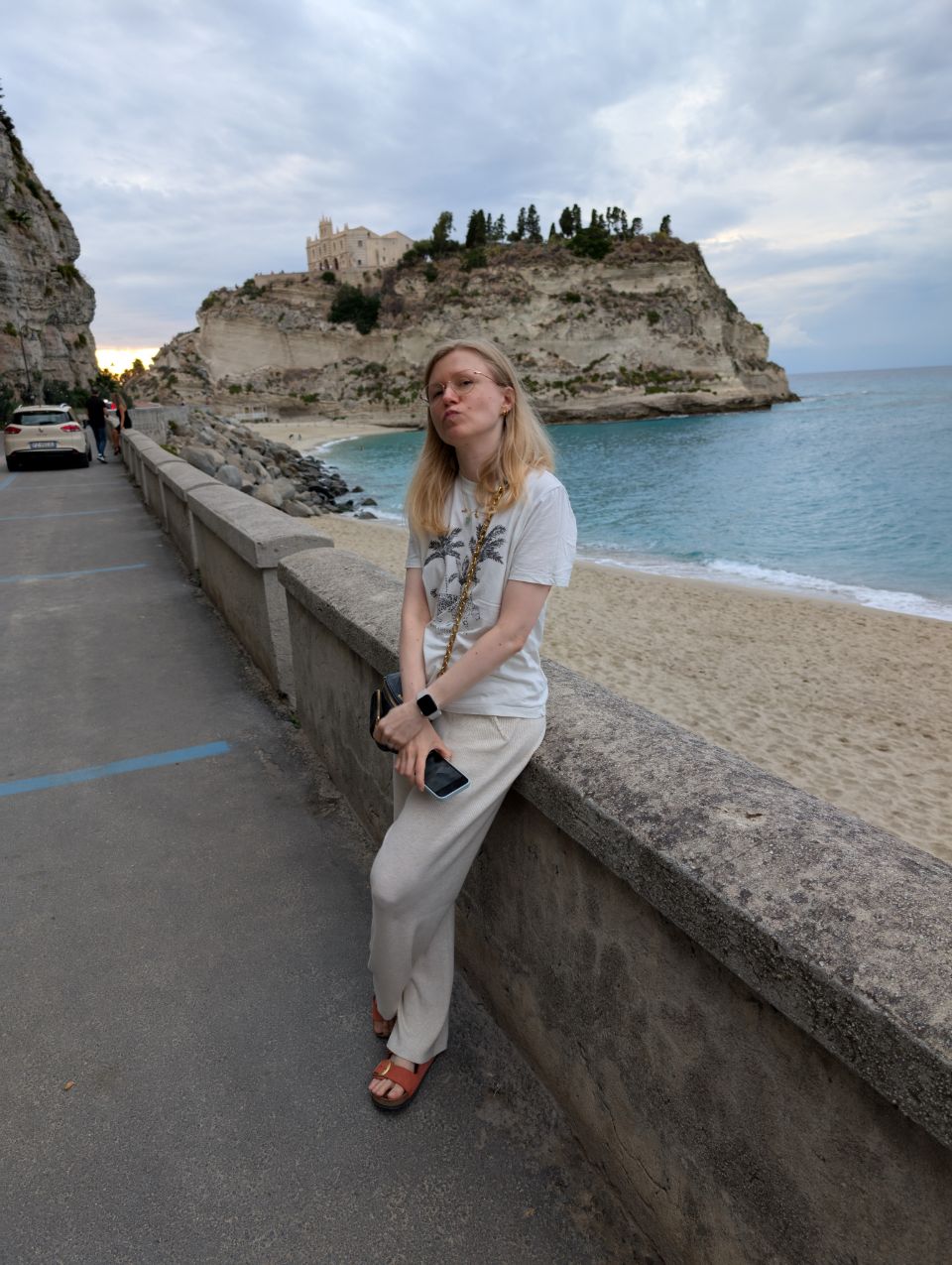
Anna, on the sea wall, sunset behind her 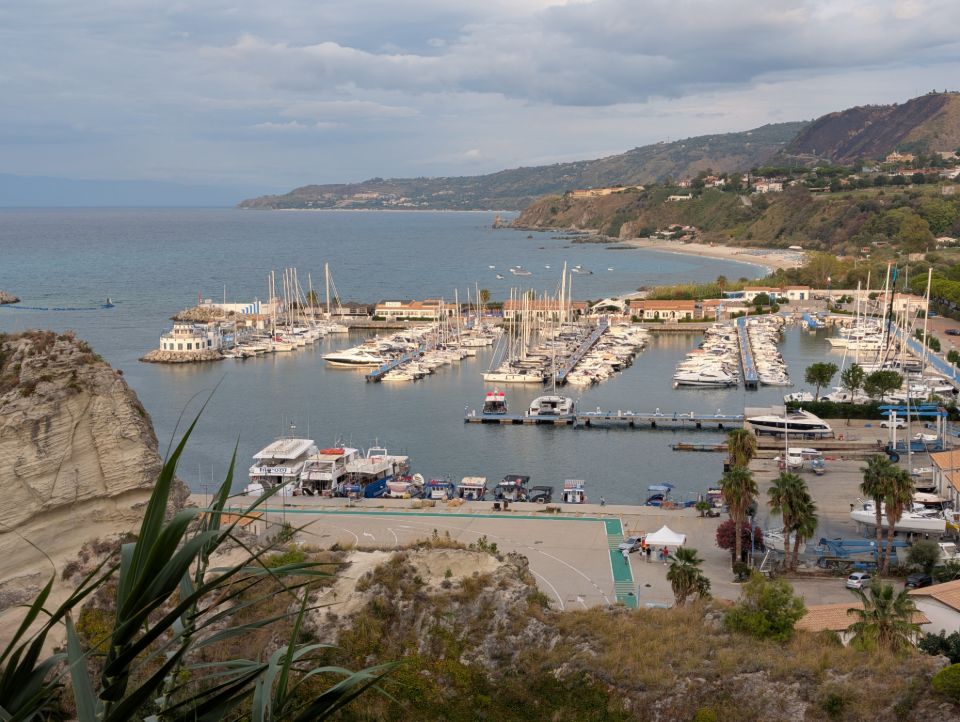
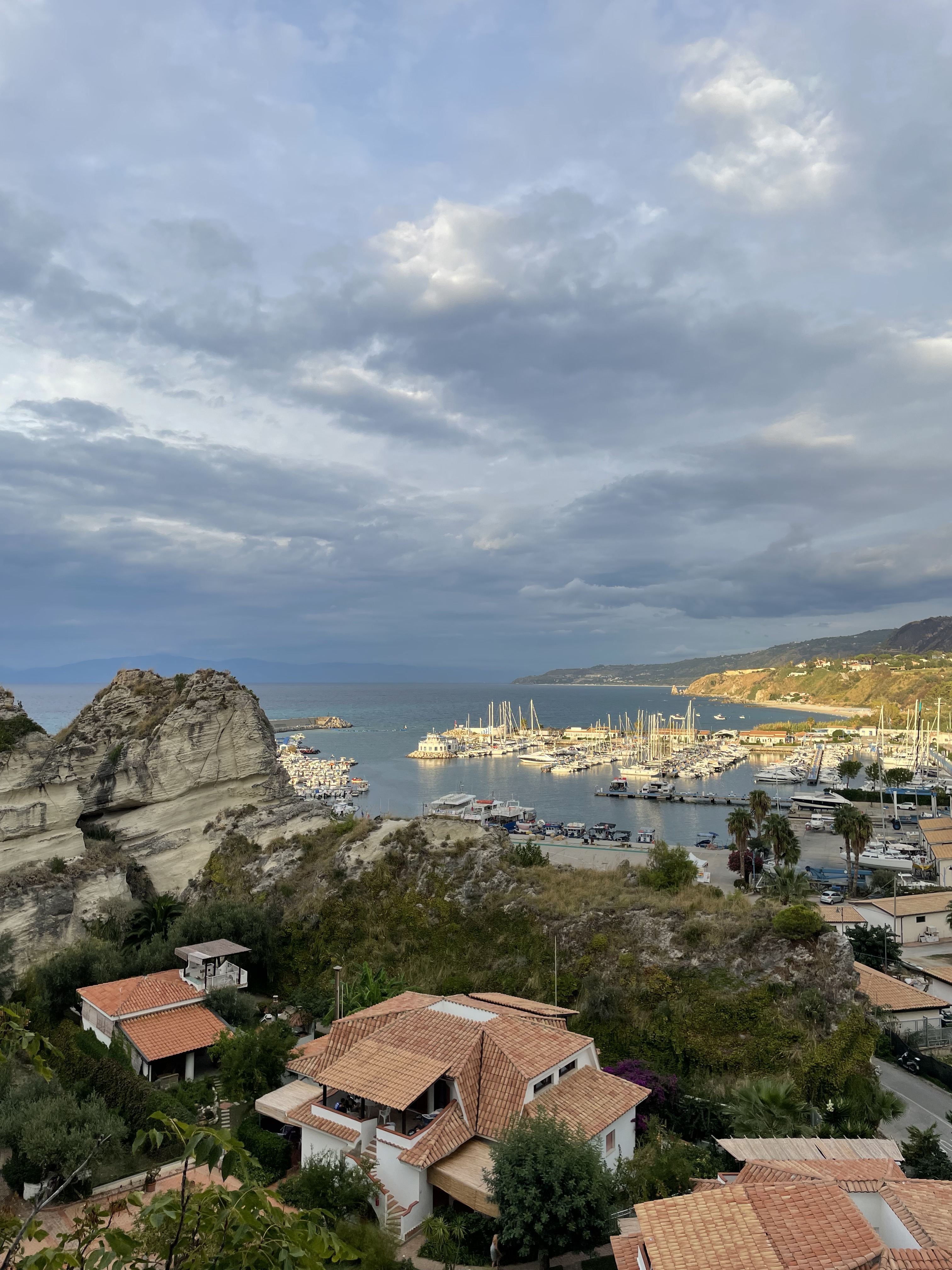
The marina, complete: breakwater, boats, the coast rolling north 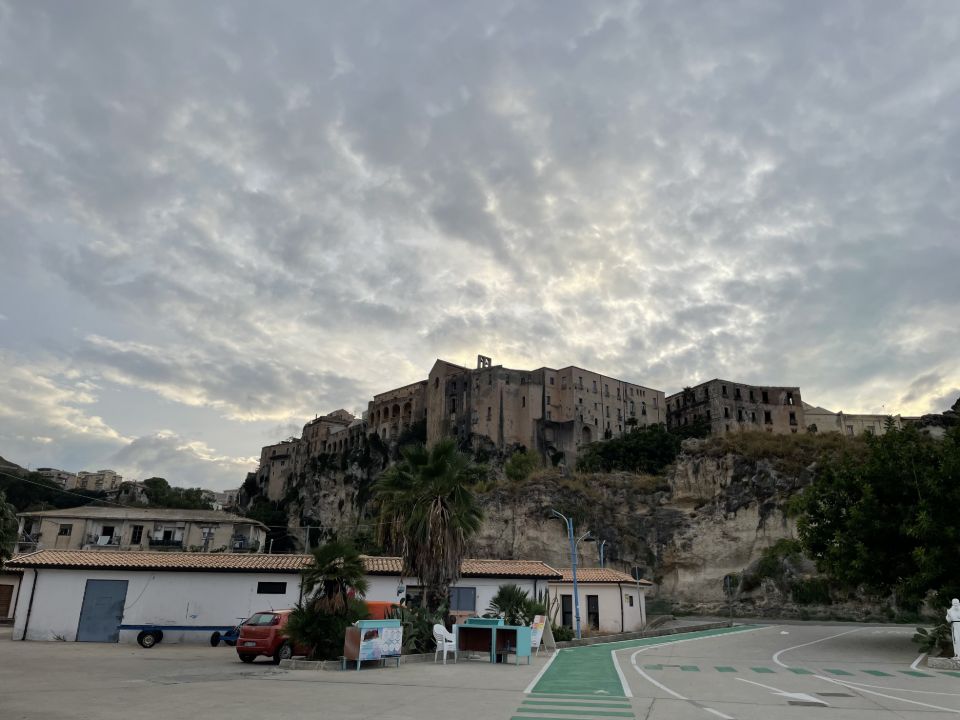
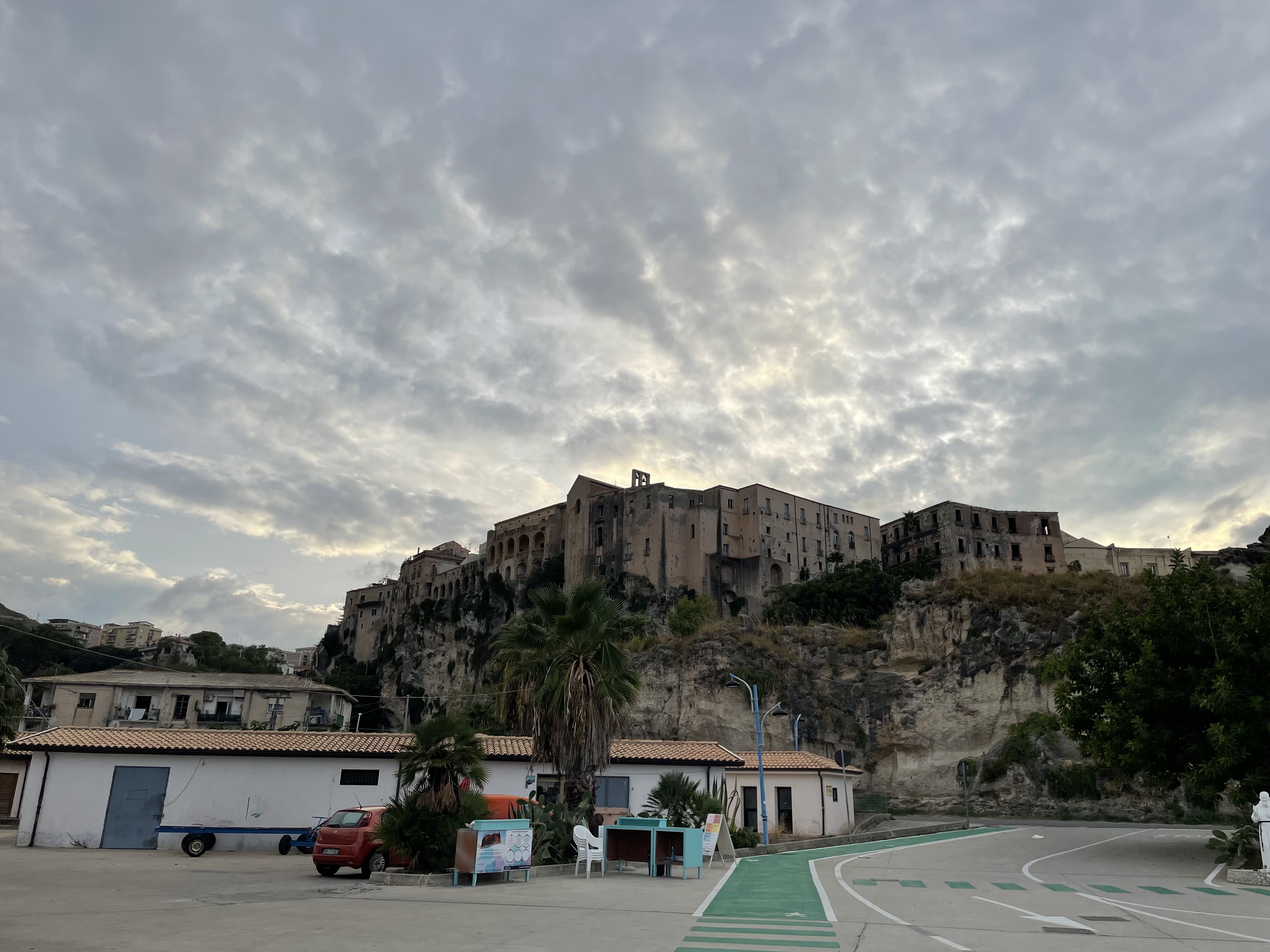
The old town, still holding the evening light on its crag
At the railing again, at sea level
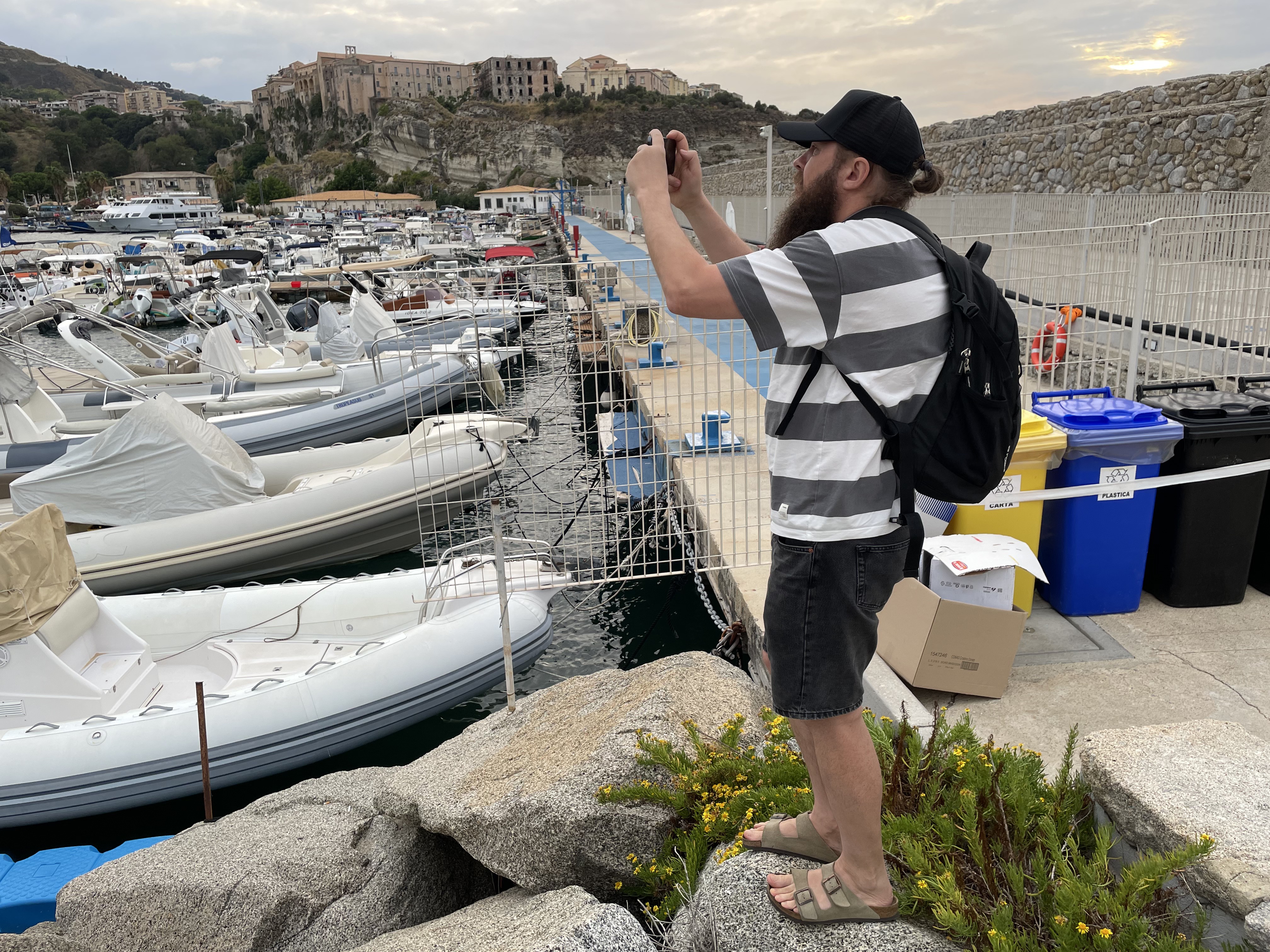
At the waterline the tower railing offered the same view one last time, so we split the work: I photographed the boats, then Anna photographed the boats, and the two results came out interchangeable — which we've decided to consider a marriage milestone. By then the sun was down to a sliver on the breakwater, and the tufa had arranged itself into an arch at the end of the lane, as if to give the evening a proper exit.
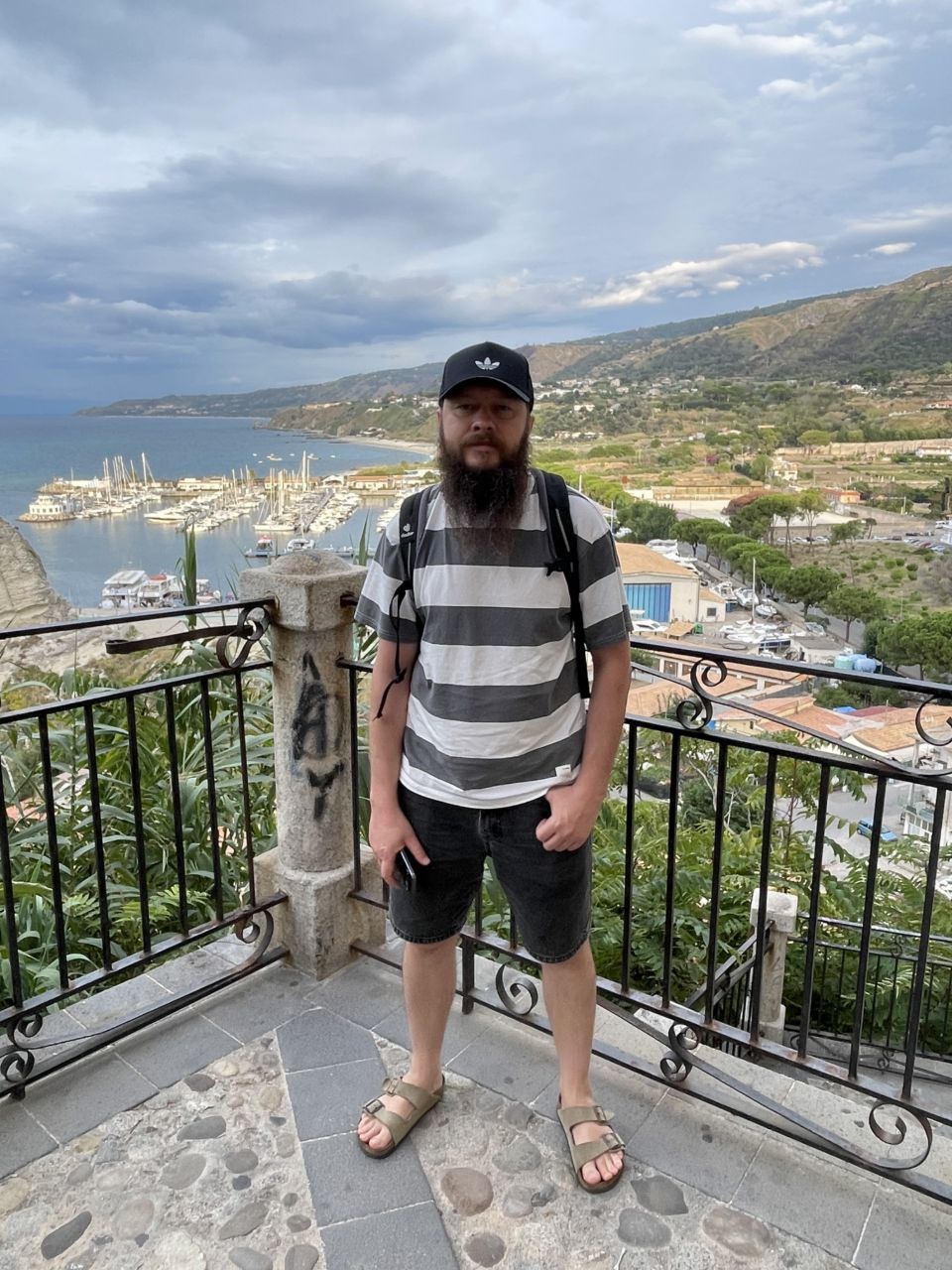
Oleg's turn at the tower railing 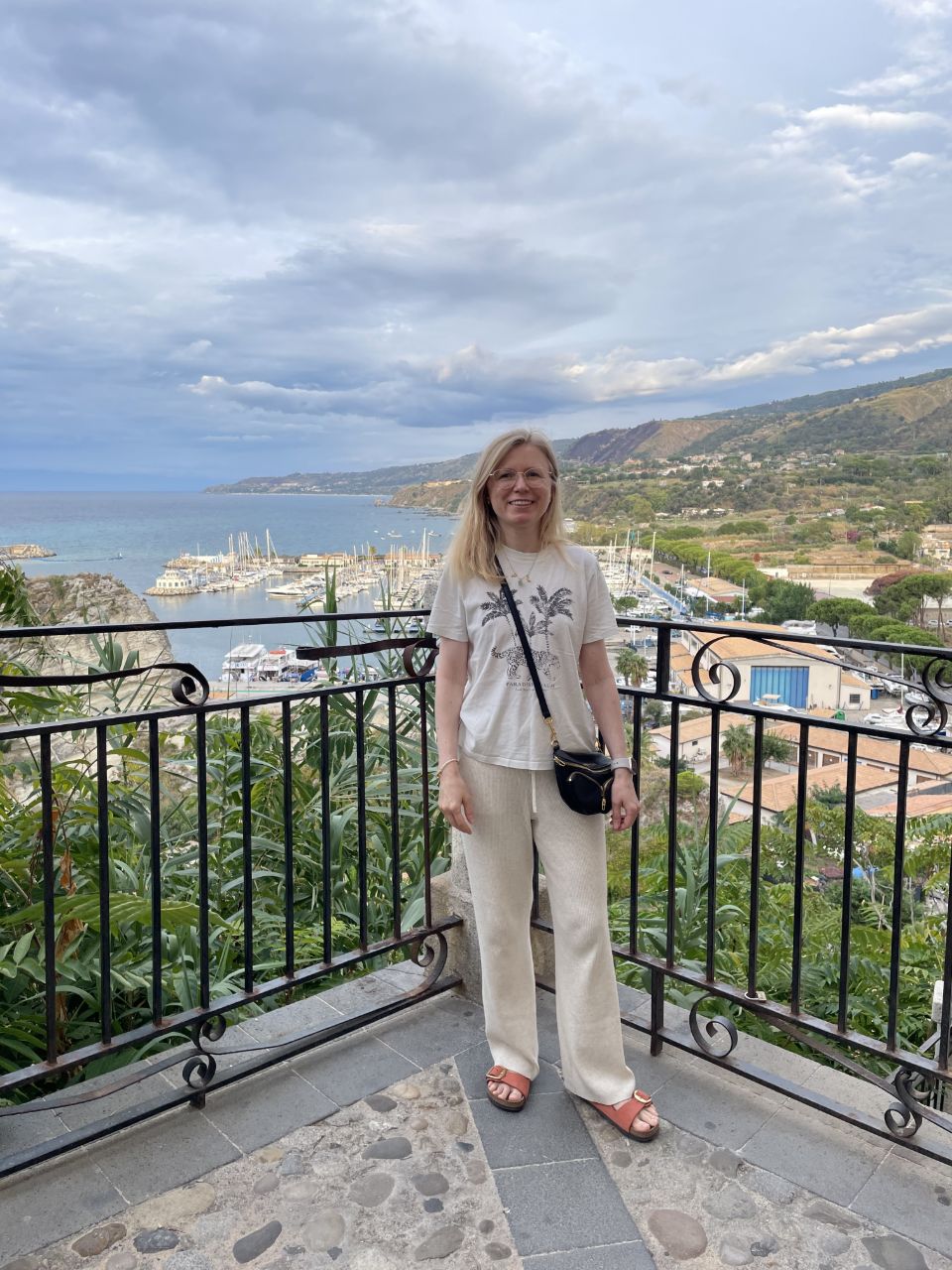
Anna's turn at the same railing — the results interchangeable 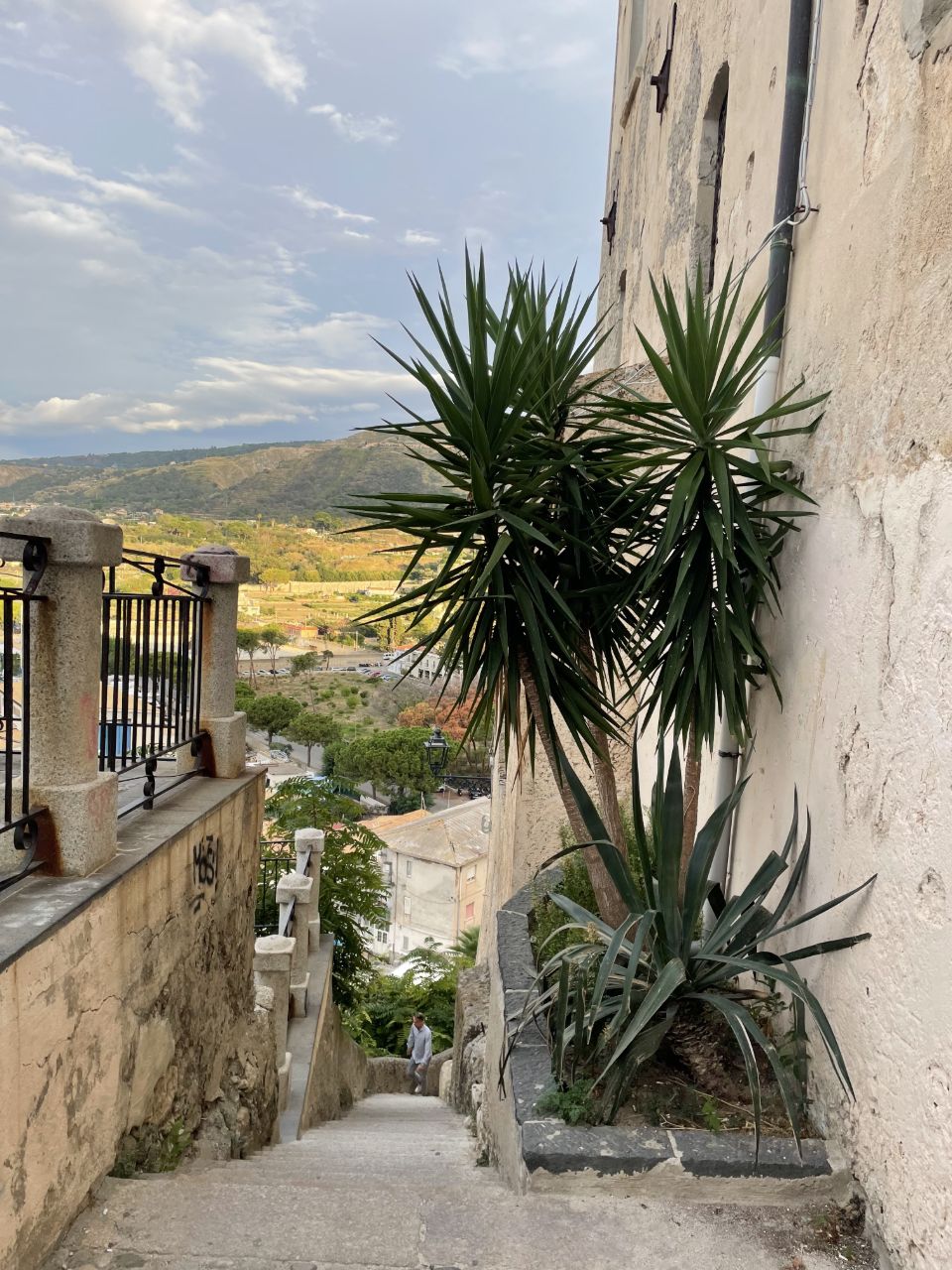
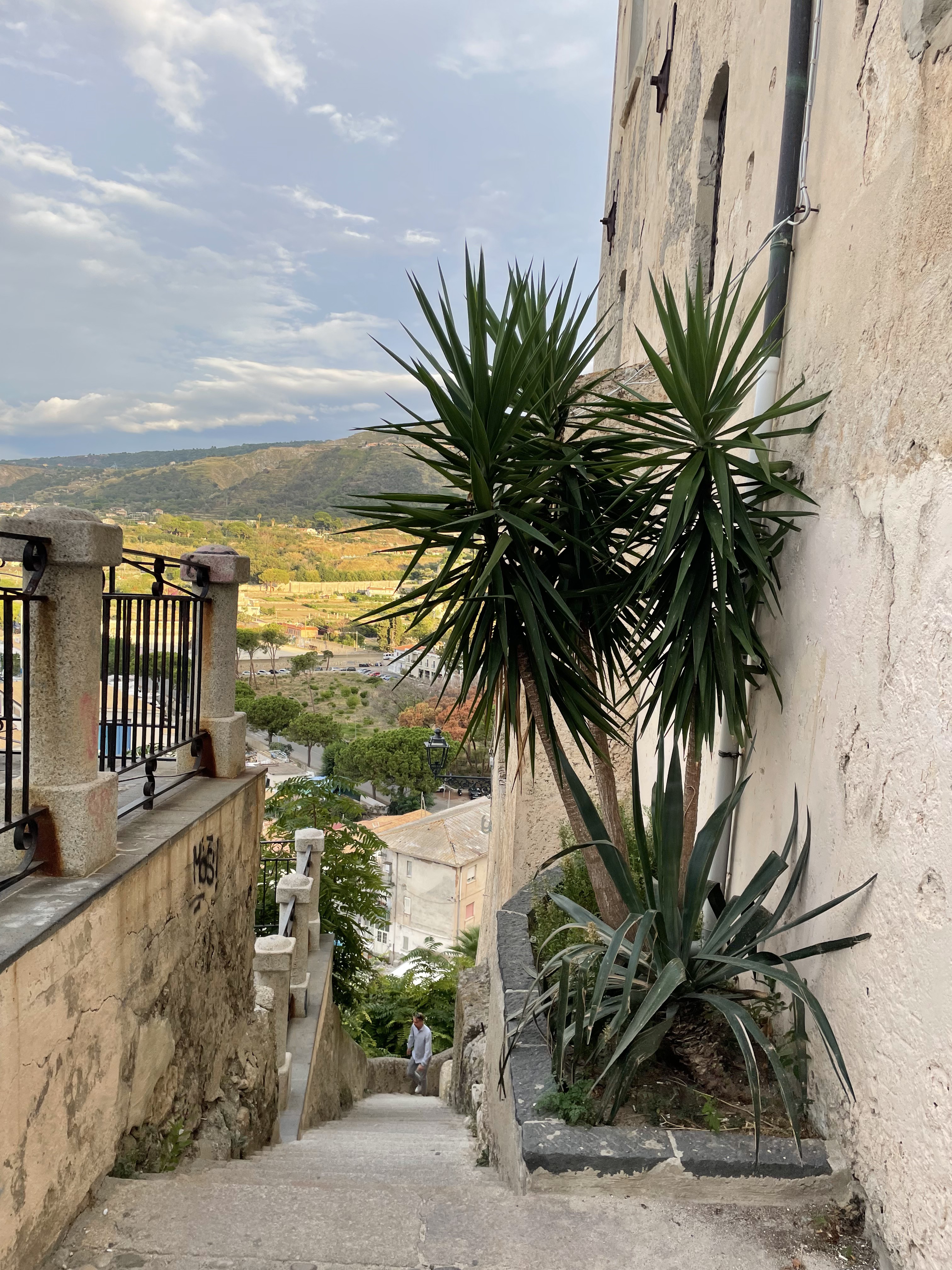
The way down, between the wall and the sea 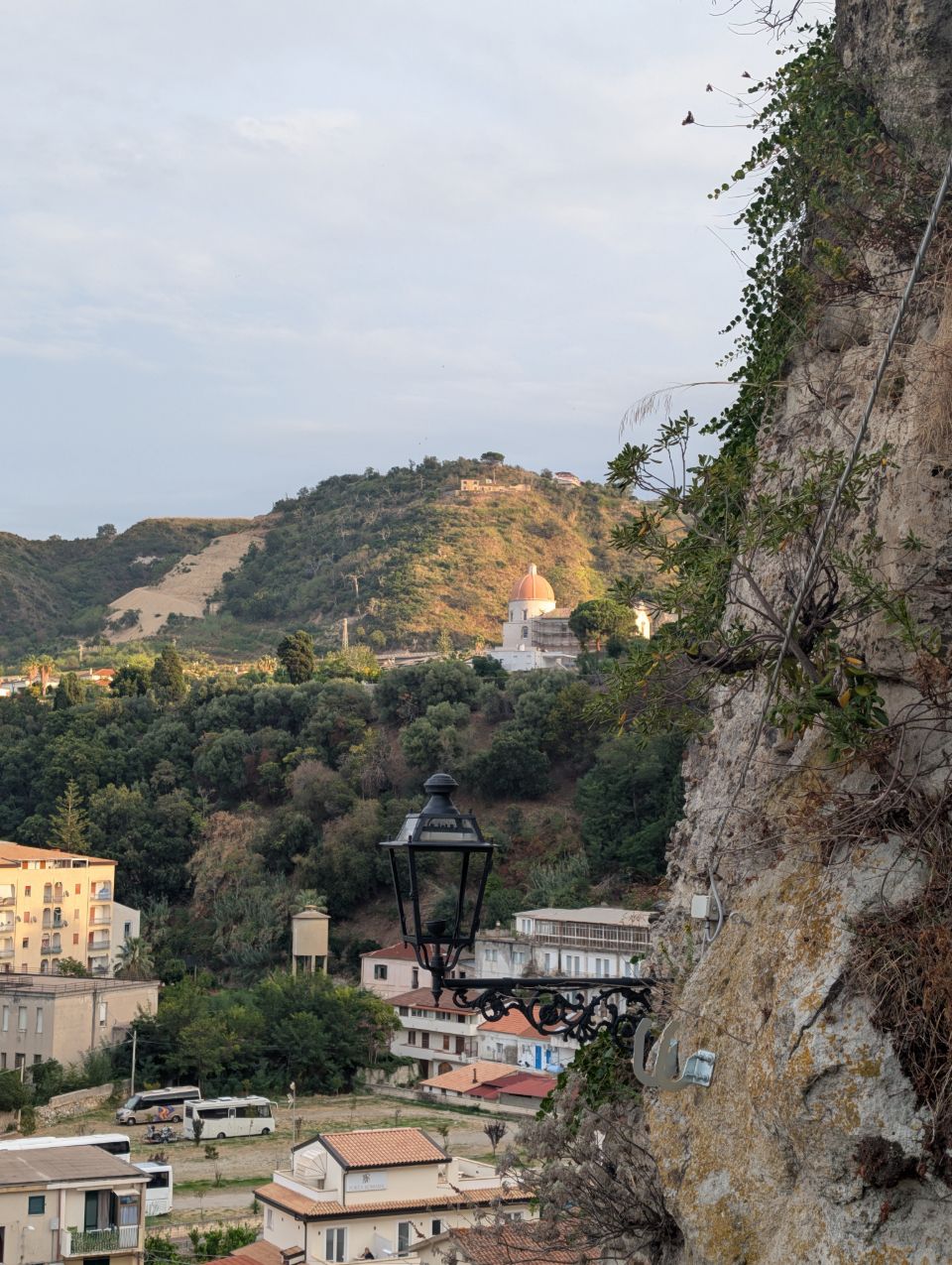
The crag's lamp, with the dome over it 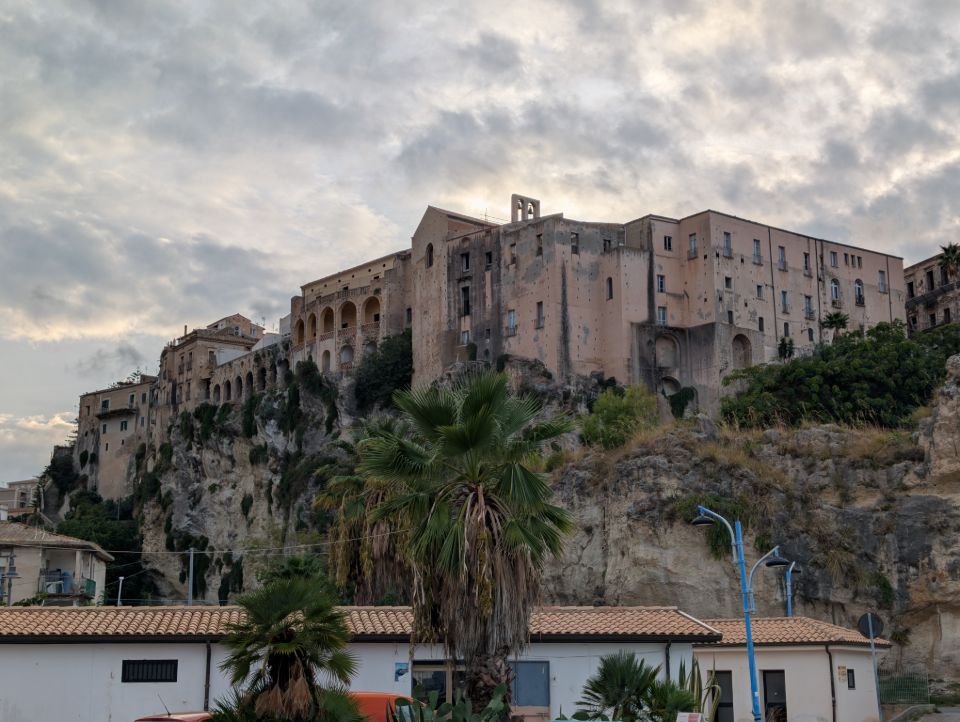
The palazzo on the cliff edge, up close, being eaten beautifully 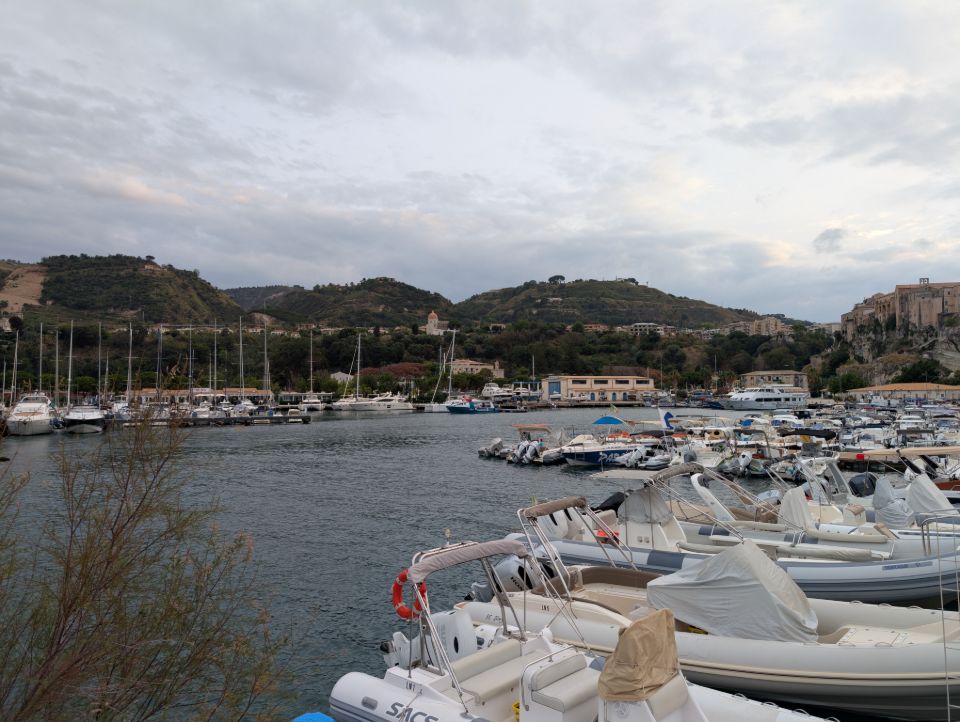
The marina, wide, with the palazzo on its cliff above 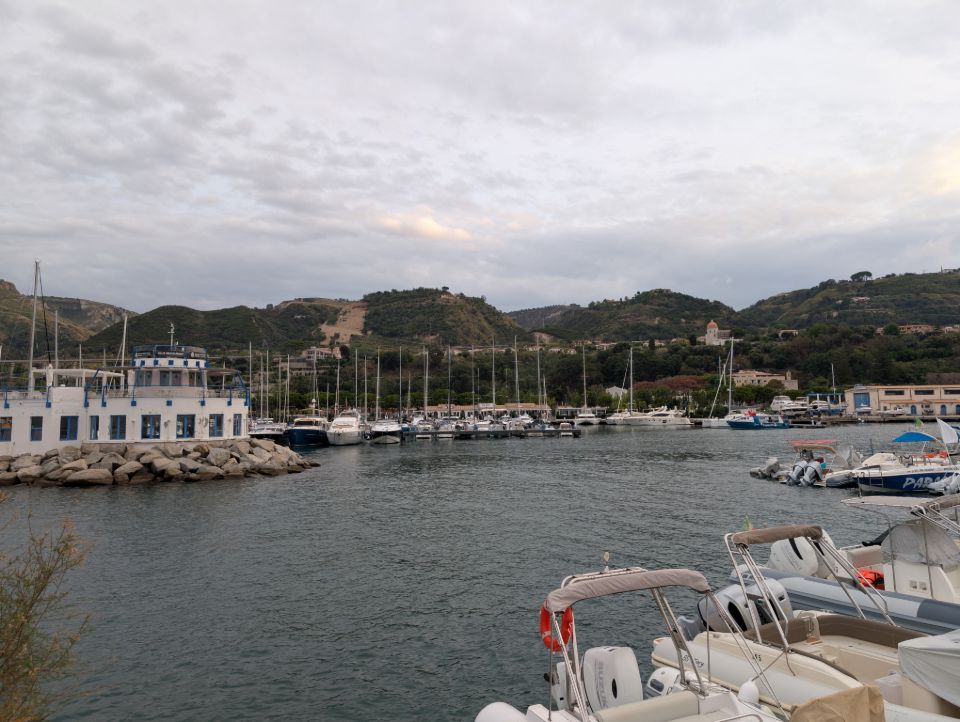
The harbourmaster's building, white and official on the mole 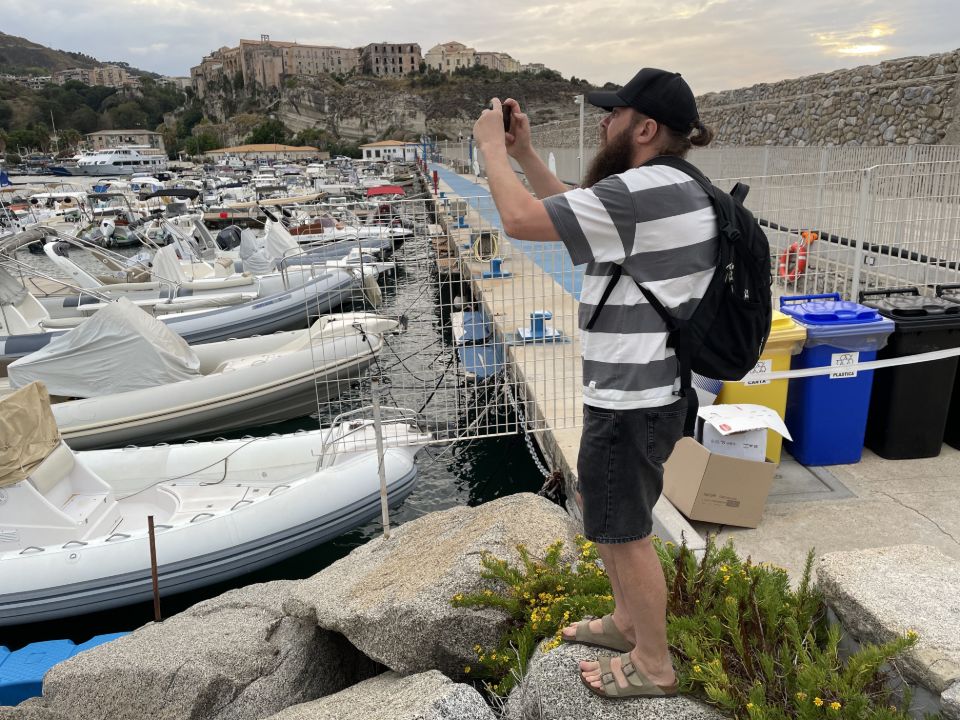
Documentation of the documentation 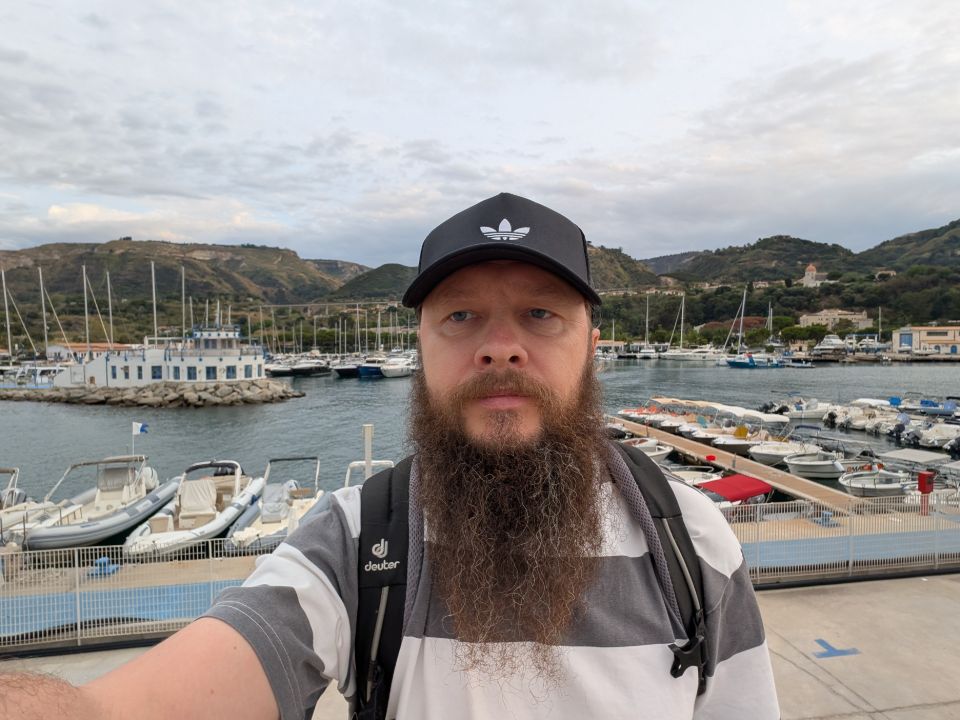
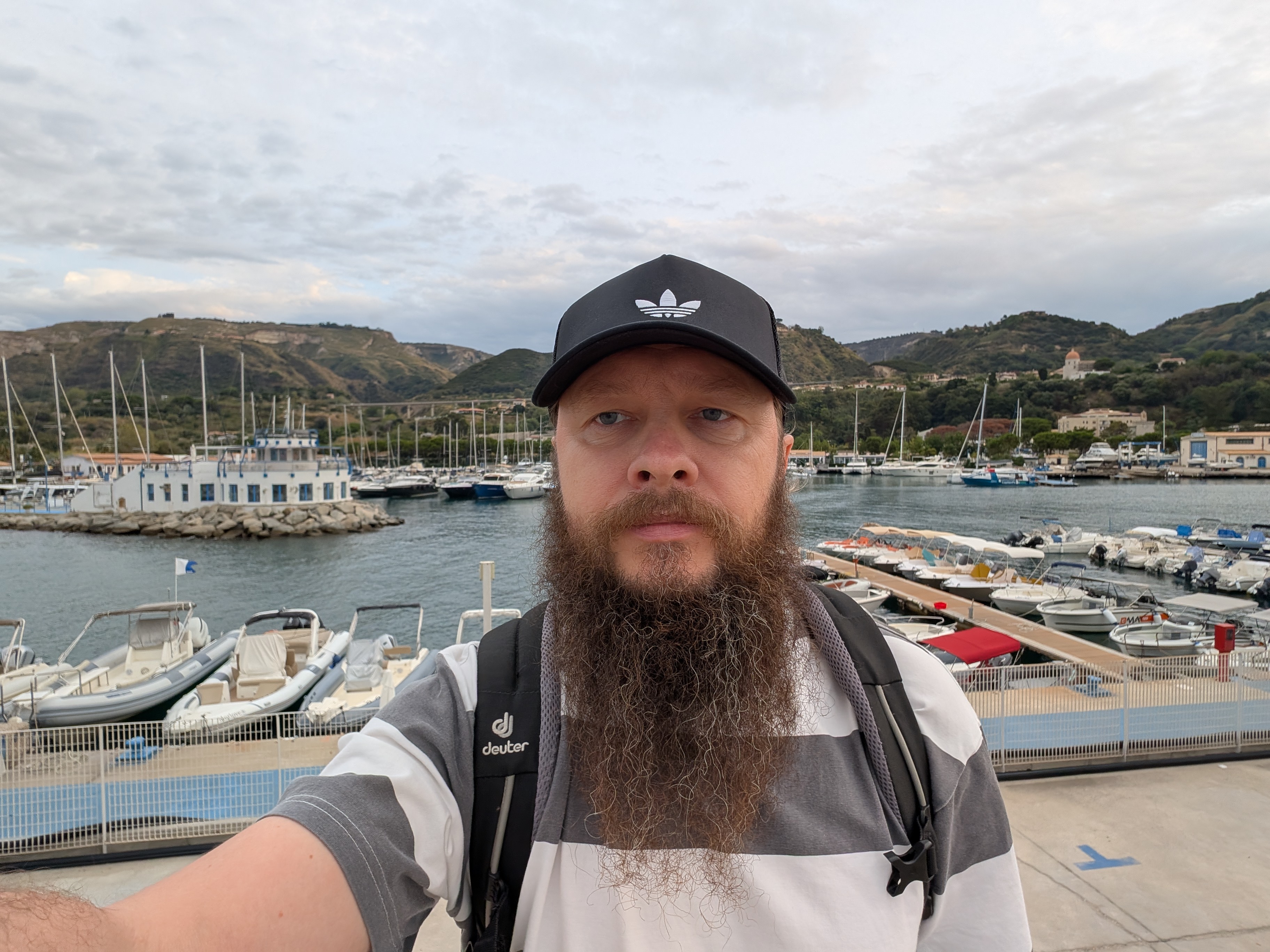
Oleg, self-portrait, the marina over his shoulder 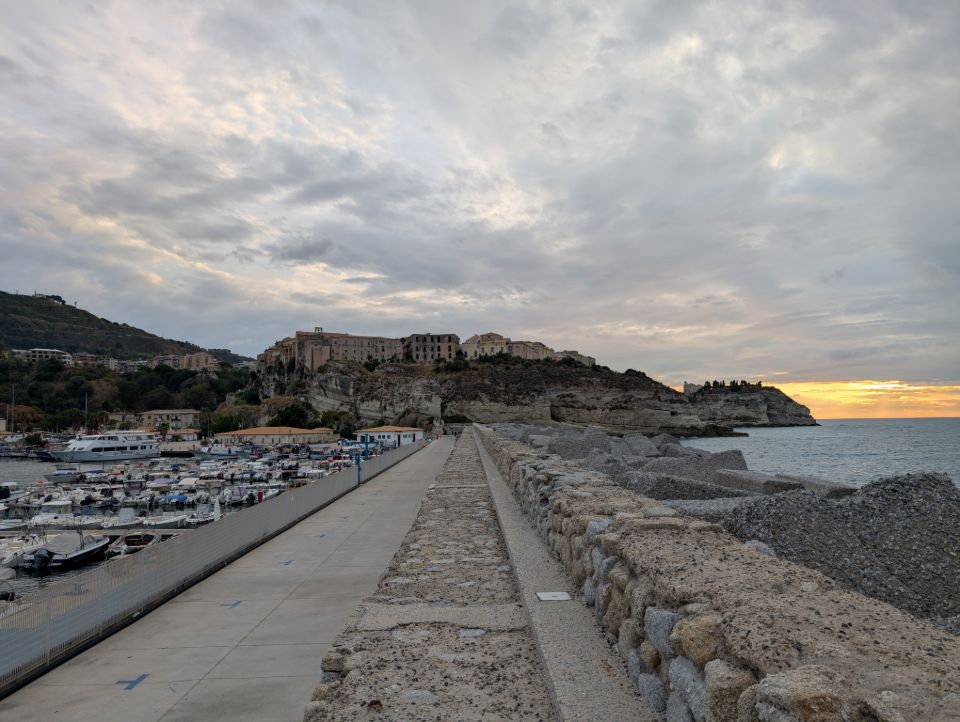
The sun, down to its last sliver on the breakwater 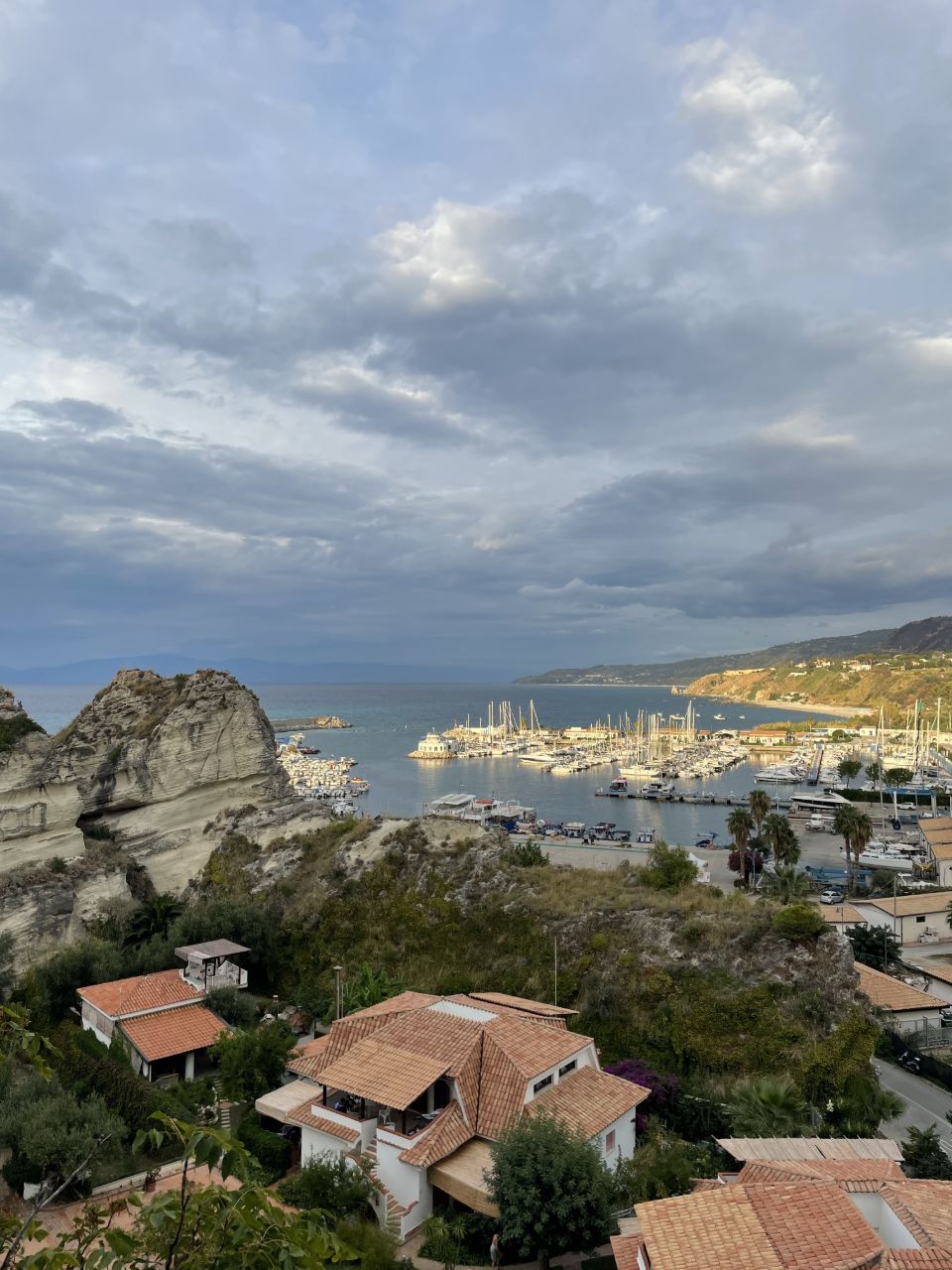
The exit from the cliff path: the whole marina below, the big tufa at the lane's end
Eating twice, on purpose
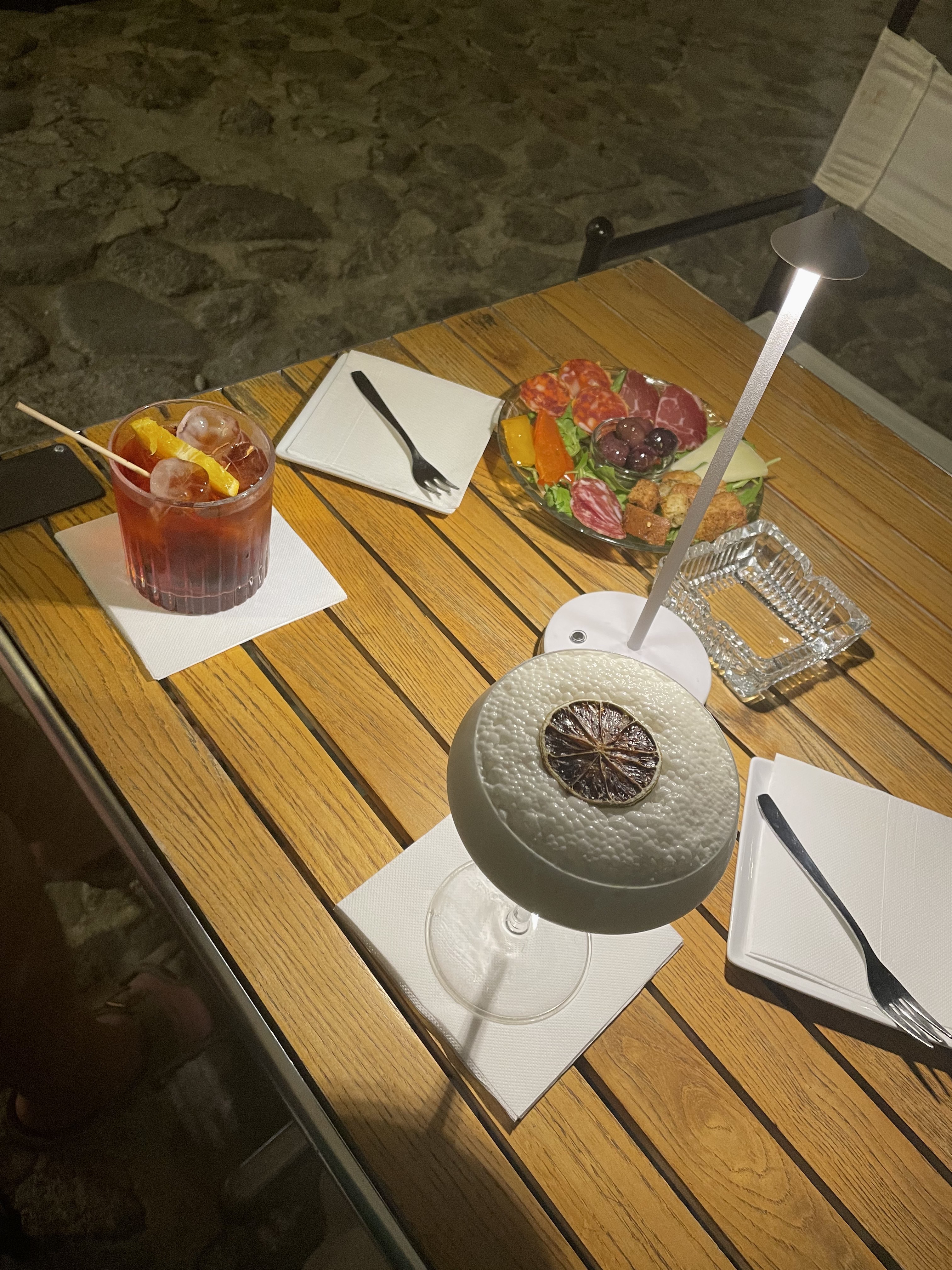
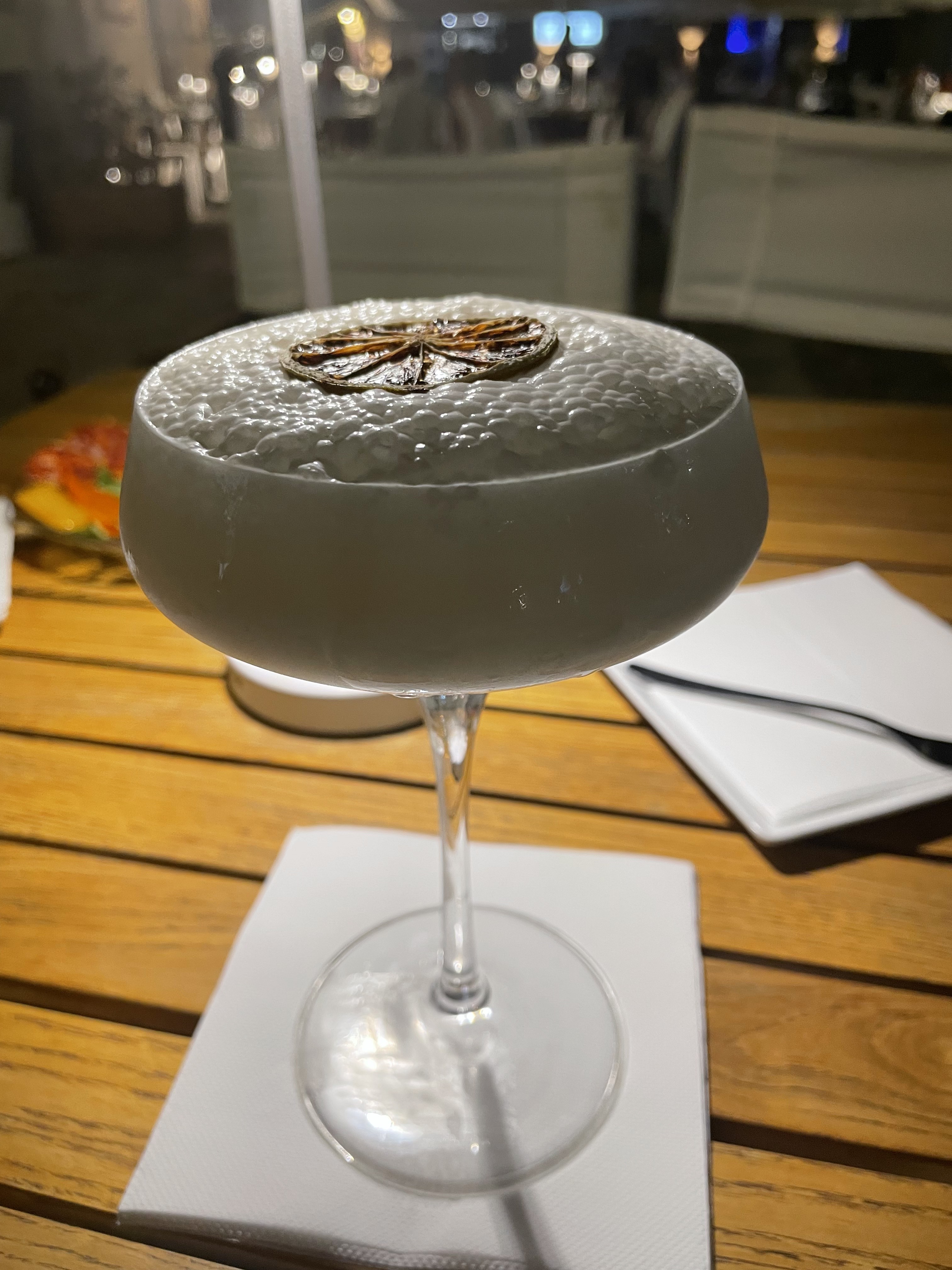
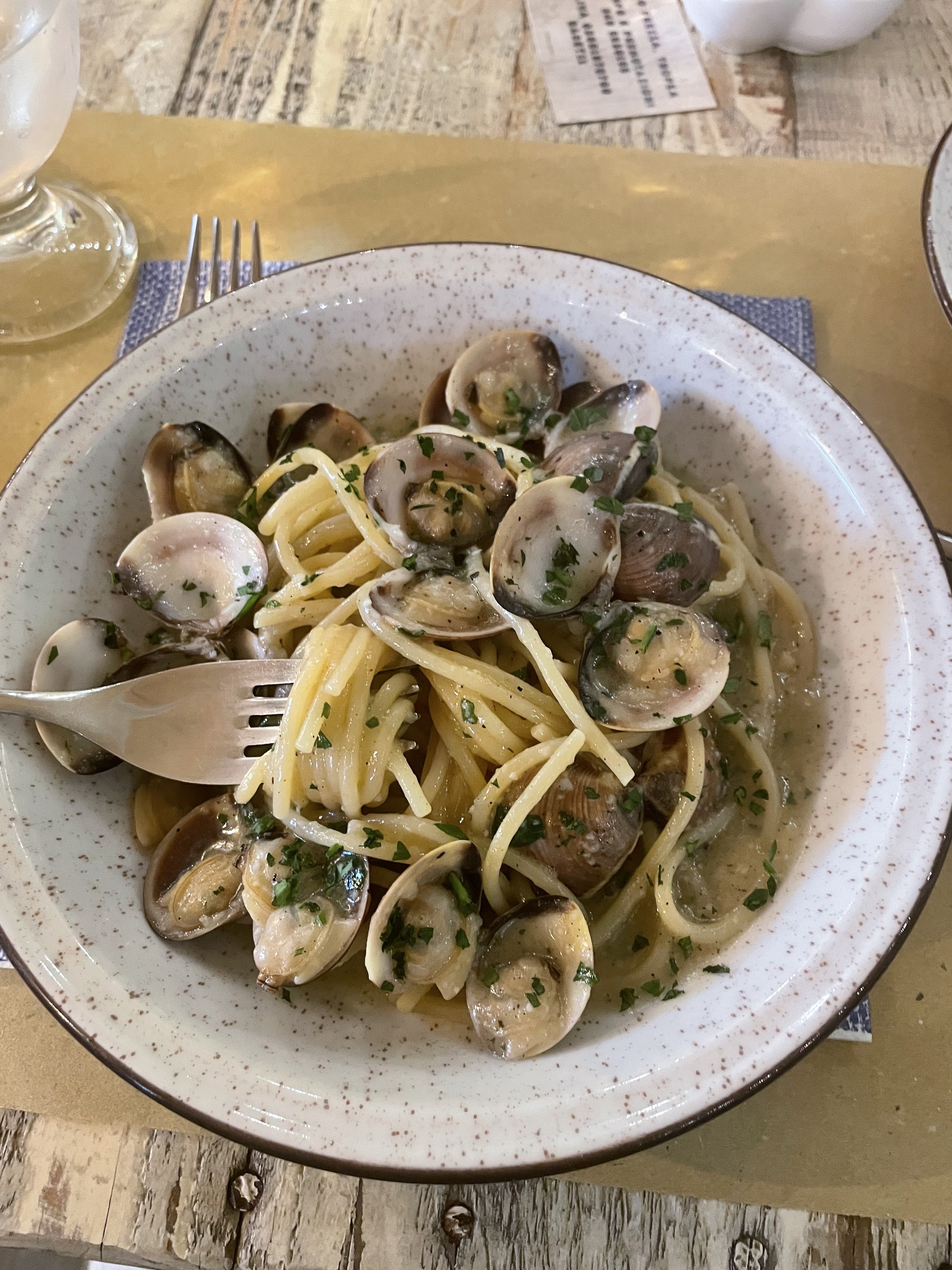
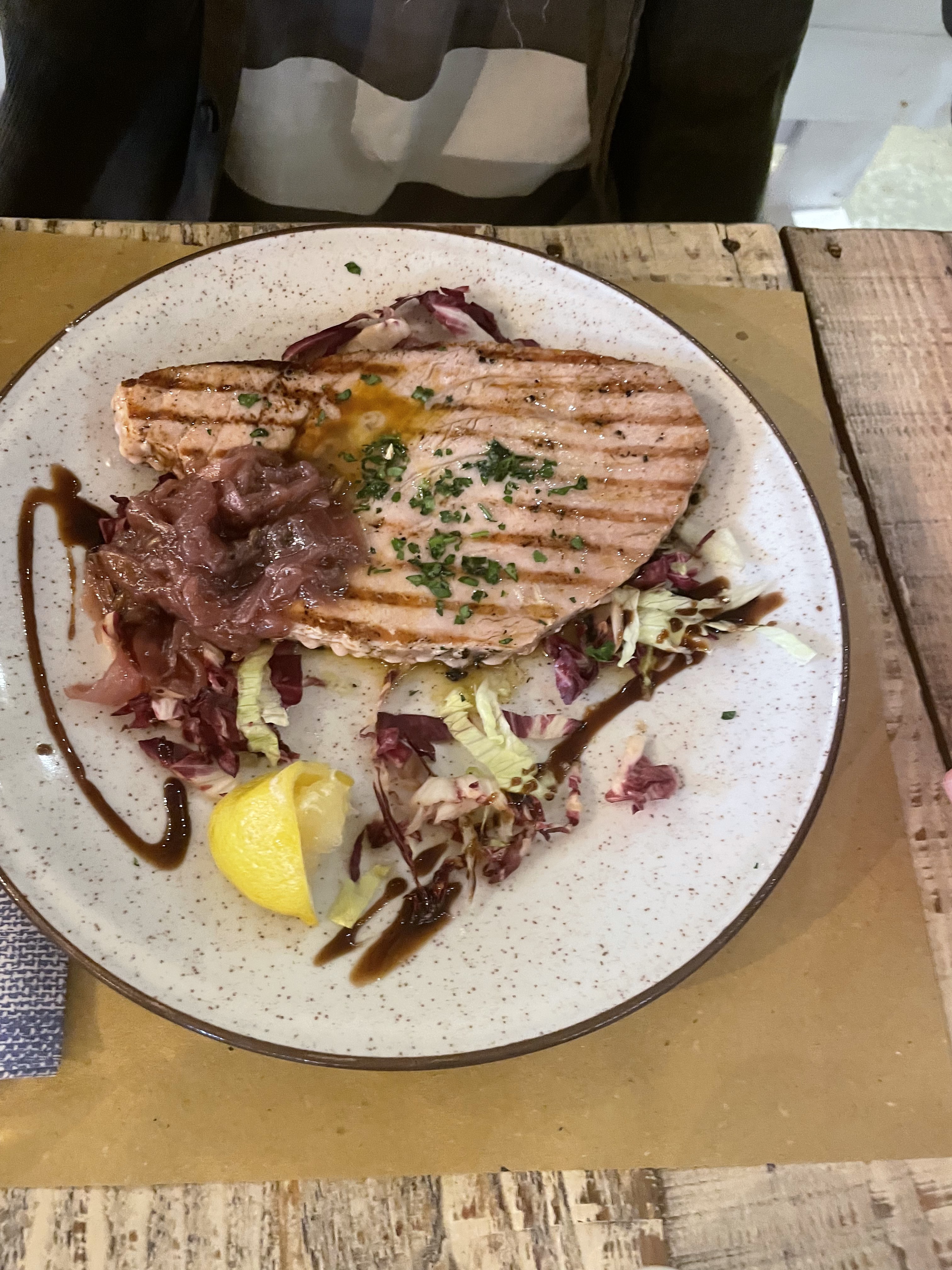
Tropea eats well and often, and we matched it. Aperitivo arrived on cobbles: a negroni, a coupe crowned with a dried orange, and a board of charcuterie — dinner one and a half. Later that night, plates: spaghetti alle vongole, and grilled swordfish dressed in the town's own red-onion marmalade, the Tropea onion, which turns out to be worth its legend. The second evening we ate standing at the counter of a sandwich bar near the marina, where 'nduja arrived in its own small terracotta pot and was, per the photographs, handled from then on with a mixture of respect and regret.
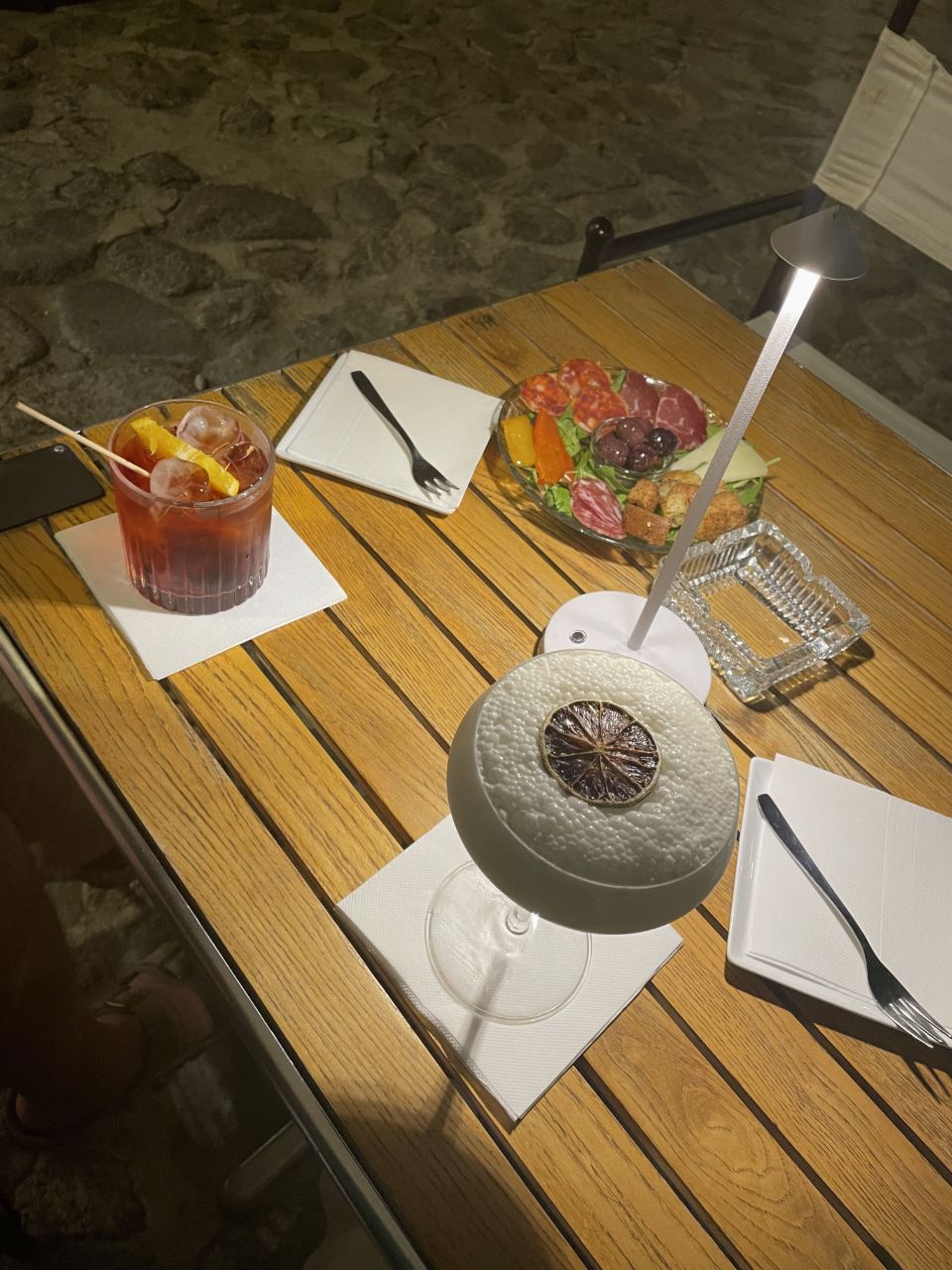
Aperitivo on cobbles: negroni, coupe, charcuterie 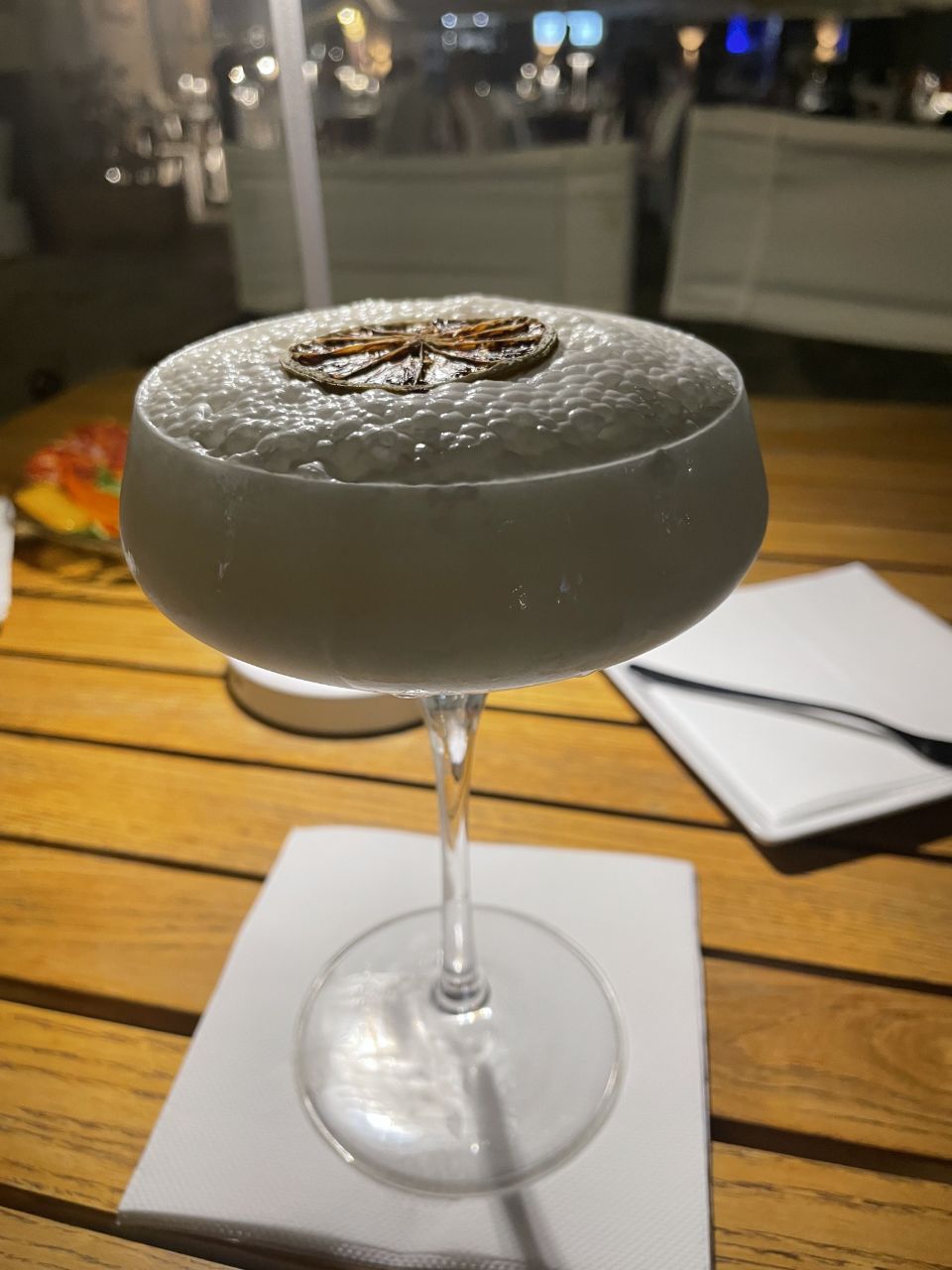
The coupe, foam capped with a dried orange, earning its keep 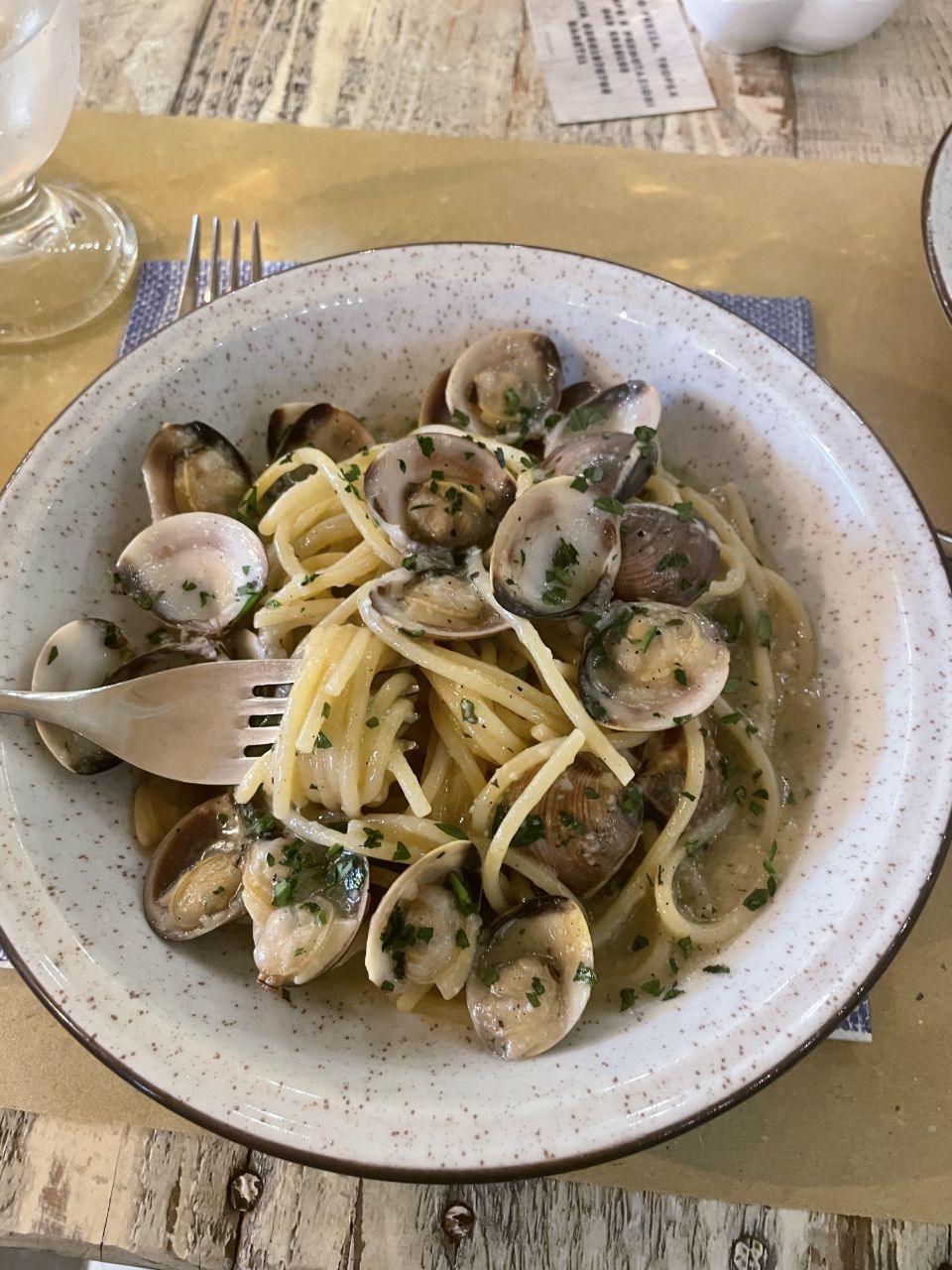
Spaghetti alle vongole, clams open, evening set 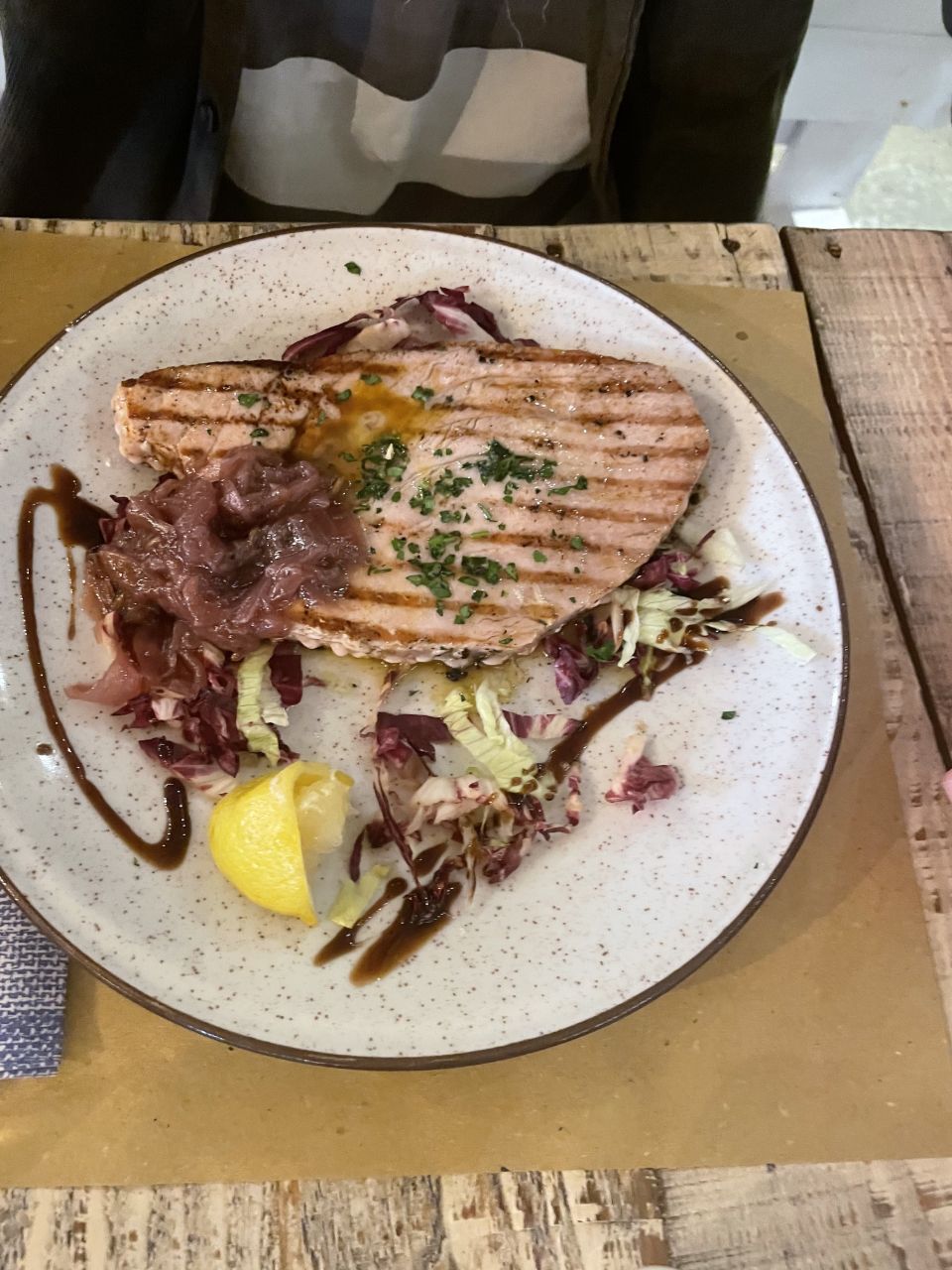
Grilled swordfish with the Tropea onion's red marmalade 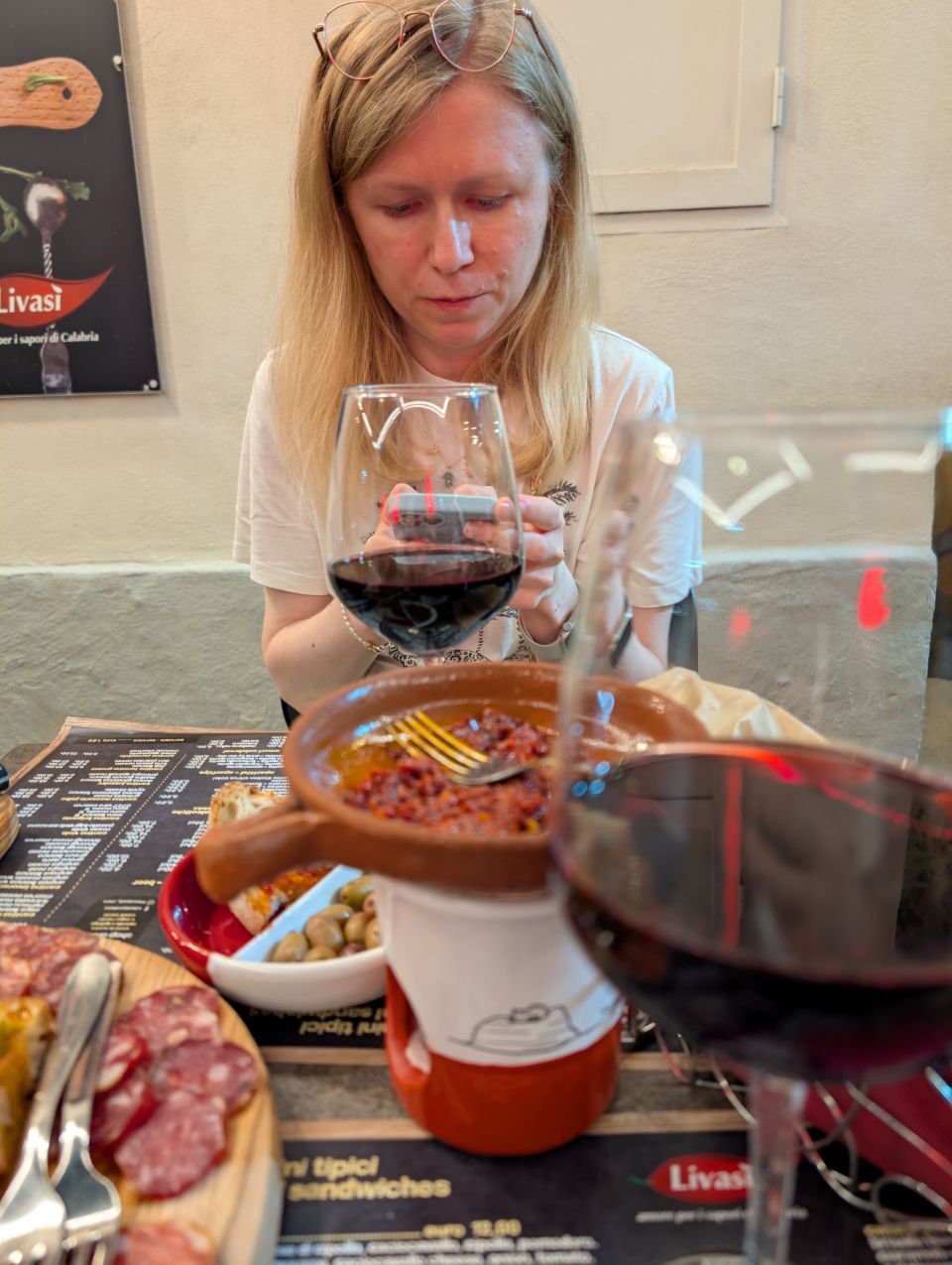
The table: two plates, the bottle, the counter behind 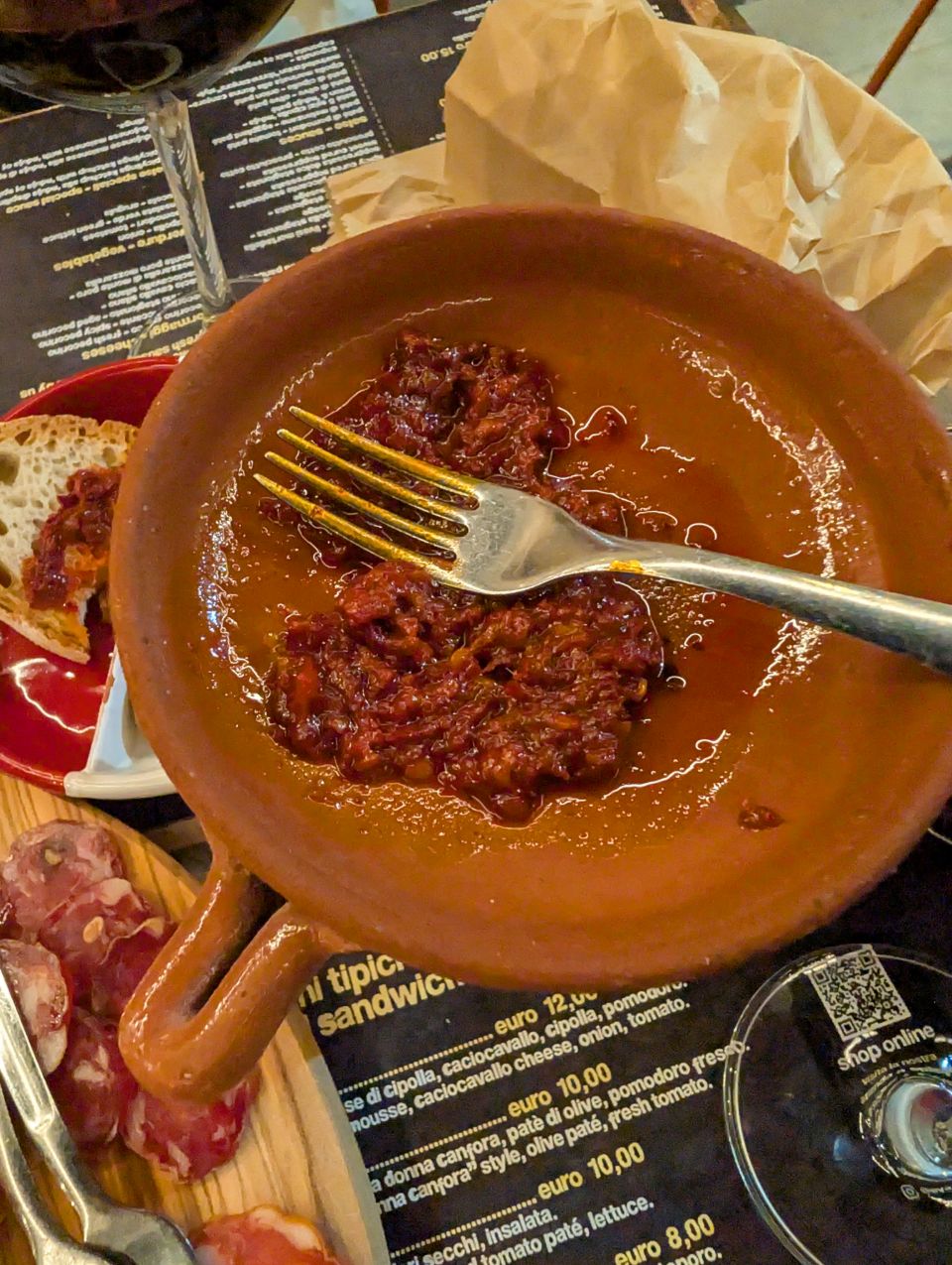
'Nduja, arriving in its own terracotta pot 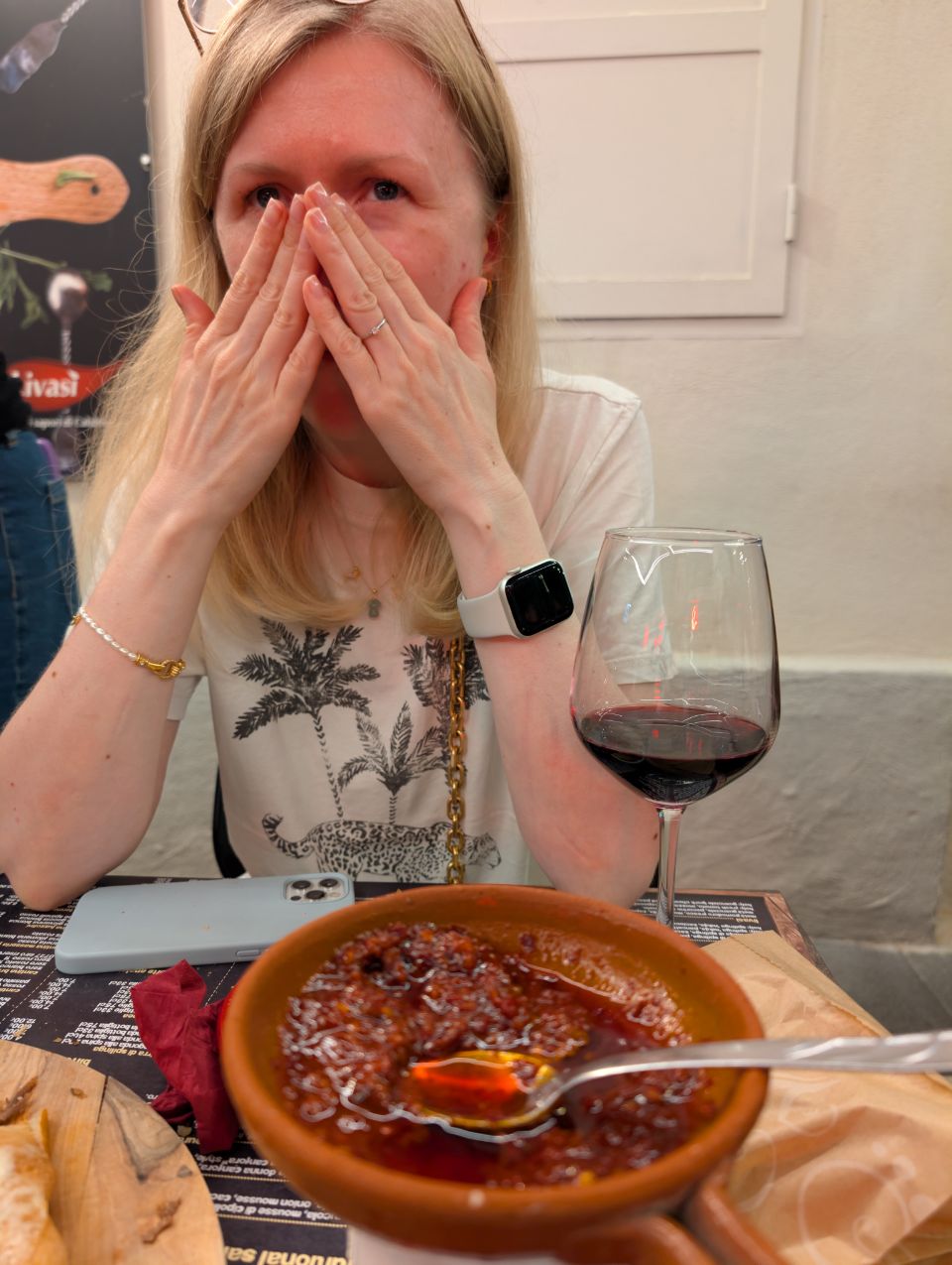
Dinner at the counter, and the 'nduja bites back
Nightfall, from the terrace
Evenings ended where they began, on the terrace: the palazzo opposite lit with shutters the exact right green, and the island out on its headland taking the last of the light — pink, briefly, then blue. Anna claimed the best hour of it, standing in the middle of the view while the campsite below went pink around her.
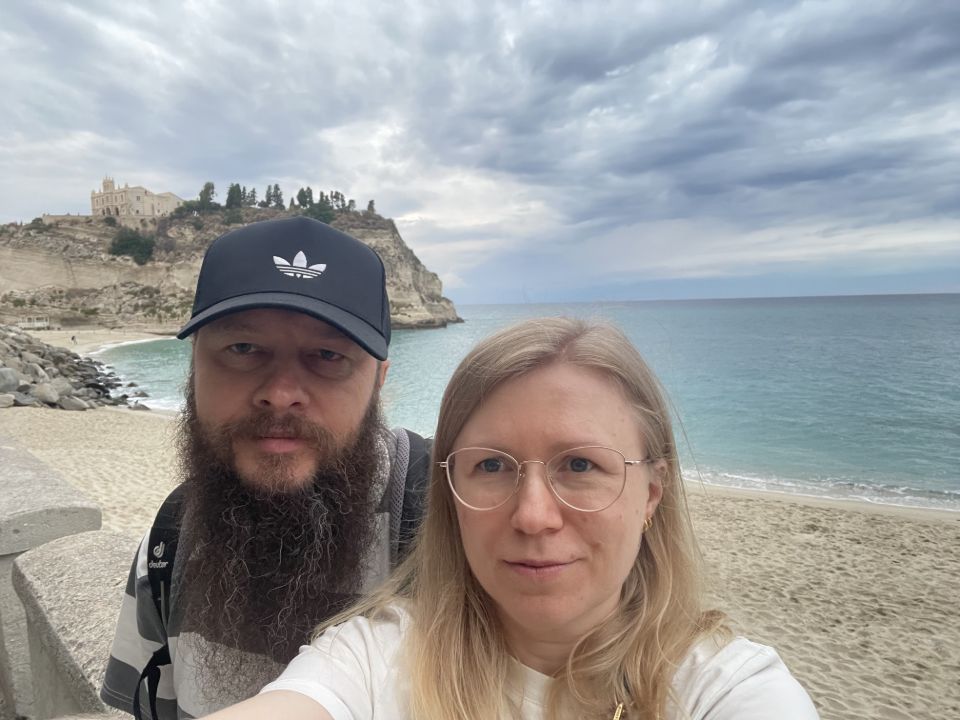
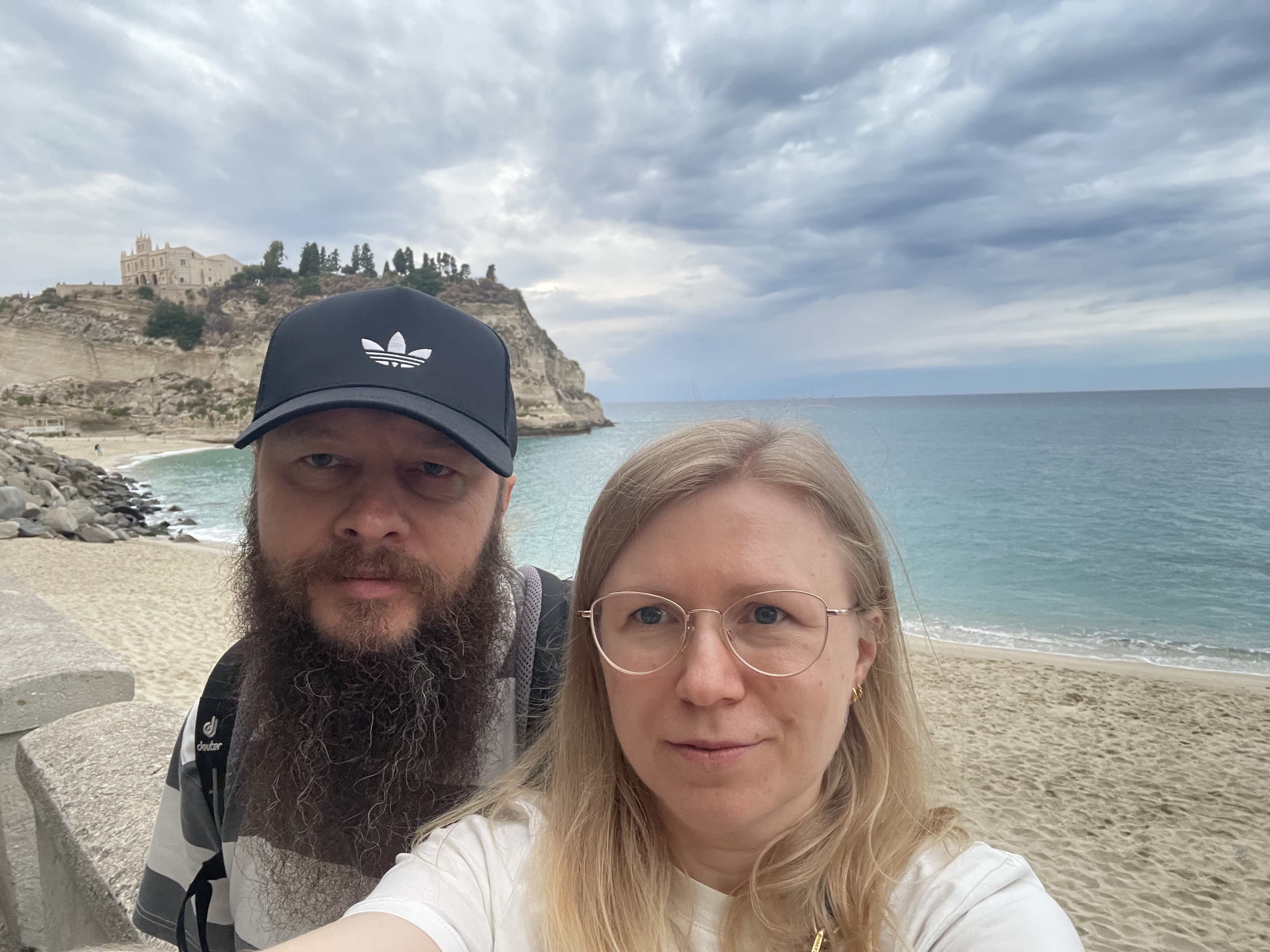
One more photograph of ourselves, and the island behind us 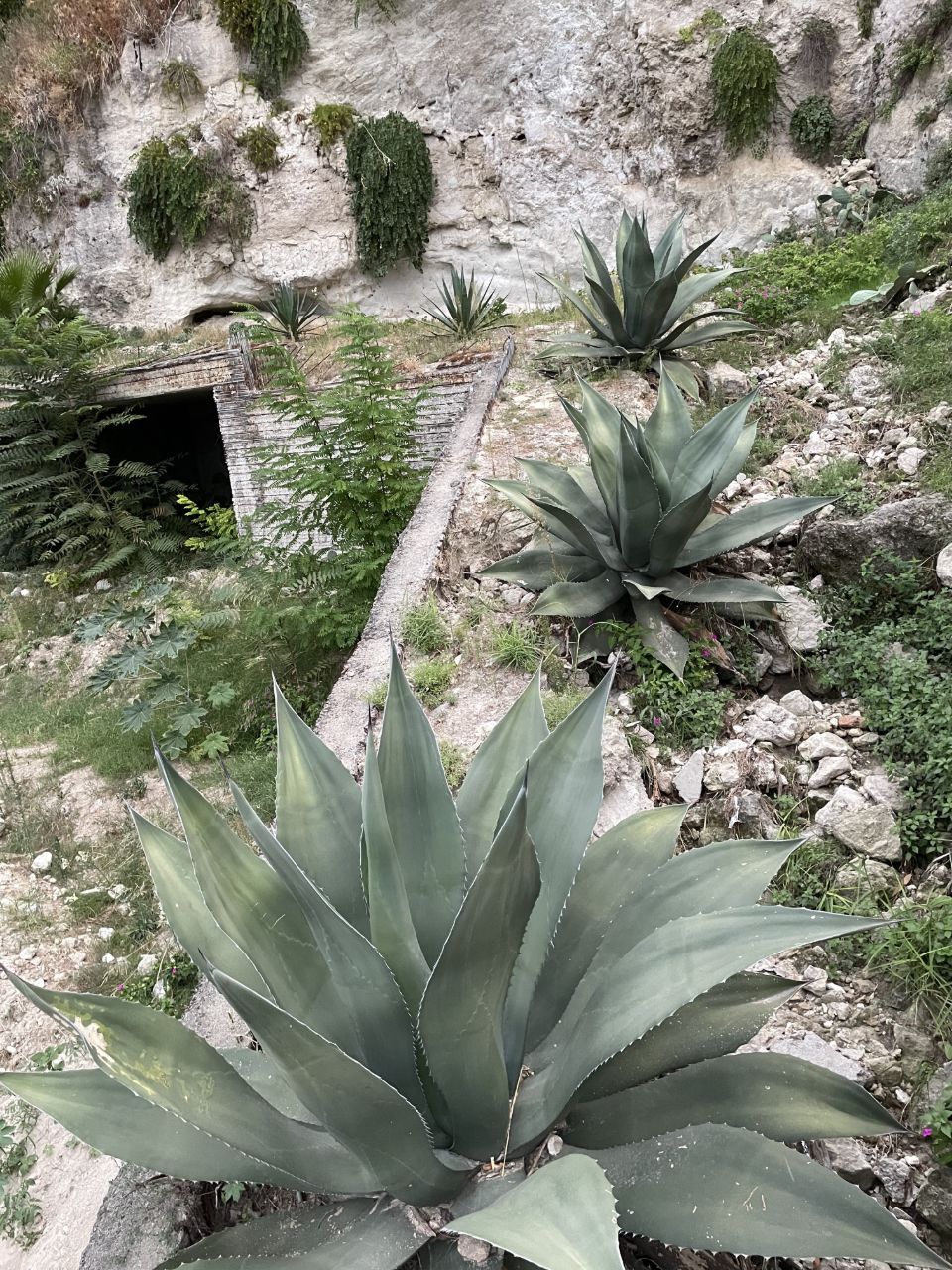
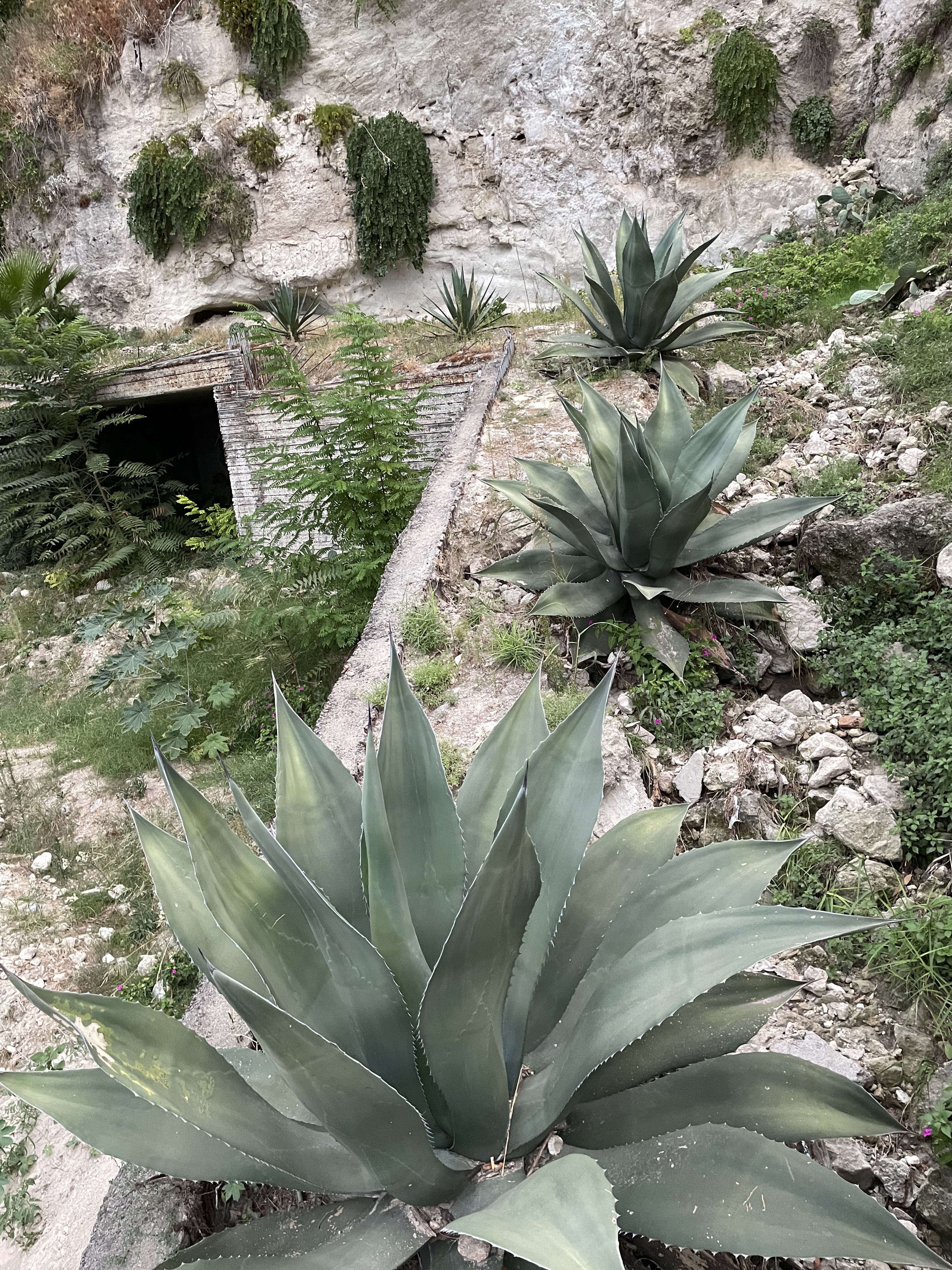
The agaves, doing their own landscaping by the tunnel door 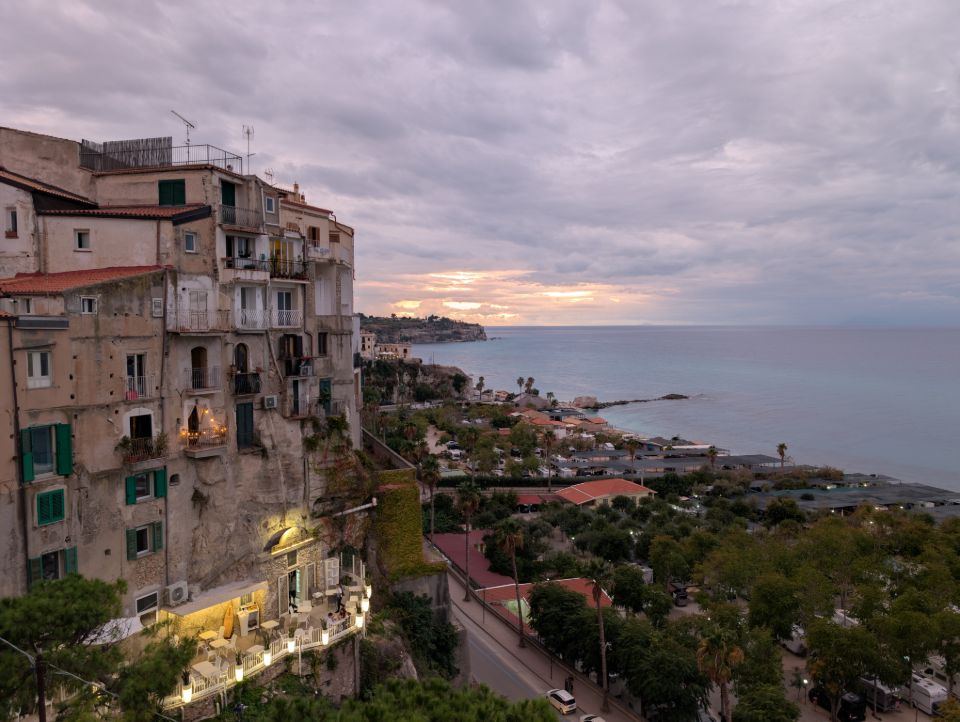
The campsite, going pink for the night 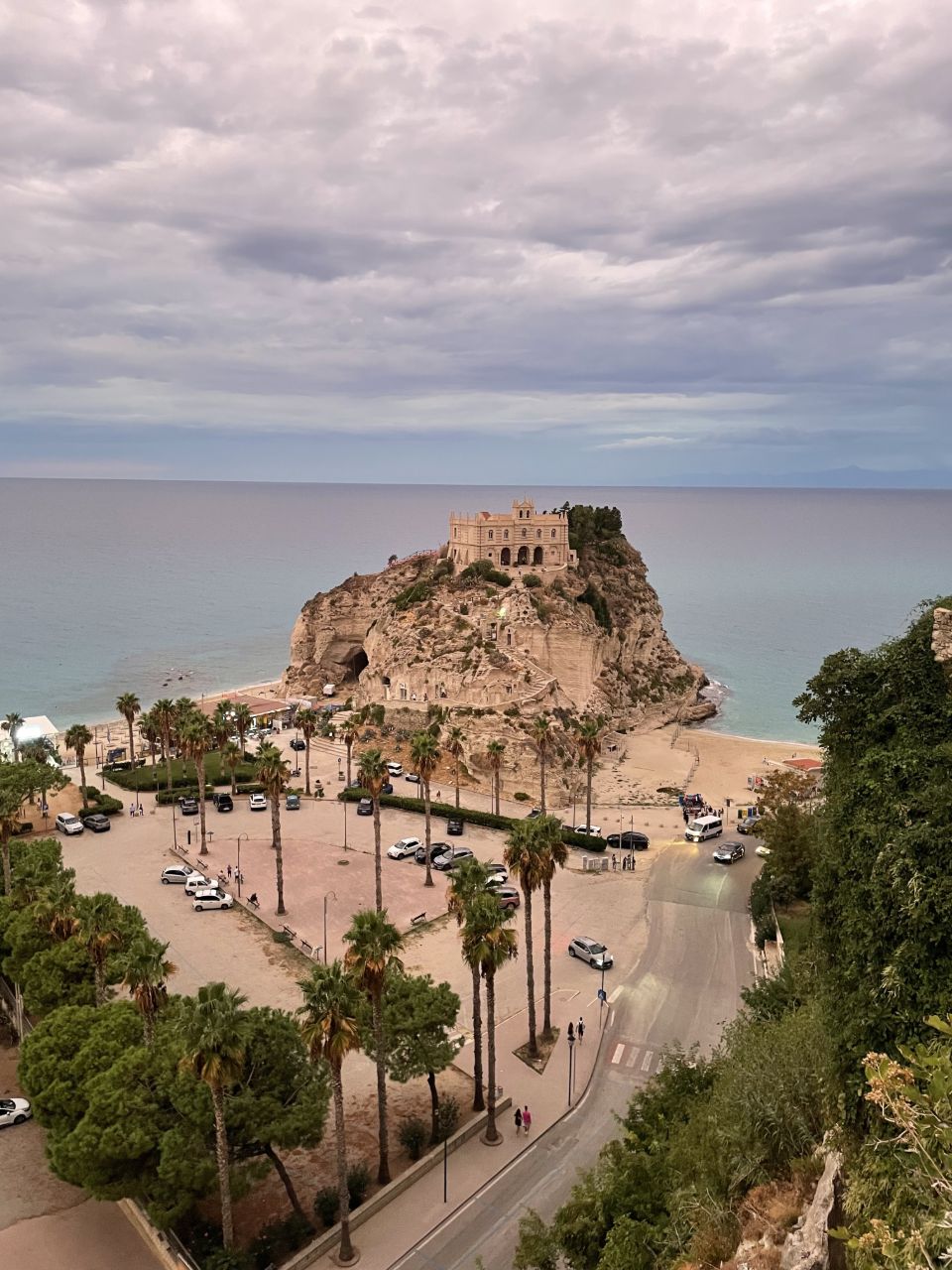
The island goes pink briefly, then blue 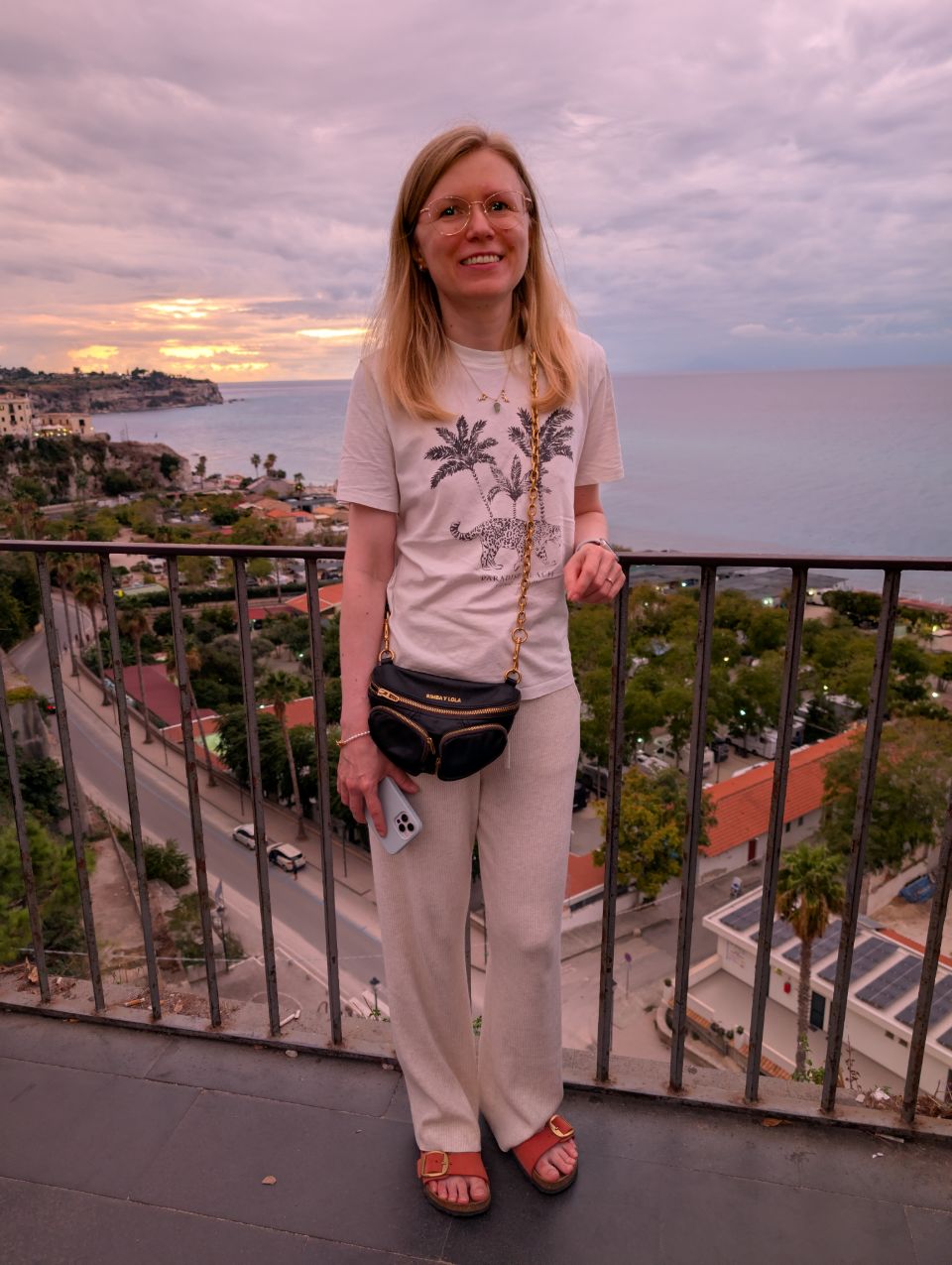
Anna, in the middle of the best hour
The last evening, with a waterspout
On the last morning, before packing, the weather paid its respects: from the terrace a waterspout was hanging off Stromboli on the far horizon, spinning its slow way along, and the small column at the beach two days before was evidently a rehearsal. We packed, and spent the last evening the way the flat had taught us — wine, the campsite going pink below, Stromboli smouldering on the horizon line, the island at our elbow. The piazza signpost had said it all along: treni · stazione. In the morning we went and did as we were told.
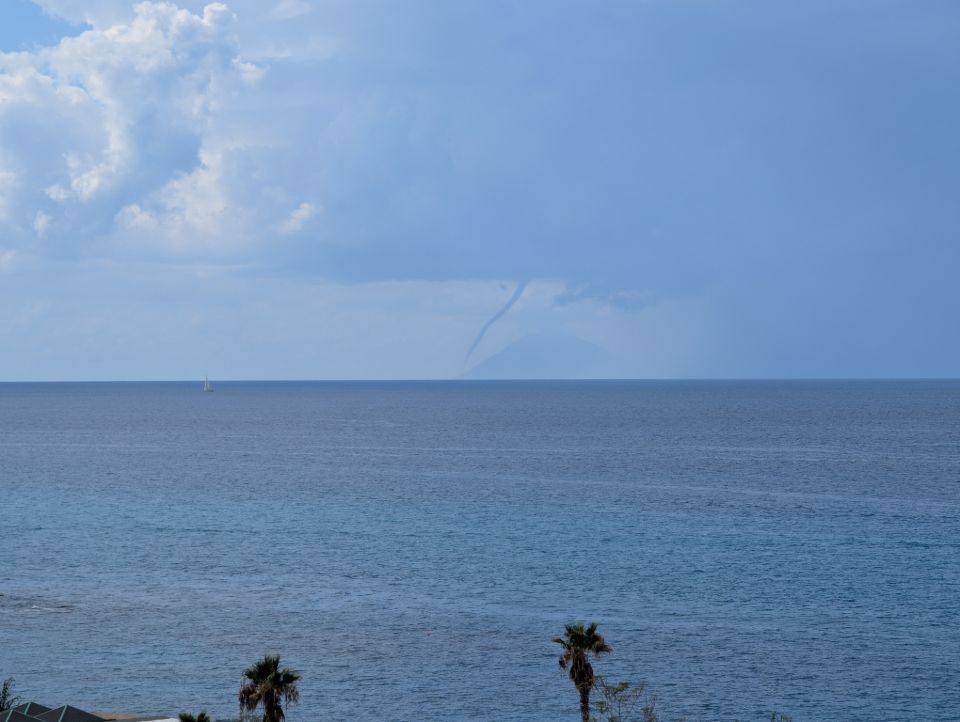
The waterspout, hanging off Stromboli — the beach column was a rehearsal 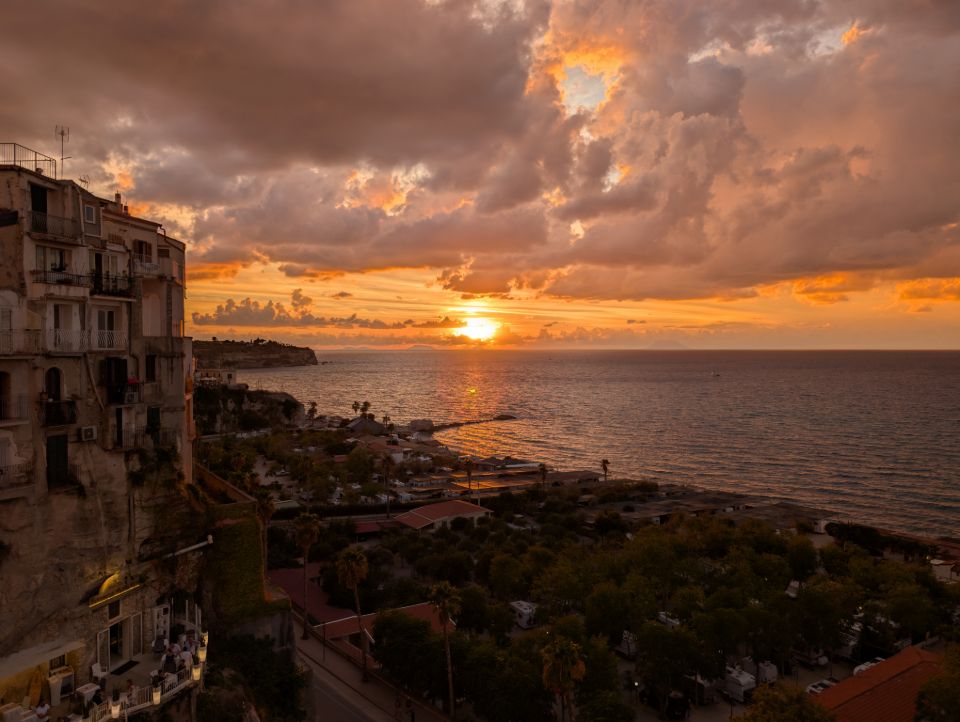
The last evening, settling in properly 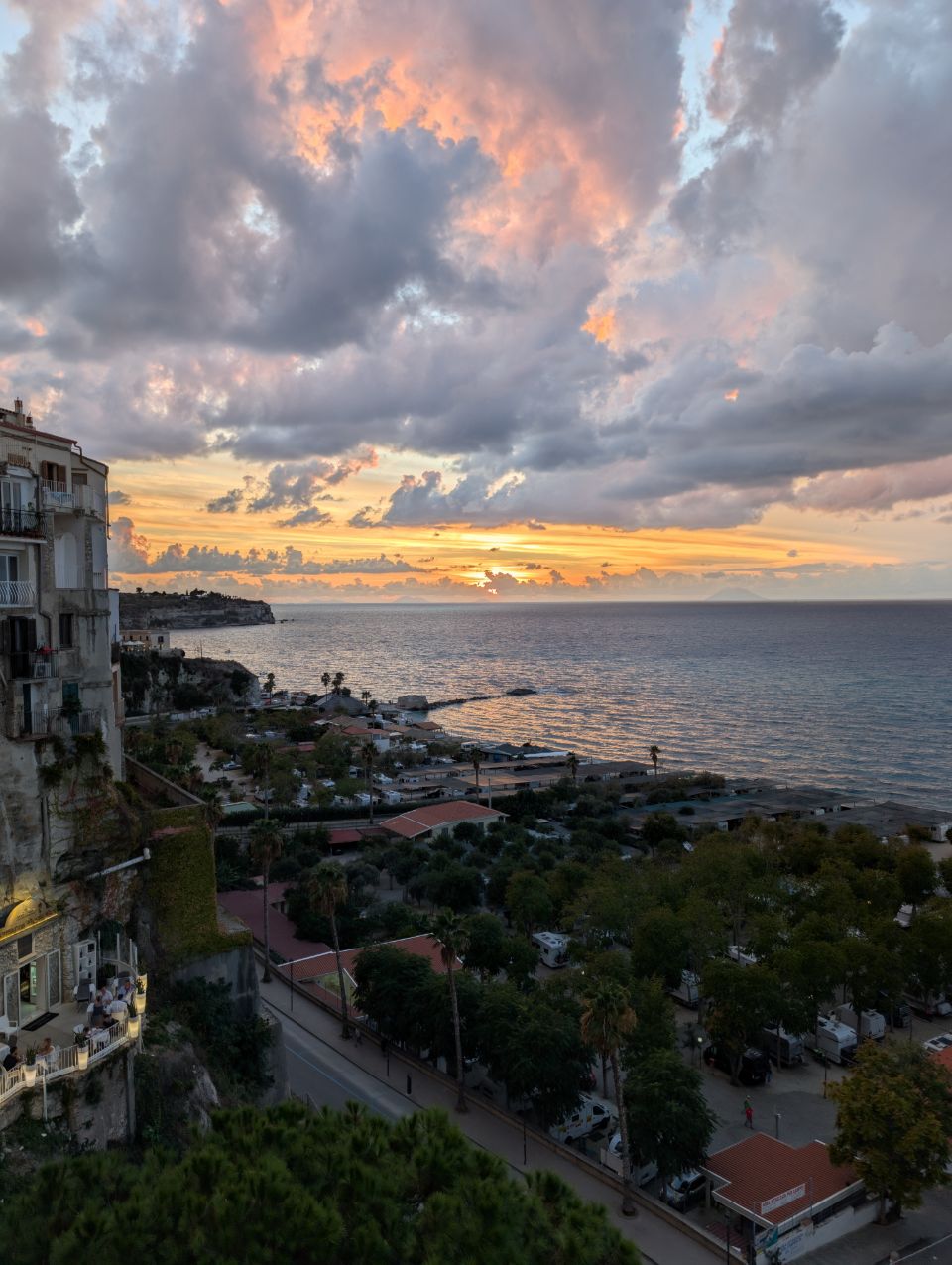
Sunset, campsite, and a volcano on the horizon 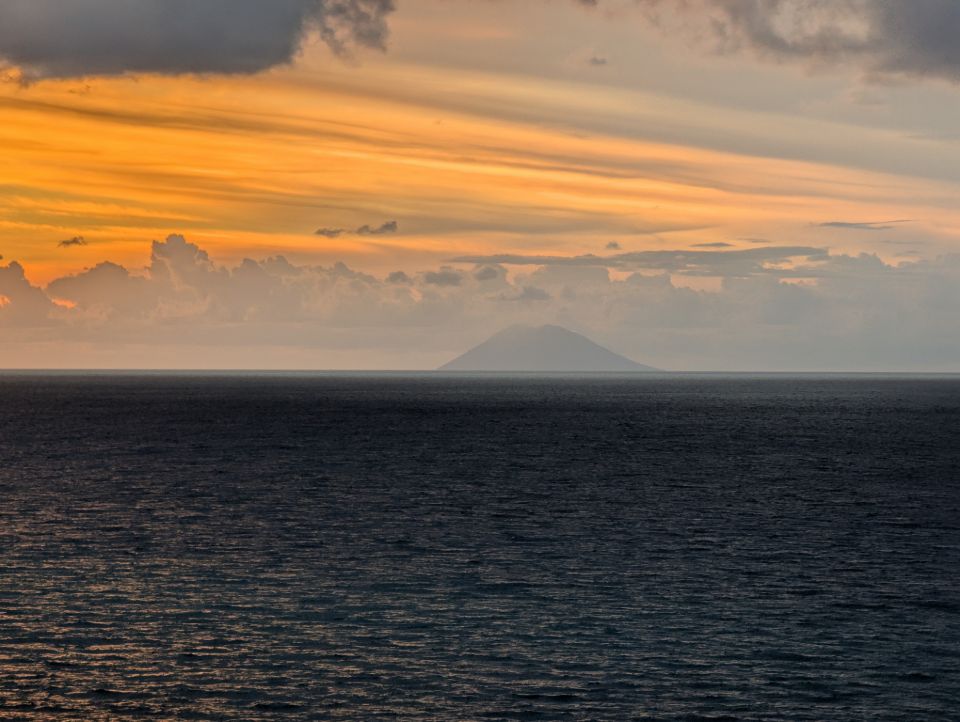
Stromboli, smouldering, takes the horizon line
In the morning, as instructed
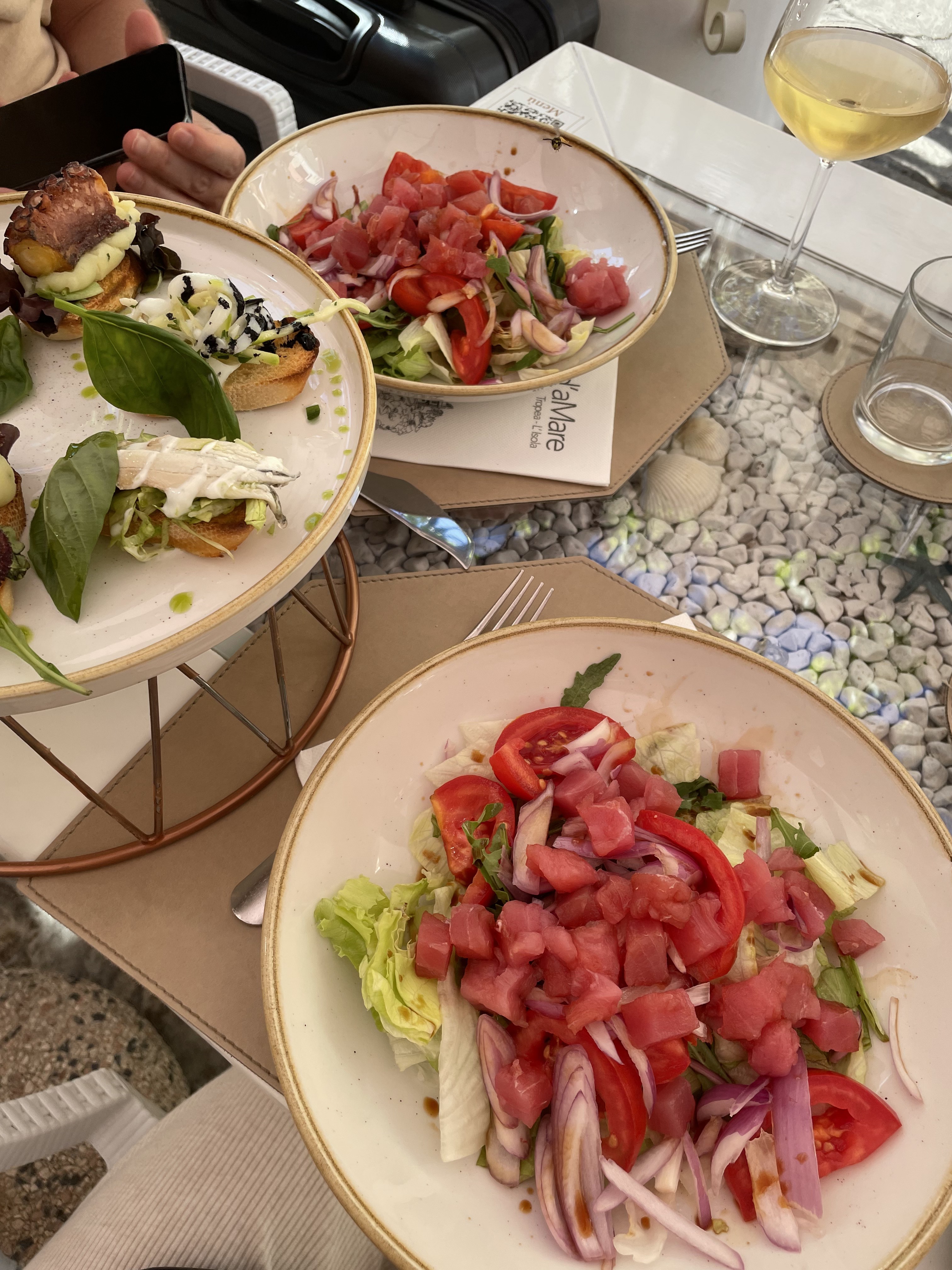
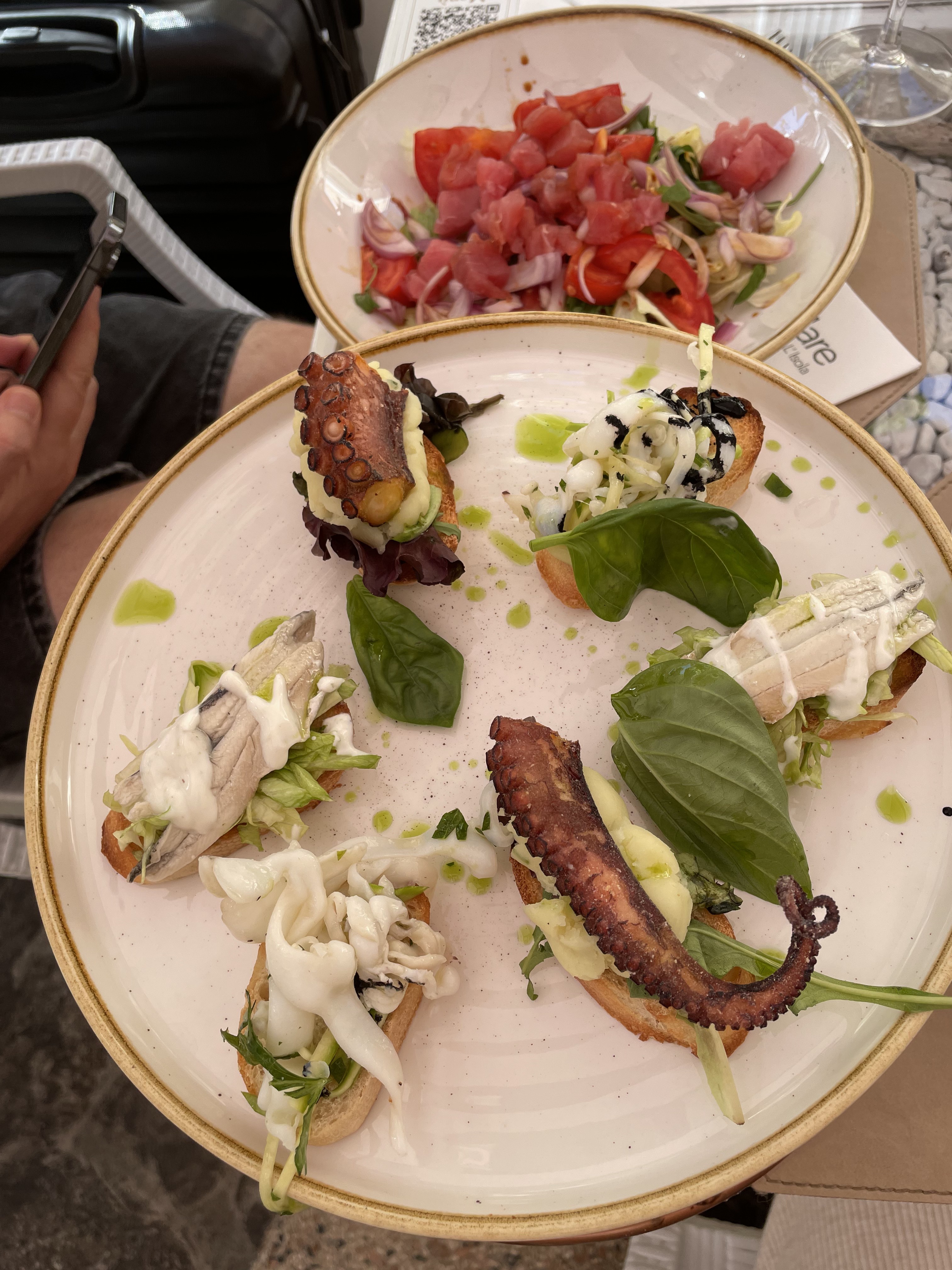
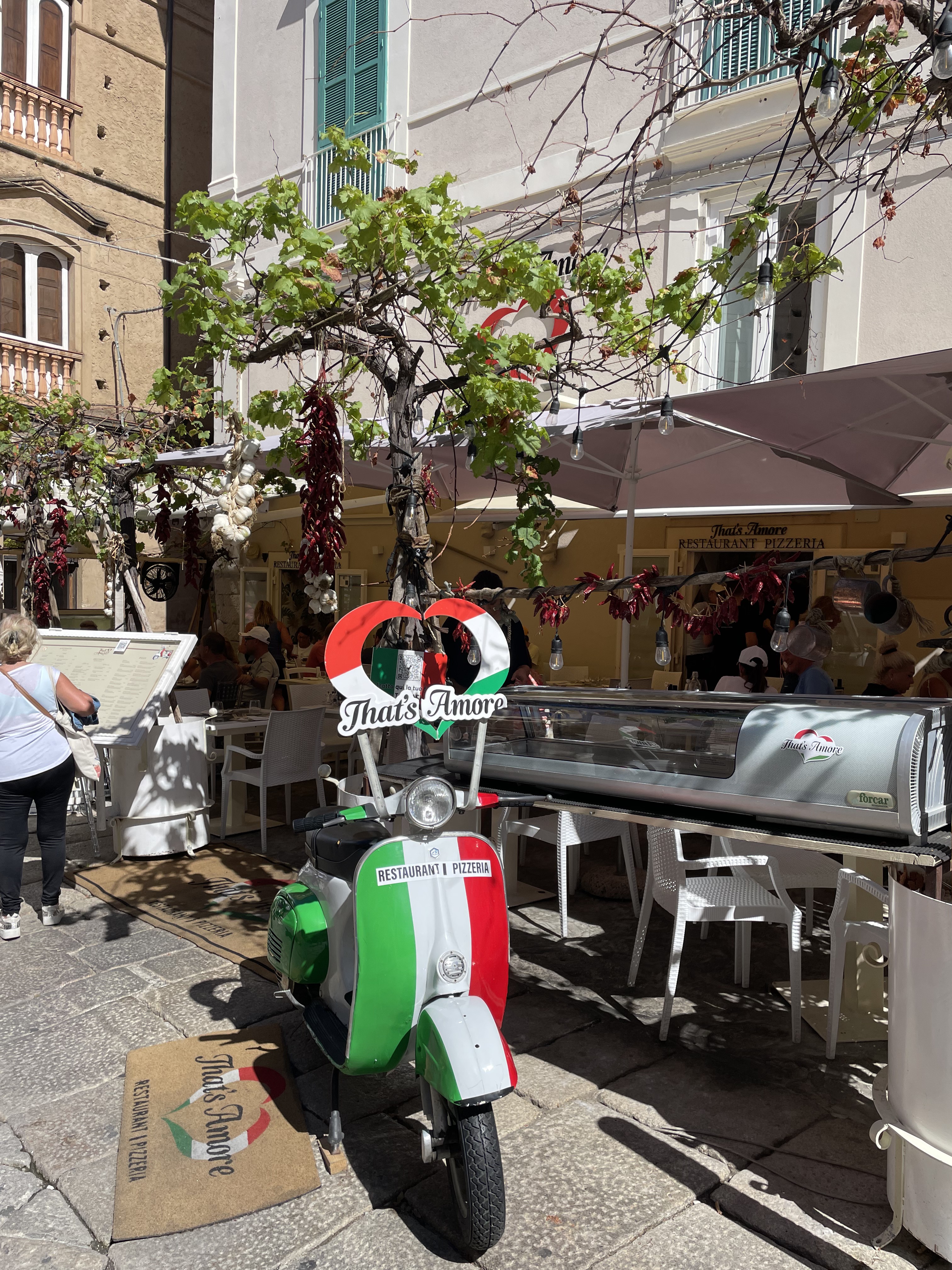
On the 29th the day began the way all week's days had, with lunch — one last one, at That's Amore down by the marina. The last orders arrived as bruschetta in two divisions, octopus and swordfish, with tuna tartare alongside, the red onion still on duty; the suitcase was already in the frame, because nobody at this table was pretending. Italy, having noticed our departure, made its closing argument in the street: a Vespa painted in the national colours, parked outside a restaurant called That's Amore, under a sign — and a country — that has never once been embarrassed about such things. The bags went on our backs after that, and the signpost kept its appointment: treni · stazione, and the train had us in Napoli by dark.
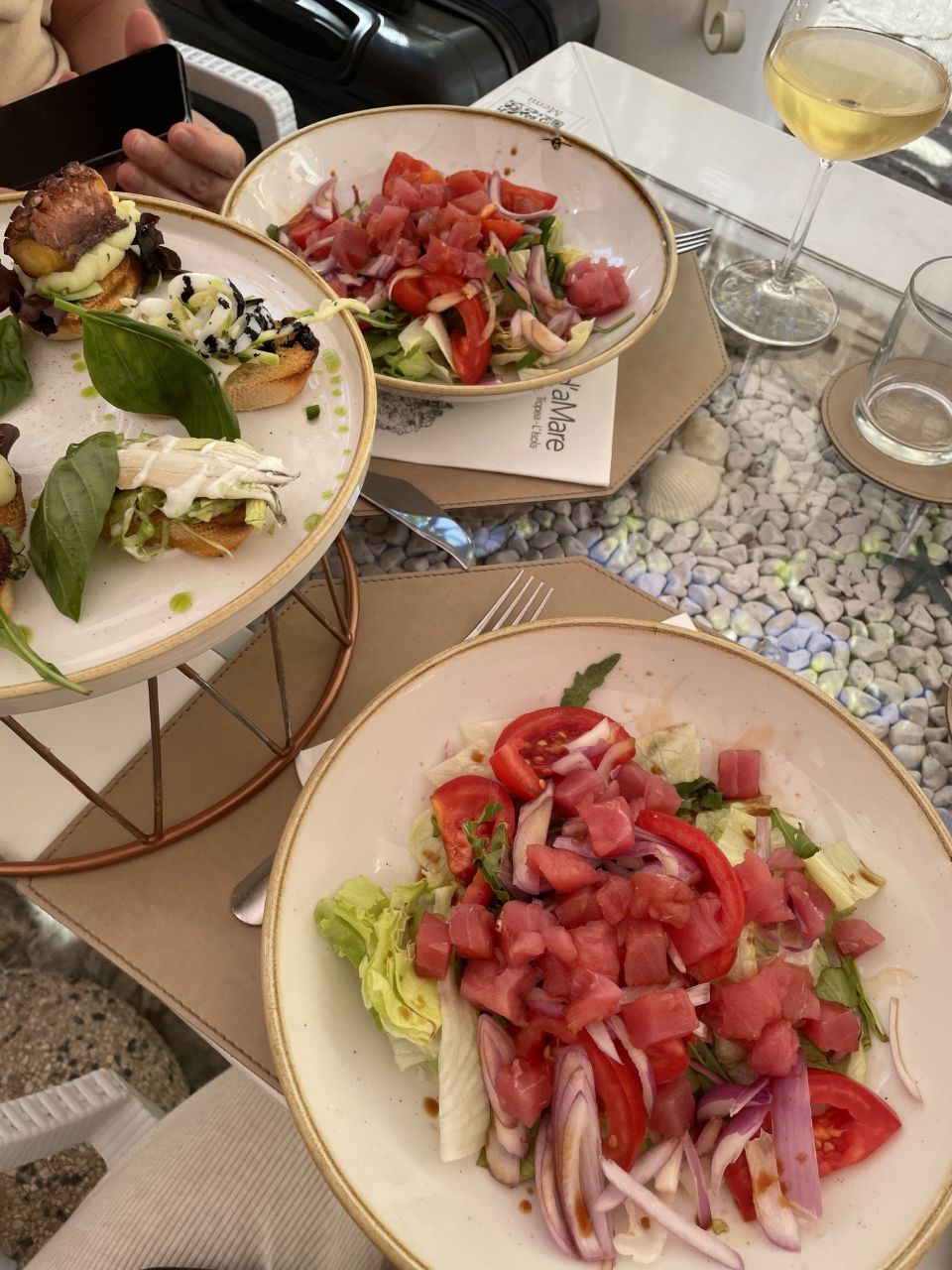
The last lunch, suitcase already in the frame 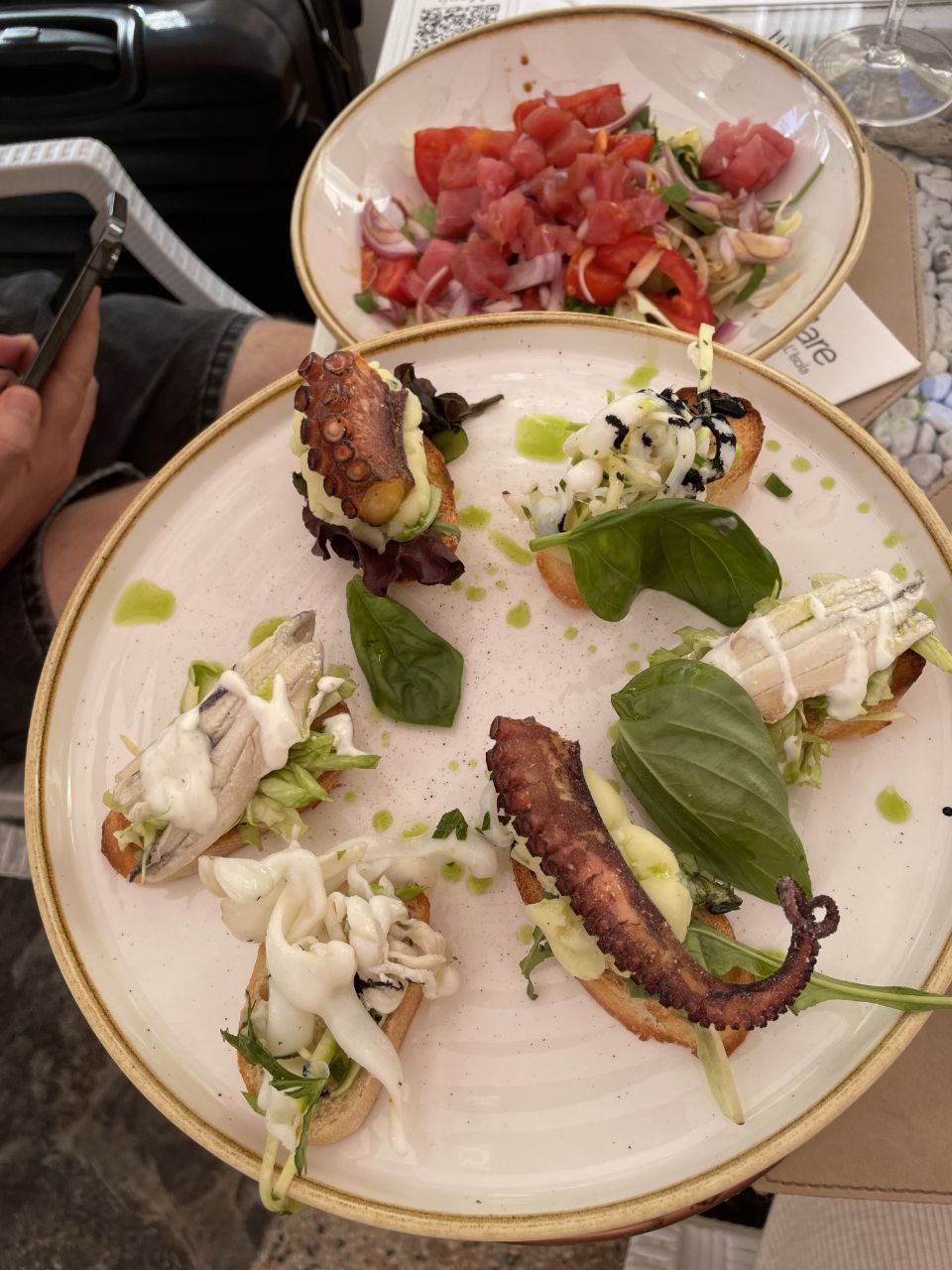
Octopus and swordfish bruschetta, mid-service 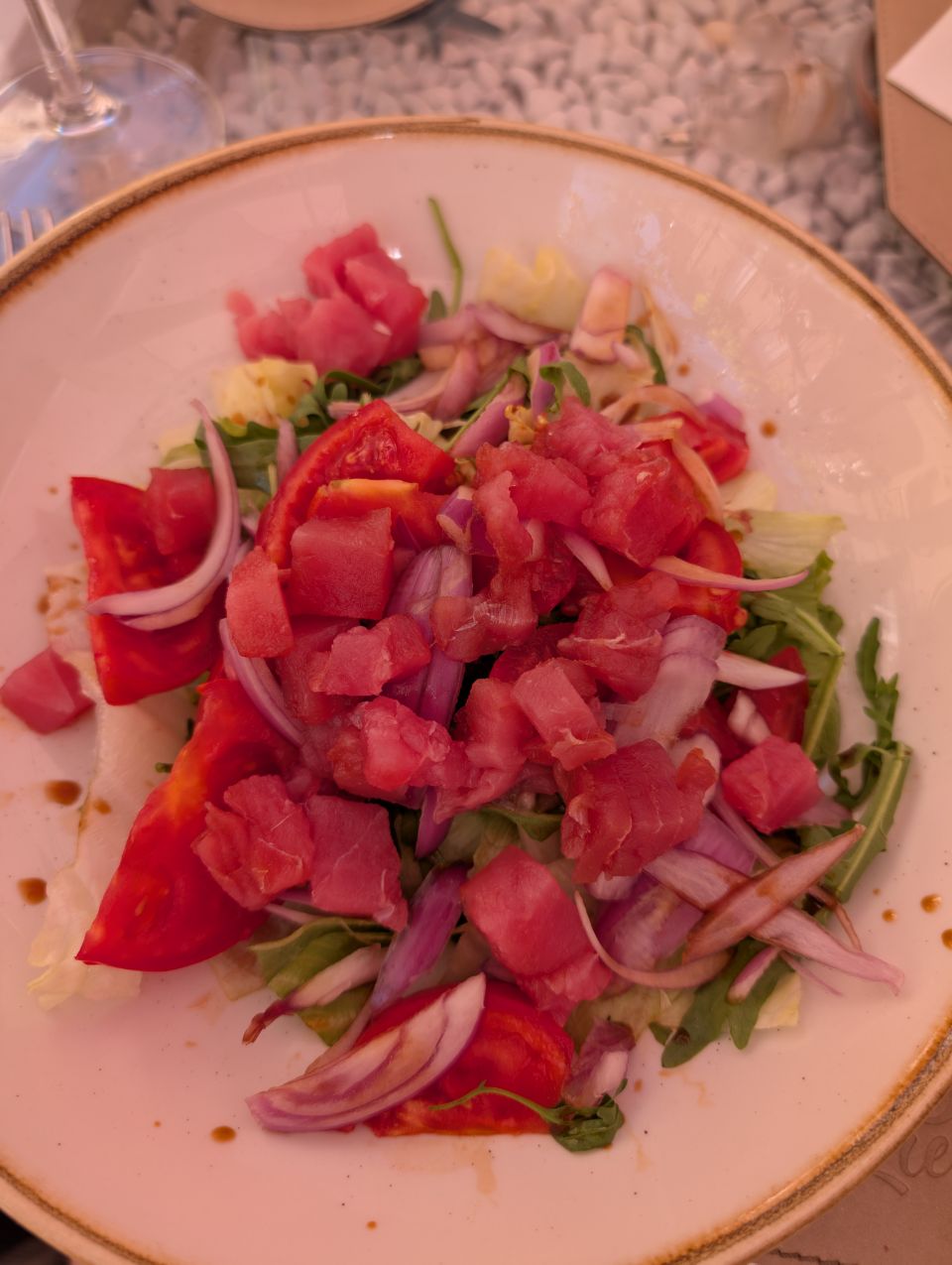
Tuna tartare, the onion still on duty 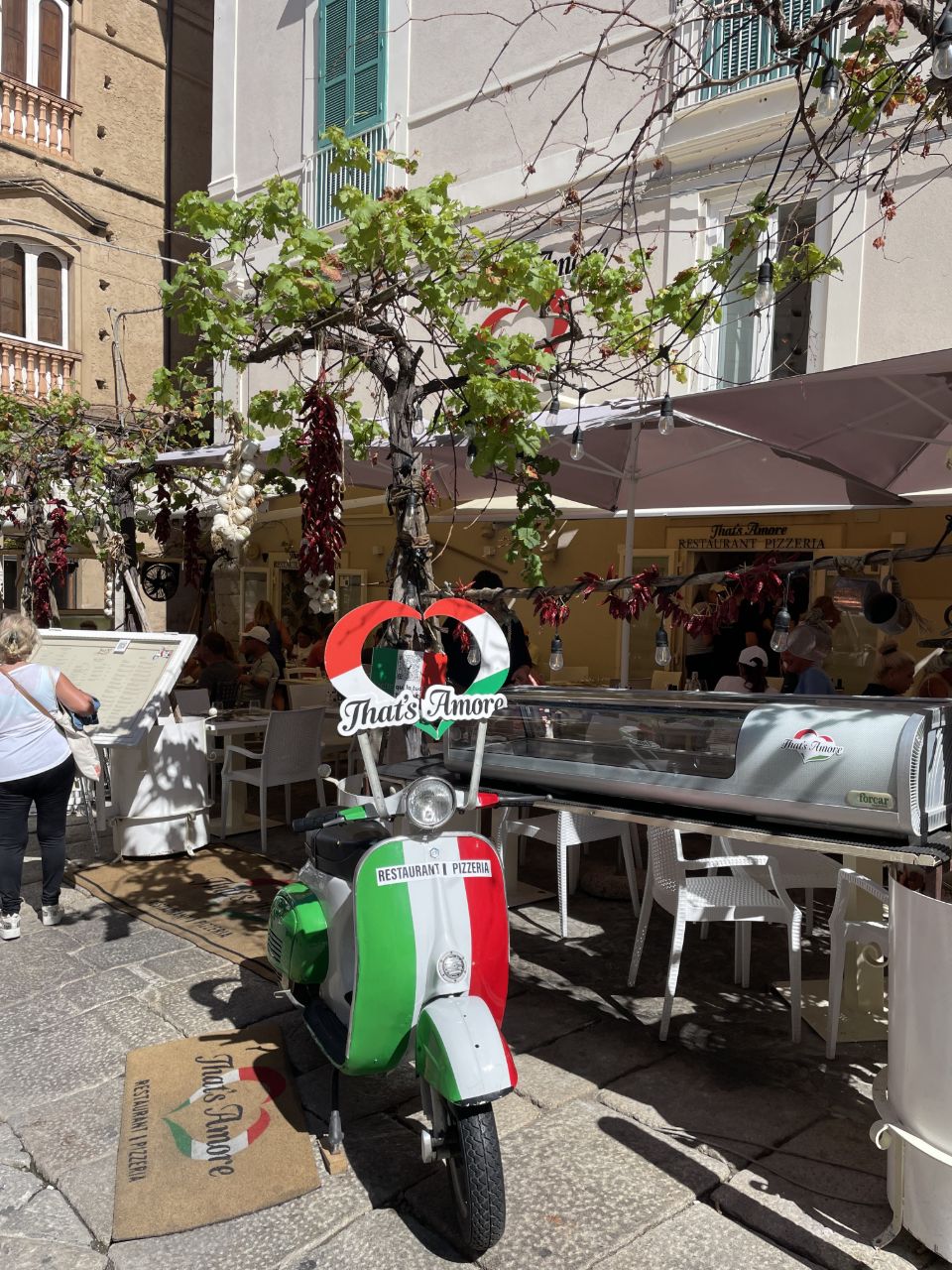
A Vespa in the national colours, outside That's Amore